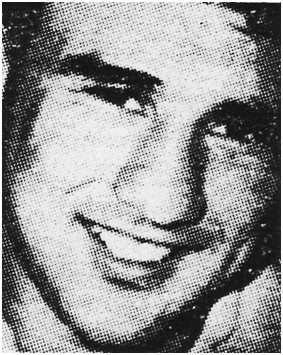
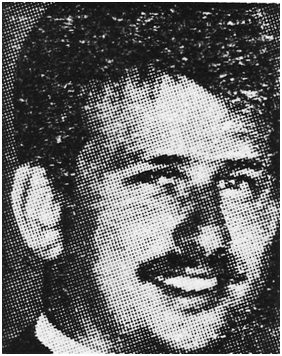
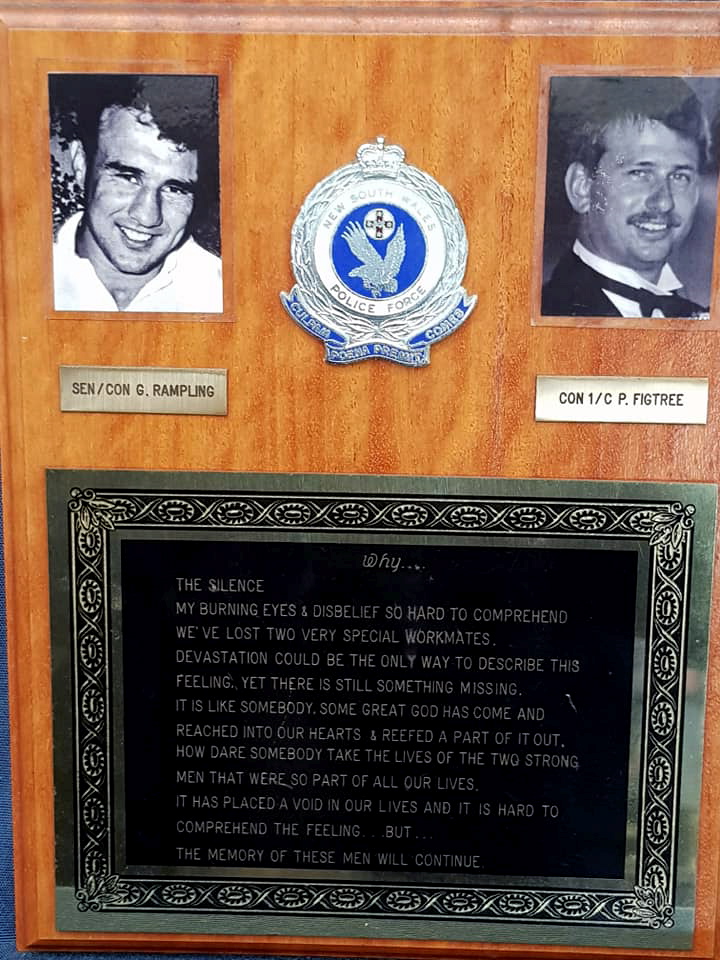
About 11.25pm on 13 June, 1989 police in Byron Bay commenced a high speed pursuit of a panel van. The pursued vehicle drove south in the Coast Road, followed by the Byron Bay Police vehicle, and into Ballina. As both vehicles continued south through Ballina, a local Highway Patrol vehicle driven by Constable 1st Class Beaver, with Senior Constable Rampling and Constable 1st Class Figtree as passengers, joined the pursuit. More police vehicles arrived to assist as the pursuit continued through the township of Wardell. About five kilometres south of Wardell the Ballina Highway Patrol vehicle began to draw level with the offending vehicle. As it did so, the driver of the pursued vehicle drove across to the centre of the roadway and clipped the front of the Byron Bay Police car. As a result, the police vehicle veered across the road and skidded in loose gravel before colliding with a power pole.
All three police were trapped for some time in the badly damaged police car and when freed were conveyed by ambulance to the Lismore Base Hospital. Constable Beaver recovered from internal injuries received, however Constable Figtree died before he reached hospital and Senior Constable Rampling died a short time later.
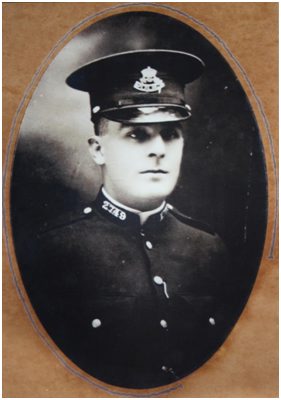
Senior Constable Rampling was born in 1959 and joined the New South Wales Police Force on 15 January, 1979. At the time of his death he was attached to the Ballina Detectives.
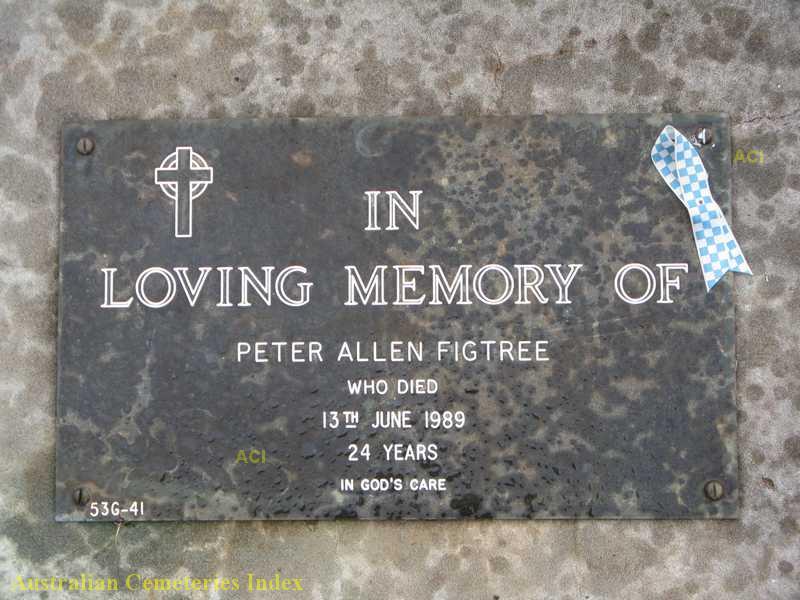
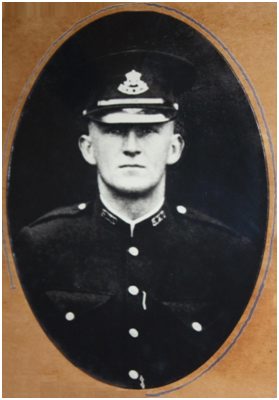
Constable Figtree was born in 1964 and joined the New South Wales Police Force on 28 November, 1983. At the time of his death he was attached to the Ballina Highway Patrol.
[divider]
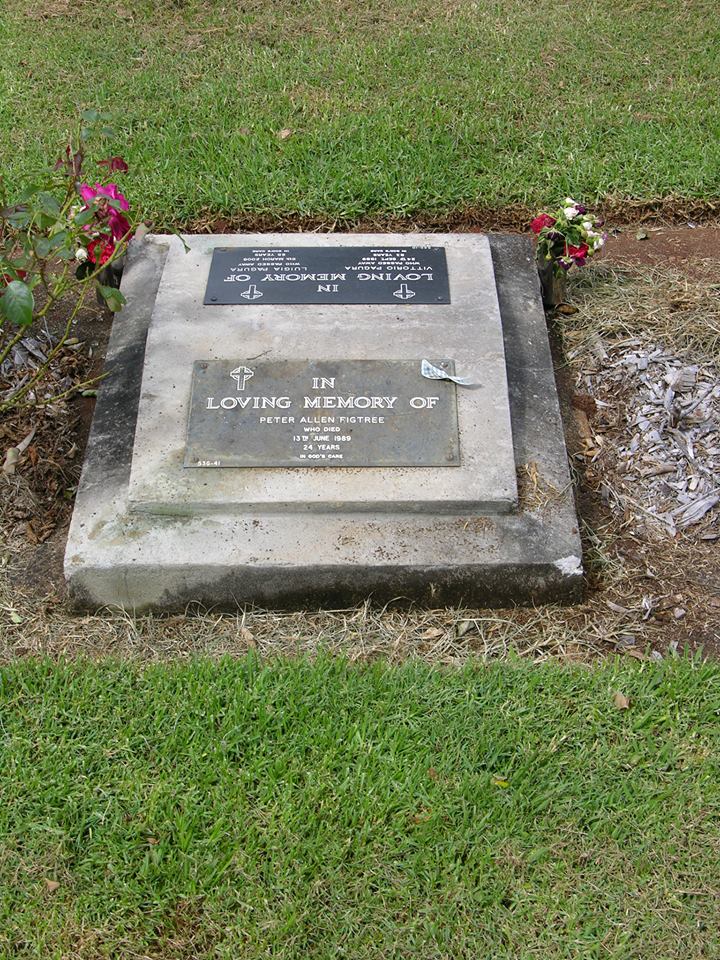
Peter Allen FIGTREE grave plaque
[divider_dotted]
Deadly toll
By Jonathan Pearlman November 6, 2004
Alone in his patrol car, Chris Thornton had the police siren flashing as he chased a white sedan through Woy Woy.
Thornton, 35, a highway patrolman, had been in the force for 15 years. He was, his mother says, “the best driver I have ever seen”.
The reason for the chase that night in April 2002 is unknown. Both cars were seen travelling at high speed. Thornton was about 50 metres behind.
Meanwhile, Leonard Rowley, 56, an unlicensed driver, was driving to his local KFC to pick up dinner. He saw the first car flash past and judged – wrongly – that he had time to turn out in front of the patrol car. Thornton tried to avoid Rowley’s car but clipped the back, veered onto the wrong side of the road and hit a power pole.
Thornton died on the spot, which is marked by a permanent stainless-steel cross. Rowley later received a suspended two-year sentence.
“His life from the age of 12 was about helping people,” says Thornton’s mother, Freada Thornton. “He was in the surf club and he was there to rescue people and then he went into the force and he was doing the same thing.” His father, Barry Thornton, says: “He loved life. He had been in Gosford for 15 years and was so popular with the community there.”
Police pursuits are, says Barry, a necessary evil: “If they don’t catch the criminals there will be more deaths on the roads. The ones that they’re in pursuit of are the idiots that have done the wrong thing to start with.”
But pursuits have come at a cost to the NSW Police Department. Fifteen officers have died as a result of high-speed chases, beginning with the death of Constable George Boore in 1937.
Details provided by the NSW Police Association show a steady stream of fatalities involving cars and motorcycles. The full list of casualties is as follows:
Gezza J KtBelieve it or not, I was working the radio comms for this at Lismore station that night. Called the whole thing & did all the post crash co-ord. A horrible night shift with Sgt GJ Menzies, S/C Mark Burridge, Const’s Jordan, Gahan & Me.
*****
June 2019
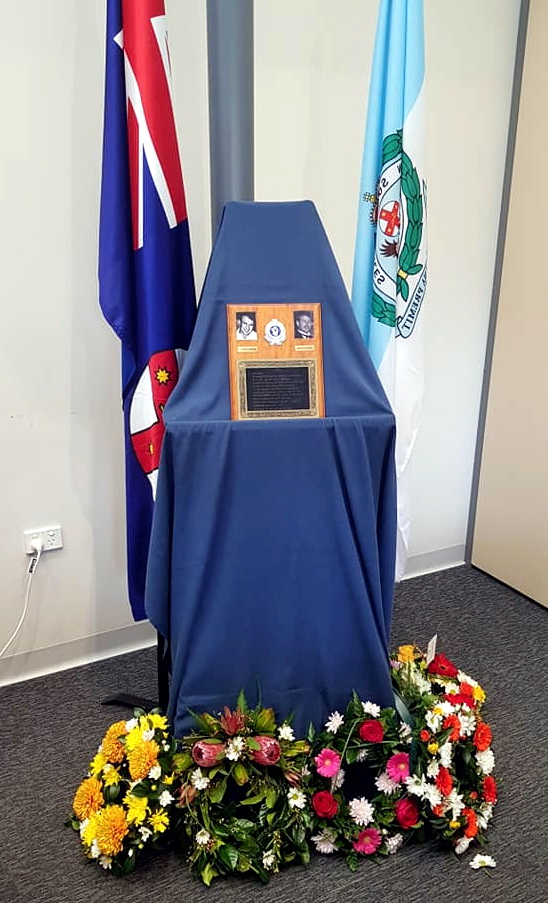
30 year memorial – Senior Constable Glenn Rampling – Constable First Class Peter Figtree – A memorial service will be held at the Ballina Surf Club, Lighthouse Parade, Ballina on Thursday, 13 June 2019 at 1000hr to commemorate the 30th anniversary of the death of Senior Constable Glenn Donald Rampling and Constable 1st Class Peter Allen Figtree.
Senior Constable Rampling was tragically killed on duty on 14 June 1989 and Constable 1st Class Figtree was tragically killed on duty on 13 June 1989, both as a result of motor vehicle collision at Wardell, south of Ballina.
Attended this morning quite a moving 30 year memorial service for Glenn Rampling and Peter Figtree killed in a car chase near Ballina. May they rest in peace.
Photo by: Glenn Taylor
Photo by: Glenn Taylor
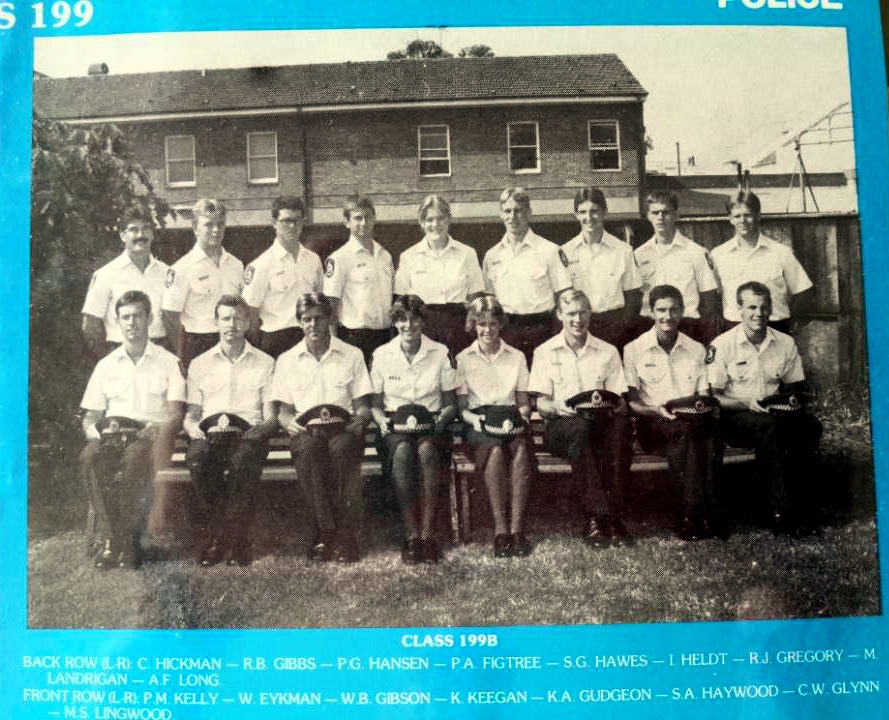
Photo from: Geoff Lowe Peter FIGTREE back row, 4th from left. Redfern Police Academy Class 199B
Photo by: Ken Medway
Ernest ANDREWS
| 05/01/2015
Ernest ANDREWS
New South Wales Police Force
Rank: Constable
Regd. # 31??
Stations: George Street North Police Station
Served: From 24 April 1929 to 3 January 1931 = 1+ years Service
Awards: No find on It’s An Honour
Born: ? ? 1908
Died: 3 January 1931
Age: 23
Cause: Shot – Murdered at Bondi Junction
Funeral date: 5 January 1931
Funeral location: Rookwood Cemetery
Buried: Buried in Rookwood Cemetery ( side by side with Norman Thomas ALLEN )
Zone: C Section: 09 Grave 4211
DOUBLE POLICE MURDER
Memorial location:
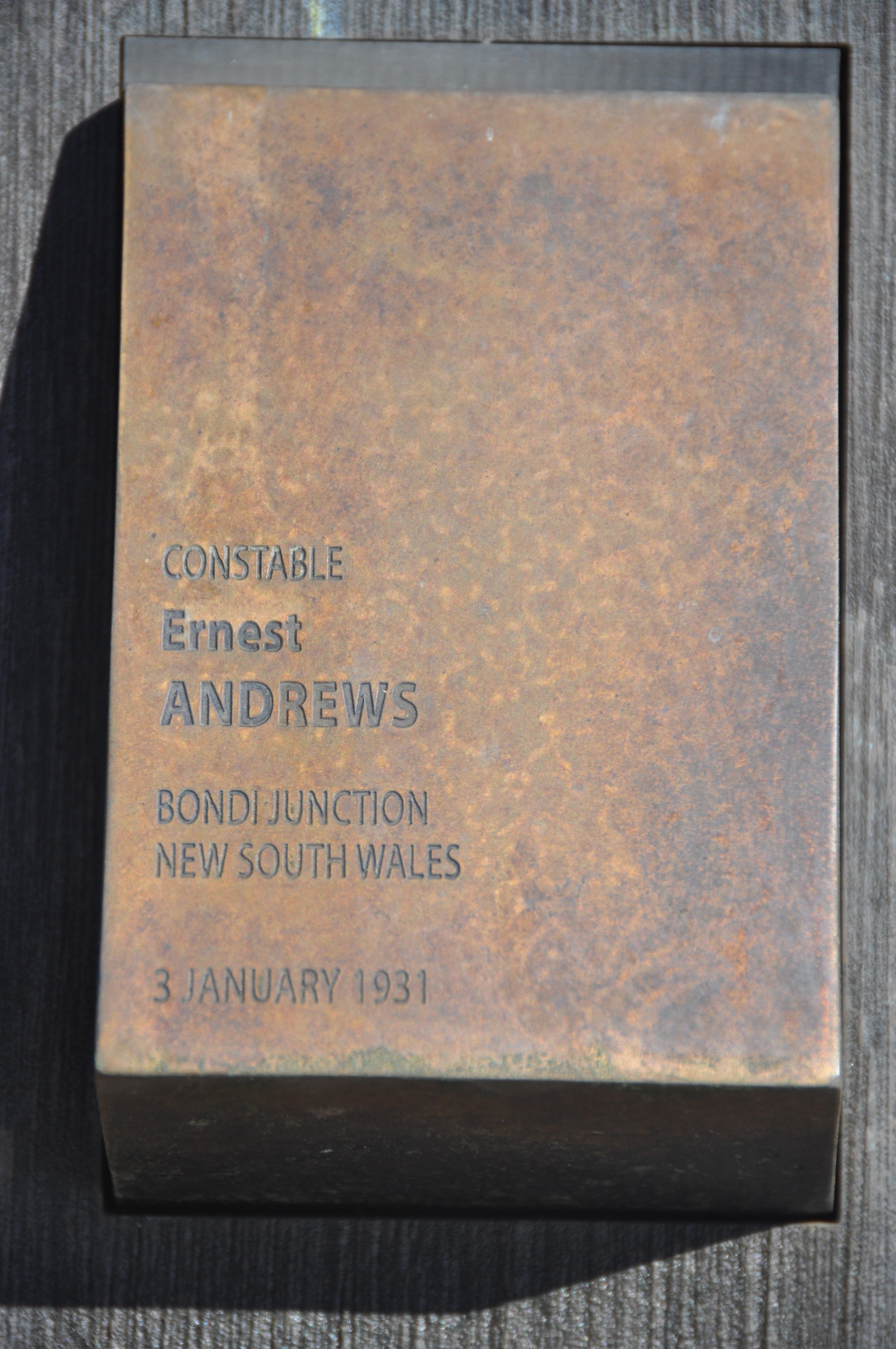
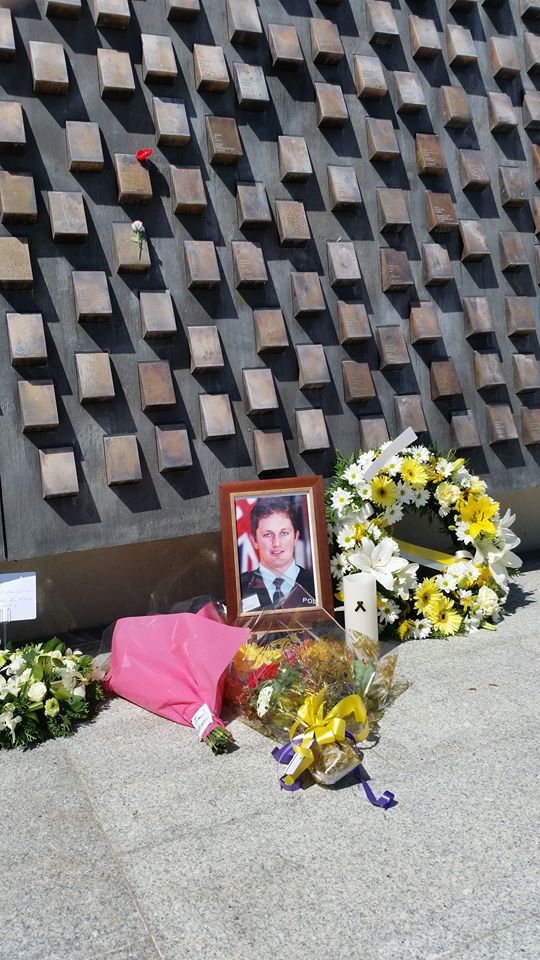
Ernest ANDREWS touch plate at the National Police Wall of Remembrance, Canberra
Ernest IS mentioned on the Police Wall of Remembrance
Constable Norman Thomas Allen ( 1931 )
Constable Ernest Andrews ( 1931 )
Constable Allen was shot in the street at Bondi Junction while attempting to detain an armed, deranged man named Kennedy who had earlier had an altercation with a local shopkeeper. The constable had been directing traffic and when informed of the dispute he found and confronted the offender. As he approached Kennedy from behind, the man spun around and shot Constable Allenin the chest at point blank range. He then shot the constable twice more in the heart. At this time Constable Andrews – unarmed, off duty and heading for the beach – passed by in a tram and saw a crowd gathered around the body of Constable Allen. Alighting from the tram he joined in the pursuit of Kennedy who managed to reach his home in nearby Lawson Street.
On arriving and finding the front door locked Constable Andrews went to the rear of the dwelling and burst through the back door. Unfortunately Kennedy was waiting with rifle raised and as Andrews lunged at him he shot him twice in the chest. He then took a knife and stabbed the constable in the throat. Sergeant Seery and Constable Johnson from Waverley Police then arrived and began to smash their way in through the front door. Although fired at by Kennedy, Constable Johnson returned fire, hitting Kennedy in the chest. Seery and Johnson then smashed their way in and found the offender in a bedroom bleeding to death. He died that night.
In the aftermath of the murders, the Brisbane Courier dated 5 January, 1931 published a complete account of the entire incident, and concluded with the following.
COMMISSIONER PRAISES MURDERED POLICE.
Both murdered constables were highly efficient and popular officers. Allen leaves a widow and young child. He lived in New Street, Bondi. Constable Andrews was single, his only relative in Australia being a sister, Mrs Clark. The men will be buried tomorrow with full police honours. The Commissioner of Police Mr. Childs, in an appreciation, said “I wish to pay a tribute to the manner in which both these young men carried out their duty according to the best traditions of the service. They saw their duty before them, and did not hesitate a moment in the execution of it. Although I would not make any distinction between them I cannot help referring to the action of Constable Andrews, who, though unarmed, rushed in to effect the arrest of a man who had already shot Constable Allen. “
Constable Norman Thomas ALLEN was born in 1901, joined the New South Wales Police Force on 14 May, 1926 and shortly thereafter resigned. He rejoined on 26 September, 1928. At the time of his death he was stationed at Waverley.
Constable Ernest ANDREWS was born in 1908 and joined the New South Wales Police Force on 24 April, 1929. At the time of his death he was stationed at George Street North Police Station.
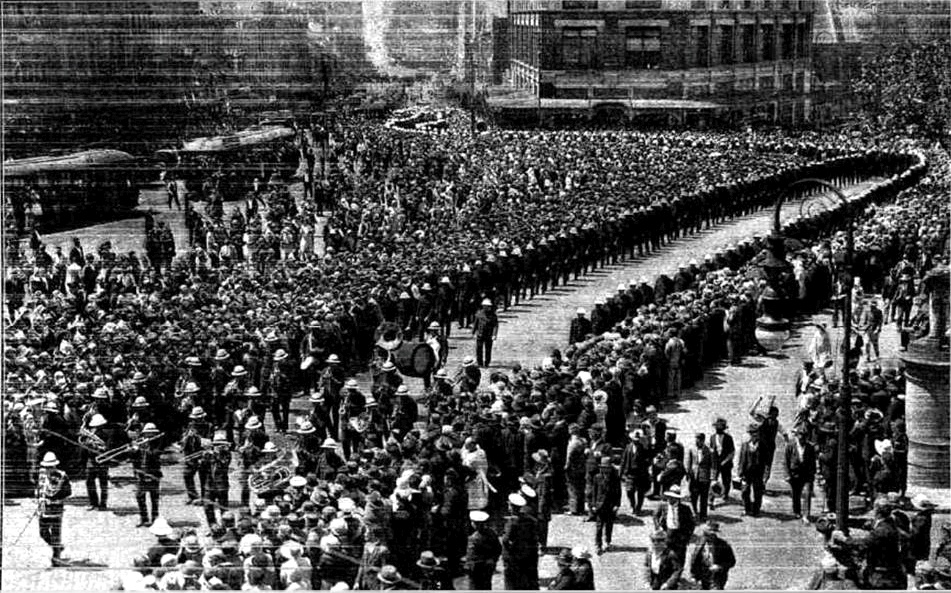
Funeral procession through Railway Square in 5 January 1931 for two police constables, Allen and Andrews, killed in the line of duty. Source: Sydney Mail newspaper 7 January 1931
The Sydney Morning Herald
Tuesday 6 January 1931 page 10 of 14
DEAD POLICEMEN.
Impressive Scenes at Funeral.
THOUSANDS PAY TRIBUTE.
The State paid homage yesterday to the two policemen, Constable Norman Thomas Allen and Constable Ernest Andrews who met their death at the hands of a madman at Bondi Junction on Saturday. There were mourners from almost every part of New South Wales.
Many thousands lined the route as the funeral cortege moved from Wood Coffill’s funeral parlours George-street to the mortuary station; the mortuary platform was thronged when the funeral train moved off to Rookwood and thousands had assembled in the cemetery.
The scene in the vicinity of Wood Coffill’s funeral parlours is likely to be remembered by the thousands of people who thronged the streets leading into Railway-square. Early in the morning bearers of wreaths and floral tributes passed through the doors to deposit their tokens of sympathy. At the approach of noon people began to assemble on the footpath and many entered the chapel to view the coffins. The near relatives arrived at 1 o’clock and the chapel was cleared while Constable Allen’s widow and her mother approached the silver mounted caskets which rested on trestles side by side. An affecting scene followed. Then the simple Church of England burial service was conducted by the Rev Frederick Riley and the coffins were borne to the waiting hearses.
MUFFLED DRUMS
The scene was unforgettable. A solid mass of people crowded the thoroughfares. Presently the mounted troopers urged their restive horses forward and with the deep roll of muffled drums the cortege moved off. Thousands of hats were removed.
Handel’s Dead March in “Saul” was played by the Police Band. Behind the band came a contingent of foot police under the direction of Superintendent Leary. Two hundred men drawn from the various stations, marched behind. Then came the hearses, the wreath-laden carriages, and the chief mourners, Firemen, the sun glinting on brightly-polished helmets, were represented by over 40 uniformed officers and men. At the end of the slow-moving procession came numbers of retired men, friends of the dead officers, and business people from the eastern suburbs.
Along the route to the mortuary thousands stood bareheaded as the cortege passed. At the mortuary gates another huge crowd paid tribute to the dead men.
Among those who marched in addition to the police and firemen, were employees of motor bus companies in the eastern suburbs.
“THEY SAW THEIR DUTY.”
A most affecting scene at the graveside in the Church of England section of the Rookwood Cemetery was the playing by the police band of the hymns “Lead Kindly Light” and “Abide With Me.” The remains were buried side by side.
“Let men’s opinions be what they may,” said the Rev. Frederick Riley in an address at the graveside, ” we should be doing violence to the most sacred emotions of human life if we were to allow our brethren to depart without a word of farewell. We are met here today to pay honour to the memory of two men who were comrades of yours men whom we all respected and loved. Let us remember that these two men died in the carrying out of their duty. They served their King and country as men and soldiers who fall for their King on the battlefield. They saw their duty and the fear of death could not deter them. They have not created a new tradition for the traditions of the police force of New South Wales are amongst the highest in the world already, but these two men have added a new lustre to the traditions of your past. These two young men Norman Thomas Allen and Ernest Andrews, died in the execution of their duty. There is no higher glory to which a man can aspire. We pray to God that those who have been so suddenly bereaved may share the comfort which we know these two brave men are experiencing in the nearer presence of God.”
MAGISTRATE’S TRIBUTE
At the Burwood Police Court yesterday Mr. G. R. Williams, S.M. commented on the bravery of the two constables. They acted nobly and upheld the traditions of the force,” he said.
PALL BEARERS AND MOURNERS.
The pall bearers were.- For late Constable Allen: Constables Tomkins, Martin, Moore, Hudson, Steele and White. For late Constable Andrews: Constables Booth, Kimber, Fraser, O’Neill, Morgan, and Wright.
The principal mourners were Relatives of the late Constable Allen: Mrs Allen (widow), Mrs Prankish (mother-in-law), Mr and Mrs N. Frankish (brother In law and sister in law), Mr and Mrs Sutcliffe (uncle and aunt) Mrs Lamb, Mrs Hourigan, and Mrs Cummings (aunts) and Mr Rowland Allen (cousin).
Relatives of the late Constable Andrews: Mr and Mrs Edward Clarke (sister and brother in law).
The Government was represented by Mr Gosling (Chief Secretary) and Mr McKell (Minister for local Government). Police representatives in addition to the non commissioned officers and men who marched were Mr W H Childs (Commissioner) Superintendents Leary, Mackay and Linegar, Inspectors Winter, Weir, Bennetts, McCauley, Woodrow, Lynch, Duffell, Roberts, McMaster, O’Brien, Chaseling, Anderson, White, Long, Roser, Scott, Michaelis, Robson, Allen, Farley and Fowler.
Retired members of the police force who attended were ex-Commissioner James Mitchell, ex-Superintendents Roche, Cook, McIntosh, Sinclair, Thom, Drew and Park, ex Inspectors Fullerton, W J Jones (also representing the Navy and Army Veterans Association) Fraser, Tracey, Bolton, Smith, Fewster, Doran, Mankletow, Stutchbury, Briggs, Ewen, Dunn, O’Dea and Robertson, ex-Sergeants McDonald, T. Dobson, Payne, A. Smith, Taylor, J. Salmon, J. Loomes, R. C. Harper, Bath and Butcher, ex-Constables Swan and Dixon.
The Board of Fire Commissioners of New South Wales was represented by Mr T J Smith, M.L.C. (president) Mr J McNamara (Commissioner), and Mr H M Webb (secretary and executive officer).
Mr Nance chief officer New South Wales Fire Brigades was present and 38 men marched under Mr Grimmond (deputy chief officer). Inspector Neeve, District Officer McLachlan, and Station Officers Arthur, Neville, Parkes, McCarthy, Rust, Currier and Sclater.
Others who attended were:- Judge Sheridan, Mir George Cann, ex M.L.A., Mr J Herlihy ( Under-Secretary for Lands) representatives of the Prisons Department including Mr Seery (superintendent of the Long Bay Penitentiary) Mr T.W. Irish (Assistant Under Secretary for Lands) Mr H. B. Mathews, (Surveyor General Department of Lands).
Mr N. W. Bond (representing the head office Bank, of New South Wales) representatives of ambulance divisions, Mr. and Mrs. C. R. Law, Mr. A. L. Parker (representing Superintendent O. H. Parker, of Goulburn) Mr Foster Doolan (vice president Police Association), Mr B Fortescue (secretary Police Association), Mr C T Thackeray (Police Association staff), Mr F M Jackson (representing Mr F C Hackett of Merriwa), Mr W T Missingham,
M.L.A., Mr A J Pollack, M.L.A., Mr W P Monaghan (Waverley Cemetery bus service), Mr W M Niland Mrs A Shuttleworth, Mr H L Harnett (representing Mr F M Burke, Speaker of the Legislative Assembly), Mr W E Clapin (representing Sir John Peden, President of the Legislative Council), Alderman David Hunter (Mayor of Waverley), Mr T J Thompson (Deputy Town Clerk of Waverley), Mr and Mrs A Williams, Miss Williams, Miss Beryl Williams, Miss Brady, Mr and Mrs McMorland, ex Warder Charles Stone, ex Warder Little and a number of eastern suburbs business people.
The wreaths Included those from the mother and other relatives of the late Constable Allen, relatives of the late Constable Andrews, the New South Wales Police Commissioned Officers Association, comrades of No 2 Division, Redfern Police, New South Wales Police Association, members of the Railway Detective Office, officers, detectives, and staff of the C.I.B., No 3 Police, comrades of No. 10 Division, cyclists and drivers of police headquarters, officers and men of Circular Quay Fire Station, comrades at No. 4 Station, police at No 7 Station, “police pals at Bondi Junction.” end eastern suburbs bus drivers and conductors.
Awards: Queen’s Commendation for Brave Conduct granted on 6 June 1975 ( Rescue from a sinking yacht )
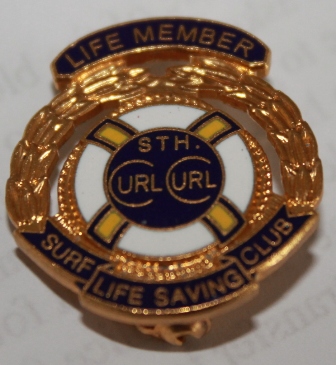
Australian Sports Medal – granted 27 February 2001 ( Awarded life memberships for outstanding contribution to our sport )
Born: Monday 24 November 1930
Died on: 25 December 2014
Cause: ?
Age: 84
Funeral date: Sunday 11 January 2015 @ 2pm
Funeral location: South Curl Curl Surf Life Saving Club, Carrington Pde, Curl Curl
Buried at: ?
Buster BROWN
Buster BROWN
Roper is NOT mentioned on the Police Wall of Remembrance * NOT JOB RELATED
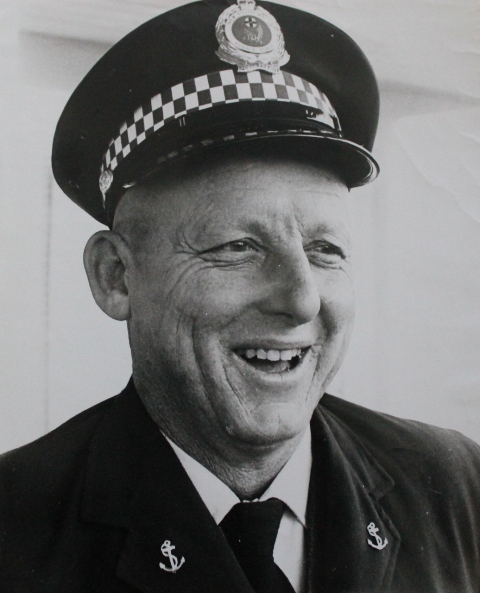
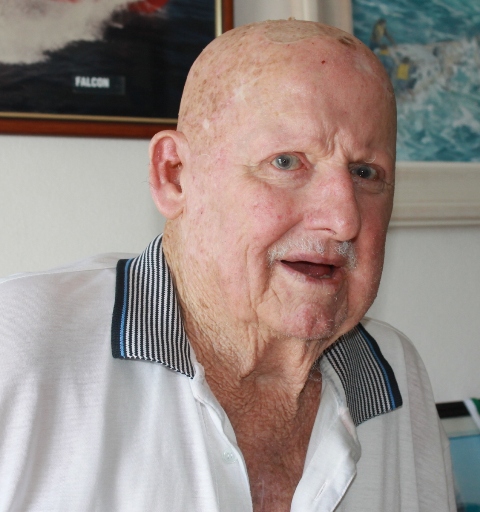
Roper Lars Scott ‘Buster’ BROWN, 84 old, former Regd. No. 7585, a Veteran member of the Central Coast Branch of the RPA.
Buster passed away on 25/12/2014 and his funeral is proposed to be held at 2pm on Sunday 11 January 2015 at the South Curl Curl Surf Life Saving Club, Carrington Parade, CURL CURL.
Location of funeral service:
Roper Lars Scott (Buster) Brown Q.C.B.C.
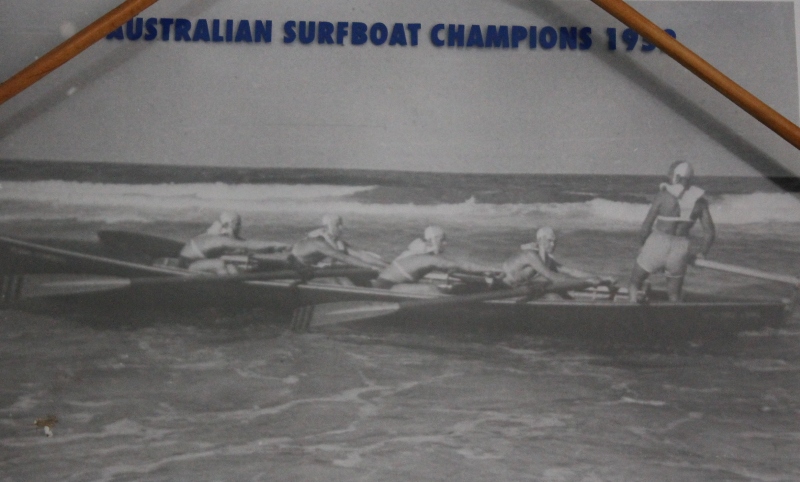
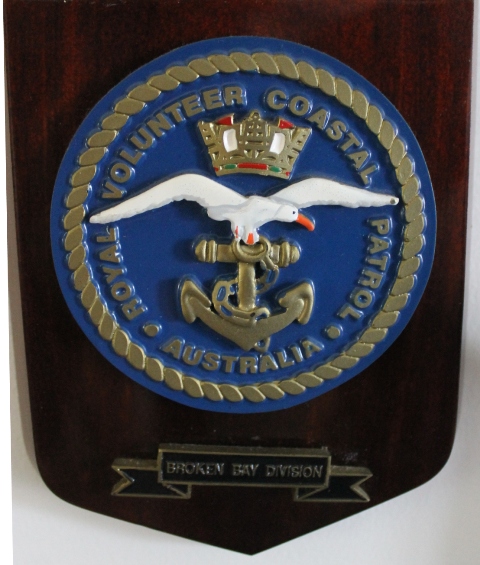
The gentleman who worked for years to ensure Pittwater has a trained team of Water Police-people was also a champion in Surf Boats at Curl Curl when younger. A member of the Volunteer Coastal Patrol, for which he received a Life Membership just a few weeks ago, one of 7 Life Memberships, this soft spoken man is a no frills individual who has spent his life serving others.
When and where were you born?
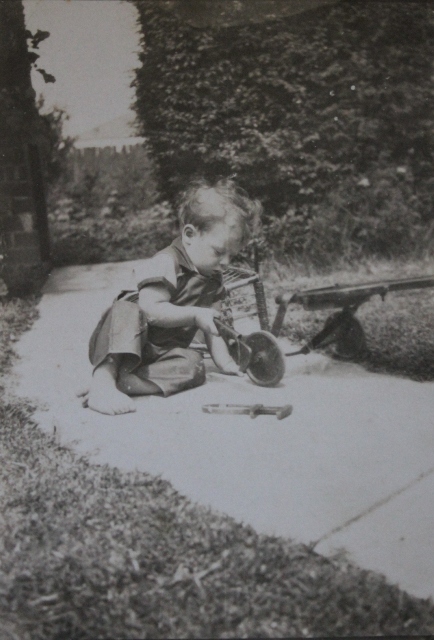
In the Rachel Foster Hospital in Sydney, 1930.
Where did you grow up?
I lived in Werribee for a short couple of years and then we shifted to Willoughby. We lived there until the start of the war (WWII) and then the whole family of kids were migrated out to the western side of Sydney and settled at Lidcombe. We lived there for the rest of my hoodlum life – or childhood. I lived there until I met my missus and got married and then we shifted to Harbord.
What was Lidcombe like during WWII?
Full of Yanks and not much else. Now it’s full of Arabs and Afghanis. I took my grandkids up there a couple of years ago to show them where grand-dad lived and there wasn’t a word in English apart from ‘Police’ on the police station. On one window of a shop it said ‘we do not talk Australian and we are not Australian’. That’s a great mindset, isn’t it?
Do you remember the day peace was declared?
Not really, I was 15 when the war ended and my main interest was looking for work. All the jobs were given to Returning Servicemen first.
Where did you go to school?
Lidcombe Public school and then Homebush High School.
What did you do when you got out of school?
I went and worked in a foundry at Bankstown Foundry as a Jobbing Moulder making engines from iron and steel, occasionally using brass; castings and engine parts. I think it’s still there now – on Parramatta road at Auburn.
I served my apprenticeship there, which took about seven years for a Moulder in total. I was going to do Metallurgy but didn’t have enough education. When I finished the trade course I got an offer to go to Queensland and work in the sugar cane industry.
I went for the season cutting sugar cane in Coumala and then went on to work in and around the bush; everything up there is in a system where there’s a season – there’s a season for ringbarking, a season for fencing etc. I did the lot and worked up there for about 12 months and that was enough for me, I found out I didn’t want to be a farmer and came back home.
I went back to the Foundry as they’d said ‘come back here, we’ll always have a job for you’ – then about five minutes later it was a case of’ you were the last to start, you’re the first to go’. Things were getting a bit bad. I got another job at another foundry in Regent’s Park where they were working the kind of set up foundries had in the 1930’s. it was a really slow process. They were doing large castings, making large wheels for trains and the normal rate for these was two and a half for one day and two and a half the next.
I’d learnt casting and its foundations and was making the five in one day. The shop steward came over and said “you’re working too hard, go back to two and a half a day.”
So that didn’t satisfy me so I started looking for other work.
My father was in the coppers and he said “Don’t ever join the Police Force it won’t suit you.” so I went and put my name down to join.
I passed the Entrance Exam and was one of the last ones to get trained out at Penrith in the old building they had at the Air Force base. We were up there learning law and all the other stuff you had to know, this was 1953.
That year was a big year, 1953. I’d gone into the South Curl Curl Surf Club when I was 15 and was in the rowing. I worked my way up through the B Grade to A grade.
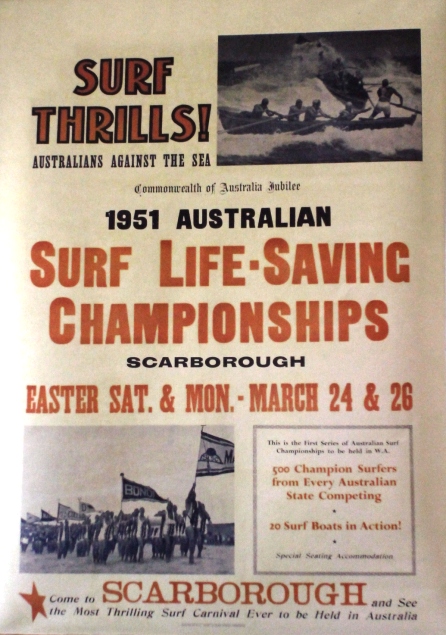
In the first year we did a trip to Western Australia on the back of a truck. It was very exciting – every time we came to a waterhole on the trip across we’d put the boat in and have a row practice. We went to Scarborough for the championships that were on there and we came second.
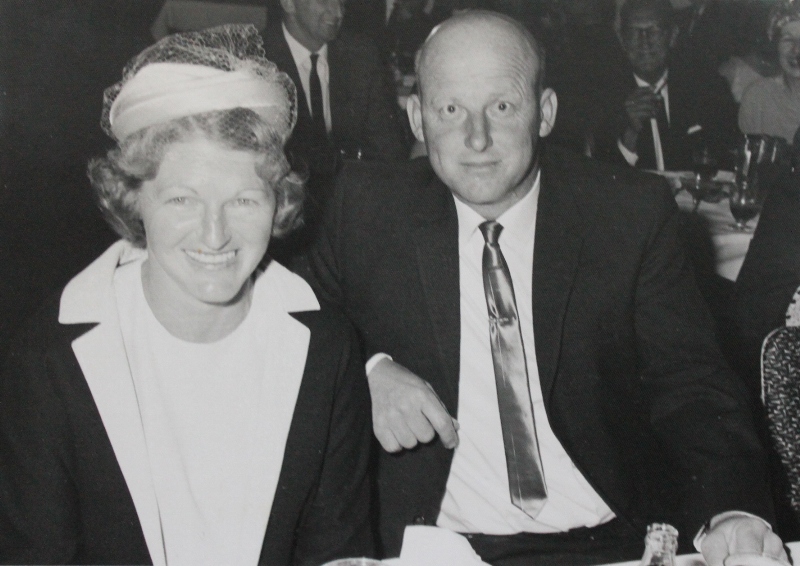
That same year I met my missus, she lived in Harbord. We went around for a year or two and finally I married her in 1955.
with wife Agnes
The next year, 1954, I was still rowing A crew, and we won the National Title. Here we were, the first team from Curl Curl, to ever win a National title.
South Curl Curl – Boat Crew: Sir Adrian Curlewis was Patron of the crew’s Jack Wilson surfboat.
When did you start with the Royal Volunteer Coastal Patrol?
1960. I continued to row for another season but we didn’t have the spirit that we’d had before, we couldn’t get interested. I did become a Life Member there though. I won the Honour Blazer which was the highest ranking and an indication of all the extra things you could be involved with in the Surf Club. My eldest son, incidentally, won the same award twenty years later. We were the first father and son in the club to do this. Now my grandchildren are involved so they’ll be keeping the name going in the club.
What, to you, is the best thing about joining a Surf Club?
It was the greatest part of my life. I didn’t have a family life because my brother had polio. My father and mother had their whole time taken up looking after him. So I stayed at the Surf Club then we rented a shack a few streets away from the Surf Club and I lived there mainly for a year or two. A president of the surf club and his wife became like my mother and father, they adopted me, and it was like nothing ever happened except in the Surf Club for a few years there.
It wasn’t until the 1960’s when the Volunteer Coastal Patrol invited me to be a guest speaker. I was in the coppers by then and they were officially an auxiliary of the Water Police at that time. They wanted to know a bit more about what we did.
You see during the war the Water Police was practically down to nothing, all our boats were pinched by the Yanks, and the Harbour was patrolled by the VCP. They looked after the harbour (Sydney Harbour) and in fact dropped a depth charge on one of the submarines that came here during that time.
That night that I went to speak I didn’t have a beer, I thought I’d wait until I’d finished my talk. Just after I finished my speech a fellow came with a note looking for Constable Brown. That was the night the Viscount Airliner crashed in Botany Bay.
I had to go report to work straight away, in my dinner suit, and I was in the Flood-Boat section by then. We took our Flood Boats up to Liverpool- we didn’t know where the plane had crashed, they knew it had crashed in the water but they didn’t know whereabouts exactly. So we went up to Liverpool and came right down the George’s River.
By the time we got to Tom Ugly’s Bridge they’d found the aircraft – it was right in the middle of Botany Bay. We took our boats over there and started – in those years the Navy was supposed to do any body recoveries from civilian aircraft. The first few divers that went down from the Services came up spewing in their face masks, they couldn’t handle it.
Their Senior bloke got embarrassed, went crook at them and said “I’ll show you what to do.” And he went down, and he came up spewing in his face mask.
So that really put our divers on the map because of course when everything and everyone else fails the coppers get the job. We worked there for a week to ten days recovering bodies – every person was in a terrible state – and we had to recover every part, convey them to a Morgue tent set up near the end of the main runway. It’s amazing how they identified everyone – they even went to people’s homes to collect hair from combs and the like to so they could identify all correctly. I recall one reporter who visited us said “these men will never be the same again.”.
Viscount Wreck In Botany Bay AIRLINER SPLIT OPEN IN CRASH. SYDNEY, Friday.—Police skin- divers late to-day found the fuselage of the Ansett-A.N.A. Viscount airliner which crashed last night in Botany Bay, killing 15 people. Nine of the 11 passengers were from Canberra. The skin divers said the fuselage was lying in about 25 feet of water and split open “end-to-end.”
Bodies Found. The divers said bodies could be seen inside. The bodies of a man and woman floating near the wreckage were recovered late to-day. The Minister for Civil Aviation, Senator Paltridge, said in Melbourne a special board would hold a public inquiry into the crash. A spokesman said to-night the Department of Civil Aviation did not know yet whether the plane exploded in mid-air. He said injuries to the bodies recovered could have been inflicted by an explosion or by the impact of the aircraft hitting the water. The Viscount, owned by T.A.A. but on charter to Ansett-A.N.A., left Kings-ford Smith Airport last night at 7.17 p.m. The plane’s pilot, Captain S. Lindsay, was reported to have been ordered to fly over the sea to avoid thunder-storms.
Three minutes after take-off Capt. Lindsay radioed at 5,000ft. and gave his call sign: “Tango Victor Charlie,” and added “Thank you.”
At 7.22 p.m., all communication with the airliner was broken. Airport officials immediately brought emergency procedures into operation and informed police. After a radio appeal, reports were given of an explosion seen over the sea off Malabar.
The Prime Minister and Dame Menzies said in a message of sympathy yesterday,
“We have been shocked by this appalling air tragedy and send our pro-found sympathy to the bereaved families. We are deeply moved by the sorrow of our fellow citizens in Canberra.”
Viscount Wreck In Botany Bay AIRLINER SPLIT OPEN IN CRASH. (1961, December 2). The Canberra Times (ACT : 1926 – 1995), p. 1. Retrieved from http://nla.gov.au/nla.news-article105854369
The Viscount crashed on November 30, 1961 killing the 15 people aboard. Nine were from Canberra. FORTNIGHT DELAY IN INQUIRY. (1962, May 23). The Canberra Times (ACT : 1926 – 1995), p. 9. Retrieved from http://nla.gov.au/nla.news-article13057573
That’s a horrendous job Buster.
Yes, I think it will tell on me for the rest of my life. It’s ancient history now.
At any rate, from then on I maintained an interest in the VCP. I was stationed at Dawes Point at Circular Quay – I did ten years there as an apprentice, got to know everything there was to know. When I got to be a Sergeant they said ‘well you can jump off – you’re the last to be promoted, you’re the first to go.’
I’d heard this story before.
I was transferred to Mosman. Mosman was like a penal servitude station. the blokes there had all lost interest in the job, they were all sent there for penal servitude and they couldn’t have cared less. Demoralised.
Buster BROWN
I’d been on Water Police duty for ten years so I had to get out the rule book and learn the rules of General Duties Policing, which didn’t come too easy. None of the blokes on my shift could drive a car, they were all too junior. None of them could work the switchboard. So I had to run around with a couple of probationary constables on one hand and a rule book in the other.
It carried on like this for about six months and I was fed up with it and about too put in an application to join the Maritime Services Board. I had the Maritime qualifications and was sick of the job I was doing.
The night I was due to put in my resignation one of the blokes on the shift didn’t come to work so I sent over to Manly coppers and asked them to go around and see him, but he thought it was his day off and didn’t come to work – it was the worst day of my life in some ways. There was a bureau –cyclist, a highway patrolman they call them today, he’d fallen off his motorbike and broken his leg – I had about four other serious accidents that shift. I had a lot of paperwork, which you get in the police force, traffic enquiries, all sorts of things, and as I was getting into this my transfer to Collaroy came through. I hadn’t even applied for it.
I shut up the shop for the nightwatch and at three o’clock in the morning I was still typing to get the backlog of work done and the Night Officer tour, in our job you have a Night Officer who goes around to all the stations to check the prisoners and all your work, this that and the other. He said ‘what are you doing here? You should be home by now.’ I explained what a day I’d had to him and so he sat down at another typewriter and started helping me. He worked with me for about two hours and by this time it’s breakfast time so he drove me home, as I’d missed my bus, and I had to start at Collaroy at eight o’clock!
What was Collaroy like ?
I worked on the motorbikes and sidecars – I did summons and warrants. It was a great station to work at for experience because on a Friday night two of us would put the motorbikes in the shed and work in a car together. The bloke I was put with was a fellow called Jack Hammond and he was a brilliant tactician I learnt a lot from him.
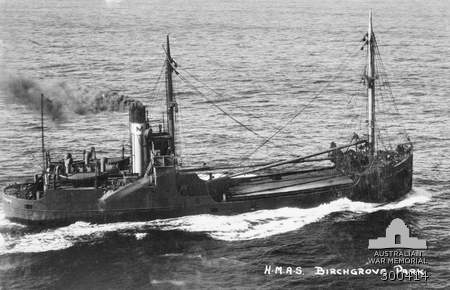
We copped fatal accidents by the score. We had a shipwreck one week; the Birchgrove Park. The Birchgrove Park was a collier that used to carry coal between Newcastle and Sydney. When they got to Broken Bay they thought they’d shelter in there for a while but it was just as bad in there so they pushed on.
When they got off Avalon their load shifted and upset the balance of the boat, she would have been about 180 foot I guess, and she tipped over and sank about a mile and a half off Avalon. That would have been 1956.
COLLIER SINKS NEAR SYDNEY HEADS. SYDNEY, August 2. – Nine men were drowned, one is missing and four were saved from the collier Birchgrove Park, which sank within sight of Sydney Heads today. DESPERATE;. Shivering crew members in lifejackets huddled on the listing collier’s deck for 10 minutes before the 640-ton vessel keeled over in pitch darkness. Their S.O.S signals were sighted at 2.45 am., minutes before they were ordered to abandon ship and leap into icy, raging seas. The survivors dived into the water and swam towards a half-submerged lifeboat which was torn from the ship’s side. A third survivor joined them, but died in the lifeboat three hours later as his companions fought to reach shore. The men finally were washed ashore at Lobster Bay, 27miles south of Gosford.
They are Carl Olsen, 35.fireman, of Matraville, Sydney, and Neil Stuart, 29, able seaman, of Manly, Sydney. Their dead companion was the ship’s cook, Charles Camilleria, 49.of Pott’s Point;, Sydney. Olsen and Stuart staggered ashore at Lobster Bay and were rescued and taken to a shack by a local fisherman.
CARGO SHIFTED. Tonight, Olsen said the cargo of 500 tons of coal began to shift as soon as the collier left Newcastle late yesterday. He said the listing was noticed a few miles from Newcastle, but little notice was, taken at the time because the collier, when loaded, always listed to starboard. Olsen said the shifting of the cargo became more pronounced during the night and eventually it became impossible to control. He said the skipper, Captain Laurence Lynch 37, finally called: “All hands clear” as the ship was about six miles off Sydney Heads. The 14 crew members had donned lifejackets waiting for the last moment to leap overboard. He said that as the ship began her last dive the crew Jumped overboard. Olsen said some men grabbed pieces of timber and tried to hang on. He said it was impossible to lower lifeboats because the ship was listing too badly.
COILLIER SINKS NEAR SYDNEY HEADS. (1956, August 9).
1939-07-24. AERIAL STARBOARD SIDE VIEW OF THE COASTAL COLLIER BIRCHGROVE PARK PRIOR TO HER COMMISSIONING INTO THE RAN AS AN AUXILIARY MINESWEEPER. (NAVAL HISTORICAL COLLECTION) (ALSO FORMERLY P0444/214/179) image: 300414, courtesy AWM
Diver’s body found. SYDNEY, Sunday. —The body of a skindiver who disappeared on March 19 this year while diving to the wreck of the collier Birchgrove Park, three miles off Avalon Beach, was recovered today.
It was found by a team of skindivers from the Canterbury Underwater Club, which was diving to the wreck during the weekend. One of the divers, Michael Kenny, of Bundeenan, said the body had been found lying half-covered in sand alongside the wreck near the propeller. The divers had returned to the surface and got in touch with Sydney Water police, who had requested that they recover the body. Police have yet to announce the name of the dead man. Diver’s body found. (1972, May 1). The Canberra Times (ACT : 1926 – 1995), p. 9. Retrieved from http://nla.gov.au/nla.news-article102018864
Where were the fatal accidents occurring then?
We worked an area from William Street Brookvale out to Palm Beach because Avalon station didn’t work of a night and our left hand boundary was Hornsby. The Wakehurst Parkway – there were quite a few accidents there. One night I had the worst accident while working at Collaroy station – there were three killed and five injured, a car rolled over a motorbike – there’s too much blood and guts in this line of work, or so I found.
We handled situations like a bloke slaughtering a pig in his back yard and some of the most amazing cases that you could come across. A woman died in Brookvale and was dead six weeks before anybody found her. She was fly blown and was quite smelly work tending to her. Somebody had to do it and everything fell on the copper’s shoulders.
Did they offer any kind of counselling in those days Buster?
Counselling?! (laughs); It’s funny you should ask that; I don’t think they’d heard of it then. The first counselling I ever remember was when they were doing the Milat murders and interviews; he was the backpacker killer. The police that were doing the searching for the people in the scrub were counselled every three or four hours. That was the first we’d ever heard of counselling.
When we had a bad job we would finish the work and our shift and go to the pub and have a couple of beers. No one would believe some of the case that we had to handle, it was horrendous at times.
I remember one bloke who had put an elephant gun into the roof of his mouth and I had to pick up all the parts – there was quite a lot of them over the years, that kind of job you had to attend.
There were other kinds too though; I got a warrant for a bloke who lived on the southern end of Mackerel. I got out the boat and went over to where his house was, he had a shack up there, up the top of the hill. When I got there I told him to pack his pyjamas and he said ‘would you mind if I had a plonk before we went?’ ; a plonk is a glass of wine, the heavy version. So I said yeah, alright. I didn’t realise he was already full of it and one more was enough to knock him over.
I had to carry the bugger down the cliff! Very exciting.
When we had Prince Charlie out here I’d give him a trip on the bay – the Army had sent him out to have a look at Currawong. We had another Royal visitor – they put her on Boomerang, that big yacht that the mouth organ people used to own
Frank Albert or the Allan’s Music people ? Both had a yacht called ‘Boomerang’…
The Allan’s people. That yacht was completely rebuilt for that trip, new motor and everything in it, refurbished throughout. We escorted her around into Refuge Bay.
They anchored in the middle of the bay and had their lunch. We sat at the entrance of the bay in the boat, with no lunch, and waited for her pleasure. She then went for a ride in a speedboat and thought it was great fun to zoom across the water right at us and at the last moment turn away. At any rate, we got her home in one piece.
I think I was still at Collaroy at this stage and this illustrates how varied the work was, how many kinds of jobs you attended to.
Where were you posted to after Collaroy?
I went to Mona Vale. Mona Vale was, at that stage, having a lot of boat problems. They had no one with any experience. Four men were proficient. We had an outboard on a dinghy – it was one of the old flood boats, we used it in our night work for quite a few months until we got a decent boat – a 26 footer with a single V8 motor – the Vanguard.
The Vanguard had been stationed up the north coast at Forster and the worm had gotten into her. They decided to put a new boat in at Forster, patched the Vanguard up and we got her. I had to go up and train people in the use of an aluminium boat and an outboard.
I spent a few weeks doing that on the morning shift and of an afternoon I went fishing.
What did you catch?
Bream beautiful bream – all the oyster leases attracted the bream. The big black bream had these two front teeth and would chew into the flat side of the oyster and suck the oyster out. This way they’d grow big and taste lovely.
So back to Pittwater?
We kicked along with the Vanguard for a while until she wore out. I still only had four men and was expected to man the Police boat with a crew of two as many days as we could possibly make it.
What was your patrol area then?
Mainly Pittwater and the Hawkesbury. We did medical calls up the Hawkesbury and the Brooklyn boat was not working. The ambulance station was at Mooney Mooney Creek at that time. We’d bring some of them back down here.
When I first got there I put in for extra troops and I think we got four. You needed six really. We got a boat called the Valiant then – that was the Valiant number one; a 26 footer with a single screw – we were still working only Pittwater, the Hawkesbury and up into Gosford. We did a bit of sea work but it wasn’t our role to then.
We were appointed as a sea search and rescue authority about 1965 I think. It became our responsibility then. Some people were going crook because I’d be going to sea with two men on the Valiant and quite often, because I couldn’t get a deckhand, I’d have to go and work on my own – that’s why I carried a dinghy so I could anchor the Valiant, row ashore and attend to the problem and so forth.
I put in for a better boat and more men – I think by the time I finished we had eight men and were still using the General Duties blokes as deckhands. This was a bit stupid because if I fell out of a boat they couldn’t even turn the boat back to come and get me and I was the most important bloke in the boat.
So I began teaching them how to drive the boat, how to start and stop the engine, and how to come to my aid if I fell over. I periodically threw something over the side – a life buoy or a bottle, and I’d tell them – ‘I just fell over – go and pick me up.’
I’d put a watch on them and tell them ‘I’m timing you.’
One bloke went round and round in circles and he couldn’t get me – he couldn’t get the bottle. He kept going round and round in circles and I thought ‘this bloke’s never going to be a boatman, no points for him, thumbs down’ . I said to him ‘what are you interested in?’ and he said ‘photography… and I like drawing’ , so I said ‘I think the scientific branch would be a lovely job for you.’
I rang the boss of the scientific branch and said ‘I’ve got a bloke here who’s terrific with a camera and terrific at the sketching plans of accidents – do you want him?’ So I got rid of him – left room for one that could steer a boat.
How many were on a shift ? One on the radio back at the shed and…
No, there was no one on the radio – we’d have at the most two on the boat per shift at that time.I went to Mona Vale. Mona Vale was, at that stage, having a lot of boat problems. They had no one with any experience. Four men were proficient. We had an outboard on a dinghy – it was one of the old flood boats, we used it in our night work for quite a few months until we got a decent boat – a 26 footer with a single V8 motor – the Vanguard.
The Vanguard had been stationed up the north coast at Forster and the worm had gotten into her. They decided to put a new boat in at Forster, patched the Vanguard up and we got her. I had to go up and train people in the use of an aluminium boat and an outboard.
I spent a few weeks doing that on the morning shift and of an afternoon I went fishing.
What did you catch?
Bream beautiful bream – all the oyster leases attracted the bream. The big black bream had these two front teeth and would chew into the flat side of the oyster and suck the oyster out. This way they’d grow big and taste lovely.
So back to Pittwater?
We kicked along with the Vanguard for a while until she wore out. I still only had four men and was expected to man the Police boat with a crew of two as many days as we could possibly make it.
What was your patrol area then?
Mainly Pittwater and the Hawkesbury. We did medical calls up the Hawkesbury and the Brooklyn boat was not working. The ambulance station was at Mooney Mooney Creek at that time. We’d bring some of them back down here.
When I first got there I put in for extra troops and I think we got four. You needed six really. We got a boat called the Valiant then – that was the Valiant number one; a 26 footer with a single screw – we were still working only Pittwater, the Hawkesbury and up into Gosford. We did a bit of sea work but it wasn’t our role to then.
We were appointed as a sea search and rescue authority about 1965 I think. It became our responsibility then. Some people were going crook because I’d be going to sea with two men on the Valiant and quite often, because I couldn’t get a deckhand, I’d have to go and work on my own – that’s why I carried a dinghy so I could anchor the Valiant, row ashore and attend to the problem and so forth.
I put in for a better boat and more men – I think by the time I finished we had eight men and were still using the General Duties blokes as deckhands. This was a bit stupid because if I fell out of a boat they couldn’t even turn the boat back to come and get me and I was the most important bloke in the boat.
So I began teaching them how to drive the boat, how to start and stop the engine, and how to come to my aid if I fell over. I periodically threw something over the side – a life buoy or a bottle, and I’d tell them – ‘I just fell over – go and pick me up.’
I’d put a watch on them and tell them ‘I’m timing you.’
One bloke went round and round in circles and he couldn’t get me – he couldn’t get the bottle. He kept going round and round in circles and I thought ‘this bloke’s never going to be a boatman, no points for him, thumbs down’ . I said to him ‘what are you interested in?’ and he said ‘photography… and I like drawing’ , so I said ‘I think the scientific branch would be a lovely job for you.’
I rang the boss of the scientific branch and said ‘I’ve got a bloke here who’s terrific with a camera and terrific at the sketching plans of accidents – do you want him?’ So I got rid of him – left room for one that could steer a boat.
How many were on a shift ? One on the radio back at the shed and…
No, there was no one on the radio – we’d have at the most two on the boat per shift at that time.
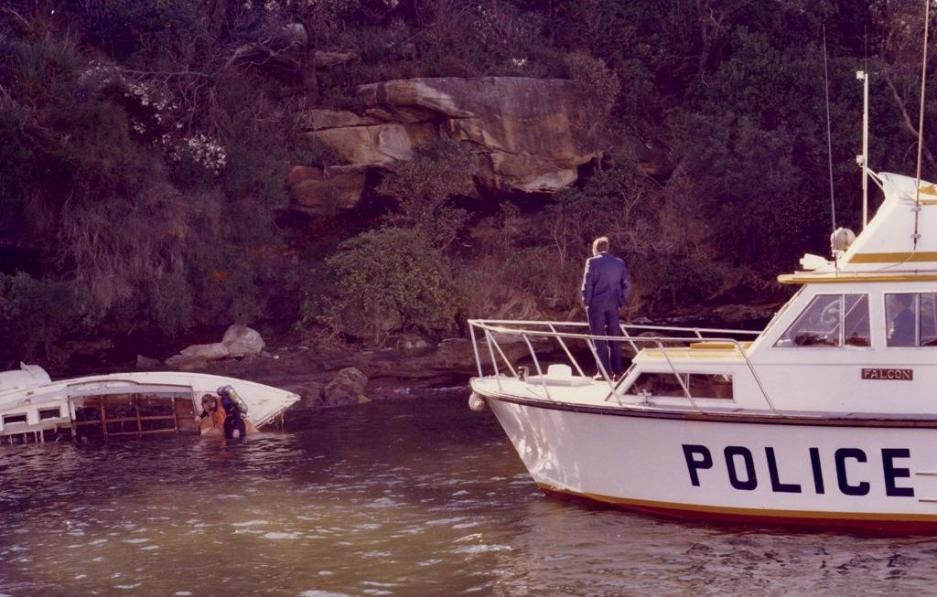
The Falcon 1
I’d studied bomboras – there used to be one at North Steyne, Manly. When I was in the Surf Club I used to study the bombora and work out the timing of the waves and so forth – I found they were frightening. So I had a little bit of experience about bommies and I took the boat in there.
We got aligned to them but they didn’t know what to do so we had to bloody tell them what to do.
We didn’t know until afterwards that one of them was a solicitor, one of the sons of the Wedgewood family. He’d been washed overboard some time before we got there and of course in that kind of sea he wouldn’t have lasted two or three minutes.
We put the first on to them and we pulled it tight. As we tightened up the rope the biggest wave of the year came up. I gunned my boat to get up through it. When the yacht came to go up through it he didn’t have enough momentum and the rope snapped. So we had to start all over again and get a second line to them.
We got the second line onto them and managed to hold them off to us then and got out of the bommie itself. We headed about a mile away from it and decided we’d get these people and put them on our boat. We got the five people off – four men and one Japanese shiela, one at a time. They didn’t want to do it but we told them to jump into the life-ring and we’d pull them over to our boat.
Well Friendly, he was on the back transom, with Boots hanging on to his belt so he wouldn’t fall in. He pulled them – he pulled them up into the boat and dropped in the cockpit and then threw the buoy back to the next person. We got them all in.
Their boat was, it never sank while we were there, but it was very low in the water, full of water with all the rigging hanging off it, and it was almost dark. I wasn’t going to leave them there alone after dark, we might have lost the lot of them.
Once we got them all aboard I set sail for south. We actually got blown backwards five miles in an hour. The storm was the biggest we’d seen for many years. I was looking out at the light at Norah Head and instead of me gong past it I was actually going the other way – we were being blown back. It was going past me – not the other way around, I thought ‘it’s not supposed to do that!’.
I ran into this big row of waves – now, I’ve always counted the number of waves in succession and quite often it was an odd number and usually eleven, twelve or thirteen would be the maximum in any regular kind of sea. I counted up to fifty waves, and they didn’t get any smaller, so I stopped counting. I started to think, maybe we couldn’t make it. And these people were cranky at losing their boat, cranky at having to get wet and I had them all stacked in the bloody four feet cabin. Brian put mattresses on the floor, because I never left the wheel – I was on the wheel for a good 12 hours. At any rate we put them in the cabin, low to the ground so their weight would be low in the boat.
The wind was heaviest when we were going backwards. It eased off a bit and I managed to make headway – I was able to make about one mile an hour, the sea up and down like a yoyo the whole way. I finally saw a ship at sea, travelling south, and I knew from his lights and what distance from us he was – you see all ship lights have a distance they’re visible – so I came in to where I could see by his ship lights that I was two miles off him. I then ran a parallel course with him – we couldn’t see the shore – so I went that way on a southerly heading for six or seven hours and finally we saw the first of the Barrenjoey lights. There’s four flashes on the Barrenjoey Light – it was at least four hours before we saw the four flashes intact. By dead reckoning I’d say I was ten miles off the reef at the Northern side of Broken Bay where the Maitland was wrecked – we’d been blown that far out.
At this time the Police launch Allen came up to help us. We were doing pretty well by then ourselves but it’s always comforting to have company in the form of a bigger boat and cuddle under their arm. They couldn’t see us though because of the sea. So I said ‘put up a flare’ so dear Brian (Friendly – Brian Friend OAM) , he got out the flare gun, and we had an older one, and at the moment he fired it the boat kicked up in the air and the flare hit the bridge. It ricocheted off the bridge and almost went into the cockpit – we had a leaking petrol engine, a carbie full of saltwater and petrol – if that had gone in the cockpit we would have been blown to kingdom come. At any rate, it ricocheted out into the ocean but the Allen didn’t see us so we had to fire another one. They then spotted us – we weren’t really far away from them but they couldn’t spit us prior to then because of the sea.
I knew exactly where we were then of course. At last we could see the Barrenjoey, four flashes, ‘that’s home, let’s get in there.’
You must have slept for a week after that one…
Would you believe, Brian and I had to go to work the next morning?
Didn’t they have any relief Water Policemen?
No, they didn’t have anybody.
Why didn’t they train some more people for the water?
I spent the 14 years I was there writing reports telling them it was vital that the crew be increased. Because of the rescue, the Votan, they finally took notice of us. A year or two later they announced that it would be a full time Police Station. They put 18 men there. We were able to have a decent crew, a trained crew, oh mate, it made so much difference – finally.
You would have got a few hours sleep of a night ?
Oh yeah (laughs). All of a sudden you didn’t have to work morning and night. We were able to go to work and of something had happened you could have the next day off and recover.
We finally got the people into Pittwater – the Palm Beach wharf had three foot of water over it because the tide had been held up in the river by the storm, and the backwater was held right up, so I took them to the Royal Motor Yacht Club. They’ve got a high wharf so I was able to go alongside the wharf there and meet the ambulance and get them off safely. They all went to hospital.
Brian, (laughs) Brian kissed our boat, and I just sat there and almost collapsed.
Was that the worst rescue or incident you had to attend?
No, the worst job I ever did was the Viscount airliner crash. The Votan rescue was the biggest sea I’d ever been in – it was so bloody rough.
What other duties, apart from medical trips, rescues and guarding Royalty having lunch up the river, did you have?
We were the Fire Brigade on the water. We used to do all that from the Police boat; we had a three way pump, so you could suck your own bilge, you could pt a pipe into another boat and suck that out or use that to suck sea water to fight a fire.
Anything that caught fire on the western foreshores we looked after. With boats, most boats, they’ve got to fill up and sink before the fire will go out. We did do quite a few of those though; it reminds me of a story – we went up to Palm Beach, there was a boat on fire just off the Palm Beach wharf. Boots’ brother worked at the machine shop there – the one back towards Careel Bay. The Shore Fire Brigade arrived with sirens and flashing lights and all that other stuff. They parked on the beach and the officer got in a dinghy and rowed out to the boat on fire at which point he said ‘oh, we can cover this, you blokes can buzz off now.’
He went back and got a hose and hung onto the hose over the back of the dinghy and pulled it out until he got near the fire and then sang out to the Fire Brigade ‘turn on the pressure!’
Well, I don’t know whether you’ve ever seen a jet boat; this dinghy went around the bay so bloody quick with a jet stream pushing him. (laughs)…it was the laugh of Pittwater there for a while! He was sorry that he told me to piss off….(laughs)….
How many years were you in the Police Force all up?
Buster BROWN
30 years altogether – I was 14 n the Pittwater; I did 10 at the boatshed and about 4 at Collaroy. When I was at Collaroy I applied for the boats and the Water Police but they wouldn’t accept me because I wasn’t ex-Navy, as it was then. I had to get in by joining the Flood Boat section and making a name for myself there. I established that I could handle a boat well and they then accepted me.
I was transferred tot here and got all the qualifications that were necessary. What made me cranky was once I’d got all the qualifications and had all the experience in the world, they still transferred me to Mosman on General Duties.
It wasn’t until, and I’ll use this expression, it wasn’t until ‘somebody pissed in the pickle’, that’s the only way of saying it, at Mona Vale and they wanted to transfer him to somewhere for penal servitude that I got a go. So I got transferred to Mona Vale, not because of any boating experience or any qualifications, I got transferred because this bloke had pissed in the pickle.
When I hear an officer say ‘we sent you out there to do a good job and you did that’ well I think ‘that’s crap. The only reason you sent me out there was because this bloke was mucking up and you had to get rid of him.’
What I did work at for at least five years was getting a full time show there.
Yes, you’ve saved lives Buster.
I was happy with that. It started and they said ‘do you want to transfer back to Sydney Water Police?’ but I was getting a bit long in the tooth, I was a First Class Sergeant by then; I said ‘yes, I’d like to go back to Sydney for my last few years’ (Sydney Harbour). They transferred me back there.
Were you there for the Olympics?
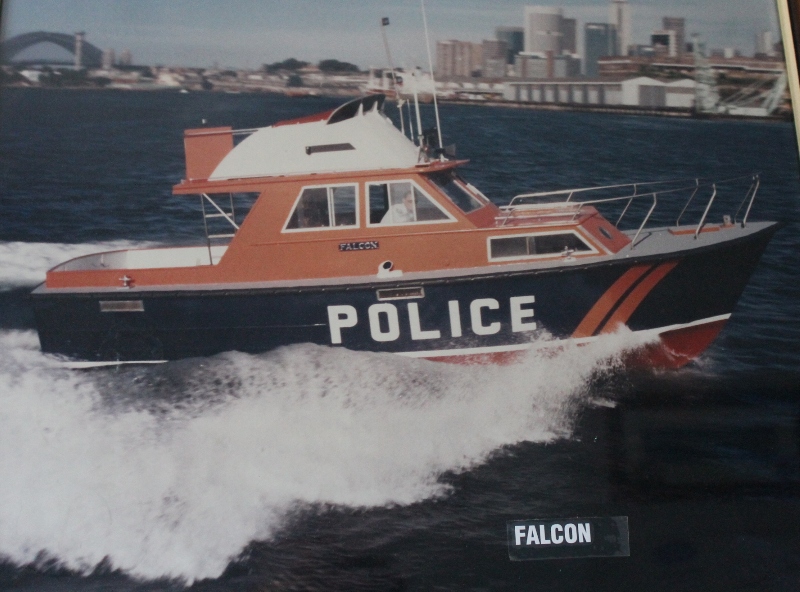
No. Boots (Gordon Wellings) came and got me one day – met me at Manly Wharf and took me out in the Falcon, which had been refurbished, going beautifully it was, because that was always my favourite – the Falcon. Boots said ‘we’re looking for someone to run the boat for Security for the Games.’ – ‘you wouldn’t get paid, you’d only be a volunteer’.
I thought about it, for about two minutes, and said no because at that time there was a lot of problems with the Arabs and also, I’d been retired for 18 years – my son pointed out (laughing) that there couldn’t have been any bloody decent boatmen there for 18 years after you left!
So I said to Boots, ‘no I won’t sign on thanks’ ; at this stage I was well overweight, still able to manage a boat but I didn’t feel that it was my job.
In 1983 I had the opportunity to attend the Life Boat Conference in Sweden if I paid my own fare. I had now retired from the N.S.W. Police so I took the opportunity. Most countries that had rescue craft attended and all the European vessels also attended. It was organised by the R.N.L.I. and hosted by the King of Sweden.
Each day we met at the waterfront and were given a choice to choose whichever boat we were interested in and spent 4-5 hours studying their techniques of rescue. We learnt that in their waters, quite cold, anybody not rescued in 15 minutes had very little chance of survival.
What did you do once you’d retired?
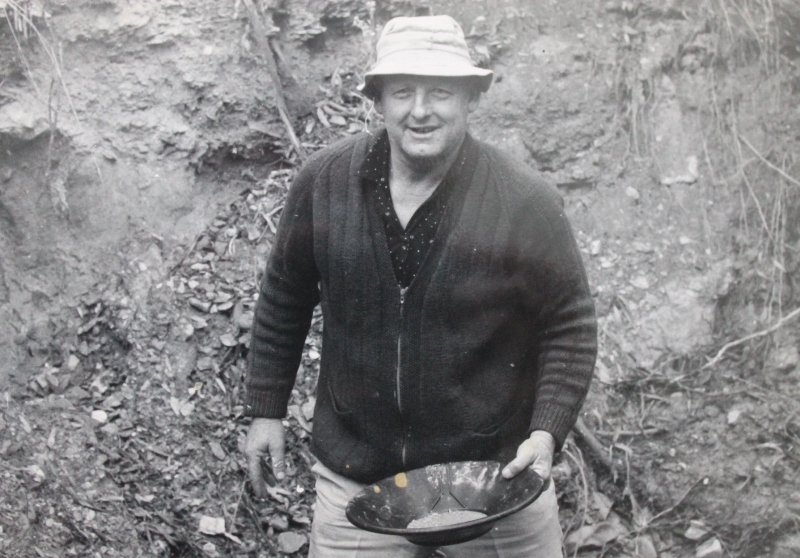
I went prospecting everywhere from the O’Allen River to the Shoalhhaven River to looking for sapphires up in Emerald in Queensland. I went as far as the river – Northern Qld, right up the tip.
I used to go up there for three or four months of the year, ‘in the season’ as we call it; you can’t get up there in the wet season, you’ve got to go in the Winter, so it’s cold but feasible to work there. You don’t have to dig real deep for sapphires but you’ve still got to dig a hole to get down to them. Where we went they were no deeper then three feet.
We’d get a variety – sapphires come in about seven different colours plus the particoloured ones. I got some beauties – all of my female relatives and female friends have got sapphire rings or sapphire brooches. I was a faceter; I’d learnt faceting and so was able to facet my own rings. My daughter has a lovely two and a half carat yellow- gold sapphire ring and some of the others have got two carat rings- they all finished with something nice.
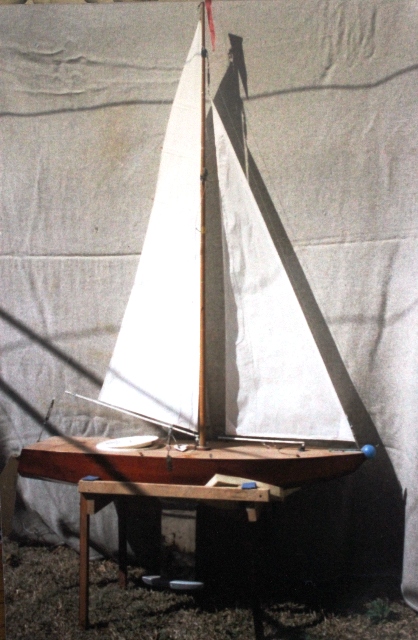
When I visited Bert King he had a lovely model of a surf boat with by Buster Brown’ on the plaque beneath it – how did this come about?
That was another hobby I had. I used to make model boats. That was one that I made which he put on a different backing. How that came about was I wanted a Surf Belt – he had one, and I said ‘I’ll swap you.’ so I got the belt and he got the boat.
I use to race radio controlled sailing boats at Narrabeen – on the lagoon. There’s a big firm in Brookvale that used to make spars and booms and all that. they put on a contest for who could build the fastest model yacht.
I wrote to them and said I’d like to try this and they said you’re welcome, put a boat together. I had about six months to build the boat, building from my own design, and finally the day came when we had the big race. There were probably 30 entries and 26 of them were shop made boats and so they weren’t all homemade boats, which was what I thought they were supposed to be. Shop or professionally made boats do go better – but I came 4th in the private and homemade boats so I was quite happy with my performance.
I made a radio controlled yacht for each of my grandkids – some they’ve still got. The last one I gave to my grandson and he sails it on Manly Dam.
How many children did you have?
Four. Grandchildren 8, and great-grandchildren – now 3; one was born a year ago and one was born a month ago. My eldest son now lives in Perth and he came over last year, picked me and the rest of my kids up in a motor-home, and we drove back to Perth and went to the wedding of my eldest granddaughter. When the wedding was over the other kids came home by plane and Allan took me, with his wife as well, the long way home up through the Top End.
It would have been fantastic excepting the bloody vehicle broke down nine times; we lost nine days, it spoilt the trip – we got to Broome but didn’t actually get to Darwin. I’m too old and decrepit to do the trip again now.
What is your favourite place in Pittwater and why?
Coaster’s Retreat. It brings back a few memories – everybody used to go over there camping; I knew lots of people that would go over there every year and would reserve a camping spot for the following year. That spoilt it for other people as they couldn’t get in.
It’s a lovely place with a lovely protected pool at the back. On the Western Shores I’ve met some lovely people. One chap, I’ve forgotten his name, he was a first grade footballer, I think he played for Manly; he dived off the wharf and was injured. I used to go and visit him occasionally – he was a champ. He was in bed all the time, he couldn’t get out of bed – I’d go and see him and talk for a bit – he was a champ even after that.
I used to have a few fights with them over there; one time there was a house on fire. I went over there and the rain was coming down heavier then if I’d put a hose on it. So it was a waste of time me even starting up the pumps, even if you forgot the fact that the wharf was about five hundred yards away and I didn’t have five hundred yards of hose.
The people that were next door, where I was, on their verandah watching the fire, which was just about finished and I couldn’t do anything – they offered me a cup of tea. I had the cup of tea – which was lovely. When I got back to base I had a complaint to answer – that I was drinking alcohol, (beer) with a criminal, while I watched the fire burn!
Holy Mackerel!
Half of the township over there were on my side and the chap who was the ex-footballer rang the Premier and explained the proper situation. I didn’t get into any trouble as a result of that but it could have been quite serious. That was some of the good people and some of the bad people illustrated for me in that one incident.
What is your ‘motto for life’ or a favourite phrase you try to live by?
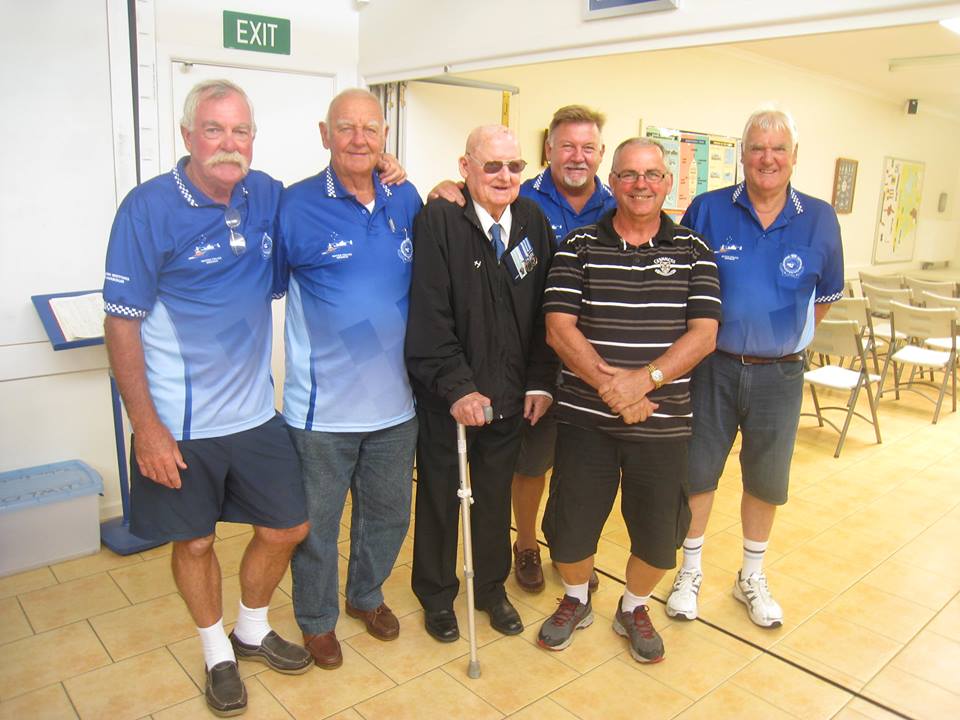
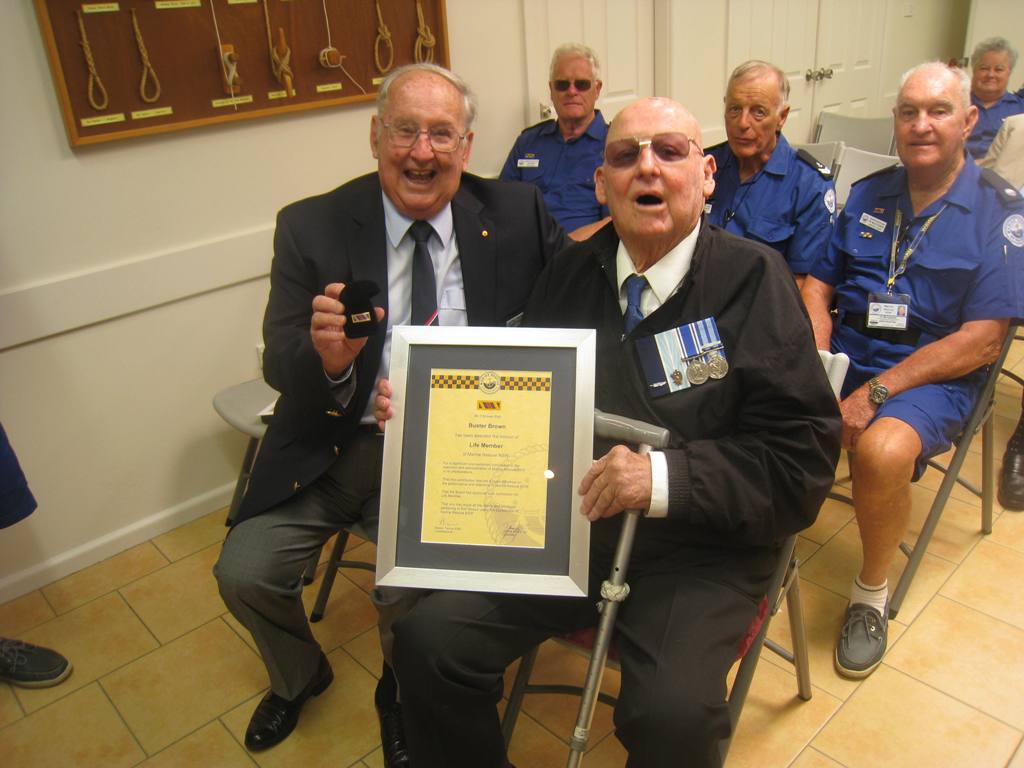
Roper Lars Scott (Buster) Brown – ‘LEGEND of the SEA’ by Brian Friend, OAM-QCBC – On Friday 7th of February, at the Pt Clare Marine Rescue Base at Gosford, RLS ‘Buster’ Brown was presented with a his ‘Life Membership’ and ‘Long Service’ awards to the RVCP (now Volunteer Marine Rescue). Brian Friend, OAM, a fellow Retired Water Policeman was in attendance and shares an insight into one of Pittwater’s finest.
On Friday 7th. February, 2014 at the Pt Clare Marine Rescue Base at Gosford RLS ‘Buster’ Brown was presented with ‘Life Membership’ and ‘Long Service’ awards to the RVCP (now Volunteer Marine Rescue). Brian Friend, OAM, a fellow Retired Water Policeman was in attendance and shares an insight into one of Pittwater’s finest.
Retired Water Police celebrate the recognition of RLS ‘Buster’ Brown on his ‘Life Membership’ and ‘Long Service’ awards to the RVCP (now Volunteer Marine Rescue) at Pt Claire VMR base at Gosford.
Roper Lars Scott (Buster) Brown
‘LEGEND of the SEA’
I first came across this man they call Buster many years ago at a little Water Police Station at Church Point, Pittwater. At the time I was stationed at Mona Vale Police Station with a group of coppers that were versatile in the fact that not only did they ‘protect and serve’ on the Peninsular, they had a launch that also patrolled and protected the Broken Bay area.
In March, 1969 a man appeared on the scene at Mona Vale Police Station and informed all and sundry that he was the ‘be all and end all’ of boat persons and that he was elected in charge of the good ship Vanguard, a 23 foot timber launch with a single V8 motor. This was a part time duty for Police at Mona Vale as every day a different crew were selected to utilise this vessel to patrol and serve the community.
Buster, in his own professional way, decided to change the way of this ‘raggedy bunch of blokes’ into a professional marine unit that would be the envy of all Water Police around the world. First he made extensive inquiries into what man power he had at hand, then, once selected, they would be exhaustively trained into a finely tuned marine unit. Part of the selection process was to utilize the ‘tallents’ he had at hand. He was an Australian Champion in Surf Boats and had rowed for South Curl Curl Surf Club and had won many titles in this field so it was no surprise that he chose men who had knowledge of the surf and were involved in surf boats and surf clubs. John Dunbar rowed for Mona Vale, John McNamara rowed for Warriewood and I rowed for Avalon Beach and was an Automotive Engineer by trade. Gordon Wellings was an ex cadet so he was the ‘legal eagle’ of the team and John Gibbons was a former Fitter & Turner & Engineer.
With this team he spent many months finely tuning his team that earned respect where ever they carried out their duty. He also stated that in his mind, it would take at least 2 years for us to sit for the exam to qualify us as a professional Water Policemen. I must say at this point, this man was the undisputed ‘king of the seas’ and what we learnt over a period of time could not be achieved by any other person I know than him.
When we went to sea to try and rescue the Votan off Tuggerah in 1974, if he hadn’t been at the wheel the whole time, I do not think I would be here today to talk about this mission. The men here today are part of that group that kept people safe on the water BUT, it was the leadership of this man here today, being rewarded for what he has achieved, that made us proud to be part of his crew.
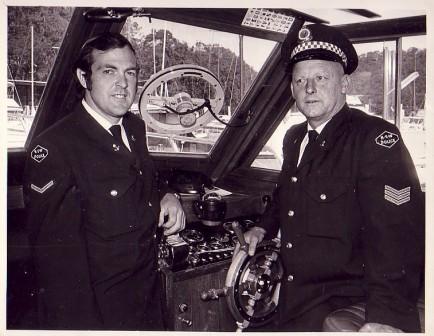
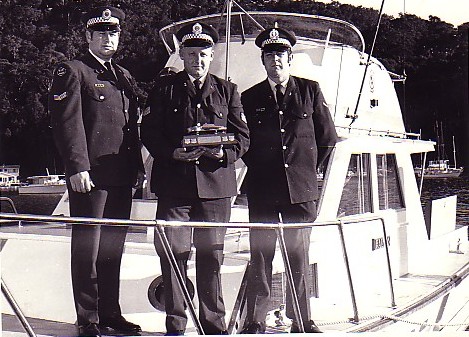
Picture: Police Launch Falcon crew (from left): Senior Constable Gordon (Boot) Wellings, Sergeant 3rd Class H. (Buster) Brown, Constable First Class Brian (Friendly) Friend. Image courtesy Brian Friend.
Together with the Royal Volunteer Coastal Patrol, the Australian Volunteer Coast Guard and the Newport SLSC ‘Bartender’ power boat crews, we formed a great liaison and we worked tirelessly to protect the area of Broken Bay. There are many ‘missions’ that we worked on together and most of them ended up with the right result. With a crew as small as ours we relied heavily on our volunteer mates and over the years, became very good friends, both at work and socially. This was something that Buster instilled in us right to his retirement. The respect that this man has throughout the community can never be judged by monetary standards as there would not be enough money in the world to pay him.
On behalf of your ex work mates, we congratulate you on your achievements and thank you for your leadership and friendship.
Brian Friend (OAM-QCBC)
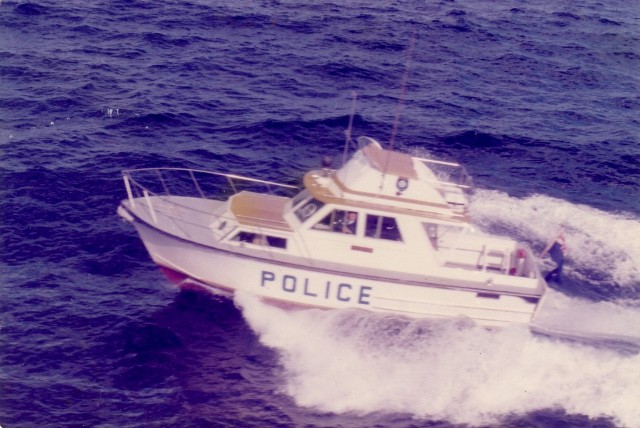
The Falcon
Mike Stringer with ‘Buster’ Brown – with ‘Long Service Medal’.
Words and Pictures by Brian Friend, – OAM -QCBC, 2014.
Service: From? to13 December 1898 = ? years Service
Awards: ?
Born: about 1863
Died on: Tuesday 13 December 1898
Cause: Drowned
Age: 35
Funeral date: Wednesday 14 December 1898
Funeral location: ?
Buried at:
Memorial location: ?
[alert_red] William is NOT mentioned on the Police Wall of Remembrance[/alert_red] * BUT SHOULD BE
[divider_dotted]
Sydney Morning Herald (NSW : 1842 – 1954), Wednesday 13 December 1899, page 1
In Memoriam.
PEARCE.—- In fond and loving memory of my beloved husband, Constable W. H. Pearce, who was accidentally drowned at Merriwa, December 13th, 1898. Inserted by his loving wife and children.
The constable was drowned in the Merriwa River, Merriwa after he had jumped into the river to rescue a drowning boy named Thomas Baker. The boy was also drowned.
[divider_dotted]
The Maitland Daily Mercury of 14 December, 1898 went into a little more depth.
“ Sad Drowning Fatality. “ A GALLANT POLICEMAN’S DEATH – MOURNFUL OCCURRENCE AT MERRIWA,
Merriwa, Wednesday – A sad drowning fatality occurred here yesterday evening. Constable W. H. Pearce was returning to town on horseback and after crossing Merriwa Bridge his attention was directed to a boy drowning in the river.
Pearce immediately dismounted and jumped into the river without undressing and attempted to rescue the boy, but being a bad swimmer both were, drowned.
The bodies were recovered after being about an hour under water. The funerals will take place this afternoon, also the magisterial inquiry.
Constable Pearce leaves a wife and six children. The boy was a son of Mr. A. W. Baker, custodian of the School of Arts. “
[divider_dotted]
The Goulburn EveningPost of 15December, 1898 carried the following very brief account.
Double Drowning Fatality. – A Brave Man Lost.
MERRIWA, Tuesday – Constable Pearce and a boy named ThomasBaker were drowned in MerriwaRiver this evening. Pearce jumped into the river to rescue the boy. Both bodies were recovered.
BRAVE ATTEMPT TO RESCUE A BOY. BOTH HAVE A WATERY GRAVE.
A sad drowning fatality occurred at Merriwa on Tuesday evening. Constable W. H. Pearce was returning to town on horseback and after crossing Merriwa Bridge his attention was directed to a boy drawing in the river. Pearce immediately dismounted and jumped into the river without undressing and attempted to rescue the boy, but being a bad swimmer both were drowned.
The bodies were recovered after being about an hour under water. Countable Pearce leaves a wife and six children.. The boy was a son of Mr. A. G. Baker, custodian of the School of Arts at Merriwa.
Residents of Scone and district learn with deep sorrow of the sad, though brave end of Constable Pearce, who was stationed here a few years ago.
It is surprising that a man so smart in other respects should be unable to swim from a small pond such as this must have been. Possibly the brave constable got fastened in some way while under the water.
The Gundagai Times and Tumut, Adelong and Murrumbidgee District Advertiser.
Tuesday 20December1898 page 2 of 4
Double Drowning Fatality.— The sad news reached Yass on Tuesday afternoon that Mr. William Pearce, brother of Mr. E. Pearce of Yass, was drowned at Merriwa that day. It appeals that Mr. Pearce, who was a mounted constable, was returning home from day duty and was crossing the bridge at Merriwa when he saw a boy named Thomas Baker drowning in the river. Pearce jumped off his horse and plunged into the water with his clothes on. The boy appears to have got hold of Pearce, with the result that the unfortunate man who was doing a brave act was drowned. Mr. Pearce, who was a native of Yass, was 35 years of age, and leaves a wife and six children. Great regret was expressed in Yass when the news was received, as Pearce was a very popular and well behaved young man. Deceased is a brother of Mr. A. G. Pearce, of Adelong, who was formerly in the employ of Mr. Newman, of Tumut, and was bandmaster of the Tumut band.
Manning River Times and Advocate for the Northern Coast Districts of New South Wales (Taree, NSW : 1898 – 1954), Wednesday 21 December 1898, page 2
Drowning Fatality at Merriwa,
DEATH OF CONSTABLE PEARCE.
A sad drowning fatality occurred at Merriwa on Tuesday evening, the 13th instant. Constable W. H. Pearce was returning to town on horseback, and after crossing Merriwa Bridge his attention was directed to a boy drowning in the river.
Pearce immediately dismounted, and jumped into the river without undressing, and attempted to rescue the boy, but being a bad swimmer both were drowned. The bodies were recovered after being about an hour under water.
The funerals took place the following afternoon, also the magisterial inquiry.
Constable Pearce leaves a wife and six children.
The boy was a son of Mr. A. W. Baker, custodian of the School of Arts.
[ Constable Pearce will be remembered as having been stationed for some time at Coopernook, in this district, where he made many friends. — Ed. ]
The above Court was opened at the Courthouse at ten on Saturday morning before Judge Backhouse. Mr. H. J. Leary, District Court Register, who present. Mr. A. K. Watt was the only member of the bar present. The solicitors in attendance were — Messrs. R. W. Thompson, H. V. Howe, W. W. Robinson, A. B. Shaw, and E. P. Richards.
BREAKING AND ENTERING.
William Frost (17) and Joseph Harris (16) were charged with breaking and entering, on the 12th February, the house of Joseph Heath, at Merriwa. Both accused pleaded guilty. Constable W. H. Pearce, stationed at Merriwa, stated they were swagmen and strangers in his district.
In answer to his Honor, Frost said his people were living in Sydney, and Harris said he lived in Newcastle. His Honor ordered Senior-Sergeant Moylan to procure from the accused the address of their relations, and telegraph to them to find out anything connected with them, and then remanded the accused for sentence until next day. In answer to his Honor both the accused said they had given wrong names. Accused Frost said his proper name was William Fury, and Harris that his right name was Walter Hay. His Honor told Fury that from enquiries made he found that he had been convicted of larceny in 1887, and received four days in the lockup. It appeared from that that he was now 17 ; he had started his defalcations rather early. But, however, he would treat them both as being young, and sentence them each to four months’ hard labour in Maitland Gaol.
Service: From 23 September 1968to? ? ? = ? years Service
Awards: National Medal – granted 8 June 1988
1st Clasp to National Medal – granted 8 December 1993
Born: 17 June 1943
Died on: 19 December 2014
Cause: Cancer
Age: 70
Funeral date: 29 December 2014
Funeral location: Norwood Park Crematorium, Canberra
Buried at: Cremated
[alert_blue] Bob is NOT mentioned on the Police Wall of Remembrance[/alert_blue] * NOT JOB RELATED
Information from Russell Perkins via NSW Fallen Police FB page:
For any of you older blokes that may have come across Bob McGoogan, ex ACT Police then transitioned into the AFP with the amalgamation, he passed away on the 19th December after a battle with cancer.
Funeral at Norwood Park Crematorium in Canberra 29th December
Funeral Service location:
ROBERT JAMES CHARLES MCGOOGAN “BOB” 17 June 1943 – 19 December 2014 Beloved husband of Margaret. Father of Guy, Michael, Mark, Matthew, Morgan and Buddy….
“To McGoo….for all those years from Safety Ed to the other ‘work’..to your wonderful attitude to kids to the the attitude adjustments delivered to those in need. A spinner of tales some possibly…” – Gary Brown
“Bob was truly a larger, and louder, than life character. I always enjoyed his company, in my office, or at his home. His bear hugs of my staff were something to behold. My sincerest sympathy to you…” – Fred Barnes
Awards: Meritorious Unit Citation for work in East Timor.
Commendation for efforts in disarming a male carrying a replica pistol in Honiara Court.
Born: ?
Died on: Wednesday 22 December 2004
Cause: Shot – Murdered
whilst deployed on official duties at Honiara, Solomon Islands
Age: 26
Funeral date: Thursday 30 December 2004
Funeral location: ANZAC Memorial Chapel,
Royal Military College, Duntroon, ACT
Buried at: Cremated
Memorial: The main street of a new AFP training village in Canberra was named Adam Dunning Drive in his memory.
Adam DUNNING
Adam IS mentioned on the Police Wall of Remembrance
Tears for the fallen as Adam comes home
By Craig Skehan and Aban Contractor December 24, 2004
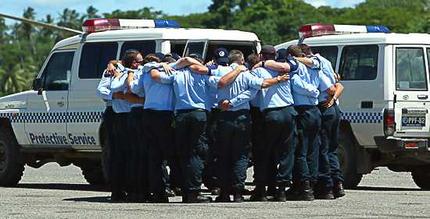
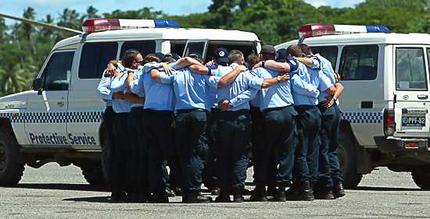
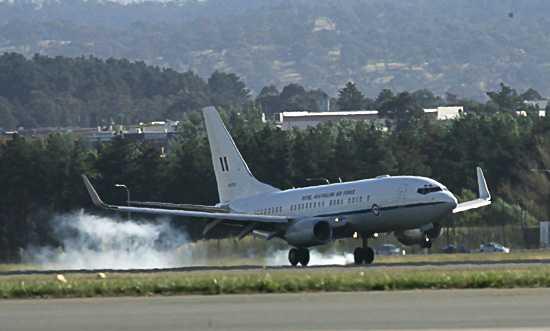
AFP officers farewell their mate Adam Dunning after loading his coffin into a RAAF jet at Honiara Domestic Airport. Photo: Andy Zakeli
They had slow-marched their comrade’s casket to the plane that would take him home.
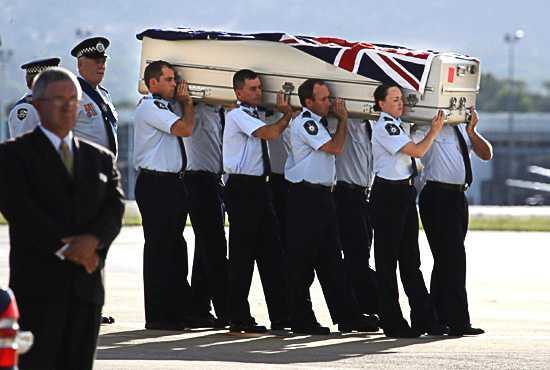
Their backs were straight, but the emotions were too much: tears tumbled down the cheeks of the Australian Federal Police pallbearers as they did Adam Dunning this last honour.
Then, once his body was stowed in the hold of the RAAF jet on the tarmac in Honiara, his mates made a last gesture of solidarity with the colleague they were farewelling forever – forming a circle, heads bowed, arms locked around each other’s shoulders.
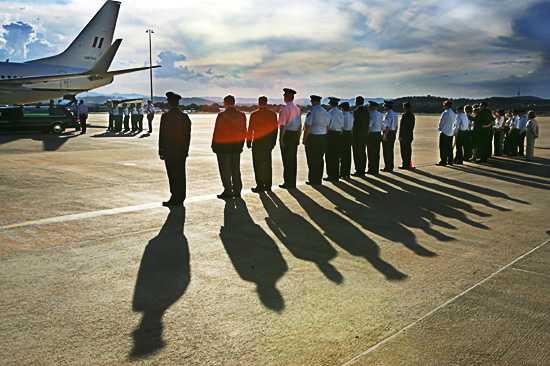
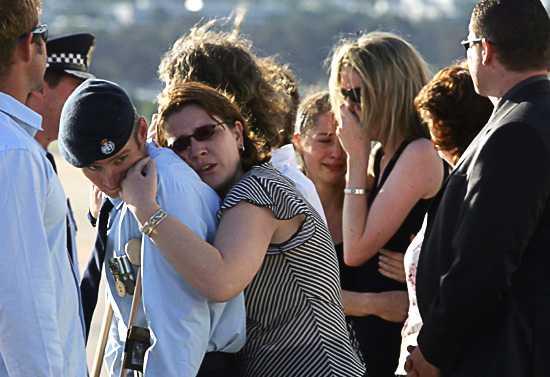
Adam Dunning, the 26-year-old AFP protective service officer who was killed by a sniper in the early hours of Wednesday morning, was accompanied home by the Minister for Justice, Chris Ellison, and the Opposition’s home affairs spokesman, Robert McClelland, but at Fairbairn air base in Canberra, where the RAAF 737 touched down just before 6pm, it was Mr Dunning’s family and friends – his parents, Michael and Christine, his sisters, Sarah and Emma, and his girlfriend, Elise Wiscombe – who formed the guard of honour.
Standing in two straight lines, they faced the plane.
With the Australian Federal Police Commissioner, Mick Keelty, standing watch nearby, Mr Dunning’s parents held their heads high, and his sisters and Ms Wiscombe quietly sobbed as eight AFP pallbearers bore his flag-draped casket from the plane. His parents held hands and seemed to stand even straighter as their only son was placed in the hearse that would take him to the mortuary.
In the Solomons, police are questioning a taxi driver about several suspects in the murder. A Solomon Islands police source told the Herald that the taxi – seen near the murder scene with several passengers before the shooting – had been seized.
On a narrow, potholed road on the outskirts of the Solomons capital, Honiara, locals offered heartfelt apologies for the shooting.
“I am so very sorry,” said one young man. “He came here to help us.”
By the roadside at Zion Junction, investigating officers had cut the long grass to help search for clues to the identity of the person who, in darkness shortly after 3am on Wednesday, shot Mr Dunning while he was on patrol in a Toyota Land Cruiser.
Zion Junction does not have a particularly dangerous reputation. Rather, locals said, other settlements further along the same ridge were known for trouble, ranging from extortion to payback shootings.
Moffat Suiga, a community elder who was awakened by the shots that killed Mr Dunning, said he and others were at a loss to explain the murder.
A middle-aged businessman said the overwhelming majority of Solomon Islanders wanted to see those responsible put in jail. He said it would be a good thing if the Australian-led intervention force remained for the next 40 years.
At a commemoration service earlier in Honiara, Mr Keelty said Mr Dunning had “died for peace”.
The Solomon Islands Prime Minister, Sir Allan Kemakeza, said the young man had been helping the country overcome ethnic strife and crime. “We will not forget him,” he said.
A police funeral will be held for Mr Dunning on a day to be announced.
AFP officers farewell their mate Adam Dunning after loading his coffin into a RAAF jet at Honiara Domestic Airport.
Photo: Andy Zakeli
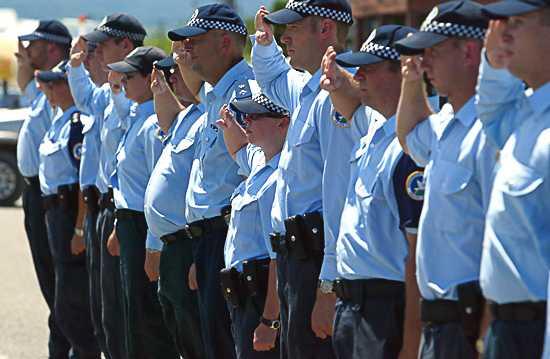
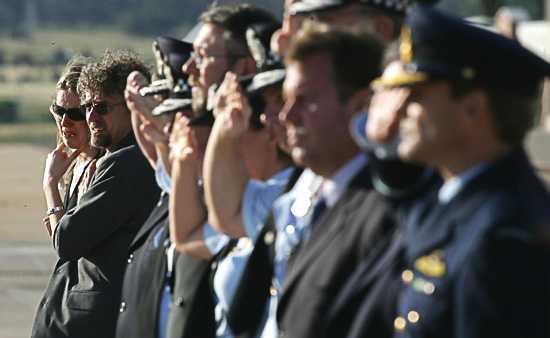
Australian Protective Services officers salute the coffin in a guard of honour at Honiara Domestic Airport before Adam Dunning’s coffin was flown back to Australia.
Photo: Andy Zakeli
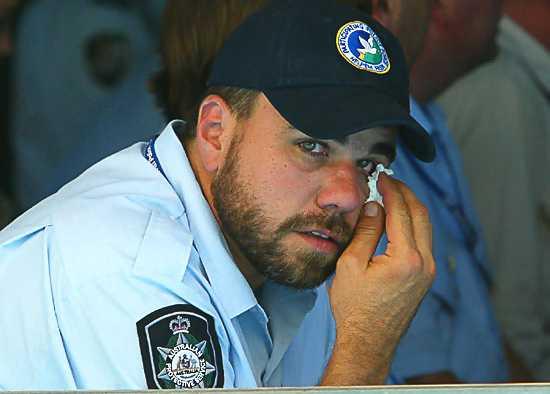
Australian Protective Services officer Robert Turnbull sheds a tear at the official wake in the compund before Adam Dunning’s coffin flew back to Australia.
Photo: Andy Zakeli
The RAAF jet carrying Adam Dunning’s body touches down.
Photo: Andrew Taylor
Adam Dunning’s coffin is loaded from the aircraft to a hearse at the RAAF Base at Fairbairn.
Photo: Andrew Tayl
Senior officers and other dignatories, along with family members, watch Adam Dunning’s coffin being loaded from the aircraft to a hearse at the RAAF Base at Fairbairn in Canberra.
Photo: Andrew Taylor
The girlfriend of Adam Dunning, Elise Wiscombe (far left), cries as police salute the farewell of the coffin.
Photo: Andrew Taylor
Friends of Adam Dunning after the hearse had left the tarmac.
Photo: Andrew Taylor
Memorial Tribute to Adam DUNNING, 10 years on. 22 December 2014, National Police Wall of Remembrance, Canberra.
Excellent turnout at NPM this morning for Adam and his family. RIP and we remember.
Peacekeeper killed ADG’s funeral brings Air Force and police together
By FLGOFF Fiona Peacock
The funeral of LAC Adam Dunning, a member of the PAF and Air Force Active Reserve.
LAC Adam Dunning.
LEADING Aircraftman Adam Dunning, an ADG with No. 28 (City of Canberra) Squadron and former member of No. 2 Air Field Defence Squadron, was killed in December last year while on operational duty with the Australian Federal Police as part of the Regional Assistance Mission to the Solomon Islands (RAMSI).
In the early hours of December 22, LAC Dunning and an Australian Protective Service colleague were on a routine vehicle patrol in Honiara, protecting the Prime Minister’s and Governor General’s residences.
A concealed gunman shot at the vehicle, fatally wounding LAC Dunning, who was 26.
He deployed to the Solomons in October and, after only six weeks there, was awarded a commendation for disarming a man in front of the Magistrates Court.
At LAC Dunning’s funeral, members of 28SQN played a part in recognising his Air Force service. The squadron’s honorary air commodore, Air Commodore Justice Terence Higgins, represented 28SQN among the official party of Service chiefs.
Members of the Air Field Defence Wing provided the firing party and the guard of honour for receiving VIPs. The RAAF Ensign was carried by Pilot Officer Shane McGaughey and was escorted by Flight Sergeant John Forth.
Two close friends of LAC Dunning, Leading Aircraftmen Tim Gresham and David Pauli, were members of the bearer party. The President of 28SQN Association, Steve Williams, represented former 28SQN members. 28SQN members joined AFP personnel to form a guard of honour.
AFP Commissioner Mick Keelty praised No. 34 Squadron for the way it handled bringing LAC Dunning’s body back to Australia.
By Misha Schubert
Political correspondent
Canberra December 31, 2004
They stood side by side. Two long lines of blue uniforms facing each other along the tree-lined road. Like a slow Mexican wave, each snapped to attention and saluted as the body of one of their own passed by.
Adam Dunning, murdered by a sniper while on patrol in the Solomons early last week, had begun the last leg of his journey home.
Earlier, these men and women of the Australian Federal Police and the Royal Australian Air Force had wept openly as Mr Dunning was farewelled with full police and military honours in the Duntroon chapel. “He was a great man,” said his federal police mate Pat Castle.
The nation’s military chiefs turned out to pay tribute, as did Prime Minister John Howard, Governor-General Michael Jeffery and senior cabinet ministers.
But this ritual belonged to those who knew and loved Adam Dunning.
His mother, Christine, read from a tribute that she and her husband, Mike, had written to their son in February. They had praised his courage, sensitivity and mettle.
His partner, Elise, who had brought red roses for the man she had loved, said he was her greatest friend. “He was my strength, my inspiration, my love.”
Peacekeeper Beau Tennant, who was with Mr Dunning the night before he died, broke down as he recalled his friend’s generosity.
“Before he left me, his last words were: ‘Are you right for money mate?’ That was the kind of bloke he was,” he said.
Federal Police Commissioner Mick Keelty said Mr Dunning would live on in the memories of grateful Solomon Islanders.
“Adam Dunning died for peace and law and order. His work and his death will always be remembered by his colleagues,” he told mourners.
The federal police hope to build a memorial to Mr Dunning at their new training centre for overseas police peacekeepers.
Mr Dunning also served with RAAF in Timor before joining the AFP.
Police believe his murder and another attack on police on October 21 were carried out by three former members of the Malaitan Eagle Force militia.
They have charged two men – John Ome and Philip Kwaimani – over the attacks and are hunting James Tatau, who Mr Keelty said was present at both events and had access to a cache of weapons.
Police believe the trio were working on their own, with no sign of any broader uprising against the peacekeeping effort.
It fell to Emma, who had adored her older brother, to claim his service medals and caps from the flag-shrouded coffin and hand them to her grieving parents.
As his police mates carried Mr Dunning’s coffin from the chapel into the sunlight, drummers and bagpipers ushered him on his way. A police motorcade led the cortege through Canberra’s streets to a private service and cremation.
A plane carrying the body of murdered Australian peacekeeper Adam Dunning has landed in his home town of Canberra.
The 26-year-old Australian Protective Services officer was shot twice in the back by a sniper while serving as part of a peacekeeping mission in the Solomon Islands yesterday morning.
Members of Mr Dunning’s family, and his colleagues were on hand to formally receive his body.
Australian Federal Police Commissioner Mick Keelty returned from the Solomon Islands about half an hour before the plane bearing Officer Dunning’s body landed.
He was among those waiting for Justice Minister Chris Ellison and Labor’s homeland security spokesman Robert McClelland, who accompanied the body on the flight back to Canberra.
Commissioner Keelty, Senator Ellison, Mr McClelland and AFP officers formed a guard of honour before the coffin was removed from the plane.
Family members, including Officer Dunning’s parents Mike and Christine, and girlfriend Elise Wiscombe, stood arm in arm watching proceedings.
A guard of honour, carrying Officer Dunning’s hat, led the flag-draped coffin to the hearse.
Eight pall bearers stood tall under the weight, as Officer Dunning’s police colleagues watched on.
A cavalcade of AFP motorcycles is waiting to lead the hearse to Canberra’s mortuary.
A full police funeral will be held for Officer Dunning on a day to be announced.
Officer Dunning’s parents took the time to thank those who attended the short ceremony before the hearse headed for Kingston mortuary under police escort.
Senator Ellison later said the Solomons people were behind RAMSI and Australia’s efforts to bring law and order to the country.
He said some adjustments might be made to the conduct of night patrols but any final decision would depend on recommendations from the AFP.
He denied the Government had too quickly reduced the AFP’s military support in the Solomons.
“We’ve made fantastic progress in the Solomons and we never underestimated the danger that our people faced,” he told ABC television
By Craig Skehan and Cynthia Banham December 23, 2004
Australia is rushing 100 extra troops to the Solomon Islands in defiant reaction to the sniper murder of Adam Dunning, the nation’s first peacekeeper to be killed by hostile fire.
The murder highlights the perils of the new interventionist role in the Pacific islands, but the Prime Minister, John Howard, vowed the mission to the Solomons would go on “undeterred, unrestrained, unaffected by what’s happened”.
“We won’t be cowed by this,” the Foreign Minister, Alexander Downer, added.
Mr Dunning, a 26-year-old Australian Protective Service officer from Canberra who had dodged bullets while serving in East Timor, was shot twice in the back while on a patrol in a four-wheel drives Toyota Land Cruiser in the capital, Honiara, at 3.10am on Wednesday. The bullets were among six shots fired rapidly from a high-powered military rifle.
“It looks as though the person who fired it had training in the use of such firearms,” a Solomon Islands official said.
Members of former ethnic militias – who had formed gangs and reduced the country to anarchy – are now being questioned. Australian investigators say the involvement of former Solomon Islands police officers, or an individual officer, cannot be ruled out.
At his Canberra home, Mr Dunning’s father, Michael, was distraught as he spoke of his son’s honourable death.
“It is sad as he cared for the [Solomons] people so much and was doing something really good on their behalf,” Mr Dunning told the Herald. “He always has been a decent person, tough and soft-hearted at the same time. He was totally honourable and very stubborn – nobody could make him do anything that he did not think was right. He was a credit to us.”
Adam Dunning had been planning a future with his 22-year-old girlfriend, Elise Wiscombe, on his return home next month. “I’m very, very proud of what he’s done over there,” she said. “He’s one of the greatest people I’ve ever met.”
Mr Dunning was part of the regional intervention force which has been seeking to stem ethnic and criminal violence in the Solomons since July last year.
A rapid-response, 100-member infantry company from the First Royal Australian Regiment was to leave Townsville on Thursday for the Solomons, just a day after the murder. The Defence Minister, Robert Hill, said: “This is to send a clear message to the thugs … that we will not tolerate the murder of our police officers.”
A meeting of departmental secretaries in Canberra recommended extra forces to support the 160 defence force personnel already there. Those troops are backing the 147 Australian Federal Police members who are serving in the Regional Assistance Mission to the Solomon Islands (RAMSI) – about 95 of them from the Australian Protective Service, which comes under the federal police. The Justice Minister, Chris Ellison, and the Federal Police Commissioner, Mick Keelty, flew to Honiara on Wednesday night. Australian forensic experts also flew in.
Mr Keelty said: “Over 4000 arrests have been made and over 3700 weapons have been seized [since the intervention began]. Clearly this indicates that there are some in the community in the Solomon Islands who are not happy about RAMSI’s presence.”
He said the hot tropical climate – and the large number of weapons already recovered – were among the reasons body armour had not been used for regular patrols. However, this is now under review.
Mr Keelty called Mr Dunning “a brave and courageous young Australian” and said his killing emphasised “the danger that our people face”.
The Solomons Prime Minister, Sir Allan Kemakeza, described the killing as barbaric and cowardly.
Mr Dunning’s partner on patrol, who had been driving, tried to resuscitate him.
The murder scene, on the outskirts of Honiara, was close to two settlements which are known to be frequented by former ethnic militiaman who formed criminal gangs.
The Australian police contingent has been at the forefront of efforts to clean up local police and officers have been charged with offences from corruption to assault and robbery. A number of local politicians are either under investigation or already facing various charges.
Mr Keelty said the ammunition used indicated the murder weapon was an SLR or possibly an AK-47. This was consistent with some of the weapons used before the arrival of the intervention force. The looting of many SLRs and other military-style weapons from Solomons police armouries had fuelled the five years of unrest that prompted the intervention of the Australian-led force.
There was a major riot at the Central Prison in Honiara this year, when inmates threw rocks at Australian personnel and painted anti-Australian slogans. Two months ago, an intervention force vehicle patrol was fired on.
Protective Service Officers were deployed along with other Australian law enforcement officers in the Solomon Islands as part of RAMSI. The peacekeeping force suffered their first casualty on 22 December 2004 when PSO1 Adam Dunning was shot and killed while deployed on official duties in the Solomon Islands. Two former members of a local militia were charged but acquitted of Dunning’s murder.[5] Officer Dunning was buried with full police honours.
The main street of a new AFP training village in Canberra was named Adam Dunning Drive in his memory.[6] The $2.8 million training facility at Mount Majura just outside Canberra, has been designed to replicate situations in regional countries to which personnel might be assigned.
The main street of a new training village for Australian Federal Police and other personnel being sent overseas has been named after murdered peacekeeper Adam Dunning.
The $2.8 million training facility at Majura, just outside Canberra, has been designed to replicate situations in regional countries to which personnel might be assigned.
Prime Minister John Howard officially opened the facility on Thursday in the presence of police chiefs from across the country as well as from several regional nations.
Australian Protective Service officer Mr Dunning, 26, was fatally shot twice in the back while on night patrol in the Solomon Islands capital of Honiara in December.
He was serving as part of the Regional Assistance Mission to the Solomons.
His parents attended the opening of the village, through the centre of which runs a road now named Adam Dunning Drive.
“The loss of Adam Dunning signified that this is very dangerous work,” Justice Minister Senator Chris Ellison said.
“That was the ultimate sacrifice paid in the course of his duties.”
Mr Howard said the new facility reflected the new security reality for Australia and its region.
“Events of the last five years have totally transformed both the demands and the expectations of the Australian community on the Australian Federal Police,” he told the gathering.
“In that five-year period we have seen the threatening arrival of international terrorism.
“We’ve (also) seen the emergence of an ongoing need on the part of this country, in cooperation with our friends in the Pacific region, to involve ourselves in the restoration of conditions of law and order and cooperation with police services and governments of those countries.”
The training village, to be used by a range of emergency services personnel as well as police, recreates the environment that police experience when on overseas missions.
Designed to reflect the streetscape of a small overseas township, it enables true-to-life scenario training which helps to prepare police for unknown and sometimes dangerous challenges.
It includes 18 buildings and structures including a corner store, a town hall, a police station, a school, a pub, a marketplace and even a cemetery, reflecting the fact that police are sometimes required to perform exhumations in the course of their work.
The spokesman said 124 personnel had already trained at the complex which was completed in March.
When depression and ” the job ” is obvious to the family.
A letter from a daughter to the Commissioner of Police.
8 years on and still ‘ no response ‘
Monday 21st August 2006
ATTN: Ken Maroney
Commissioner of Police
Sydney Police Centre
GPO Box 45
Sydney NSW 2000
Dear Ken,
It is with regret that I write this letter to you. A letter of this nature should not ever need to be written and the events that led to the writing of this letter should not have taken place.
I am writing to tell you about my father, James Breeze. My father is a Bravery Award winning Vietnam Veteran who joined the Police Force 25 years ago. Since joining dad has spent the full 25 years on the front line. During those 25 years he has added value to the NSW Police Force not just in his front line duties, but also as a Protocol Officer, a Gay Liaison Officer, an Aboriginal Liaison officer, a Leading Senior Const., training other officers and has also been a proactive and positive member of the NSW Police Force.
Dad is a leader among his pears, in the last 25 years I have been fortunate enough to meet some of dad’s peers and work mates and I am always so proud of my dad. Work mates and colleagues have so much respect for my dad and the contributions he has made but most importantly the support he has given them. His accolades include; a Good Conduct Medal, Long Service and the St John’s Life Saving Award (presented by you in 1994).
Also over the last 25 years, I have been less fortunate to see the effect my fathers chosen vocation has had on him as an individual. 25 years as a front line Police Officer has really taken its toll on my father. Growing up I began to be able to tell a good day from a ‘bad’ day. When I say bad; visiting an accident, witnessing family violence, violence on children, jumping in a car to hold someone’s body together, literally, while you wait for help to come, pulling the deceased from the wreck of car. Worst of all, pulling your deceased mate from a car wreck. For 5 years my dad ran a one man station at Barellan. Country life and people were fantastic, everyone knew everyone. No one preempted hard it would be to pull your dead mate from a car. I have heard my dad cry, I have seen his eyes when he comes home from a ‘bad’ day. I know there are things so horrible, that they are far beyond description. At times I have asked dad to share his load, and he has just looked at me and cried, he has said that there are people and things in this life worth not knowing.
The most recent of these ‘bad’ days, was in February when a young girl walked into Bowral Police Station and attempted suicide by Police. She held a gun up to my father and after time so did he. This was the event that changed my fathers life. My father is a broken man. Due to this recent event, my father has taken sick leave from work. His family and friends have grouped around him, each day is a challenge, and each day is hard. You see, the Police Force defines who my dad is, he loves his job, he lives and breathes the police force and now, he feels as though they have forgotten all the good he did, all the sacrifices he made.
Two days ago, a GSO (administration officer) called my father and told him that on his behalf, they have a medical discharge for him to sign! After 25 years of devoting your life to an organization regardless of whether they service the Australian community or not, you deserve more than a phone call telling you are no longer needed and that your condition is not being recognized. No one calling to sympathies, no superior calling to see ‘how you are’, no one calling to see what assistance they can lend you, what help they can give you after all the years of giving yourself to them. Talk about putting a nail in the coffin! What is the NSW Police Force trying to do to my father? Can you please tell whoever is making these decisions that I would like my dad at my wedding in November, and I would like him there for Xmas, and I would like him one day to meet his grand kids, but most of all, tell them I need him here, and I need him in my life. If you don’t help him and give him the assistance and respect he deserves, you will push him over the edge. I am outraged that my father has been treated like this, not only by an individual, but by the NSW Police Force.
If dad had of fallen pregnant, the Police Force would have issued him another shirt and given him all the necessary assistance and a new position.
Please give my father his dignity.
Ken, I would like to meet with you to discuss this further. I am really hoping with every bone in body that you are not aware of this treatment and that you can help me and my father.
Looking forward to hearing from you.
Regards
Carolyn Breeze
Sidney WALL
| 05/01/2015
Sidney WALL
New South Wales Police Force
Regd. # ?
Rank: Senior Constable – Resigned 1980
Stations: Jindabyne, 1974 – 1980
Service: From ? to 1980
Awards: ?
Born: ?
Died on: Friday 12 December 2014
Cause: Injuries. Died from being trapped under an upturned tractor
Age: 65
Funeral date: ? TBA
Funeral location: ? TBA
Buried at: ?
[alert_blue] Sidney is NOT mentioned on the Police Wall of Remembrance[/alert_blue]
Summit Sun
Jindabyne man dies after becoming trapped under tractor
Dec. 13, 2014, 6:50 a.m.
Police will prepare a report for the Coroner following the death of a man on a rural property near Jindabyne.
Shortly after 3.30pm Friday 12 December police and emergency services were called to a property in East Jindabyne.
Upon arriving at the location, emergency services personnel were met by a 35-year-old man and a 67-year-old woman who directed them to an injured 65-year-old man.
The man had sustained a number of injuries after becoming trapped under a tractor he had been using to mow the property’s grass paddocks.
Ambulance paramedics performed CPR on the man until a doctor arrived via Southcare rescue helicopter a short time later.
However, the man was unable to be revived and was pronounced dead a short time later.
Police will now prepare a report for the Coroner, outlining the full circumstances surrounding the man’s death.
Sid was stationed at Jindabyne between 1974 – 1980. He was up for promotion from Senior Constable to Sergeant but resigned because he did not want to move, from Jindabyne, for the promotion.
[divider_dotted]
Albert Spencer Thomas BAKER
| 05/01/2015
Albert Spencer Thomas BAKER
New South Wales Police Force
Regd. # ?
Constable
Stations: Central Police Station
Awards: ?
Service: From ? to 5 November 1906
Born: 1899
Died: 3 November 1926
Age: 27
Cause: Suicide – gunshot – Service revolver
Funeral date: ?
Funeral location: ?
Grave location: ?
The constable was killed by a single gunshot wound to the head in his bedroom at the police barracks at Central Police Station, Sydney. He was a single man who was to be married two weeks from the date he died. An inquest into the death returned a finding of suicide. The Evening News of 3 November, 1926 reported briefly on the tragedy.
CONSTABLE SHOT – TRAGEDY AT CENTRAL AFTER ILL-HEALTH
CONSTABLE ALBERT BAKER, 27, was found shot dead at the Central Police Station today. A service revolver was lying alongside him. The constable was a native of Cargo, near Orange, and had been in the force for about 18 months. He had recently been in ill-health, and for that reason had been granted leave. Baker, who was a single man, lived at the police barracks at the Central [sic]. The Central District Ambulance took the body to the morgue.”
The constable was born about 1899 and joined the New South Wales Police Force in 1925. At the time of his death he was stationed at Newtown.
[divider_dotted]
BARRACKS TRAGEDY.
Constable Shot Dead. Sydney, Nov. 3
The West Australian ( Perth ) Thursday 4 November 1926 page 11 of 20
Constable Albert Baker (27) was shot dead in his bedroom at the Central Police Barracks to-day. He was found lying on the floor with a bullet wound in the forehead, and with a service revolver lying smoking beside his right hand. Shortly before 10 o’clock, police at the barracks were startled by the sound of a revolver shot in one of the dormitories. Another constable was sleeping in the same room at the time, and was awakened suddenly by the report, which occurred a few feet from his bed.
Sergeant Hardiman, the barracks sergeant, called the Central District Ambulance, which conveyed Baker to the Sydney Hospital, where he was examined by Dr. Wallace, and found to be dead. The body was taken to the morgue.
This morning Baker breakfasted as usual and appeared to be in good spirits.
The following notifications appear in yesterday’s Gazette –
APPOINTMENTS – SergeantCharlesW. Brayne as an inspector of magazines under the 34th section of the Gun-powder and explosive Consolidation Act of 1876 (40 Victoria No 1), for the purpose of laying complaints and taking legal proceedings as prescribed in the 58th section of such Act.
The Sydney Morning Herald Saturday 5 July 1884 page 8 of 20
[divider_dotted]
The great Kiama fire
IN THE early hours of Sunday morning, October 1, 1899 a fire broke out that was to be the most extensive and destructive one that had ever visited the township of Kiama. It would also change the face of Terralong Street forever.
The fire started in the Wood Brothers general store and within minutes the place was ablaze. With the help of a strong southerly breeze, the fire spread to adjoining buildings and according to William H Bayley, author of Bluehaven: History of Kiama Municipality, “half the block of shops fronting Terralong Street from Collins Street towards Shoalhaven Street caught fire at 2am and was destroyed soon after dawn.”
The Sydney Morning Herald dated Monday, October, 2 1899, reported: “By the time the local police and many others were on the spot, and under the direction of Senior-Sergeant Brayne, Alderman Hindmarsh and others, many willing hands made great efforts to prevent the flames catching the Royal Hotel. In spite of their efforts the hotel soon ignited.
“This building being in part lath and plaster outside blocked the advance of the fire for a time: but ultimately the fire got hold of the place, and being a two-storey wooden structure it soon became a burning maze belching out tongues of fire against the adjoining building.”
Unfortunately there was no fire fighting equipment in Kiama at the time – hoses and tank water being the best on offer – so extinguishing the blaze became a huge problem. There are conflicting reports about how the fire was eventually stopped. No lives were lost but 12 families were left homeless, and 16 shops and the hotel were destroyed.
The total cost of the damage was estimated at between £5000 and £6000.
Brayne, Charles W., Sub-Inspector 2nd class, to be Sub-Inspector 1st class, 351 ( I ‘think’ 351 ‘might’ relate to a page number ?? )
[divider_dotted]
Nepean Times ( Penrith ) Saturday 30 December1922 page 1 of 6
Obituary
Mr. C. W. Brayne.
Mr. Charles Walter Brayne, who died at Braidwood on December 22 in his 75th year, was for many years in the Police Force, from which he retired some 15 years ago. As a young man he saw some of the stirring life of the goldfields days in the southern district, and had good knowledge of the bushranging exploits which culminated in the execution in Sydney in 1867 of Tommy and Johnny Clarke. Joining the police in 1873, Mr. Brayne gained rapid promotion. He was stationed at Penrith as a trooper over 40 years ago, and was given charge of the Shoalhaven district in 1885, and remained at Nowra many years, being transferred to Kiama, and later to Braidwood as inspector. His wife pre-deceased him by some 15 years, and a daughter ( Mrs. A. E. Prott, of Nowra ) in July last, from which time he appeared to have broken down in health. The late Mr. Brayne leaves to(sic) daughters and one son, viz., Mrs. A. C. Upton (Penrith), Mrs. A. Coleman ( Condoblin ), and Mr. Charles Brayne ( Darlinghurst ).
Mrs. Upton spent the last week with her father. The funeral took place on Sunday and was headed by members of the Police Force.