1

Edwin Stuart HICKEY

Edwin Stuart HICKEY

New South Wales Police Force

Sergeant 2nd Class

Officer In Charge – Pymble Police Station

Shot – Murdered

Pitt Water Rd, St Ives

Joined NSW Police Force in 1881 or 1891

Died  1 May, 1913

52 old

Funeral date:  ?
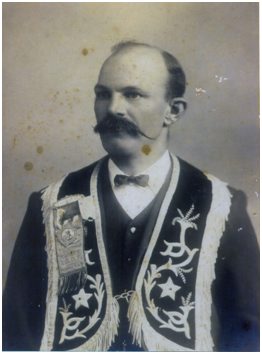
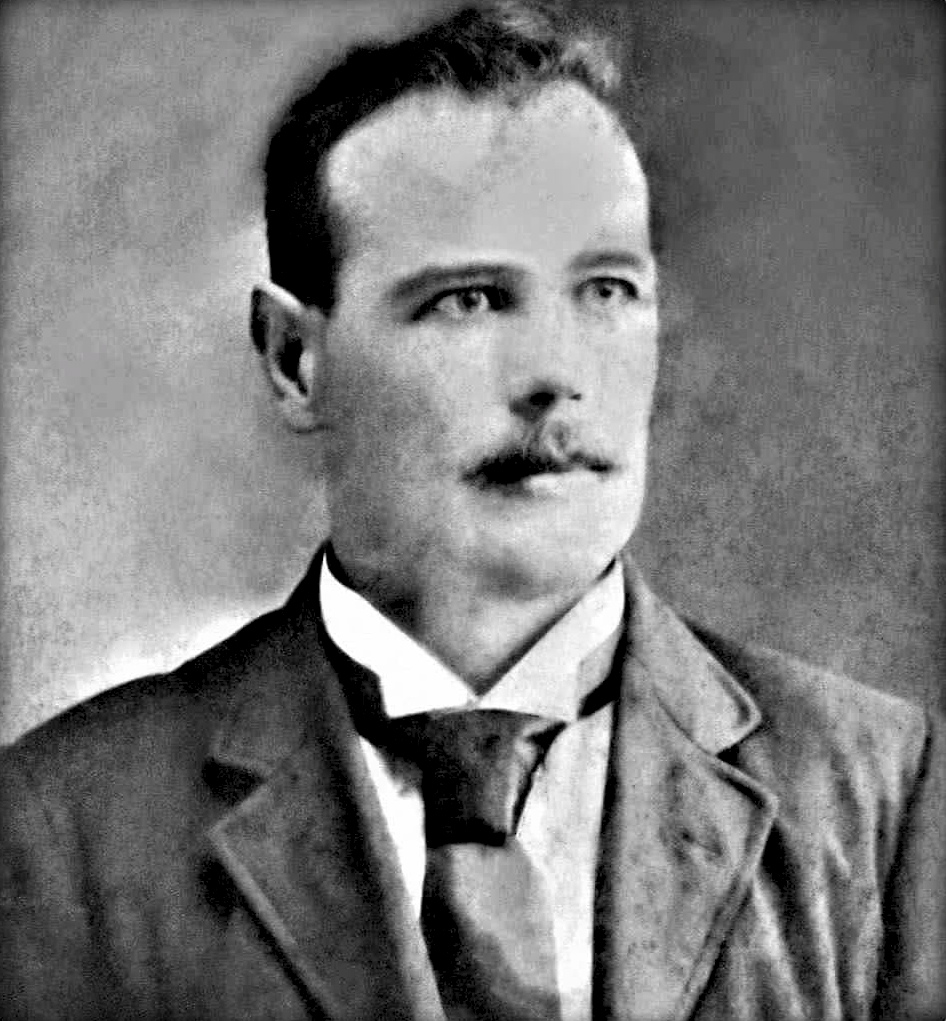
Sergeant Edwin Hickey ( 1913 )
Photo supplied by Val Fearby

The sergeant was shot to death at the Sydney suburb of St Ives while trying to arrest an offender named Brown on warrants. On the day of his death the sergeant and Constable Barclay attended the offender’s home and while inside the dwelling, told Brown he was under arrest. He began to resist violently before drawing a revolver and shooting Sergeant Hickey three times. The offender made good his escape however was arrested a short time later by Constable Barclay. The sergeant’s wounds unfortunately proved to be severe and he died a short time later at the Royal North Shore Hospital. The offender’s son was also shot in the arm during the incident.


The sergeant was born in 1861 and joined the New South Wales Police Force on 29 October, 1881. At the time of his death he was stationed at Pymble.


[blockquote]Hickey has been in charge of the Pymble Police Station for over twenty five years

http://trove.nla.gov.au/ndp/del/article/102941208?searchTerm=%22police%20sergeant%20kill%22&searchLimits=[/blockquote]
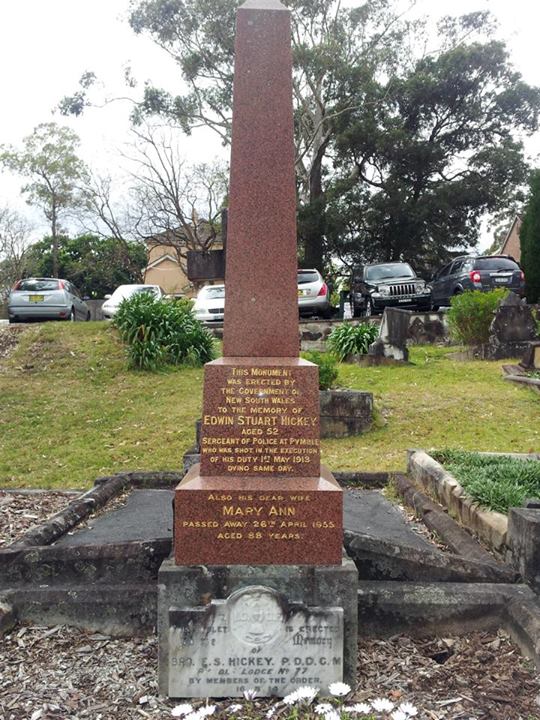
 

Edwin Stuart HICKEY - Grave St John's ( Anglican ) Cemetery, 754 Pacific Hwy, Gordon, NSW. Ref: CC17
Edwin Stuart HICKEY – Grave
St John’s ( Anglican ) Cemetery, 754 Pacific Hwy, Gordon, NSW.
Ref: CC17


CENTRAL CRIMINAL COURT.  ( pre murder criminal history )

Thomas Edwin Brown, assaulting a bailiff in the execution of his duty.

The Sydney Morning Herald  Friday 2 June 1911  page 4 of 14

ACTION STRUCK OUT. INJUNCTION TO RESTRAIN GRANTED. SYDNEY.

Friday. ( 19 April 1912 )

There was brought before Justice Simpson in the Common Law Chambers to-day a case in which Thomas Edward Brown, of St. Ives, near Gordon, made claim for £20,000 against a big list of defendants, including the Attorney-General (Mr. Wade, M.L.A.), several Supreme Court judges, most of the stipendiary magistrates, the Inspector-Generol (sic) of Police; and the Kuringai Shire Council. Plaintiff complained that various legal proceedings had been maliciously used against him, and, that he had been deprived of legal rights. Counsel representing defendants asked that plaintiff’s   declaration be struck out, and that plaintiff be restrained from further proceedings of a like character against them.   It was pointed out that Justice Ferguson had previously struck out an action by plaintiff against some of the present defendants.

Justice Simpson granted the application and the injunction as asked for on behalf of the defendants.

Examiner ( Launceston, Tasmania )  Saturday 20 April 1912  Page 8 of 12


A SHOOTING TRAGEDY.

SERGEANT OF POLICE KILLED,

AN ARREST MADE.  

SYDNEY, May 1. ( Thursday )

A police official was the victim of a shooting tragedy which took place this morning at St. Ives, an orchadists settlement on the north coast railway line.

It appears, that Sergeant Hickey, who for upwards of 20 years has been in charge of the police-station at Pymble, accompanied by Constable Barclay,   proceeded to the residence of Thomas Edwin Brown an orchardist residing on Pitt water-road, St. Ives. The mission of the police was to arrest Brown on two   commitment warrants. One warrant, it is stated, was in connection with the   non-payment of costs in an appeal case, and the other is related to the non-payment of a small fine and costs in connection with a traffic summons case.

The police found the man they were looking for in his orchard, where he was working with his sons. They indicated to him the nature of their business, and   then invited Sergeant Hickey and his companion up to the house, and, turning to one of his sons, said, “You had better come, too.” They all went to Brown’s   residence on the opposite side of the orchard.

Brown and his son entered the door, followed by Sergeant Hickey, with Constable Barclay in the rear. Barclay states that no sooner had they got inside than Brown, sen., without warning,  produced a revolver, and fired point blank at Sergeant Hickey. He fired altogether four shots. Three of them took effect in  the Sergent altogether and in the scuffle which immediately followed a fourth shot lodged in the arm of Brown’s son, who had intervened to prevent further shooting.

Sergeant Hickey fell to the floor, and never spoke.

Constable Barclay immediately ran for assistance, and he met two men named Rogers and McIntosh, and told them what had happened. They ran down to   Brown’s house, and then they found Sergeant Hickey lying on the floor in an unconscious condition. They conveyed him to the local police station, and he was quickly conveyed to the Royal North Shore Hospital, but be died a few   minutes after admission.

Later young Brown who also had been shot, was brought to the institution, and admitted with a bullet wound in his arm.

After informing the two men, Rogers, and McIntosh, of the shooting, Constable Barclay discovered that Brown, sen., had   left the house, and was down the Gordon road. He went in pursuit, and, finding Brown, covered him with his revolver, and ordered him to surrender and to throw up his arms. Brown surrendered quietly, and Constable Barclay, finding, by searching him, that Brown was not then in the possession of firearms, arrested and escorted him to North Sydney, where he was locked up on a charge of shooting.

The late Sergeant Hickey was a greatly esteemed officer. He was on the eve of   retiring from the service, which he joined in 1891.

The Mercury ( Hobart, Tasmania )  Friday 2 May 1913  Page 5 of 8


Police Sergeant Shot.

An Orchard Tragedy

SYDNEY, May 1.

A shocking tragedy was enacted at St. Ives this morning. In attempting to serve two committment, warrants an an orchardist residing at Pymble, Sergeant Edward Hickey was fired on, and so badly wounded that he died shortly after admission to the hospital.

The man who to alleged to have done the shooting has a large-sized orchard off Pittwater Road, St. Ives, which runs from Pymble right through to Pittwater. He has been associated a good deal with law matters, and although regarded as an eccentric, has never been looked upon as being dangerous or likely to be subject to outbursts of violence. He is alleged to have produced   a revolver and fired four shots.   Three of the bullets lodged in Hickey’s body, and he fell to the ground mortally wounded.

Constable Barclay went in search of the orchardist, and having secured him, handcuffed him, and took him to the police station. Later on he was brought down to the North Sydney Police Station, and charged with murder. He gave his name as Thomas Edwin Brown.

Cairns Post ( Qld ) Friday 2 May 1913  Page 5 of 8


The Clarence and Richmond Examiner of 17 May, 1913 printed the following article relating to the inquest into the sergeant’s death.

SYDNEY, Thursday — An inquest was commenced concerning the shooting of Sergeant Hickey at St Ives. Thomas Edwin Brown, who was charged with murder, was present in custody. Constable Barclay deposed that Sergeant Hickey informed Brown that he had two commitment warrants and that unless Brown paid the money he would place him under arrest and convey him to Darlinghurst Gaol. Brown remarked that warrants were illegal and as witness reached the dining-room door of Brown’s house the latter said, “Go back, you can’t come in here; it’s illegal. Sergeant Hickey closed with Brown, who immediately fired three shots at him. Witness drew a revolver and stated that unless Brown put his hands up he would put a hole through him and Brown put them up, at the same time remarking, “I’m sorry, I am prepared to die.” When asked why he shot Sergeant Hickey he replied that he was driven to it. The Coroner found that the deceased died from a revolver wound feloniously inflicted on him by Brown who was committed for trial on a charge of murdering him.


THE ST. IVES TRAGEDY.

BROWN APPEALS FOR BAIL.  

THE APPLICATION REFUSED.

Sydney, Wednesday Afternoon.  ( 14 January 1914 )   

Thomas Edward Brown, charged with the murder last year at St. Ives of Sergeant Hickey, made application this morning, to Mr. Justice Gordon in the Supreme Court for bail. Brown has already been tried once, but a new trial was granted by the High Court, and has now been in gaol nine months.

Mr. d’Apice appeared for the Crown to oppose the application, and Brown appeared in person.  Brown said he would like the application to stand over until later in the day, as on coming to the court he had met some of his children and had been considerably upset.

His Honor refused to grant any adjournment.

Brown then submitted that bail should be granted, so that he might have the fullest opportunity of preparing, his defence.  He had been placed in the section of the gaol allotted to murderers.

His Honor said, the Crown case was thoroughly known; therefore, it was much easier for the accused to prepare his reply in the second case. Even if the Crown consented, his Honor said he did not know that he should consent to the prisoner’s release.  He therefore, refused the application.

Mr d’Apice said the gaol authorities would give the prisoner every opportunity   for the preparation of his defence.

The prisoner, was then recommitted to gaol and removed in custody.

Barrier Miner ( Broken Hill, NSW )  Thursday  15 January 1914  page 6 of 8


NEW SOUTH WALES

RECENT CASE REVIVED.

SYDNEY. April 27.

Thomas Edwin Brown, of St Ives,  orchardist, who was recently acquitted on a charge of having murdered by shooting Police Sergeant Hickey, has been adjudged insane by a special court of   inquiry. He has consequently been ordered to be detained in an Asylum.  Notice of appeal has been given on Brown’s behalf.

The Brisbane Courier ( Qld )  Tuesday  28 April 1914  Page 7 of 10


QUESTION OF SANITY  

THE BROWN CASE.  

DEEMED TO BE INSANE.

A special Court to consider the question of the sanity of Thomas Edwin Brown, of St. Ives, who was acquitted at the Central Criminal Court last month on a charge of having   murdered Sergeant Hickey, but who was   detained on his release on a charge of insanity, was held at the Reception House at Darlinghurst on several days this month. Mr. J.  McKensey, deputy stipendiary magistrate, presided, and at the final sitting on Saturday last, Brown was deemed to be insane.

The exhibits in the case consisted of a number of voluminous documents, in the     majority of which Brown mentioned grievances which he considered that he had. One of these was a petition addressed to Lord Chelmsford, asking for the appointment of a Royal Commission to inquire into his case.  It consisted of 10 pages of typewritten matter, and was forwarded on March 18, 1912.   In it Brown said that the legal process of the State was denied to him, and that he intended to protect himself, family, and property from injury by “these blackmailers of the Crown.” He also went on to say that he would not be responsible for any consequences of his acts, “but will claim to be exonerated from blame from this date during this state of siege, irrespective of evidence taken, as they now concoct evidence for an excuse to punish with, for any act which may be done in a mistaken apprehension of danger or otherwise.”

Mr. Garland, K.C., instructed by Mr. Robinson, appeared on behalf of the Crown; and Mr. Ralston, K.C., instructed by Mr. McElhone, on behalf of Brown.

Dr. Palmer, First Government Medical Officer at Sydney, said that he had known Brown since May 2 last year, and had frequent opportunities of observing him and conversing with him. “I am of the opinion that he is insane,” said the doctor. “For the purpose of making a certificate to that effect I examined him separately. His form of insanity is called paranoia, or systematised delusions. In my opinion the only proper care and control of a person so suffering is to be had in an institution. The chief characteristic of that variety of insanity is that the person suffering is potentially homicidal. For the sake of others, as well as   himself, he should be detained in an institution.”

In answer to Mr. Ralston, witness said that Brown had been tried three times for murder, but the Crown or anyone else did not raise the question of his sanity. He was of the opinion of his examination of Brown was right that he would not get better. His insanity might become modified, and perhaps take on a different form. He was sound physically, and had never complained of sickness.   The delusion he suffered from was that a combination of public officials was persecuting him.

Dr. Andrew Davidson said that he had had a large experience in mental cases, and for three years was medical superintendent at Callan Park Asylum. He had seen Brown on a number of occasions, and was of the opinion that he was suffering from chronic systematised insanity. His form of insanity was one that generally became worse. In certain cases it was dangerous. “The fact   that Brown was arrested for being insane would not necessarily worry him,” said the doctor. “A sane individual would, to a certain extent, be worried. He does not wear   such a worried expression now as he did.”

Dr. Eric Sinclair, Inspector-General of Insane for 16 years, said that he had seen Brown, and also some of the letters which he had written, and was of the opinion that he was insane. “The probabilities that his delusions will continue are very strong, indeed,” said witness. “As far as we know medically, they will continue, but one hesitates to say for certaln what will happen in the future. If it were proved that his delusions have disappeared now, it is obvious that he is not insane at the present time. Assuming on April 2, that Brown had informed Dr. Palmer that he was going to America, as he could not get justice here, I would be inclined to consider that was an indication that the delusions had not disappeared.”

Dr. Chisholm Ross said that after seeing Brown and some of the documents written by him, he should say that the man thought that he was being persecuted. “I say that, if he was not insane, he was preparing for persecutionary paranoia,” continued the doctor. “Cases of this disease are persistent, and as a rule persons suffering from it recover very rarely, if at all. If not under restraint they are a danger to themselves and others.”

In reply to Mr. Ralston, Dr. Ross said that he had been dealing with mental cases for 30 years. He gave a certificate that Brown was a fit subject for examination. He did not give a certificate of his insanity. He had not seen any indication in Brown of paranoia, or any other form of insanity. He was unable to give a certificate that Brown was insane.

Drs. Alfred Walter Campbell and George Edward Ronnie declared that Brown was insane.

David Ross Jamieson, Acting Under-Secretary in the Department of Justice, said that Brown called on him at his office, and said that he wished to make a complaint about the administration of justice. He handed witness a document, and, when it was returned to him he (Brown) said “I can’t get justice from anybody; the Judges won’t hear me;   the Stipendiary Magistrates won’t hear me; and the Chamber Magistrates will not issue process for me. I can’t get assistance or protection from the police, and am in fear. I have a weapon and will have to use It.” He was told to complain to the Inspector-General of Police if the police refused to assist him, and he left the room.

Evidence for the Crown having closed, Mr. Ralston submitted that Brown was illegally before the Court, as he had been illegally   arrested, and that there was no evidence adduced to prove that Brown was found under circumstances indicating that he was likely to commit some offence against the Law. He considered that the inquiry was a nullity, and that Brown should be discharged.

Mr. McKensey said that it was not for him to decide whether Brown was legally or illegally arrested, and overruled the objection.

On behalf of Brown, Dr. Richard Arthur said that he had a conversation with Brown which lasted an hour and a half, and he saw no signs of mental aberration after he had used a number of methods to prove his mental unsoundness. He had heard some of the documents read, and he still adhered to his opinion. The statements made were severe, but they were not in any way exceptional.

Dr. Sydney Jamieson said that when he saw Brown on March 30 he mentioned the question of his having the idea that he was being persecuted, and his attempts to stop those supposed persecutions, but Brown laughed and treated it as a matter of levity. He said: “It is quite true, I signed those documents.” He was then asked by witness if he still thought that he was being persecuted, and he replied: “I wouldn’t say that, but I think that at the time I was very much upset, and my views on what I then wrote are different now.” “I could find no evidence of insanity,” said the doctor.

To Mr. Garland, witness said: “The impression he left with me was that at one time he had seriously entertained these views but that his subsequent experience had modified them; that accumulated experience had altered his views. If a man starts an action against 62 persons as Brown did it is evidence of wild notion. Whether it is paranoia or not depends on whether it is founded on delusion or fact. If his charges against all these officials and sects are baseless then he is a paranoic. I found no evidence of it in my examination. If I knew that the charges he made against the late Chief Justice (Sir Frederick Darley) and others were baseless I would admit that he is a paranoic.”

Dr. J. B. Nash said that he examined Brown, and could find nothing mentally wrong with him, and the documents read did not alter his opinion in the slightest. He had not examined any paranoic that he knew of.

Dr. A. Murray Oram said that after an examination of Brown he could not say that he was insane. It was quite possible that Brown had paranoia, “I say he was not sane in March, 1913, when he drew the document up,” concluded the doctor.

Thomas Henley, M.L.A., said that he had known Brown for 20 years, and had never detected any evidences of insanity.

Peter Christian Bjornstad, Acting Superintendent at the Reception House, said that   Brown now appeared to be perfectly normal.

Dr. A. C. Cahill, called by the Bench, said that he was unable to certify as to Brown’s sanity or insanity because Brown declined to converse on subjects which would throw a light on his mental condition. When Brown wrote the passages charging the late Chief Justice and others with conspiracy, he was suffering from paranoia, a complaint which generally tended to get worse.

Dr. W. W. J. O’Rielly said that he had known Brown for 18 years and he had always acted as a sane man.

Dr. A. E. Perkins, on affirmation, said that he had examined Brown and considered that he was sane.

James Weymark, a wholesale fruiterer said that he had transacted business for Brown for a number of years and had never detected any signs of insanity.

Brown, sworn, said: “I would like to say a lot. The Crown drew the inference when the documents were being read, that because I asked that one of them be continued, I still persisted in my opinions; but that I deny. The statements made in those   documents were written under circumstances which would make them excusable, considering that I was not well-educated and had to seek the assistance of others. I was not conversant with the meaning of all the words. I meant by ‘conspiracy’ a succession of acts which caused me to be   imprisoned. Those acts were, upon appeal to the High Court, ruled to be illegal. In the language of those documents describing the various sects, I had no intention to have it believed that that was so in the   generally-accepted expression of the term. But what I really meant to show was that persons of each of the orders or sects had taken part in this matter in which I had appealed. The same descriptions of persons have repeatedly assisted me in my   troubles. These documents were written at a time when I was in great trouble. I was constantly being arrested. My house was being searched by day and by night, and often when I left home to go to the market I would be arrested and put in gaol. The matters I have complained of were, briefly, the result of judgments of the various Courts which have since been upset on appeal.

Through the experience I have gained since I have been in prison, I am convinced that my proceedings were altogether wrong and unwarranted.”

Brown then narrated his experiences since he was arrested on the lunacy charge, and outlined his actions in the Courts.

After other evidence was given and addresses by counsel, Mr. McKensey said: “I am satisfied that Brown is insane and is not under proper care and control, and is a proper person to be taken charge of and detained under care and treatment. I therefore direct that Brown be removed to the Hospital for Insane, at Parramatta.”

The Sydney Morning Herald  Wednesday 29 April 1914  Page 11 of 26


THE PREVENTION OF MADNESS

The extraordinary divergence of medical opinion as to the sanity or insanity of Thomas Edwin Brown, who was charged with having murdered Constable(sic) Hickey, and was acquitted, but afterwards detained on grounds of insanity, cannot be passed over without comment. The evidence of no less than 13 doctors was taken in the case; and the conclusion of six of them was completely opposed to the conclusion of the other seven.’ We offer no judgment on the result the magistrate appears to have been convinced that those who said that Brown was suffering from a dangerous delusion were right, and the man goes   back into detention. But what we do say is that it is high time that the medical men of this country were given such a training in the diagnosis of madness that such a conflict of evidence should in future be put almost beyond the bounds of possibility. The public, in a case of this sort, does not know which set of doctors was right; it has not the knowledge to enable it to form an opinion on that point. What it does want is the assurance that its medical men will in future obtain such training in this important department of modern medicine as will make impossible the occurrence of any of the terrible mistakes for which the absence of such training leaves only too obvious an opening.

The men who have upon them the responsibility of deciding whether a citizen is sane or insane get very little preparation for that responsibility. Indeed, there is not a single clinic in Australia where they could get a thorough training in this branch of medicine if they wished to. There are numerous schools where students in other countries are obtaining this experience, in hospitals at Berlin, Vienna, Genoa, Kiel, Glossen, at Michigan University, at the Johns Hopkins Hospital, at Baltimore, and elsewhere. But the   Australian student, whose duty it will be in general practice to recognise the early mental or nervous symptoms of insanity, is practically without opportunity of qualifying himself to do so. That is simply because we are not sufficiently abreast of modern medicine to have   provided institutions where the prevention of insanity is carried on, and can be studied. The cure of insanity might not be a department of medicine at all, for all the attention that is paid to it within the borders of New South Wales. Every medical man knows of the progress that has been made in the treatment of insanity elsewhere; how special hospitals and homes have been established for the treatment of it in the earlier stages, when it is often perfectly preventable; how an international committee has been formed to advance the knowledge and treatment of the curable insanity; how special branches of the outpatient departments of more than one of the London hospitals have been established to deal with it. In Australia, except in a very few cases, insanity cannot be treated until it has reached a stage at which treatment is no longer of much use. In one or two institutions founded for another purpose an attempt is being made, mainly through the energy of individual officials, to separate and cure the early stages of insanity. But there is no organised attempt to prevent insanity, and no school where the medical student can learn to recognise it. In a good many cases it really rests in the first instance with the police whether the patient may or may not receive the necessary treatment. This, it has been cynically remarked, is perhaps, after all, just as well. The average policeman does have some opportunity of seeing early cases of   insanity; the average medical student does not.

The Sydney Morning Herald  Thursday  30 April 1914  Page 10 of 18


1914.

(SECOND SESSION.)

LEGISLATIVE ASSEMBLY.

NEW SOUTH WALES POLICE DEPARTMENT.

(ANNUAL REPORT FOR THE YEAR 1913.)

Printed under No. 3 Report from Printing Committee, 13 August, 1914

Four (4) constables were discharged on gratuities amounting to £607   10s., and gratuities amounting to £2,192 18s. 4d. were awarded to the widows of seven (7) members of the Force, in addition to which £94 was allowed for funeral expenses. In the case of the widow of the late Senior-sergeant Edwin S. Hickey, who was killed in the execution of his duty, a pension of £125 per annum was granted for six (six) years, at the end of which period the case will be reconsidered.
 

https://media.opengov.nsw.gov.au/pairtree_root/5d/00/3b/47/b4/c4/15/06/6f/b4/90/a9/0a/10/1d/c4/obj/document.pdf


Arthur John VIZZARD

Arthur John VIZZARD

New South Wales Police Force

Regd. #   Q 6588  

( Q  = NSWPF – those who worked between 1862 – 23 Feb 1915 )

Great Great Grandfather to Andrew NEW, NSWPF # 22417, Anthony NEW and one other Serving NSWPF members.

Rank: Constable – appointed 12 July 1893 ( aged 22 )

Senior Constable – appointed 1 June 1910

Senior Constable – Death

Stations: Sydney, Richmond River, thence to Armidale, Tenterfield ( Cst 1/c ), Inverell, and on the 26th November, 1909, he was again transferred to Armidale ( Cst 1/c – SenCon ) as lookup-keeper & police prosecutor

ServiceFrom 12 July 1893  to 7 November 1911 = 18+ years Service

Awards:  No find on It’s An Honour

Born:  Monday  9 October 1871 in Corowa, NSW

Died on:  Tuesday  7 November 1911

Cause:  Illness – Suicide – service firearm

Event location:  Armidale Police Station, Cell yard

Age:  40

Funeral date:  Wednesday  8 November, 1911

Funeral location:  Roman Catholic Cemetery, Armidale

Buried at:  Roman Catholic Cemetery, Lynches Rd, Soudon Hts, Armidale, NSW

GPS:  -30.5286111  /  151.65972222222223

Arthur John VIZZARD

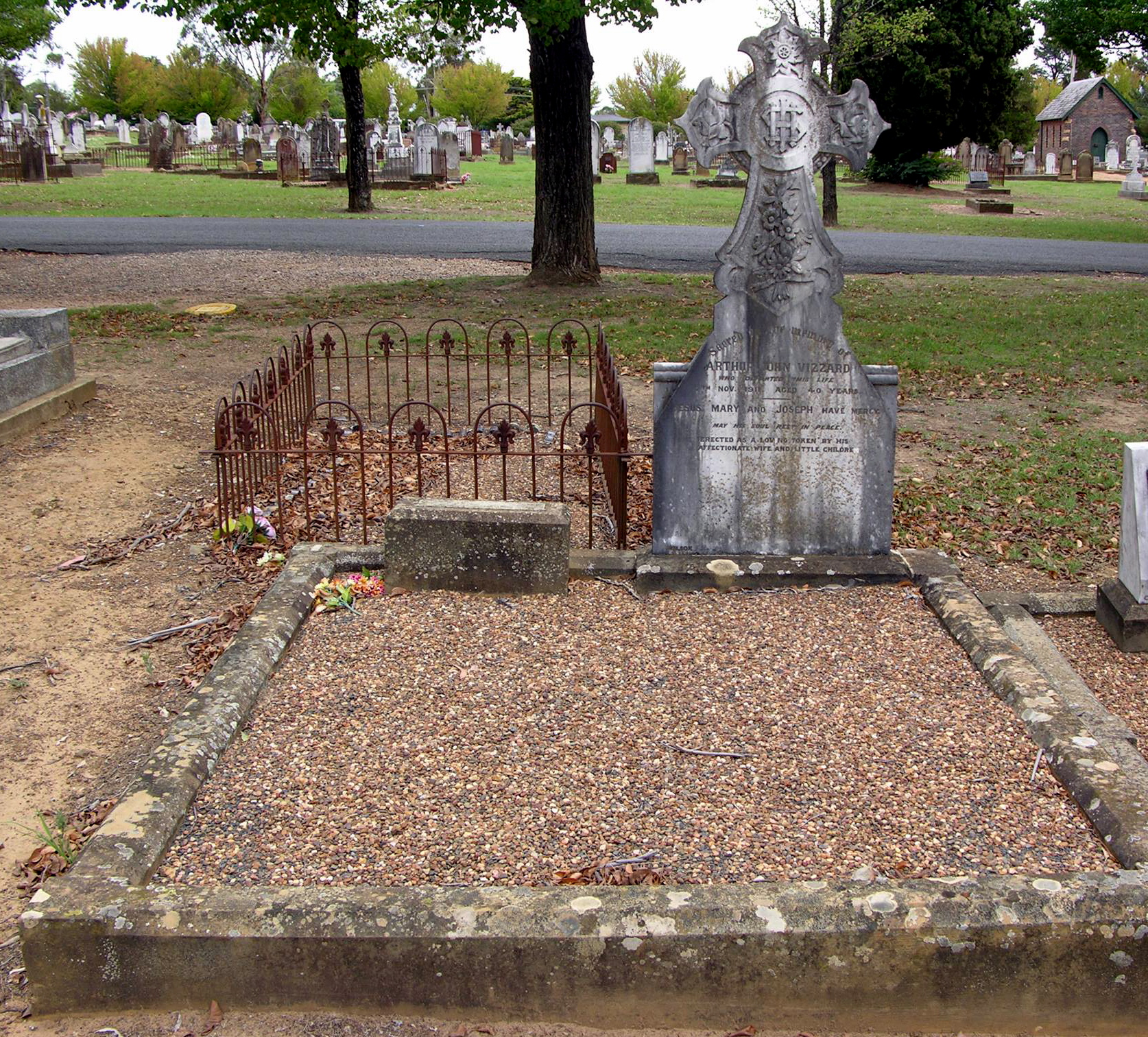
Arthur John VIZZARD Grave

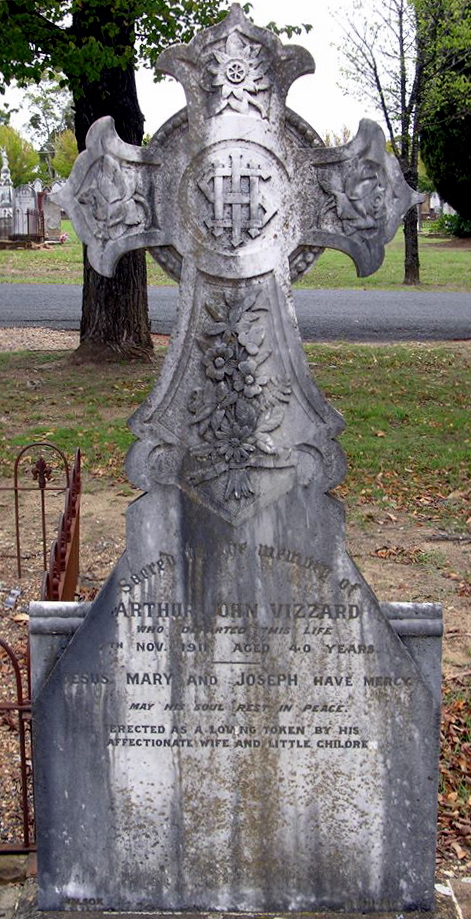
Arthur John VIZZARD Grave. Inscription Sacred to the memory of ARTHUR JOHN VIZZARD WHO DEPARTED THIS LIFE 7TH NOV. 1911. AGED 40 YEARS JESUS, MARY AND JOSEPH HAVE MERCY MAY HIS SOUL REST IN PEACE. ERECTED AS A LOVING TOKEN BY HIS AFFECTIONATE WIFE AND LITTLE CHILDREN
Arthur John VIZZARD Grave:   Inscription:    Sacred to the memory of ARTHUR JOHN VIZZARD WHO DEPARTED THIS LIFE 7TH NOV. 1911.   AGED 40 YEARS    JESUS, MARY AND JOSEPH HAVE MERCY   MAY HIS SOUL REST IN PEACE.    ERECTED AS A LOVING TOKEN BY HIS AFFECTIONATE WIFE AND LITTLE CHILDREN.


 ARTHUR is NOT mentioned on the Police Wall of Remembrance  * BUT SHOULD BE

As of November 2020 – VIZZARD is still NOT recognised as having died as a result of Work Related Injuries.


GRAVE LOCATION


Shortly after 10.30am on 7 November, 1911 the constable was at the Armidale Police Station, where he was the Lockup Keeper.

He walked into the yard of the station where it appears he inflicted a fatal wound to his head with his service revolver.

He died three hours later.

He had been on sick report for about two months, suffering from rheumatism, insomnia and depression.


The Clarence and Richmond Examiner of 14 November, 1911 reported that:

A mild sensation was caused in Armidale when it was known that Senior Constable Vizzard, who was in charge of the lockup, had been found in the lockup yard with a bullet wound in the head.

The unfortunate officer had been suffering greatly lately from muscular rheumatism and insomnia and had been on sick leave for the past few weeks.

During the last few days he appeared very despondent, but nobody suspected he would commit such a rash act.

He was removed into the house in a dying condition.

Senior Constable Vizzard, who came to Armidale from Inverell, was only recently promoted.

He has a wife and three young children. “


The senior constable was born at Corowa in 1871 and joined the New South Wales Police Force on 11 July, 1893. At the time of his death he was stationed at Armidale.


The issue regarding ill health for Senior Constable Arthur Vizzard dates back from approximately 5 years earlier as a result from contracting Dengue Fever when he was required to travel to Queensland and back to execute an interstate warrant and convey back a prisoner. Both he and the prisoner contracted Dengue.

He had ongoing health issues in the following years because of it and as we all know from the inquest findings he finally took his life whilst on “sick leave‘.

I have been aware of full story for about 18 years now. There are three descendants currently working in the NSW Police Force and there was an article in the Police Weekly about the family last decade.

I appreciate what you have said regarding eligibility for inclusion, which I was made aware of prior to the commemoration of the 10th anniversary of the National Police Memorial being opened.

This year will be 2 years since I got the e-mail. Still nothing progressed. Tell me this? Why was I personally notified almost 18 months ago that the inclusion was going to happen, then everything goes silent? It is disappointing to say the least.

I know the effect it had on my Grandmother the stigma growing up, her Mother never coped afterwards and the family ended up having to be split up. It is what it is. 106yrs latter the status quo remains. All we can do is wait and watch this space.


Darling Downs Gazette (Qld. : 1881 – 1922),

Friday 5 May 1905, page 3

DENGUE FEVER AT INVERELL

IMPORTED BY A CONSTABLE INVERELL, Wednesday.

Queensland dengue fever has been introduced into Inverell under conditions which were not to be avoided.

A week or so ago Constable Vizzard was despatched to Charleville to escort a prisoner back to Inverell, and while in the sister State, he contracted dengue.

He returned with his charge on Friday last, and on Saturday took ill.

On Sunday the case was diagnosed as dengue fever, and the patient was at once isolated in a ward at the local hospital.

Another case has since been reported, the victim being Ben. Bridge, the prisoner who was escorted back by Constable Vizzard. Bridge has also been sent to the hospital.

Both victims have the malady in an acute form.

News of the disease being in Inverell has caused some alarm among residents.

05 May 1905 – DENGUE FEVER AT INVERELL – Trove


NSW State Records

Service # 6588   Reel 3043  Item 8/3253

http://srwww.records.nsw.gov.au/indexes/searchhits.aspx?table=Registers%20of%20Police&id=31&frm=1&query=Surname:vizzard;Firstname:arthur


The Armidale Chronicle ( NSW )

Wednesday  8 November 1911   page 4 of 8

Death of Sen-Constable Vizzard.

TRAGIC ENDING.

A mild sensation was caused in Armidale yesterday morning, when the shocking intelligence was made known that Senior-Constable Vizzard had been found in the yard of the lockup in a serious condition.

As was well known, Constable Vizzard had been in indifferent health for the past couple of months. He was a sufferer from muscular rheumatism, which brought on that dreaded complaint insomnia, but not even his nearest relatives anticipated that his career would be terminated in such a tragic manner.

At about 10.30 yesterday morning he appeared to be much the same, and walked through the kitchen of his residence, where his wife and nurse were, out into the lockup yard. The women were shortly afterwards startled by hearing the sounds of a revolver shot, and, proceeding to the spot from whence the sound came, the nurse was horrified to see her charge lying on the ground with a gaping wound in the temple, and a revolver lying close beside the body.

Assistance was promptly summoned, and Dr. Mummery was also quickly on hand, when the unfortunate constable was conveyed into the house.

From the outset, the doctor held out no hope of recovery, his prediction proving all too true, as the end came a few minutes after two o’clock.

The late Constable Vizzard was a zealous, capable, and conscientious officer, in fact, as Senior-Sergeant Hogan remarked to the writer when speaking of his late lieutenant, he was over conscientious.

The deceased was born, at Corowa in October, 1871, and was thus 40 years of age at the time of his sudden death.

As a young man of 22 he joined the New South Wales Police Force, and after going through his term of probation at the barracks, was sent to do duty on the Richmond River, thence to Armidale, Tenterfield, Inverell, and finally on the 26th November, 1909, he was again transferred to Armidale as lookup-keeper.

He was ever active and energetic, and his zeal was not long in being rewarded, for he rose from a constable to a first-class constable, and then to senior-constable.

Although he always did his duty – and a policeman’s work is ofttimes unpleasant – he ” tempered justice with mercy,” thereby gaining for himself universal respect and admiration from all sections of the community.

As prosecutor in the police court, the late officer displayed undoubted ability and knowledge of the law, and was worthy of any attorney’s ” steel. ” Here, again, could be seen his generous disposition for he was always strictly fair and honourable in any cases he was in charge of.

He is survived by a sorrowing wife and three young children, to whom much sympathy has been extended in their hour of affliction.

http://trove.nla.gov.au/ndp/del/article/188117660


The North Western Advocate & the Emu Bay Times ( Tas. )   Wed.  8 Nov. 1911   page 3 of 4

NEW SOUTH WALES.       

POLICE CONSTABLE’S DEATH.     

SUICIDE SUSPECTED.

SYDNEY. Tuesday, — Senior Constable Drizzard was found in the lockup yard at Armidale to-day in a dying condition with a bullet wound in his head.   He suffered from insomnia and is supposed to have committed suicide.

http://trove.nla.gov.au/ndp/del/article/64352863


Daily Telegraph ( Launceston, Tas. )

Wed.  8 Nov. 1911     page 4 of 8

ATTEMPTED SUICIDE         

CONSTABLE SHOOTS HIMSELF.        

( ” DAILY TELEGRAPH ” SPECIAL copyright. )

SYDNEY, Tuesday. — Senior Constable Drizzard shot himself, while in the lock-up yard at Armidale. The unfortunate officer had been suffering from insomnia, and is in a dying condition .

http://trove.nla.gov.au/ndp/del/article/152347646


The Armidale Chronicle ( NSW )

Saturday  11 November 1911   page 2 of 10

Death of Sen.-Constable Vizzard.

The Inquest.

An inquest concerning the death of Senior-Constable Vizzard, which occurred under tragic circumstances in the yard of the Armidale lockup on Tuesday morning last, was held by the Deputy-Coroner ( Mr. C. A. Jackes ) in the Courthouse on Wednesday. The following evidence was elicited:

Frederick Wm. Vizzard, brother of the deceased, said the deceased was born on 9th October, 1871, at Corowa. He was a married man, with three children. Witness had not seen his brother, previous to that day, for nine months.

Senior-Sergeant Hogan deposed to knowing the deceased for the past eight or nine years. At about 11 o’clock on Tuesday morning he received a call to go to the lockup, which place deceased was the keeper of. With Constable Eagleton, witness went to the charge-room, and there saw deceased lying on a stretcher.  The mark of a bullet wound was noticeable on his left temple, and blood was oozing from the place. He was unconscious, but breathing strongly.

Witness next went to the cell yard-room, and there saw a large quantity of blood on the floor. The deceased’s hat was lying near the door, with his pipe. Close by   was a police revolver, containing four loaded cartridges and one recently exploded shell. Witness afterwards went to a drawer in the charge room, which was always kept locked. The lock of the drawer had been forced open, evidently by a tomahawk as such implement was lying in the drawer in the place where deceased’s revolver had been put when not in use. Deceased had been off duty for two months, through illness. He complained of muscular rheumatism and attacks of insomnia. When first going on sick leave, he went to Dr. Nash’s private hospital, but returned, and for the remainder of the time was with his wife and family in their own home. Deceased gave no reason for the police to anticipate that he would take his own life. In conversation with witness on Sunday morning, deceased said, ” I would give everything I possess to be able to resume duty on Monday.

Witness told him not to resume until the doctor had given permission to do so. Deceased was an efficient officer, trustworthy, and very painstaking.

To the Superintendent : During his nine months in Armidale, witness was practically all the time in deceased’s confidence. Deceased had never at any time expressed dissatisfaction with his position or work in the police force.

Dr. N. Howard Mummery said that shortly after 11 o’clock on the fatal morning he, in answer to a summons, proceeded to the lockup. He found the deceased lying on a stretcher, and being attended to by a nurse. He appeared unconscious. There was a wound on the right temple, the skin around which was stained   with gun-powder. There was another and larger wound on the left temple. It was obvious he could not live long. The wound in the head had been caused by a bullet, which had passed through deceased’s head, struck the brick wall of the yard, and rebounded into the middle of the yard, where witness picked it up.

Dr. J. A. J. Murray stated that on his arrival at the scene of the tragedy, deceased was being cared for by Dr. Mummery. Deceased had been ailing since last August. While still on duty, he complained of insomnia, indigestion, and occasional fits of depression. In September he also had an attack of asthma, which was followed by influenza, the after effects of which he never appeared to shake off. He seemed to be in an anxious and dispirited condition.   Witness urged him to get a holiday immediately, because no treatment seemed to do him much good. Deceased took the holiday in Sydney, and, on his return, about three weeks ago, witness was again called in. Deceased was then in a worse condition than when he went away. Witness visited him at intervals up to Monday. Deceased had such a serious nervous breakdown that it was necessary for him to undergo a complete rest cure, and witness had made arrangements for him to enter a suitable hospital for the purpose. Deceased had told witness that some times he felt as if he didn’t care to live, but, from the way he said it, witness did not think he contemplated taking his own life – it was said more to express to witness how really depressed he was. The idea of taking his life would come on him suddenly, owing to the condition he was in.

Nurse Ethel Sheerman, residing in Victoria-street, Sydney, said she came to nurse the deceased, and arrived on Monday. She had been sent by Dr. Nash. At about 10.30 on the morning in question, deceased said he was going down the yard to cut some kindling wood. He then seemed in a normal condition. About five minutes afterwards, witness, who was in the kitchen with deceased’s wife, beard the report of a firearm. Witness and Mrs. Vizzard immediately rushed to the spot. Deceased was reclining on the spot. Deceased was reclining on his left side. There was a great quantity of blood flowing from the wound in the head. She picked a revolver up, which was lying near the body, and threw it on the step. Deceased never regained consciousness, and died about two o’clock. Witness had not the faintest suspicion that deceased contemplated such a rash act.

John Purkiss said that between 10.30 and 11 a.m. on Tuesday morning he heard a woman scream, and immediately ran across. He met Mrs. Vizzard, who said, ” My husband has shot himself in the charge-room. ” and then fainted. Telling another woman to attend to Mrs. Vizzard, witness went into the charge-room and then followed the nurse into the cell-yard, where deceased was lying. With the assistance of the nurse, witness carried the deceased into the charge-room.

The Coroner returned a verdict that the deceased, Arthur John Vizzard, met his death from a bullet wound self-inflicted, whilst- temporarily insane.

http://trove.nla.gov.au/ndp/del/article/188117719


The Armidale Chronicle ( NSW )

Wednesday  8 November 1911   page 4 of 8

The remains of the late Senior Constable Vizzard,. whose tragic death was reported in our last issue, were interred in the Roman Catholic Cemetery on Wednesday afternoon. The funeral was largely attended by members of the M.U.I.O.F. and local police force marching in the cortege. The Rev. Dean Tobin officiated at the graveside, M. Hirschberg having charge of the arrangements.

http://trove.nla.gov.au/ndp/del/article/188117733


The Armidale Chronicle ( NSW )

Saturday  18 November 1911   page 7 of 10

In the Supreme Court of

New South Wales.

PROBATE JURISDICTION.

In the Estate of ARTHUR JOHN VIZZARD, late of Armidale, in the State of New South Wales, Senior Constable of Police, deceased in testate, –

APPLICATION will be made after Fourteen Days from the publication hereof, that Administration of the Estate of the abovenamed deceased may be granted to MARY VIZZARD, the Widow of the said deceased. Creditors are requested to send their Accounts to, and all Notices may be served at, the Office of the undersigned.

H. WEAVES,

Proctor,

Faulkner street, Armidale.

By his Agents MESSRS. Weaver & Allworth,

Australasia Chambers, Martin   Place, Sydney… . . i87

http://trove.nla.gov.au/ndp/del/article/188117888


Thomas SMITH

Thomas SMITH

Senior Constable

Horse Accident

Euston

19 April, 1910


On the 18 April, 1910 the mounted constable made a patrol to the police paddock, and while he was returning his troop horse began to buck. The horse then bolted and Senior Constable Smith was thrown violently against a tree, sustaining severe internal injuries. Knowing he would not be found before it became dark, he began to walk towards town. When he had travelled a short distance he was found by some men who helped him into Euston in a barrow. A doctor arrived from Balranald that night and after examining the injured man made arrangements to have him taken to hospital. Unfortunately the vehicle conveying the injured constable to hospital broke down and he passed away.


The Register newspaper of 25 April, 1910 reported that ” Regret is expressed at Wentworth ” at the sudden death of Senior Constable Smith, officer in charge of the police at Euston, 80 miles from Wentworth. The constable, it appears was thrown from his horse, which had stumbled and rolled on his chest. At first his symptoms were not considered serious but as the day advanced and while the constable was being driven to Balranald for medical treatment, he expired. He has left a widow and six children. The late constable was highly esteemed in the district, and was a general favourite.


The senior constable was born in 1871 and joined the New South Wales Police Force on 11 February, 1897. At the time of his death he was stationed at Euston.


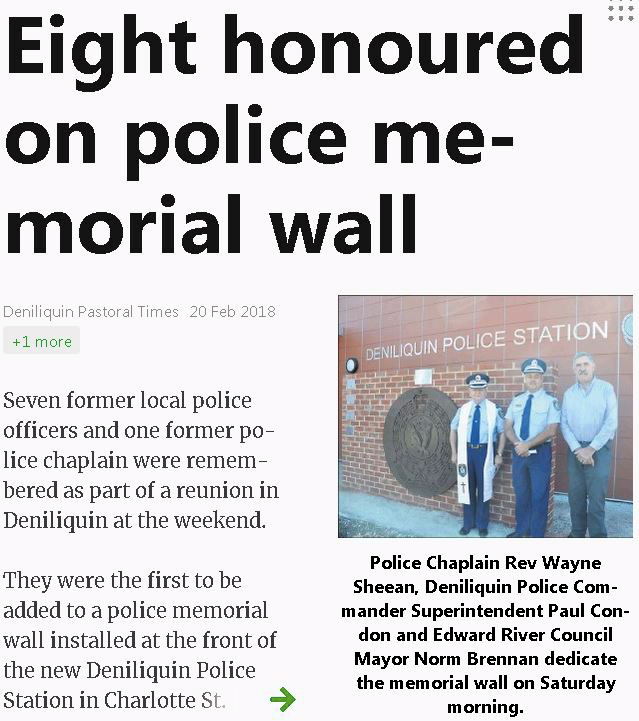
2/1/2019, Deniliquin Times.

Eight honoured on police memorial wall’ –

Seven former local police officers and a former police chaplain were honoured during a police reunion in Deniliquin.
They were the first to be added to the police memorial wall at the new Deniliquin police station.
Honoured were
Constable Charles Chapman (died 5/3/1866),
Senior Const J Morrison (19/1/1898),
Senior Const Thomas Smith (19/4/1910),
Superintendent Henry Grugeon (10/1/1911),
Sergeant George Thomas Whiteley (25/3/1931),
Detective Senior Const Risto Vic Baltoski (2/1/1989) and
Senior Const Jennifer Louise Edgerton (August 2015) and

Rev David Bond.


HARRY GRUGEON


William Cochrane ADIE

 William Cochrane ADIE

New South Wales Police Force

Regd. # ?

Rank:  Probationary Constable – Mounted Constable

Stations?, Stuart Town

ServiceFrom  17 December, 1907  to  11 October 1908 = 9+ months Service

Awards?

Born? ? 1883

Event date:  Saturday  10 October 1908

Died on:  Sunday  11 October 1908

Cause:  Horse accident

Event location:  Stuart Town, NSW

Age:  25

Funeral date:  Monday afternoon  12 October 1908

Funeral location?

Buried at:  Stuart Town Cemetery, Wallaroi Rd,

Protestant section ‘ A ‘


[alert_green]William IS mentioned on the Police Wall of Remembrance[/alert_green]


[divider_dotted]


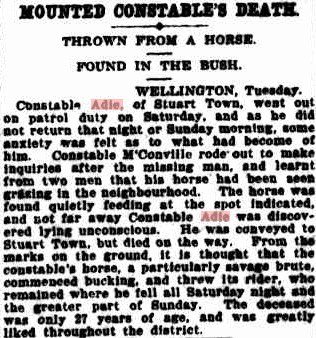
On Saturday 10 October, 1908 Mounted Constable Adie set out on a patrol of the town and surrounds. By the following day he had not returned as expected and Senior Constable McConville set out to find him. After being informed that an unattended troop horse had been seen in the bush Senior Constable McConville investigated and found the unfortunate Constable Adie seriously injured. It appeared that the young constable had been thrown from his horse the previous day and had lain seriously injured throughout the night. He died while being taken back to Stuart Town for medical attention. The constable’s horse was described in the Melbourne Argus of 14 October, 1908 as being “a particularly savage animal”.


In addition to this, the Sydney Morning Herald of 26 October, 1908 reported the following.


DANGEROUS POLICE HORSES – A SERIOUS ALLEGATION.

WELLINGTON, Saturday – The recent death of Constable Adie, of Stuart Town, who was killed by being thrown from his horse, is causing considerable discussion in the district in regard to the dangerous character of some of the horses supplied to police officers. The animal which killed Constable Adie is well known for its vicious propensities. It nearly killed Constable Cameron when he was at Stuart Town, and last Christmas it threw Senior Constable McConville’s brother, and nearly killed him. There are several other police horses in the district which the constables only ride at the risk of their lives, and every time they go out into lonely bush tracks they are exposed to the terrible fate of the late Constable Adie, who was not found until the day after he had been thrown and seriously injured.


The constable was born in 1883 and joined the New South Wales Police Force on 17 December, 1907. At the time of his death he was stationed at Stuart Town.

[divider_dotted]


Cst William Cochrane ADIE - Horse accident - 11 Oct 1908 - Story 01
The Sydney Morning Herald Wed. 14 Oct. 1908 p 10 of 16

[divider_dotted]


Wagga Wagga Express     Thu.  15 Oct. 1908   p4 of 4

Constable Adie, of Stuart Town, was thrown from his horse on Saturday last, and died on Sunday afternoon. He went out on Saturday morning and did not return.  Two men saw his horse saddled and bridled on Saturday morning grazing in the bush, but no notice was taken of the matter.

On Sunday morning Constable McConville found Adie lying in a creek unconscious. He died 20 minutes later, without medical aid.

Deceased was 27 years of age, unmarried, and had been for 12 months in the force.

http://trove.nla.gov.au/ndp/del/article/145407114

[divider_dotted]

Wellington Times ( NSW )   Thu. 15 Oct. 1908  p4 of 8

IS IT MANSLAUGHTER ?

The terrible accident which resulted in the death of Constable Adie at Stuart Town, directs attention to a matter that requires the serious attention of the police authorities. The animal which the unfortunate constable was riding when he met his death was well known in the district as being a dangerous one for any man to ride, and it has been rather good luck than other wise that it has not been responsible for a fatality long ago. This is not the only case in the district in which constables are compelled to ride horses that are a constant source of danger to them, and when a man is killed in consequence, are not those responsible for supplying such horses morally guilty of his death ?

Of course the men who have these horses do not care to object, for the reason that it would look as if they lacked courage, and prejudice them in the eyes of their officers, but surely there should be some care taken to see that a horse is fit to ride before it is handed to a constable.

The mounted men in the police force have to make many journeys on lonely tracks, and if they meet with an accident days may elapse before they are found. Under these circumstances it is only reasonable to expect that they would be supplied with reliable horses and not with outlaws that it would take the skill of an expert rider like Billy Waite to handle. To virtually compel a constable to ride a horse about the bush that is a menace to his life, is positively criminal, and the untimely death of Constable Adie should lead to an alteration in the system which, in his case, has had such a deplorable result.

http://trove.nla.gov.au/ndp/del/article/141594443

[divider_dotted]


Wellington Times ( NSW )   Thu. 15 Oct. 1908  p4 of 8

CONSTABLE ADIE’S DEATH.

THE INQUEST.

The death of Constable Adie, who was killed by being thrown from his horse, was the subject of an inquiry held by the Coroner ( Mr. R. Read ) at Stuart Town on Monday. Senior-Constable McConville gave evidence that at about 10 a.m. on Saturday last the deceased left the police station on bush patrol. He was instructed to patrol the Mookerawa as far as the Enterprise dredge, and return that evening or the following morning.

On Sunday morning, as the constable had not returned, he went out and met a man named Patrick Quiley, who, in reply to questions, stated that he had not seen Constable Adie anywhere, and that the constable did not stay at Marning’s the previous night.   Questioned further Quiley stated that he had heard that the constable’s horse was seen near Hop Wah’s place on Saturday evening feeding, with a saddle and bridle on. Witness then went to the Mookerawa and saw William Cohen, who said that he had not seen Constable Adie, but that the children had seen his horse feeding near Hop Wah‘s. He asked Cohen to try and find the constable, and then rode on to Hop Wah‘s, where he found the horse feeding with the saddle and bridle on. The bridle was tied to the breastplate. He carefully examined the saddle and found a spur mark from the near right side right across the seat. From the mark on the saddle his opinion was that the constable had fallen from the off side. He secured the horse and started to make a search by the river.

When returning with several others, who were assisting in the search, he met Harry Boehme, who told him that Constable Adie had been found in the Mookerawa Creek. He hurried to the spot and saw the constable, who was alive but unconscious, and was breathing heavily.   There was a piece of skin off the right   temple, and the skull appeared to be dented in.

When he saw the constable the latter had been moved about 15yds from where he was found. Witness carefully examined the place where the constable was picked up for bloodstains, but could find none.

The deceased wore elastic side boots, and there was no chance of his being hung up in the stirrup. The spur was still on, but the other one was missing.

From the horse’s tracks he thought that something had startled the animal causing him to buck. The horse was a dangerous one and would always buck if anything went wrong. Otherwise he was quiet enough.

Deceased was not a good horseman, but he was a careful, steady rider. The creek was dry where the constable was found, and his head apparently struck a stone where he fell.  A stone that was sticking out looked as if it had been shifted.

A man named Edwards told him that he had tied the bridle to the breastplate on Sunday morning, as he saw the horse feeding with the bridle trailing on the ground.

William Cohen, miner, residing at Mookerawa, deposed to finding the constable about two or three yards from the track, which was considered a short cut.

John Marning, grazier, gave evidence that at about 4 o’clock on Saturday afternoon he was mustering cattle about a quarter of a mile from his place when he met Constable Adie. They rode along together for about a mile and a half, and on parting shook hands.

They parted about 5½ miles from Stuart Town. Deceased’s horse was then going quietly. He did not see deceased again until called upon to drive him to Stuart Town the following day.

The Coroner found that death was caused by injuries accidentally received in a fall from a horse.

http://trove.nla.gov.au/ndp/del/article/141594487

[divider_dotted]


Wellington Times ( NSW )   Thu. 15 Oct. 1908  p5 of 8

( From a Correspondent. )

The funeral of the late Constable Adie, whose death was reported last issue, took place on Monday afternoon. A great number of people from both town and district attended the funeral, which was a long one considering that Mr. Adie has only been in our midst for a short time. It is believed that   he had not a relative in the State.

http://trove.nla.gov.au/ndp/del/article/141594488

[divider_dotted]


Wellington Times ( NSW )   Thu. 15 Oct. 1908  p5 of 8

Constable Adie Killed. — Constable Adie, who has been stationed here for the last five or six months, had occasion to go to Lower Mookerawa on Saturday last, and not returning by Sunday morning, Constable McConville went in search of him, and finding his horse, with the saddle and bridle on, feeding about the road, near Hop War’s store, at Mookerawa, a search was made, and he was found lying in the Mookerawa Creek, where he had been thrown from his horse, striking a large stone with his head. He lay there all night until found next day in the water, which was only very shallow, otherwise he would have been drowned.

He was conveyed into town, but expired shortly after. The funeral took place on Monday. An inquest was held on Monday before Mr. Robt. Read, coroner, when a verdict of accidentally killed through falling from his horse was returned.http://trove.nla.gov.au/ndp/del/article/141594489

[divider_dotted]


Wellington Times ( NSW )   Mon.  19 Oct. 1908  p3 of 4

I will make reference to the horse that was the cause of Constable Adie’s death, in Thursday’s issue of the Times.

A special memorial is to be preached to-night (Sunday) in the Church of England by Mr. Champion in memory of Constable Adie, who was killed last week, by being thrown from his horse.

http://trove.nla.gov.au/ndp/del/article/141600341

[divider_dotted]


Wellington Times ( NSW )   Thu.  22 Oct. 1908  p3 of 8

http://trove.nla.gov.au/ndp/del/article/141603267

[divider_dotted]


Wellington Times ( NSW )   Thu.  22 Oct. 1908  p5 of 8

As I said, I will refer to the horse that killed Constable Adie in this issue of the Times. I have known the horse, also Constable McConville’s, which were purchased for police mounts at the same time from Katella. Both were colts at the time, and very wild and vicious at that.

They had to be taken to Orange or Wellington to be shod, the local shoeing smiths could not manage them until they were shod several times. When the police had occasion to use them after a few days spell, they could be seen racing them around the paddock for some time with saddles and bridles on, but whether it was to put life into them or take it out of them, I am not sure ; but I think it was the latter.

Constable McConville is a very good horseman, otherwise perhaps he would have met with an accident ere this.

During Constable Cameron’s sojourn here he got a spill from the horse which accounted for Constable Adie’s death, and which very nearly sent him to glory.

Then, during last Christmas holidays Constable McConville’s brother, who was   on a visit, got a spill from the same horse, which also could have had a fatal ending, as he was rendered unconscious for some time.

So you can see that he can buck when he likes, and it is only a first class rider that should have the handling of such a brute. It is not the class of horse fit for a new-chum trooper — such as was poor Adie — to ride. It is only a pastime for this horse to buck, and seems an easy matter for it to get rid of its burden at will.

It is hoped that the next man sent to fill the gap made by such a brute is able to take out of this horse what the other troopers could not.

http://trove.nla.gov.au/ndp/del/article/141603256


[divider_dotted]

Mudgee Guardian & North-Western Representative ( NSW )   Thu.  29 Oct. 1908  p 26 of 28

A special memorial service was preached in the Stuart Town Church of England, in memory of Constable Adie, who was killed by being thrown from a horse.

http://trove.nla.gov.au/ndp/del/article/157670013

[divider_dotted]


Wellington Times ( NSW )   Thu.  3 Dec. 1908   p5 of 8

WILLIAM COCHRANE ADIE, late of Stuart Town, Constable of Police, deceased.

All persons having claims against the above estate are requested to forward the same, verified by affidavit, to the undersigned, on or before the thirty-first day of December,   1908.

T. W. GARRETT,

Curator of the above estate.

Chancery Square, Sydney, 1st Dec., 1908. 

http://trove.nla.gov.au/ndp/del/article/141511275

[divider_dotted]


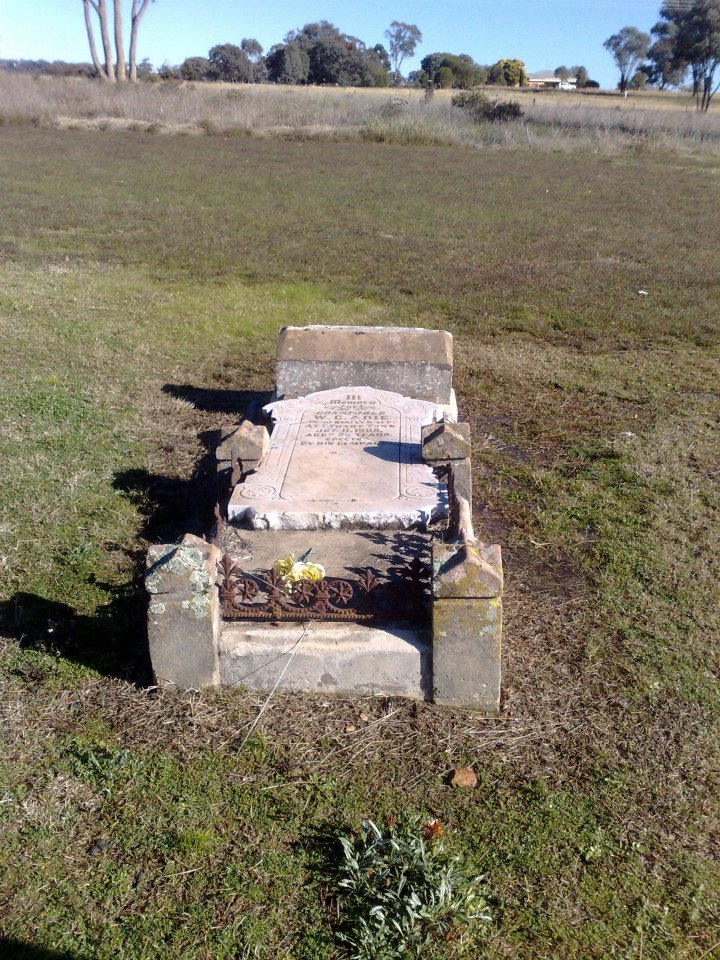
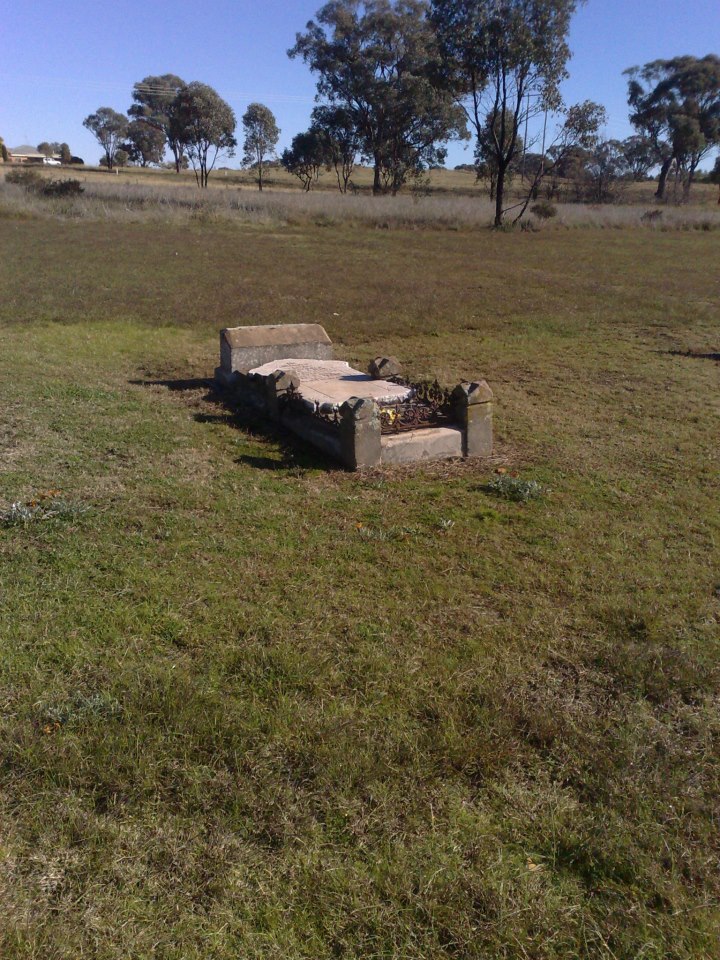
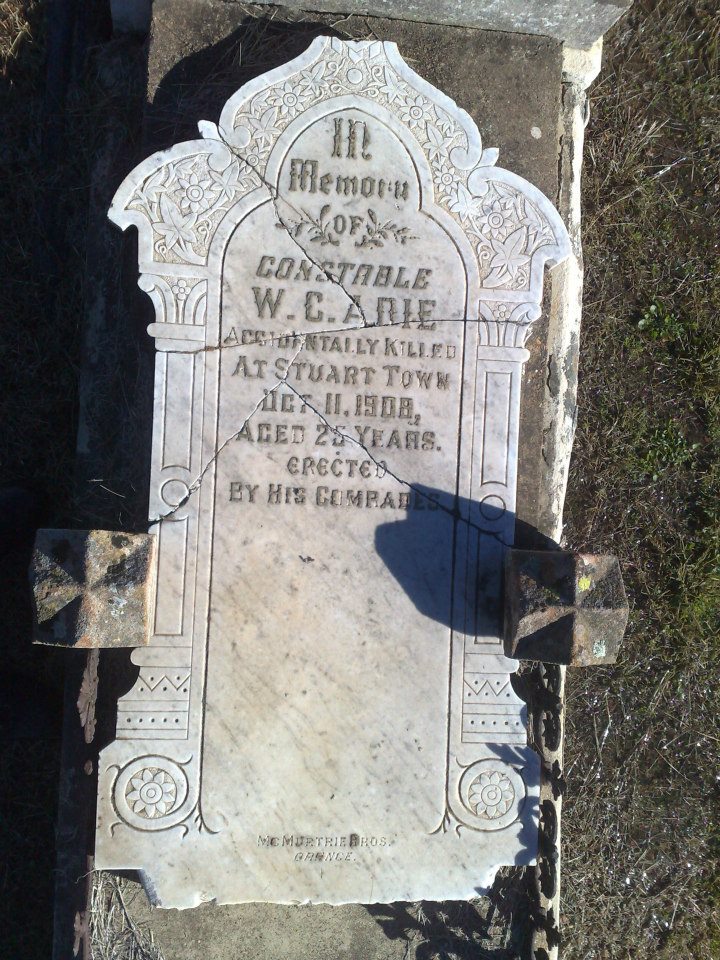
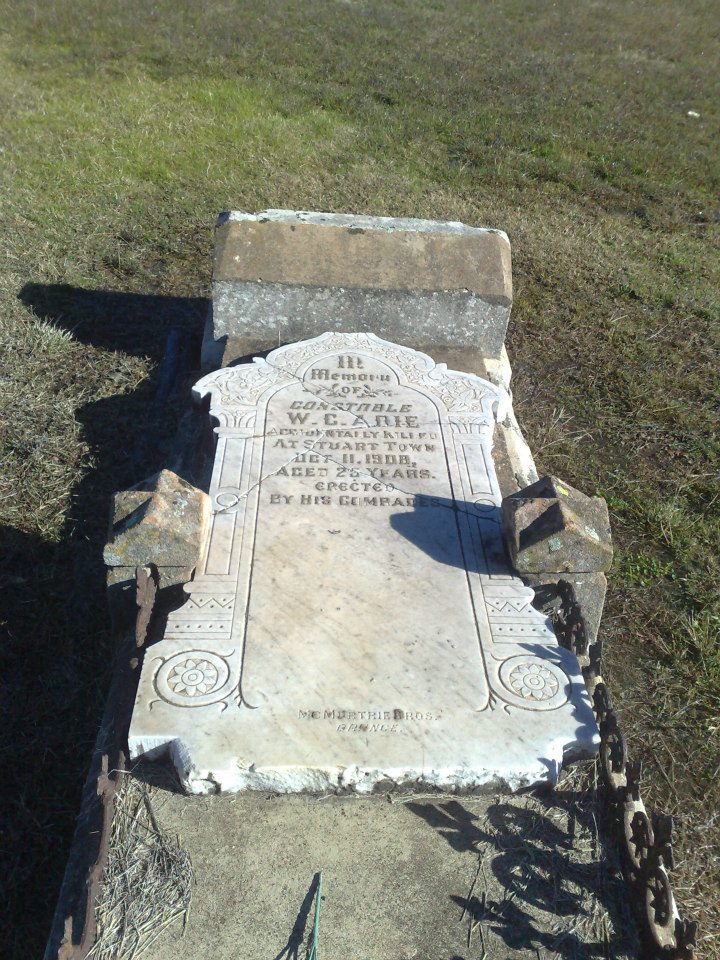
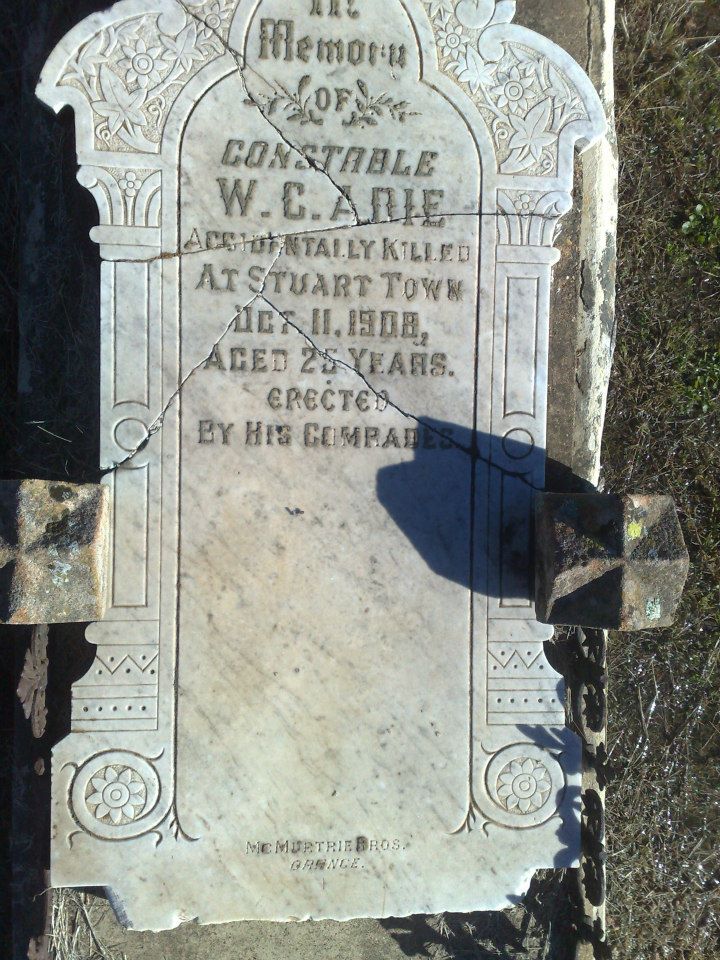
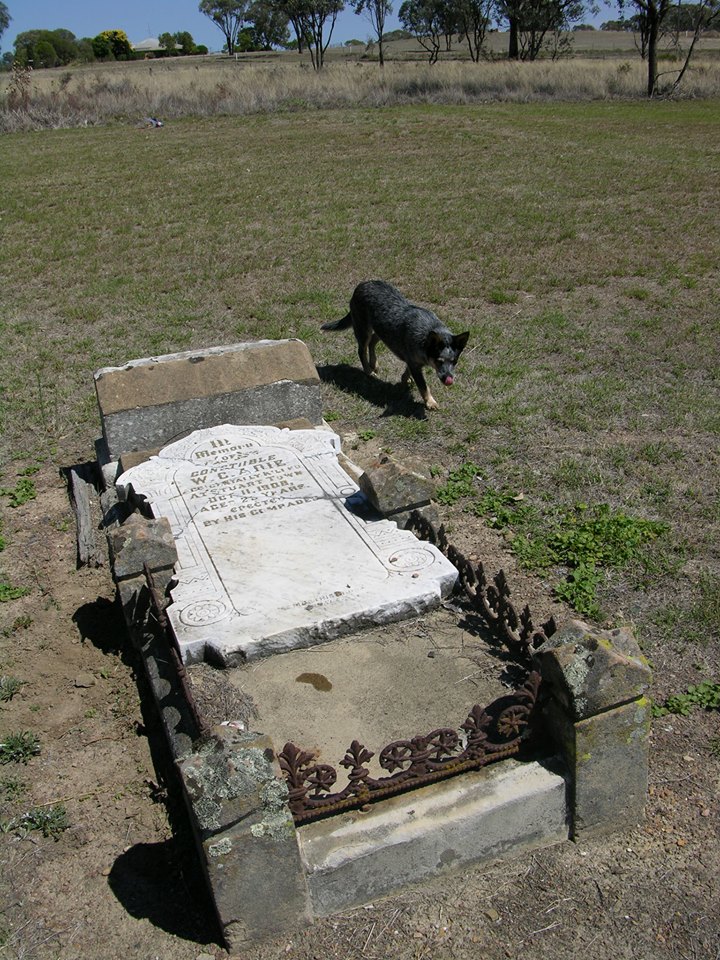
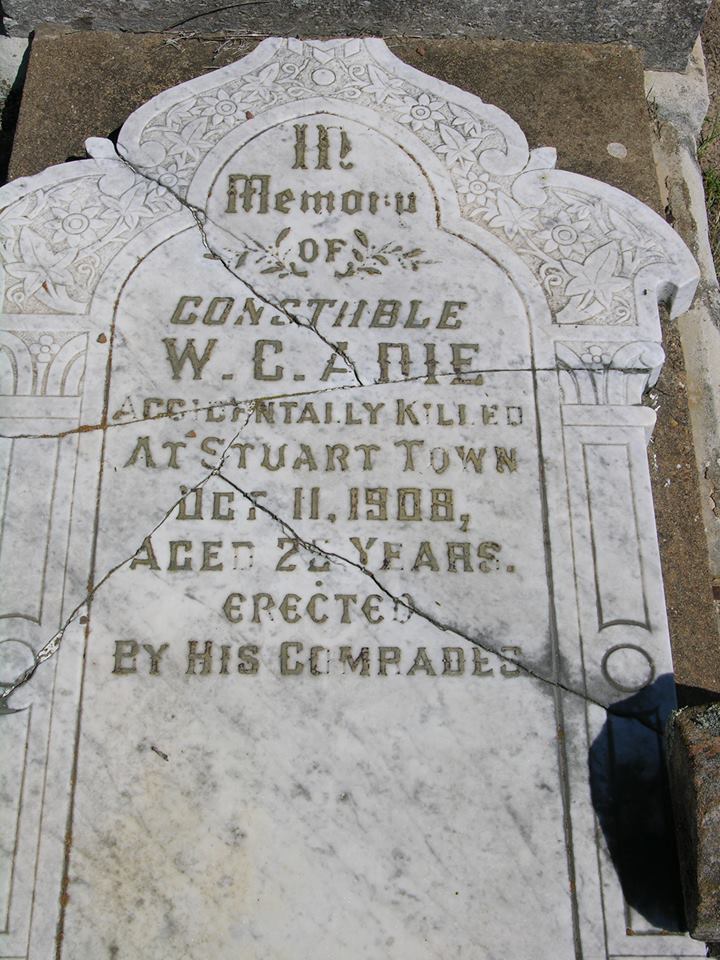
Cst William Cochrane ADIE - Horse accident - 11 Oct 1908 - Grave 06

Cst William Cochrane ADIE - Horse accident - 11 Oct 1908 - Grave 05

Cst William Cochrane ADIE - Horse accident - 11 Oct 1908 - Grave 04

Cst William Cochrane ADIE - Horse accident - 11 Oct 1908 - Grave 03

Cst William Cochrane ADIE - Horse accident - 11 Oct 1908 - Grave 02

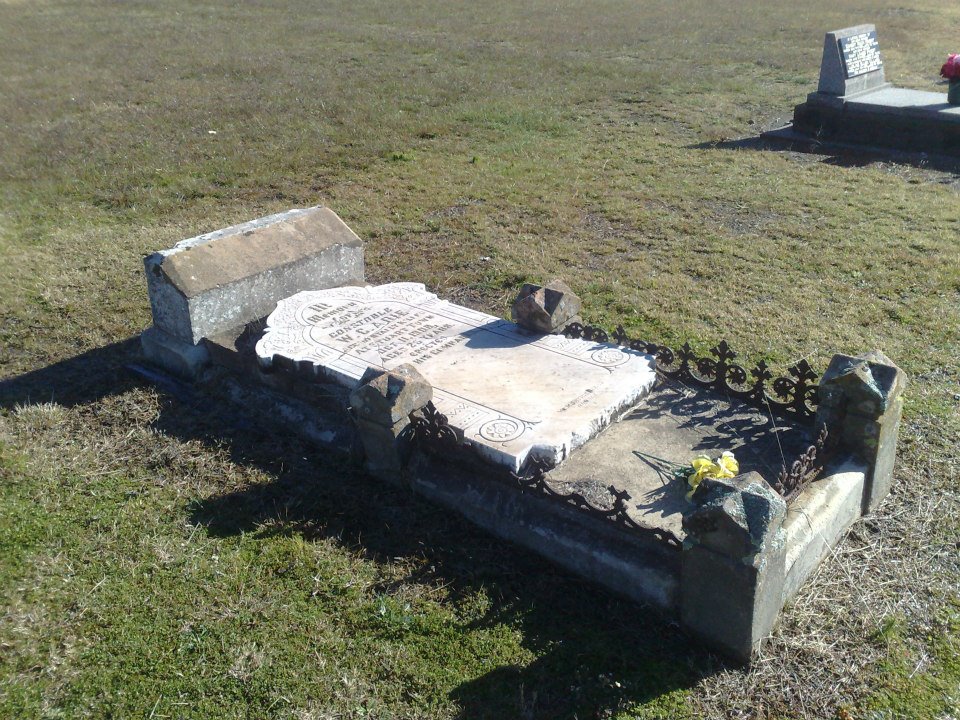
Cst William Cochrane ADIE - Grave

William Cochrane ADIE - Grave 1 - NSWPF - Killed 11 October 1908

William Cochrane ADIE - Grave 2 - NSWPF - Killed 11 October 1908

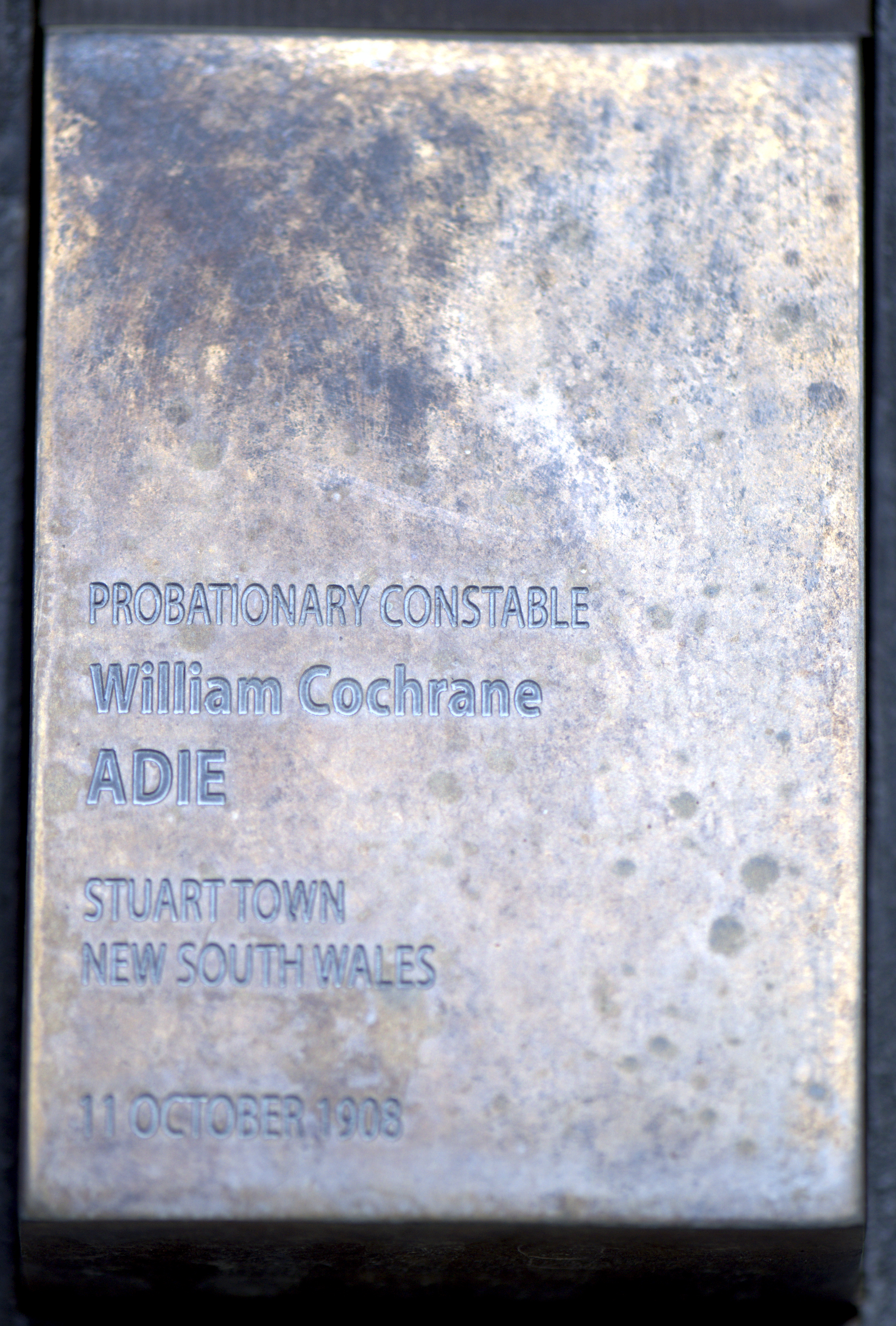
Probationary Constable William Cochrane ADIE Touch Plate at the National Police Wall of Remembrance, Canberra

[divider_dotted]


William JUSTIN

Constable 1st Class William JUSTIN

New South Wales Police Force

Horse Accident

Thuddungra

8 March, 1905


On the day of his death Constable Justin was patrolling about ten miles from Thuddungra (Young district) when his horse became skittish and began to buck. The constable was driven into a wire fence by the animal, where he sustained severe injuries to his face and hands. He was found some three hours after the incident by some girls going home from school, and was quickly taken to the home of a Mr Webb. He was taken to Young Hospital the next day however he unfortunately passed away.


The constable was born in 1859 and joined the New South Wales Police Force on 19 November, 1881. At the time of his death he was stationed at Young.


Today, Missy and I paid a visit to William JUSTIN at Young.
*
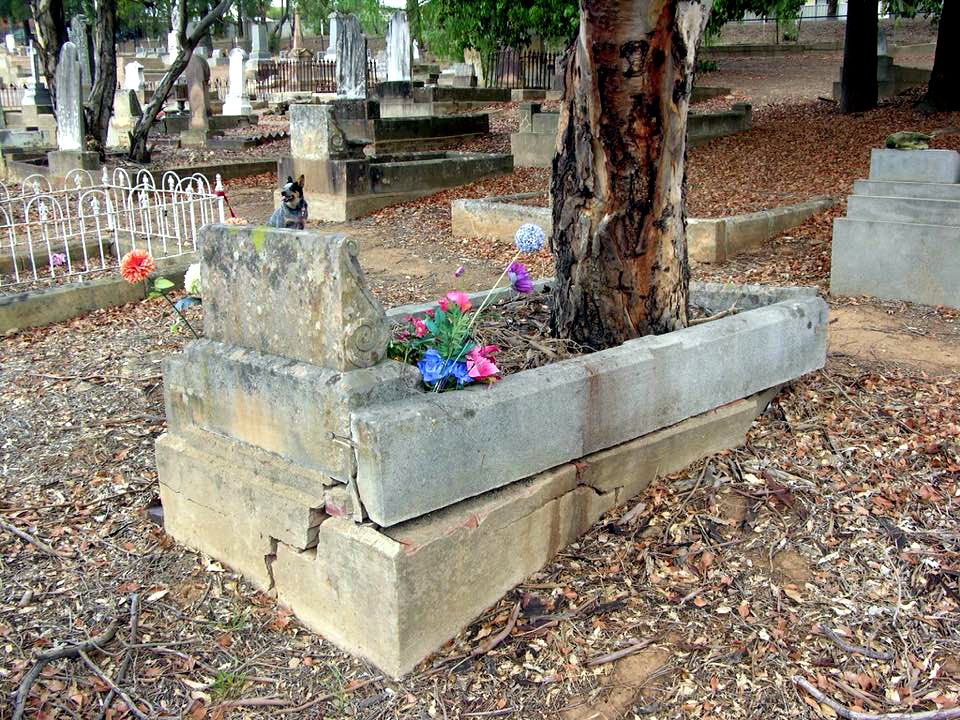
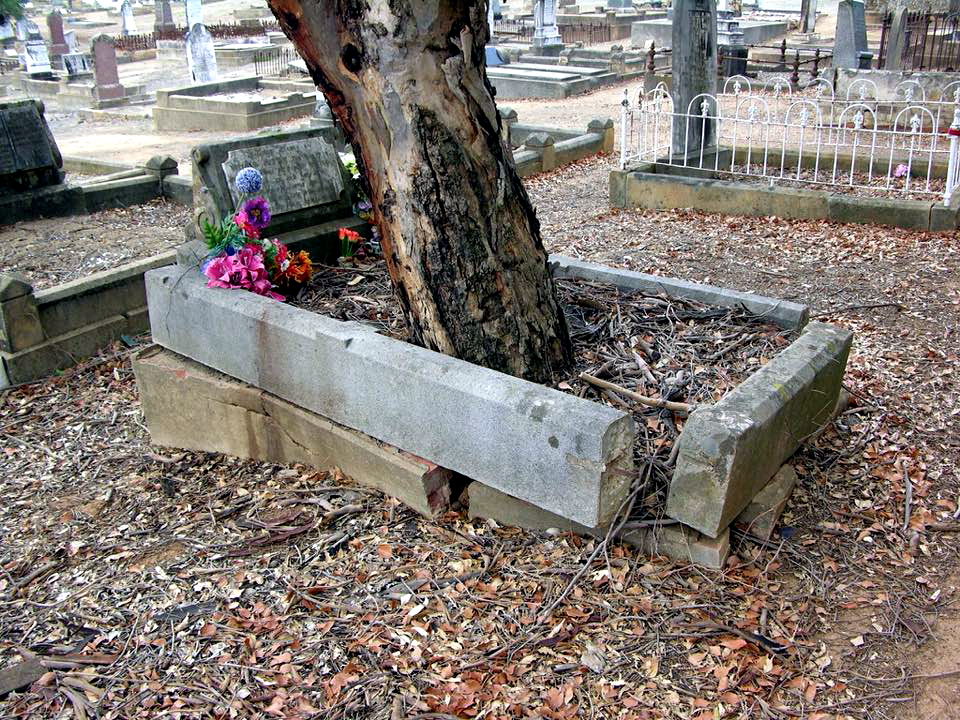
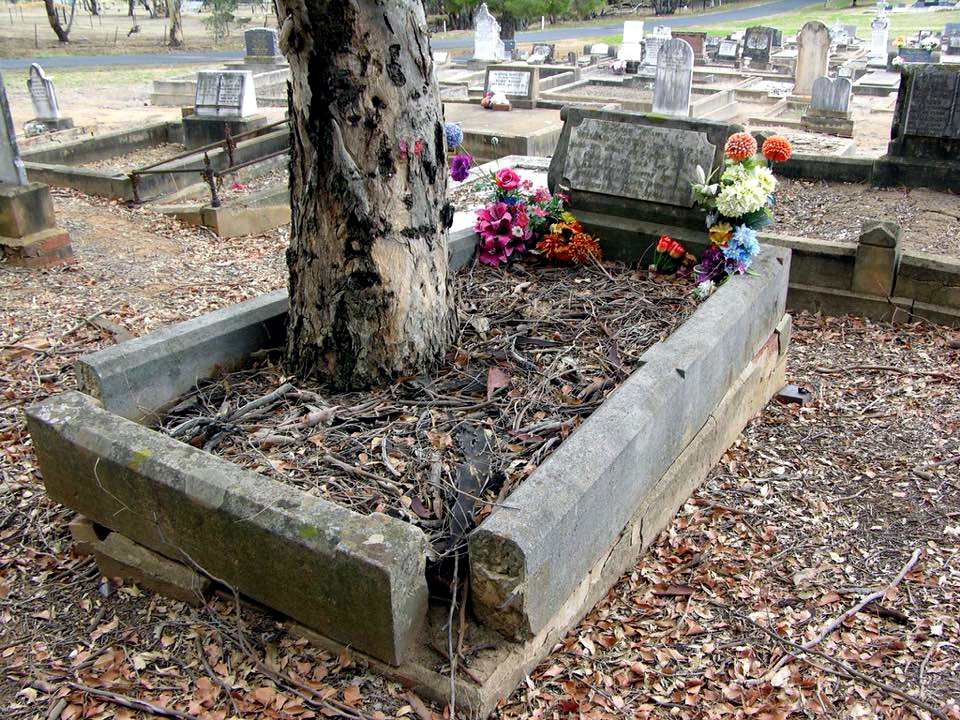
As you can see from these and previous photos of this grave, there is a bloody huge gum tree growing right on top of him. There is a remembrance day ribbon pinned to the tree and the flowers and trinkets have obviously been placed in recent years.
The GPS co-ordinated are 34 19 37S/148 17 17E.
Page 84 in Beyond Courage.
*


Eucser Haze added 3 new photos.
14 hrs ·  8 March 2017

Please take the time to read a little about NSWPF history, or at least just have a look at the state of a grave that belongs to an officer killed in the line of duty, Cst 1/c William Justin. Yes- that is a large tree growing through the centre of the grave.

I’m at a loss to understand how the grave of a Police officer, who died in the service of this state, can be allowed to reach this condition. I seriously wonder what his family and colleagues would think of us.

Remembered…

Constable 1st Class William JUSTIN
Young Police
Horse Accident – 8 March, 1905
Resting Place – Young General Cemetery, Young

In early March, 1905 Constable Justin was patrolling about ten miles from Thuddungra (Young district) when his horse became skittish and began to buck. The constable was driven into a wire fence by the animal, where he sustained severe injuries to his face and hands. He was found some three hours after the incident by some girls going home from school, and was quickly taken to the home of a Mr Webb. He was taken to Young Hospital the next day however he unfortunately passed away. The Shoalhaven Telegraph dated 29 March, 1905 reported the following some weeks later.

“DEMISE OF FIRST-CLASS CONSTABLE JUSTIN.
[Written by Daniel McMillan, an old and sympathetic Friend.]
A great gloom was cast over this neighbourhood and surrounding district on Monday week last, when the sad news became known that First-class Constable Justin had succumbed to injuries which he received through being thrown from his horse whilst on duty the Wednesday previous, some 20 miles from Young, at which place he has been stationed for a considerable time. It would appear from the evidence adduced that while Mr Justin was in the act of shutting a gate, which was a complicated one, his horse, being a spirited animal, started to buck, and ran away, causing the rider to lose his balance and fall to the ground. The unfortunate man, being dragged a considerable distance by the stirrup, was brought into contact with a barb-wire fence, thence with a tree. It is also surmised that the horse kicked him on the head. He was found in an unconscious state some hours, it is supposed, after the accident occurred. At the time of the accident Constable Justin was over 20 miles away from his home. He was found by a Mr Webb, a farmer residing some distance away from the scene of the untoward incident, who took him to his home, and did all that he could to relieve the sufferer until medical aid was obtained, From the first but little hope was entertained of his recovery. He only regained consciousness for a few minutes before his death, which sad event took place on the Saturday evening following, at 8 o’clock. Mr Justin, who was, it may be said, in the prime of life, being only 45 years of age at the time of his death, was the eldest son of the late Mr W. Justin, so long and favourably known in connection with the Harbors and Rivers Department; he was born in Sydney, and whilst only a child removed with his parents to Shoalhaven, where his aged mother still re sides, with several other members of the family. The deceased, at the early age of 21, joined the police force, with which he had been associated ever since, and during his 24 years’ service he had been stationed at many places in New South Wales, including Goulburn, Braidwood, Myrna, Queanbeyan, Frogmore, Young, and other stations. In referring to the deceased gentleman, an up-country paper says: ‘He was the popular constable, who was loved and respected by all, and will be greatly missed.’ The same can be said by everybody at every place where he has been. Besides a wife and 5 children, the deceased leaves a mother, 2 brothers, and 4 sisters, together with a large circle of friends and acquaintances, to mourn their loss. The funeral, which took place at Young on Sunday week, was largely attended…”

The constable was born in 1859 and joined the New South Wales Police Force on 19 November, 1881. At the time of his death he was stationed at Young. He is listed in the official New South Wales Police Honour Roll.


https://police.freom.com/william-justin/

https://police.freom.com/william-justin/

https://police.freom.com/william-justin/


Samuel William LONG

Samuel William LONG

New South Wales Police Force

Regd. # ?

Rank:  Constable

Stations?, Auburn

ServiceFrom  6 July 1894  to  19 January 1903 = 7+ years Service

Awards?

Born? ? 1865

Died on:  19 January 1903

CauseMurdered – shot

Age?

Funeral date?

Funeral location?

Buried at:  Rookwood Cemetery, NSW

Memorial at?

[alert_green]SAMUEL IS mentioned on the Police Wall of Remembrance[/alert_green]

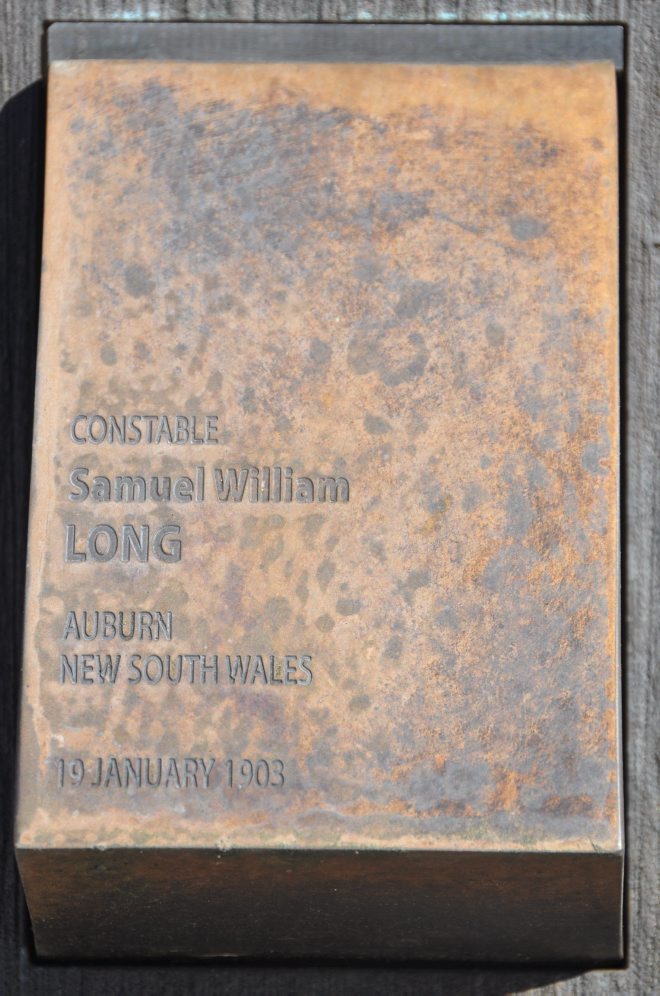
SAMUEL WILLIAM LONG CONSTABLE NSWPF MURDERED - SHOT 19 JANUARY 1903 https://police.freom.com/samuel-william-long/
Touch plate at National Police Wall of Remembrance


 [divider_dotted]

 Funeral location ?

[divider_dotted]

FURTHER INFORMATION IS NEEDED ABOUT THIS PERSON, THEIR LIFE, THEIR CAREER AND THEIR DEATH.

PLEASE SEND PHOTOS AND INFORMATION TO Cal

[divider_dotted]


In the early hours of 19 January, 1903, Theodore Trautwein, the licensee of the Royal Hotel at Auburn was awakened by a loud noise. The sound had appeared to come from the bar area of the hotel, and taking a revolver with him, Trautwein went to investigate. In the bar he saw and heard a person lying on the floor, apparently in great pain. As other residents of the hotel appeared, a candle was lit and it was found that the injured person was a local constable, Samuel Long. A doctor was called and it was found that the constable had suffered a severe gunshot wound to his head. He died a short time later, unable to identify his attacker. A lengthy investigation eventually revealed that the constable had been shot while trying to apprehend two offenders, Digby Grand and Henry Jones, whom he had caught after they had broken into the hotel. After the shooting the offenders had escaped by horse and sulky, however they were both later arrested, charged and convicted of the murder of Constable Long.


The North Western Advocate of 8 July, 1903 announced the execution of the murderers.


EXECUTION OF AUBURN MURDERERS

Sydney, Tuesday ” The State Cabinet having considered the petition for the respite of Digby Grand and Jones, convicted for murdering Constable Long at Auburn, declined to interfere and the men were hanged this morning at 9 o’clock. ”


The constable was born in 1865 and joined the New South Wales Police Force on 6 July, 1894. At the time of his death he was stationed at Auburn.

[divider_dotted]


The Auburn Murder Trial.

The Sydney Mail   11 February 1903   p 8

At the Central Police Court on Monday, before Mr. E. H. Wilshire, S.M., the hearing of the case in which Digby Grand, 32, alias Newbold, alias Stephens, alias Ward, bootmaker, a native of Victoria ; John Thomas Woolford, 27 butcher ; and Albert Yeomans, 24, horse trainer, were charged with having, in company, feloniously and maliciously murdered Constable Samuel William Long, at Auburn, on January 19 last year, was resumed.

Mr. Cargill, of the Crown Law Office, appeared to prosecute ; Mr. E. R. Abigail appeared for the accused Grand, and Mr. W. Niland for the accused Yeomans.

Mr. Cargill said that there was no further evidence to call against Woolford, and he was discharged.

Joseph Daniel Gallagher and William Gallagher were cross examined by Mr. Abigail and Mr. Niland as their personal habits and connection with the police.

Francis Henry Furnval, qualified medical practitioner, residing at Auburn gave evidence as to having examined the dead body of Constable Long about 2.30 on the morning of the murder.

JONES ARRESTED.

Henry Jones, for whom the Government offered 200 pound reward, was arrested in a terrace house at Ada street, Ultimo, on Tuesday afternoon.

Sergeant Carson and Constable MacKay, plain clothes officers at No. 4 station located the suspect.  Sergeant Carson and Constable Clarke went to the front of the house about 2.30pm and Detectives Jones, MacKay, and Lenehan to the rear.

They entered simultaneously, revolvers drawn, and found the man they wanted seated playing cards with other men and women.  He differed from the photo we published last week in that he had grown a pointed reddish beard, and with the protection of this disguise was in the habit of going out by night.  He admitted his identity on the police entering, revolvers drawn, and attempted no resistance.  The inmates of the house said he had been only living with them a week.

He was taken to the Central Police Court and placed in the dock with Grand and Yeomans at 3.30pm.  Their trial had been proceeding for an hour before Mr. Wilshire, and Woolford was in the witness box giving evidence, which followed the lines of his confession given by us last week, and which was to the effect that he saw Grand and Jones enter the hotel bar after vainly endeavouring to get him to actively participate, saw Constable Long come along and go through the open door to investigate, heard a shot, and saw Grand and Jones rush out and run away.  Jones, described as alias John Maguire, alias Baker, 36, clerk, was charged and remanded for eight days.  Grand and he exchanging a few quiet words as he left the dock, and the hearing of the evidence was then resumed.

https://news.google.com/newspapers?nid=1302&dat=19030211&id=SUFVAAAAIBAJ&sjid=F5UDAAAAIBAJ&pg=3442,1796057&hl=en

[divider_dotted]


Denis GUILFOYLE

Denis GUILFOYLE

New South Wales Police Force

Constable 1st Class

Shot – Murdered

Redfern

19 July, 1902


The constable was shot by an offender named Shaw at Redfern whilst attempting to arrest him and another man for passing counterfeit coins. Following an incident involving a storekeeper, Constable Guilfoyle had sought the assistance of an off-duty member, Constable Michael Maher, and after checking several shops the offenders had been in they located them in Shepherd Street. As the two constables approached the offenders, one produced a revolver and shot Constable Maher three times. Shaw then also produced a pistol and shot Constable Guilfoyle twice. Constable Maher later recovered, however Constable Guilfoyle’s wounds proved to be fatal. Shaw then made good his escape, making his way to Victoria.


Constable Guilfoyle was a native of Ireland, having been born at Scariff in County Clare. He arrived in Sydney in 1885 and joined the New South Wales Police Force in November of that year. He did his initial training at the old Belmore Barracks and was first sent to Bathurst, where he remained for about two years. He was then transferred to Redfern in 1887, and was destined to remain attached to that station until his death. He was described as a very powerful, muscular man of nearly 17 stone. Prior to his death the constable had recently been severely injured in an accident and after a spell in hospital had been incapacitated for five or six weeks. He also had the misfortune to recently lose three of his children, one of them being a girl 12 years old. Although he could have retired from the police force on half pay, he apparently preferred to continue to work, and had continued working ‘street duty’ at Redfern and Darlington.


(About 11am on 12 October, 1902 Constable Richard Johnston was off duty at his home at Elwood (Victoria) when a neighbour informed him that a man had attempted to abduct her eight year-old daughter. The constable quickly set off on his bicycle after the suspect and located him a short distance away. When he saw the approaching policeman the offender drew a revolver and shot Constable Johnston, inflicting fatal wounds. The offender then left the scene, only to commit suicide a short time later when confronted by other police. It was later found that the man who had murdered Constable Johnson was the same offender (Shaw) who had murdered Constable Guilfoyle at Redfern (NSW) three months earlier.)


Constable Guilfoyle was born in 1859 and joined the New South Wales Police Force on 7 November, 1885. At the time of his death he was stationed at Redfern.


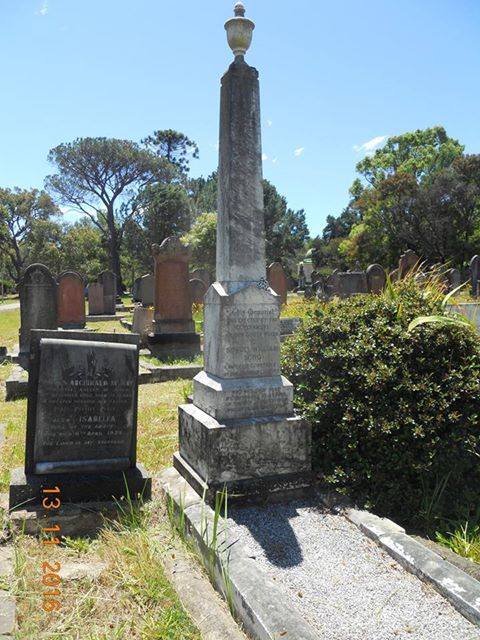
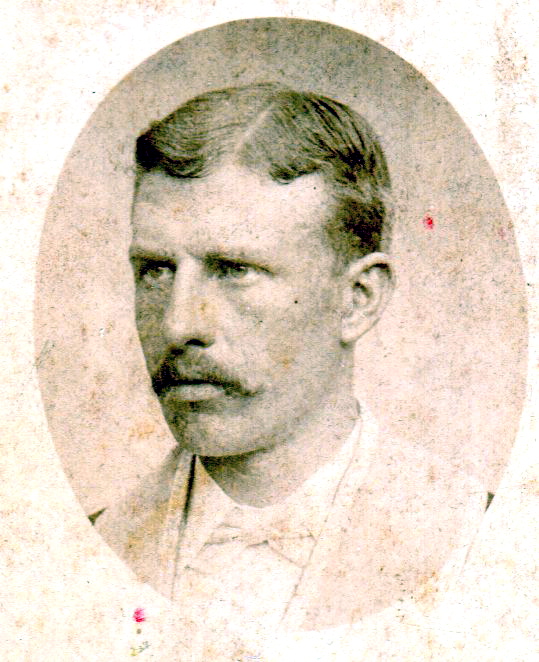
James BREMNER

 James BREMNER

( late of 264 Bourke Street )

New South Wales Police Force

Regd. # ?

Rank:  Inspector

Stations?, No. 3 Division Darlinghurst ( O.I.C. for 17 years )

ServiceFrom  ? ? about 1864  to  2 January 1901 =

Awards?

Born? ? 1841

Died on:  Wednesday  2 January 1901

Cause:  Horse accident – pedestrian

Event date:  Tuesday  1 January 1901

Event location:  Centennial Park

Age?

Funeral date:  Thursday  4 January 1901

Funeral location:  Presbyterian portion of Waverley Cemetery

Buried at: Presbyterian portion of Waverley CemeterY

General Vault, Section 16

 Memorial at?


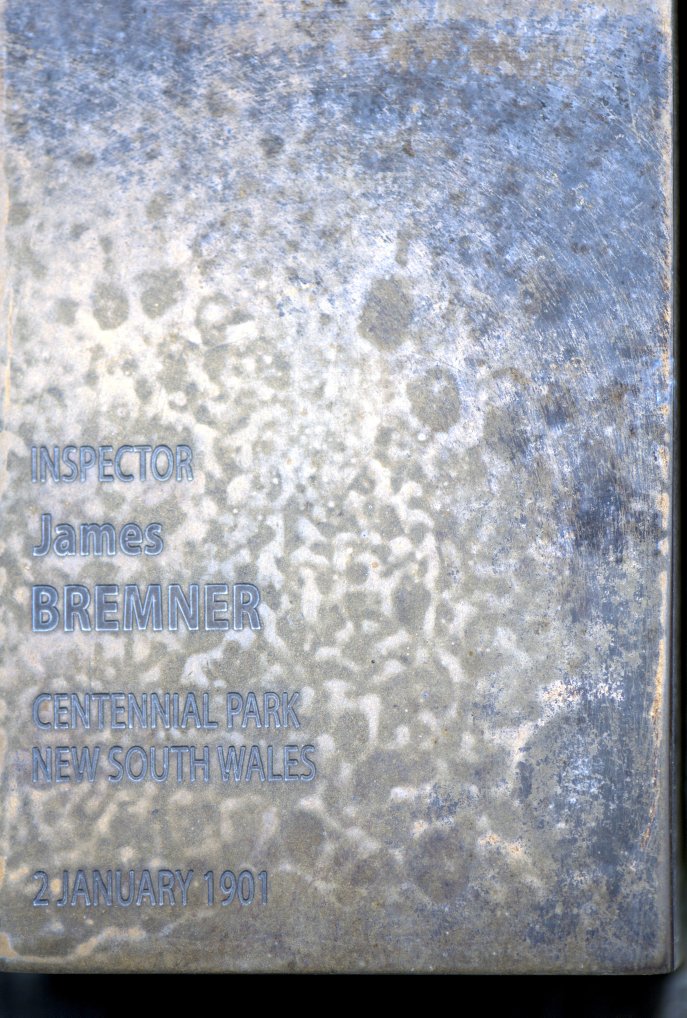
JAMES IS mentioned on the Police Wall of Remembrance

National Police Remembrance Wall Touch Plate


FURTHER INFORMATION IS NEEDED ABOUT THIS PERSON, THEIR LIFE, THEIR CAREER AND THEIR DEATH.

PLEASE SEND PHOTOS AND INFORMATION TO Cal


The inspector was knocked down and killed by a military horse during Commonwealth of Australia celebrations at Centennial Park, Sydney ( 1 January 1901 ). At the time he was supervising 200 police who were maintaining order amongst a large crowd awaiting the Commonwealth Day Procession. As the procession began, a trooper’s horse took fright and bolted into the crowd. Inspector Bremner was knocked down, sustaining severe spinal injuries. He was conveyed to St Vincent’s Hospital where he died at 2.15am the following morning. He had been due to retire a few weeks earlier but stayed on to assist with the Commonwealth of Australia celebrations.


The inspector was a well-known policeman in Sydney. He had arrived in Sydney from the north of Scotland some 37 years earlier and had almost immediately joined the police (about 1864). He had been the officer-in-charge of No. 3 Division for seventeen years, supervising the police stations at Randwick, Waverley, Botany and Woollahra. He was apparently a huge man of about twenty stone in weight. He left behind a widow but no children.


The Sydney Morning Herald of 4 January, 1901 reported on the very impressive funeral which was afforded the inspector.


FUNERAL OF THE LATE INSPECTOR BREMNER.

The funeral of the late Inspector James Bremner, who died at St Vincent’s Hospital on Wednesday from injuries received in the discharge of his duties during the swearing in ceremony of the Governor General at the Centennial Park on the previous day, took place yesterday afternoon. The interment was made in the Presbyterian portion of Waverley Cemetery. The cortege left the late residence of the deceased, 264 Bourke Street, at 3pm. The popularity and respect in which the deceased officer was held were marked by the large presence of all classes of the community, who assembled at the place of departure and along the whole line of route. Moreover, numerous evidences of mourning were displayed throughout Oxford Street. At Darlinghurst Law Courts voluntary guards of honour were formed by the bandsmen of the Irish Rifles and St George s Regiment, who were playing in the neighbourhood. Opposite Marshall’s Brewery a number of blue-jackets who were returning from the review lined up and saluted the coffin as it passed. Passing Centennial Park the same tribute of respect was paid by the troops encamped there…


The inspector was born in 1841 and joined the New South Wales Police Force about 1864. At the time of his death he was the Officer-in-Charge of No.3 Division (Darlinghurst).


James MORRISON

James MORRISON

AKA ?
Late of Moama

New South Wales Police Force

Regd. #   ‘Q‘ 3661

For the purposes of this website ‘Q’ represents those Police joining between 1862 ( commencement of NSWPF ) – 23 February 1915 ( Commencement of NSWPF current numbering system )

Rank: Constable – appointed 15 March 1880

Final Rank = Senior Constable

Stations: ?, Deniliquin – Lockup Keeper ( ? ? ? – 1891 ), Moama ( 7 years ) – Death

Service: From ? ? 1880? to 19 January, 1898 = 18 years Service

Awards: No find on It’s An Honour

Born: ? ? 1857 – Victoria

Died on:  Wednesday 19 January 1898 about 11.30am

Age: 40

Cause: Illness – Depression – Suicide – Firearm

Event location: inside Moama Police Station, NSW

Event date:  Wednesday 19 January 1898 about 11.30am

Funeral date:  Thursday 20 January 1898

Funeral location: Moama Cemetery

Wake location: ?

Funeral Parlour: ?

Buried at: Unmarked & Unknown grave location within Moama Cemetery

Memorial located at: ?


[alert_red] JAMES is NOT mentioned on the Police Wall of Remembrance[/alert_red] * BUT SHOULD BE

[alert_pink] JAMES IS mentioned on the Memorial Wall, Deniliquin Police Station – 2018[/alert_pink]

[divider_dotted]


FURTHER INFORMATION IS NEEDED ABOUT THIS PERSON, THEIR LIFE, THEIR CAREER AND THEIR DEATH.

PLEASE SEND PHOTOS AND INFORMATION TO Cal

[divider_dotted]

May they forever Rest In Peace

[divider_dotted]

Little is known of the death of Constable Morrison other than the following brief newspaper extracts. The Dubbo Liberal and Macquarie Advocate of 22 January, 1898 printed the following.


SUICIDE OF A CONSTABLE.

A wire from Deniliquin dated Wednesday says, “A telegram was received today announcing the suicide of Senior Constable Morrison, of Moama. The Small Debts Court was being held when the news was received by Mr. N. C. O’Neill, P.M., and he immediately adjourned the case on account of having to proceed to Moama to conduct an inquest. The news caused quite a sensation locally, as Morrison, who was previously lockup keeper at Deniliquin, was always regarded as a zealous officer. No cause is assigned for the deed.


The Camperdown Chronicle of 22 January, 1898 also reported on the death, as follows.


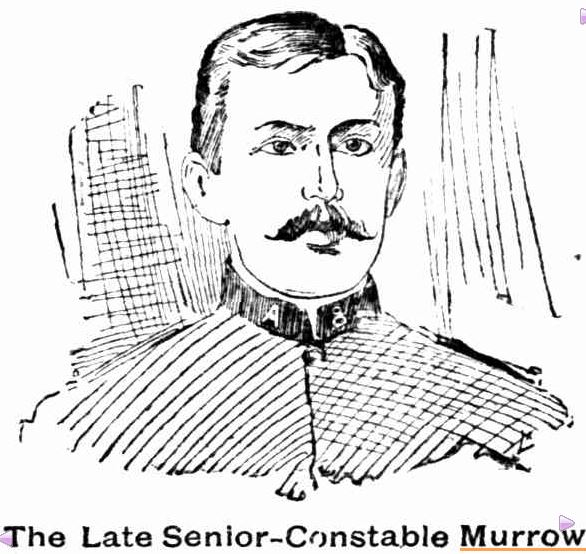
A CONSTABLE’S SUICIDE AT MOAMA.

At halfpast 11 on Wednesday morning a report reached Echuca that Senior Constable Morrison, in charge of the Moama police station, had shot himself. Dr. Eakins was quickly on the spot, but pronounced life to be extinct. Deceased was highly esteemed in the police department, having been 18 years in the force. He was 40 years of age, and had been stationed at Moama for seven years. He leaves a wife and family of eight children, the eldest being 14 years of age. Deceased was on duty in the morning and appeared to be in good spirits until informed of the terrible accident which had befallen Mr. Miller, manager of the Bank of New South Wales, when he seemed greatly depressed. He, however, spoke to his wife, appeared rational, and started doing his office work. Suddenly his wife heard the report of firearms, and rushing in found her husband lying on the floor, with his rifle beside him. The bullet had gone into the mouth and blown the top of the head off.


At the time of his death the constable was aged about 40 years and is thought to have joined the New South Wales Police Force about 1880. He was stationed at Moama.


So far, I have not found any information as to what the initial ‘J‘ stands for ( in relation to his Christian name ).

In NSW State Archives – Registers of Police, there is a James MORRISON – # ‘Q’ 3661 who was born in 1857 in Victoria and appointed to the Police on 15 March 1880.

It is very possible that this James MORRISON is the J. MORRISON in this Memorial Post but that, at this time, has not been confirmed.

BUT the below article from the NSW Government Gazette # 558, page 4964, dated Tues 21 July 1896, throws another angle to this story – naming MORRISON as having the Christian name of William – 2019


Further research finds an Erratum in the NSW Government Gazette, issue 616, page 5375, dated Fri 7 Aug 1896

New South Wales Government Gazette (Sydney, NSW : 1832 – 1900), Friday 7 August 1896 (No.616), page 5375

ERRATUM.

WITH reference to notification in Government Gazette of 21st ultimo, appointing Senior-constable William Morrison to act as Clerk of Petty Sessions at Moama, — for Senior-constable “William” Morrison read Senior-constable ” James ” Morrison.

Department of Justice,

Sydney, 4th August, 1896. T1189]


https://trove.nla.gov.au/newspaper/article/222504923


Newcastle Morning Herald and Miners’ Advocate (NSW : 1876 – 1954), Friday 21 January 1898, page 5

TERRIBLE DISASTERS. DENILIQUIN , Thursday.

A serious accident happened yesterday to Mr. Peter Millar, manager of the Bank of New South Wales at Moama.

He rode a spirited horse across the Murray Bridge from Moama to Echuca Railway Station, where he saw a friend off by the train. He was about to return to Moama, when his horse became exceedingly fractious, and bolted.

The animal careered madly for some distance, till near the railway crossing, when the saddle shifted to the animal’s withers, and the horse plunged and reared, and threw Mr. Millar on to the road, his head striking the metal, causing concussion of the brain, internal hemorrhage, and paralysis of the left side.

No hopes are held out for his recovery.

Additional particulars are to hand with reference to the suicide of Senior Constable Morrison, of Moama.

Yesterday, on the arrival of the train from Deniliquin, he as usual went to the post office for the morning mail and seemed in the best of spirits. He was informed of the accident to Mr. Millar, with whom he was a close friend, and he immediately became depressed and walked into the police station.

He then took down a Martini-Henry carbine hanging on the wall, and putting the barrel into his month, blew his brains out.

His wife heard the report, and went into the room, where she found her husband dying on the floor, blood and brains being scattered all around.

Morrison had been at Moama for seven years, and altogether eighteen years in the police force.

Deceased was 40 years old, and leaves a wife and eight young children.


https://trove.nla.gov.au/newspaper/article/137052154


Riverine Herald (Echuca, Vic. : Moama, NSW : 1869 – 1954; 1998 – 2000), Friday 21 January 1898, page 2

The Death of Senior-Constable

Morrison.

AN OPEN VERDICT RETURNED.

Yesterday morning the inquiry, commenced the previous afternoon at the Police Court building, Moama, before Mr N. o. O’Neill, coroner, was resumed.

On the previous afternoon Dr. Eakins‘ testimony was given.

Yesterday the following evidence was called:

Janet Morrison, widow of the deceased, gave evidence to the effect that she last saw her husband alive on Wednesday morning, about 11 o’clock. He was then in the office at the police station. He arose that morning at about half-past seven o’clock, but had no breakfast – only a cup of tea. About a quarter past 10 he went out, when he seemed very low spirited. A few minutes before 11 he returned to the office. Witness did not then notice anything peculiar about her husband, except that he was very low spirited. She did not speak to him about it. He seemed to be in trouble, but had made no complaint to her about it.

She left the office to make him a cup of cocoa, leaving him alone. She then heard the report of a firearm and, rushing back, found that her husband had shot himself.

She ran outside in search of help and saw a man named Barber, who accompanied her back to the office. The doctor was then sent for. There was no domestic unhappiness of any sort. Deceased was a good husband and father. Deceased, who was 40 years of age, left eight children, but was not possessed of any means,

George Thomas Barber, a farmer, residing near Moama, stated be had been acquainted with the late Senior-Constable Morrison.

On Wednesday he was driving past the police station at about 11 o’clock, when he saw Mrs Morrison run out. She called out to him, and he sprang over the fence and went in. He found deceased lying on the floor, with the rifle lying alongside of his body. The bullet had passed through his mouth, cutting his lip, and had gone out of the top of his head. Deceased’s hat was lying on the floor with the crown blown out, and the pugaree lying alongside. Witness ran across and told his mother, who lived nearly opposite, and got her to go down to aid Mrs Morrison. He then sent Henry Howard for the doctor. As there was no constable at the station he drove over to the look-up and acquainted Constable Flood. He had seen deceased several times lately, but he had not seen him under the influence of drink.

William James Martin, Justice of the Peace, stated he had seen the dead body of the late Senior-Constable Morrison.

He last saw him alive at about 25 minutes to 11 o’clock on Wednesday morning in Meninya street, opposite Chanter, Martin and Co.’s office. Just as he arrived witness and Mr Charles Opitz spoke to him about an accident which had occurred to Mr Miller. The deceased seemed to be rather cut up about the accident. They then dispersed, but, later on, witness and Mr Opitz again met, when it was remarked that deceased was not looking the same that morning as usual. When he last saw deceased he was going in the direction of the police station.

It seemed to him (witness) that deceased had a worried look. He was not so bright in conversation, and seemed dull. He had known deceased for nearly seven years. Of late – during the past 12 months – he had not been so steady in his habits as previously. It was even more noticeable during the past three months. To his (witness’) knowledge deceased had been drinking more than he should have during the past week. Other wise he bore a very good reputation. He knew of no domestic troubles and, speaking from outside judgement, he never saw a father who seemed to look after his family better. He did not know anything about his financial position.

Constable Schweicher, stationed at Moama, said he last saw deceased alive near the Federal store, opposite the Bridge Hotel, shortly before eleven o’clock. Witness spoke to him when he appeared to be despondent on account of Mr Miller‘s accident.

When he left witness deceased went towards the police station. During the past few days witness noticed that deceased was worrying or fretting over something. He was not quite positive on this point, but he imagined that there was something peculiar about him. Usually he was of a distant and reserved disposition. After parting company with deceased witness proceeded on his way collecting returns. Half an hour afterwards he received a message to go to the barracks and he immediately went then. On arrival he saw the body lying on the floor of the office. Deceased was lying fully dressed, with his head against the wall and with fresh blood on his hands and face. Dr Eakins was then present.

The regulation rifle ( produced ) was lying on his right side. It had stains of blood on it. The empty cartridge ( produced ) had been taken out of the rifle by Dr Eakins and it was lying alongside the weapon. The hat ( produced ) with the top blown out, was also found on the floor. The bullet had, apparently, gone through the ceiling of the office.

He had known deceased for the last three years, but had only known him intimately for the last eight months — since he had been stationed at Moama. He searched the body and the office, but found nothing leading to the belief that suicide was contemplated.

This concluded the evidence and the coroner found that deceased met his death by injuries to the brain and skull inflicted by a bullet.

Yesterday afternoon the remains of the deceased were interred in the Moama cemetery, when a large number of citizens of Echuca and Moama paid a last tribute to one who had been held in such great respect in life. The Rev. J. C. Johnstone, M.A., conducted the funeral ceremony, and, in speaking of deceased at the grave, referred to his good qualities in life. The utmost sympathy was felt towards the bereaved widow and family.

One of the most painful features of the sad case is that the widow and family have been left without adequate means of support. The Mayor of Moama ( Ald W. J. Martin ), who was an intimate friend of the deceased, on finding out the condition of affairs, at once took steps to help the bereaved family in their misfortune and has inaugurated a subscription fund. It is his intention to appeal to the country friends of the deceased as well as to those who reside in Echuca and Moama. The following donations have already been made :- Chanter, Martin and Co., £2 2s; Dr. Eakins, £2 2s ; C. L. Blair, £1 1s; W. Milledge, £1 1s; D. McLaren, senr., 10s 6d ; P. Mackey, 10s 6d. The Mayor of Moama will be pleased to take charge of further subscriptions..


https://trove.nla.gov.au/newspaper/article/114959946


2/1/2019, Deniliquin Times.

Eight honoured on police memorial wall’ –

Seven former local police officers and a former police chaplain were honoured during a police reunion in Deniliquin.
They were the first to be added to the police memorial wall at the new Deniliquin police station.
Honoured were
Constable Charles Chapman (died 5/3/1866),
Senior Const James Morrison (19/1/1898),
Senior Const Thomas Smith (19/4/1910),
Superintendent Henry Grugeon (10/1/1911),
Sergeant George Thomas Whiteley (25/3/1931),
Detective Senior Const Risto Vic Baltoski (2/1/1989) and
Senior Const Jennifer Louise Edgerton (August 2015) and

Rev David Bond.


HARRY GRUGEON


New South Wales Government Gazette (Sydney, NSW : 1832 – 1900), Tuesday 21 July 1896 (No.558), page 4964

[633] Department of Justice,

Sydney, 20th July, 1896.

HIS Excellency the Governor, with the advice of the

Executive Council, has been pleased to appoint the undermentioned Officers of the Police Force to act as Clerks of Petty Sessions at the places specified in connection with their respective names, namely:—

Sergeant Charles Earskin Parker, Camden;

Senior-constable William Morrison, Moama;

Sergeant James McIntosh, Murrumburrah

Senior-constable Thomas Johnson, Nundle;

Sergeant Alfred Percy Young, Nymagee

Senior-constable John McNeely, Richmond;

Senior-constable Henry Edgar Ferris, Trunkey,—

to take effect from the 16th instant.

Senior-sergeant Alfred Amos Sykes, Berrima;

Sergeant William Tennent Moss, Crookwell j

Senior constable William Payne, Swamp Oak,

— to take effect from the date of commencing duty.

ALBERT J. GOULD.

https://trove.nla.gov.au/newspaper/article/222503675

Riverine Herald (Echuca, Vic. : Moama, NSW : 1869 – 1954; 1998 – 2000), Friday 19 June 1896, page 2


A TRAVELLER SEVERELY INJURED.

About four o’clock yesterday morning Senior-Constable Morrison, of Moama, brought to the hospital a man named John Turner, who was suffering from severe burns.

Dr. Smith was quickly in attendance and he found that the patient had been burned along the right arm, the hip, and side, whilst his face was also badly seared. He stated that he went to sleep by a fire at his camp, close to the Murray bridge, and during the night a log from the fire rolled on him. His cries attracted attention, and Senior-Constable Morrison was informed. He found Turner in great pain and with the least possible delay had him placed under medical care. The wounds, though not dangerous, are of a most painful character, and will be some time before the man can leave the hospital.

https://trove.nla.gov.au/newspaper/article/114992170

Age (Melbourne, Vic. : 1854 – 1954), Friday 19 April 1895, page 6

CHARGE OF HORSE STEALING.

ECHUCA, Thursday.

A man named McKenzie, alleged to be an old offender, was arrested by Senior Constable Morrison, of Moama, yesterday, on a charge of horse stealing. McKenzie called at the police station and offered to sell the constable a fine looking draught horse for 30s. The price asked was so low that Morrison became suspicious, and having read an account of a similar animal having been stolen from a Mr. Patrick O’Loughlin, of Myers Flat, near Bendigo, he detained the vendor.

Sending a telegram to Eagle-hawk, he soon after received a reply giving a description of the horse stolen. As this tallied with the appearance of the horse in the yard, he arrested McKenzie, and soon found that he was an old offender, well known to the police, having served several sentences for similar offences.

His last appearance was before the Echuca court.

McKenzie was brought before the Moama court this morning and remanded to Eaglehawk.

https://trove.nla.gov.au/newspaper/article/193463565

Riverine Herald (Echuca, Vic. : Moama, NSW : 1869 – 1954; 1998 – 2000), Saturday 25 April 1891, page 2

MOAMA.

Constable Thomas Foss, ( ‘Q’ 5448 ) who has been stationed at Moama for a long time, has received promotion, and it is expected that he will leave Moama on Thursday next. Constable Foss will take charge of a station at Hatfield, near Balranald. During his stay in Moama he has gained many friends.

A little boy, a son of Senior-constable Morrison, of Moama, met with a serious accident on Thursday. Whilst playing in the yard the little fellow fell, striking his forehead against a piece of wood. No particular notice was taken of the accident at the time. Towards Friday morning, however, the condition of the child became worse, necessitating medical assistance.

https://trove.nla.gov.au/newspaper/article/114686753


Henry Stark MURROW

Henry Stark MURROW

New South Wales Police Force

Regd. # 4471

Rank:  Senior Constable

Stations:  Phillip Street Police Station ( No. 4 Division )

Service:  From 9 June 1883  to  5 October 1897 = 14+ years

Awards?

Born:  1861 in England

Event date: 4 October 1897

Event location:  the vicinity of Argyle Street, The Rocks

Died on: 5 October, 1897 around 12.30am

Cause:  Assault – blood clot on the brain

Age:  35

Funeral date:  6 October 1897 @ 3pm

Funeral location:  Waverley Cemetery

Buried at:  Waverley Cemetery

Memorialhttps://police.freom.com/eastern-suburb…olice-memorial/


Henry Stark Murrow
Henry Stark Murrow

Henry MURROW 1 - NSWPF - Murdered 4 Oct 1897

HENRY IS mentioned on the Police Wall of Remembrance

On 4 October 1897 Constable Murrow attempted to arrest a man by the name of Daniel Conway in the vicinity of Argyle Street, The Rocks. During the scuffle the constable fell to the ground, heavily striking his head. Taken to the Sydney Hospital and treated for what was thought to be merely a scalp wound, the constable was allowed to return to his home. Later that night he became very ill and died. It was subsequently found that he had suffered a fractured skull. Although Conway was charged with murder he was later convicted of manslaughter and sent to gaol.


The Sydney Morning Herald of 7 October, 1897 described the constable’s inquest and funeral, concluding with the following:


The funeral of the deceased took place yesterday afternoon. The procession, which included 160 members of the police force in uniform and a number of Freemasons, left the deceased’s late residence, at 117 Underwood Street, Paddington, shortly before 3 o’clock, and proceeded to Waverley Cemetery, where the interment took place. The coffin was covered with floral tributes. The Police Band played the Dead March en route. At the grave a special Masonic service was read, as well as the usual burial service. Amongst the officers of the department who were present were Superintendent Head, Inspectors Bremner, Potter and Lawless, and Sub-inspectors Scott and Elliott. In the funeral procession there were also a large number of civilians.


The senior constable was born in 1861 and joined the New South Wales Police Force on 9 June, 1883. At the time of his death he was stationed at Phillip Street Police Station, Sydney.


 Figure 9. Daniel Conway, photographed in 1897 at Darlinghurst Gaol for the manslaughter of Constable Henry Murrow of No 4 Station. (NSW State Records NRS 2138, photo 7218)
Figure 9. Daniel Conway, photographed in 1897 at Darlinghurst Gaol for the manslaughter of Constable Henry Murrow of No 4 Station. (NSW State Records NRS 2138, photo 7218)

Police death in the course of duty

Senior Constable Henry Murrow (1869–1897) of No 4 Station died from an injury received on duty. Born in England, Murrow had settled with his parents in New Zealand where he joined the New Zealand Police Force before moving to Sydney and joining the NSW Police Force in 1883.

On 4 October 1897, Murrow, while on duty in The Rocks was hailed by Jane Jones, publican of the Orient Hotel who was having trouble with a drunken patron, Daniel Conway. Jones asked Murrow to move Conway along. This he did, requesting that Conway go home. Conway left with another man, walking south along George Street, closely followed by Murrow, as witnessed by George Howlett. Nearing the Port Jackson Hotel (now the Russell Hotel) on the corner of Globe Street, Conway’s companion was swearing, at which point Murrow overtook them and clasped his hand on the man’s shoulder. This resulted in a fight during which Murrow struck his head on the woodblock paving of George Street. Howlett intervened, helping Murrow to his feet. Conway then fled back towards Argyle Street and Howlett assisted Murrow to the nearby No 4 Police Station.

Murrow was escorted to Sydney Hospital where wound was dressed. It appeared to be minor so Murrow was dismissed. Meanwhile Conway was delivered into the custody of water police Constable William Cleugh who took him to the Water Police Station in Phillip Street where he was charged with assaulting Morrow while he was on duty.

At 10.30pm at his home at Paddington, Murrow lost consciousness and died around 12.30am. Doctors were summoned and determined that he had concussion, an autopsy confirmed it. Conway, was charged with murder but convicted on the lesser charge of manslaughter and sentenced to six months hard labour at Darlinghurst Gaol.[9]

[9] Daily Telegraph, 7 and 8 October 1897


117 Underwood St, Paddington. Home of Senior Constable Henry MURROW when he was murdered in October 1897.

 [divider_dotted]

Goulburn Evening Penny Post                    Thursday  7 October 1897        page 2 of 4

THE DEATH OF CONSTABLE MURROW.

The City Coroner, Mr. J. C. Woore, J.P., on Wednesday initiated an inquest into the circumstances touching the death of Senior-constable Henry Murrow. A somewhat painful scene occurred when the witnesses were called in to see the body identified. Mrs. Murrow, widow of the deceased, was present to identify the body, and when Daniel Conway, the young fireman, who attended the inquest in custody, was brought in a fit of uncontrollable indignation took possession of the bereaved woman, and she tried to get at close quarters with Conway. Evidence was then taken.

Caroline Barbara Murrow stated that deceased was her husband, was a native of England, and 32 years of age. He left three children, and no property. At 9.30 a.m. on the 4th instant he left home in his usual health to go on duty. He was home again about half-past 8 on the evening of that day, and when she came in at that time after having been out all day she found him lying on the bed in an unconscious condition and bleeding from a wound in the head. She applied carbolic oil to the wound, and bandaged deceased’s head. Dr. Walton Smith was sent for, and remained with her husband until he died. Dr. Quaife was also present at the time of his death.

Dr. Rennie, who in conjunction with Dr. Jameson had made a post-mortem examination of the body, stated that he found a star-shaped cut about 2in. in length on the back of the head. The cut penetrated to the bone, but the skull was not fractured. On opening the skull he found a large clot of blood compressing the left side of the brain, which was lacerated, and it was to this laceration of the brain that death was due.

Similar evidence was given by Dr. Jameson.

Dr. Smith stated that he was called in to see deceased on the night of the 4th instant, and at once came to the conclusion that he was dying, and suggested a consultation. Dr. Quaife was sent for, and together they saw deceased about 10.45 p.m. The took two stitches out of the scalp wound and found that there had been no fracture of the skull.

Jane Jones, a widow, and licensee of the Orient Hotel, corner of Argyle and George streets, ( The Rocks, Sydney ) stated that on the 4th instant, at about 12.45 p.m., she called deceased’s attention to the fact that Daniel Conway, the man in custody, was causing her annoyance. Murrow told Conway to go home, and the two went away in the same direction, Conway being about 10 yards in advance of Murrow. She did not see what happened subsequently.

George Howlett, a fireman employed on the steamship Echuca, stated that he saw Murrow following Conway and another man, and when deceased put his right hand on the latter’s shoulder Conway struck him twice. Deceased struck the other man and knocked him down. The latter then got up and ran away. Murrow then closed with Conway and tried to handcuff him. Conway struck him in the face and tripped him up. Deceased fell in the roadway, and his head struck the ground. Conway got up and ran away. In answer to Conway witness said that he saw deceased strike Conway after the latter had struck him.

Dr. W. H. Harris stated that he stitched the wound in deceased‘s head, but did not consider it serious enough to justify his detaining the man in the hospital. Murrow told him that he had slipped on an orange peel at Circular Quay. The inquest was then adjourned till 10 o’clock next day.

The funeral of the deceased took place in the afternoon. The procession, included 160 members of the police force in uniform and a number of Freemasons.

http://trove.nla.gov.au/ndp/del/article/104556039


Evening News ( Sydney )

Wednesday  6 October 1897        page 6 of 8

A Policeman Killed.

INQUEST ON MURROW.

TO-DAY’S PROCEEDINGS.

An inquest was commenced this morning at the United Service Hotel, Oxford-street, Paddington, on the body of Senior-Constable Henry Murrow, who died from injuries received near Circular Quay on Eight-hour Day.

Daniel Conway, who is alleged to have assaulted the constable, was present in custody, charged with having caused the death of Murrow.

Caroline Barbara Murrow stated that deceased was her husband, and resided with her at 117 Underwood-street, Paddington. He was 32 years of age, and left three children.

Dr. Rennie deposed that, in company with Dr. Jamieson, he yesterday afternoon made a post-mortem examination of the body. He found a star-shaped wound at the back of the head, extending about two inches in either direction, down to the bone. There were no other external marks of violence on the body. A large clot of blood beneath this wound was compressing the left side of the brain, and that side of the brain was lacerated. There was no fracture of the skull. The cause of death was laceration of the brain and compression of the brain by the blood-clot described.

Dr. Sydney Jamieson gave corroborative medical testimony.   (Proceeding) .

http://trove.nla.gov.au/ndp/del/article/108879317


Evening News ( Sydney )

Wednesday  6 October 1897    page 6 of 8

A Policeman Killed.

INQUEST ON MURROW.

TO-DAY’S PROCEEDINGS.

An inquest was commenced this morning at the United Service Hotel, Oxford-street, Paddington, on the body of Senior-Constable Henry Murrow, who died from injuries received near Circular Quay on Eight-hour Day.

Daniel Conway, who is alleged to have assaulted   the constable, was present in custody, charged   with having caused the death of Murrow.   Caroline Barbara Murrow stated that deceased was her husband, and resided with her at 117 Underwood-street, Paddington. He was 32 years of age, and left three children.

Dr. Rennie deposed that, in company with Dr. Jamieson, he yesterday afternoon made a post-mortem examination of the body. He found a star-shaped wound at the back of the head, extending about two inches in either direction, down to the bone. There were no other external marks of violence on the body. A large clot   of blood beneath this wound was compressing the left side of the brain, and that side of the brain was lacerated. There was no fracture of the skull. The cause of death was laceration of the brain and compression of the brain by the blood-clot described. Dr. Sydney Jamieson gave corroborative medical testimony.   (Proceeding.)

http://trove.nla.gov.au/ndp/del/article/108879317


Evening News ( Sydney )

Thursday  7 October 1897     page 6 of 8

THE INQUEST RESUMED.

TO-DAY’S PROCEEDINGS.

The inquest into the circumstances surrounding the death of Senior-constable Henry Murrow, who died on Monday night from injuries received while endeavoring to arrest a man near Circular Quay on that day, was resumed this morning at the United Service Hotel, Oxford Street, Paddington.

James Codd, grocer, living at 17 Market-street, said that he met deceased at about 11 o’clock on Monday morning, and remained with him until about half-past 12. During that time they had one drink each. He was perfectly sober. After warning two men about whom, he had received a complaint at the Orient Hotel deceased walked towards the station. On the way an altercation took place with Conway ( the man before the court ). Conway struck deceased, who returned the blow. They then closed and fell together, the constable being underneath. His feet seemed to slip from under him. Witness was about ten yards away at the time. Deceased tried to rise, but fell back, and blood came from his mouth. Conway ran towards Argyle Cut. Prior to Conway striking the constable the latter placed his hand on the shoulder of the other.

Charles Nolan, draper, at 247 George-street, deposed to running after Conway when the constable fell. He called to him to stop. Conway did so, and came back towards witness. Two members of the water police were in sight, and witness hailed them, and told them what had occurred. They took Conway to No. 4 Station.

Constable James Finn took deceased to the hospital. Witness described the attention which Murrow received there. After remaining ten or fifteen minutes deceased walked out, gave his address to the cabman, and proceeded home. Witness saw no blood issue from the mouth of deceased.

To Conway: I told the doctor at the hospital what deceased told me as to the cause of the injury. Deceased told me that he went to arrest a man, when another man came up, struck him, and knocked him down on the back of his head on the blocks. During the progress of the inquiry the accused Conway, who is a powerfully built fireman, and who gave his age as 26, cross-examining the various witnesses to show that he received provocation from the deceased. He appears to be deaf, and held his hand to his ear while the evidence was being tendered, apparently only half understanding the proceedings. When the answers to his questions were, not satisfactory, he hinted at the witnesses making false statements.

The taking of evidence was concluded at noon, and the coroner having briefly summed up, the jury retired to consider their verdict.

http://trove.nla.gov.au/ndp/del/article/108876766


Goulburn Evening Penny Post

Thursday  7 October 1897     page 2 of 4

THE DEATH OF CONSTABLE MURROW.

The City Coroner, Mr. J. C. Woore, J.P., on Wednesday initiated an inquest into the circumstances touching the death of Senior-constable Henry Murrow. A somewhat painful scene occurred when the witnesses were called in to see the body identified. Mrs. Murrow, widow of the deceased, was present to identify the body, and when Daniel Conway, the young fireman, who attended the inquest in custody, was brought in a fit of uncontrollable indignation took possession of the bereaved woman, and she tried to get at close quarters with Conway. Evidence was then taken.

Caroline Barbara Murrow stated that deceased was her husband, was a native of England, and 32 years of age. He left three children, and no property. At 9.30 a.m. on the 4th instant he left home in his usual health to go on duty. He was home again about half-past 8 on the evening of that day, and when she came in at that time after having been out all day she found him lying on the bed in an unconscious condition and bleeding from a wound in the head. She applied carbolic oil to the wound, and bandaged deceased’s head. Dr. Walton Smith was sent for, and remained with her husband until he died. Dr. Quaife was also present at the time of his death.

Dr. Rennie, who in conjunction with Dr. Jameson had made a post-mortem examination of the body, stated that he found a star-shaped cut about 2in. in length on the back of the head. The cut penetrated to the bone, but the skull was not fractured. On opening the skull he found a large clot of blood compressing the left side of the brain, which was lacerated, and it was to this laceration of the brain that death was due.

Similar evidence was given by Dr. Jameson.

Dr. Smith stated that he was called in to see deceased on the night of the 4th instant, and at once came to the conclusion that he was dying, and suggested a consultation. Dr. Quaife was sent for, and together they saw deceased about 10.45 p.m. The took two stitches out of the scalp wound and found that there had been no fracture of the skull.

Jane Jones, a widow, and licensee of the Orient Hotel, corner of Argyle and George streets, stated that on the 4th instant, at about 12.45 p.m., she called deceased’s attention to the fact that Daniel Conway, the man in custody, was causing her annoyance. Murrow told Conway to go home, and the two went away in the same direction, Conway being about 10 yards in advance of Murrow. She did not see what happened subsequently.

George Howlett, a fireman employed on the steamship Echuca, stated that he saw Murrow following Conway and another man, and when   deceased put his right hand on the latter’s shoulder Conway struck him twice. Deceased struck the other man and knocked him down. The latter then got up and ran away. Murrow then closed with Conway and tried to handcuff him. Conway struck him in the face and tripped him up. Deceased fell in the roadway, and his head struck the ground. Conway got up and ran away. In answer to Conway witness said that he saw deceased strike Conway after the latter had struck him.

Dr. W. H. Harris stated that he stitched the wound in deceased’s head, but did not consider it serious enough to justify his detaining the man in the hospital. Murrow told him that he had slipped on an orange peel at Circular Quay. The inquest was then adjourned till 10 o’clock next day.

The funeral of the deceased took place in the afternoon. The procession, included 160 members of the police force in uniform and a number of Freemasons.

http://trove.nla.gov.au/ndp/del/article/104556039


The Maitland Daily Mercury

Thursday  7 October 1897    page 2 of 4

Benefits of Life Insurance.— One of the last acts performed by Constable Murrow before meeting with the injuries which caused his violent death at Circular Quay on Monday evening was the payment by him on Saturday last of the premium, then overdue, upon his life policy for £200 with the Mutual Life Association of Australasia.   Strangely enough the policy had lapsed through non-payment of premium on the 1st of August but, thanks to the practice of the Mutual Life Office, a special letter was written to Murrow on the 14th ultimo, strongly urging him not to allow so valuable a provision for his family to be lost.

On 2nd instant, as above stated, the conditions necessary for reinstating the policy were complied with by the deceased, with the result that the general manager ( Mr. J. C. Remington ) has caused a notification to be sent to the widow that the amount of her late husband’s assurance is available immediately the necessary legal documents are forthcoming.

http://trove.nla.gov.au/ndp/del/article/122734090


The Sydney Morning Herald

Tuesday  19 October 1897      page 1 of 8

Return Thanks.

Mrs. C. R. MURROW, Paddington, desires to express her sincere THANKS to her late husband’s comrades and her many friends for their kind sympathy, floral wreaths, letters of condolence, &c., kindly sent her in her late sudden bereavement.

http://trove.nla.gov.au/ndp/del/article/14092346


Evening News ( Sydney )

Thursday  25 November 1897     page 5 of 8

EXTRA SPECIAL

” EVENING NEWS ” OFFICE. 3.30 p.m.

CHARGE OF MURDER.         CONSTABLE MURROW’S DEATH.     CONWAY ON TRIAL.  

Daniel Conway, a fireman, was placed upon his trial before his Honor Judge Stephen at the Central Criminal Court this morning, the charge against him being that of having wilfully murdered Henry Murrow, a senior-constable in the police force of New South Wales, upon last Eight Hour Day. The case for the Crown, as stated in counsel’s opening address, was that Murrow had endeavored, while on duty in George-street North, near Circular Quay, to arrest a man who, it is alleged, was making use of indecent language. The prisoner, Conway, was in this man’s company, and offered resistance to the officer, who then endeavored to effect his arrest. A struggle ensued, in which both men fell to the ground, the constable being underneath. Murrow’s head struck the roadway with some force,     and he lay there unconscious. Accused rose, looked at the prostrate man for a second or two, and then ran away. He was subsequently arrested.


Murrow was taken to the police station, and thence to the Sydney Hospital. He afterwards went home, but died the same night from laceration of the brain tissues, caused by the injury received.


Conway, who pleaded not guilty, was defended by Mr. J. C. Gannon, instructed by Mr. Mark Williamson. Mr. C. G. Wade prosecuted on behalf of the Crown.

James Codd, a grocer, stated that he had known deceased for about six years, and was in his company on the morning of last Eight-hour Day for about an hour and a half before the alleged assault. During that time they had one drink at an hotel. Murrow was perfectly sober.   Witness saw accused assault deceased, who was endeavoring to arrest his mate.


George Howlett, a fireman of the steamer Echuca, stated that he was in George-street North on the day in question, and heard a man using indecent language. A constable endeavored to arrest him when accused, who was in the offender’s company, struck the officer. The senior-constable, Murrow, then released the first man, striking him at the same time, and turned his attention to accused, who hit him in the chest. Murrow put his hand behind him with the evident intention of disengaging his handcuffs, when Conway again hit him, tripping him at the same time. Murrow fell, and lay there insensible. (Proceeding.)

http://trove.nla.gov.au/ndp/del/article/108869565


Sunday Times ( Sydney )

Sunday  28 November 1897    page 10 of 12

THE KILLING OF CONSTABLE MURROW.

At the Central Criminal Court Daniel Conway was charged with the murder of Henry Murrow, constable of No. 4 Station. Murrow was making an arrest near the Quay, when Conway, it was said, interfered, and the officer was thrown, dying from laceration of the brain. The jury returned a verdict of manslaughter, with a strong recommendation to mercy. Mr. Justice Stephen sentenced Conway to six mouths with hard labor.

http://trove.nla.gov.au/ndp/del/article/126247165


The Sydney Morning Herald

Saturday  15 June 1889    page 1 of 20

MARRIAGE

MURROW—WALSH. — April 24, 1889, at Holy Trinity Church, Argyle-street, Sydney, by the Rev. Cecil King, Henry, eldest son of W. H. Murrow, of Napier, New Zealand, to Carrie Barbara, youngest daughter of the late Nicholas Walsh, of Argyle-street, Sydney.

http://trove.nla.gov.au/ndp/del/article/13740391


The Sydney Morning Herald

Tuesday  4 October 1898     page 1 of 8

MURROW-In loving memory of my dear husband, Henry Murrow, who was accidentally killed in Lower George street, 4th October, 1897, whilst in the execution of his duty.

http://trove.nla.gov.au/ndp/del/article/14144900


 The Sydney Morning Herald

Saturday  4 October 1902     page 1 of 20

MURROW-In loving memory of my dear husband, Henry Murrow, who died October 4, 1897.   C. Murrow

http://trove.nla.gov.au/ndp/del/article/14508933


 The Sydney Morning Herald

Monday  5 October 1903     page 6 of 10

MURROW.- In loving memory of my dear husband and our father, Senior countable Murrow, who died from injuries received whilst in the execution of his duty, October 4th, 1897.  Inserted by his loving wife and family, Caroline B Murrow.

http://trove.nla.gov.au/ndp/del/article/14552260


 The Sydney Morning Herald

Saturday  21 March 1925     page 16 of 30

MURROW-EVANS.- March 12, 1925, at Holy Trinity Church, Orange, by the Rev. Canon Taylor, Mr. Albert H. S. Murrow, only son of the late Henry Murrow, of Paddington, to Miss Nellie Evans, youngest daughter of Mrs. A. Evans, of Sydney.

http://trove.nla.gov.au/ndp/del/article/16196868