1

Senior Constable John R HERBERT

Senior Constable John R HERBERT

Accidentally Shot

Molong

13 April, 1865


In April 1865 Senior Constable Herbert, along with Constables Cook and Ambrose and Tracker Peter, were searching for the Hall Gang of bushrangers in the bush between Forbes and Canowindra. The bushrangers had earlier robbed a store at Forbes and information had been obtained indicating that they were headed for Canowindra. The police party made camp in the bush near Molong, and Senior Constable Herbert announced that he and Constable Ambrose would be leaving the camp to keep watch on a hut where they suspected the gang might be hiding. It was arranged that should either he or Ambrose return during the night they would whistle to alert the camp of their approach.


Unfortunately, Herbert and Ambrose did return during the night but, after losing their way in the darkness, they approached the police camp from a different direction than expected. Being closer than they believed to the camp, they also did not whistle to signal their arrival. Believing the approaching riders to be the bushrangers Constable Cook issued a challenge on two occasions without receiving a reply, so on the second occasion both he and Peter fired into the darkness, unfortunately  hitting Constable Herbert in the groin, neck and shoulder. He died about a week later.


The Sydney Morning Herald dated 29 May, 1865 indicates that Constable Cook was charged with a criminal offence following the shooting, reporting that ” Constable Cook was placed on his trial to-day, at the Quarter Sessions, for shooting Constable Herbert, and was acquitted… The Court has concluded its sittings. ”


The senior constable was born in 1837 and joined the police force on 1 September, 1859. In 1862 he became a member of the newly-formed New South Wales Police Force. At the time of his death he was probably stationed at Canowindra.



Frederick William POTTINGER

Frederick William POTTINGER, Bart

New South Wales Police Force

Regd. #  ?

Trooper, Inspector ( 1862 )

Stations:  ?, Lachlan Police District, Forbes

Born:  27 April 1831

Served:  From ? 1857 to 9 April 1865

Awards:  ?

Died:  9 April 1865

Cause:  Accidentally Shot

Age?

Funeral: ?

Buried at: St Judes, Randwick

Further linkshttps://police.freom.com/chief-inspector-of-distilleries-officer-1862/

https://police.freom.com/appointments-under-the-new-police-regulation-act-of-1862/

http://www.benhallbushranger.com/p/police.html

Inspector Frederick William POTTINGER


Sir Frederick Pottinger was the officer-in-charge of the Lachlan Police District when he came under official scrutiny for riding in a public horse race on 5 January, 1865 and was suspended from duty. He was subsequently dismissed despite the submission of many letters and petitions from the public. On 5 March, 1865 he set out for Sydney to apply for reinstatement, and en route, the coach stopped at Wascoe’s Inn in the Blue Mountains (now the town of Blaxland). Pottinger left the coach for a short time to get some fruit, and as he reboarded to resume the journey a pocket pistol he was carrying in his waistcoat accidentally discharged. The shot entered his body just below the rib cage. Following treatment he appeared to be progressing well and was eventually conveyed to Sydney to recuperate. His condition, however, took a turn for the worse and he died on 9 April.


He had gained a reputation as a most fearless and tireless police officer at a time when the bushranging plague was at its peak. Pottinger was the original subject of the derogatory term “Blind Freddy” – which he certainly did not earn or deserve. Some sources also allege that he had committed suicide that day, but this is highly unlikely considering all the circumstances. Another version of the incident is that he was “showing off” with his pistol to some ladies on the coach when the pistol discharged, which appears to be a far more likely event.


It was originally believed that the wound suffered by Sir Frederick would not be fatal however the Clarence and Richmond Examiner and New England Advertiser of 11 April, 1865 announced the following.


DEATH OF SIR FREDERICK POTTINGER.

Sir Frederick Pottinger, who it will be remembered by our readers, received a gun-shot wound, from the accidental discharge of a small pistol, which he carried in his waistcoat pocket whilst on his way from the Lachlan to Sydney some few weeks back, the ball from which lodged in his body, and could not be extracted, has terminated fatally, Sir Frederick having expired on Sunday last.


Sir Frederick joined the police force about 1857 as a trooper. In 1862 he became an inspector in the newly-formed New South Wales Police Force. Prior to his dismissal he was stationed at Forbes. He was not a serving member when he died.

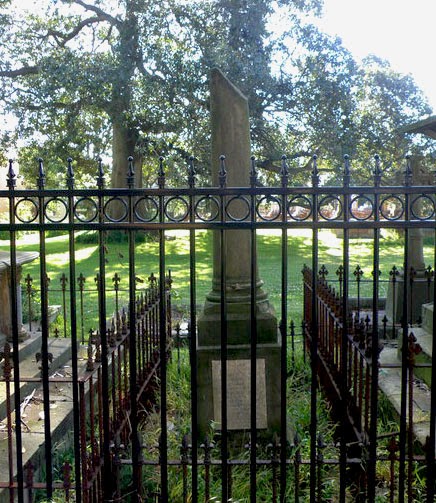
Grave of Frederick William POTTINGER. The broken column indicates a life cut short. Engraved:   SACRED To the memory of SIR FREDERICK WILLIAM POTTINGER -Baronet, Formerly of the Grenadier Guards, and for many years a zealous and active Officer of Police in New South Wales. Born 27th April, 1831-Died 9th April,1865.  This monument is erected by his friends in the Colony.
Grave of Frederick William POTTINGER.
The broken column indicates a life cut short.
Engraved: SACRED
To the memory of
SIR FREDERICK WILLIAM POTTINGER
Baronet,
Formerly of the Grenadier Guards,
and for many years a zealous and active
Officer of Police in New South Wales.
Born 27th April, 1831-Died 9th April,1865.
This monument is erected by his friends
in the Colony.


Sergeant Robert ROBINSON

Sergeant Robert ROBINSON

Accidentally Shot

Muckerawa

22 January, 1864


The sergeant was among a party of police who intervened in a dispute between two parties of Chinese people at Muckerawa on the Macquarie River, near Stuart Town. He disarmed one of the people involved, taking a rifle from him, and then took hold of the weapon by the muzzle and smashed it over a log. As he did so the rifle discharged, killing him instantly.


The sergeant was born in 1815 and joined the police force on 1 April, 1852. In 1862 he became a member of the newly-formed New South Wales Police Force.


William HAVILLAND

William HAVILLAND

New South Wales Police Force

Constable

Regd. # ?

Accidentally Shot

Orange

Event  15 June 1862

Died  16 June, 1862

Funeral  ?


On 15 June, 1862 Constable Havilland, Sergeant James Condell, Senior Constable Henry Moran and Constable Rafferty were travelling as protection for the Forbes Gold Escort. At a locality known as the Eugowra Rocks the coach was ambushed by a gang of bushrangers which included the notorious Frank Gardiner, John Gilbert and Ben Hall. As a result of the attack, Sergeant Condell and Senior Constable Moran were wounded, the coach was overturned and 14,000 pounds in gold and banknotes and bags of registered mail stolen. The following day ( 16 June 1862 ) the coach was righted and driven into Orange. Shortly after arriving in town a revolver under a seat in the coach discharged, with the shot travelling upwards through the seat and striking the unfortunate Constable Havilland under the chin and killing him instantly.


The Empire dated 19 June, 1862 provided some interesting background information on the constable.


CONSTABLE HAVILAND – This man, who was shot under such mysterious circumstances in the vehicle of the gold escort, just after its arrival in Orange, was a very deserving officer of the force. He was formerly a sergeant in the Royal Artillery at Woolwich, and, leaving the regiment, he arrived in Sydney about four years since from India, when he entered the metropolitan police. He was for a considerable time in the Parramatta street division, where he was always known as a very efficient member of the force. He was a first-rate marksman and a good shot, and, we believe, he was so well versed in drill exercises that it was intended at one time by the Inspector General, to make him act as an instructor to the Sydney Police. He subsequently acted as orderly to the Inspector General, in which capacity he was looked upon as a confidential servant. From that position he entered the gold escort, in which service his untimely fate is to be regretted. Haviland has left a widow and two children residing in Sydney, to deplore their loss; and Mrs Haviland is at present, we understand on the eve of her confinement.


At the time of his death the constable was aged 33 years and had joined the police force about 1858. He was attached to the Forbes Gold Escort which on 1 March, 1862 had become part of the New South Wales Police Force.


( This is believed to have been the first on-duty death of a member of the New South Wales Police Force, which had been created on 1 March, 1862 following the passing of the Police Regulation Act 1862. On that date all existing police forces, units and constabularies were amalgamated into one organization which was led by Inspector General Captain John McLerie. The original force consisted of about eight hundred men. )


Senior Constable Henry MORAN was later accidentally killed on the 4 February 1890 and a memorial to MORAN is located at Mt Lambie, between Bathurst & Lithgow, NSW.