1

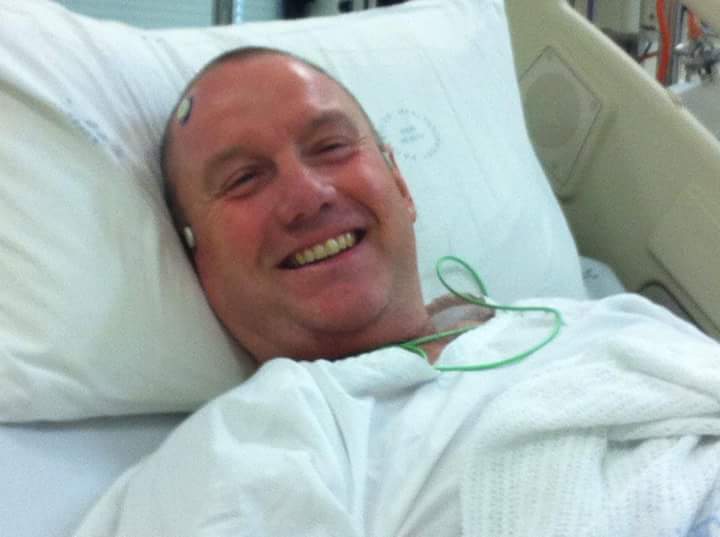
Gregory Joseph JENSEN

Gregory Joseph JENSEN

New South Wales Police Force

Redfern Police Academy – Class 203

( 1st Class at the new Goulburn Police Academy )

Regd. # 21470

Rank:  Commenced Training at Redfern Police Academy on Monday 7 May 1984

Probationary Constable – appointed 20 July 1984

Constable – appointed 20 July 1985

Constable 1st Class – appointed ?

Detective- appointed ? ? 1991

Senior Constable – appointed ? ? ?


Stations:  Regional Crime Squad, Nth West ( Parramatta ), ?


ServiceFrom:  7 May 1984   to  To? ? ?


Awards:  No Find on Australian Honours system


Born:  Thursday 25 July 1963

Died? ? ?

Cause:  Stomach Cancer – H.O.D.


Funeral date?

Funeral location?


Grave site location?


FURTHER INFORMATION IS NEEDED ABOUT THIS MEMBER


GREG IS Mentioned on the Police Memorial Wall, Sydney Police Centre, Surry Hills as of October 2022


25 October 2022

This afternoon, in a quiet and deeply-felt ceremony at the Sydney Police Centre, another thirteen names were added, and the memories of another thirteen dedicated NSW Police Force employees were honoured, at the NSW Police Force Service Memorial:
Detective Senior Constable Vaughan Anthony Hau
Detective Senior Constable Gregory Joseph Jensen
Senior Sergeant John Kelly
Senior Constable David John Koen (Ret’d)
Constable Joseph Lees
Senior Constable Matthew Joseph Rees
Senior Constable Caroline Roberts


http://www.smh.com.au/news/national/holding-judgement/2007/06/08/1181089328815.html?page=fullpage

June 9, 2007

It took up 451 hearing days, heard from 902 public witnesses and cost an estimated $64 million. Malcolm Brown reports on the Wood royal commission, 10 years on.


It began on June 15, 1995, when an unnamed Annandale detective jumped to his death from the seventh floor of a building, apparently through fear of the Wood royal commission. The detective’s suicide was followed by those of Ray Jenkins, a dog trainer (July 10), and Inspector Robert Tait, the acting patrol commander at Narrabri ( March 29, 1996 ). Nineteen days later a former Wollongong alderman, Brian Tobin, gassed himself.

On May 8 the same year, Peter Foretic gassed himself the day after giving evidence about paedophilia. On September 23, Detective Senior Constable Wayne Johnson shot himself and his estranged wife after being adversely named in the royal commission. On November 4, David Yeldham, a retired judge about to face the royal commission on questions of sexual impropriety, killed himself. A month later Danny Caines, a plumber and police confidant, committed suicide at Forster, on the North Coast.

Altogether, 12 people enmeshed in the Wood royal commission took their own lives. Scores of others were so profoundly affected by proceedings that their supporters and families believe it shortened their lives. A former detective, Greg Jensen, suffered a recurrence of the stomach cancer that ultimately ended his life, while another former detective, Ray McDougall, who faced the threat that commission investigators might expose his extramarital affair if he did not co-operate, succumbed to motor neurone disease.

There is no doubt that the Royal Commission into the NSW Police Service, headed by the Supreme Court judge James Wood, purged the force of a rollcall of rotters. A total of 284 police officers were adversely named, 46 briefs of evidence were sent to the Director of Public Prosecutions and by 2001 nine officers had pleaded guilty to corruption offences and three not guilty. Seven police officers received jail sentences, including the former Gosford drug squad chief Wayne Eade and a former chief of detectives, Graham “Chook” Fowler.

Several high-profile police ended their careers in disgrace, including Ray Donaldson, an assistant commissioner, whose contract was not renewed, and Bob Lysaught, the commissioner’s chief of staff, whose contract was torn up. Charges against 14 officers were dismissed because of irregularities in search warrants and their execution.

That left the question of what to do with police who were on the nose but who could not be brought to account by normal means. The solution was the creation of section 181B of the Police Service Act, under which the police commissioner could dismiss an officer on the basis of what had come out of the royal commission. Section 181D allowed the police commissioner to serve an officer with a notice indicating that he “does not have confidence in the police officer’s suitability to continue as a police officer”. The officer could show cause as to why he should be retained, and if dismissed could appeal to the Industrial Relations Tribunal.

In the wake of the two legislative changes, 380 officers were targeted for dismissal or internal investigation. By March 1998, 19 police officers had been dismissed under section 181B and three under 181D. Another had been dismissed under a separate provision of the act, 14 had resigned, four had been medically discharged and 15 had been given performance warning notices. Others were under consideration, and as the Police Integrity Commission – a legacy of the royal commission which became a permanent watchdog – has demonstrated, even officers who had been corrupt many years before were not necessarily in the clear.The former independent MP John Hatton, who was instrumental in setting up the royal commission, said he thought the Police Integrity Commission was the royal commission’s “greatest achievement”. The Child Protection Enforcement Agency, which launched a purge of sex offenders, is another positive legacy of the royal commission.But 10 years on, was the exercise worth it?To some there were considerable benefits. Some appalling malpractice – known as “process” or “noble cause” corruption – prompted Wood to wonder at one point about the quality of a lot of police evidence he had accepted over the years.Despite this, many officers still believe the royal commission was too puritanical. They claim the investigators, not able to grapple with the really big issues, jumped on anything they could: “They had to have runs on the board,” says Michael McGann, who as a policeman in 1984 participated in the so-called Kareela Cat Burglar case, in which police used mace on an uncooperative thief and sex offender. To some critics this treatment did no serious harm and only required a word of caution. But under the spotlight of the royal commission 12 years later, it ended the careers of high-flying police such as John Garvey, Brian Harding and Steve York. A decade later, Harding works in corporate security but insists that the real sting was that the investigators had fabricated evidence. When that finally came out, he says, the group received a confidential settlement, but it did little to redress the feelings of outrage.

Another former policeman, Dr Michael Kennedy, says the commission was a political response to the police commissioner, Tony Lauer, bringing about the downfall of the then police minister, Ted Pickering.

The attorney-general, ministry and judiciary took little responsibility for the state of the force, Kennedy says, while the responsibility of the police rank-and-file grew to “the size of a Pacific driftnet”. “I don’t think the royal commission contributed anything to the reform process except to provide a template for double standards,” he says.

Chook Fowler put $200 into his pocket from Louis Bayeh. Chook was a lazy, good-for-nothing drunk. But he was put into the same category as Ray Williams and HIH.”McGann says that against the string of petty corrupt activities uncovered, “you have to look at what the government did and did not do with gambling and vice, over the decades. There have been direct links to Parliament for 50 or 60 years. That is hypocrisy.”The critics’ view is that the royal commission has left a demoralised police force, tarnished and rudderless, with limited operational effectiveness and the problem of corruption unsolved. Seven police officers have taken their lives since 2001, including two this year.”It highlights the fact that the structure no longer takes in the needs of the NSW police force,” says Mike Gallacher, the Opposition police spokesman, and a former internal affairs police officer. Gallacher believes, as does the NSW Police Commissioner, Ken Moroney, that the tentacles of corruption no longer spread to embrace entire squads or larger units. But it does not prevent low-level incidents of corruption and there are continuing nests of corruption.In its most recent report, the Police Integrity Commission said it had undertaken 21 major investigations in 2005-06. These dealt with extortion, theft, unauthorised disclosure of confidential government information and perverting the course of justice, police brutality and the handling of $250,000 stolen from automatic teller machines. The then police integrity commissioner, Terry Griffin, said there had been 51 investigations in the 12 months, compared with 44 in 2004-05, and the 1141 written complaints represented a 15 per cent increase. Moroney says all these reports are disappointing, but one of the significant statistics was the number of police who were reporting on other police. “You go back a decade and the number of informants who were police was 5 to 10 per cent,” he says. “In the Ombudsman’s last report, that figure was 49 per cent.”The mechanism for dealing with internal complaints has been expedited: “I have not been afraid to use a section 181D notice,” Moroney says.He believes there is a different mentality in the force. A video of the royal commission had been shown at a recent reunion dinner of the old criminal investigation branch. “It is part of our history. But the interesting thing is that when Chookie came onto the screen, everyone booed. That was a signal to the Fowlers and the Eades that those found to have acted corruptly would not be accepted.”
However, Moroney accepts that corruption is not a thing of the past. “In the contemporary period, there are huge monies to be made from the illicit drug environment. You are talking in some cases of millions of dollars. It is the greatest menace in society today. And the greatest menace to officers is drug money. That is why rotation of officers out of specialist squads on a regular basis is important.”Taking over as commissioner five years ago, he had brought a low-key “Uncle Ken” influence, sorely needed, and had had to balance the principles of police accountability against the public demand for law and order, and the task has been awkward.A senior counsel told the Herald this week that the focus on integrity, scrutiny of professional standards and attacks by defence lawyers meant that talented police prepared to do the dirty work were deterred. “In the old days the best and the brightest went into plain-clothes,” he said. “But when the police perceive that when they have to go the extra yard [to get convictions], they are crucified – ‘Why should I go to plain-clothes when I can just get some uniform job with a 12-hour shift, and a second job?”‘Clive Small, a former assistant commissioner who set up crime agencies and established the child protection unit, says that after so many detectives were disgraced in the royal commission, the police force sought to take the spotlight off detectives and put more of the onus of responsibility for crime control onto local area commands. Crime agencies had a continual battle to keep up to strength. Regionalising responsibility for crime control reflected a lack of understanding. “A lot of crime spreads through the metropolitan area, across the state and across the nation,” he says.Kennedy, now a university lecturer, says the “business model” approach is incompatible with good police work. “We cannot expect police to behave like they are in the private sector, where competence is measured in terms of productivity,” he says.Kennedy attended the recent CIB reunion dinner and sat at a table with former drug squad detectives who remained friends of Wayne Eade. He takes issue with Moroney‘s claim that people at the dinner made catcalls when Fowler came on screen. “No one supported Chook,” he says. “But the animosity of the crowd was directed straight at Justice Wood and his commission.”Clive Small, who was also at the dinner, says: “I think it is really a matter of interpretation who they were booing. There were things the royal commission did not take care about. There was a lot of collateral damage. And the implementation [of its recommendations] has been pretty ordinary.”

CRUSADER WHO MADE THE CALL

JOHN HATTON well remembers the audience on May 11, 1994, when he made his speech calling for a royal commission into the NSW Police Service. MPs were listening, of course, but it was a gallery above him, packed with the “top brass of the police force – the commissioner himself, the deputy commissioner, superintendents – they were an intimidating force on the Parliament”.

“They thought they could stare down the Labor Party support for my motion,” Hatton, now retired, says. “It was probably the best indicator of the way in which the police force thought they could control the agenda.”

Hatton won the day, putting paid to a claim by then police commissioner, Tony Lauer, that “systemic corruption” was “a figment of the political imagination”. Hearings started on November 24, 1994, and Justice James Wood delivered his final report on August 26, 1997.

Ten years later, Hatton believes he was vindicated. He says Wood was “the right man” to head the commission and the recruitment of interstate police was crucial, along with the decision to use phone taps and surveillance.

The 11 volumes of material Hatton gave the royal commission had been accumulated over 14 years, he says, from the time he had first spoken up. He had received information on illegal gambling, drug trafficking and police involvement with the mafia.

There had been earlier moves to address police corruption, including inquiries by the Independent Commission Against Corruption, but these had only scratched the surface. “I can remember on one occasion I reported a death threat which had to do with the McKay murder in Griffith and 48 hours later the bloke who had given the information was threatened by a shotgun at his door in Queensland,” Hatton says.

The royal commission came into being because Hatton and other independent MPs held the balance of power in Parliament. The Labor Party may have had high public motives, but also saw a chance to attack the Fahey government. Labor stipulated that an inquiry into police protection of paedophiles, previously in the hands of the ICAC, become part of the royal commission.

The process of gathering information was helped greatly by Trevor Haken, a detective who became an informer and covert investigator as part of a deal to avoid being prosecuted himself.

Hatton says Haken‘s entry was “out of the blue”. Though useful, in the long term it had had a detrimental effect on the fight against corruption. Living in fear and watching his back, Haken had provided “the greatest disincentive for someone coming forward to finger corruption in the system”.

Malcolm Brown


Gregory Peter REHN

Gregory Peter REHN  BM

New South Wales Police Force

NSW Police Academy Class 212

Regd. # 22204

Rank: Commenced at the Academy  13 May 1985

Probationary Constable – appointed 26 July 1985

Constable – appointed 26 July 1986

Inspector – Resigned, 2006

Stations:  Kings Cross ( early 1980’s ), City Central, The Rocks ( 1985 ),

Darlinghurst, ‘A’ District ( Sydney late 1980’s ) HWP Cyclist,

Blacktown 27 Division ( mid 1990’s – Sergeant ), Parramatta ( 18 Division ) ( SenSgt ), VKG1 ( Sydney ) as 2 I.C.,

Fairfield – 34 Division ( Duty Officer – early 2000’s )

Awards:  * ( BM ) Bravery Medal – granted 26 October 1989, ( Cst )

National Medal – granted 4 September 2001, ( Sgt )

NSW Police Valour Award recipient

ServiceFrom  12 May 1985  to  May 2006 = 21 years Service

Born:  Saturday  18 December 1965

Died  Wednesday  3 December 2014 at his home

Age:  48 old

Cause:  Melanoma ( removed about 18 mths previous from his chest )

which metastasised to the brain,

lymphatic system and throughout his body.

Funeral date:  Tuesday  16 December 2014 @ 11.30am

Funeral location: Camellia Chapel,

Macquarie Park Cemetery & Crematorium,

North Ryde

Funeral Parlour:  Guardian Funerals, Blacktown   9622 1284

and afterwards in the Banksia Room for some light refreshments.

The family has requested that everybody PLEASE wear appropriate civilian attire

Grave location?

Gregory Peter REHN 48 old 18/12/1965 - 03/12/2014
Gregory Peter REHN 48 old
18/12/1965 – 03/12/2014


Constable Gregory REHN - Young Greg Rehn doing the solo cycle course at St Ives in mid 1980's. Greg was at Inner City Cycles. He wasn't the best of riders doing the course though.
Constable Gregory REHN – Young Greg Rehn doing the solo cycle course at St Ives in mid 1980’s. Greg was at Inner City Cycles. He wasn’t the best of riders doing the course though.

Gregory Peter REHN BM

Gregory Peter REHN BM

Greg REHN - Enjoying life
Greg REHN – Enjoying life

Gregory Peter REHN BM

Gregory Peter REHN BM

Gregory Peter REHN BM


Rest In Peace.

Gregory Peter REHN 48 old
18/12/1965 – 03/12/2014

Greg has had a short battle with Melanoma which he had removed, from his chest, about 18 months ago.
It had metastasised to the Brain, Lymphatic System and throughout his body, which he found out about around the beginning of October 2014.

Greg passed away peacefully at his home Wednesday morning, 3 December, 2014.


*BM was Awarded to Greg for a rescue from a burning building at Kings Cross.


In honour of Gregory Peter Rehn
18/12/1965 – 03/12/2014

Greg’s citation for his Bravery Medal, the 3rd highest bravery decoration in the Australian Honours and Awards he received in 1990;

“Constable Gregory Peter Rehn, NSW Police.
On 30 March 1988, a fire broke out in a residential building in Macleay Street, Potts Point. In response to a police radio call, Constable Rehn attended and found the roof well alight with pieces of roofing falling down into the street. While assisting with crowd control, he was told that an elderly woman, who was almost blind and deaf, remained on the fourth floor. Constable Rehn made his way through the smoke filled building and on reaching the third floor found the elderly woman stumbling around in the debris. He took hold of her and began to lead her down the stairs. As he did so, debris and roofing fell from the ceiling and thick smoke and water filled the hallway. Despite breathing and vision difficulties caused by the smoke, Constable Rehn led the woman to safety. By his actions, Constable Rehn displayed considerable bravery.”

Such a sad, sad loss of a brave and inspiring Cop.


Funeral location: 


REHN, Gregory Peter.

Passed away on December 3, 2014 after a short illness.

Aged 48 years

Loved son of Barbara, Peter and Gail.

Loved brother and brother-in-law of Karena & John, Chris & Amy, Kim & Ian and Sam.

Loved Uncle Greg to ten nieces and nephews.

Family and friends are warmly invited to join in a Celebration of GREG’S Life to be held in Camellia Chapel of the Macquarie Park Crematorium (Cnr Plassey and Delhi Rd, North Ryde) at 11.30am on Tuesday (December 16, 2014).

Refreshments will follow in the Banksia Room.

By special request, instead of floral tribute, donations to Melanoma Institute of Australia would be appreciated.

Blacktown 9622 1284
Proudly Australian
Member AFDA

logo
One month on.  Cannot believe you’re gone my love
Louise Harrison
6 January 2015
Mosman, NSW
Totally shocked to discover this news!
Way too young.
Brooke Rose
5 March 2019
Brookvale, NSW
Louise Harrison
5 January 2015
Mosman, NSW
Many years of fun ole mate, never like to say goodbye – always missed but never forgotten.. the memories will live on forever.
Rest now ole mate as we continue the journey.
See you again one day. !
Colin Walsh
22 December 2014
Grenfell, NSW
Prayers and thoughts are with you and your family Rehnny.
Rest In Peace.
James Pasfield
21 December 2014
Sydney, NSW
Greg, you were a good man a good copper and fun to work with.  I will always remember you mate.  R.I.P.
Rick Lettice ( R.I.P. )
21 December 2014
Cairns, Queensland
Rhennie… we were mates for about 30 years, haven’t spoken for over 15, funny thing is I don’t think either one of us would care, you were and always will be considered by me as a friend.  I remember the first shift we worked together – your confidence was contagious…. you will be missed.
Slug
Brett Fifield
21 December 2014
Sydney, NSW
Dear Rehnnie, you left this world far too early.
You were a great man.  I will forever cherish the days we worked together in particular.
I will never forget you mate, you will always be in my heart.
Peter ” Kakadu “
Peter Koudounas
21 December 2014
NSW
Greg, you were a decent, kind and wonderful man and I’ll never forget you.
You will be missed by all who knew you.
I cannot believe you are no longer with us.
Rebekah Wilson
19 December 2014
Bateau Bay, NSW
Rest In Peace Greg.
You will be missed and it was a pleasure knowing you.
Lain Tayler
15 December 2014
Melbourne, Victoria
My Darling Greg, thank you for 8 exciting years.
I fell in love with you on our first date in June 2006 and will love you forever.
I will miss your cheeky grin, your bear hugs, your gig, strong hand, your smell and just you.
Thank you for all you did for me.
It was an amazing, sexy and passionate ride.
I will forever be MDS.
December 16, 2014
I remember you as my wonderful, brave, strong and courageous cousin.
It was a privilege to have known you.
I wish I could have got to know you better.
Love always and farewell.
Your cousin
Bec Trigg 
December 15, 2014
Adelaide, South Australia

Published in The Sydney Morning Herald on Dec. 13, 2014

http://www.legacy.com/obituaries/smh-au/obituary.aspx?n=gregory-rehn&pid=173448073


Geoffrey William VICKERS

Geoffrey William VICKERS

aka ‘ Whippet ‘

New South Wales Police Force

Joined NSWPF via Police Cadets on 22 February 1971

Cadet # 2686

[alert_yellow]Regd. # 15921[/alert_yellow]

Rank: NSW Police Cadet – commenced 22 February 1971

Probationary Constable – appointed 3 August 1973

Constable 1st Class – appointed 3 August 1978

Sergeant 3rd Class – appointed 30 November 1988 – Retirement

Stations?, Marrickville

ServiceFrom  22 February 1971  to  28 July 1999 = 28+ years Service

AwardsNational Medal – granted 15 December 1989

1st Clasp to the National Medal – granted 24 March 2000

Born: 3 August 1954

Died on:  Thursday 20 November 2014

Cause:  Bowel Cancer

Age:  60

Funeral date:  Thursday  27 November 2014 @ md.

Funeral location:  St Phils Anglican Church, 402 Port Hacking Rd, Caringbah.

Buried at:  Cremation – Woronora Crematorium 2pm

Memorial location?

Photo(s)

[alert_yellow]GEOFF is NOT mentioned on the Police Wall of Remembrance[/alert_yellow]

  • Need Further information

  Location of Church Service

May you forever Rest In Peace.

[divider_dotted]


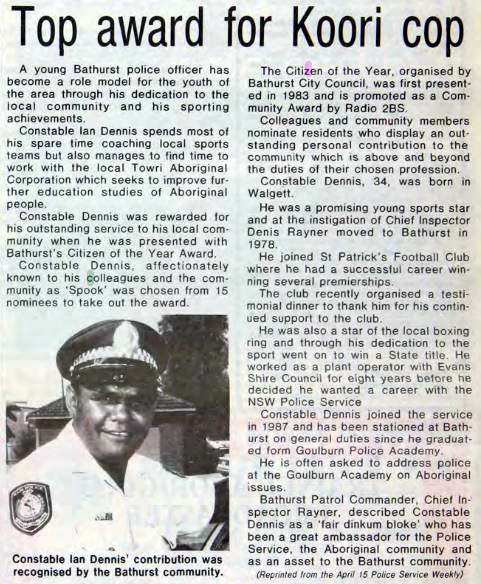
Ian Ross DENNIS

Ian Ross DENNIS

aka ‘ Spook ‘

New South Wales Police Force

NSW Goulburn Police Academy Class # 227

ProCst # 98375

Regd. # 23964

Rank: Commenced Training at Goulburn Academy on 1 April 1987 ( aged 30 years, 4 months, 8 days )

Probationary Constable – appointed 26 June 1987 ( aged 30 years, 7 months, 17 days )

Constable – appointed 26 June 1988

Constable 1st Class – appointed ? ? ?

Senior Constable – appointed ? ? ?

Final Rank:  Senior Constable

Stations:  Bathurst, Redfern, Walgett, Lightning Ridge –

ServiceFrom 1 April 1987 to 3 August 2004 = 17 years, 4 months & 2 days Service

Awards:  No Find on Australian Honours

Born:  Friday  9 November 1956

Died:  Tuesday  3 August 2004

Cause:  Illness – possibly cancer???

Age:  47 years,  8 months, 25 days

Funeral date: ?

Buried at: Walgett in the R.C. section of Walgett Cemetery. plot 117K

Memorial:  Annual ‘E A’ Dennis Memorial cricket match


………Another police officer also was mourned today – Senior Constable Ian Ross Dennis, based in Walgett, north-west NSW, who died in hospital after a short battle with an illness, aged 47.

Mr Moroney paid tribute to both officers, saying they had been outstanding servants of the police force.

“It’s important on these occasions that we honour and acknowledge that service and that commitment,” he said.

“It’s a very sad day for the organisation to lose officers of this calibre who have selflessly served the people of this state to the very best of their skill and ability.

“And that’s all I could ever ask them to do.”

http://www.theage.com.au/articles/2004/08/03/1091476465269.html?from=storylhs


NSW Fallen Police FaceBook GROUP:  25 November 2014

Ian Borland Ian started out as a probationary constable at Bathurst where he worked for several years before he transferred. Prior to entering the Police he worked for the now defunct Evans Shire Council as s Grader driver. He was brought to Bathurst from Walgett to play rugby league for Bathurst St Patrick’s Club.
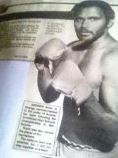
He was also an accomplished boxer. He fought for the Australian attire at Exhibition Hall, Brisbane where he was beaten on points and collapsed after the bout.
It was discovered he had glandular fever and blood poisoning yet he fought the full twelve rounds. After the bout he was not offered a rematch.
He and his wife Anne were tireless workers within the aboriginal community here in Bathurst.

Kevin Banister DENNIS Ian (Spook)

Death notice

03AUG2004

Death 47

late of Walgett, formerly of Bathurst

Western Advocate (Bathurst)

07AUG2004.

Born 09/11/1956.

Buried at Walgett in R.C. section.

 https://www.facebook.com/groups/NSWFallenPolice/486645958143410/?comment_id=489605637847442&ref=notif&notif_t=group_comment


Ian is NOT mentioned on the Police Wall of Remembrance

Ian is NOT mentioned on the Retired Police Association Vale list


Grave location


Castlereagh’s Cricketing Comrades celebrate ten years of restoring community spirit

‘EA’ Dennis Memorial Shield

Castlereagh LAC Police and the Walgett Community took to the field on 26 October 2014 to commemorate the 10th Annual ‘E A’ Dennis Memorial cricket match.

The celebrated event was initiated in 2004 to honour the memory of the late Senior Constable Ian Dennis, an Aboriginal police officer formerly based at Walgett and Lightning Ridge.
As the temperature soared to 39.2 degrees, players from both sides demonstrated enthusiastic cricketing skills and a strong sense of community spirit. “The match is all about building better relationships between our police and our community. We all want the best for our community, and if we work together we have a better chance of reducing crime and re-offending”, said annual match organiser and Castlereagh LAC Aboriginal Community Liaison Officer (ACLO) Graham Ruttley.
In a close-fought battle reminiscent of Ashes tests from yesteryear, the 20/20 match resulted in a hotly contested draw.
The much-admired Senior Constable Dennis died in 2004. He is survived by his wife Ann Dennis, and their three children. Ann Dennis said Ian would be proud of the comradeship and encouragement displayed on the pitch.

“I can’t believe it is ten (10) years since Ian had died. Ian had overcome many obstacles and challenging adversity to fulfil his dream of becoming a Police Officer with the NSW Police Force. This cricket match provides the only opportunity in our community for Aboriginal people to engage in a different more positive way with local police officers,” said Ann Dennis.

“I would also like to take this opportunity to thank the Castlereagh LAC for their continued support. It is through the hard work, persistence and dedication of the Police ACLO Graham Ruttley, that this is an overwhelming success.
Castlereagh LAC Superintendent James Stewart believes that Ian’s legacy recognises the importance of Police being seen as part of their community. “Ian is often remembered by townspeople and police as being community minded, dedicated to his family and a good Police Officer. The EA Dennis Memorial Shield is a fitting way to recognise his contribution to the community of Walgett, and for Police to be seen as part of the community.”

The event is integral to improving communication and understanding between Castlereagh LAC police and the Walgett Aboriginal Community. It aligns with the Aboriginal Strategic Direction (ASD) 2012-2017, through the promotion of Aboriginal community ownership and involvement. It addresses all four of the priority areas as outlined in the ASD 2012-2017 document; particularly Priority 2 (Improve Communication and Understanding between police and Aboriginal People), by fostering the belief that police are an essential part of the community, and offering positive role models and connections for troubled youth and families.

The match is supported by an ASD Crime Prevention Grant as a key initiative to address the over-representation of Aboriginal people in the criminal justice system.

The match is strongly tied to Goals 16 and 17 of the NSW 2021 (State Plan), through its focus on preventing and reducing crime, and decreasing juvenile and adult re-offending. “Sport is an essential part of our community. Through sport we can cross cultural and societal gaps, and encourage participation and integration. Events like the ‘EA’ Dennis cricket match can lead to better understanding, cooperation and partnerships within our local community,” said Castlereagh LAC Crime Coordinator, Sergeant Lisa Jones.

(7) Facebook


‘Admired’ cop dies in hospital

Senior Constable Ian Ross Dennis was admitted to Sydney’s Prince of Wales Hospital on Monday but died from a viral infection yesterday morning .

The 47-year-old father of three was born and raised in Walgett, and after joining the force he served in country communities including Dubbo and Lightning Ridge.

Mr Dennis started off his career as a panel beater in Walgett before he went to work in Bathurst as a plant operator for Evans Shire Council.

He stayed there for 13 years, until at the age of 30 he decided to become a police officer.

Mr Dennis proudly graduated from the NSW Police College in Goulburn in 1987.

“To lose an officer not only of Senior Constable Dennis’ calibre, but a man of his integrity, is a terrible loss,” NSW Police Commissioner Ken Moroney said.

Castlereagh Local Area Commander Superintendent Stan Single also paid tribute to a colleague and good mate.

“He was a wonderful character and was always happy, always there with a joke,” Superintendent Single said.

“Senior Constable Dennis was an excellent role model for the Aboriginal community.

When he first joined the force Mr Dennis was a general duties officer at Bathurst until December 1992.

In July 1997 Mr Dennis moved to Dubbo and was among our local ranks for three years until early 2000.

He then moved to Lightning Ridge for two years and eventually returned to Walgett police station, where he was serving until his death.

Mr Dennis is survived by his wife Anne, their sons Damian and Timothy, a daughter Geraldine and two grandchildren.

‘Admired’ cop dies in hospital | Daily Liberal | Dubbo, NSW


Policeman succumbs to illness

Tributes are being paid to a Walgett-based policeman who died in hospital in Sydney yesterday after a viral infection.

Senior Constable Ian Ross Dennis, 47, had been admitted to the Prince of Wales Hospital in July.

Senior Constable Dennis worked as a panel beater and plant operator in Bathurst before joining the police force where he served in Tamworth, Lightning Ridge, Dubbo and Walgett.

Castlereagh local area commander Superintendent Stan Single says Senior Constable Dennis was an excellent role model for the Aboriginal community.

He participated in the Walgett community, spending a lot of time with the town’s young people.

Senior Constable Dennis was married with three children.


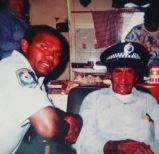
Ian Ross DENNIS aka ' Spook '

Ian Ross DENNIS aka ' Spook '

Ian Ross DENNIS aka ' Spook '

Ian Ross DENNIS aka ' Spook '

Ian Ross DENNIS aka ' Spook '

Ian Ross DENNIS aka ' Spook '

Ian Ross DENNIS aka ' Spook '


William John PEARCE

William John PEARCE

AKA BILLY

Late of ?

NSW Redfern Police Academy Class # 142

NSW Police Cadet # 2947

New South Wales Police Force

Regd. #  16520

Rank:  NSW Police Cadet – commenced  9 July 1973

Probationary Constable – appointed 12 August 1974

Constable – appointed  12 August 1975

Senior Constable – appointed  12 August 1983

Final Rank = Senior Constable

Stations: ?, Newtown GD’s, PCYC – Sydney & Lismore

Service: From 9 July 1973 to 25 December 2006 = ? years Service

AwardsNational Medal – granted  20 August 1991 ( SenCon )

Born Monday  9 July 1973

Died on Monday  25 December 2006

Age:  51 yrs  5 mths  4 days

Cause:  Cancer

Event location: ?

Event date: ?

Funeral date: ? ? ?

Funeral location: ?

Wake location: ?

Funeral Parlour: ?

Buried at: ?

Memorial located at: ?


BILLY is NOT mentioned on the Police Wall of Remembrance *NEED MORE INFO


Grave location: TBA


FURTHER INFORMATION IS NEEDED ABOUT THIS PERSON, THEIR LIFE, THEIR CAREER AND THEIR DEATH.

PLEASE SEND PHOTOS AND INFORMATION TO Cal


May they forever Rest In Peace


Further details & photos sought for this man.


Cal@AustralianPolice.com.au


Greg, I’d like to put a mate of mine into this site. Senior Constable William (Billy) John Pearce, originally of Byron Bay NSW. I think he joined NSWP at 17, trained with and was sworn in with class 142 (mid 1974), his registered No. 164?? or 165??. Billy service at Newtown GDs, PCYC – Sydney and Lismore. He passed away Christmas 2006 of cancer.
Would you mind arranging please.


NSW Fallen Police enquiry from Peter WHALAN on 231014.


Ronald Ivan BLUNT

Ronald Ivan BLUNT

New South Wales Police Force

[alert_yellow]Regd. # 5788[/alert_yellow]

Joined via NSWPF Cadets on 8 March 1944

Cadet # 448

Rank:  NSW Police Cadet – commenced 8 March 1944

Probationary Constable – appointed 15 September 1947

Sergeant 2nd Class – appointed 19 November 1970

final rank = ?

Stations:  Phillip St, North Sydney, Chatswood, Newtown, Safety Bureau ( under the Sydney Harbour Bridge ), Eastwood ( 1964 ), Balmain ( 10 Division ) – Retirement

ServiceFrom  8 March 1944    to ? ? 1980 – 1982?    =  about 36  years Service

Awards: Police Medal,  Good Conduct Medal

No find on It’s An Honour

Born:  15 December 1927

Died on:  24 October 2009

Cause:  Cancer

Age:  81

Funeral date:   8 November 2009

Funeral location:   Woronora Cemetery, Sutherland

Buried at Cremated.  Ashes scattered with his parents & also in a rose garden near his plaque at the cemetery.

Memorial location ?


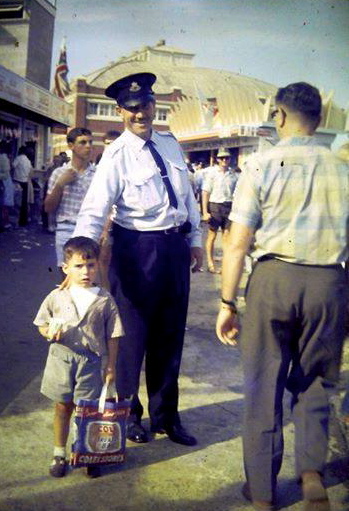
Ronald Ivan Blunt at the Royal Easter Show, Sydney with a lost child in the late 50's early 60's.
Ronald Ivan Blunt at the Royal Easter Show, Sydney with a lost child in the late 50’s early 60’s.


[alert_blue]RON is NOT mentioned on the Police Wall of Remembrance[/alert_blue]

* NOT WORK RELATED

[divider_dotted]


May you forever Rest In Peace.

[divider_dotted]


George William SLADE

George Walter SLADE

NSW Police Training Centre, Redfern – Class # 068

New South Wales Police Force

Regd. #  8591

Rank:  Commenced Training at Redfern Police Academy on Monday 4 February 1957 ( aged 25 years, 4 months, 15 days )( spent 1 month, 28 days at Academy )

Probationary Constable – appointed 1 April 1957 ( aged 25 years, 6 months, 12 days )

Constable – appointed 1 April 1968

Constable 1st Class – appointed ? ? ?

Detective – appointed ? ? ? ( YES )

Senior Constable – appointed 1 April 1968

Sergeant 3rd Class – appointed 6 May 1973

Sergeant 2nd Class – appointed ? ? ?

Sergeant 1st Class – appointed ? ? ?


Final Rank:  Detective Sergeant

George does NOT appear in the 1979 Stud Book despite appearing to be a Detective in the 1980s with BCI

Stations? , Liverpool, Fairfield ( 34 Division ) Detectives – late 1970’s – 1980’s, ?

Bureau of Crime Intelligence ( BCI ) – 1980’s – 1982 – retirement

ServiceFrom 4 February 1957  to  ? ? 1982 = 24+ years Service

Awards:  No Find on Australian Honours system

Born:  Sunday  20 September 1931

Died:  Wednesday  7 August 1996

Cause:  Illness – Cancer

Age:  64 years, 10 months, 18 days old


Funeral date:  Monday  12 August 1996

Funeral location:  All Saints Church, Victoria Rd, Parramatta

Grave location?


There was also a K. SLADE # 7236 – Born August 1927 – who was a Sgt 3/c on 1 Jan 1968 at the same time George was a Senior Constable.

There was also R.G. SLADE # 16273 – Born 1954 who was a Constable on 8 April 1975.

It is not known if they were related.


Colin Winchester And The Calabrian Connection

Sydney Morning Herald
Friday August 18, 1989
Evan Whitton

THE Winchester inquest will be conducted by the Australian Capital Territory (ACT) Chief Magistrate, Ronald Cahill, assisted by the Deputy Federal Director of Public Prosecutions, John Dee, QC, in the AMP Building, Hobart Place, Canberra.

Winchester, 55, third in seniority in the Federal Police, and said to be nicknamed The Dog because of his dogged tracking of criminals, drove in his unmarked police car to his home in Lawley Street, Deakin, after work on Tuesday, January 10, 1989.

He had a drink with his wife, Gwen, and then drove to Queanbeyan to discuss a proposed hunting trip with his brother Ken. He returned about 9.10pm and parked his car in the driveway of their next-door neighbour’s house. He was wearing a track suit, no socks, and Adidas running shoes.

Winchester turned off the lights and engine, opened the door, and put one foot on the ground. His head framed by the interior light, he was a perfect target. A person stepped forward in the dark to within two or three metres of the car and shot Winchester twice, on either side of the right ear, with a silenced .22 self-loading 10/22 Ruger rifle. Winchester died instantly. He slumped back in the seat, still holding the car keys and with his right foot still on the ground.

Unlike NSW, where an inquest is held into every homicide, an inquest is held in the ACT only if police are not able to lay charges. However, if sufficient evidence emerges, Mr Cahill has the power to turn the inquest into a committal hearing. He can also imprison witnesses who refuse to answer questions.

The first leg of the inquest is scheduled to run for five weeks, until September 22. There will then be a break of two weeks, and the inquest will then run until it is finished. This is currently expected to take between a week and three weeks.

The inquest will examine material relating to various possible scenarios. Dee has stated that the inquest will proceed in three parts: formal matters; evidence on investigations in which Winchester had been involved; and information on people who might have held a grudge against him. Within that framework, the material will be subdivided into separate blocks.

THERE is political and media speculation that the Winchester killing, like the 1977 assassination of Donald Bruce Mackay, may turn on marijuana and the profits to be made there from by elements of organised crime, including what may be termed the Calabrian Mob and corrupt police.

From the following data, and the comparative brevity of the inquest, it may be thought that what is required is not so much an inquest as a full-scale commission of inquiry, with terms of reference and powers as wide as those lately enjoyed by Fitzgerald, QC, in Queensland, to examine the operations of the Calabrians and the possible nexus between them and law enforcement authorities and politicians.

Calabria is a province in the toe of Italy. A Calabrian village, Plati (pop. 3,000), is the headquarters of a secret society, L’Onorata Societa (The Honoured Society) or N’Dranghita. This is not to be confused with other Italian secret societies, the Mafia proper from Sicily, or the Camorra from Naples. Migrants from Calabria began arriving in Australia in 1928. Many went to Griffith, 600 kilometres south-west of Sydney. More Calabrians arrived after the war.

Marijuana, one of many names given to the treated form of the cannabis or Indian hemp plant, became, as a legacy of the Vietnam War, a recreational drug in Australia in the mid-1960s. Cannabis will grow anywhere there is heat and water. Seedlings are planted around August and the crop taken off in January or February.

Justice Woodward reported in 1979 that people born in Plati were involved between 1974 and 1978 in at least 20 cannabis plantations in all mainland States except Victoria. The Australian Bureau of Criminal Intelligence, established in 1981, adopted as its first project, codenamed Alpha, the collection of data on the activities of Italian-oriented cannabis operations.

One cannabis plant was estimated in 1986 to produce $1,100 worth of manufactured marijuana at street level. It has been suggested that Australian marijuana is now being exported, and profits used to finance importation of heroin, cocaine and crack.

It is convenient to examine the Griffith/Calabrian matter in three overlapping sections: Robert Trimbole 1970-87; Joe Verduci 1980-89; Luigi Pochi 1975-89.

THE CHARMED LIFE OF ROBERT TRIMBOLE

IT is said that the Calabrians prefer to co-operate with police rather than shoot them. Gianfranco Tizzoni was an informer for Melbourne police, Customs and narcotics agents. He and another Calabrian informant, Giuseppi (Joe)Verduci, afford useful examples of the ambiguity inherent in the relationship

The informer is assumed to be working for the authorities, but he may be able to arrange matters so that the police are actually working to protect his interests, and to disrupt the activities of his criminal competitors.

Robert Trimbole was a leading member of a Griffith element of N’Dranghita called The Family (La Famiglia). Tizzoni later said Trimbole asked him in 1971 to arrange distribution in Melbourne of unlimited supplies of cannabis from Griffith. Justice Woodward later found that Griffith cannabis growers were protected by local detectives John Ellis, Brian Borthwick and John Robbins. All three were eventually imprisoned for perverting the course of justice.

Bob Bottom discloses in his book Shadow of Shame, sub-titled How the Mafia Got away with the Murder of Donald Mackay, that Mackay, a Griffith businessman and Liberal politician, sent John Maddison, then Minister for Police in the Liberal NSW Government, a confidential dossier on Calabrian involvement in drugs in July 1975. Mackay invented the term “grass castles” to describe ornate homes built in Griffith for former peasant farmers, and said that Trimbole, recently a bankrupt, was thought to provide the Sydney outlet for cannabis.

Maddison took no action, but Sydney police, acting on a tipoff from Mackay, raided an $80-million plantation at Coleambally in November 1985. A number of people were charged and convicted, including Luigi Pochi, of Canberra, who was sentenced to two years in prison in March 1977.

Tizzoni later stated that Trimbole told him to get someone from Melbourne to eliminate Mackay. He said he arranged through a gunsmith, George Joseph, for James Frederick Bazley to execute Mackay. He said Bazley asked for and got no more than $10,000, and that Joseph asked for 10 per cent of the fee, $1,000, for the introduction. Mackay was assassinated in Griffith on July 15, 1977. Bazley, who was eventually convicted of the crime, claims that the killer was actually former NSW detective Fred Krahe.

Bottom records that false rumours to the effect that Mackay had decamped with a woman were floated by two press secretaries in the Wran Government, by a senior Cabinet minister, by a senior police officer, and by Krahe in Griffith. NSW police, led by Sergeant Joe Parrington, were baffled.

Justice Philip Woodward began a royal commission on drug trafficking in August 1977. Observing the Griffith “grass castles” from outside, Woodward, who had fewer powers of entry than the fruit fly inspector, sought an extension of his powers to give him ingress. This was refused by Premier Neville Wran on civil liberties grounds.

Tizzoni later said that Trimbole, who bought into the Mr Asia heroin syndicate in 1979, arranged through Tizzoni, Joseph and Bazley to dispose of drug couriers Douglas and Isabel Wilson, who had informed on syndicate head Terence Clark to Brisbane police and narcotics agents in June 1978. The Wilsons were murdered near Melbourne in April 1979.

Woodward reported to the NSW Government in November 1979 that he was satisfied that Calabrians in Griffith directed a cannabis-growing and distribution network, and that “this organisation was responsible for the disappearance and murder of Donald Mackay”. He recommended that a task force be set up to monitor the activities of Trimbole and his associates. No such task force was set up. Trimbole told The Sydney Morning Herald in November 1979: “That commission can’t touch me or charge me in any way.”

Under subpoena, Trimbole was to appear at the Wilsons’ inquest on August 12, 1980. An inquiry by John Nagle, QC, later found that shortly before that date former Labor parliamentarian Albert Jaime Grassby unsuccessfully sought to have tabled under privilege in the NSW and South Australian parliaments a document falsely suggesting that Mackay’s widow, her son, and her solicitor, had conspired to murder Mackay. Grassby later apologised and agreed to pay$5,000 to cover Mrs Mackay’s court costs to end a defamation action she initiated against Grassby.

Trimbole did not give evidence at the Wilsons’ inquest on the ground that his answers might tend to incriminate him. The coroner recommended an inquiry be held into the Mr Asia syndicate. Trimbole fled the country in May 1981 to avoid giving evidence at Justice Stewart’s inquiry, and apparently worked at organising drug and arms running from bases in France, Italy, Switzerland and Ireland.

The Australian Government had been negotiating in desultory fashion with the Irish Government for an extradition treaty since 1977. Bottom notes that on April 1, 1982, the day Trimbole’s stepdaughter took up residence at an exclusive girls’ school in Ireland, some unknown person removed the file on the treaty from an active tray; marked it “no further action required”; and buried it in the Federal Attorney-General’s storage vault.

Justice Stewart recommended to the Federal and NSW governments in August 1982 that Trimbole be found and extradited, but Australia still had no extradition treaty with Ireland when Irish police arrested Trimbole in Dublin in October 1984.

The arrest was tainted, and an Irish court ruled in February 1985 that Trimbole should be released. He retired to Spain and lived there, untroubled by Spanish or Australian authorities, for a further two years before dying, no doubt to the relief of many in Australia, of a heart attack on May 13, 1987. A Catholic priest with a sense of humour, Father John Massore, later conducted a funeral service for Trimbole in Smithfield, Sydney. He took as one of his themes: all human life is as grass.

JOE VERDUCI AND OPERATION SEVILLE

COLIN Winchester, a former miner then 29, joined the ACT police force in 1962. Some of the ACT police were said to act like country cousins of Sydney police, and rather looked up to some of the more flashy, if dubious, detectives therein. It has been asserted that Winchester was corrupt, at least at any earlier period when he is said to have handled bribes relating to a Canberra illegal casino. However, an audit of his financial affairs after his murder revealed nothing untoward.

The ACT Police and Commonwealth Police were merged in 1979 to form the Australian Federal Police (AFP). Channel 10 reporter Christopher Masters says that factional infighting deriving from the original divisions remain, and have impeded the Winchester investigation.

Giuseppi (Joe) Verduci offered in late 1980 to supply AFP Detective Sergeant Brian Lockwood with information on members of the Canberra Italian community allegedly involved in organised crime. Lockwood says that in August 1981 Verduci said he had been approached by Luigi Pochi and another man about growing marijuana on his property at Bungendore, in NSW, just outside the ACT

Bottom notes in Shadow of Shame that Lockwood advised his superior, Winchester, and that Winchester and Bob Blissett, then head of the NSW Bureau of Criminal Intelligence (BCI), agreed to allow the plantation to run as a joint “controlled” operation code-named Operation Seville. The approval of NSW Commissioner of Police, Cecil Abbott, was subsequently obtained, and the operation was placed under the direct control of Winchester and Detective Sergeant * George Slade of the NSW BCI.

The theory was that surveillance would enable police to establish distribution routes and to identify distributors and financiers, and thus, perhaps, get evidence against the Calabrians. Bungendore I was planted in August 1981. Independent NSW MLA John Hatton later asserted that, including Bungendore, there had been 14 drug crops in southern NSW, at Braidwood, Dalton, Michelago and in the Brindabella ranges, of which at least 13 had been grown with the supervision or knowledge of NSW police.

Bungendore I was harvested in February 1982. Some 50 kilograms were sent to Sydney on March 18. The shipment was kept under surveillance and photographed ; no arrests were made. Lockwood said he handed on to Winchester $23,500 given him by Verduci as a result of the operation in March 1982. Winchester paid the money into Consolidated Revenue in September 1982.

At a later court hearing, Verduci declined to answer, on the ground that it might incriminate him, a suggestion that Verduci had paid Winchester large cash amounts that had not gone into Consolidated Revenue.

Robert Trimbole’s old friend, Gianfranco Tizzoni, and two others took the rest of the crop to Victoria. Alerted by NSW police, Victorian police arrested them on March 31 and charged them with possession and supply of marijuana and unlawful possession of firearms.

Tizzoni began to negotiate with Victorian detectives and eventually supplied information that led to the convictions of himself, George Joseph and James Bazley in connection with the murders of Donald Mackay and the Wilsons. So to that extent Operation Seville was a success.

Bungendore II was seeded as part of Operation Seville, of which Winchester was no longer part, in August 1982. Armed assaults were made on the plantation in January 1983 by criminals, possibly at the behest of corrupt NSW police. After these debacles, police destroyed the remainder of the crop in February 1983, and closed down Operation Seville.

AFP Detective Sergeant John Best took over Verduci as an informant from Lockwood in mid-1984. In August, Verduci, apparently without AFP or NSW police authority, became involved in seeding 44,000 hemp plants, worth $50 million on the street, on a plantation at Guyra on the New England tablelands.

Detective Sergeant Bob Small of Armidale police arrested Verduci and five labourers on the Guyra plantation on November 15, 1984. Verduci claimed he had immunity from the AFP. Small checked with Best, who said he had no immunity at Guyra. Best recommended that Verduci be dropped as an AFP informant.

Four of the Guyra labourers pleaded guilty and were each sentenced to 5 1/2 years, with a minimum of three years, on July 1, 1986. A fifth, Carmelo Micalizzi, pleaded not guilty and was tried separately.

At one stage, NSW Crown Law authorities were of a mind to charge Verduci and everyone else, Calabrians and police alike, involved in the Bungendore operation, but this was seen as too much of a problem, and the whole thing was handed over to the National Crime Authority (NCA) for evaluation in 1987.

In July 1987, Winchester was formally warned and interrogated by NCA Chief Inspector Robert McDonald about his role in the Bungendore affair. The NCA concluded that Winchester had done nothing illegal.

The NCA used the trial of Micalizzi in November 1987 as a sort of dry run to see how Verduci might perform as an indemnified Crown witness against Calabrians allegedly involved in the Bungendore operation. Micalizzi was found guilty and got 5 1/2 years with a minimum of three. Thus encouraged, the NCA charged 11 people, including Luigi Pochi, in April 1988 in connection with the Bungendore matters.

The Bungendore committal hearing was to start in Queanbeyan on February 6, 1989. Winchester might have been a witness, but not as important a witness as Verduci, who did not appear to feel that he was at any sort of risk ; he had declined to continue to accept police protection.

When Winchester was executed on January 10,Lockwood, now a Canberra service station proprietor,was given police protection. AFP Commander Lloyd Worthy, a former member of the ACT Police, was in charge of the investigation.

More than 25 police, led by Chief Superintendent Richard Ninness, raided the flat of a former Treasury official, said to have held a grudge against Winchester, on January 18, but Worthy said there was no suggestion the man would be charged in connection with the murder.

Verduci refused to give evidence in the Bungendore case, and most of the charges were withdrawn on March 1 ; NSW Attorney-General John Dowd dropped the remaining charges against the Calabrians in May.

THE CHARMED LIFE OF LUIGI POCHI

AS noted, Luigi Pochi was sentenced to two years in prison in March 1977 in connection with a cannabis plantation at Coleambally. Pochi, who had come to Australia in 1959, was eligible for deportation because he had not, through an administrative bungle, become an Australian citizen.

Michael Mackellar, Federal Immigration Minister, ordered Pochi’s deportation in 1978 on the ground of his conviction and alleged involvement in “commerce in marijuana”. Pochi appealed.

Mr Justice Gerard Brennan, president of the Administrative Appeals Tribunal (AAT), recommended in 1979 that Pochi not be deported. He said there were ample grounds for suspecting that Pochi was involved in marijuana, but the evidence did not prove it ; such conduct “must be proved,not merely suspected”

Justice Woodward found in November 1979 that he was satisfied that Pochi was a Canberra principal of the Griffith cannabis organisation ; that the growing of cannabis was principally supervised from Griffith by Pochi’s brother-in-law and business partner, Antonio Sergi ; and that distribution and marketing was supervised principally by Pochi’s other business partner, Robert Trimbole. Sergi has never been charged with any crime.

The Federal Court upheld Justice Brennan’s recommendation against deporting Pochi in July 1980. The Government appealed to the High Court. The High Court refused leave to appeal in August 1981, a time when Pochi was later alleged to have been involved in Joe Verduci’s Bungendore plantation.

Pochi had received support from elements of the Labor Party. It has been reported that in 1981 Verduci was said to have gone to the home of a Labor Party figure to warn him that the party should not be seen to be supporting Pochi and that he even produced marijuana from the Bungendore crop “to show the ALP man that Pochi was involved in drugs”.

Ian MacPhee, then Liberal Immigration Minister, who might have had access to current intelligence not available to others, overruled the AAT recommendations on February 23, 1982, and had a deportation order served on Pochi giving him 72 hours to leave the country.

Pochi issued a statement asserting: “I have always denied and still deny that I had any association with any illegal criminal organisation.” He obtained a temporary High Court injunction to stay his departure.

The High Court unanimously upheld the validity of the Pochi order on October 22, 1982, but Justice Lionel Murphy added it would be a misuse of power to deport Pochi in circumstances that might break up his family.

Three days later, the then Immigration Minister John Hodges, who had replaced MacPhee in May, revoked the order “on strong humanitarian and compassionate grounds”. On October 27, 1982, the Taxation Commissioner’s annual report showed that Pochi, 43, had been fined $16,000 for underestimating his income by $57,671 in the period between 1973-74 and 1975-76.

Pochi was among 11 charged in April 1988 in connection with the Bungendore plantation. He and three associates were members of the Belconnen branch of the Australian Labor Party at the time of the Winchester murder on January 10, 1989. It was later reported that police had sought the records of a branch meeting held on that night.

As noted, the case against Pochi and others collapsed in March 1989 when Verduci refused to give evidence.

© 1989 Sydney Morning Herald
* It is unknown if the person mentioned in this article is the same George Slade who passed away on 7 August 1996.

John Charles DUFF

John Charles DUFF

New South Wales Police Force

Regd. # 11262

76 old

Cancer of both lungs and tumor on the spine

Died  24 July 2014

Funeral  31 July 2014


With regret I advise the death of John Charles DUFF, 76 old, former Regd. No. 11262, not an RPA member of Rylstone.

John passed away on 24/07/2014 and his funeral is proposed to be held at 11am on Thursday 31st Instant at St James Anglican Church, 45 Mudgee Street, RYLSTONE.


Funeral Service location
[google-map-v3 shortcodeid=”d1f84229″ width=”350″ height=”350″ zoom=”12″ maptype=”roadmap” mapalign=”center” directionhint=”false” language=”default” poweredby=”false” maptypecontrol=”true” pancontrol=”true” zoomcontrol=”true” scalecontrol=”true” streetviewcontrol=”true” scrollwheelcontrol=”false” draggable=”true” tiltfourtyfive=”false” enablegeolocationmarker=”true” enablemarkerclustering=”false” addmarkermashup=”false” addmarkermashupbubble=”false” addmarkerlist=”St James Anglican Church, 45 Mudgee Street, RYLSTONE{}chapel-2.png” bubbleautopan=”true” distanceunits=”km” showbike=”false” showtraffic=”false” showpanoramio=”false”]

[divider]

Obituary Notice

DUFF, John Charles


Duff, John Charles (“J.D.”). 24th July, 2014 peacefully at Rylstone Hospital, late of Piper Street, Rylstone and formerly of Orange. Beloved husband of Beverley, much loved father and father-in-law of Donna & Peter, Brandon & Tracey, cherished grandfather of Alicia, Mia, Cooper and Tamarah, and adored brother of Pat, Terry, David, Raymond and Lorraine.

Aged 76 years

“One of Natures True Gentleman”


Relatives and friends are kindly invited to attend a Funeral Service for The Late John Duff, which will take place at 11.00am on Thursday 31st July, 2014 at St James Anglican Church, Rylstone, thence for Rylstone General Cemetery for interment. Members of Rylstone Bowling Club are especially invited to attend.

By special request, donations in lieu of floral tributes may be made, at the Service, to Rylstone Hospital.

http://mvfunerals.com.au/notices.php


[divider_dotted]

DUFF, John Charles (“J.D.”) . 24th July, 2014 peacefully at Rylstone Hospital, late of Piper Street, Rylstone and formerely of Orange. Beloved husband of Beverley, much loved father and father-in-law of Donna & Peter, Brandon & Tracey, cherished grandfather of Alicia, Mia, Cooper and Tamarah, and adored brother of Pat, Terry, David, Raymond and Lorraine.
Aged 76 years
“One of Natures True Gentleman”
Relatives and friends are kindly invited to attend a Funeral Service for The Late John Duff, which will take place at 11.00am on Thursday 31st July, 2014 at St James Anglican Church, Rylstone, thence for Rylstone General Cemetery for interment. Members of Rylstone Bowling CLub are especially invited to attend.
By special request, donations in lieu of floral tributes may be made, at the Service, to Rylstone Hospital
MACQUARIE VALLEY FUNERALS
Members of the N.F.D.A. and The F.D.A. of N.S.W.
& Monumental Mason’s Assoc of NSW
118 Market Street, Mudgee
Telephone: 6372 2331 All Hours


ANNOUNCEMENTS : DEATH NOTICES
28/07/2014 Mudgee Guardian
[divider]


Around an hour ago I received a telephone call from the wife of a very close friend and ex Officer that I shared duties with at Gunning [Cullerin Range Area] where we attended in excess of 200 fatal accidents together, over a period of five years, John Duff, Reg No 11262 has been suffering from cancer in both lungs and a tumor on his spine, Beverley informs me that John was admitted to the Rylstone Hospital this afternoon and not expected to last the night out, very sad that it is moments like this that make us realize just how close we have become and take for granted,

.

Like ·
· 1445


Ian Borland Glen I totally agree, but I think we need to include naively in there too. As cops we did our job straight down the line. We dealt in black and white with no time for grey area. We trust others to do likewise towards us but unfortunately there are always hidden agendas we are unaware of.


Barrie John BROWN

Barrie John BROWN – AM

New South Wales Police Force

Regd. # 10118

Rank?

Stations?

Service:  NSW Police:  From  ?  to  ? ? 1969

Service: Commonwealth Police / Australian Federal Police:  From  ? to  ? ? 1996

AFP Regd. #  ?

Awards:  Member of the Order of Australia ( AM ) – granted 26 January 1982 in recognition of service to the AFP

National Medal – granted 3 September 1985

1st Clasp to National Medal – granted 1 May 1987

Born?

Died on:  Tuesday  22 July 2014

Cause: Cancer

Age?

Funeral date:  Saturday  26 July 2014

Funeral location:  Chapel of Fred Ward (Brindabella) Gardens, Curtin

Buried at:  Cremated

[alert_blue]BARRIE is NOT mentioned on the Police Wall of Remembrance[/alert_blue]


Barrie John BROWN, age unknown, former Regd. No. 10118.

Barrie resigned from NSW Police in 1969 and joined the Commonwealth Police and later the AFP where he served until 1996.

He regularly met with retired NSW Police in the RPA (ACT) Social Luncheon group. His funeral has been held.


[divider_dotted]


Obituary

Printed: Saturday  2 August 2014

BARRIE JOHN BROWN AM

Passed away peacefully on 22.7.2014 surrounded by his loving family.

Adored husband of Jann, loved so much as a father and friend by his children Caryn and Stephen and their partners.

Amazing and devoted, proud grandfather to Kaela and Alana.

Special mate to brother Dennis and his family.

Supportive friend to many, with a great heart.

Barrie never lost his gentle, caring manner through two years of fighting cancer.
He was a much respected police officer, volunteer and car racing enthusiast.

His private cremation took place last Saturday, followed by a celebration of his
life, with good friends present in the Chapel of Fred Ward (Brindabella) Gardens, Curtin.

http://tributes.canberratimes.com.au/obituaries/canberratimes-au/obituary.aspx?n=barrie-brown&pid=171934397

logo


[divider_dotted]


Adam Stuart GARDENER

Adam Stuart GARDENER

Late of Parklea, NSW

New South Wales Police Force


NSW Goulburn Police Academy Class # ???

Regd #: ?????


Rank:  Commenced Training at Goulburn Police Academy on ? ? 2012?

Probationary Constable – appointed ? ? ?

Constable – appointed ? ? ?

Constable 1st Class – appointed ? ? ?


Final Rank:  Constable 1 / Class


ServiceFrom ? ? 2012? to 1 March 2014 = ? Years service


Awards:  No Find on Australian Honours system


Stations?, Parramatta LAC GDs & Licencing Unit – Death


Date of Birth? ? ?

Date of death:  Saturday  1 March 2014

Age:  28 years


Cause:      Illness – Cancer – Lymphoma leading to heart attack


Event Date:  Diagnosed TWO Weeks before his passing


Funeral Parlour: Hills Family Funerals,  ( HillsFamilyFunerals.com.au )

Funeral date:  Saturday  8 March 2014@ noon

Funeral Location:  Castlebrook Garden Chapel, Windsor Road, Rouse Hill, NSW


Buried at?

Grave GPS?


Memorial: NSW Police force Service Memorial Wall, Sydney Police Centre, Surry Hills, F4 ( Right Wall )


Adam Stuart GARDENER, Adam GARDENER

Adam Stuart GARDENER, Adam GARDENER

Adam Stuart GARDENER, Adam GARDENER

GARDENER, Adam Stuart
Passed away peacefully on 1st March, 2014
Late of Parklea
Dearly beloved husband of Gail,
loved and cherished father of Brendan, Bree and Caleb.
Much loved and adored son of Pam and John,
son-in-law to Sandra and Neil,
loving brother-in-law to Susie, Mitch and Belinda.
Will also be sadly missed by all his family, extended family and friends.
Aged 28 Years
Taken from us too soon, forever in our hearts”
Relatives and friends of ADAM are warmly invited to attend his Funeral Service to be held in the Castlebrook Garden Chapel, Windsor Road, Rouse Hill on Saturday, 8th March, 2014 commencing at 12noon.
Published in The Daily Telegraph on 05/03/2014

GARDENER, Adam Stuart Passed away peacefully on1st March, 2014 Late of Parklea Dearly beloved husband of Gail, loved and cherished father of Brendan, Bree and Caleb. Much loved and adored son of Pam and John, son-in-law to Sandra and Neil, loving brother-in-law to Susie, Mitch and Belinda. Will also be sadly missed by all his family, extended family and friends. Aged 28 Years”Taken from us too soon, forever in our hearts”Relatives and friends of ADAM are warmly invited to attend his Funeral Service to be held in the Castlebrook Garden Chapel, Windsor Road, Rouse Hill on Saturday, 8th March, 2014 commencing at 12noon.
Funerals
Published in The Daily Telegraph on 05/03/2014

– See more at: http://tributes.dailytelegraph.com.au/notice/27002242/view#sthash.rjJNlhz4.dpuf

A few days ago I told of the sudden and unexpected death of one of our own, Adam Gardener.
Adam was only twenty eight and not in his early thirties as I first thought. A wife and young family made it all the more tragic, tragic beyond words.
Adam was buried today in a very moving and massively attended funeral in Rouse Hill.
The NSW Police did him and itself proud.
I mention this tonight to tell you that Superintendent Wayne Cox, the Local Area Commander for Parramatta, Adams station, gave all his people last night, today and tonight off on Special Leave to enable those wishing to the time to attend.
With all the talk these days of the ever precious budget and the penny pinching that Commanders are forced to do, I can’t help but feel that this altruistic gesture stands out.
I know I’d go a little further for a boss like that.
RIP Adam.
Adam was diagnosed with lymphoma about two weeks prior to his death and passed away from a heart attack as there was a growth from the disease on his heart.
At the time of his passing, his best mate and his wife were with him.
May Adam forever Rest In Peace.