Hi, I am trying to find is a David Christopher BOURKE who immigrated to Australia and was a Queensland Police Service Officer. He took leave from the police to join the Australia Army during WWI. He died on 2 May 1915. His NOK was his mother, Mrs K Bourke, 90 Coventry Drive, Dennistown, Glasgow. I am looking to see if his name appears somewhere on a local war memorial or cenotaph where his family is from. Mel
DAILY life throws plenty of challenges in the path of Myrle and Ken Hauser but the Mannering Park couple take each day as it comes.
Mrs Hauser has been Mr Hauser’s carer since about mid-2005, when he developed vascular dementia.
Dementia affects thinking, behaviour and the ability to perform everyday tasks.
Vascular dementia is the second most common form of dementia, after Alzheimer’s disease, and is associated with problems of circulation of blood to the brain.
The Hausers, who have been married for 64 years, will share their story with the nation as part of a television documentary.
Hodder was attached to the Brigade Head Quarters and was hit about the end of June by a shell when in his dug out which blew off both his legs. His mate, Gordon Farnham, dressed his wounds and passed him on to the Dressing Station.
Informant heard that he was in Egypt and still alive.
Ref. Pte. G. A. Sergent, 1064,
10 A.I.F.
1st A. G. Hospital, Heliopolis, Cairo ( 6. 12. 15 )
[divider_dotted]
Informant says he was told that Hodder had his leg blown off. He cannot say who told him nor can he fix the date. Hodder was a policeman at Broken Hill and he and several policemen came down with informant to Adelaide to enlist. Hodder was at one time in the 3rd Bgde. Transport.
Ref: Pte. A. R. Perry, 525,
10 A.I.F. C. Co. Gezira Hospital, CAIRO 5.1.16
[divider_dotted]
Informant received the following information from Bgde. H.Q.:-
Whilst Hodder was doing police duty on the beach at Anzac during July, a shell exploded in the dug-out almost severing both legs and arms from body. Was sent back to Egypt and believed to have died in Alexandria.
Ref: Pte. Tanner, 25,
3rd Bgde. H. Q. Al liayat Convalescent Home, Helouan, Cairo. 3.12.15
[divider_dotted]
He and Pte D. Fisher were in Police Duty at Brigade headquarters on August 6 and were each hit by same shell. Hodder had one or both legs blown off and Fisher lost one or more limbs. Witness did not see this happen but heard it from mates and regarded it as absolutely ture, but could never find out what became of either of them subsequently.
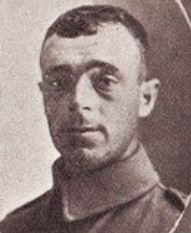
About 5ft 10 or 11, fair, clean shave, enlisted in South Australia, stout build, about 12 or 13 stone.
Pte. A. A. Smith 1040 A Coy, 10, A.I.F., Malta 6.1.16
[divider_dotted]
Both legs were blown off by a shell explosion whilst in his dug-out behind the trenches to the right of Lone Pine.
He died in the dressing station on the beach. Informant received the above account of Hodder’s death from J. Thomas, Stretcher-bearer, 10 A.I.F.
Ref: Sgt. Neave, 131, Sporting Club Hospital, Heliopolis, Cairo 10.1.16
[divider_dotted]
Court of Inquiry held in France 7.9.17 found this soldier K. in A. on or about 9.8.15. No hospital admission nor place of burial available.
The above pd[divider_dotted]f document is a ‘broader’ copy of the above text.
[divider_dotted]
John William MURPHY
| 03/05/2016
John William MURPHY
New South Wales Police Force
Regd. # 7436
Rank: Plain Clothes Constable ( 11 years )
Stations: Newcastle ( all his service )
Service: From 20 December 1899 to 7 September 1913 = 14 years
Awards: ?
Born: ? ? 1870
Event: Tuesday 2 September & Wednesday 3 September 1913
Died on: Sunday 7 September 1913
Cause: pneumonia
Age: 41
Funeral date: 5.30am, Monday 8 September 1913
Funeral location: Sandgate Cemetery
Buried at: Roman Catholic portion of Sandgate Cemetery
Catholic 1 Portion, Section 13, Lot 11
Location of Grave:
GPS: -32.87081693341898 151.70432472502705
NSW Death Registration # 13497/1913
[alert_red]JOHN is NOT mentioned on the Police Wall of Remembrance[/alert_red] *BUT SHOULD BE
[divider_dotted]
Newcastle Morning Herald & Miner’s Advocate Monday 8 September 1913 page 5 of 8
CONSTABLE JOHN MURPHY. DEATH IN HOSPITAL.
Plain-clothes Constable John Murphy died in the Newcastle Hospital at half-past five yesterday morning, after a short illness. On Thursday he was admitted to the hospital suffering from an attack of pneumonia. His condition was very serious, and but little hope was held out of his recovery.
Forty-one years of age, Plain-clothes Constable Murphy had had about fourteen years’ service in the police force, during all of which he was stationed at Newcastle, and he had been doing plain-clothes duty for about eleven years.
A smart, capable detective, he was associated as a plain-clothes constable for over eight years with Senior-detective McHattie, and during that time those officers did some very creditable work in clearing up some forgeries and big railway robberies. He was also associated for a time with Plain-clothes Constable (now Detective) Ramsay.
Since the transfer of First-class Detective Surridge from Sydney to Newcastle, ten months ago, Plain-clothes Constable Murphy had been working with him, and they were instrumental in clearing up a number of serious and minor offences. He was popular with his colleagues, and particularly well liked by those with whom he came into immediate contact ; and his good-nature was well-known. On many occasions he has put his hand in his pocket to help even those who had come within the reach of the law. He was also popular with the public, and his death will be regretted by a large circle of friends.
His last duty was with Detective Surridge on Tuesday and Wednesday nights last attending to certain offences that had been committed between Hornsby and Newcastle, necessitating both officers spending two nights in the bush. He complained on Thursday morning of feeling ill on the return journey to Newcastle, and later in the day he was ordered into the hospital.
His father is Mr. Edward Murphy, a grazier, of Collingwood station, Murrumburrah, to whom telegrams have been forwarded. His sister, Mrs. F. Cooper, and her husband arrived at Newcastle yesterday from Sydney.
The funeral will leave the Newcastle Hospital at twenty minutes to three o’clock this afternoon for the Roman Catholic portion of the Sandgate Cemetery. The district police will be present, and Mr. Day, the Inspector- General, last night gave his sanction for the Police Band from Sydney to attend if the members could be notified in time for them to catch the train this morning.
Newcastle Morning Herald & Miner’s Advocate Tuesday 9 September 1913 page 4 of 8
LATE CONSTABLE MURPHY. THE FUNERAL.
The funeral of Constable John Murphy, who died in the Newcastle Hospital at an early hour on Sunday morning took place yesterday afternoon from the hospital, and the large attendance was a tribute to the deceased’s popularity.
The procession, which attracted hundreds of people along the line of march, proceeded by way of Telford-street, Hunter street, Extended, and Watt-street, to the railway station.
The Newcastle and district police, under Acting Superintendent Banks and Sub-inspector McHardy, to the number of nearly 100, headed the procession, then came the hearse and the general public. The length of the procession may be estimated when it is stated that the front portion had turned into Watt-street before the rear had reached the municipal jubilee memorial in the park.
The pall-bearers were Senior Detective McHattie, Detective Surridge, and Constables A. Roberts and G. Ferguson. Wreaths were sent by Miss Zoe Brady, Mr. Myer Cohen, Mr. and Mrs. E. W. Hough, Mr. and Mrs. J McHattie, Mr. Banfield, Mr. and Mrs. Howden, Mr. and. Mrs. J. Probert, Mr. E. W. Bearby, and the Newcastle and sub-district police. The police also sent a beautiful wreath of immortelles.
The chief mourner was Mrs. Cooper, a sister of deceased. At the graveside, the Rev. Father M Keenan, of St. Mary’s, Newcastle, conducted the service, which was of a most impressive character, the deceased being buried with all the rites of the Roman Catholic Church.
The Maitland Daily Mercury ( NSW ) Saturday 13 September 1913 page 6 of 12
Constable T. Ryan who for some time has been lockup-keeper at Wallsend, has been appointed to the plain-clothes branch of the Newcastle police, in succession to the late Constable John Murphy. By the way, it is stated as a sad circumstance in connection with the death of the popular officer named, that he was to have been married on the date of his demise.
This man is NOT recorded on the Police Memorial system but it is apparent, from reading these two articles, that the man contracted pneumonia from direct exposure over two nights in the bush in order to capture offenders.
He returns to his station on the 3rd day, and is directed to hospital where he dies three days later from pneumonia.
That sounds like a duty related death under those circumstances to me.
Service: From? ? ? to 15 September 1866 = ? years of Service
Awards: No find on It’s An Honour
Born: ? ? ?
Died on: Saturday 15 September 1866
Cause: affection of the throat stemming from exposure
Age: 27 years, 10 mths
Funeral date: Monday 17 September or Saturday 22 September 1866
Funeral location: Wagga Wagga
Buried at: Buried at Wagga Wagga Monumental Cemetery
Reg. # M-05744 Loc: Ang – R – 4 – 0001
[alert_yellow]JOHN is NOT mentioned on the Police Wall of Remembrance[/alert_yellow] *NEED MORE INFO
Grave location:
[divider_dotted]
The Sydney Morning Herald Wednesday 19 September 1866 page 1 of 8
Deaths:…..
On the 15th instant, at Wagga Wagga, JOHN MORROW, Esq., Sub-inspector in the New South Wales Police Force, and formerly a Lieutenant in the Royal Longford Rifles.
The Sydney Morning Herald Friday 21 September 1866 page 5 of 8
DEATH OF Sub INSPECTOR MORROW, – I have the painful duty of recording the death of Mr sub-inspector Morrow at Wagga Wagga, on Saturday last. I fear he may be regarded as another of the victims to the heavy and severe expenditure kept up when the bushranger Morgan was infesting the neighbourhood. A disease of the throat was, doubtless, accelerated and rendered more severe by the exposure thus occasioned, and after trying change of air, after consultation with eminent physicians in this colony and New Zealand, after all that attention and care could do, he sank under its fatal influence.
The Government has lost a conscientious officer, whose efficiency was impaired only by his inability, and the district will lose one to whom may be applied the highest eulogium – a Christian gentleman.
I am not aware of Mr Morrow’s exact age ; he could scarcely have reached what is generally called the prime of life, and was unmarried.
Wagga Wagga Express & Murrumbidgee District Advertiser ( NSW ) Saturday 22 September 1866 page 2 of 4
DIED ………..
At Waterview, Wagga Wagga, the residence of F.A. Tompson, on Saturday, the 15th instant, after a protracted and distressing illness, induced by exposure in the prosecution and discharge of his public duty, JOHN MORROW, Esq., Sub Inspector of Police for the district of Wagga Wagga, second son of Hugh Morrow, Esq., of Charlton Lodge, Auckland, New Zealand ( formerly of Coraboola House, County Longford, Ireland ) aged 27 years and 10 months.
He bore his long suffering with the most touching and enduring patience and gentleness and passed away in the fullness of faith and hope.
He died deeply loved and lamented by many, and esteemed by all who knew him.
Wagga Wagga Express & Murrumbidgee District Advertiser ( NSW ) Saturday 22 September 1866 page 2 of 4
Town Talk .- The sythe of the King of Terrors has been busy around us during the last few days, no less than three residents, if not of the town, at least of its immediate vicinity, having, in startling succession, been gathered from our midst. Sombre clothing has met the eye at every turn, blinds have been drawn, shutters have been closed, and long funerals have wound through the streets, creeping slowly on their way to the home of the dead. No wonder then that the town has been gloomy and sad. The death of Sub-Inspector Morrow could not be called sudden, and though the news came, as it ever does, at last with a shock, it was still only what people had long been prepared for, and could not occasion any feeling of surprise. But in the other two cases it was very different.
Even the families of those that are gone were quite unprepared for the calamities that have visited them, and to others the first tidings that have reached them have been, not of sickness, but of-death. And now in speaking on these topics, we cannot do better than call the attention of our townsmen to the disgraceful state of the cemetery. In the old country the village churchyard is a hallowed spot, invariably kept in the neatest and nicest order, but here we loosly pale in a plot of ground, with a rotten fence, and then leave it to be over run with weeds, or turned into a feeding ground for stray stock. We noticed one day last week a horse grazing there, and trampling at pleasure over the graves. But the presence of an occasional horse, though by no means a creditable circumstance to those whose duty it should be to preserve the ground from desecration, is but a trifling evil in comparison with the slovenly and illkept appearance of the ground in the whole, and the graves in particular. The fence is delapidated, and the whole place is choked with weeds and coarse grasses. No paths have been formed, and at every funeral the bearers and mourners are compelled to stumble and trample over the graves of those who have been buried before. In some eases these have been trodden down level with the surrounding soil, and in others their appearance is absolutely repulsive from the sinking of the earth as the coffins below have decayed. Several instances may be observed where the soil is cracking and falling in wards from this cause, and in many more it has so sunk down that the site of a grave is often marked by a regular hollow, in which, the water collects in pools after every storm. The cemetery in its present condition is a scandal and disgrace to the town, and immediate steps ought to be taken to place it in something approaching to a decent state. The expense of rooting out the weeds, grubbing up the bushes, placing the fence in good repair, and laying out a few paths, could not amount to very much, and funds would, we believe, be readily subscribed if the slightest effort was made to collect them.
Wagga Wagga Express & Murrumbidgee District Advertiser ( NSW ) Saturday 22 September 1866 page 2 of 4
DEATH OF SUB-INSPECTOR MORROW. IT is with deep regret we have to announce that, on Saturday last, this indefatigable officer of police breathed his last. Mr. Morrow‘s illness has been of long duration, and was, no doubt, in a great manner, induced by continued campings and exposure in the bush when in pursuit of the ruffian Morgan. Constant wettings and exposure at length brought on an affection of the throat, which so far deprived him of his voice that he was unable to carry on any conversation in higher tones than an ordinary whisper.
After leaving Wagga Wagga, he was for a time stationed at Deniliquin, but some seven or eight months ago he obtained leave of absence, and proceeded to New Zealand on a visit to his relatives, for the benefit of his health. He there received the best medical attendance the colony could afford, and his health so improved that he confidently looked forward to its complete restoration, and to the recovery of his voice, and he, therefore, in May last, returned to his official duties in Wagga Wagga.
The climate here, however, did not seem to suit his constitution, and his health again began to fail. He at first regularly attended to his police duties, but these were, after a time, occasionally interrupted by attacks of illness, which gradually increased in frequency and intensity, until at length he became altogether laid up.
For the last month he has been confined to the house, never seeing anyone but a few personal friends, and at length, on Saturday morning last, the spirit left him.
The deceased gentleman was twenty-seven years of age, and was the second son of Hugh Morrow, Esq., of Charlton Lodge, Auckland, New Zealand, and formerly of Coraboola House, County Longford, Ireland.
The funeral took place on Monday last. Every place of business was either wholly or partially closed, and the procession of those who were anxious to show their respect for the memory of the deceased gentleman, by following his remains to their silent home, was one of the largest ever witnessed in Wagga Wagga.
Empire ( Sydney ) Monday 24 September 1866 page 5 of 8
Our readers will be sorry to hear that Police Inspector Morrow died last-Saturday, at Wagga Wagga, from some affection of the throat. The deceased gentleman was formerly stationed at Albury, where his many good qualities won for him the esteem of a large circle of friends. Inspector Morrow was one of the pluckiest and most efficient officers of the force, and in his indefatigable exertions to capture bushrangers, he met with many hair-breadth escapes.
In fact his death may be attributed to his zeal in the performance of duty; for whilst scouring the country in search of Morgan, Inspector Morrow contracted the disorder which has ever since made him an invalid, and has ultimately caused his death. Camping out in the winter time without covering, for many successive nights, and undergoing all sorts of other privations in the bush, has ruined many an iron constitution; and a man must be something more than human to be able to stand it with impunity.
And so Inspector Morrow has passed away from us, and indirectly we can scarcely help regarding him as one of Morgan’s victims. – Border Post.
The Sydney Morning Herald Wednesday 26 September 1866 page 5 of 8
initial story is the same as those above but ends:……..
-To the foregoing, we append the sympathetic tribute of a warm personal friend of the deceased. The writer says :-” Mr. Morrow died deeply loved and lamented by many, and esteemed by all who knew him.
He was out with young Mr. McLerie. They both contracted disease from exposure in the wet season of 1861. Poor McLerie was at once carried off by acute inflammation of the lungs, but Mr. Morrow‘s affliction assumed the character of follicular laryngitis, by which he lost his voice and suffered otherwise from its effects on the bronchial tubes.
The poor fellow expended nearly all his means in surgical expenses, but the disease was never checked, and after two years of great suffering he rendered up his life, having been literally starved to death by inability to swallow food.
He bore his long suffering with the most touching and enduring patience, and gentleness, and passed away in the fulness of faith and hope.”
Stations: ?, ( Berrima Police Force & stationed at Nattai
Service: From? ? ?to 25 June 1866 = around 5 years Service
Awards: ?
Born: ? ? ?, Glowenties, Shanagold in Limerick, Ireland
Event date: Monday 25 June 1866
Event location: New Sheffield (Mittagong)
Died on: Wednesday 27 June 1866
Cause: Fall
Age: 49
Funeral date: Friday 29 June 1866
Funeral location:
Buried at: Berrima cemetery, Olbury Rd, Berrima
Catholic Section, Row 6, Plot 14
Memorial location:
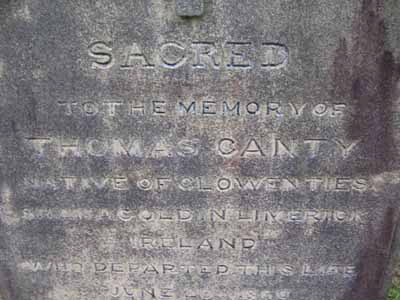
SACRED / TO THE MEMORY OF / THOMAS CANTY / NATIVE OF GLOWENTIES / SHANAGOLD IN LIMERICK / IRELAND / WHO DEPARTED THIS LIFE / JUNE 20TH 1866 / AGED 49 YEARS / REQUIESCAT IN PACE
[alert_red]THOMAS is NOT mentioned on the Police Wall of Remembrance[/alert_red] * BUT SHOULD BE
Constable Canty died following a fall down a railway cutting at New Sheffield at night, as he made his way home to Berrima. He had earlier been to Bowral to warn a witness for court. He suffered severe spinal injuries in the fall and lay injured at the base of the cutting until morning. New Sheffield is now Mittagong.
The incident was reported in some detail by the Empire dated Saturday 30 June 1866.
FATAL ACCIDENT AT NEW SHEFFIELD. ”An accident of a fatal character, resulting in the death of Constable Canty, of the Berrima police, occurred on Monday last. The deceased ( who was stationed at New Sheffield ) had been to Bowral to warn a witness to attend before the Berrima bench of magistrates on the following day to give his evidence in a case which was there to be brought before them and was on his return home when he fell down a cutting of the Great Southern Railway on the Mittagong side of the Gib tunnel.
The night was pitch dark and miserably wet, and it is supposed that the foot of the deceased must have slipped over some of the clay soil, which abounds in the neighbourhood. The cutting was about sixty feet deep, and the unfortunate man lay in a pool at the bottom for several hours, until some workmen were on the following morning attracted to the spot by the howling of the deceased’s dog. Having ascertained that somebody was lying below, the men took prompt measures to effect his release, and afterwards conveyed him to his home.
A messenger was immediately despatched to Berrima for medical aid, and no time was lost by Dr. Williamson in repairing to the scene of the sad and melancholy disaster.
Notwithstanding, however, that every effort was made which medical skill could suggest, the unfortunate man breathed his last at a late hour on Wednesday night. On Thursday a magisterial inquiry was held before G. H.Rowley, Esq., P.M., and a post mortem examination was made by Dr. Williamson, who found that the immediate cause of death was a spinal injury, which had doubtless been received by Canty in his fall.
The deceased had been in the police force of this colony up-wards of five years, and was always held in good repute as an efficient officer. A lasting testimony to the esteem in which he was held by residents in the district was afforded by the large and respectable assemblage which followed his remains to their resting place in Berrima cemetery on Friday last. A wife and a large family are left to lament their loss.
At the time of his death the constable had apparently been a member of the police force for about five years and was stationed at Berrima.
[divider_dotted]
The Maitland Mercury & Hunter River General Advertiser Tuesday 3 July 1866 p 4
Constable Canty, of the Berrima police, was recently out on duty, and in the darkness of the night fell down a cutting of the Great Southern Railway, sixty feet deep. The next morning some people were attracted to the spot by the howling of his dog and be was removed ; but on the following day he died from the spinal injury he had suffered.
The Sydney Morning Herald Wednesday 24 January 1866 p 7
ALLEGED MURDER AT NEW SHEFFIELD.
………… Thomas Canty, being duly sworn, deposed: I am a constable attached to the Berrima police force, and am stationed at Nattai ‘ about 1 o’clock on Sunday morning last, John Forward knocked at my door ………..
Constable Chapman was the officer in charge of Booligal Police Station, in the Deniliquin District.
In mid-February, 1866 he set out on horseback to visit several properties in his area to serve summonses and carry out other duties. A few days later a report was received that his riderless horse had been seen near Tooragama, about twenty miles from Booligal, so Constable Barry went in search of him.
Barry found the horse, without either saddle or bridle, and then he proceeded to call at every place where it had been Chapman’s intention to have called.
The unfortunate constable was never seen alive again.
On 6 March, 1866 the Maitland Mercury reported that “Our correspondent at Hay reports that Constable Chapman is missing. It appears that, being stationed at Booligal, he left that place on Thursday fortnight to serve a summons at a station about forty miles distant. His horse, without saddle or bridle, was subsequently found, as were his waistcoat hanging on the branch of a tree, probably put there by the unfortunate man as a guide to those who might be, and are now, searching for him. Our correspondent hints at foul play but the central office here has no suspicion of such, believing that, having lost his way, he has perhaps perished from thirst. Let us hope not.”
Then, a fortnight later the Sydney Morning Herald of 21 March, 1866 reported that “The remains of the unfortunate Constable Chapman, lost in the bush near Deniliquin, were found a few days since and buried at Booligal Cemetery.”
The New South Wales Police Gazette of 7 March, 1866 recorded that “Chapman Charles, Senior Constable (No. 467), lost in the bush; body found on February 22nd.”
The constable joined the police force on 6 September, 1861 and in 1862 he became a senior constable in the newly-formed New South Wales Police Force. At the time of his death he was aged 30 years and was stationed at Booligal. He was not long married when he passed away and his wife was expecting their first child. He is not listed in the official New South Wales Police Honour Roll.
New South Wales Police Gazette and Weekly Record of Crime (Sydney : 1860 – 1930), Wednesday 7 March 1866 (No.10), page 86
DEATH.
Chapman Charles, Senior Constable ( No. 467 ), lost in the bush; body found on February 22nd ( Thursday ).
The Deniliquin Chronicle states that the remains of constable Chapman, who was lost in the bush lately, have been found by a man named Patrick Hardy and another, within three-quarters of a mile of where some men were making a dam. He was buried in the Booligal cemetery, and followed by a good many people to the grave.
His horse was found naked.
The body was as black as ink, and in an advanced state of putrefaction.
In his struggles he had torn his shirt, and forced his pants up to his knees, and by his tracks it was seen that he had been rolling round and round the tree under which he was found to avoid the sun.
He must have had a horrible death.
He is said to have been lying on his side, with a coat under his head for a pillow.
The spot was a dry creek, about twenty-five miles from Booligal, and seven from the Lachlan River.
It is understood that there were no mark of violence on deceased’s person, but that he had evidently perished from exhaustion, and had, after rambling about for some time in a circuitous direction, being overcome with fatigue and thirst, lain himself down to die, having, it is supposed, hung his waistcoat on a tree or bush near as a guide to his last resting-place.
The Pastoral Times reports a fatal occurrence in Riverina : — ” Constable Chapman, who is in charge of Booligal Station, went out on duty, and being longer away than his business required, has, it is feared, got lost.
He left the station on Thursday week, about four o’clock.
On the Saturday following his horse had been seen near Tooragama, about twenty miles from Booligal.
Constable Barry went in search of him, and picked up the horse, without either saddle or bridle, on Tuesday.
Fears are entertained that something serious has happened to Chapman. No trace has been obtained of him, although Barry called at every place where it was his ( Chapman‘s ) intention to have called. He must, therefore, have met with the mishap shortly after leaving the station ; and if he has been without assistance for so long a time, the worst may be anticipated.
The feelings of Mrs. Chapman, who has been but a short time married, and about to become a mother, may be easily imagined.
Our latest account states that Booligal had turned out in search, but nothing definite had been ascertained.
Our telegram reports that the remains of Chapman have been found.
Wagga Wagga Express and Murrumbidgee District Advertiser (NSW : 1858 – 1859; 1866; 1872 – 1874), Saturday 10 March 1866, page 2
CONSTABLE CHAPMAN. -The remains of poor Chapman have been found by a man named Patrick Hardy and another within three-quarters of a mile of where some men were making a dam, and within five miles of where he hung up his waistcoat.
He was buried in the Booligal cemetery, and followed by a good many people to the grave.
His horse was found naked. The body was black as ink and in an advanced state of putrefaction.
In his struggles he had torn his shirt and forced his pants up to his knees, and by his tracks it was seen that he had been rolling round and round the tree under which he was found, to avoid the sun. He must have had a horrible death. He is said to have been lying on his side, with a coat under his head for a pillow.
The spot was a dry creek, about twenty five miles from Booligal, and seven from the Lachlan river.
It is understood that there were no marks of violence on deceased’s person but that he had evidently perished from exhaustion, and had, after rambling about for some time in a circuitous direction, being overcome with fatigue and thirst, lain himself down to die – having it is supposed, hung his waistcoat on a tree or bush near, as a guide to his last resting-place.
It is to be regretted that he was not better acquainted with the bush. Had it been so his life would have been saved.
When search was made for Chapman, a human skull was picked up, no doubt part of the remains of some unfortunate. – Deniliquin Papers.
Eldest son of the Inspector General of the New South Wales Police Force, Captain John McLerie, the superintendent died at Albury as a result of too many cold, wet nights spent in the bush carrying out his police duties.
The Sydney Morning Herald of 28 November, 1864 listed the death notice, with the cause of death given as “rheumatism caused by the effects of exposure“.
At the time of his death the superintendent was aged about 26 years, and was the Superintendent in Charge of the Murray District (Albury).
[divider_dotted]
John Aitcheson McLerie may have been associated with Sub-Inspector John MORROW.
[divider]
Alexander TWISS
| 03/05/2016
Alexander TWISS
New South Wales Police Force
Regd. # ?
Rank: Constable
Stations: Sydney Police
Service: From 16 November 1852 to 4 May 1853 = 6 months
Awards:
Born: ? ? 1819
Died on: 4 May 1853
Cause: Illness – severe cold – Exposure
Age: 33
Funeral date:
Funeral location:
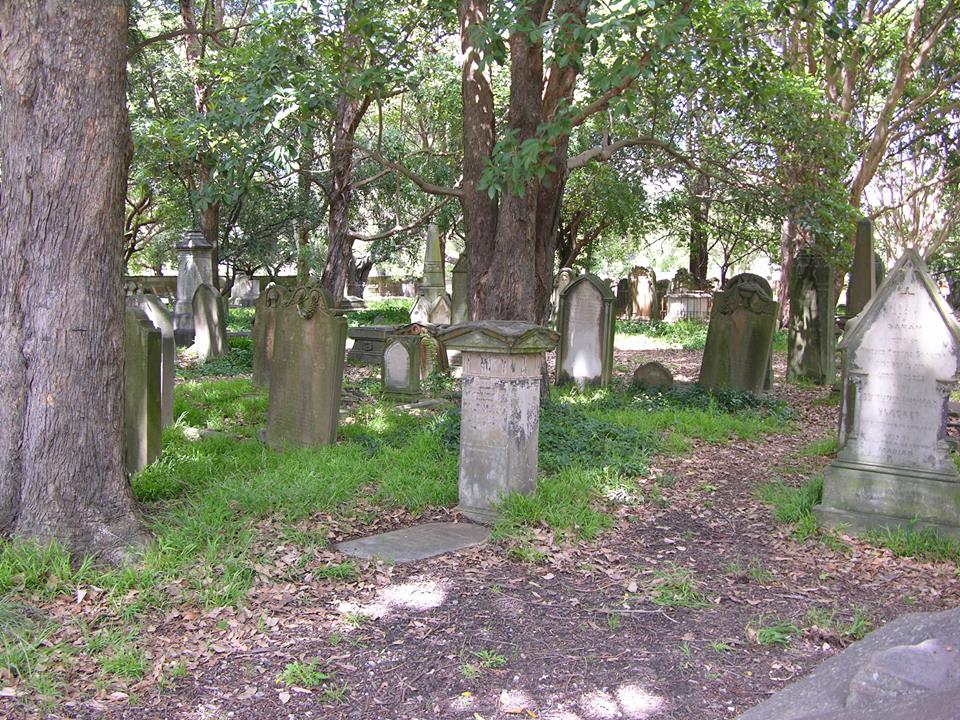
Grave location: Constable TWISS was interred at the Camperdown Cemetery but his grave is unmarked and location unknown.
[alert_red]ALEXANDER is NOT mentioned on the Police Wall of Remembrance[/alert_red] * BUT SHOULD BE
Constable Alexander Twiss served in the Sydney Police Force from 16 November 1852 until his death on 4 May 1853. His cause of death is recorded as having been ” from the effects of a severe cold caught when on escort duty at night “ .No further details are known as yet.
The constable joined the police force on 16 November, 1852. At the time of his death he was 34 years old and was attached to the Sydney Police. He left a widow named Sarah.