Awards: Queens Commendation for Brave Conduct ( Imperial ) – granted on 24 June 1977 – ( Cst ) – Apprehend an armed man
National Medal – granted 3 September 1985 ( SenCon )
1st Clasp to the National Medal – granted 3 October 1995 ( Sgt )
Born: Monday 26 June 1950
Died: Saturday 22 May 1993
Age: 42
Event Date: Saturday 22 May 1993
Event Location: Ashfield
Cause: Heart Attack during arrest
Funeral Date: 23 July 1993
Funeral location: Woronora Cemetery
Buried: Cremated
1/ Ashes: Henry Lawson Garden Walk
Section E, Plot 0012
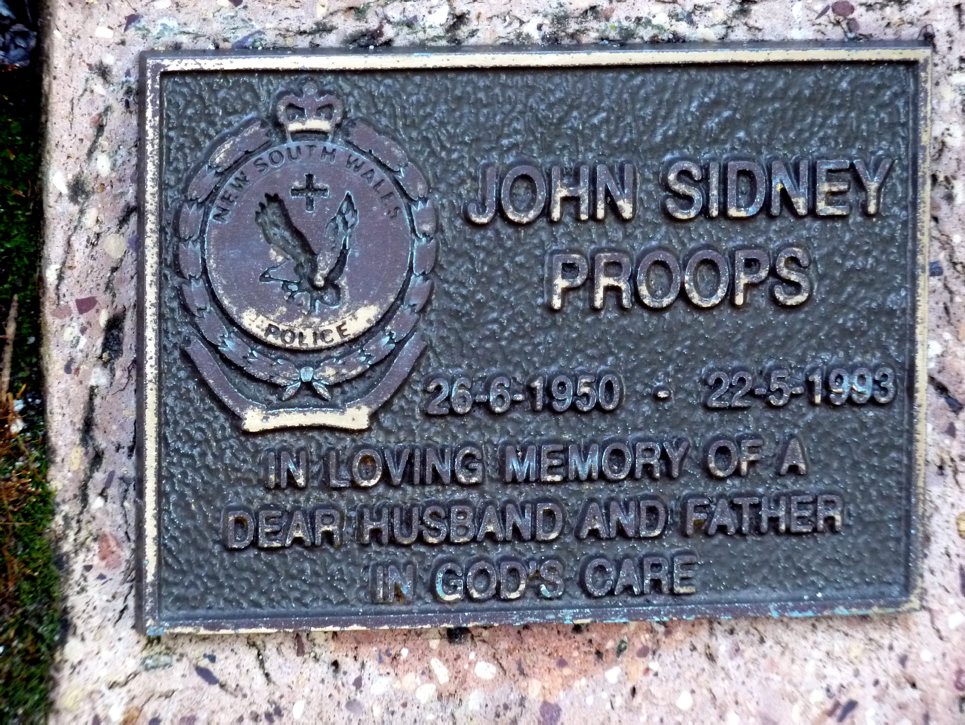
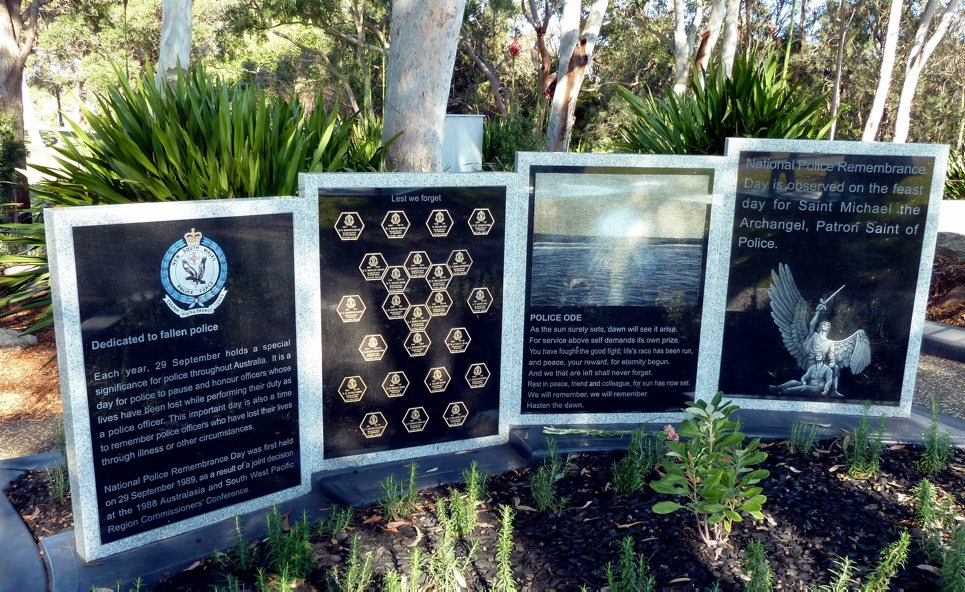
2/ Memorial location: Woronora Cemetery, Police Garden
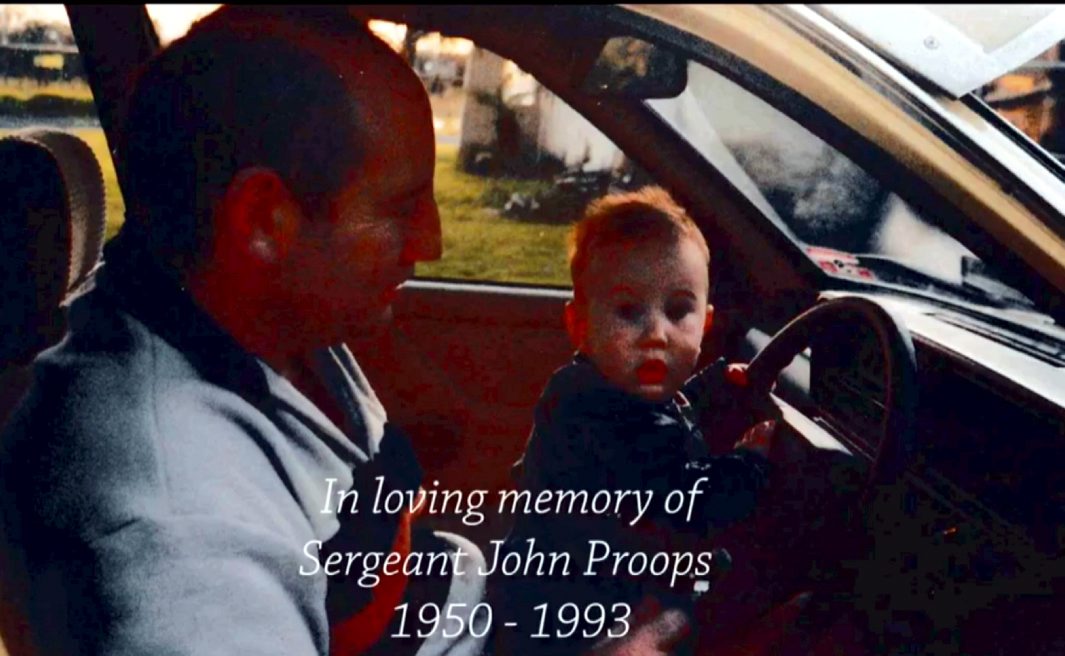
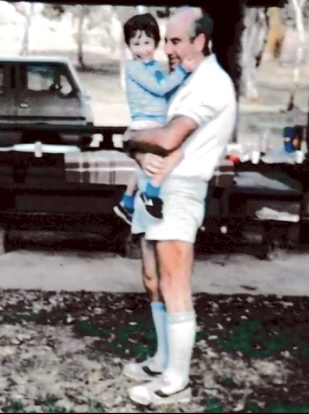
John with his son, Warren, PROOPS
John with his son, Warren, PROOPS
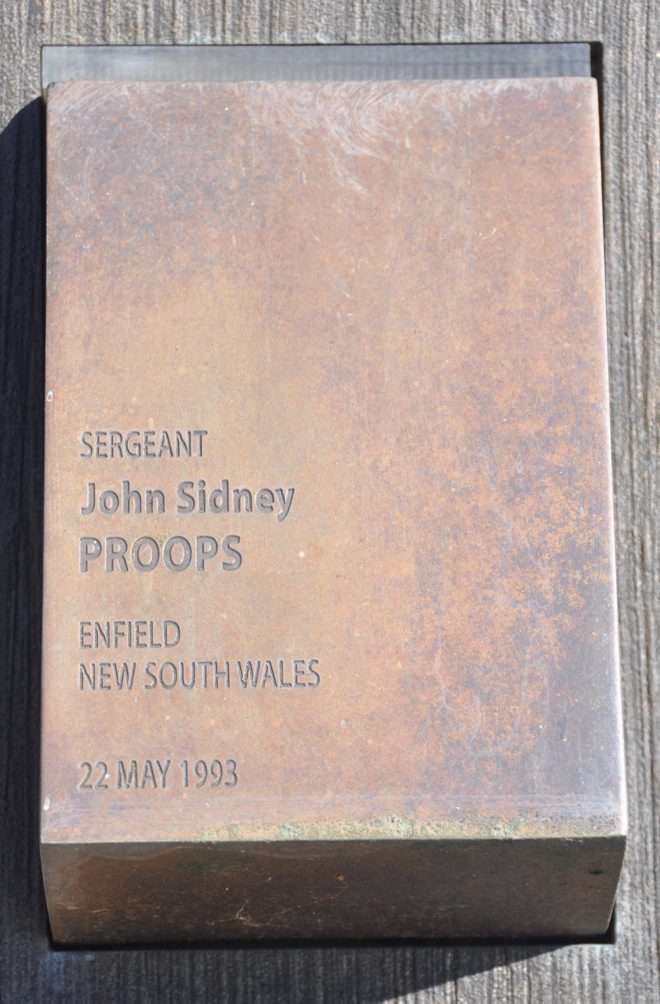
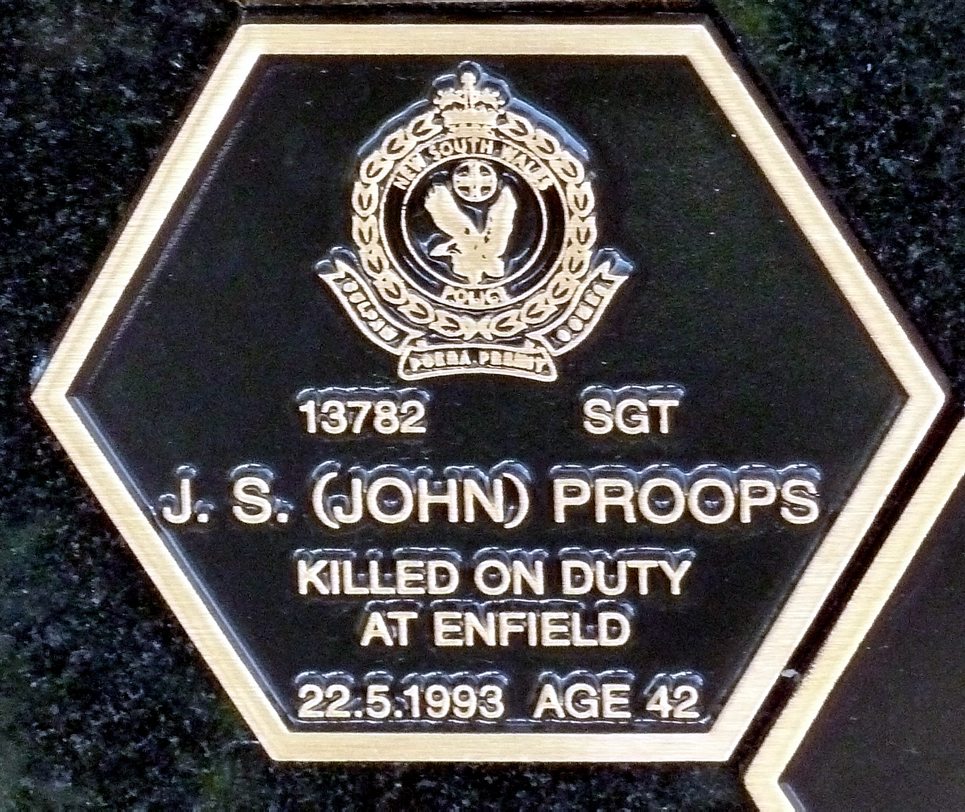
John Sidney PROOPS, Police National Wall of Remembrance touch pad.
On 22 May, 1993Sergeant Proops and Probationary Constable Katie Thompson went to a dwelling in Enfield to arrest an offender for a breach of a domestic violence order. During a struggle with the offender the sergeant is thought to have suffered a fatal heart attack.
Constable Thompson attempted to revive the sergeant however she was unsuccessful. He was conveyed by ambulance to the Western Suburbs Hospital where he was pronounced dead on arrival.
The sergeant was born in 1950 and joined the New South Wales Police Force on 20 February, 1967 as a cadet.
At the time of his death he was stationed at Enfield.
Beyond Courage
[divider_dotted]
[alert_green]John IS mentioned on the Police Wall of Remembrance[/alert_green]
Note: It was also interesting to learn that Sergeant Proops while attending another domestic dispute some years earlier, survived a spear-gun wound to his chest. Apparently, the spear lost much of its penetrating force after striking the sergeant’s police notebook in his tunic pocket.
At just 10-years-old Warren became a NSW Police Legatee, when his father, Sergeant John Proops, passed away after suffering a fatal heart attack while on duty.
Warren has been part of the NSW Police Legacy family for 25 years and took part in the very first trek to Koko
da. Now, he’s returning to the track to help support the team through the physically and emotional journey that is Kokoda.
National Police Remembrance Day 29, September 2000
National Police Remembrance Day has been marked by a minute’s silence at services throughout Australasia.
Remembrance Day is held every year on St. Michael’s Day, the patron saint of police, for all officers who have lost their lives in the line of duty.
During the last 12 months, 10 officers have died in the course of their duties in NSW, Victoria, Queensland, Western Australia, the Northern Territory, Papua New Guinea and Fiji.
233 officers have been fatally wounded while on duty in NSW since 1862. Their names are recorded on a memorial dedicated last December in the Sydney Domain.
The Sydney Service has been attended by Police Minister Paul Whelan, Commissioner Peter Ryan and senior members of the NSW Police Service.
During the service candles were lit by Warren Proops, son of Sergeant John Proops who died on 22 May 1996, Eloise and William Heron, son and daughter of Detective Sergeant William Heron who died on 6 January 1999 and Jessica Ede, daughter of Senior Constable Dallas Tidyman who died on 15 August 1994.
NSW Police Commissioner Peter Ryan said the day offers police and members of the public the chance to remember all officers who have lost their lives while serving their community.
“This important day gives us all the chance to pay our respects to these officers and to reflect upon the role in our society that police play,” he said.
“Police officers killed in the course of their duty must never be forgotten.”
The Canberra Times of 24 May, 1993 briefly reported the sergeant’s death.
“POLICE DEATH
SYDNEY: A police sergeant collapsed and died in a struggle with a man he had been questioning about a domestic dispute in Sydney on Saturday night.
Another police officer had broken his leg in a clash later with the man, who allegedly had breached a domestic violence order, a police spokesman said.
Sergeant John Proops, 42, collapsed in the struggle with the 32-year-old man at a house in Enfield.
The man was remanded in Central Local Court yesterday.”
A District Court judge launched an extraordinary attack on police yesterday, claiming they had been involved in the “evil” business of judge-shopping.
He said it appeared that many of those involved in the matter before him had lied.
Judge Phelan, hearing an appeal by Mr Stephen Smith in the District Court, said in a preliminary appraisal of the case that many police had followed a “screed” when giving earlier evidence before a magistrate and when they got beyond the screed their evidence lacked credibility.
There also appeared to have been an assault upon Mr Smith and that no police were able to explain his injuries.
Judge Phelan said if the matter proceeded, and the police witnesses were called against Mr Smith, it would be likely that he would refer a number of matters to the Attorney-General and the Ombudsman alleging that police had fitted evidence and then lied in court.
The Herald understands that staff from the Police Royal Commission had already shown an interest in the matter.
In May 1993, two police officers went to a house in Enfield where it was alleged Mr Smith had breached a domestic violence order.
It was alleged he had resisted arrest and one officer, Sergeant John Proops, had suffered a fatal heart attack.
Police alleged Mr Smith then tried to attack another officer, Sergeant Southam, and that Sergeant Southam suffered a broken ankle.
Mr Smith alleges he was tackled into Sergeant Southam by other officers and then beaten with a torch. He was later convicted of breaching a domestic violence order, resisting arrest and assault occasioning actual bodily harm.
Judge Phelan said yesterday that a doctor’s report indicated Mr Smith had an injury to his head, consistent with being hit with a torch, a cut on his forehead, bruises over his body, a broken rib and bruises to his legs.
“… the injuries can only be explained rationally and solely by a police attack upon the appellant which the officers have all denied and this leads to the conclusion that many of the police officers are lying,” Judge Phelan said.
He said that a small dog had apparently been kicked in the head and lost its eye during the arrest and that police could offer no explanations as to how this had happened. The dog later died. The judge also stated there had been behind-the-scenes moves to have him removed from the case when it came to an appeal.
“I find it obnoxious and suspicious that there have been police manoeuvres to change the prosecution person [assigned] to these matters,” Judge Phelan said.
“If judge-shopping is an evil, as it is, equally evil is prosecution shopping. I also find it obnoxious and suspicious that there have been manoeuvres to have another judge conduct the appeal.”
The matter will resume before Judge Phelan in the Downing Centre District Court this morning and it is expected that the Director of Public Prosecutions will then make a decision about offering evidence in the case.
SYDNEY, Tuesday. — A notebook in his breast pocket had saved a policeman’s life when a man had fired a spear gun at him, police alleged in Campsie Court today.
The police prosecutor, Sergeant A. Carter, told Mr Hayes. SM. that the constable had been trying to arrest the man when the spear was fired from almost point-blank range.
Before Mr Hayes was Mr Norman Warren Castle, 53, of Albany Road, Petersham, who was charged with shooting Constable John Proops at Belmore last Saturday with intent to murder.
Sergeant Carter said it was alleged that Mr Castle had smashed a door of a house at Belmore and had menaced the two occupants inside with the loaded spear gun.
Police had gone to the house and Mr Castle had allegedly turned on them.
It was alleged he had fired a spear at Constable Proops which had struck the officer’s regulation notebook in the breast pocket of his uniform.
Sergeant Carter said Mr Castle had been taken to Canterbury Hospital yesterday after allegedly swallowing glass.
“The doctors found he had consumed some plastic buttons ‘ — x-rays taken found no glass or other substances”, he said.
People involved in the case “feared for their safety”. Further charges could be laid.
Questioned by Mr Hayes. Mr Castle said he had been “communicating with my dead father”.
Asked how he had been communicating, Mr Castle replied, “In my mind … He has communicated with me before”.
Mr Hayes refused bail, adjourned the case for mention to June 15, and recommended that Mr Castle be physically, and mentally examined.
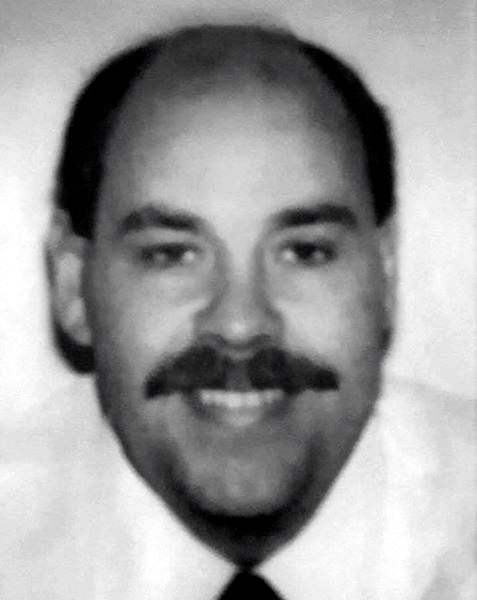
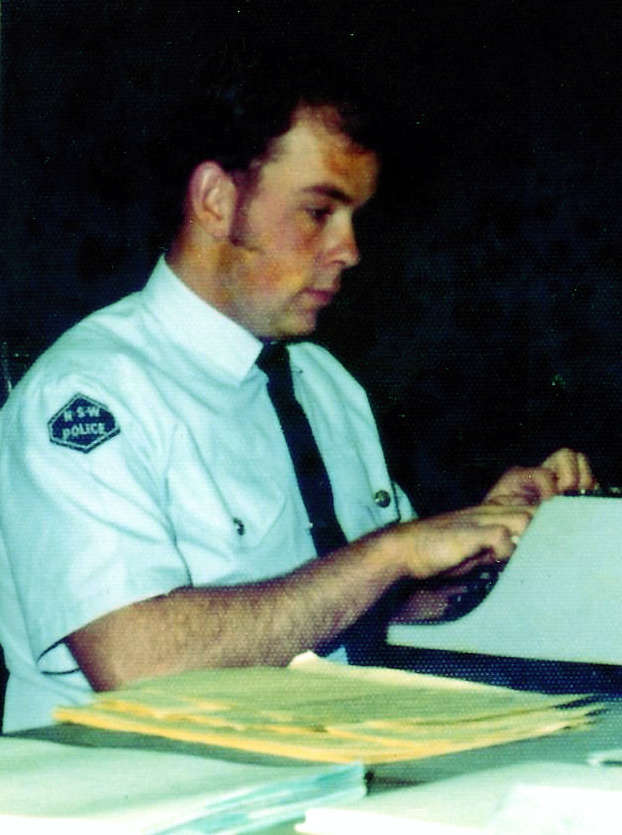
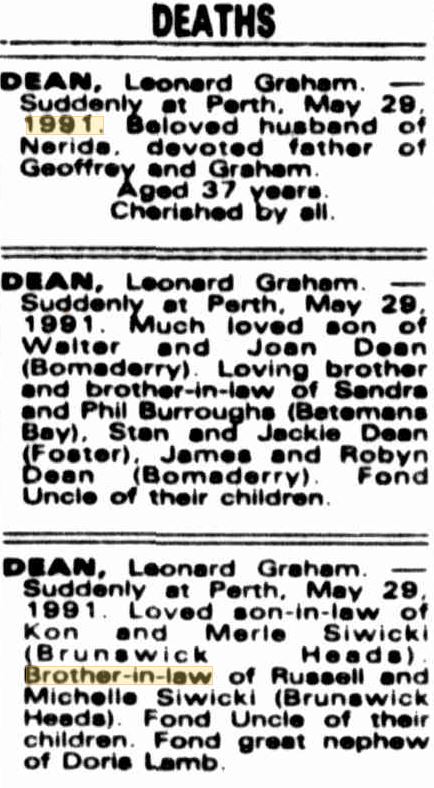
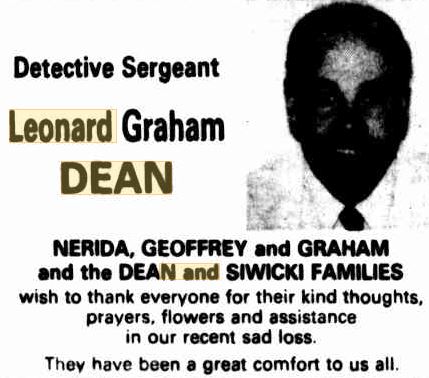
Detective Sergeant Lenny Dean passed away in Perth on 29 May, 1991 as a result of a rupture in his mitral heart valve. It was later determined that the medical condition was a result of the sergeant’s stressful policing career.
The sergeant was born in 1953 and commenced training with the New South Wales Police Force on 23 September, 1974. At the time of his death he was stationed at Queanbeyan.
DEAN
Leonard Graham
Funeral notice
29MAY1991
Death
37
at Perth
Northern Star (Lismore)
31MAY1991
DEAN
Leonard Graham
Death notice
29MAY1991
Death
37
at Perth
Canberra Times
31MAY1991
Canberra Times (ACT : 1926 – 1995), Friday 12 October 1990, page 4
COURTS and THE LAW
Papers, TV stations fined $670,000 for contempt of court
SYDNEY: Five media organisations were fined a total of $670,000 by the Court of Appeal yesterday for contempt of court.
The fines related to reports of the arrest of Paul Gerald Mason and his confession in July last year to three pickaxe murders and an attempted murder.
The court found that the reports were likely to, or had a tendency to, interfere with a fair trial. Fines imposed were:
ATN Channel 7 (including rebroadcast through Prime Television ); $200,000.
TCN Channel 9 (including rebroadcast through WIN): $75,000.
TEN Channel 10: $75,000.
Nationwide News: (in The Daily Telegraph and Daily Mirror of July 31): $200,000. ABC: $120,000.
Detective Senior Constable Leonard Graham Dean, who answered questions at a news conference held outside Queanbeyan police station after Mason’s arrest, was also found guilty of contempt.
No fine was imposed on Dean, but he was ordered to pay the NSW Attorney-General’s costs of bringing the prosecution, as were all the other defendants.
Mason, 27, was arrested after surrendering to police on July 29, 1989, and was later charged with the murders of Ruth Ferguson, 25, and her eight-month-old son, Mark, on July 27, 1989, near Eden. Mason was also charged with the murder of Mary Alice Clark, 29, at Gearys Gap, near Canberra, on May 12, 1989, and the attempted murder of her one-year-old son, Samuel, on the same day. On September 11, he hanged himself in his Goulburn jail cell.
The judges said the publication of obviously prejudicial material would, unless emphatically punished, reduce community belief in the capacity of the courts to maintain standards of fairness in trials.
The report in The Daily Telegraph had followed “an embarrassing mistake” by an experienced solicitor, who advised that the report would not be in contempt of court. The position was different with the Daily Mirror report, which was published “simply in reckless pursuit of a good story, and sales”.
The judges said Channel 7’s concern was for the risk to which it was exposed, not for the damage done by the broadcast.
There had been no explanation from the ABC as to how its offending broadcast came to be made. The judges inferred that the persons involved knew there was a risk of contempt and were prepared to run that risk.
The judges assumed the imposition of a fine would have a deterrent effect on the corporation, even though no individual was directly affected financially.
In relation to Channel 10, the judges were “not persuaded that the financial information put before us should have any effect on the outcome of the matter”. The channel was not in liquidation and was carrying on business.
Referring to Dean‘s statement to reporters that Mason had admitted to three murders, the judges said it would be unfair to punish him for defects in the way the police organised media relations.
Canberra Times (ACT : 1926 – 1995), Friday 3 August 1990, page 13
Station admits contempt
SYDNEY: Channel Ten admitted yesterday it was in contempt of court over reporting of events following the surrender last year of alleged pickaxe murderer, Paul Gerald Mason.
The NSW Attorney-General, John Dowd, summonsed the station, alleging its news report of July 31, 1989, could have prejudiced a fair trial.
A videotape of the report named Mason and showed him accompanying police to the scene of his alleged crimes.
Bruce James, QC, for the Attorney-General, said he accepted there were extenuating circumstances in relation to the Channel Ten report.
The station had a system of legal checks in place, but it had broken down on this occasion.
On Tuesday the court reserved its decision on the penalty to be imposed on the ABC, which pleaded guilty to contempt over a similar report.
Judgment was also reserved yesterday on whether Channel 9 is guilty of contempt over its report of the same events. The station has denied its report could prejudice a trial.
Channel 7, Nationwide News Pty Ltd and a police officer, Detective Constable Leonard Graham Dean, have yet to come before the court on similar summonses.
Mason, 27, of Riverstone in Sydney’s west, surrendered to police on July 29, 1989, after the ABC telecast an appeal by his father.
He was charged in Queanbeyan Local Court with the murders of Ruth Ferguson, 25, and her eight-month-old son, Mark, on July 27,1989, at their Pambula Beach home.
Mrs Ferguson had been battered with a pickaxe and her son strangled with a cord.
Mason was also charged with the pickaxe murder of Mary Alice Clark, 29, at Geary’s Gap, near Canberra, on May 12, 1989, and the at tempted murder of her one year-old son Samuel. Mason hanged himself in Goulburn jail on September 11.
Canberra Times (ACT : 1926 – 1995), Wednesday 8 May 1985, page 8
Bond for union official over assault on shearer
A union official who assaulted a shearer on a property near Yass during the shearers’ dispute last year was fined and released on a bond yesterday.
Mr Noel James Ashton, 33, of Murrumburrah, pleaded guilty in the NSW District Court in Yass to assaulting Mr Wayne Lawrence on May 10, 1984, occasioning actual bodily harm.
Detective Senior Constable Leonard Dean, of Queanbeyan police, told the court that police were talking to other people about related assaults and a second man had surrendered to police on Monday and admitted assaulting the property owner.
Mr Ashton, secretary of the Harden branch of the Australian Workers’ Union, said he worked from time to time as a wool-presser in district shearing sheds.
He had been in a delegation of AWU members from all over NSW which had travelled to Canberra on May 10. The delegation had sought ministerial agreement to a proposal that New Zealand shearers, who had been taking work away from AWU members, should have visas before they could work in Australia.
The delegation had not been successful and had been “pushed from one Minister to another”.
Mr Ashton said that he, another man and Mr Bill Sinclair, an AWU organiser, had stopped at the property on their way back from Canberra.
Mr Sinclair had gone into the shear ing shed and spoken to the shearers. He had returned soon after and announced that the shearers were using wide combs, were non-unionists, had refused to join the union and were working illegally.
Mr Ashton said he went into the shed where there was “a bit of pushing and a lot of harsh words”.
When he and about 15 others had left the shed, someone had called out that “a blue” had started and the men had returned. Mr Ashton said he punched Mr Lawrence in the face several times.
When the men had left the property, they had agreed to deny ever having been there if asked. Mr Ashton said he had done this when asked by police about the incident two weeks later.
Feelings had been running high over the wide-comb issue at the time and families had split because of it.
His branch of the AWU was trying to get harmony back into the shearing sheds.
Judge McGuire said that normally he would jail a person for such an offence. However, Mr Ashton had pleaded guilty, saving the community thousands of dollars in legal costs, and had frankly admitted his role in the incident without trying to lay the blame on anyone else.
He deferred passing sentence, released Mr Ashton on a $1,000, three year good-behaviour bond and fined him $500.
Canberra Times (ACT : 1926 – 1995), Saturday 14 July 1984, page 12
Bungendore committal hearing ends
Five for trial on alleged kidnap counts, two freed
Five men charged over the alleged kidnapping of a Bungendore couple were committed for trial at the conclusion yesterday of a 10-day committal hearing in Canberra Petty Sessions.
The men were among seven people charged in connection with the alleged kidnapping of Mr Stephen John Harrison and Ms Heidi Maree Van Leeuwen in February.
Two other defendants were discharged after the Acting Chief Magistrate, Mr Dobson. ruled there was insufficient evidence to find prima facie cases against them.
All charges related to the alleged kidnapping of Ms Van Leeuwen were dismissed after Mr Dobson said he was not satisfied that her detention had been to anyone’s advantage.
One of the five men committed to the ACT Supreme Court, Mr David Graeme Hudson, was refused bail pending his trial after the prosecutor. Mr Wayne Roser, told the court that Mr Hudson had made threats against police and one of the accused.
The five men committed are: Mr Hudson, 25, of Crofts Crescent, Spence; Mr Pasca Ganitis, 32, of Unanderra. Wollongong; Mr Stephen Leonard Jones, 24, formerly of Weetangera; Mr Shane Frederick Raftery, 23, of Belconnen Way, Weetangera; and Mr John Desmond Keenan, 21, formerly of Holder.
Mr Dobson found a prima facie case against each on charges of kidnapping Mr Stephen John Harrison between February 10 and 15. But he discharged Mr Hudson, Mr Ganitis, Mr Jones and Mr Keenan on charges of kidnapping Ms Heidi Maree Van Leeuwen between the same dates. Mr Raftery was not charged with this offence.
All five men then entered pleas of not guilty and reserved their defences.
Mr Dobson discharged also Mr Christian Klug, 22, of Dexter Street, Cook, who had been charged with aiding and abetting Mr Hudson in kidnapping Mr Harrison, and Ms Debbie Lee Towse, 26, of Crofts Crescent, Spence, who had been charged with being knowingly concerned in the kidnapping of Ms Van Leeuwen by Mr Hudson.
Mr Dobson said he was satisfied that Mr Klug had been involved in the offences but in a peripheral way only. Mr Klug had been “skating on thin ice” and had brought the proceedings on himself.
But the peripheral nature of his involvement did not justify the waste of public money involved in putting him on trial and he ordered that Mr Klug be discharged. Mr Dobson refused to make the order for costs in Mr Klug’s favour sought by his counsel, Mr Ben Salmon.
Mr Dobson said he had no doubt that Ms Towse had been present during part of the incident and had known that Mr Harrison was being detained. She had known also that Ms Van Leeuwen was being detained and had been with her some of the time. But mere presence was not enough.
In addition, there was insufficient evidence that the detaining of Ms Van Leeuwen had been for the advantage of Mr Hudson (an element of the charges laid) and he ordered that Ms Towse be discharged.
At the request of her counsel, Mr John Purnell, he ordered police to pay Ms Towse’s costs of $250.
In opposing bail for Mr Hudson, pending his trial, Mr Roser drew the court’s attention to the seriousness of the offences, the threats made to police that had been revealed in tape recordings played to the court on Thursday, a threat made to Mr Jones during the proceedings, and the fear of reprisals held by the victims of the alleged kidnappings.
Mr Dobson refused bail for Mr Hudson but released the other four men on bail of $5,000, with similar sureties, and ordered them to report to police weekly and not approach any witness connected with the case.
Earlier, Detective Senior Constable Leonard Dean, of Queanbeyan, told Mr Roser he had spoken to Mr Ganitis at the Civic Police Station on February 14. Mr Ganitis had told him that he had gone to Mr Harrison’s house in Bungendore with Mr Hudson and a man called Steve on February 10.
While there, Mr Hudson had asked Mr Harrison for drugs. Mr Harrison had told him of the location of some and about 25 grams of “speed”, in one-gram packets, had been found in the back yard. Ms Van Leeuwen had also produced a quantity of marijuana.
Mr Harrison had later been taken to a house in Belconnen and assaulted. He [ Mr Harrison] had said that he and two other men had been involved in the firing of shots at Mr Hudson’s house on an earlier date. Senior Constable Dean said.
During a signed record of interview, Mr Ganitis had denied that any weapons had been produced at Mr Harrison’s home. He had allegedly said that Mr Hudson had said he had a gun but had been bluffing.
Mr Harrison had been tied up at Steve’s house but when he had gone to Mr Hudson’s he had had “the run of the joint”.
Mr Ganitis had said he had made sure that no-one had touched Ms Van Leeuwen “by telling everyone to leave her alone, mainly David”.
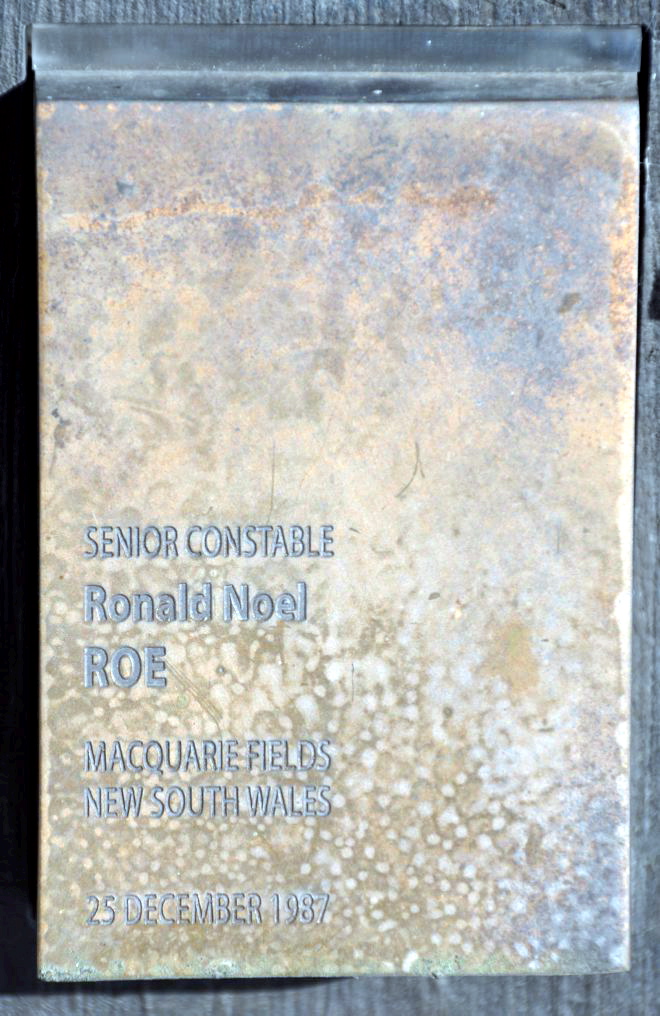
Senior Constable Roe died at the Campbelltown Hospital on Christmas Day, 1987 as a result of myocardial infarction. His death was attributed to his stressful occupation carried out in busy centres over a period of almost twenty years.
The constable was born in 1945 and joined the New South Wales Police Force as a trainee on 27 October, 1969. At the time of his death he was stationed at Macquarie Fields.
[divider_dotted]
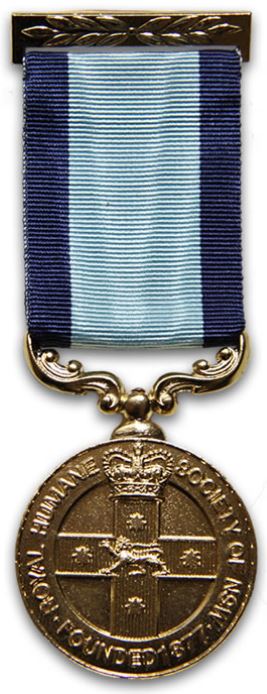
Humane Society of NSW – Bronze Medal
Senior Constable Ronald Noel Roe together with SenCon Barry Terence TRAYNOR # 14422 both received the Bronze Medal from the Royal Humane Society of NSW
Senior Constable Ronald Noel Roe was awarded a Bronze Medal for actions involving poisonous gases at Lightning Ridge on the 5th February 1978.
‘Johnnie’ ROE was a front row forward who played for Wentworthville Leagues Club.
[divider_dotted]
Paul Cole Wed 24 July 2019: A funny man John was. I remember hiding in the bush watching a Indian hemp plantation near Lightning Ridge with John, Detective Sergeant De Audney and Sergeant Dick Paul. The offenders came out and began watering the plants and John stood up and said, “ what are you doing here Brownie?” The offender said, “ We are looking for pigs. “ Quick as a flash John says, “ Well you just found f……g four of them. Your under arrest.”
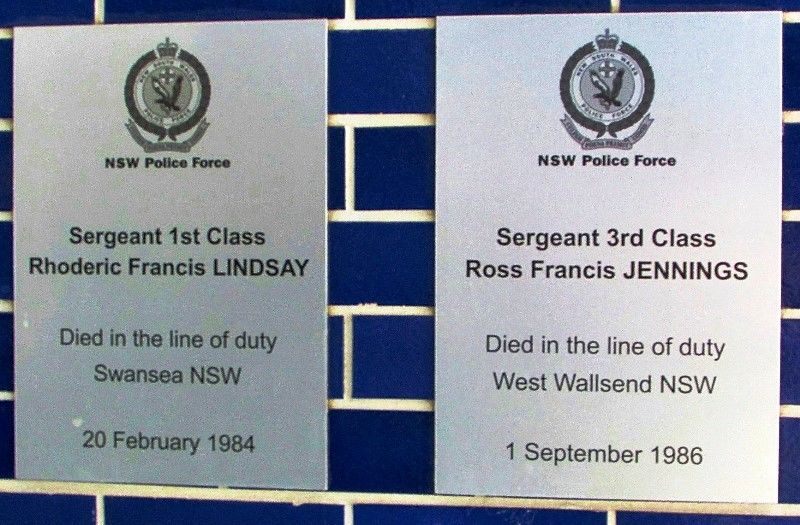
Ross Francis JENNINGS
| 27/10/2012
Ross Francis JENNINGS
Late of ?
NSW Redfern Police Academy Class # 102
New South Wales Police Force
Regd. # 11335
Rank: Commenced Training at Redfern Police Academy on Monday 11 January 1965 ( aged 20 years, 3 months, 24 days )
Probationary Constable – appointed 22 February 1965 ( aged 20 years, 5 months, 4 days )
Constable – appointed 22 February 1966
Senior Constable – appointed 22 February 1974
Sergeant 3rd Class – appointed ???
Sergeant 3/Class – Death
Stations: ?, Western District, – Death
Service: From 11 January 1965 to 1 September 1986 = 21 years, 7 months, 21 days Service
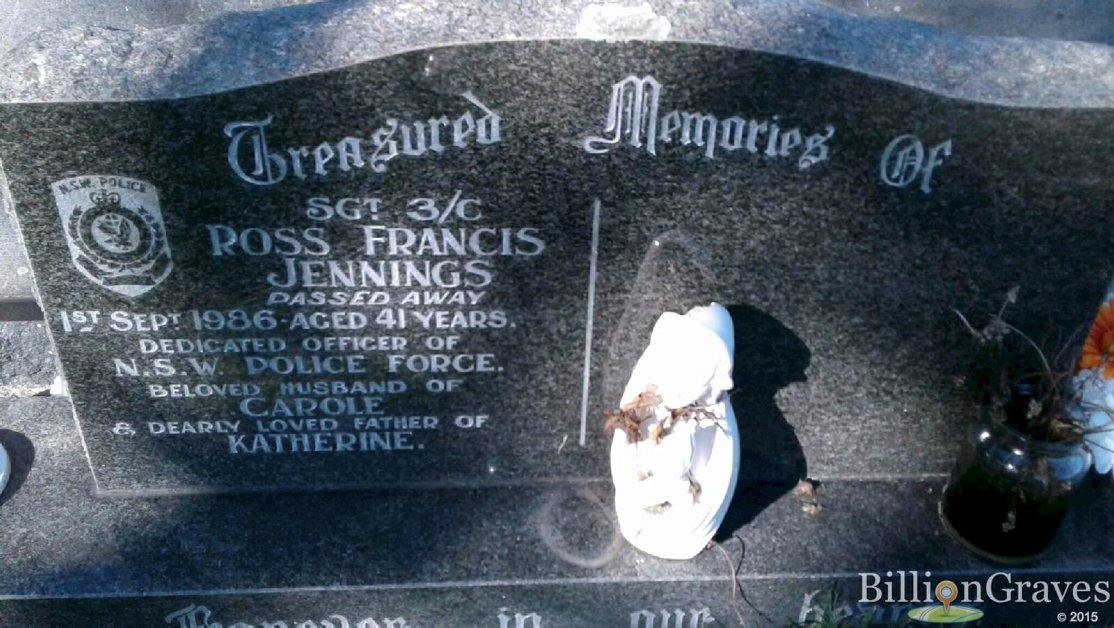
On 1 September, 1986 Sergeant Jennings was at home at the police residence attached to the West Wallsend Police Station. While he was mowing the lawns (one of his duties) he suffered a fatal heart attack.
The sergeant was born in 18 September 1944 and joined the New South Wales Police Force on 22 February, 1965. At the time of his death he was stationed at West Wallsend.
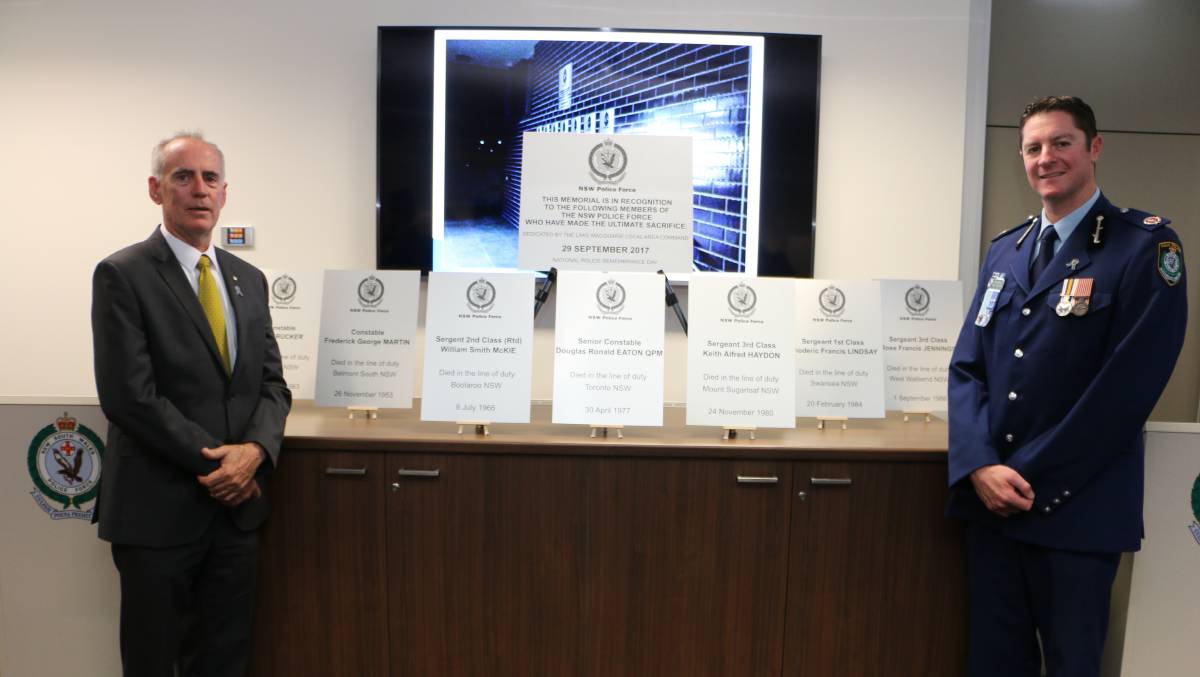
National Police Remembrance Day ceremony in Lake Macquarie
David Stewart
September 29 2017 – 4:27PM
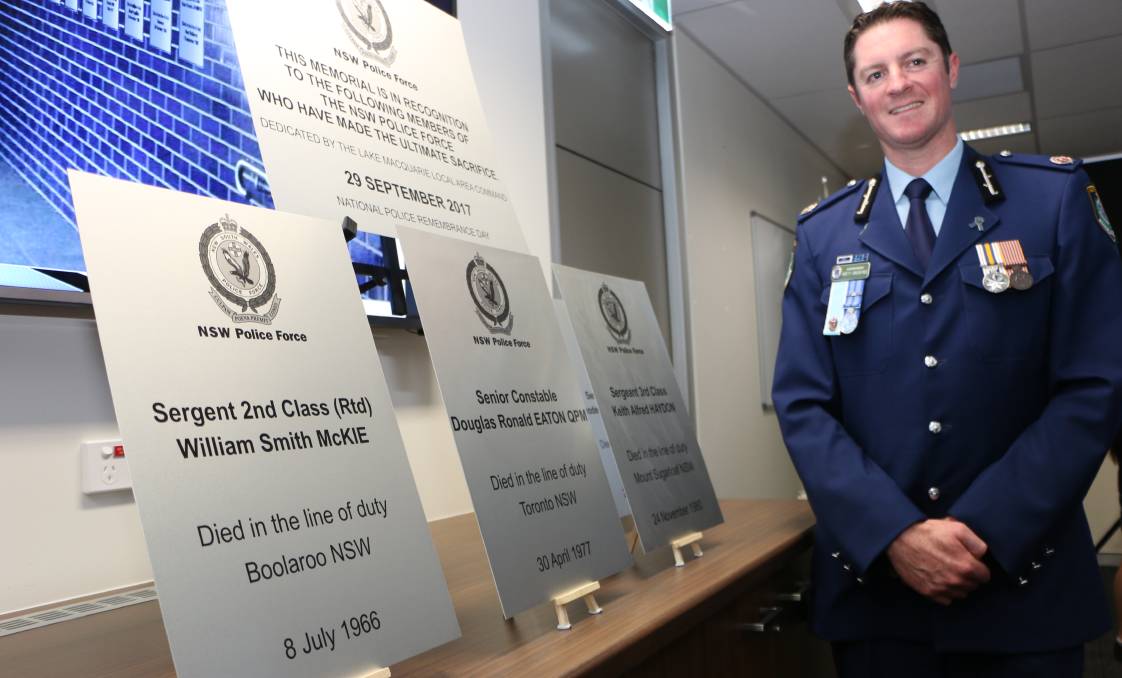
POLICE from Lake Macquarie Local Area Command have unveiled plans for a memorial wall at Belmont to honour the seven local officerskilled in the line of duty since 1863.
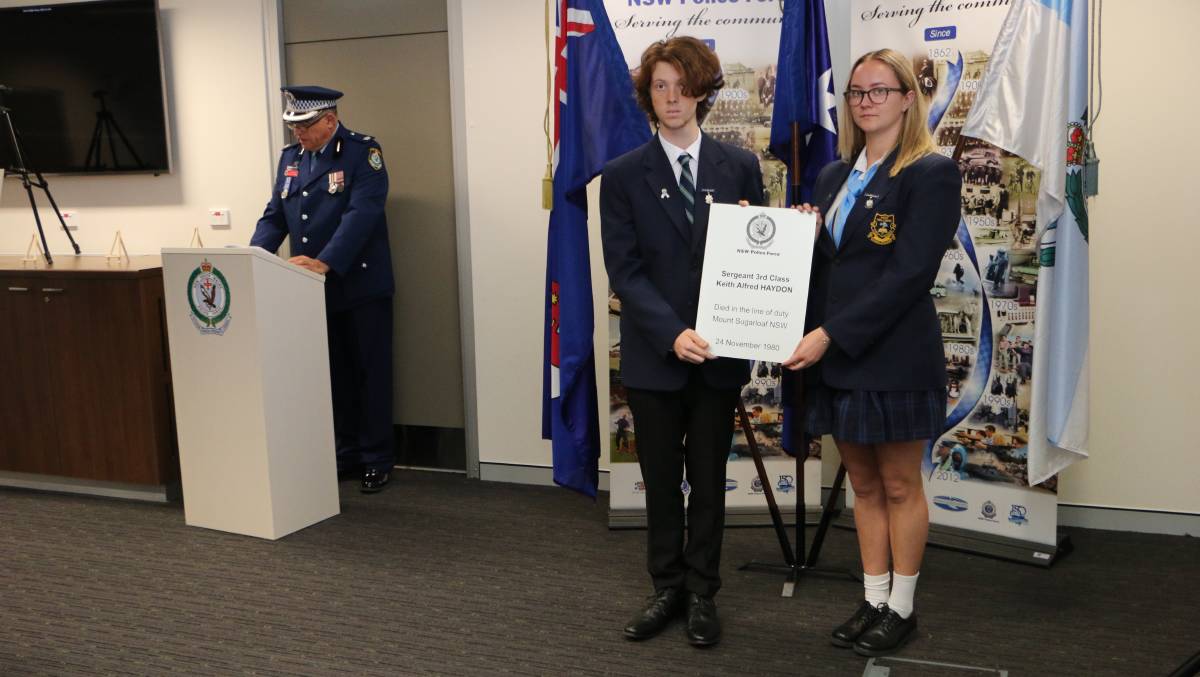
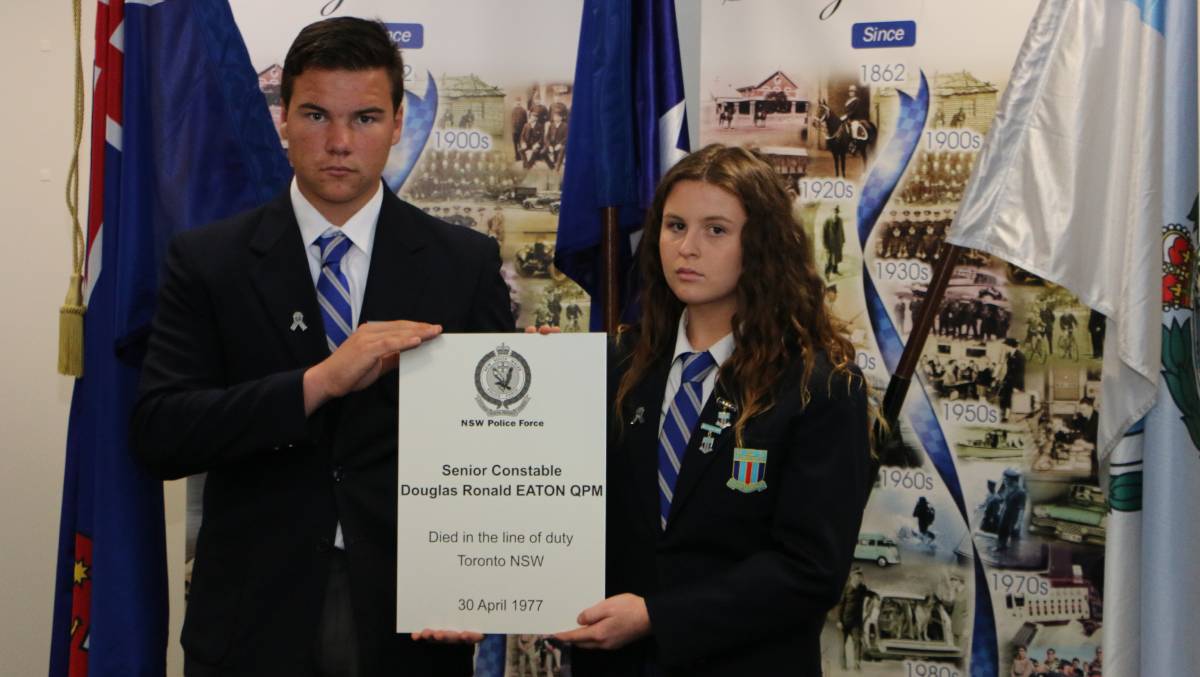
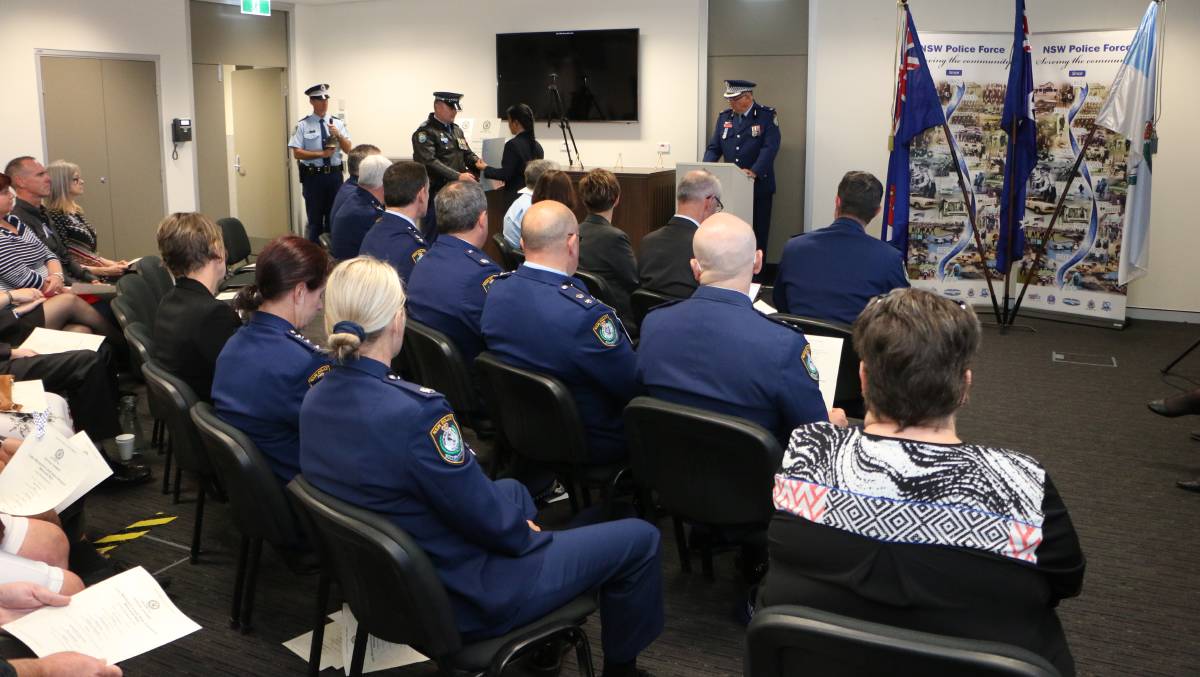
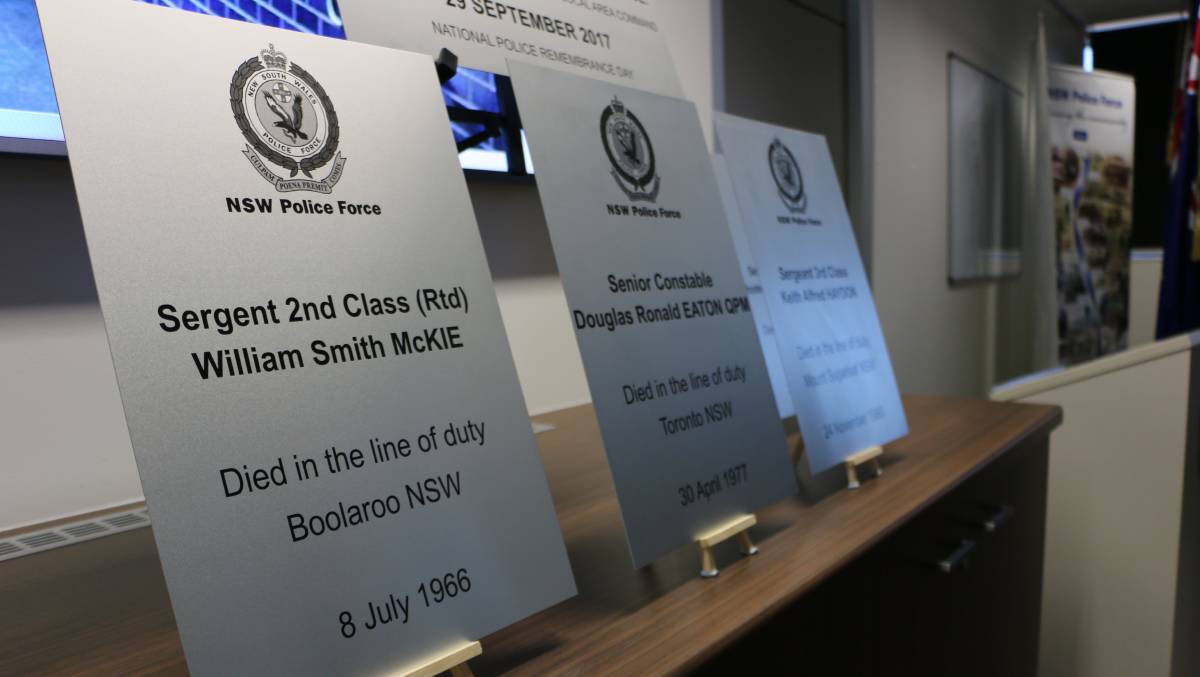
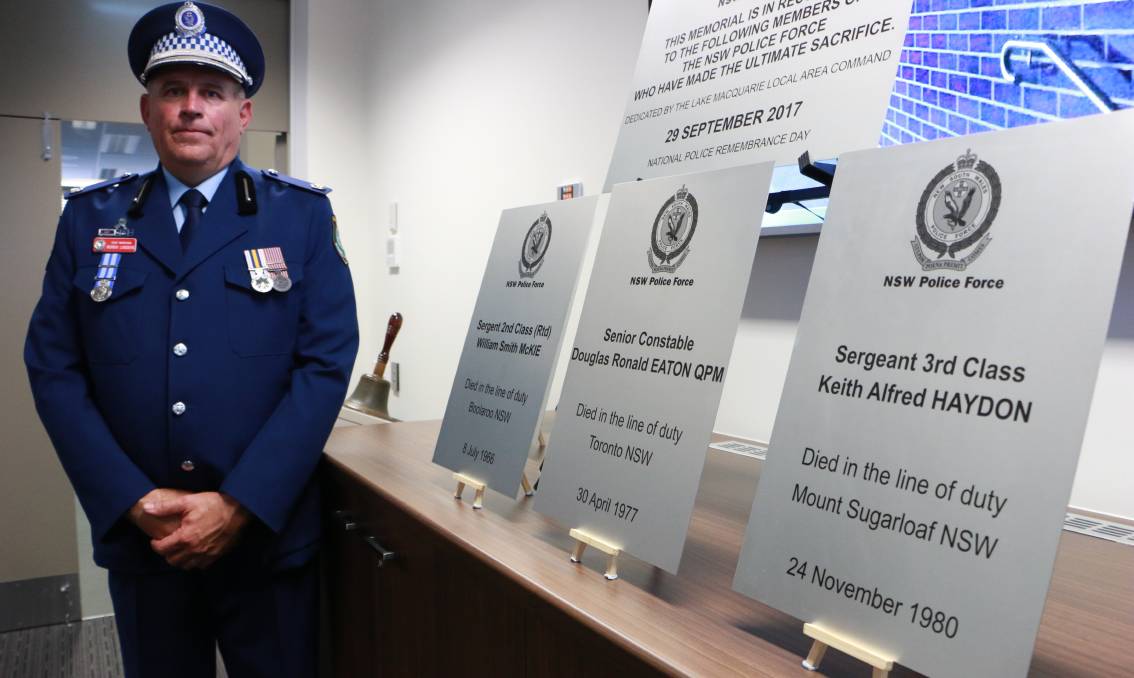
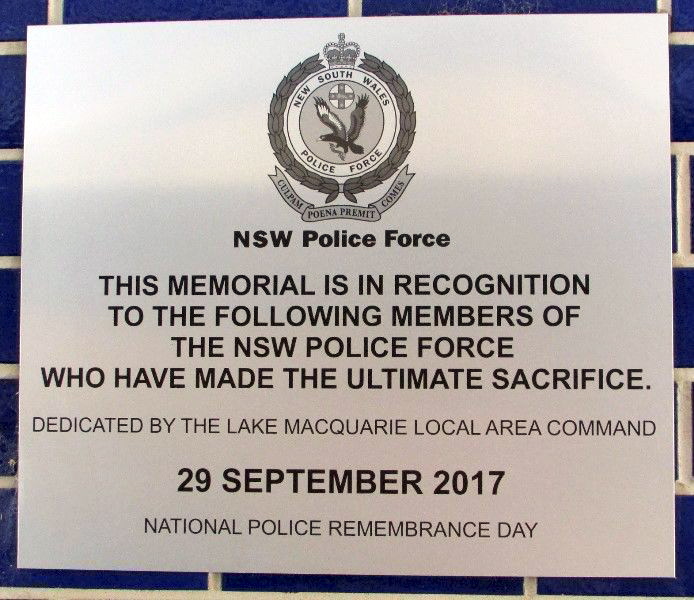
Plaques commemorating the seven officers were dedicated to the wall in a ceremony at Belmont police stationthis afternoon, National Police Remembrance Day.
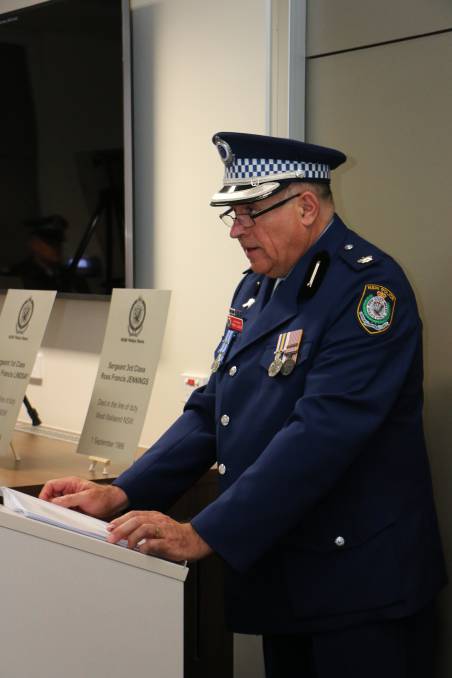
Chief Inspector Murray Lundberg of Lake Macquarie LAC presided over a private ceremony attended by police, local high school students, and the families of the fallen officers.
“This is a time for reflection on the ultimate sacrifice that police officers can give in the execution of their duty,” Chief Inspector Lundberg said.
Acting Assistant Commissioner Brett Greentree, the Northern Region Commander, said the wall of remembrance, to be created on the distinctive blue wall at the entrance to the police station, would be striking.
“It will be a sight to treasure,” Acting Assistant Commissioner Greentree said.
“I want the officers, as they are walking out the front doors of this police station, to stop and reflect on the names, stop and reflect on the sacrifice.”
He said he hoped that the inaugural plaques to be installed on the wall were also the last.
“My dream is that we never, ever, add another name to this wall. I hope and pray that our wall is now complete.”
Acting Assistant Commissioner Greentree reached out to the families of the fallen officers.
“No commemoration or recognition can make good the loss that is unfairly carried by family members,” he said.
“I can only offer you my heartfelt condolences. Please know that your loved ones, who are no longer with us, will always be remembered.”
Across NSW, ceremonies were held to commemorate the service and sacrifice of the 269 officers who have lost their lives in the line of duty, and through injury or illness, since the formation of the NSW Police Force in 1862.
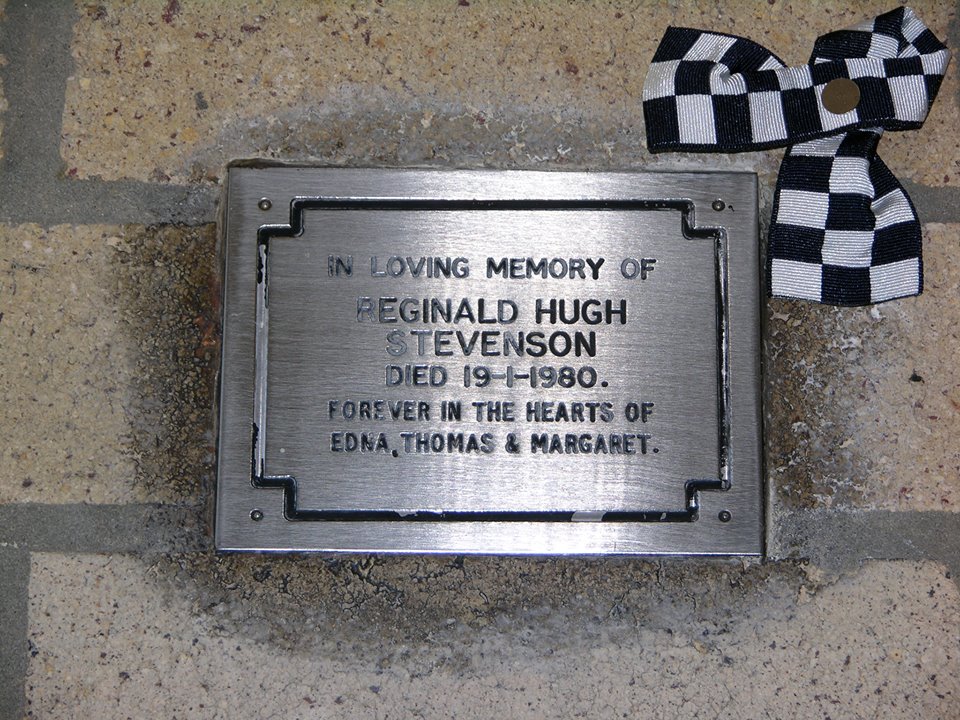
Reginald Hugh STEVENSON
| 27/10/2012
Reginald Hugh STEVENSON – QPM
aka Blowfly
New South Wales Police Force
[alert_yellow]Regd. # 5498[/alert_yellow]
Rank: Police Cadet – appointed 1 March 1943
Probationary Constable – appointed 21 February 1947
Sergeant 2nd Class – appointed 19 May 1968
Detective Sergeant 1st Class – SHOT
Detective Inspector – appointed 6 March 1976
Detective Inspector – Retirement
Joined: NSW Police Force via
NSW Police Cadet System on 1 March 1943
Cadet # 400
Stations: ?, General Detectives at the old CIB in the old Hat Factory, Darlinghurst ( # 3 Division – Det Sgt, early 1970’s ), Newtown
Service: From 1 March 1943 to ? ? ?
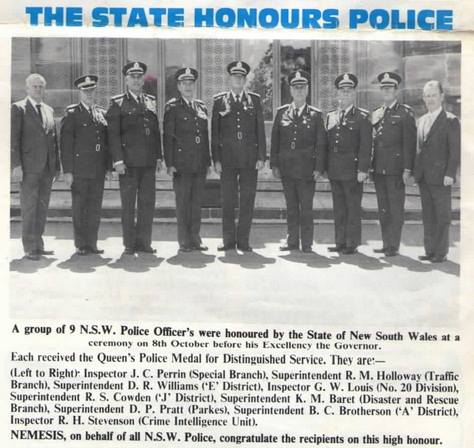
Awards: Queen’s Commendation for Brave Conduct – granted 17 February 1976
Queen’s Police Medal – QPM – granted 16 June 1979
Born: 20 February 1926
Event Date: 9 December 1974
Event type / Cause: Shot – 1974. Damage to liver & kidney / Heart Attack in 1980
Event location: Newtown
Died on: 19 January 1980
Age: 53
Funeral date: 11 February 1980
Funeral location: ?
Buried at: Cremated & Buried in Botany ( NOT Rookwood ) Cemetery
Banks Court Loggia, Wall A
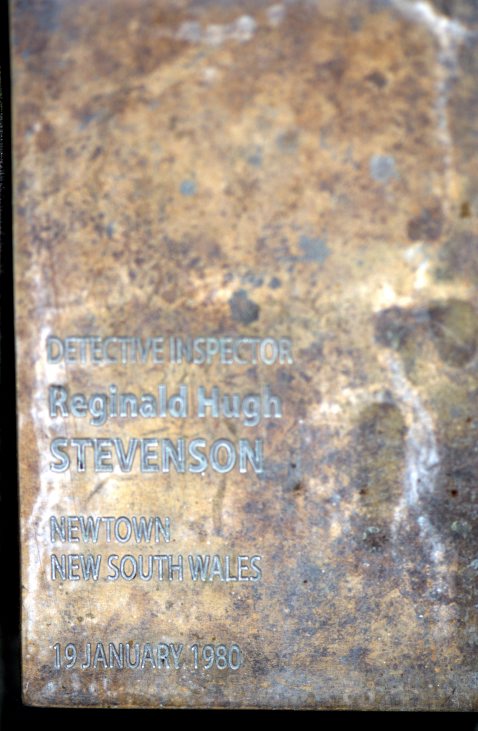
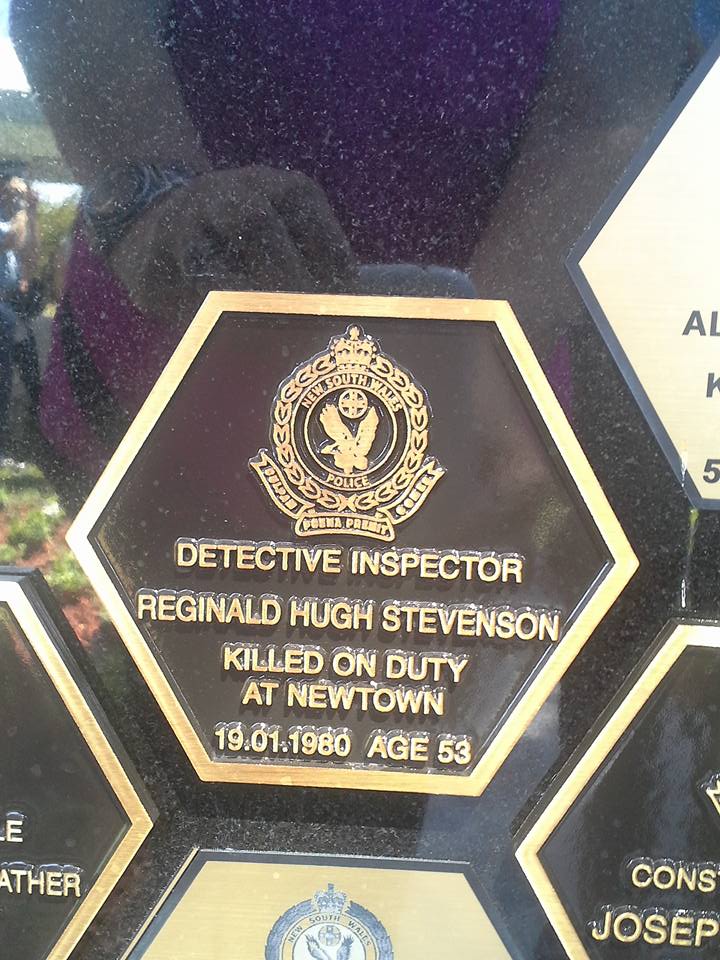
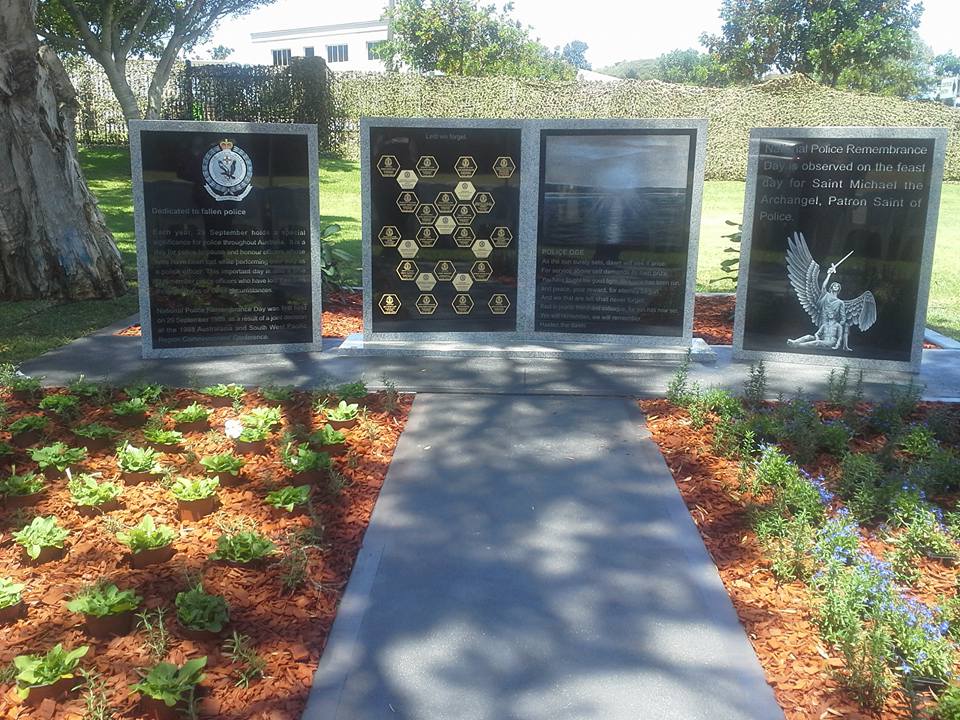
Touch plate at the National Police Wall of Remembrance, Canberra
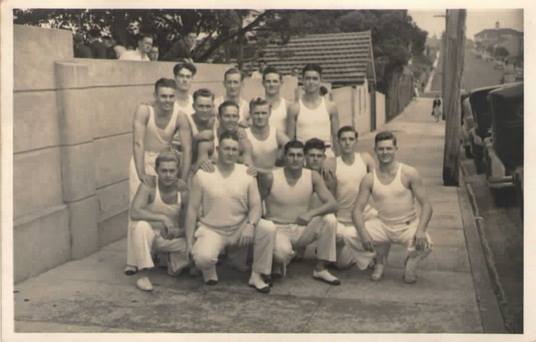
Academy athletics 1943
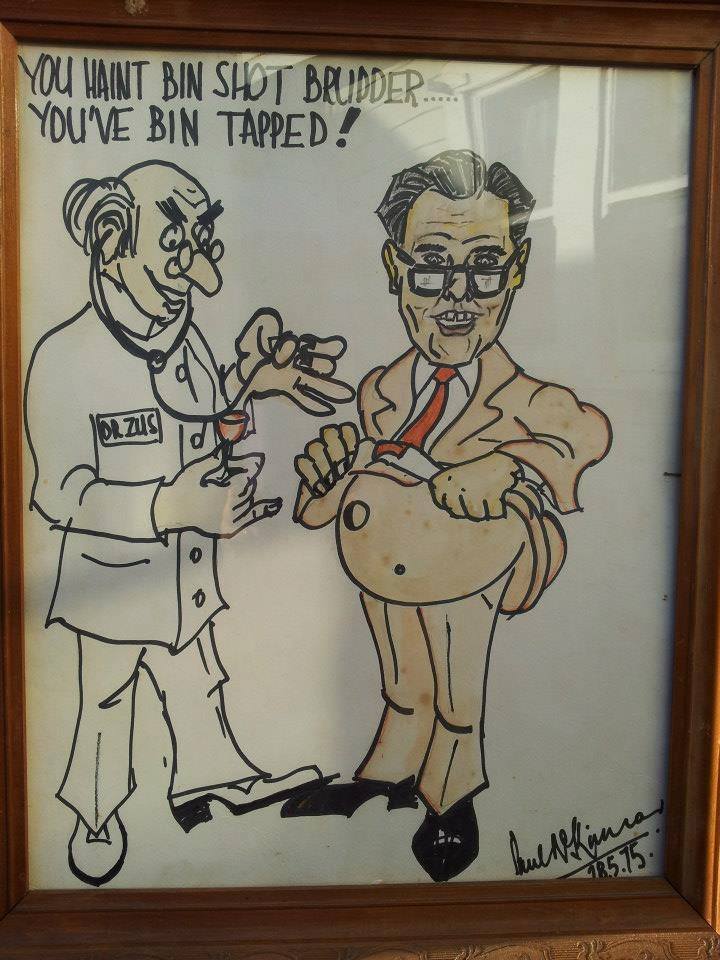
The cartoon was presented to Detective Inspector Stevenson when he returned to work after being shot. It was donated by the Detective Inspectors wife to Newtown Police Station last year ( 2013 ) as part of their memorabilia collection.
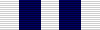
Queens Police Medal ribbon
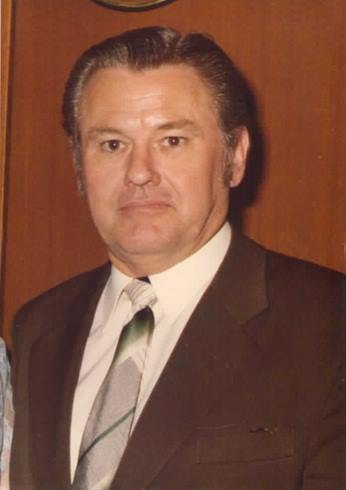
Offender, David DITTON who shot Reg.
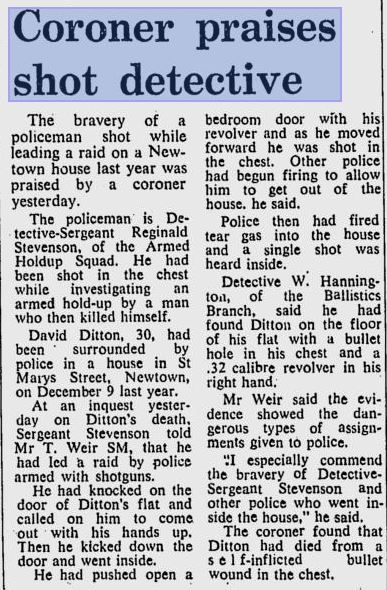
The Sydney Morning Herald
2 May 1975
page 6 of 12
Botany Cemetery
Botany Cemetery
Botany Cemetery
On 9 December, 1974Detective Sergeant 1st Class Stevenson was shot in the chest after confronting an armed offender in Newtown. Although seriously wounded at the time he continued to direct other police at the scene until he was taken to safety. As a result of the incident Sergeant Stevenson was awarded the Queen’s Commendation for Brave Conduct and the Queen’s Police Medal for Distinguished Service. He was promoted to the rank of detective inspector in 1976.
On 19 January, 1980 Inspector Stevenson died of a heart attack and it was determined that his death was ultimately caused by the 1974 injuries.
The detective inspector was born in 1926 and joined the New South Wales Police Force as a Cadet in 1943. He was sworn in on 21 February, 1947.
[divider_dotted]
NEWTOWN LOCAL AREA COMMAND POLICE COMMEMORATION SERVICE
Ms CARMEL TEBBUTT (Marrickville) [7.07 p.m. 8 May 2013]: Recently at Rookwood Cemetery I attended a memorial service to commemorate police officers from the Newtown local area command killed in the line of duty. The moving service was attended by Deputy Police Commissioner Nick Kaldis, Superintendent Simon Hardman, the commander of the Newtown Area Local Command, many other police representatives, and relatives and descendants of the police officers. Those attendees included Ms Avona Wallace, Mr and Mrs Norman Stephenson, Mrs Lynette Everton and Ms Edna Stevenson. Representatives from the emergency services and community members were also in attendance. The member for Campbelltown, Bryan Doyle, attended representing the Premier.
The five officers being remembered at the ceremony gave their lives to protect the community. They were Constable First Class John Wallace, Constable First Class Ruston Stephenson, Constable Lionel Guise, Detective Inspector Reginald Stevenson and Constable Pashalis Katsivelas. The ceremony to mark the sacrifice of these officers reflected on the enormity of their contribution to the community, as well as the impact of their death on their families. It is often said, and it is true, that police officers leave their homes for each shift uncertain of what any day may bring and whether they will return at the end of the day. We owe these men and women our deepest gratitude for the risks they face and take every day in their job. At Rookwood Cemetery we visited each of the graves of those officers who lost their lives in the line of duty and behind each individual was an illuminating life story.
We began at the grave of Constable First Class Ruston Stephenson, who died 80 years almost to the day of the commemoration. Constable Stephenson joined the Police Force in 1912, and four years later enlisted in the army, later joining the fight in France during the First World War. He was awarded the Distinguished Conduct Medal for conspicuous gallantry in rescuing injured soldiers while under fire. Remarkably, when he returned he rejoined the Police Force and continued to serve until his death on 9 April 1933 after a tragic accident involving a motorcycle at the then Newtown Stadium while performing general duties policing.
We were also told the story of Detective Inspector Reginald Hugh Stevenson—I was honoured on the day to meet his widow, Ms Edna Stevenson, who still had strong memories of the incident that led to Inspector Stevenson’s death. Detective Inspector Stevenson joined the NSW Police Force as a cadet in 1943 at the age of 17. In an act of extraordinary selflessness, Detective Inspector Stevenson was on annual leave on 9 December 1974 when he decided to go to work to assist in the planned arrest of a dangerous offender in Newtown, at the time telling his wife, “I don’t want my boys doing this on their own.” During the operation he was shot in the chest after leading his team in pursuit of the offender.
Detective Inspector Stevenson partially recovered and was awarded the Queen’s Commendation for Brave Conduct and the Queen’s Police Medal for Distinguished Service. However, he died in 1980 of a heart attack, deemed to be the result of the injuries he sustained on duty in 1974. These officers are just a few of many across New South Wales whose lives have been cut short as they have gone about performing their duty. I pay tribute to them all. They will not be forgotten and local events such as this are a powerful reminder of their sacrifice.
I also take this opportunity to acknowledge two Marrickville police officers, Sergeant Stewart and Constable Steele, who on Monday of this week rescued an intellectually disabled person from a house fire in Marrickville. Thankfully, those two officers who took huge risks survived and are quite rightly being hailed as heroes by their colleagues and the community. It is yet another example of the risk our police men and women take every day in order to keep the community safe. I take this opportunity to pay tribute to them.
[divider]
Dallas Cyril KEMP
| 27/10/2012
Dallas Cyril KEMP
New South Wales Police Force
Regd. # ?
Detective Sergeant 3rd Class
Stations: Mayfield
Awards: ?
Born: 1932
Event: 25 June 1974
Died: 13 July 1974
Illness – Heart Attack
Cooper St, Redfern
Funeral date: ?
Funeral location: ?
Buried / Cremated: Grave location?
On 25 June, 1974 Sergeant Kemp was undertaking the Sergeants Course at the Redfern Police Academy. While participating in a jog along Cooper Street the sergeant collapsed. Other police commenced cardio-pulmonary resuscitation until an ambulance arrived and conveyed Sergeant Kemp to the Rachel Forster Hospital. He unfortunately suffered a cardiac arrest on 13 July, 1974 and passed away.
The sergeant was born in 1932 and joined the New South Wales Police Force on 29 October, 1956. At the time of his death he was stationed at Mayfield.
[alert_green]Dallas IS memorialised on the Police Wall of Remembrance [/alert_green]
John Thomas GILL
| 27/10/2012
Sergeant 2nd Class John Thomas GILL
Regd. # 6063
Age: 47
Heart Attack
Hurstville
12 May, 1973
About 6.50am on 12 May, 1973 Sergeant Gill left his Hurstville home to drive to work at Campsie Police Station. On finding his car wouldn’t start the sergeant pushed it about seventy metres to attempt to start the vehicle on a downgrade. He then sat back in the driver’s seat and collapsed. A neighbour called the ambulance which conveyed Sergeant Gill to the St George Hospital where he was pronounced dead on arrival.
The sergeant was born in 1925 and joined the New South Wales Police Force on 12 April, 1948. At the time of his death he was stationed at Campsie.
Raymond William McLEAN
| 27/10/2012
Raymond William McLEAN
New South Wales Police Force
Regd. # ?
Rank: Sergeant 2nd Class
Stations: ?
Service: From? to 11 September 1959
Awards: ?
Born: ? ? 1904
Died on: 11 September 1959
Cause: Heart attack
Event location: Manly Police Station
Age: ?
Funeral date: ?
Funeral location: ?
Buried at: ?
Memorial at: ?
[alert_green]RAYMOND IS mentioned on the Police Wall of Remembrance[/alert_green]
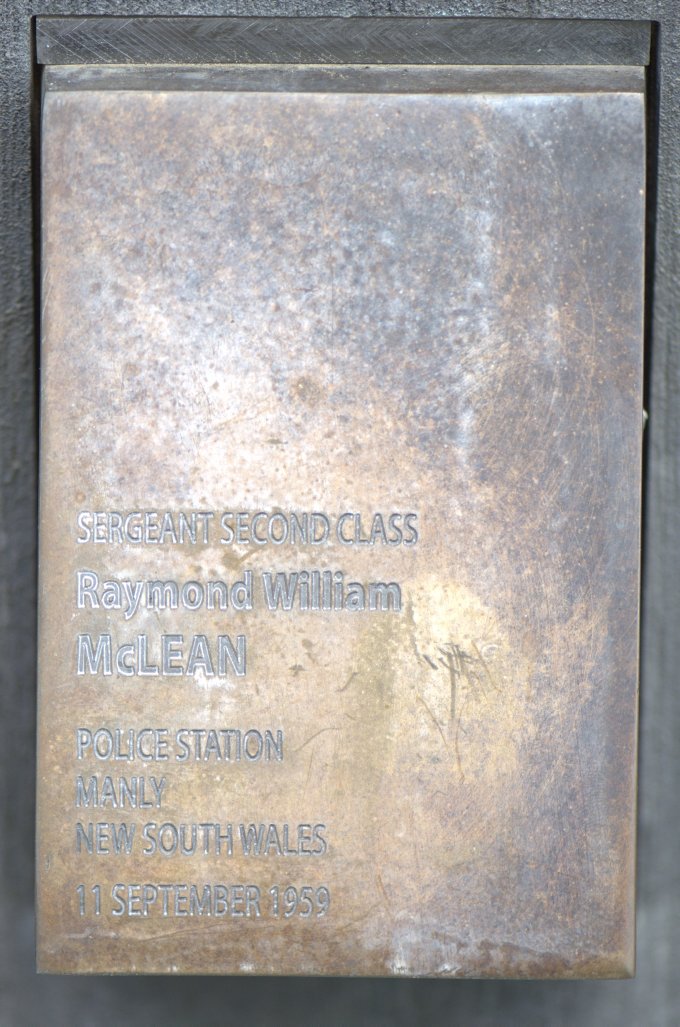
Touch plate at the National Police Wall of Remembrance, Canberra
[divider_dotted]
Funeral location: ?
[divider_dotted]
FURTHER INFORMATION IS NEEDED ABOUT THIS PERSON, THEIR LIFE, THEIR CAREER AND THEIR DEATH.
About 7.15pm on 11 September, 1959 Sergeant McLean met the Northern Wireless Car in the yard of the Manly Police Station to assist the car crew with a prisoner. The prisoner struggled violently while he was being taken into the station and continued to do so in the dock. Sergeant McLean assisted to secure the prisoner throughout his struggles. A short time later as the sergeant was walking across the station yard, he collapsed. He was taken by ambulance to the Manly District Hospital, however was pronounced dead on arrival. The cause of death was found to have been coronary artery disease which resulted in a heart attack caused by his exertions with the prisoner earlier that night.
The sergeant was born in 1904 and joined the New South Wales Police Force on 27 March, 1929. At the time of his death he was stationed at Manly.
[divider_dotted]
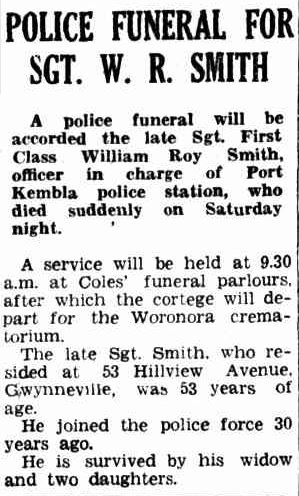
William Roy SMITH
| 27/10/2012
William Roy SMITH
( late of 53 Hillview Ave, Gwynneville )
New South Wales Police Force
Regd. # 1217
Rank: Sergeant 1st Class
Stations: ?, Officer in Charge – Port Kembla Police Station
Service: From 9 September 1921 to 1 September 1951 = 29+ years Service
Awards: No find on It’s An Honour
Born: ? ? 1895
Died on: Saturday 1 September 1951 @ 7.10pm
Cause: Heart Attack
Age: 53 old
Funeral date: Tuesday 4 September 1951
Funeral location: Woronora Crematorium
Buried at: Cremated
Memorial location: 1/ Police Wall – Woronora Crematorium
2/ Front wall of Lake Illawarra Police Station
3/ Inside hall – picture frame – Lake Illawarra Police Station
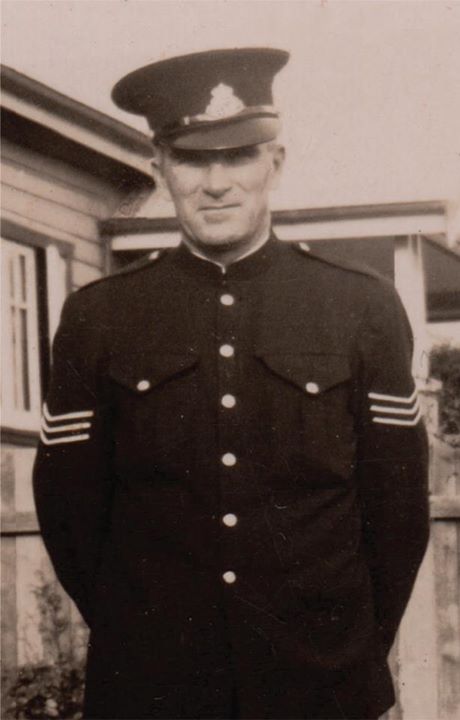
William Roy SMITH
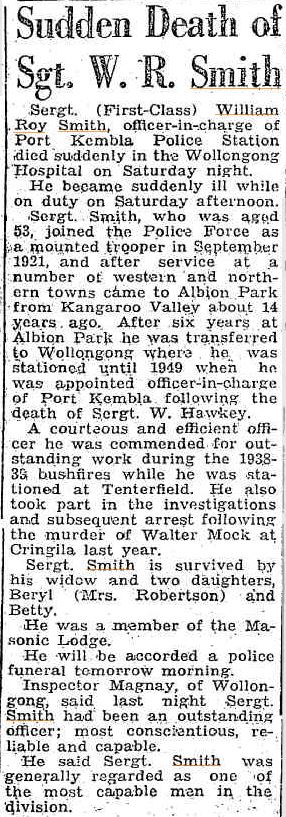
On the afternoon of the 1 September, 1951 Sergeant Smith and Constable Searl attended the Commercial Hotel, Port Kembla in relation to an intoxicated man causing trouble. After a struggle the police managed to gain control over the man and walk him to the police station. Although suffering some physical discomfort after the struggle, the sergeant remained on duty. A short time later however, he began to lose the use of his arm and experience considerable pain. He was taken to the Wollongong District Hospital but died at 7.10pm.
The sergeant was born in 1895 and joined the New South Wales Police Force on 9 September, 1921. At the time of his death he was stationed at Port Kembla.
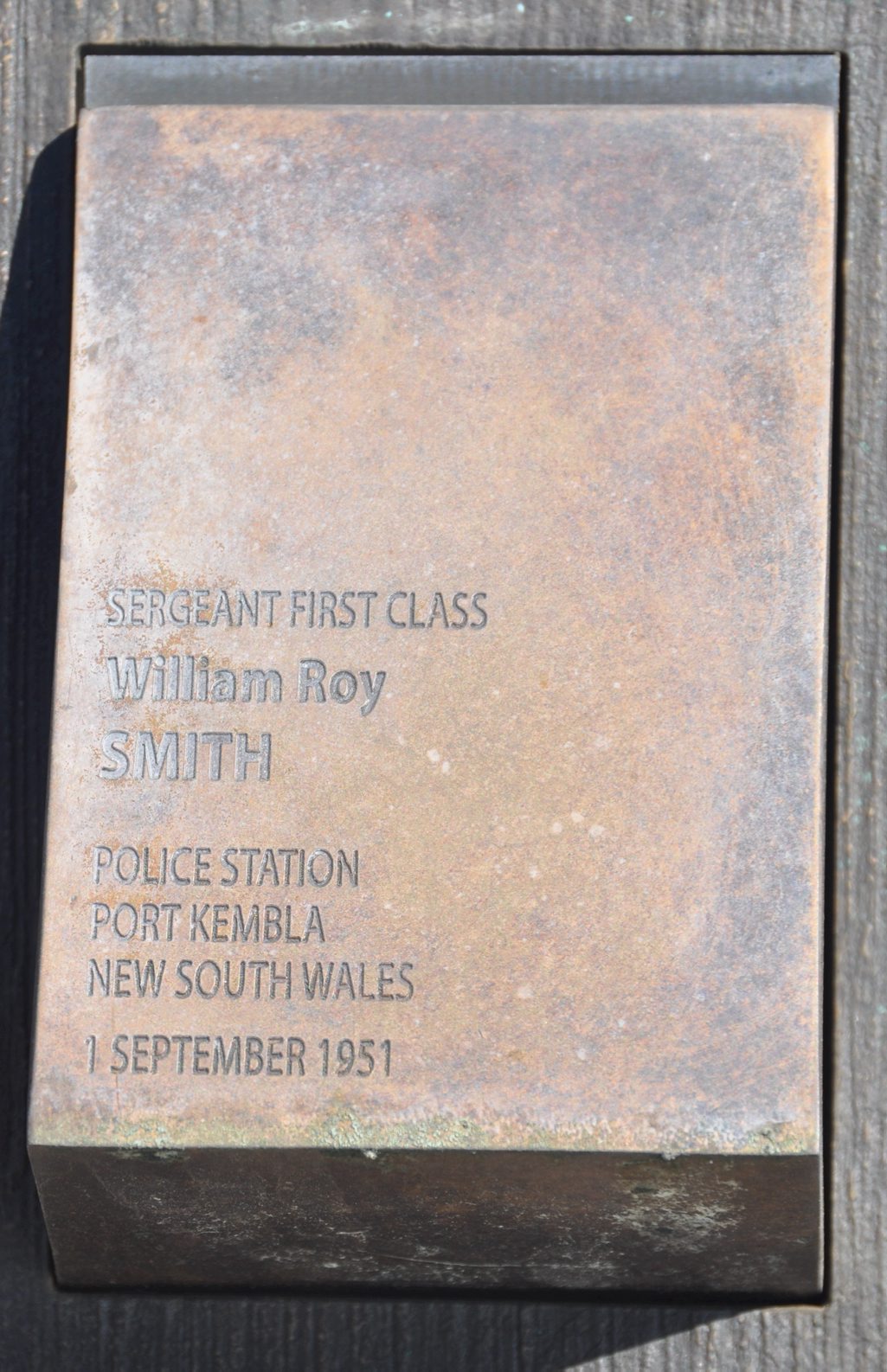
Sgt 1/Class William Roy SMITH touch plate in Canberra
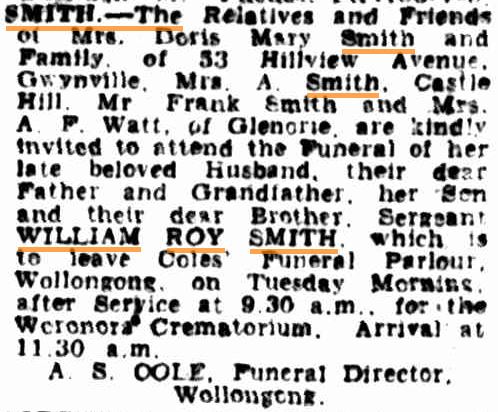
William Roy SMITH – Funeral Notice The Sydney Morning Herald Monday 3 September 1951
South Coast Times & Wollongong Argus Monday 3 September 1951 page 2 of 24
[divider_dotted]
Hillview Ave, Gwynneville, back in 1953, was a lengthy Avenue which is now ( 2015 ) a very short Avenue due to the Memorial Drive cutting through it and also F6 / Princes Motorway / Highway cutting across it – causing sections of Hillview Ave being named Graham Ave and also Murphys Ave. The original house would now be located somewhere in, what is now called, Murphys Ave.