1

Brett Clifford SINCLAIR

Brett Clifford SINCLAIR – V.A.

( late of Eastwood )

New South Wales Police Force

[alert_yellow]Regd. # 21771[/alert_yellow]

Rank:  Constable

Stations?, Parramatta HWP

ServiceFrom  8 December 1984  to  25 October 1988 = 3+ years Service

Awards:  Commissioner’s Valour Award for Bravery and Devotion to Duty

Born12 March 1959

Died on:  Tuesday  25 October 1988

Cause:  Murdered – by motor vehicle

Event location:  Jeffrey Ave, Nth Parramatta

Age:  29

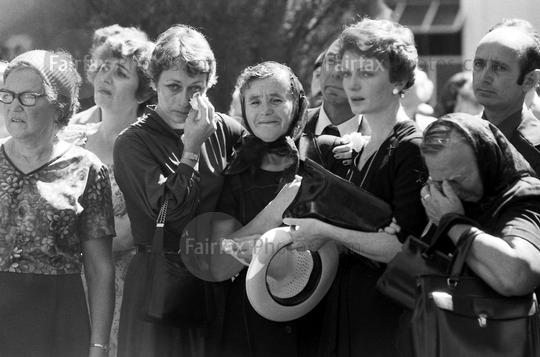
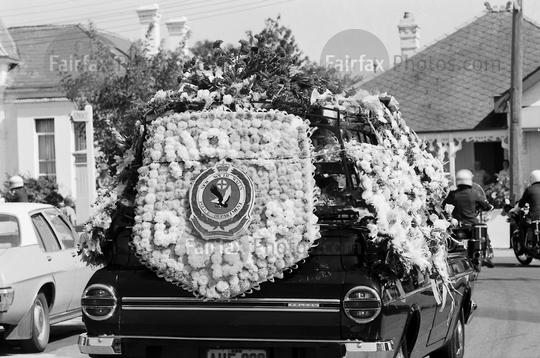
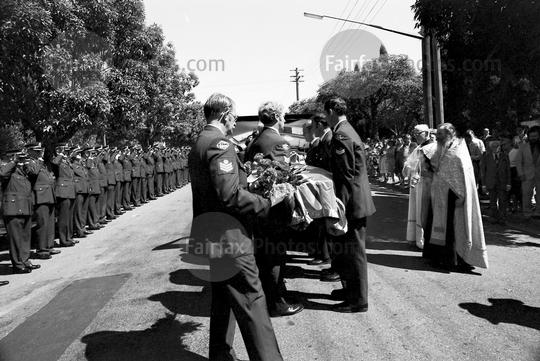
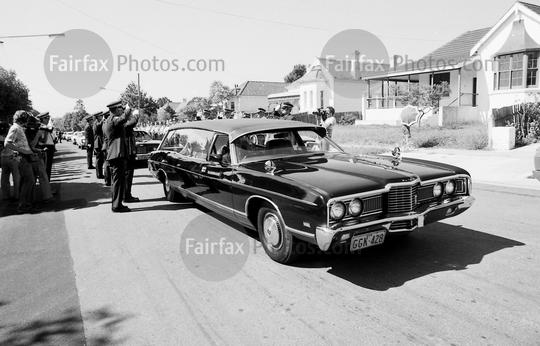
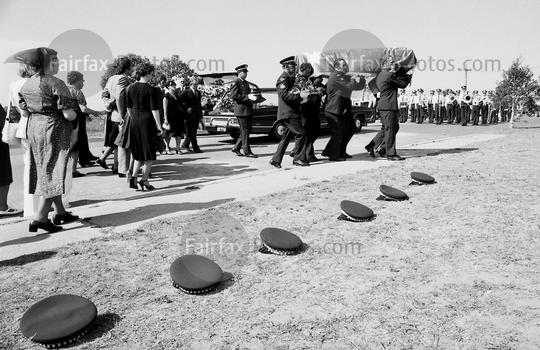
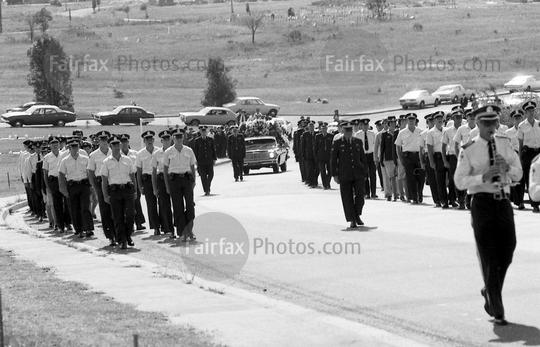
Funeral date:  Friday  28 October 1988 @ 11am

Funeral location:  St Anne’s Anglican Church. Church Street, Ryde.

Buried at:  Cremated

 Memorial at:  National Police Wall of Remembrance, Canberra &

Parramatta Police Station, NSW.


[alert_green]BRETT IS mentioned on the Police Wall of Remembrance[/alert_green]
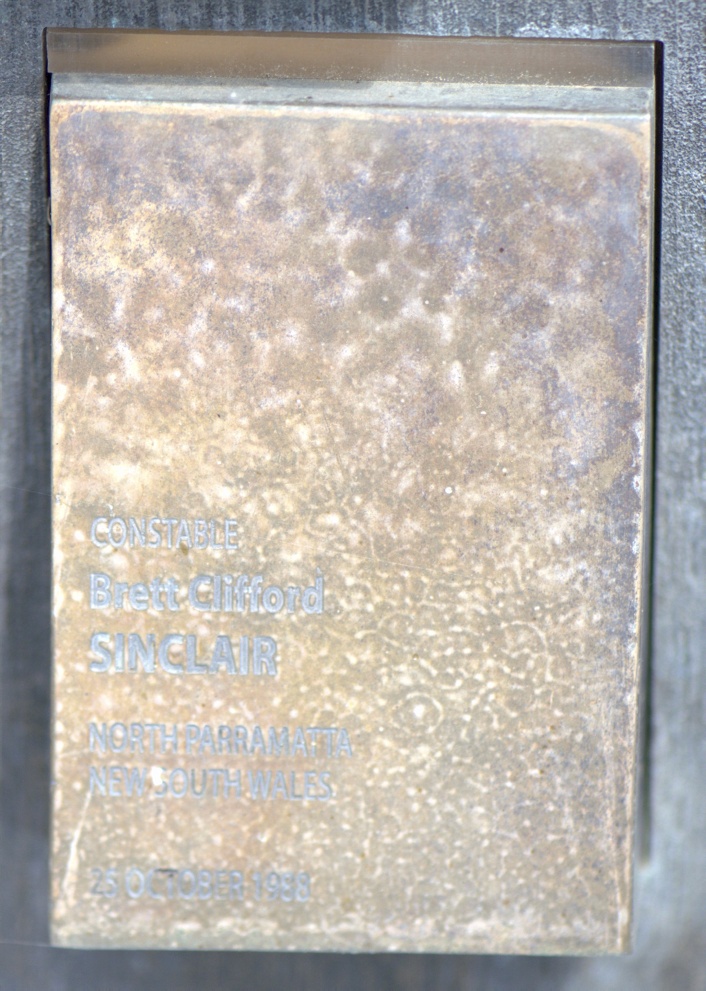
BRETT CLIFFORD SINCLAIR NSWPF MURDERED ON 25 OCTOBER 1988 BY SEMI TRAILER DRIVER. https://police.freom.com/brett-clifford-sinclair/
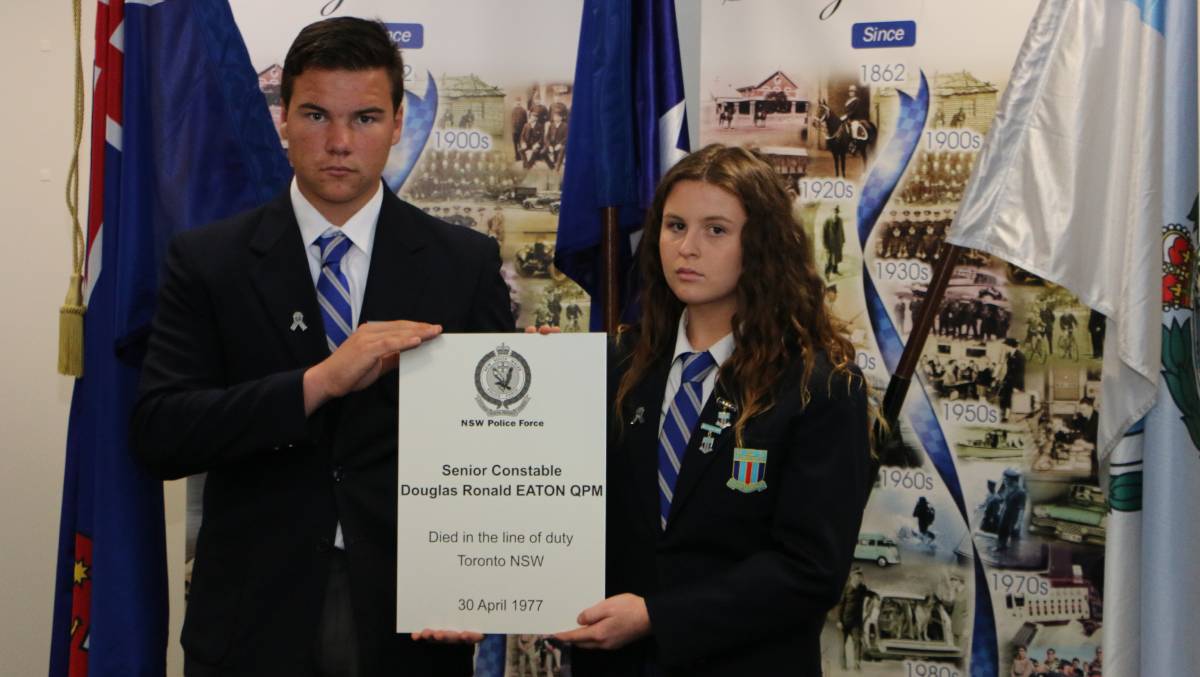
BRETT CLIFFORD SINCLAIR
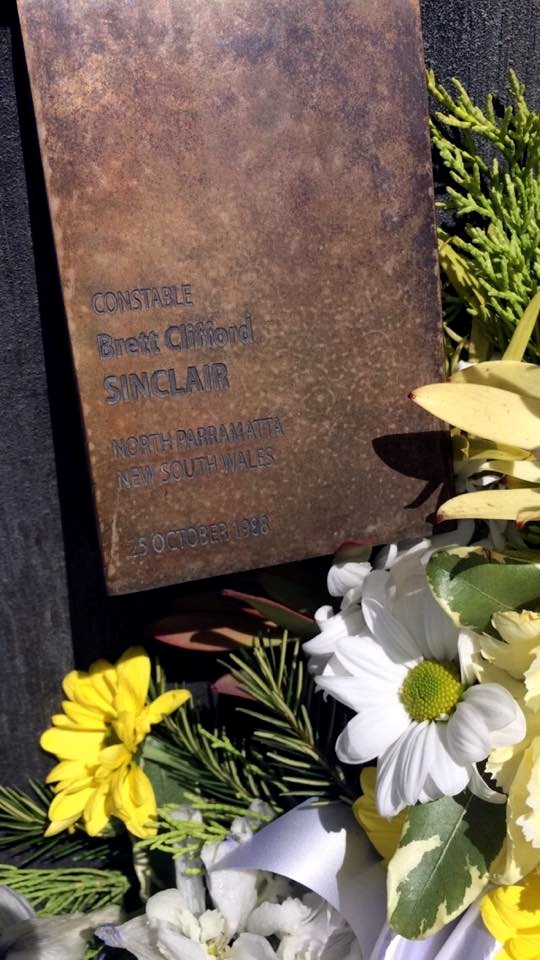
Touch plate at the National Police Wall of Remembrance, Canberra


 [divider_dotted]


FURTHER INFORMATION IS NEEDED ABOUT THIS PERSON, THEIR LIFE, THEIR CAREER AND THEIR DEATH.

PLEASE SEND PHOTOS AND INFORMATION TO Cal

[divider_dotted]
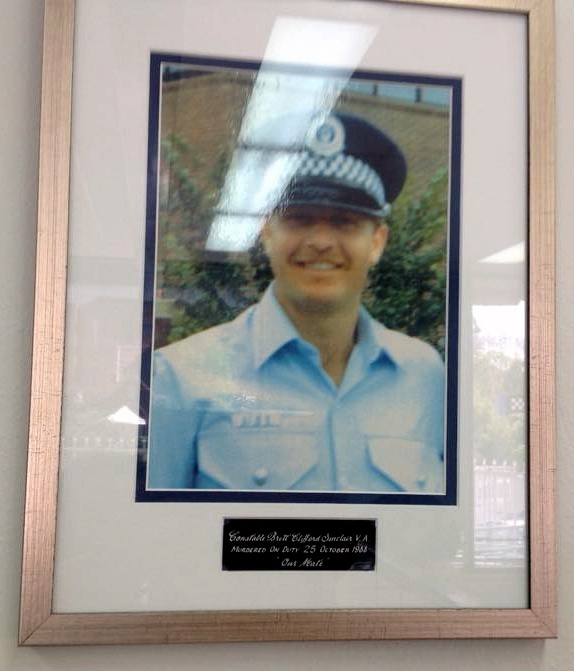
BRETT CLIFFORD SINCLAIR NSWPF MURDERED ON 25 OCTOBER 1988 BY SEMI TRAILER DRIVER. https://police.freom.com/brett-clifford-sinclair/
Hanging at Parramatta Police stn. Constable Brett Clifford Sinclair V.A.
Murdered On Duty 25 October 1988.
” Our Mate “
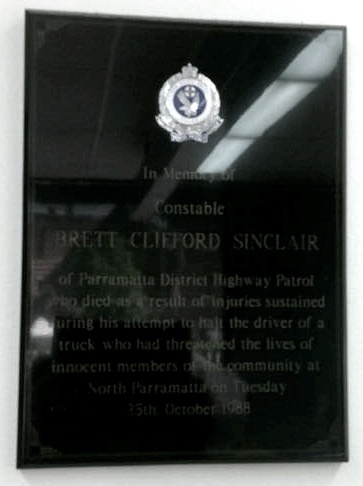
 

BRETT CLIFFORD SINCLAIR NSWPF MURDERED ON 25 OCTOBER 1988 BY SEMI TRAILER DRIVER. https://police.freom.com/brett-clifford-sinclair/ PARRAMATTA POLICE STN In Memory of Constable Brett Clifford Sinclair of Parramatta District Highway Patrol who died as a result of injuries sustatined during his attempt to halt the driver of a truck who had threatened the lives of innocent members of the community at North Parramatta, Tuesday 25th October 1988. Constable Brett Clifford Sinclair V.A. Murdered On Duty 25 October 1988. " Our Mate "
PARRAMATTA POLICE STN
In Memory of Constable Brett Clifford Sinclair of Parramatta District Highway Patrol who died as a result of injuries sustained during his attempt to halt the driver of a truck who had threatened the lives of innocent members of the community at North Parramatta, Tuesday 25th October 1988.
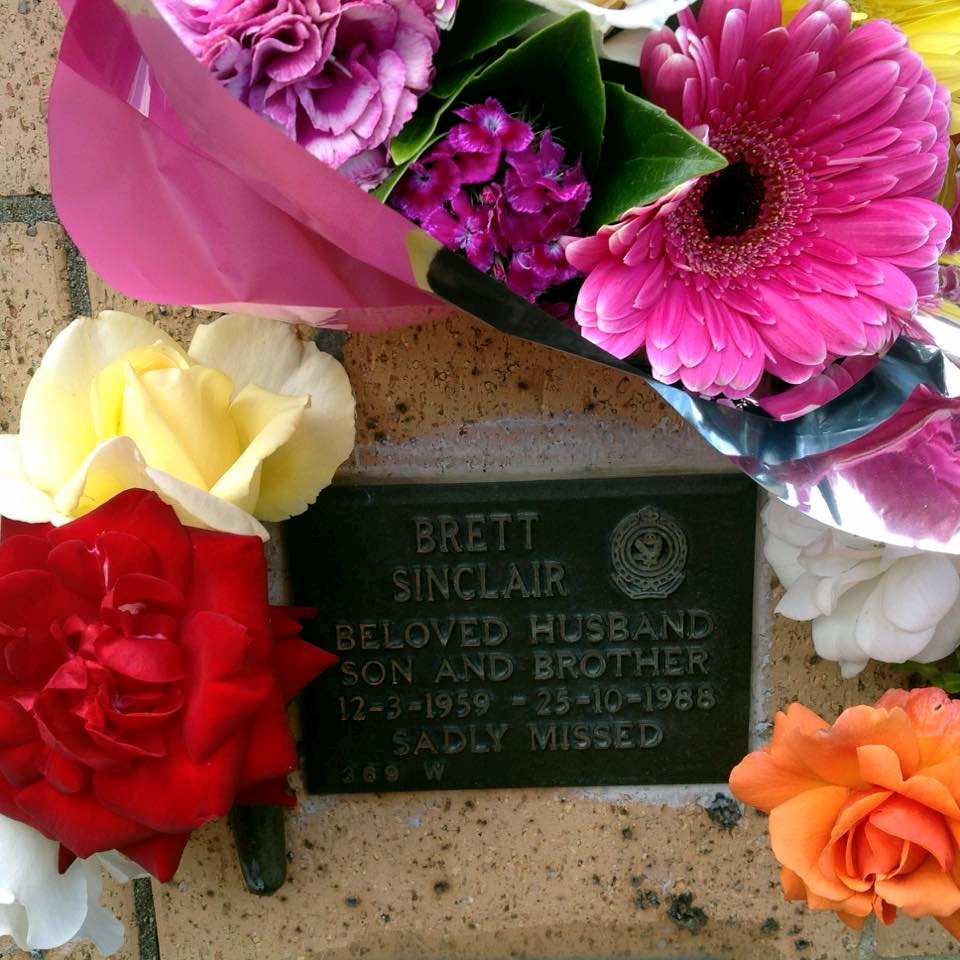
 

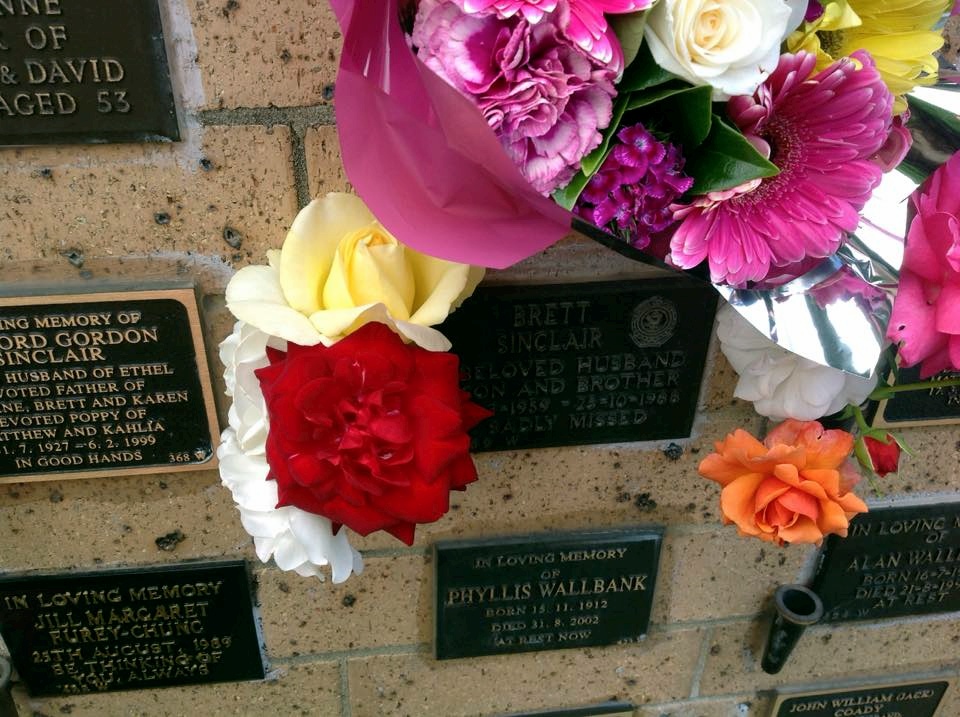
BRETT CLIFFORD SINCLAIR NSWPF MURDERED ON 25 OCTOBER 1988 BY SEMI TRAILER DRIVER. https://police.freom.com/brett-clifford-sinclair/ BRETT SINCLAIR BELOVED HUSBAND, SON AND BROTHER. 12-3-1959 - 25-10-1988 SADLY MISSED
BRETT SINCLAIR
BELOVED HUSBAND, SON AND BROTHER.
12-3-1959 – 25-10-1988
SADLY MISSED
BRETT CLIFFORD SINCLAIR NSWPF MURDERED ON 25 OCTOBER 1988 BY SEMI TRAILER DRIVER. https://police.freom.com/brett-clifford-sinclair/

BRETT CLIFFORD SINCLAIR NSWPF MURDERED ON 25 OCTOBER 1988 BY SEMI TRAILER DRIVER. https://police.freom.com/brett-clifford-sinclair/
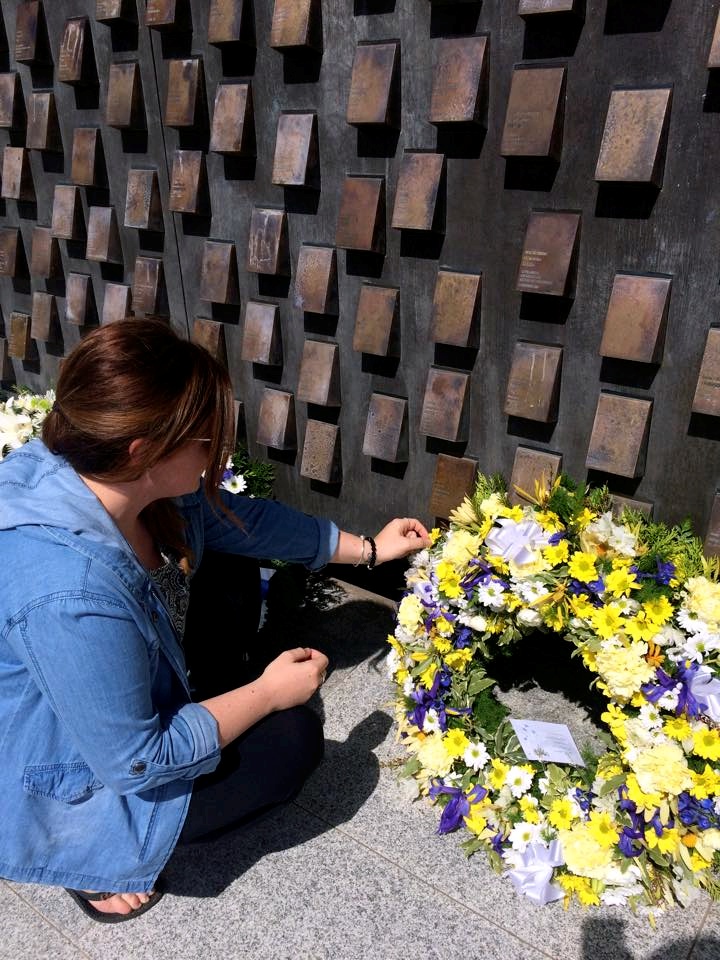
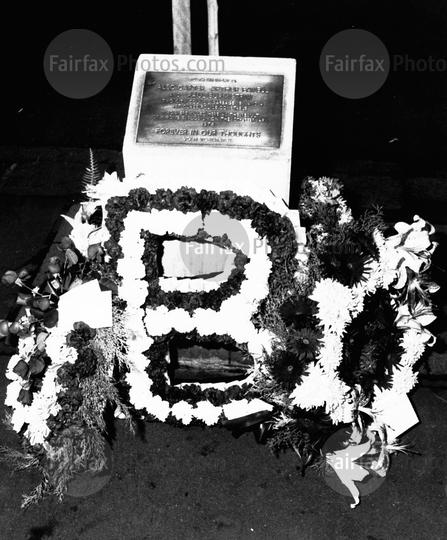
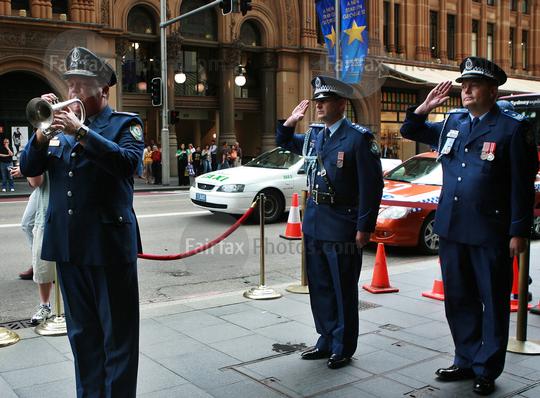
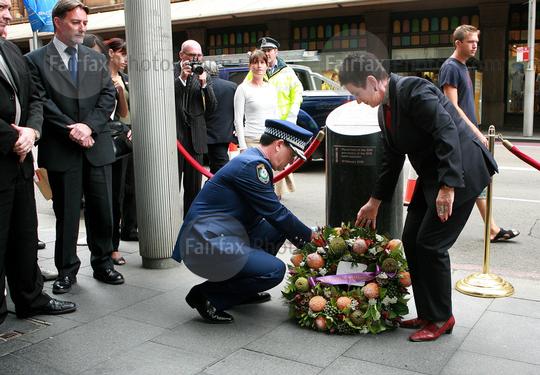
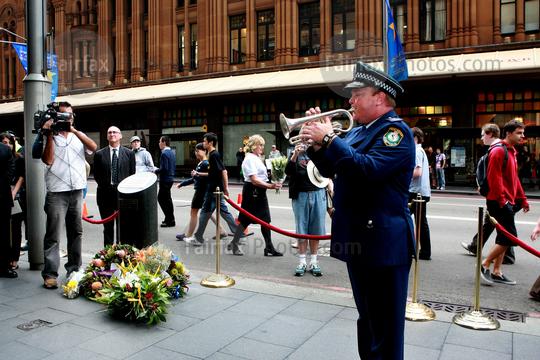
National Police Wall of Remembrance Family – paying respect on Brett’s death anniversary – 2015

BRETT CLIFFORD SINCLAIR NSWPF MURDERED ON 25 OCTOBER 1988 BY SEMI TRAILER DRIVER. https://police.freom.com/brett-clifford-sinclair/


[divider_dotted]

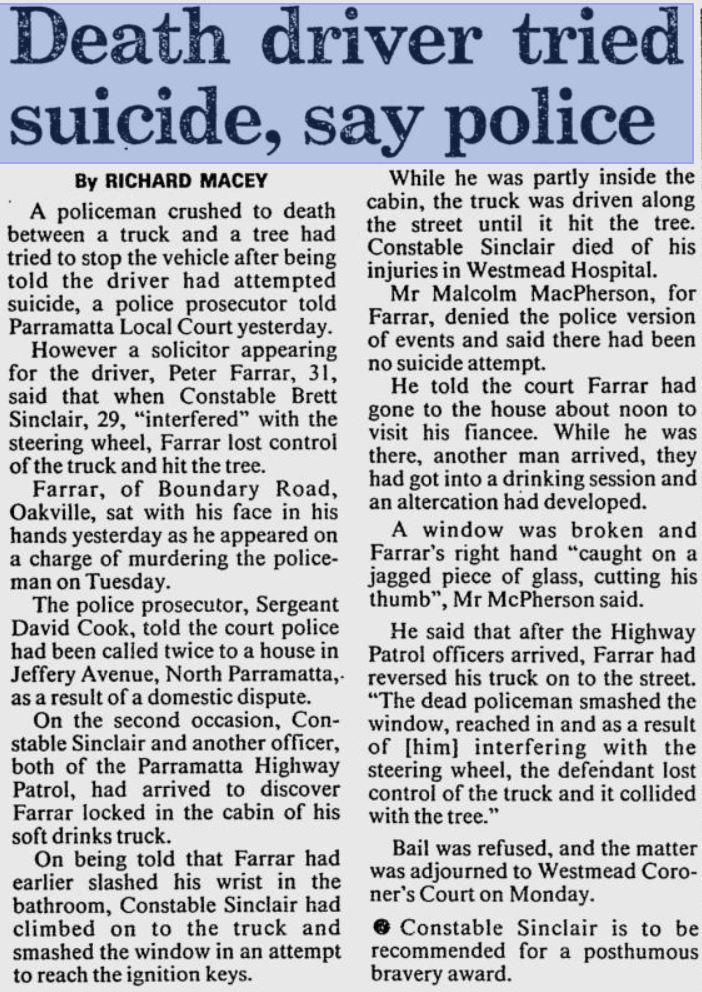
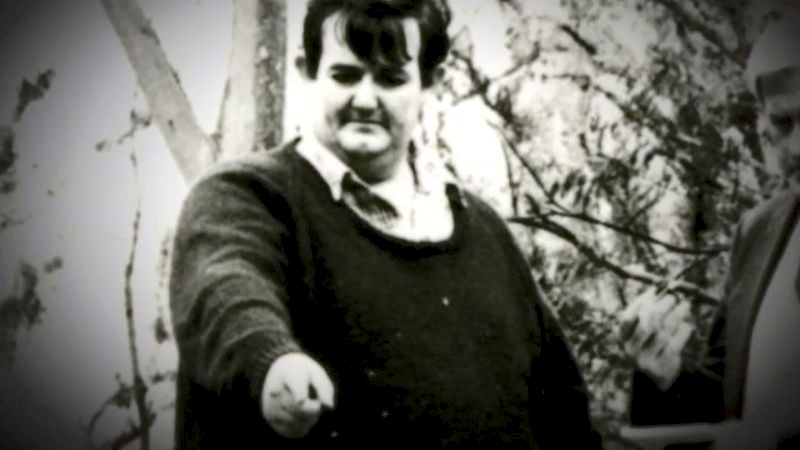
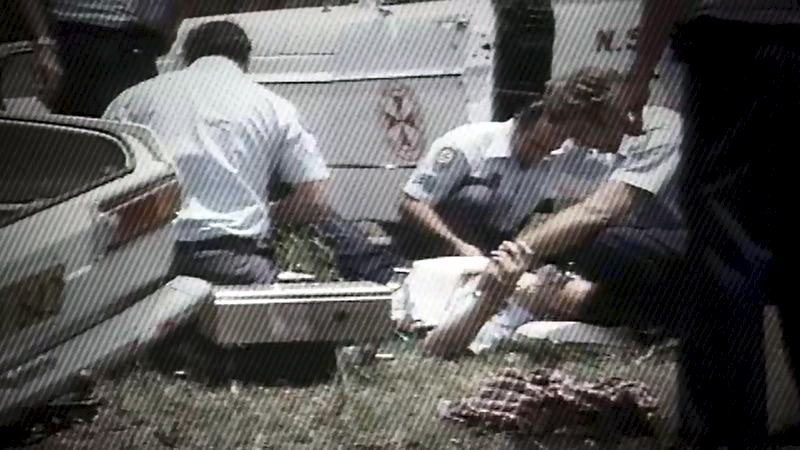
About 5.50pm on 25 October, 1988 Constable Sinclair suffered severe head and internal injuries at North Parramatta whilst attempting to arrest an offender following a domestic dispute. Earlier, police had been called to assist ambulance officers at the disturbance in Jeffrey Avenue. The offender, who was bleeding from the arm, had locked himself in his truck. While Constable Sinclair and Constable Cummins spoke with him, he continually threatened them while revving up his truck engine. As the police approached the offender wound up his window. The police then smashed the window and attempted to remove the driver from the cabin of the truck. With both police standing on the step of the truck, the offender began to drive along Jeffrey Avenue.

Constable Cummins was able to get off the step, but due to his falling to the roadway, was unable to assist his colleague.

The truck’s speed increased with Constable Sinclair still partially inside, and partially outside, the cabin. The offender then drove across the roadway where the vehicle collided with a tree, crushing the constable.

He was conveyed to the Westmead Hospital where he died a short time later. Constable Sinclair was awarded the Commissioner’s Valour Award for Bravery and Devotion to Duty.


The constable was born in 1959 and joined the New South Wales Police Force on 8 December, 1984. At the time of his death he was attached to the Parramatta Highway Patrol.

[divider_dotted]


Pre Police, Brett worked for QANTAS


[divider_dotted]


The Sydney Morning Herald     27 October 1988     p36

The relatives and friends of the late BRETT CLIFFORD SINCLAIR (Cons NSW Police Force), of Eastwood, are invited to attend his funeral, tomorrow (Friday), to leave St Anne’s Anglican Church. Church Street. Ryde., 11am.

At the conclusion of the service the funeral will leave for the Northern Suburbs Crematorium.

DIGNIFIED FUNERALS.

FDA -NSW. FIVE DOCK.

713 1911

https://www.newspapers.com/newspage/120541199/


[divider_dotted]
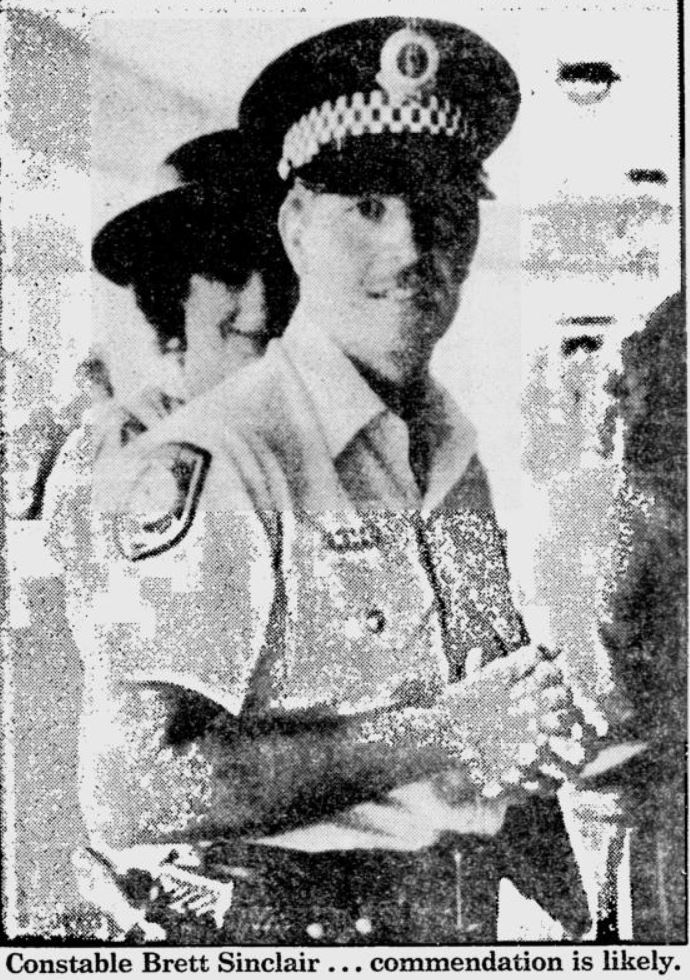
Brett Clifford SINCLAIR 1 - NSWPF - Killed 25 October 1988

Brett Clifford SINCLAIR 2 - NSWPF - Killed 25 October 1988
The Sydney Morning Herald 27 October 1988 p 7

[divider_dotted]
Crimes Amendment (Murder of Police Officers) Bill 2007
Extract from NSW Legislative Council Hansard and Papers Thursday 10 May 2007.
Second Reading
The Hon. MICHAEL GALLACHER
(Leader of the Opposition)
[4.30 p.m.]: I move:
That this bill be now read a second time.
I am honoured to introduce this bill on behalf of the Opposition, all New South Wales police officers and their families. The bill amends the Crimes Act 1900 to provide that compulsory life sentences are to be imposed by courts on persons convicted of murdering police officers. A compulsory life sentence is to be imposed if the murder was committed while the police officer was executing his or her duties or as a consequence of, or in retaliation for, actions undertaken by any police officer. This bill is one of the most important pieces of legislation that I have spoken on in my time in Parliament.
In recent weeks the deaths of police officers have been receiving publicity for all of the wrong reasons. The tragic suicides of our young officers, the attempted suicide of even the more senior and the very public breakdown of another young officer are a reminder to all of us of just how tough it is to be a police officer in 2007. Last year, along with the police commissioner, the then Minister for Police and many police, former police and their families, I attended the eighteenth annual National Police Remembrance Day memorial service and laying of wreaths at the Wall of Remembrance in the Domain next to the Art Gallery. The Wall of Remembrance marks the sacrifice of all police officers in the execution of their duties, and in particular the 248 officers whose names have been added to the New South Wales Police honour roll. On the night of Police Remembrance Day, as a mark of respect, Sydney Opera House was bathed in a blue light.
For members who are not aware, National Police Remembrance Day is held on 29 September, which is St Michael’s Day. St Michael is the patron saint of police and archangel to protect and defend people. Last September’s commemoration was even more significant with the official opening of the National Police Memorial by the Prime Minister in Canberra. The memorial is to all police officers throughout Australia who have served our community and have lost their lives in the execution of that service. The ceremony was tinged with sadness.  Just the day before Police Remembrance Day, Sergeant Colin McKenzie, a highway patrol officer based at Ballina, became ill during rehearsals for the Canberra service and subsequently passed away. He was yet another officer to die while undertaking his duty.
As honourable members would be aware, I joined the New South Wales Police Force in 1980. It is a sad fact that since then the names of 73 New South Wales police officers have been added to the New South Wales Police honour roll. The honour roll commemorates those members of the New South Wales Police who have paid the ultimate sacrifice in the execution of their duty. These officers gave their life to protect us. This bill acknowledges that police play a unique role in protecting the community. As the law currently stands, there is not a sufficient deterrent to attacking and murdering a police officer in New South Wales. Police put their lives on the line every time they walk or drive into a situation that they do not have control of and in which they seek to gain control and effect the arrest of an offender or offenders.
Since 1995 at least 18 police officers have died as a result of duty-related incidents. These include five who were murdered in the course of carrying out their duty.  Another four police officers are assaulted every day. It is unacceptable that people involved in some of these murders are now enjoying freedom. That should change and this bill seeks to effect that change. There can be no clearer justification for this legislation than the fact that since 1980, 11 officers have lost their lives as a result of the actions of offenders who have attacked police executing their duty to protect the community. They are Sergeant Keith Haydon, shot by an offender on 24 November 1980; Constable Pashalis Katsivelas, shot by an escaping prisoner on 4 April 1984, from recollection at Concord Hospital; Sergeant Paul Quinn, shot by an offender following a pursuit on 30 March 1986; Constable Brett Sinclair, from in juries sustained whilst affecting an arrest on 25 October 1988; Constable Allan McQueen, shot whilst affecting an arrest of a fellow attempting to break into a motor vehicle only a few hundred metres from where we are now on 5 May 1989; on 9 July 1995, two officers, Senior Constable Peter Addison and Senior Constable Robert Spears, shot by an offender at Crescent Head as they got out of their vehicle to enter a home; Constable David Carty, stabbed during an affray in Wester n Sydney on 18 April 1997; Constable Peter Forsyth, stabbed whilst affecting an arrest on 28 February 1998; Senior Constable James Affleck, struck by a motor vehicle whilst deploying road spikes to stop a stolen car on 14 January 2001; and Constable Glenn McEnallay, shot by an offender at Matraville following a pursuit on 3 Apr 2002.
Honourable members should be aware that in response to this bill, which was introduced into the other place by the New South Wales Liberal leader in May last year, the New South Wales Police Association issued a circular to their members throughout New South Wales, which stated:
Members are advised that, following discussions last evening with the State Opposition, your Association has determined to support the Bill which proposes mandatory life sentences for anyone convicted of murdering a police officer.
In light of the recent decisions relating to the murders of David Carty and Glen McEnallay it is apparent that there is strong community support for police and for the introduction of measures which would deter offenders from assaulting and killing members.
Delegates elected to attend your Association’s Biennial Conference commencing on 21 May will be asked to endorse a campaign for 3,000 additional police and to strengthen laws aimed a protecting members. In the interim members are asked to contact their local member of state parliament and express their support for this legislation.
It is only by hearing first hand the concerns of constituents that politicians will be motivated to act. The circular was signed by Bob Pritchard, President of the New South Wales Police Association. I have no doubt that some member s will argue that police should not be given special consideration. The simple fact is that police have a legislated duty to go to the assistance of community members who are in need or to confront offenders, whether they are on duty or not. Twenty-four hours a day, whether they are wearing the uniform or not, they have a legislated duty to act.
Coming to the assistance of the community at any time, whether they are on or off duty, is not something that they have a choice about. This House needs to acknowledge that being a police officer brings with it a different set of dangers than any other occupations or professions.
As I mentioned earlier, Senior Constable Jim Affleck was run down when he tried to stop an offender’s car during a high-speed pursuit in south-western Sydney. He was attempting to deploy road spikes designed to deflate the tyres of speeding vehicles and bring them to a stop. The offender who ran down Senior Constable Affleck received only a minimum sentence of 12 years. Today is an opportunity for all honourable members to vote in support of our police. This bill inserts a new section into the Crimes Act 1900 after section 19A. It reads:
19B Compulsory life sentences for murder of police officers
1) A court is to impose a sentence of imprisonment for life on a person who is convicted of murder of a police officer if the murder was committed:
(a) While in the execution of the police officer’s duty, or
(b) As a consequence of, or in retaliation for, actions undertaken by that or any other police officer in the execution of the officer’s duty.
2) A person sentenced to imprisonment for life under this section is to serve the sentence for the term of the person’s natural life.
3) This section applies to a person who is convicted of murder of a police officer only if the person was of or above the age of 18 years at the time the murder was committed.
4) If this section requires a person to be sentenced to imprisonment for life, nothing in section 21 (of any other provision) of the Crimes (Sentencing Procedure) Act 1999 or in any other Act or law authorises a court to impose a lesser or alternative sentence.
5) Nothing in this section affects the prerogative of mercy.
The concept of protecting police has support on both sides of the Chamber. In April 2002, just after Glenn McEnallay was murder ed, then Premier Carr said:
I want those who murder police officers to go to jail forever. I want those who murder police officers to go to the dingiest, darkest cell that exists in a prison system …
In May last year one of those involved in Glenn’s murder had his conviction for murder quashed. A few short days later, his parents spoke out in favour of this bill when it was introduced into the other place. Bob McEnallay said:
They support us in our time of need but when some thing goes wrong there’s no one there to support them.
Bob and his wife, Judy, were joined by the father of David Carty in support of this bill. Member s would remember the tragic murder of Constable David Carty, who was stabbed to death after being brutally assaulted in the car park of the Cambridge Tavern at Fairfield in April 1997.
These parents know that this bill will not bring their sons back. And, unfortunately, it will not keep their killers in jail. But it will keep future killers of police where they belong: behind bars—as the former Premier said, in the dingiest, darkest cell forever.
The quashing of the conviction of the driver of the car that carried the killer of Constable McEnallay highlights the important issue of joint criminal enterprise and whether people were jointly involved in an act of murder. The community and the Opposition—and certainly Glenn McEnallay’s parents—believe the driver of the car involved was implicated in the murder and should have stayed in jail for the murder of Glenn. The cases of those involved in the murders of David Carty and Glenn McEnallay highlight the soft stance taken in New South Wales against people who murder police officers. This bill is another step in providing a higher level of protection for police.
In 1997 former Attorney General Jeff Shaw spoke on the Crimes Amendment (Assault of Police Officers) Bill, saying:
The bill is predicated upon a belief that police officers are rightfully owed a measure of protection by the community. That is so for at least two reasons.
First, police officers place themselves in positions of risk on behalf of the community. Second, an attack on a law enforcement officer strikes at the core of our system of democratic government. Those who seek to harm the persons responsible for the enforcement of laws passed by our Parliament should be subject to special punishment.
That principle is already recognised in the Crimes Act. Section 58 of that Act imposes a higher maximum gaol penalty for the offence of common assault of a police officer than is imposed for the same offence against a civilian. Indeed, the relative maximum penalties are five years and two years respectively.  Surprisingly, and anomalously, the principle is not carried through by the Crimes Act to apply to more serious assaults that in fact inflict injury.
In June 2002 the then Leader of the Opposition in the other place introduced a similar private member’s bill to this bill. At that time John Brogden wrote to the Premier foreshadowing the bill, and sought bipartisan support for it. When introducing the bill he said:
… this bill will require that anybody who murders a police officer acting in the line of duty will go to gaol for life. We believe that, because of the nature of the job, police officers in New South Wales should be afforded extra protection under the law when they are on duty.
When police officers are in uniform on duty or have recalled them selves to duty they put themselves forward when others step back. They put themselves in danger and do so to protect you, and me and the citizens of the State.
The law should recognise that to murder a police officer is one of the most serious crimes in the State.
In response the Parliamentary Secretary for Police, who led for the Government, said:
The Government wants people who murder police officers to rot in prison; we have never resiled from that position. Today Government members have the opportunity to stand by this commitment and that of former Premier Carr, who, I remind members, said:
I want those who murder police officers to go to gaol forever. I want those who murder police officers to go to the dingiest, darkest cell that exists in a prison system …
They have the opportunity to stand by the commitment of the Premier, who said on 11 May:
We want these people to rot in jail.  Government members have the opportunity to vote for this legislation, which will mean that those who murder police officers will rot in prison. In conclusion, my experiences during more than 16 years of service shaped my belief that those who murder police officers should spend the rest of their natural lives behind bars. I do not anticipate that the use of this legislation will be required all that often—in fact, I hope that it is never needed.  But it should be on the statute book to deter those who would consider, even for a second, acting to murder our police.
I ask all members to carefully consider this bill and vote to support our police officers, and indeed their families, who every day they go to work kiss their loved ones good-bye knowing the dangers that confront them.
http://www.parliament.nsw.gov.au/prod/parlment/nswbills.nsf/0/a3f42e6ef2dd441bca2572d6007c2313/$FILE/Crimes%20%28Murder%20of%20Police%29.pdf
[divider_dotted]
The Sydney Morning Herald
Making sentences fit some crimes
Author:  Anna Patty       Date:  26 May 2010

A series of gunshots fired at close range killed 26-year-old police officer Glenn McEnallay in his highway patrol car after he responded to a report of a stolen car in Matraville in March 2002.The man who pulled the trigger, Sione Penisini, was sentenced to 36 years in prison, but his accomplices escaped with much shorter sentences after they pleaded guilty to manslaughter. A public outcry followed and the murdered officer’s father, Bob McEnallay, described the seven-year jail term handed to one of them as “an absolute bloody joke”.

But this week he made it clear he does not believe his son’s life was worth more than that of any other citizen. He says the state government’s plan to introduce mandatory life sentencing for people who murder police is unfair to other victims of serious crime. Bob McEnallay says the life of his surviving son, Troy, not a police officer, should not be valued less than that of Glenn. He believes there should be a minimum sentence for murder, regardless of who the victim is.

“I wouldn’t like to think my son’s case would attract more attention from the courts than some other citizen,” he says. “I know the [government’s] intentions are good, but I would rather see a system where the maximum possible sentences for murder are issued for any citizen who is murdered.”

The NSW Attorney-General, Greg Smith, says the bill to be introduced in Parliament this week was developed in response to the murder of police officers David Carty in 1997 and Glenn McEnallay. His office confirms the new law will not apply to accessories to murder, such as the Taufahema brothers who were involved in the McEnallay killing. The new law will mean only the murderer would serve the term of his natural life in prison.

The Premier, Barry O’Farrell, says the Coalition has been committed to the policy since 2002 and will “ensure that those who murder police officers spend their lives behind bars”.

But in 2010, Mr Smith denounced those who called for mandatory sentencing as “rednecks”, who were indulging in a “law and order auction”. He now says police killings are an exception. “The murder of a police officer is a direct attack on our community and warrants exceptional punishment,” he says. “It sends a serious message of support to our police, but I hope it is never used.”

Mr Smith prosecuted two trials in relation to the murder of Carty and he conducted the committal hearing. “I gave my blood, sweat and tears to that case in honour of that policeman. I then appeared in the appeals to the Court of Criminal Appeal and the High Court, both of which were dismissed,” he says.

Mr McEnallay says he can appreciate the support of John Carty, David’s father, for the new law, but does not agree that police officers should be treated differently. “I am very pro-police,” McEnallay says. “But I just hope some good legislation comes out of this for everybody.”

Mary Cusumano, whose husband Angelo was shot dead in his Penshurst computer store 15 years ago, leaving her to raise four children on her own, says she is angry with the new law. This week she learnt her husband’s murderer is up for parole.

“It just infuriates me,” she says. “My husband was a wonderful human being and he served his community. It is as if the government is saying his life is worth less than somebody else’s.

“With all due respect to the police, they make a choice to enter that career, with all the risks it involves. They are armed, my husband wasn’t. My husband never thought he would go to work and that a person would put a rifle to his head.”

Martha Jabour, who represents the Homicide Victims Support Group, says the new law will divide families. “If the government is thinking of making it mandatory life, why not mandatory life for every life. I cannot say that one occupation is far more worthy than the life of a nurse or a vulnerable child.

“If my son was murdered I would want his murderer to get life, but my son isn’t a police officer.”

The vice-president of the Victims of Crime Assistance League, Howard Brown, says ambulance and other emergency service personnel will not be treated equally under the new law. “It is a dangerous piece of legislation because it has not been well thought out,” he says. “We are told by the judiciary and by politicians that everyone is treated equally before the law. But for some reason they have decided to place police above everyone else, including judges.”

Mark Findlay, a professor of criminal justice at the University of Sydney, says it is “a pity that the new government’s legislative agenda for criminal justice should be opening with what is largely something for appearances”.

“The murder of a police officer should be condemned. But if the families of police officers are meant to be comforted by this proposal it would only be at the level of retribution,” he says. “There is no convincing evidence that mandatory life sentences have any significant deterrent effect on those who kill police officers in the circumstances in which such murders take place.”

The Greens MP David Shoebridge says mandatory life sentencing has not worked in other countries and does not produce a reduction in crime. The US Sentencing Commission delivered a report to Congress nearly 20 years ago denouncing mandatory minimum sentences. In its 1991 report, it said mandatory sentencing failed to improve public safety or deter crime.

Nicholas Cowdery, who retired last month as the head of the Department of Public Prosecutions, was involved in the prosecution of McEnallay’s killers. He says the new law “appears to be a purely political exercise to in some way satisfy an obligation to the NSW Police Association.

“I say that because there is no present criminal justice need for this legislation. There are no miscarriages of justice or anomalies that have occurred in the past that justify departure from the existing law. The present law is well capable of imposing a suitably severe penalty on a person who murders a police officer or a person in other categories of employment which have an increase in risk of harm attached to them.”

The existing law allows judges to impose a sentence of natural life for murder, and about 50 people are serving that sentence.

Death on duty

NSW police killed since 1980

1980 Sergeant Keith Haydon, shot at Mount Sugarloaf.

1984 Constable Pashalis Katsivelas, shot by an escaping prisoner at Concord.

1986 Sergeant Paul Quinn, shot during a pursuit at Perthville.

1988 Constable Brett Sinclair, died from injuries while making an arrest in North Parramatta.

1989 Constable Allan McQueen, shot while making an arrest in Woolloomooloo.

1995 Senior Constables Peter Addison and Robert Spears, shot at Crescent Head.

1997 Constable David Carty, stabbed outside a Fairfield hotel.

1998 Constable Peter Forsyth, stabbed while making an arrest in Ultimo.

2001 Senior Constable James Affleck, deliberately run over as he set up road spikes to stop a stolen car in Campbelltown.

2002 Constable Glenn McEnallay, shot at Matraville after a pursuit.

Source: Hansard

http://newsstore.fairfax.com.au/apps/viewDocument.ac;jsessionid=2ED0D325ED2097D6D6DFD2D6E94B776D?sy=afr&pb=all_ffx&dt=selectRange&dr=1month&so=relevance&sf=text&sf=headline&rc=10&rm=200&sp=brs&cls=205&clsPage=1&docID=SMH110526116Q13KR49H

[divider_dotted]


Crimes Amendment (Murder of Police Officers) Bill 2007

Reverend the Hon. Dr Gordon Moyes:

OBJECTIVES:

The object of the Crimes Amendment (Murder of Police Officers) Bill is to amend the Crimes Act 1900 to provide that compulsory life sentences are to be imposed by a court on persons convicted of murdering police officers. A compulsory life sentence is to be imposed if the murder was committed while the police officer was executing his or her duties or as a consequence of, or in retaliation for, actions undertaken by any police officer.

COMMENTS:

The tragic suicides of young officers, the attempted suicide of a senior officer and the recent very public breakdown of another young officer are reminders to us all of how tough it is to be a police officer in 2007. Every day police officers kiss their loved ones goodbye and go to work, knowing the dangers that may confront them. Supporters of the bill argue that those convicted of murdering police officers do not deserve another chance to be free members of society. Murdered police officers do not have another chance at life and their killers should not have another chance at freedom. I would also mention, however, that it is grieving families, aside from those convicted and those who are murdered, who endure the pains of such actions.

Since 1995 at least 18 police officers have died as a result of duty-related incidents. These include five who were murdered in the course of carrying out their duty. Another four police officers are assaulted every single day, as a previous speaker has mentioned. It is unacceptable that people involved in some of these murders are now enjoying their freedom. That should change and this bill seeks to effect that change. There can be no clearer justification for this legislation than the fact that, since 1980, 11 officers have lost their lives as a result of the actions of offenders who have attacked police executing their duty to protect the community.

They are Sergeant Keith Haydon, shot by an offender on 24 November 1980; Constable Pashalis Katsivelas, shot by an escaping prisoner on 4 April 1984, from recollection, at Concord Hospital—a probationary constable, I am reminded; Sergeant Paul Quinn, shot by an offender following a pursuit on 30 March 1986; Constable Brett Sinclair, from injuries sustained whilst effecting an arrest on 25 October 1988; Constable Allan McQueen, shot whilst effecting an arrest of a man breaking into a motor vehicle only a few hundred metres from where we are now sitting on 5 May 1989; Senior Constable Peter Addison and Senior Constable Robert Spears, shot by an offender at Crescent Head as they got out of their vehicle to enter a home on 9 July 1995; Constable David Carty, stabbed during an affray in Western Sydney on 18 April 1997; Constable Peter Forsyth, stabbed whilst effecting an arrest on 28 February 1998; Senior Constable James Affleck, struck by a motor vehicle whilst deploying road spikes to stop a stolen car on 14 January 2001; and Constable Glenn McEnallay, shot by an offender at Matraville following a pursuit on 3 April 2002.

In the light of recent decisions relating to the murders of David Carty and Glen McEnallay it is apparent that there is strong community support for police and for the introduction of measures to deter offenders from assaulting and killing members. The bill is predicated upon a belief that police officers are rightfully owed a measure of protection by the community. This so for at least two reasons. First, police officers place themselves in positions of risk on behalf of the community. Second, an attack on a law enforcement officers strikes at the very core of our system of democratic government. Those who seek to harm the persons responsible for the enforcement of laws passed by our Parliament should be subject to special punishment.

That principle is already recognised in the Crimes Act. Section 58 of that Act imposes a higher maximum jail penalty for the offence of common assault of a police officer than is imposed for the same offence against an ordinary civilian. Indeed, the relative maximum penalties are five years and two years respectively. Surprisingly, and anomalously, the principle is not carried through by the Crimes Act to apply to more serious assaults that in fact inflict injury or permanent damage to officers. When police officers are in uniform on duty or have recalled themselves to duty they put themselves forward when others step back. They put themselves in danger and do so to protect you and me and citizens of the State. The law should recognise that to murder a police officer is a serious crime in this State. The Parliamentary Secretary for Police, who led for the Government, said:

The Government wants people who murder police officers to rot in prison; we have never resiled from that position.

Today Government members have the opportunity to stand by this commitment and that of former Premier Carr. He said:

I want those who murder police officers to go to gaol forever. I want those who murder police officers to go to the dingiest, darkest cell that exists in a prison system …

Government members have the opportunity to vote for this legislation, which will mean that those who murder police officers will rot in prison. There are certainly some contentious provisions that merit further examination. However, there are two aspects of this bill that do concern me. The first is: Is there any evidence that the likelihood of a compulsory life sentence would have any deterrent effect? I ask whether a compulsory life sentence can achieve reduced recidivism and increased rehabilitation in our society. Can a compulsory life sentence stop future acts of violence? Is the life of a police officer more valuable than the life of anyone else, such as a doctor treating a patient, teachers or others in the community?

If honourable members consider any aspect of my speech today I ask them to reflect on this one point: I remind them that the stark account of prison life presents powerful challenges in our liberal democracy. During my whole life, from the time I was a parole and probation officer as a young man through to all my years at Wesley Mission, I have visited numerous prisons around the country. In fact, at different times I have been detained in her Majesty’s finest. Most of them are characterised by routine, regulation, boredom and depression associated with serving a long-term sentence. They are also characterised by claustrophobia, noise, chaos and the real risk of being compelled to inhabit a very violent world, including not only other prisoners but also others who enter the prison. Inmates that I have talked to over the years inevitably possess low intelligence quotients or have suffered brain damage, frequently from extensive alcoholism, and mental illness. Critical criminologists and sociologists have long since documented the squalor and brutality associated with incarceration. Even in today’s society, public complacency generally surrounds the plight of the incarcerated.

The growing fear of crime, fuelled at least partially by the media, and the frustration with the seeming lack of positive results of rehabilitation provide public support for hardened policies. This trend has become amplified by the rhetoric of politicians who have found that being tough on crime is an unbeatable popular issue.

CONCLUSION:

However, with all of that said, with the limitations of our current prison system and acknowledging the absolute futility of long-term incarceration of individuals, there is no question in my mind that the Crimes Amendment (Murder of Police Officers) Bill is needed. I commend the bill to the House.

http://www.gordonmoyes.com/2007/11/16/crimes-amendment-murder-of-police-officers-bill-2007/
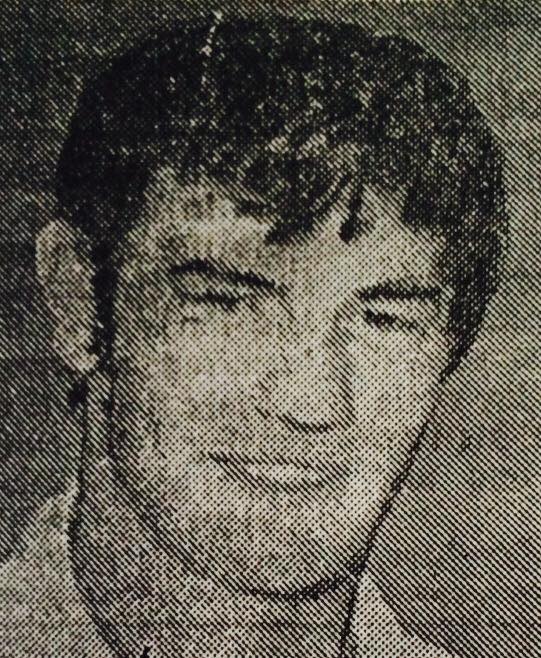


Paul Mitchell QUINN

Paul Mitchell QUINN

New South Wales Police Force

Redfern Police Academy Class # started with 156 – may have ended with 163

Cadet #:  3358

Regd. #  18605


Rank:  NSW Police Cadet – commenced Training at Redfern Police Academy on Monday 4 July 1977 ( aged 17 years, 1 months, 28 day )

Probationary Constable – appointed 29 May 1979 ( aged 19 years )

Constable – appointed ? ? ?

Constable 1st Class – appointed 29 May 1984

Final Rank:  Constable 1st Class – posthumously promoted to Sergeant 3rd Class

Stations:  Casino & Bathurst – Death

ServiceFrom 4 July 1977 to 30 March 1986 = 8 years, 8 months, 26 days

Awards:  No find on It’s An Honour

Born:  Sunday  29 May 1960

Died on:  Wednesday 30 March 1986

Cause:  Murdered.  Shot through neck during arrest

Event location:  , Perthville, NSW

Age:  25 years, 10 months, 1 day

Funeral Date?

Funeral Location?

Buried at?

Grave locationMaranatha, Sec: Mar2, Row: A, Grave: 112


Memorials1/  Chifley LAC has the ‘ Paul Quinn Award ‘ for the most outstanding Officer each year.  Paul is Remembered within the Chifley LAC.

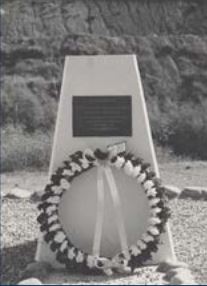
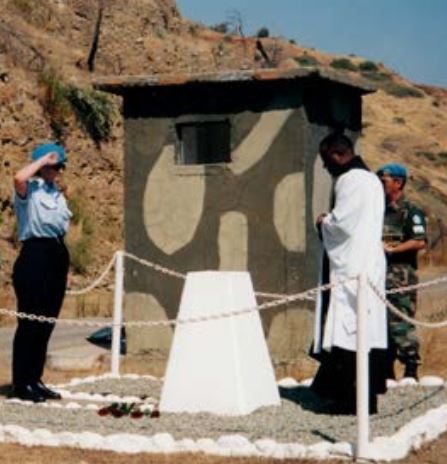
2/  Paul Mitchell Quinn – stone monument near the murder scene

3/  Mt Panorama ( Bathurst ) Police Compound – dedicated to Sgt Paul Quinn


 PAUL is mentioned on the Police Wall of Remembrance

Paul Mitchell QUINN
Paul Mitchell QUINN

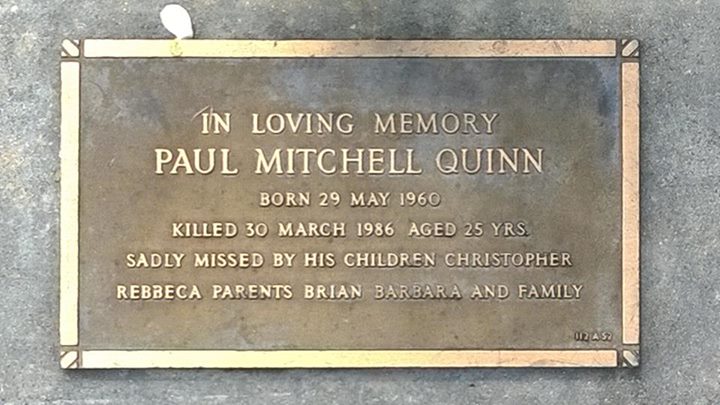
Paul Mitchell Quinn - grave plate. Inscription (In loving memory Paul Mitchell Quinn, born 29 May 1960 killed 30 March 1986 aged 25 yrs. Sadly missed by his children Christopher, Rebeca, parents Brian, Barbara and family.)
Paul Mitchell Quinn – grave plate


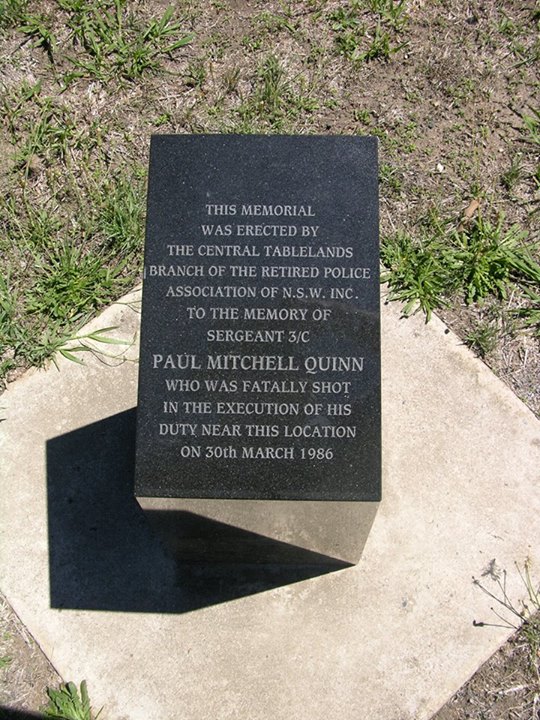
This memorial was erected by the Central Tablelands branch of the Retired Police Association of NSW Inc. to the memory of Sergeant 3/c Paul Mitchell Quinn who was fatally shot in the execution of his duty near this location on 30th March 1986.
Paul Mitchell Quinn – monument near the murder scene


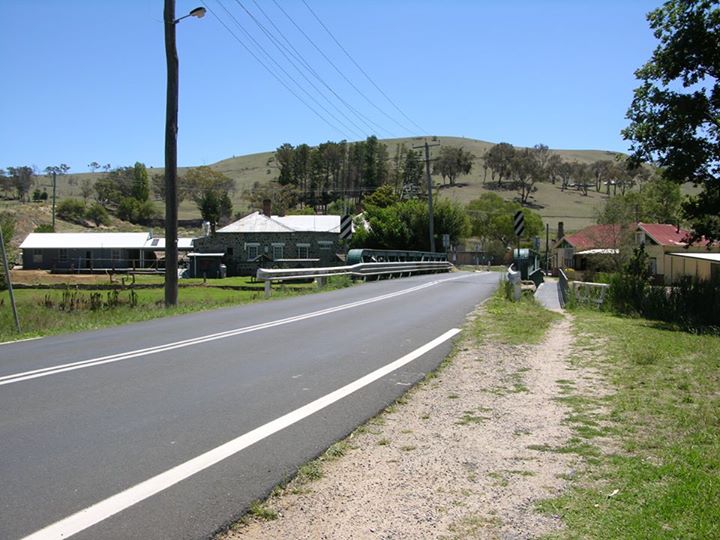
Paul Mitchell Quinn - murder scene
Paul Mitchell Quinn – murder scene


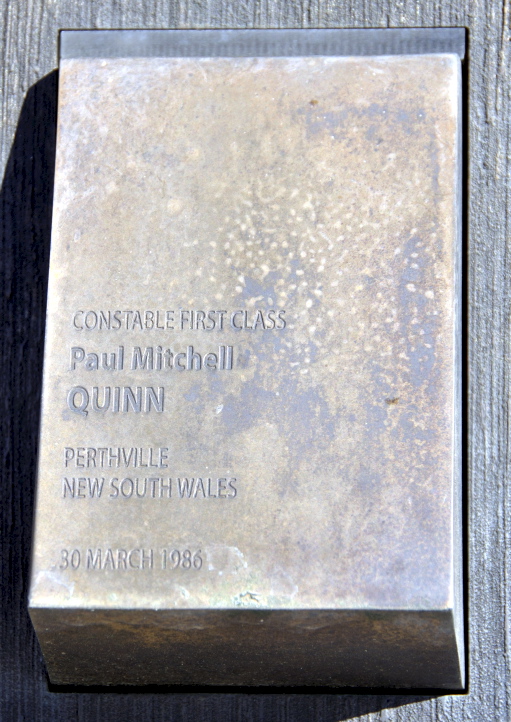
Police Wall of Remembrance - touch plate for Paul Mitchell QUINN
Police Wall of Remembrance – touch plate for Paul Mitchell QUINN – Canberra


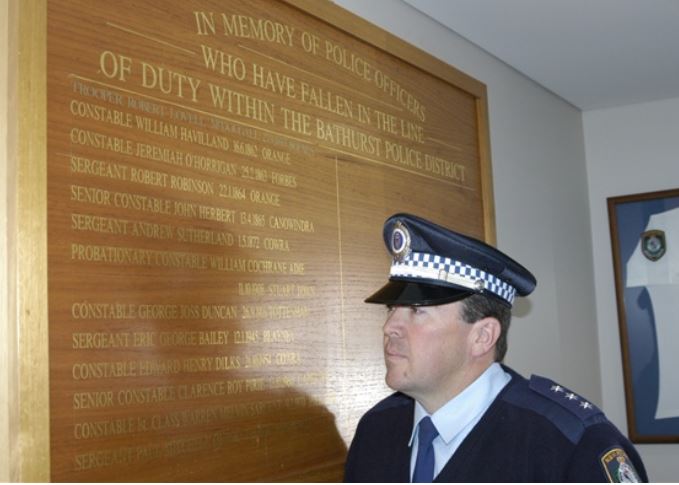
Paul Mitchell Quinn, Paul Quinn, Mt Panorama, Paul Quinn Police Compound
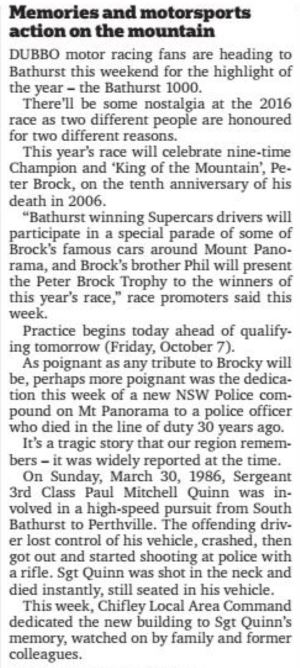
Dubbo Photo News, page 3, Oct 6 – 12, 2016


Late in the afternoon of 30 March, 1986 Constable 1st Class Quinn was involved in the high speed pursuit of a vehicle from South Bathurst towards Perthville.

At Perthville the offender lost control of the vehicle and collided with a bridge railing at the intersection of Bridge Street.

The offender then leapt from the vehicle with a .303 rifle and began to fire at the police who had been chasing him.

Constable Quinn was hit in the neck and killed instantly and Constable Ian Borland was seriously wounded.

The offender, Horan, was shot several times by police before being arrested and charged.

Fortunately Constable Borland recovered from his injuries. Constable Quinn was posthumously promoted to Sergeant 3rd Class.


The sergeant was born in 1960 and joined the New South Wales Police Force as a Cadet on 4 July, 1977.  At the time of his death he was stationed at Bathurst.


Other Police who assisted with this incident at the time of the shots being fired were Senior Constable John Andrew BYERS  BM.


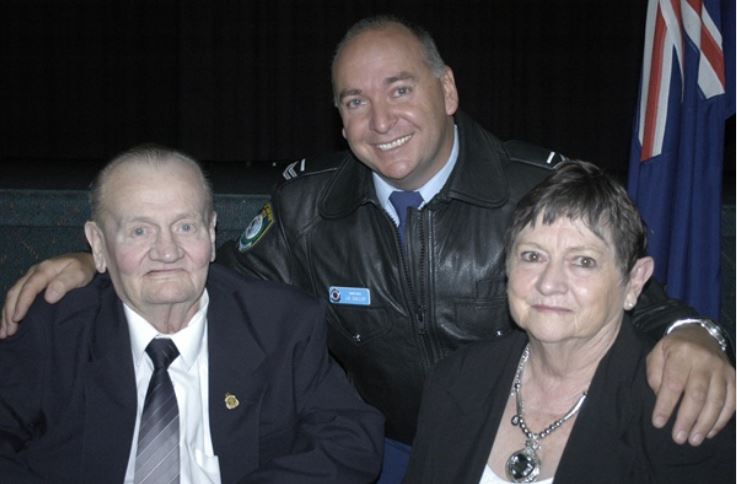
Chifley LAC has the ‘ Paul Quinn Award ‘ for the most outstanding Officer each year.  Paul is Remembered within the Chifley LAC.


Childhood pain relived as policeman’s killer poised for release

January 14, 2004

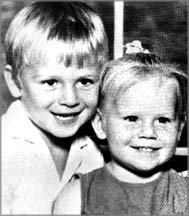
The day Constable First Class Paul Quinn was buried with full police honours, his daughter Rebecca turned four. After a funeral that closed streets in the policeman’s home town of Bathurst, his five-year-old son, Chris, was still asking relatives when Daddy would be coming home.

Lost innocence . . . Chris and Rebecca Quinn aged five and four.

Yesterday the siblings sat together in distress again as the man who killed their sole-parent father was declared ready to return to the community after serving almost 18 years in jail.

Chris has had trouble with the law, but has shown talent as a lightweight boxer. Rebecca runs a coffee shop and turns 22 in a couple of months.

Supporting them was Inspector Ian Borland, who was seriously wounded the day Constable Quinn was killed and still works in Bathurst near where the pair encountered Patrick Francis Horan on Easter Sunday 1986.

The policeman and the Quinn siblings had been told Horan would be granted parole at his third attempt, but the decision moved Chris to climb over the public gallery and storm out the Hospital Road courtroom door.

Weeping outside, he was embraced by Inspector Borland, who still has bullet fragments in his body.

Inspector Borland, the Quinns and the NSW Police Association wanted to keep Horan, 63, locked up until he was dead.

John Watts, for Inspector Borland and the Quinns, had argued that Horan‘s lack of insight into his psychiatric problems and his refusal to acknowledge he had been the aggressor when Constable Quinn was killed made a “potent mix”.

But the Parole Board found Horan, a paranoid schizophrenic, was unlikely to pose a risk to others if he took his medication and that “the jail system is not a substitute for the treatment of people suffering from mental illness”.

Horan‘s prison behaviour had been exemplary and he successfully completed unsupervised work release. He had the family support of a brother and was engaged in “the admirable hobby of bee-keeping”, the board found.

Horan had not been taking his medication when his mother called police about his erratic and violent behaviour on the afternoon of March 30, 1986. One of the officers to respond to the call was Constable Quinn, then 25 and on duty at Bathurst for only his fifth shift since being transferred from Casino, to be near his parents.

After a pursuit that ended 10 kilometres south of Bathurst at Perthville, Constable Quinn got out of his car and ran towards Horan, who shot him in the left clavicle with a .303-calibre rifle.

The officer’s colleagues returned fire as Horan adopted what he described as a Rambo position and emptied the 10-round magazine in his .303.

Constable Borland, then 36, was shot in both legs and a hand, while Horan, who was hit by at least seven of 18 shots fired by police, continued shooting at five other officers.

Constable Quinn was posthumously promoted to sergeant.

In the Supreme Court sitting at Bathurst, Horan pleaded not guilty to murder but guilty to manslaughter on the grounds of diminished responsibility due to mental illness.

Justice Kep Enderby sentenced him to life, with separate terms for wounding with intent to murder Constable Borland and shooting with intent to murder other police.

In March 1998 Justice Peter Hidden set a minimum term of 16 years, which expired in 2002, and a maximum of 22. The crown did not appeal.

Horan will be released next Wednesday, under conditions that include his accepting psychiatric treatment and not entering Chifley Local Area Command, where Inspector Borland works.

http://www.smh.com.au/…/2004/01/13/1073877830354.html…


Officer’s death hits local police hard

By BRENDAN ARROW

ANOTHER LIFE LOST: Chifley Local Area Command Acting Inspector Lionel White said police in Bathurst have been personally affected by the death of Constable William Crews in Sydney on Wednesday night. Photo: BRENDAN ARROW 091010
ANOTHER LIFE LOST: Chifley Local Area Command Acting Inspector Lionel White ( # 24873 ) said police in Bathurst have been personally affected by the death of Constable William Crews in Sydney on Wednesday night. Photo: BRENDAN ARROW 091010

POLICE in the Chifley Local Area Command have been personally affected by the death of trainee detective William Crews.

The 26-year-old died in a Sydney hospital after he was shot while carrying out a drug operation on Wednesday night with seven other officers from the Middle Eastern Organised Crime Squad in Bankstown, in Sydney’s south-west.

The officers were fired upon outside the targeted property in Cairds Avenue about 9pm. Constable Crews was hit in the head and neck.

Philip Nguyen, 55, has since been charged with shooting with intent to murder and discharging a firearm with intent to cause grievous bodily harm.

Geehad Ghazi, 27, has been charged with possession of an unauthorised firearm.

Yesterday, Acting Inspector Lionel White said the tragic situation in Sydney had personally impacted on a number of officers who knew Constable Crews.

“It is a very shocking situation, a couple of the officers here at the Bathurst Police Station knew him and have been left very upset by the situation,” he said.

“Some of the officers worked with him and trained with him before he became a detective.

“For those officers, we are offering them support and counselling during this tough time.”

Reminding people of those officers who lost their lives in the Bathurst area in the line of duty is a memorial board naming the 13 policemen who have died in the line of duty.

Since Trooper Robert Lovell McDougall died in 1853 near Sofala, 12 officers have fallen in the line of duty in Bathurst area with Sergeant Paul Mitchell Quinn the last, on the March 30, 1986.

Acting Inspector White said the latest death in Sydney brought to the forefront the difficult circumstances that police can find themselves in daily.

“On top of the very mundane things we do every day this is a stark reminder of the dangers police officers can face while in the front line,” he said. “This very much reminded us of the risk officers sometimes have to take while in the line of duty.

“It is a great tragedy.”

http://www.westernadvocate.com.au/story/911623/officers-death-hits-local-police-hard/


The State government has logged objections to Patrick Horan a NSW prisoner’s planned release, convicted of the manslaughter of a police officer and seriously wounding another. Justice Minister John Hatzistergos says the NSW Parole Board intends to grant parole to Patrick Francis Horan, who committed the crimes near Bathurst in NSW’s central west in 1986.


Horan‘s 22-year sentence expires on March the 29th, 2008 but his 16-year non-parole period lapsed on March the 29th last year. Hatzistergos says he’s discussed the matter with Police Minister John Watkins, who he says is also shocked at the board’s intention to release Horan.

https://www.flickr.com/photos/publik15/3815467017/
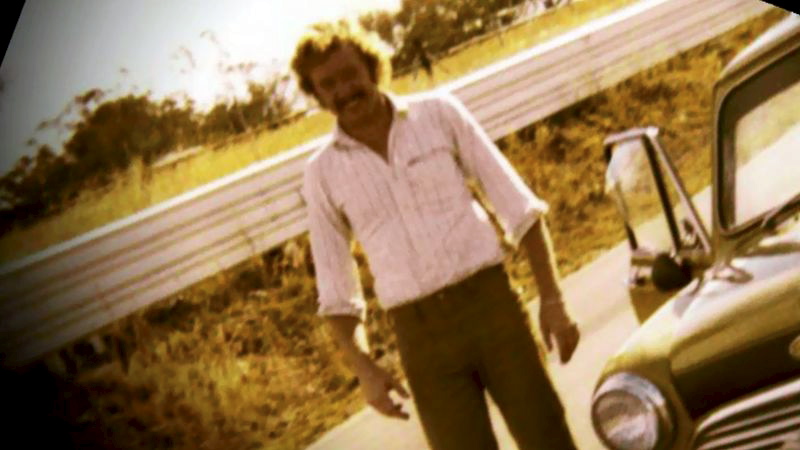

Parliament of New South Wales
0818—PATRICK FRANCIS HORAN

Question asked on 19 September 2003

Mr Peter Debnam to the Minister for Police—

In relation to convicted offenders:
(1) What is the status of attempts by Patrick Francis Horan, who killed one police officer and wounded another, to obtain parole?
(2) What action have you taken to ensure that Patrick Francis Horan remains in jail?

Answer—

(1) I am advised by NSW Police that the review hearing on Mr Horan‘s application for parole has been adjourned by the Parole Board until 13 November 2003 pending reports from Corrective Services Health and the Serious Offender’s Review Board.
(2) I have expressed my concerns in writing to the Parole Board in relation to the release of Mr Horan.

http://www.parliament.nsw.gov.au/prod/la/qala.nsf/ad22cc96ba50555dca257051007aa5c8/ca25708400173f67ca25704a000925dd?OpenDocument


Free… but banned from Bathurst
By Brooke Newstead
Jan. 14, 2004, 6:38 a.m.

POLICE killer Patrick Francis Horan will walk free next week.
However, he will not be allowed to return to Bathurst for at least five years.

The NSW Parole Board yesterday granted Horan full parole with the condition that he is not to enter the Chifley Local Area Command district.

His release date is set for January 21 and he will remain on parole for five years.

Horan was originally sentenced to life plus 125 years after shooting dead Bathurst police officer Sergeant Paul Quinn and injuring then Senior Constable Ian Borland at Perthville in 1986.

On November 13, 2003, he was granted day release and after being released for just seven day-release days since that date, he will now be allowed to fully integrate back into the community.

Subsequent conditions imposed by the Parole Board state Horan must undergo regular psychiatric assessment and counselling.

He is also never to approach any of the victims of the fateful night during which he shot dead Sergeant Quinn.

http://www.westernadvocate.com.au/story/892648/free-but-banned-from-bathurst/


Prisoner group welcomes police killer’s release

Posted

A prisoner advocacy group has welcomed news convicted police killer Patrick Francis Horan will walk free in a week.

Horan, who suffers from paranoid schizophrenia, has served the minimum 16-years sentence for the manslaughter of Bathurst police officer Sergeant Paul Quinn and the wounding of his partner, Inspector Ian Borland.

The New South Wales Government has criticised the granting of parole and promised to reform the composition of the parole board.

But a spokesman for Justice Action, Brett Collins, says it was obvious 17 years ago the man had mental health problems and his case needed special treatment.

“Instead we have a tragic situation where we have a policeman killed and another one disabled,” he said.

“Now for the police to actually present themselves at this stage as vengeful, as angry … when it’s clearly a mental health issue, one which requires compassion and requires understanding, it’s a shame.

“It’s not what we should expect from the police force and we certainly should expect better than that from the State Government.”

Mr Collins says it is important in this case to listen to the experts.

“So if you don’t listen to them and if in fact you still at the end of it as a government or as a police association are still saying at the end of it we are still angry, we still have hate, we want vengeance then that’s a misleading situation,” he said.

“We should accept the fact that the institution is there for the purpose of making a decision and accept the judgment of the umpire and give support to them.”

Horan is to be released next Wednesday on the condition he does not enter the Chifley local area command where Inspector Ian Borland works, for the next five years.

http://www.abc.net.au/news/2004-01-14/prisoner-group-welcomes-police-killers-release/119636


Police killer to make statement on release

Posted

It is expected convicted police killer Patrick Francis Horan will issue a statement this afternoon after being released from Sydney’s Long Bay Jail.

Horan shot and killed Sergeant Paul Quinn during an incident in the State’s central west 17 years ago.

He served his minimum of 16 years in jail for killing Sergeant Quinn and injuring then Senior Constable Ian Borland outside of Bathurst in 1986.

Horan fired at police with a rifle after a high-speed car chase.

Corrective Services says Horan will read a statement to the media at the jail’s boomgate, just after his release at 3:00pm AEDT today.

The department cannot say where Horan will be moving, or what possible security arrangements have been made on his behalf.

The parole board has ruled that Horan will not be able to return to the Chifley local area command, where surviving officer Inspector Boland is still serving.

The board says Horan is not a danger to the public, provided he takes regular medication to treat his paranoid schizophrenia.

http://www.abc.net.au/news/2004-01-21/police-killer-to-make-statement-on-release/122720


Officer’s memory will live on in award

Wednesday 21 September 2016
Hi Greg, just a quick note on the great work that you and your pages do, and that of the Wall to Wall Ride.
You keep the memories of those we have lost, very much alive.
On the Wall ride, all the individual groups and sometimes the whole ride, travel to places where our kin have lost their lives, and stop or salute to remember them.
Kudos to NSW for the great job they do on the memorials on the highway, and congratulations to ACT for the best procession on record.
Even a far away place like Perthville near Bathurst was visited and a token of remembrance 30 years on, was placed and left.
Remembrance is not a burden, its an obligation you can choose to carry… Lest we forget!


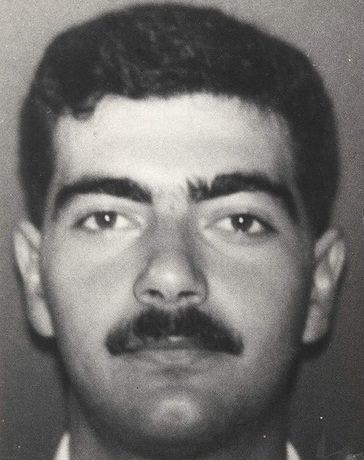
Pashalis (Paul) KATSIVELAS

Pashalis (Paul) KATSIVELAS

New South Wales Police Force

Constable

Shot – Murdered

Concord

Stationed at Newtown

Joined NSW Police Force on 13 December 1982 via Class 192

Born  1964

Died  4 April, 1984

Buried  Rookwood Cemetery

 Constable Pashalis Paul Katsivelas - shot - 040484

About 11.30am on 4 April, 1984 Constable Katsivelas was on duty at the Concord Repatriation Hospital where he was guarding a prisoner who was suffering from heroin withdrawal. The prisoner asked to be allowed to visit the toilet so the constable unlocked one handcuff and, with the assistance of a nurse’s aide, escorted the prisoner to the toilet area. As the prisoner left the toilet cubicle he suddenly leapt at the constable, knocking him to the ground. A violent struggle ensued during which the prisoner seized the constable’s service revolver and shot him twice in the chest before escaping. Constable Katsivelas died a short time later from his wounds. The offender was later located by other police and when warned to surrender he shot himself in the head.


The constable was born in 1964 and joined the New South Wales Police Force on 13 December, 1982. At the time of his death he was stationed at Newtown.


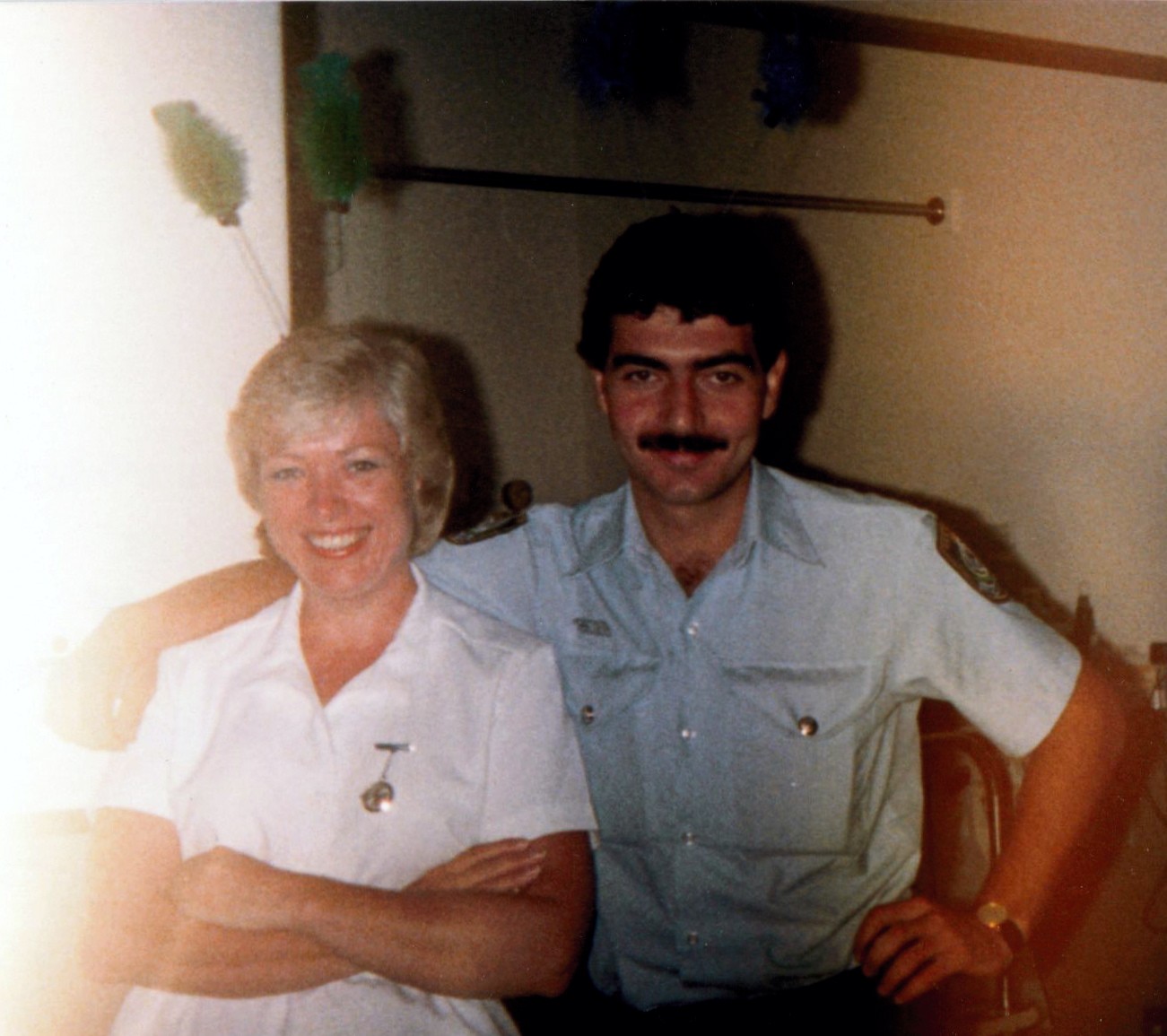
This photo was taken of Paul, at the Hospital, on the same day, shortly before his death. The head Matron, Norma Spark, took the photo of Paul and a Nurse before Norma finished her shift. This is the last, know, photo of Paul alive.
This photo was taken of Paul, at the Hospital, on the same day, shortly before his death.
The head Matron, Norma Spark, took the photo of Paul and a Nurse before Norma finished her shift. This is the last, know, photo of Paul alive.


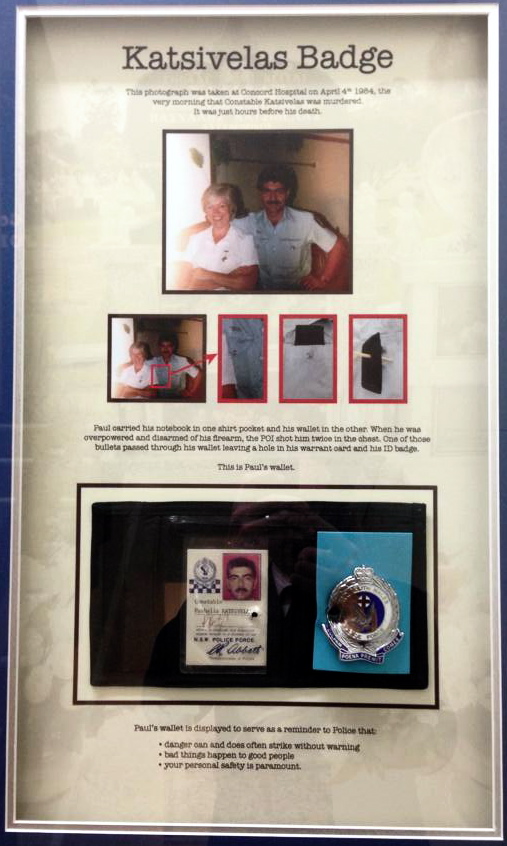
This memorial photo is hanging up at Newtown Police Station as a stark reminder to all Police that bad things can happen to good people. As seen in 2014.
This memorial photo is hanging up at Newtown Police Station as a stark reminder to all Police that bad things can happen to good people.
As seen in 2014.


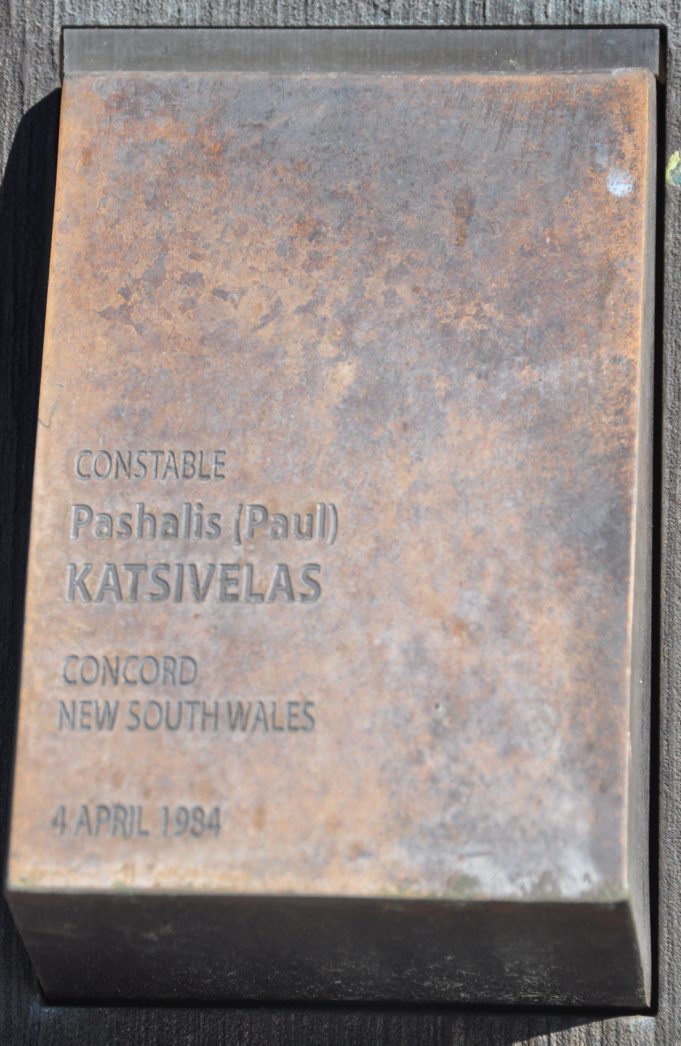
Pashalis (Paul) KATSIVELAS
Pashalis (Paul) KATSIVELAS  Touch pad at National Police Wall of Remembrance, Canberra – 2014


[divider_dotted]


NEWTOWN LOCAL AREA COMMAND POLICE COMMEMORATION SERVICE

http://www.parliament.nsw.gov.au/prod/parlment/hansart.nsf/V3Key/LA20130508056

Page: 20259

Ms CARMEL TEBBUTT (Marrickville) [7.07 p.m.  8 May 2013]: Recently at Rookwood Cemetery I attended a memorial service to commemorate police officers from the Newtown local area command killed in the line of duty. The moving service was attended by Deputy Police Commissioner Nick Kaldis, Superintendent Simon Hardman, the commander of the Newtown Area Local Command, many other police representatives, and relatives and descendants of the police officers. Those attendees included Ms Avona Wallace, Mr and Mrs Norman Stephenson, Mrs Lynette Everton and Ms Edna Stevenson. Representatives from the emergency services and community members were also in attendance. The member for Campbelltown, Bryan Doyle, attended representing the Premier.

The five officers being remembered at the ceremony gave their lives to protect the community. They were Constable First Class John Wallace, Constable First Class Ruston Stephenson, Constable Lionel Guise, Detective Inspector Reginald Stevenson and Constable Pashalis Katsivelas. The ceremony to mark the sacrifice of these officers reflected on the enormity of their contribution to the community, as well as the impact of their death on their families. It is often said, and it is true, that police officers leave their homes for each shift uncertain of what any day may bring and whether they will return at the end of the day. We owe these men and women our deepest gratitude for the risks they face and take every day in their job. At Rookwood Cemetery we visited each of the graves of those officers who lost their lives in the line of duty and behind each individual was an illuminating life story.

We began at the grave of Constable First Class Ruston Stephenson, who died 80 years almost to the day of the commemoration. Constable Stephenson joined the Police Force in 1912, and four years later enlisted in the army, later joining the fight in France during the First World War. He was awarded the Distinguished Conduct Medal for conspicuous gallantry in rescuing injured soldiers while under fire. Remarkably, when he returned he rejoined the Police Force and continued to serve until his death on 9 April 1933 after a tragic accident involving a motorcycle at the then Newtown Stadium while performing general duties policing.

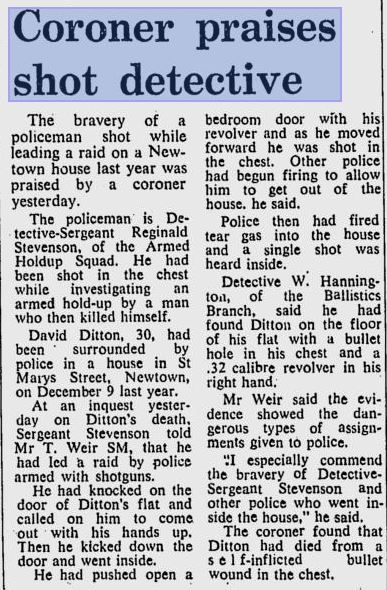
We were also told the story of Detective Inspector Reginald Hugh Stevenson—I was honoured on the day to meet his widow, Ms Edna Stevenson, who still had strong memories of the incident that led to Inspector Stevenson’s death. Detective Inspector Stevenson joined the NSW Police Force as a cadet in 1943 at the age of 17. In an act of extraordinary selflessness, Detective Inspector Stevenson was on annual leave on 9 December 1974 when he decided to go to work to assist in the planned arrest of a dangerous offender in Newtown, at the time telling his wife, “I don’t want my boys doing this on their own.” During the operation he was shot in the chest after leading his team in pursuit of the offender.

Detective Inspector Stevenson partially recovered and was awarded the Queen’s Commendation for Brave Conduct and the Queen’s Police Medal for Distinguished Service. However, he died in 1980 of a heart attack, deemed to be the result of the injuries he sustained on duty in 1974. These officers are just a few of many across New South Wales whose lives have been cut short as they have gone about performing their duty. I pay tribute to them all. They will not be forgotten and local events such as this are a powerful reminder of their sacrifice.

I also take this opportunity to acknowledge two Marrickville police officers, Sergeant Stewart and Constable Steele, who on Monday of this week rescued an intellectually disabled person from a house fire in Marrickville. Thankfully, those two officers who took huge risks survived and are quite rightly being hailed as heroes by their colleagues and the community. It is yet another example of the risk our police men and women take every day in order to keep the community safe. I take this opportunity to pay tribute to them.

[divider]


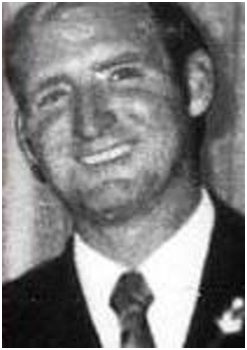
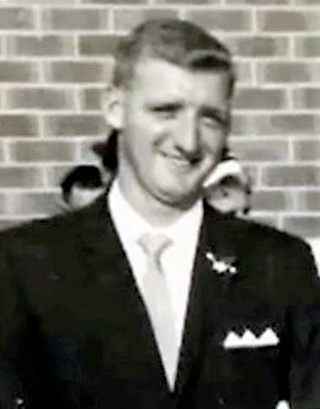
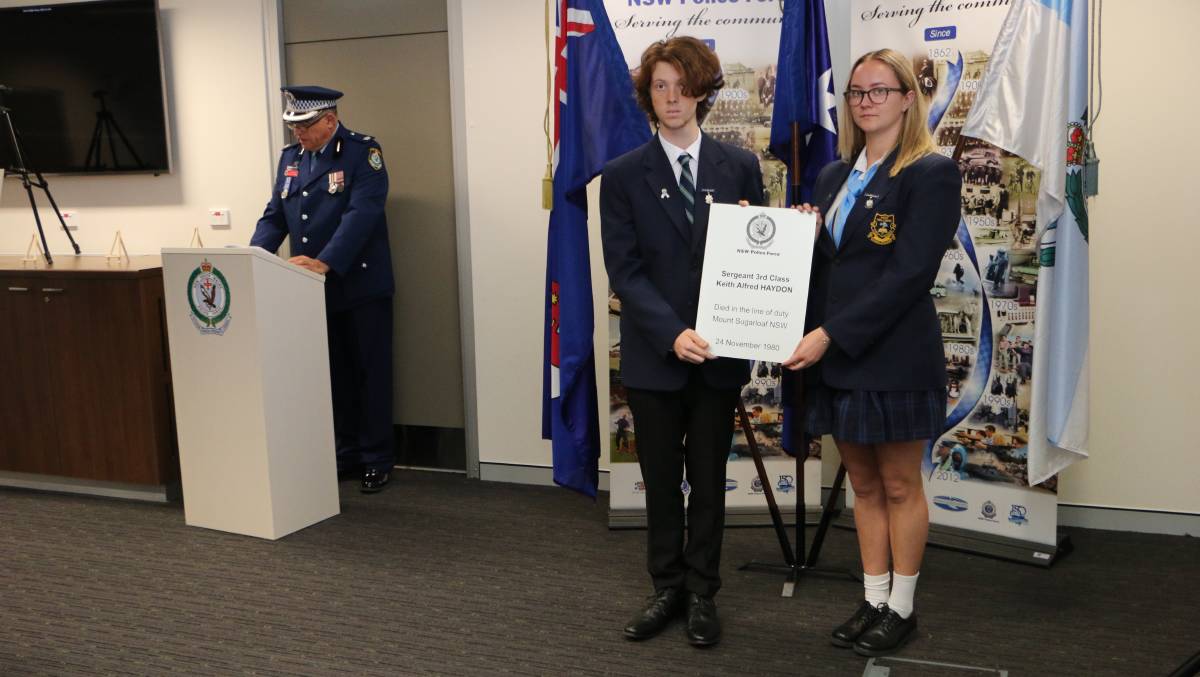
Keith Alfred HAYDON

Keith Alfred HAYDON

Late of West Wallsend

New South Wales Police Force

Regd. #  10930

Rank: Probationary Constable – appointed 24 February 1964

Constable – appointed 24 February 1965

Constable 1st Class – appointed 24 February 1969

Senior Constable – appointed 24 February 1973

Sergeant 3rd Class – appointed ???

Sergeant – Death

Stations:  Western District, Nyngan Lock Up Keeper, West Wallsend ( from February 1980 ) – Death

ServiceFrom  ? ? pre Feb. 1964  to  24 November 1980 =  24+ years Service

Awards:   National Medal – granted 20 January 1981 ( Posthumously )

Born:   Thursday  23 December 1943 at Wallsend

Died on:   Monday  24 November 1980

Age:  36 yrs 11 mths 1 day

Cause:   Shot 3 times – Murdered

Event location:   Sugarloaf Range Rd, Mt Vincent, NSW.   GPS ( Approx. )  -32.918444, 151.516389

Event date:   Monday  24 November 1980

Funeral date:   ? ? ?

Funeral location:   ?

Funeral Parlour?

Buried at:   ?

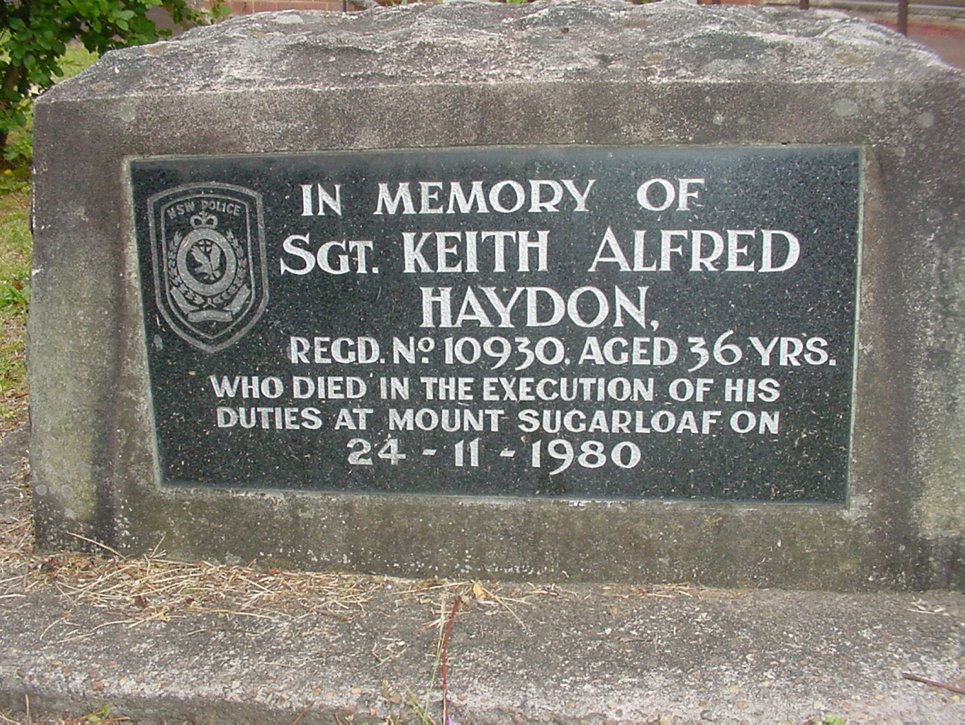
 Memorial located at:   The Memorial was apparently located at the site of the incident ( as per above GPS details ) but was constantly being vandalised.

It was then removed from the incident site and moved to the grounds of West Wallsend Police Station in the mid 1980’s.

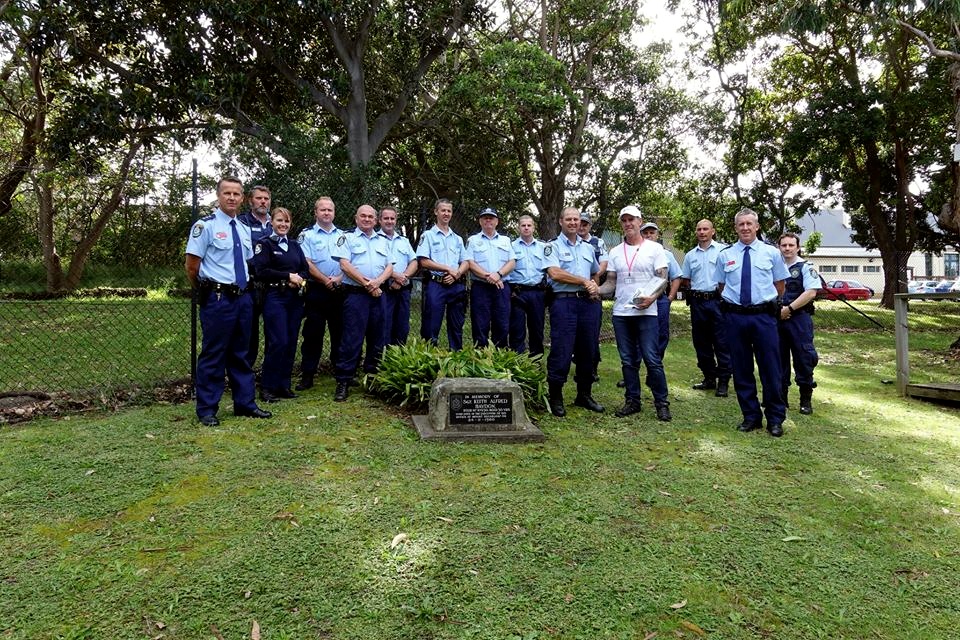
The West Wallsend Police Station was decommissioned in the 2006 ( now a private residence ) and the Memorial was relocated to Waratah Police Station –  Newcastle City LAC.

Sergeant Keith Haydon ( 1980 )

Keith Alfred HAYDON

KEITH IS mentioned on the Police Wall of Remembrance


 Funeral location TBA

FURTHER INFORMATION IS NEEDED ABOUT THIS PERSON, THEIR LIFE, THEIR CAREER AND THEIR DEATH.

PLEASE SEND PHOTOS AND INFORMATION TO Cal

May they forever Rest In Peace


About 12.20pm on 24 November, 1980 Sergeant Haydon drove to Mount Sugarloaf, near West Wallsend, following a report of shots being fired on the mountain. The sergeant did not know at the time that the person firing the shots was wanted for a double murder whilst robbing a gun store at Bondi two years earlier.

When Sergeant Haydon located and confronted the offender he was shot to death.

Police were quickly informed of the situation by Forestry Department worker Cliff Hogbin, who had made a note of the offender’s vehicle registration number shortly before finding the sergeant’s body. Mr Hogbin displayed outstanding courage in remaining with Sergeant Haydon and the police vehicle at the crime scene and directing police to the location.

A description of a suspect vehicle seen in the area by Mr Hogbin was then broadcast by Police Radio VKG and a short time later that vehicle was spotted by Constable Alexander Pietruszka ( Regd # 17592 ) of Beresfield Police.

Due to confusing and continual radio transmissions ( relating to the sergeant’s murder), and despite many attempts to do so, Constable Pietruszka was unable to ascertain the reason for the alert on the suspect vehicle. Having little choice in the matter he stopped the vehicle and spoke to the driver. Constable Pietruszka was then also shot in the stomach and seriously wounded. He later recovered.  ( On the 27 June 1986 he was promoted to Senior Constable ).

At this time more police arrived, and the offender was disarmed and arrested by Senior Constable Ken Goodfellow ( Regd # 14949 ).


The Canberra Times of 25 November, 1980 reported the following account.

“MAN KILLS POLICE SERGEANT”

SYDNEY: A gunman shot dead a police sergeant yesterday near the Mount Sugarloaf Lookout Road, near Newcastle, and shortly after shot and seriously injured a constable at a roadblock near Newcastle.

Sergeant Keith Haydon, 37, of West Wallsend, died when he was shot once in the head and twice in the back. He leaves a wife, two daughters and a son. Constable Alexander Pietruszka, 30, was shot in the stomach after he pulled over a car at an intersection near Beresfield a short time later. He was in a satisfactory condition in the Mater Misericordiae Hospital at Waratah last night.

Sydney homicide detectives went to Maitland, near Newcastle, last night to question a man, 31, about another murder in Sydney recently.

The shootings started when Sergeant Haydon, the officer in charge of West Wallsend Police Station, was called to the mountain to investigate a minor complaint about a man shooting at targets in the bush.

After the shootings the man was taken to Maitland police station for questioning.

Police found five pistols, four .38 calibre and one .22 calibre in the car driven by the man.

The deputy chief of the Sydney CIB, Superintendent Geoff Hammond ( possibly Regd # 4990 ), said, “A good policeman is dead and another injured when they shouldn’t be. It was only a small matter, an ordinary inquiry”. A fund to aid the sergeant’s widow and children has been established by the town’s RSL and workers’ clubs.”


The Canberra Times of 14 April, 1981 also reported on the conclusion of the trial of the offender, Berwyn Rees.

“FIREARMS OBSESSION – MAN SENTENCED FOR 1977, 1980 KILLINGS

SYDNEY: A man was sent to a jail for life in the Central Criminal Court in Sydney yesterday for murders in 1977 and last year.

Mr Berwyn Rees, 31, unemployed, of Ponderosa Caravan Park, Raymond Terrace, near Newcastle, pleaded guilty.

Two men were shot dead in a Bondi Junction gun shop on August 4, 1977, and a policeman was shot dead at Mount Sugarloaf, near Newcastle, on November 24, 1980. Mr Rees also pleaded guilty to having maliciously wounded a policeman at Beresfield on November 24, 1980, with intent to avoid apprehension.

“Police said Mr Rees had used a .38 special Smith and Wesson revolver he had stolen from the gun shop to murder Sergeant Keith Alfred Haydon. The men killed in 1977 were Mr Raymond James, 26, the gun shop proprietor, and Mr Christopher Greenfield, 26, a customer.

Mr Justice Begg said the evidence revealed “wanton and merciless killings“.

The law in NSW permitted only one sentence to be passed on murder charges and Mr Rees was sentenced to life imprisonment on each and 10 years‘ jail for the malicious wounding of Constable Alexander Pietruszka.

Mr Justice Begg told Mr Rees that it appeared that he had “an obsession with firearms since you were a small child”, and that “you have lived a somewhat lonely and solitary life”. The case pointed to the free use of firearms and the question of whether their availability should be restricted.

Detective Sergeant J. F. Elsworthy ( Regd # 9114 ) told the court that on the morning of November 24 Mr Rees had gone to a remote place near Mount Sugarloaf with five handguns, a quantity of ammunition and the Smith and Wesson. Over three years he had visited the spot about once a month to try out guns shooting at cans.

Sergeant Haydon had blocked a car driven by Mr Rees and Mr Rees had admitted he had been shooting in the area. Mr Rees had shot Sergeant Haydon three times in the body. He had gone to move the police vehicle but Sergeant Haydon had taken the keys from the ignition, and he had returned to Sergeant Haydon and seen that he was moving. He had then shot him in the back of the head.

The same day Mr Rees had been apprehended by Constable Pietruszka and other police at Beresfield. Constable Pietruszka had approached Mr Rees’s car and shortly afterward had been shot in the stomach.

Detective Sergeant J. McGregor said that after the gun shop robbery and murders Mr Rees had taken away a quantity of guns and ammunition. He had taken the weapons and ammunition home and a week later taken them to his secluded spot, near where he was arrested on November 24, and for the next three years practised firing weapons.

“Giving evidence in a claim for compensation under the Criminal Injuries Compensation Act, Constable Pietruszka said his wounding had contributed to the break-up of his marriage. Some weeks after the incident his wife had told him she wanted him to leave the police force, and when he had disagreed she had left him.

Mrs C. A. Haydon, the widow of Sergeant Haydon, also applied for compensation for herself and three children. Mr Justice Begg adjourned both applications.”

Sergeant Haydon was born in 1943 and joined the New South Wales Police Force on 24 February, 1964.

At the time of his death he was stationed at West Wallsend.


Kevin Banister Extract from an environmental report dated 2012.

“The only location carrying a distinctive historical cultural significance was located just outside the study area close to Mount Sugarloaf at an area locally known as Summit Point.

The history of a cairn of stones, now no longer carrying any identifying memorial” Latitude:   -32°54’45.31  Longitude: 151°30’32.35

Summit Point Access Trail runs off Sugarloaf Range Road.

https://www.facebook.com/groups/514697128544865/permalink/1418665238148045/?comment_id=1418713924809843&reply_comment_id=2131361440211751&notif_id=1527583542465104&notif_t=group_comment_reply&ref=notif


Plaque commemorating death of Sgt Keith Alfred Haydon in grounds of old West Wallsend Police Station - 10-12 Withers Street, West Wallsend.<br /> Photo Ref: 25216<br /> Creator: Clark, Mr Greg<br /> Sergeant. Keith Haydon was in charge of West Wallsend Police Station, when he was killed whilst on duty at Mt. Sugarloaf in 1980. This memorial plaque was originally placed at the spot where Sergeant Haydon was killed, but was relocated to the grounds of the West Wallsend Police Station after it was damaged by vandals. When the station closed in 2006, the plaque was moved to Waratah Police Station and rededicated in a service held 8th December 2006.<br /> Creative Commons License<br /> This work by Lake Macquarie City Library is licencsed under a CCA
Plaque commemorating death of Sgt Keith Alfred Haydon in grounds of old West Wallsend Police Station – 10-12 Withers Street, West Wallsend.
Photo Ref: 25216
Creator: Clark, Mr Greg
Sergeant. Keith Haydon was in charge of West Wallsend Police Station, when he was killed whilst on duty at Mt. Sugarloaf in 1980. This memorial plaque was originally placed at the spot where Sergeant Haydon was killed, but was relocated to the grounds of the West Wallsend Police Station after it was damaged by vandals. When the station closed in 2006, the plaque was moved to Waratah Police Station and rededicated in a service held 8th December 2006.
Creative Commons License
This work by Lake Macquarie City Library is licencsed under a CCA

https://history.lakemac.com.au/page-local-history.aspx?pid=1085&vid=20&tmpt=showmedia&objid=25216


2017 Remembrance Bicycle Ride

Newcastle City Police District<br /> Like This Page · April 27, 2017 ·<br /> 2017 Remembrance Bicycle Ride<br /> Newcastle City Command welcomed Peter Haydon who intends to participate in the police remembrance ride, proudly supporting NSW Police Legacy. Peter is the son of Sergeant Keith Haydon who was stationed at West Wallsend Police Station and tragically murdered at Mount Sugar Loaf, whilst on duty on 24 November 1980. Peter was only 14 years at the time of his father's passing.<br /> On behalf of Superintendent John Gralton, Senior Sergeant Craig Thompson, who is also a legatee, proudly presented Peter with a cash donation made by Newcastle City staff. Senior Sergeant Thompson is the son of Senior Constable Allan Thompson

Newcastle City Command welcomed Peter Haydon who intends to participate in the police remembrance ride, proudly supporting NSW Police Legacy. Peter is the son of Sergeant Keith Haydon who was stationed at West Wallsend Police Station and tragically murdered at Mount Sugar Loaf, whilst on duty on 24 November 1980. Peter was only 14 years at the time of his father’s passing.
On behalf of Superintendent John Gralton, Senior Sergeant Craig Thompson, who is also a legatee, proudly presented Peter with a cash donation made by Newcastle City staff. Senior Sergeant Thompson is the son of Senior Constable Allan Thompson who was Stationed at Cessnock Police Station when tragically killed in a motor vehicle accident, 40 years ago on the 3rd May 1977. Those donations include a full cash tin which Crime Prevention Officer, Senior Constable Mark Bird had been personally contributing to over the past years – which now finds its way to the intended cause.
Participates have so far raised $90,739 which will be donated directly to NSW Police Legacy which will be used to support the direct family of member of the NSW Police Force killed in the line of duty.
Newcastle City Command wish Peter all the best, who will be challenged by blistery westerly winds and a gruelling 300km ride from the Wall of Remembrance in Sydney’s Domain to the National Police Wall of Remembrance in Canberra – all in the effort to raise money for NSW Police Legacy.
Please search facebook – Remembrance Bike Ride supporting NSW Police Legacy – if you would like to support those participating in the ride from 28 – 30 April 2017.


Hi everyone

I hope this okay to pop this fundraising page on here? Just delete if not.

But today I would like to ask for your support in raising funds for the families of deceased NSW Police Officers.

My dad, Sgt Keith Alfred Haydon was killed in the line of duty 24th November 1980 at Mt Sugerloaf while responding to reports of a firearm being discharged in the vicinity. Little did he know that the offender had only 2 years earlier murdered 2 people while robbing a gun store in Sydney Eastern Suburbs.

Dad was only 36 years old. He had recently been promoted to the rank of Sergeant and taken a transfer to West Wallsend in the February of 1980. He moved with his wife of 16 years, 2 daughters and a son. He moved to Westy to be close to home. Dad was born in Wallsend in 1943. His mum and sister lived at Swansea at the time of our move. This was supposed to be a much easier and rewarding chapter in my dad’s life after travelling around rural NSW for 16 years at various stations.

I am riding 300km in 3 days with a great bunch of Policemen and woman and policing community in order to raise funds for NSW Police Legacy. I am currently very unfit but have a month to train for the journey, your support will be so encouraging.

If you can help please donate on the link attached. All donations are tax deductible and will towards helping a very worthy cause.


National Police Remembrance Day ceremony in Lake Macquarie

Keith Alfred HAYDON


Man who ‘executed’ three victims could be paroled despite multiple life sentences

By A Current Affair Staff

A man who was sentenced to three terms of life in prison for three murders could be about to walk free on parole, sparking calls for him to be kept behind bars.
Berwyn Rees was jailed in 1981 for a murderous spree that saw him kill three men in cold blood, and attempt to shoot dead a fourth.
On November 24, 1980, Sergeant Keith Haydon, 37, was gunned down in a wooded area in Lake Macquarie.

Berwyn Rees was jailed with three life sentences over three murders and the shooting of a police officer. (A Current Affair)

His body was found shot in the back of the head, and twice more in the body at close range.
“I knew as soon as they walked in, and I just said, ‘How bad?'” Sgt Haydon’s wife Anne said of the moment two police officers arrived at her door to inform her.
“And he just said it was the worst.”
The killer, Rees, was later pulled over by Constable Alexander Pietruszka, who almost died for doing his job.

Sergeant Keith Haydon was gunned down in Lake Macquarie in 1980. (A Current Affair)

Mr Pietruszka, now retired, said Rees had raised his gun “without warning”.
“The first bullet went through my hair,” he said.
“The second bullet flicked my ear and because I was turning sideways the third bullet hit me there, luckily hit the rib and bounced out rather than in.”
Despite the pain of his wound, Pietruszka was able to let off two shots.

Sgt Haydon's wife Anne still remembers the moment she learned her husband was dead. (A Current Affair)
Sgt Haydon’s wife Anne still remembers the moment she learned her husband was dead. (A Current Affair)


“I was trying to psych myself up to roll over and face him,” he said.
“I wasn’t just going to lay there and let him shoot me. I was going to face him.”
He believes that fortitude saved his life.
But he said he still remembered what he felt as he looked into Rees’s eyes.

Constable Alexander Pietruszka was shot after pulling Rees over. (A Current Affair)

“This bloke was nothing,” he said.
“I can’t explain to somebody how cold he was, how expressionless, just – just evil.”
At the time of these shootings, Rees was on the run after having committed two other murders in Sydney three years previously.
The victims then were gunshop owner Ray James and customer Christopher Greenfield.

Mr Pietruszka said he saw "nothing" in Rees's eyes. (A Current Affair)
Mr Pietruszka said he saw “nothing” in Rees’s eyes. (A Current Affair)

Rees shot them both in the back of the head at point blank range, Ray James’s daughter Tracy said.
“It never leaves you,” Christopher Greenfield’s mum Betty said.
In 1981, Rees was convicted and jailed for three life sentences over the killings.
But now, the New South Wales State Parole Authority has revealed it has formed an intention to grant parole for Rees.

Years previously, Rees had shot gun store owner Ray James. (A Current Affair)


And Mr Pietruszka and the loved ones of Rees’s other victims are demanding he stay behind bars.
“If he gets out, if he gets in a corner, he’ll kill again,” Mrs Haydon said.
Ms Greenfield said she had been told Rees had shown no remorse during his time in jail.

Ray's customer Christopher Greenfield was also killed in the shooting. (A Current Affair)
Ray’s customer Christopher Greenfield was also killed in the shooting. (A Current Affair)

“Well, after this length of time, if someone hasn’t come to their senses and realised what exactly they’ve done, and to have no remorse, seems unbelievable to me,” she said.
Corrective Services Commissioner Peter Severin is also opposing Rees’s bid for freedom.
The final decision will rest with the five-member panel at the State Parole Authority, with a public hearing to take place on Friday.
Betty Greenfield, Anne Haydon and Tracy James all plan to be there.

Christopher's mum Betty said the pain had never left her. (A Current Affair)
Christopher’s mum Betty said the pain had never left her. (A Current Affair)


Mr Pietruszka recalled the words of the sentencing judge – that Rees should never be released.
He said Rees had “executed” his three victims.
“I believe that somewhere deep inside him, there is still evil lurking,” he said.
© Nine Digital Pty Ltd 2019

https://www.9news.com.au/national/berwyn-rees-parole-bid-new-south-wales-murder-triple-police/e6dbf924-8b42-48f9-81bd-d459f772daca


Reginald Hugh STEVENSON

Reginald Hugh STEVENSON – QPM

aka  Blowfly

New South Wales Police Force

[alert_yellow]Regd. #   5498[/alert_yellow]

Rank: Police Cadet – appointed 1 March 1943

Probationary Constable – appointed 21 February 1947

Sergeant 2nd Class – appointed 19 May 1968

Detective Sergeant 1st Class – SHOT

Detective Inspector – appointed 6 March 1976

Detective Inspector – Retirement

JoinedNSW Police Force via

NSW Police Cadet System on 1 March 1943

Cadet # 400

Stations: ?, General Detectives at the old CIB in the old Hat Factory, Darlinghurst ( # 3 Division – Det Sgt, early 1970’s ), Newtown

ServiceFrom  1 March 1943  to  ? ? ?

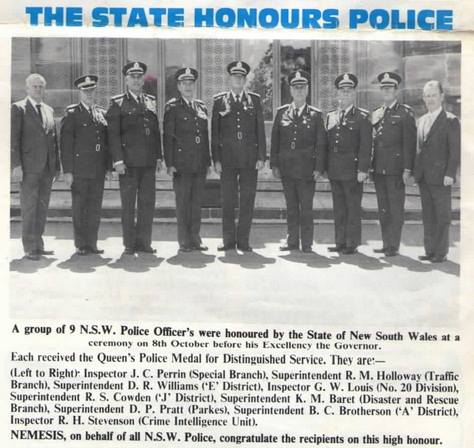
Awards: Queen’s Commendation for Brave Conduct – granted 17 February 1976

Queen’s Police Medal – QPM – granted 16 June 1979

Born:  20 February 1926

Event Date:  9 December 1974

Event type / Cause:  Shot – 1974. Damage to liver & kidney / Heart Attack in 1980
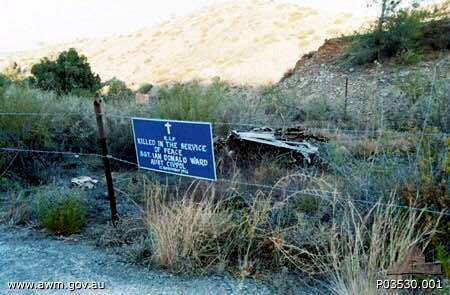
Event location:  Newtown

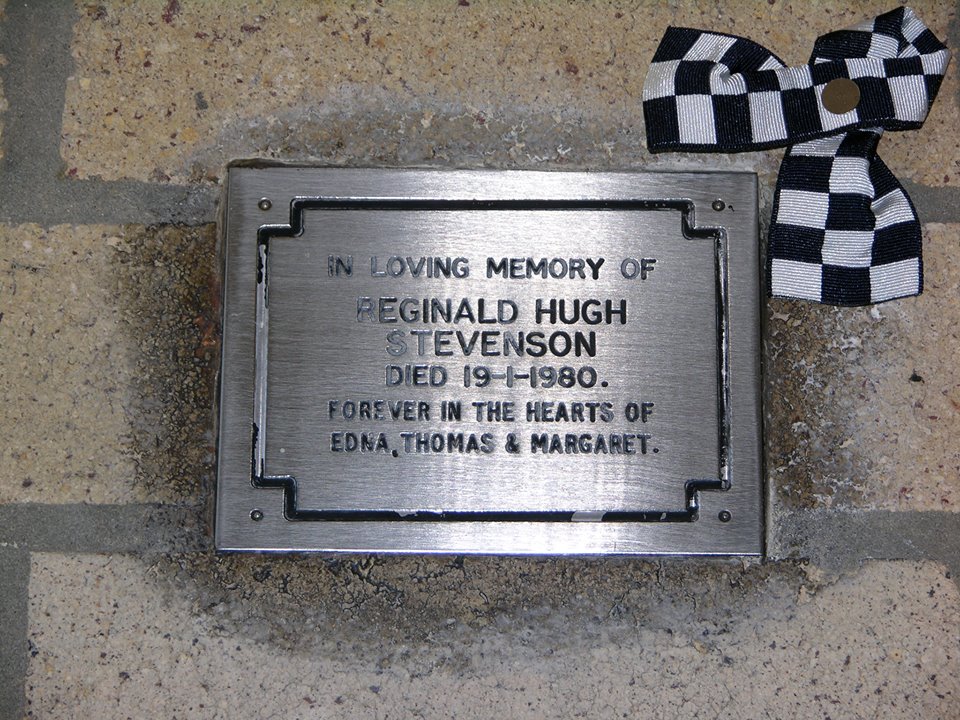
Died on:  19 January 1980

Age:  53

Funeral date:  11 February 1980

Funeral location?

Buried at:  Cremated & Buried in Botany ( NOT Rookwood ) Cemetery

Banks Court Loggia, Wall A

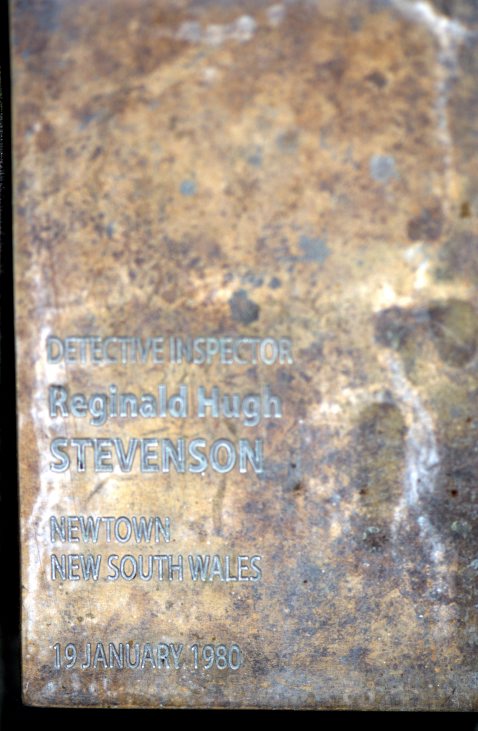
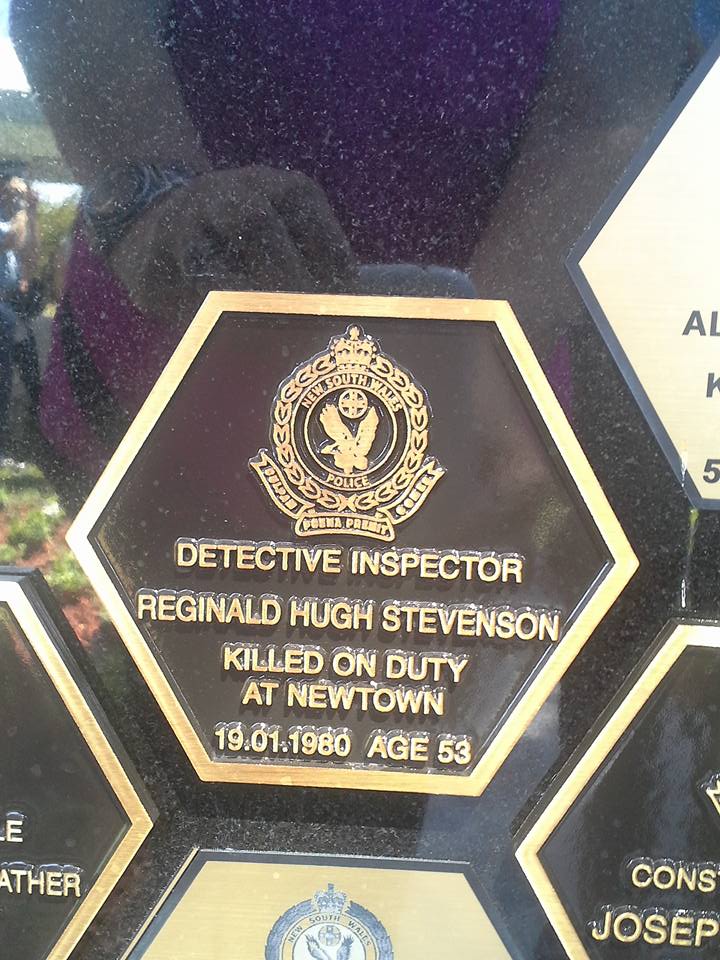
Touch plate at the National Police Wall of Remembrance, Canberra


On 9 December, 1974 Detective Sergeant 1st Class Stevenson was shot in the chest after confronting an armed offender in Newtown. Although seriously wounded at the time he continued to direct other police at the scene until he was taken to safety. As a result of the incident Sergeant Stevenson was awarded the Queen’s Commendation for Brave Conduct and the Queen’s Police Medal for Distinguished Service. He was promoted to the rank of detective inspector in 1976.

On 19 January, 1980 Inspector Stevenson died of a heart attack and it was determined that his death was ultimately caused by the 1974 injuries.


The detective inspector was born in 1926 and joined the New South Wales Police Force as a Cadet in 1943. He was sworn in on 21 February, 1947.


[divider_dotted]


NEWTOWN LOCAL AREA COMMAND POLICE COMMEMORATION SERVICE

http://www.parliament.nsw.gov.au/prod/parlment/hansart.nsf/V3Key/LA20130508056

Page: 20259

Ms CARMEL TEBBUTT (Marrickville) [7.07 p.m.  8 May 2013]: Recently at Rookwood Cemetery I attended a memorial service to commemorate police officers from the Newtown local area command killed in the line of duty. The moving service was attended by Deputy Police Commissioner Nick Kaldis, Superintendent Simon Hardman, the commander of the Newtown Area Local Command, many other police representatives, and relatives and descendants of the police officers. Those attendees included Ms Avona Wallace, Mr and Mrs Norman Stephenson, Mrs Lynette Everton and Ms Edna Stevenson. Representatives from the emergency services and community members were also in attendance. The member for Campbelltown, Bryan Doyle, attended representing the Premier.

The five officers being remembered at the ceremony gave their lives to protect the community. They were Constable First Class John Wallace, Constable First Class Ruston Stephenson, Constable Lionel Guise, Detective Inspector Reginald Stevenson and Constable Pashalis Katsivelas. The ceremony to mark the sacrifice of these officers reflected on the enormity of their contribution to the community, as well as the impact of their death on their families. It is often said, and it is true, that police officers leave their homes for each shift uncertain of what any day may bring and whether they will return at the end of the day. We owe these men and women our deepest gratitude for the risks they face and take every day in their job. At Rookwood Cemetery we visited each of the graves of those officers who lost their lives in the line of duty and behind each individual was an illuminating life story.

We began at the grave of Constable First Class Ruston Stephenson, who died 80 years almost to the day of the commemoration. Constable Stephenson joined the Police Force in 1912, and four years later enlisted in the army, later joining the fight in France during the First World War. He was awarded the Distinguished Conduct Medal for conspicuous gallantry in rescuing injured soldiers while under fire. Remarkably, when he returned he rejoined the Police Force and continued to serve until his death on 9 April 1933 after a tragic accident involving a motorcycle at the then Newtown Stadium while performing general duties policing.

We were also told the story of Detective Inspector Reginald Hugh Stevenson—I was honoured on the day to meet his widow, Ms Edna Stevenson, who still had strong memories of the incident that led to Inspector Stevenson’s death. Detective Inspector Stevenson joined the NSW Police Force as a cadet in 1943 at the age of 17. In an act of extraordinary selflessness, Detective Inspector Stevenson was on annual leave on 9 December 1974 when he decided to go to work to assist in the planned arrest of a dangerous offender in Newtown, at the time telling his wife, “I don’t want my boys doing this on their own.” During the operation he was shot in the chest after leading his team in pursuit of the offender.

Detective Inspector Stevenson partially recovered and was awarded the Queen’s Commendation for Brave Conduct and the Queen’s Police Medal for Distinguished Service. However, he died in 1980 of a heart attack, deemed to be the result of the injuries he sustained on duty in 1974. These officers are just a few of many across New South Wales whose lives have been cut short as they have gone about performing their duty. I pay tribute to them all. They will not be forgotten and local events such as this are a powerful reminder of their sacrifice.

I also take this opportunity to acknowledge two Marrickville police officers, Sergeant Stewart and Constable Steele, who on Monday of this week rescued an intellectually disabled person from a house fire in Marrickville. Thankfully, those two officers who took huge risks survived and are quite rightly being hailed as heroes by their colleagues and the community. It is yet another example of the risk our police men and women take every day in order to keep the community safe. I take this opportunity to pay tribute to them.

[divider]


Paul BURMISTRIW

Paul BURMISTRIW

The FIRST Terrorist act in NSW

NSW Police Academy, Redfern – Class 128

New South Wales Police Force

Regd. #:   14872

Rank: Commenced Training at Redfern Police Academy on Monday 9 August 1971 ( aged 25 years, 1 month, 4 days )

Probationary Constable – appointed 20 September 1971 ( aged 25 years, 2 months, 15 days )

Constable – appointed 20 October 1972 ( loss of 1 month Seniority possibly failing an exam or physical )

Constable 1st Class – death

Stations: ?, Regent St ( 2 Division ), Central Police Stn ( 1 Division – A District ) – Death

Service:   From 9 August 1971  to  22 February 1978 = 6 years, 6 months, 13 days Service

Awards: No find on It’s An Honour

Born:  Friday 5 July 1946

Event date:  Monday  13 February 1978

Died on:  Wednesday  22 February 1978

Cause:  Bomb Explosion – Terrorist Act – Murdered

Event location:  Sydney

Age:  31 years, 7 months, 17 days

Funeral date:  Monday  27 February 1978

Funeral location: Russian Orthodox Church, Strathfield, NSW

Buried at: Rookwood Cemetery

Zone H  Remembrance Lawn 1  Grave 456

Memorial location:  outside of Hilton Hotel, George St, Sydney

Hilton Bombing memorial plaque to Alec Carter, Arthur Favell & Cst 1.C Paul Burmistriew
Hilton Bombing memorial plaque to Alec Carter, Arthur Favell & Cst 1/C Paul Burmistriw

Cst 1st Class Paul Burmistriw - Bomb explosion - 13 Feb 1978 - Roadside memorial - 02

PAUL IS mentioned on the Police Wall of Remembrance


Constable Burmistriw was fatally injured in a bomb explosion outside the Hilton Hotel, George St, Sydney, on 13 February, 1978. At the time the Regional Conference of Commonwealth Heads of Government meeting (CHOGM), a regional off-shoot of the biennial meetings of the heads of government from across the Commonwealth of Nations. was taking place at the hotel.

The bomb, planted in a rubbish bin, exploded when the bin was emptied into a garbage truck outside the hotel at 1:40am. It killed two garbage men, Alec Carter and William Favell, and a police officer, Paul Burmistriw, guarding the entrance to the hotel lounge, who died of his injuries on the 22 February 1978.


The blast also injured eleven others. Twelve foreign leaders were staying in the hotel at the time, but none were injured. Australian prime minister Malcolm Fraser immediately called out the Australian Army to guard the remainder of the CHOGRM meeting.


Also seriously injured in the blast were Sergeant Edward Hawtin, Senior Constable Rodney Wither ( Regd # 16376 ) and Senior Constable Terry Griffiths ( Regd # 13390 ). Two council employees, William Arthur Favell and Alec Carter, were also killed in the bombing.


The constable was born in 1946 and joined the New South Wales Police Force on 20 September, 1971. At the time of his death he was stationed at Central Police Station.

The scene of the Hilton Hotel bombing on George Street, Sydney. SUPPLIED.

160135-chaos-in-the-wake-of-the-sydney-hilton-bombing


549804-hilton-hotel-bombing


793715-sydney-hilton-hotel-bombing

Hilton Bombing - Army guard

Hilton Bombing

158582-forensic-search-of-the-hilton-bomb-site

hilton_old_140208_wideweb__470x319,0


Startling book unpicks story behind Australia’s first major terrorist attack

ONCE upon a time, Australia was truly the carefree, “lucky country” of our imagination. Now, we walk around on edge, knowing we are by no means protected from people who would do us harm.

If you thought that started with the Sydney siege, you’d be wrong. What is seen as the first major act of terrorism on Australian soil took place 30 years ago, and it remains unsolved to this day.

Author and award-winning filmmaker Dr Rachel Landers has dived into the archive documents on the Hilton bombing, trying to make sense of all the contradictory testimony surrounding that black day.

On February 13, 1978, a bomb was planted in a rubbish bin outside the Sydney Hilton, which was hosting a Commonwealth meeting of Asia Pacific heads of government.

The device exploded when it was loaded into a garbage truck, blowing the vehicle to pieces, along with two rubbish collectors, Alec Carter and William Favell. A police officer guarding the entrance to the hotel lounge, Paul Burmistriw, died later. Eleven more were injured.

It was a day that left people physically and mentally scarred, tore families apart and was a devastating blow to the happy-go-lucky Australian psyche. It triggered years of finger-pointing, conspiracy theories and saw several innocent men locked away.

Dr Landers’ book, Who Bombed The Hilton?, takes us back to an event that helps explain our nation today.

CONSPIRACY THEORY

As with terrorist attacks like 9/11, shocking claims emerged soon after the tragedy that Australian security forces had planted the bomb themselves.

One of the most vocal conspiracy theorists is policeman Terry Griffiths, who was badly mutilated by the blast, and questions the authorities’ story to this day.

The allegations, which have gained enough credence to be recorded in meticulous detail across the internet, centre on what some see as suspicious aspects of the story, including: why police outside the hotel didn’t see a bomber, why didn’t they search the bins, why they allegedly stopped garbage trucks emptying the bins, why a bomb squad was waiting, why a “warning call” wasn’t relayed to police outside the hotel and where the truck was dumped afterwards.

Dr Landers accepts that police made mistakes, and that the New South Wales police force had a problem with corruption at the time, but she says nothing she found in documentary evidence backed up Mr Griffiths’ claims.

She decided early on to eliminate witnesses’ recollections and instead focused on a forensic analysis reams of archival material made public 20 years ago. “Memory is an unreliable thing,” she said. “People misremembered basic facts. There was a huge discrepancy in what they recalled.

“There were appeals and counter-appeals. They tell a story about a miscarriage of justice that is not untrue, but covers up the question of who is actually the most likely person to have planted the bomb.”

MAKING THREE MURDERERS

Days after the bombing, a man named Richard Seary approached police and offered to infiltrate an Indian socio-spiritual organisation called Ananda Marga, who were demonstrating against the outside the hotel at the time.

In June, Seary told police that members Paul Alister, Tim Anderson and Ross Dunn had confessed to the bombing, and it was assumed Indian Prime Minister, Morarji Desai, was the target.

Seary said they were planning another attack on Neo-Nazi National Alliance leader Robert Cameron. The mole led police to the trio, in a car packed with explosives, and they were arrested. They were never convicted of the Hilton bombing, but were given 16 years each for conspiracy to murder Cameron.

It later emerged that Seary was a paranoid schizophrenic and drug addict, who had planted the explosives in the car. Alister, Anderson and Dunn were released after seven years in prison. It remains one of Australia’s worst miscarriages of justice.

While they received compensation, Alister told the Sunshine Coast Daily in 2008 he was sick of being referred to as a Hilton bomber.

Most officials now believe an Ananda Marga member named Abhiik Kumar, living in Israel, is behind the bombing. But the trail has long since gone cold and is “besieged by contradictions and evidentiary problems.”

The authorities failed to share their plans with international colleagues working on possible related bombings and attempted attacks and “it was catastrophic for the case, it totally derailed it,” according to Dr Landers.

“Special branch, for understandable reasons, went rogue,” she said. “People were so shocked, they’d been thrust into the international age of terrorism. People do irrational things in that vortex of fear.”

LONG FIGHT FOR TRUTH

Like today’s acts of terrorism, carried out in the name of Islamic State or other jihadi groups, the Hilton bombing didn’t take place in a vacuum.

“A lot of things I thought I knew turned out to be untrue,” said Dr Landers. “I always thought it was a really Australian story, I didn’t realise we were at the centre of an international reign of terror.

“There was a huge mountain of evidence linking this with Stockholm, New York, Malaysia … There are letters from Afghanistan threatening India. It quickly stopped being about Australia.”

The bombing was politicised so early on, it is hard to dig down to what really happened, but it’s a story that needs to be told without the agenda.

Dr Landers has conducted a thorough investigation, and she believes she has some answers, but she wants those touched by the tragedy to have the public inquiry they deserve.

As the threat of terrorism looms ever larger, we have a real chance to learn from our past.

Who Bombed the Hilton? is officially launched on Wednesday April 20.

http://www.news.com.au/entertainment/books-magazines/books/startling-book-unpicks-story-behind-australias-first-major-terrorist-attack/news-story/1e602043ab42bd65c1f63e37a315390c


http://forum.prisonplanet.com/index.php?topic=88905.0

The Warning Phone Call

The Hilton Operation ran strictly according to plan up until 12.30AM on the Monday morning. Two garbage pick-ups were prevented by the NSW police. Whoever planted the bomb was well aware of the garbage collection times. Another garbage collection was due at 1AM Monday morning. At 12.30AM the warning phone call was made. (Terry Griffiths says another police officer told him the warning phone call was made by a Sergeant in Special Branch who had been observing the scene outside the Hilton in a red torana, a police observation car. The warning phone caller rang the police switchboard and asked to speak to Special Branch. It was 12.30AM Monday morning. Normally, Special Branch would not be there at that hour, though the phone caller seemed to believe they would be. (Indeed, the same person called back an hour later at 1.30Am and again asked to speak to Special Branch.) After the phone rang a few times, the police telephonist transferred the call to the sergeant in charge of the CIB, Cec Streetfield. The Hilton Operation had begun to unravel.

What Streetfield did on being informed of the bomb, is one of the mysteries of the Hilton. What he did not do is notorious: he did not warn the police outside the Hilton over the police radio. Streetfield testified before the Hilton Inquest in 1982. According to Terry Griffiths, he told a pack of lies. According to Streetfield, the phone caller said: “Dere is a bomb in der bin outside der Hilton Hotel.” The phone caller then rang the Sydney Morning Herald and told them they might be interested in what was about to happen outside the Hilton Hotel. The Hilton Operation continued to fall apart. The garbage collection truck was running twenty minutes early that night. They arrived outside the Hilton at 12.40AM before the bomb was found.


City of Sydney Re-dedicates Plaque Commemorating Hilton Hotel Blast Victims

The City of Sydney is re-dedicating the plaque commemorating the victims of the Hilton Hotel bombing on the occasion of the 30th anniversary of the event.

The bombing at the Hilton Hotel occurred in the early hours of 13 February 1978. The bomb was concealed inside a garbage bin and exploded when that bin was loaded into a City of Sydney Council garbage truck compactor.

Three people were killed (Alec Carter and Arthur Favell, City Council workers, and a NSW Police Officer, First Class Constable Paul Burmistriw) and seven more were wounded. At the time, Malcolm Fraser, the Prime Minister and eleven visiting heads of state were staying at the hotel for a Commonwealth Heads of Government Meeting.

Lord Mayor, Clover Moor MP said that the anniversary of the bombing served as a time to remember those whose lives were cut short and those who still bear the scars today.

“This terrible act killed three decent and dedicated men, two of whom were working for the City of Sydney. But now we can re-dedicate this plaque so that future generations remember them and remember the shocking crime that took their lives.”

Commissioner of Police Andrew Scipione APM said it was important that Australians not forget the terrible incident.

“This was the death of a policeman killed as he helped guard world leaders in Sydney. Constable Paul Burmistriw was a fine officer. That he and City Council workers Alec Carter and Arthur Favell should die doing their job was a terrible tragedy.”

The original plaque had stood on the site of the garbage bin but had been moved due to a City streetscape upgrade and the recent upgrade of the Hilton Hotel. The new plaque will stand at the original spot on the George Street footpath.


Hilton Hotel Bombing History

In February 1978, Prime Ministers and other heads of State and senior political figures from Commonwealth countries gathered in Australia for a Commonwealth Heads of Government Meeting, known as CHOGM, held at Sydney’s Hilton Hotel.

In the early hours of 13 February 1978, a City of Sydney garbage truck compactor set off a bomb that had been placed in a bin immediately outside the Hilton Hotel on George Street.

At the time Australian Prime Minister Malcolm Fraser and eleven visiting heads of state were staying at the hotel.

Three people were killed by the blast: two City of Sydney Council workers, Alec Carter and Arthur Favell and First Class Police Constable Paul Burmistriw.

Seven people were wounded by the blast, including police officer, Terry Griffiths.

The then Indian Prime Minister, Morarji Desai claimed that the blast was the work of a group known as Ananda Marga, protesting the imprisonment in India of their spiritual leader, Shrii Shrii Anandamurti.

In 1989, Evan Pederick came forward and claimed responsibility for the bombing. He accused a one-time member of Ananda Marga, Tim Anderson of helping to plant the bomb. The only other main witness against Anderson was notorious criminal Raymond John Denning. Anderson went on trial in 1990 and was initially found guilty.

Anderson appealed to the NSW Court of Appeal. On 6 June 1991 the court led by then Chief Justice Gleeson quashed the conviction, based on the inappropriate and unfair action by the crown prosecutor. His Honour noted: “It is well established that a Court of Criminal Appeal may treat a jury’s verdict as unsafe or unsatisfactory even if satisfied that it was, on the evidence, reasonably open to the jury to convict … The inherent strength or weakness of the crown case may be a factor relevant to such a conclusion. In the present case, for reasons just given, I do not regard the crown case as presented at trial as a strong one, and for the reasons discussed in relation to the first ground of appeal, there was one important respect in which, in my view, the proceedings miscarried. The crown was permitted, in an unfair manner, to obscure a major difficulty concerning the reliability of the evidence of its principal witness by raising an hypothesis that was not reasonably open on the evidence.This was compounded by what I regard as an inappropriate and unfair attempt by the crown to persuade the jury to draw inferences of fact, and accept argumentative suggestions, that were not properly open on the evidence. I do not consider that in those circumstances the crown should be given a further opportunity to patch up its case against the appellant. It has already made one attempt too many to do that, and I believe that, if that attempt had never been made, there is a strong likelihood that the appellant would have been acquitted.”

There has been controversy about the motives for the planting of the bomb and the handling of the case that surrounded it. Terry Griffiths has claimed that the bombing was a conspiracy and called for an inquiry. There have been persistent suggestions of ASIO involvement in the bombing.

Anderson subsequently lodged 52 complaints of professional misconduct with the New South Wales Bar Association against Mark Tedeschi, QC. All but one of the complaints by Anderson against Tedeschi were dismissed by the NSW Bar Association. The remaining complaint was dismissed by the NSW Administrative Decisions Tribunal.

In 1991, Peter Collins, the then NSW Attorney-General led a campaign to demand a joint State-Federal inquiry which culminated in a unanimous resolution by both houses of the NSW parliament. Mr Collins said in parliament: “The Hilton bombing cannot simply be relegated to the yellowing pages of history until we know the truth, however unpalatable it may turn out to be. It must also be said that we owe this to the memory of the three who perished, their families, and to those who survived… This issue, this weeping sore transcends political, constitutional and geographical boundaries. The answers may be alarmingly simple. But, whatever the truth, the people of Australia are entitled to nothing less.”


Hilton Hotel bombing victims remembered with plaque


Australian terrorism born in the Sydney Hilton bombing

It was also reported a warning phone call was made to police minutes before the explosion, in the first hint that there was more to the story.

[blockquote]We will never be stopped. Ananda Marga will cleanse the world[/blockquote]

And so began the controversy.

Overnight, Sydney went into lockdown amid the biggest manhunt in Australia’s history.

Mr Fraser and the NSW Premier Neville Wran demanded support from the armed forces, and almost 2000 troops descended on the city for protection.

CHOGM progressed with armed forces and even a decoy train employed to protect heads of government on their way to a pretty NSW town, Bowral.

Mr Coster recalls Bowral was “transformed into a war zone” with helicopters flying overhead through the night and armoured personnel carriers along the road into town.

Police were now hunting three men “swarthy in appearance and in their early 30s”.

Within hours, suspicions emerged that a previously ignored religious sect known as Ananda Marga appeared to have played a role in the bombing.

Margis -as the sect’s members were known- had already been involved in worldwide protests for some years, demanding the Indian government release their spiritual leader Pabhat Ranian Sarkar who was serving a life sentence for murder.

But the breakthrough came after the three main suspects were charged in another political conspiracy four months later.

On June 15, Ross Dunn, 24, Paul Alister, 22, and Timothy Anderson, 26, were charged with conspiring to murder the NSW leader of the National Front – a professed Nazi – Robert Cameron.

All were members of Ananda Marga’s Australian branch.

The trio were sentenced to 16 years’ jail without parole.

But the trials also unearthed police informer, Richard Seary, 26, who implicated them in the Hilton bombing.

Mr Seary, a reformed heroin addict, revealed he had joined Ananda Marga as a paid police informer in March 1978 to discover any links between the sect and the bombing.

The men told him they had “fixed” the Hilton bombing, and Anderson had also declared: “You’ve got to be willing to die for your ideology.”

An arresting detective said Dunn had also told him: “We will never be stopped. Ananda Marga will cleanse the world.”

But despite a $100,000 reward and a team of 100 full-time detectives, no charges had been laid for the Hilton bombing a year after the blast.

Three early leads had been discounted, including a theory that a woman was suspected of trying to harm the New Zealand prime minister because she opposed the abortion laws.

Three years after the bombing, new evidence suggested a cover-up.

On March 30, 1981, newspapers reported that the NSW Attorney-General had received fresh information.

Among the new claims was that an army bomb disposal squad had been on its way to the Hilton when the bomb exploded. Another allegation was that the police hadn’t searched the garbage bins the night before the blast, in an otherwise comprehensive search.

Enter the Hilton bombing’s most vocal conspiracy theorist.

Retired senior constable Terry Griffiths had been just six metres from the blast and suffered extensive injuries.

The father of two, who had been battling for worker’s compensation for over two years, believed he was the victim of a cover-up involving Australian security forces.

Mr Griffiths said the NSW Government had deliberately blocked his efforts to seek compensation.

“I’m suggesting there is enough evidence for any person who wishes to go into the matter honestly to believe that there may well be a cover-up in this matter.”

Some evidence appeared to support his theory.

It emerged that three garbage trucks were diverted from the bin by police officers, despite the fact that it was overflowing with rubbish.

Mr Griffiths even claimed the explosion was the inadvertent result of a media stunt fabricated by ASIO, the military and the NSW Police Special Branch.

His theory was that the organisations had planted the bomb which they then intended to “discover” to make them look good – and justify broader powers, he told Sydney’s The Sun-Herald.

It was only when the ill-fated fourth truck slipped through and finally emptied the bin that the “plan” went badly awry.

Mr Griffiths suggested that the phone call police received just minutes before the blast was in fact a person involved who saw the truck approach the bin, and panicked.

Mr Griffiths said ASIO had benefited from the blast, gaining “unlimited powers” from legislation introduced in the wake of the blast.

Some politicians gobbled up Mr Griffiths’ allegations of conspiracy, including then-Senator and federal shadow Attorney-General Gareth Evans.

Within a month there were calls for fresh investigations into the Hilton bombing and the reward raised to $250,000.

Then, in 1982, a coronial inquest was announced.

The Sydney Hilton’s night receptionist at the time of the blast, Manfred von Gries told the inquiry he saw three men speaking to police just before the explosion.

Within days, he was approached by a man who threatened to kidnap his son if he spoke to police about what he saw, he claimed.

He later identified the man as Jason Alexander, Ananda Marga’s Australian leader, but there were doubts about his evidence.

Mr Griffiths added to his claims, suggesting a bomb disposal truck was stationed around the corner before the blast, and that several Special Branch officers were watching the police from a vehicle across the road.

He also said he’d been informed that a warrant officer with the armed forces had planted the bomb several days before the blast.

Mr Griffiths also said that Sgt Robert Jackson, his friend and fellow officer who had assisted with the initial murder investigation, had told him that the warning call was made to police 10 minutes before the blast.

Within days, Sgt Jackson denied the conversation.

Sgt Arthur Hawkin, on duty on the night of the blast, appeared to back the theory.

Mr Hawkin said when he arrived for his shift 90 minutes before the explosion he was told to expect trouble and “something about a bomb”.

The inquiry also heard a sergeant before the blast saw Timothy Anderson near the rubbish bin that later exploded, during a demonstration against the New Zealand prime minister.

And another witness claimed Anderson, a regular customer, had picked up a newspaper in her shop the morning after the blast and had said to another man: “We only got three.”

Then the police informant Richard Seary dropped powerful new claims, saying Ross Dunn had told him he’d planted the bomb in the bin an hour before the Indian Prime Minister’s arrival.

Why hadn’t Mr Seary shared this evidence with police earlier?

Initially, he said it was because he was upset with the way police had treated him. Later, he said it was due to concerns that Dunn had lied, confessing out of bravado.

He said on account of his doubts, he had drip-fed his evidence to police instead.

With the latest claims, coroner Norman Walsh decided there was enough evidence to charge Dunn and Alister of three counts of murder, and Anderson with conspiracy to murder.

The court erupted in shock and fury, and even the jury, which gave no official verdict raised lingering questions.

In 1984, the NSW Attorney-General Paul Landa on Crown law advice decided the three men would not be prosecuted.

Instead, a judicial inquiry was announced to investigate the Cameron charges.

This inquiry found Richard Seary to be an unreliable witness, and a psychiatrist diagnosed him as having a personality disorder.

Adding to his fall from grace, the Margis’ lawyer went so far as to accuse Mr Seary of bombing the hotel himself.

In 1985, after seven years in jail, the judicial inquiry quashed the trio’s convictions.

The three men were released in May, pardoned by the NSW government, and awarded $100,000 each in compensation.

Alister and Dunn moved to an Ananda Marga community in Queensland, and Mr Anderson was left to pursue a PhD on Australian foreign debt.

But on May 30, 1989, Anderson was again arrested and charged for the bombing amid new evidence.

Evan Dunstan Pederick, a 33-year-old Brisbane public servant Ananda Marga member admitted he had tried to remotely detonate the bomb when the Indian Prime Minister arrived at the hotel.

He said he was acting as a front man for Mr Anderson, who provided the explosives.

When the bomb failed to detonate, Pederick panicked and ran. He pleaded guilty to conspiring to murder the Prime Minister – but not guilty to causing the three subsequent deaths.

Nevertheless, Pederick was found guilty of three counts of murder, and sentenced to 20 years’ jail. The jury determined he had acted with reckless indifference by leaving the bomb in the bin.

Another prisoner who had met Mr Anderson while he was serving the Cameron sentence revealed Anderson had confessed his role in the Hilton bombing.

In 1990, Anderson was sentenced to 14 years’ jail. Supreme Court justice Michael Grove said Mr Anderson had been “brainwashed” by the Ananda Marga cult when he instigated the bombing.

Seven months later Mr Anderson was acquitted.

But the saga was far from over.

In May 1995, Pederick did a U-turn. After six years in jail for a crime he confessed to, it suddenly occurred to Pederick that he might be innocent.

Pederick accused police of failing to test his evidence and state of mind.

“Is it possible that in 1978, dominated by the influence of the Ananda Marga and yet in conflict with the demands of the sect, I had acquired a deep sense of guilt which expressed itself in an obsession with the cataclysmic events for which Ananda Marga was held responsible at the time? I do not know,” Pederick said in a News Ltd report.

In 1997, the NSW Court of Criminal Appeal dismissed Pederick’s new claims, but six months later he was released on parole.

”As a naive young person, influenced by the teachings of Ananda Marga, I participated in a fatal act of political terrorism,” Pederick said, as quoted in The Australian.

But as he left the jail, Pederick indicated there were six others involved in the bombing, none of whom were ever charged.

More than three decades on, the question mark remains: Who bombed the Sydney Hilton?

http://www.heraldsun.com.au/news/law-order/the-sydney-hilton-bombing-of-1978/story-fnat7jnn-1226539686853


Police-coroner collaboration on Hilton revealed

Wednesday, December 11, 1991

By Dick Nichols and John Tognolini

SYDNEY — In evidence before the New South Wales Independent Commission Against Corruption, it has emerged that state coroner Kevin Waller advised Detective-Inspector Aarne Tees, investigator of the Hilton bombing, on whether the testimony of police informer Raymond John Denning provided a strong enough basis for a prosecution of Tim Anderson.

Anderson was convicted in November 1990. His appeal was unanimously upheld by the NSW Court of Criminal Appeal in May 1991, Chief Justice Gleeson ruling that “a jury, acting reasonably, would give Denning’s evidence little or no weight”.

The involvement of Waller in the Hilton case again highlights the links between the police and the judiciary in this state. In evidence, Tees stated that he didn’t trust crown law officers (who would normally make judgements on the reliability of testimony) and instead sought the opinion of Waller because he was “technically the head of homicide”.

Waller’s view that Denning’s evidence was trustworthy contrasts with his ruling in a previous case involving Denning, once known for his championing of prisoners’ rights.

In 1981-82 Waller heard a case brought by prisoners’ rights activist Brett Collins against certain warders at Grafton Jail. One of the witnesses called by Collins was Denning. In his adjudication, Waller said:

In cross-examination he demonstrated a bizarre attitude to life … Mr Denning has been in institutions, in gaols, committing crimes or on the run for the last 15 of his 30 years and his attitude must have been affected by his life style. At other times he refused to answer questions in cross examination despite warnings that such refusals could reflect adversely on his credit. He was an unreliable witness.”

The revelation that Tees consulted Waller on using Denning also went against Tees’ own evidence to the committal hearing against Anderson, held in September 1989. There Tees denied having been advised by anyone before launching the prosecution.

In other evidence before the ICAC, it has emerged that the prosecution decided not to call five other prisoner witnesses against Anderson, even though all claimed that Anderson had confessed to the Hilton bombing when in jail. A coded message between two of these witnesses, which was intercepted by prison officers, read: “It’s nice to know we can get someone convicted even when he is innocent like Anderson is. They’re all gronks [dags].”

Someone on the prosecution side decided that such people wouldn’t make very reliable-looking witnesses for the prosecution.

Also of interest is the revelation that Anderson’s supposed confession to the five uncalled witnesses revolved around an alleged conflict between Anderson and fellow prisoner Alex Burmistriw, the brother of Constable Paul Burmistriw, killed in the Hilton bombing.

In her notes of an interview with Alex Burmistriw, Anderson’s solicitor wrote: “He said that the police had come to see him and they dared to say that he didn’t care for his brother. He [Burmistriw] asked about whether he is supposed to have got in a fight with Tim — I said in fact yes, that was one of the allegations. He said something like, if he had, Tim would have known about it.”

Little of this has appeared in the Sydney media. They have led with Denning’s challenge to Anderson to undergo a lie-detector test and Tees’ claim that Anderson and the Prisoners Action Group were involved in spiriting prison escapee Ian Steele out of the country in 1986.

Commissioner Ian Temby halted Tees’ evidence on this matter, saying he did not want the hearing to be “used as a vehicle for the bringing forth of material which is of no possible use to me and all it does is to titillate various imaginations“.

In a letter to the Sunday Telegraph, Brett Collins and Ian Fraser replied on behalf of the Prisoners Action Group: “Denning’s accusations elsewhere have been dismissed or totally contradicted by proven facts as in the Hilton bombing case. We regard his actions as sadly exhibiting the destructive influence of heroin, prison hopelessness and corrupt authorities.

In his opening remarks, Tim Anderson said that his questioning of Denning would reveal a “a pattern of constructing evidence to make it incriminate people with the help of Aarne Tees“.

Will the ICAC hearings get to the bottom of the police informer system? Will anyone important be charged? The signs are not very promising. Already Commissioner Temby has refused requests for chief Hilton prosecutor Mark Tedeschi and Kevin Waller to appear before the hearing.

https://www.greenleft.org.au/content/police-coroner-collaboration-hilton-revealed


Douglas Ronald EATON

Douglas Ronald EATON   QPM

Father of Serving NSWPF Member Sergeant Michael EATON # ?????
Late of  ?

New South Wales Police Force

NSW Police Academy Redfern Class # 100

Regd. #   11167


Rank:  Probationary Constable – appointed 17 August 1964

Constable – appointed 17 August 1965

Senior Constable – Death


Stations: ?, North East District ( 1965 ), Toronto – Death


ServiceFrom  ? ? Pre August 1964  to  30 April 1977 = 12+ years Service


Awardsposthumously awarded the Queen’s Gallantry Medal ( Imperial ), on 25 August 1978 Gallantry – NSW Police – Apprehend an armed man ( SenCon ),

posthumously awarded the George Lewis Memorial Trophy

posthumously awarded the Peter Mitchell Award

Queens Police Medal ( QPM ) – granted ? ? ?


Born:  Saturday  23 November 1940

Died on:  Saturday  30 April 1977

Age:  36 years, 5 months, 7 days

Cause:  Shot – Murdered – On Duty

Event location:  Toronto Country club, Kilaben Bay

Event date:  Saturday  30 April 1977

In Company ofSenior Constable Edwin Jackson GILL # 11512 who was the victim of an Attempt Murder in this same Event

Funeral date:  Sunday  3 May 1977

Funeral location:  Beresfield Crematorium, Beresfield

Buried at:  Cremated

 Memorial located at:  Toronto Police Station, 139 Cary St, Toronto, NSW

Douglas Ronald EATON

Douglas Ronald EATON

Douglas Ronald EATON

Douglas Ronald EATON


DOUG is mentioned on the Police Wall of Remembrance


FURTHER INFORMATION IS NEEDED ABOUT THIS PERSON, THEIR LIFE, THEIR CAREER AND THEIR DEATH.

PLEASE SEND PHOTOS AND INFORMATION TO Cal


May they forever Rest In Peace


SenCon Doug Eaton ( 1977 )


SenCon Douglas Eaton - shot - 30 April 1977

On the night of 30 April, 1977, Senior Constable Douglas Ronald Eaton # 11167 and Senior Constable Edward Gill # 11512 ( Edwin Jackson GILL )  attended a “silent” intruder alarm at the Toronto Country Club, Kilaben Bay. While they were making an external check of the premises both police officers were shot by offenders who had broken into the club. Senior Constable Eaton was killed instantly and Senior Constable Gill was seriously wounded. Members of the Glesic family were later arrested and imprisoned and a large cache of weapons and explosives recovered.


The constable was born in 1940 and joined the New South Wales Police Force on 17 August, 1964. At the time of his death he was stationed at Toronto. He was posthumously awarded the Queen’s Gallantry Medal, the George Lewis Memorial Trophy and the Peter Mitchell Award.


Canberra Times (ACT : 1926 – 1995),

Thursday 5 May 1977, page 15

Crash kills two policemen

SYDNEY: Two policemen were fatally injured on Tuesday night in a car crash near Newcastle while returning from the funeral of a colleague who was shot dead on Saturday.

Police said a car carrying five’ policemen from Cessnock, overturned after apparently failing to negotiate a bend near Kurri Kurri.

Those killed were Senior-Constable Raymond Scorer, 31, of Aberdare, and Senior-Constable Alan Thompson, 30, of Cessnock. Each was married, with two children.

They had attended the funeral of Senior-Constable Doug Eaton, who was shot dead at a golf club at the weekend.

The three other policemen are in a satisfactory condition in Cessnock Hospital.

trove.nla.gov.au/newspaper/article/110844243


Canberra Times (ACT : 1926 – 1995),

Saturday 16 September 1989, page 4

Police ‘betrayed’

SYDNEY: About 400 police in Newcastle overwhelmingly supported a call yesterday to protest on Wednesday over the release from jail this week of two brothers sentenced to life imprisonment for the murder of a police officer during an armed robbery in Newcastle in 1977.

The brothers, Danny and Wally Glesic, had each served 12 years for the murder of Constable Doug Eaton.

A Police Association spokesman said officers felt “severely betrayed” by Corrective Services Minister Michael Yabsley over the release.

trove.nla.gov.au/newspaper/article/120853046


Canberra Times (ACT : 1926 – 1995),

Friday 8 July 1977, page 6

COURT REPORTS

Policemen shot: three committed for trial

NEWCASTLE: Three men were committed for trial after a hearing in Newcastle Court on a charge of having murdered a policeman.

The men were also committed for trial on a charge of having attempted to murder another policemen.

Before the court were Mr Nikola Glesic, 41, Mr Wally Vladik Glesic, 20, and Mr Danny Mladen Glesic, 19, all unemployed, of Corranbong.

They were each charged with having murdered Senior Constable Douglas Ronald Eaton at Toronto on April 30 and having feloniously wounded Constable Edwin Jackson Gill with intent to murder him.

At the conclusion of the Crown case yesterday, the public solicitor, Mr G. Graham, for the defendants, said he did not wish to address the court.

Mr Radford, SM, said he was of the opinion that the evidence of the prosecution established a prima facie case against each defendant on each charge. The three pleaded not guilty and reserved their defence.

Mr Radford committed them for trial at New castle Supreme Court on September 26 and refused bail.

The three were remanded to Newcastle Court on October 24 on a further charge of having, on April 30, broken into the store of Toronto Country Club Ltd and stolen six bottles of spirits, three bottles of Coca Cola and a carton of beer.


https://trove.nla.gov.au/newspaper/article/110853844


Canberra Times (ACT : 1926 – 1995),

Wednesday 6 July 1977, page 11

Police allege man admitted shooting

SYDNEY: A man had admitted shooting a policeman at a Toronto country club in April, it was alleged in Newcastle Court of Petty Sessions yesterday.

Detective Sergeant C.W. Hodgkinson, of Sydney Homicide Squad, was giving evidence during the second day of committal proceedings against Mr Nikola Glesic, 41, Mr Wally Vladik Glesic, 20, and Mr Danny Mladen Glesic, 19, all unemployed, of Cooranbong, near Newcastle.

All three are charged with having murdered Constable Douglas Ronald Eaton at Toronto, 20 kilometres south-west of Newcastle, on April 30, and feloniously wounded Constable Edwin Jackson Gill with intent to murder him at the same time and place.

Constables Eaton and Gill had been answering a burglar alarm at the Toronto Country Club when the shooting occurred.

Sergeant Hodgkinson told Dr R. L. Radford, SM, he had gone to the Glesic property with other police on Monday, May 2. Police had taken possession of a number of firearms at the property.

The defendants allegedly told police they had been at home on the night of the shooting.

A ballistics report from Sydney had shown that a shotgun, a pistol and a revolver found at the property had been used at the shooting.

Sergeant Hodgkinson said that Mr Nikola Glesic, told of this, had said, ” I shoot one policeman. I am deeply sorry. I love this country “.

Earlier in the hearing, Sergeant A. McDonald, also of the Sydney Homicide Squad, gave evidence that he had said to Mr Wally Glesic at Toronto police station on May 2, ” Since I talked to you last I have found a 9mm pistol and a 44.40 carbine.

” I have reason to believe these weapons were used in the shooting of two police at the Toronto Country Club last Saturday night “.

Mr Wally Glesic had allegedly said, ” Yes, it was us that shot them. What I told you before was all lies “.

The hearing resumes today.


https://trove.nla.gov.au/newspaper/article/110853464


Canberra Times (ACT : 1926 – 1995),

Saturday 7 May 1977, page 8

Father, sons on extra charges

SYDNEY: A man and his two sons charged with the murder of a policeman at Toronto last Saturday were further charged in Newcastle Court yesterday on two counts of attempted armed robbery.

The additional charges allege the men, Mr Nikola Glesic, 45, Mr Wally Bladik Glesic, 20, and Mr Danny Mladen Glesic, 19, all unemployed, of Cooranbong, were armed with weapons in two attempted robberies, alleged to have occurred at Morisset on April 3 and April 24.

At a hearing in Wallsend Court on Tuesday, the men were each charged with having murdered Senior Constable Douglas Ronald Eaton at Toronto on April 30 and having wounded Senior Constable Edwin Jackson Gill ( # 11512 ) with intent to murder him at the same time and place.

Mr Power remanded the three men to the Newcastle Court on July 4 and refused bail.

https://trove.nla.gov.au/newspaper/article/110844762


Canberra Times (ACT : 1926 – 1995),

Saturday 9 July 1977, page 7

More charges against father and sons

NEWCASTLE; A father and two sons, already committed for trial on a charge of having murdered a policeman were committed on further charges of attempted armed robbery, when they appeared in Newcastle Petty sessions yesterday.

Mr Nikola Glesic, 41, Mr Wally Vladik Glesic, 20, Mr Danny Mladen Glesic, 19, all unemployed, of Maitland Road, Cooranbong, were charged with having assaulted Mr Howard James Hallett and Mr Reginald Ernest Davis with intent to rob them, with two shotguns and an automatic pistol at Morrisset on April 24.

Mr Nikola Glesic and Mr Danny Glesic were also charged with having assaulted Mr Ernest David Heaton and Daphne Hope Heaton, with intent to rob them while armed with two shot guns at Morrisset on April 3.

Mr Radford, SM, committed the three men for trial at Newcastle District Court on August 2 and refused bail. All three pleaded not guilty.

Yesterday’s committal completed 4½ days of hearing evidence against the Glesics on a number of charges, including the murder of Senior Constable Douglas Ronald Eaton, and the attempted murder of Constable Edwin Jackson Gill, at the Toronto Country Club on April 30.


https://trove.nla.gov.au/newspaper/article/110854075


Canberra Times (ACT : 1926 – 1995),

Wednesday 21 September 1977, page 6

Three change plea on murder count

NEWCASTLE: A Newcastle Supreme Court jury convicted yesterday a man and his two sons on charges of having murdered a police constable and having wounded another policeman with intent to murder him.

The three men changed their pleas to guilty on each charge when the trial entered its second day this morning.

Mr Justice Slattery remanded the three men, Mr Nikola Glesic, 41. Mr Wally Vladik Glesic, 20. and Mr Danny Mladen Glesic, 19, all of Cooranbong, for sentence today.

When the trial resumed shortly before 11am yesterday the Public Defender, Mr E. J. Shields, for the accused, asked that the charges be read again to each of the accused.

The three men then pleaded guilty to charges of having murdered Mr Douglas Ronald Eaton at or near Kilaben Bay on April 30 and having wounded Mr Edwin Jackson Gill with intent to murder him at Kilaben Bay on the same date.

Mr Justice Slattery told the jury ” The Crown case against each of the accused is a very strong one. The final decision is yours because each of the accused has been placed in your hands even though they pleaded guilty “.

The jury retired at 11.15am to consider its verdict and found each of the accused guilty on each charge when they returned at 11.40 am.

The prosecutor said he intended to present further charges against the three men today and asked the court to remand them for sentence.

https://trove.nla.gov.au/newspaper/article/110867037


Commemoration of 40th anniversary of officer killed on duty

Sunday, 30 April 2017 04:43:08 PM

**Editor’s note: Images of the plaque have been placed on the NSWPF Facebook page**

Police and community members have commemorated the 40th anniversary of the death of Senior Constable Douglas Eaton QPM, unveiling a memorial plaque in honour of the officer, who was killed on duty in the Lake Macquarie region in 1977.

On the evening of Saturday 30 April 1977, Senior Constable Douglas Ronald Eaton QPM, and Senior Constable Edward Gill, attended a ‘silent’ intruder alarm at the Toronto Country Club, Kilaben Bay.

Whilst making external checks of the premises, the officers were ambushed and shot by three male offenders who had broken into the club.

Senior Constable Eaton was killed instantly and Senior Constable Gill was seriously wounded. The offenders were later arrested and imprisoned with a large cache of weapons and explosives located.

The community in which he lived and the wider police community rallied around the officer’s young family at the time, raising over $50,000 for the education of his two school aged children, Michael and Sharon.

Officers are quoted at the time fondly recalling a group of school children attending the station with their lunch money to donate to the Eaton fund.

Over $6000 was donated across the counter at the police station, including from persons who the deceased officer had previously arrested.

Ultimately about $24,000 was raised in the Lake Macquarie/Newcastle area at the time, with an additional $27,000 received from police all over Australia at Police Headquarters in Sydney.

Superintendent Brett Greentree, Commander of Lake Macquarie Local Area Command, says these donations were considered a measure of the fine man Douglas Eaton QPM was.

“Douglas was an exemplary husband, father, community man and police officer, giving of his time to assist anyone in the community who required his assistance, from those he counselled through various problems to the widows and elderly who affectionately referred to him as ‘Mr Fixit’.

“His widow raised her two children to remember the brave man that their dad was, proudly insisting on there being no place for hatred in their home.

Michael is now a Sergeant working general duties at Coffs/Clarence Local Area Command”, Superintendent Greentree said.

To add to the tragedy, three days after the death of Senior Constable Eaton, Cessnock officers Senior Constable Alan Thompson and Senior Constable Ray Scorer were killed in a car accident on Tuesday 3 May 1977 returning from their colleague’s funeral.

At 11.30am today (Sunday 30 April 2017), Senior Constable Eaton QPM was honoured at a dedication service with a memorial plaque commemorating his sacrifice.

The service was attended by Superintendent Greentree, Acting Deputy Commissioner Field Operations Jeff Loy APM, Police Minister Troy Grant, as well as family and friends of Douglas Eaton QPM.

Police Minister Troy Grant, said it was an honour to attend the service, and pay his respects to his family, which includes Sergeant Mick Eaton.

“Senior Constable Douglas Eaton QPM epitomised a community policemen. He was senselessly murdered 40 years ago leaving his young wife, two children and a community devastated,” Mr Grant said.

“Senior Constable Eaton’s legacy of service lives on, as does his example for all police officers who come after him in the Lake Macquarie and Toronto area.

“The new Toronto Police station, to be opened in the next few weeks, will appropriately contain a training room dedicated in his memory.”

https://webarchive.nla.gov.au/awa/20170514194503/http://pandora.nla.gov.au/pan/82368/20170515-0005/www.police.nsw.gov.au/news/media_release_archivedc1e.html

National Police Remembrance Day ceremony in Lake Macquarie

Douglas Ronald EATON


Senior Constable Douglas Eaton

The Doug Eaton Room in the Toronto Police Station commemorates Senior Constable Douglas Eaton.

On the evening of Saturday 30 April 1977, Senior Constable Eaton, and Senior Constable Edward Gill, were called to a ‘silent’ intruder alarm at the Toronto Country Club at Kilaben Bay. Whilst making external checks of the premises, the officers were ambushed and shot by three male offenders who had broken into the club. Senior Constable Eaton was killed instantly and Senior Constable Gill was seriously wounded.

The offenders were later arrested and imprisoned after a large cache of weapons and explosives was located.


Address: 139 Cary Street, Toronto Police Station, Toronto, 2283
State: NSW
Area: AUS
GPS Coordinates: Lat: -33.012433
Long: 151.592924
Note: GPS Coordinates are approximate.

Dedication

Actual Monument Dedication Date: Thursday 17th August, 2017
Front Inscription
Doug Eaton Room Plaque : Senior Constable Douglas Ronald Eaton QPMOn the night of 30 April 1977 Senior Constable Eaton and Senior Constable Edwin Gill attended a silent intruder alarm at the Toronto Club Kilaben Bay. While they were making an external check of the premises both police officers were shot by the offenders who had broken into the club.Senior Constable Eaton was killed instantly and Senior Constable Gill seriously wounded.  Members of the Glesic family were later arrested and imprisoned and large cache of weapons and explosives recovered.The Constable was born in 1940 and joined the New South Wales Police Force on 17 August 1964.  At the time of his death he was stationed at Toronto.  He was posthumously awarded the Queen`s Gallantry Medal the George Lewis Memorial Trophy and the Peter Mitchell Award.This room is dedicated to Senior Constable Douglas Ronald Eaton QPM for the ultimate sacrifice.17 August 2017


Senior constable Douglas Eaton

By Greg Piper

Each September we pause to remember and pay tribute to the police men and women who have been killed on duty while serving to protect our local communities. Since the inception of Police Remembrance Day 254 members of the NSW Police Force have died on the front line protecting our values and our way of life. I recently had the privilege of attending a ceremony at Toronto Country Club where a plaque was unveiled to commemorate the fortieth anniversary of an event that still holds strong in the memories of many in my community.

Late in the evening of 30 April 1977 Senior Constable Doug Eaton and Senior Constable Edward Gill were called to a silent intruder alarm at the country club, which is located in a quiet and isolated part of Kilaben Bay. While they were making external checks of the building they were ambushed by three armed men who had broken into the club. Senior Constable Eaton was killed by one of the gunmen and Senior Constable Gill was seriously wounded. The club was an old fibro clubhouse that had been popular with the locals, but its isolated location had made it a regular target for thieves. On this night 41-year-old Nikola Glesic and his sons Wally and Danny had broken into the clubhouse and were about to leave with a few bottles of scotch, a bottle of wine and a few bags of potato chips when the senior constables arrived. They fired at the officers from behind nearby bushland.

Senior Constable Eaton was just 36 years old when he died, leaving behind his wife, Judy, and young children Sharon and Michael. Senior Constable Gill later recovered from serious wounds. What followed was an extraordinary show of community strength, yet more grief was to come. Three days later, in a bitter irony, Cessnock officers Senior Constable Alan Thompson and Senior Constable Ray Scorer were killed in a car accident while returning to their station after the funeral of their colleague. Senior Constable Eaton was very well known and highly regarded in the area, having lived and served locally for the previous 13 years. The community, shocked and angry, established a memorial appeal for the Eaton children.

Sergeant Joe Hinton, who ran Toronto police station at the time, said he had never seen anything like it. He recalled people streaming into the station to donate whatever they could afford to make sure the Eaton children were able to continue with their education. He recalled, “One chap who had been arrested and charged by Senior Constable Eaton weeks prior sent a card to the station expressing his sadness at Doug’s death and saying how courteous Doug had been the night he was charged. He also sent a $50 donation.” About $24,000 was raised in the area, while a further $27,000 was sent from all over Australia to police headquarters in Sydney. It was an extraordinary gesture.

“He was a special type of fellow, and an outstanding policeman, exemplary husband, father and community man,” Sergeant Hinton said. Those qualities live on through his wife, Judy, and through Sharon and Michael. Michael is now a police sergeant working general duties in the Coffs-Clarence Local Area Command. I have known Judy for many years now. She is a stalwart member of Morisset Lions Club and is involved in many community activities. She is held in very high esteem by those who know her but without a doubt she still carries the scars of that horrible night 40 years ago. I am certain Doug would be very proud of his wife and children.

Senior Constable Eaton was posthumously recognised with a Queen’s Police Medal. Last month’s commemoration included the unveiling of a plaque at Toronto Country Club which will forever preserve his memory, as well as his dedication to the local community. The service was organised by local area commander Superintendent Brett Greentree, who was joined by the Acting Deputy Commissioner of Field Operations for the NSW Police Force, Jeff Loy, and most significantly the Minister for Police, Troy Grant, who is in the Chamber this evening. I should also point out that the Minister joined me at Morisset late last year to open a new police station in my electorate. He will be back in the electorate in the coming weeks to officially open the new station at Toronto, which includes a training room that will be named in honour of Senior Constable Doug Eaton.

The Minister is always welcome in the electorate of Lake Macquarie, and I thank him for his and the Government’s interest in providing better facilities and general support for our police in Lake Macquarie. Police work is all too often dangerous, and protecting our community requires a constant vigil. While I acknowledge senior constables Eaton, Gill, Thompson and Scorer today, I also acknowledge all those men and women who serve every day to keep our communities safe.

Local Legends – Senior constable Douglas Eaton


Daniel Hill Remember hearing about this one whilst at the Academy…in a cruel twist of fate when the offenders were later arrested, a search of one of their wallets revealed a shooters licence (which he’d probably used to purchase the gun which killed Constable Eaton & wound the other officer) which had ironically been issued by Doug Eaton…(what are the odds).

30 April 2020


Douglas Ronald EATON

Douglas Ronald EATON

Douglas Ronald EATON

Douglas Ronald EATON

Douglas Ronald EATON


http://monumentaustralia.org.au/australian_monument/


Douglas Ronald EATON

Douglas Ronald EATON


Ian Donald WARD

Ian Donald WARD

late of Padstow, NSW

New South Wales Police Force

Joined via NSW Police Cadets on 21 February 1966

Cadet # 2109

Rank:  NSW Police Cadet – commenced 21 February 1966

Probationary Constable – 12 April 1968

Constable 1st Class  ( Acting Sergeant in Cyprus )

Regd. # ? – Most possibly between 13171 – 13193

Stations? & Cyprus as part of the 11th Australian Contingent of UN Peacekeeping Mission

UNFICYP AUSCIVPOL

Service:  From 21 February 1966  to  12 November 1974 = 8+ years Service

[blockquote]

NASHOS

Service name:              Military Police, National Service  ( Army )

Service number:          ?

Rank:                               Corporal

Date of birth:                12 April 1949

Place of birth:               Ryde, NSW

Date of intake:              ?

NS Training:                  ?

Follow Up Training:   ?

Basic Training:             ?

Next of Kin:                   ?

Medals:                           ?

[/blockquote]

Police AwardsPolice Overseas Service Medal with Cyprus clasp – granted 19 October 1992

Dag Hammarskjold Medal – awarded

Awarded the Dag Hammarskjöld Medal. The U.N. Secretary-General established the Dag Hammarskjöld medal for posthumous award to members of peacekeeping operations who lost their lives during service with a peacekeeping operation under the operational control and authority of the United Nations.

Born: 12 April 1949 at Ryde, NSW

Died:  Tuesday  12 November 1974

Cause of death:  Murdered – Land Mine Explosion

Event location:  near Lefka, Cyprus ( 5 days after arriving in the country )

Age:  25

Funeral date:  26 November 1974

Funeral location???

Grave location:  Rookwood Cemetery, Rookwood

Ian Donald WARD
Ian Donald WARD

Ian Donald WARD

Ian WARD

On 12 November, 1974 Constable Ward was serving with the Eleventh Australian Police Element in Cyprus. Whilst travelling in a Land Rover near Lefka the vehicle hit a landmine in the buffer zone. As a result Constable Ward was killed and Constable 1st Class John Woolcott was seriously injured.

Constable Ward is the 3rd and last Australian to die in Cyprus.

The constable was born in 1949 and joined the New South Wales Police Force on 12 April, 1968. At the time of his death he was stationed in Cyprus and an Acting Sergeant.

John Woolcott recovered from his injuries and ” Wooly ” later retired from NSW Police Force either as an Sergeant at Manly Police Station or an Inspector at North Sydney / Mosman.  This, is yet, to be confirmed.  ( 10 August 2017 ).

[divider_dotted]

1974 - the funeral for Sergeant Ian Ward
1974 – the funeral for Sergeant Ian Ward

[divider_dotted]

National Police Wall of Remembrance Touch Plate for Ian WARD

[divider_dotted]

17 June 2017 - Malaysia Memorial in Cyprus taken today as Australian Police complete the long mission and are leaving Cyprus.
17 June 2017 – Malaysia Memorial in Cyprus taken today as Australian Police complete the long mission and are leaving Cyprus.

[divider_dotted]

Ian's memorial at the Goulburn Police Academy.
Ian’s memorial at the Goulburn Police Academy.

[divider_dotted]

Dag Hammarskjold Medal

[divider_dotted]

Memorial to Ian WARD - unveiled in 1985
Memorial to Ian WARD – unveiled in 1985


2003 Police Remembrance Day is marked with a ceremony at the cairn erected in memory of Sergeant Ian Ward.

[divider_dotted]

Inscription:<br /> Killed in the service of peane<br /> Sgt Ian Donald Ward<br /> Aust. CivPol
Inscription:
Killed in the service of peane
Sgt Ian Donald Ward
Aust. CivPol


[divider_dotted]

FURTHER:

Cst 1st Class Ian Donald WARD – NSWPF – Killed in Cyprus – 12 November 1974 – further info

Cst 1st Class Ian Donald WARD – NSWPF – Killed in Cyprus – 12 November 1974 – further info 2

[divider_dotted]

the Eleventh Contingent

p 105
The closure of Nicosia Airport meant a circuitous route to Cyprus for the second half of the eleventh contingent led by Merv Beck.
Although it was not known at the time, conditions on the Island and consequent reduction in UNFlCYP strength would make this the
last November rotation.
The group left Sydney on 6 November and were welcomed some days later at Akrotiri after flying with Qantas to London then busing to
the Brize Norton RAF Base near Oxford and thence via Malta to Cyprus.
RAF flights were ‘dry’ and the seats faced the rear, so the Australians appreciated the traditional welcome at Limassol Headquarters.
The newcomers ‘pumped’ the old hands for news of the war while they themselves were pressed for information about events in Australia.
The new arrivals were soon split up.  Ray Leister was assigned Control Room duties while others went to Ktima and Polis.
After only five days on the Island the unthinkable happened near a road-block approaching Lefka.
Ian Ward, a replacement from New South Wales, was killed and John Woolcott injured when their Land Rover detonated a land-mine in an unmarked field.
The Australians were conveying a Turkish Cypriot family from Ayios Nicolaos to the Turkish Cypriot controlled area at Lefka and one of the four passengers was killed and the other three seriously injured.
The fatality cast a pall over the contingent.
A number of moving ceremonies were held before his body was flown home to Australia.
Twelve months later a cairn was erected to commemorate the tragedy and each twelve months a short service is held near the memorial.
Geoff Baker was a member of the Board of Inquiry convened under British military regulations to investigate the incident.

Land-mines were the major component of fortifications along the confrontation zone.  UNFICYP had lodged a number of protests about mine-laying procedures and the fact that many fields were neither marked nor adequately recorded.  UNFICYP began a special programme to remedy the deficiencies, but two UNFICYP soldiers were killed in similar circumstances during the following twelve months.

https://www.ncjrs.gov/pdffiles1/Photocopy/94431NCJRS.pdf


[divider_dotted]


Canberra Times (ACT : 1926 - 1995), Thursday 14 November 1974, page 3 NSW policeman killed in Cyprus An Australian policeman was killed in a mine explosion in Cyprus on Tuesday, just a week after he had arrived there as a member of the Australian contingent of the United Nations peacekeeping force. Sergeant Ian Ward. 25, single, of Padstow, Sydney, was driving a Land Rover south of Lefka, in north western Cyprus when the vehicle struck a mine. Another Australian policeman, Sergeant John Woolcott, of Bondi. was seriously injured. A Turkish Cypriot passenger also was killed, and four others were injured. The Prime Minister and the acting Minister for Foreign Affairs. Mr Whitlam, said he had learnt of the death with deep sorrow. Sergeant Ward, he said, has lost his life in the service of the cause of peace and the ideals of the United Nations. The body of Sergeant Ward will be flown from Cyprus to Sydney for a police funeral.
The Canberra Times
Thursday 14 November 1974
page 3 of 24
http://trove.nla.gov.au/ndp/del/article/110787897?searchTerm=cyprus%20land%20mine%20explosion&searchLimits=l-decade=197

[divider_dotted]


Canberra Times (ACT : 1926 – 1995), Wednesday 20 November 1974, page 3


Service

LONDON, Tuesday (AAP). – Representatives of all United Nations peace keeping forces in Cyprus will take part in a memorial service today for Sergeant Ian Ward, 25, a Commonwealth policeman of Sydney, who was killed in landmine explosion last week. His body will later be flown to Sydney for burial.

http://trove.nla.gov.au/newspaper/article/110788766

[divider_dotted]

Funeral notice. Page 11 of 18 of The Canberra Times Tuesday 26 November 1974 http://trove.nla.gov.au/ndp/del/article/110789746?searchTerm=ian%20donald%20ward&searchLimits=
Funeral notice. Page 11 of 18 of The Canberra Times Tuesday 26 November 1974
http://trove.nla.gov.au/ndp/del/article/110789746?searchTerm=ian%20donald%20ward&searchLimits=

Also:


Honour

Located within the Honour Precinct is an original ornate marble tablet featuring early losses of New South Wales Police Officers. The tablet is flanked by the New South Wales state flag and the New South Wales Police Force flag.

The Peacekeeping Display honours all members of the NSW Police Force who have served in peacekeeping operations throughout the world and houses the Dag Hammerskjold medal belonging to the late SGT Ian Donald Ward who died in UNFICYP. This was donated to the NSW Police College on the 29th May, 2010 from Mr Ken Ward, OAM, father of SGT Ward.

http://en.wikipedia.org/wiki/New_South_Wales_Police_Academy


[divider_dotted]


On the 12th November, 1974, a member of this Force, Constable 1st Class I. D. Ward, who had arrived in Cyprus a few days before, and Constable 1st Class J. Woolcott, also of this Force, were carrying out humanitarian work transporting refugees. The United Nation’s land rover in which they were travelling struck a land mine on a road between Limassol and Lefka resulting in the death of Constable 1st Class Ward and severe injuries to Constable 1st Class Woolcott, Constable 1st Class Ward was posthumously awarded the United Nations Medal, Cyprus Division.

https://www.opengov.nsw.gov.au/viewer/517e982c7fa2d2c5b8c06d530ab240e7.pdf

[divider_dotted]


Peacekeeping Veteran Honoured at the NSW Police College:

PEACEKEEPING VETERAN HONOURED AT THE NSW POLICE COLLEGE
– Author,
Mr Denis Percy – National President – UNPAA.
INTRODUCTION:
On the 14th November, 1974 Sergeant Ian Ward, a member of the New South Wales
Police Force, who had been seconded to the then named Australian Commonwealth
Police, (later named the AFP), for 12 months service with the United Nations Force in
Cyprus, (UNFICYP). Ian died as a result of a land-mind explosion whilst travelling in a
Land Rover.
He and Sergeant John Wolcott, the vehicle observer, also on attachment from the NSW
Police, were conveying four Turkish refugees from the Greek Cypriot sector village of Ayios
Nicolaos to the Turkish sector in Lefka District. One of the Turkish refugees was killed and
three were seriously injured in the explosion. The Land Rover was completely demolished
by the anti- tank mine. Sergeant John Wolcott survived the explosion; however, he
received serious facial and other injuries.
Sergeant Ward had been in Cyprus for only five days on his 12 month secondment to the
United Nations Police Force in Cyprus (UNFICYP). Ironically, Ian had previously served
and survived as a Military Policeman, whilst performing his National Service during the
Vietnam War.
Lieutenant-General Bedrettin Demirel, Commander of the Turkish Peace Forces in
Cyprus, in a heart felt expression of sympathy wrote to Sergeant Ward’s Family and stated, “
Your son, who was making every effort to assist in the humanitarian activities indiscriminate of
race, religion and language, is a martyr of duty.
His memory and service live in the hearts of all personnel of the Turkish Peace Forces in Cyprus ”
.
HANDOVER AND BLESSING OF THE DAG HAMMARSKJOLD MEDAL.
On the 29th May, 2009 in Goulburn at the NSW Police College, 35 years after his death on
a lonely village road and a world away from Cyprus, we remembered our Police colleague.
The service held at the NSW Police College demonstrates that Australian Police do not
forget those who die in the line of duty, either in Australia or whilst serving overseas.
In a highly symbolic ceremony, the Australian Federal Police officially handed-over“
on-loan” for a five year period, the Dag Hammarskjöld Medal awarded to the late Sergeant
Ian Donald Ward.
That medal had been in the custody of the Australian Federal Police as
Ian died as a Federal Police Officer on attachment from the NSW Police for his UN Service.
That medal is awarded by the United Nations to those of its members who are
killed whilst performing duty with the United Nations. It is named after the now deceased
and former Scandinavian leader of the United Nations at its headquarters in New York.
The day’s proceedings commenced in Goulburn with a moving march of a group of United
Nations Police veterans who had served in Cyprus, the Middle East, East Timor, the
Solomon Islands and other multinational peacekeeping operations.
The veterans march was preceded by combined ceremonial support elements of the NSW Police Force and the
Australian Federal Police the marching band of the NSW Police Force, a combined NSW
Police Force Mounted Unit and the Australian Federal Police Ceremonial Mounted Cadre
and a combined New South Wales Police Force and Australian Federal Police flag party.
The Parade Commander UNPAA President Denis Percy instructed the parade to an “eyes
left” towards the NSW Police Eternal Flame, which honours all those members of the NSW
Police Force who have died in the service of their state and their country.
POLICE COLLEGE CHAPEL CEREMONY:
Upon arrival at the NSW Police College Chapel, the flags of the United Nations and the
Australian Federal Police were laid up by the Senior Police Chaplain, Reverend Peter
Robinson.
Gathered in the Chapel were a number of representatives of the Australian Defence Force,
the Untied Nations Information Centre, the Senate, the Parliaments of the Commonwealth
of Australia and New South Wales. The Mayor of Goulburn mingled there with senior AFP,
NSW Police Force and Victoria Police officials and members of the United Nations Police
Association of Australia, (UNPAA), the Australian Peacekeepers and Peacemakers
Association, the Australian Bravery Association, the National Executive of the RSL and the
NSW Police Force Sub Branch of the RSL.
Sergeant Jeff Little, NSW Police and a peacekeeping veteran from East Timor and Cyprus
read the invocation. . Guests in the Police Memorial Chapel joined in singing the United
Nations Anthem, ‘The song of All Nations”, followed by another peacekeeping veteran,
NSWPF Sergeant Dave McCann, OAM reading the Beatitudes.
Police Chaplain read a prayer and then came the official handover, which involved the signing of the temporary
loan agreement by AFP Commander and former peacekeeping veteran Shane Connelly –
performing the duties of National Manager, International Deployment Group and Chief
Superintendent Gregory Moore, APM the Principal of the NSW Police College.
Due to its’ national significance, the AFP Museum are the current custodians of the late Sergeant
Ward’s medal and have entrusted its’ safekeeping with the NSW Police College for the
next five years.
From the rear of the Chapel and carrying the Dag Hammarskjöld medal belonging to the
late Sergeant Ian Ward AFP Sergeant Dale Cooper, RFD a former UN Cyprus
peacekeeper slow marched towards the front of the chapel, and from the left side of the
chapel NSWPF Senior Sergeant Mark Elm a former UN East Timor peacekeeper slow
marched to the front of the Chapel where the physical handover took place between the
two guardians of the medal.
This symbolic gesture, of respect to a fallen Sergeant indicated the deep regard both forces
have to their departed colleague and fellow peacekeeper.
Chief Superintendent Gregory Moore, APM has indicated that he is honoured for the NSW
Police College to be entrusted by the AFP to be guardians of the Dag Hammarskjöld Medal
belonging to the late Sergeant Ian Donald Ward. He went on to state: “Sergeant Ian Ward
and Sergeant Patrick Hackett who were killed while on international policing service with
the United Nations are role models for NSW Police recruits passing through this college
and the great tradition of service that we given an ongoing basis to the people of NSW.”
DEDICATION OF THE PEACEKEEPING DISPLAY
.
The display is designed to honour those members of the NSW Police Force who have
contributed to United Nations Peacekeeping Operations as United Nations Police Officers.
As such it fits well within the ‘Honour Precinct’ of the NSW Police College.
Visitors to the NSW Police College are invited by the Principal; to inspect the newly
dedicated display located in the hallway areas of the College building next to the College
Library Out of ten Australians who have died whilst on UN peacekeeping operations, the
NSWPF has lost two members with the United Nations Force in Cyprus (UNFICYP),
namely Inspector Patrick Hackett in a motor vehicle accident (29.8.71) and Sergeant Ian
Donald Ward (land mine explosion). A third Australian Police Officer from the South
Australia Police Sergeant Lew Thomas has also been killed in Cyprus (26.7.69) also in a
motor vehicle accident.
The Peacekeeping display was made possible with a grant from the Australian
Government, Department of Veterans Affairs ‘Saluting Their Service’ upon a submission
made to them by the UNPAA .That grant is a Government initiative which honours the
contribution of Australia’s servicemen and women in war, conflicts and peace operations.
Senior Sergeant Mark Elm was the Project Manager for the display which was funded by
contributions from the Australian Federal Police; the NSW Police Force; United Nations
Police Association of Australia and its NSW Branch, the Police Federation of Australia; and
the Police Credit Union.
Ceremonial arrangements were made possible with assistance of the AFP Recognition and
Ceremonial team and the Professional Standards Unit of the Office of the Principal, NSW
Police College.
UNITED NATIONS ARTIFACTS DONATED TO DISPLAY:
In putting the exhibition together, Snr Sgt Elm collected historic artefacts donated by
Australian police peacekeepers who served in Cyprus, the Middle East and East Timor
Said Sergeant Elm: “
Police officers by their very nature are peacekeepers in their home towns, cities here in
Australia, and it is a natural progression to take these skills to war torn areas, to build the
capacity of local authorities to act against a humanitarian backdrop.” Said Snr Sgt Elm.
“This day has been on the cards since I arrived at the College in February of 2007.
Much like all the other proud traditions displays, most of the work undertaken on this display has
been conducted on days off so it is really gratifying to see the final results, which I think all
peacekeepers will feel proud.
I think we got the symbolism right and I think our future members of the force will come to
know of the service and the sacrifice of our members who contributed.”
In a fitting tribute to Australia’s police peacekeepers whether they hail from the AFP, state
or territory police force, the Minister for Home Affairs, The Hon. Bob Debus, and MP kindly
donated the Australian Coat of Arms, which was presented by Senator the Hon. Ursula
Stephens and dedicated by Reverend Peter Robinson at the ceremony.
SNRSGT Elm summed up the magnitude of this when he said
ACKNOWLDEGEMENTS:
Assistance was provided to Senior Sergeant Elm in this project from the Australian Federal
Police; the NSW Police Force; United Nations Police Association of Australia and its NSW
Branch, the Police Federation of Australia; and the Police Credit Union.
This ceremony was made possible through the assistance of the AFP Recognition and Ceremonial team
and the Professional Standards Unit of the Office of the Principal, NSW Police College.

Cst-1st-Class-Ian-Donald-WARD-NSWPF-Killed-in-Cyprus-12-November-1974-further-info

[divider_dotted]


William Watson RILEY

William Watson RILEY

( Double Police Murder )

Father of Ian RILEY – NSWPF Cadet # 1953 ( joined 17 Aug. 1964 )  Regd # ?????
Father of Jeanie RILEY – NSWPF – SenCon 17386 who Attested on 27 September 1976
Late of St Marys

New South Wales Police Force

Regd. #  4831

Rank:  Probationary Constable – appointed 3 December 1945

Sergeant 2nd Class – appointed 1 July 1967

As of the 1968 Police Stud Book – William had passed his Sgt 1/c qualification exam

Posthumously promoted to Sgt 1/c on ???

Stations: ?, Blacktown – Death

ServiceFrom  ? ? pre December 1945?  to  30 September 1971 = 26+ years Service

Awards:  Queens’ Police Medal for Gallantry – Awarded 25 May 1972

Born:  22 February 1921

 Died on:  Thursday  30 September 1971

Age:  50

Cause:  Shot – Murdered – shotgun

Event location:  Mimosa Ave, Toongabbie  Approximate GPS:  -33.781884,  150.951727

Event date:  Thursday  30 September 1971

Funeral date:  Tuesday  5 October 1971

Funeral location?

Buried at:  Cremated

Pinegrove Memorial Park Location:

Peace Rose Gardens

Section: Family Memorial

Lot:  ?

Lat/Long: -33.78922, 150.84705

 Memorial located at:  1/  Pinegrove Memorial Park, Eastern Creek

2/  Blacktown Police Station. Memorial photos was in the foyer, then the boss’s foyer & now in the corridor between the front counter & muster room.

3/ Plinth at the entrance to the Memorial Rose Garden, NSW Police Academy, Goulburn.

4/  Memorial Gardens at the front of Blacktown Police Station – Dedicated in September 2017.


William Watson RILEY
Sgt Riley


Double Police Funeral


Inscription:To the memory of Sergeant First Class William Watson RILEY, Sergeant Third Class Maurice Raymond McDIARMID who were fatally shot on Police Duty at Toongabbie on the 30th September 1971

WILLIAM IS mentioned on the Police Wall of Remembrance

This whole garden is a memorial to both McDIARMID & RILEY. RILEY is in the foreground with McDIARMID being in front of the darker bolder to the left.


FURTHER INFORMATION IS NEEDED ABOUT THIS PERSON, THEIR LIFE, THEIR CAREER AND THEIR DEATH.

PLEASE SEND PHOTOS AND INFORMATION TO Cal


May they forever Rest In Peace


On 30 September, 1971, Sergeant 2nd Class Riley and Senior Constable McDiarmid attended a dwelling in Mimosa Avenue, Toongabbie to investigate a report that a man had shot and killed his brother at that address. On arrival the police saw the offender Ronald Clarke who quickly ran to the rear of the house. Senior Constable McDiarmid followed him while the sergeant entered through the front door. As the senior constable entered through the back door the offender opened fire with a shotgun, inflicting a fatal wound. It appears the offender then went back through the house where he also shot and killed Sergeant Riley. Although the senior constable was still alive when other police arrived he died a short time later in an ambulance on the way to hospital. The offender was shot and killed by police ( Cst 1/c Alf GREGORY ) the same day.


William Riley was born in 1921 and joined the New South Wales Police Force on 3 December, 1945. At the time of his death he was stationed at Blacktown. He was posthumously promoted to Sergeant 1st Class.


Maurice McDiarmid was born in 1932 and joined the New South Wales Police Force on 9 July, 1956. At the time of his death he was stationed at Blacktown. He was posthumously promoted to Sergeant 3rd Class.


Report of the Police Department for 1972.  Printed 28 August 1973

George Lewis Memorial Trophy
This trophy for the year 1971, which is for the most courageous act performed by a member of the New South Wales Police Force, was awarded posthumously to the late Sergeant 1st Class W. W. Riley and the late Sergeant 3rd Class M. R. McDiarmid who were stationed at 27 Division.
The trophies were presented to Mrs Riley and Mrs McDiarmid at the Police Academy during 1972.

PETER MITCHELL TRUST AWARDS
The ten awards under this Trust for the year 1971 were made to the following police, the trophies being presented at the Police Academy during 1972:
Most Courageous Act Posthumously awarded to the late Sergeant 1st Class W. W. Riley and the late Sergeant 3rd Class M. R. McDiarmid in conjunction with the George Lewis Memorial Trophy.


Blacktown_remembers_Sgt_1st_Class_Bill_Riley_and_Sgt_3rd_Class_Maurice_McDiarmid


Canberra Times (ACT : 1926 – 1995),

Tuesday 21 March 1972, page 3

Plaque

SYDNEY, Monday. — At the Pine Grove Memorial Park near Rooty Hill today, Bishop Hulme-Moir, chaplain of the NSW Police Force, dedicated a plaque in memory of Sergeant Maurice McDiarmid and Sergeant William Riley, who were shot when attempting to arrest an armed man at Toongabbie on September 30 last year.

http://trove.nla.gov.au/newspaper/article/102204297


Canberra Times (ACT : 1926 – 1995),

Thursday 13 January 1972, page 11


Payments to 3 police widows

SYDNEY, Wednesday. – The NSW Government agreed today to make, as “an act of grace”, lump-sum payments of $12,500 to each of three police officers’ widows.

“The Premier, Sir Robert Askin, said the payments would be in addition to the pensions and dependant’s allowances already paid out of the police superannuation and reward fund.

The three policemen involved in the payments are Senior Constable W. E. King, who was murdered at East Gresford police station on August 13 last year, and Sergeants W. Riley and M. McDiarmid, who were shot by a man at Toongabbie on September 30 last year.

Sir Robert said members of the police force had always been specifically excluded from the definition of “worker” under the Workers Compensation Act.

He said the Commissioner of Police, Mr Allan, had brought to the notice of the Government that, in certain matters of workers’ compensation, police were in an anomalous position in relation to other Crown employees.

Sir Robert said a full examination would be made of overall benefits of workers’ compensation available to police.

http://trove.nla.gov.au/newspaper/article/101752567


Canberra Times (ACT : 1926 – 1995),

Wednesday 6 October 1971, page 3

Funeral

SYDNEY, Tuesday. -More than 400 policemen attended the funeral this morning of the two policemen shot by a man in Toongabbie last Thursday. Both men, Sergeant William Watson Riley and Senior Constable Maurice Raymond McDiarmid, were given full police honours at their funeral.

http://trove.nla.gov.au/newspaper/article/110680624


William RILEY’s son, Ian, also joined the NSW Police Force as a NSW Police Cadet, # 1953, on 17 August 1964, and was Sworn In on 14 December 1966 by Assistant Commissioner Joe BUCK in his office in the old Police Headquarters in Hunter St, Sydney, alongside of NSW Police Cadet Kevin TANT, Cadet # 1838.

William RILEY’s daughter, Jeanie, also joined the NSW Police Force in 1978 but had resigned several years later.  Jeanie had Regd. # 18503.  Was a Probationary Constable on 2 April 1979 and a Senior Constable on 2 April 1988.


Canberra Times (ACT : 1926 – 1995),

Friday 1 October 1971, page 1


Shooting in Sydney Brothers, two police die

The car in which Mr Ronald Clark tried to escape. Rego ADX-6??

SYDNEY, Thursday. – Two policemen and two other men were shot dead in the outer western Sydney suburb of Toongabbie today.

The policemen were shot while investigating a report of rape and murder.

Earlier, Mr Warren Clark about 22, died in his bed. Police said his elder brother, Ronald. 23, had shot him through the head with a .22 calibre repeater rifle.

A young woman, living in the house in Mimosa Ave, Toongabbie. with Mr Warren Clark, told police that Mr Ronald Clark had awakened her and then shot his brother.

The woman alleged that Mr Ronald Clark then raped her and forced her to accompany him in his car.

After driving her around for several hours, he had released her at Black town.

The woman went to Blacktown police station.

She was in a hysterical condition.

Sergeant Second-Class William Riley, 50. and Senior-Constable Morrie McDiarmid, 39. left the station immediately to go to the house.

While they were on their way the police radio directed other police to the house.

The next-door neighbour, in Mimosa Ave, Toongabbie. Mrs Ethel Roberts, 54. said she first knew something was wrong when a police officer ran down a driveway at the side of her house.

He began kicking on the door of the house next door.

“He eventually forced the door and went inside”, she said.

“All was quiet for perhaps two minutes, then three shots rang out.

“I ran to the front porch as a young blond man ran from the house with a rifle in his hand, entered a car and screeched off down the road”‘. Mrs Roberts said.

“After he drove off, I saw a policeman’s blood stained hand grasping the back steps of the house”.

Stem flow of blood

“I ran to the road where a woman was delivering bread and told her to call an ambulance”.

Another neighbour, Mrs Dawn Harris, was called by Mrs Roberts, who was trying to stem the flow of blood from Constable McDiarmid.

“When I reached the house a policeman was propped against the back steps”, Mrs Harris said.

“His mouth and part of his face were torn and shredded from the shotgun blast.

“Another policeman was lying dead on the ground.

“In a bedroom in the house another man covered with a sheet was also dead and blood could be seen everywhere”.

Police said later they believe Sergeant Riley died immediately when he was shot at point-blank range with a shotgun.

Constable McDiarmid was taken by ambulance to Blacktown Hospital. He died shortly after arrival.

Meanwhile an all-points bulletin was broadcast over the VKG police network for all cars to be on the lookout for a bright blue 1950 sedan.

The broadcast warned, ‘This man is dangerous. He has a .22 rifle, a shotgun and two police pistols”.

“We have sighted him”, one car replied. “He is going toward Hillview”.

“We have stopped the car”, was the officer’s next report.

Constable Alfred Gregory and Constable Les Crawford said later they had rammed the suspect’s car with their police van.

The sedan got out of control and crashed into a bowser at a service station.

Constable Gregory jumped out of the van. As he approached the car he saw Mr Clark take one of the police pistols from the seat and transfer it to his right hand.

Three shots from pistol

Constable Gregory fired three shots from his pistol.

One of his shots struck Mr Clark in the side of the head, killing him.

In the car, police found several Commonwealth Bank cash bags, a blood stained nightgown and two suitcases containing mostly women’s clothing.

Two police revolvers, a .22 repeater rifle and a sawn-off shotgun were also recovered.

Tonight forensic and ballistic experts were still examining them.

The policemen killed are each survived by a widow and two children.

Sergeant Riley joined the force in 1945 and Constable McDiarmid in 1956.

A CIB spokesman said this afternoon the families were eligible for a special allowance paid to police killed while on duty.

He said that the lack of witnesses, particularly when the two policemen were shot, was hampering investigations.

http://trove.nla.gov.au/newspaper/article/110679922


Government Gazette of the State of New South Wales (Sydney, NSW : 1901 – 2001),

Friday 28 April 1972 (No.44), page 1544

RE the estate of WILLIAM WATSON RILEY, late of St Marys, in the state or New South Wales, police sergeant, deceased. —

Probate of the will dated 21st June, 1951, granted by the Supreme Court of New South Wales on the 7th day of April, 1972.—

Pursuant to the Wills, Probate and Administration Act, 1898 -1954, Testator’s Family Maintenance and Guardianship of Infants Act, 1916 -1954, and Trustee Act, 1925 -1942, the Public Trustee, the executor of the will of the said William Watson Riley, who died on the 30th day of September, 1971, hereby gives notice that creditors and others having any claim against or to the estate of the said deceased are required to send particulars of their claims to the said Public Trustee at his Branch Office hereunder mentioned, on or before the 28th day of June, 1972, at the expiration of which time the said Public Trustee will distribute the assets of the said deceased to the persons entitled, having regard only to the claims of which he then has notice.


W. J. STOKES,

Branch Manager,

Public Trust Office,

A.M.P. Building,

20 – 22 Macquarie Street,

Parramatta.        9161 $4

http://trove.nla.gov.au/newspaper/article/220140775/14441598#


Blacktown Police dedicate memorial to slain officers William Riley and Maurice McDiarmid

Harrison Vesey@harrisonvesey

NOT FORGOTTEN: Blacktown Police Chief Inspector Bob Fitzgerald pays his respects at a memorial to slain officers Sergeant 1st Class William Riley and Sergeant 3rd Class Maurice McDiarmid. Picture: Harrison Vesey

A solemn memorial stands to remind Blacktown police officers of the price paid by two of their colleagues.

William Riley and Maurice McDiarmid were both killed in the line of duty on September 30, 1971, while trying to apprehend a murder suspect in Toongabbie.

They are now remembered by commemorative plaques outside Blacktown Police Station, as well as a plinth at the entrance to the memorial rose garden at the NSW Police Academy.

The plinth features two police caps pictured the way they fell when the men were murdered, and bears the words: “For The People”.

Detective Senior Sergeant Adam Wilson, Probationary Constable Peta Kendall, Acting Inspector Lauren Martin and Chief Inspector Bob Fitzgerald.

Chief Inspector Bob Fitzgerald said the permanent memorials were important for police and the community.

I hope it’s a reminder when you come to work, you do the job to the best of your ability and go home to your family,” he said.

Acting Inspector Lauren Martin said Police Remembrance Day gave every officer a chance to think about those who didn’t make it home.

It’s good to have a visual reminder so you can reflect on what could happen when you come to work,” she said.

Sergeant 2nd class Riley and Senior Constable McDiarmid were attending a home in Mimosa Avenue, Toongabbie, following reports a man had raped a woman and shot her lover, who was also his brother.

The offender, Ronald Clarke, shot and killed both officers as they attempted to surround him. He was shot and killed by police in Hillview later that day.

It is a very sad day for all those who believe in upholding the law and order,” Police Commissioner Norman Allen said at the time.

Both officers were posthumously promoted for their outstanding courage and devotion to duty.

More than 400 officers attended their funeral in Blacktown. They were laid to rest at Pinegrove Cemetery with plaques bearing the inscription: “Doing His Duty”.

Outside Blacktown Police Station

The story Blacktown Police honour slain colleagues first appeared on Blacktown Sun.

http://www.queenslandcountrylife.com.au/story/4969361/blacktown-police-honour-slain-colleagues/?cs=1179#slide=1


Canberra Times (ACT : 1926 – 1995),

Saturday 27 November 1971, page 9


Two policemen commended by coroner

SYDNEY, Friday. — A Sydney coroner has commended two policemen who chased and stopped “an armed and desperate man“.

The man, Mr Ronald Desmond Clarke, had earlier shot and killed two other policemen after having killed his own brother in Toongabbie on September 30.

The coroner, Mr J. Parnell, SM, found on Wednesday that Mr Clarke in turn died in a car of cerebral lacerations and gun shot wounds to the brain inflicted by a person defending himself.

Constable A. C. Gregory, giving evidence at the inquest into the deaths of the four men, said that he and Constable L. ( Les ) A. Crawford in a police truck had rammed Mr Clarke‘s car, causing him to lose control.

Constable Gregory had seen Mr Clarke transfer a gun from his left hand to his right. The gun had been pointing at the policeman’s face and the constable had fired “one shot towards his shoulder“.

The impact of this bullet appeared to throw him towards the passenger side of his car, but he still had the revolver, which he now held in both hands, levelled at my face“, Constable Gregory said.

He appeared to be endeavouring to discharge the gun and it was then that I fired two quick shots at him“.

The four men who were killed were Sergeant First Class William Watson Riley, 50, and Sergeant Maurice Raymond McDiarmid, 39, of Blacktown, and Ronald Desmond Clarke, 20, and Warren John Clarke, 22, both of Toongabbie.

( Both policemen were promoted posthumously. Sergeant Riley was raised from second-class to first class, and Sergeant McDiarmid from senior constable to sergeant third class. )

Mr Parnell found that Mr Warren John Clarke died from gunshot wounds inflicted by his brother, Mr Ronald Desmond Clarke.

He found also that Sergeant Riley died from a fractured skull and lacerations to the brain, and Sergeant McDiarmid died in an ambulance between Toongabbie and Blacktown Hospital.

Both died as a result of bullet wounds inflicted by Clarke.

He said Mr Ronald Clarke, a professional criminal, had shot his brother, Warren Clarke, after having raped his brother’s de facto wife.

http://trove.nla.gov.au/newspaper/article/110690828


The Canberra Times of

1 October, 1971

reported the murders of the two police in graphic detail.

“SYDNEY, Thursday – Two policemen and two other men were shot dead in the outer western Sydney suburb of Toongabbie today. The policemen were shot while investigating a report of rape and murder. Earlier, Mr Warren Clark about 22, died in his bed. Police said his elder brother, Ronald. 23, had shot him through the head with a .22 calibre repeater rifle. A young woman, living in the house in Mimosa Ave, Toongabbie with Mr Warren Clark, told police that Mr Ronald Clark had awakened her and then shot his brother. The woman alleged that Mr Ronald Clark then raped her and forced her to accompany him in his car. After driving her around for several hours, he had released her at Blacktown. The woman went to Blacktown police station. She was in a hysterical condition. Sergeant Second-Class William Riley, 50, and Senior-Constable Morrie McDiarmid, 39, left the station immediately to go to the house. While they were on their way the police radio directed other police to the house.

“The next-door neighbour, in Mimosa Ave, Toongabbie. Mrs Ethel Roberts, 54, said she first knew something was wrong when a police officer ran down a driveway at the side of her house. He began kicking on the door of the house next door. “He eventually forced the door and went inside”, she said. “All was quiet for perhaps two minutes, then three shots rang out. I ran to the front porch as a young blond man ran from the house with a rifle in his hand, entered a car and screeched off down the road”, Mrs Roberts said. “After he drove off, I saw a policeman’s blood stained hand grasping the back steps of the house. I ran to the road where a woman was delivering bread and told her to call an ambulance”. Another neighbour, Mrs Dawn Harris, was called by Mrs Roberts, who was trying to stem the flow of blood from Constable McDiarmid. “When I reached the house a policeman was propped against the back steps”, Mrs Harris said. “His mouth and part of his face were torn and shredded from the shotgun blast. Another policeman was lying dead on the ground. In a bedroom in the house another man covered with a sheet was also dead and blood could be seen everywhere”.

“Police said later they believe Sergeant Riley died immediately when he was shot at point-blank range with a shotgun. Constable McDiarmid was taken by ambulance to Blacktown Hospital. He died shortly after arrival.

“Meanwhile an all-points bulletin was broadcast over the VKG police network for all cars to be on the lookout for a bright blue 1950 sedan. The broadcast warned, ‘This man is dangerous. He has a .22 rifle, a shot gun and two police pistols”. “We have sighted him”, one car replied. “He is going toward Hillview“. “We have stopped the car”, was the officer’s next report. Constable Alfred Gregory and Constable Les Crawford said later they had rammed the suspect’s car with their police van. The sedan got out of control and crashed into a bowser at a service station. Constable Gregory jumped out of the van. As he approached the car he saw Mr Clark take one of the police pistols from the seat and transfer it to his right hand. Constable Gregory fired three shots from his pistol. One of his shots struck Mr Clark in the side of the head, killing him.

“In the car, police found several Commonwealth Bank cash bags, a blood stained nightgown and two suitcases containing mostly women’s clothing. Two police revolvers, a .22 repeater rifle and a sawn-off shotgun were also recovered. Tonight forensic and ballistic experts were still examining them. The policemen killed are each survived by a widow and two children. Sergeant Riley joined the force in 1945 and Constable McDiarmid in 1956.”

The Canberra Times of the 25 May, 1972 briefly recorded the awarding of bravery medals to both men, reporting that “Sergeant William Riley, 50, and Sergeant Maurice McDiarmid, 39, who were shot dead while trying to arrest a man at Toongabbie last year, have been posthumously awarded the Queen’s Police Medal for gallantry”.

The sergeant was born in 1921 and joined the New South Wales Police Force on 3 December, 1945. At the time of his death he was stationed at Blacktown. He was posthumously promoted to Sergeant 1st Class. He is listed in the official New South Wales Police Honour Roll.

https://www.facebook.com/groups/514697128544865/permalink/1857154217632476/


POLICE KILLED OR WHO DIED FROM INJURIES RECEIVED IN THE EXECUTION OF THEIR DUTIES

On 13th August, 1971, Senior Constable William Edward King, who was then the officer-in-charge of police, East Gresford, was shot dead at East Gresford Police Station by a man who fired upon him with a rifle.

On 29th August, 1971, Constable 1st Class Patrick Mark Hackett died from injuries received in a motor accident at Polis, Cyprus, whilst performing duty with the New South Wales Police component of the Australian Police Contingent of the United Nations Peace Keeping Force.

On 30th September, 1971, Sergeant Second Class William Watson Riley and Senior Constable Maurice Raymond McDiarmid, both then attached to Blacktown Police Station, were shot dead in a house at Toongabbie which they had entered to arrest a man who a short time before had murdered his brother and raped a woman in the same house.

A police funeral with full ceremonial honours was accorded these deceased officers at which appropriate tributes were paid.

In recognition of their outstanding courage Sergeant Riley and Senior Constable McDiarmid were posthumously promoted by me to Sergeant 1st Class and Sergeant 3rd Class respectively. In addition, I submitted recommendations to the Premier for favour of consideration of Royal Awards being granted in both cases.

To assist the widows of the deceased police the Premier approved the payment to each of them of the sum of $12,500 as a gratuity. This payment did not in any way affect their entitlements to payments under the provisions of the Police Regulation (Superannuation) Act.

Report to the Police Department for 1971 – printed 7 September 1972


William Edward KING

William Edward KING

Late of East Gresford

New South Wales Police Force

[alert_yellow]Regd. # 8241[/alert_yellow]

Uniform # 720

Rank:  Probationary Constable – appointed 7 November 1955

Senior Constable – appointed 7 November 1966

Senior Constable – Death

Stations:  East Gresford Police Station

ServiceFrom pre 7 November 1955 to 13 August 1971 = 15+ years Service

Awards:  No find on It’s An Honour

Born:  31 January 1933

Died:  13 August 1971

Age: 38

Cause:  Shot – Murdered

Event location:  East Gresford Police residence

Funeral Date?

Funeral location?

Buried at?

[alert_green]William IS mentioned on the Police Wall of Remembrance[/alert_green]

William KING
William KING

About 6.45pm on 13 August, 1971 Senior Constable King went home to the East Gresford police residence for dinner. When he later answered a knock on the front door he was shot in the chest. He died a short time later. Enquiries later revealed that Senior Constable King had arrested the offender, a sixty-two year old labourer, the previous year for a drink driving offence (DUI). The offender was arrested two hours after the murder of Senior Constable King and later sentenced to life imprisonment.

The constable was born in 1933 and joined the New South Wales Police Force on 7 November, 1955. At the time of his death he was stationed at East Gresford.


William Edward KING
William Edward KING


Location of Police residence

[divider]

The Canberra Times                  Tuesday  17 August 1971                     3 of 20

Murder of constable alleged

NEWCASTLE, Monday. — Mr Arthur Clement Warr, 63, timber worker, of Church Street, East Gresford, appeared in Maitland court today charged with the murder of Senior-constable William Edward King, of East Gresford, last Friday.

The police prosecutor, Sergeant B. Bourne, said it would be alleged that last Friday Mr Warr had drunk at a Gresford hotel then had driven to East Gresford police station and that when Constable King had come from the residence in uniform Mr Warr had shot and fatally wounded him with a .22 rifle.

http://trove.nla.gov.au/ndp/del/article/110674055

[divider_dotted]

 The Canberra Times                  Friday  24 September 1971         page 6 of 18

Man for trial over death

NEWCASTLE, Thursday.

A 62-year-old labourer was committed in Maitland Court today for trial at the Newcastle Supreme Court on November 8 on a charge of murdering a policeman.

Mr Wilde, SM, refused bail for the man, Mr Arthur Clement Warr, of East Gresford, who is charged with having murdered Senior Constable William Edward King at East Gresford on August 13.

A Gresford station hand, Mr Howard Huckstadt, told the court that Mr Warr had sung out to him, “I shot King Billy”.

He said he had heard Mr Warr refer to Constable King, of Gresford police station, as “King Billy” before.

Mr Warr had asked him if he had any bullets, but he had replied, “no”. He had then said that he had wanted the bullets “to shoot the cop that would come after him”.

Mr Huckstadt said he had asked Mr Warr why he shot Constable King and Mr Warr had replied, “He was all the time picking on me”.

http://trove.nla.gov.au/ndp/del/article/110678944

[divider_dotted]

The Canberra Times          Saturday  20 November 1971         page 12 of 42

‘Life’ for murder

NEWCASTLE, Friday. — Mr Arthur Clement Warr, 63, fencing contractor, of Gresford, was jailed for life at Newcastle Supreme Court today for the murder of a police constable.

He had pleaded not guilty to a charge of having murdered Constable William Edward King, 38, at Gresford on August 13. Mr Warr did not give evidence or make a statement during his trial.

http://trove.nla.gov.au/ndp/del/article/110689180

[divider]

*** Although NOT confirmed, another article was found with this offenders name and the age between 1943 – 1971 is correct.  ***

The Sydney Morning Herald            Tuesday  31 August 1943         page 3 of 9

MILITIAMEN ON THEFT CHARGE

U.S. Army Clothing

Charges of having stolen United States Army clothing at Alexandria railway goods yard on August 17 were made against three australian militiamen, at a court-martial yesterday.

They were Privates Roy Westland Smith, 20; Arthur Edward Roberts, 47: and Arthur Clement Warr, 34.,

Alternative charges of having been unlawfully in possession of the goods were dismissed. On the charges of stealing the Court did not announce its decision.

Evidence was that the three men, members of an employment unit, were on duty at the goods yard unloading trucks. A warrant officer said that he saw the accused moving between two lines of trucks in a shed, and on being challenged they dropped several pairs of United States Army trousers.

Each of the accused said he had seen the articles lying on the ground and had picked them up, intending to examine the article in a better light. It was unusual, they said, to see anything lying about in the yards.

At a previous trial, Private John Henry Hanson, 27 was charged with having unlawfully removed a case containing 24 pairs of United States Army trousers from a railway truck at Alexandria on August 17.

Hanson, who pleaded not guilty, said he had not touched any of the clothing.

The Court did not announce its decision.

http://trove.nla.gov.au/ndp/del/article/17862462


POLICE KILLED OR WHO DIED FROM INJURIES RECEIVED IN THE EXECUTION OF THEIR DUTIES

On 13th August, 1971, Senior Constable William Edward King, who was then the officer-in-charge of police, East Gresford, was shot dead at East Gresford Police Station by a man who fired upon him with a rifle.

On 29th August, 1971, Constable 1st Class Patrick Mark Hackett died from injuries received in a motor accident at Polis, Cyprus, whilst performing duty with the New South Wales Police component of the Australian Police Contingent of the United Nations Peace Keeping Force.

On 30th September, 1971, Sergeant Second Class William Watson Riley and Senior Constable Maurice Raymond McDiarmid, both then attached to Blacktown Police Station, were shot dead in a house at Toongabbie which they had entered to arrest a man who a short time before had murdered his brother and raped a woman in the same house.

A police funeral with full ceremonial honours was accorded these deceased officers at which appropriate tributes were paid.

In recognition of their outstanding courage Sergeant Riley and Senior Constable McDiarmid were posthumously promoted by me to Sergeant 1st Class and Sergeant 3rd Class respectively. In addition, I submitted recommendations to the Premier for favour of consideration of Royal Awards being granted in both cases.

To assist the widows of the deceased police the Premier approved the payment to each of them of the sum of $12,500 as a gratuity. This payment did not in any way affect their entitlements to payments under the provisions of the Police Regulation (Superannuation) Act.

Report to the Police Department for 1971 – printed 7 September 1972

[divider_dotted]