Cause: Arrest Injuries – Erysipela an infection of the skin caused by bacteria
Age: about 44
Funeral date:
Funeral location:
Buried at:
Sub Inspector James Rush
The circumstances of the death of Sub Inspector Rush are yet to be established conclusively. Rush Family tradition suggests that he died of the effects of making an arrest during a raid on a Chinese gambling house in Goulburn Street, Sydney. This is yet to be confirmed. His death was reported in local newspapers as being ” sudden and unexpected “.
” The Sleeping City – The Story of Rookwood Necropolis ” indicates that James Rush was born in 1830, joined the London Police Force in 1852 and was one of a contingent of 100 police recruited from England in 1855, in which year he became a police officer in Sydney. After serving in Forbes (1862 to 1866) and Orange (1866 to 1875) he returned to Sydney and was promoted to sub-inspector. Five years later, he organised a police raid against a notorious gambling house. In carrying out the raid he was fatally injured and died on 20 May, 1880. He was given a full police funeral which was attended by the Inspector General of Police (Mr Edmund Fosberry). Contemporary newspaper accounts of the police raid and the death of the inspector fail to mention any connection between the two.
The cause of death appears to have been erysipelas – an infection of the skin caused by bacteria.
The Australian Town and Country Journal of Saturday 22 May, 1880 reported the following.
“SUB-INSPECTOR RUSH.
One of the oldest members of the police force of New South Wales, Sub-inspector Rush, died on Thursday at his residence, adjoining No. 2 police station. For the past week Mr. Rush had been suffering from erysipelas, and on Wednesday afternoon became delirious and remained so until about 12 o’clock on Thursday, when he passed away. Mr. Rush came to this colony 25 years ago with other members of the police force under agreement to the Government of N.S.W. in the Ship “Exodus”. Shortly after his arrival he was appointed acting sub-Inspector, and retained that position until he was, under the now Act of 1862, sent to Orange. About five years ago he was again given duty in the metropolis at No. 2 station, which office he had held with credit and efficiency ever since. He leaves a wife and a large family, numbering, we believe, eight children, who will feel the loss of an affectionate parent. Mr. Rush was about 44 years of age [sic], and was attended in his last illness by Dr. Egan who had the assistance of Drs. Day and Halket, when the illness assumed a serious form.”
The inspector was born in England in 1830 and joined the Sydney Police Force in 1855. In 1862 he became a member of the newly-formed New South Wales Police Force. At the time of his death he was stationed in Sydney.
In November, 1879 a gang of young bushrangers led by Andrew Scott (Captain Moonlite) attacked MacDonald’s farm at Wantabadgery Station, holding the occupants captive for two days and nights. After eating and drinking, the gang moved to a nearby pub, The Australian Arms Hotel, and more hostages were taken. Eventually one of the captives, Alexander MacDonald, escaped, rode to Wagga Wagga and alerted the police. A party of mounted police were quickly dispatched to the area & arrived at 4am and a gun battle ensued. During a lull in the shooting, while the police retired to await reinforcements, the gang managed to escape.
They then rode to nearby McGlede’s Farm where they again took siege in the farmhouse from the increasing numbers of police who attended from as far away as Gundagai and Adelong. Again a shootout ensued between the two sides. At one stage, one young offender, Gus Wernicke, moved into the yard in an attempt to shoot the police horses and was quickly shot to death. In a further exchange of fire another bushranger, James Nesbitt, was also shot and killed by Senior Constable Webb-Bowen. During this last exchange, Webb-Bowen was also shot in the throat. This wound also proved to be fatal.
The Sydney Morning Herald of 4 December, 1879 reported that “The funeral of Constable Bowen was very largely attended, and partook of a military character. His widow, with her only child, will, we believe, leave for Pembrokeshire, England, where her late husband’s relatives reside. A subscription has been started to present the constables with a substantial reward of their bravery, and of the great service they have done to society.”
At the trial of Scott and his gang for the murder of Constable Webb-Bowen, Mr. Justice Windeyer concluded sentencing by informing him that “Fortunately, your career of crime was promptly cut short by the courage, the vigilance, and the energy of our police, who are entitled to all praise from every man in the community for the prompt manner in which they arrested and brought you to justice. You young men have had an appeal made on your behalf. But I cannot forget that most of the cruel as well as some of the most bloodthirsty crimes which have been committed by the bushranging class in this country have been committed by young men like yourselves, and the question in your case is — what is mercy? Not only to you, but to the youth that are growing up amongst us; and I have been pained to find, through a long experience in our criminal courts that crime amongst our young men is becoming far more frequent than it was. The recommendation in your favour, of course, I will convey to the Executive, but I would remind you that the shadow of death is upon you. Whether it will pass away is not for me to say. The victim of your murder, shot down by you, when in the execution of his duty, will live in the memory of all who admire devotion to the cause of duty and manliness, whilst your fate will only give an additional warning to the reckless criminal that the way of transgressors is hard, and that a felon’s death and an ignominious grave await those who commence a career of crime. It is useless to moralise further on your case.
The senior constable was born in 1851 and joined the New South Wales Police Force on 11 March, 1875. At the time of his death he was stationed at Gundagai.
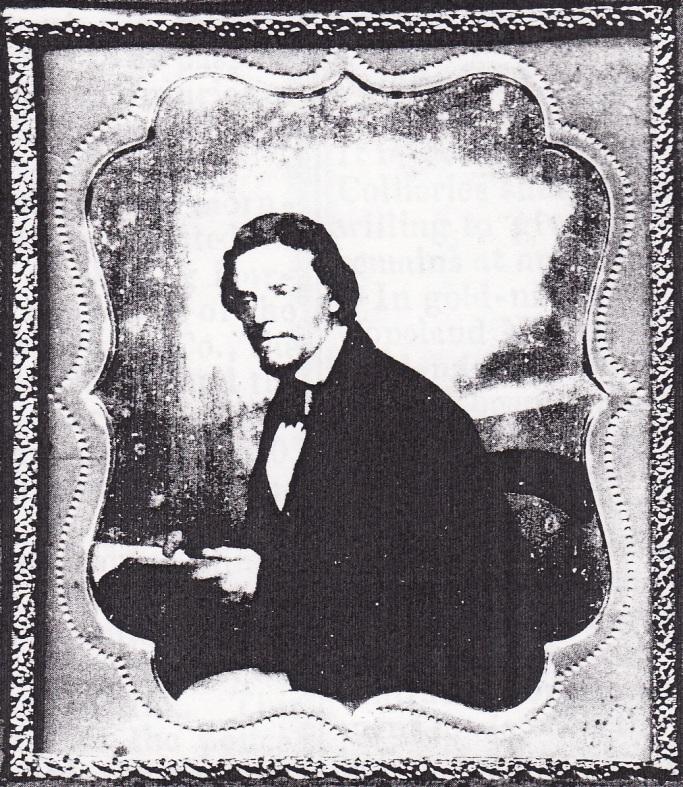
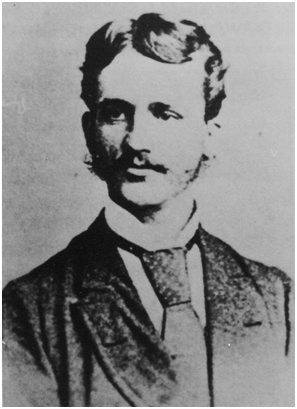
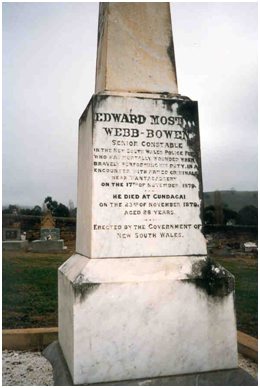
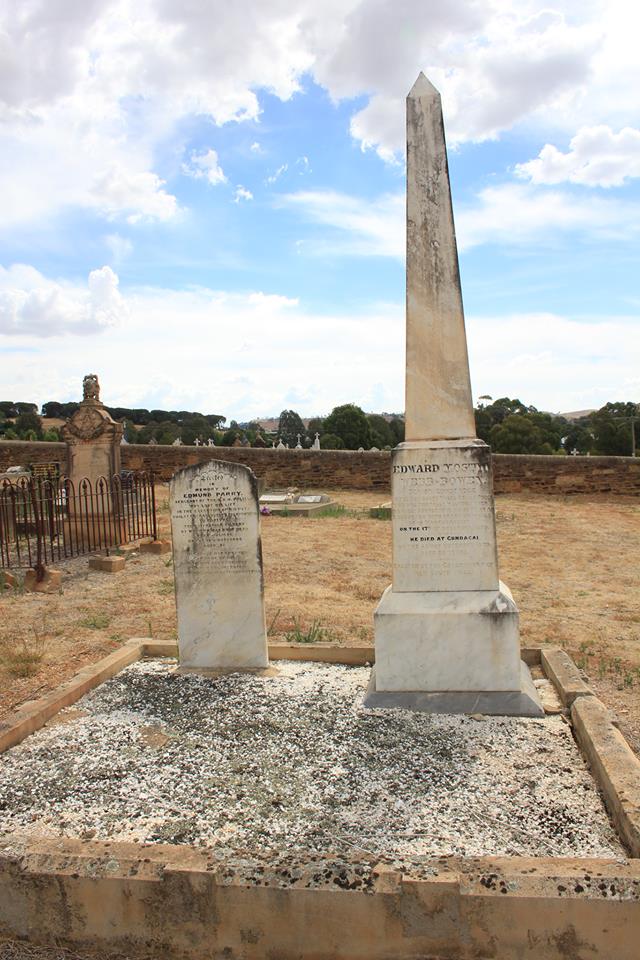
Sgt Edmund Parry & Senior Constable Edward Webb-Bowen graves
TWO Riverina police commands will honour the “Hero of Wantabadgery” – one of their own killed in the exchange of gun fire more than a century ago.
Senior Constable Edward Mostyn Webb-Bowen, known as Edward Bowen, was shot in the neck and died on November 23, 1879 as a result of the wound he sustained.
Now, the Wagga and Cootamundra local area commands (LAC) are working together to restore his grave at Gundagai cemetery.
Staff from the Wagga LAC will meet with Wantabadgery residents on February 1 to discuss ideas regarding a plaque, headstone or statue to honour Sen Con Webb-Bowen.
Wagga police duty officer, Inspector Stephen Radford, labelled the police-led community project – headed by Constable Max Burmeister, who resides in Wantabadgery – as exciting.
“We hope to raise awareness about those who were defending our community and values at a time when bushrangers were a real threat,” Inspector Radford said.
“Unfortunately history has tended to forget the true heroes of this era and instead the names of outlaws such as Captain Moonlight and the Ben Hall Gang, (which are) responsible for the deaths of police officers, hold more recognition than those that did the right thing.
Inspector Radford said the project aimed to help change the imbalance.
Senior Constable Webb-Bowen’s death came after Captain Moonlight and his gang held up Wantabadgery Station one evening in mid-November.
A number of people were taken hostage, and that number increased when the gang moved to the nearby Australian Arms Hotel.
Officers from Wagga police arrived in the early hours of the morning and gunfire was exchanged.
They retreated, waiting for reinforcements from Gundagai, and later visited a farm nearby where they found Captain Moonlight and his gang.
For further information about the project, email waggabowen@police.nsw.gov.au or call Wagga police on 6922 2599.
Responses to the above media post:J. Treanor Jones
It needs to noted here too that though there is a police perspective on the bushranger era, there is also the story of the bushrangers and their families and associates and why what happened, did happen. Social conditions in 2014 are far more equitable then they were in the 1860s -1890s and if anyone carries on similar to what was done to Ellen Kelly these days there are forms of redress. It will be a sign of a grown up police force when they can acknowledge all sides of the bushranger stories, not just the police side. My aunt (b.18802), whose uncle married Emily Byrne, married the son of one of the police, Ned Kelly Gang pursuers so all these groups of people are intertwined. My home was once owned by the son of the Gundagai gaoler where Moonlite was housed and that Eugene McCabe the gaoler had a family connection to my family hence me now owning what was once a McCabe property. My g.g.uncle was a Chartist and later became a notable solicitor, an army commander and a newspaper owner and he also believed no worker should be killed at work – but it does happen. I also have a link or two to the UK artistocracy as well as to a 15 year old and a 16 year old convict, so like many Australian families given the diaspora from overcrowded England, Scotland and Ireland, many, many current day Australian families can be a mix of many backgrounds. In more recent times I worked with the leader of the Cangi massacre at a NSW Government facility so bushranging isn’t all in the past or divorced totally from government employment. J. Treanor Jones
J. Treanor Jones
I hope in their restoration of Webb-Bowen’s gravestones they do not clean them with acid as one Gundagai group did to the old marble stones in Nth Gundagai cemetery in 2002. Acid melts marble as well as cleaning it. One hundred year + graves stones at Gundagai cemetery were made all sparkling white for the 2002 Gundagai 1852 Flood 150 years commemoration.. No matter the honing was taken off the marble and also the patina of age in the interests of having sparkly white gravestones to present to visitors.
One interesting aspect of Moonlite the bushranger was the connection to the Irish ‘Whiteboy’ movement that Charles Sturt was so disgusted by. ‘Moonlite’ was also an Irish culture hero but that Moonlite was not Wantabadgery’s Moonlite though the Wantabadgery Moonlite may have been modeled off the Irish one. That rarely gets mentioned and neither do the Ribbon Boys of this area.
J Treanor Jones (I have a connection to Joe Byrne – Ned Kelly’s lieutenant My great uncle William Jones (b. 1850s) married Joe Byrne’s cousin, Emily Kate Byrne. There are several descendants of bushrangers live in this general area some of whom have joined in marriage with some of the coppers who were chasing the bushrangers.)
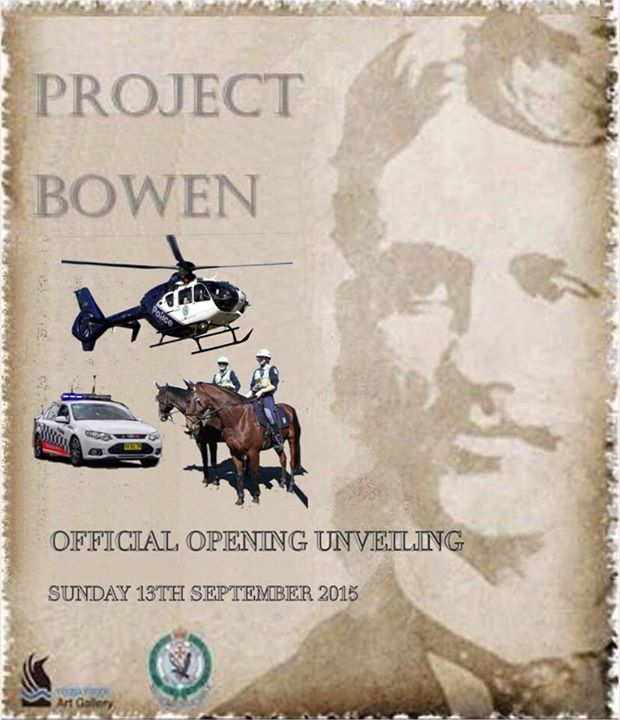
OFFICIAL OPENING – UNVEILING OF MEMORIAL – SUNDAY 13TH SEPTEMBER 2015
Edward Webb-Bowen memorial
Hero of Wantabadgery – Senior Constable Edward Webb-Bowen honoured.
Wagga Wagga LAC – NSW Police Force, is honouring the ‘Hero of Wantabadgery’ Senior Constable Edward Mostyn Webb-Bowen who died in an exchange of gun fire in November 1879.
During an evening in mid November 1879, ‘Captain Moonlite’ and his gang held up Wantabadgery Station and took a number of hostages. After eating and drinking, the gang moved to a nearby pub, The Australian Arms Hotel, and more hostages were taken.
At 4am, officers from Wagga Police arrived and gunfire was exchanged with the gang. Officers retreated and waited for reinforcements from Gundagai. On arrival of Gundagai Police, the officers attended nearby McGlede’s farm and found ‘Captain Moonlite’ and his gang.
Shots were exchanged and Senior Constable Webb-Bowen was shot in the neck. On Sunday 23rd November 1879, Senior Constable Webb-Bowen, known as Edward Bowen, died as a result of the gunshot wound.
Project Bowen, was established in 2012 by the Wagga Wagga Police and Wantabadgery community to raise awareness and funds to build a monument to remember Bowen.
Following an, archaeological survey, art exhibition, art auction, generous donations from individuals and local businesses the monument was completed His grave in Gundagai was also restored.
The monument now proudly stands adjacent to the Wantabadgey MacDonald Memorial Hall in Jewnee Street, Wantabadgery.
The memorial will be officially opened at 11:00am on Sunday 13th September 2015 by the Wagga Wagga Local Area Commander Bob Noble.
The opening will include; a display of modern and historic police vehicles, police command bus, police helicopter, horses and re-enactors. People are encouraged to attend in period 1870’- 80’s attire.
( ‘P’ = Pre 1862 when NSWPF “Officially” commenced )
Rank: Mounted Constable – 15 July 1855
Senior Constable – appointed 1 March 1862
Sergeant 2nd Class – appointed 1 June 1868
Senior Sergeant – appointed 1 November 1877
Stations: , Molong ( January 1865 ), Mudgee ( September 1869. Sgt In Charge of Mudgee to Bathurst Gold Escort ), Dubbo – death
Service: From 15 July 1855 to 20 September 1878 = 23+ years Service
Awards: ?
Born: ? ? 1838 in Dubbo ( although other records state a native of England )
Died on: Friday 20 September 1878
Cause: Shot – Murdered
Event location: Marthaguy Creek, ( near Warren ), NSW
Age: 40
Funeral date:
Funeral location:
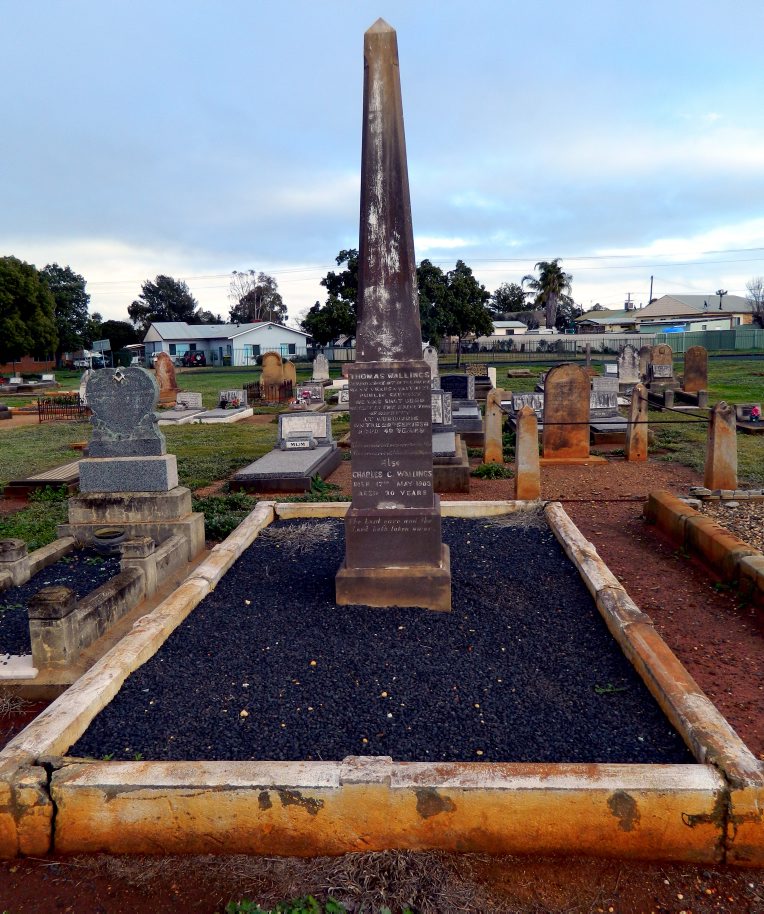
Buried at: Old Dubbo Cemetery, Myall St, Manera Hts, Dubbo, Church of England Portion, Section R2
Memorial location:
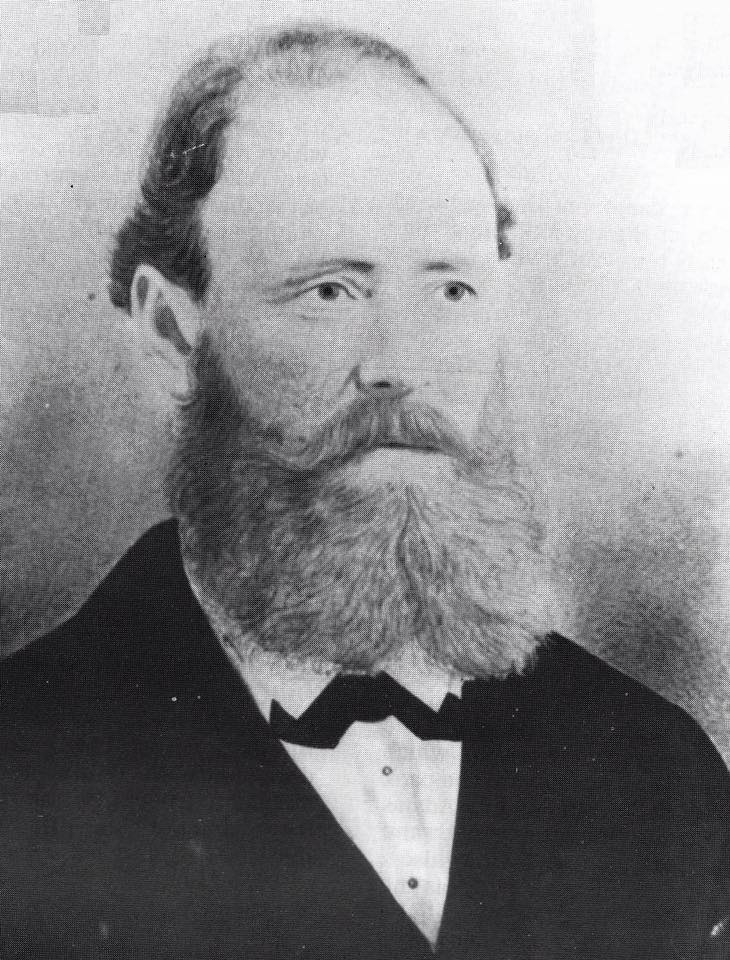
Thomas WALLINGS
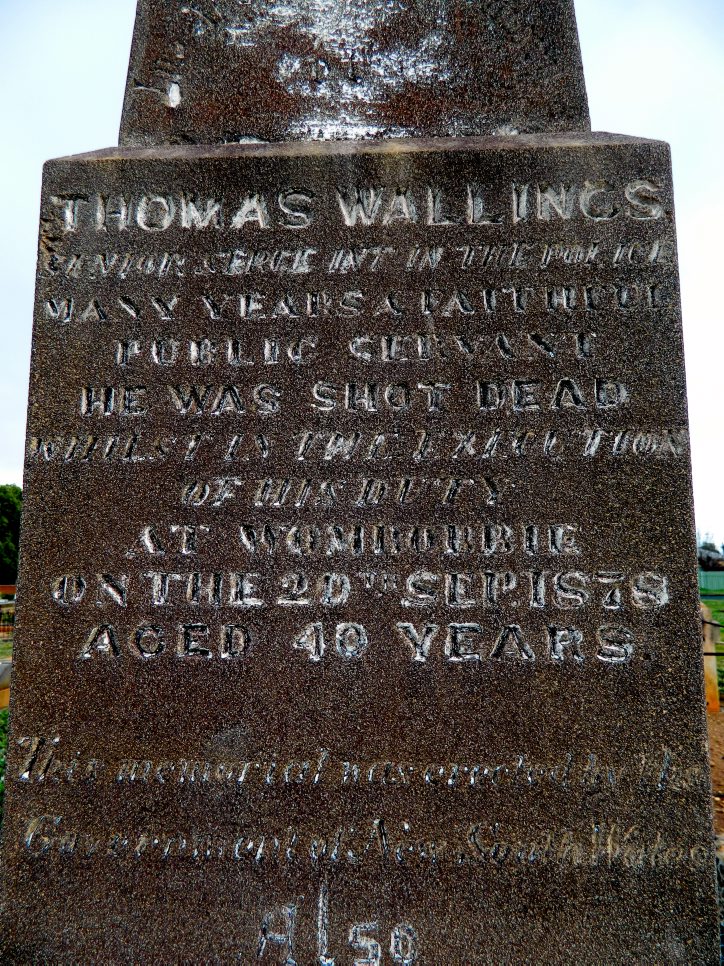
INSCRIPTION: THOMAS WALLINGS ? in the Police many years a faithful public servant He was shot dead whilst in the execution of his duty at Wombobbie on the 20th Sep. 1878 aged 40 years This memorial was erected by the Government of New South Wales also Charles C. WALLINGS died 17th May 1903 aged 30 years The Lord gave and the Lord hath taken away.
INSCRIPTION: THOMAS WALLINGS ? in the Police many years a faithful public servant He was shot dead whilst in the execution of his duty at Wombobbie on the 20th Sep. 1878 aged 40 years This memorial was erected by the Government of New South Wales also Charles C. WALLINGS died 17th May 1903 aged 30 years The Lord gave and the Lord hath taken away.
Thomas IS mentioned on the Police Wall of Remembrance
On the night of Thursday 19 September, 1878Sergeant Wallings, Senior Constable William Souter and Constable John Walsh were searching for a gang of bushrangers ( Captain Midnight & his gang ) when they set up a bush camp near the Wonbobbie Inn, Marthaguy Creek (near Warren).
The following day ( Friday 20 September ) at 6am the three police rode to the inn where they suspected they might find the bushrangers. Constables Souter and Walsh remained on guard outside while Sergeant Wallingsapproached the inn. Meanwhile, Constable Souter saw a man about 50 metres away carrying a rifle. He rode over to him and was told he would be shot if he came any closer. Souter called to the other police who rode down to him.
Sergeant Wallings then fired a warning shot and told the man to surrender, however the man replied that he himself would fire if the police came any closer. Sergeant Wallings then advanced on the man and pointed his revolver at him. The man then turned suddenly and dropped to one knee. As he did so, he fired at the sergeant, hitting him in the chest. In the confusion the offender ran a short distance away and took cover from the police. A short gun battle took place, however, the offender, being far better armed with a rifle, compared to the police revolvers, managed to escape. The two constables then directed their attention to assisting the wounded sergeant. The wound suffered by Sergeant Wallings ( shot through the heart and lung ) proved to be severe, and he unfortunately passed away almost immediately.
A few weeks later, the Sydney Morning Herald dated 10 October, 1878 reported the death of the murderer, informing its readers that “News has just reached the metropolis that the man who shot Senior Sergeant Wallings at Dubbo has been killed by the police, shortly after he committed the murder. The cold-blooded villain shot Wallings in the execution of his duty. He was pursued by Sub-Inspector Duffy and Constables Latton and Gray of Bourke, in the most unrelenting manner, and traced to the borders of Queensland, where he made a desperate resistance. The police shot at the horse he was riding and fatally wounded the murderer, whose name is said to be George Gibson. This man’s death is one which has not in any way been regretted by the general community. It was such a death as luckily there is not much necessity for now-a-days. The police deserve the congratulations of the public here for their bravery in this instance, which however, is only of a piece with much the New South Wales police have accomplished in the suppression of crimes of this nature. A movement has been initiated for relieving the widow and eight children of Wallings.
The sergeant was born in 1838 and joined the police force on 15 July, 1855. In 1862 he became a member of the newly-formed New South Wales Police Force. At the time of his death he was stationed at Dubbo. The offender was the bushranger “Midnight“.
George Robert ARMYTAGE & Michael COSTIGAN
| 25/10/2012
George Robert ARMYTAGE
New South Wales Police Force
Constable
&
Michael COSTIGAN
New South Wales Police Force
Constable
Shot – Murdered
Bourke
11 September, 1877
Double Police Murder
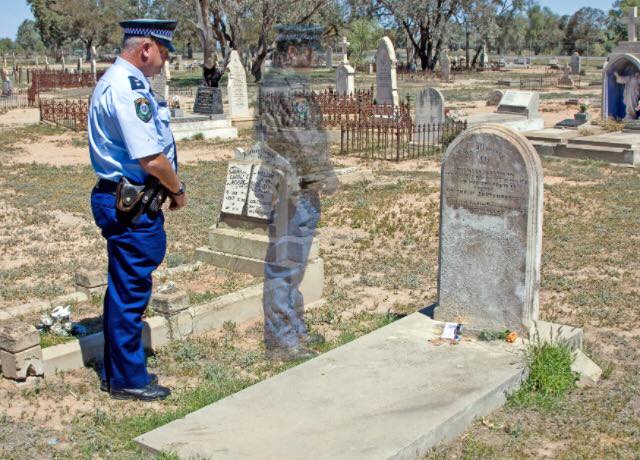
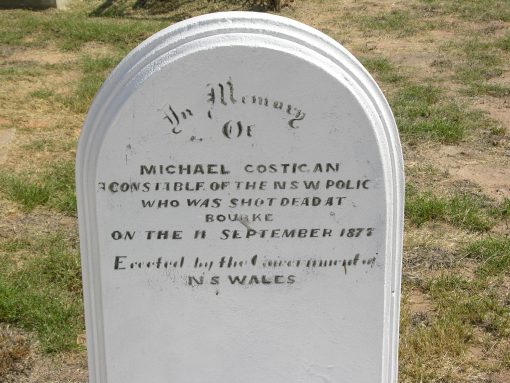
Grave of Michael COSTIGAN
On Tuesday 11 September, 1877 Samuel Getting, a barman at the Royal Hotel in Bourke, was speaking with Constable Michael Costigan in the bar of the hotel. The constable had just paid Getting for his room and board, and after having a drink and chatting with the barman for a short time, he left the bar.
Getting, for some unknown reason, also left the bar about that time and went to his room in the hotel, where he took possession of his rifle. He then left his room and walked to the front of the hotel, where he saw Constable Costigan and Constable George Armytage standing on the verandah, having a conversation. He immediately shot both constables from behind before running into the street and attempting to reload his rifle.
Sub Inspector James Keegan, who was nearby, noticed people running toward the river, and when he asked what was happening he was told that Sam, the barman, had shot two of the police and was running away with a loaded gun in his possession.
He then saw Getting running along the bank of the river with a gun in his hand, being chased by several people. The inspector then went towards these people and told them to move away from Getting so he could speak with him. He then followed Getting for a short distance along the river until he stopped and waited for the inspector to approach. The inspector then spent some time talking with the offender and trying to get him to surrender, all the while edging closer as he spoke.
At a later inquest, the inspector described what happened next.
“I rushed at him, being at this time between 10 and 15 paces from him. The ground was very muddy, and there was a gully between us. I got my hands upon him being beneath the gun, and we both stumbled and nearly fell. He again got a few paces from me, turned round, took deliberate aim, and shot at me. He called to me to keep back. I knew I was shot, but it did not weaken me, and I still went forward.
He then raised the gun, holding it by the barrel, and struck me on the head. I put up my arm to ward off the blow, and it bruised my arm very much and cut my head. He struck me several times, and I at length secured the gun. He then ran parallel with the river for a few yards, and as I followed him he suddenly plunged into the river, and kept his head beneath the water until he was drowned. He went but a short distance into the river.
That is his body I have recently seen lying in an outhouse. He had plenty of opportunity of shooting me at first had he so desired, but he did not attempt to do so until I sought to arrest him. When he shot at me, one shot struck me near the eye, two shots went into my coat, two entered my chest, and two others grazed it.
The Deceased…was a man of very good character and very good behaviour, and I can ascribe no motive for his acts. He said he had no intention of doing what he did, and that he had loaded the gun to go out for some duck shooting.”
Constable Costigan was born in 1853 and joined the New South Wales Police Force on 11 September, 1873. At the time of his death he was stationed at Bourke.
Constable Armytage was born in 1855 and joined the New South Wales Police Force on 4 May, 1877. At the time of his death he was stationed at Bourke.
Grave Location/s:
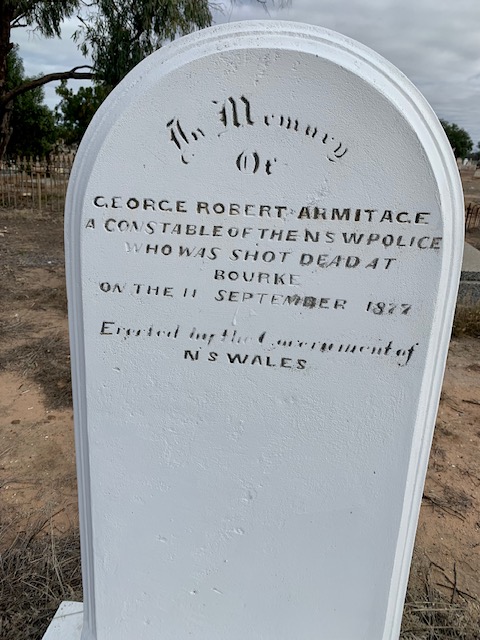
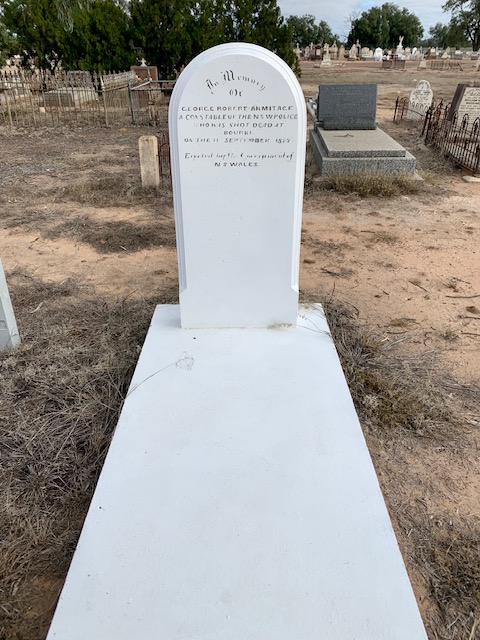
ARMITAGE: 30 06′ 03S / 145 56′ 12E
Old C of E, Bourke
As seen in June 2022. Photo: Alan BLAKE # 19779
As seen in June 2022. Photo: Alan BLAKE # 19779
COSTIGAN: 30 06′ 05S / 145 56′ 14E
Old Catholic, Bourke
as seen in April 2007 Photo: Ken Owen
as seen in April 2014 Photo: Ken Owen
as seen in April 2014 Photo: Ken Owen
Location of Old Royal Hotel
32 Mitchell St, Bourke, 2840
GPS: -30.088854, 145.936134
2014: Port of Bourke Hotel which was formerly the Old Royal Hotel where these murder took place.
Rank: 1st Class Constable ( Foot Policeman – not mounted )
Description: 5′ 11.5″ tall, blue eyes, fair hair, fair complexion. Single. Previously a farmer. He was Protestant.
Stations: Darlinghurst
Service: From 26 December 1874 to 20 June 1877 = 2+ years Service
Awards: a valuable gold watch and chain for the gallant capture of a convicted burglar, named Wright
Born: ? ? 1850 in Ireland
Event date: Thursday 22 March 1877
Died on: Monday 11 June 1877 @ Wooloomooloo
Cause: Assault with a Police Baton & other assaults
Age: 26
Funeral date: Tuesday 12 June 1877 @ 2.15pm
Funeral location: Graveside
Buried at: Rookwood Cemetery
Memorial location:
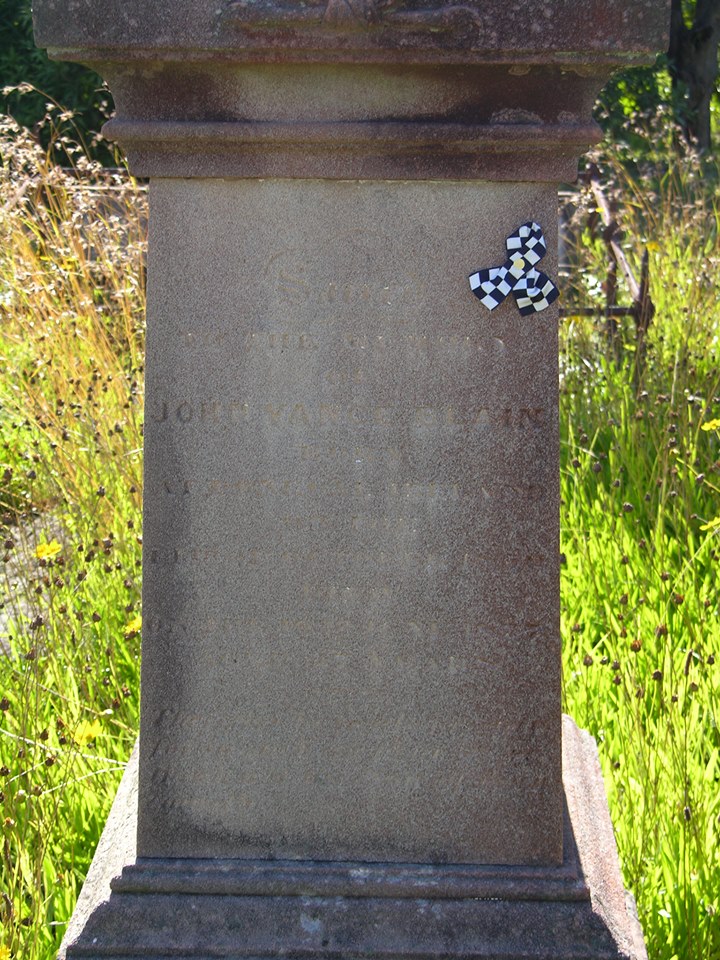
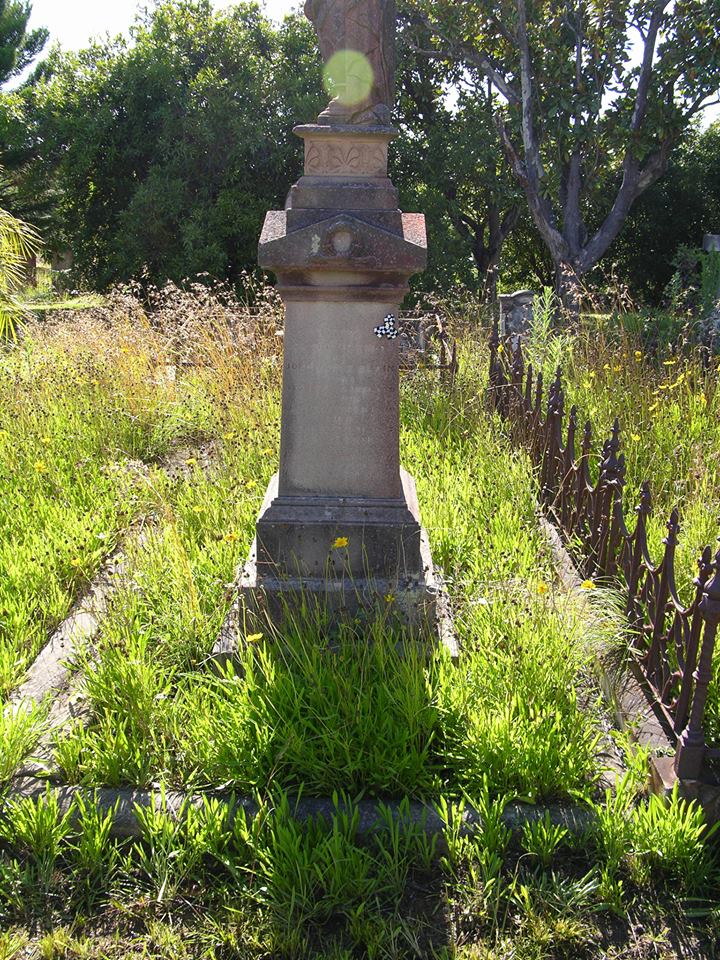
A record of his brave conduct for arresting and bringing to justice a notorious burglar at whose hands he received such savage injuries as to ultimately cause his death
[alert_red]JOHN is NOT mentioned on the Police Wall of Remembrance[/alert_red] * BUT SHOULD BE
Just after 4pm on Thursday 22 March, 1877 Constable Blain was on duty in Bourke Street, Wooloomooloo when he saw two men carrying a “bundle” in Forbes Street. He called on them to stop, however they ignored him and ran off, quickly pursued by the constable. One of the men then stopped and threw himself at Constable Blain, whose baton unfortunately had dropped to the ground during the chase. As he grappled with one offender, another took up the dropped baton and struck the constable several severe blows to the head, inflicting terrible wounds. Blain bravely held his ground however, and succeeded in handcuffing one of his assailants before staggering a short distance to the home of Dr Pattison. The doctor assisted the stricken Blain and also quickly sent a message to the police for assistance.
Constable Williamson ( possibly Williams ) soon attended and spoke to Constable Blain, who told him that he had arrested and handcuffed one of his attackers before walking to the doctor’s home. Williamson then attended the site of the incident where he indeed found one of the offenders (John Wright) lying handcuffed and bleeding in the street. The courageous Blain had in fact arrested one of his own murderers (a rare accomplishment), as his injuries were to prove fatal.
Prior to his death the Mercurynewspaper of Friday 23 March, 1877 reported the story of Constable Blain’s encounter with the offender John Wright and his unknown accomplice.
The article indicated that “The constable who was so barbarously assailed is suffering greatly from the wounds he received. His extraordinary courage and resolution in securing the man in the manner he did is worthy of lasting record.” And thus it is.
His headstone at Sydney’s Rookwood Cemetery reads: “A record of his brave conduct for arresting and bringing to justice a notorious burglar at whose hands he received such savage injuries as to ultimately cause his death”.
The constable was born in 1850, and at the time of his death he was stationed at Darlinghurst.
[divider_dotted]
The Sydney Morning Herald Friday 16 March 1877
“SERIOUS ENCOUNTER WITH A BURGLAR.
Some time on Thursday night the premises of Mr J C W Hinsch of 160 Pitt Street, were broken into, and a number of Crimean shirts and other goods valued at about £20, were stolen. Shortly after 4 o’clock yesterday morning, Constable Blain who was on duty in Bourke Street, Woolloomooloo, saw two men carrying a bundle in Forbes Street. He called upon them to stop but as they took no notice he gave chase, and gained upon them. One of the men threw himself down in front of the constable who fell upon him. In running after the men the constable’s truncheon dropped out of his pocket, and the second man took it up and struck the constable several heavy blows inflicting very severe wounds on the back of the head. The constable, though stunned by the blow, bravely grappled with the man, and after a most desperate struggle succeeded in over-powering and handcuffing his assailant. Becoming weak from loss of blood he had just sufficient strength to reach the residence of Dr. Pattison, when he fainted from exhaustion. Dr Pattison sent information to the police that a constable was at his house who had been nearly murdered in the street. Constable Williams, who soon arrived in obedience to the summons, found Blain lying on a sofa bleeding from wounds on his head, and scarcely able to speak. Eventually he learned from him that a man whom he had captured was handcuffed in the street, and on proceeding to the spot indicated, he found the man lying and bleeding from the head. He was conveyed first to the Infirmary, and afterwards to the Darlinghurst Police Station.
Later in the day Detectives Wilmott and Camphin found one blanket and 31 Crimean shirts in a sack on a piece of waste ground near Judge Street, Woolloomooloo… The constable who was so barbarously assailed is suffering greatly from the wounds he received. His extraordinary courage and resolution in securing the man in the manner he did is worthy of lasting record.”
Then on Saturday 16 June, 1877 the Australian Town and Country Journal reported the death of Constable Blain, including the following information.
“It will be remembered that, a short time ago, the Inspector-General of Police, on behalf of various citizens, presented constable Blain with a valuable gold watch and chain for the gallant capture of a convicted burglar, named Wright, who brutally assaulted that officer when being arrested for the burglary at the premises of Mr. J. O. W. Hinsch, in March last. Wright was sentenced to six years hard labour.
Blain, who was assaulted on the head with a policeman’s baton, recovered somewhat from the effects of the affray; but three weeks ago was again brutally assaulted by some roughs in Oxford-street.
About a fortnight ago he went into the Infirmary for medical treatment, and typhus fever setting in, he expired early on Monday morning. It is alleged that his death was caused by the effects of the beatings he received. It is said that a foul drain under the bedroom which Blain had occupied, in Stanley-street, was the cause of his taking ill. Blain had been about three years in the Force. He was unmarried. His grade was first class constable; and he was a young man of superior intelligence and some promise, and a most efficient officer.”
The constable was born in 1850, and joined the New South Wales Police Force on 26 December, 1874. At the time of his death he was stationed at Darlinghurst. His headstone at Sydney’s Rookwood Cemetery reads: “A record of his brave conduct for arresting and bringing to justice a notorious burglar at whose hands he received such savage injuries as to ultimately cause his death”. He is not listed in the official New South Wales Police Honour Roll.
[divider_dotted]
The Sydney Morning Herald Tuesday 12 June 1877 page 1 of 10
DEATHS:
BLAIN. — June 10, at the Sydney Infirmary, John Vance Blain, aged 26.
The Sydney Morning Herald Tuesday 12 June 1877 page 10 of 10
THE FRIENDS of the deceased Mr. JOHN VANCE BLAIN, late of the Sydney Police, are respectfully invited to attend his Funeral ; to move from the Infirmary THIS DAY, Tuesday, at a quarter-past 2 o’clock, to the Necropolis.
The Evening News ( Sydney ) Wednesday 13 June 1877 p 2
Constable Blain’s Funeral,
Yesterday afternoon, the remains of that efficient and lamented young police officer, constable Blain, were interred at Haslem Creek Cemetery. The funeral was attended by the Inspector General of Police ( Mr. Fosberry ), Inspector Read, Sub-Inspectors Waters, Anderson, and Johnson, and a large number of his fellow officers. The procession, as it moved through the city, attracted general attention, and considerable regret was expressed at the untimely end of a promising a young officer. The members of the force, as may be seen from an advertisement, intend erecting a monument over his grave.
The Evening News ( Sydney ) Saturday 4 August 1877 p 4
Monument to Constable Blain.
It is satisfactory to learn that there has been a prompt and generous response to the proposal for a monument over the remains of that distinguished but unfortunate police officer, Constable Blain. It will be remembered that Blain had a desperate encounter with a burglar who had broken into Mr. Hinch’s establishment in Pitt-street, and that he received such severe injuries as accelerated, if they were not mainly
the cause of his death shortly afterwards in the Infirmary. The Inspector-General and his officers and the whole force accorded his remains every honor by following them to the grave ; but they thought something more ought to be done, A suitable monument over the grave was proposed, and the matter having been taken in hand by Mr. Smart, J.P., the necessary funds were subscribed in the course of a few days. We have been shown the design of the monument together with the inscriptions, and it deserves to be said that the selection has been dictated by good taste and judgment.
For the purposes of this website ‘Q‘ represents those Police joining between 1 March 1862 ( commencement of NSWPF ) – 23 February 1915 ( Commencement of NSWPF current numbering system )
Rank: Constable – appointed 7 January 1863
Senior Sergeant – appointed ? ? ?
Final Rank: Senior Sergeant
Stations: ?, Cowra – Death ?
Service: From 7 January 1863 to 1 May 1872 = 9+ years Service
Awards: ?
Born: ? ? 1840, Wick, Scotland
Died on: 1 May 1872
Cause: Shot – Murdered
Event location: Binni Creek, Cowra, NSW
Age: 31
Funeral date:
Funeral location:
Buried at: Anglican section of the Young General cemetery
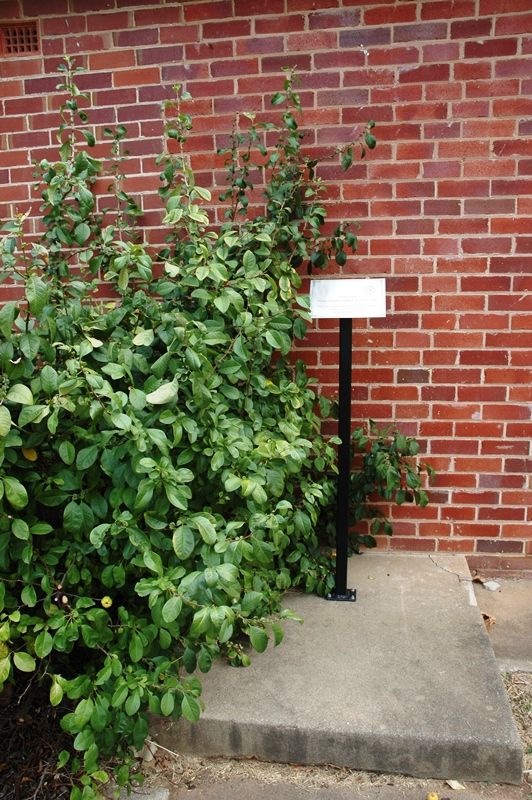
Memorial at: Cowra Police Station, 88 Brisbane St, Cowra, NSW
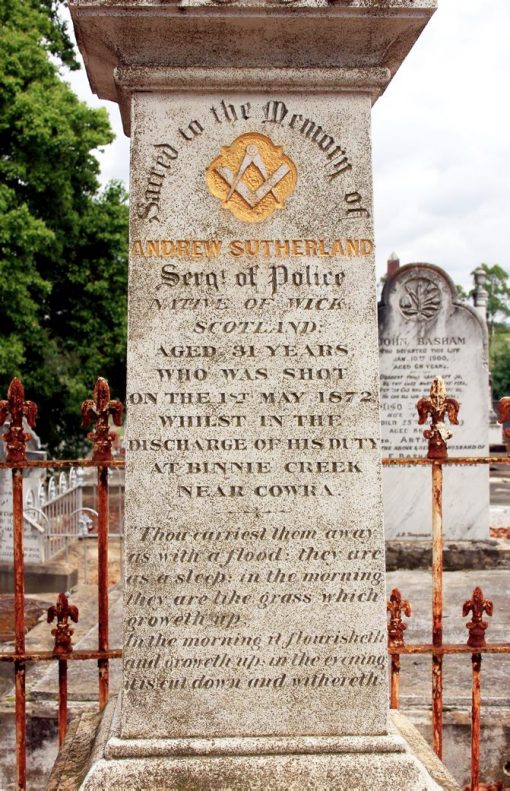
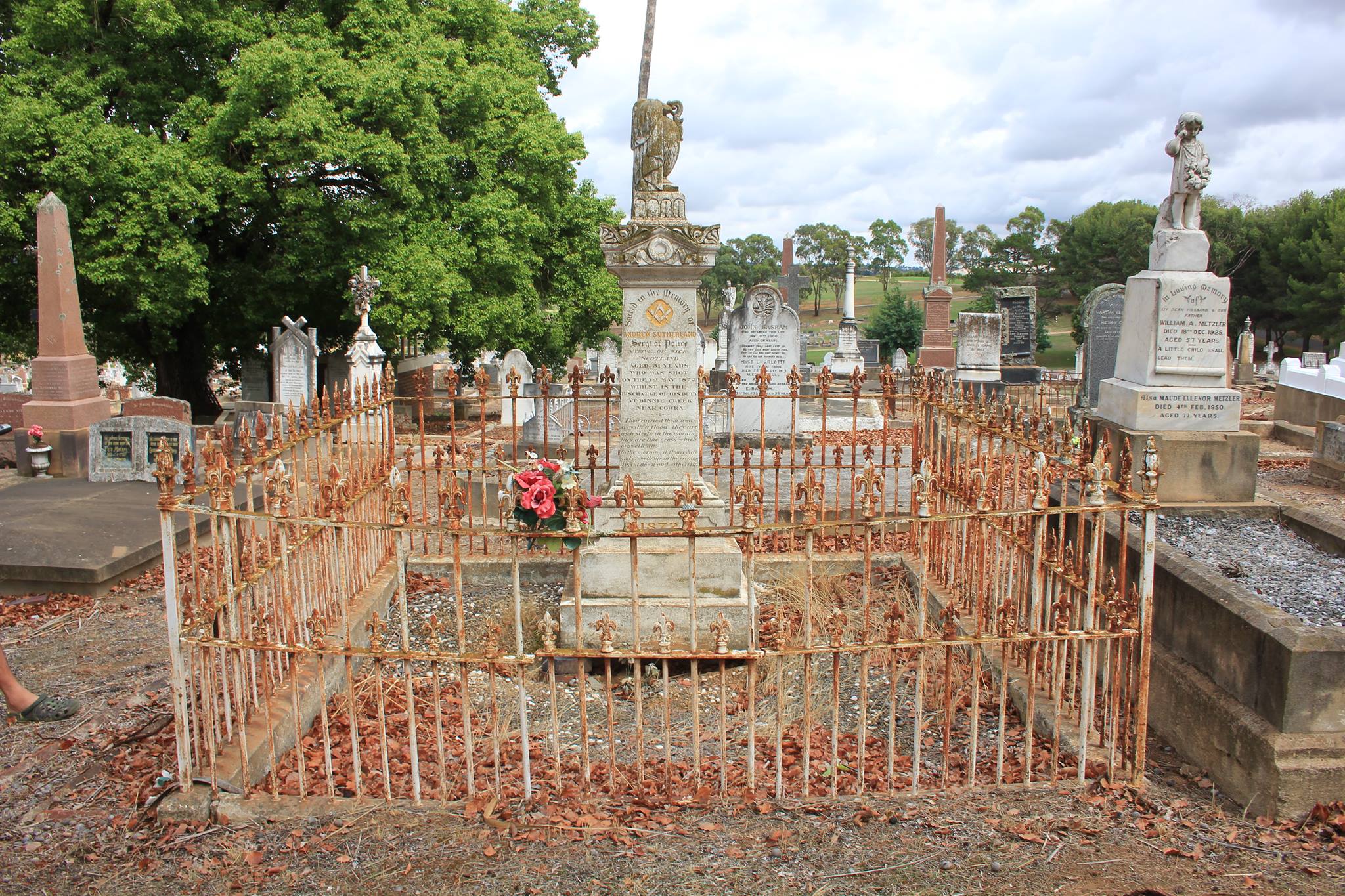
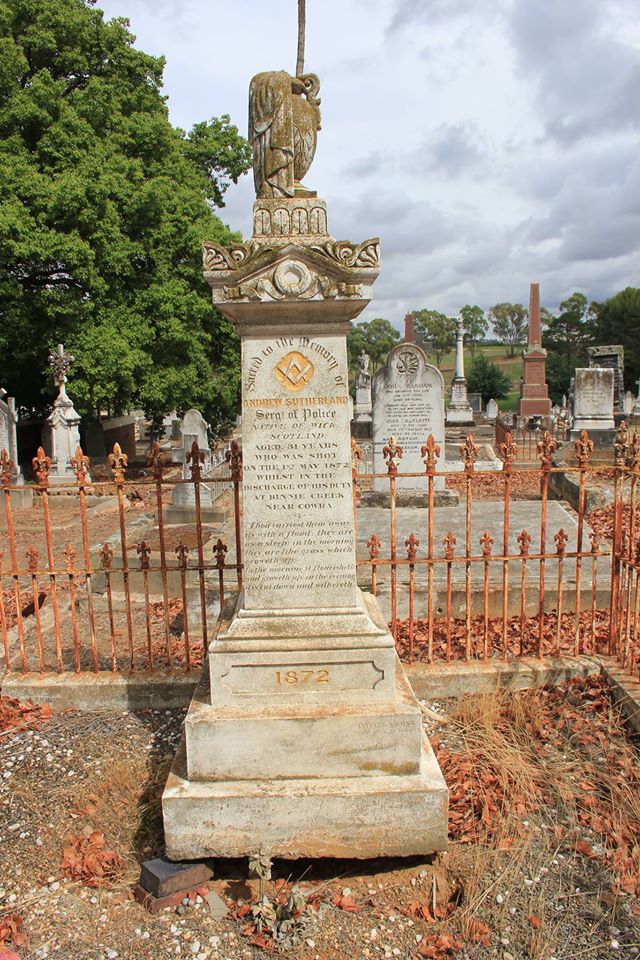
INSCRIPTION: Sacred to the Memory of Andrew SUTHERLAND Sergt. ( Sergeant ) of Police Native of Wick, Scotland. Aged 31 years Who was shot on the 1st May 1872 whilst in the discharge of his Duty at Binnie Creek near Cowra. ” Thou carriest them away as with a flood ; they are as a sleep ; in the morning they are like grass which groweth up. In the morning it flourisheth and groweth up ; in the evening it is cut down and withereth.”
ANDREW IS mentioned on the Police Wall of Remembrance
On 1 May, 1872 the sergeant was returning to Cowra from Bathurst Court.
During his journey he was told that two men who were wanted for robbery, George Gray and William Bristow, were at Daniel Horan‘s hut at Binnie Creek, twelve miles from Cowra.
The sergeant rode over to investigate and as he neared the door of the dwelling the offenders suddenly emerged and shot him to death.
The Clarence and Richmond Examiner dated 7 May, 1872 provided a brief account of the tragedy, which tends to suggest that the offenders were known to the sergeant.
SERGEANT SUTHERLAND SHOT DEAD BY BUSHRANGERS –
CARCOAR ” Thursday – I regret to have to announce that Sergeant Sutherland, of the Cowra police force, was shot dead last evening, by bushrangers, at a place about five miles from Cowra.
It appears that two armed men called on a settler named Daniel Oram, whose house is distant about two miles from Cowra and demanded food, which he placed on the table for them.
Sergeant Sutherland, who was going home from the Bathurst Assizes, rode up to the door during the meal, and was dismounting, when one of the men stopped to the door, gun in hand, and said, “I have been looking for you, you wretch,” and then shot him through the heart, causing instant death.
The men then went off and Oram started to Cowra, and upon arriving there, informed the police, who are now in pursuit of the murderers.
The fate of the unfortunate but brave officer is universally regretted. He leaves a wife, and had only been married a few months.
The sergeant was born in 1839 and joined the New South Wales Police Force on 5 January, 1863.
At the time of his death he was stationed at Cowra.
The Queenslander
Sat. 9 Aug 1873 p 10
ST. GEORGE.
(FROM OUR OWN CORRESPONDENT.) July 31.
We have also to record the arrest of a man named Frank Riley alias George Gray by Sergeant Cranney, on the charge of murdering Senior-sergeant Andrew Sutherland, of the New South Wales force, at Hordern’s hut, Beni Creek, on the 1st of May, 1872.
The prisoner had been staying in town for some few weeks, and left accompanied by another man with the avowed intention of going to the Surat races, but parted with his comrade about three miles from Weribone, his comrade going on into Surat, while he went out into the bush to camp.
Sergeant Cranney, in the meantime, appearing to have some clue to his identity, followed the pair, and finding that only one had reached Surat, returned on his tracks, and camped in the bush for two nights endeavouring to ascertain the whereabouts of the prisoner.
Becoming faint from fasting, he went to Weribone Station for food, and just dropped on to the man he was looking for, and who had also been there on the same errand. The officer arrested him at once, and prisoner was taken to Surat and remanded to Roma, and we believe by this time is on his way to Brisbane.
This is the second arrest of New South Wales offenders made by Sergeant Cranney during the past few months, the other being that of James Madgwick, whose capture and exploits were narrated in your columns a short time since. Sergeant Cranney was also the officer who arrested the notorious Patrick Collins.
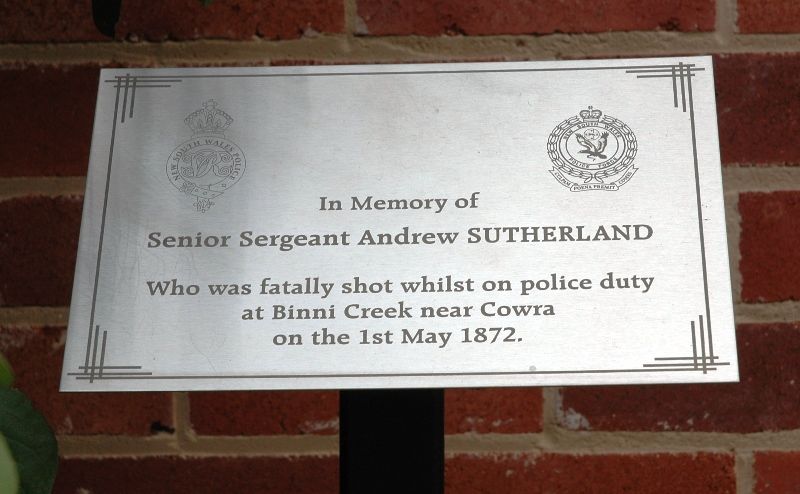
A plaque commemorates Sergeant Andrew Sutherland who was fatally shot in the line of duty as a New South Wales Police officer.
Sergeant Second Class Andrew Sutherland was shot whilst on duty at Binni Creek near Cowra on May 1, 1872. On May 1, 1872 he was returning to Cowra from Bathurst Court. En route he was told two offenders wanted for robbery, George Gray and William Bristow, were at Daniel Horan’s hut at Binni Creek, 12 miles from Cowra.
The Sergeant rode over to investigate and as he approached the door of the dwelling, two offenders emerged and shot and killed him. Gray and Bristow were subsequently arrested but both were later released without charge. No-one was ever convicted of the crime.
Actual Event Start Date: 01-May-1872
Actual Event End Date: 01-May-1872
Actual Monument Dedication Date: 01-March-2012
Front Inscription:
In memory of
Senior Sergeant Andrew SUTHERLAND
who was fatally shot whilst on police duty
at Binni Creek near Cowra
on the 1st May 1872.
The Portland Guardian and Normanby General Advertiser of 20 May, 1872 reported on the magisterial inquiry which was held at the Cowra courthouse before Mr G. Campbell J.P, “touching the death of Andrew Sutherland, who was shot dead by a ruffian at the residence of Daniel Horan a farmer living on Binni Creek…” One witness to the murder, Mrs Eliza Seery, gave the following evidence.
“I am the wife of James Seery, and reside at Binni Creek.
About 4 o’clock in the evening of Wednesday, the 1st inst., two men rode up to Horan’s hut on two dark looking horses.
Mrs Horan and I were in the hut at the time. They bid me good day, and asked if I had seen a bay horse, to which I replied “No”. One then said to the other, “We’ll get down and have a light”. The taller man was the spokesman.
He remarked that the weather was very dry.
The dogs began to bark. I went out to see what they were barking at, and observed Sergeant Sutherland riding towards the place.
The tall man asked me who was coming, and I answered, “Sergeant Sutherland”. The smaller man then walked outside, and Sutherland called him to the corner of the hut.
After talking to the sergeant for a short time, the man came towards the door, when I heard Sutherland ask him who was inside.
Sutherland then rode up to the door, and told the man who was inside to come out, or he would shoot the two of them.
The tall man, who was in the hut, said, “I won’t” and went towards the door.
The sergeant then got off his horse, when the tall man fired at him.
He said, “I’ll shoot”, before he shot at the sergeant.
Directly after the shot was fired, Sutherland, let his horse go, and ran towards a tree standing near the hut.
The man followed Sutherland and fired two shots, one after the other, as quick as he could.
The Sergeant, whose back was towards the man who shot at him, fell before he got to the tree. He fell directly after the last shot was fired.
There were only three shots fired.
The man was within a yard or two of Sutherland when the last two shots were discharged. This man brought Sutherland’s horse, and rode him away immediately after firing the last shot.
I did not see the smaller man of the two after the first shot was discharged.
I ran to the Sergeant when he fell, and asked if he was dead. He made no reply.
He was not quite dead, but never spoke.
Mrs Horan came directly after, and I told her to run for some water. She got some water, which she poured over the Sergeants mouth. He died while I was standing by him. He was lying partly on his side, and partly on his back.
Horan came up, and asked what was the matter. I told him the sergeant was shot dead.
Horan reported the murder to the police.”
The Brisbane Courier of 11 August, 1873 was to later report on the arrest of one of the offenders by Queensland Police Sergeant Cranney.
“We have also to record the arrest of a man named Frank Riley alias George Gray by Sergeant Cranney, on the charge of murdering Senior-sergeant Andrew Sutherland, of the New South Wales force, at Hordern’s [sic] hut, Beni [sic] Creek, on the 1st of May, 1872.
The prisoner had been staying in town for some few weeks, and left accompanied by another man with the avowed intention of going to the Surat races, but parted with his comrade about three miles from Weribone, his comrade going on into Surat, while he went out into the bush to camp.
Sergeant Cranney, in the meantime, appearing to have some clue to his identity, followed the pair, and finding that only one had reached Surat, returned on his tracks, and camped in the bush for two nights endeavouring to ascertain the whereabouts of the prisoner.
Becoming faint from fasting, he went to Weribone Station for food, and just dropped on to the man he was looking for, and who had also been there on the same errand.
The officer arrested him at once, and prisoner was taken to Surat and remanded to Roma, and we believe by this time is on his way to Brisbane.”
John McCABE
| 25/10/2012
John McCABE
New South Wales Police Force
Regd. # Q 1181
For the purposes of this website ‘Q‘ represents those Police joining between 1 March 1862 ( commencement of NSWPF ) – 23 February 1915 ( Commencement of NSWPF current numbering system )
Rank: Constable – appointed Monday 23 February 1863
Senior Constable
Stations: Biree ( see description below )
Service: From 23 February 1863 to 1 November 1868 = 5+ years Service
Awards: ?
Born: ? ? 1828, Ireland
Event date: Tuesday 6 October 1868
Died on: Sunday 1 November 1868
Place of Event: Enngonia, NSW
Place of death: ?
Cause: Shot – Murdered
Age: 39 – 40
Funeral date: ?
Funeral location: ?
Buried at: Bourke Old C of E Cemetery, Gorrell Ave & Kidman Way, Bourke, NSW
GPS – 30 06′ 05S / 145 56′ 14E
Memorial at: ?
As seen in June 2022. Photo: Alan BLAKE # 19779
As seen in June 2022. Photo: Alan BLAKE # 19779
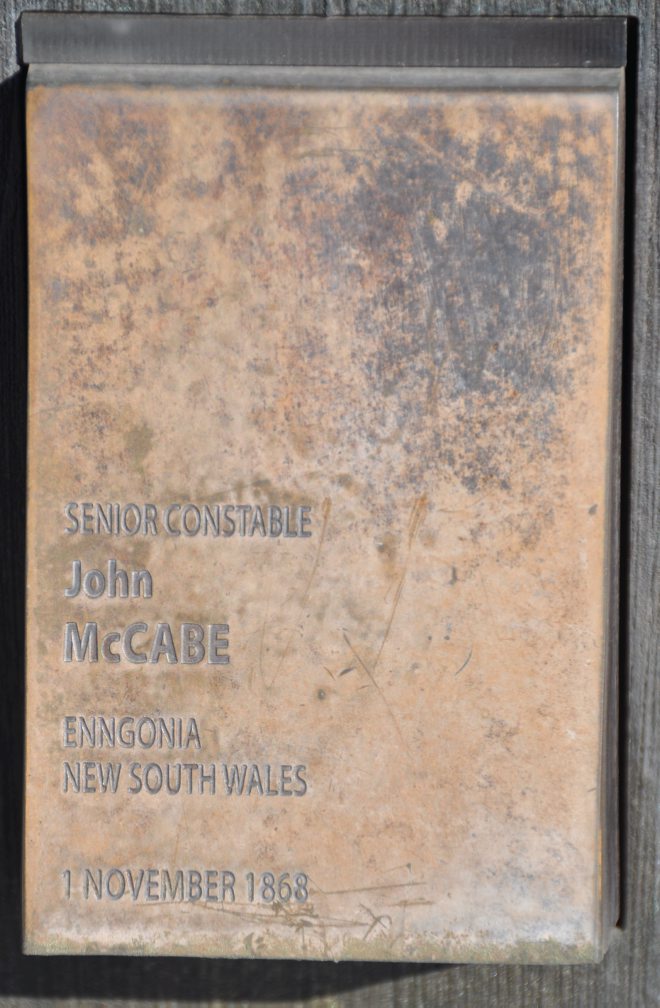
Touch Plate – Police Remembrance Wall, Canberra. Senior Constable John McCABE Enngonia, NSW 1 November 1868
JOHN IS mentioned on the Police Wall of Remembrance
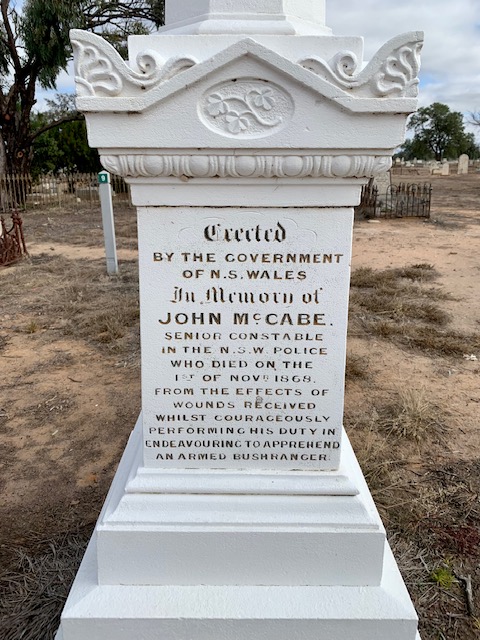
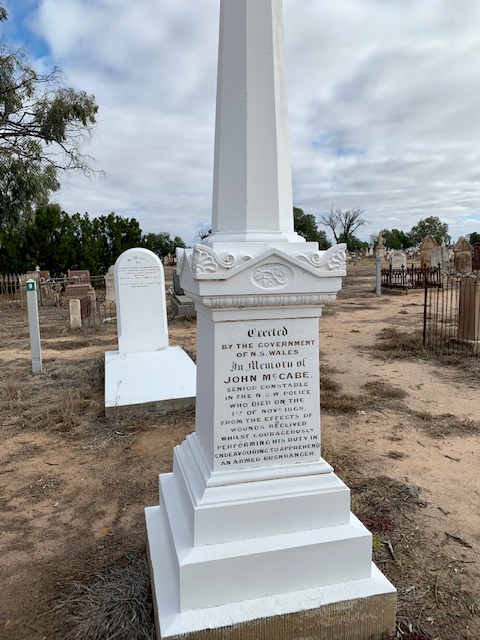
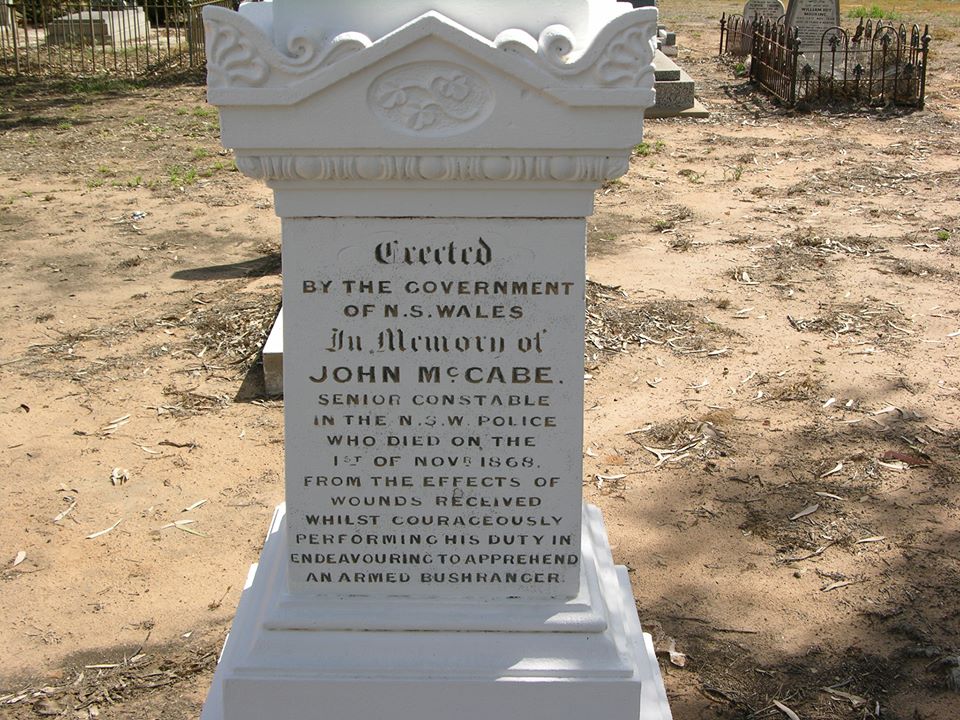
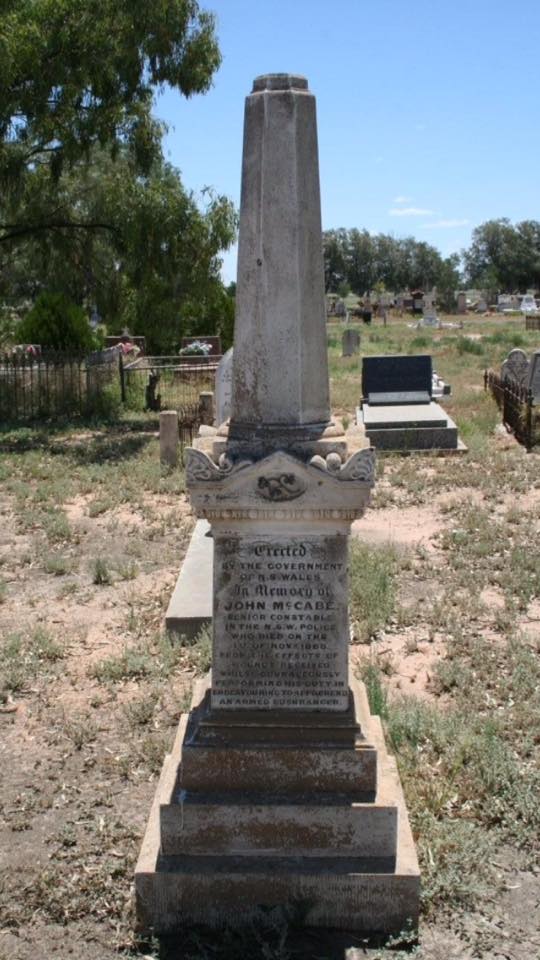
On 6 October, 1868 Constable McCabe was searching an area near the Queensland border for bushrangers Frank Pearson (Captain Starlight) and Charles Rutherford. He was accompanied by Constable Hugh McManus of the Queensland Police Force. During their patrol the police stopped for supplies at Shearer’s Inn, Enngonia (about 100 kilometres from Bourke). While they were so engaged, two riders appeared and entered the inn. Almost immediately, Pearson yelled “Bail up!” with the obvious intention of robbing those present. The two police, who had taken their weapons into the inn, turned and fired at the two offenders. Constable McCabe, who had dropped to one knee and fired, was shot in the chest, however he managed to fire several times, hitting Pearson in the wrist and right arm. The two bushrangers then ran from the inn and escaped. After rallying for almost a month, Constable McCabe died as a result of both his wound and the resultant infection. ( This murder is sometimes incorrectly attributed to small-time New England thug and armed robber Fred “Thunderbolt” Ward ).
The Maitland Mercury & Hunter River General Advertiser of 27 October, 1868 featured a lengthy article, informing its readers that “Immediately upon the termination of the encounter a special messenger was dispatched from Shearer’s to Bourke, a distance of seventy five miles, for medical assistance. Dr. Roberts, in company with Sergeant Cleary, were promptly upon the spot and the ball has been extracted from McCabe. Its course was through the left breast, passing through a part of the lungs, and finally lodging under the shoulder-blade. Although in a critical state from such a dangerous wound, Dr. Roberts anticipates a favourable result.”
Despite the doctor’s confident prognosis, however, Senior Constable McCabe passed away a few weeks later.
The senior constable was born in 1828 and joined the New South Wales Police Force on 23 February, 1863. At the time of his death he was stationed at Biree (Brewarrina). Biree (a small outpost Station believed to exist only from 1865 to 1869 in the river country between Brewarrina and Enngonia).
Newcastle Chronicle (NSW : 1866 – 1876),
Thursday 19 November 1868, page 3
Death of Constable McCabe.— The Bourke correspondent of the Dubbo Dispatch writes: —
‘ It regrets me to have to apprise you of the death of McCabe. The poor fellow expired at Shearer’s on the 1st instant, I understand that he lost the use of his senses for some hours previous to his death, but felt no pain, mortification having set in on the left side, extending from the shoulder to the foot. Dr. Roberts has gone out to examine the body, I presume for the purpose of making a post mortem examination. No magisterial or coroner’s inquiry, as far as I can learn, has been, or is to be held. The perpetrators of this murder are closely pursued by five of the Queensland black police and an inspector. After leaving Dowling’s, instead of going into Queensland, as was thought, they followed the Paroo down as far as McGilverey’s station, and then crossed to the Darling. On their way over they were seen by a shepherd twelve miles from the Darling River, at a station of McGilverey’s. They afterwards robbed a hut on the river of every particle of rations, and made for Acre’s back country, on the south east side of the Darling, at which point the black troopers were last seen on their trail, only a day or so behind them. The troopers’ horses, owing to the manner in which they had been ridden, were very weak ; scarcity of water was also telling a tale upon them. Rutherford is well known in this district ; he used to shepherd at Belalie on the Warrego. The other man, who was shot by McCabe, carries his arm in a sling, has a hooked nose, is short, and has dark hair. Rutherford’s description I have been unable to ascertain, but there is hardly any mistaking the pair. Everyone that has seen them identified them at once. They have gone either to Wentworth or to Balligool, or in that direction, and I would advise the Dubbo police to telegraph to both places. I learn that the brave fellow, McCabe, put two balls into the unknown bushranger — one, a revolver bullet, went through the arm below the elbow, and the other from the carbine went through the fleshy part of the muscle, and lodged under the shoulder skin, but in a place where not but a surgeon could extract it. How the fellow has managed to get on so well is a miracle. ”
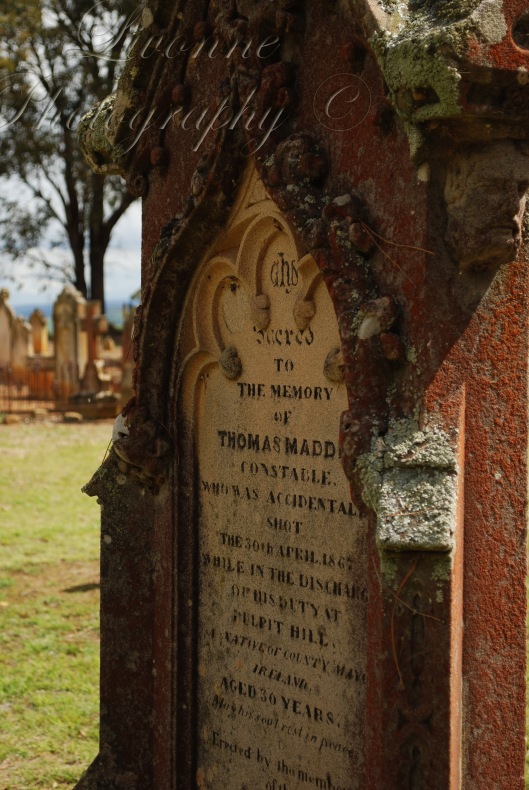
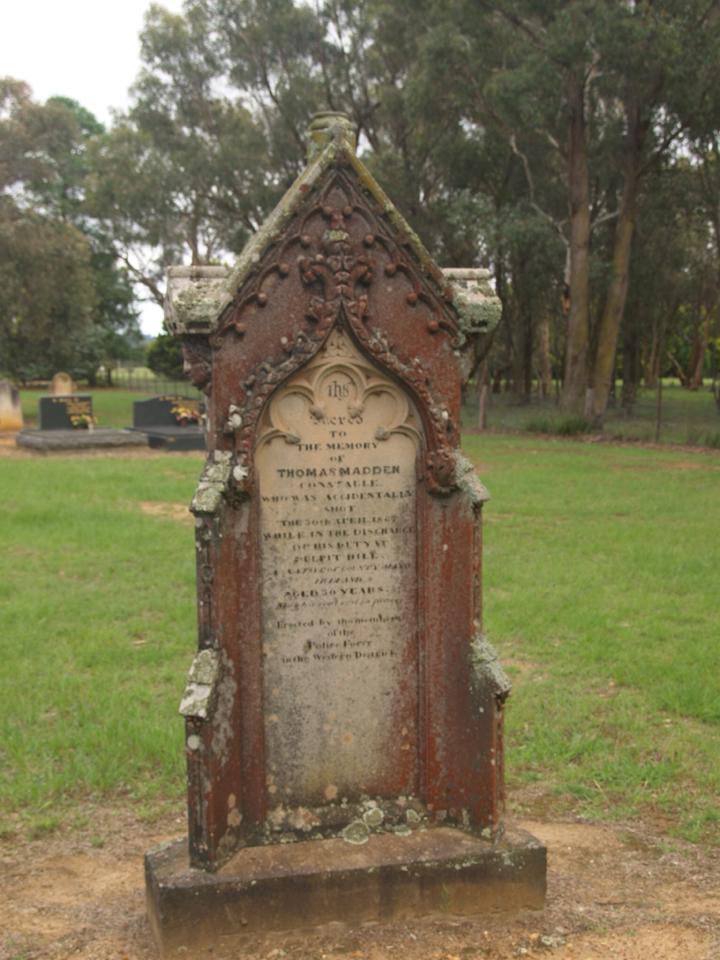
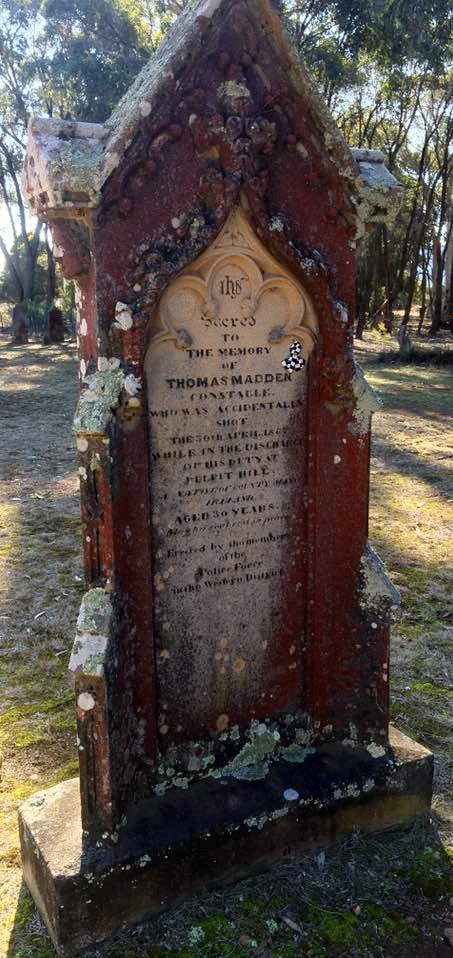
Sacred to the memory of Thomas Madden Constable. Who was accidentally shot 13th April 1867 while in the discharge of his duty at Pulpit Hill. A native of County Mayo Ireland. Aged 30 years. May his soul rest in peace. Erected by the members of the Police force in the Western District.
THOMAS IS mentioned on the Police Wall of Remembrance
On the 29 April, 1867 a party of eight police led by Sergeant Walter Casey camped at Pulpit Hill (near present day Katoomba) with fifteen or sixteen ‘heavily ironed’ prisoners they were escorting from Bathurst Court to Darlinghurst Gaol.
At midnight Constable Madden took his turn to watch over the lockup in which the prisoners were housed. When he was relieved at 2am by Constable Hitchcox, Constable Madden went to check the prisoners. When he opened the door of the lockup, the prisoners, who had apparently been waiting for their chance to escape, rushed the constable. Sergeant Casey, who realised what was occurring, began firing at the prisoners. Unfortunately, of the five shots fired by the sergeant, three accidentally struck Constable Madden, inflicting fatal wounds. Two prisoners were also wounded.
The Sydney Morning Herald of
14 May, 1867, page 3 gave news of the inquest into the death of Constable Madden.
INQUEST ON THE BODY OF CONSTABLE MADDEN.
At the inquest held by the District Coroner, at Hartley, on view of the body of the unfortunate deceased Constable Thomas Madden, who was accidentally shot by Sergeant Casey while resisting the attempt of prisoners to escape from the lockup at Pulpit Hill, depositions were taken.
Walter Cassels Casey, sergeant of police, stationed at Sofala, on oath saith
On the 29th April I was in charge of an escort of fifteen prisoners en route from Bathurst to Sydney ; that night the escort stopped at Pulpit Hill lock-up, I was on guard over the prisoners from 7 to 10 p m ; and was relieved by constable Duggan, who was on guard from 10 to 12, when he was relieved by the deceased, who remained on guard from 12 to 2a.m. of the 30th instant, Constable Hitchcox had to relieve him then.
After I was relieved from guard by constable Duggan, I laid down on the sofa (marked A in the plan), and had my revolver loaded on the window sill at hand ; anxiety kept me from sleeping, and I conversed with every sentry ; at twelve minutes past 2 a.m, deceased called Constable Hitchcox from an adjoining room ; deceased then said, ” I will look to see that they are all right,” immediately after this, the prisoners, led by Rutherford, Holmes, Moran, Smith, Southgate, and Kerr burst into the front room, out of the cell (C), and through the door (B), I jumped up, seized my revolver, and fired at the prisoner Moran ; he appeared to fall, I then fired at Kerr, who sang out, I fired at Kerr, who was rushing at deceased ; Kerr fell, I then fired at Southgate, who had hold of deceased ; the pistol hung fire , Southgate was not hit ; I fired again at one I supposed to be prisoner Holmes, I believe that something was put over the lamps very soon after the rush ; I found a blanket and a prisoner’s jacket on the table after all was over ; as the room seemed to get very dark after the two first shots ; it may have been caused by the smoke ; after I had fired five shots, the prisoners all but two ran into the cell, these two, who were Holmes and Rutherford, ran out of the front door (D), taking the direction of G and F ; I followed Holmes, and snapped the pistol at him ; it did not go off ; I then ran in and shut the door on the prisoners, who were in the cell at the time senior-constables McArthur and McNanamy and other police ran up from the barracks ; McArthur told me that Madden was shot in three places, and that the prisoners must have a revolver, I said, ” Than they got Madden‘s,” I said three or four of the prisoners are shot. I then looked at Hitchcox‘s revolver, it was not discharged, nor was any other of the police revolvers but my own, which had been fired five times, I then said, “Oh, my God! I must have shot poor Madden,”
I went up to the barracks, and saw deceased ; he complained of pain in his bowels ; I said, ” Oh, Madden it was I shot you,” he said, ” No, it was the prisoners,” I said, ‘ No, it was me, as no other revolver was discharged,” he said then, “If it was, I forgive you ; I know you did not do it on purpose,” and shook hands with me. I was so overcome at the thought of shooting my comrade, I do not know what I did, I believe I fainted.
I saw in the afternoon that prisoner Moran and Kerr were each wounded in two places – Moran on the breast and in the thigh, and Kerr having a graze on his head and a severe wound through his right arm.
When I went in, Moran said:, “You b—— butcher, if I had a revolver I would have got away ; I would as it was but for the sergeant.”
I was standing on the sofa when I fired, and the deceased was struggling with the prisoners ; my revolver has six chambers ; one chamber had two round bullets in it, one of which struck Moran on the left breast ; it is usual to see if the prisoners are all safe when changing guard ; the whole affair did not last more than five minutes ; I have been about eleven years in the police, I think Kerr had hold of deceased by the throat ; Kerr was shot through the right arm, and deceased on the left side ; I believe deceased was trying to keep prisoner from me and the door ; the property found on deceased consisted of £7 16s 3d and a silver watch and chain.
Thomas Hitchcox sworn: ” I am a constable stationed at Pulpit Hill, on the morning of the 30th April I was called shortly after 2 a m to relieve the deceased constable Madden, who was on duty guarding fifteen prisoners in the Pulpit Hill watch-house. When I came out of my own roomsergeant Casey was lying on a sofa, after I had been out of my room a few moments, constable Madden said, “I’ll see if the prisoners are all right ”
He took the padlock off and drew the bolt, immediately, the prisoners rushed the door open and I believe knocked deceased down ; at least l lost sight of him ; prisoner Rutherford sprang at my throat, with, I believe the intention to get at Sergeant Casey‘s revolver, which was lying on the window ; I got away from him ; he followed me, and got hold of me a second time ; I then got away ; sergeant Casey jumped up and commenced to fire his revolver at the prisoners. Rutherford again caught me by the throat ; I had great difficulty in getting away from him ; I rushed into my bedroom ; got out of the window ; and went to the barracks to call the escort, who were sleeping in the barrack room, and to get arms, as the prisoners were between myself and my own ; I believe had not sergeant Casey fired as promptly as he did we should have been disarmed ; and the prisoners would have escaped ; my revolver was hanging behind the cell door ; the place where I generally keep it,
Sergeant Casey was standing on the sofa when he fired.
Daniel Murray O’Hara being duly sworn said I am a duly qualified medical practitioner residing at Hassan’s Walls, I have this day made a post mortem examination on the body of Thomas Madden ; there were no external marks of violence on the body, except three punctured wounds ; one on the left jaw in front of the ear, one on the left shoulder blade, and one on the left side, between the ninth and tenth ribs ; these three wounds are gunshot ; where the ball entered I found the ball that caused the wound on the jaw had passed through the lower jaw blade fracturing it and wounding parts inside the jaw, viz muscles etc, and passing through the roof of the tongue in which I found the ball lodged in its substance ; on the right side the bone had split the ball, and one small portion was found immediately inside the left jaw bone, and the principal portion on the place stated, with a small portion of bone adhering to it ; this wound would not necessarily have proved fatal ; I found that the wound on the left side was more serious ; and on opening the chest and abdomen, I found that the ball had passed through the chest and abdomen, from the left to the right side, wounding in its course the pleura, peritoneum, and spleen, liver, and stomach, I found the ball under the skin on the right side ; there had been a great deal of internal haemorrhage along the course of this ball ; I believe it was from the causes of this wound that death took place ; I was not able to discover the ball that had entered the shoulder blade but as it had not entered the chest I did not consider it necessary to make any further search for it. The round hallmarked “X” is the one which had entered the side, and was the cause of death ; the ball marked “T” I found in the substance of the tongue.
The jury returned the following verdict – “That on the 30th day of April last, at Pulpit Hill, the said Thomas Madden died from pistol shot wounds, fired by Sergeant Casey while in the execution of his duty, and not by any other violent means whatever to the knowledge of the said jurors, did die.” The jury also added that they consider no blame attached to Sergeant Casey.
The constable was born in Ireland and joined the New South Wales Police Force on 20 January, 1864 at the age of 28 years. He had previously served in the Royal Irish Constabulary. At the time of his death he was a mounted trooper in the New South Wales Police Force and was stationed at Bathurst.
NSW BDM – Death 5356/1867
I visited this grave today, Saturday 29 October 2016 and it is still in great shape.
Cal
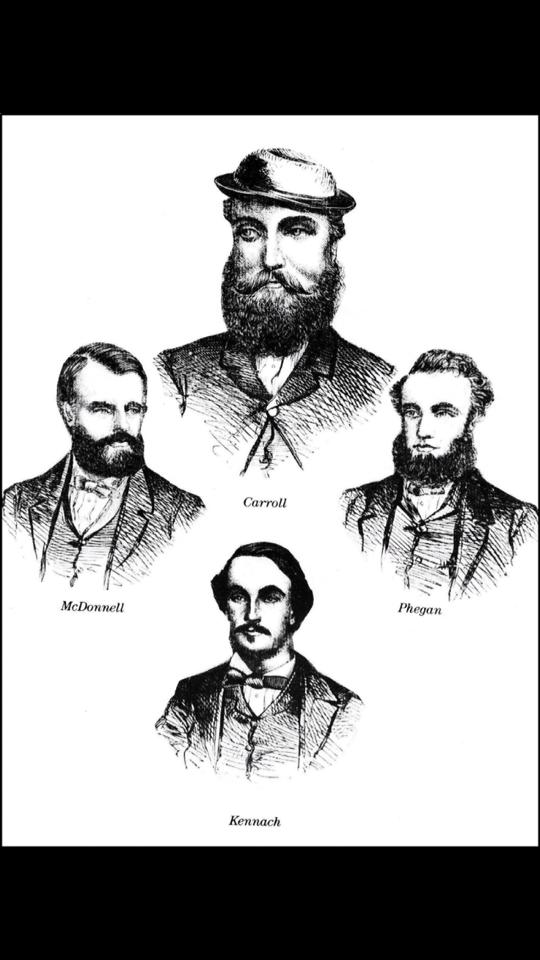
John CARROLL, Patrick KENNAGH, Eneas McDONNELL, John PHEGAN
Carroll Kennagh McDonnell Phegan – Special Constables – NSWPF – Murdered – 9 Jan 1867 – Facial Drawings
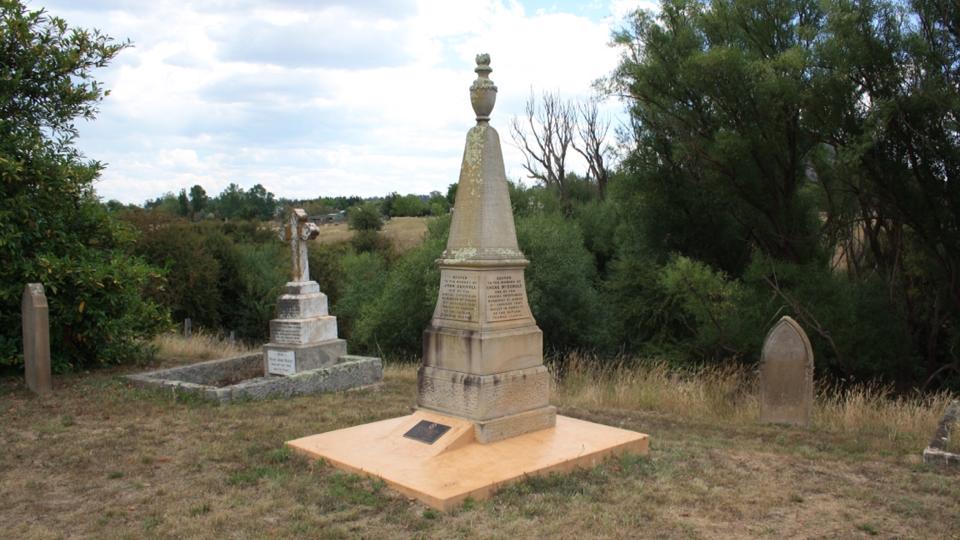
Carroll Kennagh McDonnell Phegan – Special Constables – NSWPF – Murdered – 9 Jan 1867 – Grave stone
John Carroll (a senior warder at the Darlinghurst Gaol) was the leader of a group of four men sworn in as special constables to search for and capture the Clarke Gang of bushrangers. The patrol consisted of Carroll, Patrick Kennagh, Eneas McDonnell and John Phegan. They were well-armed and in January, 1867 had for some time been posing as surveyors in the Braidwood area in an attempt to discover the whereabouts of the bushrangers. On the afternoon of 9 January the four men were walking through an area of very dense bush on Jinden Station, having left their horses behind on that day for some reason, when they were ambushed.
Witnesses apparently twice heard shooting in the area at that time but did not investigate until the following day. In a clearing in the bush McDonnell and Phegan were found, shot to death, and about 800 metres away Carroll and Kennagh were found, also shot to death. Carroll was found lying on his back with a neatly folded handkerchief on his chest with a one-pound note pinned to it. A large sum of money he was carrying in his pocket had not been touched. The wounds suffered by Carroll and Kennagh suggest that not only were they murdered, but that they were actually “executed”. It is generally thought (and also often disputed) that their attackers were members of the Clarke Gang, however this has never been proved.
The Sydney Morning Herald of 12 January, 1867 informed its readers of the following.
BRAIDWOOD – MURDER OF THE SPECIAL CONSTABLES.
Friday: The four special constables – Carroll, MacDonald, Fagan, and Kennagh – sent here to capture Clarke’s gang, were on a visit to a station at Jinden, when they heard that Clarke would be at a place two miles distant from there, the constables went on foot with the intention of endeavouring to capture him, and, it is presumed, were met by a lawless mob and shot dead. It is said that Carroll’s legs had been broken, and his feet turned to his head. The mournful news reached Braidwood last night, and caused universal indignation, and cast a gloom over the entire population. Mr. Griffin and Superintendent Orridge are now holding an inquiry.
Like Carroll, Kennagh and McDonnell were prison warders (McDonnell was also an ex-policeman), while Phegan had been chosen for the search because, as a former associate of the Clarkes, he knew the Braidwood area well. They had been authorised by Colonial Secretary Henry Parkes to undertake a “secret expedition for the capture of the bushranger Thomas Clarke and his associates.” They had been promised wages, reward money (if successful) and significant positions in the Public Service for their endeavours. This situation, of course, was not popular at the time with substantive New South Wales police officers. A monument was later erected in the memory of these men at the Braidwood Cemetery (and inexplicably, McDonnell is referred to as Eneas ‘McDonald’).
These murders represent the highest number of police ever killed in a single incident of this type in Australian history. It is only surpassed by the spearing of patrols of Native Mounted Police in Queensland in the 1860’s. (Ned Kelly killed three Victorian police officers in a single incident at Stringybark Creek in 1878).
Special Constable McDonnell was born in 1817,
Special Constable Carroll in 1829,
Special Constable Phegan in 1837, and
Special Constable Kennagh in 1841.
[divider_dotted]
Clarence and Richmond Examiner & New England Advertiser ( NSW ) Tuesday 12 February 1867 page 3 of 8
Meetings of sympathy with the families of the special constables recently murdered continue to be held, and much indignation is expressed at the rottenness and inefficiency of our expensive military police force. A commission, with a great preponderance of officialism in it, has been appointed, to inquire into the circumstances of the late murders of the special constables, and the state of the Braidwood district. The public have little confidence in the fitness of the commissioners.
Police and Bushranger descendants tour bushranger sites in district
Braidwood was overflowing with people during the weekend from visitors who had come to town for all sorts of events and celebrations.
The Police and Bushrangers Descendants who travelled from all over NSW and some from QLD came to enjoy the company of like-minded people and to learn more about the local Braidwood bushrangers and the policeman who were involved in their capture in April 1867.
The group was lucky to have many distinguished historians and authors who facilitated as commentators, guest speakers and experts. This was a well-run event.
The group would like to thank Paul and Annette Briggs and family who spent many long hours scheduling and organising the experience. As a result, all of the participants enjoyed their time in the Braidwood District. Paul Briggs is a descendant of Lionel Pottinger, one of the Special Police sent after the Clarkes.
The group gathered at the Braidwood Services Club on Friday night for dinner followed by a briefing on the weekend and guest speakers from within the group before their early start the next morning.
About 80 people, including local guests, gathered at the Garan Vale Woolshed at 8.15am on Saturday morning ready to depart for their day tour of the significant sites of the Connell and Clarke bushrangers in the Ballallaba, Krawarree, Jinden and Kain areas of the district.
The first interesting site was the Clarke residence on the Cooma Rd adjacent to Brick Kiln Creek where Jack and Mary Clarke (parents of Tom and John Clarke) lived. Peter Smith and Paul Briggs spoke and recited information about this site. Along the way Paul Hart provided information about several curious sites along the road, including Mrs Appleby’s store and house, the Willis homestead, Bendora and bridle tracks including the Rugby Track.
The group viewed the Nithsdale homestead and the surrounding property where the oldest of the Clarke children were born, during the 1840’s. This was also the location of the local Ballallaba police Station. Along the road, the tour mangers pointed out the Coles, the Church, the school, the Berriman and Connells family home sites.
The areas and locations of the Griffin brothers were also pointed out. These three brothers had substantial involvement in the Bushranging episode during the 1860s.
The site of a well known and notorious landmark, ‘Michael O’Connell’s Traveller’s Home Hotel,’ opposite Jim O’Connell’s house was pointed out. A few stories were told and a visit to the Gundillion cemetery provided a few photo opportunities of Michael O’Connell’s gravestone.
Morning tea was abundantly provided by the good hosts of the Deua Tin Huts. A few more stories were exchanged and were appreciated by all.
The group was eager to travel to Khan Yunis to locate the site of Berry’s Hut where the Clarke bushrangers were finally taken by a small but dedicated group of troopers in 1867.
A substantial luncheon was provided by the Gundillion Progress ladies at the local hall. After a delicious lunch, the group travelled to Jinden to visit the property of Janette and John Hindmarsh where the temporary burial site and the site of the killing of the four unfortunate Special constables was pointed out to the large group.
On travelling back to Braidwood the tour travelled along the Jerrabatgulla Road visiting the house site of Michael Connell senior and ‘Gilston‘, the family home of the Hart family. This is where Charlotte Hart, the wife of Tom Clarke grew up and lived. The group was bailed up by a couple of bushrangers who travelled on the bus to Braidwood ensuring that all travellers behaved themselves.
On arriving in Braidwood a quick stop at the local Braidwood Cemetery allowed the group to visit the final resting place of the Four Specials. The large memorial that was built to remember them was regarded with much interest.
On Saturday night a marvellous dinner and singalong was had at the Garan Vale Woolshed. Peter Smith led the vocals on several songs from the bushranging era to demonstrate how the community supported and even sympathised with the bushrangers during that chapter of Australia’s history, like this verse from the Kelly’s Byrne and Hart “..As high above the mountains so beautiful and grand, Our young Australian heroes in bold defiance stand, In bold defiance stand, my boys, the heroes of today, So let us stand together boys, and shout again, “Hurray!””
The weekend was topped off on Sunday with an interesting tour of the local Historical Museum and a tour of the Bedervale Homestead. Many thanks to Jill Clarke for her notes from the tour.
On 7 January, 1867 the trooper was on duty collecting the electoral roll and agricultural returns near Grafton. Shortly after 1pm on that day he was attempting to cross First Falls on the Upper Clarence River when his horse reared, throwing him into the water, where he drowned. Trooper Lees was a married man with two children and a wife then expecting their third child.
The Maitland Mercury dated 15 January, 1867 contained the following brief notice, indicating that “We regret to learn that Trooper Leece [sic] of the Grafton Police Force, in attempting to cross the First Falls, at the Upper Clarence, yesterday, shortly after noon, in the execution of his duty, was carried down by the current and drowned. Information of the sad event reached Grafton last evening when the police boat was immediately dispatched with grapnels to drag for the body, which had not been recovered up to the time our informant left.â€
At the time of his death the trooper was stationed at Grafton.