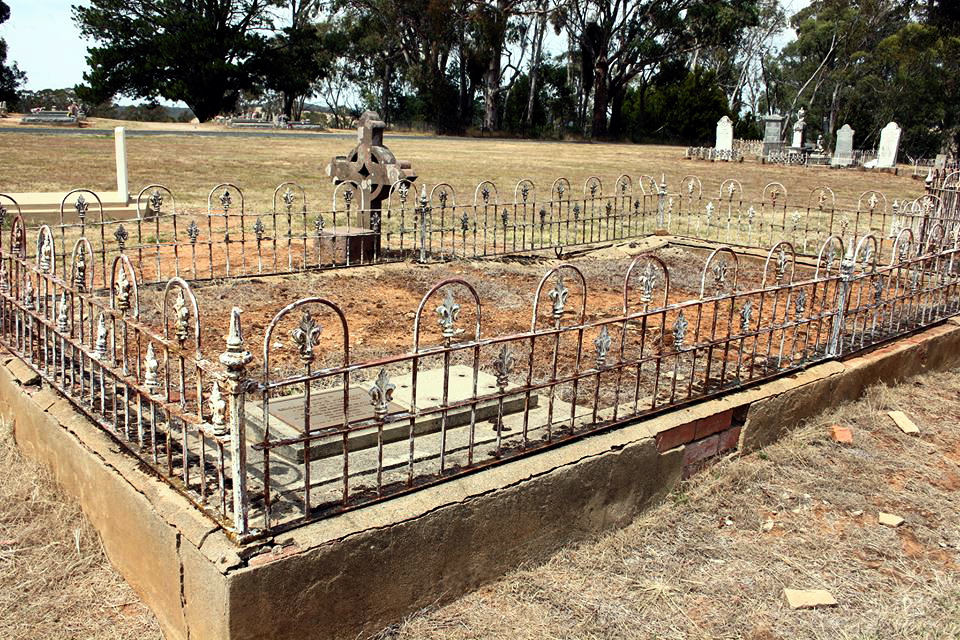
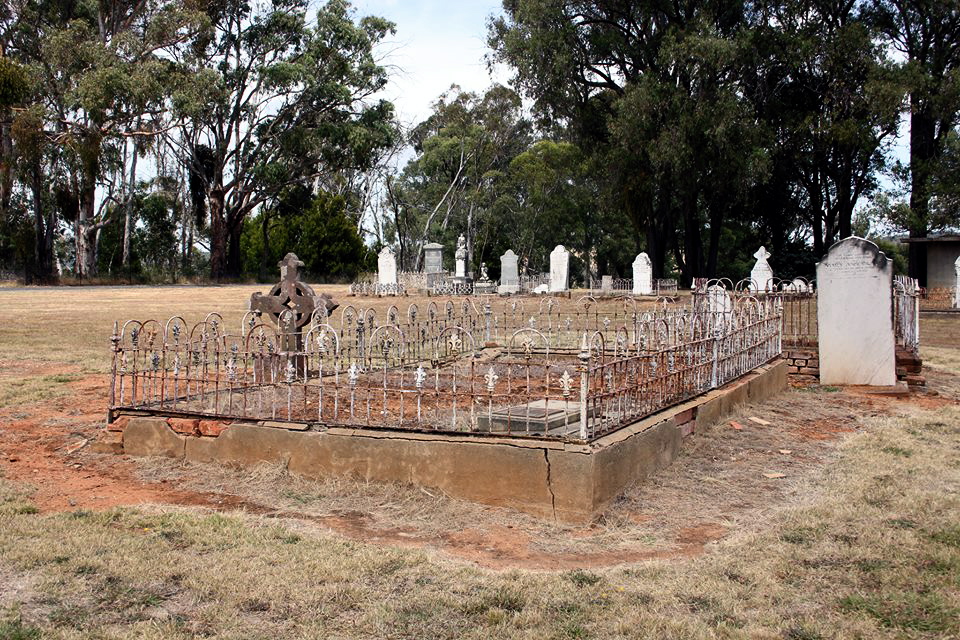
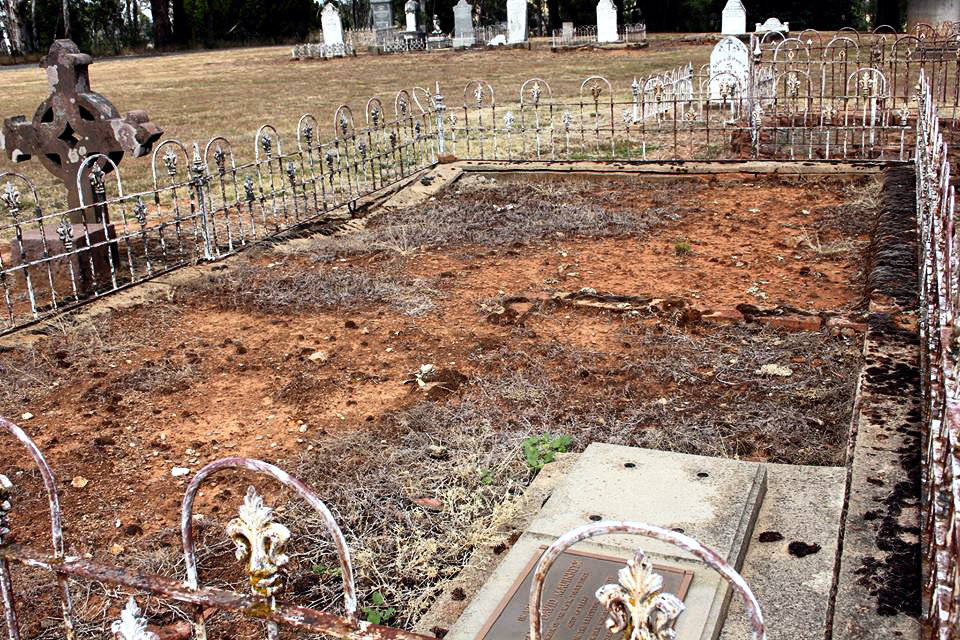
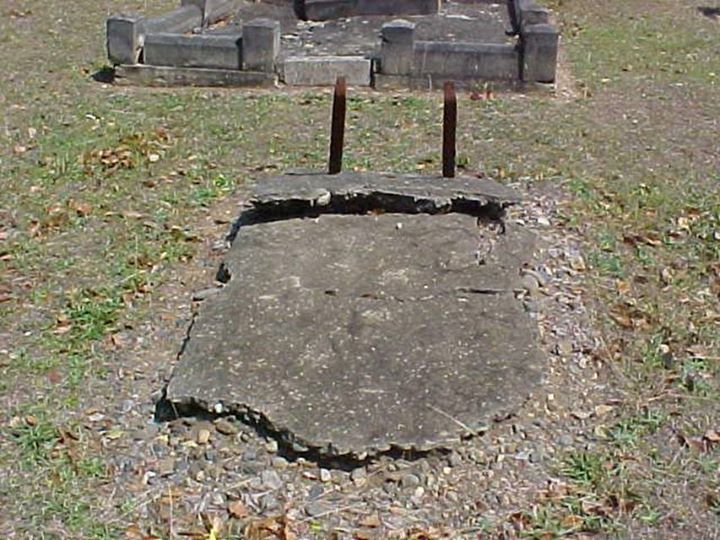
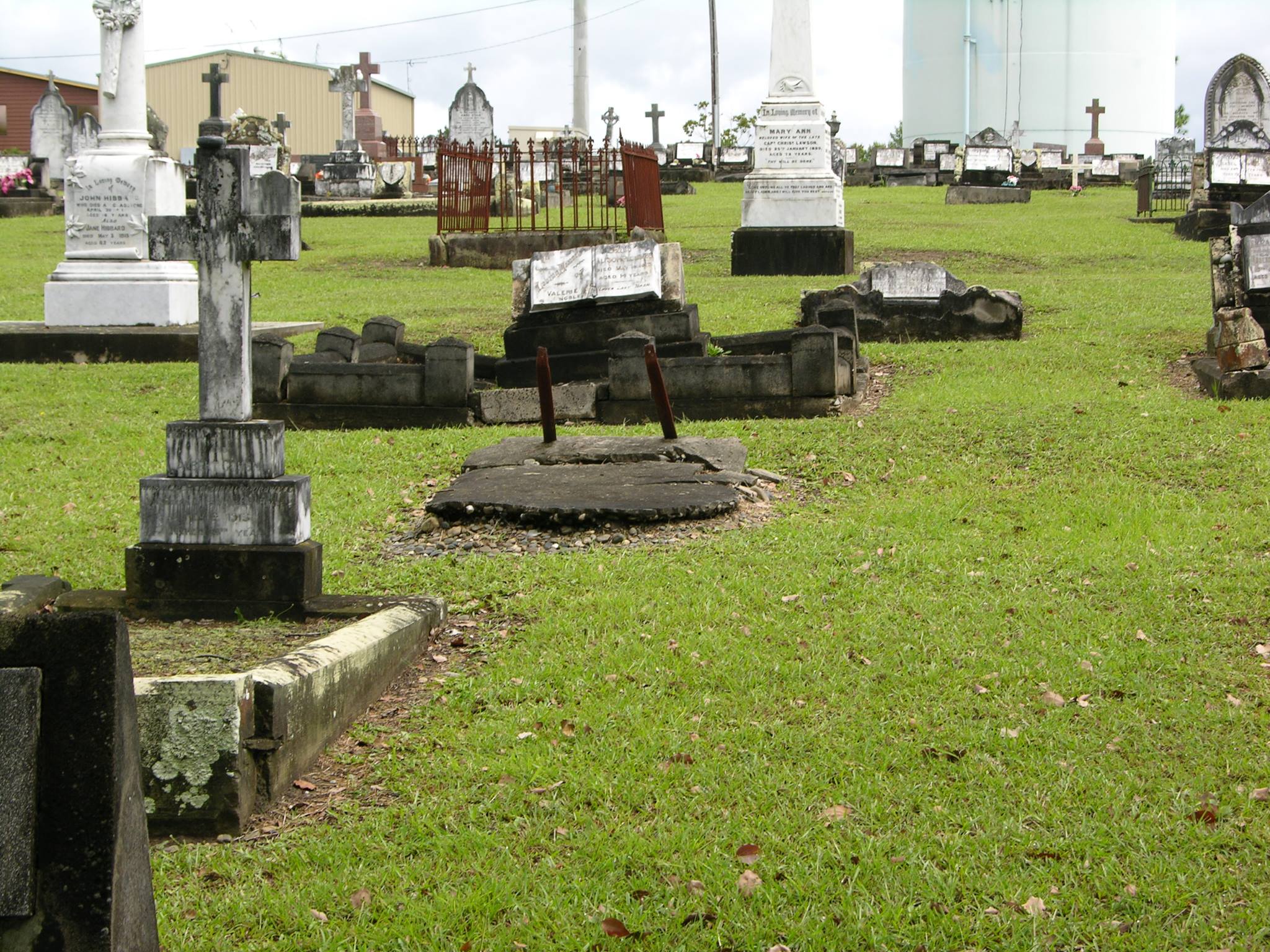
Grave of Sgt David Maginnity – courtesy of Ken Medway ( Beyond Courage FB Page 120114 )
Grave of Sgt David Maginnity – courtesy of Ken Medway ( Beyond Courage FB Page 120114 )
Grave of Sgt David Maginnity – courtesy of Ken Medway ( Beyond Courage FB Page 120114 )
Grave of Sgt David Maginnity – courtesy of Ken Medway ( Beyond Courage FB Page 120114 )
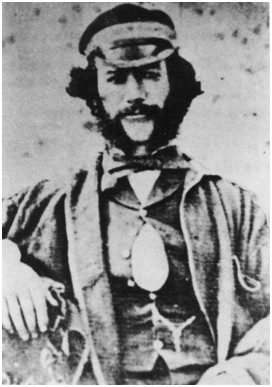
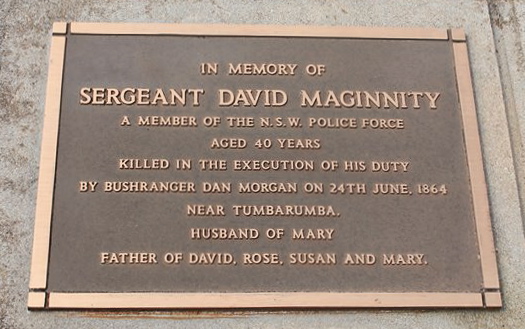
The sergeant was returning to Tumbarumba from a patrol to Copabella with Constable Charles Churchley when they encountered another rider on the road. When the sergeant cantered up to the rider a shot was fired almost instantly. The sergeant’s horse then plunged into the bush, carrying its mortally wounded rider. The stranger was later identified as the bushranger Daniel Morgan. The sergeant’s body was recovered the following day. The Wynyard Times newspaper dated 27 June, 1864 carried the following account.
THE ENCOUNTER WITH MORGAN AND DEATH OF SERGEANT MAGINNITY.
It is our painful duty to record the death of Senior-sergeant David Maginnity, of Tumbarumba, who was, on Friday last, shot dead by the notorious bushranger Morgan. It appears that early on Thursday, Sergeant Maginnity, accompanied by constable Churchley, left Tumbarumba for Copabella, a distance of twenty miles. On their return next morning, they encountered Morgan within five miles of Copabella, at about half-past ten o’clock. At this time Churchley was a little in advance of Maginnity, when the latter, seeing Morgan, cantered up to Churchley, and hurriedly inquired of him who that was. Almost before receiving a reply, he rode smartly up to Morgan’s side, Churchley being about fifteen or twenty yards to the rear. Morgan instantly fired at Maginnity, whose horse thereupon rushed into the bush. At the same time, Morgan’s horse took the opposite direction, leaving Churchley on the road, but as his horse was completely knocked up he soon lost sight of both of them.
The vicious and violent Morgan, who also murdered Senior Sergeant Thomas Smyth near Albury three months after Sergeant Maginnity’s murder, was shot to death by a farmhand in April, 1865.
The sergeant was born in 1815 and joined the police force on 8 July, 1853. Previously a member of the Mounted Road Patrol, in 1862 he became a member of the newly-formed New South Wales Police Force. At the time of his death he was stationed at Tumbarumba.
Sergeant Robert ROBINSON
| 25/10/2012
Sergeant Robert ROBINSON
Accidentally Shot
Muckerawa
22 January, 1864
The sergeant was among a party of police who intervened in a dispute between two parties of Chinese people at Muckerawa on the Macquarie River, near Stuart Town. He disarmed one of the people involved, taking a rifle from him, and then took hold of the weapon by the muzzle and smashed it over a log. As he did so the rifle discharged, killing him instantly.
The sergeant was born in 1815 and joined the police force on 1 April, 1852. In 1862 he became a member of the newly-formed New South Wales Police Force.
Constable Jeremiah O’HORRIGAN
| 25/10/2012
Constable Jeremiah O’HORRIGAN
Drowned
Forbes
25 February, 1863
On Wednesday 25 February, 1863 the constable was away from his station patrolling the Weddin Mountains. On his return journey to Forbes he was required to cross the flooded Lachlan River. As he did so the strong current began to carry his horse along. Constable O’Horrigan attempted to check the horse however it rolled over, throwing him into the water. As he was unable to swim, the constable was drowned. His body was recovered downstream some hours later.
The constable was born in 1831 and joined the police force on 1 May, 1860. In 1862 he became a member of the newly-formed New South Wales Police Force. At the time of his death he was stationed at Forbes.
Edward HAMPSON
| 25/10/2012
Edward HAMPSON
New South Wales Police Force
Rank: Constable
Regd. #: ? * A search of the ‘on-line’ State Archives does NOT reveal a HAMPSON, or similar, as being a member of the Police
Stations: East Kempsey ( Lock up Keeper )
Service: From? ? ?topre March 1862 = ? years Service
Awards: No find.
Born: Sunday 15 May 1825, Lancashire, England
Emigrated: from USA to Australia between July 1853 and before Nov 1854
Died: Wednesday 24 December 1862
Cause: Horse Accident – against a tree
Event location: East Kempsey – near the Yarrabandinni gates
Age: 37 – 39?
Funeral date:
Funeral location: ?
Buried at: Frederickton Cemetery, Great North Rd, Frederickton, NSW:
Anglican section row G # 67
GPS: 31 02′ 02S / 152 52′ 38E
Grave location:
[alert_red]Edward IS NOT mentioned on the Police Wall of Remembrance[/alert_ed]
Constable Edward HAMPSON – grave
Constable Edward HAMPSON – grave
The constable is believed to have suffered fatal injuries when he was either thrown or fell from his troop horse at East Kempsey.
Some 62 years later the Macleay Chronicle of 7 May, 1924 in a related story recounted that the constable had been “killed while riding near the Yarrabandinni gates on Christmas Eve, 1862”. In a contemporary account however, the Empire newspaper of the 5 January, 1863 reported the following.
“ACCIDENT
On the 24th instant, a settler named Edward Hampson came by his death through a fall from a young horse he was riding. It appeared from the evidence given before the coroner that the deceased was thrown with so much violence against the spur of a tree as to cause instantaneous death.”
Few details are known at present, however the Macleay Chronicleof 7May, 1924 reported that the constable had been ” killed while riding near the Yarrabandinni gates on Christmas Eve, 1862 “.
At the time of his death the constable is thought to have been the lockup-keeper at the East Kempsey Police Station, where he had been stationed since at least early 1856 (he is mentioned in the New South Wales Police Gazette of 16 February, 1856).
In 1862 he became a member of the newly-formed New South Wales Police Force.
He is not listed in the official New South Wales Police Honour Roll.
MacLeay River Historical Society November 2012 page 2
An enquiry was received from Kempsey Police re Edward Hampson who was killed Christmas Creek, near Yarrabandinni Gates on Christmas Eve 1862 when his young horse threw him against a tree.
It was believed Edward was a police constable and had died on duty, and the information was required for a book on police killed in the line of duty.
A death certificate in Research records however gave Edward’s occupation as a farmer, as did a marriage certificate for his oldest son, Wright Harrison Hampson. It appears Edward was a police constable at some stage but had left the Force prior to his death.
Edward and his wife Eliza arrived from the United States of America sometime in the late 1840s or early 1850, with three children. They had immigrated to the USA from England, however for some reason they changed their mind about settling in America and came to Australia.
After their arrival, at least another four children were born, 1854 Thomas, 1856 William, 1857 Edward, 1860 Henry and 1862 Mary. The majority of the children’s place of births are registered as Macleay River.
Their father Edward HAMPSON, became a Police Officer, however he was killed while on duty in 1862 near a river.
From: “Janice Doughty” <adoughty01@optusnet.com.au> Subject: Re: [NORCO] EDWARD HAMPSON-Police Constable Date: Sun, 27 Mar 2005 09:24:51 +1000 References: <000001c53113$2b468a30$295d1ed3@ADOUGHTY> <80977F0C-9E24-11D9-88D6-000A95EAA358@ceinternet.com.au> Thank you to Rod and also to the many other Listers who have helped with my enquiry regarding the Hampson family of Macleay River district.
Within a day of requesting help with the HAMPSON family, I have found out so much from this wonderful List and I would like to share the HAMPSON story with you so far.
Edward HAMPSON was Christened on 15th May 1825, at Saint Michael, Ashton Under Lyne, Lancashire, England. His parents being Thomas and Nancy HAMPSON. Family rumour has it that this family was very well off, living in a large home in the town of Ashton Under Lyne in Lancashire.
Eliza HARRISON was Christened on 23 May 1824 at Saint Michael, Ashton Under Lyne, Lancashire. Her parents were James and Alice HARRISON.
Edward HAMPSON at 20 years of age, married Eliza HARRISON also 20, on 1st January 1844 at the Cathedral, Manchester, Lancashire ENGLAND.
Some time between 1844 and 1848, Edward and Eliza HAMPSON sailed for the United States, and settled on the east coast of the USA. It is believe that there were already relatives of Edward’s living in the U.S.
Children born in the U.S.A were.:-
Wright Harrison HAMPSON born 1848 in Salem, Mass.
Desdemona Ann HAMPSON born 1851 Newark New Jersey
Alice Maria HAMPSON b.1853 Boston, Mass.
After the birth of Alice in Boston in July 1853 and before the birth of Thomas in Australia in Nov 1854, the family sailed from Boston to old Sydney Town, Australia. What ship they sailed on is at the moment unknown.
Children born in the Colony were:-
Thomas 1854,
William 1856,
Edward 1857,
Henry 1860 and
Mary 1862.
All except Thomas, who may have been born in Sydney, not long after the family arrived in Sydney Cove, were born in the Macleay River district. The family settled somewhere near Kempsey, at the moment it is unknown exactly where their property was. Any help with establishing where the family actually lived, would be very much appreciated.
As previously stated, the father Edward joined the police force, and was tragically killed on Christmas Eve 1868 when he was thrown against a tree.
More work has to be done regarding the death of Edward. Not sure if he was on duty when he died.
It was only six month before, when Edward and Eliza‘s son Thomas, at 14 years of age was killed in an accident in July, while driving a team of bullocks, when one of the wheels got on the end of a slab, suddenly lifting the other end, which struck Thomas on the head killing him on the spot.
Thomas at the time was in the employ of Mr. James Ducat (Manning River New – 11.07.1868). Thomas was recovering from a broken arm at the time of his death.
The surviving children all married:-
1870 Wright Harrison HAMPSON, married Isabella Emmeline Reid at Port Macquarie. She died in 1886 and Wright’s second wife was Ellen Berman and they married in 1906, also in Port Macquarie.
Desdemona Ann HAMPSON married Edwin James CLOUGH in 1868 at Macleay River.
Alice Maria HAMPSON married John JONES in 1868 at Macleay River. (The sisters may have married on the same day).
William HAMPSON married Elizabeth BOLSTER in 1884 at Kempsey.
Edward HAMPSON married Annie KELLARD IN 1882 in Sydney.
Henry Frank HAMPSON married Ada Caroline KELLY in 1881 in Sydney.
Mary Amelia HAMPSON married Arthur Pringle STEWART in 1881 in Newtown.
The one member of this family whose name survives today, through his wonderful exploits is Wright Harrison HAMPSON, through his colourful career as a mail contractor and coach driver for Cobb & Co. He was well known for playing on his bugle “The Girl I Left Behind Me”, when his coach was leaving town. There was also his stories of the Boer War, he was 52 years of age when he joined up.
Wright Harrison HAMPSON, died in 1929 in Granville, his son Wright Harrison HAMPSON Jnr, died five years before his father in 1924 at Parramatta.
Again, a big thank you to everyone who contributed to put this story together.
Regards,
Janice
Belrose – Sydney
—– Original Message —–
From: Rod Gow <rgow@ceinternet.com.au> Subject: Re: [NORCO] EDWARD HAMPSON-Police Constable Date:Sun, 27 Mar 2005 04:25:59 +1000 References: <000001c53113$2b468a30$295d1ed3@ADOUGHTY> In-Reply-To: <000001c53113$2b468a30$295d1ed3@ADOUGHTY>
Dear Janice,
We had a look at some newspaper indexes relating to HAMPSON of the Macleay River and found the following which may be of some interest…
Manning River News newspaper – 11 July, 1868 page 2 columns 5 and 6
Another accident happened at Moonebah, by which a boy, named Hampson, lost his life whilst driving a team of bullocks. One of the wheels got on the end of a slab, suddenly lifting the other end, which struck the boy on the head killing him on the spot.
The lad who was killed at Moonebah by being struck on the head by a rail as mentioned by our regular correspondent, was named Thomas Hampson. He was in the employ of Mr. James Ducat. A magisterial enquiry was held.
A son of a Mrs. Hampson has had his leg broken. It is stated that the boy belongs to a particularly unfortunate family. His father was killed by being thrown against a tree, his eldest brother had his arm broken, and had no sooner recovered from that accident than he was suddenly killed, and now this lad comes in for his share of trouble. The boy’s mother certainly deserves the sympathy of her neighbours, and pecuniary aid too, if she needs it.
Also, Janice, in the “NSW – Patriotic Fund Subscribers – Crimean War (1855) index” there is the following entry extracted from the
Sydney Morning Herald … Hampson EKempsey & Macleay River 16 Aug 1855 page 6 column 1
If this is one of the family it may establish that he was in the Macleay district in 1855
Also, is Wright Hampson one of the family you are researching ? He married Miss Berman on 3 January, 1907.
Hope the above is of some assistance.
Best wishes,
Rod & Wendy Gow
[divider_dotted]
On 25 Mar 2005, at 7:18 PM, Janice Doughty wrote:
Good evening Listers,
I am new to this list and am hoping that SKS maybe able to assist me.
I am helping the wife of my husband’s cousin to find out some history on her gg grandfather one Edward HAMPSON.
Edward and his wife Eliza arrived from the United States of America sometime in the late 1840s or early 1850, with three children. They had immigrated to the USA from England, however for some reason they changed their mind about settling in America and came to Australia.
After their arrival, at least another four children were born, 1854 Thomas, 1856 William, 1857 Edward, 1860 Henry and 1862 Mary. The majority of the children’s place of births are registered as Macleay River. Their father Edward HAMPSON, became a Police Officer, however he was killed while on duty in 1862 near a river. The lady I am helping thinks she can remember the cause of death was a fall from a horse.
Any help regarding this family would be very much appreciated.
Chris StaffordGood evening everyone, yesterday I received Edward HampsonDeath Certificate and unfortunately, at the time of his death, Edward was no longer a Constable, but was a farmer and settler in the Fredo/East Kempsey (East was the original township). This was back up by one of his children’s marriage certificate.
Even though I have found written reference in newspaper that did indicate Edward was the Lock up Keeper for East Kempsey, but it seems by 1862, at the creation of the NSW Police Force, he was no longer a serving member.
This maybe the reason while there is no record on the NSW Honour Roll or the Canberra Wall. However, I am still going to attempt to fix his grave up and place a new plaque stating Edward as a former Police Officer.
William HAVILLAND
| 25/10/2012
William HAVILLAND
New South Wales Police Force
Constable
Regd. # ?
Accidentally Shot
Orange
Event 15 June 1862
Died 16 June, 1862
Funeral ?
On 15 June, 1862Constable Havilland, Sergeant James Condell, Senior Constable Henry Moran and Constable Rafferty were travelling as protection for the Forbes Gold Escort. At a locality known as the Eugowra Rocks the coach was ambushed by a gang of bushrangers which included the notorious Frank Gardiner, John Gilbert and Ben Hall. As a result of the attack, Sergeant Condell and Senior Constable Moranwere wounded, the coach was overturned and 14,000 pounds in gold and banknotes and bags of registered mail stolen. The following day ( 16 June 1862 ) the coach was righted and driven into Orange. Shortly after arriving in town a revolver under a seat in the coach discharged, with the shot travelling upwards through the seat and striking the unfortunate Constable Havilland under the chin and killing him instantly.
The Empire dated 19 June, 1862 provided some interesting background information on the constable.
CONSTABLE HAVILAND – This man, who was shot under such mysterious circumstances in the vehicle of the gold escort, just after its arrival in Orange, was a very deserving officer of the force. He was formerly a sergeant in the Royal Artillery at Woolwich, and, leaving the regiment, he arrived in Sydney about four years since from India, when he entered the metropolitan police. He was for a considerable time in the Parramatta street division, where he was always known as a very efficient member of the force. He was a first-rate marksman and a good shot, and, we believe, he was so well versed in drill exercises that it was intended at one time by the Inspector General, to make him act as an instructor to the Sydney Police. He subsequently acted as orderly to the Inspector General, in which capacity he was looked upon as a confidential servant. From that position he entered the gold escort, in which service his untimely fate is to be regretted. Havilandhas left a widow and two children residing in Sydney, to deplore their loss; and Mrs Haviland is at present, we understand on the eve of her confinement.
At the time of his death the constable was aged 33 years and had joined the police force about 1858. He was attached to the Forbes Gold Escort which on 1 March, 1862 had become part of the New South Wales Police Force.
( This is believed to have been the first on-duty death of a member of the New South Wales Police Force, which had been created on 1 March, 1862 following the passing of the Police Regulation Act 1862. On that date all existing police forces, units and constabularies were amalgamated into one organization which was led by Inspector General Captain John McLerie. The original force consisted of about eight hundred men. )
Senior Constable Henry MORAN was later accidentally killed on the 4 February 1890 and a memorial to MORAN is located at Mt Lambie, between Bathurst & Lithgow, NSW.
Constable James QUINN
| 25/10/2012
Constable James QUINN
Hit by Lightning
Cockatoo Island
12 January, 1862
The constable was killed when he was struck by lightning while on duty at Cockatoo Island on the night of 11 January, 1862. The Sydney Morning Herald of 14 January, 1862 reported at some length on inquest into Constable Quinn’s death. It is reproduced here, almost in its entirety, due to the subtle poise and clarity of the writer in describing the sad events which led to the death of the young constable.
THE LATE FATAL ACCIDENT BY LIGHTNING – An inquest was held in the coroner’s office, yesterday, on the body of Constable James Quinn, who, as stated in our issue of yesterday, died from the effects of being struck by lightning on Cockatoo Island on last Saturday night. It appeared that the deceased had only joined the City Police Force on the 2nd of December last, and went over to do duty on Cockatoo Island on the 7th of the present month. At eight o’clock on Saturday night, he, in company with Constable Campbell, went on duty in the prison yard. At about nine o’clock a heavy thunderstorm broke over the island, and in a few minutes there came a flash of lightning more vivid than those that had preceded it, and Inspector Lane, who was sitting in his quarters, heard a heavy crash, and thought the prison had been knocked down. He ran out and saw one constable at his post in the verandah, he then ran to the back and saw another at his post, everything appearing to be alright, but after standing a minute he (the inspector) was conscious of a strong smell of sulphur. As, however, nothing appeared to be touched, he returned indoors, when, in a few minutes, his attention was called to the cry of fire he again ran out and found the prisoners were calling out “fire, fire!” He shook the gate, and the guard having opened it, he inquired where the fire was, but could not ascertain, he called for Constable Campbell, who, after two or three calls, replied in a faint voice, “I am here, sir,” and by the lightning, which was very vivid, he saw him lying on the floor of the building known as the chapel, his head covered with blood. The inspector was under the impression on seeing the blood that some of the prisoners had escaped, and had attacked him. He accordingly at once ordered a double sentry to surround the prison, and enquired of Campbell what was the matter, to which he replied he did not know, but had been knocked down, enquiry was then made as to where his mate was, and Campbell replied “Poor fellow, I saw him over there,” pointing to a shed covered with galvanised iron in the yard.
Thither the inspector went, and inside saw Quinn leaning with his back against the wall, he went up to him, touched his head and found it cold, he then called for the dispenser (there being no qualified medical practitioner resident on the island), who came, and after the injured man had been removed, administered medicine, which revived him. Inspector Lane forthwith sent the police guard boat to Sydney, with messages requesting the immediate attendance of Dr West, and Dr. Rutter, the latter of whom at once responded to the call. On arrival at the island he found Quinn strongly convulsed, requiring several men to hold him. He ordered what he deemed requisite and then left, returning again the next morning, when the injured man was found to be much better. There being no hospital (beside the hospital for prisoners) on the island, Dr. Rutter recommended his removal to the Sydney Infirmary, and thither he was conveyed, arriving there at about one o’clock. Dr Roberts saw him soon after his admission, and treated him as he considered his case required. The sufferer never rallied, but expired about four o’clock on the same afternoon.
It came out in evidence that the rifle carried by the deceased at the time he was struck was untouched by the electric fluid, as also the ammunition on his person, but a gold chain attached to his watch was burnt through in several places. It appeared that the lightning struck the highest port of the building in which the deceased was found, descended through the coping to a lamp, close to the spot where he was discovered. There were no lightning-conductors on the island. The deceased had formerly been in the Irish Constabulary Force, he was a native of Ireland, a steady well conducted man, and about twenty eight years of age. He has left a widow and two children. The jury returned a verdict of “Died from being struck by the electric fluid on Cockatoo Island on the evening of the 11th instant.” The body of the deceased was interred in the Roman Catholic burial ground, in Devonshire Street, yesterday afternoon, all the available police, dressed in uniform, with white gloves and white cap-covers, following him to the tomb.
The constable joined the Sydney Police Force on 2 December, 1861 and at the time of his death he was stationed on Cockatoo Island. He was 28 years of age, and was a former member of the Royal Irish Constabulary.
Amazingly, the only two recorded NSW police deaths by lightning strike occurred on the same date, sixty years – to the day, apart. The other being Constable John Charles DONOVAN who was struck at Brewarrina, NSW, on the 12 January 1922.
Constable Christian SEIDTZ
| 25/10/2012
Constable Christian SEIDTZ
Drowned
Grafton
29 April, 1861
The constable is believed to have drowned in the Clarence River at Grafton while trying to save the life of a young boy (eleven-year-old Daniel Forde) who had fallen into the water at a spot nearly opposite the constable’s house. The Sydney Morning Herald dated 15 May, 1861 printed the following article in relation to the inquiry into the deaths of the constable and young Daniel Forde.
MAGISTERIAL INQUIRY – Upon the bodies of Daniel Forde and Christian Seidtz.
James Hovenden, Chief Constable, stated: About noon I met the deceased boy (Forde) near Pound Street; carrying meat on horseback; shortly after, one of his brothers informed me that he had been thrown from his horse into the water in Pound Street; I procured the drags and went to the spot to endeavour to recover the body; medical aid was in attendance when the body was found, about three quarters of an hour afterwards.
Solomon Cooper sworn : I knew the deceased Christian Seidtz; about noon on Monday my wife called my attention to someone crossing a flooded part of Pound Street, near my residence; I ran out and saw a boy struggling in the water; Seidtz, who lived opposite, came out of his house and plunged in to assist the lad, and sunk immediately; I never saw him rise after he went into the water; I gave an alarm and Richard Barrett immediately swam out; Mr. Sanders and myself did all we could, but not being able to swim could not go out of our depth; the water was about ten feet deep; the body was not recovered for about three-quarters of an hour; Dr. Little saw the body but could not restore animation.
Carl Meyer, sworn, stated: I live in Pound Street, near the deceased’s place; I heard Mrs. Seidtz call out that her husband was drowning; I ran up and saw a lad struggling in the water, and his horse by the side; I could not see Seidtz for some time then his face showed for a moment and disappeared; I could not swim; I gave information to the chief constable; every effort was made to rescue the deceased.
The deceased, Seidtz, was a man much respected; a native of Germany; and had been three years in the Grafton police force, during which time there was no complaint against him. He was a remarkably fine-made man, thirty-five years of age; and a very sober industrious person. This sudden event has left his unfortunate wife and four young children totally unprovided for.”
At the time of his death the constable was 35 years old and was stationed at Grafton. He is sometimes recorded as ‘Seitz’ or ‘Leitz’
Alexander McGEE
| 25/10/2012
Alexander McGEE
New South Wales Police Force
Regd. # ?
Rank: Inspector
Stations: B District – Sydney
Service: From? ? ?to 22 May 1860 = about 20? years Service
Awards: ?
Born: ? ? ?
Event location: Castlereagh Street near Liverpool St, Sydney, NSW
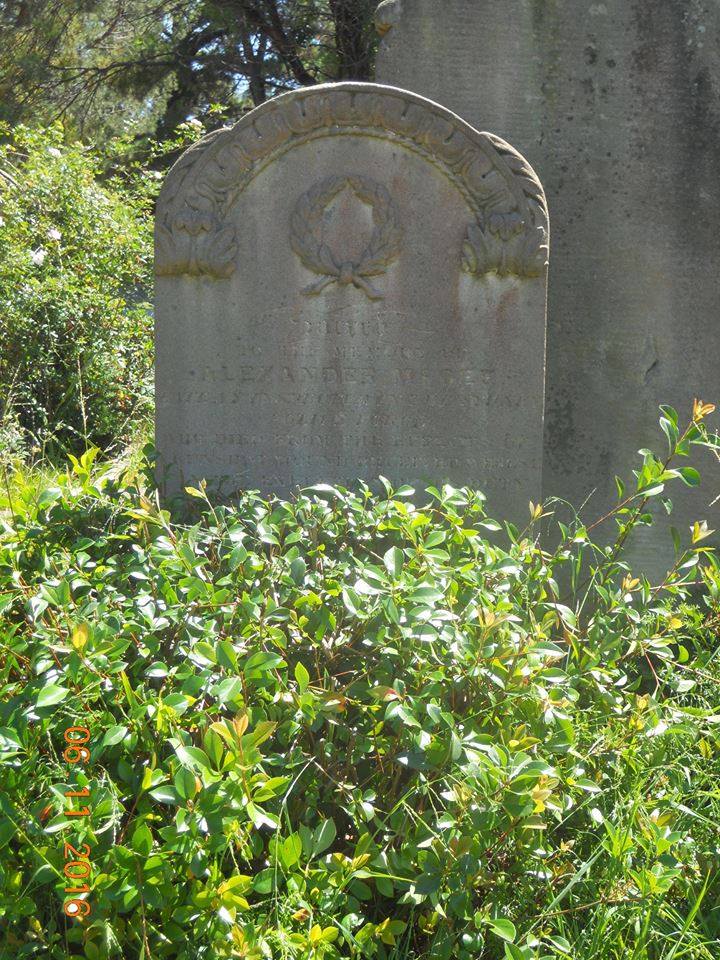
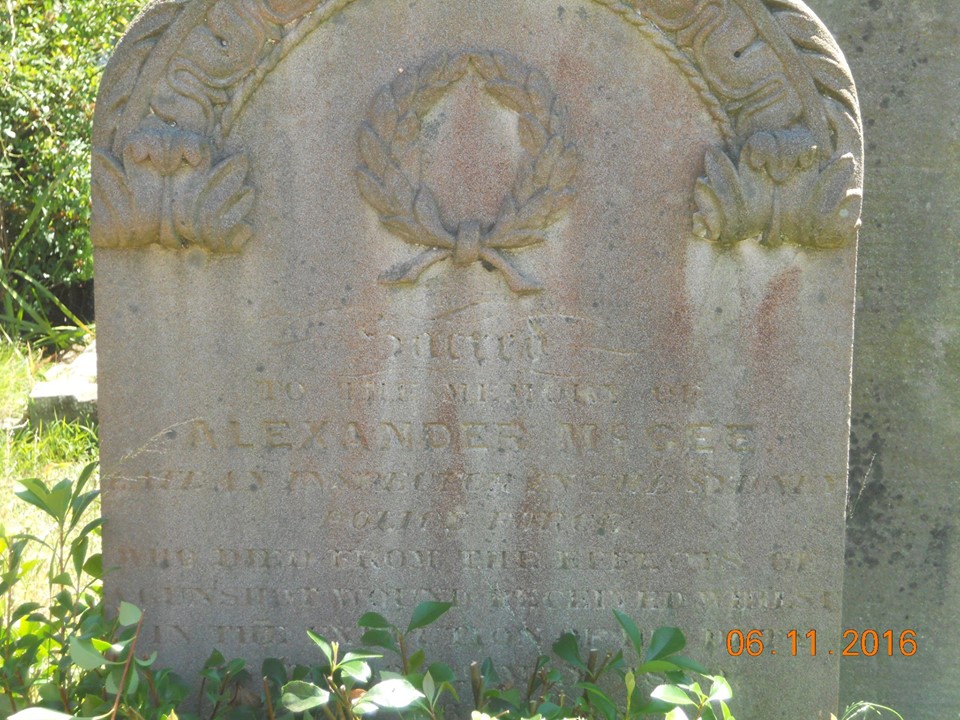
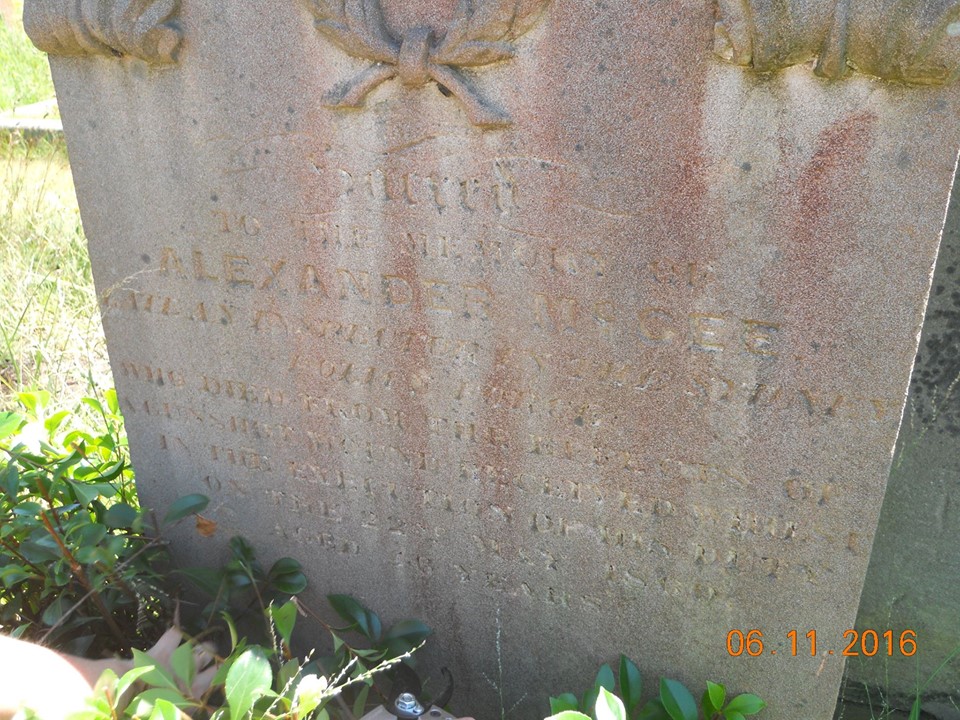
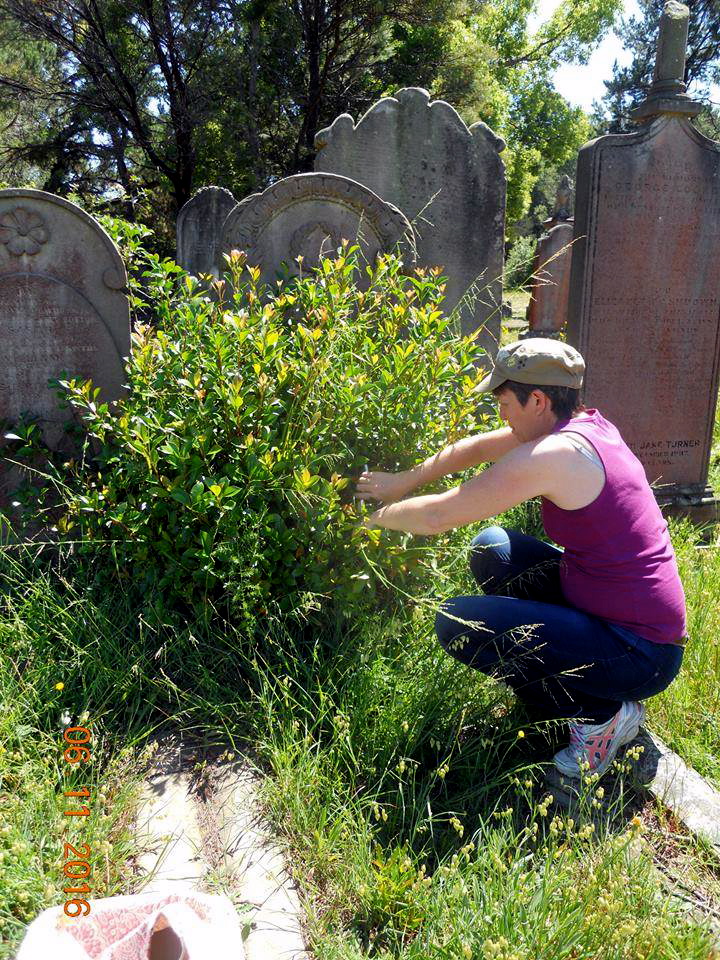
Alison Carter, who is not associated with NSW Police, but went out of her way and took the time to locate & take photos of the grave of our fallen brother – Alexander McGee on 6 November 2016. Thank you Alison.
ALEXANDER is NOT mentioned on the Police Wall of Remembrance
* But should be
Between 11pm and 12 midnight on 26 March, 1860 Constable Connaughty was on duty in Goulburn Street, Sydney when he saw two soldiers ( William Pike and Patrick Hughes ) carrying rifles. Believing them to be deserters he followed them along Sussex Street, across the Haymarket and along Pitt Street until he spotted Inspector McGee, Sergeant James Rush and Sergeant Francis Rooney, who were out looking for soldiers who had deserted from the 12th Regiment.
The four police officers then followed the soldiers until, when near Liverpool Street, they began to run. Rush and Rooney quickly caught up with Hughes while McGee and Connaughty chased Pike into Castlereagh Street where he suddenly stopped and pointed his rifle at the inspector.
Pike then said, ” If you attempt to take me I will shoot you. “ McGee replied, ” Do not fire, coward. “ Pike then ran a few steps, chased by McGee, before turning around and firing at the inspector from point blank range. The bullet struck the inspector in the right groin area, exiting from his lower back. He died from the effects of the wound four weeks later.
The Sydney Morning Herald of Tuesday 12 June, 1860 reported that ” The Central Criminal Court is sitting. The two soldiers, Pike and Hughes, have been tried for shooting Inspector McGee. Hughes was acquitted, but Pike convicted of manslaughter, and sentenced to three years hard labour in gaol. Hughes was in custody when the shot was fired, and as to Pike, as he was only carrying firearms, which at present is no offence against the law, the arrest of him was not justified as an act of police duty…”
At the time of his death the inspector was aged 46 years and had been a police officer for about 20 years. At the time of his death he was stationed in B Division, Sydney.
NSWBDM – Death Reg 707/1860
Bathurst Free Press and Mining Journal ( NSW )
Saturday 31 March 1860 p 3
OUTRAGE.
Two soldiers belonging to the 12th regiment were brought before the Court in their regimental dress by constable Connaughty, charged, the first with feloniously, shooting, intending to murder Inspector Alexander McGee, and the second with aiding and abetting in the same. Their names are William Pike and Patrick Hughes.
Witness stated, that between 11 and 12 o’clock last night I saw the prisoners in Goulburn-street with firearms in their possession (two Enfield rifles.) Believing they were about to desert, I followed them along Sussex-street down to the Haymarket and from thence into Pitt-street. I there met Inspector McGee, Sergeant Rooney, and Sergeant Rush. We then followed the prisoners into Liverpool-street, where they began to run. Hughes was pursued by Sergeants Rush and Rooney, who succeeded in apprehending him.
The other prisoner continued running and was pursued by Inspector McGee and myself. As he turned the corner of Castlereagh-street, prisoner (Pike) said ‘ If you attempt to follow me I’ll shoot.‘ Finding that we were still pursing him, he presented his rifle. McGee, who was close beside at the time said ” don’t fire you coward,” and prisoner immediately run on for about 10 or 15 yards, and when we got within about a length of his rifle, he turned round, and without saying anything, shot McGee through the thigh. So soon as the prisoner fired McGee said ‘ I am shot.’ I asked him where ? he replied through the thigh. In the mean time I secured the prisoner, who the moment he fired, said, ‘ Oh, you have pulled the trigger. ”
Sergeant Rush deposed as follows : About twenty minutes past 11 o’clock last evening, I was at Cowell’s public house at the corner of Goulburn street, in plain clothes. Pike came in with a rifle, the barrel of which was partly covered by the skirt of a woman’s dress. I noticed blood on his hands. Immediately after entering, he called Hughes in, who was standing at the door, but the latter replied, ” No ; don’t you see, you b—-y fool?” Hughes then put his piece, which was clipped, to the charge. They both then went away, and l fancied that, although in plain clothes, Hughes knew me. I then followed them into Sussex-street where, whilst turning round they saw me, and brought their pieces to the charge. Hughes at length said to me, ” Can you tell me where the old Australian Inn is ?” their pieces being still charged towards me. I told them, yes, and that I would go and show them if they chose.
They then brought their pieces to the trail, and I proceeded in company with them. I said, you seem to have just come off a long journey, having your firearms with you. They said they had just come from Melbourne, and were going to a place near Dixon’s mill.
After we had got near the spot indicated, Hughes said, ‘ You had better not come any further.’ but I persisted in following them to the Hay Market, where they had some conversation. They then presented their arms at me and I went away and put on my uniform coat. Immediately after I came up with them again in Pitt-street, where I also saw Inspector McGee and told him what had occurred.
Prisoners next went into Liverpool street and instantly began to run. Sergeant Rooney was at this time close behind, and whilst McGee pursued, Pike stopped Hughes, who thereupon brought his piece to bear. I knocked it aside twice with one hand and struck him in the head with my fist, which caused him to stagger. I took advantage of the opportunity and clasped him round the waist with my two arms, including in the fold the rifle also.
In the mean time Rooney came up and wrenched the rifle from his grasp. Whilst in the act of apprehending him, I heard some one ‘say, ” If you come any further I’ll shoot you, ” and soon after I heard the report of a gun.
I produce the rifle which we took from Hughes. It is loaded and capped. On searching him at the station house, I found in his possession 19 rounds of ball cartridge and 25 percussion caps which I also produce. ( Several rounds of ball cartridges, together with some percussion caps, were also found on the other prisoner. )
Sergeant Rooney gave evidence much to the same effect as that of the previous witnesses.
John Marshland, a sergeant belonging to the 12th Regiment, recognised the two prisoners, who he said had no authority to be out last night. He believed that they effected their escape by climbing the walls. Soldiers were never allowed to carry firearms through the streets except when on duty.
As Inspector McGee is at present dangerously ill in the Infirmary the Bench remanded the case until this day week. — Empire of Wednesday.
Died on the 22nd instant, Mr. Alexander McGee, aged 46 years, late Inspector of police, after a lingering illness from the effects of a gunshot wound on the 26th March, leaving a wife and large family and a numerous circle of friends to mourn his loss.
FUNERAL.— The Friends of the late Mr. ALEXANDER McGEE, late Inspector of police, are respectfully requested to attend his Funeral. The procession to move from his late residence, Police Station, George-street South, on THURSDAY AFTERNOON, at a quarter-past 3 o’clock.
THE Officers and Members of Lodges No. 260, 206, and 207, are respectfully requested to attend the FUNERAL of Brother ALEXANDER McGEE, late of 260 ; to move from his late residence, Police Station, George-street South, THIS DAY, 24th instant, at 3 o’clock p.m.
H. WILSON, Secretary pro tem.
* * *
FUNERAL.-The Friends of the late Mr ALEXANDER McGEE, late Inspector of Police, are respectfully requested to attend his Funeral. The procession to move from his late residence, Police Station, George street South, THIS (Thursday) AFTERNOON, at a 4 o’clock.
IN our obituary of yesterday we had to record the death of Inspector Alexander McGee, of the police force, of Sydney. ” We have long been expecting to make this announcement, for it was on the 26th of March last that McGee, in the firm and intrepid performance of his duties, received the gunshot wound from which, to use the more than ordinary picturesque language of the bar, he, up to the 22nd May ” did live and languish, and languishing ” did die.
The particulars of the occurrence which caused this lamentable event have been recorded in our columns, and are reproduced in the appended, report of the inquest which took place yesterday. The funeral will take place at three o’clock to-day ; and, when it is over, we shall have to add some particulars of Mr. McGee’s career in the police force, all of which we may say are highly creditable to him as a public officer in whatever grade or rank he moved. We are happy to say that we have been informed by the superintendent of Police that a pension to the widow of £50 can be afforded out of the Police Fund.
It is a somewhat singular coincidence that this will be the second instance of relief from the Police Fund which has Mrs. McGee will receive. She was formerly married to a man of the name of Watson, in the police force, who, while conveying a prisoner to the watchhouse, was so seriously kicked in the back that consumption was induced, and he speedily died. On that occasion the donation of £100 was paid to the widow out of the Police Fund. Still we think that some testimonial from the citizens in token of their approval of the gallant conduct of McGee is eminently due.
THE INQUEST.
Mr. J. S. Parker, the city coroner, having, assembled a jury, and viewed the body, commenced the inquest in his office at ten o’clock yesterday morning. The names of the gentlemen who composed the jury are as follows : James Carroll, foreman ; Morris Castle, Edward Sadlier, J. J.E. Lisak, Frederick M. Moore, William Hankin, Thomas S. Pope, R. C. Hordern, John Balantine, Patrick Fox, Timothy Lane, Charles Frazer, and David Baxter.
William Pike, the soldier charged with firing the shot at the deceased ; and Patrick Hughes, charged. with being an accessory thereto, on remand from the Police Court, were brought before the Court by Inspector Foran. The first named prisoner is a young man of about eighteen years of age ; and the other is ‘ something above twenty. The former held down his head, and throughout the inquiry appeared to feel the awful nature of the situation in which his misconduct had placed him ; but the latter appeared intelligent, and asked a number of questions from several of the witnesses.
James Rush, sergeant of police in the B. Division, on being called, deposed as follows : At about half past eleven o’clock on the night of the 26th March last, I went into the Sportsman Inn, at the corner of Pitt and Goulburn streets ; was in plain clothes at the time ; while in the act of drinking a glass of ale a soldier, whom I believe to be the prisoner Pike, came in with a rifle in his hand ; I observed blood on the back of his left hand, and on the rifle something like part of a woman’s dress ; I thought there was something wrong in the soldier having a rifle with him ; I gave Mr. Cowell, the publican, a wink, and turned round for the purpose of closing the door, when I observed another soldier outside with his rifle at the charge pointed towards the house ; the soldier inside said, ” come in and have a drink,” to which the soldier outside replied ” come out of that you b—-y fool, don’t you see ? ” I did not think it safe to interfere ; the soldier in the house, after drinking a glass of ale, went out ; I remarked to Cowell “there is something wrong; I will follow them ; ” I did follow them ; they went down Goulburn-street, and passed constable Potter ; when I came up to constable Potter I told him to follow them at some distance ; when they reached Sussex-street they turned to the left, and went down Sussex-street South ; I saw a Policeman standing at the corner of Sussex and Goulburn streets, and he was joined by constable Potter immediately afterwards ; as I followed after the soldiers I heard one of them remark, ” I tell you it is not ;” I saw that the rifles were capped ; I came up by the men, and Hughes said to me, ” where is the Old Australian Inn? ” I replied ” I do not know ; I know Stewart’s Australian Inn, and I will show it you.” I further remarked ” I suppose you are strangers in Sydney, having your rifles, and come off a long journey;” Hughes replied ” we have just come up from Melbourne by the steamer,” which I knew to be false. When the prisoners got near Mr. Cooper’s wine stores, Sussex-street South, they turned to the right. I said ” you had better not go that way or you will get bogged, it takes you into the harbour.” Hughes said “you had better come no further.” I said ” I will ; I live that way, and am going home; I will show to you the house you asked for,” I saw two policemen coming down Sussex street towards us. The soldiers proceeded into George-street, and passed over to the Haymarket, talking to each other, but I did not hear what they said ; while passing over the Haymarket they turned round and presented their rifles at me ; I thought it best to retreat, which I did very slowly ; as soon as I got out of the soldiers’ sight I ran in to Goulburn street, and asked Mr. Quigley, a publican, to lend me a black coat, which he did ; I went up Goulburn street and met inspector McGee coming out of Durand’s-alley with a female prisoner and several constables ; I said to inspector McGee “there are two soldiers out with rifles, and I think they mean mischief :” he asked ” Where are they? ” and at the same time the soldiers passed up Pitt-street. McGee said ” Come on, let us take them ” I laid hold of the inspector and said ” You had better not go, they will shoot you ; I have changed my clothes since the soldiers last saw me, they will not know me; I will get them into a public-house, and while there you can come up with some other men and secure them;” he replied “that will be the best way ; I followed the soldiers up Pitt-street ; they turned into Liverpool-street, and as soon as they turned the corner I heard some person running ; the soldiers turned round and commenced running also ; I was on the prisoners’ right at the time, and I stepped over and faced Hughes; he presented his rifle at me ; I hit the rifle aside, and struck at the man, but the blow did not take effect ; the soldier stepped back and placed his rifle on my chest ; I knocked the rifle aside again and struck the man on the forehead, which cut his forehead and staggered him ; I flung my arms around him and the rifle and held him tight ; at that moment I saw sergeant Rooney passing, and I called out to him to come and take the rifle ; he came and wrenched the rifle from the prisoner Hughes’ hands ; I then let the man go and knocked him down, and while he was down I, with the assistance of sergeant Rooney, secured him ; I then said to sergeant Rooney, “go and see where the inspector is,” and at the same moment I heard the words ” stop or I will shoot you ” ; in reply, I heard the deceased say, ” Don t fire, you coward ;” immediately afterward I heard the report of a gun ; about half a minute after that sergeant Rooney and constable Connaughty came round with the prisoner Pike ; I took the rifle and found by the smell of gunpowder, as also by its feeling warm, that it had been recently used ; I then picked up the rifle lying on the ground, and found it was loaded and half cocked; with the assistance of the other two officers I took the two prisoners to the B station-house ; I searched Hughes and found on him nineteen rounds of ball cartridge, between twenty and thirty percussion caps, and a stopper to fit in the rifles; I also saw nineteen rounds found on the prisoner Pike; each prisoner had a package broken, as though a charge had been taken out of them ; the next morning the prisoners were brought before the Police Court : on that day (27th March), I went to the Victoria Barracks, and in my presence the charge now produced was drawn from the rifle taken from Hughes ; in the afternoon, as the prisoners were being brought out of the Central Police Court, the prisoner Pike said, “How is the man that was shot? I replied “He is very bad ; you had better not say anything to me about this charge, or I shall give it in evidence against you ; ” he then said, I did not intend to shoot him ; ” I said. ” you did very wrong in bringing your rifles out at all ” ; he answered, ” we wanted something before we left Sydney, as we intended to have taken the bush if you had not come across us.”
By a juryman : I do not know whether the prisoners knew me when they first saw me at the public-house ; they had ample opportunity to shoot me while I was following them ; had I not gone away when they told me, at the Haymarket, I should have been in danger of my life.
By the Coroner : I produce a piece of lead given me by Mr. Dixon, who said he found it in his house ; he lives in Castlereagh. Street, near where the deceased was shot ; the prisoners appeared to know what they were doing, but they were excited ; I saw Mr. McGee at the Dungate Inn the same night, and asked him if he was much hurt ; he replied, ” hurt, yes. ‘ The prisoners declined to ask this witness any questions.
Francis Rooney, sergeant of police in the B division, deposed : On the night of the 26th March last was on duty in company with the deceased, inspector McGee, in Goulburn-street ; sergeant Rush came and reported to us that two soldiers, having guns in their possession, were in Pitt-street, and that one of them had his hands smeared with blood ; all three of us proceeded into Pitt-street at once, and we observed the soldiers going along the middle of the street towards Liverpool -street ; each of the soldiers had a gun ; they turned up from Pitt to Liverpool street, and were walking quickly ; we followed them ; we were dressed in police uniform, and the soldiers were dressed in their military uniform ; we ran after the soldiers, and they, apparently seeing us, ran up toward Castlereagh-street ; sergeant Rush was in advance of me and the deceased ; I saw sergeant Rush lay hold of the prisoner Hughes by the neck and put his arms round his (Hughes’) arms ; the prisoner still held the gun under his arm, and sergeant Rush tried to shift it ; I and the deceased came up, when the prisoner pointed the gun at me ; I caught hold of the gun, pushed it aside, and wrenched it out of his hands ; sergeant Rush then knocked the prisoner down and secured him ; the deceased started off after the other prisoner (Pike), who turned round into Castlereagh-street; a few seconds afterwards, I heard a report of a gun in the direction in which the prisoner had ran ; I left the prisoner Hughes in charge of sergeant Rush, and followed after the deceased, and when I turned the corner I saw the deceased being carried by two men into the Dungate Inn ; I followed after the prisoner Pike, and when I came up to him he was in the custody of constable Connaughty ; I assisted to secure the prisoner, and we proceeded with him to where I had left sergeant Rush with the prisoner Hughes, and we then took both prisoners to the B division watch house ; both prisoners appeared sober, cool, and fluent ; The same night a report was received from the military barracks that Patrick Hughes and William Pike were absent from the barracks with firearms and ammunition ; I am not positive whether the prisoners wore belts when apprehended ; they had no side firearms ; the gun taken from Hughes was loaded. The prisoners declined to ask this witness any questions.
Timothy A. Cowell said ; I keep the inn known by the sign of the Sportsman, at the corner of Pitt and Goulburn streets ; at about five minutes after eleven o’clock on the night of the 26th March last, the prisoner Hughes and a civilian came into my bar ; the civilian called for a pint of ale, which he paid for, and which was drunk between them ; Hughes drank part of his and went outside, and during his absence sergeant Rush came in in plain clothes ; both prisoners came immediately afterwards, each having a rifle in his hand ; Mr. Rush looked at the men with suspicion, and appeared as though he was going to close the doors on them ; one of the rifles had part of a woman’s skirt on it, much smeared with blood I said to Mr. Hush ” there is something wrong them” he replied, ” I will follow them and see what they are up to;” the soldiers then went away, and Mr. Rush followed them; half an hour afterwards I saw the two soldiers come up Pitt-street, and Mr. Rush came up Goulburn-street ; Mr. Rush had changed his coat ; he was followed by inspector McGee and three or four constables, and they all followed the soldiers up Pitt-street ; I closed my door and followed after the police ; just after turning the corner of Liverpool-street, the soldiers commenced running, and the police after them ; I saw Mr. Rush seize hold of Hughes, and I went to assist him I saw Hughes twice place his rifle against Mr. Rush’s breast, as if he wanted to let the rifle off ; before I could render any assistance, sergeants Rush and Rooney had Hughes on the ground and secured ; I then went into Castlereagh -street and saw the barrel of a rifle projecting from a butcher’s shop, and I saw Mr. McGee and two other police officers in front of the rifle ; the rifle was let off, and Mr. McGee said “I am shot;” I took hold of him and assisted him to sit down, and also assisted to put the handcuffs on Pike ; I then assisted to carry Mr. McGee into the Dungate Inn ; I went to the Police Station with the police, and saw a quantity of ammunition taken from both prisoners ; I heard Pike, when he was on his way to the station house, say he was sorry what he had done; when I saw the rifle projecting from the butcher’s shop I heard someone say ” I will fire,” when Mr. McGee said, ” don’t fire you coward;” I think the distance Between Mr. McGee and the rifle, when it went off, was about ten yards ; the rents in the clothes now produced corresponded with those caused by the gunshot wounds, the rifle, when it went off, was pointed in the direction of Mr. Dixon’s house ; Pike was very much excited when apprehended.
By the prisoner Hughes : Sergeant Rush was in front of you when you had your rifle against him ; there was part of a skirt of a dress on your rifle ; I cannot say whether there was any blood on the rifle.
Sergeant John Marsland, of the 12th Regiment, deposed : I know the prisoners before the court ; Hughes belongs to my company, and has been in the regiment since he was a boy ; Pike landed here on the 9th July last and they are both in the habit of drinking, and they have been punished for it ; on the 26th March last Hughes’ was confined in barracks, and was reported absent at about half-past eight o’clock p.m. ; 1 hour later Pike was reported missing ; their rifles were also found to be missing ; it is contrary to the regulations to take arms out of the barracks without orders ; the men are served with twenty rounds ammunition each for their Enfield rifles ; after the prisoners were reported missing I got a picket, by order of the commanding officer, and went down to the town to look for the missing men. ; I reported the absence of the men at the different police stations ; I left the picket at the Detective Police Office, and went with inspector Hogg in search of the prisoners ; we were informed by a constable of the shooting of inspector McGee by one of the prisoners ; I believe Pike was apprehended once before for being a deserter but he had not his rifle with him then ; the men have to be in barracks by eight o’clock in the winter, and at nine o’clock in the summer.
By the prisoner Hughes : The cause of your misfortunes in the regiment is drink.
By the Coroner : I believe that Hughes struck a non commissioned officer once. By the prisoner Hughes : You are a pretty good soldier when sober.
Constable James Potter said : The clothes produced are those worn by Inspector McGee on the night of the 26th March inst. I helped to strip him and to convey him to the infirmary : I was present when he was shot ; and I heard the prisoner Pike say ” stand back or I’ll shot you ; ” and I heard Mr McGee say, ” don’t fire, you coward ;” I saw the rifle go off, and heard Mr. McGee say ” I am shot,” you pulled the trigger yourself ; ” There was no person near enough to Pike when he fired the rifle to pull the trigger but himself.
By the prisoner Hughes : The night was too dark to see the trigger or Pike’s rifle.
Constable Patrick Connaughty, who was also present at the affray, corroborated the testimony of the other witnesses.
Richard Dixon, a tailor residing at 366, Castlereagh–street, deposed : On the night of the 26th March last, I heard the report of a gun ; I got out of bed, procured a light, and found at the foot of my bed the piece of lead now produced ; it appears that one of the posts of my bed had been struck by the bullet : I found the upper square of glass in my window shattered.
John Cecil Read, inspector of the B division, said, the deceased inspector McGee was an inspector under me in the division ; he was shot on the night of the 26th March last, and I had him conveyed to the Infirmary ; I understand he has been twenty years in the police service ; I have known him for five years ; he was generally liked both by the police and the public ; he was a very active police officer ; he leaves a wife and five children not well provided for.
James Robertson, M.D., surgeon to the Sydney Infirmary deposed : Alexander McGee was admitted as an in-patient into the Sydney Infirmary on the 27th March, and died on the 22nd May. He had received a wound on the right groin, immediately to the outside of the artery in that part. There was also a wound in the buttock of the same side. These wounds were no doubt caused by a bullet, the first mentioned being the point of entrance, the latter the place of exit. He died from the effects of this wound. The bullet passed between the points mentioned through the arch of the thigh bone. The wound was almost certain to prove fatal from the first. After death I made an internal examination of the wounded parts. I did not find any foreign body therein ; the deceased told me he had been shot by a soldier ; such a wound might have been caused by such a bullet as that now shown me.
The Coroner then summed up, and the jury, after five minutes’ consideration, agreed to the following verdict :- ” We find that the deceased. Alexander McGee, died from the effects of a gun shot wound, fired by William Pike at inspector McGee, and we pronounce him guilty of wilful murder ; and we find Patrick Hughes guilty of being an accessory before the act, and pronounce him guilty of wilful murder.”
The jury appended the following rider to their verdict:-” We (the jury) unanimously beg, in the strongest possible manner, to recommend the unfortunate widow and five children of the late inspector McGee to the kind consideration of the Government, and more especially after the many years that the late Mr. McGee has discharged his duties with so much, credit to himself, and with such utility to the public. And we also consider it our duty to record, on our behalf as well as on the part of the public generally, our high approval of the conduct of sergeant Rush, who was not on duty on the night in question, and of the conduct of sergeant Rooney and constables Potter and Connaughty.”
The prisoners Pike and Hughes were then removed in custody to the gaol, at Darlinghurst, to await their trial at the next sitting of the Central Criminal Court.
The SPEAKER took the chair at half-past three o’clock.
THE LATE INSPECTOR McGEE.
Mr. ROBERTSON in reply to a question from Mr. Hoskins, said that the widow of Alexander McGee, late Inspector of Police, recently deceased, who died from the effects of a wound received in the execution of his duty, would receive an allowance, which would be provided from the Police Superannuation Fund, under the recommendation of the Board who managed it.
William Pike and Patrick Hughes, private soldiers of the 12th Regiment, were indicted for having at Sydney, on the 26th March, 1860, feloniously, wilfully, and of their malice aforethought, killed one Alexander McGee.
The Attorney-General conducted the prosecution. The prisoners were defended by Mr. Isaacs.
The first witness called was constable Connaughty, of the Sydney police. He deposed that on the day named in the indictment, Monday, 30th March, he saw the prisoners going along Goulburn-street, with fire-arms in their possession. Followed them into Pitt-street, where witness was joined by inspector McGee, and two other police officers. The prisoner Hughes was arrested by sergeants Rush and Rooney. Witness and deceased pursued Pike into Castlereagh-street. When they passed Liverpool-street, Pike turned round and said, that if they attempted ” to come near him,” or ” apprehend him” he would shoot them, McGee said, ” don’t fire, you coward,” he afterwards ran up Castlereagh-street, followed by witness and deceased, When they were within three or four yards of the prisoner he turned round and fired, and deceased called out ” I am shot.” The prisoner said ” you pulled the trigger yourself.” Deceased was not near enough to touch the rifle. About half-a-minute elapsed between the time when the prisoner said he would fire and the time when deceased was shot. Prisoner had run about twelve yards. Pike was subsequently taken by witness and some other constables. On his person were found nineteen rounds of ball cartridge and some percussion caps.
Cross-examined by Mr. Isaacs : Witness and deceased were equally close to the prisoner when be fired. Believed that constable Potter was close behind. As the prisoner went along, he had his piece at the trail.
By the Attorney-General: Did lose sight of Pike between his leaving the Haymarket and firing his piece, but did not lose sight of him after he threatened to shoot until he fired.
By his Honor : Before the shot was fired McGee said nothing to the prisoner except what had already been told. After the shot was fired, be said “secure that scoundrel.”
Sergeant Rush, of the Sydney police, deposed that, on the night of the day named in the indictment, he saw the prisoner Hughes drinking ale in Cowell’s public house at the Haymarket. He observed that he had his rifle. Witness was not on duty, and was not in uniform. He observed that Hughes had the skirt of a woman’s gown on his rifle, and that there was blood on the back of his hand. Witness saw Pike outside with his rifle at the charge, pointing into the public-house. Hughes called to him to come in and have a drink, when Pike said ” come out of that you b—-y fool, don’t you see ?” Hughes came out, and both went away, followed by witness. The prisoners asked witness where was the Old Australian Inn, and witness said he knew where Stewart’s Australian Inn was, and he would show it to them. Witness said ” you must be strangers in Sydney, as you have your rifles, and don’t know your way.” Hughes said,”yes, we have just arrived from Melbourne.” After proceeding some distance, one of the prisoners said that he had better not follow them any farther, and witness said he was going home, and would show them the house they asked for. Having gone a little farther, the prisoners turned round and presented their pieces, telling the witness to go away. Believing himself to be in danger, be walked away slowly, until be met inspector McGee, and some other policemen. Witness subsequently apprehended Hughes. Before he was taken he twice placed the rifle at the breast of witness, and kept rambling in his packet for a cap. While he was securing Hughes, he heard someone call out ” Don’t come any nearer or I will fire,” and heard McGee voice calling out ” Don’t fire, you coward.” Witness subsequently took both the prisoners to the watch-house assisted by other officers. Saw the charge produced drawn out of Hughes’ rifle at the watch-house. On Tuesday, after the prisoners were remanded. Pike asked witness ” How is the man who was shot. ‘ On witness making some reply, he said ” I did not intend to shoot him.” Witness said ” You did wrong in coming out of the barracks with your rifles at all.” Pike said ” We wanted something before we left Sydney, as we intended to take the bush for it,”
Cross-examined: It was between eleven and twelve at night when witness saw the prisoners at the public house. Was standing in front of the bar when Hughes came in. Believed it was Hughes that came in and drank at the bar. Believed that he said it was Hughes that came in and Pike that stood outside when he gave his evidence on former occasions. (The witness’ deposition were here placed in his hands.) Believed still that it was Pike who stood outside. He had his piece at the charge, but not presented. When the conversation took place about the Old Australian Inn, the prisoner had their pieces at the trail. Believed he had never said that they had their arms at the charge at this time. [The depositions were handed to the witness.] When witness was apprehending Hughes the prisoner twice brought the piece to the present. The first was not a good present; the second was. At the second time, witness threw his arms round the prisoner, and called to sergeant Rooney, who took the rifle away.
By the Attorney-General: From the time when Hughes first presented his piece till he was arrested, a very short period elapsed.
By Mr. Isaacs : Could have heard the words, ” Don’t come any further,” or ” Don’t follow me,” distinctly, but was otherwise engaged, and did not recollect the exact words.
Sergeant Rooney, of the Sydney police, corroborated the evidence of the preceding witnesses. He accompanied inspector McGee in pursuit of the prisoners. Followed them at a distance of about twenty yards. When they turned round the corner, at the Sugar Works, witness and McGee ran. When they came into Liverpool-street, saw Rush and Hughes scuffling, and took the rifle away. Rush knocked Hughes down and witness handcuffed him. On the way to the station Pike said that if he shot the man he would suffer for it. The prisoners appeared to be sober.
Cross-examined : Witness took the rifle from the prisoner. Never said that it was Rush who took away the rifle.
By his Honor : While witness and McGee were together, neither spoke to the prisoners.
Dr. Robertson, surgeon to the Sydney Infirmary, de-posed to McGee having been received into that institution. He was suffering from a gun-shot wound in the groin. The wound was the cause of death. The ball had gone through the neck of the thigh-bone.
By Mr. Isaacs : Such a wound would almost necessarily be fatal from the first. Never knew a case of recovery wherein the thigh-bone was shattered. The ball had gone right through the neck of the thigh-bone at a place where the bone is thick. Examined the body after death, and observed a variety of symptoms, the natural result of the wound. The external orifice of the wound had at one time completely healed ; that was proper treatment, inasmuch aa the matter passed out at another opening below.
By his Honor : The ball entered in front. If the par-ties were close, the weapon must have been pointed downwards. Deceased appeared to be rather a tall man.
By Mr. Isaacs: McGee died on the 22nd May, and witness first saw him on the 27th March. Did not say that the wound was necessarily fatal from the first, but that it was almost so. That was not a long period for a man to survive after receiving a fatal wound.
Alfred Cowell, a publican, living at the corner of Pitt and Goulburn streets, corroborated the evidence of the preceding witnesses, as to what occurred at his house. Hughes was in company with a civilian when be first came to the house. The witness was also present when McGee was shot, and he accompanied the prisoners to the watch-house. Heard Pike say that he was sorry of what he had done.
By Mr. Isaacs : Could not say how near the rifle was to McGee when it was first presented. When it was fired McGee was about twelve feet away, the rifle projecting from the side of a wooden house, close to which the prisoner stood.
By his Honor: Was distant about ten or twelve yards from McGee and the soldier when tho shot was fired. When Hughes first came into the public-house, he had not the rifle with him. He wanted to take out some drink ; and witness not allowing him to do so, he went out, and came back in company with the other soldier, Hughes this to,e carrying his rifle. It was between his coming in and going out that Rush came in. Pike only took one step inside the door. He d d not come up to the bar.
Constable Potter, of the Sydney police, corroborated the proceeding evidence, as to what took place at the time when McGee was shot.
By Mr. Isaacs : Saw the prisoners go along Goulburn street in the course of the night. Noticed nothing particular about them, except that they had fire-arms, and that the barrels of the rifles were covered up. Witness was behind McGee when the shot was fired. Was not in a line with the deceased, but was a little towards one side. Deceased was at the curb, prisoner was in a gateway. Heard the words used by Pike-” Stand back, or I’ll shoot you,” or some words to that effect. The caution was spoken twice. After it was spoken the second time deceased did not advance. To the best of his belief, McGee was about two yards from Pike when the shot was fired. The prisoner was in a gateway, but was not out of sight or behind a corner.
By his Honor : There were marks of fire both on the coat and trousers of deceased.
Richard Dickson, residing in Castlereagh-street, deposed that on the day following the occurrence, a bullet was found in his house, which was opposite the place where the shot was fired. The bullet had struck the wall about sixteen feet from the ground.
Sergeant Marsden, of the 13 th Regiment, proved that one of the two rifles produced belonged to Hughes ; who the other belonged to, he could not say. Saw the prisoners on the evening of the 27th. Did not see them again till he saw them in the Court.
Mr. Isaacs submitted that there was no case to go to the jury, in regard to either of the prisoners.
His Honor said be could not understand why the case should be shut out from the jury ; but he would like to hear what evidence there was that the police were in the execution of their duty in arresting the men.
The Attorney-General said there was no immediate evidence to that effect; but it was quite clear that a man had lost his life by the acts of the accused.
Mr. Isaacs still adhered to his opinion. He submitted that in regard to Hughes there was no case whatever. It was not shown there was any previous compact, and therefore. Hughes could not be an accessory before the fact.
The Attorney-General submitted that it was clear from the evidence that there was a ” joint object on the part of the prisoners, from beginning to end, namely, to shoot whomsoever interfered with them, in the proceeding which they had adopted, of going about the city at a late hour at night with loaded firearms in their hands.
His Honor thought there was no evidence to show a joint intention to kill anyone, and that, therefore, there was no evidence to criminate Hughes. The only offence of which the prisoners were shown to have been guilty, in the first instance, was carrying loaded fire-arms through the streets, and that was no offence at the present time, although it was an offences three months ago. He should direct the jury to return a verdict of not guilty in the case of Hughes. ‘ ‘
Mr. Isaacs then proceeded to argue that there was no case against the prisoner. There was nothing to justify the police in interfering with the men. No felony had been committed ; there was no reason to suppose that a felony had been committed. The Arms Act, be believed, was not in existence since November last ; but at all events, it was sufficient for his purpose that the Act was not now in force; and if it were, the military were exempt from its operation. There was not word addressed to the men from beginning to end by any policeman in uniform, except the words used by deceased, ” don’t shoot, you coward ;” and there was no reason to believe that the accused were not themselves looking for deserters, and therefore having the best cause to keep themselves aloof from other persons. The learned counsel cited two cases in support of his argument ; but eventually admitted that the several cases went rather to show that the circumstances on which he laid stress, simply went to reduce the crime for murder to a lesser offence.
The Attorney-General contended that the charge of murder was sustainable, inasmuch as the aggression came from the prisoner Pike. That he was the aggressor was shown by the fact that be had, before receiving any provocation from the deceased, either by word or act, held out a threat, saying, ” If you follow me, I will shoot you.”
Mr. Isaacs addressed the jury, for the defence.” He commenced by urging upon them to disabuse their minds of any impression which they might have received from the extensive discussion which the case had received in the public prints and otherwise. He submitted that if they arrived at the conclusion that the prisoner believed the police were about to arrest him, then the crime was reduced from murder to manslaughter, for the deceased had no more right in law to arrest the prisoners than to arrest him, while he was addressing the jury. He contended, however, that there was good reason to believe that the rifle went off accidentally, looking at the fact that the prisoner previously had ample occasion to fire after the commencement of the pursuit, and had, half a-minute before, presented the weapon without firing.
The Attorney-General declined to reply.
His Honor summed up.
The jury, after a consultation of twenty minutes, returned a verdict of not guilty in the case of Hughes, finding Pike guilty of manslaughter.
His Honor sentenced Pike to be imprisoned and kept to hard labour in the gaol at Darlinghurst, for a period of three years. Hughes was remanded to the custody of the military authorities.
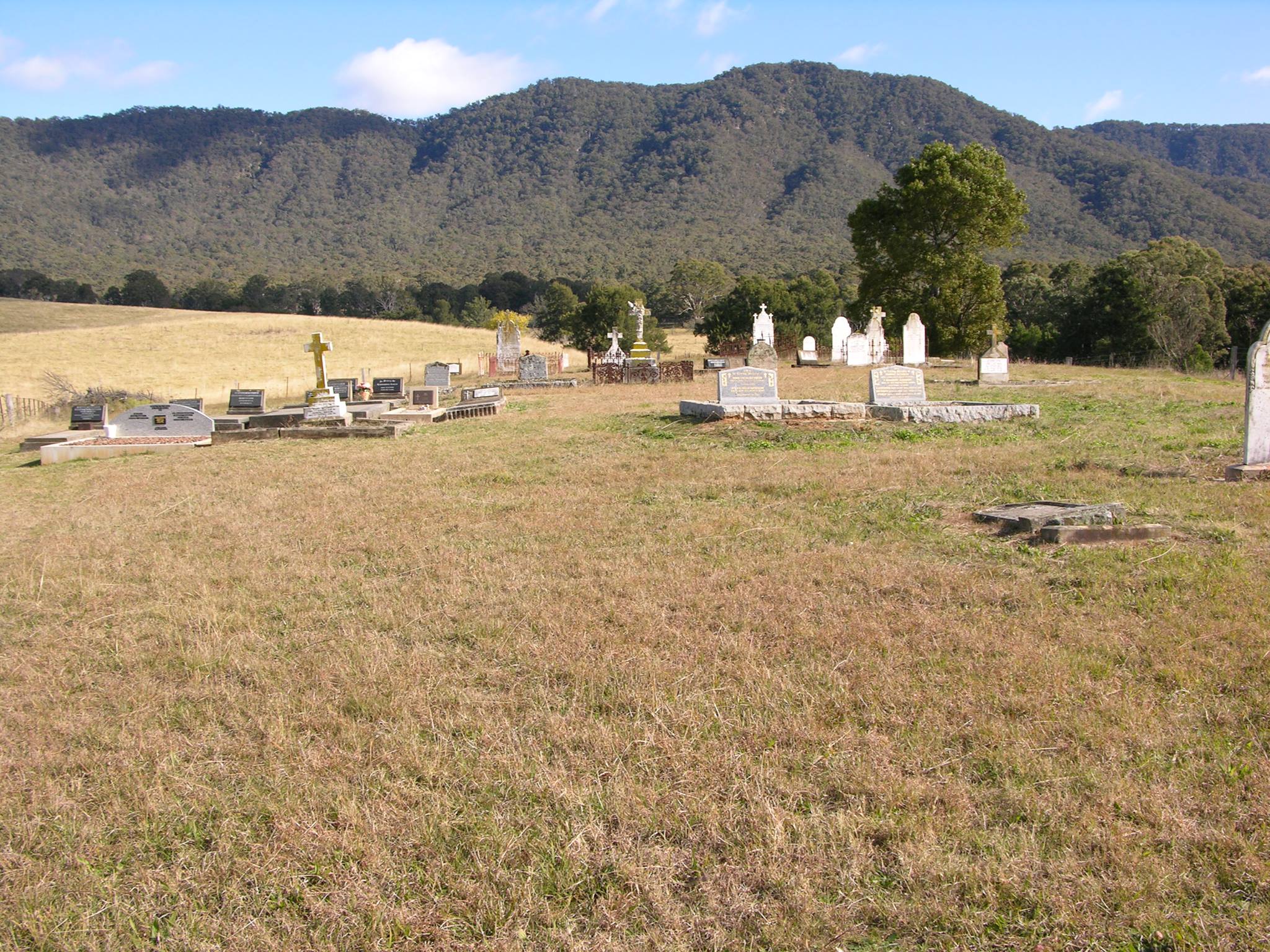
Buried at: Unmarked grave at Araluen Catholic Cemetery
Trooper SMITH lies in an unmarked grave at Araluen Catholic Cemetery.
[alert_yellow]JOHN is NOT mentioned on the Police Wall of Remembrance[/alert_yellow]
The trooper was drowned in severe floods at Araluen in February, 1860. The Sydney Morning Herald of Monday 20 February, 1860 graphically reported the floods, advising of “Losses to life and property, the extent of which are yet not known, from a subject of a dark page in the annals of Braidwood and surrounding districts.” It went on to describe the sad death of Trooper Smith.
….The next calamity to human life occurred at the police camp. Trooper Smith, who had lately joined the force, was endeavouring to escape to Mr. Sweeney’s house, when the current carried him off, and his corpse was discovered when the water subsided; it was entirely buried in the sand, part of the arm projecting. Several bodies not known have been recovered, and it is anticipated that at least seventeen human beings have lost their lives in the Araluen flood. ……..
At the time of his death the trooper was stationed at Araluen. No further details are known as yet.
[divider_dotted]
The Goulburn Herald ( NSW ) Saturday 18 February 1860 p 2 of 4
…….
One of the Troopers of the Southern Patrol, a fine young man named John Smith, was drowned while endeavouring to cross from the police camp to the Cornstalk Inn. In fact the destruction is general and conceivably great. …..
The Empire ( Sydney ) Monday 20 February 1860 p 3 of 8
……. At the Police Camp the water rushed in, and one of the troopers named Smith, whilst making his way from there to Sweeney’s public house, was carried away by the rushing torrent and met with a watery grave : his body, together with the bodies of two Chinamen, have been recovered. ……
Stations: Cheshire Creek Barracks (Bathurst/Peel area), Wyagden
Served: From about 1854 to 22 December 1857
Awards: ?
Born: In Madras, India, about 1836
Died: 22 December 1857
Age: ?
Cause: Shot – Murdered
Bathurst
Funeral Date: ? December, 1857
Funeral location: ?
Buried at: ?
Trooper Robert Dowker CODRINGTON
On 22 December, 1857 Trooper Codrington rode out to meet the gold escort from the Turon Valley. His duties included escorting the gold and mail being carried either by coach or packhorse down the steep Wyagdon Hill and into Bathurst. After he was reported missing, a search was conducted and his body, shot through the heart, was found off the side of the Bathurst – Turon Road in a ravine at the top of Wyagdon Hill. Bushes were found nearby piled on the roadside and it is thought that the bushrangers who probably killed the trooper had hidden at that spot to await and rob the escort. No other satisfactory reason could be found for the murder, although the escort passed the spot unmolested on that day. Local legend has it that the trooper was killed by an old enemy who then returned to England after the murder, however this remains unsubstantiated.
In late 1860 John Higgins (alias John Davis) appeared before the Albury Police Court charged with “having, on the 22nd day of November [sic], 1857, shot one Robert Codrington, a mounted trooper, in the District of Sofala, Bathurst”. He was found not guilty. An alleged witness to the murder was Richard Henry Mills Sampson, who was a man known for giving false evidence in a previous, unrelated trial. His statement, which may or may not be truthful, was as follows:
At that time I was going from Louisa Creek to Bathurst to spend Christmas. I there met the prisoner with three other men, two of them were travelling with the deceased trooper. I rode up sharply, and was immediately covered by a gun by one of the men. The prisoner, whom I now distinctly recognise, shot the trooper Codrington, and afterwards proposed to shoot me. A man named Cole, whom I have known for years, was one of the party…[and he] said I would not blab. The murder took place about 3 o’clock in the afternoon. I was about 50 yards from them when I first saw them. The prisoner said several times, “Shoot him,” and called the others cowards. He then shot Codrington himself, and was the only one of the party who had a gun. I did not see what they did with the body.
The constable was born about 1832 and joined the Gold Escort about 1854. At the time of his death he was stationed at Cheshire Creek Barracks (Bathurst/Peel area).
Robert IS mentioned on the Police Wall of Remembrance
[divider_dotted]
Location of ( Wiagdon ) Wyagdon:
[divider]
Born in Madras ( India ) in 1836 to Robert Codrington and Louisa. Robert Dowker married Louisa Kershaw on 5 April 1856 and had a child – Robert William, born 27 November 1856 or 1857 & died 2 April 1930 in NSW. Robert Dowker CODRINGTON passed away on 22 Dec 1858
My great great grandfather, Robert Dowker Codrington, a gold trooper (mounted policeman) who was shot at Kelso in about 1856. He migrated to Australia in 1853 from England.
Bathurst Free Press and Mining Journal Saturday 26 December 1857 page 2 of 4
HORRIBLE MURDER. Intelligence reached town on Thursday morning, that one of the Gold Escort named Robert Codrington, stationed at Wyagden, had been found murdered under Wyagden Hill. On further enquiry we found that the report was too true. It seems that it had been customary that the trooper stationed at this place, should go out to meet the escort on its return from Sofala, and it is supposed that some party or parties, aware of this circumstance, availed themselves of the opportunity to commit this horrible crime, evidently with the ulterior intention of attacking the Gold Guard. The ill fated man, who had been missing since Tuesday morning, his horse having returned to the Police Station without him, was discovered after a lengthy search by Sergeant Giles, lying headforemost down the hill, with his arms outstretched, and his feet carefully placed together. The body was in a state of partial decomposition, but the marks of a bullet shot through the stomach were plainly apparent, and the arms, including a carbine and pistol, and all the accoutrements had been removed. The deceased was twenty years of age, bore an excellent character, was the son of a commissioned officer in the Indian army, and was a young man of remarkably fine presence. We regret to add that he leaves a wife and child to mourn his untimely fate. Expresses have been sent out in various directions in quest of the guilty parties, and no pains will be spared to bring the perpetrators of this heinous crime to justice.
The Sydney Morning Herald Tuesday 29 December 1857 page 5 of 8
Bushranging. – Accounts have reached town of the wilful murder of trooper Robert Codrington, of the Mounted Police, on the 22nd instant, near Wyagden, when on the way to meet the gold escort. The return of Codrington’s horse, without either rider or trappings, was the first intimation that anything had happened, and on instituting a search the body of the poor fellow was found, having fiveshotandslugwounds in his body, which would cause instant death. His arms ( firearms ) and accoutrements are missing.
Empire ( Sydney ) Saturday 2 January 1858 page 5 of 6
THE TRAGEDY AT WYAGDEN.
(From a Correspondent of the Bathurst Free Press.)
Our quiet neighbourhood has been thrown into a state of great excitement, in consequence of Trooper Codrington, of the Gold Police being shot, at the top of Wyagden Hill.
It appears that Robert Codrington, trooper in the Gold Police, left the Police Barracks, at Cheshire Creek, where he was stationed, about 8 o’clock on Tuesday morning last, for the purpose of meeting the Gold Escort coming from Sofala; and by his not returning that day, some excitement was caused ; it was conceived that he had ‘received some fresh orders, and had gone on to Sofala. On the Wednesday morning his horse was discovered at the stable, with the saddle on, but without his bridle. So soon as this was known, a search was commenced along the road, but no traces could be discovered. Night coming on, instructions were given, that as many horsemen as could be procured, should be ready by daylight the following morning to renew the search. Just as we were on the point of starting from Wyagdon, our doubts were set at rest, by the arrival of Sergeant Major Giles, of the Gold Police, who communicated that the body of Robert Codrington had been found in a gulley on the top of Wyagden Hill. We immediately hastened to the spot, and found that the trooper bad been shot on the road, and the body dragged down the gulley some distance. The scene was most heartrending, and became still more so by the presence of his wife, a fine young woman in the bloom of life, with her baby about twelve months old, who had hastened to the spot so soon as the bad tidings had been made known to her, anxious to see the last of her affectionate husband.
On the arrival of Dr. Andrews from Sofala, who had been sent for, an inquiry was instituted in the presence of J. B. Suttor and Hugh Bridson, Esquires, magistrates.
It was found necessary to remove the body to the nearest public-house, for the purpose of a post-mortem examination. Evidence was taken to show that the deceased had been shot, and that six buck shots had passed through the heart. From inquiry it would appear that a plot had been made to waylay the mail, for the purpose of robbing it, and Codrington happening to pass up first, he was shot by the supposed robbers, and while they were getting him out of the way, the mail must have passed down in safety. It was quite evident from the way the bushes were placed, forming a sort of ambush just on the top of the first point, where the mailman always pulled up to put on the drags, and the guards generally get off, that the intention must have been to have shot the guards, for the purpose of robbing the mail only ; as one pound two shillings was found in Codrington’s pockets, which was all the money he was supposed to have had about him. The carbine and pistols were taken away.
The unfortunate victim of this lawless outrage was a young man of high respectability, and descended from a very high family, who have always stood foremost in the defence of their country ; and he was very much respected in this neighbourhood.
We very much regret that the serious illness of Mr. Johnson, the Gold Commissioner, has prevented his ready aid and presence on this melancholy occasion.
Every praise is due to Sergeant Major Giles and his troopers, in making every exertion to discover the body ; and it is to be hoped that his well-known experience will enable him and his troopers to discover the perpetrators of this awful murder.
After this tragical sacrifice to mistaken policy and economy, it is to be hoped that the Government will see the necessity of increasing the gold police force, as well as the rural police in the neighbourhood of the diggings.
Bathurst Free Press and Mining Journal Saturday 9 January 1858 page 4 of 4
MURDER OF TROOPER CODRINGTON. Public Meeting.
At a Public Meeting held at the ” Carrier Inn, ” Bathurst, W. Hall Palmer, Esquire – P.M. in the Chair, it was proposed by W. H. Suttor, Esquire, seconded by W. Lee, Esquire :-
” 1st. That the recent barbarous murder of Trooper Codrington, at Wyagden, imperatively calls for some movement upon the part of the public in the district, having for its object, the discovery of the murderer or murderers. Carried. Proposed by A. Campbell, Esquire, seconded by J. B. McGuyigan, Esquire.
” 2nd. That a public Subscription be at once set on foot, the amount of which shall be offered as a reward to any person or persons who shall give such information as shall lead to the conviction of the parties concerned in the perpetration of the murder. Carried. Proposed by R. Y. Cousins, Esquire, seconded by Mr. D. Kenna.
” 3rd. That John Blight Suttor, Esquire, be requested to act as Treasurer, and A. G. Shadforth, Esquire, as Secretary, and that they shall at as earl a date as practicable, cause to be published in such of the colonial newspapers as they may deem advisable, the amount of the reward offered. Carried.