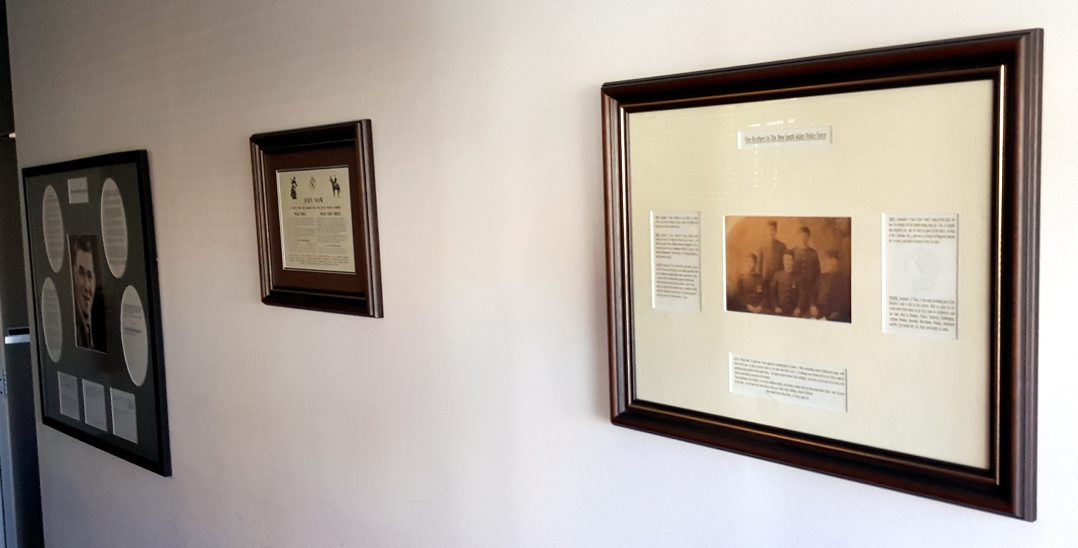
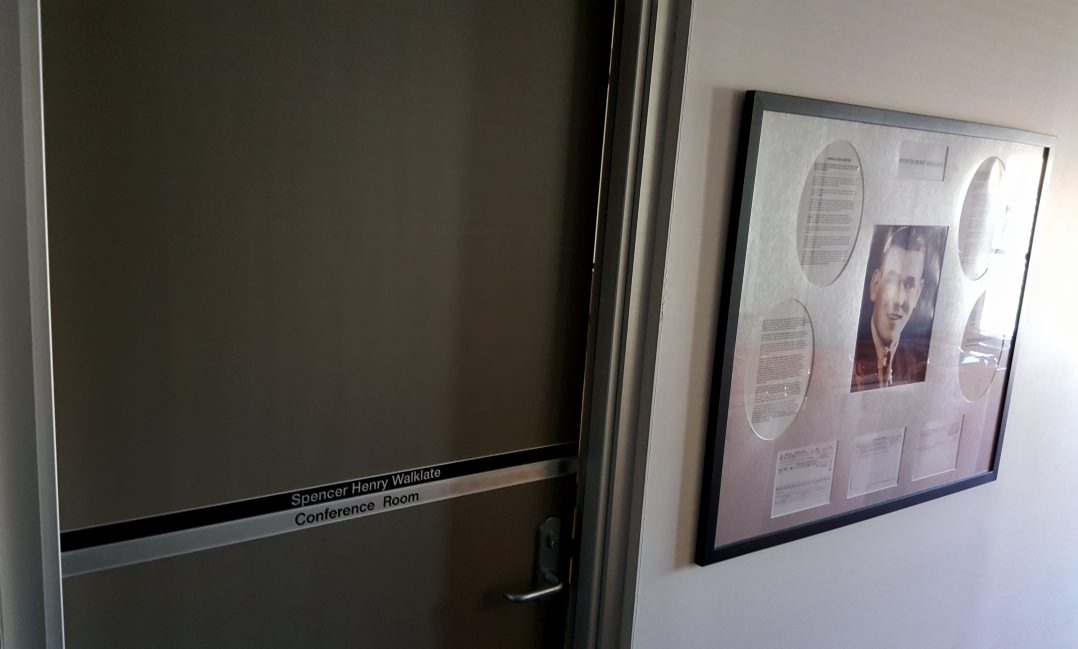
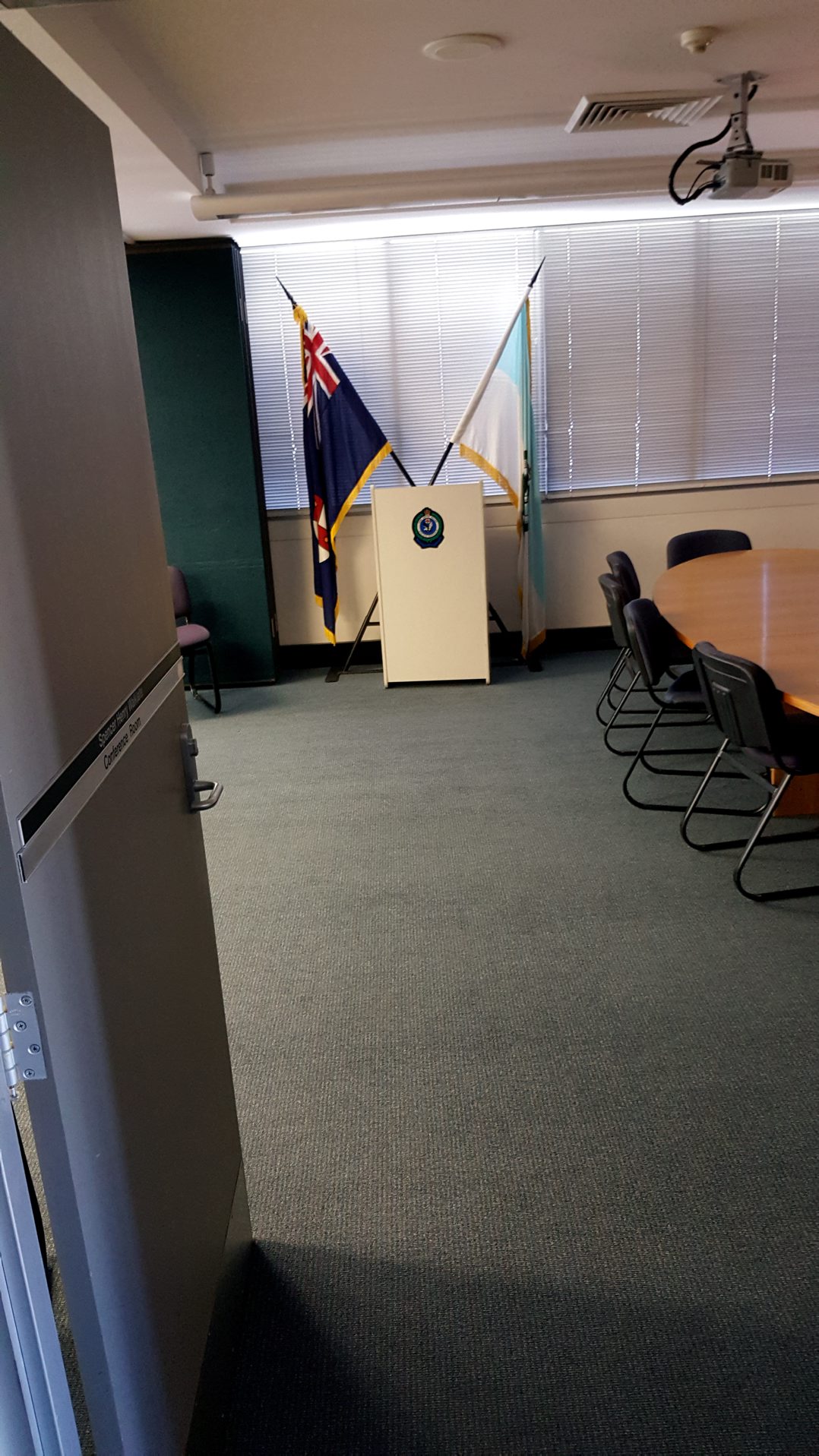
When several men in an hotel ( the Rose & Crown ) at Young were drinking the health of Constable Cartwright, he replied, ” I will bet you £5 I will be dead before any of you. If this gun cartridge will not finish me this revolver will. I invite you all to my funeral.” Later in the night the body of Cartwright was found on the Wombat-road with his brains blown out.
Young Witness (NSW : 1915 – 1923), Tuesday 9 December 1919, page 2
Bert Cartwright’s Death
CORONIAL INQUEST.
The Coroner, Mr. G. S. Whiteman conducted an inquest this morning concerning the death of Bert Watson Cartwright, constable of police, who was found on the Wombat road on the night of December 3rd with his brains blown out, and a double barrelled gun beside him.
Formal evidence of the finding of the body was given by Constable Auld.
George Eastley, a gardener, residing at Spring Creek, said that he had known Bert Cartwright since childhood, and had always been on friendly terms with him. At a few minutes past seven on the evening of December 3rd, deceased had come to his home. He behaved in a peculiar manner, was staring about, and kept looking at his watch. At times he talked quite sensibly. After having a cup of tea he asked for his gun at 7.30 p.m. and announced his intention of going to town alone, but witness insisted on going part of the way with him. Deceased had been shooting rabbits in the locality, and had left the gun in witness’ keeping about three weeks before. Deceased shook hands with Mr. Punt, Mrs. Eastley and Miss Eastley, and as he reached the door said
“THIS IS THE LAST GOODBYE”
As he and witness walked along the road together, deceased said ” I’m going to shoot myself tonight.” Witness replied. ” Don’t talk so foolishly,” but he insisted, ” It must be done tonight.” Both sat down and for an hour witness tried to reason with him, but he repeated, ” It must be done tonight.” When he made an effort to get the gun as they moved off, deceased said, ” You can’t get the gun, and if you did I’ve got a loaded revolver.” After a hundred yards he became excited and looked fierce. He took the gun out and ran into the scrub. Witness could not catch him, so returned home,and went a quarter of a mile for the assistance of his son. Both went to Mr. Bailey’s, and word came through by Mr. W. Eastley that Cartwright had returned to witness’ residence. Witness hurried back and found Bert Cartwright with the loaded gun in his hands and eventually persuaded him to come in and have a cup of coffee and some cake. Again he became restless, would stare, and kept pulling out his watch. At ten thirty witness asked him to stay the night, but he persisted in going. Witness asked him to come tomorrow, but he would not promise. Neither would he promise to go to the pictures next night. Both men walked a few hundred yards along the road when deceased ordered witness to go back. Witness appealed to him to think of his sister and brothers and not to take his life. As they continued, witness asked him for a loan of the gun, but he refused. Then he rushed ahead, put the gun cleaner and the case on a post, stared at witness for a full minute, made a cigarette and lit it. Then he rushed up to witness, and staring at him, said, ” You know nothing. ” He took up the cleaner and case again, shook witness’ right hand, said
” GOOD BYE, OLD FELLOW, GOOD LUCK. “
and rushing away, called out, ” It will all be over before you get home ” Witness could not catch him and walked homewards. Having gone 100 yards, witness heard the report of a gun, and hastening home, got Mr. Punt to accompany him to the place whence the gunshot came.
They found Bert Cartwright dead on the side of the main road, in the shade of a bush. The gun was beside him. Mr. Punt waited while witness went to telephone to the police, who arrived about an hour later, and removed the body. Witness had asked deceased several times to explain his trouble, but the invariable reply would be. ” It is too late. ” Having known deceased all his life, witness believed him to be a temperate, steady young man. Generally speaking, deceased’s actions at ordinary times showed that he was not quite right in his mind. Witness believed that his troubles were imaginary.
Richard Punt, laborer, of Spring Creek, gave evidence of deceased having had one drink on the date of the fatality. He corroborated the evidence of the previous witness.
Mrs. Castledine, proprietress of the Rose and Crown Hotel, said that deceased was having a few drinks at the hotel on the afternoon of December 3rd, and when the other men wished him good luck, he said, ” I’ll bet you £5 I’m dead before any of you. If I don’t do it with this (a cartridge), I’ll do it with this (a revolver). Will you all come to the funeral?” Deceased stayed at the hotel for tea. He said that he was in trouble, but would not explain what the trouble was.
Mr. O. W. Cartwright, father of the deceased, deposed that his son was 27 years of age, and had been a member of the police force for three years. He was a single man stationed at Lightning Ridge, and did not wish to go back. His mother’s death, which took place two and a half years ago, had played on his mind.
Sergeant Wood deposed that he had received communication from the Police Department that the deceased was sober and trustworthy.
A verdict of suicide while temporarily insane wast recorded.
Young Witness (NSW : 1915 – 1923), Friday 5 December 1919, page 2
Shooting Fatality.
CONSTABLE CARTWRIGHT FOUND DEAD.
The report of a gun was heard near the Wombat road, about 13 miles from Young at about 11 o’clock on Wednesday night. Hurrying to the spot, Messrs Geo. Eastley and Potts found the dead body of Bert Watson Cartwright. A sporting gun ( double barrelled ) was near the body. The deceased man’s head was badly mutilated, obviously by a shot from the gun which, on examination, was seen to have just been discharged. Death must have been instantaneous.
Personal troubles had been known to have been a source of much worry to the deceased, who was a constable of police stationed at Lightning Hill, but at the time was visiting his relatives at Young on a holiday.
He had called for the gun, which had been left at Mr. G. Eastley‘s house, and had said that it was his intention to end it all. Mr. Eastley‘s attempts to dissuade him were of no avail.
The profoundest sympathy of many residents who have known Ben Cartwright from boyhood, are expressed for his bereaved relatives.
An inquest into the cause of the death will be held on Tuesday.
The interment was made in the Church of England cemetery to-day,
Young Witness (NSW : 1915 – 1923), Tuesday 20 June 1916, page 2
POLICE EXAM.
Mr. Bert Cartwright, son of Mr. O W. Cartwright, J.P., has been successful in passing an examination for entry into the mounted police force. Mr Cartwright was successfully coached by Mr. D. Perks at his evening school. We congratulate both teacher and pupil.
Mr. Bert. Cartwright, son of Mr. O. W Cartwright, met with an accident at his home on Sunday which might easily have been attended with more serious consequences. He.appears to have been extracting some bullets from a revolver, when he got his finger on the trigger and the weapon went off. Portion of his left hand was over the muzzle and the bullet went right through it. The fleshy part of the palm was punctured, just outside the bone connecting the little finger, but fortunately the bone was missed and the flesh only was wounded.
Bruce passed away peacefully in his sleep in the early hours of Friday morning and, although the cause is unknown, it is believed that he simply died from natural causes.
Bruce wished to be cremated and that his ashes be scattered in his garden at the family home.
[divider_dotted]
Dearest Pam, Michelle & Colin,
So sad for the loss of Bruce. Such a wonderful life companion and dad. Sending our love and deepest sympathies.
Lois, Peter and family
Canberra Times (ACT : 1926 – 1995), Thursday 14 February 1974, page 10
Man had gun, police say
SYDNEY, Wednesday, –
A man involved in a ” violent incident ” at Kirribilli yesterday was charged in North Sydney Court today with possessing an unlicensed revolver and with two counts of housebreaking at Kirribilli.
He was Mr Leos Buschenhagen, 26, plumber, of Bondi.
One charge alleged that he had in his possession yesterday at Kirribilli a .45 calibre Webley revolver without holding a licence.
The others alleged that: At Kirribilli yesterday he broke and entered the dwelling house of Alan Marshall in Carrabella Street, and stole a TV set, a pair of binoculars, 107 LP records, a travelling case and 13 bottles of spirits.
At Kirribilli yesterday he broke and entered the dwelling house of Lurline Caffrey in Carrabella Street and stole a TV set, cassette recorder, transistor radio, record player, clock, 12 sets of records, a pair of sheets and a pillowcase.
Mr Buschenhagen was led into court in-handcuffs.
Mr Evans adjourned the matter to February 21 and refused bail.
Canberra Times (ACT : 1926 – 1995), Wednesday 13 February 1974, page 7
Man shot by police to be charged
SYDNEY. Tuesday. – A 24-year-old man will be charged when he leaves hospital tomorrow after being shot by a policeman at Kirribilli today.
The man underwent surgery at the Mater Misericordiae Hospital tonight. A police constable required several stitches in a cut hand after the incident.
Constable J. Murray and Senior Constable B. E. Link were investigating an alleged break and enter in a block of flats in Kirribilli, when a man armed with a .38 pistol ran out and grappled with Constable Murray before forcing him to walk to where Constable Link had handcuffed his companion.
Detectives said the man forced Senior Constable Link to release the handcuffed man. Constable Murray tried to take the gun and cut his hand. The man carrying the gun was shot in the elbow as he and his companion ran off.
Another police officer found the men in a lavatory in a nearby apartment block.
North Sydney detectives charged a 24-year-old man tonight with escaping from lawful custody, having an unlicensed pistol, breaking, entering and stealing and three charges of aggravated assault.
Plain Clothes Constable Handran was fatally shot by Tony Leif Dolerud at Wynnum, Brisbane on 29 June 1989 while attending a serious domestic dispute in company of his partner Plain Clothes Constable ( Stephen ) Clarey ( 24 ).
Dolerud had earlier stabbed his wife in an argument and, as a friend tried to take her to safety, armed himself with a high powered rifle and began firing indiscriminately into the street.
Plain Clothes Constable Handran was fatally shot as he alighted from the police vehicle outside the man’s unit. Constable Clarey was also shot as he took shelter behind the police vehicle.
Dolerud later took his own life ( suicide ) after killing his two-year-old daughter. Four others were wounded.
On Monday 3 July 1989 Brett Handran’s family were joined by a large contingent of his colleagues including senior officers of the New South Wales, Victorian and Australian Federal Police Forces.
The Service was conducted at the Queensland Police Academy Chapel with full police honours.
BRISBANE: On the day that all the headlines were about the Fitzgerald report and its recommendations for massive changes to the Queensland police force, not many would have been thinking of Constable Brett Timothy Handran, 23, who was gunned down last Thursday when he went to investigate a domestic dispute.
His funeral was held an hour after the first embargoed copies of the Fitzgerald inquiry report were handed to state Cabinet and journalists yesterday.
More than 300 police and mourners attended the 10am service.
Constable Handran was shot through the heart at a block of welfare flats in the bayside suburb of Wynnum.
The man who shot him also killed a little girl and then himself.
Four people were injured, including another officer, Constable Stephen Clarey, 24.
The Minister for Police, Russell Cooper, told the congregation, “I express deep regret at the loss of a loved one and a fellow officer.”
Among the mourners were police representatives from NSW, Victoria and the ACT. The Queensland police contingent was headed by Acting Commissioner Ron Redmond.
Some officers at yesterday’s service could not hide their frustration over Constable Handran‘s death, at a time when police morale had taken a battering.
“If only people could accept that we are proud of our job,” one officer said. “You get abused when you hand out a traffic ticket, but there are a lot a crazies running around and it’s the police who are expected to bring them in.”
Constable Handran, a single father, was attached to the Juvenile Aid Bureau. He and Constable Clarey were in Wynnum on another police matter and were the first to respond to the emergency call.
Last week, as police gathered up their equipment and prepared to leave the scene of the Wynnum shootings, one officer said, “Constable Handran will be buried on Monday, the same day the Fitzgerald report is released. Guess which story will get the biggest headlines?”
BRISBANE: The Queensland Government has been criticised for not providing police with bullet-proof vests following a shooting in suburban Wynnum yesterday in which three people were killed.
A two-year-old girl and an unarmed policeman were shot dead outside a flat in Carmichael Court by a man who later turned a rifle on himself and committed suicide.
Police said the shooting was the result of a domestic dispute.
The Opposition spokesman on police affairs, Terry MacKenroth, said every police car in the state should have at least two vests in it to protect officers called to emergency situations such as yesterday’s siege.
“Mr. Cooper, along with every other Ahern Government minister, including Deputy Premier Bill Gunn and the Premier himself, must take the blame for the death of a young police officer today,” he said.
Liberal leader Angus Innes said the Government had promised two years ago to provide police with bullet-proof vests.
He said that it was only in June this year that 1400 bullet-proof vests for police had been finally approved.
“Police know that they are more likely to be killed attending a domestic disturbance than in any other area of police work,” Mr Innes said. .
“The minister for Police, Russell Cooper, said last night that he had ordered a meeting today with Acting Police Commissioner Don Braithwaite to investigate the incident.
“Police said a man, a woman and two children had gone to the Wynnum flat, occupied by the woman’s former de-facto husband, to collect some of the woman’s property.
Police believe an argument started, which resulted in the woman being stabbed several times in the back, chest and arm.
As she fled with her male companion the man in the flat fired a rifle from an upstairs bedroom window, wounding the man in the back.
Police said as the couple drove to a nearby doctor’s surgery for help, a woman neighbour apparently attempted to carry the injured woman’s two-year-old daughter to safety.
The gunman fired another shot from the bedroom window, killing the girl and injuring the woman.
They said two plain-clothed officers from the Juvenile Aid Bureau who were in the area went to investigate.
The gunman then opened fire on the officers as they left their car and 23-year-old Constable Brett Timothy Handran was shot in the back and later died in hospital.
His partner, Constable Stephen Clarey, 24, suffered a bullet graze to the head and was not expected to be detained in hospital overnight.
The woman, her male companion and the female neighbour were also being treated in hospital.
A police spokesman said when the Tactical Response Unit arrived, they were told an eight month-old baby boy was still in the flat with the gunman.
They forced entry through the kitchen and rescued the baby, who was crawling on the floor.
About 45 minutes later police again entered the flat and found the gunman dead in a bedroom with a gunshot wound to the head.
A man with a baby in his arms runs from the siege area.
14.8 metre Norman R Wright and Sons fast patrol launch, triple diagonal planked hull with a dynel sheath. Powered by twin 420 hp Detroit 6v 92 series motors.
‘BRETT T. HANDRAN II‘
Brett T Handran II
BRETT T. HANDRAN II – 2009
The Brisbane based ‘BRETT T. HANDRAN II‘ was delivered to the Queensland Police Service in March 2009.
Built at a cost of over $1m, and one of three similar vessels (‘W.CONROY V’, ‘LYLE M. HOEY IV’ ), the ‘BRETT T. HANDRAN II‘ was built by Austral at their Margate shipyard just south of Hobart, Tasmania.
The ‘BRETT T. HANDRAN II‘ is a 22 metre aluminium catamaran powered by two MTU Series 60 diesel engines, each rated at 499kw, with Twin Disc Quickshift MGX-51355C gearboxes driving two Bruntons five-bladed fixed pitch propellers giving a maximum speed of 26 knots (cruise speed 20 knots) and a maximum range of approximately 900 nautical miles.
FROM THE VAULT – Star of Courage: Constable Robert Rodgers
Robert Rodgers joined the Queensland Police as Constable number 5904 on 10 October 1986. He served at the following stations: City; Mooroka; Brisbane Mobile Patrols; Inala, Brisbane CIB and Wynnum and retired on 7 February 1990.
On 29 June 1989Constable Robert Rodgers and Senior Constable Peter Edwards of the Wynnum Police, were told to attend an incident at Carmichael Court where a man was going berserk with a gun and where several persons had been shot, including Plain Clothes Constable Brett Handran. Rodgers and Edwards arrived at Carmichael Court, alighted from the vehicle and took cover. Constable Rogers ascertained from local residents the approximate location of the gunman and learned that a child and woman had been shot.
Constable Rogers found a position of safety close to the gunman’s location and communicated with the man to negotiate access to the wounded people. Without thought for his own safety, Constable Rogers successfully removed the child and woman from harm’s way. Constable Rodgers was awarded the Star of Courage on 18 April, 1991 for displayed conspicuous courage.
The Star of Courage is awarded for acts of conspicuous courage in circumstances of great peril. It is the second highest Australian Bravery Decoration. Only four Queensland Police officers have been in receipt of the Star of Courage since the award was established in February 1975.
Australian Bravery Decorations date from the establishment of the Australian honours system in. The Group Bravery Citation was added in 1990. The decorations recognise acts of bravery by members of the community. There are four levels of decoration:
Cross of Valour (CV)
Star of Courage (SC)
Bravery Medal (BM)
Commendation for Brave Conduct
The book – BRAVE, written by Mark Whittaker and first published in 2011 by Pan MacMillan Australia P/L also goes into further detail about this event.
Bruce SPADARO
| 10/08/2017
Bruce SPADARO
Late of ?
New South Wales Police Force
Redfern Police Academy Class # 159
[alert_yellow]Regd. # 18098[/alert_yellow]
Rank: Probationary Constable – appointed 26 June 1978
Senior Constable – appointed 2 September 1988 ( Seniority date: 26 June 1987 )
Stations: ?, Balmain, North Sydney HWP ( 1984 ), Engadine HWP
Service: From? ? pre June 1978? to 18 March 1994= 16 years Service
Awards: National Medal – granted 24 December 1993
Born: 5 May 1955
Died on: 18 March 1994
Age: 38
Cause: Cancer
Event location: ?
Event date: ?
Funeral date: 22 March 1994
Funeral location: ?
Buried at: Forest Lawn memorial Park, Camden Valley Way, Leppington, NSW
Memorial located at: ?
Bruce Spadaro Memorial Trophy ( perpetual trophy donated by Judi Spadaro ), ribbon & prize.
Budgerigar Society of NSW inc. Macarthur Branch, NSW
[alert_yellow]BRUCE is NOT mentioned on the Police Wall of Remembrance[/alert_yellow] *NEED MORE INFO
[divider_dotted]
Approximate Grave location:
[divider_dotted]
FURTHER INFORMATION IS NEEDED ABOUT THIS PERSON, THEIR LIFE, THEIR CAREER AND THEIR DEATH.
I ( Ron Alexander ) worked with Bruce at the North Sydney Highway Patrol (1984 – 1987). In 1985, Bruce and I were selected to participate in the development of a trial (4 day) Anti-Terrorist driving course at the Police Driving School, St. Ives, as the Highway Patrol was used for mobile security details. The powers to be wanted to provide a higher level of protection for visiting Heads of State and NSW Governor.
Bruce was diagnosed with cancer sometime after that and later transferred to Engadine HWP. I understand that Bruce continued to work through his treatment, until he could no longer perform his duties, due to the illness.
When Bruce was on Roster, everyone wanted to work with him.
Bruce had an infectious smile, causing all who saw it to smile back. He was a loyal colleague and his word was his bond.
It was a sad day when he passed. His wife Judith Louise SPADARO only recently passed away, July 2017.
Kind regards,
Ron Alexander
Retd Sgt NSW Police
[divider_dotted]
Ronald Wayne KING
| 10/08/2017
Ronald Wayne KING
Late of Boronia House, North St Marys, NSW
New South Wales Police Force
Redfern Police Academy Class 105
Regd. # 11712
Rank: Probationary Constable – appointed 1 November 1965
Constable – appointed 1 November 1966
Constable 1st Class – appointed ? ? ?
Senior Constable – appointed 1 November 1974
Sergeant – appointed 30 June 1981
Sergeant 2nd Class – appointed 1 July 1987
Retirement
Final Rank: ?
Stations: ?, Redfern Police Academy – Drill, Weapons & Special Training Section ( 1960’s – 70’s ), Parramatta ( 18 Division ) – Retirement
Service: From? ? pre November 1965? to 4 April 1991= 25+years Service
Age at Retirement: 54 years, 11 months, 30 days
Time in Retirement: 26 years, 3 months, 26 days
Awards: There are two Ronald Wayne KING’s on It’s An Honour website; One being a Warrant Officer Class 2, the other being a Policeman. I don’t know if Ron was still a Serving Member of the Army during his Policing career.
General Service Medal – 1962 – Clasp – South Vietnam
General Service Medal – Year ? – Borneo Bar ( Served as a Commando )
Born: Sunday 5 April 1936
Died on: Sunday 30 July 2017 during the evening
Age: 81 years, 3 months, 25 days
Cause: Natural causes
Event location: Boronia House, St Marys, NSW
Event date: Sunday 30 July 2017
Funeral date: Monday 7 August 2017 @ 1pm
Funeral location: Pinegrove Memorial Park Northern Chapel, Kington Street Minchinbury, NSW
Buried at: Memories Garden, Pinegrove Memorial Park, Minchinbury, NSW
Memorial located at: ?
Ron KING wearing the Infantry Combat Badge ( ICB ) under which is the General Service Ribbon (Cyprus 1963 – 1964 ), then General Service Ribbon 1962 ( Clasp – Vietnam ), Reserve Force Ribbon, National Ribbon with Clasp, UN-UNFICYP ( Police Overseas Service Ribbon – Cyprus )
RON is NOT mentioned on the Police Wall of Remembrance *NEED MORE INFO
Funeral location:
FURTHER INFORMATION IS NEEDED ABOUT THIS PERSON, THEIR LIFE, THEIR CAREER AND THEIR DEATH.
In memoriam: Sergeant Owen Timothy HARMS APM, Queensland Police Service, died on 1st August 2017
In addition to Australia Police Medal and National Medal, Sergeant Owen Harms received a Certificate of Merit from The Royal Humane Society of Australasia. He was later also presented with an award and recognition for his diligence, ethical conduct and commitment to his community.
His passing is a devastating loss to his family, friends, the community and country he proudly served. We are all intensely desolated by the sting of this bitter grief.
“Step forward now, policeman,
You’ve borne your burdens well.
Come walk a beat on Heaven’s streets,
You’ve done your time in hell.”
Fallen in the line of duty. Gone, but never forgotten and forever in our hearts.
[divider_dotted]
SHOCK: Top cop blows four times the legal limit
Sarah Barnham | 26th Jun 2017 7:20 PM Updated: 27th Jun 2017 7:43 AM
DEVASTATED: Officer in charge Miriam Vale, Owen Harms was distraught in court today as he faced up drink driving charges. Mike Richards GLA040715VALE
AFTER being on the other end of a breathalyser for 34 years, a Gladstone police officer never expected to be looking down the barrel himself.
Sergeant Owen Harms, 50, who has been stationed in Miriam Vale for the past 20 years, faced Gladstone Magistrates Court today on one charge of operating a vehicle under the influence of liquor.
Harms’ emotional plea of guilt came after returning a blood alcohol reading of .224%, more than four times the legal limit during a breath test.
Harms broke down in the courtroom upon having the charge read out to him for the offence on May 25 at Miriam Vale.
Police prosecutor Sergeant Barry Stevens said at about 3.50pm police found Harms along the Bruce Highway, a short distance from the Meadow Hotel.
The court heard Harms had come from the funeral of a close friend and decided to stop in at the pub to have a few drinks.
He left the hotel and got into his car, but upon realising he was not fit to drive, he pulled over and called his wife to come and get him.
However, Sgt Stevens said someone at the hotel alerted police to Harms’ behaviour and intention to get behind the wheel.
The police arrived before Harms’ wife.
Sgt Stevens said it was evident to the attending officers that Harms was intoxicated.
Sgt Stevens said upon the sobering fact that he had blown more than four times the legal limit, Harms became very remorseful and emotional at the scene.
He told officers he knew he was in the wrong to try to drive, but once he realised, he stopped and was waiting for his wife to come and pick him up.
SO SORRY: Owen Harms, pictured in 2015, in his role as the chairman of the Gary Larson Oval Enhancement Group. Jake Jones
However, the reason for stopping at the hotel was for something else entirely; just hours earlier Harms had been told by his doctor that he was now free of bowel cancer.
The same cancer that for the past three years had forced the officer to give up his duties on the streets, take a significant pay cut and work behind a desk.
That, paired with a heart condition, a crippling case of PTSD and severe depression and anxiety, had caused a huge burden for the sergeant and his family.
The court heard the mental conditions were a direct result of some of the scenes the officer had had to face during his confronting career.
Representing Harms in the courtroom, the Queensland Police Union’s Troy Schmidt said his client was committed to the Gladstone community and throughout his career had done and achieved extraordinary things, both as an officer and a volunteer.
“During his career this man has attended many fatals and suicides, deaths and horrific scenes,” Mr Schmidt said.
Harms again broke down in court when Mr Schmidt recounted a time where the officer was called to a job where a baby needed emergency CPR.
The CPR was unsuccessful and the baby died.
It was a memory that would always haunt the officer, Mr Schmidt said.
Mr Schmidt presented 21 good character references to the courtroom including that of deputy mayor Chris Trevor, the Miriam Vale Lions Club and Gladstone Police Inspector Darren Somerville.
The references described him to be a loving, unquestionably trustworthy and a highly commendable man.
Mr Schmidt said his client was now faced with the likely prospect of demotion and, given his requirement as a police officer to retire at the age of 60, would lose hundreds of thousands in finances.
He said his client’s family was suffering greatly.
The court heard Harms had been stood down from duties at Miriam Vale and had been working in Rockhampton.
Gladstone Magistrate Melanie Ho commended the sergeant on the work he had done for the community, and said it was quite clear the offending was out of character.
Ms Ho also noted that Harms had made the right choice in pulling over on the highway rather than continuing to drive.
He was fined $1500 and disqualified from driving for 12 months, with a conviction recorded.
Harms told The Observer he was deeply regretful for his actions.
THE first rugby league game of the season at Miriam Vale’s Gary Larson Oval will be under new lights.
Gladstone Regional Council has agreed to give last year’s residual sport and recreation funding of $21,000 to caretaker group, Gary Larson Oval Enhancement Group, which was on its knees and threatening to shut the gates.
Oval leaseholder, Owen Harms, is ecstatic about the decision, handed down in council chambers yesterday.
It means Gary Larson Oval will have $44,000 worth of new lights installed by March, allowing the small town to safely host community organisations and sporting groups at the ground.
“This will be a huge boost for our senior rugby league team, the Magpies, who rely on playing at night,” Mr Harms said.
“Now we will have fantastic new lights to play under safely.
“We were on the verge of closing the gates and if this hadn’t come through that’s what we would have been looking to do.”
In November the group, which raised $23,000 towards new lights, made a desperate plea to the council after being rejected twice for funding.
This application also fell on deaf ears, the council having said it would be unfair to other groups.
In the last round of council sport and recreational funding there were five unsuccessful applications and all were invited to vie for the $20,900.
But only the application from the Gary Larson Oval group met the criteria.
Central Queensland Motor sports Complex, Benaraby put in an application but asked for $44,000 – more than double what was on offer.
Lowmead Social Cricket and Sporting Club also made a bid for $4500 of the left over funding, but their application didn’t meet the criteria either.
Sergeant Owen Harms OIC Miriam Vale receives his award from the Assistant Commissioner Michael Dondon
Last Thursday a total of 30 Officers were recognised for their diligence, ethical conduct and commitment to their community. This represented a total of 330 years served by police in the Gladstone Patrol Group. The ceremony was attended by Assistant Commissioner Michael Condon and the District Officer Superintendent Ron Van Saane. Distinguished guests included Councillor Gail Sellers, Mayor of Gladstone, Captain Dale heimer from the 42nd Battalion of the Australian Army, Members of the Gladstone Branch of the Retired Police Association, family and friends. Assistant Commissioner Condon stated of the officers who received a medal or award were, ‘an asset to the Service and Queensland, and more than deserving.” Congratulations to all recipients your skill and dedication are inspiring.
Deserving recipients of bravery awards at Wednesday’s ceremony are (from left) Sergeant Owen Harms, Sergeant Jonathon Edwards and Sergeant Michael Phillips. Photo supplied
POLICE Sergeant Michael Phillips will forever remember the day he tried to save two boys from suffocation in a collapsed sand cave at Anges Water.
Although tragically one of the boys died at the scene, the Central Queensland officer was hailed a hero for his valiant attempt to save them three years ago.
And last week he was honoured with a bravery award.
He and fellow police officer Sergeant Jonathon Edwards were awarded Bronze Medals and Sergeant Owen Harms received a Certificate of Merit from The Royal Humane Society of Australasia at a ceremony at Government House in Brisbane last Wednesday.
Sergeant Phillips said he was very proud to have received the medal, but added that it was a “bittersweet moment”.
“It would have been nice if we were able to save both boys, but things don’t work out the way you want them to unfortunately,” he said. “It is something that I will remember for the rest of my life.”
Sergeant Phillips said when the three officers were called to the beach on August 15, 2006, they did not know what to expect.
“We were just told three boys were buried; we didn’t anticipate it being the way it was,” he said.
The three men used shovels to dig for the boys who had been trying to connect two deep tunnels when the sand collapsed on them.
The men were unable to save one of the boys trapped under almost two metres of sand.
“It took us about two hours to get him out. “We performed CPR on the boy for about 20 minutes but he died. There was nothing else we could do,” he said.
Sergeant Edwards commandeered an excavator to free the other boy, who was still trapped under the sand.
Sergeant Phillips said the boy was buried up to his neck so he did every thing he could to keep him alive.
“I got into the hole with him and held an oxygen mask over his mouth to keep his airway clear,” he said.
“Once the digger could only get so close we had to dig by hand to get him out and managed to free him.”
The youngest of three boys, all brothers holidaying from the Netherlands, managed to free himself earlier and alert two French tourists of his trapped brothers.
Those tourists were also presented with awards in Paris for their rescue efforts.
Sergeant Phillips said the little boy had been very brave and stayed very calm.
“He was excellent; I was speaking to him the whole time and we talked about sports and where he was from; he wasn’t panicking at all,” he said.
Daryl Gough from Woodbury was also presented with an award for going to the rescue of a mother and three children who were saved from drowning at Nine Mile Beach, Yeppoon, on March 23 last year.
AWARDS CQ award recipients:
Bronze Medal:
Sergeant Michael Phillips
Sergeant Jonathon Edwards
Daryl Gough
Certificate of Merit:
• Sergeant Owen Harms
• 22 residents of Qld were presented with bravery awards.
One Silver Medal, 17 Bronze Medals and 4 Certificates of Merit were presented by Governor of Queensland Penelope Wensley, AO.
Community pays tribute to police officer Owen Harms after his shock death
Chris Lees, Gladstone Observer
THE community has paid tribute to Miriam Vale police officer Owen Harms, who died yesterday.
Sergeant Harms had been stationed in Miriam Vale for the past 20 years.
True Blue Line – an organisation that posts news stories and information about emergency services, with a focus on Australia, Canada, New Zealand, United Kingdom, and the United States, posted a tribute on Facebook today.
“Sergeant Owen Harms, with a big heart and full of compassion for everyone, was everyone’s friend and the Officer in Charge at Miriam Vale Police in Gladstone Police District, Queensland. Highly respected and much loved by many, he dedicated over 30 years of his life to protect, serve and improve the community he cherished so much,” the post reads.
There were no suspicious circumstances around his death, and it came 36 days after he had admitted drink-driving in the Gladstone Magistrates Court.
He was a decorated officer.
“In addition to Australia Police Medal and National Medal, Sergeant Owen Harms received a Certificate of Merit from The Royal Humane Society of Australasia. Described as a true blue Aussie with a heart of gold, ‘Owey’ was also presented with an award and recognition for his diligence, ethical conduct and commitment to his community,’’ the True Blue post said.
“His passing is a devastating loss to his family, friends, the community and country he proudly served. We all feel intensely desolated by the sting of this bitter grief.’’
Others joined the tributes.
“You were there for every one of us… your door was always open for us to pop in and have a cuppa and chat… you never said a bad word about anyone! You knew how to make us laugh… you always gave a hug just when it was needed… you were so dearly loved by your beautiful family and the community in which you so proudly served!” – C.S.
“Your community is broken and lost tonight, this just doesn’t seem real. You were one of the best Owey. The support you’ve shown not only our family but your community over the years will never be forgotten. Our thoughts and prayers are with your family tonight RIP Harmsey” – A.H.
“Step forward now, policeman,
“You’ve borne your burdens well.
“Come walk a beat on Heaven’s streets,
“You’ve done your time in hell.
“Fallen in the line of duty. Gone, but never forgotten and forever in our hearts.”
The Miriam Vale Rodeo Association said he was a true hero to all that knew him.
“MV Rodeo Association wishes to extend our heartfelt condolences to Owen’s beloved family and friends during this devastating time. Our thoughts and prayers are with you all,” they posted.
“Owey, you will be sorely missed mate!”
Gladstone Region Mayor Matt Burnett took to Facebook to post his own tribute.
“Terrible sad day for the Gladstone Region as we mourn the loss of Sergeant Owen Timothy Harms,” he wrote.
“No words can describe how great a man he was and how devastating this news is. Rest in peace my friend.”
The Miriam Vale Magpies Rugby League Club remembered Sgt Harms on Facebook.
“Owen, our community pillar, our hero, our mate!,” the post reads.
“Forever etched in our hearts and minds are the memories of this tremendous man! May you rest in eternal peace Owey. We love you and will miss you terribly.
“On behalf of the Maggies family we are all holding Lyn, Brendon and Bree very close in our hearts and thoughts at this devastating time. May you draw strength and courage from the outpouring of love and support.”
GLADSTONE REGIONAL COUNCIL – GENERAL MEETING MINUTES 15 AUGUST 2017
6 of 132
MESSAGES OF CONDOLENCE
Owen Timothy Harms
Cr Trevor paid tribute to Owen Harms as follows:-
Owen Timothy Harms‘s funeral took place on 8 August 2017. It was a beautiful service for a beautiful man loved by all, now resting in peace. A community champion who selflessly put others before himself. A wonderful family man with an enormous generosity of spirit, he will be sadly missed and he was enormously proud of his family, his friends, his community and his Police Service.
As an active Police Officer he was proud of his nearly 34 years of service on the front line and all at 1, 2, 3 and 4 officer stations except 4 years at Mt Isa. Very long periods when Miriam Vale was a two officer station he spent alone without relief, on call 24/7, 80 kms of Bruce Highway in division often months at a time.
Executive Committee member for many and varied local committees including local ambulance committee, Police and Citizens Association, Lions Club, driving force behind the Gary Larsen Oval enhancement committee, responsible for building an entire Sports Complex from bare grass to a magnificent venue for use by Miriam Vale residents and support for youth, under privileged and the
elderly. Coach and manager of many junior sporting teams, foundation member of Miriam Vale Social Touch Football Association (which has lasted for 19 years and still going strong), providing a vital outlet for the town’s youth.
Recipient of the following:-
Australian Police Medal (APM)
All Police Medals
Two by Commissioner Certificates
Multiple Citizen of the Year Awards for various local government areas
Owen mentored many Senior Constables (nearly all who have been promoted) and also mentored budding Sergeants in Charge. He served long stints in the Northern Territory border at Bulleya, Burketown, Bungee, Birdsville and Mt Isa, many times alone.
Unfortunately he had a lengthy battle with various and serious health problems. His support of his community did not stop although he had these problems. He was a strong advocate for helping people with difficulties, raising funds to install a Chair Lift for disabled residents. Owen was a participant in a long running video campaign for assisting police officers with depression and anxiety issues and when successfully reliving in Senior Sergeant roles received glowing reports.
His high level of duty to the Police Service found him never receiving an Adverse Station Inspection Report and he never failed to help colleagues in difficulty at any time of the night. Owen never once refused a request for a call for service at any time of the day or night.
PHOTO: TOM HUNTLEYTRUE HERO: Family, friends and fellow officers are in shock after the death of Owen Harms.
THE community has paid tribute to Miriam Vale police officer Owen Harms, who died on Monday.
Sergeant Harms was stationed in Miriam Vale for the past 20 years.
True Blue Line, an organisation that posts news and information about emergency services, posted a tribute on Facebook.
“Sergeant Owen Harms, with a big heart and full of compassion for everyone, was everyone’s friend and the Officer in Charge at Miriam Vale Police in Gladstone Police District, Queensland. Highly respected and much loved by many, he dedicated over 30 years of his life to protect, serve and improve the community he cherished so much,” the post read.
There were no suspicious circumstances around his death.
It came 36 days after he admitted in the Gladstone Magistrates Court drink-driving.
He was a decorated officer. Sgt Harms was also beloved in the sporting community, and played an instrumental role in combining the Agnes Water and Miriam Vale teams to form the Northern Force Rugby League Club.
This Sunday a minute of silence will be held when the Northern Force play Avondale before the team run out to Eye of the Tiger – “Owie’s favourite song”, president Kym McIntosh told the NewsMail.
“It’s rocked two clubs, rocked two communities. “It’s just so sad.”
“In addition to Australia Police Medal and National Medal, Sergeant Owen Harms received a Certificate of Merit from The Royal Humane Society of Australasia. Described as a true blue Aussie with a heart of gold, ‘Owey’ was also presented with an award and recognition for his diligence, ethical conduct and commitment to his community,” the True Blue post said.
“His passing is a devastating loss to his family, friends, the community and country he proudly served. We all feel intensely desolated by the sting of this bitter grief.:” Others joined the tributes. “You were there for every one of us … your door was always open for us to pop in and have a cuppa and chat … you never said a bad word about anyone! You knew how to make us laugh… you always gave a hug just when it was needed … you were so dearly loved by your beautiful family and the community in which you so proudly served!” one wrote.
The Miriam Vale Rodeo Association and the Magpies Rugby League Club paid tribute to “a true hero”, while Gladstone Mayor Matt Burnett took to Facebook to post his own tribute.
“Terrible sad day for the Gladstone region as we mourn the loss of Sergeant Owen Timothy Harms.
“No words can describe how great a man he was and how devastating this news is. Rest in peace my friend.” ■ If you or someone you know needs help, phone Lifeline on 13 11 14.
I sit here writing this still reeling from the tragic loss of Owen Harms. Any death in the police family is a death too many. Harmsy was a true CQ legend beloved by all who knew him. To Lynette and the rest of the Harms family, you have my deepest condolences We all have demons inside us and the black dog is ever creeping. We need to remain vigilant and look after one another. To all my family, friends, and colleagues, I am always here if you need someone to talk to, a shoulder to cry on, or someone to vent frustration on. No matter the circumstances or the situation, my door is always open. I am only a phone call away.
Never think that you are alone! Life and work can become overwhelming at times and the dreaded black dog creeps up on us all. We need to stand together and help each other through these tough times and look forward to a brighter tomorrow.
I ask you all to check on a mate and make time to talk to each other. It may be difficult, but that difficult conversation may save a life.
Remember, it’s not weak to speak.
DO OUR PEOPLE MATTER?
Recent events have made many question this. It’s time to take stock and for the Service to take a long hard look at how it treats its employees. There are many areas within the organisation that need fixing, starting with the disciplinary system.
We all know it is broken beyond repair and has been for some time. It needs an urgent overhaul to stop the rot that has been going on for far too long.
Members are being stood down and suspended and left hanging while investigations take far too long: some over three years.
Members are guilt until proven innocent! How is this natural justice?
There needs to be firm time limits put on internal investigations. Perhaps more staff can be allocated to the District PPMs to expedite these investigations.
The Service has an obligation to investigate these matters, resolve them in a timely manner, and not let them drag on … and on. These delays cause angst and anxiety to not only the member but also to their families. It also places unnecessary financial hardship on members and their families.
The funeral of the late Constable Alpin, who met his death at Grady’s Creek on Friday last, was held on Wednesday, the remains being taken
to Casino for interment. The Rev. Rogers read the Presbyterian burial service. There was a large attendance of the public while representatives of the police also attended. Deceased’s three brothers arrived on Tuesday night.
The District Coroner ( Mr. W. Amess ) concluded the inquiry on Wednesday, when a verdict was recorded that death was due to injuries received while deceased was struggling in the water.
“The below article begs the question as to whether Constable Alpin was “On Duty” whilst assisting Constable Peterkin, and others, to remove the obstruction from the footbridge” Cal
The circumstances surrounding the death of Constable L. Alpin on Friday at Upper Grady’s Creek, were related by his confrere, Constable Peterkin, on arrival at Kyogle on Saturday afternoon. The lamentable tragedy cast a gloom over the railway settlement, where, although he had a difficult task as officer-in-charge, deceased exercised the duties of his position with tact and skill.
With Constable Peterkin and Mr. J. Doak and others, deceased was essaying to free the traffic log placed across the stream, of timber washed down by the flood. This log was used as a footbridge, and to make it safer for foot traffic a wire had been erected to serve as a handrail. Deceased and Constable Peterkin and Mr. Doak were standing on the log, and in freeing a heavy piece of timber the later swung round and hit the wire, pulling the posts to which it was secured out of the ground. Constable Alpine was plunged into the rapidly flowing stream; his companions more fortunately escaped. Deceased was a very powerful swimmer, and little anxiety was at first felt for his safety. He was seen to grasp a floating log upon which he floated until, apparently thinking he could make the shore, he released his support and struck out. The current, however, was too strong, and he was swept among a number of tea. trees.
At this time Constable Peterkin, who had run across from the first crossing to the next, saw deceased struggling feebly as if he had been injured. The current was running so swiftly that although Constable Peterkin had only a hundred yards to run, from one crossing to another, deceased had disappeared by the time he reached the point.
The alarm was at once given, a crowd of helpers quickly explored the banks of the creek for deceased. Meantime camps farther down the creek had been advised of the happening by telephone and were asked to watch at the crossings.
Ultimately the body was found about three quarters of a mile down stream, pinned under a huge log. Only a hand was visible at the time, and this kept disappearing under the water.
It took fourteen men to remove the log before the body could be extricated.
Constable Peterkin and others then formed the opinion that deceased had not been drowned, and that he had received fatal injuries while being swept down the stream.
When the body was medically examined later at Kyogle the skull was found to be fractured. However, Mr. Harris ( ambulance officer stationed at RichmondGap ) and other men with first aid certificates worked for two hours trying to restore animation, but without success.
The course of the stream in its higher reaches, is studded with rocks and huge boulders, while the flood also traversed thickly timbered country. Doubtless deceased collided with a stone or log and sustained the injury which was the immediate cause of death. On Saturday, a party was organised to bring the body to Kyogle. Stupendous difficulties faced the undertaking owing to the flooded creek.
The road, which crosses the stream 26 times in 13 miles, was impossible even if the creek was fordable. It was decided to carry deceased to Risk and from thence a vehicle could travel to Kyogle. The party set out at 11 o’clock on Saturday for its strenuous walk across the hills. At times hands had to be linked to climb precipitous slopes, while the men occasionally were waist deep in water. They eventually arrived at Risk at 4 p.m. utterly exhausted. The river was 4 feet over the bridge at Risk, and here again a human chain had to be formed to get the body across. With the stream running very swiftly it was a hazardous undertaking, but was accomplished without mishap. Mr. Moss ( driving one of Messrs. Green Bro’s. lorries ) transported the party to Wyangarie, where the river was crossed with the aid of the railway flying fox, and so on to Kyogle by car. Too much praise cannot be given those who participated in a dangerous and extremely arduous undertaking. Food for the party was provided at Hackett’s and King’s boarding houses between the Gap and Risk; Miss Hennessy, in charge of the telephone, did yeoman service, and was assisted by Mrs. Grieve, at the Risk end, in warning people along the route and asking for assistance when the grim task of transporting the body was commenced. The carrying party consisted of Messrs. Tom McManus, Stan Gibson, Mat Leo, Col. Keightley, M. Carlton, Bill Harding, Carl Farrawell, Arthur Fraser, Ted Turner, Alex Morad, W. McAlpine, J. O’Connor, snr., and jnr., Sam Zammett, Jack Heath, Jack Wilson, Dan Higgins, J. Borg, A. Howard, H. Thompson, — . Evans, Robert Hayden, Jim Morris, Alan Hobday, Ernest Green, J. Johns J. Burke, Barney Rolfe, Graham Bros., Gordon Graham, A. Archer, D. McLean, Jim Doak, Bob Hobday, R. Maslen, J. Grieve, with Constable Peterkin in charge.
The Coroner commenced an inquiry at the Court House yesterday morning, when the evidence of Constable Peterkin and Mr. C. Keightley, school teacher, Upper Grady’s Creek, who was an eye-witness of the occurrence was taken. Their statements were on the lines given above.
The late Constable Alpine was 27 years of age, and was a native of Griffith, where his people reside. He was an efficient and popular officer, and his untimely death is universally regretted.
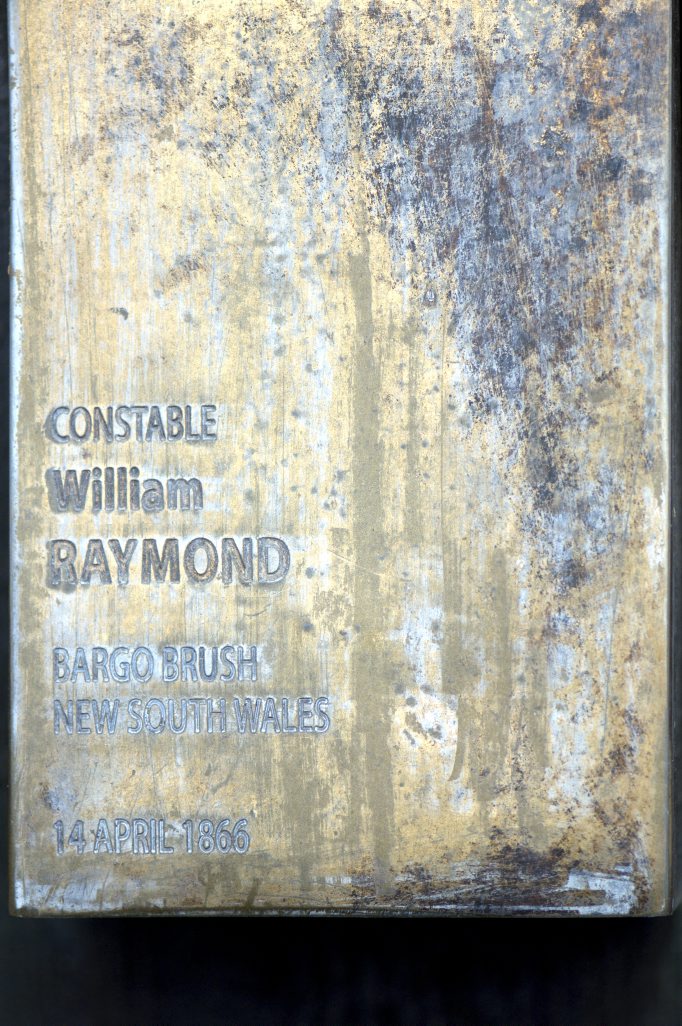
At the time of his death Constable Raymond, Senior Sergeant John Healey ( # ‘P’20 ), and Constables Andrew Kilpatrick ( # ‘P’ 54 ) and Edward Mitchell ( # ‘P’1215 ) were escorting eleven prisoners to Darlinghurst Gaol where they were to help with building works. When the wagon in which they were travelling reached Bargo Brush (now Pheasant’s Nest) the prisoners attacked their escort in an escape bid. In the ensuing brawl one of the prisoners (James Crookwell) managed to seize a police revolver. He fired at Sergeant Healey however the bullet struck Constable Raymond in the face, killing him instantly. The constable’s first name is sometimes recorded as Edward.
On 20 April, 1866 an official inquiry into the “murderous assault by prisoners on the police under whose charge they were being brought from Berrima Gaol to Sydney” took place at Darlinghurst Gaol, before Captain Cloete, the Water Police Magistrate. In evidence, Senior Sergeant Healey gave an intimate account of the circumstances of the murder.
“We were proceeding towards Sydney, and about 3 o’clock in the afternoon, when within about ten miles from Picton I heard a shout in the coach, and at the same moment I was seized from behind by both shoulders by two men; I made a spring forward and fell off the coach; I jumped up and went round to the near side of the coach; I saw prisoners Weaver, Slattery, and Lee take hold of Constable Mitchell; they were trying to wrest his arms from him; they were all standing up in the coach; prisoners Berriman, Crookwell and Owens had hold of Constable Kilpatrick on the same side of the coach, but at the back seat; they were trying to wrest his carbine from him; Crookwell had hold of his throat; Berriman and Owens had hold of his carbine; the prisoner Forster, was standing up in the centre of the coach; I presented my rifle, and told the prisoners if they did not let go I would fire; they did not let go; I pulled the trigger, and the cap snapped; I then seized my rifle by the barrel and made a blow at Smith, who was still struggling with Mitchell ; I hit the coach, and broke the stock of the rifle; I then saw most of the prisoners rush to the off side of the coach; I was still on the near side; when I got round I saw that Constable Raymond had got out of the coach and was standing alongside it; when I got up to the coach, I looked in and saw Crookwell with a revolver in his right hand, and holding Kilpatrick’s throat with his left hand; I said to him, “Put down that revolver, or I’ll blow your brains out”; prisoner Lee was shouting out to the others, “Shoot the b-s’. Weaver cried out, “Shoot the b–sergeant;” Berriman was shouting out, “Fire, fire;”‘ directly I said to Crookwell I would blow his brains out, he turned round and said to me, “you b-,” at the same moment he fired; Raymond was standing in front of me, between me and the horses; and Crookwell was standing at the back part of the coach’; I heard something like a bullet pass me, and I immediately fired; I think I hit Slattery; as soon as the shot had been fired by Crookwell, I saw the blood gush from Raymond’s nose; Raymond turned half round and fell on his face.
At this time Constables Mitchell and Kilpatrick were both struggling with prisoners in the coach; I then saw Owens had got out of the coach and was running away; I followed him, and called upon him to stand; he refused; I fired; he immediately fell down and rolled over, and cried out, ” I’m shot, for God’s sake do not fire any more.”; I did not fire again; I went up to him and brought him back to the coach; when I got back to the coach, Mitchell and Kilpatrick had got out, and were standing by the side of the coach; Crookwell was holding up a revolver, and cried out twice, “I surrender”. Several of the prisoners also cried out that they would surrender; I did not hear any other shots fired; I made Owens get into the coach, and handcuffed himself; I noticed blood was coming from Slattery and Bland; two or three civilians then came up, one of whom was a clergyman, who assisted Mr. Whatmore to put the body of Raymond, in the boot of the coach; Raymond, up to this time, had not moved from the place where he had fallen”.
The constable was born in 1838 and joined the New South Wales Police Force on 3 June, 1862. At the time of his death he was stationed in the Sydney Metropolitan District.
Empire (Sydney, NSW : 1850 – 1875),
Tuesday 17 April 1866, page 1
RAYMOND — On the 14th April, on the Southern Road, near Picton, from a gun-shot wound, inflicted by a prisoner while under escort, William Raymond, aged 28 years, a constable of the New South Wales police force, a native of Bishops-gate, London, England.
EXAMINATION OF FIVE PRISONERS AS BEING ACCESSORY TO THE MURDER OF CONSTABLE RAYMOND.
Our readers will remember that eleven prisoners were concerned in the desperate ? ( fight ) at Bargo Brush on Saturday last.
One of those, James Crookwell, was committed, on Monday, by the Coroner, at Picton to take, his trial at the next assizes for the murder of Constable Raymond. Three of the prisoners were wounded, Smith in the elbow, when attempting to snatch the revolver from sergeant Zglenitski ; Slattery near the kidney, when in the act of biting constable Mitchell‘s nose, and attempting to deprive him of his firearms ; and Bland was shot in the side and arm while trying to seize constable Mitchell’s rifle. These three prisoners are in the gaol hospital, and were not in a condition to be removed, Bland being in a somewhat precarious state. Hindmarsh and Webster, who do not appear to have taken any conspicuous part in the assault, will most likely be called by the Crown for the prosecution.
The remaining five prisoners were placed under examination yesterday, in the upper room of the debtors’ prison, Darlinghurst gaol, before the Water Police Magistrate, Captain Cloete.
The names of the prisoners are John Foster, William Lee, Henry Weaver, Thomas Berriman, and John Owens. They were brought into the room in the order named, in prison dress, and leg-ironed.
Foster is a strong young man, of about 24 years of age, and has a determined look about him. Lee, who acted as spokesman, is about, an inch taller than Foster, being 5 feet 7, aged 38, and apparently very familiar with gaols, and the customary preliminaries to them. Weaver is young, sulky, tall, and such a man as can be easily persuaded to anything. Berriman is a little compact, swarthy young man about 28 years of age. Owens is something like Foster, but more intelligent. These five, of themselves, appear almost a match for the escort whom they assaulted.
They were formally charged by senior-sergeant Healey, of the Berrima police, with being accessories to the murder of the late constable Raymond, near Bargo Brush, on Saturday, the 14th April instant.
Prisoner Lee : Your Worship, may I address you before anything further is stated? will you order all the witnesses out of court ? and I should like a piece of paper and a pencil to take notes.
The Magistrate said he would comply with the request, and the prisoner was supplied with paper and pencil.
Mr Williams, Crown Solicitor, then conducted the examination, as follows:-
John Healy deposed: I am a senior sergeant of police, stationed at Berrima.
I left Berrima about 9 o’clock on Saturday morning last, having previously attended the gaol at Berrima, and received in custody eleven prisoners, to be escorted from Berrima to Darlinghurst gaol, Sydney.
The names of the prisoners were, William Lee, Thomas Berriman, John Foster, Henry Weaver, John Owens, Michael Slattery, Hindmarsh, Crookwell, Bland, Smith, and Webster.
The five prisoners now before the Court were among them.
I had with me constables Kilpatrick, Mitchell, and Raymond.
The prisoners were placed in one of Cobb’s coaches, outside the gaol door. The three constables, myself, the driver, and a Mr Whatmore accompanied the coach. I sat on the left of Mr Whatmore, who sat next to the coach driver on the box. Constable Mitchell was placed with his back towards the box, on the near side of the first seat, there being four seats inside the Coach, Constable Raymond was on one of the centre seats on the off side facing the box. Constable Kilpatrick was on the oft, or back seat, facing Mitchell, but two seats between them.
Constable Raymond, Mitchell and myself, were armed with breach loading rifles and revolvers. Constable Kilpatrick had a small carbine and revolver, all were loaded. In this way we proceeded towards Sydney.
When about ten miles from Picton, and at about 3 o’clock in the afternoon, I heard a cry like ” Hurrah ” in the conch. At the same moment I was seized from behind by both shoulders. The cry seemed to be a general cry. When I found hands forcibly upon me and an effort made to pull me back, I sprang forward, and jumped off the coach, and fell.
On recovering, I went round the near side of the coach. I then saw the prisoners Weaver, Smith, Lee, Slattery, and I think Bland surrounding and struggling with constable Mitchell. They were trying to wrest his firearms from him. They were all standing up in a cluster round him in the coach, Berriman, Crookwell and Owens, I saw had hold of constable Kilpatrick : he was on the back seat of the coach, on the same side. They were trying to wrest his carbine from him. Crookwell had hold of Kilpatrick‘s throat ; Berriman and Owens had hold of his carbine. Foster was standing up in the centre of the coach. I did not see him do anything. I did not then see constable Raymond. I was standing on the near side of the coach, with my back to the horses, and presented my revolver, and said to the prisoners Crookwell, Owens and Berriman, if they did not let go I would fire. I pulled the trigger of my rifle and the cap snapped. I then seized it by the barrel, and in striking at Smith, the stock caught the frame of the coach and broke the rifle. I saw the main body of the prisoners rush to the off-side of the coach. When I got round to face them, I then saw that constable Raymond had got out ; he had stumbled and was standing facing the coach near the hind wheel. When I came to Raymond I saw Crookwell with a revolver in his right hand. He had hold of constable Kilpatrick‘s throat with his left. I said to him ” Put down that revolver, or I’ll blow your brains out.” Prisoner Lee was hallowing out: ” Shoot the b—gers. ” Weaver cried out, ” Shoot the b—dy sergeant, ” Berriman cried out, ” Fire ! fire ! ” Directly I said to Crookwell, put down that revolver, or I’ll blow your brains out, ” he turned partly round presented the revolver towards me saying, ” You b–ger, ” at the same time firing.
At this time constable Raymond was on my right. I was between Crookwell and Raymond. I saw the explosion, and felt the lead ball whiz past my face. I returned the fire instantly with my revolver, and I believe I hit Slattery. As soon as Crookwell fired I saw the blood rushing from Raymond’s nose. He wheeled round, and tell forward, dead.
At this time the prisoners were still struggling with constables Mitchell and Kilpatrick, I observed Owens jump from the other side of the coach and run away. I followed, and told him to stand. He did not, and I fired. He immediately fell on his face on the road, and cried out ” I’m shot, for God’s sake don’t fire any more. ” I went up to him and brought him back to the coach. He was not shot.
When I got back to the coach constables Mitchell and Kilpatrick had got out of the coach. I noticed Crookwell holding up the revolver, and heard him crying out ” I surrender ! ” Several of the other prisoners were also calling out ” I surrender !” I could not tell whether any other shots were fired at this time.
I made Owens get into the coach and handcuff himself, and also the other prisoners we’re made to re-seat themselves. I then observed blood coming from Slattery and Bland. Two or three civilians came up then, one was a clergyman and they assisted Mr Whatmore and the driver to lift the body of constable Raymond on the Boot of the coach.
Raymond had never moved from the time he was shot.
After we had got Raymond on the boot of the coach, we three Constables, walked by the side of the coach until we came within about six miles of Picton, when we were met by the sergeant and a constable from the Picton police;
We proceeded on to Picton, secured the prisoners in the watch-house, and placed the body of constable William Raymond in the courthouse. He was quite dead.
When I jumped off the coach and recovered myself, I saw Hindmarsh holding up one hand and saying ” I have nothing to do with this. ” I saw Webster standing up in the coach; So far as I saw, Webster was quiet.
When we left Berrima the prisoners were handcuffed by one hand to a chain, and had leg-irons on. I produced the transmission warrant for the removal of the prisoners from Berrima to Darlinghurst. I handed this warrant over with the prisoners at Picton.
The shot that Crookwell fired was shot in the direction of Raymond.
The prisoners declined to ask any questions.
Andrew Kilpatrick deposed: I am a constable stationed at Berrima. On the 14th April I went to Berrima gaol, in company with senior-sergeant Healey and two other constables. The sergeant received charge of eleven prisoners. The five prisoners now before the Court were of that number. The sergeant was sitting on the box. I and the other constables were inside the coach. I sat on the back seat, Raymond in the centre, and Mitchell on the front seat.
When we came to within three miles of the Bargo River, On the Sydney side of Anderson’s public-house, a prisoner named Crookwell, sitting by my side, gave a shout, saying, ” Now, give it to the b–gers. ” Crookwell seized hold of my carbine, as did also prisoners Berriman and Owens, and endeavoured to wrest it from me. Crookwell then let go, and seized my revolver from the case at my waist belt.
Senior sergeant Healy came round to my side, and I shouted for him to shoot this fellow Crookwell. At this time Crookwell had just got the revolver. The other two had hold of my carbine. The sergeant presented his rifle at Crookwell, and it missed fire. He then clubbed the rifle, made a blow but struck an iron bar in the coach. He ( Healey ) then ran to the other side of the coach, at the same time drawing his revolver. Just as he got round, constable Raymond had just got a fall from a stumbling of the coach. As Raymond was straightening himself up, the sergeant came between him and Crookwell, and told Crookwell to put down the revolver. Crookwell made use of some savage expressions and fired. I saw Raymond fall and observed the blood gashing from his nose. It was with my revolver Crookwell shot him. The sergeant immediately fired in return. I cannot say which prisoner was struck, but one was. After Crookwell fired he turned to me and said ” If you don’t leave go of the carbine I’ll shoot you. ” I said, ” Shoot way. I’ll not let go. ”
He snapped the revolver at breast. As it did not explode he struck my right hand with the revolver. I then jumped out of the coach with my carbine, when I saw sergeant bringing Owens back. I could not see how constable Mitchell was getting on. When the sergeant brought Owens back, the prisoners all called ” Surrender ! we surrender ! ” and sat down in the coach, when the sergeant ordered them to put on the handcuffs. The sergeant and myself were in uniform at the time. I only observed Crookwell and Owens had been un-handcuffed. Could not say whether any of the others had been un-handcuffed.
Crookwell, Owens, Berriman and Weaver, were particularly active about me and and tried to disarm me. I heard Weaver call out ” Shoot the sergeant. “. This was when Crookwell had the revolver. Slattery also called out ” Shoot the b—dy sergeant. ”
The prisoners appeared to me to be acting in concert, and for the general purpose of effecting their escape.
When Slattery called out ” Shoot the b—dy sergeant, ” it was after Raymond had been shot by Crookwell.
I saw the body of Raymond afterwards. It was quite dead.
Prisoner Lee: Your Worship, I think it is stepping a little beyond the bounds of justice for the gentlemen prosecuting to be whispering to the sergeant who has given his evidence. I know that gentleman is conducting the case for the Crown, and he will take care to get out enough from the respective witnesses when under examination.
Mr Williams said he was asking no question but such as was proper, and taken no unfair advantage.
Mr Cloete: I will see that no injustice is done you. The prisoners declined to ask any questions.
Edward W. Mitchell; deposed: I am a mounted constable, stationed at Berrima, and formed one of an escort from Berrima to Sydney, in charge of senior sergeant Healey. The prisoners were Foster, Lee, Bland, Smith, Weaver, Slattery, Hindmarsh, Berriman, Webster, Crookwell and Owners. We were all in of Cobb and Co.’s coaches, the sergeant on the box. I, Raymond and Mitchell were inside the coach. I sat with my back to the box with two prisoners on my left. Raymond was on the third seat on my left front, with three prisoners on his left. Kilpatrick was on the fourth seat, facing me, with two prisoners on his right. Crookwell sat next to Kilpatrick.
When about 400 yards on the Sydney side of Anderson’s public-house; the prisoners made a sudden rush ; some stood up. I saw two of the prisoners jump up and put their hands above the cloth covering of the coach, and seized the sergeant and endeavoured to pull him backward into the coach. Slattery and Weaver were the two men.
The sergeant got away from them. Simultaneously with seizing the sergeant, three of the prisoners seized me. Foster, Lee and Smith seized me. Smith caught me by the throat. Foster endeavoured to force me back, as nears as I can recollect, by throwing his body on me. Lee took hold of the rifle and endeavoured to disarm me. While I was struggling with these prisoners, I saw sergeant Healey coming round the side of the coach. He covered Smith and Lee with his rifle. I heard the cap snap, and the butt of the rifle swing against the coach.
A minute or so after I said ” By G—, if you don’t let go, I’ll fire ! ” They did not let go, and I fired. The rifle was pointed towards the prisoner, Bland, who, at this time, had hold of the rifle, with the others. Bland was wounded on the side and arm by the contents of my rifle. Immediately after this I was seized by the prisoners Weaver and Slattery. Slattery seized me by the throat, and by the hair of my head, and got my nose to his mouth when at that moment, he received a ? and staggered back. Weaver caught me by the body ? ? maintained hold of the rifle. While I was struggling with the remaining three, Foster took hold of my left arm, and endeavoured to pull it away from the pouch which contained my revolver. I was holding and covering my revolver pouch. Lee and Smith made an effort to pull the revolver out of the pouch, but they did not succeed.
About half a minute after Slattery was shot, I heard a remark that some one was wounded. A number of them then called out ” We’ll surrender. ” I was so occupied with the prisoners near me that I could not see what constable Raymond was doing. I just caught a glimpse of Owen escaping from the hind wheel of the coach. I did not notice Hindmarsh, nor Webster; they were away from me. After they called out ” We’ll surrender, ” I got out of the coach, and ran round to the other side, when I there saw constable Raymond lying dead on his face. I observed a gunshot wound on the left side of his nose, just below the eye. I immediately re-loaded my rifle.
The body of constable Raymond was put on the footboard. The prisoners were secured in the coach. We proceeded to Picton and on the way met Senior sergeant Zglenitski, and another constable.
We placed the prisoners in the Picton watch house, and the body of constable Raymond in the Court house. The prisoners were secured at Berrima on a marching chain by handcuffs, and each was leg ironed. The only man I saw free from the chain was Owens. In this attempt to escape the prisoners to me appeared to act in concert, as if they were one man. The prisoners declined to ask questions.
Police sergeant Zglenitski and two other witnesses having to be examined, the further hearing of the case was adjourned until Monday, 30th Instant, at 2 o’clock. o’clock.
The official inquiry into the charge brought by sergeant Healey against Hugh M. Bland and Michael Slattery, of being accessories to the murder of constable William Raymond, near Bargo Brush, on the 11th of April last, was resumed before the Water Police Magistrate, Mr Cloete, in the debtors’ prison at Darlinghurst Gaol, yesterday afternoon.
The inquiry into the case against these two prisoners was commenced at the same place on Monday last, and the evidence taken on that occasion was reported in our issue of yesterday. The remainder of the evidence was taken yesterday and both prisoners were committed for trial. The evidence given was as follows:-
John Frederick Webster, alias Timothy Fuller, a prisoner under sentence, was called and said I was one of the eleven prisoners removed from Berrima gaol to Darlinghurst gaol, under charge of senior sergeant Healey, on the 14th April last , the names of the other prisoners were, James Crookwell, Thomas Berriman, William Lee, Peter Hindmarsh, John Owen, Henry Weaver, John Foster, Michael Slattery, James Smith, and Hugh Montgomery Bland ; I was an assistant warder in Berrima gaol, and on the 14th I was called out of the yard and ironed in the presence of the gaoler, thence I was taken back to my cell, and after breakfast brought out and searched , the other prisoners were then ironed and on the chain , I was also handcuffed to the chain , we were marched out and placed in Cobb’s coach ; there were three policemen beside the sergeant in charge of us, and another young man accompanied us, after going a few miles the coach stopped, and the young man took the fourth horse back to Berrima ; we then went on to Rush’s, and thence, after changing horses, to Bargo, where we again changed horses, we were there ordered out of the coach, and marched into a little yard to get our dinner ; while we were at dinner (which was brought to us by the police), I observed Crookwell, Owen, Berriman, and Smith, with two handcuff keys, and they were trying their handcuffs. Berriman produced one of the keys I don’t know who brought the other. I heard Crookwell and Owen say they could undo their handcuffs. Smith said they were going to rush the police, to choke them, and take their arms from them, and then to make their escape, both he and Crookwell asked me if I would take part in the rush ; I said ” no, I have only twenty months to do, but if I had twenty years to do I would not join you ” ; Smith then called me ” bl–dy dog ” and coward, and threatened to rip me open if I spoke one word, at this time he had a double bladed clasp knife in his hand cutting some bread and meat, I told him I would not have anything to do with it, and I never spoke one word afterwards ; Crookwell afterwards said, addressing Forster, Slattery, and Weaver, ” how is it going to be? ” they said they would be willing the first chance they got after they were in the coach again ; Crookwell, addressing Slattery, asked, ” Is Bland going to be in it ?” Slattery replied that it was no use to ask him, as he had only six weeks to serve, and therefore it was not likely he would join them ; I heard Lee ask Bland if he would be one to rush the police and take their arms from them, and he replied, ” No, he would not on any consideration,” and he should be a free man in six weeks’ time. Crookwell then asked Berriman and Owen, if they knew which of the police they were to assist in taking the arms from, and Owen said, ” I know the man I have to choke. ” Berriman said “You choke him and I’ll take his revolver, and Slattery added, ” I’ll take his rifle. The whole of the prisoners heard what was going on ; Foster said he would make one to pull the Sergeant in off the box of the coach. Lee said, “I will make another” Smith said he would choke the man sitting on the front seat of the coach and take his arms from him ; Hindmarsh said he would assist Crookwell all he could ; Weaver said he would assist in holding the Sergeant down in the coach ; we were about three quarters of an hour in the yard, the sergeant and one of the the police were about eight yards from us in a little shed ; another constable was behind us, the other side of a water hole, and the fourth in front of us near the fence, between four and five yards from us ; I heard Crookwell, Slattery, and Smith, ask the sergeant if he would be kind enough to allow them to take their coats off and he consenting they were taken off ; after this we got into the coach and started on our journey ; we were sitting in the coach the same as before, with the exception of Lee and Foster, who exchanged seats ; we proceeded for about three or four miles on the road, when on turning my head round I saw Crookwell and Owen ; Crookwell was pointing to the near side of the coach, and calling constable Kilpatrick’s attention to something while Owen was taking his handcuffs off with a handcuff key ; I then saw Owen try Crookwell’s handcuffs ; I turned my eye towards the front of the coach and felt the chain to which we were ironed fall quite slack ; I saw John Owen standing up in the coach ; all of a sudden he whipped his arms around the neck of the constable who was afterwards shot, and sang out ” Now then, Tommy and Jimmy ;” Berriman instantly made a snatch at the constable’s revolver, and I tried to stop him ; I struck him and tried to keep his hands off ; Slattery, who was sitting in front of the constable who was afterwards shot caught hold of him to pull him towards him, and tried to get hold of his rifle, but the constable held his rifle at arms length outside the coach, and Slattery could not got hold of it ; at this time I had hold of Berriman with my right hand, and received a blow under the ear – I don’t know who struck me – I was knocked down in the body of the coach ; the policeman got away from Berriman, Owen, and Slattery, and got out of the coach ; when he got on the ground he held his rifle, pointing it towards Crookwell, and said if they did not surrender he would fire at them ; the sergeant stood alongside of him some few feet apart ; the constable was nearer the hinder part of the coach and somewhat behind the sergeant ; I turned my head and saw Crookwell and Hindmarsh struggling with a constable who sat on the hinder part of the coach ; Crookwell had hold of the constable’s revolver, trying to pull it out of his hand ; Hindmarsh had hold of one of the constables legs ; I heard Lee and Smith sing out, ” Shoot the —– sergeant first ; I recognised their voices ; I looked round and saw the sergeant with a rifle in his hand, and he was pointing it towards Crookwell ; he ordered the men to surrender, or he would shoot them ; Hindmarsh, whose chain I had hold of, struck me on the head, and threatened to kill me ; I then let go his chain ; Crookwell, having got possession of the constable’s pistol, pointed it at the sergeant, and said, ” You b—– b——, I’ll shoot you ;” I saw Crookwell fire a shot in the direction of the sergeant, and I saw the policeman who had got out of the coach fall the moment the shot was fired. The sergeant snapped his carbine at Crookwell, and then he ( the sergeant ) rushed upon the side of the oath, but I, being crushed down by the prisoners, did not to what he did ; when I got up, I saw too sergeant away from the coach, and I heard him shout out, ” Stand, or I’ll fire ; ” at this time Owen was running away towards the Bargo River ; the sergeant fired, and Owen fell, saying he was shot ; I heard some other shots fired — one, I believe, inside the coach on the off side ; before Crookwell fired the shot, Smith, Slattery, and Weaver had hold of one of the police, and were trying to get his arms from him ; they were also trying to throw him over the side of the coach ; he sung out to them to let go, or he would shoot some of them ; one shot was fired, and I saw Bland fall, before he was shot he was sitting in the front of the coach, on the off side ; before he was shot, he said ” oh my God, sergeant, don’t shoot me ;” Bland was not interfering in any way in this matter ; shortly after Bland was that I heard the sergeant sing out ” surrender, ” I will shoot you ; when the sergeant caught Owen, be brought him back and put him into the coach, when Slattery, Smith, and Weavers were struggling with the constable I heard Slattery say ” I’ll bite your bl–dy nose off ;” just before Owen was put back into the coach, and immediately after Slattery had threatened to bite the constable’s nose off, a shot was fired which wounded Slattery ; Slattery sung out ” I am shot ;” sergeant Healey said ” then will you surrender ;” Slattery replied ” yes.” Crookwell said it was no use trying any more, it was better to surrender – he had done his best ; Smith said ” we may as well try again, they can do nothing but hang us. ”
Bland said, ” My God, men, keep quiet, ” and immediately he fell back in a faint ; I heard Smith and Lee sing out during the affray to shoot the sergeant ; I wish to mention that at the first commencement of the row Foster, Weaver, and Lee made a snatch at the sergeant, and tore his coat, but he just pod oil and ran round to the near side of the coach ; I held up my hand to him, and said, ” Sergeant, for God’s sake, don t shoot me, for I have nothing to do with it ; ” it was then that I received a blow on my head ; after the row I saw a clergyman and an elderly gentleman come and assist to put the body of the dead constable into the boot of the coach ; when we proceeded on our journey the sergeant and the two constables walked by the side of the coach ; when we were on our way Smith, Lee, and Weaver said, ” The sergeant shot the constable himself ;” shortly afterwards we were met by a sergeant and policemen from Picton, who joined our escort ; Bland was calling for water, and one of the constables brought some in my hat ; after being met by the other sergeant and constable, Lee and Smith called to them to bring some water for Bland, and the sergeant who came from Picton said, ” As soon as I can get water he shall have some. ” Smith said, ” I know you, you b—dy dog, if I could get hold of you I would give you water ;” Smith had one leg out of the coach, and he made a snatch at the sergeants revolver, and the sergeant jumped back ; the sergeant told him if he did not stop in the coach he would shoot him ; he came up again and Smith made a second attempt to got hold of the revolver, and immediately upon the attempt being made the sergeant fired and shot him in the arm ; at the same time Lee tried to get out of the coach on the other side, and the constable who came from Picton, cocked his gun, and told him to sit down ; Lee said he could not sit down, but he said, if he could got held of that gun he would make him sit down ; after getting to Picton and being placed in the lock-up, Owen, Berriman, Lee and Smith, wanted to choke me, saying that I would be an informer, but Hindmarsh, Weaver and Foster said they would not have time as the police would on top of them, and it would only make matters worse.
By the Water Police Magistrate ; It was after the policeman was shot that Bland was shot ; I could see Bland all the time the row was going on ; he remained sitting until a little before he was shot.
By the prisoner Bland ; I should think it was between two and three minutes after the constable was shot before you were shot. I did not hear you make use of an expression to the police, except this, ” For Gods sake, sergeant, don’t shoot me. ” I can swear you did not say ” Shoot the —- sergeant ;” you were shot after the struggle occurred between Kilpatrick, Lee, and Slattery ; it was impossible for Kilpatrick to see you while the struggle was going on.
By the prisoner Slattery ; I have travelled that road with a dray, and also under escort before ; I made my escape from the police on that road, and after being out of the way for three years I was arrested on another charge and sentenced to seven years hard labour on the roads.
The Water Police Magistrate cautioned the prisoners in the usual way as to anything that they might say, but both declined to say anything. Mr Cloete said he had not the slightest hesitation in regard to Slattery, but with reference to Bland, the only evidence against him was that by constable Kilpatrick, who stated that he heard this prisoner say ” Shoot the sergeant. ” Under all the circumstances, he was of opinion that the constable had made a mistake ; but that was a matter entirely for a jury. He should, therefore, commit both prisoners for trial Both prisoners were then committed for trial at the next sitting of the Central Criminal Court, and the proceedings terminated.
This poor bugger was exhumed to prove he was shot by the criminal and not by an offsider.
THE BARGO BRUSH MURDER. — EXHUMATION OF CONSTABLE RAYMOND’S BODY.
It may be remembered by most of our readers that Crookwell, and Slattery in particular, when sentence of death was being passed upon them, and four others, stoutly denied that a revolver bullet killed Raymond, but that it was a ball from senior-sergeant Healey’s rifle that killed him.
This was a point of material importance as regarded the death of Raymond, because several witnesses for the Crown swore he was shot by Crookwell with a revolver, while the prisoners in concert avowed that he was killed by Henley’s rifle.
Yesterday forenoon Dr. Aaron, and Dr. Scouler, of Picton, who first examined the body, were commissioned by the Attorney-General to exhume the body from the grave in the Newtown Cemetery, to examine the ball, and to give a written report whether that ball belonged to a rifle or to a revolver.
Drs. Scouler, and Aaron, accompanied by an inspector of police, and Mr. Fosberry, chief clerk to the Inspector-General, had the body taken up, and the examination conducted with much care.
They first examined the skull, but before any opening was effected, Dr. Scouler was permitted to again place his finger in the wound, at the end of which the bullet was expected to be lodged.
The fleshy integuments were found to be severed, and decomposed; but Dr. Scouler pulled out a large piece of flattened lead, altered from its assumed original shape by coming in contact with a bone of the skull near the right temple.
From the external wound nothing could be gathered, and it was therefore decided to open the skull. Beside the first piece of lead two other smaller pieces were now discovered, and the doctors had to resort to medical scales and weights to decide as to the size of the bullet.
They found that, judging from its weight, the bullet had been fired from a revolver; that a portion of the lead had a groove mark upon it; and that the barrel of the carbine used by senior-sergeant Healey had no groove, but that the revolver taken from constable Kilpatrick, and used by Crookwell, was grooved.
The lead taken from Raymond’s skull was weighed to half a grain in very nice scales, sealed up in an envelope, and handed to the Crown Solicitor.
So far as the medical testimony is concerned, it is against the prisoners and in favour of the police.
A transcript of his Death Certificate:
NSW DEATH REGISTRATION TRANSCRIPTION
REF NO -1866/6230
NAME:- WILLIAM RAYMOND
DATE OF DEATH:- 14/4/1866
PLACE:- BARGO NSW
OCCUPATION:- CONSTABLE
SEX:- MALE
AGE:- 28
PLACE OF BIRTH:- BISHOPS GATE, LONDON, ENGLAND
TIME IN AUSTRALIA COLONIES:- ABOUT 16 YEARS IN NSW
FATHER:- WILLIAM RAYMOND
OCCUPATION:- TAILOR
MOTHER:- HARRIET BIRD
PLACE OF MARRIAGE:- UNMARRIED
AGE AT MARRIAGE:-
NAME OF SPOUSE:-
CHILDREN OF MARRIAGE:-
INFORMANT:- J W ANTILL, JP, CORONER:- JARVIS FIELD
CAUSE OF DEATH:- CORONER’S VERDICT:- WILFULLY MURDERED BY BEING SHOT IN THE HEAD
LENGTH OF ILLNESS:- SUDDEN DEATH
MEDICAL ATTENDANT:- NONE
DATE LAST SEEN:-
DATE OF BURIAL:- 16 Apr 1866
PLACE OF BURIAL:- CAMPERDOWN
MINISTER:- REV THOMAS SMITH, CHURCH OF ENGLAND
WITNESSES:- HENRY SYKES & JOSEPH NINESS
Presumed to have come out to Australia about 1850 with his mother, Harriet, who had married John Miller in London in 1850. He would then have been about 9 or 10 years old. However, no shipping record found. Date of arrival consistent with stated time in colony of NSW in death registration.
And a newspaper item that I don’t think you have that includes a notice from probably his mother. His step father, John Miller, was a Merchant Seaman and probably had died by then. But we’ve never found a record of his death. I assume that’s why he isn’t mentioned in the death notice. His natural father, also William Raymond, died in London a couple of months after he ( son ) was born and his mother then married John Miller in London in 1850. So until he was about 12 he grew up in London with a single mum. Must have been hard on them both.
Sydney Mail 21 Apr 1866
DEATHS
MILLER – April 14th, on the Southern Rd, near Picton, from a gunshot wound inflicted by a prisoner while under escort, William Raymond, aged 28 years, a constable of the New South Wales Police Force, and the beloved son of Mrs Miller, of Brisbane-street, Glebe, beloved and regretted by a large circle of friends.
RAYMOND – April 14th, on the Southern Rd, near Picton, from a gun-shot wound inflicted by a prisoner while under escort, William Raymond, aged 28 years, a constable of the New South Wales Police Force, a native of Bishopsgate, London, England. London papers please copy.
THE LATE CONSTABLE RAYMOND’S FUNERAL. —The remains of the late constable Raymond, who was shot by a prisoner at Bargo Brush on Saturday, were removed from the police depot, Sydney, to their last resting place, Newtown Cemetery, on Monday afternoon.
The relatives of deceased followed the hearse in mourning coaches, and coaches were also provided for intimate friends of the deceased’s parents.
About one hundred policemen, in full dress uniform, formed the procession, and the cortege moved slowly on to the place of interment.
The Rev. Thomas Smith, of St Barnabas’, officiated, and delivered an oration, over the grave of deceased.
The procession then returned to the police depot and separated.
13800
BN13845
Raymond
William
14 Apr 1866
28
6230/1866
Spencer Henry WALKLATE
| 10/08/2017
Spencer Henry WALKLATE
aka Spence
Late of Bondi Junction
New South Wales Police Force
Regd. # ????
Rank: Constable
Stations: Regent St – # 2 Division,
Service: From 3 July 1940to 16 December 1943 ( Resigned to join Army in WWII )=3+years Service
Concerning the murder of NSW Police Constable Spencer Henry Walklate and others – Muschu Island in the Japanese occupied Territory of Papua & New Guinea – April 1945.
by Detective Senior Sergeant Garry Nowlan
On the 150th anniversary of the NSW Police Force many former and retired Police Officers who have contributed so richly to our history have been remembered. However, we rarely mention the achievements of Police Officers in times of war. Many NSW Police Officers have served during many wars, deployments and peacekeeping operations over many years and some have paid the supreme sacrifice.
This is the story of one of them.
Spencer Henry Walklate was born at Brushgrove on the Clarence River near Maclean in northern NSW on the 11th January 1918. He was enrolled and educated at the nearby Wardell Public School in 1923. Spencer attended Church, Methodist Sunday School and was a fit and healthy country kid who excelled at sport. After leaving school he became a grocery salesman and purveyor of small- goods. He later met a Grenfell girl named Linda Maude O’Keefe who was to become the love of his life. They married at Gunnedah on the 31 January 1938 and settled down to start a family.
But, these were uncertain times and war clouds gathered over Europe. A fragile peace had existed with Germany since the end of WW1 but that was shattered when Hitler invaded Poland in 1939. When Britain declared war on Germany and her allies Australia and all the other Commonwealth Nations also went to war. Many young Australian men went off to fight in Europe the Middle East and North Africa.
Life was good in quiet country NSW for a young man with a new wife and a bright future. However, due to events abroad, Spencer became unsettled and through a strong sense of duty to country, joined the 33rd Militia Battalion at Gunnedah, where he underwent basic military training.
Meanwhile, Japan watched events in Europe unfold with interest. Japan had until the 19th century been a very
isolationist society with little contact from the outside world.
Then, in 1860 Japan formed an unlikely but long standing cultural and intellectual association with Germany. But, due to conflicting political aspirations over China, Japan declared war on Germany and fought on the British side during WW1. An uneasy peace existed for the next decade or so but in 1931 Japan invaded Manchuria and fought a long and bloody war against China, committing many atrocities.
The conflict expanded Japanese military power in the region and it’s troops soon became battle hardened, experienced combat veterans. By the mid 1930’s a rising Japan had formed a strong military alliance with an increasingly aggressive Germany and became part of the Axis Alliance along with Mussolini’s Fascist Italy. The ultimate aim of this pact was world domination.
On observing Hitler’s early successes in Europe, Japan a small country with limited resources, cast it’s eyes south.
To the rich resources of land, agriculture, oil, rubber, iron ore and coal. And their aspirations turned to South East Asia, and beyond. The U.S. had remained neutral for the first 2 years of WW2 but they had a powerful naval presence in the pacific based at Pearl Harbour, which threatened Japanese ambitions. So, on 7 December 1941 the Japanese attacked Pearl Harbour to destroy the U.S. Pacific Fleet.
Simultaneously and through a series of coordinated, vicious attacks Japan invaded the Philippines, and moved quickly south through Indo-China taking Burma,
Thailand, Vietnam and Malaya. Fortress Singapore fell on 15 February 1942 after one week of bitter fighting and 130,000 Commonwealth troops
entered the hell of Japanese captivity.
This included over 22,000 Australian troops mainly from the 8th Division.
Just 4 days later on 19 February 1942 Darwin was bombed by a massive Japanese force destroying much of the town and many Allied ships in Darwin Harbour. The attack was carried out by the same bomber group which attacked Pearl Harbour, however more bombs were dropped on Darwin than at Pearl Harbour. Australia would be attacked and bombed by the Japanese on 63 occasions. This was followed up with the raid in Sydney harbour on 31 May 1942 by 3 midget Japanese submarines. Sydney and Newcastle were shelled by Japanese submarines and Allied shipping was sunk off the eastern coast of Australia.
The Japanese invaded Rabaul massacring 130 Australian POW’s at Tol Plantation and began building an airfield on Guadalcanal in the Solomon Islands to provide a base from which to further isolate and attack Australia. By July 1942 the Japanese occupied the Mandated Territory of Papua & New Guinea, Timor, Nauru, and the Solomon Islands and also held many other islands just to our north.
These were the darkest days for Australia and the Japanese advance south seemed unstoppable. Due to the imminent threat to Australia, Prime Minister Curtin defied Winston Churchill and brought Australian troops home from the Middle East and North Africa to defend Australia. The battle on the Kokoda Track was still raging, when in September 1942 Japanese land forces were for the first time stopped and defeated by Australian troops at the battle of Milne Bay. The tide had turned. Then the slow and painful slog through mud, swamp and jungle began, to push the Japanese back. To borrow the words of Winston Churchill, “This was not the end. It was not even the beginning of the end. But it was the end of the beginning.” It looked for the first time like the Battle for Australia could be won.
Meanwhile, Spencer Walklate observed events from afar. He had decided to move closer to the action and he and Linda left the bush and moved to Sydney taking up residence at Bondi Junction. Again through a sense of duty he decided to join the NSW Police Force at the age of 22 years so he could do his bit to defend the homeland. He joined the NSW Police Force on 3rd July 1940 and after initial training at the Burke Street Police Academy Redfern, was posted as a Probationary Constable to No 2 Division Regent Street. He performed wartime General Duties and was no doubt disturbed by world events, particularly the Darwin air raids and Japanese Submarine attacks on Sydney Harbour.
Spencer had developed into a fine, solidly built, very large and physically fit young man.
In addition to his demanding role as Constable of Police pounding the beat around Central Railway Station, Broadway and Paddy’s Market, he had developed into a first class footballer. He joined St. George Football Club and in 1943 played 15 first grade games as a forward scoring 2 tries and 3 goals. He was also a strong swimmer and in his spare time was a Bondi Surf Life Saver. Spencer Walklate was a big man of many talents. Just the kind of man you might need when your country was fighting for it’s very existence In June 1942 the Australian Military formed a Special Forces unit for clandestine commando operations behind enemy lines. Their main role was reconnaissance, intelligence gathering, sabotage and supporting resistance efforts in occupied territories. It was a secret force named
simply ‘Z’ Special Unit. The unit was administered through Special Operations Executive (SOE) Australia and was made up entirely of volunteers. It’s recruits came from various army and naval units who volunteered for ‘Special’ service in extremely high risk and dangerous operation’s.
They trained in a variety of secret training camps including Camp Z in Broken Bay, Z Experimental Station in Cairns and there was a commando school on Fraser Island. In June 1943 a ‘Z’ Special Unit commando team based on Magnetic Island staged a mock raid in Townsville Harbour by placing dummy limpet mines on allied shipping. When the mines were discovered it caused a furore as the navy thought the mines were real. The commander of the unit was arrested and subject to disciplinary action. But, the lessons learned here were later used in the highly successful Operation Jaywick raid by ‘Z’ Special Unit in Singapore Harbour, where 39,000 tons of enemy shipping was destroyed by limpet mines.
By late 1943 Constable Walklate was in a state of personal crisis. He did not want to leave his young wife or his job, but could find no other option.
His country was at war and he had army training. He knew men who were going off to fight. Not to go was unthinkable.
At the time the Police Force was designated a reserved occupation. Police were not permitted to join the military forces as it was deemed just as important for them to remain at home to keep the peace, defend the homeland and protect critical infrastructure. But, as so many Police were resigning to enlist, the rule was later relaxed and Police were allowed to enlist and return to the Force at the end of their military deployment.
So, Spencer made the only decision he could. In order to enlist he resigned from the NSW Police Force on 16th December 1943 and joined the AIF at Paddington on 31 December. On 5 January 1944 Spencer Henry Walklate Serial No NX202843 marched into 3rd Australian Army Recruit Training Battalion. He was 25 years of age.
Private Walklate‘s Police Training and leadership abilities held him in good stead and 3 months later he was promoted to Lance Corporal on 16 April. On 16 July 1944 Lance Corporal Walklate attended and successfully completed the jungle warfare course at the Australian Jungle Warfare Training Centre, Canungra. But, as in peacetime Spencer Walklate excelled and wanted to be among the best. So, on 4 August he volunteered for, and was accepted into ‘Z’ Special Unit. As this was a highly specialised unit he had to accept reduction to the rank of Private. But, after gaining all his skills and proficiency levels on 29 October 1944 his rank was reinstated to Lance Corporal.
Due to the level of secrecy involved, not much is known of his service over the next four months however it is highly likely he attended one or more of the ‘Z’ Special Unit training camps for specialised training in espionage and battle survival techniques. He departed Australia in secrecy for war service in the occupied Territory of Papua & New Guinea on 21 February 1945. He did not know he would never see Australia or his beloved wife Linda again.
Lance Corporal Spencer Walklate was posted to Group ‘C’ – ‘Z’ Special Unit in Lae where he trained in secret with other members of the group. It is not known what Spencer Walklate did or where he went for the next several weeks.
But, what is known is that he was about to enter the history books as taking part in one of the boldest, most heroic and tragic commando raids behind enemy lines in the South West Pacific theatre of war. Operation Copper.
Of course the name is a mere co-incidence, but the irony is not lost on the astute reader.
By April 1945 the allies were well and truly winning the war. In Europe the Russians were advancing on Berlin and Hitler would commit suicide within weeks. The Japanese had lost the war but were in denial and were being pushed back to Japan or decimated island by island. General Douglas MacArthur, the Supreme Allied Commander in the South West Pacific, was island hopping eager to complete his self fulfilling prophesy of, “I shall return” to the Philippines. And he did not care how many Australians had to die in order for him to fulfil it. As the Japanese had already proved they would rather die than surrender, the Americans were by-passing Japanese held islands in their rush north. MacArthur, determined to have all the glory for America had relegated the Australian troops, who were
the first to ever stop the Japanese and who had done the lion’s share of the fighting in New Guinea, to clearing up the stranded Japanese remnants. But, this was no easy task as the Japanese had been on some of these islands for years. They had established strong defences and built food gardens to enable them to survive and were willing to fight to the death to hold their ground.
And so it was that plans were made for an Australian invasion of Wewak on the north coast of New Guinea where the Japanese were stranded in strength, with nowhere else to go. Many diggers after the war would say that many a good man was lost and most of these operations were unnecessary as the Japanese could have just been left to starve and ‘wither on the vine’.
Intelligence reports indicated that there were two big 140mm naval guns situated on Muschu Island which commanded the coastline where the invasion was to take place and could wreak havoc on Australian invasion troops and shipping. Muschu was a small nondescript tropical island, like thousands of other small tropical islands, situated just 4kms off the coast near Wewak. Surrounded by coral reefs it was flat around the fringes, with scattered rocky coves, spectacular lagoons and beaches. It was hilly in the middle with a couple of isolated native villages and covered in dense tropical jungle. It was also the home for 700 very hostile Japanese soldiers. ‘Z’ Special Unit and Lance Corporal Spencer Walklate, were given the task of locating and disabling the guns on Muschu Island.
The following members of the Group ‘C’ – ‘Z’ Special Unit raiding party were assembled and briefed at Aitape on 8 April 1945:
Lt. Thomas Barnes, Lt. Alan Gubbay, Sergeant Max Weber, Signalman Michael Hagger, Private John Chandler, Private Ron Eagleton, Sapper Edward ‘Mick’ Dennis and Lance Corporal Spencer Henry Walklate. ‘Mick’ Dennis and ‘Spence’ Walklate had already become best mates and both had close familial connections with the NSW Police Force. ‘Mick‘ had been an unarmed combat instructor with the NSW Police Force before the war. His sister, Clare Dennis, was a 1932 Olympic 200 metre breaststroke swimming Gold Medallist, who was married to George Golding, a NSW Police Detective and 1930 Empire Games track and field Bronze Medallist. His father Alexander Dennis was a Police Prosecutor in the NSW Police Force at Burwood.
During the Aitape briefing the team was provided with maps, prismatic compasses, aerial photographs, secret wireless codes and intelligence reports on their area of operations. They would be inserted into the area by Naval Patrol Boat and would then paddle to the island by folding canvas kyak-like boats called ‘folboats’. Each man carried a 9mm automatic Sten SMG backed up by a .38 calibre Smith and Wesson Model 10 revolver. The raiding party was also issued with three 9mm ‘Welrods’ which were a silenced bolt action repeating pistol also known as ‘The Assassins Gun’. Other equipment included the Fairbairn Sykes commando fighting knife, two radio transmitters, walkie talkies, Very lights (flares), signal mirrors and rations for 24 hours. The mission was simple. Get in, capture a
Japanese prisoner for interrogation, find the guns, disable them if possible, contact the naval patrol boat by wireless and get out.
The night of 11 April 1945 was selected as it was a dark, moonless night with favourable tides. That afternoon the raiding party boarded Harbour Defence Motor Launch (HDML) 1231 at Aitape and was conveyed under cover of darkness on the 8 hour, 150 kms journey to within 5 kms of Muschu Island. At 2130 hrs they disembarked the patrol boat in four folboats, two men paddling in each and set off into enemy held territory. And into the lion’s den.
As the men’s night vision kicked in all eyes strained on the dark brooding mass ahead. The only sight that pierced the darkness was the luminous trail left in the rippling wake of the boats as they carved their way through the calm tropical waters. The only sound that broke the silence was the dip of paddles as they sliced the still black water, the slap of the waves against the flimsy canvas hulls of the tiny boats, and the faintly suppressed groans of straining men as they pulled the fragile craft closer. The eerie blackness was occasionally violated by the phosphorescent flash made by some unseen creature lurking in the murky depths below
the sweating, determined men. On they went through the still, balmy, tropical night towards the dark foreboding shadow of the unseen enemy’s lair.
Then disaster struck. At 2230 hrs the folboats hit an uncharted reef and capsized. The party managed to recover the boats but much of the party’s weapons and
equipment was saturated or lost in the black churning water. Two hours later 8 tired, wet and bedraggled men dragged themselves to shore where the party slept fitfully 15 metres inland.
At 0500 hrs on 12 April they stood to. Weapons at the ready clutched in tense, sweating hands, eyes straining through the thick jungle foliage and ears fine-tuned to pick up the slightest hostile sound. When no enemy activity was detected they concealed the boats 50 metres inland in dense undergrowth and set up a base camp some 100 metres further inland where the wireless transmitter and equipment was concealed.
The team then moved east for 30 minutes where they located two well oiled Juki machine guns in firing positions covering the beach. They dismantled the guns and threw them into the sea. The party continued across the island and found strong enemy posts every 50 metres along the coast with a network of trenches and connecting tracks behind. A further four machine guns were located and dismantled. A food garden and some enemy occupied huts were located. There were some bomb craters in this area and here they obtained fresh rain water for the first time.
That afternoon they captured a Japanese soldier who was bound and gagged.
They then tried to find their way back to their base camp but got lost. Taking the wrong track they came upon a Japanese camp. They diverted around the camp and on some cliffs found several gun positions.
They made contact with two Japanese near some huts and both were shot dead with the silenced ‘Welrods’.
They then moved back east and finally found the naval gun positions they were looking for. Grid references were taken so the guns could be destroyed by allied aircraft and with the mission nearly accomplished they began to make their way back to base camp.
But, again disaster struck. As they passed near a Japanese patrol the prisoner slipped his gag and called out alerting the enemy. The prisoner was immediately shot and the party went to ground. There was a strong Japanese presence on the island and by now they were alerted to the presence of the raiders and several hundred Japanese were out in force searching for the Australians. That evening they moved back to the folboats but found they had been discovered by the Japanese and an ambush had been set nearby with a machine gun covering the boats. The party then withdrew, made a fresh base camp and now with no wireless transmitters had to plan their getaway.
They decided to try for the mainland so constructed a raft from logs and at 2000 hrs put to sea but the raft smashed to pieces on a coral reef. This time they lost the remainder of their weapons and equipment and the only man to retain his weapon and pack was Sapper Dennis. It would save his life and enable him to live to tell the story of what happened next.
They returned to the island and after much debate decided by democratic vote to break up into two groups. One group of four men being Sergeant Weber, Private Chandler, Signalman Hagger and Sapper Dennis, favoured remaining on the island and would try to recover a wireless transmitter to contact the rescue boat. The other group comprising Lt Barnes, Lt Gubbay, Private Eagleton and Lance Corporal Spencer Walklate, favoured putting to sea on separate logs to try to make it to nearby Kairiru Island and signal patrolling allied reconnaissance aircraft with mirrors. The men said their goodbyes, shook hands and wished each other luck.
Spencer Walklate and his party then set to sea and the last time he or his mates were seen alive by friendly eyes was as they paddled quietly off into the darkness. Four tiny, bedraggled figures bobbing along on coconut logs carried on the unpredictable currents of the Solomon Sea. Into the vast, enemy held, shark infested unknown.
The story of what happened to Spencer Walklate and his mates cannot be told without reference to the extraordinary tale of survival by Sapper Dennis. The Dennis party moved inland and rested. They spent the 13/14 April observing the movements of the Japanese and watching for signals.
At 0600 hrs on 15 April they moved back to their original base and recovered one of the wireless transmitters. While moving back to a safe position to set up the radio they were ambushed by a Japanese patrol. Sapper Dennis shot two Japanese with his sten gun and the party split up discarding the wireless set in the scrub. Dennis was unable to locate the rest of the party throughout the day. He returned to the bomb crater to get fresh water but found it sour and bitter to the taste. The Japanese were poisoning the water holes to deny the intruders water. Dennis then moved west and in an encounter near a hut shot one Japanese. He then surprised a Japanese Patrol of four and shot one wounding several others. He hid for the night in the scrub and heard Japanese patrols moving around and heard shots near the beach.
Having given up hope of finding the rest of the party he continued west and found a Japanese machine gun in position but unattended so he toppled it over a cliff. He slept in a sago forest and could hear and see the Japanese searching for him. As per mission objectives he continued to record the details and grid references of all Japanese positions, strengths and infrastructure in his note book.
On 16 April he reached the west coast of the island near Muschu Bay and decided to try for the mainland. He found a suitable plank on a wrecked Japanese barge and hid it.
He remained in the area until night and returning to the plank found it had been removed back to the barge. He retrieved the plank and then paddled for 10 hours through shark infested waters and battled strong ocean currents until making the mainland two hours before dawn. He rested, then on 17 April set off north west towards what he hoped were the Australian lines. He evaded Japanese patrols but was observed by two Japanese and shot one.
He later encountered another four man Japanese patrol and shot two. He then surprised two Japanese but his SMG misfired.
The Japanese were so frightened one lost his rifle and they both ran away.
He continued west for 20 kms through enemy territory until 1400 hrs on 20 April when he contacted a patrol of the 2/7th Australian Commando Company. His ordeal was over and the details of his intelligence debrief conducted at Aitape on 21 April 1945 form the basis for this narrative.
Sapper ‘Mick’ Dennis, former NSW Police unarmed combat instructor, was awarded the Military Medal for this extraordinary feat of courage and endurance.
But what of the other 7 men of Operation Copper?
The war ended just 4 months later with the dropping of the atomic bombs ‘Little Boy’ and ‘Fat Man’ at Hiroshima and Nagasaki on 6th and 9th August 1945 respectively. After cessation of hostilities the Australian military commenced it’s War Crimes investigations and trials into Japanese atrocities. Muschu Island was converted to an internment camp for Japanese POW’s and Japanese officers and soldiers were interviewed to establish what happened to missing allied servicemen and women. But, the Japanese were often untruthful, uncooperative and sought to cover up the truth for fear of being tried and executed as war criminals. It had been a long and bloody war and most Allied Governments just wanted to forget about it. The Americans were even less enthusiastic to pursue high level war criminals as General MacArthur was given the task to re build post-war Japan and he used high ranking Japanese officers and officials, many of whom were war criminals, in the process. So, many war criminals escaped justice, as was to be the case for the missing men of Operation Copper.
In 1945/46 war crimes investigators interviewed senior Japanese officers on Muschu Island re the fate of the Operation Copper men. They were told that the three men from the Dennis party were ambushed and killed while trying to operate a radio set. However, natives had reported seeing the mutilated bodies of these men on Muschu in April 1945. While the Japanese claimed the bodies had been damaged by artillery shells, Sapper Dennis has always disagreed with this. He believes his three mates were captured, tortured and murdered by the Japanese.
The mutilated bodies could indicate they were cannibalised which was a common practice by the Japanese in New Guinea during WW2. After the war the remains of the bodies of Sergeant Weber, Private Chandler and Signalman Hagger were recovered from a shallow grave and re-buried at Wewak. They were later exhumed and moved to Lae war cemetery. At least one body appeared to have been decapitated and another was shot through the head.
But what of Spencer Walklate and his 3 mates, who set off into the unknown so long ago on coconut logs?
The Australian Army concluded in 1946 the party was drowned at sea or taken by sharks. But, many years after the war, with the declassification of military documents, new information became available and has shed fresh light on what happened.
It is now known that natives on nearby Kairiru Island told military investigators that up to three Australian’s came ashore on Kairiru in April 1945 and were executed by the Japanese. The Japanese denied this claim stating that two airmen did come ashore but they died of sickness and disease two days later. The native claims were ignored and never followed up at the time.
But, recently Australian Army documents have surfaced containing eye witness accounts of the murder of two Australian soldiers on Kairiru Island, including an account by the Japanese officer who carried out the executions.
According to these primary source documents between April-June (sic) 1945 a very large Australian ‘airman’, perfectly fitting the description of Spencer Walklate, was captured on Kairiru. ‘Z’ Special Unit operatives would have used a cover story if captured as espionage was punishable by summary execution, while ordinary servicemen were entitled to protection under the Japanese Code of Military Law. (Japan was not a signatory to the Geneva Convention). So, claiming to be an airman shot down or crash landing in the vicinity made perfect sense.
It is also known that checks of military war dairies indicate that no Australian airmen were lost in that location at that time. The Australian POW referred to in this document is almost certainly Spencer Henry Walklate.
Following is the disturbing firsthand account of his beheading murder, sourced from official Australian Department of Army War Crimes Archives and extracts taken from an interview with Ensign OAWAGA Waichi of the Japanese Imperial Navy, who was stationed on Muschu Island in 1945.
OAWAGA Waichi (states): During the first part of June 1945, an Australian airman was brought to headquarters from the north coast. At about 1300 Medical Officer MARUYAMA came to the sick bay and I received the order:
“Petty Officer OAGAWA, execute him.”
Thereupon I went to the scene of the action. At a spot about 100 yards away in the direction of headquarters a large Australian airman, blindfolded and wearing Japanese summer clothing, was being held with his arms behind his back by a guard detail of the sixth squad. He was kneeling on both knees in front of a hole in the ground. I approached Ensign FUMIYA, the chief of the guards, and reported:
“I have come upon orders from the medical officer.”
“Hurry and execute him.” (HYAKU Kire) I was ordered, so I borrowed the sword from the NCO who had come for liaison purposes and decapitated (the prisoner). With only a single stroke of the sword, he fell forward and died.
At this time there were present from headquarters the Staff Engineer Officer, Secretary KAWADA, Medical Ensign OMOTEZAKA, Supervisor Petty Officer (medical) SUZUKI and Leading Seaman MACHI.
Besides these there were fifteen to twenty officers and guards.
The corpse was buried on the spot under the direction of Ensign FUMIY A.
The same grim, barbaric ritual was repeated 10 days later with the capture and murder of a second member of the Operation Copper party. However, the precise identity of this soldier is not known and he was heavily drugged with Narcopon (Opium) prior to execution.
OAWAGA Waichi (states): “ About ten days had passed since the first incident when again an Australian airman was brought to headquarters from the north coast. At about 1500 I received the order from the medical officer:
‘Execute him with an injection of one CC of Narcopon.’
Thereupon I took one CC hypodermic needle and one CC of narcopon from the dispensary and went to the scene of the action. Lt (s.g) AMENOMORI and Secretary KAWADA were investigating in the finance room.
A fatigue detail was digging a hole. In about two hours the investigation was finished and an Australian of average stature, blindfolded and wearing Japanese summer clothes, was lead out by the guards. His hands were held behind his back and he was made to kneel in front of the hole.
The medical officer ordered me:
‘Give him the injection’ (CHUSHA SHIRO), so I injected one CC of Narcopon into the lower part of the left shoulder blade. Then I borrowed a sword from Superior Petty Officer KAWANO. About fifteen to twenty minutes after the injection the order:
‘Execute him’ (KIRE) was given, so I raised the sword over my head and brought it down, decapitating (the prisoner).
The Australian fell forward and died. Under the direction of Ensign FUMIYA, the corpse was buried on the spot.”
It appears that possibly one other member of the Walklate party met a similar fate with the fourth probably lost at sea.
Surprisingly, no Japanese solder was ever charged with war crimes regarding the murders of the Operation Copper men, in spite of this compelling evidence. The information provided by Sapper Dennis, the sole survivor of the Operation Copper raid, was used in the planning for the successful invasion of Wewak and the subsequent defeat of the Japanese which ended the Japanese occupation in New Guinea.
And so ends the heroic but tragic story of the men of Operation Copper and of the murder of Spencer Henry Walklate. Athlete, elite sportsman, football star, surf life saver, soldier, commando, POW, war hero, loving husband and NSW Constable of Police. Executed without trial by war criminals, he lies in an unmarked grave, in a lonely foreign place, on a tiny god forsaken island no one has ever heard of. Postscript:
Each ANZAC Day, Edward Thomas ‘Mick’ Dennis MM, rises early.
He polishes his shoes, dresses in his best suit and carefully pins the shining row of bronze and silver medals with their brightly coloured ribands on the left breast of his jacket just above the pocket. The RSL badge and Returned From Active Service badge complete the ritual. Then, arming himself with his walking cane, he shuffles off to the dawn service. Rain, hail or shine, he has done it dutifully for 69 years. At 96 it is getting harder, but he knows he has to go. As he stands for The Last Post, on weakened, shaky legs, he remembers. He remembers the happy, smiling, youthful faces of his mates. He remembers them just the way they were, then. As if frozen still in time. Their bodies not wasted by age or sickness or despair. They have become ageless. He remembers Muschu Island, his mate ‘Spence’ Walklate and what they did there so long ago. And for a brief moment he stiffens and somehow grows taller. A tear comes to his eye. He wipes it with his handkerchief and with head bowed, shuffles slowly off home.
Until next year.
In a final irony, the naval guns at Muschu Island were never fired in anger and remained silent during the campaign.
The Japanese commander was afraid if they were used the Allies would be alerted to their position and they would be destroyed by superior allied air power. They are still there today. Lest We Forget.
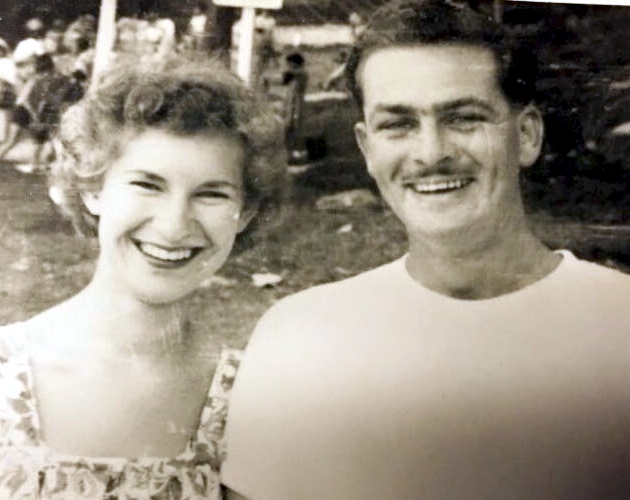
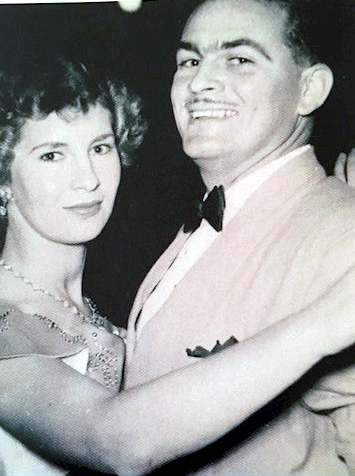
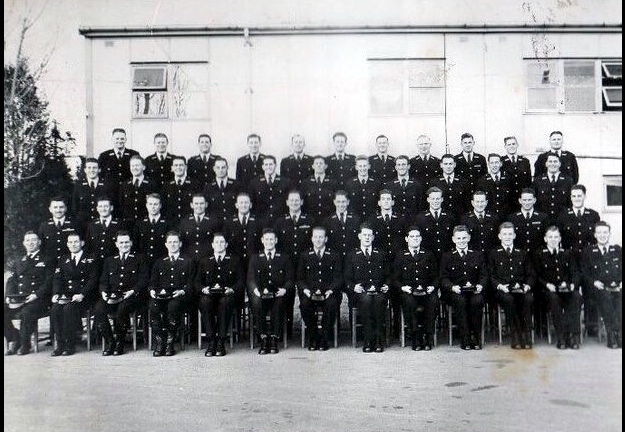
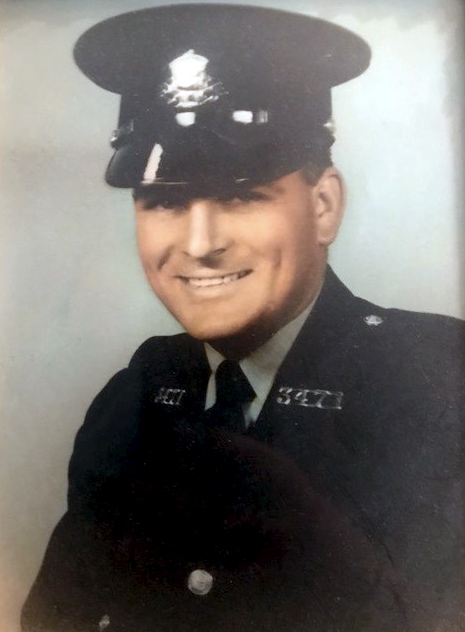
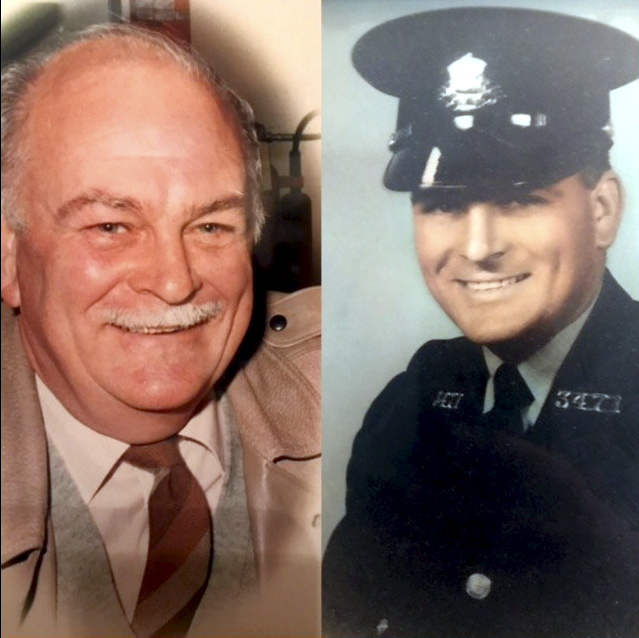
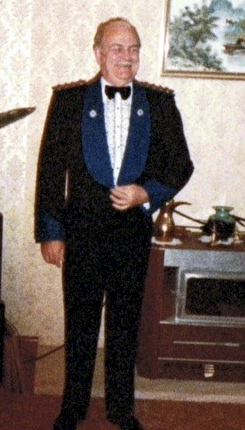
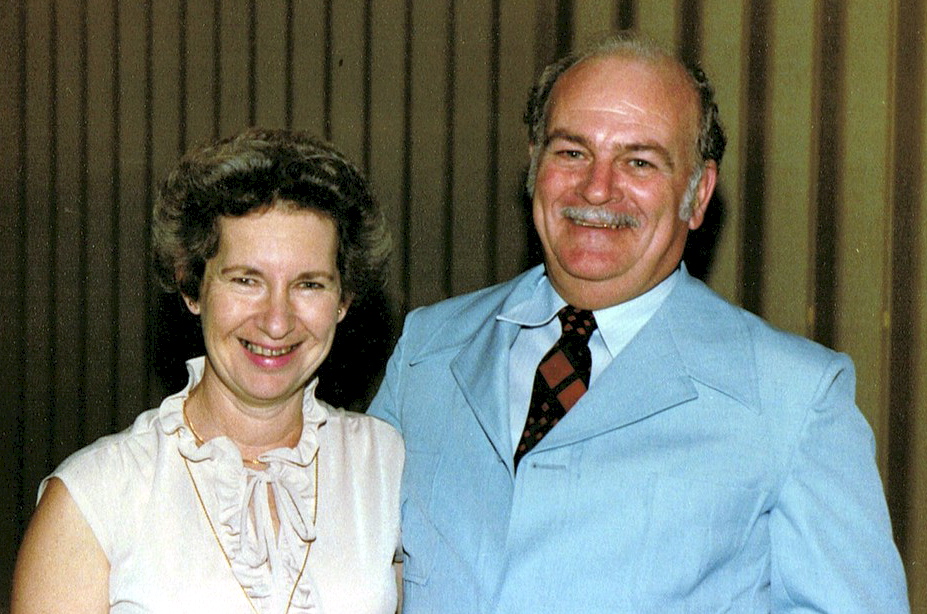
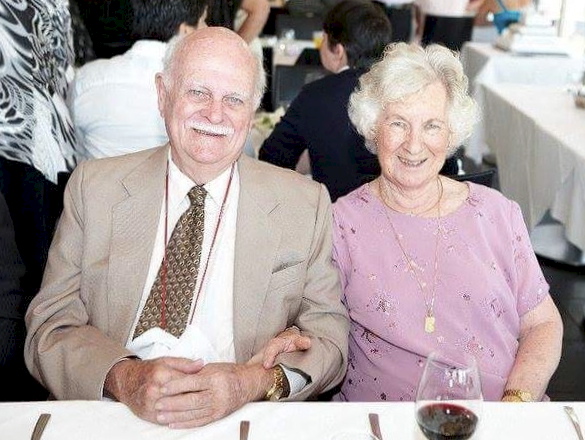
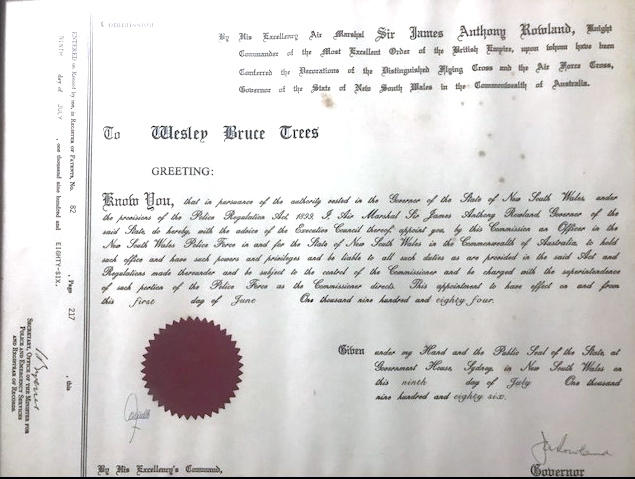
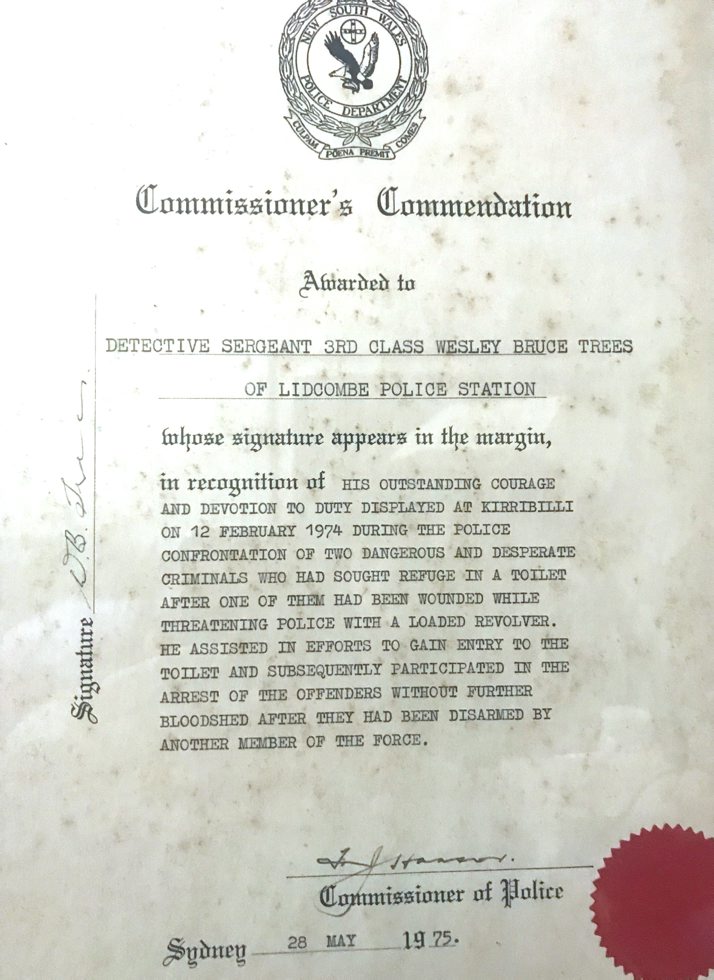
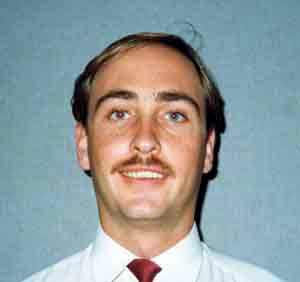
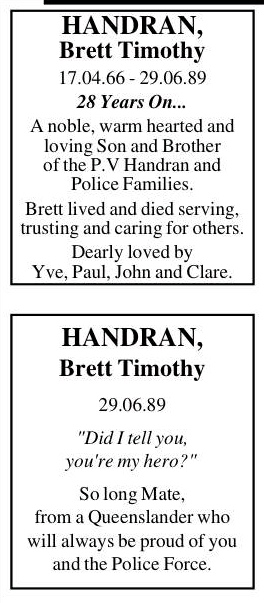
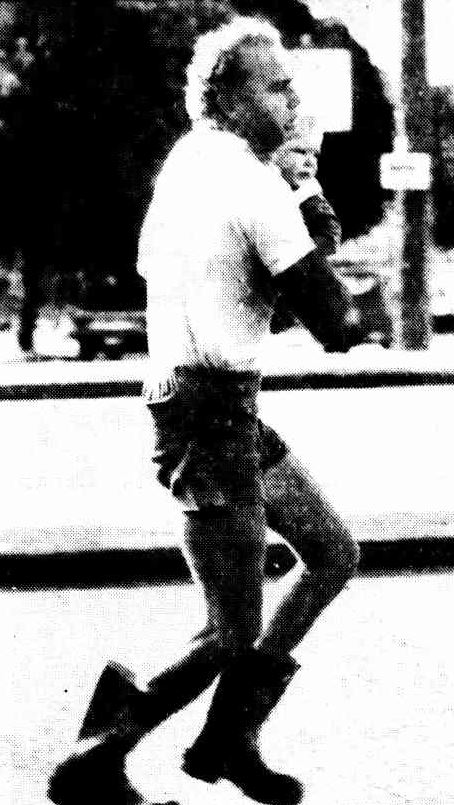
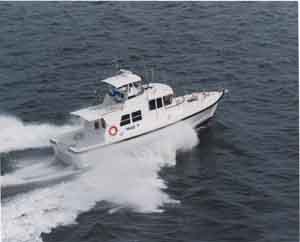
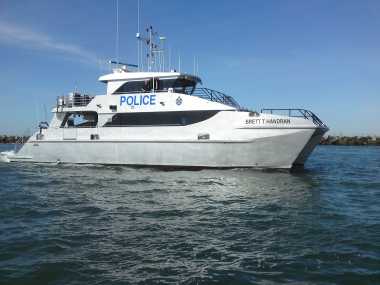
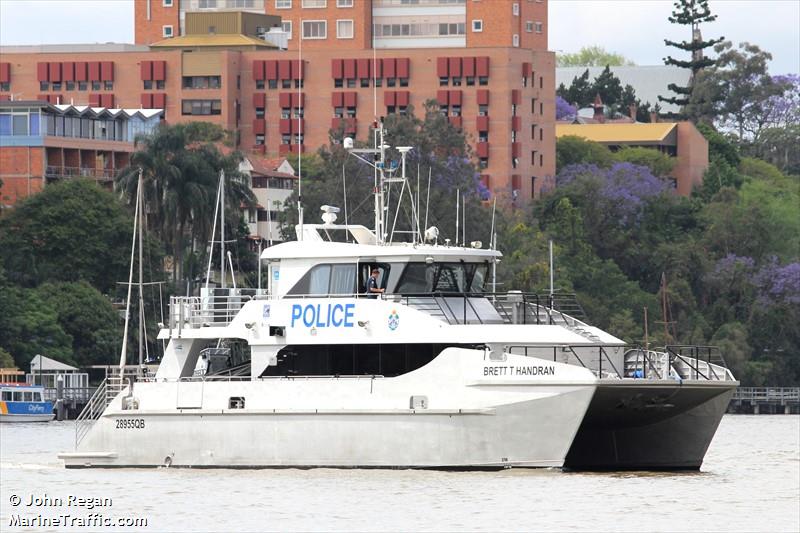
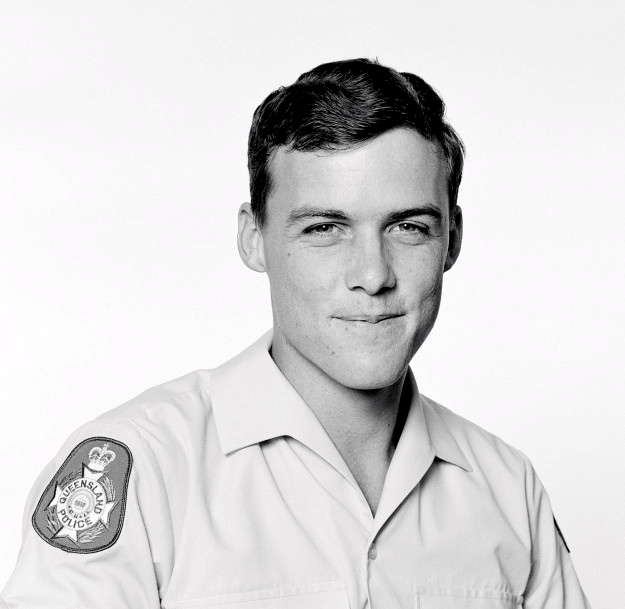
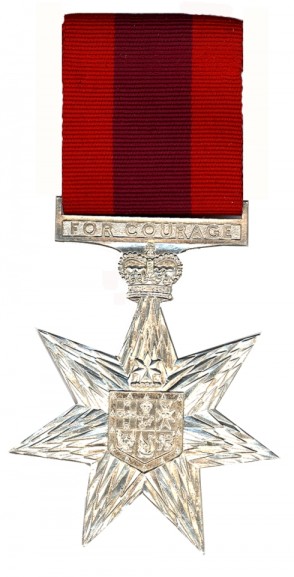
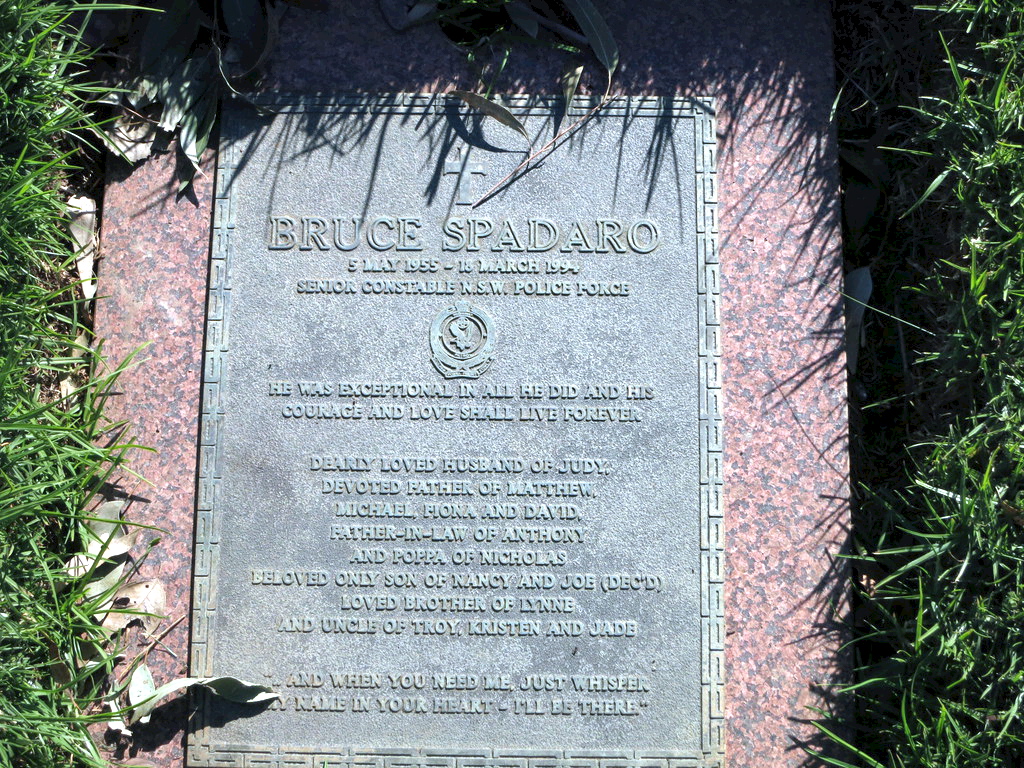
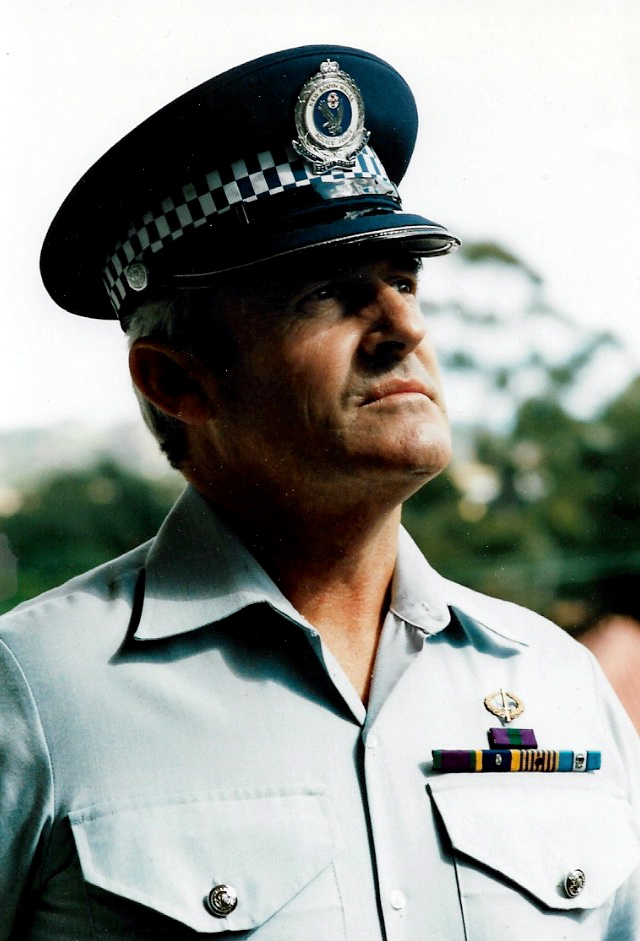
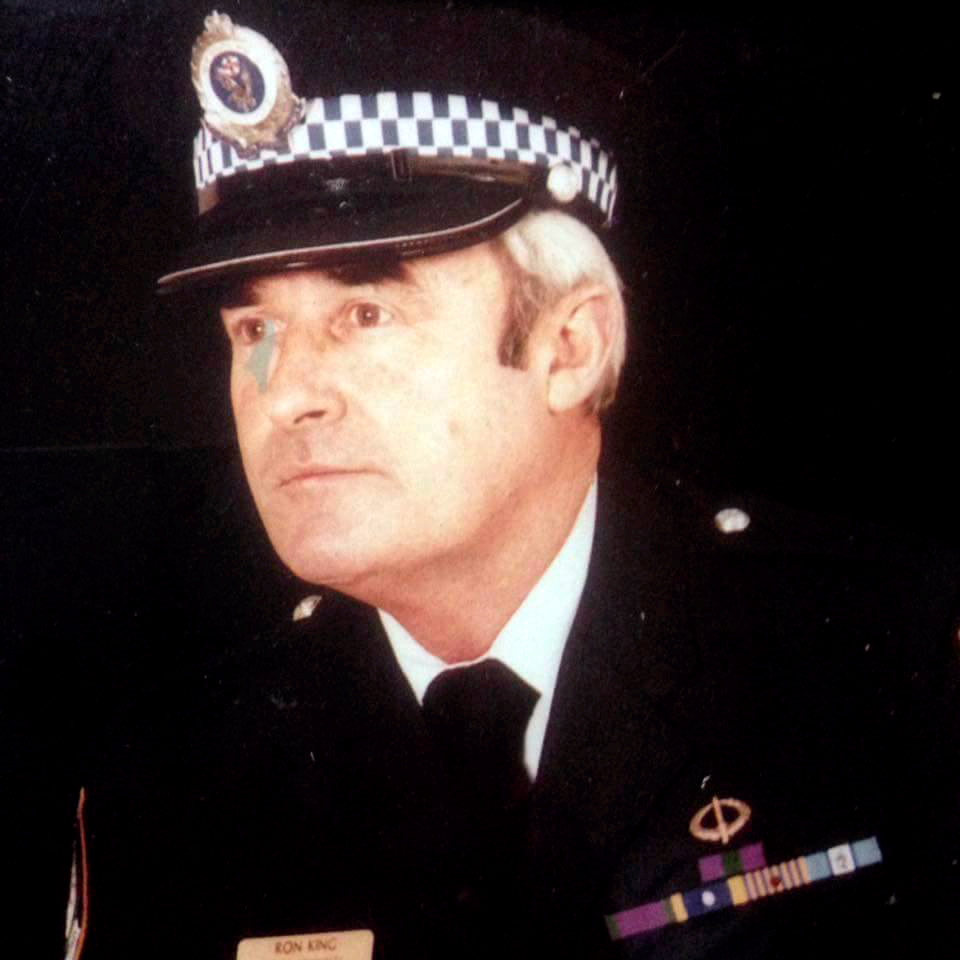
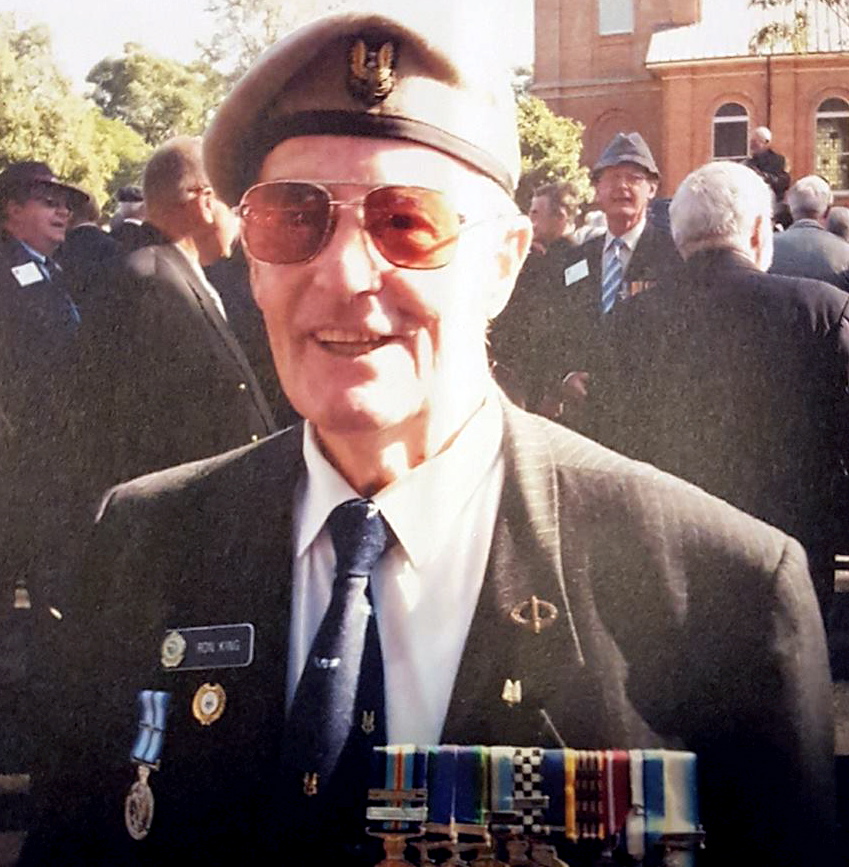
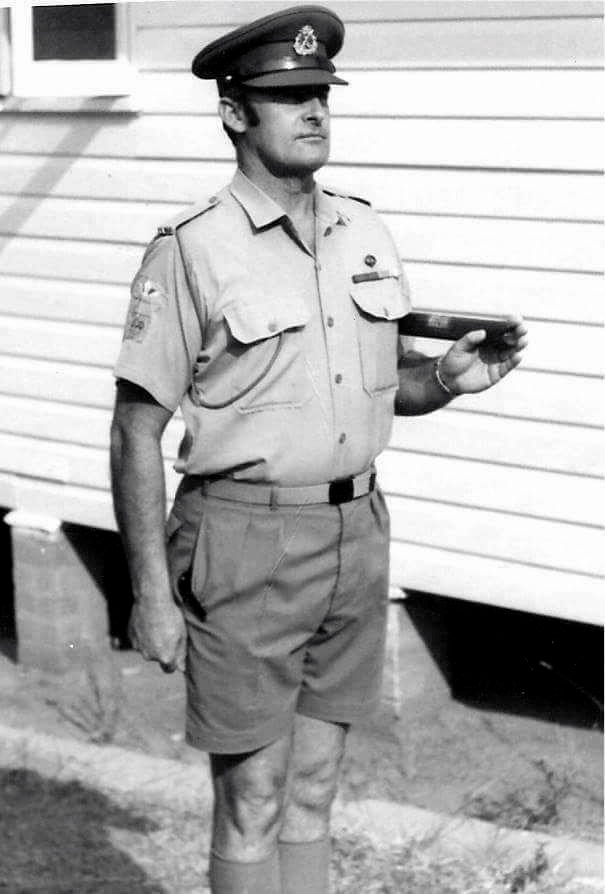
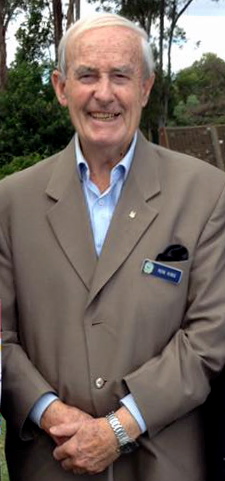
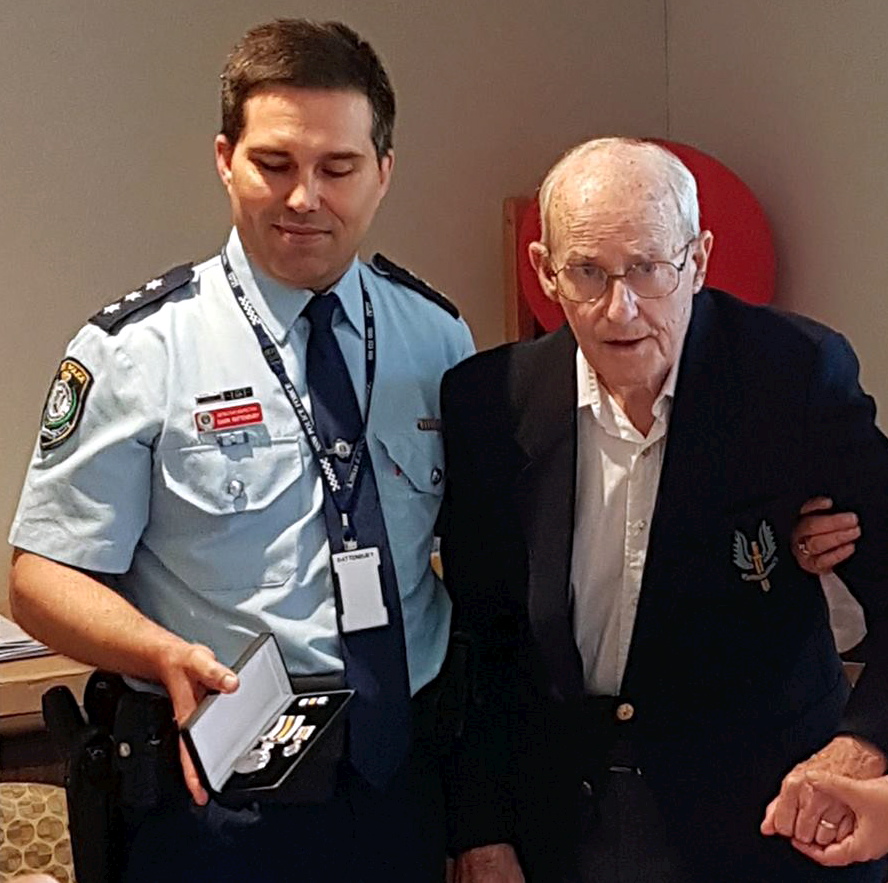
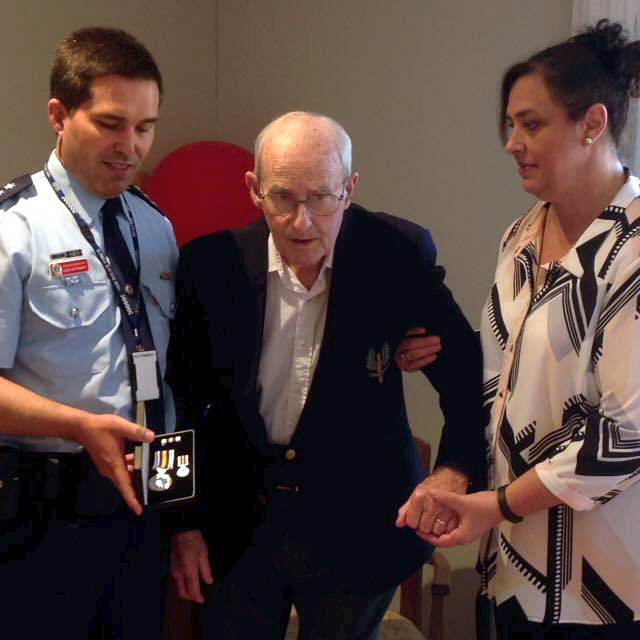
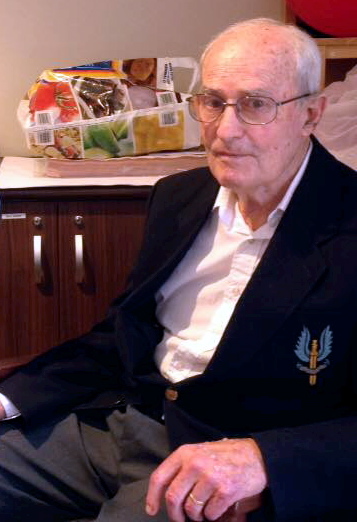
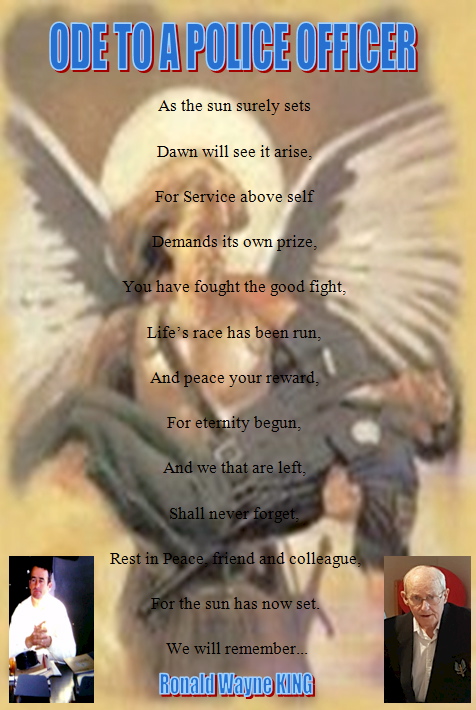
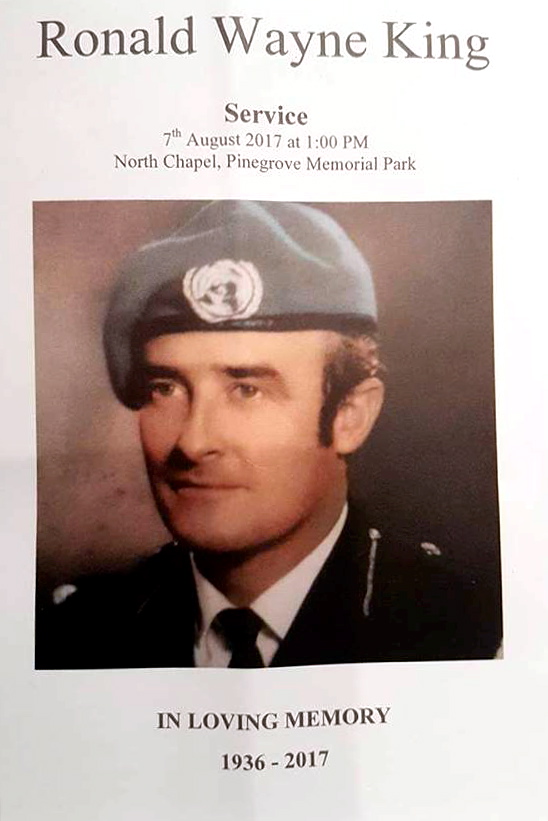
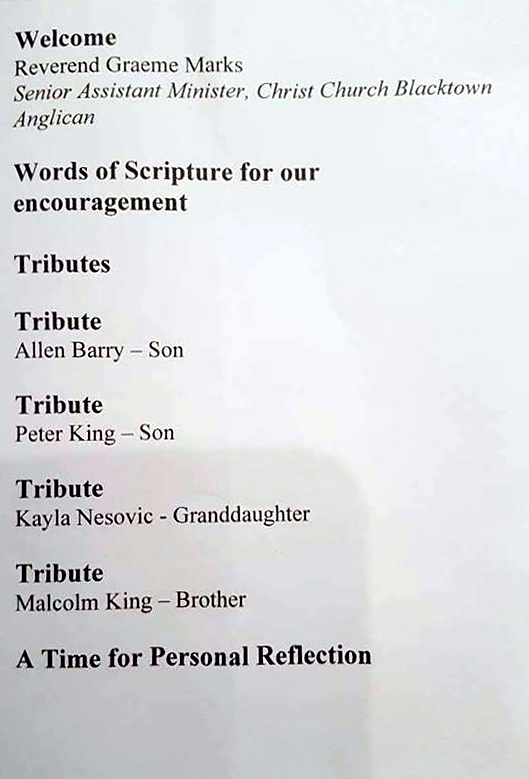
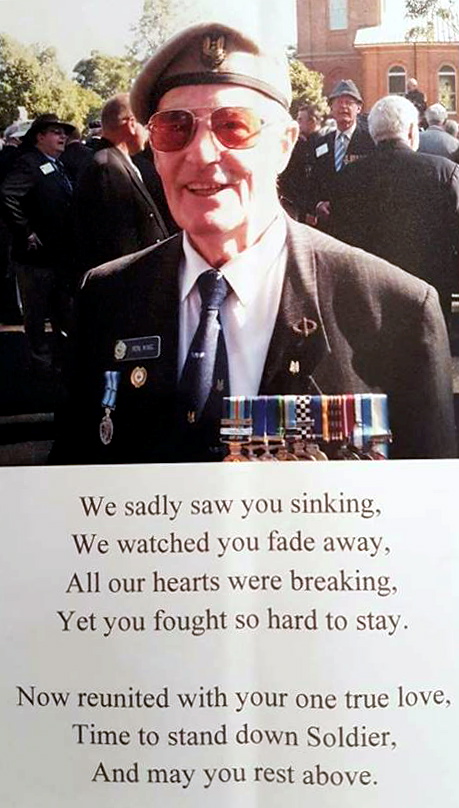
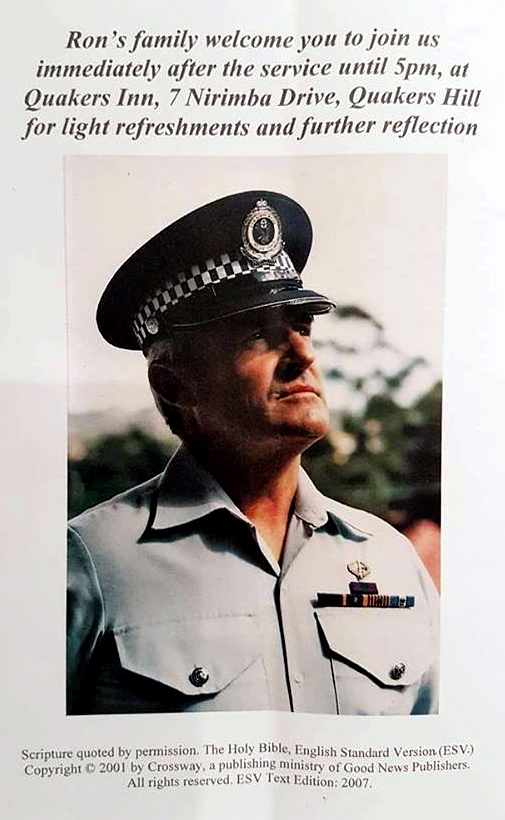
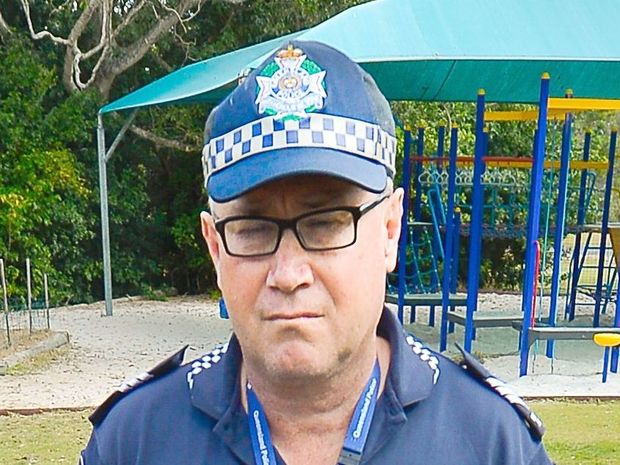
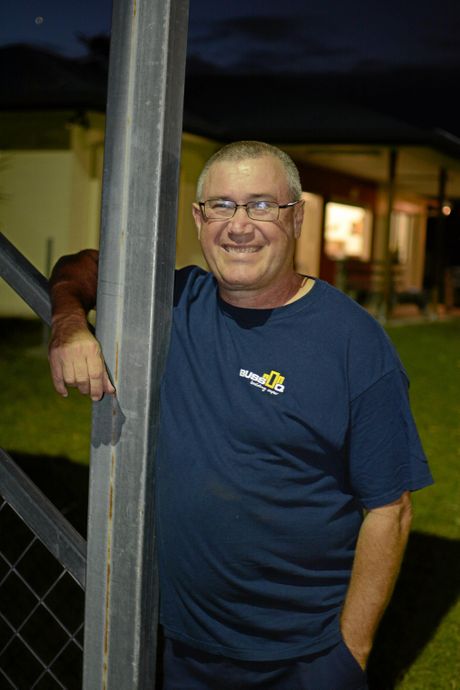
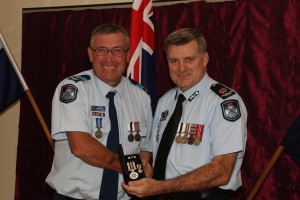
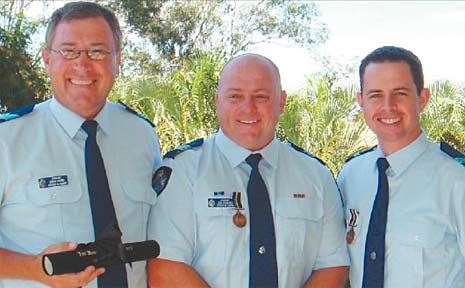
 PHOTO: TOM HUNTLEY