For the purposes of this website ‘Q‘ represents those Police joining between 1 March 1862 ( commencement of NSWPF ) – 23 February 1915 ( Commencement of NSWPF current numbering system )
Rank: Probationary Constable – appointed 12 October 1906 ( aged 22 – 23 years old )
Stations: ?, Rugby – Death
Service: From 12 October 1906 to 21 December 1919 = 13 years, 2 months, 9 days Service
Born: 1884
Age: 36 old
Cause: Suicide – Jumped from a cliff
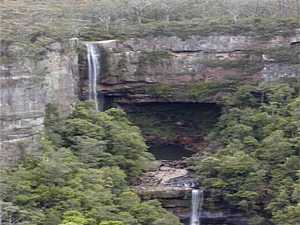
Died: 21 December 1919 – Belmore Falls, Robertson, NSW
Funeral: Saturday 27 December 1919, Robertson, NSW
Buried: Church of England, Robertson Cemetery, NSW
Media reports:
Goulburn Evening Penny Post ( N.S.W. )
Tuesday 30 December 1919 page 2 of 4
CONSTABLE DROWNS HIMSELF.
Moss Vale Monday. –
The body of Constable Oscar McDonald, of Rugby, near Young, who drowned himself on the 21st instant, came to the surface in a water hole at Belmore Falls, and was discovered on Saturday morning.
At the inquest a verdict of suicide while temporarily insane was returned.
He was 36 years of age, and leaves a wife and seven children.
The body of Constable Oscar McDonald, of Rugby, near Young, who drowned himself on the 21st instant, came to the surface in a waterhole at Belmore Falls, and was discovered on Saturday morning. At the inquest a verdict of suicide while temporarily insane was returned. He was 36 years of age, and leaves a wife and seven children.
The body of Constable Oscar McDonald, late of Rugby, near Young, who drowned himself on the 21st inst., came to the surface in a waterhole at Belmore Falls, Moss Vale.
At the inquest a verdict of suicide while temporarily insane was returned.
The body of Constable Oscar McDonald, of Rugby, near Young, who was missing from Sunday, 21 st instant, came to the surface of the waterhole at Belmore Falls, where his clothes and a note, to his wife stating that he was tired of his life were found, and was discovered on Friday morning and dragged out of the water.
At the inquest following the discovery, the district coroner (Mr. H. W. Taylor) returned a verdict of suicide whilst suffering from temporary insanity.
Deceased was a son of Mr. Robert McDonald, of Robertson, and was born in that township 36 years ago.
He leaves a widow (a daughter of Mr. John Lindsay, of Moss Vale) and seven children.
The remains were interred in the Church of England cemetery, Robertson, on Saturday, the Rev. J. F. Rofe officiating at the graveside.
The Southern Mail ( Bowral, NSW ) Friday 2 January 1920 page 2 of 4 The Suicide at Belmore Falls THE BODY FOUND.
The body of Constable Oscar McDonald, of Rugby, near Young, who had been missing since Sunday, the 21st December, came to the surface of the waterhole at Belmore Falls, and was discovered on Friday morning and dragged out of the water.
Some days previously the clothes of the missing man were found near the top of the falls with a note to his wife stating that he was tired of his life, and it was surmised that he had jumped into the deep waterhole 300ft beneath.
Efforts to recover the body by dragging, however, failed.
At the inquest following the discovery, the district coroner ( Mr. H. W. Taylor ) returned a verdict of suicide while suffering from temporary insanity.
Deceased was a son of Mr. Robert McDonald, of Robertson, and was born in that township 36 years ago.
He was on a visit to his birthplace on sick leave from the police force, suffering a nervous breakdown. A long bout of insomnia had left him in a state from which death would appear to give a happy release.
The late Constable McDonald leaves a widow ( a daughter of Mr. John Lindsay, of Moss Vale ) and seven children.
The remains were interred in the Church of England Cemetery, Robertson, on Saturday, the Rev J F Rofe officiating at the graveside.
THANKS.— The Widow, Family, and Relatives of the late Constable Oscar McDonald desire to Thank the police and public generally for their assistance and sympathy in their late sad bereavement.
The earliest mention of Rugby Police Station ( which no longer exists as a Police Station ) in the National Library of Australia is 16 December 1875.
In October 1900 there was a Constable Overton stationed at Rugby Police Station. ( “Possibly” Arnold OVERTON, NSWPF ‘Q’ 5265 – Born 1858 in England and joined the Police on 29 September 1886 )
As of 2014, there is no mention of Rugby Police Station, or Oscar McDonald inside the date range of 1900 – 1923.
In December of 1923 there was a Constable John Walderma CHITTY stationed at Rugby Police Station. ( No Find via Google or my records. Cal )
On 2 September 1927, approval was given for the installation of a telephone in Rugby Police Station.
The last mention of Rugby Police Station, in the papers of the day, is 4 July 1930.
On Saturday 19 July 2014, I ( Greg ‘Cal’ Callander ) went to the old Church on the corner of Illawarra Hwy & Meryla St, Robertson, to speak with the current Minister there.
He didn’t have any records with him and there are definitely no graves within the grounds of the Church, nor is there a Church of England Cemetery ( now ) – as stated in the article dated 2 January 1920.
The Minister did, however, direct me to one of the oldest residents in the area who runs the General Store up the road.
Before I troubled her, I attended the Robertson Cemetery located at the very end of Missingham Parade, Robertson in search of Oscar’s grave – at the below GPS co-ordinates.
It is a lovely cemetery, with graves dating back to the mid 1800’s and there would be no more than 100 marked graves there – but, as much as I searched, I could not locate the grave for Oscar.
There are several unmarked graves, there are several graves with upturned headstones that have fallen over with the process of time. There are also graves whereby the inscriptions just can’t be read, due to weathering and then there are the graves that are totally shrouded in thick creeper vines and trees.
After spending a considerable amount of time there, without success, I decided to go to the old General Store and speak with the elderly lady who runs the place.
Now, considering this funeral happened nearly 95 years ago, I introduced myself to the lady and told her exactly what I was seeking.
Now bugger me if, after all these years, she steps forward to the bench in front of her and says, “I know I have that book around here somewhere“.
From under a few news papers, she removes an old, hand written, brown tattered and torn book which holds most of the records of the Robertson Cemetery.
She flicks through the book to the appropriate date and there, before us, was the hand written note of her own long deceased father ( this lady is around 80 herself now ) is written:
“Decr 27th 1919.
Oscar McDonald buried in grave paid for by his father.”
Unfortunately there were no other details as to the location of the grave but, the woman assures me, Oscar would have been buried on the right hand side of the driveway as you enter the cemetery.
So, at this stage, that is the best I can do in relation to plotting exactly where Oscar is buried.
The elderly woman is retiring very soon, so this original book will be lost with time. She tells me that she has given a photostat copy to the local Rail Museum and the local Cemetery Trust – as the cemetery is owned by the Community.
Burial record of Oscar McDonald recorded in an old book in the General Store at Robertson, NSW ( 2014 ).
With regret I advise the death of Barry Robert DUFFY, 61 old, former Regd. No. 14958, a non-member of the RPA of Tuncurry.
Barry passed away on 17/06/2014 and his funeral is proposed to be held at 11am on Wednesday 25th Instant at Manning Great Lakes Memorial Gardens Chapel, 183 Pampoolah Road, TAREE.
Barry Robert DUFFY
29.10.1952 – 17.06.2014
Aged 61 years.
Late of Tuncurry, previously of Bathurst and Orange.
Loving partner of Robyn Van Gemert.
Dearly loved father of Keristi Price, Jodie Walters, Robbie Duffy and Clint Duffy and grandfather of his 17 grandchildren.
Bazza will be dearly missed by his extended family.
Forever in our hearts.
For service details
Tranquility Funerals
Forster NSW
6555 3500
Barry Robert Duffy 17th June 2014 Deep in our hearts your memory is kept To love and to cherish and never forget. Remembered always, Robyn and families
DANIEL is NOT mentioned on the Police Wall of Remembrance *NEED MORE INFO
GOODWIN, Daniel
Passed away 16th April, 2014
Beloved partner of Julie, Endearing father of Elise, Emily, Sophie (dec), Jack & Ben.
Will be sadly missed by all his family & friends.
Aged 52 Years
Family & friends of DANIEL are kindly invited to attend his Funeral Service to be held at The Church of Christ, Wingecarribee Street, Bowral (Opposite Police Station) on Monday (April 28, 2014)
Appointed to commence at 10.30am.
Followed by interment at Bowral Cemetery
LADY ROSE FUNERALS
36 Bowral Street, Bowral
FDA of NSW
Accreditation No: 12037-01
Ph: 4862 1833
Consultant: Joadi Webb J
George Herbert GRAY
| 16/07/2014
George Herbert GRAY
Late of Loch Maree St, Kingsford, NSW
New South Wales Police Force
Regd. # ?
Rank: Constable – appointed ? ? ?
Stations: , Darlinghurst – death
Service: From? ? ?to 6 April 1938 = ? years Service
Awards: No find on It’s An Honour
Born: ? ? 1907 – 8 in England ( Emigrated to Australia in 1927 )
Died on: Wednesday 6 April 1938 about 6.45am in the bathroom
Event location: Home – Loch Maree Street, Kingsford, NSW
Age: 30
Funeral date: Friday 8 April 1938
Funeral location: “Hundreds lined the pavements of George street and Railway square this afternoon to watch the funeral led by 30 uniformed police and the Police Band leave Wood Coffill’s chapel for Botany cemetery’
Buried at: Botany Cemetery, 12 Military Rd, Matraville, NSW
Grave Location: ADDD Anglican FM DDD, Position 208
George is NOT mentioned on the Police Wall of Remembrance BUT SHOULD BE
Some articles state that the suicide was on the 6 April whereas other articles state the suicide was on the 7 April
Constable Gray was found shot dead at his home in Loch Maree Street, Kingsford, a few hours before he was to have appeared at the City Coroner’s Court to give evidence about the death of Mrs. Dorothy Alice Graveur on Christmas Eve, 1937.
It is almost certain that the constable committed suicide after worrying himself about his temporary absence from his post in Oxford Street, Paddington when Mrs Graveur was killed by a motor cycle.
Constable Gray was not held responsible for his absence by the Police Department, but he had convinced himself that the accident wouldn’t have happened had he been present at the time. The continual worry about the death had also begun to affect his health, and after a minor operation on his throat he was to have been transferred to a station on the South Coast.
At the inquest on 23 April, 1938 the constable’s wife Mrs. Marjorie Gray gave evidence to the effect that just before going to bed on the night before his death her husband had been reading some papers relating to the inquest into the death of Mrs Graveur, due to be held the following day. She said he seemed worried about the case.
About 6.45 am she was awakened by a shot, and she quickly informed a constable who lived two doors away. Her husband’s body was found in the bathroom with his service pistol nearby.
In a note addressed to Marjorie, found beside his body, Constable Gray had described himself as a failure, and said that he could not stand the worry and shame he had brought on himself.
At the time of his death the constable was aged 30 years and was stationed at Darlinghurst.
Detectives are at a loss to explain the Suicide of Constable George Herbert Gray, 30, at Kingswood, except for the fact that he was extremely grieved over the death of Dorothy Alice Graveur, 45, who was killed in a motor cycle accident in Oxford street on Christmas Eve.
Gray was on point duty near the spot, and during his temporary absence on a personal matter, the woman was killed. A departmental inquiry absolved him of the responsibility, but the woman’s death worried him, as he believed the accident would not have occurred if he had been there.
After the event he became ill, and was transferred to the South Coast with his wife and children to give him a chance to recover.
His tonsils were recently removed, and early this week he said his health was much improved.
Before shooting himself with his service revolver, Gray wrote an affectionate letter to his wife, but did not give any reason for his act.
At the conclusion of the inquest concerning Mrs. Graveur, the coroner returned a verdict of accidental death.
Constable George Herbert Gray (30) who was found dead at his home, Kingsford, yesterday, with a bullet in the temple, was to have been the principal witness at the inquest into the death of the two women who had been killed in separate accidents by a motor cycle, ridden by Thomas R. Curyer, of Paddington.
The police say that Gray has been worried for some time over the case. A revolver was found lying beside him.
Further Particulars. SYDNEY, Friday Noon
Detectives are at a loss to explain the suicide of Constable G. H. Gray (30), at Kingsford, except for the fact that he was extremely grieved over the death of Dorothy Alice Graviur (45), who was killed in a motor cycle accident in Oxford St., on Xmas Eve.
Constable Gray was on point duty near the depot., and during his temporary absence on a personal matter, the woman was killed.
The departmental inquiry absolved him of responsibility, but the woman’s death worried him, as he believed the accident would not have occurred if he had been there.
Const. George Herbert Gray ( 30 ) who committed suicide at his home at Kingsford yesterday is believed to have been worried over the fact that, while he was temporarily away from point duty a woman was killed in a motor cycle accident. Gray’s death was revealed yesterday at the inquest on the woman. He was absolved by the departmental inquiry, but he became ill, and arrangements were made for his transfer to the country. Gray left an affectionate letter to his wife, but gave no reason for shooting himself.
Worry About Work Thought To Be Reason SYDNEY, April 8.
Worry about his temporary absence from his post, is believed to have been the reason why Constable George Herbert Gray, 30. committed suicide yesterday. Gray was found dead by his wife at his home in Loch Maree street Kingsford, several hours before he was to have appeared at the City Coroner’s Court to give evidence about the death of a woman.
revolver was lying beside him with a note addressed to his wife, in which he regretted that he had to leave her.
Police officials believe that Gray committed suicide after worrying himself about his temporary absence from his post when Mrs. Dorothy Alice Graveui of Glenore road, Paddington, was killed by a motor cycle in Oxford street near Dowling street, Darlinghurst, on Christmas Eve.
Gray was not held responsible for his temporary absence by the Police Department, but it is believed that he thought the accident might not have happened if he had been present.
Worry affected his health. After a minor operation to his throat he was to have been transferred with his wife and three children to a station on the south coast.
The Deputy Commissioner of Police ( Mr. T. Lynch ) said today that Gray had a good record in the Police Force.
In the tragic death of Constable George Herbert Gray, 30, of Darlinghurst Police Station, on Wednesday has left his young wife and three small children in a sad plight.
They are practically penniless, and Mrs. Gray, who is an Englishwoman, has only one relative — her mother – in this country, and she, too, is not well off.
Constable Gray was found dead at his home in Kingsford on Wednesday. There was a bullet wound in his temple and a revolver was found nearby.
Overcome with grief, Mrs. Gray, for the present, is staying with neighbours, who are also caring for the children.
The children, all girls, aged 2, 5, and 7 years, respectively, nave not yet been informed of their father’s death. They were told that “Daddy” was In hospital.
Will Be Cared For
The grant that Mrs. Gray will receive from the Government will only be small, but, according to police officers, she will be “looked after.”
Already many officers have intimated their intention of contributing to a distress fund, and it is anticipated that a considerable sum will be subscribed.
Neighbors say that Mr. and Mrs. Gray were a most devoted couple.
It was explained yesterday that Gray was greatly worried over a motor cycle accident in Oxford Street, Paddington, on Xmas Eve last when Mrs.
Dorothy Alice Graveur, 45, of Paddington, was fatally injured.
Gray was on point duty near the scene of the crash, but at the time he had left his post temporarily. It was while he was away that the accident had occurred.
Gray, according to his colleagues, although he was not held responsible for the accident, believed that the woman would not have been killed if he had been there.
The late constable, who was born in England, came to Australia about 1927, and after working on the buses for a period, obtained an appointment in the police force.
His bride, then a young girl of 20, came out from England soon afterwards and they were quietly married at a suburban church.
Led by the Police Band, the funeral left parlors in George Street, City, yesterday afternoon for Botany cemetery.
Deceased had no relatives in Australia, and besides his wife and her mother, the chief mourners at the funeral were his fellow police officers, who formed a large contingent.
Tortured by the fear that, he had failed in his duty and had wrecked his career, Constable George Herbert Gray, 30, shot himself with his own service revolver on April 7, the morning when he was to have given evidence at an inquest, the City Coroner ( Mr. Oram ) found to-day. ‘It was most tragic, as he had done his duty properly and was regarded as a most capable officer,’ said Mr. Oram.
‘There is no doubt that Gray was worried very much by the inquest, which concerned a woman who had been killed in a motor cycle accident. It preyed on Gray’s mind that he did not report the motor cyclist for a breach, as the same motor cyclist was involved in another accident a few days later when a girl was killed. ‘The sad and painful fact is that Gray had no cause at all for worry as at the Inquest, It was found that the first mishap was entirely an accident and there was no reason why the motor cyclist should have been reported.
A finding of suicide was returned by the City Coroner (Mr. E. T. Oram), at the conclusion of an Inquest into the death of George Herbert Gray, aged 30 years a police constable, who was found dead on April 6, the day on which he was to have appeared as a witness in a Coroner’s Court inquiry.
In returning his finding the Coroner said that Gray‘s death was a very sad and painful matter. There was no doubt that he had worried about the outcome of an inquiry into the death of a woman in which a motor cyclist had been involved.
A few days after the death of the first woman the same motor cyclist had been involved. ” There was no need for deceased to have worried as he did, said the Coroner, ” for the inquiry into the first accident showed that there was no action on the part of the motor cyclist which should have been reported by Gray. The action which the constable took was correct and his death is most unfortunate.
Marjorie Iris Gray, wife of the deceased, said that her husband, before retiring to bed on April 5, was reading some papers referring to a Coroner’s inquiry to be held the following day. He seemed worried about the case.
About 6.45 a.m. on April 6 she was awakened by a shot and she informed a constable who lived two doors away. Her husband’s body was found in the bathroom with his service pistol near by.
Sergeant L. G. Salkeld ( Leslie George SALKELD NSWPF # Q 9438 ) said that deceased had a good reputation in the police force and witness could not understand why he should have taken his life. In a note which witness found beside the body, Gray had described himself as a failure, and said that he could not stand the worry and shame he had brought on himself. .
IN THE SUPREME COURT OF NEW SOUTH WALES — PROBATE JURISDICTION — IN THE MATTER of the Estates of the undermentioned deceased persons, and in the matter of the Wills, Probate, and Administration Act. 1898 -1932; the Public Trustee Act, 1913 – 1938; and the Testator’s Family Maintenance and Guardianship of Infants Act, 1916. NOTICE IS HEREBY GIVEN that the Public Trustee has this day filed in the Registry of this Honourable Court his elections to administer the Estates of the following deceased persons: —……..
GEORGE HERBERT GRAY, late of Loch Maree Street, Kingsford, In the State of New South Wales, Police Constable, who died 7th April, 1938. Intestate.
Cause: Suicide via Service Pistol .38 Smith & Wesson revolver
Event location: Traffic Office, 2nd floor, west building of old Fairfield Police Stn, Smart St, Fairfield ( 34 Division )
Funeral date: ?
Funeral location: Orange, NSW
Buried at: Orange General Cemetery, Lone Pine Ave, Orange, NSW.
Grave: Anglican Lawn, Section D, Plot 5
KERRYis NOT mentioned on the Police Wall of Remembrance * BUT SHOULD BE
Sergeant Kerry WEEKES was a Traffic Sergeant at Fairfield Police Station when, in 1987, he shot himself with his service revolver whilst inside the Traffic Office of that building.
Fairfield Police Station, at that time, comprised to two buildings on either side of the driveway which passed between the two buildings.
The Traffic Office was on the second floor on the western side of the driveway and was at the rear of that building overlooking the rear car park.
This original version of the Fairfield Police Station was demolished and later replaced with the current station we see upon Smart St, Fairfield, today.
No other information is available at this time ( 2014 – 2020 )
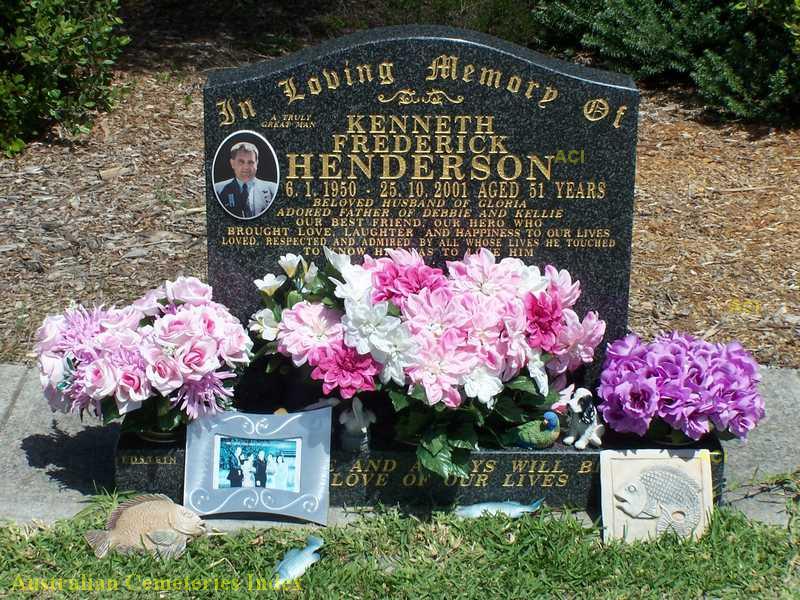
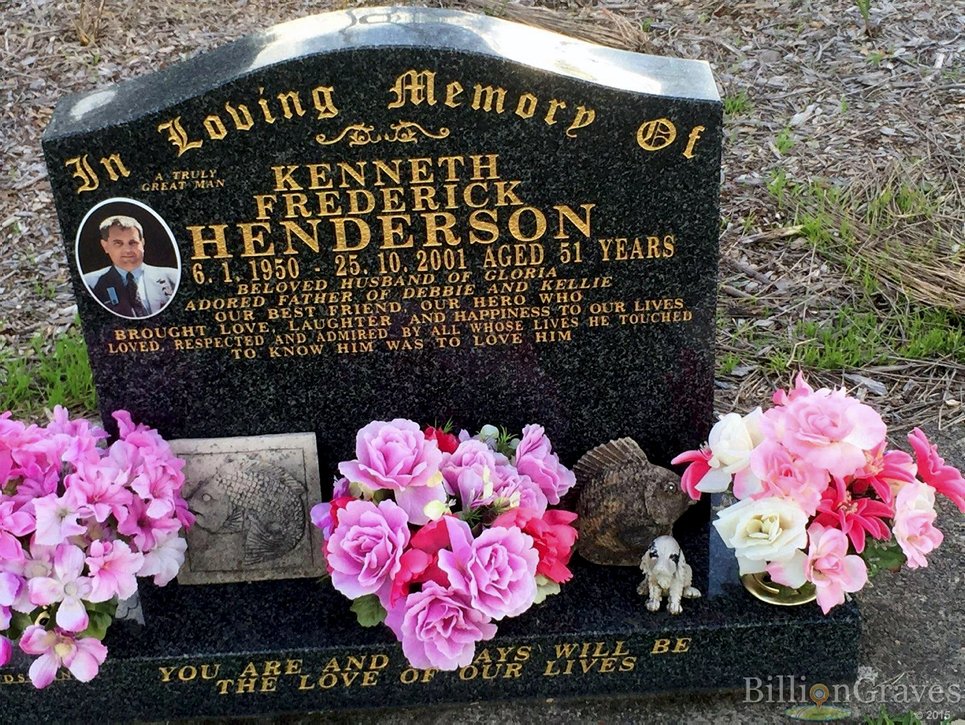
Kenneth Frederick HENDERSON
| 16/07/2014
Kenneth Frederick HENDERSON
Late of ?
New South Wales Police Force
[alert_yellow]Regd. # 14078[/alert_yellow]
Rank: Probationary Constable – appointed 26 March 1970
Constable 1st Class – appointed 26 March 1975
Sergeant – appointed 20 November 1985
Detective Chief Inspector – Death
Stations: ?, Charlestown – Death
Service: From? ? pre March 1970? to 25 October 2001= 31+years Service
Detective Chief Inspector Ken HENDERSON, 51 old, committed suicide by using his service firearm inside the grounds of Charlestown Police Station in October 2001.
Ken was being harassed and ultimately threatened by SCIA during their malicious reign with a personal exposure that would, no doubt, hurt his family. Nothing to do with misconduct on his behalf, just a maliciously attempt to hurt him and his family.
He took his life with his service revolver at the rear toilets of the police station immediately after receiving a phone call from SCIA.
It is believed that no Inquest was held into his suicide.
[divider_dotted]
Three investigated police attempt suicide
By Candace Sutton March 2 2003
The Sun-Herald
Three police officers investigated by the controversial Operation Florida corruption probe have attempted suicide, The Sun-Herald has learnt.
This follows the death in 2001 of Detective Chief Inspector Ken Henderson, a highly commended officer regarded as a top criminal investigator. Henderson, 51 and a 30-year veteran of NSW Police, shot himself at work in 2001.
There was no suggestion that he was tainted by corruption.
Three officers who came under the operation’s scope have since tried to end their lives.
Senior police officers named on a controversial warrant issued as part of Operation Florida have engaged prominent barrister Tom Hughes, QC.
The warrant, ordered by former assistant commissioner Mal Brammer, was issued the day before the 2000 Olympics began and had 116 names on it.
Those named included a barrister, a journalist and five of Crime Agencies’ nine superintendents. A Police Integrity Commission investigation of the warrant has since found two of the names on it were unsupported by applications or affidavits, which PIC inspector Merv Finlay described as “a minor irregularity”
[divider_dotted]
Why cops took their eye off the streets
March 2 2003
An internal police investigation targeting corruption has claimed victims who weren’t even in its sights, Candace Sutton writes.
On a spring day in September 2000, when a rape gang was carrying out its evil in south-western Sydney, police among the highest echelons of the NSW force were intent on issuing a warrant for a listening device to eavesdrop on fellow officers.
It was a peculiar sort of warrant, with 116 names on it.
The names included those of drug dealers, armed robbers, a barrister, a journalist and five of Crime Agencies’ nine superintendents. Two names were unsupported by the affidavits usually needed for such a warrant.
It was the day before the Olympic Games opening ceremony and with the warrant’s issue, Operation Florida was born, one of the NSW Crime Commission and the Police Integrity Commission’s most explosive joint investigations.
The existence of the rape gangs was only beginning to be known by NSW police and the existence of the warrant was a secret to all but a few deep within the police service.
Like its namesake in the US, is there something rotten in the state of Florida?
The destruction the operation has wreaked in its path – the suicide of one police officer and the attemptedsuicide of three other officers who were subjects of the investigation – is compounded by the fact that one of Florida’s principal investigators and the man whose work instigated the operation are now themselves under a cloud.
Detective Chief Inspector Ken Henderson, 51, died by his own hand on his service revolver at his own police station at Charlestown.
Just what Florida achieved in uncovering corruption – and it did reveal serious breaches among officers in Sydney’s Northern Beaches – must be affected by these events. Mal Brammer has been accused of conducting malicious investigations in another operation.
During his time in charge of Internal Affairs, Mr Brammer was responsible for gathering the initial evidence for what became the Florida inquiry.
Brammer, who had left the police service for the Independent Commission Against Corruption, resigned from that job last week and faces accusations that he used “malicious and unfounded investigations against individuals”.
Brammer‘s right-hand man in Operation Florida, John Dolan, is suspended from the police service and has to show why he should not be dismissed. ( 181D )
This week the good citizens of NSW might wonder whether what is, at best, the super-zealotry of the police watchdogs, has overridden the force’s principal function: to control crime. Has there been an abuse of power? After all, who’s watching the watchers?
Dolan was allegedly caught drink-driving behind the wheel of a State Crimes Commission car at Killarney Vale, near Wyong, while on holiday, on December 28, 2001. He was charged with having a prescribed concentration of alcohol of .075.
The matter went before the court three times, although Dolan never appeared and a doctor’s certificate said the officer was “unfit to work or attend court or to read and complete documents until further notice”.
The matter was then dropped.
The drink-driving charge was incurred at the height of the Florida probe and there must have been a fear it could affect the integrity of the investigation, a joint effort between the police service, the NSW Crime Commission and the Police Integrity Commission which absorbed considerable resources of all the agencies. Dolan, 43, a senior sergeant, is suspended on superintendent’s pay, though as an acting superintendent he had not passed the examinations for that rank.
Dolan has followed Brammer throughout 15 years in the force, from the Drug Enforcement Agency through drug taskforces to Internal Affairs, and on to Florida. Now Florida itself is being investigated.
A brief of evidence on Ken Henderson’s death will be placed before the coroner soon, although there is concern that only local Gosford police investigated, whereas a policeman’s suicide usually warrants a top-level inquiry.
The listening-device warrant is now the subject of planned legal action by commissioned officers whose names were on the list.
The warrant has been explained on 60Minutes by former police commissionerPeter Ryan, who said an Operation Florida operative was to wear the listening device at a function at which the 116 names were to attend.
The police planning legal action over the warrant say all officers were on duty, and therefore attending no common social functions, during the Olympics.
Police Integrity Commission inspector Merv Finlay, who investigated complaints about the warrant, conceded there was a “minor irregularity”, given two names on the warrant were not named in any application or affidavit.
Senior police officers say the force is sick of the approach taken by some PIC investigators.
“The vast majority of police have no sympathy for officers like [corrupt Manly detectives] Matthew Jasper and David Patison, but we do ask investigators to follow the rules,” an officer said.
Several meetings at State Crime Command have moved to address the issue. A unanimous motion at the biannual conference directed the Police Association executive to pursue the matter hotly.
As for the citizens of NSW, those with their names on the warrant list have asked for access to the affidavits supporting the warrant.
Two years after the now-discredited counter-terrorist squad, the Special Branch, was disbanded, Premier Bob Carr trumpeted the fact that he was opening the secret police files to any citizen who had one.
To date, however, access to the affidavits for the Florida warrant has been denied.
THE latest child sex charges against the former Labor minister Milton Orkopoulos and his campaign worker Pat Roughan have focused attention on Lake Macquarie Council and the effectiveness of local police.
The council has had its fair share of scandals.
In 1996 a former mayor, Doug Carley, was convicted of indecently assaulting a 15-year-old boy. Carley maintains his innocence, saying he did not have the money to contest the offence. He also suffers from bipolar disorder, which colleagues believe was relevant to his case.
In 2002 a former Labor councillor, Chris Foteff, left after gay and bestiality pornography was discovered on his council-supplied computer.
It was found only after the council engaged PricewaterhouseCoopers to follow the porn trail, which led to the recovery of 5000 images deleted from Foteff‘s laptop, including 10 of naked children and about 250 of acts of bestiality.
An earlier police investigation found no images that warranted prosecution. It appears the police decided not to send the computer to Sydney for technical analysis, relying only on what they could retrieve and copy themselves.
An internal police investigation ordered by the then commissioner, Peter Ryan, cleared them of any wrongdoing.
Mr Foteff, who had followed Orkopoulos onto the council as a Labor councillor, has always maintained his innocence and said he was the victim of a set-up.
But reopening the investigation after the PricewaterhouseCoopers report proved difficult because the officer who initially investigated the pornography find, Detective Chief Inspector Ken Henderson, committed suicide in October 2002.
The Mayor of Lake Macquarie, Greg Piper, recalls that police could not prove beyond reasonable doubt that the images on Mr Foteff‘s computer were of “under-age” men and they were also restricted by a statute of limitations.
It was reported at the time that Inspector Henderson shot himself with his service revolver at Charlestown police station soon after receiving a mysterious phone call.
He had recently returned from a trip to Sydney on official police business, believed to be connected to a Police Integrity Commission inquiry. There was nosuggestion that Inspector Henderson was under investigation for corrupt conduct but because there was no inquest it remains a mystery.
Cr Piper said he did not believe that those incidents or the charges against Orkopoulos had harmed the council’s reputation, although the incidents were “unfortunate”. “The reality is, they have occurred over a long period of time,” he said, and if people “cast back and clump them together” it made the situation look worse than it was.
However, there had been other complaints about police inaction on child sexual assaults at the Lake Macquarie Local Area Command. In March 2001, Senator Bill Heffernan read a letter from a Charlestown woman into Hansard, detailing her concern about the lack of action taken by police against the abusers of her sons.
That the abuse had occurred was not questioned; her nine-year-old son required surgery after the abuse.
“No charges have ever been laid,” she wrote. “After three years of investigation from the Ombudsman’s office, Mr Bruce Barber [sic], finally intervened and asked for an investigation as to why no interviews and charges have ever been laid in relation to this.”
The mother, who has since moved to Queensland, said Inspector Henderson had been in charge of her son’s case.
RAPID advances in DNA technology could hold the key to catching the killer of Swansea High schoolgirl Bree Jones.
Police have reopened the case more than six years after Bree’s body was carried from the Caves Beach house where she had been dead for hours.
Two Lake Macquarie detectives are again working full-time to solve the mystery that has haunted parents across the region since June 3, 1995.
Bree, 16, a Year 10 student, was found dead in a house at Caves Beach after someone drugged her with methadone to have sex with her.
The case spawned two separate inquests, in which coroner Col Elliott called for perjury charges to be laid against several witnesses, and scrutiny of the State’s methadone program.
Parents shuddered as the story unfolded and they realised what had happened to Bree could as easily happen to their children.
Bree fell in with the wrong crowd, rebelled against her parents, ran away from home and paid the ultimate price.
Her mistake was putting her trust in her new `friends’, people who were apparently willing to stand by as one of their number preyed on the teenager for sex.
Bree Jones died half a kilometre from the Caves Beach home where she had lived happily with her parents, brother and four sisters until a week before the tragedy.
`There were 14 people there when she died but no-one knew what happened,’ her father, Wayne Jones, said.
`They knew of course but no-one would say anything.’
As the facts surrounding Bree’s death emerged, her parents’ anger and the frustration of the investigating officers grew.
Left-handed Bree bore injection marks in her left arm where someone, allegedly a man who wanted sex, had injected her with methadone in the early hours of June 3.
`They were trying to get her out of it so they could have sex with her,’ the mother of one of the people at the party told Mr Elliott.
The dose of methadone killed the teenager.
She slipped into unconsciousness and died.
No-one called the ambulance until 1.47pm that day, hours after Bree’s death.
No-one has come forward with exact details about her last hours.
The sperm, scientific police took from her body revealed she had had sex in the 24 hours before her death.
It may now play a pivotal role in the investigation.
Police were increasingly frustrated by the web of lies spun around the late-night party and what had happened to Bree.
Stories changed constantly, infuriating them and Mr Elliott, who recommended several witnesses be charged with perjury.
`The lies that have been told to police and the perjury committed in court have not helped the investigation,’ he said when handing down his closing statement in Wallsend Coroners Court in March 1999.
The coroner found that Bree had died from a lethal injection of methadone.
He was unable to establish who was responsible.
He did recommend the case be reopened.
`In the circumstances of this case, where a child has been overdosed with a lawful drug to obtain a sexual advantage and has consequently died, the pursuit of any person responsible and any person lying should be relentless,’ Mr Elliott said.
It was one more disappointment for the Jones family, who had watched helplessly after a man charged with manslaughter and supplying drugs to Bree went free in 1997 after the Department of Public Prosecutions dropped the case.
For her family one of the worst things about the case remains that no-one tried to save Bree.
One man, 20 at the time of Bree’s death, told the inquest he had seen her about 6am on June 3, lying in bed with a 29-year-old man.
`She had saliva coming out her mouth and her breathing wasn’t clear,’ the man said.
He did not try to wake her but got his surfboard and left the house.
`I didn’t realise she was in danger of losing her life,’ the 20-year-old said.
The same witness, who admitted lying to police constantly in the three years since Bree’s death, said the party goers had got together the next night for a `conference’ to get their `stories straight’.
Bree remains alive to those who knew her best.
`She was full of fun, loved life, just tried to make everyone happy,’ her mother, Maree, said.
`Her sisters still talk about her all the time.
`There’s not a day goes by when her name’s not mentioned in this household.’
It has been a terrible time for the Jones family.
A few years after Bree’s death, her only brother, Jabe, needed a kidney transplant.
Wayne Jones was happy to help his son.
It is this spirit that has kept the Jones family united in its search for justice.
`Like most 16-year-olds, Bree loved life,’ Mr Jones said.
`She was probably a bit braver than she should have been at that age and got into a situation she couldn’t control.
`She’d been a good kid all her life then hit a stage where she was giving us a bit of trouble.
`Bree got in with the wrong crowd and began to mix with older people that were just a bit too clever for her.
`We are very hopeful the new inquiry will lead to something and that articles like this will jog a conscience and get someone to come forward.’
The investigating officers believe advances in DNA technology, coupled with new legislation passed through State Parliament this year, could mean the unsolved tag being taken off the Bree Jones files.
`The major reason we’ve reopened the case is that it was a recommendation from the coroner,’ Lake Macquarie crime manager Detective Inspector Ken Henderson said.
`But now hopefully we can enact the new DNA legislation and take samples directly from the suspects.
`Before we had to charge the suspect with an actual offence related to the case before we could take samples but now we don’t have to do that.
`The new legislation gives us the light at the end of the tunnel.’
Though hoping the new inquiry, now under way, will lead somewhere, Mr Jones intends to keep searching for his daughter’s killer.
`Time can be your best friend or your worst enemy,’ the 49-year-old said.
`I’m going to live a long life just to get to the end of all this.’
Detective Inspector Ken Henderson was attached to Newcastle. In 2001 he took his own life. At the time a number of officers under his control were involved in Police Integrity Commission matters. It was later established that Henderson was not subject to investigation. The family remains at a loss as to why he took his own life. He had not received any treatment nor consulted any medical providers concerning any stress he may have suffered.
Rank: Commenced Training at Goulburn Police Academy on 15 February 1988 ( aged 18 years, 9 months, 16 days )( spent 2 months, 21 days at Academy )( Start of a new, and worthless, Superannuation scheme for Police as of 1 April 1988 )
Probationary Constable – appointed 6 May 1988 ( aged 19 years & 6 days )
Sergeant –
Final Rank = Sergeant
Stations: ?, Maroubra ( 1980s ), Paddington ( 1990s ), Barrier, Broken Hill, Walgett, Castlereagh and Darling River LAC’s
Service: From 15 February 1988 to 13 January 2014= 25years, 10 months, 2 days Service
Awards: No find on It’s An Honour
Born: Wednesday 30 April 1969
Died on: Monday 13 January 2014
Age: 44 years, 8 months, 14 days
Cause: Illness – Depression – Suicide
Event location: Walgett, NSW
Event date: ?
Funeral date: Friday 24 January 2014, 11am
Funeral location: Holy Family Catholic Church, 214 Maroubra Rd, Maroubra
Wake location: Maroubra Seals Club
Funeral Parlour: ?
Buried at: Cremated
Memorial located at: NSW Police force Service Memorial Wall, Sydney Police Centre, Surry Hills, D21 ( right wall )
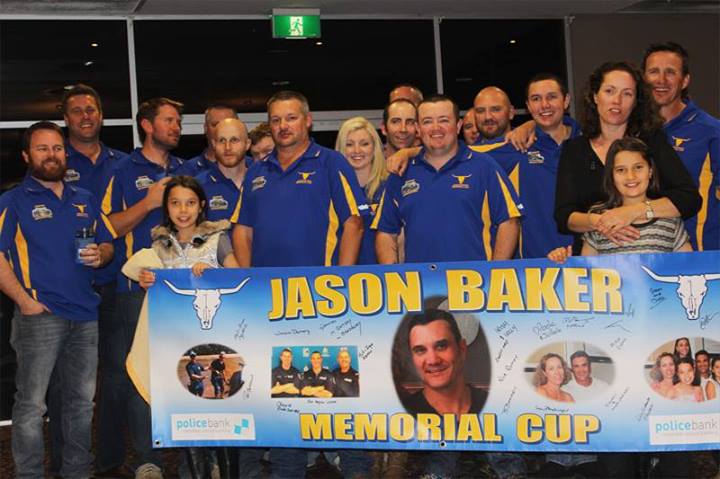
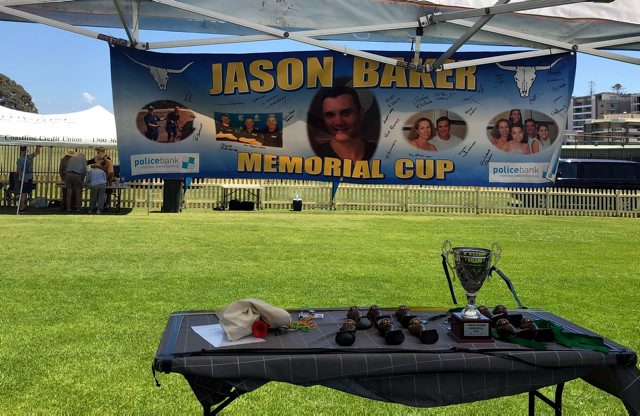
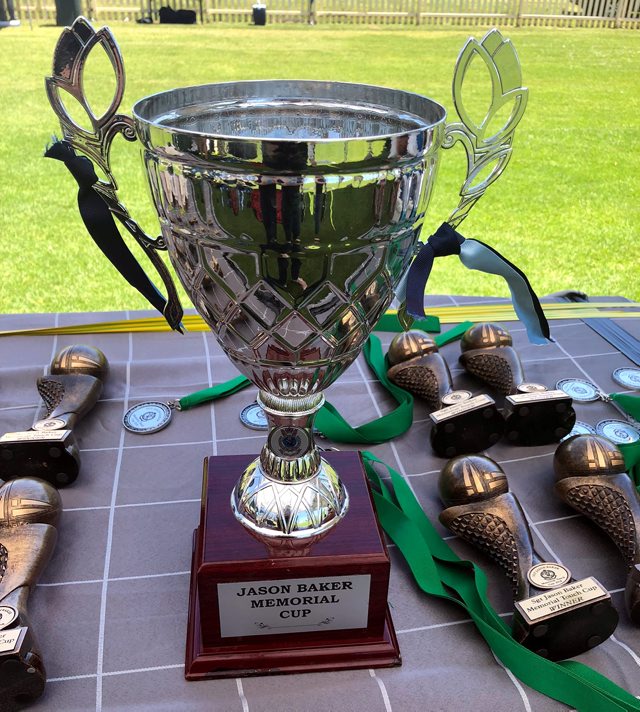
Memorials: Jason Baker Memorial Cup
JASON IS mentioned on the Sydney Police Centre Memorial Wall
FURTHER INFORMATION IS NEEDED ABOUT THIS PERSON, THEIR LIFE, THEIR CAREER AND THEIR DEATH.
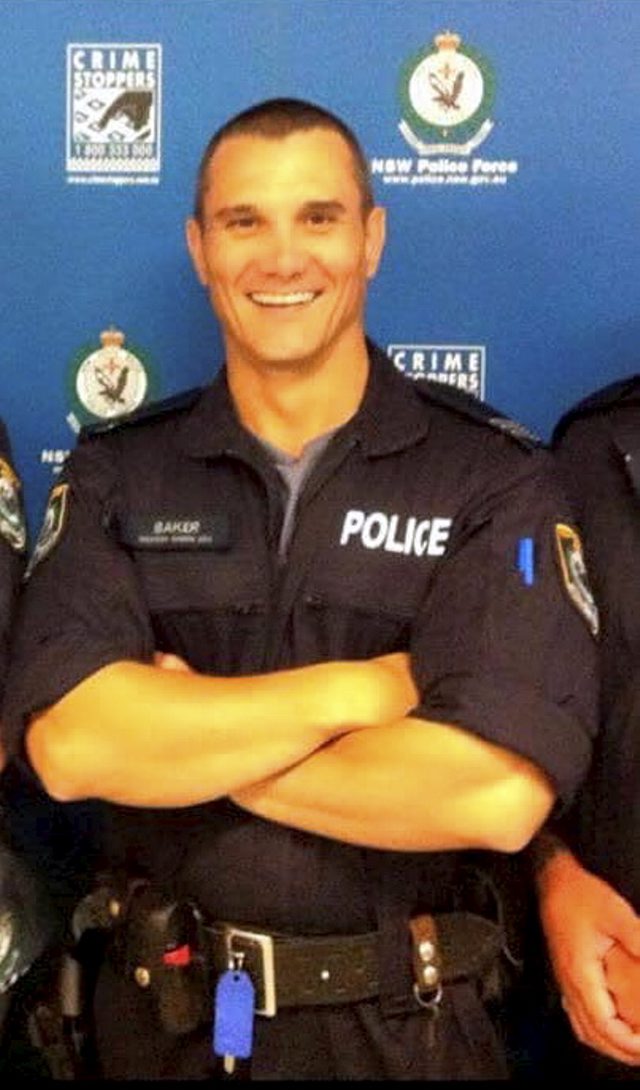
Sergeant Jason Baker sadly passed away on Monday 13 January 2014. He leaves behind a young family.
His funeral will be held on Friday 24 January at the Holy Family Church in Maroubra followed by a private cremation.
The wake will then be at the Maroubra Seals Club. I am not sure of times etc. at this early stage.
Do NOT listen to rumour about the circumstances surrounding this terrible tragedy. Jason was a great man and a great cop and this is time to celebrate his life and pass on condolences to his family.
Deepest condolences to his wife, Alison, and daughters McKenzie & ?.
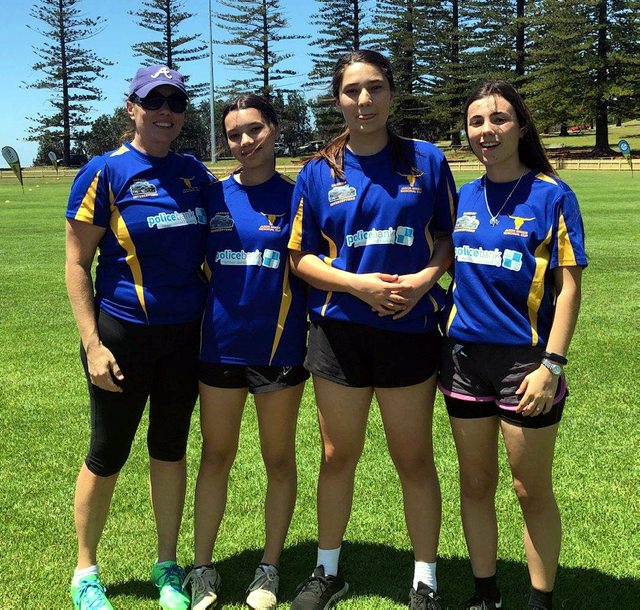
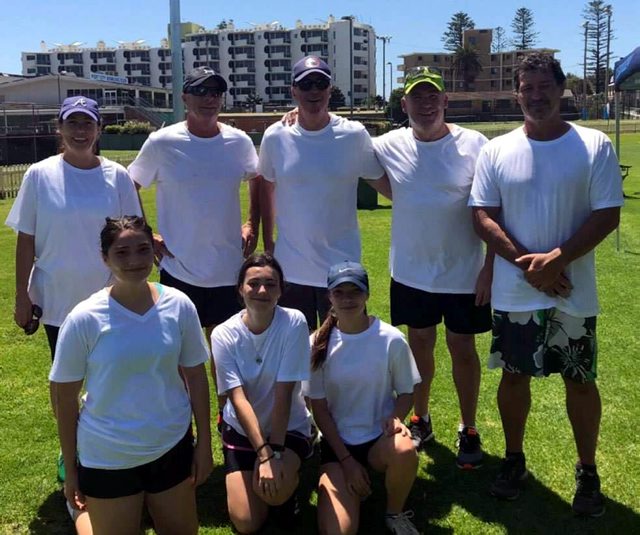
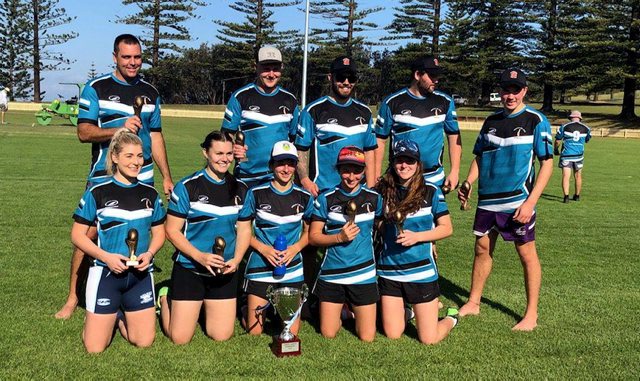
On Wednesday 18th June, 2014, Police from the Barrier, Castlereagh and Darling River LAC’s met at Cobar to compete for the inaugural “Jason Baker Memorial Cup”.
The event was in remembrance for Sergeant Baker who worked at each of the three Commands.
With Police Bank as a major sponsor the event raised over $5,000 for Jason’s wife and 3 daughters. A huge congratulations and well done to all the teams who participated.
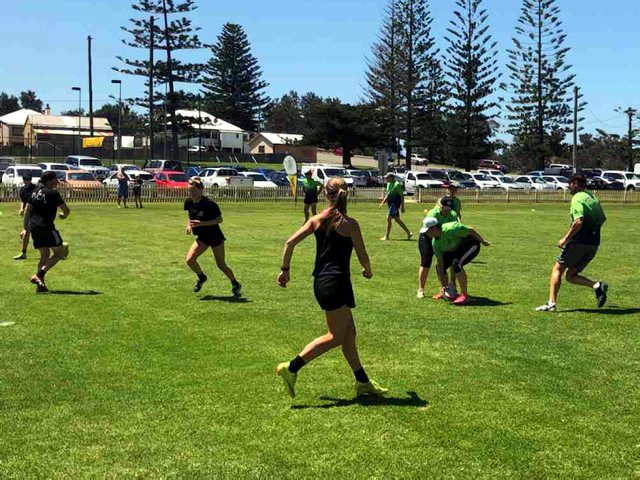
Today in Port Macquarie we had the privilege of attending the annual Jason Baker Memorial Cup, held each year in memory of Sergeant Jason Baker. It was a huge day of touch footy, with teams from around the district competing in a round-robin tournament. After a fiercely fought contest, the Meerkats emerged victorious, with the Hogs coming in a very credible second place. Thanks to all competitors and organisers, and a huge thank you for the money raised for Police Legacy in support of our Police Family.
At the end of October in Port Macquarie, we had the privilege of attending the annual Jason Baker Memorial Cup, held each year in memory of Sergeant Jason Baker. It was a huge day of touch footy, with teams from around the district competing in a round-robin tournament. After a fiercely fought contest, the Meerkats emerged victorious, with the Hogs coming in a very credible second place. Thanks to all competitors and organisers, and a huge thank you for the money raised for Police Legacy in support of our Police Family.
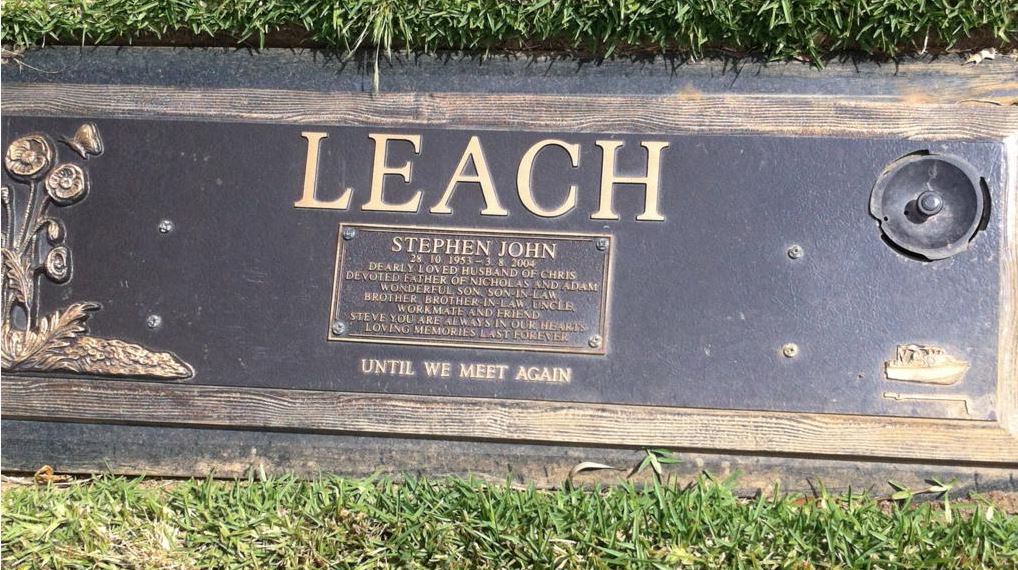
Stephen John LEACH – grave stone. Castlebrook Memorial Park Cemetery & Crematorium Castlebrook Memorial Park, Windsor Rd, Rouse Hill, NSW
Steve is NOT mentioned on the Police Wall of Remembrance in Canberra
( checked 040822 )
Policeman shot dead at station
August 3, 2004 – 7:33PM
One of NSW top police investigators was found shot dead in the state’s police headquarters today, shattering his family, friends and colleagues around the world.
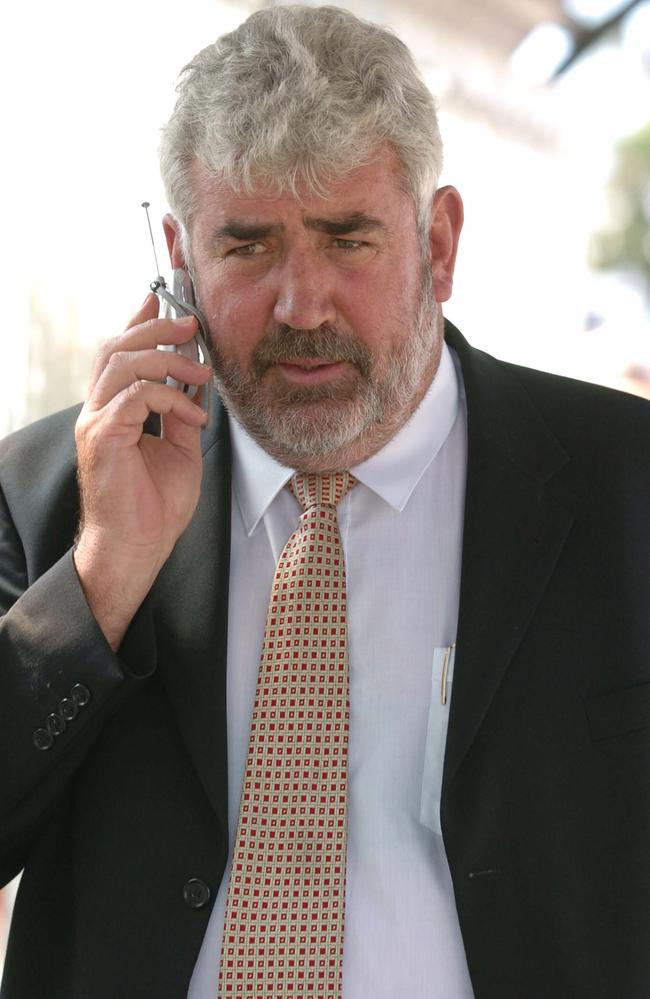
Detective Sergeant Steve Leach, 51, an internationally recognised officer who helped investigate former Yugoslav president Slobodan Milosevic on behalf of the United Nations, was found with a single gunshot wound to the head shortly before midday.
Among his local achievements, Det Sgt Leach was instrumental in the arrest of backpacker murderer Ivan Milat and the investigations into missing Sydney school girl Samantha Knight.
NSW Police Commissioner Ken Moroney rushed to Parramatta upon hearing the news and, while he declined to speculate on the cause of death, said it was not believed to be suspicious.
The detective sergeant was not working today, having returned to NSW from The Hague in the Netherlands only in recent months.
Det Sgt Leach had been on sick leave after sustaining an undisclosed physical injury while overseas, but he had been due to recommence his employment with the NSW Police soon.
The Commissioner said investigations into the death had begun using a specialist team from Bankstown police, who would prepare a report for the Coroner.
“These are very tragic circumstances not only for the officer concerned and his family but equally as important, for his colleagues,” Mr Moroney said.
“I’m sure he will be remembered not only in the coming days . . . but certainly in years to come as one of the most experienced detectives we have (had) here in NSW, and we are the poorer for his loss today.”
Mr Moroney said the married officer had two children who, along with his colleagues, were “understandably very distraught” at the news of his passing.
“He was a very popular colleague and highly respected, not only in terms of his detective skills but certainly the specialist skills that he brought to criminal investigations here in NSW,” he said.
The officer’s colleagues at the NSW State Crime Command in Parramatta were being counselled by police chaplain Barry Dwyer.
Another police officer also was mourned today – Senior Constable Ian Ross Dennis, based in Walgett, north-west NSW, who died in hospital after a short battle with an illness, aged 47.
Mr Moroney paid tribute to both officers, saying they had been outstanding servants of the police force.
“It’s important on these occasions that we honour and acknowledge that service and that commitment,” he said.
“It’s a very sad day for the organisation to lose officers of this calibre who have selflessly served the people of this state to the very best of their skill and ability.
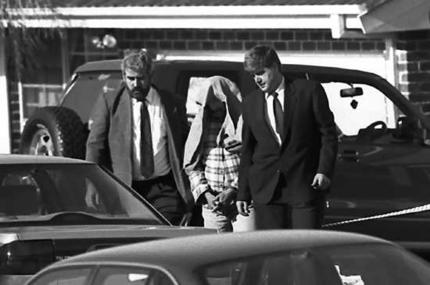
Homicide detective Steve Leach, left, and another detective escort the backpacker killer Ivan Milat from his home in 1994. Photo: Rick Stevens
There are few moments of joy in the life of a homicide investigator, and most of those are with their families.
Steve Leach had borne the grief of many, but yesterday it was the turn of his colleagues to face his own violent death.
Detective Senior Sergeant Leach, one of the state’s most experienced homicide detectives, took his life with his own handgun in the heart of the new NSW Police headquarters in Parramatta.
Nobody, it appears, saw such a tragedy coming.
Sergeant Leach had been on sick leave since early June, the result of a car accident in Europe that left him with leg injuries.
He had recently applied to be pensioned off as hurt on duty but those who encountered him recently had found him apparently cheery and looking forward to an early retirement.
He was still on sick report when he walked into the police building yesterday. He went into the soundproof weapons storage room; no one had been expecting him and no one heard the shot. Another officer found his body about noon.
When family, friends and colleagues looked at the life of Steve Leach, they saw an extraordinary career that began when he joined the force as a 16-year-old cadet in 1969.
He was a second-generation cop. Over 35 years, he played a role in some of the state’s most notorious cases and found his way as far afield as Bosnia, where he investigated war crimes.
Along the way he offered support to the families of victims and perpetrators alike. He even lent his shoulder to Shirley Soir, the sister of the backpacker killer Ivan Milat, who collapsed while sitting next to him in court on the day in May 1994 that her brother was charged with seven murders.
Ten days earlier, the burly detective had walked into police history as one of two detectives who arrested Milat at his Eagle Vale home.
In that case he led the search for the weapon, a Ruger 10/22, of which there were more than 100,000 imported into Australia.
He was often given tough tasks, such as the long investigation into the disappearance of the Bondi schoolgirl Samantha Knight.
In recent years, he was seconded to the European War Crimes Tribunal in The Hague. His team in the Netherlands charged the former Yugoslav president, Slobodan Milosevic, whose war crimes trial is still before the international court.
Sergeant Leach spent more than two years walkingthrough massacre sites and talking to survivors.
He came back to Sydney last year, returning to the homicide squad and recalling good times in Europe with his wife Christine, a schoolteacher.
He was chuffed that one of his two sons had also joined the police force, while the other had signed up for the army.
The Police Commissioner, Ken Moroney, remembered a detective of impeccable character.
“I’m sure he will be remembered, not only in the coming days … but certainly in years to come, as one of the most experienced detectives we have [had] here in NSW, and we are the poorer for his loss today.”
Homicide detective Steve Leach, left, takes Ivan Milat into custody in 1994.
Apart from time spent with their families, there are few moments of joy in the lives of homicide investigators.
They see the grief of others and are expected to bear their own feelings inwardly. Steve Leach had borne the grief of many – until yesterday. Now his colleagues are facing the tragedy of his own violent death.
Detective Senior Sergeant Leach, one of the Australia’s most experienced homicide detectives, took his life with his own handgun in the heart of the new NSW Police Headquarters in Parramatta.
It seems nobody saw it coming. When family, friends and colleagues looked at the life of 51-year-old Senior Sergeant Leach, what they saw was an extraordinary career that began when he joined the force as a 16-year-old cadet in 1969.
He was a second-generation police officer who, over 35 years, played key roles in some of Australia’s most high-profile and most horrific cases.
His talents were also sought internationally. He was seconded to the European War Crimes Tribunal in The Hague to investigate the killing fields of Bosnia, and was instrumental in the arrest of former Yugoslav president Slobodan Milosevic, who is facing genocide charges.
But the hard-nosed detective also had a gift for empathy and gave his support to the families of victims and perpetrators alike.
He even lent his shoulder to Shirley Soir, the sister of Ivan Milat, who collapsed while sitting next to him in court on the day in May 1994 when her brother was charged with the murders of seven backpackers.
Ten days earlier, he walked into police history as one of two detectives who arrested Milat.
He was often asked to investigate cases where the trails had seemingly run cold, such as the 1986 disappearance of Bondi schoolgirl Samantha Knight. But by the time his team had secured the conviction of Michael Guider, Senior Sergeant Leach was in Bosnia, walking through massacre sites, talking to survivors.
He returned to Sydney last year, speaking only of the good times in Europe with his wife Christine, a school teacher. He was chuffed that one of his two sons had joined the force, while the other had joined the army.
But he had been on sick leave since early June after injuring his legs in a car crash in Europe. He had recently applied to be pensioned off as hurt on duty, but had appeared upbeat planning for his early retirement.
Senior Sergeant Leach was on leave when he arrived at police headquarters yesterday, went into the sound-proof weapon storage room and took his gun. No one heard the shot. Another officer found his body at noon.
One shocked colleague and mate said: “There you go, buddy. The futility of it all. We are all feeling that empty feeling. Why?”
Those needing assistance can reach Suicide Helpline Victoria on 1300 651 251, Lifeline on 131 114 (both 24-hour lines), SANE on 1800 688 382 or Kids Help Line on 1800 551 800.
One of NSW’s top police investigators was found shot dead in the state’s police headquarters today, shattering his family, friends and colleagues around the world.
Detective Sergeant Steve Leach, 51, an internationally recognised officer who helped investigate former Yugoslav president Slobodan Milosevic on behalf of the United Nations, was found with a single gunshot wound to the head shortly before midday.
Among his local achievements, Det Sgt Leach was instrumental in the arrest of backpacker murderer Ivan Milat and the investigations into missing Sydney school girl Samantha Knight.
NSW Police Commissioner Ken Moroney rushed to Parramatta upon hearing the news and, while he declined to speculate on the cause of death, said it was not believed to be suspicious.
The detective sergeant was not working today, having returned to NSW from The Hague in the Netherlands only in recent months.
Detective Sergeant Steve Leach, from Sydney, Australia, was a well-known, veteran police officer with 35 years of experience.
Steve Leach was so highly respected by his fellow officers that they referred to him as “a policeman’s policeman.”
He was assigned some of Australia’s most horrific crimes. And he arrested serial killer Ivan Milat (see picture above), who murdered seven people between 1989 and 1992.
He also worked in Serbia and Montenegro from 2000 to 2003 as an investigator for the European War Crimes Tribunal, in which he had to view sites where massacres occurred, and then interview survivors.
Steve was an extremely strong man, both physically and mentally, and handled all of his assignments with the highest levels of integrity, courage, intelligence, and competence.
He was also highly ambitious and believed that he should have received a higher rank than detective sergeant.
And he was frustrated by what he believed was a ridiculous and unfairpromotion system in which he and other officers were forced to engage in “role play” during their promotion examinations.
In March, Steve applied for a newly created position as inspector at the coroner’s office, but the job was given to a muchyounger officer who had only a fraction of Steve’s experience.
Steve was furious and appealed the decision.
Unbelievably, Steve lost the appeal.
And soon afterwards, he became depressed.
On August 2, 2004, Steve, who was off-duty at the time, calmly walked into the police station, went to the armory room, obtained his service handgun, and shothimself in the head.
He was 51.
Steve’s fellow police officers were shocked, and immediately blamed the idiotic promotion system.
One outraged officer did not mince words when he described the promotion system as “bullshit.” He went on the say, “The promotions system is the only thing that was upsetting this very calm, [great police officer]. The current system is promoting people with just 12 years of experience over someone with 35 years of experience – this just destroys people like Steve Leach.”
Steve was one of the greatest police officers in Australia’s history.
Everyone loved and respected him.
And he made the streets safer because of his hard work.
He was a dedicated, superstar cop who loved his job and who loved to help people.
A rank way to treat the cops Transcript ADAM SHAND: Steve Leach was the model of what a detective should be – tough, uncompromising in his pursuit of crime, but fair and compassionate. He kept his own counsel as he served others right up to the day he took his own life. KEN MORONEY, NSW POLICE COMMISSIONER: A very sad day for the organisation to lose officers of this quality and this calibre who’ve selflessly served the people of this state to the very best of their skill and ability. ADAM SHAND: In 31 years of service, Steve Leach had worked some of NSW’s most difficult cases. He had seen the dark side of humanity, arresting backpacker murderer Ivan Milat, and solving the abduction of school girl Samantha Knight. In Leach’s death, his comrades saw their own images. At his funeral, the priest said that no-one should speculate on Leach’s own untold story. GARY HESKET, FORMER NSW DETECTIVE: I looked in the church. I could see a lot of young police there with promotion on their shoulders. I saw a lot of older police there, experienced heads. And not at the same level. “Don’t speculate”, I thought to myself. I thought, “That’s just saying we should never ever speak about this matter ever again.” ADAM SHAND: No-one will ever know why, at the age of 51, Steve Leach lost hope that day. But many senior detectives can trace their own disillusion back to the massive changes introduced after the Wood Royal Commission into police corruption in the mid-1990s. The Commissioner recommended a complete overhaul of the force’s management style. A new promotion system was introduced that no longer ensured progress through the ranks based on years of service. MARK FENLON, FORMER POLICE SERGEANT: It’s had a huge detrimental effect on morale. It’s had a huge detrimental effect upon police officers with experience who have been disenfranchised by the process. Who have been and are continue to seek exit from the police force at the earliest opportunity. And this has left a huge void in the organisation in terms of experience, in terms of training and development of younger police, in terms of expertise to deal with crime, which can’t be replaced. ADAM SHAND: Gary Hesket left the force a year ago after three decades in the job. He keeps up with his mates through his role in as a trainer in the police rugby league competition. GARY HESKET: This is good for the camaraderie, the esprit de corps. It’s the best things they could do after working in the police environment they’re in – get out here and have a game amongst each other. ADAM SHAND: You pick up the paper and see Steve Leach has committed suicide. What did that mean to you when you heard that? GARY HESKET: The first question I asked was, “Was he passed over for promotion?” And the word that came back to me was ‘yes’. ADAM SHAND: Like Steve Leach, Gary Hesket devoted his life to catching villains. He was a natural-born detective, voted policeman of the year in 2001 by his local community in western Sydney. GARY HESKET: Then you’re told, “Well, Gary, if you want to be promoted, the best thing you can do is forget about police work, find a desk somewhere and hide and do yourself a degree or diploma because that’s the only way you’re going to get promoted in the future of NSW Police.” ADAM SHAND: Hesket says many of his generation of detectives have simply been dumped on the scrap heap. GARY HESKET: But at the end of the time when you put in 35 years, where is your reward? Where is your reward? ADAM SHAND: On the day his family and comrades farewelled Steve Leach, NSW Police Commissioner Ken Moroney awarded him a ribbon recognising his achievement in solving 15-year-old mystery of Samantha Knight’s disappearance. GARY HESKET: And he did a magnificent job and he solved it, and now, posthumously, Mr Moroney is giving him a medal for that. Why wasn’t he given a medal when the case was solved, while he was alive? ADAM SHAND: When Leach was seconded as a war crimes investigator to the former Yugoslavia, he won praise for a difficult job. On his return to Australia, he expected a promotion to finish his career as a commissioned officer. MICK KENNEDY, FORMER NSW DETECTIVE: And the reason he couldn’t get promoted was he could do the job but he couldn’t pretend he could do the job. He couldn’t get through the assessment stuff, I suppose, or the role play nonsense. I was a detective for 20 years in the NSW Police… ADAM SHAND: These days Mick Kennedy is researching trends in modern policing for a PhD. He believes the root of the crisis facing Steve Leach’s generation is a lack of support for field officers. MICKKENNEDY: He didn’t kill himself because he was working in the evils and the horrors of criminal investigation, because that’s part and parcel of the work that you can deal with. You insulate yourself from it, you deal with that. But all of the time that you’re dealing with those murky, dirty hands areas of working it needs to be constantly reinforced that you’re dependent upon your organisation to support you in times of crisis or when things go bad. ADAM SHAND: When Kennedy faced his own crisis, he found there was no-one to turn to. MICK KENNEDY: I was in this house some years ago and I had my 38 on the bed and I was in despair over a range of issues. And I was thinking seriously, “Well, the best thing I could do is to kill myself”, so I ring the police medical officer and I got through to a woman who couldn’t speak English. I was on the phone with her for 20 minutes telling her that I was considering shooting myself and I’d like to speak to someone about it. In the end, I hung up in disgust because I couldn’t speak to anyone. Now I thought, “God, almighty! I can’t even try to attract attention. No-one’s interested! No-one really cares”, you know? ADAM SHAND: Faced with growing criticism, the NSW Government asked former Assistant Commissioner Geoff Schuberg to investigate the promotions system. He found many detectives had lost their sense of purpose in the job. GEOFF SCHUBERG, FORMER ASSISTANT COMMISSIONER: And one of the great problems in the system was that a number of police were applying for positions outside their area of expertise and winning them and they were put in a position where they were supervising and managing police when they had no experience or previous qualifications to do so. ADAM SHAND: Promotion, it seemed to Schoenberg, had become more important to the rank and file than the job itself. GEOFF SCHUBERG: Police really took their eye off the game of catching crooks and the promotions race seemed to be the main topic of the day, where people simply talked about positions that were being advertised, positions which they were applying for. There was a lot of resentment. There was a lot of drop in morale because of people who were applying for positions and couldn’t even get interviews. And I think that’s still very much the case. ADAM SHAND: Crime reporter Steve Barrett has been watching this generation of police officers for over 20 years. He’s seen the job consume too many of them. STEVE BARRETT, CRIME REPORTER: There was another detective inspector up at one of the stations in the Newcastle area who, with his service pistol, shot himself in the police station. Till this day, that family doesn’t know what happened to that person, why he took his own life. And you really have got to say to yourself, “What is this all about? Why is this happening?” ADAM SHAND: The Wood Royal Commission identified this generation of detectives as fertile ground for corruption, and set about purging its ranks. STEVE BARRETT: I mean, there was some very good work done by the Royal Commission but there was also some work where evidence was put before the Commission which was just, quite frankly, not true. And there was bad collateral damage and when you look at what’s happened, you think to yourself, “Well, a lot of police did down tools.” There’s no doubt about that. Then you see all these gangs growing up around Sydney – and I suppose it’s bit like if you don’t weed the garden, you’re going to get weeds. MARK FENLON: And this is reflected in the crime clear-up rates for NSW. They’re the lowest in the country. Around about 12 percent of robberies are being solved within the first 90 days of the offence occurring. 5 percent of break and enters within the same period. It’s scandalous. That’s how this policy is impacting and has impacted and will continue to impact on policing in this State. ADAM SHAND: Old-style cops say policing has become a numbers game these days. In crime statistics, a bust for a broken window counts for the same as a murder. The critics say it is the same wherever the police have moved from a paramilitary-based model free enterprise-style management – commanders are forced to strive for quantitative outcomes like managers in a boardroom. MICK KENNEDY: The problem is that productivity is measured, in policing terms, in terms of arrests, and they say, “That’s great.” But it’s about trivial arrests. What they do, you get a senior commander and have a meeting and he humiliates everybody by yelling at them and screaming at them, “Why aren’t your – why aren’t your arrest rates up? How come my stolen vehicles is down?” You say, “We don’t have any staff. I’m not interested in that!” And it’s humiliating, and it’s a humiliating process and it is a degrading. ADAM SHAND: Kennedy says the older detectives often find the pressure intolerable as they watch younger colleagues ride a desk to the top. He says the promotions system rewards those that work it. You gather merit points from education and role playing sessions where officers must show a grasp of the new language and politics of community policing. For an undercover detective, this is the theatre of the absurd. MICK KENNEDY: I had been doing undercover work for far too long. I had a twitch. I had a stutter. My hair was dropping out. I had psoriasis all over my hands and I have no doubt if I had have killed myself some idiot would say, “But, mate, he was just a bit tired, We didn’t know he had any real problems.” ADAM SHAND: Former sergeant Mark Fenlon served for 20 years. He left the force reluctantly after a distinguished career. MARK FENLON: I had to get out of policing. I blew the whistle on promotions corruption in 1999. Nothing was done in relation to the complaints I made. The promotions system, it’s allowed people who haven’t got the qualifications, the experience, to gain promotion to gain positions – senior positions within the organisation – to lead the organisation. ADAM SHAND: Although his complaints were investigated, the system remains relatively unchanged and Mark Fenlon says its major faults are beginning to show. MARK FENLON: No better example than recently would be Redfern, where there were two images that is stuck in my mind. One was of police being directed to line up across a street and be subjected to bottles being thrown at them, Molotov cocktails being thrown at them. The other image is that there were perhaps half-a-dozen senior officers in the background in the background with mobile phones to their ears looking for a direction, looking for some guidance in relation to what to do with the situation. RON STEPHENSON, FORMER POLICE SUPERINTENDENT: In my day – and I’m not blowing my trumpet – but if you were placed in that situation, if you were in arm’s length away from some of the offenders, they’d be in the back of the truck and charged with assault, indecent language, offensive behaviour, whatever the matter was. ADAM SHAND: Inspector Ron Stephenson was the officer in charge the day, in 1984, when two bikie gangs, the Bandidos and the Comancheros, squared off in the car park of the Viking Tavern, in Milperra. Seven people already lay dead and experience told Stephenson that, without quick thinking, the murderers would walk free. RON STEPHENSON: A decision would be made that they’d be rounded up, interviewed, and charged. They were only charged that day with offensive behaviour and cause of fray but, three weeks later, after we’d worked out the full picture, we raided simultaneously 43 homes, arrested 43 bikers and charged them with 301 charges of murder. ADAM SHAND: But just how you restore confidence in a force that has lost so much in terms of experience is another matter. More than half of NSW police have been in the job for less than five years. Training simulation exercises like this one are now a key measure of competence and suitability for promotion. STEVE BARRETT: I can tell you about another guy who was the boss of homicide for five years. In the north-west of Sydney. And he had to go to an assessment testing centre for a day, where they role play. And, I don’t know – because he wasn’t a good actor, he didn’t get promoted. Now, he just walked away. He’s gone. So all this experience over years and years and years of hard slog for the taxpayer of NSW has just gone like that. ADAM SHAND: But NSW Police Minister John Watkins denies the service is in crisis, that many more officers like Steve Leach are at risk. He insists morale in the force is at its highest since the Wood Royal Commission clean out. JOHN WATKINS, NSW POLICE MINISTER: The separation rate for NSW Police is the lowest it’s been for eight years and the actual resignation rate is the lowest it’s been for 10 years. It’s a very stable force in NSW and morale is the highest it’s been for a generation. ADAM SHAND: But the Minister does accept the need for a review of the promotions system. He chairs a working party of detectives which is discussing the problem. JOHN WATKINS: There was a working party, the Schuberg working party, that’s reported to me. I’ve given that to the Anderson working party to report to me by the end of this year for legislative changes to be put in place so a new promotions system can be up and running from 1 July, 2005. ADAM SHAND: Victoria Police Service has also established a merit-based promotion system, which favours education over experience. There are morale issues in Victoria as a result, but the greater problem is a war on corruption. CHRISTINE NIXON, CHIEF COMMISSIONER, VICTORIA POLICE: I did come to Victoria Police with an understanding there was corruption here. It’s the kind of attitude Victoria Police had that they didn’t have corruption really was a bit of a myth. ADAM SHAND: Unlike NSW, where the Royal Commission fast-tracked a clean out of bent coppers, Chief Commissioner Christine Nixon’s management team is driving reform. CHRISTINE NIXON: In policing, there will always be corruption. What you have to do is figure out where the high-risk areas are, where the likelihood of that corruption is to occur and to try change the systems and practices or, in fact, focus on people who might be working in those areas. ADAM SHAND: Nixon has identified so-called legends in the force which, she says, have set bad examples for young officers. Though he left the force nearly 20 years ago, Brian Murphy is still Victoria’s most feared and revered officer – a legend amongst crims and coppers. Back in 1971, Murphy was charged with the killing of a suspect in custody. Although he was acquitted, he found the incident gave him an unhealthy reputation amongst some junior officers. BRIAN MURPHY, FORMER VICTORIAN POLICE OFFICER: There would be a lot of young people think, “Well, Murphy did it and got away with it. I’ll try do what he did or what he was involved in, something similar.” And it’s not always a good thing. ADAM SHAND: Should you have been gone back in the force, do you think? BRIAN MURPHY: From time to time I think that it was most probably a bad move that I did go back in, but I couldn’t think of doing anything else than police work. ADAM SHAND: When Murphy returned to duty he was given a new role. Leading a small team known as “Murphy’s Marauders”, he took on the villains in their own pubs, sending a message of fear through the underworld. It was an old-school, often violent, method that, although successful, is certainly not endorsed in today’s force. BRIAN MURPHY: If somebody is arrested and he received a certain amount of corporal punishment, it would most probably be as a result of an assault on the policeman first. And policemen are permitted, the same as anybody else in the community, to prevent an assault, to use force, more than what is being used on them. ADAM SHAND: Some Victorian police feel the pendulum has swung too far. Officers now feel powerless in the face of criminals who have exploited the new, sensitive approach to police enforcement. CHRISTINE NIXON: I guess I don’t quite see that and I have a lot of contact with police. Australia has this kind of way of seeing villains as the heroes – Ned Kelly, I suppose, Roger Rogerson in NSW, and Brian Murphy is another. I don’t think they see them as the heroes, the real heroes in policing. I think they see them as people who just behaved and were of their time. What we have to do now is live within the legal boundaries. ADAM SHAND: But Brian Murphy believes some officers are being used as political pawns as management seeks to reassure the public of the integrity of the service. He could see the writing on the wall and took early retirement. He finds himself counselling many young officers unsure of their future career direction. BRIAN MURPHY: And a lot of them have left the job and rue the day they ever left because it’s a big, hard, cold world out there and the wages they were getting on numerous occasions they’ve found wanting and they get outside. They haven’t got the camaraderie, they haven’t got the protection of the government behind them. ADAM SHAND: Maybe the job isn’t what it used to be, and many would say that’s a step forward. But men like Gary Hesket feel they’ve been let down by an administration that’s changed the rules in the middle of the game. GARY HESKET: At the end of my days, for all the hard work you did, they take your badge, they take your ID. There’s nothing. You’re stripped. At the end of your days, who are you? You’ve given all these years of service. You just walk away and there’s this wealth of experience just sitting out there just wasting away and dying away.Click here for a printer-friendly version.http://sgp1.paddington.ninemsn.com.au/sunday/feature_stories/transcript_1687.asp
He brought Ivan Milat to justice. He worked on the disappearance of nine-year-old schoolgirl Samantha Knight and the death of Sydney mother Zoe Zou, who died last November. He recently spent two years walking through massacre sites and talking to victims of Slobodan Milosevic for the European War Crimes Tribunal in The Hague.
i know.. i heard bout that yesterday
noone knows why he done it.. and his got a family and kids too… so sad….
my condolence goes out to them all..R. I . P.
i just read about this. how tragic. he helped so many people by bringing people like ivan milat to justice, and it just got too much. it’s awful. my heart goes out to his family, friends and colleagues.
I saw him talk about the backpacker murders in Adelaide when I was in first year doing a forensic and analytical chemistry course and he inspired me to finish my degree. I am quite that he’s gone – he was an amazing speaker and a tenacious investigator.
What this the one who dies under sus circumstances?
It is so sad how all these people who do wonderful things for their community usually don’t have outlets for how they are feeling/coping with everything they have seen.
__________________ Her Most Noble Lady Nightshade the Precocious of Kesslington under Ox – Going to Paris for my birthday!!
It just about breaks my heart to read things like this…
As someone who dreams of becoming a police officer one day, I’m glad to know that there are such fine members of the police force within Australia and to know that their hard work and compassion in the job has assisted so many people and has set a respected precedent for future officers.
It’s important to commend and appreciate our nation’s police officers to help dispell the hostile attitude many members of public have against police officers – we often quickly forget that there are real people and families beneith the blue uniform.
My dad was friends with a member of the Victorian Police force who was killed while on duty, it’s upsetting to remember the sadness that his death had on our family as his friends, let alone what it must be like for immediate family..
My heart and prayers go out to both families – especially Snr Det. Leach’s son.
On 2004-08-04 12:12, Sambellina wrote:
Zoe Zou was my friend. I hope this doesn’t effect the trial of the accussed.
How heart-breaking for you… I do doubt that it will effect the outcome of the case – but most likely a collegue of Snr Det. Leach will be presenting any facts and evidence.
On 2004-08-04 12:02, sultry wrote:
It is so sad and the worst part is the not knowing.Perhaps we could also say RIP to Senior Constable Ian Ross Dennis?http://www.police.nsw.gov.au/media/d…ectionID=mediaAnother fine Police Officer taken from us too early. If only there were more out there like him.
Thank you very much for that link.
I can’t believe the police force lost two such fine men in the space of only a few hours.
On 2004-08-04 12:13, Emily-May wrote:
corrupt maybe?
Do you mean maybe he was corrupt or he saw too much corruption? Regardless, it’s tragic the amount of police officers who end up comitting suicide because of the stress involved with their job or the ‘inner workings’ of police culture. A truly fine police officer who potentially saved a lot of people’s lives
( Due to current Govt. restrictions on ‘Gatherings’ due to Corona19 Virus Pandemic, some families may wish to have a Memorial Service / Wake with friends and family at a later date )
Funeral Parlour: ?
Buried at: Northern Suburbs Memorial Gardens & Crematorium,
Grave: Portion: North East Terrace, Garden Plinth, Row: 5, Plot: 86 ?
GPS:-33.793889 – 151.154167
Photo Credit: Lynn Lucas – Sept. 2022
Memorial / Plaque / Monument located at: ?
Dedication date of Memorial / Plaque / Monument: Nil – at this time ( April 2022 )
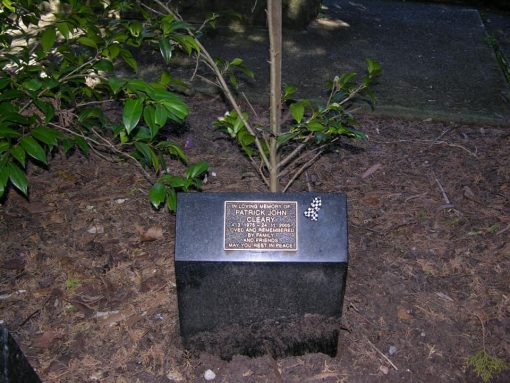
PAT is NOT mentioned on the NSW Police Wall of Remembrance * BUT SHOULD BE
PAT is NOT mentioned on the National Police Wall of Remembrance, Canberra ( last checked 130922 / 170723 ) *NEED MORE INFO
PAT IS NOT mentioned on the Sydney Police Centre Memorial Wall, Surry Hills ( Sept. 2022 / 170723 )
FURTHER INFORMATION IS NEEDED ABOUT THIS PERSON, THEIR LIFE, THEIR CAREER AND THEIR DEATH.
At Chatswood police station in November 2005, Detective Senior Constable Patrick Cleary shot himself dead before colleagues arrived for work.
Patrick is NOT mentioned on the Police Wall of Remembrance
Again a policeman clocks on, kills himself
By Les Kennedy November 25, 2005
What possesses some people to do the unspeakable to little children – even their own?
Patrick Cleary was a police officer who plunged into the dark secrets of families to catch sex offenders or those who preyed on and cruelly abused children.
Yesterday, barely six years after joining the NSW Police Service, and three years after becoming a detective, the 31-year-old was found shot dead in an apparent suicide.
The Police Operations Commander, Deputy Commissioner Andrew Scipione, said the death marked a sad day for the NSW Police. At least three other officers in the past four years have taken their own lives in stations with their own service weapons.
“Today is a very tragic day for the NSW Police Force. We have lost a very, very good officer,” Mr Scipione said. “At this stage I might indicate that there appear to be no suspicious circumstances and it has just been a terrible, terrible tragedy. I am told he was a first-class officer, and that is a real loss to us.”
Detective Cleary, who grew up on Sydney’s northern beaches, had since July been in charge of the Chatswood Joint Investigation Response Team, comprising four detectives and four investigators from the Department of Community Services.
The unit had responsibility for investigating all child abuse cases from North Sydney to Hornsby, on Sydney’s outskirts.
The tight-knit unit which dealt with the stuff of nightmares – little children recounting their ordeals at the hands of abusers – coped by reassuring themselves that whatever the outcome, even traumatic family separations, they were protecting the weak.
But police said yesterday that no one recognised the emotional turmoil within Detective Cleary.
His death, which has shocked officers in all nine metropolitan joint investigation response teams as well as the 60-officer Child Protection and Serious Sex Crimes Squad at Parramatta, is the subject of an intensive investigation by a critical incident team from the homicide squad.
But Mr Scipione, who addressed Detective Cleary’s distraught colleagues, said the death was not being treated as suspicious.
He said the officers and the DOCS investigators who worked with Detective Cleary were receiving counselling.
Those in the response teams received counselling every three months to determine how they were coping, but this would now be reviewed.
“No one ever knows why these tragedies happen. We may never know,” he said.
Detective Cleary’s widowed mother was comforted by the head of the Child Protection and Serious Sex Crimes Squad, Helen Begg, who broke the news to her at her home yesterday.
Police said it appeared Detective Cleary had arrived early for work, disconnecting the alarm to the office.
He had been dead for up to an hour before his body was found. There was a single gunshot wound to the head.
A co-worker found him in a room away from his office at 8.45am. Lying beside his body was his Glock semi-automatic service pistol. There was no note.
Police said Detective Cleary had graduated from the police academy in September 1999.
For the three years he worked at Dee Why and Manly police before joining the Chatswood JIRT team as a Senior Constable.
“He dealt with the problems of fragile young people, taking it in. It’s not a good thing,” one officer said yesterday.
Newcastle Anglican diocese business manager John Cleary’s work is his late detective brother’s legacy
By Joanne McCarthy
Updated December 6 2017 – 7:12pm, first published November 23 2016 – 11:00am
JOHN Cleary carried a photo of his late brother Pat with him as he gave evidence on Wednesday about the Anglican Church’s shocking history of child sexual abuse in the Hunter region.
The rest of this story is behind a pay wall with the Newcastle Herald.
Patrick CLEARY – NSWPF – Suicide – 24 November 2005 ( in uniform ). His brother – John CLEARY in striped tie.
Nothing further, than what is recorded above, is known about this person at the time of publication and further information and photos would be appreciated.