Cause: Murdered – by Motor Vehicle whilst using Road Spikes to stop a stolen vehicle which drove straight at, and collided with, him.
Location: Hume Hwy ( north bound ), Glen Alpine
Funeral date: Thursday 18 January 2001
Funeral location: Camden Civic Centre
Grave: Cremated
Grave site: Interred in Woronora Cemetery on 3 June 2003
General Plaque Lawn. Lawn 4 Position 0796
Memorial 1/: Jim Affleck Bridge, Hume Hwy, Glen Alpine, NSW
Memorial 2/: HWP Vehicle ( 213 ) attached to Campbelltown – Registration JA-213 213 was the Call Sign of his HWP Vehicle.
Jim AFFLECK
2022
JA-213 NSW Registration – in Memory of Jim Affleck
About 8.40am on 14 January, 2001 police were attempting to stop a stolen vehicle during a high speed pursuit at Mittagong. Approval was given to place road spikes on the roadway and Senior Constable Affleck and other police did this near the Mark Evans Bridge, Glen Alpine. When the offending vehicle, travelling north, reached the spikes the driver intentionally swerved from one side of the north bound laned road to the other, hitting the senior constable, who was killed instantly. The driver was later arrested and charged with murder.
The senior constable was born in 1957 and joined the New South Wales Police Force on 18 September, 1978. At the time of his death he was attached to the Campbelltown Highway Patrol.
Jim IS mentioned on the Police Wall of Remembrance
On the 14th of January 2001, Senior Constable Jim Affleck VA was hit and killed by a vehicle trying to evade police during a police pursuit on the Hume Highway, Glen Alpine.
To celebrate his life and remember his sacrifice 20 years on, there will be a memorial service and wreath laying held at Campbelltown Police Station at 8:30am on Thursday the 14th January 2021. This will be followed by a light morning tea.
An invitation has been extended to Jim’s friends, family and colleagues to attend.
Campbelltown mourns 13th anniversary of police officer’s death
Amanda Partridge
Macarthur Chronicle Campbelltown
January 15, 201412:02PM
Police officers pause to remember the late Jim Affleck, who was killed in the line of duty in 2001. Picture: ROBERT POZOSource: News Limited
IT’S been 13 years since highway patrol officer Jim Affleck was run down by a car on the Hume Highway.
But as nearly 100 people packed into the Campbelltown police station carpark yesterday to mark the anniversary of Sen Constable Affleck’s death, it was clear his legacy still burns strong.
Fellow officers, his widow Trish, and even a great nephew were among those to pay tribute to Sen Constable Affleck during a memorial yesterday.
The congregation gathered around the memorial garden dedicated to Sen Constable Affleck to lay wreaths and share kind words in honour of the police officer.
Jim Affleck’s widow Trish lays a wreath at the memorial garden, in honour of her late husband. Picture: ROBERT POZO.Source: News Limited
The Jim Affleck memorial garden bears freshly-laid flowers. Picture: ROBERT POZOSource: News Limited
Sen Constable Affleck’s car and police hat were present for the service.
The day marked 13 years since Sen Constable Affleck was run down by a car on the Hume Highway near Menangle on January 14, 2001, while laying road spikes to stop a stolen vehicle whose occupants were wanted for robberies.
Campbelltown police Insp Jason Inkster said the command believed it was important to honour Sen Constable Affleck’s sacrifice each year.
“It’s important because Jim was attached to the command at the time the incident occurred,” he said. “It’s important to remember our colleagues killed in the line of duty.
“I think it means a lot to his fellow officers and family, showing that we still remember the commitment and sacrifice made by Jim.”
Police and Jim Affleck’s family share hugs and fond memories of the late Jim Affleck. Picture: ROBERT POZOSource: News Limited
A photo of Jim Affleck sat atop his car at a memorial service yesterday. Picture: ROBERT POZOSource: News Limited
Driver who ran down officer ‘was re-enacting computer game’
By Ellen Connolly May 14 2002
The scene of Senior Constable Affleck’s death. Photo: Nick Moir
The driver of a stolen car who killed a highway patrol officer during a police chase was re-enacting one of his PlayStation computer games, The Need for Speed – Hot Pursuit, the Supreme Court heard yesterday.
Trevor Edward Holton, 26, has pleaded not guilty to murdering Senior Constable Jim Affleck, 43, near Campbelltown on January 14 last year.
In his opening address yesterday, the Crown prosecutor, Mark Tedeschi, QC, said that during the pursuit Holton was ”testing his car rallying skills” and was ”engaged in a real life re-enactment of the computer game”.
”To him the lives of other road users and the lives of police officers were just there as props to provide the thrill of the chase, and they were expendable in the pursuit of that thrill. Jim Affleck’s death was just part of this real-life game.”
The court was told the chase began about 8.30am after another man, who was a passenger in the four-wheel-drive, committed a bag snatch at Moss Vale. Also in the car was the man’s four-year-old stepdaughter.
For the next 40 minutes police chased the stolen vehicle as it drove on the wrong side of the road along the M5 freeway and the old Hume Highway, reaching speeds of up to 180kmh.
At one stage the passenger got out of the car and tried to take the girl with him but Holton sped off with her.
Senior Constable Affleck tried to stop the vehicle by throwing road spikes across the M5 but Holton swerved across two lanes to miss the spikes and hit the officer, Mr Tedeschi said. His body landed 80 metres away.
The stolen vehicle somersaulted and landed on its roof, with the girl, uninjured, still in the back. Holton fled but was arrested that night.
In a police interview Holton had said he ”was not prepared, at any stage, to get pulled over or stop”. He had seen Senior Constable Affleck running across the road in front of him trying to get the spikes under the vehicle.
”I couldn’t swerve; I couldn’t dodge him. I was going too fast. It’s like he [Affleck] didn’t care what happened.
”To me it was like it was suicide. He could see how fast I was going. He could see I could not stop.
”I have just been so angry … he could have avoided me so easy.”
He had said he knew about road spikes from playing the computer game, in which the main method of avoiding spikes is to veer off the road onto a median strip or the grass.
The state Opposition has called for compulsory life terms to be imposed on anyone who kills a police officer, after the “lenient” sentencing of a man who ran down a highway patrol officer.
Trevor Edward Holton, 27, was jailed yesterday for a minimum 12 years for the murder of Senior Constable Jim Affleck, killed while laying road spikes during a high-speed pursuit in western Sydney on January 14 last year.
In handing down sentence in the Supreme Court, Acting Justice Thomas Davidson said the jail term had to deter others and demonstrate that such acts against police in the execution of their duty would not be supported by the courts.
But the shadow attorney-general, Chris Hartcher, said this was not reflected in the sentence and called on the judicial system to stand behind police officers.
“Mr Holton should go to jail for the rest of his natural life. He certainly would if the coalition was in office,” Mr Hartcher said.
The Attorney-General, Bob Debus, said he had sought advice from the Director of Public Prosecutions on prospects for an appeal. “Understandably, there is considerable community concern about the sentence imposed,” Mr Debus said.
The court heard Holton was re-enacting one of his PlayStation computer games and was testing his car rally skills during the 40-minute pursuit.
Constable Affleck’s distraught family said it was “extremely disappointed” at the sentence and wanted harsher terms imposed on anyone convicted of murdering a police officer.
“If someone is prepared to kill a police officer they’re prepared to kill anybody, and I think they should have a sentence which is much stronger for police,” the victim’s brother, Paul Affleck, said outside court. “They’re out there doing their job, protecting us, and it should be reflected in the sentencing. Mr Carr’s talking about minimum sentences all the time.”
Inspector Hans Rupp, who led the investigation, said: “Trish has lost a good husband, his work colleagues have lost a great mate and, unfortunately for NSW, we’ve lost a great policeman. You just can’t replace police of the calibre of Jim Affleck.”
The family of murdered policeman Jim Affleck has described his killer’s attempt to appeal against a 12-year jail sentence as “an outrage”.
A year after Trevor Edward Holton was sentenced to serve a minimum of 12 years (maximum of 16) in jail for the highway patrol officer’s murder, he has initiated an appeal against the severity of the sentence in the Court of Criminal Appeal.
Holton, of Claymore, south-west Sydney, was sentenced in August after he ran down and killed Affleck in January 2001.
He hit Affleck with a stolen four-wheel-drive when he swerved to avoid road spikes the policeman was laying across the M5 Freeway at Campbelltown.
Delivering the sentence in the Supreme Court, Acting Judge Thomas Davidson said the jail term needed to act as a deterrent and demonstrate that such acts against police in the execution of their duty would not be tolerated.
However, the Department of Public Prosecutions has since lodged an appeal against the leniency of the sentence, with a hearing due next month.
The Crown’s stance is in contrast to Holton’s planned appeal against the harshness of the same sentence.
“If he does [appeal], it may well be that the Crown appeal in December will be vacated,” a court spokesman said. “The court likes to deal with these things as one.”
Any appeal against the severity flies in the face of the outrage that greeted the sentencing last year.
“We thought he deserved more,” the victim’s brother, Paul Affleck, said. “Before the sentencing we sat down with [then police minister] Michael Costa. He gave us an idea of what they were looking at for minimum sentences and more stringent sentencing.
“It has now been 12 months since the sentencing and nothing has been done. How many more policemen have to die before someone does something?”
NSW shadow attorney-general Andrew Tink said he had a simple approach to the matter.
“Anyone who kills a police officer while they are carrying out their duties should go to jail for life,” he said. “That is our strong stance.”
Mr Affleck said Holton’s bid to reduce his sentence was not a surprise, just unfortunate.
“We have been expecting that all along, just the way the defence was talking after the trial,” he said.
“Anyone who kills a policeman should spend his life in jail – he had a criminal record going back until he was 13 or something.
“I think it’s ridiculous and I don’t know why we tolerate these things. I just think it’s ridiculous he has the opportunity to [appeal].
“I think anyone who kills anyone doesn’t deserve any freedom.”
A policeman who died after being run over by a fleeing car thief should have shot his killer “between the eyes”, his widow says.
The widow of Senior Constable Jim Affleck was speaking yesterday after a court rejected the Crown’s appeal against the leniency of the sentence given to the man who ran him down.
Trish Affleck compared the situation her husband was in when he was killed by Trevor Edward Holton to that faced by another policeman, Inspector Shane Cribb, who has been charged over the shooting of a criminal who drove a getaway car at him three years ago.
“You have got Inspector Cribb looking down the barrel of a jail term for doing what I wish to God Jim had done. I wish to God he would have shot Holton between the eyes,” Mrs Affleck said with tears in her eyes.
The NSW Court of Appeal, in a 2-1 decision, yesterday rejected the Crown’s argument for a tougher sentence for Holton, who was jailed in August 2002 for a minimum of 12 years, and a maximum 16, for the murder of Senior Constable Affleck.
On January 14, 2001, the stolen four-wheel-drive Holton was driving hit Senior Constable Affleck, a highway patrolman, as he laid out road spikes on M5 to stop the vehicle. Holton was being pursued by police after committing a robbery.
Holton also appealed against his conviction, but that was unanimously dismissed by justices Michael Grove, Robert Hulme and Rex Smart yesterday.
Wall To Wall Ride 2012 – M5 Motorway South of Sydney. Slowing down in tribute to Jim Affleck, crossing the bridge named in his honour. Polair was hovering above filming, but because I didn’t check my vertical camera angle, I missed it!
In January 2001 Senior Constable Jim Affleck was a Highway Patrol Officer who was run over a killed whilst deploying a set of ‘road spikes’ during a high speed police pursuit. The offending driver actually drove his vehicle at Affleck in a deliberate attempt to run him down. He was subsequently charged with murder.
Alone in his patrol car, Chris Thornton had the police siren flashing as he chased a white sedan through Woy Woy.
Thornton, 35, a highway patrolman, had been in the force for 15 years. He was, his mother says, “the best driver I have ever seen”.
The reason for the chase that night in April 2002 is unknown. Both cars were seen travelling at high speed. Thornton was about 50 metres behind.
Meanwhile, Leonard Rowley, 56, an unlicensed driver, was driving to his local KFC to pick up dinner. He saw the first car flash past and judged – wrongly – that he had time to turn out in front of the patrol car. Thornton tried to avoid Rowley’s car but clipped the back, veered onto the wrong side of the road and hit a power pole.
Thornton died on the spot, which is marked by a permanent stainless-steel cross. Rowley later received a suspended two-year sentence.
“His life from the age of 12 was about helping people,” says Thornton’s mother, Freada Thornton. “He was in the surf club and he was there to rescue people and then he went into the force and he was doing the same thing.” His father, Barry Thornton, says: “He loved life. He had been in Gosford for 15 years and was so popular with the community there.”
Police pursuits are, says Barry, a necessary evil: “If they don’t catch the criminals there will be more deaths on the roads. The ones that they’re in pursuit of are the idiots that have done the wrong thing to start with.”
But pursuits have come at a cost to the NSW Police Department. Fifteen officers have died as a result of high-speed chases, beginning with the death of Constable George Boore in 1937.
Details provided by the NSW Police Association show a steady stream of fatalities involving cars and motorcycles. The full list of casualties is as follows:
[blockquote]As you pass by, remember
William Henry Street will never be the same.
Constable Peter Forsyth
died whilst serving the community he lived in, doing the job he loved.
15 May, 1969 – 27 February, 1998[/blockquote]
PETER IS mentioned on the Police Wall of Remembrance
Memorial: William Henry Street , Ultimo, 2007
Grave Stone, Toowoomba, Qld
About 11.25pm on 27 February, 1998Constable Forsyth was walking to his home in Ultimo with Constables Jason Semple and Neville when they were approached by a young male selling Ecstacy tablets (an illegal drug), which was later found to be a simple Panadol tablet. After speaking with this person and a second offender, Constable Semple informed them that they were police officers and attempted to make an arrest. One of the offenders, Murray Walter HEARN, then produced a knife and stabbed Constable Forsyth and Constable Jason SEMPLE before running off. They were pursued for a short distance by Constable Neville before he quickly returned to assist his injured colleagues. The injured police were soon conveyed to the Royal Prince Alfred Hospital, however Constable Forsyth unfortunately died of his wounds at 12.14am. Constable Jason Semple underwent surgery and later recovered.
The constable was born in 1969 and joined the New South Wales Police Force in 1995. At the time of his death he was stationed at Leichhardt.
Freed after killing a cop, Murray Hearne married his jail psychologist
February 15, 2017 2:22pm
Murder Uncovered: Officers down
HE KILLED a cop, left another one critically injured, and now is free and married to the prison psychologist he started an affair with in jail.
Murray Hearne, the man who stabbed unarmed and off-duty police officer Peter Forsyth is on parole, and free to rejoice in the birth of his son with prison mates on Facebook.
Details of Hearne’s post-prison life are detailed tonight in Channel Seven’s true crime show Murder Uncovered.
The show finds Hearne, released from jail in March 2014 after 16 years behind bars, to Wagga Wagga where he lives with his wife, Bobbie Bergmeier, and their son.
The show reveals the pair met when she was an intern and he was an inmate, in Junee prison.
And while Hearne refuses to talk to Murder Uncovered about his life now, he has no such qualms on Facebook, where among those congratulating him on the birth of his son is another convicted killer: axe murderer Keith Schreiber — who spent more than a decade in jail for killing Jack Van Krevel at the request of his former lover.
“A new life added to this world,” Hearne posted on Facebook when baby Micha was born.
Peter’s daughter, Brodie — cheated of her own father thanks to Hearne — struggles with the news.
“I’d tell him (Hearne) every day when he looks at his child and thinks about all the love he has for his child, he can think about us (she and her brother Mitchell),” Brodie says.
“Think about my dad and think about how he (Hearne) has taken all that away … the school assemblies, the sports award … everything.
“He gets to have that and we don’t. It’s selfish.
“I want him to take care of that child and keep it in the back of his mind that he gets to go through that. We had to do that without our Dad.”
“IT HURTS IN MY CHEST”
For those that loved Constable Peter Forsyth, the pain is ever-present.
It lurks there, just beneath the surface, still raw, bubbling over when memory stirs it.
It’s the pain of a husband, father and mate snatched away while his killer walks free.
It’s almost two decades since Peter and his colleagues, Jason Semple and Brian Neville, went for few quiet Friday night beers, and Peter never came home.
The trio was unarmed, and off-duty when offered of a drug deal by a group of teenagers.
When they tried to arrest Murray Hearne, Peter wound up dead, Jason critically injured, and Hearne went on the run.
Jason rarely speaks of the night his mate tried to save him and wound up collapsed on top of him, stabbed, never to see his beloved wife Jackie and children Mitchell and Brodie again.
All speak at length of the night Murray Hearne turned cop killer, and of the painful nights ever since, on Channel Seven’s Murder Uncovered tonight.
“You can’t plan for this …. I miss him”, says Peter’s widow, Jackie Reimer, wiping tears as she relives that night.
Watching back old videos of Peter with their children gives her a “physical pain. It hurts in my chest. It’s a real pain, it’s not just a feeling.”
‘I was only pretending. I wasn’t strong,’ Jackie says of her battle to keep it together after her husband was murdered. Picture: Channel 7 Source: Channel 7
Peter’s daughter, Brodie now 20, acutely feels the absence of a man she loves, but never knew.
“I feel like I know so much about Mum. I can tell when I walk in if she’s had a good day or a bad day, she doesn’t need to tell me,” Brodie says.
“And then I don’t know one thing about Dad.
“I don’t know how he carries himself. I don’t know his sense of humour. I don’t know … just the little things you should know about your dad. I don’t know those.”
THAT NIGHT
Jason Semple is a mountain of a man — of a size that if he told you to get stuffed, you’d probably start making arrangements.
A man not easily given to tears. A man, who, when Hearne stabbed him, didn’t feel the knife. “It felt like a soft punch,” he says.
Constable Peter Forsyth. ‘She’ll be right mate’, were his last words of comfort to his stabbed mate.Source:News Corp Australia
But on February 28, 1998, he was the new kid on the block — “the full rookie” invited by Peter with another officer, Brian Neville, for a few post-work ‘welcome drinks’ in Sydney’s inner-city Ultimo, not far from where Peter lived.
“It wasn’t meant to be a last catch-up,” says Brian, fighting tears..
The trio had finished at the pub and were walking along Harris Street when a young male in a group of four yelled “do you want some E’s?” (the drug, Ecstasy).
Suddenly, three off-duty cops were on duty.
Realising Murray Hearne was the one with the product, called him over to them asking to see the drugs. Then they grabbed him and walked him down the road, to search him.
When Hearne rose out of a crouch, the night took a fatal turn.
“I felt a couple of blows … first to my chest and stomach … but I thought I was getting punched,” Jason remembers.
“It felt like weak punches … like ‘is that all you’ve got?’.”
Hearne made a break and bolted. Jason felt like he was ‘leaking’, lifted his shorts, and realised he’d been stabbed.
As Brian went in pursuit of Hearne, Jason watched blood spray from his stomach.
Peter came to his aid, laid him in the gutter, started shouting for help.
It wasn’t meant to be a last catch-up’. Brian Neville and Jason Semple. Source: Channel 7
‘NOBODY KNEW HE’D BEEN STABBED’
“Peter was calm, he was single-minded on getting me help. … Pete was so normal, nothing to indicate he’d been injured,” says Jason.
“Nobody knew he’d been stabbed. Least of all him.”
Until Peter collapsed onto Jason’s chest.
“Pete’s talking to me, then next thing he’s basically laying on top of me … it was like he’d just fainted on top of me … I remember looking down watching the blood, thinking ‘what’s wrong with Peter?’,” says Jason.
The tears come.
“And the last thing he ever says to anyone on earth is ‘she’ll be right mate’.”
Peter was stabbed twice in the heart. Jason was taken to hospital and surgery.
Peter was pronounced dead not long after midnight.
And Hearne was on the run.
THE HUNT
Initially, police had no idea who the cop killer was that they were hunting for.
But Hearne couldn’t resist bragging to friends. Within 24 hours they had a name, and two properties under surveillance. Now they needed evidence, or a confession. Preferably both.
By Monday, they’d spotted him, and had his phone intercepted, and had to endure listening to him watch a news report about the injured Jason.
As he watched, Hearne told someone he was on the phone to: “that’s the big c*** … that’s him … I dropped him on his arse”.
When the story of the hunt appeared that night on the TV show Australia’s Most Wanted, the crack came.
His own stepfather contacts police: “I’m nervous. because it’s one of my kids that did it,” he said. “His name is Murray Hearne”.
Arresting officers tell Murder Uncovered Hearne cried when he was caught. And he wet himself.
Meanwhile, those that loved Peter, buried him.
Jason was told he was too sick to attend. He went anyway, ditching the wheelchair and walking into the service.
Jackie tried to keep it together for the children.
“My time for me was late in the middle of the night, when nobody else was around,” she says.
“I had to hold it together and pretend that I was strong (for the kids), but I was only pretending. I wasn’t strong,” she says.
Convicted murderer Murray Hearne is led from court in 1999. Picture: Marc McCormack Source:News Corp Australia
FACE TO FACE WITH A KILLER
Jackie wanted answers, and hoped Hearne’s trial would give them.
Until he changed his plea the morning it was to start, pleading guilty to the murder of Peter Forsyth, and to a lesser charge for stabbing Jason.
“I was shocked and disappointed all over again,” she says. “I was ‘you’re not going to say anything … you’re not going to tell me anything. I’ve got nothing again now. Nothing.”
Hearne was sentenced to 27 years jail. It was reduced on appeal.
Another blow to those grieving Peter.
From jail Hearne asked to see Jason. Jason told him “to stick it”.
But eventually, Jackie looked her husband’s killer in the eye.
“I thought ‘this is going to be my only opportunity to get some answers’,” she says.
“He was very nervous … hyperventilating. Shaking. Sweating,” she says.
“I looked at the person he was now, years later. He was not some thought kid any more.”
He was looking for forgiveness, but he didn’t get it.
“I think so, that’s his problem. Not mine,” she says.
Peter Forsyth’s son, Mitchell is now 22.
Asked what he’d say to his father’s killer if he got the chance, Mitchell’s voice drips with contempt.
“What would I say to him? Nothing. I wouldn’t give him a second of my life.”
Murder Uncovered airs at 9pm tonight on Channel 7
Peter’s son, Mitchell, pictured with sister Brodie, wouldn’t give his father’s killer ‘a second of my life”. Picture: Channel 7 Source: Channel 7
A COP KILLER who served 16 years jail for the murder of a Sydney police officer is living in Wagga with his former Junee prison psychologist wife and their infant boy.
Convicted murderer Murray Hearne, now 37, was the focus of a Channel Seven investigation on Wednesday night exploring his brutal murder of Constable Peter Forsyth.
It has now been revealed Hearne works locally as a cabinet maker and is on parole.
The then-18-year-old fatally stabbed Peter Forsyth and seriously wounded fellow officer Jason Semple after approaching the off-duty policemen and offering them drugs.
Constable Forsyth, a father-of-two, and rookie Mr Semple were unarmed when they left drinks at an Ultimo hotel in inner-Sydney.
They detained him and tried to check Hearne’s ID, when the 18-year-old pulled out a knife.
He fatally stabbed Constable Forsyth twice in the heart, and his colleague Jason Semple twice in the stomach.
While the murderer is enjoying his new life as a dad, the widow of the slain policeman has told of her anger towards her late husband’s killer.
“You don’t think this is going to happen in your life. You can’t plan for this,” Constable Forsyth’s widow, Jackie Reimer said.
“It hurts in my chest. It’s a real pain. It’s not just a feeling.”
She shared details of the harrowing moment she came face to face with Hearne.
“He was hyperventilating and shaking and sweating,” she said.
“He was really very nervous.
“I looked at him as the person that he was now all these years later. He was not some tough kid anymore.
“He told me where he threw the knife, in a garbage bin.”
In June 1999, Hearne was sentenced to 27 years’ jail for killing Constable Forsyth and seriously wounding Jason Semple.
However, he was released from prison eleven years early.
In his time at Junee Correctional Centre, Hearne met a young psychologist, Bobbie Bergmeier.
Four years before he was released, the convicted killer and the psychology intern began a relationship.
In 2014, the year of Hearne’s release, Bergmeier was disbarred as a psychologist.
In a rare interview with Channel Seven’s Murder Uncovered crew, officer Jason Semple has told of what the policemen went through that night, before Constable Forsyth’s murder.
“I rarely speak openly about things, but it’s important to share my story,” he said.
“I don’t want people to forget my mate and colleague, Peter Forsyth, and what we went through that night and what he did for me.
“It’s also for the thin blue line that we’re a part of.
“So much has happened since then, but I’ll never forget his sacrifice.”
Detective Inspector Wayne G. Hayes was OIC of the investigation.
Mead Drive.
On the 2/3/98 the step father of Hearne phones Triple zero and names Murray Walter Edward Hearne as the offender.
On the 3/3/98 HEARNE was interviewed by Detective Inspector Wayne Hayes whereby Hearne refused to answer any questions and was then charged with the Murder of Peter Forsyth and Attempt Murder of Jason SEMPLE.
22 April 1999 Murray Walter Edward HEARNE appears in Court for a Plea of Not Guilty but ultimately pleaded Guilty, on that date, to the Murder of Peter Forsyth but the lesser charge of Malicious Wounding Jason Semple.
On 4 June 1999 HEARNE was Sentence to 27 years gaol which was later reduced on Appeal.
Hearne asked to meet SEMPLE whilst serving his sentence at Junee Gaol. SEMPLE declined. Hearne also wanted to meet Jacqui Forsyth. She met him in Gaol a few years before his release. She sat face to face with HEARNE who was shaking, sweating and very nervous.
He told her that he threw the knife into a garbage bin.
HEARNE met his Prison Psychologist, Bobbie Maree Burgmeier, 4 years before his release from gaol. She is now his wife. He married the young female Psychologist who was helping him in the Goal. She was eventually ‘struck off’ for having a sexual relationship with the murderer and falsifying records.
Hearne only served 16 years of his 27 year Gaol sentence before he was released on Parole in March 2014.
Now ( 2017 ) lives in Wagga Wagga with his wife and baby and he is employed as a cabinet maker.
Murray Hearne is on FB and is a Friend of Keith Schreiber – axe murdered.
Hearne has a full tattoo sleeve down left arm and tatts on his right leg. Is of a solid build.
Jason Semple eventually left NSWPF after a good career and is now retired with PTSD.
Prison psychologist struck off for sexual relationship with murderer
Louise Hall
A young female psychologist has been struck off for having a sexual relationship with a convicted murderer she was treating in jail and falsifying official records to cover it up.
Bobbie Maree Bergmeier met the inmate – known for legal reasons as Client A – when she began working as an intern psychologist at the Junee Correctional Centre in April 2010.
Client A was serving a 21-year-sentence for murder and malicious wounding and had been in jail since he was 18.
Ms Bergmeier and Client A met monthly as part of her work with prisoners managed by the serious offenders review council (SORC). Around April 2011 Ms Bergmeier and Client A began having intimate telephone conversations which became sexualised.
The Health Care Complaints Commission (HCCC) alleged Ms Bergmeier told Client A she “loved him and couldn’t wait to be with him”, “she missed him and never had a best friend like him”, “that he was sexy and she wanted him forever”, “she was having a house built for both of them” and “she wanted to start a family with him”.
On Wednesday, the NSW Civil and Administrative Tribunal found Ms Bergmeier used “forethought, planning and subterfuge” to conceal the relationship from her colleagues and supervisors and “flaunted the security system for the purpose of her own personal gratification”.
She used a colleague’s password to enter false information into Client A’s case notes and altered the SORC allocation list to falsely show another psychologist as Client A’s treating practitioner.
She also used the false name Briony Watts to take around 300 Skype calls from him during the time she worked at the prison.
She resigned from the job in August 2011 but continued to stay in contact with him, visiting him at Mannus Correctional Centre, having close, personal relationships with his family and friends, and applying to be his sponsor for weekend and day leave.
She continues to be in a relationship with Client A, who was paroled in March this year and lives with Ms Bergmeier’s mother. She is working as a behaviour support practitioner at the Mercy Centre and is studying to be a primary school teacher.
The tribunal reprimanded Ms Bergmeier in the strongest possible terms, cancelled her registration as a psychologist and banned her from providing health services in both the public and private sectors.
Although Client A was serving time for murder, he had been in jail all of his adult life and was “needy and dependent and psychologically vulnerable”, the tribunal heard.
In addition to being a “serious violation of professional boundaries”, Ms Bergmeier had been “unmindful or insensitive to the consequences of her actions for Client A”, who had had no opportunity to develop relationships outside prison.
Ms Bergmeier said she accepts responsibility for her actions and acknowledges her wrongdoing.
However, the HCCC told the tribunal her decision to maintain her relationship with Client A despite the ramifications for her professional career “indicates an ongoing decision to prioritise her personal relationship over her professional obligations”.
Ms Bergmeier graduated from the University of Western Sydney with a bachelor of psychology in 2008. She became a registered psychologist in April 2011, around the time she says the relationship with Client A became personal.
Plaque commemorates Constable Peter Forsyth who was killed in the line of duty.
Constable Forsyth was stabbed in Ultimo by a man he was trying to arrest for drug dealing. Murray Walter Hearne was jailed for 27 years for the murder of Constable Forsyth and the stabbing of Constable Jason Semple. But the sentence, imposed by Supreme Court Justice James Wood, was reduced by a third in 2001 on appeal.
Address:
William Henry Street , Ultimo, 2007
State:
NSW
Area:
AUS
GPS Coordinates:
Lat: -33.877996
Long: 151.19816 Note: GPS Coordinates are approximate.
NATIONAL POLICE REMEMBRANCE DAY 29th SEPTEMBER 2013
DEDICATION to GLEBE POLICE OFFICER KILLED IN THE LINE OF DUTY.
Constable Peter FORSYTH was an officer that was stationed at GLEBE POLICE STATION. He was well known in the area for his passion for working with youth in the housing estate area of Glebe.
The auditorium at Broadway is dedicated to his efforts in working in and living around the Glebe area. The auditorium is referred to as the PFA ( Peter FORSYTH Auditorium ).
Constable Peter FORSYTH was stabbed in the chest while arresting a drug dealer in inner-city Ultimo on February 28, 1998.
Post by Cameron P
NSW Police Constable Peter Forsyth, tragically murdered when confronting a drug dealer whilst off duty in 1998. Pete was a Qld boy whom I had the pleasure of knowing and working Security with at Broadbeach Qld before he joined the Police. He was an absolute champion bloke, great husband, father and mate to all of us lucky enough to know him, he always bought a smile to our faces and knew how to lighten up any situation. The depth of his courage and sense of doing the right thing by people knew no bounds. Gone but never forgotten, R.I.P Pete.
Post by Nifty N
I will never forget Pete Forsyth‘s contagious laugh! The cheeky work antics and his dedication as a father of two beautiful children which he adored and his dedication to duty and his community!! The night he died will haunt me forever with memories I can’t erase, but the times we worked together and socialised will forever be memories I cherish! I am glad that those great memories of some 13 and more years ago still seem like they were yesterday!! I think of you often mate!!!
Support Aussie Cops* There is an Auditorium named in honour of the Constable in Glebe
Megan WilsonWhat a tragic set of circumstances. Cst Forsyth looks a warm, caring soul and a guy it would have been a pleasure to know. My thoughts go not only to his family but also to the other cops there that night for what they experienced.
Craigaroo ElliottSitting on the side of an interstate highway running laser with a tear in my eye. Pete the Queenslander was one of the funniest, easy-going blokes I ever met. Shared a floor with him at the academy, had a beer or two with him off-duty.
I’m proud to call my mate and will always honor his memory.
Brodie Forsythputting your life on the line to protect the community… im so proud of you dad, ill never forget you or your beautiful smile, we all miss you x
Sheryl Lee MoleALWAYS a LITTLE BIT MORE THAN JUST PETE. Just a little bit more interest in other folks welfare, Just a little greater showing that he really did care. Just a little more kindness to those he meet each day And a little greater effort to aid them on their way. Just a little more determined to do the best he could. To help some other fellow and prove a friend who would. Just a little bit more sunshine along life wary road. And a little bit more ready to ease another’s load. Just to work a little harder for other people’s good. And to show a bit more friendship MY FRIEND PETE could. !!!! I miss you each and every day .
Const Peter Forsyth was stabbed whilst affecting an arrest ( posthumously awarded the Commissioner’s Valour Award ).
This photo recalls that tragic event.
The monument reads,
“As you pass by, remember William Henry Street will never be the same. Constable Peter Forsyth died whilst serving the community he lived in, doing the job he loved. 15 May, 1969 – 27 February, 1998”
“Constable Forsyth was stabbed in Ultimo by a man he was trying to arrest for drug dealing. Murray Walter Hearne was jailed for 27 years for the murder of Constable Forsyth and the stabbing of Constable Jason Semple. But the sentence, imposed by Supreme Court Justice James Wood, was reduced by a third in 2001 on appeal.”
‘He will be missed by all. My mate, our mate, is gone.’
Date Fri Mar 06 1998
Publication Sydney Morning Herald
By KENDALL HILL and TIM JAMIESON
As Constable Peter Forsyth‘s cortege paused for a final goodbye to colleagues outside Glebe Police Station in Talfourd Street, young Mitchell Forsyth clutched his dead father’s bravery award.
Minutes before, Mitchell had been waving to mourners lining Glebe Point and St John’s roads while they tossed proteas, daisies and gladioli onto the roof of the hearse. The crowd, struggling for some way to mark its appreciation of the 28-year-old officer, broke into applause.
Then the three-year-old was handed the memento of his dad by a funeral assistant who reached into the car and tousled his hair.
His mother, Jackie, clutched him under one arm, and 15-month-old Brodie Rose under the other, as they caught a moment alone to remember the husband and father killed a week ago in a senseless stabbing at Ultimo, and the extraordinary public mourning his death roused.
There were many in tears, or fighting them back, among the NSW and Queensland police honour guard flanking the Forsyths. Locals wept openly beside them. Relatives in cars behind clutched their mouths with grief.
Constable Peter Justin Forsyth was farewelled by family, colleagues, friends and dignitaries yesterday in a funeral service with full police honours at St Mary’s Cathedral. It was attended by 2,600 inside and 500 outside.
In their ranks was Probationary Constable Jason Semple, 25, stabbed in the stomach during Friday’s fatal assault, who arrived in a wheelchair but walked with help up the cathedral steps.
Constable Brian Neville, who escaped injury and chased the youths allegedly responsible for the attack outside the Ultimo Community Centre, acted as a pallbearer for his dead mate.
More than 1,500 police officers attended from across the country and New Zealand. So, too, did the paramedics who attended to him.
His colleague, Constable Shane Forsyth (no relation), told mourners: “Memories of Pete will live forever. I only wish that I had known him for a longer time. A lot was fitted into a life that was so short.”
And to the Forsyth children: “Mitchell and Brodie, you will always know your Big Bear. The memories of him will never die.”
The Police Commissioner, Mr Ryan, delivered a valediction to the “well-liked lad“, born in Goondiwindi, Queensland, in 1969, and who joined the Police Academy in Goulburn in 1994.
“Peter was a brave man,” Mr Ryan said. Constable Forsyth was awarded a regional commander’s citation in 1996, while still on probation, for his role in arresting an armed offender.
“He was conscientious and proud to be a policeman. He had no hesitation, even while off duty, in tackling crime and criminals head on.”
The Premier, Mr Carr, Opposition Leader, Mr Collins, Police Minister, Mr Whelan, and the Lord Mayor, Councillor Sartor, also attended.
Eulogies by Constables Craig Elliot and Guy Flaherty, colleagues and friends from the Leichhardtlocal area command, revealed Constable Forsyth as a cheerful, mischievous young man.
Constable Flaherty recalled the day his mate was returning from the races by train with his mother, Joan, when he politely asked a crowd of rugby players to keep their language down.
“Well, this bloke came over full as a boot, flipped the seat back and sat opposite Peter and his mum,” Constable Flaherty said.
“He said `Is this your mum?‘ Pete said, `yeah‘. He said, `Ya know, your son has just stood up and told a heap of blokes to shut up just for you. You must be so proud of him to be that loyal‘.”
Constable Forsyth‘s widow, comforted by the Dean of the cathedral, Father Anthony Doherty, wept as Constable Flaherty finished his address.
“Peter used to say to me there are bad men and then there’s us. He was a policeman who would serve the community for which he was part of, keen to help and do the right thing.
“He offered safety, security to his community, love and loyalty to his family as well as to his friends. He will be missed by all. My mate, our mate, is gone.”
Local residents confirmed Constable Flaherty‘s words. Many had met him through his policing duties or his work with the police community and youth club. Forty Glebe High School students, each grasping a white rose, also waited to say goodbye.
One of the mourners, Ms Fran Campisi, cried as she recalled how the young constable helped her during a prolonged domestic dispute.
“He used to ring me up to see if I was OK,” she said. “The day before he died he rang me to see if I was still being harassed. It’s just devastating; he was so lovely, so caring and so sincere.”
At Glebe police station the counter was lined with cards and flowers and the public had left more than $500. Donations to the Peter Forsyth Memorial Fund may be made at any NSW or ACT Commonwealth Bank branch.
Constable Forsyth will be buried in Toowoomba, Queensland, on Monday.
Iris May Vanden BergIt’s so hard to believe so many years have gone by since this fine young Officer lost his life, in the line of duty.
A tragedy and heartbreak.. . RIP..You will never be forgotten.
AAP General News (Australia) 04-27-1999
NSW; Teenager admits murdering policeman
By Margaret Scheikowski
SYDNEY, April 27 AAP – A teenage labourer almost broke down today as he pleaded guilty to murdering policeman Peter Forsyth, who was stabbed last year in inner Sydney.Close to tears, Murray Walter Hearne answered in a trembling voice “guilty” to charges of murdering constable Forsyth and to maliciously wounding his colleague Probationary Constable Jason Semple.The 19-year-old’s trial was about to start in the New South Wales Supreme Court and a jury panel was in waiting.Const Forsyth, 28, Const Semple, 25, and another colleague were off-duty as they walked from a hotel at Ultimo at about 11.25pm on February 27, having gone there after work.An earlier court hearing was told Hearne was one of three passing youths who allegedly offered to sell drugs to the officers, who then tried to arrest them.But Const Forsyth, who was only metres from his Ultimo home, was fatally stabbed while Const Semple was stabbed in the chest and abdomen.Hearne, from Prospect in Sydney’s outer west, was originally charged with the attempted murder of Const Semple, but today pleaded to the lesser charge of malicious wounding with intent to cause grievous bodily harm.Justice James Wood put the matter over to Thursday to hear submissions on sentence.Outside the court, the constable’s widow Jacquie Forsyth expressed mixed emotions at the guilty plea.While she was surprised and relieved, the mother of two young children said she was sad she would not have the opportunity to have a trial because she wanted answers.”Every morning I wake up and the first thing I think of is why, why did this happen, and I was really hoping for some answers.” She said it did not matter what the sentence was.”It is not going to change; it’s not going to make my situation or my family’s situation any better,” she said. “It is not going to bring Peter back.”She said she was glad to hear the guilty plea from Hearne but she wondered why it had taken so long for him to admit the crime.”I think his emotion and his sadness were for himself,” she said. “I am sure he was not thinking about my family or my husband.”Ms Forsyth was accompanied by a large number of relatives, friends and colleagues of her husband.”I have got a lot of support but the person who I want most isn’t there for me,” she said.
1999 AAP Information Services Pty Limited (AAP) or its Licensors.
AAP General News (Australia) 04-29-1999
NSW: Court told murdered cop had tried to help colleague
SYDNEY, April 29 AAP – Police constable Peter Forsyth had been stabbed once in the heart when he came to the aid of a colleague who had been knifed, a judge was told today.
According to the statement of facts which was read out in the New South Wales Supreme Court, a youth and Murray Walter Hearne had offered the two men and another officer an ecstasy
tablet for $40.
But Const Forsyth had said something like “you are bloody idiots, you know who we are don’t you”.
The constable also was heard to say “you are drug dealers, I live in the street, I have got kids who live in the street”.
The statement said during the ensuing struggle Probationary Constable Jason Semple was stabbed twice and he realised Const Forsyth was also knifed when he came to his assistance.
Hearne, 19, has pleaded guilty to murdering Const Forsyth, 28, and to maliciously wounding Const Semple, 25, on February 27, on a street in inner-city Ultimo.
Justice James Wood is hearing submissions on sentence, which are continuing.
JUDGES will be forced to hand down tougher sentences to murderers, following a campaign led by the widow of murdered police officer Peter Forsyth.
Premier Bob Carr ordered new sentencing guidelines for the State’s judges after a private meeting last Tuesday with Jackie Reimer and victims’ rights lobbyist, Martha Jabour.
They approached the Premier after Constable Forsyth’s killer had nine years cut from his sentence by the Court of Criminal Appeal.
“It has been put to us that there should be sentencing guidelines for murder,” Mr Carr told The Sunday Telegraph yesterday. “This is an issue I will take up with the DPP, the Bar Association and the Law Society.”
The Premier said he was prepared to look at amending “truth in sentencing” legislation if it was clear that sentences were not meeting community expectations. This followed investigations by The Sunday Telegraph which showed average murder sentences had fallen by two years since the legislation was enacted.
Bureau of Crime Statistics figures show average minimum terms for NSW since then has been 12.9 years. Previously, murderers served an average 14.5 year term, according to the Department of Corrective Services.
Mrs Reimer – who changed her surname from Forsyth when she remarried last year – said the moves were a “great step in the right direction”.
“It’s obviously too late for Peter’s case, and that’s just another thing that we will have to tolerate, but I am happy for the heartache it will save other people,” she said.
Sentencing guidelines would be issued by Chief Justice Jim Spigelman, through the Court of Criminal Appeal, to ensure uniform sentences for different categories of murder.
This would stop disparities such as that in the Forsyth case, said Martha Jabour, executive director of the Health Department-funded Homicide Victims Support Group.
“Justice Wood gave the right sentence initially. He had taken into account all of the objective factors: that the offender was young, that he had limited education,” she said. “The Court of Criminal Appeal then overturned the sentence and reduced it by a third because of the same factors.
“If there was consistency in sentencing, then we wouldn’t have any of these problems.”
Judicial education would also put an end to insensitive handling of victims by the courts.
The Forsyth judgment was handed down on the third anniversary of Const Forsyth’s death, adding greatly to the anguish of his family.
The three Court of Criminal Appeal judges defended the reduced sentence by stating that by the time murderer Murray Walter Hearne was released, he would be almost 35, and that he would not have a wife and child – which was punishment enough.
“The impact of that incarceration will not cease immediately on his discharge and he will thus have very substantially lessened opportunities of a career, wife and children. That is no minor punishment,” the judgment said.
Mrs Reimer said that victims of crime found such treatment “frustrating and bewildering”.
Sentencing guidelines have been in force for those guilty of fatal driving offences for the past 18 months.
The guidelines, which cover drivers who are drunk, on drugs, negligent and angry, have resulted in every prisoner found guilty receiving a jail term.
Muddy
3/12/01
About bloody time that there was equality within the sentencing of Murderers. It appals me that someone who can take a life gets only a handful of years. I am sorry but in cases where an adult is concerned (bearing in mind the childs matter above), whether or not he can start a family and lead a normal life is irrelevant and as for his education level……does a lower than normal education make a person unable to decide whether taking someones life is right or wrong? Is a person so morally and intellectually bankrupt that they cannot even comprehend the basic tennets of the communtiy they live in?
As for the court of appeal over turning Mr Woods ruling, once again, it brings into question, who IS watching and moderating the decisions of the powers that be within the legal system?
Jackie Reimer with her children Mitchell, 8, and Brodie, 5, widow of police officer Peter Forsyth. “At the end of the day it is not just for me, it is for everyone who is caught in this terrible situation.”
Jackie Reimer, widow of murdered policeman, Peter Forsyth, said last night it was high time police who performed the often thankless task of protecting the public knew they had the full support of the justice system.
“At the end of the day it is not just for me, it is for everyone who is caught in this terrible situation,” she said.
Ms Reimer, 31, had been widowed with two children on February 28, 1998, when Constable Forsyth was stabbed in Ultimo by a man he was trying to arrest for drug dealing.
Murray Walter Hearne was jailed for 27 years for the murder of Constable Forsyth and the stabbing of Constable Jason Semple. But the sentence, imposed by Supreme Court Justice James Wood, was reduced by a third in February last year by the Court of Criminal Appeal.
The court substituted a maximum term of 18 years with a minimum of 13 and said the original sentence had been “manifestly excessive”. A furious Ms Reimer said at the time: “I am trying to work out what I am going to tell my children.”
Then, Ms Reimer and Ms Martha Jabour, executive director of the Homicide Victims’ Support Group, met with the Premier to explain to him what it was like for people affected by such brutality.
“This is what has come out of it,” Ms Reimer said last night. “When the appeals come to hand, these people are not going to get massive reductions in their sentences.”
Ms Reimer, now married to a former classmate of Constable Forsyth, Senior Constable Jason Reimer, said it would be comforting to families of victims to “sit in court and know there is a minimum sentence”.
“Now it is not just going to be a case of sitting there very vulnerable and hoping the trial judge will be realistic,” she said.
Ms Reimer, who now has four children, said she was getting over the trauma, preferring not to dwell on dangers of policing.
Rank: Commenced training at Redfern Police Academy on Monday 17 August 1981 ( aged 22 years, 6 months, 15 days )
Probationary Constable – appointed 6 November 1981 ( 22 years, 9 months, 4 days )
Constable – appointed 6 November 1982
Constable 1st Class – appointed 6 November 1986
Senior Constable – death
Final Rank: Senior Constable
Stations: ?, Kempsey
Service: From 17 August 1981 to 9 July 1995 = 13 years, 10 months, 22 days Service
Awards: No find on It’s An Honour
Commissioner’s Medal for Valour – posthumously
National Police Service Medal – granted 9 July 2015 – posthumously
Born: Monday 2 February 1959
Died on: Sunday 9 July 1995
Death location: Main Street, Crescent Heads
Cause: Shot – murdered
Age: 36 years, 5 months, 7 days
Funeral date: ?
Funeral location: ?
Buried at: Rose Garden, Innes Gardens Memorial Park, NSW:
Grave location: Lat/Long: -31.462153 , 152.858907
Memorial location: Killuke St, Crescent Head’s
PETER IS mentioned on the Police Wall of Remembrance
SenCon Peter John ADDISON – shot – 9 July 1995 – Crescent Head
Peter John ADDISON – touch plate at National Police Wall of Remembrance, Canberra.
Grave plaque for Peter ADDISON
Redfern Police Academy Class 175 – Sub Class A Back Row L to R: R. BARRIE # 19933, R.F. EDWARDS, Peter John ADDISON # 19914, A.J. CATTELL # 20205, J. DeROTA # 19902, G.J. DUNCAN # 19913, D.P. ELLIS # 19906, E.S. BIRCHALL # 19917 Centre Row L to R: Sgt 3/c J.A. SHIPLEE # 11230, P. DAVIES # 19919, D.F. BAILEY # 19916, P.G. DUNWORTH # 19937, M.D. BALDOCK # 20162, P.A. BLAIR # 19942, S.G. BENNETT # 19934, Sgt 3/c R.E. FORD # 10076 Front Row L to R: A.C. BURNS # 19904, J.M. CLUGSTON # 19895, Donna M. BURTON ( Donna McMAHON / Donna Thompson ) # 19929 , M.E. AUSTIN # 19908, Suzanne Joy DEARNLEY # 19945, J.A. CAMPBELL # 19903, M.L. CORNISH # 19898, J.A. DAHLBERG, D.M. CONNELL # 19891
&
Robert Bruce SPEARS
( late of Port Macquarie )
New South Wales Police Force
Redfern Police Academy Class # 227
ProCst # 98500
Regd. # 23854
Rank: Commenced training at Goulburn Police Academy on Wednesday 1 April 1987 ( aged 28 years, 16 days )
Probationary Constable – appointed 26 June 1987 ( aged 28 years, 3 months, 10 days )
Constable – appointed 26 June 1988
Senior Constable – death
Final Rank: Senior Constable
Stations: ?, Liverpool, Kempsey
Service: From1 April 1987 to9 July 1995 = 8 years, 3 months, 8 days Service
Awards: No find on It’s An Honour
Commissioner’s Medal for Valour – posthumously
National Police Service Medal – granted 9 July 2015 – posthumously
Born: Monday 16 March 1959
Died on: Sunday 9 July 1995
Cause: Shot – murdered
Age: 36 years, 3 months, 23 days
Funeral date: ?
Funeral location: ?, Liverpool, NSW
Buried at: ?
Grave location: Lat/Long: -31.462153 , 152.858907
Compass Rose Garden, Innes Gardens Memorial Park, NSW:
Memorial location: Killuke St, Crescent Head’s
ROBERT IS mentioned on the Police Wall of Remembrance
SenCon Robert Bruce SPEARS – shot – 9 July 1995 – Crescent Head
Bob Spears and his son
Touch plate for Senior Constable Robert SPEARS at the National Police Wall of Remembrance, Canberra.
Grave plate for Robert SPEARS
Crescent Head memorial as of July 5, 2013. The memorial to Senior Constables Peter Addison and Robert Spears is being well cared for. 2013 marks the 18th anniversary of their death. Such a sad waste of the lives of such good men. Their bravery was exceptional. R.I.P.
About 12.35am on 9 July, 1995 the constables were performing night shift at the Kempsey Police Station when they were called to a malicious damage complaint at the nearby township of Crescent Head. Having attended one address in relation to the complaint they drove to a dwelling in Main Street, Crescent Head. There they parked the police vehicle in a driveway and began to walk toward the front door.
At 1.22am an urgent radio message was received from Senior Constable Addison requesting urgent assistance. It was later learned that the offender McGowan had hidden near the carport of the dwelling and, camouflaged and armed with a high-powered Ruger rifle, had opened fire on the two police.
While withdrawing to the police vehicle Senior Constable Spears received a severe wound to the head and collapsed onto the ground. After exchanging shots with the offender Senior Constable Addison quickly sought help from neighbours. While apparently seeking a house with a telephone so he could call for assistance for his partner, he was also shot to death.
The murderer then committed suicide with the rifle.
At the inquest into the deaths of the two constables the New South Wales Coroner Mr Derek Hand commended both men for their extraordinary courage. Special mention was made of Senior Constable Addison‘s bravery in that “No-one would have blamed him if he had decided to seek safety. Not only was he obviously concerned about Constable Spears but he was faced with an armed man who could have caused much more death and injury in the neighbourhood”.
Mr Hand also commended the brave actions of Detective Senior Constable Michael Clark, Ambulance Officer Edward Hill and Mr Gregory Barnett.
Senior Constable Addison was born in 1959 and joined the New South Wales Police Force on 6 November, 1981. At the time of his death he was stationed at Kempsey. He was posthumously awarded the Commissioner’s Medal for Valour.
Senior Constable Spears was born in 1959 and joined the New South Wales Police Force on 26 June, 1987. At the time of his death he was stationed at Kempsey. He was posthumously awarded the Commissioner’s Medal for Valour.
New South Wales. State Coroner (1995). [Inquests into the deaths of Robert Bruce Spears, Peter John Addison and John Craig McGowan : transcript of the Coroner’s address, findings and recommendations of 13 October 1995.]. New South Wales State Coroner’s Court, [Penrith, N.S.W ( no link )
Commemorative service 10:30am, Thursday 9 July 2015 Addison/Spears memorial site Corner of Baker Dr and Killuke Cr, Crescent Head
Valour not forgotten
A ceremony this month will mark the 20th anniversary of one of our darkest days.
STORY SHAUN FEWINGS
PUBLIC AFFAIRS BRANCH
On the face of it, it was a routine call to a domestic violence complaint but within an hour two police officers were ambushed and shot dead.
When Kempsey-based police officers, Senior Constables Peter Addison VA and Robert Spears VA arrived in the small mid north coast town of Crescent Head, they came under attack from a hidden assassin. Local electrician John McGowan was drunk and dressed in camouflage gear, hiding near a car port on his Walker Street property.
The 35-year-old, armed with a high-powered modified Ruger 14 rifle, opened fire on the officers as they got out of their 4WD. The pair took cover behind their vehicle and exchanged shots with the gunman.
As Snr Cst Addison got back in the car to radio for backup, McGowan shot his partner in the head.
Snr Cst Addison ran to a neighbouring house to seek help but it didn’t have a telephone. He continued to exchange shots with the offender but was also shot dead. The killer then turned the gun on himself.
It happened at 1.22am on 9 July, 1995 and remains one of the darkest days in the history of the NSWPF. The deaths led to major reforms, including the introduction of automatic pistols and bullet proof vests for first response officers, improved radio equipment and coverage, and advances in police tactical training.
A special ceremony will mark the 20th anniversary of their deaths at a memorial site within the town. Commissioner Andrew Scipione will present the widows of Senior Constables Addison and Spears with National Police Service Medals in honour of their courage, service and diligence.
Today the ranks of the NSWPF are filled with many officers too young to remember the Crescent Head shootings but who remain protected by the legacy of two brave police officers.July 2015Police Monthly3
The medals awarded to widows of Peter Addison and Robert Spears. Picture: Lindsay Moller
$18 loader may have saved police life
Feb. 6, 2001, 9:02 p.m.
ONE of two police officers killed after being ambushed by a drunken gunmen at Crescent Head in 1995 may have survived if he had been issued with an $18 speedloader the Industrial Relations Court has been told.
NSW WorkCover Authority is proceeding with eight summonses against the Crown over alleged Occupational, Health and Safety Act breaches by the NSW Police Service stemming from the shooting deaths of Kempsey policemen, Senior Constables Robert Spears and Peter Addison.
The matter, being heard by Justice Hungerford, began in Sydney on Monday and is expected to take three weeks to complete.
Senior Constables Addison and Spears, both Port Macquarie residents, were shot by John McGowan on July 9, 1995 when they went to investigate a domestic violence complaint.
In the preceding Coronial Inquest, Coroner Derrick Hand found the two officers had been ‘massively outgunned’, lacked bulletproof vests and were hampered by poor radio communications.
WorkCover alleges the breaches of the Act contributed to the deaths of the policemen and specifically refers to inadequate equipment and training and the alleged failure to provide self-loading firearms.
When the officers arrived at the home of McGowan he was armed .223 calibre Ruger Rifle.
Constable Spears was shot dead in McGowan’s first salvo before Const. Addison managed to enter a house across the road to use a phone for help, when he was told there was not one he left the house only to be shot dead himself.
McGowan then shot himself.
WorkCover alleges the Crown failed to ensure the health and safety of Const. Addison and Spears by not providing them with a speedloader or a self-loader weapon such as a the 9mm Glock pistol, which holds 17 rounds, now used by the service.
WorkCover’s Barrister Steven Crawshaw told the court a speedloader, a round device used to load all six bullets into the then standard police weapon, a .38 Smith and Wesson, would have let Const. Addison reload more efficiently under pressure.
Police Service Barrister, Peter Hastings, QC, told the court Const. Addison did not appear to be reloading at the time he was killed so the issue was irrelevant.
The officers were issued with speed strip reloaders that enable rounds to be loaded two at a time.
The court heard Const. Addison had fired all six rounds from his revolver and investigators found his unused speed strip lying near his body.
WorkCover has also alleged that the police service failed to provide the two officers with training addressing in a practical way the tactics to be employed in a high-risk situation such as they were faced with and the systems the police service had in place to ensure training was deficient.
Training of police attacked May 3, 2001, 9:06 p.m.
SIX years after the shooting deaths of two Kempsey police officers a NSW court has found the NSW Police Service negligent in not providing adequate training and communications for the officers.
Senior Constables Robert Spears and Peter Addison, both Port Macquarie residents, were gunned down by a drunken John McGowan when they went to investigate a domestic violence complaint at Crescent Head on July 9, 1995.
NSW WorkCover, in January, started proceedings against the NSW Police Service through the NSW Industrial Relations Court over breaches of the Occupational, Health and Safety Act in relation to the deaths of Constables Addison and Spears.
On Wednesday, Justice Barrie Hungerford found that the NSW Police Service failed to provide adequate training and radio equipment.
Justice Hungerford found that the radio communications equipment was inadequate.
In the judgement Justice Hungerford said Senior Constable Spears and Addison were placed at risk of injury in that they could not communicate with other officers and vice versa.
“This created a working environment in which there was a greater risk of physical harm,” he said.
Justice Hungerford said there was evidence that supported the proposition that the officers concerned had not received up-to-date training in the various matters relevant to operational situations.
“Those subject matters, specifically, were weapons handling, tactics in high-risk situations, method of approach to buildings, concealment and the use of lights and torches.
“The very nature of the circumstances as they existed at Crescent Head during the subject incident made relevant the type of training the two officers had not recently received,” Justice Hungerford said.
Justice Hungerford dismissed eight other charges brought against the NSW Police Service by WorkCover relating to firearms, firearm equipment and training and operational duties.
The case was adjourned for a number of weeks to give the Police Service time to prepare mitigating evidence to be presented to Justice Hungerford before he announces the penalty.
On that night in 1995, after talking to a woman complaining of domestic violence threats, Constables Spears and Addison attended McGowan’s house in Walker Street at Crescent Head.
It is believed an altercation occurred between McGowan and the two officers. At some point McGowan produced a modified Ruger 14 rifle and the two officers retreated behind their 4WD.
McGowan then fired a number of shots at the officers while they sheltered behind their vehicle. Both officers returned fire from their position. A short time later Constables Addison and Spears got into the 4WD.
While Constable Addison radioed that they were in trouble McGowan shot Constable Spears in the head.
Constable Addison then again radioed that an officer was down before retreating across the road and entering a house in a bid to use a telephone to call for help.
After realising the house didn’t have a telephone Constable Addison left the house and exchanged shots with McGowan who was still beside the police vehicle.
A witness stated that then Constable Addison might have emptied his revolver while retreating to the rear of the house he just exited.
For reasons which were not clear, it is believed that Constable Addison attempted to go forward, with an empty gun and his torch shinning, but was shot dead by McGowan .
McGowan then shot himself and was found the next morning slumped on the lawn.
THE NSW Police Service has been fined $220,000 for not providing adequate training to two Kempsey police officers killed in a shootout at Crescent Head in 1995.
Senior Constable Peter Addison and Senior Constable Robert Spears, both residents of Port Macquarie, were shot and killed by John McGowan when they went to investigate a domestic violence complaint in the seaside village on the night of Saturday, July 9, 1995.
NSW WorkCover started proceedings, in the NSW Industrial Court, against the NSW Police Service in January 2001.
NSW WorkCover alleged a number of breaches of the Occupational, Health and Safety Act in relation to the deaths of Constables Addison and Spears.
In May of last year Justice Barrie Hungerford found that NSW Police had not provided Constables Spears and Addison with up-to-date training in high-risk situation tactics.
Justice Hungerford described the offence as being ‘extremely serious’ and noted that the officers had not undergone mandatory training in the use and reloading of weapons, use of torches, defensive tactics and communications.
In assessing the penalty, Justice Hungerford said the action taken by the Police Service since that fatal day to develop training programs and its previously clear occupational health and safety record.
“It is not unreasonable to conclude, in light of the clearly dangerous nature of the industry in which the Police Service operates, that the fact it has a clear occupational health and safety record is a weighty factor in its favour…,” Justice Hungerford said in his decision.
“Another relevant subjective consideration is the action taken by the defendant in respect of the Police Service in developing training programs for police officers, including the important program of ammunition training, and its leading role in that respect compared with police forces in other states,” he said.
WorkCover NSW acting general managerMichelle Patterson said “this tragic incident highlights the need for all employers to undertake appropriate risk management and to provide adequate training so that employees are able to carry out their duties”.
Honouring their grandfathers: Blake Addison, Joey Addison and Liam Jones.
THE memories of former police officers Bob Spears and Peter Addison are being preserved by three Port Macquarie boys who never met their grandfathers. Blake Addison, 6, Joey Addison, 4, and Liam Jones, 4, were not born when the Kempsey-based senior constables were shot down at Crescent Head in 1995. Late last month the boys were taken into their grandparents’ former world of crime and justice during an open day at Port Macquarie Police Station. They joined retired officers and their families on a tour of the station to uphold their family’s connection with the NSW Police Force.“I wasn’t lucky enough to meet them but my brother Joe and cousin Liam and I were treated so special at the open day we know our pops were important and special,” Blake said. There has been a concerted effort by the Addison and Spears families to ensure the boys understand the sacrifices their grandfathers made to protect the community before their death. Policing had been such a dominant part of the Addison and Spears lives before the shooting that the boys’ parents wanted it to be part of the next generation too. Blake and Joey Addison were an indirect result of the tragedy 12 years ago. The shooting brought their parents Jade Spears and Glen Addison together – Jade Spears and Glen Addison were the children of Bob Spears and Peter Addison. Liam Jones is Bob Spears’s grandson – Liam’s mother Hayley Jones changed her maiden name from Addison when she married.
The web of family connections and history has only brought the Addisons and Spears closer.
The trio of boys, their sisters, their parents, and their grandmothers are almost inseparable.
Next year, they will all attend Police Remembrance Day for the first time as a whole family to reflect again on the lives Bob Spears and Peter Addison.
SACRIFICE and sadness will hang heavy in the air on Thursday for officers and wider family of the Mid North Coast Local Area Command.It will be the 20th anniversary of senior constables Pete Addison and Bob Spears‘ murders at Crescent Head.The two officers, stationed at Kempsey but both of whom lived in Port Macquarie, were killed while responding to a violent disturbance on Main Street about 1am on July 9, 1995.Electrician John McGowan killed Sen Const Spears first by using a .223 calibre Rutger Rifle, before taking the other officer’s life.McGowan then shot himself.The two officers were posthumously awarded the NSW Police Force’s highest honour, the Commissioner’s Valour Award, the following month.More than 200 officers and guests are expected at Crescent Head’s Killuke St memorial tomorrow at 10.30am to commemorate the fallen colleagues.
Killuke St memorial Stone to Addison & Spears – 2015
“It will be an opportunity for all colleagues to show we haven’t forgotten what happened,” Superintendent Paul Fehon said on Monday.
“It’s for us to remember, and for us to let the families know we will never forget their bravery.
“There was an impact on so many people.”
Police chaplain Father Paul Gooley will lead the service, which will be co-celebrated by Fr John Casey who was the LAC’s chaplain 20 years ago and conducted Sen. Const. Addison’s funeral.
Police Commissioner Andrew Scipione will then present the National Police Service medals to the widows of the two officers to mark the men’s heroism and diligence to duty.
Deputy commissioners Catherine Burn and Nick Kaldas will also be at the service, as well as former commissioners, politicians and the heads of Ambulance NSW and Fire and Rescue NSW.
Former State Coroner Derrick Hand, who investigated the murders, is another notable guest.
The general public is also invited to attend, with plenty of space available in surrounding parkland.
The slain officers’ families will lay wreaths, followed by Commissioner Scipione and fellow police.
The community are also able to lay a wreath. A reception will take place following the ceremony at the Crescent Head Country Club.
Families of slain officers Peter Addison and Robert Spears united by love
Samantha Townsend
The Daily Telegraph
July 09, 2015 1:02PM
Glenn Addison (centre back) and Jade Spears (centre front in blue) with family members of Peter Addison and Robert Spears at Crescent Head. Picture: Lindsay Moller
TWO families united in the most horrific of circumstances are forever joined through the generations.
Senior Constables Peter Addison and Robert Spears, both 36, were killed by a gunman after responding to a domestic violence call in Crescent Head on the Mid North Coast on July 9, 1995.
Their children Glenn Addison and Jade Spears, who were 16 and 15 at the time, met after their fathers’ deaths and went on to get married.
The pair, with their children Blake, 14, Joe, 12, and Charlie, 10, joined their mothers Liana and Kathy as well as family and friends today at a ceremony in the coastal town to mark the 20th anniversary of the tragedy.
Speaking on behalf of the family, Liana (Addison) Stewart, said their families would always be connected not only because of their loss but through the marriage of their children.
“There has to be good come out of this,” Liana said. “Our families will always be connected.”
Haley Addison and Liana (Addison) Stewart at the special 20th Anniversary ceremony. Picture: Lindsay Moller
Jade Spears with her son and husband Glenn Addison at Crescent Head. Picture: Lindsay Moller
She said the ceremony was a special day for the family and she knew “without a doubt” their legacy would stay strong.
“It’s nice they have never been forgot,” she said.
Police Commissioner Andrew Scipione presented National Police Service medals to the widows of the slain officers today in honour of the men, who gave their lives while attempting to apprehend an armed offender.
The Kempsey-based senior constables had been dispatched to Crescent Head to investigate a report of domestic violence in the early hours of July 9, 1995.
As they arrived in Walker St, the policemen came under fire from drunken gunman John McGowan, dressed in camouflage gear and hiding near a carport.
The officers returned fire as they sought cover behind their four wheel drive. Addison tried to call for back-up on their police radio when Spears was fatally wounded.
Robert Spears was fatally wounded trying to apprehend an armed gunman.
Peter Addison who was gunned down in the line of duty.
In a desperate bid to seek help for his dying friend, Addison ran to a nearby house but it didn’t have a telephone.
As he tried to enter another property, still returning fire, the 14-year police veteran was also shot dead by the gunman, who then turned his high-powered rifle on himself.
Police Commissioner Andrew Scipione said the heroic officers had “stood their ground, defending themselves and their community from a cowardly assassin”.
“Peter Addison was not prepared to leave his wounded friend and colleague… together they made the ultimate sacrifice and we will never forget them for it,” he said
Their deaths led to major reforms within the force including the transition from revolvers to automatic pistols, bulletproof vests for first response officers, improved radio coverage and equipment as well as state-of-the-art tactical training for uniformed police.
Police Commissioner Andrew Scipione handing the National Police Service medal to Kathy Spears. Picture: Lindsay Moller
The Spears and Addison families are connected by love and tragedy thanks to a marriage between the officer’s children. Picture: Lindsay Moller
Walker St, the scene of the Crescent Head shootings, on July 9, 1995.
Crescent Heads police killings: Two decades on, ceremony will mark sacrifice made by senior constables on duty
Samantha Townsend Regional Reporter
The Daily Telegraph
July 09, 2015 12:00AM
The scene in Walker Street, Crescent Head, the morning of the shootings, with the body of gunman John McGowan (right) covered by a sheet as police speak with shocked residents.
Pair on night shift when they attended to domestic dispute call
Arrived to find gunman in camouflage gear carrying high-powered rifle
Gunman shot two policemen dead before killing himself
Tragedy led to major reforms within police force
IT WAS supposed to be a routine domestic violence call, but what happened next not only tore apart two families but also stunned a NSW coastal town.
Senior Constables Robert Spears and Peter Addison made the ultimate sacrifice when they were killed in the line of duty while protecting the community of Crescent Head on the Mid North Coast from an armed gunman on July 9, 1995.
Today is the 20th anniversary of their deaths and Police Commissioner Andrew Scipione has presented National Police Service medals to the widows of the slain officers in honour of the pair’s heroism and diligence to duty.
Spears and Addison, both 36, respectively the fathers of two and three children, had moved to the Mid North Coast for a better lifestyle.
The Daily Telegraph reported at that time that on the night on July 8, 1995, the officers had kissed their families goodbye and headed out for the late shift at Kempsey Police Station.
At 12.35am the officers received a distress call about a domestic violence incident at nearby Crescent Head from the former girlfriend of electrician John McGowan.
The scene after two police officers responding to a domestic disturbance call were gunned down by John McGowan.
Senior police officers next to the covered body of McGowan.
When they arrived into the township around 1am, The Daily Telegraph Mirror reported the police officers were confronted by a drunken McGowan dressed in camouflage gear and armed with a high-powered rifle.
THE DAY MURDER CAME TO MY SLEEPY BEACH TOWN
The officers were armed with police-issue .38 Smith and Wesson revolvers.
A call for back-up was made around 1.22am.
A NSW police spokesman told The Daily Telegraph yesterday that Spears was fatally wounded first, having been shot in the head.
John McGowan shot and killed the two policemen before committing suicide in the street.
Unable to get radio assistance, the spokesman said Addison dashed to a nearby home to use the landline but the occupants did not have one.
On his way to a second house, Addison was shot dead.
McGowan then turned the gun on himself.
In the hours after the incident, police swarmed into the town, warning residents to stay inside their homes.
Police guard lines route of Senior Constable Robert Spears‘ funeral at Liverpool.
Glen Addison weeps as his brother Scott consoles him at their father’s funeral.
Uniformed police link arms at funeral of colleague Senior Constable Addison.
Police carry the coffin of Senior Constable Peter Addison.
At that stage they did not know the gunman had killed himself.
It has been reported that police found his body around 9am.
Not long after the senior constables deaths, the fallen officers were awarded the Police Force’s highest honour, the Commissioner’s Valour Award.
Their deaths led to major reforms within the force including the transition from revolvers to automatic pistols, bulletproof vests for first response officers, improved radio coverage and equipment as well as state-of-the-art tactical training for uniformed police.
NSW Police Commissioner Andrew Scipione says the shootings of two police officers at Crescent head is the darkest day in the NSW police history.
Around 250 people gathered at Crescent head including families and friends of the dead officers where their widows were awarded with medals for officers valour.
“Senior Constables, Peter Addison and Robert Spears, walked into an ambush,” he said.
“Human instinct would demand you remove yourself from harm’s way in a situation like that, but not these brave officers.
“They knew they had to try to stop this gunman who could have gone on to kill or injure others.
“They stood their ground, defending themselves and their community from a cowardly assassin.
“Peter Addison was not prepared to leave his wounded friend and colleague…together they made the ultimate sacrifice and we will never forget them for it.”
A memorial plaque was unveiled in the town in 1996 just a few hundred metres away from the street where the officers were slain.
The plaque reads: “The Kempsey Shire Council on behalf of the community, has erected this memorial acknowledging the personal courage and sacrifice of Senior Constables Peter Addison and Robert Spears, who gave their lives while attempting to apprehend an armed offender on the 9th July, 1995.”
Police Commission Andrew Scipione joined a host of other dignitaries at the Crescent Head memorial to mark the 20th anniversary of their deaths.
A long list of dignitaries including former Police Commissioners, Tony Lauer and Neil Taylor, attended today’s ceremony to honour the officers for their bravery and dedication to duty.
Following the shooting murders of Senior Constables Peter John Addison and Robert Bruce Spears at Crescent Head, on the 9 July, 1995, the Police Association pressed for a serious review of the firearms on issue to general duties police, with the aim of having
the .38 special Smith & Wesson model 10 revolver replaced with a self loading pistol.
The model 10 had been in service for 30 years. Addison and Spears were shot dead by John McGowan, who was armed with a .223 calibre Ruger Mini 14 self loading rifle.
McGowan had several loaded magazines and his rifle was painted in camouflage paint.
The two policemen went to McGowan’s residence in Walker Street, Crescent Head, following a complaint that McGowan made threats to his former girlfriend. Addison and Spears exchanged shots with McGowan but were obviously outgunned. It appeared that when Spears tried to reload his revolver, the speed strip containing his ammunition fell to the ground. McGowan shot himself dead after shooting Addison and Spears and his rifle was found next to his body. It was estimated that McGowan fired 30 shots from the rifle,
with some of McGowan’s bullets hitting neighbouring houses and killing a stray dog.
Peter Addison joined the police in 1981 and Robert Spears had been in the police since 1987. Both men were posthumously awarded the Commissioner’s Medal for Valour.
Since the late 1980s, the adequacy of the revolver for police duties had been in question and the self loading pistol was favoured as a replacement for the Smith & Wesson model 10 revolver. In 1998, the Glock model 22 self loading pistol chambered for the .40 S&W cartridge was being issued to replace the .38 calibre Smith & Wesson model 10 revolver.
The Glock is not the first type of self loading pistol that has been issued to NSW Police.
From the late 1920s, until phasing in of the Smith & Wesson model 10 revolver in the 1960s, an assorted variety of pistols and revolvers were used for police use, many coming from confiscated and surrendered stocks as well as government purchase. Throughout this period leading up to 1965, revolvers such as the .32 Colt Police Positive, the Colt Pocket Positive and also the .38 special Smith & Wesson model 10, were issued to ranks below sergeants 1st class were issued with .25 calibre self loading pistols. While this may have been the desired mode of issue, the types of pistols and revolvers issued depended on things such as supply and availability.
Canberra Times (ACT : 1926 – 1995),
Friday 14 July 1995, page 6
Firearms amnesty follows tragedy
SYDNEY: The NSW Government has announced a 12 month firearms amnesty effective immediately.
The Premier, Bob Carr, said yesterday that anyone who was holding an illegal firearm should surrender it to police.
” I have asked the Minister for Police, Paul Whelan, to widely publicise the amnesty, ” Mr Carr said.
” The amnesty means the owner of an illegal and prohibited firearm can hand it over to the police without fear of prosecution. ”
The Victorian Government announced a permanent gun amnesty on Tuesday and Mr Carr said then that he wanted an amnesty up and running in NSW as soon as possible.
He made the announcement yesterday after returning from the funeral of Senior Constable Peter Addison, who with his partner, Senior Constable Robert Spears, was gunned down outside a house at Crescent Head on the NSW mid-north coast on Sunday morning.
The pair had gone to the address in response to a domestic dispute.
The gunman, John McGowan, shot himself in the head later.
He had made his Ruger 14 mini-rank rifle illegal by attaching two magazines so the weapon could fire 30 rounds without reloading. The legal limit is five.
And police said the rifle was not licensed.
” The challenge we face here is that there was a gun, illegal under NSW law, in the possession of someone who did not have a shooter’s licence, ” Mr Carr said.
” Now obviously an amnesty that would drain the number of guns out of the community makes sense. ”
NSW had a gun amnesty after the August 1991 Strathfield massacre when Wade Frankum opened fire and shot dead six people in a suburban shopping plaza before turning the gun on himself.
In April 1994, the NSW Police Service switched on its Computerised Operational Policing System list, on which the name and address of every licensed shooter in the state is on the computer database.
There is a also a “persons’ of special interest” category on COPS which would cater for people with a psychological history of violence or a criminal record.
Coastal holiday village woken to the sound of murder
KEMPSEY: The serenity of a north-coast township was broken early yesterday when two police officers were shot dead while on duty and their killer committed suicide by turning his gun on himself.
Police said that just after 1am Senior Constables Peter Addison and Robert Spears, both aged 36, had arrived at a house in Crescent Head, 21km south-east of Kempsey, in response to a call about malicious damage to a car.
Within minutes, the pair, who had transferred to Kempsey with their young families about six months ago, were gunned down as they walked toward the house, by a man reportedly drunk and depressed over a failed love affair.
Police have confirmed that no one else was in the house with the man.
Nearby residents heard a series of shots and shouting then further blasts from a semi-automatic rifle as 35-year-old electrician John McGowan tried to comprehend his deed.
Special Protection Group members and negotiators from Sydney were rushed to the house, and residents were warned to stay in doors.
Traffic was barred from entering the town.
Anita Crowley, who lives a few streets away from the shooting, said she was woken up by the shots.
“I thought it was firecrackers,” she said. “I heard somebody shouting and yelling ‘ get down ‘.”
Police said negotiators were assessing the situation when, just before 9am, McGowan’s body was found on the front lawn of the house. He had turned the gun on himself and died from a single gunshot wound to the head.
The small town is now trying to come to terms with how a man who seemed “just a normal bloke” could shoot two police officers.
One resident, who did not want to be named, said McGowan was well-known. “He was just a normal bloke, just a resident of Crescent Head,” the man said.
“He was a bloke who would go to the club once a week, have a drink with mates, go to work five days a week.”
Another resident, who lives close to Walker Street, said: “This is just a quiet little holiday village where people come to enjoy themselves. This is the last thing you would expect from it.”
Kempsey’s Mayor, Stuart McIntyre, whose shire takes in Crescent Heads, said the shootings were an “absolute disaster” for the close-knit community, which has a population of 1200.
“It has absolutely stunned everybody,” Mr McIntyre said. “It’s one of those things which you think could never happen here.”
NSW Police Commissioner Tony Lauer said he was deeply saddened by the shooting.
“Two young police officers, going about their duties with commitment and dedication, have made the ultimate sacrifice while protecting their community,” Mr Lauer said in a statement. “These tragic events remind us of the unforeseen possibilities any police officer can face while performing their duties.”
NSW Police Association secretary Lloyd Taylor described the killings as “bad and a bloody disastrous day in policing”.
“Policing can be at times a mundane, sedentary job but it is also a job in which you can pay with your life,” Mr Taylor said.
He said the association had sent members to Kempsey to help the dead officers’ wives and children cope with the tragedy.
Local National Party MP Bruce Jeffery called for police to be issued with bullet-proof vests or soft body armour for all potentially dangerous situations.
“What has happened has highlighted the degree of danger police can face every day,” he said.
“The potential cost of these vests is a small consideration when you consider they would be protecting lives.”
The deaths of the constables brought the toll of NSW police shot and killed on duty to six in the past 10 years.
In 1986, Sergeant Paul Quinn died of a gunshot wound received on duty at Bathurst; in 1988 probationary Constable Sharon Wilson died after being accidently shot by a colleague at Leeton; in 1989, Constable Alan McQueen died after being shot when he and his partner disturbed a man trying to steal a car in central Sydney; and in 1992 Constable Juan Hernandez died when he accidently shot himself during weapons training at the Redfern Police Complex.
A police spokeswoman said Senior Constables Addison and Spears would be buried this week. The results of McGowan’s post-mortem examination should be released early this week.
Hanging at Parramatta Police stn. Constable Brett Clifford Sinclair V.A. Murdered On Duty 25 October 1988. ” Our Mate “
PARRAMATTA POLICE STN In Memory of Constable Brett Clifford Sinclair of Parramatta District Highway Patrol who died as a result of injuries sustained during his attempt to halt the driver of a truck who had threatened the lives of innocent members of the community at North Parramatta, Tuesday 25th October 1988.
BRETT SINCLAIR BELOVED HUSBAND, SON AND BROTHER. 12-3-1959 – 25-10-1988 SADLY MISSED
National Police Wall of Remembrance Family – paying respect on Brett’s death anniversary – 2015
[divider_dotted]
About 5.50pm on 25 October, 1988 Constable Sinclair suffered severe head and internal injuries at North Parramatta whilst attempting to arrest an offender following a domestic dispute. Earlier, police had been called to assist ambulance officers at the disturbance in Jeffrey Avenue. The offender, who was bleeding from the arm, had locked himself in his truck. While Constable Sinclair and Constable Cummins spoke with him, he continually threatened them while revving up his truck engine. As the police approached the offender wound up his window. The police then smashed the window and attempted to remove the driver from the cabin of the truck. With both police standing on the step of the truck, the offender began to drive along Jeffrey Avenue.
Constable Cummins was able to get off the step, but due to his falling to the roadway, was unable to assist his colleague.
The truck’s speed increased with Constable Sinclair still partially inside, and partially outside, the cabin. The offender then drove across the roadway where the vehicle collided with a tree, crushing the constable.
He was conveyed to the Westmead Hospital where he died a short time later. Constable Sinclair was awarded the Commissioner’s Valour Award for Bravery and Devotion to Duty.
The constable was born in 1959 and joined the New South Wales Police Force on 8 December, 1984. At the time of his death he was attached to the Parramatta Highway Patrol.
[divider_dotted]
Pre Police, Brett worked for QANTAS
[divider_dotted]
The Sydney Morning Herald 27 October 1988 p36
The relatives and friends of the late BRETT CLIFFORD SINCLAIR (Cons NSW Police Force), of Eastwood, are invited to attend his funeral, tomorrow (Friday), to leave St Anne’s Anglican Church. Church Street. Ryde., 11am.
At the conclusion of the service the funeral will leave for the Northern Suburbs Crematorium.
Crimes Amendment (Murder of Police Officers) Bill 2007
Extract from NSW Legislative Council Hansard and Papers Thursday 10 May 2007.
Second Reading
The Hon. MICHAEL GALLACHER
(Leader of the Opposition)
[4.30 p.m.]: I move:
That this bill be now read a second time.
I am honoured to introduce this bill on behalf of the Opposition, all New South Wales police officers and their families. The bill amends the Crimes Act 1900 to provide that compulsory life sentences are to be imposed by courts on persons convicted of murdering police officers. A compulsory life sentence is to be imposed if the murder was committed while the police officer was executing his or her duties or as a consequence of, or in retaliation for, actions undertaken by any police officer. This bill is one of the most important pieces of legislation that I have spoken on in my time in Parliament.
In recent weeks the deaths of police officers have been receiving publicity for all of the wrong reasons. The tragic suicides of our young officers, the attempted suicide of even the more senior and the very public breakdown of another young officer are a reminder to all of us of just how tough it is to be a police officer in 2007. Last year, along with the police commissioner, the then Minister for Police and many police, former police and their families, I attended the eighteenth annual National Police Remembrance Day memorial service and laying of wreaths at the Wall of Remembrance in the Domain next to the Art Gallery. The Wall of Remembrance marks the sacrifice of all police officers in the execution of their duties, and in particular the 248 officers whose names have been added to the New South Wales Police honour roll. On the night of Police Remembrance Day, as a mark of respect, Sydney Opera House was bathed in a blue light.
For members who are not aware, National Police Remembrance Day is held on 29 September, which is St Michael’s Day. St Michael is the patron saint of police and archangel to protect and defend people. Last September’s commemoration was even more significant with the official opening of the National Police Memorial by the Prime Minister in Canberra. The memorial is to all police officers throughout Australia who have served our community and have lost their lives in the execution of that service. The ceremony was tinged with sadness. Just the day before Police Remembrance Day, Sergeant Colin McKenzie, a highway patrol officer based at Ballina, became ill during rehearsals for the Canberra service and subsequently passed away. He was yet another officer to die while undertaking his duty.
As honourable members would be aware, I joined the New South Wales Police Force in 1980. It is a sad fact that since then the names of 73 New South Wales police officers have been added to the New South Wales Police honour roll. The honour roll commemorates those members of the New South Wales Police who have paid the ultimate sacrifice in the execution of their duty. These officers gave their life to protect us. This bill acknowledges that police play a unique role in protecting the community. As the law currently stands, there is not a sufficient deterrent to attacking and murdering a police officer in New South Wales. Police put their lives on the line every time they walk or drive into a situation that they do not have control of and in which they seek to gain control and effect the arrest of an offender or offenders.
Since 1995 at least 18 police officers have died as a result of duty-related incidents. These include five who were murdered in the course of carrying out their duty. Another four police officers are assaulted every day. It is unacceptable that people involved in some of these murders are now enjoying freedom. That should change and this bill seeks to effect that change. There can be no clearer justification for this legislation than the fact that since 1980, 11 officers have lost their lives as a result of the actions of offenders who have attacked police executing their duty to protect the community. They are Sergeant Keith Haydon, shot by an offender on 24 November 1980; Constable Pashalis Katsivelas, shot by an escaping prisoner on 4 April 1984, from recollection at Concord Hospital; Sergeant Paul Quinn, shot by an offender following a pursuit on 30 March 1986; Constable Brett Sinclair, from in juries sustained whilst affecting an arrest on 25 October 1988; Constable Allan McQueen, shot whilst affecting an arrest of a fellow attempting to break into a motor vehicle only a few hundred metres from where we are now on 5 May 1989; on 9 July 1995, two officers, Senior Constable Peter Addison and Senior Constable Robert Spears, shot by an offender at Crescent Head as they got out of their vehicle to enter a home; Constable David Carty, stabbed during an affray in Wester n Sydney on 18 April 1997; Constable Peter Forsyth, stabbed whilst affecting an arrest on 28 February 1998; Senior Constable James Affleck, struck by a motor vehicle whilst deploying road spikes to stop a stolen car on 14 January 2001; and Constable Glenn McEnallay, shot by an offender at Matraville following a pursuit on 3 Apr 2002.
Honourable members should be aware that in response to this bill, which was introduced into the other place by the New South Wales Liberal leader in May last year, the New South Wales Police Association issued a circular to their members throughout New South Wales, which stated:
Members are advised that, following discussions last evening with the State Opposition, your Association has determined to support the Bill which proposes mandatory life sentences for anyone convicted of murdering a police officer.
In light of the recent decisions relating to the murders of David Carty and Glen McEnallay it is apparent that there is strong community support for police and for the introduction of measures which would deter offenders from assaulting and killing members.
Delegates elected to attend your Association’s Biennial Conference commencing on 21 May will be asked to endorse a campaign for 3,000 additional police and to strengthen laws aimed a protecting members. In the interim members are asked to contact their local member of state parliament and express their support for this legislation.
It is only by hearing first hand the concerns of constituents that politicians will be motivated to act. The circular was signed by Bob Pritchard, President of the New South Wales Police Association. I have no doubt that some member s will argue that police should not be given special consideration. The simple fact is that police have a legislated duty to go to the assistance of community members who are in need or to confront offenders, whether they are on duty or not. Twenty-four hours a day, whether they are wearing the uniform or not, they have a legislated duty to act.
Coming to the assistance of the community at any time, whether they are on or off duty, is not something that they have a choice about. This House needs to acknowledge that being a police officer brings with it a different set of dangers than any other occupations or professions.
As I mentioned earlier, Senior Constable Jim Affleckwas run down when he tried to stop an offender’s car during a high-speed pursuit in south-western Sydney. He was attempting to deploy road spikes designed to deflate the tyres of speeding vehicles and bring them to a stop. The offender who ran down Senior Constable Affleck received only a minimum sentence of 12 years. Today is an opportunity for all honourable members to vote in support of our police. This bill inserts a new section into the Crimes Act 1900 after section 19A. It reads:
19B Compulsory life sentences for murder of police officers
1) A court is to impose a sentence of imprisonment for life on a person who is convicted of murder of a police officer if the murder was committed:
(a) While in the execution of the police officer’s duty, or
(b) As a consequence of, or in retaliation for, actions undertaken by that or any other police officer in the execution of the officer’s duty.
2) A person sentenced to imprisonment for life under this section is to serve the sentence for the term of the person’s natural life.
3) This section applies to a person who is convicted of murder of a police officer only if the person was of or above the age of 18 years at the time the murder was committed.
4) If this section requires a person to be sentenced to imprisonment for life, nothing in section 21 (of any other provision) of the Crimes (Sentencing Procedure) Act 1999 or in any other Act or law authorises a court to impose a lesser or alternative sentence.
5) Nothing in this section affects the prerogative of mercy.
The concept of protecting police has support on both sides of the Chamber. In April 2002, just after Glenn McEnallay was murder ed, then Premier Carr said:
I want those who murder police officers to go to jail forever. I want those who murder police officers to go to the dingiest, darkest cell that exists in a prison system …
In May last year one of those involved in Glenn’s murder had his conviction for murder quashed. A few short days later, his parents spoke out in favour of this bill when it was introduced into the other place. Bob McEnallay said:
They support us in our time of need but when some thing goes wrong there’s no one there to support them.
Bob and his wife, Judy, were joined by the father of David Carty in support of this bill. Member s would remember the tragic murder of Constable David Carty, who was stabbed to death after being brutally assaulted in the car park of the Cambridge Tavern at Fairfield in April 1997.
These parents know that this bill will not bring their sons back. And, unfortunately, it will not keep their killers in jail. But it will keep future killers of police where they belong: behind bars—as the former Premier said, in the dingiest, darkest cell forever.
The quashing of the conviction of the driver of the car that carried the killer of Constable McEnallay highlights the important issue of joint criminal enterprise and whether people were jointly involved in an act of murder. The community and the Opposition—and certainly Glenn McEnallay’s parents—believe the driver of the car involved was implicated in the murder and should have stayed in jail for the murder of Glenn. The cases of those involved in the murders of David Carty and Glenn McEnallay highlight the soft stance taken in New South Wales against people who murder police officers. This bill is another step in providing a higher level of protection for police.
In 1997 former Attorney General Jeff Shaw spoke on the Crimes Amendment (Assault of Police Officers) Bill, saying:
The bill is predicated upon a belief that police officers are rightfully owed a measure of protection by the community. That is so for at least two reasons.
First, police officers place themselves in positions of risk on behalf of the community. Second, an attack on a law enforcement officer strikes at the core of our system of democratic government. Those who seek to harm the persons responsible for the enforcement of laws passed by our Parliament should be subject to special punishment.
That principle is already recognised in the Crimes Act. Section 58 of that Act imposes a higher maximum gaol penalty for the offence of common assault of a police officer than is imposed for the same offence against a civilian. Indeed, the relative maximum penalties are five years and two years respectively. Surprisingly, and anomalously, the principle is not carried through by the Crimes Act to apply to more serious assaults that in fact inflict injury.
In June 2002 the then Leader of the Opposition in the other place introduced a similar private member’s bill to this bill. At that time John Brogden wrote to the Premier foreshadowing the bill, and sought bipartisan support for it. When introducing the bill he said:
… this bill will require that anybody who murders a police officer acting in the line of duty will go to gaol for life. We believe that, because of the nature of the job, police officers in New South Wales should be afforded extra protection under the law when they are on duty.
When police officers are in uniform on duty or have recalled them selves to duty they put themselves forward when others step back. They put themselves in danger and do so to protect you, and me and the citizens of the State.
The law should recognise that to murder a police officer is one of the most serious crimes in the State.
In response the Parliamentary Secretary for Police, who led for the Government, said:
The Government wants people who murder police officers to rot in prison; we have never resiled from that position. Today Government members have the opportunity to stand by this commitment and that of former Premier Carr, who, I remind members, said:
I want those who murder police officers to go to gaol forever. I want those who murder police officers to go to the dingiest, darkest cell that exists in a prison system …
They have the opportunity to stand by the commitment of the Premier, who said on 11 May:
We want these people to rot in jail. Government members have the opportunity to vote for this legislation, which will mean that those who murder police officers will rot in prison. In conclusion, my experiences during more than 16 years of service shaped my belief that those who murder police officers should spend the rest of their natural lives behind bars. I do not anticipate that the use of this legislation will be required all that often—in fact, I hope that it is never needed. But it should be on the statute book to deter those who would consider, even for a second, acting to murder our police.
I ask all members to carefully consider this bill and vote to support our police officers, and indeed their families, who every day they go to work kiss their loved ones good-bye knowing the dangers that confront them.
A series of gunshots fired at close range killed 26-year-old police officer Glenn McEnallay in his highway patrol car after he responded to a report of a stolen car in Matraville in March 2002.The man who pulled the trigger, Sione Penisini, was sentenced to 36 years in prison, but his accomplices escaped with much shorter sentences after they pleaded guilty to manslaughter. A public outcry followed and the murdered officer’s father, Bob McEnallay, described the seven-year jail term handed to one of them as “an absolute bloody joke”.
But this week he made it clear he does not believe his son’s life was worth more than that of any other citizen. He says the state government’s plan to introduce mandatory life sentencing for people who murder police is unfair to other victims of serious crime. Bob McEnallay says the life of his surviving son, Troy, not a police officer, should not be valued less than that of Glenn. He believes there should be a minimum sentence for murder, regardless of who the victim is.
“I wouldn’t like to think my son’s case would attract more attention from the courts than some other citizen,” he says. “I know the [government’s] intentions are good, but I would rather see a system where the maximum possible sentences for murder are issued for any citizen who is murdered.”
The NSW Attorney-General, Greg Smith, says the bill to be introduced in Parliament this week was developed in response to the murder of police officers David Carty in 1997 and Glenn McEnallay. His office confirms the new law will not apply to accessories to murder, such as the Taufahema brothers who were involved in the McEnallay killing. The new law will mean only the murderer would serve the term of his natural life in prison.
The Premier, Barry O’Farrell, says the Coalition has been committed to the policy since 2002 and will “ensure that those who murder police officers spend their lives behind bars”.
But in 2010, Mr Smith denounced those who called for mandatory sentencing as “rednecks”, who were indulging in a “law and order auction”. He now says police killings are an exception. “The murder of a police officer is a direct attack on our community and warrants exceptional punishment,” he says. “It sends a serious message of support to our police, but I hope it is never used.”
Mr Smith prosecuted two trials in relation to the murder of Carty and he conducted the committal hearing. “I gave my blood, sweat and tears to that case in honour of that policeman. I then appeared in the appeals to the Court of Criminal Appeal and the High Court, both of which were dismissed,” he says.
Mr McEnallay says he can appreciate the support of John Carty, David’s father, for the new law, but does not agree that police officers should be treated differently. “I am very pro-police,” McEnallay says. “But I just hope some good legislation comes out of this for everybody.”
Mary Cusumano, whose husband Angelo was shot dead in his Penshurst computer store 15 years ago, leaving her to raise four children on her own, says she is angry with the new law. This week she learnt her husband’s murderer is up for parole.
“It just infuriates me,” she says. “My husband was a wonderful human being and he served his community. It is as if the government is saying his life is worth less than somebody else’s.
“With all due respect to the police, they make a choice to enter that career, with all the risks it involves. They are armed, my husband wasn’t. My husband never thought he would go to work and that a person would put a rifle to his head.”
Martha Jabour, who represents the Homicide Victims Support Group, says the new law will divide families. “If the government is thinking of making it mandatory life, why not mandatory life for every life. I cannot say that one occupation is far more worthy than the life of a nurse or a vulnerable child.
“If my son was murdered I would want his murderer to get life, but my son isn’t a police officer.”
The vice-president of the Victims of Crime Assistance League, Howard Brown, says ambulance and other emergency service personnel will not be treated equally under the new law. “It is a dangerous piece of legislation because it has not been well thought out,” he says. “We are told by the judiciary and by politicians that everyone is treated equally before the law. But for some reason they have decided to place police above everyone else, including judges.”
Mark Findlay, a professor of criminal justice at the University of Sydney, says it is “a pity that the new government’s legislative agenda for criminal justice should be opening with what is largely something for appearances”.
“The murder of a police officer should be condemned. But if the families of police officers are meant to be comforted by this proposal it would only be at the level of retribution,” he says. “There is no convincing evidence that mandatory life sentences have any significant deterrent effect on those who kill police officers in the circumstances in which such murders take place.”
The Greens MP David Shoebridge says mandatory life sentencing has not worked in other countries and does not produce a reduction in crime. The US Sentencing Commission delivered a report to Congress nearly 20 years ago denouncing mandatory minimum sentences. In its 1991 report, it said mandatory sentencing failed to improve public safety or deter crime.
Nicholas Cowdery, who retired last month as the head of the Department of Public Prosecutions, was involved in the prosecution of McEnallay’s killers. He says the new law “appears to be a purely political exercise to in some way satisfy an obligation to the NSW Police Association.
“I say that because there is no present criminal justice need for this legislation. There are no miscarriages of justice or anomalies that have occurred in the past that justify departure from the existing law. The present law is well capable of imposing a suitably severe penalty on a person who murders a police officer or a person in other categories of employment which have an increase in risk of harm attached to them.”
The existing law allows judges to impose a sentence of natural life for murder, and about 50 people are serving that sentence.
Death on duty
NSW police killed since 1980
1980 Sergeant Keith Haydon, shot at Mount Sugarloaf.
1984 Constable Pashalis Katsivelas, shot by an escaping prisoner at Concord.
1986 Sergeant Paul Quinn, shot during a pursuit at Perthville.
1988 Constable Brett Sinclair, died from injuries while making an arrest in North Parramatta.
1989 Constable Allan McQueen, shot while making an arrest in Woolloomooloo.
1995 Senior Constables Peter Addison and Robert Spears, shot at Crescent Head.
1997 Constable David Carty, stabbed outside a Fairfield hotel.
1998 Constable Peter Forsyth, stabbed while making an arrest in Ultimo.
2001 Senior Constable James Affleck, deliberately run over as he set up road spikes to stop a stolen car in Campbelltown.
2002 Constable Glenn McEnallay, shot at Matraville after a pursuit.
The object of the Crimes Amendment (Murder of Police Officers) Bill is to amend the Crimes Act 1900 to provide that compulsory life sentences are to be imposed by a court on persons convicted of murdering police officers. A compulsory life sentence is to be imposed if the murder was committed while the police officer was executing his or her duties or as a consequence of, or in retaliation for, actions undertaken by any police officer.
COMMENTS:
The tragic suicides of young officers, the attempted suicide of a senior officer and the recent very public breakdown of another young officer are reminders to us all of how tough it is to be a police officer in 2007. Every day police officers kiss their loved ones goodbye and go to work, knowing the dangers that may confront them. Supporters of the bill argue that those convicted of murdering police officers do not deserve another chance to be free members of society. Murdered police officers do not have another chance at life and their killers should not have another chance at freedom. I would also mention, however, that it is grieving families, aside from those convicted and those who are murdered, who endure the pains of such actions.
Since 1995 at least 18 police officers have died as a result of duty-related incidents. These include five who were murdered in the course of carrying out their duty. Another four police officers are assaulted every single day, as a previous speaker has mentioned. It is unacceptable that people involved in some of these murders are now enjoying their freedom. That should change and this bill seeks to effect that change. There can be no clearer justification for this legislation than the fact that, since 1980, 11 officers have lost their lives as a result of the actions of offenders who have attacked police executing their duty to protect the community.
They are Sergeant Keith Haydon, shot by an offender on 24 November 1980; Constable Pashalis Katsivelas, shot by an escaping prisoner on 4 April 1984, from recollection, at Concord Hospital—a probationary constable, I am reminded; Sergeant Paul Quinn, shot by an offender following a pursuit on 30 March 1986; Constable Brett Sinclair, from injuries sustained whilst effecting an arrest on 25 October 1988; Constable Allan McQueen, shot whilst effecting an arrest of a man breaking into a motor vehicle only a few hundred metres from where we are now sitting on 5 May 1989; Senior Constable Peter Addison and Senior Constable Robert Spears, shot by an offender at Crescent Head as they got out of their vehicle to enter a home on 9 July 1995; Constable David Carty, stabbed during an affray in Western Sydney on 18 April 1997; Constable Peter Forsyth, stabbed whilst effecting an arrest on 28 February 1998; Senior Constable James Affleck, struck by a motor vehicle whilst deploying road spikes to stop a stolen car on 14 January 2001; and Constable Glenn McEnallay, shot by an offender at Matraville following a pursuit on 3 April 2002.
In the light of recent decisions relating to the murders of David Carty and Glen McEnallay it is apparent that there is strong community support for police and for the introduction of measures to deter offenders from assaulting and killing members. The bill is predicated upon a belief that police officers are rightfully owed a measure of protection by the community. This so for at least two reasons. First, police officers place themselves in positions of risk on behalf of the community. Second, an attack on a law enforcement officers strikes at the very core of our system of democratic government. Those who seek to harm the persons responsible for the enforcement of laws passed by our Parliament should be subject to special punishment.
That principle is already recognised in the Crimes Act. Section 58 of that Act imposes a higher maximum jail penalty for the offence of common assault of a police officer than is imposed for the same offence against an ordinary civilian. Indeed, the relative maximum penalties are five years and two years respectively. Surprisingly, and anomalously, the principle is not carried through by the Crimes Act to apply to more serious assaults that in fact inflict injury or permanent damage to officers. When police officers are in uniform on duty or have recalled themselves to duty they put themselves forward when others step back. They put themselves in danger and do so to protect you and me and citizens of the State. The law should recognise that to murder a police officer is a serious crime in this State. The Parliamentary Secretary for Police, who led for the Government, said:
The Government wants people who murder police officers to rot in prison; we have never resiled from that position.
Today Government members have the opportunity to stand by this commitment and that of former Premier Carr. He said:
I want those who murder police officers to go to gaol forever. I want those who murder police officers to go to the dingiest, darkest cell that exists in a prison system …
Government members have the opportunity to vote for this legislation, which will mean that those who murder police officers will rot in prison. There are certainly some contentious provisions that merit further examination. However, there are two aspects of this bill that do concern me. The first is: Is there any evidence that the likelihood of a compulsory life sentence would have any deterrent effect? I ask whether a compulsory life sentence can achieve reduced recidivism and increased rehabilitation in our society. Can a compulsory life sentence stop future acts of violence? Is the life of a police officer more valuable than the life of anyone else, such as a doctor treating a patient, teachers or others in the community?
If honourable members consider any aspect of my speech today I ask them to reflect on this one point: I remind them that the stark account of prison life presents powerful challenges in our liberal democracy. During my whole life, from the time I was a parole and probation officer as a young man through to all my years at Wesley Mission, I have visited numerous prisons around the country. In fact, at different times I have been detained in her Majesty’s finest. Most of them are characterised by routine, regulation, boredom and depression associated with serving a long-term sentence. They are also characterised by claustrophobia, noise, chaos and the real risk of being compelled to inhabit a very violent world, including not only other prisoners but also others who enter the prison. Inmates that I have talked to over the years inevitably possess low intelligence quotients or have suffered brain damage, frequently from extensive alcoholism, and mental illness. Critical criminologists and sociologists have long since documented the squalor and brutality associated with incarceration. Even in today’s society, public complacency generally surrounds the plight of the incarcerated.
The growing fear of crime, fuelled at least partially by the media, and the frustration with the seeming lack of positive results of rehabilitation provide public support for hardened policies. This trend has become amplified by the rhetoric of politicians who have found that being tough on crime is an unbeatable popular issue.
CONCLUSION:
However, with all of that said, with the limitations of our current prison system and acknowledging the absolute futility of long-term incarceration of individuals, there is no question in my mind that the Crimes Amendment (Murder of Police Officers) Bill is needed. I commend the bill to the House.
At 11pm on 10 March, 1979 Sergeant Colbert commenced duty as the supervising sergeant in the Hurstville Division. Following an inspection of the Kingsgrove Police Station the sergeant set out for the Peakhurst Police Station. About 1.20am he parked behind a panel van in Morgan Street, Kingsgrove where he spoke to the occupants. The sergeant then returned to the police car and as he opened the driver’s door he was struck by a passing vehicle and killed instantly.
The sergeant was born in 1921 and joined the New South Wales Police Force on 2 February, 1948. At the time of his death he was stationed at Kingsgrove.
James Ralph MARTIN
| 27/10/2012
James Ralph MARTIN
Late of ?
New South Wales Police Force
NSW Police Cadet # 2397
Regd. # ?
Rank: NSW Police Cadet – commenced 2 December 1968 ( aged 15 years, 9 months, 18 days )
Probationary Constable – appointed 14 February 1972 ( aged 19 years, 0 months, 0 days )
Constable – appointed ? ? ?
Stations: Manly
Service: From 2 December 1968 to 24 May 1974= 5years, 7 months, 22 days Service
Awards: No find on It’s An Honour
Born: Saturday 14 February 1953
Died on: Wednesday 24 May 1974
Age: 21 years, 3 months, 10 days
Cause: Motor Vehicle Accident – Pedestrian
Event location: Warringah Rd, Forestville, NSW
Funeral date: ? ? ?
Funeral location: St Mathews Church, Manly, NSW
Buried at: Cremated – Interned at Northern Suburbs Crematorium, 199 Delhi Rd, North Ryde, NSW
Memorial located at: ?
could not find a marker at Constable Martins ‘spot’, I will do some more research.
JIMMY is mentioned on the Police Wall of Remembrance
FURTHER INFORMATION IS NEEDED ABOUT THIS PERSON, THEIR LIFE, THEIR CAREER AND THEIR DEATH.
On the night of the 24 May, 1974 Constable Martin was riding a Police Special Traffic Patrol solo motor cycle in Warringah Road, Forestville. After stopping a motor cycle for a possible traffic breach the constable stood on the footpath speaking to the rider and pillion passenger. As they were talking a car approached at high speed, veered off the roadway and struck both Constable Martin and the pillion passenger. Both were killed.
The constable was born in 1952 and joined the New South Wales Police Force on 14 February, 1972. At the time of his death he was stationed at Manly.
Raymond James PAFF
| 27/10/2012
Raymond James PAFF
Late of Corrimal
New South Wales Police Force
Regd. # ????
Rank: Constable
Stations: ?, “possibly” Werris Creek, Wollongong
Service: From ? ? pre January 1949 to 19 March 1958 = 9+ years Service
Awards: No find on It’s An Honour
Born: ? ? 1929 at Nabiac, NSW
Died on: 19 March 1969
Age: 39 – 40
Cause: Motor Vehicle Accident – Pedestrian – directing traffic.
On the night of 5 August, 1953 Constable Paff was directing traffic around a traffic accident on the Princes Highway, near Mt Ousley Road at Fairy Meadow.
A taxi approached the constable, who was using a torch, and slowed down. Another vehicle which had been travelling behind the taxi then attempted to overtake. As it did so it struck Constable Paff, carrying him along about twenty metres and throwing him to the ground.
The constable sustained serious head injuries as a result of the incident.
Due to deteriorating health caused by his injuries Constable Paff was discharged from the police force in March, 1958. He then worked for some time as a handyman on the Wollongong Council. He suffered a fatal cerebral haemorrhage at work on 19 March, 1969.
The constable was born at Nabiac in 1929 and joined the New South Wales Police Force on 17 January, 1949. At the time of his injury he was stationed at Wollongong.
[divider_dotted]
Wollongong police memorials
ALEX ARNOLD
The NSW Police Force carries on its logo the phrase “Proud Traditions since 1862“, but capturing the history of these traditions at an operational level has never been a priority for the force.
However, almost 150 years after it was first formed, NSW Police – and Acting Southern Region Commander Gary Worboys in particular – is using history as a tool to instil pride in those wearing the uniform.
Three memorials for Wollongong police officers who died while serving the community were unveiled at Wollongong Police Station yesterday at a ceremony attended by family members and former colleagues of the deceased officers.
The memorials, located in the hallway of the detectives’ floor, feature images and biographies of the men as well as an account of the incidents that led to their deaths.
The memorial wall was Mr Worboys’ idea, with Senior Constable Dave Henderson given the task of completing the project.
Snr Const Henderson said the project had involved research through police archives, old copies of the Illawarra Mercury and interviews with family members.
Mr Worboys, who will return to his former role as Wollongong Local Area Commander at the end of the month, said he became inspired to record police history during his time as commander of the Goulburn LAC. It was there he heard about a policeman who’d been shot by bushranger Ben Hall’s gang at Collector.
Mr Worboys said research led to the discovery of the grave of the officer, Samuel Nelson, in a cemetery near the police station, but it was found to be an “absolute shambles“.
The grave was restored and distant family members invited to take part in a subsequent ceremony, proving to Mr Worboys the value of history to the police force.
“There is so much history associated with police stations, but as walls get painted and people move on we don’t capture that history.”
“The memorials and the stories they have attached to them provide officers with a link to the past and makes them realise they are not the only ones who have walked these corridors.”
Mr Worboys said the memorials not only represented distinguished service, but the trauma, grief and heartache suffered by families.
He said the last death of a Wollongong officer on duty was in 1969, and he hoped no more stories would be added to the wall: but the memorials were a reminder that policing was a dangerous occupation.
Among those at yesterday’s ceremony were Constable David Reiher‘s father Bruce ( RIP – Nov 2009 ), and Constable Ray Paff‘s widow Valerie, who described the memorial as “a wonderful tribute” to her late husband.
“It may have been a long time ago. But you never forget,” she said.
Constable Raymond Paff, who was seriously injured at Wollongong recently is a brother of Mr. Rory Paff of Wallanbah.
Constable Paff, who is stationed at Wollongong was investigating a car smash when another car ran into him. He received a fractured skull and other injures and was admitted to Wollongong hospital.
POLICEMAN INJURED ON DUTY AFTER ACCIDENT. COURT TOLD
The hearing into a charge in which a man, allegedly under the influence of liquor at the time, allegedly struck down a police constable on traffic duty, began in the Court of Petty Sessions yesterday.
Leslie Wallace Speed. 27 years old engineer of Webber St., Towradgi, was charged with having caused grievous bodily harm to Raymond James Paff, while driving a motor vehicle under the influence. The accident occurred about 6.25 p.m. on August 5, while Constable Paff was directing traffic near the intersection of the Mount Ousley turn-off and Prince’s Highway. It was stated that at the time, Constable Paff was directing traffic around a small car which had overturned.
Speed is alleged to have knocked Paff down as he drove past. Paff received a fractured skull and lacerations to his head, hands and legs.
Det. H. North said that when he questioned Speed he could smell intoxicating liquor on his breath. Speed had admitted having six beers between 4.30 and 6 o’clock that afternoon.
He had claimed that he had not seen Paff until he was right on top of him, said Det. North. Speed, said Det. North, had admitted that his brakes and lights were not as good as they could have been.
When he was being charged Speed had admitted that he was under the influence and had declined the services of a doctor, Det. North alleged.
A motor mechanic, Donald Frazer, of Douglas Rd., Fernhill, stated that he had tested the brakes on Speed‘s car and had found them slow to respond. The hand brake was ineffective and the lights were dull. The case was adjourned until June 7.
South Coast Times and Wollongong Argus (NSW : 1900 – 1954), Monday 10 May 1954, page 5
Engineer Charged With Causing Grievous Bodily Harm to Constable
A 27 years old engineer, Leslie Wallace Speed, of Webber Street, Towradgi, appeared at Wollongong Court last week on a charge of causing grievous bodily harm, by driving under the influence of intoxicating liquor, to Constable Raymond James Paff, of Wollongong.
The hearing of the charge was adjourned after six of the 12 witnesses to be called by the Police had given evidence. The hearing will be resumed on June 2, Speed being allowed: £40 bail.
Det. H. O. North, of Wollongong, said that at 6.20 p.m. on August 5 he went , with Const. Paff to the scene of an accident north of Mount Ousley Road turnoff on Princes Highway. Shortly after they arrived, Constable Millar also came on the scene.
Const. Paff began to direct traffic around a small sedan car that had overturned on the highway. He had a lighted torch in his right hand and was controlling traffic with it. Const. Paff was also illuminated by the lights of the overturned car. Det. North said he heard a bump and Const. Millar called out something. He looked and saw a car travelling towards him at about 25 m.p.h. He saw Const. Paff lying across the bonnet of the car, which was travelling north. The car swerved onto its incorrect side of the roadway and he had to jump out of its way. Const. Paff then disappeared from view and the car continued on and came to a halt on the eastern side of the roadway.
Det. North said he then saw Const. Paff lying sprawled across the centre of the roadway and immediately ran to a phone and contacted the ambulance. When he returned Paff was seated on a wooden ramp on the footpath on the eastern side of the roadway. Const. Millar approached him with Speed and told him Speed was the driver of the car that struck Paff.
Det. North said he told Speed he could smell liquor and asked him if he had been drinking beer. Speed replied that he had six middies of beer at the Wollongong Hotel between 4.30 p.m. and until the time the hotel closed. He said Speed was unsteady on his feet, his breath smelt strongly of liquor and his speech was slurred and hesitant.
After the overturned car was cleared from the roadway, he took the defendant to the police station where Det Clunas questioned him. He told Det. Clunas he very seldom drank beer. When told he would be charged with driving under the influence of alcohol, Speed said ” I’m sorry, gentlemen I am not drunk.” Det. Clunas replied: ” You are not being charged with being drunk. You are going to be charged with driving while under the influence of intoxicating liquor. ” Speed told Clunas, according to Det. North, that he did not see Paff until he was right ” on top of him. ” He also said he did not see the overturned car until he was ” right on top of it “. He said Speed claimed he had been following a taxi that pulled off to the side of the roadway and he thought it was picking up a fare. As he went to go around it, the constable was right in front of him.
Det. North said Speed said he knew the brakes and lights on his car were not ” as good as they should be. ” When asked by the station sergeant, Sgt. Bradley, if he wanted to tie examined by a doctor, Speed replied: ” I’ve had six middies of beer and admit I’m under the influence. It would be no use seeing a doctor. ”
Donald Fraser, foreman motor mechanic, of Douglas Road, Fernhill, said he tested the brakes of Speed‘s car on the day after the accident. The footbrake was in a bad condition and due to the battery being low, the headlights were dull. The speedometer was not registering correctly, being 2 m.p.h. fast.
Witness admitted to Mr. McInerney that the battery could have lost a lot of its efficiency overnight.
Constable Raymond James Paff said that he was in uniform on the night of the accident. He was directed to go to the scene and direct the traffic. He remembered commencing to do this.
He was injured, but did not remember how he received his injuries. He had been off duty ever since. He still suffered from ” double vision.” He remembered the arrival on the scene of Constable Millar.
Constable John Blair Millar said that when he arrived, Detective North and Const. Paff were there. There was a car lying on its side on the eastern side of the road. Constable Paff went to the centre of the road and started to direct the traffic with a torch. He saw a car strike Paff and throw him onto the bonnet. Witness said that Speed got out of the car and came over. He admitted he was the driver. Speed smelt strongly of intoxicating liquor and was unsteady on his feet. He said to witness, ” I am sorry, constable ; I didn’t see him.”
At the police station later, witness noticed that Speed‘s eyes were bloodshot and he was holding onto the counter.
Dr. Ian D. Alexander, of Wollongong, said Const Paff was taken to Wollongong Hospital on the night of August 5 last year and, although conscious, he had no recollection of the accident. He had lacerations to the right forehead, multiple lacerations to both hands, the right ear and right knee, swelling of the right eye and bruising of the right forehead. An X-ray showed he had a linear fracture of the right frontal bone of the skull and a probable fracture underneath the right eye. He complained of blurring of the vision, and was discharged as ” quite sound ” six days later. He did not complain of blurred vision when he left.
Const. W. K. Tuchin, of the Scientific Bureau, told of examining the roadway at the scene of the accident two days: later. There were fragments of glass on the edge of the roadway. About 68ft. 6ins. from this point and slightly east of the centre line there was what appeared to be blood on the roadway. He also inspected the defendant’s vehicle and saw a new crack in the windshield and a dent in the bonnet.
South Coast Times and Wollongong Argus (NSW : 1900 – 1954), Monday 23 February 1953, page 8
COULD NOT REMEMBER ANY COLLISION
The driver of a utility who ” could not remember ” having had a collision with a car was fined for negligent driving when he appeared at the Wollongong Court last week.
He was Kenneth Goodman Jones, of 51 Gipps St., Wollongong, for whom Mr. Mclnerney appeared. Constable Paff told the Court that the collision occurred in Corrimal Street, Wollongong, on 19th September last. After receiving a report, the police checked on a motor vehicle number and as a result interviewed Jones, who said he did not remember having been in a collision. When shown a hole in his mudguard, he said to witness, ” That looks like a new one, and I must have hit something.” He also said that when nearing the Harp Hotel, the steering wheel started shaking in his hand, so he gave a stop signal. He had just about pulled up when the shaking stopped, so he got into low gear and drove home very carefully.
To Mr. Mclnerney, witness said Jones was very helpful to the police. The marks on the utility were very minor ones.
Gordon Godfrey McDonald, 6 Matthew Street, Wollongong, said his car was parked in Corrimal Street. After someone had spoken to him, he examined it and found damage to the front bumper bar and wheel. The repairs cost £7/5/0.
James Francis Lear was called as a witness, but did not appear, and when Albert Barnett was was called, Police Prosecutor Sergeant W. J. Smith said he ” had gone home to get a shirt ” so that he might come to Court suitably attired.
Barnett subsequently appeared but by then his services as a police witness were not required.
Defendant Jones, after confirming what he had said to the constable at the time, said he could have hit another vehicle but he did not know that he had done so.
Jones was fined £2/18/0 with 12/- costs and 30/- witness’s expenses:
A charge of failing to stop after an accident was dismissed.
South Coast Times and Wollongong Argus (NSW : 1900 – 1954), Thursday 12 February 1953, page 21
Two Month’s Gaol
A man who on a previous occasion told the magistrate that he took drugs and alcohol together, with disastrous effect, came before the Wollongong Court on Monday and was sent to gaol for two months for assaulting a constable.
He was Reg Lacey, 32, labourer, of 17 Campbell Street, Woonona, who was alleged to have poked his head into the cabin of a police patrol van and ” booed ” at two constables last Saturday. Lacey was charged with offensive behaviour, resisting arrest, and assaulting a policeman.
Constable R. Paff told the Court that after Lacey had put his head into the police van, which was outside the Commercial Hotel, Wollongong, he stepped back, raised his thumb in a vulgar gesture and then ran down the road.
The two constables who had been in the van chased him and tried to arrest him. Witness said that Lacey struggled wildly and kicked him several times in the stomach and legs. He still struggled when they eventually got him to the police station.
Police Prosecutor, Sergeant W. J. Smith said that Lacey had two previous convictions for similar offences and had been warned that a recurrence would be regarded seriously by the Court.
He had been drinking on Saturday and had provoked some other persons to fight. It took a quarter-hour struggle before he could be placed in the police van.
Lacey was fined £5 on each of the first two charges, in addition to the gaol sentence for assault.
The three Police Officers were involved in numerous rescues/incidents in the Blue Mountains.
Photo taken outside Sinclair Motor Garage, Katoomba (unknown date)
Sgt Edwin Pratt from 1930 holding the grandmother of Leanne Bailey ( 2013 )
Constable 1st Class Edwin Oliver PRATT
70 years AFTER Sgt Pratt was Killed On Duty and this is his Unmarked grave at Katoomba Cemetery ( 2015 ) ( The Anderson grave is there as a reference point only ) Click photo to enlarge
In early 2017, thanks to the efforts of Ian COLLESS, NSWPF, Edwin’s grave went from an unmarked grave to having an appropriate headstone placed at the spot that Edwin, his wife and son now, forever, Rest In Peace.
Eucser Haze – Beyond Courage 24 August 2017 · Just one more update on Sgt Pratt’s grave with a NSW Police crest added to the marker. My thanks to John McDiarmid and NSWPF Protocol for their assistance. Olwyn Danny Ken for your information.
[alert_green]EDWIN IS mentioned on the Police Wall of Remembrance[/alert_green]
On the night of 1 October, 1948 Sergeant Pratt was directing traffic at a railway crossing at Katoomba. About 8.50pm a truck passed over the crossing and as it passed the sergeant attempted to walk behind it, not realising it was towing a timber jinker. Unfortunately the sergeant was hit by the jinker which inflicted severe injuries. He died on 19 November, 1948. He was survived by his wife Alma, sons Kevin and Ian, and daughter Olwyn.
The sergeant was born in 1904 and joined the New South Wales Police Force on 14 May, 1924. At the time of his death he was stationed at Katoomba.
[divider_dotted]
On Thursday, 10 August 2017, the son-in-law – Retired Sgt 3rd Class Scott EDMONDS – married to Edwins daughter – Olwyn, passed away and was married to Olwyn for 51 years at the time.
[blockquote]
The death of Edwin has been widely circulated as having occurred on the 19 October 1948 which is INCORRECT and as of 30 October 2013, steps have been taken to have the correct date of 19 November 1948 recorded on all official touchstones and publications.
As of 14 October 2016, having checked the online website of the National Police Memorial, the data on the website HAS been changed to reflect the correct date of death as NOVEMBER BUT, unfortunately, the actual Touch Plate has NOT been altered and still displays ( as of Police Remembrance Day 2016 ) the incorrect date.
Unfortunately, the NSW Police Protocol Unit have done nothing to alter the Official website of http://www.police.nsw.gov.au/about_us/proud_traditions where the INCORRECT date is still reflected. I have, this date, sent a message to the Webmaster for NSWPF to action the website.
As of 9 March 2017 – I have never received a response to the message I sent to the Webmaster
The protocol Unit is located at:
NSW Police Protocol Unit
Level 6/ 151-241 Goulburn St (Riley St)
Surry Hills NSW 2010
Australia
Would have been nice if NSW Police Protocol Unit had let others know that they had actioned the matter in relation to the National Wall but I have now found out ( Friday 14 October 2016 ), that the actual Touch Plate on the National Wall of Remembrance has NOT been changed to reflect the correct date.
National Wall of Remembrance – Canberra Sergeant Third Class Edwin Oliver PRATT Katoomba New South Wales 19 October1948 ” October ” is incorrect. Correct month should show “November “
[/blockquote]
[divider_dotted]
BDM – Birth = 14621/1904 to Charles P. & Caroline A. Pratt at Narrandera.
BDM – Marriage = 10147/1934 to Alma C. NEVILLE in Sydney
BDM – Death = 29635/1948. Charles Pacey PRATT & Caroline Ann PRATT.
Today I remember all those that have gone before us, regardless of how they died or whether their name is recorded on a wall, or monument, or not.
I specifically spare a thought for those that lay in unmarked graves throughout the state-we shouldn’t permit this to happen or continue. For that very reason a special thought for Sgt 3rd Class Pratt killed in 1948 whose grave is pictured below.
Olwyn Pratt Edmonds That tiny cross was placed there by his granddaughter Stephanie and her children during the last school holidays.,I have not been there since I was a child as I didn’t know where to find it till recent years. I went there as a teenager looking for a headstone, but as we now know , there wasn’t one to find. Only in recent years was I able to find the location.
About unmarked police graves. I have been waiting for about 4 years for the Police Department to erect a headstone for my father Sgt 3/c Edwin Oliver Pratt. Promises promises. Last time I heard months ago that they were in the process of getting quote from stone mason for a full grave marker., but nothing since. The officer in charge is a very busy man indeed, so I do try to understand the delay. Would like to see it done in my lifetime.
Greg CallanderDid you check the PM that another member sent to you recently. It should be in your Others folder under messages about money towards the gravestone.
On this day 67years ago my father Sgt 3/c Edwin Oliver Pratt passed away after being injured in a motor vehicle accident on the railway crossing in Katoomba 6 weeks earlier.R.I.P
Comments
Rhonda Turnerinjured on police duty and aged just 44 when he died….. so sad for you then and now, Olwyn
Rod PrattThanks for going to the trouble of putting this on the page. I have been asked a lot if Sgt. Ed Pratt was related to me, and to be honest, I didn’t know. My dad was from Junee, and died when I was young, so I never really got the chance to find out a lot about him. When I saw the death certificate, and the fact that Ed Pratt was also from Junee, I went digging into state records and found that he was my fathers cousin. We have a lot of links with NSWPF, but mostly on my mothers side, and it was great to discover this new link. Police Remembrance Day has always been a big issue with me, due to the mates I have lost in the job, this is an even stronger link. Cheers Greg
Greg CallanderThat is cool Rod Pratt. I was contacted, a year or two ago, by Olwyn Pratt ( https://www.facebook.com/olwyn.prattedmonds?fref=ts ) who is the daughter of Ed. I would assume that she will have more information on Ed and, maybe, your father. It is certainly worth contacting her. Olwyn isn’t a member of this particular FB Group but is a member of NSW Fallen Police FB Group. I tried to ‘tag’ her to this message but, because she isn’t on this page, wasn’t able to.
Leanne Bailey This happened at Katoomba. The only other story I know was that he had about 12 children, and sometimes would have a few of them balanced all over his bicycle in the afternoon, taking them for a ride down High street and to the river for a swim.
Great Uncle to Vicki Alexis McCrohon – NSWPF – NSWPF – P/W 0123 – Class 120 ( 1964 ) & Rejoinee P/W 0202 – Class 141 ( 1974 )
New South Wales Police Force
Regd. # ‘Q‘ 9403
For the purposes of this website ‘Q‘ represents those Police joining between 1 March 1862 ( commencement of NSWPF ) – 23 February 1915 ( Commencement of NSWPF current numbering system )
Rank: Probationary Constable – appointed 1 April 1912
Final Rank: Sergeant 2nd Class – Death
Stations: ?, Central Police Station – 1 Division, Belmore ( 1916 ), Regent St – 2 Division, Newtown – 5 Division ( ? – 26 March 1939 ), Wagga Wagga ( 27 March 1939 ‘ Sgt ‘ – ? ),
13 Division, Clarence St Police Station – Death
Service: From 1 April 1912 to 17 March 1944 = 31+ years Service
Awards: No find on It’s An Honour
Born: 21 September 1887 – Barraba, NSW
Died on: Friday 17 March 1944 during the evening
Age: 56
Cause: Collision – hit by train
Event location: Hurlstone Park
Event date: Friday 17 March 1944
Funeral date: Monday 20 March 1944
Funeral location: Rookwood Crematorium
Funeral Parlour: Walters and Son, Dulwich Hill
Buried at: Cremated ?
Memorial located at: ?
Constable Ernest Edward McCROHON the young policeman, who at Newtown a fortnight ago, had a sensational chase after four suspects and about 3a.m. on Saturday, arrested a man who had been behaving in a suspicious manner. On handcuffing his man, after a struggle, he found that he had a revolver in his hip pocket.
ERNEST is NOT mentioned on the Police Wall of Remembrance * NOT JOB RELATED
FURTHER INFORMATION IS NEEDED ABOUT THIS PERSON, THEIR LIFE, THEIR CAREER AND THEIR DEATH.
18 March, 1944 reported the following double tragedy surrounding the death of Sergeant McCrohon.
POLICE SERGEANT KILLED – MAN DIES GIVING FIRST AID.
Police Sergeant Edward McCrohon, 56, attached to No. 1 Police Station, was killed by a train last night while crossing the railway track between Hurlstone Park and Canterbury stations.
John Whitfield, a railway employee, who was a passenger on the train, collapsed and died as he began to give first aid to McCrohon.
Sergeant McCrohon was on his way home when he was killed.
The sergeant was born on 21 September, 1887 and joined the New South Wales Police Force on 1 April, 1912. He served at Metropolitan Divisions 1, 2, 5 and 13, as well as at Wagga Wagga. At the time of his death he was stationed at No. 1 Division (Central).
McCROHON. – The Relatives and Friends of the late Ernest Edward McCrohon ( Police Sergeant, No. 1 Division ), of 14 Keir Avenue, Hurlstone Park, are invited to attend his Funeral to leave our Funeral Chapel, This Monday, at 11 a.m., for the Crematorium Rookwood.
WHILE CROSSING THE RAILWAY LINES between Hurlstone Park and Canterbury railway stations on Friday night, Sergeant Edward Ernest McCrohon, 56, of the Clarence Street police station was struck by a train, and killed.
When John Whitfield, 62, night officer at the Belmore railway station who was a passenger on the train, alighted to give assistance, he had a sudden seizure and collapsed. He died beside the body of the police sergeant.
Sergeant E. E. McCrohon, formerly of Newtown, Sydney, took up duty in Wagga yesterday in succession to Sergeant Kidd, who has been transferred to Newtown.
Mr. H. Richardson Clark, Parramatta coroner, at an inquest at Bankstown on the dead body of a boy named Thomas Adamson, aged 11½ years, who was drowned in a waterhole in Punchbowl, through getting out of his depth while searching for his sister’s shoe, complimented a brave constable.
The waterhole is in a very secluded position, about eight feet in diameter, and very deep, with no shallow approach, so that directly the hole is entered the water, is about six feet deep, and the sides of it are of clay, being extremely slippery.
The Belmore police were informed of the accident, and Constable McCrohon proceeded to the place with all speed.
He there found a man who was fishing for the boy with a rake, whereupon the constable immediately disrobed and took a header right into the hole.
Before he went in the man with the rake warned him against diving in, as it was dangerous, but notwithstanding that the constable dived right in and brought up the child at once.
The evidence at the Inquest was that the constable knew nothing whatever of the waterhole, and had never seen it before, and that after he recovered the body he and Dr. Miller worked upon it three-quarters of an hour to restore life, but unfortunately without success.
Dr. Miller, in his evidence, stated that he thought the conduct of the constable was most praiseworthy, as had there been any rocks or snags or old stumps in the waterhole McCrohon might have broken his neck when he dived in.
The coroner, in finding a verdict of accidental death, said that he had great pleasure in concurring with the opinion of Dr. Miller as to the conduct of Constable McCrohon, and that he would bring it under the favorable notice of the Inspector-General of Police.
At the Newtown Police Court yesterday, in a case in which Charles Joseph Wall, aged 27, was charged with assault, the evidence of Constable McCrohon was that while he was arresting a man at midnight of April 21, his prisoner resisted, and Wall and others tried to drag the prisoner free.
Finally witness was forced to let the man go, and he then arrested Wall.
Sergeant J. D. Scott said that at the police stationWall accused the constable of having assaulted him. Witness, at his request, looked at Wall‘s mouth, but it was not cut, and there was no sign of blood.
Wall, in defence, said he did not assist the prisoner to escape, all he did was to put his hand on McCrohon and say: ” Constable, let him go quietly. ” McCrohon was then down and was hitting the prisoner as he lay on the ground.
After the prisoner escaped, witness said to the policeman: ” I think you hit that man terrible with the baton. I think it is my place to go up and give evidence against you. ” McCrohon then arrested witness; and in the station he got witness by the mouth and shook him. His mouth was cut, and he was spitting blood.
Sydney Alexander Colls, a barman at the Oxford Hotel, Newtown, said that Wall did not interfere with the constable while the latter was struggling with his prisoner. The defendant was not intoxicated.
Sergeant Moran said he saw no injury. Defendant was shouting and was abusive.
The magistrate ( Mr. Payten ) said that he would not ask for any evidence to be called in rebuttal of the allegations against the police, but as the department might deem it necessary to hold an inquiry, he ordered a copy of the depositions to be forwarded.
In regard to the case itself, he did not think that the probability was that the constable, while violently struggling with his prisoner; could say that Wall was the man who assaulted him when there were other men there too.
No assault was disclosed that would merit punishment.
The plucky action of Constable McCrohon led to the timely capture of a runaway on the Newtown railway bridge last night. A horse in a spring cart, driven by Clarence O’Loughlan, of 163 Lennox-street, Newtown, bolted from the bottom of the Newtown Tramway Depot yard, and, when heading for King-street, had put on a fine turn of speed.
McCrohon, who was crossing the bridge, noticed the galloping steed, and without hesitation caught the horse’s head as it dashed by. He was dragged a little distance, but brought the runaway to a stop before any harm was done.
Many people were about at the time, and the constable’s bravery was favorably commented upon.
Constable McCrohon was in King-street, St. Peters, on June 21, and when he saw Aubrey Harrison, aged 27, urge a dog to attack a horse in a cart he asked Harrison for his name and address. The man refused, and as the policeman closed with him, Harrison called to the dog, and it tore the officer’s trousers.
On the way to the watchhouse the prisoner used indecent language.
At the Newtown Police Court to-day Harrison was charged with offensive behavior, using Indecent language, assaulting McCrohon, and damaging his uniform. He was defended by Mr. L. Gannon.
Harrison denied the truth of the Charges.
The magistrate ( Mr. Smithers ) imposed fines and costs amounting to £7 11s 6d. The option was two months’ gaol.
In regard to a request that time be allowed to pay the magistrate said he would grant seven days to pay in three cases, but as far as the charge of indecent language was concerned he would, if he had the power, order Harrison to gaol.
Filthy language, he said, was the outcome of a filthy mind, and seemed to be part of the nature of a man who used it.
A few weeks ago Constable McCrohon of the Newton Police, captured a burglar under sensational circumstances, and the total municipal council at the instance of Alderman Lewis, sent a letter to the Inspector-General of Police expressing its appreciation of the bravery of the constable.
At the last meeting of the council a communication was received from Mr. Day stating that he was pleased to know of the council’s views in the matter, which coincided with his own, and he had ordered a favorable entry to be made on the constable’s record sheet.
About 2 o’clock yesterday morning Constable McCrohon and Watchman Taylor, who were in King-street, Newtown, noticed two men outside Selig’s pawn office. Being suspicious concerning the men, because of the early hour; the constables went towards them. The men made off immediately, one of them dropping an iron bar about 3 foot long.
They ran down Bucknell street towards McDonaldtown railway station.
Constable McCrohon hurried after the men, calling upon them to stop. They took no notice of his command, and he fired over their heads without effect upon their movements. Three more shots were fired, but the men disappeared and have not been traced since.
An examination of the premises near where the men were first soon showed that nothing had been interfered with.
Service: From 24 February 1915 to 6 June 1939 = 24+ years Service
Awards: No Find on It’s an Honour
Born: ? ? 1888 in Ireland
Died on: Tuesday 6 June 1939
Cause: Struck by a Motor Vehicle
Event location: Parramatta Rd, near Ross St, Camperdown
Age: 50
Funeral date: Thursday 8 June 1939 @ 8am
Funeral location: St Mary’s Church, Concord
Buried at: Rookwood Catholic Cemetery @ 2.30pm
Section: Mortuary 2 – 12 533
Lat / Long: -33.88171, 151.05267
CORNELIUS IS mentioned on the Police Wall of Remembrance
About 6pm on 6 June, 1939Detective Sergeant ‘ Con ‘ Carroll, the Officer in Charge of Detectives at Petersham, left his station to meet with an informant near the Sydney University.
In Parramatta Road near Ross Street, Camperdown he was accidentally hit by a car and was killed instantly. A report of the death was published in the Sydney Morning Herald of 7 June,1939.
DETECTIVE KILLED – Knocked Down by Car. 1939
Detective Sergeant Cornelius Carroll, 50, of St David’s Road, Concord was knocked down and killed by a motor car in Parramatta Road near Ross Street, Forest Lodge last night. Detective Sergeant Carroll had been in the police force 25 years, mostly in the Burwood and Petersham areas. He was in charge of the detectives at Petersham.
Detectives Brown and Rowland were informed that Detective Sergeant Carroll was either walking across the road or had just alighted from a tram when the accident occurred. The driver of the motor car did not see him until the impact, which fractured Detective Sergeant Carroll’s skull and limbs, killing him instantly.
Detective Sergeant Carroll’s body was taken to the Royal Prince Alfred Hospital by the Central District Ambulance. Detective Brown who was a close friend did not know whose death he was investigating until Detective Sergeant Carroll’s papers were found at the city morgue.
Anyone who witnessed the accident is asked to communicate with Detective Parmeter or Detective Wiggins at the Camperdown police station.
The sergeant was born in 1888 and joined the New South Wales Police Force on 24 February, 1915.
At the time of his death he was stationed at Petersham.
He was buried at Rookwood Catholic Cemetery.
As an aside, there was a Cornelius Daniel CARROLL who joined the NSW Police Force, as a Police Cadet, on the 12 February 1941. Cadet # 309.
It is not known if C.D. Carroll is related to Cornelius CARROLL who died in June 1939.
The Sydney Morning Herald
Thursday 8 June 1939 p8
CARROLL – June 6 1939 suddenly Cornelius John ( Con ) Carrolldetective sergeant of police dearly loved husband of Catherine Mary Carroll and father of Martin Josephine (Greta) Mary and Cornelius ( Conny ) aged 51 years Requiescat in pace.
On June 6 th. Detective-Sergeant Cornelius Carroll (“Con” to every one) had just signed off from duty at 6 p.m. and was waiting on the Parramatta Road, near the University, Sydney, for a bus to take him home to Concord, when he observed that a car coming along was one he was looking for.
On the impulse he stepped in front of the car to stop the driver, but the car crashed right into Carroll, who was flung and carried 100 yards.
He was picked up and given medical attention but died very shortly afterwards from his injuries.
The driver had gone on and escaped. ( This doesn’t appear to be true – after reading other articles stemming from the Coroners Court )
The funeral on Thursday went from Burwood R.C. Church to the R.C. portion of Rookwood Cemetery.
The cortege was headed by the Sydney Police Band playing The Dead March. Over 200 police followed as a tribute of respect to a comrade who had always been popular in the Force for his geniality and readiness to do a good turn.
He was well known to the “underworld,” who regarded him as a “holy terror.”
Con Carroll was liked and known to many of the people of the Fullerton district, as up to a few years ago he was a frequent visitor to his parents-in-law, Mr. and Mrs. Philip Horgan, of Cartwright’s Creek, he having married their eldest daughter. Besides his widow, he is survived by his four children, Martin, the Misses Gretta and Mary and Cornelius.
Detective Carroll was born in Ireland 51 years ago and always retained a great love for his native country and his church. He came to Sydney as a young man and had been in the Police Force in the Sydney district ever since his arrival in Australia. He had resided at Davis Street, Concord, for many years. The sudden tragedy came as a great shock to his aged mother-in-law, Mrs.
Mary Anne Hogan, who always looked upon the deceased as one of her own sons.
The City Coroner Mr Oram at an adjourned inquest yesterday into the death of Detective sergeant Cornelius John Carroll, 50, of Davidson Street Concord who was knocked down by a motor car in Parramatta Road Forest Lodge on June 6, found that he was killed accidentally.
In previous evidence it had been stated that Carroll was on his way to keep an appointment with a female informer near the University grounds when he met his death.
In announcing his finding Mr Oram said that he could not commit the driver of the car for trial on a charge of manslaughter. Evidence was conflicting but it seemed to suggest that the car that struck the dead man was travelling in excess of 30 miles an hour in a built up area when the accident occurred. It was a border line case but there was no evidence that the driver displayed gross carelessness amounting to criminal negligence.
A trail of broken glass for 120 feet and a blood trail 33 feet long were described by Constable Cecil Stanley Jardine in the Traffic Court to-day when Archibald William Johnson, of Ashfield. was convicted by Mr. Wood. S.M., of negligent driving and fined £7.plus 23s 6d costs and expenses.
The charge arose out of an accident in Parramatta-road, Forest Lodge, on June 6, which resulted in the death of Detective-Sergeant Cornelius John Carroll, of Petersham. James Aubrey Gibson told of a man crossing the road as though to board a tram when a car approached fast. It had dim lights. The man put a hand up but the car hit him and carried him along the road 40 or 50 yards.
Johnson, who is a printer, pleaded not guilty. He said he eased to about 12 miles an hour and then increased speed to about 30. He felt a bump and saw a form disappear in front of the radiator. ” I applied the brakes and drew into the side, ” said Johnson.
Mr. Wood said he would recommend the Transport Department to test whether Johnson was fit to drive a car. Either he had not been paying proper attention or there was a defect in his vision.
Although wounded in one shoulder when his companion’s revolver was accidentally fired last night, Detective Cornelius Carroll insisted on carrying on with the task of searching for burglars in a house before going to hospital.
When Mr W. T. Coggins, of Chalmers Rd, Strathfield, returned home last night he saw lights burning in the house and rang the police on a neighbor’s telephone.
Detective Carroll, Detective Clifton and Constable Gordon answered the call. Sir Coggins and Constable Gordon went to the rear of the dwelling, while Detectives Carroll and Clifton approached the front.
Carroll, with revolver drawn, was walking a few yards in front. Clifton was drawing his revolver from its holster when it went off, and the bullet, ricocheting off a brick wall, buried itself in the fleshy part of Carroll’s right shoulder.
Carroll took part in a search of the house, saying that the wound was a mere scratch. The burglars had decamped, however, taking £20 worth of clothing.
Examination at the hospital revealed the detective’s injury was not serious, but the bullet was still embedded.
So little did Carroll think of it that he rang the Burwood police station to inform officers there of his injury, joking with his mates and asking them to send him along a pair of slippers.
Detective Carroll, who was shot accidentally during a raid in search of suspects at Ashfield, is Cornelius John Carroll, a son-in-law of Mr. and Mrs. Philip Hogan, of Cartwright’s Creek, Fullerton. ” Con. ” is often to be seen in Crookwell when on a visit to his wife’s parents. His genial nature and his coolness and pluck are outstanding attractions of this big, genial Irishman.
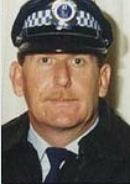
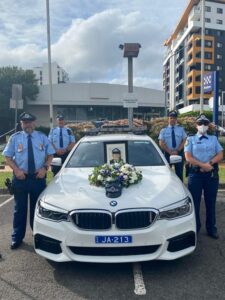
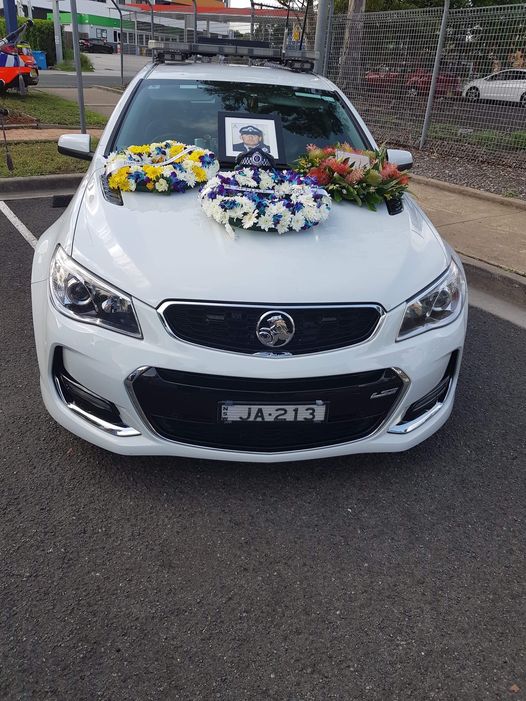
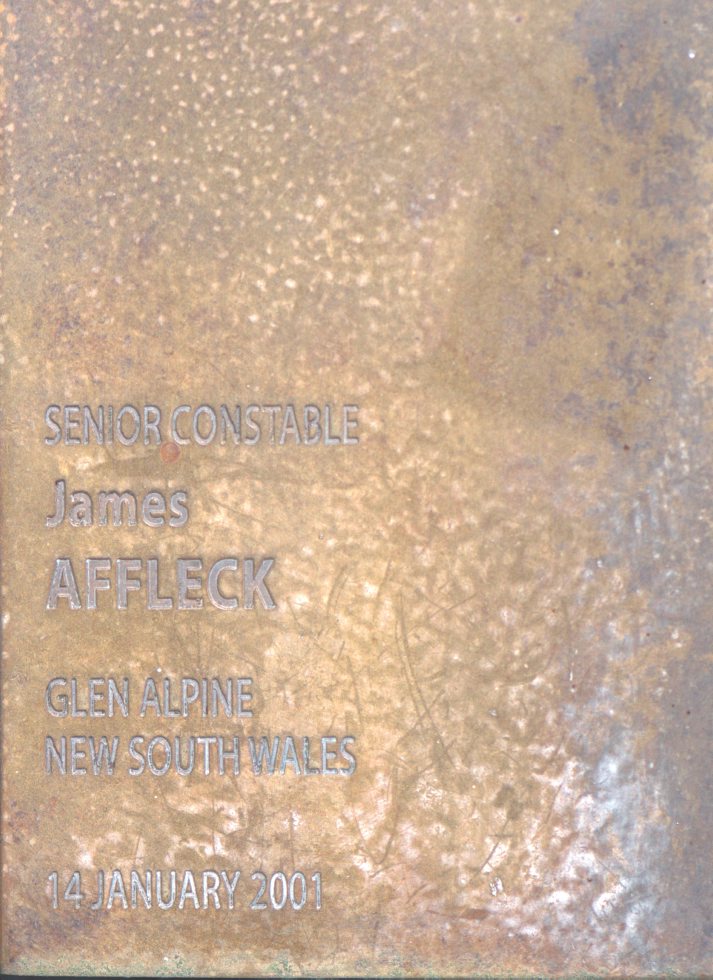


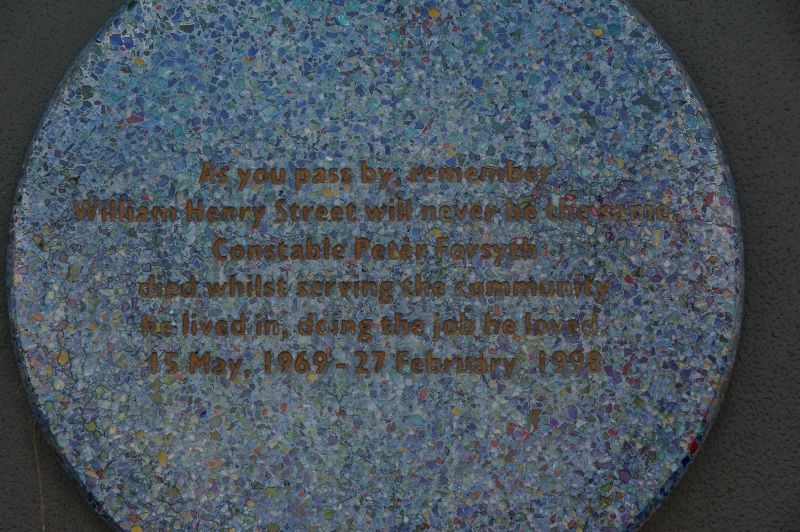
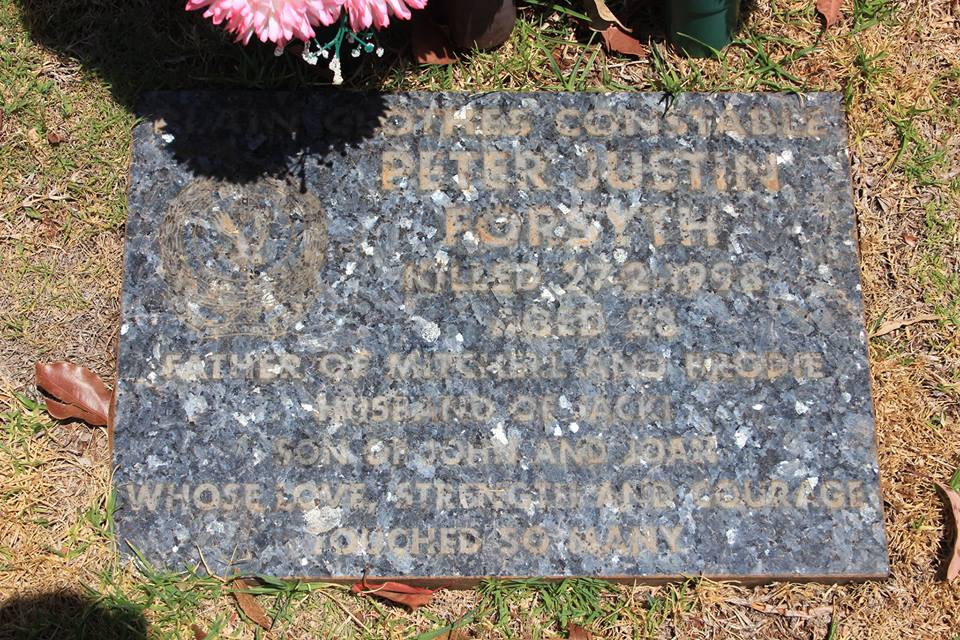
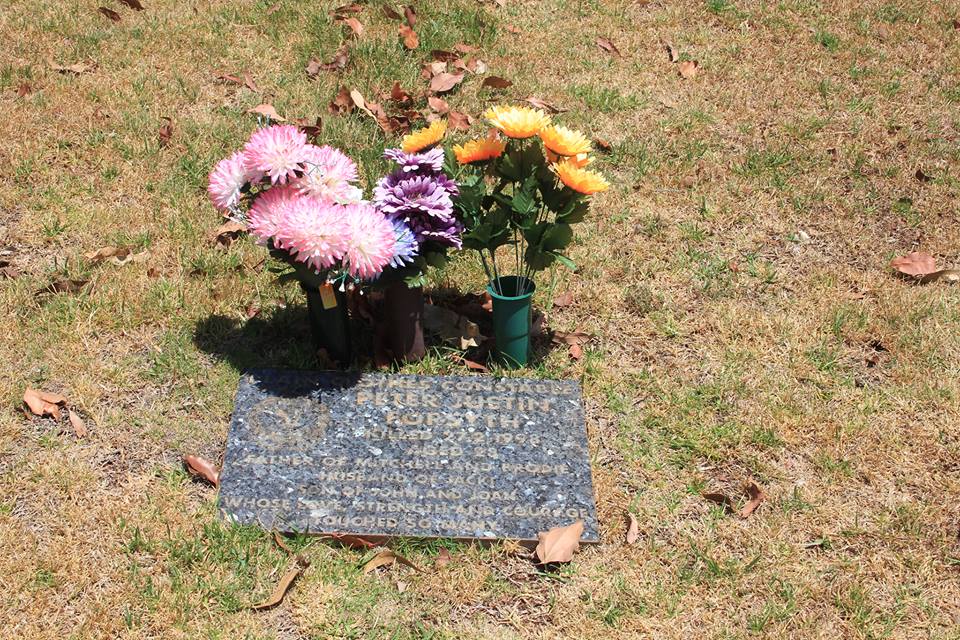
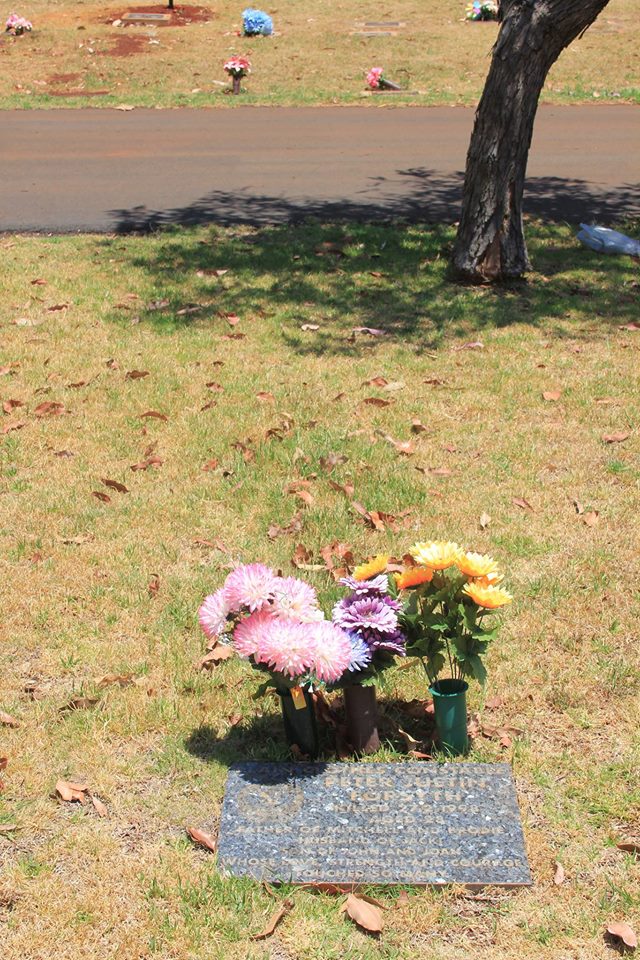

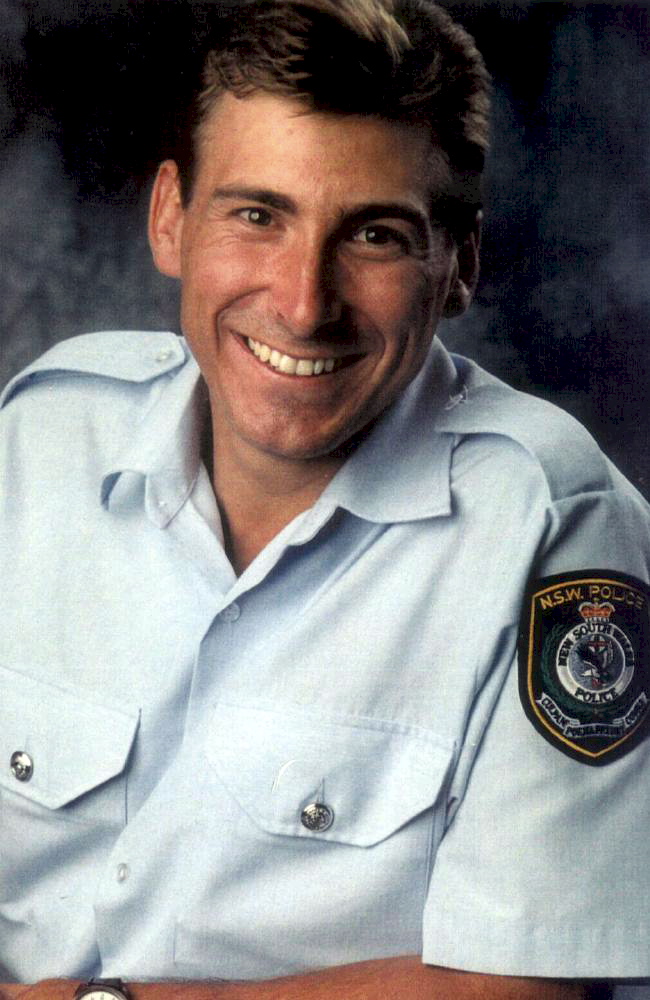
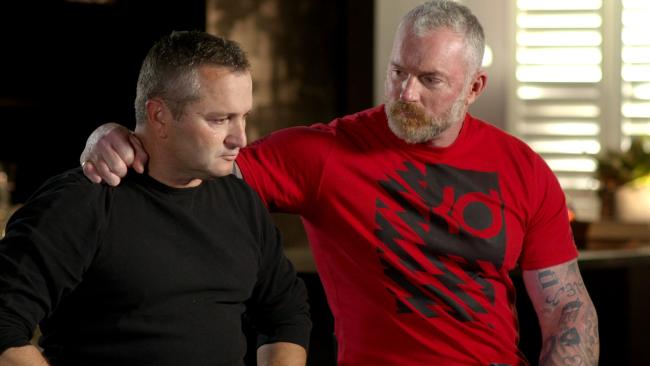
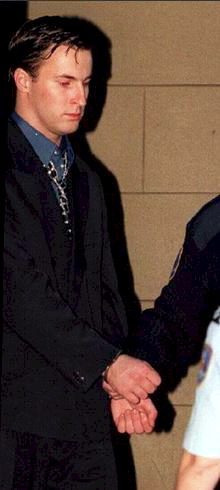

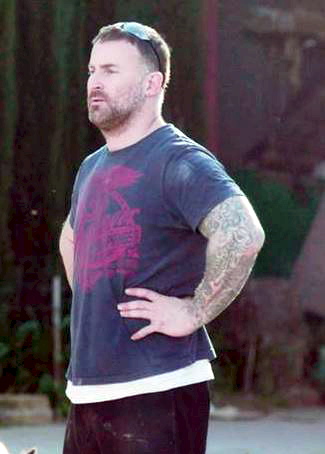
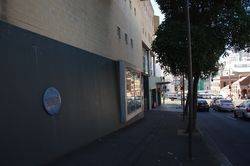
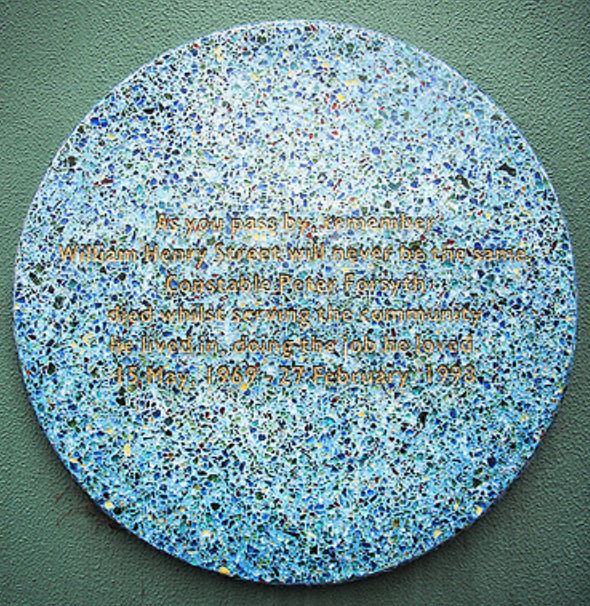


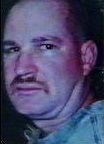
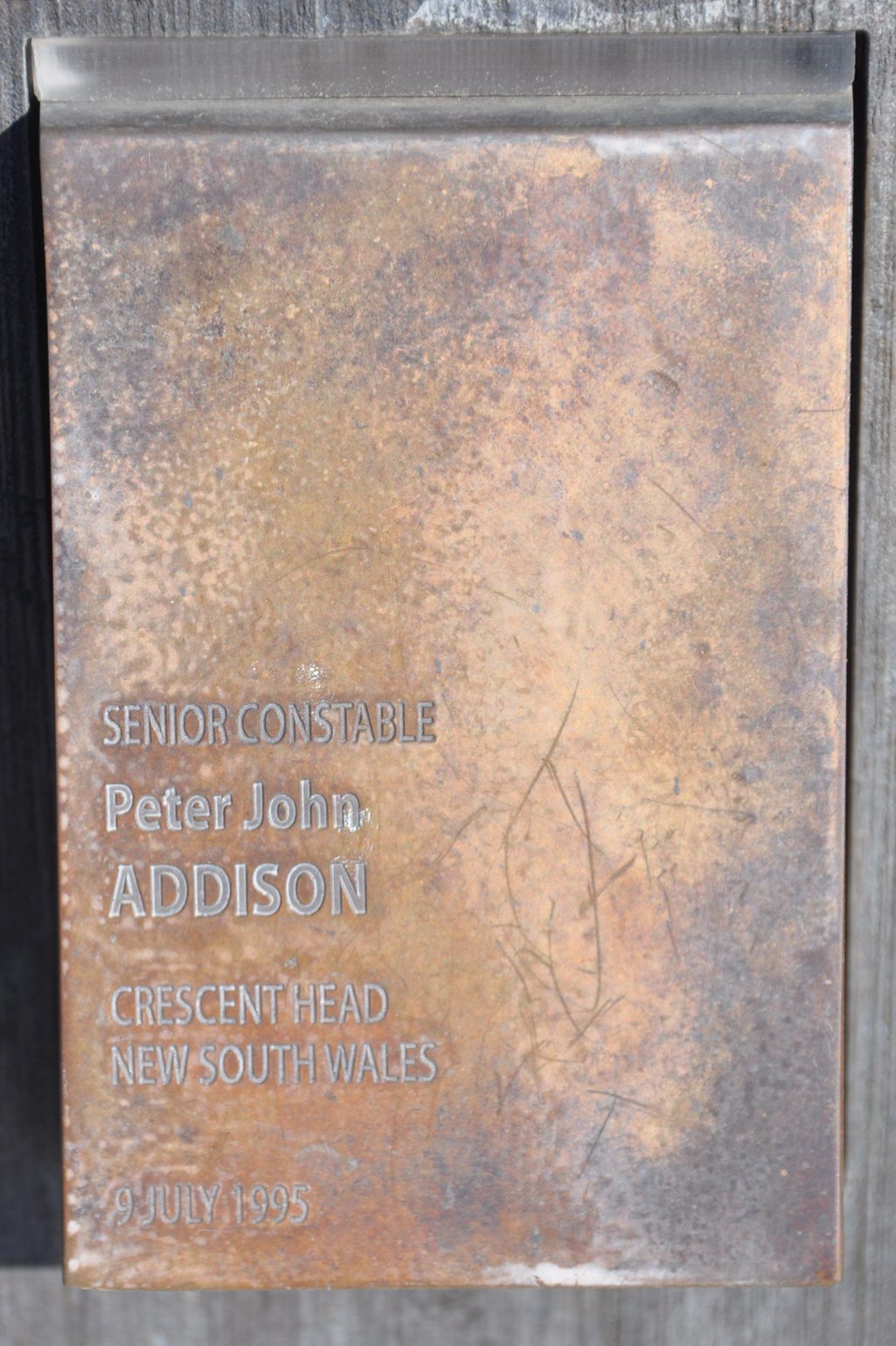
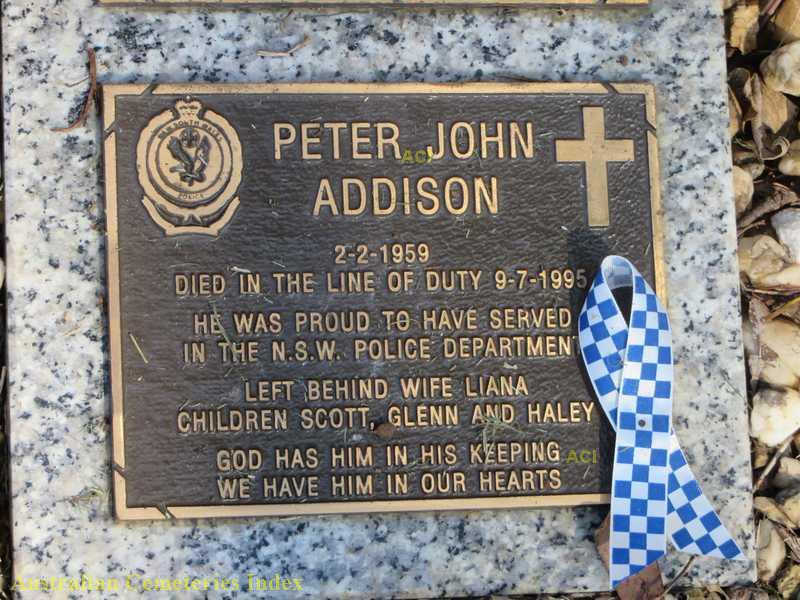
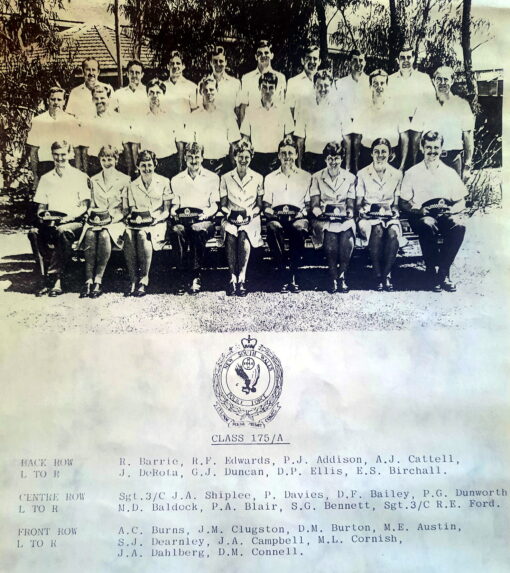
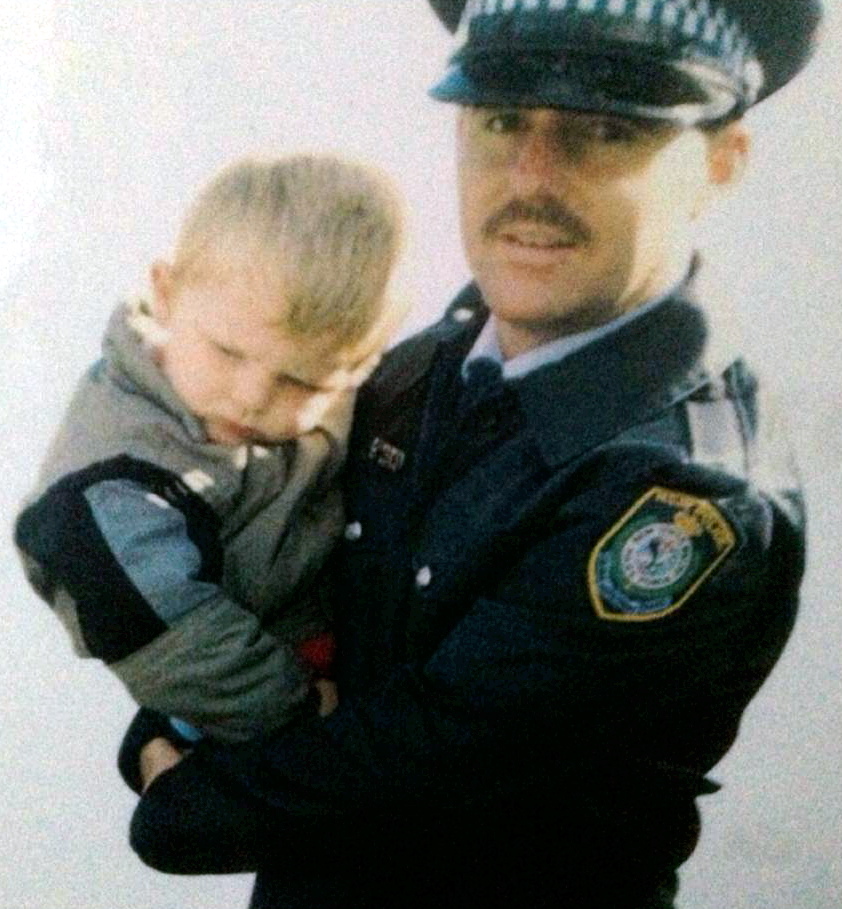
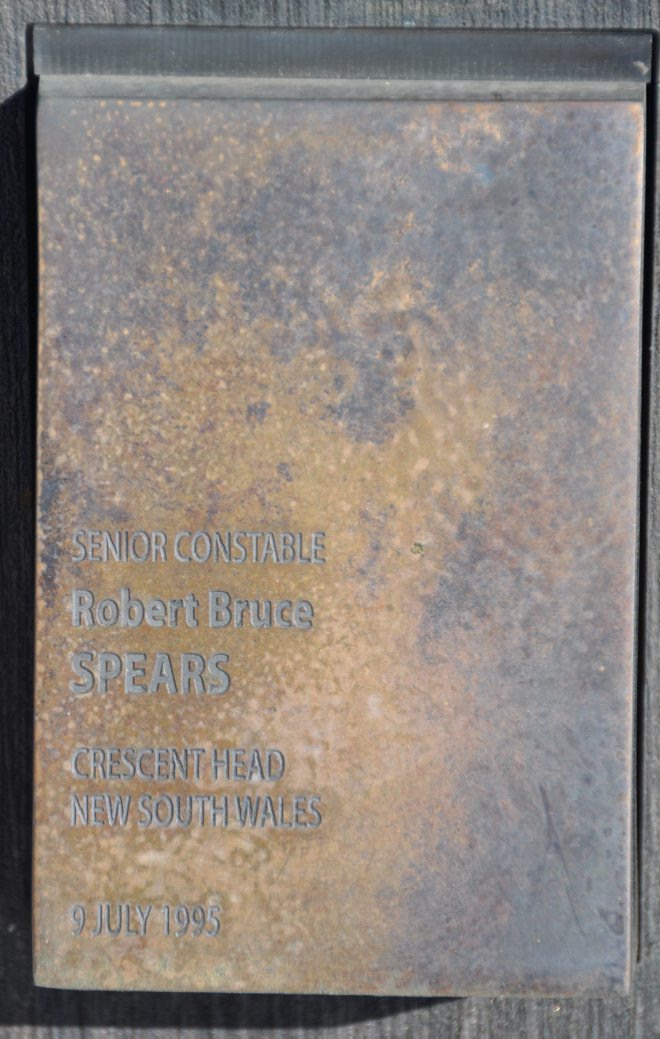
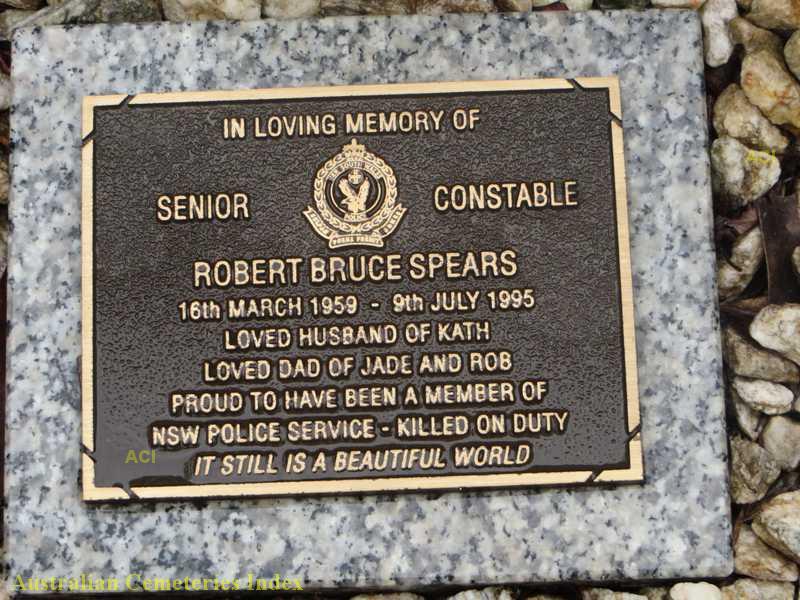
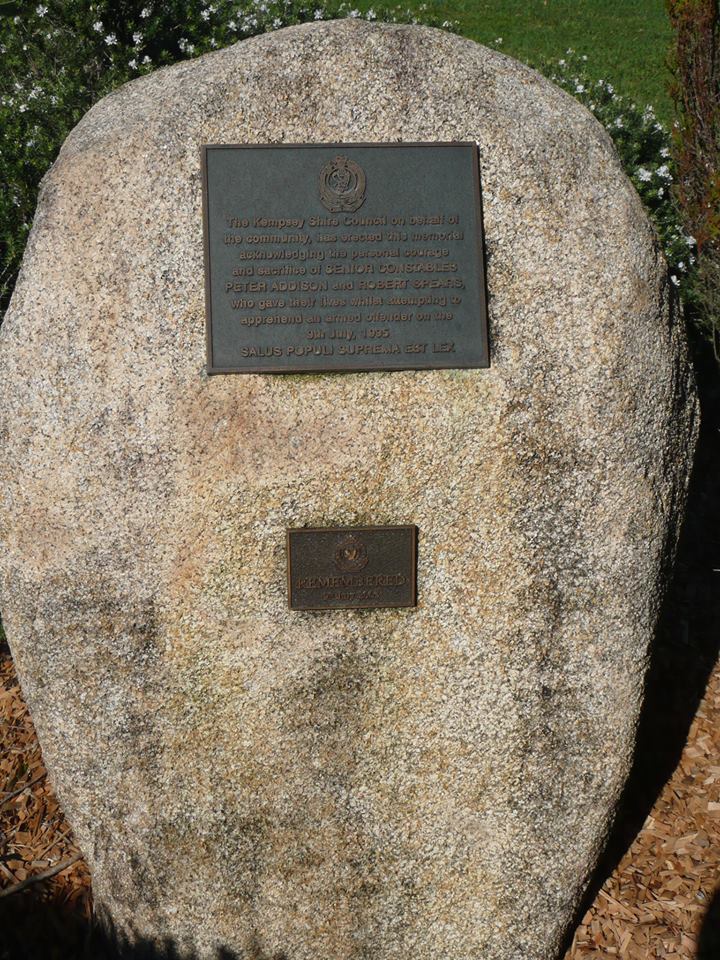
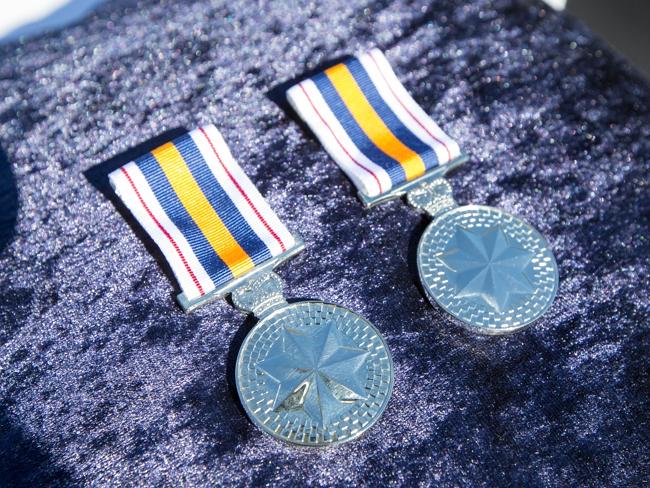
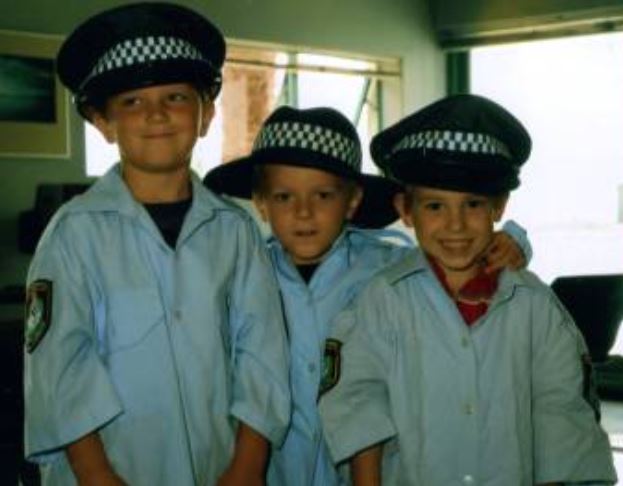
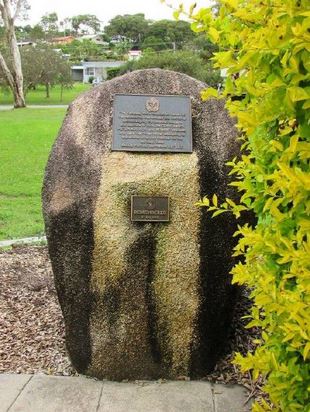
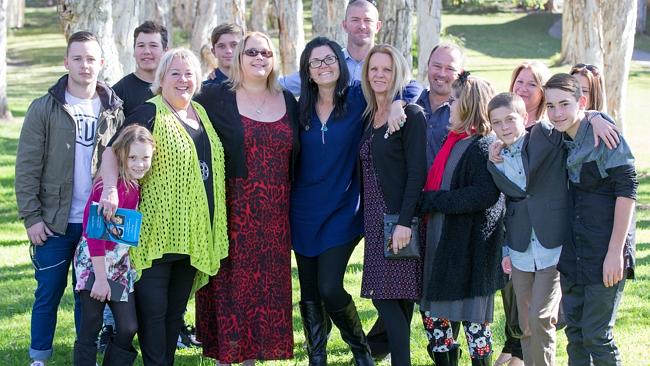
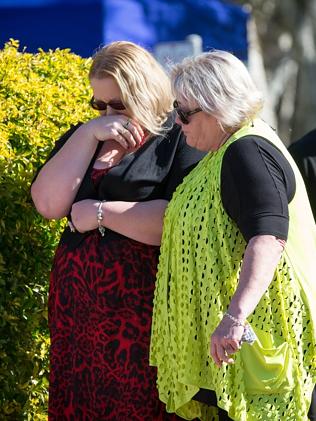
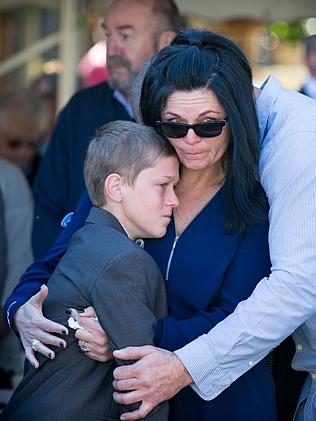
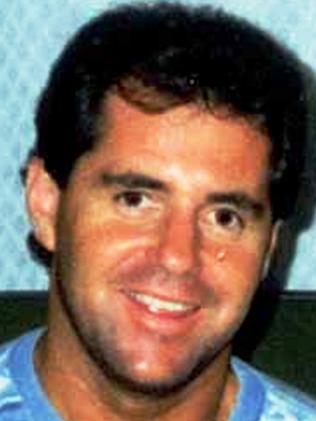
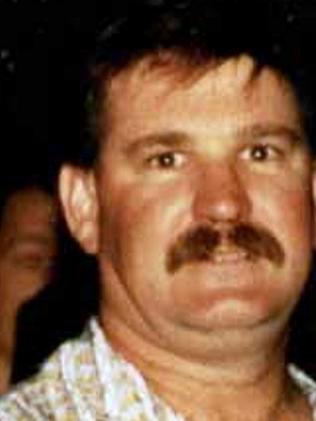
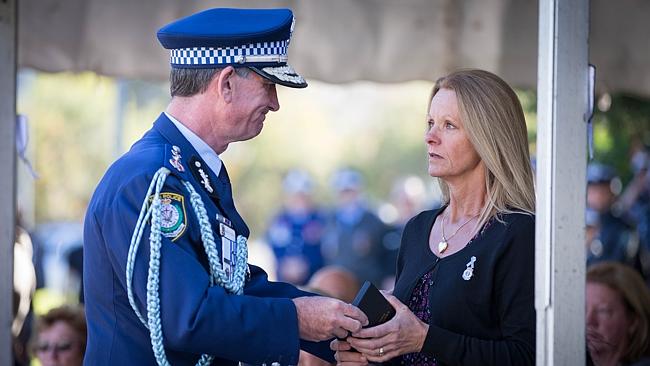
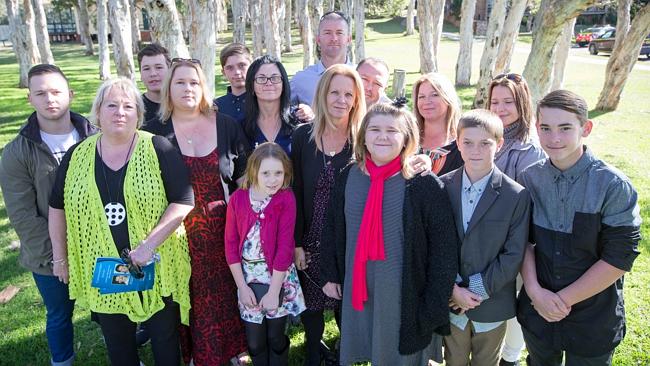
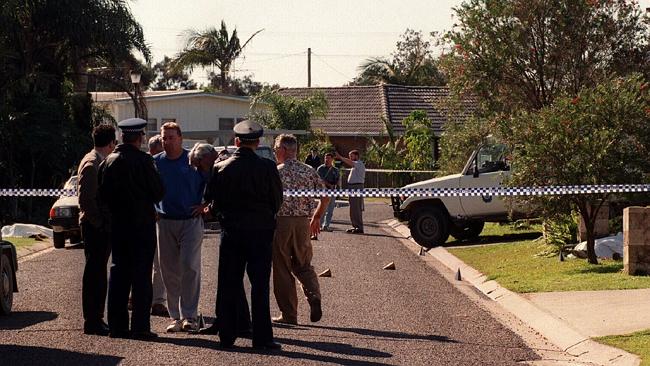
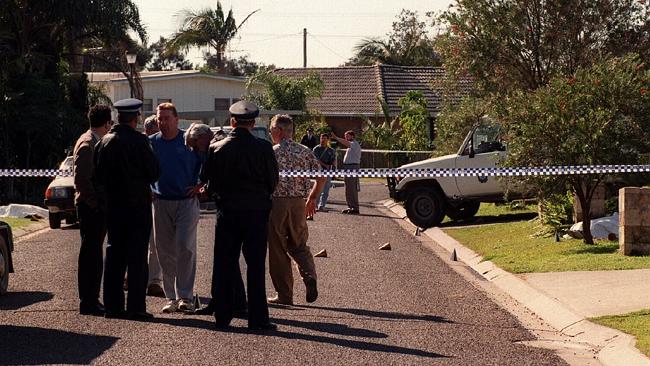
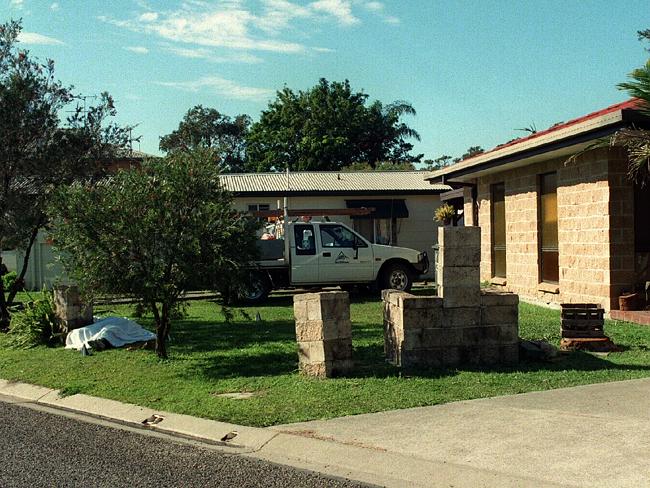
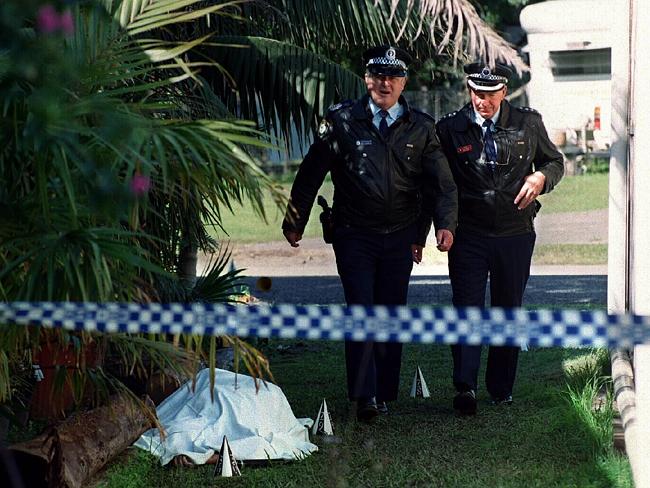
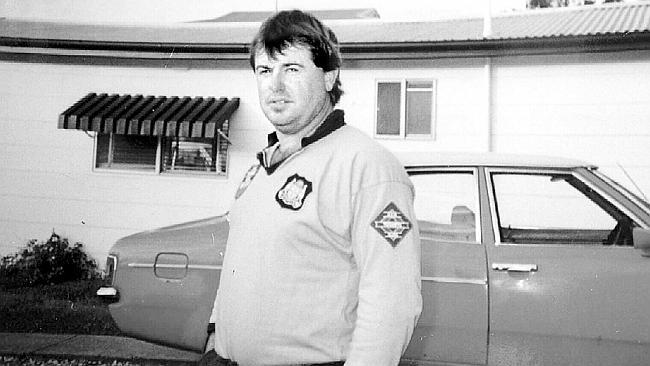
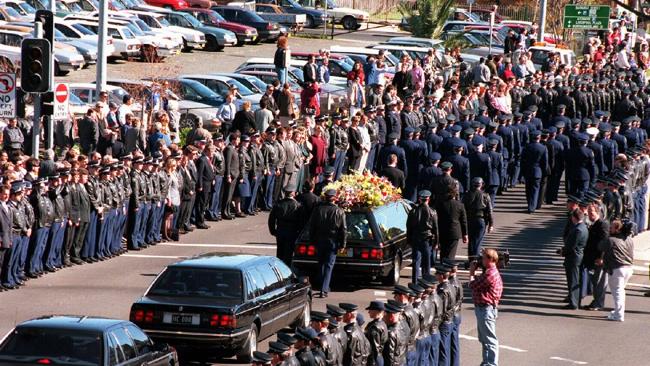
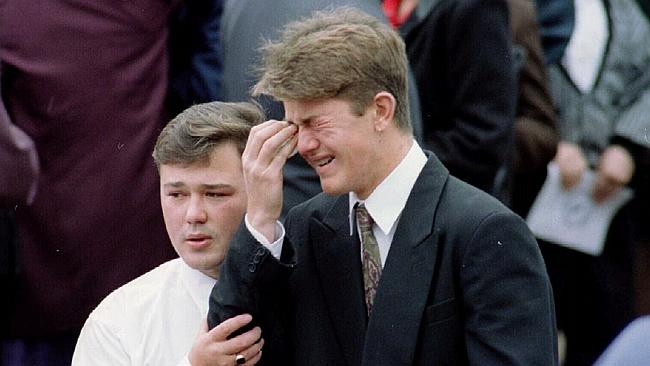
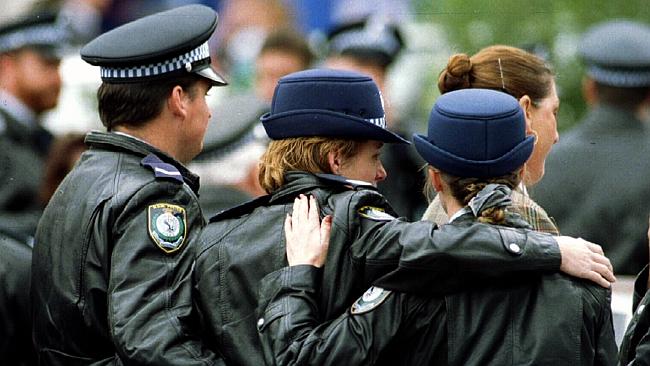
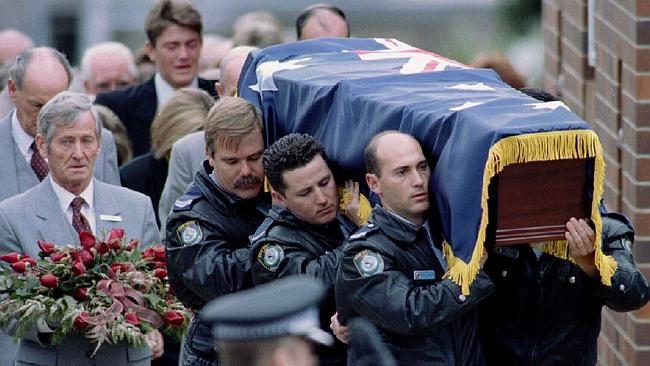
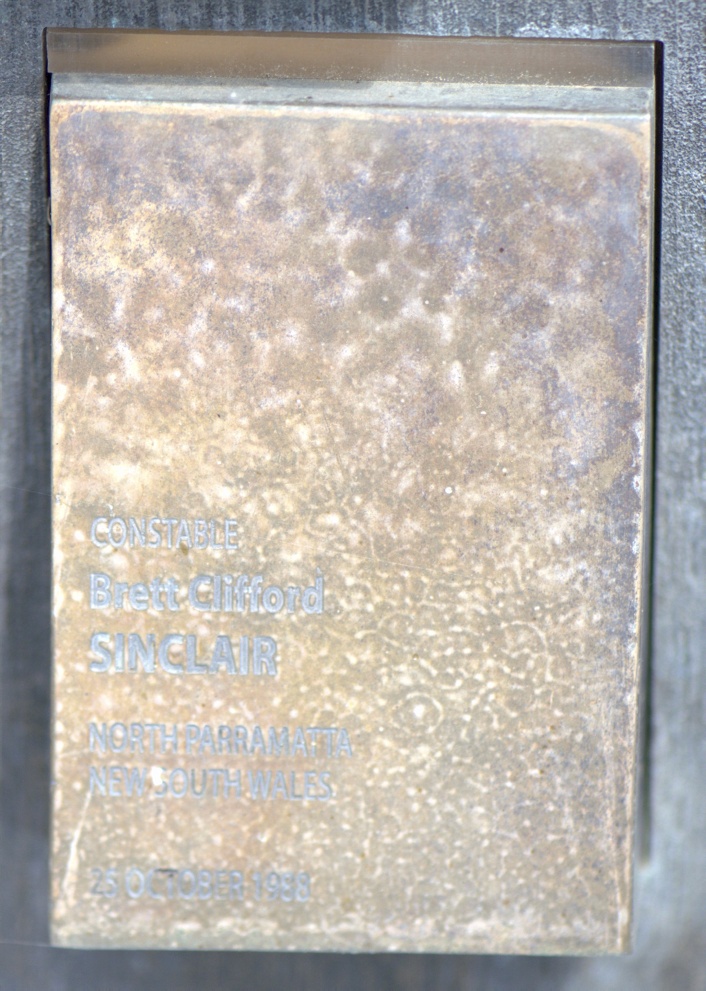
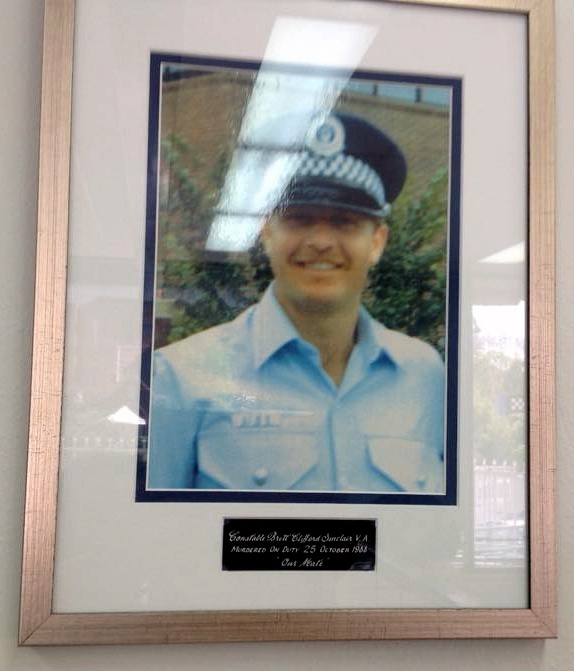
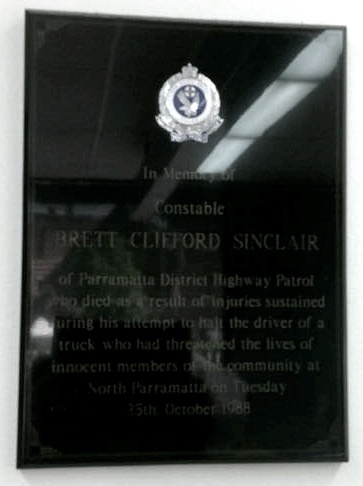
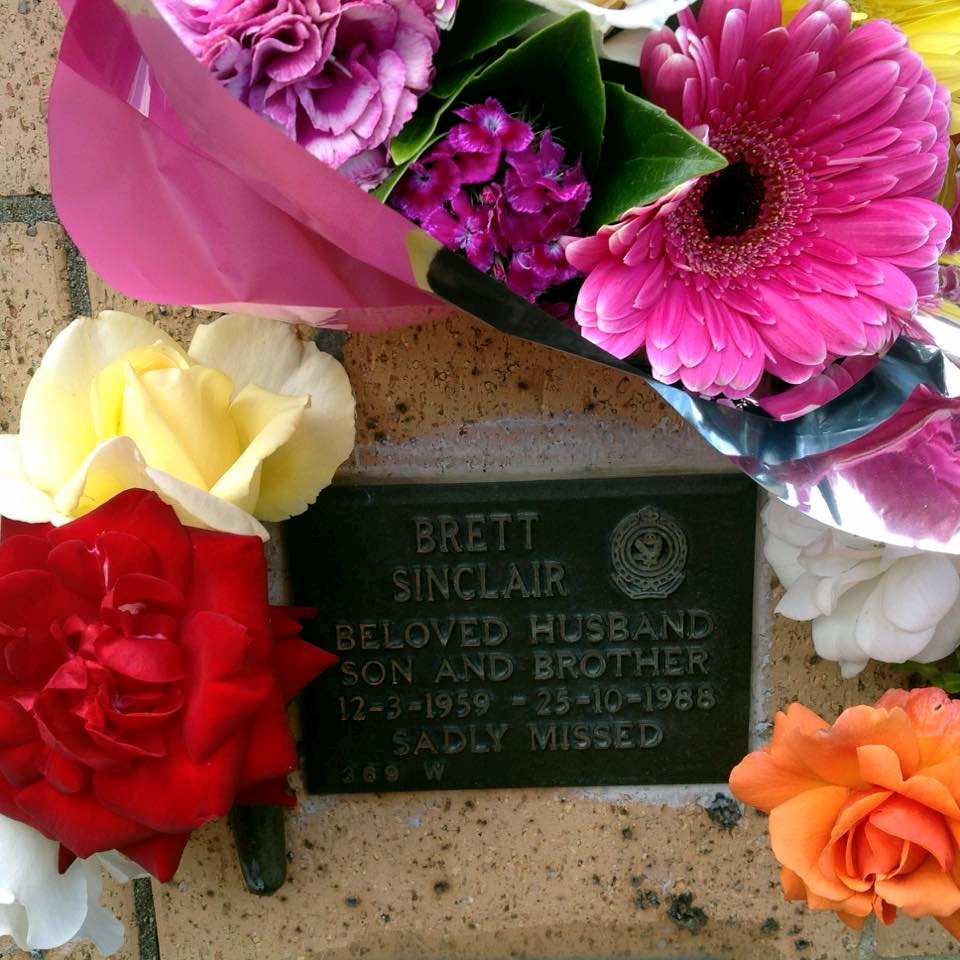
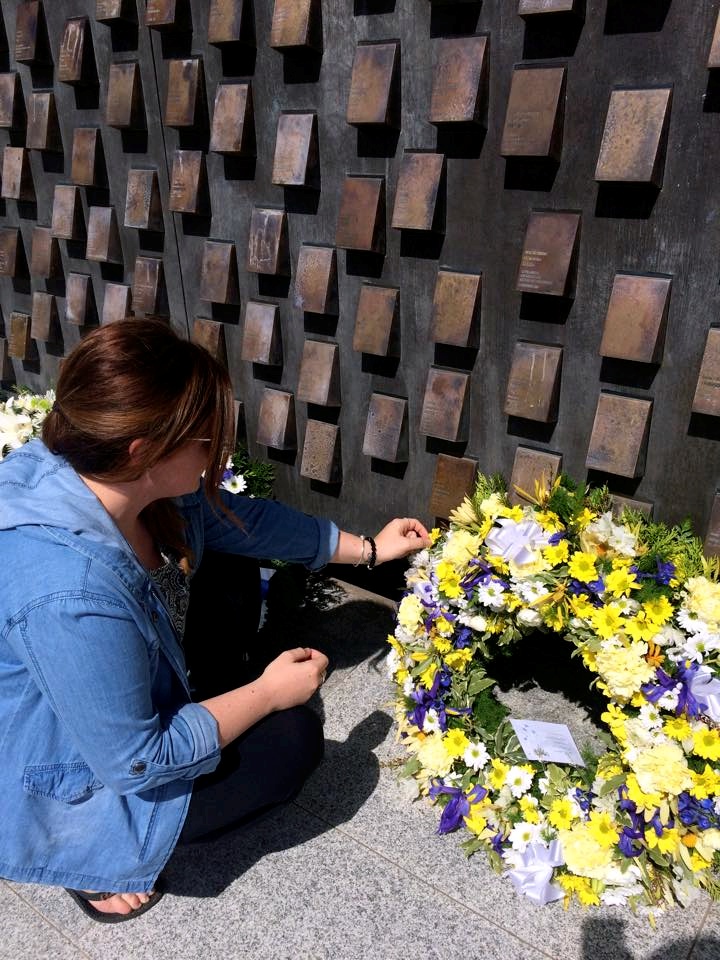
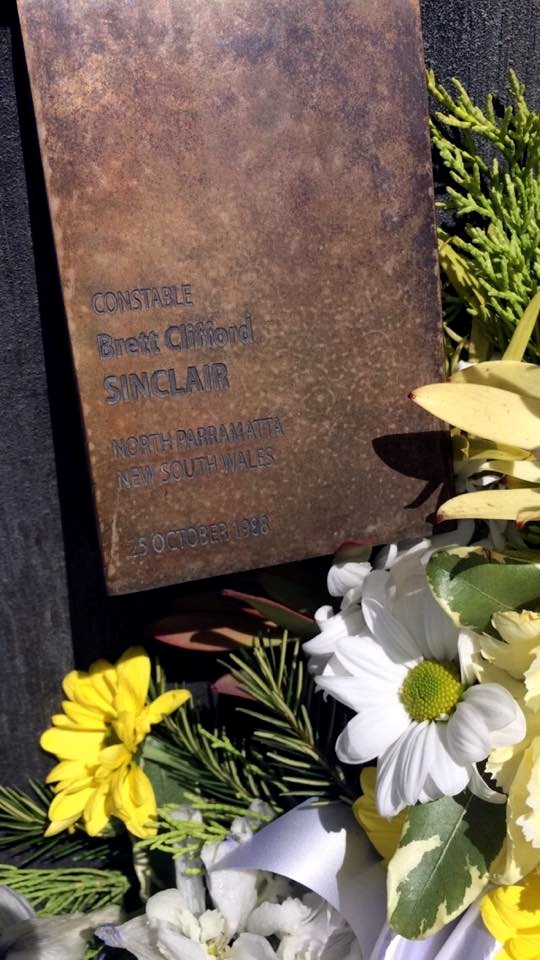
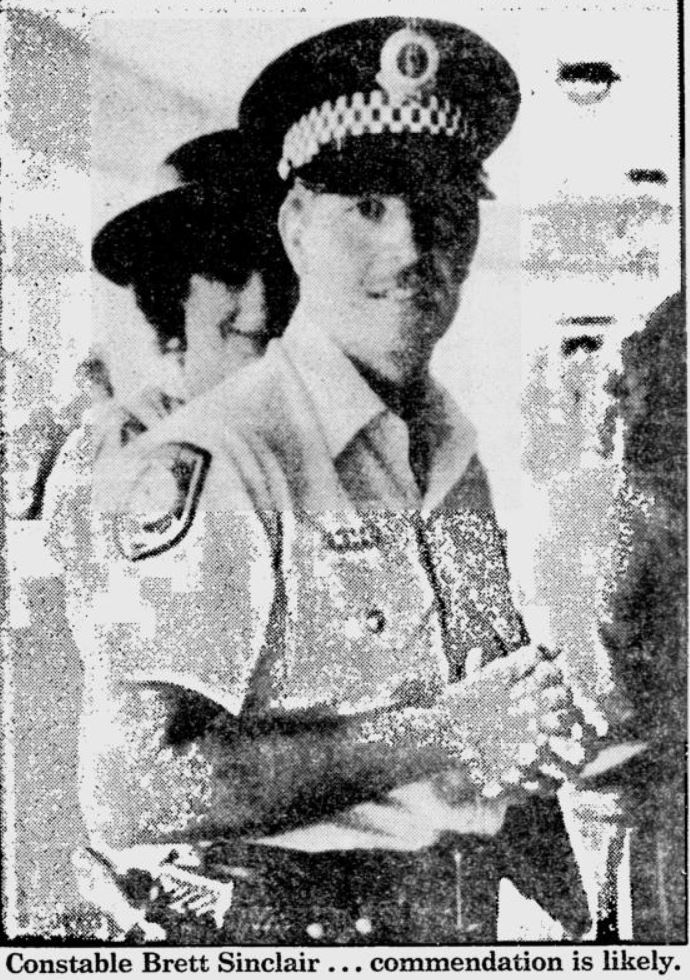
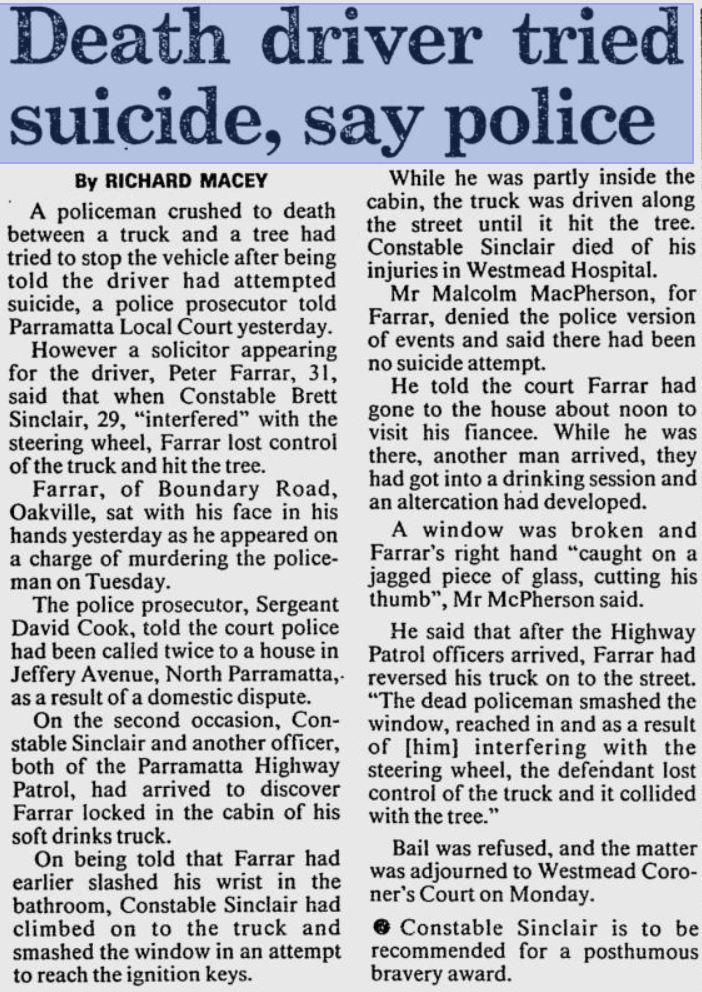
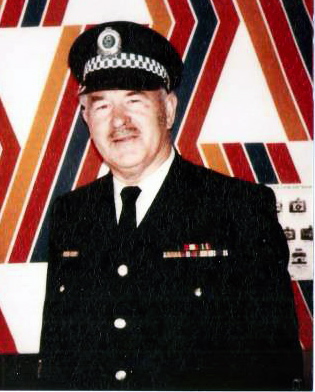
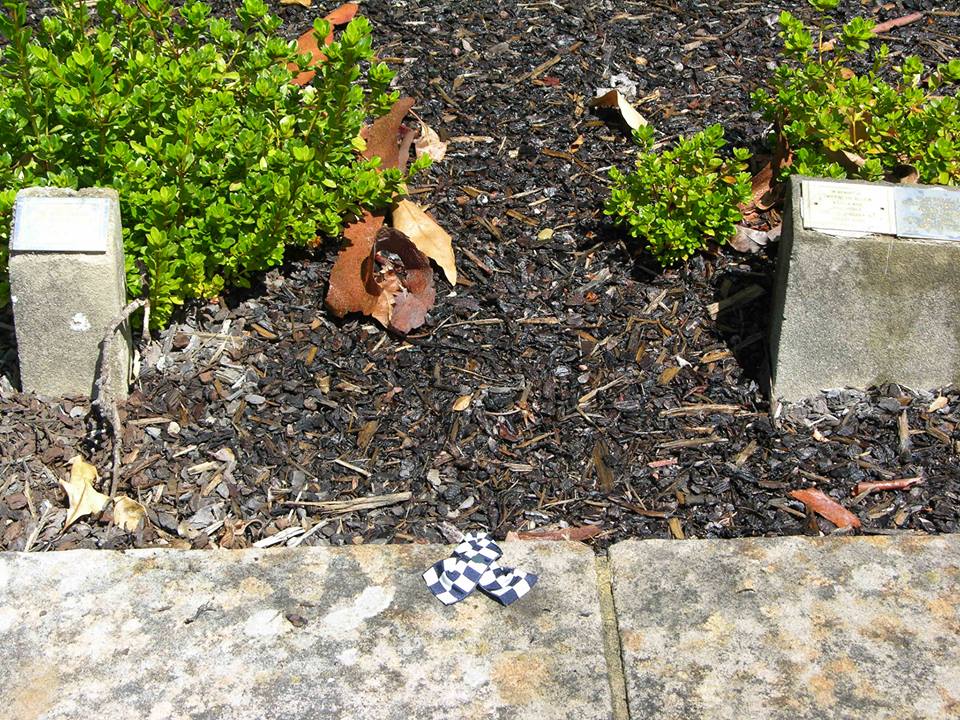
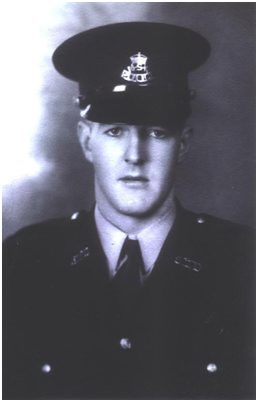

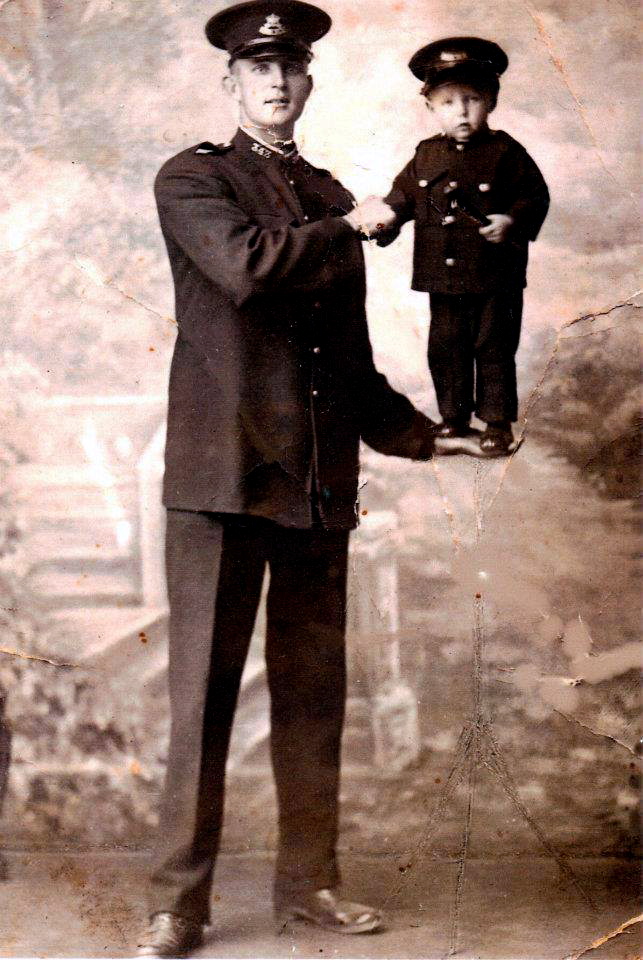

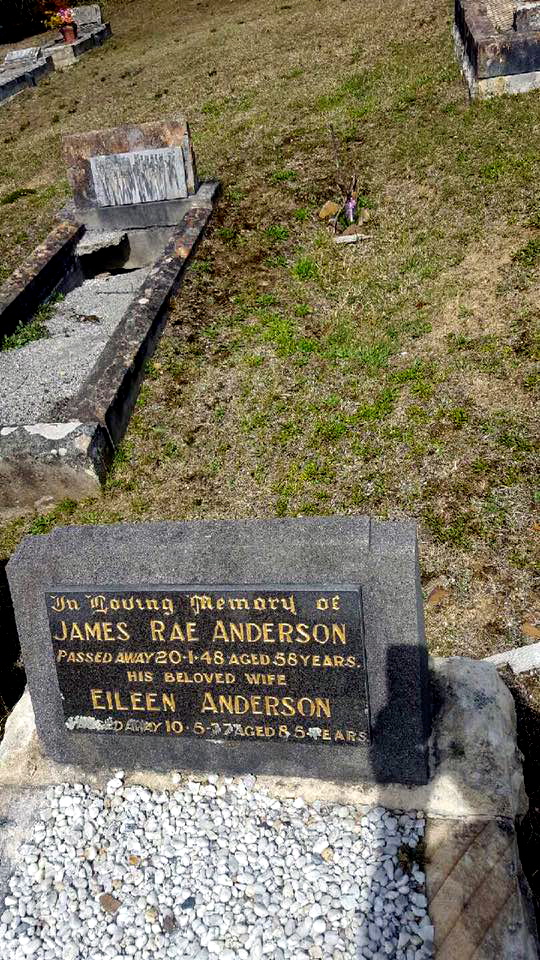
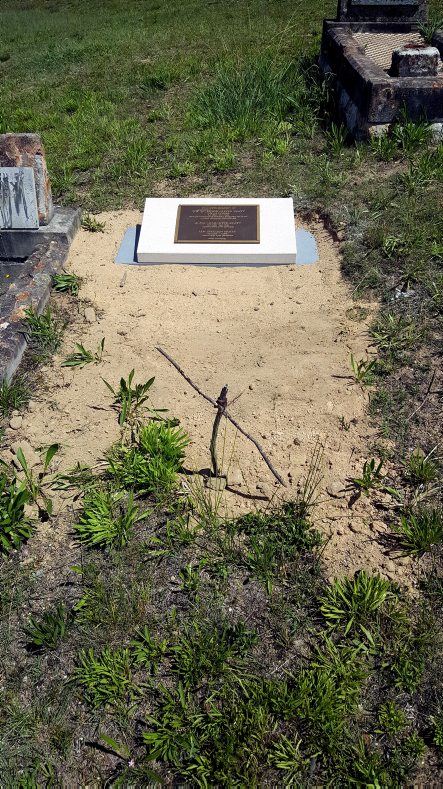
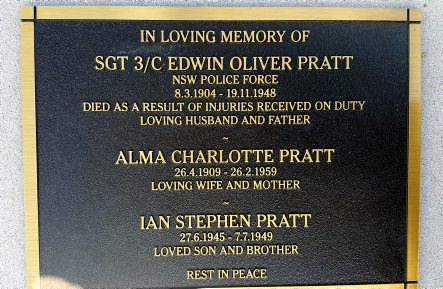

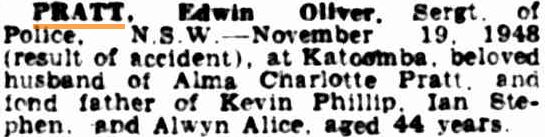
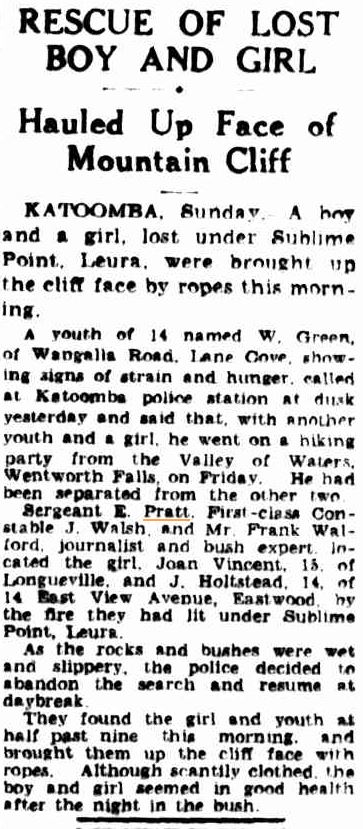
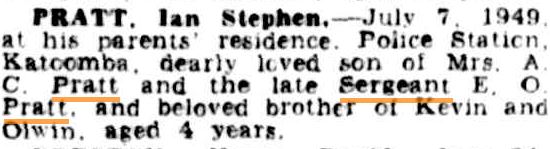
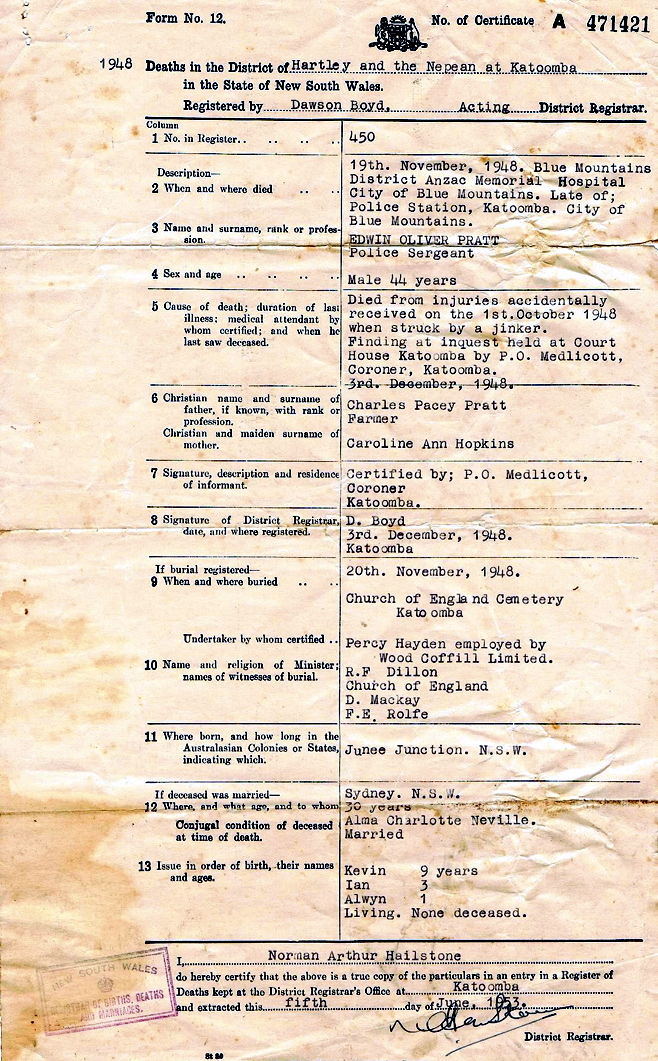
 feeling sad.