On 23 February, 1987 Constable Postma completed his rostered shift and attended a club where he engaged in a physical fitness workout. Shortly afterwards he entered the bar area of the club and consumed a few glasses of orange juice. He then collapsed. Other police assisted Constable Postma until the arrival of an ambulance which conveyed him to the Canterbury District Hospital. He was found to be dead on arrival.
The constable was born in 1964 and joined the New South Wales Police Force on 9 April, 1984. At the time of his death he was attached to the Ashfield Highway Patrol.
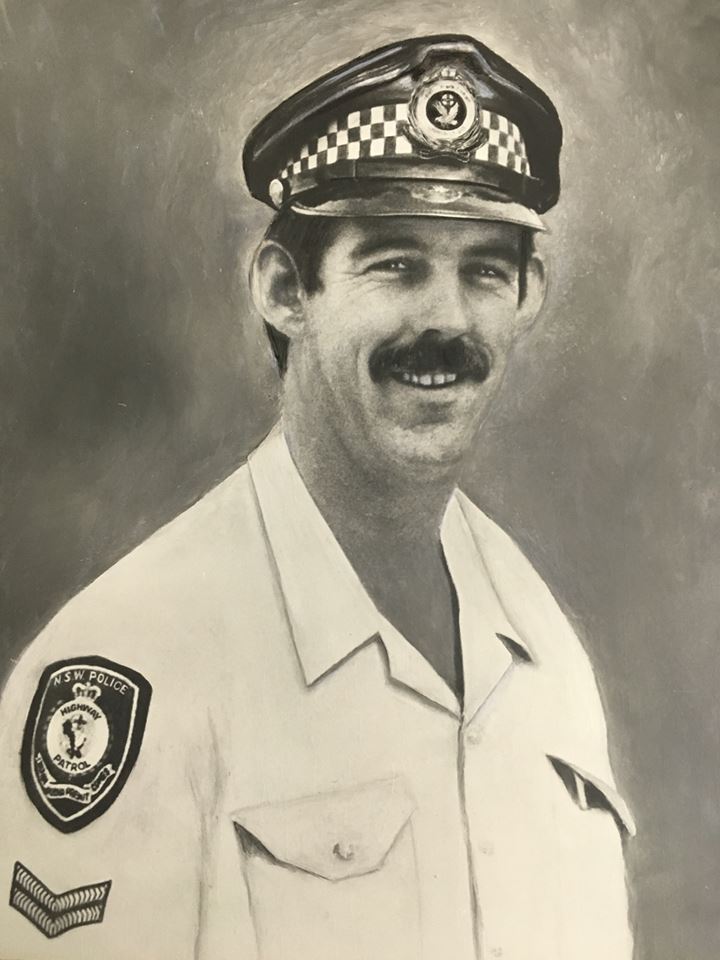
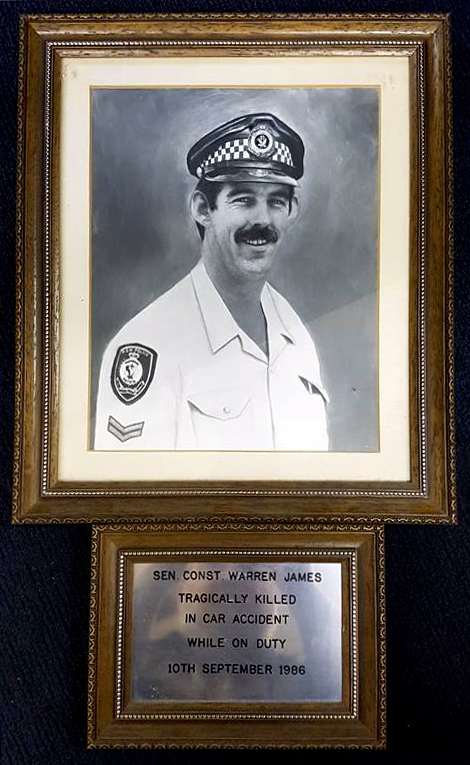
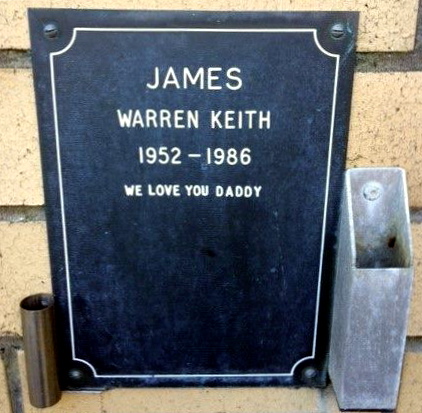
Warren Keith JAMES
| 27/10/2012
Warren Keith JAMES
New South Wales Police Force
[alert_yellow]Regd. # 16313[/alert_yellow]
Redfern Police Academy Class 139
Rank:
Probationary Constable – appointed 8 April 1974
Constable – appointed 8 April 1975
Senior Constable – death
Stations:
?, Murwillumbah, Tweed Heads
Service: Frompre February 1974 to 10 September 1986 = 12+ years Service
Awards:
No find on It’s An Honour
Born:
13 February 1952
Died on:
10 September 1986
Cause:
Motor Vehicle Accident – front seat passenger
Event location:
Tweed Heads
Age: 34
Funeral date:
12/09/1986
Funeral location:
St. James Anglican Church, Kingscliff
Buried at:
Cremated
Memorial location:
Tweed Heads Memorial Gardens and Crematorium – Peace Wall
Located in the station area of Tweed Heads Police Station.
Located in the station area of Murwillumbah Police Station.
[alert_green]Warren IS mentioned on the Police Wall of Remembrance[/alert_green]
About 7.30pm on 10 September, 1986 Senior Constable James was a passenger in a police vehicle returning to Tweed Heads Police Station after attending Lismore Court, when the vehicle left the roadway and collided with a tree. The constable was killed instantly.
The constable was born in 1952 and joined the New South Wales Police Force on 26 February, 1974. At the time of his death he was stationed at Tweed Heads.
[divider_dotted]
NSWBDM – Death Registration 107402/1986 Father = Keith Mother = Gloria
[divider_dotted]
TIMELINES The Quarterly Newsletter of Murwillumbah Historical Society Inc. April 2016 Vol. 4 No. 4
Murwillumbah Police Station
Thanks to Nick Gouliaev for another excellent installment in his series on our historic buildings. This is the final part (2) of the story of this Main Street icon.
The Police Station is in the Federation style, in complete architectural and visual harmony with the rest of the precinct; an architectural delight. The roof is high pitched with gable roof ends, framed and clad with corrugated metal roof sheets matching the other precinct buildings, although the roof cladding now needs replacement due to the metal sheets showing visible degradation with rust. Facing the main street is a main entry to the Detectives’ part of the building, with a roofed entry porch with double doors entry to the actual building, although today this is hardly ever used.
The porch roof is supported by timber posts decorated with Federation fretwork and brackets, as in the police station entry porch. All windows are original timber framed, clear glazed, of double – hung style and fitted with metal security grilles.
The brickwork is original, as used throughout all the precinct buildings. It is in first class condition and fitted with original terracotta air vents laid in stretcher bond with flush struck joints.
The main entry to the police station has been altered to be facing the main street instead of facing Police Lane. Today a concrete pedestrian access ramp with stainless steel handrails leads from the police entry porch to the entry gate at the Main Street boundary. The original main entry door has been replaced with a contemporary glass sliding door, electronically operated and CCTV monitored for a high level of security.
The internal walls are brickwork finished with smooth cement render, painted, and fitted with wide 150mm grooved Federation style skirtings at floor level. The air vents are original metal, adjustable and with a Federation floral decorative motif and are fitted to all external walls. The doors and windows are fitted with wide Federation grooved jambs and wide architraves. The doors are still in original Federation style; multi – paneled with glazed ventilation window above. The secure
areas have been upgraded with new generation doors and high security locks. The other areas however still retain their original brass locks and latches, retaining the charming originality and authenticity of the internal atmosphere of 1909. The corridors have decorated arched openings and terminating with beautiful arch brackets, in harmony with the wide plaster cornices throughout the building.
The ceilings are a combination of plaster lined ceilings and tongue and groove timber ceiling linings with recent alterations to some areas now lined with flat plaster boards. Wide plaster cornices with flower and leaf imprints decorate the edges of the ceilings throughout. The ceiling heights in the original areas of the building are 4800mm but in altered areas are lower, to 4500mm or less.
Various rooms have an original fireplace but the hearths of all the fireplaces are now closed off with a thin panel of white – painted Masonite. There are a total of four fireplaces in the building, but all would require careful refurbishment to re – awaken their 1909 architectural beauty, not only of the hearth and mantle shelves but also of the rooms.
The floors are of timber construction with timber floor boards, carpeted to some areas and covered with vinyl in others.
The Police lock up area consists of four cells, although only two are in use with the others used as storage rooms. The floors are concrete and all windows are fitted with heavy duty security grill/bars. Tweed Regional Museum Murwillumbah has an original steel cell door complete with “scratched surface graffiti” compliments of past prisoners in its collection. The cell door is solid sheet steel, approximately 25mm thick x 820mm wide x 2040mm high, hung on very heavy duty hinges,
with a rectangular inspection hatch. These days the delivery of individuals in police custody is at the rear of building to a secured area close to the lock up cells.
The Police Officers have use of a recreational area with a BBQ and seating under a timber pergola at the rear of the building. This area is called “The Mango Bar” and was opened Friday 15 Feb 1985 by Hon. W.[Bill] Bugden. The patron is His Honor Judge K.F.E. Torrington. One of the pergola posts has another plaque affixed to it with the wording “SWOS RAIL” in honour of Patrol Officer Warren James.
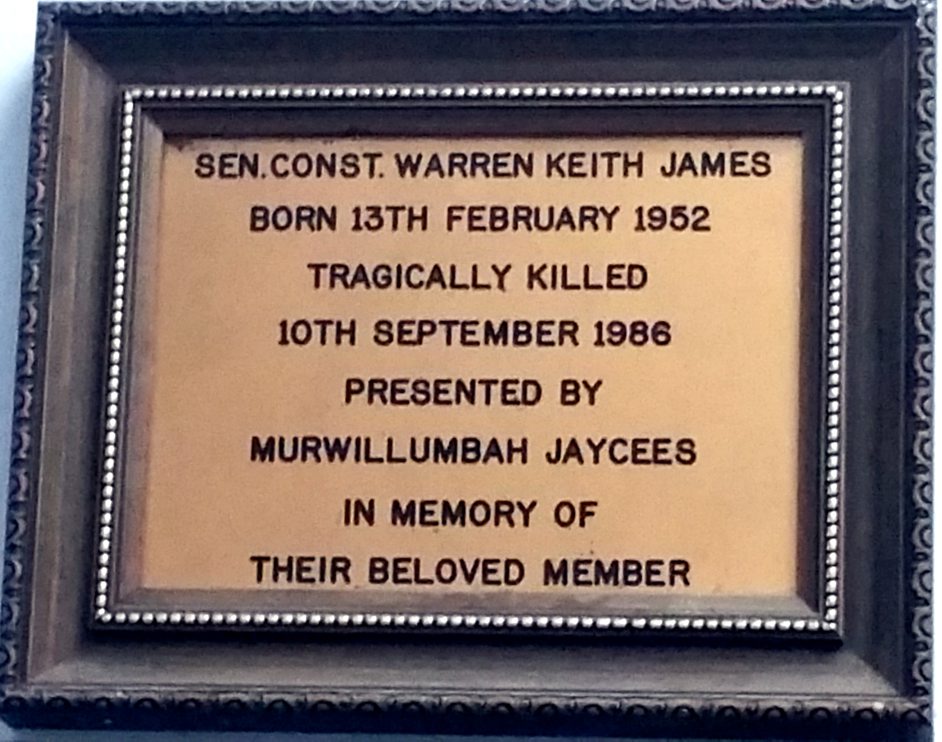
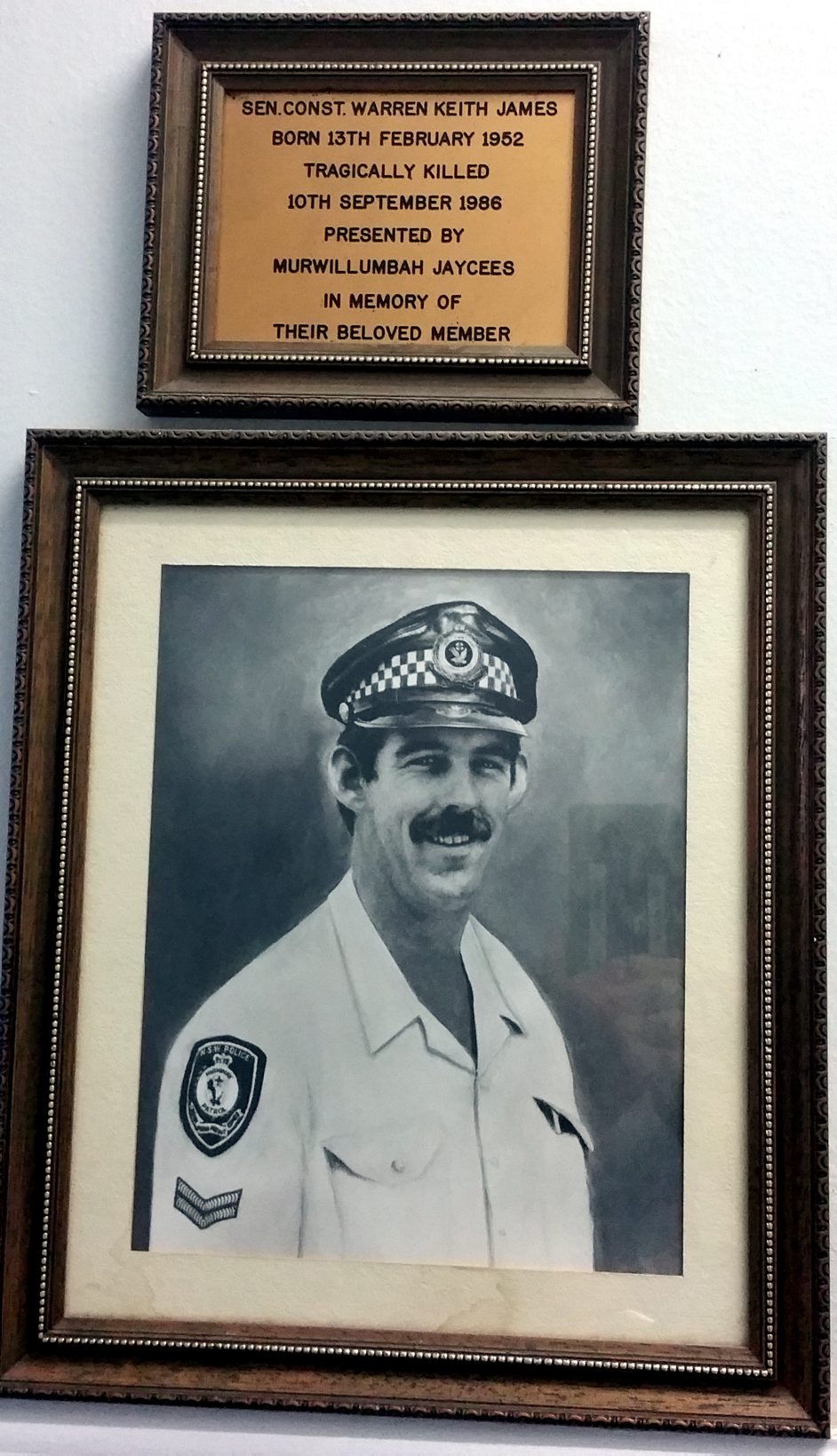
A third plaque is inside the Police Station, on the wall in one of the corridors, dedicated to “Senior Constable Warren Keith James”, born 13 Feb 1952, died 10 Sep 1980. The plaque was presented by Murwillumbah Jaycees.
Research and Acknowledgements
Murwillumbah Historical Society research team: Nick Gouliaev, Tony Clark , Max Boyd , Joan Cuthel , Judy Keane (TRM)
Police Officers; Dean Wilson and others
Tales of our Times, Ron Johansen
Red Sunday, Kath Pritchard, Murwillumbah Historical Society 2nd Edition 2015
Northern Star (1876 – 1954) 8 Jan 1908 Page 2
Municipal Murwillumbah 24 Oct 1907 (Reprint of municipal announcements)
Georgian Architecture in Australia; Uri Smith in association of the National Trust of Australia
The Federation House, Ian Evans, The Flannel Flower press.
Australia’s Yesterdays, Reader’s Digest Pty. Ltd.
Australia – The First Hundred Years, Being a Facsimile of Volumes 1 and 2 of The Picturesque Atlas of Australia, edited by Hon. Andrew Garran, M.A., L.L.D.,M.L.C.
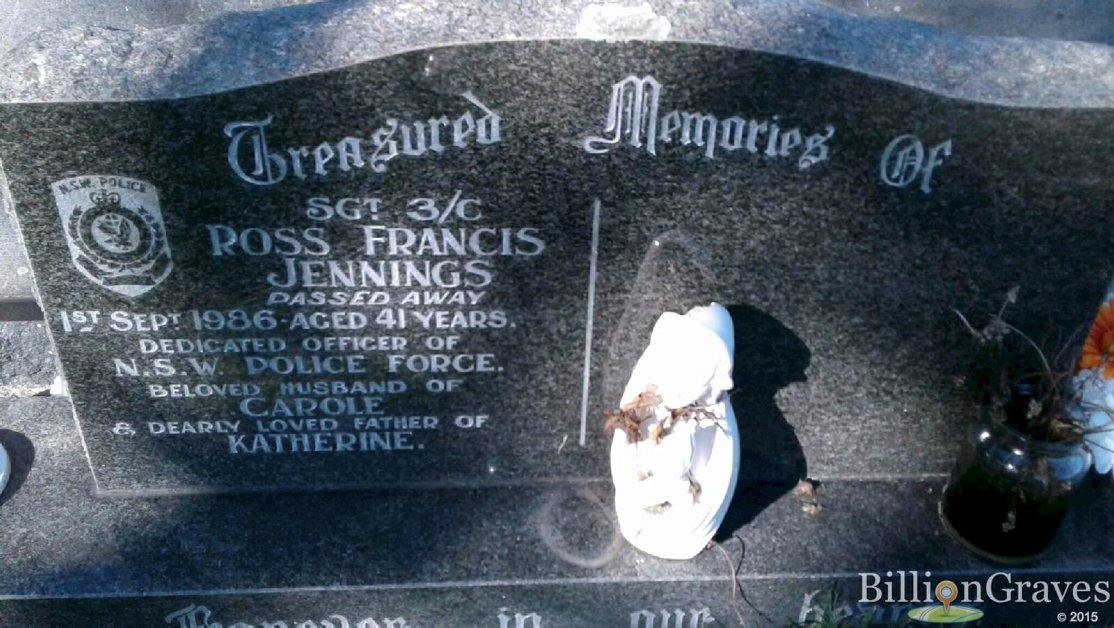
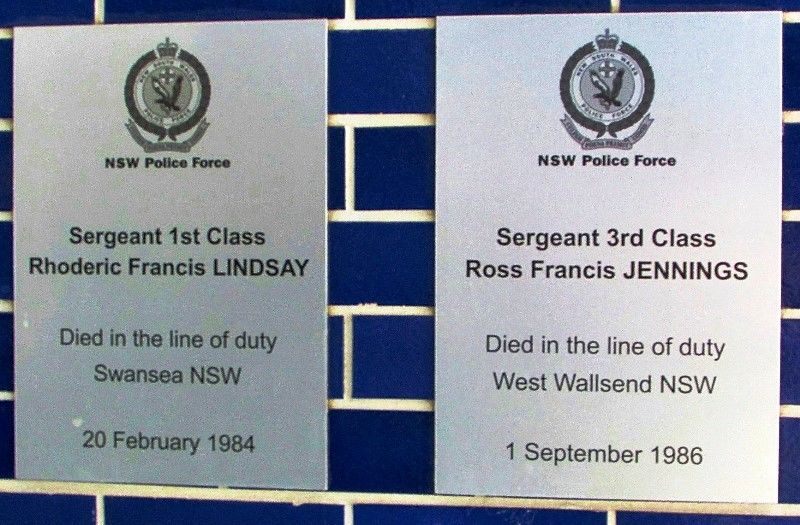
On 1 September, 1986 Sergeant Jennings was at home at the police residence attached to the West Wallsend Police Station. While he was mowing the lawns (one of his duties) he suffered a fatal heart attack.
The sergeant was born in 18 September 1944 and joined the New South Wales Police Force on 22 February, 1965. At the time of his death he was stationed at West Wallsend.
National Police Remembrance Day ceremony in Lake Macquarie
David Stewart
September 29 2017 – 4:27PM
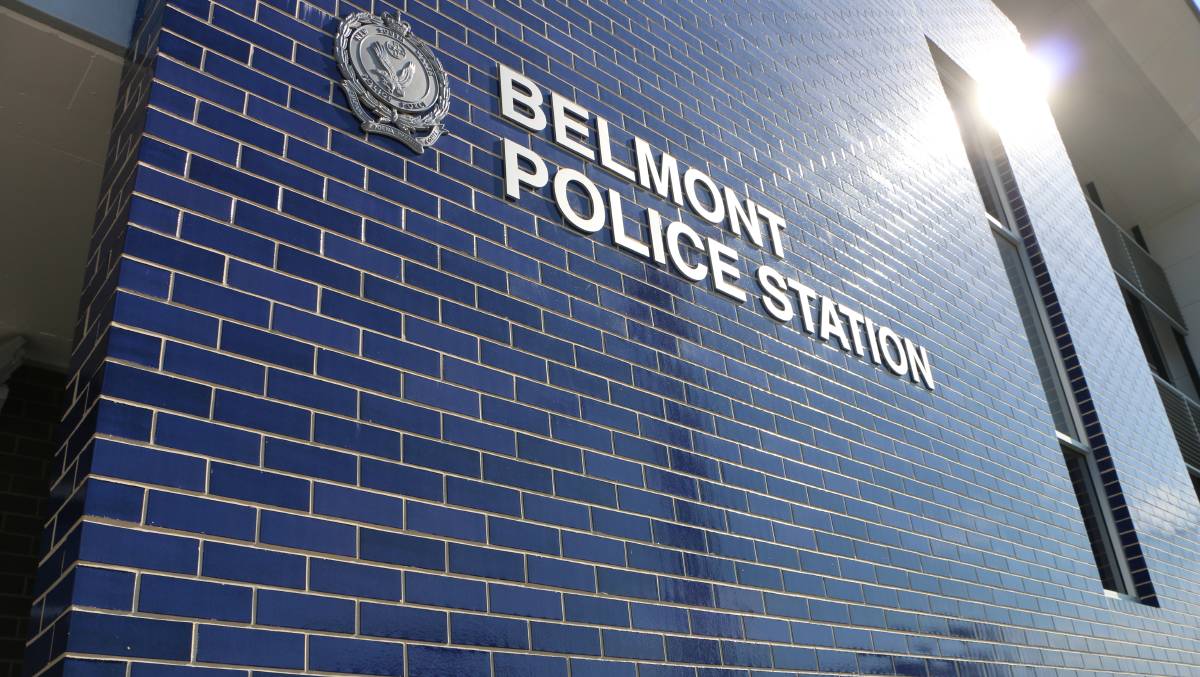
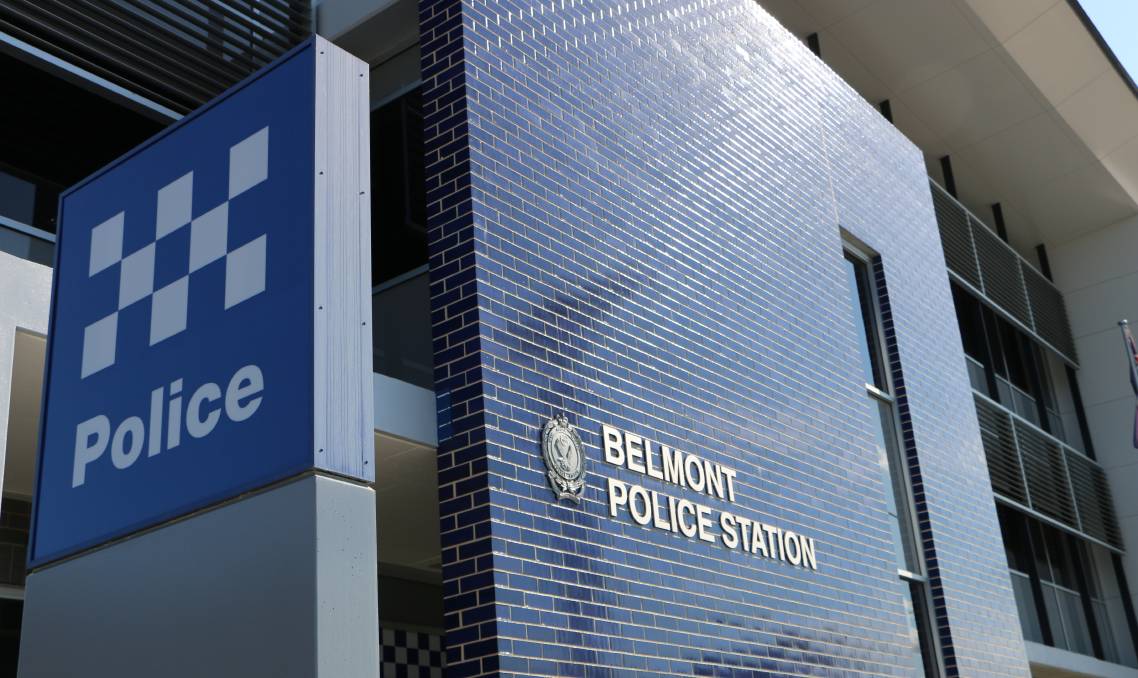
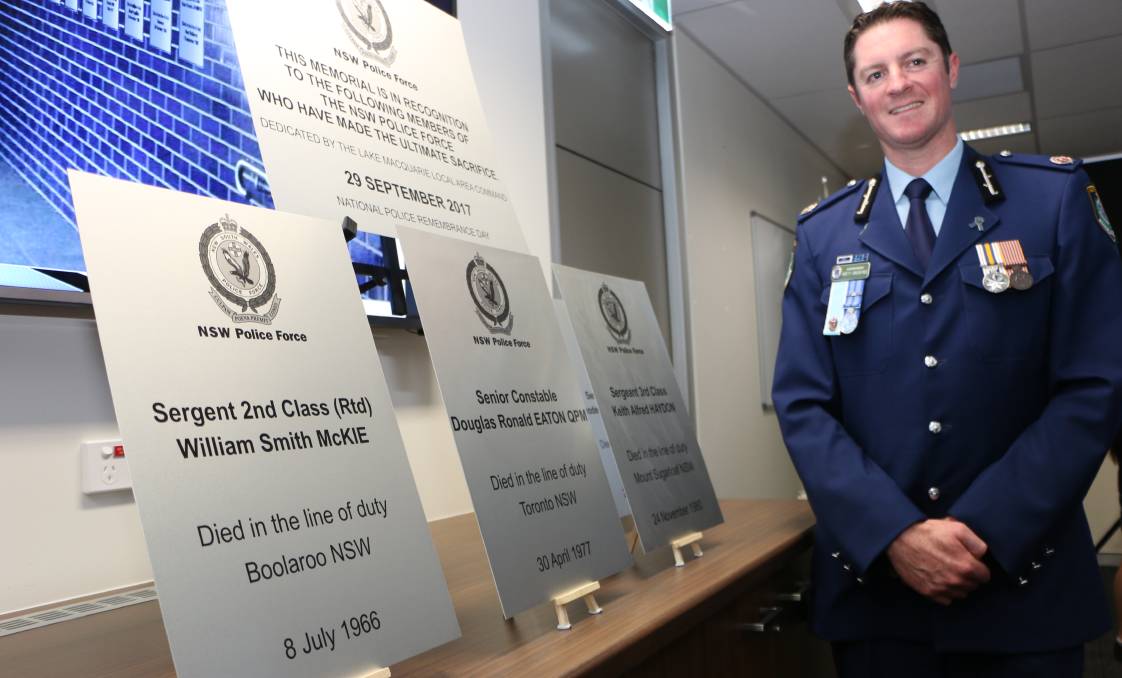
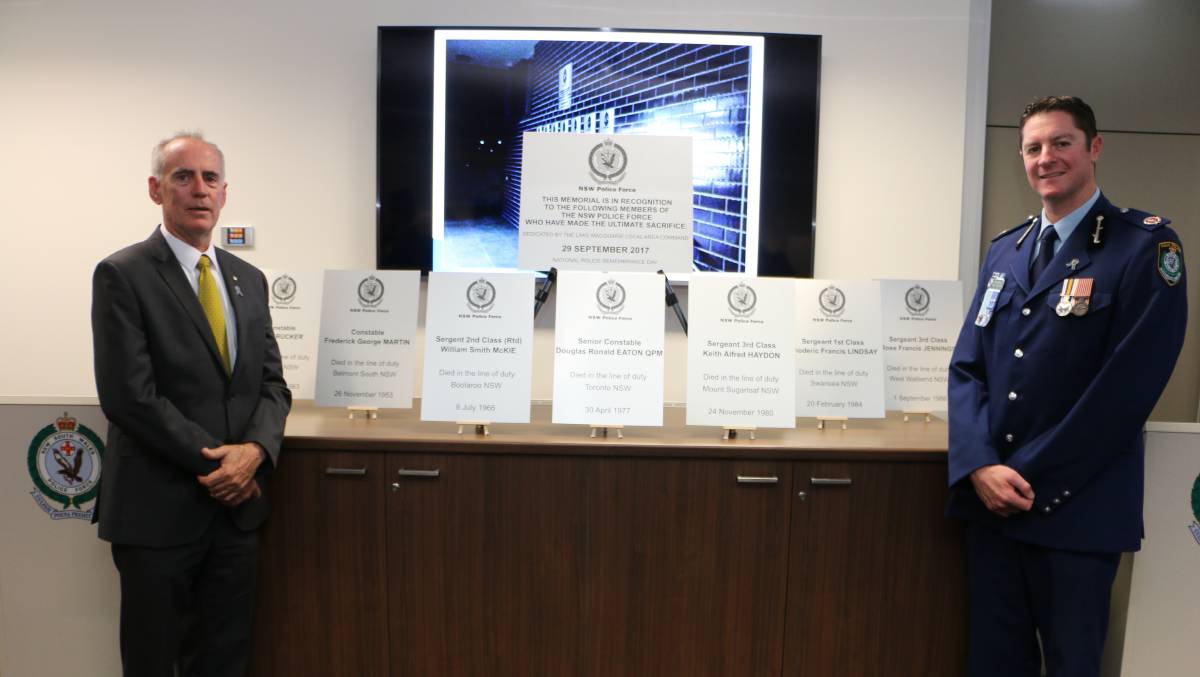
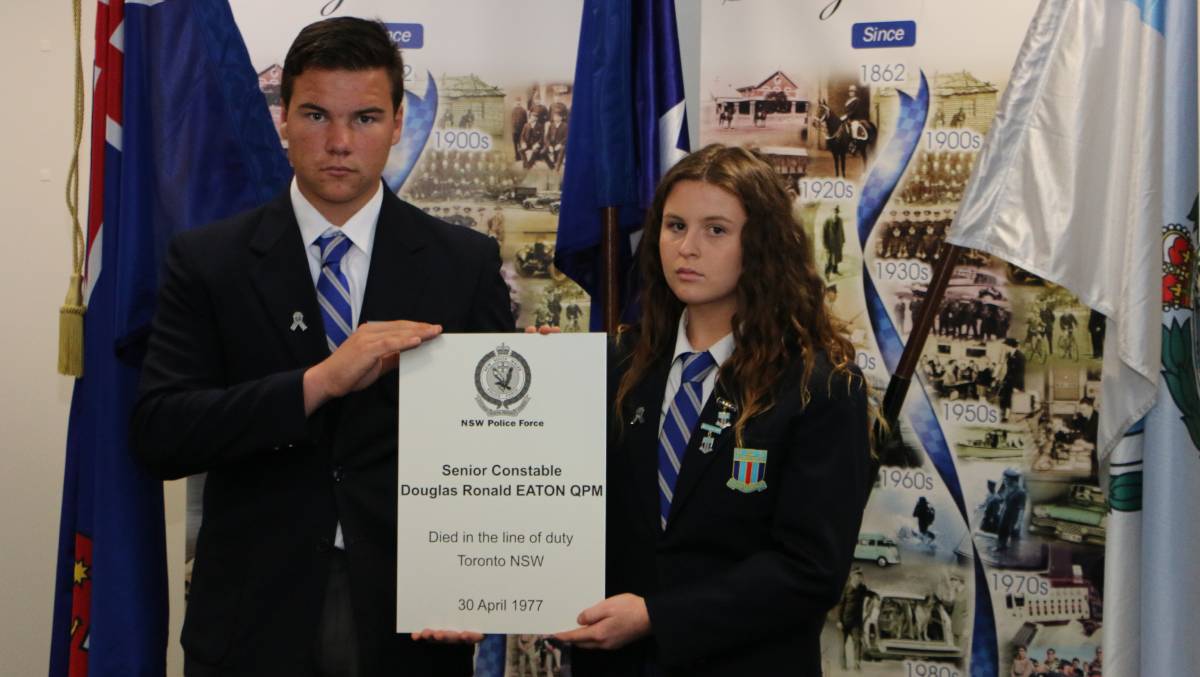
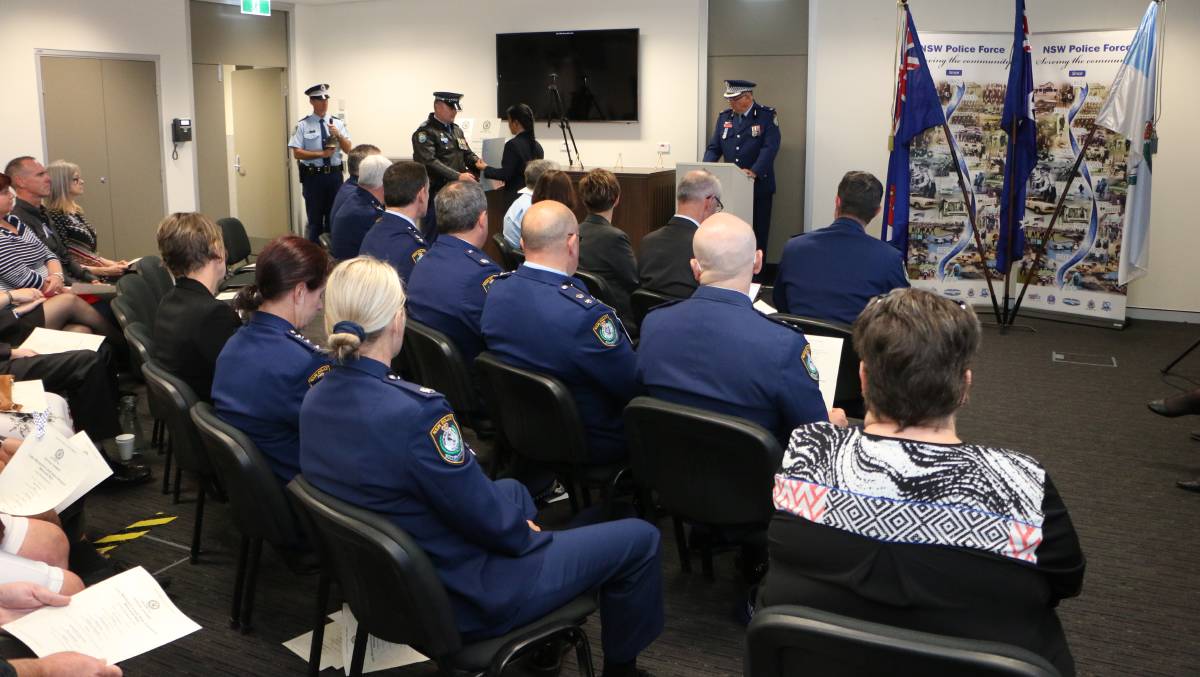
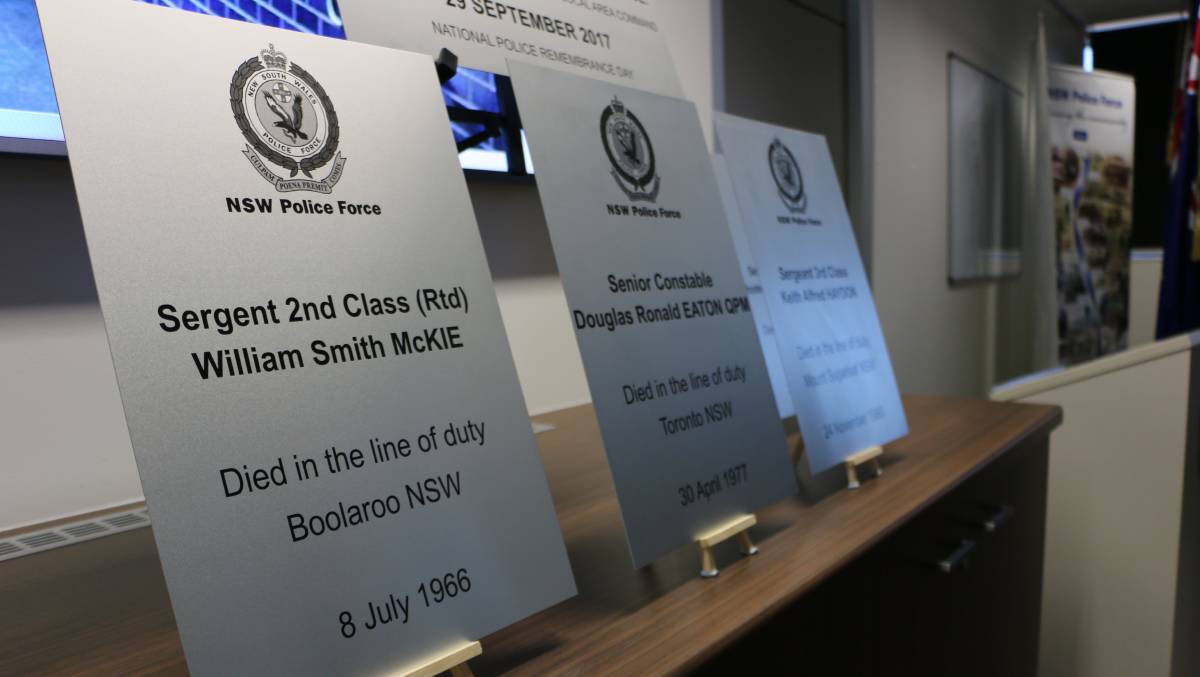
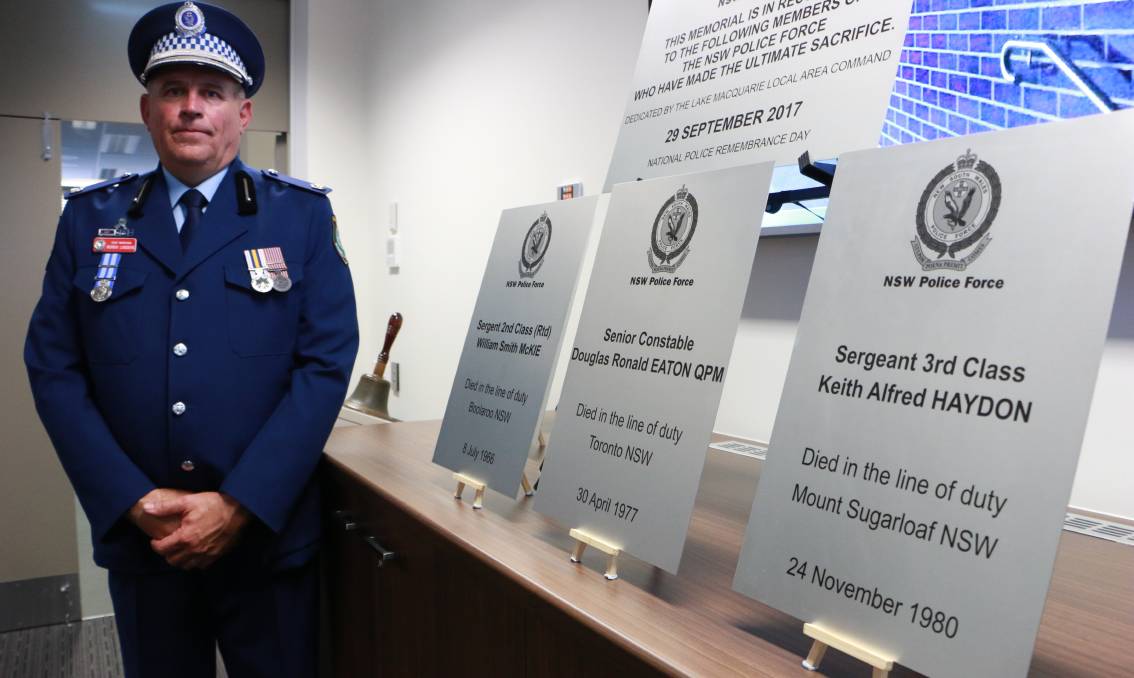
POLICE from Lake Macquarie Local Area Command have unveiled plans for a memorial wall at Belmont to honour the seven local officerskilled in the line of duty since 1863.
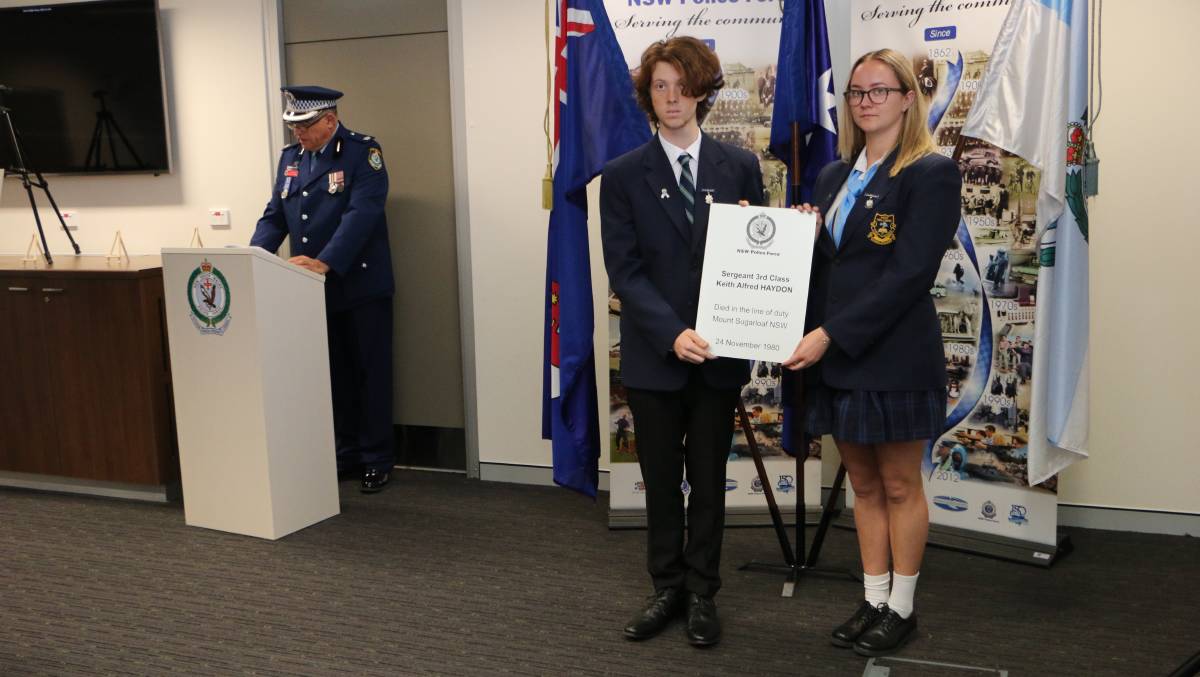
Plaques commemorating the seven officers were dedicated to the wall in a ceremony at Belmont police stationthis afternoon, National Police Remembrance Day.
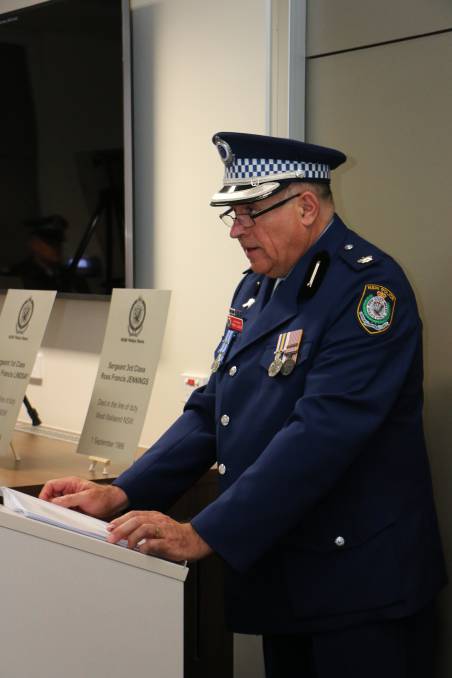
Chief Inspector Murray Lundberg of Lake Macquarie LAC presided over a private ceremony attended by police, local high school students, and the families of the fallen officers.
“This is a time for reflection on the ultimate sacrifice that police officers can give in the execution of their duty,” Chief Inspector Lundberg said.
Acting Assistant Commissioner Brett Greentree, the Northern Region Commander, said the wall of remembrance, to be created on the distinctive blue wall at the entrance to the police station, would be striking.
“It will be a sight to treasure,” Acting Assistant Commissioner Greentree said.
“I want the officers, as they are walking out the front doors of this police station, to stop and reflect on the names, stop and reflect on the sacrifice.”
He said he hoped that the inaugural plaques to be installed on the wall were also the last.
“My dream is that we never, ever, add another name to this wall. I hope and pray that our wall is now complete.”
Acting Assistant Commissioner Greentree reached out to the families of the fallen officers.
“No commemoration or recognition can make good the loss that is unfairly carried by family members,” he said.
“I can only offer you my heartfelt condolences. Please know that your loved ones, who are no longer with us, will always be remembered.”
Across NSW, ceremonies were held to commemorate the service and sacrifice of the 269 officers who have lost their lives in the line of duty, and through injury or illness, since the formation of the NSW Police Force in 1862.
Harold James EVANS
| 27/10/2012
Harold James EVANS
New South Wales Police Force
Sergeant 3rd Class
Motor Vehicle Accident
Peats Ridge
Stations: Holbrook, Aberdeen
Died 17 July, 1986
Funeral ?
Sgt Harold James Evans with son Mark. Taken at West Wyalong, 1969 / 70. Photo courtesy of Virginia & Mark Evans.
About 7.30am on 17 July, 1986 Sergeant Evans was driving a police vehicle towards Sydney along Peats Ridge Road, Peats Ridge when his vehicle collided with an oncoming vehicle. He died a short time later.
The sergeant was born in 1940 and joined the New South Wales Police Force on 20 June, 1967. At the time of his death he was stationed at Aberdeen.
Sgt Harold James Evans ‘touch stone’ at the Canberra Police Wall of Remembrance.
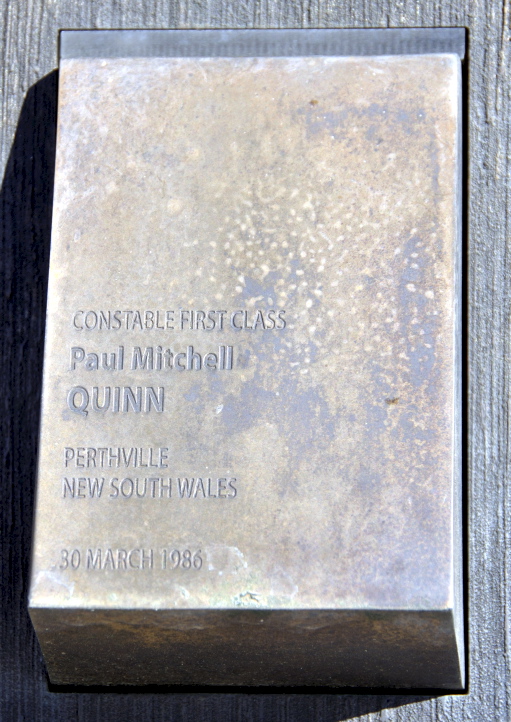
Paul Mitchell QUINN
| 27/10/2012
Paul Mitchell QUINN
New South Wales Police Force
Redfern Police Academy Class # started with 156 – may have ended with 163
Cadet #: 3358
Regd. # 18605
Rank: NSW Police Cadet – commenced Training at Redfern Police Academy on Monday 4 July 1977 ( aged 17 years, 1 months, 28 day )
Probationary Constable – appointed 29 May 1979 ( aged 19 years )
Constable – appointed ? ? ?
Constable 1st Class – appointed 29 May 1984
Final Rank: Constable 1st Class – posthumously promoted to Sergeant 3rd Class
Stations: Casino & Bathurst – Death
Service: From 4 July 1977 to 30 March 1986 = 8 years, 8 months, 26 days
Awards: No find on It’s An Honour
Born: Sunday 29 May 1960
Died on: Wednesday 30 March 1986
Cause: Murdered. Shot through neck during arrest
Event location: , Perthville, NSW
Age: 25 years, 10 months, 1 day
Funeral Date: ?
Funeral Location: ?
Buried at: ?
Grave location: Maranatha, Sec: Mar2, Row: A, Grave: 112
Memorials: 1/ Chifley LAC has the ‘ Paul Quinn Award ‘ for the most outstanding Officer each year. Paul is Remembered within the Chifley LAC.
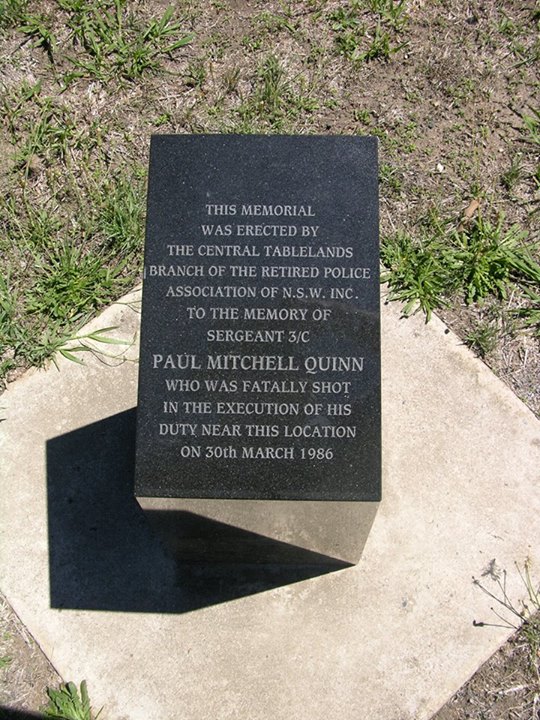
2/ Paul Mitchell Quinn – stone monument near the murder scene
3/ Mt Panorama ( Bathurst ) Police Compound – dedicated to Sgt Paul Quinn
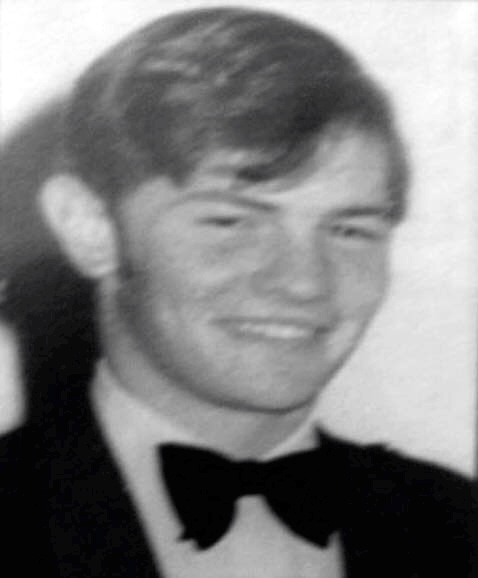
Paul Mitchell Quinn – monument near the murder scene
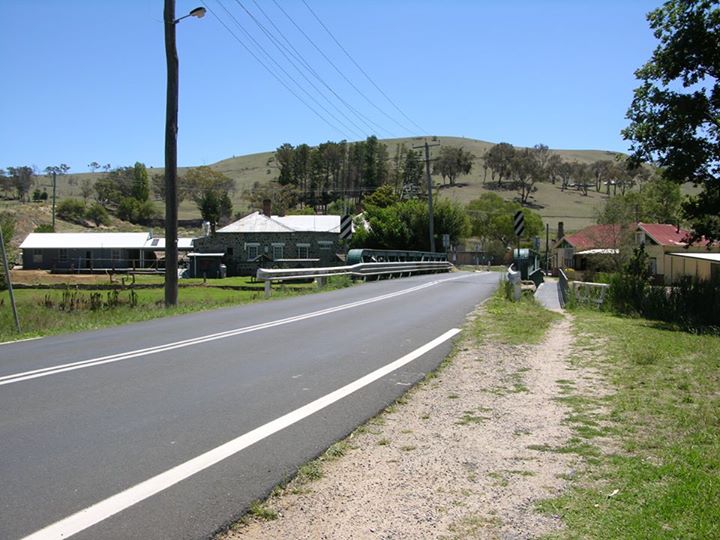
Paul Mitchell Quinn – murder scene
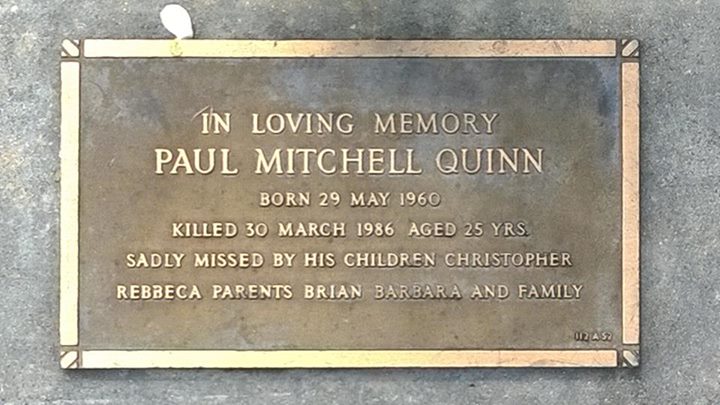
Police Wall of Remembrance – touch plate for Paul Mitchell QUINN – Canberra
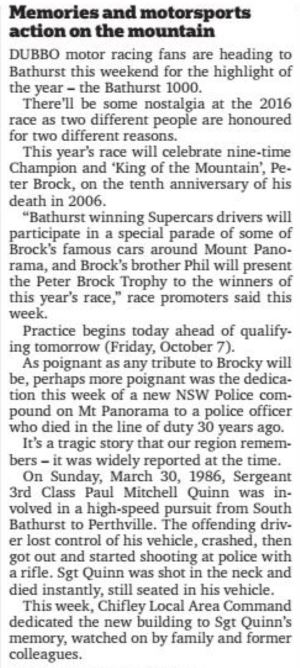
Dubbo Photo News, page 3, Oct 6 – 12, 2016
Late in the afternoon of 30 March, 1986 Constable 1st Class Quinn was involved in the high speed pursuit of a vehicle from South Bathurst towards Perthville.
At Perthville the offender lost control of the vehicle and collided with a bridge railing at the intersection of Bridge Street.
The offender then leapt from the vehicle with a .303 rifle and began to fire at the police who had been chasing him.
Constable Quinn was hit in the neck and killed instantly and Constable Ian Borland was seriously wounded.
The offender, Horan, was shot several times by police before being arrested and charged.
Fortunately Constable Borland recovered from his injuries. Constable Quinn was posthumously promoted to Sergeant 3rd Class.
The sergeant was born in 1960 and joined the New South Wales Police Force as a Cadet on 4 July, 1977. At the time of his death he was stationed at Bathurst.
Other Police who assisted with this incident at the time of the shots being fired were Senior Constable John Andrew BYERS BM.
Chifley LAC has the ‘ Paul Quinn Award ‘ for the most outstanding Officer each year. Paul is Remembered within the Chifley LAC.
Childhood pain relived as policeman’s killer poised for release
January 14, 2004
The day Constable First Class Paul Quinn was buried with full police honours, his daughter Rebecca turned four. After a funeral that closed streets in the policeman’s home town of Bathurst, his five-year-old son, Chris, was still asking relatives when Daddy would be coming home.
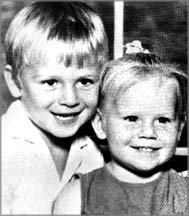
Lost innocence . . . Chris and Rebecca Quinn aged five and four.
Yesterday the siblings sat together in distress again as the man who killed their sole-parent father was declared ready to return to the community after serving almost 18 years in jail.
Chris has had trouble with the law, but has shown talent as a lightweight boxer. Rebecca runs a coffee shop and turns 22 in a couple of months.
Supporting them was Inspector Ian Borland, who was seriously wounded the day Constable Quinn was killed and still works in Bathurst near where the pair encountered Patrick Francis Horan on Easter Sunday 1986.
The policeman and the Quinn siblings had been told Horan would be granted parole at his third attempt, but the decision moved Chris to climb over the public gallery and storm out the Hospital Road courtroom door.
Weeping outside, he was embraced by Inspector Borland, who still has bullet fragments in his body.
Inspector Borland, the Quinns and the NSW Police Association wanted to keep Horan, 63, locked up until he was dead.
John Watts, for Inspector Borland and the Quinns, had argued that Horan‘s lack of insight into his psychiatric problems and his refusal to acknowledge he had been the aggressor when Constable Quinn was killed made a “potent mix”.
But the Parole Board found Horan, a paranoid schizophrenic, was unlikely to pose a risk to others if he took his medication and that “the jail system is not a substitute for the treatment of people suffering from mental illness”.
Horan‘s prison behaviour had been exemplary and he successfully completed unsupervised work release. He had the family support of a brother and was engaged in “the admirable hobby of bee-keeping”, the board found.
Horan had not been taking his medication when his mother called police about his erratic and violent behaviour on the afternoon of March 30, 1986. One of the officers to respond to the call was Constable Quinn, then 25 and on duty at Bathurst for only his fifth shift since being transferred from Casino, to be near his parents.
After a pursuit that ended 10 kilometres south of Bathurst at Perthville, Constable Quinn got out of his car and ran towards Horan, who shot him in the left clavicle with a .303-calibre rifle.
The officer’s colleagues returned fire as Horan adopted what he described as a Rambo position and emptied the 10-round magazine in his .303.
Constable Borland, then 36, was shot in both legs and a hand, while Horan, who was hit by at least seven of 18 shots fired by police, continued shooting at five other officers.
Constable Quinn was posthumously promoted to sergeant.
In the Supreme Court sitting at Bathurst, Horan pleaded not guilty to murder but guilty to manslaughter on the grounds of diminished responsibility due to mental illness.
Justice Kep Enderby sentenced him to life, with separate terms for wounding with intent to murder Constable Borland and shooting with intent to murder other police.
In March 1998 Justice Peter Hidden set a minimum term of 16 years, which expired in 2002, and a maximum of 22. The crown did not appeal.
Horan will be released next Wednesday, under conditions that include his accepting psychiatric treatment and not entering Chifley Local Area Command, where Inspector Borland works.
ANOTHER LIFE LOST: Chifley Local Area Command Acting Inspector Lionel White ( # 24873 ) said police in Bathurst have been personally affected by the death of Constable William Crews in Sydney on Wednesday night. Photo: BRENDAN ARROW 091010
POLICE in the ChifleyLocal Area Command have been personally affected by the death of trainee detective William Crews.
The 26-year-old died in a Sydney hospital after he was shot while carrying out a drug operation on Wednesday night with seven other officers from the Middle Eastern Organised Crime Squad in Bankstown, in Sydney’s south-west.
The officers were fired upon outside the targeted property in Cairds Avenue about 9pm. Constable Crews was hit in the head and neck.
Philip Nguyen, 55, has since been charged with shooting with intent to murder and discharging a firearm with intent to cause grievous bodily harm.
Geehad Ghazi, 27, has been charged with possession of an unauthorised firearm.
Yesterday, Acting Inspector Lionel White said the tragic situation in Sydney had personally impacted on a number of officers who knew Constable Crews.
“It is a very shocking situation, a couple of the officers here at the Bathurst Police Station knew him and have been left very upset by the situation,” he said.
“Some of the officers worked with him and trained with him before he became a detective.
“For those officers, we are offering them support and counselling during this tough time.”
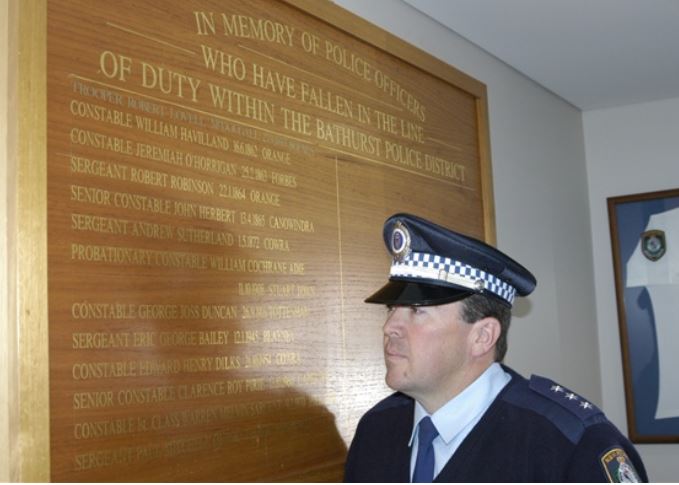
Reminding people of those officers who lost their lives in the Bathurst area in the line of duty is a memorial board naming the 13 policemen who have died in the line of duty.
Since Trooper Robert Lovell McDougall died in 1853 near Sofala, 12 officers have fallen in the line of duty in Bathurst area with Sergeant Paul Mitchell Quinn the last, on the March 30, 1986.
Acting Inspector White said the latest death in Sydney brought to the forefront the difficult circumstances that police can find themselves in daily.
“On top of the very mundane things we do every day this is a stark reminder of the dangers police officers can face while in the front line,” he said. “This very much reminded us of the risk officers sometimes have to take while in the line of duty.
The State government has logged objections to Patrick Horan a NSW prisoner’s planned release, convicted of the manslaughter of a police officer and seriously wounding another. Justice Minister John Hatzistergos says the NSW Parole Board intends to grant parole to Patrick Francis Horan, who committed the crimes near Bathurst in NSW’s central west in 1986.
Horan‘s 22-year sentence expires on March the 29th, 2008 but his 16-year non-parole period lapsed on March the 29th last year. Hatzistergos says he’s discussed the matter with Police Minister John Watkins, who he says is also shocked at the board’s intention to release Horan.
In relation to convicted offenders:
(1) What is the status of attempts by Patrick Francis Horan, who killed one police officer and wounded another, to obtain parole?
(2) What action have you taken to ensure that Patrick Francis Horan remains in jail?
Answer—
(1) I am advised by NSW Police that the review hearing on Mr Horan‘s application for parole has been adjourned by the Parole Board until 13 November 2003 pending reports from Corrective Services Health and the Serious Offender’s Review Board.
(2) I have expressed my concerns in writing to the Parole Board in relation to the release of Mr Horan.
Free… but banned from Bathurst By Brooke Newstead Jan. 14, 2004, 6:38 a.m.
POLICE killer Patrick Francis Horan will walk free next week.
However, he will not be allowed to return to Bathurst for at least five years.
The NSW Parole Board yesterday granted Horan full parole with the condition that he is not to enter the Chifley Local Area Command district.
His release date is set for January 21 and he will remain on parole for five years.
Horan was originally sentenced to life plus 125 years after shooting dead Bathurst police officer Sergeant Paul Quinn and injuring then Senior Constable Ian Borland at Perthville in 1986.
On November 13, 2003, he was granted day release and after being released for just seven day-release days since that date, he will now be allowed to fully integrate back into the community.
Subsequent conditions imposed by the Parole Board state Horan must undergo regular psychiatric assessment and counselling.
He is also never to approach any of the victims of the fateful night during which he shot dead Sergeant Quinn.
A prisoner advocacy group has welcomed news convicted police killer Patrick Francis Horan will walk free in a week.
Horan, who suffers from paranoid schizophrenia, has served the minimum 16-years sentence for the manslaughter of Bathurst police officer Sergeant Paul Quinn and the wounding of his partner, Inspector Ian Borland.
The New South Wales Government has criticised the granting of parole and promised to reform the composition of the parole board.
But a spokesman for Justice Action, Brett Collins, says it was obvious 17 years ago the man had mental health problems and his case needed special treatment.
“Instead we have a tragic situation where we have a policeman killed and another one disabled,” he said.
“Now for the police to actually present themselves at this stage as vengeful, as angry … when it’s clearly a mental health issue, one which requires compassion and requires understanding, it’s a shame.
“It’s not what we should expect from the police force and we certainly should expect better than that from the State Government.”
Mr Collins says it is important in this case to listen to the experts.
“So if you don’t listen to them and if in fact you still at the end of it as a government or as a police association are still saying at the end of it we are still angry, we still have hate, we want vengeance then that’s a misleading situation,” he said.
“We should accept the fact that the institution is there for the purpose of making a decision and accept the judgment of the umpire and give support to them.”
Horan is to be released next Wednesday on the condition he does not enter the Chifley local area command where Inspector Ian Borland works, for the next five years.
It is expected convicted police killer Patrick Francis Horan will issue a statement this afternoon after being released from Sydney’s Long Bay Jail.
Horan shot and killed Sergeant Paul Quinn during an incident in the State’s central west 17 years ago.
He served his minimum of 16 years in jail for killing Sergeant Quinn and injuring then Senior Constable Ian Borland outside of Bathurst in 1986.
Horan fired at police with a rifle after a high-speed car chase.
Corrective Services says Horan will read a statement to the media at the jail’s boomgate, just after his release at 3:00pm AEDT today.
The department cannot say where Horan will be moving, or what possible security arrangements have been made on his behalf.
The parole board has ruled that Horan will not be able to return to the Chifley local area command, where surviving officer Inspector Boland is still serving.
The board says Horan is not a danger to the public, provided he takes regular medication to treat his paranoid schizophrenia.
PROUD MOMENT: The parents of the late Sergeant Paul Quinn, Brian and Barbara, with the inaugural winner of the Paul Quinn Award, Acting Sergeant John Gallop ( # 35307 ). Photo: BRIAN WOOD 051712
SERGEANT Paul Quinn epitomised everything a police officer should be and yesterday the inaugural award named in his honour was presented at the Chifley Local Area Command’s medal ceremony.
Sergeant Quinn made the ultimate sacrifice when, on March 30, 1986, he was shot in the line of duty trying to arrest Patrick Francis Horan at Perthville.
Sergeant Quinn’s parents, Brian and Barbara, attended the ceremony, with Mrs Quinn presenting the recipient, Acting Sergeant John Gallop ( # 35307 ), with the prestigious award.
Local Area Commander, Superintendent Michael Robinson ( # 24785 ) said he approached the Quinn family with the idea of a perpetual award, after marking the 25th anniversary of Sergeant Quinn’s death last year.
“With the consent of Brian and Barbara, the Chifley Local Area Command has introduced a new award – the Paul Quinn Memorial Officer of the Year Award,” he said.
“It is a prestigious award which from now on will be a permanent part of the history of this command.”
Supt Robinson said what will make this award so special is the fact it will be awarded to an officer who has been nominated by his or her colleagues.
He said the award will focus on the officer who continually achieves; the person who epitomises the traits of excellence in policing.
“It’s not about a single effort – the best job, the most difficult or dangerous job,” Supt Robinson said
“This award targets officers who consistently perform to a high level; the officer who gets the job done, who goes the extra yard for the good of the community whether it’s for victims, witnesses, hunting down offenders or proactively engaging in the workplace.”
Presenting the award, Mrs Quinn described the day as both “proud and sad”.
“It never goes away,” she said.
Recipient, Acting Sergeant John Gallop said he was humbled by the award.
“It’s a massive honour to be judged by your peers,” he said.
“But I can’t help feel there are people more deserving,” he said.
Horan was released by the Parole Board on the evidence of a social worker who’s evidence was preferred over a forensic psychiatrist and Ron Woodham, who the Judge described as a public servant when dismissing his forty years experience dealing with the worst of the worst.
As the social worker approached the witness box to give evidence she stopped, hugged and kissed Horan. She has five years experience with Corrective Services.
There were six QC‘s representing many people including the Commissioner of Police, Corrective Services Commissioner, The Justice Minister, Attorney General, the Premiers Department, Ian Borland and Paul’s kids. All those representations were completely ignored in favour of her evidence.
Even worse, the Commissioner of Police’s representative on the Board voted to let him out. He went along with the unanimous decision of the Board.
To his good credit John Hatszistigos got rid of the Judge the next day.
Decision was unable to be reversed, C.O.P. did nothing about his representative as he is independent of the Commissioner?
Horan served nineteen years of a cumulative sentence of life plus a hundred and twenty seven years.
Hi Greg, just a quick note on the great work that you and your pages do, and that of the Wall to Wall Ride.
You keep the memories of those we have lost, very much alive.
On the Wall ride, all the individual groups and sometimes the whole ride, travel to places where our kin have lost their lives, and stop or salute to remember them.
Kudos to NSW for the great job they do on the memorials on the highway, and congratulations to ACT for the best procession on record.
Even a far away place like Perthville near Bathurst was visited and a token of remembrance 30 years on, was placed and left.
Remembrance is not a burden, its an obligation you can choose to carry… Lest we forget!
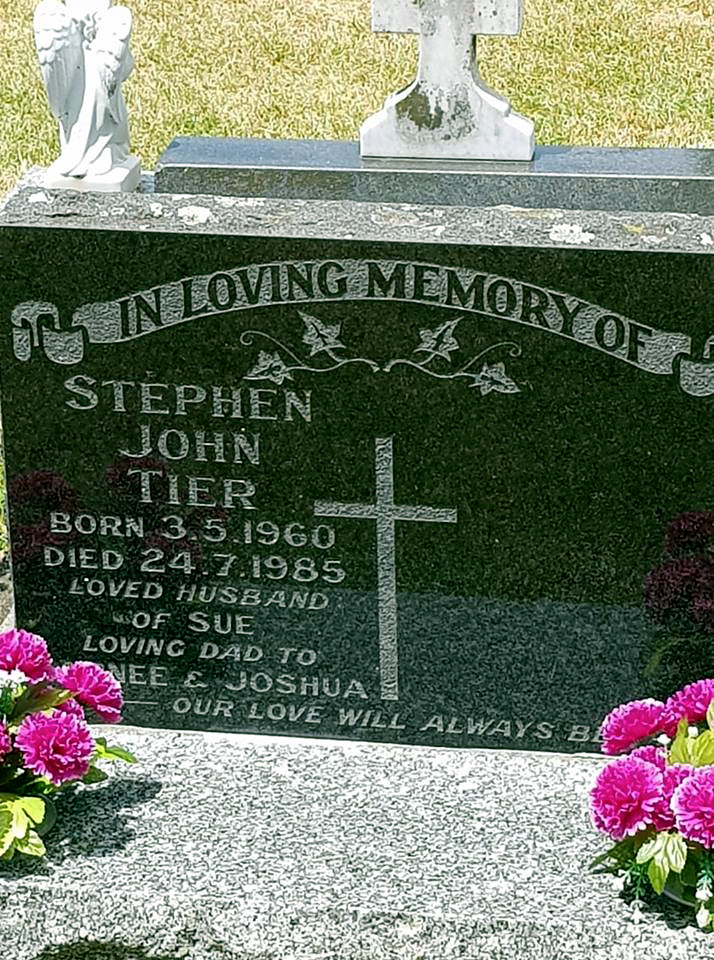
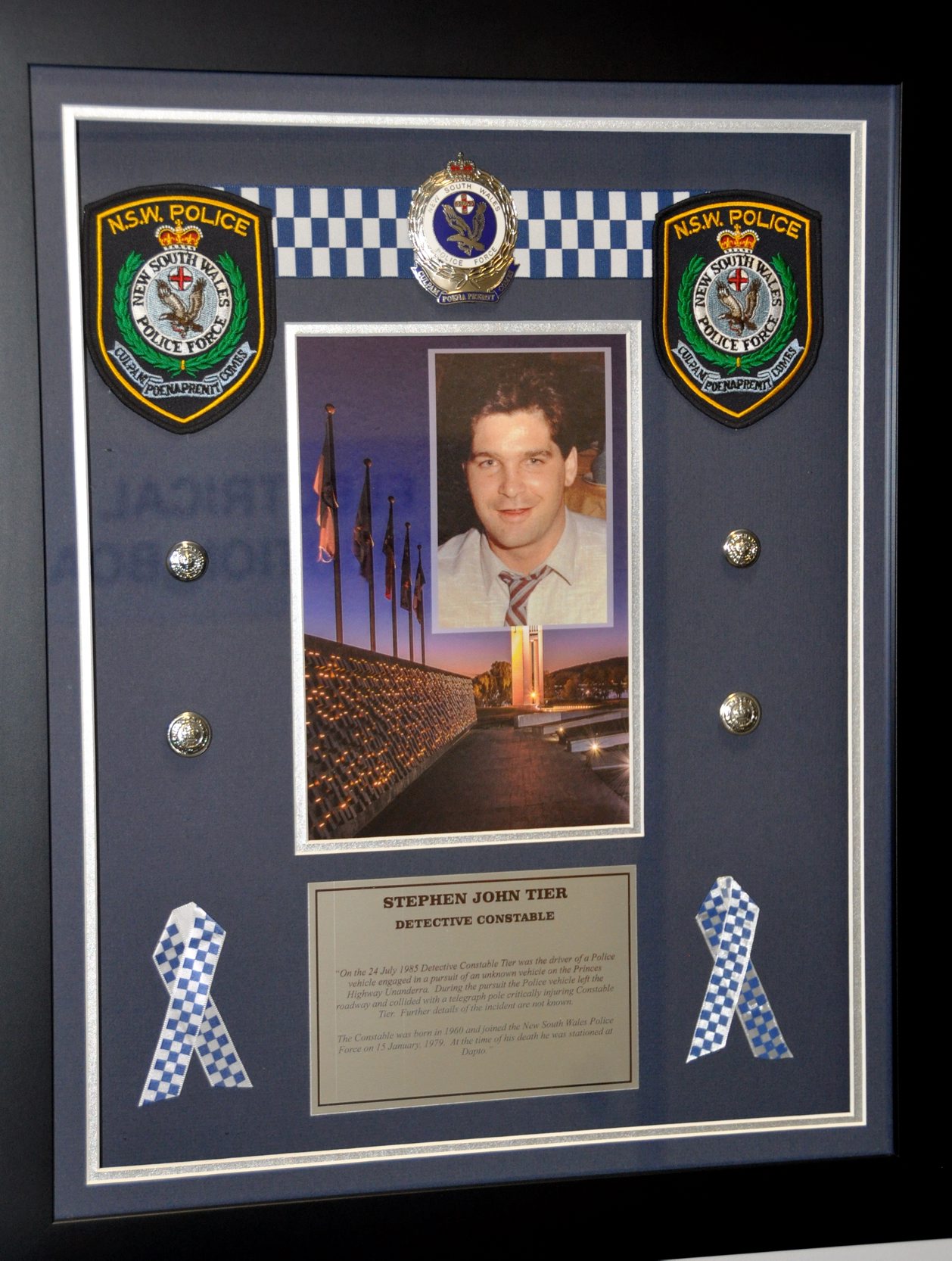
Stephen John TIER
| 27/10/2012
Stephen John TIER
New South Wales Police Force
Regd. # 18680
Redfern Police Academy Class # 163
Rank: Commenced Training at Redfern Police Academy on Monday 9 April 1979 ( aged 18 years, 11 months, 6 days )
Probationary Constable – appointed Monday 25 June 1979 ( aged 19 years, 1 month, 2 days )
Constable – appointed 25 June 1980
Detective – appointed ? ? ?
Constable 1st Class – appointed 25 June 1984
Final Rank: Detective Constable 1st Class
Stations: ?, Dapto – Death
Served: From 9 April 1979 to24 July 1985 = 6 years, 3 months, 15 days Service
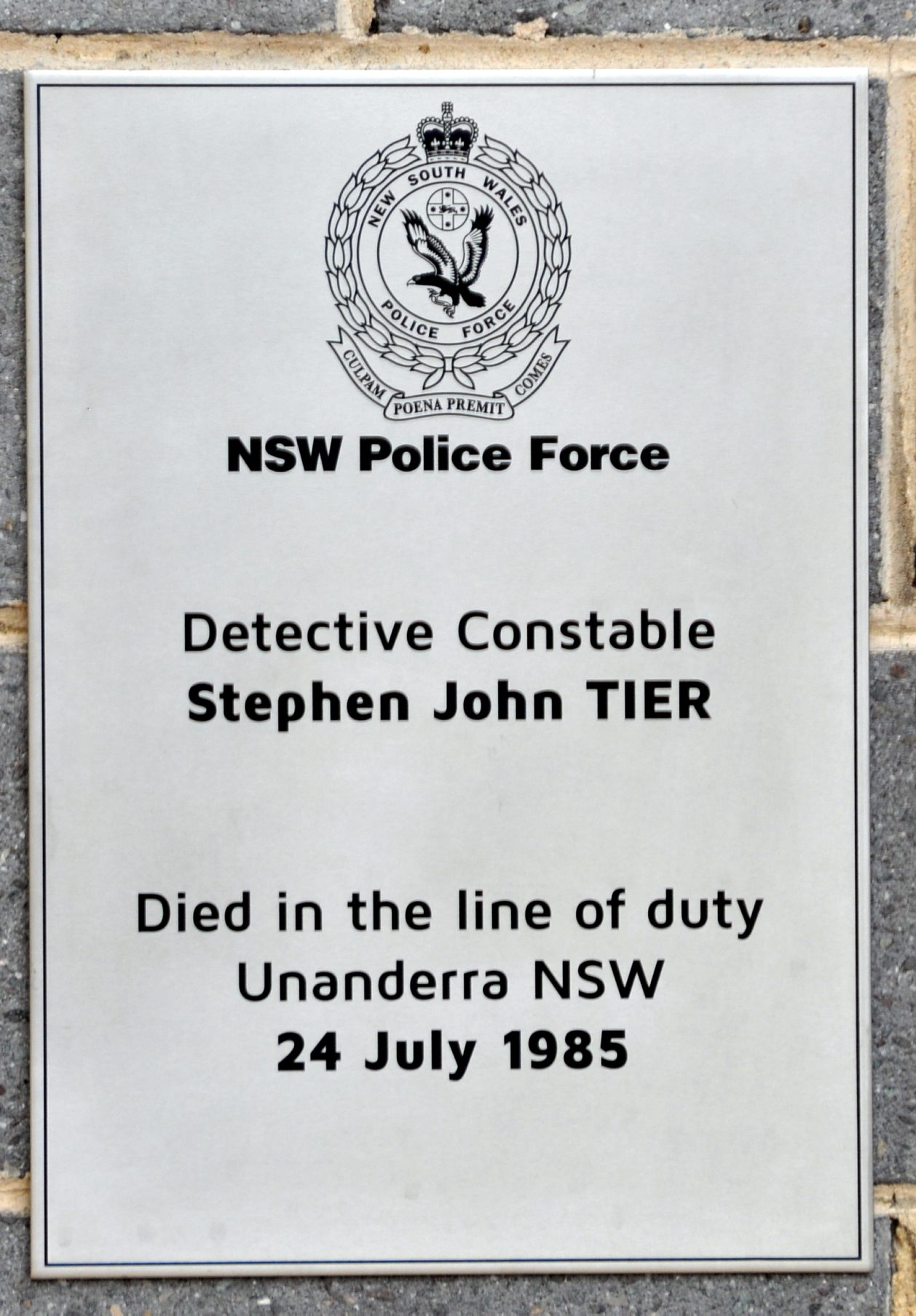
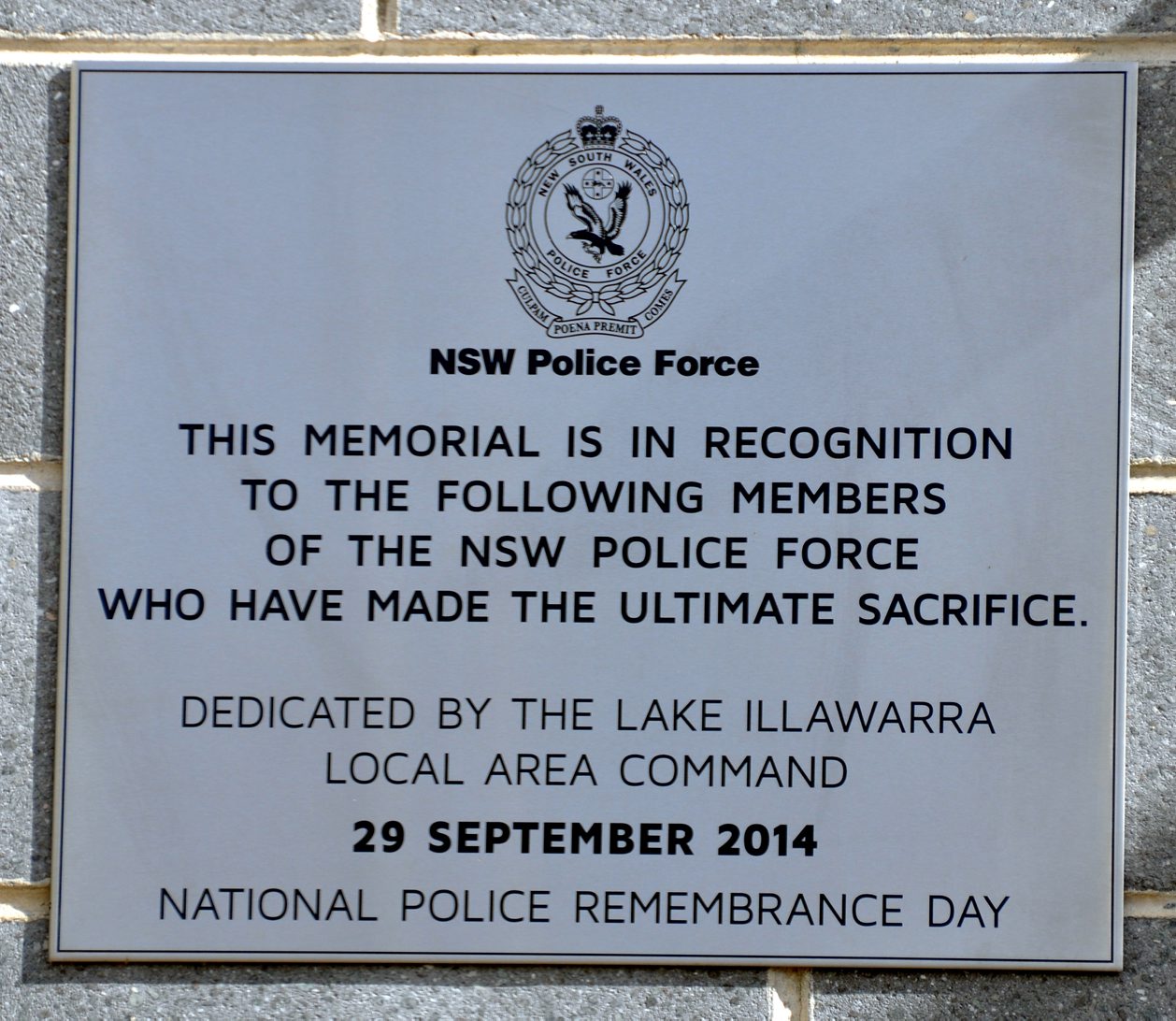
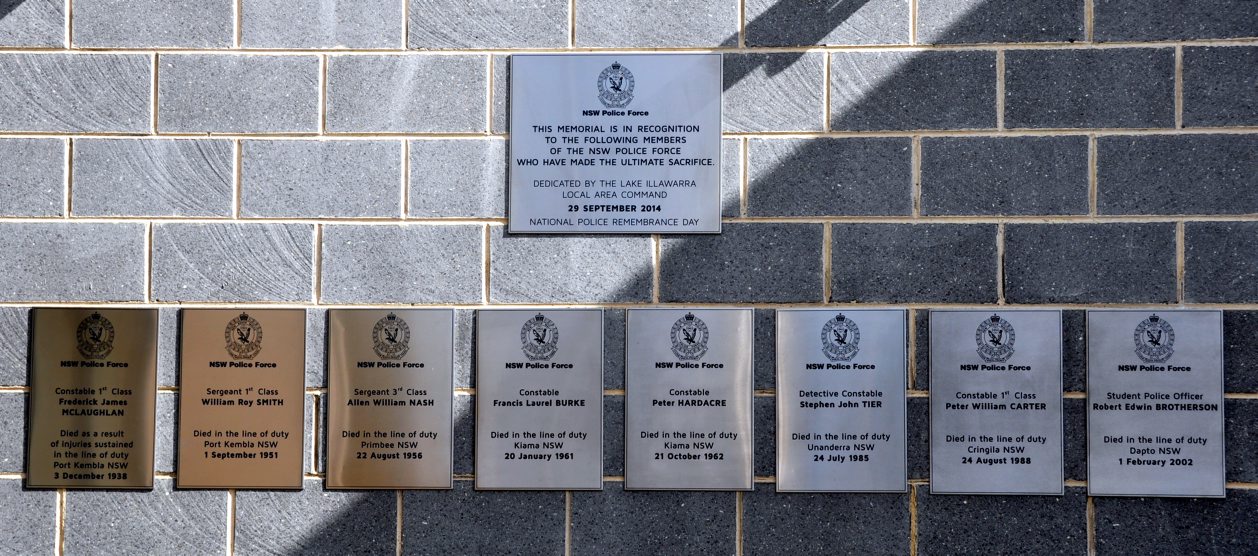
Memorial location: External Wall leading into Lake Illawarra Police Station and photo, on wall, inside Lake Illawarra Police Station
On 24 July, 1985 Detective Constable Tier was the driver, and single occupant, of an unmarked police vehicle engaged in the pursuit of an unknown vehicle on the Princes Highway, Unanderra. During the pursuit the police vehicle left the roadway and collided with a telegraph pole.
The constable was born in 1960 and joined the New South Wales Police Force on 15 January, 1979.
At the time of his death he was stationed at Dapto.
STEPHEN is mentioned on the Police Wall of Remembrance
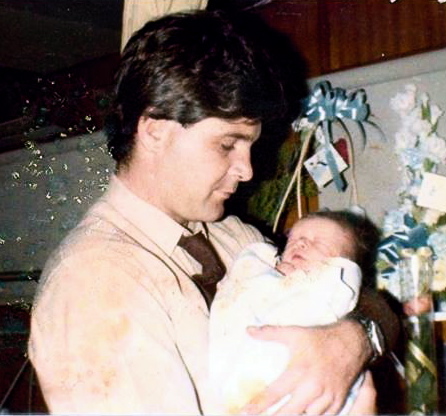
Stephen Tier holding his son, Joshua Tier.
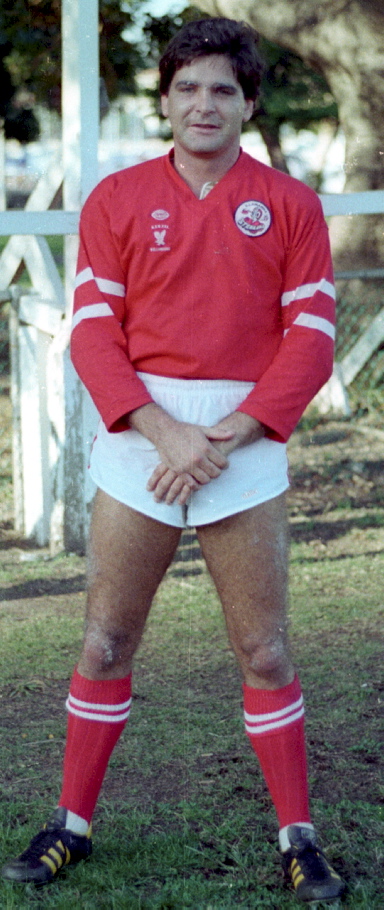
Det Cst Stephen John Tier – 20 April 1983 playing Police Football for Wollongong.
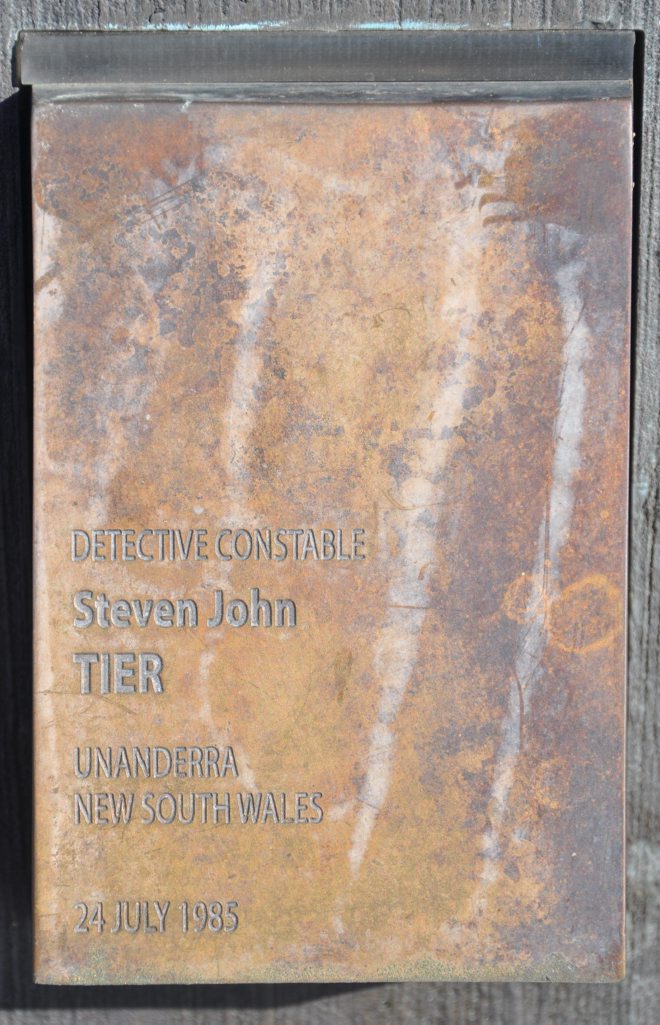
Stephen TIER – Touch pad at the National Police Wall of Remembrance, Canberra.
Stephen John TIER Memorial inside Oak Flats Police Station, NSW.
Police Remembrance Day:
JOSHUA BUTLER
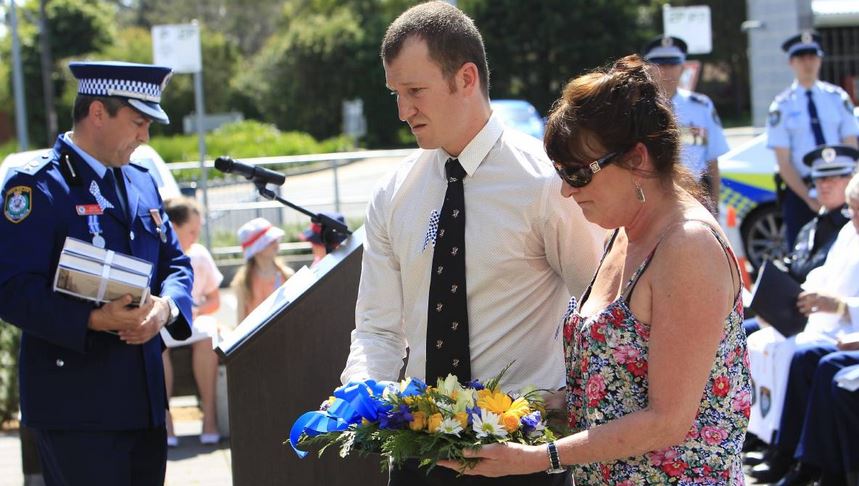
Family members lay a wreath for Det Const Stephen John Tier. Picture: ANDY ZAKELI Lake Illawarra Commander Acting Superintendent Andrew Koutsoufis to the left.
Almost 60 years on, Kenneth Nash still misses his uncle Allen.
Sergeant Allen William Nash, aged 40, was killed in the line of duty by a gun-wielding offender at Primbee in 1956.
Sgt Nash was one of eight officers stationed in the Lake Illawarra local area command who were recognised with memorial plaques on a wall of honour outside Lake Illawarra police station on Monday, as part of Police Remembrance Day commemorations.
Dozens of current and retired officers, families, friends, politicians, councillors and members of the public gathered at Oak Flats for a ceremony to unveil the memorial wall, and honour past and present officers.
Since 1862, more than 250 NSW Police officers have died in the line of duty.
Alone in his patrol car, Chris Thornton had the police siren flashing as he chased a white sedan through Woy Woy.
Thornton, 35, a highway patrolman, had been in the force for 15 years. He was, his mother says, “the best driver I have ever seen”.
The reason for the chase that night in April 2002 is unknown. Both cars were seen travelling at high speed. Thornton was about 50 metres behind.
Meanwhile, Leonard Rowley, 56, an unlicensed driver, was driving to his local KFC to pick up dinner. He saw the first car flash past and judged – wrongly – that he had time to turn out in front of the patrol car. Thornton tried to avoid Rowley’s car but clipped the back, veered onto the wrong side of the road and hit a power pole.
Thornton died on the spot, which is marked by a permanent stainless-steel cross. Rowley later received a suspended two-year sentence.
“His life from the age of 12 was about helping people,” says Thornton’s mother, Freada Thornton. “He was in the surf club and he was there to rescue people and then he went into the force and he was doing the same thing.” His father, Barry Thornton, says: “He loved life. He had been in Gosford for 15 years and was so popular with the community there.”
Police pursuits are, says Barry, a necessary evil: “If they don’t catch the criminals there will be more deaths on the roads. The ones that they’re in pursuit of are the idiots that have done the wrong thing to start with.”
But pursuits have come at a cost to the NSW Police Department. Fifteen officers have died as a result of high-speed chases, beginning with the death of Constable George Boore in 1937.
Details provided by the NSW Police Association show a steady stream of fatalities involving cars and motorcycles. The full list of casualties is as follows:
Wayne IS mentioned on the Police Wall of Remembrance
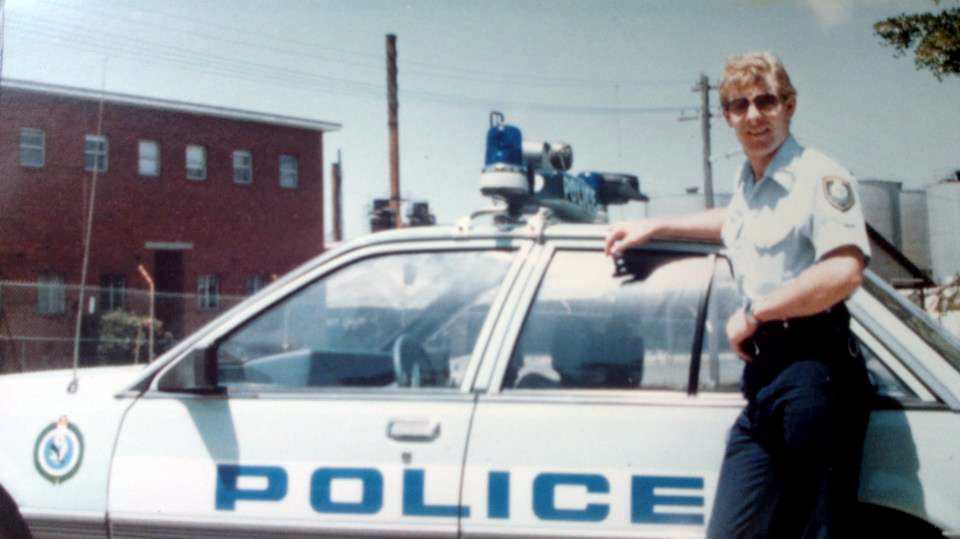
About 5pm on 3January, 1985 Constable Rixon and Probationary Constable Meredith Ireland were travelling in a Police Highway Patrol vehicle in Bannerman Crescent, Rosebery when they became involved in the high speed pursuit of a stolen vehicle. As the pursuit continued along Hayes Street the stolen vehicle sped through stop signs at the intersection of Dunning Avenue. The police vehicle slowed at the intersection but unfortunately collided with a truck that had been travelling along Dunning Avenue. After hitting the truck the police vehicle spun around and slammed into a brick wall. Constable Rixon sustained severe head and internal injuries and had to be released from the police vehicle by the PoliceRescueSquad. He was conveyed to the Royal South Sydney Hospital where he was found to be dead on arrival. Constable Ireland was treated at the Prince of Wales Hospital for lacerations and shock before she was allowed to leave.
The constable was born in 1957 and joined the New South Wales Police Force on 23 January, 1978. At the time of his death he was attached to the Maroubra Highway Patrol.
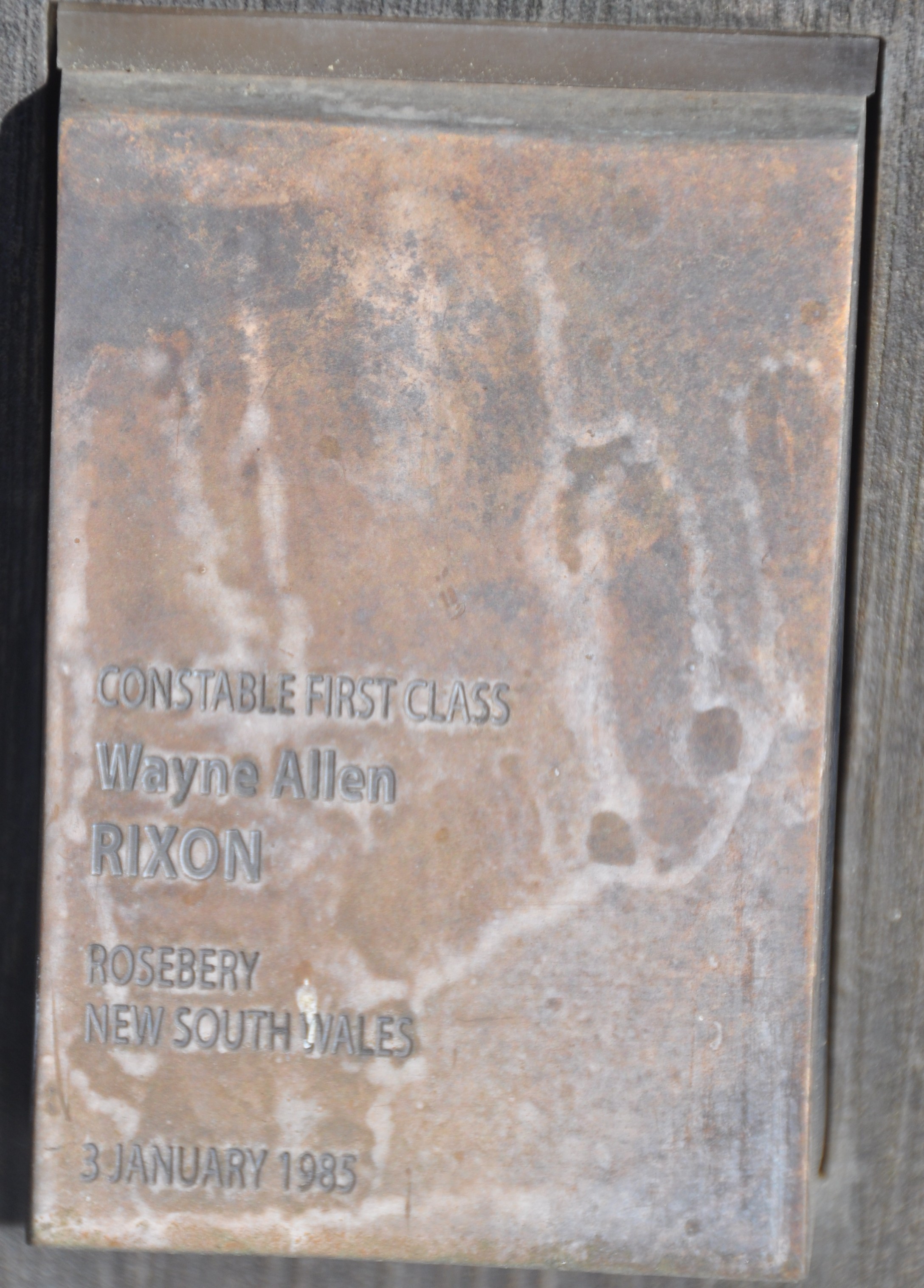
Wayne Allen RIXON – touch pad at the National Police Wall of Remembrance, Canberra
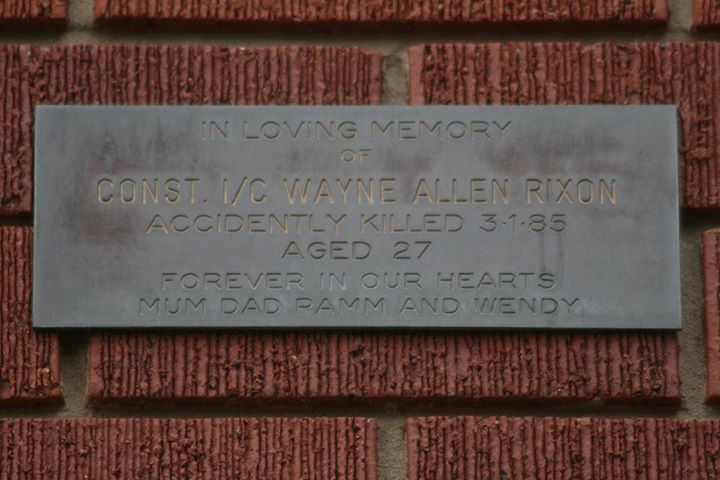
A plaque that Wayne’s family had engraved, then placed in position by former members of Maroubra HWP and visited every year. At the intersection of Hayes St & Dunning Ave, Rosebery.
Canberra Times (ACT : 1926 – 1995),
Thursday 10 January 1985, page 9
Hundreds attend funeral of constable at Bega
From BRONWYN YOUNG, in Bega
Hundreds of people packed the church and lined the streets of Bega yesterday for the police funeral of highway patrolman Constable First Class Wayne Rixon, 27, killed in a high-speed car chase in Sydney last Thursday.
About 100 police in uniform and plainclothes had been arriving in Bega for the funeral since Tuesday.
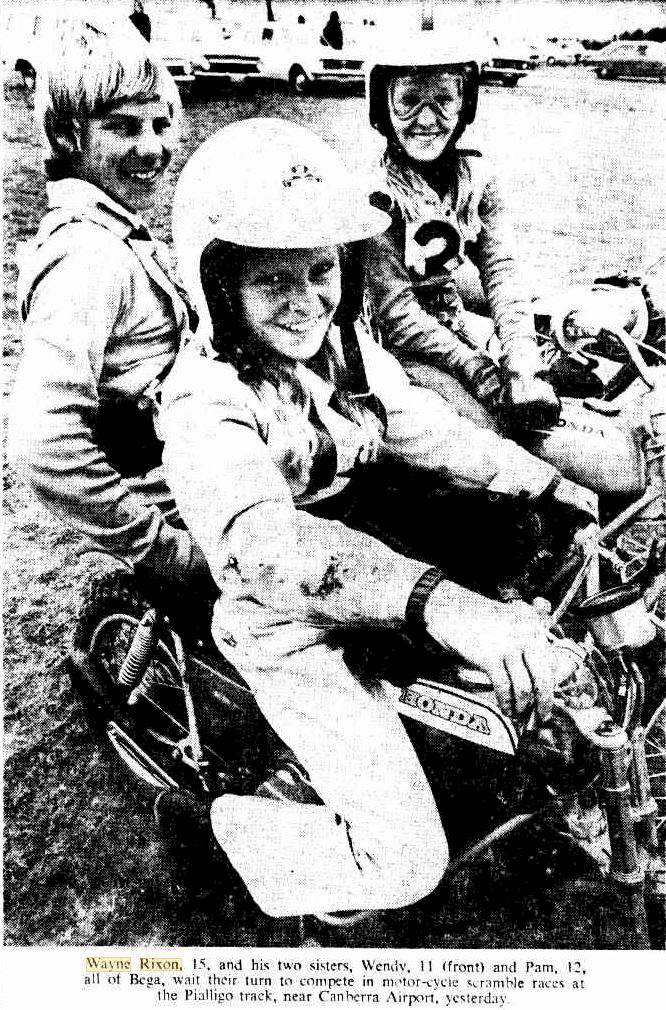
Constable First Class Rixon was working with Maroubra highway patrol when he died on Thursday, but he grew up in Bega. Many of the people in the church and watching from the street had gone to school with
him. Police closed two roads for the funeral procession and its police escort.
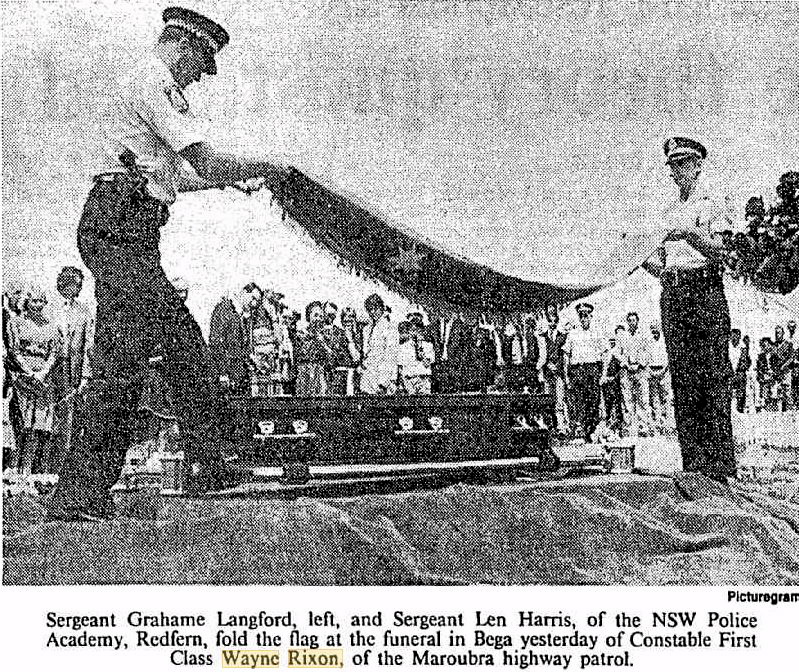
The coffin draped with the Australian flag was carried from the church by six police officers.
Some of them had worked with Constable First Class Rixon in Maroubra. A seventh police officer, Sergeant Grahame Langford, of the NSW Police Academy, Redfern, walked in front of the coffin carrying the constable’s cap on a blue cushion. The caps of the six pallbearers lay on the roof of the waiting hearse.
Two mounted highway patrolmen in full ceremonial uniform
headed the solemn procession which escorted the hearse from the church. Among those marching were Acting Commissioner Barney Ross, Assistant Commissioner, Traffic, Bill Fleming, and Assistant Commissioner, General, Ted Bunt. The police marched in slow step down the street to the pipes of the NSW Police Pipe Band.
When the procession neared the Bega Courthouse the ranks broke and formed a guard-of honour. The hearse passed between the lines and gathered speed as it turned on to the road to the Bega Cemetery.
Alone in his patrol car, Chris Thornton had the police siren flashing as he chased a white sedan through Woy Woy.
Thornton, 35, a highway patrolman, had been in the force for 15 years. He was, his mother says, “the best driver I have ever seen”.
The reason for the chase that night in April 2002 is unknown. Both cars were seen travelling at high speed. Thornton was about 50 metres behind.
Meanwhile, Leonard Rowley, 56, an unlicensed driver, was driving to his local KFC to pick up dinner. He saw the first car flash past and judged – wrongly – that he had time to turn out in front of the patrol car. Thornton tried to avoid Rowley’s car but clipped the back, veered onto the wrong side of the road and hit a power pole.
Thornton died on the spot, which is marked by a permanent stainless-steel cross. Rowley later received a suspended two-year sentence.
“His life from the age of 12 was about helping people,” says Thornton’s mother, Freada Thornton. “He was in the surf club and he was there to rescue people and then he went into the force and he was doing the same thing.” His father, Barry Thornton, says: “He loved life. He had been in Gosford for 15 years and was so popular with the community there.”
Police pursuits are, says Barry, a necessary evil: “If they don’t catch the criminals there will be more deaths on the roads. The ones that they’re in pursuit of are the idiots that have done the wrong thing to start with.”
But pursuits have come at a cost to the NSW Police Department. Fifteen officers have died as a result of high-speed chases, beginning with the death of Constable George Boore in 1937.
Details provided by the NSW Police Association show a steady stream of fatalities involving cars and motorcycles. The full list of casualties is as follows:
Both Wayne Rixon and Glenn Rampling formed part of a 3 man team at the Mounties, going around mainly to country fairs performing vault tricks with the draft horse. Tragically both lost their lives in High Speed pursuits after leaving the Mounties for other duties. RIP, both were good men.
Pashalis (Paul) KATSIVELAS
| 27/10/2012
Pashalis (Paul) KATSIVELAS
New South Wales Police Force
Constable
Shot – Murdered
Concord
Stationed at Newtown
Joined NSW Police Force on 13 December 1982 via Class 192
Born 1964
Died 4 April, 1984
Buried Rookwood Cemetery
About 11.30am on 4 April, 1984 Constable Katsivelas was on duty at the Concord Repatriation Hospital where he was guarding a prisoner who was suffering from heroin withdrawal. The prisoner asked to be allowed to visit the toilet so the constable unlocked one handcuff and, with the assistance of a nurse’s aide, escorted the prisoner to the toilet area. As the prisoner left the toilet cubicle he suddenly leapt at the constable, knocking him to the ground. A violent struggle ensued during which the prisoner seized the constable’s service revolver and shot him twice in the chest before escaping. Constable Katsivelas died a short time later from his wounds. The offender was later located by other police and when warned to surrender he shot himself in the head.
The constable was born in 1964 and joined the New South Wales Police Force on 13 December, 1982. At the time of his death he was stationed at Newtown.
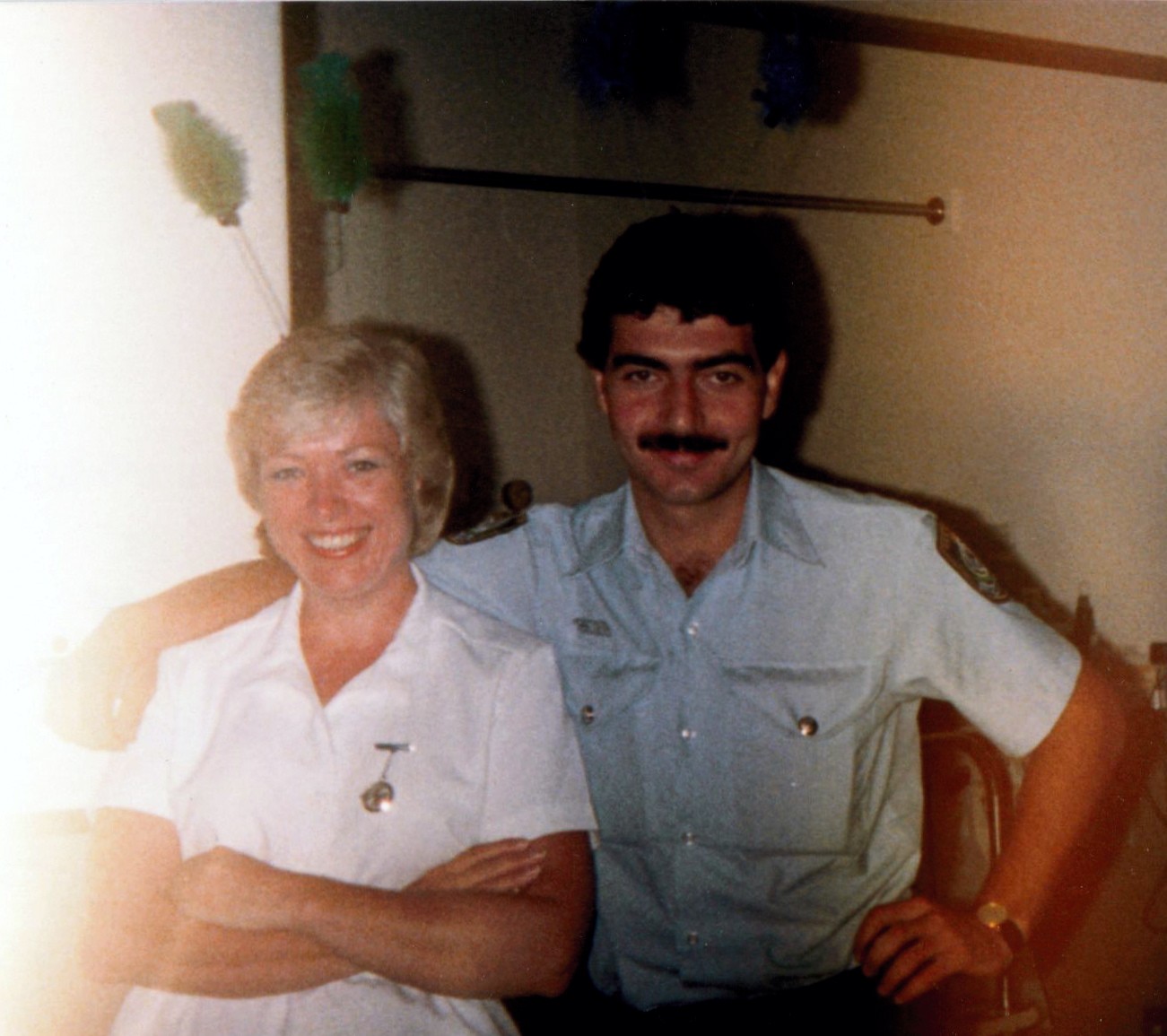
This photo was taken of Paul, at the Hospital, on the same day, shortly before his death. The head Matron, Norma Spark, took the photo of Paul and a Nurse before Norma finished her shift. This is the last, know, photo of Paul alive.
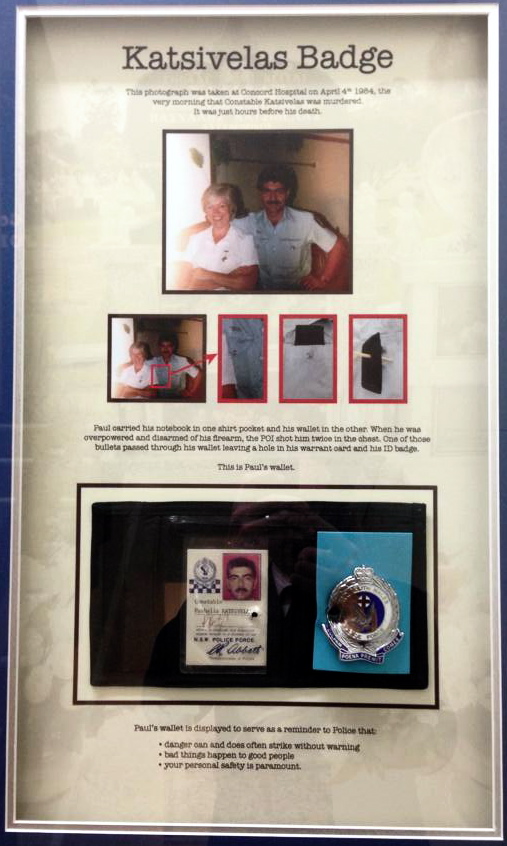
This memorial photo is hanging up at Newtown Police Station as a stark reminder to all Police that bad things can happen to good people. As seen in 2014.
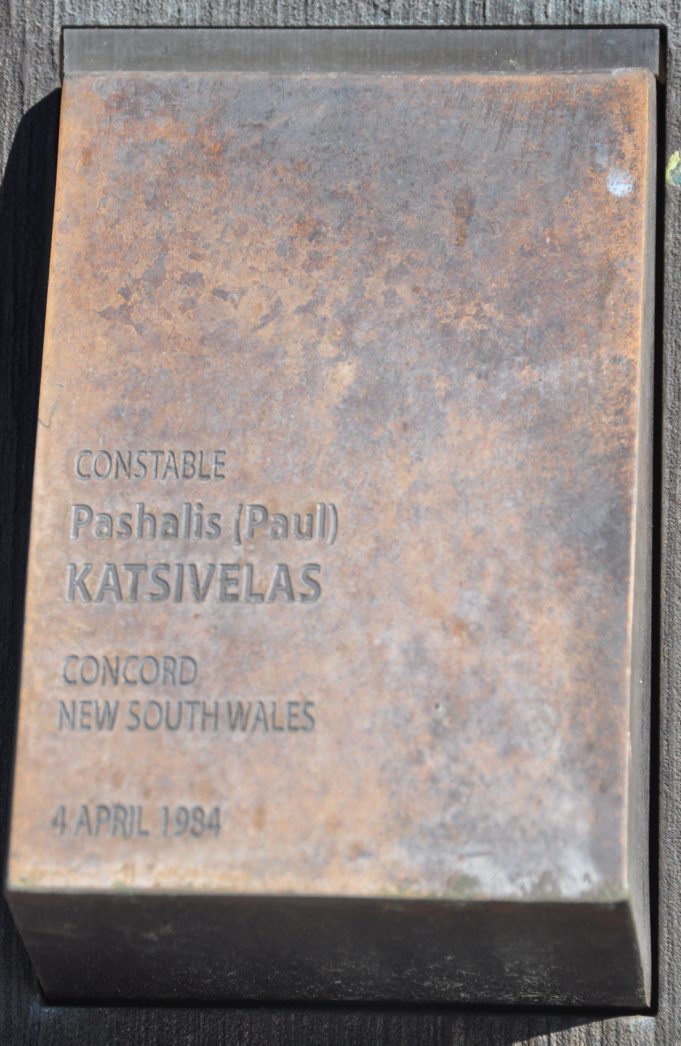
Pashalis (Paul) KATSIVELAS Touch pad at National Police Wall of Remembrance, Canberra – 2014
[divider_dotted]
NEWTOWN LOCAL AREA COMMAND POLICE COMMEMORATION SERVICE
Ms CARMEL TEBBUTT (Marrickville) [7.07 p.m. 8 May 2013]: Recently at Rookwood Cemetery I attended a memorial service to commemorate police officers from the Newtown local area command killed in the line of duty. The moving service was attended by Deputy Police Commissioner Nick Kaldis, Superintendent Simon Hardman, the commander of the Newtown Area Local Command, many other police representatives, and relatives and descendants of the police officers. Those attendees included Ms Avona Wallace, Mr and Mrs Norman Stephenson, Mrs Lynette Everton and Ms Edna Stevenson. Representatives from the emergency services and community members were also in attendance. The member for Campbelltown, Bryan Doyle, attended representing the Premier.
The five officers being remembered at the ceremony gave their lives to protect the community. They were Constable First Class John Wallace, Constable First Class Ruston Stephenson, Constable Lionel Guise, Detective Inspector Reginald Stevenson and Constable Pashalis Katsivelas. The ceremony to mark the sacrifice of these officers reflected on the enormity of their contribution to the community, as well as the impact of their death on their families. It is often said, and it is true, that police officers leave their homes for each shift uncertain of what any day may bring and whether they will return at the end of the day. We owe these men and women our deepest gratitude for the risks they face and take every day in their job. At Rookwood Cemetery we visited each of the graves of those officers who lost their lives in the line of duty and behind each individual was an illuminating life story.
We began at the grave of Constable First Class Ruston Stephenson, who died 80 years almost to the day of the commemoration. Constable Stephenson joined the Police Force in 1912, and four years later enlisted in the army, later joining the fight in France during the First World War. He was awarded the Distinguished Conduct Medal for conspicuous gallantry in rescuing injured soldiers while under fire. Remarkably, when he returned he rejoined the Police Force and continued to serve until his death on 9 April 1933 after a tragic accident involving a motorcycle at the then Newtown Stadium while performing general duties policing.
We were also told the story of Detective Inspector Reginald Hugh Stevenson—I was honoured on the day to meet his widow, Ms Edna Stevenson, who still had strong memories of the incident that led to Inspector Stevenson’s death. Detective Inspector Stevenson joined the NSW Police Force as a cadet in 1943 at the age of 17. In an act of extraordinary selflessness, Detective Inspector Stevenson was on annual leave on 9 December 1974 when he decided to go to work to assist in the planned arrest of a dangerous offender in Newtown, at the time telling his wife, “I don’t want my boys doing this on their own.” During the operation he was shot in the chest after leading his team in pursuit of the offender.
Detective Inspector Stevenson partially recovered and was awarded the Queen’s Commendation for Brave Conduct and the Queen’s Police Medal for Distinguished Service. However, he died in 1980 of a heart attack, deemed to be the result of the injuries he sustained on duty in 1974. These officers are just a few of many across New South Wales whose lives have been cut short as they have gone about performing their duty. I pay tribute to them all. They will not be forgotten and local events such as this are a powerful reminder of their sacrifice.
I also take this opportunity to acknowledge two Marrickville police officers, Sergeant Stewart and Constable Steele, who on Monday of this week rescued an intellectually disabled person from a house fire in Marrickville. Thankfully, those two officers who took huge risks survived and are quite rightly being hailed as heroes by their colleagues and the community. It is yet another example of the risk our police men and women take every day in order to keep the community safe. I take this opportunity to pay tribute to them.
[divider]
Sergeant 1st Class Rhoderic Francis LINDSAY
| 27/10/2012
Sergeant 1st Class Rhoderic Francis LINDSAY
New South Wales Police Force
Boating Accident
Swansea
20 February, 1984
On the afternoon of 20 February, 1984 Sergeant Lindsay and Senior Constable Calman were both off duty and fishing in the sergeant’s boat off Swansea. About 6.10pm the yacht Melody radioed for assistance after running aground on the bar at Swansea Channel. Sergeant Lindsay and Senior Constable Calman then set out to assist the stricken vessel. Securing a line to the Melody they attempted to tow the vessel to safety, but as their efforts were hampered by heavy seas the sergeant released the line from the yacht. Constable Calman then noticed that Sergeant Lindsay was missing from his boat and seeing blood in the water, dived into the sea to rescue his friend. Constable Calman, assisted by surf club members, then conveyed the injured sergeant to shore however it was found then that he had died of his injuries.
It appears that Sergeant Lindsay was either knocked or was washed overboard where he suffered extensive head injuries when struck by his boat’s propeller.
He was posthumously awarded the Royal Humane Society Bronze Medal and the Police Commissioner’s Commendation for Outstanding Courage and Devotion to Duty.
The sergeant was born in 1935 and joined the New South Wales Police Force on 12 April, 1955. At the time of his death he was stationed at Newcastle.
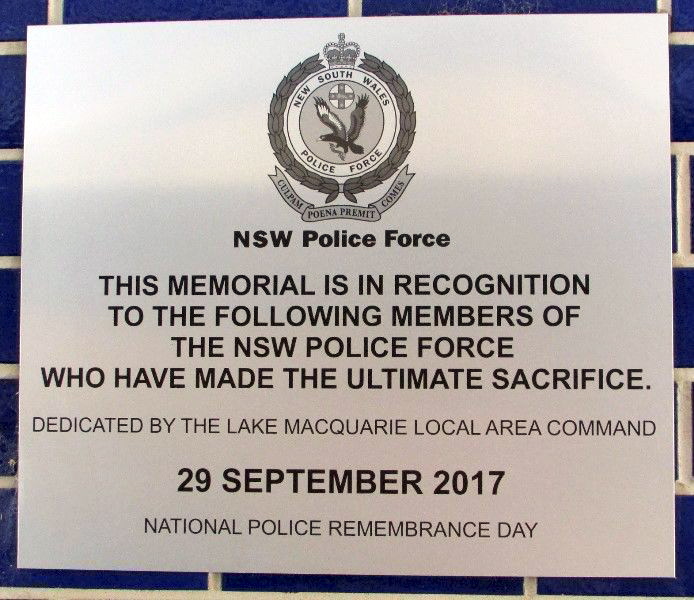
National Police Remembrance Day ceremony in Lake Macquarie
David Stewart
September 29 2017 – 4:27PM
POLICE from Lake Macquarie Local Area Command have unveiled plans for a memorial wall at Belmont to honour the seven local officerskilled in the line of duty since 1863.
Plaques commemorating the seven officers were dedicated to the wall in a ceremony at Belmont police stationthis afternoon, National Police Remembrance Day.
Chief Inspector Murray Lundberg of Lake Macquarie LAC presided over a private ceremony attended by police, local high school students, and the families of the fallen officers.
“This is a time for reflection on the ultimate sacrifice that police officers can give in the execution of their duty,” Chief Inspector Lundberg said.
Acting Assistant Commissioner Brett Greentree, the Northern Region Commander, said the wall of remembrance, to be created on the distinctive blue wall at the entrance to the police station, would be striking.
“It will be a sight to treasure,” Acting Assistant Commissioner Greentree said.
“I want the officers, as they are walking out the front doors of this police station, to stop and reflect on the names, stop and reflect on the sacrifice.”
He said he hoped that the inaugural plaques to be installed on the wall were also the last.
“My dream is that we never, ever, add another name to this wall. I hope and pray that our wall is now complete.”
Acting Assistant Commissioner Greentree reached out to the families of the fallen officers.
“No commemoration or recognition can make good the loss that is unfairly carried by family members,” he said.
“I can only offer you my heartfelt condolences. Please know that your loved ones, who are no longer with us, will always be remembered.”
Across NSW, ceremonies were held to commemorate the service and sacrifice of the 269 officers who have lost their lives in the line of duty, and through injury or illness, since the formation of the NSW Police Force in 1862.
John Benjamin HUTCHINS
| 27/10/2012
John Benjamin HUTCHINS
AKA ?
Late of ?
NSW Redfern Police Academy Class # 130
New South Wales Police Force
Regd. # 15???
Rank: Commenced Training at Redfern Police Academy on ? ? ?
Probationary Constable – appointed 14 February 1972
Constable – appointed ? ? ?
Constable 1st Class – appointed ? ? ?
Detective – appointed ? ? ?
Senior Constable – appointed ? ? ?
Final Rank = Senior Constable
Stations: ?, Regents St Police Stn, Balmain, Five Dock, Police Communications Branch – VKG1
Service: From? ? pre 1972? to17 November 1983 = 11 years Service
About 12.25pm on 17 November, 1983 Senior Constable Hutchins was riding his motor cycle to work along Victoria Road, Ryde.
He failed to notice a vehicle that was stationary in front of him and collided with the rear of the vehicle.
Senior Constable Hutchins was conveyed to the Ryde Hospital where he was found to be dead on arrival.
The constable was born in 1951 and joined the New South Wales Police Force on 14 February, 1972. At the time of his death he was attached to the Police Communications Branch.