William Thomas, 72 years of age, ex-inspecting superintendent of police, committed suicide at his residence, Elsternwick (Melbourne) early on Thursday morning by shooting himself through the heart with a revolver. Thomas had suffered greatly from heart trouble for some months, and had latterly experienced much pain, and could neither eat nor sleep.
Singleton Argus ( NSW ) Saturday 12 September 1908 page 5 of 7
Stations: Mudgee, Gilgandra, Dubbo, Wellington, Grenfell, Bathurst x 2, Forbes ( for 7 – 8 months )
Service: From ? ? 1897? to 29 September1915= 18 years Service
Awards: ?
Born: ?
Died on: Friday 1 October 1915
Cause: Suicide by firearm
Inquest held: Saturday 2 October 1915
Age: 42
Funeral date: ?
Funeral location: ?
Buried at: ? in Sydney alongside of his 3 brothers & mother
[divider_dotted]
Forbes Court House location
[divider_dotted]
Leader ( Orange, NSW ) Monday 4 October 1915 page 1 of 6
POLICE CONSTABLE’S SUICIDE.
First class Constable Claude William Bovard, who was convicted at Forbes and fined last week for robbing a prisoner of £1, ended his life on the steps of the Forbes court house on Friday last by putting a bullet from a revolver through his brain.
Bovard was stationed at Grenfell prior to going to Forbes, and came of one of the most respectable families on the Richmond River. His death will be a great shock to his mother, brothers and sisters, who reside at Lismore. His first station after leaving the depot in Sydney was Mudgee; from there he was drafted to Gilgandra, thense to Dubbo, Wellington, Grenfell and Forbes. He was comparatively a young man, and, being of a sensitive nature, no doubt the degradation to which he had fallen was too much for him to face, and he sought relief by committing felo de se.
The Sydney Morning Herald Tuesday 5 October 1915 page 6 of 14
AN EX-CONSTABLE’S SUICIDE.
FORBES, Monday.
Claude William Alexander Bovard, an ex-member of the Police Force, shot himself dead with a revolver on the verandah of the Forbes Courthouse on Friday afternoon. At the coroners inquiry on Saturday morning a verdict of suicide was returned. Deceased was 42 years of age, and a native of Berrima. He had been 15 years in the force.
National Advocate ( Bathurst ) Thursday 7 October 1915 page 4 of 6
Forbes Policeman’s Suicide
TOOK HIS DISMISSAL TO HEART ” I AM AN HONEST MAN ” INQUEST ON EX-CONSTABLE BOVARD.
A coronial inquiry was held at Forbes concerning the death of ex-Constable Claud Alexander Bovard (42), who killed himself with a revolver on Friday last. Bovard had been convicted of having robbed a prisoner of £1, and was dismissed from the force, but always strongly maintained his innocence. He conceived a great dislike for Constable Fuller, who gave evidence against him. and declared to the Clerk of Petty Sessions (Mr. Wickham), just before he shot himself, that Fuller would walk over his blood. He then shot himself on the Court House verandah with Fuller’s revolver.
Bovard had been in the police force for 18 years and had been twice stationed at Bathurst. He went from Bathurst to Forbes seven or eight months ago.
He claimed to be well connected and said he was a cousin by marriage to Sir George Reid, and he also claimed relationship with Mr. McCourt, an ex-Speaker in New South Wales Parliament, and Superintendent Sutherland, of the Police Department.
Dr. Edward McDonnell declared that the bullet wound through Bovard’s head was apparently self inflicted.
Inspector Whitfield stated that Bovard was under the influence of liquor on the day of the occurrence. He came into witness’ office and said : ” I am an honest man and I never took that pound. ” Bovard shook hands and said he was leaving Forbes. Bovard had seemed to take his dismissal very much to heart and resorted to drink.
Aubrey S. Wickham, C.P.S., described Bovard’ s good-bye visit. Bovard asked him to tell the P.M. that he was not guilty, and added that Fuller would walk over his blood. Bovard then went outside and the fatal shot rang out immediately.
Sergeant Garstang said that early on the Friday afternoon Bovard asked him what time Fuller came on duty. Witness replied, ” Six o’clock, ” and Bovard said, ” Ah, that will do me. ” Half an hour afterwards Bovard was dead. Witness searched the body and found a three penny bit and a penny piece and some odds and ends. Bovard had no property except a tin trunk and some clothes.
Constable Fuller said the service revolver produced was his. He left it in his bed at the Police Barracks on Friday morning. Bovard had no right to be in possession of it. He had not seen Bovard during the few days prior to his death.
John William Seyers stated that when Bovard said good-bye to him he was crying and witness thought he was going to the war. Bovard said; ” Oh, my God, they swore lies against me here. ” Three minutes afterwards he heard a shot.
A coronial inquiry was hold at Forbes concerning the death of ex-Constable Claud Alexander Bovard (42), who killed himself with a revolver on Friday last.
Bovard had been convicted of having robbed a prisoner of £1, and was dismissed from the force, but always strongly maintained his innocence.
He conceived a great dislike for Constable Fuller, who gave evidence against him, and declared to the Clerk of Petty Sessions ( Mr. Wickham, just before he shot himself, that Fuller would walk over his blood. He then shot himself on the Court House verandah with Fuller’s revolver.
Bovard had been in the police force 15 years, and had been stationed at Dubbo. He claimed to be well connected, and he was a cousin by marriage to Sir George Reid, and he also claimed relationship with Mr. McCourt, an ex-Speaker in the N.S.W. Parliament, and Superintendent Sutherland, of the Police Department.
Forbes Advocate Tuesday 30 September 1919 page 2 of 4
IN MEMORIAM.
BOVARD: In memory of my beloved
son Claude Bovard, who lost his life at Forbes, 1st October 1915.
Inserted by his mother, brothers, and sisters.
http://trove.nla.gov.au/ndp/del/article/100316123
[divider_dotted]
Northern Star ( Lismore ) Monday 28 January 1924 page 4 of 8
LATE MRS. BOVARD
The death of Mrs. L. Bovard, of ” Lome House,” Glebe Point, which took place recently, removed another link with the early days of the Berrima and the Richmond River districts. Mrs. Bovard spent most of her life in those districts, where she and her late husband were held in high esteem by a large circle of friends.
Their long residence upon the Richmond River was spent at Goonellabah, upon the farm now owned by Mr. J. James, and afterwards in Lismore, where they reared a large family, the members of which were worthy of their revered parents.
One son, Mr. Cecil Bovard, served his time on the “Northern Star,” and afterwards entered the service of the Postmaster-General in Sydney, where his brother Percy held a high position. The sad death of another son, Senior-Constable Claude Bovard at Dubbo, was followed by the deaths from pneumonia and influenza, of the two sons in the Postal Department, within a space of three or four years. From this crushing blow Mrs. Bovard never recovered, and it has brought about her early death.
After the loss of her husband Mrs. Bovard removed with her family to Sydney.
The surviving members are one son, Sergeant Hedley Bovard, of the Maryborough (Qld.), police force, and three married daughters.
News ( Adelaide, S.A. ) Friday 30 December 1927 page 11 of 14
TRIANGLE OF DEATH
Police Figure in Murders
SHOT THROUGH WINDOW
When Constable Ford murdered Mrs. Laws and then shot himself at Leichhardt, Sydney, he completed a tragic triangle of death.
He was the third constable who has served at Grenfell, to die by violence.
Constables Claud Bovard and George J. Duncan were the other two.
More than ten years ago Ford and Bovard served together at Grenfell, and Duncan was stationed there soon after they left.
Bovard committed suicide by blowing out his brains three days after he left the police force.
Duncan was murdered by two men, both of whom were later hanged.
Six lives, which have ended unnaturally, were thus linked together.
The three were physically fine men. Constable Duncan was transferred to Tottenham when trouble was brewing in the district. Falling foul of two men, he was murdered one night in his office. The police station was a hut with two rooms. Duncan was sitting at his desk with his back to the window, typing. The blind was up, but the window was closed. Creeping to the window, the two men could see Duncan clearly in the flood of light from an oil lamp. They drew their revolvers and from the darkness fired two shots through the glass into Duncan’s back, killing him instantly. Later they were arrested, convicted, and hanged in Bathurst Gaol.
In New South Wales, since January 25, 12 murders have been committed, which is twice the number that have taken place in Victoria over the same period. With three exceptions, all have taken place in Sydney, and three have been committed in Ashfield.
Four murders have not yet been solved and jealousy and domestic unhappiness have been the cause in most of the remaining cases.
When Constable FordmurderedMrs. Laws and then shot himself at Leichhardt recently, he completed a tragic triangle of death. He was the third constable who has served at Grenfell to die by violence.
Constables Claude Bovard and George J. Duncan were the other two. Over ten years agoFord and Bovard served together at Grenfell, and Duncan was stationed there soon after they left.
Northern Star ( Lismore ) Thursday 26 January 1928 page 12 of 12
DEATH OF SERGEANT BOVARD
Mr. N. C. Hewitt writes:— Old residents of Lismore will regret to learn of the death of Sergeant Hedley Bovard, of the Queensland Police Force, who was for over twenty years a resident of Lismore. His death took place at the Mater Misericordiae private hospital, South Brisbane, on January 14th at the early age of 46 years.
The late Senior Sergeant Bovard was a son of the late Mr. and Mrs. Bovard, for many years resident in Ewing Square, Lismore.
Coming to the district when quite a small boy the family for some years were engaged in farming at Goonellabah on the farm now owned by Mr. Alf. James. This was in the latter “eighties.” He was educated at the Goonellabah public school. When the family removed to Lismore, if I mistake not, he entered the employ either of Mr. W. D. Lamotte or of Mr. C. Balzer, who had livery stables in Molesworth-street near the Freemasons’ Hotel.
In 1905 he joined the Queensland police and was for some years stationed in North Queensland in different centres and in difficult situations, afterwards being in charge at Bundaberg and Maryborough. Later he was acting-inspector at Chillagoe, but the climate forced him to apply for a change to the south. Then he was placed in charge at South Brisbane, Hamilton and various other Brisbane stations. His men under him held him in the highest regard.
As one remarked to the writer “If Bo. could not do you a good turn he would never do you a bad one.”
Quite recently Sergeant Bovard developed heart trouble and at the end of September he had to go into hospital. His two sisters, Mrs. Lee and Mrs. Pitt, went up from Sydney and he appeared to make a wonderful recovery. He decided to retire on a pension well earned for service in the climatically unfavourable North.
Early this year the heart trouble returned with dramatic suddenness and his sisters, including Miss Ethel Bovard, were summoned from Sydney when alarming symptoms manifested themselves. His condition rapidly became worse and he passed away peacefully as stated.
His death came as a shock to his comrades as well as to his sisters. The remains were taken to Sydney for interment beside those of his mother and three brothers and were accorded a State servant’s funeral, attended by all the available members of the force.
Sergeant Bovard‘s death is a particularly sad one. By his passing the last surviving male member of the Bovard family passes away without leaving a descendant to carry on a name that was honoured in Lismore a quarter of century ago.
Fifteen years ago the family included four strapping sons – young men of fine physique of whose lives one could have taken a lease.
The first break came when Senior Constable Claude Bovard of Wellington Police Force died under pathetic circumstances. Then during the pandemicCecil (who served his apprenticeship with the Northern Star) of the G.P.O. staff died from influenza, shortly to be followed by his elder brother Percy of the same department, from pneumonia.
Percy was one of the first, if not actually the first telephonist in Lismore.
The shock of losing her three sons was too much for the grief-stricken mother who shortly afterwards was called to her rest. Now the sole surviving son in the prime of life has been carried to that bourne whence no traveller returns.
The deceased gentleman was a devout member of the Church of England. To the bereaved sisters the sympathy of all who remember the family will go out.
This is the third death within six months of sergeants of police in Queensland who hailed from the Richmond River — Sergt. King, Sergt. D’Arcy McDonough and Sergt. Bovard — and it can be written of each that he was a credit to the sons of the Richmond River district who in peace or war have won new fame and glory.
Wellington Times ( NSW ) Thursday 14 January 1904 page 3 of 8
Alleged Murder.
ACCUSED COMMITTED FOR TRIAL.
The Coroner (Mr. R. Porter) held an inquest at the Court House on Monday touching the death of one (supposed) Edward Carson, who died at the Wellington Hospital on Saturday night from injuries received, it was alleged, in a disturbance at Winters’ Hotel at about 6.30 p.m. on Saturday.
The following jury was empanelled — Messrs. R. Read (foreman), R. Tait, F. Kennard, J. Walker, J. W. Marshall, L. N. Hyeronimus, J. T. Mallon, J. B. Wynne, W. J. Robinson, F. W. Everett, and A. Deveson.
Sergeant Steele conducted the case on behalf of the police.
After the jury had viewed the body, the following evidence was adduced : —
Constable Claude Bovard, sworn, deposed: In consequence of a message which came to the police station on Saturday evening about 6.30 went to Tattersalls Hotel kept by J. Winters ; made some inquiries from Mr. and Mrs. Winters and then went into a yard at the rear of the hotel ; saw William Henry Davis, now present in custody, behind a water tank in the yard ; said to him ” I want you to come with me ” ; he replied ” All right, Constable ” ; Davis and I proceeded along to the intersection of Lee and Gisborne-streets ; Davis said, ” What are you arresting me for ” ; replied ” Am arresting you on suspicion of inflicting grevious bodily harm on a man whose name is unknown to me ” ; he asked, ” Is the man dead ” ; replied ” No, not yet ” ; he said, ” You know you b—– c—– but you won’t tell me. ” Coaxed Davis along a bit further down the street, and he became very violent and resisted ; obtained assistance and brought him to the look up ; then returned with Constable Byrne to Winters’ Hotel there saw the deceased, subject of this inquiry, who was lying on a couch in the parlor of the hotel ; viewed the body today at the hospital with the jury ; deceased was lying on his back ; he was unconscious and breathing very heavily ; procured a conveyance and took him to the hospital ; went back and saw deceased lying dead about 1 o’clock on Sunday morning ; there were no marks and no blood about the body ; produce papers ( A.W.U. ticket and shed references ) – handed to me by Sergeant Steele and was informed that they were found on the body of deceased ; also produce a watch and one gold ring handed to me by Sergeant Steele ; the nine pence in cash and other small articles were handed to me by the Matron at the hospital ; was informed they were found on deceased ; saw Davis now before the Court in the lock-up about 7 o’clock last night in the presence of Constables Byrne and O’Reilly ; asked him his name ; he replied Henry Davis ; said ” I now charge you with feloniously and maliciously slaying and murdering one Edward Carson, at Wellington on the 9th January, 1904 ” ; then said ” You are not compelled to make any reply to the charge, but whatever you may say will be taken down in writing and used either for or against you at your trial ” ; in reply to the charge he said, ” Is that the man I hit at Winters’ Hotel ” ; I said ” Yes “; he asked ” Is there anything wrong with him ” ; I replied ” Yes, he is dead ” ; he replied ” I only hit him one blow with my fist and he fell into the gutter ” ; Constable Byrne then said ” Was he a stranger to you ” ; he replied ” Yes, I have never seen him before.”
John Henry Luke, sworn, deposed: Am 18 years of age and live with my parents at Wellington ; left home at 6 o’clock on Saturday evening and went to Winters’ Hotel ; saw William Henry Davis, now in custody, there ; there was a row ; saw a man leaning against a post ; now know him as Edward Carson ; post is the one used for hanging horses up to at the edge of the footpath ; Davis struck the man under the jaw ; the man fell backwards on the kerb stone ; the back of the man’s head struck the kerb stone ; was standing about a yard and a half away ; was leaning on the other end of the rail ; the man lay there ; some men picked him up and put him on the seat under the verandah ; never heard the man say anything to Davis ; he was not quarrelling with Davis or anyone else ; he was standing quietly leaning against the post ; he made no attempt to defend himself ; the blow was struck suddenly with the shut fist without any warning ; saw the body of deceased this morning at the hospital ; identify the body as that of the man Davis struck.
To the jury : Davis was standing by the post ; there was no one with Davis, and there was no altercation of any kind.
To Davis : Did not see a big man between you and deceased ; saw a few men standing around you ; heard no conversation, but some words were passed between you and deceased which I did not hear ; you were under the influence of drink.
To the jury ; Deceased was quiet in bis demeanor ; Davis seemed excited ; heard Davis speak to Carson, but did not hear Carson speak.
George Buckley, sworn, deposed : Am a laborer at present residing at Wellington ; was at Winters’ hotel on Saturday evening last about 6 o’clock ; saw William Henry Davis now before the court ; saw another man named Carson, whose body I saw at the hospital yesterday afternoon ; there was a row on with Davis and another man ; do not know the other man ; deceased was standing against the post to which horses are tied ; deceased was not saying a word to anyone ; was about five yards from deceased ; saw Davis strike deceased with his right fist about the jaw ; deceased fell back from the post, the back of his head striking the kerb stone ; two other men and myself picked deceased up and placed him on a seat on the verandah ; deceased was unconscious ; Mr. Winters wet deceased’s lips with rum ; about half an hour afterwards deceased was carried inside and laid on a stretcher ; deceased never spoke; never saw deceased before ; myself and another man then informed the police ; in the meantime Davis was brought to the police station.
To Davis : When I picked up deceased he was not bleeding ; saw you strike deceased ; deceased did not give you any cause ; was not there in the morning ; went to Winters’ about 5 o’clock; did not see any thing else occur ; saw you and another man having a row.
George Curwan Rickes, sworn, deposed : Am a laborer residing at Wellington ; was standing at Cox’s corner opposite Winters’ Hotel about 7 o’clock ; the man rowing with Davis was a little dark man ; saw deceased standing against a post ; he was struck ; recognise Davis as the man who dealt the blow ; saw accused fall ; saw deceased had a nasty fall and went across ; saw Davis start to walk up the street ; had a clear view of deceased, but there were other men standing between me and Davis.
To a juryman : Deceased was standing quietly at the post.
James Wright Winters, hotel keeper, sworn, deposed : Saw a dead body at the hospital ; saw the deceased at my hotel on Saturday ; have since heard his name was Carson ; Davis was also there ; was at the tea table at about 6 p.m. or a little after, when I heard there was a wrangling on in front ; came through the bar and out into the front of the place ; saw two or three men carrying the deceased from the horse rail onto the seat on the verandah ; had a look at him and tried to rouse him up ; poured some water on his forehead and on his wrist ; moistened his lips with brandy ; some time after that deceased was carried into a little sitting-room and put on a couch ; went in and saw deceased ; he did not seem to be any better than when he was on the verandah : then sent for the doctor : before the doctor arrived the police came down and removed him to the hospital ; saw Davis when I came out of the bar ; he went away from the place and came back a little while after ; saw deceased about half an hour before he was carried in ; he was then sober, but had two or three small brandy gaffs ; he appeared in perfect health ; had no conversation after with Davis ; sent a messenger to the police before this had happened, in consequence of a disturbance with Davis and a man called Darkin.
To the jury : Davis wanted to quarrel with Carson ; deceased wanted to fight with Davis in the morning for money ; Davis was the cause of the quarrel ; Davis was walking through the place bumping up against everybody, and bumped against Carson and then wanted to fight ; Carson was not the aggressor in any way ; did not hear Carson call Davis any bad names ; Carson was at my hotel off and on through the day and was very quiet.
Adjourned till 2.10 p.m.
Christopher Hewitt Siggons, sworn, deposed : Have seen the dead body of Edward Carson, the subject of this inquiry ; deceased had been staying at my place ; he came there on Thursday morning between 9 and 10 o’clock ; he had a bicycle, and engaged a room ; saw him last about 5.30 on Saturday afternoon ; he was still staying at my place ; he left my place and went in the direction of Winters’ Hotel ; he was quite sober and apparently in good health ; never saw him before Thursday morning ; heard some one call him Ted ; did not know his name ; he appeared to be 25 years of age ; said he had come from Dubbo ; paid his way as he went along ; saw some silver with him ; saw no quantity of money with him.
To the jury : Deceased was as quiet a young fellow as had ever stayed at my place ; he might have been away from my place during the day.
Charles Hunter Graham, sworn, deposed : Am a legally qualified medical practitioner, residing at Wellington ; received a call on Saturday night last between 9 and 10 o’clock; saw a patient named Edward Carson ; examined him, and found him suffering from concussion of the brain ; examined him for any external wounds or injuries, but found none ; he died about 2.20 the same night ; he remained unconscious all the time he was in the hospital ; on the following day made a post mortem examination with the assistance of Dr. Linton ; the body was that of a man about 5ft 11in in height, well nourished ; there were no external signs of violence sufficient to account for death ; there was one small contused wound on the centre of the back, and a bruise on the back of the head ; after opening the body found all the organs normally healthy with the exception of the right lung, it having a slight form of pleurisy; nothing to account for death ; on examination of the head there were considerable swelling and concentration of blood in the tissues on the right side on the back of the head ; on removing the skull, on the interior of the skull on the brain on the right side there was a considerable amount of recent blood clot ; on further examination there was a small v shaped fracture at the thinnest part of the skull, about ¾in above the right ear ; this caused death ; deceased must have fallen with very great violence ; from a blow from a man’s fist, falling back on the kerbing would be sufficient to cause the fracture ; he must have fallen on the right side.
To the jury : do not think the fracture of the skull could be made by a blow from a man’s fist; there were no marks on the face; it would be quite possible to render a man unconscious from a blow.
Joseph Phillip Ward, sworn, deposed : Am 16 years of age and reside with my parents at Wellington ; was at Winters’ Hotel on Saturday night last between 6 and 7 ; saw William Edward Davis there on the footpath and several other people ; saw Davis walk over and hit Carson with his fist ; Carson fell with the back of his head on the kerbstone ; he was picked up and and carried in.
Ernest Alfred Fulton, sworn, deposed : Am a storekeeper residing in Wellington ; have seen the dead body of deceased, subject of this inquiry ; previous to that saw him alive on Wednesday and Thursday morning ; was talking to him on Thursday morning ; knew him at Kiama ; he was working there for a butcher ; am not sure whether his name is Carson or Callaghan ; could almost swear knew the man as Callaghan ; told me he had been working out back on a station, and came from Dubbo ; deceased was looking for work.
William Henry Davis declined to give evidence. VERDICT.
The jury returned the following verdict after a retirement of 40 minutes :- We find that the said Edward Carson died from concussion of the brain caused by a fall from a blow delivered by William Henry Davis on the 9th January, 1904, at Winters’ Hotel, Lee-street, Wellington. We further find the said William Henry Davis guilty of murder.
The accused, William Henry Davis, was committed to stand his trial at the Circuit Court to be holden at Dubbo on the 13th April, 1904.
Laid to Rest in the Vault, with his wife, at Waverley Cemetery.
OBITUARY.
Sub-Inspector John Coady.
On the 12th ult., at his residence, 26 Edgecliffe-road, Woollahra, John Coady, late Sub-inspector of Police, Scone, passed to his reward, at the age of 83. He was only six days ill before his death.
The late sub-inspector was a native of Freshford, County Kilkenny, Ireland, and came to New South Wales in 1860, allured thither by the gold fever 0f those days.
He spent several years on the Gulf diggings at Moruya, and afterwards joined the mounted police. From the Sydney depot he was sent to Wingham, Manning River, as senior-constable in-charge. After, two years he was transferred to the charge of Taree. There he remained nine years, and was promoted to Kempsey; and, after six years in Kempsey, was transferred to Scone, where he remained until 1906, when he retired from active service, and lived ever since at Woollahra.
He had an honourable and striking record of service well rendered, and of duty well fulfilled. He had many thrilling stories to tell of encounters with bush rangers and notorious criminals — notably, the famous Fred Ward, the bushranger ( known us Thunderbolt ), the Dora Dora blacks, the Breelong blacks, and others. As a bushman, the late sub-inspector was famous, and it was largely due to his close pursuit that Thunderbolt had to quit the coast districts of the Manning and Hastings rivers, and confine his operations to the tablelands, where he was finally captured, at Guyra. On one occasion, the ex-sub-inspector tracked Thunderbolt to Tomalla Tops, the plateau whence the Hunter, the Manning, the Barrington, and other rivers take their rise. On that occasion he captured the camp of the bushranger, but Thunderbolt made good his escape. The ex-sub-inspector was often heard to tell how he’d have caught the bushranger, too, but his mount was too slow on the mountain side. Thunderbolt was remarkable for the splendid horses he always rode. On that occasion 13 horses were taken at the bushranger’s camp and brought to Taree, where they were sold by public auction.
The deceased was the father of a large family. His wife predeceased him by two years. His son, James, died some years before, as also did his daughter, Sister Mary Ignatius, who died at Moree three years ago. He leaves three sons and four daughters to mourn their loss. They are Rev. Father J. J. Coady, P.P., Taree. Rev. Mother Francis, Brigidine Convent, Cooma; Sister Mary Francis, superior of the Convent of Mercy, Narrabri ; and Sister Mary Raymund, Dominican Convent, Strathfield ; Mary and Vincent, Woollahra ; and William, Queensland.
During the last 13 years he was a familiar figure at the Holy Cross Church, Bondi Junction. He was always at morning Mass, and was a daily communicant. His death was as holy as his life. The Rev. Father Smith administered the last Sacraments several hours before he died, and he was conscious right to the end. His remains were laid to rest in the vault at the Waverley Cemetery, where rests the remains of his late beloved and faithful wife.— R.I.P.
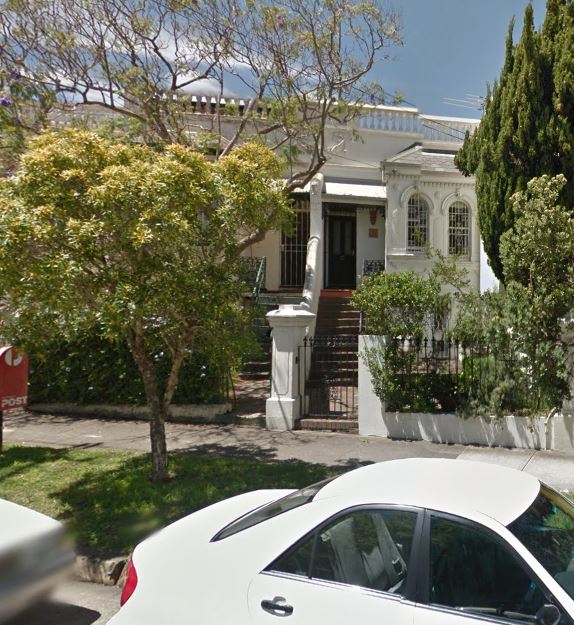
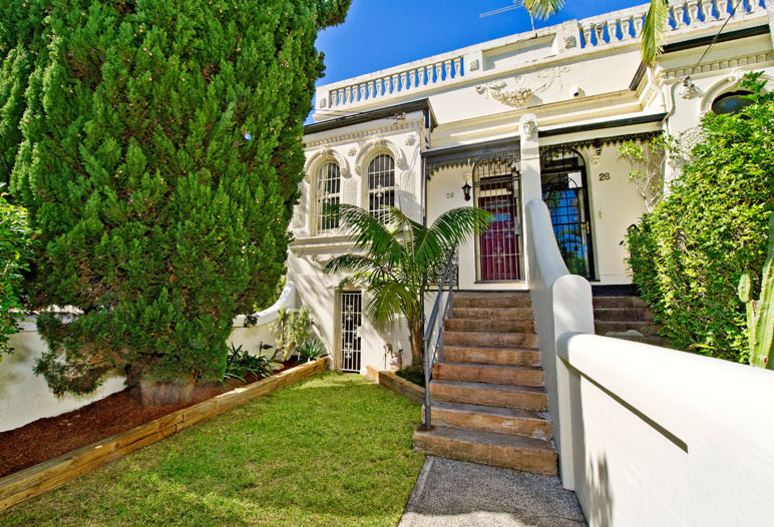
Home of John COADY – 26 Edgecliff Rd, Woollahra, NSW
Home of John COADY – 26 Edgecliff Rd, Woollahra, NSW
[divider_dotted]
John Charles DUFF
| 31/07/2014
John Charles DUFF
New South Wales Police Force
Regd. # 11262
76 old
Cancer of both lungs and tumor on the spine
Died 24 July 2014
Funeral 31 July 2014
With regret I advise the death of John Charles DUFF, 76 old, former Regd. No. 11262, not an RPA member of Rylstone.
John passed away on 24/07/2014 and his funeral is proposed to be held at 11am on Thursday 31st Instant at St James Anglican Church, 45 Mudgee Street, RYLSTONE.
Duff, John Charles (“J.D.”). 24th July, 2014 peacefully at Rylstone Hospital, late of Piper Street, Rylstone and formerly of Orange. Beloved husband of Beverley, much loved father and father-in-law of Donna & Peter, Brandon & Tracey, cherished grandfather of Alicia, Mia, Cooper and Tamarah, and adored brother of Pat, Terry, David, Raymond and Lorraine.
Aged 76 years
“One of Natures True Gentleman”
Relatives and friends are kindly invited to attend a Funeral Service for The Late John Duff, which will take place at 11.00am on Thursday 31st July, 2014 at St James Anglican Church, Rylstone, thence for Rylstone General Cemetery for interment. Members of Rylstone Bowling Club are especially invited to attend.
By special request, donations in lieu of floral tributes may be made, at the Service, to Rylstone Hospital.
DUFF, John Charles (“J.D.”) . 24th July, 2014 peacefully at Rylstone Hospital, late of Piper Street, Rylstone and formerely of Orange. Beloved husband of Beverley, much loved father and father-in-law of Donna & Peter, Brandon & Tracey, cherished grandfather of Alicia, Mia, Cooper and Tamarah, and adored brother of Pat, Terry, David, Raymond and Lorraine.
Aged 76 years
“One of Natures True Gentleman”
Relatives and friends are kindly invited to attend a Funeral Service for The Late John Duff, which will take place at 11.00am on Thursday 31st July, 2014 at St James Anglican Church, Rylstone, thence for Rylstone General Cemetery for interment. Members of Rylstone Bowling CLub are especially invited to attend.
By special request, donations in lieu of floral tributes may be made, at the Service, to Rylstone Hospital
MACQUARIE VALLEY FUNERALS
Members of the N.F.D.A. and The F.D.A. of N.S.W.
& Monumental Mason’s Assoc of NSW
118 Market Street, Mudgee
Telephone: 6372 2331 All Hours
ANNOUNCEMENTS : DEATH NOTICES
28/07/2014 Mudgee Guardian
Around an hour ago I received a telephone call from the wife of a very close friend and ex Officer that I shared duties with at Gunning [Cullerin Range Area] where we attended in excess of 200 fatal accidents together, over a period of five years, John Duff, Reg No 11262 has been suffering from cancer in both lungs and a tumor on his spine, Beverley informs me that John was admitted to the Rylstone Hospital this afternoon and not expected to last the night out, very sad that it is moments like this that make us realize just how close we have become and take for granted,
Dennis GearsideFriends are hard to come by and it’s even more difficult when you are faced with losing them. His peace may give your peace. Memories are forever.
Len BalkKerry it’s a really sad situation mate and good on you for making the journey but remember to look after yourself as well because you are important to others also.
Phillip Stubbs-MillsIt is sad how even operational Police cause problems.. Example one of my Coast Roads Constable was first car on the scene of a double fatal at the BP at Clybucca. A young Americain couple had bee on a honeymoon in Cairns decided to drive down to Syd…See More
Paul DaviesGreat song choice Paul, really says it all. We all try to reflect on lives of our friends or families in these times when the end is near but when it’s all said and done it’s just a rotten mtime to go through as I and many of you guys have had to endure it more times than we care to remember.
Peter CameronA couple of Crashies suicided from those bus crashes Phillip Stubbs-Mills. I did a couple of years in the AIS at Ballina and for me it was just a job and I could put it aside. Having said that, I can still remember fatals I went to when I first joine…See More
Ian BorlandPeter you are so right. No matter which field of poling you work the support from the Dept is abysmal. Some bosses who get it can be extremely supportive and ensure an even distribution of work and exposure. That said, the exposure as we we’ll know …See More
Peter CameronIan, no need to apologise for the length of the post. You have more reasons than most on here to bang on about this. What I havn’t told you before is that we met after Paul Quinn’s murder in ’86. I was stationed at Casino with him before that tragic incident. I often reflected on how that must have affected you but you put your boots back on and batted on for years in the job.
Paul DaviesIan I remember that horrible incident you were involved in something we all prayed we would never be confronted with. At the time of your nightmare shift I was at Blacktown tracking down the Anita Cobby killers. I was glad to be doing what I was doing and not being in your shoes . Very brave and I dip my hat to you, and long live the memory of your partner.
Ian BorlandI didn’t know anything else, and the support from my workmates helped beyond words I could use to describe. That seems to have gone by the wayside, and the good old bosses we had that were mostly returned servicemen who really “got it” were leaving in…See More
Peter CameronSpot on Ian, it made all the difference with a good solid boss backing you up. Also the old fashioned debriefs with mates out the back of the Station worked wonders. Then some bright prick stopped that.
Bill FortierAgreed, we spent more time with each other than our own families. Just like x servicemen who have seen it all they do not talk to others. They talk to those who have been there done that who know how it feels and what to do to fix problems. They could make decisions on the run and we all followed because we believed in them.
Ian BorlandYou would not believe it but the solution to all this was put to the Dept. In 1988 by a committee I was involved in with Don Fudensein Jnr. Naturally all looked good until one of the dunces that was a Deputy a Commissioner made the most despicable com…See More
Bill FortierMarvellous things books, they teach all the theory on any topic you wish to name. But when it comes to practical application of the theories and models put forward sometimes the real world never reflects what one has spent learning from pages. The university of life is the best learning institute for front line policing without doubt.
Bill FortierMy professor at the university was Bumper Farrell. No compromises or mistakes were tolerated. No pain permitted. Now we have all the new rules. The Dept is now legally bound to take of all under the Work, Health Safety laws. Has it helped?
Glen Thompson11 years ago after an incident at Goulburn I was directed by the Welfare Branch to speak to a ‘counsellor’ for six sessions. He and I got on well and he suggested some more time together. I had to see a GP for a referral. My normal long term GP was …See More
Glen ThompsonPerhaps it is time that the NSW Government / Police Force looked at a military style program of tenure. sign up for X number of years, be regualraly assessed psychologically, supported when certain types of jobs are attended etc. We all know why they won’t do it. It’s way too expensive.
Ian BorlandI’ll put this out, however it may well be known to you all already. When you are sent to psychologists and psychiatrists they give you the interview etc then get around to your family history. The question usually couched as, “does anyone in your fam…See More
Ian BorlandYou told the truth, but that was his cross to bear, it could not be construed as endogenous depression. I hope that the root cause was extracted at the time of the assessment Greg. As you can see it’s an easy slight of hand to play.
Ian BorlandGlen I totally agree, but I think we need to include naively in there too. As cops we did our job straight down the line. We dealt in black and white with no time for grey area. We trust others to do likewise towards us but unfortunately there are always hidden agendas we are unaware of.
With regret I advise the death of Frank NEWMAN, 81 old, former Regd. No. 7908, non-member of RPA.
Frank passed away on 24/07/2014 and his funeral is proposed to be held at 10.30am on Thursday 31st Instant at St Michaels Catholic Church, Chapel Lane, BAULKHAM HILLS.
Service: Commonwealth Police / Australian Federal Police: From ? to ? ? 1996
AFP Regd. # ?
Awards: Member of the Order of Australia ( AM ) – granted 26 January 1982 in recognition of service to the AFP
National Medal – granted 3 September 1985
1st Clasp to National Medal – granted 1 May 1987
Born: ?
Died on: Tuesday 22 July 2014
Cause: Cancer
Age: ?
Funeral date: Saturday 26 July 2014
Funeral location: Chapel of Fred Ward (Brindabella) Gardens, Curtin
Buried at: Cremated
[alert_blue]BARRIE is NOT mentioned on the Police Wall of Remembrance[/alert_blue]
Barrie John BROWN, age unknown, former Regd. No. 10118.
Barrie resigned from NSW Police in 1969 and joined the Commonwealth Police and later the AFP where he served until 1996.
He regularly met with retired NSW Police in the RPA (ACT) Social Luncheon group. His funeral has been held.
[divider_dotted]
Obituary
Printed: Saturday 2 August 2014
BARRIE JOHN BROWN AM
Passed away peacefully on 22.7.2014 surrounded by his loving family.
Adored husband of Jann, loved so much as a father and friend by his children Caryn and Stephen and their partners.
Amazing and devoted, proud grandfather to Kaela and Alana.
Special mate to brother Dennis and his family.
Supportive friend to many, with a great heart.
Barrie never lost his gentle, caring manner through two years of fighting cancer.
He was a much respected police officer, volunteer and car racing enthusiast.
His private cremation took place last Saturday, followed by a celebration of his
life, with good friends present in the Chapel of Fred Ward (Brindabella) Gardens, Curtin.
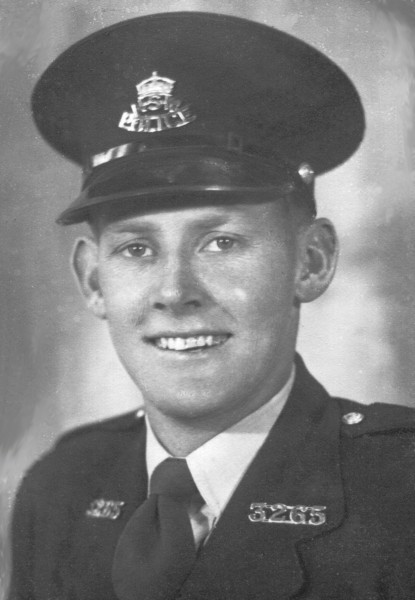
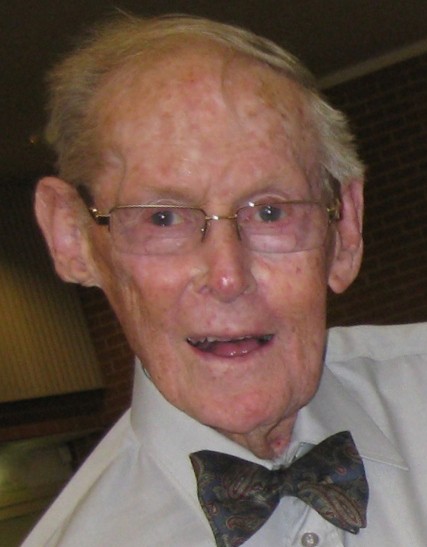
Douglas Edward CRAMPTON, 86 old, former Regd. No. 8579, Uniform No. 3265, a Veteran member of the Hornsby & District Branch of the RPA.
Douglas passed away on 26/07/2014 and his funeral is proposed to be held at 11am on Friday 1st August at Thornleigh Baptist Church, Duffy Avenue, THORNLEIGH.
Beloved husband of Doreen (deceased). Loving father and father-in-law of Roslyn and Warick, Virginia and Robert. Adored Grandy to Matthew, Claire, Elsie, Julia and Sophie.Aged 86 years
In God’s Care
Following a Private Cremation family and friends are warmly invited to attend DOUG’s Thanksgiving Service to be held at Thornleigh Community Baptist Church, corner of Duffy Avenue and The Esplanade, Thornleigh, on Friday (August 1, 2014) at 11a.m.
In lieu of flowers, donations may be made to Baptist Care, envelopes will be available at the Church.
[divider_dotted]
Douglas married Doreen Mary TYSON, at Bankstown, in 1953. Marriage Registration No. 4172/1953
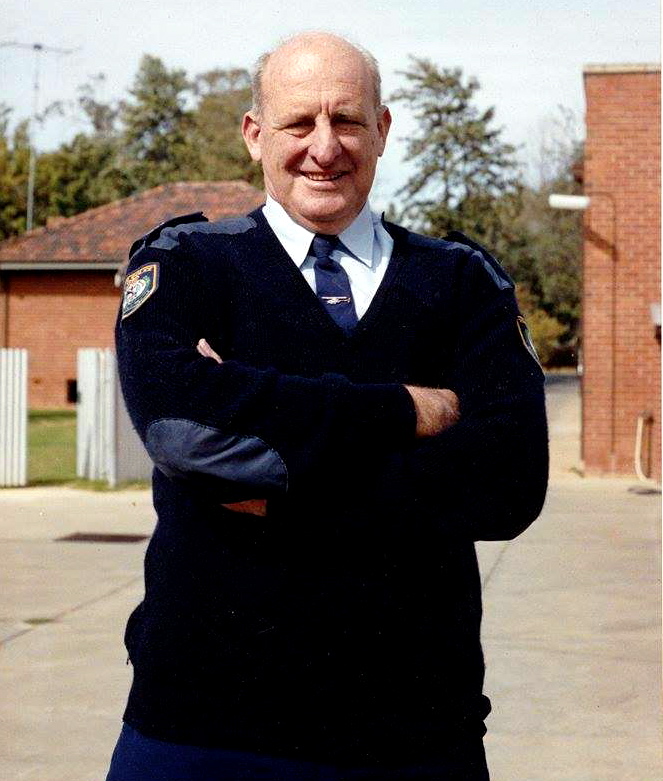
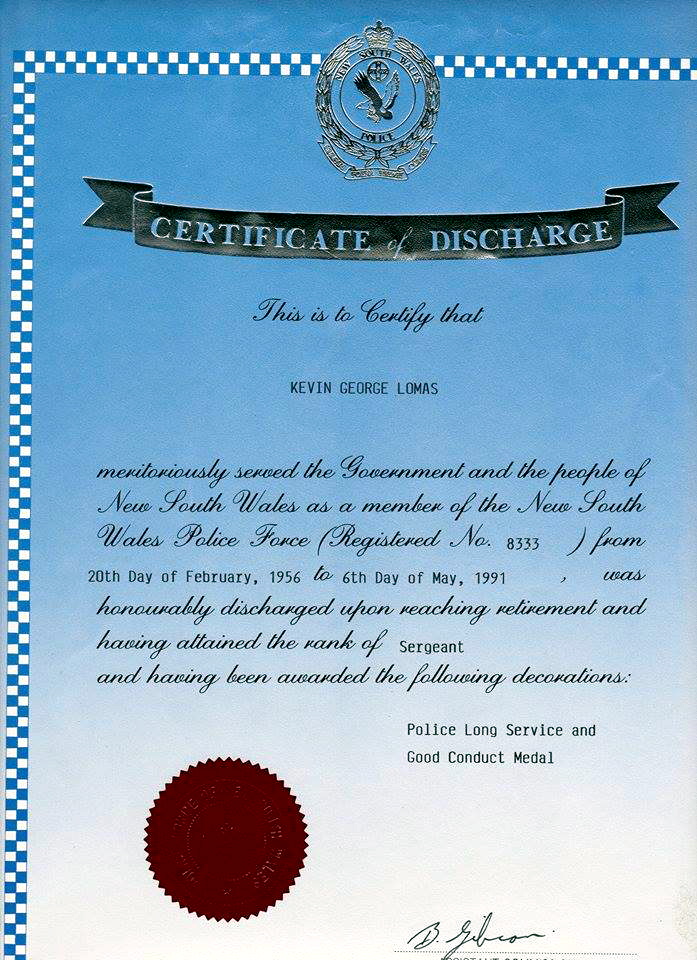
In Loving Memory of LOMAS, Kevin George ” Lofty “ 25 March 1936 – 21 July 2012
MARRIAGE NSW Births deaths and Marriages 25647/1961 LOMAS KEVIN GEORGE married MITCHELL ROSLYN FRANCES district HURSTVILLE
RESIDENCE Australia, Electoral Rolls, 1903-1980 for Kevin George Lomas, New South Wales 1968 Hume Tumut (living at the Police House Talbingo as a Police Constable with wife Roslyn)
DEATH The Ryerson Index to death notices and obituaries in Australian newspapers LOMAS Kevin George (Lofty) Death notice 21 JUL 2012 Death 76 at Batlow Canberra Times 24 JUL 2012
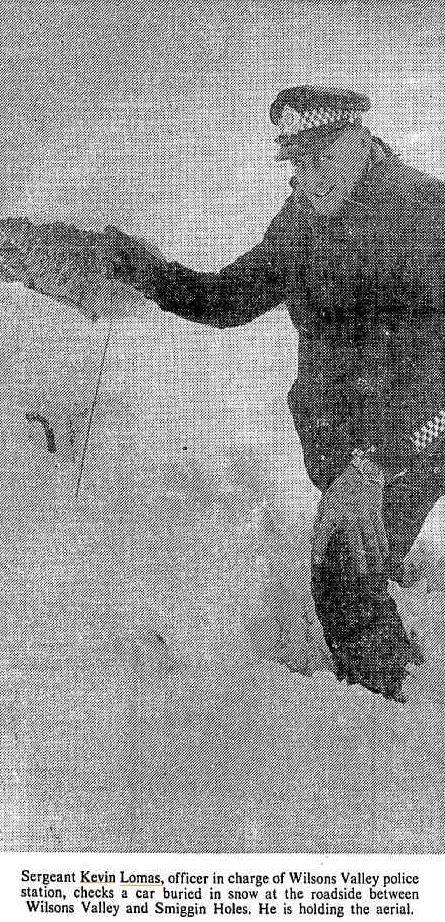
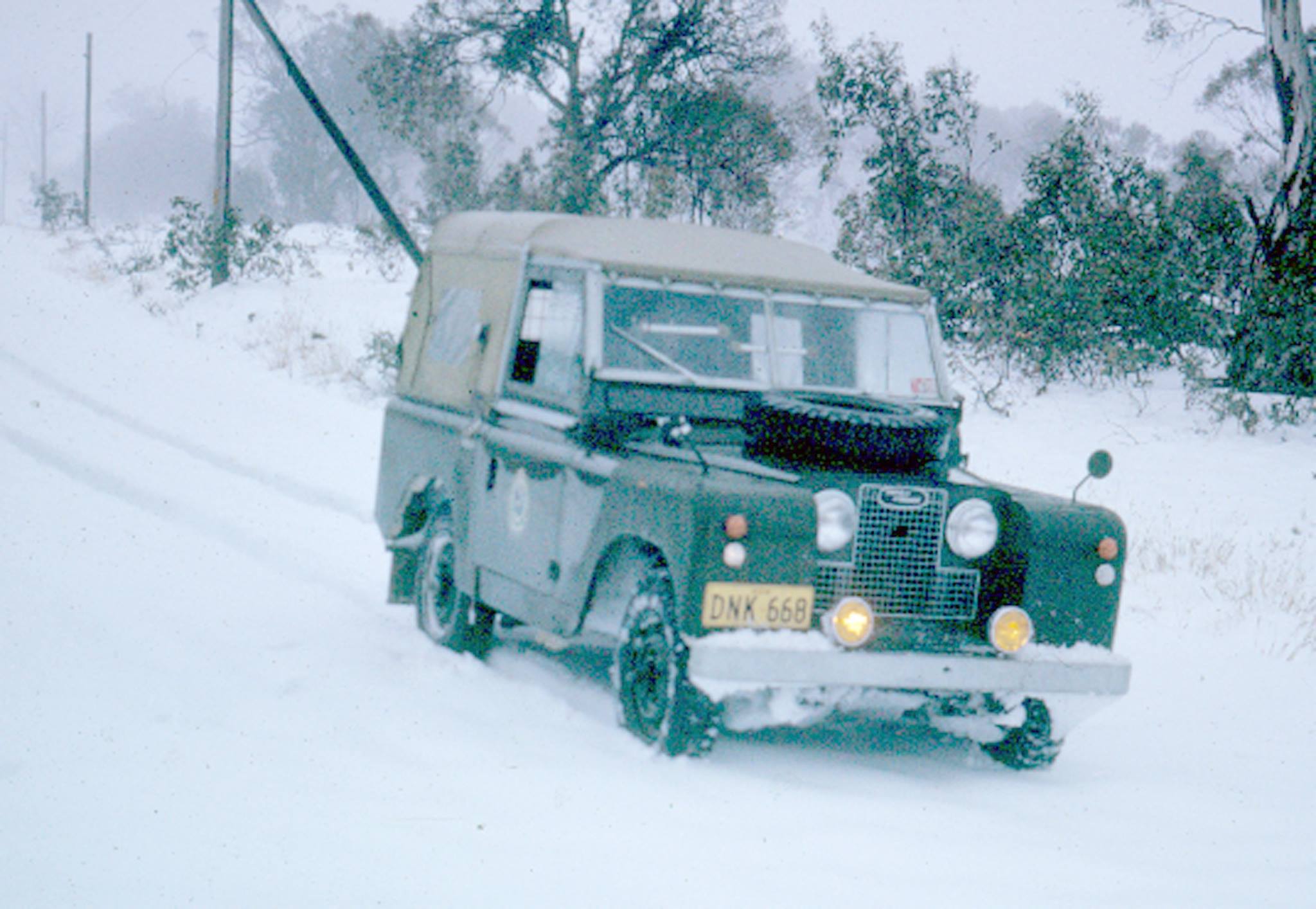
Sergeant Kevin Lomas, officer in charge of Wilsons Valley police station, checks a car buried in snow at the roadside between Wilsons Valley and Smiggin Holes. He is holding the aerial.
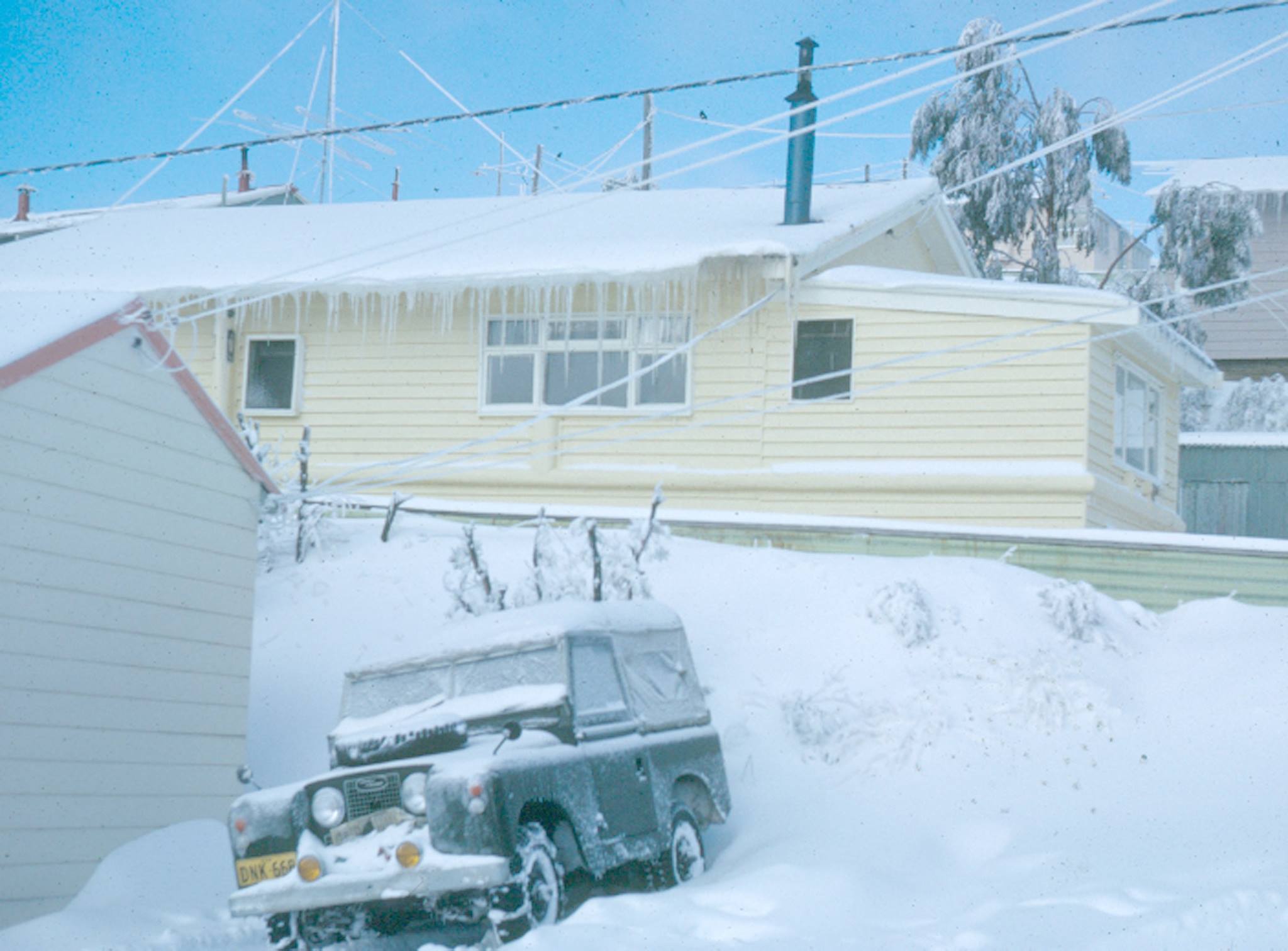
Snow and ice build up on the new Perisher Valley Hotel yesterday. The hotel, which opens today, has accommodation for 50 guests, ranging up to a penthouse costing $200 a person a day.
Two Australian Federal Police recruit classes graduated yesterday at the Weston Police Training College, including two constables whose fathers are well-known policemen in the district.
The 41 graduates took to the parade square at 8.45am to music provided by the Band of the Royal Military College, Duntroon. They were reviewed by the Deputy Commissioner, Mr John Johnson, who told the graduates their parade performance was the best he had seen.
Thirty-six of the new officers will be posted to general duties in the ACT, beginning on Monday. The others will take up postings throughout Australia.
One of the graduates was Constable John Dillon, 20, son of Superintendent Ron Dillon, who has been an officer with the AFP and former ACT Police since 1961.
Superintendent Dillon became well known for his TV presentations of ‘Police Seven’ and the police column in The Canberra Times. He is now the officer-in-charge of the AFP’s special branch.
Constable Dillon said he could hardly wait to begin work on Monday, but was a bit nervous about it. He ultimately wished to move into detective work, perhaps following his father’s footsteps by working in the special branch. He would like to do a number of years in general policing first.
Another proud father was Sergeant Kevin Lomas, of the NSW Police, who has been stationed at Queanbeyan for the past two years. His daughter Leanne, 19, was one of the graduates yesterday. Another daughter, Glenda, 20, is training at the college and expects to graduate in June.
Sergeant Lomas said it was a proud day for him. He was pleased that both daughters had chosen a police career.
He has two other children still at school, “one of whom is thinking about joining the Air Force, but I wouldn’t be surprised if all of them joined the police”, he said.
Constable Leanne Lomas said she had been posted to the city station. She hoped to be posted to Darwin later this year.
The dux of recruit training course 2/82 was Constable Tim Dahlstrom and the runner-up for the most improved was Constable Craig Henry.
The dux of course 3/82 was Constable Romi Gyergyak and the runner-up was Constable Stephen McTackett. All were presented with trophies by Mr Johnson.
From Jindabyne tunnel and round Island Bend
We boys go to Cooma, our money to spend
And we’ll buy youse some beer there if you happen to see
Four Italians, three Germans, two Yugoslavs and me
We’ll pull up in Sharpe Street by the Alpine Hotel
If you’ve been to Cooma you’ll know this place well
And before we’re inside our order rings out
Four vinos, three schnappses, two slivovitz, one stout
From the song ‘Cooma Cavaliers’ by Ulick O’Boyle and The Settlers.
If there was one theme which bound the lives of all Snowy workers, it was alcohol. It was the elixir for camaraderie and the balm for fear, boredom, homesickness and loneliness.
The wet canteens in the mountains and hotels and nightclubs in Cooma were eventually open twenty-four hours a day to cater for men working the different shifts. Violence and trouble could occur at any hour.
Managing the aftermath of long drinking sessions fell on the shoulders of the handful of policemen scattered through the mountains and on the Authority’s patrol officers. The odds against them were sometimes frightening. More than one policeman was transferred out a broken man.
The lot of a Snowy law enforcer, often working alone among populations of hard-drinking, hard living men, many of whom believed the law was an irrelevance in the mountain frontier, was never easy.
Those who did survive in the tough, knock-about world of the construction camps and towns and who earned their stripes in the Snowy hall of fame were men like Fred ‘Careless Hands’ Chapman, detective Bill ‘Homocide’ Holmes, Brian Shultz, Bill ‘Chubby’ Keefe, Harold Etheridge, Kevin ‘Lofty’ Lomas, detective Bob Blissett, Bill Graham, Lionel Whitney, Bill Head, Bruce ‘Bags’ Durrant, Rod Murray, Bev Wales and ‘The Admiral’, Ron Davey. All could handle themselves — Careless Hands and Ron Davey had both been champion wrestlers — and all were colourful characters who fitted into the unconventional way of life in the mountains.
Many were regarded as the central characters in the communities over which they presided. They were men who lived by their wits, rather than the rule book.
The mix of nationalities, the language problem and many of the migrant workers’ backgrounds created unique circumstances that sometimes required a swift belt behind the ear and, at other times, sensitivity.
Frank Rodwell, a long-serving patrol officer with the Authority often found peace could be restored after a bloody brawl simply by lending a sympathetic shoulder: “I learned quickly that some of these fellows had gone through hell and were living on a razor edge. One time I was called to a fight caused by a Polish fellow who was drunk. As I dragged him away he started screaming, ‘they’re all dead … all dead’. His whole family had been killed in the war and he missed them terribly.
“I had another similar experience with a Yugoslav who had opened a mass grave with his bare hands to try to find his mother … who wouldn’t drink and go a bit crazy after something like that?
Working alone and unarmed the patrol officers often found themselves in hostile and dangerous situations: “But it was the job you had to do … and if you couldn’t do it then you were no good to anybody.”
At Sue City, the workers took great delight in the antics of their local policeman, Ron Davey and his cherished boxer dog … whose name was Boxer.
In the late afternoon just when Ron would be about to taste his first cold beer at the end of a long, arduous day, the valley would echo with the Boxer’s plaintive wail. To the delight of the regular drinkers, who had come to know the ritual, Ron would storm from the wet canteen, grab a spade and start to climb the steep valley slopes, following the direction of the wailing.
Somewhere up on the mountain, as everybody had come to know, Boxer had tried to chase another wombat into its hole. The dog would always get stuck about a metre inside and then tell the whole world of its predicament. On locating the animal, Ron would dig it out, slap it furiously across its rump with his trouser belt, then drag it unceremoniously by the collar back to his house where he tied it up.
After three or four days Ron started to feel sorry for the animal, “his mate”, moping on the end of its leash. In a flood of affection would let it off for a run. As sure as Monday followed Sunday, on the day the dog was free again Ron would be about to enjoy his first cold ale when the valley would once again echo … Whoooooooooo.
Of all the men who policed the construction camps, only one man, however, became universally regarded as a legend in his own time … Constable Bev Wales.
Bev Wales was renowned as being totally and utterly fearless. In 1955, after three years in Cooma, Bev began nurturing the idea of taking over a one-man station up in the mountains. He was about to marry the daughter of one of the Cooma sergeants and didn’t want to stay too close to home.
Also, while conceding he had learned more about real police work in a month at Cooma than he would have in five years in Sydney, Cooma too was starting to become routine … paper work and more paperwork and always to do with the same things — brawls and road accidents.
“The locals and the ‘wogs’ as they were called were still feeling each other out. The local lads were toey. They didn’t like the young foreigners coming down from the mountains with all their money. The migrant fellows didn’t want trouble but they were only prepared to take so much. So there were hundreds of brawls and if a non-Australian was involved, it meant double the paperwork.
“And alcohol, speed, poor roads and extreme weather conditions meant a lot of pretty horrible accidents. Plenty of cars, often loaded with blokes, left the road in places where they’d drop hundreds of feet.”
Bev wanted a beat where he took on all work. In December 1955 he sought and was happily granted, the job as replacement constable at Happy Jacks which had the reputation as the roughest camp on the Snowy. The workers there had grown accustomed to being a law unto themselves and had virtually driven out the previous constable.
Bev put a lot of thought into how he would approach his new assignment, his first lone command. From the start he decided he would not wear a uniform as his predecessor had done. He also realised he had to earn the men’s respect using the only language they understood. It was a question of his own survival.
On the drive from Cooma to take up his new position he stopped at the wet canteen at Junction Shaft, which was on his new beat and was where a lot of the Happy Jacks’ workers drank.
There were a dozen or so fellows drinking. Bev stood, framed in the doorway, until he had their attention: “My name’s Bev Wales. I’m the new constable,” he said simply.
For a moment the men looked as though they hadn’t heard him clearly, then responded with a chorus of whistling and cat-calls.
“So if there’s anyone here who thinks he can stop me, then he had better try it now before I unpack my Landrover.”
The wolf whistles and jeers got even louder and four solidly built Australians slid off their stools. It wasn’t every day a copper actually asked to be punched. They approached the young constable, leering, savouring the moment. They paused just beyond an arm’s length, then moved in swinging.
Every account of the incident is the same. Bev Wales used four, maybe five punches to lay the four men out on the floor. He bundled them into the back of his Landrover and continued on to Happy Jacks to lock them up for the night.
“They got a bit of a surprise,” Bev said later. Everybody did. Within hours the incident was being recountered throughout the surrounding camps. Happy Jacks had won a package deal, a new constable and prisoners in the one delivery.
By the end of his first month Bev Wales had locked up forty men, most of whom spent several nights in a cell nursing bruised jaws and foreheads.
“Over the years they had gone berserk. There was no law and order whatsoever. Living up in the mountains they thought they were beyond the law. The lawlessness had to stop and I was the one sent to do it,” Bev said.
He rarely worked less than sixteen hours a day. His patrol ranged from Eucumbene Portal near Adaminaby (the entrance to the Eucumbene – Tumut tunnel), to Tolbar Camp, up to Happy Jacks, Cabramurra, Kiandra, Kenny’s Knob, Tumut Pond, Tooma camp and all areas in between. He was a lone policeman among six thousand workers and the only link between most of the camps on his beat were rough bulldozer tracks.
Bev Wales backed away from no situation, even when he was out-numbered. When brawling men were told Bev was on the way, his reputation preceded him like a bow wave, often quelling disturbance before he arrived. Bev spent sixteen years in the mountains while the Snowy was under construction. He survived through a mixture of police field-craft and bush psychology shaped by the instincts of a boy from the bush.
He attributes his success in handling the men to his decision not to wear a uniform and not to carry a baton: “Bring out a baton in a brawl and you would put everyone offside. But take a man on with just your fists and the others respected you. If you did get into trouble they’d even help you … but belt one of their mates with a baton and they’d kill you.”
What most endeared Bev Wales to law abider and offender alike was that it became apparent at an early stage that he cared for people. He often preferred to allow bush justice to be dealt, rather than invoke officialdom by which a man might lose his job.
“Often I’d arrest a bloke and he’d say: ‘Let me fight you Mr Wales. If I win you let me go, eh?’
“The fellows were afraid of losing their jobs so I’d say okay. We’d pair up in the lockup, exchange a few blows till I gave him a good thump and it was over. It was summary justice, something you couldn’t do today but it kept the peace there.
“They had no respect for anybody who was soft. They were tough fellows and they expected you to be the same. You had to meet them on equal terms.”
But Bev Wales didn’t spend all his time thumping recalcitrant construction workers. The biggest workload for all policemen in the mountains arose from the horrific death toll, both on the roads and at the construction sites.
“At Khancoban alone I handled ninety inquests and no death was clean. Men were cut in half, decapitated, blown to pieces, or squashed by huge boulders.
“Death was frequent and it was part of my job. Tunnels collapsed, air hoses burst, truck brakes failed and bulldozers and trucks and cars toppled into ravines. You had to handle a lot of grief and tragedy.”
WE’RE hearing plenty of tales about silent cops, the metal domes which sat at intersections acting like a roundabout.
Kevin says there was one in Dean St, Albury, in the early 1960s.
“There was a very tall policeman called `Lofty’ Lomas and he was lairising on his motorbike in front of some girls when his bike clipped the silent cop.
“About five minutes later all you could see of him was his fett hanging out the back of an ambulance.”
And Jeannette says she grew up in Sydney suburb where there were many silent cops.
“My mother, a highly articulate and well-spoken lady, refused to use any language or vocabulary that sounded remotely like slang and she expected the same standard of her children.
“She always referred to silent cops as `silent policemen’.”
Robert William RADFORD, 67 old, former Regd. No. 14998, an Unattached member of the RPA of Sorell, TASMANIA.
Robert passed away on 19/07/2014 and his funeral is proposed to be held at 2pm on Friday 25th Instant at the Chapel, Phillip Stephens Funerals, 28 Riawena Road, TOSNY, TASMANIA 7018