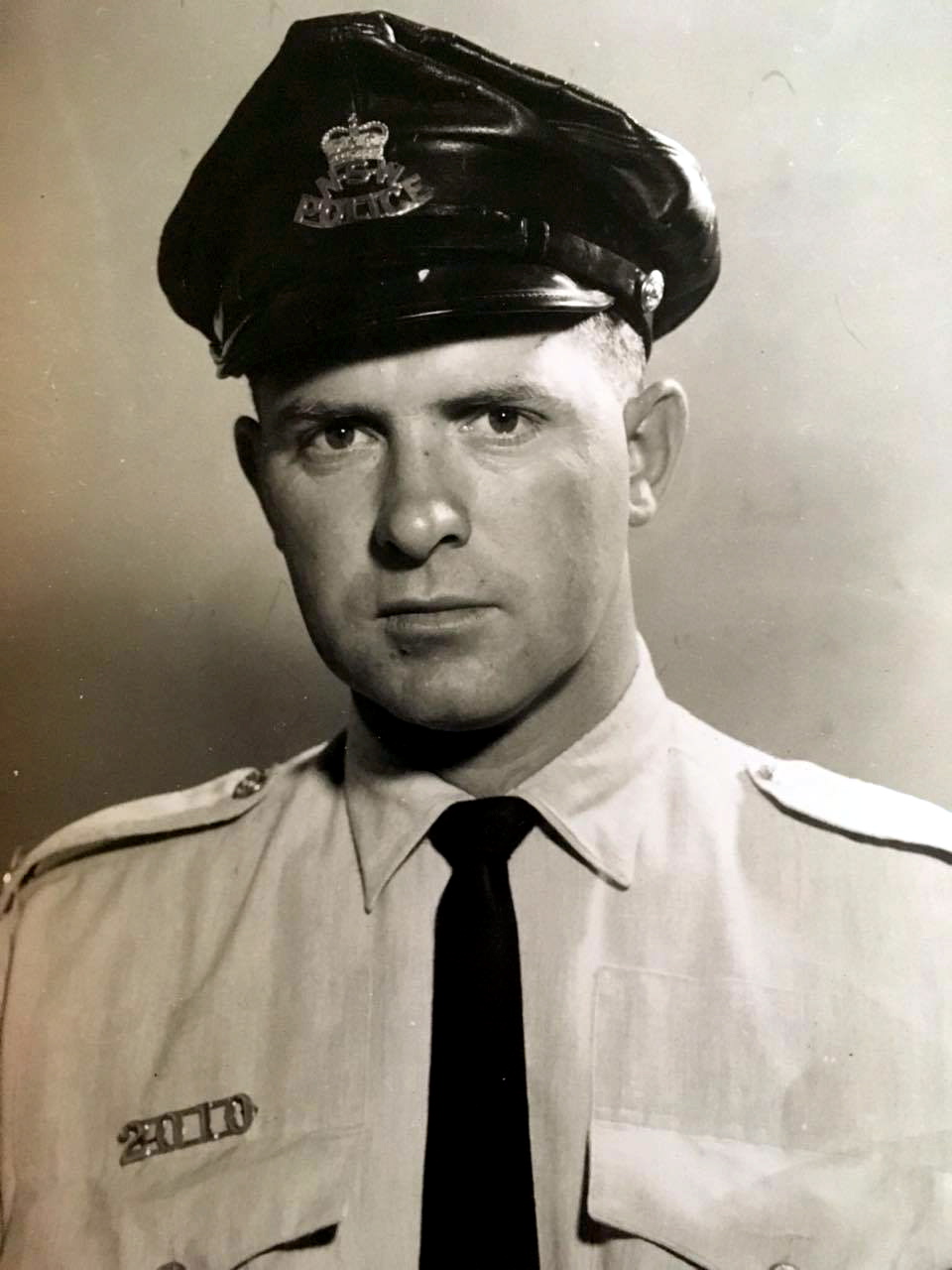
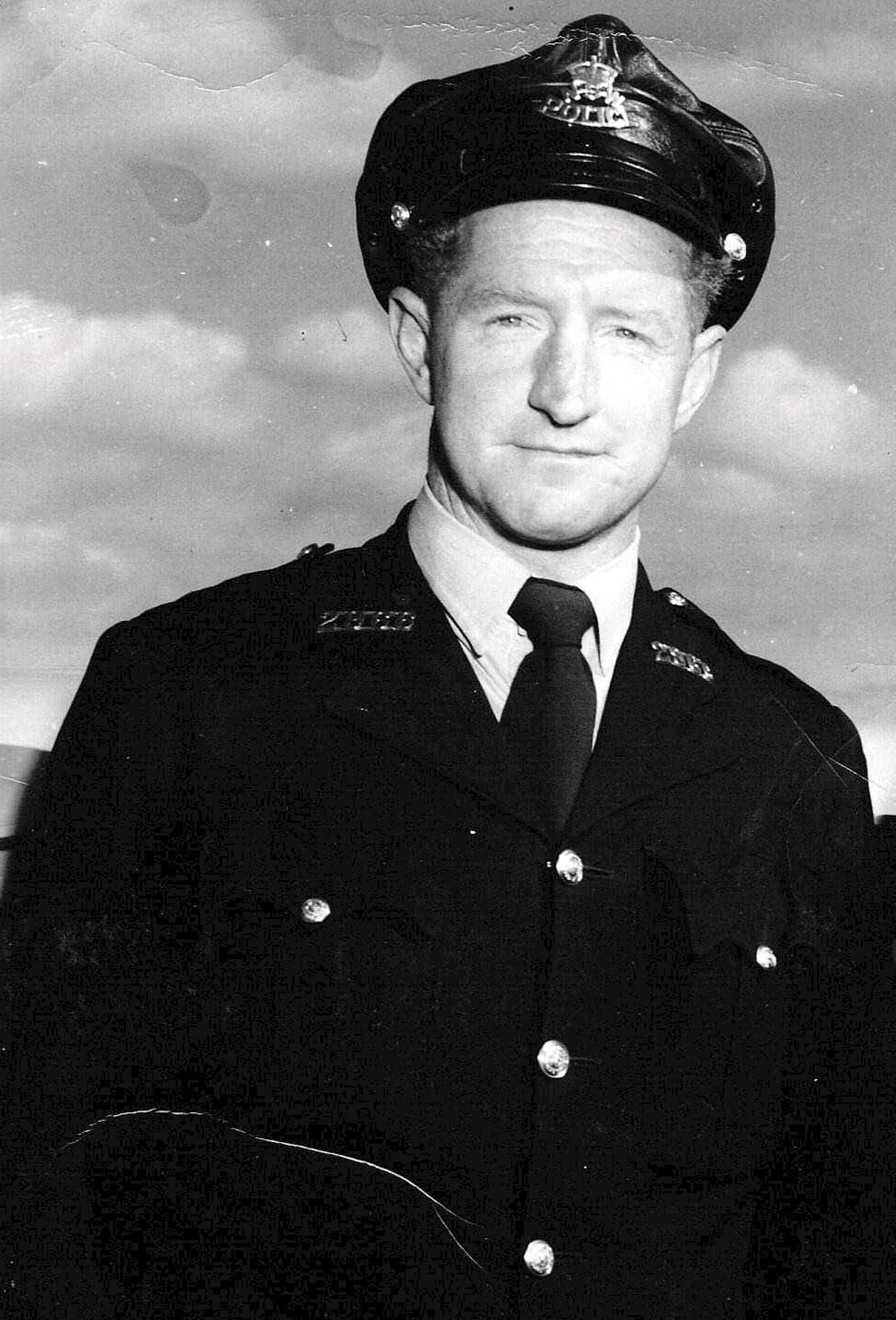
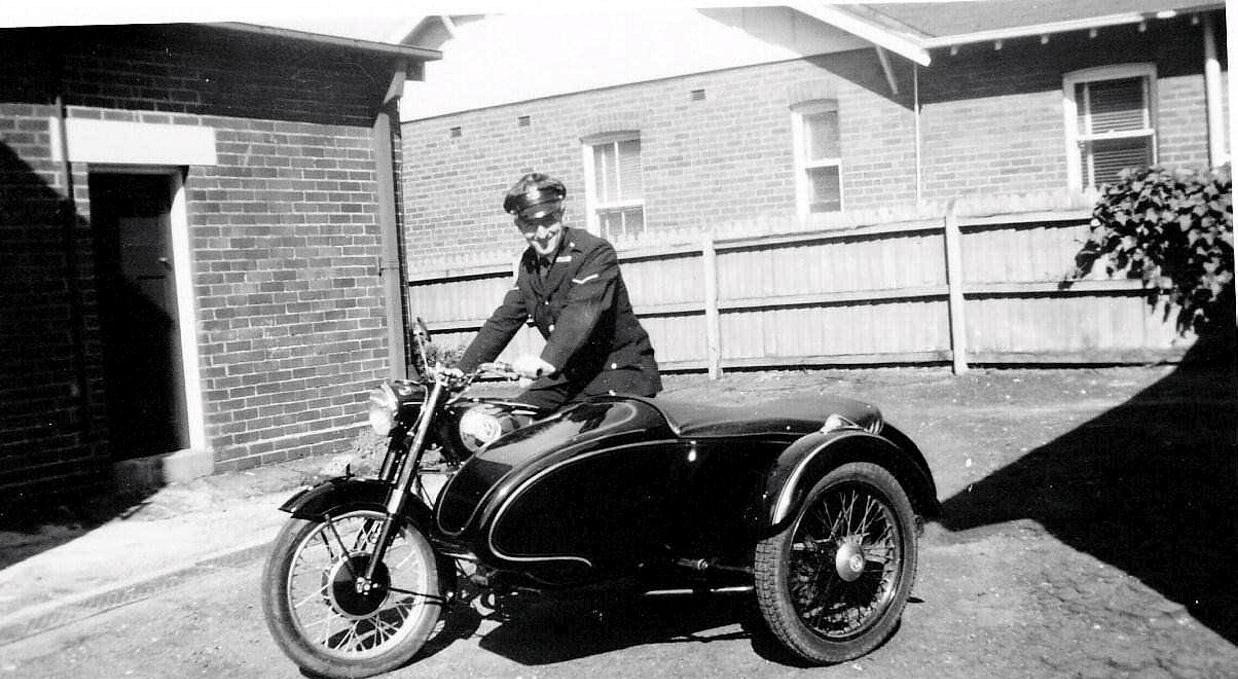
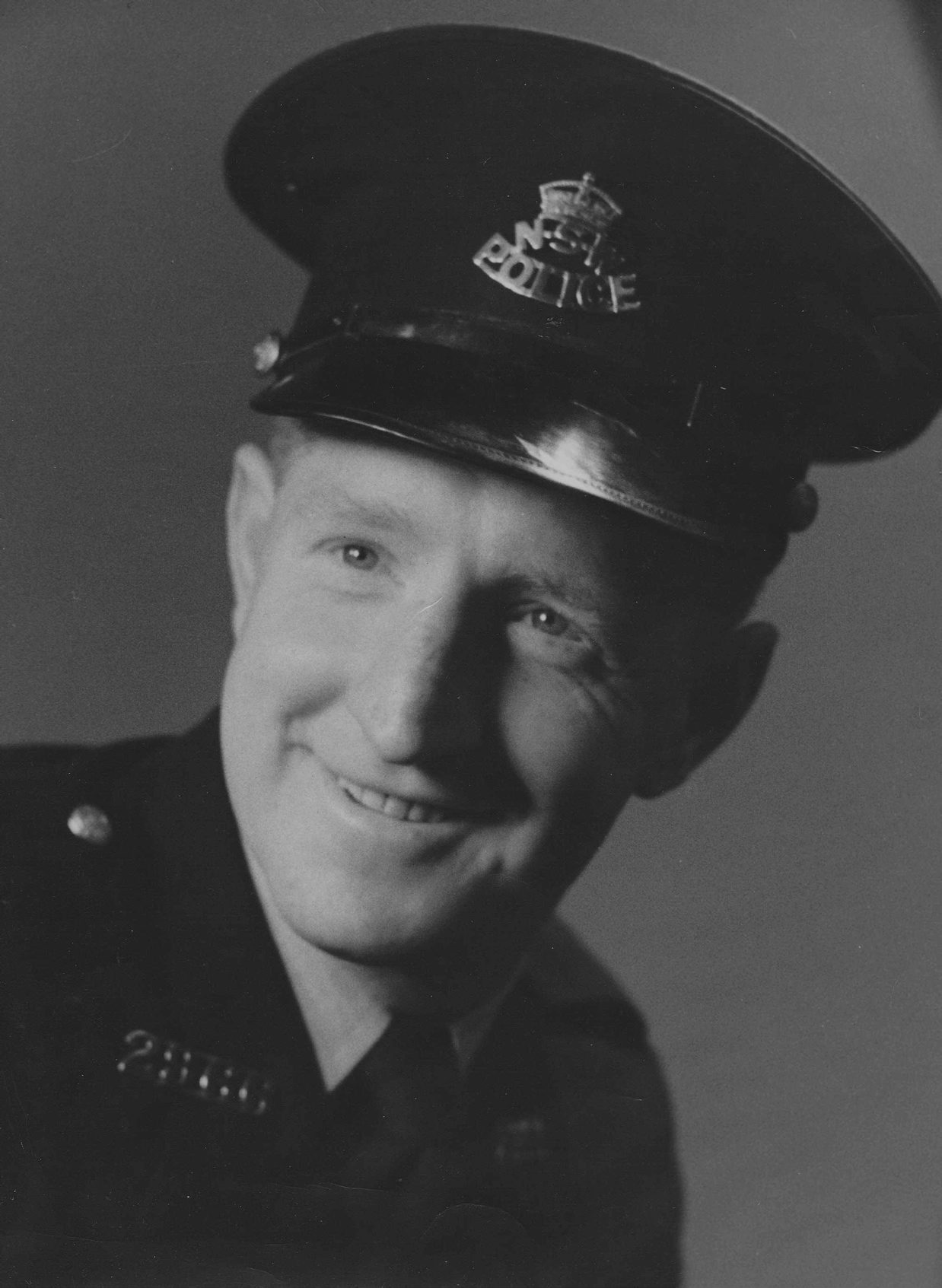
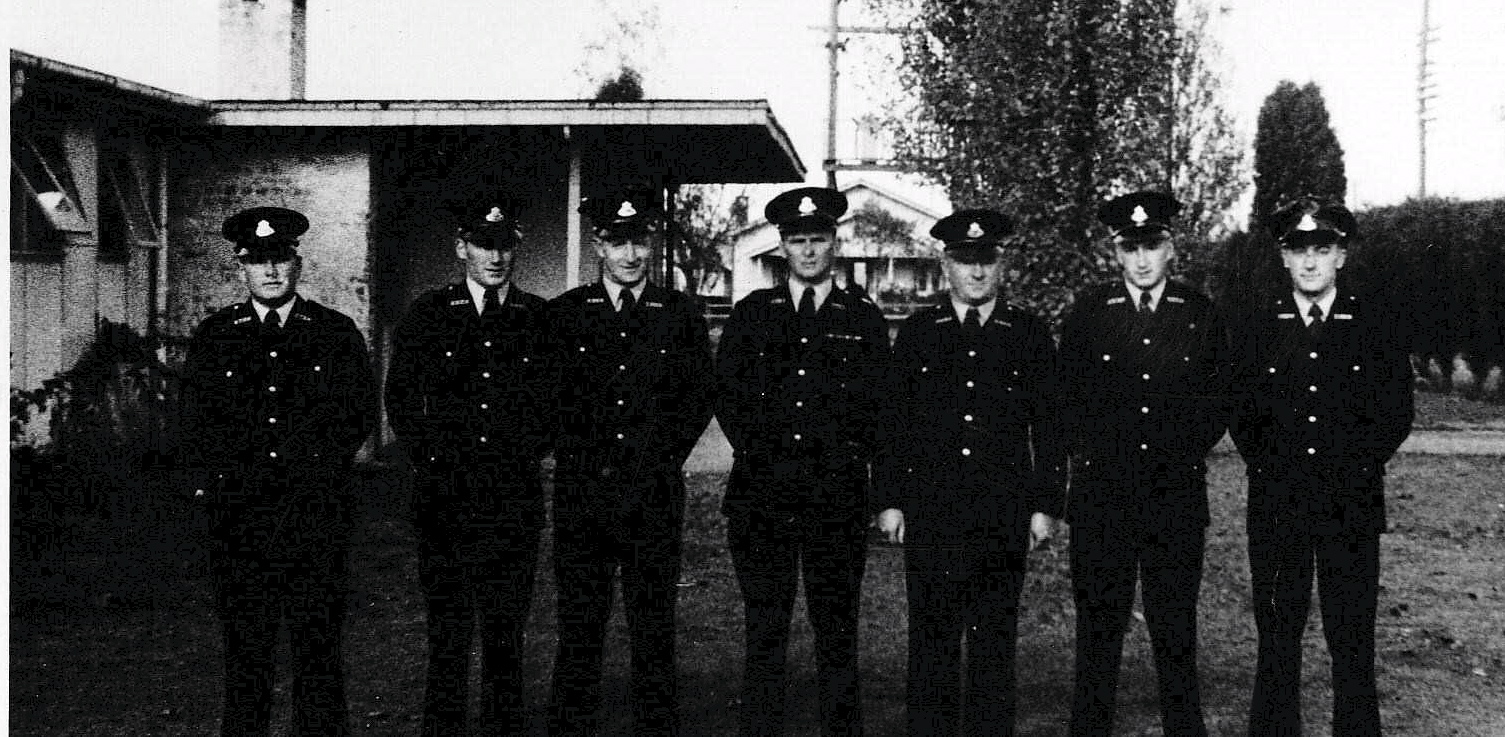
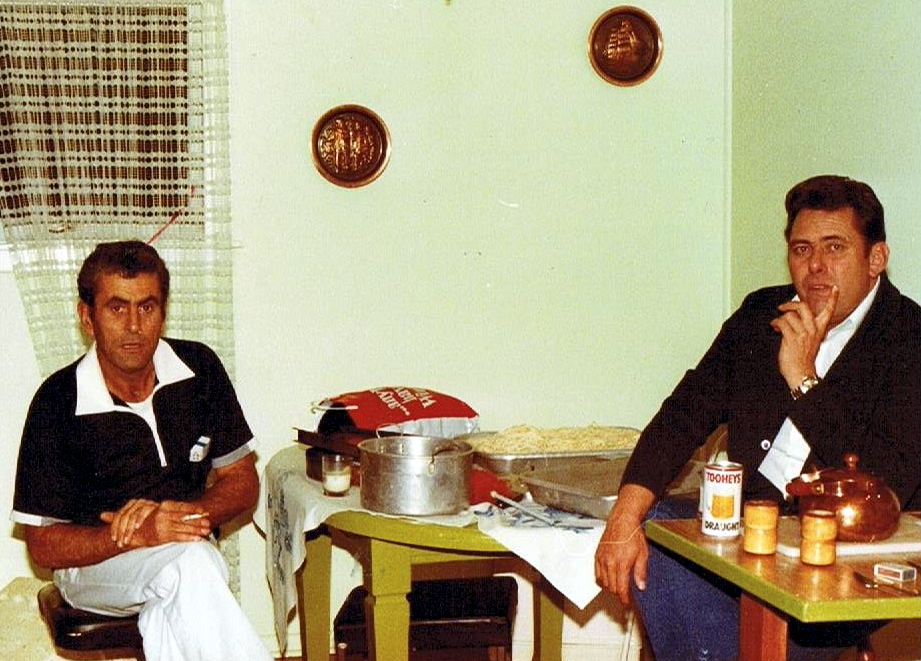
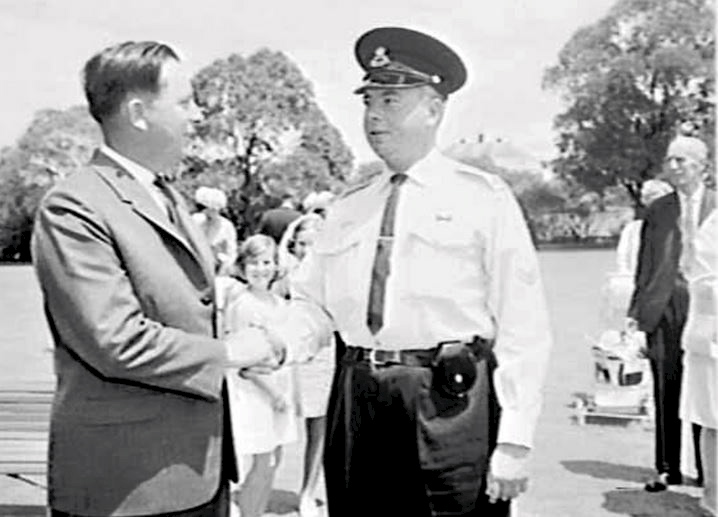
Flash Flanagan was a rough and ready Policeman who worked at Fairfield and Liverpool Police, on General Duties, before his Resignation in February 1982.
Flash was diagnosed with Liver & Kidney cancer one month prior to his passing. The Cancer was aggressive and quick. He was in palliative care when he passed.
Lenny was a real ‘old school’ cop, who never took a backward step from anyone.
After Resigning, he took on a pub in Port Douglas, Qld, for a few years after which he was selling real estate at Mossman, Qld, up to at least two years prior to his death.
He was a colourful guy who loved boxing and was very popular with all the new blokes arriving at # 2 Division ( Regent St ).
[divider_dotted]
Check back regularly for updates upon the funeral date.
Cal
[divider_dotted]
Lloyd Bruce DUNCAN
| 24/12/2017
Lloyd Bruce DUNCAN
Late of ?
New South Wales Police Force
[alert_yellow]Regd. # 8732[/alert_yellow]
Rank: Probationary Constable – appointed 10 June 1957
Constable 1st Class – appointed 27 June 1963
Senior Constable – appointed 27 June 1968
Sergeant 3rd Class – appointed 7 June 1973 – Seniority date was 1 June 1973
Final Rank = Sergeant 1st Class
Stations: ?
Service: From? ? pre June 1957? to? ? ? = ? years Service
Awards: No find on It’s An Honour
Born: Thursday 17 April 1930
Died on: Thursday 26 October 2017 during the morning
Age: 87
Cause: ?
Event location: John Flynn Hospital, Tugan, Qld
Event date: ?
Funeral date: ? ? ?
Funeral location: ?
Buried at: ?
Memorial located at: ?
[alert_yellow]Lloyd is NOT mentioned on the Police Wall of Remembrance[/alert_yellow] *NEED MORE INFO
[divider_dotted]
Funeral location: TBA
[divider_dotted]
FURTHER INFORMATION IS NEEDED ABOUT THIS PERSON, THEIR LIFE, THEIR CAREER AND THEIR DEATH.
On Tuesday 15 December 1891 was a Constable at Albion Park and Authorised to Prosecute for Trespassers on Crown Lands
On Monday 9 May 1892 was a Constable at Albion Park and appointed an Inspector of Slaughter Houses
Reported to be the FIRST policeman in Corrimal
On Saturday 20 February 1897 he is mentioned as a Constable in the Electoral Revision Court – Wollongong Division.
On Tuesday 30 August 1898 was a Constable at Corrimal and appointed an Inspector of Slaughter Houses.
On Saturday 11 March 1899 was a Constable at Corrimal and Authorised to Prosecute for Trespassers on Crown Lands.
On Thursday 30 March 1899 was a Constable 1st Class at Corrimal and appointed an Inspector under the “Tobacco Act”
On Friday 27 April 1900 was a Constable 1st Class at Corrimal and appointed an Inspector under the “Gunpowder & Explosives Consolidation Act of 1876”
On Friday 9 February 1906 was Constable 1st Class at Corrimal and appointed under the “Liquor Act”
On Wednesday 20 November 1907 was a Constable at Corrimal
On Wednesday 15 February 1911 was Constable 1st Class at Corrimal and Authorised to Prosecute for trespassers on Crown Lands
On Wednesday 13 August 1913 was Constable 1st Class at Corrimal
Sergeant – Corrimal O.I.C.
Service: From? ? 1886to? ? 1916= 30years Service
Awards: Imperial Service Medal – granted 20 March 1919
Born: 9 October 1859 in Warminster, Somerset shire, England
Died on: Tuesday 9 August 1932
Age: 72
Cause: ?
Event location: ?, Sydney
Event date: Tuesday 9 August 1932
Funeral date: Thursday 11 August 1932
Funeral location: Rookwood Crematorium
Buried at: Cremated
Memorial located at: ?
Ref Trove SMH dated 11 Aug 1932, p7; Arr Free; Occ Royal Marines, Police Force; Received a gallantry award in saving a life at the Mt Kembla mine disaster on 31 July 1902
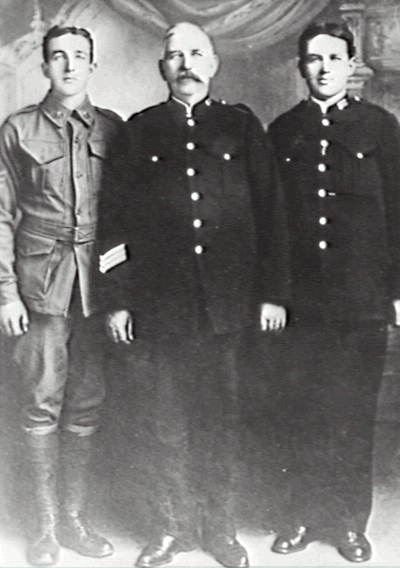
Jacob Willmott with his sons Jack (left) and Arthur (right); Jacob Willmott was the first police sergeant at Corrimal. 1920
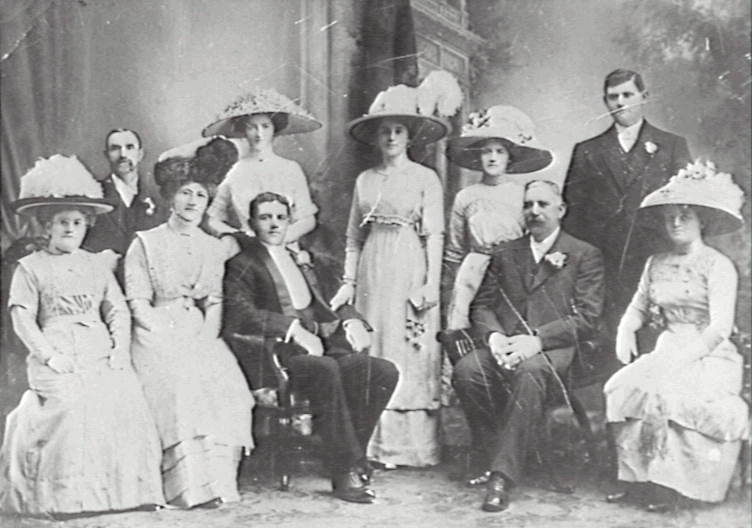
Wedding of A Willmott, son of Jacob Willmott; Back row from left: Mr Walters, Miss Shepherd, Bride, Miss Shepherd, . A. Willmott. Sitting from left: Mrs Walters, Harriett Willmott, Arthur Willmott, J. Willmott, Mrs Shepherd (sister of the bride and mother of the Misses Shepherd). ca. 1912
[alert_yellow]JACOB is NOT mentioned on the Police Wall of Remembrance[/alert_yellow] *NEED MORE INFO
[divider_dotted]
FURTHER INFORMATION IS NEEDED ABOUT THIS PERSON, THEIR LIFE, THEIR CAREER AND THEIR DEATH.
Ex-Sergeant Jacob Willmott who died on Tuesday aged 72 years was born in Somerset shire, England.
He joined the Royal Marines and saw service in many warships including the Valiantwhich was one of England’s first Ironclads.
The later years of his naval career were spent with the H M S Miranda on the Australian station. He obtained his discharge from that warship in 1886 and during the same year joined the New South Wales police force and was stationed at Regent street (city), Parramatta, Albion Park and Wollongong.
He was the first policeman stationed at Corrimal and it was from there that he retired in 1916.
He became special Inquiry officer in the A.I.F. completing 3½ years service in 1920
He is survived by one son. The funeral took place on Thursday at the Crematorium and was attended by a large number of metropolitan and South Coast friends.
South Coast Times and Wollongong Argus (NSW : 1900 – 1954),
Friday 12 August 1932, page 13
CORRIMAL
Sergeant Jacob Willmott; formerly officer-in-charge of Corrimal police station for many years, died in Sydney on Tuesday, aged 72 years. One son, Arthur is a police sergeant at Burwood. His wife predeceased him a few months ago.
Illawarra Mercury [microform], Monday, 28 April 1969, p. 19.
Summary:
Part of a series of photographs from the turn of the 19th/20th centuries (1900). This issue includes: picnic group, a collier preparing to moor alongside Bellambi coal jetty, Thirroul looking from Bulli way (includes Ryan’s Hotel), Jacob Willmott in 1916 (reputed to be Corrimal’s first policeman).
South Coast Times and Wollongong Argus (NSW : 1900 – 1954),
Friday 6 May 1932, page 10
Bulli – Woonona
FUNERAL OF Mrs WILLMOTT
The remains of the late Mrs. Willmott, whose death is reported elsewhere, were interred in the C. of E. cemetery, Woonona, on Wednesday afternoon, alongside her son, Jack.
Rev. Turner administered the last sad rites and the chief mourners were the husband, Jacob Willmott, and son and daughter-in-law, Arthur and Ada.
The pall-bearers were old and intimate friends of the family — Messrs A. V. Green, A. Robb, R. Moore and J. Fitzgerald.
There was a wealth of floral tributes from friends in all parts of the State.
Those at the graveside included Detective Dymock, Mrs. Coleman and family, Mr. and Mrs. Ted Sweeney, Mr. Fahey ( Bankstown ) and Messrs English and Barker.
WILLMOTT – The Relatives and friends of Mr JACOB WILLMOTT, of No 2 Powell street Bankstown (formerly of Corrimal) and Mr and Mrs ARTHUR A J WILLMOTT of Strathfield are kindly invited to attend the funeral of his late beloved WIFE and their MOTHER Harriett which will take place TO-MORROW (Wednesday) MORNING, at 11 o’clock in the Church of England Cemetery, Woonona.
Moree Gwydir Examiner and General Advertiser (NSW : 1901 – 1940),
Monday 1 August 1921, page 4
Coroner’s Inquiry.
An inquiry into the circumstances surrounding the death of James McPhee, who was found dead at the Moree District Hospital on Wednesday night last, was held before the Coroner ( Mr. P. P. Rosenthal ) on Friday.
Sergeant Eagleton deposed: About 10 o’clock on Wednesday night last, 27th inst., from something I was told, in company with Constable Kearney, I went to the Moree District Hospital. I there saw the deceased, James McPhee, in a sitting position in the bathroom. He had a large incised wound in his throat, and was quite dead. There was a razor ( produced ) lying on the floor in the bathroom, quite close to his right hand. There was a large quantity of blood on the floor and over his clothing, which consisted of a pair of pyjamas, an under and a top shirt, and pair of socks. I assisted to remove the body into the hospital morgue.
The deceased was a stranger in Moree.
To the Coroner: I made a search at the hospital of the deceased’s belongings and found a letter (produced) from his wife.
To Mr. Wlllmott (uncle of the deceased): The act was committed in the bathroom. I did not know the deceased.
Dr. Malcolm Frizell deposed: I first saw McPhee about a fortnight ago. He came round to my surgery and told me he was suffering from rheumatism. I advised him to go to the hospital. He was in a very weak state of health and was suffering a lot at pain. He complained of not being able to sleep at night on account of the pain, and I ordered him some sleeping powders.
On Wednesday night, 27th inst., at 10 p.m. I received a message from the Matron at the District Hospital, saying that McPhee had apparently committed suicide in the bathroom. I Informed the Sergeant of Police and went direct to the hospital. On my arrival there I saw McPhee sitting on a chair with his head against the wall. There was a large incised wound in his throat, and the large artery in the neck, the jugular vein, and windpipe were severed. Life was extinct, and death from the injury would probably occur within a few minutes. His right arm was hanging by his side and there was a blood-stained razor lying on the floor within a few inches of his right hand. There was a large pool of blood on the floor, and his clothes were soaked.
The cause of death, in my opinion, was haemorrhage caused by the wound in the throat.
To the Coroner: In my opinion, the wound was self-inflicted.
To the Police: The wound could have been inflicted by the razor (produced).
To Mr. Willmott: I saw the deceased on my rounds every morning at the hospital from the time of admission till his death. I never saw, at any time, any signs of insanity on the deceased.
Margaret Adeline Finn, certificated trained nurse, and matron of the Moree District Hospital, stated that deceased was admitted to the District Hospital on July 14. During the time the deceased was in the hospital he never did or said anything to lead me to believe he would commit suicide. On Wednesday last, 27th inst, I saw him about 8 o’clock. He was then in bed, but was not asleep. I had just given him a sleeping powder. About 25 minutes to ten o’clock I inquired as to his condition and was told that he was sleeping. About 10 o’clock, Nurse Hewson and Nurse Mulheron came to my room and informed me they thought McPhee had cut his throat in the bathroom. I went to the bathroom and found the deceased sitting on a chair with his head against the wall. There appeared to be a large wound in his neck, from which blood was dripping. His clothes were blood-stained. The chair on which he sat was also covered in blood. There were fingerprints in blood on the wall near where he was sitting. I saw a half opened razor on the floor near his right hand.
To the Police: The deceased possessed a razor. I have been informed that he had shaved himself whilst at the hospital. I locked the bathroom door and rang up the doctor.
To the Coroner: During the time the deceased had been under my observation he never gave me any reason to think he was other than an ordinary patient.
Lilian Mary Hewson, probationary nurse at the District Hospital, deposed: On the night of the 27th Inst. I was on night duty. I last saw the deceased in bed about 25 minutes to 10 p.m., in the men’s ward. I spoke to him, but he did not answer. I left the room and went to the kitchen. I again returned to the ward about fifteen minutes later. I walked past the deceased’s bed and noticed he was not in bed. I went to the lavatory to see if he was there. He was not there. I then looked around the verandah, and could not find him. I then looked around the ward, and not finding him I went to the bathroom. The door was closed. I pushed the door open and saw McPhee sitting on a chair, with his head against the wall. His clothes were blood-stained. I then informed the matron. I then returned to the bathroom and was present when the body was removed to the morgue.
To the Police: I could not say whether he had a razor in his locker or not, or whether he had a shave whilst he was In the hospital. During the time he was in the hospital, he seemed to be quite all right mentally.
George Barrett, shearer, at present an inmate of the Moree District Hospital, deposed: I know the deceased, McPhee, in Sydney. On Tuesday last, 26th inst., I had a conversation with the deceased, about 3 o’clock. I said to him, “Have you done no good regarding your health?” He said, ”No.” I said, “It is a wonder you don’t go back to Sydney, where your friends are.” He said, “If I went back to Sydney I would put myself over the Gap.” He then said, “I am pretty well a done man, and in so much misery I would just as soon cut my throat now.” I said, “Don’t talk like that, Jim ; there is always a chance.” That ended the conversation.
To the Police: I never mentioned the conversation I had with him to the Matron.
To the Coroner: When he made the threats mentioned above I did not believe he was in earnest or I would have reported the matter.
Jacob Willmott, retired police sergeant, residing at Glebe, Sydney, deposed : I arrived in Moree this morning in company with the deceased’s wife, and went to the Moree District Hospital and was taken by the Matron to the morgue. The deceased’s wife and myself went in and saw the deceased, whom we identified to be James McPhee. I have been residing in the same house as the deceased and his wife and mother-in-law, also my wife, for about two years. About ten months ago he had a very bad attack of influenza. He was ill for about six weeks. He then went out on the cab rank again and started work. He got wet two or three days following and had to give up work again. He had very severe pains at the back of the head and in his left shoulder. Dr. Sydney Jones was called in and prescribed for him, but he seemed to get worse. He was then taken to the Sydney Hospital, and was later in Little Bay Hospital for eight weeks. He was then taken home. Eventually he came to Moree, on the advice of doctors to try the bore baths — about May 22.
We had several letters from him reporting his condition.
To the Coroner : There was nothing in his letters to lead me to believe that he contemplated taking his life.
To the Police: The deceased was about 39 years of age. The deceased’s life was Insured in the T. and G. Insurance Company for about £40. Deceased owned a cab and horse but no harness. He was of temperate habits.
The Coroner found that the deceased died from haemorrhage from a wound in the throat wilfully self-inflicted. He added a rider to the effect that no blame could be attached to the staff of the hospital.
WILLMOTT .- July 1, at R.P.A. Hospital. Sydney. John Thomas Willmott, ( late 20th Batt. A.I.F. ) dearly loved husband of Mary Adelaide (Molly ) Willmott of Fairmount street, Lakemba, aged 28 years.
WILLMOTT.- July 1, 1919, at R.P.A. Hospital, Sydney, John Thomas ( late A.I.F. ) dearly loved son of ex-Sergeant of Police Jacob Willmott late of Corrimal. South Coast, and brother of Constable A. J. Willmott of Chatswood police, aged 23 years.
Police and Prisons Officials DISTINGUISHED SERVICES
The Governor ( Sir Walter Davidson ) presented Imperial Service Medals to retired members of the police force and prisons department at the police depot this afternoon. Below are summaries of the official records of the services and deeds of the recipients.
Medals for proficiency in life-saving were also gained by 23 constables.
SERGT. JACOB WILLMOTT. — During his 30 years service in the police force he was instrumental in securing the arrest and conviction of several notorious offenders. He earned the commendation of his officers for the manner in which he performed his duties in connection with the Mount Kembla disaster in 1902.
Government Gazette of the State of New South Wales (Sydney, NSW : 1901 – 2001),
Friday 19 July 1918 (No.89), page 3474
[322] Premier’s Department,
Sydney, 19th July, 1918.
HIS Excellency the Governor directs it to be notified that he has received Despatch from the Secretary of State for the Colonies, intimating that His Majesty the King has been pleased to approve of the grant of Imperial Service Medals to the undermentioned ex-officers of the New South Wales Public Service: —
Late of Police Department:— Mr. James Hogg, Mr. Jacob Willmott, Mr. William McKinlay, Mr. James Cheney, Mr. Roger Meagher, Mr. Michael Hahesy.
Late of Prisons Department: Mr. Thomas Piper, Mr. Robert Howarth, Mr. Edward McBride.
In the Central Summons Court on Thursday Mr Adrian gave his reserved decision in the case in which Jacob Willmott, of the Garrison Military Police, proceeded against Ernest Robert Abigail, solicitor, of 77 Castlereagh-street, Sydney.
The information alleged that on or about July 25 last the defendant contravened a provision of a regulation made in pursuance of the War Precautions Act, 3914-1916, in that he accepted by way of pledge an assignment of the right of an allottee, one Phyllis Hampsted, sometimes known as May Miller, to receive an allotment from the pay of Henry Miller, a soldier, enlisted for service during the present war.
Mr. Hardwick, who, instructed by the Commonwealth Crown Solicitor, appeared to prosecute, denied that he said at the previous hearing that Mr Abigail had done no wrong. What he said was that the Crown did not allege any sharp practice.
Mr Adrian said he had decided to convict, and taking all the circumstances into consideration, would impose a fine of £10, with £6/12/ costs; in default, one month’s imprisonment. Mr Parker, who represented Mr Abigail, said that the latter, who was at present indisposed, intended to contest the matter further.
At the police depot in Bourke-street yesterday afternoon, the Governor ( Sir Walter Davidson ) presented Imperial Service Medals to a number of retired officers of the police and prisons department In recognition of distinguished conduct and meritorious service. Mr Fuller ( Chief Secretary ) and Mr Mitchell ( Inspector-General of Police ) were among those present. The following were the awards:
Police Force. – Ex-Superintendent Alfred Amos Sykes : ex-Sergeants Edmund Reid, Dennis Coates, James Hogg, James Cheney, Roger Meagher, Jacob Willmott, William McKinlay, and Constable Michael Hahesy.
Prisons’ Department. – Thomas Piper, Robert Howarth, Edward McBride, and Walter William Lammas.
In addition, 23 constables were recipients of the medallion of the Royal Life-saving Society.
Passed out 1958 left police 1966 to become a Ordinance Inspector at Wollongong City Council later to become Administrative officer.
Worked in Wollongong General Duties, Highway Patrol and then Court Officer Wollongong Court.
PATMORE, Noel
of Keiraville ( NSW )
Passed away peacefully on January 29, 2015.
Beloved husband of Joan.
Dearly loved father of Ian.
Devoted Pa of Sam, Kip.
Son of the late Edna and Fred.
Loved brother and brother in law of Naomi (dec) and Alan Walton (dec).
Aged 78 Years
Always in our Hearts
Relatives and friends are invited to attend Noel’s funeral service to be held at Lakeside Memorial Park Chapel, Kanahooka Road Kanahooka on Monday at 10am.
“Our thoughts and prayers are with you and your family at this sad time.”
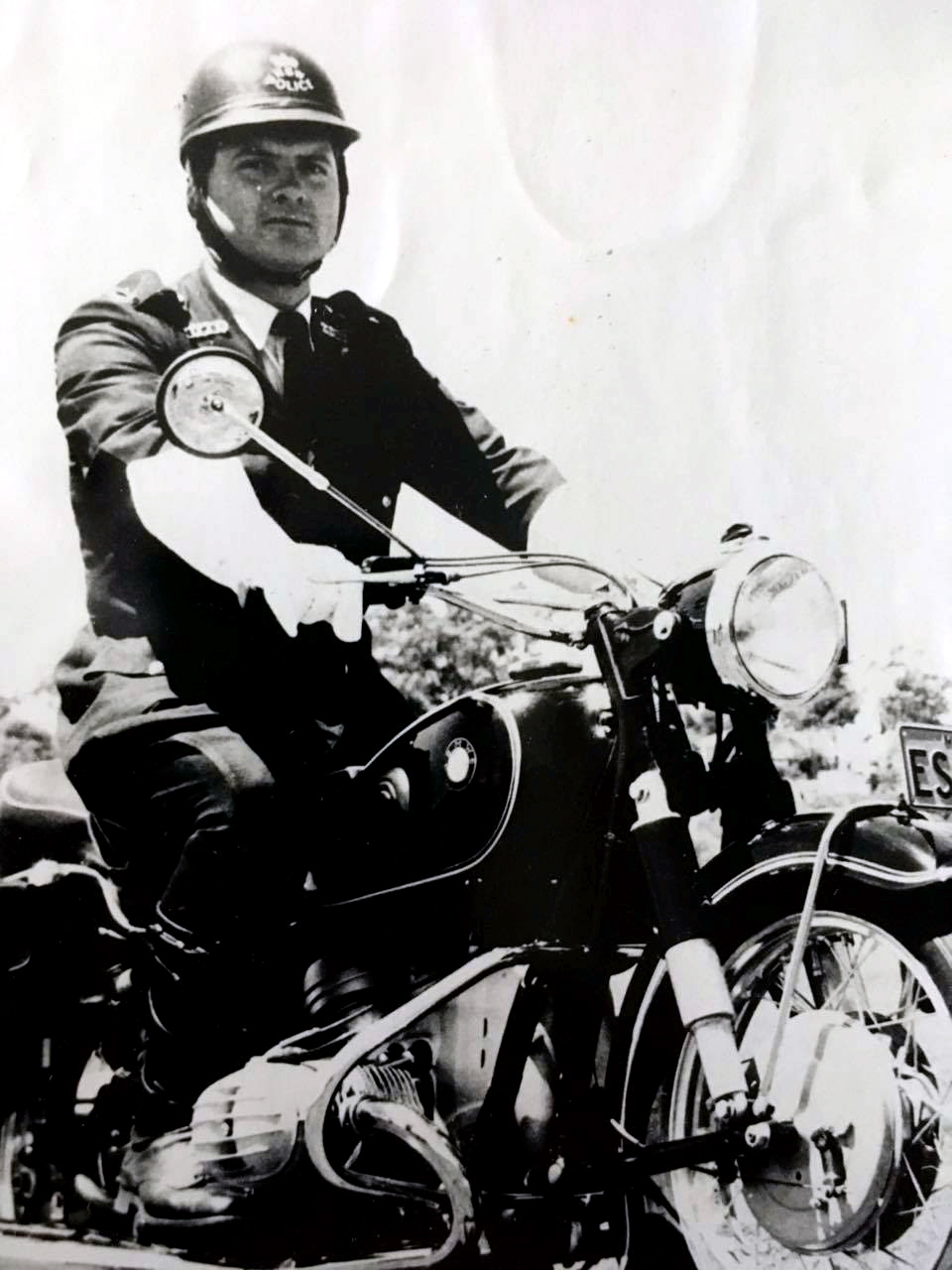
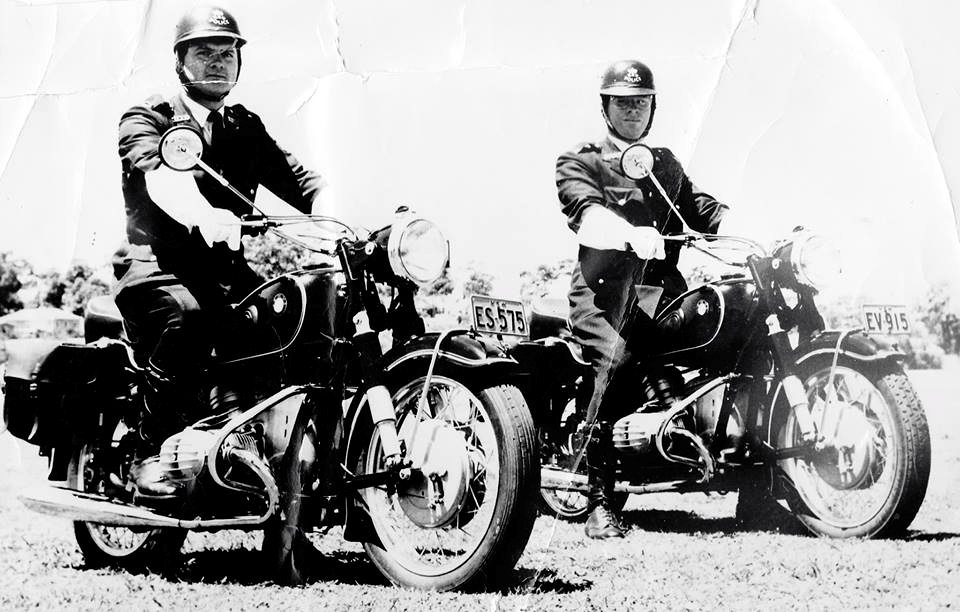
John Burton Gibbs # 9060 (right) riding Police cycle EV-915, with Noel Patmore, riding Police cycle ES-575, at Figtree Oval in 1961… the photo is captioned “Escorting Mr Maloney” to Wollongong.
John Burton GIBBS ( NSWPF # 9060 ) DoB: 20 June 1939, was a Probationary Constable on 30 June 1958 and a Constable 1/c on 22 September 1964 – working in the North East District.
Appears in the 1988 ‘Stud Book’ as a Sgt 3/c but does NOT appear in the 1989 issue.
Additional results of the final examinations conducted by the Wollongong Technical College at the close of the 1952 session are:
PRINCIPLES OF PHYSICAL METALLURGY AND TESTING
Distinction: Derek Lovell;
Credit: John Aldridge;
Pass: …….
BOILERMAKING Stage I
Pass: John Alfred Calcott, Charles Keith Campbell, . Noel John David, Terence Charles Denton, Brian Thomas Edwards, Ronald John Frith, Clifford Brian Guyatt, Geoffrey Norman Hancock, Barry Colin Hazelgrove, Edward John Holland, Ronald Vincent Hush, John Kershaw, John George McCauley, Donald James McCombie, Michael McPake, Kevin Edward Maloney, Robert Dudley Matley, James Joseph Micale, Robert David Mountford, John Oberon Murray, Noel Frederick Patmore, Frank William Peterson, Keith Phillips, Kenneth Keith Solomon, John Michael Splitt, Robert Trevethan, John Vaughan, Harold Stanley Wheatley.
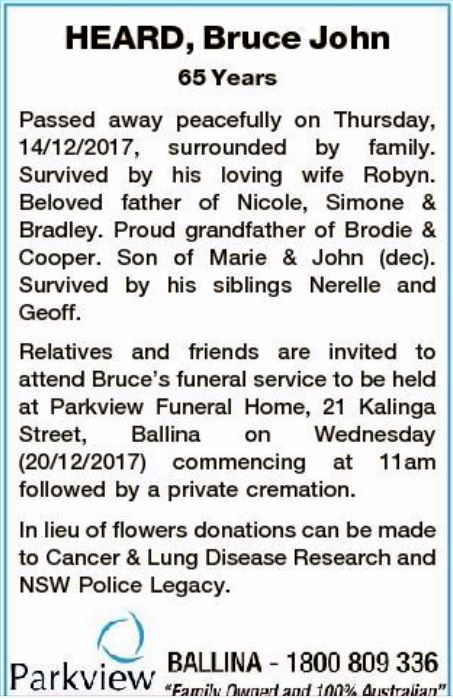
Bruce, prior to joining the NSWPF, was a tow truck operator.
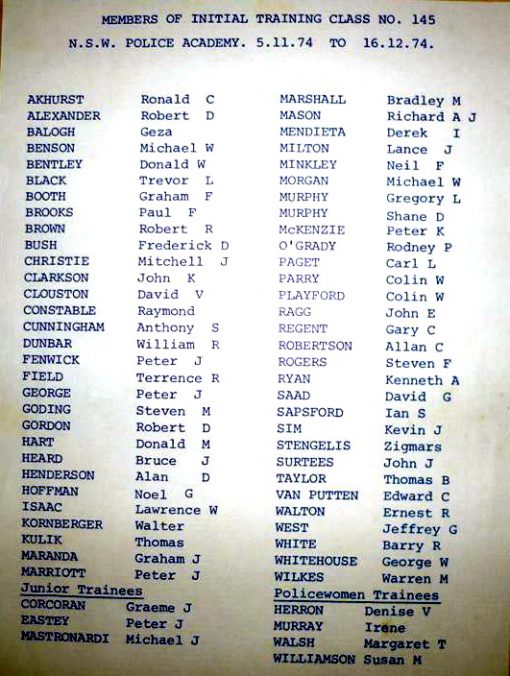
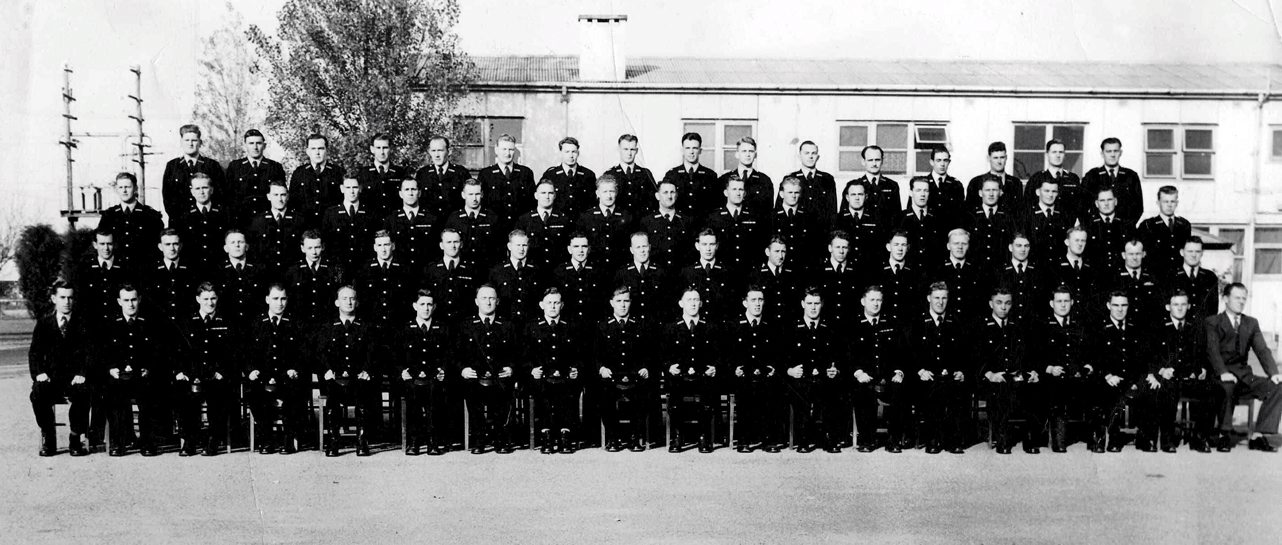
Members of Class 145 who Trained at Redfern Police Station between 5 November 1974 – 16 December 1974 but this list does NOT contain the names of the Cadets who were in this Class.
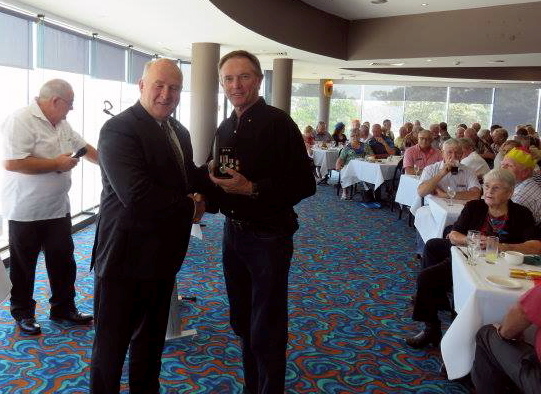
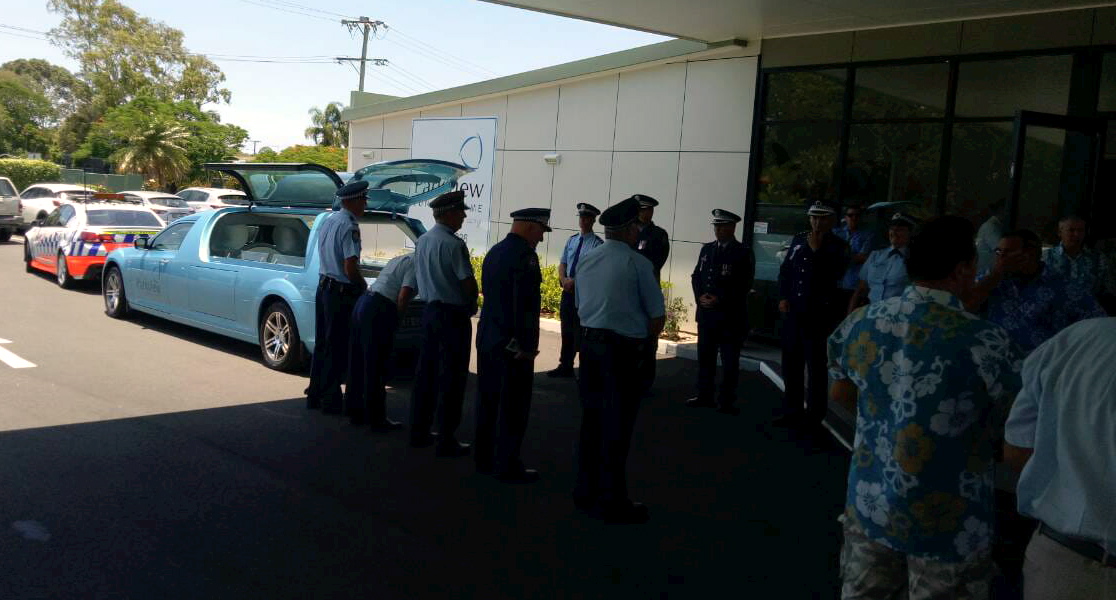
Bruce arriving
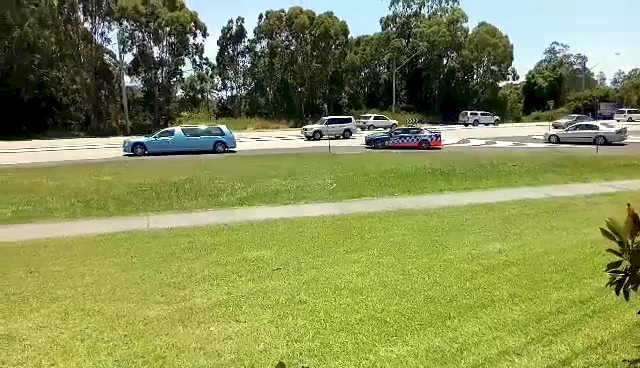
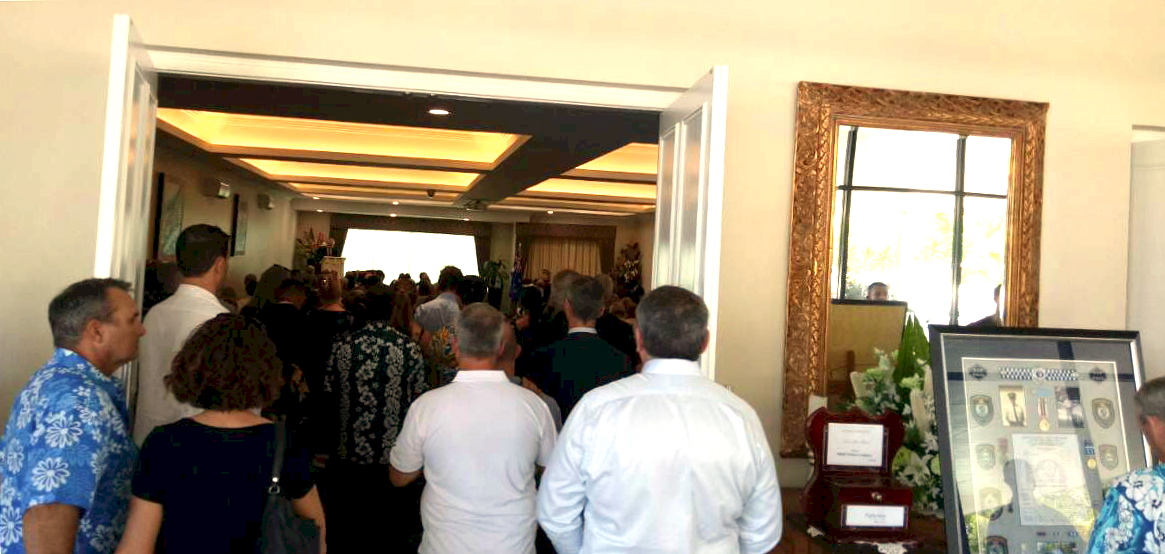
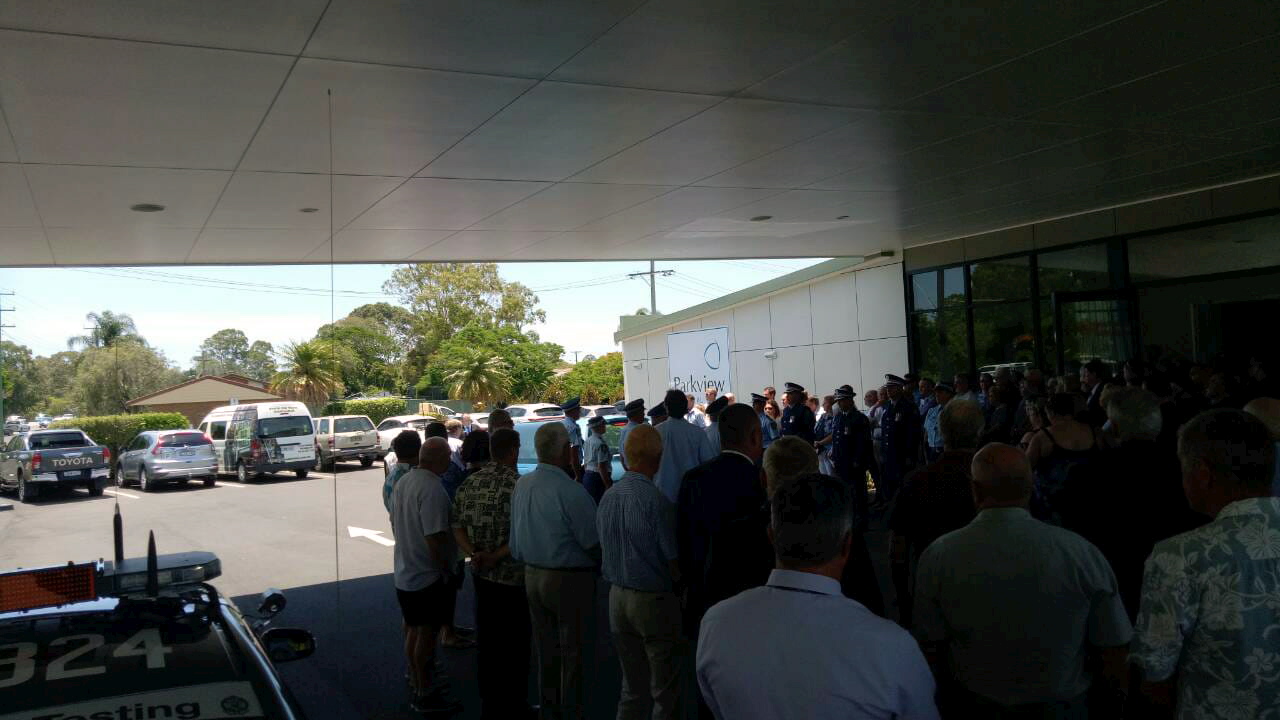
Peter CameronGroup AdminJust for the information of some who knew Bruce; he had a very large turnout for his funeral today. A whole bunch of retired and serving people there and even one bloke, Mick Pearce, who flew in from Melbourne. Bruce was given a very fitting service for his 32 yrs in the cops and I must say camaraderie is still alive and well despite what we sometimes think.
Norman MacKENZIE
| 24/12/2017
Norman MacKENZIE
Late of ?
New South Wales Police Force
[alert_yellow]Regd. # 8710[/alert_yellow]
Rank: Probationary Constable – appointed 10 June 1957
Constable 1st Class – appointed 10 June 1963
Senior Constable – appointed 10 June 1968
Sergeant 3rd Class – appointed 1 June 1973
Sergeant 1st Class – appointed 3 March 1983
Retired – Sgt 1/c on 10 December 1988
Stations: ?, Bankstown – Retirement
Service: From? ? pre June 1957? to 10 December 1988= 31+years Service
Awards: No find on It’s An Honour
Born: 8 October 1934
Died on: Saturday 9 December 2017
Age: 83
Cause: ?
Event location: ?
Event date: ?
Funeral date: was held yesterday – Thursday 14 December 2017 @ 10am
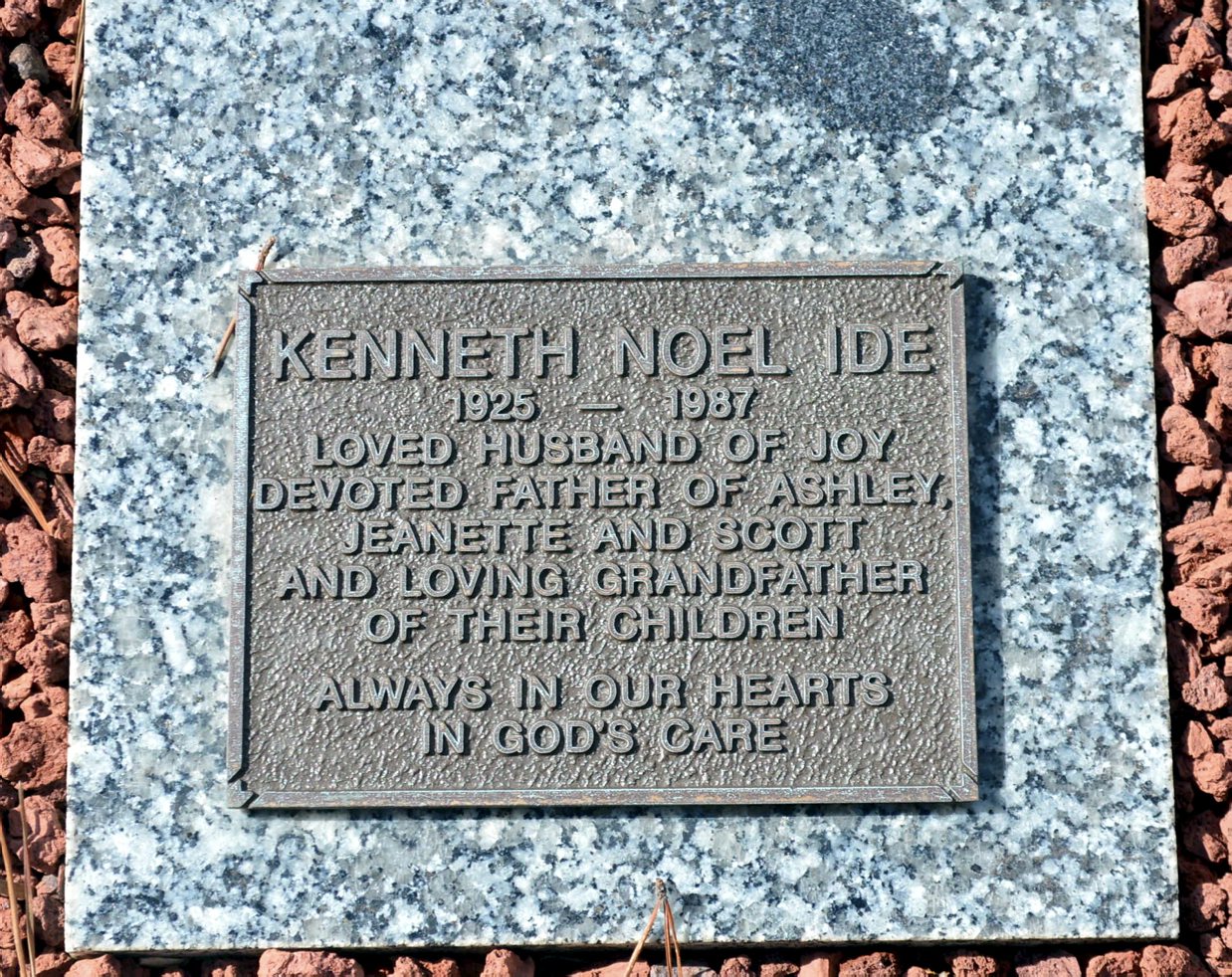
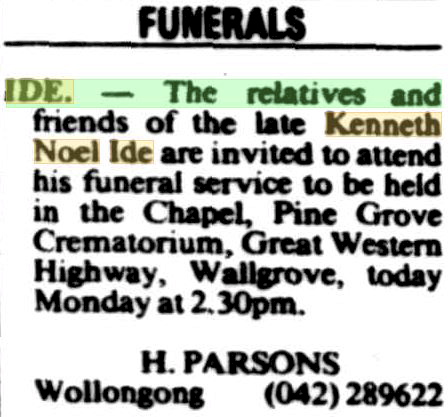
Nov 10, 1972 – Kenneth Noel Ide, sergeant third class, reduced to senior constable. With Mr Justice Perrignon on the board were Assistant Commissioner, M. J. Whelan, representing the Police Commissioner, and Sergeant R. A. McClelland, representing the Police Association. The policemen whose appeals were upheld …
The Sydney Morning Herald page 1 Friday 10 November 1972
[divider_dotted]
Michael MartinI worked with Sergeant Kenneth Ide, at Darlinghurst, he helped me a lot, by giving me advice and guidance. I sure didn’t know much about the big bad world when I went to Darlo.
Beloved wife of Kenneth (dec). Devoted mother of Ashley & Scott.
Loving Grandmother & Great-grandmother.
Always in our hearts
In God’s care
Family and friends are warmly invited to attend Joy’s funeral at Pinegrove Memorial Park on TUESDAY (12th December 2017) commencing at 1:30 pm within the West Chapel.
Published in The Sydney Morning Herald on Dec. 9, 2017
[divider_dotted]
December 10, 2017
It broke our hearts to lose you but you did not go alone. For part of us went with you the day God called you home.
Scott Ide,
Jerrabomberra,
New South Wales
[divider_dotted]
Arthur Raymond HAY
| 24/12/2017
Arthur Raymond HAY
Late of ?
New South Wales Police Force
Regd. # 10403
Rank: Probationary Constable – appointed 13 August 1962
Constable 1st Class – appointed 13 August 1976
Sergeant 3rd Class – appointed 1 December 1978
Detective Senior Sergeant ( pre 1987 )
Detective Inspector – appointed 7 September 1987
Stations: ?, Licensed Dealers Squad – 21 Division, ‘ I ‘ District Drug Law Enforcement Bureau – 1985 ( 2 I.C. ),Detective Inspector – Regional Controller – North – Drug Law Enforcement Bureau,
Service: From? ? Pre August 1962? to? ? 1994 = 32+? years Service
Awards: National Medal – granted 6 November 1980
1st Clasp to National Medal – granted 17 March 1989
Sydney Morning Herald, page 9, Saturday 16 December 1995
Former scourge of authority now a would-be politician
By MALCOLM BROWN
Members of the Gosford Drug Unit were recommended for a Commissioner’s Commendation in 1991 when some of the unit were suspected of receiving all or part of $300,000 from a huge amphetamine ring, the Police Royal Commission, has heard.
The commission has been told that after allegations were first raised by drug dealer John Barrie Oldfield, members of the unit, headed by Detective Sergeant Wayne Eade, had been advised by an assistant commissioner to vigorously deny the allegations.
The commission has heard members of the drug unit received full support from their line commanders.
The Police Commissioner, Mr Lauer, decided in March, 1992 to award the commendations even though a deputy Director of Public Prosecutions, Mr Mr C.A. Luland, QC, had written to the Assistant Commissioner, Professional Responsibility, in January that “evidence is highly suspicious of the police officers being involved in a conspiracy to pervert the course of justice”.
The royal commission has heard evidence from a middleman in the alleged bribe that he received $300,000, kept $100,000 and passed the rest to the drug unit, whose members included Detectives Eade, Ian Ison and Greg Vicary.
Mr Arthur Raymond Hay, former detective inspector, supervisor of the north region drug units from 1987 until his retirement last year, has told the commission he was aware of allegations against members of the drug unit. Members of the unit had told him in 1990 that there was an Internal Police Security Unit (IPSU) inquiry into them and they were “very upset”. ” I saw it as my role to try and support them and help them get back to work because it hit ( Royal Commission ) them pretty hard“ he said. He had noted that an assistant commissioner had advised that the drug unit members attend the IPSU, deny everything and engage in no further discussion. He did not know whether the assistant commissioner had any basis at all for knowing whether the allegations, were true or false.
Ms Virginia Bell, counsel assisting the commission, asked: “At the outset the attitude from the line command, as best you could judge, was unquestioning support for the officers at a time when line command had no knowledge of the strengths or otherwise of the allegations?“; Mr Hay: “That’s my view of it.“;
At the end of Oldfield’s trial in September, 1991, the trial judge, Justice Allen, made remarks favourable to officers of the drug unit and had said: “It is a twist of fate that honest detectives are accused by criminals of corruption and suffer the heartache and indignity of an internal affairs inquiry.” Mr Hay agreed that on October 31, 1991, he had prepared a report supporting the award of a Commissioner’s Commendation and had said success of Operation Hurricane had been due to the “diligent and outstanding effort of the Gosford Drug Unit who conducted the operation with utmost integrity and professionalism“.
Nothing further is known about this gentleman.
Cal
6 December 2017
Alfred George GREGORY
| 24/12/2017
Alfred George GREGORY
aka Alf
Late of ?
New South Wales Police Force
‘possibly’ from Academy Class 94A
Regd. # 10566
Rank: Trainee
Probationary Constable – appointed 25 February 1963
He was deemed ‘Competent’ to drive departmental vehicles on 14 May 1963
Completed three day course in Civil Defence 24 – 26 February 1964
He was deemed ‘Competent’ to be a Solo Cyclist on 18 March 1964
Was typing 28 word per minute on 16 August 1963
Constable – appointed 25 April 1964
He was deemed ‘Competent’ to ride High Powered Solo Cyclist on 1 July 1964
Passed his Cst 1/c examination on 2 September 1965
Constable 1st Class – appointed 25 April 1968
He was deemed ‘Competent’ to drive Ute’s & light trucks on 10 May 1968
He was deemed ‘Competent’ to drive Buses on 6 November 1973
Passed his Sgt 3/c examination on 16 May 1974
Senior Constable – appointed 24 August 1974 ( loss of 4 months Seniority)
Completed Sergeants’ Course # 65 conducted from 31 August to 16 October 1981
Sergeant 3rd Class – appointed 18 October 1981
Stations: 13 Division – GD’s ( from 1 April 1963 ),
Canterbury – GD’s – 13 Division ( from 11 November 1963 ),
Canterbury Traffic Branch – STP ( Probation from 18 May 1964 ),
Canterbury Traffic Branch – STP ( Permanent from 22 June 1964 ),
Liverpool STP ( Special Traffic Patrol – 22 Division from 5 January 1965 – 8 June 1966 ),
1966 Branch Secretary of NSW Police Association representing 22 Division,
21 Division ( from 9 June 1966 – 3 July 1966 ),
Liverpool GD’s ( from 4 July 1966 – 24 April 1967 ),
Tingah GD’s ( One Manner from 25 April 1967 – 9 September 1969 ),
Cabramatta GD’s ( *26 Division from 10 September 1969 – February 1974 ) * Cabramatta / Fairfield was originally under Merrylands – H District. Later came under Liverpool – I District
Cabramatta GD’s – 34 Division ( from 1 March 1974 – 30 April 1974 ),
34 Division – Assist to Traffic Sgt ( from 1 May 1974 – 10 August 1974 ),
Cabramatta GD’s – 34 Division ( from 11 August 1974 – 6 September 1975 ),
Fairfield GD’s & Information Officer – 34 Division ( from 7 September 1975 – 1 October 1977 ),
Liverpool – 22 Division – Sgt 3/c ( from 2 October 1977 – 27 February 1982 ),
Green Valley – 22 Division ( from 28 February 1982 – 22 May 1993 )
Macquarie Fields – 35 Division – Shift Supervisor ( from 23 May 1993 – ? )
Service: From? ? pre Feb 1963? to? ? ? = ? years Service
Awards: Commended for part played in the search for Monica Schofield, missing from Heathcote Hostel from 17th June, 1963, and whose body was subsequently found buried in the bush on the 25th June, 1963. N. T. W. ALLAN, Commissioner of Police – 9 April 1964
Commended for part played in fighting the disastrous bush fires which occurred in the County of Cumberland during March, 1965. N. T. W. ALLAN, Commissioner of Police – 19 August 1965
National Medal – granted 23 October 1981
1st Clasp to National Medal – granted 28 May 1992
23 March 1972 – “Highly commended for his outstanding courage and devotion to duty on the 30th September 1971, at Lurnea in confronting an armed man who had earlier murdered two members ( RILEY & McDIARMID ) of the Force. On the offender raising a pistol the Constable shot and killed him.
Alf was Awarded a Commissioner’s Commendation & was recommended for Queen’s Commendation for Brave Conduct
Awarded the Queen’s Commendation for Brave Conduct on 28 August 1972
Mid-morning of 30th September 1971, a female walked into Blacktown Police Station to report a murder /rape earlier that day at Toongabbie. Sgt 1/c. William. W. Riley and Sgt 3/c. Maurice. R. McDiarmid attended the scene. Soon after both Officers were shot dead by the suspect Ronald Clark, using a .22 calibre repeating rifle. He then stole both Officers .38 Smith and Wesson revolvers.
Clark escaped in a vehicle. That afternoon the car and armed suspect were seen travelling in Hoxton Park Rd, Green Valley, in the Liverpool Patrol, by Constable Alfred Gregory and Constable L. A. Crawford of Cabramatta. The suspect was pursued, refusing to stop. On making a right turn into Hill Road, Constable Crawford, heroically rammed the suspect’s car, causing it to crash into petrol pumps at a service stationed at that intersection. Constable 1/c. Gregory immediately alighted from the Police vehicle and confronted Clark who aimed a firearm at Constable Gregory. During this confrontation Clark was fatally wounded by Constable 1/c Gregory. Later in his service Sgt Alfred Gregory was station at Liverpool on General Duties. Annual Report of the Police Department of New South Wales for 1971.
Courtesy of Liverpool ( NSW ) Police Time Line ( 1788 – 2016 )
[divider_dotted]
Canberra Times (ACT : 1926 – 1995), Saturday 1 July 1972, page 3
Bravery awards to policemen
SYDNEY, Friday. — One city and five country policemen had been awarded the Queen’s Commendation for Bravery, the Governor of NSW, Sir Roden Cutler, announced today.
They are Constable Ernest Max MacLeod Chapman, of Nowra, Sergeant Third Class Keith William Krause and Senior Constable John William Hayes, of Orange, Senior Constable Georgi Vsevolodovich Radzievic, of Mudgee, and Senior Constable First Class Alfred George Gregory, of Cabramatta.
The citation for Constable Chapman says that in Lord Street, Kempsey, on October 13, 1970, he saw a car being driven at high speed and in a dangerous manner.
He stopped the driver who pointed a sawn-off .22 calibre rifle at the constable and shouted abuse at him.
The driver disarmed Constable Chapman and forced him at gunpoint to enter the car.
During the journey south along the Pacific Highway, “he held the police revolver at the back of the constable’s head, continued to abuse him, threatened to kill him and fired two shots, apparently out of the car window, as a warning to the constable“.
At Kew Constable Chapman managed to alert the proprietor of a service station.
Sergeant Third Class P. N. Long, of Kew police, arrived but was disarmed, and forced to enter the car.
Constable Chapman purposely dropped the car keys and managed to grasp the revolver, which fired, narrowly missing Sergeant Long.
The man was subdued, later charged with various offences and sentenced to 14 years’ hard labour.
5′ 11″ tall, 12 stone 9 lb, hazel eyes, brown hair, medium complexion.
He was previously employed as “Call Boy”, Cleaner and fireman for 6 years with the Dept. Railways.
Alf was a train driver prior to joining the Police Force, he loved his beloved trains, he used to talk about the old steamer he shovelled coal on and the runs he made with the railway. A couple of things about Alf, he was very musically talented, he could play any keyboard instrument by ear, no music, he’d just sit down and play. He had his own Organ at his house and he loved it. Another thing that was outstanding with him was his handwriting. He had a beautiful handwriting style. The charge books he wrote in were copperplate, and a short while ago I went to Tingha just to see where he’d worked. I managed to get into the Police Station there and rummaged through some of their old records, sadly a lot of them had been destroyed but I managed to find a sample of this handwriting dating back to the mid to late 1960’s in an old index book. I showed it to the Senior Constable on duty there and he agreed about Alfs style.
Peter Croucher – 2017
[divider_dotted]
Alex Robert BUNT
| 24/12/2017
Alex Robert BUNT
younger brother of Ted BUNT RIP – May 2017 ( ACOP # 5771 )
Cousin to Jacqueline Mary MILLEDGE, NSWPF – P/W 0171 who later became NSW State Coroner
Late of ?
New South Wales Police Cadet
Cadet # 0963
New South Wales Police Force
Regd. # 7854
then Commonwealth Police before amalgamation with
Australian Federal Police ( AFP )
NSW Police Rank: New South Wales Police Cadet – commenced 26 November 1951 ( aged 16 years, 0 months, 11 days )
Probationary Constable – appointed Sunday 15 August 1954 ( aged 18 years, 9 months, 0 days )( Must have obtained 3 months Seniority for unknown reasons to me – possibly came 1st in the Class etc )
Constable – appointed ? ? ?
Constable 1st Class – appointed ? ? ?
Senior Constable – appointed 15 August 1965
Sergeant 3rd Class – Resignation – then joined AFP
NSW Police Stations: ?, Cooma ( 1964 – 1966 ), Captains Flat, Michelago, NSW Police Academy – Resigned on 13 February 1974
NSW Police Force Service: From 26 November 1951to 13 February 1974= 22years, 2 months, 18 days Service
Age upon Resignation from NSWPF: 38 years, 2 months, 29 days
Time since leaving NSWPF: 43 years, 9 months, 9 days
Commonwealth Rank: Inspector
Commonwealth Police Force Service: From? ? 1974 to? ? ? = ?? years Service
Commonwealth Police Force Stations: ?, Currency Squad – Melbourne ( June 1978 )
AFP Rank: Chief Inspector
Chief Superintendent
AFP Police Force Service: From ? ? ?to ? ? ? = ?? years Service
AFP Police Force Stations: Belconnen ( 30 October 1979 – ? Chief Insp. ), Industrial Division ( Chief Supt. )
Awards: Queens Commendation for Brave Conduct – awarded 11 October 1966 ( Constable )
Senior Constable Alex Robert Bunt was awarded the Queen’s Commendation for Brave Conduct and Departmentally commended for courage and devotion to duty displayed at Cooma on the 26th April, 1966, in connection with the arrest of a man armed with a loaded rifle. At the Cooma Court of Petty Sessions, when committing the offender for trial, the presiding Magistrate highly commended Senior Constable Bunt for his restraint and courage. ‘Report of the Police Dept for 1966. Parliament of NSW 1967’
National Medal – granted 21 September 1977 ( Chief Supt. )
1st Clasp to National Medal – granted 25 March 1980 ( Chief Supt. )
2nd Clasp to National Medal – granted 7 November 1988 ( Chief Supt. )
Born: Friday 15 November 1935
Died on: Wednesday 22 November 2017
Age: 82 years, 0 months, 7 days
Cause: ?
Event location: ?
Event date: ?
Funeral date: Saturday 2 December 2017 @ 11am
Funeral location: South Chapel, Eastern Suburbs Crematorium, 12 Military Rd, Matraville, NSW
Buried at: Cremated
Memorial located at: ?
Presentation to Senior Constable Alex Robert Bunt ( NSWPF ), Government House, Sydney
ALEX is NOT mentioned on the Police Wall of Remembrance *NEED MORE INFO
Funeral location:
FURTHER INFORMATION IS NEEDED ABOUT THIS PERSON, THEIR LIFE, THEIR CAREER AND THEIR DEATH.
Loved uncle of Frances, Amanda, Joanne, Edwy, Alexis, their partners, children and grandchildren.
Beloved cousin of Jacqueline and Alice. Brother of Ted (Dec). Brother-in-law of Margaret.
Passed away after a long Illness
Always In Our Hearts
Family and friends of ALEX are warmly invited to attend his Funeral Service to be held in the South Chapel at Eastern Suburbs Crematorium, 12 Military Road, Matraville on Saturday (December 2, 2017) commencing at 11.00am
Maroubra 93142778
Proudly Australian
Published in The Sydney Morning Herald on Nov. 25, 2017
Both Ted BUNT & Alex BUNT were cousins to Jacqueline Mary MILLEDGE, NSWPF – P/W 0171 who also became NSW State Coroner.
Canberra Times (ACT : 1926 – 1995),
Friday 30 June 1989, page 1
Police go on contracts, union appalled
By TONY WRIGHT .
Police officers and public servants in the Australian Federal Police force will work under virtually identical conditions following radical new employment arrangements to be introduced next year.
Both police officers and public servants will work under contract for fixed terms, ending tenure of service within the force. The length of contracts has not been decided, but their renewal will be based on performance.
The decision, announced in letters sent to all members of the AFP in the past two days, constitutes the most far-reaching change in employment conditions for AFP members since the force was set up a decade ago.
The 600 public servants employed by the force currently work under the Commonwealth Public Service Act. Under the new scheme, known as a “unified police force”, they would be covered by an amended Australian Federal Police Act, and would be subject to disciplinary conditions similar to those of the 2800 police officers.
Legislation for the new deal is expected to go before Parliament in the Budget session beginning in August, and the arrangements are planned to be introduced next year.
It would create an Australian precedent: the country’s first police force employing all its members on fixed term contracts.
Although the AFP Commissioner, Peter McAulay, issued a discussion paper on the proposals in February, the announcement this week that the new arrangements were to be introduced caught unions by surprise, and infuriated the Australian Federal Police Association.
The association has flatly refused an invitation to discuss with the AFP implementation of the scheme.
The association’s national assistant secretary, Dale Small, said, “I am absolutely appalled by the AFP’s complete lack of accepted industrial-relations behaviour in the way they have handled this.
“They have taken away all our rights as a legitimate industrial body – they have not undertaken any negotiations with us. They have simply told us that this is what they are going to do. It came out of the blue. They have told us they will not be involved in negotiations over the introduction of a unified work force or fixed-term contracts.
“The AFP has said the only thing to discuss is the implementation of the new scheme. We will not be involved in any discussions under those conditions.”
Mr Small said his association had written to the Attorney-General, Lionel Bowen, requesting clarification of the Government’s intention in the matter and asking for consultation.
The assistant secretary of the ACT branch of the Administrative and Clerical Officers Association, Mr Peter Southwell, knew nothing of the announcement until contacted by The Canberra Times last night.
Mr Southwell said ACOA, which represents many of the public servants employed by the AFP, had been aware that “proposals along these lines were being developed”.
“But requests for further information have brought no response [from the AFP],” he said. “We are strongly concerned about possible losses of conditions of service, losses of job security, a potential move to individual contracts of employment [outside award structures] and the use of police disciplinary powers against civilians.” Mr Southwell said ACOA would meet other unions next week to discuss a coordinated response to the AFP announcement. About 10 unions represent employees of the AFP, though some have few members in the AFP.
It is understood Federal Cabinet approved the new arrangements about three weeks ago.
In the letter announcing the new deal, the officer in charge of the AFP’s industrial relations division, Commander Alex Bunt, said the proposals were “consistent with the Government’s objective for a more efficient and effective AFP making use of modern management techniques, new employment arrangements and a better educated, skilled and trained work force focused on major national criminal investigations”.
The main features of the plan are:
The introduction of fixed-term contracts for all AFP employees:
award-based for all ranks below Commander or Senior Executive Service equivalent, and award-free for Commanders and above.
The creation of a unified workforce under the AFP Act.
As far as practicable, similar terms and conditions of employment for all, and similar disciplinary arrangements.
The introduction of a scheme to compensate employees for loss of tenure, subject to a qualifying period.
The Commissioner would have the power to determine terms and conditions of employment of all AFP employees (outside those already specified in awards) subject to broad government wages policy considerations.
Superannuation arrangements likely to reflect the outcome of the Commonwealth Superannuation Scheme Review.
Transitional arrangements to preserve the existing rights of all non-SES employees for a year, during which consultations regarding the new arrangements are proposed.
Maintenance of Australian Public Service mobility arrangements for existing public-service staff. However, where these rights are exercised (to transfer from the AFP to another branch of the Public Service) there will be no entitlement to compensation for loss of tenure.
Commander Bunt said the new arrangements “simply meant that the AFP is advancing its merit-based employment system that was introduced in 1984”. “We believe these new arrangements will result in a much more effective and efficient organisation,” he said.
Police on Christmas Island, 2625km north-north-west of Fremantle, Western Australia, may be withdrawn the week before Christmas unless an agreement can be reached on police numbers on the island.
The national secretary of the Australian Federal Police Association, Chris Eaton, said yesterday that he had been informed that from December 13 the number of police on the island would be reduced from six to two. In view of the “serious occupational risk” AFPA members would then face, the association would withdraw them and “alternative law-enforcement arrangements” would have to be made.
He said three of the Australian Federal Police officers stationed on Christmas Island completed their secondment in early December and would not be replaced. One officer was on indefinite sick leave on the mainland. From December 13 there would only be two AFP officers on the island of 1000 people.
Police on Christmas Island were supplied by the AFP but administered, paid and managed by the Department of Arts, Sport, the Environment, Tourism and Territories, he said.
The department had banned overtime from November 10. Many of the additional duties performed by police ( including manning the fire brigade, Customs duties, and manning air-sea emergency services ) were already frequently unmanned. Staff cuts would mean these services would “hardly ever be manned.”
The population of the island was “depressed, angry and mostly out of work” and this was “a recipe for trouble,” he said. “It only takes one armed offender, or one hostage or siege situation, and these police are in isolated peril,” Mr Eaton said.
He warned that “the same bureaucrats” responsible for administering the police on Christmas Island would soon be administering a self-governing ACT. “I have no doubt the AFP have had no part to play in this [ decision to cut police numbers ],” he said.
The Chief Superintendent of the AFP’s industrial-relations section, Chief Superintendent Alex Bunt, said last night that the AFP had “no intention of leaving only two AFP members on the island”.
He said the number of AFP officers made available for duty on the island was decided by consultation between the department and the AFP, based on what level of policing the department requested, and what the AFP agreed was reasonable. The AFP had invited the AFPA’s comments on staffing levels in August and discussions had already taken place between the AFP, the department and the association on the matter. Discussions were continuing between all parties.
Chief Superintendent Bunt said the officer who completed his secondment to Christmas Island on December 13 would be replaced either by another person or by extending his service there until a replacement could be arranged.
He said that should an emergency situation arise the AFP was in a position to send reinforcements.
“We have put [extra] police on the island before at short notice when the situation required it,” he said. “We are in a position to assist police on the island if anything does happen. The AFPA is not the only organisation concerned for the welfare of AFP members,” he said.
The Australian Federal Police industrial relations division will put a proposal to the AFP Commissioner, Mr Grey, for the issue of AIDS (acquired immune deficiency syndrome) kits to all operational police vehicles.
A report prepared by the division after consultation with the Australian Federal Police Association included the recommendation for the kits, to give police additional security against not only AIDS but other contagious diseases such as Hepatitis B.
Chief Superintendent Alex Bunt, the commander of the industrial division, said the report also recommended that a formal education program be established to complement programs already run by police surgeons in the ACT during national training courses.
Some emergency vehicles were equipped with gloves, antiseptic foam and face masks earlier this year and, in July, the provision of those items was extended. Free vaccinations against Hepatitis B have been available to AFP members for some time.
Chief Superintendent Bunt estimated the cost of equipping vehicles with the kits would be “considerably cheaper” than the $20,000 figure suggested by the Australian Federal Police Association.
Chief Inspector Alex Bunt says that he does not intend to institute any radical changes at Belconnen police station.
Inspector Bunt, a former member of the Commonwealth Police, took up his new duties yesterday as the officer-in charge of the station.
He is the first former senior Commonwealth Police officer to take command of a former ACT Police station under the Australian Federal Police.
Given the traditional rivalry between the two former forces, Inspector Bunt said his reception had been very good.
“There has certainly been no indication to me of any resentment” he said “If there is any resentment, I certainly will do my best to overcome it”.
Inspector Bunt joined the Commonwealth Police in 1974 after reaching the rank of sergeant in the NSW Police. He attended a senior officer’s course run by the FBI in 1974 and has a Diploma of Criminology from the University, of Sydney.
He is studying for a law degree
through Macquarie University. His last position in the Commonwealth Police was officer-in-charge of the currency squad in Melbourne.
On his new position, Inspector Bunt said, “I have had a lot of experience in the general policing area. I am not a stranger to these parts”.
While in the NSW Police, he was stationed at Cooma between 1964 and 1966, and he relieved at Captains Flat and Michelago.
“I propose to do everything I can to ensure that the high standard of policing in the ACT is maintained”, he said. “The ACT has a very good reputation and while I am at Belconnen I will work to ensure that our good relations are maintained with the community. I do not plan to make any radical changes which will disturb the relationship between the police and the community. In fact, I will try to cement these relations”.
He sees his new job as a challenge and intends to move around the area and attend local meetings.
MELBOURNE: Inspector Alex Bunt, of the Commonwealth Police Force, formerly of Sydney, has been appointed chief of the currency squad in Melbourne. He will succeed Inspector V. W. Anderson, who is to be promoted to headquarters in Melbourne.