If pelicans could cry – the passing of the pelican man
By Justine Frazier and Jonathan Atkins
Sixty year old Lance Ferris died on Sunday the 14th of October, 2007 at Lismore base Hospital after suffering a stroke on Saturday.
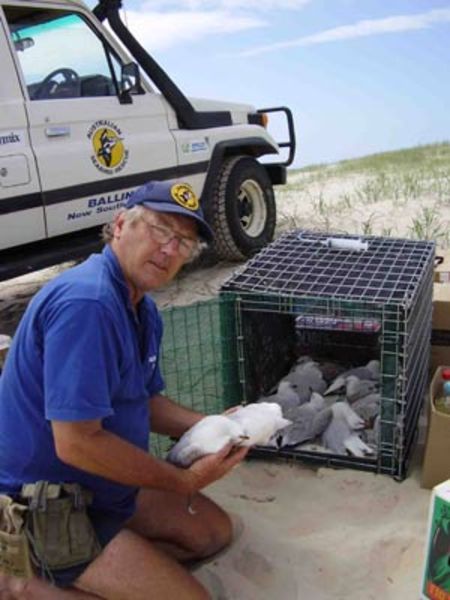
Lance Ferris from Australian Seabird Rescue collects dead birds from the beach areas of Evans Head. It is thought the birds died from botulism after eating dead fish.
The man many of us fondly knew as the “Pelican Man” has passed away leaving a massive whole in the community. Sixty year old Lance Ferris died on Sunday the 14th of October, 2007 at Lismore base Hospital after suffering a stroke on Saturday.
Lance dedicated his life to the rescue, rehabilitation and preservation of seabirds, turtles, and in particular the magnificent pelican and it was through his many years as a dedicated volunteer, using his own money and whatever donations he could find that Australian Seabird Rescue (ASR) came into existence in Ballina, New South Wales in 1992.
Close friend Marny Bonner said, “We’re receiving emails and phone calls from all over Australia from people who are so deeply saddened and shocked.”
Marny Bonner says, “Lance has always had huge compassion for Australia wildlife, his entire life has been rescuing and rehabilitating wildlife. It wasn’t until he noticed not one but two pelicans with hooks in their legs, on the same day, that he realised that there was a problem out there. So he borrowed a boat and had a look around the Richmond River and found that 37 out of 100 pelicans were injured.”
After surveying other estuaries, Lance Ferris realised that what was needed was a huge education program campaign and the passion began.
“We got good support from the North Coast community and some important sponsorship. Over the last 15 years we’ve managed to reach 20,000 children, so there will be a lot of children upset about losing the Pelican man.”
Since that time, ASR volunteers have been involved in the rescue and rehabilitation of seabirds and shorebirds, marine turtles and to date, have rescued over 1000 Australian Pelicans.
Lance Ferris never lost his passion the rescuing injured seabirds.
Marny Bonner believes, “Ultimately that’s what claimed him, his passion for wildlife led to him not looking after himself as well as he might have. It led to many, many hours in loss of sleep trying to save those little lives.”
“I would like to absolutely commend the staff at Lismore base Hospital who worked so hard with Lance. It was a very upsetting time for everybody because everybody knew who he was and knew how hard he’d worked to save so many lives and yet there was nothing we could do to save this most important life,” says Marney Bonner.
In 2004 as president of Australian Seabird Rescue, Lance led the volunteer organisation to win the inaugural National Coastcare Community award.
In an earlier life Lance worked a police officer based in Casino and was a member of APEX. He also worked as a teachers aid for children with disabilities, was a well respected musician and a member of the Sonset Orchestra and could be found at any given weekend at the Lismore Car Boot Markets. Ballina Mayor, Phillip Silver says the death of Lance Ferris is a huge loss for the community.
“I guess in many ways he was ahead of his time in terms of the recognition of that vulnerability of the environment and the water animals. Because he was doing it 20 years ago when it was certainly happening but people weren’t thinking about it,” said mayor Silver.
ASR is always looking for more volunteers and as Marny Booner says “the pelicans have lost their best friend, if pelicans could cry, there would be a wailing around the nation that could not be ignored. It will take an army of volunteers to replace Lance Ferris”.
Jason Ferris believes his Dad would never really let on if he was feeling unwell.
Jason recalls, “At 3am on Saturday morning he sent out a bunch of emails with instructions regarding seabird rescue, so we suspect over the last week or so, he was aware something was going on.”
“My Dad’s always run pretty close to the edge. Dad lived and breathed seabird rescue 24/7. I would often find him sleeping in all sorts of places in the back cars, on seats… his focus was never on his own health, more on the animals in care,” said Jason.
A passion that Jason and Lance shared was music.
“I developed an interest in music as a result of Dad. Dad was really an amazing musician and beautiful singer. In my 20’s he and I started playing music together around the North Coast. Definitely some of my most treasured memories of Dad,” said Jason.
As much as it can be…it will be business as usual for Australian Seabird Rescue.
According to Jason, “Dad’s put 13 or 14 years into this organisation, you can’t just pull the plug. He would be most unhappy with me if that happened.”
In 2003, ABC TV’s Australian Story took a look at a Ballina based former police officer called Lance Ferris, who’s dedicated his life to fixing the plight of the pelicans… read more
ABC North Coast reported when Lance Ferris and his team of seabird rescuers headed to Victoria for a series of training sessions with wildlife carers… read more
A public memorial service will be held for Lance Ferris.
“Thank you to the ABC crew for your lovely, sincere tribute to Lance, and thanks to all who phoned to share the ways in which Lance touched their lives. Lance’s life and work will be commemorated at the WildlifeLink Sanctuary in Ballina this Friday 19/10 at 11am. All are welcome to join us. The centre will be open from 10am. It is located at the end of North Creek Rd, which runs off the Pacific H’way as it heads out of Ballina towards Bangalow. On behalf of Jason’s family and Australian Seabird Rescue volunteers, thank you for your condolences and support… Marny.”
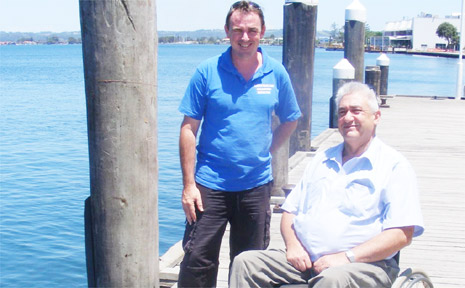
LANCE FERRIS WHARF: Ballina’s mayor, Cr Phillip Silver, (right) with acting general manager of Australian Seabird Rescue, Keith Williams, announcing the naming of the wharf at Fawcett Park as the Lance Ferris Wharf.
IT’S official.
The wharf at Fawcett Park is now the Lance Ferris Wharf, named after the late Lance Ferris – the Pelican Man – who founded Ballina-based organisation Australian Seabird Rescue.
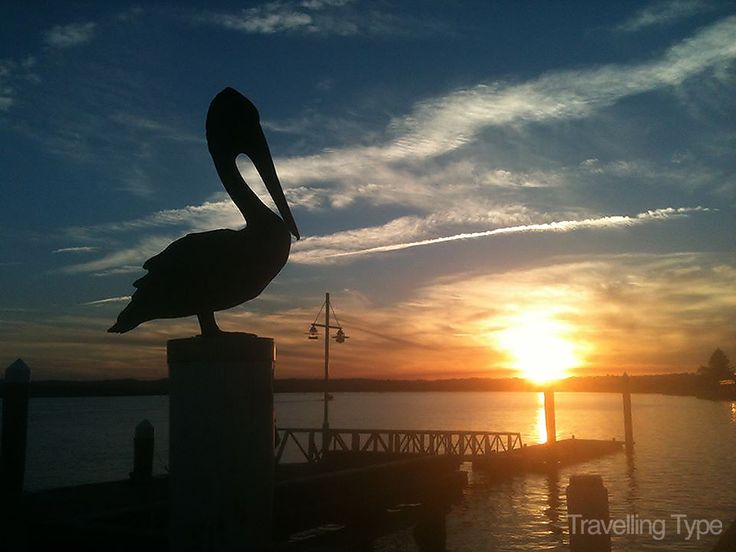
And work is currently being undertaken on the design for a statue of a bronze pelican to be perched on the jetty in Ballina’s CBD.
Ballina’s mayor, Cr Phillip Silver, was due to make the official announcement on the naming of the wharf at the inaugural Lance Ferris Memorial Dinner scheduled for December 12.
But with last week’s decision by Australian Seabird Rescue to postpone the dinner, the announcement was made early.
He said council wanted to recognise the work of Mr Ferris, who died in October 2007, aged 60.
After Mr Ferris’ death, council resolved to rename Fawcett Park as Lance Ferris Park. But that move was knocked back by the NSW Geographical Names Board following objections.
There won’t be any problem with the naming of the wharf, Cr Silver said, as it is a piece of council-owned infrastructure.
Keith Williams, acting general manager of ASR and partner of Mr Ferris’ daughter, Rochelle Ferris, welcomed the decision to name the wharf after Lance.
He said the move not only acknowledged the work of Mr Ferris but also the Richmond River which Mr Ferris was so passionate about.
“This is a fantastic,” he said on behalf of the family and the broader family of ASR volunteers.
He is the father of Finn, Lance’s grandson, who was born just over a month ago.
Mr Williams said he enjoys taking Finn to the wharf.
“This (naming the wharf) is to say ‘your granddad was someone really special’. And much of the respect (for Lance) comes from the community – you can’t manufacture that,” he said.
A local artist has been commissioned to create the life-size bronze statue of a pelican which will be installed on the wharf early next year.
Cr Silver said the council had budgeted $10,000 for the statue, which had come from the staff operational budget.
He said he hoped the pelican would become an icon for Ballina now that nothing stood in the way of the demolition of the Big Prawn at the southern entrance to the town.
“Whether it (the pelican statute) evolves to be an icon of the town is a function of the community,” he said.
Cr Silver has already suggested Ballina could rebrand itself, replacing the seahorse, so the shire can be Ballina bypass-ready. Work on the new highway route is expected to be finished by 2012.
He said a rebranding of the shire wouldn’t be expensive, as things like stationery stocks would be used up in time.
Meanwhile, the Lance Ferris Memorial Dinner will be held on June 5 next year, World Environment Day.
Mr Williams said anybody who had purchased a ticket would receive a full refund.
This Friday, 24 September, 2010, Mayor Phillip Silver will unveil a sculpture at Fawcett Park, Ballina, to commemorate and acknowledge the work of the late Lance Ferris.
The sculpture is dedicated to the coastal conservation work carried out by Mr Ferris, affectionately known as ‘the Pelican Man’.
“In fostering and supporting local art, council commissioned a local artist to create a unique bronze sculpture that is befitting of the animal conservation work carried out by Lance. The artist behind the sculpture is Wollongbar-based sculptor Frank Miles,” Cr Silver said.
As part of the commemoration Cr Silver will also be officially name the wharf in Fawcett Park ‘Lance Ferris Wharf’.
“It is an appropriate place to acknowledge Lance’s work which started in earnest in 1992 on the sand spit opposite the Fawcett Park wharf after he noticed pelicans were injured by fishing line and hooks,” Cr Silver said.
“The pelicans were rescued, rehabilitated and released. The work soon extended from pelicans to other coastal birds as well as marine turtles.
“Lance was passionate about educating the community in preserving and protecting the coastal environment and all marine wildlife, and it’s fitting that we not only acknowledge his work but also raise awareness for the continued operation of the organisation he founded, the Australian Seabird Rescue.
“Based in Ballina, the volunteer organisation continues to operate around Australia to protect and rescue seabirds and shorebirds.
“This is also largely due to the continued dedication of the Ferris family and the support they receive from volunteers and the community in enduring Lance’s legacy.”
Lance Ferris family members representing the Australian Seabird Rescue service will be present at the unveiling ceremony which will take place at 11am at the wharf in Fawcett Park.
A recent unveiling on 24th September of Frank Miles life-size bronze pelican “Steptoe”, (pictured left) commissioned by the Ballina Shire Council, at the Fawcett Park Wharf. This wharf was renamed on the day to the “Lance Ferris Wharf” in honour of the late Lance Ferris the towns’ famed ‘Pelican Man’. This was a very exciting moment for Frank as well the Australian Seabird Rescue Service and Lance’s family members.
If there’s one Australian bird that we’ve all watched with awe it’s the pelican.
But as we’ve admired this bird we are mostly oblivious to the tragedy that the nation’s most popular hobby, fishing, is visiting upon our feathered friends.
Accidental hooking by recreational fishing, discarded hooks and fishing line have become the birds’ most lethal enemy. Bills, legs and wings are being hooked or entangled. The result, all too often, is a painful death.
Tonight’s Australian Story is about one man, a Ballina based former police officer called Lance Ferris, who’s dedicated his life to fixing the plight of the pelicans.
With spectacular physical agility, he “bribes” the pelicans with fish and then dives to catch injured animals so they can be treated and saved.
Over the past 12 years, often living well below the poverty line, he has rescued and rehabilitated hundreds of birds and conducted educational workshops in schools and fishing clubs up and down Australia’s east coast.
Featuring stunning wildlife images, Australian Story retraces the rough, tough and exciting life of Lance Ferris.
We see first hand his unconventional but effective pelican catching methods and the extent of this problem along with the solutions he has employed.
REX HUNT: Hello. I’m Rex Hunt. Tonight’s Australian Story is about a man who has dedicated his life to solving the problems sometimes unwittingly created by us anglers. He is Lance Ferris – known as ‘The Pelican Man’ for his incredible work in saving these magnificent birds from terrible injuries. And his efforts are changing attitudes on the water. This is Lance’s story.
EVAN KOSACK – VET:Lance and the fishermen in the area started out being at loggerheads a little bit.
LANCE FERRIS: I don’t think they believed that the problem was as bad as it was. Pelicans torn to pieces, basically, by fishing tackle.
EVAN KOSACK – VET: Lance was telling people, basically, that their beloved hobby was causing a lot of damage and that they were acting irresponsibly. Lance is not the norm.
ANTHONY MUYT: He’s very independent, he’s very focused, he thinks outside of the square. He’s a bit of a mad scientist. He was just some joker who rolled up and was jumping off boats into pelicans. They thought he was nuts at first – thought he was a madman. He is extremely professional. He likes perfection. He’ll work at something until he has it.
DEBBI DEVINE – SAM’S MUM :I look at him sometimes and I think, “Wow. This grown man – the way he is with these animals.” It’s amazing. It’s like they’re his children.
LANCE FERRIS: We were on an excursion with the children from the special school. I noticed a pelican in a park that had a hook buried in its leg. So, I grabbed some fish from a bait shop and the bird came up to me and I grabbed it, held it and looked down at it, and I thought, “The hook’s in the left leg. “I’m sure the bird that I saw “before I got the bait had a hook in the right leg.” I was absolutely positive of it. I made up some posters to hang in shop windows – “Wanted, a pelican with a hook in its leg.” I thought, “There’s another bird out there. I know there’s another one.”
MARNY BONNER: There are many, many people that would go, “Oh, gee. “Gee, fancy seeing two pelicans in one day, you know, “both with hook injuries,” and continue about their business. But the interesting thing is that it engaged Lance’s curiosity such that he went out and searched to see if there was an even bigger problem.
LANCE FERRIS: That led us into going out on the island to see if there were other pelicans out there. 108 birds on the island, there were, with 37 tangled up in fishing line on our first visit.
MARNY BONNER: For Lance, standing there with binoculars in hand observing bird after bird after bird coming into his vision with crippling, cruel injuries would be very overwhelming.
LANCE FERRIS: I was in shock and horror. I couldn’t believe how bad the situation was. I went back to the boat and cried for half an hour. I just couldn’t believe… I’m no bronze Anzac hero. I might have been in the police force, but that doesn’t mean to say you don’t get cut up when you see so much damage. There were some with amputated wings and gangrene in their legs. It was a horrible thing. Being a wildlife carer for some years, at that stage, I was just amazed that I wasn’t aware of it and nor had it been brought to our attention by any member of the public or any other wildlife people.
ROCHELLE FERRIS: He was so devastated by that, but he was also looking at the bigger picture, and he sat back and thought, “You know, how many estuaries are there in Australia “that are so populated by humans? “And I’m only looking at this one.” And the problem just blew out in his head.
LANCE FERRIS: I knew we had a major problem on our hands. I had caught a couple and I’d caught them, I suppose, relatively easily, but when I saw so many I just got back to the boat and thought, “How do I cope with so many injured? “How can I catch that many? “They’re everywhere.”
MARNY BONNER: Lance fell asleep that night surrounded by crippled and injured birds and woke up and he was still surrounded by crippled and injured birds, and was compelled to do something – to start action right there and then.
LANCE FERRIS: It was three months and I had that 37, but as I was getting that 37, more became entangled as I went.
ROCHELLE FERRIS: The focus on getting out there and attending to all these sick pelicans really did take over his life.
MARNY BONNER: That was the dawning of the obsession and the birth of Australian Seabird Rescue.
LANCE FERRIS: I didn’t really think about it changing my life at that time.
MARNY: In the early days, some of these injuries were quite old. They had had longstanding chronic injuries and they did require a lot of treatment. And to his amazement, the local vets were extremely interested and extremely supportive.
LANCE FERRIS: I had to look closely at the pelicans to see a line trailing under a wing, or a hook somewhere.
MARNY BONNER: Because it’s difficult to see injuries on pelicans, people don’t notice. I believe pelicans don’t look sick when they are injured. Pelicans can’t cry.
LANCE FERRIS: Everybody believed that the hook would rust away in two or three days. We’ve done some tests on all different sorts of hooks and it’s at least six months before the hooks rusted away. So there were lots of things that make people not sort of bother.
ROCHELLE FERRIS: He was so concerned and frustrated by the lack of interest from the community that these birds were just all being tangled and no-one seemed to care.
LANCE FERRIS: But it’s not all bad out there. There are some people who really have the right concept. If the bird’s quiet and fairly well under control, we give everyone that opportunity to, say, pat a pelican or to have a close contact with it.
MARNY BONNER: Lance experienced quite a lot of loneliness in his childhood. He didn’t have a lot of affection in it. He is essentially a shy person and a bit of a loner.
LANCE FERRIS: I can remember vividly as a boy, after I’d found a little frog with a broken leg, I think we taped it up with a matchstick, and for the life of me I can’t remember whether it survived or not.
MARNY BONNER: That’s what I saw in Lance when I first met him, was this uncanny ability to really spend a lot of time thinking about how he could improve life generally for a particularly severely disabled child. Lance had his fairly demanding job of teacher’s aide with disabled children. The realisation of the enormity of the problem on Pelican Island did change Lance’s life, but I don’t think he was conscious of that at that time. He was merely solving the problem on the day.
LANCE FERRIS: But then there were cutbacks with the school and then came the word that said, There’s no more work. I’m sorry, we have to put you off. There’s no more funding. We don’t have enough children. And I had to drive away from the place. And I…I won’t forget that day.
I wept all the way home. I was at a little cattle dairy, a converted place. The very next day the landlord drove down the paddock and I went up and I said, “About the rent…” He said, Oh, yeah. He said, I was gonna tell you about that. He said, I really like what you’re doing with the pelicans and things. That’s fantastic, that’s a really good thing. And he said, And you’ve rescued my cattle out of the bogs here from time to time, “and I’ve decided not to charge rent anymore. Oh. You know, sort of looking around waiting for lightning to strike and pinching myself to see if I was awake. I was just ecstatic.
MARNY BONNER: Days rolled into weeks, and weeks rolled into months, and he was spending more and more time doing everything he possibly could to catch all the birds. And so it just became increasingly consuming of his time and his resources – all his resources. So it became a situation for Lance where if there was a choice of providing food for himself or getting fish to catch an injured pelican, the fish for catching the injured pelican always came first.
LANCE FERRIS: And I thought, “Oh, no, what am I doing?” And I thought, This is absolutely crazy. No-one would ever believe this, for starters, and this is just madness. I looked at the pelicans in the cage and they were eating, you know, the best fish at 10 a box and I just thought, I don’t think I can do this anymore. But then I took my shoes off and plodded round in the grass under the tree and found a bowl of bush nuts, macadamia nuts. I pigged out till I just couldn’t eat another macadamia and I’m sitting there going, Yes. Yes, I’m right. I looked at the pelicans. It’s alright, fellas. Everything’s under control.
MARNY BONNER: When I first met Lance he was living very, very frugally. And if he was unable to pay his electricity bill or his gas bill he would simply accept that and go scrummage around the tip or something and come out with some ingenious way of getting hot water for himself. Or he would just not eat cooked food.
LANCE FERRIS: And I thought, Well, I’ve got no power. And the answering machine – it was the biggest problem, because it was the mainstay of Seabird Rescue when I wasn’t there. I had some electronic knowledge and I had a little solar panel. And I had an old battery. It worked like a dream. Nobody knew my predicament. Nobody knew how we were running the show. It still looked OK on the surface. You know, if we sort of still had some credibility – I had an answering service – Oh, well, they must be alright. You know, so it gave me a feeling of, I suppose, wellbeing.
That first one, as I held it in my arms, I was awe-struck by the majesty of it. I think the immense size of the bird, no-one would realise that a pelican is as gentle as it is.
MARNY BONNER: A beautiful, benign creature that doesn’t deserve the treatment that it gets. If pelicans could cry, there would be a wailing across the nation that could not be ignored. We could open a tackle shop on the hooks and line and sinkers and traces and lures that we have extracted from the pelicans we’ve caught to date, easily.
LANCE FERRIS: Everyone loves Percy Pelican, and they don’t want to see anything injured irrespective of what species it is.
ROCHELLE FERRIS: And pelicans were dying and, you know, no-one really counted and knew how vast the problem was. The people from one estuary don’t really communicate with the people from the next estuary what they’ve seen.
In a small percentage of cases, there are people who deliberately hook pelicans. But again, it’s never an approach of accusing or retribution – always a case of education. And for him to do something about that, he needed money to do it. You know, it’s not… He was broke as it was. So he needed to get that information out there to make them aware.
MARNY BONNER: Lance’s move from the dairy to the house on the same property was quite timely in a way because Seabird Rescue really required a bit more space to accommodate volunteers. But clearly there’s no point continuing to rescue birds if you don’t do something about the cause of it. How do you start re-educating millions of fisherfolk and hundreds and hundreds of waterside residents in such a way that they stay on your side, that they will work with you and not be offended? There is no room for blame or guilt or anything else.
LANCE FERRIS: I had to get volunteers and I had to get public support to address the whole of the coastline, and I knew that media was the way to go. So I hammered every media outlet – television, newspaper – everything that I could get my hands into. A lot of it was rejected. Then one of the local papers said, Would you like to do a column? So I got the column going and things just took off from there. Quite often we were getting phone calls from the TV stations locally, and saying, Can we do a story on this?
ROCHELLE FERRIS: After Dad’s first media exposure and the call backs he got from that, and people recognising him in the street and patting him on the back and saying, Good job, he twigged. He said, I’m onto something here, and this is going to make the difference. From that day on, every time there was a really badly injured pelican, he would be on the phone to them so quick. So this media coverage that went to all those communities was priceless in being part of the solution and making them open their eyes and, yeah, pick up their tackle.
LANCE FERRIS: I could see that educating the children was really important.
MARNY BONNER: Kids these days are growing up with the environmental message. Getting to the kids and educating the kids is one of the most important activities that we do. They’re the ones that will carry that message. On many an occasion we see them run off and tug on Dad’s shirt or Mum’s shirt and say, You mustn’t drop that, Mum. Mustn’t drop that, Dad. Have to pick this up now. And….the parents are kind of shamed into being more environmentally responsible than they might otherwise have been.
ROCHELLE FERRIS: I guess when Dad started to realise that the problem was so national, he knew he needed volunteers. He couldn’t pay them – he can’t pay himself. Once word got out, it definitely made a difference. There was some real dedicated people.
LANCE FERRIS: The volunteers come from all walks of life. They all have their own areas of expertise, if you like. We’ve got Jenny, who’s just absolutely marvellous. She’s got a lovely, lovely rapport with the birds.
MARNY BONNER: Young Sam in particular was a fairly troubled child when Lance first met him – so much so that Lance thought that he was even beyond his ability to rescue him, if you like.
SAM DEVINE: I was just playing up in class, then he just started doing talks at the school about Seabird Rescue. I could talk to him and he would help me with my work… ..when I was having trouble.
MARNY BONNER: He’s turned around from a child who did not want to cooperate or be involved in school work or achieve anything.
SAM DEVINE: If it wasn’t for Lance I probably would be in a behavioural class.
LANCE FERRIS: Anthony was a person that came up here to study science with a background of being a member of the police SWAT team.
MARNY BONNER: He was a very quick learner, but more importantly, he was most definitely an action man. He’s almost a younger, more energetic Lance, if you like.
It’s very important to have volunteers that won’t be too offended if we’re not always as socially adept as we ought to be. We both suffer from burnout, from exhaustion, and in so doing, Lance in particular might sometimes forget to pay attention to his manners or be as thoughtful of that person or as considerate of that person as he…as he might be.
He is consumed by this calling. The unfortunate consequence of that kind of dedication is that Lance can neglect important relationships in his life.
ROCHELLE FERRIS: Having Marny in Dad’s life has been his Rock of Gibraltar. And, you know, they’ve had their quarrels, and people do. If Marny wasn’t in his life – God, I would have so much on my hands.
MARNY BONNER: It’s been very difficult for everyone that’s close to Lance. Even acquaintances frequently become offended, um, by his lack of presence.
ROCHELLE FERRIS: I wanted to throw a tantrum and get so angry because he’d missed my birthday or he’d forgotten Mother’s Day or, you know, just everything else in his life seemed to fade out.
MARNY BONNER: Those of us that are close to Lance can really joke that, you know, maybe if we pierced our ears and hung a jag hook in one and a lure in the other, he might look at us intensely and say, How are you?
LANCE FERRIS: We started recording all the problems that happened to the pelicans. It was very difficult for us to convince National Parks or Fisheries or anyone in the first few years that there was a problem.
ROCHELLE FERRIS: He gathered so much information over time about pelican behaviour, but he needed that notoriety from the scientific community to understand what he was talking about and for him to be able to approach them on their terms, academically.
LANCE FERRIS: Marny’s got the letters after her name, so too has my daughter, being a marine biologist, and that was a blessing to me. I had the information. They basically put it together and shaped it.
ROCHELLE FERRIS: It was really good for our relationship, writing that paper together, to get a bit of recognition from him from what I’d studied and learnt. And I wasn’t this little girl anymore who was wide-eyed and looking at everything he did, and I…I had something to give him.
LANCE FERRIS: When the report on the impact of fishing was accepted, or when they called for more copies at NSW Fisheries, I was just overjoyed. I thought, Finally! We’re gonna have to start working fairly quickly. As fast as we catch ’em, they’re getting entangled now. RecFish Australia included some of our concepts in their code of conduct for fishermen, and NSW Fisheries handed us one of their ex-service boats. Petrol companies offered fuel for the vehicle. A telephone company offered us a mobile phone. The council offered us free ferry journey. And the Coastcare, under the Natural Heritage Trust, gave us two grants so far of 26,000, which has enabled me to get to the schools and teach the children. I look back at the road we’ve travelled and people are taking more care. Well, I mean, some fishermen who used to say, Shoot the bastards… ..come up to me in the pub and say, You owe me a beer, mate. I caught one of your bloody pelicans. And don’t tell anybody about it either. I gave him a fish too after I took the hook out.
MARNY BONNER: People began to call us when they noticed other things on the beach. Well done. And so the turtles were added to the repertoire of pelicans, seabirds.
LANCE FERRIS: To see trained personnel at strategic locations all around the coast of Australia – that would be the ultimate goal. In July we have to vacate the premises we’re in at the moment. We were in big trouble. It was very, very heart-warming to realise the strength of the support we got from the council. The council has offered us some land for free and also a second-hand house. It’s been a fairly hard road. I guess Marny and I will have to start really getting on really, really well together, and not fighting on occasions.
MARNY BONNER: I do have grave concerns about his emotional and physical health because there is so little balance in his life. He does not take the time to rescue himself, I suppose. But I can’t live that life for him. The best thing that I can do is be his best friend.
LANCE FERRIS: I couldn’t have done this without her – there’s no doubt about that – irrespective of the rocky road that we’ve been along.
MARNY BONNER: He’s extremely important to me. He sets a fine example constantly of what can be achieved with patience, sheer determination, a great deal of tolerance and, above all, extraordinary compassion for creatures that can do nothing to alleviate their own suffering.
CAPTION: Lance and SeaBird Rescue are currently homeless while they wait for clearance of the council owned land and rebuilding. The latest injured pelican tally is 595.
DAILY life throws plenty of challenges in the path of Myrle and Ken Hauser but the Mannering Park couple take each day as it comes.
Mrs Hauser has been Mr Hauser’s carer since about mid-2005, when he developed vascular dementia.
Dementia affects thinking, behaviour and the ability to perform everyday tasks.
Vascular dementia is the second most common form of dementia, after Alzheimer’s disease, and is associated with problems of circulation of blood to the brain.
The Hausers, who have been married for 64 years, will share their story with the nation as part of a television documentary.
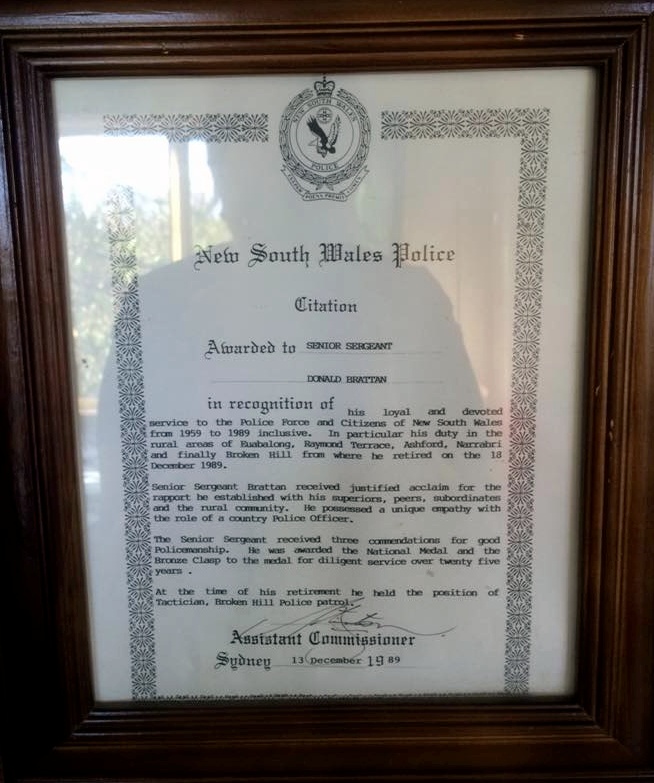
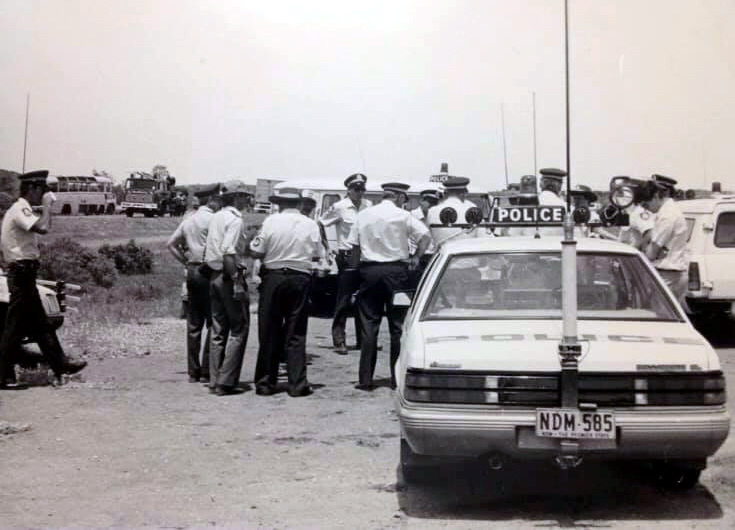
Location – Broken Hill, Mitch Hardaker, John Hardakers son, was told that this was taken whilst Mad Max 3 was being filmed out there. You can see the old bus on the left of the picture. This picture is of John Hardaker and other officers. Most probably Don BRATTAN with his back to camera and the large Crown ( Sgt 1/c ) on the left sleeve.
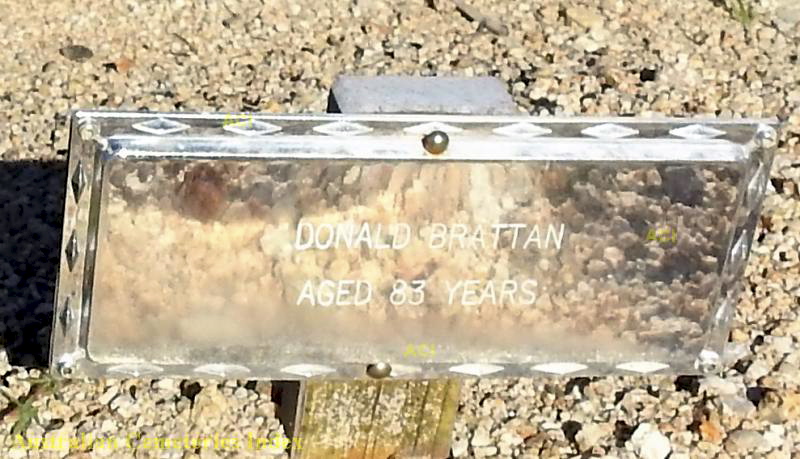
Grave of Donald BRATTAN
Gloria GORDON
| 16/12/2015
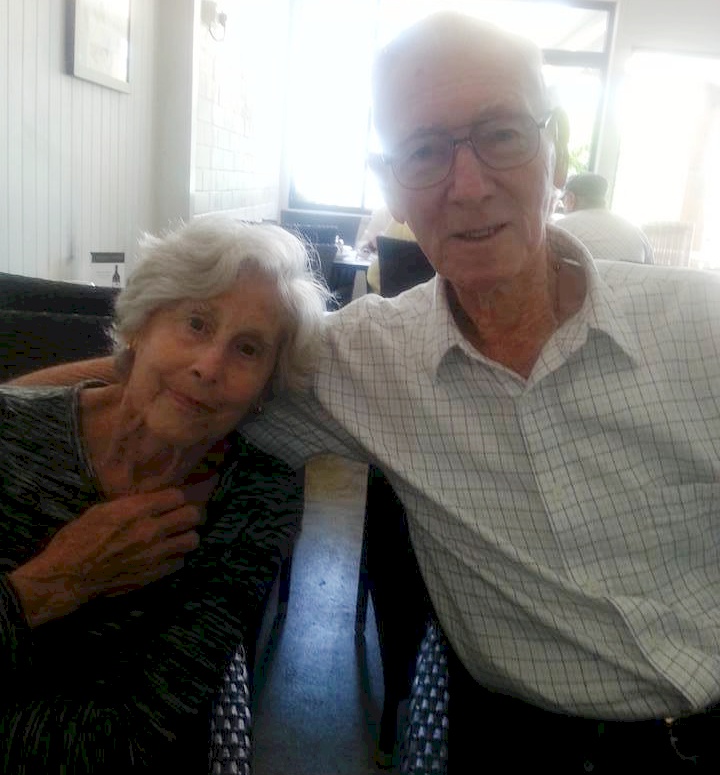
Gloria GORDON – wife of Lindsay
( late of Kiama )
New South Wales Police Force – wife
Stations: ?, Campbelltown ( Sergeant ), Unanderra ( Unanderra residence early 1970’s ), Warilla ( Lake Illawarra )
Service: From? to?
Awards: ?
Born: ?
Died on: Monday 7 December 2015
Cause: ?
Age: 81
Funeral date: Friday 11 December 2015 @ MD
Funeral location: Stan Crapp Funeral Home, 125 Manning Street, KIAMA
Buried at: ?
Memorial at: ?
[divider_dotted]
Funeral location:
[divider_dotted]
FURTHER INFORMATION IS NEEDED ABOUT THIS PERSON, THEIR LIFE, THEIR CAREER AND THEIR DEATH.
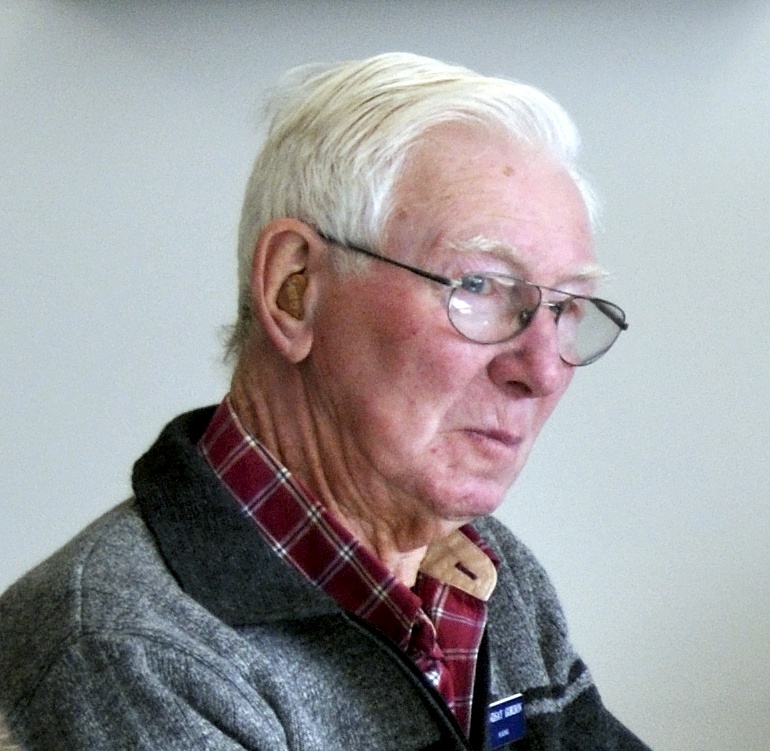
THURSDAY 4 SEPTEMBER 2014 RETIRED POLICE DAY HELD AT LAKE ILLAWARRA POLICE STATION, OAK FLATS. LINDSAY GORDON WHOSE WIFE, GLORIA, DIED ON MONDAY 7 DECEMBER 2015 – AGED 81
Killed just for doing their jobs
| 16/12/2015
Killed just for doing their jobs: The heroic police who put their lives on the line – only to be ambushed in lonely alleys and hacked to death with machetes by angry young men
National Police Remembrance Day will honour 757 police killed on duty
Ceremonies across the nation and the south Pacific will respect the fallen
Police remembered include those shot or stabbed while investigating crimes
Constables Steve Tynan and Damian Eyre were gunned down in Melbourne’s infamous Walsh Street shootings while investigating an abandoned car
Constable David Carty was stabbed to death by men in a Sydney car park
Geoffrey Bowen was killed by a parcel bomb during an Adelaide drug case
Published: 14:42 EST, 29 September 2014 | Updated: 22:42 EST, 29 September 2014
They went off to work for the day and never came home to their wives or families.
Constables Steven John Tynan, 22, and Damien Jeffrey Eyre, 20, were ambushed and shot by one of Melbourne most notorious crime families after they were deliberately lured to abandoned car and gunned down.
The two young Victorians are among 757 police officers killed in the line of duty who will be honoured across the nation today in a series of ceremonies to mark National Police Remembrance Day.
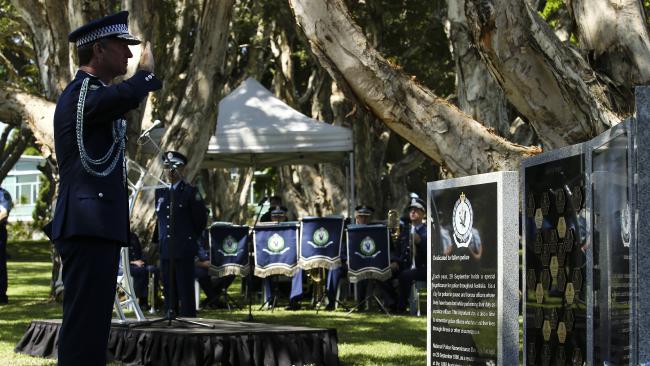
The Australian Federal Police will host a dusk service at the National Police Memorial on Monday evening to honour all Australian police officers who have lost their lives while serving the Australian community.
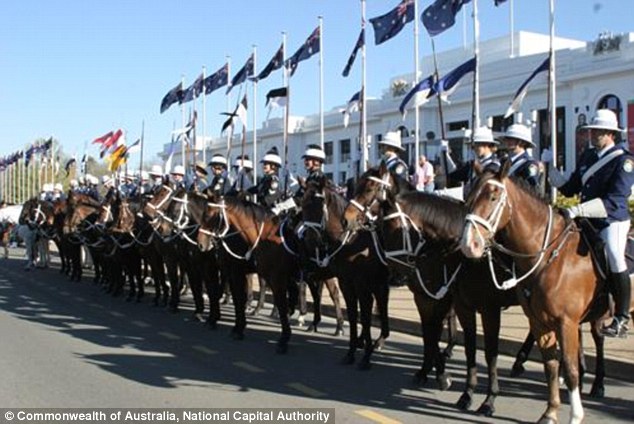
Mounted police line up at the National Police Memorial to commemorate the 757 Australian police officers who have died in the line of duty while serving the community in each state and territory.
.
Each state and territory police jurisdiction across Australia will pay tribute to the fallen officers, as well as those in Papua New Guinea, New Zealand, Samoa and the Solomon Islands.
The National Police Memorial lists every Australian Police officer who has been killed or who has died as a result of their duties, starting with Constable Joseph Luker in 1803.
Luker was set upon while investigating burglaries on the night of August 25, 1803 in East Sydney and beaten to death, having a piece of his own sword embedded in his skull.
The 756 police officers who have followed Luker to the grave died from several different causes – car accidents while doing their job, plane crashes en route to a crime investigation and murder, by being shot, stabbed or blown up in a targeted letter bomb.
Despite constant calls from senior police or politicians to jail police killers for life, some of the most shocking murders have resulted in short sentences or acquittals.
[divider_dotted]
These are the police murders which shocked the nation:
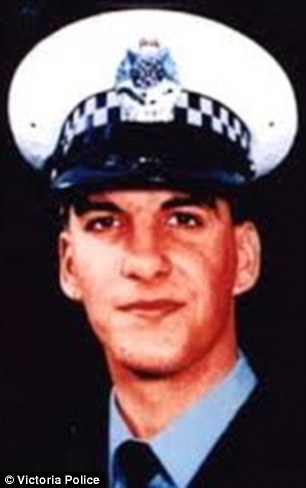
Constable Steven John Tynan was just 22-years-old when he and fellow officer Damian Jeffery Eyre, 20, were lured to a street where they were ambushed and shot in a deliberate murder by one of Melbourne’s most notorious criminals, Victor Peirce
It was 4.50am on October 12, 1988, when Constable Damian Eyre and his fellow officer went to investigate an alleged abandoned car in the Melbourne suburb of South Yarra. Both were shot in the back of the head at close range and as Eyre lay dying, his service revolver was take from its holster and he was again shot in the head.
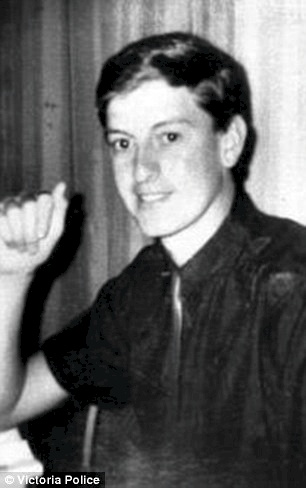
Shot in the back of the head: Constable Steven John Tynan (above, left) was just 22-years-old when he and fellow officer Damian Jeffery Eyre, 20, (right) were lured to a street where they were ambushed and shot in the head in a deliberate murder by one of Melbourne’s most notorious criminals, Victor Peirce
The Walsh Street killings
At 4.50am on Wednesday October, 12, 1988, Constables Steve Tynan and Damien Eyre responded to a report about a suspicious abandoned vehicle on a street in the inner south Melbourne suburb of South Yarra.
The two young officers turned up at 222 Walsh Street, unaware that they had been deliberately lured there by members of the notorious Melbourne crime family, the Pettingills.
One of four sons of the infamous Kath Pettingill – the former brothel owner upon whom the crime matriarch played by Jacki Weaver in the film Animal Kingdom is based – was Victor Peirce.
Peirce, who was shot dead in 2002, planned the ambush, according to an interview with his widow, Wendy, who said he had deliberately lured police to the scene for the purpose of murdering them.
Both Tynan and Eyre were shot in the back of the head at close range; while Eyre lay dying, his service revolver was taken from its holster and he was again shot in the head.
Peirce, his brother Trevor Pettingill and two other men, , Anthony Leigh Farrell and Peter David McEvoy, went on trial for the murders, but were acquitted in the Supreme Court of Victoria.
[divider_dotted]
Kicked to death: Constable David Carty, 25, was set upon by young men a western Sydney tavern in April, 1997. He had earlier reprimanded for using obscene language. The men kicked him and struck him with bottles and machetes he lay in the tavern car park in what was later described as a ‘brutal, ferocious and savage’ attack. His killer is now out of prison.
The brutal slaying of David Carty
On duty in the western Sydney suburb of Fairfield on April 17, 1997, Constable David Carty and other police spoke to a number of people on the street while conducting foot patrols.
When they had signed off for the evening, Carty and fellow officers went to the nearby Cambridge Tavern to relax over a few drinks.
Carty, 25, who was engaged to be married, was the among the last of the officers to leave the hotel at around 2.10am.He was set upon by a number of men in the tavern car park, among them some of the individuals he had reprimanded for using obscene language while on his earlier foot patrol.
During the attack, which was later described by a judge as brutal, ferocious and savage, Carty was fatally stabbed in the heart and then kicked, punched and stomped on by a group of men as he lay on the ground.
Senior Constable Michelle Auld who went to his assistance was also seriously assaulted.
According to his post mortem, Carty had several incised wounds to his head, bruising and trauma consistent with kicking, blunt trauma consistent with having been hit with a beer bottle, part of his earlobe has been cut, and he had a ‘scalping’ wound to the back of the head, possibly caused by a a sharp-edged machete.
Edward Esho, then aged 21, was convicted and sentenced to six years and five months for the killing and has since been released from prison.
.
[divider_dotted]
.
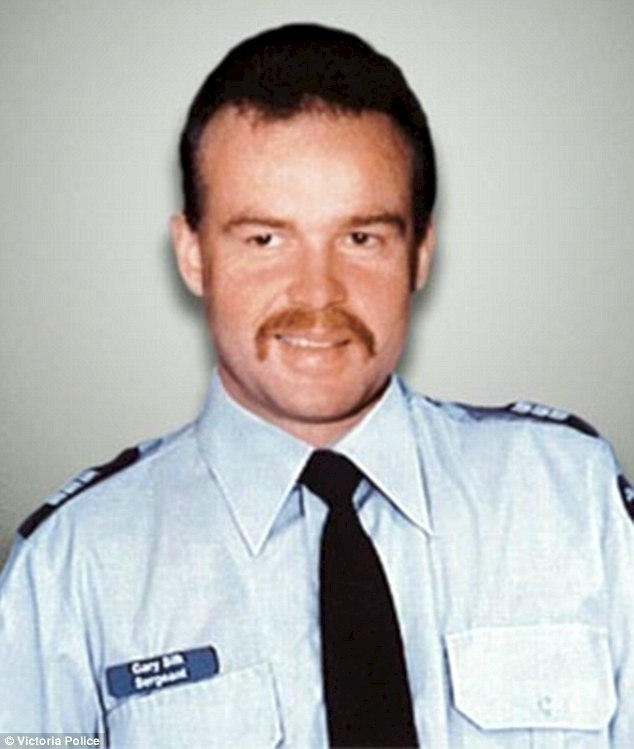
In the early hours of Sunday, August 16, 1998, Victoria Police Officers Sergeant Gary Silk and Senior Constable Rodney Miller (pictured) were staking out the Silky Emperor Restaurant in Moorabbin, in Melbourne’s south-eastern suburbs during an investigation into a spate of armed robberies when they were gunned down at close range.
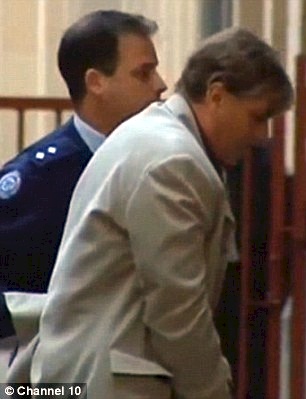
Father of six Bandali Debs (pictured) was convicted of the murders of Gary Silk and Rodney Miller, who were shot at close range when the police officers were closing in on an investigation into armed robberies in Melbourne’s south-eastern suburb in August, 1998.
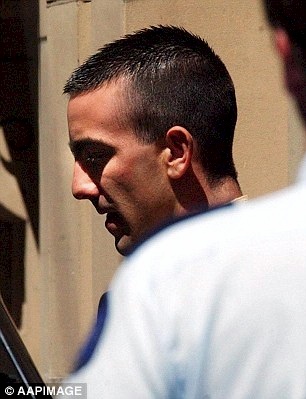
Apprentice builder Jason Joseph Roberts is serving life in prison for the shooting murders of two police officers who were investigating a string of armed robberies.
.
The Moorabbin police murders
In the early hours of Sunday, August 16, 1998, Victoria Police Officers Sergeant Gary Silk and Senior Constable Rodney Miller were staking out the Silky Emperor Restaurant in Moorabbin, in Melbourne’s south-eastern suburbs during an investigation into a spate of armed robberies.
At 12.20 am, the two officers were gunned down at close range and the shooters fled.
Evidence at the crime scene included pieces of glass, which police later matched to a Hyundai hatchback and were eventually able to track down the exact model – and the vehicle, which was registered to the daughter of a known criminal, Bandali Debs.
Debs and an apprentice builder, Jason Joseph Roberts, were charged with the murders and with a string of armed robberies and in 2002 were found guilty and sentenced to life imprisonment.
Debs was subsequently convicted of two more murders, of sex workers, Kristy Harty, 18, and Donna Hicks, 34, during the 1990s, and is currently under investigation for the 24-year-old cold case murder of Sarah MacDiarmid, who disappeared from a railway station in 1990 and whose body has never been found.
[divider_dotted]
.
Killed by the mafia: Geoffrey Bowen was a senior investigator into Italian organised crime in Australia when he targeted the alleged financier of a cannabis operation. Weeks later he opened a parcel delivered to crime headquarters in Adelaide and it blew up, killing him. Officers, who will wear ribbons (above, right) for National Police Remembrance Day, have never solved his murder.
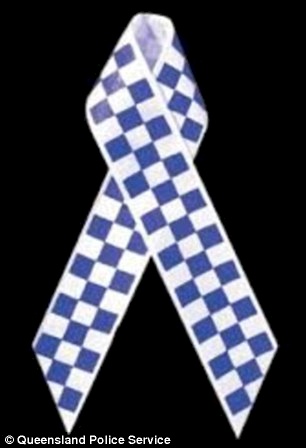
Police officers around Australian and the south Pacific region will wear ribbons (pictured) for National Police Remembrance Day, which commemorates the more than seven hundred officers who have died while on duty
Death by letter bomb
Detective Sergeant Geoffrey Bowen was a Western Australian police officer who on March 2, 1994, was on secondment to the National Crime Authority in the NCA’s office in the Adelaide central business district.
St the time, he was investigating a man called Domenic Perre over a suspected mafia drug operation.
Detective Bowen was a senior investigator exclusively involved with Operation Cerberus, the investigation into Italian organised crime in Australia.
Two years earlier, police had uncovered a huge cannabis growing operation and charged men of Calabrian decsent who were believed to be members of the secret mafia society, ‘Ndrangheta.
Bowen had concluded that Perre was the financier and controller of the operation and the man was due to face court, when a parcel addressed to Bowen slipped through the security system at the NCA office and blew up in Bowen’s hands.
Neither Perre, nor anyone else, has been convicted for Bowen’s murder.
[divider_dotted]
.
Lyncon Williams and his partner arrived to investigate a shooting in north Adelaide and had just pulled up the patrol car when a 17-year-old shot and killed him.
The shooting of Lync Williams
Lyncon Williams did not even have the chance to get out of his patrol car when he arrived with his junior partner at the scene in Blair Athol, in northern Adelaide on August 29, 1985.
The police officers were responding to reports of gunfire when they pulled up on Ross Avenue and a 17-year-old shot him.
Police arrested and charged the shooter with murder. He was convicted and sentenced to imprisonment at the Governor’s pleasure.
Police Association president Peter Alexander later reflected on Williams’ death, saying ‘I didn’t know Lync Williams but ’ I’ll always remember the circumstances of that murder.
‘I remember the shock of it and the grief for his family and workmates. It was a tragedy that was reflected right across the job.’
[divider_dotted]
.
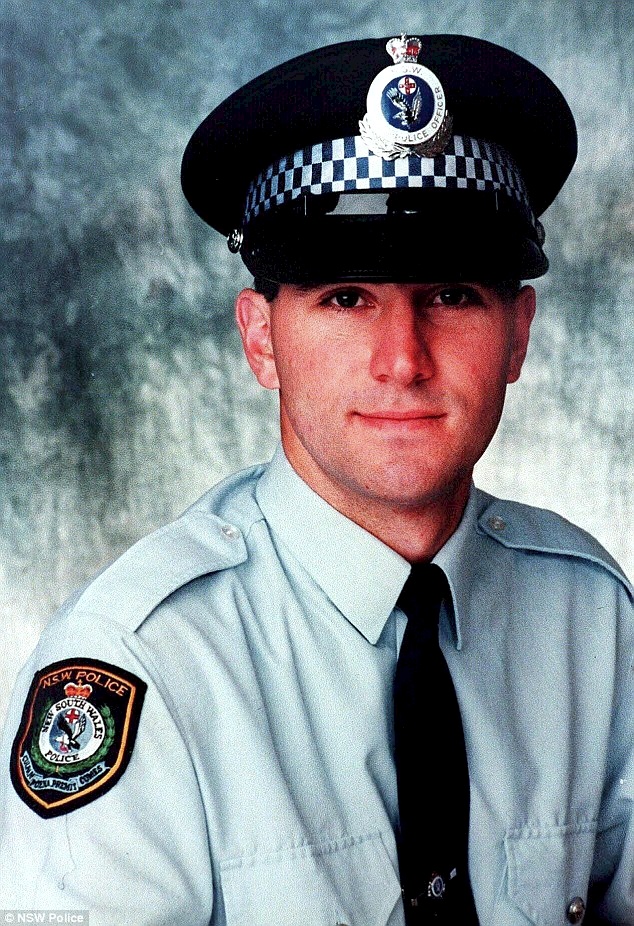
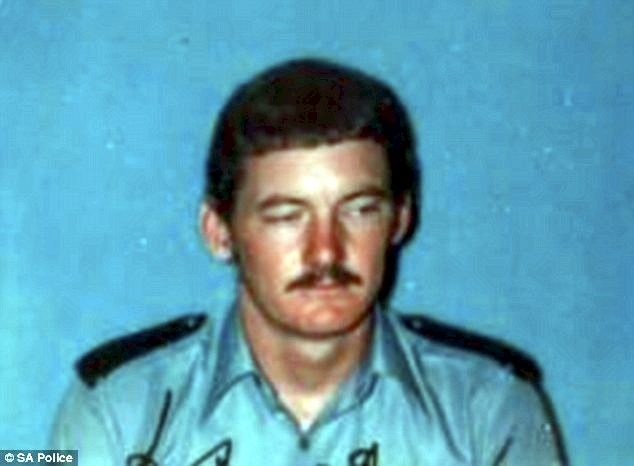
Constables Robert Spears (above, left) and Peter Addison (right) went to investigate a domestic violence matter at Crescent Head on the Mid North Coast of NSW and were shot by a drunken John McGowan who lay in wait dressed in camouflage gear and armed with a .223 calibre Ruger Rifle.
Senior Constable Peter Addison
Peter Addison and Robert Spears
At 12.35am on July 9, 1995 Constables Peter Addison and Robert Spears were on the night shift at at the Kempsey Police Station on the NSW Mid North Coast.
They were called to a malicious damage and domestic violence complaint at the nearby coastal town of Crescent Head, where they attended one address and then drove to a house on Main Street.
They parked the car and began to walk towards the front door; they were unaware that a drunken man called John McGowan was lying in wait in the carport dressed in camouflage gear and armed with a .223 calibre Ruger rifle.
Neither of the officers had bullet proof vests or carried sufficient weaponry and in the next few moments they were ‘outgunned’.
McGowan shot Spears dead. At 1.22am, Senior Constable Addison radioed a message for urgent assistance.
Addison managed to enter a house across the road to use a phone for help, when he was told there was not one he left the house only to be shot himself.
McGowan then shot himself.
[divider_dotted]
.
Attacked with a knife: David Thomas Barr responded to a domestic scene and was stabbed through the heart by his attacker and later died in hospital. He was the father of two young girls.
Father of two knifed through the heart
On July 29, 1990, South Australian police officer David Thomas Barr was responding with his partner, officer Jamie Lewcock, to a report of a man threatening a woman.
The father-of-two young girls, Barr was attacked soon after he arrived at the scene as he attempted to arrest the man who was wielding a knife and refusing repeated requests to lay down thew weapon.
The man plunged the knife deep into the Barr’s heart. Barr was rushed to hospital, where doctors tried desperately to save him.
As his wife Gwenda waited in a room, Barr succumbed to massive loss of blood and died.
Gwenda Barr, who had been married for nine years and had daughters Nicola and Sarah, then aged eight and six, later described how devastated she had been by the death.
‘I was shocked stunned and numb’ she said. ‘I couldn’t believe it. I didn’t want to believe it either. It was terrifying.’
Barr’s murderer was sentenced to life imprisonment. Barr was later awarded posthumously the Australian Bravery Medal.
[divider_dotted]
.
Detective Inspector Bryson Charles Anderson was stabbed to death while attending a siege in Oakville, 50km north-west of Sydney’s CBD on December 6, 2012.
When residents on a property complained to police that a number of arrows had been fired from a neighbouring farm, senior police officer Bryson Charles Anderson attended the scene.
It was shortly after 4.15pm on December 6, 2012 and Detective Inspector Anderson went to the property and was speaking with a man who was at the back door of the residence.
The man produced a knife and stabbed him to the face and chest. Anderson assisted other officers in subduing the offender and a female accomplice before he collapsed from his injuries.
He was unable to be revived and died at the scene.
Anderson had been a police officer for 26 years.
At a ceremony in Queensland on Monday, Police Commissioner Ian Stewart highlighted the inherent risks faced by police officers everyday as they provide for the safety and security of Queensland and acknowledged the tireless work of all QPS members, across a diverse state.
‘Our thoughts are with the families, friends and colleagues of those officers who have made the ultimate sacrifice, as we honour their memories on National Police Remembrance Day,’Commissioner Stewart said.
‘The QPS operates 24 hours-a-day, 365 days-a-year; and we have at least 15,000 interactions with the public every day, with each police officer swearing an oath to protect and serve the community,’Commissioner Stewart said
‘There are times however, when no matter how dedicated, committed and courageous our officers are, they face unbeatable odds.’
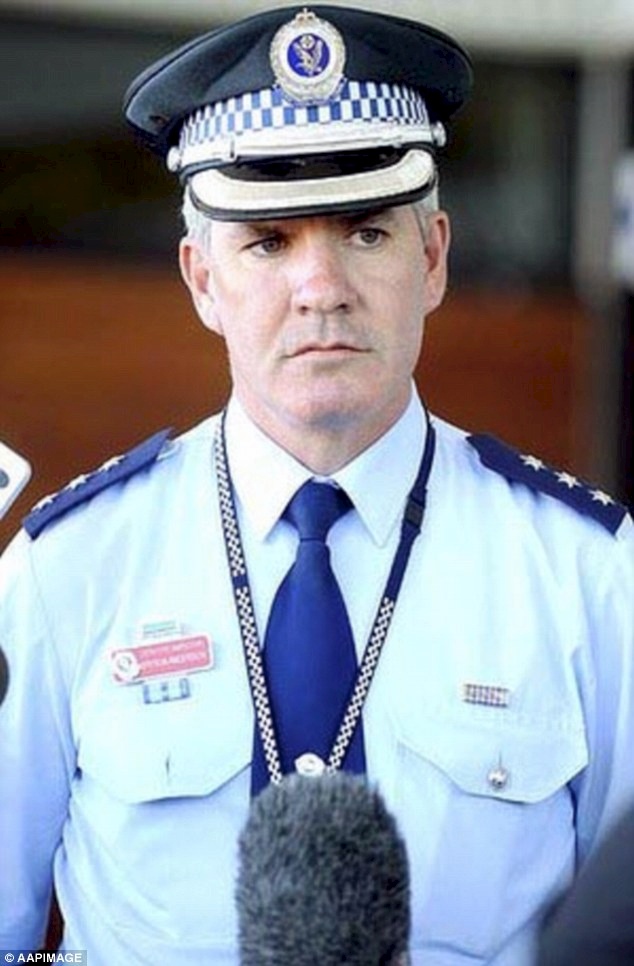
NSW Police Memorial unveiled at Eastern Suburbs Memorial Park by Police Commissioner Andrew Scipione
Laura Aubusson Southern Courier
NSW Police Commissioner Andrew Scipione officially dedicates a new memorial honouring fallen officers at the Eastern Suburbs Memorial Park. Picture: Justin Lloyd
Matraville’s Themalis (Tim) Macarounas had only served as a police officer for a few months before he was killed on duty.
Five months after the 22-year-old graduated, he was driving in a pursuit of a stolen car along Oxford St when his wheels locked after braking and crashed into a light pole.
He died from his injuries on October 20, 1987.
Constable Macarounas is one of 31 names engraved on a new memorial at the Eastern Suburbs Memorial Park honouring officers killed on duty and resting in the park from the Eastern Beaches, Eastern Suburbs, Waverley and Rose Bay Local Area Commands — including four colonial officers.
NSW Police Commissioner Andrew Scipione unveiled the memorial during a ceremony on Monday.
Constable Macarounas’ parents, Helen and Arthur were at the service. The couple visit their son’s grave every couple of weeks.
They said their son was a talented athlete — he played many sports and represented the South Sydney district in the Harold Matthews Shield and SG Ball rugby league teams — but he was too short to enter the police force straight out of school.
It wasn’t until height restrictions were abandoned, that he was able to tryout.
“We were so proud of him when he graduated,” Mr Macarounas said.
“He was a community-minded. He had an interest in helping other people.”
Constable Macarounas’ funeral was attended by 600 mourners.
“He was everything to us. Not only to us but to his friends,” Mrs Macarounas said.
“There was something in him. Whoever met him, felt it. I can’t explain it, there was 600 people there. He was only 22. I get goosebumps when I talk about it.”
The Local Police Memorial is the second of its kind in the state. Woronora Memorial Park, Sutherland, had one installed in April.
NSW Police Commissioner Andrew Scipione said the memorial would “stand as a beacon of hope, a beacon of sacrifice and commitment, from the police force to the community”.
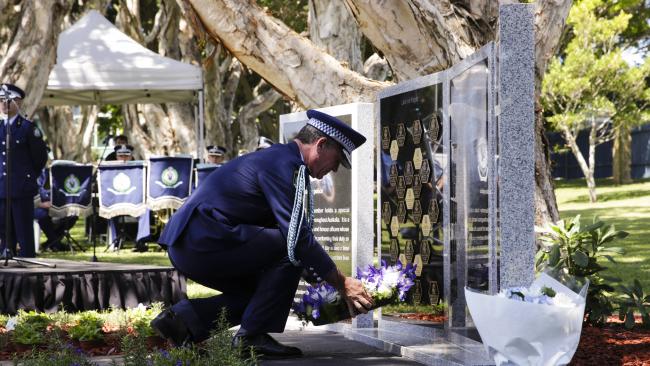
NSW Police Commissioner Andrew Scipione has officially dedicated a new memorial honouring fallen officers in the Eastern Suburbs of Sydney this afternoon.
The Commissioner was joined by local police, families, friends, and colleagues, for the dedication of the NSW Police Memorial, led by Police Chaplain, Father Paul O’Donoghue, at Eastern Suburbs Memorial Park today (Monday 30 November 2015).
The memorial honours 31 NSW Police officers who were killed on duty within the Eastern Suburbs, Eastern Beaches, Botany Bay and Rose Bay Local Area Commands, or who were cremated or laid to rest at Eastern Suburbs Memorial Park.
Commissioner Scipione said the plaques and memorial wall are a wonderful way to honour local officers who have made the ultimate sacrifice.
“The NSW Police Memorial at Eastern Suburbs Memorial Park gives family, friends, colleagues and members of the public a place to come and reflect on the lives and achievements of the officers who died while serving the community,” Commissioner Scipione said.
“The men and women of the NSW Police Force serve the community each day – all the while not knowing what potential adversity they may face yet understanding they may have to risk their own life to save another.
“As we unveil the plaques today we honour their courage and sacrifice, and send our thoughts to those families who have lost a loved one – they will never be forgotten.”
The names of the 27 local fallen officers, who died on duty since 1862, are inscribed on the wall of the memorial.
An additional four colonial police, killed prior to the inception of the NSW Police Force, will also be remembered in the form of separate plaques within the memorial garden.
The NSW Police Memorial is a joint project of the Southern Metropolitan Cemeteries Trust and the NSW Police Force.
Officers honoured on the NSW Police Memorial at Eastern Suburbs Memorial Park:
Senior Constable Henry Stark Murrow, killed on duty at The Rocks on 4 October 1897, aged 35
Constable David Sutherland, killed on duty at Potts Point on 3 June 1889, aged 24
Inspector James Bremner, killed on duty at Centennial Park on 2 January 1901, aged 60
Sergeant 2nd Class James MacDonnell, killed on duty at Warren on 26 December 1911, aged 57
Constable 1st Class Joseph John Hush, killed on duty at Roseville on 6 November 1919, aged 39
Constable Frederick William Wolgast, killed on duty at Centennial Park on 21 January 1921, aged 29
Constable Owen Edwin Bell, killed on duty at Goulburn on 27 February 1927, aged 43
Constable Norman Thomas Allen, killed on duty at Bondi on 3 January 1931, aged 29
Constable Ernest Andrews, killed on duty at Bondi on 3 January 1931, aged 23
Sergeant 3rd Class (Rtd) Patrick William Matthew Carmody, killed on duty in Sydney on 19 April 1931, aged 41
Constable 1st Class Duncan Hughie McCallum Murphy, killed on duty at Paddington on 27 September 1940, aged 45
Detective Constable Victor Donald Ahearn, killed on duty at Matraville on 11 August 1946, aged 40
Sergeant 3rd Class Noel Ainsworth McCarthy Porter, killed on duty at Hillston on 19 September 1946, aged 45
Constable 1st Class John Hawkes Malone, killed on duty at Medlow Bath on 1 May 1947, aged 34
Constable Allen Boyd Patch, killed on duty at Bowral on 5 February 1949, aged 26
Constable William John Lord, killed on duty at Randwick on 23 December 1958, aged 24
Constable Eric Peter Oliff, killed on duty at Wyong on 18 April 1962, aged 23
Detective Sergeant 2nd Class John Joseph McEntee, killed on duty at Waverley on 27 February 1972, aged 47
Senior Constable Lindsay Vincent Gilfeather, killed on duty at Waterloo on 15 October 1977, aged 31
Detective Inspector Reginald Hugh Stevenson, killed on duty at Newtown on 19 January 1980, aged 53
Constable Mark Ian Postma, killed on duty at Ashfield on 23 February 1987, aged 22
Probationary Constable Themelis Arthur Macarounas, killed on duty at Paddington on 20 October 1987, aged 22
Constable 1st Class Juan Carlos Hernandez, killed on duty at Redfern on 1 December 1992, aged 33
Probationary Constable Geoffrey Joseph Daley, killed on duty at Vaucluse on 27 December 1966, aged 24
Constable 1st Class Wayne Allen Rixon, killed on duty at Roseberry on 13 January 1985, aged 27
Probationary Constable Dana Therese Heffernan, killed on duty at Randwick on 17 April 1987, aged 20
Constable Glenn Edward McEnallay, killed on duty at Hillsdale on 3 April 2002, aged 26
Colonial police honoured:
Inspector Peter Prosser, killed on duty in Sydney on 25 January 1839, aged 26
Constable John Connell, killed on duty in Sydney on 23 November 1841, aged 21
Corporal Stephen Kirk, killed on duty in Heathcote on 12 November 1845, aged 33
Trooper Luke Dunn, killed on duty in Heathcote on 21 November 1845, aged 33
[divider_dotted]
Robert William Frederick FREDEWELL
| 16/12/2015
Robert William Frederick FREDEWELL
New South Wales Police Force
Regd. # 8266
Rank: Probationary Constable – appointed on 7 November 1955
Sergeant 2/Class – appointed on 21 December 1978
Stations: ?, Ryde – retirement
Service: From?pre 7 November 1955 to 17 May 1982 = 27+ years Service
Awards: ?
Born: 11 February 1927
Died on: Monday 30 November 2015
Cause: ?
Age: 88
Funeral date: Friday 11 December 2015 @ MD
Funeral location: Greenway Chapel & Memorial Gardens, 460 Avoca Drive, GREEN POINT
Buried at: ?
Memorial at: ?
[alert_yellow]ROBERT is NOT mentioned on the Police Wall of Remembrance[/alert_yellow] *NEED MORE INFO
[divider_dotted]
Funeral location:
[divider_dotted]
FURTHER INFORMATION IS NEEDED ABOUT THIS PERSON, THEIR LIFE, THEIR CAREER AND THEIR DEATH.