1

FLANNERY

FLANNERY

Victoria Police Force

Stationed:  Flinders St, Melbourne

Sergeant

Suicide – hanging

Died  Tuesday 12 October 1897


A POLICE SERGEANT’S SUICIDE.

Sergeant Flannery, who for many years has been in charge of the Flinders street, Melbourne, police station hanged himself on Tuesday morning in the office which he occupied at the station. The office is a very small building, six feet by six, and with a roof which is only about eight feet high. Deceased was found hanging by a window-blind cord, which had been tied to the roof, and then passed in a slip-knot around his neck. The determination of the deceased was evidenced by the fact that, not having sufficient length in which to accomplish his object, he had drawn his legs up by bending the knees, and even then his feet were barely off the ground. Had he relaxed in this effort, his feet must have   reached the ground and taken the weight off the cord. A loose end of the latter he had twisted around his right thumb, and the hand was across his breast in a line with the shoulder, over which the cord hung. The body was fully dressed, with the exception of the jumper. No letter or documents of any kind were upon the body. During the past week it had been observed that deceased was very despondent and gloomy.

Bairnsdale Advertisder & Tambo & Omeo Chronicle ( Vic. )

Thursday  14 October 1897  page 3 of 4

http://trove.nla.gov.au/ndp/del/article/86327365?searchTerm=police%20suicide&searchLimits=l-australian=y


Flinders Street Police Station, Melbourne

[google-map-v3 shortcodeid=”aa6b33e2″ width=”350″ height=”350″ zoom=”12″ maptype=”roadmap” mapalign=”center” directionhint=”false” language=”default” poweredby=”false” maptypecontrol=”true” pancontrol=”true” zoomcontrol=”true” scalecontrol=”true” streetviewcontrol=”true” scrollwheelcontrol=”false” draggable=”true” tiltfourtyfive=”false” enablegeolocationmarker=”true” enablemarkerclustering=”false” addmarkermashup=”false” addmarkermashupbubble=”false” addmarkerlist=”226 Flinders Ln, Melbourne, vic 3000{}gpsloc.png{}Flinders Street Police Station” bubbleautopan=”true” distanceunits=”km” showbike=”false” showtraffic=”false” showpanoramio=”false”]


Claude William Alexander BOVARD

Claude William Alexander BOVARD

New South Wales Police Force

Regd. #  ?

Rank:  Constable 1st Class

Stations:  Mudgee, Gilgandra, Dubbo, Wellington, Grenfell, Bathurst x 2, Forbes ( for 7 – 8 months )

Service:  From ? ? 1897? to 29 September 1915 = 18 years Service

Awards?

Born?

Died on:  Friday  1 October 1915

Cause:  Suicide by firearm

Inquest held:  Saturday  2 October 1915

Age:  42

Funeral date?

Funeral location?

Buried at? in Sydney alongside of his 3 brothers & mother

 [divider_dotted]

Forbes Court House location

[divider_dotted]

Leader ( Orange, NSW )    Monday  4 October 1915    page 1 of 6

POLICE CONSTABLE’S SUICIDE.

First class Constable Claude William Bovard, who was convicted at Forbes and fined last week for robbing a prisoner of £1, ended his life on the steps of the Forbes court house on Friday last by putting a bullet from a revolver through his brain.

Bovard was stationed at Grenfell prior to going to Forbes, and came of one of the most respectable families on the Richmond River. His death will be a great shock to his mother, brothers and sisters, who reside at Lismore. His first station after leaving the depot in Sydney was Mudgee; from there he was drafted to Gilgandra, thense to Dubbo, Wellington, Grenfell and Forbes. He was  comparatively a young man, and, being of a sensitive nature, no doubt the degradation to which he had fallen was too much for him to face, and he sought relief by committing felo de se.

http://trove.nla.gov.au/ndp/del/article/117841536?searchTerm=police%20suicide&searchLimits=l-australian=y

[divider_dotted]

The Sydney Morning Herald     Tuesday  5 October 1915    page 6 of 14

AN EX-CONSTABLE’S SUICIDE.

FORBES, Monday.

Claude William Alexander Bovard, an ex-member of the Police Force, shot himself dead with a revolver on the verandah of the Forbes Courthouse on Friday afternoon. At the coroners inquiry on Saturday morning a verdict of suicide was returned. Deceased was 42 years of age, and a native of Berrima. He had been 15 years in the force.

http://trove.nla.gov.au/ndp/del/article/15617509?searchTerm=%22constable%20forbes%22&searchLimits=#pstart1266255

 [divider_dotted]

National Advocate ( Bathurst )     Thursday  7 October 1915   page 4 of 6

Forbes Policeman’s Suicide

TOOK HIS DISMISSAL TO HEART ” I AM AN HONEST MAN ” INQUEST ON EX-CONSTABLE BOVARD.

A coronial inquiry was held at Forbes concerning the death of ex-Constable Claud Alexander Bovard (42), who killed himself with a   revolver on Friday last. Bovard had been convicted of having robbed a prisoner of £1, and was dismissed from the force, but always strongly maintained his innocence. He conceived a great dislike for Constable Fuller, who gave evidence against him. and declared to the Clerk of Petty Sessions (Mr. Wickham), just before he shot himself, that Fuller would walk over his blood. He then shot himself on the Court House verandah with Fuller’s revolver.

Bovard had been in the police force for 18 years and had been twice   stationed at Bathurst. He went from Bathurst to Forbes seven or eight months ago.

He claimed to be well connected and said he was a cousin by marriage to Sir George Reid, and he also claimed relationship with Mr. McCourt, an ex-Speaker in New South Wales Parliament, and Superintendent Sutherland, of the Police Department.

Dr. Edward McDonnell declared that the bullet wound through Bovard’s head was apparently self inflicted.

Inspector Whitfield stated that Bovard was under the influence of liquor on the day of the occurrence. He came into witness’ office and said : ” I am an honest man and I never took that pound. ” Bovard shook hands and said he was leaving Forbes. Bovard had seemed to take his dismissal very much to heart and resorted to drink.

Aubrey S. Wickham, C.P.S., described Bovard’ s good-bye visit. Bovard   asked him to tell the P.M. that he was not guilty, and added that Fuller would walk over his blood. Bovard then went outside and the fatal shot rang out immediately.

Sergeant Garstang said that early on the Friday afternoon Bovard asked him what time Fuller came on duty.   Witness replied, ” Six o’clock, ” and Bovard said, ” Ah, that will do me. ” Half an hour afterwards Bovard was dead. Witness searched the body and found a three penny bit and a penny piece and some odds and ends. Bovard had no property except a tin trunk and some clothes.

Constable Fuller said the service revolver produced was his. He left it in his bed at the Police Barracks on Friday morning. Bovard had no   right to be in possession of it. He had not seen Bovard during the few days prior to his death.

John William Seyers stated that when Bovard said good-bye to him he was crying and witness thought he was going to the war. Bovard said; ” Oh, my God, they swore lies against me here. ” Three minutes afterwards he heard a shot.

The Coroner returned a verdict of suicide.

http://trove.nla.gov.au/ndp/del/article/158159915

[divider_dotted]

The Dubbo Liberal & Macquarie Advocate

Friday  8 October 1915   page 4 of 8

CONSTABLE BOVARD’S DEATH.  

A coronial inquiry was hold at Forbes concerning the death of ex-Constable Claud Alexander Bovard (42), who killed himself with a revolver on Friday last.

Bovard had been convicted of having robbed a prisoner of £1, and was dismissed from the force, but always strongly maintained his innocence.

He conceived a great dislike for Constable Fuller, who gave evidence   against him, and declared to the Clerk of Petty Sessions ( Mr. Wickham, just before he shot himself, that Fuller would walk over his blood. He then shot himself on the Court House verandah with Fuller’s revolver.

Bovard had been in the police force 15 years, and had been stationed at Dubbo. He claimed to be well connected, and he was a cousin by marriage to Sir George Reid, and he also claimed relationship with Mr. McCourt, an ex-Speaker in the N.S.W. Parliament, and Superintendent Sutherland, of the Police Department.

http://trove.nla.gov.au/ndp/del/article/77601117

[divider_dotted]

Forbes Advocate     Tuesday  1 October 1918   page 3 of 4

IN MEMORIAM.

In everlasting memory of our darling son and brother, Claude Bovard.

Inserted by his mother, brothers and sisters.

Had ye not mine honor at the stake

And bated it with all the unmuzzled thoughts

That tyranous heart can think.

 http://trove.nla.gov.au/ndp/del/article/100309150

[divider_dotted]

Forbes Advocate     Tuesday  30 September 1919   page 2 of 4

IN MEMORIAM.

BOVARD: In memory of my beloved

son Claude Bovard, who lost his life at Forbes, 1st October 1915.

Inserted by his mother, brothers,  and sisters.

 http://trove.nla.gov.au/ndp/del/article/100316123

 [divider_dotted]

Northern Star ( Lismore )   Monday  28 January 1924   page 4 of 8

LATE MRS. BOVARD

The death of Mrs. L. Bovard, of ” Lome House,” Glebe Point, which took place recently, removed another link with the early days of the Berrima and the Richmond River districts. Mrs. Bovard spent most of her life in those districts, where she and her late husband were held in high esteem by a large circle of friends.

Their long residence upon the Richmond River was spent at Goonellabah, upon the farm now owned by Mr. J. James, and afterwards in Lismore, where they reared a large family, the members of which were worthy of their revered parents.

One son, Mr. Cecil Bovard, served his time on the “Northern Star,” and afterwards entered the service of the Postmaster-General in Sydney, where his brother Percy held a high position. The sad death of another son, Senior-Constable Claude Bovard at Dubbo, was followed by the deaths from pneumonia and influenza, of the two sons in the Postal Department, within a space of three or four years. From this crushing blow Mrs. Bovard never recovered, and it has brought about her early death.

After the loss of her husband Mrs. Bovard removed with her family to Sydney.

The surviving members are one son, Sergeant Hedley Bovard, of the Maryborough (Qld.), police force, and three married daughters.

http://trove.nla.gov.au/ndp/del/article/93518278

[divider_dotted]

News ( Adelaide, S.A. )     Friday  30 December 1927     page 11 of 14

TRIANGLE OF DEATH

Police Figure in Murders

SHOT THROUGH WINDOW

When Constable Ford murdered Mrs. Laws and then shot himself at Leichhardt, Sydney, he completed a tragic triangle of death.

He was the third constable who has served at Grenfell, to die by violence.

Constables Claud Bovard and George J. Duncan were the other two.

More than ten years ago Ford and Bovard served together at Grenfell, and Duncan was stationed there soon after they left.

Bovard committed suicide by blowing out his brains three days after he left the police force.

Duncan was murdered by two men, both of whom were later hanged.

Six lives, which have ended unnaturally, were thus linked together.

The three were physically fine men. Constable Duncan was transferred to Tottenham when trouble was brewing in the district. Falling foul of two men, he was murdered one night in his office. The police station was a hut with two rooms. Duncan was sitting at his desk with his back to the window, typing. The blind was up, but the window was closed. Creeping to the window, the two men could see Duncan clearly in the flood of light from an oil lamp. They drew their revolvers and from the darkness fired two shots through the glass into Duncan’s back, killing him instantly. Later they were arrested, convicted, and hanged in Bathurst Gaol.

In New South Wales, since January 25, 12 murders have been committed, which is twice the number that have taken place in Victoria over the same period. With three exceptions, all have taken place in Sydney, and three have been committed in Ashfield.

Four murders have not yet been solved and jealousy and domestic unhappiness have been the cause in most of the remaining cases.

http://trove.nla.gov.au/ndp/del/article/129189445

[divider_dotted]

The Braidwood Review & District Advocate

Tuesday  3 January 1928    page 4 of 8

STRANGE COINCIDENCE

When Constable Ford murdered Mrs. Laws and then shot himself at Leichhardt recently, he completed a tragic triangle of death.   He was the third constable who has served at Grenfell to die by violence.

Constables Claude Bovard and George J. Duncan were the other two.  Over ten years ago Ford and Bovard served together at Grenfell, and Duncan was stationed there soon after they left.

http://trove.nla.gov.au/ndp/del/article/119404489

[divider_dotted]

Northern Star ( Lismore )   Thursday  26 January 1928   page 12 of 12

DEATH OF SERGEANT BOVARD

Mr. N. C. Hewitt writes:—         Old residents of Lismore will regret to learn of the death of Sergeant Hedley Bovard, of the Queensland Police Force, who was for over twenty years a resident of Lismore. His death took place at the Mater Misericordiae private hospital, South Brisbane, on January 14th at the early age of 46 years.

The late Senior Sergeant Bovard was a son of the late Mr. and Mrs. Bovard, for many years resident in Ewing Square, Lismore.

Coming to the district when quite a small boy the family for some years were engaged in farming at Goonellabah on the farm now owned by Mr. Alf. James. This was in the latter “eighties.” He was educated at the Goonellabah public school. When the family removed to Lismore, if I mistake not, he entered the employ either of Mr. W. D. Lamotte or of Mr. C. Balzer, who had livery stables in Molesworth-street near the Freemasons’ Hotel.

In 1905 he joined the Queensland police and was for some years stationed in North Queensland in different centres and in difficult situations, afterwards being in charge at Bundaberg and Maryborough. Later he was acting-inspector at Chillagoe, but the climate forced him to apply for a change to the south. Then he was placed in charge at South Brisbane, Hamilton and various other Brisbane stations. His men under him held him in the highest regard.

As one remarked to the writer “If Bo. could not do you a good turn he would never do you a bad one.”

Quite recently Sergeant Bovard developed heart trouble and at the end of September he had to go into hospital. His two sisters, Mrs. Lee and Mrs. Pitt, went up from Sydney and he appeared to make a wonderful recovery. He decided to retire on a pension well earned for service in the climatically unfavourable North.

Early this year the heart trouble returned with dramatic suddenness and his sisters, including Miss Ethel Bovard, were summoned from Sydney when alarming symptoms manifested themselves. His condition rapidly became worse and he passed away peacefully as stated.

His death came as a shock to his comrades as well as to his sisters. The remains were taken to Sydney for interment beside those of his mother and three brothers and were accorded a State servant’s funeral, attended by all the available members of the force.

Sergeant Bovard‘s death is a particularly sad one. By his passing the last surviving male member of the Bovard family passes away without leaving a descendant to carry on a name that was honoured in Lismore a quarter of century ago.

Fifteen years ago the family included four strapping sons – young men of fine physique of whose lives one could have taken a lease.

The first break came when Senior Constable Claude Bovard of Wellington Police Force died under pathetic circumstances. Then during the pandemic Cecil (who served his apprenticeship with the Northern Star) of the G.P.O. staff died from influenza, shortly to be followed by his elder brother Percy of the same department, from pneumonia.

Percy was one of the first, if not actually the first telephonist in Lismore.

The shock of losing her three sons was too much for the grief-stricken mother who shortly afterwards was called to her rest. Now the sole surviving son in the prime of life has been carried to that bourne whence no traveller returns.

The deceased gentleman was a devout member of the Church of England. To the bereaved sisters the sympathy of all who remember the family will go out.

This is the third death within six months of sergeants of police in Queensland who hailed from the Richmond RiverSergt. King, Sergt. D’Arcy McDonough and Sergt. Bovard — and it can be written of each that he was a credit to the sons of the Richmond River district who in peace or war have won new fame and glory.

http://trove.nla.gov.au/ndp/del/article/93659129

[divider_dotted]

His working life as a policeman:

Wellington Times ( NSW )     Thursday  14 January 1904   page 3 of 8

Alleged Murder.  

ACCUSED COMMITTED FOR TRIAL.

The Coroner (Mr. R. Porter) held an inquest at the Court House on Monday touching the death of one (supposed) Edward Carson, who died at the Wellington Hospital on Saturday night from injuries received, it was alleged, in a disturbance at Winters’ Hotel at about 6.30 p.m. on Saturday.

The following jury was empanelled —   Messrs. R. Read (foreman), R. Tait, F. Kennard, J. Walker, J. W. Marshall, L. N. Hyeronimus, J. T. Mallon, J. B. Wynne, W. J. Robinson, F. W. Everett, and A. Deveson.

Sergeant Steele conducted the case on behalf of the police.

After the jury had viewed the body, the following evidence was adduced : —

Constable Claude Bovard, sworn, deposed: In consequence of a message which came to the police station on Saturday evening about 6.30 went to Tattersalls Hotel kept by J. Winters ; made some inquiries from Mr. and Mrs. Winters and then went into a yard at the rear of the hotel ; saw William Henry Davis, now present in custody, behind a water tank in the yard ; said to him ” I want you to come with me ” ; he replied ” All right, Constable ” ; Davis and I proceeded along to the intersection of Lee and Gisborne-streets ; Davis said, ” What are you arresting me for ” ; replied ” Am arresting you on suspicion of inflicting grevious bodily harm on a man whose name is unknown to me ” ; he asked, ” Is the man dead ” ; replied ” No, not yet ” ; he said, ” You know you b—– c—– but you won’t tell me. ” Coaxed Davis along a bit further down the street, and he became very violent and resisted ; obtained assistance and brought him to the look up ; then returned with Constable Byrne to Winters’ Hotel there saw the deceased, subject of this inquiry, who was lying on a couch in the parlor of the hotel ; viewed the body today at the hospital with the jury ; deceased was lying on his back ; he was unconscious and breathing very heavily ; procured a conveyance and took him to the hospital ; went back and saw deceased lying dead about 1 o’clock on Sunday morning ; there were no marks and no blood about the body ; produce papers ( A.W.U. ticket and shed references ) – handed to me by Sergeant Steele and was informed that they were found on the body of deceased ; also produce a watch and one gold ring handed to me by Sergeant Steele ; the nine pence in cash and other small articles were handed to me by the Matron at the hospital ; was informed they were found on deceased ; saw Davis now before the Court in the lock-up about 7 o’clock last night in the presence of Constables Byrne and O’Reilly ; asked him his name ; he replied Henry Davis ; said ” I now charge you with feloniously and maliciously slaying and murdering one Edward Carson, at Wellington on the 9th January, 1904 ” ; then said ” You are not compelled to make any reply to the charge, but whatever you may say will be taken down in writing and used either for or against you at your trial ” ; in reply to the charge he said, ” Is that the man I hit at Winters’ Hotel ” ; I said ” Yes “; he asked ” Is there anything wrong with him ” ; I replied ” Yes, he is dead ” ; he replied ” I only hit him one blow with my fist and he fell into the gutter ” ; Constable Byrne then said ” Was he  a stranger to you ” ; he replied ” Yes, I have never seen him before.”

John Henry Luke, sworn, deposed: Am 18 years of age and live with my parents at Wellington ; left home at 6 o’clock on Saturday evening and went to Winters’ Hotel ;   saw William Henry Davis, now in custody, there ; there was a row ; saw a man leaning against a post ; now know him as Edward Carson ; post is the one used for hanging horses up to at the edge of the footpath ; Davis struck the man under the jaw ; the man fell backwards on the kerb stone ; the back of the man’s head struck the kerb stone ; was standing about a yard and a half away ; was leaning on the other end of the rail ; the man lay there ; some men picked him up and put him on the seat under the verandah ; never heard the man say anything to Davis ; he was not quarrelling with Davis or anyone else ; he was standing quietly leaning against the post ; he made no attempt to defend himself ; the blow was struck suddenly with the shut fist without any warning ; saw the body of deceased this morning at the hospital ; identify the body as that of the man Davis struck.

To the jury : Davis was standing by the post ; there was no one with Davis, and there was no altercation of any kind.

To Davis : Did not see a big man between you and deceased ; saw a few men standing around you ; heard no conversation, but some words were passed between you and deceased which I did not hear ; you were under the influence of drink.

To the jury ; Deceased was quiet in bis demeanor ; Davis seemed excited ; heard Davis speak to Carson, but did not hear Carson speak.

George Buckley, sworn, deposed : Am a laborer at present residing at Wellington ; was at Winters’ hotel on Saturday evening last about 6 o’clock ; saw William Henry Davis now before the court ; saw another man named Carson, whose body I saw at the hospital yesterday afternoon ; there was a row on with Davis and another man ; do not know the other man ; deceased was standing against the post to which horses are   tied ; deceased was not saying a word to anyone ; was about five yards from deceased ; saw Davis strike deceased with his right fist about the jaw ; deceased fell back from the post, the back of his head striking the kerb stone ; two other men and myself picked deceased up and placed him on a seat on the verandah ; deceased was unconscious ; Mr. Winters wet deceased’s lips with rum ; about half an hour afterwards deceased was carried inside and laid on a stretcher ; deceased never spoke; never saw deceased before ; myself and another man then informed the police ; in the meantime Davis was brought to the police station.

To Davis : When I picked up deceased he was not bleeding ; saw you strike deceased ; deceased did not give you any cause ; was not there in the morning ; went to Winters’ about 5 o’clock; did not see any thing else occur ; saw you and another man having a row.

George Curwan Rickes, sworn, deposed : Am a laborer residing at Wellington ; was   standing at Cox’s corner opposite Winters’ Hotel about 7 o’clock ; the man rowing with Davis was a little dark man ; saw deceased standing against a post ; he was struck ; recognise Davis as the man who dealt the blow ; saw accused fall ; saw deceased had a nasty fall and went across ; saw Davis start to walk up the street ; had a clear view of deceased, but there were other men standing between me and Davis.

To a juryman : Deceased was standing quietly at the post.

James Wright Winters, hotel keeper, sworn, deposed : Saw a dead body at the hospital ; saw the deceased at my hotel on Saturday ; have since heard his name was Carson ; Davis was also there ; was at the tea table at about 6 p.m. or a little after, when I heard there was a wrangling on in front ; came through the bar and out into the front of the place ; saw two or three men carrying the deceased from the horse rail onto the seat on the verandah ; had a look at him and tried to rouse him up ; poured some water on his forehead and on his wrist ; moistened his lips with brandy ; some time after that deceased was carried into a little sitting-room and put on a couch ; went in and saw deceased ; he did not seem to be any better than when he was on the verandah : then sent for the doctor : before the doctor arrived the police came down and removed him to the hospital ; saw Davis when I came out of the bar ; he went away from the place and came back a little while after ; saw deceased about half an hour before he was carried in ; he was then sober, but had two or three small brandy gaffs ; he appeared in perfect health ; had no conversation after with Davis ; sent a messenger to the police before this had happened, in consequence of a disturbance with   Davis and a man called Darkin.

To the jury : Davis wanted to quarrel with Carson ; deceased wanted to fight with Davis in the morning for money ; Davis was the cause of the quarrel ; Davis was walking through the place bumping up against everybody, and bumped against Carson and then wanted to fight ; Carson was not the aggressor in any way ; did not hear Carson call Davis any bad names ; Carson was at my hotel off and on through the day and was very quiet.

Adjourned till 2.10 p.m.

Christopher Hewitt Siggons, sworn,   deposed : Have seen the dead body of Edward Carson, the subject of this inquiry ;   deceased had been staying at my place ;   he came there on Thursday morning between 9 and 10 o’clock ; he had a bicycle, and   engaged a room ; saw him last about 5.30 on Saturday afternoon ; he was still staying at my place ; he left my place and went in the direction of Winters’ Hotel ; he was quite sober and apparently in good health ; never saw him before Thursday morning ; heard some one call him Ted ; did not know his name ; he appeared to be 25 years of age ; said he had come from Dubbo ; paid his way as he went along ; saw some silver with him ; saw no quantity of money with him.

To the jury : Deceased was as quiet a young fellow as had ever stayed at my place ; he might have been away from my place during the day.

Charles Hunter Graham, sworn, deposed : Am a legally qualified medical practitioner, residing at Wellington ; received a call on Saturday night last between 9 and 10 o’clock; saw a patient named Edward Carson ;   examined him, and found him suffering from concussion of the brain ; examined him for any external wounds or injuries, but found none ; he died about 2.20 the same night ; he remained unconscious all the time he was in the hospital ; on the following day made a post mortem examination with the assistance of Dr. Linton ; the body was that of a man about 5ft 11in in height, well nourished ; there were no external signs of violence sufficient to account for death ; there was one   small contused wound on the centre of the back, and a bruise on the back of the head ; after opening the body found all the organs normally healthy with the exception of the right lung, it having a slight form of pleurisy; nothing to account for death ; on examination of the head there were considerable swelling and concentration of blood in the tissues on the right side on the back of the head ; on removing the skull, on the interior of the skull on the brain on the right side there was a considerable amount of recent blood clot ; on further examination there was a small v shaped fracture at the thinnest part of the skull, about ¾in above the right ear ; this caused death ; deceased must have fallen with very great violence ; from a blow from a man’s fist, falling back on the kerbing would be sufficient to cause the fracture ; he must have fallen on the right side.

To the jury : do not think the fracture of the skull could be made by a blow from a man’s fist; there were no marks on the face; it would be quite possible to render a man unconscious from a blow.

Joseph Phillip Ward, sworn, deposed : Am 16 years of age and reside with my parents at Wellington ; was at Winters’ Hotel on Saturday night last between 6 and 7 ; saw William Edward Davis there on the footpath and several other people ; saw Davis walk over and hit Carson with his fist ; Carson fell with the back of his head on the kerbstone ; he was picked up and and carried in.

Ernest Alfred Fulton, sworn, deposed : Am a storekeeper residing in Wellington ; have seen the dead body of deceased, subject of this inquiry ; previous to that saw him alive on Wednesday and Thursday morning ; was talking to him on Thursday morning ; knew him at Kiama ; he was working there for a butcher ; am not sure whether his   name is Carson or Callaghan ; could almost swear knew the man as Callaghan ; told me he had been working out back on a station, and came from Dubbo ; deceased was looking for work.

William Henry Davis declined to give evidence. VERDICT.

The jury returned the following verdict after a retirement of 40 minutes :- We find that the said Edward Carson died from   concussion of the brain caused by a fall from a blow delivered by William Henry Davis on the 9th January, 1904, at Winters’ Hotel, Lee-street, Wellington. We further find the said William Henry Davis guilty of murder.

The accused, William Henry Davis, was committed to stand his trial at the Circuit Court to be holden at Dubbo on the 13th April, 1904.

http://trove.nla.gov.au/ndp/del/article/137893477
[divider_dotted]


Peter HYNES

Peter HYNES

New South Wales Police Force

Constable

Regd. # ?

Stationed:  Darlinghurst District ( No. 3 Division )

Suicide – firearm

Died:  24 December 1906

27 old

Funeral:  ?

Buried: ?


POLICE CONSTABLE’S SUICIDE.

Peter Hynes, a young constable attached to the Darlinghurst district, has committed suicide. He said goodby to his landlady, and added ” You are the best friend I ever had. ” She asked him where he was going. Hynes replied, ” To eternity, ” and walked off. In a few minutes those in the house were startled by revolver shots, and Hynes was found in the yard with a bullet wound in his head. He died in a few hours.

The Register ( Adelaide )  Tuesday  25 December 1906  page 7 of 12

http://trove.nla.gov.au/ndp/del/article/56695741?searchTerm=police%20suicide&searchLimits=l-australian=y


At the time of his death the constable was stationed at Darlinghurst.

[divider_dotted]


CASUALTIES.

A POLICEMAN SHOT.

Constable Peter Hynes, connected with the Darlinghurst Station, was found in the back yard of his residence, Bourke-street, at an early hour this morning with a bullet wound in his head. He was taken to St. Vincent’s Hospital and admitted in a very serious condition. Peters, it was stated, had been out all the evening and returned home about   midnight. It was shortly afterwards that he was found in the yard. For the past few days he had been unwell, and was away from duty, but having recovered, he was to have ” reported on ” this morning.

The Sydney Morning Herald                             Monday  24 December 1906                          page 6 of 10

[divider_dotted]


SUICIDE OF CONSTABLE HYNES.

EVIDENCE AT THE INQUEST.

A magisterial inquiry was held this afternoon into the circumstances connected with the death of Peter Hynes, a constable lately attached to No. 3 Station, which took place at St. Vincent’s Hospital on Monday last from bullet wounds in the head, self inflicted, in the yard of his lodgings, Bourke-street, Darlinghurst, a few hours before.

John Healy, a barman, stated that he had occupied the same room as Hynes. About 11.45 on Sunday night last Hynes came home, and, going over to witness, who was in bed, said, ‘Goodbye, Jack ; you are the best friend I ever had, ” and kissed him on the forehead.   Hynes then left the room, and went through the dining-room into the yard. He called out, ” Good-bye, missus, ” and almost immediately, two shots were heard. Healy rushed out to the back and saw Hynes lying in the yard with blood issuing from a wound in the head, and unconscious, a police revolver being a few feet away. Hynes was of a jovial disposition, and although his conduct was peculiar, witness could not believe that he intended taking his life. Healy did not know what caused him to commit the act.

Bridget Coughlan, the keeper of the house in which Hynes resided, stated that he had confided to her that he had an idea he would be mixed up in a divorce case. This preyed upon his mind, and he took too much drink. When he returned home on Sunday nighty she gave him a message that he would have to report himself for duty at once. He had been drinking. He was upset at receiving the message, and when asked if he had any trouble, or been dismissed, replied, ” It is all right, I am going to eternity. ” He then went upstairs, and afterwards witness heard him call out, ” Good bye, missus, ” the words being quickly followed by two revolver shots.

A finding of suicide was recorded.

Evening News ( Sydney )                                        Friday  28 December 1906                               page 5 of 8

[divider_dotted]


POLICE CONSTABLE KILLS HIMSELF.

The inquest was held by the City Coroner concerning the death of Peter Hynes, 27, a constable of police. Hynes was found in the yard of his residence, Bourke-street, Surry Hills, early on Monday morning, with a bullet wound in the head, and died in St. Vincent’s Hospital the same day.

The evidence of John Healy showed that Hynes was in good health, and attended St. Mary’s Cathedral on Sunday morning, last. That night he went into Healy’s room, and said, ” Good-bye, Jack, you’re the best friend I ever had, ” and just afterwards made some reverential sign to a crucifix on the wall. Hynes went out, and 30 seconds later he called out, ” Good-bye, missus. ” Then two revolver shots were heard, and on going out witness found Hyne’s lying in the yard with the revolver near by.

Bridget Coghlan said that Hynes had been a boarder at her place for three years. He had told her he was afraid of being, mixed up in a divorce matter. On the night of his death a message came from No. 3 station for Hynes to report himself there, as he had been on sick leave, and was supposed to go back to duty that night. Witness delivered this message to Hynes, who exclaimed, ” It’s all right, I’m going to eternity. ”

A finding of suicide was recorded.

Sunday Times ( Sydney )                                              Sunday  30 December 1906                            page 12 of 20

[divider_dotted]


Edmund Forrest MULCAHY

Edmund Forrest MULCAHY

Victoria Police Force

Officer In Charge, Geelong Police Stn

Sergeant

Suicide – firearm

Died  7 October 1912


POLICE OFFICER’S SUICIDE

MELBOURNE. October 7. Sgt. Edmund Forrest Mulcahy, officer in charge of the Geelong police, committed suicide today by shooting himself with a revolver.

Mulcahy had a severe attack of influenza a month ago and since then had been   despondent and worried. He was under the impression that office work was beyond his capacity. He left a widow and seven children.

The Register ( Adelaide )  Tuesday  8 October 1912  page 7 of 12

http://trove.nla.gov.au/ndp/del/article/58600746?searchTerm=police%20suicide&searchLimits=l-australian=y


DURHAM

DURHAM

Queensland Police Force

Sub-Inspector

Died  26 November 1906

Suicide – Firearm


Death of a Police Inspector.        

SUPPOSED SUICIDE.

BRISBANE, Monday. — Police-inspector Durham was shot dead at Hughenden on Sunday.   It is stated to be a case of suicide, but the whole affair is shrouded in mystery, and the officials here are very reticent. Some months ago Inspector Durham and other officers at Cairns were the subjects of an inquiry concerning the confession by a blackfellow of a   murder, and alleged extortion by ill-treatment. The outcome of the Inquiry was that Durham was reduced from inspector to sub-inspector, and transferred from Cairns to Hughenden. Durham, who was regarded as a smart officer, came of good family in England, and entered the police service as a cadet officer.

Evening News ( Sydney )  Monday  26 November 1906  page 5 of 8

 http://trove.nla.gov.au/ndp/del/article/115673815?searchTerm=sub%20inspector%27s%20suicide&searchLimits=l-australian=y#pstart12200824


FORD

 FORD

New South Wales Police Force

Sub-Inspector

Attempt Suicide – firearm


ACCIDENTS AND FATALITIES

[BY TELEGRAPH.]

Sudden Death of a Sub-Inspector’s Wife.

Attempted Suicide of the Husband.

Sydney, Monday.

Barrier Miner ( Broken Hill )  Monday  20 July 1896  page 2 of 4

A telegram from Orange reports that at the police barracks there Mrs. Ford, wife of Sub-Inspector Ford, who was suffering from an affection of the heart, was suddenly seized with a fit. Doctor Crase was called in and found that the patient had become nearly exhausted by violent spasms. He went for some chloroform to be administered to her, but on his return, after only a few seconds absence, he found that Mrs. Ford had died from syncope in the interim. Inspector Ford had been sent for and arrived a few minutes before his wife’s death.   He was distracted with grief and fired three shots from his revolver in an attempt to take his own life. One shot struck him in the jaw but inflicted no serious injury ; the others missed. The inspector, however, lies seriously ill from grief and shock.

http://trove.nla.gov.au/ndp/del/article/44135896?searchTerm=sub%20inspector%27s%20suicide&searchLimits=l-australian=y


John McDONALD

John McDONALD

New South Wales Police Force

Sub-Inspector


Freeman’s Journal ( Sydney )  Saturday  14 October 1899  page 12 of 28

RECOGNITION OF DUTY WELL DISCHARGED.

SUB-INSPECTOR McDONALD PUBLICLY TESTIMONIALIZED.

No. 4 Division as it is officially phrased, but more popularly known as St. Patrick’s Parish, is in imminent danger of losing that fame so obligingly but unmeritably thrust upon it by a section of the press as the abode of ” the Rocks Push. ” Leaving out Parliamentary and Municipal elections, the chief public gatherings of the past two years have been those in which the people have spontaneously risen to give voice to generous recognition of deserving police officers leaving them either through retirement or well-merited promotion. This big hearted recognition of duty well done by members of a Force which watches over them night and day has been characteristic of this end of the city from the time when Inspector Anderson was promoted out of their midst to the present ; and that it is creditable to the citizenship of a law-abiding, peace-loving people, who will deny?

Recently, after a service of 26 years in the district, Senior-Sergeant John McDonald was promoted to a Sub-Inspectorship and the charge of Paddington district, and that a long service marked by a faithful performance of his duty was not lost upon the residents of No. 4 Division was proved by the fact that Mr. P. Nolan (who usually acts as secretary of such movements) was immediately requisitioned to receive the nucleus of a fund to fittingly entertain Inspector McDonald on his departure. The outcome was a valedictory presentation on Thursday last in the Federation Hall, Church Hill, in which upwards of 120 residents, ladies and gentlemen, took part. Refreshments were laid in true banqueting style, and it was during a lull in these proceedings that the presentation was made.

Alderman R. G. Watkins presided, and there were present amongst others : Mr. W. J. Spruson, M.P., Aldermen P. F. Hart and G. Smail, W. O. Healy, J. P., Very Rev. P. LeRennetel, E. O’Farrell, P. Nolan, J. Kilbeg. C. J. Morrissey, J. Keane, T. J. Purcell, J. Lynch, A. Ryan, G. Humphries, T. J. McMahon, T. O’Neill, W. Gunther, P. McManus.

The chairman called upon Mr. W. J. Spruson, M.P., to make the presentation on behalf of the residents.

Mr. Spruson said it afforded him the keenest pleasure to be associated with a movement such as that to honour a deserving public servant. An occasion like the present served not only to credit the district and to honour the man, but to show the authorities that in promoting men like Inspector McDonald they had the full approval of the people amongst whom their duty was cast. He then read the following address:-

” To Sub-Inspector John McDonald. Dear Sir, — Your promotion, to the rank of Sub-Inspector of Police and your transfer to the district of Paddington provide a fitting opportunity for an expression of the high regard in which you are held by those who have known you during your 26 years’ service in No. 4 Division of Sydney. An unstained record of 30 years’ service — a commendable, deliberate, and cautious method in the rigorous yet dutiful discharge of duty — and the frankness and fearlessness of character’ displayed alike in your official capacity and personal relations, which have earned for you a substantial recognition at the hands of your superiors, merit the warmest acknowledgment from your fellow-citizens. We trust that a capable discharge of the duties of your new position, and a continued display of those estimable qualities which have characterized your career in the past, will pave the way for further advancement, and retain for you that official and popular approbation which is the best reward of faithful service. (Signed— W. J. Spruson, P. F. Hart, R. G. Watkins, Virgoe, Son, and Chapman, Thomas Playfair, Patrick Keane, W. Owen Healy, T. J. McMahon, W. W. Aitkin, J. M. Stevens, B. Byrnes, J. A. O’Shea, M. Finnan, A. B. Holmes, James Inglis and Co., P. Le Rennetel, Geo. E. Smail, P. Nolan, John Keane, R. J. Lukie, Robt. Miller, John Bridge and Co., Ltd., James Dugan, John Smith, E. Resch, Rodolph Tudor, J. Lynch and Co., C. F. Cullen, D. A. Kenna and Co., D. A. Renard and Co., Ryall and Son.) ”

Mr. Spruson then presented the address, accompanied by a valuable gold watch (suitably inscribed), albert, and locket.

The address is a beautiful specimen of illumination in morocco portfolio form, beautified by touches of scenery about that portion of Port Jackson which has been the neighbourhood of his duty. The cover bears an elaborate monogram.

Sub-Inspector McDonald (who rose amidst enthusiastic applause) said he could not affect to feel anything but moved by the demonstration of esteem which marked his departure from the district in which he had served so long. Such a recognition of duty could not but prove an incentive to further devotion to the service with which he was indentified. His only regret was that his promotion entailed his severance from a district where he had so long served, and where had his wishes been consulted he would have served to the end. One thing he could assure them — that he would endeavour to prove that the confidence of the people of No. 4 Division was not misplaced ; and the handsome present they had just given him, as well as the warm feelings they expressed, would be regarded by him as long as he lived, and after him by his children, as something to be proud of. (Loud applause )

The toast of Sub-Inspector McDonald’s health   and future success was proposed by Aldermen Watkins, Hart, and Smail, Father Le Rennetel, Mr. W. O. Healy, and Mr. E. O’Farrell.

In honour of the presence of a number of ladies their health was briefly but warmly moved by Mr. T. O’Neill, and enthusiastically received. Mr. J. J. Keenan suitably responded. Mrs. McDonald was presented with several rich and costly gifts.


http://trove.nla.gov.au/ndp/del/article/111077771?searchTerm=sub%20inspector%20james%20smith&searchLimits=l-australian=y


John COADY

John COADY

New South Wales Police Force

Sub-Inspector

Stationed at:  Wingham – 2 years, Taree – 9 years,

Kempsey – 6 years, Scone until 1906 – Retired

late of Woollahra

Joined NSW Police Force – Mounted Police

83 old

Died  1920

Laid to Rest in the Vault, with his wife, at Waverley Cemetery.


OBITUARY.

Sub-Inspector John Coady.

On the 12th ult., at his residence, 26 Edgecliffe-road, Woollahra, John Coady, late Sub-inspector of Police, Scone, passed to his reward, at the age of 83. He was only six days ill before his death.

The late sub-inspector was a native of Freshford, County Kilkenny, Ireland, and came to New South Wales in 1860, allured thither by the gold fever 0f those days.

He spent several years on the Gulf diggings at Moruya, and afterwards joined the mounted police. From the Sydney depot he was sent to Wingham, Manning River, as senior-constable in-charge. After, two years he was transferred to the charge of Taree. There he remained nine years, and was promoted to Kempsey; and, after six years in Kempsey, was transferred to Scone, where he remained until 1906, when he retired from active service, and lived ever since at Woollahra.

He had an honourable and striking record of service well rendered, and of duty well fulfilled. He had many thrilling stories to tell of encounters with bush rangers and notorious criminals — notably, the famous Fred Ward, the bushranger ( known us Thunderbolt ), the Dora Dora blacks, the Breelong blacks, and others. As a bushman, the late sub-inspector was famous, and it was largely due to his close pursuit that Thunderbolt had to quit the coast districts of the Manning and Hastings rivers, and confine his operations to the tablelands, where he was finally captured, at Guyra. On one occasion, the ex-sub-inspector tracked Thunderbolt to Tomalla Tops, the plateau whence the Hunter, the Manning, the Barrington, and other rivers take their rise. On that occasion he captured the camp of the bushranger, but Thunderbolt made good his escape. The ex-sub-inspector was often heard to tell how he’d have caught the bushranger, too, but his mount was too slow on the mountain side. Thunderbolt was remarkable for the splendid horses he always rode. On that occasion 13 horses were taken at the bushranger’s camp and brought to Taree, where they were sold by public auction.

The deceased was the father of a large family. His wife predeceased him by two years. His son, James, died some years before, as also did his daughter, Sister Mary Ignatius, who died at Moree three years ago. He leaves three sons and four daughters to mourn their loss. They are Rev. Father J. J. Coady, P.P., Taree. Rev. Mother Francis, Brigidine Convent, Cooma; Sister Mary Francis, superior of the Convent of Mercy, Narrabri ; and Sister Mary Raymund, Dominican Convent, Strathfield ; Mary and Vincent, Woollahra ; and William, Queensland.

During the last 13 years he was a familiar figure at the Holy Cross Church, Bondi Junction. He was always at morning Mass, and was a daily communicant.   His death was as holy as his life. The Rev. Father Smith administered the last Sacraments several hours before he died, and he was conscious right to the end. His remains were laid to rest in the vault at the Waverley Cemetery, where rests the remains of his late beloved and faithful wife.— R.I.P.


http://trove.nla.gov.au/ndp/del/article/105968754?searchTerm=sub%20inspector%20james%20smith&searchLimits=l-australian=y


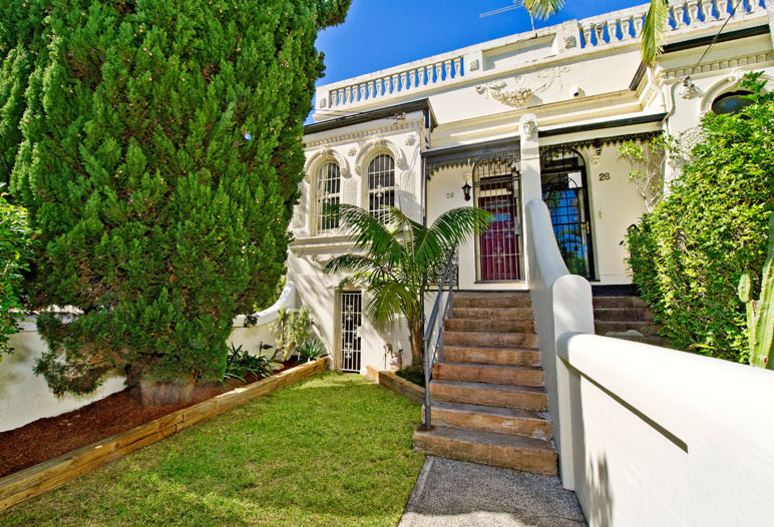
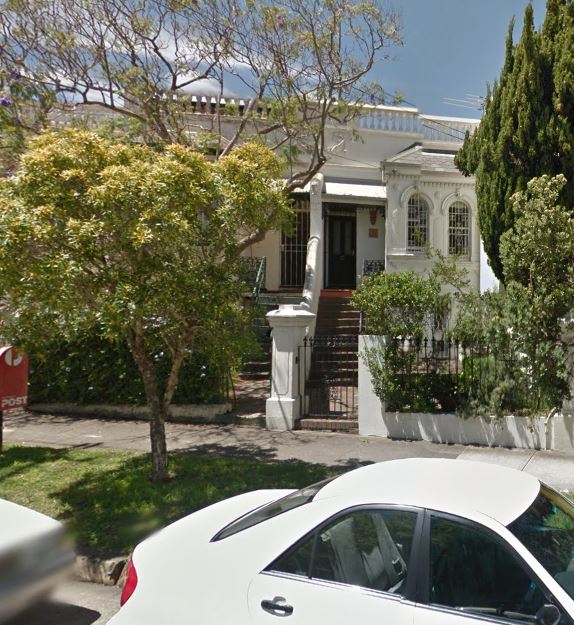
Home of John COADY - 26 Edgeworth Drive, Woollahra, NSW
Home of John COADY – 26 Edgecliff Rd, Woollahra, NSW


Home of John COADY - 26 Edgecliff Rd, Woollahra, NSW
Home of John COADY – 26 Edgecliff Rd, Woollahra, NSW

[divider_dotted]


DAVIS

DAVIS

New South Wales Police Force

Sub-Inspector

Died  ?

Funeral  20 July 1914


LATE SUB-INSPECTOR DAVIS.

The Sydney Morning Herald  Tuesday  21 July 1914  page 10 of 16

The funeral of the late Sub-Inspector Davis, of the Redfern division of the police, took place yesterday at Waverley Cemetery. There was a large attendance of members of the police force, among others being Superintendent Mitchell (representing the Inspector-General) and Superintendent Goulder, Inspectors McLean, Brooke, Spence, Childs, Kendall, Kelly, and Brack ;

Sub-Inspectors McCrimmon, Jones, Bannon, Stephens, Spence, Branston, Gumley, Fullerton, and Baxter; Senior-Sergeants O’Dea, Mankey, Sherwood, Evans, Doig, Allen, King, and Smith;

Sergeants Harrison, Hamilton, Sexton, Walker, and Bennett;

Senior-Constables Ross, Roche, Scott, Curtis, Morrow, Paine, Hickey, Leonard, and Archinall;

Constables Philpott, Anderson, Comans, James, Collins, Gillard, Davy,   Jackson, Gilbert, Cummings, Laycock, Hargrave, Healey. McCormick, Shanahan, Keogh, Moylan, Bowman, King, Walker, Williams, Spencer, Asquith, Jackson, Hollis, Wood,

Detective Moore, Ex-Superintendent Sherwood, ex-Sergeant Meehan, ex-S.C. Trinder, ex S.C. Burke.

Among the civilians present were Messrs. T. P. D. Holden, M.L.C., M. McCabe, A. E. Powell.

At the cemetery gates about 100 members of the police force assembled, and followed the hearse to the grave. After the usual burial service a Masonic service was conducted by Bro. Rees, W.M., of the Lodge Zetland Australia.

http://trove.nla.gov.au/ndp/del/article/15524163?searchTerm=sub%20inspector%20james%20smith&searchLimits=l-australian=y#pstart1278549


James SMITH

James SMITH

New South Wales Police Force

Sub Inspector

Joined the NSW Police Force in 15 January 1868 – Mounted Police

Previously stationed at:  Maitland ( 2 years ), Singleton,

Wollombi as Senior Constable,

Muswellbrook as Sergeant

April 1883 – promoted to Senior-Sergeant

1891 – promoted to Sub-Inspector

27 years Service

Illness – Suicide – Firearm

Born  1846 ??

Died  Thursday  31 December 1896 around 8am

50 old

Funeral  2 January 1897

leaves behind a wife & 7 children


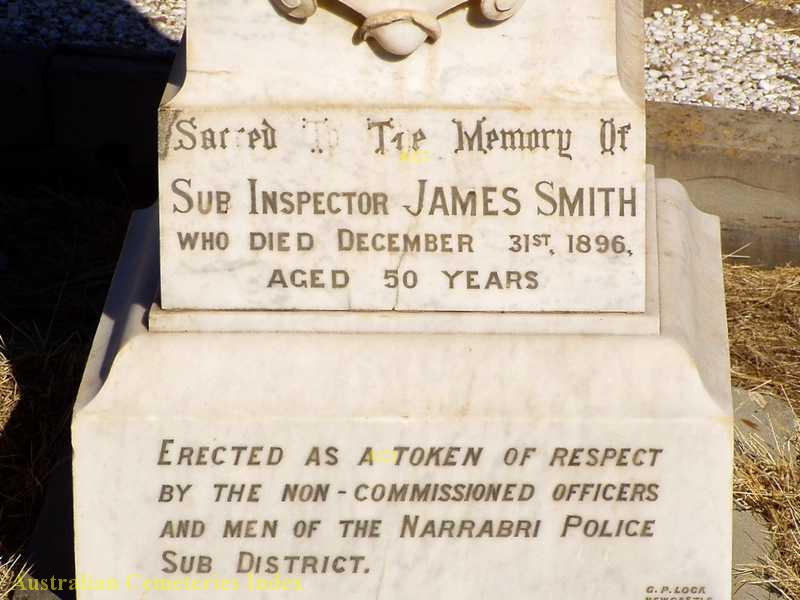
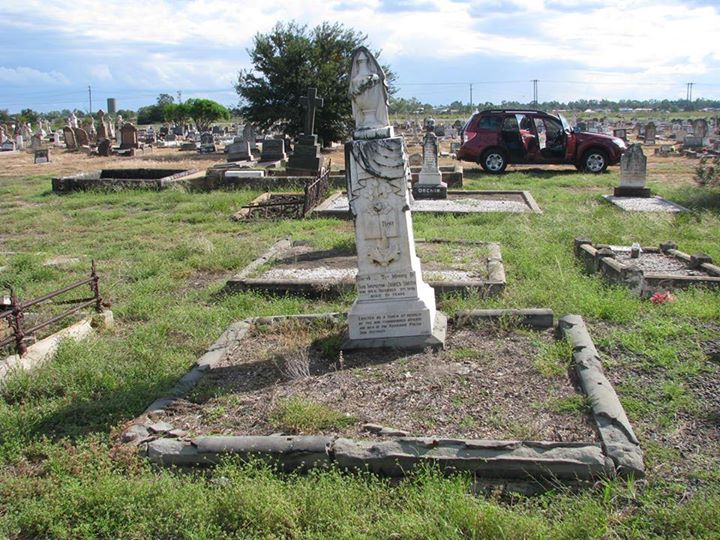
Grave of Sub-Inspector James SMITH

Grave of Sub-Inspector James SMITH

Narrabri Cemetery
[google-map-v3 shortcodeid=”6b1aaeab” width=”350″ height=”350″ zoom=”12″ maptype=”roadmap” mapalign=”center” directionhint=”false” language=”default” poweredby=”false” maptypecontrol=”true” pancontrol=”true” zoomcontrol=”true” scalecontrol=”true” streetviewcontrol=”true” scrollwheelcontrol=”false” draggable=”true” tiltfourtyfive=”false” enablegeolocationmarker=”true” enablemarkerclustering=”false” addmarkermashup=”false” addmarkermashupbubble=”false” addmarkerlist=”-30.316353,149.792236{}catholicgrave.png” bubbleautopan=”true” distanceunits=”km” showbike=”false” showtraffic=”false” showpanoramio=”false”]


James Smith was a brother of Mr. G. Smith of Oak Farm, Rosemonte, near Goulburn, NSW, and his father, who died a few years ago, was a well-known gardener of that place.

Father’s name:  George

Mother’s name:  Isabella


The Sydney Morning Herald ( NSW )  Friday  1 January 1897  page 5 of 8

SUICIDE BY A SUB-INSPECTOR OF POLICE.

NARRABRI, Thursday.

This morning Sub-inspector James Smith, the officer in charge of the Narrabri police district, was found dead. A report of a shot was heard and deceased’s son, who rushed into the room, found his father lying on the bed with a revolver on his breast. From appearances that weapon had exploded in the   mouth and the bullet had passed into the brain. During the past fortnight Mr. Smith had been indisposed, and it is stated that when unwell he always became very despondent and developed symptoms of melancholia. Only one chamber of the revolver was discharged, and death was apparently instantaneous. Deceased was 50 years of age. He joined the police force 27 years ago, and, beginning as a constable, worked his way up to his present rank. During the past six years he has had charge of the Narrabri police district. Deceased leaves a widow and seven children. An inquest was opened at the courthouse this morning and adjourned till Monday.

Later particulars of the death of Sub-inspector Smith show that the deceased left three letters, one addressed to his wife, the second to Mr Kenyon, P. M., ( Police Magistrate ) and the third to Mr A. R. Stafford, of Barry and Stafford. In one letter he stated that he felt his mind was becoming unhinged and preferred death to living the remainder of his life in an asylum. The deceased had arranged all his affairs, leaving everything provided for. The Masons will accord the deceased a Masonic funeral, which takes place tomorrow morning. The family are left provided for.

http://trove.nla.gov.au/ndp/del/article/14082580#pstart1362053


[divider_dotted]


Singleton Argus ( NSW )  Saturday  2 January 1897  page 2 of 6

The Late Sub-Inspector Smith.

Many old residents of Singleton will regret to hear of the death of Police Sub-Inspector James Smith at Narrabri, an account of whose tragic end is published in another column. Sub-Inspector Smith joined the police force about 1868, and after doing duty at Maitland for about two years he was transferred to Singleton, where he remained for some time under Inspector Thorpe, and afterwards he was stationed at Wollombi with the rank of senior-constable.

http://trove.nla.gov.au/ndp/del/article/83250054?searchTerm=sub%20inspector%20james%20smith&searchLimits=l-australian=y#pstart8378896


[divider_dotted]


Singleton Argus ( NSW )  Saturday  2 January 1897  page 6 of 6

SUICIDE OF A SUB-INSPECTOR.

Sub-Inspector James Smith who has had charge of the division at Narrabri aged 50 years, committed suicide on Thursday. He got up as usual, and went round the barracks, and at 8 o’clock went back to his bedroom. A few minutes later Senior-Sergeant Thomas Clarke, hearing a report of firearms rushed into the bedroom, and found the sub-inspector stretched on his bed with a bullet wound in his head. Death was instantaneous. The revolver was quite hot when the sergeant took it from the dead man’s hand. The only cause that ran be assigned for the terrible deed is that the sub-inspector had been ailing for the last three weeks, and his wife has also been ill for some time, and is at the present moment in a very bad condition.

Great surprise was expressed locally at the news, and also regret. Sub-Inspector Smith was well liked both in his official and private capacity. He was a member of the Masonic order, and also the M.U. ( Manchester Unity ) Order of Oddfellows. The deceased inspector joined the mounted police on January 15, 1868. On leaving the depot in Sydney he was sent to the north-western district, being first stationed at Maitland. From that place he was transferred to Muswellbrook as sergeant, and was promoted to senior-sergeant in April, 1883. In 1891 Mr Smith attained the rank he held at the time of his death, and was appointed to the Narrabri sub-district.

http://trove.nla.gov.au/ndp/del/article/83250061?searchTerm=sub%20inspector%20james%20smith&searchLimits=l-australian=y#pstart8378900


[divider_dotted]


The Maitland Weekly Mercury ( NSW )  Saturday  2 January 1897  page 3 of 16

Suicide of Sub-Inspector Smith at Narrabri.

Narrabri, Thursday

Great excitement prevailed in town this morning when a report became current that police Sub-Inspector James Smith had committed suicide at his residence between 8 and 9 o’clock by shooting himself through the head with a revolver, death being instantaneous. The report was immediately confirmed, and the particulars furnished go to show that the Sub-Inspector had been suffering from some slight illness for the past week, and had been subject to fits of melancholia for some time previous, but the commission of such a rash act was never dreamed of by his friends. The greatest sympathy is felt for his wife and family. An inquiry will be held during the day. Alater telegram states that Mr. Smith got up as usual, and went round the barracks. At 8 0’clock he went back to his bedroom, and a few minutes later Senior-Sergeant Clarke, hearing the report of firearms, rushed into the bedroom and found the Sub-Inspector stretched on his bed with a bullet wound in the head. Death had been instantaneous, and tbe revolver was quite hot when the Sergeant took it from the dead man’s hand. The only cause assigned for the terrible deed is that the Sub- Inspector has been ailing for the last three weeks, and his wife had also been ill for some, and at the present moment is in a very bad condition. Great surprise is expressed in town at the news, also   regret. Mr. Smith was well-liked both in his official and private capacity. He was a member of the Masonic Order, and also of the Manchester Unity Order of Oddfellows. The late Mr. James Smith, or ” Long Smith ” as he was generally called by other members of the force to distinguish him from another officer of the same name, was well-known in the Maitland district, where the news of his death will create some excitement. Mr. Smith joined the police force about the year 1868, so that he had served 28 years and would in the natural course of events have retired in a couple of years’ time. In the 70’s he was stationed at Singleton under Inspector Thorpe, who has since retired, and later with the rank of senior-constable he was in charge at Wollombi. He was also stationed at several other places, and for a number of years prior to 1896 be was a senior-sergeant at Muswellbrook, in which year he was superseded by Senior-sergeant Cowan, now of East Maitland. Mr. Smith then went to Narrabri, with the rank of sub-inspector in charge of the sub-district of Narrabri, which is a most important one, including as it does Moree. During the miners’ strike at Greta, Mr. Smith was one of the officers engaged there. He was 50 years of age, and, as stated in our telegram, leaves a wife and family. Mr. Smith was a fine soldierly man in appearance, and was a noted strict disciplinarian.

http://trove.nla.gov.au/ndp/del/article/126319284?searchTerm=sub%20inspector%20james%20smith&searchLimits=l-australian=y#pstart13710107


[divider_dotted]