1

Arthur Alexander John FORD

 Arthur Alexander John FORD

( late of St James Ave, Glebe )

New South Wales Police Force

Regd. # ?

Rank:  Constable

StationsBathurst, Grenfell, Petersham

Service:  From  to  19 December 1927.  Went onto sick report on 14 December 1927

Awards?

Born?

Died on:  Monday  19 December 1927 about 10am

Cause:  Murder / Suicide – firearm

Event location:  Leichhardt

Age:  49

Funeral date:  Wednesday  21 December 1927

Funeral location?

Buried at:  Presbyterian Section, Rookwood Cemetery


[alert_yellow]ARTHUR is NOT mentioned on the Police Wall of Remembrance[/alert_yellow]  *NEED MORE INFO


 [divider_dotted]

 Funeral location:

[divider_dotted]

Arthur Alexander John Ford died 19/12/1927 aged 49 from self inflicted gun shot wound to the head. He lived in Glebe with his wife and was stationed at Petersham at the time.

He shot Mrs Florence Laws in a lane way off Norton St, Leichhardt close to Parramatta Road. Mrs Laws lived in Stanmore.

The inquest stated that she was shot twice. Other accounts said that 5 shots were fired. Fords wife stated that he had ‘troubles’ following fractures to the base of his skull and above his left eye (not known if they were job related) and suffered fits of violence.

A couple of letters were not admitted into evidence but it was noted that Ford loved his wife.

Death is due to temporary insanity.

The information came out after the inquest. Unbeknown to Mrs Ford maybe until his final day(s) Ford had ‘known‘ Mrs Laws for some time. In one of the letters that was not read at the inquest he professors his love for his wife and said to her ‘you know all’ I think meaning he told her of Mrs Laws.

The letter that Mrs Laws wrote told of her deep love for Ford and just wanted to be with him. It would appear that on the day of their deaths, she had a dental appointment in Norton St, Leichhardt and she said to the dentist “I have a friend waiting outside”.

A friend says that he would hear the voice of his very young daughter who had died 2 years previously asking him to play a particular tune on the pianola (perhaps due to the affects of his head injuries).

Now comes the finale. He is buried in the Presbyterian section of Rookwood Cemetery. A report in the press has it that just as they finished the readings over his coffin, the coffin of Mrs Laws passed by and she was buried “a few yards” from Ford.

[divider_dotted]

Northern Standard ( Darwin )       Tuesday  20 December 1927       page 3 of 4

STANMORE SHOOTING

Sydney, Monday.

Mrs. Florence Ellen Laws, of Percival Road, Stanmore, wife of  a master builder, was shot dead in a lane off Norton Street, Leichhardt, yesterday morning, following a quarrel with Constable Arthur Alexander John Ford, of Petersham. The policeman is alleged to have killed Mrs. Laws and to have turned the revolver on himself. He also  died. Ford fired five shots, four of which took effect on the woman, who died instantly. Ford was also married. When his wife heard, of the tragedy she collapsed.

http://trove.nla.gov.au/ndp/del/article/48032233#pstart3153593

[divider_dotted]

The Age          20 December 1927       page 9 of 11
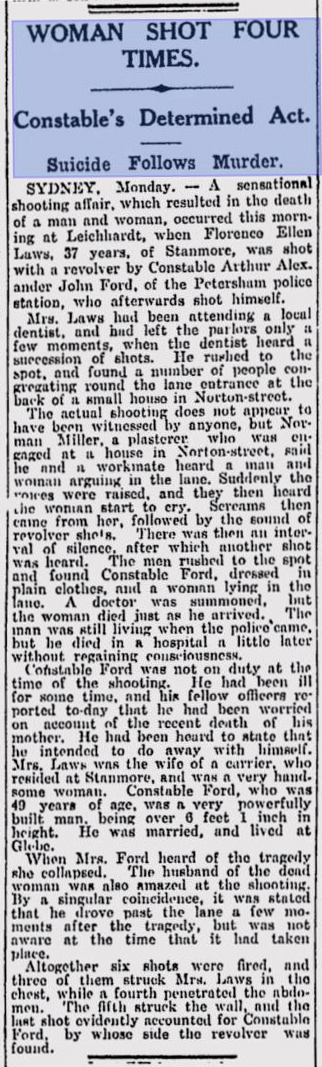
The Age 20 December 1927
The Age
20 December 1927

https://news.google.com/newspapers?nid=1300&dat=19271220&id=5-BVAAAAIBAJ&sjid=9dcDAAAAIBAJ&pg=4199,5706836&hl=en

[divider_dotted]

Truth ( Sydney )          Sunday  25 December 1927     page 13 of 20

MYSTERY LETTERS IN LEICHHARDT LOVE SHOOTING

‘MY OWN DEAREST LOVE’ Passionate Expressions to Policeman Who Killed Woman and Then Himself

“ALL MY LOVE UNTIL I SEE MY DARLING!”

MYSTERY letters, pulsating with terms of love and endearment, were found in the pockets of tall, strapping, handsome Constable Arthur Ford when he and Mrs. Florence Laws met death from revolver bullets in a little dead-end lane at Leichhardt on Tuesday morning.   They were all unsigned. Only crosses to denote kisses concluded their amatory passages..

WHO – were these letters from? That is a big question for the Coroner when he delves into   the tragedy that shocked the city, wrecked two homes and took a handsome man and an attractive and sunny-natured woman, from the earth. A wondering, heartbroken wife weeps silently in a little home in Glebe, mourning     the death of her husband.   “A fine man, Mr. Ford,” everyone said. He was big and straight and frank.

But on Wednesday he was buried, having gone from life by his own hand. On the fourteenth of this month he went off duty from the Petersham police station— ill.  The next day he saw a doctor, who prescribed, and gave him a certificate which substantiated his application – for sick leave. His poor health apparently preyed upon his mind — a mind worried a good deal about other things. His mother had died and he mourned her passing. But there was more. And his thoughts turned to a little home in Percival-road, Stanmore, and to a little woman who lived there with her husband and her family.

Constable Arthur Ford and Mrs. Florence Laws were very firm friends and probably more, if the letters were penned by her, then they were lovers — passionately enamored. In her Stanmore home an astonished husband and father grieves at almost   incredible news. Reddened, tear-stained eyes tell of the anguish of three sons, the youngest about 15, and of a pretty   daughter. Their mother was her usual bright and cheery self on Monday morning. She left home, trim, petite, dark and well dressed and called at the grocery store just around the corner in Parramatta road.   She left and walked smartly along Parramatta-road to Norton-street, where she went to the dental surgery of Dentist C. G. Everingham.

She was well-known there as a genial, lovable and striking woman, with a radiant personality and an unfailingly bright outlook on life. The adventure of existence was real to her. She revelled in it, and she had the happy knack of making others feel that life is worth while. At the surgery she submitted a plate to be repaired. It had been broken— by being dropped on to the floor, she explained. It was broken in such a way that a blow on her mouth might have conceivably been the cause. Only a few minutes she had been in the surgery, chatting away, when she excused herself by saying that a friend was waiting outside for her. The pair spoke on the pavement, and he walked along with her about ten yards, leading the way into a little dead end laneway between two houses facing Norton-street.

There the man, 49 years of age, and the woman, who was 12 years his junior, but who looked only 30, had a conversation which will never be known. Something was worrying Ford, and   he told her about it.

Was there another man, – apart altogether from the husband?  Or did he want her to be his own, and give up her home and children? The Coroner will he faced with a difficult task in elucidating this.

Whatever the discussion, they disagreed.   Ford spoke plainly and bluntly.

The woman sensed danger and wanted to get away. In a frenzy he grasped her and tore her clothing. Then she saw the deadly service revolver being drawn out. There was one awful second of realisation. She screamed. In a frightful tattoo five shots barked out in rapid succession, tearing into her body on their work of destruction. The bullets emerged and bespattered the wall. She crumpled up and, with a little murmuring cry, fell dead, the red blood of life pouring from her, staining the green grass that grew along the wall at the side of the lane.

Without any hesitation Ford turned the revolver on himself. Just one shot. It was aimed true, and it seared through his head and brain. He was breathing still when horror-stricken people rushed to the laneway, but he died after being hurried away towards hospital.

Six shots had been fired. Two lives were taken. And a ruptured romance the cause of it all. Just what they were to each other is the problem that at once presents itself. The wife of Ford, attached and devoted to him, was in a state of collapse when police officers had told her the facts of the tragedy.

The husband of Mrs. Laws could shed little light on the matter beyond saying that he had met Ford, had, in fact, been introduced to him by his wife, who told him that Ford had helped her with a punctured tyre one day. Patrolling Parramatta-road, the stalwart constable must have met the woman   in difficulties with her car. She drove herself about and had been a motorist for years, having in her home no lack of anything she desired; good clothes, jewellery, a car, and seemingly no lack of ready cash. Her husband is a master carrier, partner in a business concern.   Whatever their association was it must have been heart whole. If the batch of letters found on the dead man came from the woman. Mr. Laws told the police that the writing was like that of his wife. Many of the screeds were on red ruled foolscap paper. Most had been posted in Sydney, and some in Annandale, but not one bore a signature except the crosses, crosses, crosses.

Sometimes the mystery she who wrote them would add a cross or two to the back of the letter for good measure. ‘My Own Dearest Love,’ was the favored form of introduction.   Then the screed went on to messages of burning affection. “I’m sitting all alone thinking of my sweetheart,” read one. “I’ve been doing that all day. I’ve never been deceitful to you since I’ve known you. . .” and more like that. “I feel I must see you before I go to bed at night, and in the morning I wake up at four or five and think of my loved one . . ” One letter was apparently in reply to a criticism levelled regarding attendance at a dance, or possibly to forestall criticism. “I went to a dance last night,” wrote the mystery woman of the letters. “I danced with only one person all night, and I was wishing that you were with me . . .” And then followed fervent passages addressed to “Dear Sweetheart” speaking of lovely kisses and declaring that if he ever tired of her it would kill her. But apparently, if Mrs. Laws was the writer, poor Ford grew anything but tired of her. His passion seemed to transcend all reason, all restraints.   Two of the letters in the batch are particularly significant regarding an   obviously clandestine association,   and the difficulties of avoiding detection. One letter, with no other date than “Sunday, 5 p.m.,” I read:   “My Own Dearest   Love,— I got   your letter in the box this morning, sweetheart, at ten-past six, early for Sunday morning. I tried to keep awake on Saturday night, so I could hear you pass, but sleep overtook   me.   I woke about four o’clock this morning, and never went to sleep after thinking of you, darling, and of the happy hours we spent together. My Dear Arthur, you still seem to doubt me that I love you. I wish you would not think that. I have proved, dear, how much I do LOVE YOU, and I will never, never give you up. I read your sweet letter over and over again, and loved it. I was thinking of you out in the cold on Saturday night at the dogs. Darling, you must have nearly freezed. Did you ring here about 9.30? Somebody rang, and I thought it might   have been you. Somebody else   answered the ‘phone, and there was no answer. If you ring me on Tuesday let it be after 4. G. goes then. All my love and thoughts till I see my darling. X X X X X x F.L. x x xxx The F.L., thinly traced in a multitude of kisses, seems to have been the only attempt at signature. Both letters were capitals.

Another letter spoke of the suspicions that had been raised by the association of the writer and the Constable.

Dated only ‘Sunday,’ in much the same way as the other, it read:— My Own Dearest Love,— I’ve been thinking of you, love, since I saw you yesterday. You shouldn’t have come over to the car to speak to me after what I told you in the morning. I was that upset I didn’t know what I was talking about. Arthur, dear, you ought to have a little consideration for me when you know how I’ve been talked about. I Just feel I could clear a thousand miles away. Darling, when you see the little kid, N, I mean, don’t ask about me. I will tell you why when I see you. I will try and see you on Wednesday at lunch-time. I will drop you a note before then, sweetheart. All my love till I see you, dear. Then followed those little crosses that mean kisses – thirteen of them. An unlucky number !

http://trove.nla.gov.au/ndp/del/article/168681165?searchTerm=florence%20laws&searchLimits=l-decade=192|||l-year=1927|||l-month=12#pstart16113201


[divider_dotted]

The Sydney Morning Herald      Friday  13 January 1928     page 12 of 20

LEICHHARDT TRAGEDY.

CONSTABLE “UNDOUBTEDLY INSANE.”

CORONER’S VERDICT.

” There cannot be the slightly doubt that Ford was suffering from some temporary insanity, ” said the Acting City.

Coroner (Mr. Flynn) at the conclusion yesterday of an inquiry into the death, on the morning of December 19, of Arthur Alexander John Ford, aged 49 years, a police constable, stationed at Petersham, and Mrs. Florence Ellen Laws, aged 37 years, of Percival-road, Stanmore, in a lane off Norton-street, Leichhardt.

The evidence was to the effect that Ford, after a quarrel with Mrs. Laws, drew his service revolver, and fired two shots at her, killing her instantly. He then turned the weapon on himself, inflicting a wound in the side of the head, from the effects of which he died a few minutes after admission to the Royal Prince Alfred Hospital.

Summing up the evidence, Mr. Flynn said the letters left behind by Ford showed that he regarded his wife with deep affection. All the evidence indicated that be was subject to an increasing mania for some time before his death, and the tragedy had occurred in one of his fits of violence.

Linda Beatrice Ford, wife of the constable, said that he had suffered, some considerable time before the occurrence, two fractures of the skull, one at the base and the other over the left eye. Shortly before the tragedy, he had continually complained of gnawing under the points of fracture. Witness had also noticed a change in his mental disposition. One night, seated at the pianola, he had asked for the roll “Rock of Ages,” stating: “Margery is calling me to play it.” Margery, witness explained, was an adopted daughter, who had been dead two years. On December 18 Ford told witness that he had a confession to make, and spoke of a woman named Florrie. Ford was perfectly sober when he left home on the morning of the tragedy. He was not a heavy drinker.

At this stage a letter was produced, and objected to by counsel for the relatives. In upholding the objection, Mr, Flynn said Ford was obviously insane when he wrote it. It was addressed in very affectionate terms to his wife. Another letter, found on the dead man, was not admitted, the Coroner explaining that it was a letter, couched in affectionate terms, from a certain person to Ford.

The Coroner found, that Mrs. Laws died from the effects of bullet wounds inflicted on her by Ford whilst he was suffering from some temporary mental aberration, and that Ford died from wounds self-inflicted whilst in the same condition of mind.

Mr. Sproule (of Messrs. R. D. Meagher, Sproule, and Co.) appeared for the relatives of Ford; Mr. Thomas Green for the relatives of Mrs. Laws; and Inspector Horsell for the police.

http://trove.nla.gov.au/ndp/del/article/16433671#pstart1204768


[divider_dotted]


The Braidwood Review & District Advocate

Tuesday  3 January 1928    page 4 of 8

STRANGE COINCIDENCE

When Constable Ford murdered Mrs. Laws and then shot himself at Leichhardt recently, he completed a tragic triangle of death.   He was the third constable who has served at Grenfell to die by violence.

Constables Claude Bovard and George J. Duncan were the other two.  Over ten years ago Ford and Bovard served together at Grenfell, and Duncan was stationed there soon after they left.

http://trove.nla.gov.au/ndp/del/article/119404489


[divider_dotted]
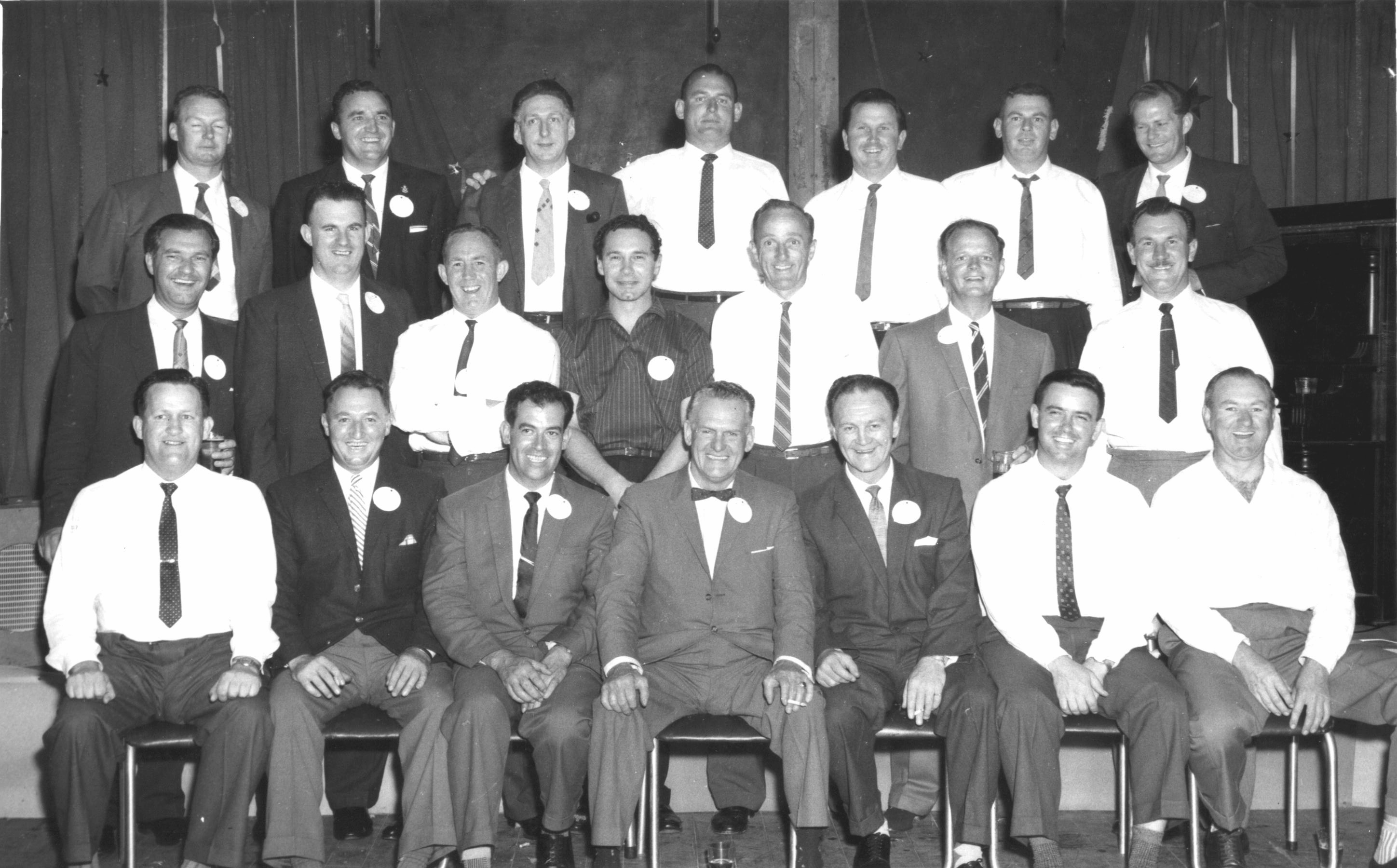


Kenneth Robert DONALD

 Kenneth Robert DONALD

New South Wales Police Force

Joined NSW Police Force via NSW Police Cadet system on 15 November 1943

Cadet # 419

Regd. # 5542

Rank:  Superintendent – Retired

Stations?, State Operations

Service:  From  15 November 1943  to  29 September 1987 = 43 years Service

Awards:  National Medal – granted 29 June 1984

Born:  5 October 1927

Died on:  Tuesday  21 April 2015

Cause?

Age:  87

Funeral date:  Tuesday  28 April 2015 @ 10am

Funeral location:  South Chapel, Woronora Crematorium, Linden Street, SUTHERLAND

Buried at:  Cremated

Back row, l to r: Bob Day, Ted Cook, Ken Fitzpatrick, Cliff McHardy, Ted Houghton, Frank Metz, Colin JoyceMiddle row: Dennis Toohey, Kevin Lawler, Frank Parkes, Dick Lascelles, John Eisenhuth, Bob Smith, Ron BuntFront row: Jim Pyne, Jock O'Keefe, Fred Aldred, Charlie Crittle, Joe Hall, John Wilson, Ken Donald
Back row, l to r: Bob Day, Ted Cook, Ken Fitzpatrick, Cliff McHardy, Ted Houghton, Frank Metz, Colin Joyce

Middle row: Dennis Toohey, Kevin Lawler, Frank Parkes, Dick Lascelles, John Eisenhuth, Bob Smith, Ron Bunt

Front row: Jim Pyne, Jock O’Keefe, Fred Aldred, Charlie Crittle, Joe Hall, John Wilson, Ken Donald

[alert_blue]KENNETH is NOT mentioned on the Police Wall of Remembrance[/alert_blue] * NOT JOB RELATED

 [divider_dotted]

 Funeral location

[divider_dotted]


Albert Ernest CARLYLE

Albert Ernest CARLYLE

New South Wales Police Force

Regd. # ?

Rank:  Constable

Stations?, Lawson, Lismore ( Lockup Keeper )

Service:  From  ? about 1930  to  6 March 1952 = 22 years of Service

Awards?

Born?

Died on:  Thursday  6 March 1952

Cause?

Age:  42

Funeral date:  Sunday  9 March 1952 @ 1.30pm

Funeral location:  St. Andrew’s Church of England, Lismore

Buried at:  Lismore Church of England cemetery ( Lismore Memorial Gardens )


[alert_yellow]ALBERT is NOT mentioned on the Police Wall of Remembrance[/alert_yellow]  *NEED MORE INFO


 [divider_dotted]

 Funeral location:

[divider_dotted]

Northern Star  ( Lismore, NSW )          Friday  7 March 1952          page 4 of 8

Sudden Death Of Constable

Lismore Police Station lockup keeper, Constable Albert Ernest Carlyle died last night while on his way to Sydney on the Brisbane Express.

Const. Carlyle was travelling to Sydney to enter the police ward at Prince Henry Hospital for medical treatment.

He died while the train was nearing Wauchope.

Const., Carlyle has been a member of the N.S.W. police force for more than twenty years. He has been stationed at Lismore for four years.

He is survived by his widow four sons and a daughter.

http://trove.nla.gov.au/ndp/del/article/96548039?searchTerm=albert%20carlyle&searchLimits=l-decade=195#reloadOnBack

[divider_dotted]

Northern Star  ( Lismore, NSW )          Saturday  8 March 1952          page 4 of 9

CONSTABLE A. E. CARLYLE.

The death occurred on the train at Wauchope on Thursday night while travelling to Sydney to enter hospital for medical treatment of Constable Albert Ernest Carlyle, 42, a police constable attached, to the staff of the Lismore Police Station for the past four years.  During the short period he has resided in Lismore, Constable Carlyle had become particularly well known in the district and made many friends. He was very well known among the bowling fraternity in the Northern Rivers, and as a member of the Lismore City Club achieved much success as a player. When 20 years of age, Constable Carlyle joined the police in Sydney and served in various metropolitan districts.

He was particularly well known, in the Paddington and Bondi districts, and was attached to the police station at Lawson for four years prior to coming to Lismore.

A widow, four sons and a daughter survive. They are Ronald, Raymond, Kevin John and Joyce.

His funeral will leave St. Andrew’s Church of England, Lismore, on Sunday, after a service commencing at 1.30 p.m., for the Lismore cemetery.

Lismore Police today will accord full funeral honours to the late Constable Carlyle.

Inspector J. E. Forsyth said last night that four motor cycles and 20 uniformed police would precede the hearse through the main part of the city.

[divider_dotted]

Funeral Notices.

CARLYLE. — The FUNERAL of Constable ALBERT ERNEST CARLYLE, of the staff of the Lismore Police Station, will move from St. Andrew’s Church of England,  Lismore, TOMORROW (SUNDAY), following a service commencing at 1.30 p.m. for the Church of England portion of the Lismore cemetery.

WILL RILEY & SON,

Funeral Directors.

http://trove.nla.gov.au/ndp/del/article/96548162?searchTerm=albert%20carlyle&searchLimits=l-decade=195#reloadOnBack

[divider_dotted]

Northern Star  ( Lismore, NSW )          Monday  10 March 1952          page 6 of 8

OBITUARY

40 Police March In Funeral Tribute

Police officers from all parts of the Lismore Police District, representing stations throughout the Richmond and Tweed River districts, paid a tribute at the funeral in Lismore yesterday of their comrade, Constable Albert Ernest Carlyle.

A member of the staff of the Lismore station, Constable Carlyle collapsed and died while on his way to Sydney seeking specialist attention.

Inspector J. E. Forsyth, Inspector in charge of the Lismore Police District, marched with about 40 members of the force in front of the hearse through the streets of the city, escorted by four police motor cyclists.

The police officers were transferred to cars at the intersection of Conway and Dawson Streets and paid a further tribute in the Lismore Church of England cemetery, where they formed a guard of honour and preceded the casket to the graveside.

The Rector of Lismore, Rev. J. V. Robinson, conducted a service in St. Andrew’s Church of England and also officiated at the cemetery.

Many representatives of district bowling clubs attended the funeral, and the president of the N.R.D.B. Association, Mr. W. Blair, represented that body.

The casket was draped with the Union Jack and was  carried at the church and cemetery by six senior constables.   They were Constables G. Barwick (Ballina), W. Botterill  (Alstonville), K. Clark (Broadwater), H. T. Radnedge (Mullumbimby),  J. P. O’Neill (Lismore) and H. McDonald (Casino). Constable N. Patterson, of Tabulam, was in charge of the police movement in the cortege.

The wreaths were carried by Messrs. J. G. Hicks (president), C. Brossman (secretary),  G. Brown, J. A. Mariangon, H. Riddle, J. Charleston, D. Wotherspoon (City Bowling Club), R. Coombes, N. C. McGuiness (South Lismore Bowling Club), T. Smith, F. Andrews and W. Blair (N.R.D.B.A. president).

The funeral arrangements were carried out by Will Riley and Son.

http://trove.nla.gov.au/ndp/del/article/96507496#pstart10167962

[divider_dotted]



William Bruce McLEOD

 William Bruce McLEOD

aka  Bill

( late of Pt Macquarie )

New South Wales Police Force

Regd. # 5745

Rank:  Inspector – Retired

Stations?, Penrith

Service:  From  to  12 December 1981 = 34 years Service

Awards:  National Medal – granted 10 September 1986

Born? ? 1924

Died on:  Thursday  16 April 2015

Cause?

Age:  91

Funeral date:  Tuesday  21 April 2015 @ 11am

Funeral location:  Port Macquarie Crematorium, 118 Gordon St, Pt Macquarie

Buried at:  Cremated


[alert_blue]BILL is NOT mentioned on the Police Wall of Remembrance[/alert_blue] * NOT JOB RELATED

 [divider_dotted]

 Funeral location

[divider_dotted]
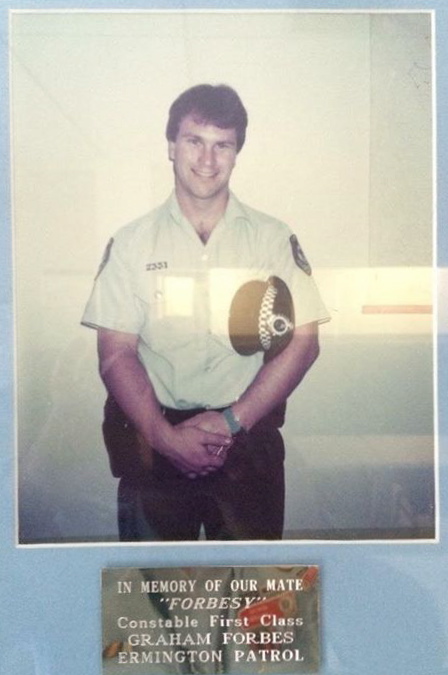
William Bruce MCLEOD (1924 – 2015)

Funeral notice

MCLEOD, William Bruce (Bill) Passed away peacefully on Thursday, April 16, 2015, at Port Macquarie Base Hospital. Late of Bellbowrie Street, Port Macquarie.

Dearly beloved Husband of Gladys. Loving Father and Father-in-law of Anne and Allan, Judith and Vladimer, Tanya, Stephen, and David, and adored Poppa Bill of Angie, Mel, Alexei and Mikhail.
Aged 91 Years
The relatives and friends are invited to attend a Thanksgiving Service for Bill’s life to be held in the Chapel of Innes Gardens Memorial Park Crematorium, Philip Charley Drive, Port Macquarie on Tuesday, April 21, 2015 commencing at 11am.
In lieu of floral tributes donations would be appreciated to the Royal Blind Society in Bill’s memory, a donation plate will be available at the Service. The family also wish to Thank Doctors and Staff of Ward 2C at the Port Macquarie Base Hospital.

logo
Published in The Port Macquarie News on Apr. 17, 2015

http://tributes.portnews.com.au/obituaries/portnews-au/obituary.aspx?n=william-bruce-mcleod&pid=174648945#sthash.ROkovrc8.dpuf

[divider_dotted]
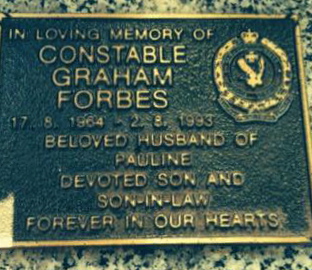


Alexander RILEY

Alexander RILEY  KPFSM

New South Wales Police Force

Regd. # ?

Rank:  Tracker.  Promoted to Sergeant on 5 August 1941 ( 1st Aboriginal Sergeant )

Stations:  Dubbo

ServiceFrom  11 June 1911  to  31 August 1914 ( Resigned ) = 3+ years Service

Reappointed on 1 January 1918 and Served until 13 July 1950 – Retired = 32+ years further Service

Awards:  King’s Police & Fire Services Medal for Distinguished Service – granted 1 January 1943

Born:  26 May 1884

Died on:  29 October 1970

Cause?

Age:  86

Funeral date?

Funeral location?

Buried at:  Dubbo Cemetery  ??

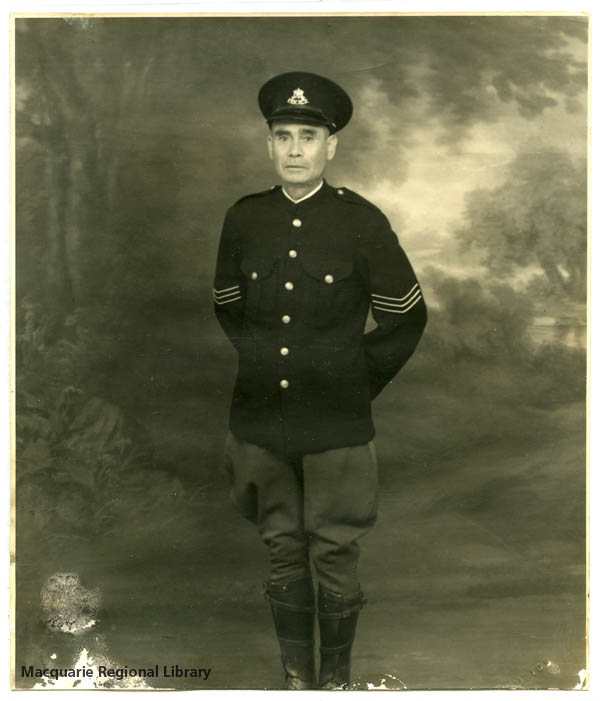
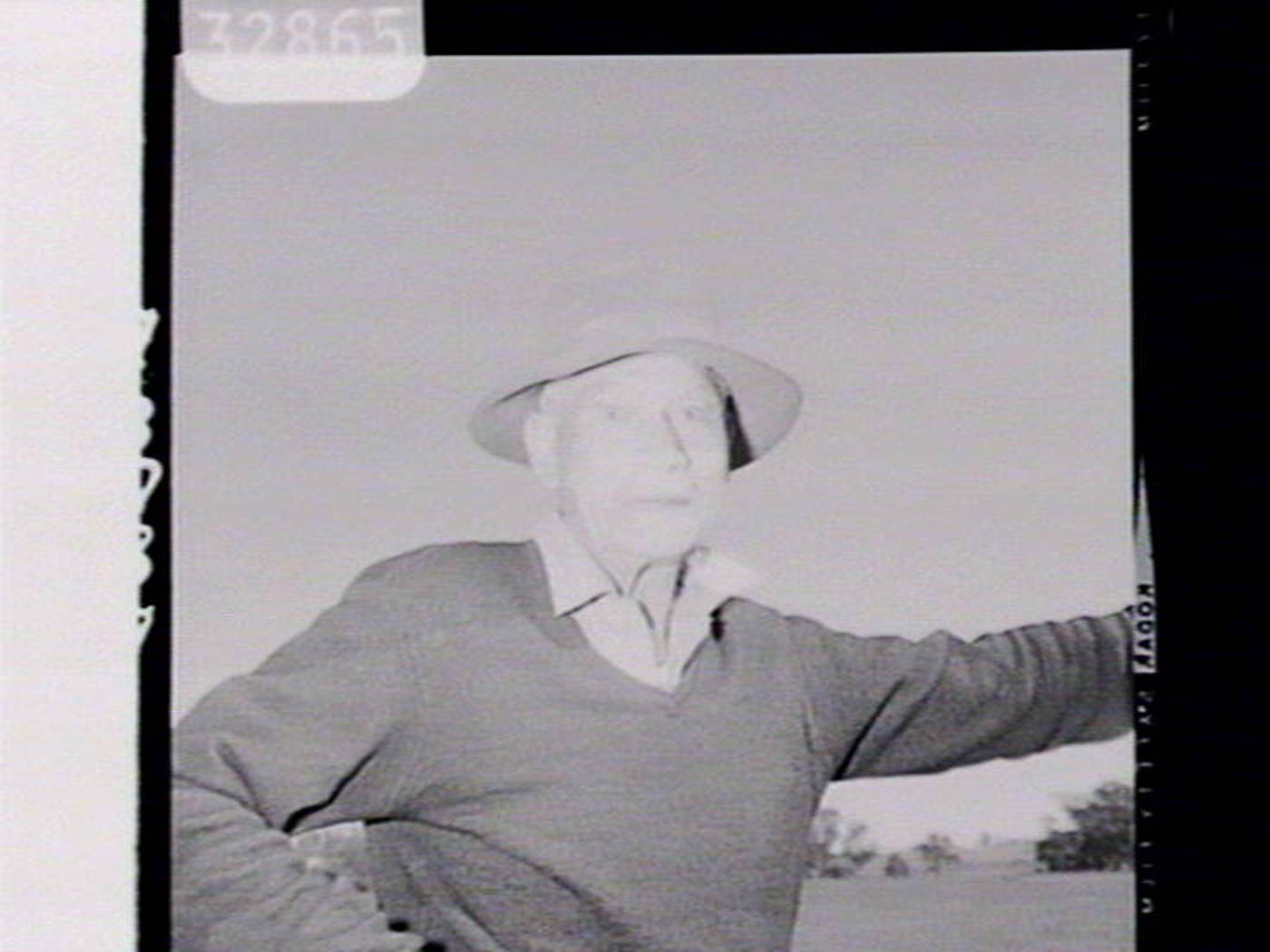
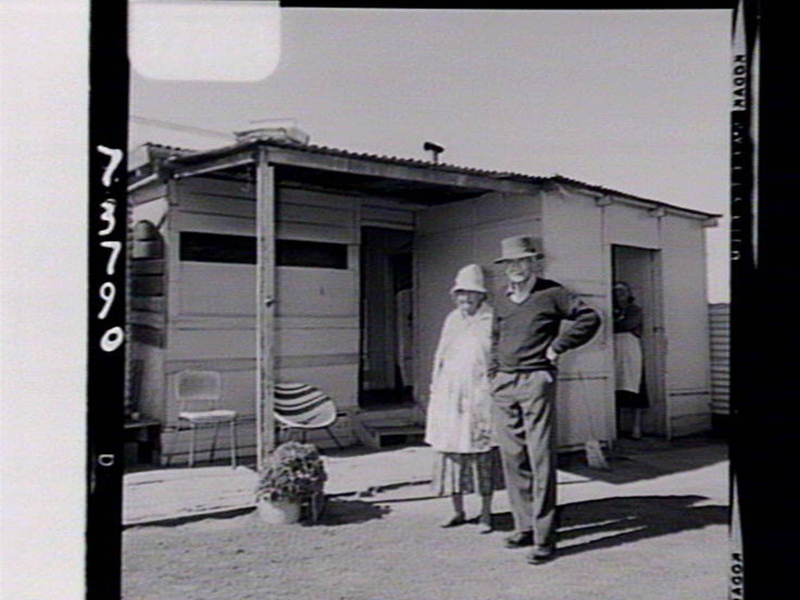
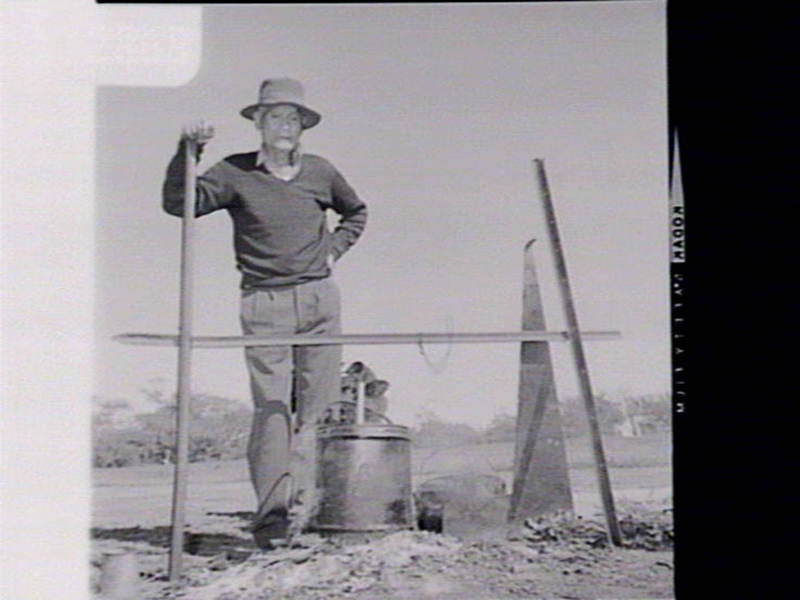
Sergeant Alexander Riley

[alert_blue]ALEXANDER is NOT mentioned on the Police Wall of Remembrance[/alert_blue] * NOT JOB RELATED

 [divider_dotted]
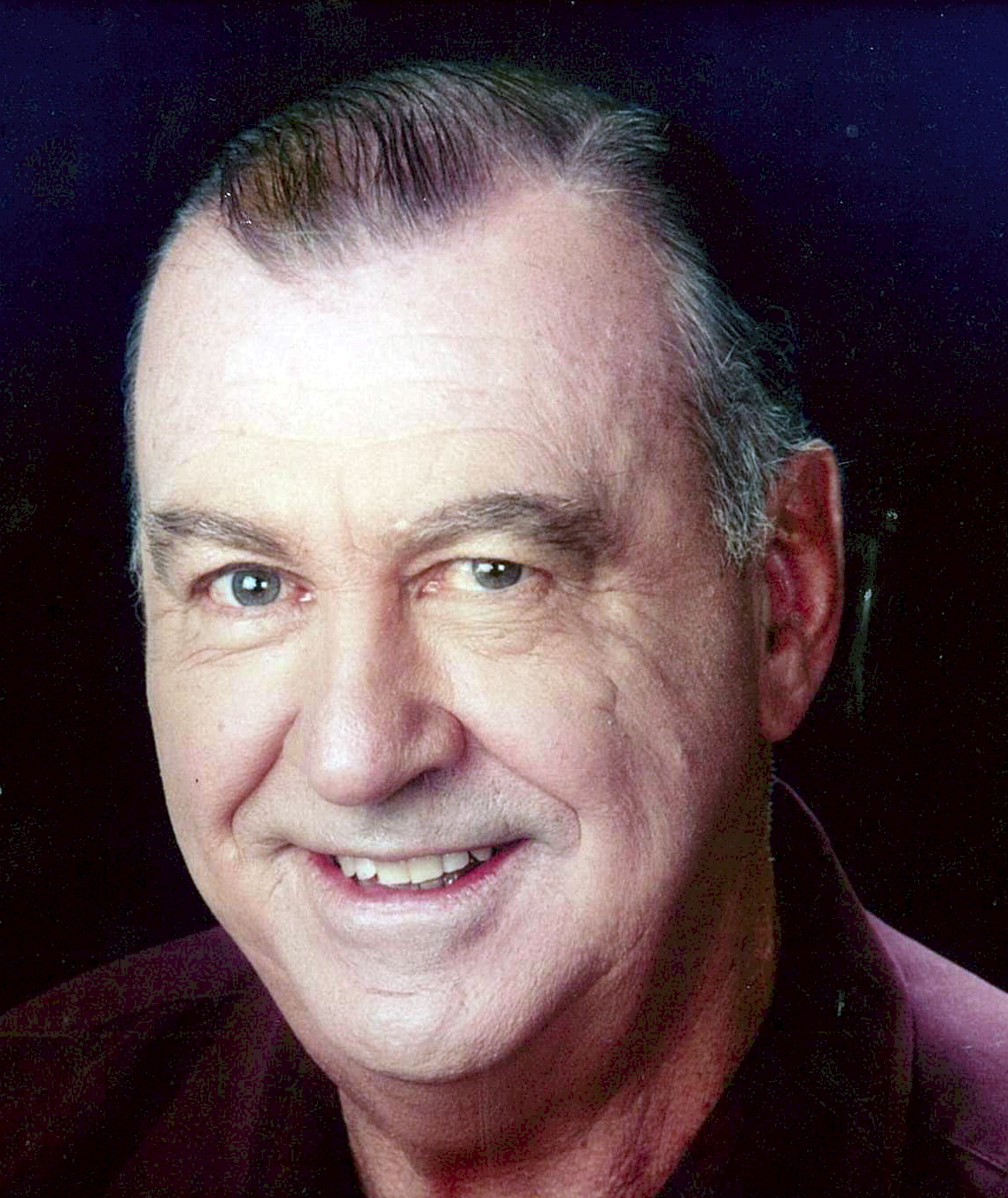
 Funeral location:

[divider_dotted]
[divider_dotted]

Riley, Alexander (1884–1970)

by Geoffrey Gray

This article was published in Australian Dictionary of Biography, Volume 16, (MUP), 2002

Alexander Riley (1884-1970), tracker, was born on 26 May 1884 at Nymagee, New South Wales, son of John Riley, labourer, and his wife Mary, née Calligan. Alec was part-Aboriginal and worked as a stationhand. On 11 June 1911 he joined the New South Wales Police Force as a tracker and was based at Dubbo. His tracking skills helped to break a cattle-thieving ring in 1913. He also assisted in the recapture of two escapees from the Dubbo gaol. Although he resigned from the police force on 31 August 1914, he was reappointed on 1 January 1918.

On Christmas Eve that year, after following her footprints across rough and barren terrain, Riley found a barefooted 6-year-old girl who had been lost for twenty-four hours in the mountains near Stuart Town. He helped to apprehend George Earsman in 1921; Earsman was later sentenced to death for the murder of Alexander Matheson. In the early 1920s Riley was credited with the capture of the ‘last of the bushrangers’, Roy Governor, a younger brother of the notorious Jimmy Governor. Roy, an expert bushman, had evaded thirty policemen and ‘blacktrackers’ for three months until Riley discovered that he tied pieces of sheepskin—wool-side down—to his feet to disguise his tracks.

At the Presbyterian manse, Wellington, on 14 June 1924 Riley married 26-year-old Ethel Taylor. He was a well-known horseman in the Dubbo district, appearing at many country shows and with the travelling rodeo of the Police Boys’ Clubs.

In 1939 Riley helped in the arrest of Andrew Moss, who had reputedly killed thirteen people over twenty years. It had taken him more than twelve months of ‘painstaking investigation to run this man to earth’. Moss was charged with three murders, convicted and sentenced to death, but his sentence was commuted to life imprisonment. That year Riley was officially commended for ‘his excellent tracking work which led to the recovery of property to the value of approximately £80, stolen from a store at Trangie, and also for the arrest of the offenders responsible for the robbery’. In 1940 he was able to demonstrate that the death of a child, whose remains were found in a gorge near Bugaldie, was the result of an accident rather than foul play.

When he was promoted sergeant on 5 August 1941 Riley was the first Aborigine to gain that rank in the New South Wales Police Force. Again officially commended for finding a missing man in April 1942, he was awarded the King’s Police and Fire Services Medal for Distinguished Service in January 1943. He lived all his working life at the Talbragar Aboriginal Reserve, by the Macquarie River, near Dubbo, and was permitted to remain there with his wife after his retirement from the police force on 13 July 1950. Survived by his five sons and three daughters, he died on 29 October 1970 at Dubbo and was buried with Anglican rites in the local cemetery. In 1996 Michael Riley made a short documentary film, Blacktracker, about his grandfather and his ‘legendary skills and deep humanity’. It was screened by the Australian Broadcasting Commission in September 1997.

http://adb.anu.edu.au/biography/riley-alexander-11525

[divider_dotted]

MRL Local History and Family History

Tracker Riley Dubbo Cycleway

Sunday, May 26, 2013

Born on this day…

Alexander (Alec) “Tracker” Riley was born on 26 May 1884 at Nymagee N.S.W., son of John Riley, a labourer, and his wife Mary, nee Calligan.

He worked as a stationhand before joining the New South Wales Police Force as a tracker on 11 June 1911, and was based in Dubbo.

His tracking skills helped to break a cattle-stealing ring in 1913, and he found a bare-footed 6 year old girl who had been lost in the mountains for twenty-four hours  near Stuart Town on Christmas Eve in 1918.   He also assisted in the capture of two escapees from Dubbo Gaol, and in locating many other offenders, missing people, and stolen property, during his career.

He married Ethel Taylor at Wellington in 1924. He was promoted to Sergeant on 5 August 1941, and was the first Aborigine to gain that rank in the New South Wales Police Force. His excellent tracking skills lead to him being awarded the King’s Police and Fire Services Medal for Distinguished Service in January 1943.

An article titled “A Black-Tracker tells his story”, published in The Sunday Herald on 9 July 1950 (p. 9 http://nla.gov.au/nla.news-article18480263) reports that “Alex Riley is generally considered the State’s most outstanding black-tracker”, and that he “has tracked down and rescued more than 20 lost people in as many years”.

He was also an excellent horseman, and over the years trained footballers, cyclists, athletes, swimmers, and boxers in the Dubbo district.

He lived all his working life, and after his retirement from the police force on 13 July 1950, at the Talbragar Aboriginal Reserve near Dubbo.  He died on 29 October 1970 at Dubbo.

The Tracker Riley Cycleway around the Macquarie River at Dubbo was named in his honour and is 1 year old today.

http://www.mrl.nsw.gov.au/mrl-local-history-and-family-history/tracker-riley-dubbo-cycleway

[divider_dotted]

Further reading:

http://trove.nla.gov.au/ndp/del/article/18480263

http://nga.gov.au/exhibition/riley/Default.cfm?MnuID=4&Essay=8

Alexander Riley

[divider_dotted]

Friday 3 September 2004, 6 pm ABC1

Blacktracker

Have Your Say

Black Tracker

Black Tracker is a 1990s ABC documentary about the late police officer and tracker Sergeant Riley produced by the late Michael Riley. At its wrap up there is a beautiful piece of classical music which then lasts throughout the credits. The name of the music is not in the credits. …

Teresa

Purchase Message Stick DVDs

For a custom DVD copy of Message Stick episodes for educational use visit the Non-Theatric Sales website

Non-Theatric Sales

Mark Olive aka “The Black Olive” is back to show us how to do a picnic with a twist.

Transcript

RACHAEL MAZA, PRESENTER: Hi, welcome to Message Stick. I’m Rachael Maza. This week’s show is a special tribute to Indigenous film-maker and artist Michael Riley, who passed away after battling a long illness He was 44. Michael produced some beautiful films for us over the years, and we’d like to replay one of them. It’s called ‘Blacktracker’. This is dedicated to Michael Riley.

‘BACKTRACKER’ OPENING SUPER: From the early 1800s, Aboriginal people have been used as guides and trackers by the police force. This century, one of the most highly was Sergeant Tracker Alexander Riley of Dubbo, NSW.

‘SYDNEY MORNING HERALD’ REPORTER FROM 1949: “Ex-Sergeant Tracker Alex Riley of Dubbo has done more to solve major crime, recapture jailbreakers and save lives than any other coloured man in this State. Almost everyone in Dubbo knows Alex Riley, who retired several years ago after 40 years service in the NSW Police Force. ‘A white man,’ they’ll tell you, when they talk about him. Alex Riley smiles when he hears it. He understands that a compliment is intended. And he’s tolerant. Here is his story, as he told it to me.”

‘SYDNEY MORNING HERALD’ REPORTER RECOUNTING RILEY’S WORDS: “‘Credit for any skill I had as a tracker goes to a tribe of full-blooded blacks who roamed the bush near Condobolin 60 years ago. We lived at the mission station, but I liked to hunt with the full-bloods. When I was eight years of age, they started to teach me how to track. They first showed me how to recognise the hooves of the police horses by the way they were shod. They always knew when a trooper was in the area. I was horse-breaking until I joined the Police Force at the age of 26 years. I got most satisfaction out of finding people who were missing or lost. Catching criminals was interesting, but it never really appealed to me. Now that I’m out of the force, I’ll stick to bush work. But if they want me back on any job, I’ll help in any work except investigation of crime.'”

‘SYDNEY MORNING HERALD’ REPORTER: “On Christmas Eve of 1918, a six-year-old girl was lost in rugged bush and barren mountains near Stuart Town. Alex Riley arrived on the scene at daylight.” Later that day, he found the exhausted child in a gully, bogged to her waist in thick mud. He gave her milk from a bottle he always carried when searching for lost people.”

BERNADETTE YHI RILEY, GREAT GRANDDAUGHTER OF ALEX RILEY: I first started to research about Alec Riley in 1989 – he’s my great-grandfather – when I’d gone to visit my grandmother with some friends and one of my friends had a child and we were looking for things to do, so I decided to take my friend’s son to Old Dubbo Gaol. And while we were there, I was remembering back from when I was a child, being at the Old Dubbo Gaol, and I remember this particular photograph of my great-grandfather being in the gaol, and I took my friend’s son around to show him this photograph and tell him that that was my great-grandfather and that he was an Aboriginal tracker, but that was all I knew about him. I didn’t really know that much about his life or his exploits or his special talents that he had. So after thinking about it, I went back to Sydney and I was looking through books to see if there was anything about him, because there’s things in books about other Aboriginal leaders and Aboriginal people that have worked in al
sorts of different areas. So I just assumed that there would be something about Tracker Riley. There was a few articles in the local newspaper and there were some articles in a Sydney-based paper, like, one article. I was really astonished to find that a journalist from England and America had come here because they’d heard of him and they did a story about him, but not many people in Australia ever had much time to write a story about the things that he did. So I rang my grandmother and I said, “Oh, Nan, I’ve decided that I’d like to write a book about Grandfather Riley and let people know of his life and his exploits.” And not only that, I was more motivated to do it because it was such a positive story, because he was such a positive person and he’d done so many good things and I just thought that we need some more positive stories and I thought that his life would provide that. When I first started to research about Grandfather Riley, I got to interview a lot of my own family and I got to interview a lo
of Kooris from around New South Wales. And I interviewed the local police. And I got to interview ex-Detective Sergeant Claude Oakman, who’s now retired and has a lot of fond memories of Grandfather Riley and worked with him quite closely on a number of very important cases.

CLAUDE OAKMAN, EX-SUPERINTENDENT, DUBBO REGIONAL POLICE FORCE: I came to Dubbo in January 1940, on transfer, and Alec was there then, of course. I came as the mounted man and given a Harley Davidson motorcycle and sidecar. Had to do all the country inquiries. And that’s where Alec came over with me and we did a lot of the travelling and visiting at the different farms and stations and properties, and Alec showed me the area, introduced me – he knew practically every one of them – and introduced me to the homesteaders and the farmers and the graziers. And from there on, we were friends…

BERNADETTE YHI RILEY: Everybody, like all the Kooris and all the non-Aboriginal people, all said virtually the same thing about Grandfather Riley. They said that when he was tracking that the reason why he found people so quickly and he was so good at finding people, was not only the physical tracking, but it was the mental stuff – he had a sixth sense, perhaps.

CLAUDE OAKMAN: He was more than a tracker. As far as abilities were concerned…where he learnt them I don’t know, but he knew every bird and beast, knew their calls, what they did, how they reacted. He could track any signs, see any signs…marks, footprints. Show him a pair of shoes and he could say whether that was the same mark, tracks, that he was looking for, or not. But in doing that, he had the knowledge of what those tracks meant. He could read tracks. And he could deduce from that what that person was doing, whether he was running, walking, whether he was ill, whether he was hurrying away, fatigue had set in. And he read that and that was part of his tracking. And to start off and follow a track, he would go, quite often, 100, 200, 300 yards and not see a sign and then came onto some tracks. But he had that happy knowledge or ability of finding which way that person or thing that he was tracking was travelling. Where he would go if he was lost, if he was injured, thirsty or dying – it was a different set-up to a man that was trying to escape and going straight. And he would follow those tracks from intuition and I don’t know of any other person that could do that. I’ve seen other trackers and they could follow tracks and the average bushman could follow tracks. But to come to an area… I mean, he might see… They talk about ants – he might see ant tracks there – where they’ve been – and he could read those. But I mean, he could also read whether they’d been disturbed recently or hadn’t been disturbed for some time.

BERNADETTE YHI RILEY: I think one of the most disturbing cases that Grandfather Riley was ever involved in was the case of Desmond Clark. Desmond Clark was a 2\-year-old boy that went missing in the Pilliga Scrub. They had a 750-man search party trying to find Desmond and they couldn’t find him anywhere. So the superintendent, he found Tracker and got Tracker to come out to this property. But when he got to the property, the old cocky who owned the property turned around and said to Tracker Riley he didn’t want any blacks on his property…and wouldn’t allow him to participate in the search for his 2\-year-old grandson. So Grandfather Riley had no choice. He had to go back to Dubbo He hounded the superintendent to let him go out there because he believed that he knew which direction the boy was going in. Because it was coming on nightfall and there was a full moon that night, the child would be walking towards the light. But of course, nobody bothered to search in that particular direction and Desmond Clark was never found. About 12 months later, Desmond Clark’s grandfather died and Tracker Riley went back out to the Pilliga. And he decided to follow through on his theory about the young boy following the moon. And within 12 hours, he found the boy’s remains in a chalk pit. But the most startling point of it all was that his remains were only 500m from the actual homestead and the search party of 750 people had been looking in the wrong direction. And that, for him, was very disturbing. And although he never complained to anybody or said anything, my Aunty Ruby said that there was a change in his behaviour and that indeed, he was very upset, because Grandfather Riley believed wholeheartedly that if he was allowed on that property, he would’ve been able to save that boy’s life. So I suppose that just shows you how powerful racism can be.

CLAUDE OAKMAN: Alec was very reserved about his talking of work done and to whom the benefit arose. With the police that worked with him, some gave him full credit, others took all the credit, I’m sorry to say, but Alec never complained. To the turns that he’d done for the public in possibly tracking stock, recovering of stock, recovering of property, I think Alec combined with the police that were there to do that and he never, ever got the same credit as the policeman, which he should have done. But because he was a tracker, he missed out on that and bypassed a lot of commendation that he should’ve got.

‘SYDNEY MORNING HERALD’ REPORTER FROM 1949: “Riley was present when Andrew Moss was arrested at Dubbo in 1939. Moss was subsequently sentenced to death for murder. He was charged with murdering three men. Moss was supposed to have killed 13. His own boast was that he had ‘done the baker’s dozen’.”

BERNADETTE YHI RILEY: What about when Grandfather tracked down Andrew Moss, when he could tell which way the sulky went by the twigs?

RUBY McGUINNESS, ALEX RILEY’S DAUGHTER: Yeah, between… Well, you know, like, the sticks were broken on the side of where he went in…round about and that, where he felt, you know, these people would be. And it was in a creek down on Narromine Road, out the Narromine Road. And Dad sifted the… There was a fire, see? And he sifted all the ashes and he found all the human bones, belonged to this bloke that he murdered for his sulky and his horse.

BERNADETTE YHI RILEY: Well, he said he killed 13, the baker’s dozen. The most sensational case that Tracker Riley was ever involved in was the case of Andrew Moss. Andrew Moss killed three people and was finally charged in 1939. But to actually catch Andrew Moss, Grandfather Riley had to track a distance of around 200km radius. He went to places such as Narromine, Dubbo, Gilgandra, Peak Hill, and he was quite instrumental in the capture of Andrew Moss. He led the police to Andrew Moss and he was also instrumental in getting Andrew Moss charged with murder, because all of the evidence was circumstantial and Tracker Riley, not only was he a good tracker but he was also an excellent witness in court. I think the most difficult person that Tracker Riley ever had to track down was Roy Governor. Roy was the youngest brother of Jimmy and Joe Governor. In fact, he was four years old when Jimmy and Joe were involved with the Breelong Massacre.

‘SYDNEY MORNING HERALD’ REPORTER FROM 1949, RECOUNTING RILEY’S WORDS: “‘For three months, I hunted Governor through the scrub, from hideout to hideout. I followed him by a peculiar track. I noticed a strand of string had marked each pad, so I knew it was a human wearing a foot pad to cover tracks. I first surprised him in a hideout and as he fled into the scrub, I saw the foot pads were made of sheepskin. I also recognised him as one of the Governors and saw that he was armed.'”

‘SYDNEY MORNING HERALD’ REPORTER FROM 1949: “Police fire was concentrated on the hideout and Governor fell with a bullet through the back. It penetrated his chest and chopped the top off a lung. After a Dubbo doctor had saved his life, Governor was sentenced to death at the Dubbo Supreme Court. The sentence was commuted to life.”

BERNADETTE YHI RILEY: What about when Grandfather resigned from the Police Force and he was a sergeant and everything and he didn’t get the pension? They didn’t give him any money when he left the Police Force.

RUBY McGUINNESS: No, they didn’t give him anything. They didn’t recognise him for anything. When he retired, they gave him a dinner.

SHIRLEY MATTHEWS, ALEX RILEY’S GRANDDAUGHTER: Farewell dinner.

RUBY McGUINNESS: Farewell dinner and a gold watch and that’s what he got.

SHIRLEY MATTHEWS: That was from the people he worked with in the Police Force.

RUBY McGUINNESS: They gave him nothing in Dubbo.

SHIRLEY MATTHEWS: He wasn’t recognised. Apparently he wasn’t recognised as a policeman. Even though they made him sergeant and he got the King George Medal, he still wasn’t recognised. So…

RUBY McGUINNESS: As a policeman.

BERNADETTE YHI RILEY: They wouldn’t give him a pension or…

RUBY McGUINNESS: He only got the Old Age Pension. That’s all he got. When he retired, he and Mum, he didn’t get anything else.

BERNADETTE YHI RILEY: The Police Pension.

RUBY McGUINNESS: No.

BERNADETTE YHI RILEY: Because he contributed…

RUBY McGUINNESS: He didn’t get that.

BERNADETTE YHI RILEY: And he contributed to that Police Fund – it said on his record.

RUBY McGUINNESS: Of course he would’ve been. Of course he did.

BERNADETTE YHI RILEY: Claude, when Alec was awarded the medal in 1943, the King’s Medal…?

CLAUDE OAKMAN: King’s Police and Fireman’s Service.

BERNADETTE YHI RILEY: Yeah, For Distinguished Services.

CLAUDE OAKMAN: Mmm.

BERNADETTE YHI RILEY: How did he feel about that, getting that award?

CLAUDE OAKMAN: Alec was very proud. I was very proud and pleased that he got it. It was not for one individual episode or service, it was for continued service for a number of years and efficient service throughout that period. And in addition to efficient service, it was for good conduct as well. That he lived a very fine and steady way of life, helping other people and always ready to help the police, as well as the public. He was well liked by the public.

BERNADETTE YHI RILEY: What did all the Kooris think of him being a policeman?

RUBY McGUINESS: Well, all the Dubbo people, everybody that knew him, they thought it was great. They said he should have…

BERNADETTE YHI RILEY: Yeah.

RUBY McGUINESS: ..got this medal. But…he was a great old man, you know, although he was my father. And…he was very clever.

BERNADETTE YHI RILEY: What about Grandfather’s funeral?

RUBY McGUINESS: They gave him a State funeral, the police.

SHIRLEY MATHEWS: They had the parade of police.

RUBY McGUINESS: Yeah, they had the parade and everything like that.

BERNADETTE YHI RILEY: There was a few hundred people there.

RUBY McGUINESS: There would’ve been more than that. There was people outside the church. Many people came from everywhere, you know, who knew him.

BERNADETTE YHI RILEY: Did the police offer to help with the funeral?

RUBY McGUINESS: They did, but the boys didn’t want that.

BERNADETTE YHI RILEY: How come?

RUBY McGUINESS: No. They said they wanted to do that for their father, for our father.

BERNADETTE YHI RILEY: When I first started researching about Tracker Riley, I was motivated because it was such a positive story. It wasn’t a story about assimilation and it wasn’t a story about oppression. It was a story about an Aboriginal man who achieved in times of extreme adversity with the Government policy and law of the day and the racism that was around, which, of course, we all know still is, but back in those times it was really quite overt. I mean, he was living in an era where the Government was taking Aboriginal children away from their mothers, where they had assimilation policies going, where they had Aboriginal reserves being set up all around the place, and Aboriginal people were being treated really badly in those days, and he created a lot of goodness and he changed a lot of people’s views. He educated a lot of non-Aboriginal people. And then, for me, I started to realise that it was more than just a positive story. It was more a story about our culture and how rapidly our culture is diminishing. Every time we lose one of our old people, we lose knowledge and we lose experiences and I feel that as young Aboriginal people, that we have a responsibility to find out our roots and to find out as much as we can and preserve it, because if we don’t do that and we don’t pass that on to our children, then we’re just as responsible as the Government of that era of cultural genocide.

‘BACKTRACKER’ CLOSING SUPER: During Tracker Riley’s time with the NSW Police Force, 1911-1950, he was instrumental in solving over seven murder cases and finding numerous people lost in the bush. A great many people owe their lives to his exceptional tracking skills.

[divider_dotted]


Peter Ronald LINCOLN

Peter Ronald LINCOLN

 New South Wales Police Force

Regd. # 11598

Rank:  Commenced Training at Redfern Police Academy on

Probationary Constable – appointed 16 August 1965

Constable – appointed

Constable 1st Class – appointed

Senior Constable – appointed

Sergeant 3rd Class – appointed 28 July 1981

Sergeant 2nd Class – appointed


Sergeant 2nd Class – Retired

Stations:  Warilla HWP, Wollongong HWP, Wollongong GD’s

Service:  From  to  ?

Awards:  National Medal – granted 15 April 1981 ( SenCon )

1st Clasp to National Medal – granted 28 May 1992 ( Sgt )

2nd Clasp to National medal – granted 4 September 2001 ( Sgt )

Born:  Saturday  18 May 1946

Died on:  Tuesday 14 April 2009

Cause:  Heart attack

Age:  62 years, 10 months, 27 days

Funeral date:  Wednesday  22 April 2009

Funeral location:  Wesley Uniting Church, Crown St Mall, Wollongong

Buried at:  Cremated

Sergeant Peter Lincoln


PETER is NOT mentioned on the Police Wall of Remembrance * NOT JOB RELATED


 Funeral location


 Peter Lincoln – Funeral pamphlet


Peter Lincoln giving a Send Off speech to Mark Luchetti & Eric Renes on 10 February 1989
Peter Lincoln giving a Send Off speech to Mark Luchetti # 16913  & Eric Renes # 19791 on 10 February 1989


Beverley Thomas Vincent WALES

Beverley Thomas Vincent WALES

aka ” Big Bev “

New South Wales Police Force

Regd. # 7233

Rank:  Sergeant 3rd Class – Retired

Stations?, Nowra

Service:  From  to  11 March 1971 = 18 years Service

Awards?

Born:  6 October 1931

Died on:  Wednesday  15 April 2015

Cause?

Age:  83

Funeral date:  Thursday  23 April 2015 @ 1pm

Funeral location:  St Augustine Catholic Church, 103 Meehan St, Yass

Buried at:  Rye Park Cemetery, Lot 7003 Cemetery Dr, Rye Park, NSW

GPS -34.52222,  148.92867


[alert_blue]BEV is NOT mentioned on the Police Wall of Remembrance[/alert_blue] * NOT JOB RELATED

 [divider_dotted]

 Funeral location

[divider_dotted]

With regret I advise the death of Beverley Thomas Vincent WALES, 83 old, former Regd. No. 7233, an Unattached Veteran member of the RPA of Stirling, ACT.

Bev passed away on 15/04/2015 and his funeral is proposed to be held at 1pm on Thursday 23rd Instant at the Catholic Church, YASS.

[divider_dotted]

Bev was a Private Inquiry and Commercial Agent within A.C.T. from at least 1991.

 [divider_dotted]

WALLES, Beverly Thomas Vincent
Fondly known as “BIG BEV”
6.10.1931 – 15.4.2015
Beloved husband of Wendy for 59 years. Much loved father of Maureen ‘Maude”, Susan and Kate. Father-in-law to Ross. Brother to Sheila, Lorraine, Bruce, Terry (Dec) and Rod (Dec). Loved friend and snooker “buddy” to Storm.
The “Old Man” has gone to the big pool room in the sky. Now at Peace.
Requiem Mass for the repose of the soul of BEV will be celebrated in St Augustine’s Catholic Church, Meehan Street, Yass on Thursday, 23rd April, 2015 commencing at 1:00pm.
Following Mass, the cortege will then leave for interment in the Rye Park Cemetery.
Special thanks to the staff of Calvary Hospital Bruce for the wonderful care of Bev.
W. T. Dennis & Son Pty Ltd Funeral Directors AFDA79 Rossi Street YASS NSW 2582 Phone: (02) 6226 4871
Funerals
Published in The Daily Telegraph on 18/04/2015

– See more at: http://tributes.dailytelegraph.com.au/notice/149942006/view#sthash.aAcmF8yq.dpuf

[divider_dotted]


Peter Graham MELVILLE

 Peter Graham MELVILLE

Western Australia Police Force

Regd. # 13613

Rank?

Stations?

Service:  From  to  ?

Awards?

Born?

Died on?

Cause?

Age?

Funeral date?

Funeral location?

Buried at?


[alert_yellow]PETER is NOT mentioned on the Police Wall of Remembrance[/alert_yellow]  *NEED MORE INFO


MELVILLE (Peter Graham):
The Commissioner of Police and all Members of the Western Australia Police regret the passing of our colleague, Peter Melville, Registered Number 13613.
Deepest sympathy to all of his loved ones.
 
logo

http://www.westannouncements.com.au/obituaries/thewest-au/obituary.aspx?n=peter-melville&pid=174594969&eid=sp_ommatch&eid=sp_ommatch


Graham FORBES

Graham FORBES

aka ” Melton ”  aka ” Forbsey “

( late of Erskine Park )

Goulburn Police Academy class 231B

New South Wales Police Force

Regd. # 20163

Rank:  Constable 1st Class

Stations?, Ermington

Service:  From  to  2 August 1993

Awards?

Born:  17 August 1964

Died on:  2 August 1993

Cause:  Pedestrian – MVA at Toongabbie

Age:  29

Funeral date?

Funeral location?

Buried at:  Cremated.  Pinegrove Cemetery, Sundial Garden


Constable 1st Class Graham FORBES - Ermington Patrol.  Hanging in Granville Police Station.
Constable 1st Class Graham FORBES – Ermington Patrol. Hanging in Granville Police Station.

Constable 1st Class Graham FORBES - Grave plaque - Pinegrove Cemetery
Constable 1st Class Graham FORBES – Grave plaque – Pinegrove Cemetery

[alert_blue]GRAHAM is NOT mentioned on the Police Wall of Remembrance[/alert_blue] * NOT JOB RELATED

 [divider_dotted]

It is believed that Graham was standing at the boot of his vehicle whilst parked outside of an old school mates house, in Toongabbie, when he was struck from behind by another vehicle, resulting in the death of Graham.


Keith George BEACROFT

 Keith George BEACROFT

( late of Dubbo )

New South Wales Police Force

Joined NSW Police Force via NSW Police Cadet system on 16 December 1955

Cadet # 1250

[alert_yellow]Regd. # 9362[/alert_yellow]

Rank:  NSW Police Cadet – commenced 16 December 1955

Probationary Constable – appointed 29 June 1959

Constable 1st Class – appointed 29 June 1965

Senior Constable – appointed 29 June 1969

Sergeant 3rd Class – appointed 1 September 1974

Chief Inspector 3rd Class – appointed 1 June 1988

Chief Inspector – appointed 25 January 1989

Final Rank:  Chief Inspector – retired

Stations?, ‘R’ Region – Newcastle?, Helensburgh ( Sgt – OIC ), Dubbo ( Insp – Patrol Commander )

ServiceFrom  16 December 1955  to  5 July 1996 = 40+ years Service

Awards:  National Medal – granted 15 September 1980

1st Clasp to National Medal – granted 15 May 1986

2nd Clasp to National medal – granted 16 June 1993

Born:  29 June 1940

Died on:  Wednesday  8 April 2015

Cause?

Age:  74

Funeral date:  Thursday  16 April 2015 @ 11am

Funeral location:  St Brigid’s Catholic Church, 198 Brisbane Street, DUBBO

Funeral ParlourW. Larcombe & Son6882 3199

Buried at:  Dubbo Lawn Cemetery, Cobbora Rd, Dubbo


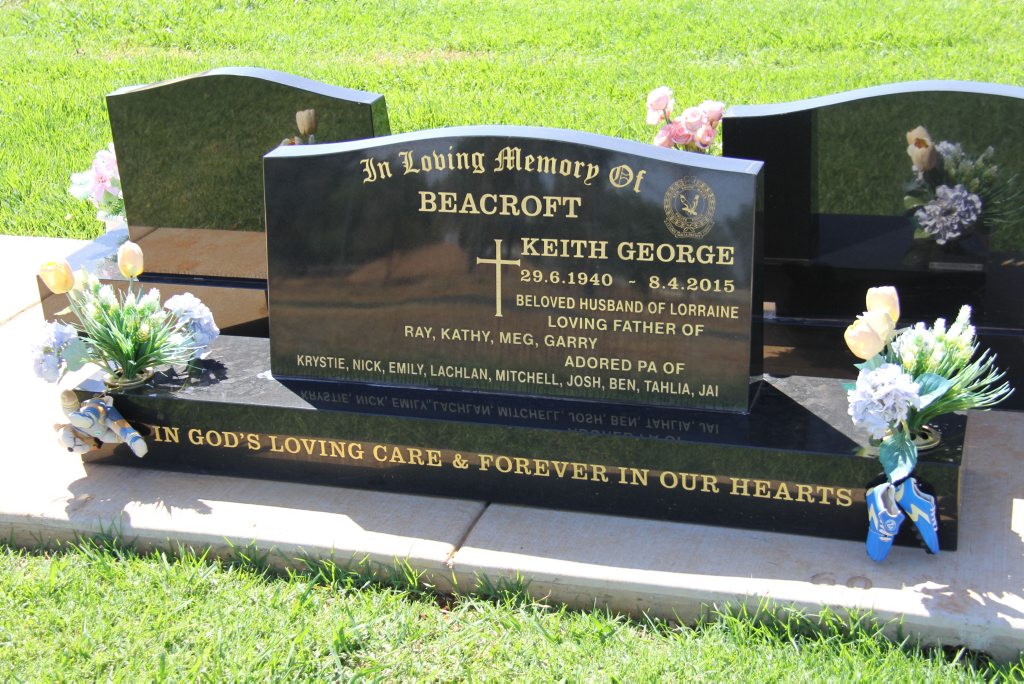
Keith George Beacroft

Keith George BEACROFT - grave.  BEACROFT Keith George 29.6.1940 - 8.4.2015 Beloved husband of Lorraine Loving father of Ray, Kathy, Meg, Garry Adored Pa of Krystie, Nick, Emily, Lachlan, Mitchell, Josh, Ben, Tahlia, Jai In God's loving care & forever in our hearts

[alert_blue]KEITH is NOT mentioned on the Police Wall of Remembrance[/alert_blue] * NOT JOB RELATED

 [divider_dotted]

 Funeral location

[divider_dotted]

KEITH GEORGE BEACROFT
Retired Police Chief Inspector
Late of Dubbo
Passed away 8th April 2015
Aged 74 Years
 
Beloved husband of Lorraine.
Loving father of Ray, Kathy, Meg and Garry.
Loved father-in-law and adored Pa to his grandchildren.
 
Relatives & friends are warmly invited to attend Keith’s funeral service to be held at St Brigid’s Catholic Church Brisbane Street, Dubbo, on Thursday 16th April, 2015, commencing at 11.00am followed by interment in the New Dubbo Lawn Cemetery, Dunedoo Road, Dubbo.
 
In lieu of floral tributes donations to the Leukaemia Foundation would be appreciated and may be left with the funeral directors at the service.
 
Funeral arrangements are in the caring hands of W. Larcombe & Son Dubbo’s Premier Funeral Home, Proudly servicing the community for 120 years. FDA Approved. (02) 6882 3199 www.wlarcombeandson.com.au
Guest book:
Tuesday, 14 April 2015
Our thoughts and wishes are with you Lorraine and your family.  It was a pleasure to know and work with Keith. Kind regards.
Don and Ronnie Barton
 
Tuesday, 14 April 2015
Our thoughts and love are with you and your family at this sad time Lorraine.

 
Published in The Dubbo Daily Liberal on Apr. 14, 2015

http://tributes.dailyliberal.com.au/obituaries/dailyliberal-au/obituary.aspx?n=keith-beacroft&pid=174622420&eid=sp_ommatch&eid=sp_ommatch

[divider_dotted]