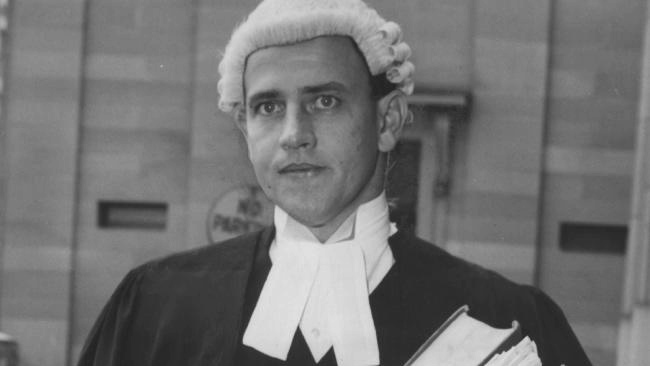
Don joined NSWPF twice. 1949 – 1951 & 1952 – 1959.
Prior to joining NSWPF, he was a Cadet journalist, Clerk, Salesman, P.M.G. Lines labourer, Truck Driver then joined NSWPF. He was Presbyterian.
Prior to joining NSWPF, he held the School Intermediate Certificate. He gained his Leaving Certificate – Matriculation Standard after attending evening classes in 1954 whilst in the Police Force.
Upon joining NSWPF pre March 1952, Don was described as being 5′ 9.5″ tall, 12st 4 lb in weight, blue eyes, brown hair with a medium complexion. He was a Native of Manly, NSW, and was Single. He later married on the 20 March 1952.
He held the Bronze Medallion in Life Saving and was Approved as a motor cyclist on the 6 May 1952.
On 21 August 1956 he passed his Constable 1st Class examination.
On 28 August 1959 ( a couple of weeks prior to finishing with NSWPF ) he was “Highly commended on success at being admitted as Barrister-at-Law of the Supreme Court of New South Wales.
That entry, made on his NSWPF Service Register, was endorsed C.J.D. C. of P. P59/48661/7194
C.J.D. would be Colin J. DELANEY ( Commissioner of Police ), C. of P. would be Commissioner of Police. P59 ( the year ), 48661 ( file number ? ), 7194 – Don’s Registered #.
[divider_dotted]
Former judge, corruption fighter Donald Stewart dies aged 87
THE AUSTRALIAN
12:05PM JULY 14, 2016
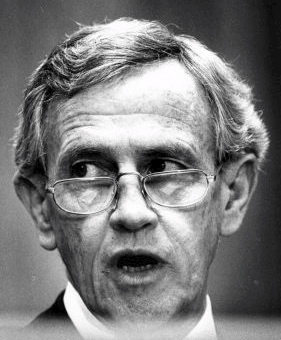
Donald Stewart, former royal commissioner (Inquiry into Drug Trafficking) and former head of the National Crime Authority.
Donald Stewart, a former judge and corruption fighter, has died at the age of 87.
Mr Stewart, who started his career as a police officer, went on to become a barrister, judge of the NSW District and Supreme Courts, a royal commissioner and the first chairman of the National Crime Authority, a forerunner of the Australian Crime Commission.
His 1981 royal commission into drug trafficking, which had originally been scheduled to run for four years, had its term extended for a year. It led to the arrest of several crime figures.
That royal commission also investigated illegally obtained material known at the time as the “NSW police tapes”, which led to the investigation of former High Court judge Lionel Murphy.
Mr Stewart’s autobiography, Recollections of an Unreasonable Man, was launched in 2007 by former prime minister Bob Hawke who recognised his courage and independence in fighting organised crime.
Mr Hawke had appointed Mr Stewart to chair the National Crime Authority and later appointed him to the position of resource assessment commissioner.
At the launch of Mr Stewart’s autobiography, Mr Hawke had described the former judge as the most impressive man he had encountered in public life.
Just before his retirement from the NCA in 1989, Mr Stewart expressed concern at the continuing level of corruption in society and within the police.
At the launch of his autobiography, the former judge described the abolition of the Resource Assessment Commission as “entirely wrong”.
“I am afraid that people are sticking their heads in the sand and that’s all that will be left — sand — if we keep going the way we are going,” he said.
Donald Stewart, judge and founding chairman of National Crime Authority
Jennifer Cooke
Donald Gerard Stewart, policeman, barrister, judge, royal commissioner, and founding chairman of the National Crime Authority (NCA) helped make history in several fields. It was a feat that even in his “wildest dreams” was not apparent to the young surf lifesaver and rugby fanatic who met the love of his life on Manly Beach.
He died, aged 87, following a cardiac arrest last week.
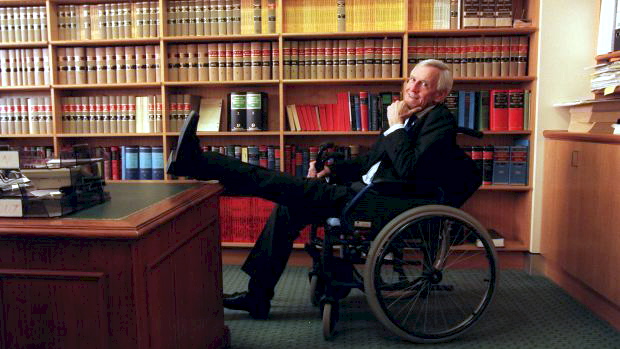
Acting Judge Donald Stewart at work after losing his feet to gangrene. Photo: Steve N Siewert
Self-described as a “footloose” judge, he returned to work at age 70 “back from the dead” despite the loss of both feet in a medical emergency caused by the intersection of septicaemia with blood clots thrown from an aortic porcine heart valve.
He said at the time he wanted to “show other people with disabilities that even though old, like me, if you really try, you can usually make it”.
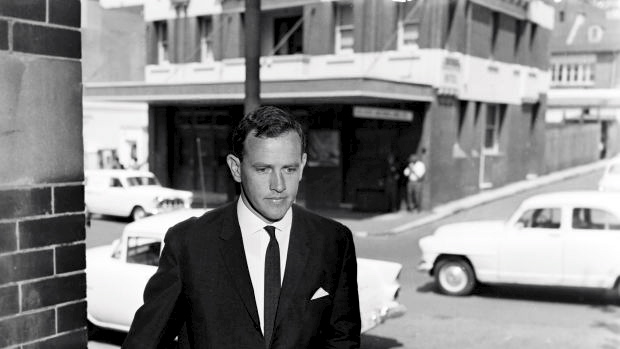
Barrister Donald Stewart arrives at the Coroners Court in 1961. Photo: Alan Funnell
The younger child of a menswear shop owner on The Corso and a bookkeeper, young Don grew up in the then insular peninsula of Manly, a product of the Presbyterian ethic of honesty. He became the man of the family at 14 when his father’s heart finally failed in 1942. He was also with his mother when she died aged 83.
Between 1941 and 1946 he attended Sydney Boys High and wrote later that he gave the headmaster, Mr Jas H. Killop, referred to by boys as “the boss”, many an occasion for both justice and mercy on the fatherless boy who maintained he did not start the “unseemly brawl in a rugby match with our rivals Fort Street”, which attracted his first unwanted glare of publicity. “The boss” also forgave his running away from school with a mate from Manly to go mining at Wallerawang, near Lithgow at one point.
Justice Stewart making a National Crime Authority announcement. Photo: SMH News
He left school without passing the Leaving Certificate and after a very short stint as a travelling salesman in country NSW, and no inclination at that point to follow his mother’s suggestion of a career in law, decided to give journalism “a go”.
But after a nepotistic introduction to someone at Consolidated Press, then headed by Sir Frank Packer, he earned a paltry two pounds a week working in the sport section of the Daily and Sunday Telegraph newspapers among iconic sports writing peers including Hugh Dash, Alan Hulls, Keith Robbins and his fellow high school colleague, Phil Tressider.
One day when he was 21, the lifesaver at the North Steyne Surf Live Saving Club happened upon an elfin young woman sitting on the sand tending a seagull with an injured wing. The daughter of a wealthy family from Louisana, 27-year-old Maybelle, had been working with the Red Cross in London and had recently brought out a group of displaced orphans to Sydney after World War II.
It was love at first sight for them both. Stewart married his “southern belle” in 1949 and an inspiring partnership began that would last six decades until her death from Alzheimer’s disease in 2009.
After his pit stop in journalism, Stewart decided to be a police officer but after many experiences in the 1940s and 1950s – and at the urging of Maybelle – he studied law and emerged in 1960 with a law degree. Seven years later he obtained his Master of Laws.
Ten years as a barrister led to his appointment as a District Court judge from 1977 to 1981. But in 1981, amid much controversy and acrimony from the then Chief Justice Sir Laurence Street, Stewart was elevated to Supreme Court judge status to head a royal commission into drug trafficking jointly established by the NSW and federal governments.
This three-year inquiry led to the detailed unmasking of the “Mr Asia” drug syndicate and a ruthless world of murder, corruption and organised crime on a scale never seen before in Australia. Another reference extended the commission’s scope into the dealings of the notorious Nugan Hand Bank and then “The Age Tapes” and its revelations of deep-seated corruption involving the NSW Police Force.
In 1984 he was appointed the inaugural chairman of the National Crime Authority, which resulted in the jailing of several organised crime bosses, chief of whom was the Kings Cross businessman, Abe Saffron, who was sentenced to three years in jail for tax evasion.
For some years Don and Maybelle were the subject of death threats and their home was littered with panic buttons linked to police central command under the then-helm of Andrew Scipione.
Five years heading the often-controversial NCA was enough and Stewart turned his attention to the environment and conservation after being appointed commissioner of Australia’s first ever Resource Assessment Commission, which made recommendations in 1994 aimed at protecting the country’s environment.
For a man who listened to many “tall tales” from defendants and royal commission witnesses before him, his tallest was often recounted by Maybelle about the jagged scar on one wrist. He boasted to her that it was a “war wound”. But she found out later from his mother that he got cut when he accidentally smashed her favourite custard bowl.
They both wanted children but sadly several miscarriages and the stillbirth of a daughter they named Elizabeth ended that dream.
While he could often be seen as difficult when fiercely-held beliefs were challenged or sub-standard arguments didn’t pass the test, he deliberately called his autobiography, published in 2007, Recollections of an Unreasonable Man: From the Beat to the Bench. This was more than a nod to the George Bernard Shaw quote than a self-definition: “The reasonable man adapts himself to the world: the unreasonable one persists in trying to adapt the world to himself. Therefore all progress depends on the unreasonable man.”
He gave and inspired great loyalty among many of those who had worked with him in his various guises – even friends from Manly Public School with whom he remained in touch over more than seven decades. One sitting NSW Supreme Court justice spent every Sunday night he was in town, visiting the retired judge for more than two decades.
Stewart has had more than a nodding acquaintance with the intensive care unit of St Vincent’s Hospital over numerous cardiovascular issues and where he spent a week before his death.
He sold his much-loved four-storey, panic button-studded house in Potts Point to former Prime Minister Paul Keating in 1999 after his most serious near-death experience when he was in in intensive care for three weeks after what he termed the “crook chook” chicken sandwich.
He collapsed at his home in September 1998 a few days after eating the sandwich and only eight weeks after receiving his new porcine heart valve. But septicaemia believed to have been caused by the bacterium salmonella typhimurium, apparently from the poorly-cooked chicken, caused most of his major organs to fail. It also lodged in the heart valve which threw off infective clots that lodged in his feet and blocked the blood supply, turning them gangrenous. He survived the ordeal with three weeks in “the dead zone” as he put it, his wife distraught and his obituary half-penned.
He became one of only a handful of people reported worldwide to survive a salmonella-infected artificial aortic valve with a replacement aortic valve and the only one in Australia at that time.
It was a standing joke that he survived only because the obituary was never completed.
He returned to the bench as an acting District Court judge for another four years until 2003 when he was declared “statutorily senile”, as all judges are, at age 75.
He is survived by many staunch friends. His older sister Peggy died last year. A funeral service is expected to be held at Eastern Suburbs Crematorium next week with a separate memorial service in Sydney also next week at a time to be advertised.
Corruption fighter, judge Donald Stewart exposed ‘Mr Asia’ syndicate
The Australian
Over many decades, Donald Stewart devoted his no-nonsense fine mind, understanding of human nature and personal courage to pursuing a “hatred of corruption”.
The man who started out as a young police officer on the streets of post-war Sydney and became a barrister, judge, royal commissioner and inaugural chairman of the National Crime Authority, died yesterday, aged 87.
Stewart was best known as a fighter against organised crime, in particular as head of the 1981 royal commission into drug trafficking that exposed the notorious “Mr Asia” syndicate.
That inquiry helped solve a string of murders, and led to a conviction for the murderer of Griffith anti-drugs campaigner Don Mackay.
The former judge of the NSW District and Supreme courts also headed a royal commission into the Nugan Hand Bank scam. In the mid-1980s, he was the royal commissioner appointed to investigate unauthorised police telephone tapping and the scandal of illegally obtained “NSW police tapes”.
While the phone-tap inquiry kickstarted a much-publicised investigation into former High Court judge Lionel Murphy, its broader impact was to help overturn a police culture of flagrant disregard for rights with the introduction of transparency and police eavesdropping based on proper cause.
In 1984, the Hawke government appointed Stewart the first head of the National Crime Authority, the forerunner of the Australian Crime Commission. Stewart also chaired Bob Hawke’s Resources Assessment Commission.
At the time of releasing his 2007 memoir Recollections of an Unreasonable Man, Stewart remarked on how the NCA under his leadership adopted what it called “The Al Capone Methodology” to prosecute Sydney crime identity Abe Saffron. With the failure of traditional methods to pursue Saffron’s ill-gotten income, in part because of Saffron’s links to NSW police, Stewart oversaw a team of accountants who successfully mounted a case to charge Saffron with tax evasion.
Saffron served two years in jail. He was so bitter towards Stewart that he reportedly solicited a fellow inmate to “kill” the NCA chief, although the man was convicted of another murder before getting the chance.
Stewart grew up in Manly. He was a NSW junior breaststroke champion and surf lifesaver before entering the NSW police force. Repelled by the bribery, theft and forced confessions he witnessed among senior officers, he realised his only way to remain independent and confront such corruption was to leave.
He studied law and became a barrister. In 1977, he was appointed a judge of the NSW District Court, and later the NSW Supreme Court.
Often a contrarian, Stewart believed the charging of police in recent years for their roles in organised crime was not proof of success but that corruption was deep-seated and flourishing. He believed a zero-tolerance policy that criminalised hard drugs was not working, and more consideration should be given to finding medical solutions.
Stewart was devoted to his wife, Maybelle, who predeceased him. The couple had no children, despite their early hopes.
Former Labor prime minister Bob Hawke told The Australian he was sad to hear of “the passing of the very fine man, Justice Donald Stewart”.
He said Stewart’s autobiography, which he had the honour of launching, was “not a terribly apt title for one of the most reasonable and competent men I have ever known”.
Stewart died in Sydney’s St Vincent’s Hospital after suffering a cardiac arrest last week.
Message from Andy Spring to NSW Fallen Police FB Group on 30 June 2016:
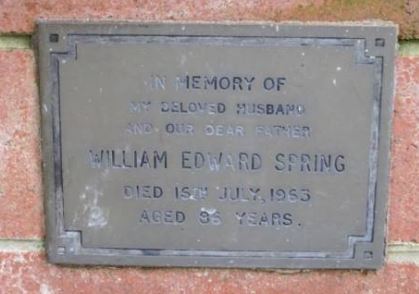
I have finally closed another Chapter, I have finally found our 3 x Great Uncles resting place.
William Edward Spring, born 1879, to James and Julia (2nd Wife) at Grafton NSW.
William went to live with his Step sister after the deaths of his Parents, James 1886, Julia in 1890.
In 1902, he joined the Army to fight in the Boar War. He made it to Africa in time to come home again, once he got back, he joined the NSW Police Force in 1902, and retired as a Inspector 1n 1949 and resided in Hornsby (Sydney) until his death in 1963.
His second wife Violet passed away the following year – 1964.
[divider_dotted]
Further followup stories: To be confirmed if it is, in fact, the same person:
TWYFORD. – The Friends of Constable William SPRING, of Redfern, are kindly invited to attend the Funeral of his late beloved Brother-In-Law, George William Twyford ; to move from his late residence, Rawson avenue, West Kogarah, This ( Thursday ) Afternoon, at 2 o’clock, for Sutherland Cemetery.
Furniture Sale. WEDNESDAY, NOV. 26TH T. H. ELWIN has received instructions from Constable W. E. Spring, who is leaving for Sydney, to sell by public auction at his residence, the Police Station, Narandera, on the above date, at 2.30 o’clock, all his household furniture and effects, comprising : Dining tables, Austrian chairs, single and double bedsteads, wire mattresses and bedding, washstands and ware, duchess chests, linoleums, crockery, kitchen and laundry requisites, etc., etc. NO RESERVE T. H. ELWIN, Auctioneer.
Bill didn’t see any War, as such, and was signed up with the Army for mandatory service. His father was also in the Army during WWII and was one of the Rats of Tabrook.
[/blockquote]
Awards: No find on It’s An Honour
Born: 7 November 1934
Died on: 25 January 1990
Age: 55
Cause: Severe PTSD. Accident – internal rupture of the ?
Funeral date: ?
Funeral location: ?
Buried at: Cremated at Rockhampton with Ashes interred at Tewantin Cemetery, Cooroy Noosa Rd, Noosa Heads, Qld
Memorial at: ?
BILL is NOT mentioned on the Police Wall of Remembrance *NEED MORE INFO
Funeral location: ?
FURTHER INFORMATION IS NEEDED ABOUT THIS PERSON, THEIR LIFE, THEIR CAREER AND THEIR DEATH.
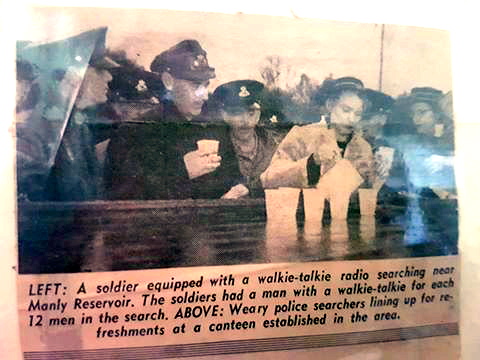
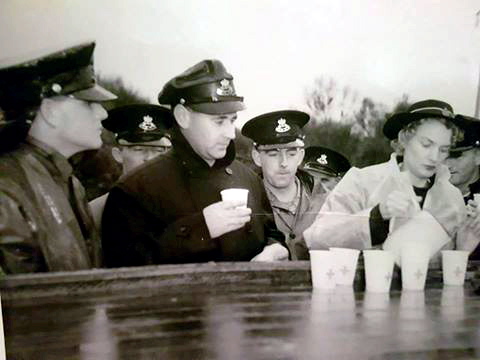
Weary Police searchers lining up for refreshments at a canteen established in the area.
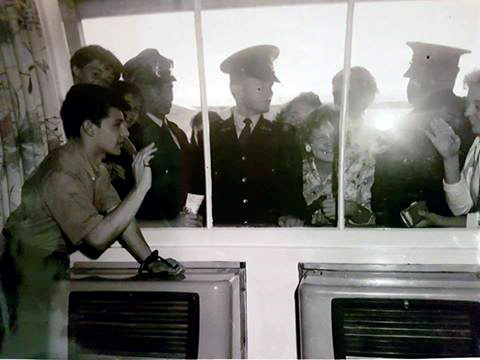
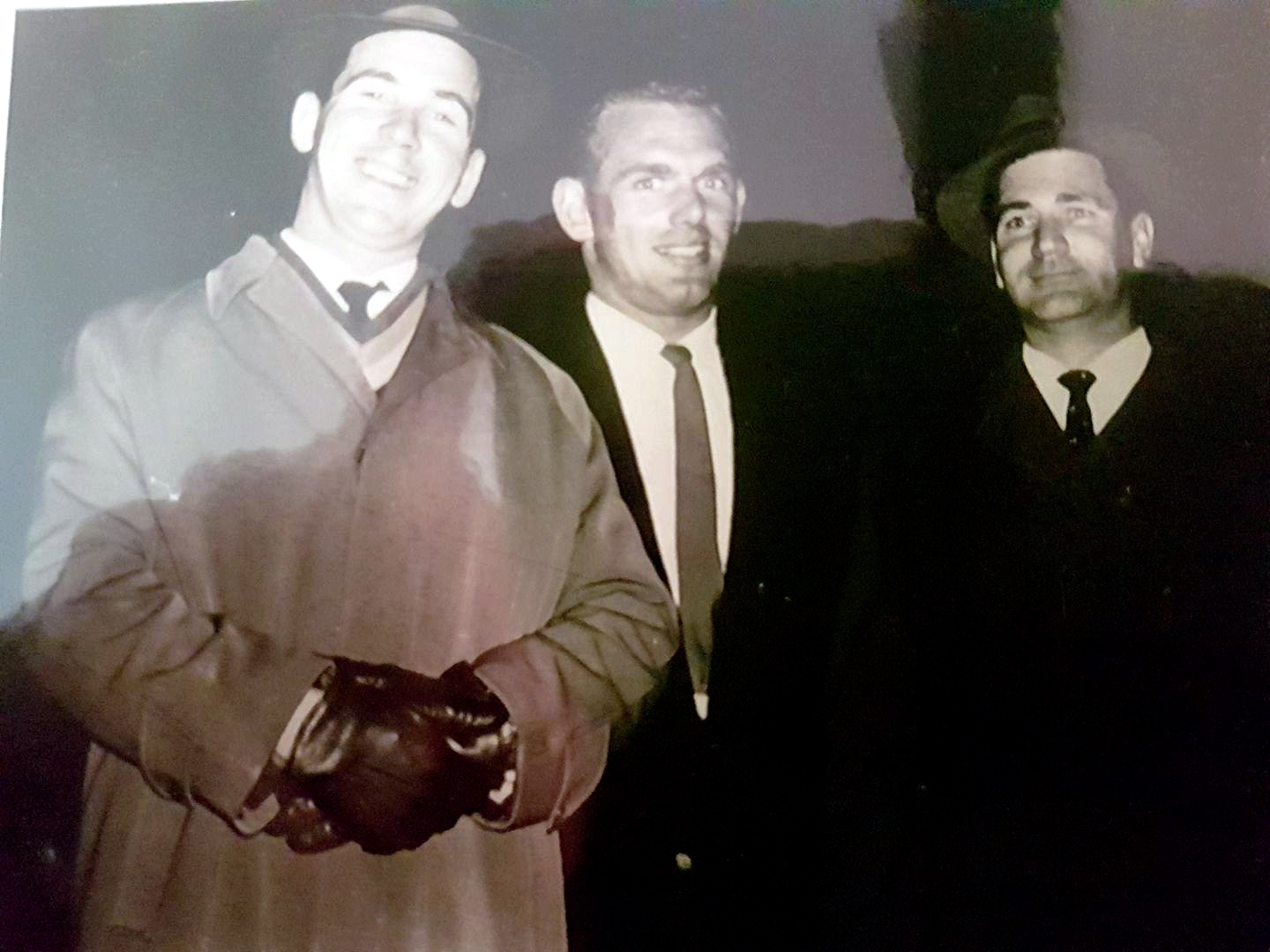
Dad and other Police at Mascot airport Protecting Frankie Avalon.
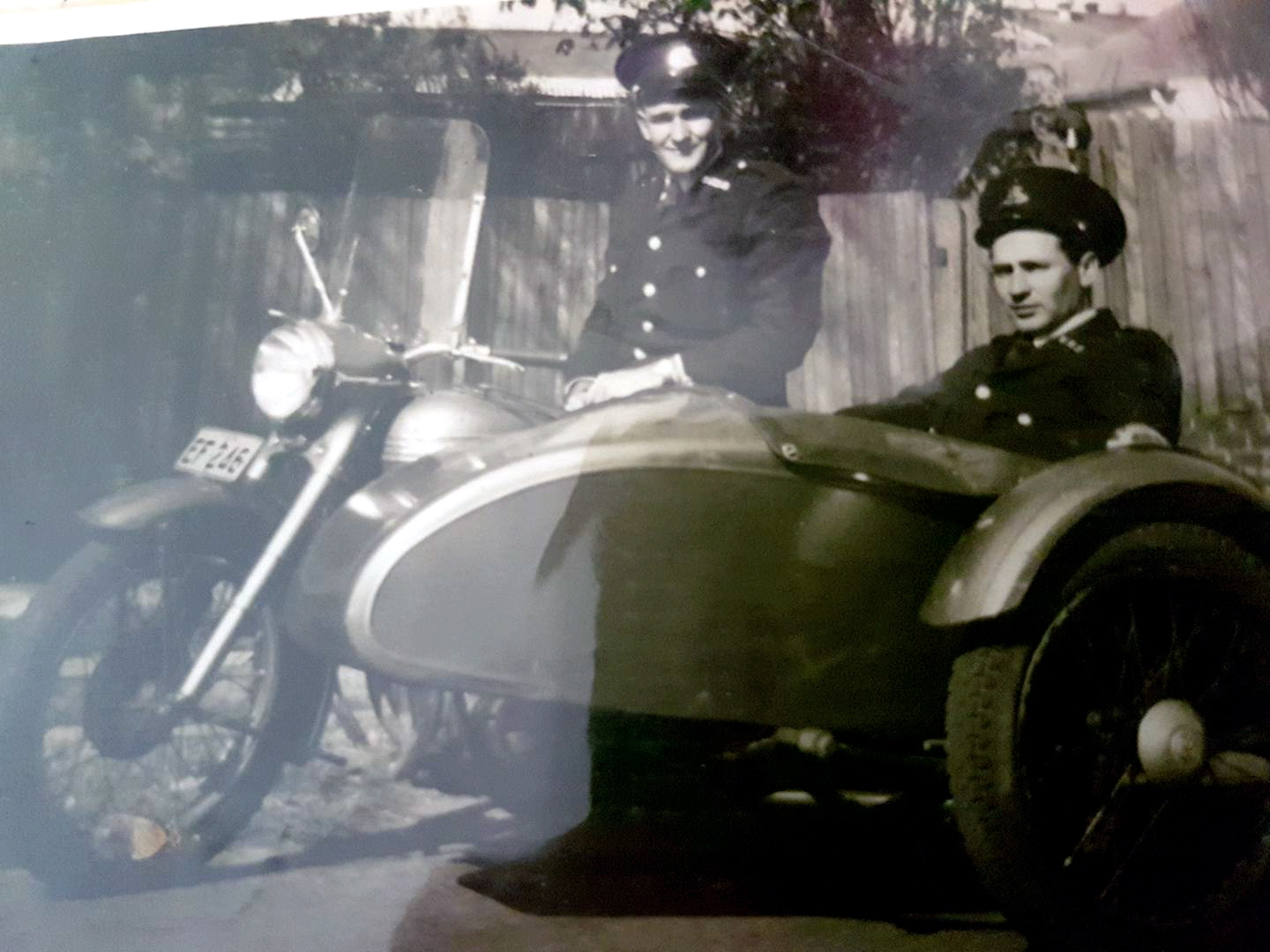
Dad in the side car . NSW Police Force
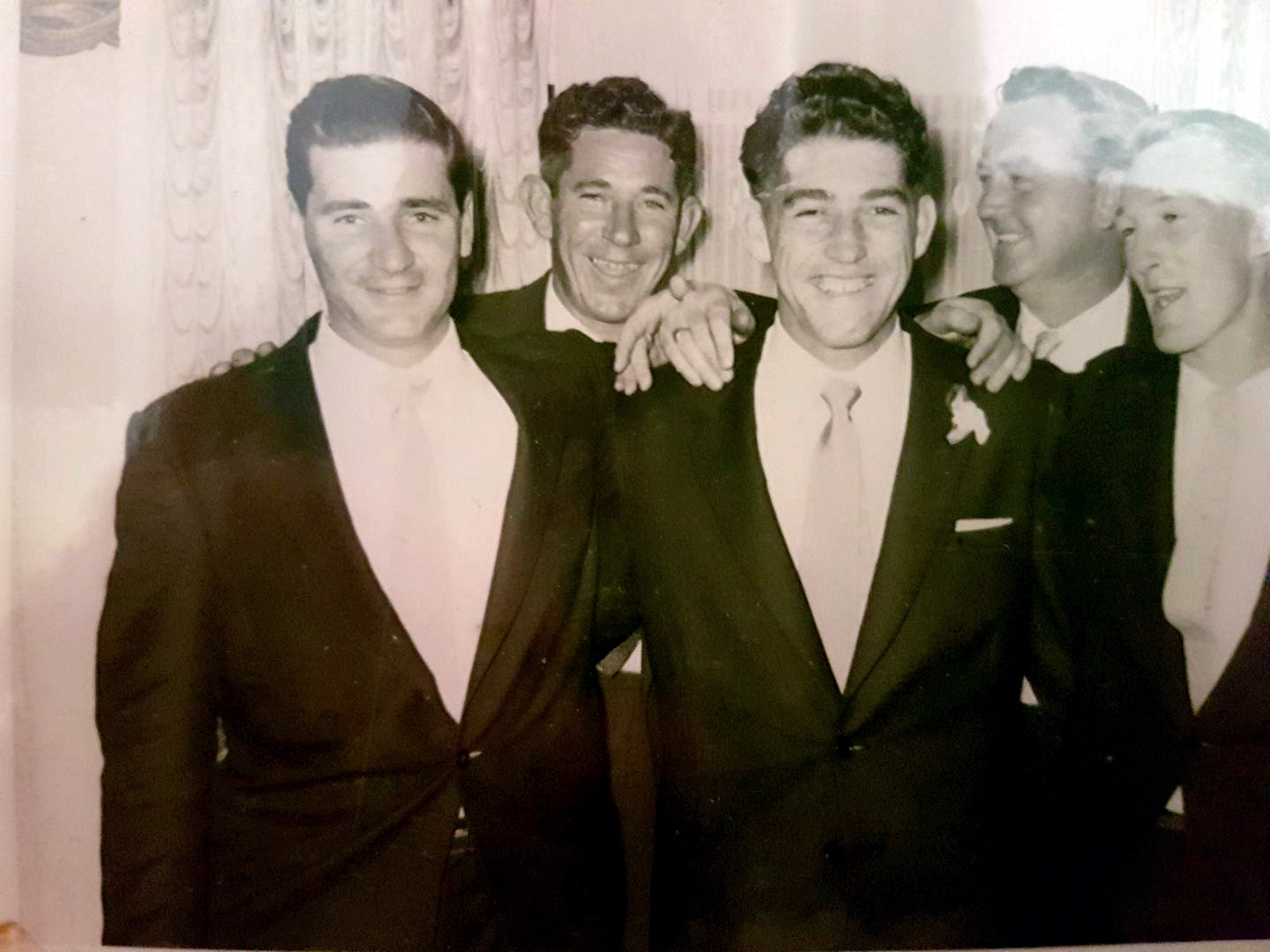
Dad left , and his fellow plain clothes Police Officers. Detective Sergeant 3rd class. Photos and information from Carolyn Logan – daughter of Bill ( 24 Jan 2017 )
William Joseph LANHAM
| 19/07/2016
William Joseph LANHAM
( late of 296 Willoughby Rd, Naremburn, North Sydney )
New South Wales Police Force
Regd. # ?
Rank: Sergeant
Stations: ?,North Sydney, Chatswood, Paddington,
6 Division,North Sydney Police Station – Death
Service: From3 January 1908to4 June 1929 = 21+years Service
About 7am on 4 June, 1929 Sergeant Lanham finished his shift at the North Sydney Police Station and shortly thereafter collapsed and died. The following brief article appeared in The Sun of 4 June, 1929.
AFTER NIGHT’S WORK POLICEMAN DROPS DEAD.
Returning from duty at North Sydney about 7 a.m. to-day, Sergeant William J Lanham of Willoughby-road, North Sydney, collapsed and died. Sergeant Lanham had been suffering from high blood pressure. He was 50 years of age and had been connected at different times with the North Sydney. In 1914, he and Inspector Pattinson and Detective-Sergeant Miller and others arrested a gang of desperate thieves at Willoughby. Subsequently he was promoted and transferred to Paddington. Last year he was again appointed to North Sydney.
The sergeant was born in 1878 and joined the New South Wales Police Force on 3 January, 1908. He was stationed at North Sydney. He is also variously referred to as Lanaham, Lanahan and Danaham. He is not listed in the official New South Wales Police Honour Roll.
[divider_dotted]
The Sydney Morning Herald Wednesday 5 June 1929 p 13
LANHAM. – The Relatives and Friends of the late
Sergeant WILLIAM JOSEPH LANHAM, of No. 6 Station, are invited to attend his Funeral; to leave Wood Coffill’s Funeral Home, corner Falcon and Miller streets, North Sydney. THIS WEDNESDAY, at 2.30 p.m., for Church of England Cemetery, Northern Suburbs, Motor Funeral.
WOOD COFFILL LIMITED.
Motor Funeral Directors.
LANHAM.—The Relatives and Friends of Mrs.
MARGARET ANN LANHAM and FAMILY are invited to attend the Funeral of her beloved HUSBAND and their FATHER, Sergeant William Joseph Lanham; to leave Wood Coffill’s Funeral Home, corner Falcon and Miller streets, North Sydney, THIS WEDNESDAY, at 2.30 p.m., for Church of England Cemetery Northern Suburbs Motor Funeral.
LANHAM.—The Relatives and Friends of MICHAEL and WALTER REGAN and Mr. and Mrs. A. BOWMAN and FAMILY are invited to attend the Funeral of her beloved BROTHER-IN-LAW and UNCLE, Sergeant William Joseph Lanham: to leave Wood Coffill’s Funeral Home, corner Falcon and Miller streets, North Sydney, THIS WEDNESDAY, at 2.30 p.m, for Church of England Cemetery, Northern Suburbs. Motor Funeral.
WOOD COFFILL LIMITED.
LANHAM.—LODGE WILLOUGHBY, 363, U.G.L.,
N.S.W.—Brethren of above and sister Lodges are fraternally invited to attend the Funeral of the late Wor. Bro. WILLIAM JOSEPH LANHAM; to leave Wood Coffill’s Parlour, Falcon and Miller street, North Sydney, on WEDNESDAY, 5th inst., at 2.30 p.m. Brethren meet at Temple, Lane Cove-road. North Sydney, at 1.15 p.m. Regalia.
The Sydney Morning Herald Wednesday 5 June 1929 p 14
LANHAM.—June 4, 1929, at his residence, 296 Willoughby-road, Naremburn, William Joseph Lanham, late Sergeant No. 6 Police Station, beloved husband of Margaret Ann Lanham, aged 50 years.
The Sydney Morning Herald Wednesday 5 June 1929 p 16
OBITUARY.
POLICE-SERGEANT LANHAM.
On returning to his home in Willoughby-road yesterday morning after a tour of night duty, Sergeant William Joseph Lanham, of the North Sydney police, collapsed, and died shortly afterwards. Sergeant Lanham, who was aged 50, had over 22 years’ service in the force, much of his time having been spent in the northern suburbs.
After terms as constable in North Sydney and Chatswood, he was promoted sergeant and transferred to Paddington, but a few months ago was again detailed for duty in North Sydney, and he did valuable service in the district with which he had an intimate acquaintance.
The funeral will leave Wood Coffill’s parlours at 2.30 p.m. to-day for the Northern Suburbs Cemetery.
Late of ” Collingwood ” Kenwyn Street, Hurstville – formerly of Orange, NSW
Nephew of Dr. Frederick Thomas West Ford, police surgeon of Melbourne, Victoria
New South Wales Police Force
Regd. # ‘Q‘ 1010
For the purposes of this website ‘Q‘ represents those Police joining between 1 March 1862 ( commencement of NSWPF ) – 23 February 1915 ( Commencement of NSWPF current numbering system )
Rank: Probationary Constable – appointed 18 August 1862 ( aged 20+/- )
Inspector
Stations: ?, Rylstone pre 1868 ( Senior Constable – 1868 ), Police Camp – Tambaroora ( SenCon 1869 – 1870 ), German Town – Hill End ( Sgt – 1874 ), Wollongong ( Senior Sergeant 1877 ), Bourke ( Sub-Inspector ), Orange ( Inspector )
Service: From? ? 1862to? ? about 1901 – retired on Pension
Awards: ?
Born: ? ? 1842 in England
Died on: Sunday 26 November 1911 at ” Collingwood”, Kenwyn St, Hurstville, NSW
Cause: ?
Age: 70
Funeral date: Tuesday 28 November 1911
Funeral location: Church of England, Orange, NSW
Buried at: Church of England Cemetery, Orange, NSW
Grave Location: C of E, Area – Old; Sect: A, Number 350
Memorial at: ?
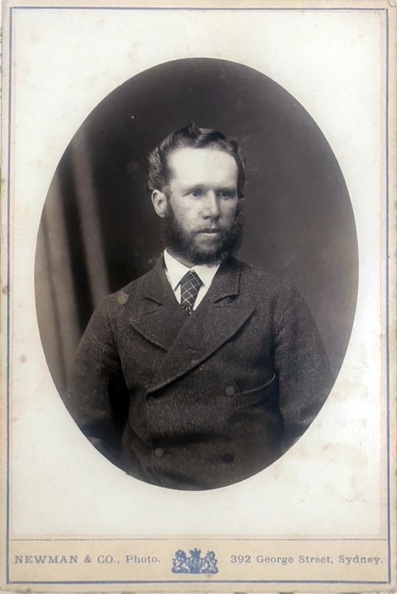
Mark Edward Dyett FORD – NSWPF – Died 26 Nov 1911
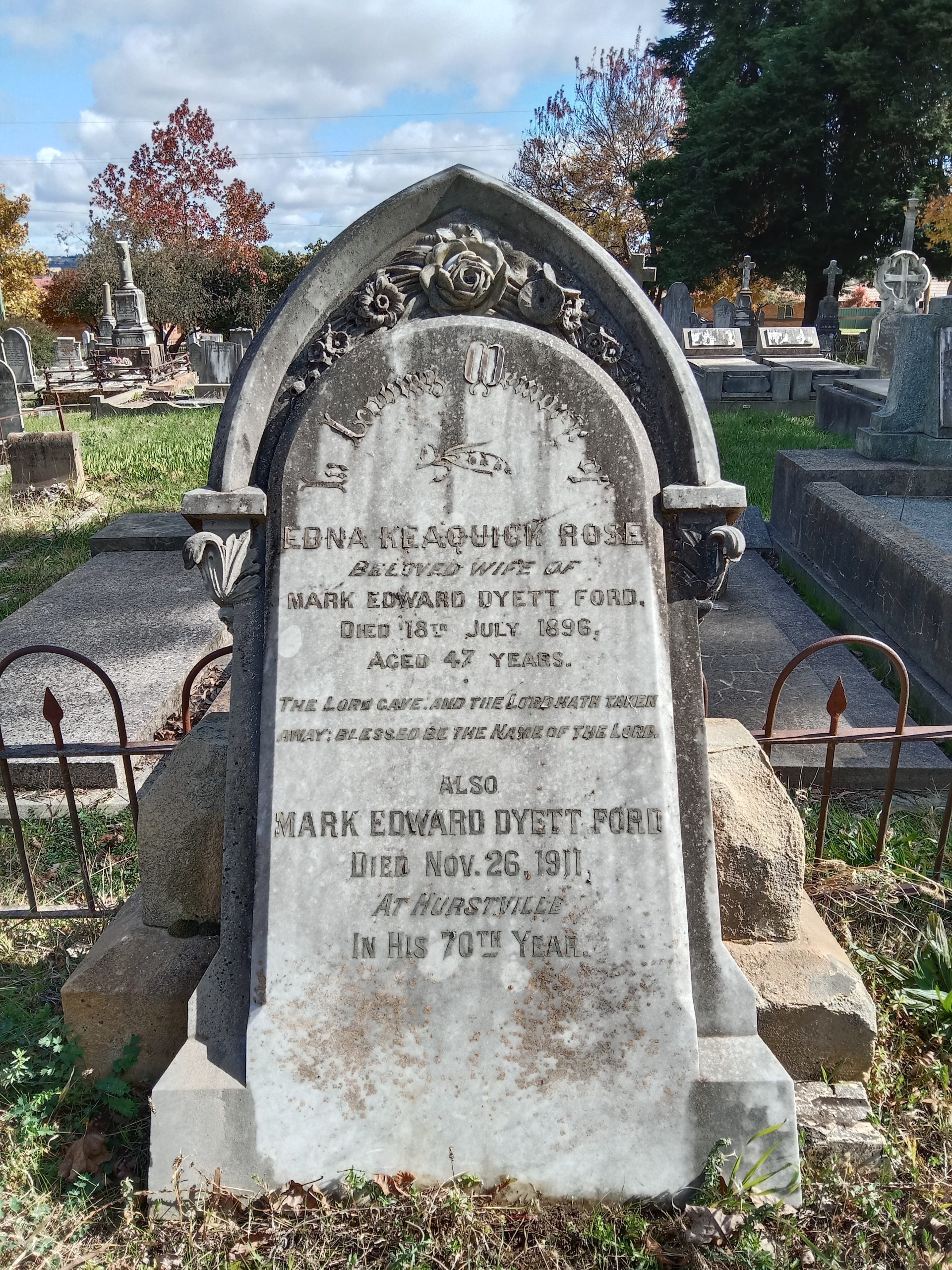
In Loving Memory of Edna Keaquick Rose FORD, beloved wife of Mark Edward Dyett FORD. Died 18 July 1896, aged 47 years. The Lord gave and the Lord hath taken away; blessed be the name of the Lord. Also Mark Edward Dyett FORD, Died 26 November 1911, at Hurstville, in his 70th year.
MARK is NOT mentioned on the Police Wall of Remembrance *NEED MORE INFO
Funeral location: ?
FURTHER INFORMATION IS NEEDED ABOUT THIS PERSON, THEIR LIFE, THEIR CAREER AND THEIR DEATH.
Retired Inspector of Police Mark Edward Ford, whose last post was at Orange, has died at Hurstville, aged 70 years. When in the service he was of the type that is always popular. He never allowed the officer to submerge the man, and consequently was greatly admired by the men under his control. In his day he was a splendid horse man, and went through many trying experiences in carrying out his police duties In the Interior.
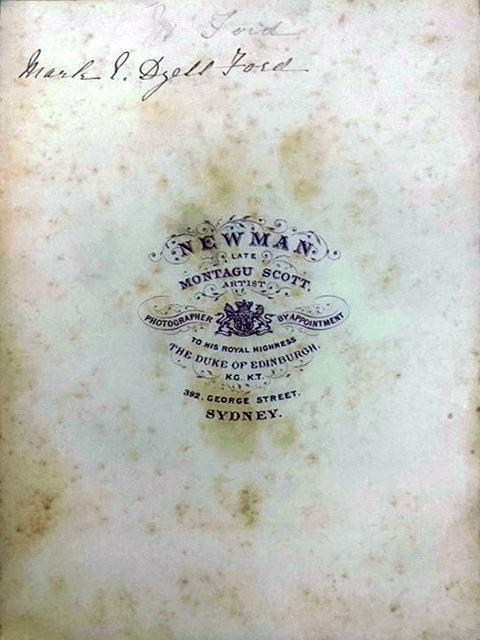
Rear of main photo of Mark Edward Dyett FORD – NSWPF – Died 26 Nov 1911
Truth ( Sydney )
Sunday 3 December 1911 p 10
Mr. Mark Edward Dyett Ford, formerly inspector of police at Orange, died at Hurstville, and was buried at Orange on Tuesday. He was 70 years of age, a nephew of Dr. Frederick Thomas West Ford, police surgeon of Melbourne. He joined the force in Sydney in 1862 as a full private, was sergeant at Hill End in the good old days of the Hill, and was subsequently promoted to a sub-inspectorship. He retired on pension about ten years ago.
The death occurred at Hurstville yesterday of Mr Mark Edward James Ford, who was inspector of the police force at Orange for a number of years, at the age of 70 years.
His wife died at Orange in July, 1896, the body will be brought to Orange by tomorrow morning’s mail train, and the remains will leave the Church of England School-room at 11am for the Church of England Cemetery. Mr F. Ford has charge of the mortuary arrangements.
( Note on headstone has his name as Mark Edward Dyett Ford. )
He lived at ” Collingwood ” Hurstville. Electoral Roll – 1930 – Ford, Mark Dyett – Kenwyn Street, Hurstville – Inspector of Police
The inhabitants of Rylstone, in praise worthy appreciation of the services of the above meritorious officer, have just presented him with a purse of upwards of £25, and an address engrossed on vellum, and signed by the donors. The address reads as follows :
” To MARK EDWARD DYETT FORD, Senior Constable.
” The undersigned, inhabitants of Rylstone and neighbourhood, have much pleasure in presenting you with the following testimonial of their appreciation of your very efficient services as a public officer, in putting down crime,in this district.”
The signatures, with the sums attached follow, and from the amount (£25 5s. 6d.), it need hardly be said that some modest sums have been given, showing that the esteem this officer is held in is not alone confined to the wealthier class of the community. We have repeatedly had occasion to allude to the activity, zeal, and intelligence of senior-constable Ford, and when a selection was made from the whole of the police force of men to hunt down Clarke’s gang, Senior-constable Ford was chosen among the first. For his sake, we wish the testimonial had had a wider range, as the appreciation of his services is not confined to the district of Rylstone.
Acting Sub-Inspector Mark Edward Dyett Ford ( late of Wollongong and now of Bourke), has been gazetted a Sub-lnspector, a promotion which many friends in this district will be happy to hear of.
THE Bench of Magistrates at Wollongong, have this day appointed Senior-sergeant Mark Edward Dyett Ford, Inspector of Weights and Measures for the District of Wollongong.
( Sydney Morning Herald has an article I can’t read fully: Apr 25, 1994 – Blacktown. Pensioner deceased will be made by Trevor Lloyd Watkins Creditors are required to send particulars of their claims upon her estate…..
Cause: Liver Cancer stemming from a toxic spill obtained whilst working Rescue Squad
Age: 44 years 6 months 9 days
Funeral date: ?TBA
Funeral location: Tweed Heads, NSW
Buried at: Cremated: Ashes scattered at Cabarita Beach, NSW
Memorial at: NIL
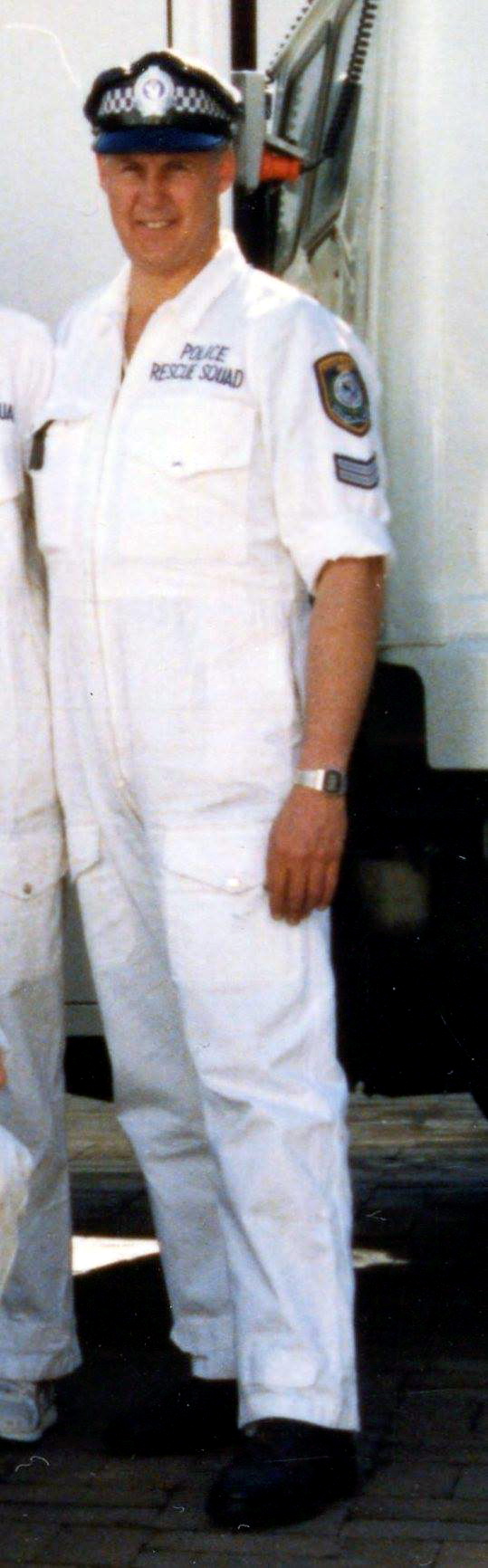
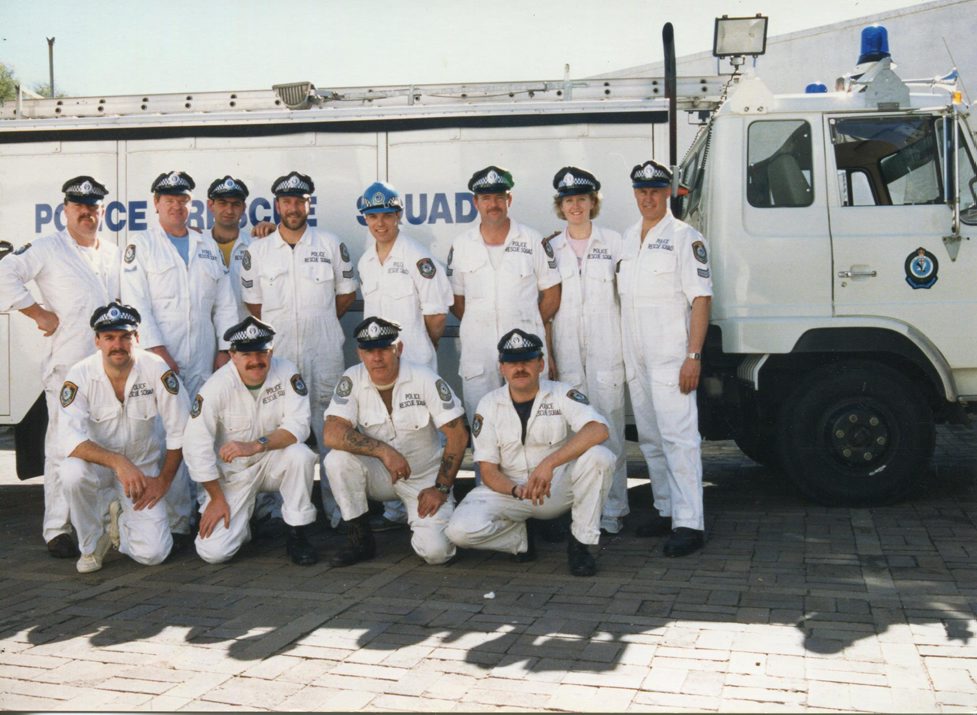
Rescue 27 – Blacktown. Back Row ( L – R ) ?, ?, ?, ?, ?, ?, Trevor Lloyd WATKINS #18284 Front Row ( L – R ) ?, ?, Col ‘Pussa’ KELSON, ?
https://police.freom.com/trevor-lloyd-watkins/
TREVOR is NOT mentioned on the Police Wall of Remembrance
* BUT SHOULD BE ( still not mentioned in May 2021 )
FURTHER INFORMATION IS NEEDED ABOUT THIS PERSON, THEIR LIFE, THEIR CAREER AND THEIR DEATH.
Trevor’s cancer should be deemed a HOD from a rescue response incident in Blacktown to a chemical spill.
Trevor Watkins was a Police Rescue Operator who attended the same incident as Ronald Walter McGOWN.
Ron died on the 10 June 1998 within 3 months of being diagnosed with Liver Cancer.
RonIS mentioned on the Police Wall of Remembrance but Trevor is NOT mentioned on the same wall.
Doctors are reported to have linked the two Police and their disease to the chemical spill event.
Murray John GARDEN
| 19/07/2016
Murray John GARDEN
aka Joe
Joined NSW Police Force via NSW Police Cadet system on Monday 2 February 1976
Cadet # 3221
Redfern Police Academy Class 157
New South Wales Police Force
Regd. # 17762
Rank: NSW Police Cadet – commence 2 February 1976 ( aged 17 years, 2 months, 9 days )
Probationary Constable – appointed 24 November 1977 ( aged 19 years, 0 months, 0 days )
Constable – appointed ? ? ?
Detective – appointed ? ? ? ( YES )
Detective Constable 1st Class – appointed 24 November 1982
Senior Constable – appointed 24 November 1986
Final Rank: ?
Stations: ?, Mossman, Mudgee ( G.D’s then ‘ A ‘ List Detectives), Dubbo – death
Service: From 2 February 1976to? ? ( 1990’s )
Awards: ? National Medal – granted 15 January 1996 ( can’t verify this is the same person )
Born: Monday 24 November 1958
Died on: Saturday 24 May 1997
Cause: Suicide – (1) Attempted – unsuccessful Drug over dose ( 2 ) Committed – Police revolver
Age: 38 years, 6 months, 0 days
Event location: Dubbo – at home
Funeral date: ?
Funeral location: ?
Buried at: plaque in a rose garden at Western Districts Memorial Park, Boothenba Rd, Dubbo, NSW
Memorial at: ?
JOE is NOT mentioned on the Police Wall of Remembrance, nor the Remembrance Wall, Sydney Police Centre, Surry Hills ( last checked Oct 2022 ) * BUT SHOULD BE
Funeral location: ?
FURTHER INFORMATION IS NEEDED ABOUT THIS PERSON, THEIR LIFE, THEIR CAREER AND THEIR DEATH.
Joe GARDEN was at Mudgee Police Station around 1987-88 in uniform. Not sure where he was prior to that.
Joe started in the Detectives office as an ‘A’ lister around that time. He was left high and dry after the designated detectives moved on and he was forced to run the detectives office ‘one out’.
Apparently Joe hit the bottle quite badly and finished up banging up a police vehicle ‘on duty’ whilst intoxicated.
Had some major fights with ‘senior officers’ and was forced onto sick leave.
Joe was ‘Force transferred’ to Dubbo Intelligence Office and worked there for a year or two before he drew his service revolver, went home and shot himself.
It is believed that Joe was aged in his late 20’s or early 30’s, married with young kids at the time.
( 2019 ) Information is that Joe had attempted a drug over dose and had been admitted to Dubbo Base Hospital where, apart from other methods, he was orally administered ‘charcoal’ to absorb the poison.
He was seen, in Hospital, by a Mental Health worker who asked how he was. Joe’s forceful reply was ” I’m FINE !! ” and Joe repeated that statement.
Later, that morning, Joe was discharged home.
Joe attended Dubbo Police Station where he picked up his Police issued revolver and went home where he placed a pillow slip over his head before fatally shooting himself, in the head, whilst on the lawn.
May you forever be at Peace Joe.
Further information is sought about this man, his life and his death.
Internet searches have failed to find anything further as of this date – 1 June 2016 or 5 June 2019 – on this man.
Adrians’ father, Enrico, migrated from Italy in 1927 followed 10 years later by his mother, Vittoria, and Adrian. Unable to speak English but determined to learn. At age 22 Adrian joined NSW Police, later appointed Officer in Charge Rockdale and Ashfield Police. Retired Chief Inspector. Married to Fay. Have 4 children. Our first house when we arrived was a tin shed with bag walls. Home – and we loved it! (Also see Registration No 827.)
The family originated from Rivignano, Undine, Italy and they family ( Adrian & his mother ) arrived by sea and landed in Sydney, NSW. The family first settled in Dimbulah, Qld, where Adrian was a tobacco farmer before joining NSW Police Force.
Barrier Miner ( Broken Hill, NSW ) Friday 28 January 1949 p2
Gaoled For Vagrancy
Patrick Francis Ryan (37) , a recent arrival from Sydney who gave his occupation as a journalist and claimed that he was a beneficiary under an estate of £6031 left by his father, was sentenced to 14 days’ imprisonment with hard labor for vagrancy by Mr. F. L. McNamara, S.M. in the Police Court today.
The defendant, who pleaded not guilty, was before the court yesterday afternoon.
Detective-Constable C. Brayshaw in evidence yesterday said that he had seen defendant at the Central Police Station on January 20. Defendant was told that there had been complaints about his conduct at the Willyama Hotel, where he stayed on arrival here. Defendant said he would not deny having abused the wife of the proprietor of the hotel.
Asked why he came here, defendant said that he intended to get a job. He told witness that he worked for three hours as a yardman at a hotel here, but left. He wanted a job as barman. He said he had no money, but got along all right. Defendant took notes of witness’ evidence on a cigarette packet.
When he questioned defendant in Chloride Street on Wednesday morning, defendant said he had tried to get work and was going to a job in Mildura. He admitted that he did not intend to go for month.
Defendant said he had been offered a job in Sydney and had been given a ticket to Sydney. He admitted that he had got a cash refund on the ticket. Defendant had told witness that he had some drink on Wednesday night and had slept with two aborigines under a pepper tree at Crystal Street Station that night. Several hotels in Argent Street had prevented him from entering their bars.
DEPENDANT’S STORY
Ryan, who gave his occupation as a journalist, said he lived at 3 Oatley Road, Paddington. He said that as a journalist he last worked on the “Labor Daily” in 1928 and had done, free-lance journalism since. His last position had been aboard a ship. He finished there five weeks ago.
The Town Clerk had made every effort to help him in Broken Hill he said. He stayed in a hotel for the first two days and nights, in a caravan the next two nights, and the railway station the next three as he could not get accommodation. He had been lent 30/ by a constable in Broken Hill yesterday and had bought a ticket to Menindee.
Continuing, defendant said he had seen Mr. C. Crowley ( Town Clerk ), who got in touch with the contractor for the bus service to Mildura, and it was arranged for him to go to Mildura on Sunday. Previously he had been offered a job by a local business man.
Defendant said that his father’s estate amounted to roughly £6031.
Asked by Sergt. Dennett where he got the 12/ 5 he had when arrested, Ryan said he got it from Constable Cosatto. He admitted that after buying a ticket to Menindee he had had the money refunded and had returned the ticket.
He denied that he had spent the balance of the money on intoxicating liquor or that he had been given money by the Co-operative Society for a ticket to Sydney.
He admitted that he had had a job at the Victoria Hotel, but had been dismissed after three hours.
The hearing was adjourned until today.
Constable Adrian Cosatto was called as a witness by Ryan to give evidence today and said he had boarded at the same boarding house as Ryan at Paddington between last February and October.
He said he did not know anything against Ryan’s character.
In answer to a question by Ryan whether he had invited him ( Ryan ) to Broken Hill, witness replied that he had asked him how he would like to come to Broken Hill.
Cross-examined by Sgt. Dennett, witness said that he knew defendant had not worked except for three hours during the 11 days he had been here, and had been drinking heavily. He had given defendant 30/ to buy a ticket to Menindee to get a job. He knew defendant had later handed in the ticket to get the money back. The money had been spent on food and liquor.
Witness told Sgt. Dennett that when he knew defendant in Sydney he was not addicted to liquor to such an extent as he was now. He knew defendant had been offered a job in the Public Works, but did not take it.
TOWN CLERK CALLED
Defendant then asked for the Town Clerk ( Mr. Crowley ) to be called as a witness, and the court was adjourned for 10 minutes.
Cornelius Crowley, in evidence, said that defendant had called to see him on Monday and that he had done all he could to get him a job. He had sent defendant to see Mr. J. C. Harrison ( Employment Officer ). Defendant came back at lunch time with a letter signed by Mr. Dennis, of Co-operative Stores. The letter was addressed to Mr. Dennis‘ son in Sydney telling him to employ defendant.
On Tuesday Ryan saw witness in the Town Hall, saying that the secretary of the Legion of Ex Servicemen, who, he alleged, had offered to pay his fare, had not turned up. He suggested to Ryan that he keep an appointment with Mr. Harrison. Later, Ryan came back with the name of a man in Wolfram Street on a piece of paper, who, he said, was going to take him to Mildura. Ryan complained to him that his feet were bad and witness arranged transport for him to the address.
Witness Crowley, questioned by Sgt. Dennett, said that he did not know that defendant had refused a position on the Water Board, and defendant did not tell him that he was dismissed from the Willyama Hotel. Defendant had been under the influence of liquor on two occasions when he saw him. He agreed that, in the condition that defendant was in it would have been difficult to get a job. He had seen defendant about six times altogether.
Sgt. Dennett said Ryan had admitted he had been charged with stealing in Sydney and travelling on a train without paying a fare.
The magistrate said he felt sorry for defendant, who had not been looking after himself, and sentenced him to 14 days with hard labor.
Barrier Daily Truth ( Broken Hill ) Wednesday 20 December 1950 p4
Miss Fay Stone was presented with a water set when she resigned from her position at the Zinc Cafeteria recently, to prepare for her marriage to Constable Adrian Cosatto, which took place on Saturday at the Cathedral.
It is with heavy heart that I announce that just a few hours ago we lost Arthur Ernest JONES – one of our endeared Foundation Members at the age of 83 years.
Rest in Peace Arthur, you suffered great pain and much discomfort but, through it all, you bravely maintained your wonderful sense of humour – you will be sadly missed by so many – God Bless my friend.