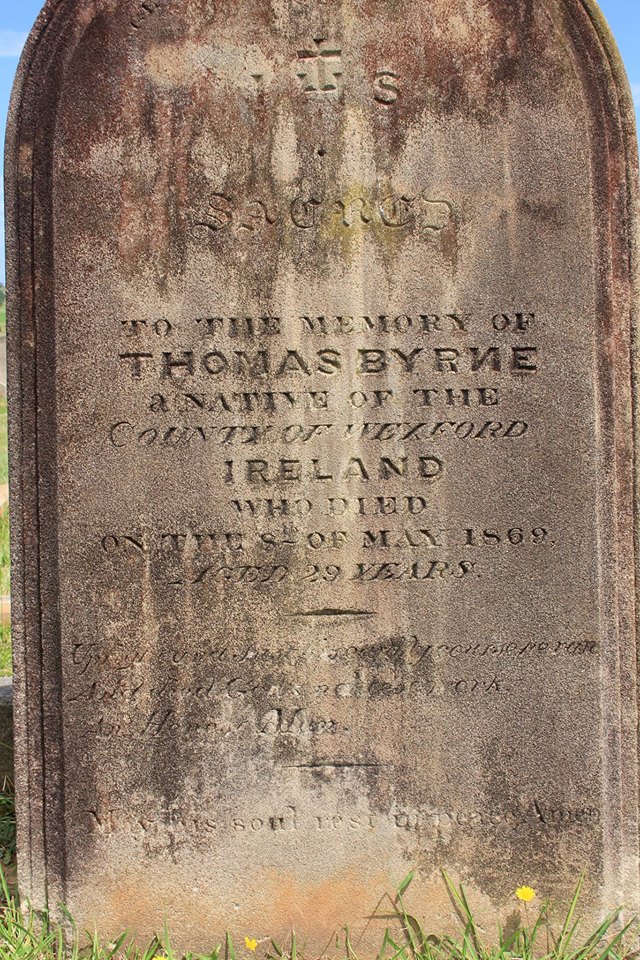
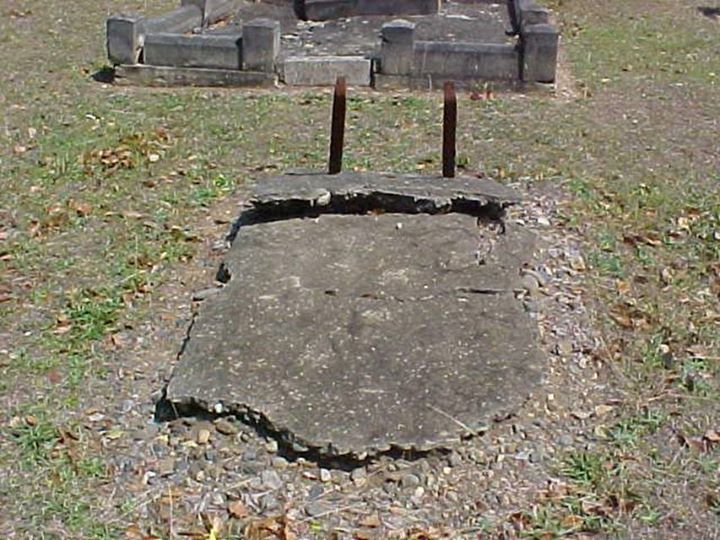
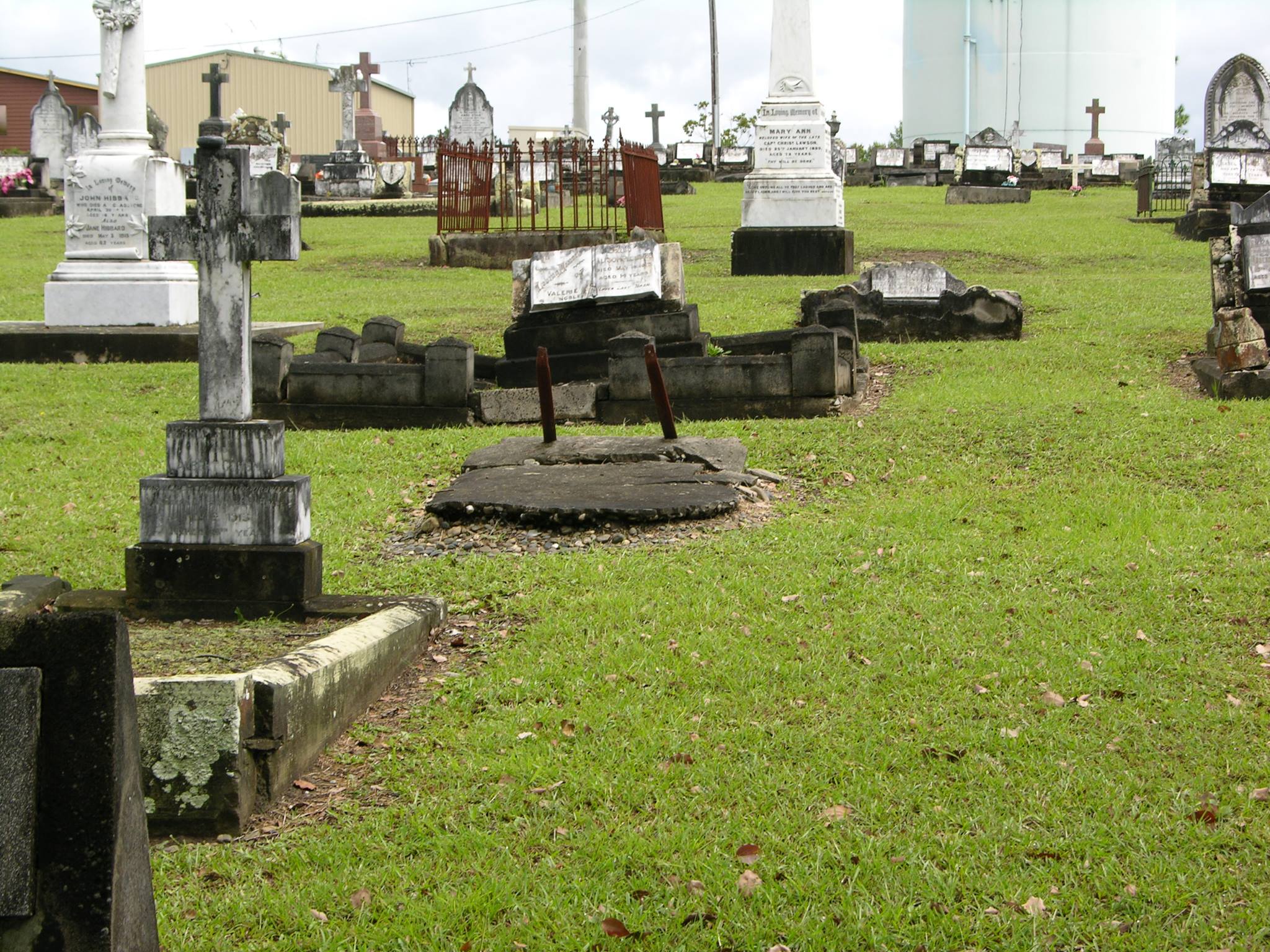
On Saturday 8 May, 1869 Constables Byrne and Beck launched the police boat on the flooded Cowpasture River near Camden. The mail coach from Campbelltown, waiting on the far side of the river, had been unable to cross. The two constables rowed across and collected the mail and a number of passengers before attempting to return. Nearing the bank of the river on the return journey, the boat suddenly overturned, casting the occupants into the water. Constable Byrne, unable to swim, weakened by rowing on the flooded river, and heavily clothed with a cape about his neck, sank beneath the surface and was drowned.
The Empire newspaper dated 11 May, 1869 informed its readers that “It is my melancholy duty to record the deaths by drowning, on last Saturday morning, of Mr. John Lakeman, of Camden, and Constable Byrnes, while crossing the river in a boat with the mails from Sydney. It appears that there were five people in the boat, when by some accident, not yet explained, it overturned. The constable sank at once, and was seen no more; three of the party succeeded in reaching the shore, and Mr. Lakeman managed to get to a log or tree, where, it is said, he remained for more than an hour, when the people got a rope to him which he tied round himself, but sad to relate, in drawing him towards the land, the rope became fouled in a tree and broke, and the unfortunate gentleman perished close to the view of many of his friends, who were unable to offer the least assistance.
The constable was born in 1841 and joined the New South Wales Police Force on 25 February, 1864. At the time of his death he was stationed at Camden.
[divider_dotted]
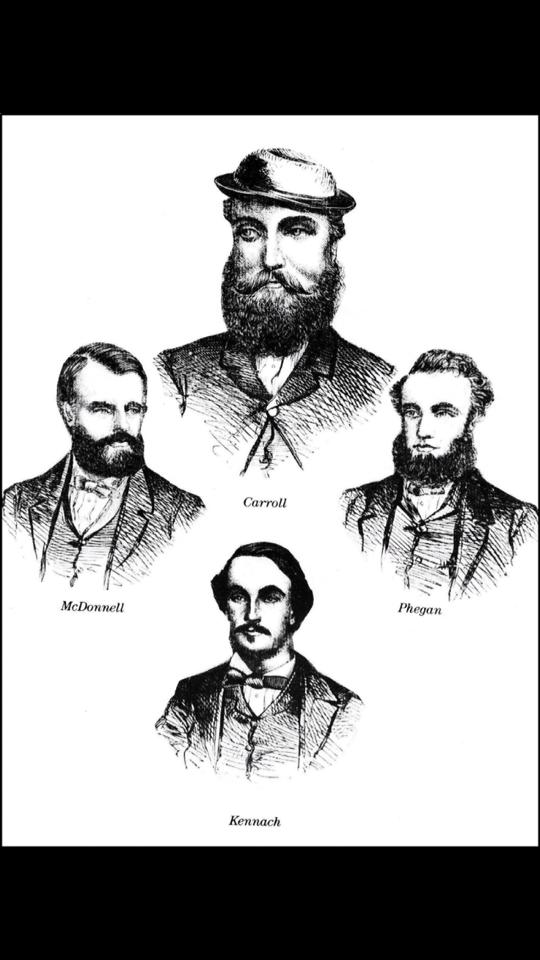
John CARROLL, Patrick KENNAGH, Eneas McDONNELL, John PHEGAN
Carroll Kennagh McDonnell Phegan – Special Constables – NSWPF – Murdered – 9 Jan 1867 – Facial Drawings
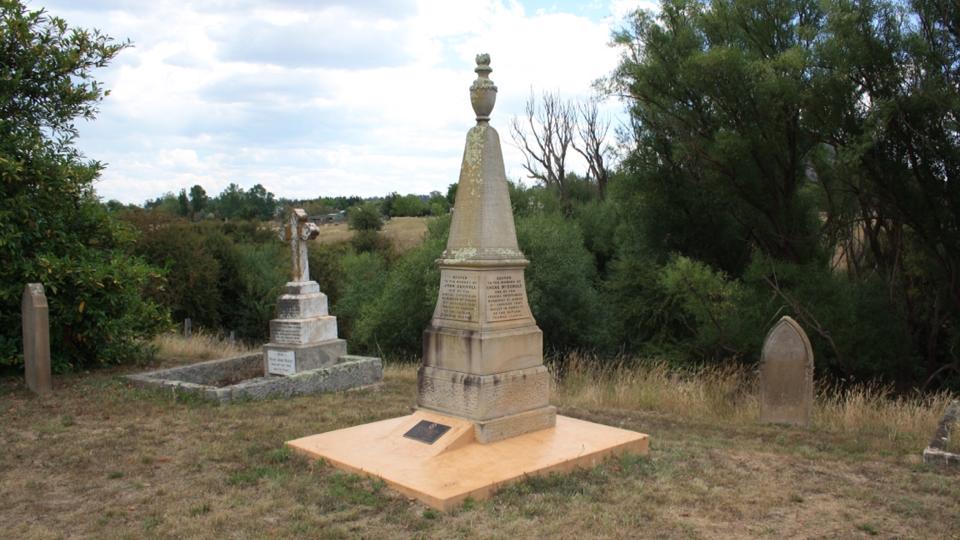
Carroll Kennagh McDonnell Phegan – Special Constables – NSWPF – Murdered – 9 Jan 1867 – Grave stone
John Carroll (a senior warder at the Darlinghurst Gaol) was the leader of a group of four men sworn in as special constables to search for and capture the Clarke Gang of bushrangers. The patrol consisted of Carroll, Patrick Kennagh, Eneas McDonnell and John Phegan. They were well-armed and in January, 1867 had for some time been posing as surveyors in the Braidwood area in an attempt to discover the whereabouts of the bushrangers. On the afternoon of 9 January the four men were walking through an area of very dense bush on Jinden Station, having left their horses behind on that day for some reason, when they were ambushed.
Witnesses apparently twice heard shooting in the area at that time but did not investigate until the following day. In a clearing in the bush McDonnell and Phegan were found, shot to death, and about 800 metres away Carroll and Kennagh were found, also shot to death. Carroll was found lying on his back with a neatly folded handkerchief on his chest with a one-pound note pinned to it. A large sum of money he was carrying in his pocket had not been touched. The wounds suffered by Carroll and Kennagh suggest that not only were they murdered, but that they were actually “executed”. It is generally thought (and also often disputed) that their attackers were members of the Clarke Gang, however this has never been proved.
The Sydney Morning Herald of 12 January, 1867 informed its readers of the following.
BRAIDWOOD – MURDER OF THE SPECIAL CONSTABLES.
Friday: The four special constables – Carroll, MacDonald, Fagan, and Kennagh – sent here to capture Clarke’s gang, were on a visit to a station at Jinden, when they heard that Clarke would be at a place two miles distant from there, the constables went on foot with the intention of endeavouring to capture him, and, it is presumed, were met by a lawless mob and shot dead. It is said that Carroll’s legs had been broken, and his feet turned to his head. The mournful news reached Braidwood last night, and caused universal indignation, and cast a gloom over the entire population. Mr. Griffin and Superintendent Orridge are now holding an inquiry.
Like Carroll, Kennagh and McDonnell were prison warders (McDonnell was also an ex-policeman), while Phegan had been chosen for the search because, as a former associate of the Clarkes, he knew the Braidwood area well. They had been authorised by Colonial Secretary Henry Parkes to undertake a “secret expedition for the capture of the bushranger Thomas Clarke and his associates.” They had been promised wages, reward money (if successful) and significant positions in the Public Service for their endeavours. This situation, of course, was not popular at the time with substantive New South Wales police officers. A monument was later erected in the memory of these men at the Braidwood Cemetery (and inexplicably, McDonnell is referred to as Eneas ‘McDonald’).
These murders represent the highest number of police ever killed in a single incident of this type in Australian history. It is only surpassed by the spearing of patrols of Native Mounted Police in Queensland in the 1860’s. (Ned Kelly killed three Victorian police officers in a single incident at Stringybark Creek in 1878).
Special Constable McDonnell was born in 1817,
Special Constable Carroll in 1829,
Special Constable Phegan in 1837, and
Special Constable Kennagh in 1841.
[divider_dotted]
Clarence and Richmond Examiner & New England Advertiser ( NSW ) Tuesday 12 February 1867 page 3 of 8
Meetings of sympathy with the families of the special constables recently murdered continue to be held, and much indignation is expressed at the rottenness and inefficiency of our expensive military police force. A commission, with a great preponderance of officialism in it, has been appointed, to inquire into the circumstances of the late murders of the special constables, and the state of the Braidwood district. The public have little confidence in the fitness of the commissioners.
Police and Bushranger descendants tour bushranger sites in district
Braidwood was overflowing with people during the weekend from visitors who had come to town for all sorts of events and celebrations.
The Police and Bushrangers Descendants who travelled from all over NSW and some from QLD came to enjoy the company of like-minded people and to learn more about the local Braidwood bushrangers and the policeman who were involved in their capture in April 1867.
The group was lucky to have many distinguished historians and authors who facilitated as commentators, guest speakers and experts. This was a well-run event.
The group would like to thank Paul and Annette Briggs and family who spent many long hours scheduling and organising the experience. As a result, all of the participants enjoyed their time in the Braidwood District. Paul Briggs is a descendant of Lionel Pottinger, one of the Special Police sent after the Clarkes.
The group gathered at the Braidwood Services Club on Friday night for dinner followed by a briefing on the weekend and guest speakers from within the group before their early start the next morning.
About 80 people, including local guests, gathered at the Garan Vale Woolshed at 8.15am on Saturday morning ready to depart for their day tour of the significant sites of the Connell and Clarke bushrangers in the Ballallaba, Krawarree, Jinden and Kain areas of the district.
The first interesting site was the Clarke residence on the Cooma Rd adjacent to Brick Kiln Creek where Jack and Mary Clarke (parents of Tom and John Clarke) lived. Peter Smith and Paul Briggs spoke and recited information about this site. Along the way Paul Hart provided information about several curious sites along the road, including Mrs Appleby’s store and house, the Willis homestead, Bendora and bridle tracks including the Rugby Track.
The group viewed the Nithsdale homestead and the surrounding property where the oldest of the Clarke children were born, during the 1840’s. This was also the location of the local Ballallaba police Station. Along the road, the tour mangers pointed out the Coles, the Church, the school, the Berriman and Connells family home sites.
The areas and locations of the Griffin brothers were also pointed out. These three brothers had substantial involvement in the Bushranging episode during the 1860s.
The site of a well known and notorious landmark, ‘Michael O’Connell’s Traveller’s Home Hotel,’ opposite Jim O’Connell’s house was pointed out. A few stories were told and a visit to the Gundillion cemetery provided a few photo opportunities of Michael O’Connell’s gravestone.
Morning tea was abundantly provided by the good hosts of the Deua Tin Huts. A few more stories were exchanged and were appreciated by all.
The group was eager to travel to Khan Yunis to locate the site of Berry’s Hut where the Clarke bushrangers were finally taken by a small but dedicated group of troopers in 1867.
A substantial luncheon was provided by the Gundillion Progress ladies at the local hall. After a delicious lunch, the group travelled to Jinden to visit the property of Janette and John Hindmarsh where the temporary burial site and the site of the killing of the four unfortunate Special constables was pointed out to the large group.
On travelling back to Braidwood the tour travelled along the Jerrabatgulla Road visiting the house site of Michael Connell senior and ‘Gilston‘, the family home of the Hart family. This is where Charlotte Hart, the wife of Tom Clarke grew up and lived. The group was bailed up by a couple of bushrangers who travelled on the bus to Braidwood ensuring that all travellers behaved themselves.
On arriving in Braidwood a quick stop at the local Braidwood Cemetery allowed the group to visit the final resting place of the Four Specials. The large memorial that was built to remember them was regarded with much interest.
On Saturday night a marvellous dinner and singalong was had at the Garan Vale Woolshed. Peter Smith led the vocals on several songs from the bushranging era to demonstrate how the community supported and even sympathised with the bushrangers during that chapter of Australia’s history, like this verse from the Kelly’s Byrne and Hart “..As high above the mountains so beautiful and grand, Our young Australian heroes in bold defiance stand, In bold defiance stand, my boys, the heroes of today, So let us stand together boys, and shout again, “Hurray!””
The weekend was topped off on Sunday with an interesting tour of the local Historical Museum and a tour of the Bedervale Homestead. Many thanks to Jill Clarke for her notes from the tour.
Stations: ?, ( Berrima Police Force & stationed at Nattai
Service: From? ? ?to 25 June 1866 = around 5 years Service
Awards: ?
Born: ? ? ?, Glowenties, Shanagold in Limerick, Ireland
Event date: Monday 25 June 1866
Event location: New Sheffield (Mittagong)
Died on: Wednesday 27 June 1866
Cause: Fall
Age: 49
Funeral date: Friday 29 June 1866
Funeral location:
Buried at: Berrima cemetery, Olbury Rd, Berrima
Catholic Section, Row 6, Plot 14
Memorial location:
SACRED / TO THE MEMORY OF / THOMAS CANTY / NATIVE OF GLOWENTIES / SHANAGOLD IN LIMERICK / IRELAND / WHO DEPARTED THIS LIFE / JUNE 20TH 1866 / AGED 49 YEARS / REQUIESCAT IN PACE
[alert_red]THOMAS is NOT mentioned on the Police Wall of Remembrance[/alert_red] * BUT SHOULD BE
Constable Canty died following a fall down a railway cutting at New Sheffield at night, as he made his way home to Berrima. He had earlier been to Bowral to warn a witness for court. He suffered severe spinal injuries in the fall and lay injured at the base of the cutting until morning. New Sheffield is now Mittagong.
The incident was reported in some detail by the Empire dated Saturday 30 June 1866.
FATAL ACCIDENT AT NEW SHEFFIELD. ”An accident of a fatal character, resulting in the death of Constable Canty, of the Berrima police, occurred on Monday last. The deceased ( who was stationed at New Sheffield ) had been to Bowral to warn a witness to attend before the Berrima bench of magistrates on the following day to give his evidence in a case which was there to be brought before them and was on his return home when he fell down a cutting of the Great Southern Railway on the Mittagong side of the Gib tunnel.
The night was pitch dark and miserably wet, and it is supposed that the foot of the deceased must have slipped over some of the clay soil, which abounds in the neighbourhood. The cutting was about sixty feet deep, and the unfortunate man lay in a pool at the bottom for several hours, until some workmen were on the following morning attracted to the spot by the howling of the deceased’s dog. Having ascertained that somebody was lying below, the men took prompt measures to effect his release, and afterwards conveyed him to his home.
A messenger was immediately despatched to Berrima for medical aid, and no time was lost by Dr. Williamson in repairing to the scene of the sad and melancholy disaster.
Notwithstanding, however, that every effort was made which medical skill could suggest, the unfortunate man breathed his last at a late hour on Wednesday night. On Thursday a magisterial inquiry was held before G. H.Rowley, Esq., P.M., and a post mortem examination was made by Dr. Williamson, who found that the immediate cause of death was a spinal injury, which had doubtless been received by Canty in his fall.
The deceased had been in the police force of this colony up-wards of five years, and was always held in good repute as an efficient officer. A lasting testimony to the esteem in which he was held by residents in the district was afforded by the large and respectable assemblage which followed his remains to their resting place in Berrima cemetery on Friday last. A wife and a large family are left to lament their loss.
At the time of his death the constable had apparently been a member of the police force for about five years and was stationed at Berrima.
[divider_dotted]
The Maitland Mercury & Hunter River General Advertiser Tuesday 3 July 1866 p 4
Constable Canty, of the Berrima police, was recently out on duty, and in the darkness of the night fell down a cutting of the Great Southern Railway, sixty feet deep. The next morning some people were attracted to the spot by the howling of his dog and be was removed ; but on the following day he died from the spinal injury he had suffered.
The Sydney Morning Herald Wednesday 24 January 1866 p 7
ALLEGED MURDER AT NEW SHEFFIELD.
………… Thomas Canty, being duly sworn, deposed: I am a constable attached to the Berrima police force, and am stationed at Nattai ‘ about 1 o’clock on Sunday morning last, John Forward knocked at my door ………..
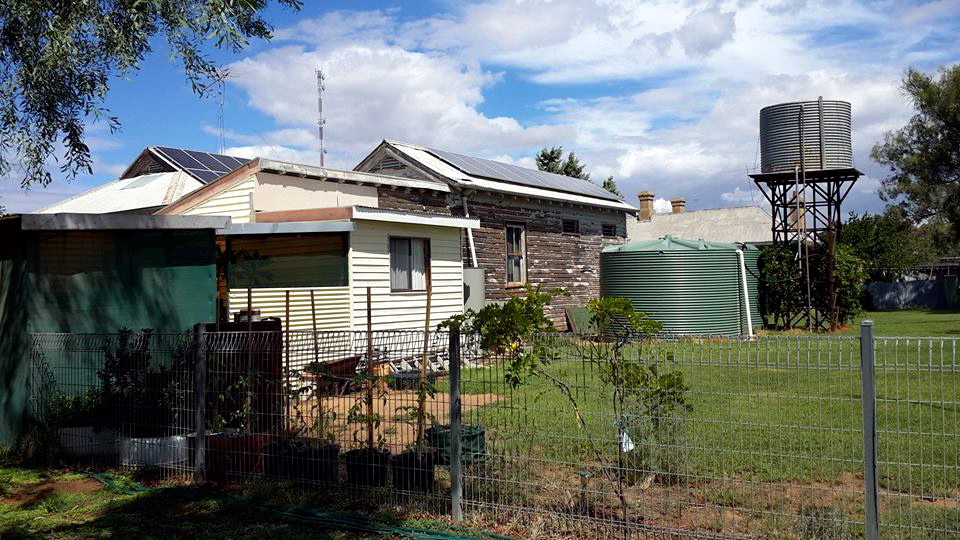
Constable Chapman was the officer in charge of Booligal Police Station, in the Deniliquin District.
In mid-February, 1866 he set out on horseback to visit several properties in his area to serve summonses and carry out other duties. A few days later a report was received that his riderless horse had been seen near Tooragama, about twenty miles from Booligal, so Constable Barry went in search of him.
Barry found the horse, without either saddle or bridle, and then he proceeded to call at every place where it had been Chapman’s intention to have called.
The unfortunate constable was never seen alive again.
On 6 March, 1866 the Maitland Mercury reported that “Our correspondent at Hay reports that Constable Chapman is missing. It appears that, being stationed at Booligal, he left that place on Thursday fortnight to serve a summons at a station about forty miles distant. His horse, without saddle or bridle, was subsequently found, as were his waistcoat hanging on the branch of a tree, probably put there by the unfortunate man as a guide to those who might be, and are now, searching for him. Our correspondent hints at foul play but the central office here has no suspicion of such, believing that, having lost his way, he has perhaps perished from thirst. Let us hope not.”
Then, a fortnight later the Sydney Morning Herald of 21 March, 1866 reported that “The remains of the unfortunate Constable Chapman, lost in the bush near Deniliquin, were found a few days since and buried at Booligal Cemetery.”
The New South Wales Police Gazette of 7 March, 1866 recorded that “Chapman Charles, Senior Constable (No. 467), lost in the bush; body found on February 22nd.”
The constable joined the police force on 6 September, 1861 and in 1862 he became a senior constable in the newly-formed New South Wales Police Force. At the time of his death he was aged 30 years and was stationed at Booligal. He was not long married when he passed away and his wife was expecting their first child. He is not listed in the official New South Wales Police Honour Roll.
New South Wales Police Gazette and Weekly Record of Crime (Sydney : 1860 – 1930), Wednesday 7 March 1866 (No.10), page 86
DEATH.
Chapman Charles, Senior Constable ( No. 467 ), lost in the bush; body found on February 22nd ( Thursday ).
The Deniliquin Chronicle states that the remains of constable Chapman, who was lost in the bush lately, have been found by a man named Patrick Hardy and another, within three-quarters of a mile of where some men were making a dam. He was buried in the Booligal cemetery, and followed by a good many people to the grave.
His horse was found naked.
The body was as black as ink, and in an advanced state of putrefaction.
In his struggles he had torn his shirt, and forced his pants up to his knees, and by his tracks it was seen that he had been rolling round and round the tree under which he was found to avoid the sun.
He must have had a horrible death.
He is said to have been lying on his side, with a coat under his head for a pillow.
The spot was a dry creek, about twenty-five miles from Booligal, and seven from the Lachlan River.
It is understood that there were no mark of violence on deceased’s person, but that he had evidently perished from exhaustion, and had, after rambling about for some time in a circuitous direction, being overcome with fatigue and thirst, lain himself down to die, having, it is supposed, hung his waistcoat on a tree or bush near as a guide to his last resting-place.
The Pastoral Times reports a fatal occurrence in Riverina : — ” Constable Chapman, who is in charge of Booligal Station, went out on duty, and being longer away than his business required, has, it is feared, got lost.
He left the station on Thursday week, about four o’clock.
On the Saturday following his horse had been seen near Tooragama, about twenty miles from Booligal.
Constable Barry went in search of him, and picked up the horse, without either saddle or bridle, on Tuesday.
Fears are entertained that something serious has happened to Chapman. No trace has been obtained of him, although Barry called at every place where it was his ( Chapman‘s ) intention to have called. He must, therefore, have met with the mishap shortly after leaving the station ; and if he has been without assistance for so long a time, the worst may be anticipated.
The feelings of Mrs. Chapman, who has been but a short time married, and about to become a mother, may be easily imagined.
Our latest account states that Booligal had turned out in search, but nothing definite had been ascertained.
Our telegram reports that the remains of Chapman have been found.
Wagga Wagga Express and Murrumbidgee District Advertiser (NSW : 1858 – 1859; 1866; 1872 – 1874), Saturday 10 March 1866, page 2
CONSTABLE CHAPMAN. -The remains of poor Chapman have been found by a man named Patrick Hardy and another within three-quarters of a mile of where some men were making a dam, and within five miles of where he hung up his waistcoat.
He was buried in the Booligal cemetery, and followed by a good many people to the grave.
His horse was found naked. The body was black as ink and in an advanced state of putrefaction.
In his struggles he had torn his shirt and forced his pants up to his knees, and by his tracks it was seen that he had been rolling round and round the tree under which he was found, to avoid the sun. He must have had a horrible death. He is said to have been lying on his side, with a coat under his head for a pillow.
The spot was a dry creek, about twenty five miles from Booligal, and seven from the Lachlan river.
It is understood that there were no marks of violence on deceased’s person but that he had evidently perished from exhaustion, and had, after rambling about for some time in a circuitous direction, being overcome with fatigue and thirst, lain himself down to die – having it is supposed, hung his waistcoat on a tree or bush near, as a guide to his last resting-place.
It is to be regretted that he was not better acquainted with the bush. Had it been so his life would have been saved.
When search was made for Chapman, a human skull was picked up, no doubt part of the remains of some unfortunate. – Deniliquin Papers.
Constable Charles CHAPMAN does NOT appear on the on-line version of NSW State Archives – Register of Police.
BOOLIGAL POLICE STATION & COURT HOUSE in 2014 ( now private residence )
Senior Constable John R HERBERT
| 25/10/2012
Senior Constable John R HERBERT
Accidentally Shot
Molong
13 April, 1865
In April 1865 Senior Constable Herbert, along with Constables Cook and Ambrose and Tracker Peter, were searching for the Hall Gang of bushrangers in the bush between Forbes and Canowindra. The bushrangers had earlier robbed a store at Forbes and information had been obtained indicating that they were headed for Canowindra. The police party made camp in the bush near Molong, and Senior Constable Herbert announced that he and Constable Ambrose would be leaving the camp to keep watch on a hut where they suspected the gang might be hiding. It was arranged that should either he or Ambrose return during the night they would whistle to alert the camp of their approach.
Unfortunately, Herbert and Ambrose did return during the night but, after losing their way in the darkness, they approached the police camp from a different direction than expected. Being closer than they believed to the camp, they also did not whistle to signal their arrival. Believing the approaching riders to be the bushrangers Constable Cook issued a challenge on two occasions without receiving a reply, so on the second occasion both he and Peter fired into the darkness, unfortunately hitting Constable Herbert in the groin, neck and shoulder. He died about a week later.
The Sydney Morning Herald dated 29 May, 1865 indicates that Constable Cook was charged with a criminal offence following the shooting, reporting that ” Constable Cook was placed on his trial to-day, at the Quarter Sessions, for shooting Constable Herbert, and was acquitted… The Court has concluded its sittings. ”
The senior constable was born in 1837 and joined the police force on 1 September, 1859. In 1862 he became a member of the newly-formed New South Wales Police Force. At the time of his death he was probably stationed at Canowindra.
Thomas SMYTH
| 25/10/2012
Thomas SMYTH
Late of ?
New South Wales Police Force
Regd. # ????
Rank: Senior Sergeant – Death
Stations: ?, Lambing Flat, Albury – Death
Service: From 8 February 1858 to 4 September 1864 = 6+ years Service
Awards: No find on It’s An Honour
Born: ? ? 1830
Died on: 29 September 1864 in the Imperial Hotel, Albury
Age: 33 – 34
Cause: Shot – Murdered
Event location: Doodle Cooma Swamp
Event date: 4 September 1864
Funeral date: ? ? ?
Funeral location: ?
Funeral Parlour:
Buried at: Albury Cemetery, 460 Buckingham St, North Albury, NSW
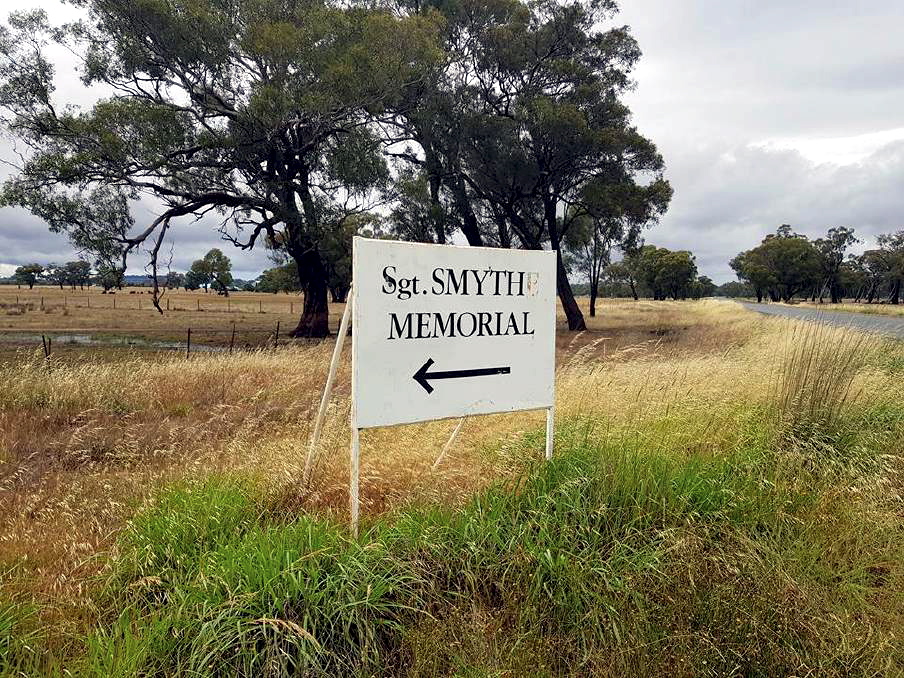
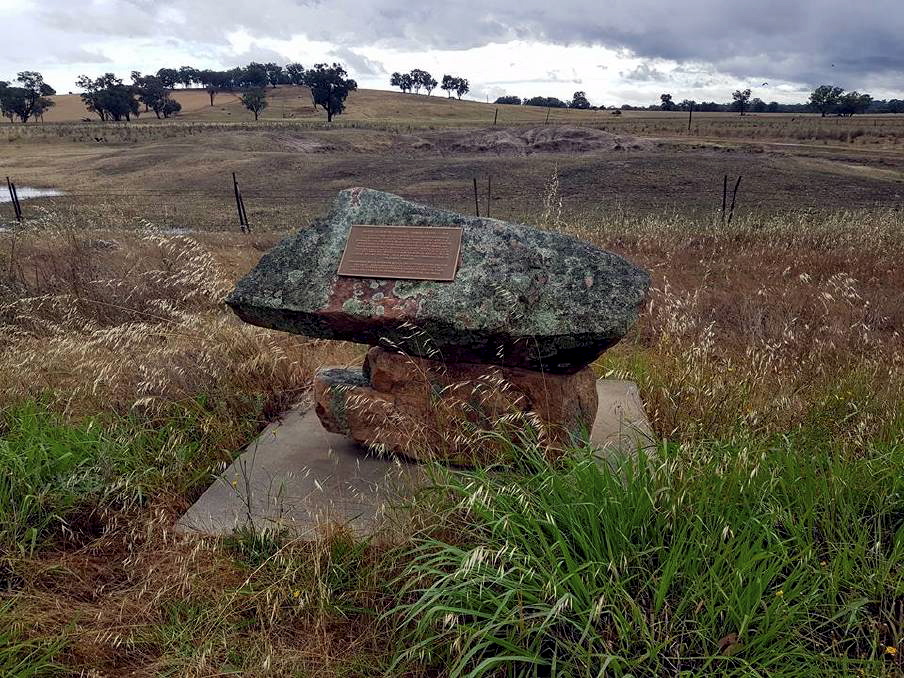
Memorial located at: Memorial stone and plaque are located 2 kms west of Henty on Pleasant Hills Rd ( the Lockhart Rd )
[alert_green]THOMAS IS mentioned on the Police Wall of Remembrance[/alert_green]
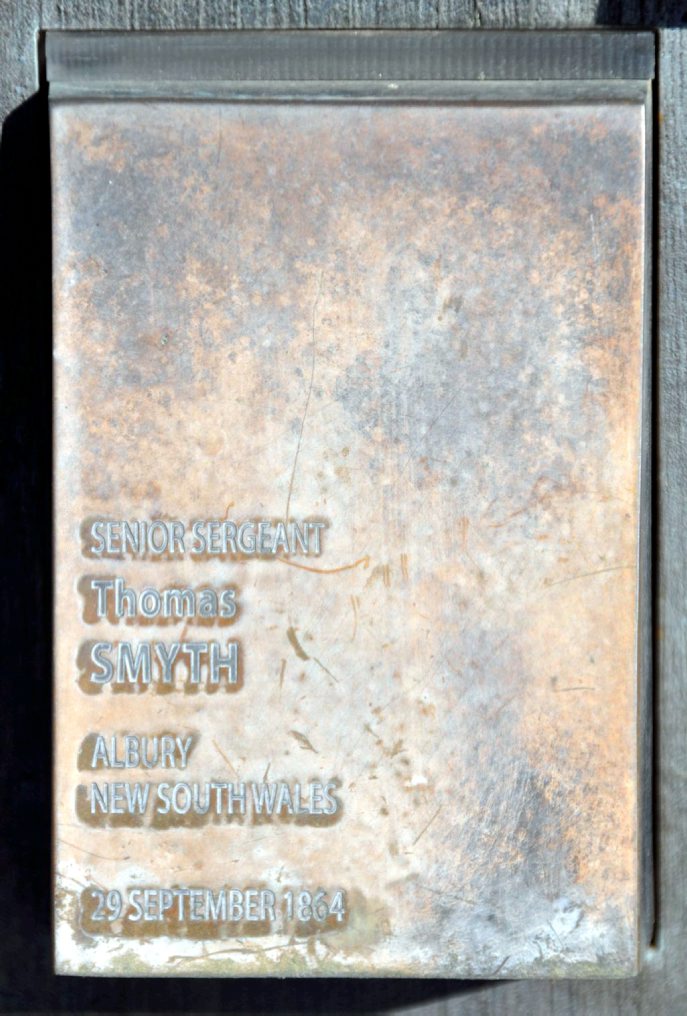
Thomas SMYTH touch plate at the National Police Memorial – Canberra
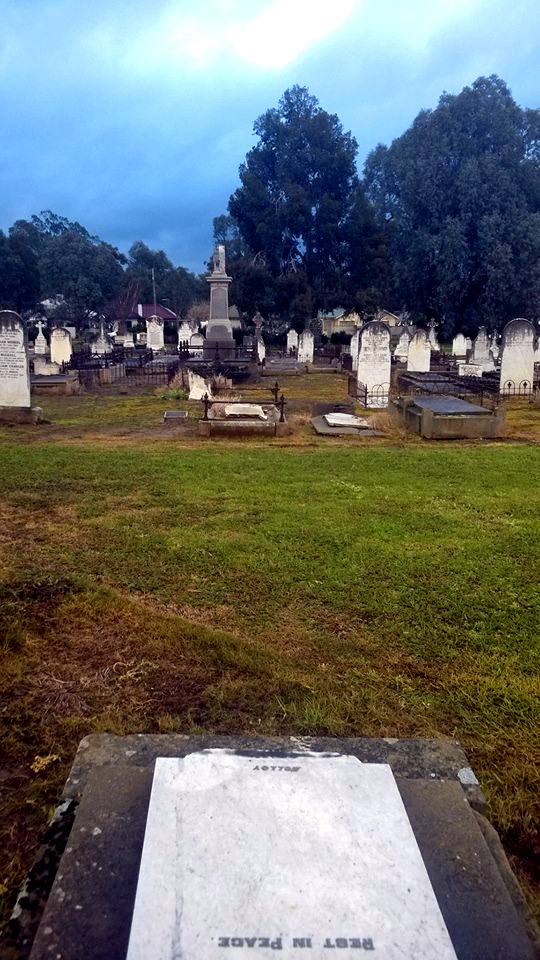
and this is his grave! (The unmarked one in the background).
[divider_dotted]
FURTHER INFORMATION IS NEEDED ABOUT THIS PERSON, THEIR LIFE, THEIR CAREER AND THEIR DEATH.
In late September, 1864 the sergeant was camped in the bush with three troopers near Albury during a search for bushrangers, when two men, one of whom the bushranger Daniel Morgan, crept up and fired several shots into the police tent. One shot hit the sergeant, entering his shoulder and exiting through his back. Despite these wounds the sergeant was able to return fire, forcing the offenders to retreat and escape. Sergeant Smyth was soon treated by a doctor however he died of the effects of the wound within a couple of days. The vicious Morgan was shot to death by a farmhand in April, 1865.
The Empire newspaper dated 5 October, 1864 printed the following brief account of the incident.
DEATH OF SERGEANT SMYTH – It is with deep regret that we have to record the death of Senior-Sergeant Smyth, at Albury, on Thursday night, from the wound he received in the cowardly night attack a few weeks back at Doodle Cooma Swamp. It was at first hoped that the unwearied care of Dr Wilkinson would have brought him round; but haemorrhage having set in, little hopes were entertained of his recovery, and he gradually sank until he yielded up his brave spirit on Thursday night. He was a very deserving officer, possessed of more than average intelligence and shrewdness, which eminently fitted him for a police officer. His courage was unquestionable. Previous to his being stationed at Albury he was at Lambing Flat, on leaving which town be was presented with an address by the inhabitants, expressive of their appreciation of his valuable services in the repression of crime on that large goldfield.
The McIvor Times and Rodney Advertiser of 23 September, 1864 printed a detailed account of the incident.
“THE BUSHRANGER MORGAN.
A party of police, consisting of Senior Sergeant Smyth, Senior Constable Baxter, Constables Connor, and Maguire, and a blackfellow named Jimmy Reed, were camped on Sunday night at Dougal’s [sic] Swamp, near Keighran’s station. They had just got tea, and were lying in the tent yarning, as is usually done by persons camped out. They had no sentry on guard – that duty being delayed until they “turned in” for the night. Suddenly their discourse was cut short by a volley being fired into the tent amongst them. Sergeant Smyth immediately jumped to his feet, calling on his men to follow him – he firing two shots in the direction he fancied the volley came from. The men who rushed out of the tent immediately after him, scoured the bush in every direction, as well as the darkness would allow them, but failed to find any traces of the ruffians; but, from the tracks discovered at daylight next morning, they must have overrun the bushrangers in the dark.
“They remained in the scrub about an hour, when they, after some consultation, deemed it better to return to the tent, which, considering that the night was dark, arid the surrounding scrub would completely shelter the attacking party, was, to say the least, attended with some danger. Baxter and Connor crawled on their hands and knees to the tent, and found Smyth lying on his back dangerously wounded, and fast bleeding to death. They took everything out of the tent and, having covered poor Smyth up in the few blankets they had, they managed to convey him to Keighran’s station, he still bleeding and suffering great pain, where they remained until daylight. Constable Baxter and the blackfellow then took up the track near the tent, and started to follow the ruffians up. The other two constables proceeded to the Ten Mile Creek, to give information and obtain medical aid for Smyth.
“Superintendent McLerie who was proceeding to Sydney on sick leave, happened to be at that place; and he immediately ordered his buggy to be taken off its springs, and the body to be used as a stretcher to convey Smyth to Ten Mile Creek. From the position of the bullet holes in the tent, there cannot have been less than five bushrangers. There are seven bullet holes in the tent; the bullets were picked up inside of it, some of them belonging to a large bore pistol. Constable Connor had a very narrow escape. He was lying down, leaning on his elbow, in the tent, when one of the balls went through the sleeve of his coat, inflicting a slight wound about two inches above the elbow joint. Superintendent McLerie has deemed it necessary to return to Albury for the present. Sub-inspector Morrow and a party of police have started from Albury in pursuit of the bushrangers; and Sub-inspector Zouch has left Wagga Wagga on similar duty.
“A strange incident occurred in connection with this cowardly attack. Shortly after the party were camped, two men came up and were admiring the site chosen for the camp, remarking that they could not have chosen better. They are well known as bush “telegraphs,” being the two men to whose house Sergeant Carroll traced Morgan some time back. Sergeant Smyth’s wound is a very dangerous one. The ball entered immediately above the nipple of the left breast, following the course of the ribs, and came out under the left shoulder-blade; so that, while the wound may not be considered mortal, yet fatal results may ensue from it. The people are greatly excited on this murderous attack, which in cold-blooded treachery far surpasses the Lachlan escort robbery.”
The Empire newspaper dated 5 October, 1864 printed the following brief account of the death of the sergeant.
“DEATH OF SERGEANT SMYTH
It is with deep regret that we have to record the death of Senior-Sergeant Smyth, at Albury, on Thursday night, from the wound he received in the cowardly night attack a few weeks back at Doodle Cooma Swamp. It was at first hoped that the unwearied care of Dr Wilkinson would have brought him round; but haemorrhage having set in, little hopes were entertained of his recovery, and he gradually sank until he yielded up his brave spirit on Thursday night. He was a very deserving officer, possessed of more than average intelligence and shrewdness, which eminently fitted him for a police officer. His courage was unquestionable. Previous to his being stationed at Albury he was at Lambing Flat, on leaving which town he was presented with an address by the inhabitants, expressive of their appreciation of his valuable services in the repression of crime on that large goldfield.”
In April 1865 the vicious and cowardly bushranger Morgan was shot to death by a farmhand in at Peechelba Station, near Wangaratta (Vic).
The sergeant was born in 1830 and joined the police force on 8 February, 1858. In 1862 he became a member of the newly-formed New South Wales Police Force. At the time of his death he was stationed at Albury.
It’s taken 153-years but moves are finally underway to give some restitution to Senior Sergeant Thomas Smyth, who was murdered by notorious bushranger ‘Mad Dog’ Dan Morgan in the hills near Henty in 1864.
Sergeant Smyth’s unmarked grave is now set to receive a memorial headstone to rectify what is believed to have been an administrative oversight lost in the 1951 transferral of Albury’s three cemeteries from church to council.
Police officers, both active and retired, had bemoaned as “a sad end and undignified burial” of Senior Sergeant Smyth after he was shot trying to recapture the bushranger, who had been terrorising the region.
In 1864, ‘Mad Dog’ Morgan had recently committed his second and third murders before he arrived in the Henty area. Widespread fear and an outcry from the press at the time saw the reward for Morgan’s capture raised to £1000, and parties of special police were sent to track and capture him.
On September 4, Senior Sergeant Smyth had set up camp with three troopers in the Henty hills, when Morgan and another man crept up and fired several shots into the police tent, hitting the sergeant in the shoulder and exiting through his back. Morgan later said he had been watching the camp for some time.
Despite his wounds, the sergeant ran out of the tent and returned fire, forcing the offenders to retreat. The wounded officer then collapsed. He was transferred to Kiamba and then Albury where doctors claimed he was recovering, before he hemorrhaged several times.
The Empire newspaper dated October 5, 1864 reported that “he yielded up his brave spirit on Thursday night. He was a very deserving officer, possessed of more than average intelligence and shrewdness, which eminently fitted him for a police officer. His courage was unquestionable”.
Senior Sergeant Smyth was buried in an unmarked grave in an Albury cemetery, however there is a memorial stone on Pleasant Hills Road just outside Henty.
NSW Police is hoping to rectify other unmarked police graves. Dan Morgan was holding hostages when he was shot dead in Victoria by a farmhand in April,1865.
This excerpt is from an Australian Government site about bushrangers:
“Daniel Morgan brought discredit to the popular ‘currency heroes’ by his mixture of violence, abuse and seemingly meaningless murders. Morgan claimed his innocence at his first conviction in 1854, at the diggings near Castlemaine, which he said was ‘framed‘ by a squatter. During his time at Pentridge Prison, he developed a violent dislike for police. Upon his release, he began a campaign against society at large and the police in particular.
Morgan once took issue with an overseer’s wife when the man was away on business, demanding money from her as he forced her against a blazing fire until she suffered severe burns to her legs. Morgan also tried to burn squatter Isaac Vincent by setting fire to his woolshed after he had tied Vincent to a nearby fence. After Morgan bailed up coaches, he would stampede the horses – sending them and their drivers to destruction.
Eventually he was shot and captured in 1865 after being outwitted by a nursemaid and station hand at Peelhelba Station near Wangaratta, owned by the McPhersons.”
MEMORIAL: Senior Sergeant Thomas Smyth will get a memorial headstone on his unmarked grave in Albury, after he was shot by bushranger Dan Morgan in 1864.
MEMORIAL: The memorial stone to Senior Sergeant Thomas Smyth is two kilometres west of Henty on Pleasant Hills Rd (the Lockhart road).
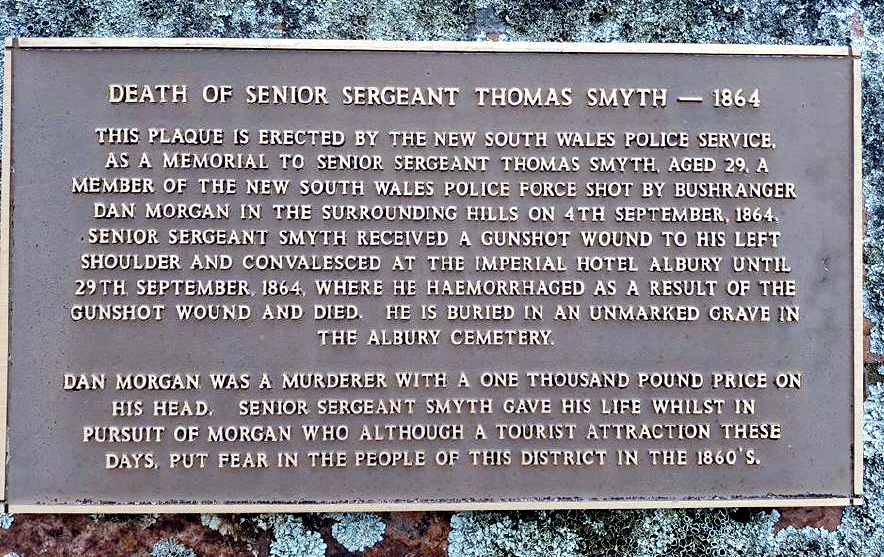
DETAIL: The plaque detailing the death of Senior Sergeant Thomas Smyth after he was shot by bushranger ‘Mad Dog’ Dan Morgan in September 1864.
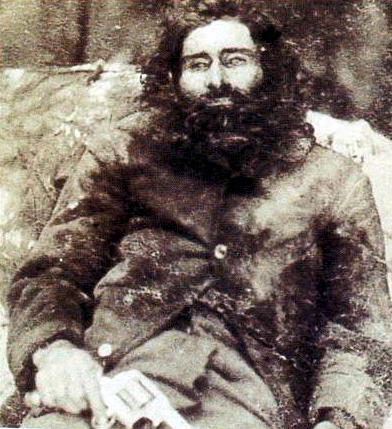
MURDERER: A post-mortem photograph of notorious bushranger ‘Mad Dog’ Dan Morgan who murdered several people, including Senior Sergeant Thomas Smyth.
The sergeant was among a party of police who intervened in a dispute between two parties of Chinese people at Muckerawa on the Macquarie River, near Stuart Town. He disarmed one of the people involved, taking a rifle from him, and then took hold of the weapon by the muzzle and smashed it over a log. As he did so the rifle discharged, killing him instantly.
The sergeant was born in 1815 and joined the police force on 1 April, 1852. In 1862 he became a member of the newly-formed New South Wales Police Force.
Constable Henry RUCKER
| 25/10/2012
Constable Henry RUCKER
Drowned
Newcastle
19 October, 1863
The constable was drowned whilst attempting to cross a tributary of Lake Macquarie. He was one of a group of police searching for a number of offenders who had earlier robbed James Williams’ jewellery store in Hunter Street, Newcastle. While endeavouring to cross the creek the constable’s horse rolled over, throwing him into the water where he drowned.
The Empire newspaper dated 23 October, 1863 reported that ” On Monday afternoon, Mounted Constable Henry Rucker, stationed at Newcastle, was dispatched on business to Lake Macquarie, and going there was directed to a crossing place at Shepherd’s Creek, between Newcastle and the Lake, he misunderstood the direction, and attempted to cross in the wrong place and the current being very strong, he was seen to fall from his horse and sink. The horse swam to the opposite bank, but the body of the unfortunate trooper was not recovered. He was a young man, and a native of Sydney and what makes his death the more melancholy is that he was to have been married yesterday. He was a very efficient constable, and was much respected by his superiors. “
The constable was born in 1832 and joined the New South Wales Police Force on 4 March, 1863. At the time of his death he was probably stationed at Newcastle.
[divider_dotted]
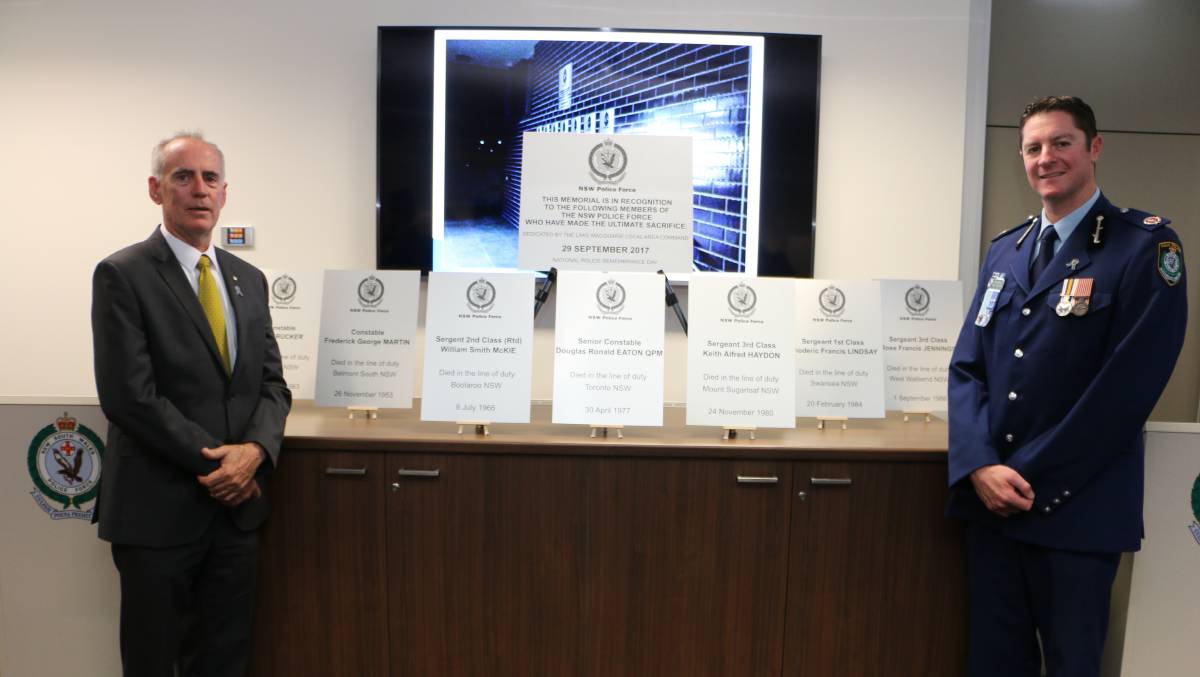
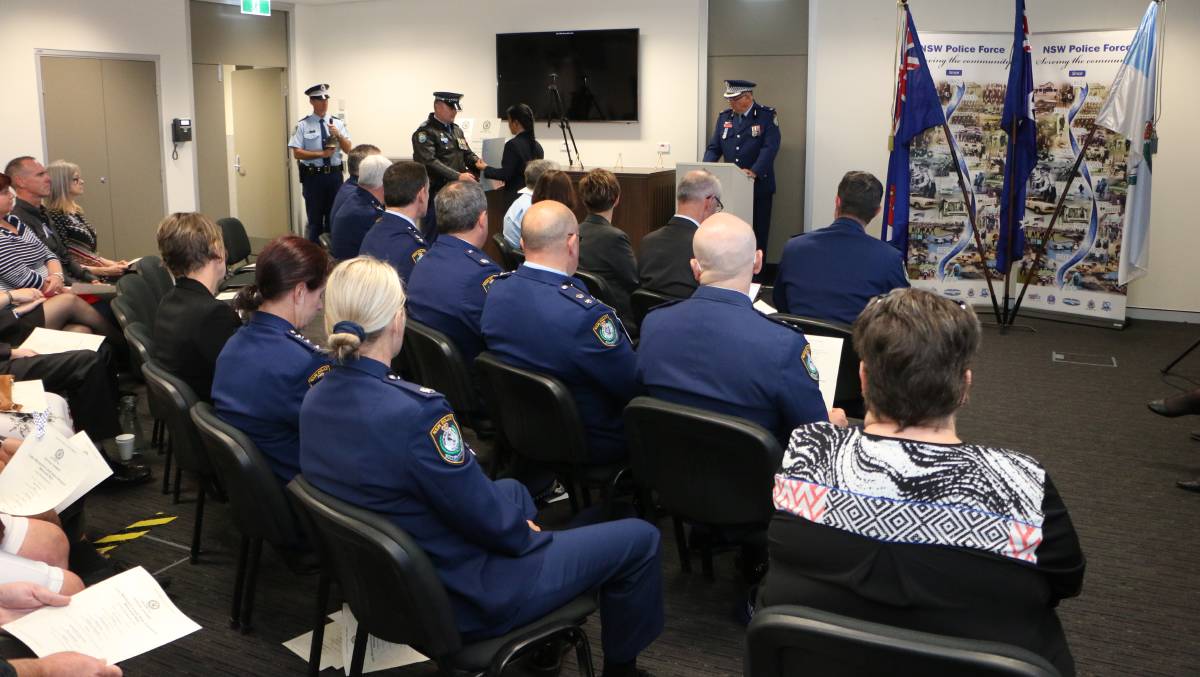
National Police Remembrance Day ceremony in Lake Macquarie
David Stewart
September 29 2017 – 4:27PM
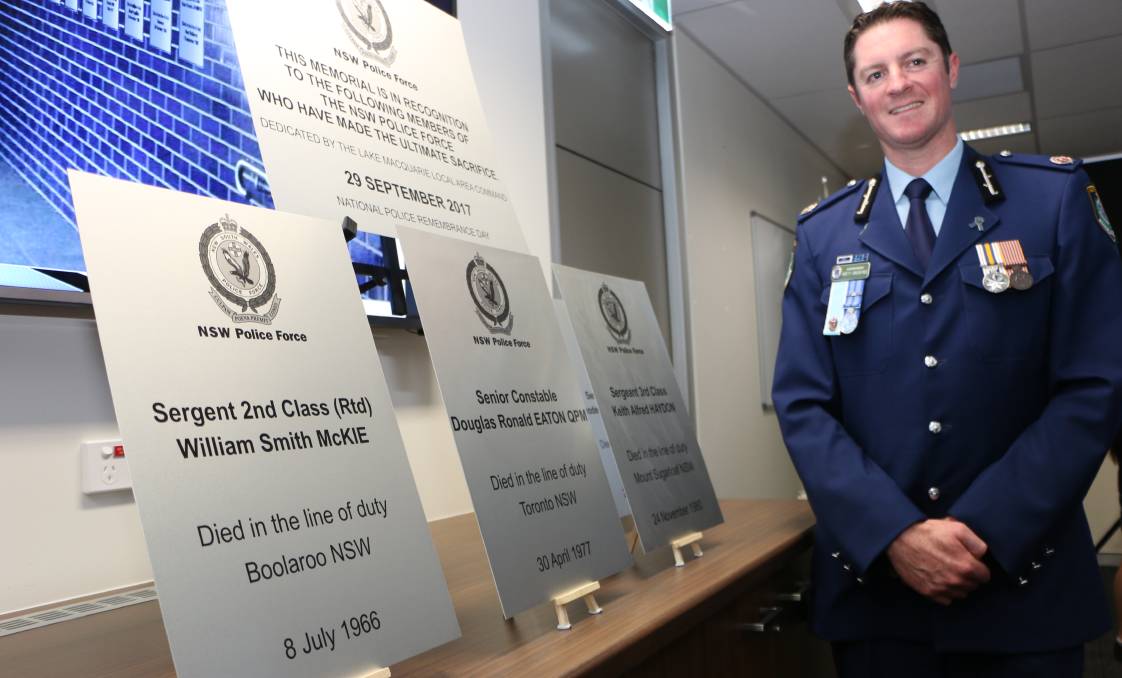
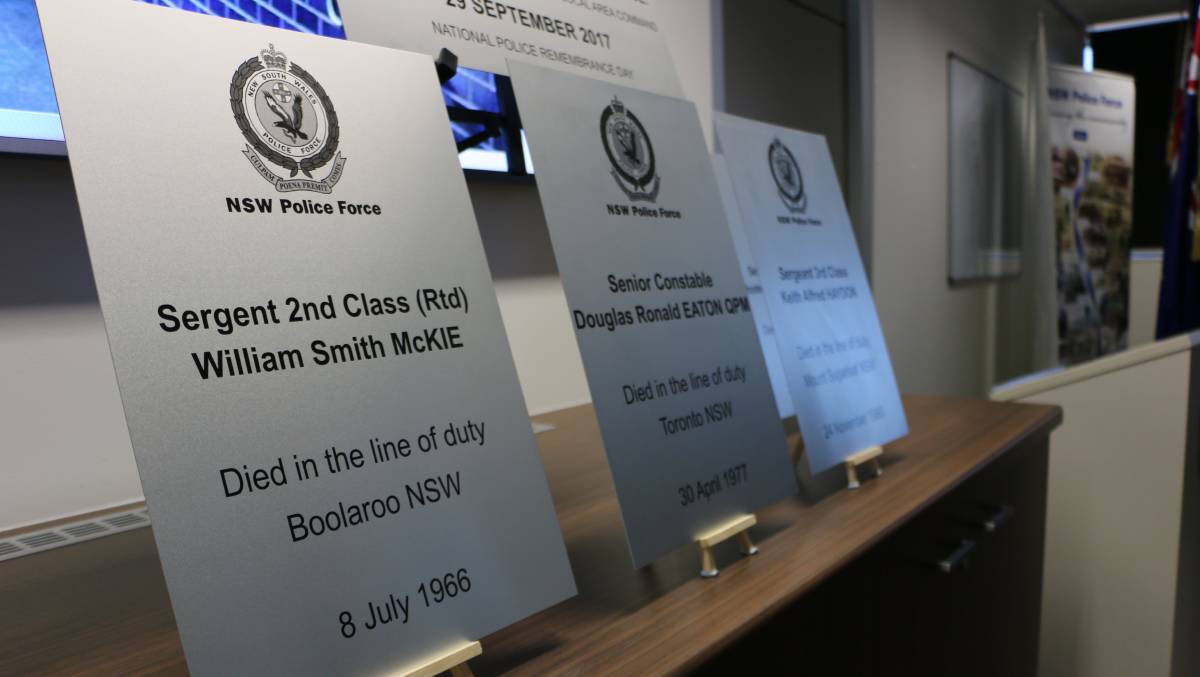
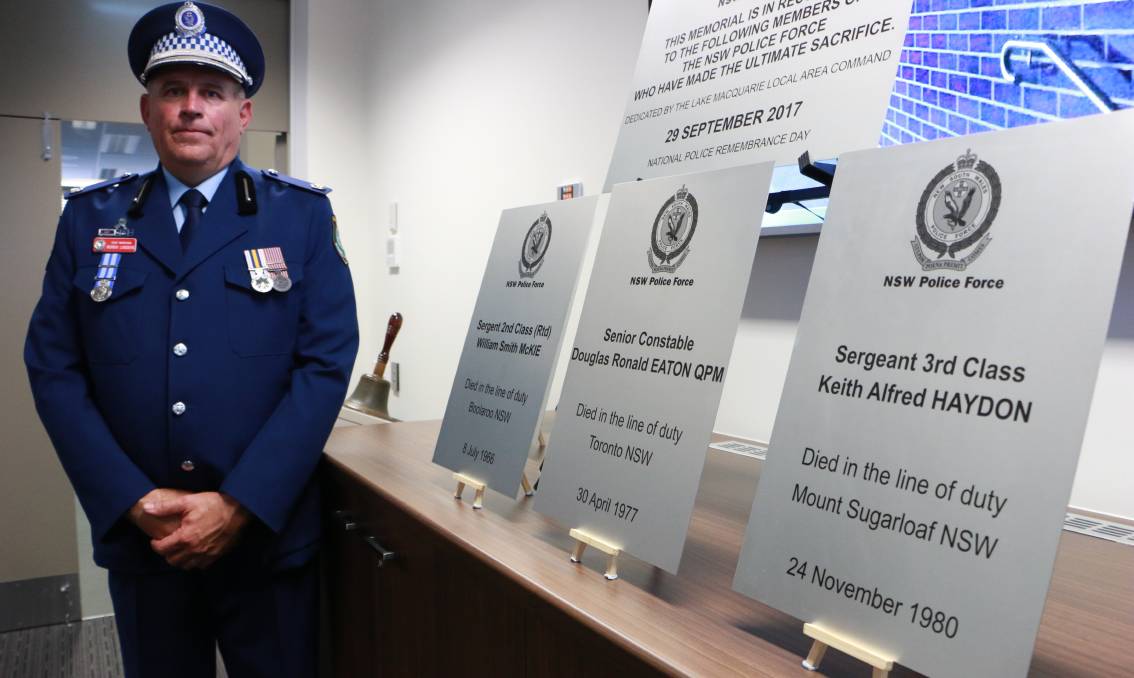
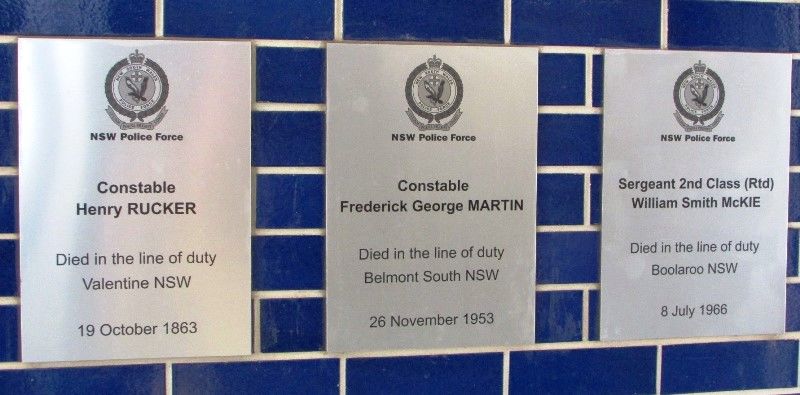
POLICE from Lake Macquarie Local Area Command have unveiled plans for a memorial wall at Belmont to honour the seven local officerskilled in the line of duty since 1863.
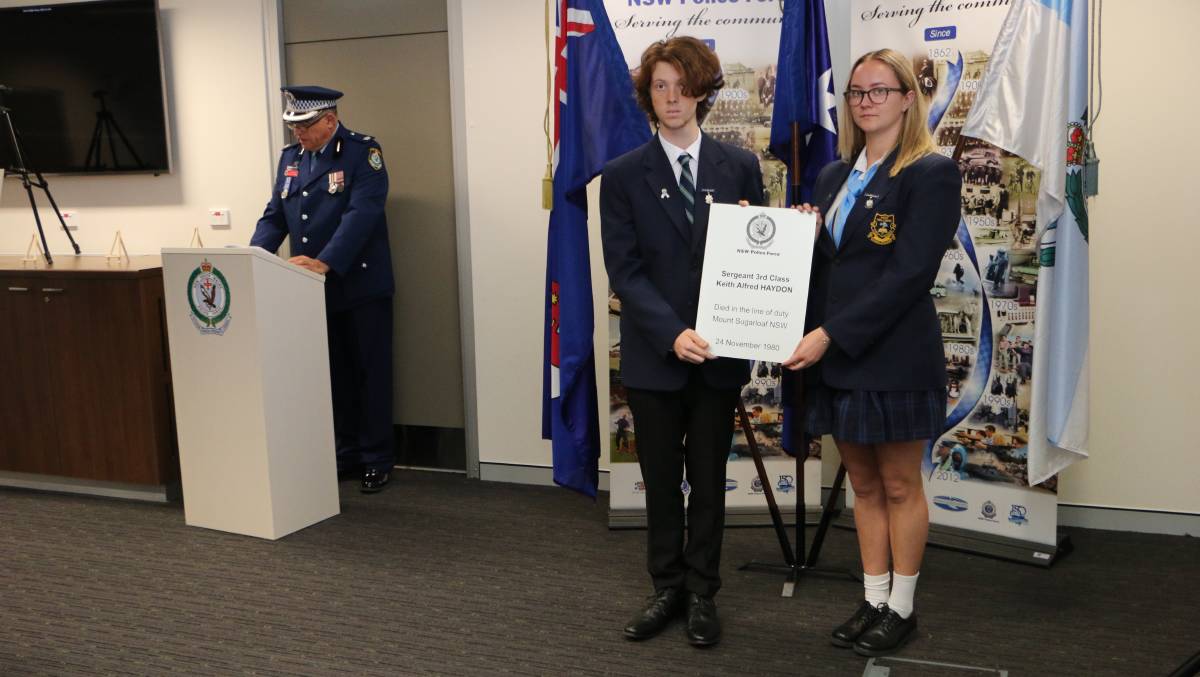
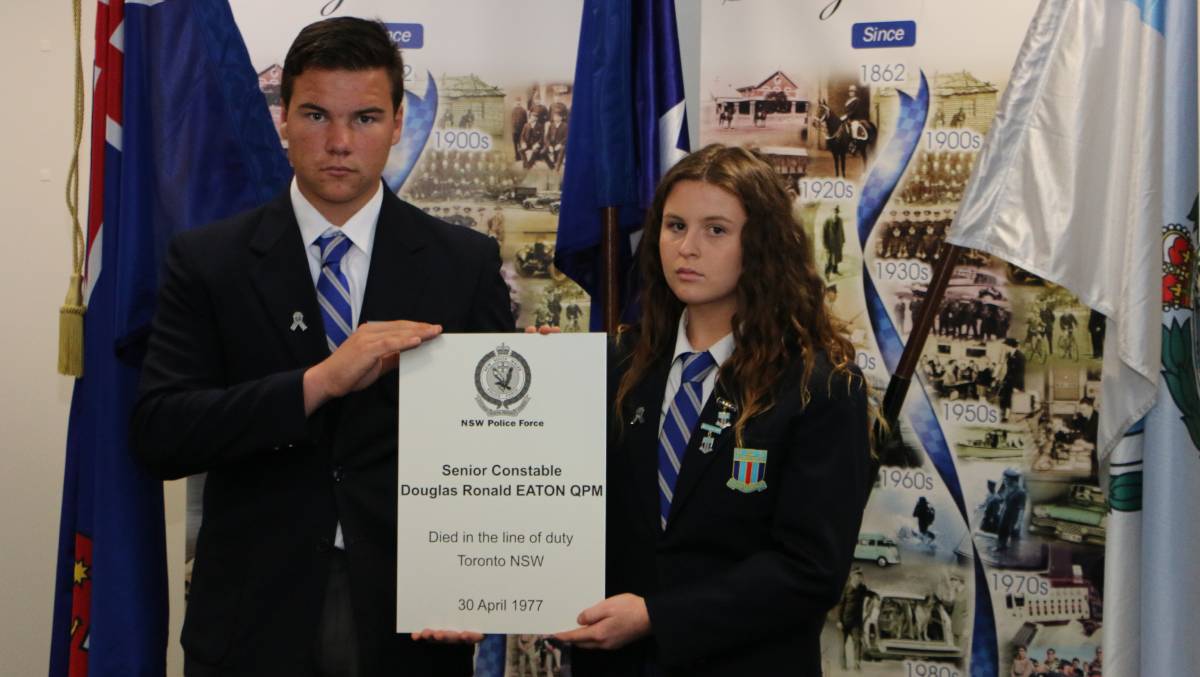
Plaques commemorating the seven officers were dedicated to the wall in a ceremony at Belmont police stationthis afternoon, National Police Remembrance Day.
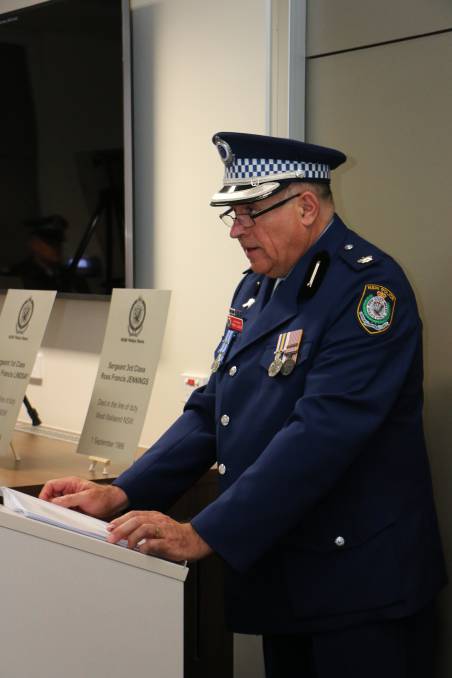
Chief Inspector Murray Lundberg of Lake Macquarie LAC presided over a private ceremony attended by police, local high school students, and the families of the fallen officers.
“This is a time for reflection on the ultimate sacrifice that police officers can give in the execution of their duty,” Chief Inspector Lundberg said.
Acting Assistant Commissioner Brett Greentree, the Northern Region Commander, said the wall of remembrance, to be created on the distinctive blue wall at the entrance to the police station, would be striking.
“It will be a sight to treasure,” Acting Assistant Commissioner Greentree said.
“I want the officers, as they are walking out the front doors of this police station, to stop and reflect on the names, stop and reflect on the sacrifice.”
He said he hoped that the inaugural plaques to be installed on the wall were also the last.
“My dream is that we never, ever, add another name to this wall. I hope and pray that our wall is now complete.”
Acting Assistant Commissioner Greentree reached out to the families of the fallen officers.
“No commemoration or recognition can make good the loss that is unfairly carried by family members,” he said.
“I can only offer you my heartfelt condolences. Please know that your loved ones, who are no longer with us, will always be remembered.”
Across NSW, ceremonies were held to commemorate the service and sacrifice of the 269 officers who have lost their lives in the line of duty, and through injury or illness, since the formation of the NSW Police Force in 1862.
Edward HAMPSON
| 25/10/2012
Edward HAMPSON
New South Wales Police Force
Rank: Constable
Regd. #: ? * A search of the ‘on-line’ State Archives does NOT reveal a HAMPSON, or similar, as being a member of the Police
Stations: East Kempsey ( Lock up Keeper )
Service: From? ? ?topre March 1862 = ? years Service
Awards: No find.
Born: Sunday 15 May 1825, Lancashire, England
Emigrated: from USA to Australia between July 1853 and before Nov 1854
Died: Wednesday 24 December 1862
Cause: Horse Accident – against a tree
Event location: East Kempsey – near the Yarrabandinni gates
Age: 37 – 39?
Funeral date:
Funeral location: ?
Buried at: Frederickton Cemetery, Great North Rd, Frederickton, NSW:
Anglican section row G # 67
GPS: 31 02′ 02S / 152 52′ 38E
Grave location:
[alert_red]Edward IS NOT mentioned on the Police Wall of Remembrance[/alert_ed]
Constable Edward HAMPSON – grave
Constable Edward HAMPSON – grave
The constable is believed to have suffered fatal injuries when he was either thrown or fell from his troop horse at East Kempsey.
Some 62 years later the Macleay Chronicle of 7 May, 1924 in a related story recounted that the constable had been “killed while riding near the Yarrabandinni gates on Christmas Eve, 1862”. In a contemporary account however, the Empire newspaper of the 5 January, 1863 reported the following.
“ACCIDENT
On the 24th instant, a settler named Edward Hampson came by his death through a fall from a young horse he was riding. It appeared from the evidence given before the coroner that the deceased was thrown with so much violence against the spur of a tree as to cause instantaneous death.”
Few details are known at present, however the Macleay Chronicleof 7May, 1924 reported that the constable had been ” killed while riding near the Yarrabandinni gates on Christmas Eve, 1862 “.
At the time of his death the constable is thought to have been the lockup-keeper at the East Kempsey Police Station, where he had been stationed since at least early 1856 (he is mentioned in the New South Wales Police Gazette of 16 February, 1856).
In 1862 he became a member of the newly-formed New South Wales Police Force.
He is not listed in the official New South Wales Police Honour Roll.
MacLeay River Historical Society November 2012 page 2
An enquiry was received from Kempsey Police re Edward Hampson who was killed Christmas Creek, near Yarrabandinni Gates on Christmas Eve 1862 when his young horse threw him against a tree.
It was believed Edward was a police constable and had died on duty, and the information was required for a book on police killed in the line of duty.
A death certificate in Research records however gave Edward’s occupation as a farmer, as did a marriage certificate for his oldest son, Wright Harrison Hampson. It appears Edward was a police constable at some stage but had left the Force prior to his death.
Edward and his wife Eliza arrived from the United States of America sometime in the late 1840s or early 1850, with three children. They had immigrated to the USA from England, however for some reason they changed their mind about settling in America and came to Australia.
After their arrival, at least another four children were born, 1854 Thomas, 1856 William, 1857 Edward, 1860 Henry and 1862 Mary. The majority of the children’s place of births are registered as Macleay River.
Their father Edward HAMPSON, became a Police Officer, however he was killed while on duty in 1862 near a river.
From: “Janice Doughty” <adoughty01@optusnet.com.au> Subject: Re: [NORCO] EDWARD HAMPSON-Police Constable Date: Sun, 27 Mar 2005 09:24:51 +1000 References: <000001c53113$2b468a30$295d1ed3@ADOUGHTY> <80977F0C-9E24-11D9-88D6-000A95EAA358@ceinternet.com.au> Thank you to Rod and also to the many other Listers who have helped with my enquiry regarding the Hampson family of Macleay River district.
Within a day of requesting help with the HAMPSON family, I have found out so much from this wonderful List and I would like to share the HAMPSON story with you so far.
Edward HAMPSON was Christened on 15th May 1825, at Saint Michael, Ashton Under Lyne, Lancashire, England. His parents being Thomas and Nancy HAMPSON. Family rumour has it that this family was very well off, living in a large home in the town of Ashton Under Lyne in Lancashire.
Eliza HARRISON was Christened on 23 May 1824 at Saint Michael, Ashton Under Lyne, Lancashire. Her parents were James and Alice HARRISON.
Edward HAMPSON at 20 years of age, married Eliza HARRISON also 20, on 1st January 1844 at the Cathedral, Manchester, Lancashire ENGLAND.
Some time between 1844 and 1848, Edward and Eliza HAMPSON sailed for the United States, and settled on the east coast of the USA. It is believe that there were already relatives of Edward’s living in the U.S.
Children born in the U.S.A were.:-
Wright Harrison HAMPSON born 1848 in Salem, Mass.
Desdemona Ann HAMPSON born 1851 Newark New Jersey
Alice Maria HAMPSON b.1853 Boston, Mass.
After the birth of Alice in Boston in July 1853 and before the birth of Thomas in Australia in Nov 1854, the family sailed from Boston to old Sydney Town, Australia. What ship they sailed on is at the moment unknown.
Children born in the Colony were:-
Thomas 1854,
William 1856,
Edward 1857,
Henry 1860 and
Mary 1862.
All except Thomas, who may have been born in Sydney, not long after the family arrived in Sydney Cove, were born in the Macleay River district. The family settled somewhere near Kempsey, at the moment it is unknown exactly where their property was. Any help with establishing where the family actually lived, would be very much appreciated.
As previously stated, the father Edward joined the police force, and was tragically killed on Christmas Eve 1868 when he was thrown against a tree.
More work has to be done regarding the death of Edward. Not sure if he was on duty when he died.
It was only six month before, when Edward and Eliza‘s son Thomas, at 14 years of age was killed in an accident in July, while driving a team of bullocks, when one of the wheels got on the end of a slab, suddenly lifting the other end, which struck Thomas on the head killing him on the spot.
Thomas at the time was in the employ of Mr. James Ducat (Manning River New – 11.07.1868). Thomas was recovering from a broken arm at the time of his death.
The surviving children all married:-
1870 Wright Harrison HAMPSON, married Isabella Emmeline Reid at Port Macquarie. She died in 1886 and Wright’s second wife was Ellen Berman and they married in 1906, also in Port Macquarie.
Desdemona Ann HAMPSON married Edwin James CLOUGH in 1868 at Macleay River.
Alice Maria HAMPSON married John JONES in 1868 at Macleay River. (The sisters may have married on the same day).
William HAMPSON married Elizabeth BOLSTER in 1884 at Kempsey.
Edward HAMPSON married Annie KELLARD IN 1882 in Sydney.
Henry Frank HAMPSON married Ada Caroline KELLY in 1881 in Sydney.
Mary Amelia HAMPSON married Arthur Pringle STEWART in 1881 in Newtown.
The one member of this family whose name survives today, through his wonderful exploits is Wright Harrison HAMPSON, through his colourful career as a mail contractor and coach driver for Cobb & Co. He was well known for playing on his bugle “The Girl I Left Behind Me”, when his coach was leaving town. There was also his stories of the Boer War, he was 52 years of age when he joined up.
Wright Harrison HAMPSON, died in 1929 in Granville, his son Wright Harrison HAMPSON Jnr, died five years before his father in 1924 at Parramatta.
Again, a big thank you to everyone who contributed to put this story together.
Regards,
Janice
Belrose – Sydney
—– Original Message —–
From: Rod Gow <rgow@ceinternet.com.au> Subject: Re: [NORCO] EDWARD HAMPSON-Police Constable Date:Sun, 27 Mar 2005 04:25:59 +1000 References: <000001c53113$2b468a30$295d1ed3@ADOUGHTY> In-Reply-To: <000001c53113$2b468a30$295d1ed3@ADOUGHTY>
Dear Janice,
We had a look at some newspaper indexes relating to HAMPSON of the Macleay River and found the following which may be of some interest…
Manning River News newspaper – 11 July, 1868 page 2 columns 5 and 6
Another accident happened at Moonebah, by which a boy, named Hampson, lost his life whilst driving a team of bullocks. One of the wheels got on the end of a slab, suddenly lifting the other end, which struck the boy on the head killing him on the spot.
The lad who was killed at Moonebah by being struck on the head by a rail as mentioned by our regular correspondent, was named Thomas Hampson. He was in the employ of Mr. James Ducat. A magisterial enquiry was held.
A son of a Mrs. Hampson has had his leg broken. It is stated that the boy belongs to a particularly unfortunate family. His father was killed by being thrown against a tree, his eldest brother had his arm broken, and had no sooner recovered from that accident than he was suddenly killed, and now this lad comes in for his share of trouble. The boy’s mother certainly deserves the sympathy of her neighbours, and pecuniary aid too, if she needs it.
Also, Janice, in the “NSW – Patriotic Fund Subscribers – Crimean War (1855) index” there is the following entry extracted from the
Sydney Morning Herald … Hampson EKempsey & Macleay River 16 Aug 1855 page 6 column 1
If this is one of the family it may establish that he was in the Macleay district in 1855
Also, is Wright Hampson one of the family you are researching ? He married Miss Berman on 3 January, 1907.
Hope the above is of some assistance.
Best wishes,
Rod & Wendy Gow
[divider_dotted]
On 25 Mar 2005, at 7:18 PM, Janice Doughty wrote:
Good evening Listers,
I am new to this list and am hoping that SKS maybe able to assist me.
I am helping the wife of my husband’s cousin to find out some history on her gg grandfather one Edward HAMPSON.
Edward and his wife Eliza arrived from the United States of America sometime in the late 1840s or early 1850, with three children. They had immigrated to the USA from England, however for some reason they changed their mind about settling in America and came to Australia.
After their arrival, at least another four children were born, 1854 Thomas, 1856 William, 1857 Edward, 1860 Henry and 1862 Mary. The majority of the children’s place of births are registered as Macleay River. Their father Edward HAMPSON, became a Police Officer, however he was killed while on duty in 1862 near a river. The lady I am helping thinks she can remember the cause of death was a fall from a horse.
Any help regarding this family would be very much appreciated.
Chris StaffordGood evening everyone, yesterday I received Edward HampsonDeath Certificate and unfortunately, at the time of his death, Edward was no longer a Constable, but was a farmer and settler in the Fredo/East Kempsey (East was the original township). This was back up by one of his children’s marriage certificate.
Even though I have found written reference in newspaper that did indicate Edward was the Lock up Keeper for East Kempsey, but it seems by 1862, at the creation of the NSW Police Force, he was no longer a serving member.
This maybe the reason while there is no record on the NSW Honour Roll or the Canberra Wall. However, I am still going to attempt to fix his grave up and place a new plaque stating Edward as a former Police Officer.
William HAVILLAND
| 25/10/2012
William HAVILLAND
New South Wales Police Force
Constable
Regd. # ?
Accidentally Shot
Orange
Event 15 June 1862
Died 16 June, 1862
Funeral ?
On 15 June, 1862Constable Havilland, Sergeant James Condell, Senior Constable Henry Moran and Constable Rafferty were travelling as protection for the Forbes Gold Escort. At a locality known as the Eugowra Rocks the coach was ambushed by a gang of bushrangers which included the notorious Frank Gardiner, John Gilbert and Ben Hall. As a result of the attack, Sergeant Condell and Senior Constable Moranwere wounded, the coach was overturned and 14,000 pounds in gold and banknotes and bags of registered mail stolen. The following day ( 16 June 1862 ) the coach was righted and driven into Orange. Shortly after arriving in town a revolver under a seat in the coach discharged, with the shot travelling upwards through the seat and striking the unfortunate Constable Havilland under the chin and killing him instantly.
The Empire dated 19 June, 1862 provided some interesting background information on the constable.
CONSTABLE HAVILAND – This man, who was shot under such mysterious circumstances in the vehicle of the gold escort, just after its arrival in Orange, was a very deserving officer of the force. He was formerly a sergeant in the Royal Artillery at Woolwich, and, leaving the regiment, he arrived in Sydney about four years since from India, when he entered the metropolitan police. He was for a considerable time in the Parramatta street division, where he was always known as a very efficient member of the force. He was a first-rate marksman and a good shot, and, we believe, he was so well versed in drill exercises that it was intended at one time by the Inspector General, to make him act as an instructor to the Sydney Police. He subsequently acted as orderly to the Inspector General, in which capacity he was looked upon as a confidential servant. From that position he entered the gold escort, in which service his untimely fate is to be regretted. Havilandhas left a widow and two children residing in Sydney, to deplore their loss; and Mrs Haviland is at present, we understand on the eve of her confinement.
At the time of his death the constable was aged 33 years and had joined the police force about 1858. He was attached to the Forbes Gold Escort which on 1 March, 1862 had become part of the New South Wales Police Force.
( This is believed to have been the first on-duty death of a member of the New South Wales Police Force, which had been created on 1 March, 1862 following the passing of the Police Regulation Act 1862. On that date all existing police forces, units and constabularies were amalgamated into one organization which was led by Inspector General Captain John McLerie. The original force consisted of about eight hundred men. )
Senior Constable Henry MORAN was later accidentally killed on the 4 February 1890 and a memorial to MORAN is located at Mt Lambie, between Bathurst & Lithgow, NSW.