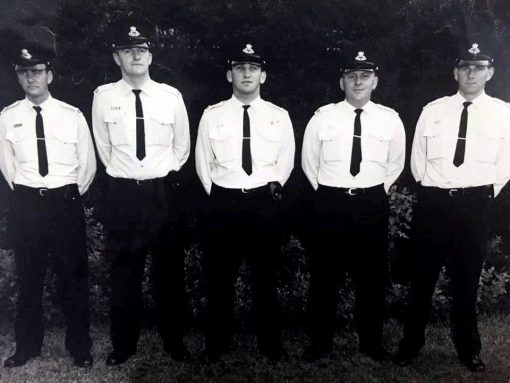
Joined NSW Police via the NSW Police Cadet System on 30 January 1945
Cadet # 505
Regd. # ?
Rank: Assistant Commissioner – Retired
Stations: Newcastle, Corowa, Wagga Wagga
Service: From 30 January 1945 to 4 May 1988 – 43 years
Awards: National Medal – granted 11 December 1985
Australian Police Medal – granted 9 June 1986
Churchhill Fellow, B.A. ( Newcastle )
Born: 9 March 1929
Died on: 17 January 2015
Cause: ?
Age: 85
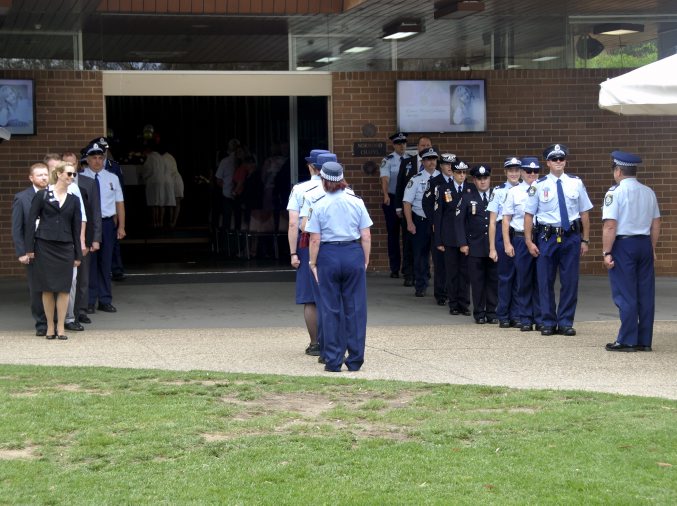
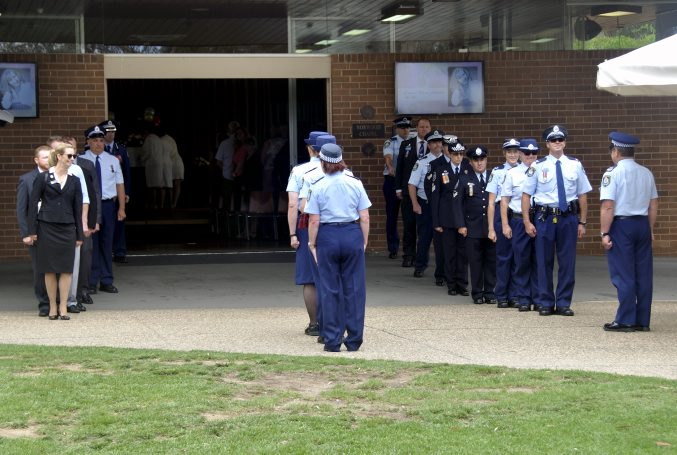
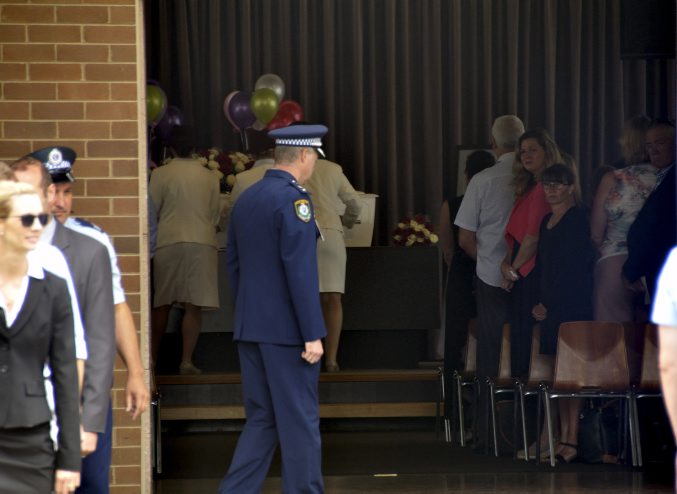
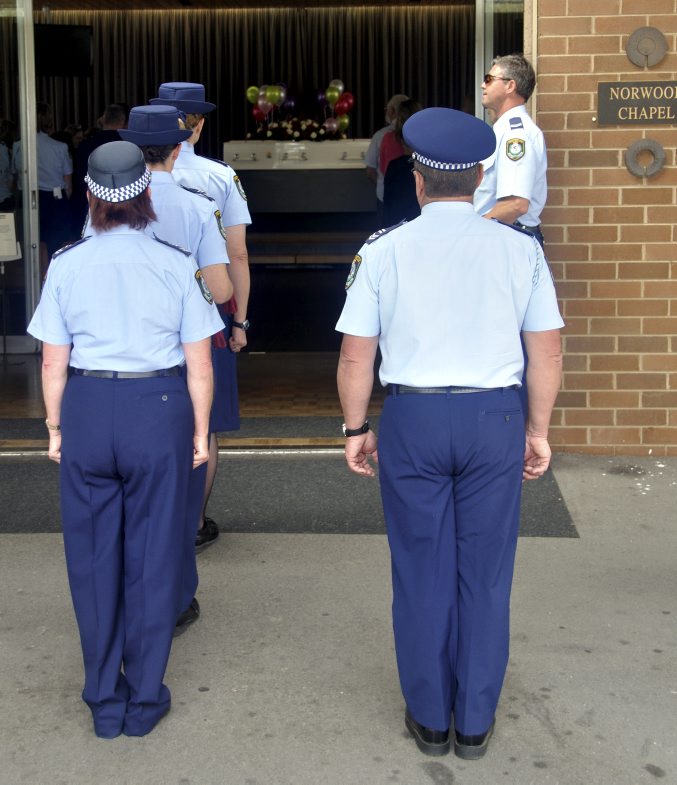
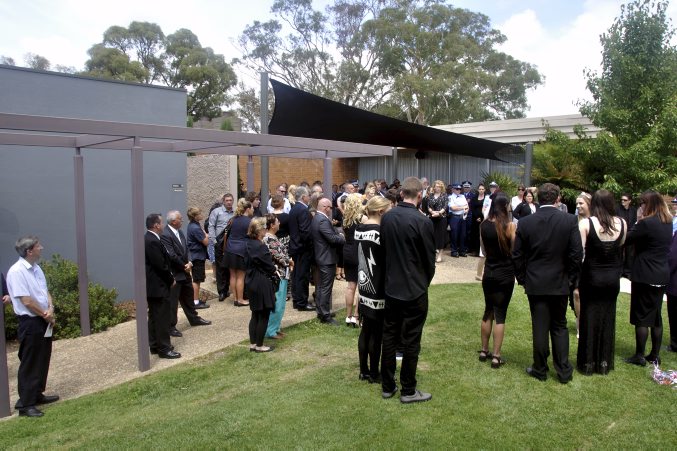
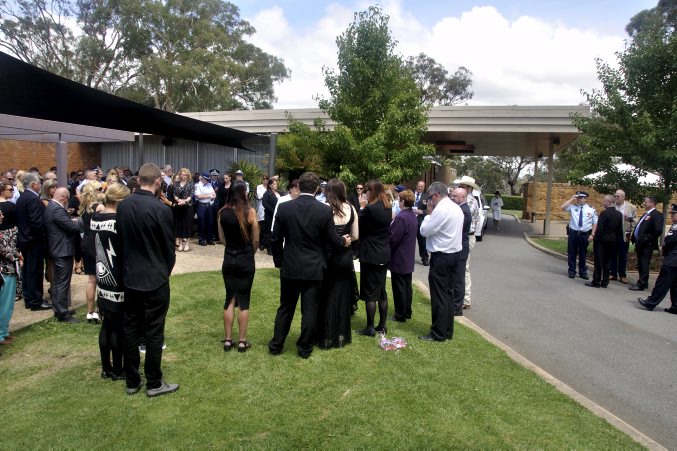
Funeral date: Friday 23 January 2015 @ 10.15am
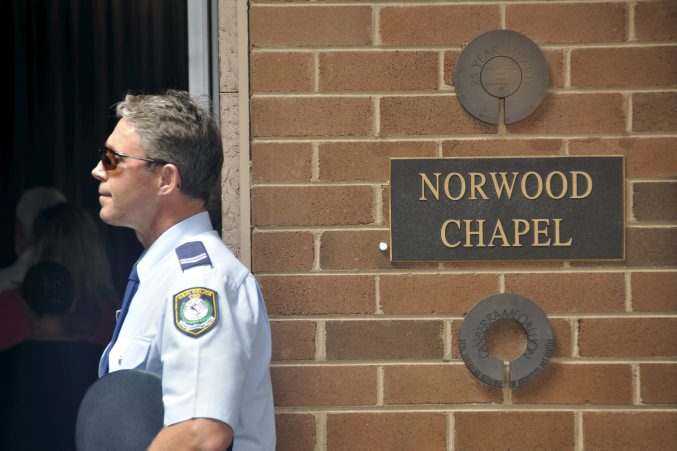
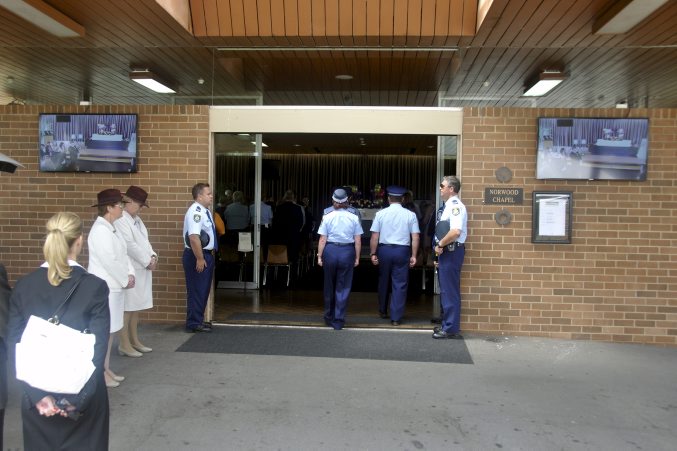
Funeral location: North Chapel, Northern Suburbs Crematorium, 199 Delhi Rd, North Ryde
Buried at: Cremated
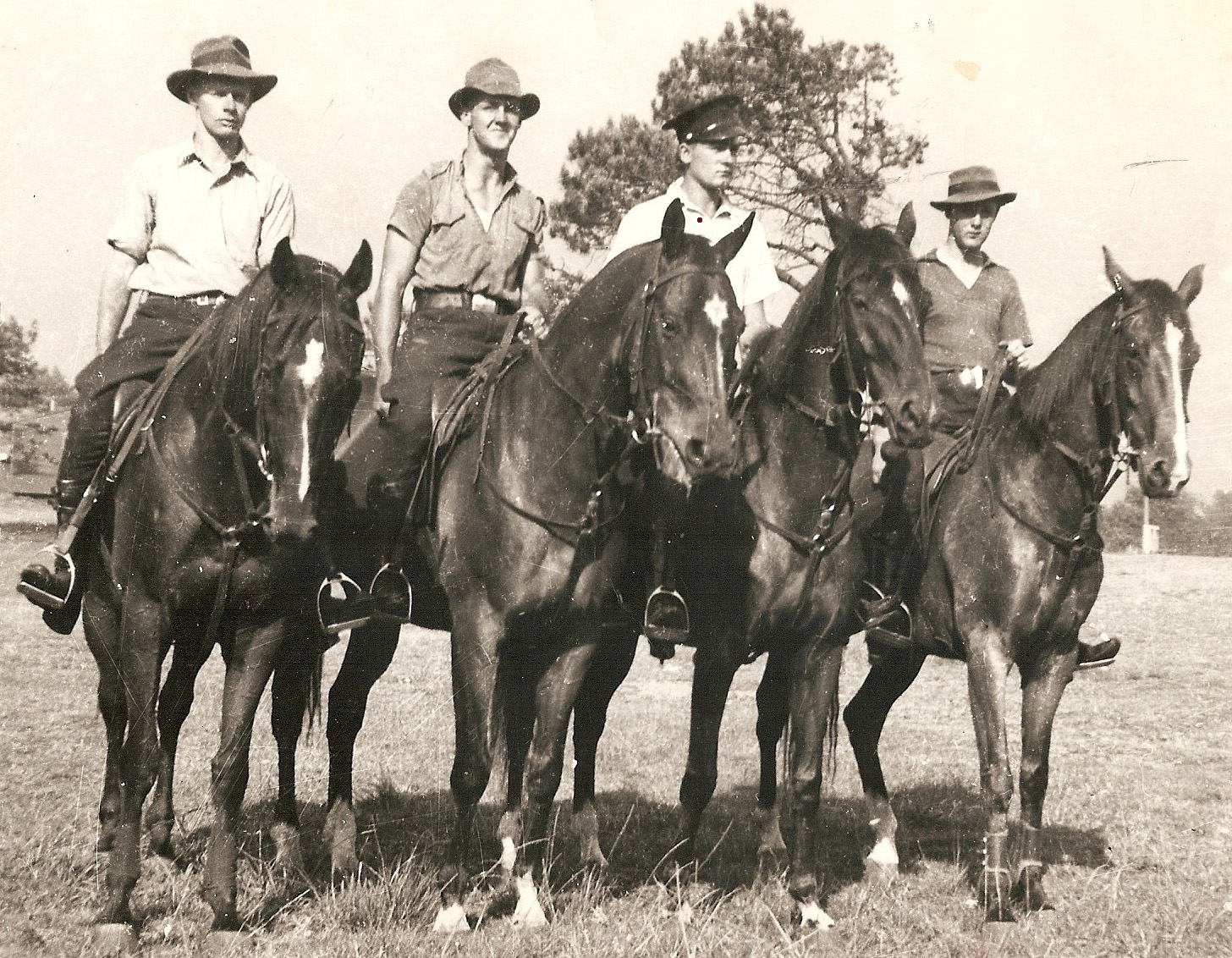
A photograph taken in 1946 of four cadets exercising police horses at Centennial Park. They are from left: John Nivision-Smith, Bob Shepherd, Ray Carpenter and Jack Bailey.
[alert_blue] Robert is NOT mentioned on the Police Wall of Remembrance[/alert_blue] * NOT JOB RELATED
SHEPHERD, Robert Charles (Bob)
APM, Churchill Fellow, B.A. (Newcastle)
Assistant Commissioner of Police (Retired).
Passed away peacefully on January 17, 2015.
Late of North Strathfield, Thornleigh, Newcastle, Corowa and Wagga Wagga.
Much loved and loving husband of Rose (dec).
Adored father of Susie, Stephen (dec), Stewart and Shelley, and their families. Fond brother of Barbara.
Aged 85 years
He always said he lived a good life: a life rich with love and adventure: a happy life alongside his adored Rose and his family.
Rest in peace.
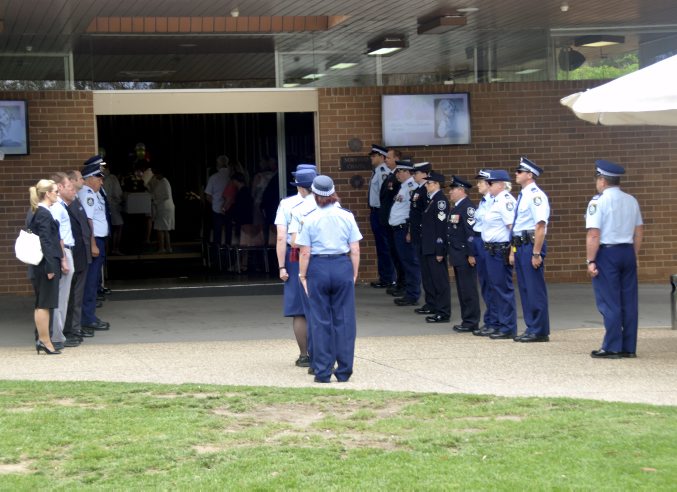
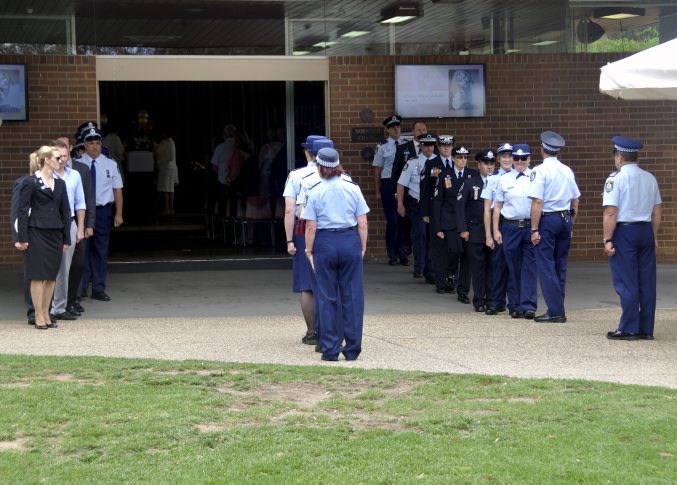
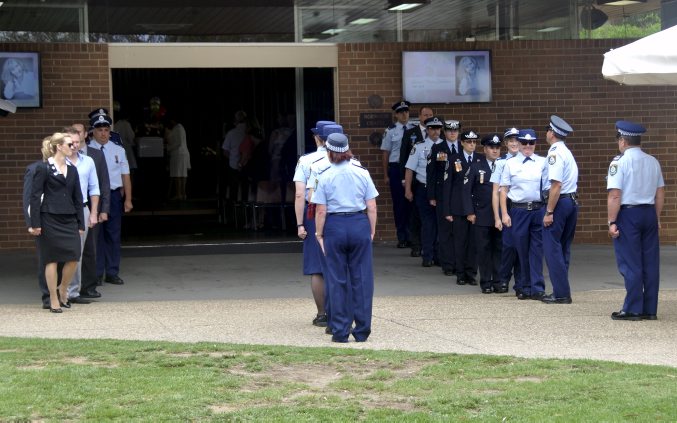
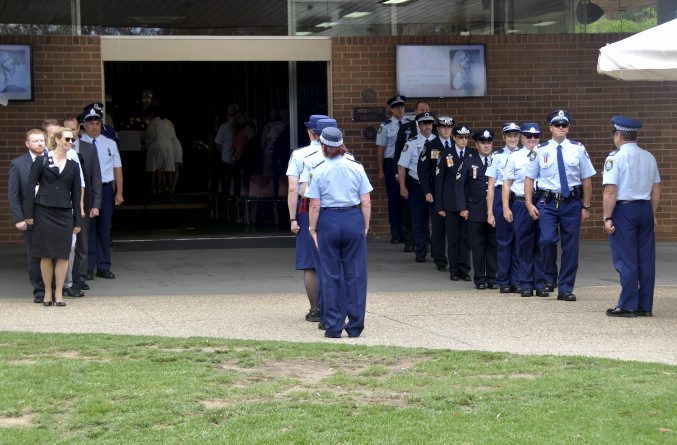
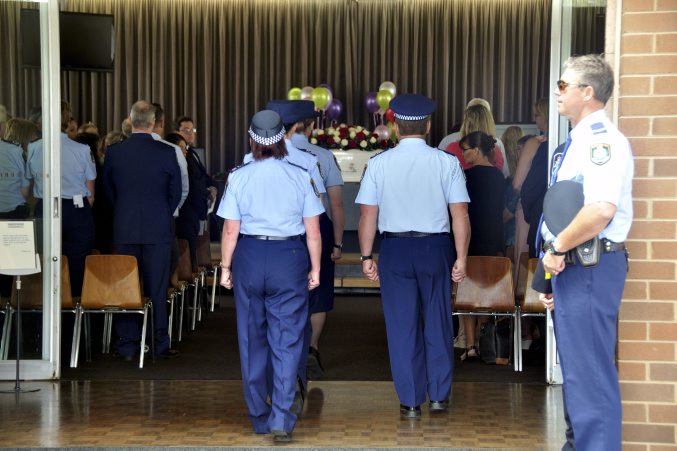
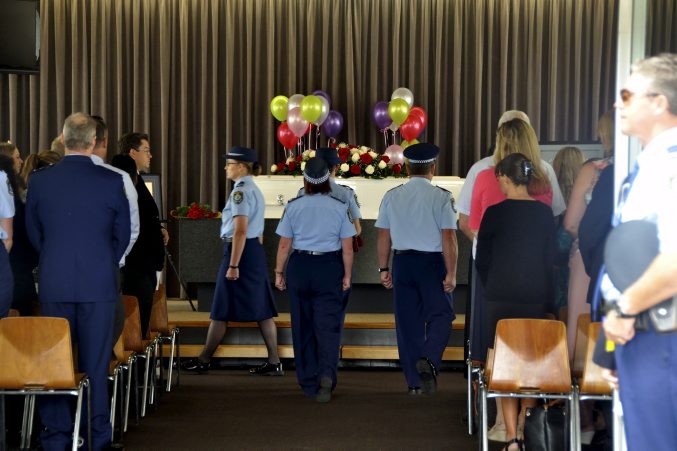
Bob’s family and friends are warmly invited to attend his Funeral Service to be held in the North Chapel, Northern Suburbs Crematorium, 199 Delhi Road, North Ryde on Friday (January 23, 2015) commencing at 10.15am.
Donations to the Police Wives and Friends in lieu of flowers would be appreciated and envelopes will be available at the service.
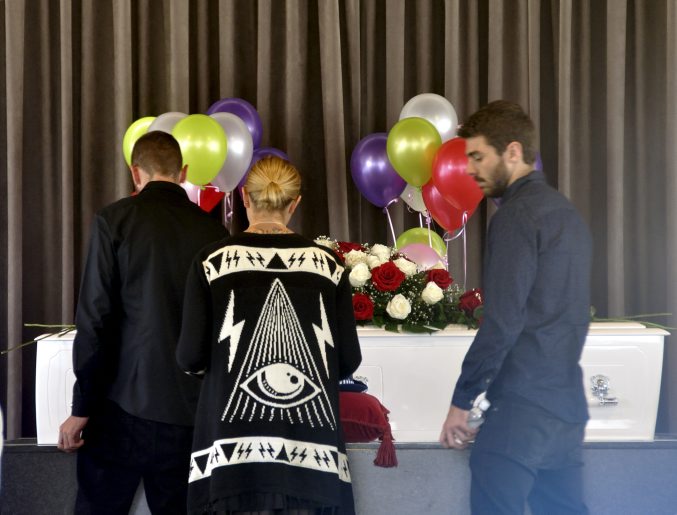
Please help the family celebrate Bob’s life by wearing something colourful.
Ann Wilson Funerals
An Australian Company
9971 4224
Published in The Sydney Morning Herald on Jan. 20, 2015
Tribute to Former Police Assistant Commissioner Robert Shepherd
TRIBUTE TO FORMER POLICE ASSISTANT COMMISSIONER ROBERT SHEPHERD
Page: 21793
Ms ANGELA D’AMORE (Drummoyne—Parliamentary Secretary) [12.21 p.m.]: It is with great pleasure that I acknowledge the distinguished career with the New South Wales Police Force of one of the residents of my electorate, Robert Shepherd. On 22 February 2010 I attended the South West Metropolitan Regional Zone medal and awards presentation ceremony at Burwood RSL in my capacity as local member and Parliamentary Secretary Assisting the Minister for Police to assist with presentation of New South Wales police medals and clasps to the New South Wales police medal.
The New South Wales police medal is awarded to sworn in members of the New South Wales Police Force who have completed 10 years of diligent and ethical service. The medal is awarded only after a detailed review of a nominee’s service history. A clasp is awarded for each subsequent five-year increment of service provided the appropriate award criteria are satisfied. I was delighted to present the medal to my constituent Robert Shepherd, a former Assistant Commissioner with 40 years distinguished service with the New South Wales Police Force.
Robert Shepherd has had an interesting career: He commenced his career as a police cadet between 1945 and 1948. He served at police headquarters, running around delivering mail, nearly knocking down all the senior public service staff, and was an assistant to the station sergeant with a variety of duties. He was then transferred to the depot stables, having never ridden a horse. He then learned to ride and assist in training the horses for the Police Musical Ride. He performed at various shows and tried to establish a new routine of standing on the backs of two horses, not always a successful act as he could not get the two horses to move off together, and police officers often fell between the legs of horses.
Robert then assisted traffic sergeants with their office duties at Central, Regent Street and Phillip Street police stations. As a senior cadet he transferred to the superintendent’s office at Petersham, where he performed duties as a shorthand writer and typist. In those days no mistakes were allowed and there were no erasures; pages simply had to be retyped. Robert moved up the ranks to serve as officer in charge of the Scientific Investigation Section at Newcastle, investigating murders, rapes, serious accidents and crimes from 1959 to 1974. In 1971 he was the second police officer in New South Wales to receive a bachelor of arts from the University of Newcastle and was the first New South Wales police officer to receive a Churchill Fellowship. The fellowship grant was to attend the Federal Bureau of Investigation [FBI] National Academy, and he was the first New South Wales police officer to attend the Federal Bureau of Investigation National Academy at Quantico, Virginia. This was followed by his attendance in 1972 at the FBI National Academy, graduating with distinctions.
On completing this course, and with the total support and financial backing of his family, he then toured police establishments at Baltimore, Philadelphia, Boston, London, Glasgow, Munich and Tokyo. New South Wales police service took him to both the country and the city, in both plainclothes and uniform. It is with great fondness that Robert recalls when he established a scientific investigation section at Wagga Wagga and the five wonderful years he spent there with his wife. Whilst based at Wagga Wagga he covered the vast Riverina area and also undertook the duties of lock-up keeper. These duties entailed the care and feeding of prisoners. He said that his wife fed the prisoners exactly the same food that they ate.
The next 15 years were spent in Newcastle as the officer in charge of the scientific investigation section. It was during this period that Robert sat for and qualified to be a detective. He was a detective sergeant in charge of No. 29 divisional detectives, which covered the area extending from Mona Vale to Palm Beach. Upon returning to the Sydney office of the scientific investigation section he played a prominent role in reorganising the managerial aspects of the section and later became an investigating officer with the newly established Police Internal Affairs Branch. He rose to second in charge of the Bureau of Criminal Intelligence and was charged with extracting and disseminating criminal intelligence. He also established an operational unit within the Bureau of Criminal Intelligence.
On 4 May 1984 Robert was promoted to Assistant Commissioner in charge of the Internal Affairs Branch. He retired on 4 May 1988 after 40 years service with the New South Wales Police Force. The Australian Police Medal was presented to him in 1986 at Government House. Some would say that Robert Shepherd was a controversial police officer. He was part of some groundbreaking police techniques, which are now seen as part of everyday police operations. At the time, in order to catch major criminals in the drug trade, his team watched a marijuana crop grow and when it was moved across the border into Victoria they alerted Victoria Police, who made the arrest. This arrest led to the conviction of the murderer of a Griffith whistleblower.
As a result of this police operation Robert Shepherd was heavily mentioned in the Age tapes. This involved the illegal tapping of telephone conversations and, as a consequence, he appeared in a number of royal commissions. At the time the press presented the activities as placing everyone at risk of invasion of privacy but when eventually he gave evidence he was able to show that only well-known criminals were taped and that it was not an invasion of citizens’ privacy. For the first 10 years after his retirement Robert continued to serve the community and extend his years of knowledge in the New South Wales Police Force by giving evidence at local courts, superior courts, royal commissions and even at a commission held in Canberra. Robert Shepherd rose to the rank of Assistant Commissioner and gave 40 years distinguished service. It is with great pleasure that I honour him today in Parliament.
Constable David John Donnelly 24/3/71 – 13/1/15
Registered Number 48748 – attached to Lachlan Local Area Command
It is with deep regret that we advise that Constable Dave Donnelly lost his battle with cancer and passed away in Condobolin yesterday evening. Our thoughts go out to Stephanie, Jake, Amelia and Jemima, and his extended family.
[divider_dotted]
Location of Church Service:
[divider_dotted]
David was also a member of this websites Policing Forum, the Thin Blue Line and was known as Dave2877 and “The Duck” .
He joined our Forum on the 13 June 2011 as a Civilian. On 26 July 2011 he was upgraded to the Wannabe Blue Group and on 31 August 2012 upgraded to Blue Group – being stationed at Parkes.
On the 5 June 2014 he changed his Username from Dave2877 to The Duck.
May David forever Rest In Peace
[divider_dotted]
David John HOBDEN
| 18/01/2015
David John HOBDEN
Victoria Police Force
Regd. # 23192
Rank: Senior Constable – Retired – Medical
Stations: pre mva: Force Reserve, Melbourne District Traffic and Patrol Division, Cranbourne Police Station, the Metro Traffic Operations Group and Echo District Traffic Operations Group.
post mva: recruiting, Youth Advisory Unit and as a Youth Affairs / Project Officer.
Service: From 29th January 1980 to 2005
Awards: National Medal – granted 31 July 1999
Born: 1963
Event date: 1990
Died on: 24 December 2011
Cause: injuries sustained from 1990 mva
Age: 47
Funeral date: Wednesday 4 January 2012
Funeral location: Victoria Police Academy Chapel, 1 View Mount Rd, Glen Waverley
Buried at: ?
[alert_green]David IS mentioned on the Police Wall of Remembrance[/alert_green]
David John HOBDEN
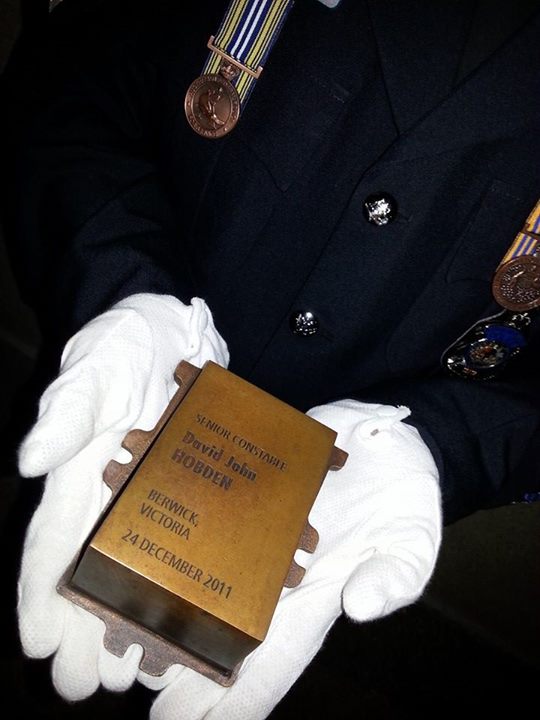
The touchstone of Victoria Police Senior Constable David John Hobden left the manufacturer in Melbourne this morning. Under AFP Federal Agent escort, the touchstone has just been handed over to NSW Police – Monaro LAC Commander, where it will be blessed at their dawn service at Queanbeyan Police Station tomorrow morning. The touchstone will then be installed into the National Police Memorial ahead of the national service tomorrow evening. We will remember.
On 30th October 1990, Senior Constable David HOBDEN was travelling on his police motor bike with the lights and siren operating in response to a call from D24 of ‘offenders on’ in a house in Endeavour Hills.
At the intersection of Heatherton Road and James Cook Drive, Endeavour Hills he was involved in an accident with another vehicle.
He was conveyed to the Dandenong Hospital where he was diagnosed with a broken leg and two broken ribs. As a result of the injuries he was off duty for 12 months.
During the following years the injuries continued to trouble him and he required ongoing medical treatment and a further thirty operations.
Eventually the discomfort he suffered from the injuries forced him to retire from Victoria Police in 2005.
David Hobden joined Victoria Police as a Cadet on 29th January 1980 and after graduating in 1982 he performed general duties at Force Reserve, Melbourne District Traffic and Patrol Division, Cranbourne Police Station, the Metro Traffic Operations Group and Echo District Traffic Operations Group.
Upon his return to Victoria Police after the accident he performed duty in a variety of non-operational roles including recruiting, Youth Advisory Unit and as a Youth Affairs / Project Officer.
The injuries he sustained in 1990 subsequently led to David Hobden’s premature death on 24th December 2011.
[divider_dotted]
Location of collision:
[divider_dotted]
Location of funeral service:
Australian Pensioner Funerals, Ph (03) 9428 1600
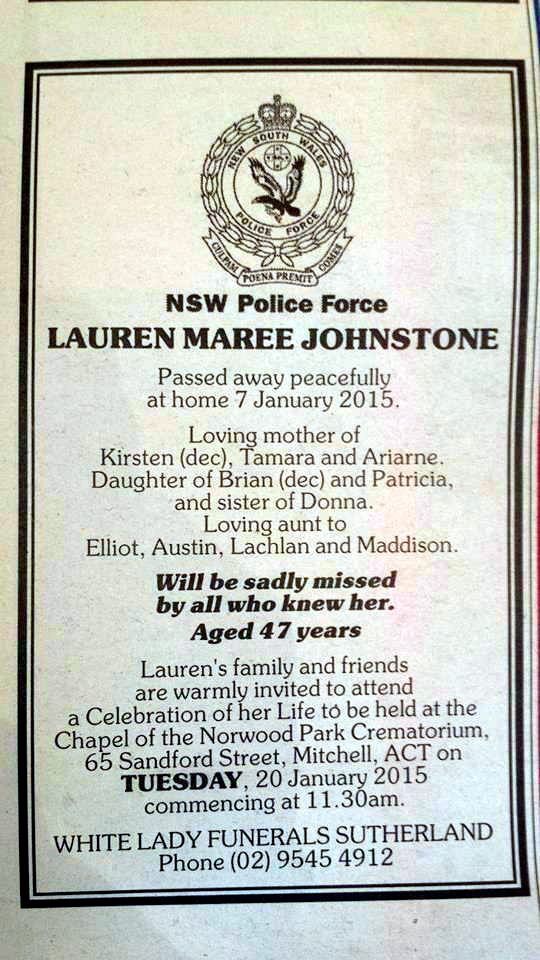
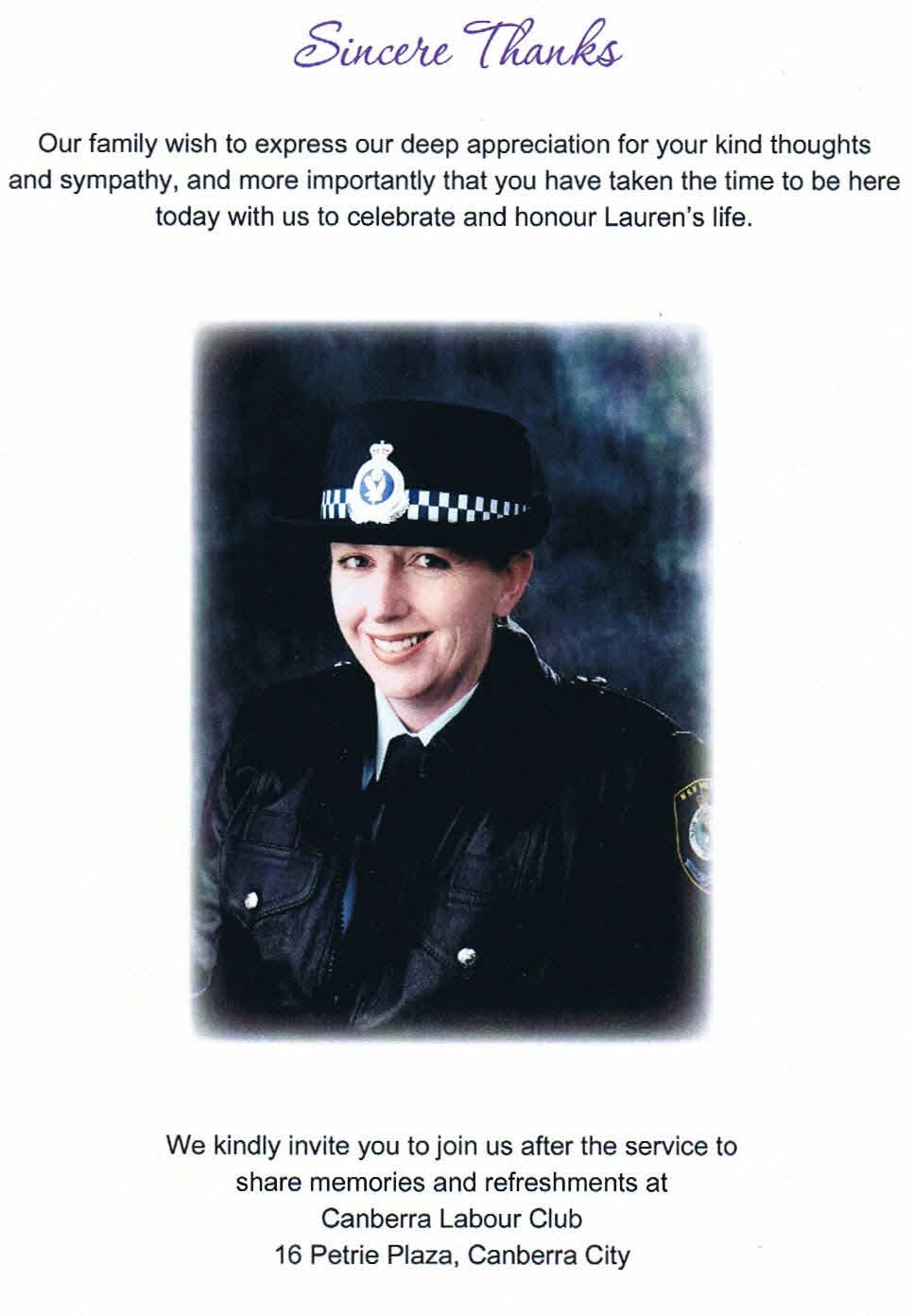
Lauren Maree JOHNSTONE
| 18/01/2015
Lauren Maree JOHNSTONE
NSW Goulburn Police Academy Class 272J
New South Wales Police Force
Regd. # 32346
Rank: Senior Constable
Stations: Flemington, Queanbeyan – Death
Service: From ? ? ? to 7 January 2015 = ? years Service
Lauren is NOT mentioned on the Police Wall of Remembrance *NEED MORE INFO
A special young lady who was part of our Police “Family”. She had a good heart and was very special to many of us!
Rest in Peace Lauren Johnstone!
Accidental overdose leads to calls for changes to ACT’s prescription monitoring system
Daniella White
Lauren Johnstone was excited about the future: she had a new partner and was counting down the days until her daughter’s wedding.
A former police officer, she had long battled with post traumatic stress disorder but she seemed to be turning her life around.
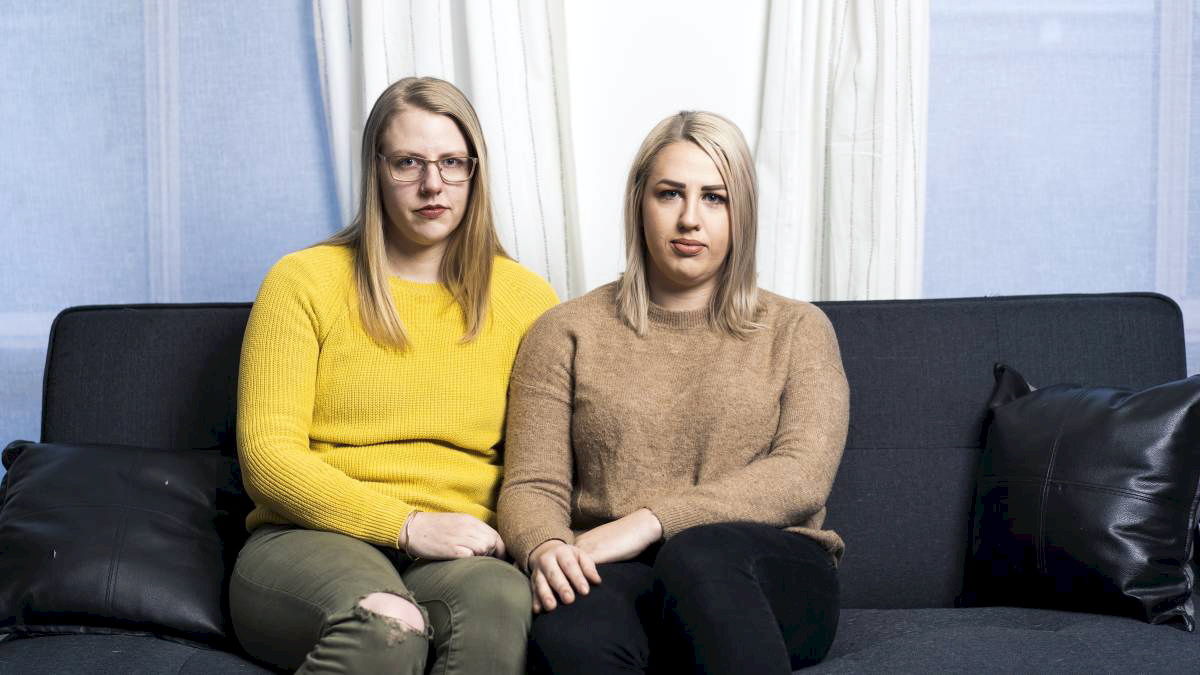
Ariarne Bunyan and her sister Tamara Farrell lost their mum to an accidental prescription overdose. Picture: Dion Georgopoulos
She was still on a number of strong prescription medications but had an agreement with her GP, which she was following diligently.
On January 7, 2015, her daughter, Ariarne Bunyan came home from work to find her dead, just a day after being discharged from a cosmetic surgery clinic.
ACT Chief Coroner Lorraine Walker recently determined Ms Johnstone’s death was an accidental overdose as a result of taking her prescribed medication as instructed, and aggravated byover-the-counter medication her doctors were not aware of.
She recommended changes to the ACT’s recently introduced prescription monitoring system, DORA, which, even if it was operational in 2015, would not have raised any red flags for many of the drugs Ms Johnstone was taking.
Ms Johnstone’s daughters, Ms Bunyan and Tamara Farrell, say their mother’s death showed the at-times blasé approach to scheduled medications, including over-the-counter drugs.
Crucially, one of the drugs Ms Johnstone took that could have played a major part in her death was an easily acquired over-the-counter sleeping pill called restavit.
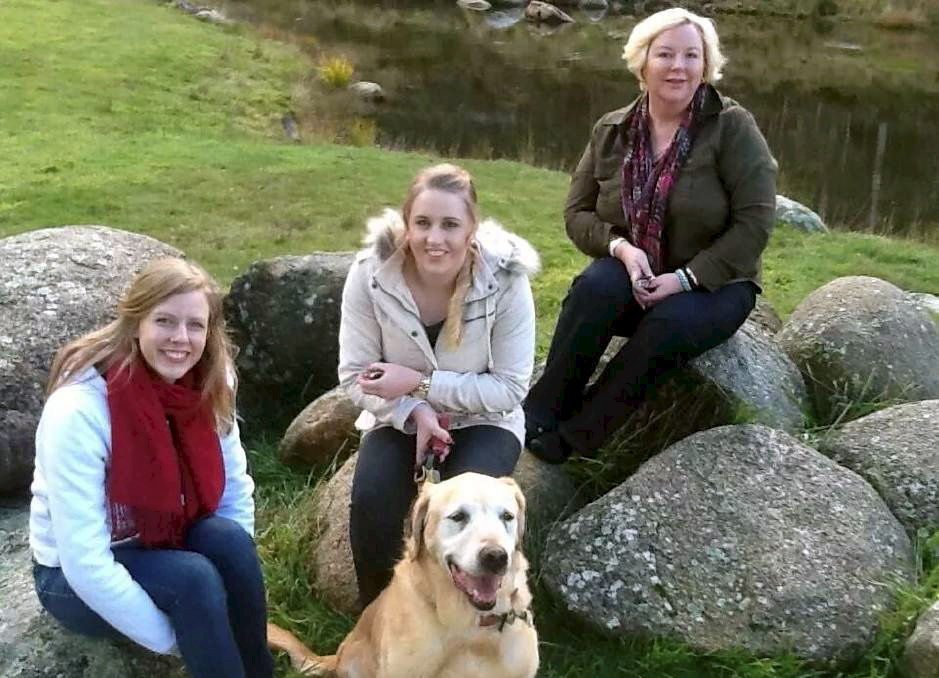
Lauren Johnstone with her daughters Tamara Farrell and Ariarne Bunyan.
Her family doesn’t believe Ms Johnston would have had any idea of the risk she was taking by combining the drugs she did.
On January 5, 2015, Ms Johnstone was admitted to a clinic where she underwent a planned facial surgery.
She was discharged after one night and prescribed endone for pain.
On her request, she was also prescribed her regular medications: imovane, valdoxan, tramadol and valium.
While the doctor called Ms Johnstone’s regular GP to consult, he was advised her GP was on vacation.
His only warning to Ms Johnstone about the drugs was the risk of increased drowsiness as a result of combining the medications with endone.
At the time, and not known to her doctors, she had also obtained the over-the-counter sleeping pill doxylamine and codeine.
While the cause of her death was determined to be the combined effect of prescription and non-prescription medication, it was not possible to determine which drugs were more significant contributors to her death.
Her family believe Ms Johnstone should not have been prescribed the drugs after surgery and, considering her history and health, should not have been deemed fit for it. They also believe she was discharged too soon.
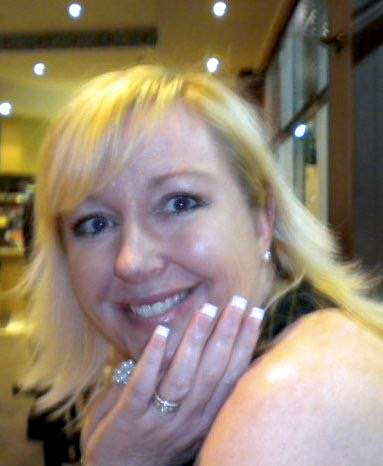
Lauren Johnstone.
“People have to start taking all drugs more seriously, including over-the-counter medication,” Ms Bunyan said.
“Instead of the warnings being on a tiny pamphlet with the tiny spot down the bottom that no one reads, it should be in bright red on the packaging.
“You can just go to your doctor and ask for certain medications – a lot of the time they’ll just do it.”
The current DORA system – introduced earlier this year – covers strong opioids like oxycodone, but not drugs like diazepam.
As a result of Ms Johnstone’s death, the coroner recommended the ACT Health Minister declare tramadol, sleeping pill doxylamine and diazepam to be monitored drugs.
She also suggested widening the scope of monitored medicines to include all schedule 3 and 4 drugs, or, alternatively certain prescription and over-the-counter medications that may have significant sedating effects when taken in combination with opioids or benzodiazepines.
Other recommendations included the clinics altering pre-admission forms for patients to list all over-the-counter medications they were taking.
The family welcomed the coroner’s recommendations.
They said considering drugs like pseudoephedrine were monitored closely across the country, those much more dangerous to people should be as well.
Even though such a system would be too late to save their mother, they believe it would save many others.
Former health minister Meegan Fitzharris said the government was considering the recommendations and would formally respond.
“Prescription monitoring is a challenge faced by all states and territories and it is an area where the ACT government has continued to make progress,” she said.
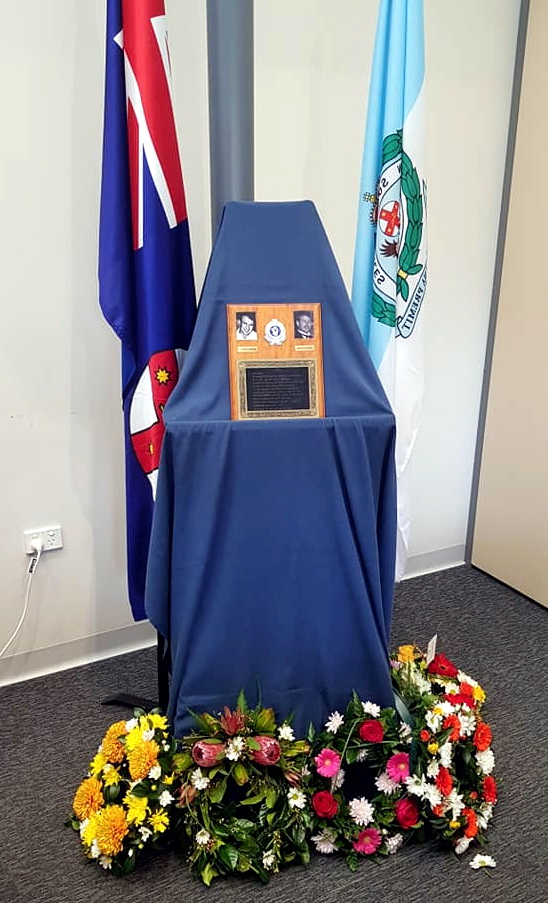
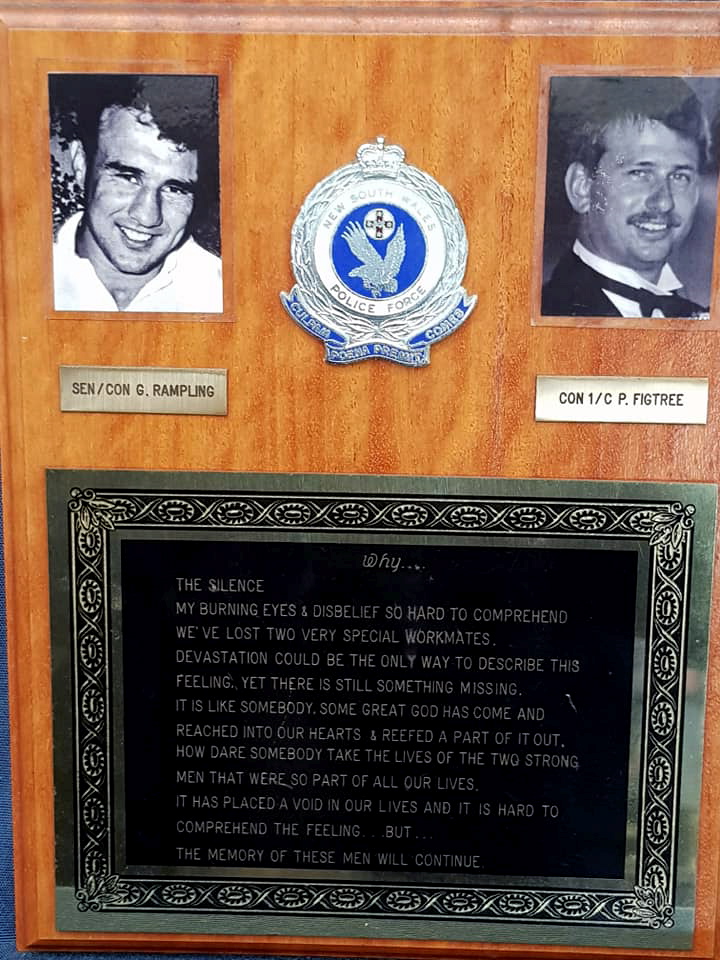
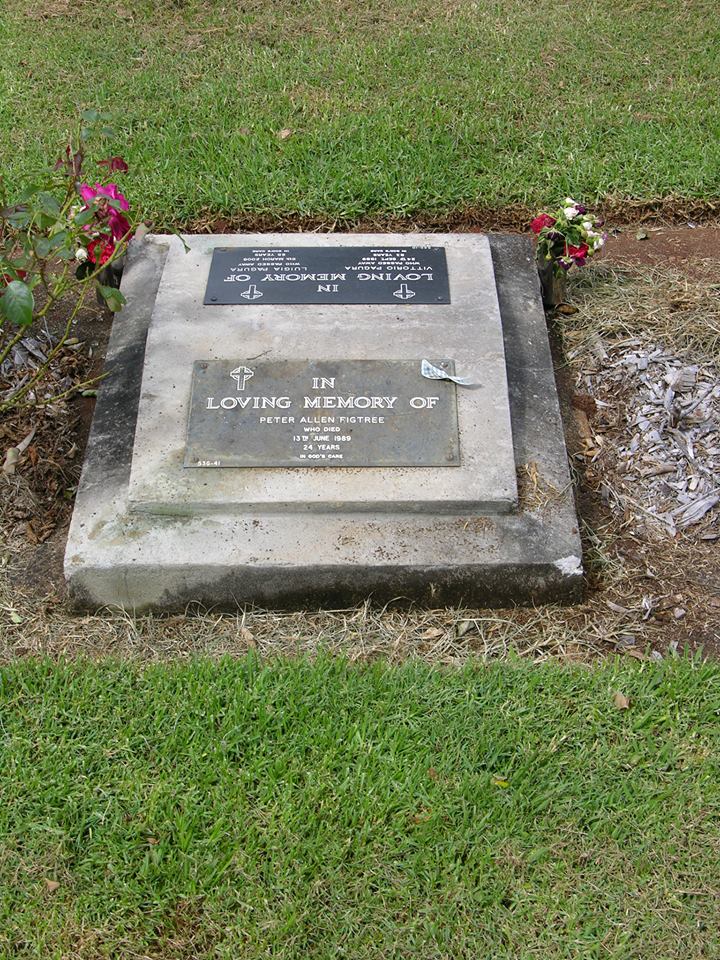
About 11.25pm on 13 June, 1989 police in Byron Bay commenced a high speed pursuit of a panel van. The pursued vehicle drove south in the Coast Road, followed by the Byron Bay Police vehicle, and into Ballina. As both vehicles continued south through Ballina, a local Highway Patrol vehicle driven by Constable 1st Class Beaver, with Senior Constable Rampling and Constable 1st Class Figtree as passengers, joined the pursuit. More police vehicles arrived to assist as the pursuit continued through the township of Wardell. About five kilometres south of Wardell the Ballina Highway Patrol vehicle began to draw level with the offending vehicle. As it did so, the driver of the pursued vehicle drove across to the centre of the roadway and clipped the front of the Byron Bay Police car. As a result, the police vehicle veered across the road and skidded in loose gravel before colliding with a power pole.
All three police were trapped for some time in the badly damaged police car and when freed were conveyed by ambulance to the Lismore Base Hospital. Constable Beaver recovered from internal injuries received, however Constable Figtree died before he reached hospital and Senior Constable Rampling died a short time later.
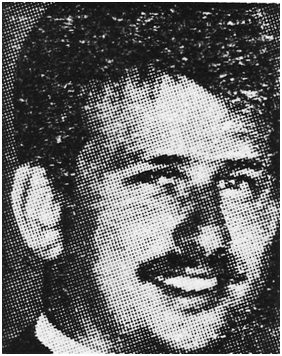
Senior Constable Rampling was born in 1959 and joined the New South Wales Police Force on 15 January, 1979. At the time of his death he was attached to the Ballina Detectives.
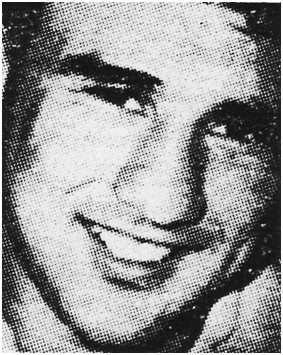
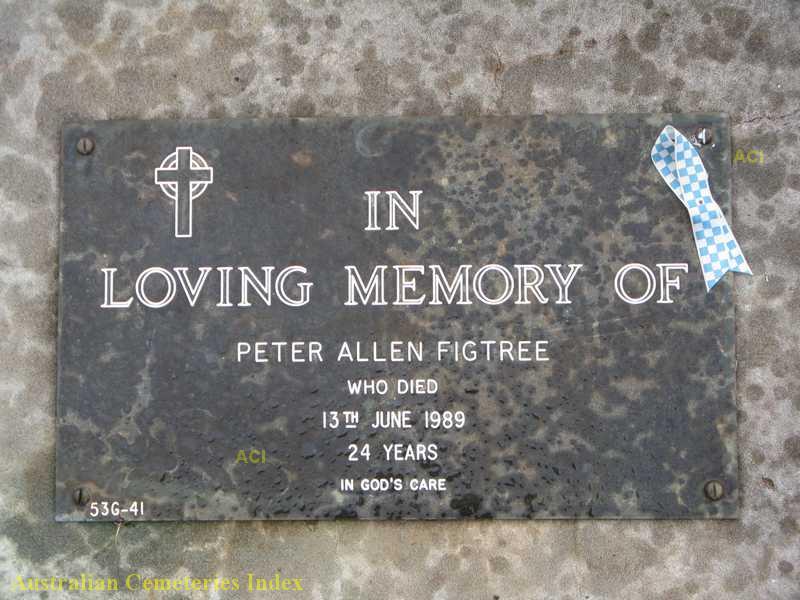
Constable Figtree was born in 1964 and joined the New South Wales Police Force on 28 November, 1983. At the time of his death he was attached to the Ballina Highway Patrol.
[divider]
Peter Allen FIGTREE grave plaque
[divider_dotted]
Deadly toll
By Jonathan Pearlman November 6, 2004
Alone in his patrol car, Chris Thornton had the police siren flashing as he chased a white sedan through Woy Woy.
Thornton, 35, a highway patrolman, had been in the force for 15 years. He was, his mother says, “the best driver I have ever seen”.
The reason for the chase that night in April 2002 is unknown. Both cars were seen travelling at high speed. Thornton was about 50 metres behind.
Meanwhile, Leonard Rowley, 56, an unlicensed driver, was driving to his local KFC to pick up dinner. He saw the first car flash past and judged – wrongly – that he had time to turn out in front of the patrol car. Thornton tried to avoid Rowley’s car but clipped the back, veered onto the wrong side of the road and hit a power pole.
Thornton died on the spot, which is marked by a permanent stainless-steel cross. Rowley later received a suspended two-year sentence.
“His life from the age of 12 was about helping people,” says Thornton’s mother, Freada Thornton. “He was in the surf club and he was there to rescue people and then he went into the force and he was doing the same thing.” His father, Barry Thornton, says: “He loved life. He had been in Gosford for 15 years and was so popular with the community there.”
Police pursuits are, says Barry, a necessary evil: “If they don’t catch the criminals there will be more deaths on the roads. The ones that they’re in pursuit of are the idiots that have done the wrong thing to start with.”
But pursuits have come at a cost to the NSW Police Department. Fifteen officers have died as a result of high-speed chases, beginning with the death of Constable George Boore in 1937.
Details provided by the NSW Police Association show a steady stream of fatalities involving cars and motorcycles. The full list of casualties is as follows:
Gezza J KtBelieve it or not, I was working the radio comms for this at Lismore station that night. Called the whole thing & did all the post crash co-ord. A horrible night shift with Sgt GJ Menzies, S/C Mark Burridge, Const’s Jordan, Gahan & Me.
*****
June 2019
30 year memorial – Senior Constable Glenn Rampling – Constable First Class Peter Figtree – A memorial service will be held at the Ballina Surf Club, Lighthouse Parade, Ballina on Thursday, 13 June 2019 at 1000hr to commemorate the 30th anniversary of the death of Senior Constable Glenn Donald Rampling and Constable 1st Class Peter Allen Figtree.
Senior Constable Rampling was tragically killed on duty on 14 June 1989 and Constable 1st Class Figtree was tragically killed on duty on 13 June 1989, both as a result of motor vehicle collision at Wardell, south of Ballina.
Attended this morning quite a moving 30 year memorial service for Glenn Rampling and Peter Figtree killed in a car chase near Ballina. May they rest in peace.
Photo by: Glenn Taylor
Photo by: Glenn Taylor
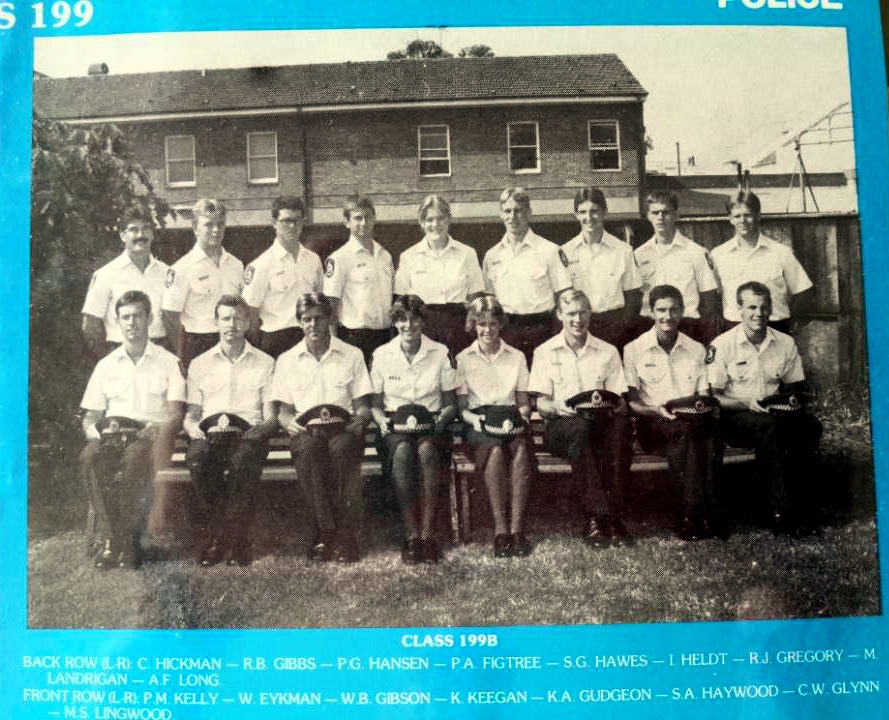
Photo from: Geoff Lowe Peter FIGTREE back row, 4th from left. Redfern Police Academy Class 199B
Photo by: Ken Medway
Kingsley Graham DUNCAN
| 18/01/2015
Kingsley Graham DUNCAN
New South Wales Police Force
Regd. # No info ?
Rank: No info ?
Stations:
Service: From ? to ?
Awards: ?
Born: ?
Died on: 27 December 2014
Cause: ?
Age: 86
Funeral date: 9 January 2015 @ 11am
Funeral location: The Gap Uniting Church, 1050 Waterworks Rd, The Gap, Qld
Buried at: ?
[alert_blue] Kingsley is NOT mentioned on the Police Wall of Remembrance[/alert_blue] * NOT JOB RELATED
[divider_dotted]
With regret I advise the death of Kingsley Graham DUNCAN, 86 old, former Regd. No. U/K, a non-member of Tweed Heads.
Kingsley passed away on 27/12/2014 and his funeral is proposed to be held at 11am on Friday 9th Instant at The Gap Uniting Church, 1050 Waterworks Road, THE GAP, QLD.
Funeral Service location:
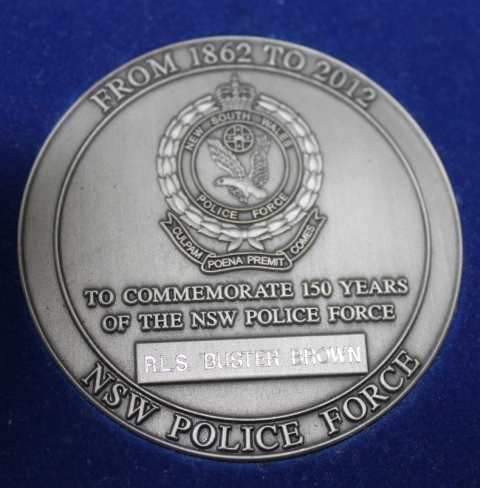
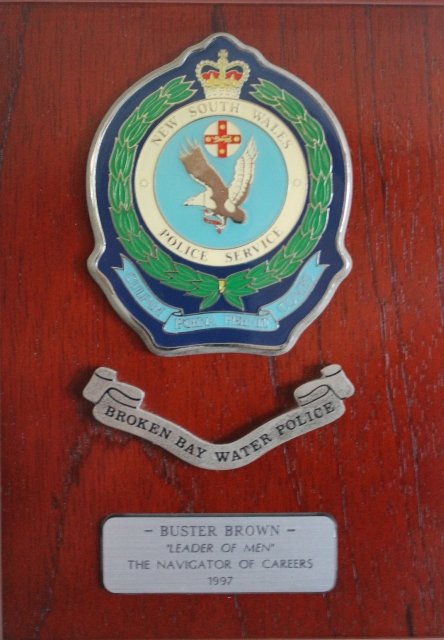
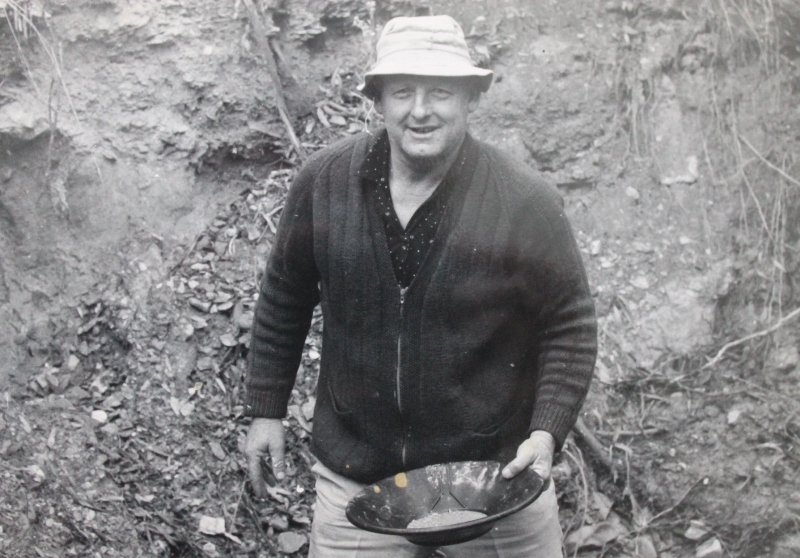
Roper Lars Scott ‘Buster’ BROWN
| 18/01/2015
Roper Lars Scott ‘Buster’ BROWN
New South Wales Police Force
Regd. # 7585
Rank: ?
Stations:
Service: From ? to ?
Awards: Queen’s Commendation for Brave Conduct granted on 6 June 1975 ( Rescue from a sinking yacht )
Australian Sports Medal – granted 27 February 2001 ( Awarded life memberships for outstanding contribution to our sport )
Born: Monday 24 November 1930
Died on: 25 December 2014
Cause: ?
Age: 84
Funeral date: Sunday 11 January 2015 @ 2pm
Funeral location: South Curl Curl Surf Life Saving Club, Carrington Pde, Curl Curl
Buried at: ?
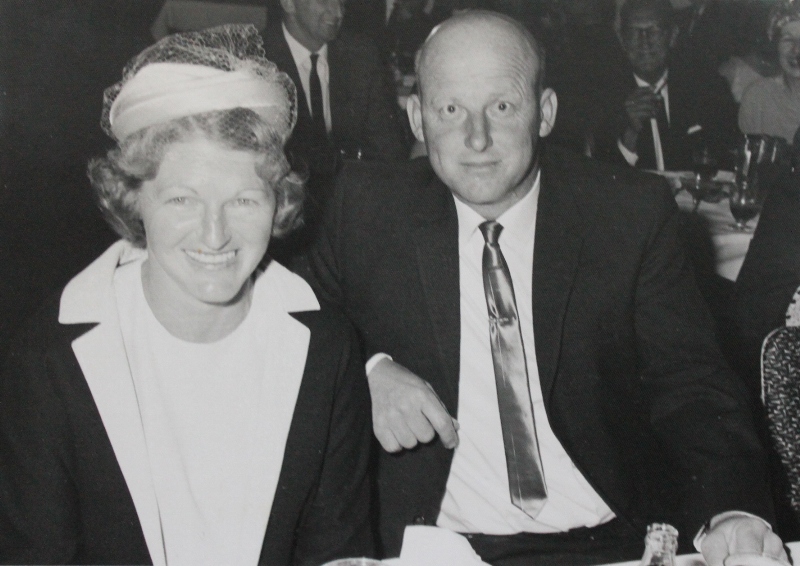
Buster BROWN
Buster BROWN
Roper is NOT mentioned on the Police Wall of Remembrance * NOT JOB RELATED
Roper Lars Scott ‘Buster’ BROWN, 84 old, former Regd. No. 7585, a Veteran member of the Central Coast Branch of the RPA.
Buster passed away on 25/12/2014 and his funeral is proposed to be held at 2pm on Sunday 11 January 2015 at the South Curl Curl Surf Life Saving Club, Carrington Parade, CURL CURL.
Location of funeral service:
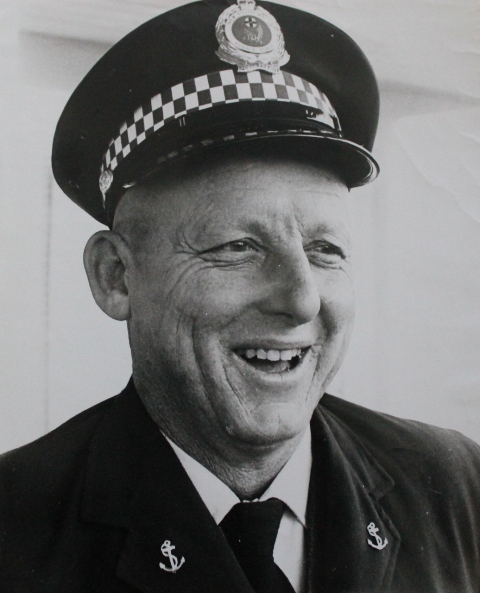
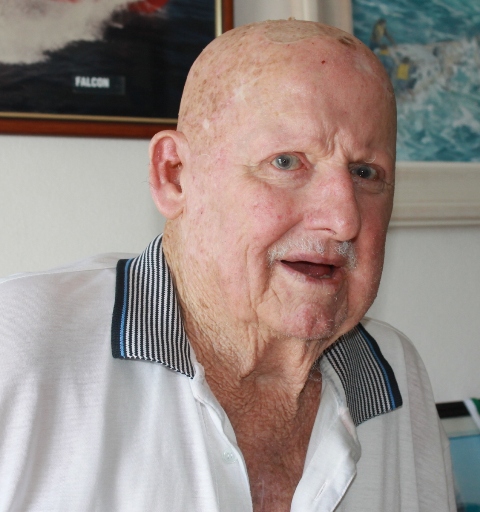
Roper Lars Scott (Buster) Brown Q.C.B.C.
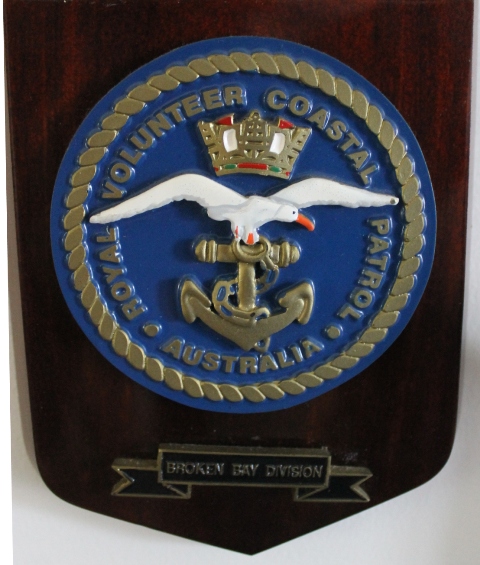
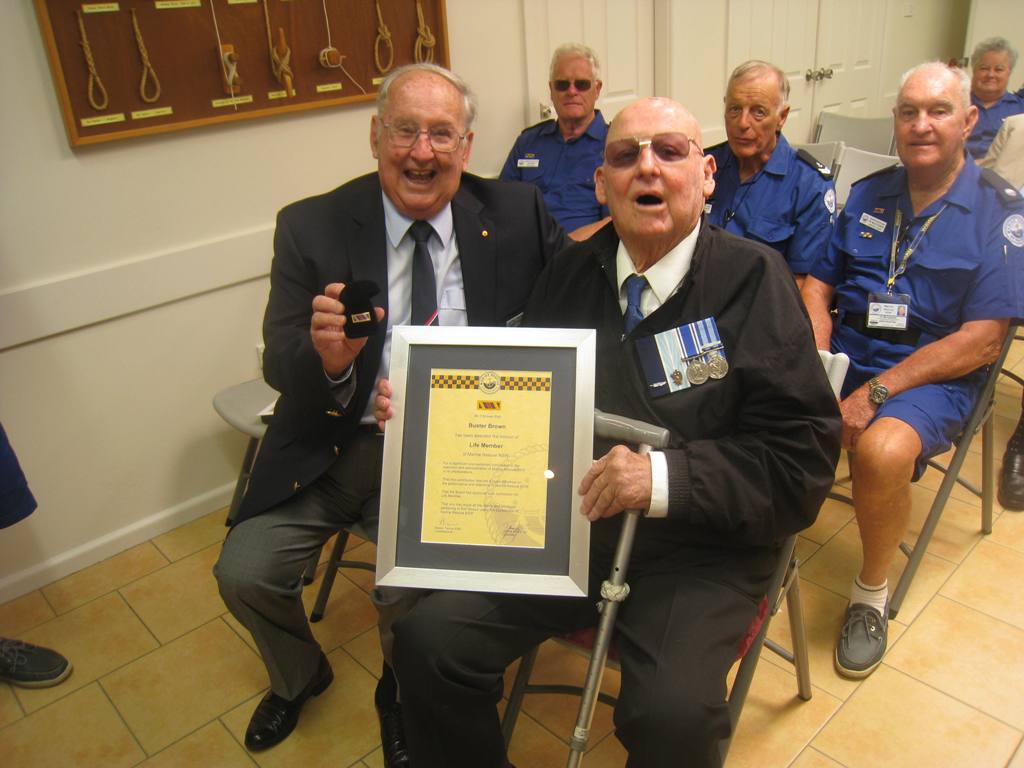
The gentleman who worked for years to ensure Pittwater has a trained team of Water Police-people was also a champion in Surf Boats at Curl Curl when younger. A member of the Volunteer Coastal Patrol, for which he received a Life Membership just a few weeks ago, one of 7 Life Memberships, this soft spoken man is a no frills individual who has spent his life serving others.
When and where were you born?
In the Rachel Foster Hospital in Sydney, 1930.
Where did you grow up?
I lived in Werribee for a short couple of years and then we shifted to Willoughby. We lived there until the start of the war (WWII) and then the whole family of kids were migrated out to the western side of Sydney and settled at Lidcombe. We lived there for the rest of my hoodlum life – or childhood. I lived there until I met my missus and got married and then we shifted to Harbord.
What was Lidcombe like during WWII?
Full of Yanks and not much else. Now it’s full of Arabs and Afghanis. I took my grandkids up there a couple of years ago to show them where grand-dad lived and there wasn’t a word in English apart from ‘Police’ on the police station. On one window of a shop it said ‘we do not talk Australian and we are not Australian’. That’s a great mindset, isn’t it?
Do you remember the day peace was declared?
Not really, I was 15 when the war ended and my main interest was looking for work. All the jobs were given to Returning Servicemen first.
Where did you go to school?
Lidcombe Public school and then Homebush High School.
What did you do when you got out of school?
I went and worked in a foundry at Bankstown Foundry as a Jobbing Moulder making engines from iron and steel, occasionally using brass; castings and engine parts. I think it’s still there now – on Parramatta road at Auburn.
I served my apprenticeship there, which took about seven years for a Moulder in total. I was going to do Metallurgy but didn’t have enough education. When I finished the trade course I got an offer to go to Queensland and work in the sugar cane industry.
I went for the season cutting sugar cane in Coumala and then went on to work in and around the bush; everything up there is in a system where there’s a season – there’s a season for ringbarking, a season for fencing etc. I did the lot and worked up there for about 12 months and that was enough for me, I found out I didn’t want to be a farmer and came back home.
I went back to the Foundry as they’d said ‘come back here, we’ll always have a job for you’ – then about five minutes later it was a case of’ you were the last to start, you’re the first to go’. Things were getting a bit bad. I got another job at another foundry in Regent’s Park where they were working the kind of set up foundries had in the 1930’s. it was a really slow process. They were doing large castings, making large wheels for trains and the normal rate for these was two and a half for one day and two and a half the next.
I’d learnt casting and its foundations and was making the five in one day. The shop steward came over and said “you’re working too hard, go back to two and a half a day.”
So that didn’t satisfy me so I started looking for other work.
My father was in the coppers and he said “Don’t ever join the Police Force it won’t suit you.” so I went and put my name down to join.
I passed the Entrance Exam and was one of the last ones to get trained out at Penrith in the old building they had at the Air Force base. We were up there learning law and all the other stuff you had to know, this was 1953.
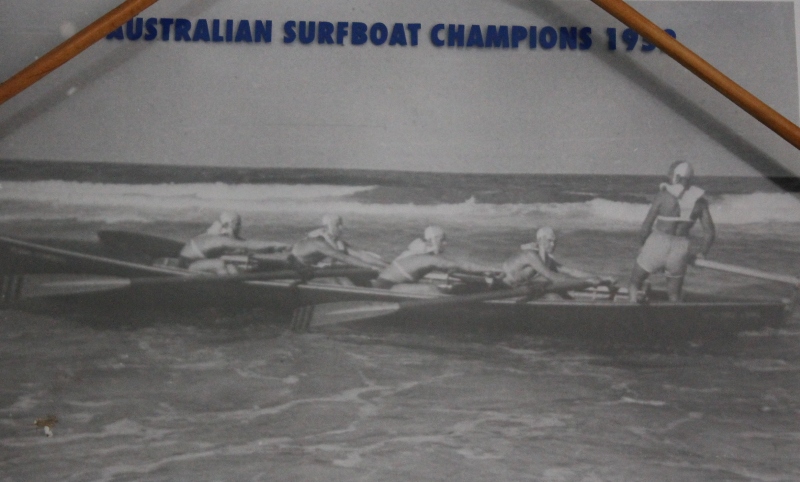
That year was a big year, 1953. I’d gone into the South Curl Curl Surf Club when I was 15 and was in the rowing. I worked my way up through the B Grade to A grade.
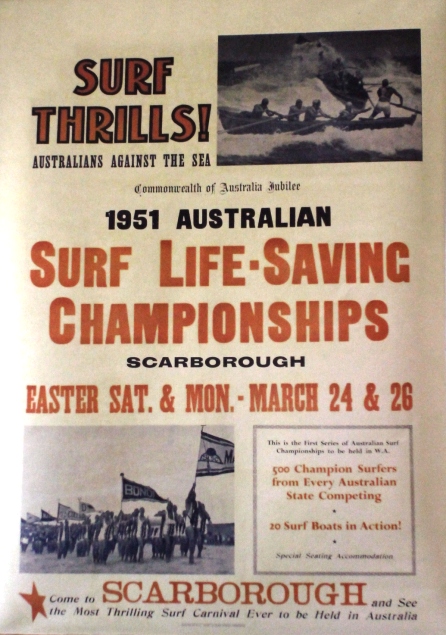
In the first year we did a trip to Western Australia on the back of a truck. It was very exciting – every time we came to a waterhole on the trip across we’d put the boat in and have a row practice. We went to Scarborough for the championships that were on there and we came second.
That same year I met my missus, she lived in Harbord. We went around for a year or two and finally I married her in 1955.
with wife Agnes
The next year, 1954, I was still rowing A crew, and we won the National Title. Here we were, the first team from Curl Curl, to ever win a National title.
South Curl Curl – Boat Crew: Sir Adrian Curlewis was Patron of the crew’s Jack Wilson surfboat.
When did you start with the Royal Volunteer Coastal Patrol?
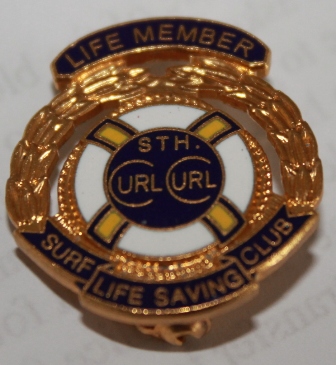
1960. I continued to row for another season but we didn’t have the spirit that we’d had before, we couldn’t get interested. I did become a Life Member there though. I won the Honour Blazer which was the highest ranking and an indication of all the extra things you could be involved with in the Surf Club. My eldest son, incidentally, won the same award twenty years later. We were the first father and son in the club to do this. Now my grandchildren are involved so they’ll be keeping the name going in the club.
What, to you, is the best thing about joining a Surf Club?
It was the greatest part of my life. I didn’t have a family life because my brother had polio. My father and mother had their whole time taken up looking after him. So I stayed at the Surf Club then we rented a shack a few streets away from the Surf Club and I lived there mainly for a year or two. A president of the surf club and his wife became like my mother and father, they adopted me, and it was like nothing ever happened except in the Surf Club for a few years there.
It wasn’t until the 1960’s when the Volunteer Coastal Patrol invited me to be a guest speaker. I was in the coppers by then and they were officially an auxiliary of the Water Police at that time. They wanted to know a bit more about what we did.
You see during the war the Water Police was practically down to nothing, all our boats were pinched by the Yanks, and the Harbour was patrolled by the VCP. They looked after the harbour (Sydney Harbour) and in fact dropped a depth charge on one of the submarines that came here during that time.
That night that I went to speak I didn’t have a beer, I thought I’d wait until I’d finished my talk. Just after I finished my speech a fellow came with a note looking for Constable Brown. That was the night the Viscount Airliner crashed in Botany Bay.
I had to go report to work straight away, in my dinner suit, and I was in the Flood-Boat section by then. We took our Flood Boats up to Liverpool- we didn’t know where the plane had crashed, they knew it had crashed in the water but they didn’t know whereabouts exactly. So we went up to Liverpool and came right down the George’s River.
By the time we got to Tom Ugly’s Bridge they’d found the aircraft – it was right in the middle of Botany Bay. We took our boats over there and started – in those years the Navy was supposed to do any body recoveries from civilian aircraft. The first few divers that went down from the Services came up spewing in their face masks, they couldn’t handle it.
Their Senior bloke got embarrassed, went crook at them and said “I’ll show you what to do.” And he went down, and he came up spewing in his face mask.
So that really put our divers on the map because of course when everything and everyone else fails the coppers get the job. We worked there for a week to ten days recovering bodies – every person was in a terrible state – and we had to recover every part, convey them to a Morgue tent set up near the end of the main runway. It’s amazing how they identified everyone – they even went to people’s homes to collect hair from combs and the like to so they could identify all correctly. I recall one reporter who visited us said “these men will never be the same again.”.
Viscount Wreck In Botany Bay AIRLINER SPLIT OPEN IN CRASH. SYDNEY, Friday.—Police skin- divers late to-day found the fuselage of the Ansett-A.N.A. Viscount airliner which crashed last night in Botany Bay, killing 15 people. Nine of the 11 passengers were from Canberra. The skin divers said the fuselage was lying in about 25 feet of water and split open “end-to-end.”
Bodies Found. The divers said bodies could be seen inside. The bodies of a man and woman floating near the wreckage were recovered late to-day. The Minister for Civil Aviation, Senator Paltridge, said in Melbourne a special board would hold a public inquiry into the crash. A spokesman said to-night the Department of Civil Aviation did not know yet whether the plane exploded in mid-air. He said injuries to the bodies recovered could have been inflicted by an explosion or by the impact of the aircraft hitting the water. The Viscount, owned by T.A.A. but on charter to Ansett-A.N.A., left Kings-ford Smith Airport last night at 7.17 p.m. The plane’s pilot, Captain S. Lindsay, was reported to have been ordered to fly over the sea to avoid thunder-storms.
Three minutes after take-off Capt. Lindsay radioed at 5,000ft. and gave his call sign: “Tango Victor Charlie,” and added “Thank you.”
At 7.22 p.m., all communication with the airliner was broken. Airport officials immediately brought emergency procedures into operation and informed police. After a radio appeal, reports were given of an explosion seen over the sea off Malabar.
The Prime Minister and Dame Menzies said in a message of sympathy yesterday,
“We have been shocked by this appalling air tragedy and send our pro-found sympathy to the bereaved families. We are deeply moved by the sorrow of our fellow citizens in Canberra.”
Viscount Wreck In Botany Bay AIRLINER SPLIT OPEN IN CRASH. (1961, December 2). The Canberra Times (ACT : 1926 – 1995), p. 1. Retrieved from http://nla.gov.au/nla.news-article105854369
The Viscount crashed on November 30, 1961 killing the 15 people aboard. Nine were from Canberra. FORTNIGHT DELAY IN INQUIRY. (1962, May 23). The Canberra Times (ACT : 1926 – 1995), p. 9. Retrieved from http://nla.gov.au/nla.news-article13057573
That’s a horrendous job Buster.
Yes, I think it will tell on me for the rest of my life. It’s ancient history now.
At any rate, from then on I maintained an interest in the VCP. I was stationed at Dawes Point at Circular Quay – I did ten years there as an apprentice, got to know everything there was to know. When I got to be a Sergeant they said ‘well you can jump off – you’re the last to be promoted, you’re the first to go.’
I’d heard this story before.
I was transferred to Mosman. Mosman was like a penal servitude station. the blokes there had all lost interest in the job, they were all sent there for penal servitude and they couldn’t have cared less. Demoralised.
Buster BROWN
I’d been on Water Police duty for ten years so I had to get out the rule book and learn the rules of General Duties Policing, which didn’t come too easy. None of the blokes on my shift could drive a car, they were all too junior. None of them could work the switchboard. So I had to run around with a couple of probationary constables on one hand and a rule book in the other.
It carried on like this for about six months and I was fed up with it and about too put in an application to join the Maritime Services Board. I had the Maritime qualifications and was sick of the job I was doing.
The night I was due to put in my resignation one of the blokes on the shift didn’t come to work so I sent over to Manly coppers and asked them to go around and see him, but he thought it was his day off and didn’t come to work – it was the worst day of my life in some ways. There was a bureau –cyclist, a highway patrolman they call them today, he’d fallen off his motorbike and broken his leg – I had about four other serious accidents that shift. I had a lot of paperwork, which you get in the police force, traffic enquiries, all sorts of things, and as I was getting into this my transfer to Collaroy came through. I hadn’t even applied for it.
I shut up the shop for the nightwatch and at three o’clock in the morning I was still typing to get the backlog of work done and the Night Officer tour, in our job you have a Night Officer who goes around to all the stations to check the prisoners and all your work, this that and the other. He said ‘what are you doing here? You should be home by now.’ I explained what a day I’d had to him and so he sat down at another typewriter and started helping me. He worked with me for about two hours and by this time it’s breakfast time so he drove me home, as I’d missed my bus, and I had to start at Collaroy at eight o’clock!
What was Collaroy like ?
I worked on the motorbikes and sidecars – I did summons and warrants. It was a great station to work at for experience because on a Friday night two of us would put the motorbikes in the shed and work in a car together. The bloke I was put with was a fellow called Jack Hammond and he was a brilliant tactician I learnt a lot from him.
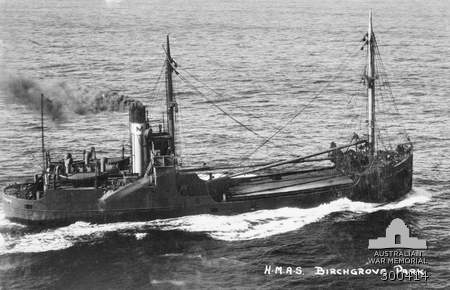
We copped fatal accidents by the score. We had a shipwreck one week; the Birchgrove Park. The Birchgrove Park was a collier that used to carry coal between Newcastle and Sydney. When they got to Broken Bay they thought they’d shelter in there for a while but it was just as bad in there so they pushed on.
When they got off Avalon their load shifted and upset the balance of the boat, she would have been about 180 foot I guess, and she tipped over and sank about a mile and a half off Avalon. That would have been 1956.
COLLIER SINKS NEAR SYDNEY HEADS. SYDNEY, August 2. – Nine men were drowned, one is missing and four were saved from the collier Birchgrove Park, which sank within sight of Sydney Heads today. DESPERATE;. Shivering crew members in lifejackets huddled on the listing collier’s deck for 10 minutes before the 640-ton vessel keeled over in pitch darkness. Their S.O.S signals were sighted at 2.45 am., minutes before they were ordered to abandon ship and leap into icy, raging seas. The survivors dived into the water and swam towards a half-submerged lifeboat which was torn from the ship’s side. A third survivor joined them, but died in the lifeboat three hours later as his companions fought to reach shore. The men finally were washed ashore at Lobster Bay, 27miles south of Gosford.
They are Carl Olsen, 35.fireman, of Matraville, Sydney, and Neil Stuart, 29, able seaman, of Manly, Sydney. Their dead companion was the ship’s cook, Charles Camilleria, 49.of Pott’s Point;, Sydney. Olsen and Stuart staggered ashore at Lobster Bay and were rescued and taken to a shack by a local fisherman.
CARGO SHIFTED. Tonight, Olsen said the cargo of 500 tons of coal began to shift as soon as the collier left Newcastle late yesterday. He said the listing was noticed a few miles from Newcastle, but little notice was, taken at the time because the collier, when loaded, always listed to starboard. Olsen said the shifting of the cargo became more pronounced during the night and eventually it became impossible to control. He said the skipper, Captain Laurence Lynch 37, finally called: “All hands clear” as the ship was about six miles off Sydney Heads. The 14 crew members had donned lifejackets waiting for the last moment to leap overboard. He said that as the ship began her last dive the crew Jumped overboard. Olsen said some men grabbed pieces of timber and tried to hang on. He said it was impossible to lower lifeboats because the ship was listing too badly.
COILLIER SINKS NEAR SYDNEY HEADS. (1956, August 9).
1939-07-24. AERIAL STARBOARD SIDE VIEW OF THE COASTAL COLLIER BIRCHGROVE PARK PRIOR TO HER COMMISSIONING INTO THE RAN AS AN AUXILIARY MINESWEEPER. (NAVAL HISTORICAL COLLECTION) (ALSO FORMERLY P0444/214/179) image: 300414, courtesy AWM
Diver’s body found. SYDNEY, Sunday. —The body of a skindiver who disappeared on March 19 this year while diving to the wreck of the collier Birchgrove Park, three miles off Avalon Beach, was recovered today.
It was found by a team of skindivers from the Canterbury Underwater Club, which was diving to the wreck during the weekend. One of the divers, Michael Kenny, of Bundeenan, said the body had been found lying half-covered in sand alongside the wreck near the propeller. The divers had returned to the surface and got in touch with Sydney Water police, who had requested that they recover the body. Police have yet to announce the name of the dead man. Diver’s body found. (1972, May 1). The Canberra Times (ACT : 1926 – 1995), p. 9. Retrieved from http://nla.gov.au/nla.news-article102018864
Where were the fatal accidents occurring then?
We worked an area from William Street Brookvale out to Palm Beach because Avalon station didn’t work of a night and our left hand boundary was Hornsby. The Wakehurst Parkway – there were quite a few accidents there. One night I had the worst accident while working at Collaroy station – there were three killed and five injured, a car rolled over a motorbike – there’s too much blood and guts in this line of work, or so I found.
We handled situations like a bloke slaughtering a pig in his back yard and some of the most amazing cases that you could come across. A woman died in Brookvale and was dead six weeks before anybody found her. She was fly blown and was quite smelly work tending to her. Somebody had to do it and everything fell on the copper’s shoulders.
Did they offer any kind of counselling in those days Buster?
Counselling?! (laughs); It’s funny you should ask that; I don’t think they’d heard of it then. The first counselling I ever remember was when they were doing the Milat murders and interviews; he was the backpacker killer. The police that were doing the searching for the people in the scrub were counselled every three or four hours. That was the first we’d ever heard of counselling.
When we had a bad job we would finish the work and our shift and go to the pub and have a couple of beers. No one would believe some of the case that we had to handle, it was horrendous at times.
I remember one bloke who had put an elephant gun into the roof of his mouth and I had to pick up all the parts – there was quite a lot of them over the years, that kind of job you had to attend.
There were other kinds too though; I got a warrant for a bloke who lived on the southern end of Mackerel. I got out the boat and went over to where his house was, he had a shack up there, up the top of the hill. When I got there I told him to pack his pyjamas and he said ‘would you mind if I had a plonk before we went?’ ; a plonk is a glass of wine, the heavy version. So I said yeah, alright. I didn’t realise he was already full of it and one more was enough to knock him over.
I had to carry the bugger down the cliff! Very exciting.
When we had Prince Charlie out here I’d give him a trip on the bay – the Army had sent him out to have a look at Currawong. We had another Royal visitor – they put her on Boomerang, that big yacht that the mouth organ people used to own
Frank Albert or the Allan’s Music people ? Both had a yacht called ‘Boomerang’…
The Allan’s people. That yacht was completely rebuilt for that trip, new motor and everything in it, refurbished throughout. We escorted her around into Refuge Bay.
They anchored in the middle of the bay and had their lunch. We sat at the entrance of the bay in the boat, with no lunch, and waited for her pleasure. She then went for a ride in a speedboat and thought it was great fun to zoom across the water right at us and at the last moment turn away. At any rate, we got her home in one piece.
I think I was still at Collaroy at this stage and this illustrates how varied the work was, how many kinds of jobs you attended to.
Where were you posted to after Collaroy?
I went to Mona Vale. Mona Vale was, at that stage, having a lot of boat problems. They had no one with any experience. Four men were proficient. We had an outboard on a dinghy – it was one of the old flood boats, we used it in our night work for quite a few months until we got a decent boat – a 26 footer with a single V8 motor – the Vanguard.
The Vanguard had been stationed up the north coast at Forster and the worm had gotten into her. They decided to put a new boat in at Forster, patched the Vanguard up and we got her. I had to go up and train people in the use of an aluminium boat and an outboard.
I spent a few weeks doing that on the morning shift and of an afternoon I went fishing.
What did you catch?
Bream beautiful bream – all the oyster leases attracted the bream. The big black bream had these two front teeth and would chew into the flat side of the oyster and suck the oyster out. This way they’d grow big and taste lovely.
So back to Pittwater?
We kicked along with the Vanguard for a while until she wore out. I still only had four men and was expected to man the Police boat with a crew of two as many days as we could possibly make it.
What was your patrol area then?
Mainly Pittwater and the Hawkesbury. We did medical calls up the Hawkesbury and the Brooklyn boat was not working. The ambulance station was at Mooney Mooney Creek at that time. We’d bring some of them back down here.
When I first got there I put in for extra troops and I think we got four. You needed six really. We got a boat called the Valiant then – that was the Valiant number one; a 26 footer with a single screw – we were still working only Pittwater, the Hawkesbury and up into Gosford. We did a bit of sea work but it wasn’t our role to then.
We were appointed as a sea search and rescue authority about 1965 I think. It became our responsibility then. Some people were going crook because I’d be going to sea with two men on the Valiant and quite often, because I couldn’t get a deckhand, I’d have to go and work on my own – that’s why I carried a dinghy so I could anchor the Valiant, row ashore and attend to the problem and so forth.
I put in for a better boat and more men – I think by the time I finished we had eight men and were still using the General Duties blokes as deckhands. This was a bit stupid because if I fell out of a boat they couldn’t even turn the boat back to come and get me and I was the most important bloke in the boat.
So I began teaching them how to drive the boat, how to start and stop the engine, and how to come to my aid if I fell over. I periodically threw something over the side – a life buoy or a bottle, and I’d tell them – ‘I just fell over – go and pick me up.’
I’d put a watch on them and tell them ‘I’m timing you.’
One bloke went round and round in circles and he couldn’t get me – he couldn’t get the bottle. He kept going round and round in circles and I thought ‘this bloke’s never going to be a boatman, no points for him, thumbs down’ . I said to him ‘what are you interested in?’ and he said ‘photography… and I like drawing’ , so I said ‘I think the scientific branch would be a lovely job for you.’
I rang the boss of the scientific branch and said ‘I’ve got a bloke here who’s terrific with a camera and terrific at the sketching plans of accidents – do you want him?’ So I got rid of him – left room for one that could steer a boat.
How many were on a shift ? One on the radio back at the shed and…
No, there was no one on the radio – we’d have at the most two on the boat per shift at that time.I went to Mona Vale. Mona Vale was, at that stage, having a lot of boat problems. They had no one with any experience. Four men were proficient. We had an outboard on a dinghy – it was one of the old flood boats, we used it in our night work for quite a few months until we got a decent boat – a 26 footer with a single V8 motor – the Vanguard.
The Vanguard had been stationed up the north coast at Forster and the worm had gotten into her. They decided to put a new boat in at Forster, patched the Vanguard up and we got her. I had to go up and train people in the use of an aluminium boat and an outboard.
I spent a few weeks doing that on the morning shift and of an afternoon I went fishing.
What did you catch?
Bream beautiful bream – all the oyster leases attracted the bream. The big black bream had these two front teeth and would chew into the flat side of the oyster and suck the oyster out. This way they’d grow big and taste lovely.
So back to Pittwater?
We kicked along with the Vanguard for a while until she wore out. I still only had four men and was expected to man the Police boat with a crew of two as many days as we could possibly make it.
What was your patrol area then?
Mainly Pittwater and the Hawkesbury. We did medical calls up the Hawkesbury and the Brooklyn boat was not working. The ambulance station was at Mooney Mooney Creek at that time. We’d bring some of them back down here.
When I first got there I put in for extra troops and I think we got four. You needed six really. We got a boat called the Valiant then – that was the Valiant number one; a 26 footer with a single screw – we were still working only Pittwater, the Hawkesbury and up into Gosford. We did a bit of sea work but it wasn’t our role to then.
We were appointed as a sea search and rescue authority about 1965 I think. It became our responsibility then. Some people were going crook because I’d be going to sea with two men on the Valiant and quite often, because I couldn’t get a deckhand, I’d have to go and work on my own – that’s why I carried a dinghy so I could anchor the Valiant, row ashore and attend to the problem and so forth.
I put in for a better boat and more men – I think by the time I finished we had eight men and were still using the General Duties blokes as deckhands. This was a bit stupid because if I fell out of a boat they couldn’t even turn the boat back to come and get me and I was the most important bloke in the boat.
So I began teaching them how to drive the boat, how to start and stop the engine, and how to come to my aid if I fell over. I periodically threw something over the side – a life buoy or a bottle, and I’d tell them – ‘I just fell over – go and pick me up.’
I’d put a watch on them and tell them ‘I’m timing you.’
One bloke went round and round in circles and he couldn’t get me – he couldn’t get the bottle. He kept going round and round in circles and I thought ‘this bloke’s never going to be a boatman, no points for him, thumbs down’ . I said to him ‘what are you interested in?’ and he said ‘photography… and I like drawing’ , so I said ‘I think the scientific branch would be a lovely job for you.’
I rang the boss of the scientific branch and said ‘I’ve got a bloke here who’s terrific with a camera and terrific at the sketching plans of accidents – do you want him?’ So I got rid of him – left room for one that could steer a boat.
How many were on a shift ? One on the radio back at the shed and…
No, there was no one on the radio – we’d have at the most two on the boat per shift at that time.
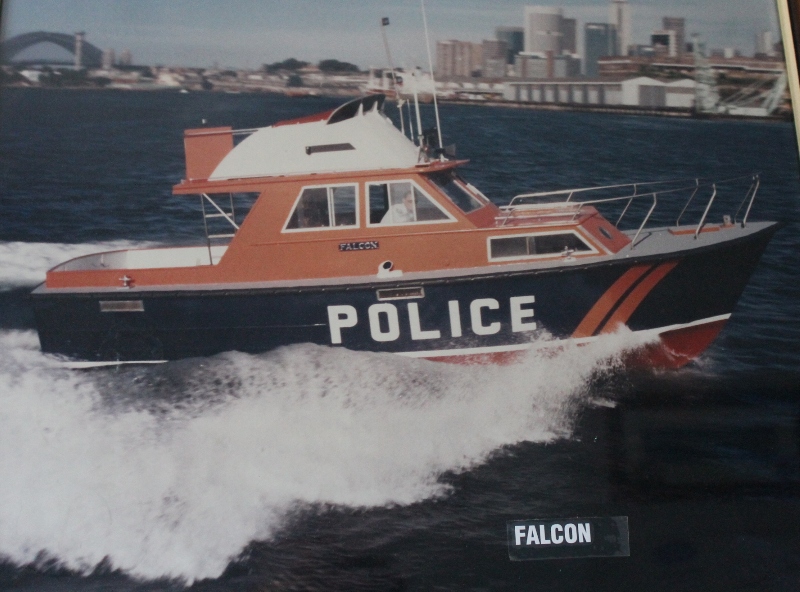
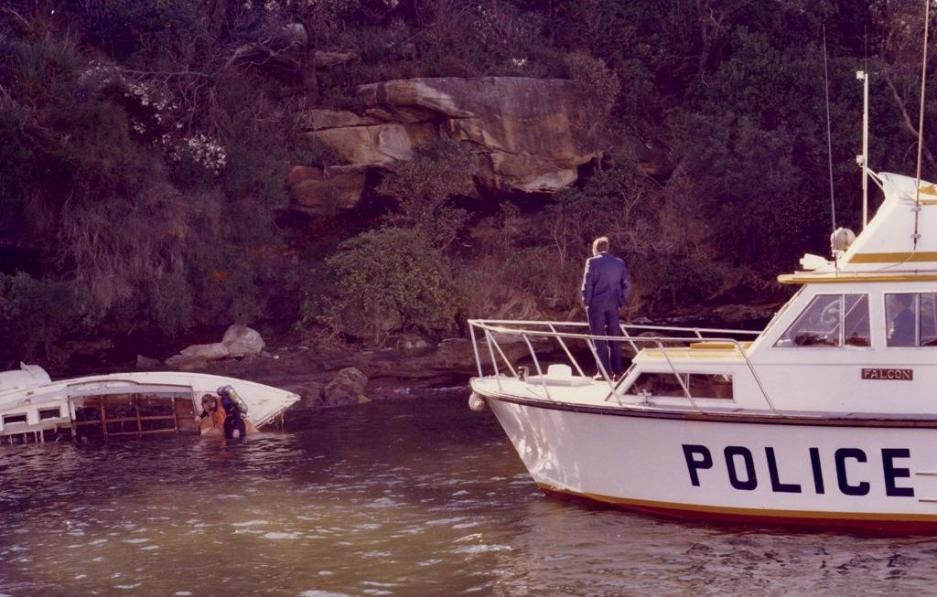
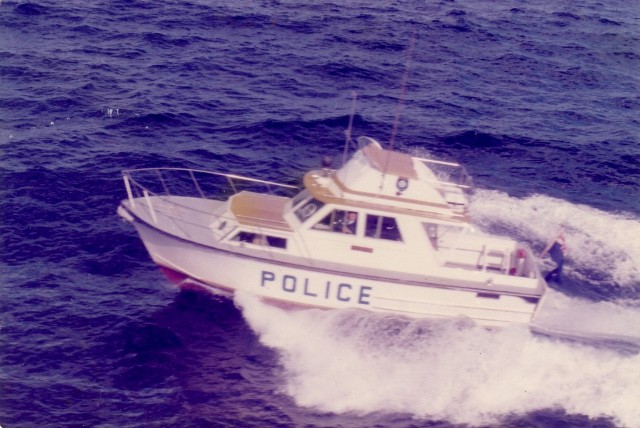
The Falcon 1
I’d studied bomboras – there used to be one at North Steyne, Manly. When I was in the Surf Club I used to study the bombora and work out the timing of the waves and so forth – I found they were frightening. So I had a little bit of experience about bommies and I took the boat in there.
We got aligned to them but they didn’t know what to do so we had to bloody tell them what to do.
We didn’t know until afterwards that one of them was a solicitor, one of the sons of the Wedgewood family. He’d been washed overboard some time before we got there and of course in that kind of sea he wouldn’t have lasted two or three minutes.
We put the first on to them and we pulled it tight. As we tightened up the rope the biggest wave of the year came up. I gunned my boat to get up through it. When the yacht came to go up through it he didn’t have enough momentum and the rope snapped. So we had to start all over again and get a second line to them.
We got the second line onto them and managed to hold them off to us then and got out of the bommie itself. We headed about a mile away from it and decided we’d get these people and put them on our boat. We got the five people off – four men and one Japanese shiela, one at a time. They didn’t want to do it but we told them to jump into the life-ring and we’d pull them over to our boat.
Well Friendly, he was on the back transom, with Boots hanging on to his belt so he wouldn’t fall in. He pulled them – he pulled them up into the boat and dropped in the cockpit and then threw the buoy back to the next person. We got them all in.
Their boat was, it never sank while we were there, but it was very low in the water, full of water with all the rigging hanging off it, and it was almost dark. I wasn’t going to leave them there alone after dark, we might have lost the lot of them.
Once we got them all aboard I set sail for south. We actually got blown backwards five miles in an hour. The storm was the biggest we’d seen for many years. I was looking out at the light at Norah Head and instead of me gong past it I was actually going the other way – we were being blown back. It was going past me – not the other way around, I thought ‘it’s not supposed to do that!’.
I ran into this big row of waves – now, I’ve always counted the number of waves in succession and quite often it was an odd number and usually eleven, twelve or thirteen would be the maximum in any regular kind of sea. I counted up to fifty waves, and they didn’t get any smaller, so I stopped counting. I started to think, maybe we couldn’t make it. And these people were cranky at losing their boat, cranky at having to get wet and I had them all stacked in the bloody four feet cabin. Brian put mattresses on the floor, because I never left the wheel – I was on the wheel for a good 12 hours. At any rate we put them in the cabin, low to the ground so their weight would be low in the boat.
The wind was heaviest when we were going backwards. It eased off a bit and I managed to make headway – I was able to make about one mile an hour, the sea up and down like a yoyo the whole way. I finally saw a ship at sea, travelling south, and I knew from his lights and what distance from us he was – you see all ship lights have a distance they’re visible – so I came in to where I could see by his ship lights that I was two miles off him. I then ran a parallel course with him – we couldn’t see the shore – so I went that way on a southerly heading for six or seven hours and finally we saw the first of the Barrenjoey lights. There’s four flashes on the Barrenjoey Light – it was at least four hours before we saw the four flashes intact. By dead reckoning I’d say I was ten miles off the reef at the Northern side of Broken Bay where the Maitland was wrecked – we’d been blown that far out.
At this time the Police launch Allen came up to help us. We were doing pretty well by then ourselves but it’s always comforting to have company in the form of a bigger boat and cuddle under their arm. They couldn’t see us though because of the sea. So I said ‘put up a flare’ so dear Brian (Friendly – Brian Friend OAM) , he got out the flare gun, and we had an older one, and at the moment he fired it the boat kicked up in the air and the flare hit the bridge. It ricocheted off the bridge and almost went into the cockpit – we had a leaking petrol engine, a carbie full of saltwater and petrol – if that had gone in the cockpit we would have been blown to kingdom come. At any rate, it ricocheted out into the ocean but the Allen didn’t see us so we had to fire another one. They then spotted us – we weren’t really far away from them but they couldn’t spit us prior to then because of the sea.
I knew exactly where we were then of course. At last we could see the Barrenjoey, four flashes, ‘that’s home, let’s get in there.’
You must have slept for a week after that one…
Would you believe, Brian and I had to go to work the next morning?
Didn’t they have any relief Water Policemen?
No, they didn’t have anybody.
Why didn’t they train some more people for the water?
I spent the 14 years I was there writing reports telling them it was vital that the crew be increased. Because of the rescue, the Votan, they finally took notice of us. A year or two later they announced that it would be a full time Police Station. They put 18 men there. We were able to have a decent crew, a trained crew, oh mate, it made so much difference – finally.
You would have got a few hours sleep of a night ?
Oh yeah (laughs). All of a sudden you didn’t have to work morning and night. We were able to go to work and of something had happened you could have the next day off and recover.
We finally got the people into Pittwater – the Palm Beach wharf had three foot of water over it because the tide had been held up in the river by the storm, and the backwater was held right up, so I took them to the Royal Motor Yacht Club. They’ve got a high wharf so I was able to go alongside the wharf there and meet the ambulance and get them off safely. They all went to hospital.
Brian, (laughs) Brian kissed our boat, and I just sat there and almost collapsed.
Was that the worst rescue or incident you had to attend?
No, the worst job I ever did was the Viscount airliner crash. The Votan rescue was the biggest sea I’d ever been in – it was so bloody rough.
What other duties, apart from medical trips, rescues and guarding Royalty having lunch up the river, did you have?
We were the Fire Brigade on the water. We used to do all that from the Police boat; we had a three way pump, so you could suck your own bilge, you could pt a pipe into another boat and suck that out or use that to suck sea water to fight a fire.
Anything that caught fire on the western foreshores we looked after. With boats, most boats, they’ve got to fill up and sink before the fire will go out. We did do quite a few of those though; it reminds me of a story – we went up to Palm Beach, there was a boat on fire just off the Palm Beach wharf. Boots’ brother worked at the machine shop there – the one back towards Careel Bay. The Shore Fire Brigade arrived with sirens and flashing lights and all that other stuff. They parked on the beach and the officer got in a dinghy and rowed out to the boat on fire at which point he said ‘oh, we can cover this, you blokes can buzz off now.’
He went back and got a hose and hung onto the hose over the back of the dinghy and pulled it out until he got near the fire and then sang out to the Fire Brigade ‘turn on the pressure!’
Well, I don’t know whether you’ve ever seen a jet boat; this dinghy went around the bay so bloody quick with a jet stream pushing him. (laughs)…it was the laugh of Pittwater there for a while! He was sorry that he told me to piss off….(laughs)….
How many years were you in the Police Force all up?
Buster BROWN
30 years altogether – I was 14 n the Pittwater; I did 10 at the boatshed and about 4 at Collaroy. When I was at Collaroy I applied for the boats and the Water Police but they wouldn’t accept me because I wasn’t ex-Navy, as it was then. I had to get in by joining the Flood Boat section and making a name for myself there. I established that I could handle a boat well and they then accepted me.
I was transferred tot here and got all the qualifications that were necessary. What made me cranky was once I’d got all the qualifications and had all the experience in the world, they still transferred me to Mosman on General Duties.
It wasn’t until, and I’ll use this expression, it wasn’t until ‘somebody pissed in the pickle’, that’s the only way of saying it, at Mona Vale and they wanted to transfer him to somewhere for penal servitude that I got a go. So I got transferred to Mona Vale, not because of any boating experience or any qualifications, I got transferred because this bloke had pissed in the pickle.
When I hear an officer say ‘we sent you out there to do a good job and you did that’ well I think ‘that’s crap. The only reason you sent me out there was because this bloke was mucking up and you had to get rid of him.’
What I did work at for at least five years was getting a full time show there.
Yes, you’ve saved lives Buster.
I was happy with that. It started and they said ‘do you want to transfer back to Sydney Water Police?’ but I was getting a bit long in the tooth, I was a First Class Sergeant by then; I said ‘yes, I’d like to go back to Sydney for my last few years’ (Sydney Harbour). They transferred me back there.
Were you there for the Olympics?
No. Boots (Gordon Wellings) came and got me one day – met me at Manly Wharf and took me out in the Falcon, which had been refurbished, going beautifully it was, because that was always my favourite – the Falcon. Boots said ‘we’re looking for someone to run the boat for Security for the Games.’ – ‘you wouldn’t get paid, you’d only be a volunteer’.
I thought about it, for about two minutes, and said no because at that time there was a lot of problems with the Arabs and also, I’d been retired for 18 years – my son pointed out (laughing) that there couldn’t have been any bloody decent boatmen there for 18 years after you left!
So I said to Boots, ‘no I won’t sign on thanks’ ; at this stage I was well overweight, still able to manage a boat but I didn’t feel that it was my job.
In 1983 I had the opportunity to attend the Life Boat Conference in Sweden if I paid my own fare. I had now retired from the N.S.W. Police so I took the opportunity. Most countries that had rescue craft attended and all the European vessels also attended. It was organised by the R.N.L.I. and hosted by the King of Sweden.
Each day we met at the waterfront and were given a choice to choose whichever boat we were interested in and spent 4-5 hours studying their techniques of rescue. We learnt that in their waters, quite cold, anybody not rescued in 15 minutes had very little chance of survival.
What did you do once you’d retired?
I went prospecting everywhere from the O’Allen River to the Shoalhhaven River to looking for sapphires up in Emerald in Queensland. I went as far as the river – Northern Qld, right up the tip.
I used to go up there for three or four months of the year, ‘in the season’ as we call it; you can’t get up there in the wet season, you’ve got to go in the Winter, so it’s cold but feasible to work there. You don’t have to dig real deep for sapphires but you’ve still got to dig a hole to get down to them. Where we went they were no deeper then three feet.
We’d get a variety – sapphires come in about seven different colours plus the particoloured ones. I got some beauties – all of my female relatives and female friends have got sapphire rings or sapphire brooches. I was a faceter; I’d learnt faceting and so was able to facet my own rings. My daughter has a lovely two and a half carat yellow- gold sapphire ring and some of the others have got two carat rings- they all finished with something nice.
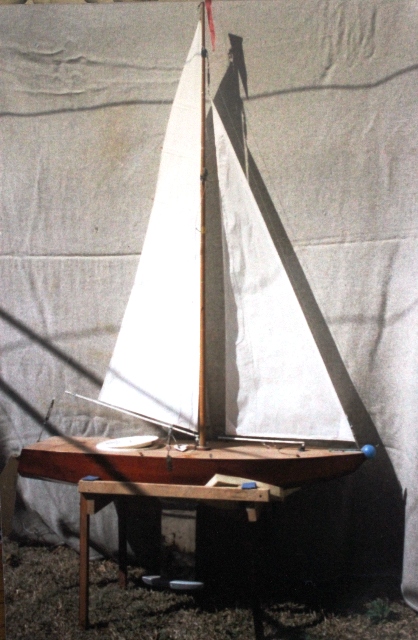
When I visited Bert King he had a lovely model of a surf boat with by Buster Brown’ on the plaque beneath it – how did this come about?
That was another hobby I had. I used to make model boats. That was one that I made which he put on a different backing. How that came about was I wanted a Surf Belt – he had one, and I said ‘I’ll swap you.’ so I got the belt and he got the boat.
I use to race radio controlled sailing boats at Narrabeen – on the lagoon. There’s a big firm in Brookvale that used to make spars and booms and all that. they put on a contest for who could build the fastest model yacht.
I wrote to them and said I’d like to try this and they said you’re welcome, put a boat together. I had about six months to build the boat, building from my own design, and finally the day came when we had the big race. There were probably 30 entries and 26 of them were shop made boats and so they weren’t all homemade boats, which was what I thought they were supposed to be. Shop or professionally made boats do go better – but I came 4th in the private and homemade boats so I was quite happy with my performance.
I made a radio controlled yacht for each of my grandkids – some they’ve still got. The last one I gave to my grandson and he sails it on Manly Dam.
How many children did you have?
Four. Grandchildren 8, and great-grandchildren – now 3; one was born a year ago and one was born a month ago. My eldest son now lives in Perth and he came over last year, picked me and the rest of my kids up in a motor-home, and we drove back to Perth and went to the wedding of my eldest granddaughter. When the wedding was over the other kids came home by plane and Allan took me, with his wife as well, the long way home up through the Top End.
It would have been fantastic excepting the bloody vehicle broke down nine times; we lost nine days, it spoilt the trip – we got to Broome but didn’t actually get to Darwin. I’m too old and decrepit to do the trip again now.
What is your favourite place in Pittwater and why?
Coaster’s Retreat. It brings back a few memories – everybody used to go over there camping; I knew lots of people that would go over there every year and would reserve a camping spot for the following year. That spoilt it for other people as they couldn’t get in.
It’s a lovely place with a lovely protected pool at the back. On the Western Shores I’ve met some lovely people. One chap, I’ve forgotten his name, he was a first grade footballer, I think he played for Manly; he dived off the wharf and was injured. I used to go and visit him occasionally – he was a champ. He was in bed all the time, he couldn’t get out of bed – I’d go and see him and talk for a bit – he was a champ even after that.
I used to have a few fights with them over there; one time there was a house on fire. I went over there and the rain was coming down heavier then if I’d put a hose on it. So it was a waste of time me even starting up the pumps, even if you forgot the fact that the wharf was about five hundred yards away and I didn’t have five hundred yards of hose.
The people that were next door, where I was, on their verandah watching the fire, which was just about finished and I couldn’t do anything – they offered me a cup of tea. I had the cup of tea – which was lovely. When I got back to base I had a complaint to answer – that I was drinking alcohol, (beer) with a criminal, while I watched the fire burn!
Holy Mackerel!
Half of the township over there were on my side and the chap who was the ex-footballer rang the Premier and explained the proper situation. I didn’t get into any trouble as a result of that but it could have been quite serious. That was some of the good people and some of the bad people illustrated for me in that one incident.
What is your ‘motto for life’ or a favourite phrase you try to live by?
Roper Lars Scott (Buster) Brown – ‘LEGEND of the SEA’ by Brian Friend, OAM-QCBC – On Friday 7th of February, at the Pt Clare Marine Rescue Base at Gosford, RLS ‘Buster’ Brown was presented with a his ‘Life Membership’ and ‘Long Service’ awards to the RVCP (now Volunteer Marine Rescue). Brian Friend, OAM, a fellow Retired Water Policeman was in attendance and shares an insight into one of Pittwater’s finest.
On Friday 7th. February, 2014 at the Pt Clare Marine Rescue Base at Gosford RLS ‘Buster’ Brown was presented with ‘Life Membership’ and ‘Long Service’ awards to the RVCP (now Volunteer Marine Rescue). Brian Friend, OAM, a fellow Retired Water Policeman was in attendance and shares an insight into one of Pittwater’s finest.
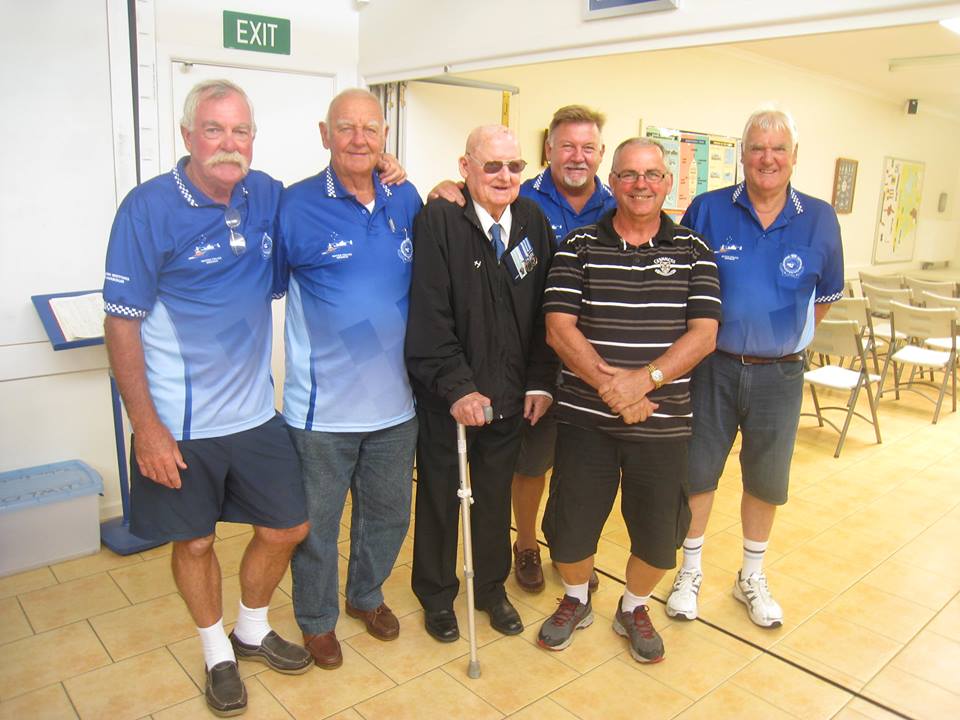
Retired Water Police celebrate the recognition of RLS ‘Buster’ Brown on his ‘Life Membership’ and ‘Long Service’ awards to the RVCP (now Volunteer Marine Rescue) at Pt Claire VMR base at Gosford.
Roper Lars Scott (Buster) Brown
‘LEGEND of the SEA’
I first came across this man they call Buster many years ago at a little Water Police Station at Church Point, Pittwater. At the time I was stationed at Mona Vale Police Station with a group of coppers that were versatile in the fact that not only did they ‘protect and serve’ on the Peninsular, they had a launch that also patrolled and protected the Broken Bay area.
In March, 1969 a man appeared on the scene at Mona Vale Police Station and informed all and sundry that he was the ‘be all and end all’ of boat persons and that he was elected in charge of the good ship Vanguard, a 23 foot timber launch with a single V8 motor. This was a part time duty for Police at Mona Vale as every day a different crew were selected to utilise this vessel to patrol and serve the community.
Buster, in his own professional way, decided to change the way of this ‘raggedy bunch of blokes’ into a professional marine unit that would be the envy of all Water Police around the world. First he made extensive inquiries into what man power he had at hand, then, once selected, they would be exhaustively trained into a finely tuned marine unit. Part of the selection process was to utilize the ‘tallents’ he had at hand. He was an Australian Champion in Surf Boats and had rowed for South Curl Curl Surf Club and had won many titles in this field so it was no surprise that he chose men who had knowledge of the surf and were involved in surf boats and surf clubs. John Dunbar rowed for Mona Vale, John McNamara rowed for Warriewood and I rowed for Avalon Beach and was an Automotive Engineer by trade. Gordon Wellings was an ex cadet so he was the ‘legal eagle’ of the team and John Gibbons was a former Fitter & Turner & Engineer.
With this team he spent many months finely tuning his team that earned respect where ever they carried out their duty. He also stated that in his mind, it would take at least 2 years for us to sit for the exam to qualify us as a professional Water Policemen. I must say at this point, this man was the undisputed ‘king of the seas’ and what we learnt over a period of time could not be achieved by any other person I know than him.
When we went to sea to try and rescue the Votan off Tuggerah in 1974, if he hadn’t been at the wheel the whole time, I do not think I would be here today to talk about this mission. The men here today are part of that group that kept people safe on the water BUT, it was the leadership of this man here today, being rewarded for what he has achieved, that made us proud to be part of his crew.
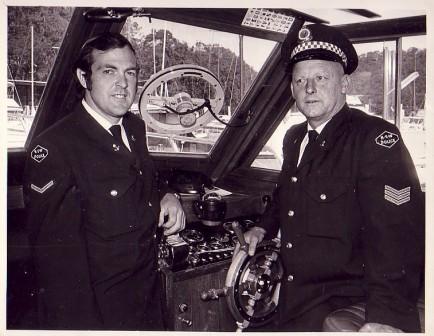
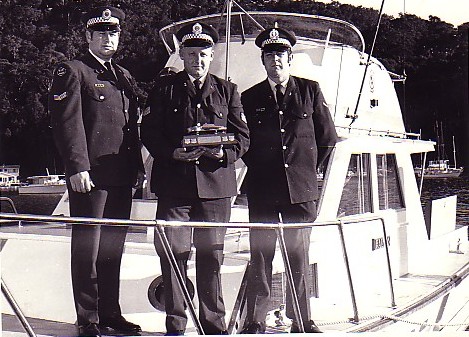
Picture: Police Launch Falcon crew (from left): Senior Constable Gordon (Boot) Wellings, Sergeant 3rd Class H. (Buster) Brown, Constable First Class Brian (Friendly) Friend. Image courtesy Brian Friend.
Together with the Royal Volunteer Coastal Patrol, the Australian Volunteer Coast Guard and the Newport SLSC ‘Bartender’ power boat crews, we formed a great liaison and we worked tirelessly to protect the area of Broken Bay. There are many ‘missions’ that we worked on together and most of them ended up with the right result. With a crew as small as ours we relied heavily on our volunteer mates and over the years, became very good friends, both at work and socially. This was something that Buster instilled in us right to his retirement. The respect that this man has throughout the community can never be judged by monetary standards as there would not be enough money in the world to pay him.
On behalf of your ex work mates, we congratulate you on your achievements and thank you for your leadership and friendship.
Brian Friend (OAM-QCBC)
The Falcon
Mike Stringer with ‘Buster’ Brown – with ‘Long Service Medal’.
Words and Pictures by Brian Friend, – OAM -QCBC, 2014.
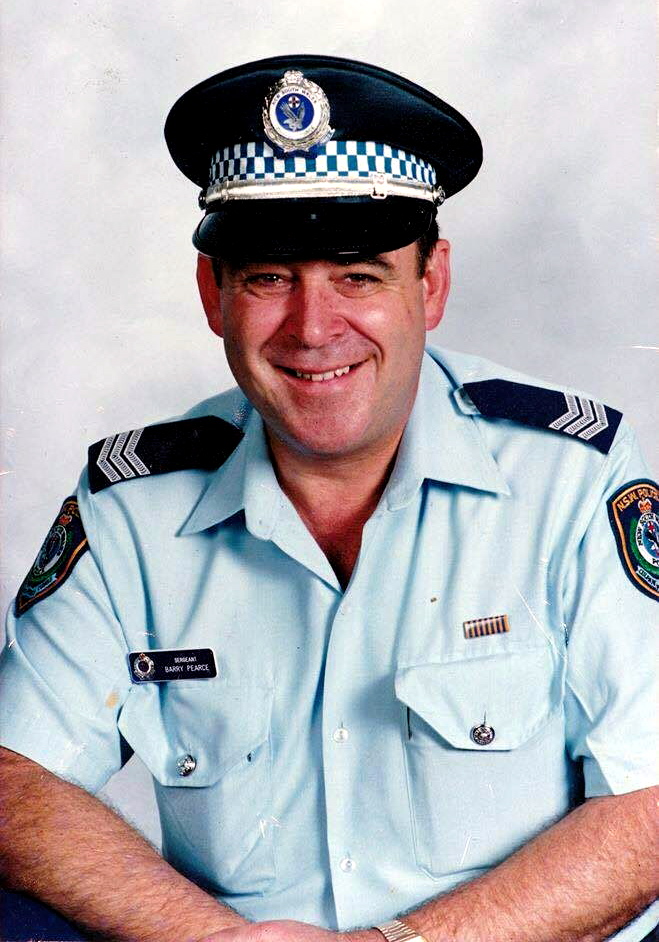
Barry is NOT mentioned on the Police Wall of Remembrance * NOT JOB RELATED
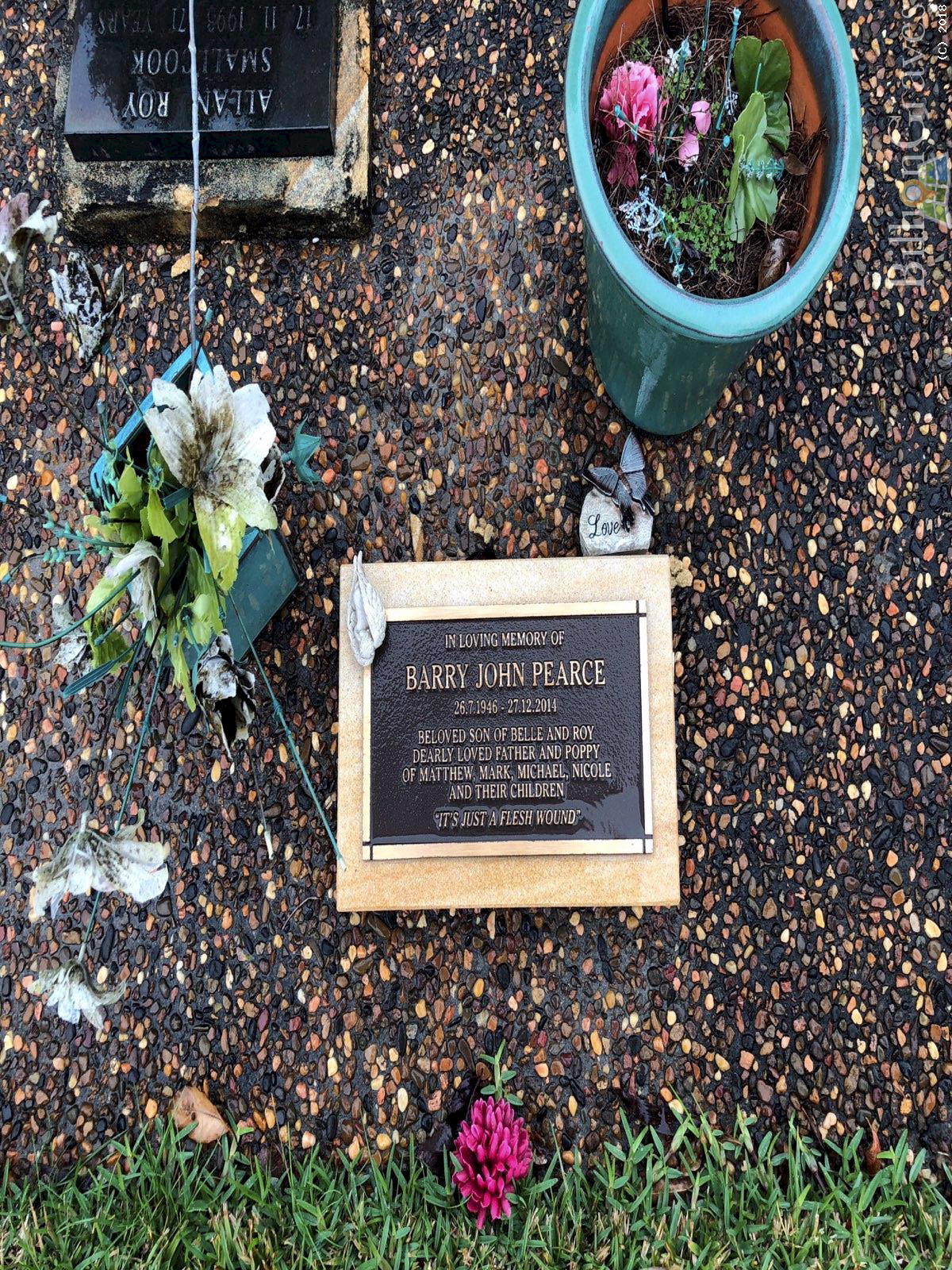
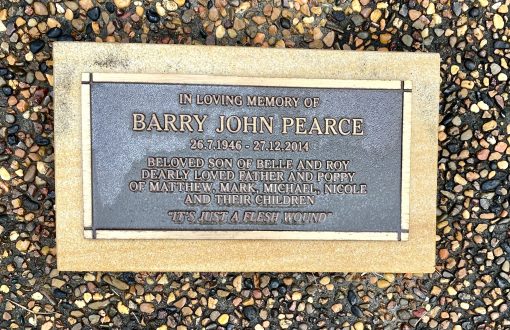
Barry John PEARCE, 68 old, former Regd,. No. 12631, a Member of the Manning Great Lakes Branch of the RPA.
Barry passed away on 27/12/2014 and his funeral is proposed to be held at 11am on Wednesday 31st Instant at Forster Catholic Church, 33 Lake Street, FORSTER.
Location of Church Service:
Some of Class 111 who commenced training at Redfern Police Academy on Monday 15 May 1967 and were Sworn In on Monday 26 June 1967.Front Row ( L – R ) ?, ?, ?, Probationary Constable Barry John PEARCE # 12631, ?, ?, ?, ?, ?
Rear row ( L – R ) ?, ?, ?, ?, ?, ?, ?, ?, ?, ?,
picture of Class111 26th June, 1967.All the cyclists have the first of the white helmets. They didn’t last long either’, once they realised that the broken necks were coming from the bad design, where the back of the helmet sat at the perfect point to break your neck, if your head was snapped backwards.
Second white helmets issued hurriedly, ‘say no more’..
Class 111 – those transferred to Penrith – 1967
John Albert GARTRELL
| 18/01/2015
John Albert GARTRELL
New South Wales Police Force
[alert_yellow]Regd. # 11014[/alert_yellow]
Rank: Sergeant
Stations: ?,
Service: From 11 May 1964 to 28 February 1991 = 26+ years Service
[alert_blue] John is NOT mentioned on the Police Wall of Remembrance[/alert_blue] * NOT JOB RELATED
[divider_dotted]
With regret I advise the death of John Albert GARTRELL, 71 old, former Regd. No. 11014, a non-member of Sydney.
John passed away on 25/12/2014 and his funeral is proposed to be held at 1pm on Friday 2nd Instant at the South Chapel, Woronora, SUTHERLAND.
[divider_dotted]
Location of funeral service:
Robert James Charles McGoogan
| 18/01/2015
Robert James Charles McGOOGAN
aka Bob & McGoo
ACT Police
Australian Federal Police
Regd. # 376
Rank: ?
Stations:
Service: From 23 September 1968to? ? ? = ? years Service
Awards: National Medal – granted 8 June 1988
1st Clasp to National Medal – granted 8 December 1993
Born: 17 June 1943
Died on: 19 December 2014
Cause: Cancer
Age: 70
Funeral date: 29 December 2014
Funeral location: Norwood Park Crematorium, Canberra
Buried at: Cremated
[alert_blue] Bob is NOT mentioned on the Police Wall of Remembrance[/alert_blue] * NOT JOB RELATED
Information from Russell Perkins via NSW Fallen Police FB page:
For any of you older blokes that may have come across Bob McGoogan, ex ACT Police then transitioned into the AFP with the amalgamation, he passed away on the 19th December after a battle with cancer.
Funeral at Norwood Park Crematorium in Canberra 29th December
Funeral Service location:
ROBERT JAMES CHARLES MCGOOGAN “BOB” 17 June 1943 – 19 December 2014 Beloved husband of Margaret. Father of Guy, Michael, Mark, Matthew, Morgan and Buddy….
“To McGoo….for all those years from Safety Ed to the other ‘work’..to your wonderful attitude to kids to the the attitude adjustments delivered to those in need. A spinner of tales some possibly…” – Gary Brown
“Bob was truly a larger, and louder, than life character. I always enjoyed his company, in my office, or at his home. His bear hugs of my staff were something to behold. My sincerest sympathy to you…” – Fred Barnes

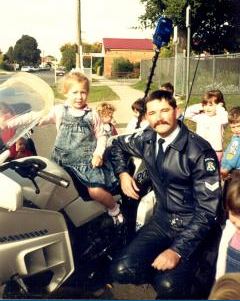


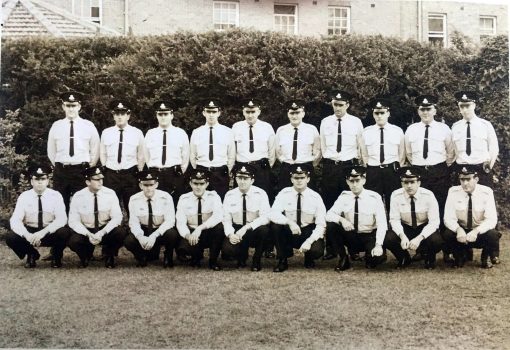 Some of Class 111 who commenced training at Redfern Police Academy on Monday 15 May 1967 and were Sworn In on Monday 26 June 1967.Front Row ( L – R ) ?, ?, ?, Probationary Constable Barry John PEARCE # 12631, ?, ?, ?, ?, ?
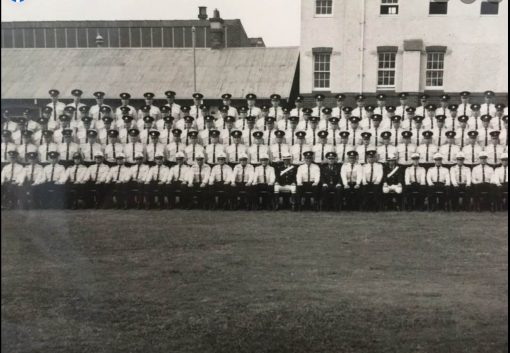 picture of Class111 26th June, 1967.All the cyclists have the first of the white helmets. They didn’t last long either’, once they realised that the broken necks were coming from the bad design, where the back of the helmet sat at the perfect point to break your neck, if your head was snapped backwards.