Stations: Sydney?, Holbrook ( about 2 years ), Wagga Wagga ( about 8 months ),
Officer In Charge, Corowa Police Station ( from 1947 )
Illness – Suicide
Corowa
1 August, 1948
Sergeant Millar died from a self-inflicted bullet wound on Sunday 1 August, 1948 at Corowa police residence. No further details are known.
The West Australian dated 2 August, 1948 reported the death as follows.
POLICE SERGEANT FATALLY SHOT SYDNEY, Aug. 1: Sgt. John H. A. Millar (56), whose recent absence from his police duties was being investigated by a high-ranking officer, died in the Corowa hospital last night after he had been found with a revolver wound in the head at his home, adjoining the local police station. An inspector from Albury was walking around the side of Sgt. Millar’s home when he heard a shot and rushed inside to find him lying on the floor dying. Sgt Millar was said to have been extremely worried recently over his official duties.
The sergeant was aged 56 years at the time of his death and was stationed at Corowa.
The Sydney Morning Herald Monday 2 August 1948 page 4 of 12
POLICEMAN’S DEATH
Shot In Head
Sergeant John H. A. Millar, 56, who had been in charge of the Corowa police station for two years, died in the Corowa Hospital on Saturday night from a bullet wound in the head.
A police report states that, soon after Inspector Yardy arrived at the police station to investigate a report that Sergeant Millar had been missing from the station for a few days, he heard a shot.
Going round to the quarters occupied by Sergeant Millar, Inspector Yardy found him lying on the floor. A police revolver was near Millar. He had been shot through the head.
Sergeant Millar was rushed to hospital, but died a short while after admission.
Sergeant Millar’s wife, who was in Sydney, returned to Corowa last night.
Sergeant Millar was a prominent bowler, and was popular in the town.
The Argus ( Melbourne ) Monday 2 August 1948 page 5 of 12
POLICE SERGEANT
FOUND SHOT
SYDNEY, Sun( 1 August ): Sergeant J. H. A. Millar, 56, sergeant in charge of Corowa police station, was found shot in his home behind the station late yesterday afternoon. He died soon after reaching Corowa Hospital.
He was found by Police Inspector Yardley, of Albury, who had gone to Corowa to investigate a report that Sergeant Millar had been missing from the station for several days.
Inspector Yardley heard a shot as he neared the station. He found Millar lying on the floor with a revolver beside him.
Daily Advertiser ( Wagga Wagga, NSW ) Monday 2 August 1948 page 2 of 6
FORMER WAGGA POLICEMAN FOUND DYING AT COROWA
A former Wagga police sergeant, who was found at the rear of the Corowa police station on Saturday night with a bullet wound through his head, died shortly after being admitted to the Corowa Hospital.
HE was Sergeant John A. Millar, 52, offlcer-in-charge of the Corowa Police Station.
Millar was found by Inspector Yardy, who had gone from Albury to Corowa to investigate a report that Millar had been missing from the police station for a few days.
Millar had not been on duty for three days.
Inspector Yardy, accompanied by Sgt. McGuiness, of Albury, arrived at Corowa on Saturday afternoon and interviewed Millar at his home, which adjoins the police station.
Shot Heard
Millar was resting at the time, but agreed to accompany the two police officers to the station.
He went outside for a few minutes and a shot was heard.
Inspector Yardy rushed out the back and found Millar lying on the ground with a bullet wound through his head.
Millar is said to have been worried a good deal lately over his police duties.
As soon as news of the tragedy was received, Superintendent Parmenter, of Wagga, left for Corowa and took over inquiries with Inspector Yardy and Detective Munro, of Albury.
Inspector Parmenter will return to Wagga today after the funeral at Corowa, which he will attend.
Millar’s wife, who was holidaying in Sydney, returned to Corowa yesterday, accompanied by her son, who is a member of the police force.
Was at Holbrook
Sgt. Millar was well-known in Riverina. He took up duty at Holbrook after being transferred from Sydney and was stationed there about two years before coming to Wagga.
After about eight months service at Wagga, he was transferred to Corowa last year as officer-in-charge.
( late of Lavender St [ cnr of Walker St ], North Sydney )
New South Wales Police Force
Regd. # ?
Rank: Detective Constable 1st Class
Stations: ?, Clarence Street Station, North Sydney Station – Death
Service: From 8 January 1930 to 11 August 1946 = 16+ years Service ( 10 years as Detective )
Awards: No find on It’s An Honour
Born: ? ? 1906 at Penrith, NSW
Died on: Sunday 11 August 1946
Cause: Shot – Murdered
Event location: Anzac Pde, Matraville
Age: 40
Funeral date: Tuesday 13 August 1946
Funeral location: Christ Church, Lavender Bay
Buried at: Rookwood Cemetery
Zone C, Anglican Section 8, Row 19, Grave 2214, 2215
Headstone inscription: In loving memory of my Dear Husband & my dear father. Erected by the N.S.W. Government
in memory of Detective Constable 1st Class. Shot in the execution of his
duty at Sydney. ( Victors father is also buried with him. His father, Maxwell Victor Ahearn, died 4 August 2007 aged 72 )
Victor Donald AHEARN
Touch plate for Victor Donald AHEARN at the National Police Wall of Remembrance, Canberra.
VICTOR IS mentioned on the Police Wall of Remembrance
On 11 August, 1946 Detective Constable Ahearn and Detective Constable Bowie waited at Long Bay Gaol to arrest two suspects ( Sydney Grant and Keith George Hope ) who were wanted for break and enter and motor vehicle theft offences. When the two men arrived to visit two female prisoners at the gaol, as expected, the detectives arrested them. They then set out to convey the prisoners to Daceyville Police Station, with Constable Bowie driving and Constable Ahearn seated in the rear of the vehicle between the prisoners. Shortly after leaving the gaol Grant produced a firearm and shot Constable Ahearn twice in the side. Constable Bowie quickly stopped the vehicle, and when trying to assist his colleague now struggling with the offenders, he was also attacked. The offenders then made good their escape. Unfortunately Detective Constable Ahearn died of his wounds before medical assistance arrived at the scene. Both offenders were later arrested.
TheSydney Morning Herald of 14 August, 1946 reported on the detective’s funeral.
LARGE NUMBER AT FUNERAL OF DETECTIVE.
The funeral yesterday of Detective V. D. Ahearn, who was shot by a gunman on Sunday, was one of the largest seen in North Sydney. Christ Church, Lavender Bay, was crowded for a memorial service. About 300 members of the police force remained in the street, and many other sympathisers were unable to get into the church. Detective Constable Alexander Bowie, who was injured in the police car in which Detective Ahearn was shot, was among the mourners. The funeral service was conducted by the Rev. Dr. Frank Cash. Archbishop Mowll, who gave the address at the service, said he hoped it would be some comfort to Mrs. Ahearn that so large and representative a gathering had come together to do honour to her husband, who in the course of his duty had suddenly been killed.
The Advocate newspaper of 12 December, 1946 announced the result of the trial of the two offenders.
GRANT SENTENCED TO DEATH: UNUSUAL SCENES.
SYDNEY, Wednesday – Extraordinary scenes were witnessed at the conclusion of the murder trial in the Central Criminal Court to-day of Sydney Grant (23), labourer, and Keith George Hope (23), farm laborer, for the murder of Detective Constable Victor Donald Ahearn on August 11 at Matraville. The jury found Grant guilty and Hope not guilty. Grant was sentenced to death. Mr. Justice Herron agreed that the jury’s verdict was inevitable.
The constable was born in 1906 [ and was the son of Percy Augustis Ahearn & Elizabeth Anne Pirie ] and joined the New South Wales Police Force on 8 January, 1930. At the time of his death he was stationed at North Sydney.
As an aside – Victor AHEARN was the cousin of Clarence PIRIE who was also shot and murdered in 1960 aged 40.
[divider_dotted]
NSW BDM’s Birth
17164/1906 AHEARN, VICTOR D : PERCY, ELIZABETH A @ PENRITH
Marriage
14450/1934 AHEARN, VICTOR D, MALLARD IRENE on 15 September 1934 in St Johns Church, PARRAMATTA, NSW
Death
25813/1946 AHEARN, VICTOR DONALD : Parents: PERCY AUGUSTUS & ELIZABETH ANNE @ KINGSFORD
Sydney, Aug. 13. — The intensive search for Keith Beckett, alias Hope, whom the police allege was with Charles Grant (28), when detective Victor Donald Ahearn was shot dead in a police car on Sunday, ended dramatically when Beckett gave himself up to the police at Scone to-night. He said he had been working on a farm in the district. It was disclosed to-day that three bullets had been fired into Detective Ahearn‘s body as he sat between the two men in the police car during the drive from Long Bay Gaol. The police believed that two of the shots were fired as Ahearn attempted to grab the gun after one of the men in the car had pulled it from his pocket. The funeral to-day of Detective Ahearn was one of the largest seen in North Sydney. So large was the crowd at the church service that many hundreds were unable to get into the church and the streets through which the cortege proceeded to the Rookwood Cemetery were lined with citizens desiring to pay their last tribute to the late detective.
CALLOUS MURDER OF SYDNEY DETECTIVE
Shot By Two Men While Being Escorted To Police Station
SYDNEY, Sunday.
Detective-Constable Vincent Donald Ahearn, 40, was murdered this afternoon in a police car in Anzac Parade, while two men were being taken to North Sydney police station for questioning in connection with car thefts. It was one of the most cold-blooded and callous crimes committed in Australia. The men had been detained after visiting two female prisoners at Long Bay Gaol, Joyce Read and Edna Grant. An attempt was made to shoot Detective-Constable Bowie, 27, who was seated in the police car, but the pistol jammed. The two men then bashed Bowie about the head and jumped from the car, escaping into the bush near the Bunnerong power house.The shooting took place within a few miles of the Long Bay Gaol. As the police car approached the old speedway at Maroubra one of the men pulled a revolver that had been concealed among his clothing, and shot Ahearn twice through the chest, one bullet puncturing his heart. Detective Bowie was seated in the front seat of the car while Detective Ahearn was in the back seat between the two men. On hearing the shots Detective Bowie turned round and saw his colleague in a slumped position on the edge of the seat.For the first time the new police plane was used in a search for the two escapees over the area of the crime. More than 400 police, assisted by police dogs and with soldiers armed with tommy-guns in support, are scouring dense scrub between Bunnerong Road and La Perouse Road. At the North Sydney Court last Tuesday, two attractive girls, Joyce Read, 19, and Edna Grant, 20, were committed for trial on three charges of illegally using motor cars, and one of breaking, entering and stealing from a Lindfield garage. Bail was fixed at £200 for Grant and £100 for Read, but they did not find the surety. During the hearing, in a statement allegedly made by Read, she told how she and Grant were arrested in a stolen car at Northbridge in the early hours on July 29, when they had been left by two men. Caught in the headlights of an oncoming car one of the men called, “It’s the ‘coppers’ go through.” The men then disappeared into the bushes. The alleged statement added that Read had been lured into crime by a man and his associates whom she had met one night at the California, a cafe in Darlinghurst Road, King’s Cross.Detective-Constable Bowie applied the brakes at the same time as he was grappling with the two men, one of whom hit him about the head and face with the butt of a revolver. Bowie continued to fight back and shortly afterwards collapsed into unconsciousness. The two men were seen to leap from the car and run in opposite directions. When the police arrived, Bowie was still clutching his half-drawn revolver and the body of Ahearn was found crouched on the back seat. Darkness set in soon after the search of the Bunnerong scrub land had started, and military searchlights were used to assist. The police warned residents in the Malabar district, who owned cars, to be on the watch as the wanted men were experienced drivers.The police are anxious to interview a man, known as Keith, who was in company with the two men this morning. Late to-night the police stated they were anxious to interview Sidney Greenep, alias Grant and also alias McMahon.
— The Canberra Times 12 August 1946
The Sydney Morning Herald Monday 12 August 1946 page 1 of 14
DETECTIVE SHOT IN POLICE CAR
Troops And Plane Join In Sydney Manhunt
One detective was shot dead and another brutally attacked at Matraville yesterday afternoon while they were escorting two men they had arrested at the gate of Long Bay Gaol.
Four hundred armed police, soldiers ( some carrying machine-guns ), the police aeroplane, and police dogs later took part in one of the most intensive manhunts ever organised by the New South Wales police.
The two men, who had been visiting two girl prisoners in the gaol, were not located at an early hour to-day.
DRAMATIC DRIVE FROM GAOL
The detectives were attacked as the men were being driven away in a police car. After a fierce struggle in the car the men made off across sand dunes and scrub covered hills.
Detective First-class Constable Victor Donald Ahearn, 40, married, with one child, who was stationed at North Sydney, was shot dead. Two bullets entered his body, one passing through his heart. Ahearn joined the police force 16½ years ago, and lived at Lavender Bay.
Detective Constable Alexander Bowie, 27, stationed at Mosman, was kicked about the head and body, and suffered severe abrasions and shock. He is the son of Superintendent L. Bowie, who was recently in charge of the Tamworth police district.
The two detectives had driven in a police car to Long Bay in the morning, believing that two men for whom they had been searching in connection with charges of car stealing and breaking and entering garages might visit two girls, aged 19 and 20.
The girls recently had pleaded not guilty to charges of illegally using motor cars and breaking into a Lindfield garage. According to the police, two men had been seen with the girls on the night of one alleged crime, but escaped.
The detectives yesterday parked their police car near the outer gates of the gaol. Soon afterwards the big gates opened and two men came out.
Ahearn and Bowie immediately intercepted them, and after a short conversation, ordered them to get into the car.
Bowie sat at the wheel and Ahearn sat between the two men in the back seat. The men, though sullen and disinclined to talk, gave no indication that they intended resisting arrest until the car had travelled about two miles along Anzac Parade.
About 300 yards from where the main road crosses the tram line near Pozieres Avenue, Matraville, and where dunes and tea-tree skirt the road, one of the prisoners is alleged to have pulled a .32 revolver from his pocket.
Bowie did not know it until he was attracted by a sudden scuffle from the back seat of the car. In less than two seconds there were two shots, and as Bowie turned round Ahearn muttered, “They’ve got me.”
Two bullets had plunged into the side of his body, piercing the heart and other vital organs.
LONG STRUGGLE IN MOTOR CAR
As Ahearn slumped dying on the floor of the car with portion of his clothes singed with the flame from the shots, Bowie swerved the car on to the grass track off the macadam road.
He pulled on the brake and after throwing the engine into neutral, he leaned over the seat to seize the two men.
The tracks of the car showed that during the subsequent struggle, the car travelled several yards before stopping.
As Bowie attempted to hurl himself on to the men, the one with the revolver pointed the gun at his head with the muzzle only a few inches from Bowie’s temple, the man said. “Get back or you’ll get it, too!”
Bowie saw the man pull the trigger and he heard a click. The revolver had jammed. The man holding the gun then crashed the butt of the revolver on to Bowie’s head, causing a deep cut.
Still Fought On
As Bowie was attempting to lever himself over the back of the front seat, the two men leaned back and raising both their feet, kicked him viciously about the face and head.
Each kick brought a new trickle of blood down Bowie’s face, but he continued to struggle with the men, and eventually wrested the gun from them.
Evidently, fearing that Bowie would continue the fight and get the better of them, the men threw open the doors on either side of the car and leapt to the road.
One ran through a wire fence up the sandhill towards Yarra Bay and was soon lost in the thick scrub.
Offender – Sidney Greenep @ Grant @ McMahon
The police last night issued these pictures of two men they are seeking in connection with the shooting of a detective at Matraville yesterday.
TOP: Sidney Greenep, alias Grant, alias McMahon.
LOWER: Keith Beckett (or Hope).
Offender – Keith HOPE
The other bolted in the opposite direction and was last seen making across the tramline over the sand
dunes.
Bowie, who by this time was on the point of collapse, tried to lift Ahearn from the door of the car.
But Ahearn was dead. Powder marks and blood on his clothing showed where the bullets had entered his body.
Glen Rich, a young man living in Page Street, Botany, who was passing on his bicycle, saw Bowie leave the car and stagger towards the road. He helped to lift Ahearn from the car to the grass on the side of the road, and then went to look for a telephone to summon the police.
Many Cars Passed
Police believe that many cars passed after the shooting, but it was not until 15 minutes later that a man and a woman who had driven along Anzac Parade to Maroubra, accosted Sergeant Ryan and Constable Watts on the beach.
The man said, “We think there’s been a bit of shooting along the road. You had better go along and see what’s happened.”
Ryan, and Watts raced back along Anzac Parade until they came upon the police car still parked on the side of the road. Bowie was sitting, still dazed and bleeding profusely, on the grass alongside the body of Ahearn, holding the revolver which he had taken from one of the men.
Two empty cartridge shells from which Ahearn had been shot were in the car. One cartridge bore a faint hammer imprint, but had jammed. There were other live cartridges in the revolver.
SPECTACULAR HUNT DEVELOPS
With at least 20 minutes start the men had probably travelled a long distance before the police search for them was begun, but within a short time Superintendent F. Matthews had organised one of the biggest manhunts ever known in Sydney.
The police plane was called out for the first lime to assist in the search. Police dogs were rushed to the car in which the shooting had occurred
and then they were let loose in the direction taken when the men ran away. And 400 armed police were rushed from the city and all suburbs to form a cordon around the district. Army personnel some armed with sub-machine guns, were rushed in military wagons to join in the hunt and within an hour an area extending from Malabar, Botany Bay, Yarra Bay and Kingsford was being systematically combed.
Every car returning from the seaside of the district was stopped and searched. The contents of several utility vans being removed to ascertain if anyone was hiding there.
Plane Uses Radio
The police plane swept low in circles over the sandhills, the observer using powerful glasses to scan the thick scrub as he kept in touch by radio with the police cars racing backwards and forwards throughout the district.
One message radioed from the plane and picked up by the police cars near the scene of the shooting was that a man was seen making his way over the sand dunes towards Yarra Bay.
Superintendent Matthews revealed late last night that a taxi-driver had picked up a man walking along Bunnerong Road near the Matraville Hotel about 3.30 p.m.
The man asked him to take him to East Sydney.
The description of the man tallies with that of one of the escapees. There were bloodstains visible on his neck and clothing.
Police found a cream Hillman car with a Victorian registration plate, near Long Bay Gaol. It was later learned that the car had been stolen in Melbourne on Friday.
The police state that the two men had used the car to drive up to the gaol and brazenly left it near the gate while they visited the two girl inmates.
Police said last night that one of the men sought is known to them as Sidney Greenep, alias Grant, alias McMahon.
Suspects Described
The police issued the following description of him:
“Twenty-six years old, 5ft 7in, dark hair and complexion, freckled face, brown eyes, scar over right eye, appears to be new scar on forehead, and two old scars on forehead as well. Lobe of left ear is peculiar shape. Dressed in black and white or dark brown and white very small check pattern sports coat. Badge in lapel appeared to be returned soldier’s badge. Man wearing light blue or bluish-green sports trousers. Green silk open-neck sports shirt, no hat. Very tidy appearance.”
A second suspect, the police say is known as Keith Beckett (or Hope). He is 22 to 25 years old, 5ft 9in or 10in. fair complexion, medium brown-coloured straight ball hooked nose, rather large and red; wearing a light blue American type of coat of woollen material, large lapels, and dark blue piping on pockets and lapels blue shirt with collar to match, a tie and fairly new grey felt pork-pie-shaped hat.
North Sydney Report
On latest reports, it was believed both hunted men had reached and possibly passed through the city.
Becket was said to have been seen in North Sydney at 3.30 p.m., after the shooting. He was wearing a white open-neck shirt, light coloured sports suit, light grey felt hat.
The search early this morning was covering a great part of the metropolitan area.
ABOVE: The scene at Matraville yesterday afternoon when a police cordon was thrown around the area in a search for two men who escaped from the police car ( indicated by circle ) in which Detective-Constable Victor Ahearn was killed.
Police questioning motorists in Bunnerong Road last night.
A detective-sergeant checking his rifle before joining the search. A spotlight was attached to the barrel of the gun.
The Sydney Morning Herald Monday 12 August 1946 page 1 of 14
SURPRISE AT GAOL VISIT
The fact that a visitor with a loaded revolver could be admitted to Long Bay Gaol to “interview prisoners on remand caused comment in police circles after the shooting.
Remand prisoners are allowed greater liberty than sentenced prisoners, but police say it is at the least disquieting that visitors are not searched for firearms even it they are visiting only women in the remand section.
MAN ARRESTED FOR MURDER OF SYDNEY DETECTIVE
Intense Search for Accomplice
SYDNEY, Monday.
Early this morning Sidney Grant, 28, was arrested at gunpoint in a guest house at North Sydney, and charged with the murder on Sunday afternoon of Detective-Constable Victor Donald Ahearn. A police cordon had been thrown around Sydney to apprehend Keith George Hope, 23, alias Beckett, and all trains, planes and ships are being closely watched while the cooperation of the Victorian police has been sought in case Hope should break through the cordon in an at tempt to return to Victoria. The search for Hope is also being intensified in the Newcastle district. Grant was arrested by armed police while he was breakfasting at a guest house. He offered no resistance. A large squad of police was rushed to the guest house and, while all exits were guarded. Detective H. Hughes and Sergt. R. K. Knight, with revolvers drawn, rushed inside. They threw open the door of a room and found Grant having breakfast.Later, Grant appeared before the North Sydney Court with his head bandaged and was charged with the murder of Detective Ahearn on which charge he was remanded to the Central Court on August 20, bail being refused. Grant appeared in court handcuffed to a detective-sergeant and was later removed under a heavy escort.Sergeant M. Whelan, who conducted the prosecution, told the court that Grant and another man had been arrested at the entrance to the women’s reformatory at Long Bay Gaol. The two men were placed in a police car, which was driven by Detective-Constable Bowie, while Ahearn sat between the men. After the police car had proceeded about a mile and a half from the reformatory, Grant drew a revolver and twice shot Ahearn, who died in a few minutes, Bowie, stopped the car and struggled with Grant, who was disarmed, but Bowie was assaulted about the face. Grant and the other man then disappeared.Shortly before 3.30 p.m.Grant was again before the North Sydney Court and was remanded until August 20, on nine charges of breaking, entering and stealing, including the theft of four sub-machine guns, two revolver chambers, and a quantity of ammunition, to the value £50, from Rushcutters Bay naval depot, on July 30.Four counts dealt with alleged thefts of wireless Sets. He was also charged with stealing clothing, valued at £200, from a shop at Crow’s Nest on July 31, with breaking into a shop at King’s Cross Road on July 5 and stealing women’s clothing, worth £100, and with breaking into a garage at Killara on July 28, and stealing tyres and money to the value of £30. Grant was also remanded on two charges of having been in possession of firearms.The police produced four Thomson sub-machine guns and two ammunition cases which were found among some bush at Roseville. The Victorian police advised that ballistic tests proved that the revolver which bad been used in the murder, had been stolen from a resident of Hawthorn in 1942. It is believed that Grant left a considerable sum of money in Melbourne. His arrest followed probably the greatest man-hunt ever staged in this State. Almost 500 police and soldiers were engaged. Grant told the police that he arrived by car from Melbourne on Saturday and, with a companion, booked in at the guest house early on Sunday morning.
NO POWER TO SEARCH GAOL VISITORS
There was no power to search any person whether visiting a gaol, a police court or any other establishment unless such a person was first arrested and charged, said the Minister of Justice (Mr. Downing) who added that such searchingwould be an offence.The Minister explained there was no restriction about the number of visits by friends to gaol prisoners who were also permitted to receive foodstuffs, but there was no physical contact between such prisoners and visitors because of a heavy wire gauze separating them. A Sydney detective stated that when a policeman visited the gaol he was required to hand over his revolver and he could not understand why the same regulation did not apply to civilians. A late Melbourne message stated that two men had been detained at the C.I.B. office for questioning in connection with the murder.
— The Canberra Times 13 August 1946
Victor Donald Ahearn
AHEARN. — August 11, 1946, Victor Donald. Dearly beloved husband of Irene Ahearn, and loving father of Max, aged 40 years.
— Sydney Morning Herald 13 August 1946
Large Number At Funeral Of Detective
The funeral yesterday of Detective V. D. Ahearn, who was shot by a gunman on Sunday, was one of the largest seen in North Sydney. Christ Church, Lavender Bay, was crowded for a memorial service. About 300 members of the police force remained in the street, and many other sympathisers were unable to get into the church. Detective-Constable Alexander Bowie, who was injured in the police car in which Detective Ahearn was shot, was among the mourners. The funeral service was conducted by the Rev. Dr. Frank Cash. Archbishop Mowll, who gave the address at the service, said he hoped it would be some comfort to Mrs. Ahearn that so large and representative a gathering had come together to do honour to her husband, who in the course of his duty had suddenly been killed.
INCREASING DEBT
“Others are here,” said Archbishop Mowll, “to show regard for the police force, to whom the community owes an increasing debt of gratitude. “The episode of last Sunday afternoon brings home to everyone the risk continually being run by members of the force. We are grateful to them for what they are doing to protect us.” Boy Scouts of the 1st Lavender Bay Troop, of which Max Ahearn, son of the detective, is a member, occupied the choir seats at the service. The coffin was carried from the church after the service by Detectives Whiteman, Fagan,Griffin, Kelly, and Tupper, who had worked with Detective Ahearn. A detachment of about 300uniformed and plainclothes men preceded the hearse. These were followed by a company of’ military police in the charge of Captain Wiseman, and by members of the New South Wales Fire Brigade under Inspector J. Neville, who also represented the Chief Officer and the Board of Fire Commissioners.
CITIZENS LINE ROUTE
The funeral proceeded through the city to Rookwood Cemetery. The cortege as it left the church was preceded by motor cyclists, a detachment of mounted police, and the police band. Along Lavender Street, Blues Point Road, and Blue Street to Bradfield Highway the route was lined by hundreds of spectators. Ordinary traffic along the route to the Bridge was held up for about half an hour. There were about 100 motor cars following the hearse. The chief mourners were Mrs. Ahearn, widow, Max Ahearn, son; Mr. P. Ahearn, father; Mrs. R. Moon, and Mrs. A. Clarke, sisters, Messrs. Moon and Clarke, brothers-in-law; and Mr. and Mrs. H. Mallard, father-in-law and mother-in-law. Officers and members of Masonic Lodge Tuscan also attended. Superintendent J. F. Scott represented the Chief Commissioner, Mr. Mackay. Other police officers present included Superintendent B. E. Sadler, who was in charge of the police arrangements; Superintendents F. Matthews, T. Wickham, and N. D. James, of the C.I.B.;Superintendent W. E. Sherringham, Inspectors M. Cahill, W. L. Alford, C. Kennedy, and J. Nealon; ex-Superintendent W. Sherringham and a number of retired officers and men.
— Sydney Morning Herald 14 August 1946
Grave Headstone of Victor AHEARN
WANTED MAN SURRENDERS TO SCONE POLICE
NEWCASTLE, Tuesday.
Keith George Hope, who was wanted by the police for questioning in connection with the shooting of Detective Ahearn on Sunday, walked into the Scone police station at 11.45 p.m. and gave himself up. He told the police that he arrived at 3 a.m. on Monday and, after staying at the Royal Hotel, obtained work on a farm. The police were advised that a man answering to his description, had booked in at the hotel. Hope when he entered the police station, said, “I understand that you were making inquiries about me, so I thought I had better give myself up.” He added that the farmer, by whom, he had been employed, had driven him to the police station.Two detectives will leave Sydney to-morrow to take Hope back to Sydney. They have been instructed to take no chances with him. Police in Sydney to-night hinted that intensified co-operation between forces in other States, following the murder of Ahearn on Sunday, may lead to a clean-up of certain inter-state crimes. A senior officer of the C.I.B. said that detectives in Melbourne, Sydney and Brisbane had been working to break up certain interstate criminal activities.Large crowds gathered to-day to pay their last respects to Detective Constable Ahearn, when the funeral was held. Mounted police were in attendance with detachments of police, military provosts and motor cyclists. The funeral of Detective Ahearn was conducted to-day. A service was held at Christ Church where Archbishop Mowll paid a moving tribute to the service rendered to the community as a whole by the police force.
— The Canberra Times 14 August 1946
Hope Charged With Murder
Keith George Hope, also known as Keith Beckett, 23, labourer, was charged at Central Police Court yesterday with having on August 11 murdered Detective Victor Donald Ahearn. Hope was also charged with having had in his possession a car stolen in Victoria, knowing it to have been stolen. The police prosecutor, Sergeant Whelan, said that last Sunday afternoon, Detectives Ahearn and Bowie were escorting in a car Hope and a man named Grant from the women’s reformatory at Long Bay gaol. Some distance from Long Bay gaol Ahearn had been shot three times and had died almost immediately. Sergeant Whelan asked for a remand until August 20. Grant had been remanded to that date, he added. Mr. Beavers, S.M., granted the remand and refused bail. Hope was escorted into the court by the two detectives who had brought him back from Scone yesterday morning. He was neatly dressed in a brown suit, blue shirt, and red tie.
— The Sydney Morning Herald 16 August 1946
HOPE REMANDED ON MURDER CHARGE
SYDNEY, Thursday.
Keith George Hope, 23, was charged at the Central Court to-day with the murder of Detective-Constable Ahearn on Sunday last and was remanded until August 20. He was also charged with being in possession of a stolen motor car. Hope was escorted into court by Detectives Hargreaves and Strachan, who had brought him from Scone where he had given himself up. During the brief court proceedings Hope did not speak.
— The Canberra Times 16 August 1946
KITCHEN IS STILL UNPAINTED
Det. Ahearn’s Death
SYDNEY, August 16.—The big, dark-haired policeman kissed his wife [Irene] before sitting down to breakfast in his cheerful flat at Lavender Street, North Sydney. He had been up late the night before, but that had not affected his good-humour. Nothing, his wife reflected, ever seemed to affect that. He ate his cornflakes and chops, drank his cup of strong coffee. Then, with his 11-year-old son to help, he started to paint the kitchen woodwork. He had promised his wife to do it, and, once he had promised — even little things — she could always count on him to do them. It was Saturday. He stuck at the painting until he had to go on duty.Sunday, he was on duty again. As he went out this time, whistling softly, his wife saw him turn, heard him call back cheerily: “I’ll finish off the paint when I get home.” But this week, the woodwork was still waiting to be finished. Early on the Sunday afternoon policeman Victor Ahearn was shot twice through the heart while doing duty as an escort. Said his widow, pretty, sad-eyed Rene Ahearn, this week: “Vic. was a big, strong chap; but he never thought it sissy to help me in the flat. He was always doing something for me. “I get sciatica. When I was sick he used to do all the shopping for me. Sometimes he’d get so many vegetables we wouldn’t know what to do with them. “He used to cook for our son Max and me when I was ill. He was a good cook, too. “When you met him once you knew him. He never changed. I met him when I was 16 and he was 28. He lived in a boarding house next door. We married four years later. That was nearly 13 years ago. “He was in the Police Force sixteen and a half years. The last 10 he’d been a detective. “That meant broken shifts, working until the job was done, coming home at odd hours. But he was always so dependable, so jolly. I didn’t mind the anxiety, the strain of being a policeman’s wife. “Week-ends, when he was off duty, we used to go fishing with our son. Vic. loved fishing more than any other pastime. We had planned a trip from Mosman Bay this week-end. “He had only lately been transferred from Clarence Street Station to North Sydney. He liked the move because it brought him nearer home — he could come back to the flat for lunch when he was working early shifts. “Vic. took me to the C.I.B. ball two days before he was killed. I wore a new wine velvet evening dress — my first since the end of the war. Vic. said to me: ‘You don’t look a day older than when I married you. Let’s have our photo taken.’ “He asked me three times before I agreed. I was so surprised, because he hadn’t had a photo taken since our wedding. He hated posing for a picture.” Widowed Mrs. Ahearn will continue to live in her flat at the corner of Walker and Lavender Streets. Said she: “My friends are here. So are my happy memories. Why should I move?
— Townsville Daily Bulletin 17 August 1946
REMAND ON MURDER CHARGE
SYDNEY, Tuesday.
Sidney Grant and Keith George Hope, charged with the murder of Detective V. D. Ahearn at Matraville on August 11, were remanded until September 10 at the Central Court to-day. Grant said that a writ of habeas corpus had been served on the police to enable his wife to give evidence on a theft charge against him. Grant also faces nine charges of breaking, entering and stealing and two of possessing firearms while being a person previously convicted. Bail was refused both men.
— The Canberra Times 28 August 1946
The Sydney Morning Herald Wednesday 11 September 1946 page 4 of 36
DETECTIVE TELLS OF CAR SHOOTING
Sidney Grant who has been charged with the murder of Det.-Constable Victor Donald Ahearn, drove through the police cordon in a taxi a few minutes after Ahearn had been shot on August 11.
A witness said this at the inquest into the detective’s death at the City Coroner’s Court yesterday.
Present in court were Sidney Grant and Keith Hope, who have been charged with the murder of Ahearn. They were handcuffed together and escorted by police.
Mr. Peter Pelligrini, taxi proprietor, of Nagle Avenue, Maroubra, said that Grant had hailed his cab at Matraville about 3.30 p.m. on August 11 and had asked him to drive to King’s Cross.
Pelligrini said that while driving along Military Parade he had remarked on the presence of a large number of police.
Later he saw a patrol car and a police truck full of police coming along the road followed by an ambulance. He said that Grant then said, ‘There must have been an accident.”
“Blood On Grant”
Pelligrini said there was blood on Grant’s shirt and sleeve and the shoulder of his coat was slightly torn. He had a wound behind his ear.
He drove Grant to Cathedral Street, King’s Cross, where Grant got out and paid him. He said he thought Grant had been involved in an accident.
Mr. A. J. Forestal, proprietor of the Alloa Private Hotel, North Sydney, said Grant and Hope had booked accommodation about 2 a.m. on August 11. They said they had come from Melbourne and expected to stay a week. They paid seven days’ rent in advance. He said they had a small cream car.
About midday on August 11, Grant and Hope told Forestal they wanted to go to Mosman. He gave them a street directory.
Hope came back later for a short while and went away with a suitcase. About 4.30 p.m. Grant returned to the hotel with a little blood on his shirt collar, coat, and trousers, and with cuts on his fingers and head.
He told Forestal he had been in a car smash. He said that when driving his car down Military Road he had hit a pole. He said that police were there and he had reported the accident to the North Sydney police station. He discussed the accident with Forestal for about an hour.
Mrs. Esme Olive Lawson, wardress at the Women’s Reformatory, Long Bay, said that Grant and Hope came to visit Edna Grant about 2 p.m. on August 11.
When they left, she saw them being escorted to a police car by two detectives.
Constable Alexander Leslie Bowie, stationed at Mosman, said that he and Detective-Constable Ahearn arrested Grant and Hope outside Long Bay Gaol about 2.30 p.m. on August 11. There was a small cream car with Victorian registration plates outside the gates.
Hope, Grant and Ahearn got into the back seat of the police car with Ahearn in the centre. He and Ahearn had lightly gone over Hope’s and Grant’s clothing for small-arms. Just as he was driving away, Grant asked for his overcoat.
Bowie said he went over to the small cream car and found two overcoats, two scarves, a jemmy, torch, leather gloves, and a bunch of keys.
After searching the coats, he threw them on the back seat of the cream car.
He then drove away from the gaol. While going along Anzac Parade he heard some mention of “tailor-made” cigarettes, and this was followed immediately by the sound of a shot.
“I thought it was a blow-out until I heard Ahearn say: ‘He’s got me,’ ” Bowie said.
“Then I heard the sounds of another two shots. I applied the brakes and swung the car to the side of the road. I turned to the back seat and saw Hope getting out the door, and Grant with an automatic pistol in his hand pointing it at me.
“Detective Ahearn was trying to swing himself over in Grant’s direction. I struggled with Grant and tried to take the gun from him. I saw the gun was jammed, and when I took it from him I hit him on the forehead with the butt.
Kicked In Face
“Grant then said that he had had enough, and I told him to stay still until I handcuffed him. Grant leaned back and kicked me in the face, but I continued to struggle with him, hanging on to his trouser belt. Grant broke my grip, ran down Anzac Parade, and turned into the bush towards Matraville.”
Bowie said he then took Ahearn out of the car and laid him on the side of the road. He was unconscious.
Under cross-examination by Mr. Carruthers ( for Hope ), Bowie said that Hope had made no effort to attack him, and had been quite submissive outside the gaol when being arrested.
Dr. Stratford Sheldon, Government medical officer, said that when he examined Ahearn‘s body there were what he thought to be powder stains on his hands.
One bullet had entered the body near the right wrist and had run along to the elbow joint. A second wound was found on the left side of the chest, and a bullet track through the right ventricle of the heart and the abdomen, ending in the left loin. This was the bullet that had killed Ahearn.
There was a third bullet track through the spine. The bullet was recovered from just above the right hip.
Mr. A. Brindley appeared for Grant, Mr. J. E. Carruthers for Hope, and Sergeant Forde assisted the coroner.
CORONER TOLD OF SHOOTING OF DETECTIVE
SYDNEY, Tuesday.
Evidence of the shooting of Detective Ahearn in a police car at Matraville on August 11, was given at the Coroner’s Court to-day by Constable Bowie, who was driving the car. Sydney Grant and Keith George Hope were present in custody, charged with murder. Constable Bowie told how he and Ahearn were driving in a police car, in which the accused were also sitting. Previously they had met the accused at the women’s reformatory and told them they were wanted for a “couple of jobs at North Sydney.” They ran their hands over the accused’s clothes, after which the men got in the car with Ahearn between them. After proceeding about a mile and a half, something was said about cigarettes and this was followed immediately by a shot. He heard Ahearn say he had been shot. Almost immediately there were two more shots. Witness stopped the car and saw Hope get out. Grant had a pistol pointed at witness but the pistol jammed. He took the gun from Grant who punched him about the head, but witness grabbed the gun and hit Grant with the butt. The latter replied he had had enough and, referring to Ahearn, said, “Will the poor ———— die?” Grant then leaned back in the seat and kicked witness about the face. The inquiry was adjourneduntil next Tuesday.
— The Canberra Times 11 September 1946
“DETECTIVE GOT IN WAY, SO I LET HIM HAVE IT”
Alleged Admission by Accused
SYDNEY, Tuesday
At the resumed inquest to-day into the death of Detective Ahearn, the police produced two letters, alleged to have been written by Sidney Grant, one of the accused, to his wife who was an inmate of Long Bay Gaol. An extract from one letter read: “He got in my way, so I let him have it. As for the other fellow, well, he’s lucky he’s not there calling for the angels too. Only for my rod jamming he would have been.”The second letter said in part: “Ahearn got the works for standing in my way and yours.” and also stated: “I got the word through that everything is working as planned by the boys in Melbourne and as soon as they take that escort off, well, it’s on and I’ll be free again.” Telling the court that the letters had been forwarded to the C.I.B., but he could not say by whom, Detective-Constable H. J. Hughes said that Grant had admitted writing the letters but had claimed he did not mean what was in them.The police also tendered to the Court a statement allegedly made by Grant in which it was claimed that the shooting of Detective Ahearn was accidental. According to the statement Grant was getting cigarettes from his pocket when Ahearn saw that he had a gun and tried to grab it. “It accidentally went off the first time and realising what I had done I just went on with it by shooting him again,” the alleged statement added.Also tendered was a statement allegedly made by Keith George Hope, the statement read in part: “I did not want to give myself up until after Grant was caught, as I was frightened at what he might do to me, because after he shot the detective in cold blood he would shoot me without compunction.”
— The Canberra Times 18 September 1946
DEFENCE CLAIMS SHOOTING WAS ACCIDENTAL
SYDNEY, Tuesday.
A demonstration to support his claim that the shooting was accidental was given in the Criminal Court to-day by SidneyGrant. Grant and Keith George Hope are jointly charged with the murder of Detective Victor Ahearn, at Matraville, on August 11, and both pleaded not guilty. Grant denied that he was a cold-blooded killer and claimed he had had an opportunity to seize Detective Bowie’s pistol and also shoot him, but had refrained from doing so. With the assistance of a constable, two chairs and a pistol, Grant demonstrated to the jury how the pistol had been removed from his hip pocket. Grant said that when he had withdrawn the pistol, Detective Ahearn saw it and grabbed at it. The safety catch was on when he put it in his pocket and the pressure of Ahearn’s hand must have set it off. “After the first shot was fired I wanted to let the gun go and escape but I feared that if I left the gun in Ahearn’s hand he might shoot me”. I tried to take the gun from his hand and, in doing so, I shot him again.” Grant claimed he handed the gun to Bowie who pointed it at his (Grant‘s) head and he heard three distinct clicks. He did not know the pistol was loaded until it went off. Hope declared on oath that he had taken no part in the shooting. He had not given himself up until Grant was caught as he thought that Grant might shoot him, seeing he was the only witness to the crime. The trial will be resumed to-morrow.
— The Canberra Times 4 December 1946
Detective Shot Accidentally, Accused Claims
Sydney Grant, 28, labourer, claimed in the Central Criminal Court yesterday
that Detective Constable Victor Donald Ahearn was shot accidentally
at Matraville on August 11.
Grant and Keith George Hope, 23, farm labourer, were charged with having murdered Ahearn in a police car travelling from Long Bay Gaol to North Sydney. Grant said in evidence yesterday that Ahearn had been shot accidentally while struggling in the car for a gun which he (Grant) was trying to dispose of. Grant said he came to Sydney from Melbourne in a stolen car on August 11. He was accompanied by Hope. He found an automatic pistol in the glove box of the car. In the afternoon, he and Hope went to Long Bay Gaol to see his wife. When he went into the gaol, he put the pistol in his hip pocket. As they left the gaol, they were approached by Constables Ahearn and Bowie, who asked them to accompany them to the North Sydney police station for questioning.
“JAMMED IN POCKET”
Ahearn sat in the middle of the back seat, and Constable Bowie sat at the wheel. He asked Ahearn if he could smoke and he agreed. While trying to pull the revolver out of his pocket it became jammed. Ahearn looked down and saw the weapon. Ahearn grabbed his hand, and tried to pull it forward, causing the pistol to explode. “I realised then what had happened, and thought of escaping,” said Grant. “I thought I would take the gun because Ahearn might shoot me. His body slumped over my shoulder, but he continued to struggle for the gun. I now know he had a death grip on the gun, and it again exploded. The recoil of the gun again caused it to fire.”
COURT DEMONSTRATION
Grant, with a police officer sitting on a chair, demonstrated on the floor of the Court to the jury the movements of the struggle in the car. “After the third shot, I handed the revolver to Constable Bowie,” Grant added. Constable Bowie said, ‘You have killed my mate in cold blood.’ I replied ‘It was an accident. I had no reason for shooting him.’ Hope tried to leave the car after the first shot. Bowie pointed the revolver at me and tried to shoot me, but the pistol had jammed. I punched and kicked Bowie in the face. I felt justified in doing this, because he had just tried to take my life. I eventually worked my way to the offside [ right ] door of the car. I was in a position to see Bowie’s service pistol in a holster. If I had been what the police and public believed me to be-a coldblooded killed-I could have taken his pistol and killed him in cold blood, but I did not, because I am not a killer.”Grant said he got out of the car and picked up a taxi. Hope, he added, did not know he had the pistol in his possession when they went into the gaol. He denied that he had told Hope previously that he would use it if he got into a jam. Keith George Hope, in evidence, said he first knew Grant had a pistol when he went with him to the gaol. He asked him whether it was loaded, and Grant replied that it was, and that he wanted to do a few hold-ups to get his wife out of gaol.Mr. Kinkead ( for Hope ): At any time was there an arrangement to prevent yourselves from being arrested? Hope: No. Hope added that he thought Grant might shoot him as the only witness to his crime. He made up his mind to surrender to the police as soon as Grant was arrested.Sergeant Brown, ballistics expert, recalled, said that if the first shot had been fired as indicated by Grant, with the hands in the position shown by him, the pistol would have jammed after the first shot, because the hands on the pistol would have interfered with the movement of the slide and the ejection of the fired shell.The trial will resume this morning. Mr. T. S. Crawford, K. C. ( by Mr. F. Cleland ) for the Crown; Mr. Kincaid (by Messrs. J. E. Carruthers and Co., for Hope; and Mr. A. G. Brindley for Grant.
— The Sydney Morning Herald 11 December 1946
GRANT SENTENCED TO DEATH
SYDNEY, Wednesday.
Sidney Grant, who was found guilty by a jury in the Criminal Court to day of murdering Detective Ahearn on August 11, was sentenced to death. Keith George Hope, who was presented on the same charge was found not guilty but he is being held on other charges.
— The Canberra Times 12 December 1946
£1,295 FOR SON OF DETECTIVE
Civilians and police have contributed £1,294/16/8 to the fund for the education and future welfare of Max Ahearn, 11, son of Detective V. D. Ahearn, who was shot dead while arresting two men at Matraville recently. Detective Sergeant H. Miller, who is secretary of the fund said yesterday that the money would be invested in Commonwealth stock. The Masonic schools would take care of Max’s education until he was ready to continue his education at the University. The fund would be used for this higher education.
— The Sydney Morning Herald 25 March 1947
LIFE IMPRISONMENT
SYDNEY, Tuesday—State Cabinet to-daycommuted the death sentence imposed on Sidney Grant, 28, for the shooting of Detective Ahearn at Matraville on August 11, to life imprisonment.
— The Canberra Times 11 June 1947
£1,428 GIVEN FOR SON OF DETECTIVE
Public subscriptions to the fund for the education of Max Ahearn, 11, son of Detective Don Ahearn, of North Sydney who was shot dead in a car at Matraville last September, total £1,428. Detective-Sergeant H. Miller, of Petersham, who acted as chairman of the appeal has announced that the fund is closed. “One thousand pounds has been placed in Commonwealth war loans and £250 in war savings certificates,” he said. Max Ahearn will enter a High school soon.
( Class # 001 was in March 1947 – so Eric pre dates that. )
Regd. # 2382
Rank: Commenced Training on ? ? ?
Probationary Constable – appointed Wednesday 16 March 1927
Constable 1st Class – appointed 23 April 1938
Constable 1st Class – posthumously promoted to Sergeant 3rd Class
Stations: No. 4 Division from 14 June 1927,
The Rocks in 1928, then Gundagai, Narrandera & other rural stations.
Moruya 1938 then Blayney from 4 January 1945
Service: From 16 March 1927 to 12 January 1945 = 18 years Service
Awards: * George Cross ( GC ) awarded, Granted 20 October 1946 – posthumously
also the George Lewis Trophy.
Bravery Commendation re arrest at Batemans Bay in 1940.
Highly Commended and awarded six months seniority for Conspicuous Bravery for the rescue of survivors, at sea, off Moruya on the 3 August 1942, after a fishing trawler had been attacked by a Japanese submarine. Also received a Certificate of Merit from Royal Shipwreck Relief and Humane Society of NSW.
Born: Sunday 14 October 1906 at Tenterfield
Died: Friday 12 January 1945
Age: 38 years, 2 months, 29 days old
Cause: Shot – Murdered
Event location: Outside of Exchange Hotel, Adelaide St, Blayney
Eric George BAILEY and his son – John “Jack” BAILEY ( NSWPF # 6293 )
ERIC IS mentioned on the Police Wall of Remembrance
Touch plate at National Police Wall of Remembrance, Canberra
Memorial location: Below plaque is located at the location of the murder.
On 4 January 1945, Constable 1st Class Bailey commenced duty at Blayney Police Station. On his 8th day at that station, he was dead.
On a hot summer evening, eight days later, while on duty in Adelaide Street, he was informed that a drinker at the Exchange Hotel was displaying a revolver.
Shortly after 8pm on 12 January 1945, Constable 1st Class Bailey spoke to a man, Cyril Norman, who was dressed in an American Naval Uniform outside the Exchange Hotel, Blayney. The constable told the man that he intended to search him and his belongings regarding his alleged possession of a revolver. The man suddenly produced the revolver and shot Constable Bailey in the stomach. The constable then took hold of the offender and during the ensuing struggle two more shots were fired and the offender was wounded in the wrist. Three railway employees quickly came to the constable’s aid and the offender was handcuffed and detained until the arrival of Constable Grady. Bailey told Grady: ” He shot me through the back. Don’t let him get away …I had a go. I didn’t squib it “.
The wound suffered by Constable Bailey proved to be severe and he died on admission to the Orange Base Hospital with his wife by his side. He had in fact arrested his own murderer.
Allegations were later made suggesting that the offender was a contract killer sent to murder another local policeman, Constable Stan Grady, who had been enthusiastically investigating sly grog sellers and SP bookies in the area. The offender was said to have inadvertently shot Constable Bailey, whom he mistook for Grady, who was off duty at the time. When shot, Constable Bailey was in mounted police uniform, and until that day Stan Grady had been the onlymounted constable in Blayney, thus the offender’s error. The offender, well-known Sydney criminal Cyril Norman – alias Thomas Couldrey – was convicted and sentenced to death.
Norman was charged with the murder of Bailey and that of Maurice Hannigan, a Sydney shopkeeper from whom he had stolen guns and ammunition. Although he was convicted, the death sentence was later commuted to life imprisonment.
Bailey was posthumously awarded the George Cross, instituted in 1940 by King George VI and intended primarily for civilians, which recognized ‘acts of the greatest heroism or of the most conspicuous courage in circumstances of extreme danger’.
The first Australian policeman to be so honoured, he was also posthumouslypromoted sergeant 3rd class and awarded the George Lewis trophy in 1945 for the most courageous act by a policeman.
Bailey was accorded an official police funeral in Sydney and was buried in the Anglican section of Rookwood cemetery. His daughter and son John, who was to join the New South Wales police at the age of 16, also survived him.
( John ‘Jack’ George BAILEY, NSW Police Cadet # 0613, Regd. # 6293 )
28 May 2020
Maz HerrmannHis son John “Jack” Bailey an ex cadet was our boss at Albury during the 80s and the day he retired I spoke to him that evening and said “Jack what are you fkn doing at work; today is your last day”? He said “I’m just tidying up some things before I go.
I knew Jack when he was a Snr Sgt at Wollongong and I was the Inspectors Clerk in 1977-1980.
I joined the cops the following year 1981 – then I had to call him Sir!
He was definitely an old school copper – enough said.
announced the presentation of Sergeant Bailey’s George Cross by Sir William McKell.
GEORGE CROSS AWARD – INVESTITURE BY MR. McKELL.
Mrs. F. M. Bailey, of Cleveland Street, Moore Park, widow of Police Sgt. Eric G. Bailey, yesterday received the George Cross awarded to her husband for holding a man who had fatally wounded him until assistance arrived, at Blayney in January, 1945. The decoration was made at an investiture held by the Governor General, Mr. McKell, at Government House.
Sergeant Bailey was born in 1906 and joined the New South Wales Police Force in 1927. At the time of his death he was stationed at Blayney. He was posthumously promoted to Sergeant 3rd Class ( Although his grave states Sgt 2/c ) and awarded the George Cross and the George Lewis Trophy.
* Eric BAILEY is the ONLY Australian Police Officer to be awarded the Imperial Honour, namely the George Cross Medal.
Eric George Bailey (1906-1945), policeman, was born on 14 October 1906 at Tenterfield, New South Wales, ninth child of Arthur Peter Bailey, compositor, and his wife Jane, née Bush, both native-born. Eric worked as a postal assistant before joining the New South Wales Police Force on 16 March 1927. After training, he was transferred to Sydney’s No.4 Division on 14 June, and sent to The Rock in 1928; he then served at Gundagai, Narrandera and other rural stations. Bailey was confirmed an ordinary constable on 16 March 1928. He married Florence May O’Connor at Mount Carmel Catholic Church, Waterloo, on 24 November that year.
Promoted constable 1st class on 23 April 1938, Bailey was next stationed at Moruya on the south coast. In 1940 he arrested a criminal at Batemans Bay and was commended for bravery, cool-headedness and devotion to duty. Learning that a fishing trawler had been attacked by a Japanese submarine off Moruya on 3 August 1942, he and Sergeant Horace Miller set out at night in a pleasure launch in heavy seas to assist with the rescue of the survivors. Bailey was highly commended and awarded six months seniority for conspicuous bravery; he also received a certificate of merit from the Royal Shipwreck Relief and Humane Society of New South Wales.
On 4 January 1945 Bailey was transferred to Blayney, south-west of Bathurst. On a hot summer evening eight days later, while on duty in Adelaide Street, he was informed that a drinker at the Exchange Hotel was displaying a revolver. When Bailey questioned the offender, Cyril Norman, and declared that he would search his room, Norman drew a revolver and shot him. In the ensuing struggle two more shots were fired, but Bailey managed to handcuff Norman and restrain him until Constable Grady arrived. Bailey told Grady: ‘He shot me through the back. Don’t let him get away . . . I had a go. I didn’t squib it’. Fatally wounded by the first shot, Bailey died hours later on 12 January 1945 in Orange Base Hospital, his wife at his side.
Norman was charged with the murder and that of Maurice Hannigan, a Sydney shopkeeper from whom he had stolen guns and ammunition. Although he was convicted, the death sentence was later commuted to life imprisonment.
Bailey was posthumously awarded the George Cross, instituted in 1940 by King George VI and intended primarily for civilians, which recognized ‘acts of the greatest heroism or of the most conspicuous courage in circumstances of extreme danger’. The first Australian policeman to be so honoured, he was also posthumously promoted sergeant 3rd class and awarded the George Lewis trophy in 1945 for the most courageous act by a policeman. Bailey was accorded an official police funeral in Sydney and was buried in the Anglican section of Rookwood cemetery. His daughter and son John, who was to join the New South Wales police at the age of 16, also survived him.
Select Bibliography
I. Bisset, The George Cross (Lond, 1961)
L. Wigmore (ed), They Dared Mightily (Canb, 1963)
Police News (Sydney), Feb 1945, p 7, Sept 1945, p 9, Oct 1947, p 44
Sydney Morning Herald, 14, 20 Jan, 8, 22 Feb, 5 Aug 1945, 30 Oct 1946, 11 Sept 1947
Sun (Sydney), 17 Jan 1979
service records of E. G. Bailey (police registry, New South Wales Police Dept, Sydney).
Citation details
Christa Ludlow, ‘Bailey, Eric George (1906–1945)’, Australian Dictionary of Biography, National Centre of Biography, Australian National University, http://adb.anu.edu.au/biography/bailey-eric-george-9403/text16527, published first in hardcopy 1993, accessed online 6 January 2015.
Stations: ?, Glenn Innes ( 5 – 6 years ), Gloucester ( 10 months ) – death
Service: From 8 January 1930 to 9 November 1943 = 13+ years Service
Awards: ?
Born: ? ? 1909
Died on: Monday 9 November 1942 about 2pm
Event location: southern end of Church St, Gloucester
Death location: at MVA scene
Cause: Motor Vehicle Accident, Police bike & sidecar – Rider
Age: 33
Funeral date: Wednesday 11 November 1942 @ 2pm
Funeral location: St James Church of England, Maclean
Buried : Maclean General (Anglican).
Cameron Street, Maclean.
Anglican, Section C, Row CC, Lot 13
GPS: -29.466111, 153.201944
Memorial at:
Touch plate at National Police Wall of Remembrance, Canberra
John Lindsay MARSH Maclean General (Anglican). Cameron Street, Maclean.
[alert_green]JOHN is included in the NSW Police Honour Roll.[/alert_green]
On 9 November, 1942 Constable Marsh was riding a police motor cycle outfit in Church Street, Gloucester. The cycle collided with a post, overturned and threw the constable to the roadway. As a result Constable Marsh suffered a fractured skull and despite being taken to hospital, died the same day.
The constable was born in 1909 and joined the New South Wales Police Force on 8 January, 1930. At the time of his death he was stationed at Gloucester.
[divider_dotted]
The Dungog Chronicle Friday, 13 November, 1942page 3 of 4
“SHOCKING ACCIDENT. CONSTABLE MARSH KILLED.
A distressing fatality occurred in the southern end of Church Street, Gloucester, on Monday afternoon, when Constable John Lindsay Marsh was thrown from his motor cycle and received severe head injuries from which he died within a few minutes. The occurrence happened about 2 p.m., just at a small culvert almost in front of the home of Mrs. J. West, Sen. The constable left town and was on his way to Ward’s River on official duty. A few minutes before he was at the motor garage of Mr. A. Grahame and in excellent spirits. Mr. Jack West, who saw the happening from his home, said Mr. Marsh seemed to be doing something to the gears of the cycle. It suddenly veered to the left-hand side of the road way and the wheel of the sidecar struck the guide post of the culvert. The rider was thrown into the air and in falling his head appeared to come in contact with the hard road. The machine overturned, also, and skidded partly under the injured man. Constable Marsh was unconscious when help arrived, within a short space of time, but passed away without regaining consciousness, some fifteen or twenty minutes later. In addition to his parents, widow and son, the deceased is survived by four sisters: Mrs. Boon and Mrs. Moses, of Kogarah; Mrs. William S. Friar, 19 Boyce Street, Taree; and Mrs. Farlow, of Maclean.”
[divider_dotted]
NSWBDM
Born – 5214/1909 Father = Walter Mother = Barbara A MacLean District
Married 1932 to Sheila Daphne MARSH nee THOMAS in Narrabri, NSW – born 1912
Death – 26323/1942 Father = Walter Mother = Barbara Ann
Lower River Native To Be Given Police Funeral AT MACLEAN TO-DAY.
First-class Constable John Lindsay Marsh, who was killed while on duty at Gloucester on Monday afternoon, will be accorded a police funeral at Maclean this afternoon.
This will be the first police funeral held in the Grafton district for many years. Fifteen police in charge of Inspector B. H. Baxter, of Grafton, will attend the funeral.
Constable Marsh, who was a native of the Lower Clarence, had been stationed at Gloucester for nearly a year. On Monday afternoon he was riding a motor cycle along the main road on the outskirts of the town when the machine skidded on some rough road and crashed into a post, throwing Constable Marsh heavily to the ground. He received severe head injuries from which he died about half an hour later before he could be removed to hospital.
The body was taken to Taree and put on the train for Grafton. It was taken from Grafton to Maclean yesterday afternoon for the funeral at Maclean at 2 o’clock this afternoon.
Constable Marsh, whose parents, Mr. and Mrs. Walter Marsh, of Palmer’s Island, are well-known residents of the Lower River, was born at Maclean 33 years ago, and joined the New South Wales police force about 13 years ago. He was stationed al places in the north-west of the State and at Glen Innes, and went to Gloucester about a year ago. During the time that he was stationed at Gloucester he proved a most efficient officer and won the esteem and affection of a very large circle of friends, who were deeply grieved to learn of his tragic death.
As Constable Marsh had been killed on duty it has been decided that he be given a police funeral, and Inspector Baxter, whose district the funeral will take place, has been instructed to arrange for this. Police from Grafton, South Grafton, Ulmarra. Maclean. Brushgrove, Lawrence; and Harwood Island, will be in Maclean for the funeral this afternoon. They will march ahead of the hearse, and at the cemetery will form a guard of honor. Some of them will also act as pall-bearers.
A distressing fatality occurred in the southern end of Church Street, Gloucester yesterday afternoon, when Constable John Lindsay Marsh was thrown from his motor cycle and received severe head injuries from which he died within a few minutes.
The occurrence happened about 2 p.m., just at a small culvert almost in front of the home of Mrs. J. West, Sen. The Constable left town and was on his way to Ward’s River on official duty. A few minutes before he was at the motor garage of Mr. A. Grahame and in excellent spirits.
Mr. Jack West, who saw the happening from his home, said Mr. Marsh seemed to be doing something to the gears of the cycle. It suddenly veered to the left-hand side of the road and the wheel of the side-car struck the guide post of the culvert. The rider was thrown into the air and in falling his head appeared to come in contact with the hard road. The machine overturned, also, and skidded partly under the injured man.
Constable Marsh was unconscious when help arrived, within a short space of time, but passed away with out regaining consciousness some fifteen or twenty minutes later. The Ambulance, from Taree, was sent for immediately after the happening and on its arrival the body was conveyed from Mrs. West’s residence to Howard’s funeral parlour.
An inquest into the cause of the accident and death will be held.
Constable Marsh had been stationed in Gloucester for the past eleven months. He succeeded Constable Jack Casey when this officer was transferred to Glen Innes. He was an extremely likeable officer and had gained the goodwill of all sections of the community. He was of a happy disposition and displayed same in the course of his duty, and in the spending of his leisure hours.- To us he seemed the type that might genuinely be termed a good sport, and gave evidence of the trait in a man’s make-up that makes for this quality on a number of occasions, both in and out of Court.
During the past few months, whenever Constable Marsh had an hour or two away from the more serious duties of his job, he spent same in the garden and grounds at the Police Station. The trim and well-kept appearance there tell more plainly than words of his gardening ability and the. pride and pleasure shown in’ its doing.
Genuine regret will be general at this popular officer’s sad and sudden passing.
Mr. W. T. Howard . took the body to Taree by, hearse, last evening to be conveyed, later to Maclean, where Constable Marsh’s parents live.
Service: From 24 February 1915 to 6 June 1939 = 24+ years Service
Awards: No Find on It’s an Honour
Born: ? ? 1888 in Ireland
Died on: Tuesday 6 June 1939
Cause: Struck by a Motor Vehicle
Event location: Parramatta Rd, near Ross St, Camperdown
Age: 50
Funeral date: Thursday 8 June 1939 @ 8am
Funeral location: St Mary’s Church, Concord
Buried at: Rookwood Catholic Cemetery @ 2.30pm
Section: Mortuary 2 – 12 533
Lat / Long: -33.88171, 151.05267
CORNELIUS IS mentioned on the Police Wall of Remembrance
About 6pm on 6 June, 1939Detective Sergeant ‘ Con ‘ Carroll, the Officer in Charge of Detectives at Petersham, left his station to meet with an informant near the Sydney University.
In Parramatta Road near Ross Street, Camperdown he was accidentally hit by a car and was killed instantly. A report of the death was published in the Sydney Morning Herald of 7 June,1939.
DETECTIVE KILLED – Knocked Down by Car. 1939
Detective Sergeant Cornelius Carroll, 50, of St David’s Road, Concord was knocked down and killed by a motor car in Parramatta Road near Ross Street, Forest Lodge last night. Detective Sergeant Carroll had been in the police force 25 years, mostly in the Burwood and Petersham areas. He was in charge of the detectives at Petersham.
Detectives Brown and Rowland were informed that Detective Sergeant Carroll was either walking across the road or had just alighted from a tram when the accident occurred. The driver of the motor car did not see him until the impact, which fractured Detective Sergeant Carroll’s skull and limbs, killing him instantly.
Detective Sergeant Carroll’s body was taken to the Royal Prince Alfred Hospital by the Central District Ambulance. Detective Brown who was a close friend did not know whose death he was investigating until Detective Sergeant Carroll’s papers were found at the city morgue.
Anyone who witnessed the accident is asked to communicate with Detective Parmeter or Detective Wiggins at the Camperdown police station.
The sergeant was born in 1888 and joined the New South Wales Police Force on 24 February, 1915.
At the time of his death he was stationed at Petersham.
He was buried at Rookwood Catholic Cemetery.
As an aside, there was a Cornelius Daniel CARROLL who joined the NSW Police Force, as a Police Cadet, on the 12 February 1941. Cadet # 309.
It is not known if C.D. Carroll is related to Cornelius CARROLL who died in June 1939.
The Sydney Morning Herald
Thursday 8 June 1939 p8
CARROLL – June 6 1939 suddenly Cornelius John ( Con ) Carrolldetective sergeant of police dearly loved husband of Catherine Mary Carroll and father of Martin Josephine (Greta) Mary and Cornelius ( Conny ) aged 51 years Requiescat in pace.
On June 6 th. Detective-Sergeant Cornelius Carroll (“Con” to every one) had just signed off from duty at 6 p.m. and was waiting on the Parramatta Road, near the University, Sydney, for a bus to take him home to Concord, when he observed that a car coming along was one he was looking for.
On the impulse he stepped in front of the car to stop the driver, but the car crashed right into Carroll, who was flung and carried 100 yards.
He was picked up and given medical attention but died very shortly afterwards from his injuries.
The driver had gone on and escaped. ( This doesn’t appear to be true – after reading other articles stemming from the Coroners Court )
The funeral on Thursday went from Burwood R.C. Church to the R.C. portion of Rookwood Cemetery.
The cortege was headed by the Sydney Police Band playing The Dead March. Over 200 police followed as a tribute of respect to a comrade who had always been popular in the Force for his geniality and readiness to do a good turn.
He was well known to the “underworld,” who regarded him as a “holy terror.”
Con Carroll was liked and known to many of the people of the Fullerton district, as up to a few years ago he was a frequent visitor to his parents-in-law, Mr. and Mrs. Philip Horgan, of Cartwright’s Creek, he having married their eldest daughter. Besides his widow, he is survived by his four children, Martin, the Misses Gretta and Mary and Cornelius.
Detective Carroll was born in Ireland 51 years ago and always retained a great love for his native country and his church. He came to Sydney as a young man and had been in the Police Force in the Sydney district ever since his arrival in Australia. He had resided at Davis Street, Concord, for many years. The sudden tragedy came as a great shock to his aged mother-in-law, Mrs.
Mary Anne Hogan, who always looked upon the deceased as one of her own sons.
The City Coroner Mr Oram at an adjourned inquest yesterday into the death of Detective sergeant Cornelius John Carroll, 50, of Davidson Street Concord who was knocked down by a motor car in Parramatta Road Forest Lodge on June 6, found that he was killed accidentally.
In previous evidence it had been stated that Carroll was on his way to keep an appointment with a female informer near the University grounds when he met his death.
In announcing his finding Mr Oram said that he could not commit the driver of the car for trial on a charge of manslaughter. Evidence was conflicting but it seemed to suggest that the car that struck the dead man was travelling in excess of 30 miles an hour in a built up area when the accident occurred. It was a border line case but there was no evidence that the driver displayed gross carelessness amounting to criminal negligence.
A trail of broken glass for 120 feet and a blood trail 33 feet long were described by Constable Cecil Stanley Jardine in the Traffic Court to-day when Archibald William Johnson, of Ashfield. was convicted by Mr. Wood. S.M., of negligent driving and fined £7.plus 23s 6d costs and expenses.
The charge arose out of an accident in Parramatta-road, Forest Lodge, on June 6, which resulted in the death of Detective-Sergeant Cornelius John Carroll, of Petersham. James Aubrey Gibson told of a man crossing the road as though to board a tram when a car approached fast. It had dim lights. The man put a hand up but the car hit him and carried him along the road 40 or 50 yards.
Johnson, who is a printer, pleaded not guilty. He said he eased to about 12 miles an hour and then increased speed to about 30. He felt a bump and saw a form disappear in front of the radiator. ” I applied the brakes and drew into the side, ” said Johnson.
Mr. Wood said he would recommend the Transport Department to test whether Johnson was fit to drive a car. Either he had not been paying proper attention or there was a defect in his vision.
Although wounded in one shoulder when his companion’s revolver was accidentally fired last night, Detective Cornelius Carroll insisted on carrying on with the task of searching for burglars in a house before going to hospital.
When Mr W. T. Coggins, of Chalmers Rd, Strathfield, returned home last night he saw lights burning in the house and rang the police on a neighbor’s telephone.
Detective Carroll, Detective Clifton and Constable Gordon answered the call. Sir Coggins and Constable Gordon went to the rear of the dwelling, while Detectives Carroll and Clifton approached the front.
Carroll, with revolver drawn, was walking a few yards in front. Clifton was drawing his revolver from its holster when it went off, and the bullet, ricocheting off a brick wall, buried itself in the fleshy part of Carroll’s right shoulder.
Carroll took part in a search of the house, saying that the wound was a mere scratch. The burglars had decamped, however, taking £20 worth of clothing.
Examination at the hospital revealed the detective’s injury was not serious, but the bullet was still embedded.
So little did Carroll think of it that he rang the Burwood police station to inform officers there of his injury, joking with his mates and asking them to send him along a pair of slippers.
Detective Carroll, who was shot accidentally during a raid in search of suspects at Ashfield, is Cornelius John Carroll, a son-in-law of Mr. and Mrs. Philip Hogan, of Cartwright’s Creek, Fullerton. ” Con. ” is often to be seen in Crookwell when on a visit to his wife’s parents. His genial nature and his coolness and pluck are outstanding attractions of this big, genial Irishman.
For the purposes of this website ‘Q‘ represents those Police joining between 1862 ( commencement of NSWPF ) – 23 February 1915 ( Commencement of NSWPF current numbering system )
Rank: Probationary Constable – appointed 11 March 1913
Buried at: Cremated – Ashes scattered at Rookwood. No Memorial at Rookwood
Memorial located at: Oak Flats Police Station – main entrance wall and also inside security hall
THURSDAY 4 SEPTEMBER 2014 Located on the front wall to Oak Flats Police Station.
THURSDAY 4 SEPTEMBER 2014 RETIRED POLICE DAY HELD AT LAKE ILLAWARRA POLICE STATION, OAK FLATS. Memorial Plaque hanging inside the Secure foyer of Oak Flats Police Station, NSW.
[alert_green]FREDERICKIS mentioned on the Police Wall of Remembrance[/alert_green]
[divider_dotted]
FURTHER INFORMATION IS NEEDED ABOUT THIS PERSON, THEIR LIFE, THEIR CAREER AND THEIR DEATH.
On 6 January, 1922 Constable McLaughlan attended a disturbance at Port Kembla. While he was attempting to arrest a man who had been involved in a fight, another man tried to hit the constable with a bottle of beer. The constable consequently punched the man in the mouth and in so doing received a deep cut to his right hand.
After suffering some discomfort with the injury, the constable sought medical attention. Complications with his health developed over the next few years and it was eventually determined that he was suffering from an aortic aneurism, the result of an infection from the injury sustained when he punched the offender in 1922. He was discharged medically unfit in November, 1930 and passed away on 3 December, 1938.
The constable was born in 1890 and joined the New South Wales Police Force on 11 March, 1913. At the time of his injury he was stationed at Port Kembla.
BIRTH: No find for McLAUCHLAN or McLAUGHLAN in NSW between 1880 – 1920
MARRIAGE: Reg. # 5225/1914 Frederick J McLAUCHLAN. BRIDE: Vera Alma BEST in Sydney (B: 1891 – D: 1 Sept 1954 )
DEATHS: Reg. # 22586/1938 Frederick James McLAUGHLAN Father: James Mother: Elizabeth Canterbury District. The parents in this Death have the same Christian names as the person born in N.Z.
In N.Z. his surname is spelt with the ‘C‘ but in NSW, his surname is spelt with the ‘G‘.
Whilst updating this Memorial page on 16 September 2018, I found that this person is recorded in the NSW State Archives & Records under Registers of Police as having the surname spelt McLAUCHLAN & not McLAUGHLAN.
Numerous local newspaper articles also have him as McLAUCHLIN.
Cal
160918
[divider_dotted]
Sydney Morning Herald (NSW : 1842 – 1954), Saturday 19 December 1942, page 16
MARRIAGES
BRUSSEL – McLAUCHLAN – November 23 at St John’s Church, Campsie, by the Rev. C. C. Short, Pamela, younger daughter of the late Mr Frederick James McLauchlan, and of Mrs Vera McLauchlan, to Hendrikus Brussel (M. N.), younger son of Mr and Mrs P Brussel of Leiden, Holland.
South Coast Times and Wollongong Argus (NSW : 1900 – 1954), Friday 5 February 1926, page 16
NORTH ILLAWARRA COUNCIL.
At the meeting on Wednesday night, all the aldermen were present.
From Constable McLauchlan intimating that his transfer not having been yet arranged for definitely he was prepared to continue inspection of slaughter premises. — Agreed to.
South Coast Times and Wollongong Argus (NSW : 1900 – 1954), Friday 15 January 1926, page 19
WOLLONGONG COURT.
MONDAY.
Drink. — Walker Chaulker pleaded guilty to charges of drunkenness and of offensive words at Balgownie.
Constable McLauchlan stated that Chaulker was behaving in a violent manner with a paling in his hand, and when spoken to by himself addressed the language to him.
South Coast Times and Wollongong Argus (NSW : 1900 – 1954), Friday 27 February 1925, page 21
QUARTER SESSIONS
Assault.
William Pollack (18) pleaded not guilty to a charge of indecently assaulting Muriel Hughes at Tarrawanna. There was a second account of common assault.
Mr. Clancy, instructed by Mr. Morgan for defence. Accused exhausted his right of challenging jury.
Muriel Hughes deposed on the night of the 24th November, when she was on her way home from the Pictures at Corrimal to Tarrawanna, accused accosted her and threw her down. She screamed and he went off.
Witness had three years before had had an illegitimate child.
Br. Mr. Clancy witness was asked about habits of being out late at night; she went to dances.
Constable McLauchlan gave evidence of arrest of accused at Mount Pleasant Colliery, and produced a statement signed by accused.
Accused in a statement from the dock said he had merely put his arm round the girl’s waist; she struggled and they both fell; if he hurt her, he was sorry.
Alexander Drain deposed that on the day following the alleged assault, he had heard Muriel Hughes speak of it laughingly. Acquitted.
Government Gazette of the State of New South Wales (Sydney, NSW : 1901 – 2001), Friday 20 Nov. 1925 (No.111), page 5044
[7918] Department of Lands,
Sydney, 20th November, 1925.
AUTHORITIES FOR PROSECUTION OF TRESPASSERS ON CROWN LANDS.
IT is hereby notified, for general information, that the undermentioned members of the Police Force and other persons are authorised and empowered to prefer informations in writing, under and in pursuance of the provisions of the Crown Lands Acts, against any person or persons in unlawful occupation or use of Crown Lands, or lands granted, reserved, or dedicated for public purposes, or found cutting or removing timber, or stripping or removing bark, or digging for or removing stone, soil, or other material therefrom, without holding a license.
They are further authorised to sue for and recover such penalty or penalties as any such person or persons shall have incurred for and in respect of such unlawful occupation, use, or proceedings.
[ Leases 1925-18,180]
P. F. LOUGHLIN,
Minister for Lands.
Friday 20 Nov. 1925 Government Gazette of NSW Page 5044
Station. Name of Person authorised Rank
Balgownie McLaughlan, Frederick James Constable 1st Class
South Coast Times and Wollongong Argus (NSW : 1900 – 1954), Friday 4 July 1924, page 16
NORTH ILLAWARRA COUNCIL.
At the meeting on Wednesday night | all the aldermen were present.
Correspondence.
Meat Inspector and Impounder
There were four applications in reply to advts. ( adverts ) for the above office. In the course of discussion, the Mayor said the finances would not admit of the appointment of the proposed officer. He recommended appointing a combined maintenance Workman and impounder and asking department’s permits for Constable. McLauchlan ( who had applied to be appointed for meat inspection ). This was agreed to, former position to be advertised. It was proposed to allow £1 a week for forage, but an amendment reduced this to 10/.
Wollongong — Friday, February 23rd. ( Before Mr. M. T. McMahon, S.M.)
Alleged Shooting with Intent.
Reginald Davidson, 21, was charged that on 20th February he did, at Fairy Meadow, shoot at Stanley Robinson with intent to do him grievous bodily harm. Mr. Morgan appeared for defendant.
Constable McLauchlan, stationed at Balgownie, deposed that at 10.30 p.m. on Tuesday, 20th inst., he went to Mr. Elliott‘s house at Fairy Meadow. He knocked at the door, which was opened by Mr. Elliott.
In the kitchen he saw defendant and said, ‘I want that revolver you were shooting with tonight,’ and he ‘replied, ‘I have no revolver, and did not shoot at anybody.’
He called Robert Robinson and pointing to defendant said, ‘Do you know this man?’ He replied, ‘Yes, that is the man who shot at us tonight.’
He then called Stanley Robinson and he said, ‘That’s the man who fired the revolver off at me.’
Witness questioned Davidson, who replied, ‘I did not mean to shoot them. I had a few drinks, and I will tell you all about it.’ I was with Jack Elliott at Wollongong this afternoon, We met Mrs. Robinson and a young lady with a baby. They told me her name was Mrs. Taylor. We all got pretty drunk and went home to Elliott‘s in a motor car. We had more drink at Elliotts.
At 9 o ‘clock someone knocked at the door, and I heard a man ask for Mrs. Taylor. They had an argument, as she wouldn’t go home with him. The man walked inside and took the baby. He ( defendant ) struggled with the man on the verandah and fired off a revolver to frighten him.
Defendant was then arrested. Defendant subsequently told witness that he had thrown the revolver into the dam, and which witness recovered loaded in four chambers, and with one empty shell.
Witness asked Davidson who the revolver belonged to and he replied Jack Elliott. About three months ago he had a row with his wife, and I told him I would throw the revolver into the dam, but I hung it up, behind a picture.’
Witness recovered the revolver in a dam about 200 yards away from Elliott‘s place. Defendant boards at Elliott‘s.
There were several bottles nearly empty on the premises when defendant was arrested.
Stanley Robinson, living at Fairy Meadow, deposed that he went to Elliott‘s place on the evening of the 20th to bring home his sister, whose name is Mrs. Taylor. His brother and brother-in-law were with him. While his brother was talking to his sister a man came out of the door and made a punch at him ( witness ). The blow missed and they closed, and they rolled from the verandah on to the ground, where witness was on top.
Defendant was the man who wrestled with witness. Defendant stepped back about four paces and pulled a revolver from his hip pocket and fired at him. He ( witness ) saw the flash, but the bullet missed.
When defendant fired witness went to run, but fell over the fence, and defendant said ‘I’ve got the ____.’
Witness had never seen defendant to speak to before.
Robert Robinson gave corroborative evidence.
Leonard William Taylor, hairdresser, Keira Street, Wollongong, deposed that. he went to Elliott‘s place on the night in question. Saw accused there, and saw him make a hit at Stanley Robinson, after which there was a scuffle and they both fell. The accused then fired the revolver at Stanley Robinson, and the two Robinsons ran away.
The accused reserved his defence and was committed for trial.
A sensational arrest was made at Balgownie Co-operative Store at 2 a.m. on Tuesday, when Detective Sergeants Barclay and Thornley, Plain Clothes Constables Morgan and Cameron, and Constable McLauchlan found Sydney Hill, 58, and Albert (Duck) Clarke, 45, on the premises with a kit of house-breaking tools. Both men were brought to Wollongong lockup, and charged with breaking and entering.
The defendants were brought before the Court on Tuesday, and charged. Evidence, however, was not entered on, and the cases were remanded till Monday next, 12th instant. Bail was allowed — self in £80 or two sureties of £40. In Clarke’s case alone was bail forthcoming.
Government Gazette of the State of New South Wales (Sydney, NSW : 1901 – 2001), Friday 21 July 1922 (No.111), page 3943
[7918] Department of Lands,
Sydney, 14th July, 1922.
AUTHORITIES FOR PROSECUTION OF TRESPASSERS ON CROWN LANDS.
IT is hereby notified, for general information, that the undermentioned members of the Police Force and other persons are authorised and empowered to prefer informations in writing, under and in pursuance of the provisions of the Crown Lands Acts, against any person or persons in unlawful occupation or use of Crown Lands, or lands granted, reserved, or dedicated for public purposes, or found cutting or removing timber, or stripping or removing bark, or digging for or removing stone, soil, or other material therefrom, without holding a license.
They are further authorised to sue for and recover such penalty or penalties as any such person or persons shall have incurred for and in respect of such unlawful occupation, use, or proceedings.
[ Occ. 1922-4,267]
W. E. WEARNE,
Minister for Lands.
Friday 21 July 1922 Government Gazette of NSW Page 3943
South Coast Times and Wollongong Argus (NSW : 1900 – 1954), Friday 16 June 1922, page 4
WOLLONGONG COURT.
MONDAY. Fencing Posts for Firewood.
Godfrey Williamson pleaded guilty to a charge of larceny of posts, property of the Towrodgi ( Towradgi ) Park Trust.
Constable McLauchlan deposed that he visited a house at Balgownie, and found the missing posts there in a load of firewood.
Then spoke to accused who admitted having sold the posts in a load of fire wood.
G. W. Payne, chairman of the trust, deposed that a considerable part of the boundary fence had been taken away ; there had been much destruction done at the park ; about a dozen seats had been torn up and taken and a shed damaged.
Defendant, a returned soldier, said he had been off work and under the doctor for six weeks; he took the posts at the fence, seeing the state it was in and supposing these would not be required.
Mr. Payne said the trustees only wanted a caution administered.
South Coast Times and Wollongong Argus (NSW : 1900 – 1954), Friday 2 June 1922, page 9
BALGOWNIE
(Correspondent.)
On Friday evening, 19th, the local School of Arts was the scene of a very happy gathering of adults and young folks who had assembled to express feelings of goodwill and appreciation, and also farewell greetings to ConstableFrewin, Mrs. Frewin and family, who have been, recently transferred to Watson’s Bay.
The function also included a formal welcome to his successor, Constable McLauchlan; and Mrs. McLauchlan.
The early part of the programme was mainly vocal, and was shown much appreciation of Mr. P. Meizer presided, acting for Mr. Alridge, who had been called away to another urgent meeting.
The chairman directed the attention of those assembled to the aim of their presence there that evening— to do honor and show their appreciation both verbally and materially, to the guests of the evening. Mr. W. Madden spoke of the Frewin family, both in private and social life in terms of esteem.
Mr. S. W. Sproule, on behalf of the public, presented to the guests a very fine silver tea and coffee service, also personal gifts to Constable Frewin of a fountain pen, and to Mrs. Frewin a beautifully bound volume of Tennyson’s poems. Speaking, he said, from having known Constable and Mrs. Frewin, he spoke words of praise, congratulating the constable on his promotion to such a comfortable retreat as Watson’s Bay. He also welcomed Constable McLauchlan.
After Constable Frewin‘s acknowledgements, the remainder of the time was spent socially and in dancing.
South Coast Times and Wollongong Argus (NSW : 1900 – 1954), Friday 25 November 1921, page 17
WOLLONGONG COURT.
MONDAY.
Thomas J. Williams and Arthur Floyd for drunkenness in Main road, Corrimal, were each fined 5/ and 8/ costs.
Thomas A. Ryan and James Stewart were charged with being on hotel premises in prohibited hours. — Constable McLaughlan deposed to having seen the defendants at 10.30 p.m. in the Great Eastern Hotel, Port Kembla ; Stewart said he was seeking a bed. Each fined 10/ and 8/ costs.
Richard M?????a pleaded not guilty to a charge of being in the Great Eastern Hotel, he being a prohibited person.
Constable McLauchlan deposed that on the 12th instant he saw defendant go into the bar of the Great Eastern ; witness asked the licensee if he knew that man, he replied he did not know his name; the licensee also, in reply, said he had served him several drinks during the day; just then, he called for five drinks, but as he did not pay for them he (licensee) told him to get out. — In reply to Mr. Morgan ( for the defence ) witness said defendant had been a source of annoyance to the police ever since the order had been made against him. — Defendant denied having been inside, he merely looked in to see if his brother was there. — Mrs. Brunning deposed she had given defendant, who was her uncle, a letter to give to her father, who lived at the hotel.
By Sergt. McAuley : Defendant had had some drink that day.
Constable McLauchlan, recalled, deposed he saw defendant with his brother before he went into the hotel. —
South Coast Times and Wollongong Argus (NSW : 1900 – 1954), Friday 27 July 1917, page 22
WOLLONGONG COURT
TUESDAY.
Patrick Kennedy was charged with indecent language at Port Kembla, and with no lawful visible means.
Constable McLauchlan deposed that defendant had been discharged from the penitentiary on the 26th February; he had been at Port Kembla for five months, and had done about three weeks work. He had been about hotels a nuisance in the bars; if people would not shout, he wanted to fight them. He had earned £2 8s the last week and had 14s coming to him.
The D.S.M. said that when arrested he was not without lawful means, having been earning money. Information dismissed. A number of previous convictions were read by Sergt Toohey.
For indecent indecent language fined £5 or 2 months.
South Coast Times and Wollongong Argus (NSW : 1900 – 1954), Friday 2 June 1916, page 8
WOLLONGONG COURT
WEDNESDAY.
Thomas Osborne, thirty-three, was charged with drunkenness in Wollongong, fined half a crown. For insulting words to Constable McLauchlan, fined twenty shillings or seven days. Fines paid.
Cst Arthur Charles HUMPHRIES. Grave is located at Collector cemetery next door to the Police Station. When you walk in facing the back of the cemetery, it is around the middle and to the left.
Cst Arthur Charles HUMPHRIES
On Sunday 5 April, 1925 the constable was riding his motor cycle in Darlinghurst when the cycle collided with a brick wall at the intersection of Bourke and William Streets. He sustained a fractured skull and broken collar bone and was conveyed to the Sydney Hospital in a ( as reported in The Sydney Morning Herald ) critical condition but another newspaper article in the Singleton Argus, dated 11 April, states that he was treated and allowed to leave hospital to return home and that he was talking to a friend at 6pm when he collapsed and upon his second admission to hospital, it was discovered that he had a fractured skull.
He died on Monday, 6 April, 1925. It is not known if this death occurred on duty.
The Sydney Morning Herald dated 6 April, 1925 reported that “Severe injuries were sustained by Arthur Charles Humphries aged 23 years, a police constable stationed at Darlinghurst, who resides at 20 Hoddle Street, Paddington, when he lost control of his motor cycle yesterday and was thrown against a brick wall. The injured constable was riding the cycle in Bourke Street, East Sydney. He was thrown with great force against the wall, and suffered a fractured skull and a fractured collarbone. He was taken to Sydney Hospital where his condition last night was reported to be extremely critical.”
The NSW Register of Coroners Inquests and Magisterial Inquiries, 1834-1942 indicates that an inquest was held into the constable’s death at the Sydney City Coroner’s Court on 14 April, 1925 where it was found that the death was caused from “injuries accidentally received through being thrown from his motorcycle.”
The constable was born in Goulburn in 1903 and at the time of his death was stationed at Darlinghurst.
The Sydney Morning Herald Monday 6 April 1925 page 12 of 20
The Sydney Morning Herald Tuesday 7 April 1925 page 11 of 20
Singleton Argus Saturday 11 April 1925 page 6 of 8
Funeral procession of Constable Leeds at North Sydney
[alert_red]HARRY is NOT mentioned on the Police Wall of Remembrance[/alert_red] * BUT SHOULD BE
Constable Harrie Leeds was killed in a tramway accident at McMahon’s Point, Sydney on Thursday 21 August, 1924. Another man was also killed and several people were injured in the incident. Incredibly, the Inspector General of Police Mr James Mitchell did not consider this death to be “killed on duty”. This decision was later the subject of numerous unsuccessful representations by the Police Association of New South Wales. It was at the very least the death of a constable travelling to work, regardless of other factors and disputed facts.
The publication “Serving the Force”, 75 Years of the Police Association of New South Wales 1921 – 1996 briefly describes how Constable Leeds bravely leapt onto the running board of a runaway tram as it sped through McMahon’s Point. The constable was trying to help stop the tram and had been yelling to passersby to keep clear. Unfortunately, the tram hit an obstacle and the constable was thrown to his death. He was not classified as being killed on duty and his wife and five children received a pittance of a pension because he had only been in the force a short time. [17 years is probably not a “short time”]
One of the bewildering issues with this event is the fact that there were and are many versions of it, as indicated in an article in the Sydney Morning Herald dated 22 August, 1924, which reported that “Constable Harry Leeds, who lived at Willoughby, was on his way to duty when he met his tragic and shocking death. Of the circumstances in which he lost his life there are different versions. One story is that he was pluckily assisting to try to avert the disaster when he was crushed. It is stated, again, that he was on the leading car, and that as he jumped on to the roadway when the cars tore across the rails the rear car hit him and pinned him helplessly underneath it. He was dead when his body was recovered after much effort.”
And again, the Sydney Morning Herald dated 2 October, 1924 reported a lengthy description of the coroner’s findings, including the following extract.
Herbert Gillies Ruthven, a passenger on the tram, described his experience. He said that shortly before the smash he had been conversing with the deceased Leeds. Leeds seemed frightened when the tram had gathered speed while descending the other declines on the route from Victoria Avenue. [Ruthven] had said to him, “How about getting off here, Leeds, and walking down?” That was when the tram stopped at East Crescent Street. Just then the tram started, and the constable did not reply. Witness next saw him crouching in a hesitating manner as if he were about to take the risk of jumping from the tram. He was still on the footboard when the tram first left the rails.
The constable was born in 1885 at Trial Bay, New South Wales and joined the New South Wales Police Force on 28 May, 1907. At the time of his death he was stationed at George Street North Police Station. He lived at Willoughby and had previously served at Goulburn, Araluen, Crookwell, North Sydney and Phillip Street Police Stations.
[divider_dotted]
The Sydney Morning Herald Friday 22 August 1924 page 9 of 16
CASUALTY LIST.
KILLED.
HARRY LEEDS, 47, of Penkivil-street, Willoughby, a police constable attached to the George-street North station.
FREDERICK MAURICE LAMBERT, 30, engineer, of the corner of Alleyne and Mann streets, Willoughby.
The Sydney Morning Herald Friday 22 August 1924 page 7 of 16
FUNERALS:
LEEDS – The Relatives and Friends of the late Constable HARRY LEEDS are invited to attend his Funeral ; to leave his late residence, Innisfail, Penkivil-street, Willoughby, THIS FRIDAY, at 2pm, or Catholic Cemetery, Northern Suburbs.
WOOD COFFILL LIMITED, Funeral Directors.
*
LEEDS. – The Relatives and Friends of Mrs. ALICE E. LEEDS and FAMILY are invited to attend the Funeral of her beloved HUSBAND and their FATHER, Harry ; to leave Innisfail, Penkivil-street, Willoughby, THIS FRIDAY, at 2pm for Catholic Cemetery, Northern Suburbs.
*
LEEDS – Relatives and friends of Mr. HARRY LEEDS, Senior, and Miss ELSIE LEEDS, of Parramatta, are invited to attend the Funeral of his beloved SON and her BROTHER, Harry ; to leave Innisfail, Penkivil-street, Willoughby, THIS FRIDAY, at 2pm, for Catholic Cemetery, Northern Suburbs.
*
LEEDS.- The Friends of Mr. and Mrs. NEIL BOYLE, Mr. and Mrs. FRANK PALMER, Mr. and Mrs. Neil LEEDS, Mr. and Mrs. RICHARD LEEDS, of Summer Hill, are invited to attend the Funeral of their beloved BROTHER, Harry Leeds ; to leave Innisfail, Penkivil-street, Willoughby, THIS FRIDAY, at 2pm, for Catholic Cemetery, Northern Suburbs.
*
LEEDS – The Friends of Mrs. O’REGAN, ELLA & DONA HOWE, of Cairo-Street, North Sydney, are invited to attend the funeral of their beloved SON-IN-LAW and BROTHER-IN-LAW, Harry Leeds ; to leave Innisfail, Penkivil-street, Willoughby, THIS FRIDAY, at 2pm, for Catholic Cemetery, Northern Suburbs.
*
LEEDS. – The Friends of Mr. and Mrs. J. T. LEVITT and FAMILY, of Ashfield, are invited to attend the Funeral of their beloved BROTHER-IN-LAW and UNCLE, Harry Leeds; to lave Innisfail, Penkivil-street, Willoughby, THIS FRIDAY, at 2pm for Catholic Cemetery, Northern Suburbs.
WOOD COFFILL LIMITED
*
LEEDS – N.I.O.O.F., LOYAL PERSEVERANCE LODGE – The Sisters and Brothers of the above lodge are invited to attend the Funeral of the late Brother H. LEEDS; to leave his late residence, Innisfail, Penkivil-street, Willoughby, at 2pm TODAY.
Evening News ( Sydney ) Friday 22 August 1924 page 7 of 12
LAST TRIBUTE TO CONSTABLE LEEDS
A large crowd attended the funeral of Constable Harry Leeds, one of the victims of the North Sydney tramway smash, to-day. It was striking tribute to a popular officer.
The cortege, which left his home in Penkivil-street. Willoughby, for the Northern Suburbs cemetery, was headed by the Police Band playing the Dead March. About a hundred police representative of the whole metropolitan division, besides a number of tramway men marched in procession. The principal mourners were the widow and five young children, Mrs. Boyle, Mrs. Benn, Mrs. Davison, Mrs. Dickman, Mrs Palmer and Miss Elsie Leeds (sister). Mr. Harry Leeds (father). Messrs. Neil and Richard Leeds (brothers). Among those present were Mr. James Mitchell, Inspector-General of Police, Inspector Souter, North Sydney, Mr. G. Holt. District Superintendent of Tramways, North Sydney – (representing the Tramway Department), Mr. Charles Thackeray (representing the Police Association). Many beautiful wreaths were sent by the police. Including several from C.I. Branch and No. 4 Division.
The Sydney Morning Herald Saturday 23 August 1924 page 16 of 26
LATE CONSTABLE LEEDS.
IMPRESSIVE FUNERAL.
The funeral of Constable Harry Leeds, who was killed in the tram accident at McMahon’s Point, took place yesterday afternoon in the Roman Catholic portion of the Northern Suburbs cemetery.
A large crowd assembled in the vicinity of the late Constable Leed’s home in Penkivil- street, Willoughby, and, as the coffin was placed in the hearse, the crowd stood bare-headed, while Inspectors Beatty (George-street North station), to which Constable Leeds was attached and Souter (North Sydney) stood at the salute, at one side, and members of the Loyal Perseverance Lodge (Independent Order of Oddfellows) stood at the other side.
The Police Band, with muffled and draped drums, led the procession, and following the band, there came between 50 and 60 non-commissioned officers and men of the police force, representing 15 divisions. Marching immediately in front of the hearse were the Inspector-General of Police (Mr. James Mitchell) and Inspector Souter. The pall-bearers were Constables Cole, Hansen, Malcolm (No. 6 Division), and Jackson, Kerr, and Reece (No. 4 Division). Following the hearse were the mourning coaches conveying members of the family and other relatives of the deceased, then came members of the Loyal Perseverance Lodge, and about 30 motor cars and other vehicles, conveying friends of the late constable.
The route from the late Constable Leeds’s home to the cemetery was between three and four miles, and practically all the way crowds gathered to view the procession. A large number of people had assembled at Mowbray-road, and as the procession passed into the main street of Chatswood to the strains of the Dead March the scene was a solemn and striking one. The sidewalks of the thoroughfare were crowded, the men standing bare-headed, and the police on street duty standing at the salute as the hearse passed. After crossing the railway line at Chatswood the Police Band and members of the force opened out and halted while the procession passed through. Motor buses conveyed the band and police to the entrance to the cemetery, and on arrival of the hearse and mourners the procession was again formed and marched to the grave. The Rev. Father J. Wall officiated at the graveside, the service being simple but impressive.
The principal mourners were Mrs. Leeds (widow) and five young children, Messrs. Harry Leeds (father), Neil and Richard Leeds (brothers), and Mrs. Boyle, Mrs. Palmer Mrs. Benn, Mrs. Davidson, Mrs. Dickman, and Miss Elsie Leeds (sisters).
Others present Included Mr. G. Holt, District Superintendent of Tramways, North Sydney (representing the Tramway Department), District-officer F. A. Tuck, Crow’s Nest (representing the New South Wales Fire Brigade), Mr. Charles Thackeray (representing the Police Association), ex-Inspector J. Fullarton, Aldermen J. S. Muir, W. L. M. Fry, E. J. Parkes (Willoughby Council), and Messrs. G. A. Bailey (town clerk), Hughes (health Inspector), and Murdock (building Inspector), H. B. Perringnon (Department of Labour and Industry), T. Proctor, H. C. Coulter, P. K, Gorrick, and E. Hewitt.
POLICE TO HELP WIDOW.
At North Sydney Police Court yesterday appreciative remarks regarding the late Constable Leeds were made by Mr. Daley and Mr. Thomas on behalf of the legal profession. Mr. Daley said that he had known Constable Leeds for 15 years, and he was an efficient, courageous, and loyal officer.
Inspector Souter expressed regret on behalf of the police force, and said that it was unfortunate that Constable Leeds had left a widow and five young children. He was sure, however, that the police as a body would not fail to alleviate the suffering of the late constable’s relatives.
The Catholic Press ( Sydney ) Thursday 4 September 1924 page 25 of 52
Tram Accident Victim.
CONSTABLE HARRY LEEDS.
Constable Harry LEEDS
THE LATE CONSTABLE LEEDS.
The recent tram accident at North Sydney was the cause of the death, of Constable Harry Leeds. Constable Leeds was one of the most popular men in the metropolitan area, and news of his death came as a severe shock to his colleagues. He joined the force in 1907, and was appointed to Goulburn, where he was married, and transferred to Araluen. From there he was sent to Crookwell, and later on to North Sydney, where he did duty for a number of years; but for the past five years he was connected with George-street North Police Station.
On the 22nd ult., at the North Sydney Police Court, Mr. Daley and Mr. Thomas, on behalf of the legal profession, paid a tribute to the worth of Constable Leeds, and offered their deep sympathy to his relatives. Inspector Souter said they could ill afford to lose such men of long service and experience. Constable Leeds leaves a widow and five young children, the youngest being a boy only six months old.
The funeral was an impressive tribute to the memory of deceased. The Police Band, under Bandmaster Hawkins and Drum-Major Flynn, together with a squad of sergeants and constables, drawn from the whole of the 15 divisions of the Metropolitan Police Force, led the cortege, and six police pals of the dead man carried the coffin, laden with wreaths. The hearse, too, was piled with wreaths.
The Inspector-General of Police (Mr. Mitchell) walked in the cortege, accompanied by Inspectors Beatty and Souter. The pall-bearers were Constables Cole, Hansen, Malcolm (No. 6 Division), Jackson, Kerr, Reece (No. 4 Division). Also in the cortege were Mr. G. Holt (District Superintendent, North Sydney), representing the Government Tramways Department), District Officer F. A. Tuck (representing New South Wales Fire Brigades), Mr. C. Thackeray (representing Mr. B. Fortesene and Police Association), Alderman Muir (representing the Mayor and Alderman of Willoughby). First-Class Constable Walsh marshalled the cortege to the Catholic portion of the Northern Suburbs Cemetery. The streets through which the cortege passed were lined on each side with thousands of people, who stood with bowed heads. Arriving at the cemetery, the police formed an avenue, through which the cortege passed, and Rev. Father J. Wall, of Ryde, officiated at the graveside.
While the coffin was being lowered, the Police Band played ‘Abide With Me.’
The chief mourners were: The widow and five children, Mr. Harry Leeds (father), Neil and Richard (brothers), Mesdames Boyle, Benn, Davison, Dickman, Miss Elsie Leeds (sisters) Mrs. O ‘Regan, Mrs. Levett, Miss Howe, Miss O’Regan (mother and sisters of the widow). — R.I.P.
Freeman’s Journal ( Sydney ) Thursday 4 September 1924 page 19 of 48
THE LATE CONSTABLE HARRY LEEDS.
Constable Leeds, the victim of the recent tram accident at North Sydney, was one of the most popular men in the metropolitan area, and news of his death came as a severe blow to his colleagues.
He joined the police force in 1907 and was appointed to Goulburn, where he married. He was transferred to Araluen, and from there he went to Crookwell, and later on to North Sydney, where he did duty for a number of years. For the past five years he had been connected with George-street North Police Station.
On August 22, at the North Sydney Police Court, Mr. Daley and Mr. Thomas, on behalf of the legal profession, paid a tribute to the worth of Constable Leeds, and offered their deep sympathy to his relatives. Inspector Souter said they could ill afford to lose men of such experience and long service.
Constable Leeds leaves a widow and five young children, the youngest being a boy only six months old.
The funeral, which took place on Friday, August 22, was an impressive tribute to the memory of deceased. A large concourse of people gathered at ‘Innisfail,’ Penkivil-street, Willoughby, and genuine sorrow was manifested, particularly among those who knew the bond of affection which existed in the domestic life. At 2 p.m. the Police Band, together with a squad of sergeants and constables drawn from the whole of the fifteen divisions of the metropolitan police force, formed up outside, and six police pals of the dead man carried the coffin, laden with wreaths. The hearse was piled with wreaths. As the coffin was borne out, Inspectors Beatty (George-street North) and Souter (North Sydney) stood at the salute at one side, and six members of the Loyal Perseverance Lodge (I.O.O.F.) with bowed heads at the other.
The Inspector-General of Police (Mr. Mitchell) walked in the cortege, accompanied by Inspectors Beatty and Souter. The pall-bearers were Constables Cole, Hansen, Malcolm (No. 6. Division), Jackson, Kerr, and Reece (No. 4 Division). Also in the cortege were Mr. G. Holt (District Superintendent of North Sydney; representing Government Tramways Department), District Officer F. A. Tuck (representing N.S.W. Fire Brigades), Mr. C Thackeray (representing Mr. B. Fortescue and the Police Association), Alderman Muir (representing the Mayor and aldermen of Willoughby); Mr. Scott Fell was also represented.
First-Class Constable Walsh marshalled the cortege to the Catholic portion of the Northern Suburbs Company. The Police Band, under Bandmaster Hawkins, with Drum-Major Flynn at its head, led off with the ‘Dead March in Saul.’ The Loyal Perseverance Lodge (N.I.O.O.F.), with N.G. Bro. C. Bolger and Secretary Bro. Dimond, were also in the procession. The streets, through which the cortege passed, was lined on each side with thousands of people, who stood with bowed heads and tear-dimmed eyes. Arriving at the cemetery, the police formed an avenue through which the cortege passed, and the Rev. Father J. Wall, of Ryde, officiated at the graveside. While the coffin was being lowered the Police Band played ‘Abide With Me.’ The chief mourners were the widow and five children, Mr. Harry Leeds (father), Messrs. Neil and Richard (brothers), Mesdames Boyle, Benn, Davison, and Dickman, Miss Elsie Leeds (sisters), Mrs. O’Regan, Mrs. Levett, Miss Howe, Miss O’Regan (mother and sisters of the widow). — R.I.P.
Evening News ( Sydney) Monday 29 September 1924 page 5 of 10
McMAHON’S PT. SMASH
The Coroner’s inquiry into the cause of the McMahon’s Point tram crash on August 21, in which Constable Harry Leeds and Frederick Maurice Lambert were killed, has been fixed for next Wednesday at 10 a.m.
The Sydney Morning Herald Tuesday 30 September 1924 page 6 of 15
TRAM DISASTER.
The City Coroner’s inquest into the deaths of Constable Harry Leeds, and Frederick Maurice Lambert, in the tram disaster at McMahon’s Point on August 21 is listed to be held tomorrow.
Newcastle Morning Herald & Miners’ Advocate Thursday 2 October 1924 page 5 of 8
SYDNEY TRAM SMASH. CORONER’S VERDICT :
The Sydney Coroner to-day held an inquiry, into the deaths of Frederick Lambert, aged 39, an engineer, of Willoughby, and Constable Harry Leeds, aged 47, of Willoughby, who were killed in the tram smash at McMahon’s Point, North Sydney, on the morning of August 21. It was through the alleged failure of the brakes that a double-set ran down the steep incline towards McMahon’s Point, but when rounding a curve the front car left the rails and crashed into a house. The rear car piled itself up on to the first car, and in the smash Lambert and Leeds were killed, and a number of other passengers injured.
Edward Chambers, electrical subforeman in the Tramway Department, said that on August 20 the two cars, 544 and 543, went into traffic at 6.20a.m., and arrived back at 8.57a.m., and were booked up as ” O.K. ” On August 21, at 1a.m., they were again booked up as ” O.K. ” At 5.49a.m. they went into traffic again, and were in good order. At 7.50a.m. he saw them at McMahon’s Point, after the accident. It was driver’s duty to report any defects in the running of a car.
Thomas Elias James, the driver of the car, was then called. He said that when they left Willoughby on the fatal trip for McMahon’s Point, he found that the controller was jambed (sic), and he could not move it one way or another. He then drove the tram from the rear of the car, and left Conductor Cowan in charge of the air brake in the front. As they neared the long hill near the terminus, he felt the car getting out of control. He attempted to use the third emergency, but found it could not be used, owing to the air control being on. He was absolutely helpless to do anything. Witness considered he had taken the best course in giving Cowan control of the air brake, as it was a very foggy morning. He attributed the accident to the greasy condition of the rails.
Conductor James Cowan, who stuck to the front of the car throughout, and who suffered severe concussion when it left the rails and crashed into the wall, was the next witness.
Mr. D. R. Hall, his solicitor, explained that his memory, so far as the accident was concerned, was an absolute blank, and he was still a very sick man. Consequently he was only asked a few questions. He told the coroner that he could not remember anything of the run down the hill or the final crash.
“I would like to say how greatly I and the public admire him for sticking to his post right up to the end,” said the coroner, as Cowan was assisted from the box. “I an sure he will have the good wishes of the court for his speedy recovery, and its admiration for the way in which he retained his position, in the face of what looked like certain death.”
Edward Wills, chief inspector, said that the working orders put the driver in charge of the tram, and the only part of his duty he could delegate to a conductor when he had to drive from the rear was the operation of the bell and the sand. Wills maintained that the driver delegated his powers to the conductor, and thereby broke the regulations. The conductor, in this case, was in charge of the tram.
The Coroner: A man might easily make a mistake about the meaning of this rule.
Mr. Hall: A department whose motto is “Safety first” might have expressed it in more simple English and more clearly.
The coroner returned a verdict of accidental death.
About 4pm on 12 January, 1922 Constable Donovan left the Brewarrina Police Station to carry out some enquiries. About 45 minutes later he was hurrying back to the police station to avoid an approaching thunderstorm when he was hit by lightning in Bathurst Street, about 150 metres from the station. A subsequent inquest heard that the cap badge and metal buttons had been blown off the constable’s uniform with some buttons being found up to 50 metres from the body.
The Sydney Morning Herald of 13 January, 1922 included the following brief paragraph.
CONSTABLE KILLED BY LIGHTNING.
A telegram was received last evening by the Inspector-General of Police (Mr. Mitchell) from Sergeant Brandon at Brewarrina, stating that Constable Donovan of that station had been struck dead by lightning at 4.15 p.m.
The constable was aged 28 years at the time of his death and was stationed at Brewarrina.
Amazingly, the only two recorded NSW police deaths by lightning strike occurred on the same date, sixty years – to the day, apart. The other being Constable James QUINN who was struck at Cockatoo Island, Sydney, NSW, on the 12 January 1862.
From Ken Medway on 5 April 2014 on Beyond Courage Facebook page:
A thorough search of the cemetery at Brewarrina, NSW, failed to locate the grave of John Charles DONOVAN aka DONAVON who is also recorded as being buried there. Inquiries with Brewarrina Shire revealed that all records were destroyed some years ago so his precise whereabouts will probably never be known.
From Cal: “See Yackandandah Times story in this article. Body re-interred in Yackandandah Cemetery, Victoria, pre 27 January 1922.”
The Tragic End of Constable J. C. Donovan. A Yackandandah Native.
The township of Brewarrina is situated in the western portion of New South Wales on the Barwon River, a tributary of the Darling. In April last year Constable J. C. Donovan, son of Mr John Donovan, of Yackandandah, was transferred from Cobar. On Thursday afternoon Constable Donovan went on duty at 4.30 p.m., and immediately left the police station to make some official inquiries and was hurrying back to the station to avoid an approaching storm when he was struck down in the street by lightning, within 150 yards of the station. From the medical examination, it was apparent that the lightning struck him on the forehead over the left eye, which corresponded with the position of the metal button on the peak of the cap. The body was also scorched and burnt just where the buttons would be on the police uniform. The buttons and metal numbers were found blown off the uniform, several buttons being found in the street 50 yards away. The right heel and left sole of the boots were also blown off. Two men named Hutchinson and Smith were also in the street at the time and felt the shock the lightning. At the inquest the Coroner paid a tribute to deceased, and stated the whole town and district would mourn the loss of such an efficient and promising officer.
Requiem Mass was celebrated in St Patrick’s Church by the Rev. Father Behan, P.P., for the repose of the soul of the departed officer on Friday morning. Sergeant Brandon and Constable Korn, his brother officers, were the very esence of kindness throughout the lamentable affair and were deeply affected by the tragedy. The funeral left the Court House at 4 o’clock on Friday afternoon and was largely attended. The handsome silver mounted casket containing the remains was completely smothered in floral tributes. The last sacred rites at the grave-side were performed by the Rev. Father Behan (says the Brewarrina Times). When the body was lowered to the grave (which is beside that of the Late Constable B. J. J. Dowling, who was killed in 1822) the large concourse of people returned to the town, and thus has passed away one to whom the words of Mark Antony referring to the death of Brutus, can well be applied : —
His life was gentle and the elements
So mixed in him that Nature might stand up
And say to all the world ” This was a man. ”
Prayers were read on Sunday in St. Patrick’s Church by the Rev. Father Behan for the repose of the soul of Constable Donovan, after which Chopin’s funeral march was impressively played by Mrs Butler.
Sergeant Brandon in the course of a lengthy letter of condolence to the bereaved relatives said : — ” Mass was said for him this morning at 7 a.m. and the good Priest attended at the Police Station and performed the last sad rites at the bed side. Candles were burned, which I am preserving and am forwarding some floral tributes and cards of sympathy, which I have been requested to convey to you. You will see by them that your dear boy was held in the highest esteem both by rich and poor. His sudden death has cast quite a gloom over the little township. I intend to arrange for a paragraph of ” Return Thanks’ ” to appear in the local paper on your behalf. You will quite understand that the cards of sympathy are addressed to me because his friends here did not know where to send them. I do hope that it will be consoling to you to know and see the respect and esteem shown ; when you take into consideration the short period he has resided here. He arrived at Brewarrina on transfer from Cobar on the 5th. April, 1921, and has been a credit to his Parents, the Police Department and himself. I can assure you no one will miss him more than I will. It is very difficult to replace men of his character and ability, strictly sober, no day too long when there was work to do, confidential, scrupulously clean and tidy in his person and room, and most reliable in the performance of his duty. I mourn with you in the loss you and the Department have sustained by his death ”
The relatives decided to have the body re-interred in Yackandandah Cemetery.
The coffin was railed to Albury from Brewarrina and conveyed to Yackandanduh cemetery on Saturday afternoon by motor. A large attendance of mourners waited at the gate of the cemetery and several others drove along Albury road and formed a cortege to accompany the motor hearse.
Father Griffin read the service at the grave-side. The late Mr John Donovan, who was born in Yackandandah, resided in this township during his young days, and was well known and highly respected. Within the last few months he paid a visit to the district and renewed old friendships. His untimely end is regretted throughout the district and the deepest sympathy is felt for his relatives.
From the Yackandandah Times, Victoria, dated Friday 20 January 1922, page 1 of 4, states ” Some difficulty occurred at Brewarina, New South Wales, where John Donovan died, owing to no lead coffin being available, so that the corpse could be transported to Yackandandah for burial. This difficulty has now been overcome and the body will be re-interred in Yackandand cemetery on Saturday afternoon. ( indicating Saturday 21 January 1922 and the reason why he was originally buried at Brewarrina ).
[google-map-v3 shortcodeid=”19a35ff5″ width=”350″ height=”350″ zoom=”12″ maptype=”roadmap” mapalign=”center” directionhint=”false” language=”default” poweredby=”false” maptypecontrol=”true” pancontrol=”true” zoomcontrol=”true” scalecontrol=”true” streetviewcontrol=”true” scrollwheelcontrol=”false” draggable=”true” tiltfourtyfive=”false” enablegeolocationmarker=”true” enablemarkerclustering=”false” addmarkermashup=”false” addmarkermashupbubble=”false” addmarkerlist=”-36.303766, 146.851609{}catholicgrave.png{}Grave of DONOVAN” bubbleautopan=”true” distanceunits=”km” showbike=”false” showtraffic=”false” showpanoramio=”false”]
Epitaph & Description: Pray for the Soul of Elizabeth Donovan, Beloved Wife of John Donovan; aged 49 years Also their beloved infant children: Agnes and Catherine, aged 18 months; Their beloved daughter, Mary Frances Donovan, aged 27 years; Their Beloved son, John Charles Donovan, aged 28 years; John Donovan, aged 69 years R.I.P. Lat: -36.303766 Lon: 146.851609
Cal:
Due to the fact that all of the newspaper articles and other documentation state that DONOVAN died on the 12 January 1922, I would say, with a fair deal of certainty, that the date on this grave stone of 12 January 1921 is INCORRECT.
John DONOVAN was originally buried at Brewarrina, NSW, the day after his death but re-interred at Yackandandah Cemetery, Victoria, pre 27 January 1921.
Donovan was buried at Brewarrina close to these co-ordinates:
GPS Location 29 58′ 10S / 146 50′ 46E
Old Catholic Section right over on western fence
Frederick William MITCHELL
| 26/10/2012
Frederick William MITCHELL
New South Wales Police Force
Regd. # ?
Rank: Constable 1st Class
Stations: ?, Moss Vale
Service: From 31 March 1911 to 17 December 1920 = 9+ years Service
Awards: No find on It’s An Honour
Born: ? ? 1890 at Newtown, NSW
Died on: Friday 17 December 1920
Cause: Shot – Murdered
Event location: Bowral
Age: 30
Funeral date: Sunday 290 December 1920
Funeral location:
Buried at:
Memorial location:
Constable 1st Class Frederick William MITCHELL
[alert_green]FREDRICK IS mentioned on the Police Wall of Remembrance[/alert_green]
[divider_dotted]
On the evening of Friday 17 December, 1920 neighbours rang Moss Vale police to say that they could hear shooting coming from Major Thomas La Barte‘s house, “Old Castle“, near Bowral.
Sergeant Mackie then rang La Barte, and asked him if anything was wrong, however all the major would say was, “I’ve gone over the line, I’ve gone over the line!” Suspecting that something serious was occurring, or had occurred already, the sergeant quickly sent Constable Mitchell out to the house on a motor cycle while he (Sergeant Mackie) followed on a push bike. On the way to the house Constable Mitchell met Constable Edward Charles Finch of Moss Vale police, and they both went out to La Barte’s home together.
At the dwelling, which appeared quiet and deserted, the three policemen consulted for a few minutes and then decided to search inside. They crept up to the front bedroom window, and looking through, could see Mrs La Barte lying on her back on the floor. The police then separated, with Mitchell going to the back door and the other two going to the front door. Constable Mitchell then entered the house through the door and into a hallway. A few moments later a shot was heard, followed by a heavy thud on the floor. Fearing that Mitchell had been shot, Sergeant Mackie immediately ran in through the back door and, reaching the end of the hallway barely escaped being shot in the head when another shot dislodged plaster from the wall near his head. Although both Sergeant Mackie and Constable Finch made several attempts to enter the hallway they were driven back each time by the unseen offender.
Police reinforcements had begun to arrive by this time, and Constable Charles Eadie (Bowral) then climbed through the window of the maid’s room while the other police, including Sergeant Henry John Shailer (Bowral), fired shots into the house to distract the offender. At this time Constable Eadie heard the offender call out to the police, and realizing that the voice came from the drawing room, he switched on the light in that room and saw La Barte crouching under the table with a double barrelled shotgun in his hand. Eadie leapt on the offender and pinned him to the floor with one hand on his throat, and the other on the shotgun.
When the house was searched, five revolvers and a rifle were found. The body of Mrs Doleen Maud La Barte, the offender’s wife, was found with sixteen bullet wounds to her head and chest, while the body of Constable Mitchell was found in the hall with wounds to the head and stomach.
The Argus newspaper of 23 December, 1920 reported on the inquest into the two deaths, including the words of the coroner, who paid a tribute to the police for their bravery in effecting La Barte’s arrest, and said, “I wish to especially bring under the notice of the authorities the conduct of Constable Eadie. This young officer, at considerable peril and risk, rushed into a darkened room, and although it would have been easier to have shot La Barte, he effected the capture without shooting him. He is to be commended for this, and I hope it will not be overlooked by his superiors.”
The constable was born in 1890 and joined the New South Wales Police Force on 31 March, 1911. At the time of his death he was stationed at Moss Vale.
[divider_dotted]
Scrutineer and Berrima District Press (NSW : 1892 – 1948), Saturday 25 December 1920, page 2
OLDCASTLE TRAGEDY.
CORONIAL INQUIRY. WITNESSES BREAK DOWN.
The circumstances surrounding the murder of Mrs. La Barte and Constable Frederick William Mitchell at “Oldcastle” on Friday last were inquired into at the courthouse, Moss Vale, by Mr. H. W. Taylor, district coroner.
The small available space in the courtroom was overtaxed by persons desirous of witnessing the proceedings. Mr. F. O Ebsworth (Sydney) appeared for La Barte, and Mr. B. H. Paine watched the proceedings on behalf of the police.
Major La Barte was brought into the courtroom between two policemen. He is a fine-looking dark young man with the build of an athlete, of medium height, and he was neatly dressed, also wearing a soft shirt and bow tie. He wears a small military moustache, and his distinguishing features are his large blue eyes, set wide apart, and his well-formed lips and mouth. He sat in the dock, with one neatly shod ankle hoisted on to his knee, and he displayed a keen interest in the proceedings. Otherwise he was unperturbed, and showed no signs of nervousness.
The first witness was William James Robb, solicitor, of St. Kilda, Victoria. He said that on Sunday last at Oldcastle he had identified the body as that of his daughter, Doleen Maud La Barte, aged 26. She was born in Melbourne, and was married to Thomas Butler La Barte in July, 1919, in Sydney.
Henry Wesley Mitchell, furniture manufacturer, Moss Vale, brother of the late Constable Mitchell, broke down and wept hysterically as he entered the box. Recovering, he said that at about midnight on Friday last, at Oldcastle, he identified a body as that of his brother, who was born at Newtown and a married man, 30 years of age. He had no children, and had been about nine years in the service; the last time witness saw his brother alive was at about 5.15pm on Friday last, being then in his usual good health.
The witness, during his evidence, suddenly looked across at the prisoner in the dock and cried “Let me at him and I will kill him.”
Senior Sergt. Alexander Mackie, of Moss Vale, deposed that at about 6 p.m. on Friday last he received a message from Mr. T. Mack, licensee of the Royal hotel. After conversation with Constable Mitchell he rang up Major La Barte, who replied “La Barte speaking!” Witness inquired if he wanted to see him and La Barte answered “You had better come out; I have just gone over the line (or over the mark).” Witness asked what was the matter, and La Barte said “Oh, just gone over the line; I might be dead when you come out!” The sergeant asked, “What have you done?” and he answered, “Oh, just gone over the line.” Witness then said he would go out and talk to him and settle matters alright.
Constable Mitchell went to Oldcastle behind a man named Howard on a motor cycle, and he (witness) followed on an ordinary bike. When he rode up to the house he saw Constables Mitchell and Finch coming from the rear of it. “Constable Mitchell and I,” continued witness, “looked through the window of Mrs. La Barte’s bedroom and saw a woman lying on the floor apparently dead. We then went to the rear of the house, placing Constable Finch at the front of the house where he could watch if anyone left, Constable Mitchell meanwhile walking around to the back. As witness followed and entered the back passage he could hear Constable Mitchell‘s footfalls in front; when about two yards from the main hall he heard a shot. Constable Mitchell cried, “Oh, my God!” and witness heard a fall. Witness went on to state that he was just stepping from the passage into the main hall when another shot was fired, which must have passed very close to him, as some plaster fell around where he was standing.
Constable Finch then came running up to him. A curtain hanging in the main hall obstructed their view and the person who fired the shot and Constable Mitchell were both on the opposite side of it. He got down on his knees and tried to see who fired the shots, but all I could make out was the muzzle of a gun rising slowly from the floor and just as he drew back another shot was fired. He then took his boots off and decided to get through a window, but as he was approaching it two shots were fired and he was forced back; a mattress on the verandah near the wall obstructed him. He then went out and found the man Howard, who went and procured assistance, and six civilians from Moss Vale arrived and surrounded the house to prevent anyone escaping; about 9 o’clockSergt. Shailer and Constable Eadie arrived from Bowral; witness and Constable Eadie went to the window of the maid’s room, and fired three shots in with the intention of locating the person inside; there was no response; he left Constable Eadie, and he and Sergt. Shailer went round to the opposite side and fired two shots into the lighted room, and immediately La Barte called out, “Come in, I have no firearms” — he was in the dining room next to the lighted room. Sergt Shailer then went into the room and witness followed. Just then Constable Eadie called out, “I’ve got him.” They went in, and saw La Barte lying on his back on the floor and handcuffed.
Altogether, some 30 shots were fired, from the passage and windows. The dead body of Constable Mitchell was lying near the telephone.
He had a large wound in the groin, and part of the left side of the head was blown away. His regulation revolver, loaded in five chambers, had never been taken out of the pouch.
In Mrs. La Barte‘s room witness saw the dead body of Doleen Maud La Barte, who was lying partly on the left side, and dressed only in a nightdress. There was a large wound in her head. Near the body on the floor was lying the rifle produced. It had jammed, and was not fit for use. It contained four live cartridges and one empty shell The revolver produced was found in Mr. La Barte‘s room. It had also become jambed, and contained three live cartridges.
At the police station La Barte suggested sending a wire to his uncle. When asked what he wanted in the wire, he said: “Arrested for murder; no excuse; must have gone mad!”
While Constable Mitchell and witness were in the passage, he heard a voice at the telephone say: “I want the police station. Send out the police. I want to kill them all.”
In all about 3o shots were fired at Oldcastle from the passage and windows of the house, while Constable Finch and witness were there.
Every time they attempted to look down the passage a shot was fired.
When La Barte was arrested he was drunk — stupidly drunk. “Otherwise,” added witness, “we should all have been shot, I reckon.”
Dr. F. C Stevenson described the injuries received by the two dead persons; the constable died from the gunshot wound in the skull and Mrs. La Barte from a bullet wound through the skull; there were sixteen bullet wounds in various parts of Mrs. La Barte‘s body; in some instances the entry and exit of the same bullet accounted for two wounds.
When witness was at Oldcastle on Friday night La Barte, lying on the floor, opened his eyes, and said “Hullo, is that you, doc?” Witness said, “Yes.” Prisoner said, “How much strychnine would it take to knock a chap out?” Witness said, “Oh, you’re alright.” La Barte spoke quite rationally.
Sergt. Mackie: Could you say anything about his sobriety.
Dr. Stevenson: No, I could not.
Lily Drain, cook and housekeeper at Oldcastle, said that at 5 30 p m. on Friday she heard a bell ring; this was followed by screams from Mrs. La Barte, and her voice calling “Tammy’s shooting me.”
Witness went into Mrs. La Barte‘s room; Mrs. La Barte stood near the bed, facing her; La Barte had his back to witness. Mrs. La Barte cried out, “Lily, he’s shooting me.” Two shots were fired rapidly. The room was darkened. La Barte appeared to be holding his wife with his left hand and a revolver was in his right hand. (Witness at this stage broke down). Continuing, witness said that she ran out of the house into the yard, calling to the men to go quickly for the police, as Mrs. La Barte had been shot.
Mrs La Barte had not been well that day, and had remained in bed, with the exception of a few minutes at lunch time, when she heard La Barte say to his wife, “Are yo happy, Nooks?” She said, “Certainly not, Tammy — not for the next 24 hours.” Later, Mr. La Barte took his wife a hot water bottle and told witness not to disturb her and to watch the telephone; he subsequently left the house; he was addicted to whisky drinking.
James McKay, farmer, employed at Oldcastle said that when Lily Drain gave the alarm he went out looking for the saddle mare; he found her near the garage, ready saddled. As he went to mount a shot rang out and the mare fell. Witness saw La Barte on the verandah with a revolver in his hand. Witness ran, and three shots were fired — one struck the ground before him and another just behind him; he did not know where the other one went.
La Barte drank whisky a good deal, but it was difficult to tell when he was drunk; his eyes looked peculiar that afternoon before he went to Moss Vale.
Constable Edward Finch said that after Sergeant Mackie left him in the passage after Mitchell had been shot, whenever he tried to look into the passage where Mitchell lay a shot would be fired. Then La Barte went to the telephone and called the police station and said, “Send more policemen, I will shoot them all.” Shortly after he again called the station and said “La Barte here; I have shot one policeman ; I will shoot them all ; leave La Barte alone, he is all right.” Later he saw La Barte crawling along the passage with a gun in his hand. Immediately witness showed himself La Barte fired at him. Witness fired twice and La Barte fired again. Witness fired once more and La Barte crawled away into the room, where he was later caught by Constable Eadie.
The constable added that he had been in conversation with La Barte and his wife the previous day, when the latter invited him to take shelter at Oldcastle from the storm; La Barte then appeared quite rational.
Constable Charles Eadie, of Bowral, said that after he was left alone outside La Barte‘s room he heard three shots from the other side of the house. When the last were fired he heard someone say “Come in ; I’m not armed.” He then got into La Barte‘s room and locked the door of the left-hand room. He then went to the door leading to the hall, and flashed his electric torch up and down the hall and across into the dining room, as both the rooms were in darkness. As a result he saw La Barte lying under the table with a gun in his hand.
Witness rushed into the room and caught the gun in one hand and seized La Barte‘s throat with the other. He took a double barrelled breech-loading gun from him, which contained one live and one empty cartridge. In his pockets he found 20 loaded cartridges. He called out, “I’ve got him,” and, with the help of Finch and Shailer, handcuffed him.
Under the table where La Barte was lying was a decanter about half full of whisky.
With Sergeant Shailer witness took La Barte to Moss Vale police station, where he was placed in a cell.
La Barte said nothing further to witness. His conversation was rational. He was stiff in the legs and under the influence of drink.
To the Coroner: He could have shot La Barte; but thought discretion the better thing and arrested him.
Sergt Henry John Shailer generally corroborated Constable Eadie‘s evidence. He asked La Barte if he had realised what he had done and the prisoner replied “Don’t mention it, sergeant; I don’t want to talk about it.” He was groggy and unable to stand properly.
EVIDENCE OF DRUNKENNESS
Edward C. Bradbury, chemist, gave evidence concerning the purchase of two bottles of the best perfume at his shop by La Barte; he handed him the parcel, together with some medicine for his wife, which La Barte promised to take home; he dropped the parcel and one bottle broke on the floor; he was under the influence of drink, but witness noticed nothing peculiar about him, except that he was not as chatty as usual.
Edward Breen, laborer, of Berrima, corroborated the chemist’s evidence re the breaking of the bottle of perfume. La Barte, he added, was drunk, swaying from one side to the other in front of the counter.
A man named J. Egan, from Exeter, prevented prisoner from riding his horse afterwards into the shop. La Barte told him to leave the horse alone and said, “If you come on to the street I will fight any one of you!” Egan replied “I could not fight a paper bag,” and advised La Barte to go home like a good man, when prisoner left.
Leslie Edward Wallis, a drover, said he met La Barte at the sale yards on Friday last, who stated that he was pleased with the bull witness had sold him. After more conversation respecting cattle he muttered something and then asked witness to go with him to the hotel and “have a wad.” Subsequently, La Barte appeared to witness to be drunk.
The evidence concluded at 4 p m.
The Coroner returned a verdict that Mrs. La Barte and Constable Mitchell had been murdered by Major Thomas La Barte, whom he committed for trial at the Central Criminal Court, Sydney, on March 21, 1921.
The Coroner paid a tribute to the police for their bravery in effecting La Barte‘s arrest, and said: “I wish to especially bring under the notice of the authorities the conduct of Constable Eadie. This young officer, at considerable peril and risk, rushed into a darkened room and, although it would have been easier to have shot La Barte, he effected his capture without doing so. He is to be commended for this, and I hope it will not be overlooked by his superiors.”
Scrutineer and Berrima District Press (NSW : 1892 – 1948), Wednesday 8 June 1921, page 2
Moss Vale Tragedy.
It is announced that the charge of murderingConstable Frederick William Mitchell, upon which Major Thomas la Barte was remanded to the next sittings of the Criminal Court, will not now be proceeded with.
The constable was one of the victims of a tragedy which occurred at Moss Vale on December 17 last. After a trial for murder lasting two days la Barte was sentenced to seven years’ hard labour, the verdict of the jury being that he was guilty of manslaughter in relation to the death of his wife.
The Friends logo is derived from the female figure that forms part of the impressive Robb monument, located to the left upon entering the cemetery from Dandenong Road.
An inscription on the pedestal of the monument refers to Doleen Maude La Barte, the only daughter of W J and E M Robb who was murdered by her husband, Major Thomas Butler La Barte on 17 December 1920 at their home at Moss Vale, New South Wales.
The Argus newspaper of 20 December 1920 told the tragic story:
Details of the shooting of the wife of Major Thomas Butler La Barte, the shooting of Constable Frederick William Mitchell and the arrest of Major La Barte near Mossvale on Friday night give a story of grim tragedy. Major La Barte is the son of the Rev. T. La Barte, formerly of Brighton. Major La Barte, who was educated at the Brighton Grammar School, is 34 years of age. He served with distinction in France in the Royal Field Artillery, gaining the M.C. Mrs La Barte was well known in Melbourne. She was the only daughter of Mr. W. J. Robb, and was 27 years of age.
Major La Barte was in Mossvale on Friday, and, according to the police account, was drinking heavily. Not long after his return home at about 6 o’clock, the cook at the house was summonsed by her mistress’s bell. When the cook got to Mrs. La Barte’s bedroom she saw Major La Barte holding his wife by the wrist. Mrs. La Barte cried out “Oh, he’s shooting me!” Two reports from a revolver followed, and Mrs. La Barte sank down, shot in the head and chest. The neighbours telephoned to the police station at Mossvale, about two miles distant.
Constable Mitchell left for La Barte’s on a motor-cycle, and was followed by Sergeant Mackie, Mounted-constable Finch and Constable Eadie. Constable Mitchell entered the house at the front, when shots were heard, and Mitchell fell. He must have died instantly.
When darkness came on, Constable Eadie, who had an electric torch, climbed through the window of the maid’s room, while the other constables fired at the adjoining windows. Eadie walked into the living room, and found Major La Barte crouched beside the table, with a gun in one hand. With a leap Eadie reached La Barte, gripped him by the neck, and warded off the gun. While they were struggling other constables rushed in. La Barte was disarmed, and taken into custody.
After reaching the police station, Major La Barte spoke of having pains in his head, but said nothing further. The funeral of Constable Mitchell was largely attended. He left a young widow, but no children.


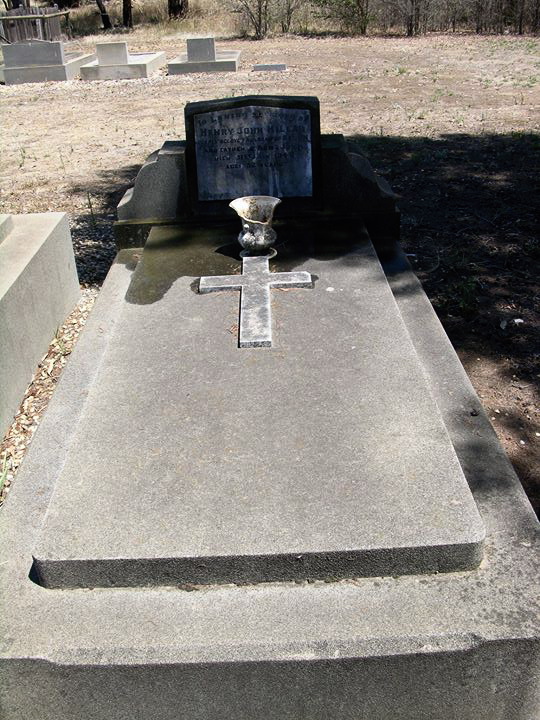
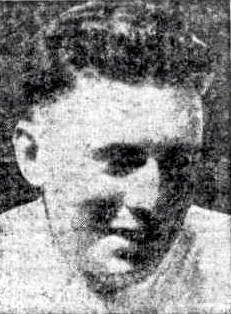
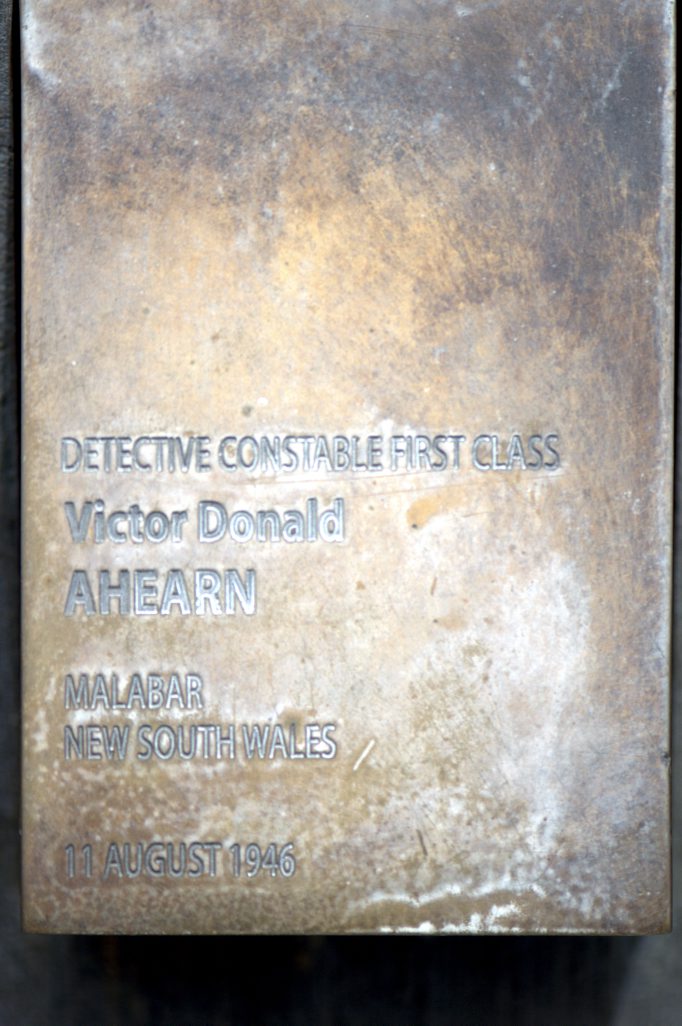
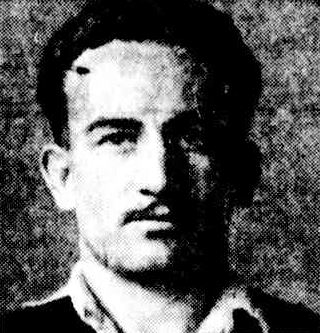
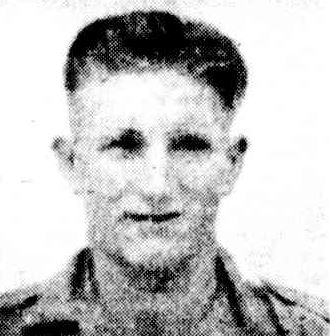
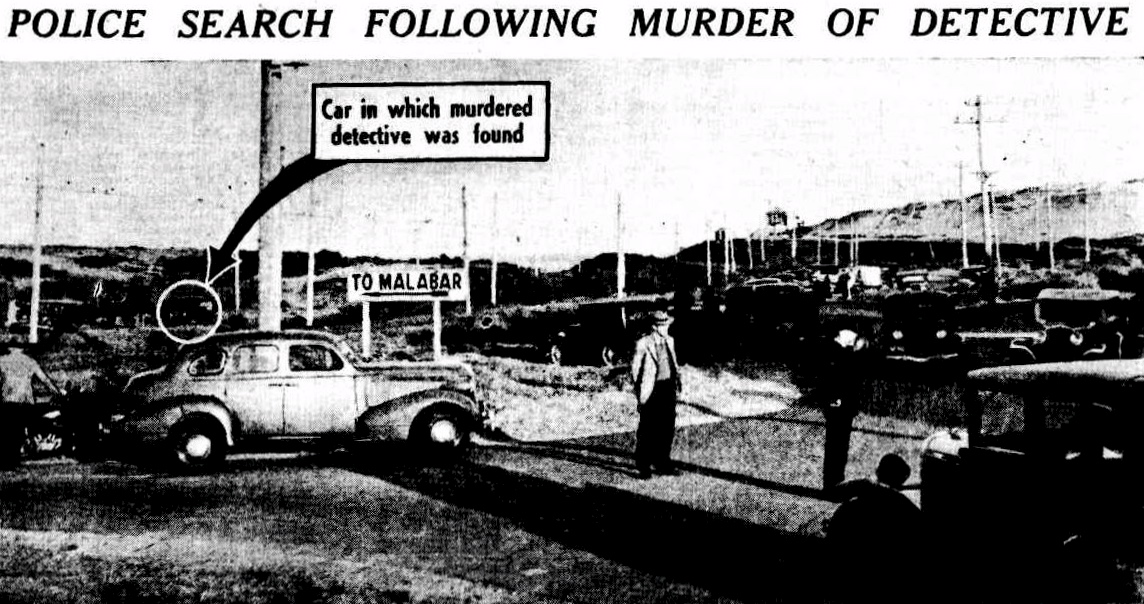
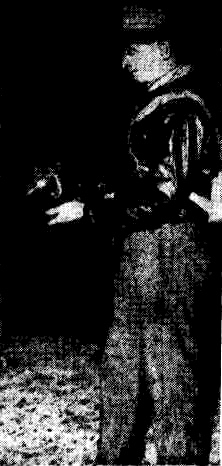
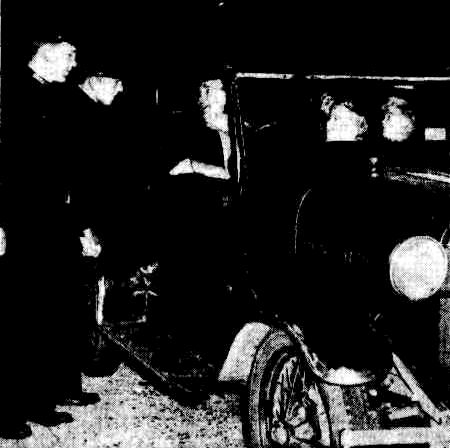
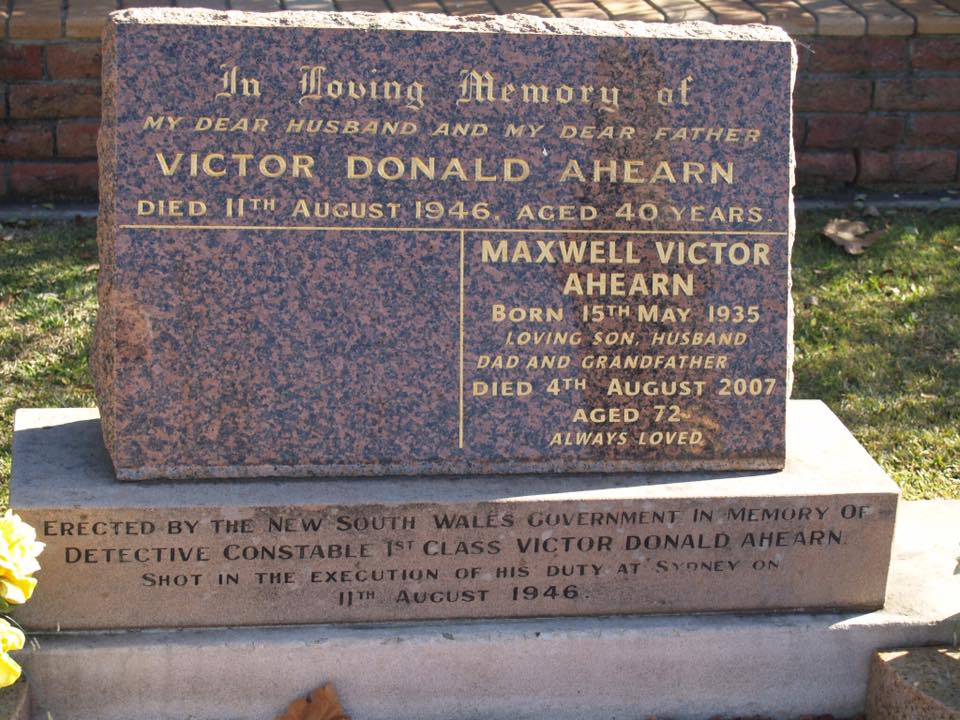
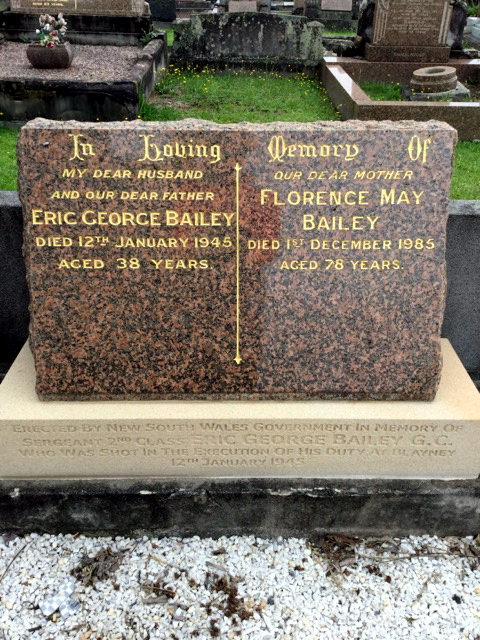
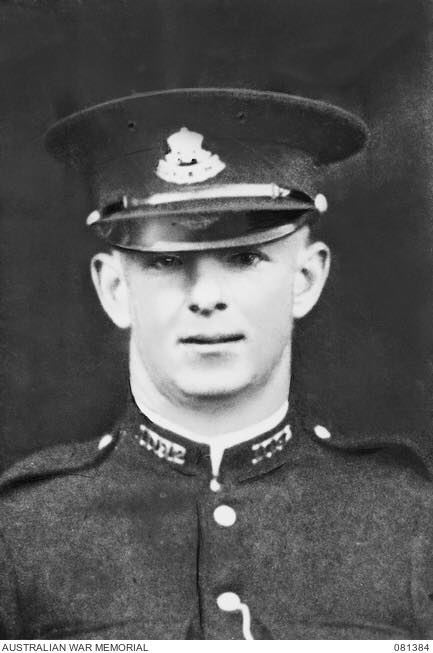
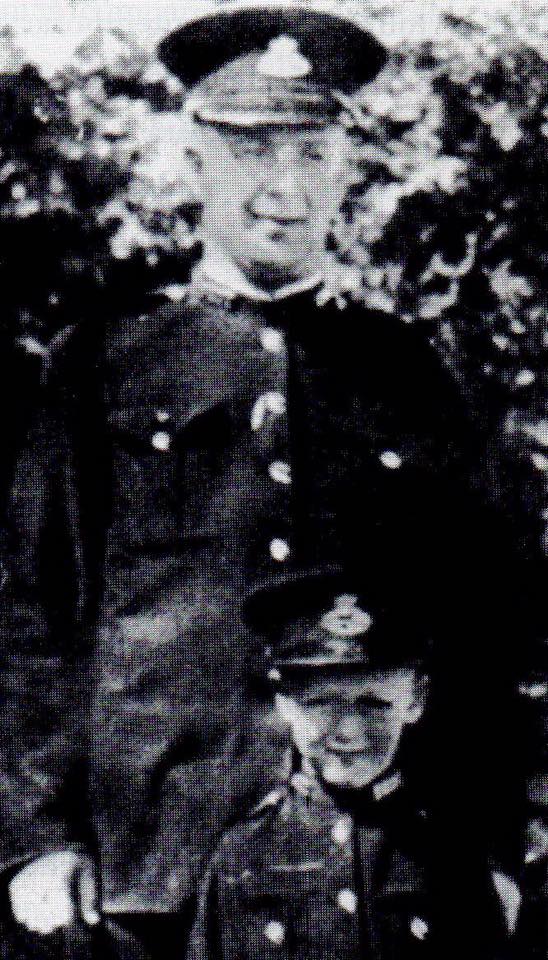
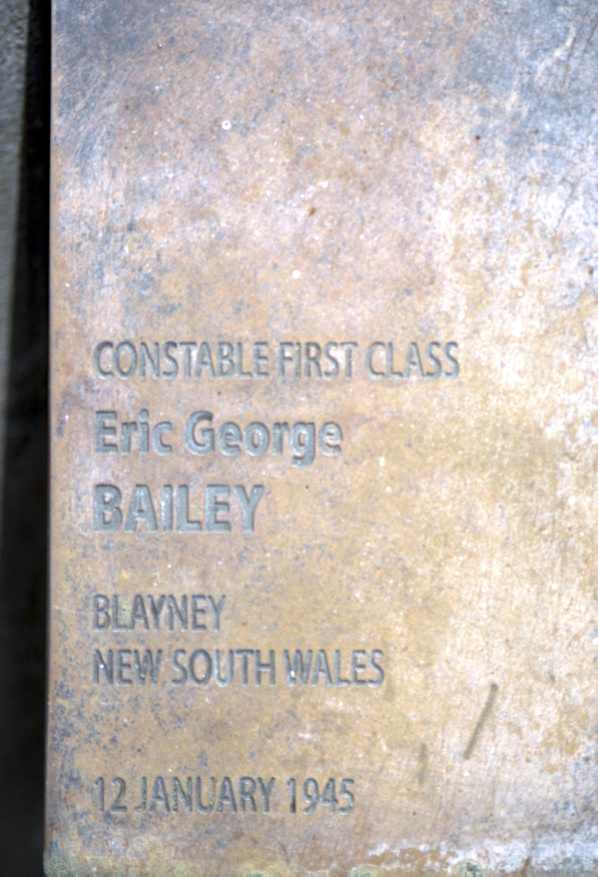
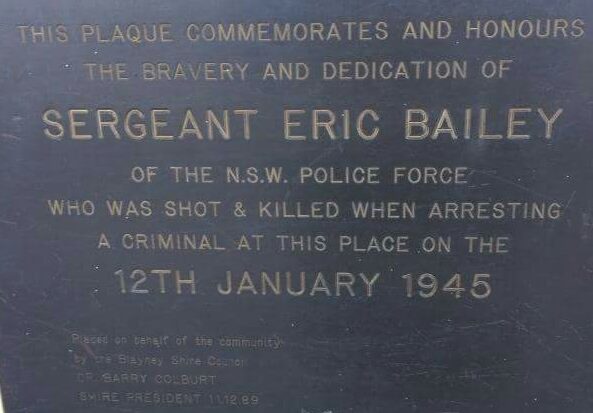
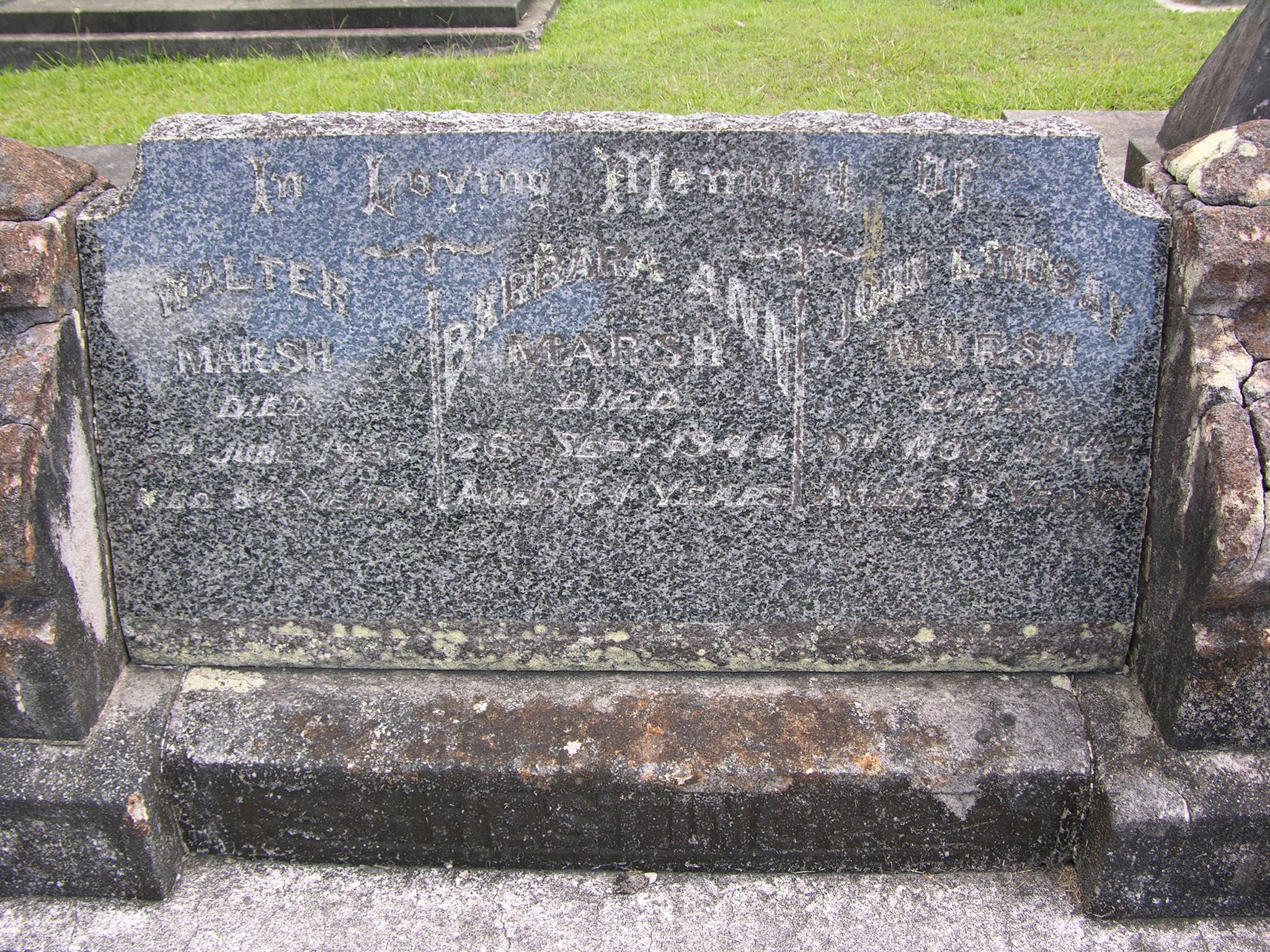
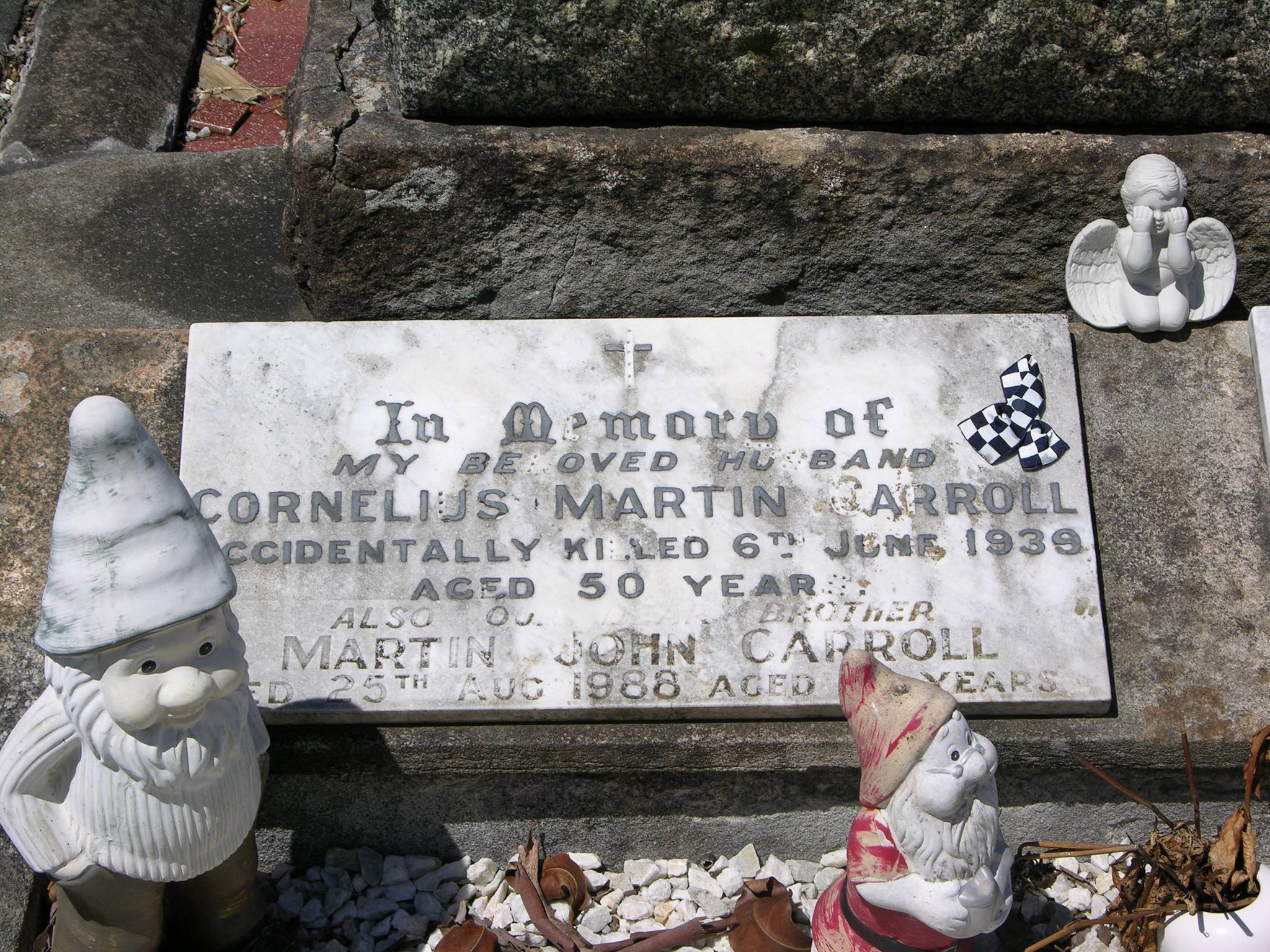


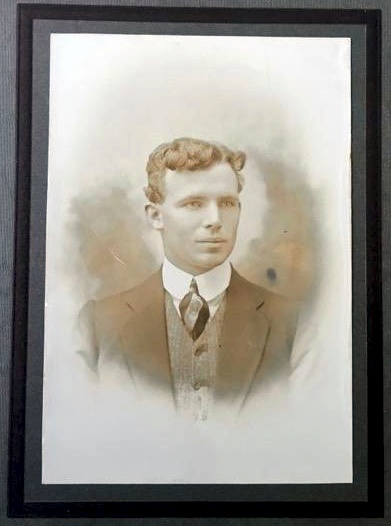
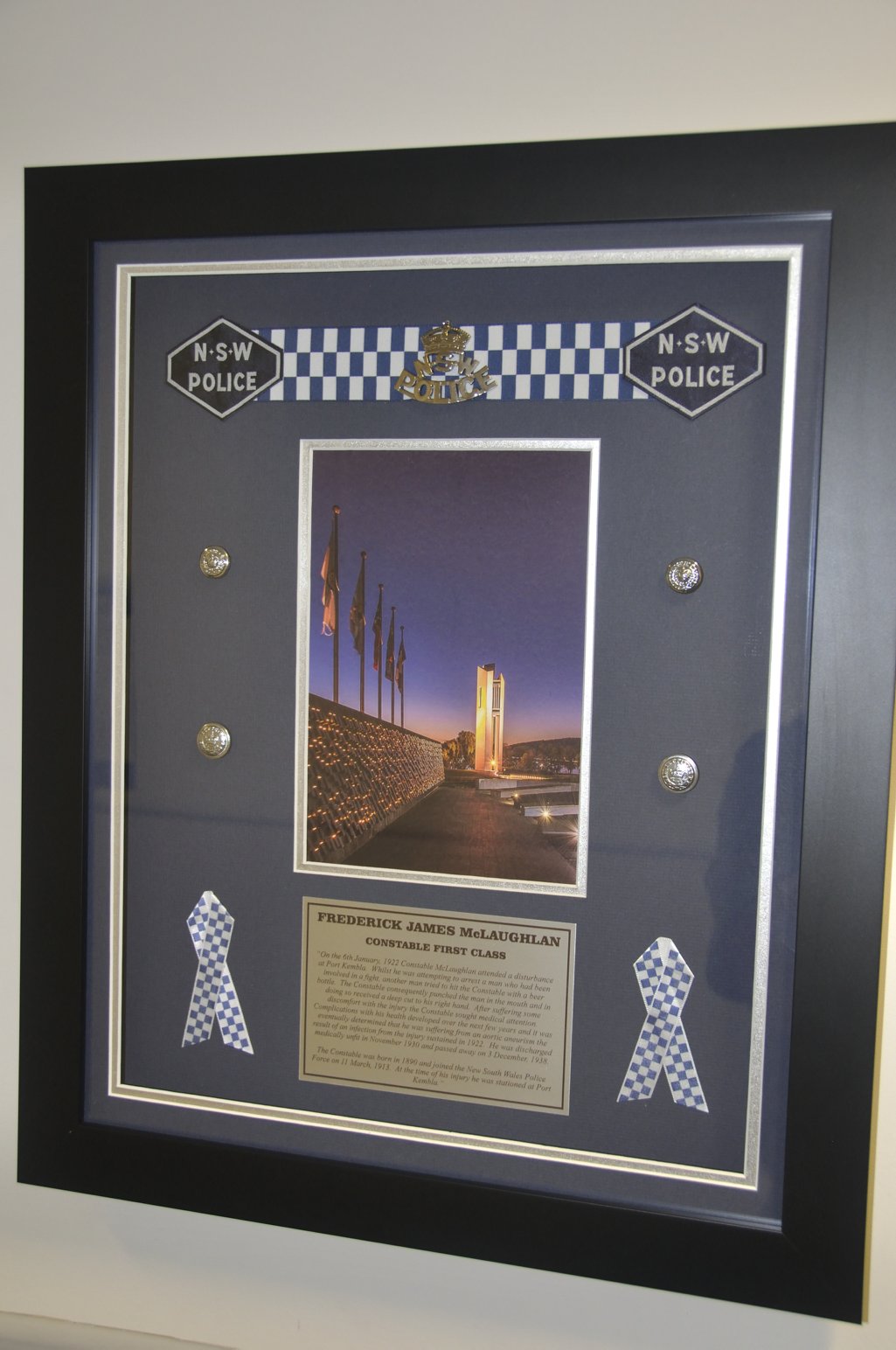
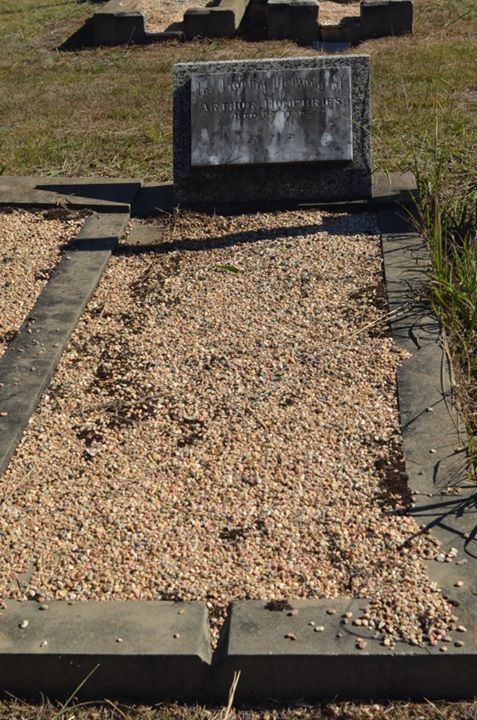
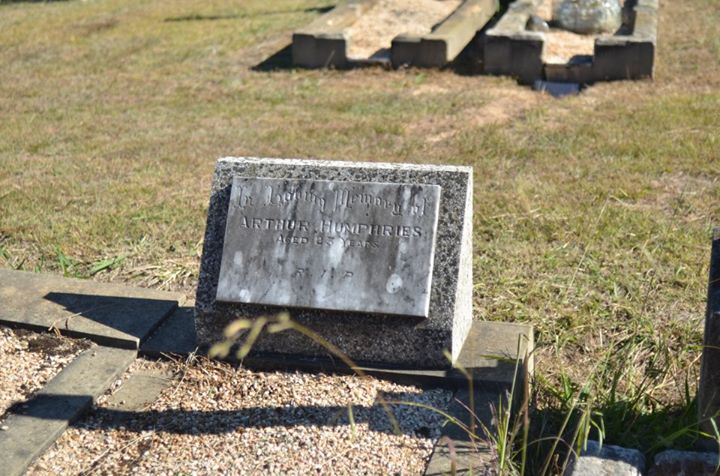
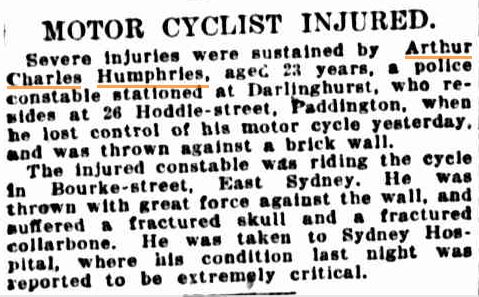
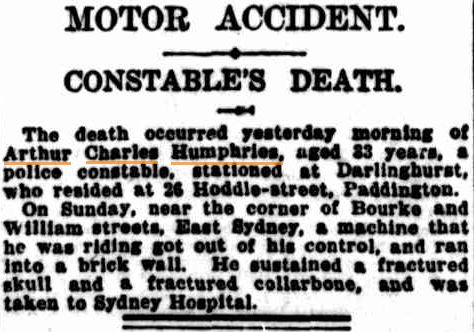
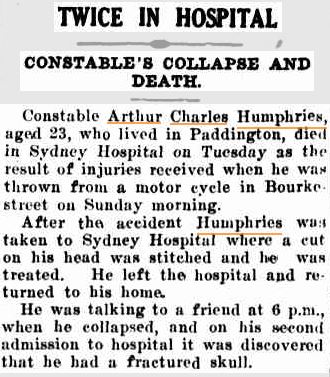
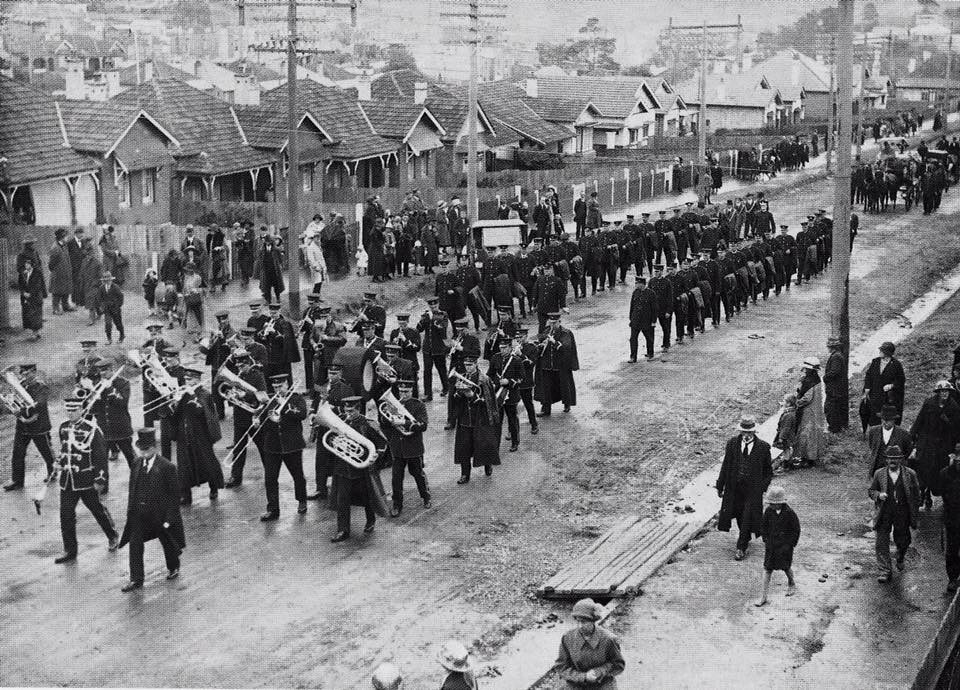
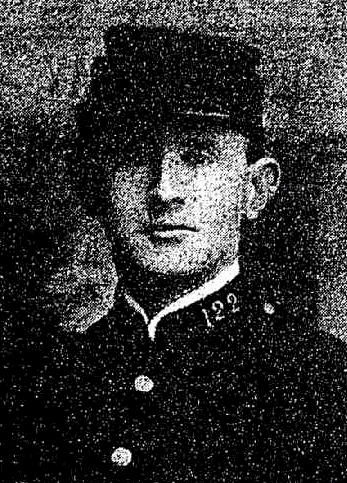
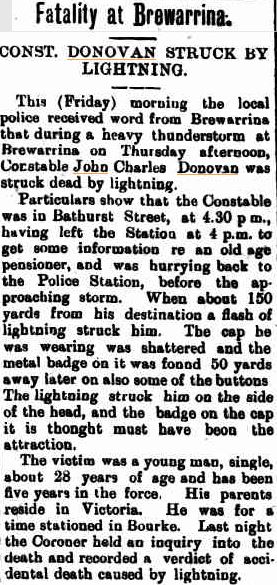
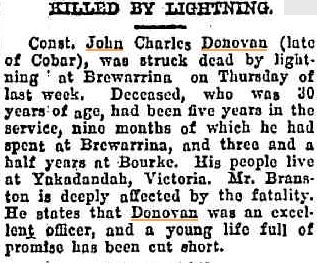
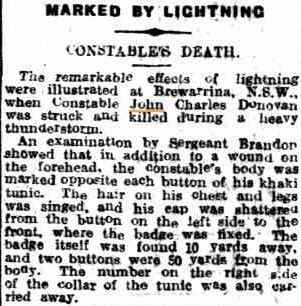
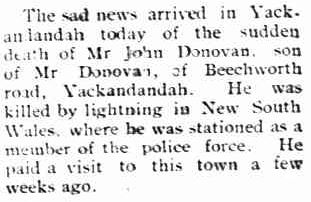
![This monument was erected by the Government of New South Wales to Constable [First Class] Frederick William Mitchell who was shot dead whilst in the execution of his duty on the 17th December 1920.](https://police.freom.com/wp-content/uploads/2012/10/2014-0969-300x200.jpg)
![This monument was erected by the Government of New South Wales to Constable [First Class] Frederick William Mitchell who was shot dead whilst in the execution of his duty on the 17th December 1920.](https://police.freom.com/wp-content/uploads/2012/10/2014-0971-300x200.jpg "Photos taken in 2014 by Cal")