Awards: Queens Commendation for Brave Conduct ( Imperial ) – granted on 24 June 1977 – ( Cst ) – Apprehend an armed man
National Medal – granted 3 September 1985 ( SenCon )
1st Clasp to the National Medal – granted 3 October 1995 ( Sgt )
Born: Monday 26 June 1950
Died: Saturday 22 May 1993
Age: 42
Event Date: Saturday 22 May 1993
Event Location: Ashfield
Cause: Heart Attack during arrest
Funeral Date: 23 July 1993
Funeral location: Woronora Cemetery
Buried: Cremated
1/ Ashes: Henry Lawson Garden Walk
Section E, Plot 0012
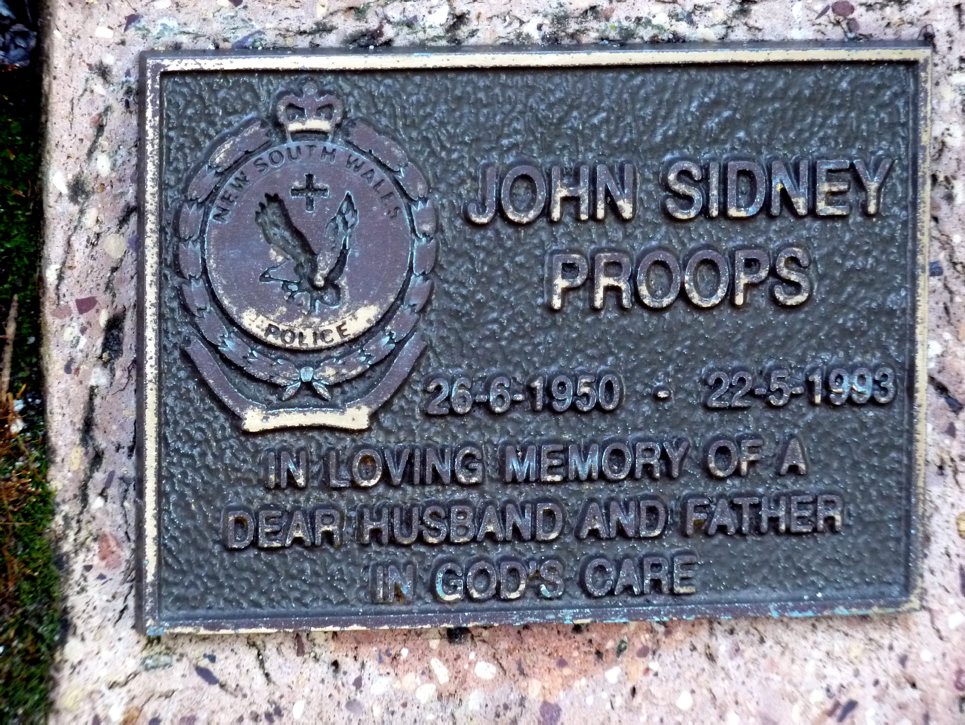
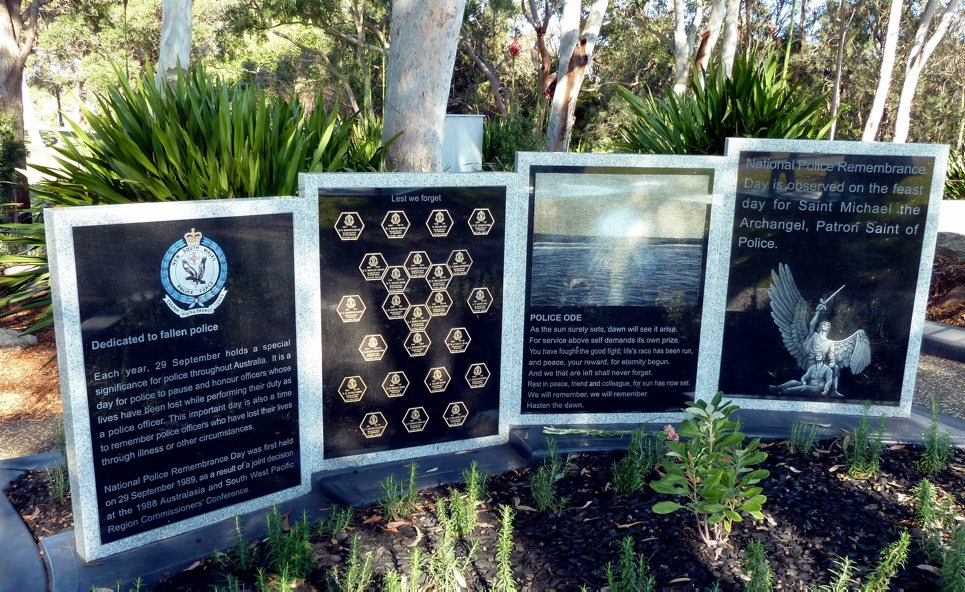
2/ Memorial location: Woronora Cemetery, Police Garden
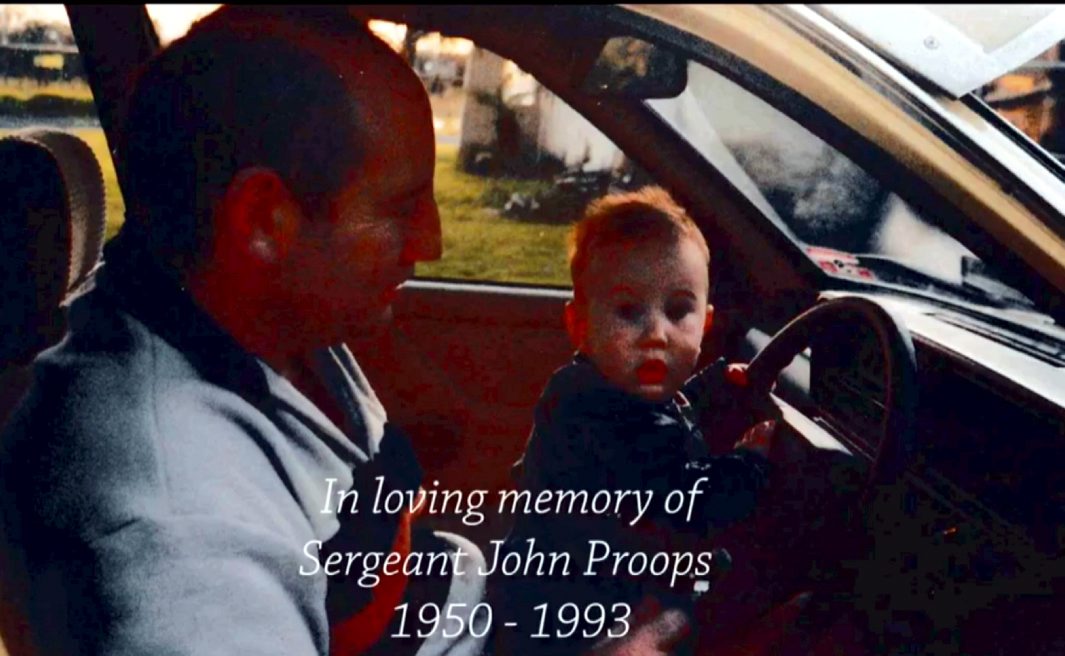
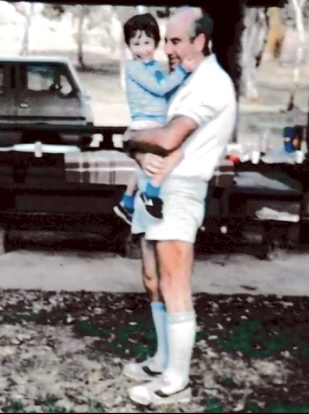
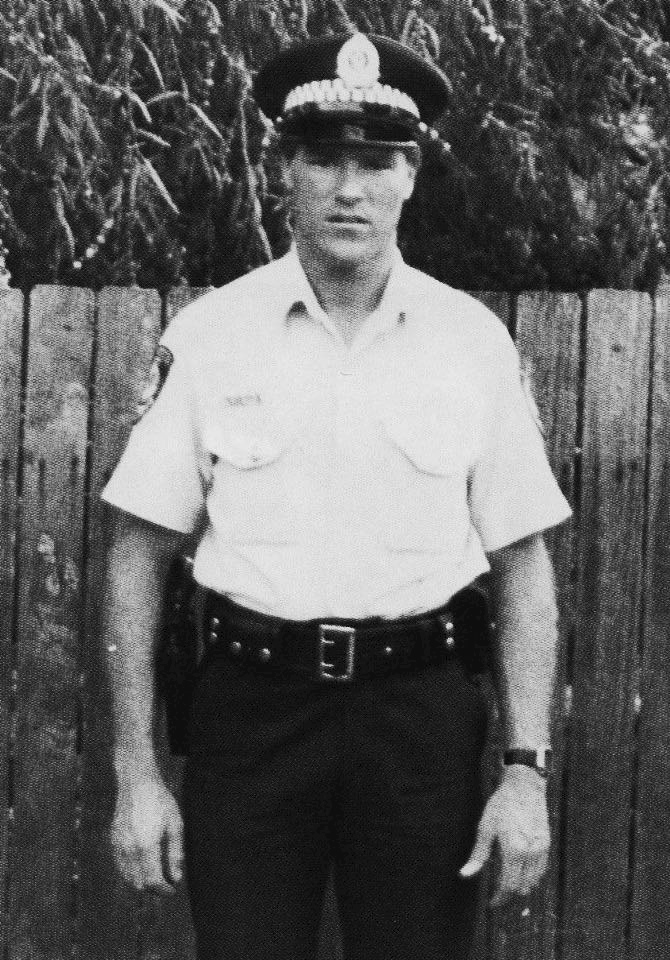
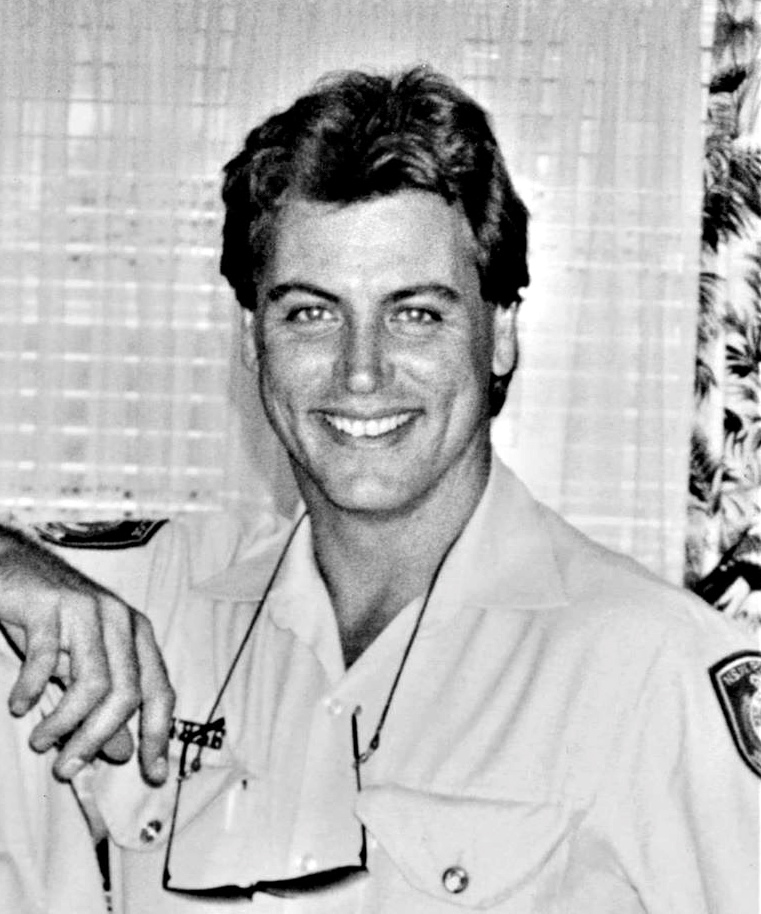
John with his son, Warren, PROOPS
John with his son, Warren, PROOPS
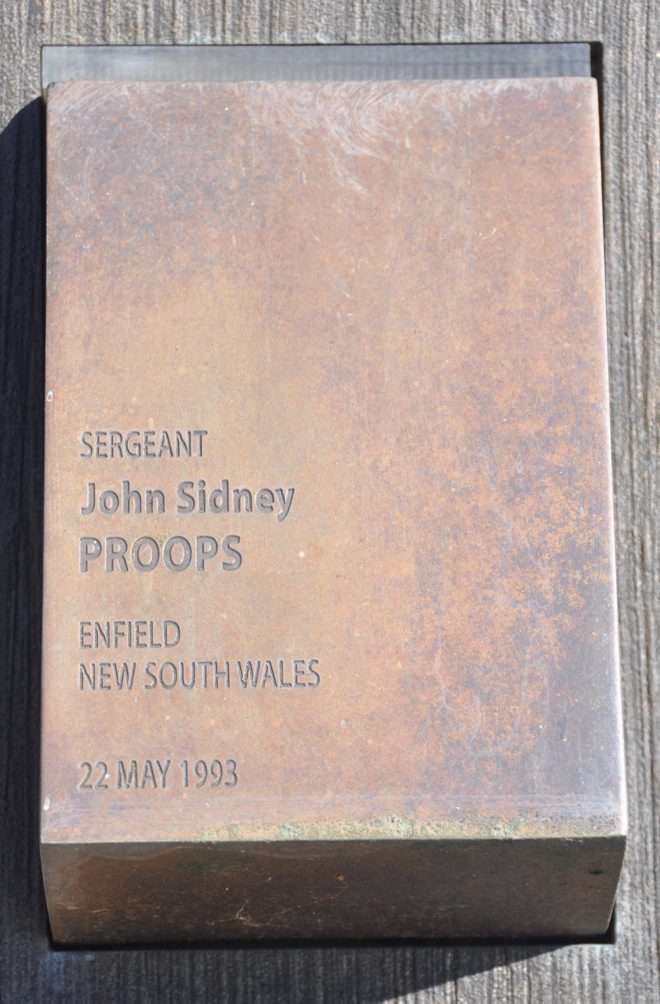
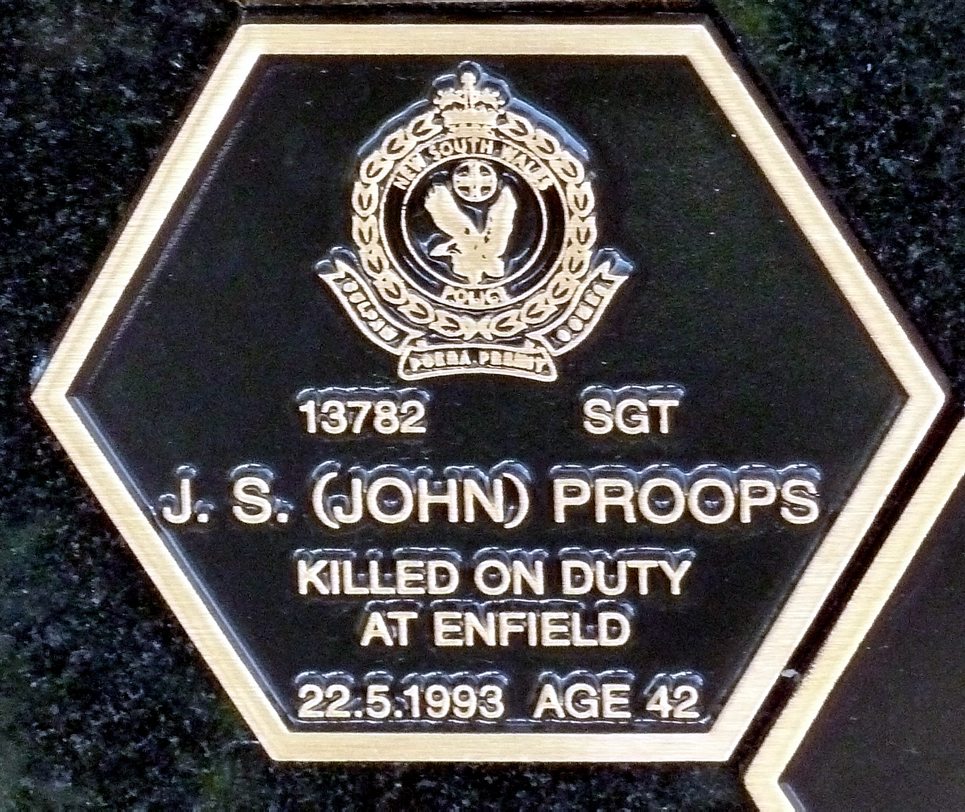
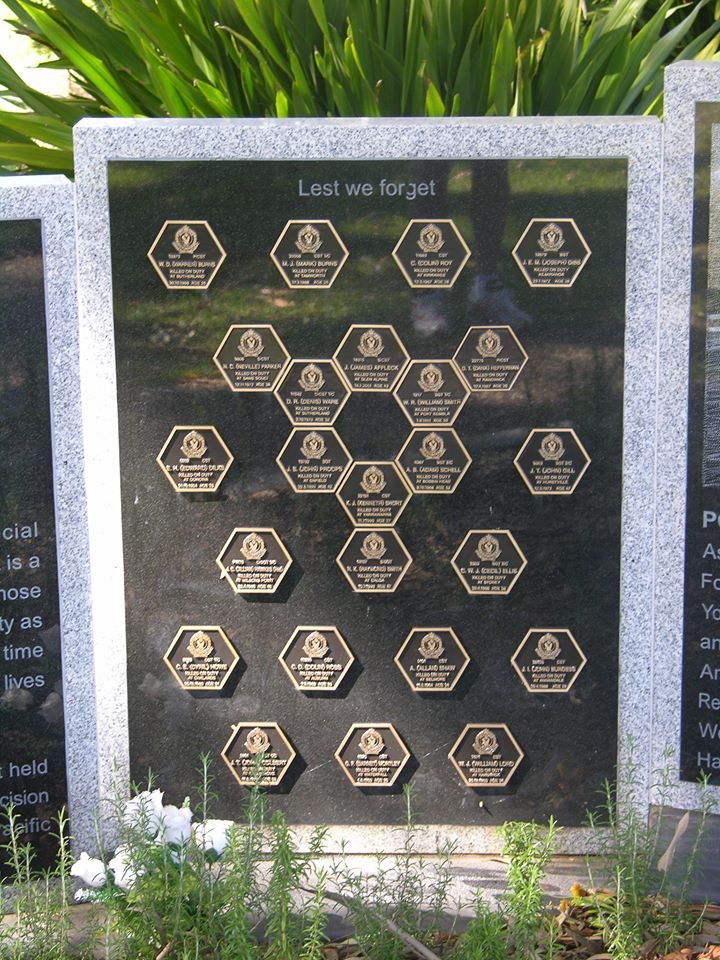
John Sidney PROOPS, Police National Wall of Remembrance touch pad.
On 22 May, 1993Sergeant Proops and Probationary Constable Katie Thompson went to a dwelling in Enfield to arrest an offender for a breach of a domestic violence order. During a struggle with the offender the sergeant is thought to have suffered a fatal heart attack.
Constable Thompson attempted to revive the sergeant however she was unsuccessful. He was conveyed by ambulance to the Western Suburbs Hospital where he was pronounced dead on arrival.
The sergeant was born in 1950 and joined the New South Wales Police Force on 20 February, 1967 as a cadet.
At the time of his death he was stationed at Enfield.
Beyond Courage
[divider_dotted]
[alert_green]John IS mentioned on the Police Wall of Remembrance[/alert_green]
Note: It was also interesting to learn that Sergeant Proops while attending another domestic dispute some years earlier, survived a spear-gun wound to his chest. Apparently, the spear lost much of its penetrating force after striking the sergeant’s police notebook in his tunic pocket.
At just 10-years-old Warren became a NSW Police Legatee, when his father, Sergeant John Proops, passed away after suffering a fatal heart attack while on duty.
Warren has been part of the NSW Police Legacy family for 25 years and took part in the very first trek to Koko
da. Now, he’s returning to the track to help support the team through the physically and emotional journey that is Kokoda.
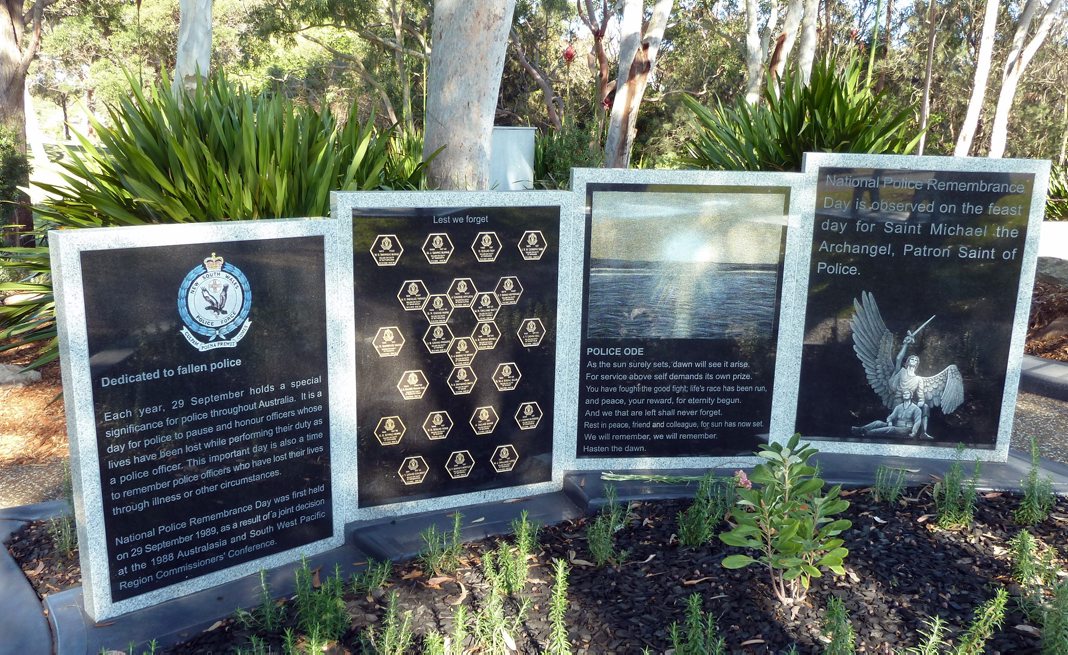
National Police Remembrance Day 29, September 2000
National Police Remembrance Day has been marked by a minute’s silence at services throughout Australasia.
Remembrance Day is held every year on St. Michael’s Day, the patron saint of police, for all officers who have lost their lives in the line of duty.
During the last 12 months, 10 officers have died in the course of their duties in NSW, Victoria, Queensland, Western Australia, the Northern Territory, Papua New Guinea and Fiji.
233 officers have been fatally wounded while on duty in NSW since 1862. Their names are recorded on a memorial dedicated last December in the Sydney Domain.
The Sydney Service has been attended by Police Minister Paul Whelan, Commissioner Peter Ryan and senior members of the NSW Police Service.
During the service candles were lit by Warren Proops, son of Sergeant John Proops who died on 22 May 1996, Eloise and William Heron, son and daughter of Detective Sergeant William Heron who died on 6 January 1999 and Jessica Ede, daughter of Senior Constable Dallas Tidyman who died on 15 August 1994.
NSW Police Commissioner Peter Ryan said the day offers police and members of the public the chance to remember all officers who have lost their lives while serving their community.
“This important day gives us all the chance to pay our respects to these officers and to reflect upon the role in our society that police play,” he said.
“Police officers killed in the course of their duty must never be forgotten.”
The Canberra Times of 24 May, 1993 briefly reported the sergeant’s death.
“POLICE DEATH
SYDNEY: A police sergeant collapsed and died in a struggle with a man he had been questioning about a domestic dispute in Sydney on Saturday night.
Another police officer had broken his leg in a clash later with the man, who allegedly had breached a domestic violence order, a police spokesman said.
Sergeant John Proops, 42, collapsed in the struggle with the 32-year-old man at a house in Enfield.
The man was remanded in Central Local Court yesterday.”
A District Court judge launched an extraordinary attack on police yesterday, claiming they had been involved in the “evil” business of judge-shopping.
He said it appeared that many of those involved in the matter before him had lied.
Judge Phelan, hearing an appeal by Mr Stephen Smith in the District Court, said in a preliminary appraisal of the case that many police had followed a “screed” when giving earlier evidence before a magistrate and when they got beyond the screed their evidence lacked credibility.
There also appeared to have been an assault upon Mr Smith and that no police were able to explain his injuries.
Judge Phelan said if the matter proceeded, and the police witnesses were called against Mr Smith, it would be likely that he would refer a number of matters to the Attorney-General and the Ombudsman alleging that police had fitted evidence and then lied in court.
The Herald understands that staff from the Police Royal Commission had already shown an interest in the matter.
In May 1993, two police officers went to a house in Enfield where it was alleged Mr Smith had breached a domestic violence order.
It was alleged he had resisted arrest and one officer, Sergeant John Proops, had suffered a fatal heart attack.
Police alleged Mr Smith then tried to attack another officer, Sergeant Southam, and that Sergeant Southam suffered a broken ankle.
Mr Smith alleges he was tackled into Sergeant Southam by other officers and then beaten with a torch. He was later convicted of breaching a domestic violence order, resisting arrest and assault occasioning actual bodily harm.
Judge Phelan said yesterday that a doctor’s report indicated Mr Smith had an injury to his head, consistent with being hit with a torch, a cut on his forehead, bruises over his body, a broken rib and bruises to his legs.
“… the injuries can only be explained rationally and solely by a police attack upon the appellant which the officers have all denied and this leads to the conclusion that many of the police officers are lying,” Judge Phelan said.
He said that a small dog had apparently been kicked in the head and lost its eye during the arrest and that police could offer no explanations as to how this had happened. The dog later died. The judge also stated there had been behind-the-scenes moves to have him removed from the case when it came to an appeal.
“I find it obnoxious and suspicious that there have been police manoeuvres to change the prosecution person [assigned] to these matters,” Judge Phelan said.
“If judge-shopping is an evil, as it is, equally evil is prosecution shopping. I also find it obnoxious and suspicious that there have been manoeuvres to have another judge conduct the appeal.”
The matter will resume before Judge Phelan in the Downing Centre District Court this morning and it is expected that the Director of Public Prosecutions will then make a decision about offering evidence in the case.
SYDNEY, Tuesday. — A notebook in his breast pocket had saved a policeman’s life when a man had fired a spear gun at him, police alleged in Campsie Court today.
The police prosecutor, Sergeant A. Carter, told Mr Hayes. SM. that the constable had been trying to arrest the man when the spear was fired from almost point-blank range.
Before Mr Hayes was Mr Norman Warren Castle, 53, of Albany Road, Petersham, who was charged with shooting Constable John Proops at Belmore last Saturday with intent to murder.
Sergeant Carter said it was alleged that Mr Castle had smashed a door of a house at Belmore and had menaced the two occupants inside with the loaded spear gun.
Police had gone to the house and Mr Castle had allegedly turned on them.
It was alleged he had fired a spear at Constable Proops which had struck the officer’s regulation notebook in the breast pocket of his uniform.
Sergeant Carter said Mr Castle had been taken to Canterbury Hospital yesterday after allegedly swallowing glass.
“The doctors found he had consumed some plastic buttons ‘ — x-rays taken found no glass or other substances”, he said.
People involved in the case “feared for their safety”. Further charges could be laid.
Questioned by Mr Hayes. Mr Castle said he had been “communicating with my dead father”.
Asked how he had been communicating, Mr Castle replied, “In my mind … He has communicated with me before”.
Mr Hayes refused bail, adjourned the case for mention to June 15, and recommended that Mr Castle be physically, and mentally examined.
Service: From 9 April 1985 to 11 July 1990 = 5+ years Service
Awards: Nil
Born: Thursday 19 July 1962
Died on: Wednesday 11 July 1990
Cause: Motor Vehicle Collision – On Duty – front passenger ( raining )
Event location: Old Princes Hwy & Old Bush Rd, Yarrawarra, NSW
Age: 27 years, 11 months, 22 days
Funeral date: Monday 16 July 1990
Funeral location: St John Bosco Catholic Church, Engadine
Buried at: Woronora Memorial Park, Linden St, Sutherland
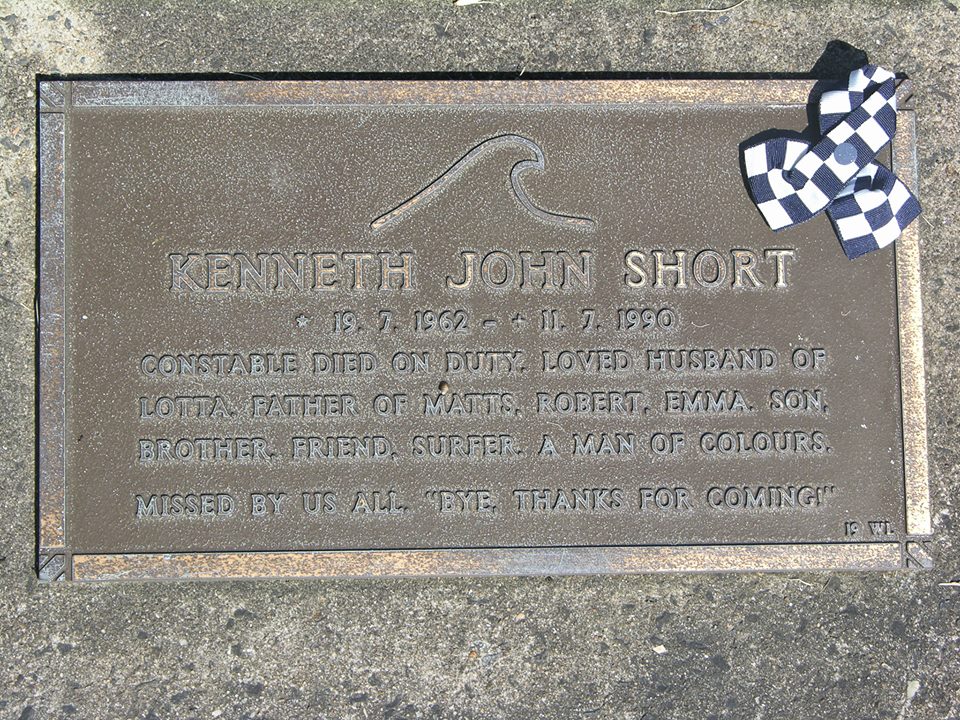
General Plaque Lawn
Section: Wattle Lawn Lot: 19
Lat/Lng: -34.03618, 151.04945
KEN IS mentioned on the Police Wall of Remembrance
About 9.30am on 11 July, 1990 Constable Short was the observer in a police vehicle travelling along the Old Princes Highway, Yarrawarra. The police were attending an armed holdup at the ANZ Bank, Jannali and when approaching the intersection of Old Bush Road the police vehicle veered across the roadway and collided head-on with another car. Constable Short was killed instantly.
There was also a Student Police Officer ( S.P.O. ) in the back seat of the Police vehicle at the time of the collision.
The constable was born in 1962 and joined the New South Wales Police Force on 9 April, 1985. He was sworn in on Friday 21 June, 1985. At the time of his death he was stationed at Engadine.
On the day of his funeral, the procession drove past Engadine Police Station – travelling between the Church Service and the Cemetery.
Before he joined ” the job “, Ken was shot by an unknown assailant at George’s Hall @ 1983. That incident was attended by Greg McMahon with Sgt 1/c Alec Morton. Shot in a very private part and very lucky to have not suffered a lasting injury.
Commissioners Valour Award ( VA ) ( Posthumously )
Born: Friday 1 June 1962
Died On: Friday 5 May 1989
Event: Shot – wounded – Murdered
Event location: Woolloomooloo
Event Date: 24 April 1989
Died: 5 May 1989 ( 9 days after event )
Cause: Murdered – shot twice
Age: 26 yrs 11 mths 4 days
Funeral date: 9 May 1989
Funeral location: St Mary’s Anglican Church
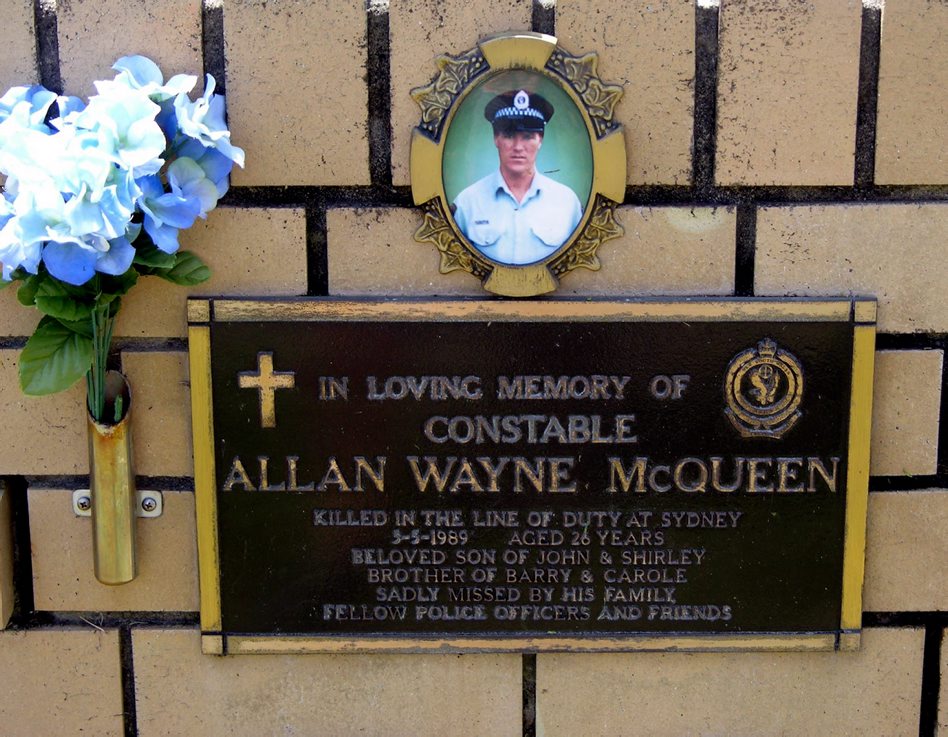
Buried at: Cremated. East Ballina Cemetery, McQueen Family Wall, Sec: Niche, Lot # 2
GPS: 28*51’47″S / 153*35’26″E
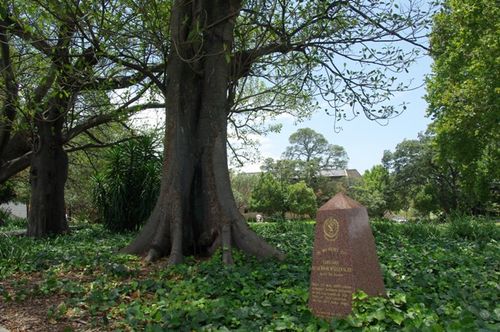
Memorial: 1/ Yurong Parkway, Phillip Park , Sydney, 2000
GPS: Lat: -33.872583 / Long: 151.213778
2/ Sydney Police Centre, McQueen Room, 151 – 241 Goulburn Street, Surry Hills.
3/ Police Launch McQueen???.
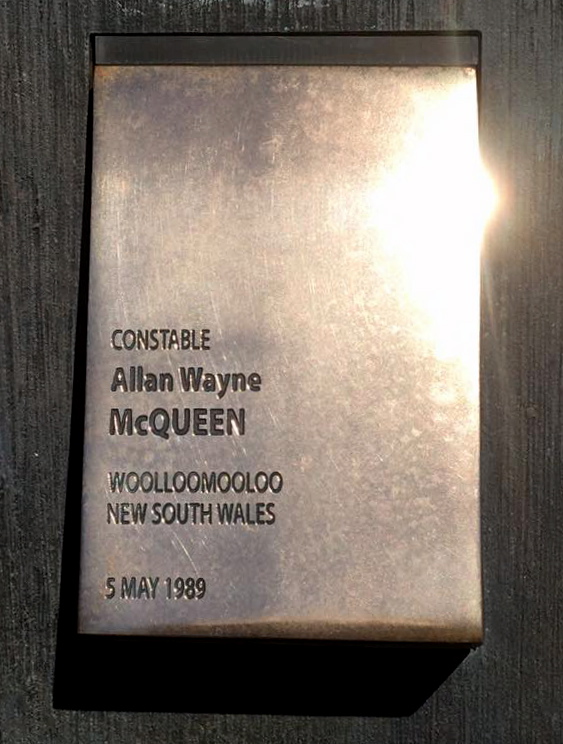
Allan’s touch plate was polished today, this 27th anniversary, 5 May 2016, by a mate, Craig Coleman, at the National Police Wall of Remembrance, Canberra.
ALLAN IS mentioned on the Police Wall of Remembrance
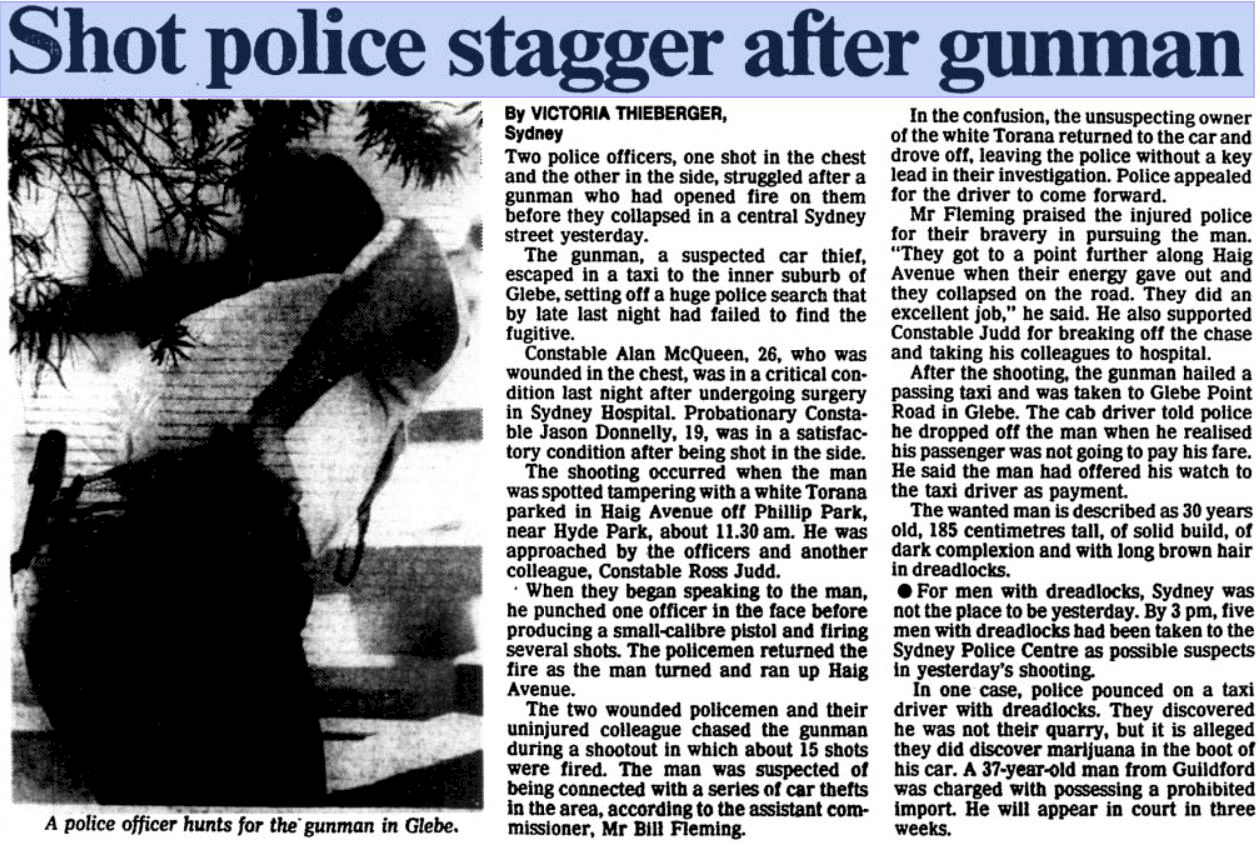
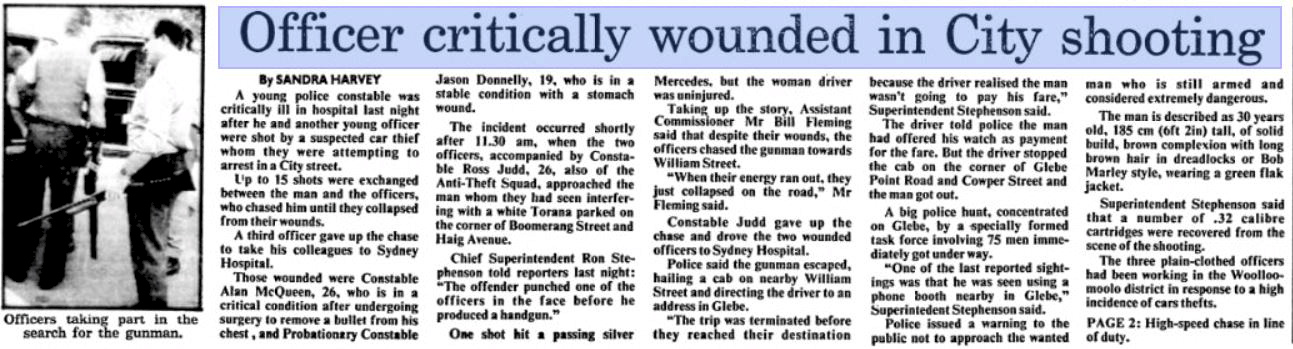
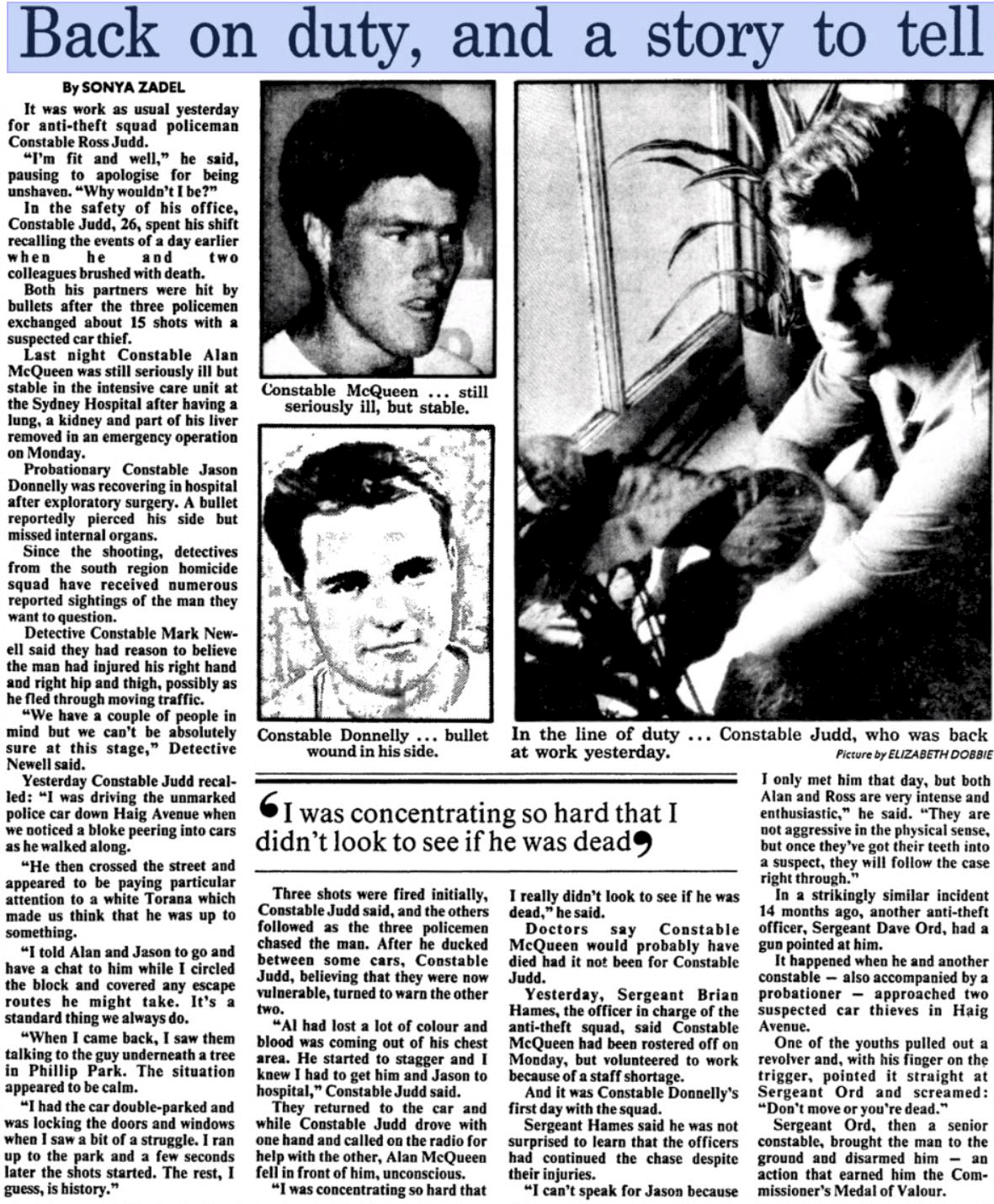
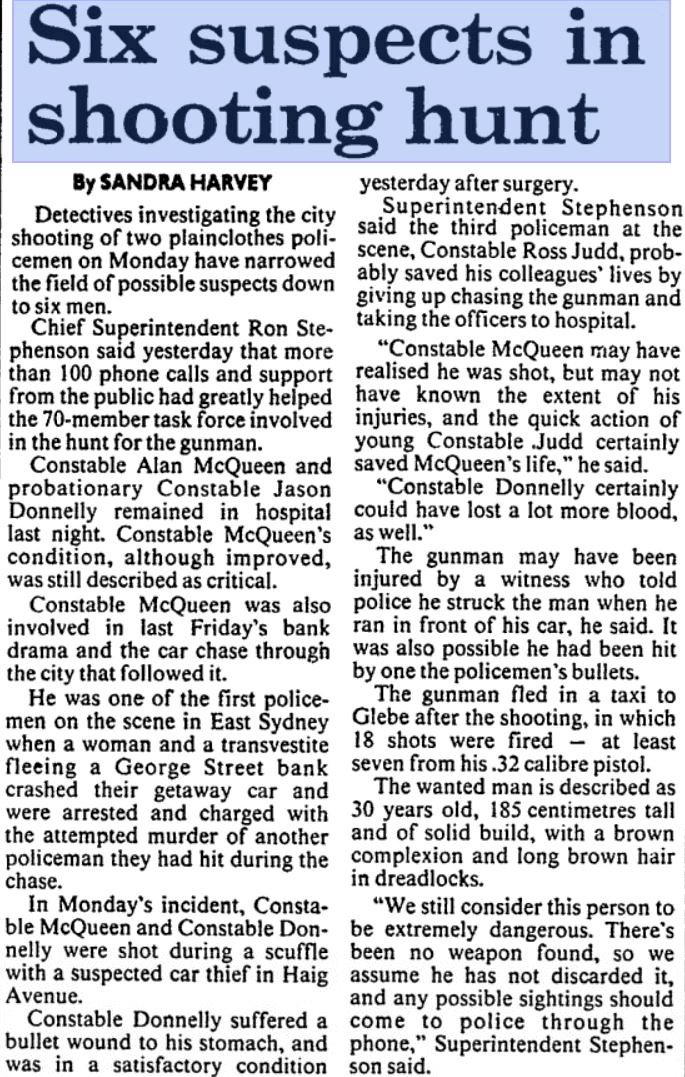
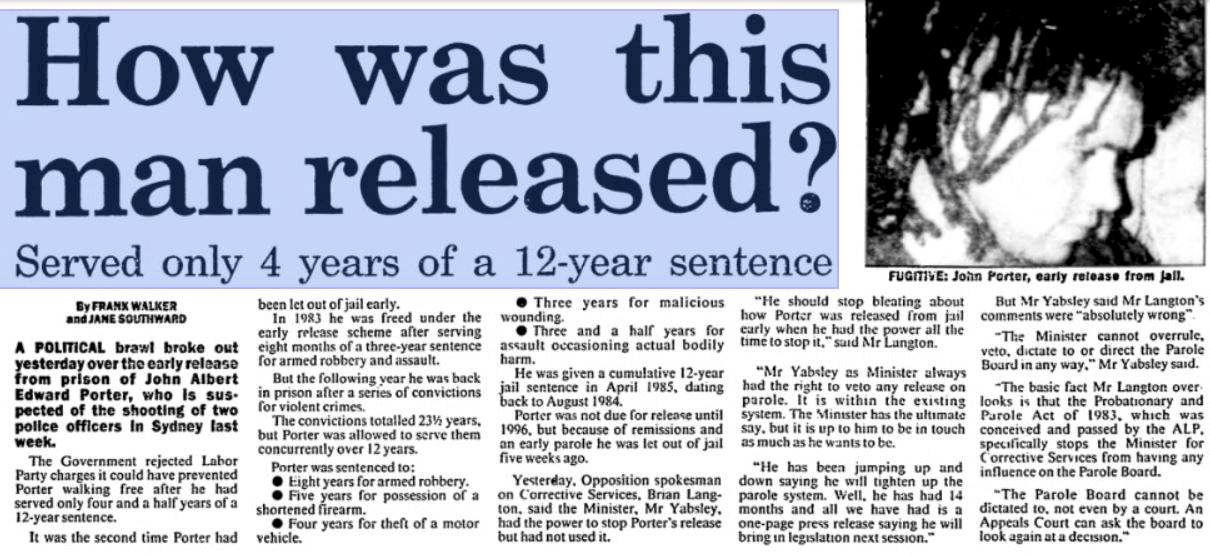
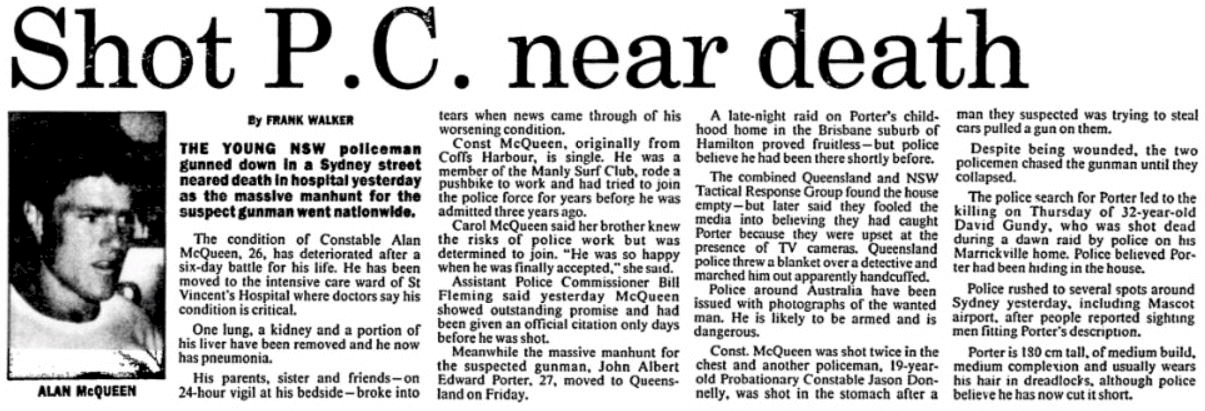
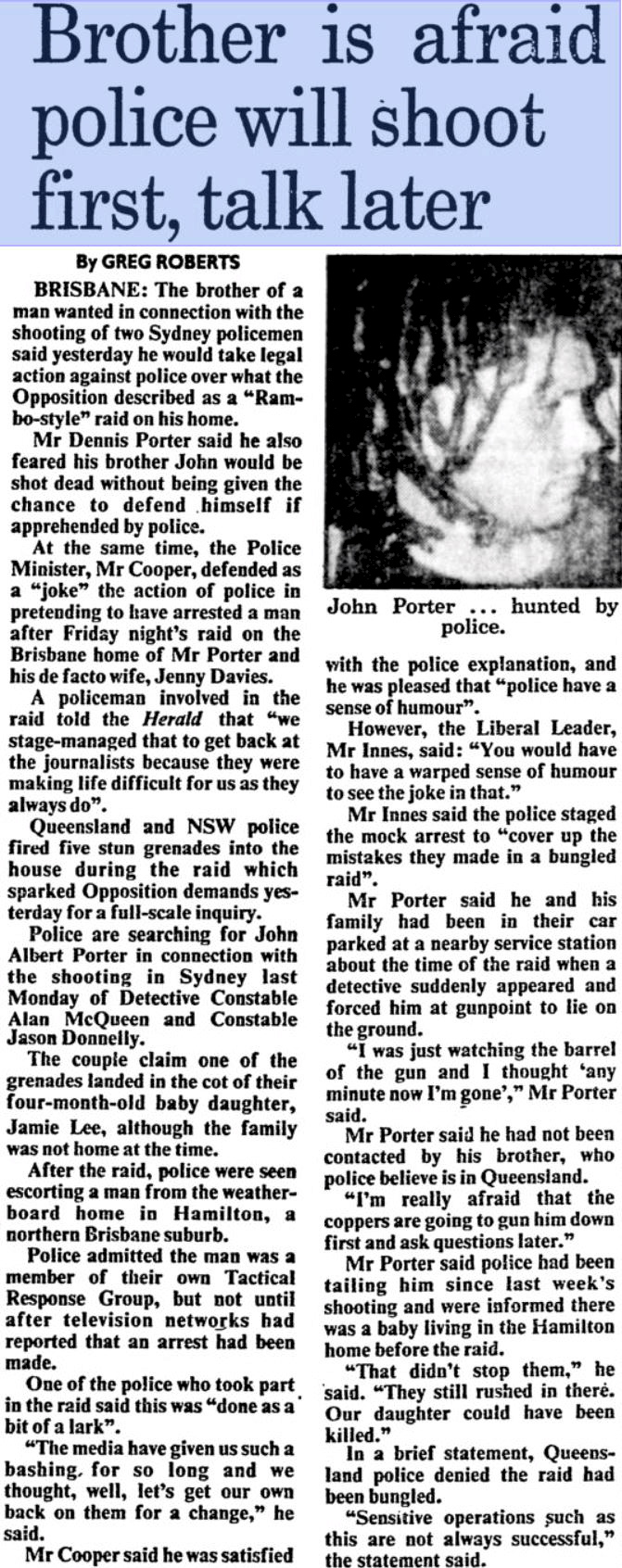
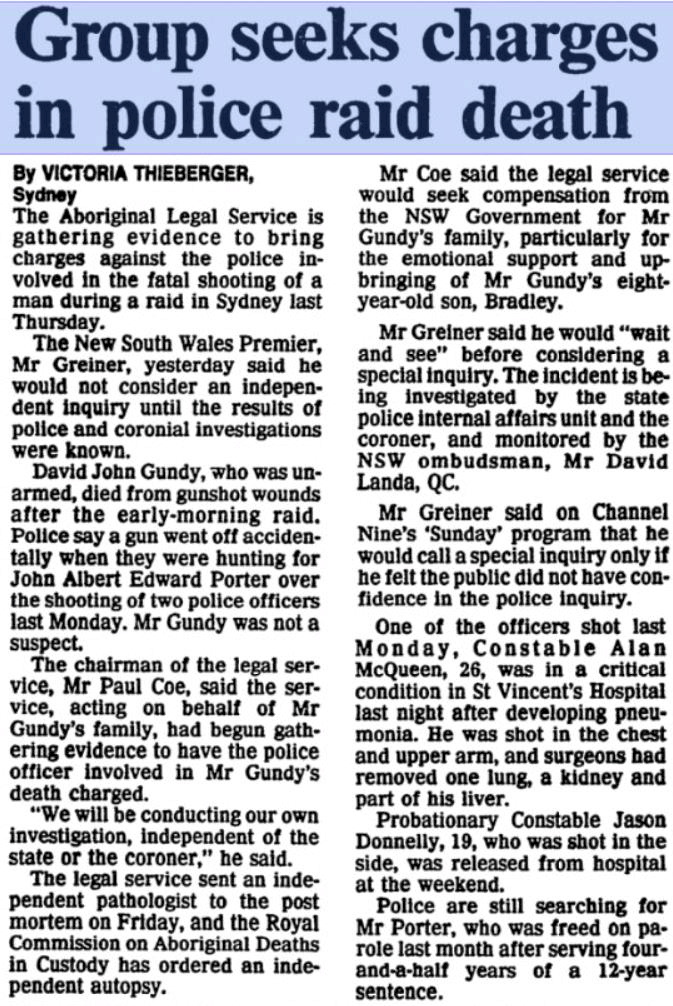
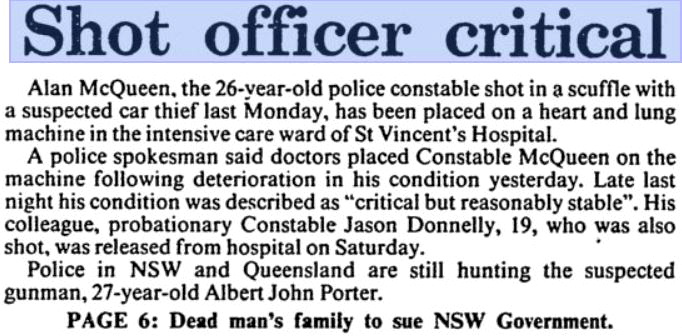
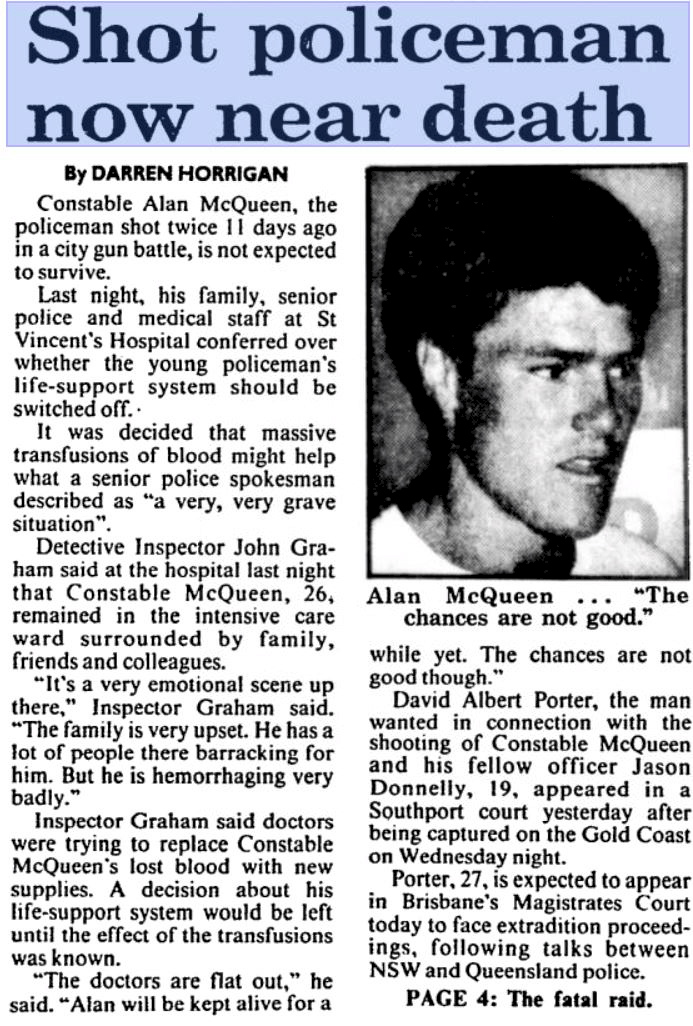
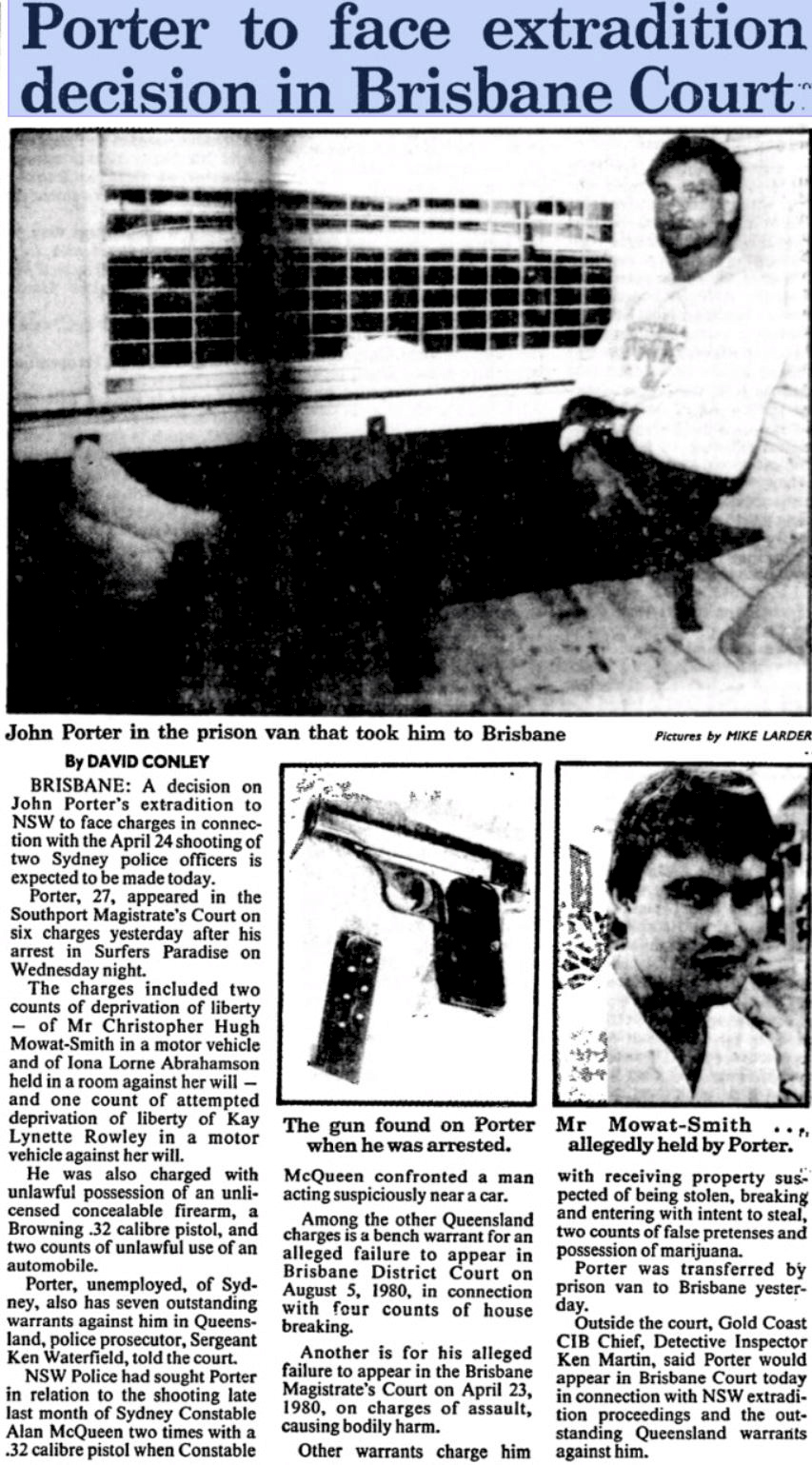
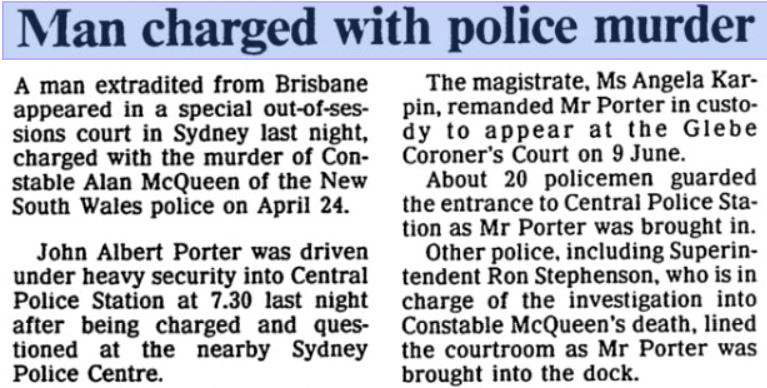
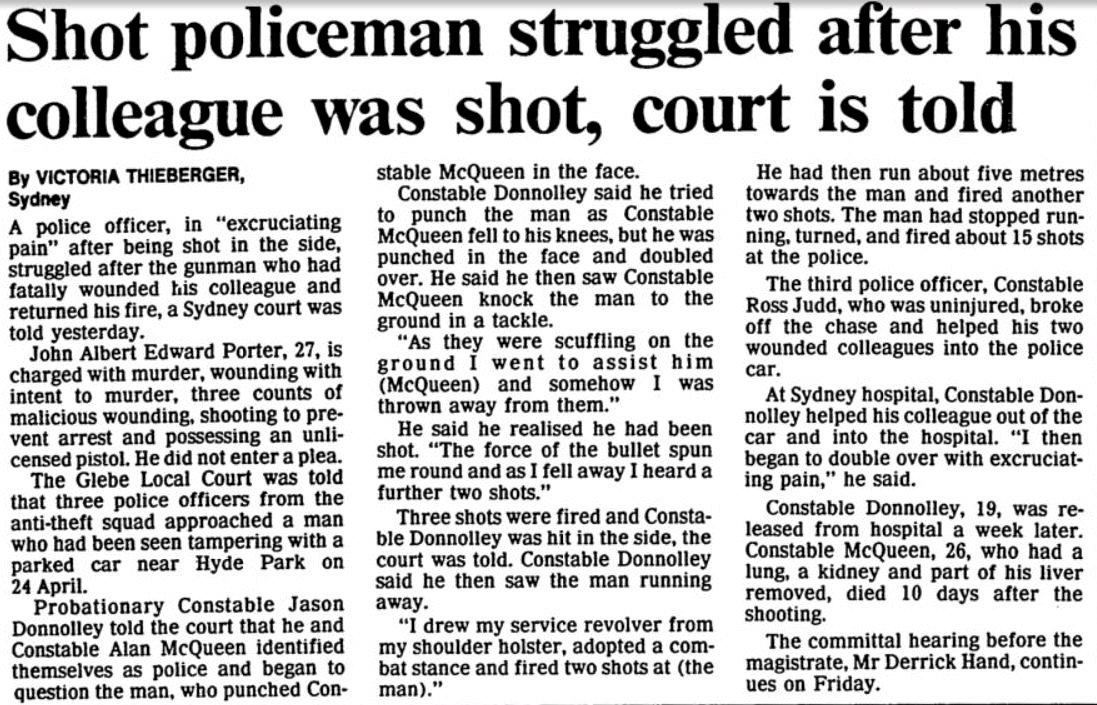
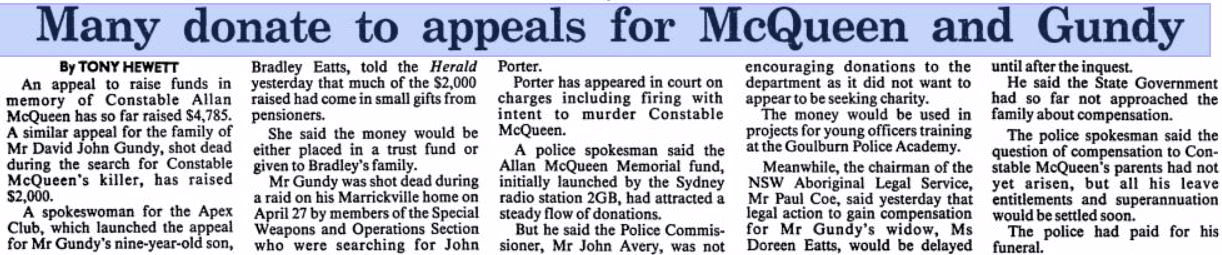
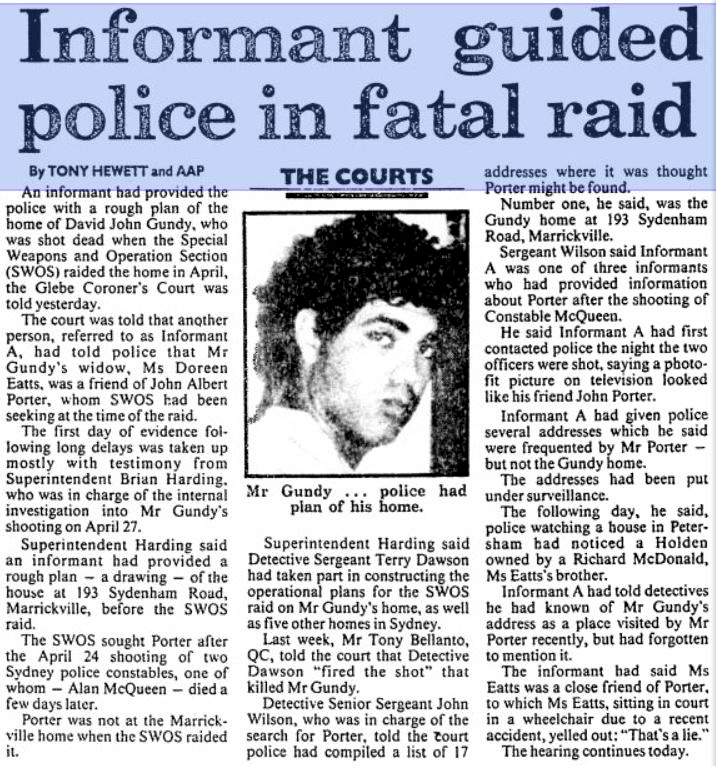
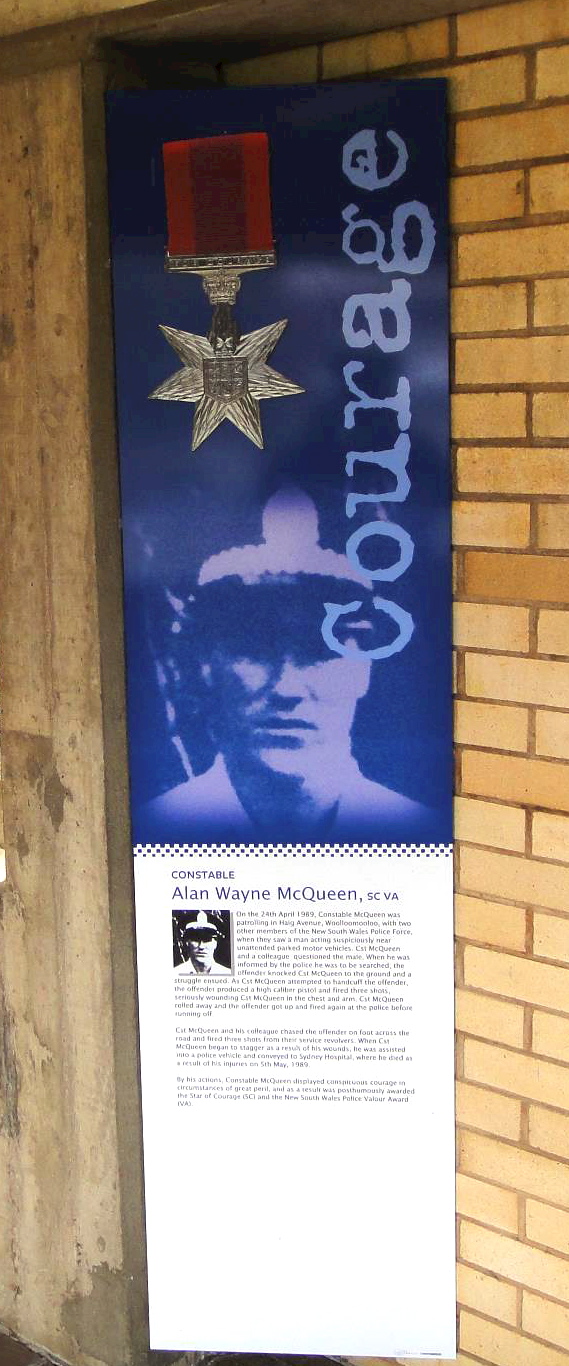
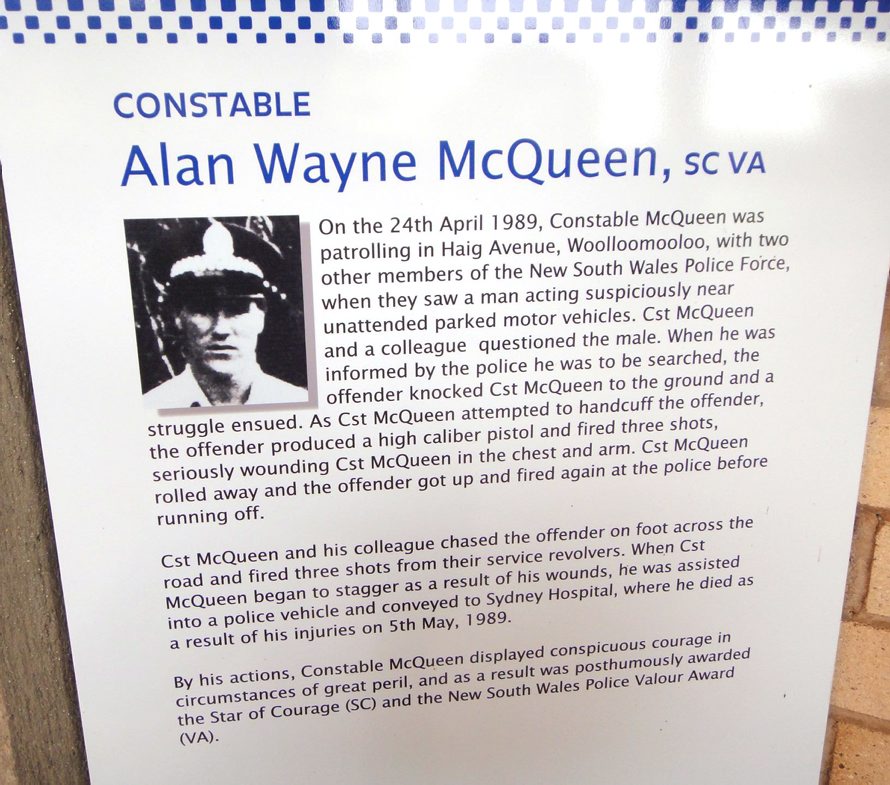
On the morning of 24 April, 1989 Constable McQueen, Constable 1st Class Ross Judd and Probationary Constable Jason Donnelly were patrolling the Woolloomooloo area. All were members of the District Anti-Theft Squad. About 11.35am they saw the offender Porter, apparently attempting to break into a motor vehicle. While Constable Judd parked the police vehicle, Constables McQueen and Donnelly went to speak to the offender. As he was being detained, the offender produced a concealed weapon and shot Constable McQueen twice in the chest and Constable Donnelly in the abdomen. Both constables then chased the offender, who continued firing at them, until both collapsed from their wounds. Constable Ross Judd also pursued and fired at the offender before returning to assist his colleagues. He then carried both wounded constables to the police car and drove them to the Sydney Hospital.
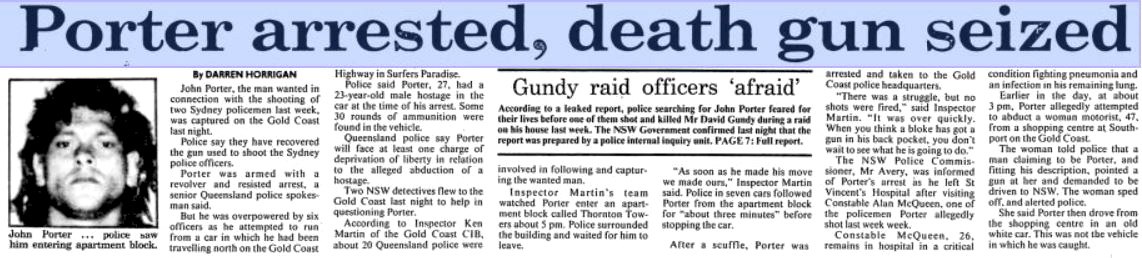
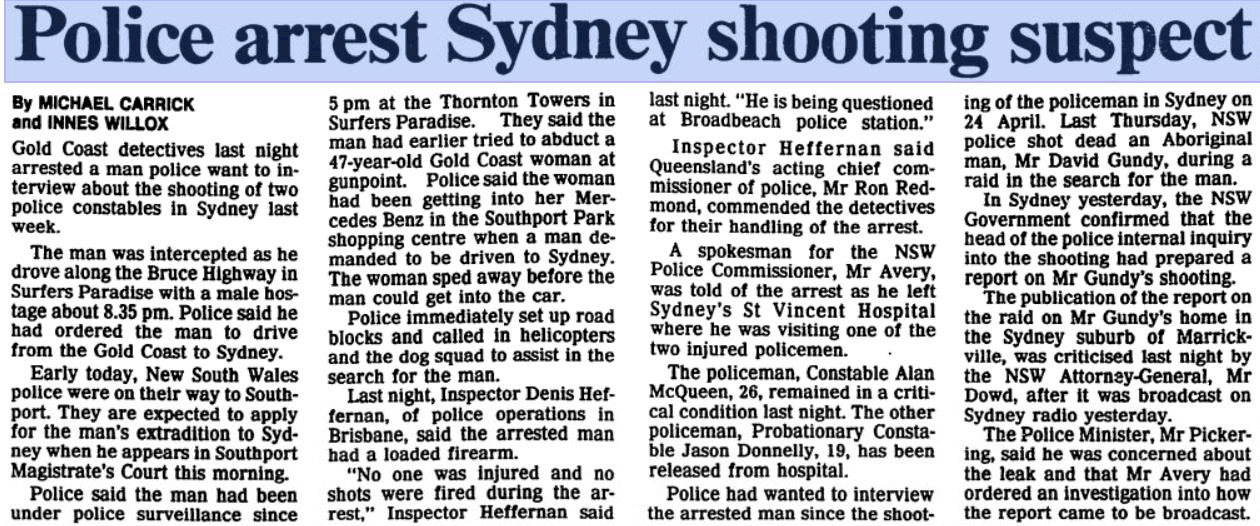
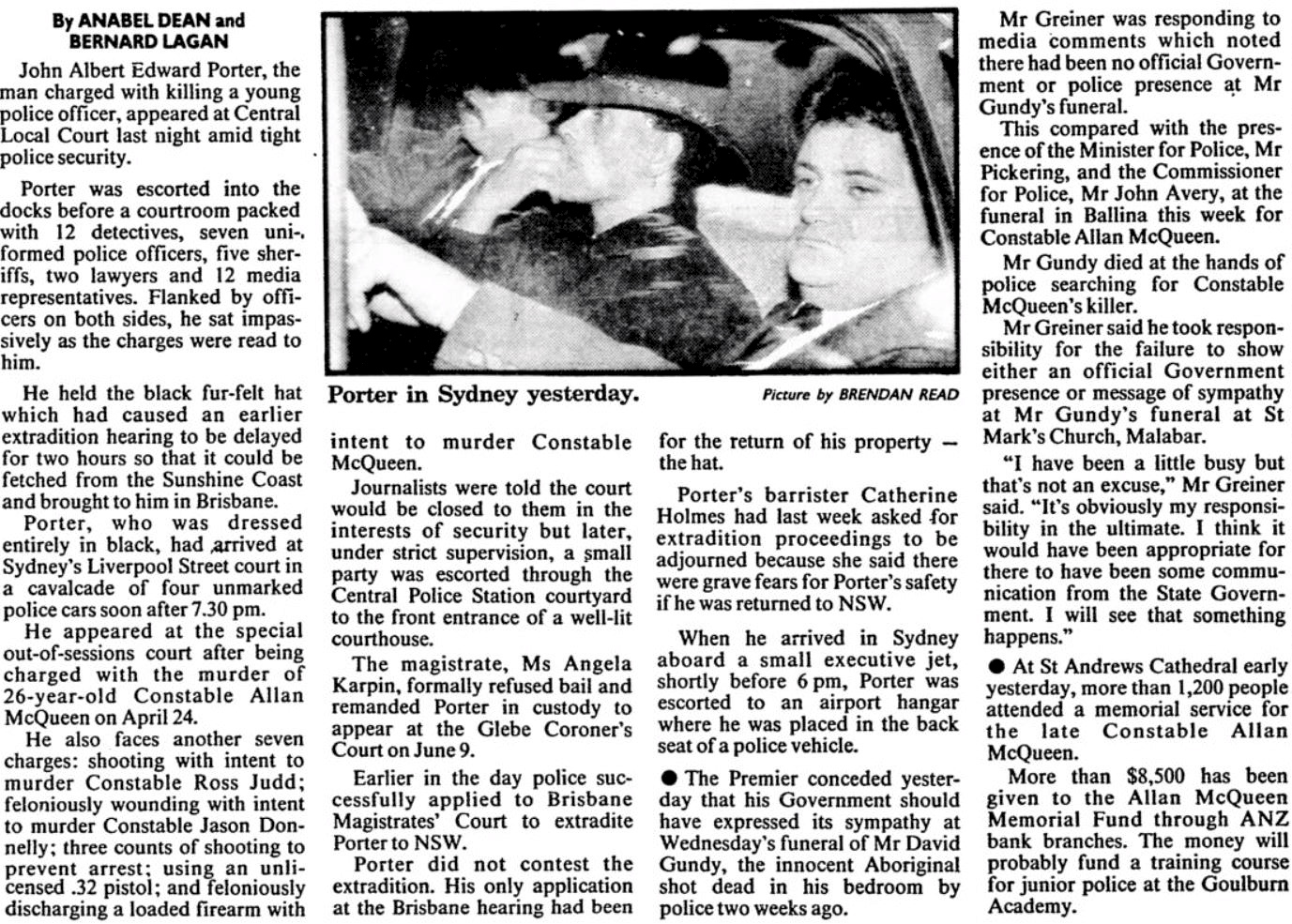
Constable Donnelly was to recover from his wounds however Constable McQueen had sustained extensive internal injuries and died on 5 May, 1989. The offender was later arrested by Queensland Police.
The Canberra Times of 12 July, 1990 reported on the result of the trial of the offender.
CONVICTION IN POLICE DEATH SYDNEY:John Albert Edward Porter has been found guilty of the murder last year of Sydney police constable Allan McQueen. A Supreme Court jury deliberated for nearly 10 hours before finding Porter, 28, guilty of shooting the policeman on April 24 last year. Porter was remanded in custody for sentencing on August 3. The jury also found Porter guilty on one count of shooting with intent to cause grievous bodily harm and three counts of shooting to avoid arrest. He was found not guilty on a sixth charge of attempting to murder Constable Jason Donnelly.
Justice Badgery-Parker had directed the jury to find Porter not guilty on the charge of attempting to murder Constable Donnelly. Porter had pleaded not guilty to all charges.
Friends and relatives of Constable McQueen sat comforting each other in the public gallery as the verdict was returned. Constable McQueen, 26, died in St Vincent’s Hospital nine days after the April 24 shooting.
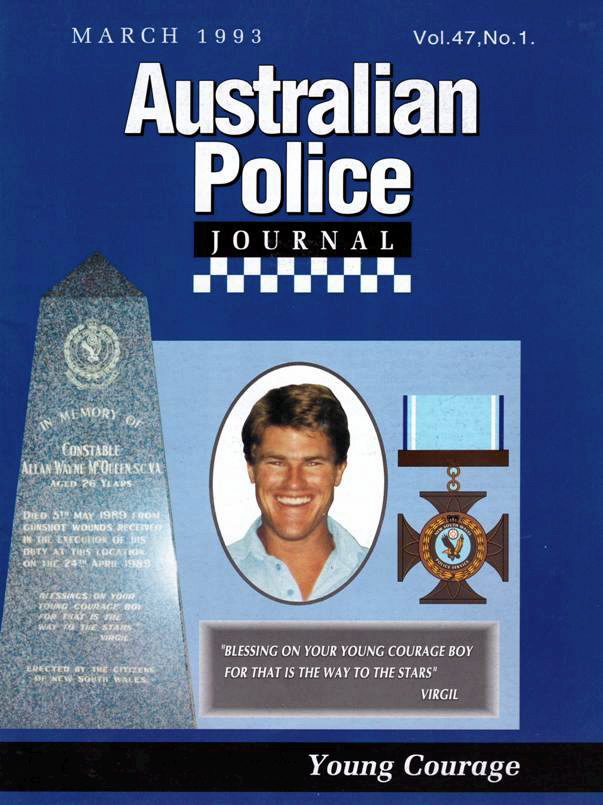
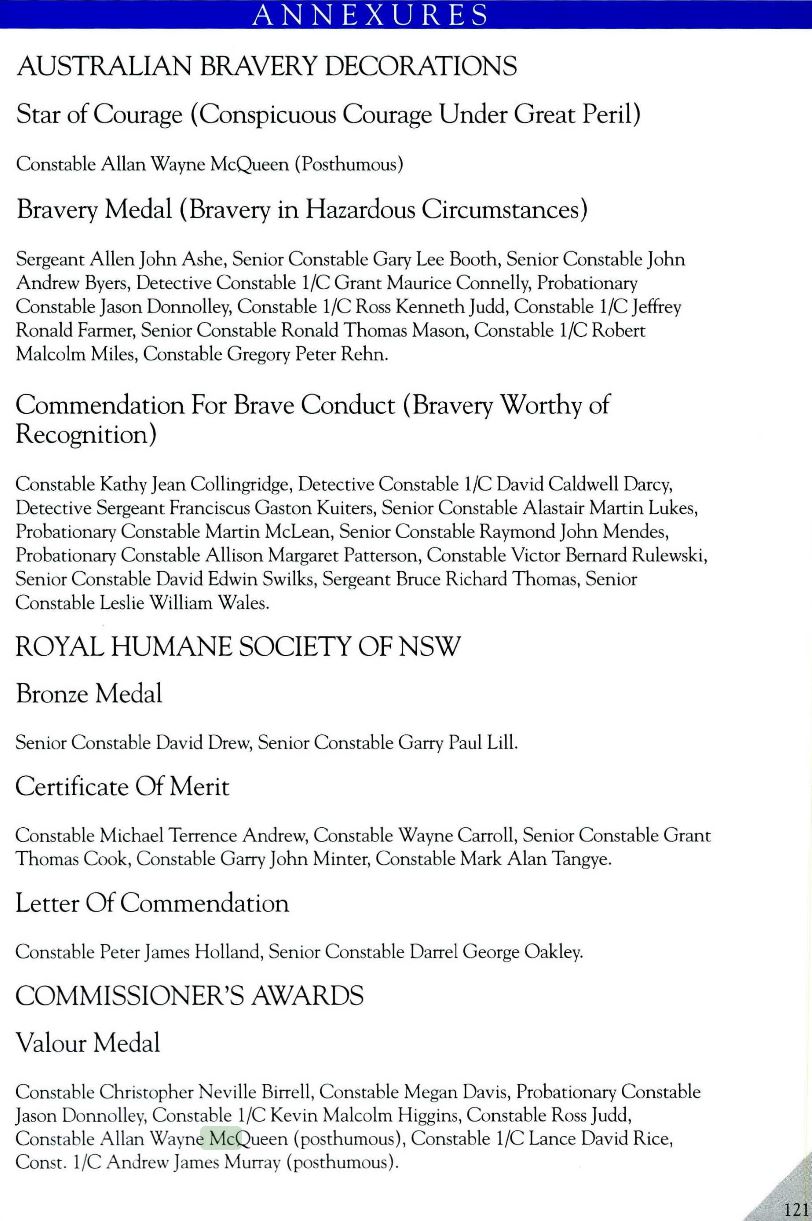
The constable was born in 1962 and joined the New South Wales Police Force on 27 June, 1987. At the time of his death he was attached to the Sydney District Anti-Theft Squad. He was posthumously awarded the Commissioner’s Medal for Valour and the Star of Courage.
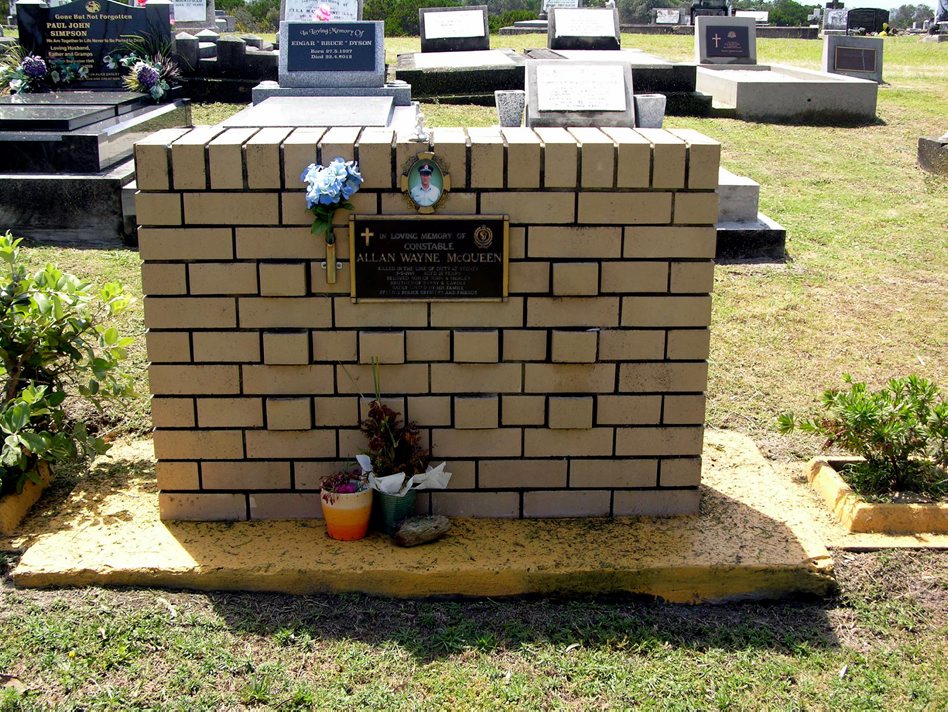
Date: 24 August 1989. Memorial unveiled on corner of Haig Ave & Boomerang St, sydney.
November 2013
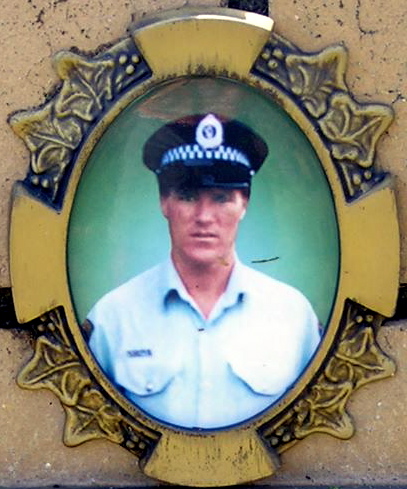
Constable Allan Wayne McQueen
Constable Allan Wayne McQueen : November 2013
Photographs supplied by Peter F Williams
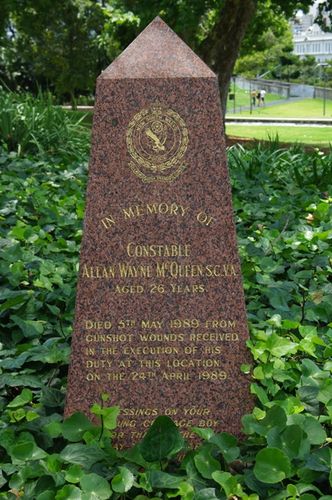
Memorial erected in memory of Constable Allan James McQueen who was shot in the line of duty and died from his injuries on the 5th May 1989.
On the morning of 24 April 1989, Constable McQueen, Constable 1st Class Ross Judd (MV, BM ), and Probationary Constable Jason Donnelly (MV, BM ) were patrolling the Woolloomooloo area. All were members of the District Anti-Theft Squad. About 11.35am they saw the offender Porter apparently attempting to break into a motor vehicle. While Constable Judd parked the Police vehicle Constables McQueen and Donnelly went to speak to the offender. As he was being detained the offender produced a concealed weapon and shot Constable McQueen twice in the chest and Constable Donnelly in the abdomen. Both Constables then chased the offender who continued firing at them until both collapsed from their wounds. Constable Ross Judd also pursued and fired at the offender before returning to assist his colleagues. He then carried both wounded Constables to the Police car and drove them to the Sydney Hospital. Constable Donnelly was to recover from his wounds however Constable McQueen had sustained extensive internal injuries and died on 5 May 1989. The offender was later arrested by Queensland Police.
Front Inscription
IN MEMORY OF
CONSTABLE
ALLAN WAYNE McQUEEN S.C.,V.A.
AGED 26 YEARS
DIED 5TH MAY 1989 FROM
GUNSHOT WOUNDS RECEIVED
IN THE EXECUTION OF HIS
DUTY AT THIS LOCATION
ON THE 24TH APRIL 1989
Location
Address:
Yurong Parkway, Phillip Park , Sydney, 2000
State:
NSW
Area:
AUS
GPS Coordinates:
Lat: -33.872583
Long: 151.213778 Note: GPS Coordinates are approximate.
By LINDSAY SIMPSON ” Chief Police Reporter As one of “Big Al’s” best mates read a moving eulogy, burly police officers, hats in hands, bowed their heads and cried. Big Al was Constable Allan Wayne McQueen, the well-mannered policeman from Kyogle who died in the line of duty, shot trying to apprehend a suspected car thief in Sydney.
Constable McQueen, who had been in the force two years, had been picked to work with the Anti-theft Squad a training ground for young officers on their way to becoming detectives. Big Al, who spent three years trying to become a police officer, was known by that name “not so much because of his height but because of his heart”, said Cheryl Coleman, whose husband had shared a house with Constable McQueen in Coffs Harbour.
As Senior Constable Steve Tedder, who gave one of the eulogies said, “Big Al had the basic love and desire to become a police officer”. In 1986, while running his own cleaning business in Coffs Harbour, he built his own house and several local police officers became his flatmates. At that stage he had five jobs and was studying at night for his HSC English in an attempt to become a police officer. About this time, before he was even in the force, he saved a man’s life. The man had quarrelled with his girlfriend outside a local night club and had head-butted a pane of glass. The glass had cut his throat and Al tore his shirt off and stemmed the flow of blood while waiting for the ambulance.
Big Al. who trained as a boxer and played Rugby League, was not always the muscle builder he was at the time he joined the force. His former Rugby League coach at Kyogle High School, Mr Stan McBride, said that in the 14-year-old competition he had been the second smallest kid in the group.
Ballina townspeople also came to the funeral service. One local, Mrs Val Studdert, said she had never met Allan McQueen but had come out of respect for what he had done. “If we don’t have law and order, we have nothing,” she said.
The pallbearers wore pistols. Perhaps that’s the way it has to be these days, but they touched the pretty white wooden church in the green countryside with vulgarity. They were big, strong young men and their bulky police uniforms made them bigger, so that when they came to the narrow church door carrying their mate’s coffin, they could barely squeeze through. In any case, the coffin seemed too narrow for a young man as big as Allan McQueen.
Nearly 300 police went to his funeral in Ballina yesterday along with his mother and father, Mr John and Mrs Shirley McQueen, and 300 family and friends. They spilled out of St Mary’s Anglican Church into a church hall, where the service was shown on video, and out of the hall on to the grass, where they listened through loudspeakers.
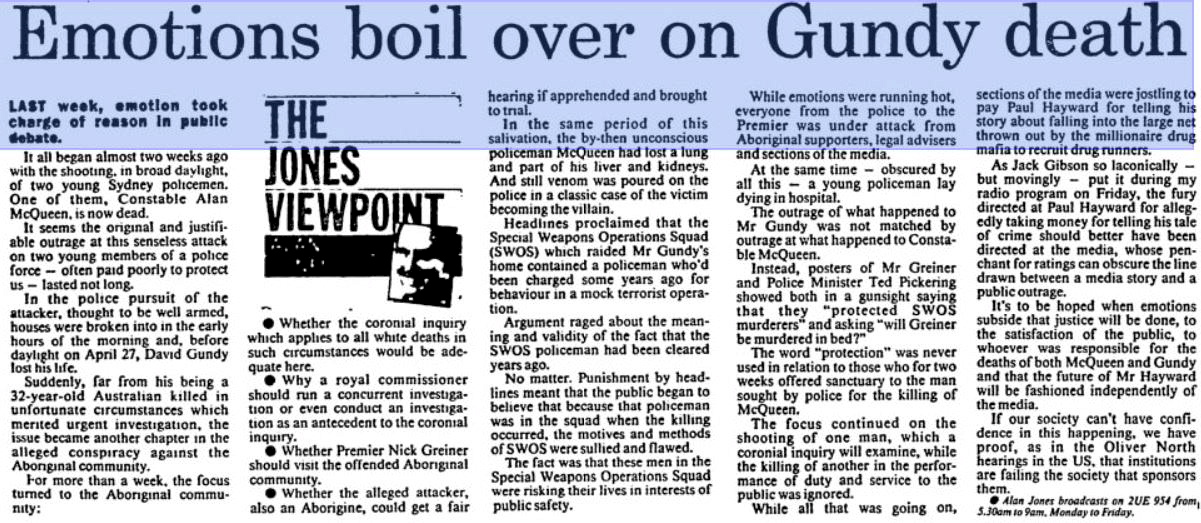
If we are to still violence, we must cherish life. Yesterday, 26-year-old Allan McQueen’s life was cherished. Today, others will cherish the life of 32-year-old David Gundy, the unarmed man killed in a police raid following Constable McQueen’s mortal wounding. Spring had sung in both men for only a while before life escaped them in violence. Senior Constable Graham White told the mourners that Allan McQueen had been a man of honour, love and integrity and a man whose word could be relied upon. He did not search for riches but for life itself, said Constable White. “Today he would be saying, ‘Let’s get on with it. Let’s not have all this fuss and bother’.”
Detective Senior Constable Steve Tedder said that the day McQueen received the letter of his acceptance into the force, “his face lit up as if Manhattan had lit up”.’ Constable Tedder lived with Constable McQueen in Manly and called his mate “Big Al”. “What a joy he was to live with,” he said. Constable McQueen had made more friends in 18 months in Manly than Constable Tedder had in 28 years.
Colleagues of slain policeman Allan McQueen weep as he is laid to rest in Ballina yesterday. One of his favourite expressions was: “Not a problem“. Another was: “I’m here for a good time, not a long time.” Constable Tedder said it was somehow appropriate that Allan McQueen began his long battle for life on April 24, the day before Anzac Day. That was the day Allan McQueen became a hero. Police Commissioner John Avery said Constable McQueen had exhibited the qualities of a police leader of the future. “His father said it was a waste of a fine young life, and I agree,” said the Commissioner. “His was an unforgettable example of courageous service that will enshrine his name in the annals of the history of NSW.” Mr Avery quoted Virgil: “Blessings on your young courage, boy, for that is the way to the stars.”
Outside the church, a senior policeman said: “There’s a finality to heroism.” Mr Athol McQueen, a cousin and the boxer who knocked down champion Joe Frazier in the 1964 Olympic Games, said: “I hope there are more young blokes around like him.”
” The police band played a funeral march for their colleague, past Sunnyhaven Flats. The open-faced country folk let the tears run down their cheeks. As the cortege passed a place called Camelot, on the way to the Lismore Crematorium and another place called Goonellabah, an old woman stood at the roadside and said : “Poor little fellow.” At the crematorium flowers spelled out the letters NSWP -New South Wales Police on the hillside.
A young policeman picked up a rose and handed it to a young woman. , ‘ Mr John McQueen wipes away a tear as he stands with his wife Shirley at their son’s funeral.
Probationary Constable – appointed 17 January 1986
Constable – appointed 17 January 1987
Final Rank: Constable
Service: From28 October 1985to29 April 1989 = 3+ years Service
Stations: ? ,Balmain ( 8 Division ) – death
Awards: ? nil find on It’s An Honour
Born: Monday 25 April 1960
Event date: Thursday 27 April 1989
Event location: Booth St & Jonston St, Annandale, NSW
Event type: Motor Vehicle Accident – Driver – Caged vehicle – Urgent Duty ( Passenger: Cst Andrew Mortimer )
Died: Saturday 29 April 1989
Age: 29 yrs 4 days ( 4 days into his 29th year )
Funeral date: ?
Funeral location: Woronora Cemetery, Sutherland
Buried at: Cremated;
Ashes – Wall of Memories, Panel 30, GG, 0256
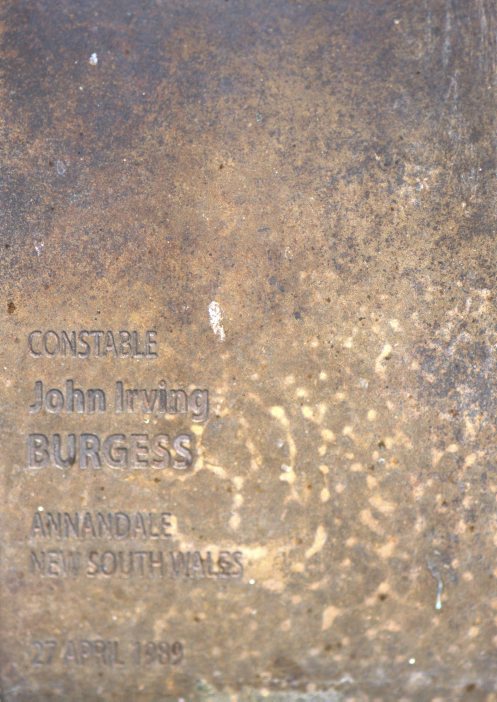
John Irving BURGESS
Constable John Irving BURGESS – Touch plate at National Police Wall of Remembrance, Canberra.
JOHN IS mentioned on the National Police Wall of Remembrance but the DATE is INCORRECT
Should read 29 April 1989
About 2.25am on 27 April, 1989 Constable Burgess was driving a caged police vehicle in Booth Street, Annandale. Constable Andrew Mortimer was observer in the vehicle and they were responding to an urgent call for assistance from Gaming Squad police. At the intersection of Johnston Street, the police vehicle collided with a semi trailer and deflected onto a power pole. As a result of the accident Constable Andrew Mortimer suffered fractures to his ribs and jaw, and Constable Burgess suffered severe head and internal injuries. Constable Burgess died two days later ( on the 29 April ) at the Royal Prince Alfred Hospital when life support systems were turned off.
The constable was born in 1960 and joined the New South Wales Police Force on 28 October, 1985. At the time of his death he was stationed at Balmain.
The Canberra Times
Monday 1 May 1989 page 3 of 36
Policeman dies
SYDNEY: A policeman who received severe injuries in a collision involving a police paddy wagon last Thursday died late on Saturday.
Constable John Burgess, 29, received head and chest injuries in the accident between the paddy wagon and a refrigeration truck at Annandale in Sydney’s inner-west, shortly before 2am.
Yesterday I attended Balmain Town Hall for the 30-year memorial service of the tragic death of Constable John Burgess on the 27 April 1989 whom died whilst on duty responding to an urgent call for assistance from Gaming Squad Police.
At the intersection of Johnston Street, Annandale the police vehicle he was driving collided with a semi-trailer and deflected onto a power pole. As a result of the accident Constable Andrew Mortimer suffered fractures to his ribs and jaw, and Constable Burgess suffered severe head and internal injuries. Constable Burgess died about twelve hours later at the Royal Prince Alfred Hospital.
John was one of life’s true gentlemen and one of the nicest blokes I ever had the privilege of knowing. He was an excellent Police Officer, compassionate, empathetic and always willing to help. I’m proud to have called him a mate.
It’s been a while since I’ve seen my old 8 Division buddies and whilst under sad circumstances it was great to see Paul Winfield, Don Stuart, Sean Hampstead and Ron Page and share a few laughs about our time working together in the late ‘80’s.
It was also great to see Deputy Commissioner Dave Hudson, a friend who gave a very moving and emotional speech about his friendship with John and how missed he is. It was refreshing to hear such a senior officer in the NSW Police share such personal reflections about a fellow officer.
It was a tragic time for Policing back then as a week earlier we also lost Constable Alan McQueen fatally shot whilst on duty. We have lost many other Officers before and after that time confirming how dangerous a job it is.
Whilst I was only in the Police from ‘85-‘90 I still feel a part of the thin blue line brotherhood and yesterday confirmed how friendships forged 30 years ago endure the test of time.
RIP John Burgess. ❤️
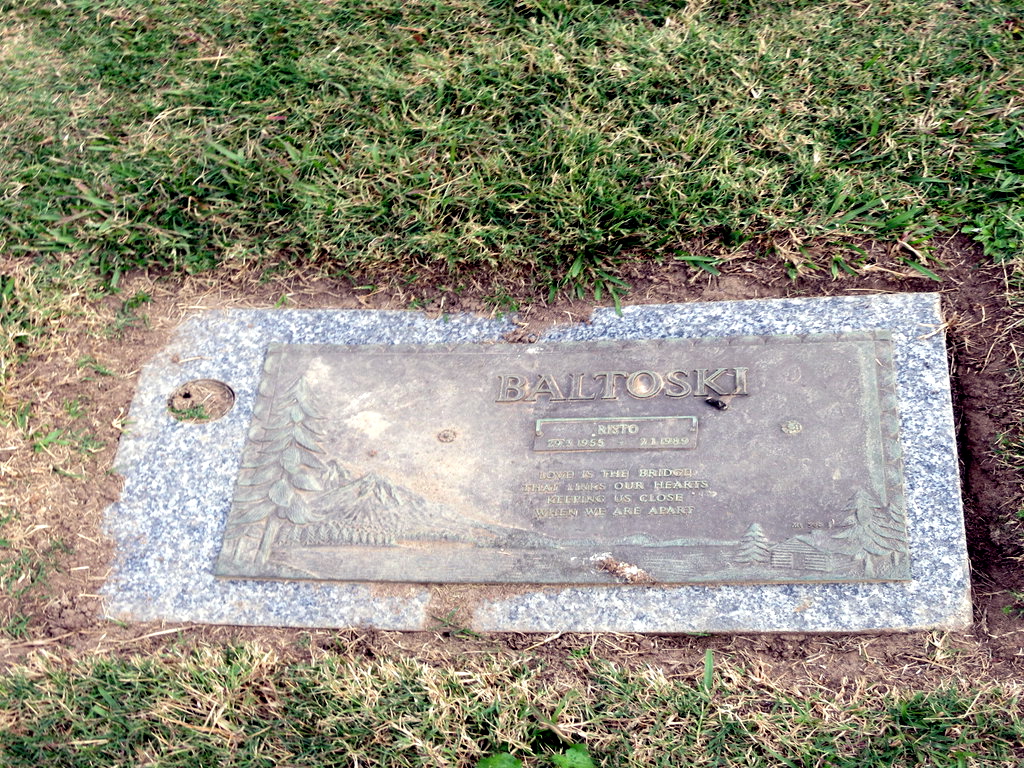
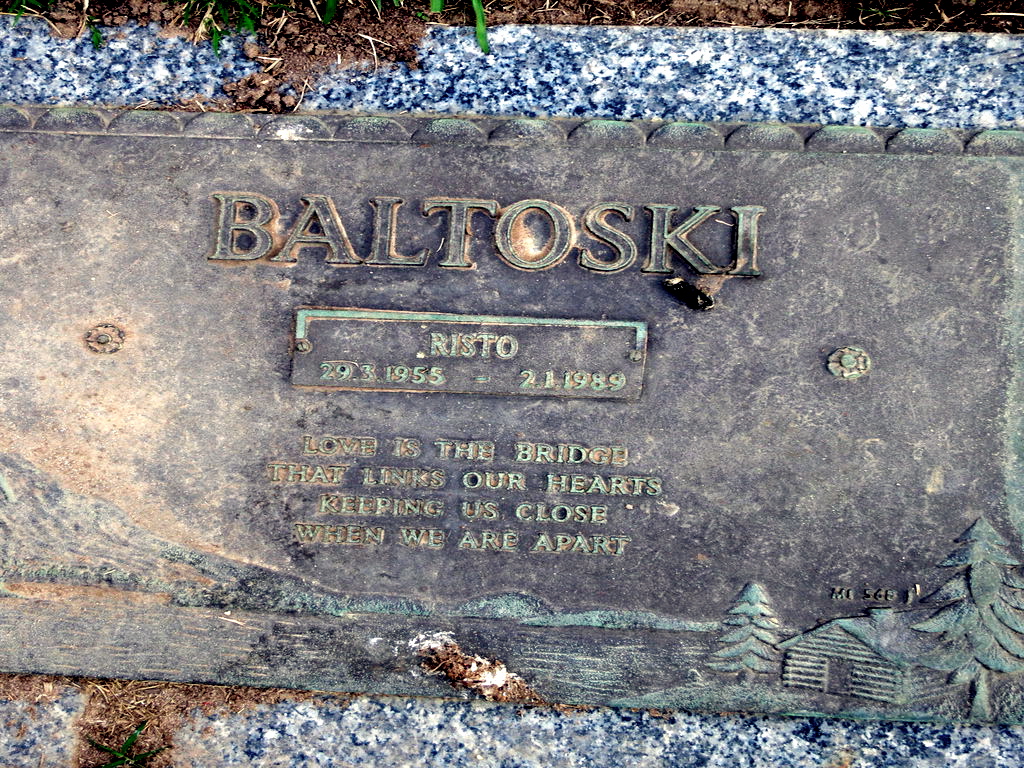
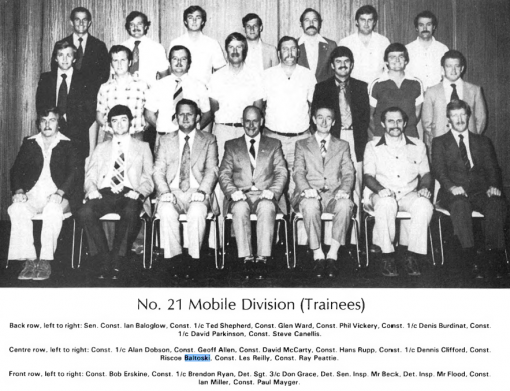
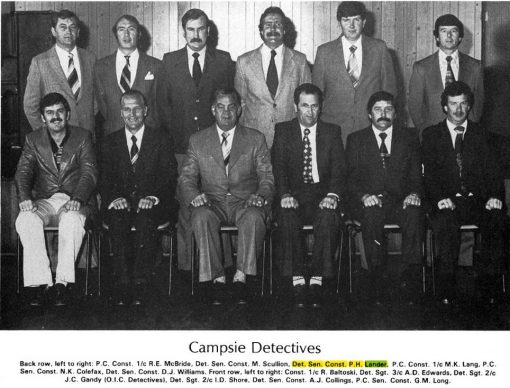
Risto Vic BALTOSKI
| 27/10/2012
Risto Vic BALTOSKI
AKA Risco BALTOSKI
Late of ?
New South Wales Police Force
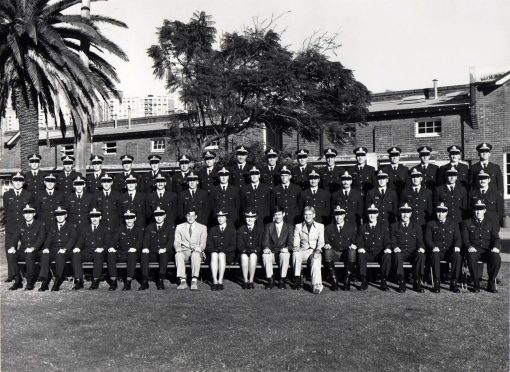
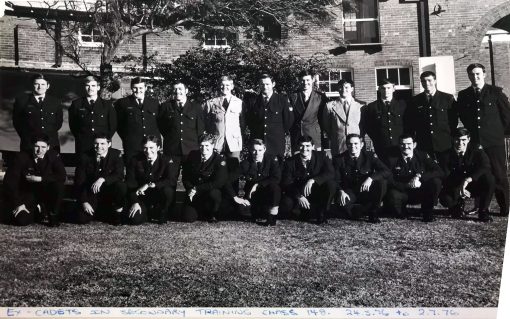
NSW Redfern Police Academy Class # 148
Regd. # 17072
Rank: Commenced Training at Redfern Police Academy on Tuesday 17 June 1975 ( aged 20 years, 2 months, 19 days )
Probationary Constable – appointed Monday 25 August 1975 ( aged 20 years, 4 months, 27 days )
Constable – appointed 25 August 1976
Detective – appointed ? ? ? ( YES )
Senior Constable – appointed 25 August 1984
Final Rank = Detective Senior Constable
Stations: ?, 21 Division, 13 Division, Homicide Squad, Secondment to NCA – Adelaide South Aust. – Death
Service: From 17 June 1975 to 2 January 1989 = 13 years, 6 months, 16 days Service
Time in Retirement: 0
Age at Retirement: 33 years, 9 months, 4 days
Awards: No find on It’s An Honour
Born: Tuesday 29 March 1955
Died on: Monday 2 January 1989
Age: 33 years, 9 months, 4 days
Cause: MVA – Driver – crossed to wrong side of road ( possibly fatigue )
Event location: Sturt Highway, about 68 kilometres, west of Hay, NSW
Event date: Monday 2 January 1989 about 2pm ( CAT )
Funeral date: ? ? 1989
Funeral location: ?
Wake location: ?
Funeral Parlour: ?
Buried at: Pinegrove Memorial Park, Kington St, Minchinbury, NSW
Garden of Memories 1 / 43 ( M1 – 565 J )
GPS: Lat: – 33.79090 Long: 150.84749
Memorial located at: Memorial Wall plaque – Deniliquin Police Station – 2018
RISTOIS mentioned on the National Police Wall of Remembrance – Canberra
RISTO IS mentioned on the NSW Police Wall of Remembrance – Sydney
Grave location:
FURTHER INFORMATION IS NEEDED ABOUT THIS PERSON, THEIR LIFE, THEIR CAREER AND THEIR DEATH.
On 2 January, 1989 Detective Baltoski was travelling to the National Crime Authority Offices in Adelaide in company of Mick KEELTY who was later to become the Australian Federal Police Commissioner.
About 2pm as he was driving along the Sturt Highway about 68 kilometres west of Hay when the vehicle crossed to the incorrect side of the roadway and collided head-on with another vehicle.
The exact cause of the accident was not determined.
As a result of the collision Detective Baltoski sustained severe head and internal injuries and died before he reached the Hay District Hospital.
The senior constable was born in 1955 and joined the New South Wales Police Force on 17 June, 1975.
At the time of his death he was on secondment to the National Crime Authority. Prior to that, he had been attached to the Homicide Squad.
The Memorial Wall commemorates former local police officers and a former police chaplain who lost their lives in the line of duty. An additional plaque is to be added to the memorial in memory of Amy Christian who was the station’s cleaner for 26 years.
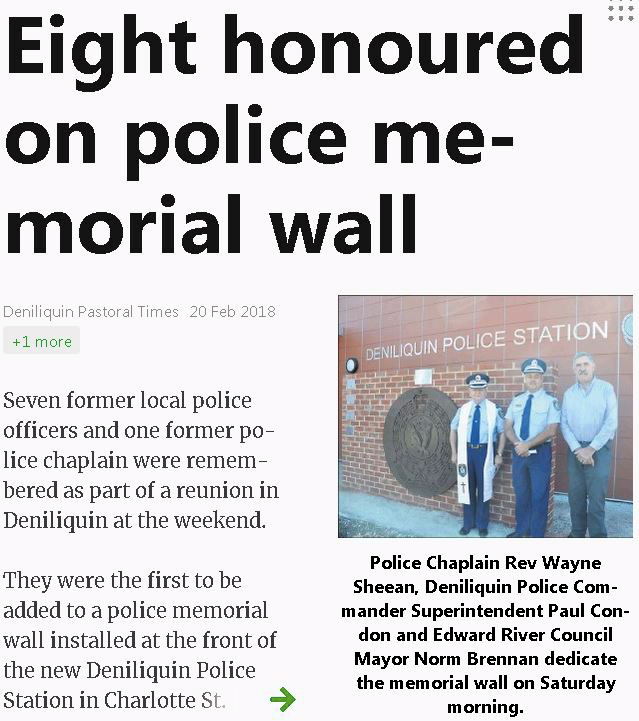
Seven former local police officers and one former police chaplain were remembered as part of a reunion in Deniliquin at the weekend. They were the first to be added to a police memorial wall installed at the front of the new Deniliquin Police Station in Charlotte St.
The wall was officially dedicated on Saturday morning in front of a crowd of about 100 people, blessed by Police Chaplain Reverend Wayne Sheean, whose predecessor Rev David Bond was remembered as part of the ceremony.
Officers honoured on the wall include Booligal’s Constable Charles Chapman (died March 1866), Moama’s Senior Const J Morrison (January 1898), Euston’s Senior Const Thomas Smith (April 1910), Deniliquin’s Superintendent Henry Grugeon (January 1911), Berrigan’s Sergeant 3rd Class George Thomas Whitely (March 1931), Detective Senior Const Risto Vic Baltoski from the National Crime Authority (January 1989) and Moama’s Senior Const Jennifer Louise Edgerton (August 2015).
Also officiating at the dedication ceremony were Deniliquin Local Area Commander Superintendent Paul Condon and Edward River Council Mayor Norm Brennan.
In attendance were many former Deniliquin-based police officers and their partners, who were in Deniliquin for the reunion dinner at the Deniliquin Golf Club on Saturday evening.
Family members of some of the officers memorialised also attended, including the daughter-in-law and grandchildren of Sgt Whitely, who died from injuries during a fire at Berrigan’s Momalong Hotel on March 25, 1931.
He and another officer were helping to control onlookers outside the hotel when a gas cylinder exploded and he was struck in the face by shrapnel.
Supt Condon said the idea of the memorial wall was to highlight the connection between police and community. ‘‘The purpose is to join the local community’s history with the local police history as our police are part of the community,’’ Supt Condon said. ‘‘I encourage the local community to visit the memorial, which has now been fitted with lights to highlight the memorial at night.
‘‘It is a credit to the local community and police, as well as Brunker Fabrication who have done a great job constructing the memorial.’’
Reunion co-organiser Roger Smith, a retired inspector, said reunion participants agreed on a ninth plaque for the memorial wall during the weekend — Amy Christian — who he said was the station’s cleaner for 26 years.
Supt Condon said the memorial dedication was followed by a tour of the new Deniliquin Police Station, which replaced the station which was constructed from 1961 and officially opened in 1965. Denilquin Pastoral Times, 20 February 2018.
Location: 405 Charlotte St, Deniliquin Police Station, NSW
IT SAYS something of Mick Keelty’s humble origins and his modest ambitions as a young man that when his uncle – a NSW copper – urged him to join the police force, he chose the constabulary of the sleepy national capital.
The son of a butcher who grew up in a large Irish-Catholic family in a two-bedroom fibro home in Parramatta, Keelty says “going to Canberra as one of six kids and being the first one to leave home … it was almost like an adventure for a 19-year-old”.
Keelty was a diligent student, by all accounts, and settled well. But a long five years in the ACT Accidents Squad was no portent of things to come, nor a posting soon after to lecture at Goulburn’s police academy.
The rise of the Australian Federal Police Commissioner, who this month begins a second five-year term overseeing a law enforcement empire of global reach, can be traced to the 1980s when the fresh detective cracked one of the seminal cases of that halcyon era of corrupt cops, colourful racing identities and underworld kingpins.
Keelty had been seconded to the National Crime Authority, which was still grappling with the fallout from the death of the anti-drugs campaigner Donald Mackay, the Italian Mafia and its extensive cannabis production.
Barry Moyes was the high-profile head of South Australia’s drug squad. A long investigation led Keelty down an intriguing path – his sources were saying a large dope operation was flourishing under the protection of Moyes. It was stunning information.
“He was involved in a crop at the time and distributing drugs from the drug safe,” Keelty says.
“Nobody believed that South Australia had a problem. You heard about police corruption in NSW and Victoria but no one had heard of it existing in South Australia.”
After exhaustive police surveillance of Moyes, a magistrate approved a warrant and Keelty searched the drug tsar’s office while Moyes looked on. Seized drugs that were supposed to have been destroyed were found in Moyes’s personal safe.
Moyes protested his innocence and invented a novel alibi – he was consorting with known Mafia figures because he was, secretly, infiltrating organised crime and couldn’t tell his possibly corrupt colleagues.
The alibi flew, at least until Keelty visited a heroin addict on Bondi Road who turned informant during a quiet negotiation in a room splattered with vomit.
Moyes confessed all at trial and Keelty’s star rose, an ascent confirmed soon after when he led the team that put the underworld kingpin Lenny McPherson behind bars.
Keelty says he always loved the “thrill of the hunt” and his partner during those days, NSW policeman Mike Edgtton, says Keelty “worked with anyone from everywhere. He drew the best out of everyone.”
“The Italian Mafia case was a big one. It was a triumph but there was also tragedy.”
Keelty’s partner, Risto Baltoski, was killed after a head-on collision on the baking Hay plain after one of many long-haul trips the two men made to South Australia.
The young detective cradled his partner in 40-degree heat during the long wait for the ambulance.
“Mick thought [Baltoski] was OK but when he headed back to town he heard on his police radio that Risto had died. It was terrible. He was one of his best mates,” Edgtton says.
A few big nights on the drink was the traditional remedy and Keelty still won’t talk about the incident but, as Commissioner, he has ploughed resources into trauma counselling. The AFP has won awards for its family-friendly polices, and Keelty’s close personal protection officer is a woman.
The first commissioner to emerge from within its ranks, Keelty is immensely popular within the AFP and has an unprecedented public profile.
During his tenure, the force’s annual budget has grown from $385 million in 2001 to $1.1 billion, while staffing levels have doubled to 5200. Along the way, the force has taken over jobs that used to be the domain of the National Crime Authority, the Australian Secret Intelligence Service, the Australian Security Intelligence Organisation and, arguably, the military.
His fame, of course, was cemented in 2004 by the “Keelty affair”, his frank remark to the journalist Laurie Oakes that the Iraq war would have motivated the Madrid terrorist bombings.
The Prime Minister, John Howard, was mortified and Keelty considered his future as he was condemned as an al-Qaeda propagandist by the Minister for Foreign Affairs, Alexander Downer, and misinformed by the chief of the Defence Force, General Peter Cosgrove.
Cosgrove remains a mate, but the saga is instructive. It betrays Keelty’s abiding interest in the social and economic factors that underpin crimes of all descriptions and his recognition of the limits of law enforcement.
“I’ve always thought about what puts a person in the position they are in,” Keelty says. “If you understand the reasons why they have committed the crime, you have a better chance of solving the crime.”
In the context of terrorism, that means combating the “radicalisation” of young Muslims.
Note it is Keelty who is advocating what he calls the “deprogramming” of Islamic extremists if they are placed under house arrest under controversial new powers.
For drugs, it’s about social support, harm minimisation and going offshore to attack suppliers at source. Pedophilia – the subject of large AFP investigations – abhors and intrigues him.
“Pedophilia is really to me an enigmatic crime,” he says. “[Pedophiles are often] people who are otherwise intellectually very capable. They are not from the lower socioeconomic group.”
As the AFP launched its wide investigation into internet child porn, Keelty took the extraordinary step of counselling his officers that they could be excused from the job if they found the material involved offensive, or tempting.
“Nothing can guarantee me that the people I would put into the investigation of that crime may or may not have those tendencies,” he recalls.
“One of the things I announced to the organisation was that anybody that was unhappy or anyone who was not certain whether they could investigate that sort of crime ought to be encouraged to say it up front.”
One former officer who has worked with Keelty says his casual, almost guileless manner often masks the depth and intelligence of the Commissioner.
But the officer questioned Keelty’s uncommon focus on “socioeconomic causes of crime”.
“It can erode the effect of policing, and it can complicate things,” the former staffer says.
With more than 30 postings around the world, including the first and only permanent Western policing presence in China and Vietnam, the internationalisation of the AFP has been perhaps the defining feature of Keelty’s reign.
As well as extensive co-operation with overseas police forces on transnational crime, including terrorism, the AFP has sent large contingents as peacekeepers to East Timor, the Solomon Islands and, briefly, Papua New Guinea.
Keelty has been the consummate diplomat, helped by his fascination for different cultures and his drive to tackle crime globally and bring down the big players in illegal and illicit activity.
His deference to Jakarta during the East Timor crisis – he always visited the Indonesian capital before heading on to Dili – laid the groundwork for the quick co-operation in the wake of the Bali bombings.
It didn’t hurt that Keelty had studied with Indonesia’s General I Made Pastika in Canberra, and helped him with his homework, during the mid-1990s.
“There have been a lot of on-the-ground operational, and public perception, problems that have come out of working with overseas forces,” says one former AFP staffer.
“The Bali nine is a classic example. So is Schapelle Corby.”
There is little doubt that in the court of public opinion, the AFP’s reputation took a beating in these drug mule cases.
The AFP had been tipped off about some of the young men and women who were part of the Bali nine but Keelty says they had eight names, of whom just five travelled.
He could not have tipped off the youngsters – as many have argued the AFP should have – because the whole investigation would have collapsed, he says.
The Indonesians had every right to arrest the Australian couriers. “It was their sovereign land,” Keelty says.
As for the fuss surrounding Corby, Keelty is blunt and unsympathetic.
“If Schapelle Corby wasn’t a very attractive young lady, the reaction might have been quite different.”
Consider it from the Indonesian side, he adds. Protesting that the cannabis in Corby’s bodyboard bag had been planted was the “universal excuse” of drug traffickers and would open the floodgates if accepted with no hard evidence.
Even so, Keelty remains popular. He is probably the only prominent security figure regarded highly by both the Prime Minister and Australia’s Muslim community.
Ali Roude, the vice-president of the Islamic Council of NSW, credits Keelty for a “great relationship” between the AFP and the Muslim community.
“He has a good grasp of issues. He is the first federal police commissioner to have taken a leadership role in initiating contact with Australian Muslim community,” Roude says.
Certainly, Keelty won’t join the conga line of politicians decrying multiculturalism and uttering dark warnings about the imposition of sharia law.
Noting the Protestant versus Catholic schism of his childhood, not to mention the Italians he and his mates branded “wogs”, Keelty says of the tensions between Muslims and non-Muslims that they are worrying but not necessarily new.
“We have been down this road before, if we think it through,” he says.
“I think there is great credit in trying to develop a very tolerant society and a very understanding society. It can be our competitive difference over the rest of the world.”
YES, COMMISSIONER
On Schapelle Corby “Every courier, whether they are coming into Australia or whether they are going into Vietnam, going into Thailand, will say the drugs are not mine. It’s the universal excuse … If Schapelle Corby wasn’t a very attractive young lady, the reaction might have been quite different.”
On the AFP abroad “The justice systems are very different to ours. There are issues of corruption, nepotism and wantok [tribal allegiance]. You have to work with and around those systems [in a way] that preserves your integrity.”
On policing “You can get yourself into a routine where you are locking up the same people over and over again and you really don’t believe you are making a difference.”
On multiculturalism “I was brought up in the western suburbs of Sydney in the days when we used to call the local Italian snack bar the wog shop. But all immigrants have given us a rich culture … and what a strength that is.”
On terrorism “We have got to deal with this radicalisation process somewhere along the line. If we don’t, I think we risk having the problem for a lot longer than we might otherwise have it.”
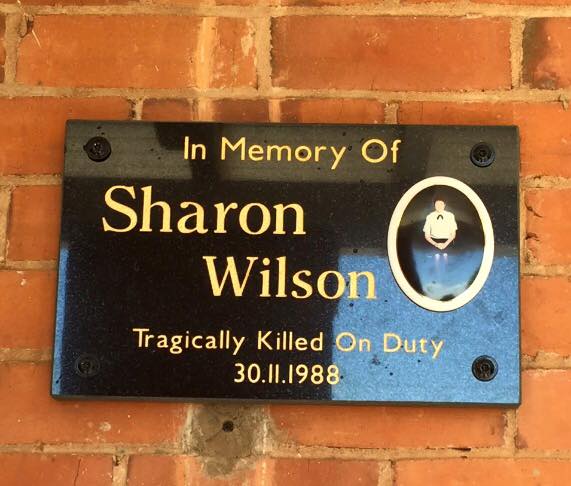
Memorial 1: Memorial Tree planted at NSW Police Academy, Goulburn
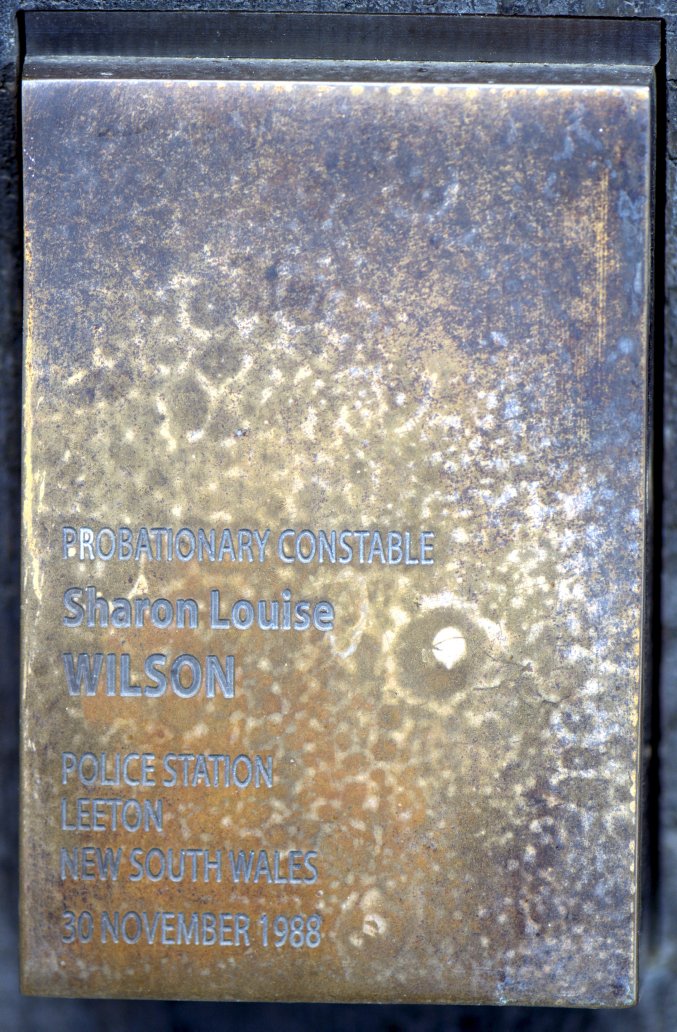
Memorial 2: Memorial plate on the front outside wall of Leeton Police Station. Dedication done on 30 November 2015. Photos below.
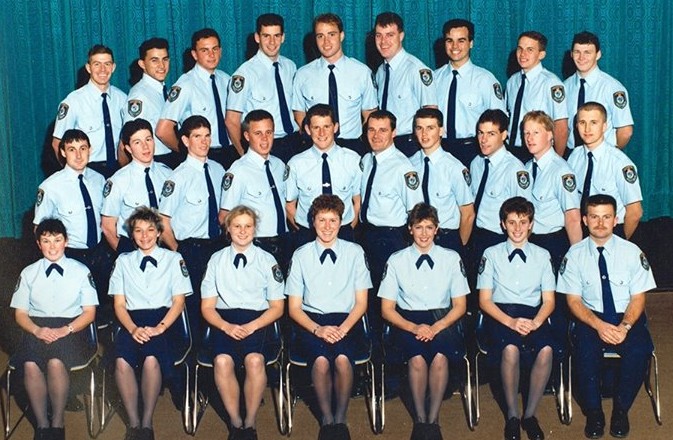
Sharon Louise WILSON – centre, front row. Class 215
About 2.15pm on 30 November, 1988 Constable Wilson was on duty at the Leeton Police Station when she suffered a severe gunshot wound to the head when another member’s service revolver discharged. Although treated at the scene by colleagues until the ambulance arrived, she passed away at the Wagga Base Hospital at 5.45pm the same day.
The constable was born in 1968 and joined the New South Wales Police Force on 9 May, 1988. At the time of her death she was stationed at Leeton.
Touch plate at the National Police Wall of Remembrance, Canberra
Sharon is mentioned on the Police Wall of Remembrance
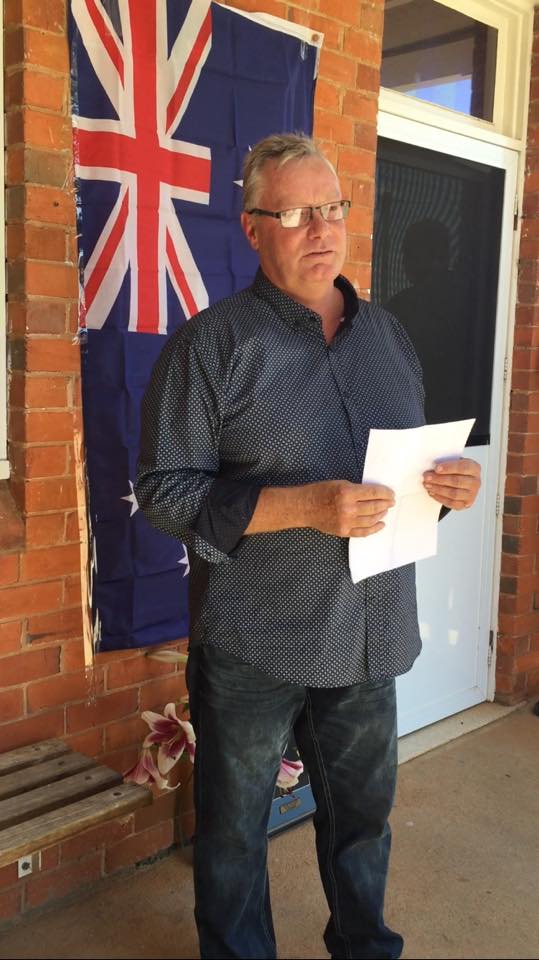
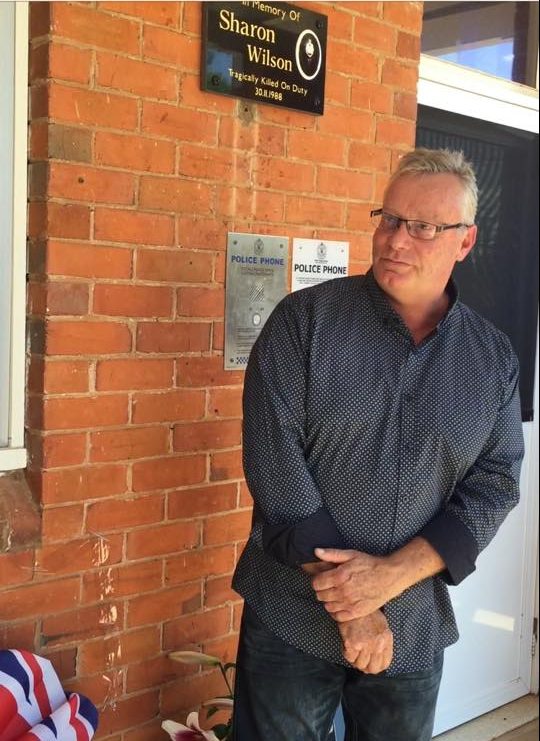
Alan Cope ( # 23769 ? ) thanks guests for attending. Alan spoke about Sharon Wilson and her short time in Leeton.
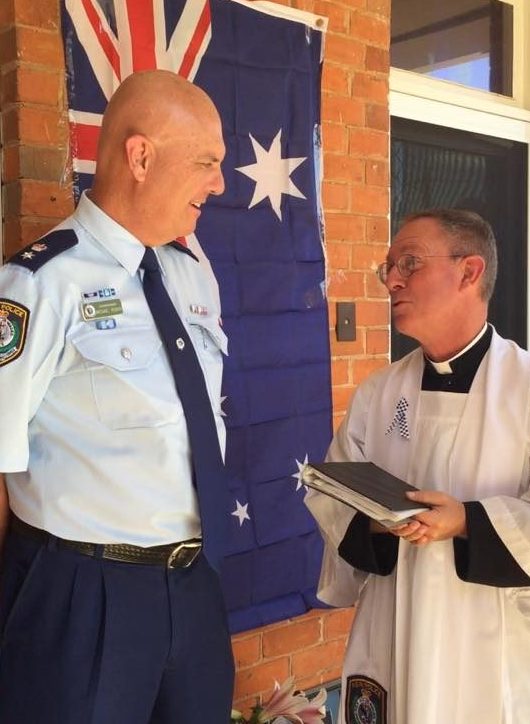
Superintendent Mick Rowan # 22980 ? ) with Father Robert offer kind words. — with Robert Patrick Murphy
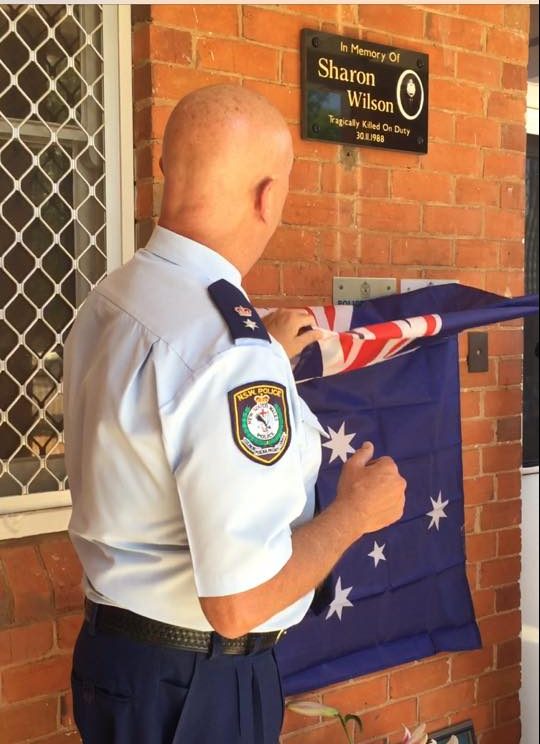
Superintendent Mick Rowan unveiled the new memorial plaque.
Alan Cope closes the ceremony. Monday 30 November 2015
Dedicated: Monday 30 November 2015
2 December 1988
“CHARGES POSSIBLE OVER SHOOTING
SYDNEY: The NSW Police Commissioner, John Avery, will decide whether charges should be laid against a constable allegedly involved in the shooting death of her 20 year-old colleague on Wednesday.
A police spokesman said yesterday a team of detectives was waiting to interview the young officer over the death of policewoman Sharon Wilson at the Leeton Police Station, in the state’s Riverina district.
He said results of the investigation would be forwarded to Mr Avery for consideration.
A police spokesman said the detectives — including two from Sydney’s Internal Affairs department, two from homicide, a ballistics expert and a police psychologist — were waiting to talk to the 19-year-old constable.
Probationary Constable Wilson was shot in the head by one bullet from a service revolver while on duty at Leeton Police Station, at 2.15pm on Wednesday.
She was rushed to Wagga Base Hospital, but died 3 1/2 hours later.
The policewoman awaiting questioning had been treated for shock and was being cared for by friends and welfare personnel, the spokesman said.
Detectives hoped to talk with her last night.
Miss Wilson, of Uralla, in the Northern Tablelands, was well known in the small community. She was regarded as a fine athlete and her 188cm frame was well known in the local basketball league.
Miss Wilson was studying visual arts at the Riverina Murray Institute of Higher Education in Wagga.
Her body will be transported to her home at Uralla, where a funeral will be held at 1pm on Monday.”
SYDNEY: Junior police officers could be made to leave their guns at work after a young constable accidentally killed his best friend while cleaning his service revolver at home on Monday.
An internal police investigation into the shooting would look at the controls on probationary constables’ possession of weapons, the NSW Minister for Police, Ted Pickering, said yesterday.
Constable Andrew Pearce, 20, was cleaning his .38 service revolver in the bedroom of his Greystanes home in Sydney’s west at noon on Monday when the gun discharged and hit his friend Andrew James McDonald in the chest.
Mr McDonald, a 20-year-old bank teller from Greystanes, died an hour later in Westmead Hospital.
The incident was the second fatal shooting by a probationary constable in the past four months.
Last November Probationary Constable Sheree Schneider, 19, ( ProCst # 60370 ) accidentally shot Constable Sharon Wilson in the head at Leeton police station in the Riverina region. The young constable now faces a manslaughter charge.
Acting Police Commissioner Angus Graham refused yesterday to comment on Monday’s shooting and was unable to say whether Constable Pearce, an officer with one year’s service, would be charged over the incident.
He said the fatal shooting was the subject of a full investigation by the police’s Internal Affairs Department.
“When we have these incidents we always review our arrangements,” he said.
A policewoman fatally wounded a colleague with a shot from her service revolver which she believed was empty, the Leeton Local Court, in south-west NSW, heard yesterday.
Sheree Ann Schneider ( ProCst # 60370 ), 20, of Pine Avenue, Leeton was charged with the manslaughter of Constable Sharon Louise Wilson, 20, at Leeton Police Station on November 30 last year.
Constable Wilson died of head injuries at the Wagga Wagga Base Hospital as a result of the shooting.
Constable Harvey McRae told the court that he was sitting at a computer terminal when he heard the firing pin of a police revolver strike the empty chamber. Constable Wilson had said, “Oh God, don’t do that. You scared the living daylights out of me”.
He said Schneider pointed the revolver toward Constable Wilson and said: “No, it’s empty, see?” The gun then discharged.
Schneider said she went into the sergeant’s office and re-loaded her gun. The court heard that four live bullets and one spent one were later removed from the revolver.
ALBURY: A policewoman who fatally shot a colleague has been cleared of manslaughter after a hearing in the Albury District Court. Sheree Ann Schneider, 20, of Pine Ave, Leeton, was charged with the manslaughter of Sharon Louise Wilson, 20, of Leeton, who died from injuries received in the shooting.
Constable Wilson was shot in the head while speaking on the telephone in the communications room of Leeton police station on November 30 last year.
Miss Schneider gave evidence at the committal hearing on Friday.
She said she had gone to the sergeant’s office where she had unloaded her special issue five-shot .38 service revolver. She told the court she was sure five bullets had fallen from the revolver’s cylinder and into her hand.
Miss Schneider said she had left the bullets in the office and returned to the inquiry counter area.
Thinking the gun was empty, she “dry fired” it.
Miss Schneider said Constable Wilson had become frightened and said: “Oh God, don’t do that. You scared the living daylights out of me.”
She had said to Constable Wilson: “No, it’s empty, see” and then pulled the trigger “to reassure her she had nothing to worry about.” The gun had discharged.
Asked by her counsel, Mr John Dailly, what she had thought when the gun discharged, she said: “I couldn’t believe it! I was sure I had counted five bullets.”
It was not until she had returned to the sergeant’s office that she realised she had made a mistake.
Although Miss Wilson had been shot, Miss Schneider said she was unaware at the time the gun had been pointing at her colleague.
Miss Schneider said she had returned to help Miss Wilson, who lay on the floor bleeding profusely from a wound to the left temple.
She said she placed both hands over the wound to try to stop the bleeding.
The court was told Miss Schneider had received 200 minutes pistol training at the police academy and had been issued with the smaller five-shot revolver after failing her first shoot with the larger six shot model.
Mr Dailly said the shooting had been an accident.
“It was totally unintended, unexpected and unforeseen,” he said.
In discharging Miss Schneider, Magistrate Barry Wooldridge said she had made a “great mistake” when counting the bullets. But the fact remained that there was no intent on Miss Schneider‘s part, no animosity between the two and no evidence she had deliberately pointed the gun at Constable Wilson.
SYDNEY: The Director of Public Prosecutions said yesterday he would review a magistrate’s decision to dismiss a manslaughter charge against a police woman who shot dead a fellow officer.
The director, Reg Blanch, QC, said he would direct Constable Sheree Schneider to stand trial if he found that Leeton Magistrate Barry Wooldridge had made an error in judgement.
Constable Schneider, 20, shot dead Sharon Wilson, also 20, with a service revolver at Leeton police station on November 30. She said she thought the revolver was empty.
Mr Blanch said he would make a decision in four to eight weeks. Constable Schneider, suspended with pay, was to answer a charge on August 31 of using a firearm with disregard for safety.
Schneider Case
In New South Wales, at Leeton police station on 30-Nov-1988, a junior policewoman produced a pistol and shot dead another officer. Sheree Ann Schneider claimed it was an accident. Satisfied the pistol was unloaded, she pulled the trigger without looking where the gun was pointed. The charge of Felonious Assault was dismissed in the lower court on 28th July 1989 under section 41 (vi) – the presiding officer ruled that no jury would convict. Use Of A Firearm In Disregard For Another Persons Safety was dismissed on 27th April 1990. The female did not even lose her job, presumably her fellow officers hope she will be more careful in future.
Court Ignores Duty
It is axiomatic with all weapons training that they never be pointed at anyone unless they are intended to be used —even in jest. Deliberately pulling the trigger without looking where the .38 pistol was pointed was criminal irresponsibility. Sharon Wilson was killed as the result of criminal negligence; a failure that should not be tolerated from any citizen, much less a police officer. Not knowing the gun was loaded is no excuse for anyone, least of all a trained professional. For the courts to fail to penalise this action is to commit more crimes; the denial of the importance of duty and the magnitude of taking a life.
The Law Repeats The Role Of Indulgent Parents
Schneider escaped penalty by adopting the infantile excuse that she was merely the hapless victim of the inadequate police weapons training program; that this was accepted by the authorities is not an aberration. Trial for murder is no longer a matter of resolving fact; it has become a re-enactment of the spoilt child caught by their indulgent parents; if the miscreant can deflect blame while generating sympathy then all is forgiven.
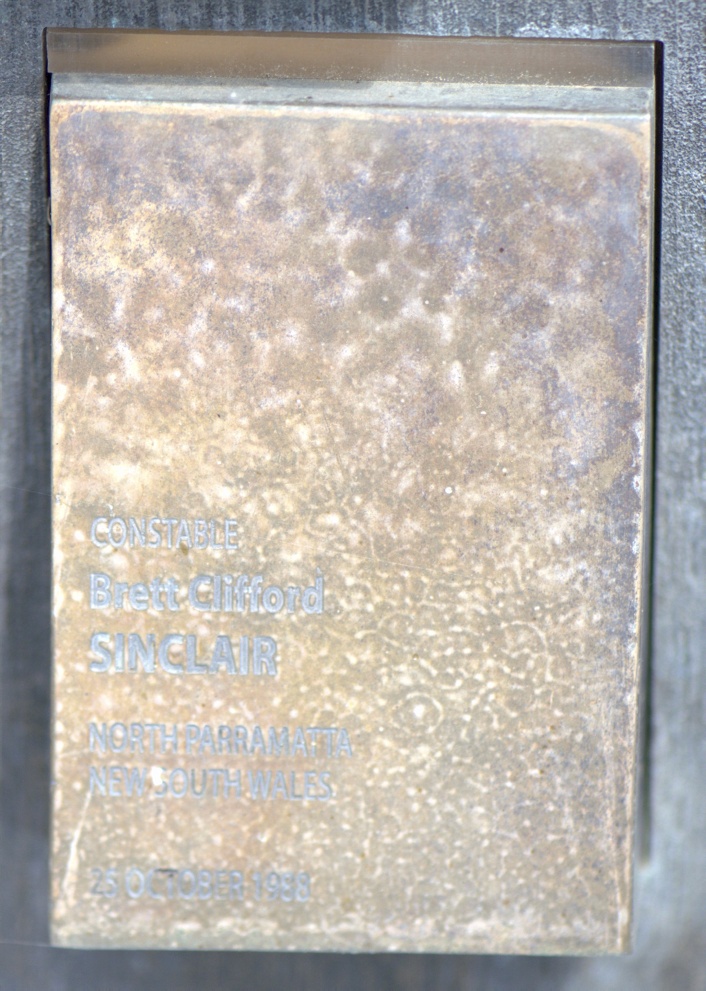
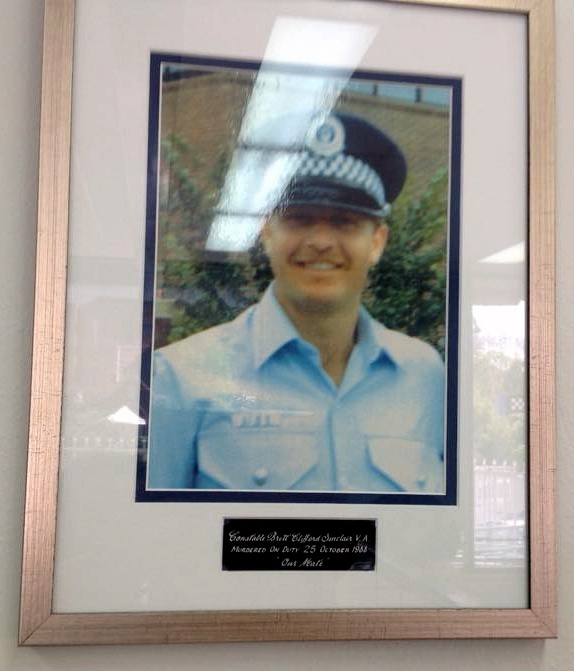
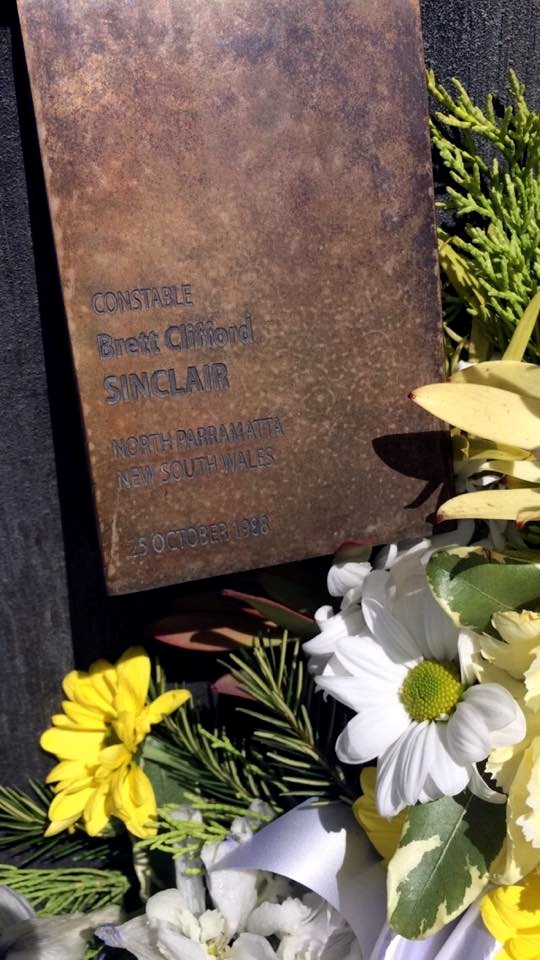
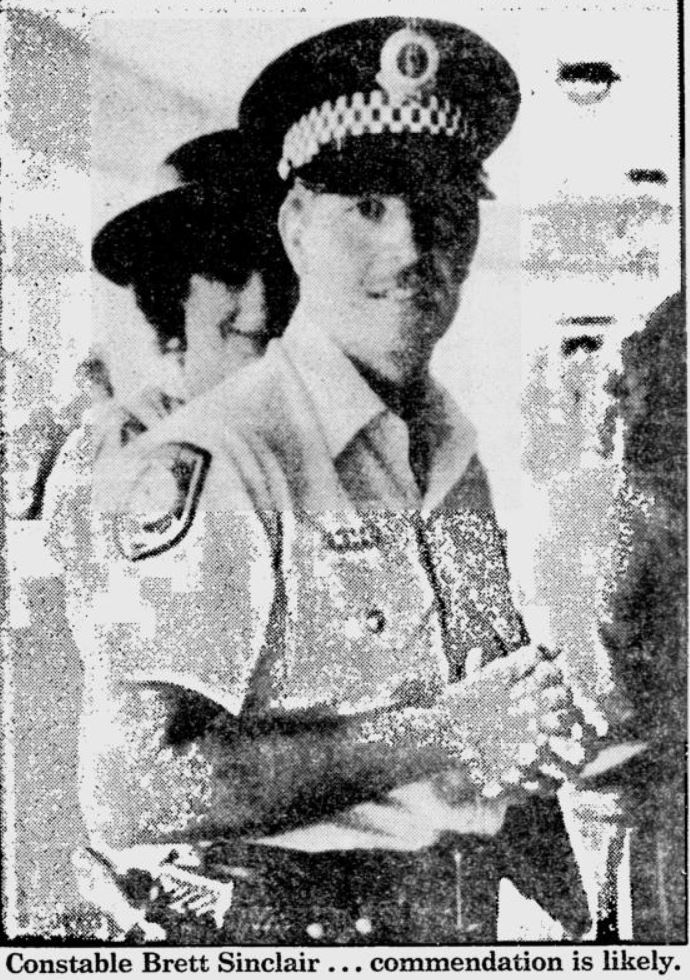
Hanging at Parramatta Police stn. Constable Brett Clifford Sinclair V.A. Murdered On Duty 25 October 1988. ” Our Mate “
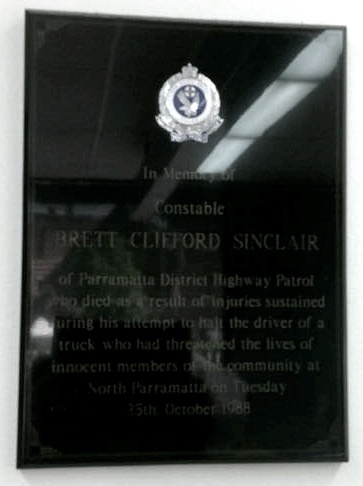
PARRAMATTA POLICE STN In Memory of Constable Brett Clifford Sinclair of Parramatta District Highway Patrol who died as a result of injuries sustained during his attempt to halt the driver of a truck who had threatened the lives of innocent members of the community at North Parramatta, Tuesday 25th October 1988.
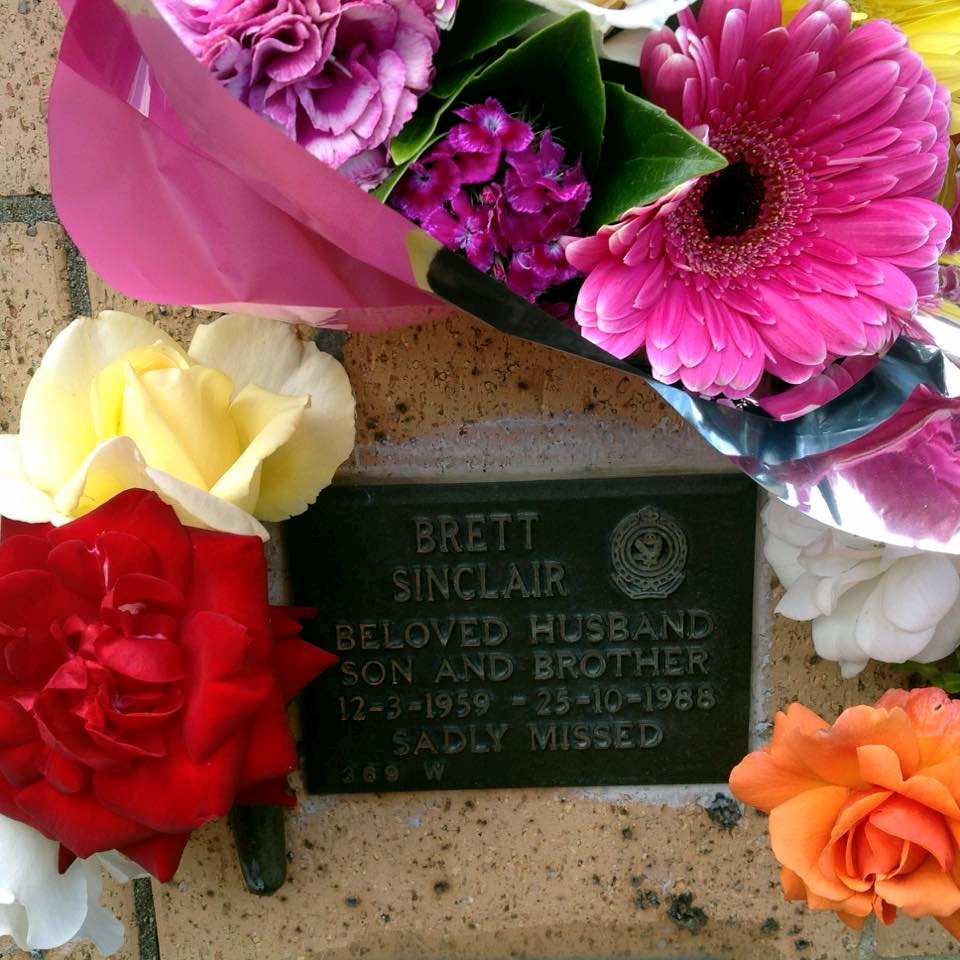
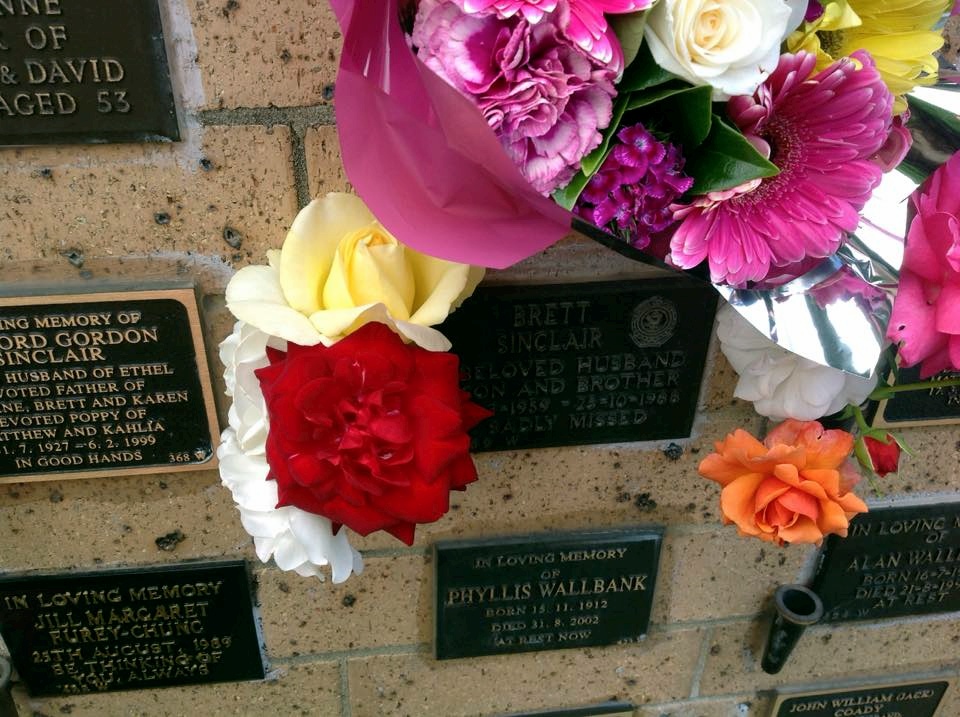
BRETT SINCLAIR BELOVED HUSBAND, SON AND BROTHER. 12-3-1959 – 25-10-1988 SADLY MISSED
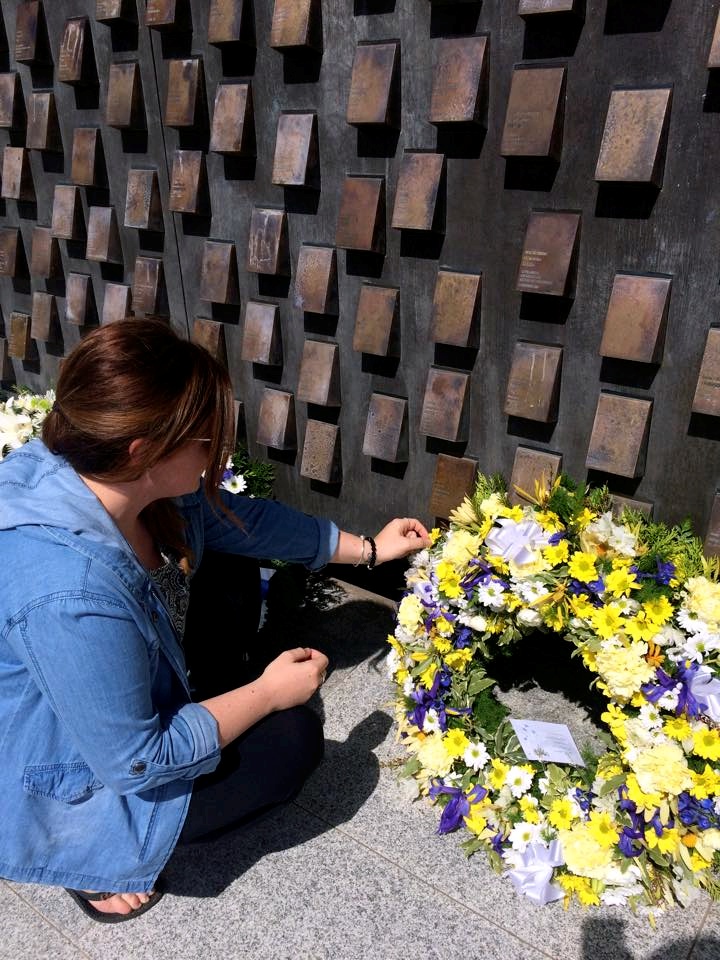
National Police Wall of Remembrance Family – paying respect on Brett’s death anniversary – 2015
[divider_dotted]
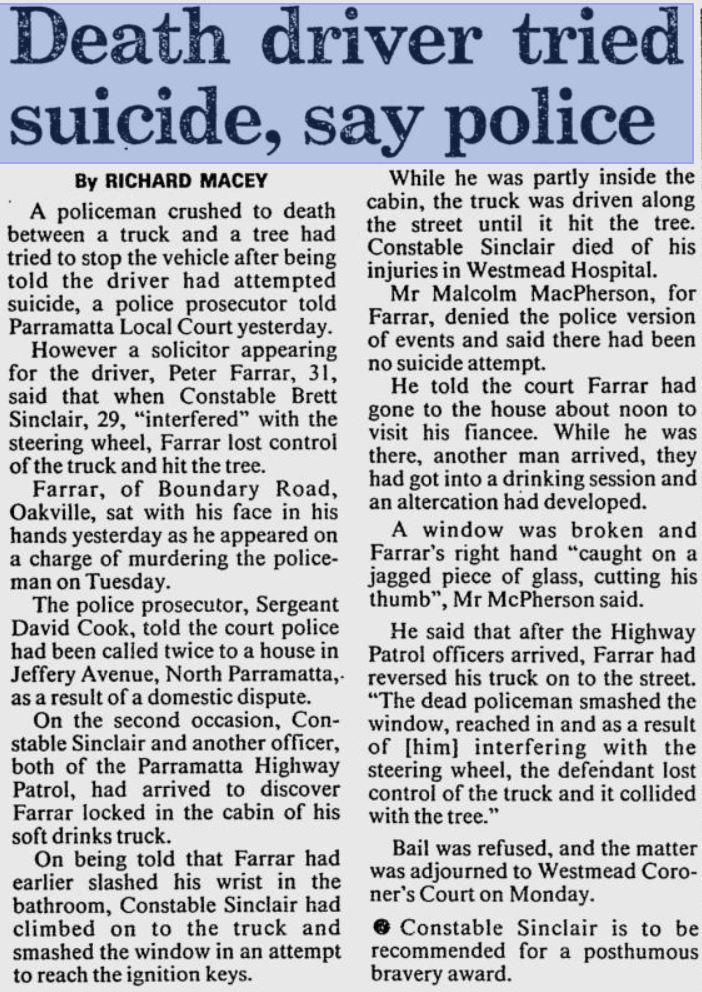
About 5.50pm on 25 October, 1988 Constable Sinclair suffered severe head and internal injuries at North Parramatta whilst attempting to arrest an offender following a domestic dispute. Earlier, police had been called to assist ambulance officers at the disturbance in Jeffrey Avenue. The offender, who was bleeding from the arm, had locked himself in his truck. While Constable Sinclair and Constable Cummins spoke with him, he continually threatened them while revving up his truck engine. As the police approached the offender wound up his window. The police then smashed the window and attempted to remove the driver from the cabin of the truck. With both police standing on the step of the truck, the offender began to drive along Jeffrey Avenue.
Constable Cummins was able to get off the step, but due to his falling to the roadway, was unable to assist his colleague.
The truck’s speed increased with Constable Sinclair still partially inside, and partially outside, the cabin. The offender then drove across the roadway where the vehicle collided with a tree, crushing the constable.
He was conveyed to the Westmead Hospital where he died a short time later. Constable Sinclair was awarded the Commissioner’s Valour Award for Bravery and Devotion to Duty.
The constable was born in 1959 and joined the New South Wales Police Force on 8 December, 1984. At the time of his death he was attached to the Parramatta Highway Patrol.
[divider_dotted]
Pre Police, Brett worked for QANTAS
[divider_dotted]
The Sydney Morning Herald 27 October 1988 p36
The relatives and friends of the late BRETT CLIFFORD SINCLAIR (Cons NSW Police Force), of Eastwood, are invited to attend his funeral, tomorrow (Friday), to leave St Anne’s Anglican Church. Church Street. Ryde., 11am.
At the conclusion of the service the funeral will leave for the Northern Suburbs Crematorium.
Crimes Amendment (Murder of Police Officers) Bill 2007
Extract from NSW Legislative Council Hansard and Papers Thursday 10 May 2007.
Second Reading
The Hon. MICHAEL GALLACHER
(Leader of the Opposition)
[4.30 p.m.]: I move:
That this bill be now read a second time.
I am honoured to introduce this bill on behalf of the Opposition, all New South Wales police officers and their families. The bill amends the Crimes Act 1900 to provide that compulsory life sentences are to be imposed by courts on persons convicted of murdering police officers. A compulsory life sentence is to be imposed if the murder was committed while the police officer was executing his or her duties or as a consequence of, or in retaliation for, actions undertaken by any police officer. This bill is one of the most important pieces of legislation that I have spoken on in my time in Parliament.
In recent weeks the deaths of police officers have been receiving publicity for all of the wrong reasons. The tragic suicides of our young officers, the attempted suicide of even the more senior and the very public breakdown of another young officer are a reminder to all of us of just how tough it is to be a police officer in 2007. Last year, along with the police commissioner, the then Minister for Police and many police, former police and their families, I attended the eighteenth annual National Police Remembrance Day memorial service and laying of wreaths at the Wall of Remembrance in the Domain next to the Art Gallery. The Wall of Remembrance marks the sacrifice of all police officers in the execution of their duties, and in particular the 248 officers whose names have been added to the New South Wales Police honour roll. On the night of Police Remembrance Day, as a mark of respect, Sydney Opera House was bathed in a blue light.
For members who are not aware, National Police Remembrance Day is held on 29 September, which is St Michael’s Day. St Michael is the patron saint of police and archangel to protect and defend people. Last September’s commemoration was even more significant with the official opening of the National Police Memorial by the Prime Minister in Canberra. The memorial is to all police officers throughout Australia who have served our community and have lost their lives in the execution of that service. The ceremony was tinged with sadness. Just the day before Police Remembrance Day, Sergeant Colin McKenzie, a highway patrol officer based at Ballina, became ill during rehearsals for the Canberra service and subsequently passed away. He was yet another officer to die while undertaking his duty.
As honourable members would be aware, I joined the New South Wales Police Force in 1980. It is a sad fact that since then the names of 73 New South Wales police officers have been added to the New South Wales Police honour roll. The honour roll commemorates those members of the New South Wales Police who have paid the ultimate sacrifice in the execution of their duty. These officers gave their life to protect us. This bill acknowledges that police play a unique role in protecting the community. As the law currently stands, there is not a sufficient deterrent to attacking and murdering a police officer in New South Wales. Police put their lives on the line every time they walk or drive into a situation that they do not have control of and in which they seek to gain control and effect the arrest of an offender or offenders.
Since 1995 at least 18 police officers have died as a result of duty-related incidents. These include five who were murdered in the course of carrying out their duty. Another four police officers are assaulted every day. It is unacceptable that people involved in some of these murders are now enjoying freedom. That should change and this bill seeks to effect that change. There can be no clearer justification for this legislation than the fact that since 1980, 11 officers have lost their lives as a result of the actions of offenders who have attacked police executing their duty to protect the community. They are Sergeant Keith Haydon, shot by an offender on 24 November 1980; Constable Pashalis Katsivelas, shot by an escaping prisoner on 4 April 1984, from recollection at Concord Hospital; Sergeant Paul Quinn, shot by an offender following a pursuit on 30 March 1986; Constable Brett Sinclair, from in juries sustained whilst affecting an arrest on 25 October 1988; Constable Allan McQueen, shot whilst affecting an arrest of a fellow attempting to break into a motor vehicle only a few hundred metres from where we are now on 5 May 1989; on 9 July 1995, two officers, Senior Constable Peter Addison and Senior Constable Robert Spears, shot by an offender at Crescent Head as they got out of their vehicle to enter a home; Constable David Carty, stabbed during an affray in Wester n Sydney on 18 April 1997; Constable Peter Forsyth, stabbed whilst affecting an arrest on 28 February 1998; Senior Constable James Affleck, struck by a motor vehicle whilst deploying road spikes to stop a stolen car on 14 January 2001; and Constable Glenn McEnallay, shot by an offender at Matraville following a pursuit on 3 Apr 2002.
Honourable members should be aware that in response to this bill, which was introduced into the other place by the New South Wales Liberal leader in May last year, the New South Wales Police Association issued a circular to their members throughout New South Wales, which stated:
Members are advised that, following discussions last evening with the State Opposition, your Association has determined to support the Bill which proposes mandatory life sentences for anyone convicted of murdering a police officer.
In light of the recent decisions relating to the murders of David Carty and Glen McEnallay it is apparent that there is strong community support for police and for the introduction of measures which would deter offenders from assaulting and killing members.
Delegates elected to attend your Association’s Biennial Conference commencing on 21 May will be asked to endorse a campaign for 3,000 additional police and to strengthen laws aimed a protecting members. In the interim members are asked to contact their local member of state parliament and express their support for this legislation.
It is only by hearing first hand the concerns of constituents that politicians will be motivated to act. The circular was signed by Bob Pritchard, President of the New South Wales Police Association. I have no doubt that some member s will argue that police should not be given special consideration. The simple fact is that police have a legislated duty to go to the assistance of community members who are in need or to confront offenders, whether they are on duty or not. Twenty-four hours a day, whether they are wearing the uniform or not, they have a legislated duty to act.
Coming to the assistance of the community at any time, whether they are on or off duty, is not something that they have a choice about. This House needs to acknowledge that being a police officer brings with it a different set of dangers than any other occupations or professions.
As I mentioned earlier, Senior Constable Jim Affleckwas run down when he tried to stop an offender’s car during a high-speed pursuit in south-western Sydney. He was attempting to deploy road spikes designed to deflate the tyres of speeding vehicles and bring them to a stop. The offender who ran down Senior Constable Affleck received only a minimum sentence of 12 years. Today is an opportunity for all honourable members to vote in support of our police. This bill inserts a new section into the Crimes Act 1900 after section 19A. It reads:
19B Compulsory life sentences for murder of police officers
1) A court is to impose a sentence of imprisonment for life on a person who is convicted of murder of a police officer if the murder was committed:
(a) While in the execution of the police officer’s duty, or
(b) As a consequence of, or in retaliation for, actions undertaken by that or any other police officer in the execution of the officer’s duty.
2) A person sentenced to imprisonment for life under this section is to serve the sentence for the term of the person’s natural life.
3) This section applies to a person who is convicted of murder of a police officer only if the person was of or above the age of 18 years at the time the murder was committed.
4) If this section requires a person to be sentenced to imprisonment for life, nothing in section 21 (of any other provision) of the Crimes (Sentencing Procedure) Act 1999 or in any other Act or law authorises a court to impose a lesser or alternative sentence.
5) Nothing in this section affects the prerogative of mercy.
The concept of protecting police has support on both sides of the Chamber. In April 2002, just after Glenn McEnallay was murder ed, then Premier Carr said:
I want those who murder police officers to go to jail forever. I want those who murder police officers to go to the dingiest, darkest cell that exists in a prison system …
In May last year one of those involved in Glenn’s murder had his conviction for murder quashed. A few short days later, his parents spoke out in favour of this bill when it was introduced into the other place. Bob McEnallay said:
They support us in our time of need but when some thing goes wrong there’s no one there to support them.
Bob and his wife, Judy, were joined by the father of David Carty in support of this bill. Member s would remember the tragic murder of Constable David Carty, who was stabbed to death after being brutally assaulted in the car park of the Cambridge Tavern at Fairfield in April 1997.
These parents know that this bill will not bring their sons back. And, unfortunately, it will not keep their killers in jail. But it will keep future killers of police where they belong: behind bars—as the former Premier said, in the dingiest, darkest cell forever.
The quashing of the conviction of the driver of the car that carried the killer of Constable McEnallay highlights the important issue of joint criminal enterprise and whether people were jointly involved in an act of murder. The community and the Opposition—and certainly Glenn McEnallay’s parents—believe the driver of the car involved was implicated in the murder and should have stayed in jail for the murder of Glenn. The cases of those involved in the murders of David Carty and Glenn McEnallay highlight the soft stance taken in New South Wales against people who murder police officers. This bill is another step in providing a higher level of protection for police.
In 1997 former Attorney General Jeff Shaw spoke on the Crimes Amendment (Assault of Police Officers) Bill, saying:
The bill is predicated upon a belief that police officers are rightfully owed a measure of protection by the community. That is so for at least two reasons.
First, police officers place themselves in positions of risk on behalf of the community. Second, an attack on a law enforcement officer strikes at the core of our system of democratic government. Those who seek to harm the persons responsible for the enforcement of laws passed by our Parliament should be subject to special punishment.
That principle is already recognised in the Crimes Act. Section 58 of that Act imposes a higher maximum gaol penalty for the offence of common assault of a police officer than is imposed for the same offence against a civilian. Indeed, the relative maximum penalties are five years and two years respectively. Surprisingly, and anomalously, the principle is not carried through by the Crimes Act to apply to more serious assaults that in fact inflict injury.
In June 2002 the then Leader of the Opposition in the other place introduced a similar private member’s bill to this bill. At that time John Brogden wrote to the Premier foreshadowing the bill, and sought bipartisan support for it. When introducing the bill he said:
… this bill will require that anybody who murders a police officer acting in the line of duty will go to gaol for life. We believe that, because of the nature of the job, police officers in New South Wales should be afforded extra protection under the law when they are on duty.
When police officers are in uniform on duty or have recalled them selves to duty they put themselves forward when others step back. They put themselves in danger and do so to protect you, and me and the citizens of the State.
The law should recognise that to murder a police officer is one of the most serious crimes in the State.
In response the Parliamentary Secretary for Police, who led for the Government, said:
The Government wants people who murder police officers to rot in prison; we have never resiled from that position. Today Government members have the opportunity to stand by this commitment and that of former Premier Carr, who, I remind members, said:
I want those who murder police officers to go to gaol forever. I want those who murder police officers to go to the dingiest, darkest cell that exists in a prison system …
They have the opportunity to stand by the commitment of the Premier, who said on 11 May:
We want these people to rot in jail. Government members have the opportunity to vote for this legislation, which will mean that those who murder police officers will rot in prison. In conclusion, my experiences during more than 16 years of service shaped my belief that those who murder police officers should spend the rest of their natural lives behind bars. I do not anticipate that the use of this legislation will be required all that often—in fact, I hope that it is never needed. But it should be on the statute book to deter those who would consider, even for a second, acting to murder our police.
I ask all members to carefully consider this bill and vote to support our police officers, and indeed their families, who every day they go to work kiss their loved ones good-bye knowing the dangers that confront them.
A series of gunshots fired at close range killed 26-year-old police officer Glenn McEnallay in his highway patrol car after he responded to a report of a stolen car in Matraville in March 2002.The man who pulled the trigger, Sione Penisini, was sentenced to 36 years in prison, but his accomplices escaped with much shorter sentences after they pleaded guilty to manslaughter. A public outcry followed and the murdered officer’s father, Bob McEnallay, described the seven-year jail term handed to one of them as “an absolute bloody joke”.
But this week he made it clear he does not believe his son’s life was worth more than that of any other citizen. He says the state government’s plan to introduce mandatory life sentencing for people who murder police is unfair to other victims of serious crime. Bob McEnallay says the life of his surviving son, Troy, not a police officer, should not be valued less than that of Glenn. He believes there should be a minimum sentence for murder, regardless of who the victim is.
“I wouldn’t like to think my son’s case would attract more attention from the courts than some other citizen,” he says. “I know the [government’s] intentions are good, but I would rather see a system where the maximum possible sentences for murder are issued for any citizen who is murdered.”
The NSW Attorney-General, Greg Smith, says the bill to be introduced in Parliament this week was developed in response to the murder of police officers David Carty in 1997 and Glenn McEnallay. His office confirms the new law will not apply to accessories to murder, such as the Taufahema brothers who were involved in the McEnallay killing. The new law will mean only the murderer would serve the term of his natural life in prison.
The Premier, Barry O’Farrell, says the Coalition has been committed to the policy since 2002 and will “ensure that those who murder police officers spend their lives behind bars”.
But in 2010, Mr Smith denounced those who called for mandatory sentencing as “rednecks”, who were indulging in a “law and order auction”. He now says police killings are an exception. “The murder of a police officer is a direct attack on our community and warrants exceptional punishment,” he says. “It sends a serious message of support to our police, but I hope it is never used.”
Mr Smith prosecuted two trials in relation to the murder of Carty and he conducted the committal hearing. “I gave my blood, sweat and tears to that case in honour of that policeman. I then appeared in the appeals to the Court of Criminal Appeal and the High Court, both of which were dismissed,” he says.
Mr McEnallay says he can appreciate the support of John Carty, David’s father, for the new law, but does not agree that police officers should be treated differently. “I am very pro-police,” McEnallay says. “But I just hope some good legislation comes out of this for everybody.”
Mary Cusumano, whose husband Angelo was shot dead in his Penshurst computer store 15 years ago, leaving her to raise four children on her own, says she is angry with the new law. This week she learnt her husband’s murderer is up for parole.
“It just infuriates me,” she says. “My husband was a wonderful human being and he served his community. It is as if the government is saying his life is worth less than somebody else’s.
“With all due respect to the police, they make a choice to enter that career, with all the risks it involves. They are armed, my husband wasn’t. My husband never thought he would go to work and that a person would put a rifle to his head.”
Martha Jabour, who represents the Homicide Victims Support Group, says the new law will divide families. “If the government is thinking of making it mandatory life, why not mandatory life for every life. I cannot say that one occupation is far more worthy than the life of a nurse or a vulnerable child.
“If my son was murdered I would want his murderer to get life, but my son isn’t a police officer.”
The vice-president of the Victims of Crime Assistance League, Howard Brown, says ambulance and other emergency service personnel will not be treated equally under the new law. “It is a dangerous piece of legislation because it has not been well thought out,” he says. “We are told by the judiciary and by politicians that everyone is treated equally before the law. But for some reason they have decided to place police above everyone else, including judges.”
Mark Findlay, a professor of criminal justice at the University of Sydney, says it is “a pity that the new government’s legislative agenda for criminal justice should be opening with what is largely something for appearances”.
“The murder of a police officer should be condemned. But if the families of police officers are meant to be comforted by this proposal it would only be at the level of retribution,” he says. “There is no convincing evidence that mandatory life sentences have any significant deterrent effect on those who kill police officers in the circumstances in which such murders take place.”
The Greens MP David Shoebridge says mandatory life sentencing has not worked in other countries and does not produce a reduction in crime. The US Sentencing Commission delivered a report to Congress nearly 20 years ago denouncing mandatory minimum sentences. In its 1991 report, it said mandatory sentencing failed to improve public safety or deter crime.
Nicholas Cowdery, who retired last month as the head of the Department of Public Prosecutions, was involved in the prosecution of McEnallay’s killers. He says the new law “appears to be a purely political exercise to in some way satisfy an obligation to the NSW Police Association.
“I say that because there is no present criminal justice need for this legislation. There are no miscarriages of justice or anomalies that have occurred in the past that justify departure from the existing law. The present law is well capable of imposing a suitably severe penalty on a person who murders a police officer or a person in other categories of employment which have an increase in risk of harm attached to them.”
The existing law allows judges to impose a sentence of natural life for murder, and about 50 people are serving that sentence.
Death on duty
NSW police killed since 1980
1980 Sergeant Keith Haydon, shot at Mount Sugarloaf.
1984 Constable Pashalis Katsivelas, shot by an escaping prisoner at Concord.
1986 Sergeant Paul Quinn, shot during a pursuit at Perthville.
1988 Constable Brett Sinclair, died from injuries while making an arrest in North Parramatta.
1989 Constable Allan McQueen, shot while making an arrest in Woolloomooloo.
1995 Senior Constables Peter Addison and Robert Spears, shot at Crescent Head.
1997 Constable David Carty, stabbed outside a Fairfield hotel.
1998 Constable Peter Forsyth, stabbed while making an arrest in Ultimo.
2001 Senior Constable James Affleck, deliberately run over as he set up road spikes to stop a stolen car in Campbelltown.
2002 Constable Glenn McEnallay, shot at Matraville after a pursuit.
The object of the Crimes Amendment (Murder of Police Officers) Bill is to amend the Crimes Act 1900 to provide that compulsory life sentences are to be imposed by a court on persons convicted of murdering police officers. A compulsory life sentence is to be imposed if the murder was committed while the police officer was executing his or her duties or as a consequence of, or in retaliation for, actions undertaken by any police officer.
COMMENTS:
The tragic suicides of young officers, the attempted suicide of a senior officer and the recent very public breakdown of another young officer are reminders to us all of how tough it is to be a police officer in 2007. Every day police officers kiss their loved ones goodbye and go to work, knowing the dangers that may confront them. Supporters of the bill argue that those convicted of murdering police officers do not deserve another chance to be free members of society. Murdered police officers do not have another chance at life and their killers should not have another chance at freedom. I would also mention, however, that it is grieving families, aside from those convicted and those who are murdered, who endure the pains of such actions.
Since 1995 at least 18 police officers have died as a result of duty-related incidents. These include five who were murdered in the course of carrying out their duty. Another four police officers are assaulted every single day, as a previous speaker has mentioned. It is unacceptable that people involved in some of these murders are now enjoying their freedom. That should change and this bill seeks to effect that change. There can be no clearer justification for this legislation than the fact that, since 1980, 11 officers have lost their lives as a result of the actions of offenders who have attacked police executing their duty to protect the community.
They are Sergeant Keith Haydon, shot by an offender on 24 November 1980; Constable Pashalis Katsivelas, shot by an escaping prisoner on 4 April 1984, from recollection, at Concord Hospital—a probationary constable, I am reminded; Sergeant Paul Quinn, shot by an offender following a pursuit on 30 March 1986; Constable Brett Sinclair, from injuries sustained whilst effecting an arrest on 25 October 1988; Constable Allan McQueen, shot whilst effecting an arrest of a man breaking into a motor vehicle only a few hundred metres from where we are now sitting on 5 May 1989; Senior Constable Peter Addison and Senior Constable Robert Spears, shot by an offender at Crescent Head as they got out of their vehicle to enter a home on 9 July 1995; Constable David Carty, stabbed during an affray in Western Sydney on 18 April 1997; Constable Peter Forsyth, stabbed whilst effecting an arrest on 28 February 1998; Senior Constable James Affleck, struck by a motor vehicle whilst deploying road spikes to stop a stolen car on 14 January 2001; and Constable Glenn McEnallay, shot by an offender at Matraville following a pursuit on 3 April 2002.
In the light of recent decisions relating to the murders of David Carty and Glen McEnallay it is apparent that there is strong community support for police and for the introduction of measures to deter offenders from assaulting and killing members. The bill is predicated upon a belief that police officers are rightfully owed a measure of protection by the community. This so for at least two reasons. First, police officers place themselves in positions of risk on behalf of the community. Second, an attack on a law enforcement officers strikes at the very core of our system of democratic government. Those who seek to harm the persons responsible for the enforcement of laws passed by our Parliament should be subject to special punishment.
That principle is already recognised in the Crimes Act. Section 58 of that Act imposes a higher maximum jail penalty for the offence of common assault of a police officer than is imposed for the same offence against an ordinary civilian. Indeed, the relative maximum penalties are five years and two years respectively. Surprisingly, and anomalously, the principle is not carried through by the Crimes Act to apply to more serious assaults that in fact inflict injury or permanent damage to officers. When police officers are in uniform on duty or have recalled themselves to duty they put themselves forward when others step back. They put themselves in danger and do so to protect you and me and citizens of the State. The law should recognise that to murder a police officer is a serious crime in this State. The Parliamentary Secretary for Police, who led for the Government, said:
The Government wants people who murder police officers to rot in prison; we have never resiled from that position.
Today Government members have the opportunity to stand by this commitment and that of former Premier Carr. He said:
I want those who murder police officers to go to gaol forever. I want those who murder police officers to go to the dingiest, darkest cell that exists in a prison system …
Government members have the opportunity to vote for this legislation, which will mean that those who murder police officers will rot in prison. There are certainly some contentious provisions that merit further examination. However, there are two aspects of this bill that do concern me. The first is: Is there any evidence that the likelihood of a compulsory life sentence would have any deterrent effect? I ask whether a compulsory life sentence can achieve reduced recidivism and increased rehabilitation in our society. Can a compulsory life sentence stop future acts of violence? Is the life of a police officer more valuable than the life of anyone else, such as a doctor treating a patient, teachers or others in the community?
If honourable members consider any aspect of my speech today I ask them to reflect on this one point: I remind them that the stark account of prison life presents powerful challenges in our liberal democracy. During my whole life, from the time I was a parole and probation officer as a young man through to all my years at Wesley Mission, I have visited numerous prisons around the country. In fact, at different times I have been detained in her Majesty’s finest. Most of them are characterised by routine, regulation, boredom and depression associated with serving a long-term sentence. They are also characterised by claustrophobia, noise, chaos and the real risk of being compelled to inhabit a very violent world, including not only other prisoners but also others who enter the prison. Inmates that I have talked to over the years inevitably possess low intelligence quotients or have suffered brain damage, frequently from extensive alcoholism, and mental illness. Critical criminologists and sociologists have long since documented the squalor and brutality associated with incarceration. Even in today’s society, public complacency generally surrounds the plight of the incarcerated.
The growing fear of crime, fuelled at least partially by the media, and the frustration with the seeming lack of positive results of rehabilitation provide public support for hardened policies. This trend has become amplified by the rhetoric of politicians who have found that being tough on crime is an unbeatable popular issue.
CONCLUSION:
However, with all of that said, with the limitations of our current prison system and acknowledging the absolute futility of long-term incarceration of individuals, there is no question in my mind that the Crimes Amendment (Murder of Police Officers) Bill is needed. I commend the bill to the House.
Rank: Commenced Training at Goulburn Police Academy on 18 August 1986
Probationary Constable – appointed 7 November 1986
Final Rank: Probationary Constable
Stations: Pennant Hills October 1986 to 3 June 1987
Awards: Nil
Service:
From 18 August 1986to 3 June 1987 = 11 months
Born: ? ? 1966
Died: Wednesday 3 June 1987
Age: 20
Cause: Illness – Suicide by Service firearm
Location: at Lane Cover River Park, Lane Cove.
Funeral date: ?
Funeral location:
Eastwood
Grave Location:Cremated
Memorial plaque at Northern Suburbs Crematorium, Delhi Road, North Ryde, NSW
Niche: Row ‘TO’, plaque # 348
Touch plate at the National Police Wall of Remembrance, Canberra.
Andrew Thomas DIXON. Plaque condition as of 8/9/2020
ANDREW IS mentioned on the Police Wall of Remembrance
In April, 1987 Constable Dixonand other police attended a serious motor vehicle accident at Mt Colah. A person trapped in the vehicle became violent when released and Constable Dixon assisted in restraining him. During the struggle the constable was covered in a considerableamount of the injured person’s blood. It was later discovered that this person suffered from HIV/AIDS. Due to stress and concern over the disease, Constable Dixon drove to the Lane Cove River Park on 3 June, 1987 and committed suicide.
The constable was born in 1966 and joined the New South Wales Police Force on 18 August, 1986. At the time of his death he was stationed at Pennant Hills.
From Kevin Banister – I remember this very well. I was working at Pennant Hills when Andrew arrived as a fresh faced Probationary Constable. He was a fine young man built like a brick s**thouse. When he was told that the accident victim had HIV/AIDS he began to withdraw very quickly. All at the station were concerned for his welfare and tried to help where possible.
On the afternoon of 3/06/87 Andrew had worked morning shift and I was on afternoon shift. At the hand over Andrew said goodbye with a smile on his face and went home, or so I thought. I was not aware that he was supposed to be attending the PMO (Police Medical Officer) for an appointment after work. I got a call from his mother just before sundown to say that Andrew had not come home and were concerned for his welfare. Pennant Hills was a Rescue Squad/General duties station at the time and I was the senior operator rostered on. I made a number of phone calls including to the Lane Cove station and Marrickville Rescue base. Not long after we received info that Andrew’s car had been located in a dead end street off Delhi Road beside the Lane Cove river.
As a result I and my offsider Bob Hanson attended in the Rescue vehicle. Numerous other Police vehicles arrived along with the Water Police. I organised a number of search parties and headed into the scrub towards the river. Reached the riverbank and saw that the Water Police had also began a search in the area we were in. Again, a short time later I and my offsider found the body of Andrew with his service revolver by his side. I indicated to the Water Police to come over (not using the radio) and told them that they were no longer required. The boat crew saluted and left the scene. A discrete message was sent to the command post as I knew that his parents were at the post and could hear the radio transmissions.
When we emerged from the bush with Andrew’s body many of the Police were in tears as he was a local boy and well known. His funeral was standing room only and the street blocked off for the overflow. During the period of the time of the accident and Andrew’s death he had a number of blood samples taken, but due to the technology of the time he was told that it could be some time before they knew if he had became infected. About a month after his death we were informed that he had not become infected. R.I.P. my friend.
Stewart COOK
| 27/10/2012
Stewart COOK
Late of Nelson Bay
Academy Class 110
New South Wales Police Force
Regd. # 12431
Rank: Probationary Constable – appointed 3 April 1967
Senior Constable – appointed 3 April 1976
Sergeant 3rd Class – appointed 1 January 1983
Sergeant 2nd Class – Death
Stations: ?, Newcastle ( Carrington 3 April 1976 – 5 January 1968 ), Hamilton ( 6 January 1968 – 25 February 1969 ),
Tarro ( 26 February 1969 – 14 April 1975 ), Beresfield ( 15 April 1975 – 2 June 1977 ), Berrima ( 3 June 1977 – 18 October 1982 ),
Bowral ( 19 October 1982 – 7 October 1986 ), Newcastle District Licencing ( 8 October 1986 – 7 May 1987 )
Service: From 20 February 1967to 7 May 1987= 19+years Service
Awards: National Medal – granted 22 April 1983 ( SenCon )
Born: Monday 9 January 1939
Died on: Thursday 7 May 1987
Age: 48 years, 3 months, 28 days
Cause: Motor Vehicle Accident – Driver – returning home from shift
Event location: Anna Bay, NSW
Event date: ?
Funeral date: possibly 14 May 1987
Funeral location: St Joseph’s Catholic Church, East Maitland
About 8.10pm on 7 May, 1987, Sergeant Cook was returning home to Nelson Bay at the end of his shift. As he was driving through Anna Bay his vehicle crossed to the incorrect side of the roadway and collided with an oncoming vehicle. He sustained severe head and internal injuries and died a short time later.
The sergeant was born in 1939 and joined the New South Wales Police Force on 20 February, 1967. At the time of his death he was attached to the Newcastle District Licensing Section.
Canberra Times (ACT : 1926 – 1995),
Wednesday 21 June 1978, page 11
Rescue of chef in Berrima fire
BERRIMA: A motel chef spent 20 minutes trapped by fire on a ledge 15cm wide and 13 metres above the ground at Berrima on Monday night.
Mr Michael Birt, 62, the chef at the historic White Horse Inn, now a mote! and restaurant,found the stairs leading from his second-floor bedroom to safety were on fire.
He climbed through a window and on to the ledge outside his room to await rescue.
Senior Constable S. Cook and a bystander using an extension ladder they found nearby , rescued Mr Birt as the flames spread upward.
The fire broke out on the first floor of the 100-year-old brick building just after 9.30pm.
Mr Birt was the only occupant and was in his room when he smelt smoke and found his path to safety blocked by flames.
Rank: Commenced Training at Goulburn Police Academy on Monday 14 April 1986 ( aged 19 years, 3 months, 11 days )
Probationary Constable – Attested Friday 27 June 1986 ( aged 19 years, 5 months, 15 days )
Constable – No
Stations: Waverley – Death
Service: From14 April 1986to 17 April 1987 = 1 year, 3 days Service
Awards: No Find on Australian Honours system
Born: Thursday 12 January 1967
Died on: Friday 17 April 1987
Age: 20 years, 3 months, 5 days
Cause: Motor Vehicle Accident – Driver – On Duty going to work
Event location: Cnr Avoca & Darley Rd’s, Randwick
Funeral date:
Funeral location:
Buried at: Woronora Memorial Park, Linden St, Sutherland, NSW
Loc: General Plaque Lawn Sec: Wattle Lawn Lot: 5
Lat / Long: -34.03604, 151.04950
DANA IS mentioned on the Police Wall of Remembrance
On 17 April, 1987 Constable Heffernan was travelling to work at Waverley Police Station. At the intersection of Avoca Road and Darley Road, Randwick another vehicle drove through a red traffic light and collided with the constable’s vehicle. As a result Constable Heffernan suffered severe head and internal injuries and was found to be dead on arrival at the Prince of Wales Hospital. The driver of the offending vehicle was later charged with serious offences relating to the collision.
The constable was born in 1967 and joined the New South Wales Police Force on 14 April, 1986. At the time of her death she was stationed at Waverley.
The parents of Dana are organising a memorial service for Dana at the Woronora Cemetery on Friday 19 July 2019 at 10.30 am.
They are calling on classmates from 219 (June 86) and workmates from Waverley who might be available, to join family and colleagues to remember this great young copper and mate, taken from us too early.
For unknown reasons, this Memorial Service has been cancelled.