1

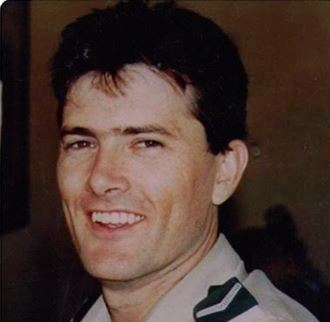
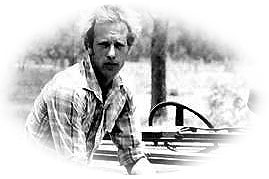
William Leonard ESPIE

William Leonard ESPIE

aka  Bill, ‘Buckshot’, ‘The Wasp’

New South Wales Police Force

Regd. # 10092


Rank:  Probationary Constable – 14 September 1961

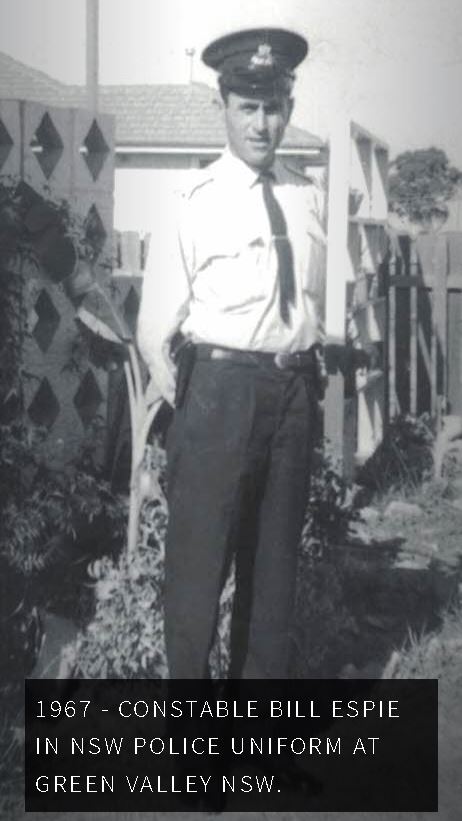
1st Class Constable – appointed 1 April 1967

Sergeant 3rd Class – appointed 1 February 1978

Sergeant 2nd Class – 1984 ( Central Police Station )

Sergeant 1st Class – 9 August 1986

Chief Inspector – February 1989 ( Fairfield & Cabramatta )

Chief Inspector – Patrol Commander ( Cabramatta ) until Optional Retirement in April 1991


Stations:   Central ( No. 1 Division ), Darlinghurst ( No. 3 Division ) to Liverpool ( 22 Division ) in November 1963, Merrylands ( 26 Division ), Cabramatta, Fairfield, Cabramatta ( 34 Division )


Service:  From  ? ? 1960?  to  ? April 1991 = 31? years of Service


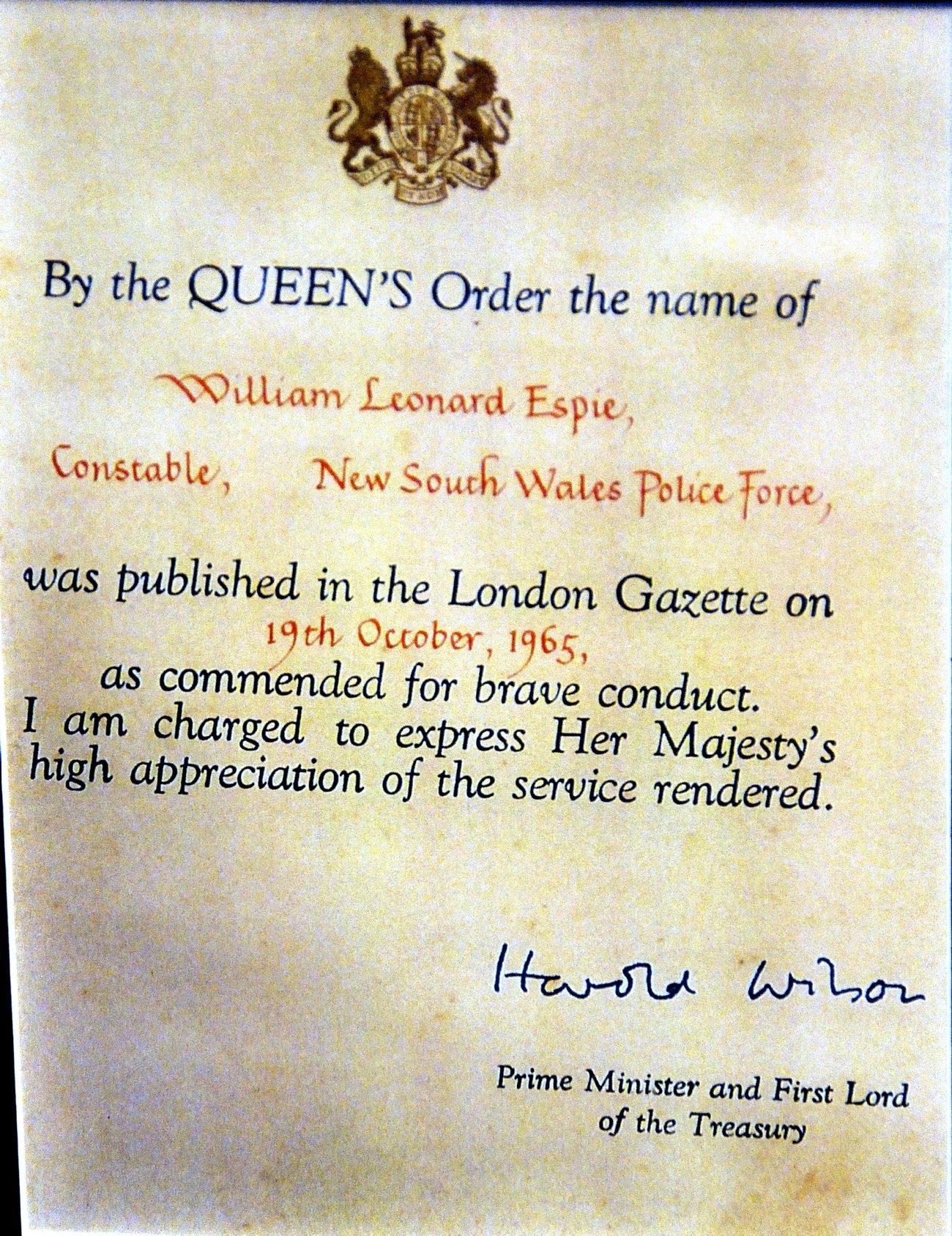
Awards:  Queen’s commendation for Brave Conduct – granted 19 October 1965 ( rescue of two people from their burning vehicles after a collision – whilst standing in fuel )

Commissioner’s Commendation – rescue – 1965 ( rescue of two people from their burning vehicles after a collision – whilst standing in fuel )

Peter Mitchell Award, a perpetual trophy, for selfless & brave conduct – 1965 ( as above )

George Lewis Trophy “for the most courageous act by a member of the NSW Police Force in 1965” ( as above )

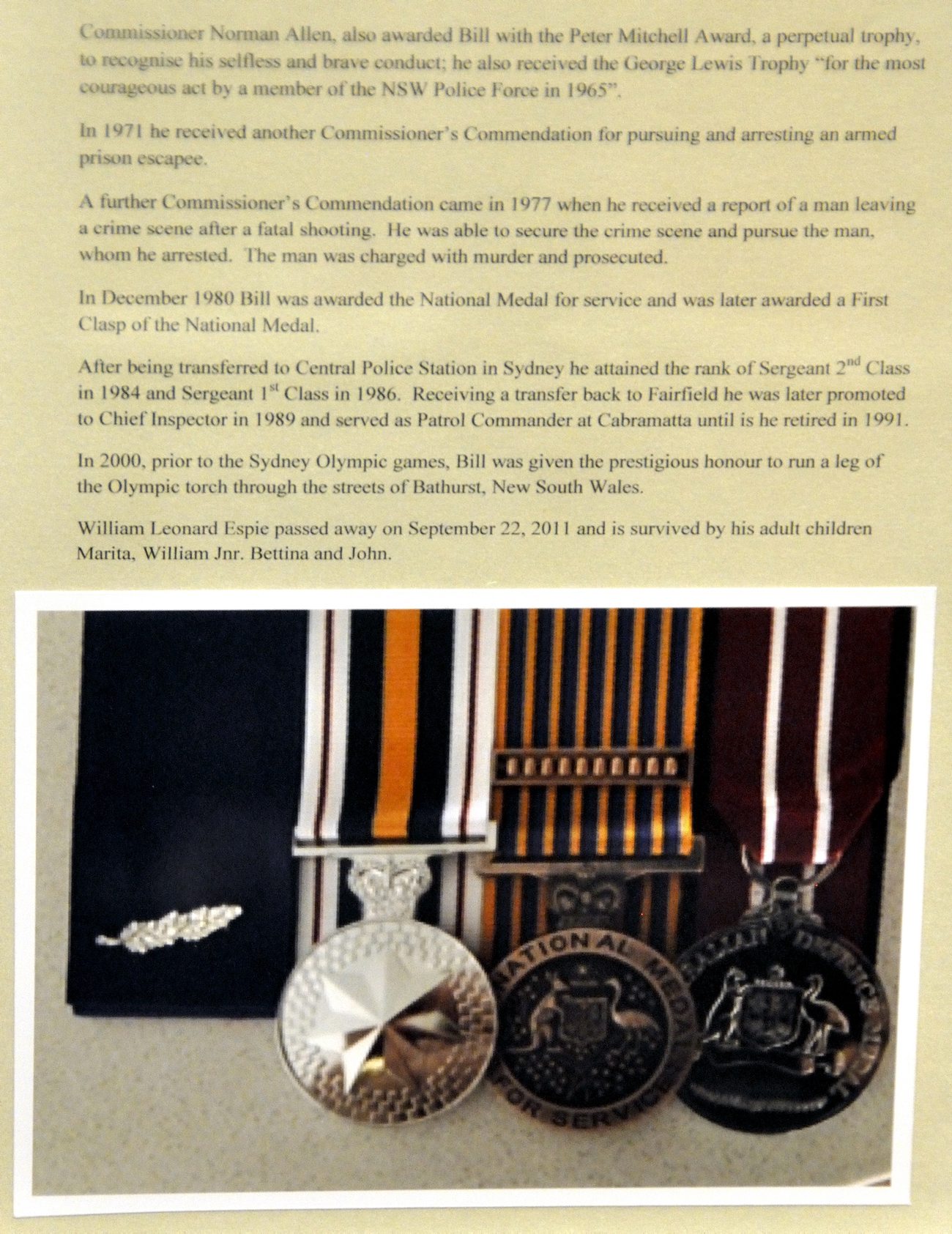
Australian Defence Medal

Commissioner’s Commendation – for pursuing & arresting an armed prison escapee – 1971

Commissioner’s Commendation – pursuit and arrest of an offender of a fatal shooting at Cabramatta – 1977

National Medal – granted 11 December 1980

1st Clasp to National Medal – granted 7 November 1988

Australian National police Service Medal


Born:  25 June 1935

Died on:  22 September 2011

Cause:  Dementia

Age:  76


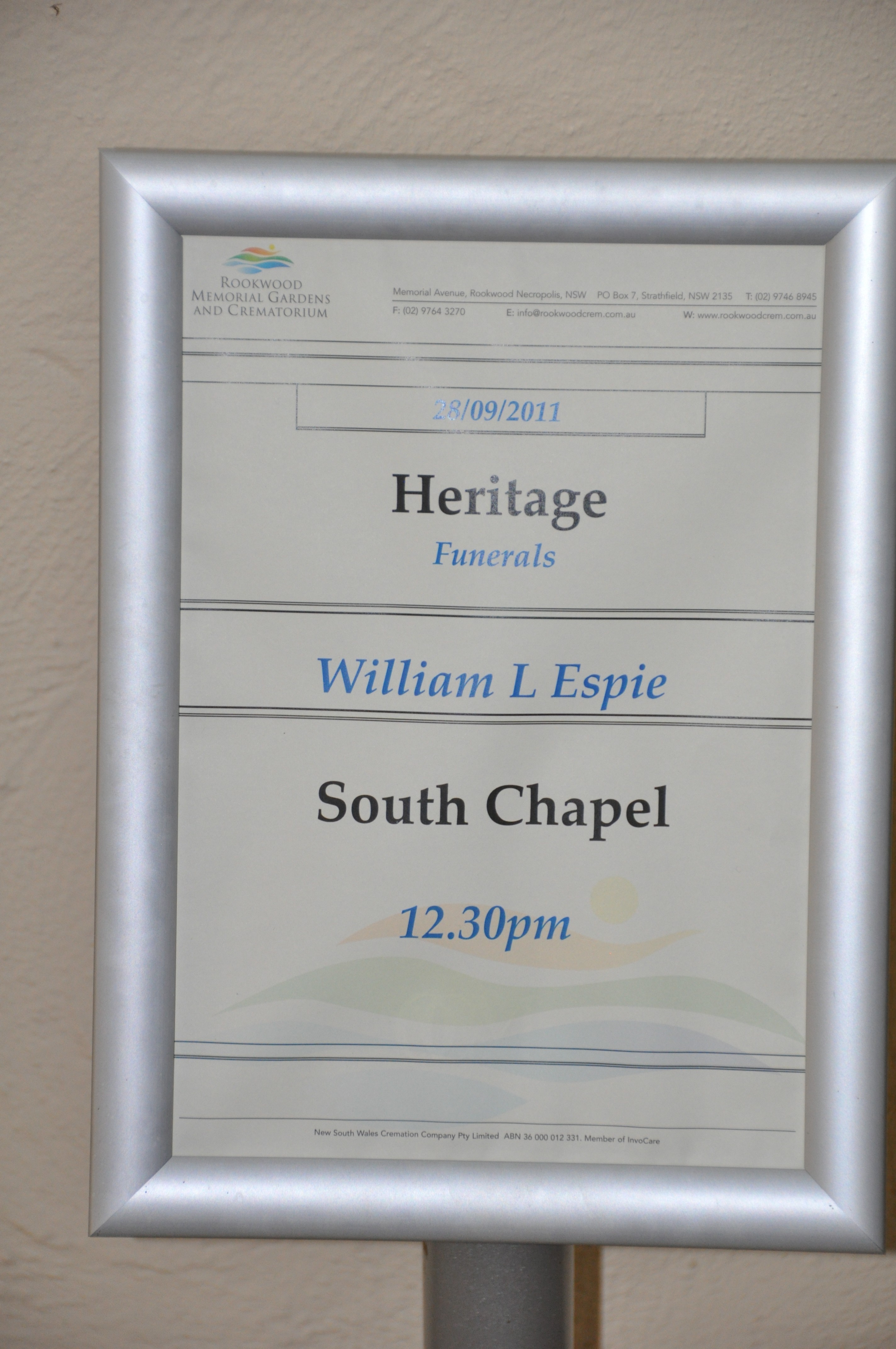
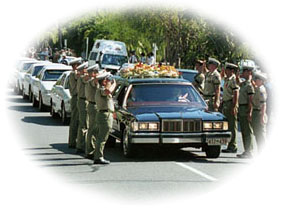
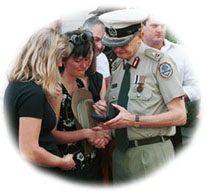
Funeral date:  Wednesday  28 September 2011 @ 10.30am

Funeral location:  SOUTH CHAPEL, ROOKWOOD CREMATORIUM, ROOKWOOD

Buried at:  Cremated
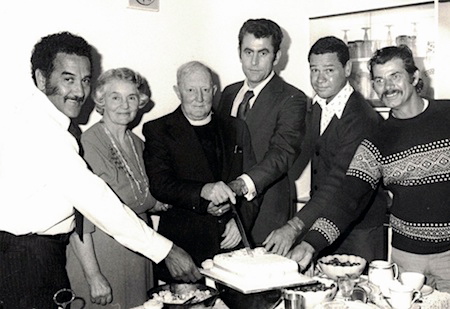
1976 Bill Espie standing next to Father Smith celebrating his 50 years of ordination – Charlie Perkins on far left next to Mrs Smith – Noel Hampton and David Woodford on far right


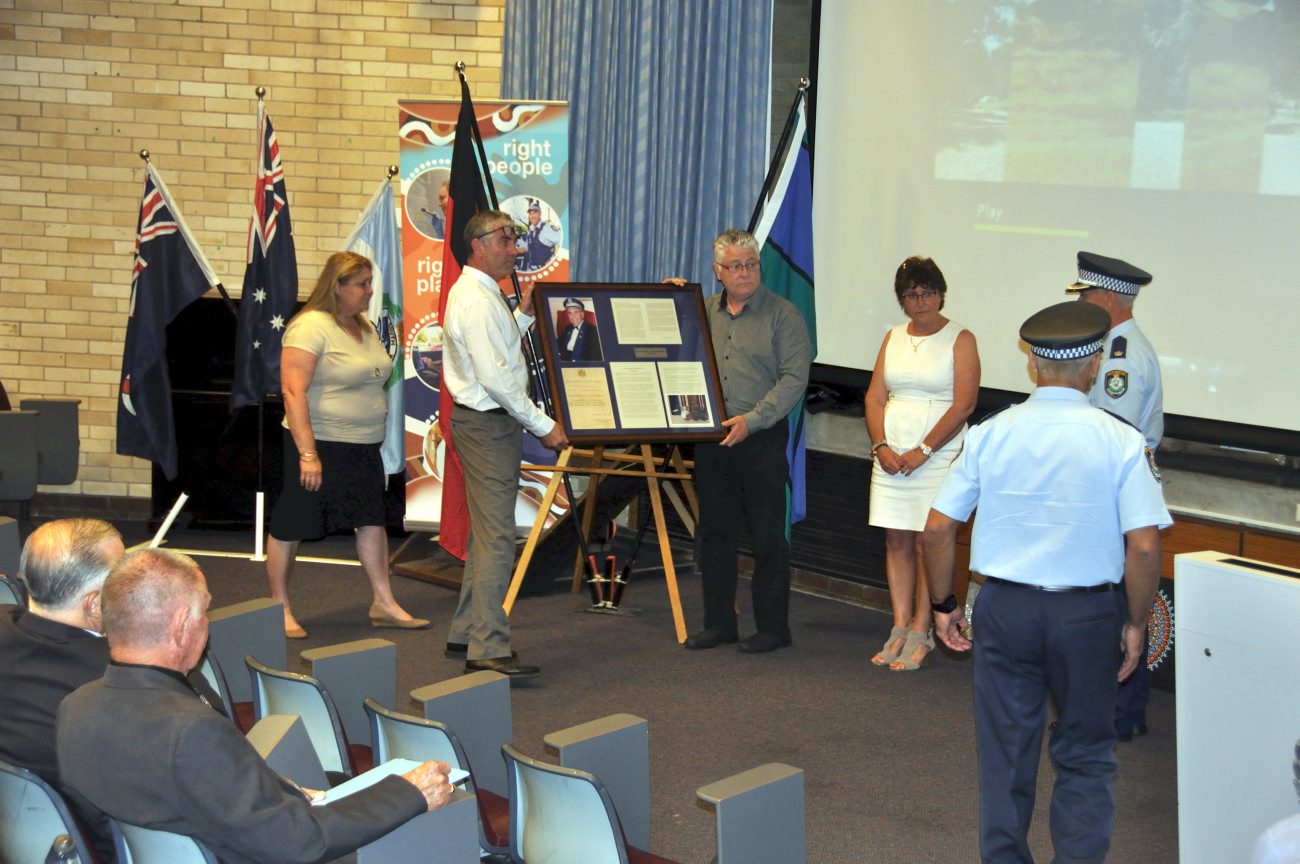
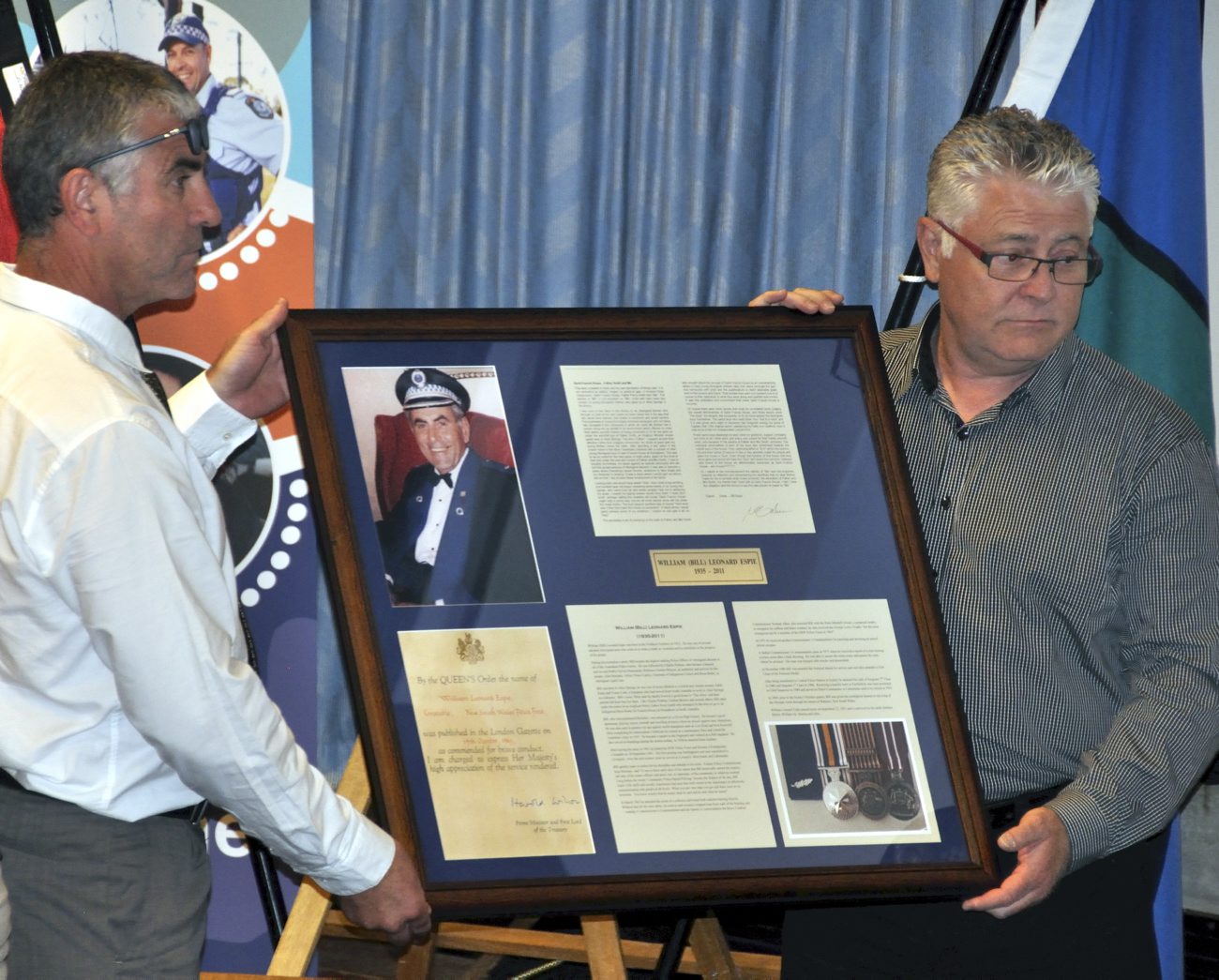
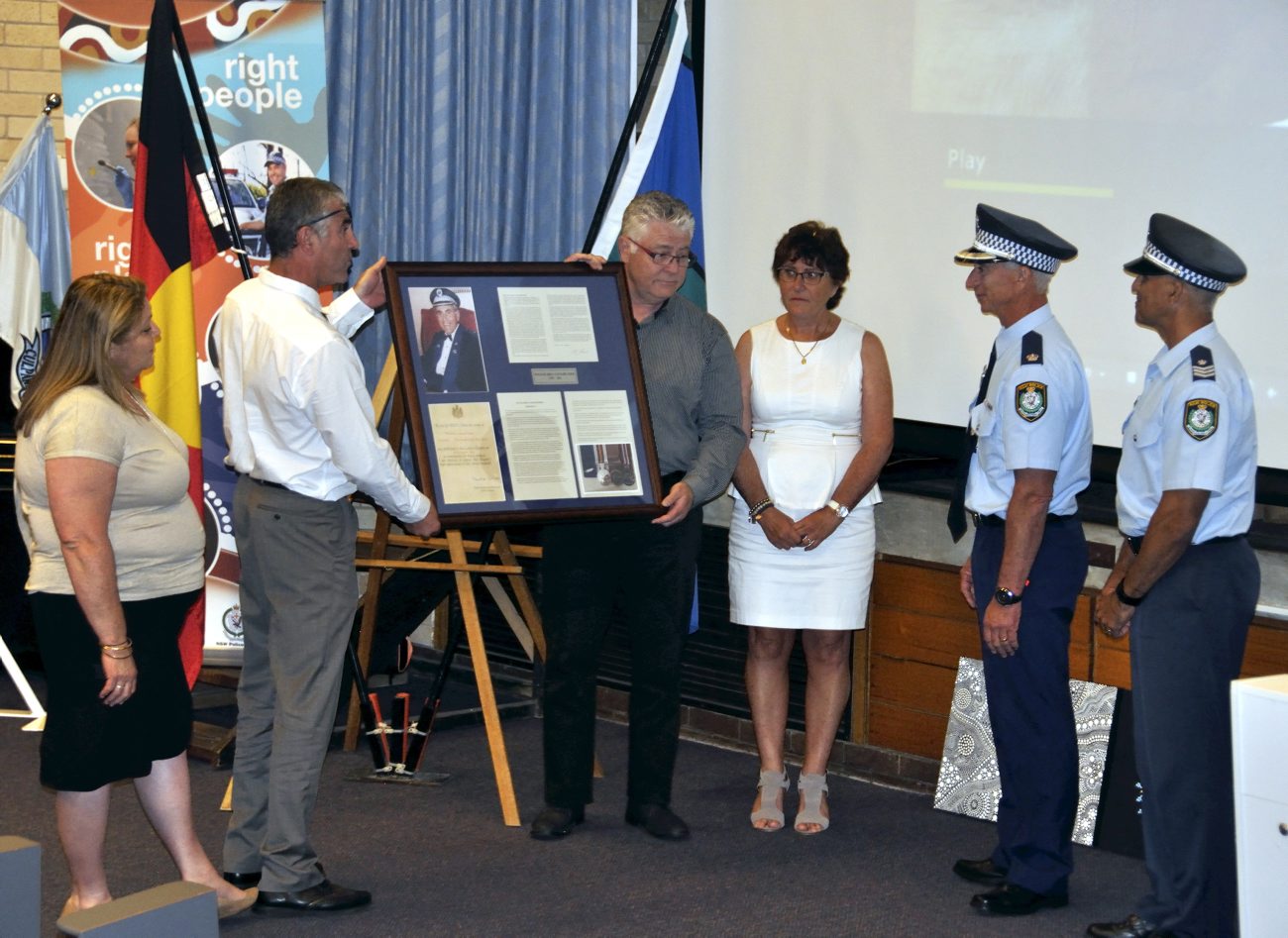
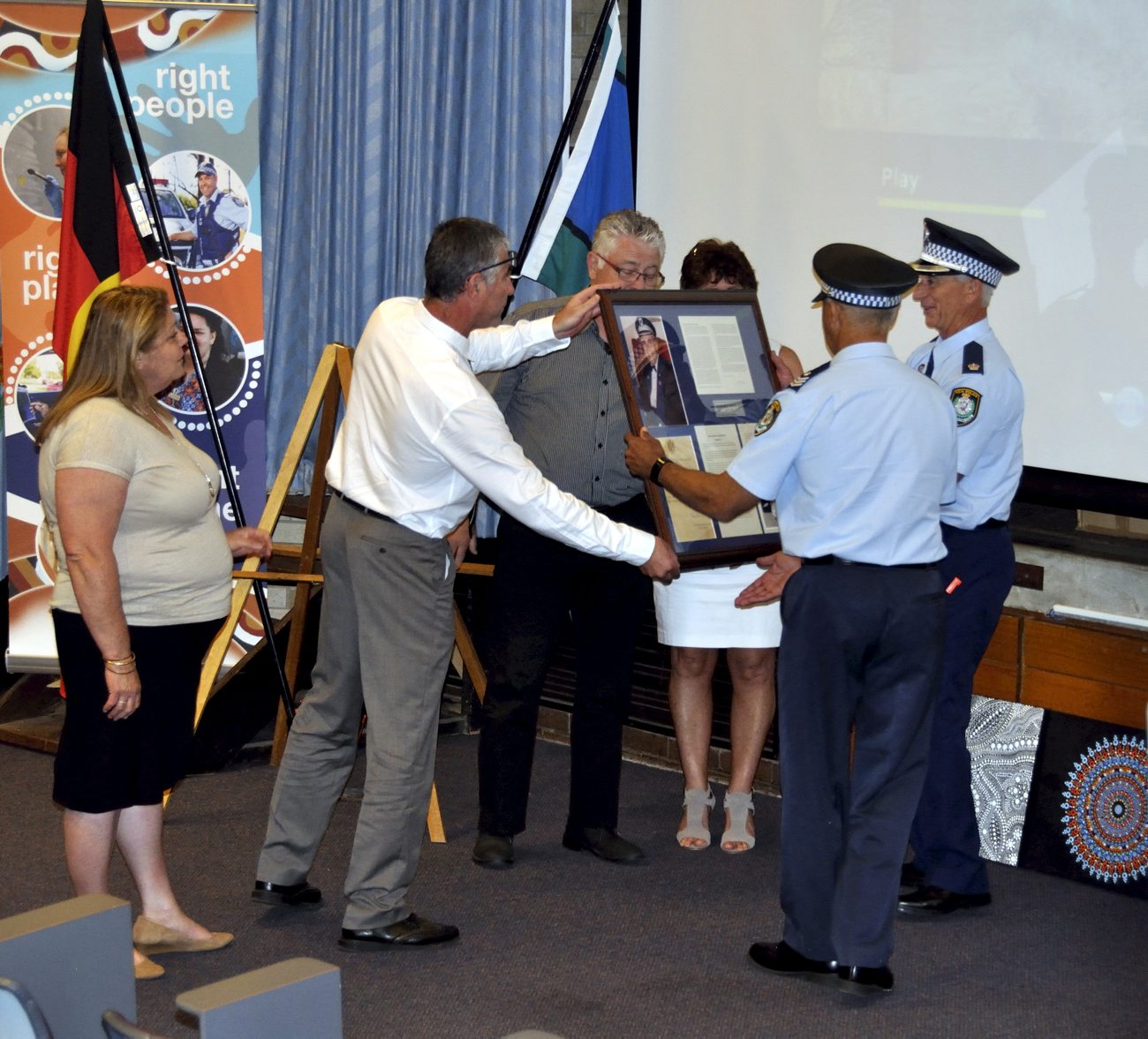
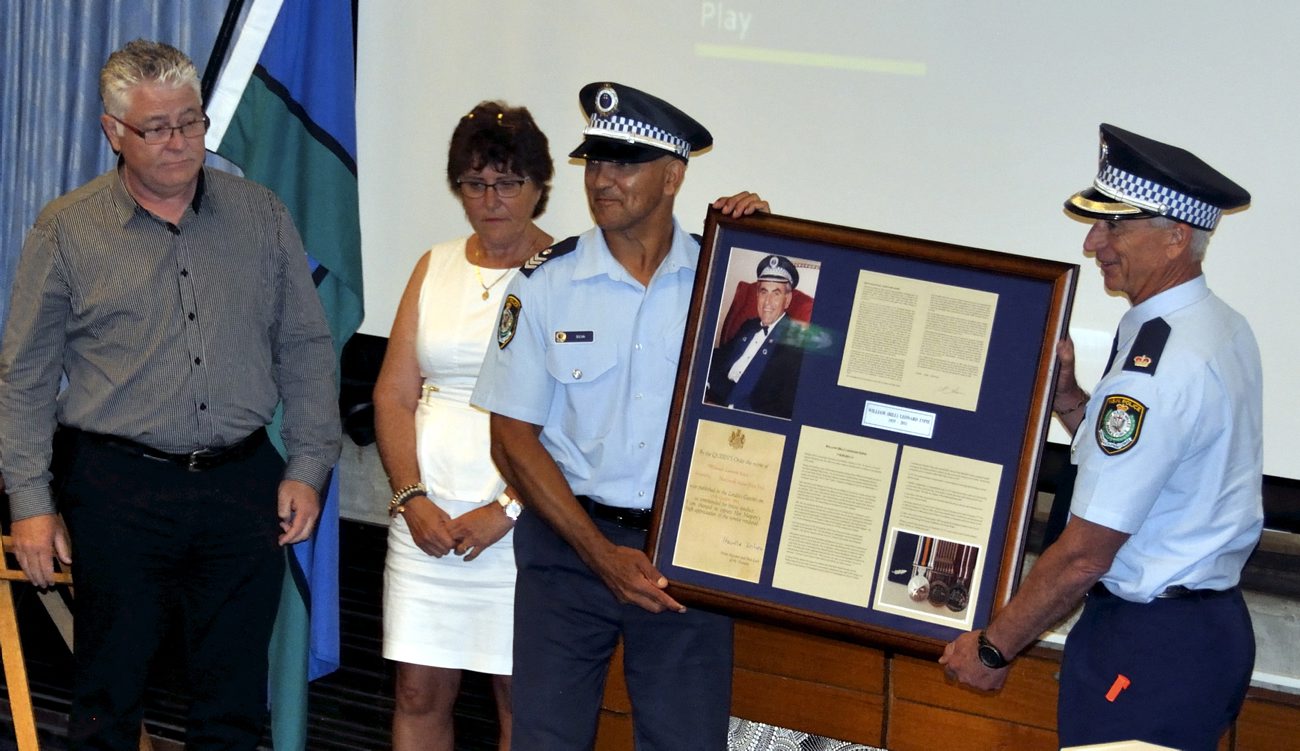
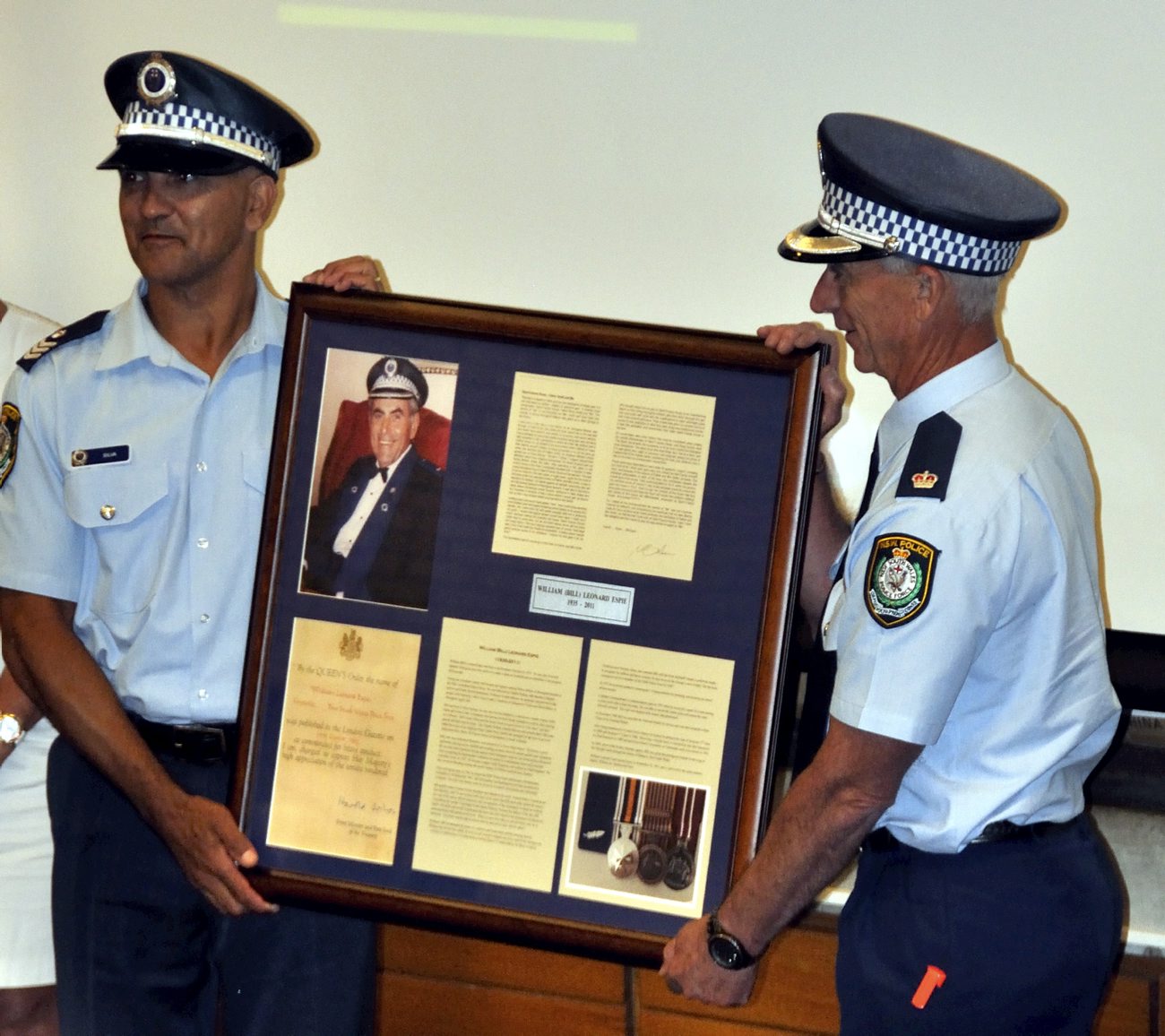
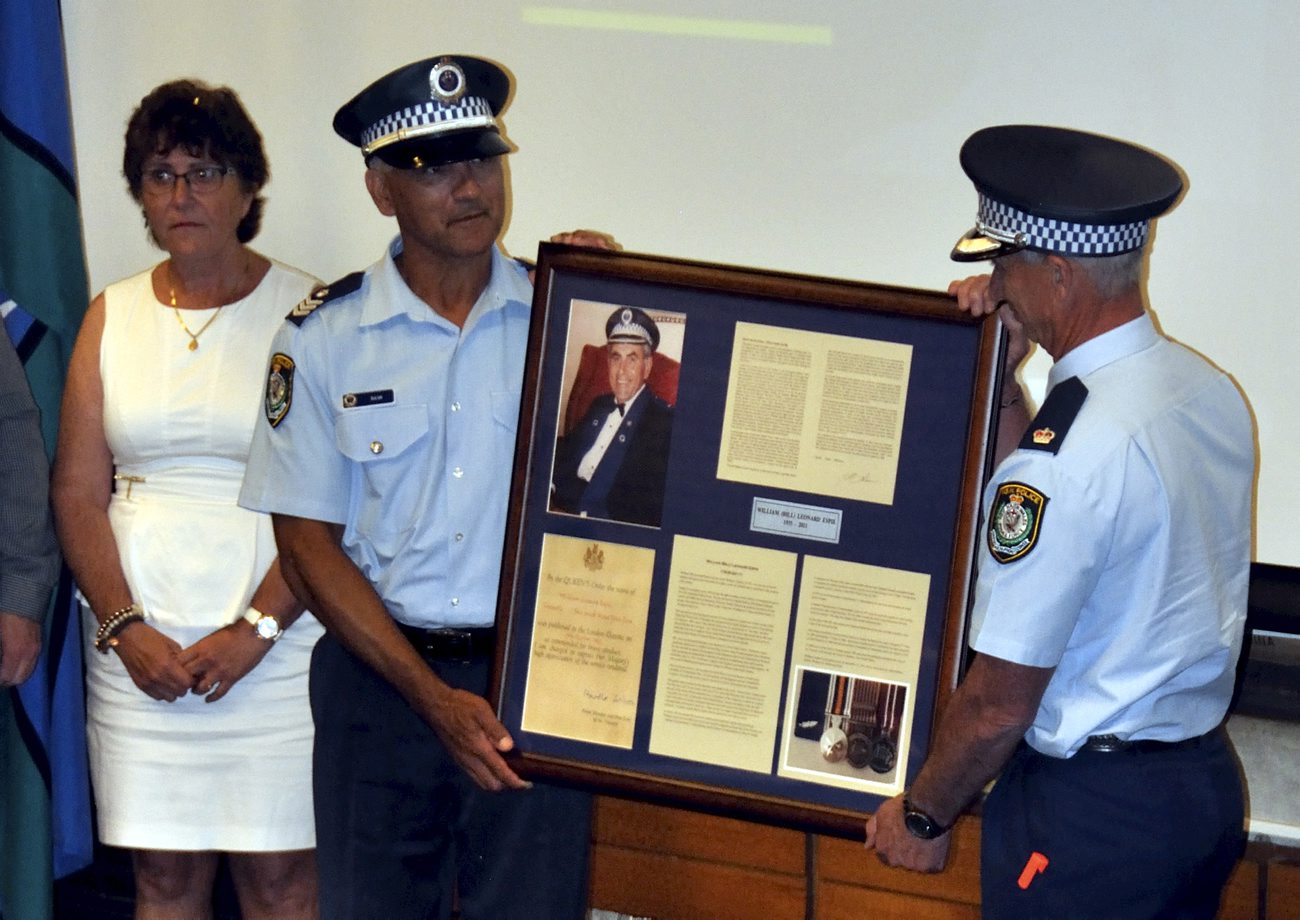
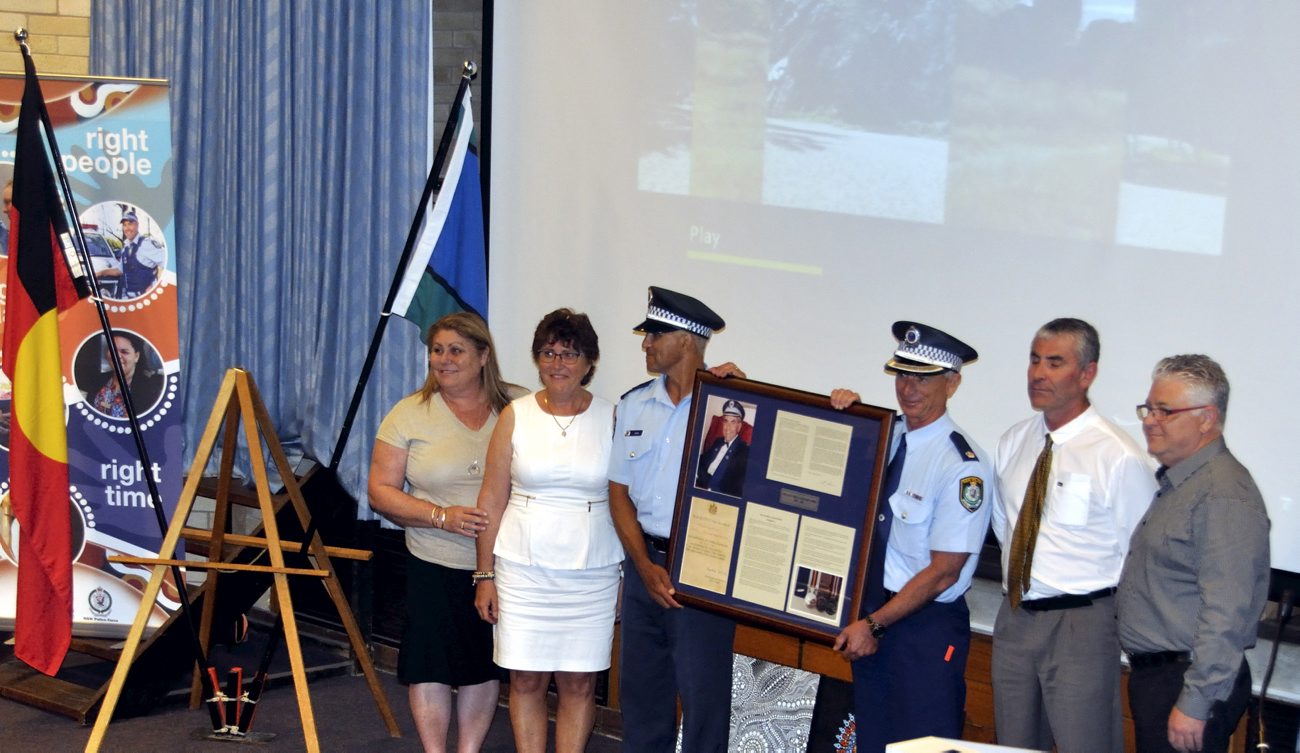
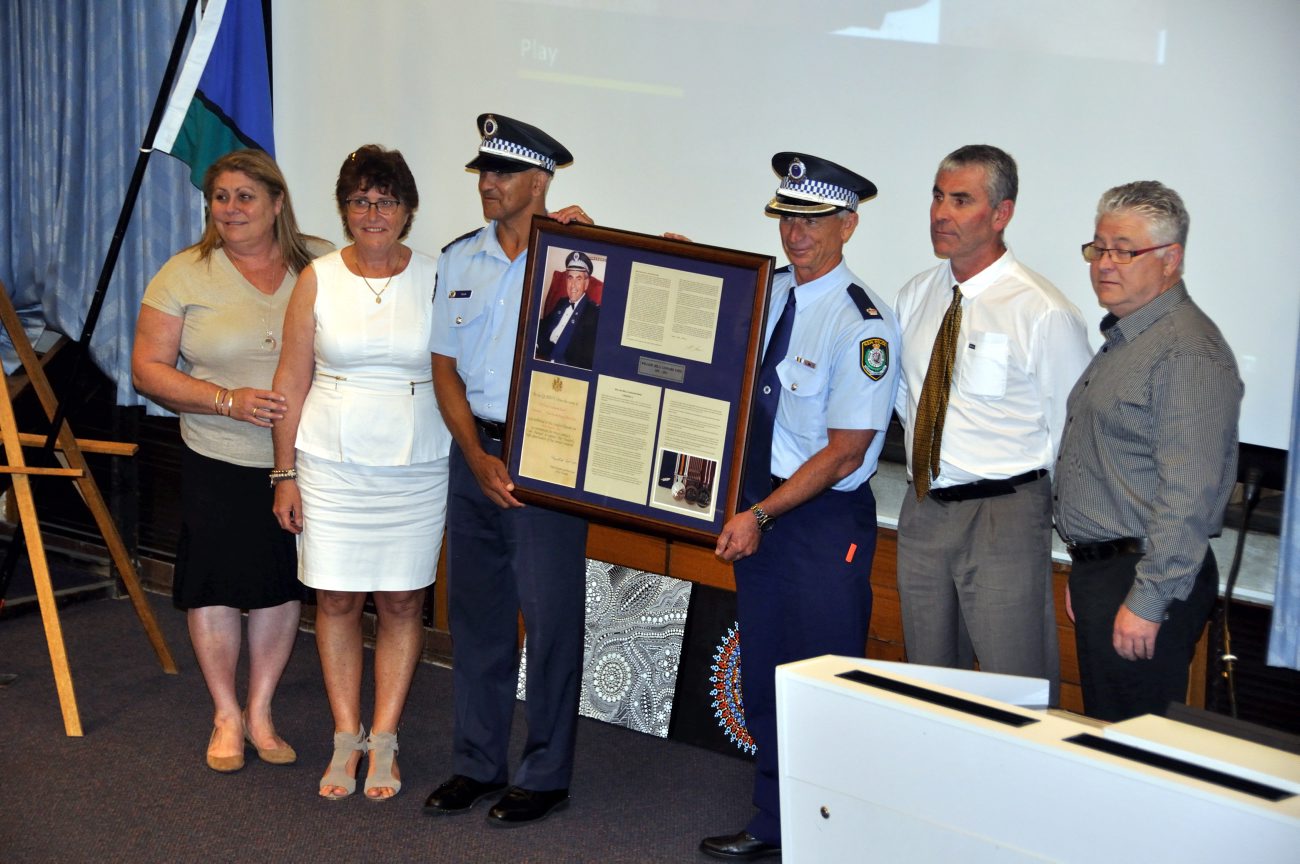
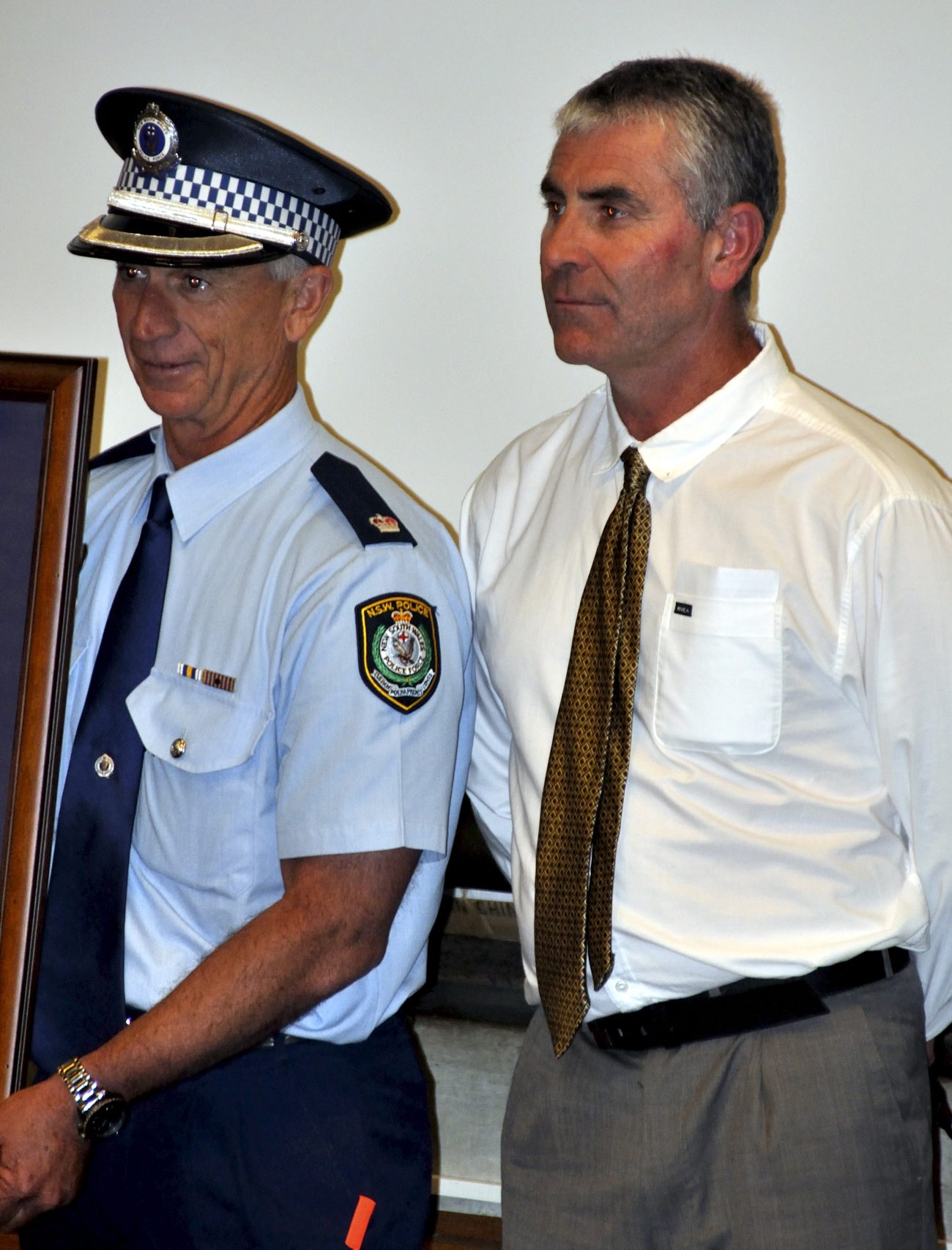
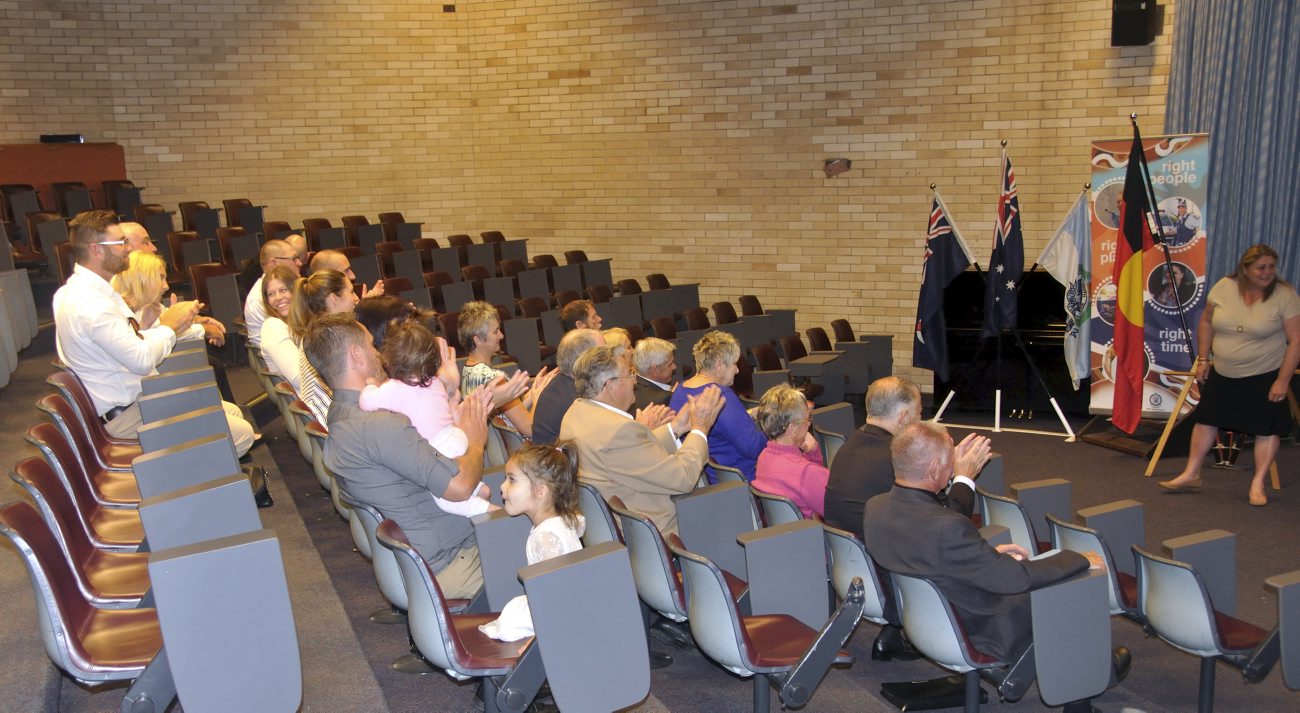
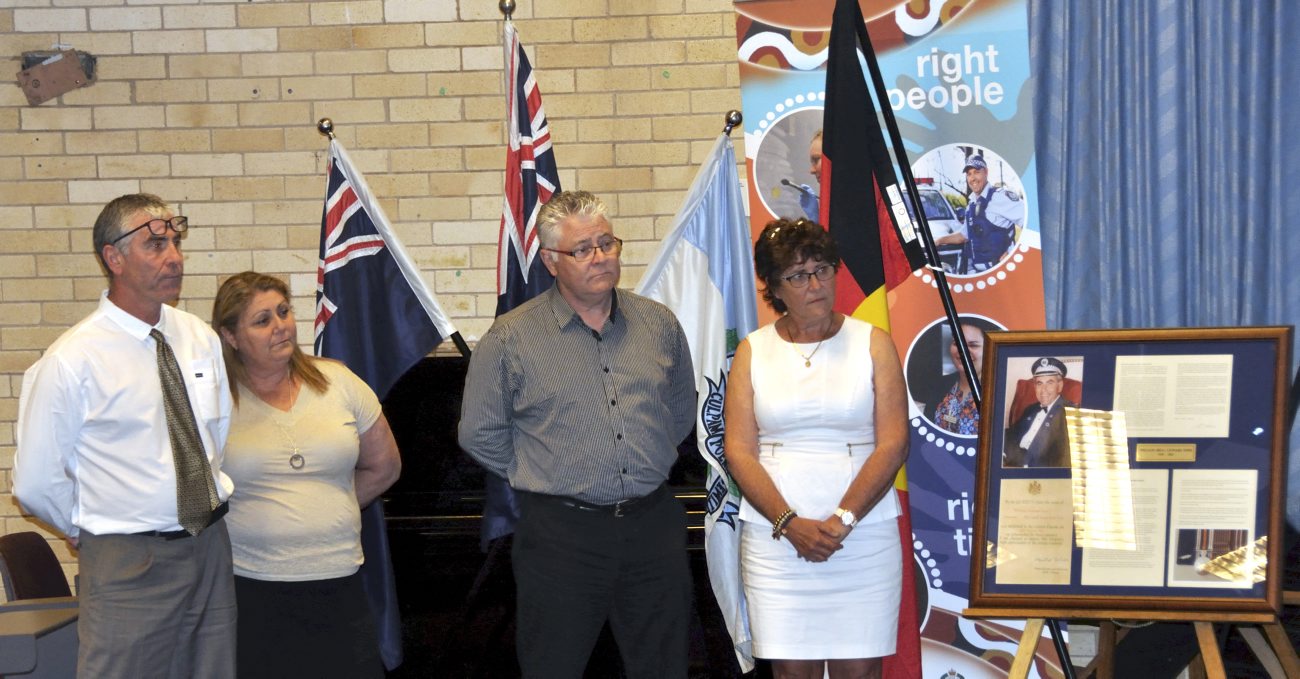
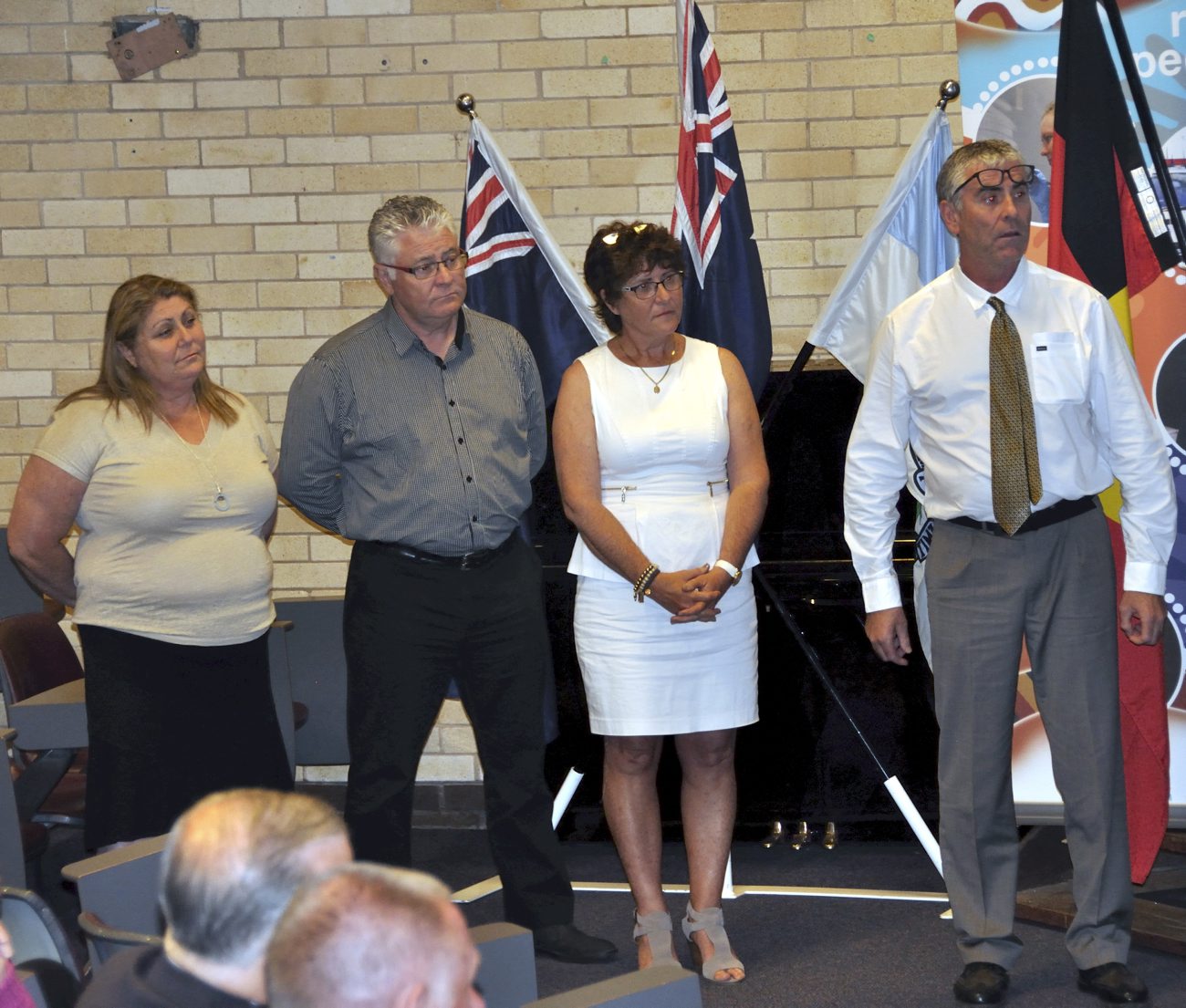
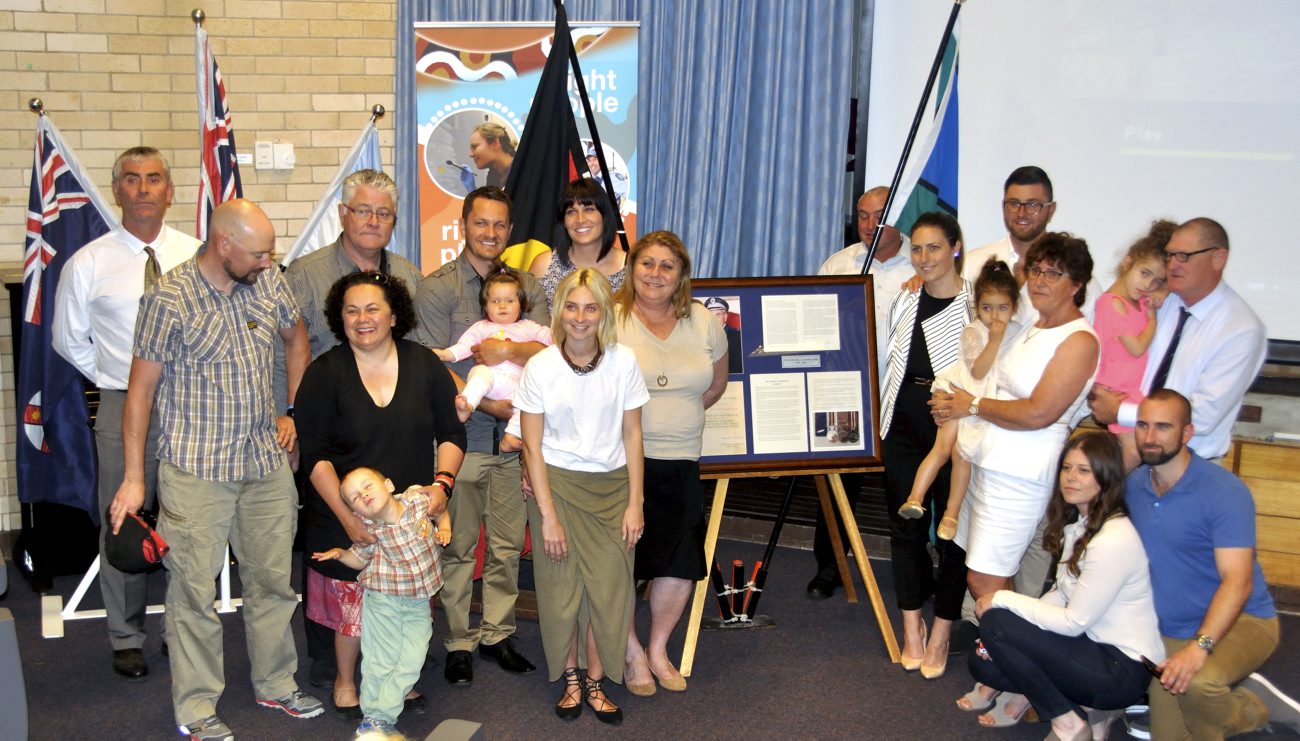
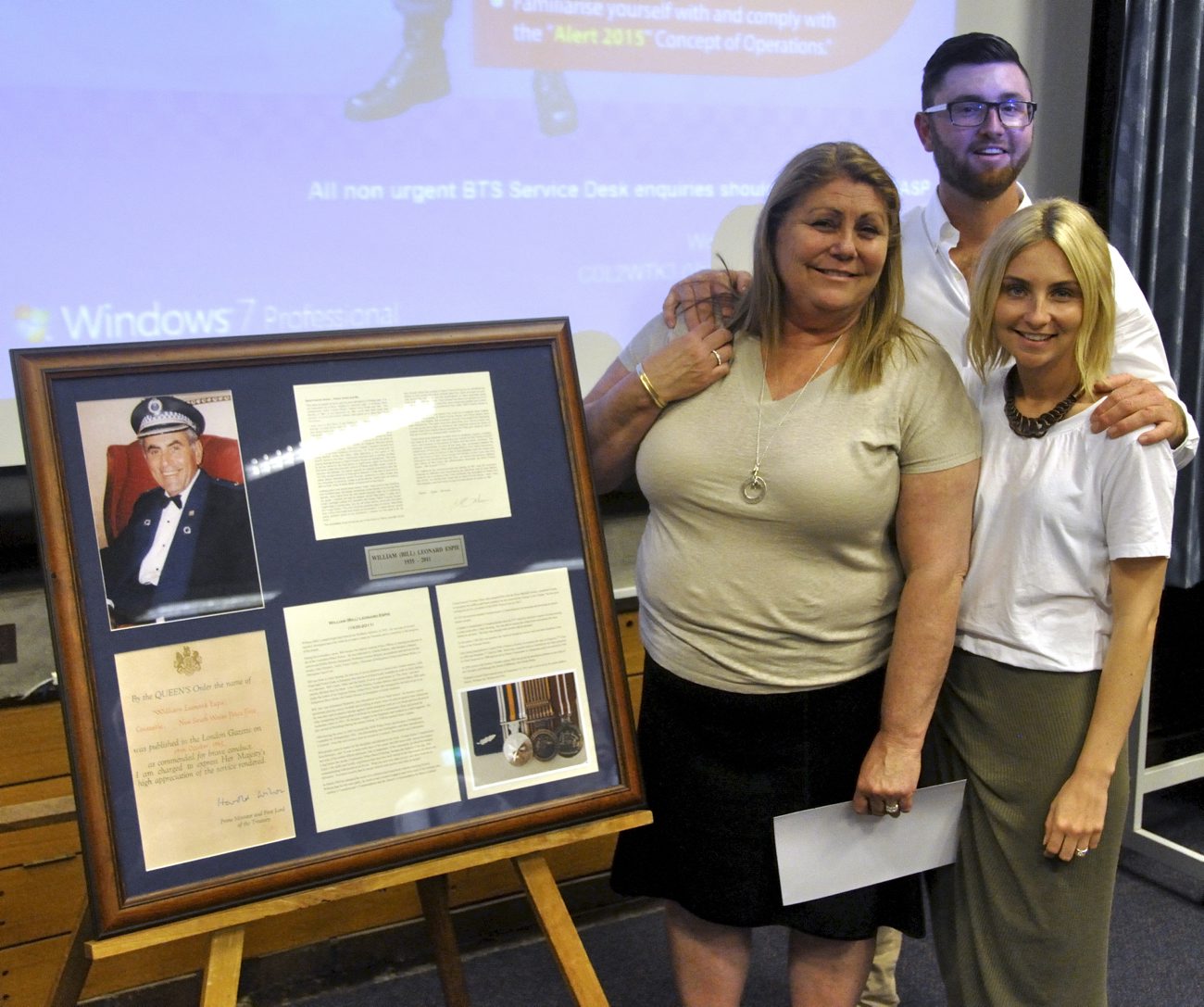
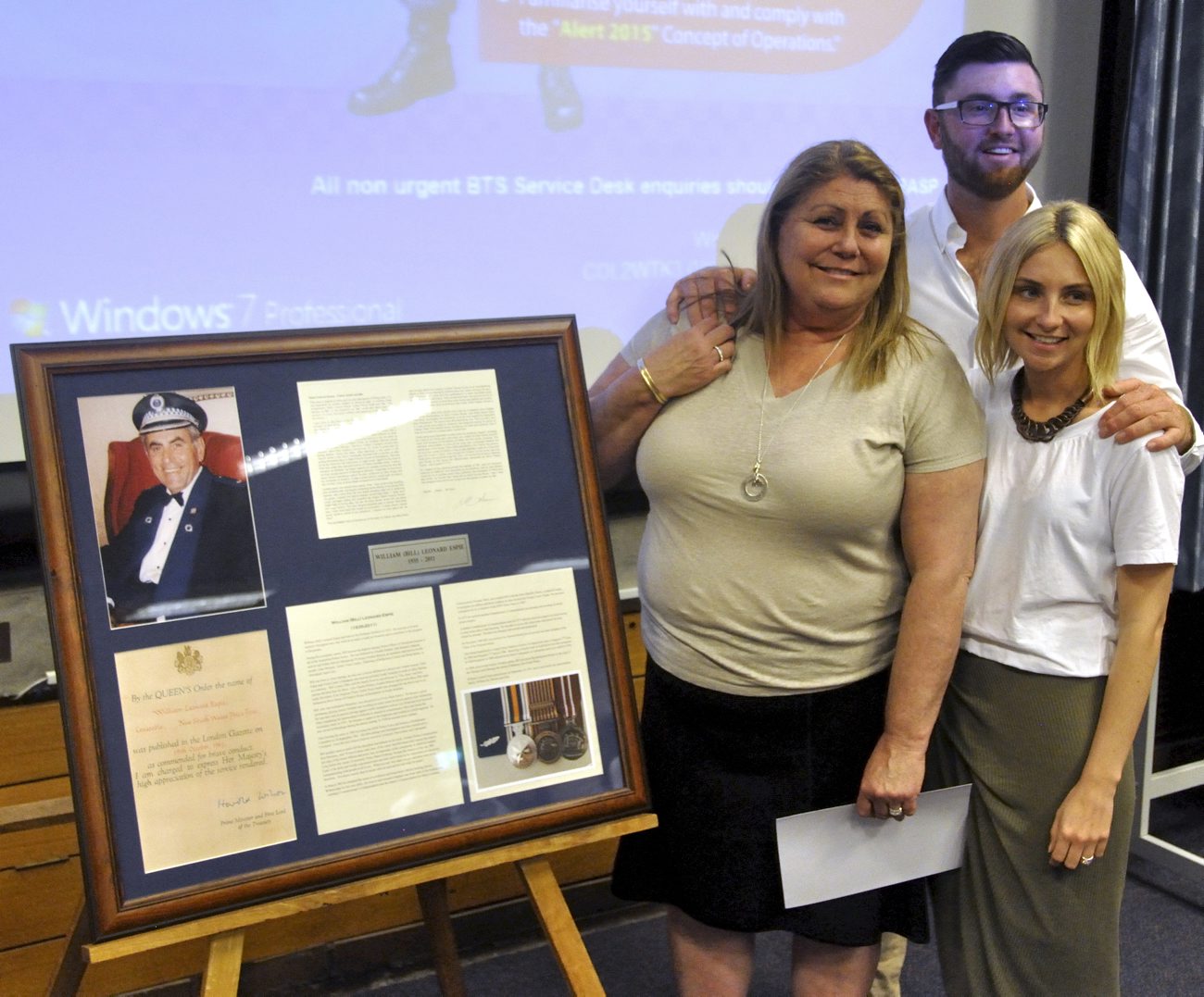
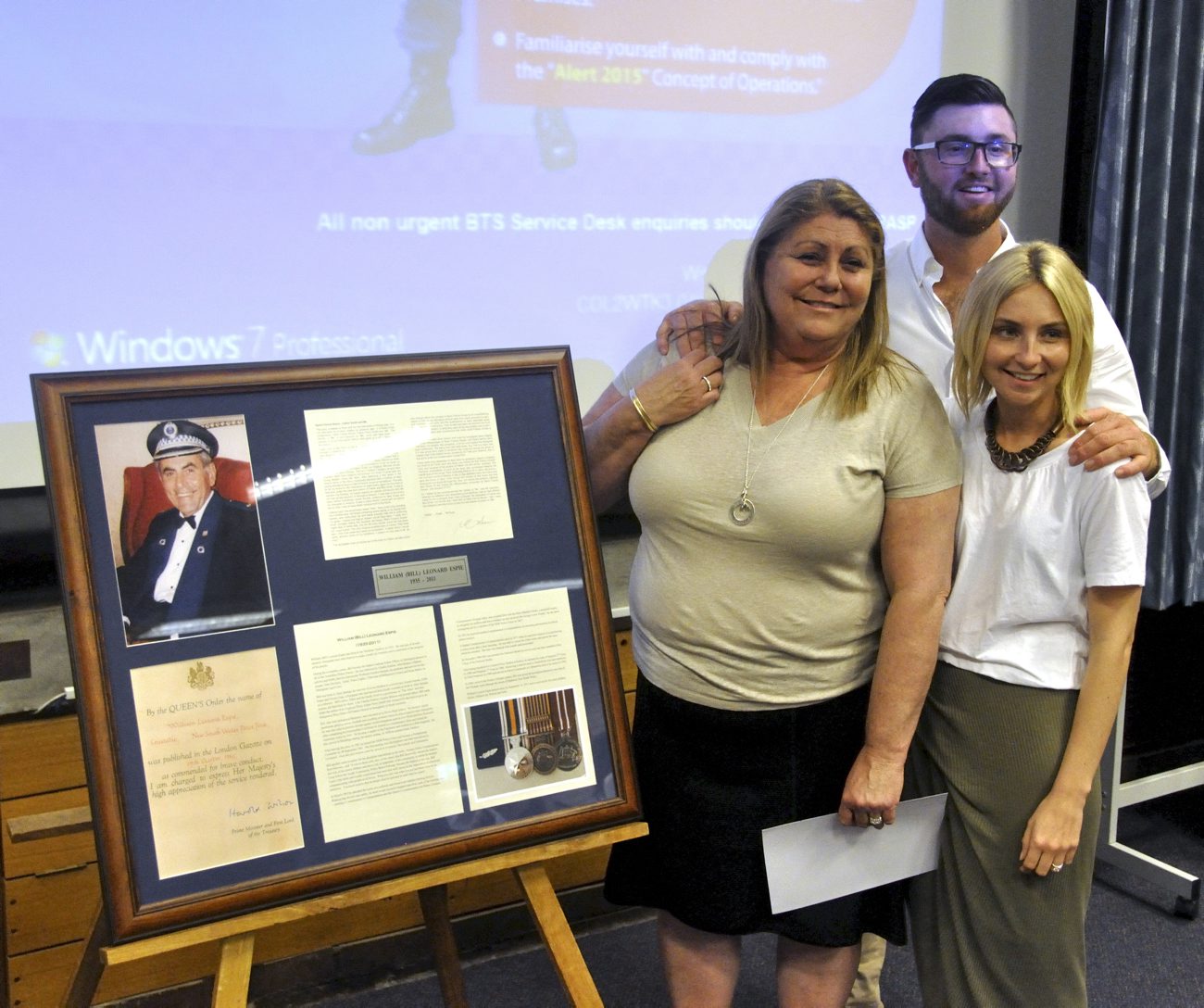
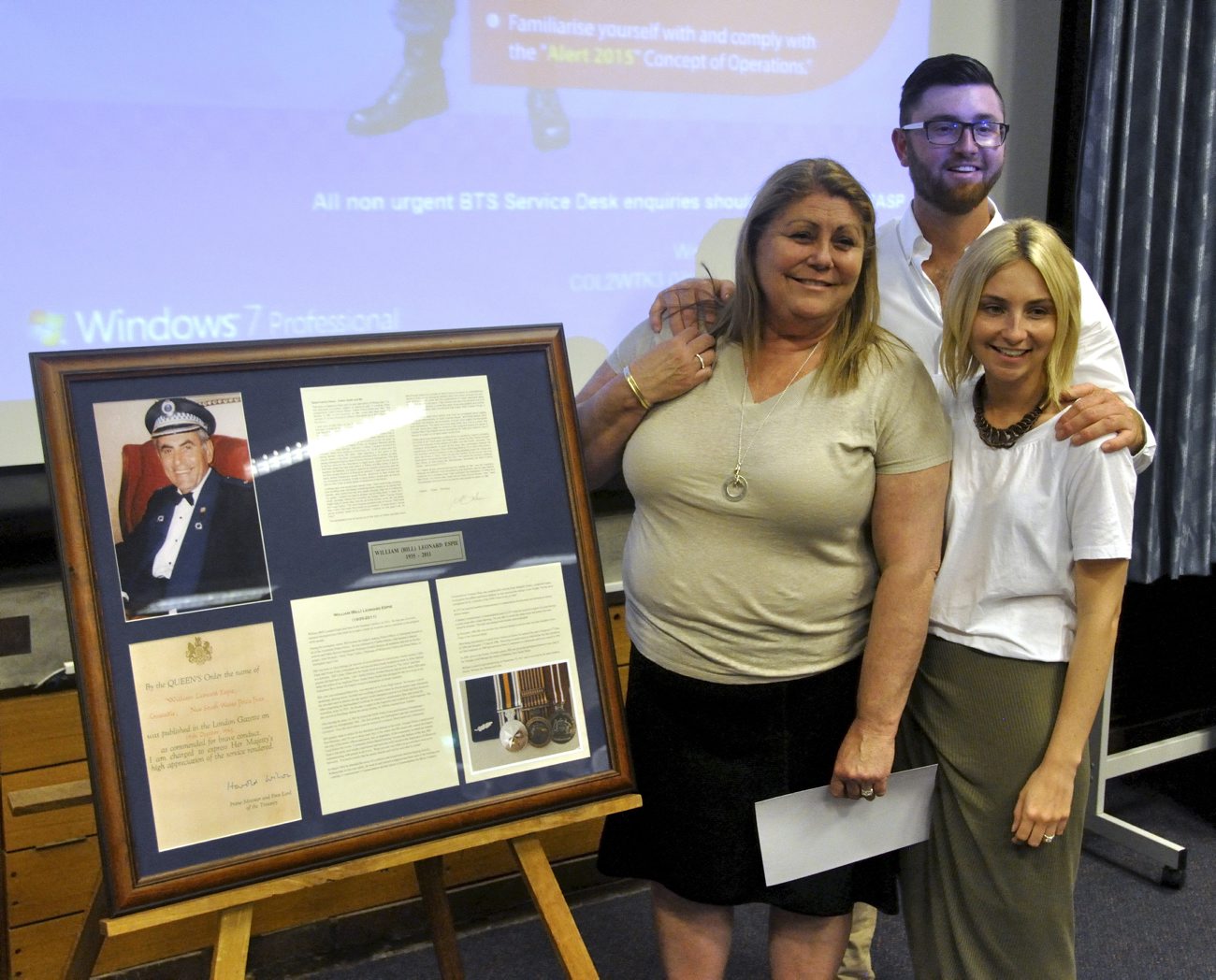
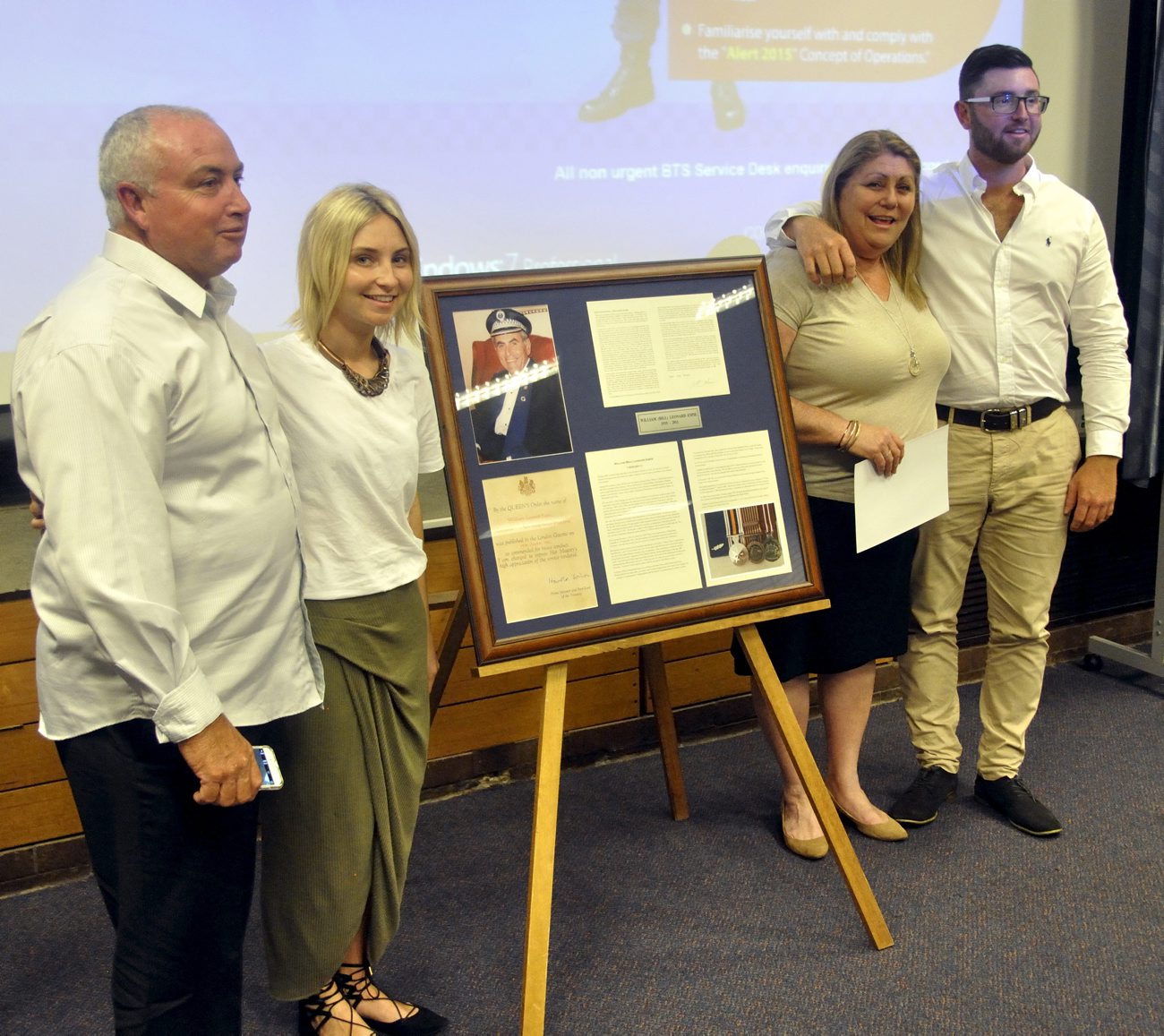
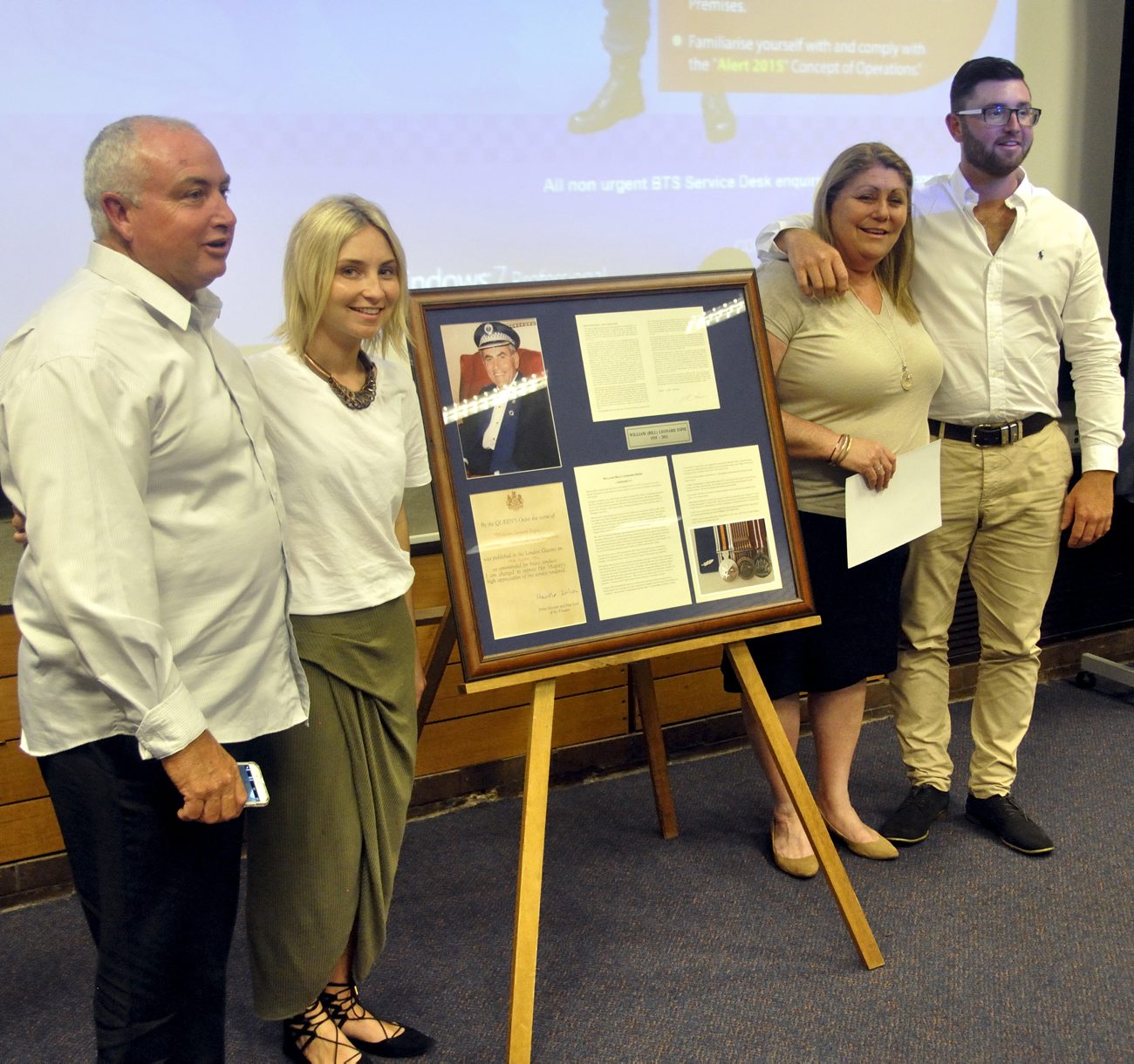
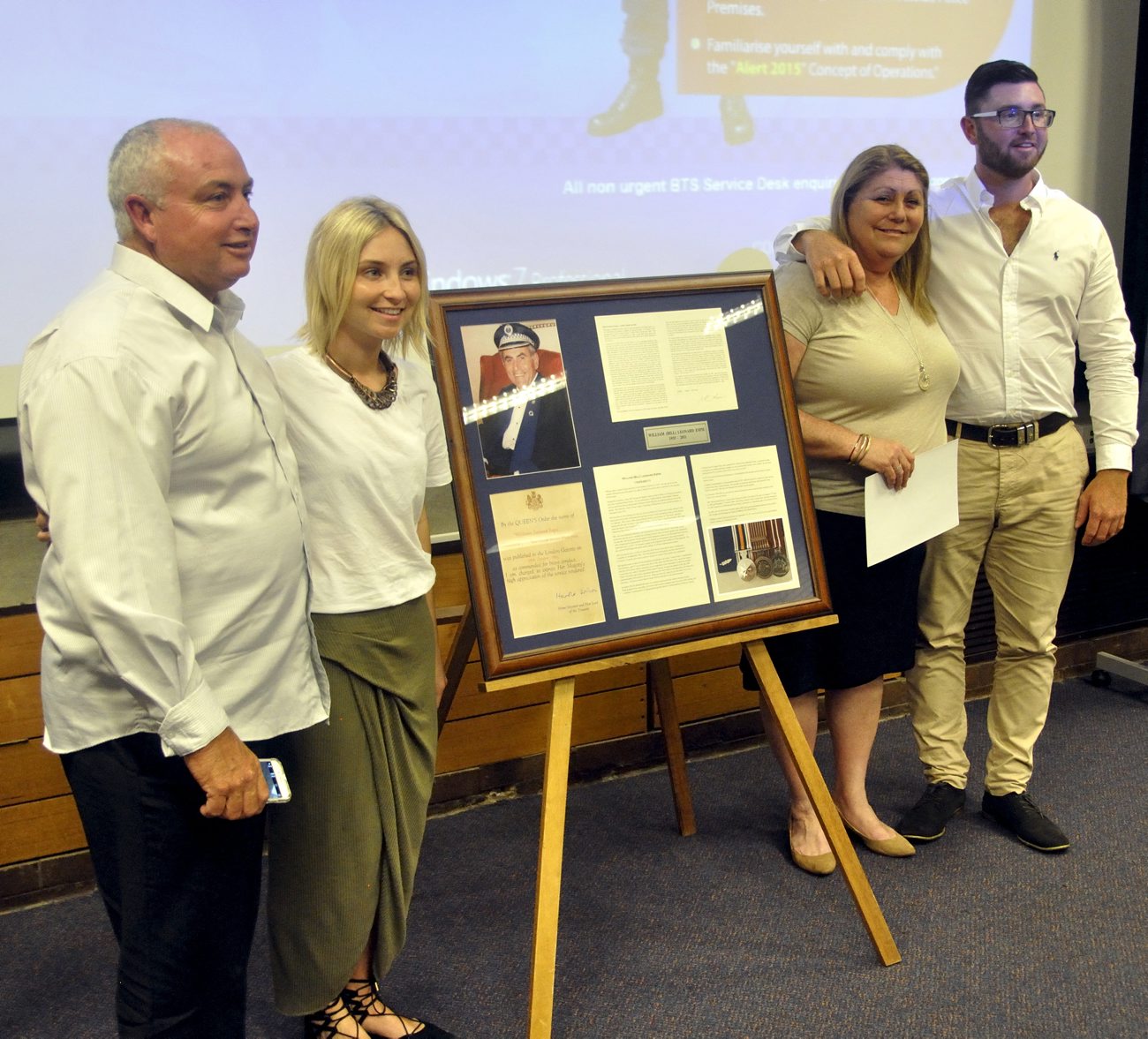
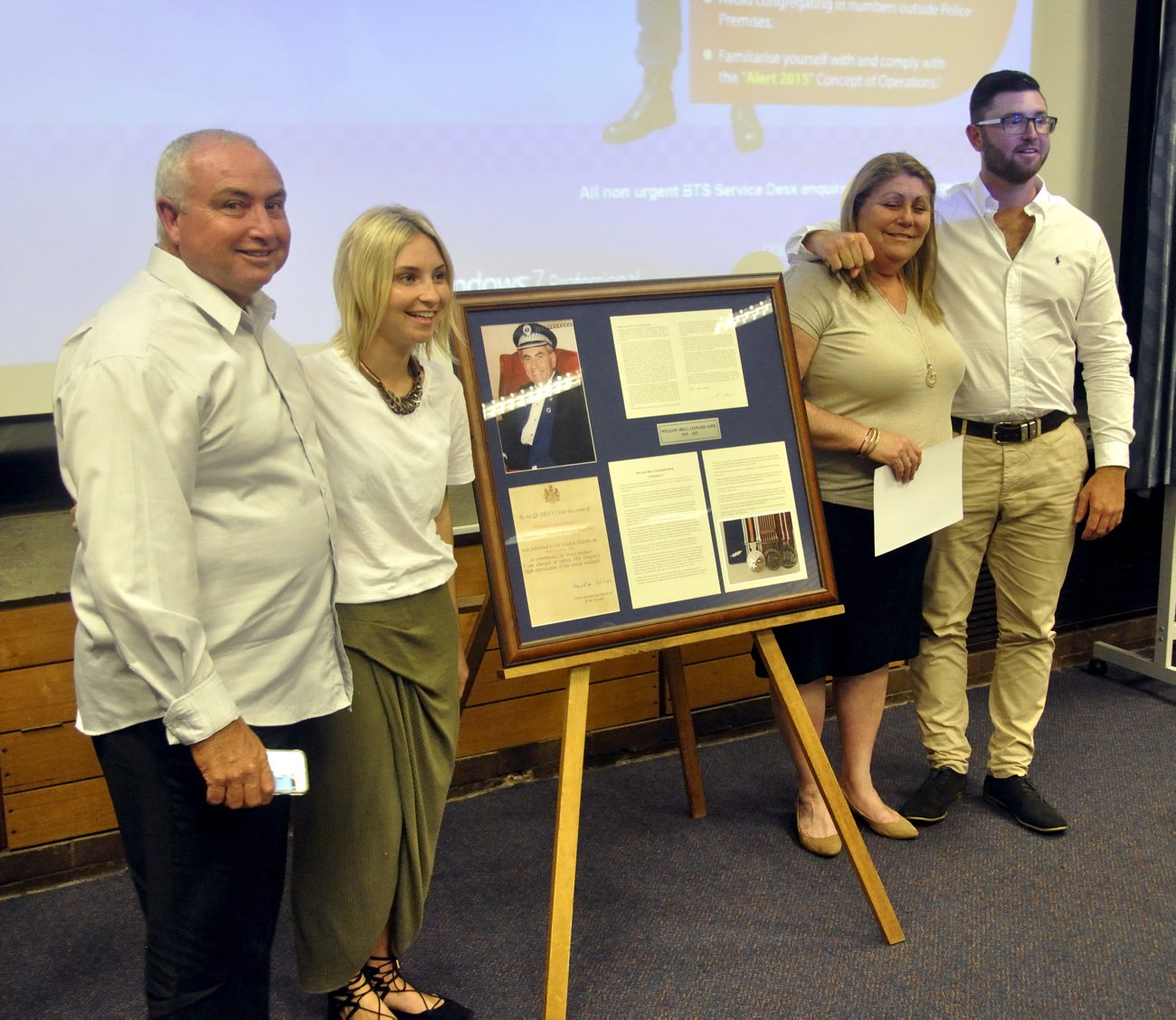
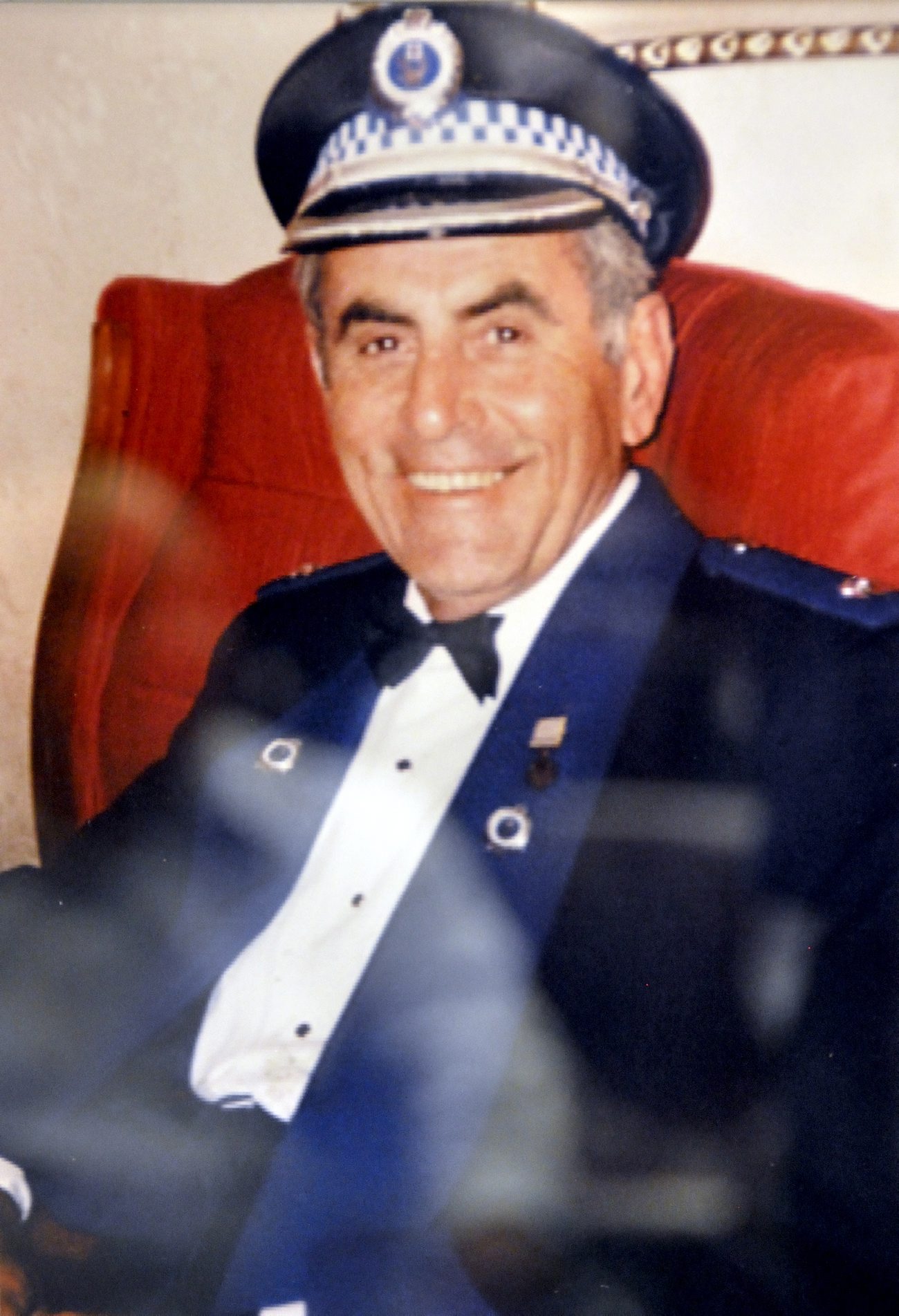
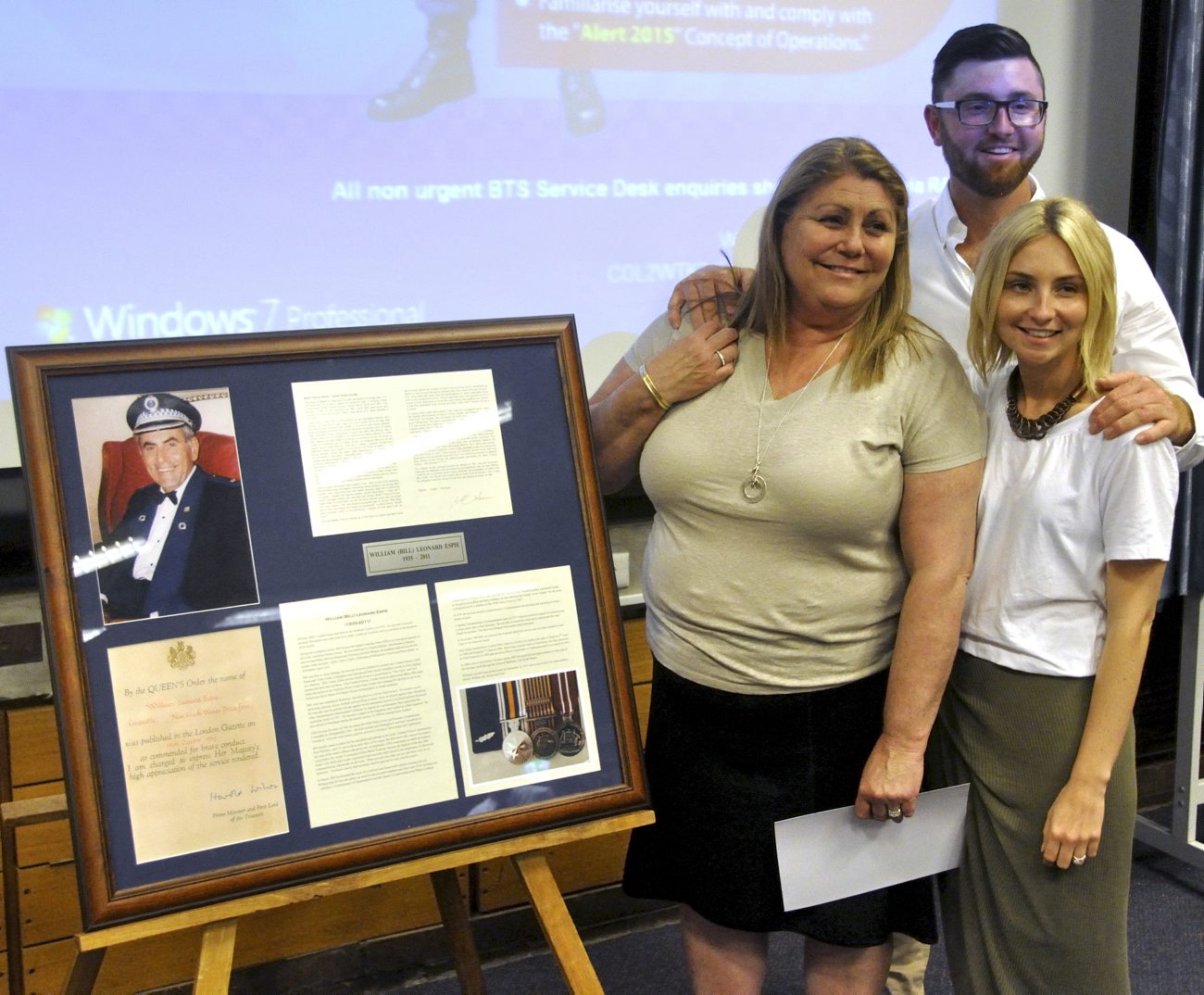
Memorial location 1:  NSW Police Academy, Goulburn

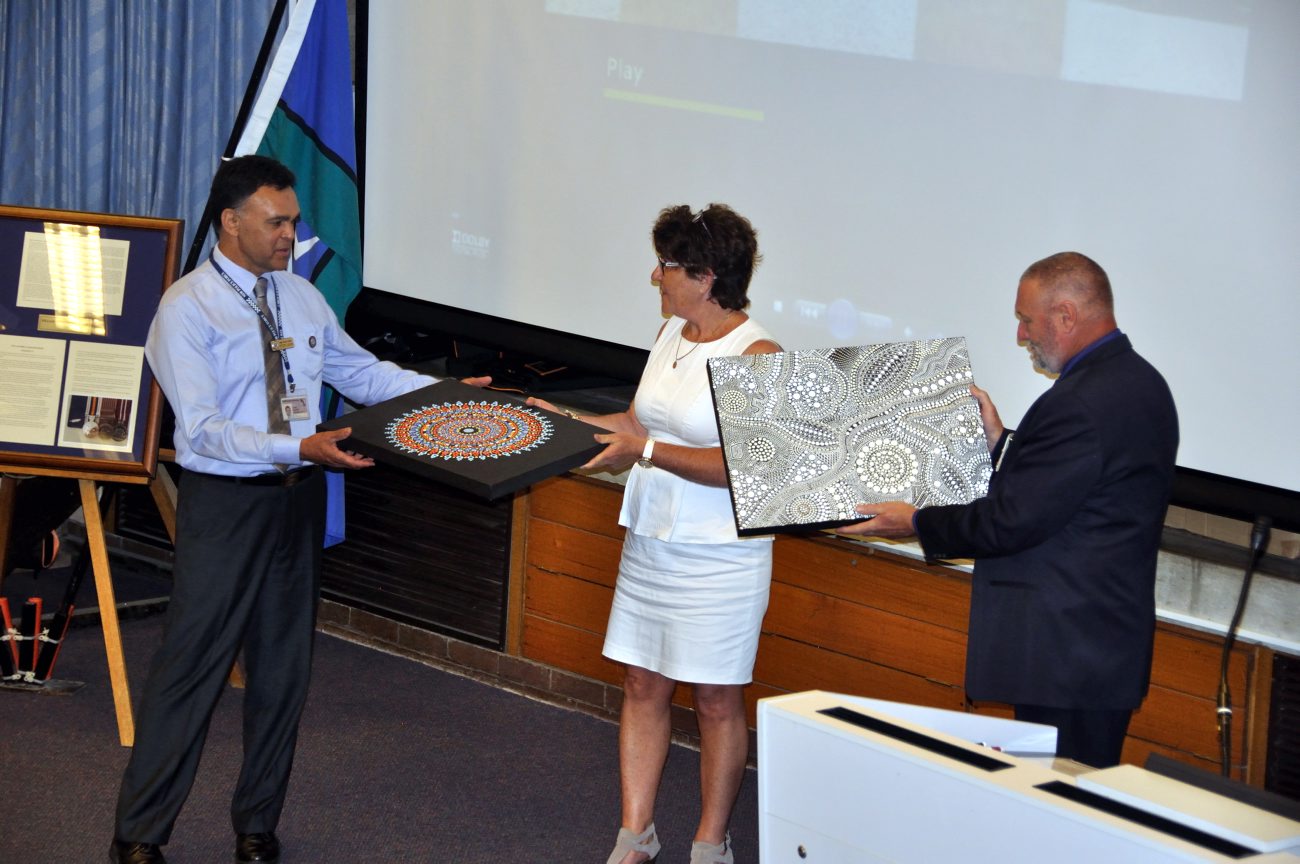
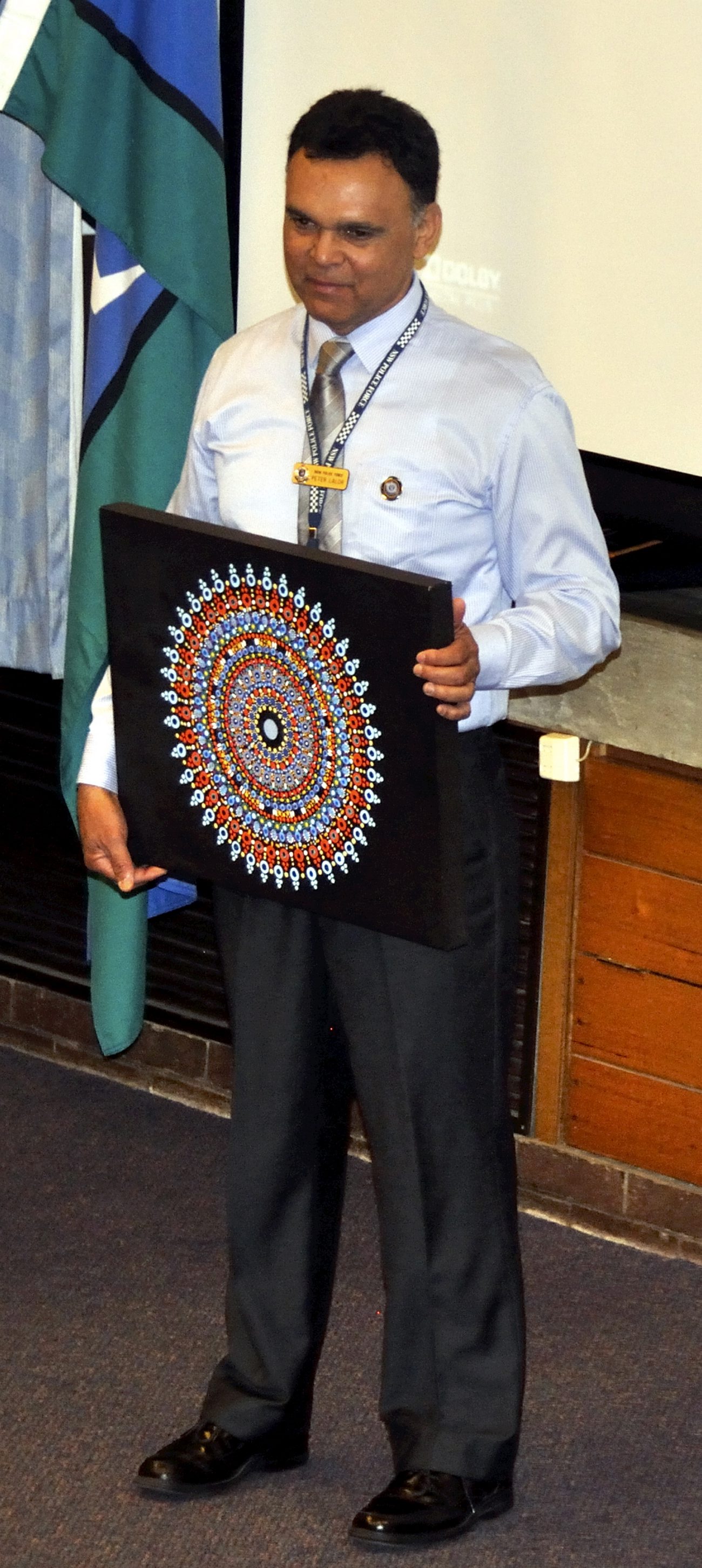
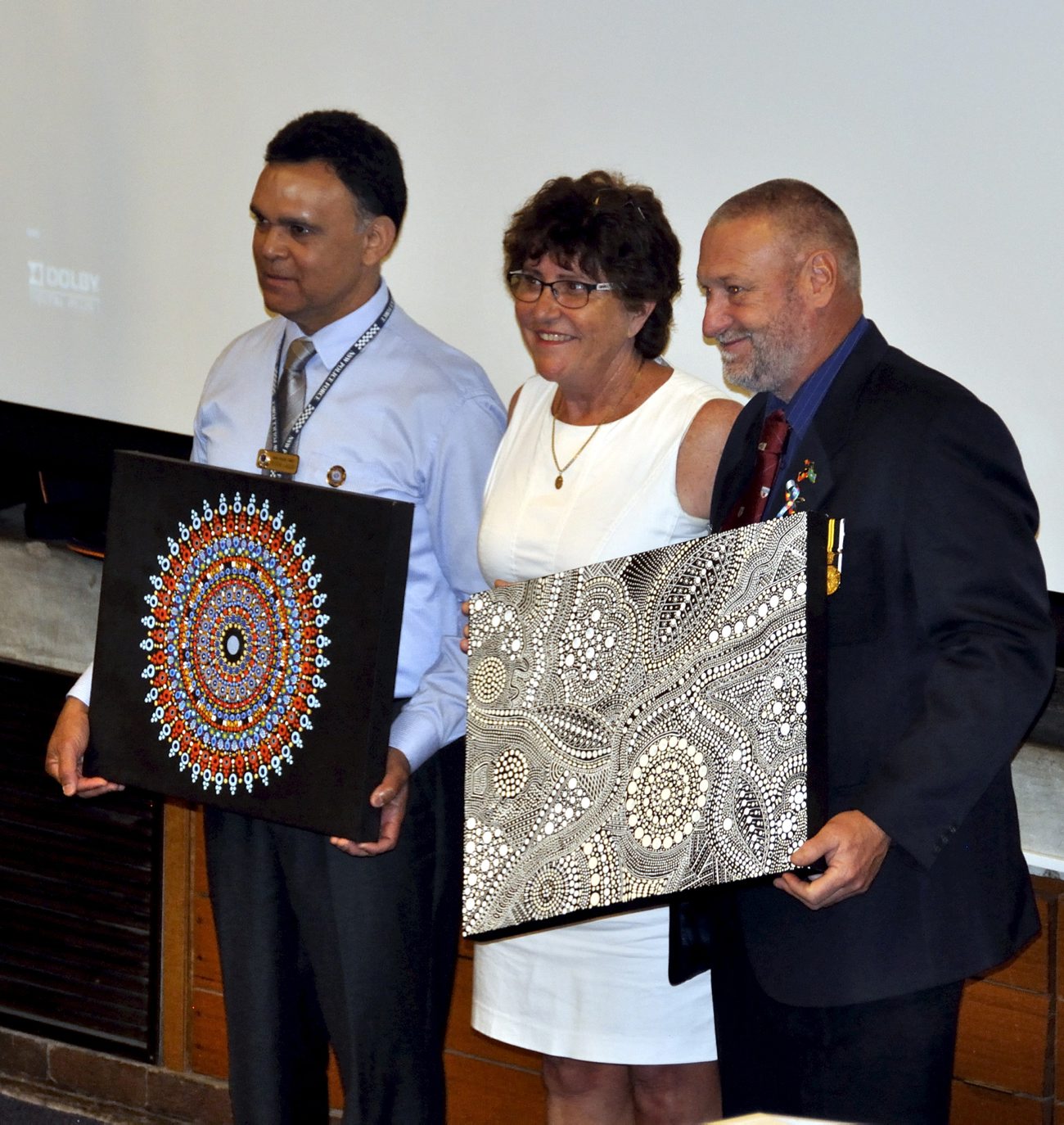
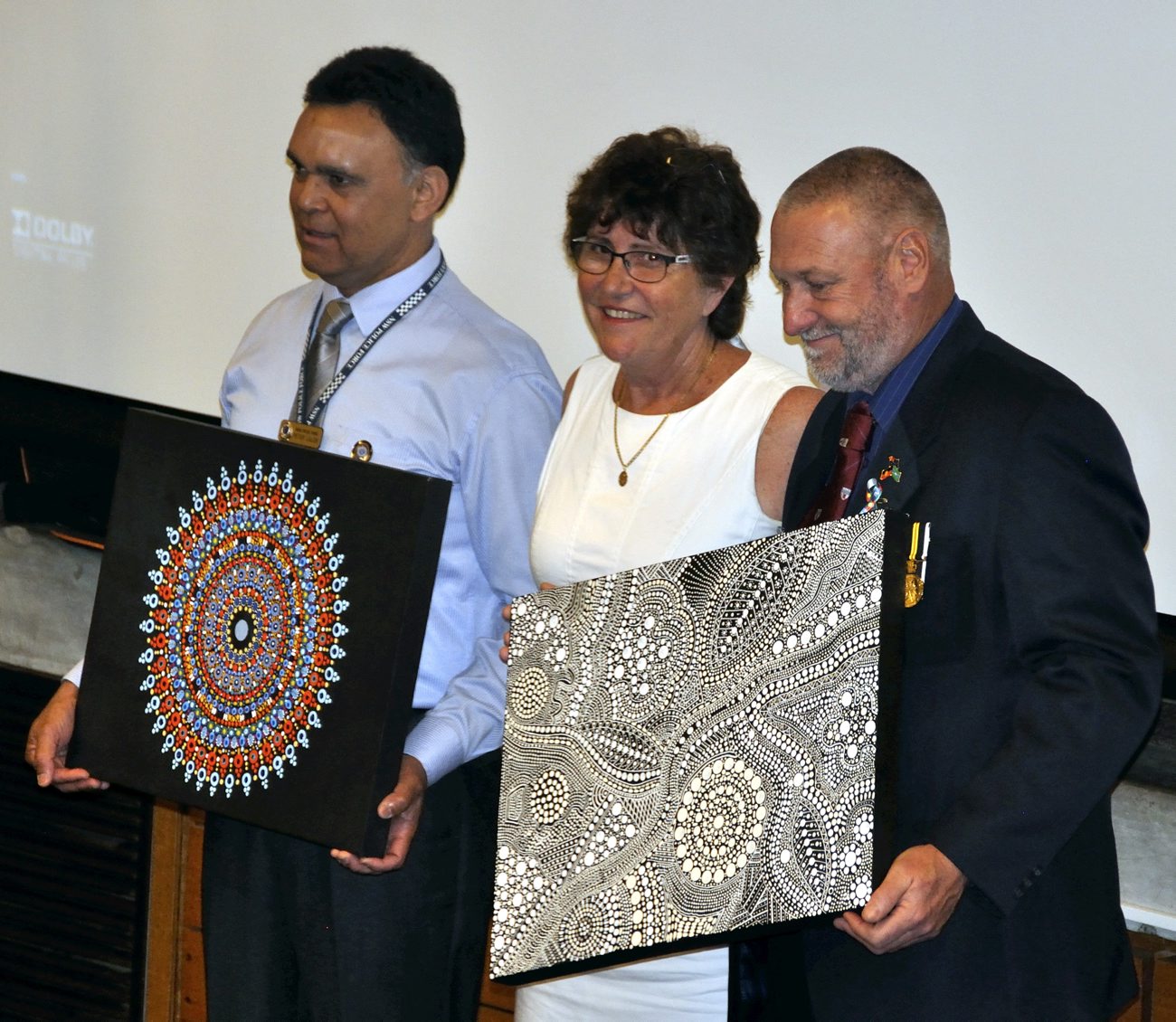
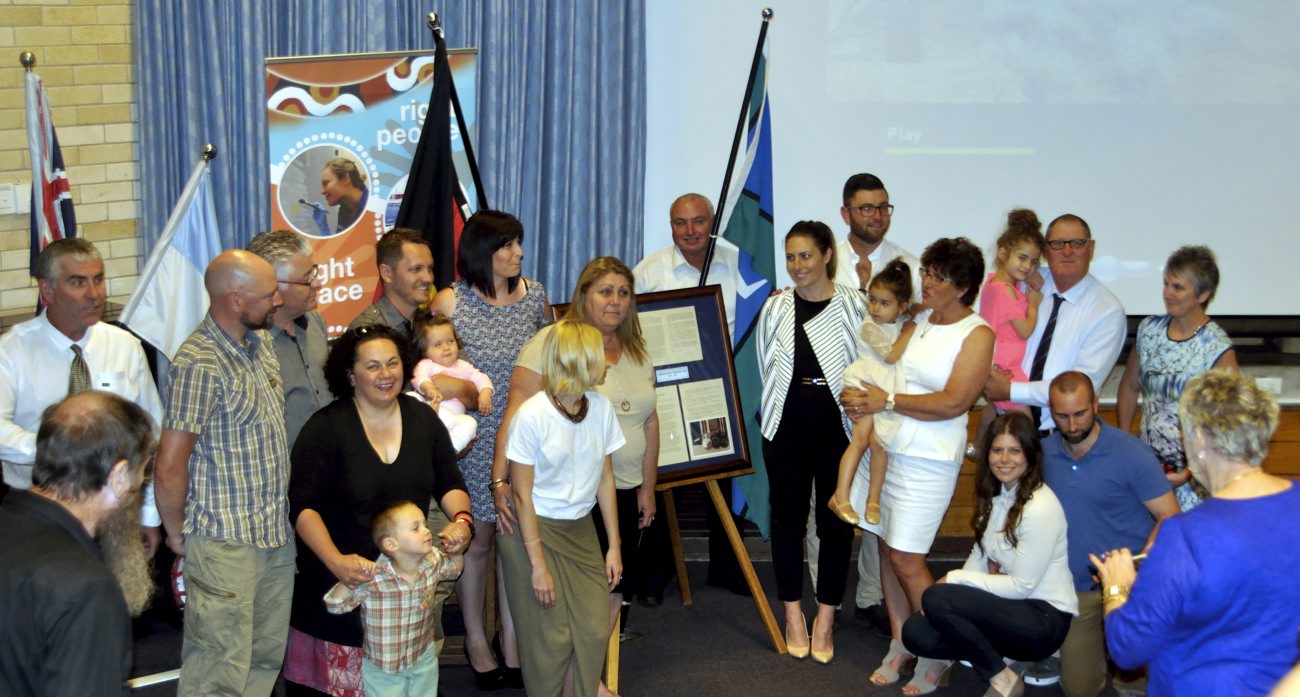
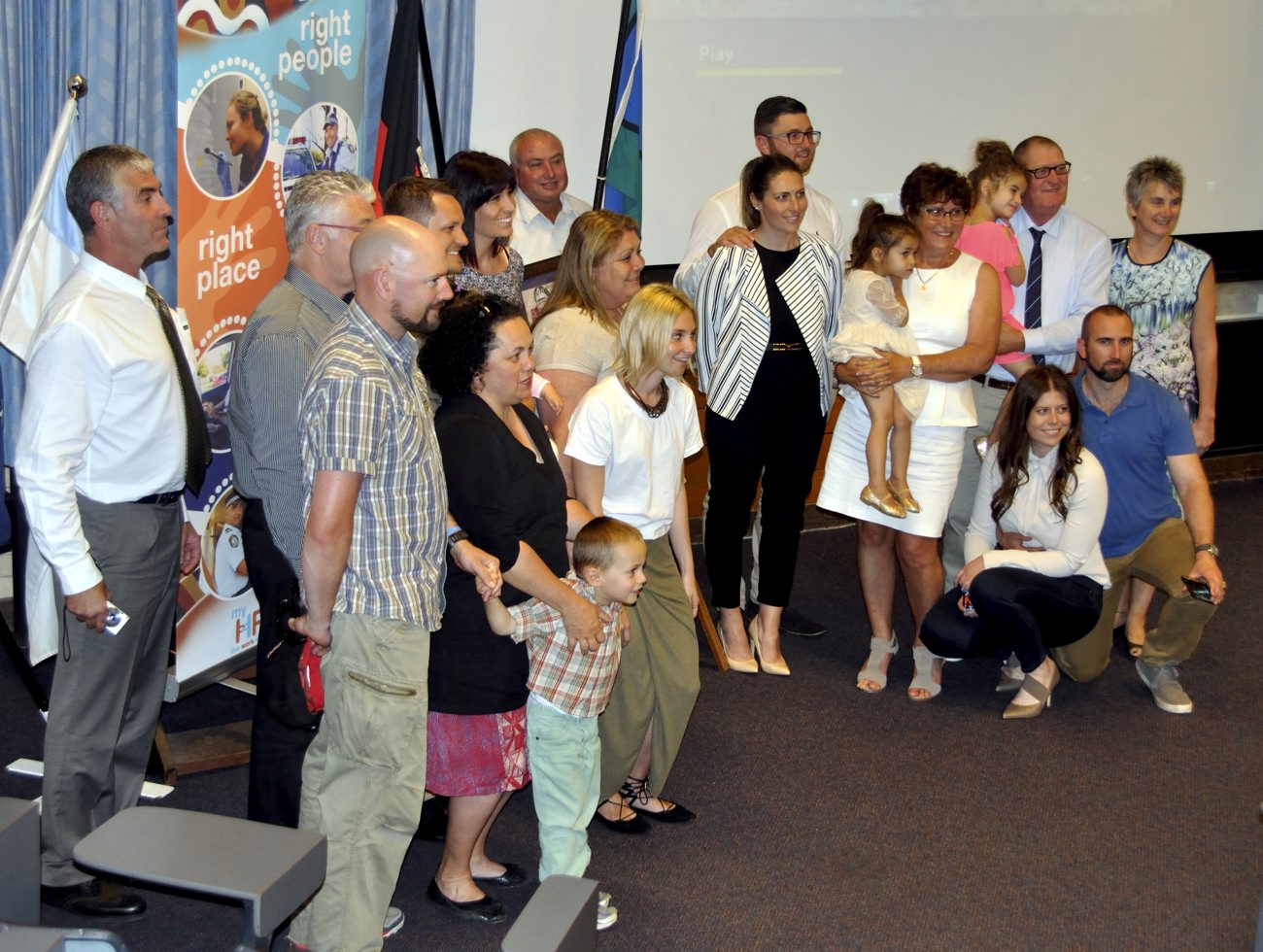
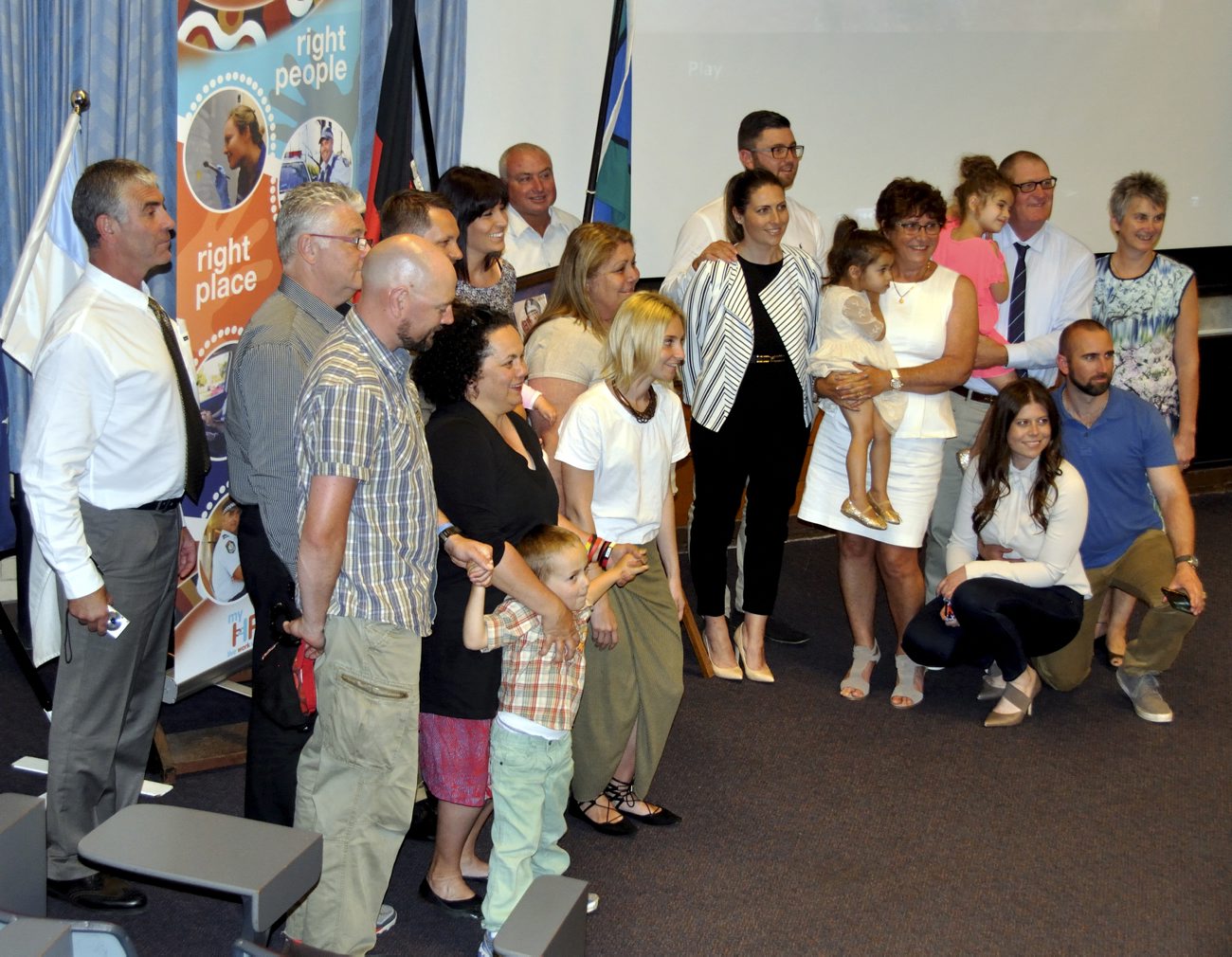
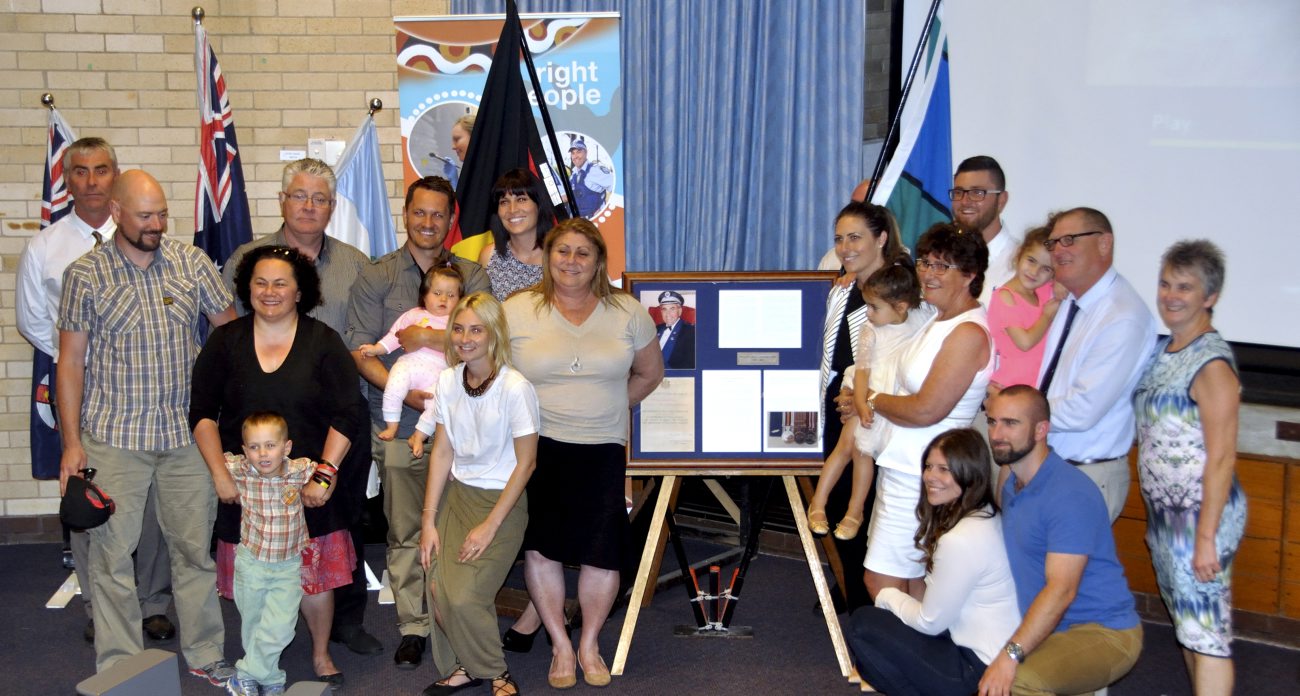
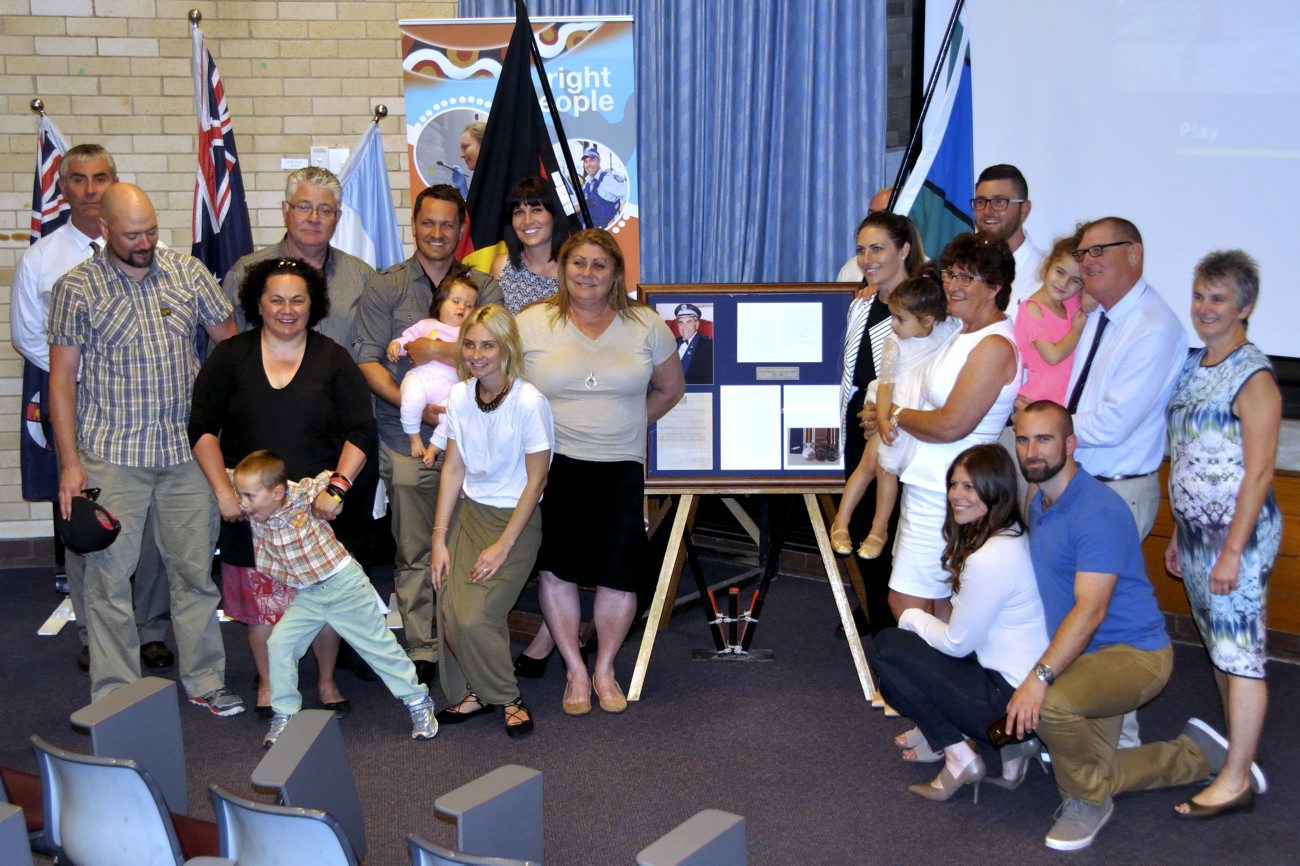
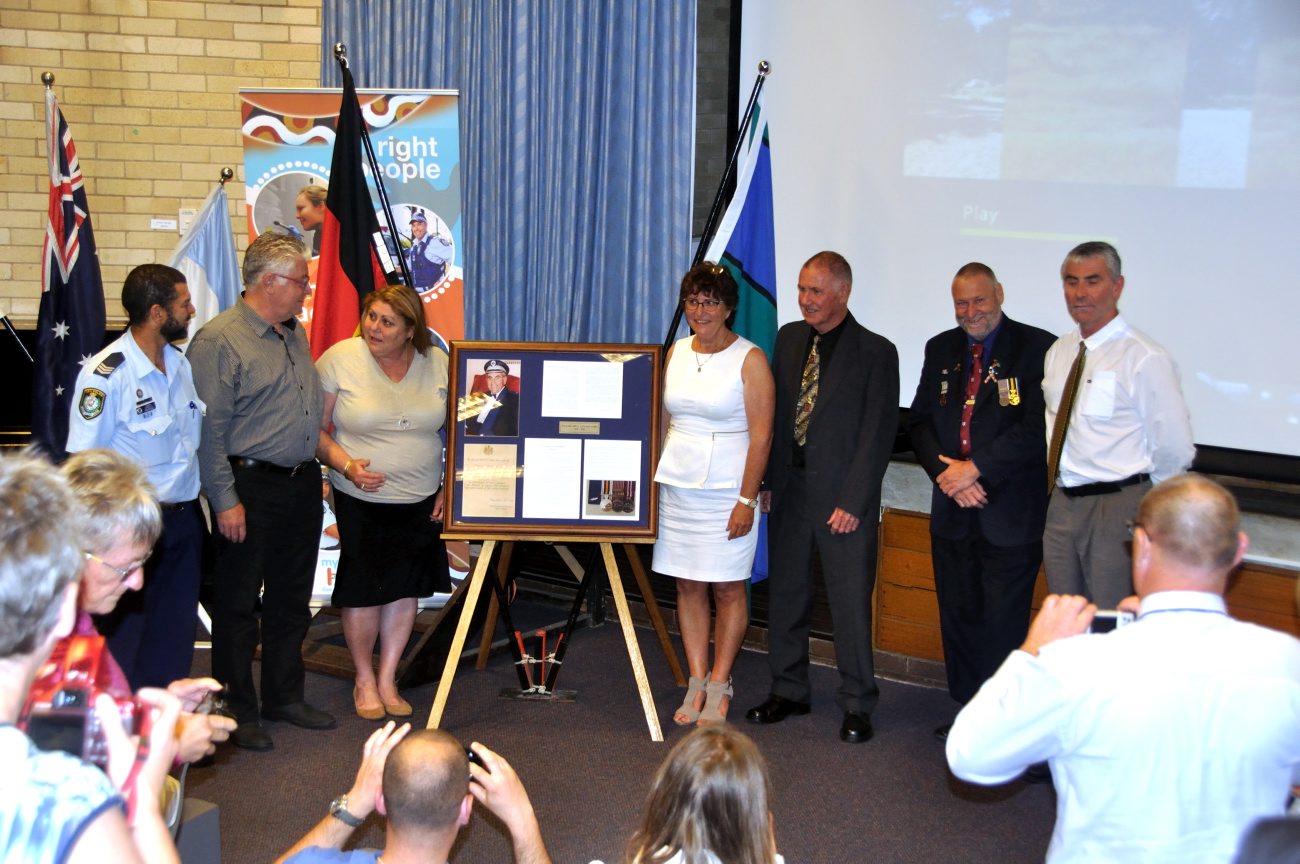
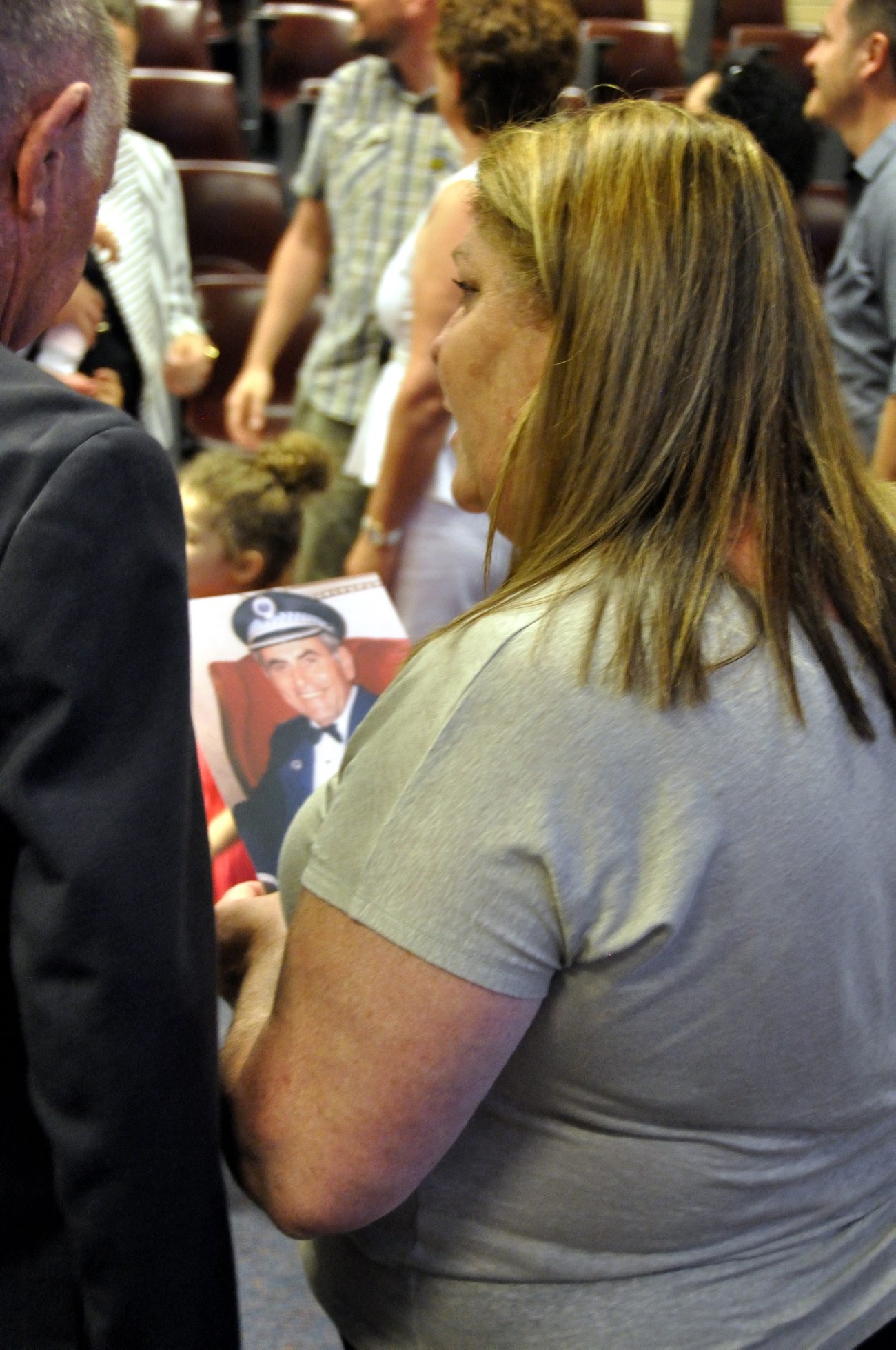
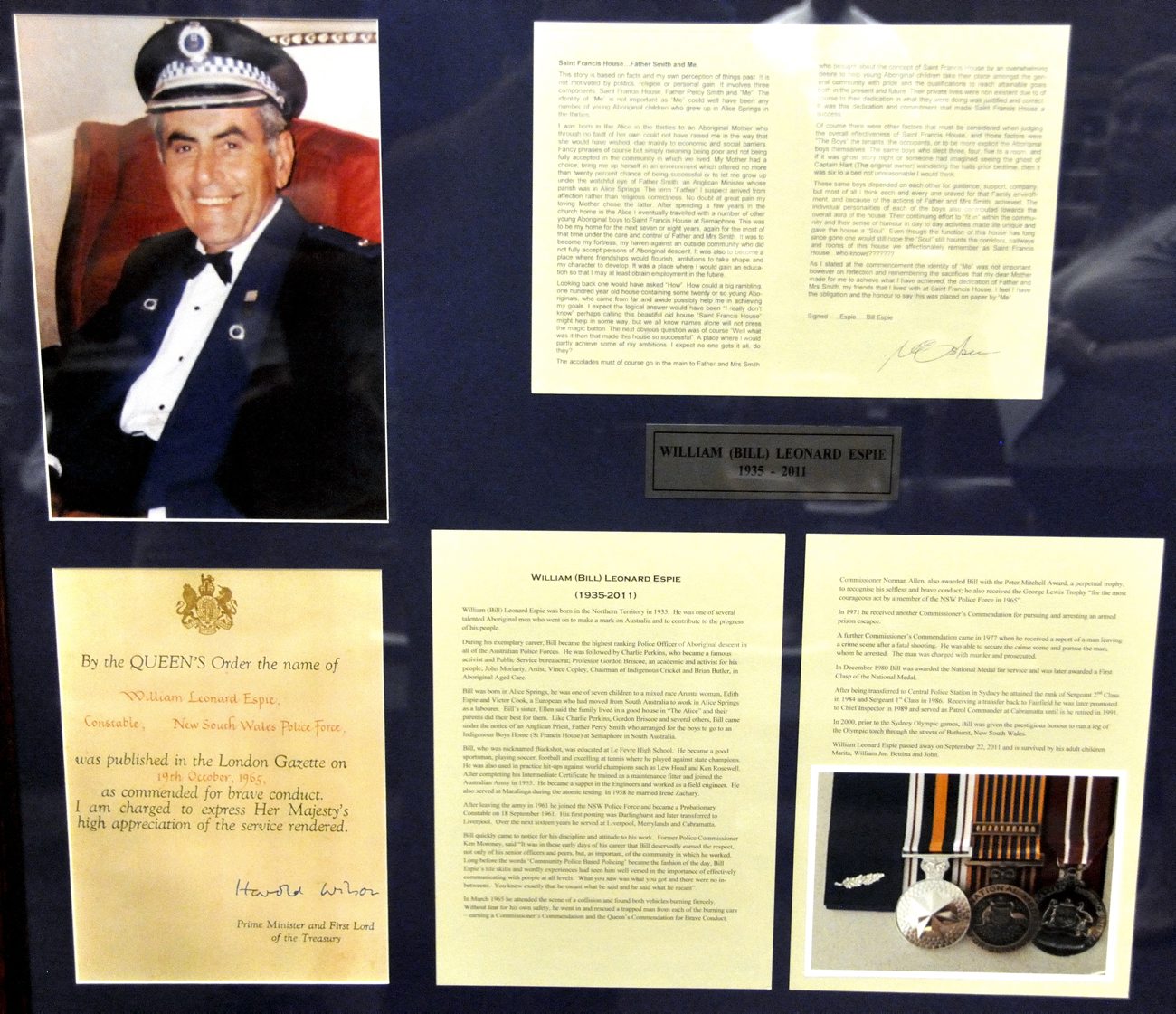
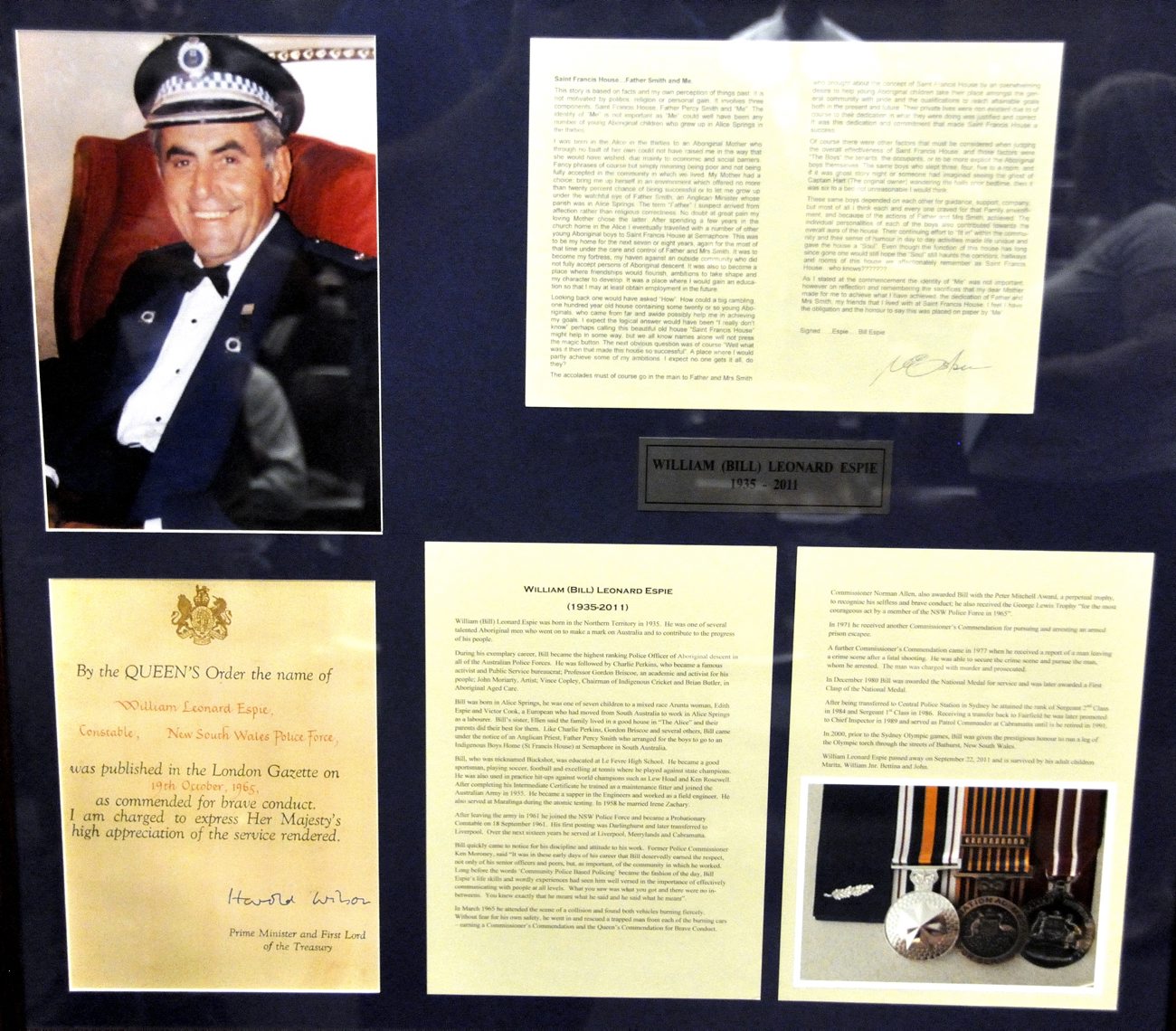
Memorial 1 description:  Framed picture & literature in relation to Bill’s Service

Memorial date:  29 October 2015 @ 1pm


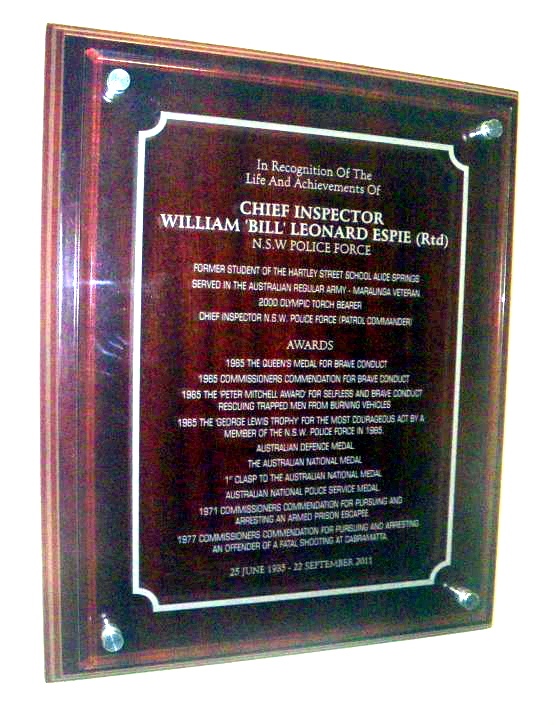
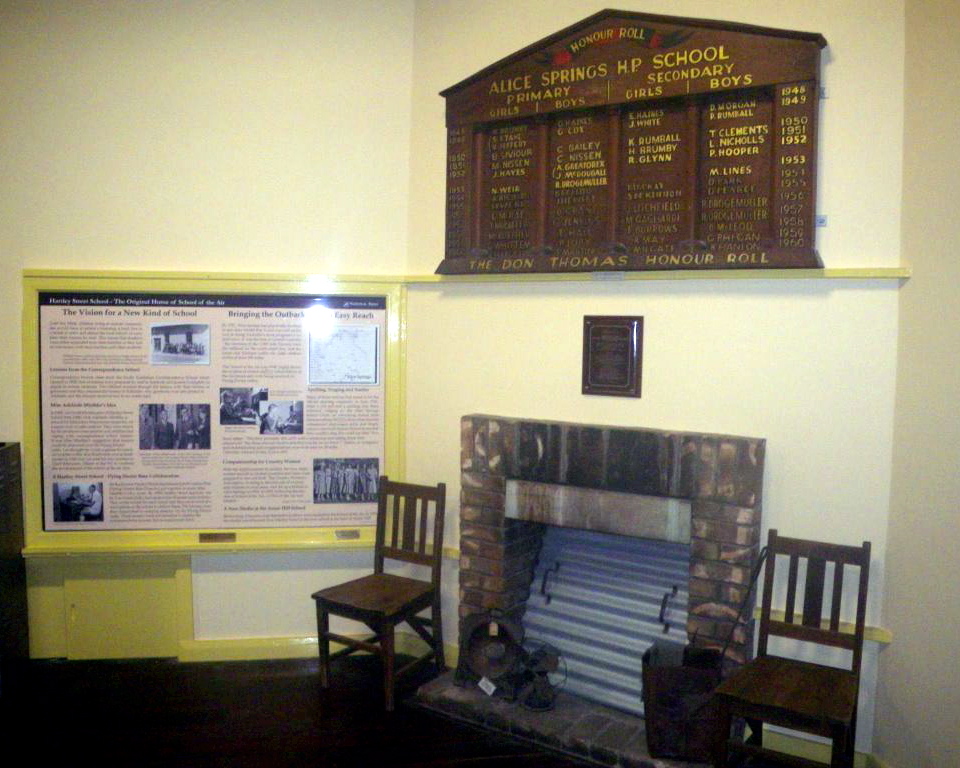
Memorial location 2:  Hartley St School Museum, 39 Hartley St, Alice Springs, N.T.

Memorial 2 description:  Plaque

Memorial date:    29 July 2017

Inscription: In recognition of the life and achievements of Chief Inspector William 'Bill' Leonard ESPIE ( Rtd ) NSW Police Force.Former student of the Hartley Street, School, Alice Springs (N.T.)Served in the Australian Regular Army - Maralinga Veteran2000 Olympic Torch bearerChief Inspector NSW Police Force ( Patrol Commander )AWARDS1965 The Queen's Medal for Brave Conduct1965 Commissioners Commendation for Brave Conduct1965 the Peter Mitchell Award for selfless and Brace Conduct rescuing trapped men from burning vehicles1965 The George Lewis Trophy for the most Courgageious Act by a member of the NSW Police Force in 1965Australian Defence MedalThe Australian National Medal1st Clasp to the Australian National MedalAustralian National Police Service Medal1971 Commissioners Commendation for pursuing and arresting an armed prison escapee1977 Commissioners Commendation for pursuing and arresting an offender of a fatal shooting at Cabramatta25 June 1935 - 22 September 2011Hanging on the wall beneath the Hartley St School Museum Honour Board, Alice Springs, N.T.

Bill Espie Memorial

BILL is NOT mentioned on the Police Wall of Remembrance * NOT JOB RELATED


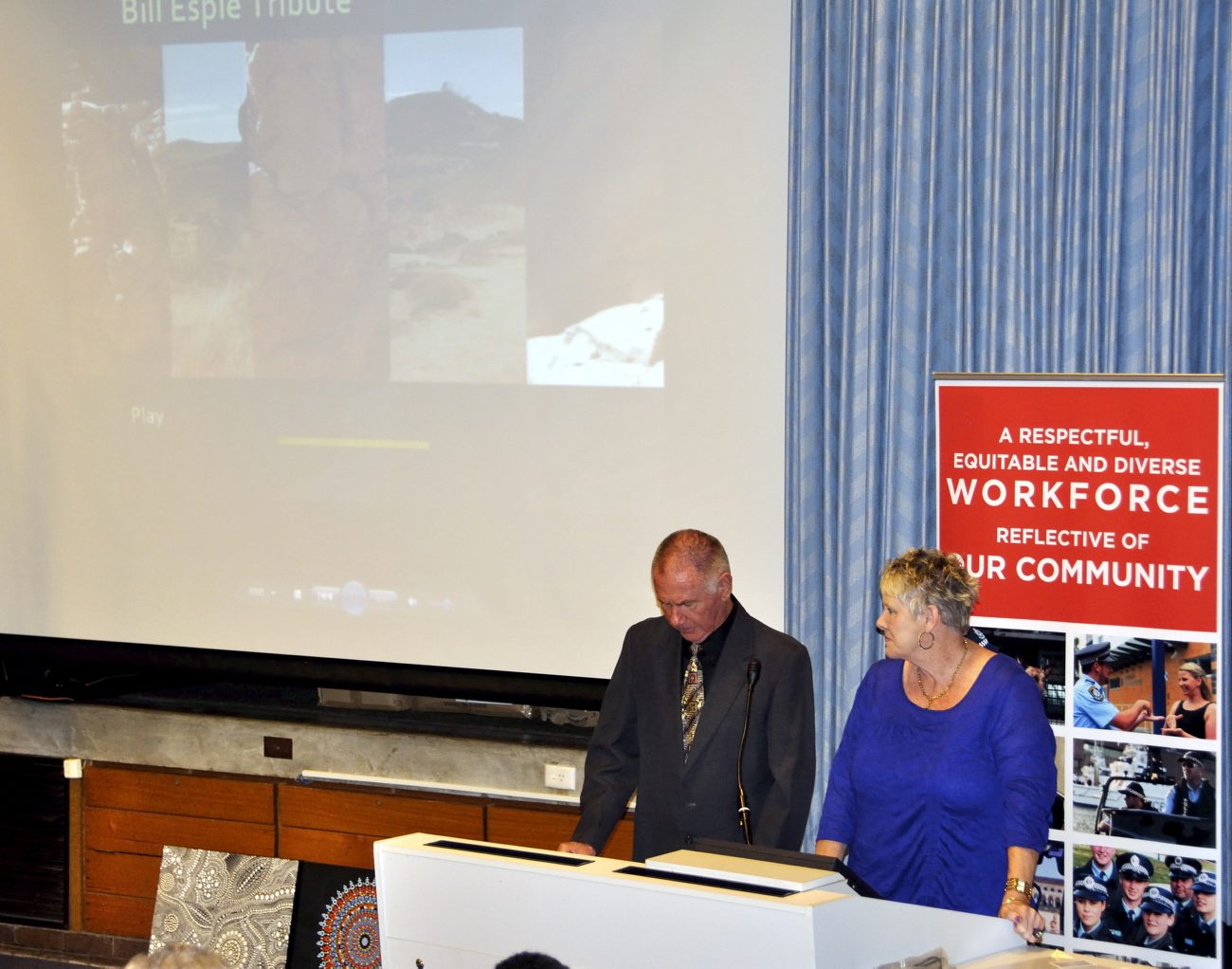
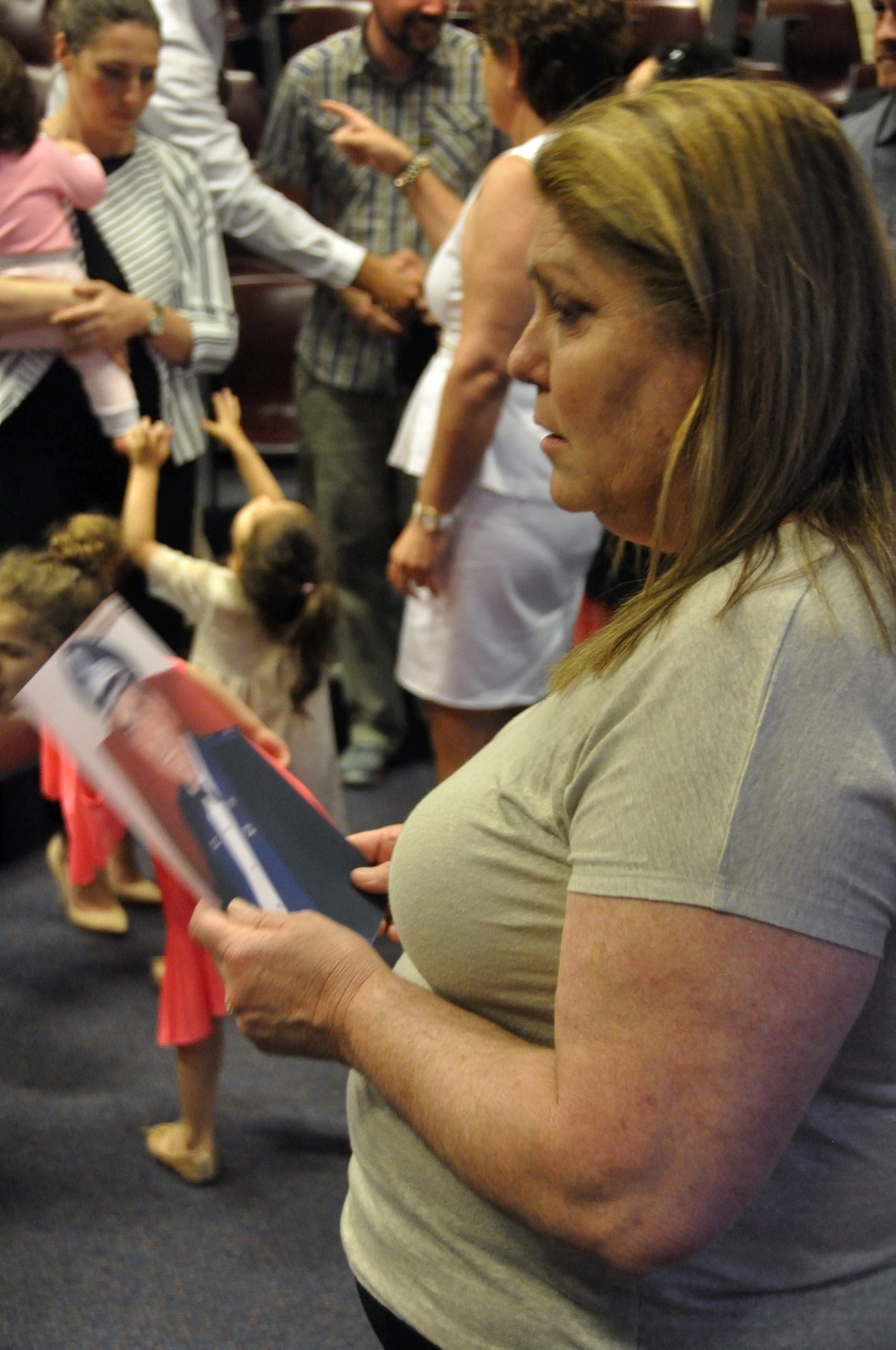
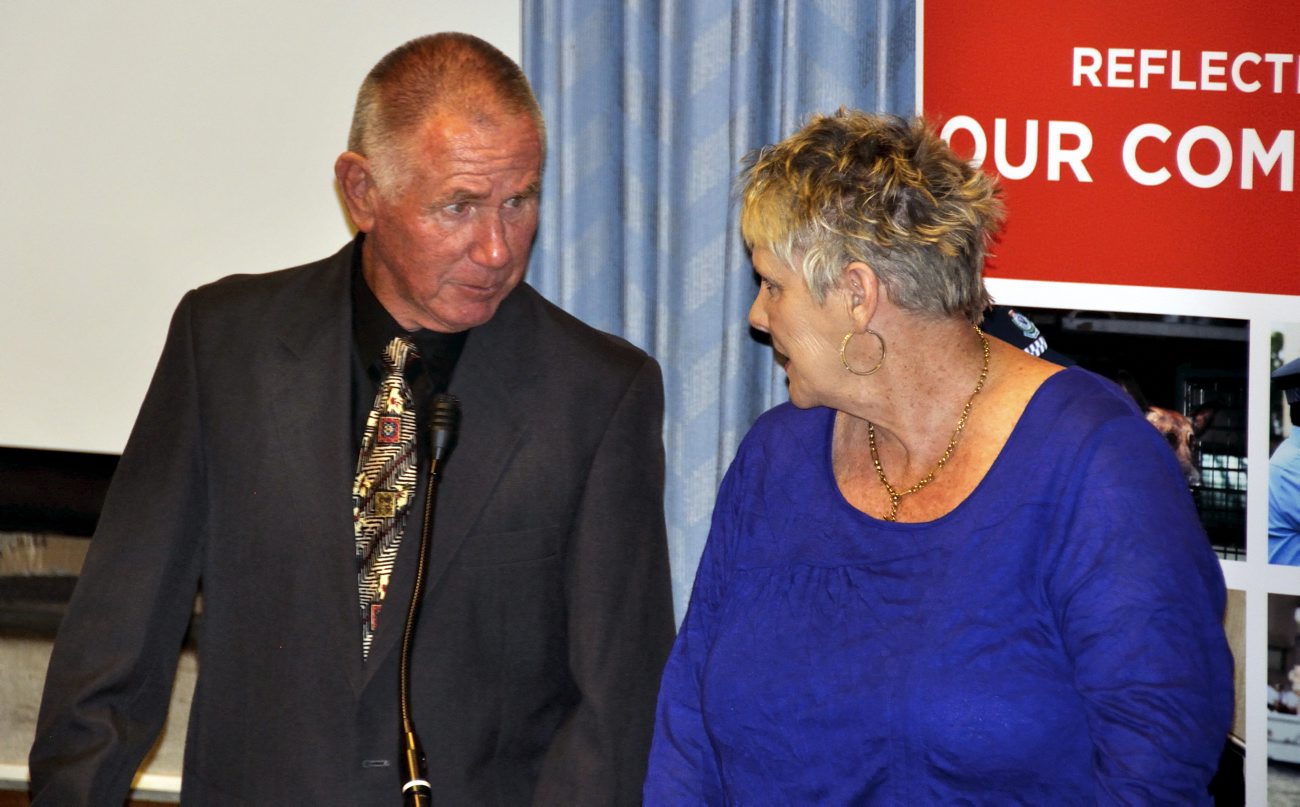
Bill Espie reading his Queen's Commendation for Brave Conduct.
Bill Espie reading his Queen’s Commendation for Brave Conduct.


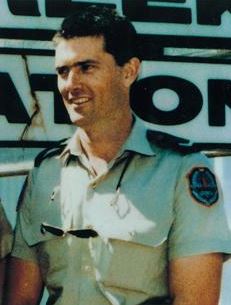
William Leonard ESPIE aka  Bill, 'Buckshot', 'The Wasp'


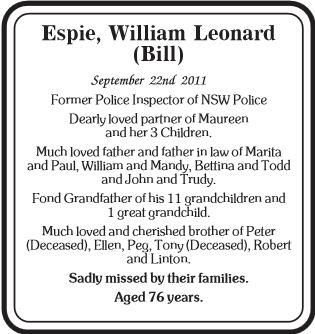
William Leonard ESPIE - Article - death notice

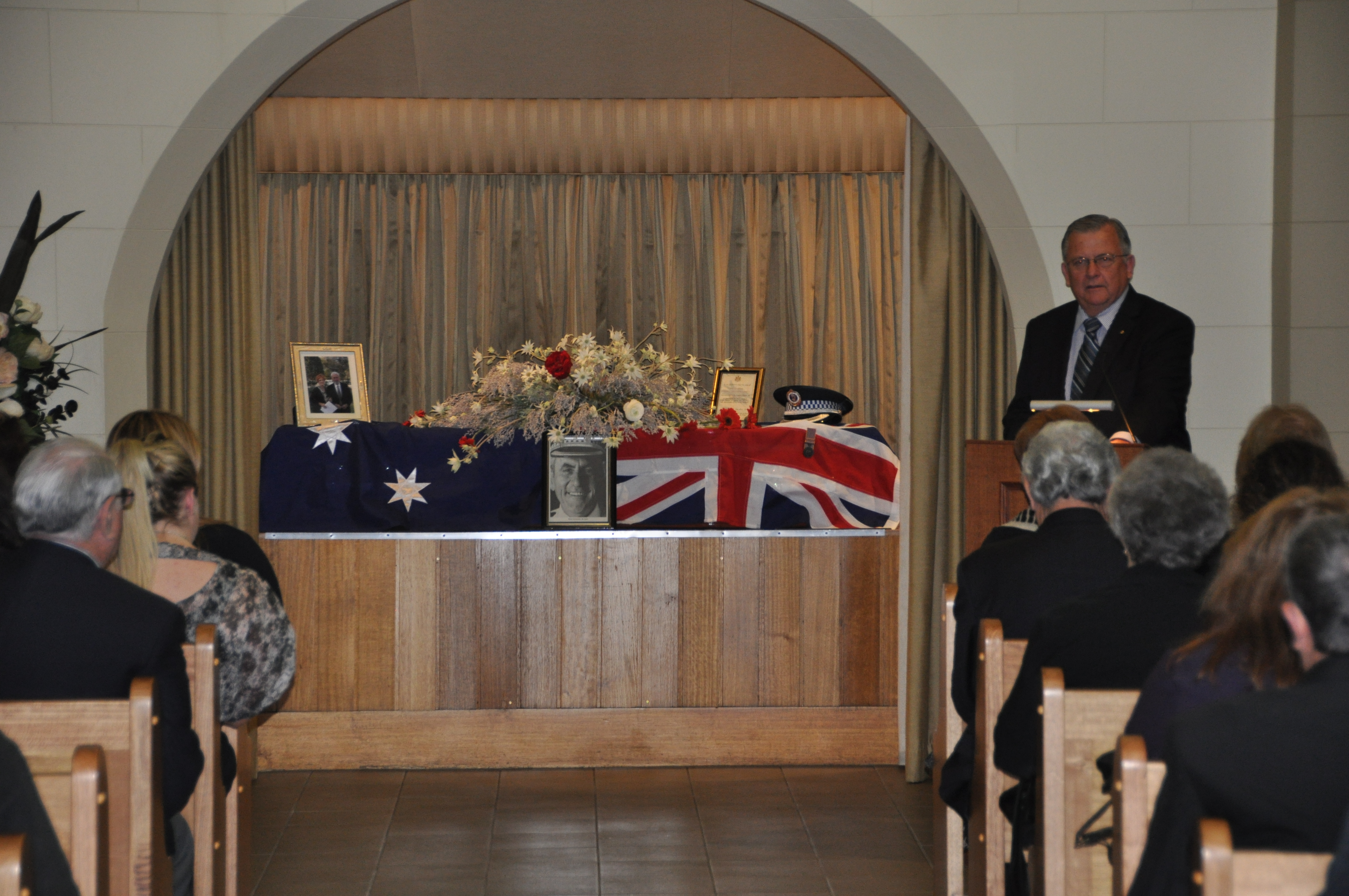
WEDNESDAY 28 SEPTEMBER 2011 CREMATION CEREMONY FOR RETIRED CHIEF INSPECTOR WILLIAM 'BILL' LEONARD ESPIE. Born 250635 - 220911 SERVICE AT THE SOUTH CHAPEL, ROOKWOOD CREMATORIUM, ROOKWOOD, 10.30AM. POLICE FUNERAL. I WORKED WITH BILL AT CABRAMATTA / FAIRFIELD / 34 DIVISION POLICE AROUND THE 1977 ERA. RETIRED POLICE COMMISSIONER KEN MORONEY GIVING THE EULOGY. Bastion of culture and community October 15, 2011 . Bill Espie was one of several talented Aboriginal men born in the Northern Territory in the mid- to late 1930s who went on to make, each in his own way, his mark on Australia and to contribute to the progress of his people. Espie was the first, destined for an exemplary police career in which he became the highest-ranking police officer of Aboriginal descent in all the Australian police forces. He was followed by Charlie Perkins, who became a famous activist; Professor Gordon Briscoe, an academic and activist for his people; the artist John Moriarty; Vince Copley, chairman of Indigenous Cricket; and Brian Butler, in Aboriginal aged care. William Leonard Espie was born in Alice Springs on June 25, 1935, one of seven children to a mixed-race Arunta woman, Edith Espie, who was part of the stolen generation, and Victor Cook, a European who had moved from South Australia to work in Alice Springs as a labourer. Espie's sister Ellen said the family lived in a good house in Alice Springs and their parents did their best for them. Like Perkins and Briscoe and several others, Espie came under the benign influence of an Anglican priest, Father Percy Smith, who arranged for the boys to go to St Francis House at Semaphore in Adelaide, an indigenous boys' home. Espie, known then as Buckshot by the boys, went to school in Port Adelaide and showed himself to be an outstanding tennis player, facing at one time Lew Hoad and Ken Rosewall. He completed his Intermediate Certificate, then trained as a maintenance fitter. In 1955, he joined the Australian Army, became a sappe
Former Police Commissioner Ken Moroney

WEDNESDAY 28 SEPTEMBER 2011 CREMATION CEREMONY FOR RETIRED CHIEF INSPECTOR WILLIAM 'BILL' LEONARD ESPIE. Born 250635 - 220911 SERVICE AT THE SOUTH CHAPEL, ROOKWOOD CREMATORIUM, ROOKWOOD, 10.30AM. POLICE FUNERAL. I WORKED WITH BILL AT CABRAMATTA / FAIRFIELD / 34 DIVISION POLICE AROUND THE 1977 ERA.

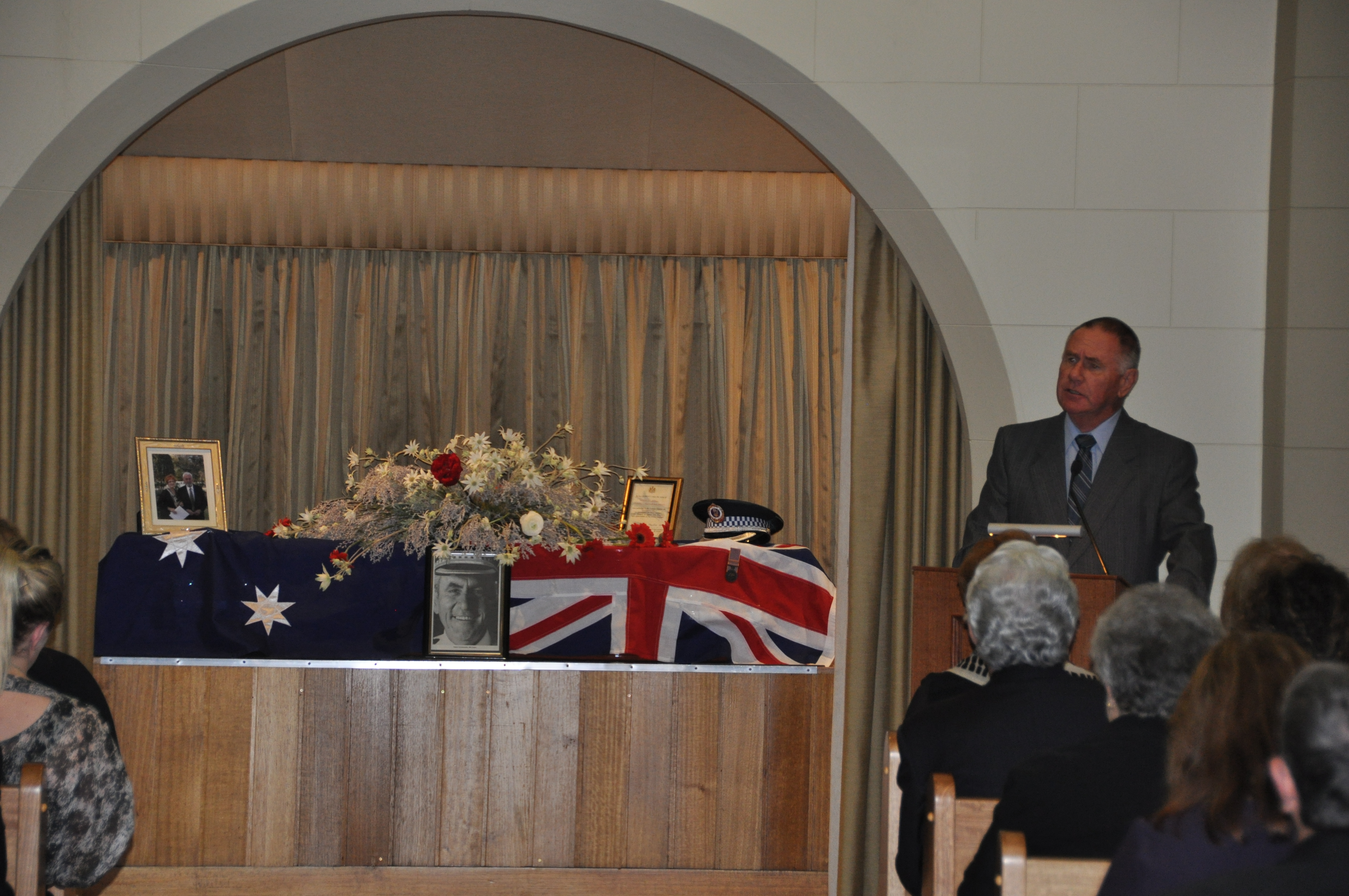
WEDNESDAY 28 SEPTEMBER 2011 CREMATION CEREMONY FOR RETIRED CHIEF INSPECTOR WILLIAM 'BILL' LEONARD ESPIE. Born 250635 - 220911 SERVICE AT THE SOUTH CHAPEL, ROOKWOOD CREMATORIUM, ROOKWOOD, 10.30AM. POLICE FUNERAL. I WORKED WITH BILL AT CABRAMATTA / FAIRFIELD / 34 DIVISION POLICE AROUND THE 1977 ERA. RETIRED DETECTIVE SGT PETER CROUCHER GIVING PART OF THE EULOGY.

WEDNESDAY 28 SEPTEMBER 2011 CREMATION CEREMONY FOR RETIRED CHIEF INSPECTOR WILLIAM 'BILL' LEONARD ESPIE. Born 250635 - 220911 SERVICE AT THE SOUTH CHAPEL, ROOKWOOD CREMATORIUM, ROOKWOOD, 10.30AM. POLICE FUNERAL. I WORKED WITH BILL AT CABRAMATTA / FAIRFIELD / 34 DIVISION POLICE AROUND THE 1977 ERA. RETIRED DETECTIVE SGT PETER CROUCHER GIVING PART OF THE EULOGY.
Former Detective Sergeant Peter Croucher

WEDNESDAY 28 SEPTEMBER 2011 CREMATION CEREMONY FOR RETIRED CHIEF INSPECTOR WILLIAM 'BILL' LEONARD ESPIE. Born 250635 - 220911 SERVICE AT THE SOUTH CHAPEL, ROOKWOOD CREMATORIUM, ROOKWOOD, 10.30AM. POLICE FUNERAL. I WORKED WITH BILL AT CABRAMATTA / FAIRFIELD / 34 DIVISION POLICE AROUND THE 1977 ERA.

WEDNESDAY 28 SEPTEMBER 2011 CREMATION CEREMONY FOR RETIRED CHIEF INSPECTOR WILLIAM 'BILL' LEONARD ESPIE. Born 250635 - 220911 SERVICE AT THE SOUTH CHAPEL, ROOKWOOD CREMATORIUM, ROOKWOOD, 10.30AM. POLICE FUNERAL. I WORKED WITH BILL AT CABRAMATTA / FAIRFIELD / 34 DIVISION POLICE AROUND THE 1977 ERA.

WEDNESDAY 28 SEPTEMBER 2011 CREMATION CEREMONY FOR RETIRED CHIEF INSPECTOR WILLIAM 'BILL' LEONARD ESPIE. Born 250635 - 220911 SERVICE AT THE SOUTH CHAPEL, ROOKWOOD CREMATORIUM, ROOKWOOD, 10.30AM. POLICE FUNERAL. I WORKED WITH BILL AT CABRAMATTA / FAIRFIELD / 34 DIVISION POLICE AROUND THE 1977 ERA. UNKNOWN MALE SIGNING ALALUYA.

WEDNESDAY 28 SEPTEMBER 2011 CREMATION CEREMONY FOR RETIRED CHIEF INSPECTOR WILLIAM 'BILL' LEONARD ESPIE. Born 250635 - 220911 SERVICE AT THE SOUTH CHAPEL, ROOKWOOD CREMATORIUM, ROOKWOOD, 10.30AM. POLICE FUNERAL. I WORKED WITH BILL AT CABRAMATTA / FAIRFIELD / 34 DIVISION POLICE AROUND THE 1977 ERA.

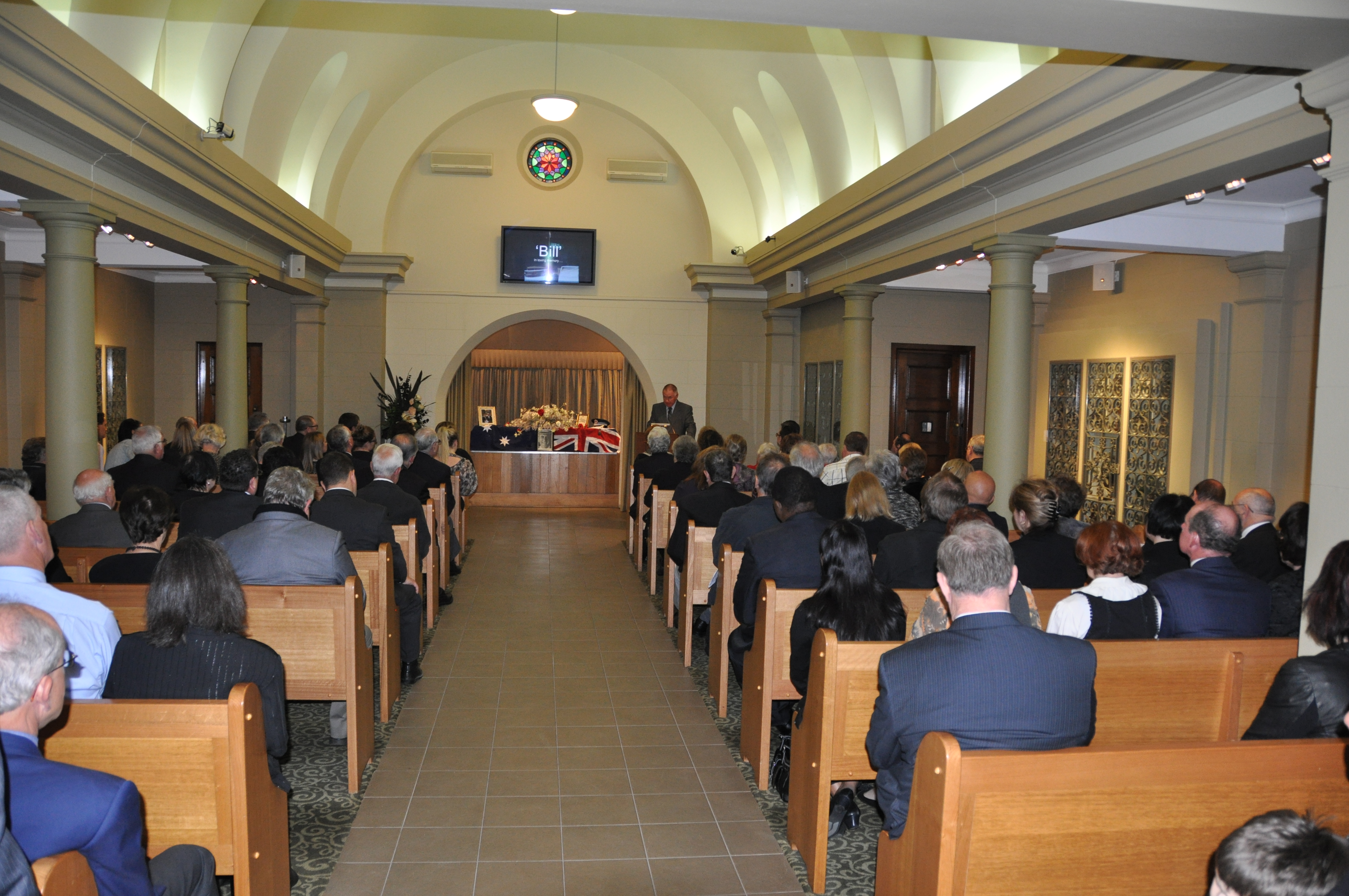
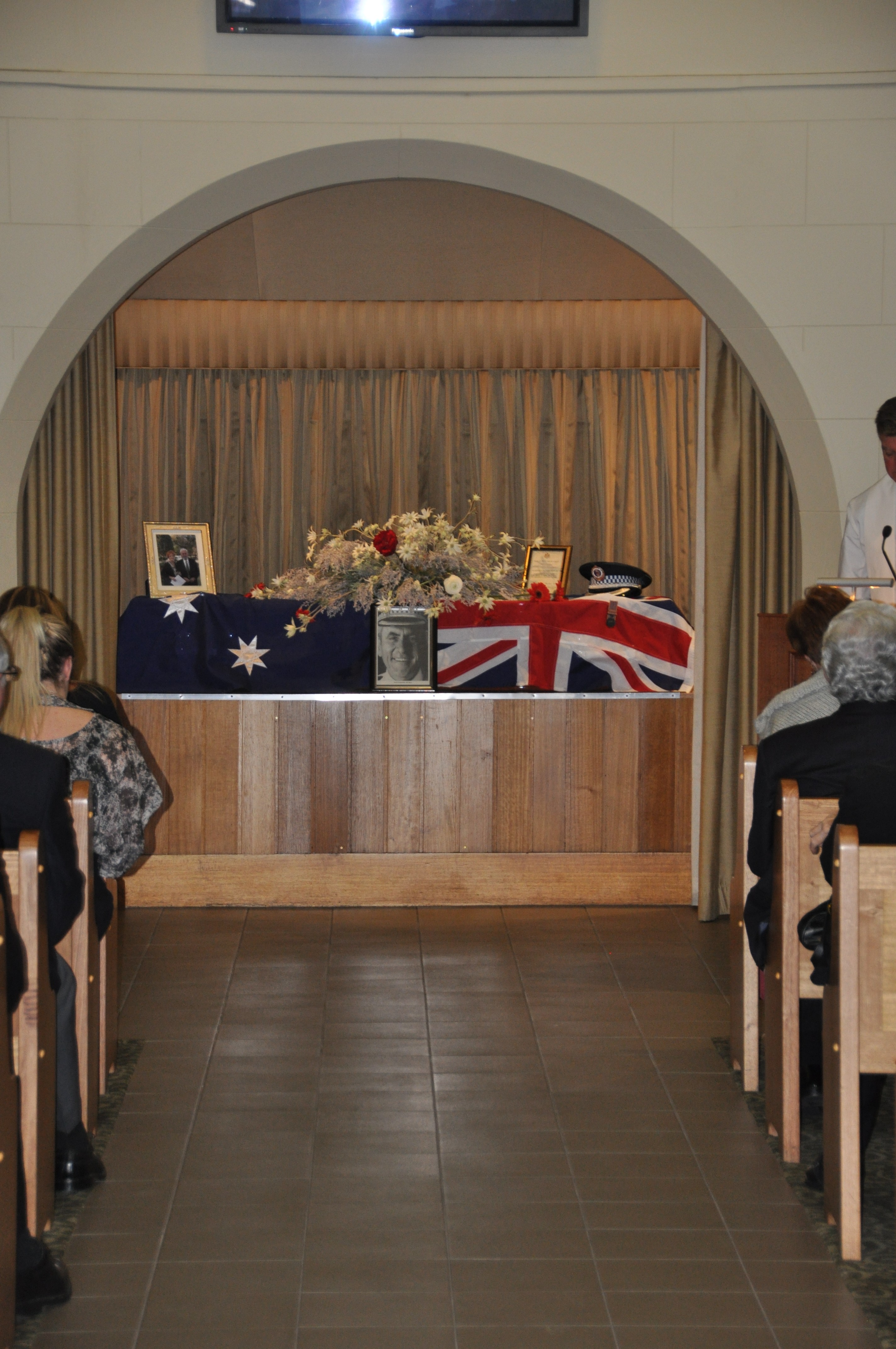
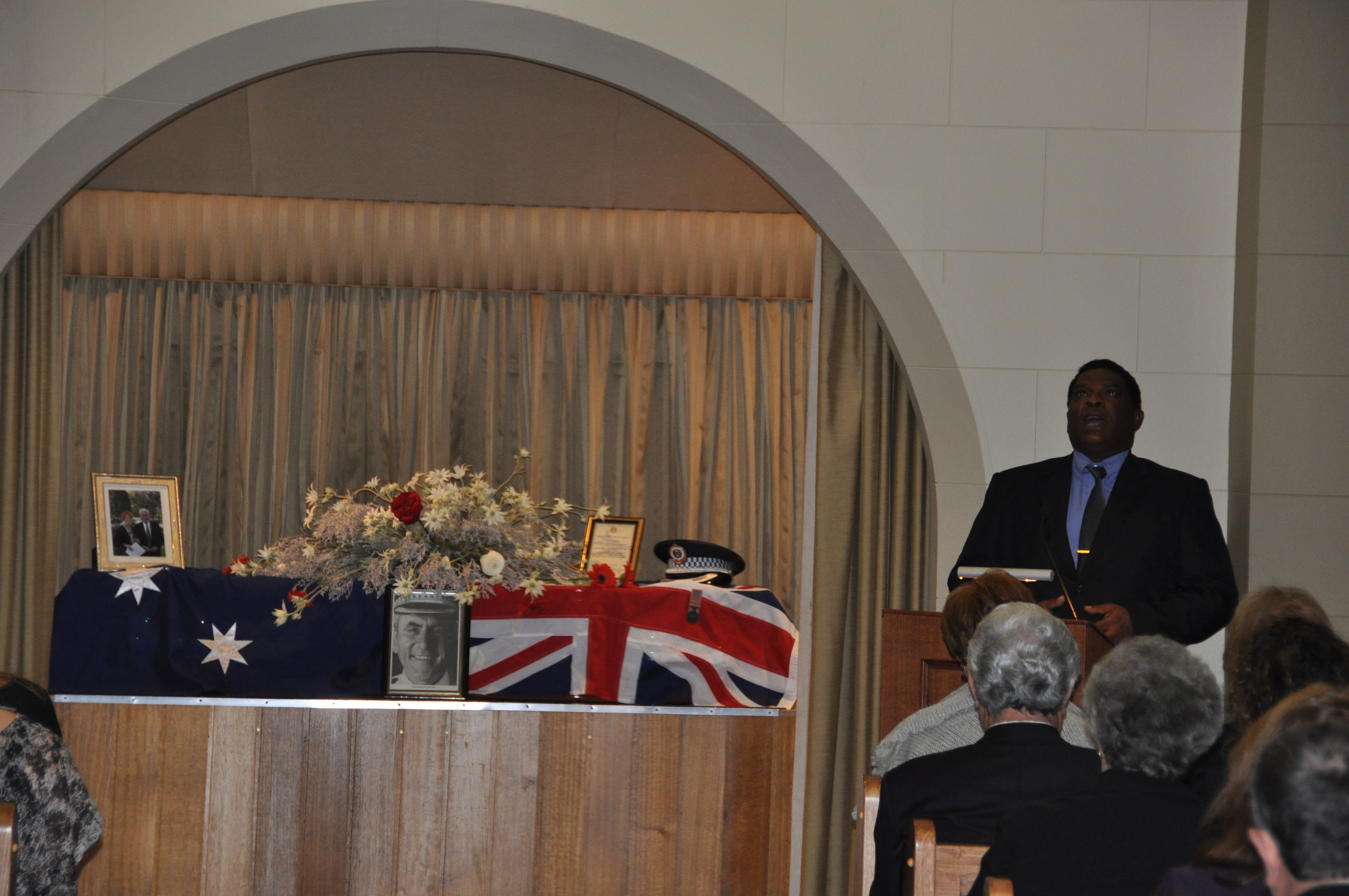
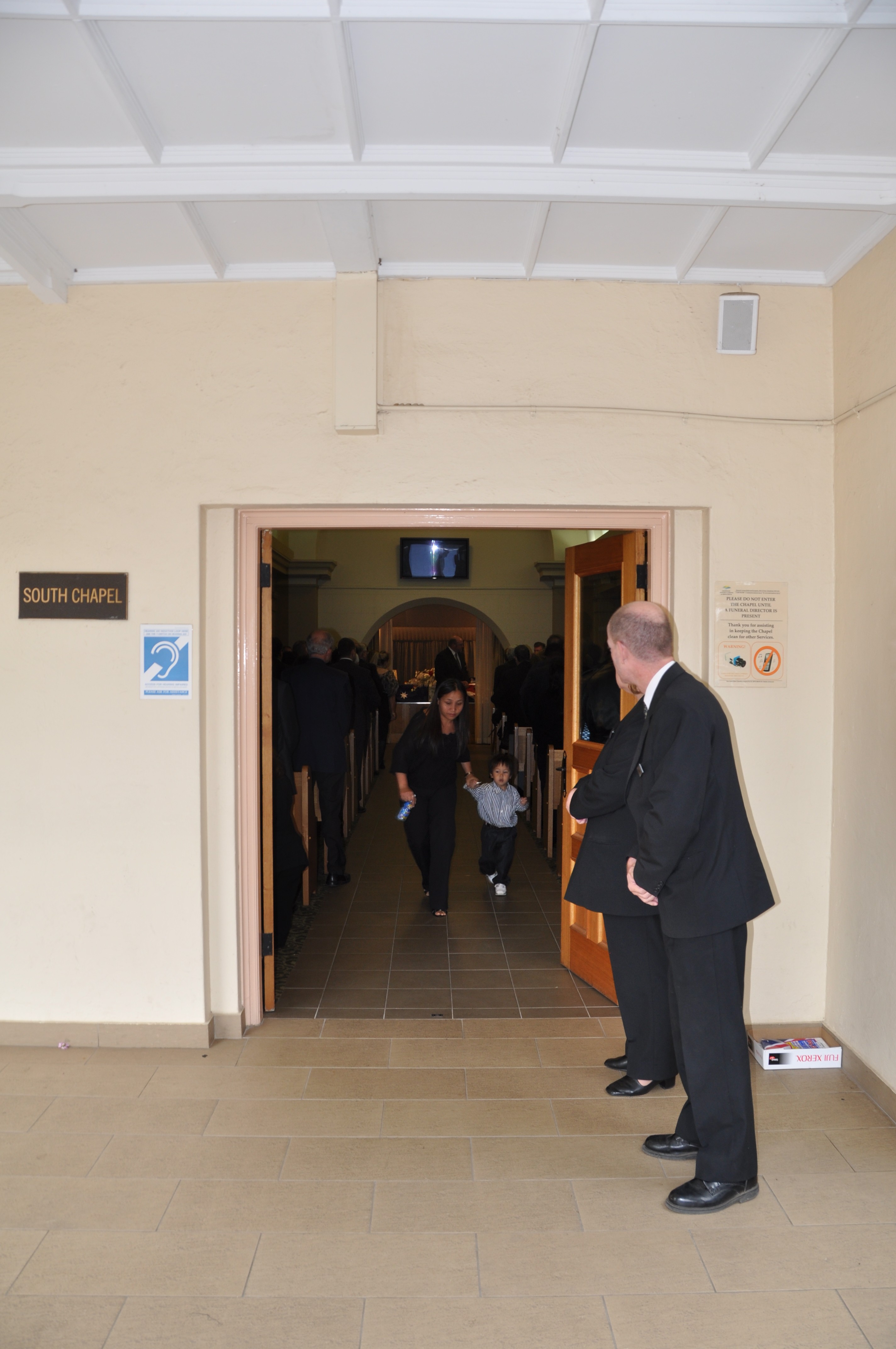
WEDNESDAY 28 SEPTEMBER 2011

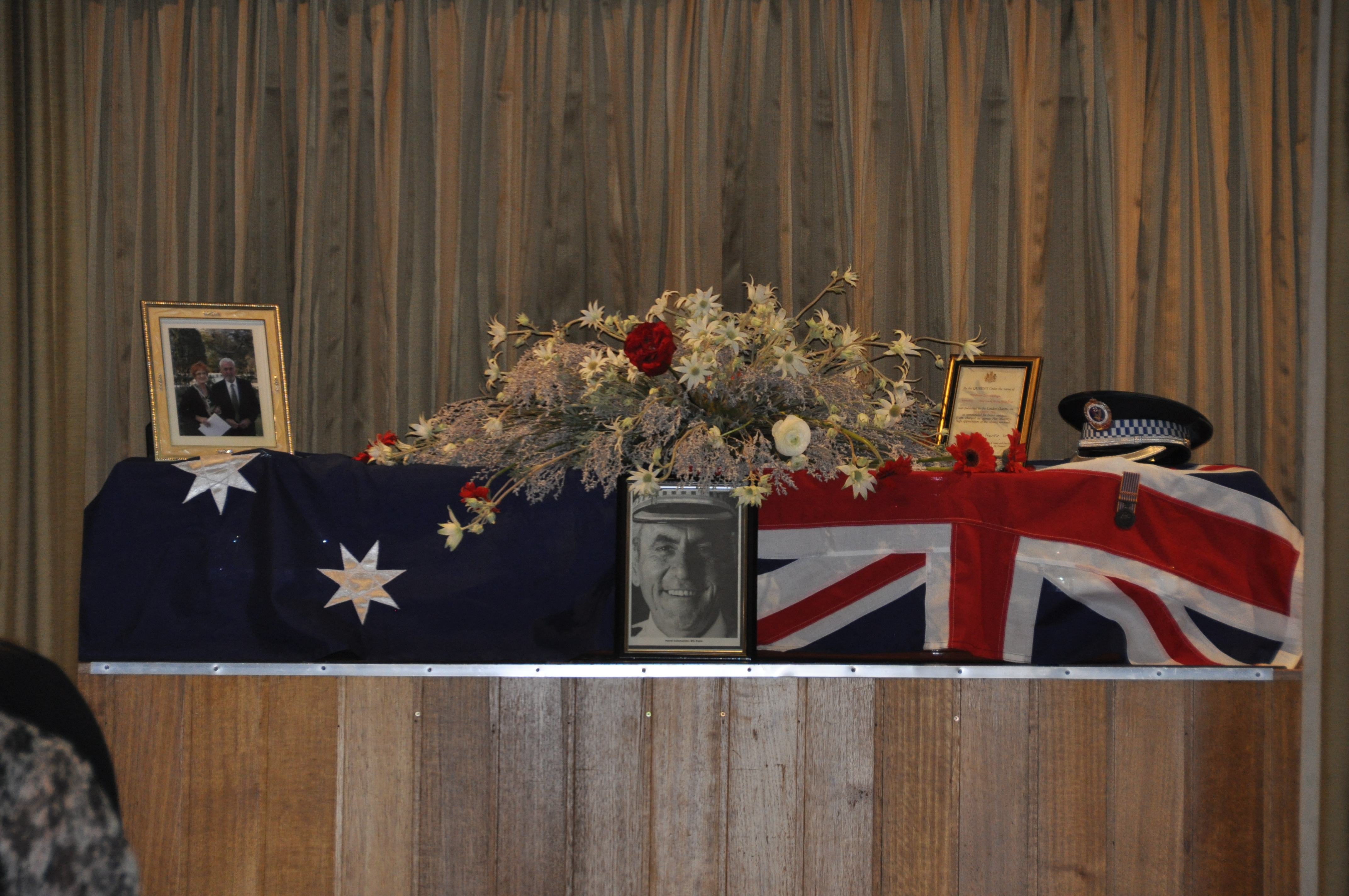
CREMATION CEREMONY FOR RETIRED CHIEF INSPECTOR WILLIAM ‘BILL’ LEONARD ESPIE. Born 250635 – 220911

SERVICE AT THE SOUTH CHAPEL, ROOKWOOD CREMATORIUM, ROOKWOOD, 10.30AM.

POLICE FUNERAL.

RETIRED POLICE COMMISSIONER KEN MORONEY GIVING THE EULOGY.

Bastion of culture and community October 15, 2011 .

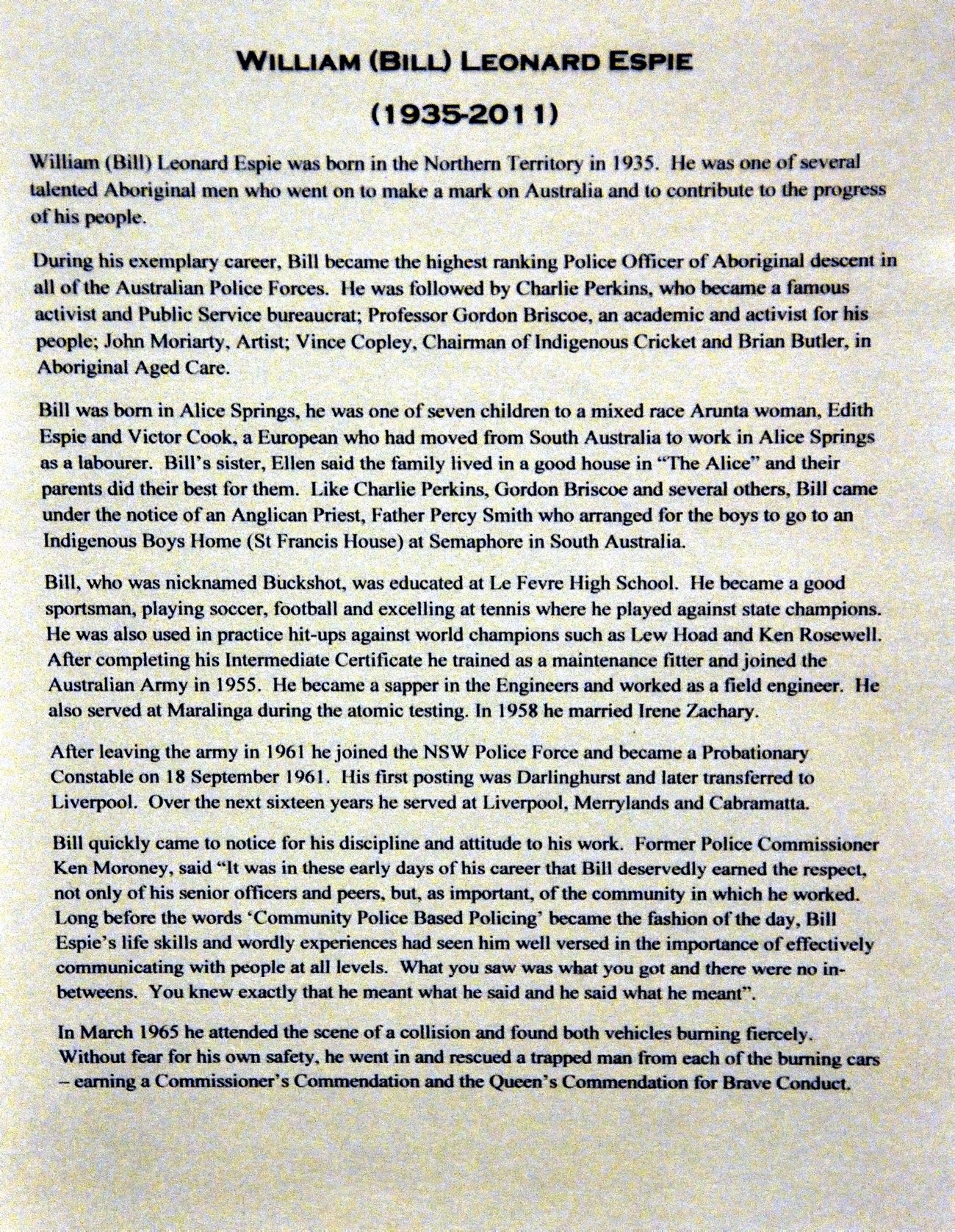
Bill Espie was one of several talented Aboriginal men born in the Northern Territory in the mid- to late 1930s who went on to make, each in his own way, his mark on Australia and to contribute to the progress of his people. Espie was the first, destined for an exemplary police career in which he became the highest-ranking police officer of Aboriginal descent in all the Australian police forces. He was followed by Charlie Perkins, who became a famous activist; Professor Gordon Briscoe, an academic and activist for his people; the artist John Moriarty; Vince Copley, chairman of Indigenous Cricket; and Brian Butler, in Aboriginal aged care.

William Leonard Espie was born in Alice Springs on June 25, 1935, one of seven children to a mixed-race Arunta woman, Edith Espie, who was part of the stolen generation, and Victor Cook, a European who had moved from South Australia to work in Alice Springs as a labourer.

Espie’s sister Ellen said the family lived in a good house in Alice Springs and their parents did their best for them. Like Perkins and Briscoe and several others, Espie came under the benign influence of an Anglican priest, Father Percy Smith, who arranged for the boys to go to St Francis House at Semaphore in Adelaide, an indigenous boys’ home.

Espie, known then as Buckshot by the boys, went to school in Port Adelaide and showed himself to be an outstanding tennis player, facing at one time Lew Hoad and Ken Rosewall. He completed his Intermediate Certificate, then trained as a maintenance fitter.

In 1955, he joined the Australian Army, became a sapper in the engineers and was appointed a field engineer. He served at Maralinga during the atomic testing. Along the way, he married Irene Zachary and served in the army until 1961.   At 26, Espie decided to go to Sydney. He entered the NSW Police Force as a recruit and did his training at the Redfern academy, where he was noted as ”a good all-rounder”.

He became a probationary constable on September 18, 1961. Assigned for 12 months to Darlinghurst, he experienced a profound culture shock – the place could have not been more different from Alice Springs – but he managed the situation and was then transferred to Liverpool.

During the following 16 years, he was to serve there, at Merrylands and Cabramatta.

Espie quickly came to notice for his discipline and attitude to his work. Former police commissioner Ken Moroney said: ”It was in these early formative days of his career that Bill deservedly earned the respect not only of his senior officers and peers but, as important, of the community in which he worked. Long before the words ‘community-based policing’ became the fashion of the day, Bill Espie’s life skills and worldly experiences had seen him well versed in the importance of effectively communicating with people at all levels. What you saw was what you got and there were no in-betweens. You knew exactly that he meant what he said and he said what he meant.”

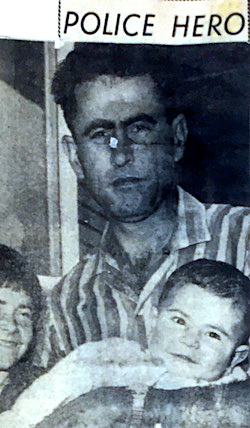
What Espie did in practical terms did not escape official notice either. In March 1965, he went to the scene of a collision and found both vehicles burning fiercely. Without hesitation, he went in and rescued a trapped man from each of the burning cars. For that, he earned a Commissioner’s Commendation and the Queen’s Commendation for Brave Conduct.

Commissioner Norman Allen also awarded him the Peter Mitchell Award, a perpetual trophy, to recognise his selfless and brave conduct. On top of that, he received the George Lewis Trophyfor the most courageous act by a member of the NSW Police Force in 1965”.

In 1971, he received another Commissioner’s Commendation for pursuing and arresting an armed prison escapee.

A further Commissioner’s Commendation came in 1977 when he received a report of a man leaving a crime scene following a fatal shooting at Cabramatta. He was able to secure the crime scene and pursue the man, whom he arrested. The man was charged with murder and prosecuted.

In December 1980, Espie was awarded the National Medal for service and was later awarded the First Clasp of the National Medal.

Transferred to Central Police Station in the city, he became a sergeant second class in 1984 and sergeant first class in 1986. Arranging a transfer back to Fairfield, he continued performing well and, in February 1989, became a chief inspector. He served as patrol commander at Cabramatta until his retirement in April 1991.

Bill Espie is survived by his long-term partner, Maureen Ola, brothers Robert and Linton, sisters Ellen and Peg, his children Marita, William junior, Bettina and John, 11 grandchildren, great grand-daughter Sienna and nephews and nieces.


Bill Espie: Police hero from Alice Springs

By JOHN P McD SMITH


Bill Espie, born in Alice Springs in 1935, holds the unique distinction of being the highest-ranking Aboriginal police officer in any Australian police force.

In March 1965 he attended a two vehicle collision with both vehicles on fire.

He rescued a man from each burning car, putting his own life at distinct risk.

For this act of bravery Bill was awarded the Queen’s Commendation for Brave Conduct as well as the Commissioner’s Commendation.

1965 Newspaper clipping reporting on Bill Espie’s herioc act to save two men for which he was awarded the Queen’s Commendation for Brave Conduct
1965 Newspaper clipping reporting on Bill Espie’s heroic act to save two men for which he was awarded the Queen’s Commendation for Brave Conduct

Bill’s mother Edie Espie was one of a group of Aboriginal women in Alice Springs who wanted their children to have a better chance in life.

Others like her were Hetti Perkins, Dido Cooper, Tilly Tilmouth, Melva Palmer and Millie Woodford who accepted assistance from Father Percy Smith to help further the education of their children at St Francis’ House in Adelaide.

All these mothers had one thing in common, and that was their determination to do the best for their children. They were strong women.

Bill Espie’s nickname was “Buckshot” or “The Wasp”. All the Aboriginal boys who lived at St Francis’ House had nicknames.

Peter Tilmouth was called “Truck” because every Saturday he would go with the local greengrocer doing deliveries in his truck.

David Woodford was known as “Woody”.

This is Bill Espie’s account of his life. He passed away on September 22, 2011.

John P McD Smith


1976 Bill Espie standing next to Father Smith celebrating his 50 years of ordination – Charlie Perkins on far left next to Mrs Smith – Noel Hampton and David Woodford on far right
1976 Bill Espie standing next to Father Smith celebrating his 50 years of ordination – Charlie Perkins on far left next to Mrs SmithNoel Hampton and David Woodford on far right

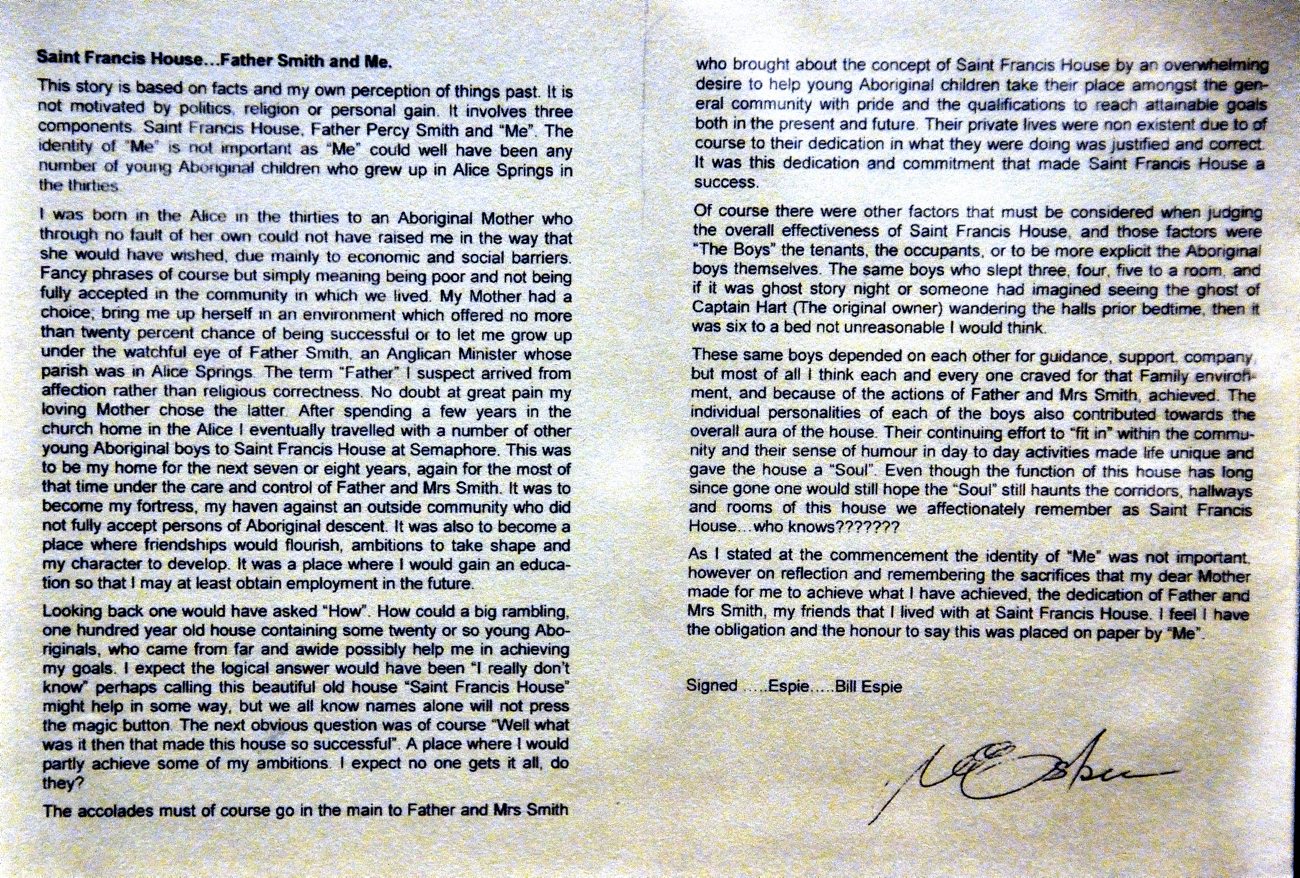
This story involves three components, St Francis House, Father Smith and Mrs Smith and me.

The identity of “me” is not important as “me” could well have been any number of young Aboriginal children who grew up in Alice Springs in the thirties.

My Aboriginal mother, through no fault of her own, could not have raised me in the way that she would have wished, due mainly to economic and social barriers.

Fancy phrases of course, but simply meaning being poor and not being fully accepted in the community.

My mother had a choice; bring me up herself in an environment which offered no more than a twenty percent chance of being successful, or to let me grow up under the watchful eye of Father Smith who was the first resident Anglican priest in Alice Springs in 1933.

No doubt at great pain my loving mother chose the latter.

After spending a few years at St John’s Hostel in Alice Springs, I travelled with five other young Aboriginal boys to St Francis’ House a Semaphore.

This was to be my home for the next seven or eight years, again for most of the time under the care of Father and Mrs Smith.

It was to become my fortress, my haven against an outside community who did not fully accept persons of Aboriginal descent.

It was also to become a place where friendships would flourish, ambitions take shape and my character develop. It was a place where I would gain an education so that I may at least obtain future employment.

Looking back one would ask, how? How could a big rambling one-hundred-year-old house containing some twenty or so young Aboriginals, who came from far and wide, possibly help me in achieving my goals?

I expect the logical answer would have been: “I really don’t know.”

Perhaps calling this beautiful old house “St Francis’ House” might help in some way, but we all know that names alone will not press the magic button. The next obvious question was of course: “Well, what was it then that made this house so successful?” A place where I would achieve some of my ambitions.

The accolades must of course go in the main to Father and Mrs Smith who brought about the concept of St Francis’ House by an overwhelming desire to help young Aboriginal children take their place amongst the general community with pride and qualifications to reach attainable goals both in the present and future.

Their private lives were non-existent due of course to their dedication in what they were doing was justified and correct. It was this dedication and commitment that made St Francis’ House a success.

Of course there were other factors that must be considered when judging the overall effectiveness of St Francis’ House.

Those factors were “the boys”, the occupants or to be more explicit the Aboriginal boys themselves.

The same boys who slept three, four, five in a room; and if it was a ghost story night or someone had imagined seeing the ghost of Captain Hart (the original owner) wandering the halls prior to bedtime, then it was six to a bed – not unreasonable I would think!

These same boys depended on each other for guidance, support, company; but most of all I think each and every one craved for that family environment, and because of the actions of Father and Mrs Smith it was achieved.

The individual personalities of each of the boys also contributed towards the overall aura of the house. Their continuing effort to “fit in” within the community and their sense of humour in day to day activities made life unique and gave the house a “soul”.

Even though the function of this house has long since gone one would still hope the “soul” still haunts the corridors, hallways and rooms we affectionately remember as St Francis House … who knows?

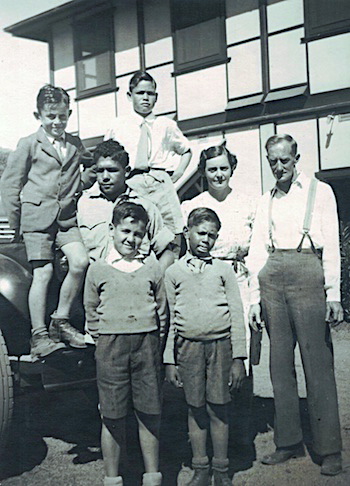
Group of boys ready in Alice Springs in 1944 – Bill Espie, John Palmer (Back), Noel Hampton, Charles Perkins, Malcolm Cooper (standing in front or Mrs Smith), Mrs Isabel Smith, Father Percy Smith


John P McD Smith picks up the story.

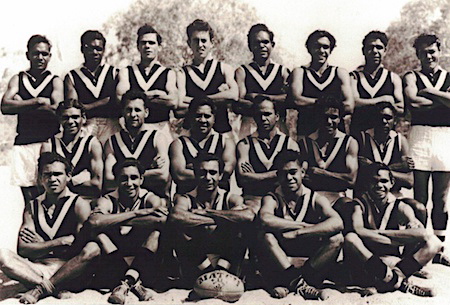
1950s Aboriginal Football Team Alice Springs: Bill Espie in back row 4th from left

After completing his Intermediate Certificate at Le Fevre Boys High School Bill Espie trained as a maintenance fitter. For a short time he returned to Alice Springs to be with his family, but he soon realised that there wasn’t much of an employment future for him there.

In 1955 he joined the Australian Army and was appointed a field engineer.

He served at Maralinga. The world was opening up to him.

After his marriage to Irene Zachary, Bill decided to go to Sydney where he was accepted into the NSW Police Force.

He trained at the Redfern academy becoming a probationary constable in 1961. During his career Bill served at Darlinghurst, Liverpool, Merrylands and Cabramatta.

He became an effective communicator as a police officer and was very good at dealing with different types of people and situations.

After rescuing the two men Bill merely said: “There wasn’t time to think, I just had to get the men out.” They were saved from a firey death.

His commendations, which also included the Peter Mitchell Award, in 1971 Bill received another Commissioner’s Commendation for pursuing and arresting an armed escapee.

Towards the end of his career Bill was awarded the National Medal for meritorious service to which later was added the First Clasp.

By 1986 Bill was a sergeant first class. Then in 1989 he became a Chief Inspector and served as patrol commander at Cabramatta until his retirement.

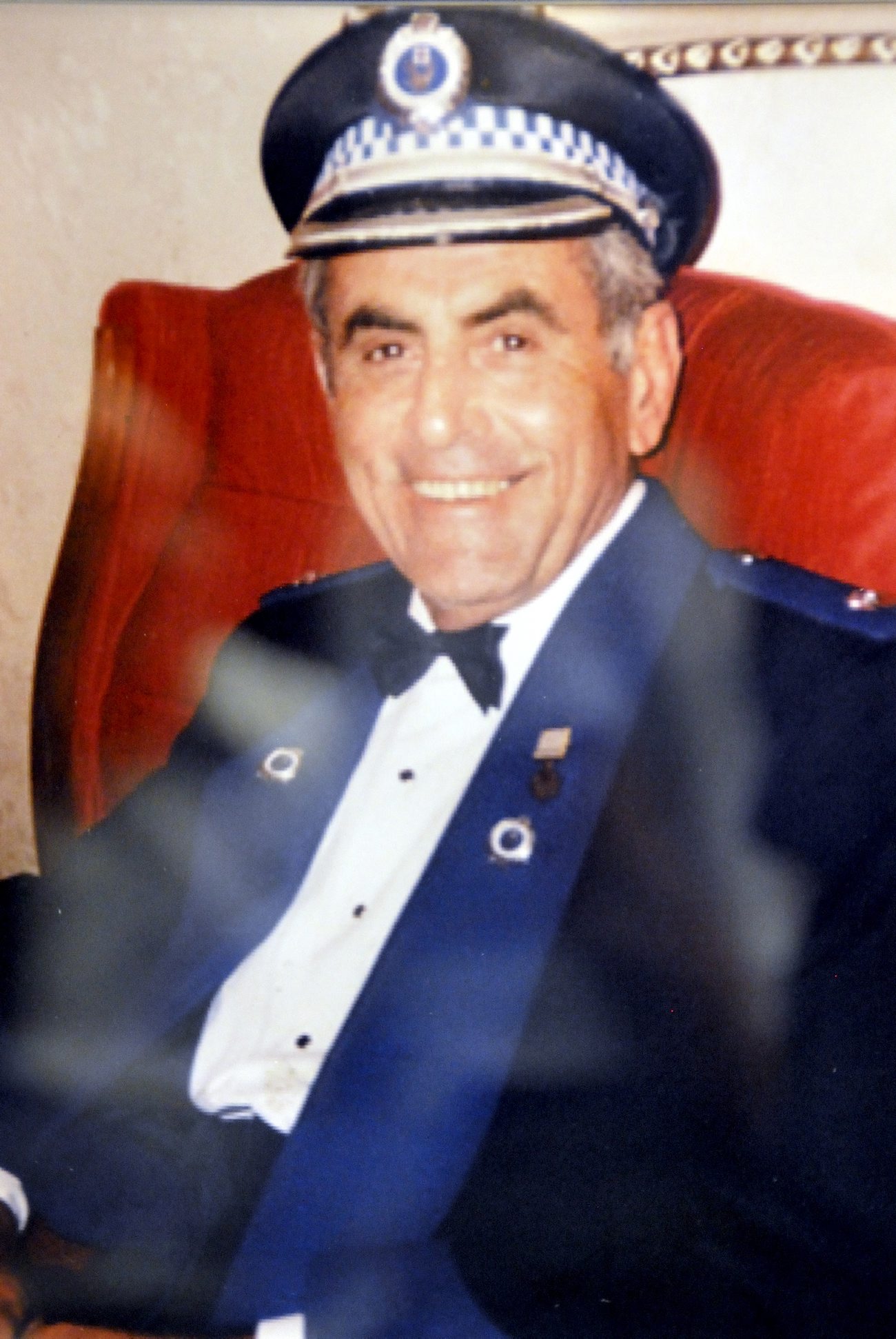
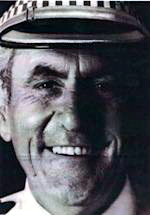
Chief Inspector Bill Espie

He deeply appreciated the chance he was given in life, which was manifested by his exemplary service. Much of his memorabilia is on perpetual display at the NSW Police Academy at Goulburn. He passed away in September 2011.


John P McD Smith is the son of Father Percy Smith (1903-82), first resident Anglican priest in Alice Springs in 1933. John has written his father’s biography, “The Flower in the Desert.”]


4 Comments (starting with the most recent)

NB: If you want to reply to a previous comment, start your comment with this notation: @n where n is the number of the comment you want to reply to.

  1. Dwayne
    Posted April 11, 2019 at 9:20 am

    Enjoyed this story and the footy team photo is great. Would love to know who some of the other players are – if anyone around town knows.


  2. James T Smerk
    Posted April 5, 2019 at 4:12 pm
    What a bloke. A life well lived.


  3. Nathan
    Posted April 5, 2019 at 9:51 am
    Bill lived a life of service to the community. I think his own words are very strong: “My mother had a choice; bring me up herself in an environment which offered no more than a twenty percent chance of being successful, or to let me grow up under the watchful eye of Father Smith.”


  4. Inspiration
    Posted April 5, 2019 at 9:49 am

    What a great story, Father Smith did a lot for the local Indigenous people here in the Alice.
    My brother was one who went to Adelaide, Peter Tilmouth.
    All the boys taken, all became great mates.
    The Espie family was well respected here in the Alice and what an honour to have this man Bill Espie recognised, letting others know of his achievements. A story worth mentioning.


http://www.alicespringsnews.com.au/2019/04/05/bill-espie-police-hero-from-alice-springs/
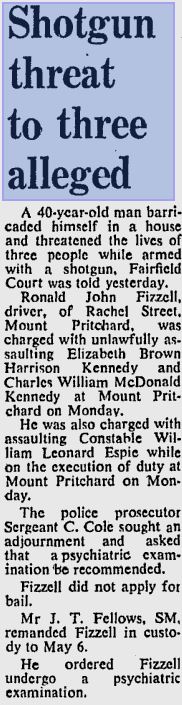


Sydney Morning Herald 28 April 1971 p 7 of 28
Sydney Morning Herald
28 April 1971
p 7 of 28


Report of the Police Department for 1965

ACTS OF BRAVERY BY POLICE
Constable William Leonard Espie was awarded the Queen’s Commendation for Brave Conduct and Departmentally commended for initiative and courage displayed in effecting the rescue of two men from motor vehicles which had collided at Cabramatta on the 18th March, 1965. Both vehicles were burning fiercely and one was in immediate danger of exploding when the Constable, standing in burning petrol, succeeded in extricating the two men from their respective vehicles. Within seconds of the rescue one vehicle became a blazing inferno.
https://www.opengov.nsw.gov.au/viewer/b317ddac0db93a7a188f1df933f98fd1.pdf

Bill Espie

Bill Espie was born in Alice Springs. He was in the Army for six years and remained in Sydney upon completing his service. He joined the Police Force in 1961.

Interviewed by Shirley McLeod 5th September 2005

Shirley McLeod: Good morning Bill. Bill Espie: Good morning Shirley.

Thank you very much for giving us your valuable time.

Bill Espie: My pleasure.

Shirley McLeod: First of all I’d like to ask you, what’s your full name?

Bill Espie: My full name is William Leonard Espie, E-S-P-I-E.

Shirley McLeod: And what suburb do you live in?

Bill Espie: I live in Croydon.

Shirley McLeod: Croydon, right. I’ll just go a little bit into your early life. I see here that you were born in Alice Springs, were you?

Bill Espie: Yeah I was, yes. I was born, strange as it may seem, in a tent outside the Alice Springs hospital back in 1935.

Shirley McLeod: And what were your parents doing there?

Bill Espie: Mum was a general hand, a cook, she had many jobs. When she grew up there as a young girl, there was about a hundred people in Alice Springs and that was about it. So — my father was a grader driver in the bush.

Shirley McLeod: Right. Now, you went to Alice Springs Primary School and then you went to La Favure Tech College, that’s in Alice Springs is it?

Bill Espie: No, the Tech College is in Adelaide. The schooling in Alice Springs was very limited when I was growing up. You only had a primary school, no high school.

Shirley McLeod: And what, you would have gone to it at the age of 15 or 14?

Bill Espie: 15, 16… 15.

Shirley McLeod: And what did you do at Tech?

Bill Espie: It was a different type of Tech as they know now. It was just a high school but they called it a Technical College.

Shirley McLeod: Well we had some in Sydney, Technical College. We had North Sydney Technical, Boys Technical High School I think it was called.

Bill Espie: Usually you had to get your intermediate at those schools.

Shirley McLeod: Yes. So you did that in Adelaide?

Bill Espie: Did that in Adelaide.

Shirley McLeod: And you stayed there and you got the equivalent to your intermediate certificate?

Bill Espie: Yes.

Shirley McLeod: And what did you do after that?

Bill Espie: Well then I went back to Alice, worked as a fitter in the Department of Roads for four years prior to joining the Army.

Shirley McLeod: And where did you join up in the Army?

Bill Espie: I joined in Adelaide. So I went from — stayed in Adelaide for a couple of years and then I was fortunate enough to go to Maralinga where the atom bomb tests and came back to Sydney and stayed here for the rest of my six years.

Shirley McLeod: Right. What sort of work were you doing in the Army?

Bill Espie: I was in the engineers. So it’s like an Engineering Corp that I was in.

Shirley McLeod: All right, well we’ll get to the Police Force. Why did you decide to join Police Force?

Bill Espie: Again, it was just a change of direction. Six years in the army seemed to be long enough for me. And it wasn’t quite what I wanted so someone suggested to me why don’t you join the Police Force, well, I will. So I joined the police and never regretted it.

Shirley McLeod: Where did you join up?

Bill Espie: At Bourke Street in the City.

Shirley McLeod: Is that where the Mounted Police are now?

Bill Espie: Yes.

Shirley McLeod: I’ve been there a couple of times. And you did your training there didn’t you in those days?

Bill Espie: Yes, I done six weeks. I was lucky to get in actually because when I, when I came to the office, the sergeant that was behind said to me, ‘hop up on the scales.’ I was three pound light. And he says, ‘we can’t take you.’ And I said, ‘well I’m fit enough, I just left the Army.’ He said, ‘no you gotta have the right weight.’ but he said, ‘I’ll tell you what you do.’ He said, ‘come back and see me at 3 o’clock,’ this was obviously in the morning, it was in morning. ‘Come back and see me, but in the meantime go down to that fruit shop down in Bourke Street and eat 20 bananas.’ This is a true story. ‘Eat 20 of bananas,’ and he said, ‘then go to a tap and a drink as much water as you can until you start to be sick.’ I thought he was joking. He said, ‘do it if you want to join the Police Force.’ So I did, I ate 20 bananas, this was over about a two-hour period. Drank so much water out of this tap, I was bloated, looked like I was pregnant, went back and seen the sergeant and I tipped the scales at three and a quarter pound. He said, ‘you’re in.’

So — and the bananas (.. unclear ..) with me for a fortnight.

Shirley McLeod: Oh dear. So you did your training and Bourke Street.

Bill Espie: Bourke Street.

Shirley McLeod: And how long were you training there?

Bill Espie: Well in those days it was six weeks initial training and then one day a week for a year. So that’s the way they used to do it back in ‘61.

Shirley McLeod: And the initial training was also shooting?

Bill Espie: You’re shooting, and law…

Shirley McLeod: Hmm. And typing?

Bill Espie: And typing down at Harris Street in the Ultimo, typing. With your fingers underneath a cover that you couldn’t see and couldn’t cheat. But they didn’t want much, only wanted — can’t remember now — but it was some paltry amount of 20 words a minute or something like that.

Shirley McLeod: You’ve done your training, where was your first posting?

Bill Espie: Darlinghurst. I spent two years at Darlinghurst initially.

Shirley McLeod: Was that a culture shock to somebody from…?

Bill Espie: That was a, well I was going to say terrible culture shock, but it wasn’t, it was an interesting culture shock. Being smothered in Alice Springs in the quietness of the bush and then hitting Darlinghurst — when Darlinghurst was Darlinghurst — it was a shock but a nice one. For me it was interesting.

Shirley McLeod: Where was the Police station in Darlinghurst?

Bill Espie: Right opposite the Court of Sessions Court in Taylor Square.

Shirley McLeod: All right. Cabramatta. How did feel, the first time you came to Cabramatta, you’ve come from Fairfield anyway so you knew it fairly well. Cabramatta didn’t have such a bad name in those days did it?

Bill Espie: No, I think no. It had a, you know, it was just a normal suburb. Policing wise it was just a normal suburb. Because when I first came there were a lot of nationalities, English, Spanish you know. They had a big — in Aleck Street Cabramatta, they had a big migrant hostel where there was quite a number of nationalities living there.

Shirley McLeod: They were a mixed nationality then, were they? What year would that have been about ‘57?

Bill Espie: That was in ‘65, ‘63-‘65. There must have been 10, 12 nationalities living in the hostel. They had the old army huts for accommodation.

Shirley McLeod: Did you have problems there, did the police, were the police called in there very often?

Bill Espie: Strange as it may seem, no. No, it was well run. The people were intermingling with one another. Occasionally you’d get a fight caused by different nationalities, but very rare, very rare.

Shirley McLeod: But Cabramatta was, in later years became very much different and you were here working at the time that the south-east Asian migrants came in here.

Bill Espie: No I was here for… didn’t… in the last three years of my working with the police, that’s when they were here in Cabramatta. Say from — I didn’t take too much notice of it because I wasn’t, until I became the officer in charge, I wasn’t sort of really aware of the extent that we had. So that was in 19… say, 1987, ‘88. It was starting to become noticeable that it was gonna be an Asian suburb so to speak.

Shirley McLeod: How did that affect you?

Bill Espie: I don’t think it really affected me that much because we, we didn’t get an over problem for the first couple of years. There were minor skirmishes, minor problems that could be solved there and then on the spot. Didn’t hit the news as much as it did when the drugs were involved in Cabramatta. So we hardly ever hit the newspapers for the first two or three years that I knew. And then all of a sudden it started to change. That’s when them drugs started to come in and I was lucky enough you know, I retired prior to that occurring.

I was at Cabramatta when we only had a little call box you know, a little seven by seven (feet) box.

Shirley McLeod: Where was that?

Bill Espie: There were four of us stationed.

Shirley McLeod: There was one at Fairfield like that before the police station was built. There was one here at Cabramatta too?

Bill Espie: Yes. Cos when I first came in ‘63, you might know — one the people you’ve interviewed, Baz Lawler — he was there a (.. unclear ..)..

I haven’t interviewed him yet, I’m going to.

Bill Espie: And, it was a little call box, seven by seven (feet). And when it rained you’d get wet, it would come in underneath the floorboards, you know. We were in that for about two or three years. But there was only four of us then, that was in ‘63 to about ’70, then the police started to come and things started to improve. The more police came the more improvements we had.

Shirley McLeod: Have you had, I suppose you’ve had some very funny incidents over your many years as a policeman. Can you remember anything specifically?

Bill Espie: Oh yes.

You don’t have to mention names if you don’t want to, just incidents.

Bill Espie: I think the funniest episode was I was on my way to work when I lived in Liverpool and coming to the intersection, this car was on my right and I noticed two people sitting in the car with ski masks on. And being very astute I thought, well that’s funny, it’s hot (laughs). So, they had, they were both holding what appeared to be shot guns and I stopped to give way to ‘em, because I couldn’t believe my eyes. This was about 10 to 3 (2:50pm) in the afternoon, going to work, afternoon shift. So they turned the corner and stopped a hundred yards up the road outside the Post Office and they both bounded out and sure enough, they both had shot guns. So, I had an old car, an old the Gemini that could hardly run and it was famous around the police and they all knew it was mine. So I stopped just behind this car containing the crooks, so to speak and I said, I’ll nab thee when you come out of the Post Office. But I had another bad habit of leaving my gun at home and I realised when I stopped my car and took position behind my car, I didn’t have a gun. So I said, I’m not going to be a fool, I’ll race across the street and ring for the police to come. By this time they’d come out of the Post Office with bags. So I got… raced back to my car, they had an old car as well and they couldn’t start it.

Shirley McLeod: You hadn’t fixed it?

Bill Espie: No, but they couldn’t start their car. Their car was an old bomb too. You know, real brainy armed robbers. So I said, I’ll have thee now. Then their car roared into life, so I got back into my car, I said, I’ll follow you. My car wouldn’t start because it was a bomb.

Shirley McLeod: Sounds like comic capers.Bill Espie: Comic capers. And finally it kicked over, their car kicked over, they put it into gear and somersaulted, you know how you jack-knife down the street? And here are these two crooks getting away from me, jack-knifing down the street. I’m in my car jack-knifing after them, we must have done it at no more than 10 kilometres an hour. And in the end my car just blew — just stopped. The engine blew it was so old. They went down the street getting away from me and when they got to the corner they put the old forefinger up into the sky towards me and turned the corner. I was more insulted by the actions of the finger than the robbing.

Shirley McLeod: And you lost them?

Bill Espie: That was about the funniest thing.

Shirley McLeod: Did you ever catch them?

Bill Espie: Never did.

http://fairfieldcity.oralhistory.com.au/interviews/espie_bill/espiew_fullstory.htm

The Canberra Times ( ACT )      Thursday  21 October 1965     p8 of 36

Award for bravery

SYDNEY, Wednesday.—

Constable William Leonard Espie has been awarded the Queen’s Commendation Medal for brave conduct. He rescued two men

trapped in burning vehicles after a motor accident earlier this year.

http://trove.nla.gov.au/ndp/del/article/105868516
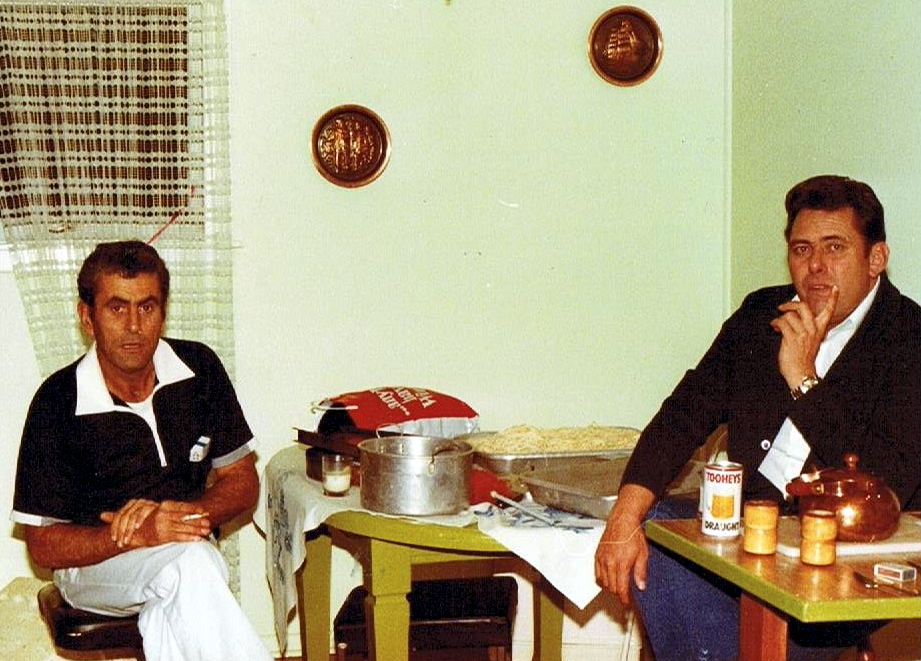


Bill Espie and Alf Gregory at Bill's place in 1981
Bill Espie and Alf Gregory at Bill’s place in 1981


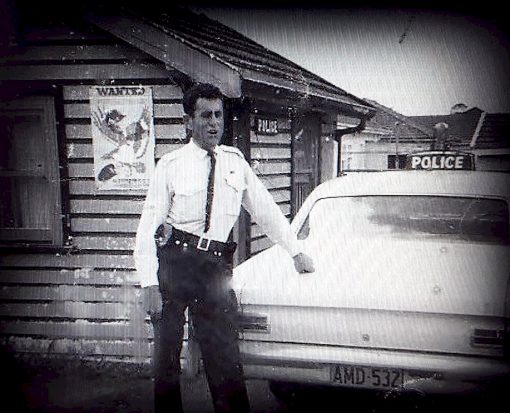
Peter Croucher<br /> The original Cabramatta Police Station in 50s 60s early 70s. It was a call box in it's time with barely enough room for three police. When I was stationed there in 1968, Sgt Bill Turner was the boss, Bill Espie, pictured above, had not long received the Police Medal for Bravery. If we were lucky to have an afternoon shift, the day shift would walk outside to let the others in. If it rained we'd sit on the bench desk with our feet on the chair so's we could keep our feet dry from the rain water running across the floor.<br /> Peter C<br />
From Peter Croucher
The original Cabramatta Police Station in 50s 60s early 70s. It was a call box in it’s time with barely enough room for three police. When I was stationed there in 1968, Sgt Bill Turner was the boss, Bill Espie, pictured above, had not long received the Police Medal for Bravery. If we were lucky to have an afternoon shift, the day shift would walk outside to let the others in. If it rained we’d sit on the bench desk with our feet on the chair so’s we could keep our feet dry from the rain water running across the floor.
Peter C


Frank Raymond SMITHERS

Frank Raymond SMITHERS

( late of Albion Park )

New South Wales Police Force

[alert_yellow]Regd. # 6967[/alert_yellow]

Rank: Probationary Constable – appointed 13 April 1951

Sergeant 2nd Class – appointed 1 April 1974

Stations?, Wollongong ( 1969 ) – Rosters – retirement

Other:  Was Deputy Mayor of Shellharbour Council ( Labour ) x 2 terms & with Council for 23 years

ServiceFrom  ??Pre April 1951  to  28 November 1982 = 31+ years Service

[blockquote]

World War II

Australian Imperial Force

Regiment:                                 Australian Army

Enlisted:                                    31 August 1942 at Woonona

Service #                                   NX149974  (N105257)

Rank:                                         Sergeant

Embarkation?

Next of kin:                             Eileen Smithers

Religion?

Single / Married?

Returned to Australia ?

Date of Discharge:              6 November 1945

Posting at discharge:         8 HVY A A BTY

[/blockquote]

Awards:  No find on It’s An Honour

Born:  29 November 1922 – Wollongong, NSW

Died on:  Saturday  19 September 2015

Cause:  Illness

Age:  92

Funeral date:  Thursday  24 September 2015

Funeral location: H. Parsons, Warilla Chapel, 101 Woolworths Avenue, Warilla

Buried at:  Albion Park Cemetery, Croome Rd, Albion Park Rail

Memorial location:  Frank Smithers Park, 248 Tongarra Rd, Albion Pk – dedication ceremony – Tuesday 20 December 2016

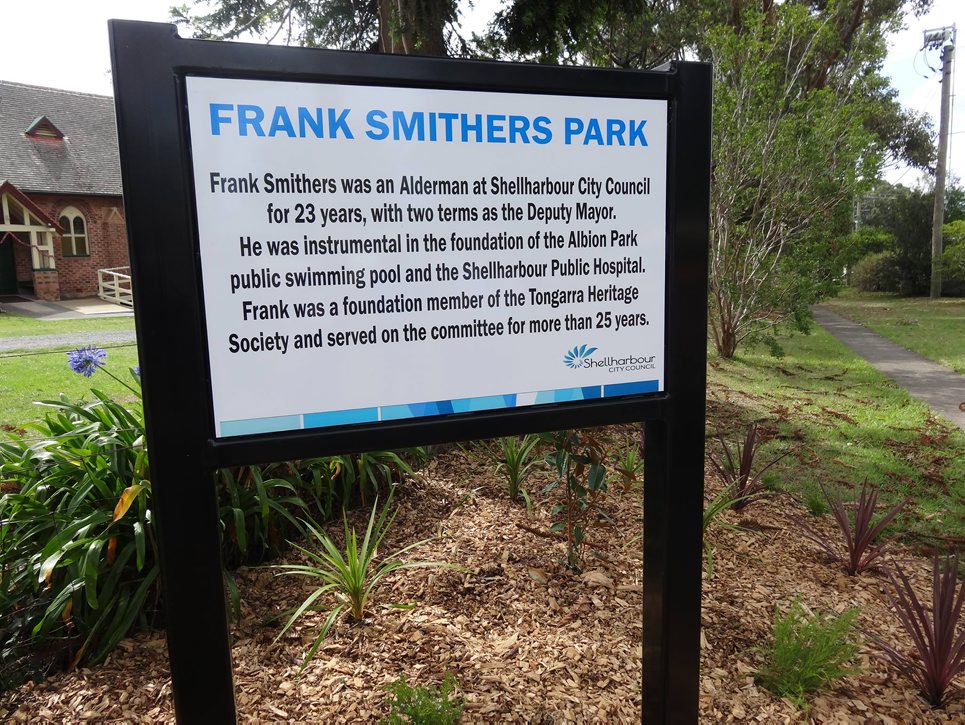
FRANK SMITHERS PARK Frank Smithers was an Alderman at Shellharbour City Council for 23 years, with two terms as the Deputy Mayor. He was instrumental in the foundation of the Albion Park public swimming pool and the Shellharbour Public Hospital. Frank was a foundation member of the Tongarra Heritage Society and served on the committee for more than 25 years.

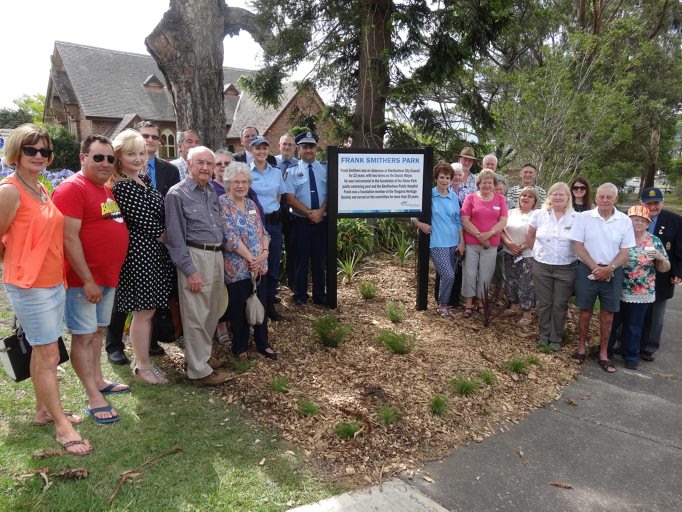
Some of those from Police, Council and family who attended the unveiling today. Tuesday  20 December 2016
Some of those from Police, Council and family who attended the unveiling today. Tuesday 20 December 2016

[alert_yellow]FRANK is NOT mentioned on the Police Wall of Remembrance[/alert_yellow]  *NEED MORE INFO


 [divider_dotted]

 Funeral location

[divider_dotted]

Frank was in the Shellharbour Hospital system in February 2015 for unknown problems.

Frank SMITHERS

NX149974, N105257

Albion Park RSL Sub Branch Members are requested to attend the service of their late esteemed comrade.

Frank Smithers at Parsons, Warilla on Thursday  24 September at 12 noon.  Blazers / medals to be worn.

Auth. D Hamilton

Hon. Sec.

[divider_dotted]

SMITHERS FRANK of Albion Park

Passed away in hospital after a long battle, surrounded by his family on September 19, 2015.

Loved husband of Ellie.
Loved father of Annette and Jac, Joyce, Sandra and stepfather of Joy, Terry, Deidre.
Grandfather of 14, great grandfather of 24 and great great grandfather of 3.
Former serving councillor of Shellharbour Council for 23 years and 2 terms served as Deputy Mayor.

Police officer for 35 years.

Aged 92 Years

Always loved and sadly missed

Relatives and friends are invited to attend Frank’s funeral service to be held in the Chapel, Parsons Funeral Home, 10 Woolworths Avenue Warilla on Thursday 24th September, 2015 at 12noon. Following the service his funeral will proceed to Albion Park Cemetery, Croome Road, Albion Park Rail.

Published by Illawarra Mercury on Sept. 22, 2015 – See more at: http://tributes.illawarramercury.com.au/obituaries/illawarramercury-au/obituary.aspx?n=frank-smithers&pid=175919119#sthash.eyZ4XjqF.dpuf

[divider_dotted]

SHELLHARBOUR CITY COUNCIL
Ordinary Council Meeting –
19 July 2016  p 7 & 8
10.3
Corporate Policy Directorate
10.3.1
Naming Reserve 133, Lot: 1 DP: 908823, 248 Tongarra Road Albion Park, after former Alderman Frank Smithers (10729032)
MOTION
: Murray/Marsh
1.  That reserve 133, Lot:1 DP: 908823, 248 Tongarra Road Albion Park, be named Frank Smithers Park in recognition of former Alderman Frank Smithers dedicated service to the community of Shellharbour in accordance with Council’s Naming of Council Assets after Individuals policy.
2. That the name Frank Smithers Park be referred to the Geographic Names Board for exhibition in accordance with its policy.
3. That, if approved, appropriate signage be installed at the site denoting the new name and an appropriate ceremony be held when signage is installed.
Councillor Marsh proposed the following addition to the MOTION, which was accepted by the Mover:
4. That the signage include information about Alderman Frank Smithers.
RESOLVED: Murray/Marsh
1. That reserve 133, Lot:1 DP: 908823, 248 Tongarra Road Albion Park, be named Frank Smithers Park in recognition of former Alderman Frank Smithers dedicated service to the community of Shellharbour in accordance with Council’s Naming of Council Assets after Individuals policy.
2. That the name Frank Smithers Park be referred to the Geographic Names Board for exhibition in accordance with its policy.
3. That, if approved, appropriate signage be installed at the site denoting the new name and an appropriate ceremony be held when signage is installed.
4. That the signage include information about Alderman Frank Smithers.
CARRIED UNANIMOUSLY

http://www.shellharbour.nsw.gov.au/getfile/2d60eb79-5055-40c9-ae27-9f9e5e544e1c/2016-07-19-ordinary-council-meeting-minutes.aspx?chset=0ee61ad5-8c3d-4107-897f-23f43ea54f63

http://webcast.shellharbour.nsw.gov.au/archive/video16-0719.php#placeholder   Then look down Agenda to 10.3.1 to play specific video section
  • This park was to be ‘unveiled’ on Friday 16 December 2016 but due to poor weather, has been postponed.  The park was officially ‘unveiled’ on Tuesday 20 December 2016.

[divider_dotted]

Illawarra Mercury ( Wollongong )     Friday  22 November 1935   p11 of 14

UNANDERRA NEWS

The following pupils of Unanderra Public School passed the Primary final examination; Jenny Bird, Jack Brough, Arthur Callaway, Bob Catterall, Bert Coleman, Tom Franklin,   Bruce Jay, Betty Jolliffe, Wallace Mason, Molly Rodgers, Frank Smithers, Joyce Stevenson, Tim Sweeney,  John Timothy, Nancy Todman, Bill Wadey, Ken Watson.

http://trove.nla.gov.au/ndp/del/article/133082523

*It is not known if this article is referencing the same Frank Smithers at Unanderra Public School, or if the policeman Frank Smithers actually attended this school, but the time frame is correct.

[divider_dotted]

It appears that Frank and Eileen Ruth Smithers divorced in 1962.   2854/1962

[divider_dotted]


Harley Gerard DONOHUE

Harley Gerard DONOHUE

New South Wales Police Force

Regd. # 12918

Rank:  Sergeant

Stations?, Traffic Branch, Part time diver with Water Police, Hurstville – death

Service:  From  11 December 1967  to  ?

Awards:  National Medal – granted 29 November 1983

1st Clasp to National Medal – granted 16 September 1993

Born:  23 May 1945

Died on:  27 January 1996

Cause:  Cancer

Age:  50

Funeral date? ? 1996

Funeral location:  Woronora Crematorium

Buried at:  Cremated

Memorial plaque at Woronora Cemetery

Location Section Position
DD REMEMBRANCE PLAQUE MEMORIAL 7 0015 MEMORIAL


Harley Gerard DONOHUE

Harley Gerard DONOHUE


HARLEY GERARD DONOHUE


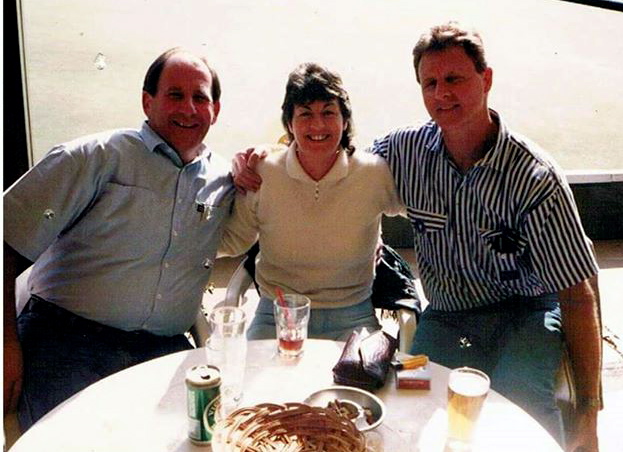
JOHN DUNCAN, KAREN BRANFIELD, HARLEY DONOHUE


[alert_yellow]HARLEY is NOT mentioned on the Police Wall of Remembrance[/alert_yellow]  *NEED MORE INFO


[divider_dotted]


Keith Stanley HOLSTEIN

 Keith Stanley HOLSTEIN

Father of John HOLSTEIN – Regd # 16195
 ( late of Gloucester )

New South Wales Police Force

NSW Penrith Police Academy Class # 9

 [alert_yellow]Regd. #  7130[/alert_yellow]

Rank:  Probationary Constable – appointed 22 October 1951

Sergeant 3rd Class – appointed 6 October 1967

Sergeant 2nd Class – appointed 5 January 1975

Sergeant 1st Class – retired

StationsBathurst ( 1952 ), Euabalong ( 1956 ), Trundle ( 1958 – 1963 ), Clarencetown ( 1963 ), Nundle ( O.I.C. Sgt 3/c 1967 ),  Daceyville, Randwick, Maroubra, Paddington, Waverley & Blacktown. ( 1971 until 1984 )

ServiceFrom  ? ? pre October 1951  to  ? ? 1983 = 32 years Service

 Awards:  No find on It’s An Honour

Born:  28 July 1932

Died on:  28 October 2000 @ Gloucester, NSW

Cause:  Cancer – Throat

Age:  68

Funeral date? October 2000

Funeral location?, Gloucester

Buried at:  Lawn cemetery, Gloucester Cemetery, Cemetery Rd, Gloucester, NSW

Approx GPS Location of Grave:  -32.027703,  151.964020


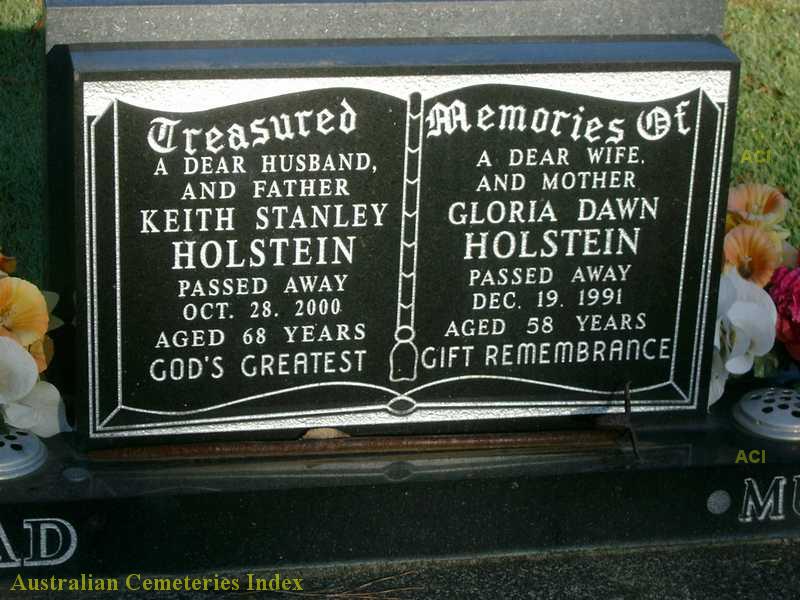
Epitaph Treasured A Dear Husband and Father Keith Stanley Holstein passed Away Oct 28 2000 Aged 68 Years God's Greatest.Memories of a Dear Wife and Mother Gloria Dawn Holstein passed away Dec. 19 1991 Aged 58 years Gift Remembrance.
Grave stone of Keith & Gloria HOLSTEIN


[alert_yellow]KEITH is NOT mentioned on the Police Wall of Remembrance[/alert_yellow]  *NEED MORE INFO


 [divider_dotted]


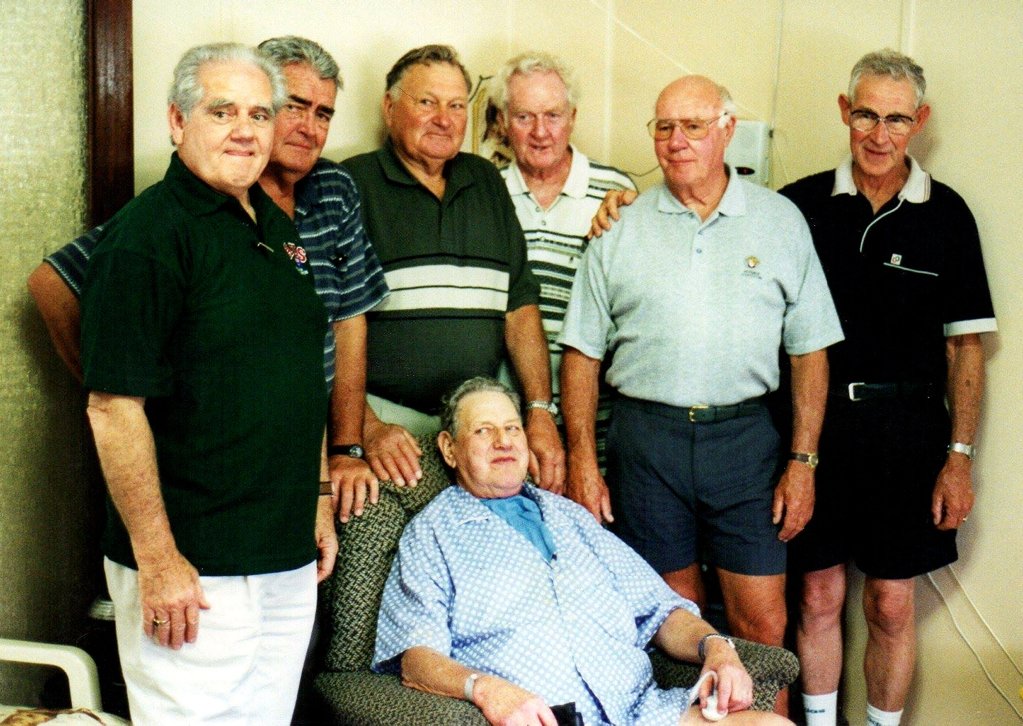
Eighteen years ago Class 9 /1951 from the Penrith Police College held the final get together with my father Keith Holstein as he was too sick to travel to a reunion. The group changed their plans and visited dad at home. He passed away 18 years ago today. Sadly missed.

Keith HOLSTEIN: Class 9 /1951 from the Penrith College held the final get together with my father Keith Holstein as he was too sick to travel to a reunion. The group changed their plans and visited dad at home.

( L-R at rear ) ?, ?, ?, ?, ?, Eric MAURER # 7134


[divider_dotted]


Government Gazette of the State of New South Wales (Sydney, NSW : 1901 – 2001), Friday 21 June 1968 (No.76), page 2537


Department of Mines, Sydney, 21st June, 1968.

APPOINTMENT

HIS Excellency the Governor, with the advice of the Executive Council, and in pursuance of the provisions of section 6, Mining Act, 1906, as amended, has approved of the appointment of Sgt 3rd Class Keith Stanley Holstein, Officer-in-Charge of Police, Nundle, as Warden’s Clerk, Mining Registrar and Officer authorized to issue Miner’s Rights and Business Licenses at that place, such appointment to take effect on and from 12th February, 1968, vice Senior Constable Victor John Feltis.

(Ms 68-3984).

WAL. FIFE, Minister for Mines.

https://trove.nla.gov.au/newspaper/article/220062637

[divider_dotted]


Jennifer Louise EDGERTON

 Jennifer Louise EDGERTON

aka  Jenny

( Late of Cowra & formerly of Moama, NSW )

New South Wales Police Force

Goulburn Police Academy Class # DPP 10 ( Class 4 ) ( Class 284 )

Regd. # 35468


Rank:  Commenced Training at Goulburn Police Academy on ? ? ?

Probationary Constable – appointed Friday 21 December 2001

Constable – appointed ? ? ?

Constable 1st Class – appointed ? ? ?

Senior Constable – appointed ? ? ?


Final Rank:  Senior Constable


Stations?, Central Coast, Northern Beaches, Cootamundra L.A.C. – Young, Deniliquin L.A.C. – Moama


ServiceFrom pre 21 December 2001 to  Friday  14 August 2015


Awards:  No find on It’s An Honour


Born:  Saturday 12 September 1970

Died on:  Friday  14 August 2015 during the morning

Cause:  Cancer

Age:  44 years, 11 months, 2 days


Funeral date:   Friday  21 August 2015 @ 2pm ( wear blue jeans & AC/DC t-shirt )

Funeral location:  St John’s Anglican Church, 98 Kendall St, Cowra


Buried at:  Cremated

Memorial 1: NSW Police force Service Memorial Wall, Sydney Police Centre, Surry Hills, A8 ( right wall )

Memorial 2: Police Memorial Wall at the new Deniliquin police station, Charlotte St ( February 2018 )

the Thin Blue Line Rose


JENNIFER is NOT mentioned on the Police Wall of Remembrance  *NEED MORE INFO


I regret to advise the death of Serving member, Senior Constable Jennifer Louise EDGERTON, this morning – Friday 14 August 2015.


EDGERTON Jennifer “Jenny”

Passed away 14th August 2015, aged 44 years.

Late of Cowra & formerly of Moama.

Beloved partner of Klint & loving mother of Connor & Cooper.

Beloved daughter of Ross Edgerton & Lois Camps (Dec) & sister of Suzanne & Daniel (Dec).


Jenny’s family & friends are respectfully invited to attend her funeral to be held at St John’s Anglican Church, Cowra, commencing at 2.00pm on Friday 21st August 2015.

Thence for private cremation.

By request, please attend wearing blue jeans & AC/DC t-shirt, if possible.


2/1/2019, Deniliquin Times.

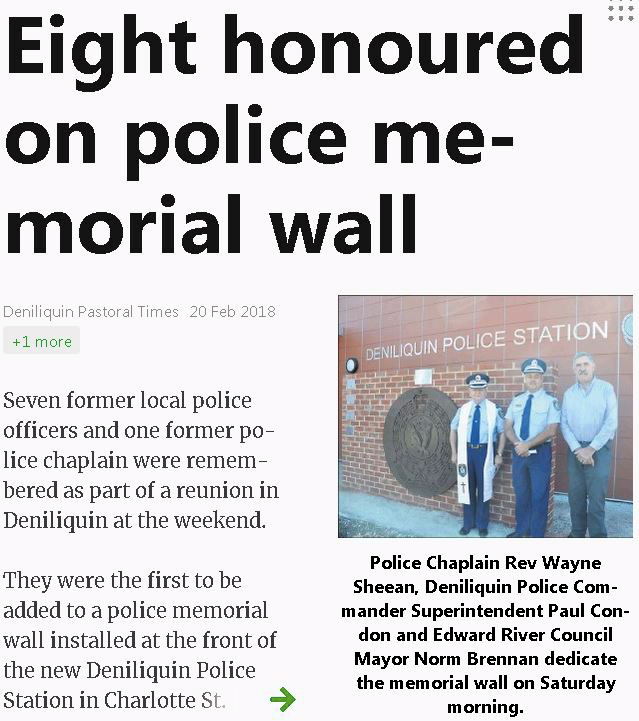
Eight honoured on police memorial wall’ –

Seven former local police officers and a former police chaplain were honoured during a police reunion in Deniliquin.
They were the first to be added to the police memorial wall at the new Deniliquin police station.
Honoured were
Constable Charles Chapman (died 5/3/1866),
Senior Const James Morrison (19/1/1898),
Senior Const Thomas Smith (19/4/1910),
Superintendent Henry Grugeon (10/1/1911),
Sergeant George Thomas Whiteley (25/3/1931),
Detective Senior Const Risto Vic Baltoski (2/1/1989) and
Senior Const Jennifer Louise Edgerton (August 2015) and

Rev David Bond.


HARRY GRUGEON


Ted Collins (R.I.P.) May I say this. Jennifer.
I nursed you as a baby.
Played cricket with your dad.
Enjoy car racing with dad and uncle Robert. Reggie Renault was the go.
You chose a job that I chose too.
I left Cowra when you were a child to pursue my dream.
You left many years later to pursue your dream.
Your life was cut short far too early.
I knew you as a princess a small child.
I never saw you in uniform but knowing your parents they were both immensely proud of you.
I speak not only as a former Cowra resident, and we both shared childhoods there, I also speak as a member of which you too belonged the NSW Police Force.. Rest In Peace Jennifer your duty has been done.
I hope you find peace.
I think Cowra has lost a cherished daughter.
My heart goes out to your parents and close relatives that I personally knew.
God bless and share the grief.
Stumpy.


Henry HODDER

 Henry HODDER

New South Wales Police Force

Regd. # ?

Rank:  Constable

Stations?, Broken Hill

Service:  From 1911 to 24/08/1914. 3 years

[blockquote]

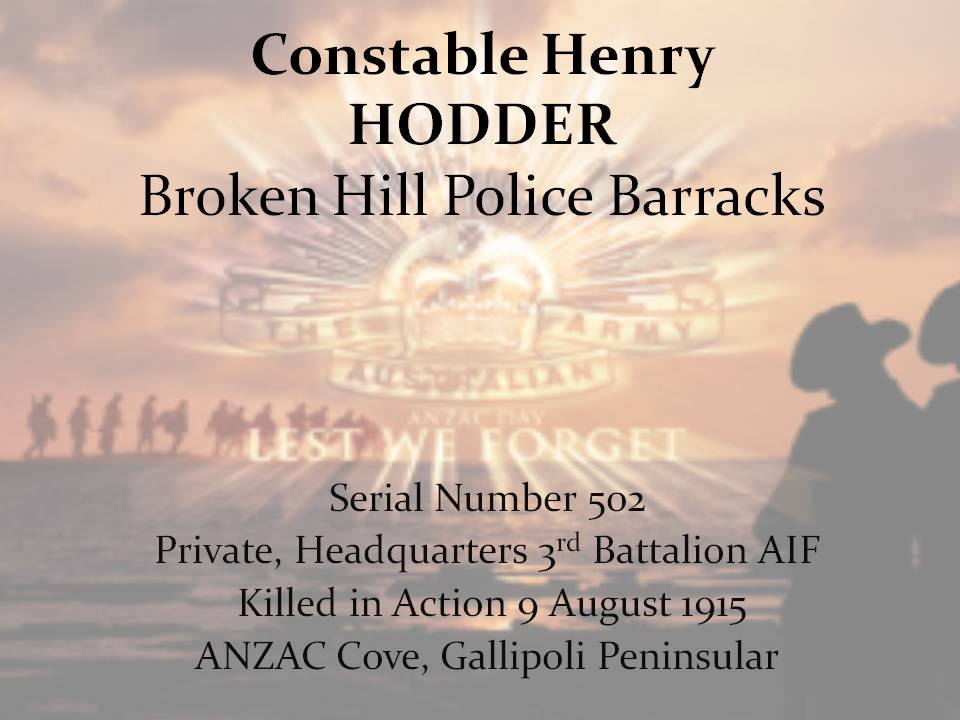
Regimental Serial #  502

Private,

Headquarters 3rd Battalion AIF

Killed In Action at Lone Pine

ANZAC Cove, Gallipoli Peninsular

[/blockquote]

Awards:  1914-15 Star, British War Medal, Victory Medal

Born: Orange, NSW, 1888

Died on:  9 August 1915

Cause:  Battle wounds in the Battle of Lone Pine WW I

Age: 26

Funeral date:  NIL

Funeral location:  NIL

Buried at:  K.I.A. & M.I.A.

Henry HODDER - R.I.P.
Henry HODDER – R.I.P.


[alert_blue]HENRY is NOT mentioned on the Police Wall of Remembrance[/alert_blue] * NOT JOB RELATED

 [divider_dotted]

 Funeral location:  NO FUNERAL.  K.I.A. & M.I.A.

Cemetery or memorial details: Lone Pine Memorial, Gallipoli Peninsula, Canakkale Province, Turkey

[divider_dotted]

Henry HODDER

Regimental number 502
Religion Church of England
Occupation Police constable
Address Police Barracks, Broken Hill, New South Wales
Marital status Single
Age at embarkation 26
Next of kin W Hodder, Wottomandara, via Cowra, New South Wales
Enlistment date 24 August 1914
Rank on enlistment Private
Unit name 10th Battalion, H Company
AWM Embarkation Roll number 23/27/1
Embarkation details Unit embarked from Adelaide, South Australia, on board Transport A11 Ascanius on 20 October 1914
Rank from Nominal Roll Driver
Unit from Nominal Roll 3rd Brigade Headquarters
Fate Killed in Action 9 August 1915
Other details War service: Egypt, Gallipoli

Medals: 1914-15 Star, British War Medal, Victory Medal

https://www.aif.adfa.edu.au/showPerson?pid=139450

[divider_dotted]


Hodder was attached to the Brigade Head Quarters and was hit about the end of June by a shell when in his dug out which blew off both his legs.  His mate, Gordon Farnham, dressed his wounds and passed him on to the Dressing Station.

Informant heard that he was in Egypt and still alive.

Ref. Pte. G. A.     Sergent, 1064,

10 A.I.F.

1st A. G. Hospital, Heliopolis, Cairo  ( 6. 12. 15 )

[divider_dotted]


Informant says he was told that Hodder had his leg blown off.  He cannot say who told him nor can he fix the date.  Hodder was a policeman at Broken Hill and he and several policemen came down with informant to Adelaide to enlist.  Hodder was at one time in the 3rd Bgde. Transport.

Ref:  Pte. A. R. Perry, 525,

10 A.I.F.  C. Co.  Gezira Hospital, CAIRO   5.1.16

[divider_dotted]


Informant received the following information from Bgde. H.Q.:-

Whilst Hodder was doing police duty on the beach at Anzac during July, a shell exploded in the dug-out almost severing both legs and arms from body.  Was sent back to Egypt and believed to have died in Alexandria.

Ref:  Pte. Tanner, 25,

3rd Bgde. H. Q.  Al liayat Convalescent Home, Helouan, Cairo.  3.12.15

[divider_dotted]


He and Pte D. Fisher were in Police Duty at Brigade headquarters on August 6 and were each hit by same shell.  Hodder had one or both legs blown off and Fisher lost one or more limbs.  Witness did not see this happen but heard it from mates and regarded it as absolutely ture, but could never find out what became of either of them subsequently.

About 5ft 10 or 11, fair, clean shave, enlisted in South Australia, stout build, about 12 or 13 stone.

Pte. A. A. Smith 1040  A Coy, 10, A.I.F.,  Malta  6.1.16

[divider_dotted]


Both legs were blown off by a shell explosion whilst in his dug-out behind the trenches to the right of Lone Pine.

He died in the dressing station on the beach.  Informant received the above account of Hodder’s death from J. Thomas, Stretcher-bearer, 10 A.I.F.

Ref:  Sgt. Neave, 131,  Sporting Club Hospital, Heliopolis, Cairo    10.1.16

[divider_dotted]


Court of Inquiry held in France 7.9.17 found this soldier K. in A. on or about 9.8.15.  No hospital admission nor place of burial available.

H.Q.  11.12.17

London 13.12.17


http://static.awm.gov.au/images/collection/pdf/RCDIG1047376–1-.pdf

[divider_dotted]

Aust Red Cross Enquiry pdf

The above pd[divider_dotted]f document is a ‘broader’ copy of the above text.


[divider_dotted]


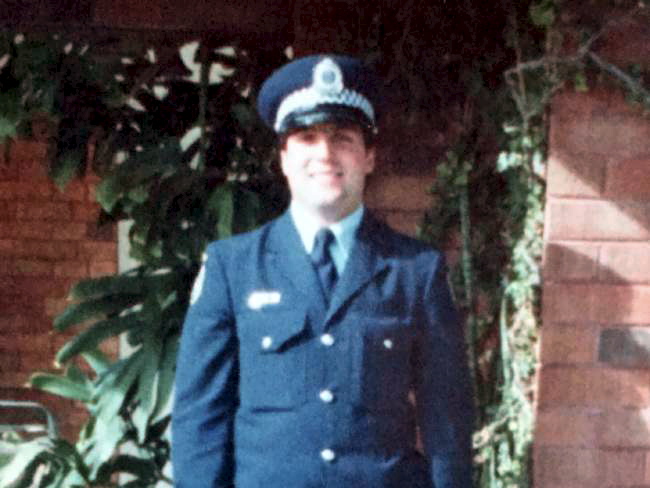
Richard Charles WHITTAKER

Richard Charles WHITTAKER

aka  Dick

NSW Redfern Police Academy # 162

“possible” relation in “the job”:  A.R. WHITTAKER, NSWPF # 8649

New South Wales Police Force

Regd. # 18588

Joined NSW Police Force via NSW Police Cadet system on 1 February 1977

Cadet # 3334


Rank:  NSW Police Cadet – commenced 1 February 1977 ( aged 16 years, 9 months, 16 days )

Probationary Constable – appointed 17 April 1979 ( 19 years, 0 months, 1 day )

Detective – appointed ? ? ? ( YES )

Constable – appointed ? ? ?

Constable 1st class – appointed 16 April 1984

Senior Constable – appointed 16 April 1988

Sergeant 3rd Class – appointed 27 September 1991


Final Rank:  Detective Sergeant – Death


Stations?, Gosford Drug Unit ( Brisbane Waters LAC ) – Death


Service:  From  1 February 1977  to  28 September 1991 = 14 years, 7 months, 27 Service

Time in Retirement:  0

Age at Retirement:  n/a


Awards:  No find on It’s An Honour


Born:  Saturday  16 April 1960

Died on:  Saturday  28 September 1991 @ Royal North Shore Hospital, NSW

CauseCerebral Haemorrhage

Age:  31 years, 5 months, 12 days


Funeral date? October 1991

Funeral location?


Buried at:  CREMATED:

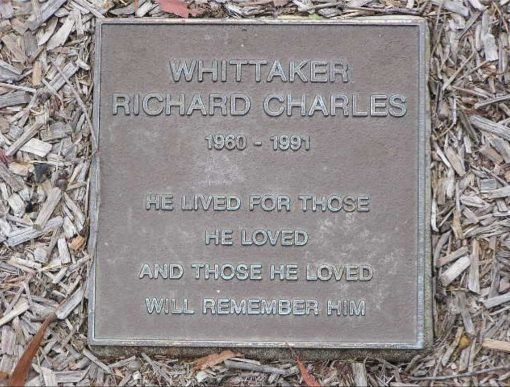
Ashes Interred in the Palmdale Lawn Cemetery & Memorial Park, Palmdale Rd, Palmdale, NSW

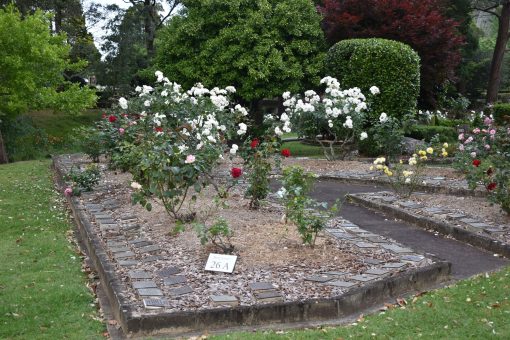
Rose Garden, 26A, Site 58


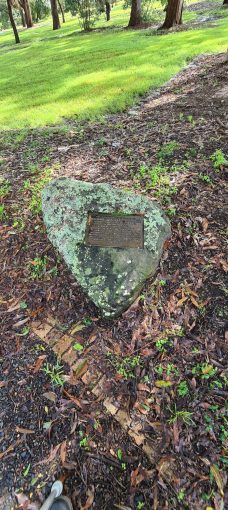
Memorial Plaque:  Point Frederick Pioneer Park, 1 Albany St, Pt Frederick, NSW

-33.449594  151.341945


 Memorial Plaque location


RICHARD WHITTAKER
RICHARD WHITTAKER

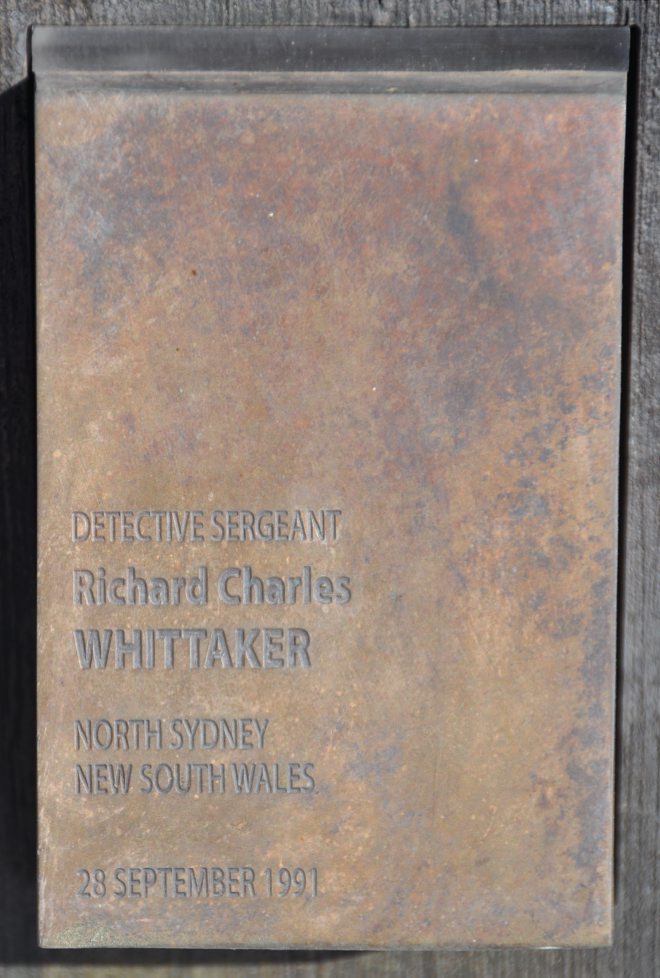
Touch plate for Richard Charles WHITTAKER at the National Police Wall of Remembrance

DICK IS mentioned on the Police Wall of Remembrance

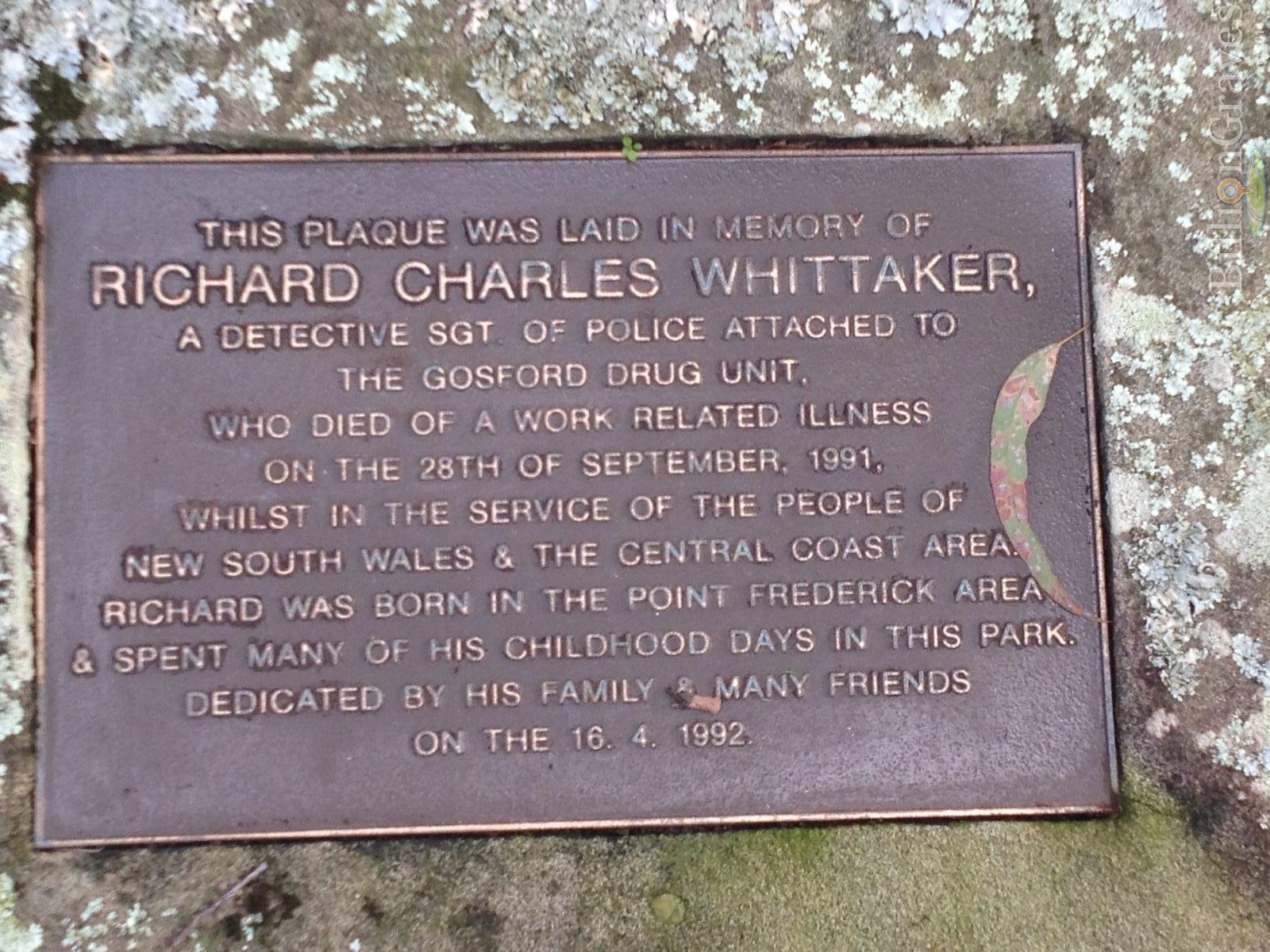
Grave plate: This plaque was laid in memory of RICHARD CHARLES WHITTAKER, a Detective Sgt of Police attached to the Gosford Drug Unit, who died of a work related illness on the 28th of September, 1991, whilst in the service of the people of New South Wales & the Central Coast area. Richard was born in the Point Frederick area and spent many of his childhood days in this park. Dedicated by his family & many friends on the 16. 4. 1992.
Memorial plaque: This plaque was laid in memory of RICHARD CHARLES WHITTAKER, a Detective Sgt of Police attached to the Gosford Drug Unit, who died of a work related illness on the 28th of September, 1991, whilst in the service of the people of New South Wales & the Central Coast area.
Richard was born in the Point Frederick area and spent many of his childhood days in this park.
Dedicated by his family & many friends on the 16. 4. 1992.


Richard Charles WHITTAKER - Memorial Plaque - Pt Frederick, ( Central Coast ), NSW, as of April 2022. Credit: Kevin Banister.
Richard Charles WHITTAKER – Memorial Plaque – Pt Frederick, ( Central Coast ), NSW, as of April 2022. Credit: Kevin Banister.

Richard Charles WHITTAKER - Memorial Plaque - Pt Frederick, ( Central Coast ), NSW, as of April 2022. Credit: Kevin Banister.
Memorial Plaque – Pt Frederick, ( Central Coast ), NSW, as of April 2022. Credit: Kevin Banister.


Richard Charles WHITTAKER - Grave location. Palmdale Cemetery, Palmdale, NSW
Richard Charles WHITTAKER – Grave location. Palmdale Cemetery, Palmdale, NSW

Richard Charles WHITTAKER - Grave location. Palmdale Cemetery, Palmdale, NSW
Richard Charles WHITTAKER – Grave location. Palmdale Cemetery, Palmdale, NSW


Before his death Detective Sergeant Whittaker and other Police had been involved in a major drug investigation which had resulted in the arrest of eighteen offenders. Corruption allegations were made by a number of the offenders resulting in a Police Internal Security Unit investigation.

During the protracted internal investigation the Sergeant was under enormous pressure and as a result suffered a cerebral haemorrhage.

He passed away at the Royal North Shore Hospital on 28 September 1991.

He was posthumously cleared of all allegations by Judge Allen at the Sydney District Court on 30 September 1991.

The Sergeant was born in 1960 and joined the New South Wales Police Service, via the NSW Police Cadet system on 1 February 1977 and was Attested, as a Probationary Constable on 17 April 1979.

At the time of his death he was attached to the Gosford Drug Unit.


‘Our boys haven’t been forgotten’: Policemen honoured in Brisbane Water row

September 15, 2015 3:16pm

(L-R) Sarah Matthews, Kylie Kerr and Tracey Holt remember their police officer partners at Gosford waterfront. Brisbane Water LAC officers will be taking to the water in honour of the policemen.

When Sarah Matthews returned home after her shift at Gosford Hospital on the evening of April 13, 2002 and spotted a row of waiting police cars she thought the neighbours were having a noisy party.

“It never struck me what was coming next,” remembers the emergency nurse who was told the worst — her fiancée Senior-Constable Chris Thornton had been killed on duty hours earlier.

“It didn’t hit me. Even when I was told. I don’t think that’s something that ever leaves you.”

This week Miss Matthews, Kylie Kerr and Tracey Holt will get together to remember their partners, Sen-Constable Thornton, Sen-Constable Peter Gordon Wilson and Sergeant Richard Whittaker, who all died on duty while with the Brisbane Water Local Area Command.

(L-R) Brisbane Water Inspector Paul Nicholls, Tracey Holt, Brisbane Water Commander Daniel Sullivan, Sarah Matthews and Kylie Kerr at Gosford Waterfront ahead of the NSW Police Legacy row. Picture: Mark Scott

On Thursday officers from Brisbane Water LAC will take part in a paddle to raise money for NSW Police Legacy to support the families of fallen officers.

“You never want to be a part of Legacy but now we are part of this unique group and without Legacy we wouldn’t have each other,” Miss Matthews said.

But for two of the women, the close bond was forged by their shared loss and haunting similarities in how their partners lost their lives.

Sen-Constable Thornton, 35, died in a motor vehicle accident while on patrol in Woy Woy in 2002, while Mrs Kerr’s long-term partner Sen-Constable Wilson, 41, was killed when he was hit by a car while carrying out speed checks on the M1 at Somersby in 2006.

Both men were based at Brisbane Water LAC, both died in car accidents on a Saturday night, and both had the same patrol car number — 202.

Senior Constable Peter Gordon Wilson with fiance Kylie Kerr.
Senior Constable Peter Gordon Wilson with fiancée Kylie Kerr.

“This special event means our boys haven’t been forgotten,” Miss Matthews said, adding that the support of Legacy has enabled her to move on. “You have to take that step forward. You can’t be angry, because that just eats away at you.”

Senior Constable Chris Thornton was killed on duty during a high-speed pursuit at Woy Woy in 2002.

“This special event means our boys haven’t been forgotten,” Miss Matthews said, adding that the support of Legacy has enabled her to move on. “You have to take that step forward. You can’t be angry, because that just eats away at you.”

“This special event means our boys haven’t been forgotten,” Miss Matthews said, adding that the support of Legacy has enabled her to move on. “You have to take that step forward. You can’t be angry, because that just eats away at you.”

Mrs Holt, whose husband Sgt Whittaker was stationed at the Gosford drug unit and was involved in drug investigations at the time of his death when he died from a brain haemorrhage in 1991, said the annual paddle is a “beautiful day”. “It is amazing the effort Daniel Sullivan and the team put in to keep the memory going of old work mates and have a good time doing it,” she said.

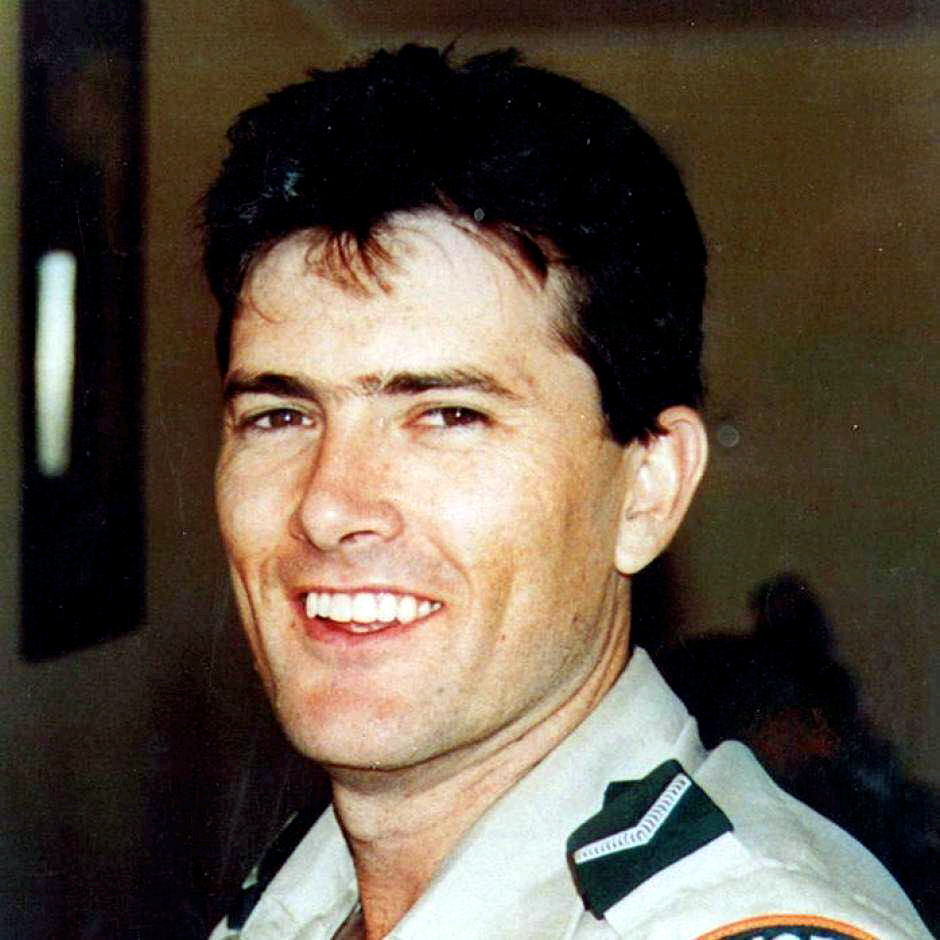
Sergeant Richard Whittaker who died on duty with Brisbane Water Local Area Command in 1991. Picture: Supplied

http://www.dailytelegraph.com.au/newslocal/central-coast/our-boys-havent-been-forgotten-policemen-honoured-in-brisbane-water-row/story-fngr8h0p-1227528821582


Canberra Times (ACT : 1926 – 1995),

Tuesday 1 October 1991, page 4

Drug bribery allegation ‘killed officer’

SYDNEY: The stress of unfounded corruption allegations killed a policeman who suffered a stroke at the weekend, according to the Police Association.

The association’s president, Tony Day, said yesterday that Gosford-based Detective Senior Constable Richard Whittaker, who was promoted to detective sergeant last Friday, had been implicated in a bribery conspiracy by a drug dealer.

Yesterday, the dealer, an industrial chemist, was sentenced to a minimum of 11 years jail after pleading guilty to manufacturing and supplying amphetamines with a street value of more than $4 million.

Handing down the sentence in Darlinghurst Supreme Court, Justice Allen said John Oldfield, 52, of Winston Hills in Sydney’s west, had stated he had tried to bribe a police officer through a contact known as “M” in November, 1990.

After the alleged bribe attempt had failed, Oldfield had gone to the Police Internal Security division and made a detailed statement, implicating the officer. The judge said he was satisfied the detective knew nothing about the alleged bribe.

Mr. Day said the Police Internal Security division investigation into Oldfield’s allegations had been “dubious”.

“Every crim in NSW knows that if they want their case adjourned they just have to implicate the police, and there will have to be an investigation,” he said.

“Eighty per cent of corruption and bribery charges are disproved.”

Detective Whittaker, 31, was married with two-year-old twin daughters.

Mr Day said the Oldfield affair had played a major role in causing Detective Whittaker stress, resulting in his death.

http://trove.nla.gov.au/newspaper/article/134156388


Past events in Remembrance of Dick Whittaker.

Paddle for Police Legacy

The Brisbane Water LAC has tragically lost three staff members in the execution of their duty: Sergeant Dick Whittaker and Senior Constables Gordy Wilson and Chris Thornton. The 12 September is the annual sports charity day to remember these officers.

Paddling from Ocean Beach Surf Club to Bluetongue Stadium along the Brisbane Water on the NSW Central Coast (approximately 15km).

When: Thu September 12 2013    06:0005:30
http://www.policelegacynsw.org.au/legacy-events/

Canberra Times (ACT : 1926 – 1995),

Tuesday 1 October 1991, page 4

Drug bribery allegation ‘ killed officer ‘

SYDNEY: The stress of unfounded corruption allegations killed a policeman who suffered a stroke at the weekend, according to the Police Association.

The association’s president, Tony Day, said yesterday that Gosford-based Detective Senior Constable Richard Whittaker, who was promoted to detective sergeant last Friday, had been implicated in a bribery conspiracy by a drug dealer.

Yesterday, the dealer, an industrial chemist, was sentenced to a minimum of 11 years jail after pleading guilty to manufacturing and supplying amphetamines with a street value of more than $4 million.

Handing down the sentence in Darlinghurst Supreme Court, Justice Allen said John Oldfield, 52, of Winston Hills in Sydney’s west, had stated he had tried to bribe a police officer through a contact known as “M” in November, 1990.

After the alleged bribe attempt had failed, Oldfield had gone to the Police Internal Security division and made a detailed statement, implicating the officer. The judge said he was satisfied the detective knew nothing about the alleged bribe.

Mr. Day said the Police Internal Security division investigation into Oldfield’s allegations had been “dubious”.

“Every crim in NSW knows that if they want their case adjourned they just have to implicate the police, and there will have to be an investigation,” he said.

“Eighty per cent of corruption and bribery charges are disproved.”

Detective Whittaker, 31, was married with two-year-old twin daughters.

Mr Day said the Oldfield affair had played a major role in causing Detective Whittaker stress, resulting in his death.

https://trove.nla.gov.au/newspaper/article/134156388


Glen Anthony HUITSON

Glen Anthony HUITSON, BM VA

aka  Japalyi

Northern Territory Police Force

Regd. # 1520

Rank:  Brevet Sergeant

Stations?, O.I.C. – Adelaide River Police Stn

ServiceFrom  ? January 1987 to  3 August 2000 = 13+ years Service

Awards:  National Medal – granted 6 August 1999

Bravery Medal – BM – granted 14 February 2000

Valour Award & bar – VA for act performed in February 1999

Born:  20 November 1961, Bridgetown, W.A.

Died on:  3 August 2000

Cause:  Murdered – shot

Location:  Stuart Hwy & Old Bynoe Rd, Livingstone, N.T.

Age:  37

Funeral date:  Saturday  7 August 1999

Funeral location:  St Mary’s Cathedral, Darwin

Buried at:  Cremated.  Ashes scattered at Daly River Crossing, N.T.

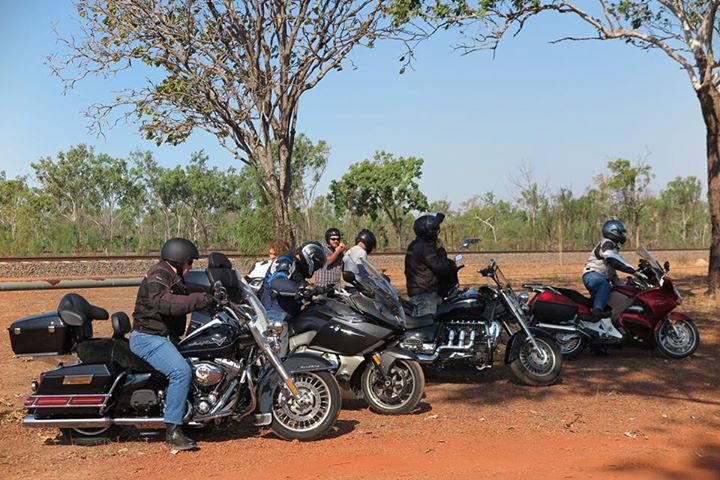
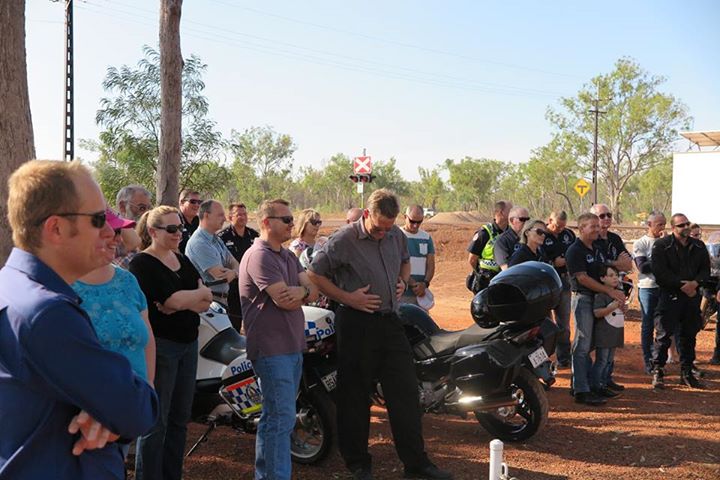
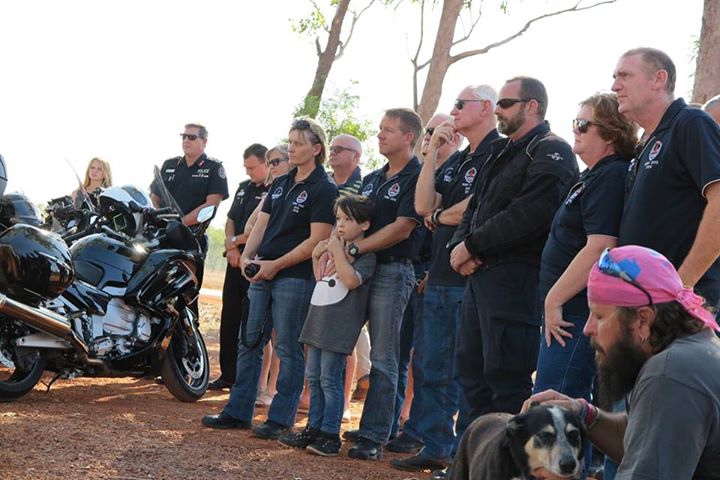
Memorial Service:  Saturday  3 August 2019 ( 20th Anniversary ) 10.30am –

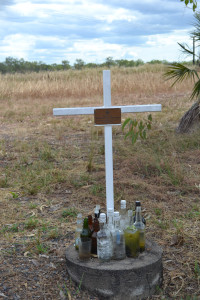
Glen Huitson Memorial, cnr Stuart Hwy & Old Bynoe Rd, Livingstone, N.T.

Glen HUITSON - NTPolice


Brevet Sergeant Glen HUITSON

[alert_green]GLEN IS mentioned on the Police Wall of Remembrance[/alert_green]

[divider_dotted]


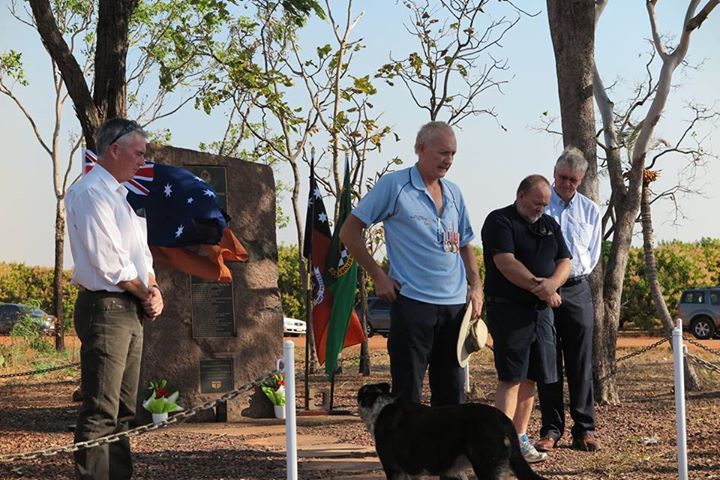
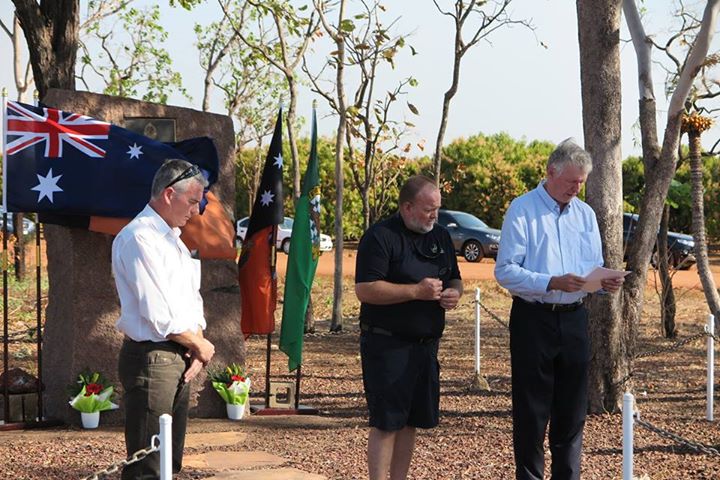
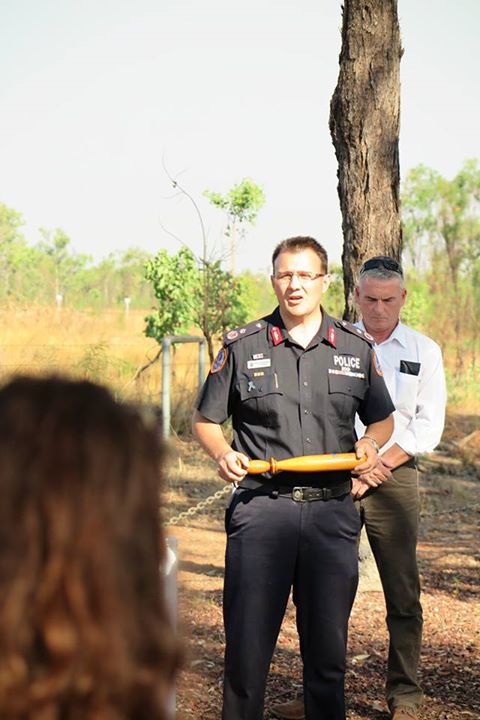
Brevet Sergeant Glen Huitson memorial, 3 August 2015

 [divider_dotted]


???? GLEN HUITSON MEMORIAL ????

TWENTY YEAR REMEMBRANCE SERVICE

Saturday 3rd August 2019 will mark the 20th anniversary of the death of Brevet Sergeant Glen Huitson who was killed in the line of duty in 1999 whilst stationed at Adelaide River.

We will honour Glen with a gathering on Saturday 3rd August 2019 from 10.30am at the Glen Huitson Memorial, located at the corner of the Stuart Highway and Old Bynoe Road, Livingstone, N.T.

All current and former members are invited to join Glen’s family in remembering a husband, father, son, and workmate who was tragically taken from his family 20 years ago.


[divider_dotted]


Glen Anthony HUITSON – Inquest document

[divider_dotted]

Glen HUITSON joined the Northern Territory in January 1987.  He served in both Southern and Northern districts of the Northern Territory.

During his service in the Northern Territory Police, Glen Huitson received a Commendation from the Commissioner of Police on 17 March 1994 when he attended a disturbance at a Community near Alice Springs.  He disarmed a drunken person who was armed with a knife star picket and was threatening another person with a billy of boiling water.

In February of 1999 in Litchfield Park, Glen Huitson disarmed an armed man who was threatening the driver and passengers of a bus.  He received a Valour Award over this incident.

On 3 August 1999 Glen Huitson was on duty at a road block on the Stuart Highway, 60 kms south of Darwin, in bushland.

There were on watch for an armed offender who had already shot and wounded two other persons several kilometres away during the previous night.

The armed offender had managed to come through bush on one side of the road block where he opened fire with a .30/30 calibre rifle.  He fired the first round into the back of a civilian then a second shot at Huitson which struck him and was fatal.

For this incident he received the Australian Bravery Medal and a bar to his Valour Medal.

http://www.npm.org.au/huitson

[divider_dotted]


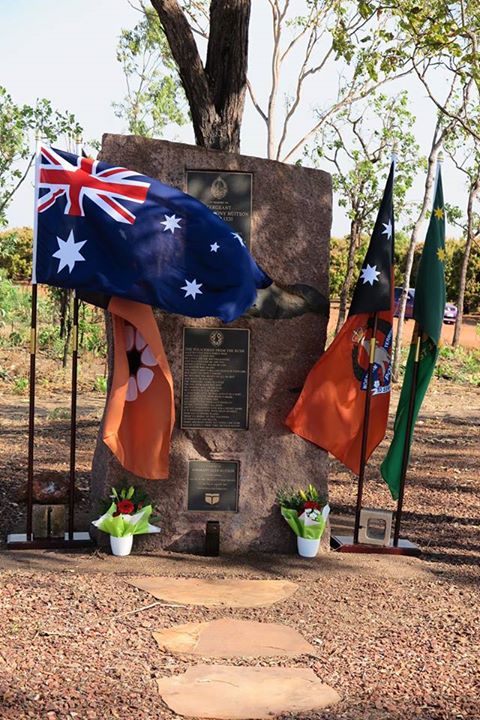
Glen Huitson Park

Front Inscription Glen Huitson Park This park was named in memory of the late Sgt. Glen Anthony Huitson BM,VA, Service No. 1520 on 3 August 2000. Sgt. Huitson was the officer in charge of the Adelaide River Police Station. He died on 3rd August 1999 as a result of gun shot wounds received in the execution of his duties whilst manning a roadblock on the corner of the Stuart Highway and Old Bynoe Road. Twice Decorated as a serving Police Officer, Glen Huitson lived his personal life with the same intensity, and was an integral part of community life in Adelaide River. His untimely death has a left a gap in this community which will never be filled. Glen is survived by his Widow Lisa and children Joey & Ruby. Citizens of the Coomalie Region joined with serving Members of the Northern Territory Police Force at this site on 3rd August 2001 to dedicate this memorial stone on the occasion of the second anniversary of Sgt. Huitson`s death. We honour the life and the achievements of a remarkable citizen. May He Rest In Peace
Glen HUITSON park – memorial plaque

This park was named in memory of the late Sgt. Glen Anthony Huitson BM, VA, Service No. 1520 on 3 August 2000.

Sgt. Huitson was the officer in charge of the Adelaide River Police Station.  He died on 3rd August 1999 as a result of gun shot wounds received in the execution of his duties whilst manning a roadblock on the corner of the Stuart Highway and Old Bynoe Road.

Twice Decorated as a serving Police Officer, Glen Huitson lived his personal life with the same intensity, and was an integral part of community life in Adelaide River.  His untimely death has left a gap in this community which will never be filled.  Glen is survived by his Widow Lisa and children Joey & Ruby.

Citizens of the Coomalie Region joined with serving Members of the Northern Territory Police Force at this site on 3rd August 2001 to dedicate this memorial stone on the occasion of the second anniversary of Sgt. Huitson’s death.

We honour the life and the achievements of a remarkable citizen.

May He Rest In Peace

http://www.gdaustralia.com/july2015photos.html/content/IMG_8914_large.html

[divider_dotted]


Huitson Shooting

“On 3rd August 1999, at about 10:45 am, there was a shooting incident on the Stuart Highway at the corner of Old Bynoe Road in the Darwin rural district. In the course of the incident, two persons were shot dead. One, Glen Anthony Huitson, was a Sergeant of police on duty at the time he was killed.” (Coroner’s Findings)

Glen was performing duties on a roadblock with his partner in Livingstone at the Old Bynoe Road Turn off on the Stuart Highway, 55 Kilometres south of Darwin. They were stopping traffic entering the police cordon following a shooting incident the previous evening when the offender Rodney Ansell ambushed the roadblock shooting Huitson fataly and wounding a civilian in the back with his 30/30 rifle. For this incident he received the Australia Bravery Medal and a bar to his Valour Medal posthumously.

On the night of the 2nd of August 1999 Rodney William Ansell and Cherrie Ann Hewson went to a property on Kentish Road. Ansell fired 6 shots at a caravan occupied by Stephen Robertson and Lee-Anne Musgrave who were minding the property. A neighbour, David Hobden, drove his truck over to see what was happening and Ansell fired through the windscreen blinding him. He ran to his residence and another occupant, Brian Williams, ran over to stop Ansell who was trying to steal Hobden’s truck. Ansell shot Williams in the hand. He lost an index finger and shots were fired at his house. Ansell appeared to be yelling about child abduction which was a delusion that had manifested itself during his amphetamine addiction. He fled into scrubland with a 30/30 rifle and Hobden’s shotgun.

Police responded and set up a forward command post in the area. Roadblocks were set up on the Stuart Highway and other roads. Sergeant Glen Huitson and Senior Constable James O’Brien manned the roadblock on the corner of Old Bynoe Road and the Stuart Highway armed with their Glock Pistols a shotgun and a .308 rifle. It appears that during the night Ansell had escaped the cordon but for some reason chose to sneak up on the roadblock at Old Bynoe Road. Hewson had left the area.

At about 10.45 am on the 3rd of August 1999 the roadblock at Old Bynoe Road was still in place. A local man had approached the road block to talk to the police members and was leaning on the police vehicle when suddenly he was shot in the pelvis from behind a large water pipe in nearby scrub. Huitson used the shotgun from the police car and O’Brien returned fire with his Glock pistol. Huitson was hit by a 30/30 round and fell to the ground. O’Brien reloaded the shotgun and returned fire. He called on Ansell to put his weapons down but he called back “Your all dead”.

In response to the gun battle two Territory Response Group vehicles raced to the scene. Just prior to the roadblock the first vehicle swerved and braked and was struck by the second vehicle causing it to roll over. As police exited both vehicles and began to take up positions Ansell got up on one knee to position himself to fire at the arriving police members. This left him exposed to fire from O’Brien and the shotgun fire finally stopped him. As the Coroner, Mr Wallace, said “There is little doubt his (O’Brien’s) bravery prevented further loss of life”.

It was later determined that there were seven entry wounds on his body from return fire from Huitson and O’Brien and numerous grazes. His covered position behind the water pipe and a small tree had protected Ansell from more serious injury until he was forced to change position.

Background – Glen Huitson

Glen Huitson joined the Northern Territory Police in January 1987, served in both Southern and Northern districts and was stationed at Adelaide River Police Station.

He received a Commendation from the Commissioner of Police on 17 March 1944 when he attended a disturbance at a Community near Alice Springs. He disarmed a drunken person who was armed with a knife star picket and was threatening another person with a billy of boiling water.

In February of 1999 in Litchfield Park Glen Huitson disarmed an armed man who was threatening the driver and passengers of a bus. He received a Valour Award over this incident.

Glen was survived by his wife Lisa and young children Joseph (2) and Ruby (6 months).

[divider_dotted]

HUITSON, Glen

This page only contains a eulogy.  If you have material that can be added contact the webmaster.
FUNERAL SERVICE FOR SERGEANT GLEN ANTHONY HUITSON
ST MARY’S CATHEDRAL, DARWIN, NORTHERN TERRITORY
SATURDAY 7 AUGUST 1999
EULOGY GIVEN BY COMMISSIONER BRIAN BATESSERGEANT GLEN HUITSON WAS A DEVOTED AND LOVING HUSBAND AND FATHER OF LISA, JOSEPH AND RUBY. I CAN ONLY CONVEY THE HEARTFELT CONDOLENCES AND SYMPATHY OF THE NORTHERN TERRITORY POLICE FORCE AND INDEED THE COMMUNITY OF THE NORTHERN TERRITORY TO GLEN’S WIFE, CHILDREN AND BOTH THEIR FAMILIES. WE WILL DO EVERYTHING WE CAN TO HELP THEM, NOT ONLY THROUGH THIS TIME BUT IN THE TIME TO COME.IN HIS LETTER OF APPLICATION TO JOIN THE NORTHERN TERRITORY POLICE FORCE, SERGEANT GLEN HUITSON SAID, AND I QUOTE:“I WAS BORN ON 20 NOVEMBER 1961 IN BRIDGETOWN, WESTERN AUSTRALIA, THE OLDEST SON IN A FAMILY OF THREE. MY PARENTS OWNED AND OPERATED A SMALL TIN MINE ON THE OUTSKIRTS OF GREENBUSHES WHERE I LIVED FOR 12 YEARS. GREEN BUSHES WAS A GREAT ENVIRONMENT IN WHICH TO GROW UP AS A CHILD, BEING A SMALL TOWN SURROUNDED BY BUSH. WE SPENT MANY HOURS EXPLORING AND DISCOVERING NATURE.LOOKING BACK ON MY CHILDHOOD I AM GRATEFUL TO MY PARENTS FOR THE STRICT BUT FAIR METHOD OF INSTILLING IN ME A SET OF MORAL STANDARDS AND PRINCIPLES IN KEEPING WITH COMMUNITY IDEALS. THIS GUIDANCE WAS TO BENEFIT ME LATER IN LIFE.”

GLEN GOES ON TO TALK ABOUT HIS GROWING UP YEARS AND HIS EARLY EMPLOYMENT, PARTICULARLY WHEN THE FAMILY MOVED IN 1978 TO BUSSLETON WHERE HE WAS INVOLVED IN THE LOCAL FOOTBALL CLUB AS A PLAYER AND AN ADMINISTRATOR, AS A COACH AND UMPIRE AND FOR THREE YEARS AS A FIREMAN IN THE VOLUNTEER FIRE BRIGADE AND WITH THE LOCAL ROSTRUM CLUB. TOWARDS THE END OF THIS LETTER OF APPLICATION GLEN SAYS, AND I AGAIN QUOTE:

“APPROXIMATELY FIVE YEARS AGO I DECIDED THAT IF AT THE AGE OF 25 I WAS STILL DISAPPOINTED WITH THE WAY MY CAREER WAS HEADING, THIS WOULD BE THE TIME TO MAKE A START IN A POSITION IN LIFE THAT I WOULD ENJOY. THE MOST HONEST WAY I FOUND TO FIND A CAREER I WANTED WAS TO SIT DOWN WITH A PEN AND PAPER AND WRITE DOWN JOBS IN WHICH I WOULD WORK FOR NO FINANCIAL REWARD. MY LIST CONTAINED THE FOLLOWING: FISHERIES INSPECTOR, CUSTOMS OFFICER, AMBULANCE OFFICER, WELFARE WORKER AND A POLICE OFFICER.

SINCE WRITING DOWN THAT LIST I HAVE WORKED TOWARDS EQUIPPING MYSELF FOR ONE OF THOSE POSITIONS. THIS HAS INCLUDED THE FOLLOWING: BEING A FIREMAN WITH OUR LOCAL VOLUNTEER FIRE BRIGADE, ACHIEVING A FIRST AID CERTIFICATE WITH A ST JOHN AMBULANCE BRIGADE, INVOLVING MYSELF HEAVILY IN COMMUNITY AFFAIRS, MAINLY THROUGH SPORT, AND INVOLVING MYSELF IN PUBLIC SPEAKING. AFTER READING ABOUT THE POSITION OF POLICE OFFICER FOR THE NORTHERN TERRITORY I DECIDED THAT THIS WOULD INDEED OFFER ME THE CAREER I HAVE BEEN LOOKING FOR. AS A POLICE OFFICER IN THE NORTHERN TERRITORY I WOULD BE ABLE TO MAKE A SIGNIFICANT CONTRIBUTION IN MAKING THE NORTHERN TERRITORY A GREAT PLACE TO LIVE IN, THEREBY ACHIEVING MY GOAL OF JOB SATISFACTION.”

ALL OF US WITHIN THE POLICE FORCE AND INDEED THE DEPARTMENT OF POLICE, FIRE AND EMERGENCY SERVICES, ARE EXTREMELY SHOCKED BY THE DEATH OF SERGEANT GLEN HUITSON. HIS LOSS IS A TRAGEDY FOR THE POLICE SERVICE AND THERE ARE SIMPLY NO WORDS TO DESCRIBE THAT SENSE OF LOSS, THE WASTE AND THE TRAGEDY THAT THE WHOLE POLICE FAMILY FEELS TODAY.

I WOULD ALSO ACKNOWLEDGE THE PRESENCE HERE TODAY OF SERVING POLICE OFFICERS FROM ALL STATES AND TERRITORIES OF AUSTRALIA AND NEW ZEALAND.

IT IS TRITE TO SAY THAT ALL POLICE FAMILIES KNOW THE DANGERS OF POLICE WORK, BUT NOTHING CAN EVER PREPARE US FOR SOMETHING LIKE GLEN’S DEATH.

NO POLICE FORCE COULD BE MORE PROUD THAN TO HAVE IN ITS RANKS AN OFFICER OF THE CALIBRE OF GLEN HUITSON. HE TOUCHED AND AFFECTED SO MANY PEOPLE’S LIVES, NOT ONLY WITHIN THE POLICE FORCE BUT WITHIN THE COMMUNITY OF THE NORTHERN TERRITORY THAT HE SWORE TO SERVE AND PROTECT.

AND HE DID MORE THAN THAT – BECAUSE ON NO LESS THAN THREE OCCASIONS, THE THIRD TRAGICALLY RESULTING IN HIS DEATH, HE WAS CONFRONTED WITH LIFE-THREATENING SITUATIONS.

GLEN RECEIVED MY COMMENDATION FOR AN INCIDENT ON 17 MARCH 1994 WHEN HE ATTENDED A DISTURBANCE AT A COMMUNITY NEAR ALICE SPRINGS.

HE DISARMED A DRUNKEN PERSON WHO WAS ARMED WITH A KNIFE, STEEL BAR, NULLA NULLA AND A STAR PICKET. THE PERSON WAS THREATENING ANOTHER COMMUNITY MEMBER WITH A BILLY OF BOILING WATER. WITHOUT REGARD FOR HIS OWN SAFETY SERGEANT HUITSON PREVENTED THIS PERSON THROWING THE BOILING WATER BUT IN FACT WAS STRUCK AND COVERED IN BOILING WATER HIMSELF OVER HIS UPPER BACK, RIGHT UPPER ARM AND LEFT FOREARM. HIS QUICK ACTIONS ALLOWED OTHER POLICE OFFICERS TO RESTRAIN THE OFFENDER AND REMOVE HIM AS A THREAT TO THE COMMUNITY. THE BURNS GLEN RECEIVED CAUSED HIM CONSIDERABLE PAIN AND SUFFERING AND HE REQUIRED HOSPITAL TREATMENT.

AND THEN THERE WAS THE INCIDENT IN FEBRUARY THIS YEAR WHEN SERGEANT HUITSON DISARMED AN ARMED MAN WHO HAD JUMPED ON THE BULLBAR OF A TOURIST BUS IN LITCHFIELD PARK.

THE MAN WAS UNDER THE INFLUENCE OF DRUGS AND ARMED WITH A LOADED .22 RIFLE AND WAS THREATENING THE DRIVER AND PASSENGERS OF THE BUS ON BATCHELOR ROAD.

GLEN KNEW THAT HELP WAS ABOUT 15 MINUTES AWAY AND WAS DEEPLY CONCERNED FOR THE SAFETY OF THE DRIVER, PASSENGERS AND PASSING MOTORISTS. HE SINGLE-HANDEDLY ATTEMPTED TO DIRECT TRAFFIC, ENGAGE THE MAN IN CONVERSATION AND KEEP POLICE COMMUNICATIONS ADVISED OF THE SITUATION. HE THEN APPROACHED THE MAN TO DISTRACT HIS ATTENTION FROM THE BUS AND PASSENGERS, PLACING HIMSELF AT CONSIDERABLE RISK.

GLEN ENGAGED THE MAN IN CONVERSATION FOR ABOUT 15 MINUTES AND EVENTUALLY CONVINCED HIM TO PLACE THE FIREARM ON THE BULLBAR OF THE BUS AND WALK A SHORT DISTANCE AWAY WHERE GLEN TACKLED HIM TO THE GROUND AND WAS THEN HELPED BY OTHER POLICE WHO HAD JUST ARRIVED. THIS WAS WITHOUT DOUBT AN OUTSTANDING EXAMPLE OF PERSONAL COURAGE, AND SERGEANT HUITSON WAS IN FACT DUE TO RECEIVE A VALOUR AWARD OVER THAT INCIDENT.

IN SERGEANT GLEN HUITSON THE NORTHERN TERRITORY POLICE HAD A TRUE BUSH COPPER AND AN IDEAL ROLE MODEL FOR OTHER POLICE.

HE WAS A TOTAL PROFESSIONAL WHO GOT ALONG WITH COLLEAGUES AND THE PUBLIC ALIKE AND WAS EXTREMELY POPULAR WITH ABORIGINAL PEOPLE HE WORKED WITH, IN THE COMMUNITIES ACROSS THE TERRITORY. WHAT A TREMENDOUS LOSS HE IS, NOT ONLY TO THIS POLICE FORCE BUT TO THE TERRITORY.

IN CLOSING THERE IS PERHAPS NO BETTER WAY TO TALK ABOUT THIS OUTSTANDING AND COMPASSIONATE POLICE OFFICER THAN BY TELLING YOU ABOUT A REPORT HE RECENTLY SUBMITTED, AND I THINK IT IS IMPORTANT I SHARE THIS WITH YOU ALL.

GLEN HAD RESEARCHED THE HISTORY OF THE NORTHERN TERRITORY POLICE SERVICE AND HE FOUND MANY EXAMPLES OF UNRECOGNISED SERVICE TO THE COMMUNITY BY FORMER MEMBERS, AND PARTICULARLY POLICE TRACKERS. HE SAID IN HIS MEMO THAT THIS UNRECOGNISED WORK WAS, AT THE TIME, NO DOUBT CONSIDERED TO BE JUST PART OF THE JOB, AND UNLESS YOU HAPPENED TO DIE ON DUTY OR REACHED A HIGH RANK, VERY LITTLE WAS DONE TO PRESERVE THE MEMORY OF THOSE MANY FORMER MEMBERS.

GLEN APPRECIATED THE SERENITY AND BEAUTY OF THE ADELAIDE RIVER WAR CEMETERY WHERE HE ALSO NOTICED SEVERAL PLAQUES DEDICATED TO MILITARY MEMBERS. HE HAD SEVERAL IDEAS TO HONOUR THE MEMORY OF POLICE MEMBERS, INCLUDING PLANTING TREES WITH PLAQUES DEDICATED TO MEMBERS AND THE ESTABLISHMENT OF A MEMORIAL AVENUE IN OUR POLICE COMPLEX, THE PETER McAULAY CENTRE. HE SUGGESTED NEW PLAQUES COULD BE DEDICATED ANNUALLY ON A SIGNIFICANT DAY, FOR EXAMPLE, POLICE REMEMBRANCE DAY. THERE TOO, HE EMPHASISED THE WHOLE COMMUNITY SHOULD BE INVITED AND INVOLVED.

IT IS MY INTENTION TO HONOUR GLEN’S SUGGESTIONS IN THAT REPORT, AND ALSO PAY TRIBUTE TO HIM, IN A WAY I FEEL SURE HE AND YOU WOULD APPROVE OF.

FINALLY, IN THE WORDS OF THE 13TH CHAPTER OF CORINTHIANS:

“THERE REMAINS THEN, FAITH, HOPE, LOVE, THESE THREE; BUT THE GREATEST OF THESE IS LOVE.”


[divider_dotted]

ABC News: Aboriginal communities to send reps to police officer’s funeral

Trudy and Rod Bray Fri, 6 Aug 1999 00:26:27 -0700

Fri, 6 Aug 1999 11:41 AEST
Aboriginal communities to send reps to police officer's
funeral.

The Gurindji Aboriginal people, from two communities south-west of Darwin, are sending
representatives to the funeral of a Northern Territory police officer.

Sergeant Glen Huitson was killed by Rodney William Ansell on Tuesday.

The sergeant's partner, Constable Jamie O'Brien, returned the fire, killing Ansell.

A Gurindji representative, Roslyn Frith, says the sergeant was given the skin name, Japalyi,
because of the community's respect and love for him.

She says he will be missed greatly.

"To the community he wasn't just a policeman, he was just another person who belonged to
the community," Ms Frith said.

"He got involved - like if there were ceremonies he'd go down and make sure everything was
alright.

"With the younger generation, he took them out. Like he was with the emergency services out
here, he went out fishing and hunting with them," she said.

� 1999 Australian Broadcasting Corporation

https://www.mail-archive.com/recoznet2@paradigm4.com.au/msg01295.html


[divider_dotted]

NT: Aborigines planning funeral for Ansell in Arnhem Land

AAP General News (Australia)
08-09-1999
NT: Aborigines planning funeral for Ansell in Arnhem Land

By Catharine Munro

DARWIN, Aug 9 AAP – Rod Ansell, the original Crocodile Dundee who shot dead a policeman last week, is expected be given an Aboriginal funeral in Arnhem Land.

Ansell, 44, was killed in a shootout with police after fatally wounding Sergeant Glen Huitson, 37, about 50km south of Darwin last Tuesday.

The violent deaths followed a 12-hour search for Ansell, who had shot at two houses in the area the previous night.

His motives remain a mystery and the case is being investigated by the coroner.

The events shocked Darwin, where Ansell was known as a buffalo hunter and a bushman who had been living on an Aboriginal-owned property in Arnhem Land, about 600km south-east of Darwin.

Ansell’s two sons, Shaun and Callum, are believed to have requested that an Aboriginal community at Mt Catt, near Bulman in central Arnhem Land, allow a funeral to be held on their grounds.

“The two boys said they want to have the funeral at Mt Catt,” said Lorna Martin, who works at the clinic at Bulman.

Ansell spent some time in the area in the 1980s as a buffalo catcher and continued to make frequent visits.

The service will interrupt an important ceremony being held at Mt Catt but arrangements were being made for the proceedings to be halted for one day for the funeral on Thursday, Mrs Martin said.

“Everybody said it’s okay,” she said.

Ansell’s parents, George and Eva, both in their 70s, are understood to have journeyed to the Northern Territory from their home in Murgon, 260km north-west of Brisbane, to say goodbye to their son.

Meanwhile, the widow of the slain policeman, Lisa, said she had just returned from Daly River Crossing, where she had scattered her husband’s ashes.

Mrs Huitson told reporters she had spent three happy years there with Sgt Huitson and they had taken their son, Joseph, two and Ruby, six months, back there to be baptised.

“It was just a special place for us,” Mrs Huitson said.

Sgt Huitson‘s brother Bevan, sister Julie and parents Carole and John attended a press conference to thank the police and the people of the NT for their support.

“We are absolutely amazed at your generosity, the funds raised, the flowers sent and the well wishes and toys for Joseph and Ruby,” Bevan Huitson said.
http://crownfd.blogspot.com.au/2012/03/nt-aborigines-planning-funeral-for.html

[divider_dotted]

Rod Ansell - The inspiration behind Crocodile Dundee
Rod Ansell – The inspiration behind Crocodile Dundee


The day the real Crocodile Dundee Rod Ansell was shot dead

Rod Ansell in the Outback in 1987.

ROD Ansell’s amazing story of Outback survival is one many Australians know – although they’ve probably never heard of his name.

As strong as an ox and as brave as a lion, the blond haired, barefoot bushman survived for more than seven weeks on a small island at the mouth of a crocodile-infested river in the remote Northern Territory, sleeping up a tree with a brown snake at night to avoid the salties lurking below.

His story was the inspiration for the 1986 film Crocodile Dundee. But the film only tells part of the story of Ansell’s wild life.

More than a decade after his tale of survival brought fame and fortune to actor Paul Hogan, the real Crocodile Dundee was shot dead by police after a drug-crazed rampage that saw a police officer killed and three other men wounded.

***

STRONG men in uniform broke down on the side of the Stuart Highway the day Territory police officer Glen Huitson was shot dead in a gun battle with Rod Ansell.

It was like a scene from a cops and robbers movie.

But nobody won.

Sergeant Huitson was gunned down at a roadblock in bushland 60km south of Darwin by Ansell, who had been on the run from police.

Ansell was shot in the chest as Senior Constable James O’Brien returned fire.

“The only verbal communication I had with the gunman was when I was reloading the shotgun for the first time,” the surviving officer, who has never spoken openly about the ordeal, said in a statement almost 15 years ago.

“I called out to him to put his weapons down. He called back, ‘You’re all dead‘.”

Ansell was deranged and wired on speed, more than 20 years after he emerged from the wild, a handsome young hunter armed only with a knife, a gun and a story to tell, his boat having capsized on the remote Victoria River.

His crazed life came to an end on August 3, 1999, but not before he had gunned down a police officer, leaving two young children to grow up without a father.

Northern Territory police say they lost “an all-round good bloke” that day.

Sgt Huitson’s family was robbed of much more.

In 1994, Sgt Huitson had been commended for bravery after arresting a knife-wielding drunk man – who was also armed with a star picket and a billy of boiling water in a bid to harm another person – at a community near Alice Springs.

He received a Valour Award after he talked delusional man Wayne Costan – who had tried to hijack a tourist coach with a sawn-off .22 rifle – into dropping the weapon, before tackling him to the ground at Litchfield Park in February 1999.

Six months later Sgt Huitson was killed, aged 37.

His then-infant daughter, Ruby, and five-year-old son, Joseph, grew up without their dad.

His widow, Lisa, took home her husband’s posthumous Australia Bravery Medal and a broken heart.

Former NT Police assistant commissioner John Daulby was among those who raced out to the double killing.

“Everyone was stunned,” he said. “It was just a tragedy.”

 Darwin police officer Glen Huitson was one of two policemen shot by gunman Rod Ansell.

“The grief at the scene is something that sticks with me – grown men in tears.”

Ansell had wounded two men on a shooting spree in Darwin and fled into the bush, raving mad, on the night of August 2, 1999.

He was convinced members of the Freemasons had kidnapped his sons – Callum, then aged 20, and Shawn, 18.

His girlfriend, Cherie Ann Hewson, had told him that as a child she had witnessed the sacrifice of young girls that her family – members of the secret medieval fraternity – “brought out of the woods”. They were bound, raped and slaughtered, she said.

The shared paranoia came to a head when Ms Hewson claimed she spotted three bow hunters, dressed in camouflage with night vision goggles, near their bush camp.

NT Coroner Dick Wallace would later say the “wretched drivel” was at the root of Ansell‘s madness, after the couple visited mates Steven Robinson and his partner, Lee-Anne Musgrave, on a property at Noonamah, about 50km south of Darwin.

Ansell fired six shots at their caravan on Kentish Rd.

Resident David Hobden jumped in his truck, armed with his double-barrel shotty, and went to investigate the shootings. He lost an eye when Ansell put a bullet through the windscreen of his truck.

He ran to alert his neighbour, Brian Williams, who “waxed wrath” at the state of his mate’s face and grabbed a baseball bat.

He charged at Ansell, who was trying to steal Mr Hobden’s truck.

 “I smacked him straight down the forehead, and that’s when he blew my hand off,” Mr Williams told police.

“He was going on about stealing his children, and Freemasons, and being a baby killer … oh, just, he was mad, mate.”

Ansell fired shots at the Williams‘ house.

Then he ran away, his rifle in one hand and Mr Hobden‘s shotgun in the other.

Ms Hewson disappeared before the police shootout. Some feared she had committed suicide.

About 11pm, Territory Response Group sent two troop carriers with six cops in each to set up a command post. They manned the north roadblock.

Adelaide River police station boss Sgt Huitson and his second-in-charge, Sen-Const O’Brien, guarded the south cordon – at the corner of Old Bynoe Rd – with a pistol each, a 12-gauge shotgun and standard police issue .308 rifle.

About 10.30am the next day, a removals worker named Jonathan Anthonysz was leaning on the cop car, chatting to the officers when a bullet blew a hole “the size of a baseball” in his pelvis.

He was flung forward, screaming, on to the ground.

Mr Anthonysz’s colleague – David Hobden‘s brother, Anthony – dragged him out of view as Snr-Const. O’Brien covered them.

The shots were coming from light scrub behind a roadside water pipe.

The cunning fugitive had sneaked through the bush and was hidden by dappled tree shadows.

In his statement, Snr-Const O’Brien said: “I heard Glen shout out, ‘Get on the ground’.

I swung round to look over the boot of the car with my Glock drawn …

“I saw my shots hit the ground close to where (Ansell) was,” he said.

Sgt Huitson called TRG for help and grabbed a 12-gauge shotgun.

He fired a shot through the windows of the police car and two shots over the roof.

But a bullet from Ansell‘s .30-30 lever-action rifle ricocheted off the top of the metal door and struck him in the abdomen.

His bulletproof vest hadn’t been properly fastened. The bullet tore through a velcro strap that should have been covered by a Kevlar panel.

Sgt Huitson fell, landing on top of the shotgun.

Snr-Const O’Brien, who wasn’t wearing a vest, dodged a bullet and rolled his bleeding colleague off the shotgun, reloaded it and returned fire.

“I realised unless TRG arrived I could run out of ammunition, in which case I would have to retreat with the others,” he said.

“I loaded two more rounds, looked up and saw the gunman wriggling forward.

“I heard a sound like a match being struck just past the right side of my head.”

Then the TRG troop carriers came hurtling down the highway.

The first driver hit the brakes and swerved as he heard gun fire – the 4WD rolled when the second car crashed into it, unable to stop in time.

Ansell got up on one knee and began lining up the cops, who were crawling out of the vehicle.

Snr-Const O’Brien got a clear shot.

The autopsy showed 33 bullet wounds and grazes to Ansell‘s body.

Two were fatal. One shot had ripped through his aorta.

He fell face down in the dirt.

Sgt Huitson was declared dead after being rushed to Royal Darwin Hospital.

Snr-Const O’Brien was scrutinised and cleared of any wrongdoing after a rigorous police investigation.

His actions were praised as “simply outstanding” when Magistrate Wallace handed down his coronial findings in September 2000.

“If he felt any fear, it seems to have been submerged by his concern for his wounded colleague and others,” he said. “There can be little doubt his bravery prevented further loss of life.”

Ms Hewson handed herself in to Queensland police four days later.

Evidence that Ansell clung to the back of a road train and escaped the roadblocks fuelled a question that would never be answered – why would a skilled bushman give up his ticket to freedom and return to gun down police when he could have slipped away?

IT was no secret the 44-year-old buffalo hunter and grazier was bitter.

Writer Robert Milliken, who spent time with Ansell while working on projects in the NT, said Ansell never saw a penny for the myth surrounding his tangled life, despite being the inspiration for the main character in Crocodile Dundee, which propelled actor Paul Hogan to fame in 1986.

Ansell blamed his troubles on a Federal Government program to wipe out wild buffalo, his livelihood, to eradicate tuberculosis from the cattle industry. He had told reporters he was living on unemployment benefits and “bush tucker”.

Magistrate Wallace heard Ansell believed police and the government were against him.

He had moved to the Territory aged 15 from the small town of Murgon, 270km north of Brisbane, in country Queensland.

The ordeal that brought him fame happened when he took a fishing trip in a motorboat on the Victoria River in May 1977.

When the boat sank, he jumped in a dinghy and salvaged his two eight-week-old bull terriers, a rifle, a knife, some canned food and bedding. The tinny drifted out to sea, washing up on a small island at the mouth of the Fitzmaurice River.

He slept in the fork of a tree, out of reach of crocodiles, at night, but shared the branches with a brown tree snake.

Ansell never counted on being rescued. He roamed for seven weeks before stumbling on two Aboriginal stockmen and their boss.

But he kept the adventure under his hat – fearing his recklessness would upset his mother – until media got hold of the yarn.

Dubbed the “modern day Robinson Crusoe”, Ansell said: “I think if you come through in one piece, then nothing else really matters.

“It’s like going out to shoot a kangaroo.

“You don’t come back and say you missed by half an inch – you either got him or you didn’t.”

Mr Milliken described Ansell as “strikingly handsome with blond hair, blue eyes and bare feet” when he met him in 1988. It was the year Ansell was named Territorian of the Year for his role in putting the Top End on the map.

At the time, he lived with his wife, Joanne van Os, and their two small sons on their buffalo farm at Melaleuca, between Darwin and Kakadu.

“He was charming,” Mr Milliken said.

“He seems never to have worn shoes, even when travelling on aircraft and staying in city hotels at the height of his fame.

“The press went mad over his story and no one seemed to mind if the details grew ever more incredible.

“A hero had been born.”

He said Ansell once told British TV personality Michael Parkinson he preferred to sleep on the floor of his five-star Sydney hotel in his swag rather than in the kingsize bed.

Ansell’s Parkinson interview sparked the interest of Hogan and led to the creation of Mick “Crocodile” Dundee.

But the fame took its toll on Ansell’s personal life. His marriage disintegrated.

In 1992, he was convicted of cattle rustling and assaulting the owner of a cattle station in Arnhem Land.

Police raided Melaleuca. He eventually lost the property.

For more than a year before his death, Ansell had been living with Ms Hewson, a former tour guide, on a billabong at the Aboriginal outstation Urapunga, on the Roper River, about 480km south of Darwin.

He was initiated as a white member of local Aboriginal clan and got on well with the Ngukkur community. But the spiral into a drug-induced psychosis continued as Ansell smoked cannabis and injected amphetamines with vengeance.

“I didn’t know Ansell really well, but I’d met him a few times,” long-time Territorian and former reporter Chips Mackinolty said.

“He was tough as nails, the sort of person that could do what he said he did, and did do it when he was working as a stockman, as a wrangler and that stuff.

“He was an extraordinary person at that level, but it ended up in tears.”

Mr Mackinolty was heading to Katherine and had been allowed through the roadblock earlier on the day the killing happened.

“It was one of those ‘goose steps on your own grave’ sort of feelings – you were very close to what ended up being a very awful thing.

“It’s always sad when the threat of poverty and frustrated ambition get mixed up and send people off the edge, big time,” Mr Mackinolty said.

“I was completely shocked, as were a lot of people who knew him in the earlier years.”

In his coronial ruling, Magistrate Wallace said the contrast between the “original Crocodile Dundee who appeared on television” and the emaciated drug addict – who weighed just 53kg when he opened fire on police – could hardly be more marked.

“His drug abuse rendered his mind so addled he believed fantasies that a child would dismiss with contempt,” he said.

“His pointless and destructive actions caused immediate agony and suffering to the men he wounded.”

The infamous rampage means Ansell is remembered in Darwin not as a knockabout bushman, but as the man who murdered a heroic cop.


[divider_dotted]


Sergeant Glen Huitson

Glen Huitson - roadside crossAlong the side of the Stuart Highway, heading to Batchelor and points south, there’s a turnoff at Old Bynoe Road. On this corner there’s a simple cross like far too many you see on Australian roads.  This one is the same in that it marks the point where a loved one lost his or her life. The ever-present, neatly-arrayed booze bottles testify to the fact that his friends have not forgotten him.

However this site is also different. It doesn’t mark a road fatality, but rather the death of a police officer on duty, Sergeant Glen Anthony Huitson, killed protecting the community from a man who had gone on an overnight shooting spree.  The further tragedy is that this death, left a young widow and two little children who will never know their father: the risks that police face daily in doing their duty.

The Policeman from the bush

By all accounts Glen Huitson was a quietly impressive young man and an excellent policeman who was soon to receive the Police Valour medal, given posthumously to his wife, Lisa. Huitson had worked out bush and was well respected by the communities he’d worked in. Stationed at Adelaide River at the time of the shooting, Huitson is also remembered by a memorial there.

Across the new railway track on the Old Bynoe Road, there’s a different kind of memorial from the simple cross with beer bottles. It’s the official memorial in Glen Huitson Park. It has an impressively large stone brought from a distance and plaques to honour the man and the police officer.

Roadside memorial stone

I recognise that another family lost a person they’d loved that day. No doubt as they pass Huitson’s memorial they think of their own loved one. However for me this is about the loss of a man doing his duty. As you go about your routines today, please remember all those police officers who daily risk their lives to protect us.

I leave you with Glen Huitson’s eulogy, testifying to his concern for others and his true community spirit. Rest in Peace, Sergeant Glen Huitson, you did your duty well.


On the Darwin Esplanade, near the Cenotaph, there’s is a memorial to all Northern Territory Police and Emergency Services workers who gave their lives in service to the community.

4 thoughts on “Sergeant Glen Huitson”

  1. What a wonderful tribute …thank you for bringing us this introduction to a man without whom the world is a poorer place.

    • Thanks Chris. It happened a couple of years after we got here and was a great tragedy. I really feel for his family and the loss of a good man.

  2. I stumbled across this post today… For some reason Glen came to my mind, and I did a search. Maybe this all came about as I saw a photo of his gorgeous sister and his 2 beautiful children.
    Glen was a friend and I know his family well. He was a great man and it was an extremely sad day the day he left this life.

    • hi Vicki, sorry I hadn’t realised I’d omitted to reply. Thanks for sharing…it was indeed a tragic day for all concerned…we have a connection through the other officer that day though we didn’t know him at the time.

https://troppont.wordpress.com/2012/05/24/sergeant-glen-huitson/

[divider_dotted]


Family and friends pay tribute to brave officer

IT was 15 years on Sunday since one of NT Police’s darkest days.

On August 3, 1999 Brevet Sergeant Glen Anthony Huitson was manning a roadblock on the Stuart Highway at Livingstone when he was shot and killed by “Crocodile Dundee” Rod Ansell.

Ansell was then hit with fatal return fire by Sgt Huitson’s partner, Senior Constable Jamie O’Brien.

He was the first policeman to be murdered on duty in the Territory for 47 years, and to this date he remains the last.

Sgt Huitson’s wife Lisa said the anniversary was always emotional.

“But he’s always with us and it’s good to see his colleagues and friends return,” she said.

“It’s nice to come back.”

The couple’s children Joe and Ruby were just 2 and 10 months old when their father was killed.

Police Commissioner John McRoberts said the memorial was a sobering reminder of the dangers of policing.

“It’s really good to pay our respects to a man who died doing what he loved and wanted to do – which was serve and protect,” he said.

Sgt Huitson joined the NT Police in January 1987. He served in both Southern and Northern districts.

During his service, he received a Commendation from the Commissioner of Police in March 1994 when he attended a disturbance at a community near Alice Springs. He disarmed a drunk armed with a knife and star picket, and was threatening another person with a billy of boiling water.

Then in February of 1999 in Litchfield Park, he disarmed an armed man who was threatening the driver and passengers of a bus. He received a Valour Award over this incident.

For the incident which cost him his life, he was awarded the Australia Bravery Medal, and a bar to his Valour Medal.

http://www.ntnews.com.au/news/northern-territory/family-and-friends-pay-tribute-to-brave-officer/story-fnk0b1zt-1227012766662

[divider_dotted]


Gregory Michael JACKSON

Gregory  Michael JACKSON

( late of Bourke, formerly of Coffs Harbour )

New South Wales Police Force

Regd. # 32516

Goulburn Academy Class:  273 – the last PREP class

Rank:  Constable

Stations:  Cabramatta, Bourke

Service:  From:   14 February 1998 to  15 December 2001 = 3+ years Service

Attested:  Friday  14 August 1998

Awards?

Born:  9 January 1974

Died on:  15 December 2001

Incident date:  24 November 2001

Cause:  Head injuries

Age:  27

Funeral date?

Funeral location?

Buried at:  Coffs Harbour Lawn Cemetery

https://police.freom.com/gregory-michael-jackson/ Constable GREGORY MICHAEL JACKSON - NSWPF - DIED 15 DECEMBER 2001 IMAGES FROM DAVID MacPHERSON
https://police.freom.com/gregory-michael-jackson/
Constable GREGORY MICHAEL JACKSON – NSWPF – DIED 15 DECEMBER 2001
IMAGES FROM DAVID MacPHERSON

Gregory Michael JACKSON memorial plaque on the front wall of Bourke Police Station.

Gregory Michael JACKSON memorial plaque on the front wall of Bourke Police Station. Greg's plaque is the the left of the window on the left. The plaque on the right of the same window is for Ash BRYANT.
Gregory Michael JACKSON memorial plaque on the front wall of Bourke Police Station.
Greg’s plaque is the the left of the window on the left.
The plaque on the right of the same window is for Ash BRYANT.


Gregory Michael JACKSON grave plaque in the Lawn section of Coffs Harbour cemetery.

https://police.freom.com/gregory-michael-jackson/ Constable GREGORY MICHAEL JACKSON - NSWPF - DIED 15 DECEMBER 2001 IMAGES FROM DAVID MacPHERSON
https://police.freom.com/gregory-michael-jackson/
Constable GREGORY MICHAEL JACKSON – NSWPF – DIED 15 DECEMBER 2001

https://police.freom.com/gregory-michael-jackson/ Constable GREGORY MICHAEL JACKSON - NSWPF - DIED 15 DECEMBER 2001 IMAGES FROM DAVID MacPHERSON
https://police.freom.com/gregory-michael-jackson/
Constable GREGORY MICHAEL JACKSON – NSWPF – DIED 15 DECEMBER 2001

https://police.freom.com/gregory-michael-jackson/ Constable GREGORY MICHAEL JACKSON - NSWPF - DIED 15 DECEMBER 2001 IMAGES FROM DAVID MacPHERSON
https://police.freom.com/gregory-michael-jackson/
Constable GREGORY MICHAEL JACKSON – NSWPF – DIED 15 DECEMBER 2001

https://police.freom.com/gregory-michael-jackson/ Constable GREGORY MICHAEL JACKSON - NSWPF - DIED 15 DECEMBER 2001 IMAGES FROM DAVID MacPHERSON
https://police.freom.com/gregory-michael-jackson/
Constable GREGORY MICHAEL JACKSON – NSWPF – DIED 15 DECEMBER 2001 

[alert_blue]GREG is NOT mentioned on the Police Wall of Remembrance[/alert_blue] * NOT JOB RELATED

 [divider_dotted]


Cop’s bar stool death a ‘tragedy’

The State Coroner yesterday found a Bourke policeman who was knocked off a bar stool at a police Christmas party died in a “tragic misadventure”.

An inquest at Dubbo and Sydney heard that Constable Gregory Jackson, 27, died from head injuries three weeks after falling head-first off a bar stool at the Bourke Golf Club.

Mr Jackson and his colleagues were celebrating at their Christmas party on November 24, 2001 when the incident occurred about 3.30am.

Mr Jackson was dancing on a bar stool in the middle of the dance floor but was knocked off balance by a colleague and fell to the floor. He died in Sydney’s Concord Hospital from head injuries three weeks later.

Delivering his findings, Coroner John Abernethy said the police officers still at the club were “happy, moderately-intoxicated and intent on dancing”.

The officer who knocked Mr Jackson from the stool was “affected with alcohol and in exuberant high spirits”, he said.

He said Constable Melanie Butcher made innocent contact with Constable Jackson’s legs, bumping into him either while running towards him with her arms outstretched or trying to climb onto a nearby stool.

But the contact “had the disastrous effect … of causing Constable Jackson to lose his balance and fall to the floor causing him a serious head injury”, Mr Abernethy said.

He also found Constable Jackson’s conduct – dancing on a 64cm tall bar stool – “had an inherent danger to it”.

Mr Abernethy dismissed suggestions the stool had been kicked out from under the officer and said no charges should be laid over the death.

“There is no criminality at all in the incident and I see it as simply a very tragic misadventure,” Mr Abernethy ruled.

However, he criticised police for the three-month delay in investigating Mr Jackson’s death, saying the lapse of time was “both significant and unwarranted”.

Before the first of two official police investigations began in March 2002, “the death of a fellow police officer was being treated … in a somewhat cavalier fashion”, he said.

“On one view it can be said that scant attention was paid to the duty to investigate a coronial death.”

Mr Abernethy was also critical that the first investigation – though sound – was run by a police officer who knew Constable Jackson and other officers involved in the incident.

“The decision ran the risk of a perception of a conflict of interest and lack of transparency,” he said.

He recommended that future NSW police investigations into coronial deaths of police officers be conducted only by an impartial investigator.

http://www.dailyliberal.com.au/story/812849/cops-bar-stool-death-a-tragedy/

[divider_dotted]


Greg was an avid 4 x 4 driver and is the brother of Brad Jackson.

[divider_dotted]


Wayne Raymond GEORGE

Wayne Raymond GEORGE

New South Wales Police Force

Joined NSW Police Force via NSW Police Cadet system on 2 February 1976

Cadet #  3222

Redfern Police Academy Class 157

Regd. #  17765

Uniform #  1822

Rank: NSW Police Cadet – commence 2 February 1976

Probationary Constable – appointed 5 December 1977

Constable – appointed 4 December 1978

Senior Sergeant – Death

Stations?, The Rock – O.I.C., School of Traffic and Mobile Policing ( S.T.A.M.P. ), Police Academy, Goulburn

ServiceFrom  2 February 1976  to  8 June 1995 = 19+ years Service


Awards:  National Medal – granted 16 September 1993

Born:  Thursday  4 December 1958

Died on:  Thursday  8 June 1995

Cause:  Motor Vehicle Accident – Police cycle – Rider

Location:  Picton Rd near Almond St, Picton

Age:  36

Funeral date?

Funeral location:  NSW Police Academy, Goulburn

Buried atBega Cemetery, Princes Hwy ( South )

General Section 6, Row E, Lot 11

Wayne Raymond GEORGE


Hanging at the Police Driver Training School, Goulburn.


Wayne Raymond GEORGE - Grave
Wayne Raymond GEORGE – Grave

Wayne Raymond GEORGE - Grave
Wayne Raymond GEORGE – Grave

Wayne Raymond GEORGE - Grave 3 - Died 8 June 1995
Wayne Raymond GEORGE – Grave


Wayne Raymond GEORGE memorial plaque at NSW Police Driver Training ( S.T.AM.P. ), Goulburn


WAYNE IS mentioned on the Police Wall of RemembranceTouch plate at the National Police Wall of Remembrance, Canberra.

Touch plate at the National Police Wall of Remembrance, Canberra.

 Funeral location?


On 8 June, 1995 Senior Sergeant George was riding a police solo motor cycle from Goulburn to Sydney to attend a meeting. Whilst he was riding along Picton Road, near Almond Street, Picton his cycle was struck by a motor vehicle. The sergeant was thrown to the roadway where he was run over by a number of passing vehicles including a semi-trailer. He died as a result of injuries received.


The senior sergeant was born in 1958 and joined the New South Wales Police Force as a cadet in February, 1976. He was sworn in on 5 December, 1977. At the time of his death he was attached to the School of Traffic and Mobile Policing, Police Academy, Goulburn.


Have searched Trove and Google without success for the articles in relation to this man.