1

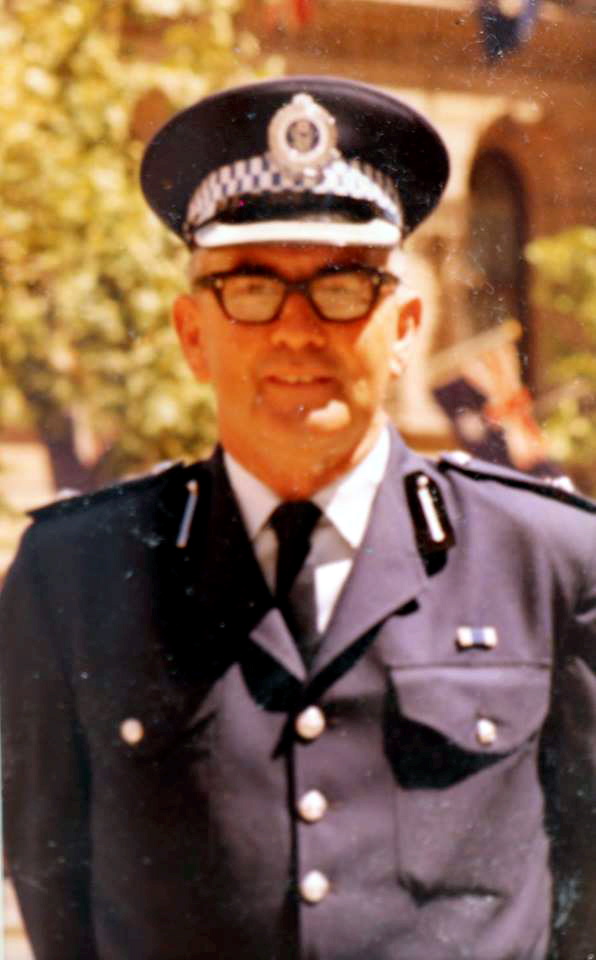
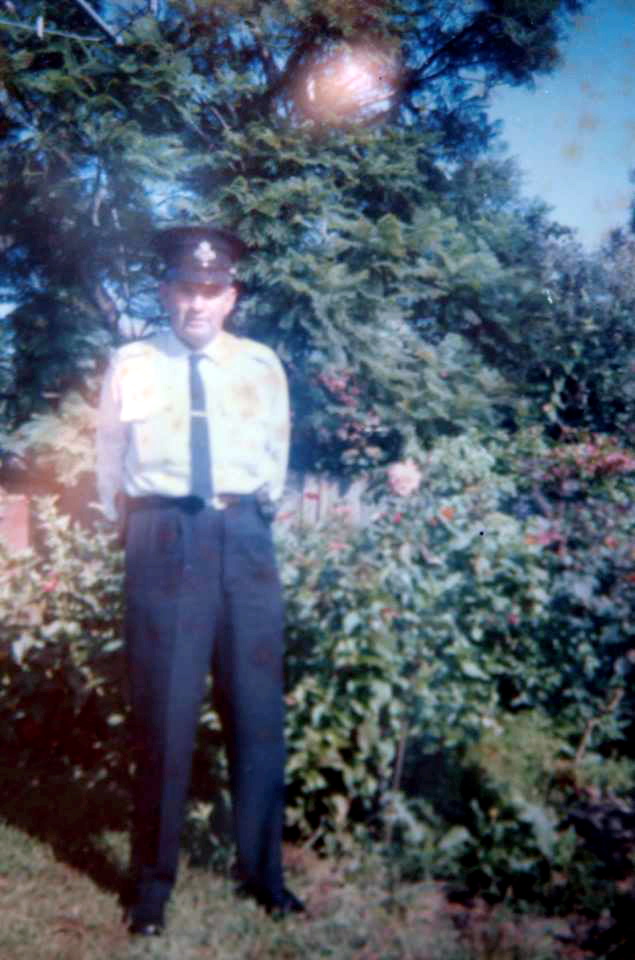
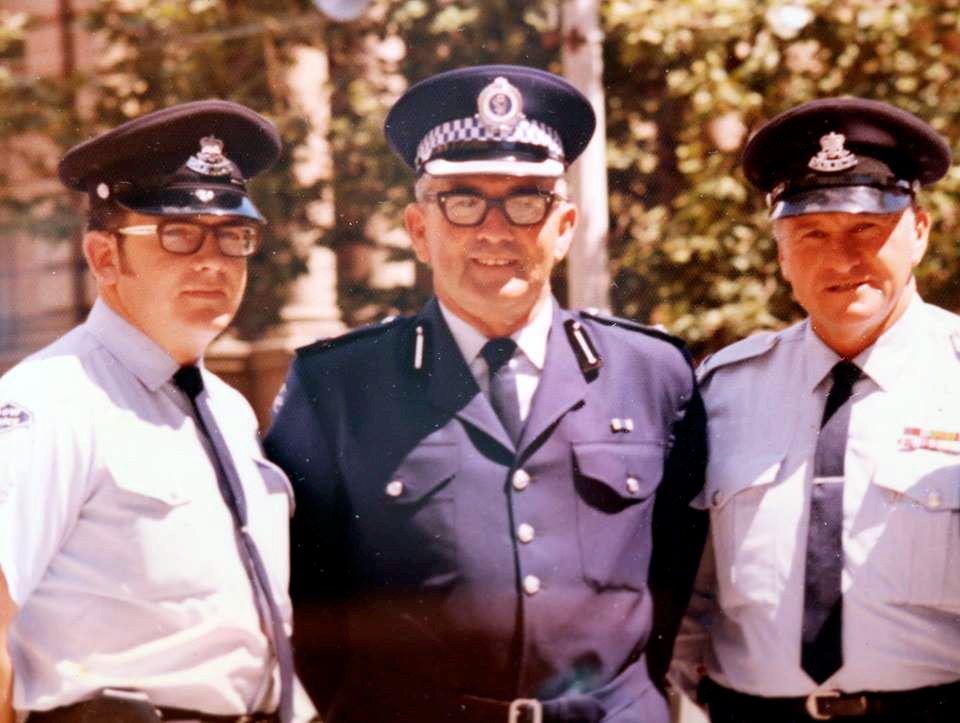
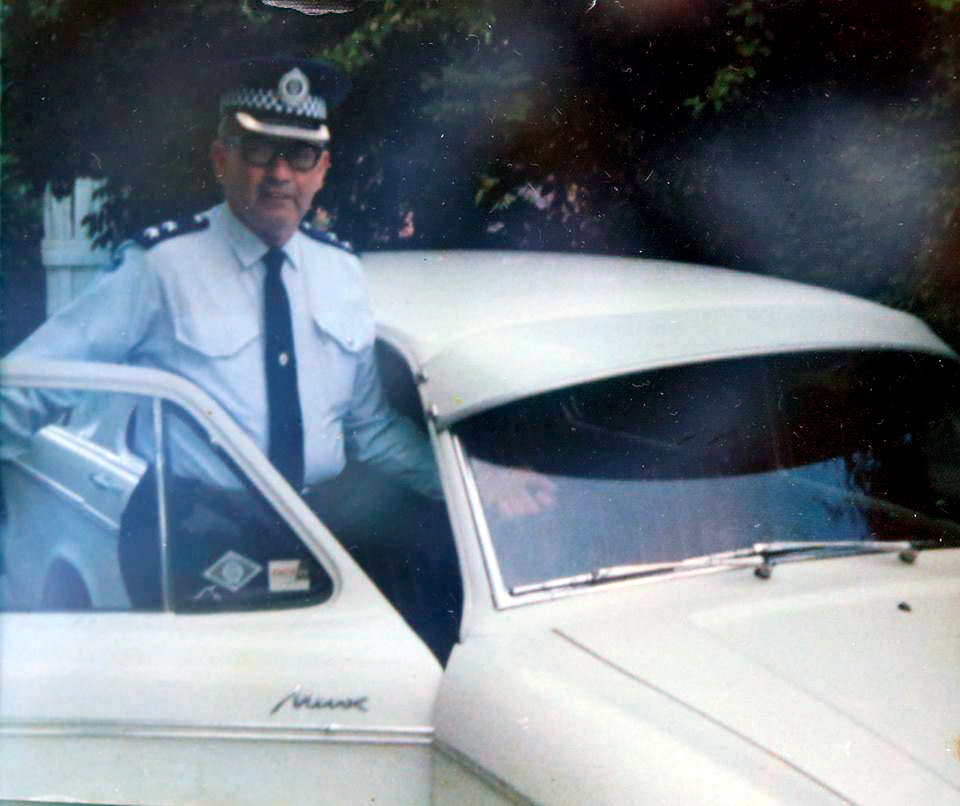
Peter Joseph KEATING

Peter Joseph KEATING

( late of Beacon Hill )


Redfern Police Academy Class # 120

New South Wales Police Force

Regd. #   13830


Rank:  Probationary Constable – appointed 15 September 1969

Detective Senior Constable – appointed 15 September 1978


Final rank = Detective ?


Stations?


ServiceFrom  ? ? Pre September 1969?  to  ? ? ? = ? years Service


Awards:  National Medal – granted 22 April 1983 ( Det SenCon )


Born:  8 December 1947

Died on:  Thursday  5 January 2017 @ 4.30am in his sleep, at his home.

Age:  69

CauseMotor Neurone Disease


Funeral date:  Friday  13 January 2017 @ 10.30am

Funeral location:  Saint Kieran’s Catholic Church, 49 Condamine St, Manly Vale


Buried at?

 Memorial at?


PETER is NOT mentioned on the Police Wall of Remembrance *NEED MORE INFO


FURTHER INFORMATION IS NEEDED ABOUT THIS PERSON, THEIR LIFE, THEIR CAREER AND THEIR DEATH.

PLEASE SEND PHOTOS AND INFORMATION TO Cal


May they forever Rest In Peace


KEATING, Peter Joseph.
Passed away peacefully on 5 January, 2017
Late of Beacon Hill
Aged 69 years
Beloved husband of Frances. Loving father of Hilary, Michael and Matthew and father-in-law of Nicole.
Adored Pop to Charlotte and Elisha.

Dear brother of Paul and Terri and loved by their families.

A Requiem Mass will be offered for Peter at Saint Kieran’s Catholic Church, Manly Vale at 10.30am on Friday 13 January, 2017.

In lieu of flowers, donations are welcome to the Macquarie University Motor Neurone Disease Research Centre.

logo

January 7, 2017
RIP to one of the most honourable, generous and fun loving family men I knew.
Peter …You were taken way too soon from your family and friends. You will always be remembered with such happy and fond memories, especially the special occasions we all shared.
My heartfelt condolences go out to the whole extended Keating family. Angie, Damien, Scarlett, Miller and Elsie.


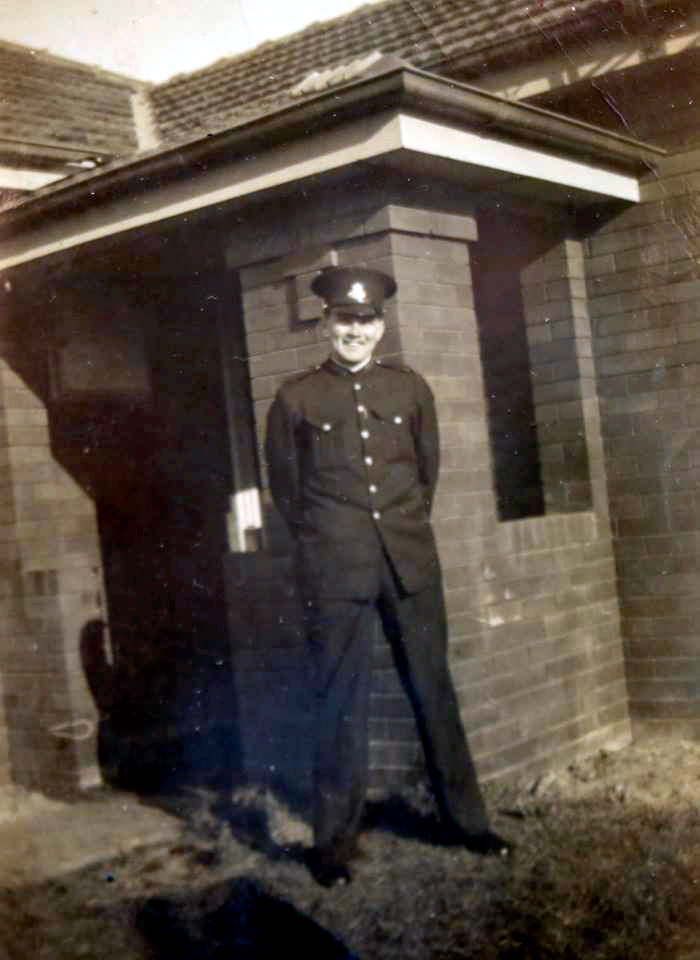
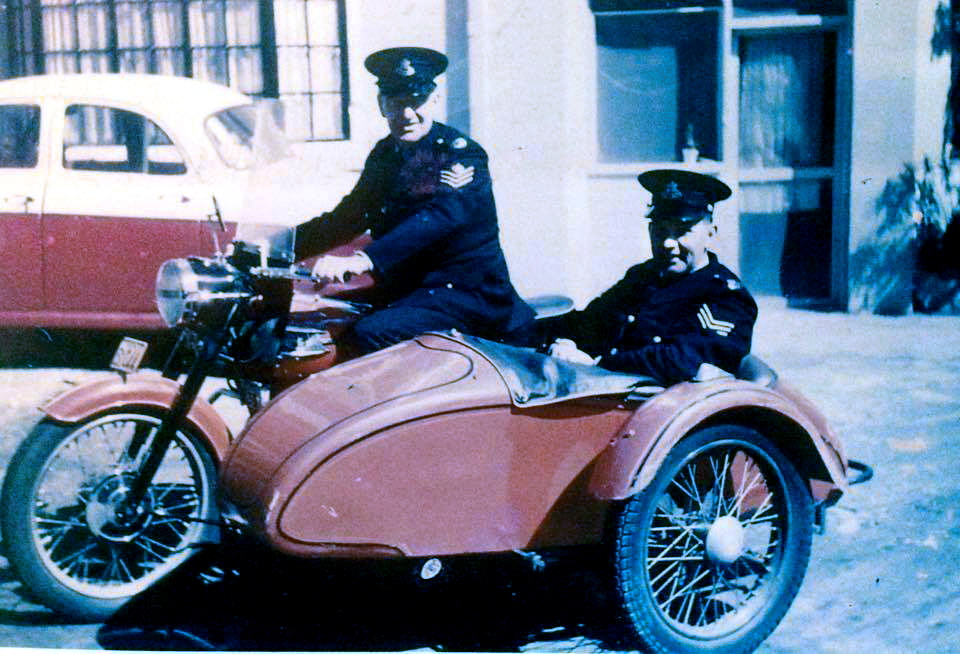
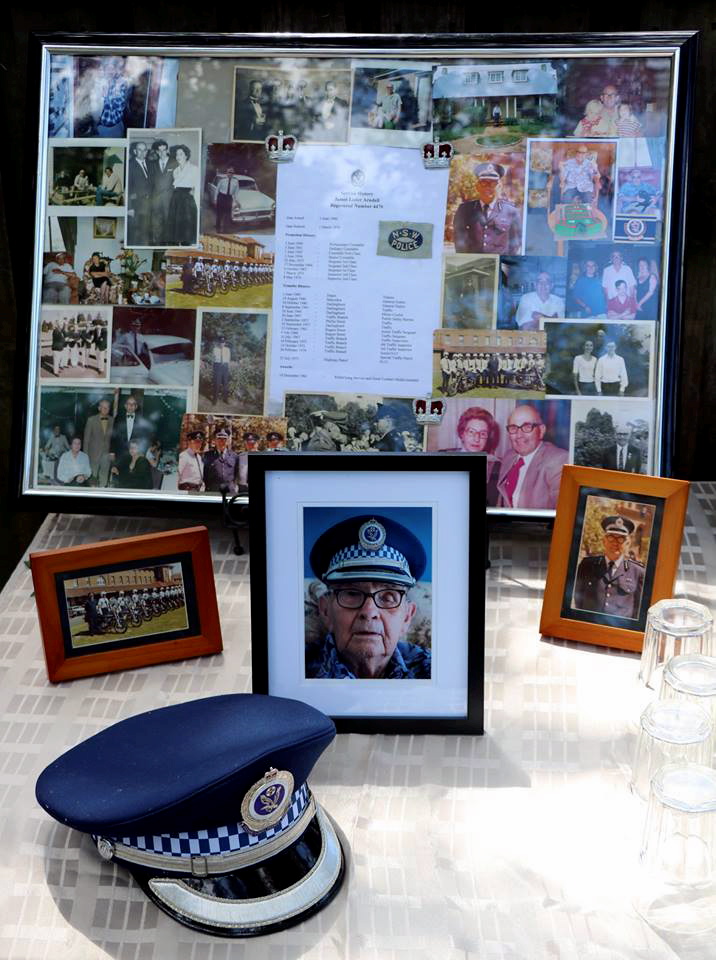
James William Loder ARNDELL

James William Loder ARNDELL 

aka  BILL

New South Wales Police Force

[alert_yellow]Regd. #   4470[/alert_yellow]

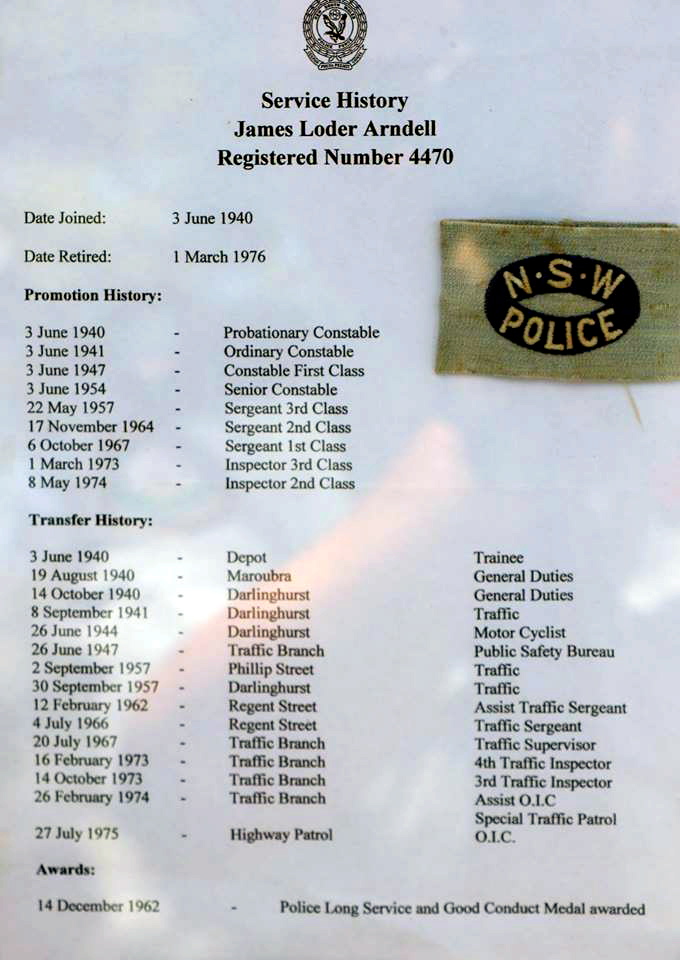
Rank: Probationary Constable – appointed 3 June 1940

Constable – appointed 3 June 1941

Constable 1st Class – appointed 3 June 1947

Senior Constable – appointed 3 June 1954

Sergeant 3rd Class – appointed 22 May 1957

Sergeant 2nd Class – appointed 17 November 1964

Sergeant 1st Class – appointed 6 October 1967

Inspector 3rd Class – appointed 1 March 1973

Inspector 2nd Class – appointed 8 May 1974

Retired 1 March 1976

Stations:  Redfern Academy ( Trainee ),

Maroubra GD’s ( 19 August 1940 ),

Darlinghurst GD’s ( 14 October 1940 ),

Darlinghurst Traffic ( 8 September 1941 ),

Darlinghurst Motor Cyclist ( 26 June 1944 ),

Traffic Branch – Public Safety Bureau ( 26 June 1947 ),

Phillip St – Traffic ( 2 September 1957 ),

Darlinghurst – Traffic ( 30 September 1957 ),

Regent St – Assistant Traffic Sgt ( 12 February 1962 ),

Regent St – Traffic Sgt ( 4 July 1966 ),

Traffic Branch – Traffic Supervisor ( 20 July 1967 ),

Traffic Branch – 4th Traffic Inspector ( 16 February 1973,

Traffic Branch – 3rd Traffic Inspector ( 14 October 1973 ),

Traffic Branch, Assistant OIC Special Traffic Patrol ( North Sydney ) – ( 26 February 1974 ),

Highway Patrol – OIC ( 27 July 1975 ) – retirement

ServiceFrom  3 June 1940  to  1 March 1976 = 35+ years Service

Awards: Police Long Service & Good Conduct Medal – awarded 14 December 1962

No find on It’s An Honour

Born:  2 March 1916

Died on:  Monday  1 January 2017 at Sydney Adventist  Hospital, Wahroonga.

Age:  100

Cause?

Funeral date?TBA

Funeral location?TBA

Buried at?  UNABLE TO FIND ANY FUNERAL DETAILS AS OF 030418

 Memorial at?

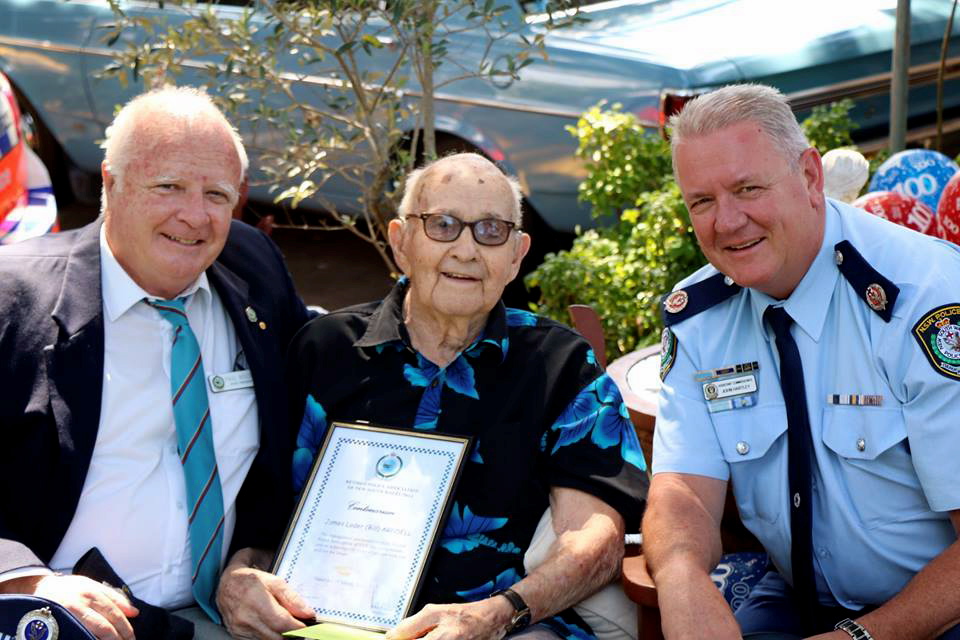
James William Loder ARNDELL & Andrew Scippionie


[alert_yellow]BILL is NOT mentioned on the Police Wall of Remembrance[/alert_yellow]  *NEED MORE INFO


 [divider_dotted]

 Funeral location ?TBA

[divider_dotted]

FURTHER INFORMATION IS NEEDED ABOUT THIS PERSON, THEIR LIFE, THEIR CAREER AND THEIR DEATH.

PLEASE SEND PHOTOS AND INFORMATION TO Cal

[divider_dotted]

May they forever Rest In Peace

[divider_dotted]

Vale Inspector 2/C James William Loder ARNDELL #4470

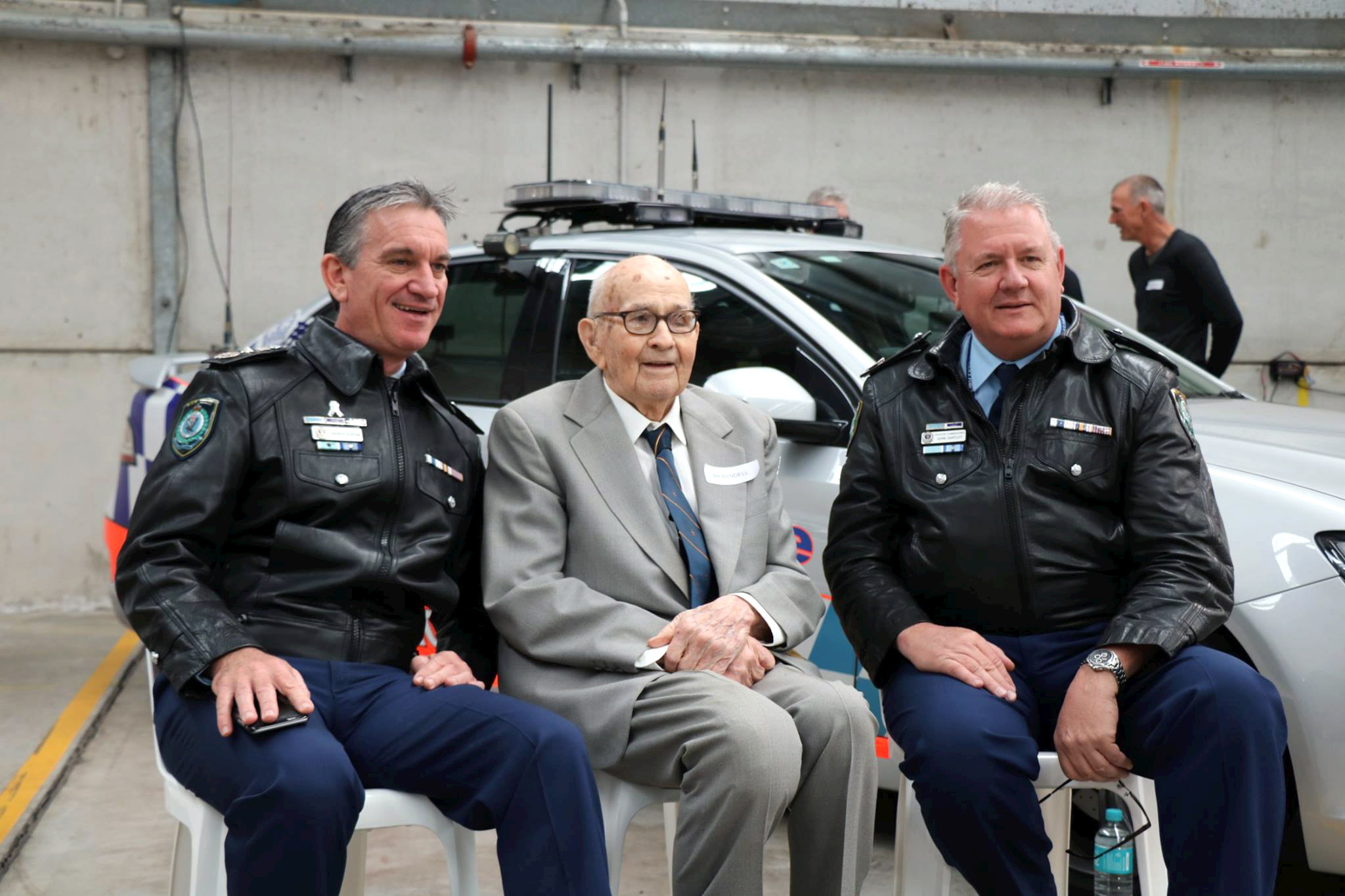
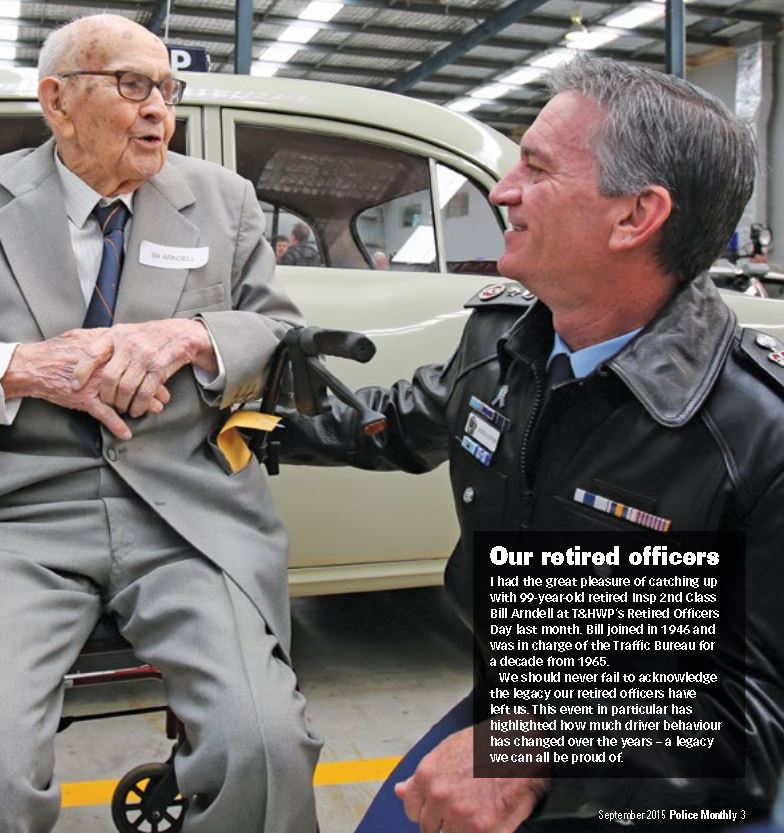
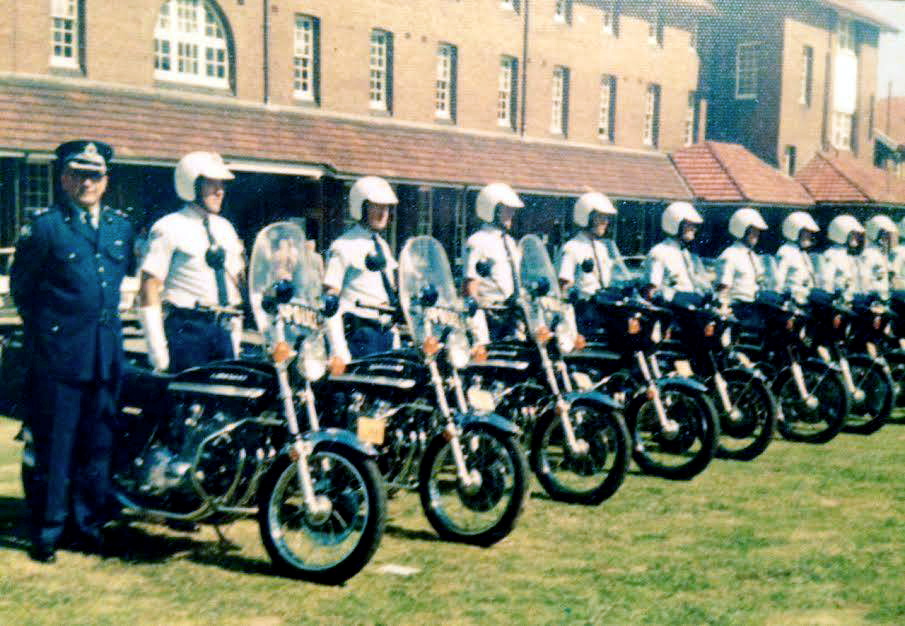
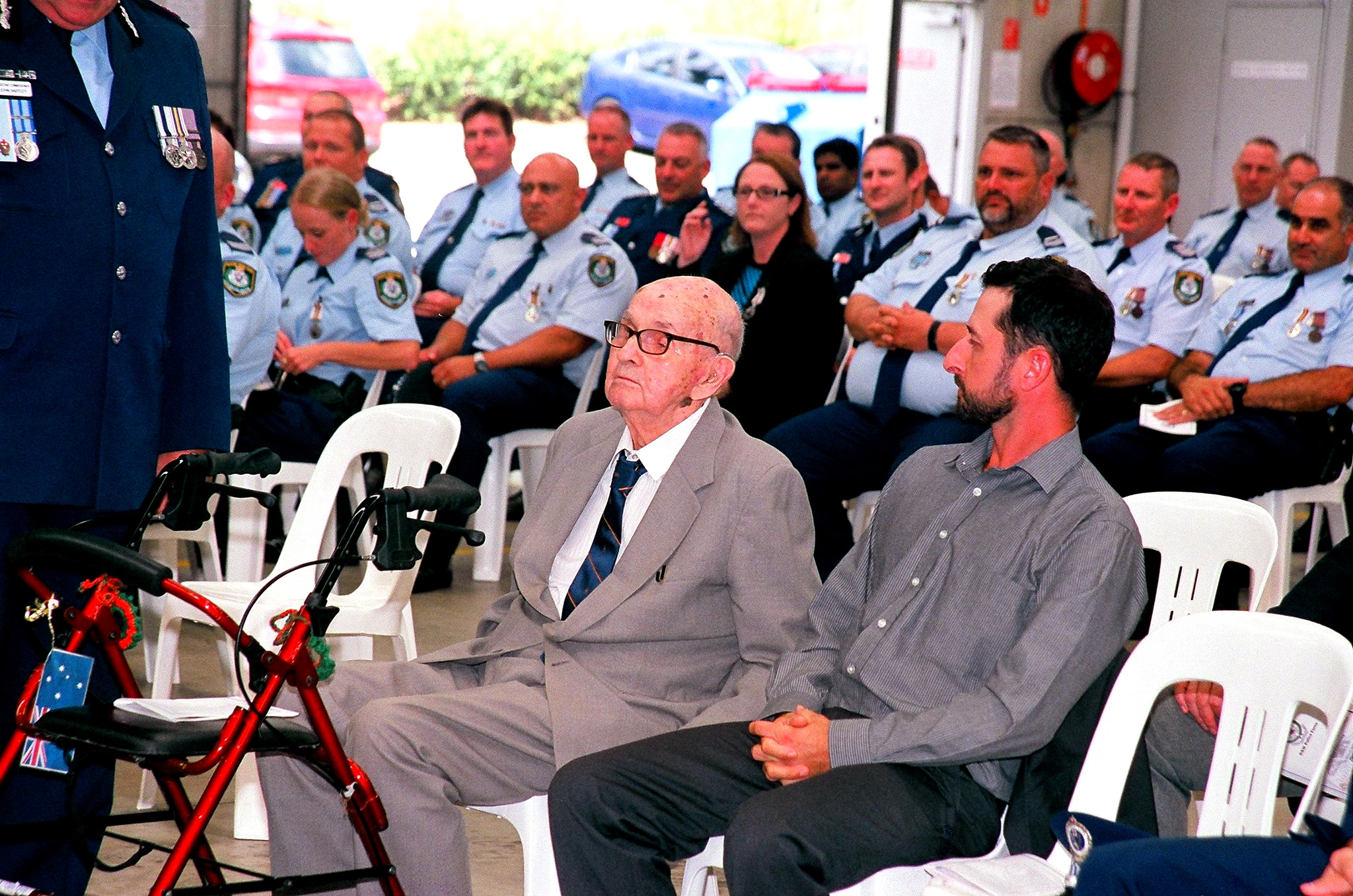
Today we learnt of the passing of ‘Bill’ on 1 January at the Sydney Adventist Hospital, Wahroonga. Bill, a resident of Christophorous House, was the Officer in Charge of the then ‘Traffic Bureau’ until his retirement in 1974.

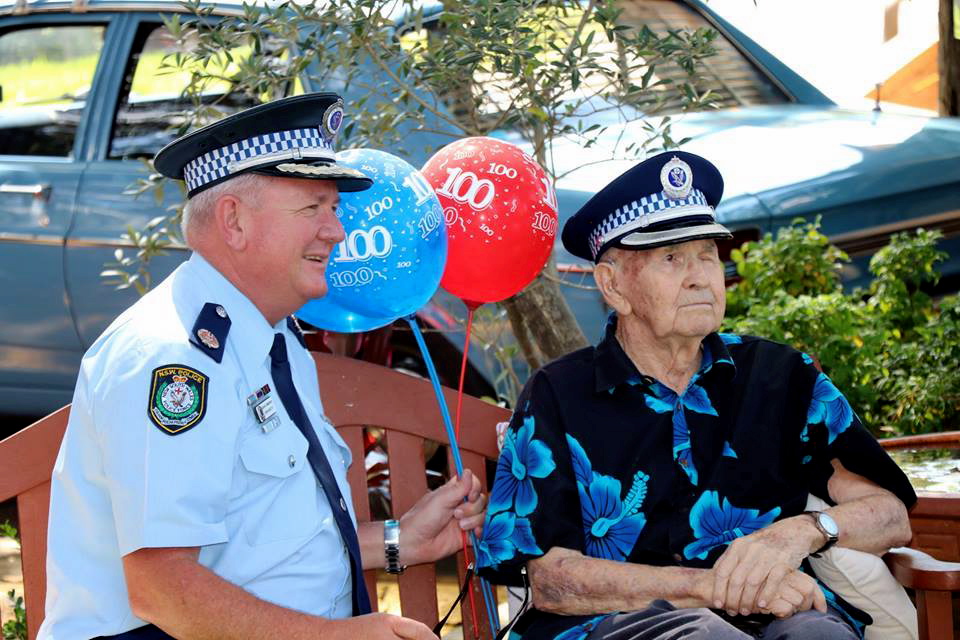
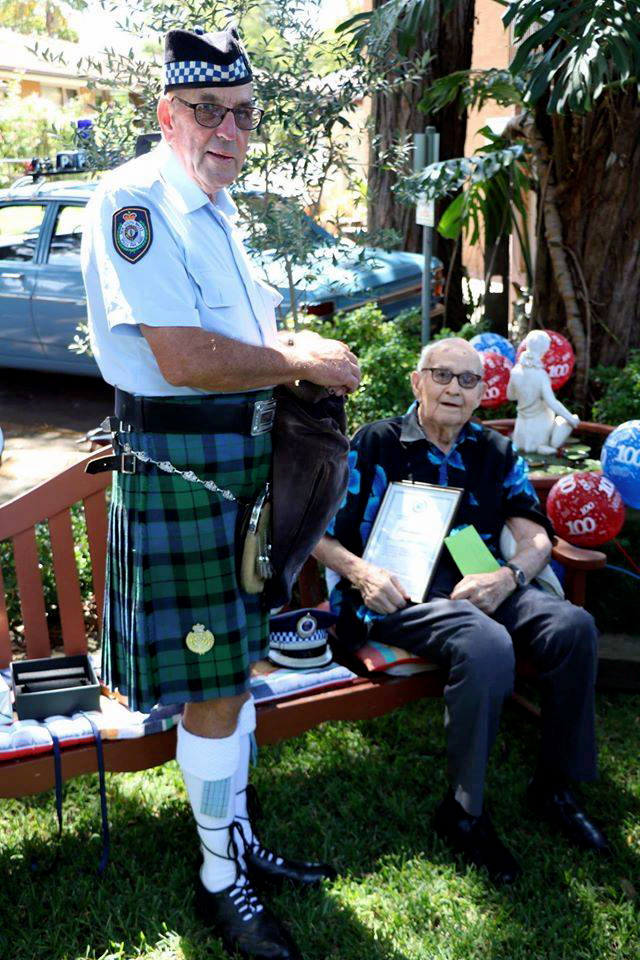
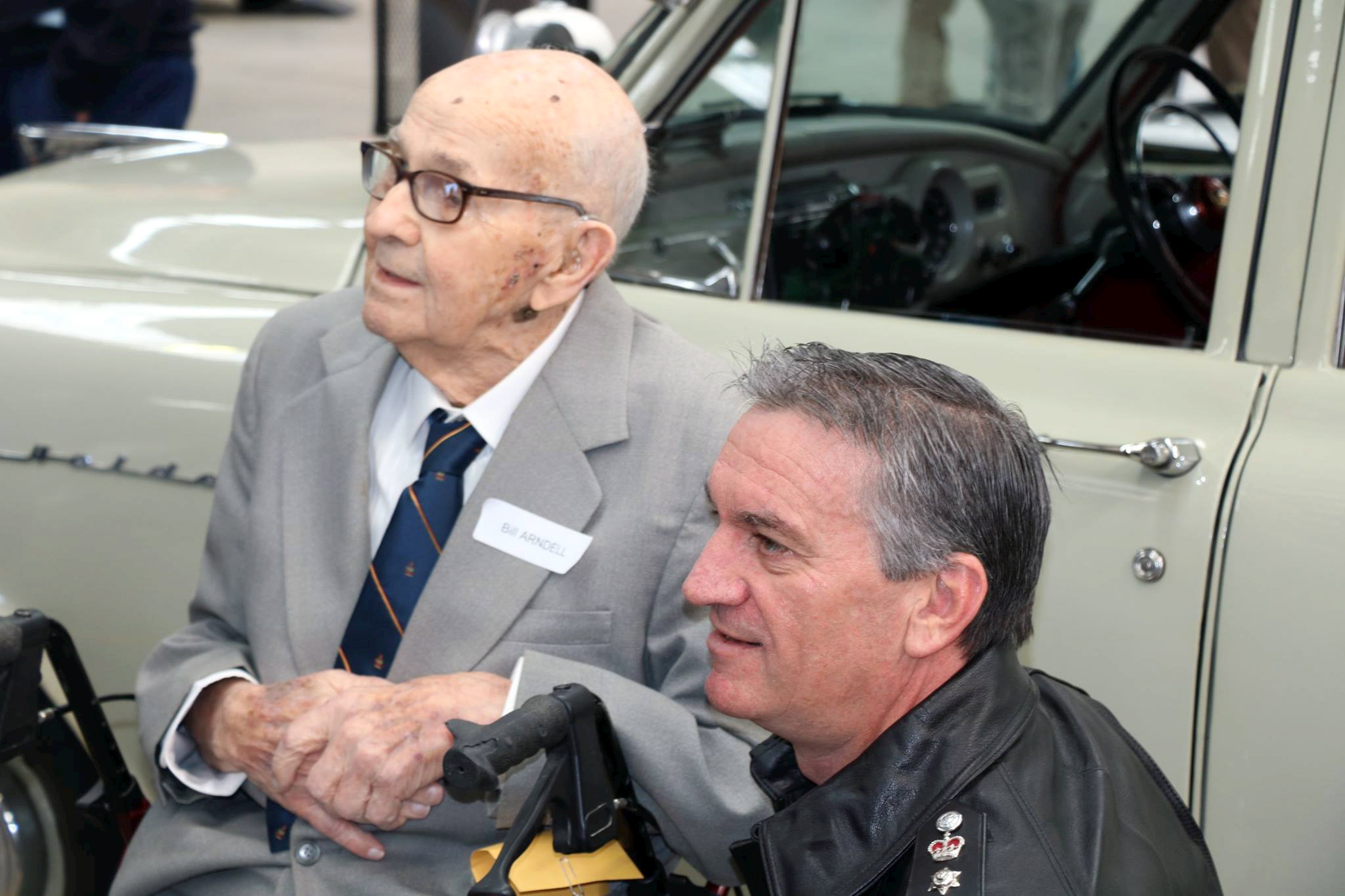
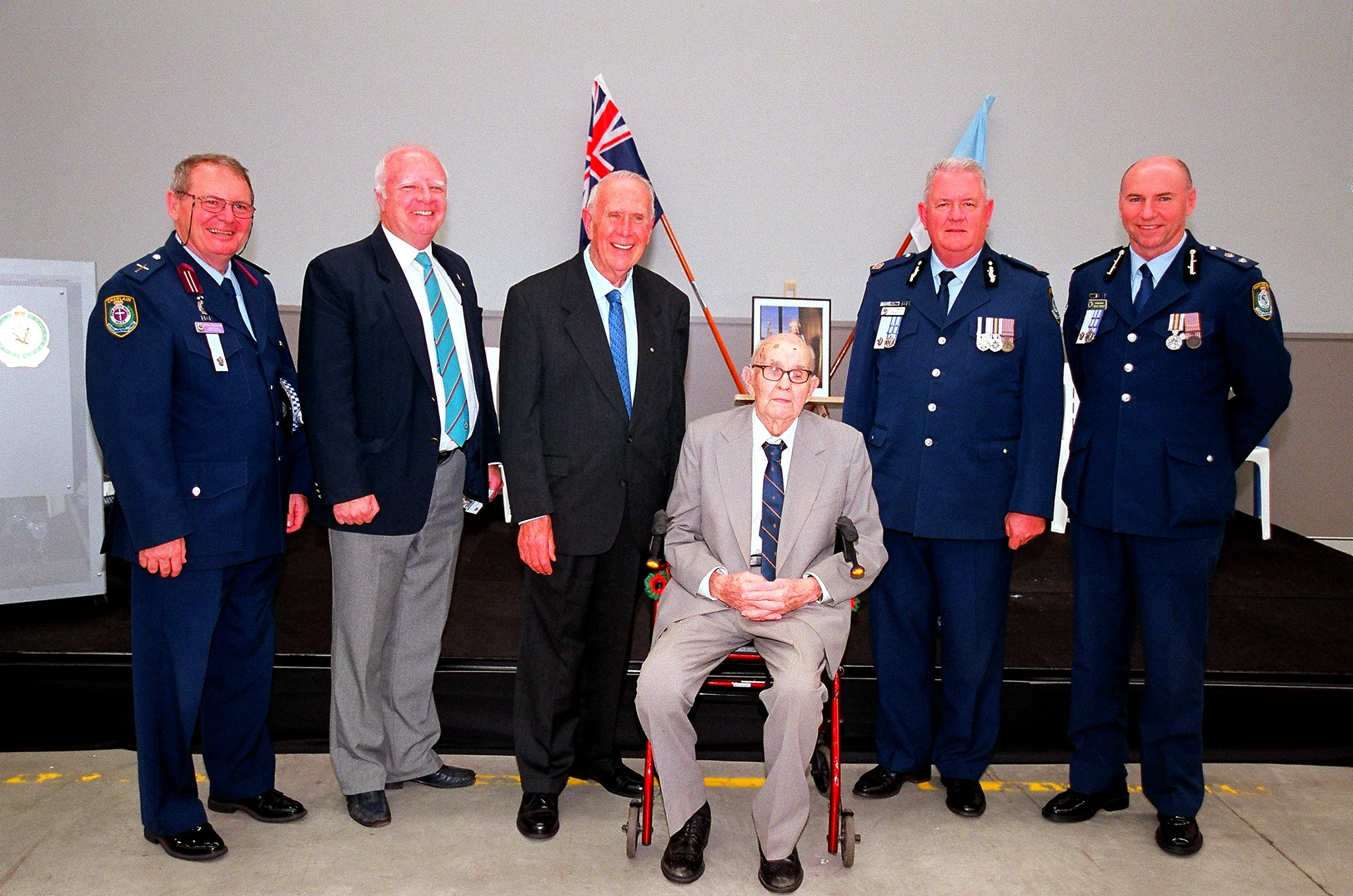
In 2015 we hosted Bill at our retired officers day, where he met with Commissioner Scipione, Assistant Commissioner Hartley, and chatted with many retired members. In March 2016 we celebrated Bill’s 100th Birthday with his family & residents, and later in the year we presented him with the ‘National Police Service Medal’ marking his years of service to the NSW Police Force, & the community of NSW. We briefly met with Bill at the Sydney Adventist Hospital before his passing. Officers from the Kuring gai LAC also visited bill in celebration of his birthdays.

We take this opportunity to acknowledge his family at their time of loss, and the staff of Christophorous House where he spent his recent years, along with the staff of the Sydney Adventist Hospital.

We are awaiting further advice as to Funeral arrangements.

[divider_dotted]


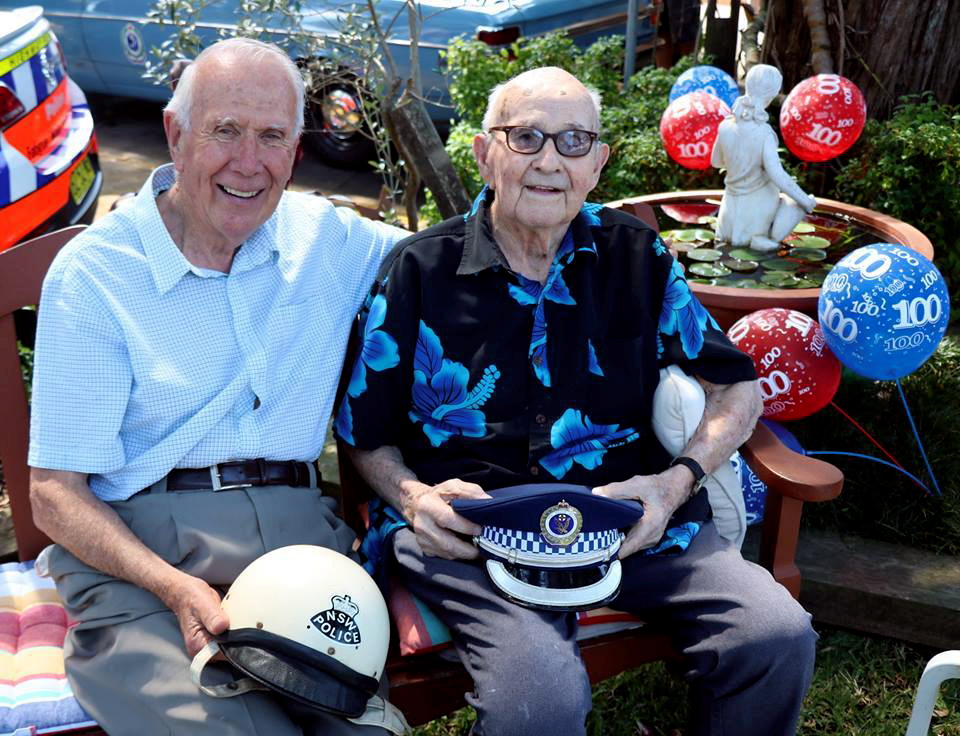
Former Traffic Superintendent Bill Flemming with Bill Arndell on Bill's 100th birthday.
Former Traffic Superintendent Bill Flemming with Bill Arndell on Bill’s 100th birthday.

[divider_dotted]


Alexander J. MUIR

Alexander J. MUIR

aka  Alex

New South Wales Police Force

Regd. #   ?

Rank:  Inspector – death

Stations?, Katoomba, Lismore, Wagga Wagga, ( Regent St – 2 Division ) – death

ServiceFrom  ? ? ?  to  ? August 1939 = ? years Service

Awards:  No find on It’s An Honour

Born? ? ?

Died on:  Sunday  13 August 1939

Age:  59

Event location:  Entrance to Brisbane Water, Hawkesbury River, Woy Woy

Cause:  Drowning

Funeral date:  Tuesday  15 August 1939

Funeral location:  St. Stephen’s Presbyterian Church, Macquarie St, Sydney

Buried at:  Cremated at the Eastern Suburbs Crematorium, and interred at Rookwood cemetery ( other articles mention the ashes being interred at Botany Cemetery )

 Memorial at?


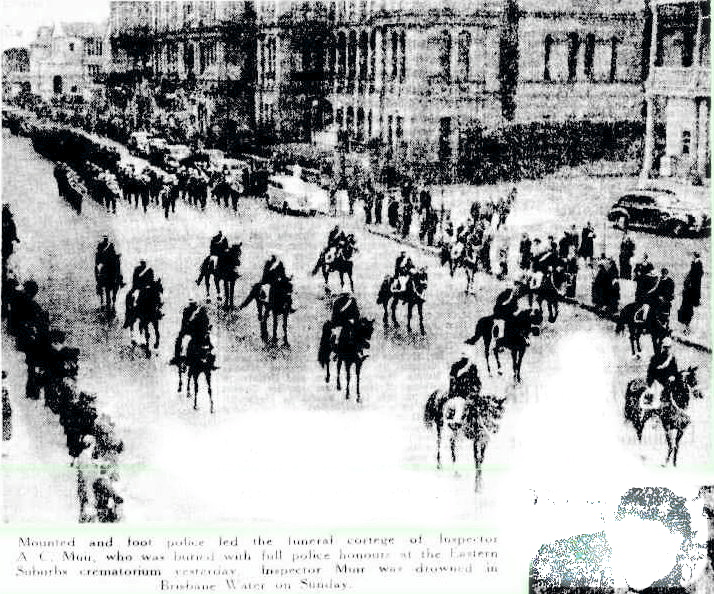
the Sydney Morning Herald Wed 16 August 1939 p18Mounted and foot police led the funeral cortege of Inspector A. C. Muir, who was bured with full police honours at the Eastern Suburbs crematorium yesterday. Inspector Muir was drowned in Brisbane Water on Sunday.
the Sydney Morning Herald Wed 16 August 1939 p18 Mounted and foot police led the funeral cortege of Inspector A. C. Muir, who was buried with full police honours at the Eastern Suburbs crematorium yesterday. Inspector Muir was drowned in Brisbane Water on Sunday.


[alert_blue]MUIR is NOT mentioned on the Police Wall of Remembrance[/alert_blue] * NOT JOB RELATED

 [divider_dotted]

 Funeral location ?

[divider_dotted]

FURTHER INFORMATION IS NEEDED ABOUT THIS PERSON, THEIR LIFE, THEIR CAREER AND THEIR DEATH.

PLEASE SEND PHOTOS AND INFORMATION TO Cal

[divider_dotted]

May they forever Rest In Peace

[divider_dotted]

.

FURTHER INFORMATION NEEDED.

[divider_dotted]

[divider_dotted]

Sydney Morning Herald (NSW : 1842 – 1954), Wednesday 16 August 1939, page 16


FUNERAL OF INSPECTOR MUIR.

The late Inspector A J Muir who was to have taken up duty at Regent Street Police Station but who was drowned at Brisbane Waters near Woy Woy on Sunday while fishing, was given a police funeral yesterday.

After a service at St Stephens Church Macquarie Street which was attended by the Commissioner of Police, Mr W. J. McKay, and most of the police officers stationed in Sydney, the cortege moved to the Eastern Suburbs Crematorium.

Headed by the police band, mounted police and the police motor cycle squad about 80 members of all ranks marched with the cortege from the church to Stanley Street.

Many residents of Katoomba, where the late Inspector Muir was for many years in charge of the police station came to Sydney to attend the funeral.

http://trove.nla.gov.au/newspaper/rendition/nla.news-article17605957.txt

[divider_dotted]

Northern Star (Lismore, NSW : 1876 – 1954), Wednesday 16 August 1939, page 8


MANY AT FUNERAL OF INSPECTOR

SYDNEY. Tuesday.

Policemen from many country centres attended the funeral today of the late Inspector Alexander Muir, who was drowned at Gosford last Sunday.

The cortege, headed by a police band, passed in dignified procession through the city streets, and was followed by many civilians anxious to pay their respects to a well-known police identity.

The Commissioner of Police (Mr. McKay) and the assistant Metropolitan Superintendent (Mr. Collings) were members of the funeral cortege.

CHURCH SERVICE

The Rev. A. J. Parker, formerly of Lismore, and a lifelong friend of the deceased, who officiated at the church service at St. Stephen’s Presbyterian Church, paid a high tribute to the qualities and character of the late Inspector Muir.

He was a man who was always willing to give a helping hand to those in need,” declared the Rev. Parker.

Inspector Muir was a church elder at Lismore for a considerable time.

The remains were cremated at the Eastern Suburbs Crematorium, and interred at Rookwood cemetery.

The chief mourners were his widow, Mrs. Madge Muir, son, Alister, and daughters, Mrs. Ruth Campbell and Misses Jean and Biddie Muir, daughters.

http://trove.nla.gov.au/newspaper/rendition/nla.news-article98583912.txt

[divider_dotted]


Richmond River Herald and Northern Districts Advertiser (NSW : 1886 – 1942), Friday 18 August 1939, page 2


Police Inspector Muir, 59, who was drowned when a 16ft. launch overturned at the entrance to Brisbane Water on Sunday night, was formerly stationed at Lismore, and was on two months’ leave when the tragic occurrence took place. The widow, one son and three daughters survive.

[divider_dotted]


Narandera Argus and Riverina Advertiser (NSW : 1893 – 1953), Friday 18 August 1939, page 2


INSPECTOR MUIR DROWNED

Police Inspector Muir, who had only left Wagga on Friday last, was drowned, and two companions, Archibald C. Fowler, of Katoomba, and Leslie Roy Whatley, of Woy Woy, were rescued after a sixteen foot launch had overturned on the bar at the entrance to Brisbane Water early on Sunday night.

The party had been on a fishing excursion and rough weather caused the launch to capsize. The men clung to the overturned launch, but Inspector Muir was washed upwards of 100 yards away by a strong current.

Inspector Muir, who was on two months’ leave, was staying at Ettalong before beginning duty in Sydney. He had been transferred from Wagga, where be bad been a very popular officer.

http://trove.nla.gov.au/newspaper/rendition/nla.news-article130470876.txt


[divider_dotted]

Northern Herald (Cairns, Qld. : 1913 – 1939), Saturday 19 August 1939, page 35


TRAGEDY ON BAR.

FATAL FISHING TRIP. SYDNEY, August 14.

Inspector Muir, of Regent-street Station, was drowned in Brisbane Water when a 16ft launch capsized in the heavy surf on Sunday. Muir was spending a holiday at Woy Woy, and, with two other men, Leslie Whaley and A. Fowler, spent the day fishing.

They were returning to Woy Woy and while crossing the sand bar were caught in a heavy swell. The surf broke over the boat and while the men were bailing out a wave overturned the boat. Whaley and Fowler clung to the upturned boat, but Muir decided to try to swim ashore, using the pine flooring board to assist him, but an hour later the plight of Whaley and Fowler was noticed and a ferry picked them up.

Muir was found 100 yards from the overturned launch unconscious. Attempts to restore animation were unsuccessful.

http://trove.nla.gov.au/newspaper/rendition/nla.news-article150817186.txt

[divider_dotted]


Mudgee Guardian and North-Western Representative (NSW : 1890 – 1954), Monday 14 August 1939, page 1


DROWNED

Police Inspector SYDNEY, Monday

Police Inspector Muir was drowned at Woy Woy during the week end. He was spending a short holiday in that neighborhood before taking up an important position at Regent Street Station, Sydney.

Deceased formerly had control of Katoomba, Lismore and Wagga districts. He left Wagga last week for his new position in Sydney.

http://trove.nla.gov.au/newspaper/rendition/nla.news-article162221989.txt

[divider_dotted]


Edward Harold ALLARD

Edward Harold ALLARD

( late of Telarah )

New South Wales Police Force

Regd. #   ?

Rank:  Constable 1st Class

Stations?, Redfern ( 1916 – 1922), Raymond Terrace ( 1922 – 1927 ), West Maitland Court House ( 1927 – 1929 )

ServiceFrom  ? June 1916  to  25 April 1929 = 12+ years Service

Awards?

Born:  2 October 1889

Died on:  Thursday  25 April 1929

Age:  39

Cause:  Typhoid fever

Funeral date?

Funeral location:  Campbell’s Hill cemetery, C of E portion, West Maitland ( Telarah )

Buried at:

Campbell’s Hill cemetery, C of E portion, West Maitland ( Telarah )

 Memorial at?


[alert_yellow]EDWARD is NOT mentioned on the Police Wall of Remembrance[/alert_yellow]  *NEED MORE INFO


 [divider_dotted]


FURTHER INFORMATION IS NEEDED ABOUT THIS PERSON, THEIR LIFE, THEIR CAREER AND THEIR DEATH.

PLEASE SEND PHOTOS AND INFORMATION TO Cal

[divider_dotted]

May they forever Rest In Peace

[divider_dotted]

Maitland Daily Mercury (NSW : 1894 – 1939), Monday 25 April 1932, page 8


 IN MEMORIAM
ALLARD. — In fond and loving memory of our dear husband and father, Edward Harold Allard, who departed this life on 25th April, 1929, aged 40 years. His smiling face and cheerful ways, Are a treasure to recall ; His loving heart was made of gold, He died beloved by all. Upright and just in all his ways, Faithful and true to the end of his days. Inserted by his loving wife and family.

[divider_dotted]

Manning River Times and Advocate for the Northern Coast Districts of New South Wales (Taree, NSW : 1898 – 1954), Wednesday 1 May 1929, page 4


WALLAMBA.

( From Our Correspondent ).

OBITUARY. CONSTABLE E. H. ALLARD.

On Thursday morning last the sad intelligence was received on the Wallamba that First-class Constable Edward Harold Allard, aged 40 years, had succumbed to that dire malady, typhoid fever, in the Maitland Hospital, where he had been a patient for a fortnight.

Deceased was the second son of Mr. H. F. Allard, of Failford, and joined the force about thirteen years ago, having been stationed for many years at Raymond Terrace and latterly at the West Maitland Court House.

The funeral took place at West Maitland, the remains being interred in the C. of E. portion of the Campbell’s Hill cemetery, when a police funeral was tendered to the departed, thirty-one fellow officers being in procession and four of them conveying the bier to its last resting place. Revs. Woodhouse and Kitley officiated conjointly at the graveside ceremonial and the Oddfellows’ burial service was also read by a fellow member, as deceased was a member of the M.U.I.O.O.F.

The chief mourners were the wife and children of deceased and Mesdames Mead, Codey and Miss Annie Allard (sisters), and Messrs Ernest, Gordon and Morton (brothers) and Messrs R. Mead and A. J. Johnson (brothers-in-law), all of whom had arrived prior to death.

The late Constable Allard was a native of Failford and leaves in sad bereavement his wife and three children – Florence Annie (16), Mona (14), and Reginald (13), an aged father, and brothers and sisters.

A large concourse of friends paid the last sad rites, and sympathy is extended to the bereaved and sorrowing.

http://trove.nla.gov.au/newspaper/rendition/nla.news-article173805347.txt

[divider_dotted]


The Maitland Weekly Mercury     Saturday  27 April 1929     p8

FIRST-CLASS CONSTABLE ALLARD


The death occurred in the Maitland Hospital on Thursday from typhoid fever of First-class Constable Edward Harold Allard, who resided at Telarah.  Deceased, who was 40 years of age, joined the police force in June, 1916, when he was appointed to Redfern.  After six years’ duty, he was transferred to Raymond Terrace, where he remained for a similar term before being removed to West Maitland, nearly two years ago.

He is survived by his wife, two daughter, Florrie and Mona, and one son, Reginald.  When the news was received at the West Maitland Police Station, Inspector ( Robert )Graham stated that, apart from the sympathy felt for the deceased officer’s wife and family, he deeply regretted his passing, as it meant the loss of a good man.

http://trove.nla.gov.au/newspaper/article/127956411

[divider_dotted]

My Heritage family tree

https://www.myheritage.com/person-1500210_349080211_349080211/edward-harold-allard

[divider_dotted]


Stuart FOSTER

Stuart FOSTER

New South Wales Police Force

Regd. #   ?

Rank:  Sergeant

Stations:  Jenolan Caves ( Oct 1915 ), Burraga ( Cst 1916 ),

Oberon ( 1917, 1918 ),

Terry Hie Hie (Cst 1919 until 13 Feb 1922 ), Pallamallawa ( Cst 13 Feb 1922 – 25 September 1924 ),

[ Stuart Foster is mentioned as being in Tamworth Licencing district as of 19 Sept. 1924 in NSW Govt. Gazette 134, Fri 17 Oct 1924.  It is not known if this is the same FOSTER as this memorial page ]

Mungindi ( Assistant Electoral Officer – Cst 26 Sept 1922  Mungindi is just over the Qld boarder )

Webonga ( Cst 1/C – 19 September 1924, 1925, October 1932 ), Burren Junction ( Cst 1/C 2 Sept 1932, Sgt 1933 ),

Narrabri (Cst – 1922,  Sgt 3/C 19 March 1935 – 30 July 1935 ),

OIC Murrurundi Police Station ( Sgt 3/C  30 July 1935 – death )

ServiceFrom  ? pre October 1915  to  10 May 1939 = 19 years Service

Awards?

Born? ? 1892 ( in the Allyn River district near Gresford, NSW )

Died on:  Wednesday  10 May 1939

Age:  46

Cause:  complications stemming from a medical procedure.

Funeral date:  Friday  12 May 1939

Funeral location:  Church of England, Dungog @ 11.30am

Buried atMelbury Cemetery, 2038 Salisbury Rd, Salisbury, NSW ( on private property near Salisbury, NSW )

 Memorial at?

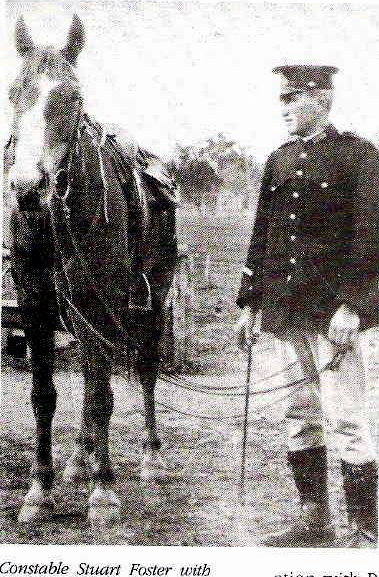
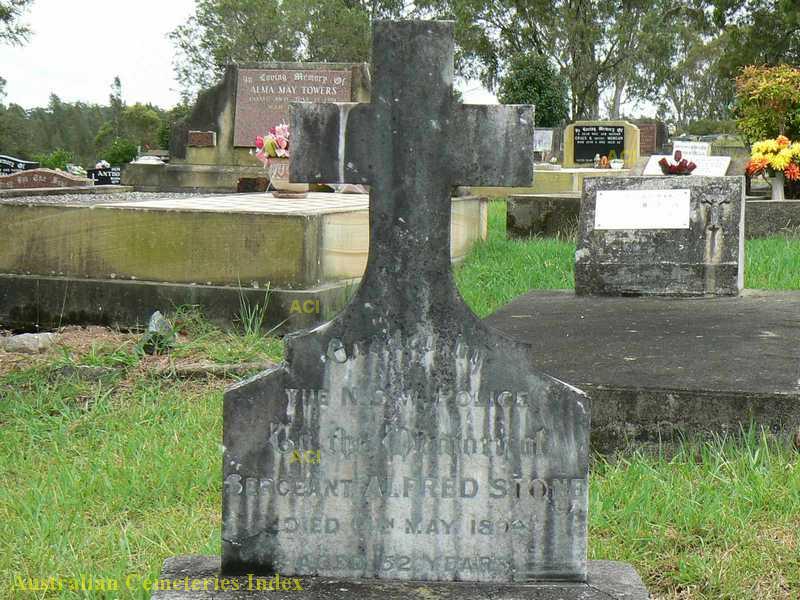
Trolling through public member trees on ancestry, came across the below photo of Sgt Foster with his horse at Webonga NSW. Unfortunately it cuts off what may have been the name of his horse nor does the photo have a date. His wife, Evelyn was a horse breeder and trainer, so this could be one of her horses. In another article dated 1992 Evelyn was visited by Chief Superintendent Moeller and 4 members from Police Legacy at Hillsdale Nursing home. At the time she was at the ripe old age of 103 and was the oldest living member of Police Legacy. The entry does not state what publication the article came from.


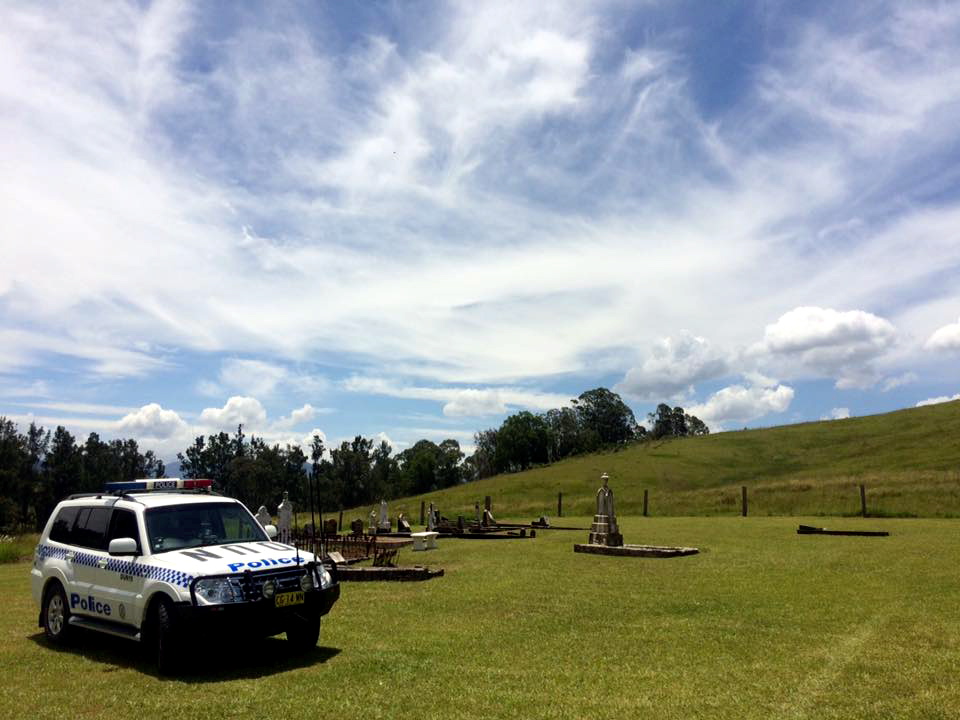
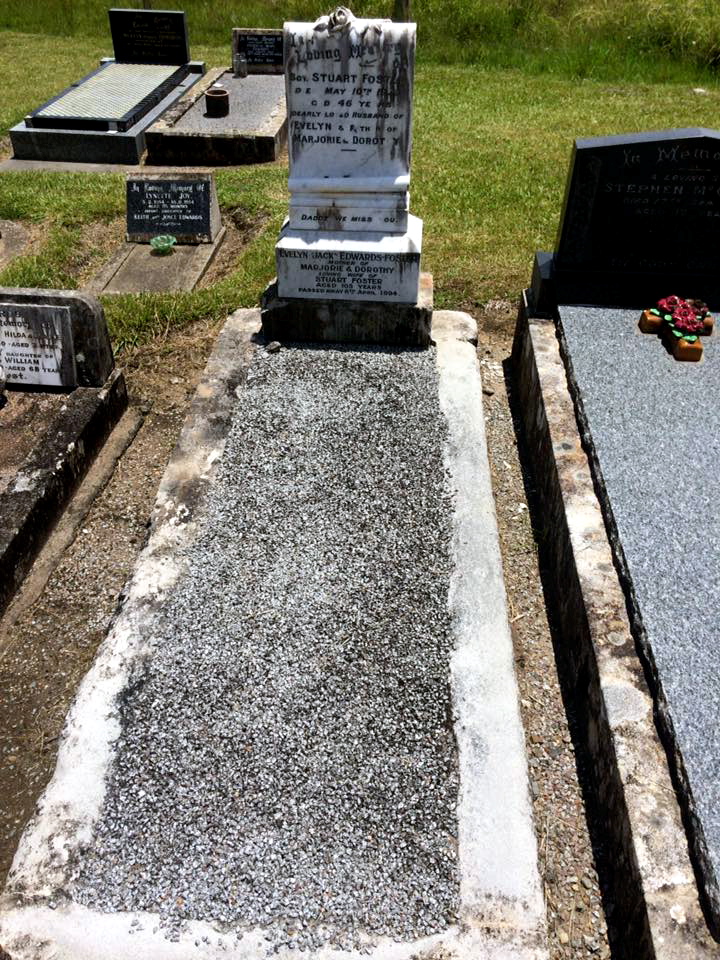
Melbury Cemetery ( on private property near Salisbury, NSW )


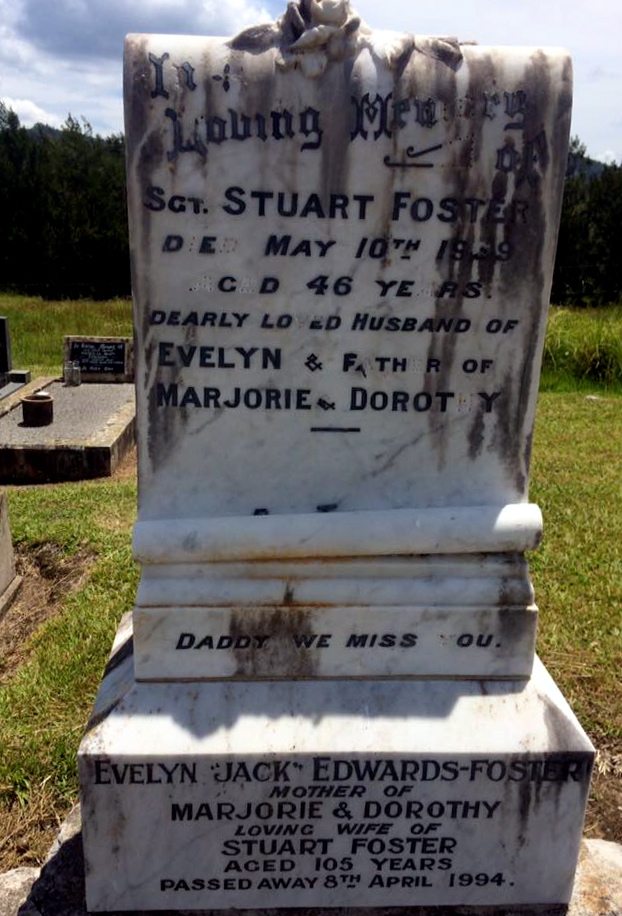
Inscription:<br /> In Loving Memory of Sgt. Stuart Foster<br /> Died May 10th 1939<br /> Aged 46 years<br /> Dearly loved husband of<br /> Evelyn &amp; father of<br /> Marjorie &amp; Dorothy<br /> Daddy we miss you.<br /> Evelyn "Jack" Edwards-Foster<br /> Mother of<br /> Marjorie &amp; Dorothy<br /> Loving wife of<br /> Stuart Foster<br /> Aged 105 years<br /> Passed away 8th April 1994.
Inscription:
In Loving Memory of Sgt. Stuart Foster
Died May 10th 1939
Aged 46 years
Dearly loved husband of
Evelyn & father of
Marjorie & Dorothy
Daddy we miss you.
Evelyn “Jack” Edwards-Foster
Mother of
Marjorie & Dorothy
Loving wife of
Stuart Foster
Aged 105 years
Passed away 8th April 1994.


[alert_yellow]STUART is NOT mentioned on the Police Wall of Remembrance[/alert_yellow]  *NEED MORE INFO


 [divider_dotted]


FURTHER INFORMATION IS NEEDED ABOUT THIS PERSON, THEIR LIFE, THEIR CAREER AND THEIR DEATH.

PLEASE SEND PHOTOS AND INFORMATION TO Cal

[divider_dotted]

May they forever Rest In Peace

[divider_dotted]

From NSW Fallen Police FB Group – 20 December 2016

Sergeant Stuart Foster – 10th May 1939 – OIC Murrurundi Police Station

I stumbled across this Sergeant who was 46 years of age at the time of his death. The Sergeant was admitted to Newcastle Hospital for an unknown operation. Complications arising from that operation led to the death of the Sergeant.

It appears Sergeant Foster was attached to the following stations;
Burraga
Oberon
Terry Hie Hie
Pallamallawa
Webonga
Burren Junction
Narrabri
Murrurundi

According to papers he had served 25 years in the Police and was the youngest serving Sergeant at the time in the NSW Police Force.

Sergeant Foster grew up in the Upper Allyn region at the foothills of the Barrington Tops with family spanning across the ridge to the Salisbury and Underbank areas.

The funeral was held at the Church of England in Dungog followed by his internment at the Melbury Cemetery.

Does not appear to be a KoD nor does his name appear on the Honor Roll.

The Cemetery is on private land near Salisbury NSW 2420.

[divider_dotted]


Cessnock Eagle and South Maitland Recorder (NSW : 1913 – 1954), Friday 26 May 1939, page 4


OBITUARY

FUNERAL OF WELL-KNOWN POLICE SERGEANT. LATE SERGEANT S. FOSTER.

The funeral of the late Sergeant Stuart Foster, officer-in-charge of Murrurundi Police Station, following an operation a few days previously in Newcastle Hospital, left Meighan’s Funeral Parlours, Newcastle, on Friday, 12th May, for the long drive to Dungog, and then to Melbury Church of England, where an impressive service was conducted by the Rev. D. T. Rees, of Newcastle.

The casket, on leaving the parlours, was draped with the Union Jack, the pall-bearers being six uniformed members of the police, who, with a police escort of 16, accompanied the hearse to the Bank Corner, Newcastle.

Another police escort, drawn from Kurri Kurri. Dungog, Weston, Cessnock, Paterson, Abermain and West Maitland police district, joined the cortege at Dungog, and included the police pall-bearers. Sergeant Pender and Superintendent White.

The casket, still draped with the Union Jack, passed through the double rank of police comrades to its resting place in the Church of England portion of Melbury cemetery, where the interment was made.

The deceased, who was only 46 years of age, was,the second son of a well-known family at; Vacy, and the grandson of two greatly respected pioneers, Mr. and Mrs. William Edwards-Snr., of Melbury, on whose property, on the Upper Allyn River, he was born. He married his cousin, Miss Evelyn Edwards, and a year later joined the New South Wales Police Force. His first appointment was to Burraga, in the Western district, thence to Oberon, and later to Terry Hie Hie, Pallamallawa, Wemonga, Burren Junction, Narrabri, and then four years ago to Murrurundi.

The chief mourners are the widow and daughter (Marjorie and Dorothy), parents (Mr. and Mrs. W. Foster), sister Norrie (Mrs. F. Leake), his wife’s parents (Mr. and Mrs. W. H. Edwards Senr.). brothers and, sisters-in-law (Mr. W. J. Edwards, Mrs. Claude Edwards, Mr. F. Leake and Mr. Mervyn Edwards) and many others.

The exemplary character, generous and loving disposition, and his extreme devotion to his wife and daughters during his lifetime, were eulogised by the Rev. Rees at the memorial service, which was largely attended on Sunday. May 14.

Many wreaths, cards and messages of sympathy were received ‘by the bereaved family.

http://trove.nla.gov.au/newspaper/article/104622933

[divider_dotted]


NSWBDM

Birth – Stuart FOSTER   28975/1892      Father = William  Mother = Wilhemina S

No marriage can be found between FOSTER & EDWARDS on computer search.  No a marriage just involving Stuart FOSTER between 1899 – 1940

Death – Stuart FOSTER   10582/1939.   Father = William   Mother = Wilhemia


[divider_dotted]

Newcastle Morning Herald and Miners’ Advocate (NSW : 1876 – 1954) , Saturday 13 May 1939, page 11


A POLICEMAN LAID TO REST

SIXTEEN POLICE and a large party of citizens from Maitland, Gresford. Dungog, and the districts near by stood in silence in the tiny rural cemetery at Melbury while Sergeant Stuart Foster, officer in charge of Murrurundi Police Station for the last four years, was buried yesterday morning.

After years of service in the larger towns of the State, with all the strains and worry that police work involves, Sergeant Foster was taken back to the quiet bush settlement of his youth. He was born in the Allyn River district, near Gresford.

The funeral was unusual in several ways. At 7.15 yesterday morning the casket was carried from parlours in King street. Newcastle, to a hearse, and accompanied by six police pall-hearers and a police escort of 16 as far as Bank Corner, Newcastle West. From there began a 42-mtile drive to Dungog. For the 42 miles the hearse was accompanied only by a police car, containing the North-eastern District Superintendent (Mr. J. W. White) and Sergeant Pender, and another private car.

At Dungog, however, it was met by another police party of 10 drawn from Dungog, Cessnock, Abermain, Weston, Paterson, and West Maitland, and a long cortege of other cars carrying friends and relatives. From Dungog the funeral drove another 20 miles to the church at Melbury.

The service over, the cortege moved on towards the cemetery. Two hundred yards from the cemetery the cars stopped beside a river. The casket had to be lifted from the hearse and transported across by motor-lorry, while the mourners followed over a narrow log crossing, with wires stretching across waist high on either side as handrails.

The remains were carried to the graveside between the two ranks of the police escort : the first, and possibly the last, that the tiny Melbury cemetery will ever see. Sergeant Foster, who was 46, died in Newcastle Hospital on Wednesday. He is survived r Mrs. Foster (formerly Miss Edmunds, of Melbury) and two daughters.,

http://trove.nla.gov.au/newspaper/rendition/nla.news-article134186983.txt


[divider_dotted]


Scone Advocate (NSW : 1887 – 1954), Friday 12 May 1939, page 1


PERSONAL

A shadow of sorrow spread over Murrurundi and district on Wednesday last when word came to hand of the passing, suddenly, following an operation in the Newcastle District Hospital, of Police Sergeant Stuart Foster, who had been stationed in the town for the past three years, during which time, largely owing to his efficiency, courtesy, and always complacent manner, he made a large circle of friends, all of whom were shocked at the sorrowful occurrence, in which Mrs. Foster and daughters (Misses Marjorie and Dorothy) have much heartfelt sympathy. The late Sergt. Foster was an officer who went about his duties quietly, yet thoroughly, tempered justice with mercy, and if he erred at all, it was in the direction of leniency. And so he won the respect and goodwill of men in every walk of life, with whom he immensely popularised himself. The funeral took place this morning, the cortege moving from the Mulbring Church of England in the Dungog district.

http://trove.nla.gov.au/newspaper/rendition/nla.news-article159003411.txt


[divider_dotted]

Government Gazette of the State of New South Wales (Sydney, NSW : 1901 – 2001), Friday 13 September 1935 (No.162), page 3637


(5881) Department of Labour and Industry, Sydney, 13th September, 1935.

RURAL WORKERS’ ACCOMMODATION ACT.

HIS Excellency the Governor, with the advice of the Executive Council, has been pleased to appoint the undermentioned members of the Police Force to be Inspectors to carry out the provisions of the Rural Workers’ Accommodation Act, 1926, in’ the districts specified in connection with their respective names.

H. M. HAWKINS.

Sergeant 2nd Class Herbert William Unwin; Station—

Narrabri; Police District—Narrabri..

Sergeant 3rd Class Stuart Foster; Station—Murrurundi;

Police District—Murrurundi.

Sergeant 3rd Class Lester Leonard Blanchard ; Station

—Forbes ; Police District—Forbes.

http://trove.nla.gov.au/newspaper/rendition/nla.news-article223067280.txt

[divider_dotted]


Government Gazette of the State of New South Wales (Sydney, NSW : 1901 – 2001), Friday 26 April 1935 (No.85), page 1811


NAMOI SHIRE COUNCIL.

IT is hereby notified, for public information, that Sergeant 3rd Class Stuart Foster has been appointed Inspector of Slaughter-houses for that portion of Namoi Shire within the Narrabri Police Patrol Area, vice Sergeant P. Grimes, resigned.

T. W. WAUGH, Shire Clerk.

Shire Chambers, Maitland-street, Narrabri, 17th April, 1935.

http://trove.nla.gov.au/newspaper/rendition/nla.news-article224744905.txt

[divider_dotted]


Truth (Sydney, NSW : 1894 – 1954), Sunday 18 March 1934, page 12


MRS. RICHARDS ILL AT LONG BAY GAOL

Complete Collapse After Ordeal Of Nott Murder Inquiry

MRS. ANNIE ELIZABETH RICHARDS, central figure in the Pilliga murder horror, is seriously ill in bed at the Long Bay Reformatory Hospital. AFTER her nerve-wrecking ordeal at Burren Junction little more than a week ago when she was committed for trial on a charge of having sent George Washington Nott, Pilliga stock and station agent, to his doom, Mrs. Richards was taken to Long Bay Gaol. There, she has received constant medical attention.

HAVING collapsed near the conclusion of the police court proceedings at Burren Junction, the unhappy woman appeared to be much calmer after her committal. Indeed, when Mrs. Richards left by train for Sydney she seemed more content and a smile momentarily transformed her worried face as her husband, Henry Carl Richards, kissed her tenderly a minute before the express departed from Burren Junction. He is also charged with being an accessory. She seemingly retained her good spirits on the long and tiresome trip and chatted on topical subjects with her escort, Detective-Sergeant Alford and Policewoman Mrs. Mooney. She did not sleep. Instead she talked and several times perused newspaper accounts of her statement, a remarkable human document that has gripped and amazed an entire continent.

SADDENED FROM ALL ACCOUNTS THIS SADDENED WOMAN HAD NO QUALMS CONCERNING HER SOJOURN AT LONG BAY, UNTIL THE TIME ARRIVED FOR HER REMOVAL TO NARRABRI, WHERE, IT IS STATED, SHE AND HER HUSBAND WILL FACE A JUDGE AND JURY ON APRIL 4 NEXT, THE DATE OF THE COMMENCEMENT OF THE CRIMINAL COURT SITTINGS IN THE NORTH-WEST.

Being on remand Mrs. Richards is not expected to do labor of any description. She is called upon to make her bed but that is all. She intended to ask permission of the prison authorities to allow her to knit some small tokens of appreciation for Policewoman Mooney and Mrs. Foster, wife of Sergeant Stuart Foster, who is in charge of the Burren Junction Police Station.

THOSE WOMEN DISPLAYED UNENDING KINDNESS TO MRS. RICHARDS DURING HER HOURS OF AGONY AT BURREN JUNCTION.

NOT TO BE

But it was not to be. Once at the reformatory, Mrs. Richards collapsed and had to be put to bed. She has been constantly watched and the best medical attention possible has been secured for her. The gaol authorities have studied her every need, and have taken particular care of her diet, which has consisted mainly of thin bread and butter owing to her physical condition.

And what of her husband, the pleasant-faced drover, the story of whose unshaken love for his wife was told in ‘Truth’ last week. ? He expected to come to Sydney during the week with his solicitor, Mr. K. J. O’Halloran. of Tamworth, to complete arrangements for the defence. HOWEVER, THERE WAS A HITCH IN THE ARRANGEMENTS AND RICHARDS RETURNED TO HIS HUT AT BUGILBONE. BUT, ‘TRUTH’ LEARNS. HE WILL MAKE THE TRIP TO THE CITY TO-MORROW. ONE OF THE FIRST THINGS HE WILL DO WILL BE TO SECURE PERMISSION TO VISIT HIS WIFE AT LONG BAY.

http://trove.nla.gov.au/newspaper/rendition/nla.news-article169327769.txt


[divider_dotted]


Government Gazette of the State of New South Wales (Sydney, NSW : 1901 – 2001), Friday 2 June 1933 (No.84), page 1958


SHIRE OF WALGETT.

NOTICE is hereby given that a regularly constituted Meeting of this Council the following appointments were

made:—

Sergeant Stuart Foster, of Burren Junction; and Sergeant Owen Bates, of Walgett;

as Inspectors under the Cattle Slaughtering and Diseased Animals and Meat Act, 1902.

F. H. NEILLEY, Shire Clerk. Council Chambers, Walgett, 25th May, 1933.

http://trove.nla.gov.au/newspaper/rendition/nla.news-article223044632.txt


[divider_dotted]

Government Gazette of the State of New South Wales (Sydney, NSW : 1901 – 2001), Friday 21 October 1932 (No.151), page 3890


SHIRE OF COCKBURN.

NOTICE is hereby given that Constable Thomas Francis Smart, Weabonga, has been appointed an Inspector under the Cattle Slaughtering and Diseased Animals and Meat Act, 1902, vice Constable Stuart Foster, transferred.

T. H. MULVOGUE,

Shire Clerk.

Shire Council Chambers, Tamworth,

13th October, 1932.

http://trove.nla.gov.au/newspaper/rendition/nla.news-article220257918.txt

[divider_dotted]


Government Gazette of the State of New South Wales (Sydney, NSW : 1901 – 2001), Friday 20 February 1925 (No.25), page 1043


SHIRE OF COCKBURN.

NOTICE is hereby given that Constable Stuart Foster, of Weabonga, has been appointed an Inspector under the Cattle Slaughtering and Diseased Animals and Meat Act. 1902, for the Weabonga Police Patrol, Cockburn Shire, vice Constable Burke, transferred.

T. H. MULVOGUE,

Shire Clerk. Shire Office, Tamworth,

13th February, 1925.

http://trove.nla.gov.au/newspaper/rendition/nla.news-article223006409.txt

[divider_dotted]


Government Gazette of the State of New South Wales (Sydney, NSW : 1901 – 2001), Friday 10 October 1924 (No.131), page 4706


APPOINTMENTS.  DEPARTMENT OF AGRICULTURE.

THE undermentioned persons to be Permit Inspectors under section 14A of the Pastures .Protection Act: —

Tamworth.

Constable Stuart Foster, Weabonga.

http://trove.nla.gov.au/newspaper/rendition/nla.news-article220238449.txt

[divider_dotted]


Government Gazette of the State of New South Wales (Sydney, NSW : 1901 – 2001), Friday 17 November 1922 (No.160), page 6096


PARLIAMENTARY ELECTORATES AND ELECTIONS ACT, 1912, AS AMENDED BY SUBSEQUENT ACTS.

IT is hereby notified, for general information, that

….

It is also further notified that the following persons have been appointed as Assistant Deputy Electoral Registrars, to keep the Rolls for the several Polling place Areas in the Electoral Districts set against their respective names, in pursuance of the provisions of the aforesaid Act, to take effect from the dates specified, viz. :—

Constable Stuart Foster, Mungindi, Namoi (Mungindi) in lieu of Martin, on leave,—from 26th September, 1922.

http://trove.nla.gov.au/newspaper/rendition/nla.news-article225131647.txt

[divider_dotted]


Government Gazette of the State of New South Wales (Sydney, NSW : 1901 – 2001), Friday 17 March 1922 (No.47), page 1827


NAMOI SHIRE.

IT is hereby notified that Constable Stuart Foster, stationed at Narrabri, has been duly appointed Inspector of Slaughter-houses under the Cattle Slaughtering and Diseased Animals and Meat Act,”

within the Police patrol of Narrabri, vice Constable Clancy, transferred.

CHAS. H. WOOD,

Shire Office, Narrabri, Shire Clerk,

9th March, 1922.

http://trove.nla.gov.au/newspaper/rendition/nla.news-article225367917.txt

[divider_dotted]


Dungog Chronicle : Durham and Gloucester Advertiser (NSW : 1894 – 1954), Tuesday 6 January 1920, page 2


IN MEMORIAM SATTLER (nee Edwards).— In loving memory of my darling sister, ; Florrie, who departed this life December 27th, 1918, at Maitland Hospital, aged 32 years.

Oh! Florrie, Florrie.

At the heavenly gates she will meet us, With that same sweet smile, We are only parted, sister dear, Just for a little while.

Inserted by her sorrowing sister and brother-in-law, Evelyn and Stuart Foster, and little nieces, Dorothy and Marjorie, at Moree.

http://trove.nla.gov.au/newspaper/rendition/nla.news-article137997980.txt


[divider_dotted]


Moree Gwydir Examiner and General Advertiser (NSW : 1901 – 1940), Friday 28 February 1919, page 2


Police Court,

(Before Messrs P. P. Rosenthal and C. G. Hobbes, J’s.P.)   TUESDAY, FEBRUARY 25.

Frank Brown (25) was charged with that on February 22, at Terry-Hie-Hie, he did unlawfully assault Albert Duncan. Mr. T. R. Hogan appeared for the complainant, and Mr. A. B. F. Zlotkowski for the defendant, who pleaded not guilty.

Constable Stuart Foster, stationed at Terry-Hie-Hie, deposed: I know the defendant and complainant in this case. In consequence of a complaint made to m« by the complainant, I arrested the defendant at 11 p.m. on the 22nd instant. Both defendant and complainant were present at the time of the arrest. I said to complainant, ” Is this the man who assaulted you ?” He said ‘Yes.’ I said to Brown, ‘Did you assault Duncan?’ He said, ‘I had to defend myself.’

By Mr. Zlotkowski: Hei may have said, ‘What I did I did to defend myself’. He did not say he went over to the camp because, they were fighting over there. He did not say Picket was choking another black and he (Brown) tried to pull him off. He did not say he was hit over the head with a stone while he was pulling the other man off, but he did say he was hit with a stone. He showed me a place on the left temple under the hair. He did not say who hit him with the stone.

Albert Duncan, laborer, residing at Terry-Hie-Hie, deposed: On Saturday night last at about 9 o’clock I was at my own place. My wife was present, also Harry Nean and Mrs. Newman (a midwife). I know defendant. He came from the direction of the mill to my place. We were inside the house when he came. Two men, Gillen and Picket, were fighting near my verandah. Brown came round the corner and said something. I then came out of the house and asked them to get away — to got off the premises. He punched me on the forehead when I said that. I walked back to my room and he said he would kill me. He had a paling which he tore from the fence. He hit me on the top of the head with the paling. Picket took the paling. I then went to my wife’s assistance, who had fainted. I did not assault the defendant in any way.

To the Bench: I heard the men fighting outside. They were fighting a couple of minutes. Picket lives at my place. Gillen does not live there. Picket is my step-father. I have no mark on my head where I was hit. By Mr. Zlotkowski: He did not give me a black eye. The men were fighting for two minutes, but not five minutes. Picket and Gillen are both blackfellows. I was never in any fight before. I have had a bad fall off a horse. The hit defendant gave me was not as bad as that. He did not do me any harm. I am as good a man as ever. Harry Nean, laborer, residing at Terry-Hie-Hie, deposed: I know Brown and Duncan. I was at Duncan’s place about 9 o’clock on Saturday night last. I saw Brown come through the gate. He used some bad language when coming through the gate. Duncan came out of the house and said, ‘Don’t kick up a row here, my wife is not well.’ Brown then struck Duncan somewhere about the face. He hit him with his fist. Duncan then went towards the porch of his home and Brown followed him. He pulled a paling out of the garden and said he would knock his ….. brains out. He hit him with the paling, but struck him with no force. Picket took the paling out of Brown’s hand. Duncan went to his wife.

By Mr. Zlotkowski: There was no trouble when Brown came. Gillen was walking away when Brown came. Duncan was not there when Gillen and Picket were fighting. If he said he saw Gillen and Picket down he was not telling the truth. Picket was down and Gillen was on top of him. Duncan did not come till Brown came. No one hit Brown with a stone. I did not hit Brown. He came to me for protection. He fell against a post where Picket threw him. This was at the finish of the row. Picket was fighting with Brown after Duncan went away. The fight between Duncan and Brown was only a hit. It was a wild fight between Gillen and Picket. Gillen is about 22 years of age, and Picket about 50. I was up once for fighting. I was not referee. By Mr. Hogan : I was up about 18 or 19 years ago for fighting. To the Bench: Brown had liquor on him. Frank Brown, laborer, residing at Terry-Hie-Hie, deposed: I remember the night of the 22nd instant. I went to Duncan’s place to get my horse— Gillen had it. I saw Gillen had Picket down choking him. I pulled Gillen off. I got hit on the head with a stone. Picket threw it. ‘ I did not do anything to Duncan. The stone knocked me down. I did not pick up a paling and I never hit Duncan, nor tried to do so. Duncan was there when the fight was over. I was about ten yards from the verandah. I used no bad language, I work for Mr. Cory. I was only going to get my horse.

By Mr. Hogan: I am not a quarrelsome man. I was convicted for fighting about two years ago. I was fined for being drunk and disorderly three years ago. I was fined £3 for using language, and £1 for resisting the police. I drink. I had one drink on Saturday night. It was beer. Sometimes I use bad language I did not use bad language last Saturday night. I did not hit Duncan, and I did not pull a paling out of the garden to hit Duncan. I did not take a paling at all. Duncan did not hit me, only Picket. I heard women screaming outside, the house. None of the ladies fainted that I know of. I did not get the mark on forehead by falling against a post. By Mr. Zlotkowski: The three convictions mentioned took place at the same time — two years ago.

By the Bench : I saw Picket throw the stone. He was about 5 or 6 yards away. Cecil Cory, drover, Terry-Hie-Hie, deposed : I know the defendant Brown. I have known him since he was 12 years of age. He is a quiet and inoffensive fellow and a good worker. He is not a loafer. By Mr. Hogan: He does not look for fight. He does not drink to any extent. One beer would not upset him. I never knew him to drink rum. He does not swear.

The defendant was convicted and fined £1, with £2 witness’s expenses, and £2 professional costs, in default one month’s imprisonment, with hard labor.

http://trove.nla.gov.au/newspaper/rendition/nla.news-article115770676.txt

[divider_dotted]


Government Gazette of the State of New South Wales (Sydney, NSW : 1901 – 2001), Wednesday 17 November 1915 (No.206), page 6794


Mines Department

appointments.

DEPARTMENT OF MINES.

HIS Excellency the Governor, with the advice of the Executive Council, has been pleased to appoint Constable Stuart Foster to act temporarily as Officer authorised to issue Miners’ Rights and Business Licenses at Jenolan Caves, and as Warden’s Bailiff at that place, vice Mr. Dolman, on leave,—such appointment to take effect from the 18th October, 1915.

http://trove.nla.gov.au/newspaper/rendition/nla.news-article226922286.txt

[divider_dotted]


George SHIELL

George SHIELL

( late of Sorrell-street, Parramatta )

New South Wales Police Force

Regd. #   ?

Rank:  Constable 1st Class – appointed December 1902

Stations:  Lawson, Broken Hill, Parramatta Police

ServiceFrom  2 January 1891  to  7 December 1912 = 22 years Service

Awards?

Born? ? 1860

Event location:  Pennant Hills Rd, Parramatta

Event date:  27 November 1912 about 9pm

Died on:  Saturday  7 December 1912 at Parramatta Hospital

having never regained consciousness since being struck ON Duty

Age:  43

Cause:  Traffic Accident – Pedestrian – Concussion of the brain

Funeral date:  Monday  9 December 1912 between 11.30am – 2pm

Funeral location:  From Parramatta Hospital, past Parramatta Police Stn

Buried at:  Presbyterian section, Mays Hill Cemetery, cnr Great Western Hwy & Steele St, Parramatta

 Memorial at?

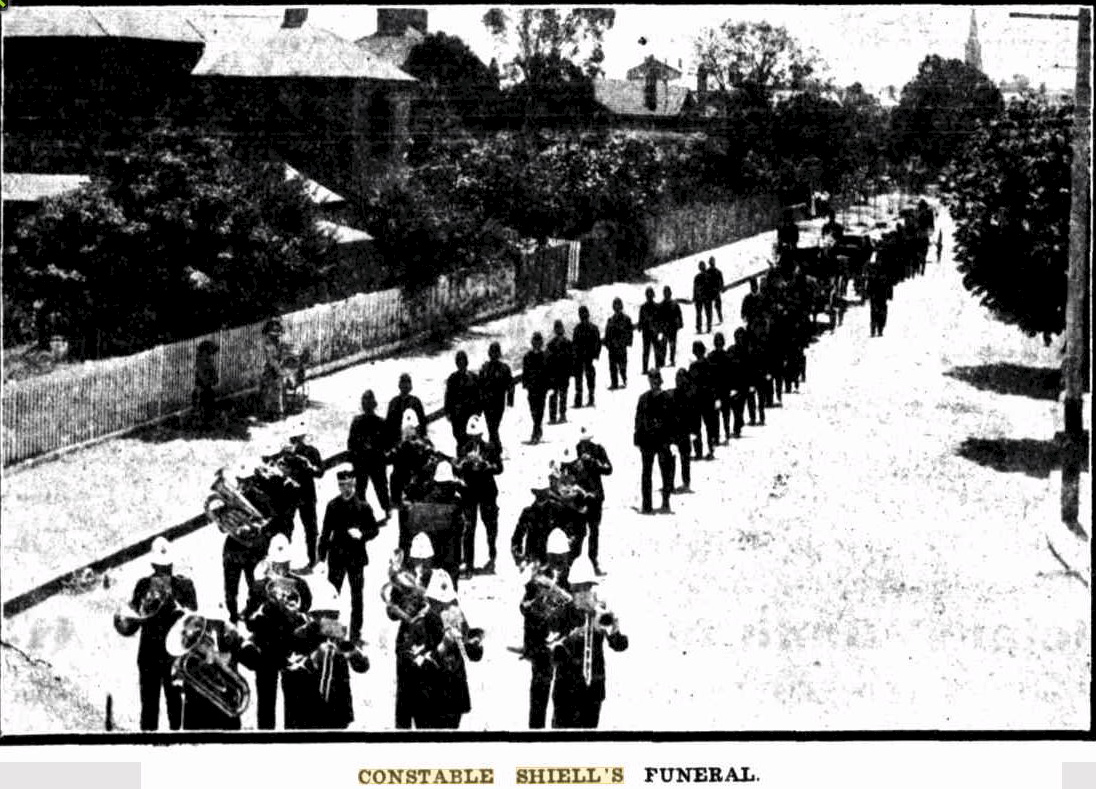
Constable Shiell's funeral

 [alert_red]GEORGE is NOT mentioned on the Police Wall of Remembrance[/alert_red]  * BUT SHOULD BE


 [divider_dotted]


FURTHER INFORMATION IS NEEDED ABOUT THIS PERSON, THEIR LIFE, THEIR CAREER AND THEIR DEATH.

PLEASE SEND PHOTOS AND INFORMATION TO Cal

[divider_dotted]

May they forever Rest In Peace

[divider_dotted]

The constable was knocked down by a young man riding a bicycle in Pennant Hills Road, Parramatta on 27 November, 1912. He was taken to the Parramatta Hospital where he passed away on 7 December. He was on duty at the time. The following brief article appeared in the Barrier Miner newspaper of the 9 December, 1912.

DEATH OF A CONSTABLE – RESULT OF A BICYCLE COLLISION.
On November 27 Constable G. Sheill [sic], while on duty on the Pennant Hills Road, was run into from behind by a cyclist named Francis Mobbs, who was on his way to the chemists for medicine for a sick relative. The constable was thrown heavily on the roadway, his head striking the metal with great force. He was conveyed in an unconscious condition to the Parramatta Hospital, where he remained in a very bad way until Saturday morning last, when he succumbed to his injuries. The deceased officer, who was 43 years of age and had been 22 years in the police force, leaves a widow and three children. He was previously stationed at Lawson and Broken Hill.”

The constable was born in 1860 and joined the New South Wales Police Force on 2 January, 1891. He was stationed at Parramatta. He is not listed in the official New South Wales Police Honour Roll.

[divider_dotted]


Cumberland Argus and Fruitgrowers Advocate (Parramatta, NSW : 1888 – 1950), Wednesday 11 December 1912, page 2


Death of Constable Shiell.

A Fatal Collision,

Constable George Shiell died in the Parramatta District Hospital early on Saturday morning. He had been a patient since the evening of November 27, on which day he was run down by a cyclist, and sustained severe concussion of the brain which proved fatal. The facts as narrated at the time in ‘The Argus’ were that Shiell was on duty on the Pennant Hills Road on the evening of the 27th, when Frank Mobbs, riding into Parramatta with all speed on a cycle, to obtain medication for his sister, ran into the constable with considerable force.

Shiell, who was a heavy man, fell back wards, his head striking the hard metal road very severely. He did not move after he. fell, and Mobbs went to his assistance. The constable was then unconscious, and was removed in a cab to the Parramatta Hospital. He never regained consciousness, and died ten days after the accident happened. The funeral was impressively carried out on Monday morning, Mr. E. L. Maitland, S.M., adjourning the Parramatta Police Court front 11.30 a.m. until 2 p.m., as a mark of respect. The arrangements were entrusted .to Mr. Ralph Metcalfe. The solemn procession was formed up in front of the police station, the coffin being brought to the hearse, from the Hospital morgue. Troopers Porter and Wilkinson, mounted, headed the cortege. which marched to the mournful strains of the Dead March in Saul and other appropriate music. This thrilling lament was exquisitely and most feelingly played by the fine police band, consisting of some 18 musicians, under the direction of Capt. Bentley and Sergeant Mankey. The drums were draped in black as a token of sorrow for the comrade departed. The band was followed by a body of police under the command of Inspector Trenchard, amongst whom were Sergeant MacMillan, Sergeant Hynes, Senior-Constables Gillies, Nelson, Robertson, Allison, McDonald, Trevillian, and Freeland, and some IS members of the force. Also present were notice ex Senior Constable May and West, and ex Constable Denman, Buchanan, Sergeant Cawood and others. The pall bearers were Constables Kelly, Sheddon, Bruce and Wilson, and the chief mourners were Mr. and Mrs. Shiell. jun., Miss Venables and Mr. Potts, near relatives of deceased. The procession marched via George and Church streets to the Western-road cemetery, where the mortal remains of the departed officer were reverently laid to rest in the Presbyterian portion of the burial ground. The funeral service was conducted by the Rev. John Paterson, and the police band played very movingly by the grave-side. Beautiful floral tributes were sent in, one wreath under a glass cover bearing a card stating that it was ‘a token of esteem and deepest sympathy from his brother comrades of the Parramatta police.” The other bore the word, ‘Asleep,’ and was addressed ” With deepest sympathy, from the employees of Yolhnann’s ?, Ltd.’

http://trove.nla.gov.au/newspaper/rendition/nla.news-article86140032.txt

[divider_dotted]


INQUEST

http://trove.nla.gov.au/newspaper/article/86142424

[divider_dotted]

Cumberland Argus and Fruitgrowers Advocate (Parramatta, NSW : 1888 – 1950), Saturday 22 February 1919, page 6


MARRIAGE.

FISHBURN — SHIELL — January 25, 1919, at St. Paul’s, Castle Hill, by the Rev. W. J. Roberts, Frank Walter, only son of Mr. and Mrs. W. Fishburn, Castle Hill, to Florence Janet, only daughter of the late Constable George Shiell and Mrs. Shiell, Sorrell-street, Parramatta.

http://trove.nla.gov.au/newspaper/rendition/nla.news-article86117174.txt


[divider_dotted]

Evening News (Sydney, NSW : 1869 – 1931), Thursday 28 November 1912, page 6


RUN DOWN BY A CYCLIST.

Constable George Shiell, of Parramatta, was run down by a cyclist, at the Pennant Hill road, about 9 o’clock last night. The cyclist was hurrying Into Parramatta for medical assistance for his sister, when the accident happened, and he went to the assistance of Shiell, who was unconscious, and had him conveyed to Parramatta Hospital. The constable was still unconscious this morning, suffering from concussion of the brain.

http://trove.nla.gov.au/newspaper/rendition/nla.news-article117679279.txt


[divider_dotted]

Department of the Attorney-General and of Justice,

Sydney, 7th February, 1906.

HIS Excellency the Governor, with the advice of the Executive Council, has been pleased to appoint the undermentioned

Members of the Police Force to exercise, within the Licensing Districts preceding their respective names, the authority

conferred by section 19, subsection 1, of the ” Liquor (Amendment) Act, 1905,” viz.:—

District.     Penrith        Station:  Lawson

First Class Constable George Shiell

http://trove.nla.gov.au/newspaper/article/226406236


[divider_dotted]

Police Department,

Inspector-General’s Office,

Sydney, 3rd February, 1906.

INSPECTORS OF SLAUGHTER-HOUSES.

BY virtue of an authority vested in me by an order of His Excellency the Governor-in-Council, I have appointed the undermentioned members of the Police Force as Inspectors of Slaughter-houses and of Cattle intended to to slaughtered :—


Name.     George Shiell

Station.  Lawson …

Police District.  Penrith

http://trove.nla.gov.au/newspaper/rendition/nla.news-article226406072.txt


[divider_dotted]

Department of Public Health, N.S.W.,

Sydney, 29th February, 1904.

IT is hereby notified, for public information, that the undermentioned Sanitary Inspectors have been appointed by the Local Authorities under the ” Public Health Act, 1902,” for the Police Districts named :—

Police District.     Lawson.

Name of Sanitary Inspector.     First Class Constable George Shiell

http://trove.nla.gov.au/newspaper/article/226392815

[divider_dotted]


Barrier Miner (Broken Hill, NSW : 1888 – 1954), Friday 20 April 1894, page 4


CIRCUIT COURT.

The Criminal Calendar.

The following is the list of criminal cases to be dealt with by Mr. Justice Foster at the Circuit Court, which

opens on Monday :
James Lees White and George Shiell, manslaughter.
http://trove.nla.gov.au/newspaper/article/44127253

[divider_dotted]


Barrier Miner (Broken Hill, NSW : 1888 – 1954), Thursday 22 March 1894, page 1


THE SOUTH TRAGEDY.

THE INQUEST.

CONSTABLE WHITE’S EVIDENCE.

THE inquest on the body of John Jeremiah Considine, who was killed at South Broken Hill on Sunday morning, was resumed at the Town Hall this afternoon before Mr. A. N. Barnett, district coroner.

Constables J. L. White and George Shiell were present in custody. Alderman John Souter was foreman of the jury.

Mr. A. J. Hall appeared for the relatives of the deceased.

The first witness was Constable James Lees White, who appeared with his head bandaged.

The Coroner said before administering the oath that the witness was not obliged to answer any questions which might bear on any future proceedings.

The witness said : – I was stationed in charge at South Broken Hill ; I am relieved from duty ; I have been in charge at South Broken Hill from the middle of October last ; I was on duty at South Broken Hill on the night of March 17 ; Constable George Shiell was also on duty ; I saw the deceased Considine on the morning of the 18th at about a quarter past 12 o’clock ; he was in the back yard of Hegarty’s Hotel; he came from the back of the hotel with two men named McLennon into South-street ; be came to the gate of the yard of the hotel ; the three men appeared to be the worse for liquor, the two McLennons more so than Considine ; as they came to the gate I said, “Good night, Considine ; don’t you think it is about time you were getting home?’ ; one of the McLennon’s said, ” Oh, yes, come on, Jack ” ( meaning Considine ) ” we’ll go;” Considine replied, ” No, I won’t – I’ll go home when I think fit ;” he then put his hand up to his ( witness’ ) face, and, spreading it out, said, ” Now, White, you appear to be watching me ;” he still kept putting his hand up, and said, ” Now, White, I warn you if Shiell or Shiner comes to arrest me you had better come well prepared or you’ll go down.” I replied, “There’s nobody talking about arresting you.” He replied, “Never mind, I’ve warned you ; take what meaning you like out of it ;” one of the McLennons got him by the arm then, and said, ” come on, Jack, never mind;” he replied, “you go away, Hughie, and mind your own business,” and pushing McLennon in the chest, knocked him down ; Constable Shiell then stepped over to the kerb side of the footpath and beckoned with his finger saying, ” Look here Jack, I want to speak to you ;” Considine passed me, and went over to Constable Shiell, putting his hands up in a threatening attitude, saying : ” You, Shiell, you’re only a ……… thing, a …… sneak, and a ….. crawler. Shiell replied, backing away from him towards the fence of the hotel, and Considine said, with his hands up in a fighting attitude, ” I’ll drop you.” He backed Shiell against the fence up to within about two feet or a yard from Hegarty’s Hotel; Shiell drew his baton and struck at him, and I also drew my baton, believing there would be a row ; I believe he struck Shiell; he rushed at Shiell, and I struck him with my baton over the forehead ; he sidled backwards and then started to run along South street and into Patton-lane ; he entered Hegarty’s Hotel by a small gate off Patton-lane, and ran through the yard into the passage of the hotel, followed by myself and Constable Shiell ; finding there was no light in the passage of the hotel, we didn’t enter ; called the landlord, Mr. Hegarty, who came out and gave me a candle ; at this time I heard a noise as if a door was being opened and shut ; lit the candle and proceeded along the passages of the hotel and searched them, but failed to find anybody ; found that the door of the hotel leading into South-street was closed, but unlocked ; remarked to Hegarty, ” He’s got away, we must let him go and take proceedings on Monday “; after speaking to Hegarty for about three minutes at the side door of the hotel, Hegarty either remarked, ” Here he’s coming ” or ” Here’s somebody coming,” could not say which ; Hegarty took the candle, and going inside closed the door ; it was Considine coming, and he appeared to increase his pace as he came towards us, saying, “Now, I’ll smash your ….. brains out;” the McLennons were at this time standing near the entrance gate of the hotel, 20 yards off; when Considine came within 10 paces of me I saw he had something in his hand which he was carrying low down, as if it were a rifle; he struck at Constable Shiell and then swung round at me ; I then saw that what he had was not a rifle, but a bar of iron or an octagon drill, about 4ft. or 4ft 6in. long ; he swung it round in both hands with terrific force at me ; I closed with him to try and avoid the full force of the blow, but the iron struck me over the left ear, and I fell on my back out on to the footpath ; I produce the cap I was wearing at the time showing, it cut through just where I got the blow over the ear ; I was partly dazed for a few seconds; I raised myself on my left elbow, and looking round saw Considine chasing Shiell down along the police station fence in Patton-street ; I got up, staggered across the street, and went into the.police station; I had previously tried to arrest Considine for riotous behavior ; I saw Shiell at the police station; we got our revolvers and went out into Patton-street with a view to effecting his arrest ; we saw him standing in South-street, against Krantz’s store, about 30 or 40 yards from us ; we went towards him and he started to move away towards the direction of his house or towards Hebbard-lane ; I called out, ” Considine stand, or I’ll shoot;” he then started to run ; the period between this time and when I got up off the path was about three minutes ; he ran, and I called out again, ” Considine stand or I’ll shoot”; he was 20 yards off ; he increased his pace and replied “Shoot away, I can do you,” or ” I can do for you,” I’m not sure which ; I then fired a shot from about 10 paces behind him into the ground before him to frighten him ; he still kept running and as he turned into Hebbard-lane I fired another shot at his feet ; it didn’t appear to take effect, as he still kept running, and as he turned into his own block, he partly looked back over his shoulder at the time to see if I was pursuing him ; after getting into his own block he turned round and faced me, and came towards me with his hands up in front of him about level with his face ; I ran into, him, striking him with my left shoulder, knocking him down ; he then said, “I give in,” and with the assistance of Constable Shiell I put the handcuffs on ; we picked him up between us and conveyed him some yards when his knees gave way, and he suddenly fell down, saying, ” I’m done ;” I fired three shots, the third one being fired as he turned out of Hebbard-lane into his own block ; I fired the third shot at his knees as he was running and looking back at me ; after I fired the first shot Shiell also fired, but without apparent effect ; after I fired the second shot Shiell responded, and this also didn’t appear to take any effect ; as I fired the third shot Shiell immediately fired also, Shiell being about a yard behind me ; Considine appears to be in the act of turning round and coming towards me ; cannot say in what direction Shiell fired when deceased fell down I ran for cab over in Hebbard-street, as he appeared to be badly wounded ; left Considine with Shiell ; told the cabman to come to Hebbard-lane, and when I came we put the deceased into the cab he was then alive, but breathing heavily ; before removing Considine to the cab Mr. Pound and a man named Reid came and assisted us to put the deceased in the cab ; the cab went down to the police station ; Constable Shiell came out and went in the inside with the deceased; I got on the box with the driver, and told him to drive as fast as he could into town ; we reached Dr. Thomson’s surgery in Argent-street at about 12.45 ; I called Dr. Thomson; he came out and examined Considine and said he thought life extinct; he bandaged my head, and we then drove to the hospital and put the body of the deceased in the morgue; the revolver produced is in the same condition as it was when I used it ; it is loaded in three chambers; three cartridge: were exploded.

By the Coroner : When I fired the last shot the deceased had not turned towards me, but was running sideways from me, exposing his right side, and with his face towards me.

By Mr. Hall : I had known Considine for four or five months ; I had heard that the police did not care about interfering with him, especially if he was under the influence of liquor ; I cannot say he was a peaceable citizen, because I saw him picking a quarrel at a banquet two nights before ; I used to be on fairly friendly terms with Considine, and never spoke to him officially before ; I did not see the deceased before on that evening ; I was exceedingly civil to him when I advised him to go home; I spoke to him in friendship, because I knew that in liquor be was apt to get into trouble ; I saw neither Carney nor O’Leary present at the time ; I am certain it was McLennon who caught hold of Considine by the arm and ordered him to go home ; it is untrue that Considine said to me, “You are a white man,” and, turning to Shiell, said “You are a crawler,” and that thereupon Shiell struck him on the head with a baton; he kept calling Shiells ” crawler ” and walking towards him, and it was when Shiell had backed to within a yard of the fence that he struck Considine with his baton ; I believe he struck him on the neck or the jaw; I also struck him ; the small wound caused by me over the eye was afterwards mistaken for a bullet wound ; it did not bleed profusely; when Considine came the second time I recognised him at a distance of 20 yards ; he increased his pace when he got close; notwithstanding that the peak and the button on my cap are uninjured, I consider that the clean cut on toe side of the cap was caused by the blow with the bar ; I was leaning away from him when he struck at me, and I got so close in that he could not give full force to the blow ; I cannot say what conversation Shiell and I had when we went into the station ; Shiell was very much excited, like myself ; my revolver was unloaded, and I had to load it; Constable Shiell took Constable Shiner’s revolver; I don’t know whether he had to load it ; I decline to answer the question as to who first suggested the use of revolvers on the ground that it may incriminate me; I have had no instructions whatever about the regulation revolvers ; my experience is that a revolver does not carry high with a fine sight ; it was between 30 or 40 yards from where I fired the first shot to where he fell ; while we were coming up from the police-station towards Considine I said to Shiell, ” If he attacks us again whatever you do don’t shoot him in the body, fire low” ; when I first called on Considine to stop I believe he had the bar still in his possession ; when the last shot was fired he was between 15 and 20 yards away ; I did not see him drop or fling away any weapon; it was in consequence of his second attack that we went to arrest him immediately instead of waiting until Monday ; before I left the ground I gave instructions that the weapon should be searched for ; Constable Shiner afterwards told me that he could not find it; I know Considine was a married man ; his wife told me on the Friday evening that she was not living with him ; while I was on the way to the cabdriver’s I met a man named Ohllson ; I don’t remember what I said to him ; I refuse to say whether I told him what I had done ; when we came out with revolvers there were some people standing with Considine; I don’t know who they were ; I don’t think the blow I gave the deceased with the baton would be sufficient to cause the bloodstains on the collar of the shirt produced.

The examination of Constable White concluded at 5.15.

The Coroner at this stage said he was justified in telling the jury that once they were convinced that the deceased met his death by being shot down by one constable or some constables, the only questions they had to consider were :-(1) Was he, or were they, in the execution of their duty, or, even when, trying to arrest were they in the execution of their duty ; and (2) were they justified in shooting him in order to bring him within the reach of justice. Any questions that went beyond that were, in his opinion, irrelevant.

Dr. Seabrook, of the hospital, said that White had a true contused wound above the left ear ; such a wound could have been caused by a heavy blunt instrument, and would be likely to affect the brain for the time being, together with depression of the nervous and physical systems ; also examined Constable Shiell, who had the ninth rib on the left side fractured.

Constable Shiell said he was on duty at South Broken Hill on Sunday morning, and saw Considine at the rear of the South Broken Bill Hotel. The evidence was mainly corroborative of that given by Constable White ; Shiell added that White called to Considine, “Stand, or I will shoot “; the latter replied. ” Shoot away I will do for you “; Considine commenced to run, and White fired ; witness immediately fired over the man’s head, thinking he would surrender ; White and witness again fired ; after the second lot of shots, before any more were fired, Considine was on his own block : he turned round to the left and looked at them sidewise, when White delivers his last shot ; when he turned his full front towards them Considine raised both hands as if he was going to rush or throw something at them ; witness fired at his legs about the knees, with the intention of crippling him, in order to effect the arrest ; this was immediately after White’s last shot.

The inquest was at 6.30 adjourned until 10 a m. to-morrow.

http://trove.nla.gov.au/newspaper/rendition/nla.news-article44127456.txt


Barrier Miner (Broken Hill, NSW : 1888 – 1954), Tuesday 24 April 1894, page 4


THE CIRCUIT COURT.

The South Tragedy.

Evidence For the Crown

Continued.

In the charge against James Lees White and George Shiell of feloniously killing John Jeremiah Considine at

South Broken Hill on March 18, the following further evidence was taken this afternoon :

James Carney, laborer, employed on the Proprietary mine, went to Hegarty’s at 11p.m.; he there met Considine, who was an old acquaintance of his ; he had two drinks with the deceased ; Considine was neither drunk nor sober; witness did not know-him to be a quarrelsome man in drink ; he went out of the hotel and through the back yard with Considine, the two McLennons and O’Leary ; .Considine was leading ; Constables White and Shiell were standing near the gate on the footpath ; White said to Considine, “It is time you were home Considine ;” deceased replied “I will please myself;” witness then went down the yard ; on returning. he saw O’Leary, Considine, and the two constables ; he heard deceased say to White, ” You are a white man, White, I believe ;” Shiell then hit Considine with his baton on the head; Considine reeled and staggered back against the fence ; both constables then drew their batons and followed him up; he got away from them and ran along South lane ; witness remained at the gate with O’Leary, and saw Considine running through the backyard into the hotel; the two policemen followed shortly afterwards ; he next saw the constables standing outside the side door of the hotel with Hegarty ; he walked towards them ; when about six or seven yards away from them he saw a man coming down South-street, near James’ shop ; he heard Shiell say, ” Here he comes ; we will have him this time ;” :witness identified the man as Considine as he approached the constables ; he had no weapon in his hand ; the constables walked two or three paces towards Considine, and witness saw the latter hit White on the head with his right hand ; deceased did not first hit Shiell ; he was in the habit of wearing a ring on his right hand ; White fell down on the footpath near the tree-guard ; Shiell went towards the police-station, and White followed him;. witness, O’Leary and Considine crossed Patton-street and walked along the footpath past Krantz’ ; they stood near Hebbard-lane for a short time ; a man named Donohue had followed them up and joined them ; Donohue remarked, “There come the two constables; I can see their revolvers shining ” ; the policemen were just coming out of the station ; witness told Considine to go home ; blood was streaming down Considine’s face; he left and walked towards Hebbard-lane on the opposite side of the street ; he was walking slowly and one of the constables said “Stand, Considine, or we will shoot ” ; Considine began to walk pretty smart, and the constables again called out , to him to stand ; he replied “Shoot away” ; the police were then about 12 or 15 paces behind him, and they fired, two shots in quick succession ; when they all entered the lane two more shots were fired; witness believed the deceased and the police were then running ; after Considine had turned on to his allotment the constables, who were also on the block, fired the last two shots ; White ran into Considine and knocked him down ; the constables handcuffed the deceased and walked him a few yards ; Considine then exclaimed, “I’m done,” and fell ; witness had known deceased get into trouble with other people, but always through their fault. By Mr. Moriarty : Witness was an intimate friend of Considine’s; he did not know that two evenings before the tragedy Considine had driven his wife out of the house, nor that on the Friday previous he turned her out at 4 a m. ; in his evidence before the coroner; witness did not mention that Donohue was present when the police came up with their revolvers; he did not offer to assist White when he was knocked down, neither did Shiell, who merely walked over to the police station ; he could not say who broke Shiell’s ribs ; he could not say where White got the blow from Considine ; White was the first man deceased attacked; Considine came from James,’ the butcher’s, right across, the street to Hegarty’s; he met White first and knocked him down ; Shiell would not have to cross Considine to get to the police station ; when deceased struck White he was quiet, and made no remark then or afterwards about it ; when Considine told the police to “Shoot away” he did not add, “I can do for you;” when Considine fell witness was 25 yards away; he would not swear that deceased did not face the police when on his own property. By Mr. Edgar : He would swear that Considine did not face the police in a threatening attitude ; he might have turned slightly.

James O’Leary, smelter hand, was at Hegarty’s Hotel on the evening in question at 10.30 ; he had two whiskies there ; he. saw Considine, the two McLennans, and James Carney there ; the McLennans were the worse of drink; Considine seemed right enough ; they all left the hotel together by the back entrance, Considine being a little bit ahead ; at the gate they met the accused ; when Considine got to the gate White said, “You ought to be at home, Considine’ he replied, ” I will go when I like,” and added that they “had been watching him this good bit ;”? deceased also said, ” If you come to take me come prepared or you will go down ;” turning to Shiell, he exclaimed, ” You are a crawler,” and to White he said, ” You are a white man ;” the McLennans said nothing to Considine, and witness did not ask Considine do anything to either of them ;. after Considine had addressed the constables in the manner stated Shiell struck him with his baton ; the blow staggered him, but he recovered, and both constables rushed in ; they tried to hold Considine, but he got away and ran around the corner into the lane; afterwards he saw the police conversing with Hegarty at the side door ; he saw Considine coming across from James’ butchers shop, passing a cab en route ; he hit White, but witness did not see him hit Shiell ; White fell, and Shiell went over to the police station ; White got up and followed Shiell ; Witness and Carney joined Considine, and they moved off towards Krantz’s ; deceased at this time had nothing in his hand ; when they got below Krantz’s Michael Donohue joined them ; Considine had a cut over his eye, from which blood was flowing ; witness saw the constables coming from the direction of the police station ; Considine crossed the street towards his own place, and the police called out, ” Stop, Considine, or we will shoot”;, they, then fired two shots, and when deceased got into the lane they fired two more ; two more shots were fired when Considine got on his, own block ; when the last shots were fired Considine was about eight yards from the police; he fell, but witness was not sure that a policeman did not run into him first. By Mr. Moriarty : Considine had no iron bar with him ; he may have had a ring on his finger.

Christopher Conlon, cab-driver, was next examined.

Case proceeding.


[The continuation of the evidence will appear in the Third Edition.]


http://trove.nla.gov.au/newspaper/article/44128502?searchTerm=%22george%20shiell%22&searchLimits=sortby=dateAsc


Barrier Miner (Broken Hill, NSW : 1888 – 1954), Thursday 26 April 1894, page 3


THE SOUTH TRAGEDY.

His Honor’s Summing-up. The Functions of Police Constables.

The Legal Use of Firearms.

James Lees White and George Shiell, police constables, were charged, on remand from the previous day, that they did, on March 18, at South Town, feloniously slay John Jeremiah Considine.

The jury, which earlier in the morning had been driven to the scene of the tragedy under the charge of the Deputy-Sheriff ( Mr. G. A. Mills ), was brought into court at 10 o’clock.

His Honor said the jury would understand that the question they were now trying was one of manslaughter ; the Crown did not bring the prisoners up on the murder charge.

The question was whether on the whole of the evidence, subject to the law, the prisoners, or either of them, were guilty of the offence. Manslaughter was the unlawful slaying of a human being. The case was one of enormous importance both to the prisoners and the community, and also the police force of the colony. He was glad to find from the evidence of Sub-inspector Johnston that it had not been found necessary to cause the police here to habitually carry firearms. The unfortunate necessity becomes only justifiably resorted to in cases where there were men so degraded and villainously murderous as to be prepared to take the life of the police simply because they were police, and treated them in such a manner as to endanger life. The police were bound to protect our liberties at the risk of their lives, but were also given the power to protect their lives just the same as private individuals. They must be treated in the matter of self defence just as private individuals. The police had a perfect right to take the life of a person if necessary to do so in defence of their lives; but only in case of necessity. Here it was important to consider what “necessity” was. It was not merely a necessity appearing to the mind of an excitable man, but such a necessity as would appear to persons in the calm contemplation of the matter. A man was not excused because he had taken fright and thought he was going to have his life taken. Whether life was taken by a policeman or an ordinary civilian, the law invariably held a careful and jealous investigation as to how it was taken and whether the circumstances were such as to justify the taking of life in self-defence. Under the strict interpretation of the law; ” justification” was not a proper term. All the law did was to “excuse” a man who took the life of a fellow creature in self defence.- In this case he had no doubt that the jury would have full regard to the point he had drawn their attention to, i.e., that the only ground on which a man could be excused in taking life was that it was done from an absolute or clearly apparent necessity.

And that necessity must be this : It was not sufficient that the accused himself should think it was necessary, but he must think so reasonably and justifiably. The jury had a difficult task to determine whether the circumstances were such as to make it reasonably necessary for a man to take life in his own defence.

The law was not otherwise in regard to killing in the execution of duty by an officer of justice. Bearing that in mind, they would have to deal with this difficult case like others of a similar character. With regard to the matter of self defence, he did not think the question was really raised on the part of the prisoners.. He did not think it was set up that the killing was done by them in necessary self-defence of themselves. It appeared that the prisoners had from the first stated that .they did it in order to effect the arrest of a felon endeavoring to escape from them. As to the evidence of the witness Pound, he had to draw attention to the fact that what White stated to Pound was not evidence against anyone but White himself ; it was not evidence against Shiell. Nothing one prisoner said in the absence of the other was evidence against that other. It was necessary that the jury should also consider, although the excuse was set up of having taken life in endeavoring to apprehend a felon, whether in fact the object was to retaliate for injuries already received by the constables. If it was retaliation, the law made no excuse whatever. The law made this much allowance, that if a man was severely injured, and whilst still in hot blood seized a weapon and took the life of the person who attacked him, it would not hold him guilty of murder, but of manslaughter of a high character – of a very aggravated kind indeed. It was, therefore, a matter of the most serious importance to consider whether they were satisfied that Pound had given the proper statement of what took place, or whether White was doing so. Pound stated, if they recollected, that the prisoner said to him after the shooting took place, that he had shot Considine; and when Pound asked why he had done so, White replied, “If he had done to you what he did to me, you would have done the same.” Did the jury believe that Considine was shot because of the injuries which he caused to White? If they did so, he would be guilty of manslaughter of an aggravated kind. If he had taken firearms when cool and took life he would be guilty of murder, but if he did it in a time of excitement he would be guilty of aggravated manslaughter indeed. The law would admit self-defence, but not retaliation of any kind. Retaliation involved punishment, and.the law; insisted that punishment should be left to the proper courts of justice and should not be placed in the hands of private individuals or persons other than courts of justice. A good deal depended on what the jury thought of the evidence given by Pound as compared with that given by White. White alleged that he said, “If you had been placed in the same position as I was you might have done the same,” which bore no indication that he acted under feeling from injuries received. They must be very careful in regard to the recollection of witnesses, as witnesses very often differed as to the exact words used. The words were of very great importance in this case, and the jury must be convinced beyond reasonable doubt that they were used. In approaching the consideration of this case he had no doubt that they would do so with a judicial mind, setting naught down in malice and extenuating nothing except by the evidence; that they would neither show favor to the prisoners because they were constables, nor entertain feeling of any kind against them. The well-being and liberty of members of the community required that constables and police officers in general should be supported in the proper discharge of their duty, and the well-being of the community also required that they should be restrained from the excesses of that duty. He had told them that manslaughter amounted, not to the killing by malice prepense, but to killing without lawful excuse. Every killing was presumed to be murder unless from the circumstances it was reduced either to manslaughter or excused as homicide. The fact that a man was killed raised the prima facie presumption that he had been murdered. The jury would have to be satisfied beyond reasonable doubt that the Crown case was proven ; they would be required to have that certainty which would influence them in their personal affairs. Here he would draw their attention to the rules which had been put in in evidence in this case : the rules given to the constables as regulating the performance of their duty. If these rules were contrary to law they would not justify a constable in acting under them ; but they were, when taken as a whole, a fair condensation of the general law with regard to the use of arms by the police. They were not like an act of Parliament, in which each clause might be taken by itself .and have the force of law. When taken as a whole and considered as the advice given to constables as to what the law was, they might be taken to be fairly correct ; but they were not to be taken clause by clause. One part of the rules must be taken with the other. He considered that very great caution should be given to officers with regard to acting under the regulations : they must have regard to the whole of them as a whole. One part might seem to justify the police in using firearms, and yet another part might restrain them ; and they must act under the part which would restrain them. In rule 90 it was very properly laid down:- ” If a constable endeavors to apprehend a person who has committed a felony, whom he is by a proper warrant authorised to apprehend for a felony, and such person flies knowing the intention to arrest for such felony and with a view to prevent such arrest; he may be lawfully killed provided he cannot be otherwise apprehended.” The duty of a constable was to apprehend but not also, as it would be made to appear, to apprehend the person the instant he saw him. He was not justified in shooting a man down because he was running away unless it appeared to him that the person would fully and wholly escape unless he did so. ” At what particular period of a struggle or pursuit the impossibility of overtaking the person son flying becomes manifest must depend upon the circumstances of each case.” That was perfectly correct, and should be most carefully borne in mind. It had a most important bearing on this case, and was perfectly correct law. ” If the constable is better mounted than the person he is endeavoring to arrest, or the place where the parties are is such that assistance is likely to be obtained before the escape can be fully accomplished, or if in any other way there is reasonable ground for supposing that the arrest can be accomplished in that particular pursuit, the officer ought not in any of these cases to take life.” It was not to be supposed that a constable could shoot a felon who refused to stop when called upon. He would draw attention to the words immediately following those quoted: ” He is not, however, bound to let a felon or person whom he is authorised by warrant to arrest for felony escape from him because he may have reason to think that he can find him easily at some other time.”. That did not mean that if the man tried to get out of his sight he was entitled to shoot him ; it meant that he was not authorised to let him escape altogether rather than shoot him. If there were reasonable grounds for supposing that the arrest could be accomplished in any other way the officer should not take life. That would be the most difficult part of the jury’s duty. Rule 90 said : ” It is his duty to arrest the person whom he is so authorised or commanded to arrest as soon as he sees him, and if he cannot overtake him he may kill him.” Taken by itself this paragraph was not true. It was not the duty of a constable to apprehend a person as soon as he saw him, or shoot him. It was certainly his duty not to allow the man to have an opportunity of getting away altogether, even if compelled to take life. A man charged with an offence was bound to give himself up to the officers of justice when called upon, whether guilty of the offence or not. He drew attention particularly to this clause because, although in certain cases, it should br understood by the police that it did not justify them in shooting a man as soon as they saw him if he did not surrender, although in certain cases that shooting might be justifiable. If a constable caught sight of a bushranger in the bush, and called upon him to surrender, and did not have sufficient means of preventing his escape, the officer would be justified in shooting him and killing if necessary. The man would in that case bring it on himself by not surrendering when called upon. Common sense showed us this : a man must not set the law at defiance ; he must submit when called on and allow the case to be investigated. The rule further stated :-” Constables ought in all cases to be extremely cautious in resorting to extreme steps, but when necessity occurs they must perform their duty, and the law will protect them. Should the officer be resisted and his own life placed in jeopardy he may then kill, not for the purpose of preventing an escape, but in self defence.” There was only one other part of the rules to which he would refer. In the 89th section it was stated that there must be an apparent necessity to which the constable is reduced in arresting or detaining a felon before using firearms. ” Apparent ” sometimes meant ” seeming ;” but the 95th section of the rules would show that was not what was meant here. The section in question stated that ” the importance or necessity of this proceeding must be dearly apparent.” Apparent had there its proper meaning : not ” seeming ” but ” clear.” The law which applied on this ground required a policeman to do his duty even if it was necessary to take life, and it held him harmless in such cases. He would now proceed to the matter of the case before him. Was Considine killed ? How was he killed ? and by whom ? Was he killed by the two prisoners or either of them, both of them acting for a joint purpose at the time ? The prisoners had set up the defence that they were acting together and killed to prevent escape. The Crown did: not seem to dispute that a felony had been committed by Considine. The question was, Were the prisoners endeavoring to apprehend Considine after he had committed a felony in order to bring him to justice ? Or did they endeavor to shoot him because he struck them and injured them, and they were smarting under the injuries ? If the latter they were not justified in law. As he said before, the contradictory evidence on the point affected the prisoner White alone, That depended on whether they believed the exact evidence of Pound, or whether they thought the statement by White, that that was not the exactly correct expression, was to be, preferred. They must be satisfied that Pound’s recollection was correct before the evidence could act in any way against White. Even if they were satisfied that the words used by Pound were the words used by the prisoner White then the evidence did not seem to be sufficient to warrant the conclusion that the killing was done while smarting from injuries, and not for the purposes of apprehension. A prisoner might give as faithful evidence as a man who was not a prisoner. Two stories had been set up in this case. In the first place it was alleged that there was a scuffle in the early part of the case, which scuffle was not directly material in arriving at a conclusion. At the same time the facts might throw light on the subsequent scuffle, which was material. It was not contended that the first scuffle constituted a felony. A felony was committed when actual bodily harm was inflicted ; and if bodily harm was inflicted by Considine in the first scuffle he was a felon, and the police were justified in apprehending him when he came back. When Considine came back on the second occasion he committed a felony and justified the constables in apprehending him and even in taking his life if necessary in order to prevent escape. If Considine had nothing in his hand when he struck the prisoners, as stated by witnesses, how came the mark which were on the coat and cap, and how were Shiell’s rib broken and White’s head injured ? He had no doubt they would believe the evidence of the doctors, and it was for them to say whether the prisoners’ evidence, which was consistent with the doctors, or that of Crown witnesses, which conflicted, was the more reliable. Unfortunately for the prisoners, it was not this question alone which had to be tried. It was not a question whether Considine had an iron bar in his hand or not ; that might be a question if the accused were charged with murder. That question did not arise here, where the accused were only indicted for manslaughter. Supposing every word told by the prisoners was true, had they reasonable grounds for believing that it was impossible to prevent the escape of Considine without shooting him ? The offence was a very serious one even in its mildest form. This case was a precedent ; a good law in this would be good law in others. It would never do to lay down the rule that members of the community might be shot down by the police merely because they thought they could escape. On the other hand they must not discourage officers in the discharge of their duty in preventing the escape of felons. .It was for the jury to decide whether the prisoners had acted honestly and under a proper view of the circumstances. His Honor then reviewed the evidence at length. The evidence of John McLennan, the first witness, detailing the preliminary scuffle with the police, was merely introductory. The witness Wake, who was aroused by the noise of the scuffle, was to the effect that Considine and his companions were under the influence of drink. The witness stated that Considine pushed one of his companions who asked him to go home, but would not swear that he had knocked him down. He, however, said he saw a man lying on the ground 9ft. from the window, and from the rest of the evidence it seemed that this man must have been McLennan’s brother. With regard to Hegarty’s evidence, there was an important matter testified to by him and other Crown witnesses which the jury would have to consider seriously. This evidence was that the constables, when they saw Considine had escaped after the first scuffle, said, “He’s gone now; well summons him.” That might lead the jury to suppose that the constables knew that Considine would not attempt to escape, but on the other hand, they must consider that Considine had not then committed the more serious offence of assault on the police. The remark might lead the jury to the implication that the police knew that Considine would not attempt to escape; and that might very seriously affect their consideration of the question whether the police believed that Considine would endeavor to escape after committing the more serious assault. The witness Carney had given very strong evidence, and it was for the jury to consider whether they would credit the whole of it. The general account given by him was similar to that given by the constables, but it differed materially in important details. Carney said he did not see Considine hold up his hands to Shiell in a threatening attitude, as deposed to by the accused ; and he said that Shiell struck the first blow with his baton. If the constables’ story were true, and Considine came at Shiell in a threatening manner, the latter would be quite justified in striking him first.. Then Carney’s evidence differed from the constables’ in that it stated that Shiell ran away after the assault. It was for the jury to say whether the constables’ story was not more consistent with the doctor’s evidence that Shiell’s rib was broken. A man with a broken rib would not be able to move quickly. If the jury believed that Carney had not told the truth on this point, and did not credit his evidence where opposed to that of the police, it might materially affect their verdict. Carney also differed from the police as to the distance the accused were from Considine when they fired at him ; but a mistake might easily be made as to distances. Carney also denied hearing Considine say, when the police called on him to stop, ” I’ll do you,” or ” I’ll do for you.” If they believed, the evidence of the constables on this point, it might be held to justify the police in shooting Considine, especially if they found that the accused believed Considine to be a powerful man, dangerous in drink, and that there was a probability of his escape. The evidence as to the firing of the shots, was immaterial. The question for the jury was, Did the constables fire at Considine with a common intent ; and if so, was that intent justifiable or not ? It was for the jury to say whether they believed Carney or Shiell as to Considine approaching the latter in a threatening attitude and as to the latter running away ; and if they believed the doctors’ evidence as to Shiell’s injury, the evidence of the constable on the latter point was the more reliable. The evidence of O’Leary and other companions of Considine was much the same as Carney’s and he need not go into it fully. The doctors’ evidence showed clearly that a felony had been committed by Considine, and believing that, the jury would probably consider the evidence of the constables on that point as matter of truth. If they found that a felony had been committed, the other most important point remained, Was it necessary to shoot Considine in order to effect his arrest ? Then they must consider the other important point whether the constables went with their revolvers for the purpose of apprehending Considine and bringing him to justice or, in the passion of the moment, to retaliate on him for the injuries.he had inflicted on them. With regard to that there was the most important evidence of the witness Pound, but it only told, against White.

Mr. Edgar : There is Ohlssoo’s evidence also.

His Honor said he would read the evidence, Ohlsson said that White remarked to him just after the affair, ” I have just shot Considine – the brute.” That was no doubt relied on by the Crown to show that White had acted in the heat of passion. But it was only human nature that a man – and a constable was, after all, only a man -should be angry under the circumstances. He could hardly have been otherwise after receiving such a blow as the evidence showed he had received. White had not denied using the remark.

Mr. Moriarty : He Bays he has no recollection of using it.

His Honor said White might have used the remark, not knowing that Considine was dead at the time.

Having gone through the whole of the evidence – as will be reported in length in the Second Edition – the jury retired precisely at 12 noon.

http://trove.nla.gov.au/newspaper/rendition/nla.news-article44120576.txt


*At this time ( 8 December 2016 ) I am unable to find a result for this Court case.

Other articles – The Maitland Daily Mercury, dated Tue 13 Feb 1906 – mention Constable James Lees White as being Stationed at Scone.

The Tamworth Daily Observer, dated Wed 9 Dec 1914 have Senior constable James Lees White, of Weston, as the victim of an attempt murder at Sawyer’s Gully.

They Sydney Morning Herald, dated Thu 25 Jan 1923, whereby Sergeant James Lees White, served with NSWPF for 33 year 3.5 months, received his Imperial Service Medal at Government House on Wednesday 24 January 1923.  He was also responsible for the arrest of a man who had shot dead his brother, and re-arrested him subsequently when, after being liberated from gaol, he ran amok and fired on the sergeant.

The Sydney Morning Herald – Monday 21 April 1952.  WHITE, James Lees ( ex-Sergeant of Police ) – April 20, 1952, at his residence, 164 Belmore Rd, Randwick, and late of Kurri Kurri and Weston, dearly loved husband of Clara and loving father of Jack ( Fairfield ) and Frank ( Kurri Kurri ), aged 90 years.

Beloved father-in-law of Iris ( Mrs Jack White ) and Agnes ( Mrs Frank White ), and dear grandfather of Jim and Gloria, Max and Zara, Colette and Frank, and great grandfather of Jeffrey.

WHITE – The Relatives and Friends of the late James Lees White ( ex-Sergeant of Police), are kindly invited to attend his Funeral; to leave our Chapel, 151 Alison Rd, Randwick, this Monday, after Service commencing at 10.45am for Eastern Suburbs Crematorium.  By request, no flowers.  Wood Coffill Ltd, Funeral Directors, FX1296


John David RAINE

John David RAINE

aka  Rainy

( late of Yass.  Formerly of Campbelltown )


New South Wales Police Force

Academy Class 224


Regd. #   23242


Rank:  Probationary Constable – appointed 6 February 1987

Constable – appointed 6 February 1988

Senior Constable – Retirement


Stations?, Campbelltown ( 1980’s ), Picton ( 1989 ), Campbelltown, Yass HWP – Retirement


ServiceFrom  ? November 1986  to  15 May 2009 = 22+ years Service


Awards:  No find on It’s An Honour


Born:  21 January 1963

Died on:  Wednesday  7 December 2016 in Yass District Hospital

Age:  53

Cause:  Illness – liver problems and was awaiting a liver transplant


Funeral date:  Tuesday  13 December 2016 @ 10am

Funeral location:  Uniting Church,  Meehan St, Yass, NSW


Buried at?TBA

 Memorial at?TBA


JOHN is NOT mentioned on the Police Wall of Remembrance  *NEED MORE INFO


 Funeral location


FURTHER INFORMATION IS NEEDED ABOUT THIS PERSON, THEIR LIFE, THEIR CAREER AND THEIR DEATH.

PLEASE SEND PHOTOS AND INFORMATION TO Cal


May they forever Rest In Peace


Former Senior Constable John Raine passed away in Yass Hospital early this morning( 7 December 2016 ) after a long illness.

John David Raine
At the Yass District Hospital 7 December 2016
Aged 53 years
late of Yass, formerly Campbelltown
Dearly loved by his wife Robyn,
Family Kate and Peter, and Laura, Jacques and Elise
Beloved son of Jacqui and Andy (dec)
Brother to Jeni and Lindsay, Ann and Mark (dec),
Andrew (dec) and Belinda
Sadly missed by Vivien
“Sunshine passes, shadows fall, Love’s remembrance outlasts all”


All are kindly invited to farewell John at St Andrew’s Uniting Church, Meehan Street Yass
On Tuesday 13th December 2016 Commencing at 10.00.am

John will be privately cremated.

In lieu of flowers, donations can be made to the Yass District Hospital

W. T. Dennis & Son
Funeral Directors
79 Rossi Street Yass
AFDA
02 6226 4871

09/12/2016  –  DEATH NOTICES

Yass Tribune


Gregory Lewis PENN

Gregory Lewis PENN

New South Wales Police Force

Class 154 from Redfern Academy

[alert_yellow]Regd. #   17534[/alert_yellow]

Rank: Probationary Constable – appointed 4 April 1977

Constable – appointed 4 April 1978

Senior Constable – appointed 4 April 1986

Senior Sergeant – death

Stations?, VKG, Blue Light Disco Unit, Highway Patrol, PCYC – Police Citizens Youth Club, Rose Bay, Mascot, Corrimal, Lake Illawarra

ServiceFrom  ? ? pre April 1977?  to 4 April 2004 = 27 years, to the day, Service

Awards:  National Medal – granted 28 April 1993

Born:  Friday  23 March 1956

Died on:  Sunday  4 April 2004

Age:  48

Cause:  Cancer – Brain, Kidney & Lung ( diagnosed late 2003 )

Funeral date:  Thursday  8 April 2004

Funeral location:  Eastern Suburbs Memorial Park, Randwick

Buried at:  Cremated ( Ashes collected by family )

 Memorial at:  Greg Penn Award for Program Excellence – Maitland PCYc

PENN system, in honour of one of the key architects of targeted programming – Greg PENN


Lauren PENN with her father Greg PENN


gregory-lewis-penn-1-nswpf-died-4-april-2004

[alert_yellow]GREG is NOT mentioned on the Police Wall of Remembrance[/alert_yellow]  *NEED MORE INFO


 [divider_dotted]


FURTHER INFORMATION IS NEEDED ABOUT THIS PERSON, THEIR LIFE, THEIR CAREER AND THEIR DEATH.

PLEASE SEND PHOTOS AND INFORMATION TO Cal

[divider_dotted]

May they forever Rest In Peace

[divider_dotted]

Lauren’s page has now expired

901 days ago ( as of 28 November 2016 ), Lauren created this page in support of NSW Police Legacy.

With the help of NSW Police Legacy, Lauren gave everything:

  • Shared their page with everyone they could.
  • Received 6 donations from generous family and friends.
  • Raised $192.

My Story

Thank you for visiting my page. My name is Lauren Penn. To do city 2 surf has been on my to do list for over 10 years. As a young teenager my Dad would come in and wake me up at the crack of dawn to go for a walk with him, we talked about anything and everything on our walks and we would often talk about doing city 2 surf together.

Unfortunately we never were able to as my Dad pasted away from cancer when I was 15. My Dad, Senior Sergeant Greg Penn joined the NSW police force when he was only 21 and served 27 years. My Dad served in almost every duty as a police officer, from radio, blue light unit, highway patrol, PCYC. He worked at a number of stations, Rosebay, Mascot, Corrimal and Lake Illawarra.

Throughout his career he was highly commended and received a number of honors and medals. My Dad also created a computer program to track youths at the PCYC clubs and I remember visiting different clubs with him when he went to install the program.

Late 2003 we found out dad had cancer, brain cancer, lung cancer and kidney cancer. On the 4/4/04 my Dad passed away surrounded by our family at our home, he was 48.  2014 marks 10 years since losing Dad.

Every choice and decision I have my in the last ten years I would stop and ask myself “what would dad say”, “what you he do”. So being ten years, I wanted to do something with a lot of meaning; I choose to do city 2 surf, like we always talked about. At the time of registering, I hadn’t exercised properly for 3yrs, since registering I have started boot camp and eating correctly and have lost 10kgs so far, my goal is to be able to do city 2 surf in 2 hours and 20minutes.

After Dad passed away Police Legacy had a benefit night in my Dads honor which raised money for my sister and I to receive when we turned 25. With Police Legacies help I have been able to complete 4 TAFE certificates which have help me hugely in returning to work after having my daughter.

So as a small token of my appreciation towards Police Legacy, my goal is to raise $500.

https://city2surf2014.everydayhero.com/au/laurenpenn

[divider_dotted]


I also believe that Greg PENN did a lot of computer work in relation to the macro system in WordPerfect 5.1 in making shortcuts to the forms that were used in everyday police work – especially in relation to traffic matter and developed the system which was widely used throughout NSW Police Stations around the 1990’s.

[divider_dotted]


TARGETED PROGRAMMING: THE PENN SYSTEM

Real results in reducing juvenile crime

Police Officers working within PCYC tackle juvenile crime through what is known as “Targeted Programming”. The work of the Officers in 2004 was again instrumental in preventing and reducing youth crime.
Targeted Programming consists of three program areas:
1. Case Management of individual young offenders referred to PCYC Officers by a Police Local Area Command or local Magistrate, identified as Priority One work, or P1s;
2. High visibility policing in juvenile crime of anti-social behaviour locations or ‘hot-spots’, referred to as Priority Two work, or P2s;
3. Community Policing projects such as involvement in driver education or school visitation.
Targeted Programming is supported by a software planning and evaluation program developed within PCYC, and now known as the PENN system, in honour of one of the key architects of targeted programming, S/Sgt Greg Penn (see story page 35).
All 57 Clubs throughout NSW received Young Offender and Youth Crime ‘Hotspot’ referrals from Police Local Area Commands and the Crime Management Units throughout the year.
At the end of the 2004, PCYC Police had received 1951 young offender (Priority One) referrals since launching Targeted Programming in July 2001, of which 433 were Aboriginal & Torres Strait Islander (ATSI) young people.
By the end of 2004, there were 575 Priority One young people being currently case managed by PCYC Police.


The Priority One results as at December 2004 were extremely positive with young offenders reducing their offending behaviour collectively by a staggering 68.9% over a nine month period.
In regards to Priority Two referrals and Youth Crime ‘Hotspots’, PCYC have received a total 336 referrals since July 2001, with 207 current Priority Two Referrals being targeted by PCYC Police in 2004.
There were a total of 24 807 ‘other’ young people involved in community policing conducted by PCYC Police.
PCYC’s work in crime prevention was recognised in 2004, through the Australian Violence and Crime Prevention Award Scheme.
During 2004, the PCYC Board funded a review of the PENN system to determine its validity and reliability. The evaluation focused on 861 referrals between 2001 and 2003, which were compared with a control group of all other young offenders not referred to PCYC Targeted Programming (92, 237 young offenders).
Some specific findings of the evaluation were:
8% of Targeted Programming participants reduced incidents by five or more in the three months immediately after referral;
29% of Targeted Programming participants reduced incidents by two or more.
Another interesting finding of the evaluation was that 9.9% of the non-PCYC group were Aboriginal or Torres Strait Islander (ATSI) young people, while ATSI young people made up 34.2% of the PENN referrals studied.
This shows that PCYC Targeted Programming has been particularly beneficial to many ATSI young people.


Other findings of the evaluation were:
That offence rates amongst those involved in the program drop significantly as reported;
That PCYC manages some of the State’s more difficult young offenders; and
The next stage in the evaluation of Targeted Programming could be a focus on long term behavioural change by persistence with young offenders.
PCYC looks forward to the further development of PENN in 2005 and congratulates the many dedicated Police Officers and their civilian colleagues in PCYC who, on a daily basis work with young people in their local community. The work they undertake is extremely important and challenging; their reward is the satisfaction of knowing they have a real impact, and they are positively changing the direction of the lives of young people.


SNR SERGEANT GREG PENN

In April 2004, PCYC lost one of its most respected Police Officers, when Snr Sgt Greg Penn lost his long battle with cancer. With the movement for about 10 years, Snr Sgt Penn began as the Inner Metro Zone Commander, served as Zone Commander for the Southern region and was acting State Co-ordinator when illness struck.
Despite his battle with cancer, Snr Sgt Penn dedicated himself to the progression of Police computer systems such as PASS (Programs And Services System).
The success of Targeted Programming and the PENN system were recognised by the Federal Government in the 2003 National Crime and Violence Prevention Awards.
After his passing, Snr Sgt Penn was honoured by the NSW Police for his work in the areas of computer software design and youth crime prevention, by being
awarded a Commissioner’s Commendation. The commendation recognised his outstanding commitment and dedication to duty throughout his career, particularly the vital role he played in the design and implementation of computer systems that have enabled enormous benefits to operational Police and the community. His wife Joanne gratefully accepted this award in his honour.
PCYC State Coordinator, Insp Paul Macmillan, said Snr Sgt Penn’s commitment in this most important area of policing merited acknowledgement at the highest level.
“His work has brought tangible benefits to the community and the NSW Police and is an example for others to follow in the best traditions of policing,” Insp
Macmillan said.
“Greg was extremely popular with a great sense of humour and warm personality. He will be enormously missed by his many friends in PCYC and the NSW Police.”
Sadly, Snr Sgt Penn leaves behind his wife Joanne, and two school aged daughters, Lauren and Alexandra.
PCYC hosted a benefit night for the Penn family at the Illawarra Master Builders Club which featured a performance by the NSW Police Swing Band, with
funds raised going towards his family.

https://www.pcycnsw.org.au/wp-content/uploads/2016/02/pub_ar2004.pdf

[divider_dotted]


Joseph William GILHOLM

Joseph William GILHOLM

New South Wales Police Force

Regd. #   ‘ Q ‘ 5869

For the purposes of this website ‘Q‘ represents those Police joining between 1 March 1862 ( commencement of NSWPF ) – 23 February 1915 ( Commencement of NSWPF current numbering system )

Rank:  Constable


Stations?, Camden Haven, Kerrabee, Gloucester, Forster O.I.C. – Death


ServiceFrom 26 September 1889  to  22 February 1902 = 12+ years Service


Awards:  No find on It’s An Honour


Born? ? about April – June 1866 of Rothbury, England

Died on:  Saturday  22 February 1902

Age:  36

CauseInjuries received when thrown from horse returning from the Taree races on Duty.  5 broken right ribs, rupture of lower lobe of left lung, laceration to right kidney.

Event date:  Saturday  15 February 1902

Event location:  Brown’s Creek hill – between Racecourse & Taree, NSW

Death date:  Saturday  22 February 1902

Death location:  Manning River District Hospital, Taree @ 10.30am


Inquest date:  Taree Court on Saturday 22 February 1902


Funeral date:  Sunday 23 February 1902 @  ?pm

Funeral location:  Dawson River Cemetery, Lansdowne Rd, Cundletown, NSW

Buried at:  Dawson River Cemetery

Unmarked Grave, Exact Location Unknown.
31°53’19.6″S 152°30’08.8″E

Memorial at?


( 2016 ) JOSEPH is NOT mentioned on the Police Wall of Remembrance  * BUT SHOULD BE

In 2017, Joseph’s name was added to the National Police Wall of Remembrance


FURTHER INFORMATION IS NEEDED ABOUT THIS PERSON, THEIR LIFE, THEIR CAREER AND THEIR DEATH.

PLEASE SEND PHOTOS AND INFORMATION TO Cal


May they forever Rest In Peace


THIS MAN WAS KILLED ‘ON DUTY’ BUT IS NOT MENTIONED ON THE POLICE WALL OR REMEMBRANCE


Manning River Times and Advocate for the Northern Coast Districts of New South Wales (Taree, NSW : 1898 – 1954),

Wednesday 26 February 1902, page 3


Death of Constable Gilholm.

MAGISTERIAL INQUIRY.

A Magisterial Inquiry was held at the Court House, Taree, on Saturday afternoon last, by the District Coroner, Mr. W. N. Dove, P.M., concerning the death, in the M. R. D. Hospital at 10.30 that morning, of Constable J. W. Gilholm, of Forster, who received injuries while returning from duty at the Taree races on the previous Saturday afternoon.

Sergeant Hogan deposed: I am a Sergeant of Police, stationed at Taree. I have seen the body of Joseph William Gilholm, now lying dead at the Taree Hospital this day. He was 36 years of age, and was a native of Rothbury, England. He has been a member of the N. S. W. police force for over 12 years, and was till the time of his death in charge of Forster police station.

On the evening of the 12th instant he arrived at Taree station, for special duty at the Taree Show. On the morning of the 15th. about 8 a.m., I gave him instructions to attend the Taree races that day, with other mounted men.

About 8 p.m. on the 18th I saw deceased in the Taree Hospital. He was then conscious, and lying in bed. He complained of great pain in his chest and body, pointing more particularly to his left side. I asked him how the accident occurred. He said he and Constable Stein were riding home to Taree after the races were over, and that as they were coming near Brown’s Creek a man named McInherney joined them. After crossing Brown’s bridge slowly, he and McInherney started off in a canter ; and after going a short distance, his horse shied off the road. He said a little further on something struck him on the head and knocked him on to the back of the saddle; and that was the last he remembered. I said to him : ” Were you and McInherney racing ? ” He said ” No ; McInherney was on the road, and I was on the side..”

I have seen deceased from three to five times a day since, and was present when he died. He made no complaints against any person. He was quite conscious up to within half-an-hour of his death. The only complaints he made were of great pain, and he could not get his breath. I have known him about 10 years, and have always found him a sober man. He has left a wife and three children. He is possessed of no property, and no banking account. He owns one horse, and some furniture at the police station. His life was insured, but the premiums have not been paid for the last four years, in the Widows’ Fund.

John William Gormley deposed: I am a duly qualified medical practitioner, and am Government Medical Officer residing at Taree. I have seen the body of Constable Gilholm, and have held a post mortem examination thereon.

On Saturday, 15th. instant, on returning from the races, I found the constable doubled up upon the side of the road. I asked Constable Stein and McInherney, who were with him, to take him to the Hospital at once. This, was done. I saw him put into a sulky, and went on to the Hospital to get everything ready for, his reception.

I received him into the Hospital that evening and at once directed Dr. Curtayne to be sent for. We had a consultation then the next morning we had a farther consultation, with Dr. MacQueen. I was then in attendance on the man till to-day, when he died.

The post-mortem disclosed that five ribs on the right side were fractured, and had penetrated the lung. On the left side there was a rupture of the lower lobe of the lung. The right kidney was also lacerated as to be almost divided at the upper third. I consider that death was due to the resulting shock. During the time that deceased was in the Hospital he received every attention. The man was too ill from the first – to enable a diagnosis to he made. He could not be moved about. Deceased was a splendidly built man. The injuries disclosed by the post-mortem, were necessarily fatal. There was no sign of drink on the deceased, and I had seen him a few minutes before leaving the race-course, and he was then quite sober.

When approaching Brown’s’ Creek bridge on the evening of the 15th, I saw deceased’s horse shy off the road to the left, and a moment after I saw deceased all doubled up on the ground. I did not see what he struck, but I hurried on, and when I got to where he was I saw it must have been the stay of the telegraph post. He seemed to duck to getaway from the obstruction. I am of opinion, from what I saw, that he was compressed between the stay and the saddle. The injuries I discovered at the post-mortem could have been thus brought about.

Frederick Ernest Stein deposed ; I am a constable, and reside at Cundletown. On the 15th inst. I was on duty at Taree races, with the deceased ( Constable Gilholm ) and other constables. Deceased and I left the course to return to Taree a little after 6 p.m. We were riding our troop horses. When near Brown’s Creek hill, John McInherney joined us. McInherney was talking to deceased, and we rode along at a walking pace to the bridge. It was then raining sharply, and when we got on to the bridge McInherney and deceased cantered on. Neither had waterproof coats. I stopped behind, keeping my horse at a walking pace, soon after they left me, when they had gone 20 or 30 yards, deceased’s horse left the road, and swerved towards the fence on the left hand side, and dashed under the strut of the telegraph pole. Deceased struck the strut, and fell backwards over the horse’s rump. I was at that time about 70 yards behind them. McInherney kept on up the main road. I went to Gilholm‘s assistance, and found him unconscious on the ground ; He was lying on his face, with deep cut over the right eye. This was bleeding freely.

McInherney came back and at the same time Dr. Gormley drove up, and I asked him to see the deceased. Constables McKenna and Dowsett also rode up. Deceased was taken to the Hospital, and was admitted not more than 15 minutes after the accident, and was at once attended by Dr.Gormley. I saw Gilholm on the course often during the day. I saw no sign of drink on him. I have known him about 10 years. The horse deceased was riding seemed to be quiet. He was in the procession with the Premier, and so far as I know was quietly, ”

John Joseph McInherney deposed : I am a farmer, and reside at the Lansdowne River. On Saturday, 15th inst., I was at the Taree races. I left the course about 6 p.m. and rode towards Taree. On my way in I overtook Constables Stein and Gilholm. I joined them, and rode with them to the foot of the hill at Brown’s bridge. When we crossed the bridge Gilholm and I started at a canter. He was on my left hand. We went about 60 yards, when his horse galloped past me riderless. I looked around and saw Gilholm lying on the ground ; I went back. Stein was with Gilholm, and Dr. Gormley arrived immediately afterwards.

We put Gilholm into a sulky, and took him to the Hospital. I have not seen Gilholm since. We were not racing. Nothing was said about our racing. It had just started to rain, and that is why we cantered. I was a bit ahead of Gilholm, and saw nothing of how be fell, Gilholm was perfectly sober. I did not in any way jostle Gilholm, or force him out off the road. The accident occurred close to the end of the bridge fence.

The Coroner found ” That the deceased, Joseph William Gilholm died at the Manning River District Hospital on Saturday, 22nd February, 1902, of shock arising from injuries to the lungs, ribs, and kidneys, caused by his being accidentally thrown from his horse while on duty. ”

The funeral took place at the Dawson Cemetery on Sunday afternoon, when the cortege was a very large and representative one, The Rev. R. H. Phillips conducted the service.

http://trove.nla.gov.au/newspaper/article/172468922


NSW Government Gazette – Event date – 1 February 1899 – Event place: Kerrabee


Joseph William Gilholm – Constable – Gloucester Station – Port Stephens Police District

Inspector of Slaughter-Houses as of 15 January 1900

http://trove.nla.gov.au/newspaper/article/221012009


NSWBDM – Death – 3219/1902 – Father = Edward.  Mother = Elizabeth

NSWBDM – Marriage – 5447/1884    ‘possibly’ married Mary L MOORE at Inverell in 1884


Alfred Francis STONE

Alfred Francis STONE

New South Wales Police Force

Regd. #  ‘ Q ‘ 2722

For the purposes of this website ‘Q‘ represents those Police joining between 1862 ( commencement of NSWPF ) – 23 February 1915 ( Commencement of NSWPF current numbering system )

Rank:  Sergeant – OIC of Taree

Stations?, West Maitland ( Senior Constable ),  Taree ( 22 October 1897 – 14 May 1899 )

ServiceFrom  13 April 1876  to  14 May 1899 = 22+ years Service

Awards:  No find on It’s An Honour

Born? ? 1847? in Canada

Event location:  Nabiac Sawmill, Bullock Wharf, Wallamba River, Taree ( 19 miles from Taree )

Event date:  Wednesday  10 May 1899 about 4.30pm

Died on:  Sunday  14 May 1899 about 11am

Age:  52

Cause:  Thrown from Police Horse Regd. # 801 whilst On Duty

Funeral dateMonday  15 May 1899

Funeral location?

Buried at:  Dawson River Cemetery, Taree.    Portion:  RC   Row:  F/53

Taree’s Dawson River Cemetery is approximately 6km from the CBD. Take the Manning River Drive towards Cundletown and, at the airport, turn left onto Lansdowne Road. From here it is 0.6km to the cemetery lane and a further 0.5 km to the cemetery.

 Memorial at?

 [alert_red]ALFRED  is NOT mentioned on the Police Wall of Remembrance[/alert_red]  * BUT SHOULD BE

This incident came to light in November 2016 and to date ( June 2018 ) his name has still not be included on the Wall of Remembrance


 [divider_dotted]

 Funeral location ?

[divider_dotted]

FURTHER INFORMATION IS NEEDED ABOUT THIS PERSON, THEIR LIFE, THEIR CAREER AND THEIR DEATH.

PLEASE SEND PHOTOS AND INFORMATION TO Cal

[divider_dotted]

May they forever Rest In Peace

[divider_dotted]

Manning River Times and Advocate for the Northern Coast Districts of New South Wales (Taree, NSW : 1898 – 1954), Saturday 10 February 1900, page 4


Memorial to Sergeant Stone.

It will be remembered when the late Sergeant Stone was buried at the Dawson Cemetery, in May last, a movement was made in the police force to erect a memorial headstone and iron railing. This has now been accomplished — the railing being set on brick in cement. The stone is a white marble cross, standing on a brick and cement base, the lettering being in lead, as follows :— ‘ Erected by the N.S.W. Police to the memory of Sergeant Alfred Stone. Died 14th May, 1899 ; aged, 52 years.”

The expenses have been borne by the police in the north-eastern district— and their memento is a credit to their kindness of heart and forethought.

The work was executed by Mr. David Mudford, of Cundletown.

Constable Stein acted as Secretary and Treasurer to the movement, and very great credit is due to him for the successful manner in which he carried it out. Mr. Mudford, we understand, did not charge for his labor in erecting the memorial stone and railing, and the late sergeant’s comrades feel greatly indebted to him for his kindness.


Manning River Times and Advocate for the Northern Coast Districts of New South Wales (Taree, NSW : 1898 – 1954), Saturday 20 May 1899, page 5


Magisterial Inquiry.

THE LATE FATAL ACCIDENT.

On Wednesday morning last, at 11 o’clock, the District Coroner ( Mr. T. B. Boyce, J.P. ), held a, Magisterial inquiry at the residence of Mr. G. C. Hickson, Bullock Wharf, Wallamba River, touching the death of Alfred Francis Stone, Sergeant of Police. The inquiry lasted about two hours, and was then adjourned to Taree for the purpose of taking Dr. Gormley‘s evidence. Inspector Baker was present at the inquiry, and examined the witnesses.

The following was the evidence adduced : —

John Joseph Walsh deposed : I am an engineer in the employ of Mr. Hickson, at the Bullock Wharf Sawmills, Nabiac. I remember the afternoon of Wednesday, 10th instant. About 4 o’clock I saw Sergeant Stone ride up to the mill, which was then in full work — the engine and saws making the usual noise. I afterwards saw him in the mill, and bid him ” Good-day, ” and saw his horse tied up to a post of the mill. The Sergeant was in his uniform, and was thoroughly sober. About half-past 4 I saw the Sergeant come round to the front of the lathe-room, in which I was working. He was then leading his horse, and was about three or four yards from where the horse had been hanging up. He stopped the horse, and put the bridle over its head, put his foot in the stirrup, and mounted the horse, with his left foot in the stirrup, but before he was able to get his right foot in the stirrup, and become properly seated, the horse bolted at full gallop for about 10 yards, when he began to buck. The horse gave about two bucks, which took him. about twelve yards further, when the Sergeant was thrown off, falling sideways on to his head on a log. I heard the fall, and his head strike the log. I ran up to him, only being about fifteen yards from him when he fell, as I feared he would come off when I saw the horse bucking. He was lying on his back, with his eyes wide open. I picked him up— that is, lifted his head up and found a large cut on the left side of his head, at the back, about two and a half inches long, with blood pouring from it. I had deceased’s head on my knees. Several other of the mill hands came, and we bandaged his head up. He was unconscious. We then carried him to Mrs. Greenaway’s. Subsequently he spoke, but in a rambling manner. Before he was removed to Mrs.Greenaway’s a messenger was sent for Dr. Gormley, who arrived about nine o’clock in the evening. During the evening he muttered ” Oh, my head ” — but was quite delirious. I helped to lift him into a wagon the next afternoon, to be conveyed to Taree. Whilst doing so he said ” Don’t hurt me. ” He still seemed to be delirious.

Noel Eller Gorton deposed : I am a middle man at the Bullock Wharf Sawmills. I remember seeing Sergeant Stone ride up to the mill on the afternoon of Wednesday, 10th instant. He hung his horse up to the mill, walked in, and stood by the boards for a little time. He passed through then to the other end of the mill. When he was coming back we had just finished cutting the piece of timber we were at, and I met him and was speaking to him. I asked him if the affairs of the late Mr. Thomas Cocking, on whom an inquest had been held, were settled, as there was some money due to me in connection with the funeral. The Sergeant replied that he had been speaking to Mr. Flett about the matter, but it was not quite settled. The Sergeant was perfectly sober. I then went back to work, and deceased went to his horse. I saw him take the bridle off the post. The next I saw was the horse bucking over the skids, with the saddle and bridle on. Walsh, the previous witness, then called ” The man has got a fall,” and I went out to where he was. The Sergeant was laying on the ground unconscious, bleeding from a bad cut in the back of the head. He was bandaged up, and then removed to Mrs. Greenaway’s. I had known Sergeant Stone for about ten years.

Daniel Underwood Greenaway deposed : I am a bench hand at the Nabiac Sawmills at Bullock Wharf. I remember Wednesday afternoon, 10th instant. I saw Sergeant Stone leading his horse near the mill, and afterwards hang it up at the mill. The horse seemed to be fidgetty after being hung up, evidently from the noise of the mill. The sergeant after hanging his horse up walked through the mill. When coming back he talked to Mr. Gorton, the previous witness. He then went to his horse, and took it away, leading it from the mill. I saw no more of him, until I saw the horse in the air, and the Sergeant falling off. He came down on his head and shoulder on a log. I went to him shortly after, and saw Mr. Walsh holding his head up. There was a cut on the back of his head, which was bleeding freely, and he was unconscious. He was removed to my mother’s place, but did not appear to get any better — being about the same all through., Dr. Gormley arrived about half-past 8 o’clock, and attended to him, and saw him again early the next morning. He was removed the next afternoon — Thursday, the 11th instant— to Taree, never having regained consciousness. I did not consider the horse a dangerous one to ride. I saw the Sergeant riding it up towards the mill, and it was then going quietly. It was also ridden away after the accident, and after making a bit of a jump went quietly.

Frederick Ernest Stein deposed : I am a police constable stationed at Cundletown. I knew the police horse that Sergeant Stone was riding up to the time of his death. Its number was 801. The Sergeant had been riding the horse since the 20th February last, when it arrived at Taree from Maitland. I have seen him riding it, and ridden along side of him — being all day with him on the 7th April — and have seen him mount and dismount the horse without any trouble. I never saw the horse near any sawmill, or other going machinery. Sergeant Stone told me when we were riding together, that the horse was a bit too good for him, as he was inclined to buck. He also said “ I am getting old.” This was said casually, whilst talking about the horse, after I had remarked that it appeared to be a good one. Sergeant Stone was twenty-two years in the force, and had been stationed at Taree since the 22nd October, 1897, He was 52 years of age. He was a native of Canada, and has left a widowhis second wife – and a family of four sons and two daughters by his first wife. His life was insured — the total value of his policy now being £242, in the National Mutual Life Association. Bullock Wharf is 19 miles from Taree— and Sergeant Stone was in the habit of making frequent patrols here. I have seen the entry in the Duty Book at the Taree Police Station of Wednesday, the 10th May, instant, showing that Sergeant Stone left the station that morning at 10 o’clock ; on patrol to Nabiac. Deceased’s full name was Alfred Francis Stone.

The inquiry at this stage was adjourned to Taree, where it was resumed at 8 p.m., when

John William Gormley deposed ; I am a duly registered medical practitioner and Government Medical Officer, residing at Taree. On Wednesday evening, the 10th instant, I received a telegram asking me to go to Nabiac to attend Sergeant Stone, who had met with an accident. I went out and saw him at Mrs. Greenaway‘s house, close by the Bullock Wharf Sawmill. I found him in a semi-conscious condition, but unable to give any account of how his accident occurred. He was suffering from injury to the head, and had a scalp wound at the back of his head. I remained at Nabiac for the night, and in the morning he seemed if anything a little better. I then returned to Taree and had a conveyance sent to bring him in. He remained in the same condition until Friday morning, when he became more unconscious, in which state he remained until Sunday morning, dying about 11 ‘o’clock. The immediate cause of death was pressure on the base of the brain. A fall from a horse would cause such an injury — especially if he fall on his head. There was no evidence of the skull being fractured.

FINDING

The presiding magistrate recorded the following finding: — “ I am of opinion that the deceased, Alfred Francis Stone, came to his death at Taree, on Sunday, the 14th. May, 1899, through pressure on the base of the brain, caused by deceased having been thrown from his horse at Bullock Wharf, Wallamba River, whilst in the execution of of his duty as a police officer, on the afternoon of Wednesday, the 10th instant, and that the occurrence was purely accidental. ”

http://trove.nla.gov.au/newspaper/rendition/nla.news-article171618993.txt


[divider_dotted]


Newcastle Morning Herald and Miners’ Advocate (NSW : 1876 – 1954) , Thursday 18 May 1899, page 8


 Senior-constable Patrick Hogan, of Branxton, has been promoted to the rank of sergeant, at Taree, vice Sergeant Alfred Stone, deceased.
Sergeant Hogan has been associated with the police of the district for a number of years, and has proved himself to be a capable and intelligent officer, popular with his comrades, and respected by his superior officers. .He will be succeeded by Constable McCurley, of Denman.


[divider_dotted]

Newcastle Morning Herald and Miners’ Advocate (NSW : 1876 – 1954) , Tuesday 16 May 1899, page 8


 News of the death of Sergeant Alfred Stone, of Taree, was received in the Maitland district with regret.
The deceased officer was for a number of years one of the senior-constables on the West Maitland police station, and was respected by his superiors and comrades as well as by the general public
He leaves a widow and a family of sons and daughters.
[divider_dotted]