Constable Joseph Nash, who was in charge of the local police station, was found dead in the barrack-room at noon today.
The police authorities in Sydney have received a telegram stating that Constable Nash had been found dead with a bullet wound in the head, the circumstances of the case pointing to suicide.
An officer at Armidale has been sent to North Guyra to make full inquiries.
Is often referred to as Neild Gillies in the news paper articles but Ancestry.com has a number of ‘hits’ from entries in NSW Police Gazettes up to 1930 with the first name being NEIL.
Evening News ( Sydney )
Thursday 23 September 1920 p 7 of 10
Constable Fired At
GEORGE’S RIVER CASE
George Thomas DAVISON. 66, was charged on remand at the Central Police Court to-day with shooting at Constable Neild Gillies, with Intent to do grievous bodily harm.
The evidence for the prosecution was that about 5.45p.m. on the 15th instant, the constable went to the accused’s residence, Castle-street, George’s River, a lonely spot surrounded by bush and scrub. Davidson was in a paddock about 30 yards from the house, and as Gillies approached he hurried inside and closed the door. The Constable knocked and called loudly, “Mr. Davison, I want to speak to you.”‘ Getting no response he turned away, and when about eight yards from the house he heard the door open. Looking back he saw the accused standing with the door partly open, and in his hand a double-barrelled gun pointing in his ( Gillies ) direction. Almost immediately an explosion occurred, and a shot passed close to the constable. Gillies ran back, and accused attempted to close the door, but he was overpowered, and the gun taken from him.
George Thomas Davison. 66. who was charged with shooting at Constable Neild Gillies with Intent to do him grievous bodily harm, was to-day committed for trial at the Central Police Court. The alleged shooting, it was stated, took place at accused’s house at George’s River, a lonely spot surround by bush and scrub.
Sergeant Gorman stated that when the accused was brought to the Kogarah Police Station, Constable Gillie. said “This man nearly shot me.” Accused replied, ” You nearly shot me in the kitchen.”
Constable Kincade said that about January 16. he had a conversation with the accused, saying to him, ” I hope we will have no further trouble In reference to the oyster lease notice boards.” Accused replied, ” I have not had justice in reference to that matter. According to the decision of an English court of law, I would be justified in shooting any person who even trespassed on my properly.”
An extraordinary application was made by George Thomas Davison, an elderly man, of Kogarah (N.S.W.), in the Full Court, Sydney, yesterday. Davison applied for a writ of mandamus, calling upon the Prime Minister of the Commonwealth requiring him to cause a referendum to be taken to ascertain whether the people of Australia would prefer military forces to be substituted for the police.
Three carefully written affidavits were filed by the applicant, who declared that a criminal in the police force had molested him to an alarming extent, that they had kidnapped him from his home and lands, and unlawfully imprisoned him in Kogarah for 14 days ; that the New South Wales police had held up a sure cure for cancer, and that the ‘keep to the left’ by-law was an absurdity.
The Chief Justice (Sir Philip Street), after reading the affidavits informed the applicant that the court had no jurisdiction to entertain his motion.
Mr. Davison then announced his intention of applying to the High Court.
George Thomas Davison, a grey haired old man, has become a familiar figure In the Banco Court when the Full Bench is sitting. He appeared again to-day, armed with a bundle of legal-looking documents, and once more secured the attention of the Full Court for the consideration of a grievance which he has brought before the court on several occasions. Mr. Davison’s trouble is that he can not persuade the Full Court to grant him a writ of mandamus to compel the Premier to take a referendum on the questions of whether the military should be substituted for the police, and that the soldiers should be given land instead of increased pay, the money thus saved to be devoted to providing profitable work for the people.
In his affidavit in support of his application Mr. Davison declared that “Cancers have caused thousands of deaths to people and stock since 1902, through the stupidity and dishonesty of the N.B.W. police, who also ‘aided and abetted unbearable molestations against me, which the Premier did not reply to my complaint. So I hereby, for the safety and peace of all honest people of N.S.W, call upon the Premier and the N.S.W. Government to show cause in this Honorable Court within eight days of the filing of this affidavit, why a mandamus should not issue ordering that a referendum be placed before the people so that they may vote : Should the military be substituted for police or not.”
NO JURISDICTION
Mr. Justice James said the Court had no jurisdiction to deal with such a matter. “We have no power,” added his Honor, “to grant mandamus calling on the Premier to take a referendum. You will nave to put it before them as an election issue. That is the only course I can suggest’
And Mr. Davison, gathering up his papers, left the Court.
For the purposes of this website ‘P‘ = represents those Police joining Pre 1 March 1862 when NSWPF “Officially” commenced.
Service: Irish Constabulary ( from 1 March 1841 – 24 December 1845, Resigned ) = 4+ years Service,
English Constabulary ( London Police from 11 May 1846 – ? ) = 7+ years Service
Emigrated to Australia, aboard the ship Bangalore, in 1854 aged 32, arriving 13 January 1855 at Port Jackson, NSW.
NSW Police Ranks – Service 1: 13 January 1855 – Constable
? February 1855 – Sergeant
? ? 1857 – acting Inspector
Resigned 11 May 1857 = 2+ years Service
Service 1: NSW Police Force ( Colonial Constabulary 13 January 1855 – 11 May 1857 ) Sydney, Penrith ( for 6 – 7 years ), City Police ( Sydney )
NSW Police Ranks = Service 2: ? – 1882 Sergeant
Service 2: ( Rejoinee – NSWPF ) – ( 4 October 1859 – May 1882 )?, Sgt – Summons Room of Water Police Court, Sydney – Retirement = 13 years Service
‘the below article, dated 2 May 1882, states he rejoined the NSW Police on 4 October 1869 but NSW State Archives has him joining on 4 October 1859 ( 10 years earlier & being born in 1822, not 1823 )
Total of 37+ years Service
Awards: ?
Born: ? ? 1822, Arnay, Co. Fermanagh, Ireland
Died on: Saturday 17 March 1900 at his residence ‘Avoca’, 103 Arthur St, Nth Sydney
Cause: Illness – ?
Age: 77
Funeral date: Monday 19 March 1900 @ 3pm
Funeral location: his residence ‘Avoca’, 103 Arthur St, Nth Sydney, NSW
Buried at: Gore Hill Cemetery, Pacific Hwy, St Leonards, NSW
Inscription Location of grave but no tombstone visible Additional Information from Gore Hill Cemetery Graves Index: Tubman, Henry – Age 77, buried 19/03/1900. Other notes: North Sydney. Tubman, Faith – Age 77, buried 11/11/1926. Other notes: [none] Welsman, Clifford Robert Henry – Age 18, buried 21/06/1941. Other notes: 67 Dalton Street Mosman. Welsman, Stephen – Age 55, buried 08/11/1943. Other notes: (Ashes). 67 Dalton Road Mosman. Welsman, Ethel Frances – Age 73, buried 24/11/1964. Other notes: (ashes). 251 Ben Boyd Road Neutral Bay.
Memorial at: ?
HENRY is NOT mentioned on the Police Wall of Remembrance *NEED MORE INFO
FURTHER INFORMATION IS NEEDED ABOUT THIS PERSON, THEIR LIFE, THEIR CAREER AND THEIR DEATH.
THE FRIENDS of Sergeant TUBMAN are respectfully invited to attend the Funeral of his late beloved WIFE, to move from his residence, 111 Prince-street, a quarter to 2 p.m., THIS DAY, the 8th instant, for the Necropolis.
THE FRIENDS of Mr. HENRY TUBMAN, Sergeant of the Sydney Police, are respectfully invited to attend the Funeral of his deceased WIFE, Maria Anne Tubman; to move from his residence, No. 111 Prince-street, THIS (Thursday) AFTERNOON, at a quarter before 2 o’clock, for the Necropolis.
J. and G. SHYING and CO., Undertakers, 719, George-street S.
We learn that Sergeant Henry Tubman, of the City Police Force, is about to retire upon an allowance granted under the provisions of the superannuation Act. It is probably that there are few persons who have had so much experience of the police force, and fewer still who as policemen have been witness of so many stirring events as has Sergeant Tubman. That officer has worn the uniform of a protector of life and property for more than 39 years.
During that period he has served in the Irish, the English, and the colonial constabulary, and been a witness of some of the scenes of strife engendered in Ireland by the agitation for the repeal of the Union, a spectator when O’Connell addressed an assemblage of 150,000 people, one who was armed with a sawback cutlass at the time of the Chartist riots, and a witness of the opening of the first International Exhibition in London in 1851.
SergeantTubman joined the Irish constabulary as a constable on the 1st March, 1841, and was first called upon to do duty at proceedings in connection with a general election held at Erldunda. The election lasted three days, and as the question of the repeal of the Union was agitating the people’s minds there was a considerable amount of excitement attended by riotous proceedings.
Constable Tubmanresigned on the 24th December, 1845, and joined the London police force on the 11th May of the following year. He was amongst those who had to do duty during the period that the Chartistsgave so much trouble. As it was thought that the Chartists contemplated a wholesale slaughterof the police force, the constables were armed with sawback cutlasses, and were employed on duty in pairs.
In the year 1854 some difficulty was experienced in Sydney in retaining constables, owing to the attractions which the newly discovered goldfields then presented. The local Government sent to England for a number of men, who had had previous experience as constables, and against whom there were to be no marks for drunkenness. It was also stipulated that any men to be sent to the colony must have borne an excellent character.
Forty-six men were selected, amongst whom was 32 year old Constable Tubman. They came to Sydney by the ship Bangalore, which arrived in Port Jackson on the 13th January, 1855. Three weeks after his arrival Mr. Tubman was promoted to the rank of sergeant, and two years later he was raised to the rank of acting inspector.
Mr. Tubman retired from the force by resignation on the 11th May, 1857, but he rejoined on the 4th October, 1869. For the last five or six years he has hold the position of sergeant in charge of the summons room of the Water Police Court, where his courteous demeanour has secured him many friends.
Sergeant Tubman, who ¡s now upwards of 60 years of age, retires on an allowance of 5s. 10d. per day, which is equal to two-thirds the amount of his daily pay.
We understand that provision has also been made for the immediate retirement of’ Senior-constable John Carton, the trooper who has been stationed at Manly Beach for the last 15 or 16 years.
At the ST. LEONARDS POLICE COURT, yesterday, before Mr. G. W. F. Addison, S.M., J. O. Phillips, summoned by the Inspector of Nuisances for the Borough of St. Leonards, for using on his premises nightsoil brought from elsewhere without permission, was fined 40s., and complainant’s costs £1 11s. 6d., levy and distress, or 14days.
John McClinchy, summoned by Henry Tubman, Inspector of Nuisances for the Borough of Victoria, for obstructing him when acting under the authority of the Nuisances Prevention Act, was fined £3, and costs 7s., levy and distress, or one month.
Anton Ham was ordered to pay 10s. per week for 12 months towards the support of his wife, the first payment to be made at St. Leonards police station on Monday next, with 5s. 10d. costs.
Mr. Henry Tubman, late Inspector of Nuisances to the Borough of East St. Leonards, has been re-appointed, out of 120 applicants to the position, at a salary of £150 per annum. He was inspector to that borough, and also to the borough of Victoria, at each place receiving a salary of £80 per annum. He will, of course, resign his position at Victoria.
TUBMAN.—The Friends of Sergeant JOHN THOMPSON are kindly invited to attend the Funeral of his late FATHER-IN-LAW, Henry Tubman, ex-Sergeant of Police ; to leave his late residence, 103 Arthur-street, North Sydney, at 3 p.m. THIS DAY, for Gore Hill Cemetery.
TUBMAN.— The Friends of the late Mr. HENRY TUBMAN, ex-Sergeant of Police, are kindly invited to attend his Funeral ; to move from Avoca, 103 Arthur- street, North Sydney, THIS MONDAY, at 3 o’clock, for the Gore Hill Cemetery.
Mrs. P. KIRBY and SON,
Undertakers,
7 Elizabeth-st., and 113 Miller-st., N. Syd. Tel., 875.
An ex-senior sergeant of police and a pensioner in the person of Mr. Henry Tubman died at his residence, Arthur-street, North Sydney, on Saturday last.
The deceased, who was well advanced in years, had seen considerable service in the force. There was a large attendance of police officers at the funeral on Monday, the Police Band being also present.
TUBMAN — At his residence, ‘ Avoca,’ Arthur street, North Sydney, Henry Tubman, ex Senior-sergeant of Police, aged 77 years. Dearly beloved father of Mrs A. H. McEachern, of David street, Albury.
The subject of the appended paragraph from Sydney paper was the ‘father-in-law of Mr. A H. McEachern, of Albury ; — Henry Tubman, an ex-police sergeant, died on Saturday at North Sydney at the age of 77 years. The deceased appears to have been ill for a considerable time, and had had consequently a protracted confinement to his house. A few years ago Mr. Tubman filled the office of inspector of nuisances to the East St. Leonards Council, and about the period of the amalgamation of the Council he was one of the unsuccessful candidates.
The funeral on Monday was attended by several members of the local police force.
Tubman joined the Royal Irish Constabulary when 18 years of age, thence he passed to the London Police. In 1854, the Government of New South Wales called for volunteers from the London Police, and Tubman was one of those accepted. He came here in the ship ‘ Bungalore,’ in company with the present Superintendent Reid.
Being a steady and zealous officer, he rose in the force, and became inspector about the year 1856. He was transferred to Penrith, and after six or seven years’ service, returned to Sydney until May, 1882, when he retired on a pension.
“He leaves behind a widow & 4 children”. This shows that me ‘may have’ remarried after the death of his wife, Maria Anne Tubman, in January 1880, whilst living at 111 Prince St. The ‘second wife’ may ‘possibly be’ Faith TUBMAN who either died on, or was buried on, the 11 November 1926 in a grave next to Henry. Methodist 1, A, 149 of Gore Hill Cemetery, NSW.
The St. Leonards circuit has recently lost by death two of its most venerable church members. The first to lay down the burden of life was Mr. Thomas Swinger, ……….
The next to be removed Henry Tubman, from the Church Militant to the Church Triumphant, was Mr. Henry Tubman, one of the oldest members of the St. Leonards Church, and a trustee for the Parraween property. He died at his residence in Arthur Street, North Sydney, on Wednesday, 17th. March, in his 78th. year, and his body was laid in the grave in the beautiful cemetery at Gore Hill, on Monday, 19th. ultimo.
For six long months he was afflicted, but his fortitude and submission to the Divine will were unfailing. He loved prayer, reading of the Scriptures, and the visits of Christian friends. In the last hours of his life he suffered greatly, death was hard work to him physically but his faith did not fail him. His lips were often seen to move in prayer, and the Lord in whom he trusted fulfilled his promise and did not leave nor forsake him in his mortal struggle.
Mr. Tubman was a retired sergeant of the Police Force of the Colony, having joined it upwards of 40 years ago, and was at one time a well known member of our church in the Bourke Street and York Street circuits. He had resided at St. Leonards for the past 18 years.
In THE SUPREME COURT OF NEW SOUTH WALES – Probate Jurisdiction. – In the Will of HENRY TUBMAN, late of North Sidney, in the colony of New South Wales, Gentleman, deceased.- Application will be made after fourteen days from the publication hereof that Probate of the late Will of the abovenamed deceased may be granted to FAITH TUBMAN and HUGH ABERCROMBIE, the Executor named in the said Will, and all notices may be served at the office of the undersigned.
TUBMAN.-In loving remembrance of our dear husband and father, Henry Tubman, who died 17th March, 1900, at his residence, 103 Arthur-street, North Sydney. Inserted by his affectionate wife and children.
TUBMAN- In affectionate remembrance of our dear husband and father Henry Tubman, died 17th March, 1900. Inserted by his affectionate wife and children.
TUBMAN.-In loving memory of our dear husband and father, Henry Tubman. who died March 17. 1900, at North Sydney. Inserted by his affectionate wife and children.
McEACHERN.— March 22, 1909, at Manly, of Bright’s disease, Rebecca Emily Estella, dearly loved third daughter of Archibald H. and Rebecca McEachern, of Albury, and granddaughter of the late Henry Tubman, Esq, of North Sydney, aged 23 years.
Plans for new medal to recognise slain, seriously injured WA police
Nicole Cox
EXCLUSIVE
Every slain and seriously injured WA police officer would be automatically honoured with a special commendation medal to mark their selfless community sacrifice, under a new plan to be mooted at the WA Police Union conference today.
The idea, which is modelled on an award offered by Victoria Police, has been raised by outgoing union deputy vice-president Jon Groves and has won support from the state opposition and families of officers killed in the line of duty.
Opposition Leader Mark McGowan will unveil a proposal at the police union’s annual conference on Monday for a WA medal, similar to the Victoria Police Star and the US military decoration the Purple Heart, to acknowledge officers killed or seriously injured while on duty.
Under the concept, fallen officers including Constable Damien Murphy, who was run down and killed by a drunk and drugged driver in Craigie in 2007, would be posthumously awarded the medal, along with those who sustain life-changing injuries – like Senior Constable Matt Butcher, who was left partially paralysed by a “flying headbutt” during a brawl in Joondalup in February 2008.
It would apply to all work-related injuries, including psychological illnesses, regardless of whether the conditions first manifestedon or off-duty.
“The Victorian Government has struck a medal for police officers who are seriously injured or killed in the line of duty and it recognises the sacrifice, valour and contribution of those police officers,” Mr McGowan told Fairfax Media.
“It’s only awarded rarely, but it is an appropriate recognition and certainly gives families of those who have died in the line of duty some additional recognition of their mother or father, husband or wife.
“It’s also for those who are seriously injured in the line of duty – so officers who put their lives on the line and get injured as a consequence…that they are appropriately recognised for that.
“It is rare recognition, but appropriate recognition and I think that should happen here in WA.”
Mr Groves said a medal that acknowledged officers killed and maimed in the line of duty – and not only acts of bravery – was needed to highlight their community sacrifice and the risks that police officers come up against every day of their working lives.
“We need a medal that recognises the police officers in this state who have paid the ultimate price – either with their lives or their health – in serving the community,” he said.
“It’s something tangible for those who have been kicked out the door of WA Police, due to work-related illness or injury, to have in their hands to remind them of the good times and the good work they did for the community.”
WA policeman Simon Bowen was five years old when his father WA Detective Sergeant Geoff Bowen was killed by a parcel bomb at the National Crime Authority in Adelaide in 1994.
Detective First Class Constable Bowen, who has served with WA Police for seven years, welcomed the idea saying a special medal would validate the ultimate sacrifice his father made.
“I think it’s a great concept in not only is it a keepsake, but it’s something else in the present that will identify the sacrifice and the memory,” he said.
“It’s a small token that you can just marvel at and look at it and say, for my situation, the memory of Dad is never going to be forgotten not only by me but by the blokes that he used to work with and generations to come.
“It’s a small bit of recognition. It would be humbling.”
Tracey Ball, who was widowed when her husband Constable Peter Ball was run down by a car and killed while chasing a suspected car thief in Cannington in August 1998, welcomed the police medal proposal.
The couple’s daughter, Brianna, now 17, was only 18 months old when her father died in the line of duty.
“Brianna was just 18 months old so she really has no memories of her dad,” Ms Ball said.
“She’s very proud of him but she never really knew him, she never got the chance. So to have something physical and tangible that links who he was as a police officer, I think would be extremely important to her.
“My granddad served in World War I and we have his medals. Having those medals, we used to do the Anzac Day parade and we were so proud and patriotic. To have chance to have that for someone in the police force, I think would be awesome.
“I know the defence forces award medals posthumously and with Legacy the kids go on camps with the armed forces kids who talk about their dads’ medals whereas the police kids don’t have that, they don’t have anything.”
A WA Police spokesman said the force already offered several Police Commissioner’s awards for bravery and conduct including the Cross for Bravery, commendations and a group citation for conduct.
In addition, there is also the WA Police Medal for diligent and ethical service, service medals, the Commissioner’s Medal for Excellence, a Certificate of Outstanding Performance and a WA Police Cadet Medal.
The spokesman said the Western Australia Police Cross for Bravery could be awarded to officers killed or seriously injured after a specific act of bravery and members killed in the line of duty were also recognised on the WA Police Memorial Honour Roll and the National Memorial Honour Roll.
He said the “existing awards and medals are quite comprehensive” but declined to comment about the proposal for a medal for officers killed or seriously injured in the line of duty.
“I am unaware of any proposals for new medals and the department does not make a habit of commenting on speculation or possible proposals,” he said.
Comments:
les bassednean,
that is all well and good, but what do those officers who put their body on the line for their state, and then get arrested, interrogated, humiliated, insulted and shamed get?
Mrs Elliott Watt (9038)
I wonder if the medal will be awarded to officers with psychological injuries who have died from these injuries like PTSD, depression and anxiety? My husband died on duty from depression after 15+ years service….surely he, and other officers like him deserve to be recognized too?
Long overdue Perth,
This issues has been raised for quite literally decades that I have been aware of, and yet the Dep’t has chosen to ignore the injured in the hope they will leave. It is only if you suddenly become high-profile media interest then they cannot ignore you.
The embarrassing fact is as things stand, all the officers who came to Matt Butcher’s aid can be recognised, but there is literally nothing that can be given in acknowledgement to Matt himself as there was no “clever act” they can use for a special commendation. And not even Toxic Tony could spin a believable one for the actions of an unconscious man. This has been raised at the highest levels in emails that were ignored and not replied to.
If they finally come to the table on this one, great! Allow retrospectivity, even better. The men and women who put their life on the line so you can be safe deserve nothing less!
The Perth Coroner’s Court has heard that exposure to a number of critical incidents, including fatalities, could have contributed to a police officer’s suicide.
The Coroner has begun an inquiry into the death of Elliot Peter Watt, 36, at the Collie police station in 2008.
Sergeant Watt, who was the acting officer-in-charge of the station, had four sons.
His body was discovered in the station’s armoury alongside his police-issue firearm.
The Coroner is investigating what impact the daily access to firearms had on the sergeant and whether WA police had adequate mental health safety checks in place.
His wife, Emma Watt, told the court her husband was deeply affected by his work.
Mrs Watt told the inquiry her husband’s mental health started to deteriorate when he was stationed in Kondinin and he had to attend a number of critical incidents with limited or no back up.
She said these included a serious car accident involving children, a farmer’s suicide and an unsuccessful attempt to resuscitate a footballer.
Mrs Watt said he was never offered counselling by WA Police and bottled up his emotions.
Earlier today, the court was told Internal Affairs investigated Sergeant Watt’s death and found there was no single work related incident that triggered his death.
The family’s lawyer said the critical incidents were just as likely to contribute to the suicide as any family problems.
The inquiry also heard Sergeant Watt was depressed in the the years leading up to his death and was looking for another job.
The wife of a policeman who shot himself while on duty at a WA country police station has described how he broke down the night before crying and said he had enough of work but didn’t know what was wrong.
Elliott Peter Watt, 36, took his own life with a police pistol in the armoury of Collie police station on December 22, 2008 – his first day back after a three week break.
An inquest is now examining the tragedy and whether strategies can be used to avoid a repeat of the police suicide.
Today, Emma Watt described how her husband, a father of four, had displayed a dramatic change in his behaviour in the days leading up to his return to work, showing feelings of agitation, withdrawal, and finding a lack of pleasure in the things he used to enjoy.
She said his dislike of going to work had reached the point where she had to wake him up for work, prompt him to shower and lay out his uniform with the belt through the loops and items in his pockets so that he would attend.
The night before he killed himself, she had asked him what was wrong, she told the inquest today.
“He just looked at me and said ‘I just don’t know’,” she said.
“He said that just everything was getting to him… he said he had enough as far as work went…. (but) he didn’t want to leave us financially with no income.”
Mrs Watt said he had eventually withdrawn from her again, prompting her to call Lifeline in hysterics.
The inquest has heard earlier evidence that Acting Sen. Sgt Watt had dealt with “critical incidents” during one stint at a country police station including the failed resuscitation of a young man.
He had also attended a serious car crash in which a child was badly injured and the suicide of a farmer in his car after which he had to clean the blood-stained ute and return it to the farmer’s wife.
The inquest heard Acting Sen. Sgt Watt, who had 15 years experience in the police force, worked by himself for extended periods while stationed at country towns and had $35,000 worth of annual leave owing when he died – the equivalent of about five months’ leave.
Mrs Watt today said she had believed her husband was depressed. But she rejected suggestions his state could have been solely due to the domestic pressures of having young children and a relatively new and senior job.
She said she had not called a doctor because her husband, who she described as quiet and private, had been angry when she once suggested he could be depressed.
However, after her call to Lifeline on December 21, 2008 she had made plans to visit a GP with her concerns – a visit she had unfortunately scheduled for two days after her husband shot himself.
Mrs Watt said she had assumed the police force looked after its officers and that annual checks would be conducted on their mental health.
She told the inquest she would have contacted the police force’s health and welfare division earlier in the year with her concerns about his increasing mood swings but that she had been unaware of the division.
Mrs Watt said her husband was unlikely to ask for assistance from within the police force, but she believed information about the health and welfare division should also be provided to partners of police officers.
The inquest has heard an internal police investigation found there was “no one specific incident” that seemed to prompt Acting Sen. Sgt Watt’s suicide, though the investigator agreed his involvement in critical incidents could have affected him.
The report instead suggested non-work issues could be to blame.
The inquest heard training and education about stress management was required for police but they were also expected to ask for assistance.
Det-Sgt Judith Seivwright, who conducted the internal police report on the suicide, denied suggestions that officers feared asking for counselling or assistance would be viewed negatively by senior officers.
The inquest continues.
Readers seeking support and information about suicide prevention can contact Lifeline on 13 11 14
COUNTRY policeman Elliott Watt cleaned up after a farmer’s suicide, tried unsuccessfully to resuscitate a young footballer and was brought to tears by a child’s injuries from a car crash in the months before he told his wife he did not want to go to work anymore.
The senior sergeant shot himself at the Collie police station in Western Australia’s southwest after telling his wife everything was getting to him.
In an inquest that is throwing a spotlight on the difficult work of police in isolated rural stations, Watt’s widow, Emma, said her husband killed himself because he did not want his moods affecting their three children. He took his life three days before Christmas 2008.
The night before, Watt broke down and told his wife everything was getting to him and he had had enough of work.
Giving evidence yesterday, Mrs Watt said she had to get her husband out of bed each morning, make sure he had a shower and make him get dressed and go to the station.
She had earlier told the court about three critical incidents her husband had been involved in while he was the officer in charge at Kondinin, a town of 300 people 275km southeast of Perth.
She said she had found her husband crying after attending a car accident in which a child was injured. He had tried unsuccessfully to resuscitate a young football player, and he had to clean the ute of a farmer who had killed himself in it with a shotgun.
She said her husband had become withdrawn after the transfer to Collie.
She said he had expressed feelings of “nothingness”, played less with the children and could not sleep or concentrate.
The next morning, Watt showered and dressed himself. “That’s why the day he died was so unusual,” she said.
Later that day, he took a gun from the station’s armoury and shot himself.
If you are depressed or contemplating suicide, help is available at Lifeline on 131 114.
The Police Union says it is unfortunate the suicide of a police officer had to be the catalyst for reform in WA’s police service.
The coronial inquest into the death of Acting Senior Sergeant Elliott Watt concluded yesterday.
Sergeant Watt shot himself at the Collie Police Station in 2008.
Coroner Alistair Hope has recommended WA police conduct annual health and wellness reviews on every police officer in the State.
The President of the Police Union Russell Armstrong says more resources are needed.
“Not enough staff within health and welfare, four clinical psychologists for nearly 6000 people and we’re dealing with 24/7 critical incidents,” he said.
“And that is not enough staff, so it’ll have to be resourced and resourced very quickly.
“It’s long overdue and should have been put in place a long time ago,” he said.
Office of the State Coroner, Western Australia – Annual report – 2011 – 2012
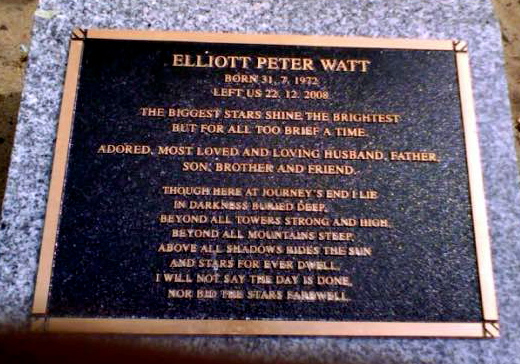
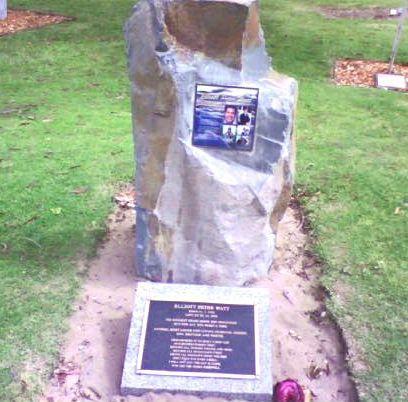
Elliott Peter WATT
The State Coroner conducted an inquest into the death of Elliott Peter Watt (the deceased) with an Inquest held at Perth Coroner’s Court on 13‐16 February 2012. The State Coroner found that death occurred on 22 December 2008 at Collie Police Station, Collie, as a result of gunshot wound to the head in the following circumstances ‐
The deceased was an acting Senior Sergeant of police with Western Australian Police (WA Police) at the time of his death on 22 December 2008. The deceased was born on 31 July 1972 and so was 36 years of age at the time of his death.
The deceased died at the Collie Police Station as a result of a self inflicted gunshot wound. At the time he was the relieving Officer in Charge of the Collie Police Station, the day of his death
was his first day back at work after a period of three weeks long service leave.
On the day of his death the deceased worked from 8am and had been conducting his normal duties as the Officer in Charge of the Police Station throughout the day. It appears that he was last seen at about 3:45pm.
The deceased was discovered in the armoury at 4:25pm having died of a gunshot wound to the head.
The deceased used the Glock pistol which had been allocated for his own use to shoot himself while alone in the armoury of the Collie Police Station.
None of the police officers on duty at the Collie Police Station heard the shot being fired and none were alert to the possibility that the deceased might be about to take his own life prior to his doing so.
The State Coroner found that the death arose by way of Suicide.
The State Coroner observed that it was important that families of serving members are alert to the available services as it is often family members who are most aware of changes in a person suffering from mental health problems.
In that context the State Coroner made the following recommendation –
I recommend that WA Police take action to better promote information in relation to available services to families of serving members.
The State Coroner observed that the deceased’s colleagues were not alert to his deteriorating mental condition. This was in large part because the deceased concealed his condition from them, but it is also clear that they had received little training in the management or identification of persons suffering from depression.
Evidence at the inquest revealed that for officers taking on senior management roles, while training in respect of these issues is available, it is at present not a mandatory requirement.
The State Coroner made the following recommendation –
I recommend that training in respect of the identification and management of officers suffering from stress or depression should form part of the training for police officers entering management roles.
The State Coroner made the following recommendation in respect to improving the recording of conversation with the Health and Welfare Branch of WA Police in the context of evidence relating to contacts which had not been recorded or filed –
I recommend that WA Police ensure that there is in place appropriate computer software which will enable the recording of all contacts to the Health and Welfare Branch relating to individual officers where concerns have been expressed as to the welfare of those officers.
The State Coroner observed that the evidence in this case has highlighted the fact that policing can be a demanding and stressful occupation.
The deceased was described as a very good officer who was generally highly regarded and yet none of his work colleagues had any real appreciation of his deteriorating mental health.
In the State Coroner’s view there needs to be some form of regular health review or wellness review of every police officer in WA Police.
In this context the State Coroner made the following recommendation –
I recommend that WA Police put in place a system which would ensure that in respect of every member there is some form of wellness review conducted or at least offered each year which will identify significant changes in physical and mental health.
A letter dated 20 March 2012 addressed to the Minister for Police invited the Minister to respond to the State Coroner’s recommendations. At the time of publishing the annual report a response had not been received from the Minister’s office. http://www.coronerscourt.wa.gov.au/_files/Coroners_Court_Annual_report_12.pdf
I remember my husband spending 3 nearly whole days in 45*C + heat scrubbing a farmers ute to give back to his widow. It had sat in full sun for nearly a week and as the OIC in a country town you do it yourself – and he wouldn’t let me help, he always wanted to protect me from the nasty side of the job. 3 days stressing it was pristine, immaculate; nothing left to distress the farmers family further. He didn’t realise the toll it took on himself. He was Beginning to realise he was battling inside his own mind with these thoughts….I still remember him saying to me ” Everyday. Everyday I get kitted up and think how easy it would be. ”
It will be 8 years this year. And still no closer to acknowledging those already lost, and helping, saving, those suffering.
So sad….Everyday I think, how easy it would be. Easy it would be to stop talking and start doing. Helping. Acknowledging. Remembering. Sharing. Supporting. And stop this waste!
Retired WA policewoman seeks compensation
AAP
A POLICEWOMAN and mother-of-four who fell into financial ruin after the accumulated psychological trauma of her work forced her to medically retire has appealed to Queen Elizabeth II in her bid to seek redress.
Wendy Kennedy, 49, served in the West Australian force for 15 years, seeing horrendous crimes such as a woman who had been stabbed and thrown through a window by her partner.
She saved people from ending their own lives, but other times, nothing could be done.
The images are burnt into her mind and still haunt her.
She lists off the many times she was in mortal danger – a broken bottle attack while working pregnant as Katanning’s first female police officer, running from a man who came at her with a machete, seeing an axe about to fall on her before her partner jumped on the assailant.
It still rattles her to recount the time a car ploughed into her mounted police colleague as they patrolled a dark Perth highway at 2am.
“I watched him go over the car,” Ms Kennedy told AAP.
“We didn’t wear hard hats. There was no requirement – our uniform was an Akubra hat.”
His head hit the cement. He was convulsing, his head in blood, his horse was hurt.
“I thought ‘my partner’s dying’.”
She rushed to his aid and he thankfully pulled through, but no-one asked her if she was okay and she was sent straight back to work.
Ms Kennedy, who suffers post-traumatic stress disorder, says the mental health of officers is not properly monitored, and she’s backing the Medically Retired WA Police Officers Association in calling for regular wellness checks, particularly after traumatic jobs.
Such checks were a key finding from an inquest into the death of Collie policeman Elliott Watt, 36, who fatally shot himself in the station’s armoury in December 2008 on his first day back from long service leave.
For Ms Kennedy, her psychological health is turning a corner thanks to the support of the association and her psychologist Joseph Presti.
And after not being well enough to work for the past 12 years, she’s now managing four hours a week as a personal trainer.
Her clients, who have become friends, understand if she has to reschedule because some days are better than others when you suffer from PTSD.
But she’s so broke, she’s on the brink of being evicted.
Even her superannuation fund was closed after fees ate up all that was in there.Sick of asking for help from Centrelink, Ms Kennedy has gathered strength to fight for the recognition and financial redress she feels she deserves after all of her public service.
“I put on my life on the line and I’ve seen the most gruesome stuff,” she said.
“I shouldn’t have to live like this.”
She’s preparing her first application for an ex-gratia payment from the state government, with the WA Police Union officially declaring her case has merit.
The rare act-of-grace payments are currently the only way medically retired officers are financially acknowledged, although they are usually for physical injury, and while a worker’s compensation scheme is now finally on the cards for police, it won’t be retrospective.
Like all WA police, she’s not considered an employee of the state, so Ms Kennedy has written to the woman she promised to serve – the Queen.
Australian readers seeking support and information about depression can contact the Depression Helpline (from 8am to midnight) on 0800 111 757.
Readers seeking support and information about suicide prevention can contact Lifeline on 13 11 14.
An inquest into the death of Sergeant Elliott Peter Watt (who, at the time of his death in December 2008, was a serving WA police officer) was undertaken in February 2012. The Watt Inquest outlined that Sergeant Watt had deteriorating mental health, characterised by:
Irritable moods, generally quite snappy and grumpy;
Pushing his wife away, threatening separation;
Expressing unhappiness in areas of his work and life;
Isolation;
No motivation;
Being short-tempered and moody; and
Becoming completely absorbed in computer games
109
.
It was noted that Sergeant Watt had experienced three specific traumatic incidents in his career, being: the attendance at a car accident that had involved young children; the attendance at a suicide by a farmer in which Sergeant Watt had to clean the utility involved before returning it to the family; and the prolonged, attempted resuscitation of a young footballer, who later died
110
.
It appeared that as Sergeant Watt’s job responsibilities increased, his stress levels increased and his mental health declined. Despite an informal mental health assessment by his senior management
111
,
none of Sergeant Watt’s colleagues “had any real appreciation of his deteriorating mental health”
112
.
The coroner made several very important comments regarding police officer health and safety as it was noted that “serving police officers can be
vulnerable to serious mental health problems as a result of their work”
113
. The coroner noted that:
Being transferred to certain locations can place pressures on police officers;
Police officers “face regular exposure to stressful situations including violence inflicted on them and others, trauma and death scenes”
114
;
109
Coroner’s Court of Western Australia,
Inquest into the death of Elliott Peter Watt
, Government of Western
Australia, Perth, 2012.
110
Ibid, p. 10.
111
Ibid, p. 17.
112
Ibid, p. 36.
113
Ibid, p. 29.
114
Ibid.
33
“The health and welfare of serving police officers requires ongoing monitoring and support”
115
;
“It is the responsibility of the Health and Welfare Services of WA Police to educate and train personnel in the management of stress, and in particular, post-trauma stress”
116
;
“Officers involved in critical incidents may suffer problems months or even years after those incidents and so there is an ongoing need to monitor [police officer] health and wellbeing”
117
; and
It is vital that “families of serving members are alert to the available services as it is often family members who are most aware of changes in a person suffering from mental health problems”
118
.
The inquest outlined four recommendations:
1.
WA Police must take action to better promote information in relation to available [mental health] services to families of serving Members
119
;
2.
Training for police officers entering management roles should include identification and management of officers suffering from stress or depression
120
;
3.
WA Police is to ensure that appropriate computer software is in place to enable the recording of all contacts to the Health and Welfare Services relating to individual officers where concerns have been expressed about the welfare of those officers
121
; and
4.
WA Police must put in place a system which would ensure a wellness review be conducted (or at least offered) to every member, in order to identify significant changes in physical and mental health
122
.
The coroner was adamant that there needed to be some mechanism within WA Police to regularly review the mental and physical health and wellbeing of every WA Police officer
123
. Significant changes such as “an increase or decrease of over 10kg in weight over a 12 month period, significant deterioration in fitness, unexplained mood changes or an officer becoming more isolated from his or her colleagues” were flagged as being important to note within these welfare checks
124
. The coroner also acknowledged, to some extent, the stigma associated with admitting to suffering from stress or from mental health problems and the likelihood this declaration has on promotional opportunities.
The recommendations outlined in the Watt Inquest were also referred to within the Toll of Trauma Inquiry
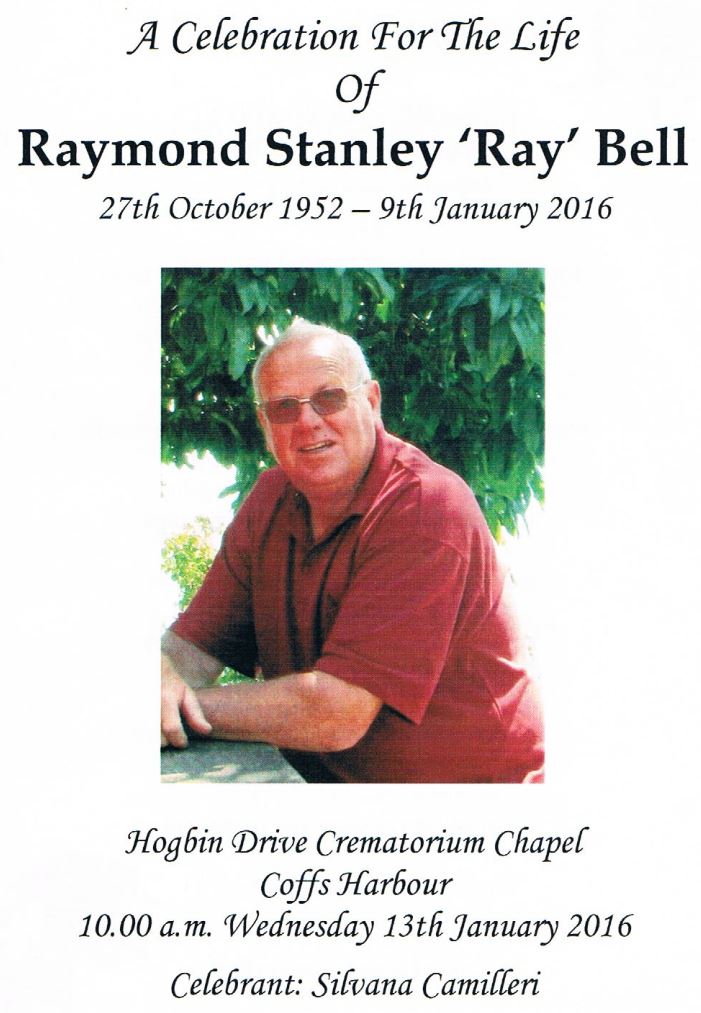
9th January 2016, peacefully at Coffs Harbour Health Campus, late of Glenreagh.
Dearly beloved husband of Glenice,
loving father & father-in-law of Melissa & Matthew Zielinski, Reannan & Steve Loughlin,
loving Poppy of Ryan, Luke, Sunny & Cooper,
dear brother & brother-in-law and
uncle of his nieces & nephews.
Aged 63 Years
“Sadly missed”
Relatives and friends are invited to attend Ray’s Funeral Service to be held in the Chapel of Hogbin Drive Crematorium & Memorial Gardens, Stadium Drive, Coffs Harbour TODAY, Wednesday 13th January 2016 commencing at 10.00 am.
All retired and serving Police Personnel are kindly invited to attend.
Friends are invited to join the family in the Garden Lounge for light refreshments following the Service.
AN online fundraising campaign for the Underhill family, who lost their four-year-old daughter in an horrific crash on the Bruxner Highway, has raised more than $11,000 in less than a day.
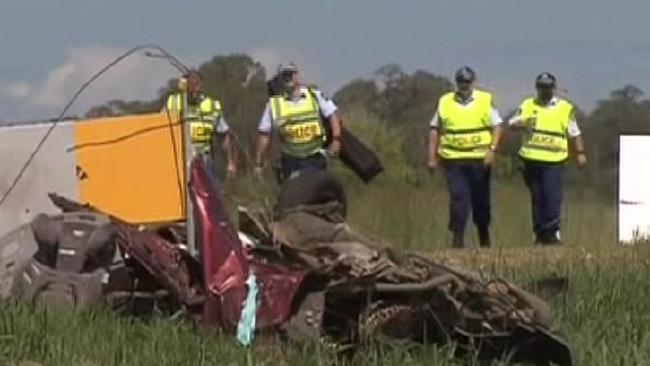
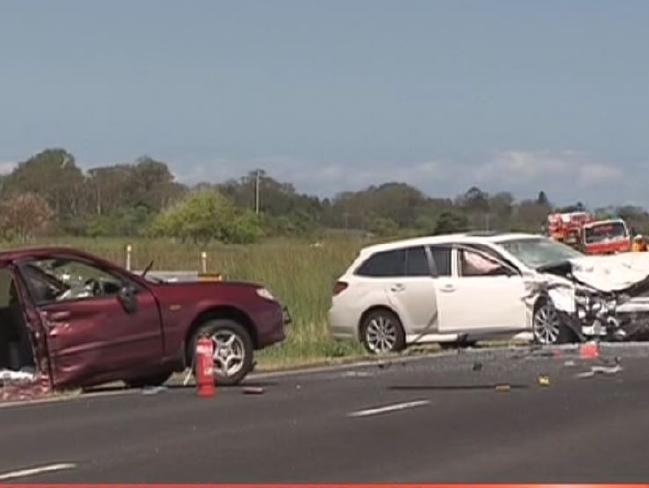
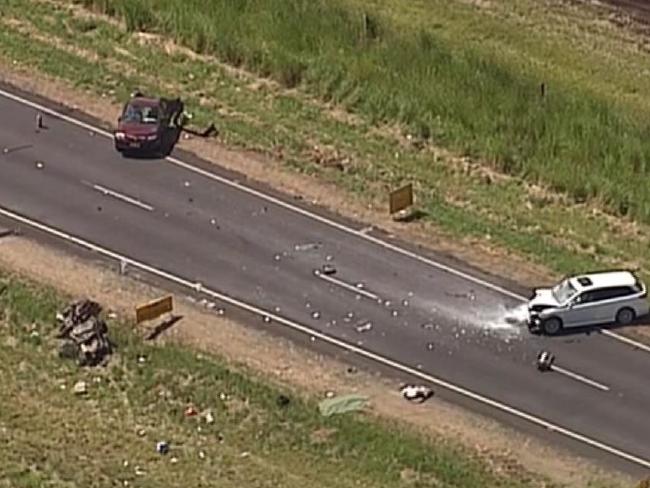
About 1.20pm on Friday a red Mazda 323 was travelling west on the Bruxner Highway, about 10km east of Casino, when it collided with a white Subaru Liberty.
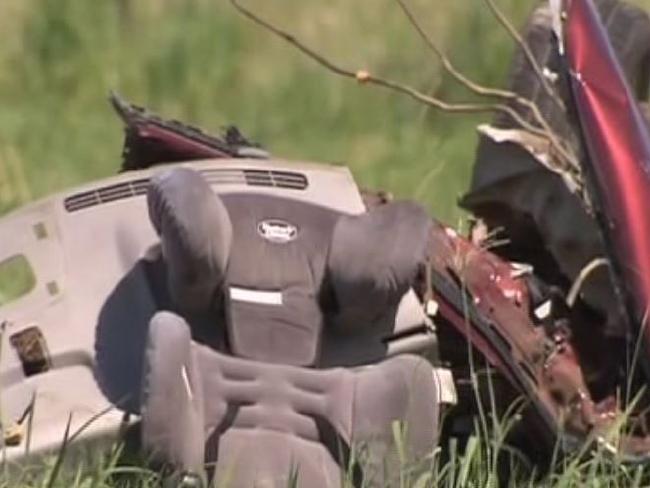
As a result of the collision the Mazda was torn in half.
Sergeant Steve Underhill’s four-year-old daughter in the back seat received fatal injuries and died at the scene.
Sgt Underhill’s other daughter, aged two, who was also in the back seat received serious injuries and was taken to Lismore Hospital before being transferred to Lady Cilento Children’s Hospital where she has since regained consciousness and is speaking to her parents.
News of the crash sent shock waves around the Northern Rivers and across Australia when it was revealed Sgt Underhill attended the scene of the incident.
To help the family deal with their grief and ease any financial burdens, Tammie Valle launched a GoFundMe webpage for people to donate to.
“The Underhill family suffered a major tragedy and as a community we all felt helpless in what we could do and many were asking where they could donate to ease the burdens,” she wrote.
The 18-year-old female driver of the Mazda was taken to Lismore Hospital with a laceration to her arm.
The seven-year-old female front seat passenger was also taken to Lismore Hospital suffering shock.
The driver and front seat passenger were unrelated to the back seat passengers.
The 81-year-old male driver of the Subaru, who was the sole occupant, was taken to Lismore Hospital with sternum injuries.
Police are appealing for any witnesses of the crash to call Crime Stoppers on 1800 333 000.
Policeman called to crash site finds girl who died is his daughter
Jeremy Pierce and Brittany VonowThe Daily Telegraph
A four-year-old girl, the daughter of a policeman, died in the two-car crash. Picture: Channel 7
IT’S the phone call every parent dreads.
But when Casino police called the father of a toddler killed in a horror road smash on Friday, they were calling one of their own.
Richmond police sergeant Steve Underhill rushed to the scene of the two-car crash on the Bruxner Highway in NSW to find his two young daughters in the wreckage.
Carnage… A girl, 4, died and her two-year-old sister was critically injured.
The car they were travelling in had been ripped in half.
Sgt Underhill’s four-year-old girl died at the scene, while his two-year-old was rushed to Brisbane’s Lady Cilento Hospital in a critical condition.
In a ray of light for a town gripped in grief, the girl later emerged from a coma.
Sgt Underhill is a local officer who has responded to accidents on the very stretch of road where his daughter died.
The young sisters and another eight-year-old girl were passengers in a car driven by their babysitter, Courteney Matthews, an 18-year-old ballerina who had just finished high school at a respected private school.
Courteney Matthews, 18, was driving the car with the young girls inside when the tragic accident occurred.
The dedicated community worker, who raised money to help people in Third World countries, escaped with minor arm injuries in the crash.
At the scene, local woman Tazman Currie rushed to help the girls tangled in the wreckage.
We were driving and heard a big bang and smoke, so we got out of the car to see what had happened. One half of the car was on the right side of the road and the other half on the other side,” she said.
“The little girl kept saying her back hurt so I got her to sit down and tried to settle her down.”
Tragic… Toddler’s car set in the road.
High impact… The scene following the collision.
A mother herself, Ms Currie described the moments when Sgt Underhill arrived.
“He was speechless, he was so shocked and upset. He wanted to know what had happened,” she said.
She said he tried desperately to help but was suffering from shock.
Ms Currie said the girls’ mother also soon arrived and was devastated to see her family torn apart.
She said the teenage driver was also devastated.
“She didn’t really care about herself, she wanted the little girls to be OK,” she said.
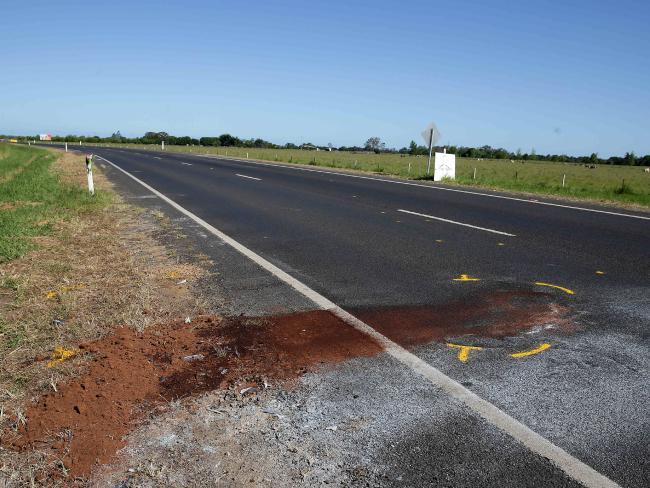
The scene of the fatal crash near Casino. Picture: Adam Head
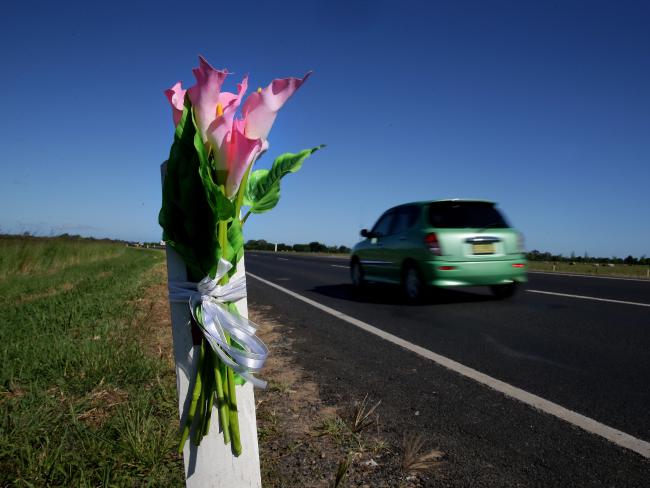
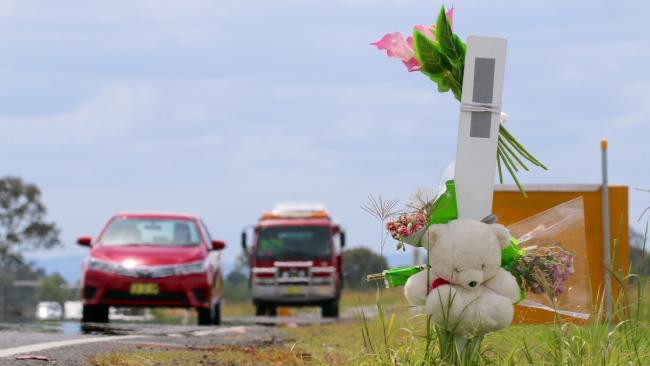
Flowers have been left at the scene of the fatal crash. Picture: Adam Head
Ms Currie said the community, a tight-knit town of 10,000 people, was shocked and upset about the incident.
The driver of the second vehicle, an 81-year-old retired pharmacist, was taken to Lismore Base Hospital suffering internal bleeding and sternum injuries. The man’s son yesterday told The Sunday Mail his father was shaken by the accident but recovering.
The NSW Police Association sent officers from Sydney to help Sgt Underhill, his family, and his colleagues through the ordeal.
Police are investigating the cause of the crash and a report will be prepared for the coroner.
The girl’s death is the first since police launched Operation Arrive Alive on Thursday.
May God give the family strength to overcome this terrible tragedy. Our prayers go out to you and we are thinking of you all. The little girl is safe in the arms of God now. God Bless You All.
Shocking. No one can imagine how this father and mother feel. I’m a nana and it breaks my heart when I hear or read about a little one like this. So so very sorry for your loss. There’s a new star in the sky shining down.
What can anyone say about this story except why? Why do bad things happen to good people and the innocent while murderers, child molesters and those that prey on the weak live healthy, selfish and care free lives contributing nothing while taking whatever they can.
I’m an ex-cop and someone who believes in a merciful God but these things, and I’ve seen them happen time and time again, test my faith every time. This accident has pushed it to the limit once again.
I hope this will make people take more care on the roads this holiday season. It can happen to anyone, RIP little one, may your family recover from this terrible loss.
The pain and heartache is beyond words. Sadly, the policeman and his family will suffer this for a lifetime. Praying for speedy recovery for the injured.
I could not imagine anything worse than attending something like this and finding out it’s your family…….sincere condolences to the officer and his wife at this sad time……..
A sad day for the township, but even a sadder time for the Sergeant Underwood and his family. I could not imagine the grief all these people are feeling at this time.
One of those articles we wish we didn’t have to read. So dreadfully sad, my heartfelt sympathy to the Police officer and his family. Nothing will change the circumstances, but please know you have the support and thoughts of thousands.
It is refreshing to see below, that at this time all comments are of sympathy and support, nobody opining their speculative solutions.
I could not imagine anything worst, as this must be the nightmare every emergency worker thinks of before attending an accident. My heart goes out to the officer and the family involved. R.I.P. little one
Police have to attend all sorts of grisly events, but to arrive at the scene of a car accident only to discover your young daughter was a fatal victim is way off the scale.
My heartfelt sympathies to the officer and his family. There will be no Christmas for them this year.
My condolences to that police officer and his family….working in the emergency services can deal up some pretty hard calls at times…but a call like this officer faced is a call that know one in emergency service wants to face….one can only imagine what’s going threw that police officers mind ATM.
There will be a time and a place for answers Bruce but at the moment it is the time to be supporting the families involved. I have no doubts the police will be putting the utmost efforts in determining what happened. Such tragedies deserve respect to the families. It looks like the reporters are showing their respect to the families and police by allowing them to investigate the scene whilst not interfering or nagging police during such distressing times .
Empathy is what should be our focus at the moment. In time Bruce there will be answers.
My heart goes out to the Officer that would be one of the worst things that anyone would have to face. Bad enough going to these accidents but to find your little child would be beyond pain. I am sure his mates would of taken care of him. God Bless to all of them and I hope the others in the car make a full recovery. Rest in peace little girl and hugs to your family..
My sympathy to the officer and their family after suffering such a tragic acident.Country police always get called to those that they know and love. God bless.
Our prayers go out to the policeman who lost his daughter in the horrific car accident.What a tragic thing to happen , going to the scene of an accident and finding one of your family members deceased RIP
Policeman’s Christmas heartbreak: Off-duty officer arrived at crash scene to find his daughter, 4, dead inside and his youngest girl, 2, in critical condition… as police chief begs drivers to slow down
Police Sergeant Steve Underhill arrived at car crash near Casino, NSW
His two daughters were still trapped inside the vehicle at the time
His four-year-old daughter Elle died at the scene on Friday, 1.20pm
Car was being driven by their 18-year-old babysitter Courteney Matthews
Three other people across Australia died in road accidents on Wednesday
Police increasing safety operations over Christmas with double demerits
Published: 21:06 EST, 23 December 2015 | Updated: 11:44 EST, 24 December 2015
A grieving police officer who was called to the crash site where his four-year-old daughter perished and his two-year-old daughter suffered critical injuries will be offered more than $50,000 in donations.
Police Sergeant Steve Underhill arrived at the scene at Bruxner Highway near Casino in northern NSW on Friday while his two daughters were still trapped inside the Red Mazda 323 which split in half in the two-car collision, Daily Telegraph reports.
Sgt Underhill was off-duty at the time, local police confirmed to Daily Mail Australia, and had to be restrained after his colleagues called him to the horrifying scene, Nine News reports.
His four-year-old daughter Elle died at the scene, and his two-year-old daughter was airlifted to Lady Cilento Children’s Hospital in South Brisbane in a critical condition.
She had emerged from a coma the following day in a remarkable recovery, NSW Police told Daily Mail Australia.
She will reportedly remain in hospital for a week as a precaution.
The car was being driven by the girls’ babysitter, 18-year-old Courteney Matthews. She suffered lacerations to her arm in the accident.
The little girl’s death just a week before Christmas comes as three others died on Australian roads on the first day of the holiday season on Wednesday.
A passenger died in a two-car crash on the Bruce Highway, about 20km north of Gin Gin in central Queensland, about 12.45pm on Wednesday.
A motorcyclist aged in his 20s was killed hours later after he collided with a taxi in Albert Park, in Melbourne’s inner south.
Police believe the taxi was doing a U-turn when the man crashed into it just before 5pm.
Another man later died in Tasmania after his car collided with a vehicle travelling in the opposite direction south of Somerset.
Speed and alcohol may have contributed to the crash, Tasmania police believe.
Police around Australia are increasing safety operations over the Christmas period, including stepping up drug and alcohol testing.
Double demerits will also be in place from Thursday, December 24 to Sunday, January 3.
They will target speeding, illegal use of mobile phones, not wearing a seatbelt and riding without a helmet.
Tasmanian Police say there’s an eight-hour period on Christmas Eve when motorists are most likely to have a road accident after examining crash statistics from the past five years.
‘The most likely time for a crash to occur during the Christmas and New Year period is on Christmas Eve between midday and 8pm,’ assistant commissioner Donna Adams said.
It comes as heartfelt tributes rolled in for ‘beautiful girl’ Elle on the GoFundMe page set up for her family.
‘Such a beautiful girl and friend to our daughter, you will be greatly missed,’ one person wrote.
‘Our hearts go out to you for your loss of beautiful Elle and our prayers will be sent for her sister. We have only just been touched by tragedy ourselves and wish to pay forward some of the beautiful kindness we have also received,’ another said. ‘Stay strong for each other.’
‘Constantly in our hearts,’ another person who donated wrote.
The staff at Tweed Byron Police donated $1,000 to the family on Wednesday.
Altogether, more than $50,000 for the family in just three days, after family friend Tammie Valle launched the fundraiser.
The Casino local wrote that the community ‘felt helpless in what we could do’ to help the Underhill family following the tragedy.
‘The funds raised will go towards helping this family with assisting with the funeral, memorial, and help with accommodation, medical expenses and travel costs,’ the page reads.
Police Commissioner Andrew Scipione said the force was grieving with the family.
‘We care and we hurt,’ he told Nine News.
Three others were hospitalised when the two cars collided around 1.20pm on Friday.
A seven-year-old girl in the passenger seat of the same car was taken to Lismore Base Hospital suffering shock.
The 18-year-old woman driving, a babysitter, was taken to the same hospital, two hours south of Brisbane, with a laceration to her arm.
Neither the driver nor the seven-year-old girl are related to the two and four-year-old girls, who were sitting in the back seat of the car.
An 81-year-old man, the driver and sole occupant of the second vehicle, a white Subaru Liberty, was taken to hospital with sternum injuries and is understood to have been released from hospital on Saturday.
That day, a NSW Police spokesman said there was ‘good news’ for the two-year-old girl amongst the tragedy.
‘She’s out of the coma and breathing on her own now and talking to her parents.’
A toddler’s car seat, children’s toys and clothing could reportedly be seen in the wreckage near Irvington Wharf Road, about 10km east of Casino.
‘It’s an absolute tragedy that someone so long has been lost,’ NSW Police Traffic and Highway Commander Acting Assistant Commissioner Hartley said on Friday.
‘Let this time be one of celebration, an occasion where all the seats at the Christmas table are filled.’
Diversions were put in place away from the crash site for around seven hours on Friday.
The Crash Investigation Unit is investigating the crash with the assistance of local police.
They are appealing for any witnesses who have not yet spoken to police to come forward.
Elle Underhill: Family asks police to watch over her body as they hope and pray for their injured younger daughter
December 23, 20156:59pm
THE heartbroken family of car crash victim Elle Underhill have asked police to ensure their daughter’s body is not left alone as they keep vigil at the hospital bedside of their younger daughter.
Police Commissioner Andrew Scipione said Sergeant Steve Underhill and his wife Michelle had asked him to ensure Elle was “not by herself” while they were with their two-year-old daughter in Brisbane.
Mr Scipione also revealed the heartbreaking moments when Sgt Underhill arrived at the crash scene and had to be held back by colleagues as he realised four-year-old Elle and her sister were involved.
The two girls were in the back seat of a red Mazda 323 when it and a white Subaru Liberty collided about 1.20pm last Friday 10km east of Casino on the north coast.
Their babysitter Courteney Matthews, 18, and a seven-year-old girl, sitting in the front seats, suffered minor injuries and shock.
Elle’s sister was flown to the Lady Cilento Children’s Hospital where she was “on the mend”, Mr Scipione said.
Mr Scipione, who spent time with the Underhill family this week, said it was a “tragedy from start to finish”.
“It’s so horrific it’s difficult to even talk about,” he said.
“We deal with these matters every day but when it’s one of your own and when it’s so graphic, it’s difficult to tell other people. “In their conversations with me, it’s clear that they were mourning the loss of their angel. They were mourning the loss of their little girl, they didn’t want her to be alone.
“They were saying ‘Commissioner, will you please make sure she’s not by herself’.”
The drivers involved are receiving counselling and friends are rallying behind Ms Matthews. Retired analytical chemist John White, 81, suffered a fractured sternum and internal bleeding in the crash but is expected to be released soon from hospital.
Mr Scipione said police were investigating the cause of the accident.
“We have to get to the bottom of that,” he said.
THE tragic death of Elle Underhill has “cut deep to the bone” for the north coast and police communities who are now praying for her sister / Picture: SuppliedSource:Supplied
Tributes left at the crash scene in Casino / Picture: Supplied
If pelicans could cry – the passing of the pelican man
By Justine Frazier and Jonathan Atkins
Sixty year old Lance Ferris died on Sunday the 14th of October, 2007 at Lismore base Hospital after suffering a stroke on Saturday.
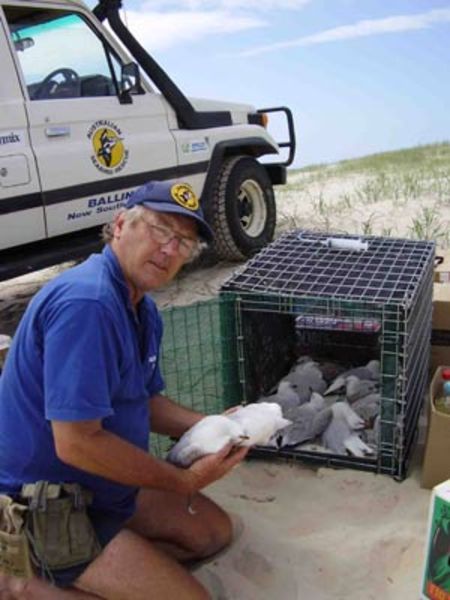
Lance Ferris from Australian Seabird Rescue collects dead birds from the beach areas of Evans Head. It is thought the birds died from botulism after eating dead fish.
The man many of us fondly knew as the “Pelican Man” has passed away leaving a massive whole in the community. Sixty year old Lance Ferris died on Sunday the 14th of October, 2007 at Lismore base Hospital after suffering a stroke on Saturday.
Lance dedicated his life to the rescue, rehabilitation and preservation of seabirds, turtles, and in particular the magnificent pelican and it was through his many years as a dedicated volunteer, using his own money and whatever donations he could find that Australian Seabird Rescue (ASR) came into existence in Ballina, New South Wales in 1992.
Close friend Marny Bonner said, “We’re receiving emails and phone calls from all over Australia from people who are so deeply saddened and shocked.”
Marny Bonner says, “Lance has always had huge compassion for Australia wildlife, his entire life has been rescuing and rehabilitating wildlife. It wasn’t until he noticed not one but two pelicans with hooks in their legs, on the same day, that he realised that there was a problem out there. So he borrowed a boat and had a look around the Richmond River and found that 37 out of 100 pelicans were injured.”
After surveying other estuaries, Lance Ferris realised that what was needed was a huge education program campaign and the passion began.
“We got good support from the North Coast community and some important sponsorship. Over the last 15 years we’ve managed to reach 20,000 children, so there will be a lot of children upset about losing the Pelican man.”
Since that time, ASR volunteers have been involved in the rescue and rehabilitation of seabirds and shorebirds, marine turtles and to date, have rescued over 1000 Australian Pelicans.
Lance Ferris never lost his passion the rescuing injured seabirds.
Marny Bonner believes, “Ultimately that’s what claimed him, his passion for wildlife led to him not looking after himself as well as he might have. It led to many, many hours in loss of sleep trying to save those little lives.”
“I would like to absolutely commend the staff at Lismore base Hospital who worked so hard with Lance. It was a very upsetting time for everybody because everybody knew who he was and knew how hard he’d worked to save so many lives and yet there was nothing we could do to save this most important life,” says Marney Bonner.
In 2004 as president of Australian Seabird Rescue, Lance led the volunteer organisation to win the inaugural National Coastcare Community award.
In an earlier life Lance worked a police officer based in Casino and was a member of APEX. He also worked as a teachers aid for children with disabilities, was a well respected musician and a member of the Sonset Orchestra and could be found at any given weekend at the Lismore Car Boot Markets. Ballina Mayor, Phillip Silver says the death of Lance Ferris is a huge loss for the community.
“I guess in many ways he was ahead of his time in terms of the recognition of that vulnerability of the environment and the water animals. Because he was doing it 20 years ago when it was certainly happening but people weren’t thinking about it,” said mayor Silver.
ASR is always looking for more volunteers and as Marny Booner says “the pelicans have lost their best friend, if pelicans could cry, there would be a wailing around the nation that could not be ignored. It will take an army of volunteers to replace Lance Ferris”.
Jason Ferris believes his Dad would never really let on if he was feeling unwell.
Jason recalls, “At 3am on Saturday morning he sent out a bunch of emails with instructions regarding seabird rescue, so we suspect over the last week or so, he was aware something was going on.”
“My Dad’s always run pretty close to the edge. Dad lived and breathed seabird rescue 24/7. I would often find him sleeping in all sorts of places in the back cars, on seats… his focus was never on his own health, more on the animals in care,” said Jason.
A passion that Jason and Lance shared was music.
“I developed an interest in music as a result of Dad. Dad was really an amazing musician and beautiful singer. In my 20’s he and I started playing music together around the North Coast. Definitely some of my most treasured memories of Dad,” said Jason.
As much as it can be…it will be business as usual for Australian Seabird Rescue.
According to Jason, “Dad’s put 13 or 14 years into this organisation, you can’t just pull the plug. He would be most unhappy with me if that happened.”
In 2003, ABC TV’s Australian Story took a look at a Ballina based former police officer called Lance Ferris, who’s dedicated his life to fixing the plight of the pelicans… read more
ABC North Coast reported when Lance Ferris and his team of seabird rescuers headed to Victoria for a series of training sessions with wildlife carers… read more
A public memorial service will be held for Lance Ferris.
“Thank you to the ABC crew for your lovely, sincere tribute to Lance, and thanks to all who phoned to share the ways in which Lance touched their lives. Lance’s life and work will be commemorated at the WildlifeLink Sanctuary in Ballina this Friday 19/10 at 11am. All are welcome to join us. The centre will be open from 10am. It is located at the end of North Creek Rd, which runs off the Pacific H’way as it heads out of Ballina towards Bangalow. On behalf of Jason’s family and Australian Seabird Rescue volunteers, thank you for your condolences and support… Marny.”
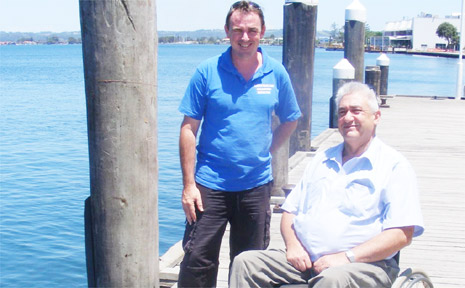
LANCE FERRIS WHARF: Ballina’s mayor, Cr Phillip Silver, (right) with acting general manager of Australian Seabird Rescue, Keith Williams, announcing the naming of the wharf at Fawcett Park as the Lance Ferris Wharf.
IT’S official.
The wharf at Fawcett Park is now the Lance Ferris Wharf, named after the late Lance Ferris – the Pelican Man – who founded Ballina-based organisation Australian Seabird Rescue.
And work is currently being undertaken on the design for a statue of a bronze pelican to be perched on the jetty in Ballina’s CBD.
Ballina’s mayor, Cr Phillip Silver, was due to make the official announcement on the naming of the wharf at the inaugural Lance Ferris Memorial Dinner scheduled for December 12.
But with last week’s decision by Australian Seabird Rescue to postpone the dinner, the announcement was made early.
He said council wanted to recognise the work of Mr Ferris, who died in October 2007, aged 60.
After Mr Ferris’ death, council resolved to rename Fawcett Park as Lance Ferris Park. But that move was knocked back by the NSW Geographical Names Board following objections.
There won’t be any problem with the naming of the wharf, Cr Silver said, as it is a piece of council-owned infrastructure.
Keith Williams, acting general manager of ASR and partner of Mr Ferris’ daughter, Rochelle Ferris, welcomed the decision to name the wharf after Lance.
He said the move not only acknowledged the work of Mr Ferris but also the Richmond River which Mr Ferris was so passionate about.
“This is a fantastic,” he said on behalf of the family and the broader family of ASR volunteers.
He is the father of Finn, Lance’s grandson, who was born just over a month ago.
Mr Williams said he enjoys taking Finn to the wharf.
“This (naming the wharf) is to say ‘your granddad was someone really special’. And much of the respect (for Lance) comes from the community – you can’t manufacture that,” he said.
A local artist has been commissioned to create the life-size bronze statue of a pelican which will be installed on the wharf early next year.
Cr Silver said the council had budgeted $10,000 for the statue, which had come from the staff operational budget.
He said he hoped the pelican would become an icon for Ballina now that nothing stood in the way of the demolition of the Big Prawn at the southern entrance to the town.
“Whether it (the pelican statute) evolves to be an icon of the town is a function of the community,” he said.
Cr Silver has already suggested Ballina could rebrand itself, replacing the seahorse, so the shire can be Ballina bypass-ready. Work on the new highway route is expected to be finished by 2012.
He said a rebranding of the shire wouldn’t be expensive, as things like stationery stocks would be used up in time.
Meanwhile, the Lance Ferris Memorial Dinner will be held on June 5 next year, World Environment Day.
Mr Williams said anybody who had purchased a ticket would receive a full refund.
This Friday, 24 September, 2010, Mayor Phillip Silver will unveil a sculpture at Fawcett Park, Ballina, to commemorate and acknowledge the work of the late Lance Ferris.
The sculpture is dedicated to the coastal conservation work carried out by Mr Ferris, affectionately known as ‘the Pelican Man’.
“In fostering and supporting local art, council commissioned a local artist to create a unique bronze sculpture that is befitting of the animal conservation work carried out by Lance. The artist behind the sculpture is Wollongbar-based sculptor Frank Miles,” Cr Silver said.
As part of the commemoration Cr Silver will also be officially name the wharf in Fawcett Park ‘Lance Ferris Wharf’.
“It is an appropriate place to acknowledge Lance’s work which started in earnest in 1992 on the sand spit opposite the Fawcett Park wharf after he noticed pelicans were injured by fishing line and hooks,” Cr Silver said.
“The pelicans were rescued, rehabilitated and released. The work soon extended from pelicans to other coastal birds as well as marine turtles.
“Lance was passionate about educating the community in preserving and protecting the coastal environment and all marine wildlife, and it’s fitting that we not only acknowledge his work but also raise awareness for the continued operation of the organisation he founded, the Australian Seabird Rescue.
“Based in Ballina, the volunteer organisation continues to operate around Australia to protect and rescue seabirds and shorebirds.
“This is also largely due to the continued dedication of the Ferris family and the support they receive from volunteers and the community in enduring Lance’s legacy.”
Lance Ferris family members representing the Australian Seabird Rescue service will be present at the unveiling ceremony which will take place at 11am at the wharf in Fawcett Park.
A recent unveiling on 24th September of Frank Miles life-size bronze pelican “Steptoe”, (pictured left) commissioned by the Ballina Shire Council, at the Fawcett Park Wharf. This wharf was renamed on the day to the “Lance Ferris Wharf” in honour of the late Lance Ferris the towns’ famed ‘Pelican Man’. This was a very exciting moment for Frank as well the Australian Seabird Rescue Service and Lance’s family members.
If there’s one Australian bird that we’ve all watched with awe it’s the pelican.
But as we’ve admired this bird we are mostly oblivious to the tragedy that the nation’s most popular hobby, fishing, is visiting upon our feathered friends.
Accidental hooking by recreational fishing, discarded hooks and fishing line have become the birds’ most lethal enemy. Bills, legs and wings are being hooked or entangled. The result, all too often, is a painful death.
Tonight’s Australian Story is about one man, a Ballina based former police officer called Lance Ferris, who’s dedicated his life to fixing the plight of the pelicans.
With spectacular physical agility, he “bribes” the pelicans with fish and then dives to catch injured animals so they can be treated and saved.
Over the past 12 years, often living well below the poverty line, he has rescued and rehabilitated hundreds of birds and conducted educational workshops in schools and fishing clubs up and down Australia’s east coast.
Featuring stunning wildlife images, Australian Story retraces the rough, tough and exciting life of Lance Ferris.
We see first hand his unconventional but effective pelican catching methods and the extent of this problem along with the solutions he has employed.
REX HUNT: Hello. I’m Rex Hunt. Tonight’s Australian Story is about a man who has dedicated his life to solving the problems sometimes unwittingly created by us anglers. He is Lance Ferris – known as ‘The Pelican Man’ for his incredible work in saving these magnificent birds from terrible injuries. And his efforts are changing attitudes on the water. This is Lance’s story.
EVAN KOSACK – VET:Lance and the fishermen in the area started out being at loggerheads a little bit.
LANCE FERRIS: I don’t think they believed that the problem was as bad as it was. Pelicans torn to pieces, basically, by fishing tackle.
EVAN KOSACK – VET: Lance was telling people, basically, that their beloved hobby was causing a lot of damage and that they were acting irresponsibly. Lance is not the norm.
ANTHONY MUYT: He’s very independent, he’s very focused, he thinks outside of the square. He’s a bit of a mad scientist. He was just some joker who rolled up and was jumping off boats into pelicans. They thought he was nuts at first – thought he was a madman. He is extremely professional. He likes perfection. He’ll work at something until he has it.
DEBBI DEVINE – SAM’S MUM :I look at him sometimes and I think, “Wow. This grown man – the way he is with these animals.” It’s amazing. It’s like they’re his children.
LANCE FERRIS: We were on an excursion with the children from the special school. I noticed a pelican in a park that had a hook buried in its leg. So, I grabbed some fish from a bait shop and the bird came up to me and I grabbed it, held it and looked down at it, and I thought, “The hook’s in the left leg. “I’m sure the bird that I saw “before I got the bait had a hook in the right leg.” I was absolutely positive of it. I made up some posters to hang in shop windows – “Wanted, a pelican with a hook in its leg.” I thought, “There’s another bird out there. I know there’s another one.”
MARNY BONNER: There are many, many people that would go, “Oh, gee. “Gee, fancy seeing two pelicans in one day, you know, “both with hook injuries,” and continue about their business. But the interesting thing is that it engaged Lance’s curiosity such that he went out and searched to see if there was an even bigger problem.
LANCE FERRIS: That led us into going out on the island to see if there were other pelicans out there. 108 birds on the island, there were, with 37 tangled up in fishing line on our first visit.
MARNY BONNER: For Lance, standing there with binoculars in hand observing bird after bird after bird coming into his vision with crippling, cruel injuries would be very overwhelming.
LANCE FERRIS: I was in shock and horror. I couldn’t believe how bad the situation was. I went back to the boat and cried for half an hour. I just couldn’t believe… I’m no bronze Anzac hero. I might have been in the police force, but that doesn’t mean to say you don’t get cut up when you see so much damage. There were some with amputated wings and gangrene in their legs. It was a horrible thing. Being a wildlife carer for some years, at that stage, I was just amazed that I wasn’t aware of it and nor had it been brought to our attention by any member of the public or any other wildlife people.
ROCHELLE FERRIS: He was so devastated by that, but he was also looking at the bigger picture, and he sat back and thought, “You know, how many estuaries are there in Australia “that are so populated by humans? “And I’m only looking at this one.” And the problem just blew out in his head.
LANCE FERRIS: I knew we had a major problem on our hands. I had caught a couple and I’d caught them, I suppose, relatively easily, but when I saw so many I just got back to the boat and thought, “How do I cope with so many injured? “How can I catch that many? “They’re everywhere.”
MARNY BONNER: Lance fell asleep that night surrounded by crippled and injured birds and woke up and he was still surrounded by crippled and injured birds, and was compelled to do something – to start action right there and then.
LANCE FERRIS: It was three months and I had that 37, but as I was getting that 37, more became entangled as I went.
ROCHELLE FERRIS: The focus on getting out there and attending to all these sick pelicans really did take over his life.
MARNY BONNER: That was the dawning of the obsession and the birth of Australian Seabird Rescue.
LANCE FERRIS: I didn’t really think about it changing my life at that time.
MARNY: In the early days, some of these injuries were quite old. They had had longstanding chronic injuries and they did require a lot of treatment. And to his amazement, the local vets were extremely interested and extremely supportive.
LANCE FERRIS: I had to look closely at the pelicans to see a line trailing under a wing, or a hook somewhere.
MARNY BONNER: Because it’s difficult to see injuries on pelicans, people don’t notice. I believe pelicans don’t look sick when they are injured. Pelicans can’t cry.
LANCE FERRIS: Everybody believed that the hook would rust away in two or three days. We’ve done some tests on all different sorts of hooks and it’s at least six months before the hooks rusted away. So there were lots of things that make people not sort of bother.
ROCHELLE FERRIS: He was so concerned and frustrated by the lack of interest from the community that these birds were just all being tangled and no-one seemed to care.
LANCE FERRIS: But it’s not all bad out there. There are some people who really have the right concept. If the bird’s quiet and fairly well under control, we give everyone that opportunity to, say, pat a pelican or to have a close contact with it.
MARNY BONNER: Lance experienced quite a lot of loneliness in his childhood. He didn’t have a lot of affection in it. He is essentially a shy person and a bit of a loner.
LANCE FERRIS: I can remember vividly as a boy, after I’d found a little frog with a broken leg, I think we taped it up with a matchstick, and for the life of me I can’t remember whether it survived or not.
MARNY BONNER: That’s what I saw in Lance when I first met him, was this uncanny ability to really spend a lot of time thinking about how he could improve life generally for a particularly severely disabled child. Lance had his fairly demanding job of teacher’s aide with disabled children. The realisation of the enormity of the problem on Pelican Island did change Lance’s life, but I don’t think he was conscious of that at that time. He was merely solving the problem on the day.
LANCE FERRIS: But then there were cutbacks with the school and then came the word that said, There’s no more work. I’m sorry, we have to put you off. There’s no more funding. We don’t have enough children. And I had to drive away from the place. And I…I won’t forget that day.
I wept all the way home. I was at a little cattle dairy, a converted place. The very next day the landlord drove down the paddock and I went up and I said, “About the rent…” He said, Oh, yeah. He said, I was gonna tell you about that. He said, I really like what you’re doing with the pelicans and things. That’s fantastic, that’s a really good thing. And he said, And you’ve rescued my cattle out of the bogs here from time to time, “and I’ve decided not to charge rent anymore. Oh. You know, sort of looking around waiting for lightning to strike and pinching myself to see if I was awake. I was just ecstatic.
MARNY BONNER: Days rolled into weeks, and weeks rolled into months, and he was spending more and more time doing everything he possibly could to catch all the birds. And so it just became increasingly consuming of his time and his resources – all his resources. So it became a situation for Lance where if there was a choice of providing food for himself or getting fish to catch an injured pelican, the fish for catching the injured pelican always came first.
LANCE FERRIS: And I thought, “Oh, no, what am I doing?” And I thought, This is absolutely crazy. No-one would ever believe this, for starters, and this is just madness. I looked at the pelicans in the cage and they were eating, you know, the best fish at 10 a box and I just thought, I don’t think I can do this anymore. But then I took my shoes off and plodded round in the grass under the tree and found a bowl of bush nuts, macadamia nuts. I pigged out till I just couldn’t eat another macadamia and I’m sitting there going, Yes. Yes, I’m right. I looked at the pelicans. It’s alright, fellas. Everything’s under control.
MARNY BONNER: When I first met Lance he was living very, very frugally. And if he was unable to pay his electricity bill or his gas bill he would simply accept that and go scrummage around the tip or something and come out with some ingenious way of getting hot water for himself. Or he would just not eat cooked food.
LANCE FERRIS: And I thought, Well, I’ve got no power. And the answering machine – it was the biggest problem, because it was the mainstay of Seabird Rescue when I wasn’t there. I had some electronic knowledge and I had a little solar panel. And I had an old battery. It worked like a dream. Nobody knew my predicament. Nobody knew how we were running the show. It still looked OK on the surface. You know, if we sort of still had some credibility – I had an answering service – Oh, well, they must be alright. You know, so it gave me a feeling of, I suppose, wellbeing.
That first one, as I held it in my arms, I was awe-struck by the majesty of it. I think the immense size of the bird, no-one would realise that a pelican is as gentle as it is.
MARNY BONNER: A beautiful, benign creature that doesn’t deserve the treatment that it gets. If pelicans could cry, there would be a wailing across the nation that could not be ignored. We could open a tackle shop on the hooks and line and sinkers and traces and lures that we have extracted from the pelicans we’ve caught to date, easily.
LANCE FERRIS: Everyone loves Percy Pelican, and they don’t want to see anything injured irrespective of what species it is.
ROCHELLE FERRIS: And pelicans were dying and, you know, no-one really counted and knew how vast the problem was. The people from one estuary don’t really communicate with the people from the next estuary what they’ve seen.
In a small percentage of cases, there are people who deliberately hook pelicans. But again, it’s never an approach of accusing or retribution – always a case of education. And for him to do something about that, he needed money to do it. You know, it’s not… He was broke as it was. So he needed to get that information out there to make them aware.
MARNY BONNER: Lance’s move from the dairy to the house on the same property was quite timely in a way because Seabird Rescue really required a bit more space to accommodate volunteers. But clearly there’s no point continuing to rescue birds if you don’t do something about the cause of it. How do you start re-educating millions of fisherfolk and hundreds and hundreds of waterside residents in such a way that they stay on your side, that they will work with you and not be offended? There is no room for blame or guilt or anything else.
LANCE FERRIS: I had to get volunteers and I had to get public support to address the whole of the coastline, and I knew that media was the way to go. So I hammered every media outlet – television, newspaper – everything that I could get my hands into. A lot of it was rejected. Then one of the local papers said, Would you like to do a column? So I got the column going and things just took off from there. Quite often we were getting phone calls from the TV stations locally, and saying, Can we do a story on this?
ROCHELLE FERRIS: After Dad’s first media exposure and the call backs he got from that, and people recognising him in the street and patting him on the back and saying, Good job, he twigged. He said, I’m onto something here, and this is going to make the difference. From that day on, every time there was a really badly injured pelican, he would be on the phone to them so quick. So this media coverage that went to all those communities was priceless in being part of the solution and making them open their eyes and, yeah, pick up their tackle.
LANCE FERRIS: I could see that educating the children was really important.
MARNY BONNER: Kids these days are growing up with the environmental message. Getting to the kids and educating the kids is one of the most important activities that we do. They’re the ones that will carry that message. On many an occasion we see them run off and tug on Dad’s shirt or Mum’s shirt and say, You mustn’t drop that, Mum. Mustn’t drop that, Dad. Have to pick this up now. And….the parents are kind of shamed into being more environmentally responsible than they might otherwise have been.
ROCHELLE FERRIS: I guess when Dad started to realise that the problem was so national, he knew he needed volunteers. He couldn’t pay them – he can’t pay himself. Once word got out, it definitely made a difference. There was some real dedicated people.
LANCE FERRIS: The volunteers come from all walks of life. They all have their own areas of expertise, if you like. We’ve got Jenny, who’s just absolutely marvellous. She’s got a lovely, lovely rapport with the birds.
MARNY BONNER: Young Sam in particular was a fairly troubled child when Lance first met him – so much so that Lance thought that he was even beyond his ability to rescue him, if you like.
SAM DEVINE: I was just playing up in class, then he just started doing talks at the school about Seabird Rescue. I could talk to him and he would help me with my work… ..when I was having trouble.
MARNY BONNER: He’s turned around from a child who did not want to cooperate or be involved in school work or achieve anything.
SAM DEVINE: If it wasn’t for Lance I probably would be in a behavioural class.
LANCE FERRIS: Anthony was a person that came up here to study science with a background of being a member of the police SWAT team.
MARNY BONNER: He was a very quick learner, but more importantly, he was most definitely an action man. He’s almost a younger, more energetic Lance, if you like.
It’s very important to have volunteers that won’t be too offended if we’re not always as socially adept as we ought to be. We both suffer from burnout, from exhaustion, and in so doing, Lance in particular might sometimes forget to pay attention to his manners or be as thoughtful of that person or as considerate of that person as he…as he might be.
He is consumed by this calling. The unfortunate consequence of that kind of dedication is that Lance can neglect important relationships in his life.
ROCHELLE FERRIS: Having Marny in Dad’s life has been his Rock of Gibraltar. And, you know, they’ve had their quarrels, and people do. If Marny wasn’t in his life – God, I would have so much on my hands.
MARNY BONNER: It’s been very difficult for everyone that’s close to Lance. Even acquaintances frequently become offended, um, by his lack of presence.
ROCHELLE FERRIS: I wanted to throw a tantrum and get so angry because he’d missed my birthday or he’d forgotten Mother’s Day or, you know, just everything else in his life seemed to fade out.
MARNY BONNER: Those of us that are close to Lance can really joke that, you know, maybe if we pierced our ears and hung a jag hook in one and a lure in the other, he might look at us intensely and say, How are you?
LANCE FERRIS: We started recording all the problems that happened to the pelicans. It was very difficult for us to convince National Parks or Fisheries or anyone in the first few years that there was a problem.
ROCHELLE FERRIS: He gathered so much information over time about pelican behaviour, but he needed that notoriety from the scientific community to understand what he was talking about and for him to be able to approach them on their terms, academically.
LANCE FERRIS: Marny’s got the letters after her name, so too has my daughter, being a marine biologist, and that was a blessing to me. I had the information. They basically put it together and shaped it.
ROCHELLE FERRIS: It was really good for our relationship, writing that paper together, to get a bit of recognition from him from what I’d studied and learnt. And I wasn’t this little girl anymore who was wide-eyed and looking at everything he did, and I…I had something to give him.
LANCE FERRIS: When the report on the impact of fishing was accepted, or when they called for more copies at NSW Fisheries, I was just overjoyed. I thought, Finally! We’re gonna have to start working fairly quickly. As fast as we catch ’em, they’re getting entangled now. RecFish Australia included some of our concepts in their code of conduct for fishermen, and NSW Fisheries handed us one of their ex-service boats. Petrol companies offered fuel for the vehicle. A telephone company offered us a mobile phone. The council offered us free ferry journey. And the Coastcare, under the Natural Heritage Trust, gave us two grants so far of 26,000, which has enabled me to get to the schools and teach the children. I look back at the road we’ve travelled and people are taking more care. Well, I mean, some fishermen who used to say, Shoot the bastards… ..come up to me in the pub and say, You owe me a beer, mate. I caught one of your bloody pelicans. And don’t tell anybody about it either. I gave him a fish too after I took the hook out.
MARNY BONNER: People began to call us when they noticed other things on the beach. Well done. And so the turtles were added to the repertoire of pelicans, seabirds.
LANCE FERRIS: To see trained personnel at strategic locations all around the coast of Australia – that would be the ultimate goal. In July we have to vacate the premises we’re in at the moment. We were in big trouble. It was very, very heart-warming to realise the strength of the support we got from the council. The council has offered us some land for free and also a second-hand house. It’s been a fairly hard road. I guess Marny and I will have to start really getting on really, really well together, and not fighting on occasions.
MARNY BONNER: I do have grave concerns about his emotional and physical health because there is so little balance in his life. He does not take the time to rescue himself, I suppose. But I can’t live that life for him. The best thing that I can do is be his best friend.
LANCE FERRIS: I couldn’t have done this without her – there’s no doubt about that – irrespective of the rocky road that we’ve been along.
MARNY BONNER: He’s extremely important to me. He sets a fine example constantly of what can be achieved with patience, sheer determination, a great deal of tolerance and, above all, extraordinary compassion for creatures that can do nothing to alleviate their own suffering.
CAPTION: Lance and SeaBird Rescue are currently homeless while they wait for clearance of the council owned land and rebuilding. The latest injured pelican tally is 595.