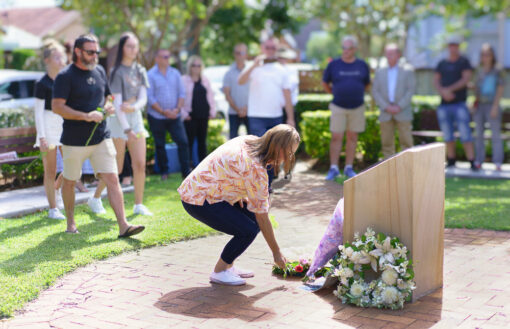
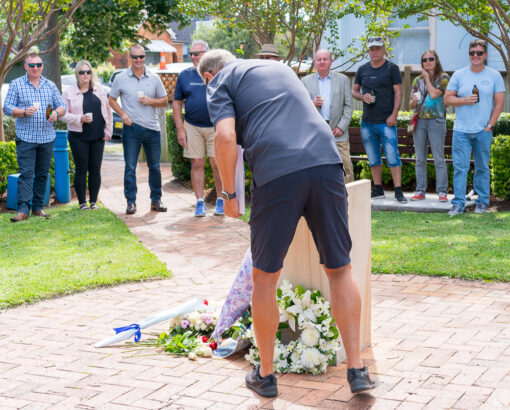
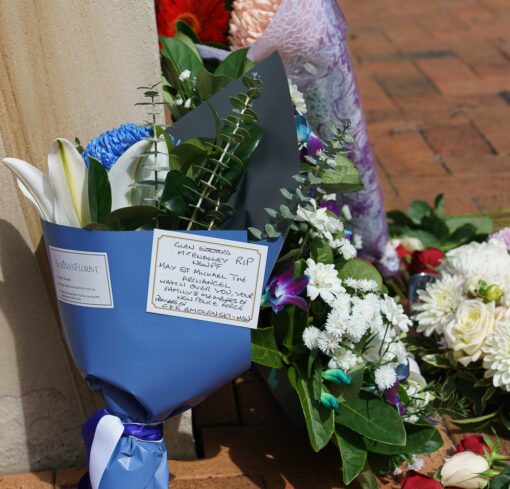
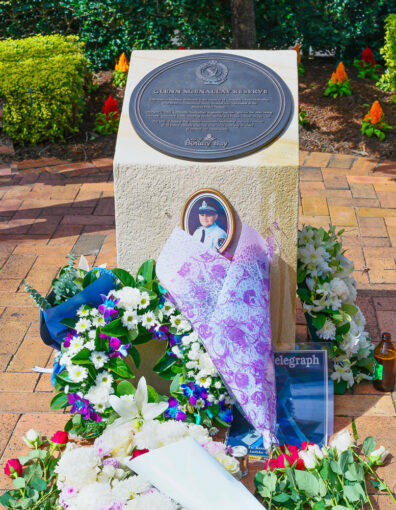
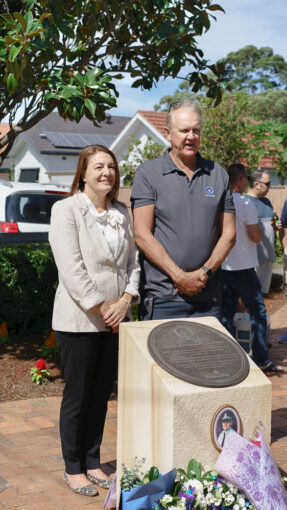
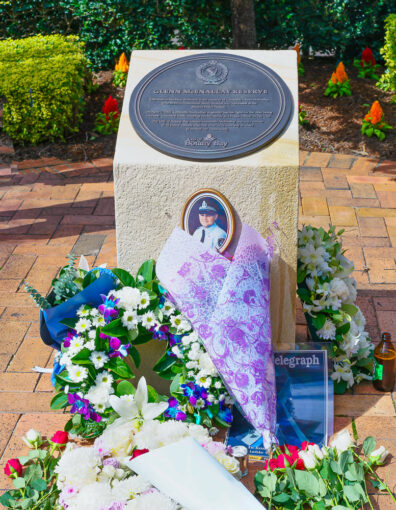
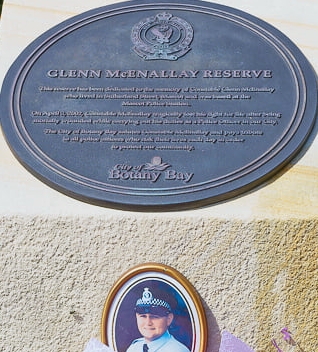
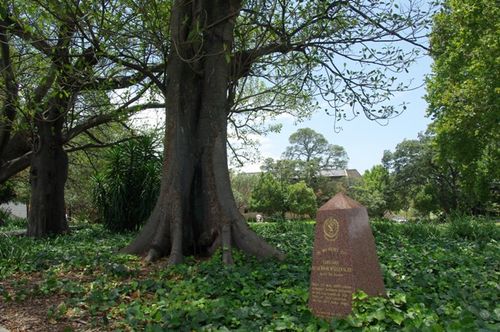
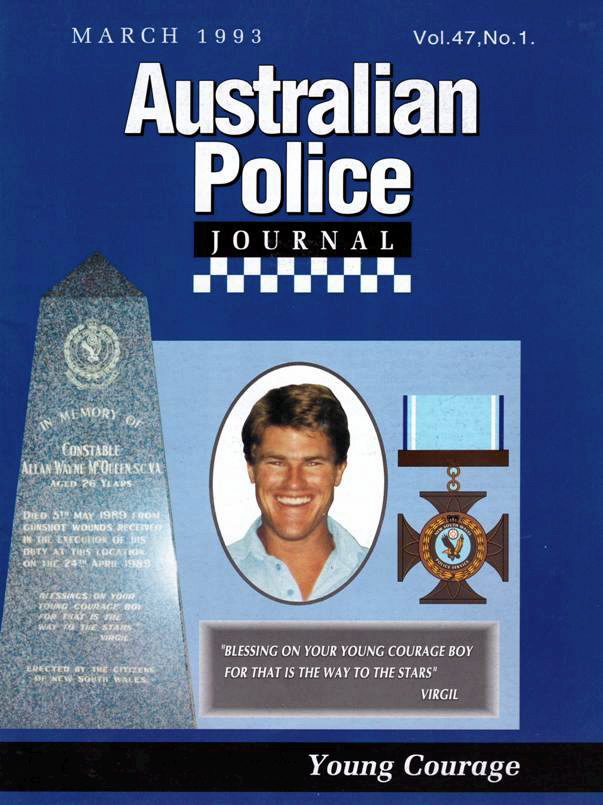
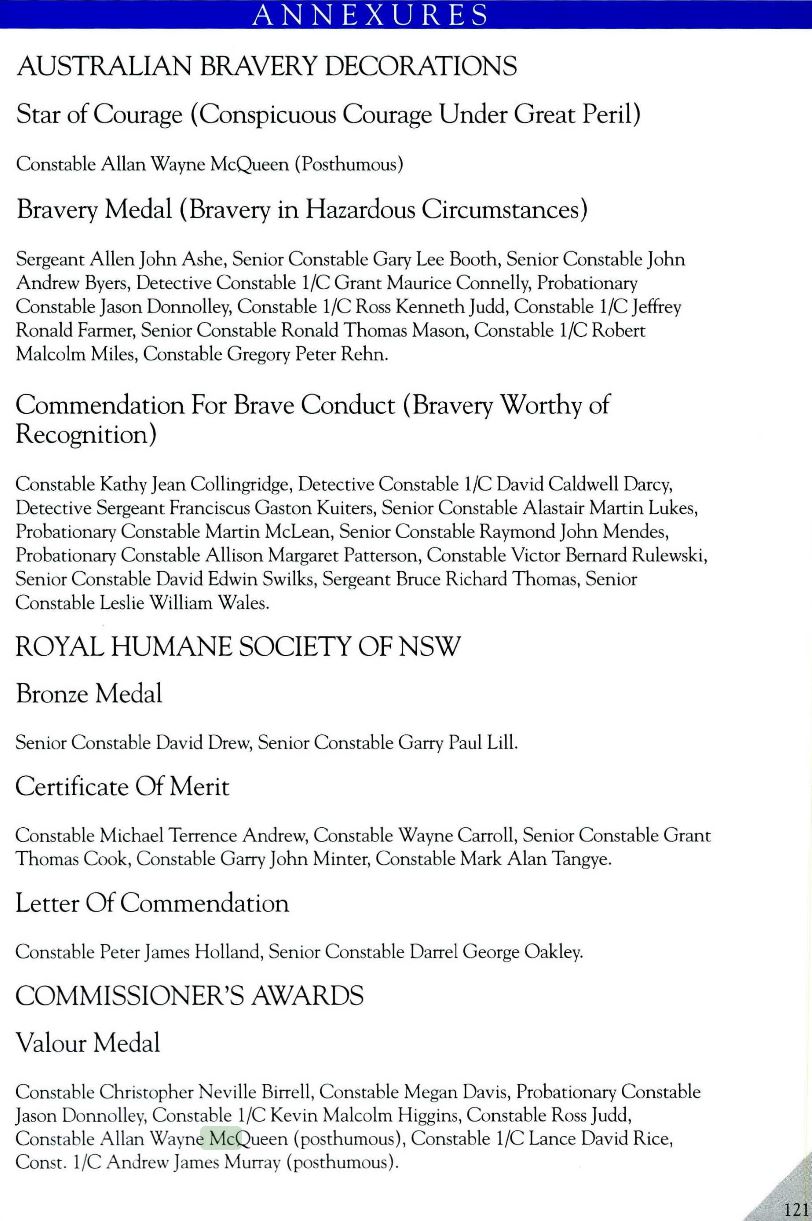
Memorial 1: Sparks Reserve, Sparks St, Mascot, NSW
Memorial 2: Mascot Police Station, 965 Botany Rd, Mascot, NSW
Glenn Edward McENALLAY
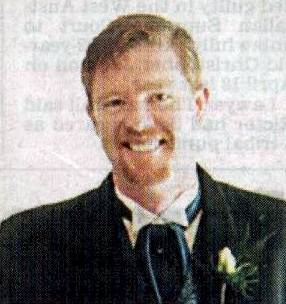
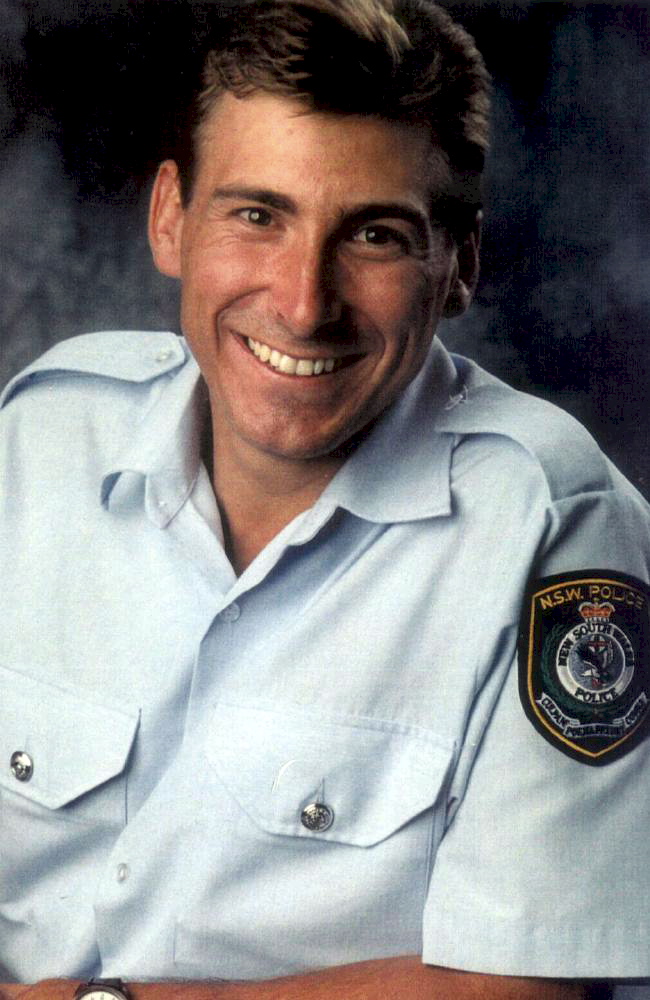
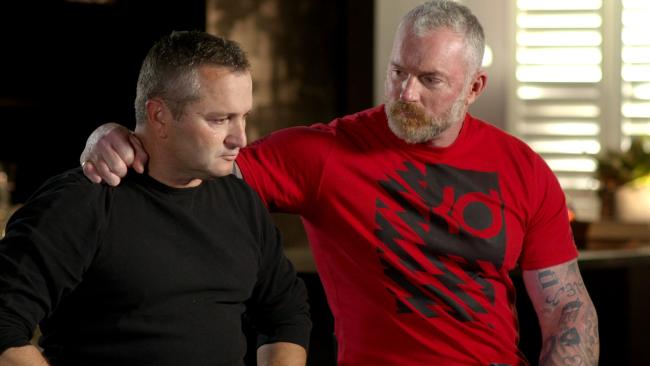
Senior Constable Glenn McEnallay on right taken about 2 weeks before his death. Photo courtesy of Noel Kessel.
HWP vehicle 211 with the personalised memorial number plates for Glenn Edward McEnallay. GEM211
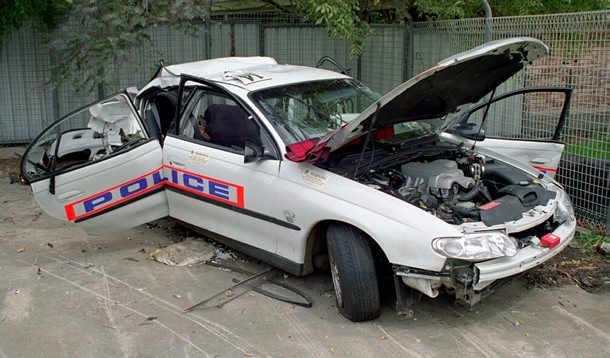
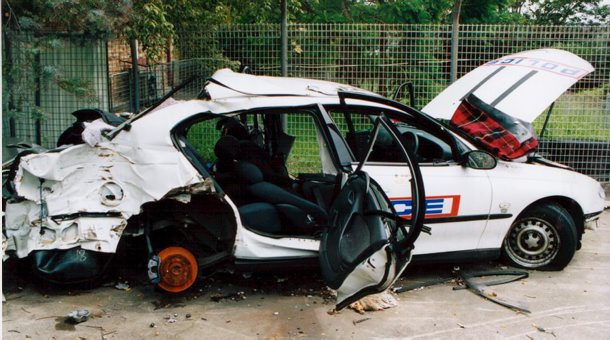
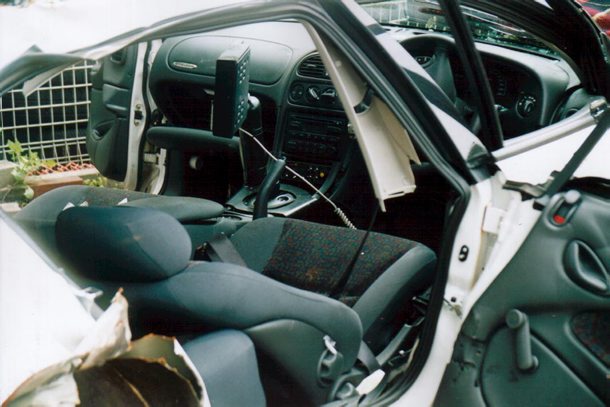
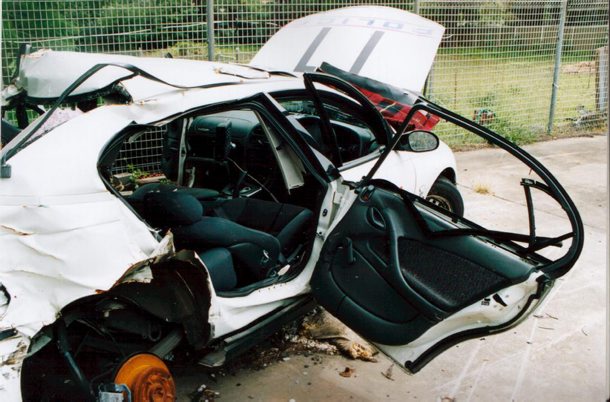
About 5.30pm on 27 March, 2002 the constable was driving an unmarked Highway Patrol vehicle when he began to follow a stolen vehicle. In Denison Street, Hillsdale the vehicle sped off and Constable McEnallay informed VKG of the pursuit. The stolen vehicle turned into Grace Campbell Crescent and stopped. As the police vehicle came to a halt near the stolen vehicle four offenders alighted from it and fired a number of shots at the constable from a distance of about three metres. Constable McEnallay was hit in the right side of the head and right shoulder. Other police arrived at the scene and two offenders were arrested. Constable McEnallay died of his wounds on 3 April, 2002. He was posthumously awarded the Commissioner’s Valour Award.
The constable was born in 1976 and joined the New South Wales Police Force on 14 November, 1997. At the time of his death was attached to the City East Highway Patrol.
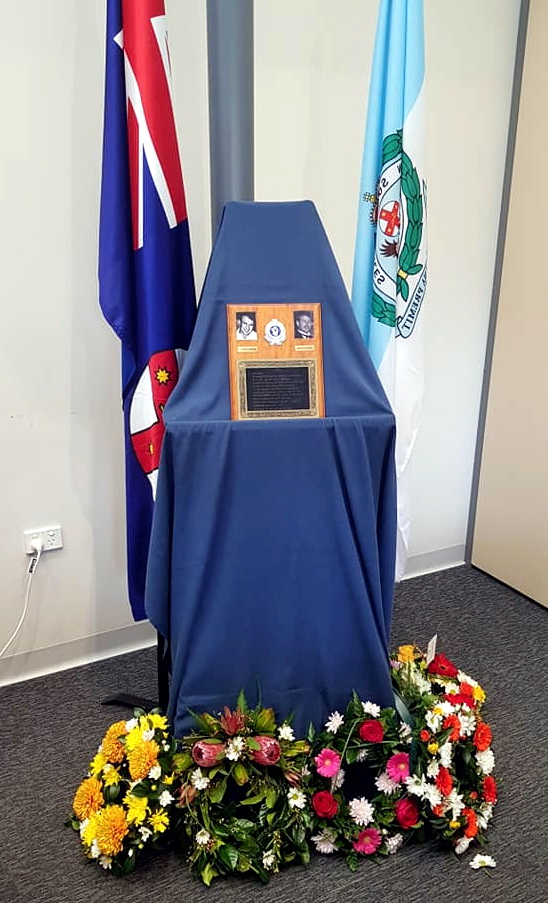
Today ( 3 April 2022 ) …friends, family, colleagues past and present, current and former Senior offices, The Mayor for Bayside Council as well as community members came together to remember Senior Constable Glenn McEnallay who was murdered in the line of duty 20 years ago.
I didn’t know this young man, but I walk past his memorial in Sparks Reserve each day and see his memorial at Mascot Police Station when I walk into work each morning
The story of Glenn is in the below link – RIP
Memorial dedication – Twenty Years on – 2022
Daily Telegraph Online wrote:
Parole hearing for cop killer Motekiai Taufahema
A MAN involved in the murder of Sydney policeman Glenn McEnallay was today refused parole.
Motekiai Taufahema, 35, is serving 11 years jail after being found guilty of Senior Constable McEnally’s manslaughter.
His bid for freedom was today rejected by the State Parole Authority.
He was one of four men convicted for the shooting murder of Constable McEnallay ten years ago.
The State Parole Authority said today they believed Taufahema has not addressed his offending behaviour and his release is not supported by the Serious Offenders Review Council (SORC).
His seven year non-parole period ended last month.
“The offender needs to be reduced in classification before progress and judgment … It is not appropriate for SPA to consider the offender for release on parole.”
Commissioner Ron Woodham opposed Taufahema’s release, saying it was not in the public interest and he had not addressed his offending behaviour.
Taufahema, found not guilty of the murder of Senior Constable McEnallay but guilty of manslaughter, was sentenced to 11 years prison.
Motekiai’s brother, John, also found not guilty of the murder of Senior Constable McEnallay but guilty of manslaughter, was last month refused parole and will not be eligible again until 2014. His full sentence is also 11 years with a non-parole period of seven years.
The Authority last month also refused parole for co-offender Meli Lagi at a private meeting. He will not be eligible for parole again until next year.
Lagi, 32, who was found not guilty of the murder of Senior Constable McEnallay but guilty of firearms offences, was sentenced to almost 13 years prison with a non-parole period of almost nine years, which expired on 2 April 2011.
The fourth co-offender, 32-year-old Sione Penisini, is serving a total sentence of 36 years and won’t be eligible for parole until 2029.
Court allows police killer to stay for daughter’s sake
ONE of the men jailed for manslaughter over the death of Senior Constable Glenn McEnallay has escaped deportation to Tonga even though he has spent more than half of his 21 years in Australia in prison.
The best interests of Motekiai Taufahema’s seven-year-old daughter, born after he was jailed, tipped the balance in his favour when he appealed against the cancellation of his visa. But his childless brother, Sione, 31, also convicted of McEnallay‘s manslaughter, will be sent back to the country he left aged nine.
A victims’ group says the decisions perversely reward criminals who become parents, while refugee advocates say they show the unfairness of the Migration Act’s ”character test”.
Although Motekiai Taufahema, 33, had spent 12 of 21 years here behind bars, the deputy president of the Administrative Appeals Tribunal, Robin Handley, found his daughter ”loves her father and misses him” and would be devastated if he were deported.
Combined with evidence of his rehabilitation, including a non-violent response to being stabbed 10 times by a fellow prisoner, it earned him ”one last chance”.
Mr Handley rejected Sione Taufahema’s appeal on the same day, saying the high risk of him re-offending outweighed other factors. Noting that he has spent almost 10 of his 21 years here in prison, Mr Handley accepted the Federal Government’s argument that the community would expect to be protected against his violent criminal behaviour.
Asked about Sione Taufahema’s imminent arrival, a Tongan Government spokesman said in an email, ”No comment.”
The Taufahema brothers were both on parole for a brutal bashing when stopped with four stolen guns in Hillsdale in 2002. Their accomplice, Sione Penisini, shot McEnallay four times.
Both brothers were sentenced to 11 years jail after pleading guilty to manslaughter – a result McEnallay‘s father, Bob, called a ”bloody disgrace”.
Sione Taufahema‘s deportation adds to a turbulent few years for the Taufahema family. Two of his siblings, Honora and Filisione, are also in jail. Another, 18-year-old Tavita, was shot dead by police in September during an armed hold-up at the Canley Heights Hotel. Last year 16-year-old Chris Emmerson was shot dead by a visitor at the family’s Yennora home.
The father, Maunaloa Taufahema, said he was happy for Motekiai’s daughter but disappointed for Sione, whom he considered Australian, not Tongan.
”He has spent a lot of his life in Australia, and to me his behaviour was based on the Australian environment,” he said.
Both brothers have spent only a week or two in Tonga since they left as children and their close families have since moved to Australia and New Zealand.
Robyn Cotterell-Jones, from the Victims of Crime Assistance League, said both brothers should be deported as a deterrent. ”I imagine victims would feel it’s wrong that if you’re arrested for murder but you get somebody pregnant you will be able to stay here rather than be deported.”
Dr Michael Grewcock, an expert on the character test from the University of NSW, said it seemed bizarre to deport one brother and not another: ”There’s just a general lack of consistency, which is built into the process.”
Goulburn Police Academy – Class DPP 10 ( Class 4 )( Class 284 )
Rank: Nil. Student Police Officer ( S.P.O. )
Stations: NSW Police Academy Goulburn, Warilla ( Lake Illawarra ) – Field Placement
Service: From? September 2001 to 1 February 2002 = 4+ months
Born: Tuesday 18 April 1972
Event: Thursday 24 January 2002
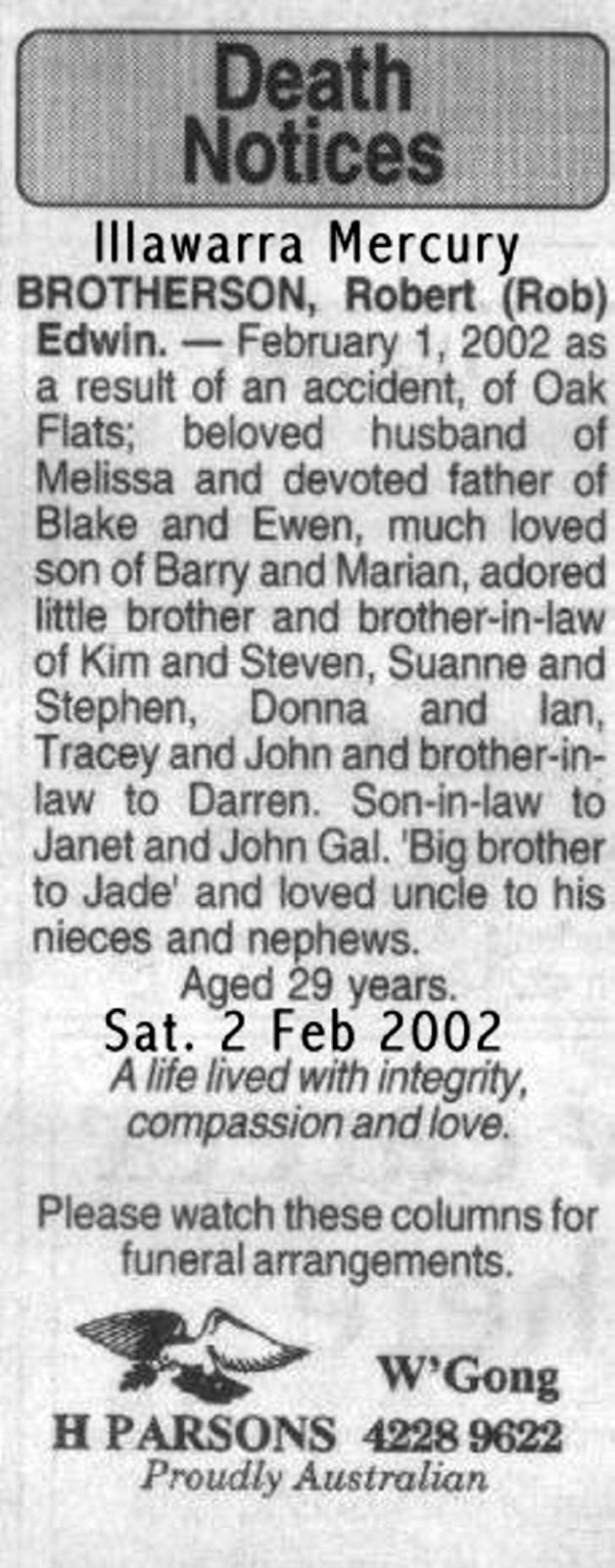
Died: Friday 1 February 2002
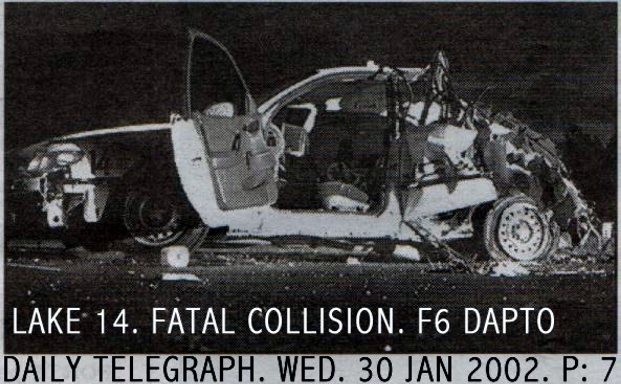
Cause: Motor Vehicle Accident – Rear seat passenger, F6, Dapto
Age: 29 years, 9 months, 14 days
Funeral date: Wednesday 6 February 2002 @ 10am
Funeral location: St Paul’s Catholic Church, Tongarra Rd, Albion Park
Buried at: Lakeside Memorial Park, Kanahooka Lawn Cemetery, Kanahooka Rd, Kanahooka, NSW
Grave GPS:
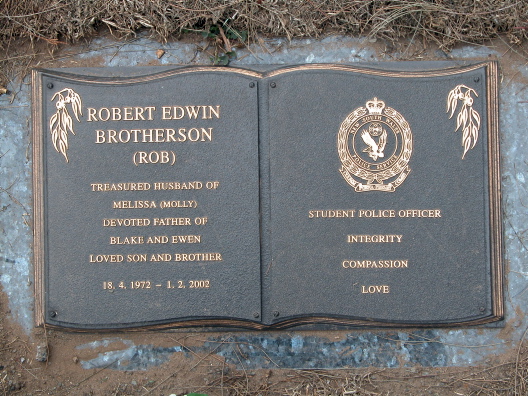
Robert BROTHERSON
Headstone
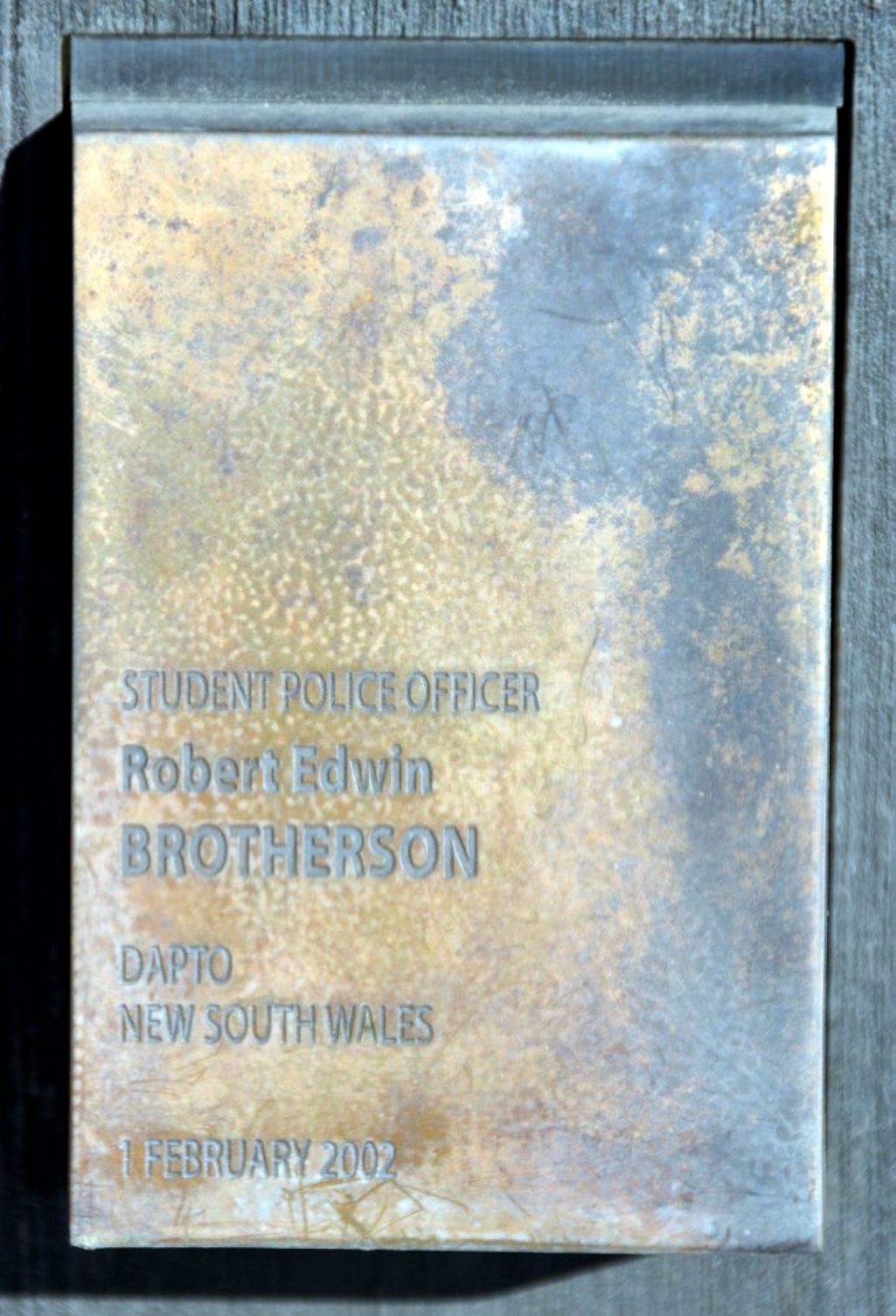
Touch plate – National Police Wall of Remembrance, Canberra
Robert IS mentioned on the National Police Wall of Remembrance
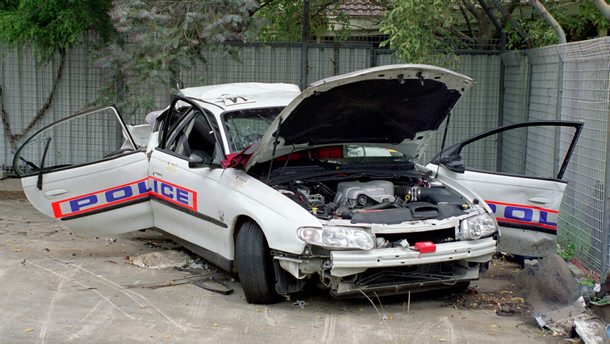
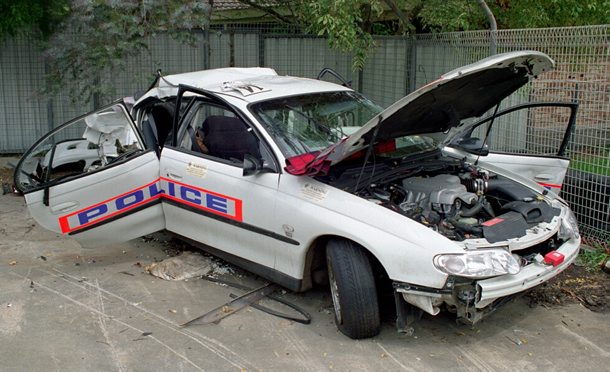
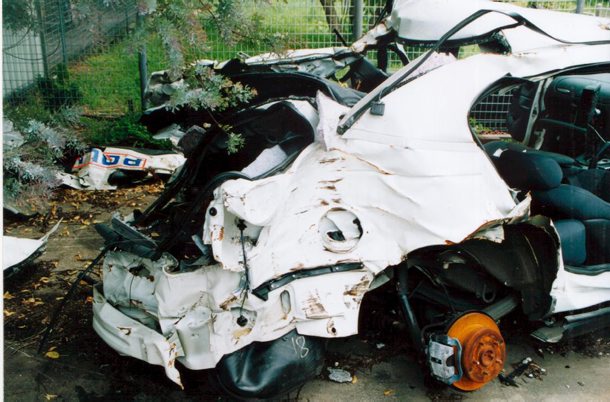
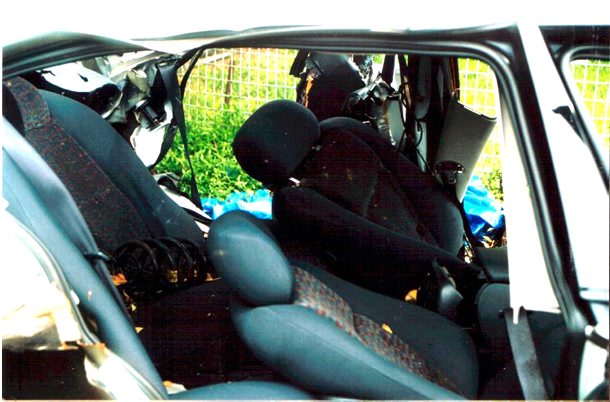
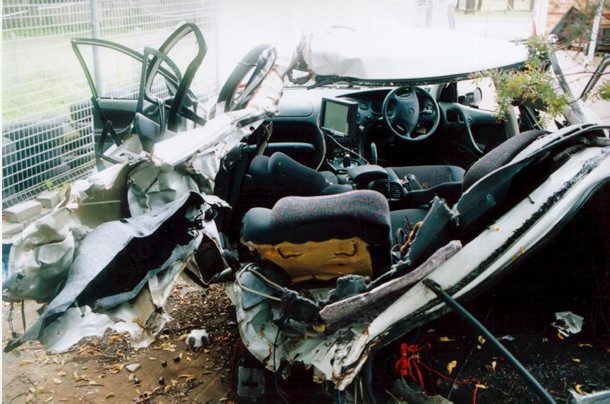
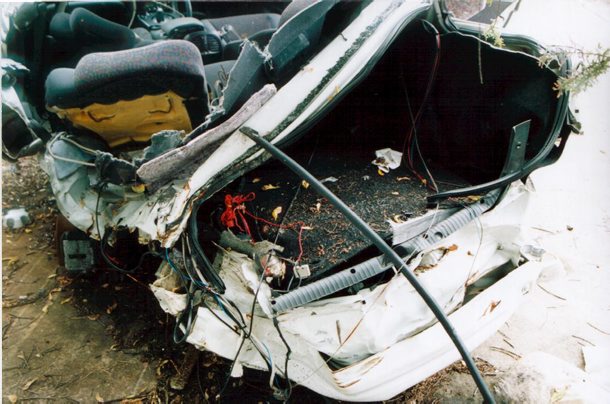
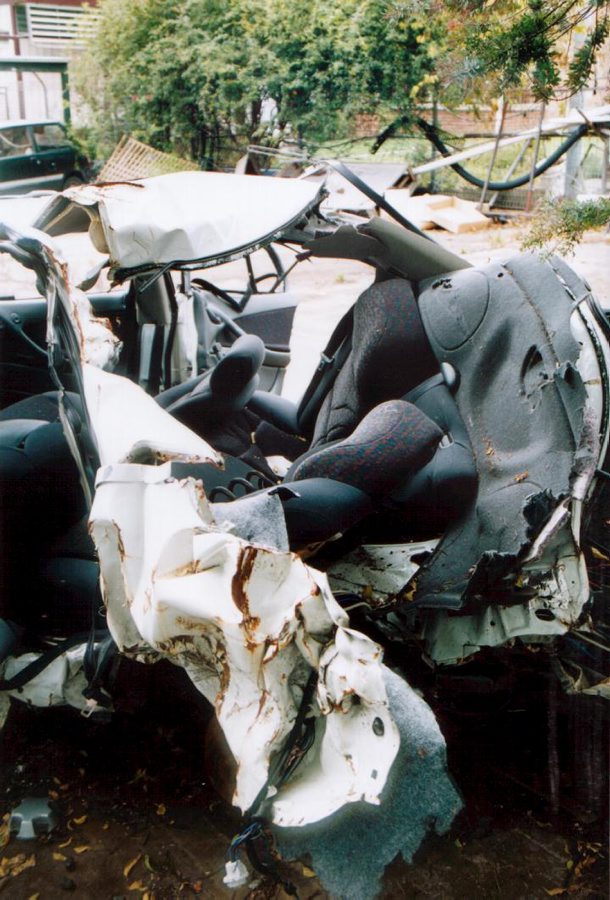
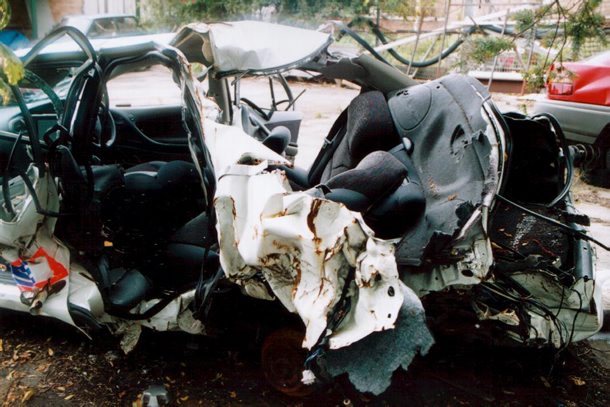
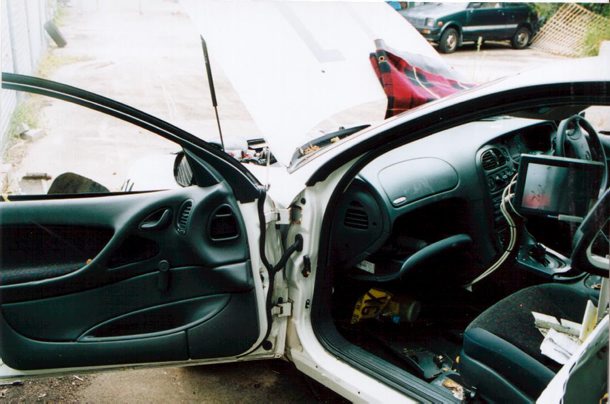
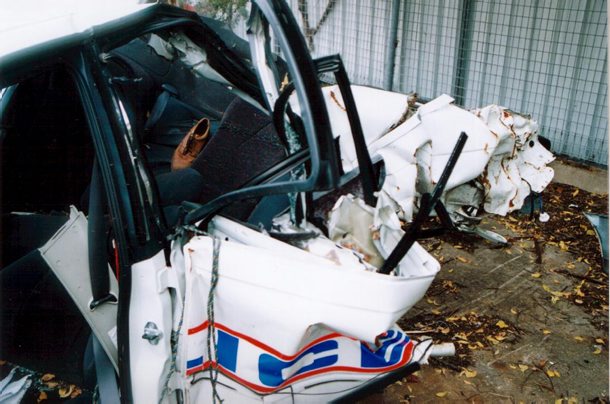
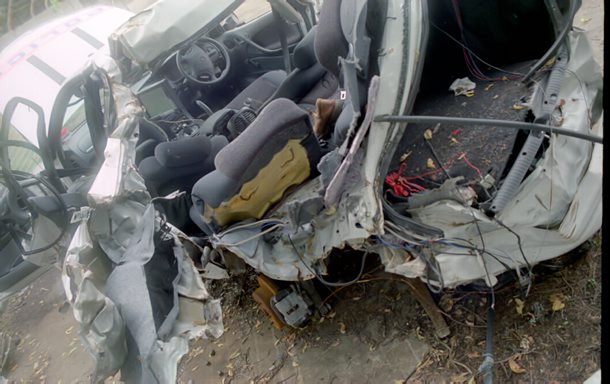
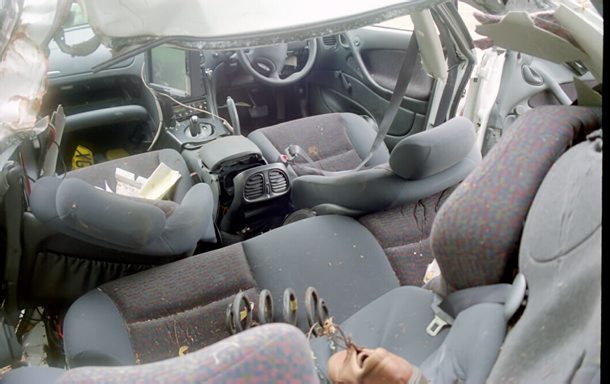
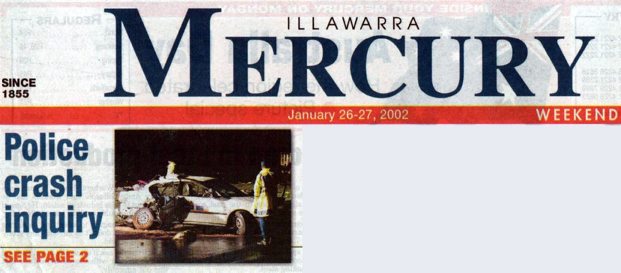
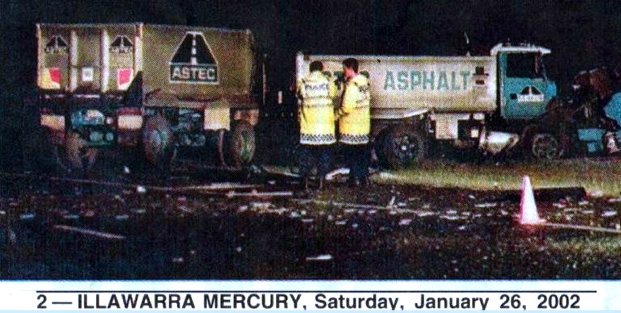
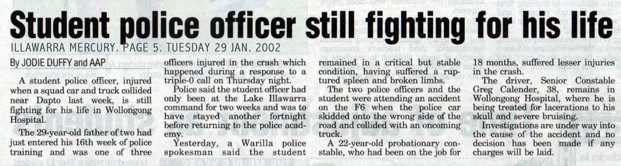
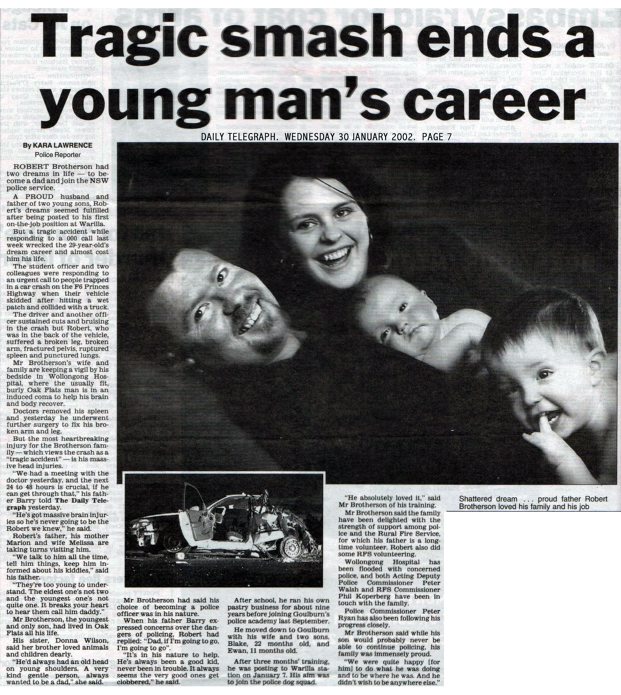
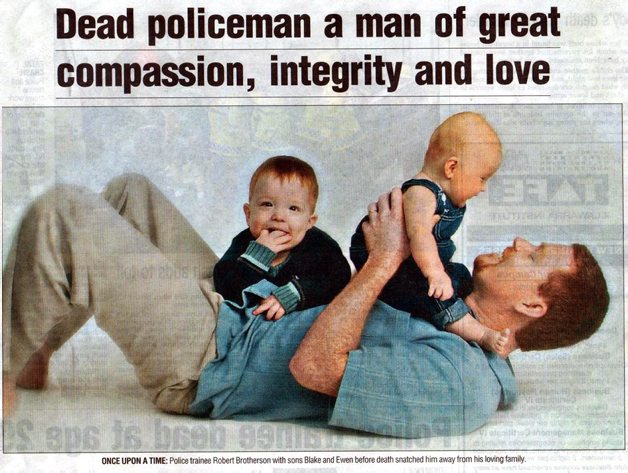
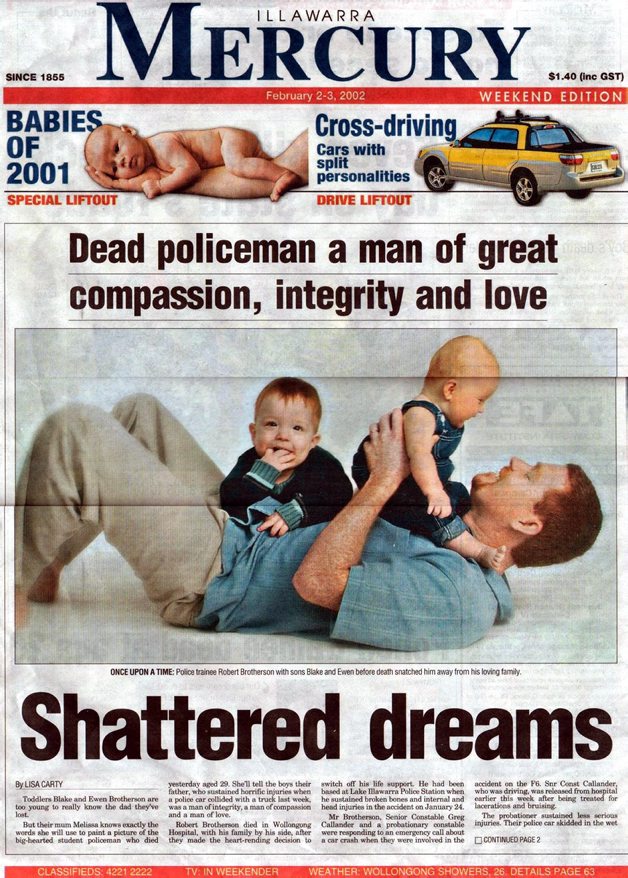
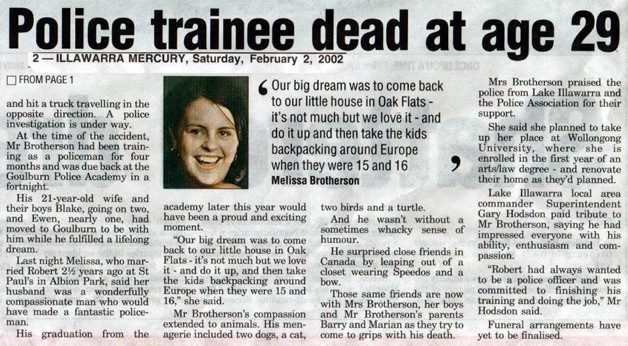
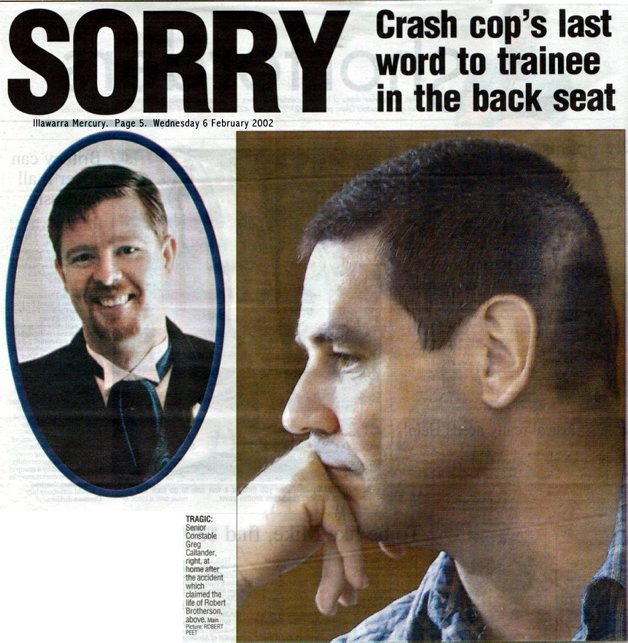
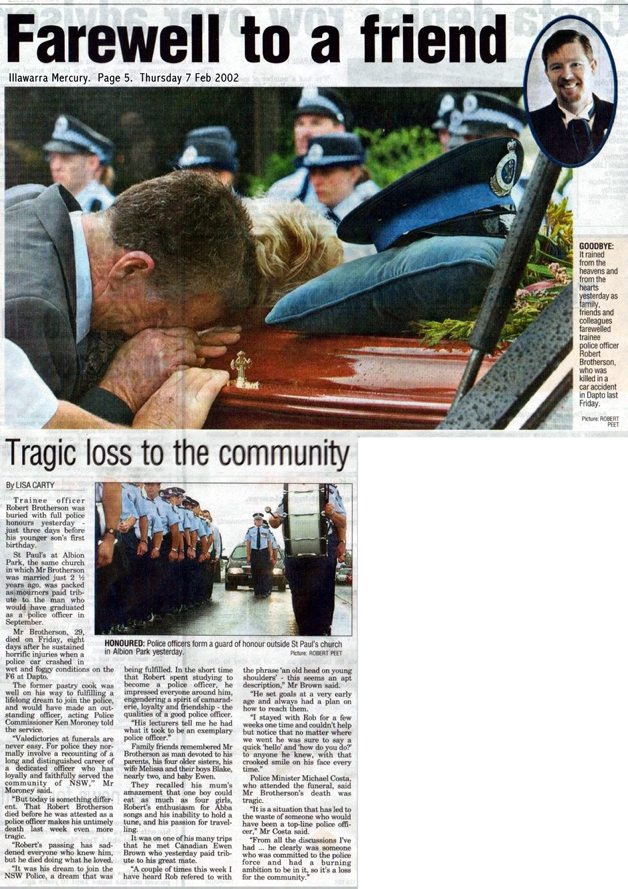
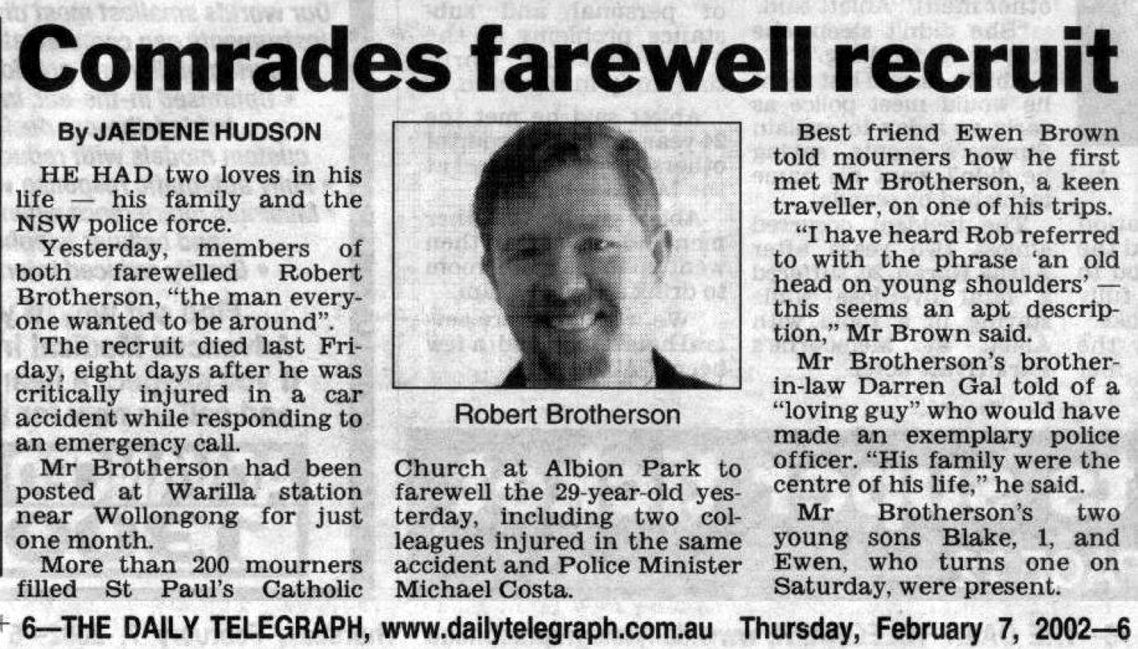
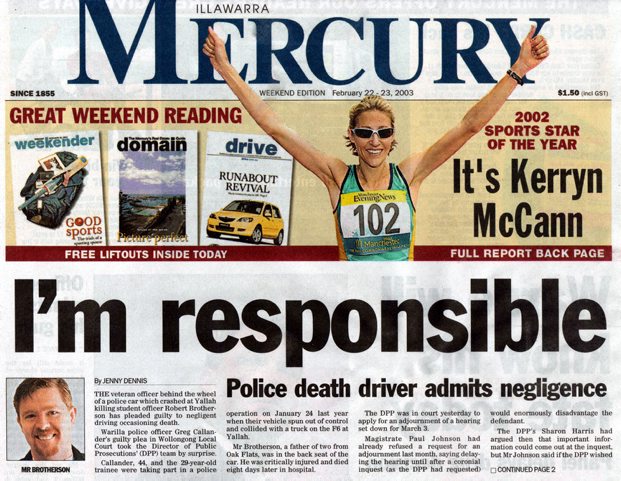
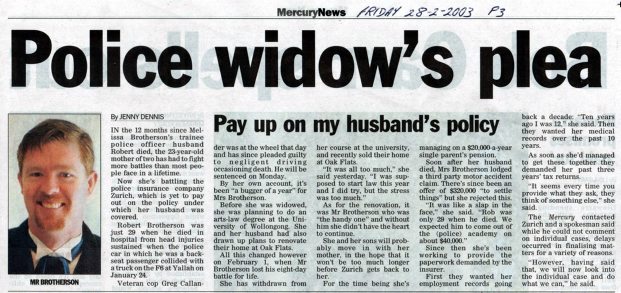
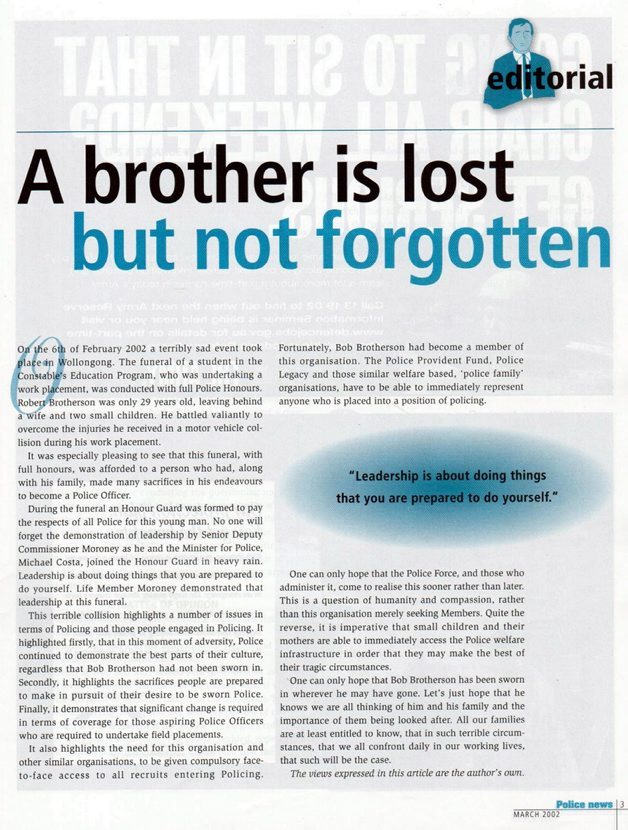
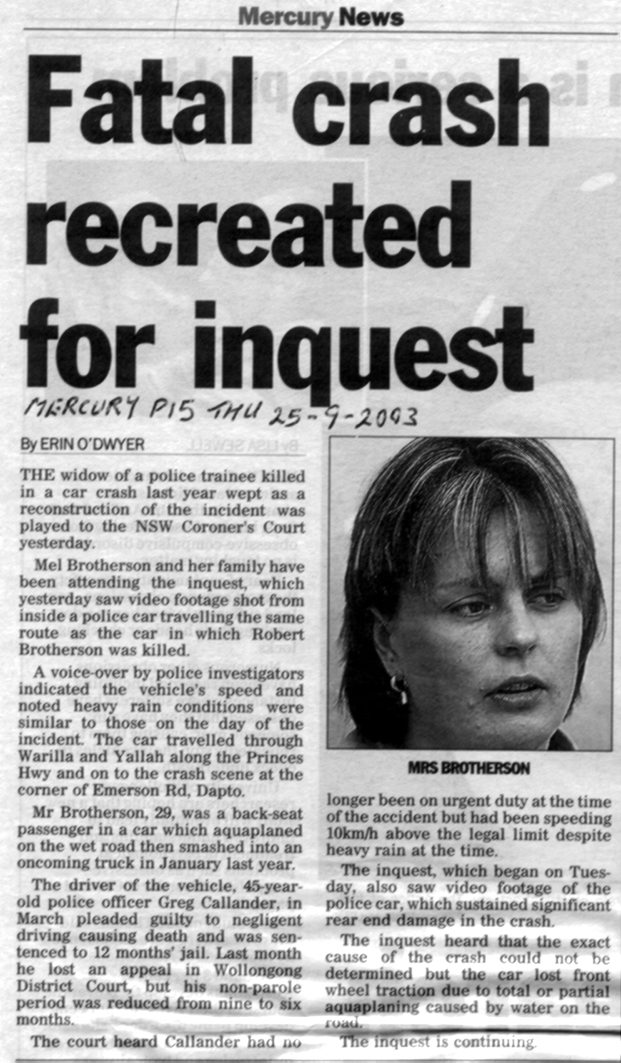
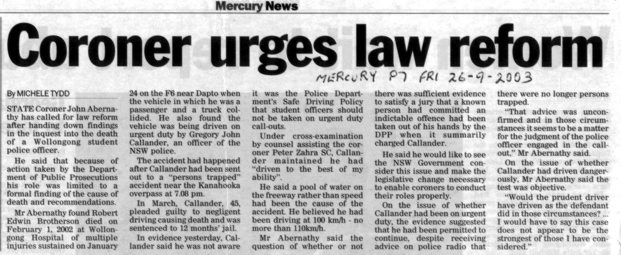
About 7.20pm on 24 January, 2002 the student was a rear nearside passenger in a police Commodore sedan on the F6 Freeway at Dapto, heading to a Persons Trapped traffic accident, when the police vehicle, negotiating a broad right bend, hit a sheet of water, causing aquaplaning ( asymmetrical drag ), spun and collided with an oncoming truck. The student sustained critical head and internal injuries and was admitted to the Wollongong Hospital where he passed away, 9 days later, on 1 February, 2002.
At the time of his death the Student Police Officer was on the field placement phase of his police training at the Lake Illawarra Local Area Command.
I have absolutely no doubt that had we not had this unfortunate accident, Rob would have made a great policeman. Sorry mate !.
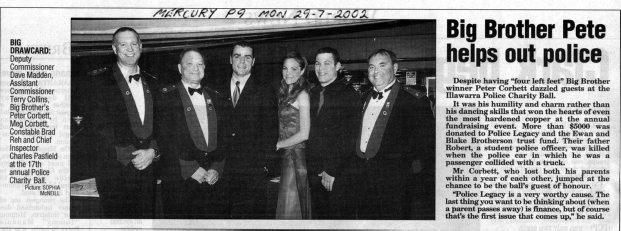
The death of Student Police Officer Robert Brotherson, who was a Student at the Goulburn Police Academy, led to the Robert Brotherson Trophy which is now presented to the student with the highest academic achievement in the policing program, at the Academy, during each new course. The trophy is awarded to that highest academic achiever at the Attestation Parade.
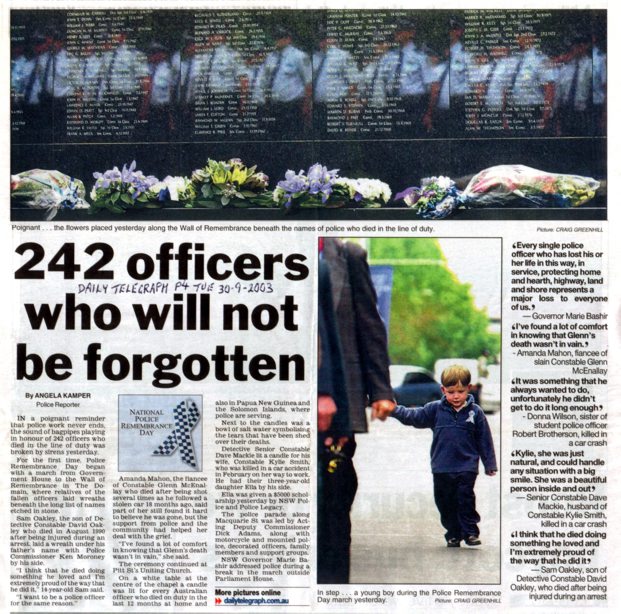
Police Remembrance Day: 30 years
Nan Tien Temple, Berkeley, NSW
Police Remembrance Day:
JOSHUA BUTLER
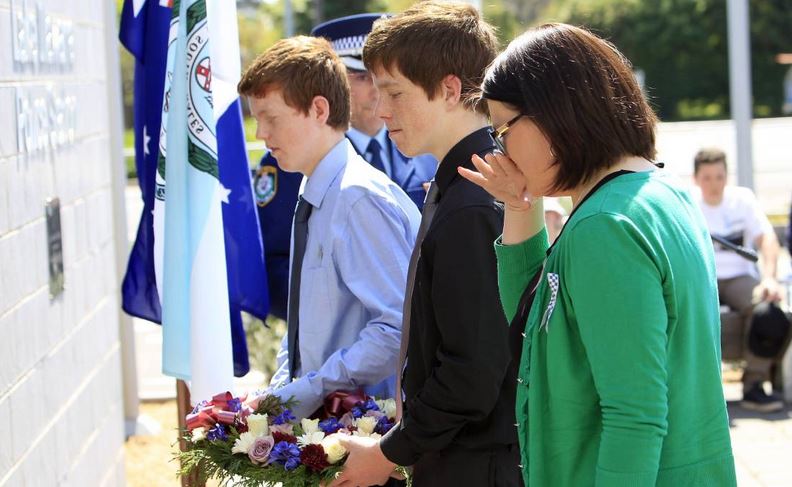
Family members lay a wreath for Robert Edwin Brotherson. Picture: ANDY ZAKELI
Almost 60 years on, Kenneth Nash still misses his uncle Allen.
Sergeant Allen William Nash, aged 40, was killed in the line of duty by a gun-wielding offender at Primbee in 1956.
Sgt Nash was one of eight officers stationed in the Lake Illawarra local area command who were recognised with memorial plaques on a wall of honour outside Lake Illawarra police station on Monday, as part of Police Remembrance Day commemorations.
Dozens of current and retired officers, families, friends, politicians, councillors and members of the public gathered at Oak Flats for a ceremony to unveil the memorial wall, and honour past and present officers.
Since 1862, more than 250 NSW Police officers have died in the line of duty.
Police officer Robert Brotherson was killed in 2002. Lake Illawarra Police are creating a memorial wall in his and other fallen officers’ honours. Pictured are Melissa Brotherson and her sons Ewan and Blake. Picture: ALBEY BOND
AN adventurous young man who wanted to help people will be one of eight officers acknowledged on Police Remembrance Day, when a memorial wall is unveiled in their honour at Lake Illawarra Police Station.
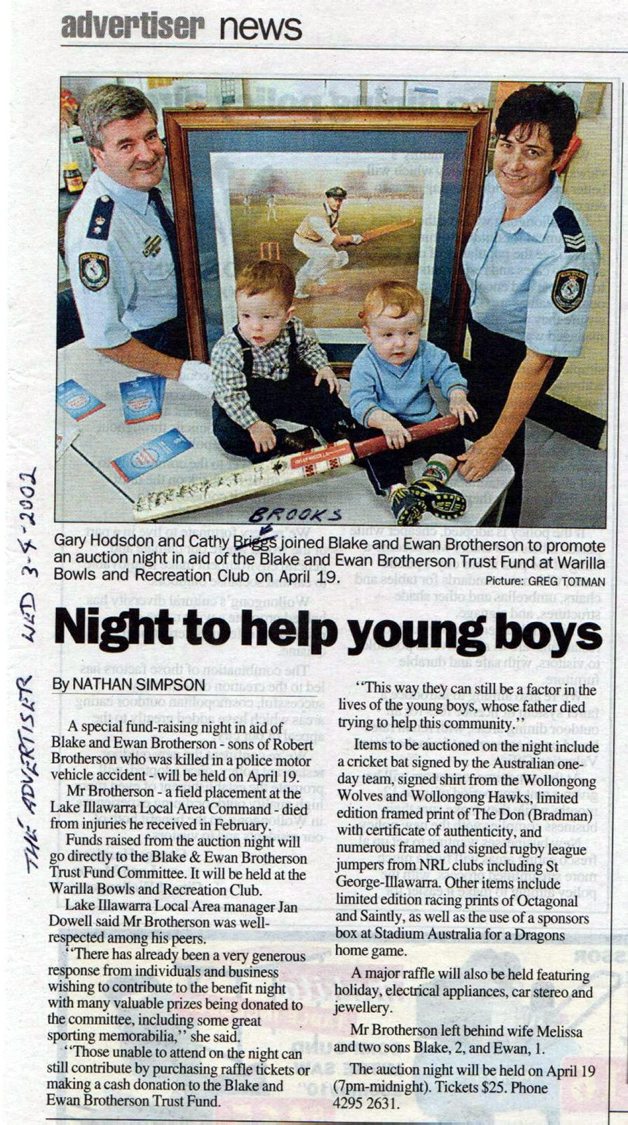
Robert Brotherson from Oak Flats was working in a cake shop with his parents in 2001 when he and his wife, Melissa, decided he would follow his dream to be a police officer.
But the dream was cut short on February 1, 2002, when the student officer was critically injured in a collision between a police car and a truck.
His life support was turned off eight days later.
The 29-year-old left behind two young sons, Blake and Ewan, who are now 14 and 13.
Melissa Brotherson said she was pleased Lake Illawarra Police had decided to recognise the eight officers.
“A lot of people don’t realise that our local police take risks to protect the community,” she said.
“That Rob was a student police officer makes it even more special – the fact that the police family still honours someone just at the start of their career.”
Ms Brotherson remembered her late husband as an “old-fashioned gentleman” who did not shy away from a skydive or a bungy jump.
See your ad here
“He had a sense of compassion and empathy – he was the type of kid to take in a hurt animal and that extended to people,” she said.
“He wasn’t there [in the police force] for the glory, he wanted to help people.”
The command area has lost eight officers since 1951, either while on duty or as a result of injuries sustained on the job.
An outdoor commemorative plaque will be unveiled on Police Remembrance Day, September 29, and the station flag will be lowered to half-mast.
Lake Illawarra Local Area Commander Wayne Starling encouraged families of the fallen to come forward so they could be invited to the ceremony and contribute photographs for the display.
Family members can contact Sergeant Jason Harrison on 4232 5326 or email HARR2JAS@police.nsw.gov.au.
They can also send a personal message via the Lake Illawarra Local Area Command’s Eyewatch page on Facebook by visiting facebook.com/LakeillawarraLAC.
Every day, police officers go to work with the knowledge they may not be going home to their families.
In 2002, 29-year-old student police officer Robert Brotherson died while responding to a car crash in the Illawarra.
On Friday, his son, 13-year-old Blake Brotherson from Oak Flats, was named the 2013 winner of the NSW Police Legacy Commissioner’s Scholarship.
Presented by Police Commissioner Andrew Scipione as part of the Police Remembrance Day ceremony in Sydney, the scholarship provided $5000 to allow the year 7 student to follow his dreams to become a pilot.
At the time of his death, Robert Brotherson had successfully completed session one at the Police Academy and was undertaking field placement at Lake Illawarra Local Area Command.
Presenting the award, Mr Scipione said Blake was an active participant in Police Legacy activities and wished him luck for his future.
Meantime in Wollongong, a multi-denominational Police Remembrance Day service was held at St Francis Xavier’s Cathedral.
For Inspector Anne Clarke, the ceremony was a stark reminder of the risks she and her fellow officers faced.
“It brings home to us the real danger of policing,” she said.
More than that, Insp Clarke said the ceremony was an example of the tremendous camaraderie that existed among those who made up the thin blue line.
Although Police Remembrance Day exists to pay respect to those officers who have been killed in the line of duty, it also honours those who have died in the past 12 months while still employed with the force.
This was particularly poignant for Wollongong LAC, which has lost two former officers in the past two months – Chief Inspector Graeme Donnelly and Sergeant Nick Skomarow. More than 100 officers, members of the public and religious representatives attended the ceremony, conducted by Salvation Army chaplain Jayne Wilson.
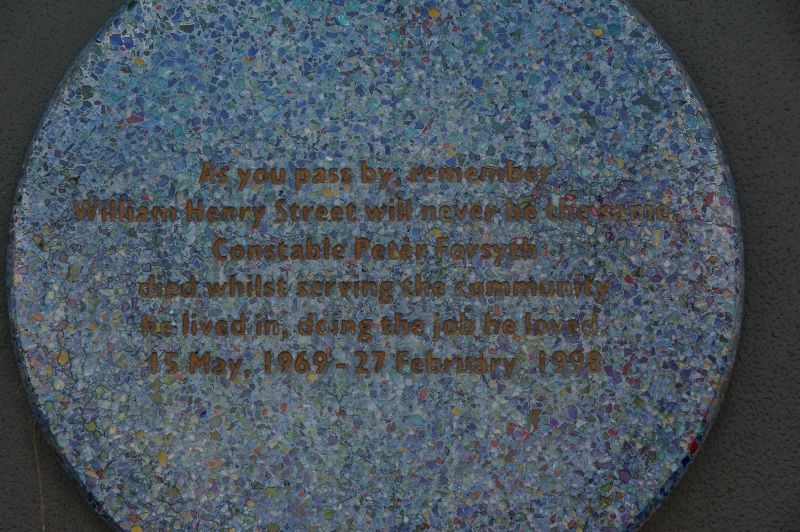
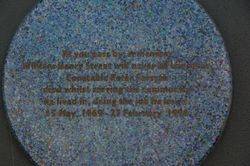
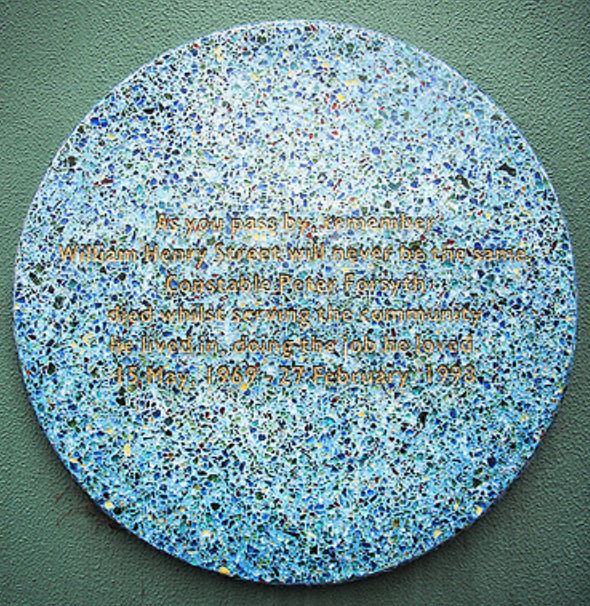
[blockquote]As you pass by, remember
William Henry Street will never be the same.
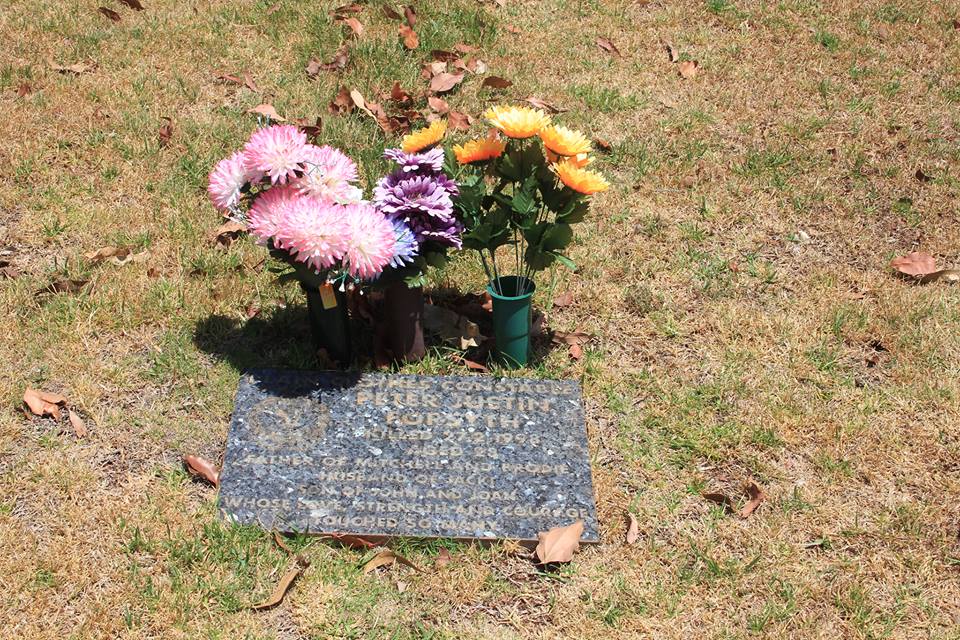
Constable Peter Forsyth
died whilst serving the community he lived in, doing the job he loved.
15 May, 1969 – 27 February, 1998[/blockquote]
PETER IS mentioned on the Police Wall of Remembrance
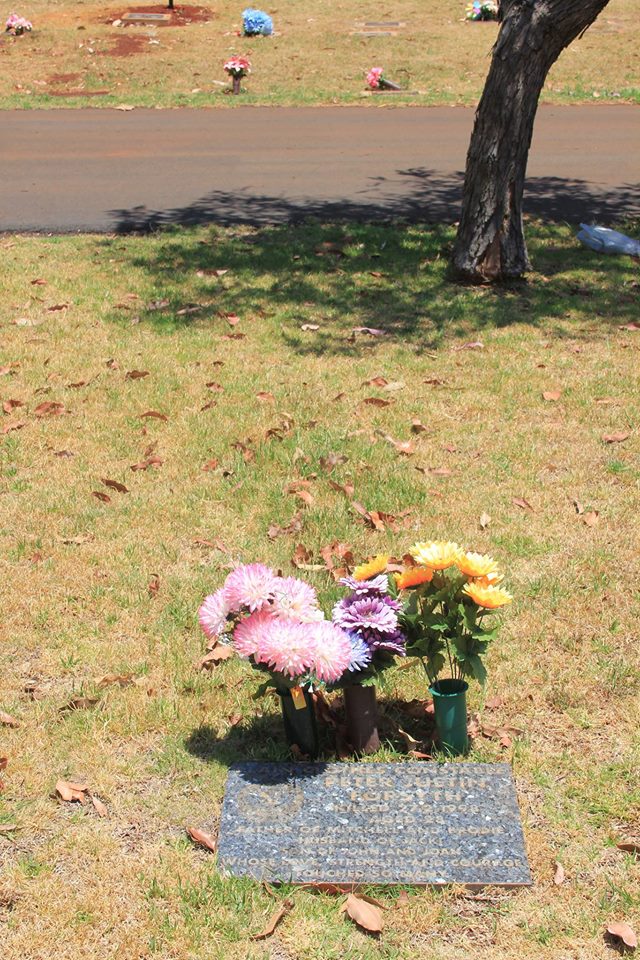
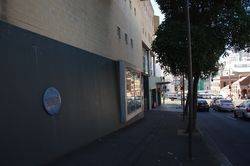
Memorial: William Henry Street , Ultimo, 2007
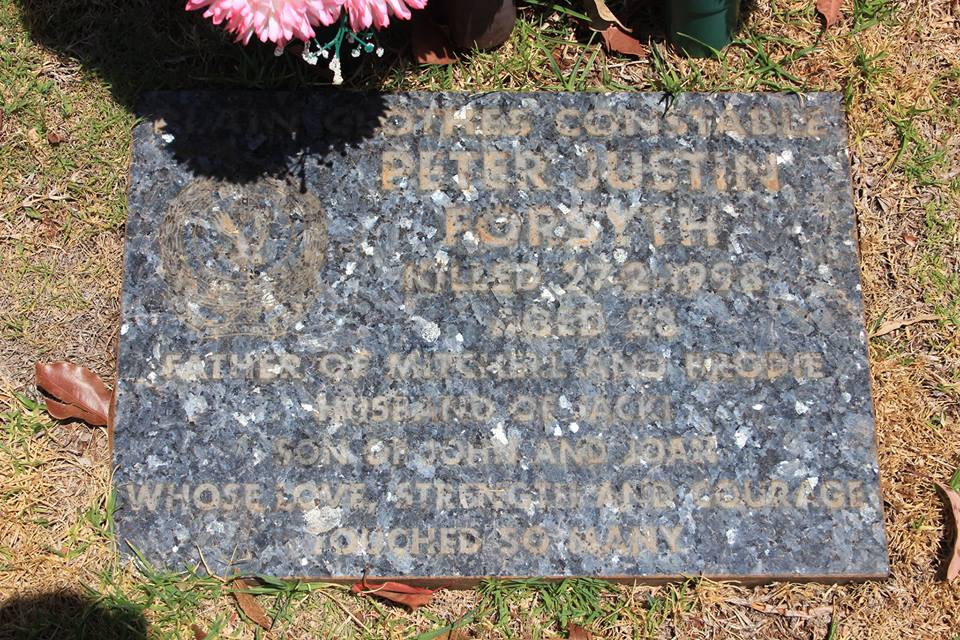
Grave Stone, Toowoomba, Qld
About 11.25pm on 27 February, 1998Constable Forsyth was walking to his home in Ultimo with Constables Jason Semple and Neville when they were approached by a young male selling Ecstacy tablets (an illegal drug), which was later found to be a simple Panadol tablet. After speaking with this person and a second offender, Constable Semple informed them that they were police officers and attempted to make an arrest. One of the offenders, Murray Walter HEARN, then produced a knife and stabbed Constable Forsyth and Constable Jason SEMPLE before running off. They were pursued for a short distance by Constable Neville before he quickly returned to assist his injured colleagues. The injured police were soon conveyed to the Royal Prince Alfred Hospital, however Constable Forsyth unfortunately died of his wounds at 12.14am. Constable Jason Semple underwent surgery and later recovered.
The constable was born in 1969 and joined the New South Wales Police Force in 1995. At the time of his death he was stationed at Leichhardt.
Freed after killing a cop, Murray Hearne married his jail psychologist
February 15, 2017 2:22pm
Murder Uncovered: Officers down
HE KILLED a cop, left another one critically injured, and now is free and married to the prison psychologist he started an affair with in jail.
Murray Hearne, the man who stabbed unarmed and off-duty police officer Peter Forsyth is on parole, and free to rejoice in the birth of his son with prison mates on Facebook.
Details of Hearne’s post-prison life are detailed tonight in Channel Seven’s true crime show Murder Uncovered.
The show finds Hearne, released from jail in March 2014 after 16 years behind bars, to Wagga Wagga where he lives with his wife, Bobbie Bergmeier, and their son.
The show reveals the pair met when she was an intern and he was an inmate, in Junee prison.
And while Hearne refuses to talk to Murder Uncovered about his life now, he has no such qualms on Facebook, where among those congratulating him on the birth of his son is another convicted killer: axe murderer Keith Schreiber — who spent more than a decade in jail for killing Jack Van Krevel at the request of his former lover.
“A new life added to this world,” Hearne posted on Facebook when baby Micha was born.
Peter’s daughter, Brodie — cheated of her own father thanks to Hearne — struggles with the news.
“I’d tell him (Hearne) every day when he looks at his child and thinks about all the love he has for his child, he can think about us (she and her brother Mitchell),” Brodie says.
“Think about my dad and think about how he (Hearne) has taken all that away … the school assemblies, the sports award … everything.
“He gets to have that and we don’t. It’s selfish.
“I want him to take care of that child and keep it in the back of his mind that he gets to go through that. We had to do that without our Dad.”
“IT HURTS IN MY CHEST”
For those that loved Constable Peter Forsyth, the pain is ever-present.
It lurks there, just beneath the surface, still raw, bubbling over when memory stirs it.
It’s the pain of a husband, father and mate snatched away while his killer walks free.
It’s almost two decades since Peter and his colleagues, Jason Semple and Brian Neville, went for few quiet Friday night beers, and Peter never came home.
The trio was unarmed, and off-duty when offered of a drug deal by a group of teenagers.
When they tried to arrest Murray Hearne, Peter wound up dead, Jason critically injured, and Hearne went on the run.
Jason rarely speaks of the night his mate tried to save him and wound up collapsed on top of him, stabbed, never to see his beloved wife Jackie and children Mitchell and Brodie again.
All speak at length of the night Murray Hearne turned cop killer, and of the painful nights ever since, on Channel Seven’s Murder Uncovered tonight.
“You can’t plan for this …. I miss him”, says Peter’s widow, Jackie Reimer, wiping tears as she relives that night.
Watching back old videos of Peter with their children gives her a “physical pain. It hurts in my chest. It’s a real pain, it’s not just a feeling.”
‘I was only pretending. I wasn’t strong,’ Jackie says of her battle to keep it together after her husband was murdered. Picture: Channel 7 Source: Channel 7
Peter’s daughter, Brodie now 20, acutely feels the absence of a man she loves, but never knew.
“I feel like I know so much about Mum. I can tell when I walk in if she’s had a good day or a bad day, she doesn’t need to tell me,” Brodie says.
“And then I don’t know one thing about Dad.
“I don’t know how he carries himself. I don’t know his sense of humour. I don’t know … just the little things you should know about your dad. I don’t know those.”
THAT NIGHT
Jason Semple is a mountain of a man — of a size that if he told you to get stuffed, you’d probably start making arrangements.
A man not easily given to tears. A man, who, when Hearne stabbed him, didn’t feel the knife. “It felt like a soft punch,” he says.
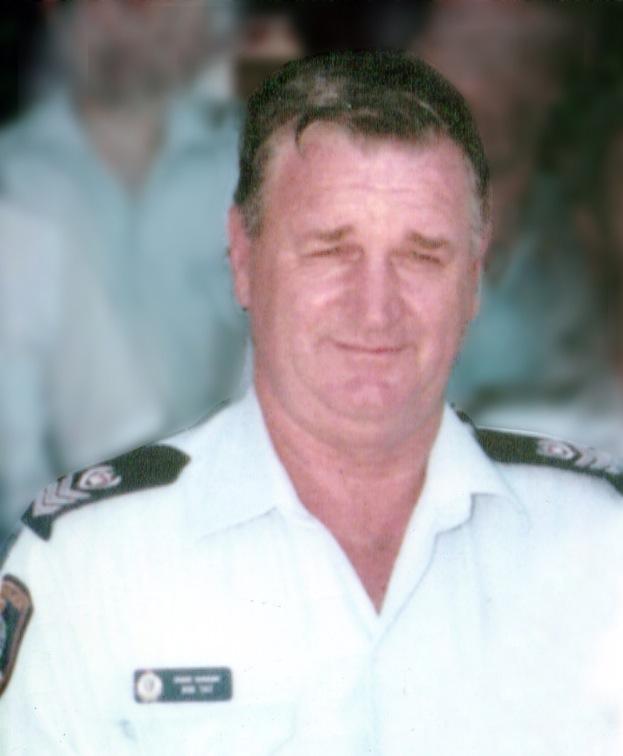
Constable Peter Forsyth. ‘She’ll be right mate’, were his last words of comfort to his stabbed mate.Source:News Corp Australia
But on February 28, 1998, he was the new kid on the block — “the full rookie” invited by Peter with another officer, Brian Neville, for a few post-work ‘welcome drinks’ in Sydney’s inner-city Ultimo, not far from where Peter lived.
“It wasn’t meant to be a last catch-up,” says Brian, fighting tears..
The trio had finished at the pub and were walking along Harris Street when a young male in a group of four yelled “do you want some E’s?” (the drug, Ecstasy).
Suddenly, three off-duty cops were on duty.
Realising Murray Hearne was the one with the product, called him over to them asking to see the drugs. Then they grabbed him and walked him down the road, to search him.
When Hearne rose out of a crouch, the night took a fatal turn.
“I felt a couple of blows … first to my chest and stomach … but I thought I was getting punched,” Jason remembers.
“It felt like weak punches … like ‘is that all you’ve got?’.”
Hearne made a break and bolted. Jason felt like he was ‘leaking’, lifted his shorts, and realised he’d been stabbed.
As Brian went in pursuit of Hearne, Jason watched blood spray from his stomach.
Peter came to his aid, laid him in the gutter, started shouting for help.
It wasn’t meant to be a last catch-up’. Brian Neville and Jason Semple. Source: Channel 7
‘NOBODY KNEW HE’D BEEN STABBED’
“Peter was calm, he was single-minded on getting me help. … Pete was so normal, nothing to indicate he’d been injured,” says Jason.
“Nobody knew he’d been stabbed. Least of all him.”
Until Peter collapsed onto Jason’s chest.
“Pete’s talking to me, then next thing he’s basically laying on top of me … it was like he’d just fainted on top of me … I remember looking down watching the blood, thinking ‘what’s wrong with Peter?’,” says Jason.
The tears come.
“And the last thing he ever says to anyone on earth is ‘she’ll be right mate’.”
Peter was stabbed twice in the heart. Jason was taken to hospital and surgery.
Peter was pronounced dead not long after midnight.
And Hearne was on the run.
THE HUNT
Initially, police had no idea who the cop killer was that they were hunting for.
But Hearne couldn’t resist bragging to friends. Within 24 hours they had a name, and two properties under surveillance. Now they needed evidence, or a confession. Preferably both.
By Monday, they’d spotted him, and had his phone intercepted, and had to endure listening to him watch a news report about the injured Jason.
As he watched, Hearne told someone he was on the phone to: “that’s the big c*** … that’s him … I dropped him on his arse”.
When the story of the hunt appeared that night on the TV show Australia’s Most Wanted, the crack came.
His own stepfather contacts police: “I’m nervous. because it’s one of my kids that did it,” he said. “His name is Murray Hearne”.
Arresting officers tell Murder Uncovered Hearne cried when he was caught. And he wet himself.
Meanwhile, those that loved Peter, buried him.
Jason was told he was too sick to attend. He went anyway, ditching the wheelchair and walking into the service.
Jackie tried to keep it together for the children.
“My time for me was late in the middle of the night, when nobody else was around,” she says.
“I had to hold it together and pretend that I was strong (for the kids), but I was only pretending. I wasn’t strong,” she says.
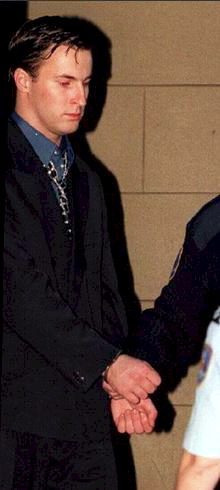
Convicted murderer Murray Hearne is led from court in 1999. Picture: Marc McCormack Source:News Corp Australia
FACE TO FACE WITH A KILLER
Jackie wanted answers, and hoped Hearne’s trial would give them.
Until he changed his plea the morning it was to start, pleading guilty to the murder of Peter Forsyth, and to a lesser charge for stabbing Jason.
“I was shocked and disappointed all over again,” she says. “I was ‘you’re not going to say anything … you’re not going to tell me anything. I’ve got nothing again now. Nothing.”
Hearne was sentenced to 27 years jail. It was reduced on appeal.
Another blow to those grieving Peter.
From jail Hearne asked to see Jason. Jason told him “to stick it”.
But eventually, Jackie looked her husband’s killer in the eye.
“I thought ‘this is going to be my only opportunity to get some answers’,” she says.
“He was very nervous … hyperventilating. Shaking. Sweating,” she says.
“I looked at the person he was now, years later. He was not some thought kid any more.”
He was looking for forgiveness, but he didn’t get it.
“I think so, that’s his problem. Not mine,” she says.
Peter Forsyth’s son, Mitchell is now 22.
Asked what he’d say to his father’s killer if he got the chance, Mitchell’s voice drips with contempt.
“What would I say to him? Nothing. I wouldn’t give him a second of my life.”
Murder Uncovered airs at 9pm tonight on Channel 7
Peter’s son, Mitchell, pictured with sister Brodie, wouldn’t give his father’s killer ‘a second of my life”. Picture: Channel 7 Source: Channel 7
A COP KILLER who served 16 years jail for the murder of a Sydney police officer is living in Wagga with his former Junee prison psychologist wife and their infant boy.
Convicted murderer Murray Hearne, now 37, was the focus of a Channel Seven investigation on Wednesday night exploring his brutal murder of Constable Peter Forsyth.
It has now been revealed Hearne works locally as a cabinet maker and is on parole.
The then-18-year-old fatally stabbed Peter Forsyth and seriously wounded fellow officer Jason Semple after approaching the off-duty policemen and offering them drugs.
Constable Forsyth, a father-of-two, and rookie Mr Semple were unarmed when they left drinks at an Ultimo hotel in inner-Sydney.
They detained him and tried to check Hearne’s ID, when the 18-year-old pulled out a knife.
He fatally stabbed Constable Forsyth twice in the heart, and his colleague Jason Semple twice in the stomach.
While the murderer is enjoying his new life as a dad, the widow of the slain policeman has told of her anger towards her late husband’s killer.
“You don’t think this is going to happen in your life. You can’t plan for this,” Constable Forsyth’s widow, Jackie Reimer said.
“It hurts in my chest. It’s a real pain. It’s not just a feeling.”
She shared details of the harrowing moment she came face to face with Hearne.
“He was hyperventilating and shaking and sweating,” she said.
“He was really very nervous.
“I looked at him as the person that he was now all these years later. He was not some tough kid anymore.
“He told me where he threw the knife, in a garbage bin.”
In June 1999, Hearne was sentenced to 27 years’ jail for killing Constable Forsyth and seriously wounding Jason Semple.
However, he was released from prison eleven years early.
In his time at Junee Correctional Centre, Hearne met a young psychologist, Bobbie Bergmeier.
Four years before he was released, the convicted killer and the psychology intern began a relationship.
In 2014, the year of Hearne’s release, Bergmeier was disbarred as a psychologist.
In a rare interview with Channel Seven’s Murder Uncovered crew, officer Jason Semple has told of what the policemen went through that night, before Constable Forsyth’s murder.
“I rarely speak openly about things, but it’s important to share my story,” he said.
“I don’t want people to forget my mate and colleague, Peter Forsyth, and what we went through that night and what he did for me.
“It’s also for the thin blue line that we’re a part of.
“So much has happened since then, but I’ll never forget his sacrifice.”
Detective Inspector Wayne G. Hayes was OIC of the investigation.
Mead Drive.
On the 2/3/98 the step father of Hearne phones Triple zero and names Murray Walter Edward Hearne as the offender.
On the 3/3/98 HEARNE was interviewed by Detective Inspector Wayne Hayes whereby Hearne refused to answer any questions and was then charged with the Murder of Peter Forsyth and Attempt Murder of Jason SEMPLE.
22 April 1999 Murray Walter Edward HEARNE appears in Court for a Plea of Not Guilty but ultimately pleaded Guilty, on that date, to the Murder of Peter Forsyth but the lesser charge of Malicious Wounding Jason Semple.
On 4 June 1999 HEARNE was Sentence to 27 years gaol which was later reduced on Appeal.
Hearne asked to meet SEMPLE whilst serving his sentence at Junee Gaol. SEMPLE declined. Hearne also wanted to meet Jacqui Forsyth. She met him in Gaol a few years before his release. She sat face to face with HEARNE who was shaking, sweating and very nervous.
He told her that he threw the knife into a garbage bin.
HEARNE met his Prison Psychologist, Bobbie Maree Burgmeier, 4 years before his release from gaol. She is now his wife. He married the young female Psychologist who was helping him in the Goal. She was eventually ‘struck off’ for having a sexual relationship with the murderer and falsifying records.
Hearne only served 16 years of his 27 year Gaol sentence before he was released on Parole in March 2014.
Now ( 2017 ) lives in Wagga Wagga with his wife and baby and he is employed as a cabinet maker.
Murray Hearne is on FB and is a Friend of Keith Schreiber – axe murdered.
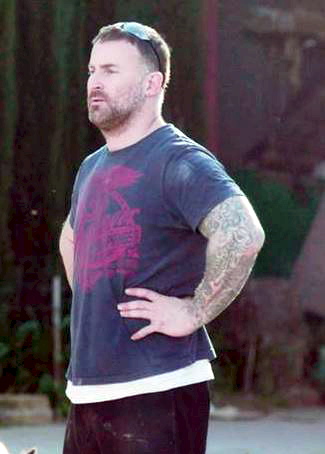
Hearne has a full tattoo sleeve down left arm and tatts on his right leg. Is of a solid build.
Jason Semple eventually left NSWPF after a good career and is now retired with PTSD.
Prison psychologist struck off for sexual relationship with murderer
Louise Hall
A young female psychologist has been struck off for having a sexual relationship with a convicted murderer she was treating in jail and falsifying official records to cover it up.
Bobbie Maree Bergmeier met the inmate – known for legal reasons as Client A – when she began working as an intern psychologist at the Junee Correctional Centre in April 2010.
Client A was serving a 21-year-sentence for murder and malicious wounding and had been in jail since he was 18.
Ms Bergmeier and Client A met monthly as part of her work with prisoners managed by the serious offenders review council (SORC). Around April 2011 Ms Bergmeier and Client A began having intimate telephone conversations which became sexualised.
The Health Care Complaints Commission (HCCC) alleged Ms Bergmeier told Client A she “loved him and couldn’t wait to be with him”, “she missed him and never had a best friend like him”, “that he was sexy and she wanted him forever”, “she was having a house built for both of them” and “she wanted to start a family with him”.
On Wednesday, the NSW Civil and Administrative Tribunal found Ms Bergmeier used “forethought, planning and subterfuge” to conceal the relationship from her colleagues and supervisors and “flaunted the security system for the purpose of her own personal gratification”.
She used a colleague’s password to enter false information into Client A’s case notes and altered the SORC allocation list to falsely show another psychologist as Client A’s treating practitioner.
She also used the false name Briony Watts to take around 300 Skype calls from him during the time she worked at the prison.
She resigned from the job in August 2011 but continued to stay in contact with him, visiting him at Mannus Correctional Centre, having close, personal relationships with his family and friends, and applying to be his sponsor for weekend and day leave.
She continues to be in a relationship with Client A, who was paroled in March this year and lives with Ms Bergmeier’s mother. She is working as a behaviour support practitioner at the Mercy Centre and is studying to be a primary school teacher.
The tribunal reprimanded Ms Bergmeier in the strongest possible terms, cancelled her registration as a psychologist and banned her from providing health services in both the public and private sectors.
Although Client A was serving time for murder, he had been in jail all of his adult life and was “needy and dependent and psychologically vulnerable”, the tribunal heard.
In addition to being a “serious violation of professional boundaries”, Ms Bergmeier had been “unmindful or insensitive to the consequences of her actions for Client A”, who had had no opportunity to develop relationships outside prison.
Ms Bergmeier said she accepts responsibility for her actions and acknowledges her wrongdoing.
However, the HCCC told the tribunal her decision to maintain her relationship with Client A despite the ramifications for her professional career “indicates an ongoing decision to prioritise her personal relationship over her professional obligations”.
Ms Bergmeier graduated from the University of Western Sydney with a bachelor of psychology in 2008. She became a registered psychologist in April 2011, around the time she says the relationship with Client A became personal.
Plaque commemorates Constable Peter Forsyth who was killed in the line of duty.
Constable Forsyth was stabbed in Ultimo by a man he was trying to arrest for drug dealing. Murray Walter Hearne was jailed for 27 years for the murder of Constable Forsyth and the stabbing of Constable Jason Semple. But the sentence, imposed by Supreme Court Justice James Wood, was reduced by a third in 2001 on appeal.
Address:
William Henry Street , Ultimo, 2007
State:
NSW
Area:
AUS
GPS Coordinates:
Lat: -33.877996
Long: 151.19816 Note: GPS Coordinates are approximate.
NATIONAL POLICE REMEMBRANCE DAY 29th SEPTEMBER 2013
DEDICATION to GLEBE POLICE OFFICER KILLED IN THE LINE OF DUTY.
Constable Peter FORSYTH was an officer that was stationed at GLEBE POLICE STATION. He was well known in the area for his passion for working with youth in the housing estate area of Glebe.
The auditorium at Broadway is dedicated to his efforts in working in and living around the Glebe area. The auditorium is referred to as the PFA ( Peter FORSYTH Auditorium ).
Constable Peter FORSYTH was stabbed in the chest while arresting a drug dealer in inner-city Ultimo on February 28, 1998.
Post by Cameron P
NSW Police Constable Peter Forsyth, tragically murdered when confronting a drug dealer whilst off duty in 1998. Pete was a Qld boy whom I had the pleasure of knowing and working Security with at Broadbeach Qld before he joined the Police. He was an absolute champion bloke, great husband, father and mate to all of us lucky enough to know him, he always bought a smile to our faces and knew how to lighten up any situation. The depth of his courage and sense of doing the right thing by people knew no bounds. Gone but never forgotten, R.I.P Pete.
Post by Nifty N
I will never forget Pete Forsyth‘s contagious laugh! The cheeky work antics and his dedication as a father of two beautiful children which he adored and his dedication to duty and his community!! The night he died will haunt me forever with memories I can’t erase, but the times we worked together and socialised will forever be memories I cherish! I am glad that those great memories of some 13 and more years ago still seem like they were yesterday!! I think of you often mate!!!
Support Aussie Cops* There is an Auditorium named in honour of the Constable in Glebe
Megan WilsonWhat a tragic set of circumstances. Cst Forsyth looks a warm, caring soul and a guy it would have been a pleasure to know. My thoughts go not only to his family but also to the other cops there that night for what they experienced.
Craigaroo ElliottSitting on the side of an interstate highway running laser with a tear in my eye. Pete the Queenslander was one of the funniest, easy-going blokes I ever met. Shared a floor with him at the academy, had a beer or two with him off-duty.
I’m proud to call my mate and will always honor his memory.
Brodie Forsythputting your life on the line to protect the community… im so proud of you dad, ill never forget you or your beautiful smile, we all miss you x
Sheryl Lee MoleALWAYS a LITTLE BIT MORE THAN JUST PETE. Just a little bit more interest in other folks welfare, Just a little greater showing that he really did care. Just a little more kindness to those he meet each day And a little greater effort to aid them on their way. Just a little more determined to do the best he could. To help some other fellow and prove a friend who would. Just a little bit more sunshine along life wary road. And a little bit more ready to ease another’s load. Just to work a little harder for other people’s good. And to show a bit more friendship MY FRIEND PETE could. !!!! I miss you each and every day .
Const Peter Forsyth was stabbed whilst affecting an arrest ( posthumously awarded the Commissioner’s Valour Award ).
This photo recalls that tragic event.
The monument reads,
“As you pass by, remember William Henry Street will never be the same. Constable Peter Forsyth died whilst serving the community he lived in, doing the job he loved. 15 May, 1969 – 27 February, 1998”
“Constable Forsyth was stabbed in Ultimo by a man he was trying to arrest for drug dealing. Murray Walter Hearne was jailed for 27 years for the murder of Constable Forsyth and the stabbing of Constable Jason Semple. But the sentence, imposed by Supreme Court Justice James Wood, was reduced by a third in 2001 on appeal.”
‘He will be missed by all. My mate, our mate, is gone.’
Date Fri Mar 06 1998
Publication Sydney Morning Herald
By KENDALL HILL and TIM JAMIESON
As Constable Peter Forsyth‘s cortege paused for a final goodbye to colleagues outside Glebe Police Station in Talfourd Street, young Mitchell Forsyth clutched his dead father’s bravery award.
Minutes before, Mitchell had been waving to mourners lining Glebe Point and St John’s roads while they tossed proteas, daisies and gladioli onto the roof of the hearse. The crowd, struggling for some way to mark its appreciation of the 28-year-old officer, broke into applause.
Then the three-year-old was handed the memento of his dad by a funeral assistant who reached into the car and tousled his hair.
His mother, Jackie, clutched him under one arm, and 15-month-old Brodie Rose under the other, as they caught a moment alone to remember the husband and father killed a week ago in a senseless stabbing at Ultimo, and the extraordinary public mourning his death roused.
There were many in tears, or fighting them back, among the NSW and Queensland police honour guard flanking the Forsyths. Locals wept openly beside them. Relatives in cars behind clutched their mouths with grief.
Constable Peter Justin Forsyth was farewelled by family, colleagues, friends and dignitaries yesterday in a funeral service with full police honours at St Mary’s Cathedral. It was attended by 2,600 inside and 500 outside.
In their ranks was Probationary Constable Jason Semple, 25, stabbed in the stomach during Friday’s fatal assault, who arrived in a wheelchair but walked with help up the cathedral steps.
Constable Brian Neville, who escaped injury and chased the youths allegedly responsible for the attack outside the Ultimo Community Centre, acted as a pallbearer for his dead mate.
More than 1,500 police officers attended from across the country and New Zealand. So, too, did the paramedics who attended to him.
His colleague, Constable Shane Forsyth (no relation), told mourners: “Memories of Pete will live forever. I only wish that I had known him for a longer time. A lot was fitted into a life that was so short.”
And to the Forsyth children: “Mitchell and Brodie, you will always know your Big Bear. The memories of him will never die.”
The Police Commissioner, Mr Ryan, delivered a valediction to the “well-liked lad“, born in Goondiwindi, Queensland, in 1969, and who joined the Police Academy in Goulburn in 1994.
“Peter was a brave man,” Mr Ryan said. Constable Forsyth was awarded a regional commander’s citation in 1996, while still on probation, for his role in arresting an armed offender.
“He was conscientious and proud to be a policeman. He had no hesitation, even while off duty, in tackling crime and criminals head on.”
The Premier, Mr Carr, Opposition Leader, Mr Collins, Police Minister, Mr Whelan, and the Lord Mayor, Councillor Sartor, also attended.
Eulogies by Constables Craig Elliot and Guy Flaherty, colleagues and friends from the Leichhardtlocal area command, revealed Constable Forsyth as a cheerful, mischievous young man.
Constable Flaherty recalled the day his mate was returning from the races by train with his mother, Joan, when he politely asked a crowd of rugby players to keep their language down.
“Well, this bloke came over full as a boot, flipped the seat back and sat opposite Peter and his mum,” Constable Flaherty said.
“He said `Is this your mum?‘ Pete said, `yeah‘. He said, `Ya know, your son has just stood up and told a heap of blokes to shut up just for you. You must be so proud of him to be that loyal‘.”
Constable Forsyth‘s widow, comforted by the Dean of the cathedral, Father Anthony Doherty, wept as Constable Flaherty finished his address.
“Peter used to say to me there are bad men and then there’s us. He was a policeman who would serve the community for which he was part of, keen to help and do the right thing.
“He offered safety, security to his community, love and loyalty to his family as well as to his friends. He will be missed by all. My mate, our mate, is gone.”
Local residents confirmed Constable Flaherty‘s words. Many had met him through his policing duties or his work with the police community and youth club. Forty Glebe High School students, each grasping a white rose, also waited to say goodbye.
One of the mourners, Ms Fran Campisi, cried as she recalled how the young constable helped her during a prolonged domestic dispute.
“He used to ring me up to see if I was OK,” she said. “The day before he died he rang me to see if I was still being harassed. It’s just devastating; he was so lovely, so caring and so sincere.”
At Glebe police station the counter was lined with cards and flowers and the public had left more than $500. Donations to the Peter Forsyth Memorial Fund may be made at any NSW or ACT Commonwealth Bank branch.
Constable Forsyth will be buried in Toowoomba, Queensland, on Monday.
Iris May Vanden BergIt’s so hard to believe so many years have gone by since this fine young Officer lost his life, in the line of duty.
A tragedy and heartbreak.. . RIP..You will never be forgotten.
AAP General News (Australia) 04-27-1999
NSW; Teenager admits murdering policeman
By Margaret Scheikowski
SYDNEY, April 27 AAP – A teenage labourer almost broke down today as he pleaded guilty to murdering policeman Peter Forsyth, who was stabbed last year in inner Sydney.Close to tears, Murray Walter Hearne answered in a trembling voice “guilty” to charges of murdering constable Forsyth and to maliciously wounding his colleague Probationary Constable Jason Semple.The 19-year-old’s trial was about to start in the New South Wales Supreme Court and a jury panel was in waiting.Const Forsyth, 28, Const Semple, 25, and another colleague were off-duty as they walked from a hotel at Ultimo at about 11.25pm on February 27, having gone there after work.An earlier court hearing was told Hearne was one of three passing youths who allegedly offered to sell drugs to the officers, who then tried to arrest them.But Const Forsyth, who was only metres from his Ultimo home, was fatally stabbed while Const Semple was stabbed in the chest and abdomen.Hearne, from Prospect in Sydney’s outer west, was originally charged with the attempted murder of Const Semple, but today pleaded to the lesser charge of malicious wounding with intent to cause grievous bodily harm.Justice James Wood put the matter over to Thursday to hear submissions on sentence.Outside the court, the constable’s widow Jacquie Forsyth expressed mixed emotions at the guilty plea.While she was surprised and relieved, the mother of two young children said she was sad she would not have the opportunity to have a trial because she wanted answers.”Every morning I wake up and the first thing I think of is why, why did this happen, and I was really hoping for some answers.” She said it did not matter what the sentence was.”It is not going to change; it’s not going to make my situation or my family’s situation any better,” she said. “It is not going to bring Peter back.”She said she was glad to hear the guilty plea from Hearne but she wondered why it had taken so long for him to admit the crime.”I think his emotion and his sadness were for himself,” she said. “I am sure he was not thinking about my family or my husband.”Ms Forsyth was accompanied by a large number of relatives, friends and colleagues of her husband.”I have got a lot of support but the person who I want most isn’t there for me,” she said.
1999 AAP Information Services Pty Limited (AAP) or its Licensors.
AAP General News (Australia) 04-29-1999
NSW: Court told murdered cop had tried to help colleague
SYDNEY, April 29 AAP – Police constable Peter Forsyth had been stabbed once in the heart when he came to the aid of a colleague who had been knifed, a judge was told today.
According to the statement of facts which was read out in the New South Wales Supreme Court, a youth and Murray Walter Hearne had offered the two men and another officer an ecstasy
tablet for $40.
But Const Forsyth had said something like “you are bloody idiots, you know who we are don’t you”.
The constable also was heard to say “you are drug dealers, I live in the street, I have got kids who live in the street”.
The statement said during the ensuing struggle Probationary Constable Jason Semple was stabbed twice and he realised Const Forsyth was also knifed when he came to his assistance.
Hearne, 19, has pleaded guilty to murdering Const Forsyth, 28, and to maliciously wounding Const Semple, 25, on February 27, on a street in inner-city Ultimo.
Justice James Wood is hearing submissions on sentence, which are continuing.
JUDGES will be forced to hand down tougher sentences to murderers, following a campaign led by the widow of murdered police officer Peter Forsyth.
Premier Bob Carr ordered new sentencing guidelines for the State’s judges after a private meeting last Tuesday with Jackie Reimer and victims’ rights lobbyist, Martha Jabour.
They approached the Premier after Constable Forsyth’s killer had nine years cut from his sentence by the Court of Criminal Appeal.
“It has been put to us that there should be sentencing guidelines for murder,” Mr Carr told The Sunday Telegraph yesterday. “This is an issue I will take up with the DPP, the Bar Association and the Law Society.”
The Premier said he was prepared to look at amending “truth in sentencing” legislation if it was clear that sentences were not meeting community expectations. This followed investigations by The Sunday Telegraph which showed average murder sentences had fallen by two years since the legislation was enacted.
Bureau of Crime Statistics figures show average minimum terms for NSW since then has been 12.9 years. Previously, murderers served an average 14.5 year term, according to the Department of Corrective Services.
Mrs Reimer – who changed her surname from Forsyth when she remarried last year – said the moves were a “great step in the right direction”.
“It’s obviously too late for Peter’s case, and that’s just another thing that we will have to tolerate, but I am happy for the heartache it will save other people,” she said.
Sentencing guidelines would be issued by Chief Justice Jim Spigelman, through the Court of Criminal Appeal, to ensure uniform sentences for different categories of murder.
This would stop disparities such as that in the Forsyth case, said Martha Jabour, executive director of the Health Department-funded Homicide Victims Support Group.
“Justice Wood gave the right sentence initially. He had taken into account all of the objective factors: that the offender was young, that he had limited education,” she said. “The Court of Criminal Appeal then overturned the sentence and reduced it by a third because of the same factors.
“If there was consistency in sentencing, then we wouldn’t have any of these problems.”
Judicial education would also put an end to insensitive handling of victims by the courts.
The Forsyth judgment was handed down on the third anniversary of Const Forsyth’s death, adding greatly to the anguish of his family.
The three Court of Criminal Appeal judges defended the reduced sentence by stating that by the time murderer Murray Walter Hearne was released, he would be almost 35, and that he would not have a wife and child – which was punishment enough.
“The impact of that incarceration will not cease immediately on his discharge and he will thus have very substantially lessened opportunities of a career, wife and children. That is no minor punishment,” the judgment said.
Mrs Reimer said that victims of crime found such treatment “frustrating and bewildering”.
Sentencing guidelines have been in force for those guilty of fatal driving offences for the past 18 months.
The guidelines, which cover drivers who are drunk, on drugs, negligent and angry, have resulted in every prisoner found guilty receiving a jail term.
Muddy
3/12/01
About bloody time that there was equality within the sentencing of Murderers. It appals me that someone who can take a life gets only a handful of years. I am sorry but in cases where an adult is concerned (bearing in mind the childs matter above), whether or not he can start a family and lead a normal life is irrelevant and as for his education level……does a lower than normal education make a person unable to decide whether taking someones life is right or wrong? Is a person so morally and intellectually bankrupt that they cannot even comprehend the basic tennets of the communtiy they live in?
As for the court of appeal over turning Mr Woods ruling, once again, it brings into question, who IS watching and moderating the decisions of the powers that be within the legal system?
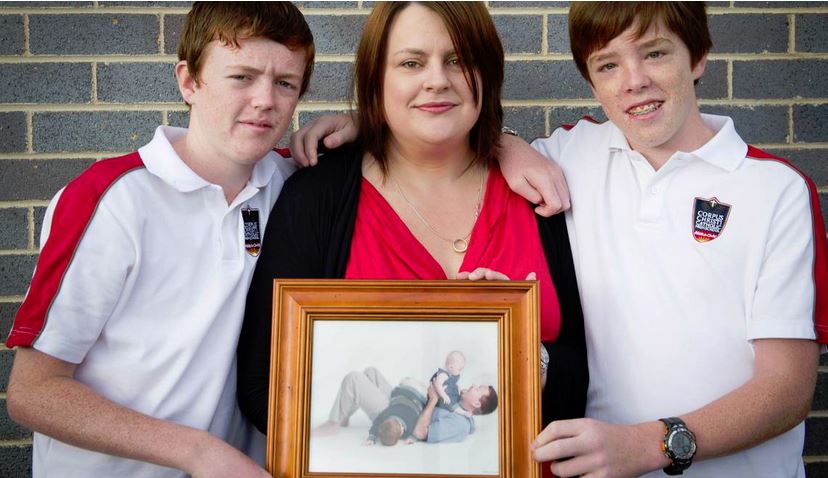
Jackie Reimer with her children Mitchell, 8, and Brodie, 5, widow of police officer Peter Forsyth. “At the end of the day it is not just for me, it is for everyone who is caught in this terrible situation.”
Jackie Reimer, widow of murdered policeman, Peter Forsyth, said last night it was high time police who performed the often thankless task of protecting the public knew they had the full support of the justice system.
“At the end of the day it is not just for me, it is for everyone who is caught in this terrible situation,” she said.
Ms Reimer, 31, had been widowed with two children on February 28, 1998, when Constable Forsyth was stabbed in Ultimo by a man he was trying to arrest for drug dealing.
Murray Walter Hearne was jailed for 27 years for the murder of Constable Forsyth and the stabbing of Constable Jason Semple. But the sentence, imposed by Supreme Court Justice James Wood, was reduced by a third in February last year by the Court of Criminal Appeal.
The court substituted a maximum term of 18 years with a minimum of 13 and said the original sentence had been “manifestly excessive”. A furious Ms Reimer said at the time: “I am trying to work out what I am going to tell my children.”
Then, Ms Reimer and Ms Martha Jabour, executive director of the Homicide Victims’ Support Group, met with the Premier to explain to him what it was like for people affected by such brutality.
“This is what has come out of it,” Ms Reimer said last night. “When the appeals come to hand, these people are not going to get massive reductions in their sentences.”
Ms Reimer, now married to a former classmate of Constable Forsyth, Senior Constable Jason Reimer, said it would be comforting to families of victims to “sit in court and know there is a minimum sentence”.
“Now it is not just going to be a case of sitting there very vulnerable and hoping the trial judge will be realistic,” she said.
Ms Reimer, who now has four children, said she was getting over the trauma, preferring not to dwell on dangers of policing.
[alert_red]Robert is NOT mentioned on the Police Wall of Remembrance[/alert_red] * BUT SHOULD BE
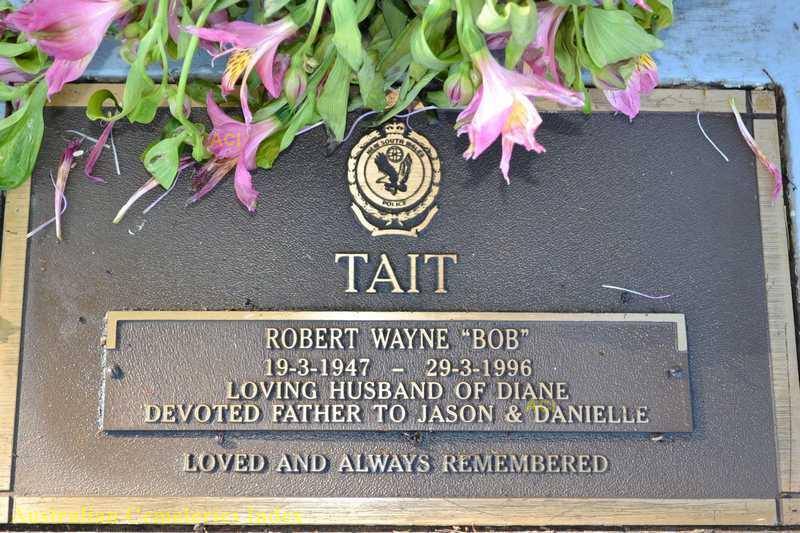
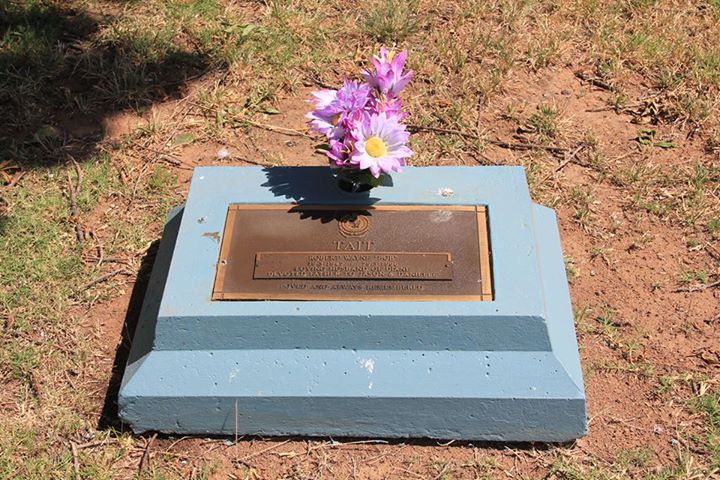
Robert Wayne TAIT headstone – Narrabri Lawn Cemetery. Portion A2, row Q
Robert Wayne TAIT – Grave
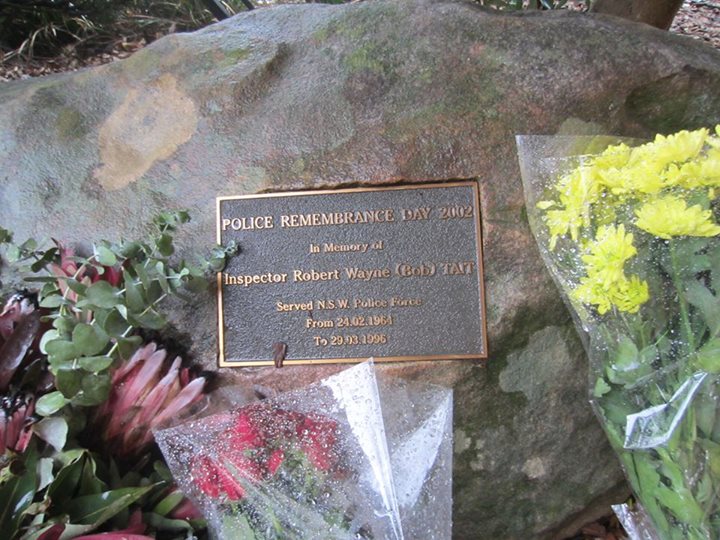
Robert Wayne TAIT – Memorial Stone outside of Narrabri Police Station. Rob’s mother also planted an Olive Tree there at the same time. 29 September 2002
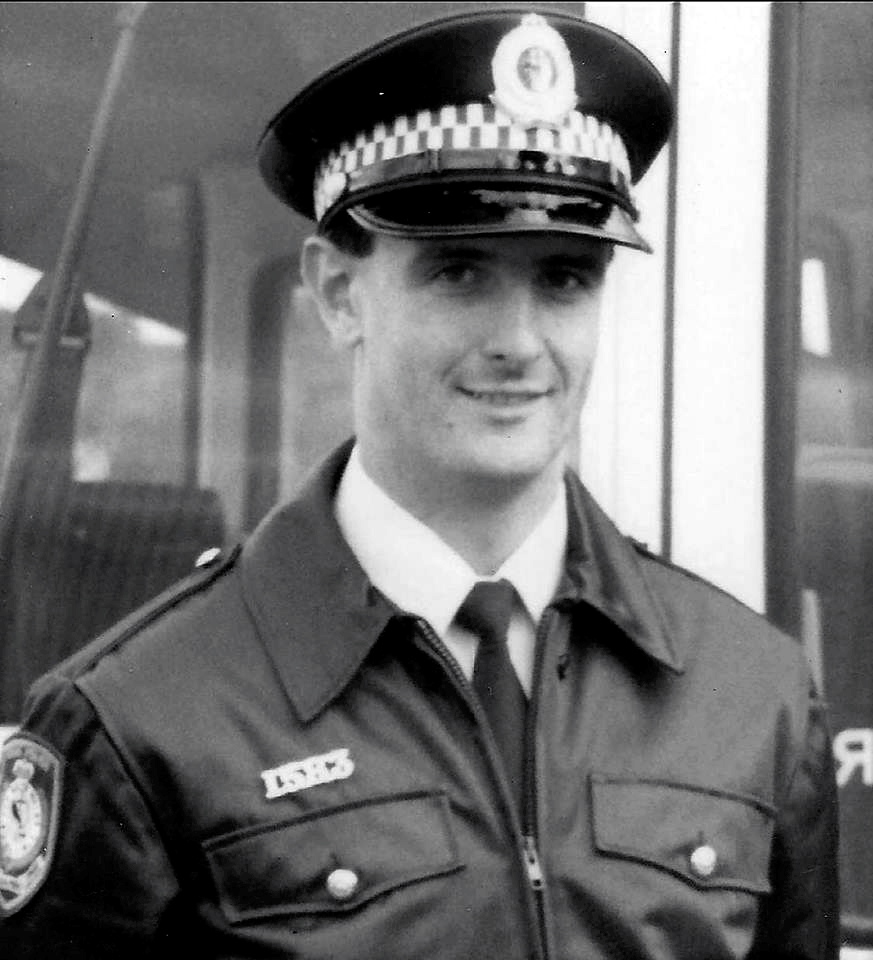
In 1996 Inspector Bob Tait was the officer in charge of police at Narrabri. On the morning of Friday 29 March of that year he ended his own life at the Narrabri Police Station.
The Northern Daily Leader of 30 March, 1996 reported the death.
Stunned colleagues and the Narrabri community are this morning trying to come to terms with why such a respected policeman would kill himself. Inspector Robert Tait, 49, went to work yesterday morning, where he had been serving as the patrol commander, walked into an unoccupied office, took his service revolver and ended his life.
The inspector joined the New South Wales Police Force on 24 February, 1964 as a cadet, and was sworn in on 19 March, 1966. At the time of his death he was stationed at Narrabri, where he was the patrol commander.
It took up 451 hearing days, heard from 902 public witnesses and cost an estimated $64 million. Malcolm Brown reports on the Wood royal commission, 10 years on.
It began on June 15, 1995, when an unnamed Annandale detective jumped to his death from the seventh floor of a building, apparently through fear of the Wood royal commission. The detective’s suicide was followed by those of Ray Jenkins, a dog trainer (July 10), and Inspector Robert Tait, the acting patrol commander at Narrabri ( March 29, 1996 ). Nineteen days later a former Wollongong alderman, Brian Tobin, gassed himself.
On May 8 the same year, Peter Foretic gassed himself the day after giving evidence about pedophilia. On September 23, Detective Senior Constable Wayne Johnson shot himselfand his estranged wife after being adversely named in the royal commission. On November 4, David Yeldham, a retired judge about to face the royal commission on questions of sexual impropriety, killed himself. A month later Danny Caines, a plumber and police confidant, committed suicide at Forster, on the North Coast.
Altogether, 12 people enmeshed in the Wood royal commission took their own lives. Scores of others were so profoundly affected by proceedings that their supporters and families believe it shortened their lives. A former detective, Greg Jensen, suffered a recurrence of the stomach cancer that ultimately ended his life, while another former detective, Ray McDougall, who faced the threat that commission investigators might expose his extramarital affair if he did not co-operate, succumbed to motor neurone disease.
There is no doubt that the Royal Commission into the NSW Police Service, headed by the Supreme Court judge James Wood, purged the force of a rollcall of rotters. A total of 284 police officers were adversely named, 46 briefs of evidence were sent to the Director of Public Prosecutions and by 2001 nine officers had pleaded guilty to corruption offences and three not guilty. Seven police officers received jail sentences, including the former Gosford drug squad chief Wayne Eade and a former chief of detectives, Graham “Chook” Fowler.
Several high-profile police ended their careers in disgrace, including Ray Donaldson, an assistant commissioner, whose contract was not renewed, and Bob Lysaught, the commissioner’s chief of staff, whose contract was torn up. Charges against 14 officers were dismissed because of irregularities in search warrants and their execution.
That left the question of what to do with police who were on the nose but who could not be brought to account by normal means. The solution was the creation of section 181B of the Police Service Act, under which the police commissioner could dismiss an officer on the basis of what had come out of the royal commission. Section 181D allowed the police commissioner to serve an officer with a notice indicating that he “does not have confidence in the police officer’s suitability to continue as a police officer”. The officer could show cause as to why he should be retained, and if dismissed could appeal to the Industrial Relations Tribunal.
In the wake of the two legislative changes, 380 officers were targeted for dismissal or internal investigation. By March 1998, 19 police officers had been dismissed under section 181B and three under 181D. Another had been dismissed under a separate provision of the act, 14 had resigned, four had been medically discharged and 15 had been given performance warning notices. Others were under consideration, and as the Police Integrity Commission – a legacy of the royal commission which became a permanent watchdog – has demonstrated, even officers who had been corrupt many years before were not necessarily in the clear.The former independent MP John Hatton, who was instrumental in setting up the royal commission, said he thought the Police Integrity Commission was the royal commission’s “greatest achievement”. The Child Protection Enforcement Agency, which launched a purge of sex offenders, is another positive legacy of the royal commission.But 10 years on, was the exercise worth it?To some there were considerable benefits. Some appalling malpractice – known as “process” or “noble cause” corruption – prompted Wood to wonder at one point about the quality of a lot of police evidence he had accepted over the years.Despite this, many officers still believe the royal commission was too puritanical. They claim the investigators, not able to grapple with the really big issues, jumped on anything they could: “They had to have runs on the board,” says Michael McGann, who as a policeman in 1984 participated in the so-called Kareela Cat Burglar case, in which police used mace on an unco-operative thief and sex offender. To some critics this treatment did no serious harm and only required a word of caution. But under the spotlight of the royal commission 12 years later, it ended the careers of high-flying police such as John Garvey, Brian Harding and Steve York.A decade later, Harding works in corporate security but insists that the real sting was that the investigators had fabricated evidence. When that finally came out, he says, the group received a confidential settlement, but it did little to redress the feelings of outrage.
Another former policeman, Dr Michael Kennedy, says the commission was a political response to the police commissioner, Tony Lauer, bringing about the downfall of the then police minister, Ted Pickering.
The attorney-general, ministry and judiciary took little responsibility for the state of the force, Kennedy says, while the responsibility of the police rank-and-file grew to “the size of a Pacific driftnet”. “I don’t think the royal commission contributed anything to the reform process except to provide a template for double standards,” he says.
“Chook Fowler put $200 into his pocket from Louis Bayeh. Chook was a lazy, good-for-nothing drunk. But he was put into the same category as Ray Williams and HIH.”McGann says that against the string of petty corrupt activities uncovered, “you have to look at what the government did and did not do with gambling and vice, over the decades. There have been direct links to Parliament for 50 or 60 years. That is hypocrisy.”The critics’ view is that the royal commission has left a demoralised police force, tarnished and rudderless, with limited operational effectiveness and the problem of corruption unsolved. Seven police officers have taken their lives since 2001, including two this year.”It highlights the fact that the structure no longer takes in the needs of the NSW police force,” says Mike Gallacher, the Opposition police spokesman, and a former internal affairs police officer.Gallacher believes, as does the NSW Police Commissioner, Ken Moroney, that the tentacles of corruption no longer spread to embrace entire squads or larger units. But it does not prevent low-level incidents of corruption and there are continuing nests of corruption.In its most recent report, the Police Integrity Commission said it had undertaken 21 major investigations in 2005-06. These dealt with extortion, theft, unauthorised disclosure of confidential government information and perverting the course of justice, police brutality and the handling of $250,000 stolen from automatic teller machines. The then police integrity commissioner, Terry Griffin, said there had been 51 investigations in the 12 months, compared with 44 in 2004-05, and the 1141 written complaints represented a 15 per cent increase.Moroney says all these reports are disappointing, but one of the significant statistics was the number of police who were reporting on other police. “You go back a decade and the number of informants who were police was 5 to 10 per cent,” he says. “In the Ombudsman’s last report, that figure was 49 per cent.”The mechanism for dealing with internal complaints has been expedited: “I have not been afraid to use a section 181D notice,” Moroney says.He believes there is a different mentality in the force. A video of the royal commission had been shown at a recent reunion dinner of the old criminal investigation branch. “It is part of our history. But the interesting thing is that when Chookie came onto the screen, everyone booed. That was a signal to the Fowlers and the Eades that those found to have acted corruptly would not be accepted.”
However, Moroney accepts that corruption is not a thing of the past. “In the contemporary period, there are huge monies to be made from the illicit drug environment. You are talking in some cases of millions of dollars. It is the greatest menace in society today. And the greatest menace to officers is drug money. That is why rotation of officers out of specialist squads on a regular basis is important.”Taking over as commissioner five years ago, he had brought a low-key “Uncle Ken” influence, sorely needed, and had had to balance the principles of police accountability against the public demand for law and order, and the task has been awkward.A senior counsel told the Heraldthis week that the focus on integrity, scrutiny of professional standards and attacks by defence lawyers meant that talented police prepared to do the dirty work were deterred. “In the old days the best and the brightest went into plain-clothes,” he said. “But when the police perceive that when they have to go the extra yard [to get convictions], they are crucified – ‘Why should I go to plain-clothes when I can just get some uniform job with a 12-hour shift, and a second job?”‘Clive Small, a former assistant commissioner who set up crime agencies and established the child protection unit, says that after so many detectives were disgraced in the royal commission, the police force sought to take the spotlight off detectives and put more of the onus of responsibility for crime control onto local area commands. Crime agencies had a continual battle to keep up to strength. Regionalising responsibility for crime control reflected a lack of understanding. “A lot of crime spreads through the metropolitan area, across the state and across the nation,” he says.Kennedy, now a university lecturer, says the “business model” approach is incompatible with good police work. “We cannot expect police to behave like they are in the private sector, where competence is measured in terms of productivity,” he says.Kennedy attended the recent CIB reunion dinner and sat at a table with former drug squad detectives who remained friends of Wayne Eade. He takes issue with Moroney‘s claim that people at the dinner made catcalls when Fowler came on screen. “No one supported Chook,” he says. “But the animosity of the crowd was directed straight at Justice Wood and his commission.”Clive Small, who was also at the dinner, says: “I think it is really a matter of interpretation who they were booing. There were things the royal commission did not take care about. There was a lot of collateral damage. And the implementation [of its recommendations] has been pretty ordinary.”
CRUSADER WHO MADE THE CALL
JOHN HATTON well remembers the audience on May 11, 1994, when he made his speech calling for a royal commission into the NSW Police Service. MPs were listening, of course, but it was a gallery above him, packed with the “top brass of the police force – the commissioner himself, the deputy commissioner, superintendents – they were an intimidating force on the Parliament”.
“They thought they could stare down the Labor Party support for my motion,” Hatton, now retired, says. “It was probably the best indicator of the way in which the police force thought they could control the agenda.”
Hatton won the day, putting paid to a claim by then police commissioner, Tony Lauer, that “systemic corruption” was “a figment of the political imagination”. Hearings started on November 24, 1994, and Justice James Wood delivered his final report on August 26, 1997.
Ten years later, Hatton believes he was vindicated. He says Wood was “the right man” to head the commission and the recruitment of interstate police was crucial, along with the decision to use phone taps and surveillance.
The 11 volumes of material Hatton gave the royal commission had been accumulated over 14 years, he says, from the time he had first spoken up. He had received information on illegal gambling, drug trafficking and police involvement with the mafia.
There had been earlier moves to address police corruption, including inquiries by the Independent Commission Against Corruption, but these had only scratched the surface. “I can remember on one occasion I reported a death threat which had to do with the McKay murder in Griffith and 48 hours later the bloke who had given the information was threatened by a shotgun at his door in Queensland,” Hatton says.
The royal commission came into being because Hatton and other independent MPs held the balance of power in Parliament. The Labor Party may have had high public motives, but also saw a chance to attack the Fahey government. Labor stipulated that an inquiry into police protection of pedophiles, previously in the hands of the ICAC, become part of the royal commission.
The process of gathering information was helped greatly by Trevor Haken, a detective who became an informer and covert investigator as part of a deal to avoid being prosecuted himself.
Hatton says Haken‘s entry was “out of the blue”. Though useful, in the long term it had had a detrimental effect on the fight against corruption. Living in fear and watching his back, Haken had provided “the greatest disincentive for someone coming forward to finger corruption in the system”.
Malcolm Brown
[divider_dotted]
i. ROBERT TAIT
Inspector Tait was a member stationed at Narrabri in 1996. Tait received a letter from the Royal Commission, which set out:
“This is to notify you that evidence will be adduced shortly from a witness who is to be called to give evidence before the Royal Commission into the NSW Police Service to the effect that you did fail to report or investigate complaints of criminal conduct.”
There is ample evidence to support the change in TAIT ‘s demeanour and behaviour following receipt of this letter. He was seen by the Police Psychologist and his own Doctor but on the 26-3-96 he shot himself in his office with his service revolver. He left a note clearly indicating how tortured he had become as a result of being named.
In 1992 Constable Hernandez was a member of the State Protection Group and a qualified firearms instructor. He was accidentally shot in the chest while testing police in their annual firearms proficiency tests at the Redfern Police Complex. Following emergency surgery Constable Hernandez died at St Vincent’s Hospital, Darlinghurst the same day as the accident.
The constable was born in 1959 and joined the New South Wales Police Force on 18 February, 1987. At the time of his death he was attached to the State Protection Group.
Touch Plate at the National Police Wall of Remembrance, Canberra
Photo credit: Kelvin Harband NSW Fallen Police New Member · Juan Hernandez was accidentally shot in the chest while doing firearms training as an Instructor at the Redfern Police Academy on 1 December 1992. Emergency surgery was unable to save his life and he passed on that same day. Juan and I went through the Academy together in 1987 and he will always be remembered and a great bloke whose life was cut way to short by the tragic accident. Juan is in the middle squatting down in this photo which was taken on the day of our attestation ( 15 May 1987 ).
Carl is also credited with designing the TOU insignia – which was maintained in respect to his.
Canberra Times (ACT : 1926 – 1995),
Tuesday 1 December 1992, page 4
IN BRIEF
Policeman shot dead
SYDNEY: A police weapons training instructor was fatally wounded by another officer during a gun training session yesterday.
Constable Juan Carlos Hernandez, 33, an instructor with the elite State Protection Group, died in hospital several hours after being shot in the chest at the old Police Academy at Redfern.
Constable Hernandez was supervising about 15 officers at a training session when a .38 calibre police-issue revolver discharged, wounding him in the chest.
The Hon. CATHERINE CUSACK: My question is addressed to the Minister for Police and Emergency Services. Will the Minister inform the House about the newest recruits to the New South Wales Police Force?
The Hon. MICHAEL GALLACHER: I thank the honourable member for her question. Last Friday, 23 August 2013, it was my great pleasure to attend the attestation ceremony for class 319 at the Goulburn Police Academy. I assure members that the calibre of probationary constables coming through the doors of the academy to pursue challenging and rewarding careers as police officers in this State remains very high indeed. They passed the stringent physical and academic tests, and have demonstrated the commitment and character befitting their new role. These qualities were no more visible than when the commissioner’s valour award was presented to Senior Constable Justin Knight on the parade ground last Friday. The award was conferred for conspicuous merit and exceptional bravery when an offender armed with a sawn-off rifle fired at Senior Constable Knight with intent to murder on 20 January 2007 at Eveleigh Street, Redfern—the Block.
In the course of pursuing a suspect, Constable Knight alighted from his vehicle and pursued an offender on foot, calling for him to stop. The offender produced a sawn-off rifle and, despite the risk, Constable Knight continued to follow him. The offender fired a number of shots at Constable Knight, narrowly missing him. The constable felt one of the projectiles go past his arm and thought that he had been shot. Being aware of the sensitivity of the local community towards police and despite the escalated danger, Constable Knight did not respond by firing his service firearm. The offender fled the scene, but was later identified and charged with attempted murder of a police officer. The offender was subsequently convicted.
I ask members to reflect on those circumstances and whether we would have acted with the same level of commitment, bravery and judgement as Constable Knight on that occasion. Too often the community reacts to instances where police officers have been accused of wrongdoing, but the events of that night in 2007 remind us of the challenges and risks faced by officers of the NSW Police Force, in this case potentially quite deadly. I am confident that Senior Constable Knight’s example will flow through to the 161 probationary constables who attested and have joined a force with record authorised strength in this State.
A number of the new police officers deserve special mention. The winner of the Robert Brotherson award for the highest level of academic achievement was Probationary Constable Natalie Martin. The winners of the Steven Roser memorial award for the highest male and female achievers in physical training were Probationary Constable Mitchell Thompson and Probationary Constable Guilhermina El-Mir. The Juan Carlos Hernandez award, given to the student with the highest marksmanship score, went to probationary constables David Edwards, Anton Sahyoun and Shanahan Toering—all three tied for that award. Probationary Constable Toering also received the award for the highest achiever in the Simulated Policing Acquiring Competence program.
One of the many proud parents at the attestation was Detective Superintendent Arthur Katsogiannis, whose son Daniel is now a probationary constable and commences his career at City Central Local Area Command. It was terrific to see 23 members of the attestation of class 319 identified as Aboriginal and Torres Strait Islanders, of which 16 were graduates of the Indigenous Police Recruiting Our Way [IPROWD] program that I have spoken about in this forum. Congratulations to them. I had the pleasure of witnessing the graduation of 13 dog teams from the State Protection Group Dog Unit. Some were general purpose dogs and others, obviously, were sniffer dogs. That is good news for Byron Bay and its former mayor, the Hon. Jan Barham. The attestation parades provide an opportunity— [Time expired.]
The Hon. CATHERINE CUSACK: I ask a supplementary question. Will the Minister elucidate his answer?
The Hon. MICHAEL GALLACHER: I pay respect to the following five officers who retired from the NSW Police Force, taking with them collectively 190-plus years: Superintendent Ben Feszczuk, Detective Superintendent Col Dyson, APM, Superintendent Ray Filewood, Detective Inspector Dennis Clarke, APM, and Inspector Leslie Dickens. All five officers led the parade on Friday. It was an incredibly proud moment for them, their families and the communities they have represented in just short of 200 years of policing. As I said to the graduating class, “If you want to look for role models, look at these five as a classic example of what you can give back to a community that will give you so much more.”
The Hon. CATHERINE CUSACK: My question is addressed to the Minister for Police and Emergency Services. Will the Minister inform the House about the newest recruits to the NSW Police Force? The Hon. MICHAEL GALLACHER: On 3 May it was a great pleasure to attend the attestation ceremony for class 318 at the Goulburn Police Academy, and I can assure the House that the calibre of probationary constables coming through the academy to pursue a challenging and rewarding career as a New South Wales police officer remains high. All attesting officers have made it through physical and academic tests, and, most importantly, they have demonstrated the commitment and character of people prepared to ensure the safety and security of the community they will serve. The 202 probationary constables who attested have joined a police force now boasting a record authorised strength of 16,176. As members opposite know full well, we have been increasing the authorised strength of the NSW Police Force since we took office. After the further increase this month of 80 positions from the May class, we have boosted the authorised strength by 370, and we are on our way to increasing the force by a total of 859 positions, to a record authorised strength of 16,665 officers in August 2015. This month 50 additional positions were added to the Police Transport Command, bringing its authorised strength to 401. We have also added 30 positions to the authorised strength of the Traffic and Highway Patrol Command, bringing it to 1,295. That makes an increase of 50 new authorised positions to this command, and that is halfway to our commitment to increase the strength of the command by 100. While another 202 probationary constables have been drawn to this career, I am equally pleased with how many officers stay in this exciting and rewarding profession. Indeed, there is such demand for a career in policing that the NSW Police Force has implemented a freeze on new applications. Members opposite have mischievously tried to claim that this is a sign of cuts to the Police Force. That is as far from the truth as members opposite could possibly get. Thanks to the Government making the necessary reforms to the Death and Disability Scheme set up by members opposite and restoring the confidence of serving police officers by ensuring that they will have the back-up they need, I am advised that attrition within the Police Force is currently averaging about 40 officers a month, down from the average of 70 under the previous administration. Therefore, it stands to reason that if fewer officers are leaving the force, fewer replacements are needed. Under Labor, the NSW Police Force was faced with more than 800 officers on long-term sick leave and officers leaving the force at such a rate that police could not recruit fast enough to plug the holes. Placing a temporary freeze on new applications will ensure that potential applicants do not need to spend application fees, which easily total $500, including on such items as medical certificates, when there is a substantial wait before their application can be considered. We are getting on with the job of ensuring that the NSW Police Force is better resourced, better equipped and better supported than ever before. Members opposite are peddling misinformation and seeking to undermine the community’s confidence in a police force experiencing record numbers. A number of the new police officers deserve special mention. The winner of the Robert Brotherson Award for the highest level of academic achievement was Probationary Constable Thomas Stillwell. The winners of the Steven Roser Memorial Award for the highest male and female achievers in physical training were Probationary Constable Adam Splithof and Probationary Constable Caitlin Billingham. The Juan Carlos Hernandez Award, given to the student with the highest marksmanship score, went to Probationary Constable Matthew Skellern. [Time expired.]
The Hon. CATHERINE CUSACK: I ask a supplementary question. Will the Minister elucidate his answer?
The Hon. MICHAEL GALLACHER: I am sure that all members would like to hear about these outstanding young probationary constables, including Probationary Constable Nathan Dechaufepie, who was the recipient of the Simulated Policing Acquiring Confidence Award. These officers can be proud of their achievements. Their families can be proud of them and, most importantly, their communities are proud of them. I am sure that the House will join me in wishing our newest police officers all the very best for their careers in the NSW Police Force.
The Hon. SCOT MacDONALD: My question is addressed to the Minister for Police and Emergency Services. Will the Minister inform the House of the results of the latest police attestation?
The Hon. MICHAEL GALLACHER: I apologise to the House for my inability to be here last Friday. I had a very important role to fulfil as the Minister for Police and Emergency Services at the graduation of class 312 at the Police Academy in Goulburn. It was my first in my new role as Minister for Police and Emergency Services. One of the first things I had an opportunity to announce down there was clarification of the uncertainty that exists around the name of the organisation.
The Hon. Duncan Gay: It was well received.
The Hon. MICHAEL GALLACHER: It was well received. It will now return to its former name of the New South Wales Police Academy, not the police college. That announcement was very well received by the sworn officers. The attestation certainly brought back memories of when I was in a similar position, standing on the parade ground at Redfern more than 30 years ago. Whilst a lot of things have changed in policing, a lot of things have not. Obviously the equipment, the cars and the uniform have changed, but certainly one thing that has not changed is the high calibre of probationary constables coming through the academy. They are required to pass through a tough course, both physically and academically, to prove they can cut the mustard as officers in the New South Wales Police Force. Who knows, even Eric Roozendaal might apply to join the New South Wales Police Force—although he may not pass the integrity test.
They are men and women who are prepared to do their best for the people of this State and who will undertake this job on a daily basis, often in the most difficult of circumstances. The 111 probationary constables who attested at the ceremony have joined more than 15,000 officers in the Police Force. They come from all walks of life. Over 22 per cent of those who attested are women. Forty per cent come from outside metropolitan Sydney. Sixteen were born overseas, in countries such as Russia, Germany, Malaysia, China and even Botswana. They speak Arabic, Greek, Cantonese, Armenian, Dari, and Khmer. They will be posted to 59 local area commands across the State, from Albury in the south, to Richmond in the north, from Barrier in the west to the heart of Sydney. Forty-four of the officers have been assigned to non-metropolitan or rural regions.
Irrespective of where they have been posted they are on the front line. They stand between the community and the dangers of crime and other antisocial behaviour. A number of these new police officers deserve special mention. Firstly, the winner of the Robert Brotherson Award for the highest level of academic achievement was Probationary Constable Stephanie Hill. The winners of the Steven Roser Memorial Award for the highest male and female achievers in physical training were Probationary Constable John Feuerstein and Probationary Constable Sandra Chaban. The Juan Carlos Hernandez Award, given to the student with the highest marksmanship score, was Probationary Constable James Patrick. Probationary Constable Jessica Agland was the recipient of the Simulated Policing Acquiring Confidence Award.
I met some of the officers on Friday and I can confidently say that the New South Wales Police Force has a strong future. These officers can be proud of their achievements. Their family and friends can be proud of them for all the hard work they have put in to get there. The people of New South Wales can be proud of these people for choosing a selfless profession, dedicating their working lives to ensuring the safety and protection of the community. I am sure all members of the House will join me in wishing our newest police officers all the very best for their careers in the New South Wales Police Force.
Service: From 9 April 1985 to 11 July 1990 = 5+ years Service
Awards: Nil
Born: Thursday 19 July 1962
Died on: Wednesday 11 July 1990
Cause: Motor Vehicle Collision – On Duty – front passenger ( raining )
Event location: Old Princes Hwy & Old Bush Rd, Yarrawarra, NSW
Age: 27 years, 11 months, 22 days
Funeral date: Monday 16 July 1990
Funeral location: St John Bosco Catholic Church, Engadine
Buried at: Woronora Memorial Park, Linden St, Sutherland
General Plaque Lawn
Section: Wattle Lawn Lot: 19
Lat/Lng: -34.03618, 151.04945
KEN IS mentioned on the Police Wall of Remembrance
About 9.30am on 11 July, 1990 Constable Short was the observer in a police vehicle travelling along the Old Princes Highway, Yarrawarra. The police were attending an armed holdup at the ANZ Bank, Jannali and when approaching the intersection of Old Bush Road the police vehicle veered across the roadway and collided head-on with another car. Constable Short was killed instantly.
There was also a Student Police Officer ( S.P.O. ) in the back seat of the Police vehicle at the time of the collision.
The constable was born in 1962 and joined the New South Wales Police Force on 9 April, 1985. He was sworn in on Friday 21 June, 1985. At the time of his death he was stationed at Engadine.
On the day of his funeral, the procession drove past Engadine Police Station – travelling between the Church Service and the Cemetery.
Before he joined ” the job “, Ken was shot by an unknown assailant at George’s Hall @ 1983. That incident was attended by Greg McMahon with Sgt 1/c Alec Morton. Shot in a very private part and very lucky to have not suffered a lasting injury.
RIP Ken.
Grant Charles EASTES
| 27/10/2012
Grant Charles EASTES
New South Wales Police Force
Regd. # 18467
Joined via NSW Police Cadets on 4 July 1977
Cadet # 3345
Class 161 of 1978
Rank: NSW Police Cadet – started 4 July 1977
Probationary Constable – appointed 9 February 1979
Service: From 4 July 1977 to 13 January 1990 = 12+ years Service
Awards: No find on It’s An Honour
Born: Tuesday 9 February 1960
Died: Saturday 13 January 1990
Age: 29 yrs 11 mths 4 days
Cause: Illness – Suicide – overdose – P.T.S.D.
at Fortitude Valley, Brisbane, Qld
Funeral date:?
Funeral location:
Buried at: Casino Lawn Cemetery
Memorial location:
Grant IS mentioned on the Police Wall of Remembrance
Senior Constable Grant Charles EASTES – Grave. Casino Lawn Cemetery, NSW.
Senior Constable Grant Charles EASTES touch plate at the National Police Wall of Remembrance, Canberra.
On 13 January, 1990 Senior Constable Eastes took his own life in a Brisbane Motel. On 20 October, 1989 he had been one of the first police to arrive on the scene of the horrific bus crash upon the Pacific Hwy, Cowper, ( commonly referred to as the Grafton bus crash ) in which twenty one people died and twenty two more were injured. At the time it was the worst road accident in Australia’s history. Following the accident the senior constable reported off duty on sick report, suffering from Acute Post Traumatic Shock Syndrome.
The constable was born in 1960 and joined the New South Wales Police Force as a Cadet on the 4 July, 1977. At the time of his death he was attached to the Lismore District Accident Investigation Squad.
[blockquote]It was during that time that I had a lengthy conversation with a highway patrol officer, Grant Eastes. I could sense that this man was in quite a bad way, finding it hard to cope. It was just his attitude, what he was saying, how he expressed how he was feeling. As we talked he brought up all these other incidents on the highway that he’d attended in recent months. I was so concerned that I mentioned the conversation to some senior police officers and later, Major Errol Woodbury, who was one of the State’s senior police chaplains at the time.[/blockquote]
A postscript to the Grafton tragedy. Three months after the accident, 29 year old Senior Constable Grant Eastes, the officer I was so concerned about on the night of the tragedy, was found dead in a motel room in the Brisbane suburb of Fortitude Valley. He’d taken an overdose of pills.
Grant’s father Ken told journalists his son’s life had been destroyed by the sight of the dead and injured at the Grafton bus crash scene.
I’m afraid to say his suicide didn’t surprise me. Here was a crash investigation officer who had witnessed a real slathering of fatal accidents up and down that highway. The bus crash was the catalyst for his suicide. It was just too much.
About 11.25pm on 13 June, 1989 police in Byron Bay commenced a high speed pursuit of a panel van. The pursued vehicle drove south in the Coast Road, followed by the Byron Bay Police vehicle, and into Ballina. As both vehicles continued south through Ballina, a local Highway Patrol vehicle driven by Constable 1st Class P. Beaver ( # 20992 ), with Senior Constable Rampling and Constable 1st Class Figtree as passengers, joined the pursuit. More police vehicles arrived to assist as the pursuit continued through the township of Wardell. About five kilometres south of Wardell the Ballina Highway Patrol vehicle began to draw level with the offending vehicle. As it did so, the driver of the pursued vehicle drove across to the centre of the roadway and clipped the front of the Byron Bay Police car. As a result, the police vehicle veered across the road and skidded in loose gravel before colliding with a power pole.
All three police were trapped for some time in the badly damaged police car and when freed were conveyed by ambulance to the Lismore Base Hospital. Constable Beaver recovered from internal injuries received, however Constable Figtree died before he reached hospital and Senior Constable Rampling died a short time later.
Senior Constable Rampling was born in 1959 and joined the New South Wales Police Force on 15 January, 1979. At the time of his death he was attached to the Ballina Detectives. Constable Figtree was born in 1964 and joined the New South Wales Police Force on 28 November, 1983. At the time of his death he was attached to the Ballina Highway Patrol. Beyond CourageGlenn, whilst working with the Mounted Police Unit, would often work traffic duty on Anzac Pde, Kensington. He is described as a Champion boxer ( Australian Police Boxing Champion ) & athlete, the funniest guy, a loyal mate & great husband & Dad.*****
Gezza J KtBelieve it or not, I was working the radio comms for this at Lismore station that night. Called the whole thing & did all the post crash co-ord. A horrible night shift with Sgt GJ Menzies, S/C Mark Burridge, Const’s Jordan, Gahan & Me.
*****
30 year memorial – Senior Constable Glenn Rampling – Constable First Class Peter Figtree – A memorial service will be held at the Ballina Surf Club, Lighthouse Parade, Ballina on Thursday, 13 June 2019 at 1000hr to commemorate the 30th anniversary of the death of Senior Constable Glenn Donald Rampling and Constable 1st Class Peter Allen Figtree.
Senior Constable Rampling was tragically killed on duty on 14 June 1989 and Constable 1st Class Figtree was tragically killed on duty on 13 June 1989, both as a result of motor vehicle collision at Wardell, south of Ballina.
Attended this morning quite a moving 30 year memorial service for Glenn Rampling and Peter Figtree killed in a car chase near Ballina. May they rest in peace.
Photo by: Glenn Taylor
Photo by: Glenn Taylor
Photo from: Beyond Courage
Photo: Ken Medway – 2014
Both Wayne Rixon and Glenn Rampling formed part of a 3 man team at the Mounties, going around mainly to country fairs performing vault tricks with the draft horse. Tragically both lost their lives in High Speed pursuits after leaving the Mounties for other duties. RIP, both were good men.
Commissioners Valour Award ( VA ) ( Posthumously )
Born: Friday 1 June 1962
Died On: Friday 5 May 1989
Event: Shot – wounded – Murdered
Event location: Woolloomooloo
Event Date: 24 April 1989
Died: 5 May 1989 ( 9 days after event )
Cause: Murdered – shot twice
Age: 26 yrs 11 mths 4 days
Funeral date: 9 May 1989
Funeral location: St Mary’s Anglican Church
Buried at: Cremated. East Ballina Cemetery, McQueen Family Wall, Sec: Niche, Lot # 2
GPS: 28*51’47″S / 153*35’26″E
Memorial: 1/ Yurong Parkway, Phillip Park , Sydney, 2000
GPS: Lat: -33.872583 / Long: 151.213778
2/ Sydney Police Centre, McQueen Room, 151 – 241 Goulburn Street, Surry Hills.
3/ Police Launch McQueen???.
Allan’s touch plate was polished today, this 27th anniversary, 5 May 2016, by a mate, Craig Coleman, at the National Police Wall of Remembrance, Canberra.
ALLAN IS mentioned on the Police Wall of Remembrance
On the morning of 24 April, 1989 Constable McQueen, Constable 1st Class Ross Judd and Probationary Constable Jason Donnelly were patrolling the Woolloomooloo area. All were members of the District Anti-Theft Squad. About 11.35am they saw the offender Porter, apparently attempting to break into a motor vehicle. While Constable Judd parked the police vehicle, Constables McQueen and Donnelly went to speak to the offender. As he was being detained, the offender produced a concealed weapon and shot Constable McQueen twice in the chest and Constable Donnelly in the abdomen. Both constables then chased the offender, who continued firing at them, until both collapsed from their wounds. Constable Ross Judd also pursued and fired at the offender before returning to assist his colleagues. He then carried both wounded constables to the police car and drove them to the Sydney Hospital.
Constable Donnelly was to recover from his wounds however Constable McQueen had sustained extensive internal injuries and died on 5 May, 1989. The offender was later arrested by Queensland Police.
The Canberra Times of 12 July, 1990 reported on the result of the trial of the offender.
CONVICTION IN POLICE DEATH SYDNEY:John Albert Edward Porter has been found guilty of the murder last year of Sydney police constable Allan McQueen. A Supreme Court jury deliberated for nearly 10 hours before finding Porter, 28, guilty of shooting the policeman on April 24 last year. Porter was remanded in custody for sentencing on August 3. The jury also found Porter guilty on one count of shooting with intent to cause grievous bodily harm and three counts of shooting to avoid arrest. He was found not guilty on a sixth charge of attempting to murder Constable Jason Donnelly.
Justice Badgery-Parker had directed the jury to find Porter not guilty on the charge of attempting to murder Constable Donnelly. Porter had pleaded not guilty to all charges.
Friends and relatives of Constable McQueen sat comforting each other in the public gallery as the verdict was returned. Constable McQueen, 26, died in St Vincent’s Hospital nine days after the April 24 shooting.
The constable was born in 1962 and joined the New South Wales Police Force on 27 June, 1987. At the time of his death he was attached to the Sydney District Anti-Theft Squad. He was posthumously awarded the Commissioner’s Medal for Valour and the Star of Courage.
Date: 24 August 1989. Memorial unveiled on corner of Haig Ave & Boomerang St, sydney.
November 2013
Constable Allan Wayne McQueen
Constable Allan Wayne McQueen : November 2013
Photographs supplied by Peter F Williams
Memorial erected in memory of Constable Allan James McQueen who was shot in the line of duty and died from his injuries on the 5th May 1989.
On the morning of 24 April 1989, Constable McQueen, Constable 1st Class Ross Judd (MV, BM ), and Probationary Constable Jason Donnelly (MV, BM ) were patrolling the Woolloomooloo area. All were members of the District Anti-Theft Squad. About 11.35am they saw the offender Porter apparently attempting to break into a motor vehicle. While Constable Judd parked the Police vehicle Constables McQueen and Donnelly went to speak to the offender. As he was being detained the offender produced a concealed weapon and shot Constable McQueen twice in the chest and Constable Donnelly in the abdomen. Both Constables then chased the offender who continued firing at them until both collapsed from their wounds. Constable Ross Judd also pursued and fired at the offender before returning to assist his colleagues. He then carried both wounded Constables to the Police car and drove them to the Sydney Hospital. Constable Donnelly was to recover from his wounds however Constable McQueen had sustained extensive internal injuries and died on 5 May 1989. The offender was later arrested by Queensland Police.
Front Inscription
IN MEMORY OF
CONSTABLE
ALLAN WAYNE McQUEEN S.C.,V.A.
AGED 26 YEARS
DIED 5TH MAY 1989 FROM
GUNSHOT WOUNDS RECEIVED
IN THE EXECUTION OF HIS
DUTY AT THIS LOCATION
ON THE 24TH APRIL 1989
Location
Address:
Yurong Parkway, Phillip Park , Sydney, 2000
State:
NSW
Area:
AUS
GPS Coordinates:
Lat: -33.872583
Long: 151.213778 Note: GPS Coordinates are approximate.
By LINDSAY SIMPSON ” Chief Police Reporter As one of “Big Al’s” best mates read a moving eulogy, burly police officers, hats in hands, bowed their heads and cried. Big Al was Constable Allan Wayne McQueen, the well-mannered policeman from Kyogle who died in the line of duty, shot trying to apprehend a suspected car thief in Sydney.
Constable McQueen, who had been in the force two years, had been picked to work with the Anti-theft Squad a training ground for young officers on their way to becoming detectives. Big Al, who spent three years trying to become a police officer, was known by that name “not so much because of his height but because of his heart”, said Cheryl Coleman, whose husband had shared a house with Constable McQueen in Coffs Harbour.
As Senior Constable Steve Tedder, who gave one of the eulogies said, “Big Al had the basic love and desire to become a police officer”. In 1986, while running his own cleaning business in Coffs Harbour, he built his own house and several local police officers became his flatmates. At that stage he had five jobs and was studying at night for his HSC English in an attempt to become a police officer. About this time, before he was even in the force, he saved a man’s life. The man had quarrelled with his girlfriend outside a local night club and had head-butted a pane of glass. The glass had cut his throat and Al tore his shirt off and stemmed the flow of blood while waiting for the ambulance.
Big Al. who trained as a boxer and played Rugby League, was not always the muscle builder he was at the time he joined the force. His former Rugby League coach at Kyogle High School, Mr Stan McBride, said that in the 14-year-old competition he had been the second smallest kid in the group.
Ballina townspeople also came to the funeral service. One local, Mrs Val Studdert, said she had never met Allan McQueen but had come out of respect for what he had done. “If we don’t have law and order, we have nothing,” she said.
The pallbearers wore pistols. Perhaps that’s the way it has to be these days, but they touched the pretty white wooden church in the green countryside with vulgarity. They were big, strong young men and their bulky police uniforms made them bigger, so that when they came to the narrow church door carrying their mate’s coffin, they could barely squeeze through. In any case, the coffin seemed too narrow for a young man as big as Allan McQueen.
Nearly 300 police went to his funeral in Ballina yesterday along with his mother and father, Mr John and Mrs Shirley McQueen, and 300 family and friends. They spilled out of St Mary’s Anglican Church into a church hall, where the service was shown on video, and out of the hall on to the grass, where they listened through loudspeakers.
If we are to still violence, we must cherish life. Yesterday, 26-year-old Allan McQueen’s life was cherished. Today, others will cherish the life of 32-year-old David Gundy, the unarmed man killed in a police raid following Constable McQueen’s mortal wounding. Spring had sung in both men for only a while before life escaped them in violence. Senior Constable Graham White told the mourners that Allan McQueen had been a man of honour, love and integrity and a man whose word could be relied upon. He did not search for riches but for life itself, said Constable White. “Today he would be saying, ‘Let’s get on with it. Let’s not have all this fuss and bother’.”
Detective Senior Constable Steve Tedder said that the day McQueen received the letter of his acceptance into the force, “his face lit up as if Manhattan had lit up”.’ Constable Tedder lived with Constable McQueen in Manly and called his mate “Big Al”. “What a joy he was to live with,” he said. Constable McQueen had made more friends in 18 months in Manly than Constable Tedder had in 28 years.
Colleagues of slain policeman Allan McQueen weep as he is laid to rest in Ballina yesterday. One of his favourite expressions was: “Not a problem“. Another was: “I’m here for a good time, not a long time.” Constable Tedder said it was somehow appropriate that Allan McQueen began his long battle for life on April 24, the day before Anzac Day. That was the day Allan McQueen became a hero. Police Commissioner John Avery said Constable McQueen had exhibited the qualities of a police leader of the future. “His father said it was a waste of a fine young life, and I agree,” said the Commissioner. “His was an unforgettable example of courageous service that will enshrine his name in the annals of the history of NSW.” Mr Avery quoted Virgil: “Blessings on your young courage, boy, for that is the way to the stars.”
Outside the church, a senior policeman said: “There’s a finality to heroism.” Mr Athol McQueen, a cousin and the boxer who knocked down champion Joe Frazier in the 1964 Olympic Games, said: “I hope there are more young blokes around like him.”
” The police band played a funeral march for their colleague, past Sunnyhaven Flats. The open-faced country folk let the tears run down their cheeks. As the cortege passed a place called Camelot, on the way to the Lismore Crematorium and another place called Goonellabah, an old woman stood at the roadside and said : “Poor little fellow.” At the crematorium flowers spelled out the letters NSWP -New South Wales Police on the hillside.
A young policeman picked up a rose and handed it to a young woman. , ‘ Mr John McQueen wipes away a tear as he stands with his wife Shirley at their son’s funeral.
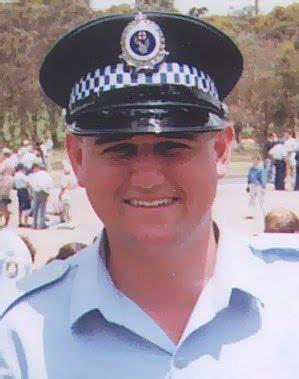
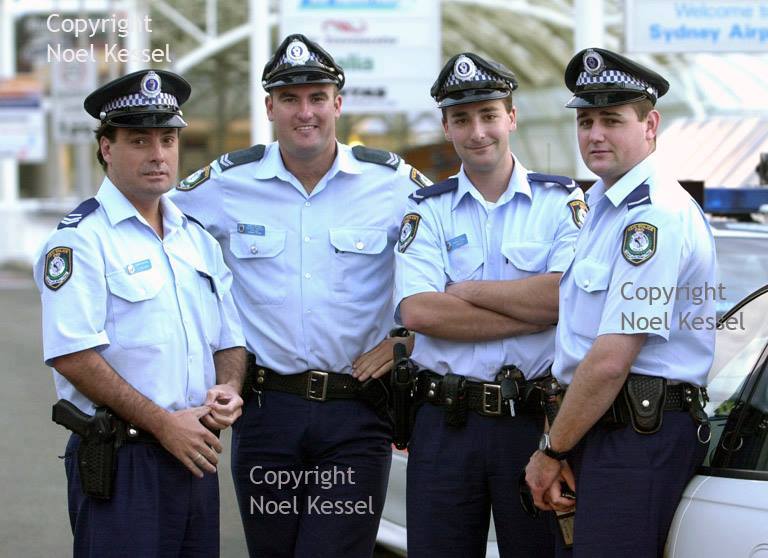

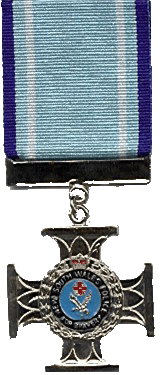
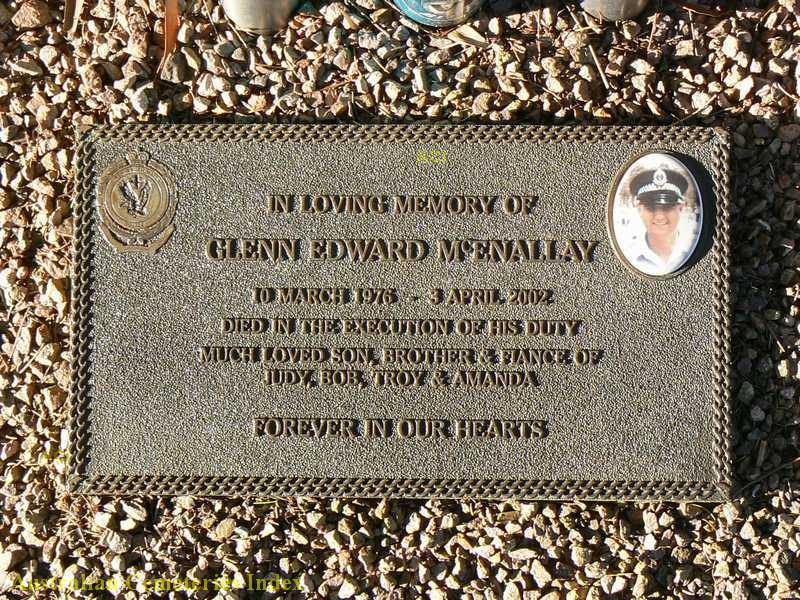 Grave plate for Glenn Edward McENALLAY