1

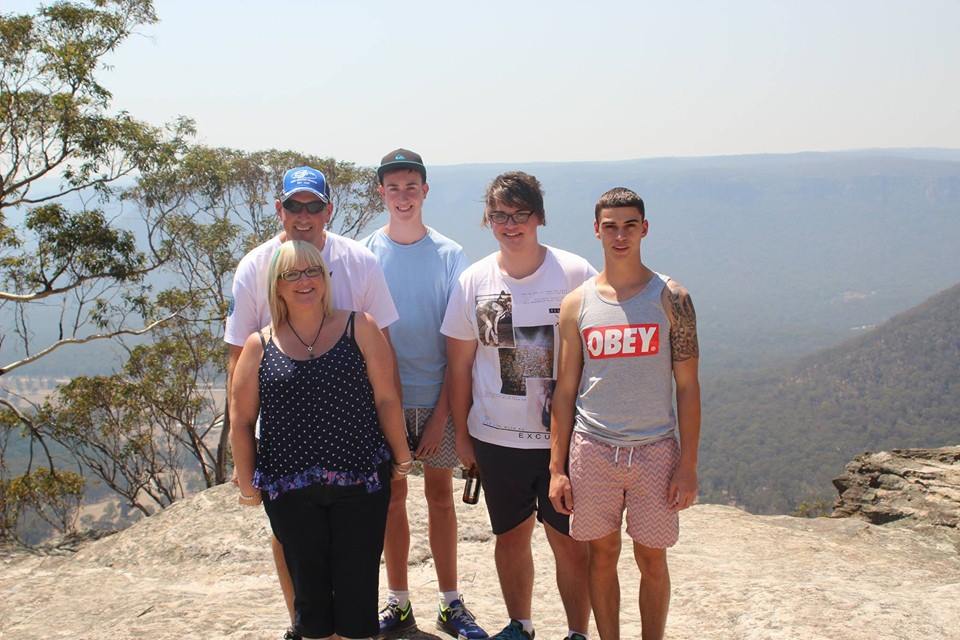
John Peter SWEENEY APM

John Peter SWEENEY APM

New South Wales Police Force

Regd. #  13996

Retired Superintendent

Joined the NSW Police Force via the Police Cadet system on 20 February 1967

Cadet # 2250

John Peter Sweeney
John Peter Sweeney

Received the Australian Police Medal on 14 June 2004

[blockquote]

Stations:  Liverpool ( 22 Division),

21 Division,

Motor Squad @ C.I.B.,

Bankstown,

Rosehill,

Fairfield,

Macquarie Fields as Supt. in 2005,

Cabramatta ( 34 Division ) as Superintendent,

O.I.C., Police Properties Branch until retirement around 2010 – 2011

[/blockquote]

Born  22 December 1950

Died  11 August 2014

63 old

Illness – Heart attack mowing his lawn

Funeral  18 August 2014, Leppington


John Peter SWEEENEY, 63 old, former Regd. No. 13996, a non-member of the RPA.

John passed away on 11/08/2014 and his funeral is proposed to be held at 11.30am on Monday 18th Instant at Forest Lawn Cemetery, Cowpasture Road, LEPPINGTON.


Funeral location:
[google-map-v3 shortcodeid=”71bf638d” width=”350″ height=”350″ zoom=”12″ maptype=”roadmap” mapalign=”center” directionhint=”false” language=”default” poweredby=”false” maptypecontrol=”true” pancontrol=”true” zoomcontrol=”true” scalecontrol=”true” streetviewcontrol=”true” scrollwheelcontrol=”false” draggable=”true” tiltfourtyfive=”false” enablegeolocationmarker=”true” enablemarkerclustering=”false” addmarkermashup=”false” addmarkermashupbubble=”false” addmarkerlist=”Camden Valley Way, Leppington, NSW{}chapel-2.png{}Forest Lawn Memorial Park” bubbleautopan=”true” distanceunits=”km” showbike=”false” showtraffic=”false” showpanoramio=”false”]


John’s wife, Rose, pre-deceased him by a mere 6 weeks


Dan TRAVERS

Dan TRAVERS

New South Wales Police Force

Sergeant

Stations:  Balmain

Born about 1869

48 old

Suicide – firearm

Died 15 June 1917

Funeral  18 June 1917  Buried in Rookwood Cemetery

Buried in Presbyterian Section 5C, Grave # 0007686


Evening News ( Sydney )  Thursday  21 June 1917  page 4 of 8

POLICE SERGEANT’S SUICIDE.  

At the City Coroner’s Court, an inquest was held by Mr. Hawkins, City Coroner, ? the death of Dan Travers, 48, a police sergeant, who lived in Catherine-street, Leichhardt.

Evidence was given that Travers ? over some trouble in the Police ?   and was also suffering from the ?       received while arresting a man ?       was stationed at Balmain, was ?       paddock off Austenham-road, Leichhardt ?       Friday last, with a bullet wound in ?         and a revolver by his side.

A verdict of suicide was returned.

http://trove.nla.gov.au/ndp/del/article/120389578?searchTerm=police%20suicide&searchLimits=l-australian=y

The above article was faded and hard to read – resulting in the question marks in relation to words now being readable.


[divider_dotted]

Daily Advertiser ( Wagga Wagga )   Friday  22 June 1917  page 3 of 4

POLICE SERGEANT’S SUICIDE.

SYDNEY. Thursday.

At the inquest concerning the death of Police Sergeant Dan Travers, who was found shot with a rifle in the right temple, his widow stated that up to the time of his death he had been off duty over trouble in the Police Department. He was worried over the inquiry   connected with it. He also suffered from an injury received through a man he was arresting some time ago kicking   him.

A verdict of suicide was returned

http://trove.nla.gov.au/ndp/del/article/142332801?searchTerm=%22dan%20travers%22&searchLimits=l-australian=y


[divider_dotted]

Evening News ( Sydney )  Wednesday  20 April 1904  page 3 of 8

THE GLEBE SENSATION. — – —

BOSWOOD BEFORE THE   COURT.

IS HE INSANE ?

On the evening of March 15, Alfred Grosvenor Boswood visited the residence of Thomas Joseph Hargraves, a carpenter, residing in Lodge   street, Forest Lodge, and asked for his wife, who was staying there. Mrs. Hargraves opened the door, and Boswood attempted to strike her.

She screamed, and Mr. Hargraves ran to his wife’s assistance, and Boswood attacked him with a knife. A struggle ensued, during which Hargraves was stabbed in several places. Boswood then went upstairs to his wife’s room, but   on hearing him coming she leaped over the balcony, and sustained severe injuries. Boswood   then proceeded to the kitchen, and cut his own throat. He was removed to Prince Alfred Hospital, and was an inmate till 12th instant.

At the Glebe Court yesterday, before Mr. C. N. Payten, S.M., Boswood appeared to answer a charge of maliciously wounding Thomas Joseph Hargraves, on March 15.

Mr. J. W. Abigail appeared for accused. Senior-constable Grice deposed that at 6.45 p.m. on 15th of last month he was summoned to No. 15 Lodge-street, Forest Lodge. He entered the back yard, accompanied by Constable   Travers, and saw accused with a wound in his throat, and a quantity of blood on his clothing. Travers took Boswood to the hospital. Witness then entered the premises and found in the kitchen the table-knife (produced). There were   blood stains on the floor of the kitchen and the passage. Accused remained in the hospital till   the 12th instant.

Dr. Vivian Bengafield stated that he examined Hargraves on the evening of the 12th ultimo, at Prince Alfred Hospital, and found an incised wound under his chin about 2½in long, and about half an inch deep. There was also a small wound on the right side of his neck, half an inch in length, and one inch deep. There was a scratch on his breastbone, a superficial wound on his left arm about 3in long, and a small cut on each hand. Accused was suffering from two deep wounds in his throat, one of   them going almost to his backbone, just above the windpipe, and the other wound was just above that, and was running along below the   jaw. He did not think accused was quite sane at the time he was admitted. It was impossible for him to say if it was due to insanity or intemperance, as Boswood was breathing through the wound. From subsequent observations he would say that accused was insane —   even at present.

Mrs. Janet Hargraves stated she was the wife of Thos. Joseph Hargraves, and resided in Lodge street. At about 6.15 p.m. on March 15 there was a knock at the front door. She opened it, and saw Boswood there. He pushed the door, and tried to strike her with a knife. Witness screamed, and ran into the back, and thence to the corner hotel, and sent for the police. She returned, and in her bedroom she saw the accused, who again tried to strike her. She again ran out. When accused came to the door, he said, ‘You have my wife here,’ and before she could reply he tried to strike her.

The story told by Thomas Hargraves was to the effect that on hearing his wife scream he rushed to see what was the matter. Accused was standing in the hall, and when asked what he wanted he made no reply. Witness ordered him out of the house, and Boswood stabbed him on the arm. A long struggle then ensued, during which witness was stabbed in the neck and on the breast. He tried to pull the knife from accused, and finding he could not do so, he endeavoured to break it, but did not   succeed. He afterwards called for assistance, as he was bleeding freely, and was beginning to feel faint. He got off the accused, and left him lying on the floor. Witness was afterwards taken to the hospital.

Constable Dan Travers deposed that it was well known to him as a policeman that accused needed watching. He did so, and complaints were made to him about Boswood. He advised Mrs. Boswood to get a warrant out for her   husband, and to have him bound over to keep the peace. Witness stated that, in his opinion, accused was what is vulgarly known as ‘ratty‘.” He had heard that the fact that Boswood’s wife had left him preyed on his mind, and he had himself seen him crying about his children. Accused always had a wild lock, and on the night of his arrest he was very peculiar, and was shouting out, and talking in a wild way, until he fainted. On coming to, Boswood’s first words were: “Where is   my wife”

This concluded the evidence, and accused was committed for trial. Bail was not applied for. Mr C. N. Payten, S.M., recommended that accused should be placed under medical observation.

http://trove.nla.gov.au/ndp/del/article/113905996?searchTerm=%22dan%20travers%22&searchLimits=l-australian=y|||sortby=dateAsc#pstart12208036


[divider_dotted]

The Sydney Morning Herald   Monday  18 June 1917  page 5 of 12

TRAVERS – The Funeral of the late Sergeant DAN TRAVERS, of 37 Catherine-street, Leichhardt, will   leave our Mortuary Chapel, 810 George-street, city, THIS   DAY, at 9.30am, for Rookwood Cemetery.

WOOD, COFFILL, and COMPANY, Ltd

[divider_dotted]

TRAVERS. – The Friends of Mrs. TRAVERS and FAMILY, of Catherine-street, Leichhardt, are kindly invited to attend the Funeral of their late HUSBAND and FATHER, Sergeant Dan Travers ; to leave Wood, Coffill’s Funeral Parlours, 810 George-street, THIS   DAY, MONDAY, at 9.30, for Rookwood Cemetery.

http://trove.nla.gov.au/ndp/del/article/15734484?searchTerm=%22dan%20travers%22&searchLimits=l-australian=y|||sortby=dateAsc

[divider_dotted]


Leader ( Orange, NSW )  Wednesday  20 June 1917  page 5 of 6

Police Sergeant Dan Travers, 48, formerly of Leichhardt police district was found dead with a bullet wound to his head, in a paddock off Austenham road, Leichhardt, on Friday afternoon.

The discovery was made by David Miller, of Leichhardt. who also found a six chambered revolver, containing five cartridges and one empty shell near the body.

http://trove.nla.gov.au/ndp/del/article/117828116?searchTerm=%22dan%20travers%22&searchLimits=l-australian=y|||sortby=dateAsc#pstart13052494

[divider_dotted]


Home of Sgt Travers


Edmund ‘Ted’ John Patrick COLLINS

Edmund ‘Ted’ John Patrick COLLINS

New South Wales Police Force

Regd. # ?

Joined via the NSW Police Cadets on 21 April 1947

Cadet #  653

Resigned about 1957

Stations:

Died  8 August 2014  St Joseph’s Aged Care Home, Kensington, Sydney.

83 old

Funeral  19 August 2014, 2pm in Darwin

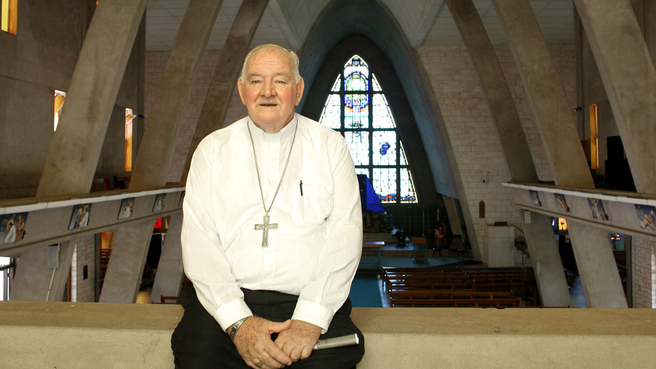
Edmund John Patrick COLLINS

Edmund John Patrick COLLINS
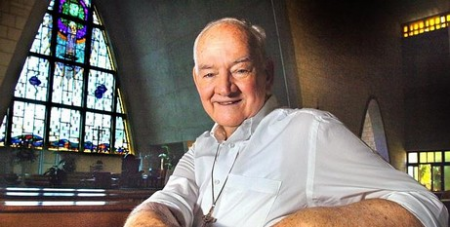
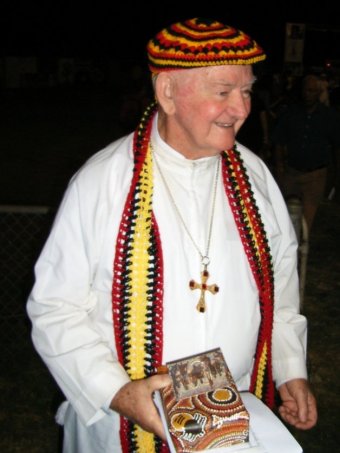
( Supplied by Catholic Church )

Ted Collins, who was Bishop of Darwin for 21 years, has died in Sydney after ongoing health issues.
Darwin, December 24, 2004. Bishop Ted Collins near the location he was sitting at when Cyclone Tracy struck. The bishop was giving a midnight mass radio broadcast when the cyclone hit, smashing the glass windows above him. Luckily those directly above him were spared and he did not get showered with glass. Cyclone Tracy, packing winds of up to 217 kph, struck in the early hours of Christmas day, 1974. The cyclone demolished 90 percent of Darwin’s buildings, killed 66 and left 45,000 people homeless. (AAP Image/Paul Benjafield) NO ARCHIVING

Death of Bishop Ted Collins, Former N.S.W.P.
Former N.S.W. Police Officer Edmund (Ted) Collins died on 08.08.14. He was also the Emeritus Catholic Bishop of Darwin. I regrettably don’t know his service history in the Job.Below is an excerpt taken from the Catholic Diocese of Darwin’s website. I met the then Father Collins when I started at the B.C.I. in 1981. I lived at Randwick then, and he was Parish Priest there. I doubt we ever agreed on anything religion-related, but he wasn’t a bad bloke, and I was surprised to learn he’d been in the Job. When he was appointed Bishop of Darwin in 1986, it was probably the first time a Bishop was featured in Police News!!!Dis.

via TBL Website Forum
http://www.tbl.australianpolice.com.au/viewtopic.php?f=52&t=19094++++++++++++++++++++++++++++++++++++Bishop Edmund John Patrick Collins, familiarly known as Bishop Ted, died late on Friday night, August 8, at St Joseph’s Aged Care Home in Kensington, Sydney. At the actual time of his death, his older sister, Madge, her son and daughter, Gerard and Anne and Father Pat Austin MSC were present.

Throughout the day and indeed over preceding days, many Missionaries of the Sacred Heart from the adjoining Monastery, many Daughters of Our Lady of the Sacred Heart as well as friends and relatives visited him.

Bishop Ted had been declining in health over recent months, with multiple and ongoing health issues.

Bishop Ted was 83 years of age. He was Bishop of the Catholic Diocese of Darwin for 21 years from 1986 to 2007. He was a man of great kindness and pastoral gifts, much loved not only by members of his own Faith, but by all who came in contact with him.

A Requiem Mass will be celebrated in St Mary’s Cathedral, Darwin and Bishop Ted’s body will be laid to rest in the Crypt of the Cathedral.

The funeral for Bishop Ted will be held at St. Mary’s Star of the Sea Cathedral on Tuesday, August 19, at 2.00pm.

May his gentle soul rest in peace.

Bishop Eugene Hurley
Bishop of Darwin.


Location of Death in Sydney         Location of Funeral & Interment in Darwin

[google-map-v3 shortcodeid=”d9ec7df1″ width=”350″ height=”350″ zoom=”12″ maptype=”roadmap” mapalign=”center” directionhint=”false” language=”default” poweredby=”false” maptypecontrol=”true” pancontrol=”true” zoomcontrol=”true” scalecontrol=”true” streetviewcontrol=”true” scrollwheelcontrol=”false” draggable=”true” tiltfourtyfive=”false” enablegeolocationmarker=”true” enablemarkerclustering=”false” addmarkermashup=”false” addmarkermashupbubble=”false” addmarkerlist=”2 Kensington Rd, Kensington 2033{}home.png{}St Josephs Aged Care Home|90 Smith St, Darwin, NT{}catholicgrave.png{}St Marys Cathedral, Darwin” bubbleautopan=”true” distanceunits=”km” showbike=”false” showtraffic=”false” showpanoramio=”false”]


[divider_dotted]

Ted Collins Village in Darwin

http://www.vinnies.org.au/page/Find_Help/NT/Housing/Ted_Collins_Village/

What is the service?

Ted Collins Village is a 20-unit housing complex that provides accommodation on 6 to 12 month leases for people in Darwin. The Village was opened in 2011 and is named after Bishop Edmund ‘Ted’ Collins who led the Catholic Church in the Territory for more than 20 years. The facility was built in response to Darwin’s extreme housing crisis, which has contributed to a high occupancy rate and to large numbers of people and families living in poverty in the area. We provide property management services to the tenants of Ted Collins Village. We ask that tenants retain the referring agency as their case manager and therefore that resident’s transition out of the Village within the 12 month period is stipulated in the lease.


[divider_dotted]

LIFE STORY: BISHOP TED COLLINS MSC

http://www.misacor.org.au/join-us/msc-life-stories/1122-life-of-bishop-ted-collins-msc

SOMETHING BETTER: Edmund ‘Ted’ Collins answered a call to “something better”
By Damir Govorcin, Published in 2003.

Why did Ted Collins toss in a promising career in the NSW police force to join the priesthood? Well, says Ted, now the Bishop of Darwin: “It was like indigestion … the idea kept coming back up”.

The bishop’s trademark sense of humour and easygoing nature have made him a much-loved figure in NSW, South Australia and the Northern Territory over the past 40 years.

This year, to mark the 40th anniversary of his ordination, celebrations were organised at St Mary’s Cathedral in Darwin and at his former parish in Randwick, where he had two stints as parish priest at Our Lady of the Sacred Heart (1964-67 and 1978-85).
His former parishioners showed their appreciation by packing a function room at Randwick Racecourse for a luncheon and concert to celebrate the life of a man they call “a true shepherd”.

“Bishop Collins is such a wonderful person, and he is greatly missed at Randwick,” said parishioner Joan Taylor.
“With his genial disposition, he has overcome many obstacles in his life and I pray that he will spend many more years looking after the Top End.”
Bishop Collins says he has been overwhelmed by the love and support he has received over the years, and was delighted to “return home” to Randwick to see so many old friends.

“I spent 12 years at Randwick, so it has a special place in my heart,” he says. “It was terrific to see so many familiar faces and I was amazed by the turnout.”

Ted Collins, the youngest of five children in an Irish-Catholic family, grew up in Bermagui on the NSW far south coast.

He was a keen sportsman and loved surfing, cricket, golf, rugby league, rugby union and Australian Rules.
“Bermagui was great place to grow up,” he says. “There was always plenty to do.

“I was always active and tried my hand at many different sports.

“I’ve got nothing but happy memories from my childhood.”  There were tough times, though.

He was only five when his mother died, leaving his policeman father the task of raising five children on his own.

“It was a big blow, losing Mum at such a young age,” says Bishop Collins.

“It put a lot of pressure on Dad, but he did a great job.

“Just my sister Madge and I are alive.”

It was only natural that Bishop Collins would follow in his father’s footsteps, joining the police force at the age of 16.

He was based in Sydney for eight years, describing his tenure as a policeman “as some of the happiest times of my life”.

“Becoming a policeman was something that was in the blood and it was my way of helping serve the community,” he says.

“I saw some gruesome things, but that was part of the job.
“I had happy memories in the police force and I wouldn’t have left the job if I wasn’t going on to something better.

“I would lock someone up while they were getting sober, but I didn’t feel I was helping them enough.”

The “something better” that was beckoning him was the priesthood.

And, in July 1963, at the age of 32 he was ordained by Cardinal Gilroy.

Apart from his two stints as parish priest at Randwick, Bishop Collins served in the parishes of Hindmarsh, Adelaide (1968-70), and Nightcliff, Darwin (1971).
He became superior of the Missionaries of the Sacred Heart in the Northern Territory and director of Catholic Missions in the Territory (1972-77) before he was ordained Bishop of Darwin in 1986.

“I always felt drawn to the priesthood,” he says. “I wanted to do something better with my life.

“I felt being a priest gave me more of a chance to help someone by getting to know them and helping them with their problems.

“I haven’t had any regrets with the choice I made.”
Bishop Collins will never forget the night Cyclone Tracy destroyed Darwin in 1974.

He was attending Midnight Mass at St Mary’s Cathedral when the cyclone hit on Christmas Eve, smashing everything in its path.

“We were told that the cyclone was going to hit at six on Christmas morning, but by 11.30pm it had hit and it was the most terrifying experience of my life,” he recalls.

“I will never forget the roar of the wind … the lights went out in the cathedral and windows were smashing, with glass all over the place.

“It was a devastating time … many lives were lost and people’s homes were totally destroyed. I didn’t get any sleep that night and I said a few decades of the rosary.”
Bishop Collins says he was excited to be appointed Bishop of Darwin, but he had a “gut feeling that it was going to happen”.

“Before I went on a sabbatical to New Mexico I knew that I was in contention for the position, so it wasn’t a shock when I got the job,” he says.

“When I got a call in the middle of the night from my provincial to say I was appointed, I didn’t think twice about accepting the position.”

His reign as bishop hasn’t been without controversy.

He campaigned strongly against the Northern Territory Parliament’s decision to legalise euthanasia.

The Federal Government overturned the decision, banning euthanasia in the Territory.

“Euthanasia is murder and you can’t legalise murder,” the bishop says. “I fought tooth and nail, along with many other people, to stop it. “And, thank God, it was banned.
“I have sympathy for people in pain, but it’s not the way out. “God will take you when he wants to.”

Despite heart bypass surgery a few years ago, the 72-year-old bishop shows no signs of slowing down.
“I went in for back surgery, but then the doctor told me I needed a bypass,” he says.

“I can still play golf, but walking long distances can be a struggle.”

Asked what he will do in retirement, Bishop Collins says: “Probably play more golf”


LIFE STORY: BISHOP TED COLLINS MSC

[divider_dotted]

Ted Collins, former Bishop of Darwin, dies aged 83

Published: 11 August 2014

Edmund John Patrick COLLINS
Bishop Ted Collins, who was the Bishop of Darwin for 21 years, has died aged 83, reports the ABC on Yahoo7.

Bishop Ted, as he was known, died late on Friday at the St Joseph’s Aged Care Home in Kensington in Sydney, a statement from the Church said.

He was Bishop of Darwin between 1986 and 2007.

‘He was a man of great kindness and pastoral gifts, much loved not only by members of his own faith, but by all who came in contact with him,’ said Darwin’s current Bishop, Eugene Hurley.

Bishop Ted did not rush to become a priest, working in the police force until he was 24 before deciding to join the priesthood. ‘I had this sort of longing to follow the Lord a bit closer and I said “but I have to go back to school to learn Latin for instance”… so I decided to do it, I launched out into the deep,’ he told the ABC in 2007.

While working in the NT on Indigenous Catholic Missions Bishop Ted encouraged the use of Aboriginality in faith, allowing didgeridoos and clap-sticks to be played during masses.

Bishop Ted was also an outspoken opponent of the NT’s voluntary euthanasia laws, which he believed could be perilous for disadvantaged people.

Read full article: Darwin’s Bishop Ted Collins dies aged 83 (ABC/Yahoo7)

FULL STORY

Territory mourns for Bishop Ted (news.com.au)


[divider_dotted]


Derek John LAWFORD

Derek John LAWFORD

Western Australia Police Force

Regd. #  6155

Stations:  ?

Rank:  ?

Retired

Died  ?

Funeral  14 August 2014,  11am, at Pinnaroo Valley Memorial Park, Whitfords Ave, Padbury, W.A.


LAWFORD:
WA Police Union Members are invited to attend the Funeral Service for our late retired member Derek John Lawford 6155 at PINNAROO Valley Memorial Park on THURSDAY (14.8.2014) at 11.00am.

Funeral location:
[google-map-v3 shortcodeid=”07db0d3f” width=”350″ height=”350″ zoom=”12″ maptype=”roadmap” mapalign=”center” directionhint=”false” language=”default” poweredby=”false” maptypecontrol=”true” pancontrol=”true” zoomcontrol=”true” scalecontrol=”true” streetviewcontrol=”true” scrollwheelcontrol=”false” draggable=”true” tiltfourtyfive=”false” enablegeolocationmarker=”true” enablemarkerclustering=”false” addmarkermashup=”false” addmarkermashupbubble=”false” addmarkerlist=”PINNAROO Valley Memorial Park{}catholicgrave.png{}Pinnaroo Valley Memorial Park” bubbleautopan=”true” distanceunits=”km” showbike=”false” showtraffic=”false” showpanoramio=”false”]


George William SLADE

George Walter SLADE

NSW Police Training Centre, Redfern – Class # 068

New South Wales Police Force

Regd. #  8591

Rank:  Commenced Training at Redfern Police Academy on Monday 4 February 1957 ( aged 25 years, 4 months, 15 days )( spent 1 month, 28 days at Academy )

Probationary Constable – appointed 1 April 1957 ( aged 25 years, 6 months, 12 days )

Constable – appointed 1 April 1968

Constable 1st Class – appointed ? ? ?

Detective – appointed ? ? ? ( YES )

Senior Constable – appointed 1 April 1968

Sergeant 3rd Class – appointed 6 May 1973

Sergeant 2nd Class – appointed ? ? ?

Sergeant 1st Class – appointed ? ? ?


Final Rank:  Detective Sergeant

George does NOT appear in the 1979 Stud Book despite appearing to be a Detective in the 1980s with BCI

Stations? , Liverpool, Fairfield ( 34 Division ) Detectives – late 1970’s – 1980’s, ?

Bureau of Crime Intelligence ( BCI ) – 1980’s – 1982 – retirement

ServiceFrom 4 February 1957  to  ? ? 1982 = 24+ years Service

Awards:  No Find on Australian Honours system

Born:  Sunday  20 September 1931

Died:  Wednesday  7 August 1996

Cause:  Illness – Cancer

Age:  64 years, 10 months, 18 days old


Funeral date:  Monday  12 August 1996

Funeral location:  All Saints Church, Victoria Rd, Parramatta

Grave location?


There was also a K. SLADE # 7236 – Born August 1927 – who was a Sgt 3/c on 1 Jan 1968 at the same time George was a Senior Constable.

There was also R.G. SLADE # 16273 – Born 1954 who was a Constable on 8 April 1975.

It is not known if they were related.


Colin Winchester And The Calabrian Connection

Sydney Morning Herald
Friday August 18, 1989
Evan Whitton

THE Winchester inquest will be conducted by the Australian Capital Territory (ACT) Chief Magistrate, Ronald Cahill, assisted by the Deputy Federal Director of Public Prosecutions, John Dee, QC, in the AMP Building, Hobart Place, Canberra.

Winchester, 55, third in seniority in the Federal Police, and said to be nicknamed The Dog because of his dogged tracking of criminals, drove in his unmarked police car to his home in Lawley Street, Deakin, after work on Tuesday, January 10, 1989.

He had a drink with his wife, Gwen, and then drove to Queanbeyan to discuss a proposed hunting trip with his brother Ken. He returned about 9.10pm and parked his car in the driveway of their next-door neighbour’s house. He was wearing a track suit, no socks, and Adidas running shoes.

Winchester turned off the lights and engine, opened the door, and put one foot on the ground. His head framed by the interior light, he was a perfect target. A person stepped forward in the dark to within two or three metres of the car and shot Winchester twice, on either side of the right ear, with a silenced .22 self-loading 10/22 Ruger rifle. Winchester died instantly. He slumped back in the seat, still holding the car keys and with his right foot still on the ground.

Unlike NSW, where an inquest is held into every homicide, an inquest is held in the ACT only if police are not able to lay charges. However, if sufficient evidence emerges, Mr Cahill has the power to turn the inquest into a committal hearing. He can also imprison witnesses who refuse to answer questions.

The first leg of the inquest is scheduled to run for five weeks, until September 22. There will then be a break of two weeks, and the inquest will then run until it is finished. This is currently expected to take between a week and three weeks.

The inquest will examine material relating to various possible scenarios. Dee has stated that the inquest will proceed in three parts: formal matters; evidence on investigations in which Winchester had been involved; and information on people who might have held a grudge against him. Within that framework, the material will be subdivided into separate blocks.

THERE is political and media speculation that the Winchester killing, like the 1977 assassination of Donald Bruce Mackay, may turn on marijuana and the profits to be made there from by elements of organised crime, including what may be termed the Calabrian Mob and corrupt police.

From the following data, and the comparative brevity of the inquest, it may be thought that what is required is not so much an inquest as a full-scale commission of inquiry, with terms of reference and powers as wide as those lately enjoyed by Fitzgerald, QC, in Queensland, to examine the operations of the Calabrians and the possible nexus between them and law enforcement authorities and politicians.

Calabria is a province in the toe of Italy. A Calabrian village, Plati (pop. 3,000), is the headquarters of a secret society, L’Onorata Societa (The Honoured Society) or N’Dranghita. This is not to be confused with other Italian secret societies, the Mafia proper from Sicily, or the Camorra from Naples. Migrants from Calabria began arriving in Australia in 1928. Many went to Griffith, 600 kilometres south-west of Sydney. More Calabrians arrived after the war.

Marijuana, one of many names given to the treated form of the cannabis or Indian hemp plant, became, as a legacy of the Vietnam War, a recreational drug in Australia in the mid-1960s. Cannabis will grow anywhere there is heat and water. Seedlings are planted around August and the crop taken off in January or February.

Justice Woodward reported in 1979 that people born in Plati were involved between 1974 and 1978 in at least 20 cannabis plantations in all mainland States except Victoria. The Australian Bureau of Criminal Intelligence, established in 1981, adopted as its first project, codenamed Alpha, the collection of data on the activities of Italian-oriented cannabis operations.

One cannabis plant was estimated in 1986 to produce $1,100 worth of manufactured marijuana at street level. It has been suggested that Australian marijuana is now being exported, and profits used to finance importation of heroin, cocaine and crack.

It is convenient to examine the Griffith/Calabrian matter in three overlapping sections: Robert Trimbole 1970-87; Joe Verduci 1980-89; Luigi Pochi 1975-89.

THE CHARMED LIFE OF ROBERT TRIMBOLE

IT is said that the Calabrians prefer to co-operate with police rather than shoot them. Gianfranco Tizzoni was an informer for Melbourne police, Customs and narcotics agents. He and another Calabrian informant, Giuseppi (Joe)Verduci, afford useful examples of the ambiguity inherent in the relationship

The informer is assumed to be working for the authorities, but he may be able to arrange matters so that the police are actually working to protect his interests, and to disrupt the activities of his criminal competitors.

Robert Trimbole was a leading member of a Griffith element of N’Dranghita called The Family (La Famiglia). Tizzoni later said Trimbole asked him in 1971 to arrange distribution in Melbourne of unlimited supplies of cannabis from Griffith. Justice Woodward later found that Griffith cannabis growers were protected by local detectives John Ellis, Brian Borthwick and John Robbins. All three were eventually imprisoned for perverting the course of justice.

Bob Bottom discloses in his book Shadow of Shame, sub-titled How the Mafia Got away with the Murder of Donald Mackay, that Mackay, a Griffith businessman and Liberal politician, sent John Maddison, then Minister for Police in the Liberal NSW Government, a confidential dossier on Calabrian involvement in drugs in July 1975. Mackay invented the term “grass castles” to describe ornate homes built in Griffith for former peasant farmers, and said that Trimbole, recently a bankrupt, was thought to provide the Sydney outlet for cannabis.

Maddison took no action, but Sydney police, acting on a tipoff from Mackay, raided an $80-million plantation at Coleambally in November 1985. A number of people were charged and convicted, including Luigi Pochi, of Canberra, who was sentenced to two years in prison in March 1977.

Tizzoni later stated that Trimbole told him to get someone from Melbourne to eliminate Mackay. He said he arranged through a gunsmith, George Joseph, for James Frederick Bazley to execute Mackay. He said Bazley asked for and got no more than $10,000, and that Joseph asked for 10 per cent of the fee, $1,000, for the introduction. Mackay was assassinated in Griffith on July 15, 1977. Bazley, who was eventually convicted of the crime, claims that the killer was actually former NSW detective Fred Krahe.

Bottom records that false rumours to the effect that Mackay had decamped with a woman were floated by two press secretaries in the Wran Government, by a senior Cabinet minister, by a senior police officer, and by Krahe in Griffith. NSW police, led by Sergeant Joe Parrington, were baffled.

Justice Philip Woodward began a royal commission on drug trafficking in August 1977. Observing the Griffith “grass castles” from outside, Woodward, who had fewer powers of entry than the fruit fly inspector, sought an extension of his powers to give him ingress. This was refused by Premier Neville Wran on civil liberties grounds.

Tizzoni later said that Trimbole, who bought into the Mr Asia heroin syndicate in 1979, arranged through Tizzoni, Joseph and Bazley to dispose of drug couriers Douglas and Isabel Wilson, who had informed on syndicate head Terence Clark to Brisbane police and narcotics agents in June 1978. The Wilsons were murdered near Melbourne in April 1979.

Woodward reported to the NSW Government in November 1979 that he was satisfied that Calabrians in Griffith directed a cannabis-growing and distribution network, and that “this organisation was responsible for the disappearance and murder of Donald Mackay”. He recommended that a task force be set up to monitor the activities of Trimbole and his associates. No such task force was set up. Trimbole told The Sydney Morning Herald in November 1979: “That commission can’t touch me or charge me in any way.”

Under subpoena, Trimbole was to appear at the Wilsons’ inquest on August 12, 1980. An inquiry by John Nagle, QC, later found that shortly before that date former Labor parliamentarian Albert Jaime Grassby unsuccessfully sought to have tabled under privilege in the NSW and South Australian parliaments a document falsely suggesting that Mackay’s widow, her son, and her solicitor, had conspired to murder Mackay. Grassby later apologised and agreed to pay$5,000 to cover Mrs Mackay’s court costs to end a defamation action she initiated against Grassby.

Trimbole did not give evidence at the Wilsons’ inquest on the ground that his answers might tend to incriminate him. The coroner recommended an inquiry be held into the Mr Asia syndicate. Trimbole fled the country in May 1981 to avoid giving evidence at Justice Stewart’s inquiry, and apparently worked at organising drug and arms running from bases in France, Italy, Switzerland and Ireland.

The Australian Government had been negotiating in desultory fashion with the Irish Government for an extradition treaty since 1977. Bottom notes that on April 1, 1982, the day Trimbole’s stepdaughter took up residence at an exclusive girls’ school in Ireland, some unknown person removed the file on the treaty from an active tray; marked it “no further action required”; and buried it in the Federal Attorney-General’s storage vault.

Justice Stewart recommended to the Federal and NSW governments in August 1982 that Trimbole be found and extradited, but Australia still had no extradition treaty with Ireland when Irish police arrested Trimbole in Dublin in October 1984.

The arrest was tainted, and an Irish court ruled in February 1985 that Trimbole should be released. He retired to Spain and lived there, untroubled by Spanish or Australian authorities, for a further two years before dying, no doubt to the relief of many in Australia, of a heart attack on May 13, 1987. A Catholic priest with a sense of humour, Father John Massore, later conducted a funeral service for Trimbole in Smithfield, Sydney. He took as one of his themes: all human life is as grass.

JOE VERDUCI AND OPERATION SEVILLE

COLIN Winchester, a former miner then 29, joined the ACT police force in 1962. Some of the ACT police were said to act like country cousins of Sydney police, and rather looked up to some of the more flashy, if dubious, detectives therein. It has been asserted that Winchester was corrupt, at least at any earlier period when he is said to have handled bribes relating to a Canberra illegal casino. However, an audit of his financial affairs after his murder revealed nothing untoward.

The ACT Police and Commonwealth Police were merged in 1979 to form the Australian Federal Police (AFP). Channel 10 reporter Christopher Masters says that factional infighting deriving from the original divisions remain, and have impeded the Winchester investigation.

Giuseppi (Joe) Verduci offered in late 1980 to supply AFP Detective Sergeant Brian Lockwood with information on members of the Canberra Italian community allegedly involved in organised crime. Lockwood says that in August 1981 Verduci said he had been approached by Luigi Pochi and another man about growing marijuana on his property at Bungendore, in NSW, just outside the ACT

Bottom notes in Shadow of Shame that Lockwood advised his superior, Winchester, and that Winchester and Bob Blissett, then head of the NSW Bureau of Criminal Intelligence (BCI), agreed to allow the plantation to run as a joint “controlled” operation code-named Operation Seville. The approval of NSW Commissioner of Police, Cecil Abbott, was subsequently obtained, and the operation was placed under the direct control of Winchester and Detective Sergeant * George Slade of the NSW BCI.

The theory was that surveillance would enable police to establish distribution routes and to identify distributors and financiers, and thus, perhaps, get evidence against the Calabrians. Bungendore I was planted in August 1981. Independent NSW MLA John Hatton later asserted that, including Bungendore, there had been 14 drug crops in southern NSW, at Braidwood, Dalton, Michelago and in the Brindabella ranges, of which at least 13 had been grown with the supervision or knowledge of NSW police.

Bungendore I was harvested in February 1982. Some 50 kilograms were sent to Sydney on March 18. The shipment was kept under surveillance and photographed ; no arrests were made. Lockwood said he handed on to Winchester $23,500 given him by Verduci as a result of the operation in March 1982. Winchester paid the money into Consolidated Revenue in September 1982.

At a later court hearing, Verduci declined to answer, on the ground that it might incriminate him, a suggestion that Verduci had paid Winchester large cash amounts that had not gone into Consolidated Revenue.

Robert Trimbole’s old friend, Gianfranco Tizzoni, and two others took the rest of the crop to Victoria. Alerted by NSW police, Victorian police arrested them on March 31 and charged them with possession and supply of marijuana and unlawful possession of firearms.

Tizzoni began to negotiate with Victorian detectives and eventually supplied information that led to the convictions of himself, George Joseph and James Bazley in connection with the murders of Donald Mackay and the Wilsons. So to that extent Operation Seville was a success.

Bungendore II was seeded as part of Operation Seville, of which Winchester was no longer part, in August 1982. Armed assaults were made on the plantation in January 1983 by criminals, possibly at the behest of corrupt NSW police. After these debacles, police destroyed the remainder of the crop in February 1983, and closed down Operation Seville.

AFP Detective Sergeant John Best took over Verduci as an informant from Lockwood in mid-1984. In August, Verduci, apparently without AFP or NSW police authority, became involved in seeding 44,000 hemp plants, worth $50 million on the street, on a plantation at Guyra on the New England tablelands.

Detective Sergeant Bob Small of Armidale police arrested Verduci and five labourers on the Guyra plantation on November 15, 1984. Verduci claimed he had immunity from the AFP. Small checked with Best, who said he had no immunity at Guyra. Best recommended that Verduci be dropped as an AFP informant.

Four of the Guyra labourers pleaded guilty and were each sentenced to 5 1/2 years, with a minimum of three years, on July 1, 1986. A fifth, Carmelo Micalizzi, pleaded not guilty and was tried separately.

At one stage, NSW Crown Law authorities were of a mind to charge Verduci and everyone else, Calabrians and police alike, involved in the Bungendore operation, but this was seen as too much of a problem, and the whole thing was handed over to the National Crime Authority (NCA) for evaluation in 1987.

In July 1987, Winchester was formally warned and interrogated by NCA Chief Inspector Robert McDonald about his role in the Bungendore affair. The NCA concluded that Winchester had done nothing illegal.

The NCA used the trial of Micalizzi in November 1987 as a sort of dry run to see how Verduci might perform as an indemnified Crown witness against Calabrians allegedly involved in the Bungendore operation. Micalizzi was found guilty and got 5 1/2 years with a minimum of three. Thus encouraged, the NCA charged 11 people, including Luigi Pochi, in April 1988 in connection with the Bungendore matters.

The Bungendore committal hearing was to start in Queanbeyan on February 6, 1989. Winchester might have been a witness, but not as important a witness as Verduci, who did not appear to feel that he was at any sort of risk ; he had declined to continue to accept police protection.

When Winchester was executed on January 10,Lockwood, now a Canberra service station proprietor,was given police protection. AFP Commander Lloyd Worthy, a former member of the ACT Police, was in charge of the investigation.

More than 25 police, led by Chief Superintendent Richard Ninness, raided the flat of a former Treasury official, said to have held a grudge against Winchester, on January 18, but Worthy said there was no suggestion the man would be charged in connection with the murder.

Verduci refused to give evidence in the Bungendore case, and most of the charges were withdrawn on March 1 ; NSW Attorney-General John Dowd dropped the remaining charges against the Calabrians in May.

THE CHARMED LIFE OF LUIGI POCHI

AS noted, Luigi Pochi was sentenced to two years in prison in March 1977 in connection with a cannabis plantation at Coleambally. Pochi, who had come to Australia in 1959, was eligible for deportation because he had not, through an administrative bungle, become an Australian citizen.

Michael Mackellar, Federal Immigration Minister, ordered Pochi’s deportation in 1978 on the ground of his conviction and alleged involvement in “commerce in marijuana”. Pochi appealed.

Mr Justice Gerard Brennan, president of the Administrative Appeals Tribunal (AAT), recommended in 1979 that Pochi not be deported. He said there were ample grounds for suspecting that Pochi was involved in marijuana, but the evidence did not prove it ; such conduct “must be proved,not merely suspected”

Justice Woodward found in November 1979 that he was satisfied that Pochi was a Canberra principal of the Griffith cannabis organisation ; that the growing of cannabis was principally supervised from Griffith by Pochi’s brother-in-law and business partner, Antonio Sergi ; and that distribution and marketing was supervised principally by Pochi’s other business partner, Robert Trimbole. Sergi has never been charged with any crime.

The Federal Court upheld Justice Brennan’s recommendation against deporting Pochi in July 1980. The Government appealed to the High Court. The High Court refused leave to appeal in August 1981, a time when Pochi was later alleged to have been involved in Joe Verduci’s Bungendore plantation.

Pochi had received support from elements of the Labor Party. It has been reported that in 1981 Verduci was said to have gone to the home of a Labor Party figure to warn him that the party should not be seen to be supporting Pochi and that he even produced marijuana from the Bungendore crop “to show the ALP man that Pochi was involved in drugs”.

Ian MacPhee, then Liberal Immigration Minister, who might have had access to current intelligence not available to others, overruled the AAT recommendations on February 23, 1982, and had a deportation order served on Pochi giving him 72 hours to leave the country.

Pochi issued a statement asserting: “I have always denied and still deny that I had any association with any illegal criminal organisation.” He obtained a temporary High Court injunction to stay his departure.

The High Court unanimously upheld the validity of the Pochi order on October 22, 1982, but Justice Lionel Murphy added it would be a misuse of power to deport Pochi in circumstances that might break up his family.

Three days later, the then Immigration Minister John Hodges, who had replaced MacPhee in May, revoked the order “on strong humanitarian and compassionate grounds”. On October 27, 1982, the Taxation Commissioner’s annual report showed that Pochi, 43, had been fined $16,000 for underestimating his income by $57,671 in the period between 1973-74 and 1975-76.

Pochi was among 11 charged in April 1988 in connection with the Bungendore plantation. He and three associates were members of the Belconnen branch of the Australian Labor Party at the time of the Winchester murder on January 10, 1989. It was later reported that police had sought the records of a branch meeting held on that night.

As noted, the case against Pochi and others collapsed in March 1989 when Verduci refused to give evidence.

© 1989 Sydney Morning Herald
* It is unknown if the person mentioned in this article is the same George Slade who passed away on 7 August 1996.

Attack upon the Western Escort

Goulburn Herald ( NSW )        Saturday  28 February 1863       page 2 of 4

ATTACK UPON THE WESTERN ESCORT.- Intelligence was received on Wednesday morning by telegram that a daring attack had been made on the previous evening ( 24 February ) near Hartley upon the armed gold escort from the western districts. Fortunately the attack was not attended with any serious injury, and no attempt was made to rob the gold. The escort party arrived safely in Sydney last night, and from them we have learned the following particulars of the attack. The western escort, in charge of Sergeant McClure, with about 2300 ounces of gold, arrived in   Little Hartley on Tuesday evening, and started thence at a little after nine o’clock for Big Hartley, a distance of three miles. The road between the two Hartleys being well populated, the sergeant considered it safe, and accordingly dispensed with the attendance of the mounted men. The escort consisted of the sergeant and three constables, two of whom were in the coach, and one on the box with the driver. About three-quarters of a mile on this side of Little Hartley, while driving at a rapid pace along a macadamised road, the coachman observed some logs thrown across the road, and uttered an exclamation of alarm. The leaders stumbled at the obstruction, but by prompt use of the whip the coach was pulled over. Just as the driver was whipping the horses, a succession of shots were fired from the left side of the road. The shots were seven or eight in number, and appeared to have been intended for a volley, but were not fired quite simultaneously. After proceeding about eighty yards beyond   the logs, one of the leading horses dropped down dead. The coach being thereby stopped, the escort got out, and on examining the horses found that two of them were wounded. Under the orders of Sergeant McClure (whose face had been grazed by one of the shots) the men took up a position on the opposite side of the road to that from which the shots had been fired, the men being under cover of stumps. They remained in that position for nearly three-quarters of an hour, but no more shots were fired. While thus waiting they could hear a low whistling in the direction from which the firing had come, and immediately afterwards they heard the barking of the settlers’ dogs, indicating that some people were running past. It was supposed that there must have been at least five men in the gang, as in addition to the wounding of the sergeant, the killing of one horse, and the wounding of two others, the driver’s coat was pierced with a bullet, and a shot went through one of the lamps. The gang were in ambush, and as none of them could be seen, no shots were fired by the police. The escort reached Big Hartley without further obstruction, remained there on Tuesday night, started early yesterday morning for Penrith, and arrived in Sydney with the gold by the last train. It should be stated that it was the same escort that was attacked a short time ago; it was not then, however, in charge of Sergeant McClure, he having   shortly before received some injuries by the breaking down of the escort coach. Nothing has yet transpired to give any clue to the identification of the rascals, but it is conjectured that Lowrie, who last week made his escape from the Bathurst gaol, was one of the gang. – S. M. Herald.

http://trove.nla.gov.au/ndp/del/article/102852571?searchTerm=%22sergeant%20killed%22&searchLimits=sortby=dateAsc|||l-australian=y#pstart10385335


Angus Lester McKNIGHT

Angus Lester McKNIGHT

New South Wales Police Force

Sergeant

Regd. # ?

Stationed:  C.I.B. ( Criminal Investigation Branch ), Regents Street, Newtown, Auburn ( O.I.C.)

43 old

Died  1 March 1931


 The Northern Minder ( Charters Towers, Qld )  Wednesday  4 March 1931  page 2 of 8

POLICE SERGEANT KILLED

HEAD CRUSHED TO PULP.

SYDNEY, March 2.

Sergeant Angus McNight of Auburn division, who was on holidays at Narrabeen, was knocked down by a car in Pittwater Road last night, and killed. His head was crushed to pulp, his neck broken and left leg fractured in two places.

McNight, who is 48 years of age, was one of the best known members of the force, and had 26 years service.  He was a married man, and leaves a wife and family.

http://trove.nla.gov.au/ndp/del/article/80610116?searchTerm=%22police%20sergeant%20kill%22&searchLimits=l-australian=y#pstart8015551


[divider_dotted]

The Biz ( Fairfield, NSW )   Friday  6 March 1931  page 3 of 8

POLICE SERGEANT KILLED.

Sergeant Angus Lester McKnight, 43, who was in charge of the Auburn   police station, was killed in a motor accident at Narrabeen on Sunday night. He was walking along the Pittwater-road when he was struck by a car travelling in the opposite direction. The motorist sought medical assistance, but it was found that   the man was already dead. The body was taken to the Manly morgue.

Sergent McKnight, who lived in Glenview-avenue, Earlwood, was for many years attached to the Criminal Investigation Branch, and was later transferred successively to Regents street, Newtown, and then to the Auburn district. He is survived by Mrs. McKnight and two sons.

http://trove.nla.gov.au/ndp/del/article/76326210?searchTerm=%22police%20sergeant%20kill%22&searchLimits=l-australian=y#pstart7452314


Sheldon James Walter SPOONER

Sheldon James Walter SPOONER

New South Wales Police Force

Regd. # 6797

Joined as a NSW Police Cadet on 25 August 1947

Cadet # 682

Stationed:  ?

Died  30 July 2014

Funeral  4 August 2014

Sheldon James Walter SPOONER


With regret I advise the death of Sheldon James Walter SPOONER, 82 old, former Regd. No. 6797, a Veteran member of the South Coast Branch of the RPA.

Shel passed away on 30/07/2014 and his funeral is proposed to be held at 12noon on Monday 4th August at Worrigee Memorial Gardens, WORRIGEE.


Location of Funeral Service
[google-map-v3 shortcodeid=”8adae09e” width=”350″ height=”350″ zoom=”12″ maptype=”roadmap” mapalign=”center” directionhint=”false” language=”default” poweredby=”false” maptypecontrol=”true” pancontrol=”true” zoomcontrol=”true” scalecontrol=”true” streetviewcontrol=”true” scrollwheelcontrol=”false” draggable=”true” tiltfourtyfive=”false” enablegeolocationmarker=”true” enablemarkerclustering=”false” addmarkermashup=”false” addmarkermashupbubble=”false” addmarkerlist=”Worrigee Memorial Gardens, WORRIGEE{}chapel-2.png” bubbleautopan=”true” distanceunits=”km” showbike=”false” showtraffic=”false” showpanoramio=”false”]
.


Ralph William MITCHELL

Ralph William MITCHELL

New South Wales Police Force

Regd. # 6704

Stationed  ?

Retired  ?

Died  3 August 2014

87 old

Funeral  8 August 2014 at Palmdale.


With regret I advise the death of Ralph William MITCHELL, 87 old, former Regd. No. 6704, a member of the Manning Great Lakes Branch of the RPA.

Ralph passed away on 03/08/2014 and his funeral is proposed to be held at 2pm on Friday 8th Instant at the Rose Chapel, Palmdale Crematorium, PALMDALE.

Creightons Funeral Service.


Location of Service:
[google-map-v3 shortcodeid=”f1620f76″ width=”350″ height=”350″ zoom=”12″ maptype=”roadmap” mapalign=”center” directionhint=”false” language=”default” poweredby=”false” maptypecontrol=”true” pancontrol=”true” zoomcontrol=”true” scalecontrol=”true” streetviewcontrol=”true” scrollwheelcontrol=”false” draggable=”true” tiltfourtyfive=”false” enablegeolocationmarker=”true” enablemarkerclustering=”false” addmarkermashup=”false” addmarkermashupbubble=”false” addmarkerlist=”Palmdale Crematorium, Palmdale, NSW{}chapel-2.png{}Rose Chapel” bubbleautopan=”true” distanceunits=”km” showbike=”false” showtraffic=”false” showpanoramio=”false”]

Obituary:
MITCHELL Ralph William
amended notice
Age 87
Late of Bateau Bay, formerly of Forster
Much loved husband of Noelene (dec)
Darling dad of Warren, Kim, Kerrie and Alison
Father in law of Lindsay, Terry and Jon.
Proud Poppie of 8 and Great Poppie of 7″A beautiful man who will remain in our hearts forever”

Family and friends are warmly invited to attend a service on Friday 8th August 2014 at the Palmdale Lawn Cemetery and Memorial Park, Palmdale Road, Palmdale commencing at 2.00pm in the Rose Chapel.


Creightons Funeral Service
02 43 241533
Published in The Sydney Morning Herald from Aug. 5 to Aug. 6, 2014
MITCHELL Ralph William
amended notice
Age 87
Late of Bateau Bay, formerly of Forster
Much loved husband of Noelene (dec)
Darling dad of Warren, Kim, Kerrie and Alison
Father in law of Lindsay, Terry and Jon.
Proud Poppie of 8 and Great Poppie of 7″A beautiful man who will remain in our hearts forever”

Family and friends are warmly invited to attend a service on Friday 8th August 2014 at the Palmdale Lawn Cemetery and Memorial Park, Palmdale Road, Palmdale commencing at 2.00pm in the Rose Chapel
Creightons Funeral Service
02 43 241533

Published in The Sydney Morning Herald from Aug. 5 to Aug. 6, 2014

– See more at: http://tributes.smh.com.au/obituaries/smh-au/obituary.aspx?n=ralph-mitchell&pid=171967986#sthash.JgWOa4az.dpuf


Matthew Steven MONTESIN

Matthew Steven MONTESIN

aka  Monty

New South Wales Police Force

Constable

Regd. #  46705

Stationed:  Mt Druitt LAC

Born  9 September 1973

Died  30 July 2014

40 old

Illness – Lung Cancer ( non smoker )

Funeral:  Holy Spirit Catholic Church, Todd Row & Moore St, St Clair, Friday  8 August 2014 at 11.30am

Committal service:  Pinegrove Cemetery, Kington St, Minchinbury, NSw

Memorial: NSW Police force Service Memorial Wall, Sydney Police Centre, Surry Hills, C32 ( left wall )


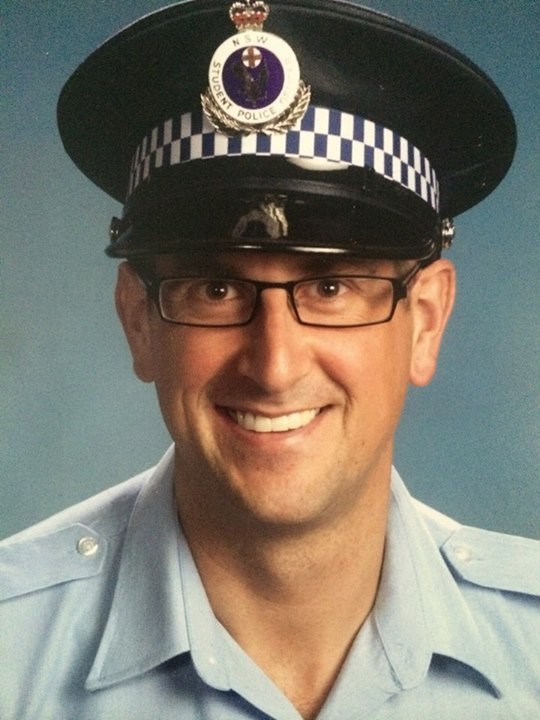
Matthew MONTESIN - NSWPF - August 2014


Matthew Steven Montesin

Born in Australia on 9 September 1973
Passed away on 30 July 2014
Aged 40 years

Matthew Steven MONTESIN

Funeral service will be held at HOLY SPIRIT CATHOLIC CHURCH, TODD ROW & MOORE STREET, ST CLAIR on Friday, 8th August 2014 at 11:30am.
Committal service will be held at Pinegrove Cemetery, Kington St, Minchinbury, NSW, Australia on Friday, 8th August 2014 at 1:15pm.
[divider_dotted]
Funeral  Service location:
[google-map-v3 shortcodeid=”a1935273″ width=”350″ height=”350″ zoom=”12″ maptype=”roadmap” mapalign=”center” directionhint=”false” language=”default” poweredby=”false” maptypecontrol=”true” pancontrol=”true” zoomcontrol=”true” scalecontrol=”true” streetviewcontrol=”true” scrollwheelcontrol=”false” draggable=”true” tiltfourtyfive=”false” enablegeolocationmarker=”true” enablemarkerclustering=”false” addmarkermashup=”false” addmarkermashupbubble=”false” addmarkerlist=”TODD ROW & MOORE STREET, ST CLAIR{}chapel-2.png{}HOLY SPIRIT CATHOLIC CHURCH” bubbleautopan=”true” distanceunits=”km” showbike=”false” showtraffic=”false” showpanoramio=”false”]
[divider_dotted]
Committal Service location:
[google-map-v3 shortcodeid=”9a29319f” width=”350″ height=”350″ zoom=”12″ maptype=”roadmap” mapalign=”center” directionhint=”false” language=”default” poweredby=”false” maptypecontrol=”true” pancontrol=”true” zoomcontrol=”true” scalecontrol=”true” streetviewcontrol=”true” scrollwheelcontrol=”false” draggable=”true” tiltfourtyfive=”false” enablegeolocationmarker=”true” enablemarkerclustering=”false” addmarkermashup=”false” addmarkermashupbubble=”false” addmarkerlist=”Kington St, Minchinbury, NSW{}gpsloc.png{}Pinegrove Cemetery” bubbleautopan=”true” distanceunits=”km” showbike=”false” showtraffic=”false” showpanoramio=”false”]
[divider_dotted]

Officer loses cancer battle

Much-loved Mount Druitt police officer, Constable Matthew Montesin, died on Wednesday.

Constable Montesin, who was 40, was diagnosed with terminal cancer of the lungs last year.

He worked in general duties in the Mount Druitt local command for more than three years.

He was affectionately known as Monty and described by colleagues as “a likeable, hard-working constable who always endeavoured to provide the best possible service to his community”.

Constable Montesin had three sons, all of whom he chose to raise in western Sydney where he grew up.

He was diagnosed with cancer late last year.

Colleagues said his death was a great loss to them and to his family, with whom all their prayers and thoughts now were.

[divider_dotted]
Matthew MONTESIN 3 - NSWPF - Died 30 July 2014

NSW POLICE LEGACY MONTESIN FAMILY APPEAL

Constable Matthew Montesin has worked at Mt Druitt Police Station for over three years in General Duties. Monty, as he is affectionately known, is a likeable hard-working constable who always endeavours to provide the best possible service to the community in a fair and compassionate manner.

Matthew grew up in the Western Sydney region and spent his entire life in this area, choosing to raise his own children in the same region. In August 2013, Cst Montesin went to his doctor with a niggling cough and was diagnosed with Whooping Cough. He was successfully treated and was told that his cough may continue for a couple of months before passing.

After a few months, Matthew was convinced to return to the doctors by his wife to have the cough seen to again. Further tests revealed shadowing in his lungs and he was subsequently sent for a biopsy. As a result of the biopsy he was called into the doctors office 48 hours later and was delivered the most devastating news. Matthew was diagnosed with stage 4 cancer of the lungs, a terminal prognosis. Sadly, Matthew has never smoked and celebrated his 40th birthday in September this year.

Matthew has been given a time frame of six months to live without treatment, possibly twelve months with chemo treatment and the possibility of two years if he is genetically compatible with a new drug from the United States. Matthew was not compatible and has now been given a twelve month life expectancy.

Matthew is 40 years old and currently living in Western Sydney with his wife Megan and three sons; Zac 19 years of age, Latham 18 years of age and Hayden aged 14. He is an extremely dedicated family man and adores the riches of life he considers to be his family.

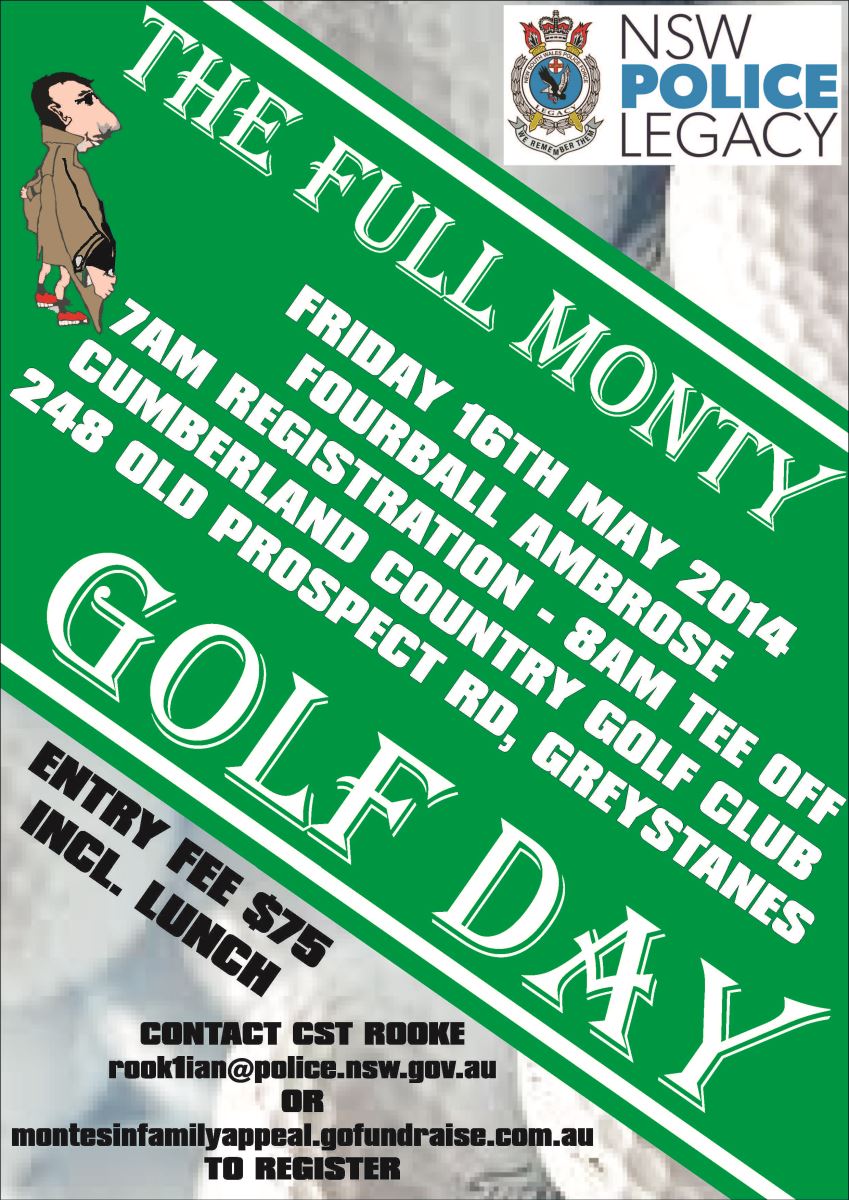
Our team here at Mt Druitt Police Station, with the support of NSW Police Legacy are currently raising funds to assist the Montesin Family during this difficult time. We have successfully organised a Car and Bike Rally, a McDonalds fundraising night, an eBay Auction, a Head Shave and are now organising a Golf Day to keep supporting the family as they navigate their way through this challenging time.

We have already raised a significant amount of money for the Montesin Family and thank everyone who worked so hard to make our previous events a success. Please lend your support to the Montesin Family Appeal by registering to participate in the The Full Monty Golf Day, or simply make a donation.

Matthew MONTESIN 4 - NSWPF - Died 30 July 2014http://montesinfamilyappeal.gofundraise.com.au/


[divider_dotted]


Matthew MONTESIN 5 - NSWPF - Died 30 July 2014
Montesin Family Appeal January 17


[divider_dotted]


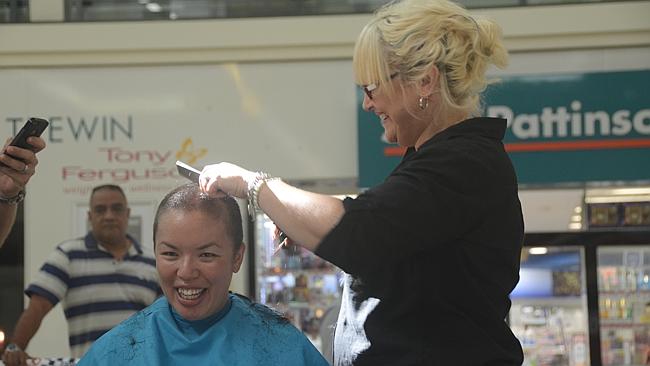
Constable Leung does the great shave to support fellow constable with cancer