The Muswellbrook Chronicle ( NSW ) Friday 9 June 1950 p 1
POLICE FUNERAL AT MUSWELLBROOK.
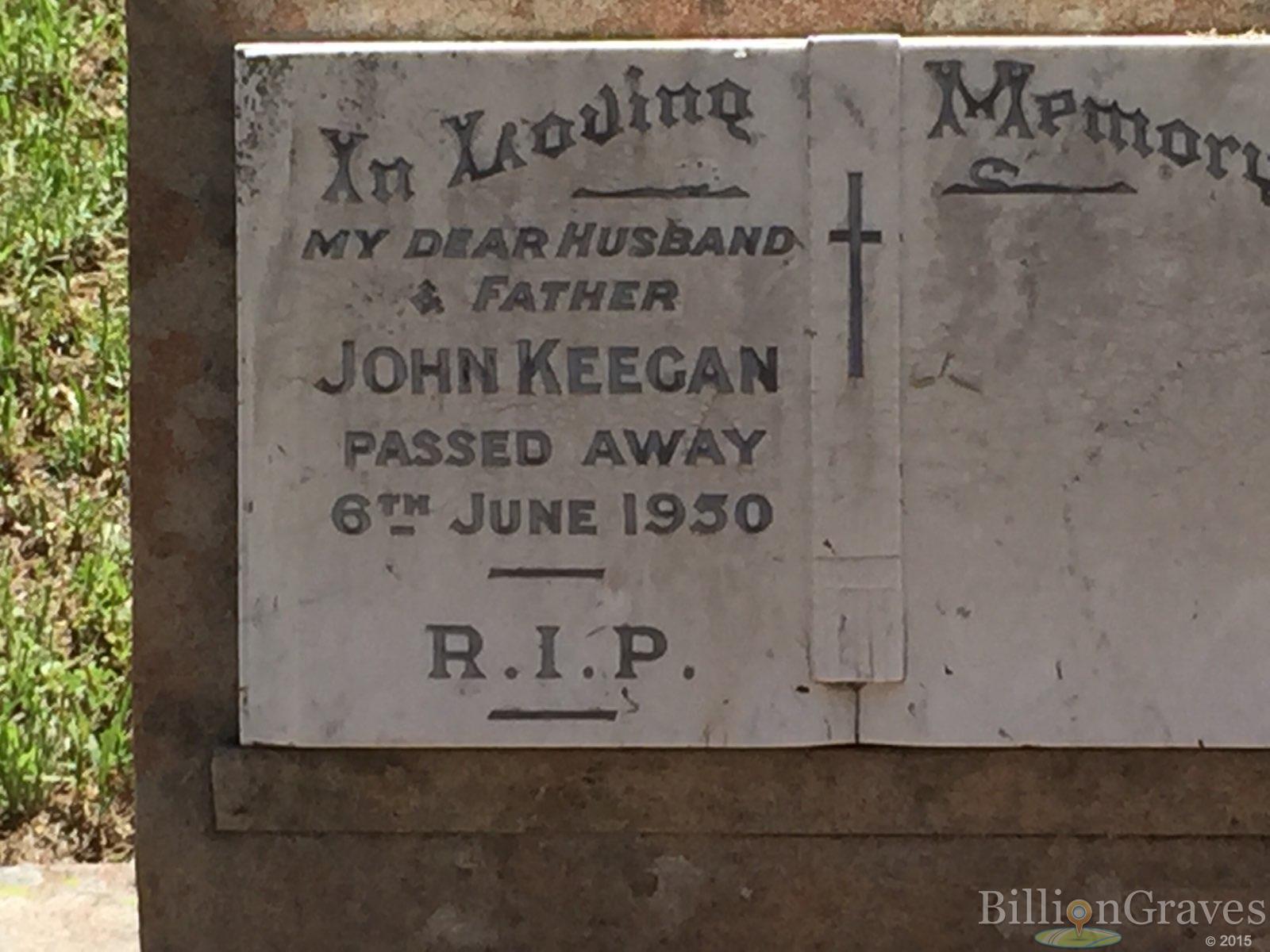
LATE CONSTABLE JOHN KEEGAN
The death occurred at Narrabri on Tuesday last of Senior-Constable John Keegan, eldest son of Mr. and Mrs. Patrick Keegan, of Sydney Street, Muswellbrook. Deceased had been off duty for six months prior to his death, owing to ill-health.
The late Constable Keegan was born at Raymond Terrace 50 years ago. He had resided in Muswellbrook until the time of his marriage to Miss Minnie Galvin, 25 years ago. He was educated at Raymond Terrace and St. Joseph’s College ( Hunter’s Hill ) and at Springwood. He joined the Police Force on 14th February, 1926, and had since been stationed at Stockinbingal, Queanbeyan, Goulburn, Candelo, Cooma, and Narrabri since
1940.
Deceased is survived by a widow and five children, John, Patricia, Desmond, Kerry and Michael, all of Narrabri. He leaves also his parents and the following brothers and sisters:— Mrs Bush (Imelda), of Muswellbrook, Mathew (Toronto), Dominic ( Muswellbrook ), Mrs. Frank Neville ( Ellen ), of Liverpool, and Misses Cecilia and Mollie Keegan (Muswellbrook).
The burial took place to the Catholic cemetery at Muswellbrook on Wednesday, the Very Rev. Father Fitzgerald officiating at St. James’ Church and at the graveside. The Rev. Father Mahoney officiated at a servic
held at Narrabri.
The late Constable Keegan was given a police funeral, the cortege being led by 1/c Constable Livermore
( Aberdeen ) and Constable Logan ( Muswellbrook ). The police truck, laden with wreaths, followed the hearse. The pallbearers were 2/c Sgt. Robinson and Newell, 1/c Constable Baker, Constable Broomfield ( Muswellbrook ) and 1/c Constable Driscoll ( Scone ), Constables Dick ( Scone ) and Gleeson – ( Aberdeen ), also attended. Sgt. Newell and deceased had
trained together at N.S.W. Police Depot. .
Floral tributes were received from:
St. Joseph’s College, Hunter’s Hill; Narrabri Old Boys; Mr. and Mrs. E. Kilroy and family; Thelma and Con Dolahenty; Mr. and Mrs. J. Maloney and family; Mr. and Mrs. A. Hyde and farmily; Mr. and Mrs. James O’Brien and family; Narrabri Police; “Snow” Panton and family; Mr. and Mrs. Roy Wilkin’s and family; R.R.R., Muswellbrook; Mr. and Mrs. Brind; Muswellbrook Police; the Hunter Valley Dairy Co.; Mr. and Mrs. Quinn and family; Mr. and Mrs. Lowe and Frank; Daph. and Harold Stafford; Gladys and George Post; Supt. Delaney and Police of Northern District; Harry and Charlie Jenkins; Mr, and Mrs. E. J. Mills and family; Kit and Lil; Aunty Theresa and family; Mr. and Mrs. Frank Blake and family; Marie and family; Mr. and Mrs. Cyril Feeney and family; Rita and Frank Thompson and Kevin; Mr, and Mrs. R. Hardman and family; Mr. Alick and family; Mr. and Mrs. E. Cretan; Dot and Albert; Rowley Roe and family; Mr. and Mrs. Peadon and family; Mr. and Mrs. S. S. Bendeich and family; staff at Bendeich’s, chemist; Many telegrams and cards were
The Evening Advocate ( Innisfail, Qld ) Tuesday 20 April 1943 p 1
FATAL FIGHT ABOUT SHEEP
NARRABRI. — A row about the death of a sheep was alleged to have led to a fight in which a man was killed. Mr. Thornton, PM remanded Henry Charles Legg, 68, teamster, to April 19 on a manslaughter charge, and jailed three other men for assault.
Legg is charged with having feloniously slain William James Dalton on April 3. Royal James Dalton and John Thomas Dalton were sentenced to two months’ jail, and Alfred Dalton to one month on charges of having assaulted Mounted Constable John Keegan, who was not on dut.
Royal and Alfred Dalton are sons, and John Dalton a brother of the dead man.
Constable Keegan said that in the yard of the Tourist Hotel, shortly before 6 pm, John Dalton accused him of having lied about the death of a sheep. Keegan said that when he told Dalton to go away or he would find himself locked up, Dalton said : “You are not game to put me in.” He replied: “None of you Dalton mob will bluff me.” Keegan said that Royal Dalton came out of the hotel, said, “You can beat the Daltons, can you?,” and attacked him. He knocked ” Royal Dalton down. Keegan added: “As I went to speak to Legg, who had asked to see me, Alf Dalton ran out of the hotel, and grappled with me. “Then Royal, John, Alf, and William Dalton were all on top of me, punching, and Alf was kicking me.
“I saw Legg pull William away and give him a sort of punch. William fell and struck his head on a concrete path.
” Legg said he saw the fight start, and tried to stop it.
Jean Elma Comber, barmaid, said that Keegan might have had two drinks that afternoon. He was sober.
Detective Chamagn: Was Legg drunk?— No. I don’t think so.
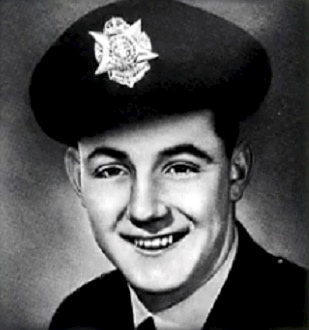
( Howell is the second, Victorian Policeman, to be awarded the KPFSM )
Victoria Police Force
Regd. # 10323
Rank: Constable
Stations: ?, East Malvern, Caulfield – death
Service: From? May 1948to 1 February 1952=3+years Service
Awards: Queen’s Police Medal, as mentioned in all of these articles, was NOT awarded to George but he WAS awarded ( posthumously ) the King’s Police & Fire Services Medal – KPFSM – which was granted on 29 August 1952 for Gallantry.
Born: ? ? 1926
Died on: Friday 1 February 1952 – 5.40am in Alfred Hospital
Cause: Shot – Murdered
Event Date: Wednesday 30 January 1952 about 10.35pm
Event Location: Normandy Rd, Caulfield, Victoria
Age: 25
Funeral date: Monday 4 February 1952 @ 2.30pm
Funeral location: Ewing Memorial Presbyterian Church, East Malvern, Victoria
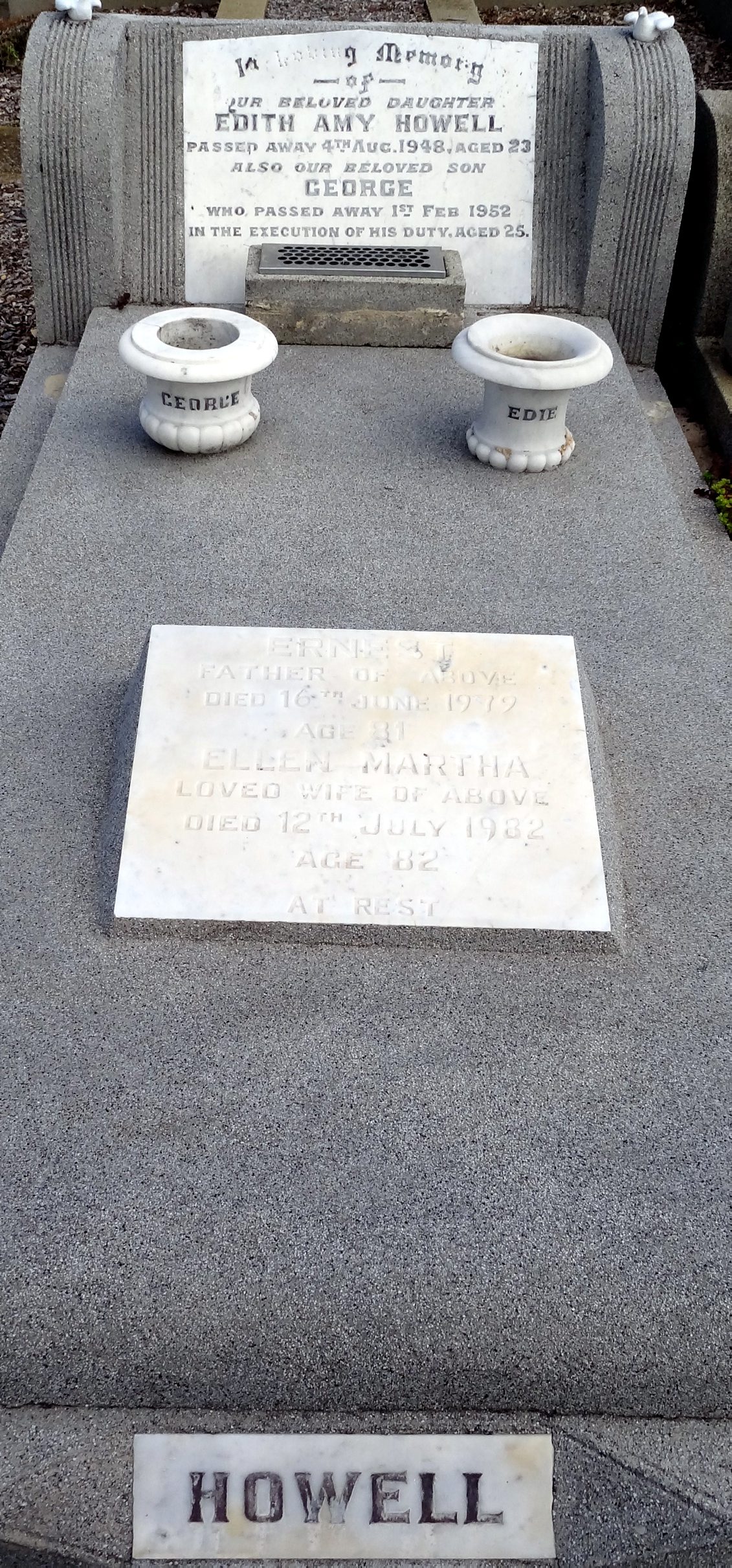
Buried at: Cheltenham Memorial Park, Cheltenham, Bayside City, Victoria
Plot: Plot is CE (Church of England), Monumental, Section 337, Gave 024
Memorial at: ?
GEORGEIS mentioned on the Police Wall of Remembrance
FURTHER INFORMATION IS NEEDED ABOUT THIS PERSON, THEIR LIFE, THEIR CAREER AND THEIR DEATH.
On the night of Wednesday 30 January 1952 Constable Howell rode his police bicycle to the Crystal Palace Theatre Dandenong Road Caulfield. He had been assigned to investigate and prevent the numerous thefts from cars which occurred in the vicinity.
About 10.35 p.m. Constable Howell intercepted a man tampering with a Morris Minor motor car. After a struggle the man ran off and the Constable ran after him. The offender then shot the Constable in the stomach with a sawn-off .22 calibre rifle. Although unarmed and mortally wounded the Constable continued to chase the gunman before collapsing in the centre of Normanby Road. The offender then escaped.
Although in shock and terrible pain and lapsing in and out of consciousness he was able to give a description of his assailant to bystanders who assisted him and to police who arrived shortly after. Crucially to the later trial he identified a hat and other items as belonging to the offender.
Rushed to the Alfred Hospital for emergency surgery Constable George Howell died in the early hours of 1 February 1952.
A skilful investigation primarily based on articles found at the crime scene and information from Constable Howell led to the arrest and subsequent conviction of a well known and active criminal.
The Argus Friday 1 February 1952 p 1 & p 16
Constable’s condition is ‘very low’
THE condition of 26-year-old Constable George Howell, who was shot by a gunman at Caulfield on Wednesday night, is dangerously low.
The bullet entered his stomach, travelled upward, and lodged in a back muscle.
Police believe they know the gunman who fired the bullet, and are confident they will ‘ pick him up” today or tomorrow.
They think he is hiding in an inner northern suburb.
Police last night detained a man for questioning but later allowed him to leave.
Doctors in Alfred Hospital began their fight for Constable Howells’ life soon after he was admitted at 11 o’clock, on Wednesday night.
They tried for three hours to extricate the bullet but by 3 a.m. his condition was so low that they abandoned their probing.
Nearly 50 of Victoria’s top detectives including the entire homicide and consorting squad backed by fingerprint experts, have worked around the clock in the hunt for the gunman.
Before he lapsed into unconsciousness at midnight on Wednesday, Constable Howell described his attacker as about 26 years, 5ft 8in, solid build, ruddy, round face, wearing a tweed overcoat over brown sports clothes.
Interviewed in hospital, Howell said “I had nearly caught him – he turned and fired straight at me – he was so close he just couldn’t miss.”
Constable Howell told homicide detectives he saw the man trying to enter several of the cars. When challenged, the man threw a leather satchel in his face. In a chase through the railway viaduct into Smith st, the man dropped a bunch of car keys, a screwdriver, a pair of tin snips, a torch, a small tin box, and “pork pie” black hat.
Police yesterday rounded up all known car thieves tor interview. They were still interviewing people late last night.
They also interviewed owners of cars which were parked outside the Crystal Palace Theatre, Caulfield, where Constable Howell surprised the gunman. The cars were thoroughly examined for fingerprints.
Police believe the man they are seeking has three convictions for car stealing, but is not a hardened criminal.
“A hardened criminal would not have pulled a gun on a policeman,” a detective said yesterday. “An experienced crook would know he could receive only a minor gaol sentence for attempted larceny and possession of a gun and house breaking implements.
“Shooting is a major charge which most criminals try to avoid.”
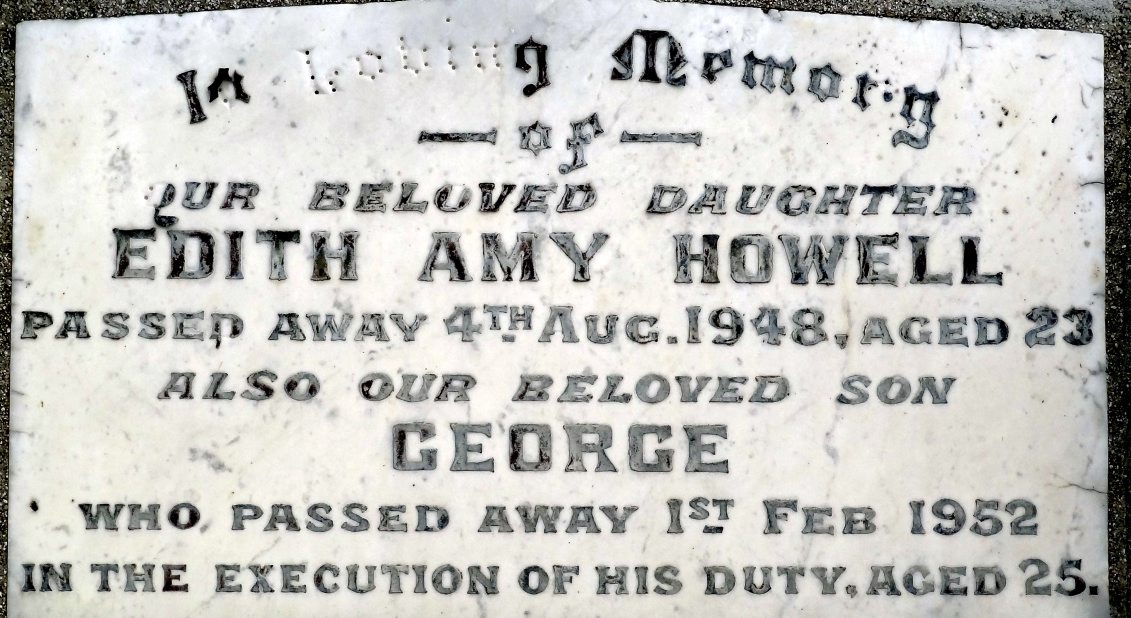
HOWELL. — On February 1 at Alfred Hospital, George, dearly beloved son of Ernest and Nellie Howell, of 9 Lord Weaver grove, Bon Beach loved brother of William, Edith (deceased) Joyce ( Mrs. Lumley ) and Rob dear grandson of Mrs Feist of Brunswick and Mr. George Howell aged 25 years ( late Victoria Police Force ) loved by all
HOWELL. — On February 1
George. dearly loved friend of Marj. and Ced Lumley, Ripponlea. So dearly loved, so sadly missed.
HOWELL – Loving memories of our dear George, passed away February 1. Sadly missed. ( Lomax family ).
HOWELL. — On February 1 at Alfred Hospital. George, dearly loved fiancé of June.
POLICE DRAW DRAGNET TIGHTER ROUND KILLER OF CONSTABLE
The hunt for the man who shot dead Constable George Howell at Caulfield is getting hot. Police have gathered much valuable information which may lead to his arrest.
Scores of armed police, working in twos and threes, made a series of surprise raids last night on suburban haunts and homes of known car thieves.
After a courageous fight for life, Constable Howell died in Alfred Hospital yesterday from the bullet wound he received in the stomach while chasing a car thief on Wednesday night.
Detectives have a fairly accurate description of the killer, and have narrowed the hunt down to the metropolitan area.
The man they are seeking is thought to have been responsible for about nine thefts from parked cars outside the Crystal Palace Theatre since mid-December.
The man was in the act of robbing another car near the theatre, after unlocking it, with a duplicate key, when he was challenged by Constable Howell.
He was fast seen running along Normanby Rd., Caulfield, near the railway viaduct where the shooting occurred.
The man has an unusually large head. The hat he dropped while being chased is size 7 1/4.
The hat is one of the best clues in police hands. It is a black “Continental” type “pork-pie” model, several years out of fashion.
The hat has an unusually narrow brim, and a wide black band of a type not seen on modern hats. The bow on the band is ripped, and hanging loosely.
Police also have a set of car thieves’ tools dropped by the gunman. These tools have been examined by scientific experts. Fingerprints have been obtained from cars which had been parked outside the theatre on the night of the shooting, and police have contacted several people who saw the killer running away from the viaduct.
After Constable Howell died at 5.40 a.m. yesterday, doctors extracted from his back the bullet which had fatally wounded him. The bullet was of .22 calibre.
Police originally thought the gun used was of a heavy calibre. Now it is thought to have been a sawed off pea-rifle.
Neither the gun nor the shellcase of the spent bullet has yet been found.
The wanted man’s description is: About 26 years, 5ft., solid build, round face, ruddy complexion, large head; wearing Donegal brown tweed coat over sports clothes.
Interstate police as well as all Victorian police, are watching for a man of this description.
Homicide squad chiefs in Melbourne said last night they had already had valuable aid from the public in their hunt and would appreciate still more help.
The killer dropped, with his hat on Wednesday night, a leather satchel containing a screwdriver, a pair of tin snips for cutting leads to car radios, a broken silver brandy flask with a round hinged top and 13 labeled car keys on a ring.
D24, police radio control, yesterday broadcast a detailed description of the keys to all Victorian police stations. A check will be made on garages and spare parts stores which sell such keys.
DETECTIVES believe that an accomplice was keeping watch while the man who killed Constable George Howell tried to break into cars outside the Crystal Palace Theatre at Caulfield.
Those who have been hunting for the gunman since the fatal shooting at Caulfield on Wednesday night were investigating this theory last night.
Inspector H. R. Donnelly, in charge of the investigations, said last night: “Car thieves invariably work in pairs. Records prove that they seldom operate alone.”
Police think the accomplice could have been sitting in a car near the theatre, and could have driven the killer away.
The fact that the murderer vanished seconds after the shooting” suggests that he might have fled in a car, detectives say.
They appealed last night to anyone who saw a man sitting in a parked car or acting suspiciously near the theatre to call on them.
The driver of a grey Holden car who was one of the first to reach the dying constable called at Russell st. headquarters yesterday.
He could not add to the description of the killer.
Six thousand people, many of them aged and in tears, yesterday attended the funeral of Constable George Howell, aged 26, who was fatally wounded by a man he was chasing at Caulfield on Wednesday last.
Long before the service commenced, Ewing Memorial Presbyterian Church, East Malvern, was packed.
Thousands, including 500 uniform and plains-clothes comrades, waited in Burke road and surrounding streets.
Parked cars stretched for hundreds of yards.
In his funeral oration, Rev. C. T. F. Goy, who was a close friend of Constable Howell, said he was sure everyone shared his mixed feelings of shock, sorrow and righteous anger at the deed which had caused George Howell’s death.
He added: “We are apt to take our police force for granted until something like this happens.
“Without that police force, there would be chaos and lawlessness leading to anarchy.
“The police are the guardians of our civil security. In their duty they take grave risks; even make the supreme sacrifice.
“We honor the name of this young man who made the supreme sacrifice in the pursuing of his duty. He has set a splendid example to others.”
As it moved away from the church, the cortege was headed by mounted police and the police band, which played the Dead March.
At one stage, the procession was more than a mile long.
Burial was at Chelterham Cemetery.
–
The Argus ( Melbourne ) Tuesday 5 February 1952 p 5
5,000 at funeral
Constable George Howell, who was murdered on duty, was yesterday given one of the biggest funerals ever held in Victoria.
Crowds lined the roads for seven miles as the cortege moved from Ewing Memorial Presbyterian Church, East Malvern, to New Cheltenham Cemetery.
Four hundred packed into the church for the service, and 5,000 others waited outside.
Constable Howell had planned to be married in the church this month to Miss June Lomax, of Windsor.
“Died nobly”
The procession to the cemetery was over a mile long.
The Rev. C. T. F. Goy, minister of the Ewing Memorial Church, said during the service: “It is an event like this that makes us realise how much we owe to the Police Force, a service we usually take for granted.
“Constable Howell died in the noblest traditions of that service.”
Homicide detectives said last night that they were not overlooking the possibility that the man who shot Constable Howell may have had an accomplice.
They appealed to any person who saw a “suspicious character” hurriedly leave the scene of the shooting on Wednesday night about 10.35 to contact them immediately.
Daily Advertiser ( Wagga Wagga, NSW ) Wednesday 13 February 1952 p 5
MAN REMANDED IN CONSTABLE HOWELL CASE
MELBOURNE, Tues.: In the City Court today William John O’Mealey, 28, laborer, was remanded until February 21 on a charge of murdering Constable George Howell. 25, at Caulfield, on January 30. Bail was refused.
Detective Sergeant Tremewen said Constable Howell disturbed a man interfering with cars near the Crystal Palace Theatre, Caulfield.
Constable Howell chased the man, but fell with a bullet wound in the stomach.
O’Mealey declared he was innocent.
‘During the whole of my interrogation by police I have maintained my Innocence, and still do so,’ he said.
‘I hope to prove my Innocence at the trial. I wish the public to know this.
‘Five witnesses have stated that I am not the man concerned. I believe they are eye-witnesses.’
Examiner ( Launceston, Tasmania ) Wednesday 13 February 1952 p 4
Accused Of Killing Constable MELBOURNE. — Thirteen days after Constable George Howell (25) was fatally shot, William John O’Meally (28), labourer, appeared in the City Court yesterday charged with his murder.
O’Meally, dressed in a light brown suit, with a white shirt and yellow tie, was refused bail and remanded to February 21.
Detective Sergeant William Charles Tremewen of the Homicide Squad told the court that at 11.30 p.m. on January 30, Constable Howell was on duty near the Crystal Palace Theatre, Caulfield and disturbed a man interfering with cars. The man ran away and Howell chased him. It was alleged that after a short distance Howell fell with a bullet wound in the stomach. He died in the Alfred Hospital on February 1.
O’Meally said, “I would like to say a few words. During the whole of my interrogation by police, I have maintained my innocence and still do.”
The charge against O’Meally is the sequel to exhaustive enquiries by police during which more than 500 people were questioned.
The Public Trustee yesterday applied for letters of administration of the £1,154 estate of Constable George Howell, shot dead while on duty at Caulfield on February 1.
The application was made on behalf of Constable Howell’s father. Mr. E. C. F. Howell, who with Howell’s mother is next of kin entitled to share in the estate.
Constable Howell divorced his wife last year and had no children.
His estate consists entirely of personalty.
Probate duty and legal expenses are not expected to exceed £70.
Melbourne – Constable George Howell (26) , who was fatally shot while chasing a suspected car thief near the Crystal Palace Theatre, on January 30, has been posthumously awarded the Queen’s Police Medal for bravery.
The award was announced by the Chief Commissioner of Police ( Mr. Duncan ), who asked the Government several months ago to make a recommendation to Buckingham Palace.
Approval by the Queen has been published in the London Gazette.
William John O’Meally was sentenced to death in May on a charge of having murdered Howell. He is expected to appeal to the High Court.
Police said that the medal had not yet arrived here.
For Parents
It will probably be given to Constable Howell’s parents at the next State investiture.
Mr. Duncan said that he would write to Howell’s parents about the award.
“Nothing can bring back Constable Howell’s valued life,” he said; “but it is gratifying to know that the Queen has graciously recognised his extraordinary bravery. ”
“His conduct was a fine example of devotion to duty, and will always be an inspiration to every member of the Victorian police.”
Constable Howell’s award ranks with the King’s Police Medal, which former Detective Chris Coe won for bravery at Highett in 1932.
O’Meally Appeal
The grounds of O’Meally‘s appeal are being prepared by his counsel ( Mr. M. Ashkanashy, Q.C. ), and Mr. J. F, Maloney and the Public Solicitor’s office, acting as his legal advisers.
The High Court is scheduled to begin its Melbourne sittings on September 30.
The appeal to the High Court is directed against the judgment of the State Full Court in rejecting O’Meally‘s appeal that the conviction be quashed and a fresh trial ordered.
A great deal of preparation for the High Court hearing has been made already.
This includes the combination of 12 bound appeal books containing a record of the ten day’s proceedings before the Criminal Court which convicted O’Meally.
MELBOURNE: William O’Meally , (28), of Bonbeach, would stand trial at the Criminal Court, next Monday on a charge of having murdered Police Constable George Howell at Caulfield early this year, a Crown Law official said, last night.
The trial judge was expected to be Mr. Justice Coppel. The Solicitor-General ( Mr. H. A. Winneke, Q.C. ) would be the Crown Prosecutor, and his assistant would be Mr. F. R. Nelson; The defence counsel would be Mr. J. Maloney.
The Crown law official said that about 50 Crown witnesses would be called during the trial, which would be one of Victoria’s longest for 10 years,
O’Meally is being held in the remand section of Pentridge gaol awaiting trial.
Constable Howell died on February 1 in Prince Alfred Hospital after being shot in the stomach outside the Crystal Palace picture theatre at Caulfield on January 30.
The coroner ( Mr. J. Burke, S.M. ) committed O’Meally for trial several weeks ago.
The Argus ( Melbourne ) Wednesday 6 February 1952 p 1
SHOOTING OF CONSTABLE
Arrest today likely
Homicide detectives expect to end the hunt today for the killer of Constable George Howell.
Late last night they had been questioning a man for l6 hours.
The man, a 30 year-old Australian laborer, was detained early yesterday at a seaside house.
Detectives got one of their most valuable leads in the case early yesterday when a man identified the hat found at the scene of the shooting as one recently stolen from his house.
He was taken to a house in a southern suburb where he identified property stolen with the hat.
In line-up
The suspect was placed in an identification lineup at Russell st. last night.
Two women and a man alleged to have been near the murder scene attended the lineup.
State Cabinet last night decided against offering a reward for information leading to the arrest of Constable Howell’s killer.
Mr. Dodgshun, Chief Secretary, said Cabinet was satisfied it would be contrary to the public interest to offer a reward at this stage.
The Argus ( Melbourne ) Wednesday 13 February 1952 p 3
HOWELL MURDER CHARGE LAID
A MAN charged in the City Court yesterday with having murdered Constable George Howell at Caulfield on January 30, declared from the dock that he was innocent.
“During the whole of my interrogation by police I have maintained my innocence, and I still do,” said William John O’Meally, 28, laborer, of Bonbeach.
“I am innocent of any such crime, and hope to prove such innocence at the trial. I wish the public to know this.”
Only six policemen and two pressmen were in the court during the 10-minute special sitting.
Folded arms
O’Meally folded his arms across his chest as the charge was read. He was remanded to February 21. Bail was refused.
Detective-sergeant W. Tremewen said that while on duty at the Crystal Palace Theatre, Caulfield, Constable
Howell disturbed a man interfering with cars outside the theatre.
He chased the man, and later fell with a gunshot wound in his stomach. He died in the Alfred Hospital on February 1.
The Argus ( Melbourne ) Wednesday 20 February 1952 p 12
RACV appeal for constable
The Royal Automobile Club yesterday appealed to its 120,000 members to support the fund for a memorial to Constable George Howell, who was fatally shot on January 30.
The club started the appeal with £50.
Members should send donations to the secretary, R.A.C.V., 94 Queen st., city.
The money will be sent on to the secretary of the Police Provident Fund.
The Age ( Melbourne ) Thursday 11 September 1952 p 4
Queen’s Medal for Constable Howell
Constable George Howell, the young policeman who was murdered at Caulfield in January while pursuing a suspected thief has been posthumously awarded the Queen’s Police Medal for bravery.
This is the first time a Queen’s Medal has been awarded a member of the Victorian police, and the second occasion in which a similar award has been made. Howell, aged 26, was fatally shot at point-blank range near the Crystal Palace picture theatre at Caulfield on January 31 by a man whom he had suspected of interfering with parked cars. A 28-year-old laborer, William John O’Meally, was sentenced to death in May for Howell’s murder, but has intimated that he will appeal in the High Court. An appeal by O’Meally heard by the Court of Criminal Appeal in July was dismissed. The Commissioner of Police ( Mr, A. M. Duncan ) announced the award yesterday in a special circular issued to all police stations and broadcast to patrol cars. The citation states that
the award was made ” for conspicuous gallantry in attempting the arrest of a criminal. ” Mr. Duncan said that the medal would most likely be presented to Howell’s parents at the next State investiture. He said that the Queen’s approval had been published in the London “Gazette.” He had requested the State Government several months ago to forward a recommendation to Buckingham Palace.
The only other occasion on which a similar award was made took place in 1934 when former Detective Chris Coe in May, the same year, was given the King’s Medal ( Police and Firemen-Bravery Division ) for arresting two gunmen at the Highett railway station. Coe was seriously wounded.
Constable Howell joined the force in May, 1948, and spent most of his service at the East Malvern station.
The Argus ( Melbourne ) Friday 12 December 1952 p 7
The. Governer, Sir Dallas Brooks, yesterday presented 65 awards, one posthumous, at an investiture at Government House.
Mr. Ernest Howell, father of the late Constable George Howell, was overcome with emotion when he received a posthumous award for his son’s heroism at Government House yesterday.
The citation said that Constable Howell died In the course of duty while attempting to arrest a criminal.
Barrier Miner ( Broken Hill, NSW ) Saturday 14 February 1953 P 1
No Appeal for O’Meally
Melbourne. — Insufficient money will stop William John O’Meally appealing to the Privy Council, his wife ( Mrs. Lois O’Meally ), said today.
She said there was now no chance of raising the money to finance the appeal. But O’Meally still wanted to appeal and would probably continue to try to get the money.
O’Meally was sentenced to death, for the murder of Constable George Howell. An appeal to the Governor failed, but later the sentence was commuted to life imprisonment without remissions.
The Cabinet decided that it would not pay the cost of a Privy Council appeal.
Recently of Karingal Gardens and formerly of Taree and Wallabi Point.
Passed away peacefully on Friday 24th June 2016. AGED 82 YEARS
Devoted husband of Di. Dearly loved Dad Mark (Dec), Karen and Meg. Loving Pop of James, Isaac, Hugh and Ellen.
Will be dearly missed by all his extended family and friends.
Cec’s Funeral Service is to held in the Chapel at Manning Great Lakes Memorial Gardens Pampoolah, commencing at 11.00am on Thursday 30th June, prior to his interment in the Pampoolah Lawn Cemetery.
RSL Sub Branch Members and Ex-Service Persons are warmly invited to attend.
Donations in lieu of flowers to the Police Citizens Youth Club would be gratefully appreciated.
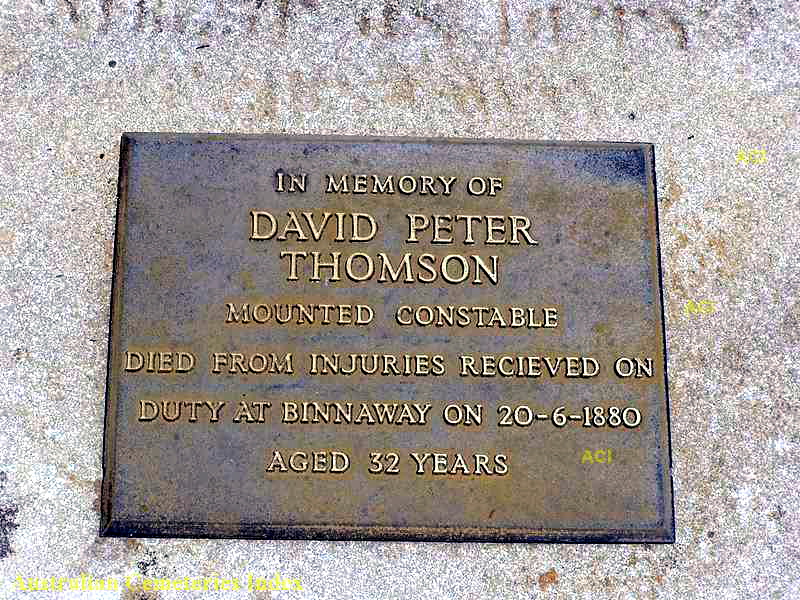
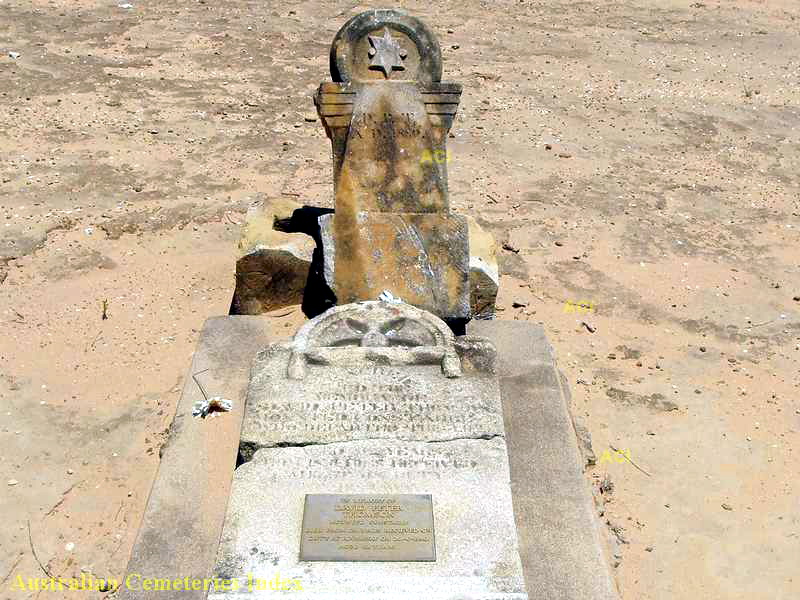
On 24th May, 1880 Constable Thomson was on duty at the Binnaway Racecourse when his horse ran him into a tree, causing severe head injuries. He passed away about four weeks after the accident.
The Australian Town and Country Journal of 10 July, 1880 reported that “David Peter Thomson, who was first class constable in the mounted police, breathed his last at Coonabarabran last week, after a month of severe and trying illness, says the Mudgee INDEPENDENT, June 30. Constable Thompson met with a terrible accident on the Binnaway racecourse on Queen’s Birthday, his horse dashing him against a tree, and partially fracturing his skull. Deceased’s brother, Mr. John Thompson, railway stationmaster at Parramatta, was in constant attendance upon the sufferer during the last fortnight of his illness. The funeral was very largely attended, the Grand United Order of Oddfellows walking in procession.”
The constable was born in 1846 and joined the New South Wales Police Force on 10 January, 1873. At the time of his death he was stationed at Coonabarabran. He is not listed in the official New South Wales Police Honour Roll.
[divider_dotted]
NSW State Records:
Service No.: 2237 David THOMSON DOB: 1846, Native of NSW. Reel 3043, Item [ 8/ 3251 ]
The Sydney Mail & NSW Advertiser Saturday 10 July 1880 p 53
DEATHS
THOMSON. — June 20, at Courthouse, Coonabarabran, mounted constable David Peter Thomson, from fractured skull, received by being run against the limb of a tree whilst on duty at Binnaway 24th May last, aged 32 rears.
NSW Government Gazette ( Sydney ) Tuesday 20 July 1880 P3790
In the Supreme Court of New South Wales.
ECCLESIASTICAL JURISDICTION.
In the goods of David Peter Thomson, late of Coonabarabran, in the Colony of New South Wales, mounted constable, deceased.
NOTICE is hereby given, that at the expiration of fourteen days from the publication of this notice, application will be made to the Supreme Court of New South Wales, for letters of administration of the goods, chattels, credits, estate, and effects of the abovenamed deceased to be granted to John Robertson Thomson, of Parramatta, in the said Colony, railway station master, a brother and next of kin of the said deceased. — Dated this 19th day of July, a.d. 1880.
About 7am on 4 June, 1929 Sergeant Lanham finished his shift at the North Sydney Police Station and shortly thereafter collapsed and died. The following brief article appeared in The Sun of 4 June, 1929.
AFTER NIGHT’S WORK POLICEMAN DROPS DEAD.
Returning from duty at North Sydney about 7 a.m. to-day, Sergeant William J Lanham of Willoughby-road, North Sydney, collapsed and died. Sergeant Lanham had been suffering from high blood pressure. He was 50 years of age and had been connected at different times with the North Sydney. In 1914, he and Inspector Pattinson and Detective-Sergeant Miller and others arrested a gang of desperate thieves at Willoughby. Subsequently he was promoted and transferred to Paddington. Last year he was again appointed to North Sydney.
The sergeant was born in 1878 and joined the New South Wales Police Force on 3 January, 1908. He was stationed at North Sydney. He is also variously referred to as Lanaham, Lanahan and Danaham. He is not listed in the official New South Wales Police Honour Roll.
[divider_dotted]
The Sydney Morning Herald Wednesday 5 June 1929 p 13
LANHAM. – The Relatives and Friends of the late
Sergeant WILLIAM JOSEPH LANHAM, of No. 6 Station, are invited to attend his Funeral; to leave Wood Coffill’s Funeral Home, corner Falcon and Miller streets, North Sydney. THIS WEDNESDAY, at 2.30 p.m., for Church of England Cemetery, Northern Suburbs, Motor Funeral.
WOOD COFFILL LIMITED.
Motor Funeral Directors.
LANHAM.—The Relatives and Friends of Mrs.
MARGARET ANN LANHAM and FAMILY are invited to attend the Funeral of her beloved HUSBAND and their FATHER, Sergeant William Joseph Lanham; to leave Wood Coffill’s Funeral Home, corner Falcon and Miller streets, North Sydney, THIS WEDNESDAY, at 2.30 p.m., for Church of England Cemetery Northern Suburbs Motor Funeral.
LANHAM.—The Relatives and Friends of MICHAEL and WALTER REGAN and Mr. and Mrs. A. BOWMAN and FAMILY are invited to attend the Funeral of her beloved BROTHER-IN-LAW and UNCLE, Sergeant William Joseph Lanham: to leave Wood Coffill’s Funeral Home, corner Falcon and Miller streets, North Sydney, THIS WEDNESDAY, at 2.30 p.m, for Church of England Cemetery, Northern Suburbs. Motor Funeral.
WOOD COFFILL LIMITED.
LANHAM.—LODGE WILLOUGHBY, 363, U.G.L.,
N.S.W.—Brethren of above and sister Lodges are fraternally invited to attend the Funeral of the late Wor. Bro. WILLIAM JOSEPH LANHAM; to leave Wood Coffill’s Parlour, Falcon and Miller street, North Sydney, on WEDNESDAY, 5th inst., at 2.30 p.m. Brethren meet at Temple, Lane Cove-road. North Sydney, at 1.15 p.m. Regalia.
The Sydney Morning Herald Wednesday 5 June 1929 p 14
LANHAM.—June 4, 1929, at his residence, 296 Willoughby-road, Naremburn, William Joseph Lanham, late Sergeant No. 6 Police Station, beloved husband of Margaret Ann Lanham, aged 50 years.
The Sydney Morning Herald Wednesday 5 June 1929 p 16
OBITUARY.
POLICE-SERGEANT LANHAM.
On returning to his home in Willoughby-road yesterday morning after a tour of night duty, Sergeant William Joseph Lanham, of the North Sydney police, collapsed, and died shortly afterwards. Sergeant Lanham, who was aged 50, had over 22 years’ service in the force, much of his time having been spent in the northern suburbs.
After terms as constable in North Sydney and Chatswood, he was promoted sergeant and transferred to Paddington, but a few months ago was again detailed for duty in North Sydney, and he did valuable service in the district with which he had an intimate acquaintance.
The funeral will leave Wood Coffill’s parlours at 2.30 p.m. to-day for the Northern Suburbs Cemetery.
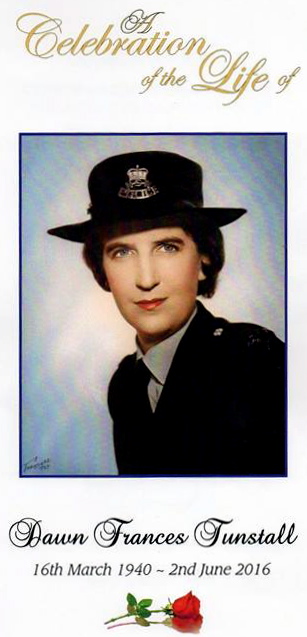
Dawn was married to Bill TUNSTALL and Dawn worked from the Women Police Office in the old C.I.B. building, Surry Hills.
[divider_dotted]
born in Henty NSW.
In 1957 Dawn became a Nurse & Midwife at Yass and in 1963 was sworn in as a Woman Police Constable no 53.
Dawn, ( like all of that early period of women in policing ), performed duties in school lecturing then into Plain Clothes at the CIB performing drug and vice duties.
She went back to Nursing and during this period she found time to hold Commissioned Officer positions in the Girl Guides, St Johns Ambulance and Senior Controller in the SES she gave her life to Public Service.
Vale Dawn Tunstall
by Richard Hurst
[divider_dotted]
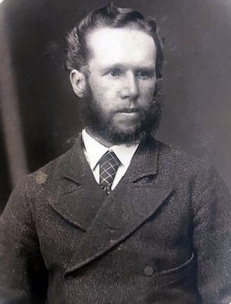
Mark Edward Dyett FORD
| 28/06/2016
Mark Edward Dyett FORD
Late of ” Collingwood ” Kenwyn Street, Hurstville – formerly of Orange, NSW
Nephew of Dr. Frederick Thomas West Ford, police surgeon of Melbourne, Victoria
New South Wales Police Force
Regd. # ‘Q‘ 1010
For the purposes of this website ‘Q‘ represents those Police joining between 1 March 1862 ( commencement of NSWPF ) – 23 February 1915 ( Commencement of NSWPF current numbering system )
Rank: Probationary Constable – appointed 18 August 1862 ( aged 20+/- )
Inspector
Stations: ?, Rylstone pre 1868 ( Senior Constable – 1868 ), Police Camp – Tambaroora ( SenCon 1869 – 1870 ), German Town – Hill End ( Sgt – 1874 ), Wollongong ( Senior Sergeant 1877 ), Bourke ( Sub-Inspector ), Orange ( Inspector )
Service: From? ? 1862to? ? about 1901 – retired on Pension
Awards: ?
Born: ? ? 1842 in England
Died on: Sunday 26 November 1911 at ” Collingwood”, Kenwyn St, Hurstville, NSW
Cause: ?
Age: 70
Funeral date: Tuesday 28 November 1911
Funeral location: Church of England, Orange, NSW
Buried at: Church of England Cemetery, Orange, NSW
Grave Location: C of E, Area – Old; Sect: A, Number 350
Memorial at: ?
Mark Edward Dyett FORD – NSWPF – Died 26 Nov 1911
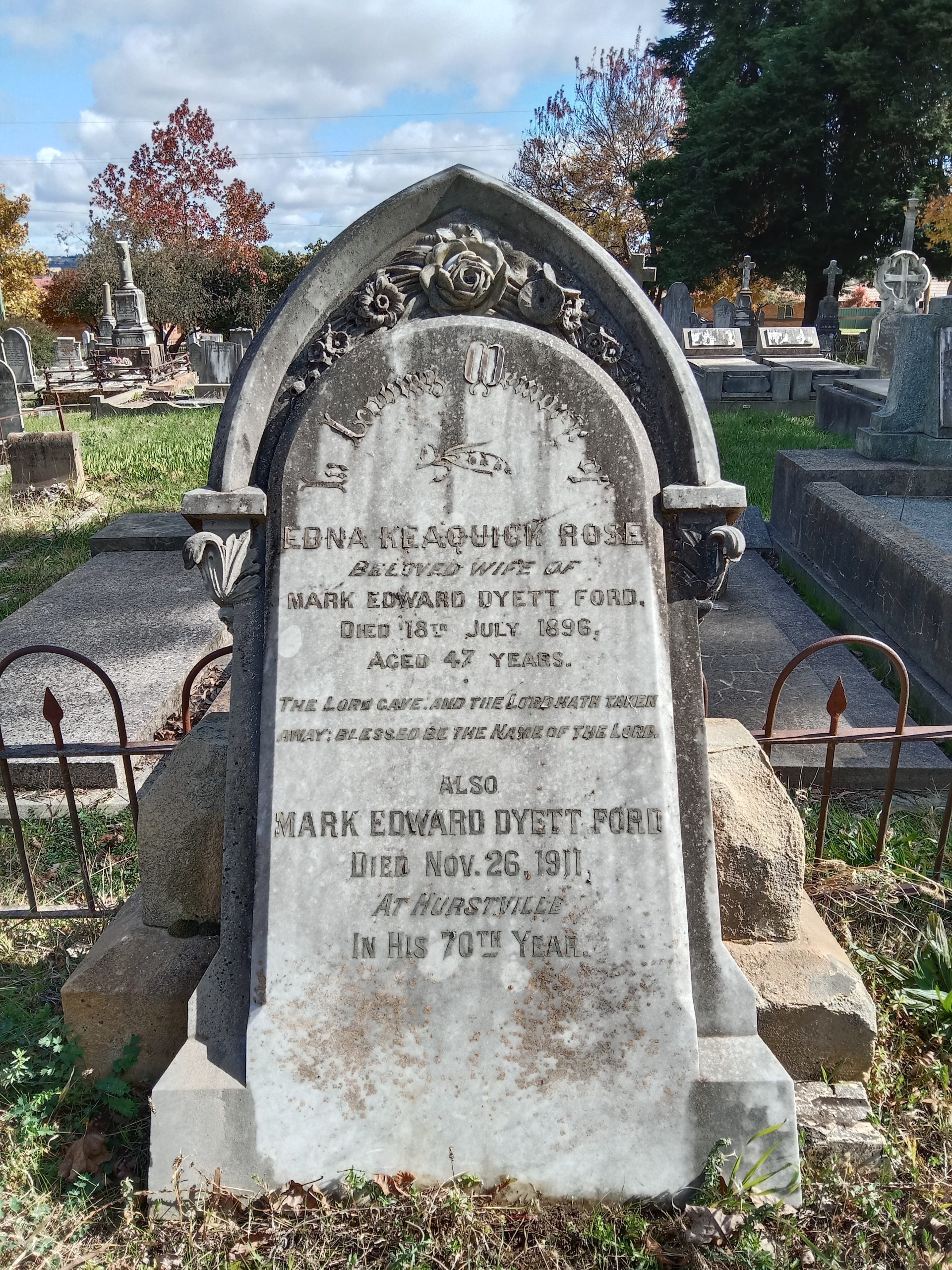
In Loving Memory of Edna Keaquick Rose FORD, beloved wife of Mark Edward Dyett FORD. Died 18 July 1896, aged 47 years. The Lord gave and the Lord hath taken away; blessed be the name of the Lord. Also Mark Edward Dyett FORD, Died 26 November 1911, at Hurstville, in his 70th year.
MARK is NOT mentioned on the Police Wall of Remembrance *NEED MORE INFO
Funeral location: ?
FURTHER INFORMATION IS NEEDED ABOUT THIS PERSON, THEIR LIFE, THEIR CAREER AND THEIR DEATH.
Retired Inspector of Police Mark Edward Ford, whose last post was at Orange, has died at Hurstville, aged 70 years. When in the service he was of the type that is always popular. He never allowed the officer to submerge the man, and consequently was greatly admired by the men under his control. In his day he was a splendid horse man, and went through many trying experiences in carrying out his police duties In the Interior.
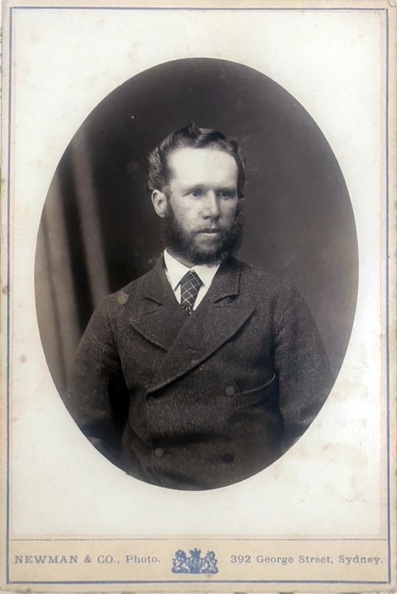
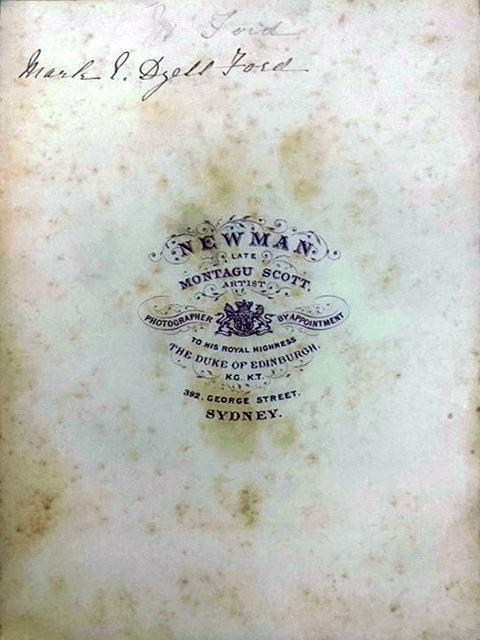
Rear of main photo of Mark Edward Dyett FORD – NSWPF – Died 26 Nov 1911
Truth ( Sydney )
Sunday 3 December 1911 p 10
Mr. Mark Edward Dyett Ford, formerly inspector of police at Orange, died at Hurstville, and was buried at Orange on Tuesday. He was 70 years of age, a nephew of Dr. Frederick Thomas West Ford, police surgeon of Melbourne. He joined the force in Sydney in 1862 as a full private, was sergeant at Hill End in the good old days of the Hill, and was subsequently promoted to a sub-inspectorship. He retired on pension about ten years ago.
The death occurred at Hurstville yesterday of Mr Mark Edward James Ford, who was inspector of the police force at Orange for a number of years, at the age of 70 years.
His wife died at Orange in July, 1896, the body will be brought to Orange by tomorrow morning’s mail train, and the remains will leave the Church of England School-room at 11am for the Church of England Cemetery. Mr F. Ford has charge of the mortuary arrangements.
( Note on headstone has his name as Mark Edward Dyett Ford. )
He lived at ” Collingwood ” Hurstville. Electoral Roll – 1930 – Ford, Mark Dyett – Kenwyn Street, Hurstville – Inspector of Police
The inhabitants of Rylstone, in praise worthy appreciation of the services of the above meritorious officer, have just presented him with a purse of upwards of £25, and an address engrossed on vellum, and signed by the donors. The address reads as follows :
” To MARK EDWARD DYETT FORD, Senior Constable.
” The undersigned, inhabitants of Rylstone and neighbourhood, have much pleasure in presenting you with the following testimonial of their appreciation of your very efficient services as a public officer, in putting down crime,in this district.”
The signatures, with the sums attached follow, and from the amount (£25 5s. 6d.), it need hardly be said that some modest sums have been given, showing that the esteem this officer is held in is not alone confined to the wealthier class of the community. We have repeatedly had occasion to allude to the activity, zeal, and intelligence of senior-constable Ford, and when a selection was made from the whole of the police force of men to hunt down Clarke’s gang, Senior-constable Ford was chosen among the first. For his sake, we wish the testimonial had had a wider range, as the appreciation of his services is not confined to the district of Rylstone.
Acting Sub-Inspector Mark Edward Dyett Ford ( late of Wollongong and now of Bourke), has been gazetted a Sub-lnspector, a promotion which many friends in this district will be happy to hear of.
THE Bench of Magistrates at Wollongong, have this day appointed Senior-sergeant Mark Edward Dyett Ford, Inspector of Weights and Measures for the District of Wollongong.
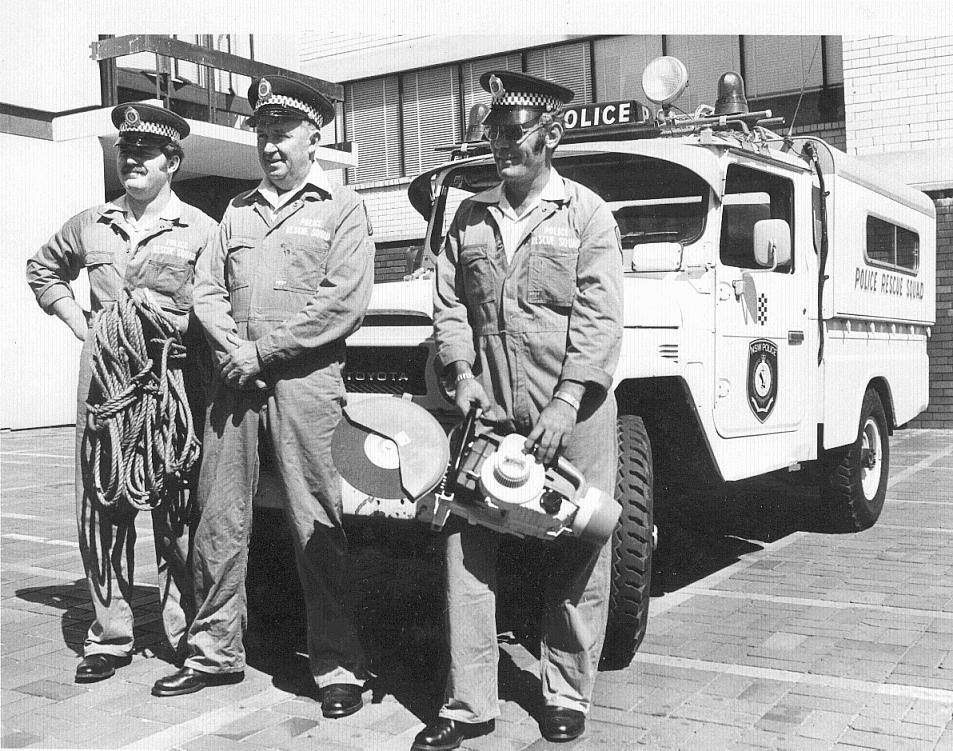
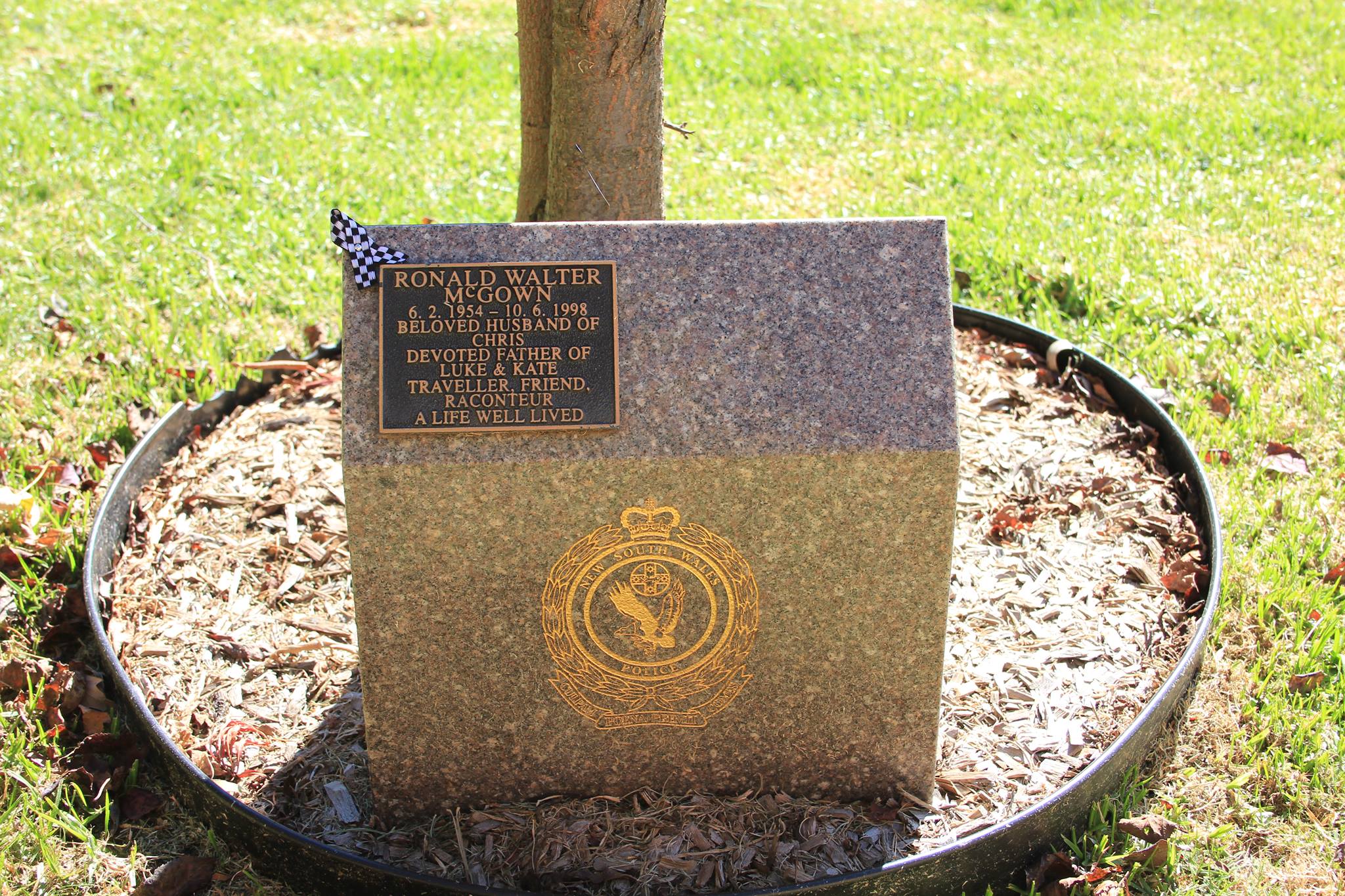
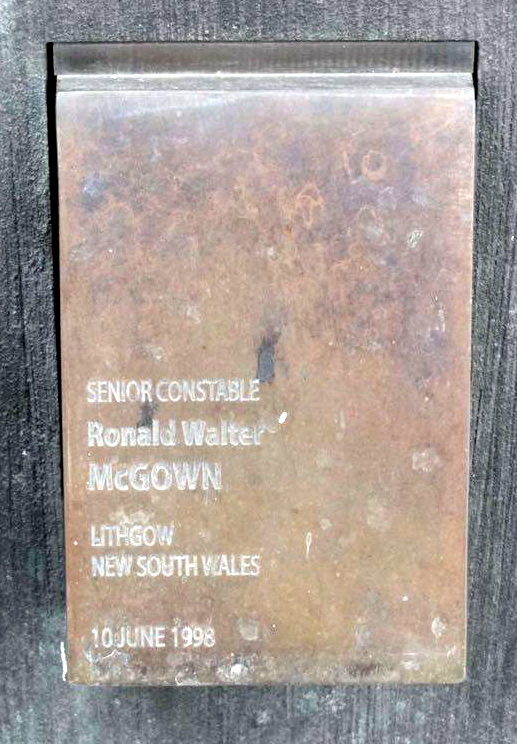
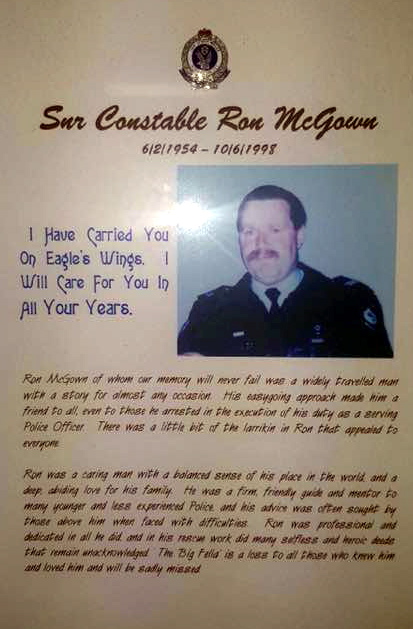
Rons’ cancer was deemed a HOD from a rescue response incident in Blacktown to a chemical spill.
Trevor Watkins was also a Rescue Operator who attended the same incident and died some time before Ron of the same cancer. Doctors linked the 2 Police to the same chemical spill event.
Trevor, however, is NOT mentioned on the National Police Wall of Remembrance. ( Last checked 25 Aug 2022 )
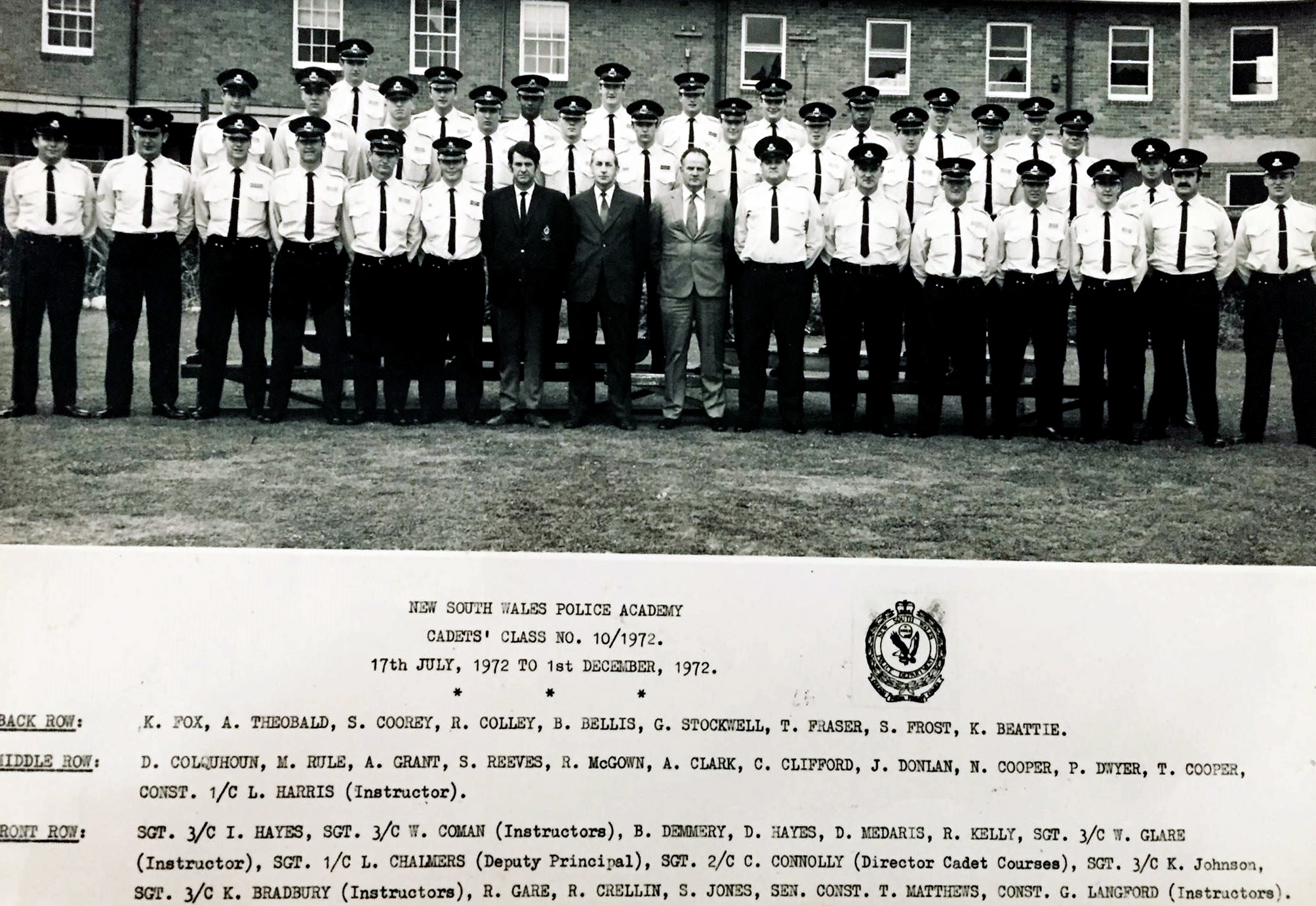
Cadets – Class 10 / 1972 ( Class 132 )
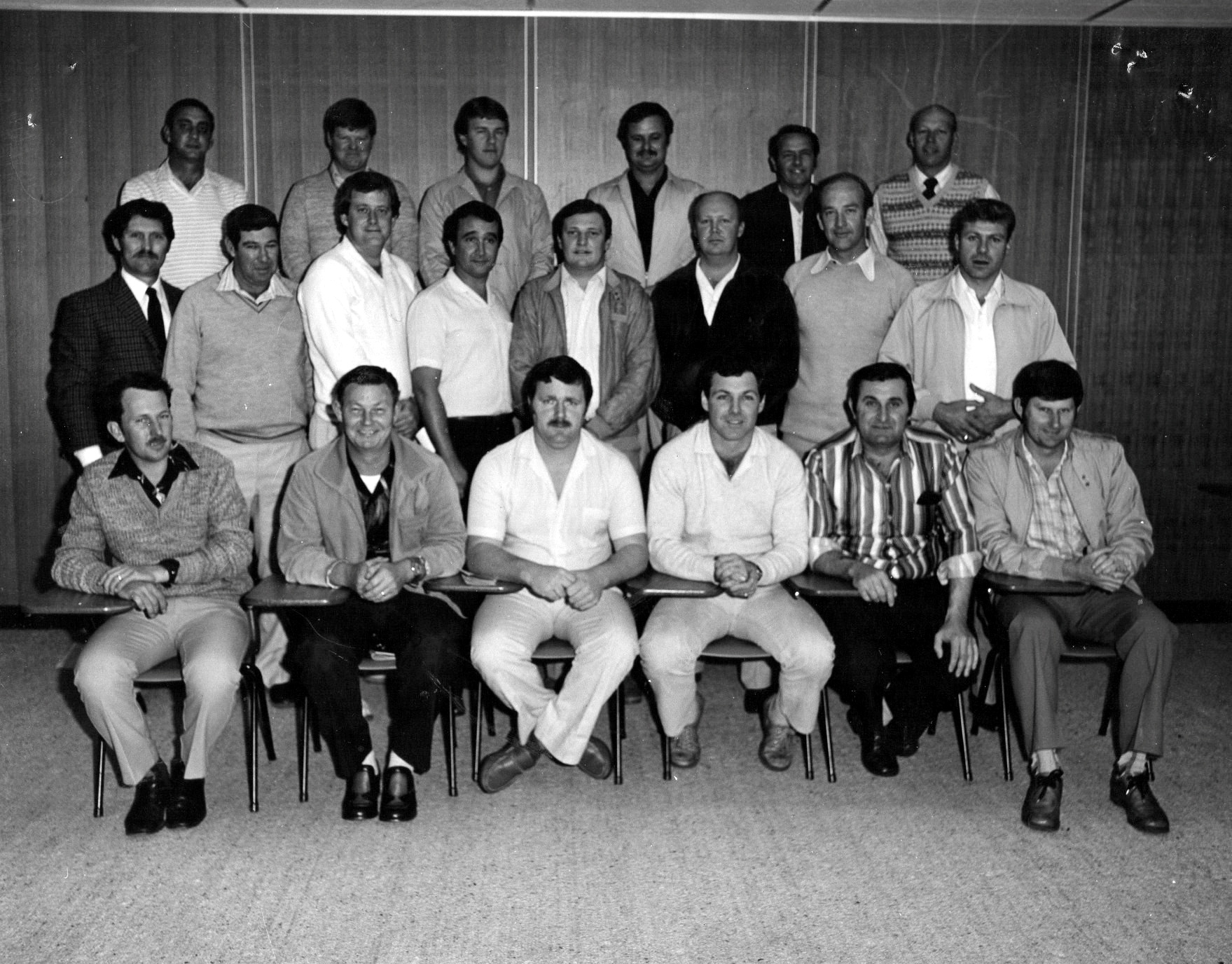
a Sergeants course or First Line Commanders course at Penrith Police Station around mid 1980s. Can’t remember all the names but I will give it a try. Back row: Laurie Eddy ( # 16868? ), Greg Peterson ( # 15106 ), Warren Newton ( # 14491 ), Bob Murrell ( # 15864 ), Hank Vanderwaarden ( # 15760 ), Ron Blake ( # 10029 ). Middle row: John HAMER – instructor ( # 11103 ), Ernie Jones ( # 15468 or # 14515 ) , Gary BUCKLEY ( # 16269 ), Ces Kearney ( # 16804 ), Ray Filewood ( # 15912 ), Dave Clouston ( # 16727 ), Alan Targett ( # 14196 ), Helmut Myers ( # 16359 ). Front row: Kieron Power ( # 17384 ), John Findlater ( # 13571 ), Ron McGOWAN ( # 15631 ), Gordon Middlemisss ( # 17058 ), Gary Winchester ( # 15414 ), Mal Roser ( # 16028 ).
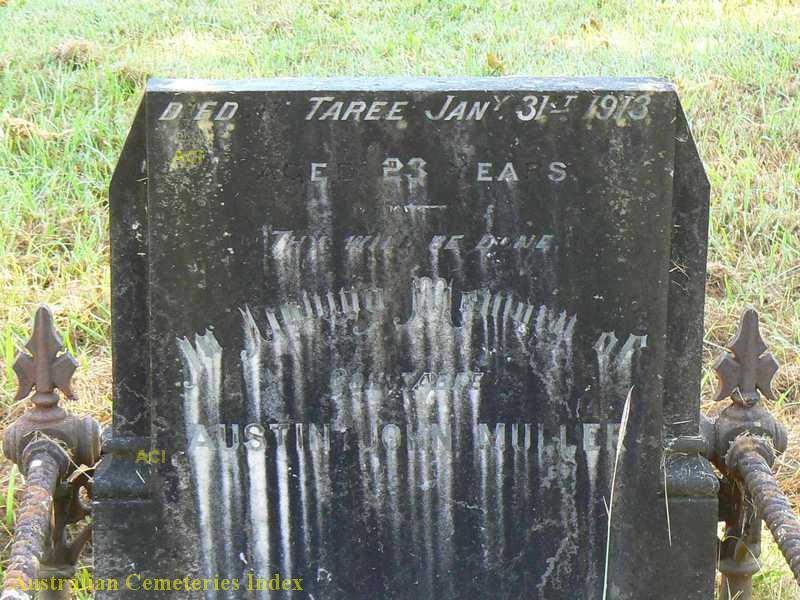
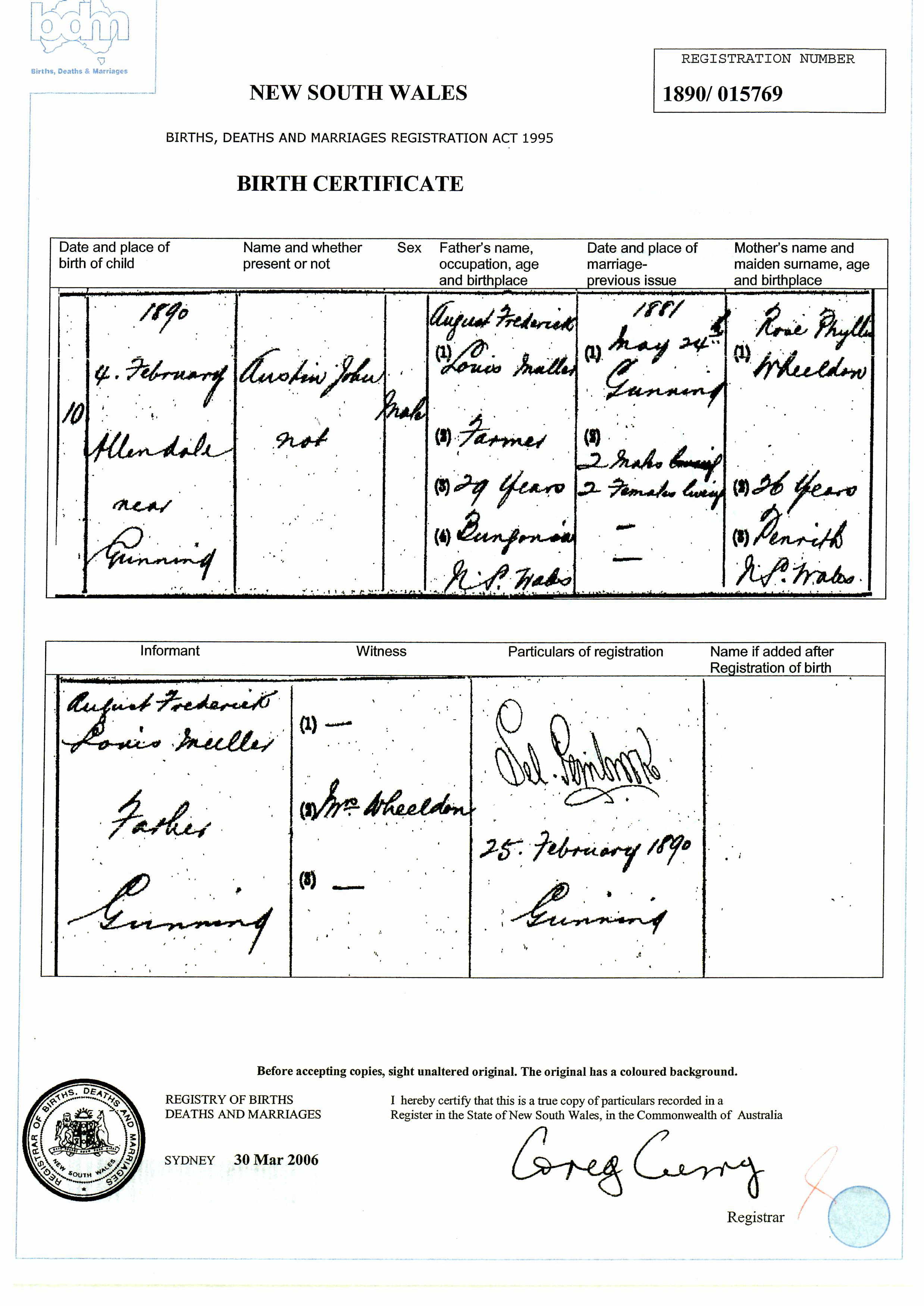
Austin John MULLER
| 28/06/2016
Austin John MULLER
aka John
New South Wales Police Force
Regd. # ‘Q‘9537
For the purposes of this website ‘Q‘ represents those Police joining between 1 March 1862 ( commencement of NSWPF ) – 23 February 1915 ( Commencement of NSWPF current numbering system )
Rank: Constable
Stations: ?, Stroud, Gloucester – Death
Service: From 18 September 1912to 31 January 1913 = 4+ months Service
Awards: ? No find on It’s An Honour
Born: 4 February 1890 – “Allandale”, near Gunning, NSW
Died on: Friday 31 January 1913
Place of death: Manning River District Hospital, Taree
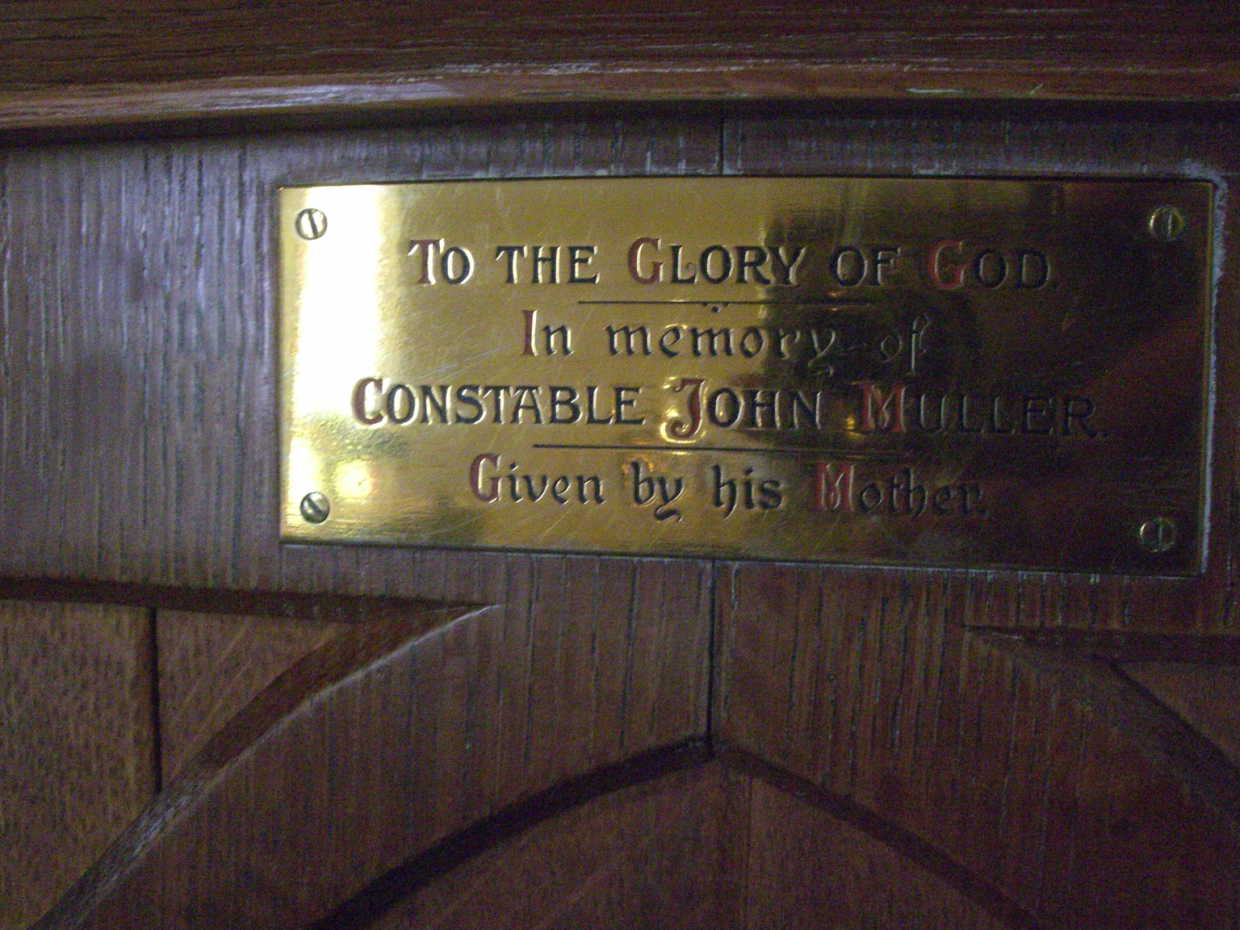
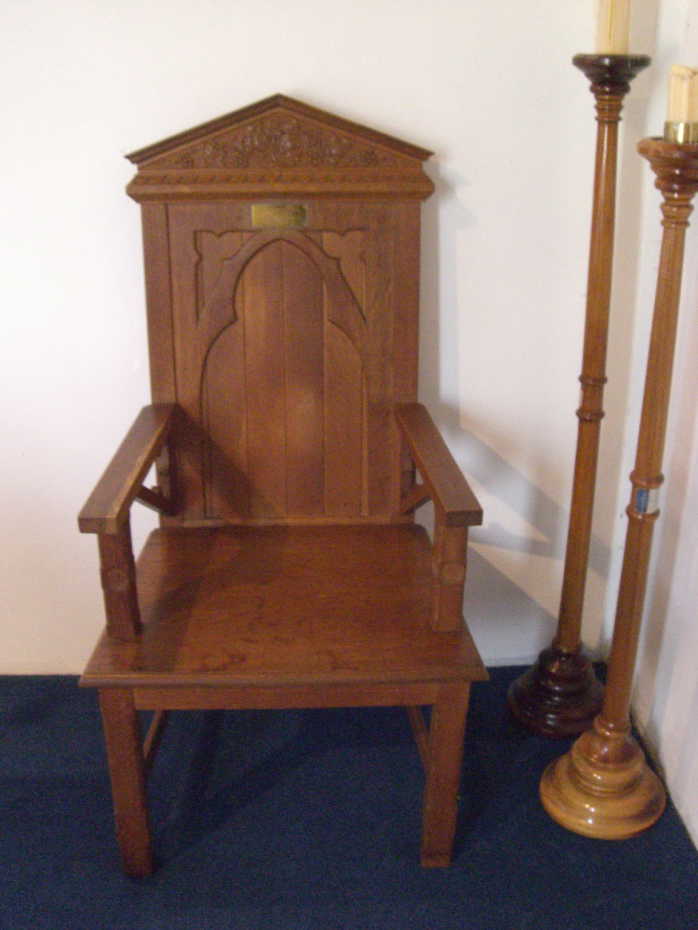
Memorial at: St Edmunds Church of England, Gunning, NSW Gift of Bishops Chair to St Edmunds Church of England, Gunning NSW by his mother Rose Muller. Inscription: To the Glory of God In memory on Constable John MULLEN Given by his mother
Memorial at: St Edmunds Church of England, Gunning, NSW Gift of Bishops Chair to St Edmunds Church of England, Gunning NSW by his mother Rose
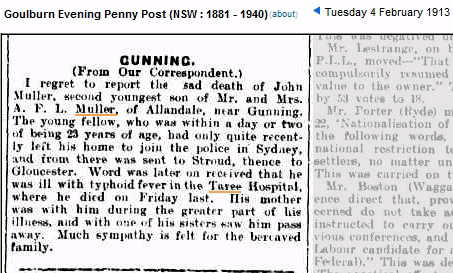
Death Notice: Goulburn Evening Penny Post Tuesday 4 February 1913 GUNNING ( From Our Correspondent. ) I regret to report the sad death of John Muller, second youngest son of mr. and Mrs. A. F. L. Muller, of Allandale, near Gunning. The young fellow, who was within a day or two of being 23 years of age, had only quite recently left his home to join the police in Sydney, and from there was sent to Stroud, thence to Gloucester. Word was later on received that he was ill with typhoid fever in the Taree Hospital, where he died on Friday last. His mother was with him during the greater part of his illness, and with one of his sisters saw him pass away. Much sympathy is felt for the bereaved family.
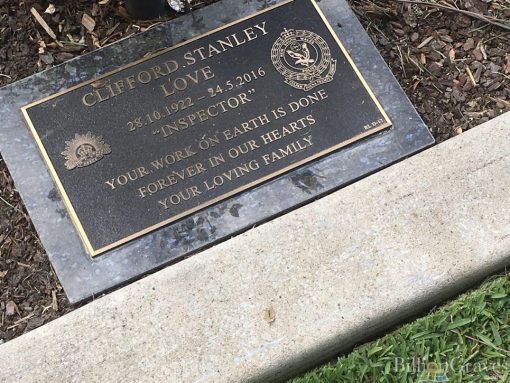
Clifford Stanley LOVE
| 28/06/2016
Clifford Stanley LOVE
( late of Warners Bay, NSW )
aka Cliff
NSW Police College, Penrith – Class # 003
New South Wales Police Force
Regd. # 4958
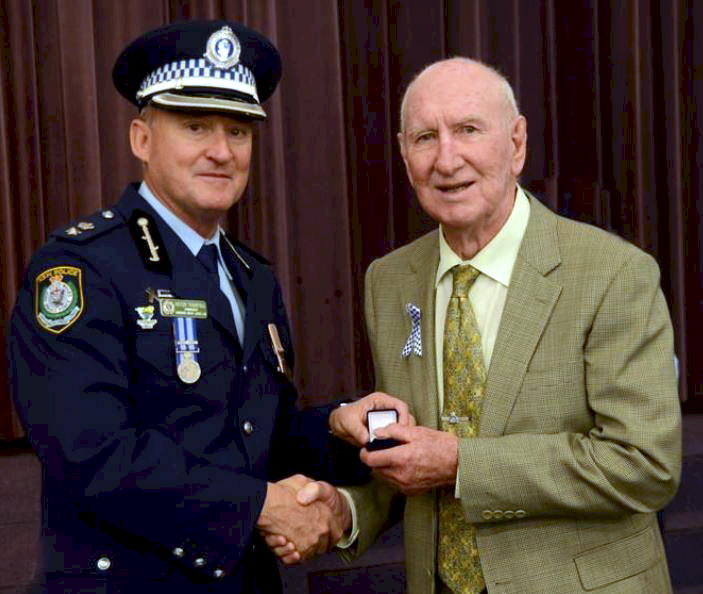
Rank: Probationary Constable – appointed 21 January 1946 ( aged 23 years, 2 months, 24 days )
Sergeant 2/Class – appointed 20 February 1967 ( North East District – Muswellbrook )
‘Inspector First Class,
Officer in Charge, Newcastle District’
(Retired 1982.)
Dearly loved husband of JOYCE.
Much loved father and father in-law-of MAX LOVE & RAE COUGHLAN, MAREE & MICHAEL, COLLEEN & DIAMOND.
Loving Grandfather of MARC & SARAH.
Great Grandfather to HARMONY.
Also a much loved uncle, great uncle, Police colleague and Friend to many.
Relatives and Friends are warmly invited to attend a Celebration of CLIFF’s Life to be held in The Chapel of Lake Macquarie Memorial Park, Palmers Road, Ryhope this MONDAY 30/5/2016 commencing at 10AM.
An interment will follow in the Lawn Cemetery.
Published in The Newcastle Herald from May 27 to May 28, 2016
Cliff LOVE was the Officer In Charge of the infamous Star Riot in Newcastle on the night of 19 September 1979 when police had to deal with an estimated 4000 rioters when the Star Hotel was closed down.
The Police vehicle Cliff had at the scene was rolled over by the hoodlums and ‘ torched ‘ ( burnt ) at the riots. Paddy Wagons ( Police trucks ) were also rolled and burnt. One officer lost his .38 Smith & Wesson which was later recovered some distance away.
Some of the 40 Police, but not limited to, who attended and were confronted by odds of 100:1 were:
Cliff LOVE
Cliff Judd
Paul Baker
Brian Atkins ( broken wrist )
The night the Star exploded
September 17, 2004
Twenty-five years after the infamous Newcastle riot, many are still wondering who was to blame, writes John Huxley.
The trouble started just after 10pm when, to scattered cries of “kill the pigs”, an angry, alcohol-fuelled crowd started pouring out of the pub and on to the street to confront a painfully thin blue line of police officers.
Within minutes, missiles were – in the words of one witness – “raining down like rice at a wedding”. Rocks, bottles and beer cans. Watched by several hundred spectators gathered in the middle of the road, the mob rushed police lines and overturned paddy wagons. It was only after two hours of violent mayhem that the crowd was dispersed by fire-brigade hoses. By then, the street had been transformed, says a witness, into a “a sea of rubbish”.
Fourteen officers and eight civilians were on the way to hospital with injuries. Eventually, 46 people were charged with 79 offences, ranging from assault occasioning actual bodily harm to resisting arrest and riotous assembly.
To this day, it is remembered as Newcastle’s “night of infamy”: a Wednesday night, almost exactly 25 years ago, which started much like any other but ended in violent confrontation as about 40 police battled more than 4000 rioters angered by the closure of the Star Hotel in the city’s West End.
As dramatic pictures of the riot flashed round the world, putting the ugly face of Newcastle on front pages of newspapers everywhere, the then NSW premier, Neville Wran, called the events of September 19, 1979, un-Australian. “It was a shocking, disgraceful episode,” he said.
Possibly. But that has not prevented the riot becoming part of Australian folklore. Newcastle City Council produced a lengthy report. The band Cold Chisel recorded a famous song about it (see above). A Hunter Valley theatre group staged a controversial musical about it.
“From this distance it’s easy to lose sight of what really happened, ” Phillip McIntyre, a music writer and lecturer in communications at Newcastle University, explains. “There’s been a lot of myth-making going on.”
Indeed, Cold Chisel frontman Jimmy Barnes recently said people still came up to him to say how f—ing great he was at that gig he played on the last night of the Star. The band never performed at the hotel. Doubts have even been raised about the authenticity of some of the pictures taken that night.
It’s not surprising, then, that a quarter of a century on, the riot remains the subject of controversy. What sparked it? Was it a drunken rabble, a provocative band or heavy-handed police. Or was it the media, who were in place for hours, waiting for something to happen? Was it premeditated or largely spontaneous? And, most importantly, just what was its significance? Nothing more than a shocking show of drunken hooliganism, as Wran put it? Or a political demonstration by an alienated youth triggered into action by the loss of one of the few focuses of community expression?
Like it or not, few would dispute that the Star Hotel was, if not salubrious, then special. Built in 1885 – its distinctive facade dated from 1925 – it was a huge, rambling place stretching a block between King and Hunter streets, and comprising three very different bars and clienteles.
As the National Times newspaper wrote at the time, the front bar “served sailors from around the world, RAAF men, petty criminals and pimps, parachutists and ‘short back and sides’ misfits who didn’t fit into sophisticated taverns”. The middle bar catered for local gays entertained by drag acts, such as that staged by the notorious “Stella the Fella”. And the back bar was where the young people went, where the bands played for free almost every night of the week.
Far from being at each others’ throats, the different groups rubbed along peacefully. “There was a real sense of community, of belonging to the place,” recalls Mark Tinson, of the Heroes, the band playing the last set at the Star on that memorable night.
“Aesthetically though, it was a big toilet. But for the fact I was being paid to perform there, I don’t think I’d have been seen dead in the place.”
Unusually, bands played on a raised stage behind the bar, upon which young girls danced. Often they were semi-naked. Money and $1 cans of beer, dispensed from large ice-filled troughs, were traded across the boozing, cheering crowd.
Most nights, drinkers at the Star could be counted in their hundreds. Estimates of the number of people present on September 19 to drink, to farewell the hotel – peacefully or forcefully – range from 3000 to 8000.
Though only one week’s notice was given to the licensee Don Graham, the writing had been on the Star’s white-brick walls for some time. For the same reasons that patrons loved it – for its rebelliousness, its rowdiness, its unruliness – licensing authorities loathed it. “The Star had a definite reputation,” says McIntyre, with heavy emphasis. A few years earlier, a sailor had been stabbed to death at the hotel. There were regular reports of drugs and of underage drinking. Even Stella the Fella had been given her-his marching orders a few months earlier.
As Tooths Brewery moved to close the Star, its regulars mobilised to defend it. “Save the Star” T-shirts were produced, a petition supported by several thousand names was started, and a group of tradespeople who used the pub even offered their services free to renovate the fallen Star.
“People strongly believed it was ‘their’ pub and they weren’t going to allow anybody take it off them,” McIntyre recalls. Even without the offer of one happy hour’s free beer, the scene was set for an emotional, potentially explosive closing night.
By the time the Heroes started their final number, shortly before the scheduled 10pm shutdown, the crowd had swelled to thousands. Many had been drinking heavily for several hours. “You could feel the electricity in the room,” Tinson says. “But, really, more like a mardi gras or a street party.”
How the party turned into a riot remains unclear. Tinson says the “pivotal moment” occurred shortly before 10pm when police entered the bar and insisted they finish immediately. “I mean we’d 30 seconds to go. And everyone was, well, you’ve got to be kidding.”
In the ensuing chaos, the Heroes stopped playing. There were cries, Tinson says, of “kill the cops, from a couple of idiots”. As the mood turned ugly, the Heroes decided to play their final encore, as they had planned. “I mean we didn’t want to cause a riot.”
Their choice of song, The Star and the Slaughter, led later to singer Peter de Jong being charged with the incitement to riot. One verse runs: “I want action, And I want fighting in the streets. Gonna take this town by storm, Gonna burn the buildings down … ”
Prophetically, the chorus proclaimed, “They will remember the night of the Star and the Slaughter.” Within minutes, the band were interrupted again, Tinson says. “One of the crew came in and said, ‘you should see what’s happening out there’.” The infamous Star Hotel riot had begun.
Tinson, a lifelong teetotaller and still a respected member of the music industry, does not defend the behaviour of the rioters. “They behaved abominably,” he says. And he was reluctant to do or say anything that might prompt people to celebrate – or recreate – the riot. But he insists that by their action, the police inflamed the situation. “I think if they’d given us a few more minutes, the situation could have been avoided,” he says.
He also defends the band’s choice of song which, he insists, did not originally refer to the hotel, had been a regular item on their playlist and had been written many months previously – not, as some critics alleged, earlier that evening. “If only we had that sort of ability.”
For their part, the police, supported by the politicians, insist they had no alternative but to act after the crowd started interfering with traffic and a difficult situation threatened to turn dangerous. Senior officer Cliff Love said at the time that there was no way a force of 40 would choose to confront a crowd of thousands, most of them out of control on alcohol, many of them at least prepared for trouble. “It’s no exaggeration to say that police were in fear for their lives.”
As Mike Scanlon, a Newcastle Herald journalist and historian, recalled, it was also subsequently revealed that authorities were concerned a lost police firearm had been stolen by a rioter. It was later found away from the scene.
Whoever was to blame, whatever the degree of premeditation involved, one thing does appear clear with hindsight: the riot was the product of booze and boredom. More, drunken rabble or not, the rioters – most of them young, many of them unemployed – were representatives of a bigger, nationwide group of boozed, bored people who felt increasingly at odds with the political system.
Over the next few years, similar riots, brawls, battles were to occur across Australia.
As the Newcastle City Council report concluded, across the land there was a “general sense of anger and frustration”.
Life has moved on. Tinson lectures at the local TAFE. He, de Jong and the other Heroes reunited last month to perform at a hospital fund-raiser.
And the Star Hotel, after many incarnations, is scheduled to be demolished to make way for a swish, 12-storey apartment block. Perhaps the old facade will be retained. Perhaps a plaque recording the events of September 19, 1979 will be erected. Perhaps not.
As Tinson says, “The idea of celebrating a riot is a bit off.”
Lithgow this season can easily lose a player to the octupus city clubs before he even appears locally.
He is Constable Cliff Love, who had been posted as a player in the newly formed Diggers‘ team.
Reported to be extra fast, Love, last Sunday was contacted by Sydney Eastern Suburbs officials and asked to appear with them in this week’s trials. Hard on the heels of Easts’ offer came another from Balmain, who will be meeting Easts in this week-end’s series. However, it was a case of first come, first served, and Love will try out with Easts.
If background is anything, Love should be a footballer whom Lithgow will not want to lose. In his younger days, he played school football and was also an athlete of no mean ability, while in later years he appeared with Group 16 on the South Coast prior to his enlistment in the Army, with which he served in New Guinea.
Lithgow Mercury ( NSW ) Wednesday 14 August 1946 p2
Alleged Hit-Run Driver Committed For Trial
Eight police witnesses testified against Henry Lam, of Newtown-street, Alexandria, in Lithgow police court yesterday, when he was committed for trial at Bathurst Quarter Sessions next Tuesday on a charge of having, by a negligent act – driving a motor vehicle negligently – caused grievous bodily harm to Const. Clifford Stanley Love on the night of July 20.
Mr. J. S. Hart, P.M, was on the Bench. The charge was a sequel to an alleged hit-run accident several weeks ago when Const. Love was struck by a car and thrown against an ambulance when investigating an accident in which Mr. Harry Earp, of McKellar’s Paddock, had been injured by another car.
After the accident, said Det. Sgt. E. E. Mabbutt in evidence, he went to Church-street and saw an “A” Model Ford in front of George Corney’s residence. He had a conversation with Corney, examined the car and with Corney took the vehicle to the police station, where it was subsequently photographed. The near side mudguard had a slight dent.
Witness continued that on July 25, accompanied by Det. Armstrong, of Redfern police, he saw the defendant at his home and had a conversation with him.
In respect to the accident and injuries sustained by Constable Love, Lam, he alleged, said he was very sorry to hear that the Constable had been Injured.
Det. Sgt. Mabbutt stated that the defendant admitted that he had been in Lithgow on the Saturday and had left for Sydney on the 6.30 p.m. train and that prior to his departure he had had an arrangement with George Corney to use a car, owned by a man named Purcell, for the purpose of driving to Littleton to pick up his port at his sister’s place.
ADMITTED SWERVING
Lam, he added, also admitted that he had seen an ambulance in Main-street east and had swerved to the right to avoid a collision. He denied having seen the light in the rear of the ambulance or having seen a Constable standing nearby.
When told that the crowd in Main-street had became hostile after he struck the Constable and called out, “stop, you have hit someone,” Lam said he had not felt a bump, nor did he hear any one call out. Lam, added the witness, said he had not been licenced to drive at the time of the accident.
Det. Sgt. Mabbutt then exhibited an overcoat, which, it was claimed, had been worn by Const. Love on the night of July 20. It was torn in several places and streaked with duco. An envelope containing strips of duco taken from the mudguard of the car was also tendered.
VISIBILITY BAD
In reply to Mr. Ian L. Higgins, witness said that at the time of the accident the night was damp and visibility was bad. He said he did not know Lam had been a transport driver in the R.A.A.F. or that he was on discharge leave when the accident occurred.
George Burgess, a miner, said he was the driver of a car which had collided with a pedestrian about 50 yards west of the Court House Hotel corner. He was standing near the ambulance when he heard Superintendent Purdie ( A. Purdie, NSW Ambulance ), or someone call out a warning. He moved towards the Superintendent, heard a terrific bump and saw Const. Love knocked by a car. Love struck the ambulance door and fell to the ground. He helped him to his feet and saw a car turning Bridge-street comer an increasing speed.
Just as he was stepping from the ambulance, after having placed an Injured pedestrian inside, Const. Love spoke to him about the accident and at the same moment was struck by the mudguard of a car, said Superintendent A. Purdie.
UNSUCCESSFUL CHASE
He told the Constable to get into the front of the ambulance and they would try to catch the car. They were unsuccessful and he took Love to the hospital, where five stitches were inserted in his head wounds.
Alexander John Jenkins, a bus driver, stated that he was standing near the bus stop on the northern side of Main-street and saw the car which it was alleged had struck Const. Love. He knew the vehicle well because he had sold it a few days before.
Evidence was given by Athol Joseph Rigg, a grocer, that he was standing near Leighton’s tailor shop when he noticed a car approaching from the west. Before it reached the ambulance it swerved to the right, hit the open door of the ambulance and caught Const. Love. The car kept going and passed between the vehicle involved in the first accident, which was in the centre of the road, and the footpath near the Court House Hotel. It cut the corner and went up Bridge-street.
George Corney, garage proprietor, said he allowed Lam, who was well known to him, to use the car to assist him to catch the 6.30 p.m. train. He did not know the car had been returned to his home until Sgt. Mabbutt questioned him. When he examined the vehicle he noticed a slight dent on the near side mudguard.
DID NOT REMEMBER MUCH
Victim of the accident, Const. Clifford Stanley Love, told the police prosecutor ( Sgt. H. Taylor ) that he did not remember much after being hit. He added he had suffered much pain as a result of head and hip injuries, which had resulted in him being off duty for several weeks.
A description of Love’s injuries was given by Dr. Geoffrey Athol Williams, R.M.O., Lithgow hospital.
Mr. Higgins, who asked the Bench to dismiss the charge, said there was no evidence of criminal negligence. It could not be shown in the evidence that the defendant had planned to cause an accident, nor that he had deliberately committed the act.
Mr. Hart said he was satisfied that there was sufficient evidence to support a charge of negligent driving and committed the defendant for trial. Bail of £50 was allowed. Lam declined to make a statement and reserved his defence.
On two charges of failing to stop after an accident and driving without a licence Lam was remanded until September 29 on £20 bail. He was discharged on a third count of causing bodily harm by wanton driving.
Henry Lamb, of Lithgow, recently discharged from the RAAF, was also discharged by Judge Shortland at Bathurst Quarter sessions yesterday.
Lamb was charged with driving a motor vehicle upon a public street, negligently, whereby he caused Constable Clifford Stanley Love bodily harm.
After hearing evidence, his Honor directed the jury to acquit Lamb. Judge Shortland pointed out that it would be necessary to prove criminal negligence on the part of Lamb and it did not appear that such evidence was forthcoming. Under another section of the Act, a case might have been made out, but under the section by which Lamb was charged a definition – not so far made – was necessary if the court was to be clear on the matter.
Evidence heard was to the effect, that Lamb had been driving a car along Main Street, Lithgow, on the night of July 20, and had hit Constable Love when Love was standing at the rear of an ambulance car. An accident had occurred a short time before Lamb drove along the street. The ambulance was parked in the street with all lights on, an injured person was receiving attention, visibility was bad, and there were buses parked near the scene of the accident, and a crowd had gathered in the street.
Lamb’s defence was that he did not see the ambulance car until almost upon it and swerved to avoid it. He was not aware, however, that he had hit the constable.
St. Paul’s Church of England was, on Saturday, November 8, the scene of a pretty wedding, the parties being Joyce Isobelle Triplett, youngest daughter of Mrs. C. Triplett and the late C. Triplett, of Read Avenue, and Clifford Stanley Love, youngest son of Mr. and Mrs. F. T. Love, of Bega. Rev. A. E. Begbie officiated.
The bride, who was given away by her brother, Mr. E. R. Triplett, was gowned in French Chantilly lace over taffeta, cut with sweetheart neckline and trained hem. Her veil of billowy tulle was surmounted by a coronet of white flowers. The bridal bouquet was of roses, sweet-peas and lily of the valley. The matron of honor was Mrs. A. N. Thomas, of Wallangarra, the bride’s sister. She wore heaven-blue crepe with matching straw hat veiled with stiffened net. She carried a bouquet of crimson roses.
Mr. B. Schonbeck was best man.
Many guests were received at Bolt’s Hall by the bride’s mother, who wore a pastel pink frock with navy accessories and a shoulder spray of roses. The bridegroom’s sister, Mrs. H. Lush of Sydney, who was acting in the absence of his parents, wore a suit of navy and white silk jersey, with white accessories and shoulder spray of red roses.
The chairman, Rev. A. .E.. Begbie, rendered a solo, “Passing By.” The wedding cake was made by the bride’s mother and decorated by Mr. W, Smith.
The happy couple left for Sydney, the bride travelling in a suit of turquoise blue crepe, with black accessories. The honeymoon is being spent at Surfer’s Paradise and Bega.
Mr. and Mrs. Love will make their home in Lithgow.