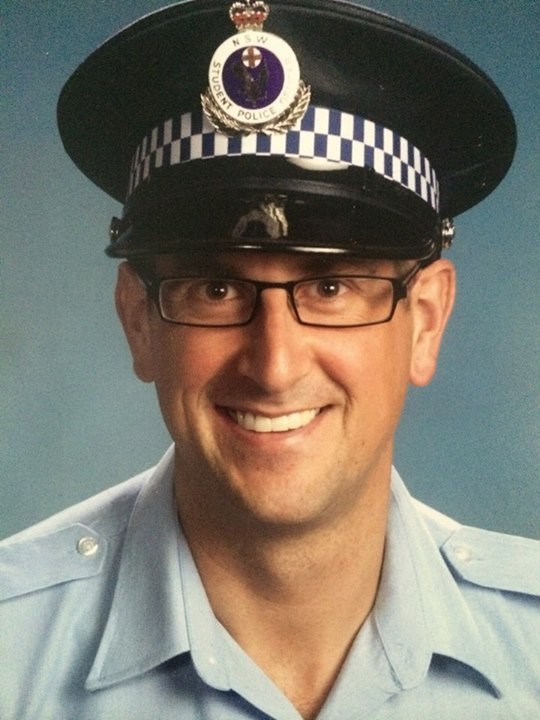
Much-loved Mount Druitt police officer, Constable Matthew Montesin, died on Wednesday.
Constable Montesin, who was 40, was diagnosed with terminal cancer of the lungs last year.
He worked in general duties in the Mount Druitt local command for more than three years.
He was affectionately known as Monty and described by colleagues as “a likeable, hard-working constable who always endeavoured to provide the best possible service to his community”.
Constable Montesin had three sons, all of whom he chose to raise in western Sydney where he grew up.
He was diagnosed with cancer late last year.
Colleagues said his death was a great loss to them and to his family, with whom all their prayers and thoughts now were.
[divider_dotted]
NSW POLICE LEGACY MONTESIN FAMILY APPEAL
Constable Matthew Montesin has worked at Mt Druitt Police Station for over three years in General Duties. Monty, as he is affectionately known, is a likeable hard-working constable who always endeavours to provide the best possible service to the community in a fair and compassionate manner.
Matthew grew up in the Western Sydney region and spent his entire life in this area, choosing to raise his own children in the same region. In August 2013, Cst Montesin went to his doctor with a niggling cough and was diagnosed with Whooping Cough. He was successfully treated and was told that his cough may continue for a couple of months before passing.
After a few months, Matthew was convinced to return to the doctors by his wife to have the cough seen to again. Further tests revealed shadowing in his lungs and he was subsequently sent for a biopsy. As a result of the biopsy he was called into the doctors office 48 hours later and was delivered the most devastating news. Matthew was diagnosed with stage 4 cancer of the lungs, a terminal prognosis. Sadly, Matthew has never smoked and celebrated his 40th birthday in September this year.
Matthew has been given a time frame of six months to live without treatment, possibly twelve months with chemo treatment and the possibility of two years if he is genetically compatible with a new drug from the United States. Matthew was not compatible and has now been given a twelve month life expectancy.
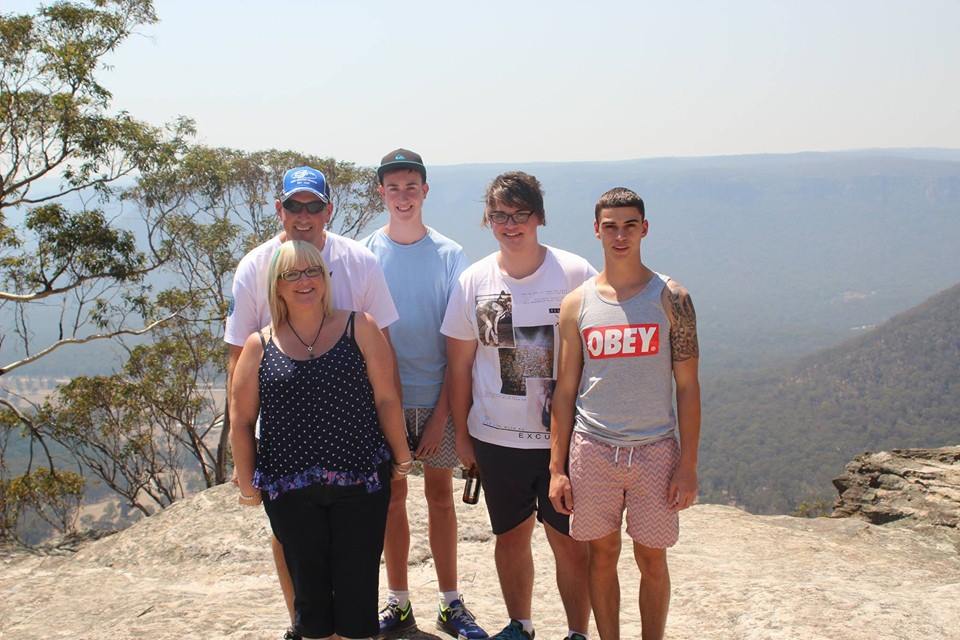
Matthew is 40 years old and currently living in Western Sydney with his wife Megan and three sons; Zac 19 years of age, Latham 18 years of age and Hayden aged 14. He is an extremely dedicated family man and adores the riches of life he considers to be his family.
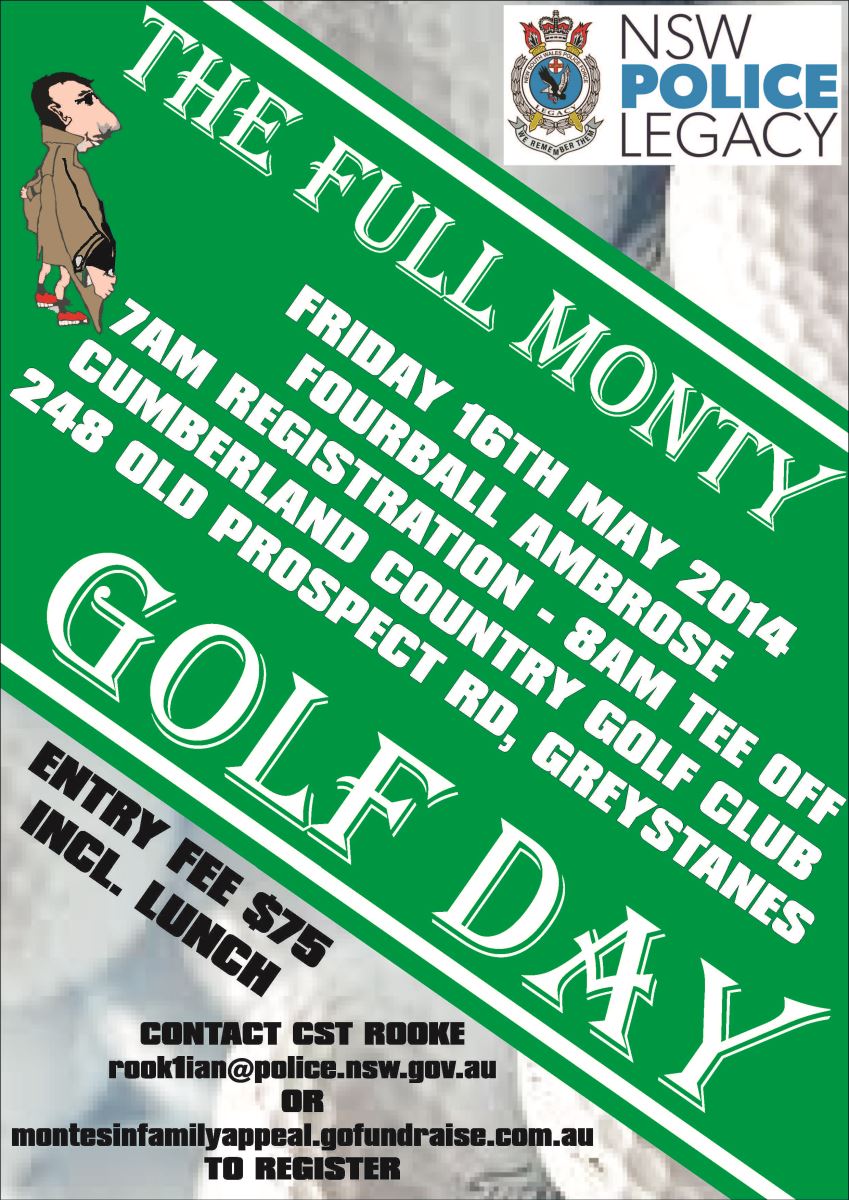
Our team here at Mt Druitt Police Station, with the support of NSW Police Legacy are currently raising funds to assist the Montesin Family during this difficult time. We have successfully organised a Car and Bike Rally, a McDonalds fundraising night, an eBay Auction, a Head Shave and are now organising a Golf Day to keep supporting the family as they navigate their way through this challenging time.
We have already raised a significant amount of money for the Montesin Family and thank everyone who worked so hard to make our previous events a success. Please lend your support to the Montesin Family Appeal by registering to participate in the The Full Monty Golf Day, or simply make a donation.
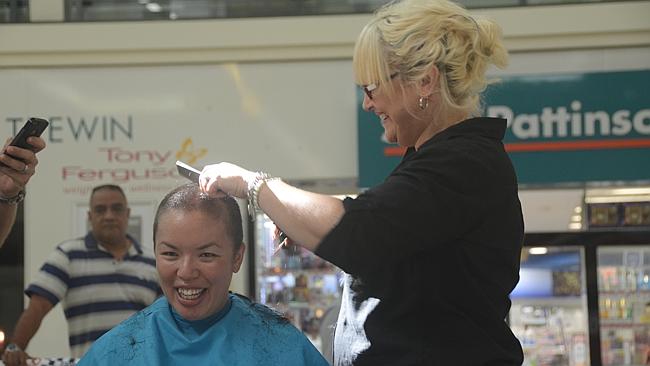
Constable Leung does the great shave to support fellow constable with cancer
Anna Hitchings
Mt Druitt-St Marys Standard
April 02, 20145:10PM
Mt Druitt police’s Constable Cheryl Leung being shaved by Mrs Megan Montesin.
TRAGEDIES can either divide or unite.
Mt Druitt police have been unified through their efforts to fundraise for Constable Matthew Montesin, who was diagnosed with terminal lung cancer in November and given a maximum of 12 months to live.
To further fundraising efforts, Constable Cheryl Leung decided to have her long her hair shaved off by Constable Montesin’s wife, Megan, in Westfield Mt Druitt, raising more than $3,300.
The news was a shock to Constable Montesin’s family and the Mt Druitt command, especially since Constable Montesin, 40, has never smoked and is in good shape.
“(We were in) absolute dismay. We’re so very sad for him and his family,” Mt Druitt Inspector Donna McCarthy said.
“It was just about trying to do whatever we could to make sure what time he has left is the least stressful and most comfortable we can make it as workmates.”
Constable Cheryl Leung had her chest-length hair shaved off to support fellow constable Matthew Montesin.
Constable Leung and the rest of the command have united their efforts to fundraise for Constable Montesin’s medical costs and for his family,
“Cheryl’s not even on Mathew’s team and yet this is what she wanted to do to support Matthew,” Insp McCarthy said.
Mt Druitt police have raised at least $15,000 in their efforts to support their teammate and his wife and three teenage sons.
“They’re absolutely humbled,” Insp McCarthy said.
“They’re just overwhelmed by the generosity and the support … there are just so many wonderful, generous people out there.”
Laid to Rest in the Vault, with his wife, at Waverley Cemetery.
OBITUARY.
Sub-Inspector John Coady.
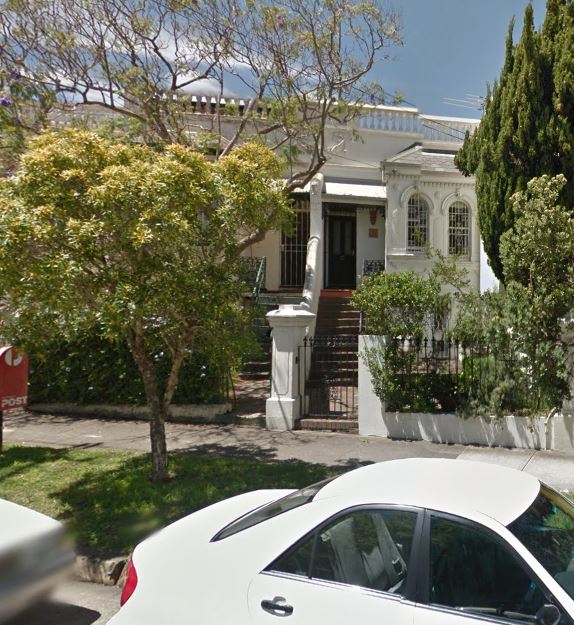
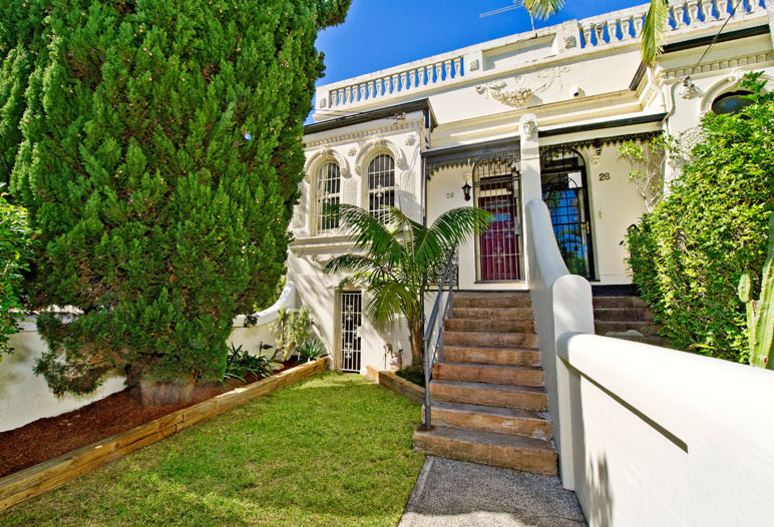
On the 12th ult., at his residence, 26 Edgecliffe-road, Woollahra, John Coady, late Sub-inspector of Police, Scone, passed to his reward, at the age of 83. He was only six days ill before his death.
The late sub-inspector was a native of Freshford, County Kilkenny, Ireland, and came to New South Wales in 1860, allured thither by the gold fever 0f those days.
He spent several years on the Gulf diggings at Moruya, and afterwards joined the mounted police. From the Sydney depot he was sent to Wingham, Manning River, as senior-constable in-charge. After, two years he was transferred to the charge of Taree. There he remained nine years, and was promoted to Kempsey; and, after six years in Kempsey, was transferred to Scone, where he remained until 1906, when he retired from active service, and lived ever since at Woollahra.
He had an honourable and striking record of service well rendered, and of duty well fulfilled. He had many thrilling stories to tell of encounters with bush rangers and notorious criminals — notably, the famous Fred Ward, the bushranger ( known us Thunderbolt ), the Dora Dora blacks, the Breelong blacks, and others. As a bushman, the late sub-inspector was famous, and it was largely due to his close pursuit that Thunderbolt had to quit the coast districts of the Manning and Hastings rivers, and confine his operations to the tablelands, where he was finally captured, at Guyra. On one occasion, the ex-sub-inspector tracked Thunderbolt to Tomalla Tops, the plateau whence the Hunter, the Manning, the Barrington, and other rivers take their rise. On that occasion he captured the camp of the bushranger, but Thunderbolt made good his escape. The ex-sub-inspector was often heard to tell how he’d have caught the bushranger, too, but his mount was too slow on the mountain side. Thunderbolt was remarkable for the splendid horses he always rode. On that occasion 13 horses were taken at the bushranger’s camp and brought to Taree, where they were sold by public auction.
The deceased was the father of a large family. His wife predeceased him by two years. His son, James, died some years before, as also did his daughter, Sister Mary Ignatius, who died at Moree three years ago. He leaves three sons and four daughters to mourn their loss. They are Rev. Father J. J. Coady, P.P., Taree. Rev. Mother Francis, Brigidine Convent, Cooma; Sister Mary Francis, superior of the Convent of Mercy, Narrabri ; and Sister Mary Raymund, Dominican Convent, Strathfield ; Mary and Vincent, Woollahra ; and William, Queensland.
During the last 13 years he was a familiar figure at the Holy Cross Church, Bondi Junction. He was always at morning Mass, and was a daily communicant. His death was as holy as his life. The Rev. Father Smith administered the last Sacraments several hours before he died, and he was conscious right to the end. His remains were laid to rest in the vault at the Waverley Cemetery, where rests the remains of his late beloved and faithful wife.— R.I.P.
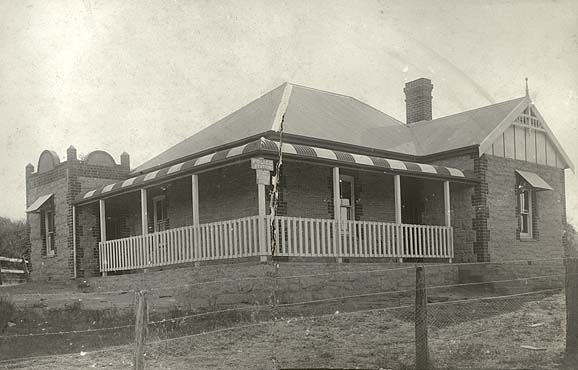
Home of John COADY – 26 Edgecliff Rd, Woollahra, NSW
Home of John COADY – 26 Edgecliff Rd, Woollahra, NSW
[divider_dotted]
DAVIS
| 05/08/2014
DAVIS
New South Wales Police Force
Sub-Inspector
Died ?
Funeral 20 July 1914
LATE SUB-INSPECTOR DAVIS.
The Sydney Morning Herald Tuesday 21 July 1914 page 10 of 16
The funeral of the late Sub-Inspector Davis, of the Redfern division of the police, took place yesterday at Waverley Cemetery. There was a large attendance of members of the police force, among others being Superintendent Mitchell (representing the Inspector-General) and Superintendent Goulder, Inspectors McLean, Brooke, Spence, Childs, Kendall, Kelly, and Brack ;
Among the civilians present were Messrs. T. P. D. Holden, M.L.C., M. McCabe, A. E. Powell.
At the cemetery gates about 100 members of the police force assembled, and followed the hearse to the grave. After the usual burial service a Masonic service was conducted by Bro. Rees, W.M., of the Lodge Zetland Australia.
James Smith was a brother of Mr. G. Smith of Oak Farm, Rosemonte, near Goulburn, NSW, and his father, who died a few years ago, was a well-known gardener of that place.
Father’s name: George
Mother’s name: Isabella
The Sydney Morning Herald ( NSW ) Friday 1 January 1897 page 5 of 8
SUICIDE BY A SUB-INSPECTOR OF POLICE.
NARRABRI, Thursday.
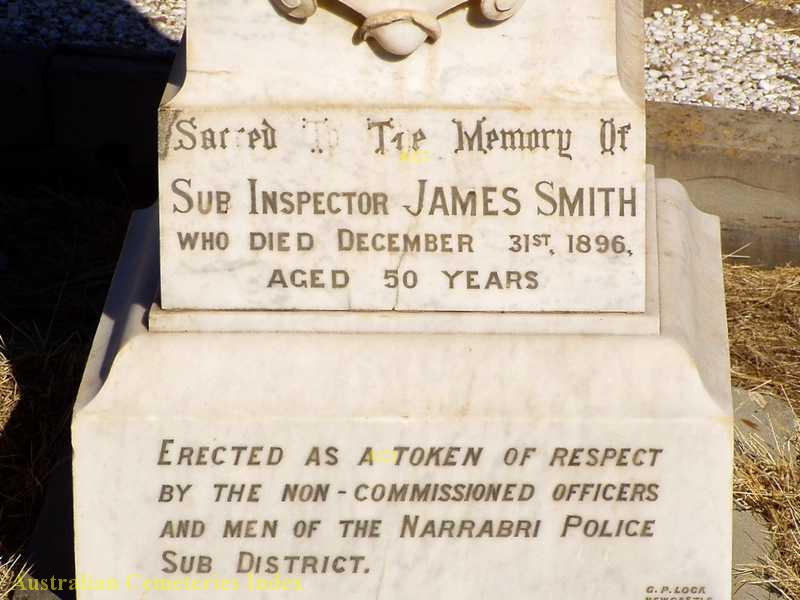
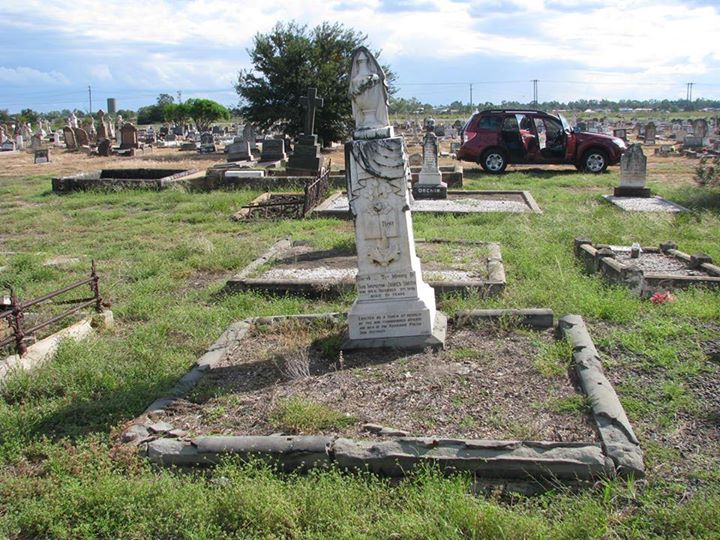
This morning Sub-inspector James Smith, the officer in charge of the Narrabri police district, was found dead. A report of a shot was heard and deceased’s son, who rushed into the room, found his father lying on the bed with a revolver on his breast. From appearances that weapon had exploded in the mouth and the bullet had passed into the brain. During the past fortnight Mr. Smith had been indisposed, and it is stated that when unwell he always became very despondent and developed symptoms of melancholia. Only one chamber of the revolver was discharged, and death was apparently instantaneous. Deceased was 50 years of age. He joined the police force 27 years ago, and, beginning as a constable, worked his way up to his present rank. During the past six years he has had charge of the Narrabri police district. Deceased leaves a widow and seven children. An inquest was opened at the courthouse this morning and adjourned till Monday.
Later particulars of the death of Sub-inspector Smith show that the deceased left three letters, one addressed to his wife, the second to Mr Kenyon, P. M., ( Police Magistrate ) and the third to Mr A. R. Stafford, of Barry and Stafford. In one letter he stated that he felt his mind was becoming unhinged and preferred death to living the remainder of his life in an asylum. The deceased had arranged all his affairs, leaving everything provided for. The Masons will accord the deceased a Masonic funeral, which takes place tomorrow morning. The family are left provided for.
Singleton Argus ( NSW ) Saturday 2 January 1897 page 2 of 6
The Late Sub-Inspector Smith.
Many old residents of Singleton will regret to hear of the death of Police Sub-Inspector James Smith at Narrabri, an account of whose tragic end is published in another column. Sub-Inspector Smith joined the police force about 1868, and after doing duty at Maitland for about two years he was transferred to Singleton, where he remained for some time under Inspector Thorpe, and afterwards he was stationed at Wollombi with the rank of senior-constable.
Singleton Argus ( NSW ) Saturday 2 January 1897 page 6 of 6
SUICIDE OF A SUB-INSPECTOR.
Sub-Inspector James Smith who has had charge of the division at Narrabri aged 50 years, committed suicide on Thursday. He got up as usual, and went round the barracks, and at 8 o’clock went back to his bedroom. A few minutes later Senior-Sergeant Thomas Clarke, hearing a report of firearms rushed into the bedroom, and found the sub-inspector stretched on his bed with a bullet wound in his head. Death was instantaneous. The revolver was quite hot when the sergeant took it from the dead man’s hand. The only cause that ran be assigned for the terrible deed is that the sub-inspector had been ailing for the last three weeks, and his wife has also been ill for some time, and is at the present moment in a very bad condition.
Great surprise was expressed locally at the news, and also regret. Sub-Inspector Smith was well liked both in his official and private capacity. He was a member of the Masonic order, and also the M.U. ( Manchester Unity ) Order of Oddfellows. The deceased inspector joined the mounted police on January 15, 1868. On leaving the depot in Sydney he was sent to the north-western district, being first stationed at Maitland. From that place he was transferred to Muswellbrook as sergeant, and was promoted to senior-sergeant in April, 1883. In 1891 Mr Smith attained the rank he held at the time of his death, and was appointed to the Narrabri sub-district.
The Maitland Weekly Mercury ( NSW ) Saturday 2 January 1897 page 3 of 16
Suicide of Sub-Inspector Smith at Narrabri.
Narrabri, Thursday
Great excitement prevailed in town this morning when a report became current that police Sub-Inspector James Smith had committed suicide at his residence between 8 and 9 o’clock by shooting himself through the head with a revolver, death being instantaneous. The report was immediately confirmed, and the particulars furnished go to show that the Sub-Inspector had been suffering from some slight illness for the past week, and had been subject to fits of melancholia for some time previous, but the commission of such a rash act was never dreamed of by his friends. The greatest sympathy is felt for his wife and family. An inquiry will be held during the day. Alater telegram states that Mr. Smith got up as usual, and went round the barracks. At 8 0’clock he went back to his bedroom, and a few minutes later Senior-Sergeant Clarke, hearing the report of firearms, rushed into the bedroom and found the Sub-Inspector stretched on his bed with a bullet wound in the head. Death had been instantaneous, and tbe revolver was quite hot when the Sergeant took it from the dead man’s hand. The only cause assigned for the terrible deed is that the Sub- Inspector has been ailing for the last three weeks, and his wife had also been ill for some, and at the present moment is in a very bad condition. Great surprise is expressed in town at the news, also regret. Mr. Smith was well-liked both in his official and private capacity. He was a member of the Masonic Order, and also of the Manchester Unity Order of Oddfellows. The late Mr. James Smith, or ” Long Smith ” as he was generally called by other members of the force to distinguish him from another officer of the same name, was well-known in the Maitland district, where the news of his death will create some excitement. Mr. Smith joined the police force about the year 1868, so that he had served 28 years and would in the natural course of events have retired in a couple of years’ time. In the 70’s he was stationed at Singleton under Inspector Thorpe, who has since retired, and later with the rank of senior-constable he was in charge at Wollombi. He was also stationed at several other places, and for a number of years prior to 1896 be was a senior-sergeant at Muswellbrook, in which year he was superseded by Senior-sergeant Cowan, now of East Maitland. Mr. Smith then went to Narrabri, with the rank of sub-inspector in charge of the sub-district of Narrabri, which is a most important one, including as it does Moree. During the miners’ strike at Greta, Mr. Smith was one of the officers engaged there. He was 50 years of age, and, as stated in our telegram, leaves a wife and family. Mr. Smith was a fine soldierly man in appearance, and was a noted strict disciplinarian.
( the First Victorian Policeman killed ‘ on duty ” )
Victoria Police Force
Sergeant
Murdered – shot
Born 1826
Died 16 October 1856
30 old
McNally, John (1826–1856)
Intelligence was received on Saturday morning last, at the Detective Office, that on the preceding Thursday, the 16th inst., two of the mounted police force, Sergeant [John] McNally and Constable Moore, proceeded at seven o’clock on the night in question to a tent believed to be occupied by the notorious William Turner, alias Gipsy Smith, who stands charged with various acts of highway robbery, and with dismounting a constable from his horse near Castlemaine several months ago, and with escaping from custody.
On approaching the tent, the officers recognised Turner, who attempted to make his escape. The officers immediately closed with him, and, during the struggle, shots were fired from the tent, one of which entered the breast of Sergeant McNally, who fell dead on the spot. Several other shots were fired, and wounded the constable (Moore) severely in the face and other parts of the body.
As soon as the intelligence reached the Camp at Mount Ararat, the police went in search of the bushrangers, who, however, succeeded in eluding their vigilance. A woman was arrested in the tent. An active search is in progress, and it is thought the criminals cannot long escape detection. The gang, supposed to be under the leadership of Turner, is, without doubt, the same as that which committed the late daring acts of bushranging near Moliagul.
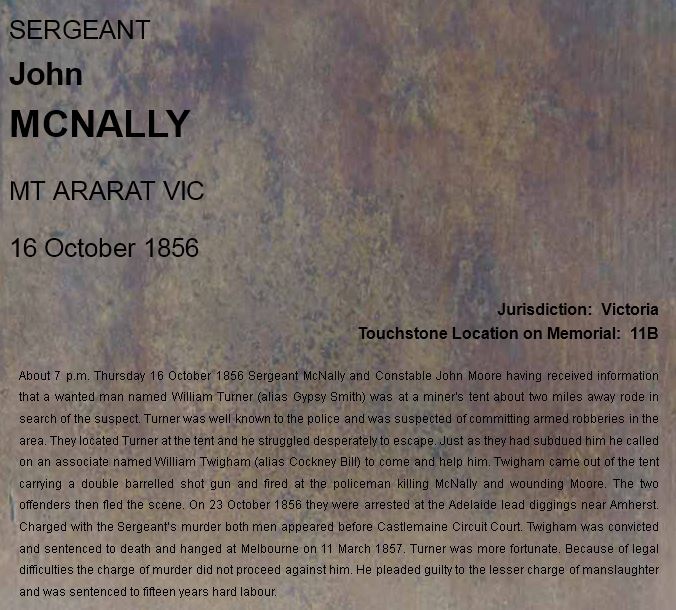
Sergeant John McNally became the first member of the Victoria Police to be feloniously slain in the line of duty when he was murdered at the Cathcart diggings on 16th October, 1856.
Whilst trying to arrest a suspect (Gypsy Smith) over a string of armed robberies, an associate of the suspect intervened and fired his shotgun, killing Sergeant McNally and seriously injuring his partner, Constable John Moore. The two offenders then made their escape. Seven days later, the pair were arrested near Amherst and charged with the murder of McNally. One of the offenders was hanged in 1857 and the other received a sentence of fifteen years hard labour.
The offender, William Smith (Gypsy Smith) was transported to Botany Bay at the age of 15 for stealing a handkerchief. He went on to become a hardened bush ranger who, between the years of 1852 and 1856, became the notorious ‘Gypsy Smith’, a subject of fascination for the newspapers and police as he and his gang of desperate convicts created fear among the gold diggings of Victoria.
Sergeant McNally is buried in Cathcart Cemetery on a hill known as McNally’ Hill. The Cemetery is in a natural bushland setting and is very well maintained.
The emergency department at Ararat Hospital is known as the John McNally Emergency Department.
Cathcart is approx. 4.6 km from Ararat and is approx. 345 m above sea level. There is no town at Cathcart, it is only an area. It was a large attraction for Gold Miners in the early 1800′s. People from England, Ireland, Scotland, America, Switzerland, Germany, France, Russia and China descended on Cathcart to look for gold. Also many other from Australia took their families there as well.
There were many stories about horse thieves and murderers in the old days and these were dealt with tough justice by a self-established vigilante committee.
After the first rush the lead was lost and most miners moved on to other diggings except one of the original party J. P. Rodd who was in partnership with an American Negro Richard Davis (alias Black Harry). They traced the gold deeper and hit another lead calling it Blackman Lead. This attracted 3,000 diggers to the area, other leads were discovered each causing a new rush of miners.
The general area became known as Cathcart and with time the name was given to the Township where stores, school, hall and hotels had sprung up. There were many tents and lean-to shanties.
Today there is little evidence of the hustle and bustle of the frenzied gold diggers and their lively community of dreamers. Except maybe the Cemetery, which is on the Ararat- Pomonal Rd.
[divider_dotted]
Sergeant John McNally: The system of registered number for police hadn’t been introduced when Sergeant John McNally was murdered on the Mt Ararat goldfield in 1856. He had joined the Victoria Police Force the previous year after service with the Royal Irish Constabulary.
On October 16, 1856 Sergeant McNally and Constable John Moore where told that William Turner, a wanted robber was staying in a tent in a camp about two miles away. Turner tired to flee but the police wrestled him to the ground. Turner called for help from his associate, William Twigham. Also known as Cockney Bill, Twigham came out of the tent armed with a double-barrelled shotgun. He fired, killing Sergeant McNally and wounding Constable Moore.
Turner and Twigham escaped and a reward of £400 was offered for their arrest. They were arrested a week later at the Adelaide diggings after being recognised by a shopkeeper.
After a trial held at Castlemaine, Twigham was convicted of murder and sentenced to death. he was hanged at the Melbourne Gaol on March 11, 1857.
Turner pleaded guilty to the lesser charge of manslaughter and was sentenced to 15 years hard labour on the roads and other public works.
[divider_dotted]
Life of Sergeant John McNally’s murderer subject of new book
ARARAT – A book chronicling the life and times of the man responsible for the murder of police sergeant John McNally in 1856 is nearing completion.
The text, which is yet to be titled, tells the story of William Sydenham Smith and how his life of crime led to him crossing paths with Sergeant McNally.
Sergeant McNally was the first member of the Victorian Police force to be slain in the line of duty.
The research team of Marion McAdie, Greg Vivian, and Ian Batty along with author Laurie Moore have spent over 12 months on the book.
Mrs McAdie said she along with the genealogical society wanted to find the facts surrounding the murder of Sergeant McNally.
“Unfortunately, after much research we still know little about McNally or his partner Constable John Moore, who was wounded in the same incident,” she said.
The book uses Smith’s history to provide a broader context to the death of McNally.
“Like the public perception of most Australian bush rangers, Smith comes across in most accounts as a one-dimensional person,” Mrs McAdie said.
“His origins from England as a transported convict at the age of fifteen, his brutal treatment for minor misdemeanours at the hands of a ruthless system, his heroism in saving lives during his imprisonment, and his eventual participation as a free man in colonial New South Wales and Victoria, have never been mentioned before.
“As in many cases of murder by bush rangers, the victim hardly rates a mention and we hope that this book may help recognise the heroism and positive contributions made by the early police on the goldfields.”
Mrs McAdie said she believes it is an important story because it tells of how a young William Smith was transported to Botany Bay at the age of 15 for stealing a handkerchief.
“It traces his experiences as a convict around Sydney, Norfolk Island and Tasmania before he escaped in a whale boat from Tasmania,” she said.
The book goes on to show how the young boy became a hardened bush ranger who, between the years of 1852 and 1856, became the notorious ‘Gypsey Smith’, a subject of fascination for the newspapers and police as he and his gang of desperate convicts created fear among the gold diggings of Victoria.
The story culminates in the events at Cathcart diggings on October 16, 1856 when the bush rangers were confronted by Sergeant McNally and Constable Moore, leaving one dead and the other wounded.
“After the eventual capture of the bush rangers near Maryborough, Smith’s mate was hanged but a strange fate awaited Smith, and this is detailed in the forthcoming book,” Mrs McAdie said.
Although the story revolves around a bush ranger, it is set among the goldfields of 1850s’ Victoria.
It touches on the lives of many ordinary people, the legal system, the squatters, and the impacts of convicts who came in large numbers to look for gold and rob and terrorise the infant community.
“It is a good read and one that is set in Sydney, Norfolk Island, Tasmania, Melbourne, Yackandandah, Moliagul, Maryborough, Amherst, Beaufort, Ararat, Cathcart and Hay in New South Wales,” Mrs McAdie said.
The book’s author, Laurie Moore retired from Sydney to live in Western Victoria thirteen years ago.
Mr Moore’s first book involved nearly ten years of research by Mr Moore and his wife Dianne.
It told the story of the last declared outlaw in Australia, Jimmy Governor, who was the fictional character, Jimmie Blacksmith, in the book written by Thomas Keneally.
Since then he has written ‘Shot for Gold’, a bush ranging story that happened near Smythesdale, a draft for a book on the Clark Gang of Braidwood, and has now put together the history of the killing of the policeman, Sergeant John McNally, and the convict and bush ranging events that led to his death in October 1856 at Cathcart.
Mrs McAdie said despite all the hours of research the team still can’t place an exact location of the burial site of sergeant McNally.
“We would love to hear from people about the exact location,” she said.
“We think the site is located in the north west corner of the now Cathcart cemetery.”
The team hope to have the book finished by the 157th anniversary of the event on October 16 this year.
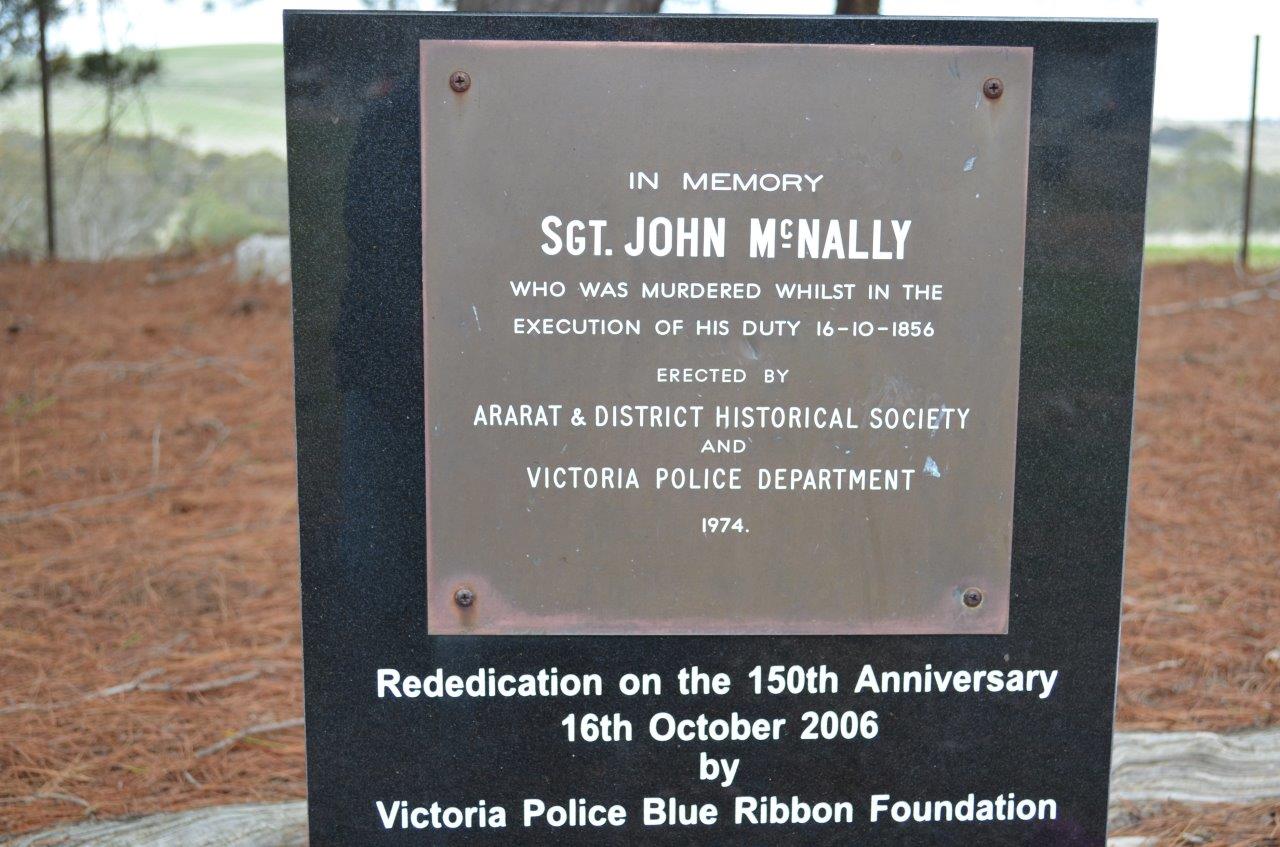
Plaque at gravesite commemorates Police Sergeant John Mc Nally who was murdered whilst on duty in October 1854.
Sergeant John McNally became the first member of Victoria Police to be feloniously slain in the line of duty when he was murdered at the Mt Ararat goldfields on 16th October, 1856. Whilst trying to arrest a suspect over a string of armed robberies an associate of the suspect intervened and fired his shotgun, killing Sergeant McNally and seriously injuring his partner, Constable John Moore. The two offenders then made their escape. Seven days later, the pair were arrested near Amherst and charged with the murder of McNally. One of the offenders was hanged in 1857 and the other received a sentence of fifteen years hard labour.
Front Inscription
In memory Sgt. John McNally who was murdered whilst in the execution of his duty 16-10-1854. Erected by Victoria Police Department 1974.
Source: MA,RHSV
Monument details supplied by Monument Australia – www.monumentaustralia.org.au
The John McNally Medical Imaging Unit at Ararat Hospital
With substantial donations from the Victoria Police Blue Ribbon Foundation the Ararat Hospital was able to purchase an image intensifier for its surgical department and new X-Ray equipment for the Medical Imaging Unit. This was a joint project between the Blue Ribbon Foundation and the local community through the Ararat Branch and was dedicated as a Police Memorial in memory of Sergeant John McNally who was murdered at the Mt Ararat Goldfields in 1856.
The John McNally Emergency Department at Ararat Hospital
In 2003 works commenced on a complete redevelopment of the Ararat Hospital and the Victoria Police Blue Ribbon Foundation was able to contribute to the re-building of the emergency department. This was completed as a joint project in partnership with the local community through the Ararat Barnch of the Blue Ribbon Foundation. Today the Ararat Hospital Emergency Department can provide state of the art emergency & trauma care to the people of Ararat and surrounding districts. This project, commissioned as a Police Memorial in May 2004, was the first stage in a continuing relationship with the community of Ararat and their public hospital.
Sergeant John McNally became the first member of Victoria Police to be feloniously slain in the line of duty when he was murdered at the Mt Ararat goldfields on 16th October, 1856. Whilst trying to arrest a suspect over a string of armed robberies an associate of the suspect intervened and fired his shotgun, killing Sergeant McNally and seriously injuring his partner, Constable John Moore. Sergeant McNally’s sacrifice is acknowledged through this an other projects installed at the Ararat Hospital.
With regret I advise the death of John Charles DUFF, 76 old, former Regd. No. 11262, not an RPA member of Rylstone.
John passed away on 24/07/2014 and his funeral is proposed to be held at 11am on Thursday 31st Instant at St James Anglican Church, 45 Mudgee Street, RYLSTONE.
Duff, John Charles (“J.D.”). 24th July, 2014 peacefully at Rylstone Hospital, late of Piper Street, Rylstone and formerly of Orange. Beloved husband of Beverley, much loved father and father-in-law of Donna & Peter, Brandon & Tracey, cherished grandfather of Alicia, Mia, Cooper and Tamarah, and adored brother of Pat, Terry, David, Raymond and Lorraine.
Aged 76 years
“One of Natures True Gentleman”
Relatives and friends are kindly invited to attend a Funeral Service for The Late John Duff, which will take place at 11.00am on Thursday 31st July, 2014 at St James Anglican Church, Rylstone, thence for Rylstone General Cemetery for interment. Members of Rylstone Bowling Club are especially invited to attend.
By special request, donations in lieu of floral tributes may be made, at the Service, to Rylstone Hospital.
DUFF, John Charles (“J.D.”) . 24th July, 2014 peacefully at Rylstone Hospital, late of Piper Street, Rylstone and formerely of Orange. Beloved husband of Beverley, much loved father and father-in-law of Donna & Peter, Brandon & Tracey, cherished grandfather of Alicia, Mia, Cooper and Tamarah, and adored brother of Pat, Terry, David, Raymond and Lorraine.
Aged 76 years
“One of Natures True Gentleman”
Relatives and friends are kindly invited to attend a Funeral Service for The Late John Duff, which will take place at 11.00am on Thursday 31st July, 2014 at St James Anglican Church, Rylstone, thence for Rylstone General Cemetery for interment. Members of Rylstone Bowling CLub are especially invited to attend.
By special request, donations in lieu of floral tributes may be made, at the Service, to Rylstone Hospital
MACQUARIE VALLEY FUNERALS
Members of the N.F.D.A. and The F.D.A. of N.S.W.
& Monumental Mason’s Assoc of NSW
118 Market Street, Mudgee
Telephone: 6372 2331 All Hours
ANNOUNCEMENTS : DEATH NOTICES
28/07/2014 Mudgee Guardian
Around an hour ago I received a telephone call from the wife of a very close friend and ex Officer that I shared duties with at Gunning [Cullerin Range Area] where we attended in excess of 200 fatal accidents together, over a period of five years, John Duff, Reg No 11262 has been suffering from cancer in both lungs and a tumor on his spine, Beverley informs me that John was admitted to the Rylstone Hospital this afternoon and not expected to last the night out, very sad that it is moments like this that make us realize just how close we have become and take for granted,
Dennis GearsideFriends are hard to come by and it’s even more difficult when you are faced with losing them. His peace may give your peace. Memories are forever.
Len BalkKerry it’s a really sad situation mate and good on you for making the journey but remember to look after yourself as well because you are important to others also.
Phillip Stubbs-MillsIt is sad how even operational Police cause problems.. Example one of my Coast Roads Constable was first car on the scene of a double fatal at the BP at Clybucca. A young Americain couple had bee on a honeymoon in Cairns decided to drive down to Syd…See More
Paul DaviesGreat song choice Paul, really says it all. We all try to reflect on lives of our friends or families in these times when the end is near but when it’s all said and done it’s just a rotten mtime to go through as I and many of you guys have had to endure it more times than we care to remember.
Peter CameronA couple of Crashies suicided from those bus crashes Phillip Stubbs-Mills. I did a couple of years in the AIS at Ballina and for me it was just a job and I could put it aside. Having said that, I can still remember fatals I went to when I first joine…See More
Ian BorlandPeter you are so right. No matter which field of poling you work the support from the Dept is abysmal. Some bosses who get it can be extremely supportive and ensure an even distribution of work and exposure. That said, the exposure as we we’ll know …See More
Peter CameronIan, no need to apologise for the length of the post. You have more reasons than most on here to bang on about this. What I havn’t told you before is that we met after Paul Quinn’s murder in ’86. I was stationed at Casino with him before that tragic incident. I often reflected on how that must have affected you but you put your boots back on and batted on for years in the job.
Paul DaviesIan I remember that horrible incident you were involved in something we all prayed we would never be confronted with. At the time of your nightmare shift I was at Blacktown tracking down the Anita Cobby killers. I was glad to be doing what I was doing and not being in your shoes . Very brave and I dip my hat to you, and long live the memory of your partner.
Ian BorlandI didn’t know anything else, and the support from my workmates helped beyond words I could use to describe. That seems to have gone by the wayside, and the good old bosses we had that were mostly returned servicemen who really “got it” were leaving in…See More
Peter CameronSpot on Ian, it made all the difference with a good solid boss backing you up. Also the old fashioned debriefs with mates out the back of the Station worked wonders. Then some bright prick stopped that.
Bill FortierAgreed, we spent more time with each other than our own families. Just like x servicemen who have seen it all they do not talk to others. They talk to those who have been there done that who know how it feels and what to do to fix problems. They could make decisions on the run and we all followed because we believed in them.
Ian BorlandYou would not believe it but the solution to all this was put to the Dept. In 1988 by a committee I was involved in with Don Fudensein Jnr. Naturally all looked good until one of the dunces that was a Deputy a Commissioner made the most despicable com…See More
Bill FortierMarvellous things books, they teach all the theory on any topic you wish to name. But when it comes to practical application of the theories and models put forward sometimes the real world never reflects what one has spent learning from pages. The university of life is the best learning institute for front line policing without doubt.
Bill FortierMy professor at the university was Bumper Farrell. No compromises or mistakes were tolerated. No pain permitted. Now we have all the new rules. The Dept is now legally bound to take of all under the Work, Health Safety laws. Has it helped?
Glen Thompson11 years ago after an incident at Goulburn I was directed by the Welfare Branch to speak to a ‘counsellor’ for six sessions. He and I got on well and he suggested some more time together. I had to see a GP for a referral. My normal long term GP was …See More
Glen ThompsonPerhaps it is time that the NSW Government / Police Force looked at a military style program of tenure. sign up for X number of years, be regualraly assessed psychologically, supported when certain types of jobs are attended etc. We all know why they won’t do it. It’s way too expensive.
Ian BorlandI’ll put this out, however it may well be known to you all already. When you are sent to psychologists and psychiatrists they give you the interview etc then get around to your family history. The question usually couched as, “does anyone in your fam…See More
Ian BorlandYou told the truth, but that was his cross to bear, it could not be construed as endogenous depression. I hope that the root cause was extracted at the time of the assessment Greg. As you can see it’s an easy slight of hand to play.
Ian BorlandGlen I totally agree, but I think we need to include naively in there too. As cops we did our job straight down the line. We dealt in black and white with no time for grey area. We trust others to do likewise towards us but unfortunately there are always hidden agendas we are unaware of.
Born in Australia on 13 December 1947
Passed away on 8 June 2014
Aged 66 years
Funeral service will be held at St Patricks Catholic Church, Northcote Street Swansea on Friday, 13th June 2014 at 10:30am.
Committal service will be held at Lake Macquarie Memorial Park Cemetery, 405 Cessnock Road, Ryhope, NSW, Australia on Friday, 13th June 2014 at 2:00pm.
Rodney John HEYS, 67 old, former Regd. No. 13286, a member of the Sydney Branch of the RPA.
Rodney passed away on 06/07/2014 and his funeral is proposed to be held at 1.30pm on Thursday 17th Instant in the Camellia Chapel, Macquarie Park Cemetery, Delhi and Plassey Roads, MACQUARIE PARK.
HEYS, Rodney John.
“Rod”
Late of North Parramatta
Suddenly at home on
6th July, 2014Loving son of John and Doris (both deceased)
Loved brother and best friend of Wendy.Relatives and friends of ROD are invited to attend his funeral service to be held in the Camellia Chapel at Macquarie Park Crematorium, Plassey Road, Macquarie Park on Thursday 17th July, 2014 at 1.30pm.
Following the service Rod will be interred within the cemetery grounds.GREGORY & CARR
Traditional
Funeral Directors
GORDON 9498-4455
Published in The Sydney Morning Herald on July 15, 2014
– See more at: http://tributes.smh.com.au/obituaries/smh-au/obituary.aspx?n=rodney-heys&pid=171722024#sthash.Rxb1T4kj.dpuf
HEYS, Rodney John.
“Rod”
Late of North Parramatta
Suddenly at home on 6th July, 2014
Loving son of John and Doris (both deceased)
Loved brother and best friend of Wendy.
Relatives and friends of ROD are invited to attend his funeral service to be held in the Camellia Chapel at Macquarie Park Crematorium, Plassey Road, Macquarie Park on Thursday 17th July, 2014 at 1.30pm.
Following the service Rod will be interred within the cemetery grounds.GREGORY & CARR
Traditional
Funeral Directors
GORDON 9498-4455
Next of Kin at time of Service: Mr John William Heys
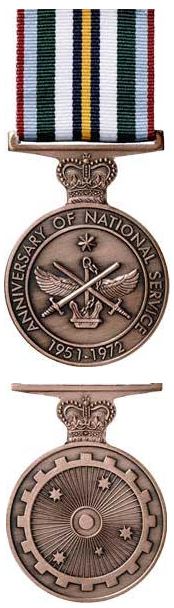
Medals: ADM ANSM
[divider]
Obituary of Mother of Rod:
HEYS, Doris Mabel.
Late of Gordon.
November 4, 2012.
Beloved wife of the late John Heys, loving mother of Rodney and Wendy.
Aged 92 years.
Relatives and friends are kindly invited to attend DORIS graveside funeral service at Macquarie Park Cemetery, corner Delhi and Plassey Roads, Macquarie Park, Monday (November 12, 2012) to commence at 1.30 p.m.
For the purposes of this website ‘Q‘ represents those Police joining between 1 March 1862 ( commencement of NSWPF ) – 23 February 1915 ( Commencement of NSWPF current numbering system )
Rank: Probationary Constable – appointed 12 October 1906 ( aged 22 – 23 years old )
Stations: ?, Rugby – Death
Service: From 12 October 1906 to 21 December 1919 = 13 years, 2 months, 9 days Service
Born: 1884
Age: 36 old
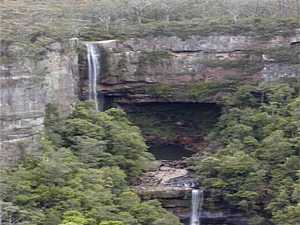
Cause: Suicide – Jumped from a cliff
Died: 21 December 1919 – Belmore Falls, Robertson, NSW
Funeral: Saturday 27 December 1919, Robertson, NSW
Buried: Church of England, Robertson Cemetery, NSW
Media reports:
Goulburn Evening Penny Post ( N.S.W. )
Tuesday 30 December 1919 page 2 of 4
CONSTABLE DROWNS HIMSELF.
Moss Vale Monday. –
The body of Constable Oscar McDonald, of Rugby, near Young, who drowned himself on the 21st instant, came to the surface in a water hole at Belmore Falls, and was discovered on Saturday morning.
At the inquest a verdict of suicide while temporarily insane was returned.
He was 36 years of age, and leaves a wife and seven children.
The body of Constable Oscar McDonald, of Rugby, near Young, who drowned himself on the 21st instant, came to the surface in a waterhole at Belmore Falls, and was discovered on Saturday morning. At the inquest a verdict of suicide while temporarily insane was returned. He was 36 years of age, and leaves a wife and seven children.
The body of Constable Oscar McDonald, late of Rugby, near Young, who drowned himself on the 21st inst., came to the surface in a waterhole at Belmore Falls, Moss Vale.
At the inquest a verdict of suicide while temporarily insane was returned.
The body of Constable Oscar McDonald, of Rugby, near Young, who was missing from Sunday, 21 st instant, came to the surface of the waterhole at Belmore Falls, where his clothes and a note, to his wife stating that he was tired of his life were found, and was discovered on Friday morning and dragged out of the water.
At the inquest following the discovery, the district coroner (Mr. H. W. Taylor) returned a verdict of suicide whilst suffering from temporary insanity.
Deceased was a son of Mr. Robert McDonald, of Robertson, and was born in that township 36 years ago.
He leaves a widow (a daughter of Mr. John Lindsay, of Moss Vale) and seven children.
The remains were interred in the Church of England cemetery, Robertson, on Saturday, the Rev. J. F. Rofe officiating at the graveside.
The Southern Mail ( Bowral, NSW ) Friday 2 January 1920 page 2 of 4 The Suicide at Belmore Falls THE BODY FOUND.
The body of Constable Oscar McDonald, of Rugby, near Young, who had been missing since Sunday, the 21st December, came to the surface of the waterhole at Belmore Falls, and was discovered on Friday morning and dragged out of the water.
Some days previously the clothes of the missing man were found near the top of the falls with a note to his wife stating that he was tired of his life, and it was surmised that he had jumped into the deep waterhole 300ft beneath.
Efforts to recover the body by dragging, however, failed.
At the inquest following the discovery, the district coroner ( Mr. H. W. Taylor ) returned a verdict of suicide while suffering from temporary insanity.
Deceased was a son of Mr. Robert McDonald, of Robertson, and was born in that township 36 years ago.
He was on a visit to his birthplace on sick leave from the police force, suffering a nervous breakdown. A long bout of insomnia had left him in a state from which death would appear to give a happy release.
The late Constable McDonald leaves a widow ( a daughter of Mr. John Lindsay, of Moss Vale ) and seven children.
The remains were interred in the Church of England Cemetery, Robertson, on Saturday, the Rev J F Rofe officiating at the graveside.
THANKS.— The Widow, Family, and Relatives of the late Constable Oscar McDonald desire to Thank the police and public generally for their assistance and sympathy in their late sad bereavement.
The earliest mention of Rugby Police Station ( which no longer exists as a Police Station ) in the National Library of Australia is 16 December 1875.
In October 1900 there was a Constable Overton stationed at Rugby Police Station. ( “Possibly” Arnold OVERTON, NSWPF ‘Q’ 5265 – Born 1858 in England and joined the Police on 29 September 1886 )
As of 2014, there is no mention of Rugby Police Station, or Oscar McDonald inside the date range of 1900 – 1923.
In December of 1923 there was a Constable John Walderma CHITTY stationed at Rugby Police Station. ( No Find via Google or my records. Cal )
On 2 September 1927, approval was given for the installation of a telephone in Rugby Police Station.
The last mention of Rugby Police Station, in the papers of the day, is 4 July 1930.
On Saturday 19 July 2014, I ( Greg ‘Cal’ Callander ) went to the old Church on the corner of Illawarra Hwy & Meryla St, Robertson, to speak with the current Minister there.
He didn’t have any records with him and there are definitely no graves within the grounds of the Church, nor is there a Church of England Cemetery ( now ) – as stated in the article dated 2 January 1920.
The Minister did, however, direct me to one of the oldest residents in the area who runs the General Store up the road.
Before I troubled her, I attended the Robertson Cemetery located at the very end of Missingham Parade, Robertson in search of Oscar’s grave – at the below GPS co-ordinates.
It is a lovely cemetery, with graves dating back to the mid 1800’s and there would be no more than 100 marked graves there – but, as much as I searched, I could not locate the grave for Oscar.
There are several unmarked graves, there are several graves with upturned headstones that have fallen over with the process of time. There are also graves whereby the inscriptions just can’t be read, due to weathering and then there are the graves that are totally shrouded in thick creeper vines and trees.
After spending a considerable amount of time there, without success, I decided to go to the old General Store and speak with the elderly lady who runs the place.
Now, considering this funeral happened nearly 95 years ago, I introduced myself to the lady and told her exactly what I was seeking.
Now bugger me if, after all these years, she steps forward to the bench in front of her and says, “I know I have that book around here somewhere“.
From under a few news papers, she removes an old, hand written, brown tattered and torn book which holds most of the records of the Robertson Cemetery.
She flicks through the book to the appropriate date and there, before us, was the hand written note of her own long deceased father ( this lady is around 80 herself now ) is written:
“Decr 27th 1919.
Oscar McDonald buried in grave paid for by his father.”
Unfortunately there were no other details as to the location of the grave but, the woman assures me, Oscar would have been buried on the right hand side of the driveway as you enter the cemetery.
So, at this stage, that is the best I can do in relation to plotting exactly where Oscar is buried.
The elderly woman is retiring very soon, so this original book will be lost with time. She tells me that she has given a photostat copy to the local Rail Museum and the local Cemetery Trust – as the cemetery is owned by the Community.
Burial record of Oscar McDonald recorded in an old book in the General Store at Robertson, NSW ( 2014 ).
Interred 1 August 2014 – HENRY KENDALL GARDENS – ROSE GARDEN 40 – Position 0056
Henry BRENNAN
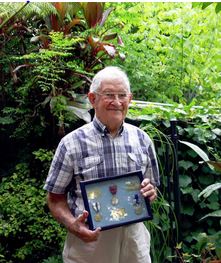
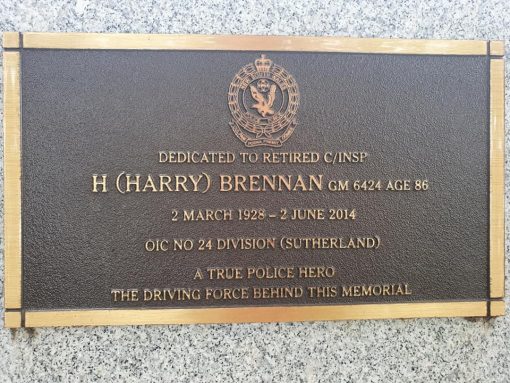
Harry (Henry) BRENNAN GM, 86 old, former Regd. No. 6424, an Unattached member of Caringbah.
Henry passed away on 01/06/2014 and his funeral is proposed to be held at 9am on Friday 6th Instant at Southern Chapel, Woronora Crematorium, SUTHERLAND
Funeral location: Dress is winter uniform (leather jacket) plus full size medals. For plain clothes Police it is suitable day dress with medals.
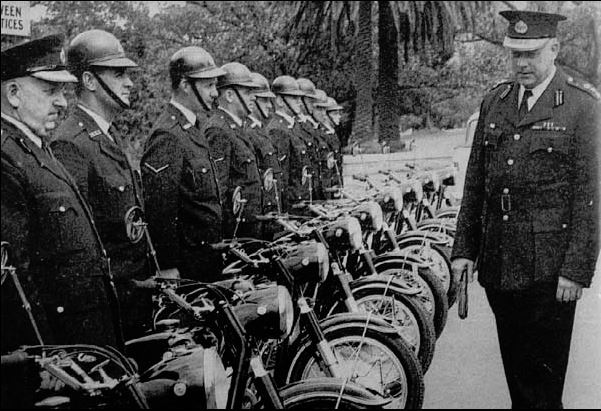
Not all names come up in the 1968 ‘ Stud Book ‘ Inscription: Traffic cyclists L – R: Jack ” Happy Jack ” AGNEW ( NSWPF # ??? ), Col ” Smoothie ” COGLE, Joe Dainer, Max ” Slobber ” Robertson, Harry ” Bren ” BRENNAN ( NSWPF # 6424 ), John Ackroyd, Charlie Spicer ( NSWPF # 7263? ), Dino Tallon, Brian ‘ Boofa ” Skyes and Wally ” Sockeye ” Salmon. Names are from an article in an old Retired Police Journal by Harry BRENNAN, which featured the photo. I am guessing mid 60’s, leather caps have given way to black helmets and BMW’s instead of the earlier Triumphs. Looks like Centennial Park – possibly on delivery of the BMW’s??? https://www.flickr.com/photos/nswpoliceforce/5599527423/in/photostream/
Constable Harry Brennan – 14 October 1954
The Sydney Morning Herald Thursday 14 October 1954 page 1 of 32
Two Policemen Shot In Wild 80-m.p.h. Chase Across City:
Dragnet Out For Gunman
In Sydney’s biggest manhunt hundreds of police last night and early this morning were searching for a gunman who had shot and wounded two police, during an 80-mile-an-hour chase through eastern and southern suburbs.
The gunman wounded Sergeant Neville Townsend and Constable John Melton ( both of Bondi ).
Sergeant Townsend was shot in the ring finger of the right hand, which was later amputated.
Constable Melton was shot under the left arm.
Police have been told that earlier the gunman fired five shots over the head of a woman at Manly and threatened to shoot her dead.
He then made off in a grey sedan car with a Victorian number-plate.
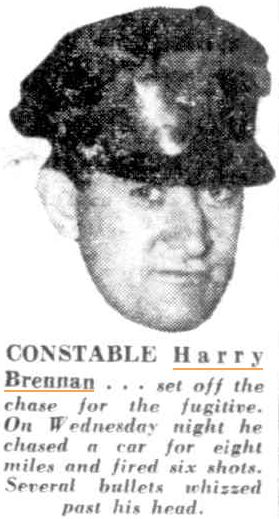
Constable Harry Brennan, a motor cyclist of the Safety Bureau, heard the description of the car over the police radio.
He was patrolling Bondi Promenade five minutes later when he saw the wanted car being driven slowly past him.
The driver saw that he was being followed but he still did not hurry.
SOUNDED SIREN
Constable Brennan sounded his siren as they passed Bondi Police Station.
The crew of the Bondi police truck – Sergeant Townsend, Constable Melton and Constable Len Ryan – heard the siren and ran out.
They jumped in the truck and joined in the chase.
The truck drew level with the car at the end of Blair Street. The car driver leant out and the shooting started.
Police said that Sergeant Townsend’s handcuffs saved his life. A bullet fired by the gunman passed through Sergeant Townsend’s clothing and struck his handcuffs, hanging from his belt.
The handcuffs deflected the bullet, which only grazed the skin around Sergeant Townsend’s ribs.
A second bullet hit him on the hand.
A shot passed through Constable Ryan’s cap just above the badge.
Another shot broke a glass wind deflector.
Police in the truck, Constable Brennan, and the driver were firing together at one stage.
One bullet whistled past Constable Brennan’s face. Constable Melton, who was driving the van, had his revolver ready but did not fire any shots. He received a bullet under the left arm, but continued to drive the van while Constable Ryan called other police cars to the scene.
When the other cars arrived the Bondi police van pulled out of the chase and took the injured officers to St. Vincent’s Hospital.
The man fired about seven shots. Constable Brennan did not know that the police in the truck had been hit. He chased the car when the driver, apparently having emptied his magazine, stopped firing and increased his speed.
Police think that the man must have reloaded while driving.
The car entered Birriga Road, slewed round at a bend and nearly overturned.
Constable Brennan, who was following close behind, nearly crashed into the side of the car.
The driver leant out and fired a shot point blank at Constable Brennan but it missed.
The chase continued through Bondi Junction, along Oxford Street, down Lang Road into Robb Road and into Anzac Parade.
CYCLE HIT
In Robb Road, approaching Centennial Park, Constable Brennan drew close to the racing car. The man slowed down suddenly and swerved across the road.
The car struck Constable Brennan’s motor cycle and sent it careering sideways, but he managed to keep it from crashing.
The man leaned out of the window and fired a shot at Constable Brennan.
The car then entered Anzac Parade at Moore Park and headed south and the man fired two more shots both of which missed.
A car in Anzac Parade near Cleveland Street was struck and hurled on to the footpath.
Soon after the fugitive car crashed into another car and then almost immediately scraped past the front of another car.
The driver braked just in time to stop a serious crash.
The fugitive swerved repeatedly in attempts to wreck Constable Brennan’s motor cycle.
Constable Brennan fired five shots during the chase and he thinks several of them hit the car.
The car was travelling at about 80 m.p.h. when it approached Prince Henry Hospital.
Constable Brennan raised his pistol to fire the last shot in the magazine, but the bullet jammed in the barrel.
The car then swerved hard to the right past St. Michael’s Golf Course. Constable Brennan had to stop when his pistol became useless.
He ran into the hospital and called for reinforcements.
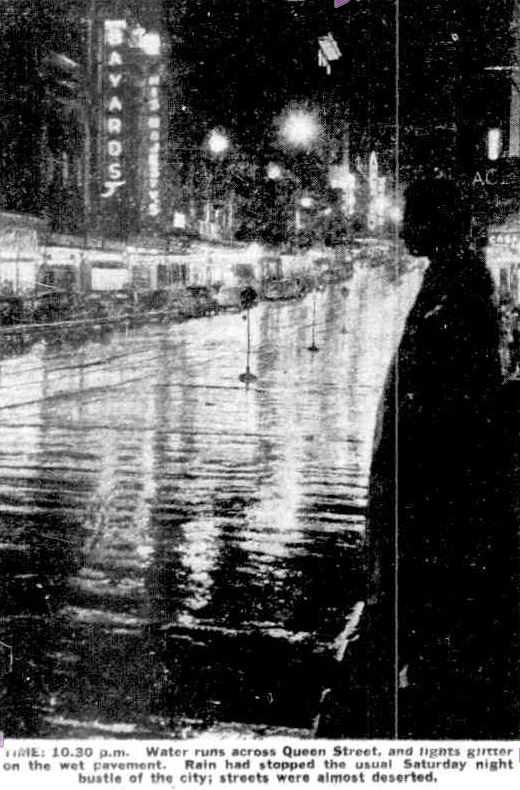
A man who resembled the fugitive was seen at Yarra Bay about 10.30 p.m. and shortly afterwards near Bunnerong Power-house.
Practically every available police car in Sydney was sent to the La Perouse and Bunnerong area.
Hundreds of police, armed with pistols and “shot guns,” began to search St. Michael’s golf course and the surrounding area.
It was thought the gunman might have taken cover on the golf course.
“FROGMAN”
About midnight police began to think that the fugitive had slipped through their cordon.
The man is believed to know the area very well and in the few minutes he had after escaping from Constable Brennan he might have had time to double back possibly by the road running between Bunnerong power station and Botany Bay.
This would have enabled him to reach Botany Road and reach the southern suburbs while he was still thought to be at La Perouse.
The man is said to be an accomplished “frogman” and a strong swimmer. Police think he could have swum out to a ship or yacht anchored in Botany Bay.
Early to-day police were searching a tanker anchored in Botany Bay.
A police launch from Blakehurst was speeding to Botany Bay to assist in the search.
POLICE PUZZLED
Police are puzzled by the fact that they have not been able to find the grey car, which is believed to be bullet scarred.
Detectives have considered the possibility that the man realised he could not escape unobserved in the car and drove it over the cliffs before trying to escape on foot.
Using searchlights they began a yard by yard search last night of the cliff edges for tyre marks.
Squads of police made an intensive search of caravans, humpies, sheds, backyards, and other buildings at Yarra Bay and nearby.
Other police searched among the tombstones of the Botany cemetery.
Aborigines from the settlement assisted police in the search.
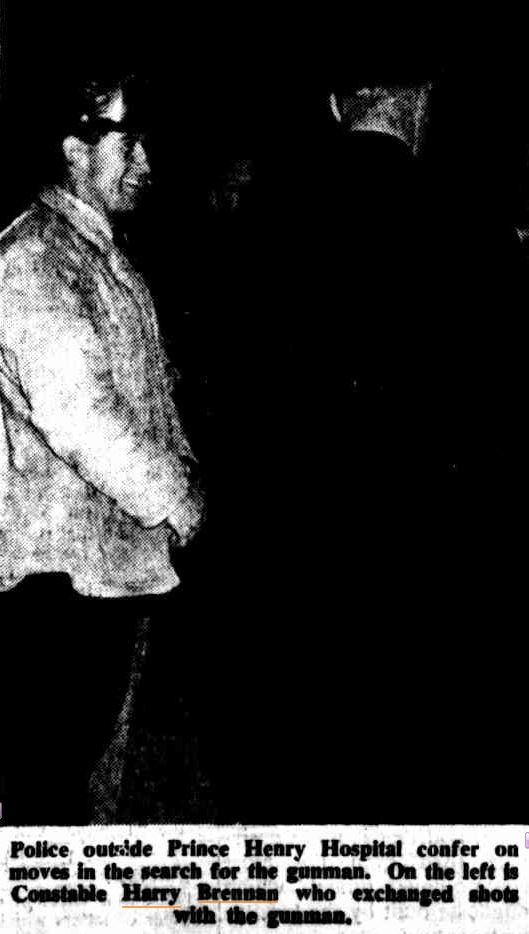
Police, outside Prince Henry Hospital confer on moves in the search for the gunman. On the left is Constable Harry Brennan who exchanged shots with the gunman.
Sunday Mail ( Brisbane, Qld ) Sunday 17 October 1954 page 1 of 36
‘DON’T SHOOT’ : GUNMAN’S PLEA TO POLICE AT CAPTURE HUNT ENDS ON THIRD DAY
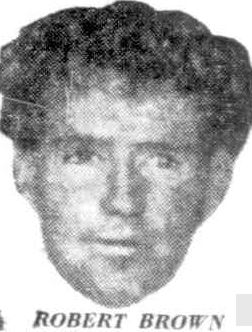
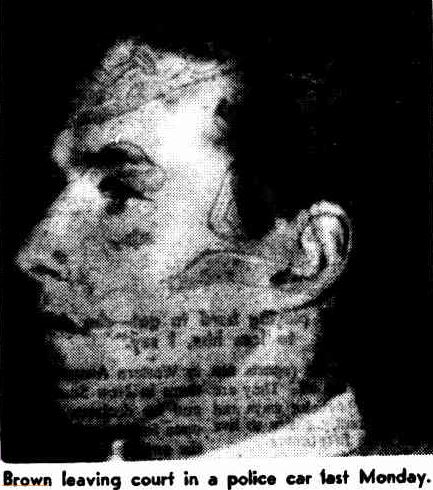
Offender – Robert Brown
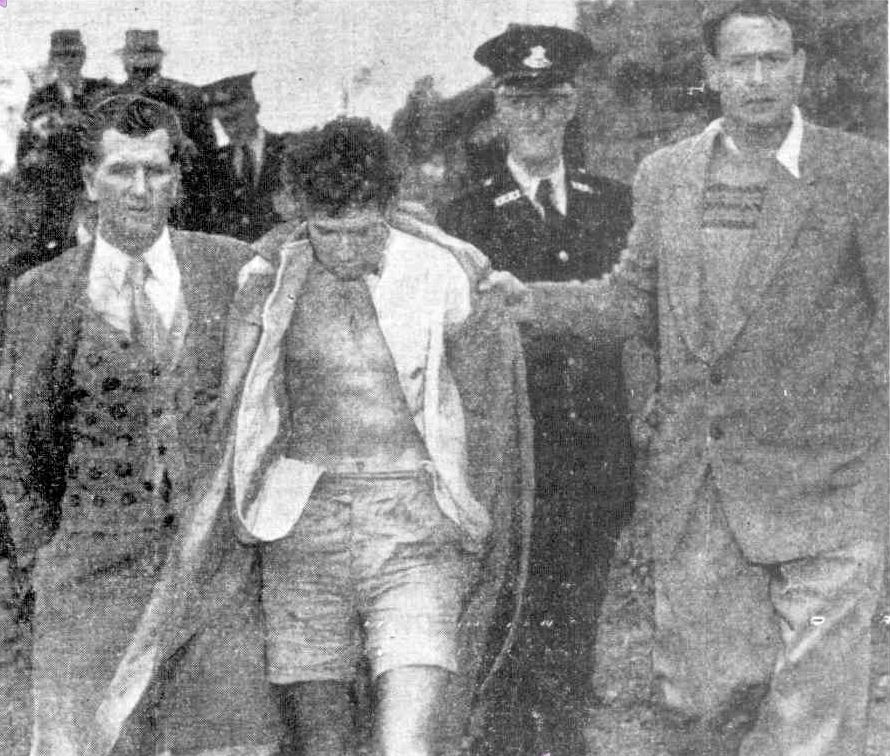
SYDNEY— After the grimmest manhunt New South Wales has known Robert Michael Brown, 20, surrendered to two young police officers on Bushrangers’ Hill, in the Sydney suburb, Newport, at 11.25 a.m. yesterday. Brown, who was dirty arid dishevelled, was hiding in a crevice under a clump of bushes when the police arrested him.
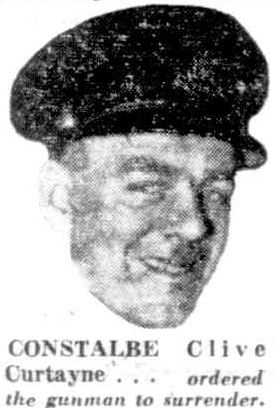
With their guns drawn, the two policemen, Constables Clive Curtayne and George Spowart, stood over Brown as he crouched in the bushes and ordered him to surrender.
“Throw up your hands and submit quietly or we will shoot,” Constable Curtayne ordered. Rising slowly to his feet and with both hands’ in the air, Brown said: “I’ve had it. Don’t shoot. You’re too good. I’m all in. Give me a break. I’ve thrown my gun away. I’ll go quietly.” Brown’s capture was the climax to the biggest search on land, sea, and air in the history of New South Wales. He had been at liberty for 62½ hours. The police search for Brown began on Wednesday night after two police men had been shot in a running gun battle between Bondi and La Perouse.
Ate meal
Brown threw back his head and stared defiantly at police and Press while his picture was taken from all angles. He made no attempt to conceal his face and made a couple of half-hearted wise cracks to photographers as the bulbs flashed. With the Commissioner of Police ( Mr. C. J. Delaney ) in the front seat, Brown was driven to the Collaroy Police Station where he dictated a long statement.
[blockquote]While making the statement Brown ate ravenously and gulped down several cups of water. Later he smoked cigarettes and drank tea. [/blockquote]
It is understood that Brown commandeered the trawler Aklavic from The Spit about 9 p.m. on Friday and sailed it out of Sydney Harbour. The trawler struck heavy seas late on Friday night and about 1 a.m. yesterday it is believed that Brown dived overboard. Brown told police that the trawler was running against a strong wind and a high tide. The vessel was found firmly aground on the sand on Newport Beach. It showed no signs of serious damage.
‘The swim knocked it out of me.” Brown told police. “I didn’t think I would make the shore. I’ve had practically no sleep since last Wednesday. It’s been a terrible business.”
After receiving countless false alarms, police finally pinpointed Brown soon after 9.15 a.m. yesterday, when residents sighted him on Bushrangers’ Hill.
No shoes
An anonymous phone caller told police: “Brown is at Newport on Bushrangers’ Hill. He has just gone into a house. I think the house is unoccupied.”
About 20 police cars, police trucks, and motor cycle police gathered at the foot of the hill, and the hunt began. A shout went up when Brown was sighted by police about 300 yards from a house.
Brown, who was wearing a light sweatshirt, shorts, and gaberdine overcoat, was barefooted when police caught him.
He showed only one visible sign of injury — a deep scratch on the left side of the face.
He looked a picture of misery when police handcuffed him and marched him back to the main road, where scores of police had been posted.
His shoulders sagged, and he was limping. His eyes were bloodshot, and he had a stubble of beard on his chin.
Had limp
At times police had to hold him up as he staggered through the dense bush back to the road. Placed in a police car between the two arresting officers. Brown said wearily: “There’s no doubt about you boys, you’re too hot.” “For God’s sake, give me a cigarette, and I want a drink of water. I’m thirsty and I’m hungry.” ‘There was no need to worry about a gun. I threw it away. It went into the water. I had to throw it away.”
Brown’s grandmother, Mrs. Florence Brown, said to-day: “My grandson, Bobbie, is ill . . . mentally very ill … I am sure of it.”
Last Tuesday he had told her : “I’ve got women-trouble Nan. Bad women-trouble.” Mrs. Brown said Brown’s wife had a maintenance order out against him. His parents had divorced when he was about 16, and his father, a dog trainer; now lived at Southport, Queensland.
After Brown had been questioned he was charged with the following: —
Shooting with intent to murder Constable Harry Brennan, Detective Sergeant N Townsend, and Constable Len Ryan.
Stealing a diesel trawler, valued at £5000, the property of Dr. T. J. Cottee, sen., dentist, of Military Road, Mosman.
Disobeying a maintenance order. Having in his possession a motor car stolen from another State.
Police refused bail and Brown will appear before the Central Court of Petty Sessions tomorrow.
Find car
Police late yesterday found a stolen Victorian car, in dense bush on St. Michael’s golf course near Malabar with seven bullet holes in it. The car was reported stolen from Victoria at the beginning of the week.
On Wednesday night about 25 shots were exchanged by police and a man in the car during a chase.
DETECTIVES escort fugitive gunman Robert Michael Brown, 20, to a waiting police car after his capture yesterday. — RADIOPHOTO.
The Sun-Herald ( Sydney ) Sunday 24 October 1954 page 40 of 64
FEATURES
A Worried Young Man Has –
ONE LESS FEAR
By A Staff Correspondent
ROBERT MICHAEL BROWN, the 20-year-old ex-skin diver who sits today in Long Bay Gaol on remand, has at least one thing less to worry him at the moment. He has not got T.B.
AS 300 police, armed with sub-machine guns, turned Sydney into what seemed like Chicago on-Sea the week before last, word spread that Brown was worried about a spot on his lung.
Pleas to surrender went out from his girl friend. Relatives said he needed medical treatment.
He was reported to be extremely worried about the condition of his lungs. This amounted, it was said, almost to a phobia with him.
But last week that fear ended. Under a heavily armed escort of prison officers, Brown was taken from behind the big walls of Long Bay Gaol to the Prince Henry Hospital for an X-ray examination.
This showed that his lungs were clear.
Back in Long Bay the young man spends much of his time in a padded cell under constant observation.
Glass panels give prison officers a view of him, even as he sleeps.
However, he is not isolated in the observation block. Every day about 35 other detained men are his companions, and with them Brown plays handball, cards, and chess.
The only member of his family to see him in the gaol so far has been his father.
Last week, only a few minutes walk from Long Bay’s grim walls, a “Sun Herald” reporter visited Brown’s grandmother. Mrs. Florence Brown.
Her well-kept, modern, little brick home in Anzac Parade, Maroubra, was shuttered against inquisitive eyes.
A doctor’s car stood outside. Mrs. Brown peered through the half-open door and nervously said that her grandson’s alleged escapade had no effect on her apart from the worry and strain.
People had left her alone.
She had not been bothered by the curious.
She obviously intends to stay that way, for she shut the door very firmly as she said: “I don’t think I had better say anything at all now.”
Brown will appear in court on November 1.
He is charged with wounding two policemen with intent to murder them; shooting at two other policemen with intent to murder them; having an unlicensed pistol and a stolen car in his possession; and stealing the trawler Aklavic from The Spit on October 14.
Queensland Times ( Ipswich ) Wednesday 3 November 1954 page 3 of 8
Policeman’s Claim:
“FIRED AT FROM 10ft., BUT MISSED”
SYDNEY, Nov. 2. – A motor cycle policeman said today that Robert Michael Brown (20) had fired at him from a distance of 10ft., but missed. The policeman, Constable Harry Brennan, was giving evidence in the Central Court in the hearing of seven charges against Brown.
Brown was charged with having attempted to murder four policemen, having carried an unlicensed revolver, possessed a stolen car, and stolen a £5000 trawler.
Police have alleged that Brown tried to murder the police officers when he fired at them during an 80 mile an-hour car chase through Sydney streets on October 13.
Constable Brennan described how he questioned Brown on October 13, at Bondi, about the Holden car he was driving. The car had been reported stolen from Victoria. Brennan said he asked Brown to follow him to the police station.
Brown had agreed, but instead accelerated the car and drove at the police motor cycle. The car collided with the cycle and then drove off.
Brennan said he followed the car, and saw Brown lean out the window and fire a shot in his direction. The chase sped past Bondi Police Station, and a police van carrying three policemen joined in.
[blockquote]Brennan said at one stage during the chase Brown aimed at him from 10ft. away, but the bullet struck the ground between the motor cycle’s wheels. Brennan said his gun jammed, and Brown eluded the police pursuers. [/blockquote]
Constable Clive Curtayne said he and another officer arrested Brown on October 16 near the beach at Newport, 11 miles north of Sydney. Brown told them he had jumped overboard to swim to shore from the trawler Aklavic.
Curtayne said Brown told the police he would have shot them if he had not lost his gun in the swim for the shore. The hearing was adjourned until tomorrow.
Barrier Daily Truth ( Broken Hill, NSW ) Thursday 4 November 1954 page 2 of 8
GUNMAN FOR TRIAL
Sydney, November 3. — In Central Court today Robert Michael Brown, 20, was committed for trial on seven charges, including four of having attempted to murder policemen.
Mr. Beavers, S.M. refused bail and directed that Brown should stand trial at Central Criminal Court next Monday.
When he was asked if he had anything to say, Brown replied: “I have nothing to say, Your Worship.” During the proceedings Brown stood stiffly erect, with his fists clenched, and stared sternly ahead.
Illawarra Daily Mercury ( Wollongong, NSW ) Wednesday 8 December 1954 PAGE 1 of 12
Date Fixed For Hearing
SYDNEY, Tues. — Robert Michael Brown will stand trial in Central Criminal Court next March.
Brown, 20, of Darley Rd., Manly, is charged with having in October, wounded a police officer and shot at another with intent to prevent arrest, with possessing an unlicensed pistol and with larceny.
Brown is at present in custody in Long Bay gaol.
Mr. Justice Dovey, in Central Criminal Court today, adjourned the trial till the first week in March on the application of solicitor, Mr. P. Roach, who made no application for bail.
The Sydney Morning Herald Wednesday 8 December 1954 page 11 of 36
TRIAL OF BROWN
IN MARCH
Mr. Justice Dovey yesterday adjourned the trial of Robert Michael Brown until the March sittings of the Central Criminal Court.
Brown, 20, labourer, of Darley Road, Manly, was committed for trial at Central Court of Petty Sessions on November 3, on seven charges.
Indictments for Brown’s trial have not yet been laid, but he was committed on charges of having wounded a sergeant and a constable with intent to murder, having shot at two constables with intent
to murder, having used an unlicensed pistol, having been in possession of a car stolen from Melbourne, and larceny.
Brown’s solicitor. Mr. P. N. Roach, asked Mr. Justice Dovey yesterday to postpone the trial to enable him to interview a number of witnesses and obtain evidence.
Brown was in gaol, and no application would be made for bail, he said. Brown, therefore, would have to remain in gaol until the trial.
CAR REPAIRS
The Senior Crown Prosecutor, Mr. W. J. Knight, said the Crown did not object to the trial being stood over, but said the owner of the car, which would be an exhibit in the case, would like to have the car repaired.
Mr. Roach said he had no objection to photographs of the car being used in evidence.
The North Western Courier ( Narrabri, NSW ) Monday 28 March 1955 page 1 of 10
Manhunt Ends IN COURT
SYDNEY, Monday,
The central figure in a dramatic police search last October, Robert Michael Brown, (20) of Darley Rd., Manly, pleaded guilty to seven charges in the Central Criminal Court today.
Two of the charges alleged Brown maliciously wounded two police officers with intent to prevent his lawful apprehension, and two others alleged he shot at two other policemen to prevent lawful apprehension.
Brown also pleaded guilty to having in his possession a stolen car, without lawful excuse, having used a pistol, without a license, and, having stolen a trawler from Mosman.
The Canberra Times Tuesday 29 March 1955 page 1 of 6
GUNMAN PLEADS GUILTY TO FIRING AT POLICE
SYDNEY. Monday,
Robert Michael Brown, 21, of Darley Road, Manly, pleaded guilty in Central Criminal Court today to four charges of shooting at police.
Detective Inspector Aldridge described the manhunt in Sydney last october in which Brown was alleged to have exchanged a number of shots with police.
The four charges were malicious shooting at Bondi of Sgt. Neville Bernard Townsend and Constables Henry Brennan, Leonard Ryand and Charles Melton, with intent to prevent arrest.
Brown also pleaded guilty to three other charge, relating to the possession of a stolen car, use of a pistol without a licence and the stealing of a trawler.
Inspector Aldridge said that last October a message was received from the Melbourne C.I.B. stating that Brown had left Melbourne in a stolen car with the intention of shooting his wife in Sydney.
After threatening his wife with a gun, she agreed to withdraw the warrant if he did not shoot her, Aldridge said.
Brown was detained at Bondi by Constable Brennan.
Brown swerved his car at Brennan’s motor cycle and drove off.
Brown fired a shot at Constable Brennan and later fired four more shots, all of which struck a police truck.
More shots were fired during the chase, and one struck Sgt. Townsend on a finger, which was later amputated.
The next day Brown boarded the trawler Aklavic and headed out to sea.
Inspector Aldridge said Brown swam ashore at Newport and was arrested.
Aldridge said Brown had told him he intended to shoot himself at Melbourne but he did not have the nerve.
Brown had said that he had never intended to injure the police, but had fired so that “they would get serious and shoot me.”
Mr. Justice MacGuire remanded Brown for medical observation before passing sentence.
The Argus ( Melbourne ) Friday 22 April 1955 page 5 of 26
Crown appeal on sentence
SYDNEY, Thursday : The Crown will appeal against a five years’ gaol sentence imposed on Robert Michael Brown, 21, frogman, for a number of offences, including maliciously shooting at police.
Mr. Sheahan, Attorney General, said today he had directed that an appeal be lodged.
On March 31 Judge Maguire imposed two sentences of five years, one of three years, two years, and one of six months’ gaol, , on Brown.
The Canberra Times Tuesday 22 November 1955 page 5 of 8
Cooma Police In Bravery Awards
SYDNEY, Monday.
Six policemen who took part in gun battles have been awarded bravery medals by the Queen, the Governor, Sir John Northcoft, announced to-day.
They are:
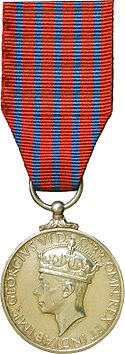
Constable Henry Brennan (George Medal), Sergeant Neville Townsend, Constable Leonard Eyan and Charles John Melton (British Empire Medals) for their part in the capture of Robert Michael Brown in October, 1954.
Sergeant Alfred Edmund Frederick Chapman and Constable William Alexander Graham (British Empire Medals), who shot dead Canadian migrant Harry Edgar Rymal, in a gun duel at Cooma in May this year.
In the Cooma gun battle, Rymal was shot by Constable Graham, as he was about to shoot Sergeant Chapman at almost point blank range.
Rymal and the police exchanged 10 shots at a range of less than 20ft. during the fight.
Earlier Rymal had dragged a woman acquaintance from a Cooma hotel and shot her in the thigh as she lay in a shop doorway.
The George Medal was granted to Henry Brennan on the 22 November 1955 as a result of apprehending an armed man during a shootout whilst pursuing the offender(s) on his motor cycle.


 http://montesinfamilyappeal.gofundraise.com.au/





 The George Medal