1

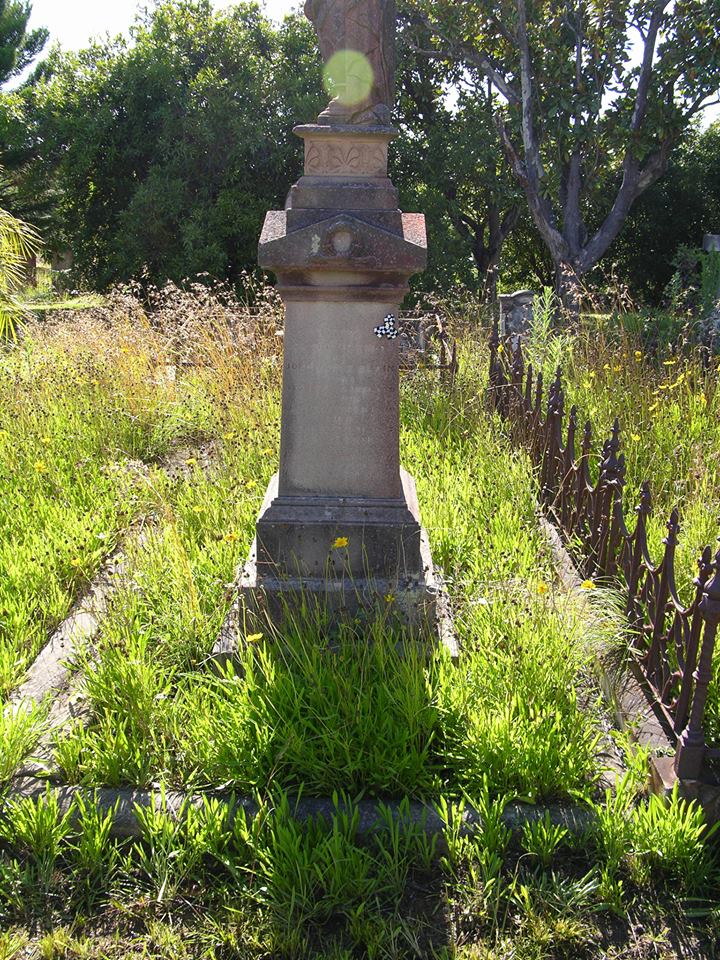
John Vance BLAIN

John Vance BLAIN

New South Wales Police Force

Regd. #  2481

Rank:  1st Class Constable ( Foot Policeman – not mounted )

Description: 5′ 11.5″ tall, blue eyes, fair hair, fair complexion.  Single.  Previously a farmer.  He was Protestant.

Stations:  Darlinghurst

ServiceFrom  26 December 1874  to  20 June 1877 = 2+ years Service

Awards:  a valuable gold watch and chain for the gallant capture of a convicted burglar, named Wright

Born? ? 1850 in Ireland

Event date:  Thursday  22 March 1877

Died on:  Monday  11 June 1877 @ Wooloomooloo

Cause:  Assault with a Police Baton & other assaults

Age:  26

Funeral date:  Tuesday  12 June 1877 @ 2.15pm

Funeral location:  Graveside

Buried at:  Rookwood Cemetery

Memorial location:
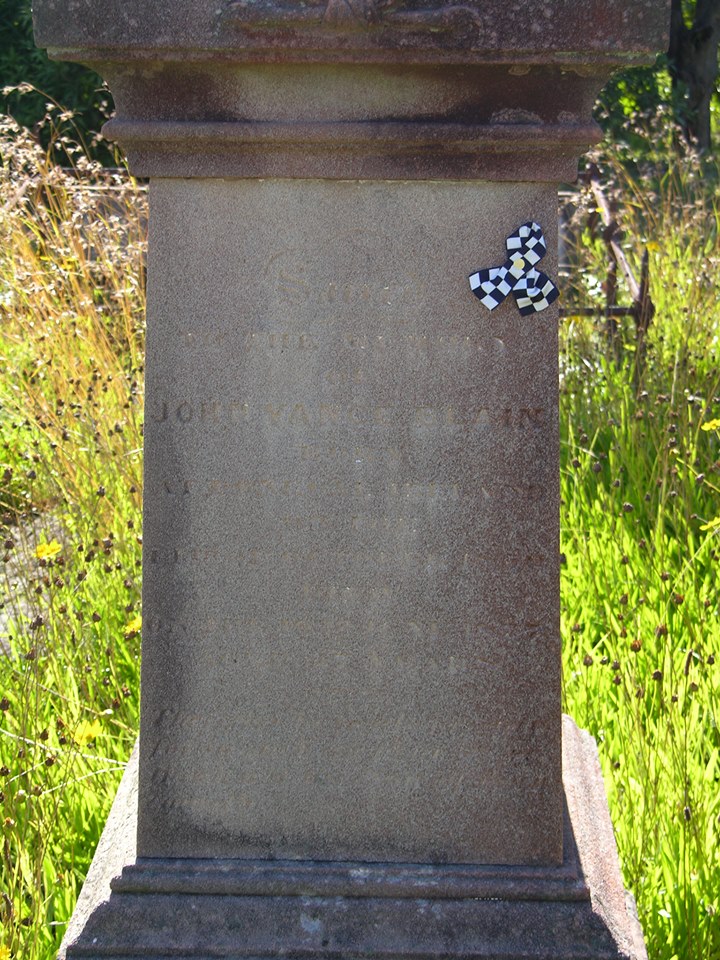
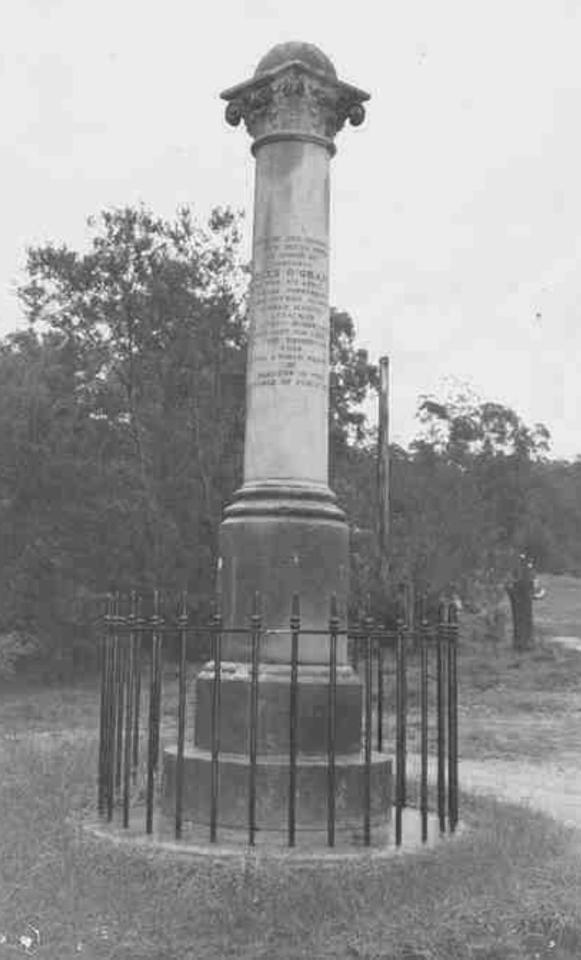
A record of his brave conduct for arresting and bringing to justice a notorious burglar at whose hands he received such savage injuries as to ultimately cause his death

[alert_red]JOHN is NOT mentioned on the Police Wall of Remembrance[/alert_red]    * BUT SHOULD BE

Just after 4pm on Thursday 22 March, 1877 Constable Blain was on duty in Bourke Street, Wooloomooloo when he saw two men carrying a “bundle” in Forbes Street. He called on them to stop, however they ignored him and ran off, quickly pursued by the constable. One of the men then stopped and threw himself at Constable Blain, whose baton unfortunately had dropped to the ground during the chase. As he grappled with one offender, another took up the dropped baton and struck the constable several severe blows to the head, inflicting terrible wounds. Blain bravely held his ground however, and succeeded in handcuffing one of his assailants before staggering a short distance to the home of Dr Pattison. The doctor assisted the stricken Blain and also quickly sent a message to the police for assistance.


Constable Williamson (  possibly Williams )  soon attended and spoke to Constable Blain, who told him that he had arrested and handcuffed one of his attackers before walking to the doctor’s home. Williamson then attended the site of the incident where he indeed found one of the offenders (John Wright) lying handcuffed and bleeding in the street. The courageous Blain had in fact arrested one of his own murderers (a rare accomplishment), as his injuries were to prove fatal.

Prior to his death the Mercury newspaper of Friday 23 March, 1877 reported the story of Constable Blain’s encounter with the offender John Wright and his unknown accomplice.


The article indicated that “The constable who was so barbarously assailed is suffering greatly from the wounds he received. His extraordinary courage and resolution in securing the man in the manner he did is worthy of lasting record.” And thus it is.

His headstone at Sydney’s Rookwood Cemetery reads: “A record of his brave conduct for arresting and bringing to justice a notorious burglar at whose hands he received such savage injuries as to ultimately cause his death”.


The constable was born in 1850, and at the time of his death he was stationed at Darlinghurst.

[divider_dotted]


The Sydney Morning Herald        Friday 16 March 1877

SERIOUS ENCOUNTER WITH A BURGLAR.
Some time on Thursday night the premises of Mr J C W Hinsch of 160 Pitt Street, were broken into, and a number of Crimean shirts and other goods valued at about £20, were stolen. Shortly after 4 o’clock yesterday morning, Constable Blain who was on duty in Bourke Street, Woolloomooloo, saw two men carrying a bundle in Forbes Street. He called upon them to stop but as they took no notice he gave chase, and gained upon them. One of the men threw himself down in front of the constable who fell upon him. In running after the men the constable’s truncheon dropped out of his pocket, and the second man took it up and struck the constable several heavy blows inflicting very severe wounds on the back of the head. The constable, though stunned by the blow, bravely grappled with the man, and after a most desperate struggle succeeded in over-powering and handcuffing his assailant. Becoming weak from loss of blood he had just sufficient strength to reach the residence of Dr. Pattison, when he fainted from exhaustion. Dr Pattison sent information to the police that a constable was at his house who had been nearly murdered in the street. Constable Williams, who soon arrived in obedience to the summons, found Blain lying on a sofa bleeding from wounds on his head, and scarcely able to speak. Eventually he learned from him that a man whom he had captured was handcuffed in the street, and on proceeding to the spot indicated, he found the man lying and bleeding from the head. He was conveyed first to the Infirmary, and afterwards to the Darlinghurst Police Station.

Later in the day Detectives Wilmott and Camphin found one blanket and 31 Crimean shirts in a sack on a piece of waste ground near Judge Street, Woolloomooloo… The constable who was so barbarously assailed is suffering greatly from the wounds he received. His extraordinary courage and resolution in securing the man in the manner he did is worthy of lasting record.”


Then on Saturday 16 June, 1877 the Australian Town and Country Journal reported the death of Constable Blain, including the following information.

“It will be remembered that, a short time ago, the Inspector-General of Police, on behalf of various citizens, presented constable Blain with a valuable gold watch and chain for the gallant capture of a convicted burglar, named Wright, who brutally assaulted that officer when being arrested for the burglary at the premises of Mr. J. O. W. Hinsch, in March last. Wright was sentenced to six years hard labour.

Blain, who was assaulted on the head with a policeman’s baton, recovered somewhat from the effects of the affray; but three weeks ago was again brutally assaulted by some roughs in Oxford-street.

About a fortnight ago he went into the Infirmary for medical treatment, and typhus fever setting in, he expired early on Monday morning. It is alleged that his death was caused by the effects of the beatings he received. It is said that a foul drain under the bedroom which Blain had occupied, in Stanley-street, was the cause of his taking ill. Blain had been about three years in the Force. He was unmarried. His grade was first class constable; and he was a young man of superior intelligence and some promise, and a most efficient officer.”

The constable was born in 1850, and joined the New South Wales Police Force on 26 December, 1874. At the time of his death he was stationed at Darlinghurst. His headstone at Sydney’s Rookwood Cemetery reads: “A record of his brave conduct for arresting and bringing to justice a notorious burglar at whose hands he received such savage injuries as to ultimately cause his death”. He is not listed in the official New South Wales Police Honour Roll.


[divider_dotted]

The Sydney Morning Herald         Tuesday   12 June 1877   page 1 of 10

DEATHS:

BLAIN. — June 10, at the Sydney Infirmary, John Vance Blain, aged 26.

http://trove.nla.gov.au/ndp/del/article/13387308#pstart1437955

[divider_dotted]


The Sydney Morning Herald         Tuesday   12 June 1877   page 10 of 10

THE FRIENDS of the deceased Mr. JOHN VANCE BLAIN, late of the Sydney Police, are respectfully invited to attend his Funeral ; to move from the Infirmary THIS DAY, Tuesday, at a quarter-past 2 o’clock, to the Necropolis.

JAMES CURTIS.

http://trove.nla.gov.au/ndp/del/article/13387287

[divider_dotted]


The Sydney Morning Herald         Wednesday  13 June 1877      page 8 of 12

MONUMENT over the Remains of the late Constable JOHN VANCE BLAIN – SUBSCRIPTIONS received in aid of the above at the Central Police Station.

J. WALTER SMART.

http://trove.nla.gov.au/ndp/del/article/13390255

[divider_dotted]


The Evening News ( Sydney )     Wednesday  13 June 1877   p 2

Constable Blain’s Funeral,

Yesterday afternoon, the remains of that efficient and lamented young police officer, constable Blain, were interred at Haslem Creek Cemetery. The funeral was attended by the Inspector General of Police ( Mr. Fosberry ), Inspector Read, Sub-Inspectors Waters, Anderson, and Johnson, and a large number of his fellow officers. The procession, as it moved through the city, attracted general attention, and considerable regret was expressed at the untimely end of a promising a young officer. The members of the force, as may be seen from an advertisement, intend erecting a monument over his grave.

http://trove.nla.gov.au/newspaper/article/108196448

[divider_dotted]


The Evening News ( Sydney )     Saturday  4 August 1877     p 4

Monument to Constable Blain.

It is satisfactory to learn that there has been a prompt and generous response to the proposal for a monument over the remains of that distinguished but unfortunate police officer, Constable Blain. It will be remembered that Blain had a desperate encounter with a burglar who had broken into Mr. Hinch’s establishment in Pitt-street, and that he received such severe injuries as accelerated, if they were not mainly

the cause of his death shortly afterwards in the Infirmary. The Inspector-General and his officers and the whole force accorded his remains every honor by following them to the grave ; but they thought something more ought to be done, A suitable monument over the grave was proposed, and the matter having been taken in hand by Mr. Smart, J.P., the necessary funds were subscribed in the course of a few days. We have been shown the design of the monument together with the inscriptions, and it deserves to be said that the selection has been dictated by good taste and judgment.


http://trove.nla.gov.au/newspaper/article/108200225

[divider_dotted]


Andrew SUTHERLAND

Andrew SUTHERLAND

New South Wales Police Force

Regd. # ‘Q‘ 1099

For the purposes of this website ‘Q‘ represents those Police joining between 1 March 1862 ( commencement of NSWPF ) – 23 February 1915 ( Commencement of NSWPF current numbering system )

Rank:  Constable – appointed 7 January 1863

Senior Sergeant – appointed ? ? ?

Final Rank:  Senior Sergeant

Stations?, Cowra – Death ?

ServiceFrom 7 January 1863 to  1 May 1872 = 9+ years Service

Awards?

Born: ? ? 1840, Wick, Scotland

Died on:  1 May 1872

Cause:  Shot – Murdered

Event location:  Binni Creek, Cowra, NSW

Age: 31

Funeral date:

Funeral location:

Buried atAnglican section of the Young General cemetery

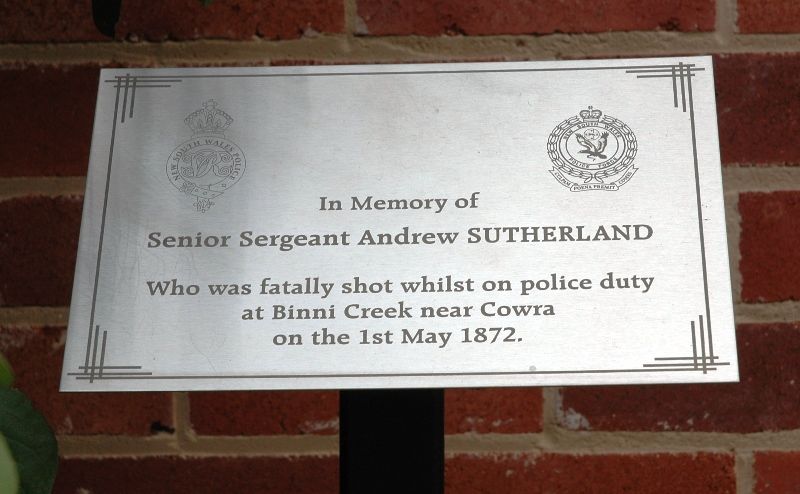
Memorial at:  Cowra Police Station, 88 Brisbane St, Cowra, NSW

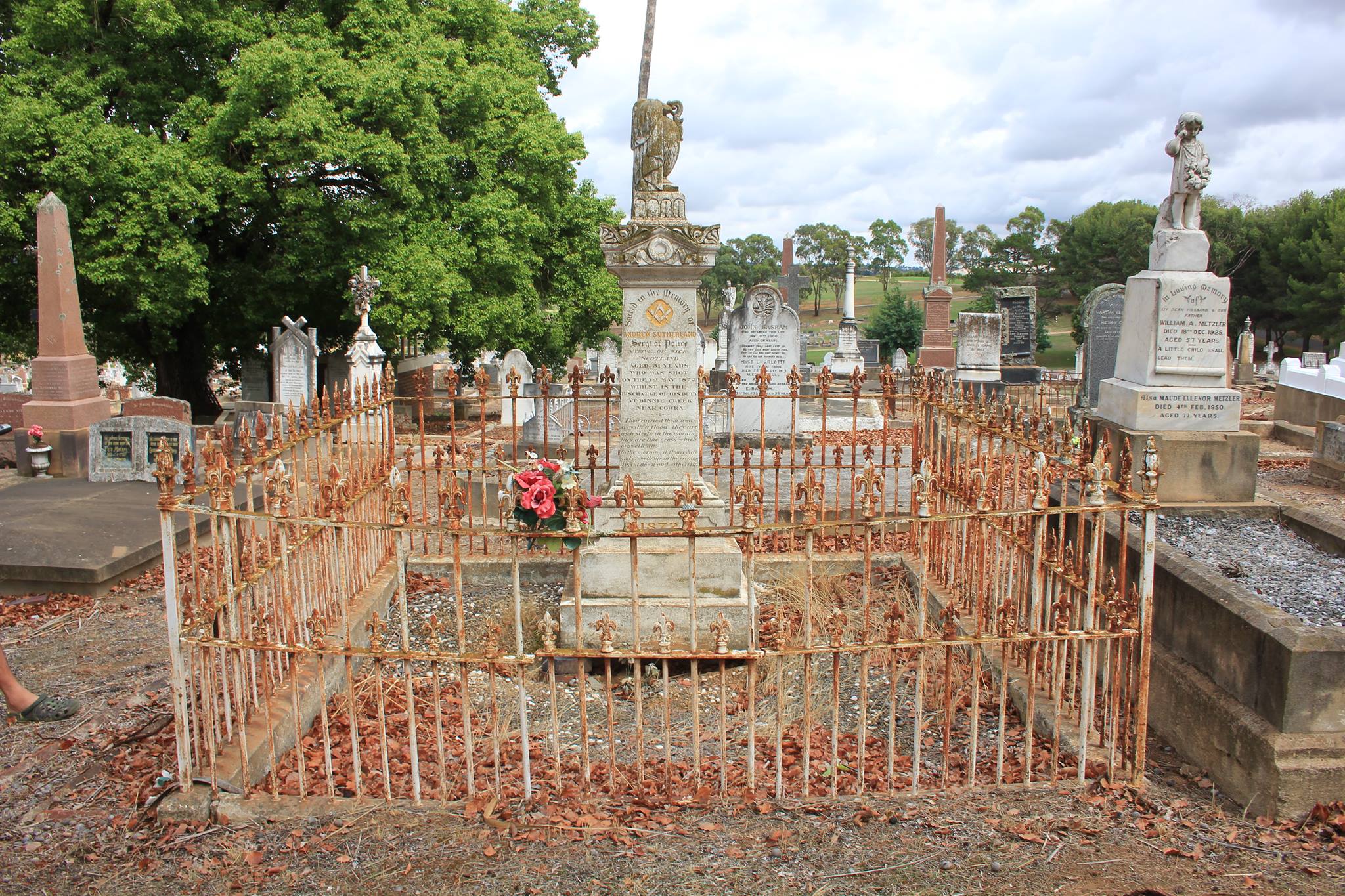
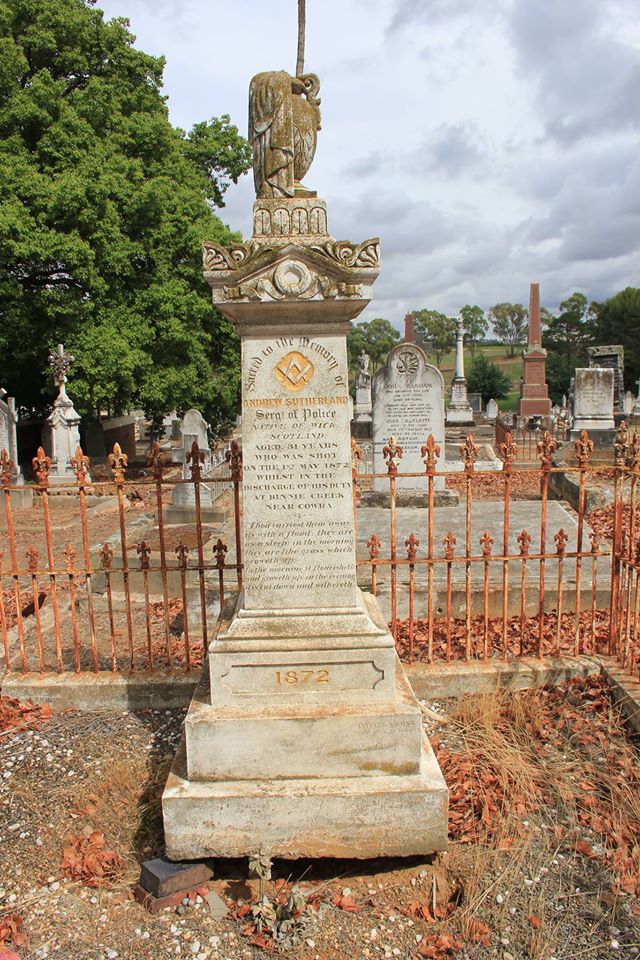
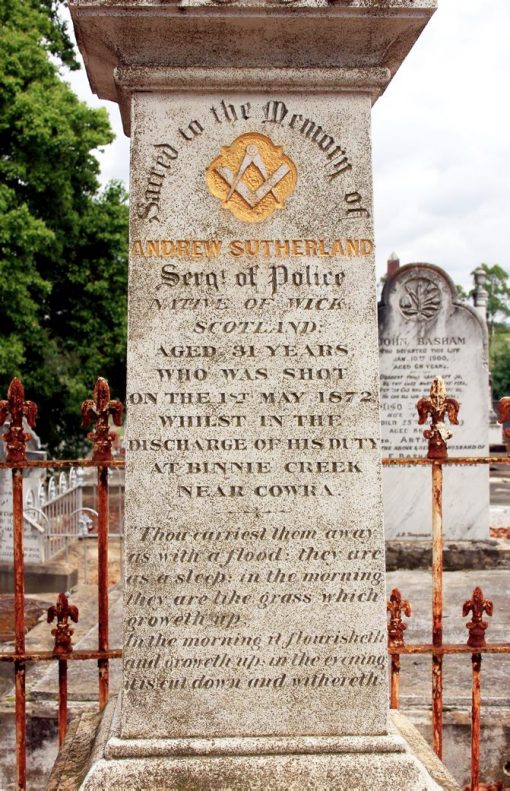
Andrew SUTHERLAND - INSCRIPTION: Sacred to the Memory of Andrew SUTHERLAND Sergt. ( Sergeant ) of Police Native of Wick, Scotland. Aged 31 years Who was shot on the 1st May 1872 whilst in the discharge of his Duty at Binnie Creek near Cowra. " Thou carriest them away as with a flood ; they are as a sleep ; in the morning they are like grass which groweth up. In the morning it flourisheth and groweth up ; in the evening it is cut down and withereth."
INSCRIPTION:
Sacred to the Memory of
Andrew SUTHERLAND
Sergt. ( Sergeant ) of Police
Native of Wick,
Scotland.
Aged 31 years
Who was shot
on the 1st May 1872
whilst in the
discharge of his Duty
at Binnie Creek
near Cowra.
” Thou carriest them away as with a flood ; they are as a sleep ; in the morning they are like grass which groweth up.
In the morning it flourisheth and groweth up ; in the evening it is cut down and withereth.”


ANDREW IS mentioned on the Police Wall of Remembrance


On 1 May, 1872 the sergeant was returning to Cowra from Bathurst Court.

During his journey he was told that two men who were wanted for robbery, George Gray and William Bristow, were at Daniel Horan‘s hut at Binnie Creek, twelve miles from Cowra.

The sergeant rode over to investigate and as he neared the door of the dwelling the offenders suddenly emerged and shot him to death.


The Clarence and Richmond Examiner dated 7 May, 1872 provided a brief account of the tragedy, which tends to suggest that the offenders were known to the sergeant.


SERGEANT SUTHERLAND SHOT DEAD BY BUSHRANGERS

CARCOAR ” Thursday – I regret to have to announce that Sergeant Sutherland, of the Cowra police force, was shot dead last evening, by bushrangers, at a place about five miles from Cowra.

It appears that two armed men called on a settler named Daniel Oram, whose house is distant about two miles from Cowra and demanded food, which he placed on the table for them.

Sergeant Sutherland, who was going home from the Bathurst Assizes, rode up to the door during the meal, and was dismounting, when one of the men stopped to the door, gun in hand, and said, “I have been looking for you, you wretch,” and then shot him through the heart, causing instant death.

The men then went off and Oram started to Cowra, and upon arriving there, informed the police, who are now in pursuit of the murderers.

The fate of the unfortunate but brave officer is universally regretted. He leaves a wife, and had only been married a few months.


The sergeant was born in 1839 and joined the New South Wales Police Force on 5 January, 1863.

At the time of his death he was stationed at Cowra.


The Queenslander

Sat.  9 Aug 1873  p 10

ST. GEORGE.

(FROM OUR OWN CORRESPONDENT.) July 31.

We have also to record the arrest of a man named Frank Riley alias George Gray by Sergeant Cranney, on the charge of murdering Senior-sergeant Andrew Sutherland, of the New South Wales force, at Hordern’s hut, Beni Creek, on the 1st of May, 1872.

The prisoner had been staying in town for some few weeks, and left accompanied by another man with the avowed intention of going to the Surat races, but parted with his comrade about three miles from Weribone, his comrade going on into Surat, while he went out into the bush to camp.

Sergeant Cranney, in the meantime, appearing to have some clue to his identity, followed the pair, and finding that only one had reached Surat, returned on his tracks, and camped in the bush for two nights endeavouring to ascertain the whereabouts of the prisoner.

Becoming faint from fasting, he went to Weribone Station for food, and just dropped on to the man he was looking for, and who had also been there on the same errand. The officer arrested him at once, and prisoner was taken to Surat and remanded to Roma, and we believe by this time is on his way to Brisbane.

This is the second arrest of New South Wales offenders made by Sergeant Cranney during the past few months, the other being that of James Madgwick, whose capture and exploits were narrated in your columns a short time since. Sergeant Cranney was also the officer who arrested the notorious Patrick Collins.

http://trove.nla.gov.au/newspaper/article/27277108


Andrew SUTHERLAND 1 - NSWPF - Murdered 1 May 1872

Andrew SUTHERLAND 2 - NSWPF - Murdered 1 May 1872

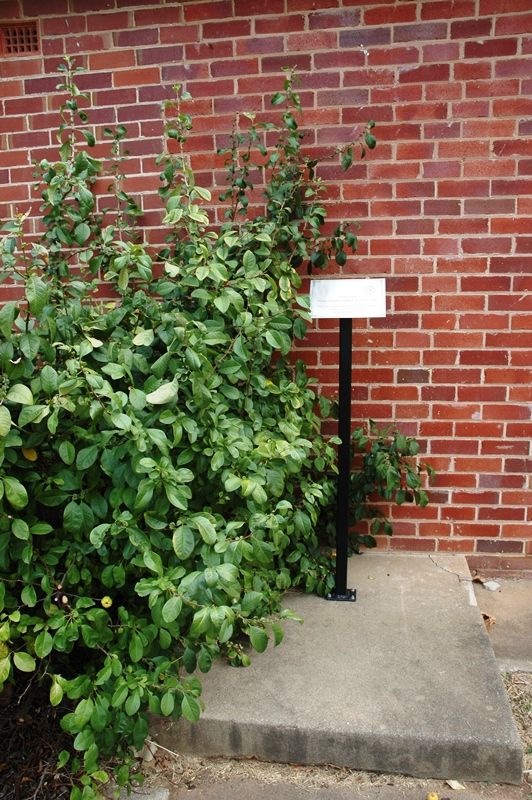
Outside Cowra Police Station

Outside Cowra Police Station. Front Inscription: In memory of Senior Sergeant Andrew SUTHERLAND who was fatally shot whilst on police duty at Binni Creek near Cowra on the 1st May 1872.
Outside Cowra Police Station

Sergeant Second Class Andrew Sutherland

Address: 88 Brisbane Street, Cowra Police Station, Cowra, 2794
State: NSW
Area: AUS

Please Note: GPS Co-ordinates are approximate.

Latitude: –33.834062
Longitude: +148.691187

View Google Map

Monument Type: Garden

Theme: People

Sub-Theme: Crime

Description:

A plaque commemorates Sergeant Andrew Sutherland who was fatally shot in the line of duty as a New South Wales Police officer.


Sergeant Second Class Andrew Sutherland was shot whilst on duty at Binni Creek near Cowra on May 1, 1872. On May 1, 1872 he was returning to Cowra from Bathurst Court. En route he was told two offenders wanted for robbery, George Gray and William Bristow, were at Daniel Horan’s hut at Binni Creek, 12 miles from Cowra.


The Sergeant rode over to investigate and as he approached the door of the dwelling, two offenders emerged and shot and killed him. Gray and Bristow were subsequently arrested but both were later released without charge. No-one was ever convicted of the crime.

Actual Event Start Date: 01-May-1872

Actual Event End Date: 01-May-1872

Actual Monument Dedication Date: 01-March-2012

Front Inscription:

In memory of
Senior Sergeant Andrew SUTHERLAND

who was fatally shot whilst on police duty
at Binni Creek near Cowra
on the 1st May 1872.

http://monumentaustralia.org.au/australian_monument/display/97891?image=1


The Portland Guardian and Normanby General Advertiser of 20 May, 1872 reported on the magisterial inquiry which was held at the Cowra courthouse before Mr G. Campbell J.P, “touching the death of Andrew Sutherland, who was shot dead by a ruffian at the residence of Daniel Horan a farmer living on Binni Creek…” One witness to the murder, Mrs Eliza Seery, gave the following evidence.
“I am the wife of James Seery, and reside at Binni Creek.
About 4 o’clock in the evening of Wednesday, the 1st inst., two men rode up to Horan’s hut on two dark looking horses.
Mrs Horan and I were in the hut at the time. They bid me good day, and asked if I had seen a bay horse, to which I replied “No”. One then said to the other, “We’ll get down and have a light”. The taller man was the spokesman.
He remarked that the weather was very dry.
The dogs began to bark. I went out to see what they were barking at, and observed Sergeant Sutherland riding towards the place.
The tall man asked me who was coming, and I answered, “Sergeant Sutherland”. The smaller man then walked outside, and Sutherland called him to the corner of the hut.
After talking to the sergeant for a short time, the man came towards the door, when I heard Sutherland ask him who was inside.
Sutherland then rode up to the door, and told the man who was inside to come out, or he would shoot the two of them.
The tall man, who was in the hut, said, “I won’t” and went towards the door.
The sergeant then got off his horse, when the tall man fired at him.
He said, “I’ll shoot”, before he shot at the sergeant.
Directly after the shot was fired, Sutherland, let his horse go, and ran towards a tree standing near the hut.
The man followed Sutherland and fired two shots, one after the other, as quick as he could.
The Sergeant, whose back was towards the man who shot at him, fell before he got to the tree. He fell directly after the last shot was fired.
There were only three shots fired.
The man was within a yard or two of Sutherland when the last two shots were discharged. This man brought Sutherland’s horse, and rode him away immediately after firing the last shot.
I did not see the smaller man of the two after the first shot was discharged.
I ran to the Sergeant when he fell, and asked if he was dead. He made no reply.
He was not quite dead, but never spoke.
Mrs Horan came directly after, and I told her to run for some water. She got some water, which she poured over the Sergeants mouth. He died while I was standing by him. He was lying partly on his side, and partly on his back.
Horan came up, and asked what was the matter. I told him the sergeant was shot dead.
Horan reported the murder to the police.”


The Brisbane Courier of 11 August, 1873 was to later report on the arrest of one of the offenders by Queensland Police Sergeant Cranney.
“We have also to record the arrest of a man named Frank Riley alias George Gray by Sergeant Cranney, on the charge of murdering Senior-sergeant Andrew Sutherland, of the New South Wales force, at Hordern’s [sic] hut, Beni [sic] Creek, on the 1st of May, 1872.
The prisoner had been staying in town for some few weeks, and left accompanied by another man with the avowed intention of going to the Surat races, but parted with his comrade about three miles from Weribone, his comrade going on into Surat, while he went out into the bush to camp.
Sergeant Cranney, in the meantime, appearing to have some clue to his identity, followed the pair, and finding that only one had reached Surat, returned on his tracks, and camped in the bush for two nights endeavouring to ascertain the whereabouts of the prisoner.
Becoming faint from fasting, he went to Weribone Station for food, and just dropped on to the man he was looking for, and who had also been there on the same errand.
The officer arrested him at once, and prisoner was taken to Surat and remanded to Roma, and we believe by this time is on his way to Brisbane.”


John McCABE

John McCABE

New South Wales Police Force

Regd. #  Q 1181

For the purposes of this website ‘Q‘ represents those Police joining between 1 March 1862 ( commencement of NSWPF ) – 23 February 1915 ( Commencement of NSWPF current numbering system )

Rank:  Constable – appointed Monday  23 February 1863

Senior Constable

Stations:  Biree  ( see description below )

ServiceFrom 23 February 1863 to  1 November 1868 = 5+ years Service

Awards?

Born? ? 1828, Ireland

Event date:  Tuesday  6 October 1868

Died on:  Sunday  1 November 1868

Place of Event:  Enngonia, NSW

Place of death?

Cause:  Shot – Murdered

Age39 – 40

Funeral date?

Funeral location?

Buried at:  Bourke Old C of E Cemetery, Gorrell Ave & Kidman Way, Bourke, NSW

GPS – 30 06′ 05S / 145 56′ 14E

Memorial at?

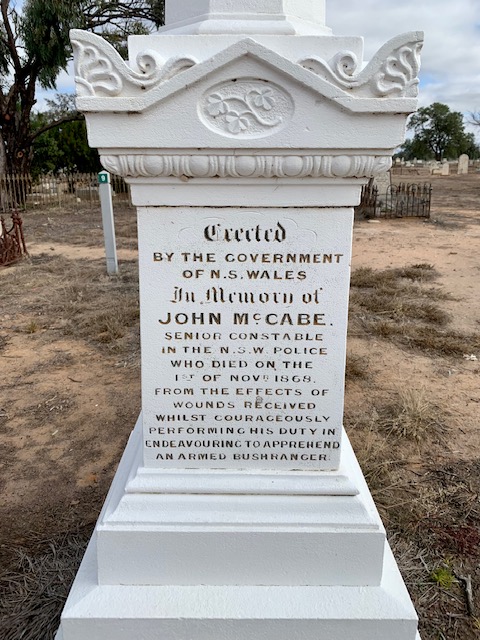
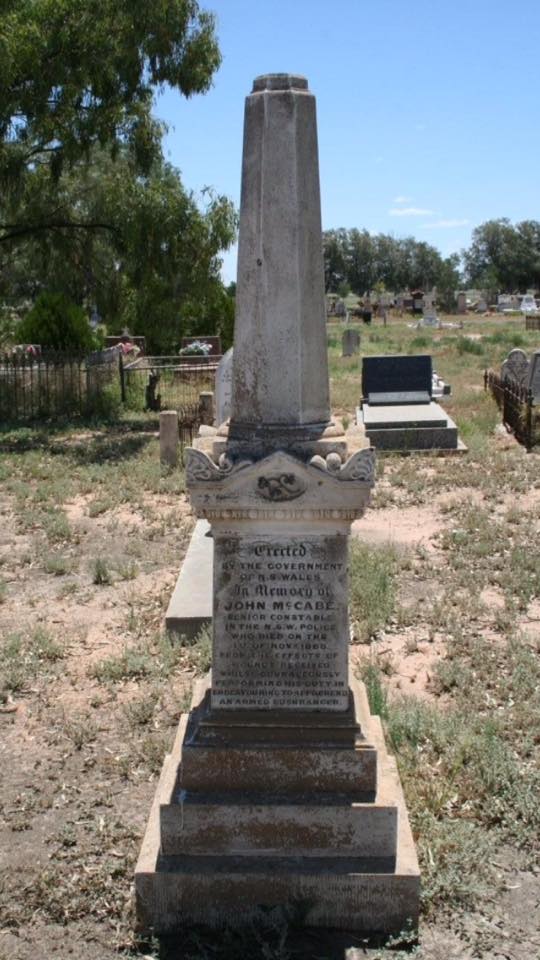
John McCABE - grave
As seen in June 2022.
Photo: Alan BLAKE # 19779

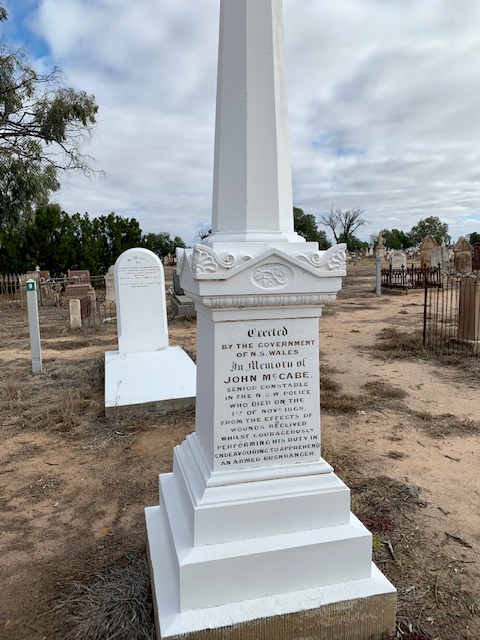
John McCABE - grave
As seen in June 2022.
Photo: Alan BLAKE # 19779


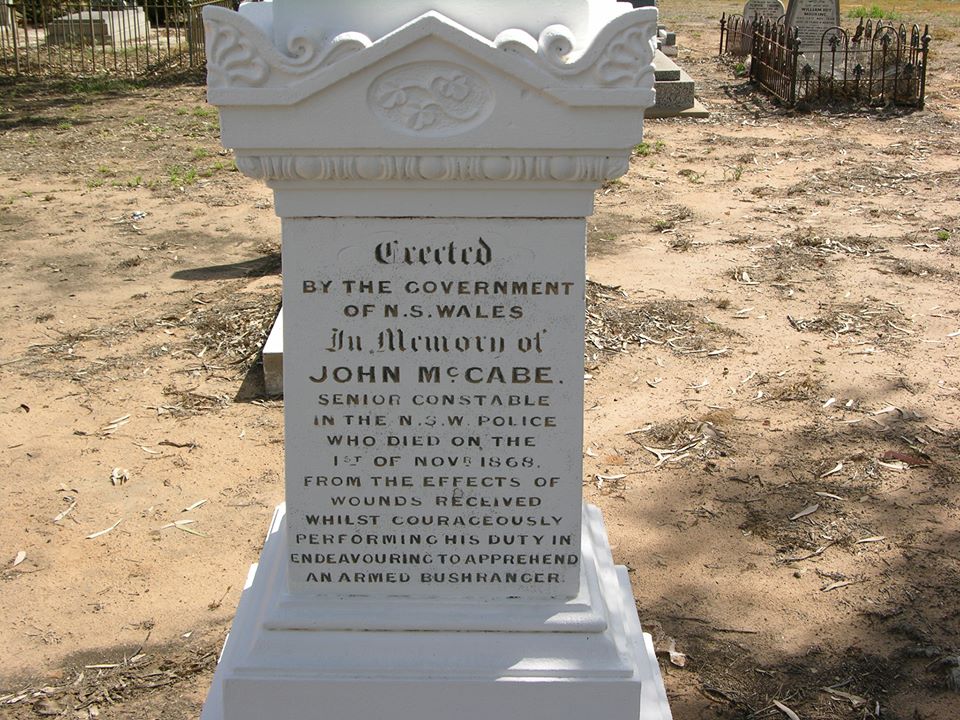
Inscription:Erected by the Government of N.S. Wales in Memory of Jhon McCabe. Senior Constable in the N.S.W. Police who died on the 1st of Nov. 1868, from the effects of wounds received whilst courageously performing his duty in endeavouring to apprehend an armed bushranger.

Inscription:Erected by the Government of N.S. Wales in Memory of Jhon McCabe. Senior Constable in the N.S.W. Police who died on the 1st of Nov. 1868, from the effects of wounds received whilst courageously performing his duty in endeavouring to apprehend an armed bushranger.

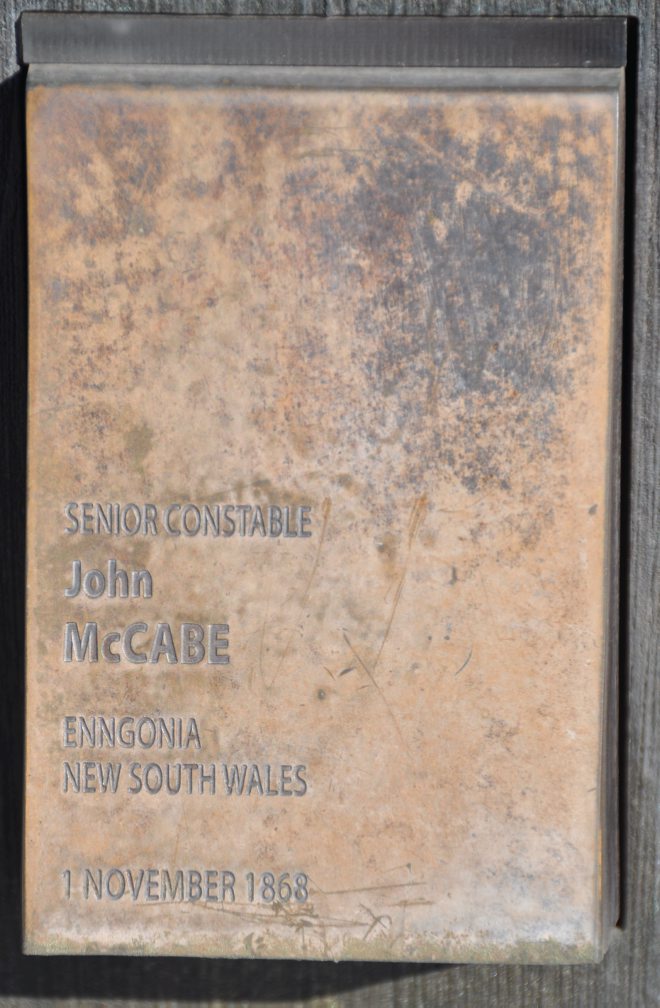
Touch Plate - Police Remembrance Wall, Canberra. Senior Constable John McCABE Enngonia, NSW 1 November 1868
Touch Plate – Police Remembrance Wall, Canberra.
Senior Constable John McCABE
Enngonia, NSW
1 November 1868

JOHN IS mentioned on the Police Wall of Remembrance


On 6 October, 1868 Constable McCabe was searching an area near the Queensland border for bushrangers Frank Pearson (Captain Starlight) and Charles Rutherford. He was accompanied by Constable Hugh McManus of the Queensland Police Force. During their patrol the police stopped for supplies at Shearer’s Inn, Enngonia (about 100 kilometres from Bourke). While they were so engaged, two riders appeared and entered the inn. Almost immediately, Pearson yelled “Bail up!” with the obvious intention of robbing those present. The two police, who had taken their weapons into the inn, turned and fired at the two offenders. Constable McCabe, who had dropped to one knee and fired, was shot in the chest, however he managed to fire several times, hitting Pearson in the wrist and right arm. The two bushrangers then ran from the inn and escaped. After rallying for almost a month, Constable McCabe died as a result of both his wound and the resultant infection. ( This murder is sometimes incorrectly attributed to small-time New England thug and armed robber Fred “Thunderbolt” Ward ).


The Maitland Mercury & Hunter River General Advertiser of 27 October, 1868 featured a lengthy article, informing its readers that Immediately upon the termination of the encounter a special messenger was dispatched from Shearer’s to Bourke, a distance of seventy five miles, for medical assistance. Dr. Roberts, in company with Sergeant Cleary, were promptly upon the spot and the ball has been extracted from McCabe. Its course was through the left breast, passing through a part of the lungs, and finally lodging under the shoulder-blade. Although in a critical state from such a dangerous wound, Dr. Roberts anticipates a favourable result.”


Despite the doctor’s confident prognosis, however, Senior Constable McCabe passed away a few weeks later.


The senior constable was born in 1828 and joined the New South Wales Police Force on 23 February, 1863. At the time of his death he was stationed at Biree (Brewarrina).  Biree (a small outpost Station believed to exist only from 1865 to 1869 in the river country between Brewarrina and Enngonia).


Newcastle Chronicle (NSW : 1866 – 1876),

Thursday 19 November 1868, page 3

Death of Constable McCabe.— The Bourke correspondent of the Dubbo Dispatch writes: —

‘ It regrets me to have to apprise you of the death of McCabe. The poor fellow expired at Shearer’s on the 1st instant, I understand that he lost the use of his senses for some hours previous to his death, but felt no pain, mortification having set in on the left side, extending from the shoulder to the foot. Dr. Roberts has gone out to examine the body, I presume for the purpose of making a post mortem examination. No magisterial or coroner’s inquiry, as far as I can learn, has been, or is to be held. The perpetrators of this murder are closely pursued by five of the Queensland black police and an inspector. After leaving Dowling’s, instead of going into Queensland, as was thought, they followed the Paroo down as far as McGilverey’s station, and then crossed to the Darling. On their way over they were seen by a shepherd twelve miles from the Darling River, at a station of McGilverey’s. They afterwards robbed a hut on the river of every particle of rations, and made for Acre’s back country, on the south east side of the Darling, at which point the black troopers were last seen on their trail, only a day or so behind them. The troopers’ horses, owing to the manner in which they had been ridden, were very weak ; scarcity of water was also telling a tale upon them. Rutherford is well known in this district ; he used to shepherd at Belalie on the Warrego. The other man, who was shot by McCabe, carries his arm in a sling, has a hooked nose, is short, and has dark hair. Rutherford’s description I have been unable to ascertain, but there is hardly any mistaking the pair. Everyone that has seen them identified them at once. They have gone either to Wentworth or to Balligool, or in that direction, and I would advise the Dubbo police to telegraph to both places. I learn that the brave fellow, McCabe, put two balls into the unknown bushranger — one, a revolver bullet, went through the arm below the elbow, and the other from the carbine went through the fleshy part of the muscle, and lodged under the shoulder skin, but in a place where not but a surgeon could extract it. How the fellow has managed to get on so well is a miracle. ”

http://trove.nla.gov.au/newspaper/rendition/nla.news-article111330794.txt


Location: 30 06′ 05S / 145 56′ 14E
Old C of E, Bourke.
Same GPS as ARMYTAGE as they are adjacent as can be seen in the long shot of the grave.


Thomas MADDEN

Thomas MADDEN

New South Wales Police Force

Regd. #  ????

Rank:  Constable

Stations? , Bathurst

ServiceFrom  20 January 1864  to 30 April 1867 = 3+ years Service

Awards?

Born: ? ? 1836 – 1837, County Mayo, Ireland

Died on:  30 April 1867

Cause:  Accidentally Shot – ” Friendly fire “

Event location:  Pulpit Hill ( near Katoomba )

Age: 30

Funeral date:

Funeral location:

Buried at:  Hartley Cemetery, Great Western Hwy, Hartley, NSW

Location of Grave:  a/a


Memorial location:

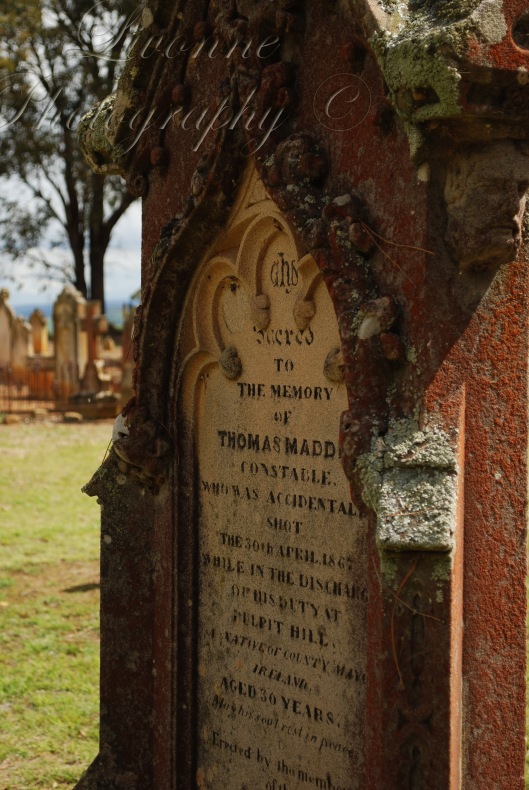
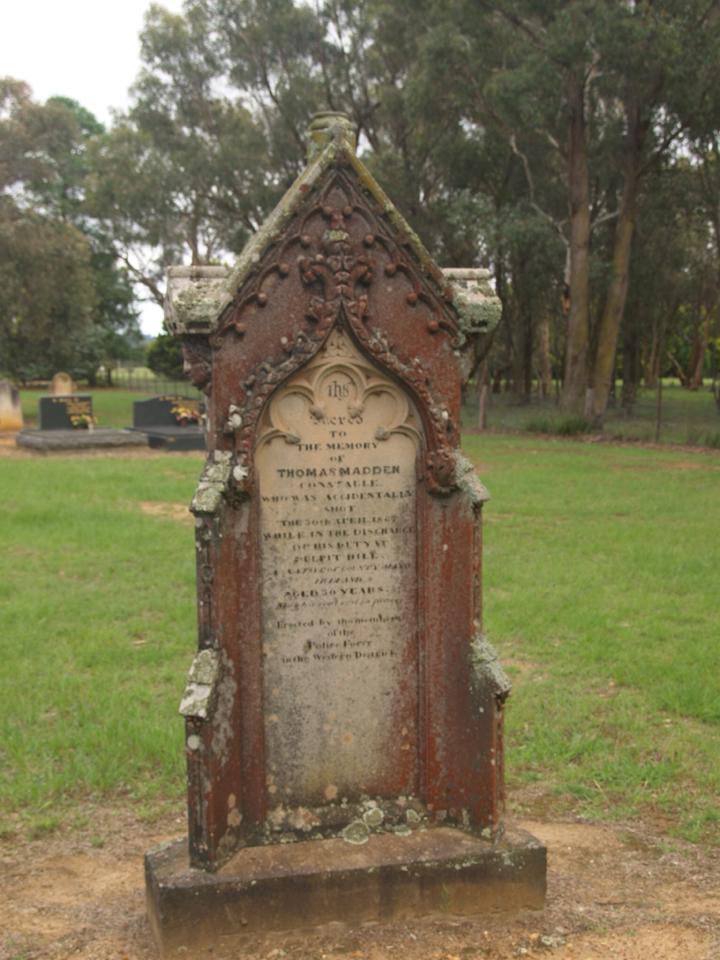
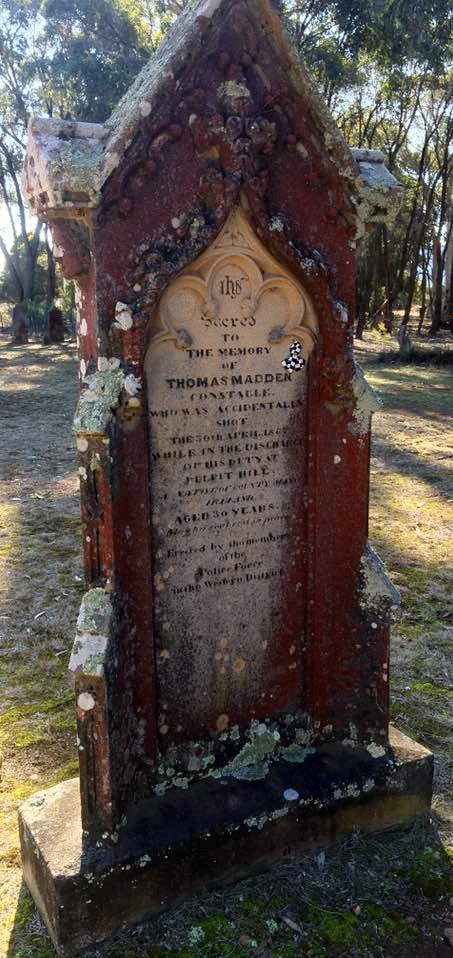
 Thomas Madden

Cst Thomas MADDEN - Shot - 30 April 1867 - Grave stone

photo courtesy of:  http://livonne.com.au/2013/03/02/in-the-line-of-duty/


Sacred to the memory of Thomas Madden Constable. Who was accidentally shot 13th April 1867 while in the discharge of his duty at Pulpit Hill. A native of County Mayo Ireland. Aged 30 years. May his soul rest in peace. Erected by the members of the Police force in the Western District.

THOMAS IS mentioned on the Police Wall of Remembrance


On the 29 April, 1867 a party of eight police led by Sergeant Walter Casey camped at Pulpit Hill (near present day Katoomba) with fifteen or sixteen ‘heavily ironed’ prisoners they were escorting from Bathurst Court to Darlinghurst Gaol.

At midnight Constable Madden took his turn to watch over the lockup in which the prisoners were housed. When he was relieved at 2am by Constable Hitchcox, Constable Madden went to check the prisoners. When he opened the door of the lockup, the prisoners, who had apparently been waiting for their chance to escape, rushed the constable. Sergeant Casey, who realised what was occurring, began firing at the prisoners. Unfortunately, of the five shots fired by the sergeant, three accidentally struck Constable Madden, inflicting fatal wounds. Two prisoners were also wounded.


The Sydney Morning Herald of

14 May, 1867, page 3  gave news of the inquest into the death of Constable Madden.


INQUEST ON THE BODY OF CONSTABLE MADDEN.

At the inquest held by the District Coroner, at Hartley, on view of the body of the unfortunate deceased Constable Thomas Madden, who was accidentally shot by Sergeant Casey while resisting the attempt of prisoners to escape from the lockup at Pulpit Hill, depositions were taken.

Walter Cassels Casey, sergeant of police, stationed at Sofala, on oath saith

On the 29th April I was in charge of an escort of fifteen prisoners en route from Bathurst to Sydney ; that night the escort stopped at Pulpit Hill lock-up, I was on guard over the prisoners from 7 to 10 p m ; and was relieved by constable Duggan, who was on guard from 10 to 12, when he was relieved by the deceased, who remained on guard from 12 to 2a.m. of the 30th instant, Constable Hitchcox had to relieve him then.

After I was relieved from guard by constable Duggan, I laid down on the sofa (marked A in the plan), and had my revolver loaded on the window sill at hand ; anxiety kept me from sleeping, and I conversed with every sentry ; at twelve minutes past 2 a.m, deceased called Constable Hitchcox from an adjoining room ; deceased then said, ” I will look to see that they are all right,” immediately after this, the prisoners, led by Rutherford, Holmes, Moran, Smith, Southgate, and Kerr burst into the front room, out of the cell (C), and through the door (B), I jumped up, seized my revolver, and fired at the prisoner Moran ; he appeared to fall, I then fired at Kerr, who sang out, I fired at Kerr, who was rushing at deceased ; Kerr fell, I then fired at Southgate, who had hold of deceased ; the pistol hung fire , Southgate was not hit ; I fired again at one I supposed to be prisoner Holmes, I believe that something was put over the lamps very soon after the rush ; I found a blanket and a prisoner’s jacket on the table after all was over ; as the room seemed to get very dark after the two first shots ; it may have been caused by the smoke ; after I had fired five shots, the prisoners all but two ran into the cell, these two, who were Holmes and Rutherford, ran out of the front door (D), taking the direction of G and F ; I followed Holmes, and snapped the pistol at him ; it did not go off ; I then ran in and shut the door on the prisoners, who were in the cell at the time senior-constables McArthur and McNanamy and other police ran up from the barracks ; McArthur told me that Madden was shot in three places, and that the prisoners must have a revolver, I said, ” Than they got Madden‘s,” I said three or four of the prisoners are shot. I then looked at Hitchcox‘s revolver, it was not discharged, nor was any other of the police revolvers but my own, which had been fired five times, I then said, “Oh, my God! I must have shot poor Madden,”

I went up to the barracks, and saw deceased ; he complained of pain in his bowels ; I said, ” Oh, Madden it was I shot you,” he said, ” No, it was the prisoners,” I said, ‘ No, it was me, as no other revolver was discharged,” he said then, “If it was, I forgive you ; I know you did not do it on purpose,” and shook hands with me. I was so overcome at the thought of shooting my comrade, I do not know what I did, I believe I fainted.

I saw in the afternoon that prisoner Moran and Kerr were each wounded in two places – Moran on the breast and in the thigh, and Kerr having a graze on his head and a severe wound through his right arm.

When I went in, Moran said:, “You b—— butcher, if I had a revolver I would have got away ; I would as it was but for the sergeant.”

I was standing on the sofa when I fired, and the deceased was struggling with the prisoners ; my revolver has six chambers ; one chamber had two round bullets in it, one of which struck Moran on the left breast ; it is usual to see if the prisoners are all safe when changing guard ; the whole affair did not last more than five minutes ; I have been about eleven years in the police, I think Kerr had hold of deceased by the throat ; Kerr was shot through the right arm, and deceased on the left side ; I believe deceased was trying to keep prisoner from me and the door ; the property found on deceased consisted of £7 16s 3d and a silver watch and chain.

Thomas Hitchcox sworn: ” I am a constable stationed at Pulpit Hill, on the morning of the 30th April I was called shortly after 2 a m to relieve the deceased constable Madden, who was on duty guarding fifteen prisoners in the Pulpit Hill watch-house. When I came out of my own room sergeant Casey was lying on a sofa, after I had been out of my room a few moments, constable Madden said, “I’ll see if the prisoners are all right ”

He took the padlock off and drew the bolt, immediately, the prisoners rushed the door open and I believe knocked deceased down ; at least l lost sight of him ; prisoner Rutherford sprang at my throat, with, I believe the intention to get at Sergeant Casey‘s revolver, which was lying on the window ; I got away from him ; he followed me, and got hold of me a second time ; I then got away ; sergeant Casey jumped up and commenced to fire his revolver at the prisoners. Rutherford again caught me by the throat ; I had great difficulty in getting away from him ; I rushed into my bedroom ; got out of the window ; and went to the barracks to call the escort, who were sleeping in the barrack room, and to get arms, as the prisoners were between myself and my own ; I believe had not sergeant Casey fired as promptly as he did we should have been disarmed ; and the prisoners would have escaped ; my revolver was hanging behind the cell door ; the place where I generally keep it,

Sergeant Casey was standing on the sofa when he fired.

Daniel Murray O’Hara being duly sworn said I am a duly qualified medical practitioner residing at Hassan’s Walls, I have this day made a post mortem examination on the body of Thomas Madden ; there were no external marks of violence on the body, except three punctured wounds ; one on the left jaw in front of the ear, one on the left shoulder blade, and one on the left side, between the ninth and tenth ribs ; these three wounds are gunshot ; where the ball entered I found the ball that caused the wound on the jaw had passed through the lower jaw blade fracturing it and wounding parts inside the jaw, viz muscles etc, and passing through the roof of the tongue in which I found the ball lodged in its substance ; on the right side the bone had split the ball, and one small portion was found immediately inside the left jaw bone, and the principal portion on the place stated, with a small portion of bone adhering to it ; this wound would not necessarily have proved fatal ; I found that the wound on the left side was more serious ; and on opening the chest and abdomen, I found that the ball had passed through the chest and abdomen, from the left to the right side, wounding in its course the pleura, peritoneum, and spleen, liver, and stomach, I found the ball under the skin on the right side ; there had been a great deal of internal haemorrhage along the course of this ball ; I believe it was from the causes of this wound that death took place ; I was not able to discover the ball that had entered the shoulder blade but as it had not entered the chest I did not consider it necessary to make any further search for it. The round hallmarked “X” is the one which had entered the side, and was the cause of death ; the ball marked “T” I found in the substance of the tongue.

The jury returned the following verdict – “That on the 30th day of April last, at Pulpit Hill, the said Thomas Madden died from pistol shot wounds, fired by Sergeant Casey while in the execution of his duty, and not by any other violent means whatever to the knowledge of the said jurors, did die.” The jury also added that they consider no blame attached to Sergeant Casey.

http://trove.nla.gov.au/newspaper/article/13138796

The constable was born in Ireland and joined the New South Wales Police Force on 20 January, 1864 at the age of 28 years. He had previously served in the Royal Irish Constabulary. At the time of his death he was a mounted trooper in the New South Wales Police Force and was stationed at Bathurst.


NSW BDM – Death  5356/1867


I visited this grave today, Saturday 29 October 2016 and it is still in great shape.

Cal


John CARROLL, Patrick KENNAGH, Eneas McDONNELL, John PHEGAN

John CARROLL

Patrick KENNAGH

Eneas McDONNELL

John PHEGAN

New South Wales Police Force

Regd. #  ????

Rank:  ALL were Special Constables

Stations:  ?

ServiceFrom  ? ? ?  to  9 January 1867

Awards:  ?

Born:  see below

Died on:  Wednesday  9 January 1867

Event location:  Braidwood

Cause:  Shot – Murdered

Age:  see below

Funeral date?

Funeral location?

Buried at:  Braidwood Cemetery

[alert_green] John CARROLLPatrick KENNAGHEneas McDONNELL & John PHEGAN are mentioned on the Police Wall of Remembrance[/alert_green]  *NEED MORE INFO


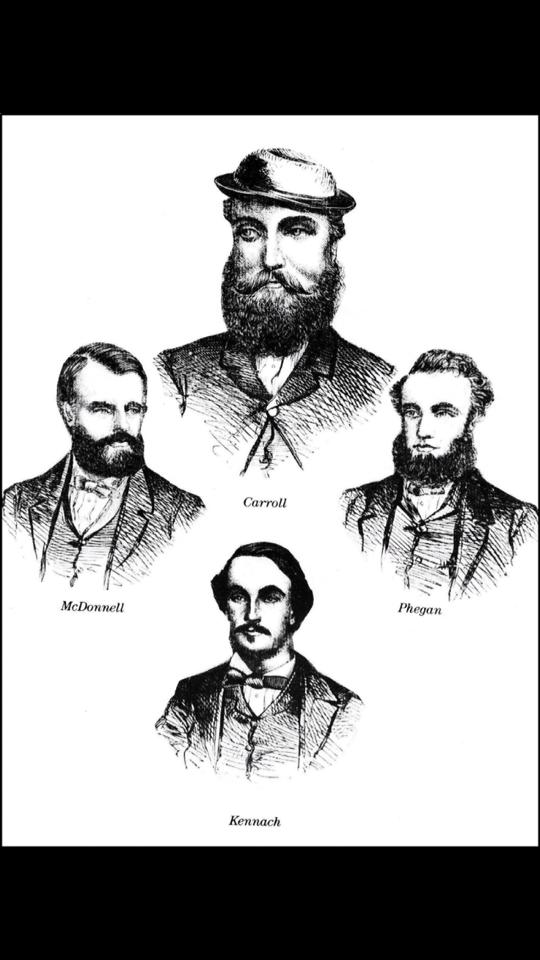
Carroll Kennagh McDonnell Phegan - Special Constables - NSWPF - Murdered - 9 Jan 1867 - Facial Drawings
Carroll Kennagh McDonnell Phegan – Special Constables – NSWPF – Murdered – 9 Jan 1867 – Facial Drawings


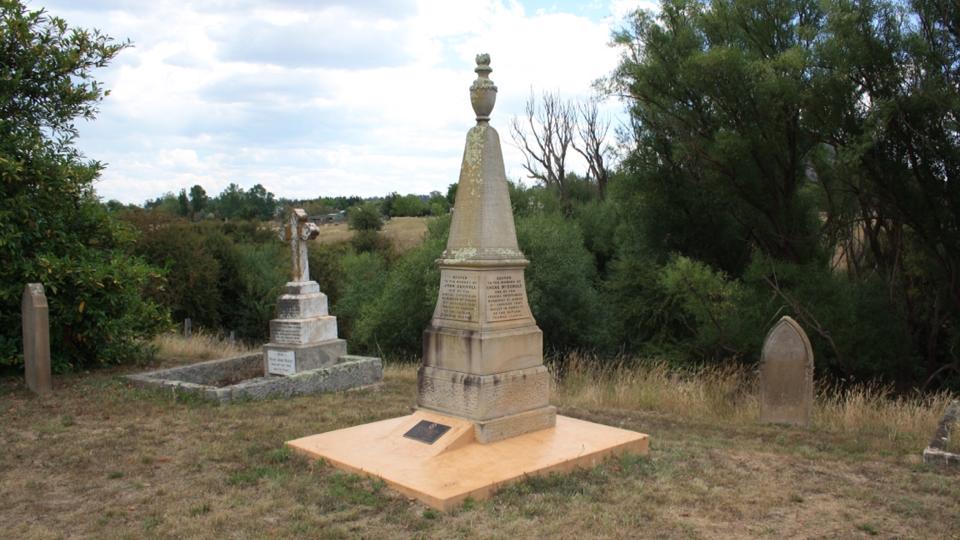
Carroll Kennagh McDonnell Phegan - Special Constables - NSWPF - Murdered - 9 Jan 1867 - Grave stone
Carroll Kennagh McDonnell Phegan – Special Constables – NSWPF – Murdered – 9 Jan 1867 – Grave stone

John Carroll (a senior warder at the Darlinghurst Gaol) was the leader of a group of four men sworn in as special constables to search for and capture the Clarke Gang of bushrangers. The patrol consisted of Carroll, Patrick Kennagh, Eneas McDonnell and John Phegan. They were well-armed and in January, 1867 had for some time been posing as surveyors in the Braidwood area in an attempt to discover the whereabouts of the bushrangers. On the afternoon of 9 January the four men were walking through an area of very dense bush on Jinden Station, having left their horses behind on that day for some reason, when they were ambushed.


Witnesses apparently twice heard shooting in the area at that time but did not investigate until the following day. In a clearing in the bush McDonnell and Phegan were found, shot to death, and about 800 metres away Carroll and Kennagh were found, also shot to death. Carroll was found lying on his back with a neatly folded handkerchief on his chest with a one-pound note pinned to it. A large sum of money he was carrying in his pocket had not been touched. The wounds suffered by Carroll and Kennagh suggest that not only were they murdered, but that they were actually “executed”. It is generally thought (and also often disputed) that their attackers were members of the Clarke Gang, however this has never been proved.


The Sydney Morning Herald of 12 January, 1867 informed its readers of the following.

BRAIDWOOD – MURDER OF THE SPECIAL CONSTABLES.

Friday: The four special constables – Carroll, MacDonald, Fagan, and Kennagh – sent here to capture Clarke’s gang, were on a visit to a station at Jinden, when they heard that Clarke would be at a place two miles distant from there, the constables went on foot with the intention of endeavouring to capture him, and, it is presumed, were met by a lawless mob and shot dead. It is said that Carroll’s legs had been broken, and his feet turned to his head. The mournful news reached Braidwood last night, and caused universal indignation, and cast a gloom over the entire population. Mr. Griffin and Superintendent Orridge are now holding an inquiry.


Like Carroll, Kennagh and McDonnell were prison warders (McDonnell was also an ex-policeman), while Phegan had been chosen for the search because, as a former associate of the Clarkes, he knew the Braidwood area well. They had been authorised by Colonial Secretary Henry Parkes to undertake a “secret expedition for the capture of the bushranger Thomas Clarke and his associates.” They had been promised wages, reward money (if successful) and significant positions in the Public Service for their endeavours. This situation, of course, was not popular at the time with substantive New South Wales police officers. A monument was later erected in the memory of these men at the Braidwood Cemetery (and inexplicably, McDonnell is referred to as Eneas ‘McDonald’).


These murders represent the highest number of police ever killed in a single incident of this type in Australian history. It is only surpassed by the spearing of patrols of Native Mounted Police in Queensland in the 1860’s. (Ned Kelly killed three Victorian police officers in a single incident at Stringybark Creek in 1878).


Special Constable McDonnell was born in 1817,

Special Constable Carroll in 1829,

Special Constable Phegan in 1837, and

Special Constable Kennagh in 1841.

[divider_dotted]


Clarence and Richmond Examiner & New England Advertiser ( NSW )    Tuesday  12 February 1867    page 3 of 8

Meetings of sympathy with the families of the special constables recently murdered continue to be held, and much indignation is expressed at the rottenness and inefficiency of our expensive military police force. A commission, with a great preponderance of officialism in it, has been appointed, to inquire into the circumstances of the late murders of the special constables, and the state of the Braidwood district. The public have little confidence in the fitness of the commissioners.

http://trove.nla.gov.au/ndp/del/article/63665154

[divider_dotted]


Special constables Carroll, Phegan, McDonald, and Kennagh, shot dead at Jingera, by Clark’s gang, January 9, 1867.

http://trove.nla.gov.au/newspaper/article/112710985

[divider_dotted]
 

Police and Bushranger descendants tour bushranger sites in district

Braidwood was overflowing with people during the weekend from visitors who had come to town for all sorts of events and celebrations.

The Police and Bushrangers Descendants who travelled from all over NSW and some from QLD came to enjoy the company of like-minded people and to learn more about the local Braidwood bushrangers and the policeman who were involved in their capture in April 1867.

The group was lucky to have many distinguished historians and authors who facilitated as commentators, guest speakers and experts.  This was a well-run event.

The group would like to thank Paul and Annette Briggs and family who spent many long hours scheduling and organising the experience. As a result, all of the participants enjoyed their time in the Braidwood District. Paul Briggs is a descendant of Lionel Pottinger, one of the Special Police sent after the Clarkes.

The group gathered at the Braidwood Services Club on Friday night for dinner followed by a briefing on the weekend and guest speakers from within the group before their early start the next morning.

About 80 people, including local guests, gathered at the Garan Vale Woolshed at 8.15am on Saturday morning ready to depart for their day tour of the significant sites of the Connell and Clarke bushrangers in the Ballallaba, Krawarree, Jinden and Kain areas of the district.

The first interesting site was the Clarke residence on the Cooma Rd adjacent to Brick Kiln Creek where Jack and Mary Clarke (parents of Tom and John Clarke) lived.  Peter Smith and Paul Briggs spoke and recited information about this site. Along the way Paul Hart provided information about several curious sites along the road, including Mrs Appleby’s store and house, the Willis homestead, Bendora and bridle tracks including the Rugby Track.

The group viewed the Nithsdale homestead and the surrounding property where the oldest of the Clarke children were born, during the 1840’s. This was also the location of the local Ballallaba police Station. Along the road, the tour mangers pointed out the Coles, the Church, the school, the Berriman and Connells family home sites.

The areas and locations of the Griffin brothers were also pointed out. These three brothers had substantial involvement in the Bushranging episode during the 1860s.

The site of a well known and notorious landmark, ‘Michael O’Connell’s Traveller’s Home Hotel,’ opposite Jim O’Connell’s house was pointed out. A few stories were told and a visit to the Gundillion cemetery provided a few photo opportunities of Michael O’Connell’s gravestone.

Morning tea was abundantly provided by the good hosts of the Deua Tin Huts. A few more stories were exchanged and were appreciated by all.

The group was eager to travel to Khan Yunis to locate the site of Berry’s Hut where the Clarke bushrangers were finally taken by a small but dedicated group of troopers in 1867.

A substantial luncheon was provided by the Gundillion Progress ladies at the local hall. After a delicious lunch, the group travelled to Jinden to visit the property of Janette and John Hindmarsh where the temporary burial site and the site of the killing of the four unfortunate Special constables was pointed out to the large group.

On travelling back to Braidwood the tour travelled along the Jerrabatgulla Road visiting the house site of Michael Connell senior and ‘Gilston‘, the family home of the Hart family. This is where Charlotte Hart, the wife of Tom Clarke grew up and lived.  The group was bailed up by a couple of bushrangers who travelled on the bus to Braidwood ensuring that all travellers behaved themselves.

On arriving in Braidwood a quick stop at the local Braidwood Cemetery allowed the group to visit the final resting place of the Four Specials. The large memorial that was built to remember them was regarded with much interest.

On Saturday night a marvellous dinner and singalong was had at the Garan Vale Woolshed. Peter Smith led the vocals on several songs from the bushranging era to demonstrate how the community supported and even sympathised with the bushrangers during that chapter of Australia’s history, like this verse from the Kelly’s Byrne and Hart “..As high above the mountains so beautiful and grand, Our young Australian heroes in bold defiance stand, In bold defiance stand, my boys, the heroes of today, So let us stand together boys, and shout again, “Hurray!””

The weekend was topped off on Sunday with an interesting tour of the local Historical Museum and a tour of the Bedervale Homestead.  Many thanks to Jill Clarke for her notes from the tour.

https://www.braidwoodtimes.com.au/story/3391817/police-and-bushranger-descendants-tour-bushranger-sites-in-district/

[divider_dotted]
 

A bloody ambush.  Clarkes to be retried.  pdf

http://www.bwdmag.com.au/BWD_11/%20BWD11_2223.pdf

[divider_dotted]


Thomas CANTY

Thomas CANTY

New South Wales Police Force

Regd. #

Rank:  Constable

Stations?, ( Berrima Police Force & stationed at Nattai

ServiceFrom ? ? ?  to  25 June 1866 = around 5 years Service

Awards?

Born: ? ? ?, Glowenties, Shanagold in Limerick, Ireland

Event date: Monday  25 June 1866

Event location:  New Sheffield (Mittagong)

Died on:  Wednesday  27 June 1866

Cause:  Fall

Age: 49

Funeral date: Friday  29 June 1866

Funeral location:

Buried atBerrima cemetery, Olbury Rd, Berrima

Catholic Section, Row 6, Plot 14

Memorial location:

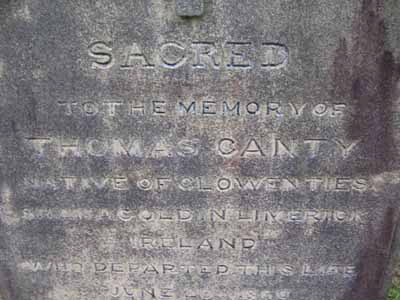
SACRED / TO THE MEMORY OF / THOMAS CANTY / NATIVE OF GLOWENTIES / SHANAGOLD IN LIMERICK / IRELAND / WHO DEPARTED THIS LIFE / JUNE 20TH 1866 / AGED 49 YEARS / REQUIESCAT IN PACE

[alert_red]THOMAS is NOT mentioned on the Police Wall of Remembrance[/alert_red]   * BUT SHOULD BE

Constable Canty died following a fall down a railway cutting at New Sheffield at night, as he made his way home to Berrima. He had earlier been to Bowral to warn a witness for court. He suffered severe spinal injuries in the fall and lay injured at the base of the cutting until morning. New Sheffield is now Mittagong.

The incident was reported in some detail by the Empire dated Saturday 30 June 1866.


FATAL ACCIDENT AT NEW SHEFFIELD.  ”An accident of a fatal character, resulting in the death of Constable Canty, of the Berrima police, occurred on Monday last. The deceased ( who was stationed at New Sheffield ) had been to Bowral to warn a witness to attend before the Berrima bench of magistrates on the following day to give his evidence in a case which was there to be brought before them and was on his return home when he fell down a cutting of the Great Southern Railway on the Mittagong side of the Gib tunnel.

The night was pitch dark and miserably wet, and it is supposed that the foot of the deceased must have slipped over some of the clay soil, which abounds in the neighbourhood. The cutting was about sixty feet deep, and the unfortunate man lay in a pool at the bottom for several hours, until some workmen were on the following morning attracted to the spot by the howling of the deceased’s dog. Having ascertained that somebody was lying below, the men took prompt measures to effect his release, and afterwards conveyed him to his home.

A messenger was immediately despatched to Berrima for medical aid, and no time was lost by Dr. Williamson in repairing to the scene of the sad and melancholy disaster.

Notwithstanding, however, that every effort was made which medical skill could suggest, the unfortunate man breathed his last at a late hour on Wednesday night. On Thursday a magisterial inquiry was held before G. H.Rowley, Esq., P.M., and a post mortem examination was made by Dr. Williamson, who found that the immediate cause of death was a spinal injury, which had doubtless been received by Canty in his fall.

The deceased had been in the police force of this colony up-wards of five years, and was always held in good repute as an efficient officer. A lasting testimony to the esteem in which he was held by residents in the district was afforded by the large and respectable assemblage which followed his remains to their resting place in Berrima cemetery on Friday last.  A wife and a large family are left to lament their loss.

http://trove.nla.gov.au/newspaper/article/60598138


At the time of his death the constable had apparently been a member of the police force for about five years and was stationed at Berrima.

[divider_dotted]


The Maitland Mercury & Hunter River General Advertiser     Tuesday  3 July 1866    p 4

Constable Canty, of the Berrima police, was recently out on duty, and in the darkness of the night fell down a cutting of the Great Southern Railway, sixty feet deep. The next morning some people were attracted to the spot by the howling of his dog and be was removed ; but on the following day he died from the spinal injury he had suffered.

http://trove.nla.gov.au/newspaper/article/18722657


[divider_dotted]
 

The Sydney Morning Herald      Wednesday  24 January 1866     p 7

ALLEGED MURDER AT NEW SHEFFIELD.

…………  Thomas Canty, being duly sworn, deposed:  I am a constable attached to the Berrima police force, and am stationed at Nattai  ‘ about 1 o’clock on Sunday morning last, John Forward knocked at my door ………..

http://trove.nla.gov.au/newspaper/article/13125295

[divider_dotted]


Miles O’GRADY

Miles O’GRADY

New South Wales Police Force

Regd. #  ?

Rank:  Constable

StationsNerrigundah

ServiceFrom  15 June 1863  to  9 April 1866 = 2+ years Service

Awards  ?

Born? ? 1841

Died on: 9 April 1866

Cause:  Shot – Murdered

Event locationNerrigundah

Age:  25

Funeral date  ?

Funeral location  ?

Buried at  ?

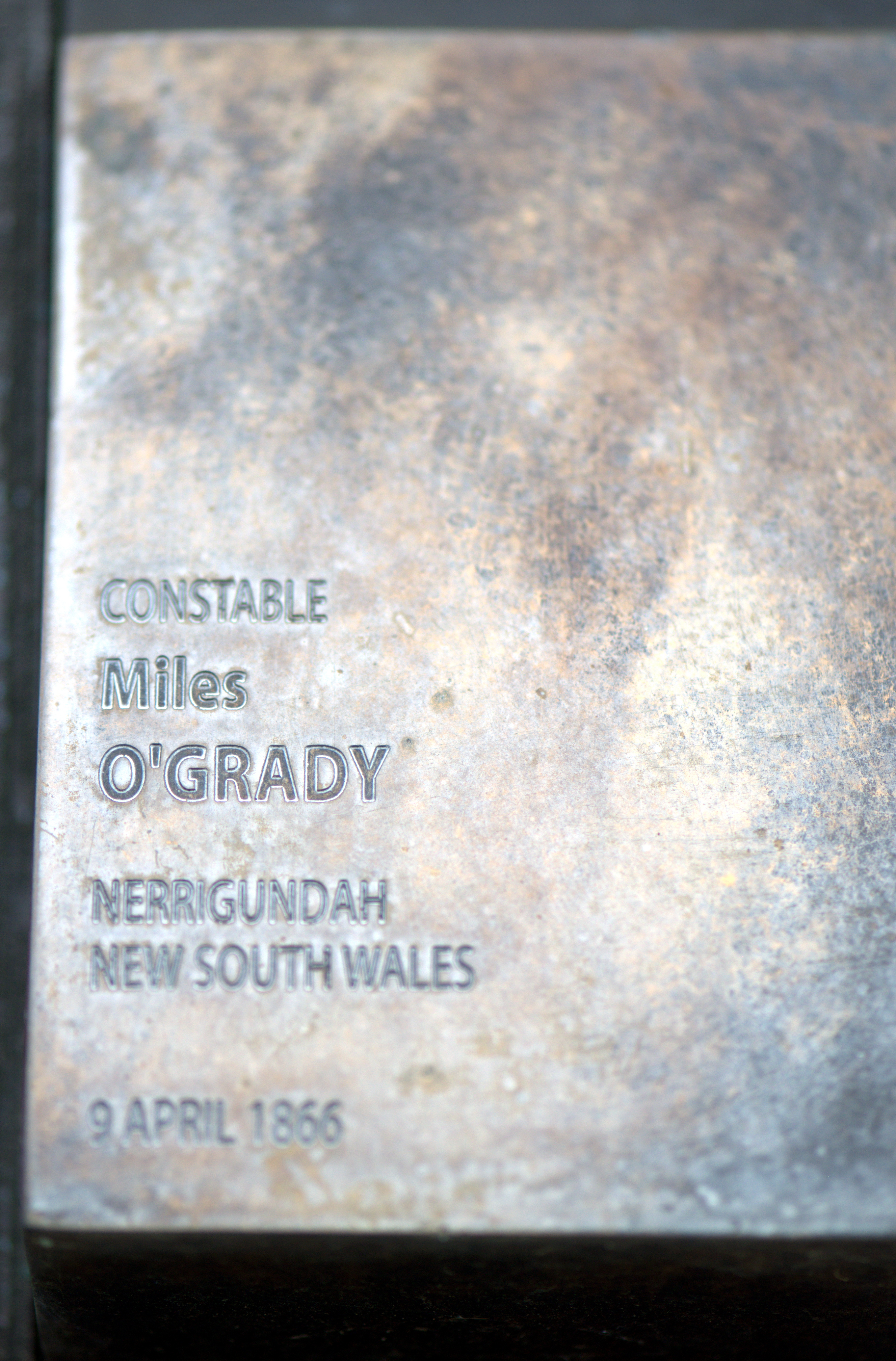
Touch plate at the National Police Wall of Remembrance, Canberra

[alert_green]MILES IS mentioned on the Police Wall of Remembrance[/alert_green]

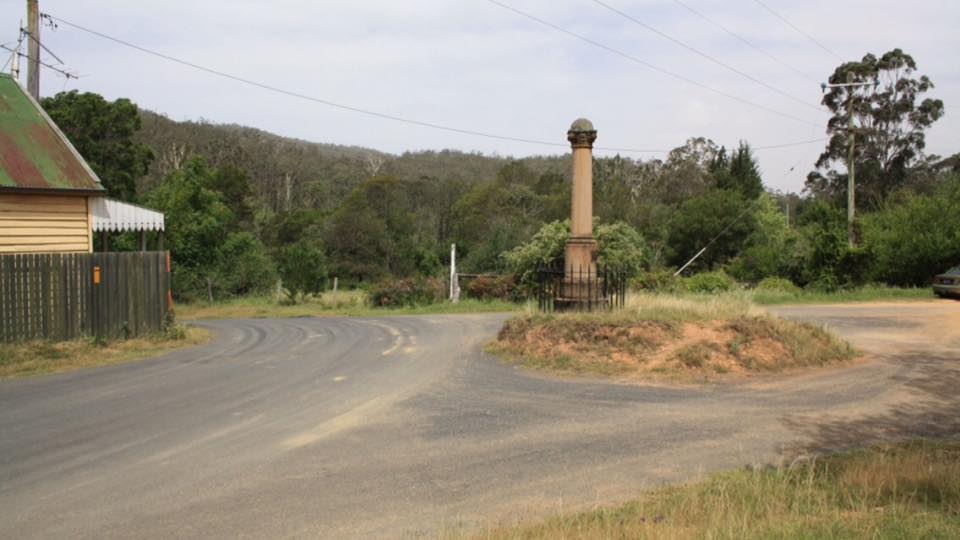
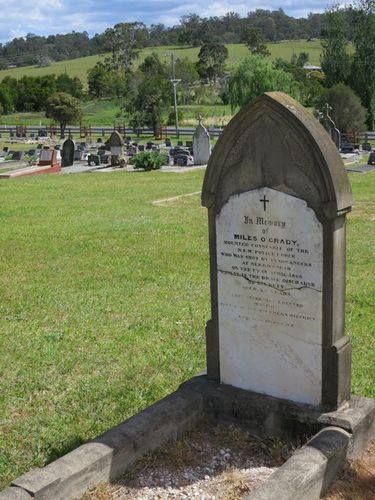
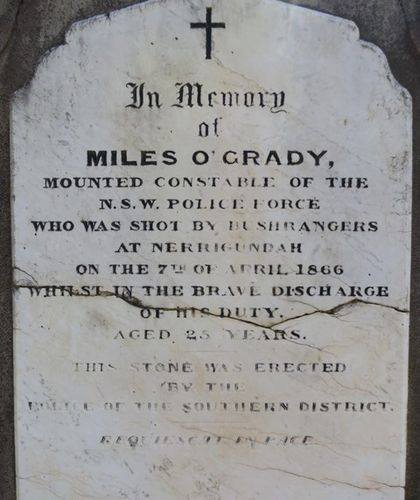
Miles O'GRADY 1 - NSWPOL - Murdered 9 Apr 1866

Miles O'GRADY 2 - NSWPOL - Murdered 9 Apr 1866

Miles O'GRADY 3 - NSWPOL - Murdered 9 Apr 1866

Miles O'GRADY 4 - NSWPOL - Murdered 9 Apr 1866

On the morning of 9 April, 1866 Thomas Clarke and his gang of bushrangers appeared at Deep Creek near the Gulph Goldfields and spent the day robbing passing travellers. At nearby Nerrigundah, 19 km west of Bodalla, Constable Patrick Smythe was performing his duties alone. Sergeant Nelson Hitch was absent at Braidwood Court and Constable O’Grady was in bed seriously ill with ‘colonial fever‘ (probably cholera). When Clarke learned of the police situation at Nerrigundah he led his gang into the township. Upon their arrival they held up Wallis’ Hotel and Pollock’s Store. Mrs Pollock (wife of the local gold buyer), however, threw the keys to the safe into the street and the gang spent considerable time searching for them in the darkness.

News of the events reached Constables Smythe and O’Grady at the police barracks and, against the wishes of his colleague, Miles O’Grady arose from his sick bed and dressed in his uniform. The two constables then set out to engage the bushrangers although O’Grady was very ill, and was having difficulty walking. As they approached Wallis’ Hotel, the police spotted the bushrangers and O’Grady fired, killing bushranger William Fletcher. In the ensuing gun battle O’Grady was shot in the side and as both police fell back, the gang ran to their horses and escaped. O’Grady was carried to the police barracks where he died a few hours later in great pain.

The Mercury newspaper dated 16 April, 1866 announced the constable’s unfortunate death from the wounds received, informing its readers that “Additional news respecting Clarke’s gang states that they burned down a settler’s homestead near Moruya and robbed Pollock’s station [store?]of £800, and several others of smaller amounts! Constable O’Grady has died of the wounds he received. The ringleader has been identified as Tommy Clarke. The Government is now taking steps to outlaw all connected.”

The constable was born in 1841 and joined the New South Wales Police Force on 15 June, 1863. At the time of his death he was stationed at Nerrigundah.

[divider_dotted]
 

The Kiama Independent & Shoalhaven Advertiser ( NSW )    Thursday  29 November 1866  p 3 of 4

The Bushranger Thomas CONNELL. – This prisoner, who was arrested by sergeant Byrne on Wednesday last, was charged at the Braidwood police court on Monday with the murder of constable O’Grady, at Nerrigundah, on the 9th of April last, and remanded to Moruya, there to be dealt with. Yesterday morning he was forwarded under escort of the police to Nelligen, en route to Moruya. – Braidwood Dispatch.

http://trove.nla.gov.au/ndp/del/article/106006894

[divider_dotted]
 

At 1pm on 9 April,2016, a commemorative service and presentation will be held at the re furbished monument at Nerrigundah to commemorate the 150th anniversary of the murder of our brother, Miles O’GRADY, by members of the Clarke gang bushrangers. There will also be a presentation by the Moruya and districts historical society at 2pm. There will be a detachment from the mounted police as well as a flag party.

If interested the contact for this is A/Supt Greg Flood at Far South Coast LAC on 02 44789910.

[divider_dotted]


Bushranger shootout in Nerrigundah commemorated with NSW Police flag ceremony

Posted


http://mpegmedia.abc.net.au/news/video/201605/Nerrigundah%20shootout%20mid.mp4

Well before anyone had heard of Ned Kelly, a gang of bushrangers robbed and murdered across an area from present day Canberra to the south-east coast of NSW.

The Clarke Gang have been dubbed “the bloodiest bushrangers”. They shot and wounded some of their victims, and killed others, and they’re suspected of killing all four of a police special squad sent from Sydney to track them down.

On April 9 1866 they killed Constable Miles O’Grady in a shootout in the then thriving mining town of Nerrigundah, which is now a quiet, isolated settlement of about 30 people, connected to the world by a public telephone.

Very little is left now of the many hotels, shops, houses and shacks that supported thousands of miners who came to the town during its 1860s gold rush, but a stone memorial to the murdered policeman stands proud.

The community and around 200 visitors gathered at that memorial on the 150th anniversary of the shootout to attend a NSW Police flag ceremony to honour Constable O’Grady.

The author of a book about the gang, Peter Smith, said that if bushrangers were measured by how violent they were, and how many people they murdered, then the Clarke Gang were at the top of the scale.

“They were a lawless lot that started off taking horses out of paddocks and returning the horses and claiming the rewards,” said Mr Smith.

“They drifted further into crime, then highway robbery, then full-scale bushranging.”

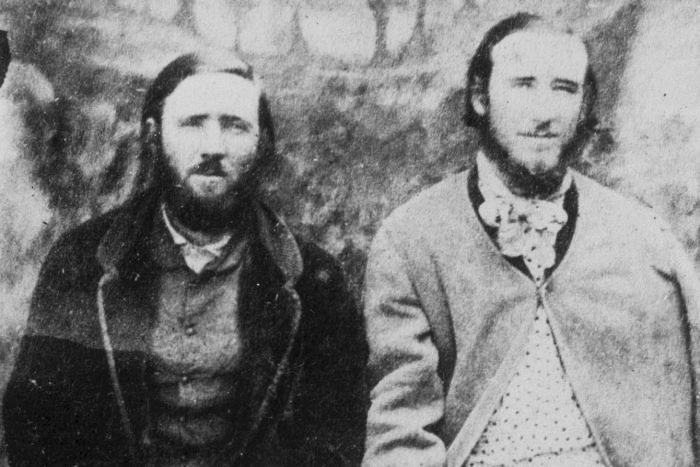
Thomas and John Clarke after their capture a year after murdering Constable Miles O'Grady in Nerrigundah. Prior to their capture they are alleged to have killed four special police sent from Sydney to track them down. They were hanged after a one-day trial. (Supplied: Peter Smith)
Thomas and John Clarke after their capture a year after murdering Constable Miles O’Grady in Nerrigundah. Prior to their capture they are alleged to have killed four special police sent from Sydney to track them down. They were hanged after a one-day trial. (Supplied: Peter Smith)

By the time they rode into Nerrigundah in April 1866 they had a fearsome reputation.

“They were an amalgamation of families that started in the area south of Braidwood,” Mr Smith said.

“The whole area south of Braidwood had a reputation for many years as a lawless area.”

The core of the gang comprised their leader Thomas Clarke and his brother John, together with their uncles, Pat and Tom Connell.

By 1865 Thomas Clarke had warrants issued for his arrest — for crimes that he denied.

He calculated that the police case was weak and he would avoid a conviction and so he surrendered at Braidwood. But the police by now regarded him as a notorious bushranger and were preparing cases that would see him imprisoned for a very long time.

Then when Clarke heard that he would be transferred to Goulburn Gaol and his trial heard there, he escaped from Braidwood Gaol.

“There was no return after that. He had to become a full-time bushranger,” Mr Smith said.

The gang came to Nerrigundah after travelling well south to the Bega races. Horse races were always an opportunity to steal another racehorse or perhaps someone’s winnings.

On their return north they held up the road leading into Nerrigundah, about five kilometres from town, robbing travellers as they came by. They shot and wounded one and beat up another.

Meanwhile, Constable O’Grady was severely ill in bed with what was then called colonial fever, his sergeant was away in Moruya, and the one remaining policeman was a newly arrived recruit, Constable Patrick Smythe.

[blockquote]

Once they were outlawed … they could be shot by anybody. There was no reason to surrender.

Peter Smith, author of The Clarke Gang

[/blockquote][blockquote][/blockquote]

“It’s difficult to know that they really intended to come into Nerrigundah in the first place,” Mr Smith said.

“When they found out that the place was basically unprotected, it’s probably when they thought they’d come into town.”

Leaving two of the gang to guard their captives, the gang rode into town. With them was a new member of the gang, William Fletcher. It was to be his only day as a bushranger.

They rode to one of the hotels and began taking captives and robbing them.

Mr Smith said the hotel was across the road from Pollocks Store where there was “probably 200 or 300 ounces of gold, which in present days would be worth a million dollars or more”.

Word got to O’Grady on his sick bed a little further down the road, and with Constable Smythe they made their way up the road to confront the bushrangers.

The publican of one of the other nearby hotels, Mrs Jones, tried to stop O’Grady as he was so ill he was staggering.

His response was, “I will do my duty.”

The two Constables confronted the gang outside the hotel. The bushranger William Fletcher was the first to be shot, and then Constable O’Grady was shot, and the gang fled the town.

“Once they’d murdered a police constable they were outlawed,” Mr Smith said.

“Once they were outlawed it meant that they had no rights. They could be shot by anybody. Basically they were already condemned to death. There was no reason to surrender. They were committed.”

The Clarke Gang would eventually be tracked down but not until after more robberies and more killings. Tommy Clarke and his brother John would get a one-day trial and then were hanged.

Ever since that day in Nerrigundah, Constable Miles O’Grady has been a police hero.

Speaking after the NSW Police flag ceremony, Detective Superintendent Kevin McNeil said, “The poignant moment in his death is when O’Grady is staggering and Mrs Jones says ‘Don’t go’ and he says ‘I will do my duty’. And from that point on he’s doing his duty for the people of New South Wales”.

“He knew what he was confronting. This Clarke Gang was very famous. He knew all about the Clarke Gang. Later on they killed four police at Jinden Station near Braidwood. That’s how violent they were.

“That was the moment, yet he still went out there because other people were at risk, to protect their life and property.”


NSW Police conduct a flag ceremony on the 150th anniversary of the shootout in which Constable Miles O'Grady was murdered at Nerrigundah. (ABC: Bill Brown)
NSW Police conduct a flag ceremony on the 150th anniversary of the shootout in which Constable Miles O’Grady was murdered at Nerrigundah. (ABC: Bill Brown)  April 2016

http://www.abc.net.au/news/2016-05-03/nerrigundah-clarke-gang-ogrady-bushranger-shootout/7379516

[divider_dotted][divider_dotted]


Charles CHAPMAN

Charles CHAPMAN

AKA ?
Late of Booligal, NSW

New South Wales Police Force

Regd. # ‘ P ‘ 467

For the purposes of this website ‘P’ = represents those Police joining Pre 1862 when NSWPF “Officially” commenced

Rank:  Constable – appointed 6 September 1861

Senior Constable – appointed 1862 ( Newly formed NSWPF )

Final Rank = Senior Constable

Stations: ?, Booligal Police Station – Death

Service: From 6 September 1861 to 22 February 1866 = 5 years Service

Awards: No find on It’s An Honour

Born: ? ? 1835 – 1836?

Died on: pre 22 February 1866

Age: 30

Cause: Exposure

Event location: Booligal ( Deniliquin ), NSW

Event date: between  Thursday 1 March – Saturday 10 March 1866 ( according to newspaper reports dated below )

Deceased body located on: 22 February 1866 ( according to NSW Police Gazette – Issue 10, page 86, Wed 7 Mar 1866 )

Funeral date: ? ? ?

Funeral location: ?

Wake location: ?

Funeral Parlour: ?

Buried at: Booligal Cemetery, 689 Lachlan Valley Hwy, Booligal

Unmarked grave

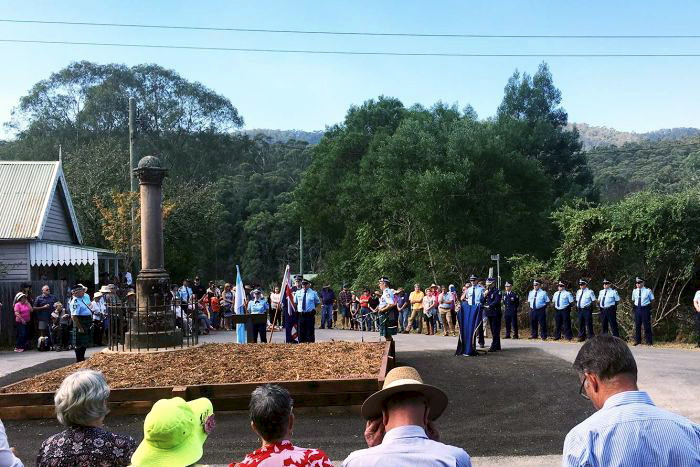
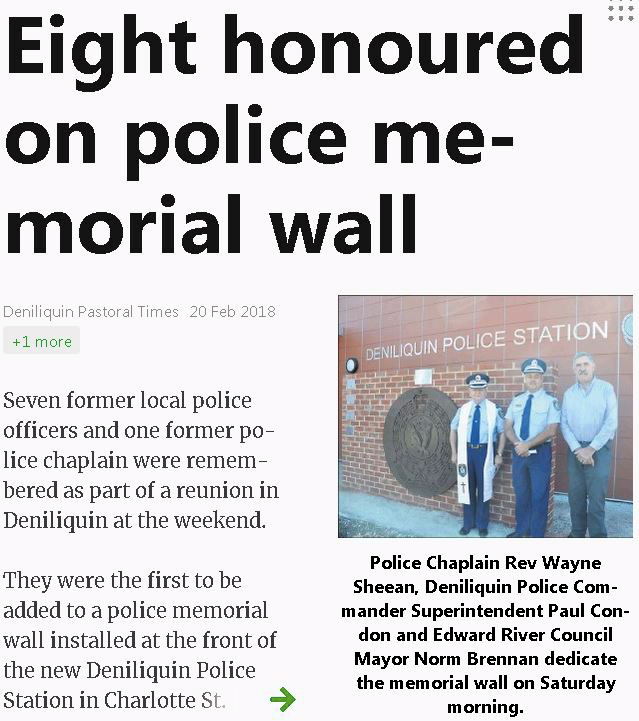
Memorial located at: new Deniliquin Police Station Wall of Remembrance – 2018


[alert_red] CHARLES is NOT mentioned on the Police Wall of Remembrance[/alert_red] * BUT SHOULD BE

[alert_pink] CHARLES IS mentioned on the new Deniliquin Police Station Memorial Wall – 2018[/alert_pink]

[divider_dotted]
 

FURTHER INFORMATION IS NEEDED ABOUT THIS PERSON, THEIR LIFE, THEIR CAREER AND THEIR DEATH.

PLEASE SEND PHOTOS AND INFORMATION TO Cal

[divider_dotted]
May they forever Rest In Peace

[divider_dotted]
 

Constable Chapman was the officer in charge of Booligal Police Station, in the Deniliquin District.

In mid-February, 1866 he set out on horseback to visit several properties in his area to serve summonses and carry out other duties. A few days later a report was received that his riderless horse had been seen near Tooragama, about twenty miles from Booligal, so Constable Barry went in search of him.

Barry found the horse, without either saddle or bridle, and then he proceeded to call at every place where it had been Chapman’s intention to have called.

The unfortunate constable was never seen alive again.


On 6 March, 1866 the Maitland Mercury reported that “Our correspondent at Hay reports that Constable Chapman is missing. It appears that, being stationed at Booligal, he left that place on Thursday fortnight to serve a summons at a station about forty miles distant. His horse, without saddle or bridle, was subsequently found, as were his waistcoat hanging on the branch of a tree, probably put there by the unfortunate man as a guide to those who might be, and are now, searching for him. Our correspondent hints at foul play but the central office here has no suspicion of such, believing that, having lost his way, he has perhaps perished from thirst. Let us hope not.”

Then, a fortnight later the Sydney Morning Herald of 21 March, 1866 reported that “The remains of the unfortunate Constable Chapman, lost in the bush near Deniliquin, were found a few days since and buried at Booligal Cemetery.”

The New South Wales Police Gazette of 7 March, 1866 recorded that “Chapman Charles, Senior Constable (No. 467), lost in the bush; body found on February 22nd.”

The constable joined the police force on 6 September, 1861 and in 1862 he became a senior constable in the newly-formed New South Wales Police Force. At the time of his death he was aged 30 years and was stationed at Booligal. He was not long married when he passed away and his wife was expecting their first child. He is not listed in the official New South Wales Police Honour Roll.


New South Wales Police Gazette and Weekly Record of Crime (Sydney : 1860 – 1930), Wednesday 7 March 1866 (No.10), page 86


DEATH.

Chapman Charles, Senior Constable ( No. 467 ), lost in the bush; body found on February 22nd ( Thursday ).

https://trove.nla.gov.au/newspaper/article/252042237


Brisbane Courier (Qld. : 1864 – 1933), Wednesday 28 March 1866, page 3


HORRIBLE DEATH IN THE BUSH. –

The Deniliquin Chronicle states that the remains of constable Chapman, who was lost in the bush lately, have been found by a man named Patrick Hardy and another, within three-quarters of a mile of where some men were making a dam. He was buried in the Booligal cemetery, and followed by a good many people to the grave.

His horse was found naked.

The body was as black as ink, and in an advanced state of putrefaction.

In his struggles he had torn his shirt, and forced his pants up to his knees, and by his tracks it was seen that he had been rolling round and round the tree under which he was found to avoid the sun.

He must have had a horrible death.

He is said to have been lying on his side, with a coat under his head for a pillow.

The spot was a dry creek, about twenty-five miles from Booligal, and seven from the Lachlan River.

It is understood that there were no mark of violence on deceased’s person, but that he had evidently perished from exhaustion, and had, after rambling about for some time in a circuitous direction, being overcome with fatigue and thirst, lain himself down to die, having, it is supposed, hung his waistcoat on a tree or bush near as a guide to his last resting-place.

https://trove.nla.gov.au/newspaper/article/1264852


Freeman’s Journal (Sydney, NSW : 1850 – 1932), Saturday 10 March 1866, page 151

INTERCOLONIAL NEWS


Fatal Occurrence.—

The Pastoral Times reports a fatal occurrence in Riverina : — ” Constable Chapman, who is in charge of Booligal Station, went out on duty, and being longer away than his business required, has, it is feared, got lost.

He left the station on Thursday week, about four o’clock.

On the Saturday following his horse had been seen near Tooragama, about twenty miles from Booligal.

Constable Barry went in search of him, and picked up the horse, without either saddle or bridle, on Tuesday.

Fears are entertained that something serious has happened to Chapman. No trace has been obtained of him, although Barry called at every place where it was his ( Chapman‘s ) intention to have called. He must, therefore, have met with the mishap shortly after leaving the station ; and if he has been without assistance for so long a time, the worst may be anticipated.

The feelings of Mrs. Chapman, who has been but a short time married, and about to become a mother, may be easily imagined.

Our latest account states that Booligal had turned out in search, but nothing definite had been ascertained.

Our telegram reports that the remains of Chapman have been found.

The force has lost one of its best men.


https://trove.nla.gov.au/newspaper/article/115451038


Wagga Wagga Express and Murrumbidgee District Advertiser (NSW : 1858 – 1859; 1866; 1872 – 1874), Saturday 10 March 1866, page 2

CONSTABLE CHAPMAN. -The remains of poor Chapman have been found by a man named Patrick Hardy and another within three-quarters of a mile of where some men were making a dam, and within five miles of where he hung up his waistcoat.

He was buried in the Booligal cemetery, and followed by a good many people to the grave.

His horse was found naked. The body was black as ink and in an advanced state of putrefaction.

In his struggles he had torn his shirt and forced his pants up to his knees, and by his tracks it was seen that he had been rolling round and round the tree under which he was found, to avoid the sun. He must have had a horrible death. He is said to have been lying on his side, with a coat under his head for a pillow.

The spot was a dry creek, about twenty five miles from Booligal, and seven from the Lachlan river.

It is understood that there were no marks of violence on deceased’s person but that he had evidently perished from exhaustion, and had, after rambling about for some time in a circuitous direction, being overcome with fatigue and thirst, lain himself down to die – having it is supposed, hung his waistcoat on a tree or bush near, as a guide to his last resting-place.

It is to be regretted that he was not better acquainted with the bush. Had it been so his life would have been saved.

When search was made for Chapman, a human skull was picked up, no doubt part of the remains of some unfortunate. – Deniliquin Papers.


https://trove.nla.gov.au/newspaper/article/105997671


2/1/2019, Deniliquin Times.

Eight honoured on police memorial wall’ –

Seven former local police officers and a former police chaplain were honoured during a police reunion in Deniliquin.
They were the first to be added to the police memorial wall at the new Deniliquin police station.
Honoured were
Constable Charles Chapman (died 5/3/1866),
Senior Const J Morrison (19/1/1898),
Senior Const Thomas Smith (19/4/1910),
Superintendent Henry Grugeon (10/1/1911),
Sergeant George Thomas Whiteley (25/3/1931),
Detective Senior Const Risto Vic Baltoski (2/1/1989) and
Senior Const Jennifer Louise Edgerton (August 2015) and

Rev David Bond.


HARRY GRUGEON


Constable Charles CHAPMAN does NOT appear on the on-line version of NSW State Archives – Register of Police.


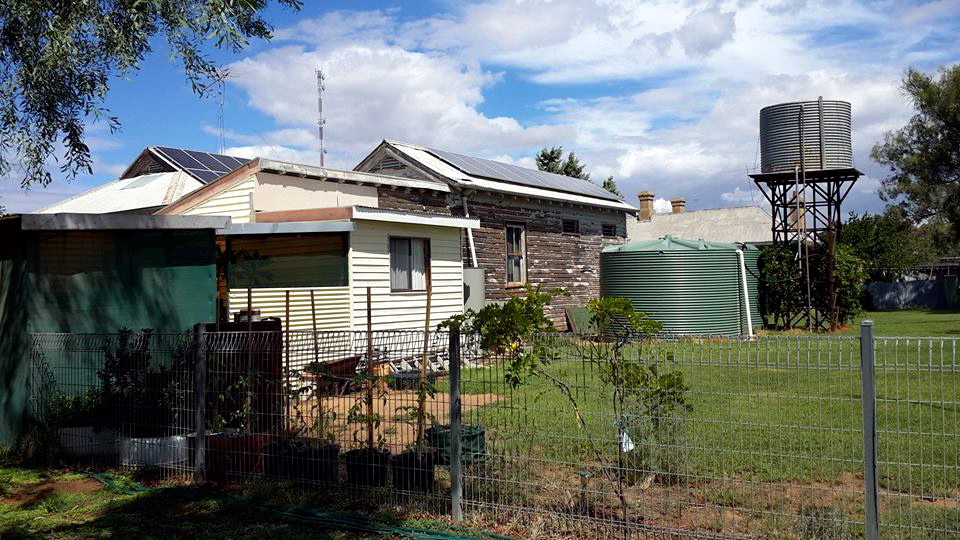
BOOLIGAL POLICE STATION & COURT HOUSE in 2014 ( now private residence )

BOOLIGAL POLICE STATION & COURT HOUSE in 2014 ( now private residence )


Frederick William POTTINGER

Frederick William POTTINGER, Bart

New South Wales Police Force

Regd. #  ?

Trooper, Inspector ( 1862 )

Stations:  ?, Lachlan Police District, Forbes

Born:  27 April 1831

Served:  From ? 1857 to 9 April 1865

Awards:  ?

Died:  9 April 1865

Cause:  Accidentally Shot

Age?

Funeral: ?

Buried at: St Judes, Randwick

Further linkshttps://police.freom.com/chief-inspector-of-distilleries-officer-1862/

https://police.freom.com/appointments-under-the-new-police-regulation-act-of-1862/

http://www.benhallbushranger.com/p/police.html

Inspector Frederick William POTTINGER


Sir Frederick Pottinger was the officer-in-charge of the Lachlan Police District when he came under official scrutiny for riding in a public horse race on 5 January, 1865 and was suspended from duty. He was subsequently dismissed despite the submission of many letters and petitions from the public. On 5 March, 1865 he set out for Sydney to apply for reinstatement, and en route, the coach stopped at Wascoe’s Inn in the Blue Mountains (now the town of Blaxland). Pottinger left the coach for a short time to get some fruit, and as he reboarded to resume the journey a pocket pistol he was carrying in his waistcoat accidentally discharged. The shot entered his body just below the rib cage. Following treatment he appeared to be progressing well and was eventually conveyed to Sydney to recuperate. His condition, however, took a turn for the worse and he died on 9 April.


He had gained a reputation as a most fearless and tireless police officer at a time when the bushranging plague was at its peak. Pottinger was the original subject of the derogatory term “Blind Freddy” – which he certainly did not earn or deserve. Some sources also allege that he had committed suicide that day, but this is highly unlikely considering all the circumstances. Another version of the incident is that he was “showing off” with his pistol to some ladies on the coach when the pistol discharged, which appears to be a far more likely event.


It was originally believed that the wound suffered by Sir Frederick would not be fatal however the Clarence and Richmond Examiner and New England Advertiser of 11 April, 1865 announced the following.


DEATH OF SIR FREDERICK POTTINGER.

Sir Frederick Pottinger, who it will be remembered by our readers, received a gun-shot wound, from the accidental discharge of a small pistol, which he carried in his waistcoat pocket whilst on his way from the Lachlan to Sydney some few weeks back, the ball from which lodged in his body, and could not be extracted, has terminated fatally, Sir Frederick having expired on Sunday last.


Sir Frederick joined the police force about 1857 as a trooper. In 1862 he became an inspector in the newly-formed New South Wales Police Force. Prior to his dismissal he was stationed at Forbes. He was not a serving member when he died.

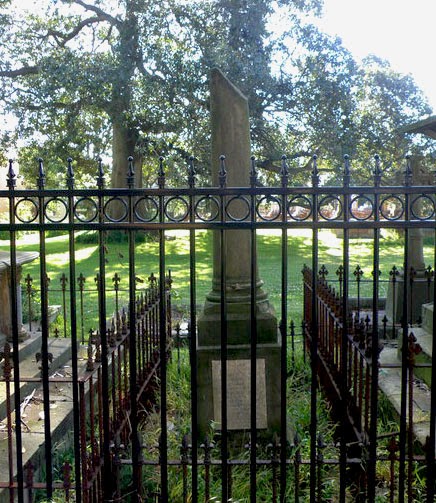
Grave of Frederick William POTTINGER. The broken column indicates a life cut short. Engraved:   SACRED To the memory of SIR FREDERICK WILLIAM POTTINGER -Baronet, Formerly of the Grenadier Guards, and for many years a zealous and active Officer of Police in New South Wales. Born 27th April, 1831-Died 9th April,1865.  This monument is erected by his friends in the Colony.
Grave of Frederick William POTTINGER.
The broken column indicates a life cut short.
Engraved: SACRED
To the memory of
SIR FREDERICK WILLIAM POTTINGER
Baronet,
Formerly of the Grenadier Guards,
and for many years a zealous and active
Officer of Police in New South Wales.
Born 27th April, 1831-Died 9th April,1865.
This monument is erected by his friends
in the Colony.


John WARD

John WARD

Late of  ?

New South Wales Police Force

Regd. #  ????

Rank:  Senior Constable – appointed 1 May 1863

Stations: ?, Coonabarabran – Death

Service:  From  1 February 1858  to  4 February 1865 = 6+ years Service

Awards?

Born? ? 1829 in England

Died on:  4 February 1865

Age:  35 – 36

Cause:  Murdered – shot

Event location:   Barney’s Reef

Event date:   3 February 1865

OffenderSam Poo – arrested  15 February 1865

Funeral date? ? ?

Funeral location:  ‘Birriwa Station’, Coonabarabran

Buried at:  ‘Birriwa Station’, 3894 Castlereagh Hwy, Birriwa ( between Gulgong & Dunedoo )

 Memorial located at: Coonabarabran Police Station – Memorial plaque.

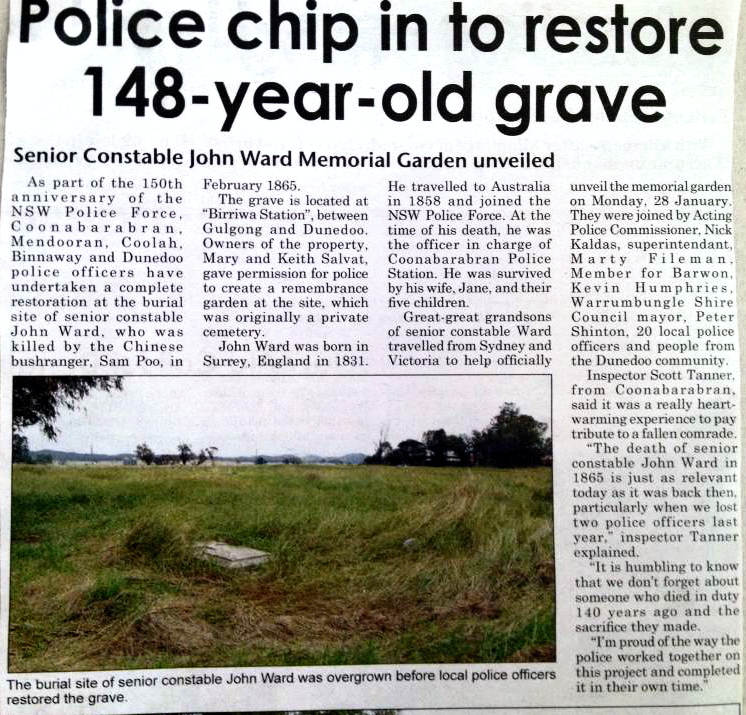
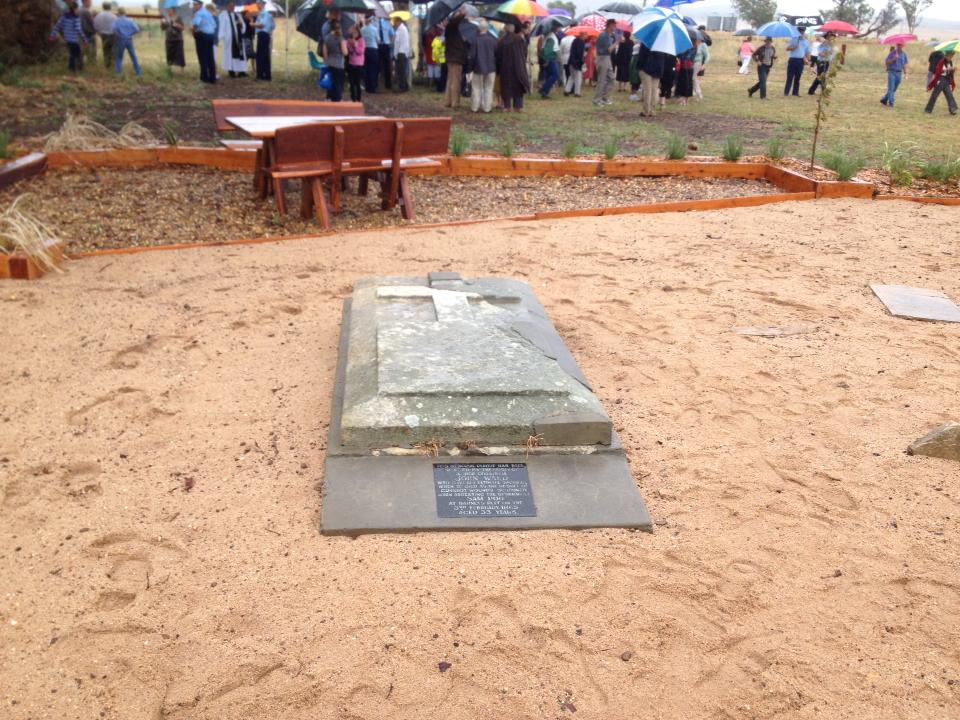
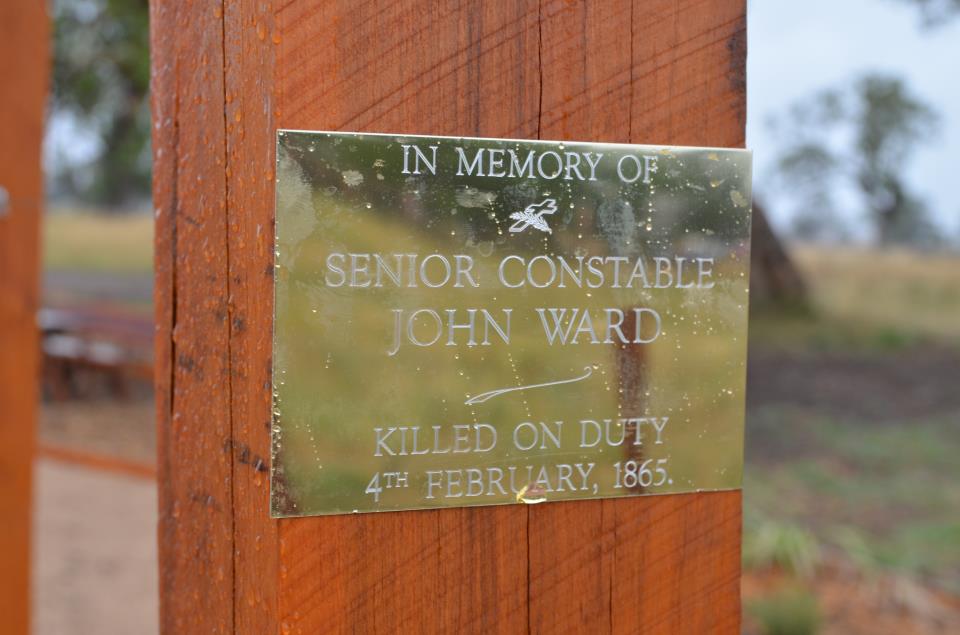
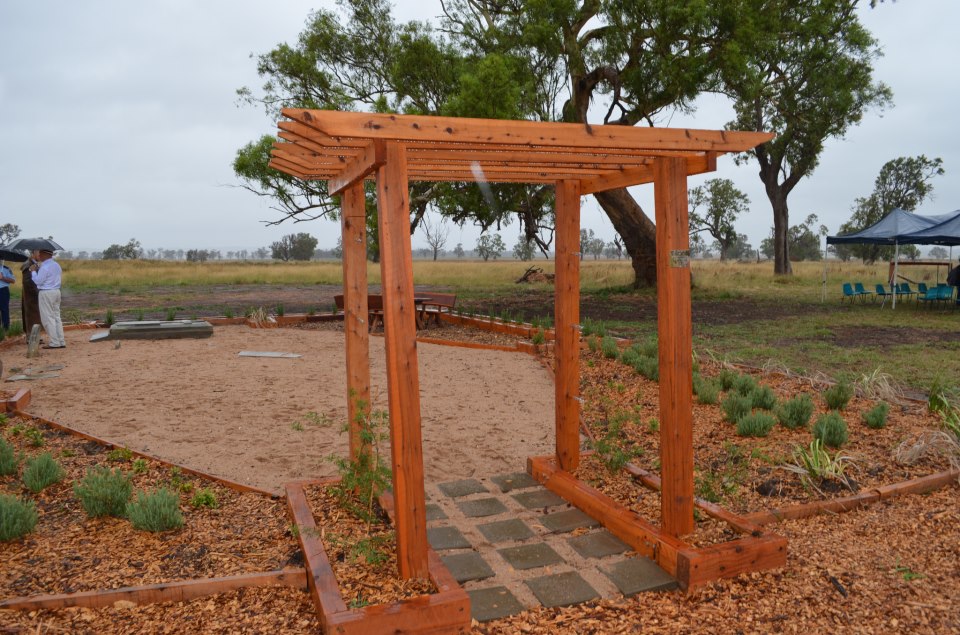
Monday  28 January 2013 – Memorial Gardens at ‘Birriwa Station’ were dedicated to John Ward

[alert_green]JOHN is mentioned on the Police Wall of Remembrance[/alert_green]


 [divider_dotted]
FURTHER INFORMATION IS NEEDED ABOUT THIS PERSON, THEIR LIFE, THEIR CAREER AND THEIR DEATH.

PLEASE SEND PHOTOS AND INFORMATION TO Cal

[divider_dotted]

May they forever Rest In Peace

[divider_dotted]


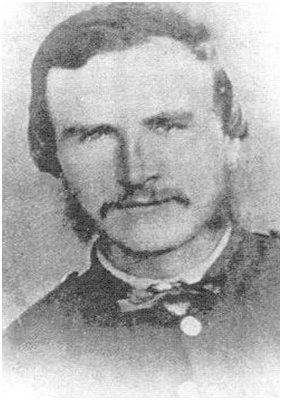
SenCon John Ward ( 1865 )

On the morning of 3 February, 1865 Constable Ward was returning to Coonabarabran from a prisoner escort to Mudgee. Near the locality known as Barney’s Reef he was informed that a Chinese gold miner, Sam Poo, thought to be mentally unbalanced, started sticking up people on the road to Mudgee.  He also kidnapped and raped a young woman. Ward was told that Poo was nearby in the scrub. After a short search Constable Ward located the offender’s camp and approached him. When the offender saw the constable he ran into the bush.  Ward rode after him, and when he caught up, called on him to stand and drop his weapon ( a cut down shotgun ).  Sam Poo aimed at the trooper and said “You policeman – me fire”.

The Trooper leapt from his horse and tried to use the animal as cover as he drew his Colt navy revolverWard‘s hesitancy in shooting the Chinaman proved to be fatal for him, for Sam Poo fired, hitting the policeman in the pelvic area.  Ward fell to the ground, discharging one shot from his Colt in the process.  He then fired twice more at the Chinaman, who was running away through the bush.

The trooper lay bleeding on the ground until he was found by Mr M J F Plunkett, the squatter on whose run the shoot out had taken place. Plunkett arranged for Ward to be taken to his homestead, and sent for the doctor who lived 50 miles away. The doctor arrived the next day, but examination showed that Ward was beyond medical help.

The trooper told Mr Plunkett that he knew he was dying and asked what would become of his wife and family. Later he dictated a full statement about his encounter with Sam Poo to the squatter. Ward said he was a member of the Church of England, and asked Plunkett to pray for him. This the squatter did using a book of Common Prayer. The trooper then asked the squatter to send for his wife and family. However, John Ward died shortly after giving his request, passing away on 4th February 1865. His family arrived at the homestead after he had been buried.

A meeting was held in Mudgee, where a large sum of money was raised for Senior-Constable John Ward’s widow and children. This support acknowledged the supreme sacrifice the trooper had made in the performance of this duty.

The murderer, Chinese bushranger Sam Poo, thought to be mentally unbalanced, was later captured and hanged, as described by the Clarence and Richmond Examiner of 2 January, 1866.

EXECUTION, AT BATHURST: Wednesday’s Free Press states that on the previous day, the Chinese convict Sam Poo, who at the last assizes was convicted of the murder of constable Ward, suffered the extreme penalty of the law, within the precincts of the gaol. In the absence of any of his countrymen outside the prison walls, three Chinese prisoners, who are at present confined in Darlinghurst Gaol, were brought to see the end of Sam Poo, there were also about a dozen other persons present besides the police and the officers of the gaol. The wretched man, who, ever since his apprehension has been quite weak in intellect, appeared perfectly unconscious of his fate, and until his arms were pinioned by the executioners, stood in the door of his cell clapping his hands. The ceremony of pinioning over, he was led to the gallows without speaking a word, or even lifting his head. The rope was fixed, the bolt drawn and Sam Poo ceased to exist. The body was, after the lapse of little more than half an hour, cut down, and taken away for burial.


The senior constable was born in England in 1829 and joined the police force on 1 February, 1858. In 1862 he became a member of the newly-formed New South Wales Police Force as a mounted trooper. At the time of his death he was stationed at Coonabarabran.

He was described as 29 years old, 5′ 10 1/2″ tall, had brown hair and blue eyes and his complexion was fair.  Ward was promoted to Senior Constable on 1st May 1863.

[divider_dotted]


Fallen officer is honoured 150 years on

Date 

Tim Barlass

http://www.smh.com.au/nsw/fallen-officer-is-honoured-150-years-on-20130202-2dr5w.html

IT’S not unusual that the state’s most senior policemen, the mayor and local MP would turn out on Monday to attend the memorial service for an officer lost in the line of duty.

Senior Constable John Ward was shot at point blank range and died the next day from his appalling injuries. The dignitaries stood in silence enduring steady rain as the prayers and dedications were delivered at Birriwa Station near Coonabarabran.

What makes the scene rather remarkable is that the officer’s blood was spilt almost one and a half centuries ago.

senior constable john wardmurdered by the first chinese bush ranger
Senior constable John Ward. Photo: Supplied

SAM POO WAS AUSTRALIA's ONLY CHINESE BUSHRANGERpic from The Queenslander
Gun drama … Australia’s only Chinese bushranger Sam Poo. Photo: Supplied


Sam Poo, who committed the murder, achieved fleeting infamy as Australia’s only Chinese bushranger.

The gold prospector, apparently weary of thin pickings on the Talbragar claims, decided to switch jobs and take up bushranging. Fellow diggers were alarmed by news a man reported to look like a Chinaman had stuck up a woman and her little girl on the Mudgee Road. There were more reports of a Chinaman ”bailing up” travellers.

Ward, married with five children and with five years’ experience in the police force, was soon on his trail. On seeing his man after some hard riding, he called out ”Put down that gun.”

Poo responded: ”Me fire: you policeman.” And he did.

A stockman took the officer to his homestead. The nearest doctor travelled 80 kilometres to tend to him, arriving the next day.

By then Ward was reportedly beyond the reach of human aid and died soon after.

Two weeks later three constables aided by a ”smart half-caste Aboriginal stockman and tracker Harry Hughes” found Poo hiding in scrub. The fugitive was shot in the neck. He recovered at Mudgee Hospital and was later convicted of murder. He was hanged at Bathurst Jail in 1866.

Fast forward to the service last week, part of the NSW Police Force recognition of the sacrifice made by officers over 150 years of policing.

Inspector Scott Tanner, of the Mudgee area command, said: ”We were looking at how to mark the 150 years of policing. We have a plaque in Coonabarabran police station to John Ward and then there was the loss of Dave Rixon [the senior constable shot dead in Tamworth last March] so we started thinking about how to also remember John Ward – he walked the same streets that we walk today. When I first came here I lived in the house he had lived in.

Senior Constable John Ward - shot - 0302-1865 - Newspaper article

Senior Constable John Ward - Memorial Garden - Grave
https://www.facebook.com/groups/514697128544865/
The grave of Senior Constable John Ward who was the OIC of Coonabarabran in 1865. Below are a few photos of the official opening in 2012 after restoration ( the 150th birthday of NSW Police ). Acting Commissioner Nick Kaldas, Ass Com McKechnie and descendents of the Ward family attended.

Senior Constable John Ward - Plaque Senior Constable John Ward - Memorial Garden


[divider_dotted]


Homestead’s website to preserve history

The owners of Birriwa Homestead, Mary and Keith Salvat, are working to rediscover and preserve the history of the sandstone house.

Mrs Salvat said she wanted to use a new website being established at www.birriwahomestead.org to collect the stories surrounding the homestead, the balls it hosted and the families who lived or worked there.

Mrs Salvat said she wanted to create an opportunity for families with connections to the house to reach each other and share stories that could otherwise be lost.

We’re just beginning a journey of rediscovering the history,” she said.

The website is under development, and currently consists of a form that can be used to submit stories to be published on the website, or to ask to be alerted when the site launches.

It’s a very democratic website. Everyone owns their own intellectual property,” Mrs Salvat said.

The purpose is really to act as a library – a 21st Century library.

She said a house was bricks and mortar, but at the same time, it contained a subtle energy left by the people who had lived there or developed a connection with the place.

The Salvats have owned Birriwa Homestead for 15 years, and maintained and restored it while living in Sydney before moving there permanently in 2009.

They are often visited by descendants of the families who owned the house in the past – the Lanes, Cowards, Lowes and McMasters – including a 90-year-old woman who remembered playing in the garden as a very small child.

The property was opened on Monday for the dedication of a memorial garden surrounding the grave of Senior Constable John Ward, who was shot by a bushranger at Birriwa in 1865.

As well as police and descendents of Senior Constable Ward, guests included people who were raised at the homestead, a former Birriwa jackaroo, and a neighbour whose family had lived on the next property for three generations.

The memorial garden includes infant graves alongside the grave of Senior Constable Ward, and others that are unidentified as the stones and crosses have been washed away.

Mrs Salvat said working with the police on the project had been a wonderful experience.

They were very respectful and incredibly well-mannered,” she said.

This has been a beautiful journey for me and my husband over the last 12 months.

Mr Salvat said the memorial garden made the grave site more approachable for members of the public who wouldn’t like to intrude on a private residence, while the planned website would allow visitors to read about the memorial before visiting.

Mrs Salvat plans to invite people with relatives buried at Birriwa Homestead to visit the property in autumn to plant trees that can bear plaques naming the people interred there.

http://www.mudgeeguardian.com.au/story/1267854/homesteads-website-to-preserve-history/

[divider_dotted]