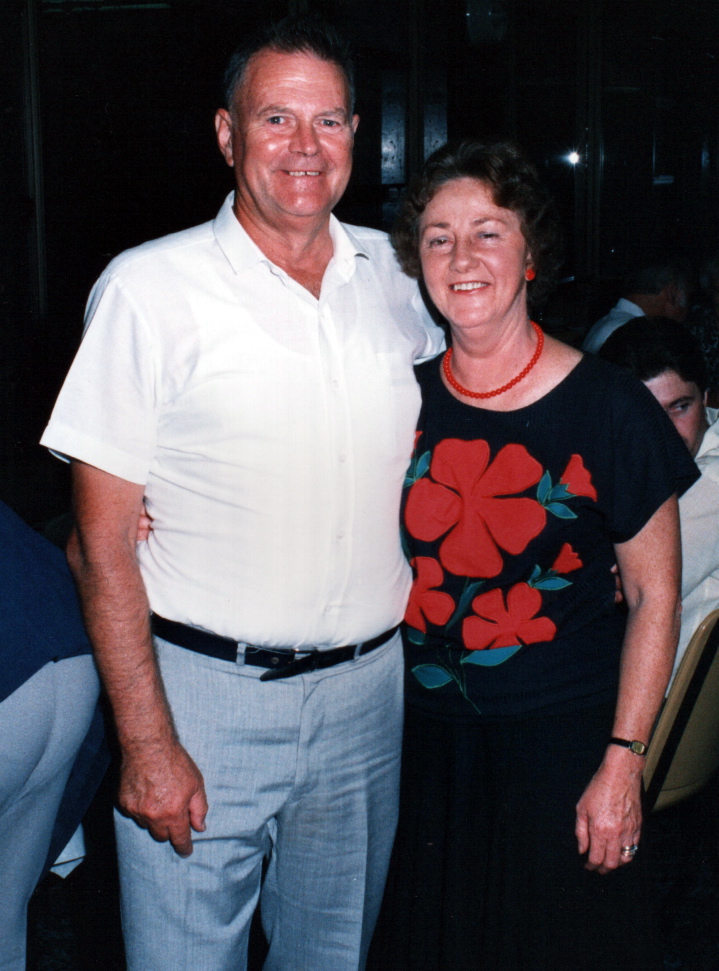
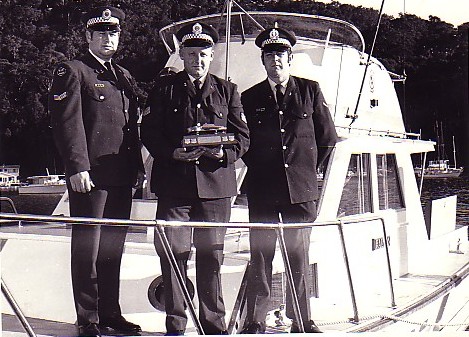
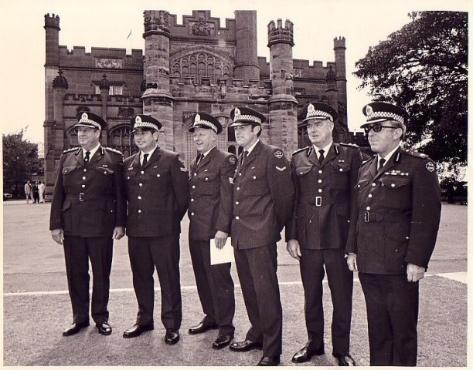
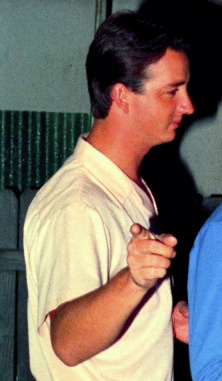
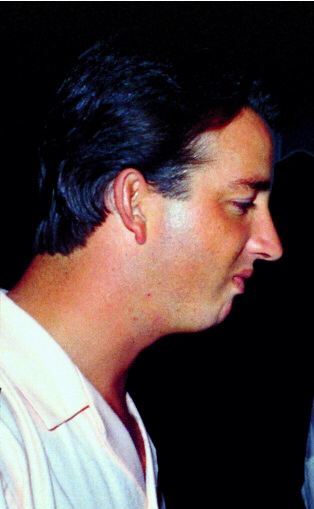
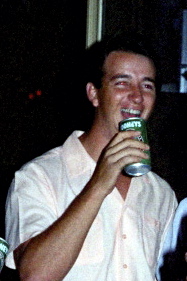
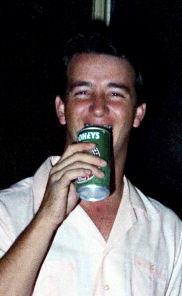
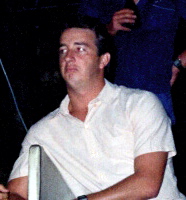
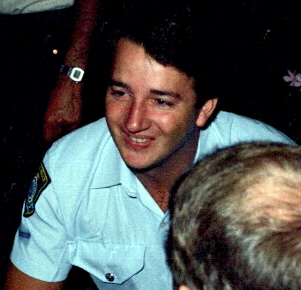
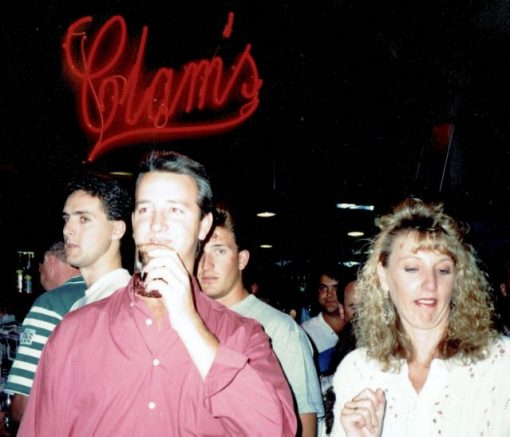
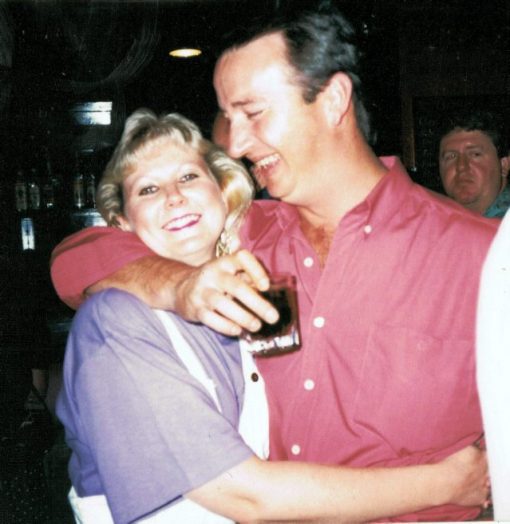
Tom Moore and his wife at the Send Off for Tom ( and others ) at the Illawarra Yacht Club
[divider_dotted]
Upon joining the NSWPF, Tom was described as:
5′ 9.5″ tall, 12 st 3 lb in weight, blue eyes, fair hair with Medium complexion and a Native of Goulburn, NSW.
He was single upon joining but married on the 21 May 1955.
He was previously employed as a Labourer for 2.5 months and a Fitter and Turner for 7 years.
He sat for the following examinations:
Constable 1st Class – Passed on 24 June 1958
Sergeant 3rd Class – Failed on 19 May 1966 but Passed on 19 May 1967
Sergeant 1st Class – Passed on 13 May 1975
Inspector – Failed on 16 May 1980 but Passed on 12 – 15 May 1981
He passed his Solo Motor Cycle course on 23 March 1954 and his 4WD Course on the 24 July 1973.
Tom ” Entered into a bond with Commissioner of Police to serve with Police Department for at least five years after completion of course at Marconi School of Wireless. Course completed 14 September 1958″
He successfully completed Stage 4 of Radio Trades Course at North Sydney Technical College in 1968.
He completed Army Technique of Instruction Course 17 on 21 April 1961
Completed Senior Sergeant’s Course # 11 conducted from 12 October to 4 December 1981.
Attended Australian Counter Disaster College Course # 886 – Counter Communications Planning – conducted between 28 February to 5 March 1982.
Completed the Australian Counter Disaster College Course # 900 ” Disaster Control ” from 11 to 16 July 1982.
August 1984: Former Liverpool Police Officer – Sergeant 1/c. Thomas. G. Moore, attached to the Communications Branch at VKG Warilla was promoted to the rank of Inspector 3/c. It is believed that around 1988, he took optional retirement.
May 2010: Former Liverpool Police Officer – Inspector Thomas. G. Moore passed away aged 79. Prior to retiring from the Communications Branch at Warilla, he and his wife moved down the south coast to the Gerringong area. Later Tom worked part-time for some years as the after hours mobile medical service driver. He would drive the “after hours Doctor” to visit needy patients around the south coast. His favourite location to rock fish was at ‘Black Point’ off Gerroa. He would often be seen swept into the ocean by huge waves while collecting green weed bait for black fish.
Ruth Amy STYLES
| 06/03/2014
Ruth Amy STYLES
at Yeoval Hospital – Dubbo, NSW, late of Bribie Island, Qld, formerly of Wollongong, NSW
NSW Redfern Police Academy Class “possibly” 041
New South Wales Police Force – Retired
Regd. # P/W 0022
Rank: Commenced Training on ? pre June 1955?
Special Constable – Probationary Constable – appointed 20 June 1955 ( aged 23 years, 10 months, 12 days )
Special Constable 1st Class ( 1962 )
Detective – Designated ? ? ? ( YES )
Detective Sergeant 3rd Class – appointed 1 June 1976
Detective Sergeant 2nd Class – appointed 10 October 1978
Inspector – appointed 22 October 1986
( 1986 – Ruth was the FIRST female Inspector in a ‘Country’ location – Warilla – Now Oak Flats )
Chief Inspector – retired
Appears in the 1988 Stud Book but does NOT appear in the 1989 Stud Book
Stations: ?, Warilla ( O.I.C. 1984 – 1989 )
Service: From?pre June 1955to? ? 1989? = 34 years Service
Inspector Ruth Styles at a Send Off at the Illawarra Yacht Club, Lake Illawarra.
RUTH is NOT mentioned on the Police Wall of Remembrance* NEED MORE INFORMATION
Back Row ( L – R ) Joan BANNER, Aileen DWYER / Aileen WHEELER, Dot IMRIE, Wilma WHYBROW, Ruth STYLES. Front Row: Julie LEWIS, June ABBOTT, Olga NORTH / Olga HATCH, Beryl SMITH, Madge WELBY – Redfern Police Academy about mid 1950s.
POLICE SEND OFF HELD AT THE ILLAWARRA YACHT CLUB. INSPECTOR RUTH STYLES (WARILLA) APRIL 1988
RUTH STYLES AND BEV LAWSON
Report of the Police Department for 1962 p 24
Special Constable 1st Class R. A. Styles (Women Police) represented New South Wales in the State Women’s Hockey Team in Tasmania and toured Malaya as a member of the Australian Women’s Hockey Team.
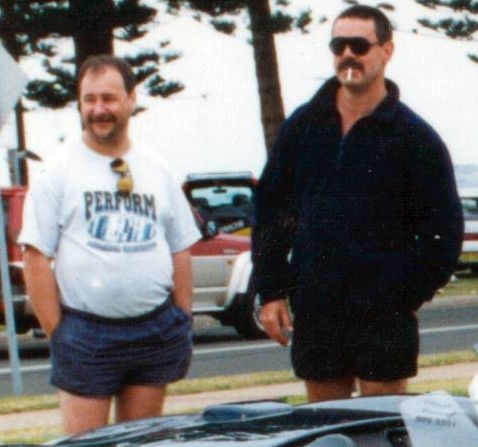
Gary Dunningham & Greg Callander in Marine Drive, Wollongong, at a car show around 1998.
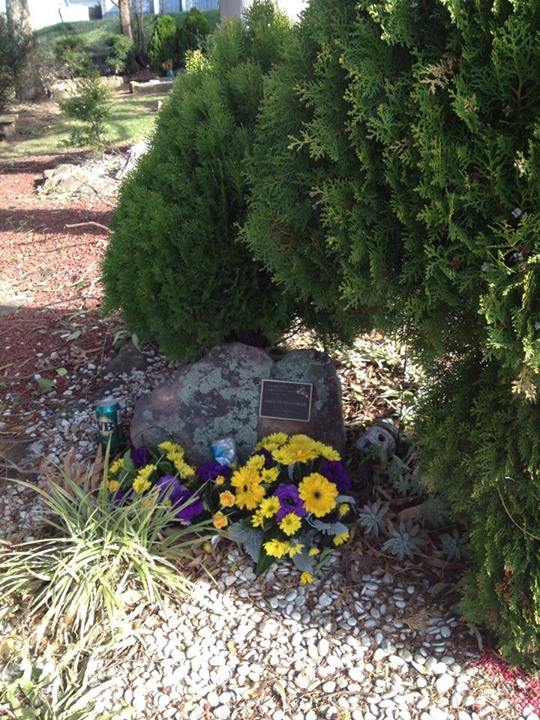
Gary DUNNINGHAM memorial plaque
A good bloke and always a “funny bastard”.
Old Gaz was bit of a ‘lad’ and joker, always wearing his thongs, shorts and ‘T’ shirts, he was the last person who I thought would have taken his own life.
May you forever Rest In Peace mate.
Cal
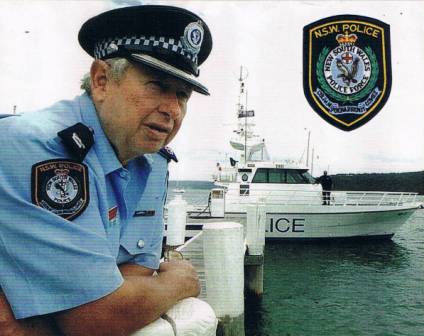
Gordon George WELLINGS
| 06/03/2014
Gordon George ” Boot ” WELLINGS
aka ‘ Boot ‘
New South Wales Police Force – Retired
Chief Inspector
Joined the NSW Police Cadets on 29 October 1962
Cadet # 1794
Regd. # 11292
Stations: ?
Awards: Q.C. ( Queens Commendation )
B.C. ( Brave Conduct )
Died 21 October 2010
64 years
Funeral 28 October 2010
Gordon WELLINGS
Gordon WELLINGS
WELLINGS, Gordon George (Boot) Passed away October 21, 2010. Late of Avalon Beach.
Retired Chief Inspector NSW Police. Q.C. B.C.
Dearly loved husband of Jean. Much loved father and father-in-law of Phillip and Rene, Brian and Lisa. Loved by his grandchildren Olivia, Tiffany and Harvey. Beloved son of Iris and George (deceased). Loved brother of Lindsay, John and Heather and their families.
Aged 64 years “Gone to sea”
Family and friends of GORDON are invited to attend his Funeral Service to be held in its entirety at the Pittwater Uniting Church, Jubilee Avenue, Warriewood on Thursday (October 28, 2010) commencing at 11am. Private cremation.
Peninsula Funerals
9999 5211
Family owned and operated
[divider_dotted]
A Cruel Sea By Gordon Wellings
Broken Bay
This incident commenced at Broken Bay, one of the most popular sections of the Australian coastline. Broken Bay is located approximately 16 nautical miles (30 kilometres) north of Sydney Heads, and is the convolution of Brisbane Waters, The Pittwater and the Hawkesbury River. The name does not tell a lie; the Bay is difficult to describe accurately in terms of its geographic boundaries. The inner boundary is best described as thus: If the point of a compass is on Lion Island and an arc is prescribed in a clockwise direction, you would best begin at Barrenjoey Headland marking the southern entrance to the Bay. From there you traverse the entrance to The Pittwater, in a westerly direction to West Head. Continue North West and cross the Hawkesbury River to Middle Head. Then swing generally north behind Lion Island and follow the beaches of Umina and Ocean Beach and eventually cross the narrow, navigable entrance to Brisbane Waters to Box Head , which is the northern boundary to the bay.
This boundary is approximately 2.7 nautical miles across from Barrenjoey to Box Head.
To mariners, Broken Bay also has an outer boundary, stretching from Bangally Head off Avalon, north to Cape Three Points. This stretch of coast includes Killcare Beach and Maitland Bay.
Norah Head
From Cape Three Points the coast swings to the north towards Newcastle. It is 22.5 nautical miles (41 kilometres) to Norah Head from Barrenjoey Headland. Norah Head has a lighthouse with a white light that flashes once, and is visible for 30 nautical miles (55 kilometres). The light is approximately the midpoint from Broken Bay to Newcastle.
Traffic
Many thousands of vessels, predominately pleasure craft, enter and leave Broken Bay each year. Some proceed to sea and back to their berths for day trips while many others head out for longer, overnight trips to Lake Macquarie Port Stephens and Queensland.
This large volume of traffic has some interest to this story, because many should have seen the stricken Votan during its first morning off the coast.
The Ill-fated Votan
The Votan is a 10m, steel-hulled ketch with an auxiliary four- cylinder petrol engine. The engine would later be described to police by one of the owners as being in fair mechanical condition. The vessel was permanently moored at Halverson ‘s Boatshed, Bobbin Head. The Votan is a Canadian vessel finding its way into Australian waters after being sold a number of times.
It was purchased by Adrian Wedgwood and Ray Kruger off a family that had purchased it from the Australian Government after it had been impounded as the result of a serious crime. At the time of purchase, Wedgwood told the family that he intended on sailing it back to England with friends. An interesting challenge considering he had no sailing experience.
It was apparent that very little safety equipment was kept on board the ketch. There was no radio and no V Sheet; or if there was a ‘V’ Sheet, the owners and crew did not know where it was or how to use it. There were very few flares. In later statements, reference was made to firing two flares, however it is believed these may have only been hand-held flares and none of the parachute variety.
Voyage to Death
On Friday 7 June 1974 the two owners Solicitor Adrian Wedgwood (the son of Lord Piers Wedgwood, owner of the famous Wedgwood crockery and dining settings company), aged 26, and Labourer Raymond Kruger, also about 26, loaded a dog of unknown breed four passengers including a female student. Hong, Ja Jin: labourer Brian. Kennedy: hospital attendant Ian Wilkins and methods engineer, Derek James Catterall – all in their 20s – onto the Votan for a weekend of sailing practice and leisure No-one on board had any sailing experience Adrian Wedgwood and Ray Kruger had only purchased the ketch in December 1973 and for practice had been taking the ketch for weekend day trips preparatory to travelling to Sydney Harbour where they intended to permanently moor it.
Once underway that afternoon, they proceeded under power to Refuge Bay in Cowan Creek, where they moored the vessel over night. It should be noted at this time that the auxiliary engine gave no indication of unreliability.
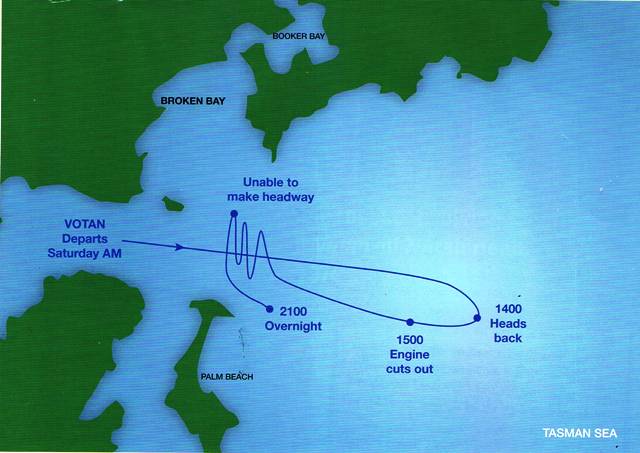
On the morning of Saturday 8 June, 1974, they sailed out of Broken Bay and out to sea. They described the sea at the time as “slightly choppy” with moderate winds of 10-15 knots.
Ray Kruger stated that on the Friday, when they read the weekend forecast, there was no indication of bad weather. By about 1230 hours three of the crew were sea sick. Kruger later told police that at some time between 1230 to 1300 hours he discussed with Wedgwood about returning to Broken Bay, so they would be there by 1630 hours. About 1400 hours, he later told police, he was below deck and overheard some talk between Adrian Wedgwood and those on deck that they had altered course and were heading back to Broken Bay.
Around 1500 hours, Adrian Wedgwood went below and told Ray Kruger that due to the wind, they were making very little headway. After some discussion, Wedgwood and Kruger decided to drop the sails and rely on the auxiliary engine. They managed to start the engine however it ran for only a short time before it cut out. Eventually they were able get it running and made reasonable progress for another 40 minutes. They managed to get inside the outer boundary of Broken Bay just off Lion Island, when the engine cut out again.
In an effort to keep moving they put up the sails and tacked south towards Sydney, and then back towards Lion Island By this time the seas had become choppier, and darkness was fast approaching. For some reason they decided it was more prudent to head out to sea for the night, rather than undertaking the numerous tacks and jibes that it would have taken for them to get back inside Broken Bay.
By 2100 hours (9pm) they had been pushed south of Lion Island, and were close to Barrenjoey Head and were in complete darkness. The wind had increased in velocity and the sea had risen. Around this time the crew let off a red flare as they were becoming increasingly concerned about their ability to manage the rising seas and increasing winds. It was also decided that Adrian Wedgwood and Ray Kruger would take it in turns to sit at the helm during the night. Adrian Wedgwood took the first shift, remaining at the helm until about 0330 hours when he was relieved by Ray Kruger.
Fatal Error
As the sun rose on Sunday 9 June, 1974, the damage inflicted on the Votan during the night became apparent The main sail was broken the mizzen had been lowered and the only sail up was the jib The seas had risen 30 to 40 feet and were considered rough According to Ray Kruger, the wind had increased between 30 and 40 knots but unfortunately, it was in fact closer to 60 knots or 100kph During the first hours of daylight they again tried to tack into Broken Bay, but were again unsuccessful. About 1100 hours they gave Broken Bay away, and because their charts indicated that there was safe anchorage at Terrigal Haven on the Central Coast, they decided to run with the sea to Terrigal. In making this decision, Wedgewood and Kruger had totally ignored the atrocious weather conditions and monstrous seas, and were obviously ignorant of the fact that the area is littered with Bomboras and reefs, which are extremely dangerous in heavy weather. Their decision was about to turn their weekend joy-ride into a lethal nightmare.
The Votan sailed north, but for some reason missed Terrigal Haven and ended up at Tuggerah. About 1400 hours, Adrian Wedgwood made several attempts to tack into Tuggerah without success. Being the only person on deck, he possibly felt out of control and out of depth, and ignited a hand-held red flare Brian Kennedy was looking out through a porthole window when without warning the Votan capsized doing a complete 360 degree roll then hastily righting itself.
Those below deck immediately went topside and as Brian Wilkins would later tell police he saw Adrian Wedgwood floating in the sea about 100 metres from the Votan with his head just above the water. He only saw him for about four to five seconds then he disappeared behind some big waves and did not see him again.
As a result of the roll-over, all of the Votan’s masts were broken and hanging over the side. The Votan was stricken; there was considerable water in the bilge, it was low in the water and it was adrift. In an effort to lighten the vessel and keep it afloat, the passengers started to throw everything overboard that was not tied down.
To try and stop the Votan from drifting into the Tuggerah Bomboras, Derrick Catterall dropped the anchor. However, all the anchor did was hold the ketch into the face of the prevailing weather and allow the waves to continually crash over the bow. Faced with this potentially fatal situation he cut the anchor line, again setting the Votan adrift. As luck would have it, the prevailing sea and wind took the ketch further up the coast towards Norah Head and away from the bomboras. About 45 minutes later; and after seeing light aircraft fly close overhead, Derrick Catterall discharged another flare. He stated that at that time the “seas were mountainous.”
The Falcon
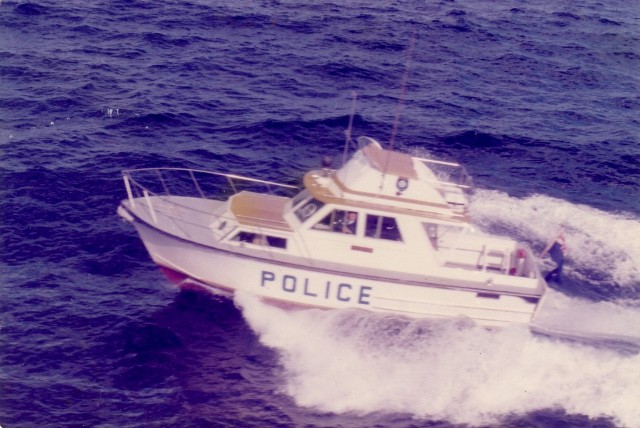
The Police launch Falcon was a 32-foot (10-metre), double-diagonal, triple-skinned, timber-hulled vessel built by the well-known and respected Sydney boat builder, Peter Bracken. The vessel had a trunk cabin with twin bunks, a wheelhouse with radio and chart table facilities and spare seating. The main deck was fitted with a tow post and two reels of towing rope. The Falcon was powered by twin V8 Mercruiser petrol engines (the inboard version of the famous Mercury outboard motor).
All this made the Falcon an extremely strong and very good sea-going vessel. It was also fitted with police and marine radio communications suitable for Search and Rescue (SAR) and police operational requirements (there was no GPS or satellite navigation in those days. Radio Direction Finders – RDF – had been fitted to some police launches, but not the Falcon. The NSWPF flagship, NTW Allan, was the only vessel with radar).
The Rescue
On the morning of Sunday 9 June, 1974, the Commander of the Water Police contingent at Mona Vale and 15-year Water Police veteran, Buster Brown, had been rostered alone at the police berth at Church Point in Pittwater to perform maintenance on the Falcon and to attend to public enquiries. His full name was Roper Lars Scott Brown but he had only ever been known (even by long-term friends) as Buster. At 0830 hours, both Brian Friend and I were recalled to duty by Buster to assist with the increased volume of ‘search and recovery work’, and to take reports of damage due to the strong winds the previous night.
Buster not only had years of experience operating police launches. but for most of his life had been an active member of South Curl Curl Surf Life Saving Club (SLSC). The skills practised in both his professional and volunteer life made him one of the most experienced police officers in the state in relation to surf and ocean rescue.
Brian Friend was a Constable 1st Class and being an active member of the Avalon Beach SLSC was very experienced in surf and sea rescue He was also a mechanical engineer, which was a terrific skill to have when working in and around boats. I was a Senior Constable and acted as the third crew member; I had been transferred to Mona Vale in 1967 as a general duties police officer. Like most other members of the station, I was required to be licensed and proficient in the operation of the Falcon. This presented a unique challenge for me as I was born and raised in the Riverina of NSW and had no prior boating experience. I actually learnt to swim in irrigation channels!
As Buster predicted, we were called out a number of times that day to jobs in and around The Pittwater. Because we were so busy in The Pittwater, we didn’t get a chance to venture around the ‘Joey’ (Barrenjoey Headland). Either way, we didn’t think anyone would be out in such terrible conditions. As it was the weekend, both the RVCP and the Australian Volunteer Coast Guard (AVCGA) were on-duty at their bases in the Hawkesbury, and were monitoring marine frequencies.
About 1430 hours, we were cleaning up preparatory to ending the shift when Buster received a message, that a ketch had overturned not far off The Entrance, between Terrigal and Norah Head on the NSW Central Coast, and that a power Surf Rescue Boat from The Entrance Surf Life Saving Club was responding.
Fortunately, we had just refuelled the Falcon and were able to mobilise quickly. We made our way down The Pittwater to the Joey’, and into Broken Bay. We knew the sea had been building all day, but were astounded at the size of the swell that was running south, south east. Although we were apprehensive about the dangers of a rescue in such bad conditions, our sense of duty far outweighed any concerns we had, plus we felt obliged to back up the power surf boat. So as the Falcon’s twin 350ci V8 engines powered out through the heads, we notified police on the Central Coast and the RVCP that we should be off Tuggerah at about 1700 hours.
We had only been underway about 20 minutes when Buster told us to get out the life jackets and put them on. This was the second time that I was aware that Buster had ever worn life jackets on board a police launch the first time was some time ago when he was in terrible sea conditions on the NWPF flag ship the Nemesis. For me in the seven years I had been working part-time in the Water Police this was by far the largest sea I had ever been out in. To make matters worse the starboard motor started cutting out under idle, which was basically every time we went down the back of a large wave. The Falcon had been booked to be taken to Sydney Water Police on the Saturday for repairs to an engine, but we put it off due to the expected workload of this weekend.
As we rounded Cape Three Points and headed north with the sea and wind behind us, we learnt that the power surf boat had got beyond the break on the beach but had become disoriented and lost in broad daylight. The depth of the troughs and the short periods that they were on the wave crest meant they could not get their bearing. The surf boat could only enter the sea and return to safety via the channel leading into The Entrance. Conditions were far too rough and dangerous they couldn’t return to their home base via their return route. A helicopter had been called earlier in the afternoon, but because the only available helicopter had a single engine, it was considered too dangerous to operate over the sea in the current conditions. The military had twin-engine-powered helicopters, but could not reach the operation area before night, which also put them out of consideration.
We were basically on our own and had gone very quickly from backing up to a surf boat to being the main rescuers with absolutely no backup or assistance. We were advised that the ketch was very close to entering the broken surf of the Bombora just off Norah Head which we knew would have meant its destruction and the death of all those on it. During the hours that it took to power up the coast, Buster displayed the most skilful piece of driving that I have ever seen, as he kept the Falcon on a straight course. Looking astern from inside our wheelhouse we could not see the tops of the waves. They were so high and as they passed beneath us, we looked down into a trough at least twice the length of the Falcon.
When we were about five nautical miles seaward of Norah Head, we turned to the port (left) and headed west towards the shore. Buster instructed Brian to put on a harness and go up to the flying bridge (an elevated position on the vessel that is fitted with a seat so that a vantage point is able to be established) to keep a look out, and try and spot the Votan. It was about 1700 hours, the sun was low in the western sky and was shining directly into our eyes. We could barely see anything in front of us. I contacted local police who sent a police officer to the Norah Head Lighthouse with a portable radio to guide us in.
We were about three hundred metres off Norah Head when we first saw the Votan. It was difficult to see as its masts were hanging over the side, and its hull was quite a dark colour. The ketch was just outside the breakers pounding the Bombora off Norah Head and drifting slowly towards certain disaster. I was directed by Buster to don a safety harness.
As Buster turned the Falcon into the sea and we edged slowly astern Brian climbed over the stern and onto the marlin board and whilst I held on to his belt he tossed a tow line to the Votan. One of its crew caught it and secured it to the deck. We picked up the slack and started towing the Votan. This gave us a few seconds to gather our composure and time to discard our safety harnesses as they were severely hampering our movement and risking the success of the rescue operation. It was then that I saw off our bow the largest wave I have ever seen. I yelled to Brian to hang on and get back towards the tow post. The Falcon was 32 feet in length and we travelled from the trough of that wave up its face (at least three boat lengths) before crashing through the top few feet. I knew that the ketch would not make it. The tow line sliced down through the wave behind us and then parted and broke.
Although the tow line had broken, the Votan had enough forward momentum from our tow to make it over the top of the massive wave, but after that it began its inevitable march back towards the reef, propelled by the incessant wind and waves. Without hesitation, Buster spun the Falcon around and again approached the ketch. We threw her our second (and last) line, which they caught and tied it on. We had only towed it out about 50 meters when two huge waves rose up in front of us but somehow passed under us. They broke right in the spot we had just left. I remember I was near the tow post with Brian and we looked at Buster who yelled, “The Lord is with us today boys“; we had just escaped certain destruction by a few meters and a couple of minutes. I have never forgotten that moment or those particular words.
We towed the Votan a few hundred meters away from the cliff, and, because we didn’t have any more tow lines, Buster decided that we couldn’t afford to leave the people on the stricken ketch. He acknowledged that it would be very hazardous, but decided we had to retrieve them in the dark. We slackened off and edged closer to the ketch. When we were within throwing distance, I tossed them a life ring and yelled to them to take it in turns to put on the ring, jump in the water and we would pull them aboard the Falcon one at a time. We did this five times without too much of a problem considering the conditions. Brian Friend stood on the tray and hauled each one up onto it. I held on to his belt and the tray and hauled each one up onto it. I held on to his belt and helped the survivors over the stern and into the cockpit and told them to get into the wheelhouse. One of the survivors became insistent that we rescue their dog that had been left on the Votan, but our duty to preserve human life far outweighed the risk to life it would have involved if we tried to rescue the dog.
One crewman had a lacerated leg that was bleeding profusely. I tied my belt over the wound to stem the blood flow and placed him on the wheelhouse floor between Buster and me at the radio/navigation chair. We put two passengers on the floor in the trunk cabin – there were two single bunks but they did not have larboards and would be very difficult to remain in them in the conditions. The two others were placed in the two small bench seats in the wheelhouse.
With the Votan still in tow, we headed for Cape Three Points and on to Broken Bay. We were aware the Police launch NTW Allan was seaward of us and approaching from the south, but we could not see each other. As darkness approached, we thought we may see the navigation lights of the NTW Allan but to no avail. The wind and the sea had not abated although we were thankful that it had not worsened.
Day 1: Map indicating the movements of the Votan
About 1830 hours, Buster took his bearings off the Norah Light House and became aware that the Norah Light House was in fact on our starboard beam. It should have been on our starboard quarter, which meant we were being pushed backwards. Some days later we learnt that although we were heading south, we had in fact been pushed five miles north and past the Norah Light House.
We held a brief discussion with the survivors, telling them that with the Votan in tow and with only one engine we were going backwards and suggested that we cut the Votan adrift. Although it was a difficult decision in one respect to deliberately leave a vessel that had survived so much and kept its crew alive by its obvious sea-keeping qualities, our survivors needed medical attention, and our fuel was not limitless. We also had to consider the unknown state of the weather, the fact that we could not locate the NTW Allan and our starboard engine had been playing up all day. We cast the Votan adrift at 1900 hours, and notified Sydney Radio who put out a Notice to Shipping, instructing mariners to beware of the possibility of a drifting ketch off the Central Coast or Newcastle areas. Everyone felt bad about the dog that had been left on the ketch, but ultimately we had no choice.
Then continued the longest and most uncomfortable and worrying voyage all three of us had ever experienced. To keep us well clear of numerous bomboras running on the reefs all along the central coast to Terrigal, Brian gave us a course further out to sea. I remained at the radio/navigation position talking to the NTW Allan, the RVCP vessel South-Pacific, Sydney Radio and the RVCP at Church Point.
We were keen to know a more accurate location of the NTW Allan as it was our only refuge if things went seriously wrong with the Falcon. The wind was still strong and the sea had not abated. It was agreed by the crew of the NTW Allan that we would fire a red parachute flare at a precise time. We did as agreed, and it was sighted by the crew of the NTW Allan, who we were able to establish were not far from us. In the following radio communication exchange, we established that we were invisible on their radar due mainly to the sea clutter on their screen, and we couldn’t get a visual fix on each other due to the fact that we were in a trough at the same time as them. Firing the flare was not without incident. We had a very old pistol which was used to discharge flares and fire rockets with lines attached for rescue purposes. After Brian fired the first flare, nothing happened for about 15 seconds and then it went off. By then, however, Brian had lowered the pistol and the flare fired into the sea. We were very lucky it was not pointed into the wheelhouse; it could have killed someone, set fire to the inside of the Falcon or generally caused considerable consternation. We had to make sure the next attempt was successful, as our supply of red distress flares was limited and we had to ensure we kept a couple in the event we needed them in the course of the night for our own rescue. As I said, the second firing was successful and was sighted by the crew of the NTW Allan.
Relentless Assault
The assault by the waves and wind was relentless. The current state of the sea had been experienced by most Water Police on the NSW coast at some stage in their career, but not for such prolonged periods of time. Usually such experiences are for much shorter periods of time, and in more defined locations such as a bombora, reef or a lee shore like the high cliffs leading into Port Jackson. The waves came on like soldiers: no stopping, no hesitation, and no respite from their size or make up.
The Falcon was only a vessel of less than 10m and each wave we climbed up was twice the length of her. The exceptions were those that capped due to the wind velocity and the top meter or so fell on top of us. My two crewmates both had extensive experience in surfboats over the years. Buster later related that he started looking for a set’ (when a prevailing sea is running usually, a certain number of large waves will be followed by a number, or set, of smaller waves), but this did not happen. Mariners and surf boat crews look for these sets to get an opportunity to turn about in heavy seas, or do something on the vessel they had been putting off. He counted 50 large waves at one point and gave up counting. The winds were around 100 knots in velocity (170kph), and were constantly ripping the tops off waves and dumping the contents on top of us. This went on without respite for hour upon hour. One of my niggling fears was that the winds and sea would dislodge our radio aerials and void our communications.
The Barrenjoey Light House flashes in a group of four. It is visible for 19 nautical miles in normal conditions. The troughs and peaks were such that we were only about two nautical miles off the Barrenjoey Light House before we saw a completion of the four flashes. I recall Buster Brown saying, “...that is the first time I have seen the four flashes.”
The storm was one of the two worst experienced on the Sydney coast in the second half of last century. The storm surge created on the Saturday and Sunday was sufficient to stop the tide running out of the Hawkesbury River. The Pittwater also failed to empty and the public wharf at Palm Beach had about half a metre of water over its deck planks. Ironically, the other storm – and perhaps worse – was only a month earlier when the beaches lost their sand and the Manly fun wharf and pool enclosure in the harbour was swept away.
South West for ‘The Joey’
The hours passed by and when off Cape Three Points, it was comforting to at last make a slight turn to starboard and head towards Broken Bay. Buster had decided to lengthen the trip a little by travelling well south of Maitland Reef which was extremely dangerous in most seas let alone this southern swell we were experiencing. When the NTW Allan and the RVCP vessel South Pacific (20m motor cruiser) had us on their radar, I believe we all started to feel a little more comfortable. When we cleared Cape Three Points, Buster was quite excited that he saw a flash of the Barrenjoey Light on the low horizon. We were about 12 nautical miles north east of the light. The Joey, (the name by which it stands with the Broken Bay locals) was home.
We rounded Barrenjoey Light about 0130 hours and entered The Pittwater. We proceed to the Royal Motor Yacht Club at Newport where we had arranged for ambulance officers and police to meet us. The club was chosen principally because the ambulance had access right up to the launch. The survivors were given a brief examination by Doctor Hardy off the AVCG vessel Leslie Anne, and were then transported to Mona Vale Hospital. They were all released the following day.
Coronial Inquiry
The body of Adrian Wedgwood was never located. The City Coroner, J.D. Goldrick, held a Coronial Inquiry into the circumstances surrounding his disappearance.
About the death of Adrian Charles Hamilton Wedgwood he found that,“the above named on the ninth day of June 1974 off the coast of New South Wales near Tuggerah Reef in the said state died then and there by drowning when he was accidentally washed overboard when the yacht Votan overturned. I further find that the body of the deceased has not been recovered but I am completely satisfied that such death actually took place and I find accordingly”
Glebe Coroners Court, tenth day of October 1974 Signed J.D Goldrick, City Coroner.
The Inquiry had actually completed taking evidence on the fourth of October, however a number of people wished to record comments on the incident, the subsequent rescue, and the actions of those involved.
Mr I. Ward represented Adrian Wedgwood and was of the view that, “…if there wasn’t any evidence of negligence, then at least it would have been prudent for the people who undertook this journey to have taken into consideration the experience they didn’t have, the defective engine, and the fact that they should have assessed the weather conditions and got out of the area”. Sergeant Noel Short, assisting the Coroner, spoke very highly of the crew of the Falcon. He recorded that “... at any moment during the rescue operation they could also have lost their lives”, and that they performed their duties “…far and beyond what would normally be expected of a member of the Water Police…”. He further stated “I submit this will probably rank as one of the most meritorious rescues ever carried out in Australian waters…”
Recognition What pleased me at the time, as much as any favourable comments, was the way Sergeant Short and the Coroner Mr Goldrick, recognised the significant role played by the crew of the NTW Allan, the Royal Volunteer Coastal Patrol vessel South Pacific, the Australian Volunteer Coastguard Broken Bay and the two very brave Surf Life Savers who supplied the initial response to the incident in the power boat from The Entrance Surf Club.
The press covered the rescue in a very positive manner, nearly to the point of embarrassment. It was good to see the NSW Police Force being congratulated instead of being criticised as they often are. I always found the sabre rattling that takes place, mostly without foundation, quite disconcerting and disappointing.
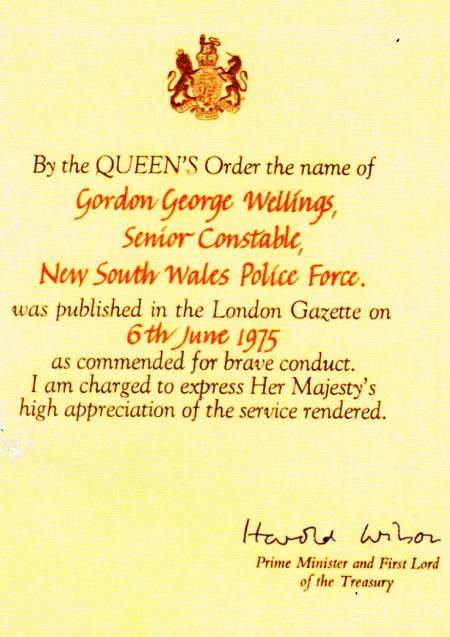
Later that year, we were all awarded the Commissioner’s Commendations for Courage (The highest Commissioner’s award at the time) and the following year, in 1975, at Governautical Milesent House, we were awarded the Queen’s Commendation for Brave Conduct.
Reflections
How did the Votan get there? It has always seemed incredible to me that a large ketch couldn’t get into Broken Bay. From approximately 1200 hours on the Saturday they repeatedly tried, under sail and motor, to get in but to no avail. After a night at sea in terrible conditions, it drifted north past Cape Three Points until it rolled over off The Entrance. I am amazed that no other vessel saw them all day Saturday; there were no flare sightings reported to the Water Police, RVCP or Coast Guard and no person or vessel was reported overdue or missing.
State of the Sea
It was not until the next day and then for many years later, that I reflected on the size of the sea that afternoon. The trio of waves that reared up in front of us and began to break as we secured the first tow line was the most dangerous I have encountered. I have reflected on this over the years and although I have probably encountered larger sets of waves, I have seen none that were steeper or more dangerous than that on the day. We all believed that if we had been 30 seconds later, or 50 meters further in, the breaking wave that crashed where we had just pulled the Votan from would have reduced both our craft to driftwood, and all eight lives would most likely have been lost. Even so, the Votan was fortunate that we had the line secured which kept the bow of the ketch facing the waves, and although the line, had broken, the Votan still had enough forward inertia to break through. As we dropped over the back of that first wave, the utterance of Buster Brown that “The Lord is with us today mate,” has remained indelibly etched on my mind.
Falcon
If Lady Luck has a hand in the course of events, then she was certainly busy that weekend. The Falcon had been programmed to be taken to Sydney Water Police on the Saturday for repairs to the starboard engine. However, Buster had made the decision not to go due to the workload inside The Pittwater caused by the high winds. If the launch had gone to Sydney, there would have been no other police vessel in the area to rescue the stricken Votan.
Petrol engines are now regarded as dangerous due to the possibility of highly volatile petrol leaking into the bilge or some other area of a vessel from a broken fuel line or petrol tank. They can also become unreliable when exposed to excessive moisture, which could have been one of our main issues that afternoon as the starboard engine kept cutting out.
Ship Mates
During the entire rescue, Roper Lars Scott ‘Buster’ Brown remained at the helm. He declined relief as he felt that, after a couple of hours working with the vessel and its temperamental engine, he was best placed to anticipate its behaviour. In the 20 years I served in the Water Police following this rescue, I have seen drivers who were as good as Buster, but none better. I remain enthralled as to his seamanship and skills.
Brian Friend was fearless. He scampered around a wildly pitching and yawing launch Falcon all day. He did not hesitate to climb over the stern (there was no gate), and balance untethered on to the marlin board to pull the Votan crew out of the water. The lucky survivors from the Votan will attest to the value of his SLSC skills, as he ran round the vessel looking after them for the entire trip back to the Royal Motor Yacht Club at Newport.
Picture: Police Launch Falcon crew (from left): Senior Constable Gordon (Boot) Wellings, Sergeant 3rd Class H. (Buster) Brown, Constable First Class Brian (Friendly) Friend. Image courtesy Brian Friend.
I worked four radio frequencies for most of the journey; the Police Radio (VKG), the ship to shore working and emergency channel, the Volunteer organisations channel, and the two-way chatter channel between us and the NTW Allan. When I had the chance I helped Brian with the survivors, however, apart from keeping them warm. there was little we could do. When Brian wasn’t running around the vessel putting something back in its place, or fixing something, he was madly keeping track of our course and position. Whenever we had the opportunity, we would take a break, which amounted to no more than the simple pleasure of standing adjacent to the tow post and watching the backs of huge waves as they disappeared behind us into the darkness to the north.
Workmates
The Australian ethic of helping out our mates when things are difficult was demonstrated personally to me that night by Sergeant John McNamara of Mona Vale Police Station. He knew that my wife was due to have our first born that weekend. From mid afternoon when he commenced duty, he contacted my wife on the hour until 0100 hours, to reassure her of my position and that she should contact him immediately should she require transport to hospital. The irony of that dawned on me the next day that while my wife waited at home for ‘broken waters’ to herald the dawn of a new life, I was hoping that “broken waters” wouldn’t take mine.
Water Police in 2011
Having read this account, you could be excused for thinking the Water Police vessels at the time were ill equipped and inappropriate for such tasks, and by today’s standards, you would be right. However, in the 60s and 70s, and even earlier; they met the standard, and in fact were all we had. Police launches at the time were not required to be built to Marine Survey. There was no requirement as to who built them and with what material, as long as they satisfied the tender requirements. Most were built of timber, however during the 80s, a number of steel and fibreglass vessels were built. All had petrol engines and it wasn’t until one blew up at the Sydney Water Police that a hasty decision was made to change all engines to diesel. Diesel motors had not been favourable up until the late 70s as they were not regarded as high performance with good speed and were very noisy.
Today’s vessels are required to be built to Survey, are very large and strong and capable of travelling many hundreds of miles to sea and remain there for days. What the boats lacked in appropriateness we made up for with experience. The common denominator from the 70s to the present day is just that – experience. One cannot learn it, you can only learn from it. It is an individual’s decision on how they get it, and how they benefit from it. It was experience and seamanship particularly from Buster and Brian Friend that took us out there and brought us back in one piece.
The equipment on today’s vessels was not imaginable in the 60s and early 70s. There have been huge developments in technology, such as the increased capacity of radio communications, of navigation equipment, and of computers. When this rescue happened, we were only 30-odd years out of the Second World War, which was when radar had been developed. It was still in its infancy on pleasure craft and only the larger cruisers and commercial vessels carried it. Today, of course, every vessel has it, and the crew are trained to operate it. The safety equipment has to meet the Survey standard, and each vessel carries an array of distress equipment, first aid kits and associated equipment.
At the time of this rescue, the only qualification I had to have to operate the launch was a Radio Operator’s Licence and a Coxswain’s Certificate, which was the entry level qualification for commercial/professional drivers. Today, the crew of a police launch must have an advanced first aid qualification and appropriate Marine Certificates of Competency for the length of the vessel. These certificates ensure a satisfactory training in trouble-shooting engines and mechanical equipment, as well as training in fire fighting, navigation and driving experience, to name a few.
Author’s Post Script
I was a member of the NSW Police Force for nigh on 40 years; 20 of those attached the NSW Water Police, 10 as Commander, and two as Commander and acting Superintendent of the Olympic Marine Security.
I have long been urged by Buster and Brian Friend to write an account of this rescue. When I did, the only sources of information I had were some statements we had taken from those involved and from the personal recollections from the three of us. In some areas e.g. the Votan, I would like to have been more factual and informative in its description, but I only had one photograph as a memory aid.
An act of bravery? What is bravery? I believe that is for others to decide. From the moment we rounded the Joey and saw the sea we were entering, we were apprehensive. When we turned to towards shore off Norah Head to perform the rescue after the surf boat got lost we were scared. From the whole time we were out amongst the swells, during the rescue and to the point that we actually cut the Votan loose, we were terrified. From then on, until we got back to the Joey our terror abated to apprehension. A colleague once said “yeah but have you ever been shot at?” I said “No; but if I was, I would be frightened for a couple of minutes. In this voyage, I was frightened for almost the entire journey.”
My two shipmates were exceptional that day, in all respects. I have always admired them and am still grateful that they brought me home.
Gordon Wellings
Chief Inspector (Ret.)
Commander NSWPF Water Police
John Morcombe Gordon Wellings
WELLINGS, Gordon George (Boot) Passed away October 21, 2010. Late of Avalon Beach. Retired Chief Inspector NSW Police. Q.C. B.C. Dearly loved husband of Jean. Much loved father and father-in-law of Phillip and Rene, Brian and Lisa. Loved by his grandchildren Olivia, Tiffany and Harvey. Beloved son of Iris and George (deceased). Loved brother of Lindsay, John and Heather and their families. Aged 64 years “Gone to sea”
Published in The Daily Telegraph on October 23, 2010
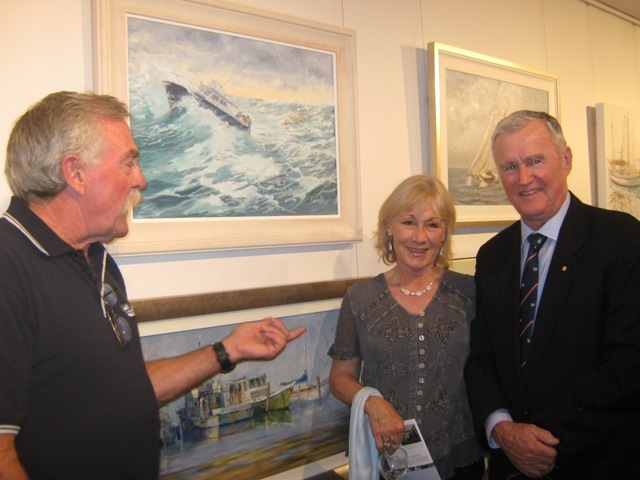
Christine Hill at RMYC Marine Art Exhibition with one of the Falcon-Votan paintings.
Originally published in the Australian Police Journal, Volume 65. No 3. September 2011. Reproduced with the kind permission of Jean Wellings. Copyright Gordon Wellings and the Wellings Family, 2012. All Rights Reserved.
Service between 23 April 1968 – 4 March 1969 = 316 days
Royal Australian Army Medical Corps
1st Australian Field Hospital – 1968
8th Field Ambulance – April 1968 – March 1969
[/blockquote]
Born: 13 May 1946
Died on: 11 October 2012
Cause: Suicide
Age: 66
Funeral date: Friday 19 October 2012 @ 1pm
Funeral location: Pinegrove Crematorium (West Chapel), Minchinbury
Buried at: Cremated
Memorial location:
MILLER, Leonard James.
13.05.1946 – 11.10.2012
Passed away suddenly.
Late of Hawkesbury Heights.
Beloved husband of Glenda. Proud father of Christopher and Carolene and their partners Ann and Joey.
Len will be sorely missed by his colleagues from the NSW Police Force and those he served with in Vietnam, together with his many other friends.
Aged 66 years.
Finally at peace.
The family and friends of LEN are warmly invited to attend his funeral service to be held at Pinegrove Crematorium (West Chapel), Minchinbury, on Friday (October 19, 2012), commencing at 1 p.m.
Blue Mountains Funerals
4782 2922 4751 6166
blue mountains funerals. com.au/notices.html
Joined the NSW Police Force via the NSW Police Cadets on 13 March 1961
Cadet # 1669
Detective Inspector
Regd. # ?
Stations: ?
Service: From 13 March 1961 to ?
Awards: National Medal – granted 20 January 1981
1st Clasp to the National Medal – granted 8 June 1988
2nd Clasp to the National Medal – granted 8 March 1997
Died: 9 December 2012
Age: 68 years
Cause: Illness
Funeral date: 14 December 2012
Funeral location: Camellia Chapel of the Macquarie Park Crematorium, Plassey Road, North Ryde
Buried at: Cremated
Donald Alfred NICHOLSON
NICHOLSON, Donald Alfred.
(Ret. Detective Inspector NSW Police)
Passed away after a long illness, December 9, 2012.
Late of Beacon Hill.
Dearly loved partner of Jan. Loving father of Guy and Sally. Dear Parsi Bear to Sean, Ryan, Zoe and Mitchell and Poppy Bear to Lilian, Virginia and George. Beloved brother of Judith, Lorna and Pam.
Aged 68 years.
Family and friends of Don are warmly invited to attend a celebration of his life to be held in the Camellia Chapel of the Macquarie Park Crematorium, Plassey Road, North Ryde, Friday (December 14, 2012) commencing at 10.30 am.
In lieu of flowers, please consider a donation to Parkinsons NSW.
Envelopes available at the service.
PENINSULA FUNERALS
9999 5211
Family Owned & Operated
Published in The Sydney Morning Herald on Dec. 12, 2012
Passed away after a courageous, dignified battle with cancer on May 17, 2013.
Former NSW Police Officer with 32 years service.
Much loved husband of Pamela (Pammy), adored son of Harry and Nancy Burgess (both deceased). Father of Scott, Brooke, David, Matthew and Sean. Adored grandfather of Chelsea, Hayden, James, Anthony, Gabriel and Lenny. Loved and respected by his brother Brian and his family, and deeply missed by so many people.
Aged 68 Years
Relatives and friends are invited to attend ROBERTS Funeral Service, which will be held on Thursday (May 23, 2013), commencing at 11 a.m. at Woronora Crematorium, South Chapel.
Rank: Commenced Training at Goulburn Police Academy on 15 February 1988 ( aged 18 years, 9 months, 16 days )( spent 2 months, 21 days at Academy )( Start of a new, and worthless, Superannuation scheme for Police as of 1 April 1988 )
Probationary Constable – appointed 6 May 1988 ( aged 19 years & 6 days )
Sergeant –
Final Rank = Sergeant
Stations: ?, Maroubra ( 1980s ), Paddington ( 1990s ), Barrier, Broken Hill, Walgett, Castlereagh and Darling River LAC’s
Service: From 15 February 1988 to 13 January 2014= 25years, 10 months, 2 days Service
Awards: No find on It’s An Honour
Born: Wednesday 30 April 1969
Died on: Monday 13 January 2014
Age: 44 years, 8 months, 14 days
Cause: Illness – Depression – Suicide
Event location: Walgett, NSW
Event date: ?
Funeral date: Friday 24 January 2014, 11am
Funeral location: Holy Family Catholic Church, 214 Maroubra Rd, Maroubra
Wake location: Maroubra Seals Club
Funeral Parlour: ?
Buried at: Cremated
Memorial located at: NSW Police force Service Memorial Wall, Sydney Police Centre, Surry Hills, D21 ( right wall )
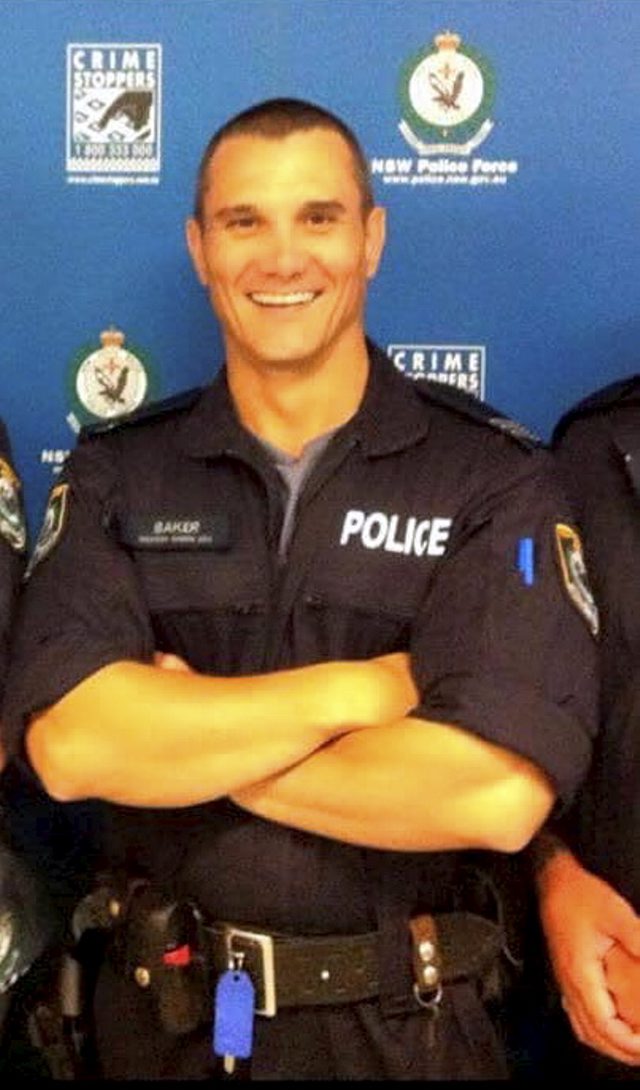
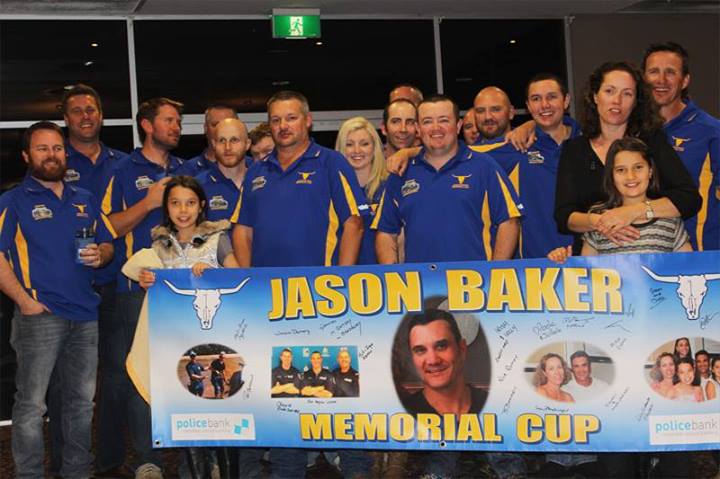
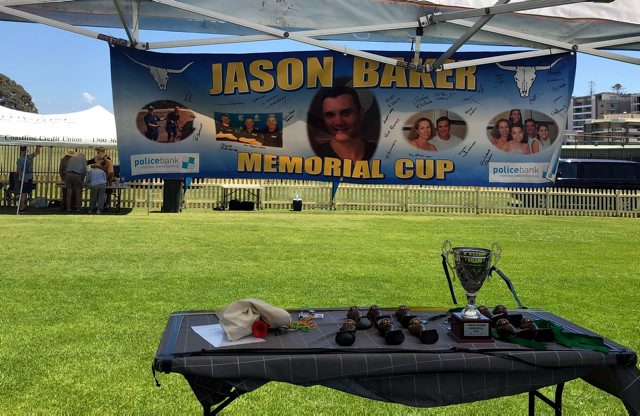
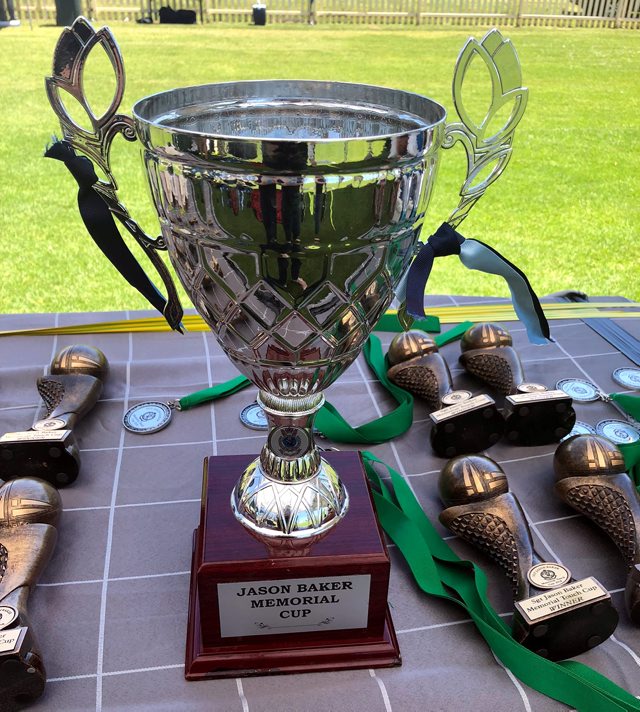
Memorials: Jason Baker Memorial Cup
JASON IS mentioned on the Sydney Police Centre Memorial Wall
FURTHER INFORMATION IS NEEDED ABOUT THIS PERSON, THEIR LIFE, THEIR CAREER AND THEIR DEATH.
Sergeant Jason Baker sadly passed away on Monday 13 January 2014. He leaves behind a young family.
His funeral will be held on Friday 24 January at the Holy Family Church in Maroubra followed by a private cremation.
The wake will then be at the Maroubra Seals Club. I am not sure of times etc. at this early stage.
Do NOT listen to rumour about the circumstances surrounding this terrible tragedy. Jason was a great man and a great cop and this is time to celebrate his life and pass on condolences to his family.
Deepest condolences to his wife, Alison, and daughters McKenzie & ?.
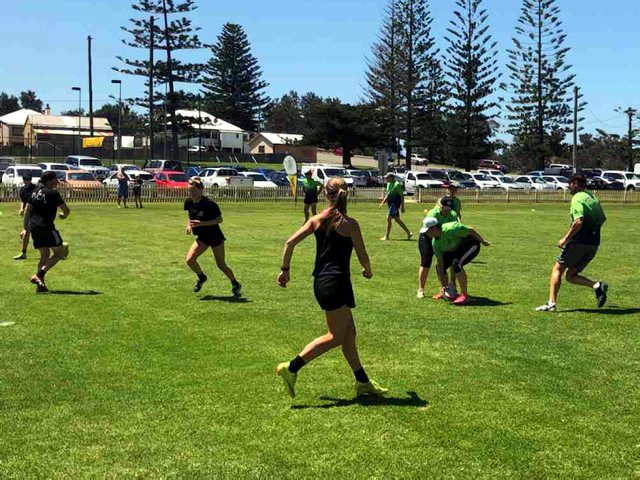
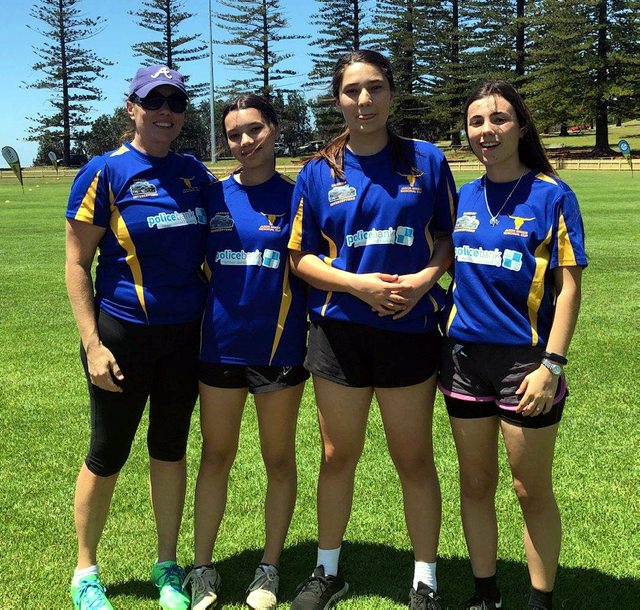
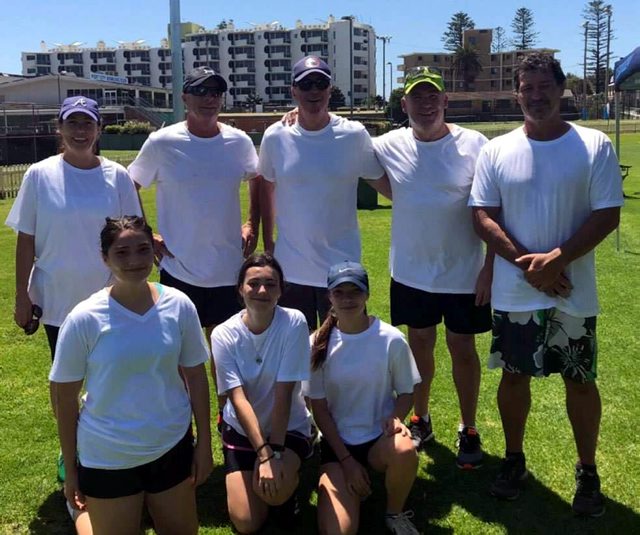
On Wednesday 18th June, 2014, Police from the Barrier, Castlereagh and Darling River LAC’s met at Cobar to compete for the inaugural “Jason Baker Memorial Cup”.
The event was in remembrance for Sergeant Baker who worked at each of the three Commands.
With Police Bank as a major sponsor the event raised over $5,000 for Jason’s wife and 3 daughters. A huge congratulations and well done to all the teams who participated.
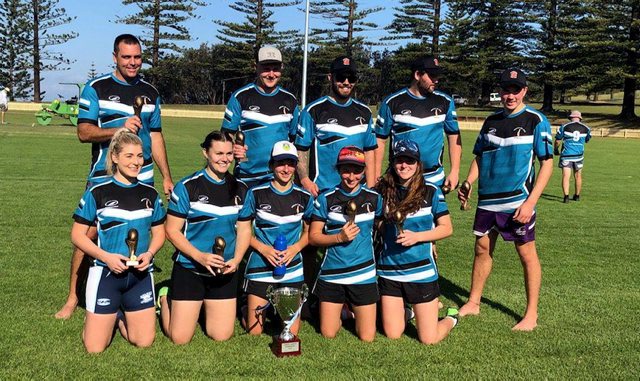
Today in Port Macquarie we had the privilege of attending the annual Jason Baker Memorial Cup, held each year in memory of Sergeant Jason Baker. It was a huge day of touch footy, with teams from around the district competing in a round-robin tournament. After a fiercely fought contest, the Meerkats emerged victorious, with the Hogs coming in a very credible second place. Thanks to all competitors and organisers, and a huge thank you for the money raised for Police Legacy in support of our Police Family.
At the end of October in Port Macquarie, we had the privilege of attending the annual Jason Baker Memorial Cup, held each year in memory of Sergeant Jason Baker. It was a huge day of touch footy, with teams from around the district competing in a round-robin tournament. After a fiercely fought contest, the Meerkats emerged victorious, with the Hogs coming in a very credible second place. Thanks to all competitors and organisers, and a huge thank you for the money raised for Police Legacy in support of our Police Family.
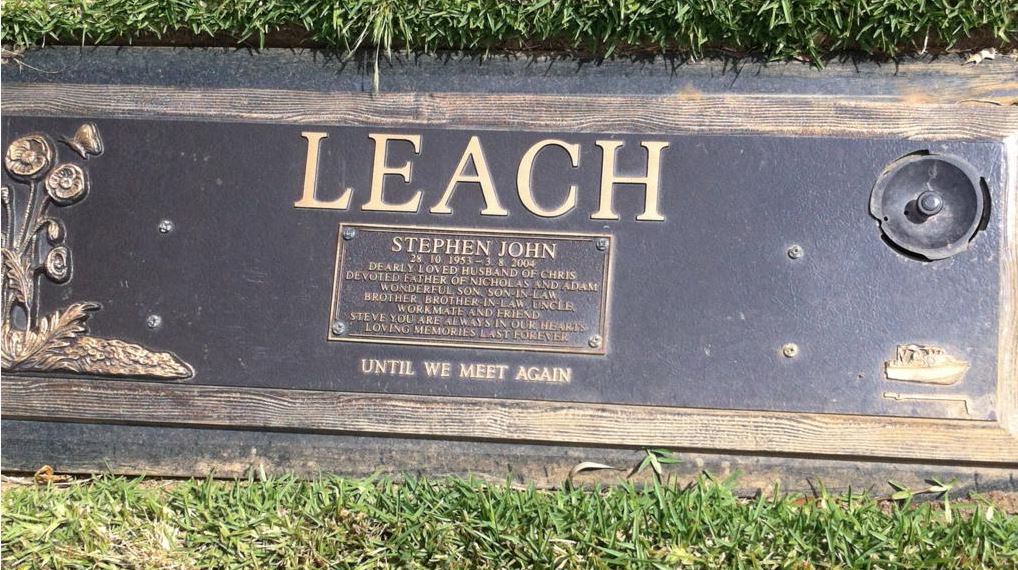
Stephen John LEACH – grave stone. Castlebrook Memorial Park Cemetery & Crematorium Castlebrook Memorial Park, Windsor Rd, Rouse Hill, NSW
Steve is NOT mentioned on the Police Wall of Remembrance in Canberra
( checked 040822 )
Policeman shot dead at station
August 3, 2004 – 7:33PM
One of NSW top police investigators was found shot dead in the state’s police headquarters today, shattering his family, friends and colleagues around the world.
Detective Sergeant Steve Leach, 51, an internationally recognised officer who helped investigate former Yugoslav president Slobodan Milosevic on behalf of the United Nations, was found with a single gunshot wound to the head shortly before midday.
Among his local achievements, Det Sgt Leach was instrumental in the arrest of backpacker murderer Ivan Milat and the investigations into missing Sydney school girl Samantha Knight.
NSW Police Commissioner Ken Moroney rushed to Parramatta upon hearing the news and, while he declined to speculate on the cause of death, said it was not believed to be suspicious.
The detective sergeant was not working today, having returned to NSW from The Hague in the Netherlands only in recent months.
Det Sgt Leach had been on sick leave after sustaining an undisclosed physical injury while overseas, but he had been due to recommence his employment with the NSW Police soon.
The Commissioner said investigations into the death had begun using a specialist team from Bankstown police, who would prepare a report for the Coroner.
“These are very tragic circumstances not only for the officer concerned and his family but equally as important, for his colleagues,” Mr Moroney said.
“I’m sure he will be remembered not only in the coming days . . . but certainly in years to come as one of the most experienced detectives we have (had) here in NSW, and we are the poorer for his loss today.”
Mr Moroney said the married officer had two children who, along with his colleagues, were “understandably very distraught” at the news of his passing.
“He was a very popular colleague and highly respected, not only in terms of his detective skills but certainly the specialist skills that he brought to criminal investigations here in NSW,” he said.
The officer’s colleagues at the NSW State Crime Command in Parramatta were being counselled by police chaplain Barry Dwyer.
Another police officer also was mourned today – Senior Constable Ian Ross Dennis, based in Walgett, north-west NSW, who died in hospital after a short battle with an illness, aged 47.
Mr Moroney paid tribute to both officers, saying they had been outstanding servants of the police force.
“It’s important on these occasions that we honour and acknowledge that service and that commitment,” he said.
“It’s a very sad day for the organisation to lose officers of this calibre who have selflessly served the people of this state to the very best of their skill and ability.
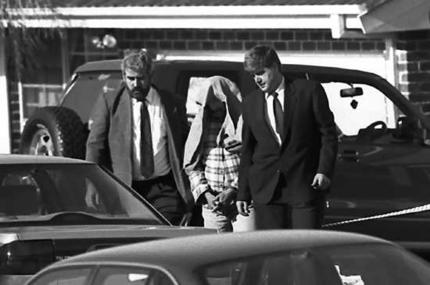
Homicide detective Steve Leach, left, and another detective escort the backpacker killer Ivan Milat from his home in 1994. Photo: Rick Stevens
There are few moments of joy in the life of a homicide investigator, and most of those are with their families.
Steve Leach had borne the grief of many, but yesterday it was the turn of his colleagues to face his own violent death.
Detective Senior Sergeant Leach, one of the state’s most experienced homicide detectives, took his life with his own handgun in the heart of the new NSW Police headquarters in Parramatta.
Nobody, it appears, saw such a tragedy coming.
Sergeant Leach had been on sick leave since early June, the result of a car accident in Europe that left him with leg injuries.
He had recently applied to be pensioned off as hurt on duty but those who encountered him recently had found him apparently cheery and looking forward to an early retirement.
He was still on sick report when he walked into the police building yesterday. He went into the soundproof weapons storage room; no one had been expecting him and no one heard the shot. Another officer found his body about noon.
When family, friends and colleagues looked at the life of Steve Leach, they saw an extraordinary career that began when he joined the force as a 16-year-old cadet in 1969.
He was a second-generation cop. Over 35 years, he played a role in some of the state’s most notorious cases and found his way as far afield as Bosnia, where he investigated war crimes.
Along the way he offered support to the families of victims and perpetrators alike. He even lent his shoulder to Shirley Soir, the sister of the backpacker killer Ivan Milat, who collapsed while sitting next to him in court on the day in May 1994 that her brother was charged with seven murders.
Ten days earlier, the burly detective had walked into police history as one of two detectives who arrested Milat at his Eagle Vale home.
In that case he led the search for the weapon, a Ruger 10/22, of which there were more than 100,000 imported into Australia.
He was often given tough tasks, such as the long investigation into the disappearance of the Bondi schoolgirl Samantha Knight.
In recent years, he was seconded to the European War Crimes Tribunal in The Hague. His team in the Netherlands charged the former Yugoslav president, Slobodan Milosevic, whose war crimes trial is still before the international court.
Sergeant Leach spent more than two years walkingthrough massacre sites and talking to survivors.
He came back to Sydney last year, returning to the homicide squad and recalling good times in Europe with his wife Christine, a schoolteacher.
He was chuffed that one of his two sons had also joined the police force, while the other had signed up for the army.
The Police Commissioner, Ken Moroney, remembered a detective of impeccable character.
“I’m sure he will be remembered, not only in the coming days … but certainly in years to come, as one of the most experienced detectives we have [had] here in NSW, and we are the poorer for his loss today.”
Homicide detective Steve Leach, left, takes Ivan Milat into custody in 1994.
Apart from time spent with their families, there are few moments of joy in the lives of homicide investigators.
They see the grief of others and are expected to bear their own feelings inwardly. Steve Leach had borne the grief of many – until yesterday. Now his colleagues are facing the tragedy of his own violent death.
Detective Senior Sergeant Leach, one of the Australia’s most experienced homicide detectives, took his life with his own handgun in the heart of the new NSW Police Headquarters in Parramatta.
It seems nobody saw it coming. When family, friends and colleagues looked at the life of 51-year-old Senior Sergeant Leach, what they saw was an extraordinary career that began when he joined the force as a 16-year-old cadet in 1969.
He was a second-generation police officer who, over 35 years, played key roles in some of Australia’s most high-profile and most horrific cases.
His talents were also sought internationally. He was seconded to the European War Crimes Tribunal in The Hague to investigate the killing fields of Bosnia, and was instrumental in the arrest of former Yugoslav president Slobodan Milosevic, who is facing genocide charges.
But the hard-nosed detective also had a gift for empathy and gave his support to the families of victims and perpetrators alike.
He even lent his shoulder to Shirley Soir, the sister of Ivan Milat, who collapsed while sitting next to him in court on the day in May 1994 when her brother was charged with the murders of seven backpackers.
Ten days earlier, he walked into police history as one of two detectives who arrested Milat.
He was often asked to investigate cases where the trails had seemingly run cold, such as the 1986 disappearance of Bondi schoolgirl Samantha Knight. But by the time his team had secured the conviction of Michael Guider, Senior Sergeant Leach was in Bosnia, walking through massacre sites, talking to survivors.
He returned to Sydney last year, speaking only of the good times in Europe with his wife Christine, a school teacher. He was chuffed that one of his two sons had joined the force, while the other had joined the army.
But he had been on sick leave since early June after injuring his legs in a car crash in Europe. He had recently applied to be pensioned off as hurt on duty, but had appeared upbeat planning for his early retirement.
Senior Sergeant Leach was on leave when he arrived at police headquarters yesterday, went into the sound-proof weapon storage room and took his gun. No one heard the shot. Another officer found his body at noon.
One shocked colleague and mate said: “There you go, buddy. The futility of it all. We are all feeling that empty feeling. Why?”
Those needing assistance can reach Suicide Helpline Victoria on 1300 651 251, Lifeline on 131 114 (both 24-hour lines), SANE on 1800 688 382 or Kids Help Line on 1800 551 800.
One of NSW’s top police investigators was found shot dead in the state’s police headquarters today, shattering his family, friends and colleagues around the world.
Detective Sergeant Steve Leach, 51, an internationally recognised officer who helped investigate former Yugoslav president Slobodan Milosevic on behalf of the United Nations, was found with a single gunshot wound to the head shortly before midday.
Among his local achievements, Det Sgt Leach was instrumental in the arrest of backpacker murderer Ivan Milat and the investigations into missing Sydney school girl Samantha Knight.
NSW Police Commissioner Ken Moroney rushed to Parramatta upon hearing the news and, while he declined to speculate on the cause of death, said it was not believed to be suspicious.
The detective sergeant was not working today, having returned to NSW from The Hague in the Netherlands only in recent months.
Detective Sergeant Steve Leach, from Sydney, Australia, was a well-known, veteran police officer with 35 years of experience.
Steve Leach was so highly respected by his fellow officers that they referred to him as “a policeman’s policeman.”
He was assigned some of Australia’s most horrific crimes. And he arrested serial killer Ivan Milat (see picture above), who murdered seven people between 1989 and 1992.
He also worked in Serbia and Montenegro from 2000 to 2003 as an investigator for the European War Crimes Tribunal, in which he had to view sites where massacres occurred, and then interview survivors.
Steve was an extremely strong man, both physically and mentally, and handled all of his assignments with the highest levels of integrity, courage, intelligence, and competence.
He was also highly ambitious and believed that he should have received a higher rank than detective sergeant.
And he was frustrated by what he believed was a ridiculous and unfairpromotion system in which he and other officers were forced to engage in “role play” during their promotion examinations.
In March, Steve applied for a newly created position as inspector at the coroner’s office, but the job was given to a muchyounger officer who had only a fraction of Steve’s experience.
Steve was furious and appealed the decision.
Unbelievably, Steve lost the appeal.
And soon afterwards, he became depressed.
On August 2, 2004, Steve, who was off-duty at the time, calmly walked into the police station, went to the armory room, obtained his service handgun, and shothimself in the head.
He was 51.
Steve’s fellow police officers were shocked, and immediately blamed the idiotic promotion system.
One outraged officer did not mince words when he described the promotion system as “bullshit.” He went on the say, “The promotions system is the only thing that was upsetting this very calm, [great police officer]. The current system is promoting people with just 12 years of experience over someone with 35 years of experience – this just destroys people like Steve Leach.”
Steve was one of the greatest police officers in Australia’s history.
Everyone loved and respected him.
And he made the streets safer because of his hard work.
He was a dedicated, superstar cop who loved his job and who loved to help people.
A rank way to treat the cops Transcript ADAM SHAND: Steve Leach was the model of what a detective should be – tough, uncompromising in his pursuit of crime, but fair and compassionate. He kept his own counsel as he served others right up to the day he took his own life. KEN MORONEY, NSW POLICE COMMISSIONER: A very sad day for the organisation to lose officers of this quality and this calibre who’ve selflessly served the people of this state to the very best of their skill and ability. ADAM SHAND: In 31 years of service, Steve Leach had worked some of NSW’s most difficult cases. He had seen the dark side of humanity, arresting backpacker murderer Ivan Milat, and solving the abduction of school girl Samantha Knight. In Leach’s death, his comrades saw their own images. At his funeral, the priest said that no-one should speculate on Leach’s own untold story. GARY HESKET, FORMER NSW DETECTIVE: I looked in the church. I could see a lot of young police there with promotion on their shoulders. I saw a lot of older police there, experienced heads. And not at the same level. “Don’t speculate”, I thought to myself. I thought, “That’s just saying we should never ever speak about this matter ever again.” ADAM SHAND: No-one will ever know why, at the age of 51, Steve Leach lost hope that day. But many senior detectives can trace their own disillusion back to the massive changes introduced after the Wood Royal Commission into police corruption in the mid-1990s. The Commissioner recommended a complete overhaul of the force’s management style. A new promotion system was introduced that no longer ensured progress through the ranks based on years of service. MARK FENLON, FORMER POLICE SERGEANT: It’s had a huge detrimental effect on morale. It’s had a huge detrimental effect upon police officers with experience who have been disenfranchised by the process. Who have been and are continue to seek exit from the police force at the earliest opportunity. And this has left a huge void in the organisation in terms of experience, in terms of training and development of younger police, in terms of expertise to deal with crime, which can’t be replaced. ADAM SHAND: Gary Hesket left the force a year ago after three decades in the job. He keeps up with his mates through his role in as a trainer in the police rugby league competition. GARY HESKET: This is good for the camaraderie, the esprit de corps. It’s the best things they could do after working in the police environment they’re in – get out here and have a game amongst each other. ADAM SHAND: You pick up the paper and see Steve Leach has committed suicide. What did that mean to you when you heard that? GARY HESKET: The first question I asked was, “Was he passed over for promotion?” And the word that came back to me was ‘yes’. ADAM SHAND: Like Steve Leach, Gary Hesket devoted his life to catching villains. He was a natural-born detective, voted policeman of the year in 2001 by his local community in western Sydney. GARY HESKET: Then you’re told, “Well, Gary, if you want to be promoted, the best thing you can do is forget about police work, find a desk somewhere and hide and do yourself a degree or diploma because that’s the only way you’re going to get promoted in the future of NSW Police.” ADAM SHAND: Hesket says many of his generation of detectives have simply been dumped on the scrap heap. GARY HESKET: But at the end of the time when you put in 35 years, where is your reward? Where is your reward? ADAM SHAND: On the day his family and comrades farewelled Steve Leach, NSW Police Commissioner Ken Moroney awarded him a ribbon recognising his achievement in solving 15-year-old mystery of Samantha Knight’s disappearance. GARY HESKET: And he did a magnificent job and he solved it, and now, posthumously, Mr Moroney is giving him a medal for that. Why wasn’t he given a medal when the case was solved, while he was alive? ADAM SHAND: When Leach was seconded as a war crimes investigator to the former Yugoslavia, he won praise for a difficult job. On his return to Australia, he expected a promotion to finish his career as a commissioned officer. MICK KENNEDY, FORMER NSW DETECTIVE: And the reason he couldn’t get promoted was he could do the job but he couldn’t pretend he could do the job. He couldn’t get through the assessment stuff, I suppose, or the role play nonsense. I was a detective for 20 years in the NSW Police… ADAM SHAND: These days Mick Kennedy is researching trends in modern policing for a PhD. He believes the root of the crisis facing Steve Leach’s generation is a lack of support for field officers. MICKKENNEDY: He didn’t kill himself because he was working in the evils and the horrors of criminal investigation, because that’s part and parcel of the work that you can deal with. You insulate yourself from it, you deal with that. But all of the time that you’re dealing with those murky, dirty hands areas of working it needs to be constantly reinforced that you’re dependent upon your organisation to support you in times of crisis or when things go bad. ADAM SHAND: When Kennedy faced his own crisis, he found there was no-one to turn to. MICK KENNEDY: I was in this house some years ago and I had my 38 on the bed and I was in despair over a range of issues. And I was thinking seriously, “Well, the best thing I could do is to kill myself”, so I ring the police medical officer and I got through to a woman who couldn’t speak English. I was on the phone with her for 20 minutes telling her that I was considering shooting myself and I’d like to speak to someone about it. In the end, I hung up in disgust because I couldn’t speak to anyone. Now I thought, “God, almighty! I can’t even try to attract attention. No-one’s interested! No-one really cares”, you know? ADAM SHAND: Faced with growing criticism, the NSW Government asked former Assistant Commissioner Geoff Schuberg to investigate the promotions system. He found many detectives had lost their sense of purpose in the job. GEOFF SCHUBERG, FORMER ASSISTANT COMMISSIONER: And one of the great problems in the system was that a number of police were applying for positions outside their area of expertise and winning them and they were put in a position where they were supervising and managing police when they had no experience or previous qualifications to do so. ADAM SHAND: Promotion, it seemed to Schoenberg, had become more important to the rank and file than the job itself. GEOFF SCHUBERG: Police really took their eye off the game of catching crooks and the promotions race seemed to be the main topic of the day, where people simply talked about positions that were being advertised, positions which they were applying for. There was a lot of resentment. There was a lot of drop in morale because of people who were applying for positions and couldn’t even get interviews. And I think that’s still very much the case. ADAM SHAND: Crime reporter Steve Barrett has been watching this generation of police officers for over 20 years. He’s seen the job consume too many of them. STEVE BARRETT, CRIME REPORTER: There was another detective inspector up at one of the stations in the Newcastle area who, with his service pistol, shot himself in the police station. Till this day, that family doesn’t know what happened to that person, why he took his own life. And you really have got to say to yourself, “What is this all about? Why is this happening?” ADAM SHAND: The Wood Royal Commission identified this generation of detectives as fertile ground for corruption, and set about purging its ranks. STEVE BARRETT: I mean, there was some very good work done by the Royal Commission but there was also some work where evidence was put before the Commission which was just, quite frankly, not true. And there was bad collateral damage and when you look at what’s happened, you think to yourself, “Well, a lot of police did down tools.” There’s no doubt about that. Then you see all these gangs growing up around Sydney – and I suppose it’s bit like if you don’t weed the garden, you’re going to get weeds. MARK FENLON: And this is reflected in the crime clear-up rates for NSW. They’re the lowest in the country. Around about 12 percent of robberies are being solved within the first 90 days of the offence occurring. 5 percent of break and enters within the same period. It’s scandalous. That’s how this policy is impacting and has impacted and will continue to impact on policing in this State. ADAM SHAND: Old-style cops say policing has become a numbers game these days. In crime statistics, a bust for a broken window counts for the same as a murder. The critics say it is the same wherever the police have moved from a paramilitary-based model free enterprise-style management – commanders are forced to strive for quantitative outcomes like managers in a boardroom. MICK KENNEDY: The problem is that productivity is measured, in policing terms, in terms of arrests, and they say, “That’s great.” But it’s about trivial arrests. What they do, you get a senior commander and have a meeting and he humiliates everybody by yelling at them and screaming at them, “Why aren’t your – why aren’t your arrest rates up? How come my stolen vehicles is down?” You say, “We don’t have any staff. I’m not interested in that!” And it’s humiliating, and it’s a humiliating process and it is a degrading. ADAM SHAND: Kennedy says the older detectives often find the pressure intolerable as they watch younger colleagues ride a desk to the top. He says the promotions system rewards those that work it. You gather merit points from education and role playing sessions where officers must show a grasp of the new language and politics of community policing. For an undercover detective, this is the theatre of the absurd. MICK KENNEDY: I had been doing undercover work for far too long. I had a twitch. I had a stutter. My hair was dropping out. I had psoriasis all over my hands and I have no doubt if I had have killed myself some idiot would say, “But, mate, he was just a bit tired, We didn’t know he had any real problems.” ADAM SHAND: Former sergeant Mark Fenlon served for 20 years. He left the force reluctantly after a distinguished career. MARK FENLON: I had to get out of policing. I blew the whistle on promotions corruption in 1999. Nothing was done in relation to the complaints I made. The promotions system, it’s allowed people who haven’t got the qualifications, the experience, to gain promotion to gain positions – senior positions within the organisation – to lead the organisation. ADAM SHAND: Although his complaints were investigated, the system remains relatively unchanged and Mark Fenlon says its major faults are beginning to show. MARK FENLON: No better example than recently would be Redfern, where there were two images that is stuck in my mind. One was of police being directed to line up across a street and be subjected to bottles being thrown at them, Molotov cocktails being thrown at them. The other image is that there were perhaps half-a-dozen senior officers in the background in the background with mobile phones to their ears looking for a direction, looking for some guidance in relation to what to do with the situation. RON STEPHENSON, FORMER POLICE SUPERINTENDENT: In my day – and I’m not blowing my trumpet – but if you were placed in that situation, if you were in arm’s length away from some of the offenders, they’d be in the back of the truck and charged with assault, indecent language, offensive behaviour, whatever the matter was. ADAM SHAND: Inspector Ron Stephenson was the officer in charge the day, in 1984, when two bikie gangs, the Bandidos and the Comancheros, squared off in the car park of the Viking Tavern, in Milperra. Seven people already lay dead and experience told Stephenson that, without quick thinking, the murderers would walk free. RON STEPHENSON: A decision would be made that they’d be rounded up, interviewed, and charged. They were only charged that day with offensive behaviour and cause of fray but, three weeks later, after we’d worked out the full picture, we raided simultaneously 43 homes, arrested 43 bikers and charged them with 301 charges of murder. ADAM SHAND: But just how you restore confidence in a force that has lost so much in terms of experience is another matter. More than half of NSW police have been in the job for less than five years. Training simulation exercises like this one are now a key measure of competence and suitability for promotion. STEVE BARRETT: I can tell you about another guy who was the boss of homicide for five years. In the north-west of Sydney. And he had to go to an assessment testing centre for a day, where they role play. And, I don’t know – because he wasn’t a good actor, he didn’t get promoted. Now, he just walked away. He’s gone. So all this experience over years and years and years of hard slog for the taxpayer of NSW has just gone like that. ADAM SHAND: But NSW Police Minister John Watkins denies the service is in crisis, that many more officers like Steve Leach are at risk. He insists morale in the force is at its highest since the Wood Royal Commission clean out. JOHN WATKINS, NSW POLICE MINISTER: The separation rate for NSW Police is the lowest it’s been for eight years and the actual resignation rate is the lowest it’s been for 10 years. It’s a very stable force in NSW and morale is the highest it’s been for a generation. ADAM SHAND: But the Minister does accept the need for a review of the promotions system. He chairs a working party of detectives which is discussing the problem. JOHN WATKINS: There was a working party, the Schuberg working party, that’s reported to me. I’ve given that to the Anderson working party to report to me by the end of this year for legislative changes to be put in place so a new promotions system can be up and running from 1 July, 2005. ADAM SHAND: Victoria Police Service has also established a merit-based promotion system, which favours education over experience. There are morale issues in Victoria as a result, but the greater problem is a war on corruption. CHRISTINE NIXON, CHIEF COMMISSIONER, VICTORIA POLICE: I did come to Victoria Police with an understanding there was corruption here. It’s the kind of attitude Victoria Police had that they didn’t have corruption really was a bit of a myth. ADAM SHAND: Unlike NSW, where the Royal Commission fast-tracked a clean out of bent coppers, Chief Commissioner Christine Nixon’s management team is driving reform. CHRISTINE NIXON: In policing, there will always be corruption. What you have to do is figure out where the high-risk areas are, where the likelihood of that corruption is to occur and to try change the systems and practices or, in fact, focus on people who might be working in those areas. ADAM SHAND: Nixon has identified so-called legends in the force which, she says, have set bad examples for young officers. Though he left the force nearly 20 years ago, Brian Murphy is still Victoria’s most feared and revered officer – a legend amongst crims and coppers. Back in 1971, Murphy was charged with the killing of a suspect in custody. Although he was acquitted, he found the incident gave him an unhealthy reputation amongst some junior officers. BRIAN MURPHY, FORMER VICTORIAN POLICE OFFICER: There would be a lot of young people think, “Well, Murphy did it and got away with it. I’ll try do what he did or what he was involved in, something similar.” And it’s not always a good thing. ADAM SHAND: Should you have been gone back in the force, do you think? BRIAN MURPHY: From time to time I think that it was most probably a bad move that I did go back in, but I couldn’t think of doing anything else than police work. ADAM SHAND: When Murphy returned to duty he was given a new role. Leading a small team known as “Murphy’s Marauders”, he took on the villains in their own pubs, sending a message of fear through the underworld. It was an old-school, often violent, method that, although successful, is certainly not endorsed in today’s force. BRIAN MURPHY: If somebody is arrested and he received a certain amount of corporal punishment, it would most probably be as a result of an assault on the policeman first. And policemen are permitted, the same as anybody else in the community, to prevent an assault, to use force, more than what is being used on them. ADAM SHAND: Some Victorian police feel the pendulum has swung too far. Officers now feel powerless in the face of criminals who have exploited the new, sensitive approach to police enforcement. CHRISTINE NIXON: I guess I don’t quite see that and I have a lot of contact with police. Australia has this kind of way of seeing villains as the heroes – Ned Kelly, I suppose, Roger Rogerson in NSW, and Brian Murphy is another. I don’t think they see them as the heroes, the real heroes in policing. I think they see them as people who just behaved and were of their time. What we have to do now is live within the legal boundaries. ADAM SHAND: But Brian Murphy believes some officers are being used as political pawns as management seeks to reassure the public of the integrity of the service. He could see the writing on the wall and took early retirement. He finds himself counselling many young officers unsure of their future career direction. BRIAN MURPHY: And a lot of them have left the job and rue the day they ever left because it’s a big, hard, cold world out there and the wages they were getting on numerous occasions they’ve found wanting and they get outside. They haven’t got the camaraderie, they haven’t got the protection of the government behind them. ADAM SHAND: Maybe the job isn’t what it used to be, and many would say that’s a step forward. But men like Gary Hesket feel they’ve been let down by an administration that’s changed the rules in the middle of the game. GARY HESKET: At the end of my days, for all the hard work you did, they take your badge, they take your ID. There’s nothing. You’re stripped. At the end of your days, who are you? You’ve given all these years of service. You just walk away and there’s this wealth of experience just sitting out there just wasting away and dying away.Click here for a printer-friendly version.http://sgp1.paddington.ninemsn.com.au/sunday/feature_stories/transcript_1687.asp
He brought Ivan Milat to justice. He worked on the disappearance of nine-year-old schoolgirl Samantha Knight and the death of Sydney mother Zoe Zou, who died last November. He recently spent two years walking through massacre sites and talking to victims of Slobodan Milosevic for the European War Crimes Tribunal in The Hague.
i know.. i heard bout that yesterday
noone knows why he done it.. and his got a family and kids too… so sad….
my condolence goes out to them all..R. I . P.
i just read about this. how tragic. he helped so many people by bringing people like ivan milat to justice, and it just got too much. it’s awful. my heart goes out to his family, friends and colleagues.
I saw him talk about the backpacker murders in Adelaide when I was in first year doing a forensic and analytical chemistry course and he inspired me to finish my degree. I am quite that he’s gone – he was an amazing speaker and a tenacious investigator.
What this the one who dies under sus circumstances?
It is so sad how all these people who do wonderful things for their community usually don’t have outlets for how they are feeling/coping with everything they have seen.
__________________ Her Most Noble Lady Nightshade the Precocious of Kesslington under Ox – Going to Paris for my birthday!!
It just about breaks my heart to read things like this…
As someone who dreams of becoming a police officer one day, I’m glad to know that there are such fine members of the police force within Australia and to know that their hard work and compassion in the job has assisted so many people and has set a respected precedent for future officers.
It’s important to commend and appreciate our nation’s police officers to help dispell the hostile attitude many members of public have against police officers – we often quickly forget that there are real people and families beneith the blue uniform.
My dad was friends with a member of the Victorian Police force who was killed while on duty, it’s upsetting to remember the sadness that his death had on our family as his friends, let alone what it must be like for immediate family..
My heart and prayers go out to both families – especially Snr Det. Leach’s son.
On 2004-08-04 12:12, Sambellina wrote:
Zoe Zou was my friend. I hope this doesn’t effect the trial of the accussed.
How heart-breaking for you… I do doubt that it will effect the outcome of the case – but most likely a collegue of Snr Det. Leach will be presenting any facts and evidence.
On 2004-08-04 12:02, sultry wrote:
It is so sad and the worst part is the not knowing.Perhaps we could also say RIP to Senior Constable Ian Ross Dennis?http://www.police.nsw.gov.au/media/d…ectionID=mediaAnother fine Police Officer taken from us too early. If only there were more out there like him.
Thank you very much for that link.
I can’t believe the police force lost two such fine men in the space of only a few hours.
On 2004-08-04 12:13, Emily-May wrote:
corrupt maybe?
Do you mean maybe he was corrupt or he saw too much corruption? Regardless, it’s tragic the amount of police officers who end up comitting suicide because of the stress involved with their job or the ‘inner workings’ of police culture. A truly fine police officer who potentially saved a lot of people’s lives