1

Claude William Alexander BOVARD

Claude William Alexander BOVARD

New South Wales Police Force

Regd. #  ?

Rank:  Constable 1st Class

Stations:  Mudgee, Gilgandra, Dubbo, Wellington, Grenfell, Bathurst x 2, Forbes ( for 7 – 8 months )

Service:  From ? ? 1897? to 29 September 1915 = 18 years Service

Awards?

Born?

Died on:  Friday  1 October 1915

Cause:  Suicide by firearm

Inquest held:  Saturday  2 October 1915

Age:  42

Funeral date?

Funeral location?

Buried at? in Sydney alongside of his 3 brothers & mother

 [divider_dotted]

Forbes Court House location

[divider_dotted]

Leader ( Orange, NSW )    Monday  4 October 1915    page 1 of 6

POLICE CONSTABLE’S SUICIDE.

First class Constable Claude William Bovard, who was convicted at Forbes and fined last week for robbing a prisoner of £1, ended his life on the steps of the Forbes court house on Friday last by putting a bullet from a revolver through his brain.

Bovard was stationed at Grenfell prior to going to Forbes, and came of one of the most respectable families on the Richmond River. His death will be a great shock to his mother, brothers and sisters, who reside at Lismore. His first station after leaving the depot in Sydney was Mudgee; from there he was drafted to Gilgandra, thense to Dubbo, Wellington, Grenfell and Forbes. He was  comparatively a young man, and, being of a sensitive nature, no doubt the degradation to which he had fallen was too much for him to face, and he sought relief by committing felo de se.

http://trove.nla.gov.au/ndp/del/article/117841536?searchTerm=police%20suicide&searchLimits=l-australian=y

[divider_dotted]

The Sydney Morning Herald     Tuesday  5 October 1915    page 6 of 14

AN EX-CONSTABLE’S SUICIDE.

FORBES, Monday.

Claude William Alexander Bovard, an ex-member of the Police Force, shot himself dead with a revolver on the verandah of the Forbes Courthouse on Friday afternoon. At the coroners inquiry on Saturday morning a verdict of suicide was returned. Deceased was 42 years of age, and a native of Berrima. He had been 15 years in the force.

http://trove.nla.gov.au/ndp/del/article/15617509?searchTerm=%22constable%20forbes%22&searchLimits=#pstart1266255

 [divider_dotted]

National Advocate ( Bathurst )     Thursday  7 October 1915   page 4 of 6

Forbes Policeman’s Suicide

TOOK HIS DISMISSAL TO HEART ” I AM AN HONEST MAN ” INQUEST ON EX-CONSTABLE BOVARD.

A coronial inquiry was held at Forbes concerning the death of ex-Constable Claud Alexander Bovard (42), who killed himself with a   revolver on Friday last. Bovard had been convicted of having robbed a prisoner of £1, and was dismissed from the force, but always strongly maintained his innocence. He conceived a great dislike for Constable Fuller, who gave evidence against him. and declared to the Clerk of Petty Sessions (Mr. Wickham), just before he shot himself, that Fuller would walk over his blood. He then shot himself on the Court House verandah with Fuller’s revolver.

Bovard had been in the police force for 18 years and had been twice   stationed at Bathurst. He went from Bathurst to Forbes seven or eight months ago.

He claimed to be well connected and said he was a cousin by marriage to Sir George Reid, and he also claimed relationship with Mr. McCourt, an ex-Speaker in New South Wales Parliament, and Superintendent Sutherland, of the Police Department.

Dr. Edward McDonnell declared that the bullet wound through Bovard’s head was apparently self inflicted.

Inspector Whitfield stated that Bovard was under the influence of liquor on the day of the occurrence. He came into witness’ office and said : ” I am an honest man and I never took that pound. ” Bovard shook hands and said he was leaving Forbes. Bovard had seemed to take his dismissal very much to heart and resorted to drink.

Aubrey S. Wickham, C.P.S., described Bovard’ s good-bye visit. Bovard   asked him to tell the P.M. that he was not guilty, and added that Fuller would walk over his blood. Bovard then went outside and the fatal shot rang out immediately.

Sergeant Garstang said that early on the Friday afternoon Bovard asked him what time Fuller came on duty.   Witness replied, ” Six o’clock, ” and Bovard said, ” Ah, that will do me. ” Half an hour afterwards Bovard was dead. Witness searched the body and found a three penny bit and a penny piece and some odds and ends. Bovard had no property except a tin trunk and some clothes.

Constable Fuller said the service revolver produced was his. He left it in his bed at the Police Barracks on Friday morning. Bovard had no   right to be in possession of it. He had not seen Bovard during the few days prior to his death.

John William Seyers stated that when Bovard said good-bye to him he was crying and witness thought he was going to the war. Bovard said; ” Oh, my God, they swore lies against me here. ” Three minutes afterwards he heard a shot.

The Coroner returned a verdict of suicide.

http://trove.nla.gov.au/ndp/del/article/158159915

[divider_dotted]

The Dubbo Liberal & Macquarie Advocate

Friday  8 October 1915   page 4 of 8

CONSTABLE BOVARD’S DEATH.  

A coronial inquiry was hold at Forbes concerning the death of ex-Constable Claud Alexander Bovard (42), who killed himself with a revolver on Friday last.

Bovard had been convicted of having robbed a prisoner of £1, and was dismissed from the force, but always strongly maintained his innocence.

He conceived a great dislike for Constable Fuller, who gave evidence   against him, and declared to the Clerk of Petty Sessions ( Mr. Wickham, just before he shot himself, that Fuller would walk over his blood. He then shot himself on the Court House verandah with Fuller’s revolver.

Bovard had been in the police force 15 years, and had been stationed at Dubbo. He claimed to be well connected, and he was a cousin by marriage to Sir George Reid, and he also claimed relationship with Mr. McCourt, an ex-Speaker in the N.S.W. Parliament, and Superintendent Sutherland, of the Police Department.

http://trove.nla.gov.au/ndp/del/article/77601117

[divider_dotted]

Forbes Advocate     Tuesday  1 October 1918   page 3 of 4

IN MEMORIAM.

In everlasting memory of our darling son and brother, Claude Bovard.

Inserted by his mother, brothers and sisters.

Had ye not mine honor at the stake

And bated it with all the unmuzzled thoughts

That tyranous heart can think.

 http://trove.nla.gov.au/ndp/del/article/100309150

[divider_dotted]

Forbes Advocate     Tuesday  30 September 1919   page 2 of 4

IN MEMORIAM.

BOVARD: In memory of my beloved

son Claude Bovard, who lost his life at Forbes, 1st October 1915.

Inserted by his mother, brothers,  and sisters.

 http://trove.nla.gov.au/ndp/del/article/100316123

 [divider_dotted]

Northern Star ( Lismore )   Monday  28 January 1924   page 4 of 8

LATE MRS. BOVARD

The death of Mrs. L. Bovard, of ” Lome House,” Glebe Point, which took place recently, removed another link with the early days of the Berrima and the Richmond River districts. Mrs. Bovard spent most of her life in those districts, where she and her late husband were held in high esteem by a large circle of friends.

Their long residence upon the Richmond River was spent at Goonellabah, upon the farm now owned by Mr. J. James, and afterwards in Lismore, where they reared a large family, the members of which were worthy of their revered parents.

One son, Mr. Cecil Bovard, served his time on the “Northern Star,” and afterwards entered the service of the Postmaster-General in Sydney, where his brother Percy held a high position. The sad death of another son, Senior-Constable Claude Bovard at Dubbo, was followed by the deaths from pneumonia and influenza, of the two sons in the Postal Department, within a space of three or four years. From this crushing blow Mrs. Bovard never recovered, and it has brought about her early death.

After the loss of her husband Mrs. Bovard removed with her family to Sydney.

The surviving members are one son, Sergeant Hedley Bovard, of the Maryborough (Qld.), police force, and three married daughters.

http://trove.nla.gov.au/ndp/del/article/93518278

[divider_dotted]

News ( Adelaide, S.A. )     Friday  30 December 1927     page 11 of 14

TRIANGLE OF DEATH

Police Figure in Murders

SHOT THROUGH WINDOW

When Constable Ford murdered Mrs. Laws and then shot himself at Leichhardt, Sydney, he completed a tragic triangle of death.

He was the third constable who has served at Grenfell, to die by violence.

Constables Claud Bovard and George J. Duncan were the other two.

More than ten years ago Ford and Bovard served together at Grenfell, and Duncan was stationed there soon after they left.

Bovard committed suicide by blowing out his brains three days after he left the police force.

Duncan was murdered by two men, both of whom were later hanged.

Six lives, which have ended unnaturally, were thus linked together.

The three were physically fine men. Constable Duncan was transferred to Tottenham when trouble was brewing in the district. Falling foul of two men, he was murdered one night in his office. The police station was a hut with two rooms. Duncan was sitting at his desk with his back to the window, typing. The blind was up, but the window was closed. Creeping to the window, the two men could see Duncan clearly in the flood of light from an oil lamp. They drew their revolvers and from the darkness fired two shots through the glass into Duncan’s back, killing him instantly. Later they were arrested, convicted, and hanged in Bathurst Gaol.

In New South Wales, since January 25, 12 murders have been committed, which is twice the number that have taken place in Victoria over the same period. With three exceptions, all have taken place in Sydney, and three have been committed in Ashfield.

Four murders have not yet been solved and jealousy and domestic unhappiness have been the cause in most of the remaining cases.

http://trove.nla.gov.au/ndp/del/article/129189445

[divider_dotted]

The Braidwood Review & District Advocate

Tuesday  3 January 1928    page 4 of 8

STRANGE COINCIDENCE

When Constable Ford murdered Mrs. Laws and then shot himself at Leichhardt recently, he completed a tragic triangle of death.   He was the third constable who has served at Grenfell to die by violence.

Constables Claude Bovard and George J. Duncan were the other two.  Over ten years ago Ford and Bovard served together at Grenfell, and Duncan was stationed there soon after they left.

http://trove.nla.gov.au/ndp/del/article/119404489

[divider_dotted]

Northern Star ( Lismore )   Thursday  26 January 1928   page 12 of 12

DEATH OF SERGEANT BOVARD

Mr. N. C. Hewitt writes:—         Old residents of Lismore will regret to learn of the death of Sergeant Hedley Bovard, of the Queensland Police Force, who was for over twenty years a resident of Lismore. His death took place at the Mater Misericordiae private hospital, South Brisbane, on January 14th at the early age of 46 years.

The late Senior Sergeant Bovard was a son of the late Mr. and Mrs. Bovard, for many years resident in Ewing Square, Lismore.

Coming to the district when quite a small boy the family for some years were engaged in farming at Goonellabah on the farm now owned by Mr. Alf. James. This was in the latter “eighties.” He was educated at the Goonellabah public school. When the family removed to Lismore, if I mistake not, he entered the employ either of Mr. W. D. Lamotte or of Mr. C. Balzer, who had livery stables in Molesworth-street near the Freemasons’ Hotel.

In 1905 he joined the Queensland police and was for some years stationed in North Queensland in different centres and in difficult situations, afterwards being in charge at Bundaberg and Maryborough. Later he was acting-inspector at Chillagoe, but the climate forced him to apply for a change to the south. Then he was placed in charge at South Brisbane, Hamilton and various other Brisbane stations. His men under him held him in the highest regard.

As one remarked to the writer “If Bo. could not do you a good turn he would never do you a bad one.”

Quite recently Sergeant Bovard developed heart trouble and at the end of September he had to go into hospital. His two sisters, Mrs. Lee and Mrs. Pitt, went up from Sydney and he appeared to make a wonderful recovery. He decided to retire on a pension well earned for service in the climatically unfavourable North.

Early this year the heart trouble returned with dramatic suddenness and his sisters, including Miss Ethel Bovard, were summoned from Sydney when alarming symptoms manifested themselves. His condition rapidly became worse and he passed away peacefully as stated.

His death came as a shock to his comrades as well as to his sisters. The remains were taken to Sydney for interment beside those of his mother and three brothers and were accorded a State servant’s funeral, attended by all the available members of the force.

Sergeant Bovard‘s death is a particularly sad one. By his passing the last surviving male member of the Bovard family passes away without leaving a descendant to carry on a name that was honoured in Lismore a quarter of century ago.

Fifteen years ago the family included four strapping sons – young men of fine physique of whose lives one could have taken a lease.

The first break came when Senior Constable Claude Bovard of Wellington Police Force died under pathetic circumstances. Then during the pandemic Cecil (who served his apprenticeship with the Northern Star) of the G.P.O. staff died from influenza, shortly to be followed by his elder brother Percy of the same department, from pneumonia.

Percy was one of the first, if not actually the first telephonist in Lismore.

The shock of losing her three sons was too much for the grief-stricken mother who shortly afterwards was called to her rest. Now the sole surviving son in the prime of life has been carried to that bourne whence no traveller returns.

The deceased gentleman was a devout member of the Church of England. To the bereaved sisters the sympathy of all who remember the family will go out.

This is the third death within six months of sergeants of police in Queensland who hailed from the Richmond RiverSergt. King, Sergt. D’Arcy McDonough and Sergt. Bovard — and it can be written of each that he was a credit to the sons of the Richmond River district who in peace or war have won new fame and glory.

http://trove.nla.gov.au/ndp/del/article/93659129

[divider_dotted]

His working life as a policeman:

Wellington Times ( NSW )     Thursday  14 January 1904   page 3 of 8

Alleged Murder.  

ACCUSED COMMITTED FOR TRIAL.

The Coroner (Mr. R. Porter) held an inquest at the Court House on Monday touching the death of one (supposed) Edward Carson, who died at the Wellington Hospital on Saturday night from injuries received, it was alleged, in a disturbance at Winters’ Hotel at about 6.30 p.m. on Saturday.

The following jury was empanelled —   Messrs. R. Read (foreman), R. Tait, F. Kennard, J. Walker, J. W. Marshall, L. N. Hyeronimus, J. T. Mallon, J. B. Wynne, W. J. Robinson, F. W. Everett, and A. Deveson.

Sergeant Steele conducted the case on behalf of the police.

After the jury had viewed the body, the following evidence was adduced : —

Constable Claude Bovard, sworn, deposed: In consequence of a message which came to the police station on Saturday evening about 6.30 went to Tattersalls Hotel kept by J. Winters ; made some inquiries from Mr. and Mrs. Winters and then went into a yard at the rear of the hotel ; saw William Henry Davis, now present in custody, behind a water tank in the yard ; said to him ” I want you to come with me ” ; he replied ” All right, Constable ” ; Davis and I proceeded along to the intersection of Lee and Gisborne-streets ; Davis said, ” What are you arresting me for ” ; replied ” Am arresting you on suspicion of inflicting grevious bodily harm on a man whose name is unknown to me ” ; he asked, ” Is the man dead ” ; replied ” No, not yet ” ; he said, ” You know you b—– c—– but you won’t tell me. ” Coaxed Davis along a bit further down the street, and he became very violent and resisted ; obtained assistance and brought him to the look up ; then returned with Constable Byrne to Winters’ Hotel there saw the deceased, subject of this inquiry, who was lying on a couch in the parlor of the hotel ; viewed the body today at the hospital with the jury ; deceased was lying on his back ; he was unconscious and breathing very heavily ; procured a conveyance and took him to the hospital ; went back and saw deceased lying dead about 1 o’clock on Sunday morning ; there were no marks and no blood about the body ; produce papers ( A.W.U. ticket and shed references ) – handed to me by Sergeant Steele and was informed that they were found on the body of deceased ; also produce a watch and one gold ring handed to me by Sergeant Steele ; the nine pence in cash and other small articles were handed to me by the Matron at the hospital ; was informed they were found on deceased ; saw Davis now before the Court in the lock-up about 7 o’clock last night in the presence of Constables Byrne and O’Reilly ; asked him his name ; he replied Henry Davis ; said ” I now charge you with feloniously and maliciously slaying and murdering one Edward Carson, at Wellington on the 9th January, 1904 ” ; then said ” You are not compelled to make any reply to the charge, but whatever you may say will be taken down in writing and used either for or against you at your trial ” ; in reply to the charge he said, ” Is that the man I hit at Winters’ Hotel ” ; I said ” Yes “; he asked ” Is there anything wrong with him ” ; I replied ” Yes, he is dead ” ; he replied ” I only hit him one blow with my fist and he fell into the gutter ” ; Constable Byrne then said ” Was he  a stranger to you ” ; he replied ” Yes, I have never seen him before.”

John Henry Luke, sworn, deposed: Am 18 years of age and live with my parents at Wellington ; left home at 6 o’clock on Saturday evening and went to Winters’ Hotel ;   saw William Henry Davis, now in custody, there ; there was a row ; saw a man leaning against a post ; now know him as Edward Carson ; post is the one used for hanging horses up to at the edge of the footpath ; Davis struck the man under the jaw ; the man fell backwards on the kerb stone ; the back of the man’s head struck the kerb stone ; was standing about a yard and a half away ; was leaning on the other end of the rail ; the man lay there ; some men picked him up and put him on the seat under the verandah ; never heard the man say anything to Davis ; he was not quarrelling with Davis or anyone else ; he was standing quietly leaning against the post ; he made no attempt to defend himself ; the blow was struck suddenly with the shut fist without any warning ; saw the body of deceased this morning at the hospital ; identify the body as that of the man Davis struck.

To the jury : Davis was standing by the post ; there was no one with Davis, and there was no altercation of any kind.

To Davis : Did not see a big man between you and deceased ; saw a few men standing around you ; heard no conversation, but some words were passed between you and deceased which I did not hear ; you were under the influence of drink.

To the jury ; Deceased was quiet in bis demeanor ; Davis seemed excited ; heard Davis speak to Carson, but did not hear Carson speak.

George Buckley, sworn, deposed : Am a laborer at present residing at Wellington ; was at Winters’ hotel on Saturday evening last about 6 o’clock ; saw William Henry Davis now before the court ; saw another man named Carson, whose body I saw at the hospital yesterday afternoon ; there was a row on with Davis and another man ; do not know the other man ; deceased was standing against the post to which horses are   tied ; deceased was not saying a word to anyone ; was about five yards from deceased ; saw Davis strike deceased with his right fist about the jaw ; deceased fell back from the post, the back of his head striking the kerb stone ; two other men and myself picked deceased up and placed him on a seat on the verandah ; deceased was unconscious ; Mr. Winters wet deceased’s lips with rum ; about half an hour afterwards deceased was carried inside and laid on a stretcher ; deceased never spoke; never saw deceased before ; myself and another man then informed the police ; in the meantime Davis was brought to the police station.

To Davis : When I picked up deceased he was not bleeding ; saw you strike deceased ; deceased did not give you any cause ; was not there in the morning ; went to Winters’ about 5 o’clock; did not see any thing else occur ; saw you and another man having a row.

George Curwan Rickes, sworn, deposed : Am a laborer residing at Wellington ; was   standing at Cox’s corner opposite Winters’ Hotel about 7 o’clock ; the man rowing with Davis was a little dark man ; saw deceased standing against a post ; he was struck ; recognise Davis as the man who dealt the blow ; saw accused fall ; saw deceased had a nasty fall and went across ; saw Davis start to walk up the street ; had a clear view of deceased, but there were other men standing between me and Davis.

To a juryman : Deceased was standing quietly at the post.

James Wright Winters, hotel keeper, sworn, deposed : Saw a dead body at the hospital ; saw the deceased at my hotel on Saturday ; have since heard his name was Carson ; Davis was also there ; was at the tea table at about 6 p.m. or a little after, when I heard there was a wrangling on in front ; came through the bar and out into the front of the place ; saw two or three men carrying the deceased from the horse rail onto the seat on the verandah ; had a look at him and tried to rouse him up ; poured some water on his forehead and on his wrist ; moistened his lips with brandy ; some time after that deceased was carried into a little sitting-room and put on a couch ; went in and saw deceased ; he did not seem to be any better than when he was on the verandah : then sent for the doctor : before the doctor arrived the police came down and removed him to the hospital ; saw Davis when I came out of the bar ; he went away from the place and came back a little while after ; saw deceased about half an hour before he was carried in ; he was then sober, but had two or three small brandy gaffs ; he appeared in perfect health ; had no conversation after with Davis ; sent a messenger to the police before this had happened, in consequence of a disturbance with   Davis and a man called Darkin.

To the jury : Davis wanted to quarrel with Carson ; deceased wanted to fight with Davis in the morning for money ; Davis was the cause of the quarrel ; Davis was walking through the place bumping up against everybody, and bumped against Carson and then wanted to fight ; Carson was not the aggressor in any way ; did not hear Carson call Davis any bad names ; Carson was at my hotel off and on through the day and was very quiet.

Adjourned till 2.10 p.m.

Christopher Hewitt Siggons, sworn,   deposed : Have seen the dead body of Edward Carson, the subject of this inquiry ;   deceased had been staying at my place ;   he came there on Thursday morning between 9 and 10 o’clock ; he had a bicycle, and   engaged a room ; saw him last about 5.30 on Saturday afternoon ; he was still staying at my place ; he left my place and went in the direction of Winters’ Hotel ; he was quite sober and apparently in good health ; never saw him before Thursday morning ; heard some one call him Ted ; did not know his name ; he appeared to be 25 years of age ; said he had come from Dubbo ; paid his way as he went along ; saw some silver with him ; saw no quantity of money with him.

To the jury : Deceased was as quiet a young fellow as had ever stayed at my place ; he might have been away from my place during the day.

Charles Hunter Graham, sworn, deposed : Am a legally qualified medical practitioner, residing at Wellington ; received a call on Saturday night last between 9 and 10 o’clock; saw a patient named Edward Carson ;   examined him, and found him suffering from concussion of the brain ; examined him for any external wounds or injuries, but found none ; he died about 2.20 the same night ; he remained unconscious all the time he was in the hospital ; on the following day made a post mortem examination with the assistance of Dr. Linton ; the body was that of a man about 5ft 11in in height, well nourished ; there were no external signs of violence sufficient to account for death ; there was one   small contused wound on the centre of the back, and a bruise on the back of the head ; after opening the body found all the organs normally healthy with the exception of the right lung, it having a slight form of pleurisy; nothing to account for death ; on examination of the head there were considerable swelling and concentration of blood in the tissues on the right side on the back of the head ; on removing the skull, on the interior of the skull on the brain on the right side there was a considerable amount of recent blood clot ; on further examination there was a small v shaped fracture at the thinnest part of the skull, about ¾in above the right ear ; this caused death ; deceased must have fallen with very great violence ; from a blow from a man’s fist, falling back on the kerbing would be sufficient to cause the fracture ; he must have fallen on the right side.

To the jury : do not think the fracture of the skull could be made by a blow from a man’s fist; there were no marks on the face; it would be quite possible to render a man unconscious from a blow.

Joseph Phillip Ward, sworn, deposed : Am 16 years of age and reside with my parents at Wellington ; was at Winters’ Hotel on Saturday night last between 6 and 7 ; saw William Edward Davis there on the footpath and several other people ; saw Davis walk over and hit Carson with his fist ; Carson fell with the back of his head on the kerbstone ; he was picked up and and carried in.

Ernest Alfred Fulton, sworn, deposed : Am a storekeeper residing in Wellington ; have seen the dead body of deceased, subject of this inquiry ; previous to that saw him alive on Wednesday and Thursday morning ; was talking to him on Thursday morning ; knew him at Kiama ; he was working there for a butcher ; am not sure whether his   name is Carson or Callaghan ; could almost swear knew the man as Callaghan ; told me he had been working out back on a station, and came from Dubbo ; deceased was looking for work.

William Henry Davis declined to give evidence. VERDICT.

The jury returned the following verdict after a retirement of 40 minutes :- We find that the said Edward Carson died from   concussion of the brain caused by a fall from a blow delivered by William Henry Davis on the 9th January, 1904, at Winters’ Hotel, Lee-street, Wellington. We further find the said William Henry Davis guilty of murder.

The accused, William Henry Davis, was committed to stand his trial at the Circuit Court to be holden at Dubbo on the 13th April, 1904.
http://trove.nla.gov.au/ndp/del/article/137893477

[divider_dotted]


Peter HYNES

Peter HYNES

New South Wales Police Force

Constable

Regd. # ?

Stationed:  Darlinghurst District ( No. 3 Division )

Suicide – firearm

Died:  24 December 1906

27 old

Funeral:  ?

Buried: ?


POLICE CONSTABLE’S SUICIDE.

Peter Hynes, a young constable attached to the Darlinghurst district, has committed suicide. He said goodby to his landlady, and added ” You are the best friend I ever had. ” She asked him where he was going. Hynes replied, ” To eternity, ” and walked off. In a few minutes those in the house were startled by revolver shots, and Hynes was found in the yard with a bullet wound in his head. He died in a few hours.

The Register ( Adelaide )  Tuesday  25 December 1906  page 7 of 12

http://trove.nla.gov.au/ndp/del/article/56695741?searchTerm=police%20suicide&searchLimits=l-australian=y


At the time of his death the constable was stationed at Darlinghurst.

[divider_dotted]


CASUALTIES.

A POLICEMAN SHOT.

Constable Peter Hynes, connected with the Darlinghurst Station, was found in the back yard of his residence, Bourke-street, at an early hour this morning with a bullet wound in his head. He was taken to St. Vincent’s Hospital and admitted in a very serious condition. Peters, it was stated, had been out all the evening and returned home about   midnight. It was shortly afterwards that he was found in the yard. For the past few days he had been unwell, and was away from duty, but having recovered, he was to have ” reported on ” this morning.

The Sydney Morning Herald                             Monday  24 December 1906                          page 6 of 10

[divider_dotted]


SUICIDE OF CONSTABLE HYNES.

EVIDENCE AT THE INQUEST.

A magisterial inquiry was held this afternoon into the circumstances connected with the death of Peter Hynes, a constable lately attached to No. 3 Station, which took place at St. Vincent’s Hospital on Monday last from bullet wounds in the head, self inflicted, in the yard of his lodgings, Bourke-street, Darlinghurst, a few hours before.

John Healy, a barman, stated that he had occupied the same room as Hynes. About 11.45 on Sunday night last Hynes came home, and, going over to witness, who was in bed, said, ‘Goodbye, Jack ; you are the best friend I ever had, ” and kissed him on the forehead.   Hynes then left the room, and went through the dining-room into the yard. He called out, ” Good-bye, missus, ” and almost immediately, two shots were heard. Healy rushed out to the back and saw Hynes lying in the yard with blood issuing from a wound in the head, and unconscious, a police revolver being a few feet away. Hynes was of a jovial disposition, and although his conduct was peculiar, witness could not believe that he intended taking his life. Healy did not know what caused him to commit the act.

Bridget Coughlan, the keeper of the house in which Hynes resided, stated that he had confided to her that he had an idea he would be mixed up in a divorce case. This preyed upon his mind, and he took too much drink. When he returned home on Sunday nighty she gave him a message that he would have to report himself for duty at once. He had been drinking. He was upset at receiving the message, and when asked if he had any trouble, or been dismissed, replied, ” It is all right, I am going to eternity. ” He then went upstairs, and afterwards witness heard him call out, ” Good bye, missus, ” the words being quickly followed by two revolver shots.

A finding of suicide was recorded.

Evening News ( Sydney )                                        Friday  28 December 1906                               page 5 of 8

[divider_dotted]


POLICE CONSTABLE KILLS HIMSELF.

The inquest was held by the City Coroner concerning the death of Peter Hynes, 27, a constable of police. Hynes was found in the yard of his residence, Bourke-street, Surry Hills, early on Monday morning, with a bullet wound in the head, and died in St. Vincent’s Hospital the same day.

The evidence of John Healy showed that Hynes was in good health, and attended St. Mary’s Cathedral on Sunday morning, last. That night he went into Healy’s room, and said, ” Good-bye, Jack, you’re the best friend I ever had, ” and just afterwards made some reverential sign to a crucifix on the wall. Hynes went out, and 30 seconds later he called out, ” Good-bye, missus. ” Then two revolver shots were heard, and on going out witness found Hyne’s lying in the yard with the revolver near by.

Bridget Coghlan said that Hynes had been a boarder at her place for three years. He had told her he was afraid of being, mixed up in a divorce matter. On the night of his death a message came from No. 3 station for Hynes to report himself there, as he had been on sick leave, and was supposed to go back to duty that night. Witness delivered this message to Hynes, who exclaimed, ” It’s all right, I’m going to eternity. ”

A finding of suicide was recorded.

Sunday Times ( Sydney )                                              Sunday  30 December 1906                            page 12 of 20

[divider_dotted]


DURHAM

DURHAM

Queensland Police Force

Sub-Inspector

Died  26 November 1906

Suicide – Firearm


Death of a Police Inspector.        

SUPPOSED SUICIDE.

BRISBANE, Monday. — Police-inspector Durham was shot dead at Hughenden on Sunday.   It is stated to be a case of suicide, but the whole affair is shrouded in mystery, and the officials here are very reticent. Some months ago Inspector Durham and other officers at Cairns were the subjects of an inquiry concerning the confession by a blackfellow of a   murder, and alleged extortion by ill-treatment. The outcome of the Inquiry was that Durham was reduced from inspector to sub-inspector, and transferred from Cairns to Hughenden. Durham, who was regarded as a smart officer, came of good family in England, and entered the police service as a cadet officer.

Evening News ( Sydney )  Monday  26 November 1906  page 5 of 8

 http://trove.nla.gov.au/ndp/del/article/115673815?searchTerm=sub%20inspector%27s%20suicide&searchLimits=l-australian=y#pstart12200824


John COADY

John COADY

New South Wales Police Force

Sub-Inspector

Stationed at:  Wingham – 2 years, Taree – 9 years,

Kempsey – 6 years, Scone until 1906 – Retired

late of Woollahra

Joined NSW Police Force – Mounted Police

83 old

Died  1920

Laid to Rest in the Vault, with his wife, at Waverley Cemetery.


OBITUARY.

Sub-Inspector John Coady.

On the 12th ult., at his residence, 26 Edgecliffe-road, Woollahra, John Coady, late Sub-inspector of Police, Scone, passed to his reward, at the age of 83. He was only six days ill before his death.

The late sub-inspector was a native of Freshford, County Kilkenny, Ireland, and came to New South Wales in 1860, allured thither by the gold fever 0f those days.

He spent several years on the Gulf diggings at Moruya, and afterwards joined the mounted police. From the Sydney depot he was sent to Wingham, Manning River, as senior-constable in-charge. After, two years he was transferred to the charge of Taree. There he remained nine years, and was promoted to Kempsey; and, after six years in Kempsey, was transferred to Scone, where he remained until 1906, when he retired from active service, and lived ever since at Woollahra.

He had an honourable and striking record of service well rendered, and of duty well fulfilled. He had many thrilling stories to tell of encounters with bush rangers and notorious criminals — notably, the famous Fred Ward, the bushranger ( known us Thunderbolt ), the Dora Dora blacks, the Breelong blacks, and others. As a bushman, the late sub-inspector was famous, and it was largely due to his close pursuit that Thunderbolt had to quit the coast districts of the Manning and Hastings rivers, and confine his operations to the tablelands, where he was finally captured, at Guyra. On one occasion, the ex-sub-inspector tracked Thunderbolt to Tomalla Tops, the plateau whence the Hunter, the Manning, the Barrington, and other rivers take their rise. On that occasion he captured the camp of the bushranger, but Thunderbolt made good his escape. The ex-sub-inspector was often heard to tell how he’d have caught the bushranger, too, but his mount was too slow on the mountain side. Thunderbolt was remarkable for the splendid horses he always rode. On that occasion 13 horses were taken at the bushranger’s camp and brought to Taree, where they were sold by public auction.

The deceased was the father of a large family. His wife predeceased him by two years. His son, James, died some years before, as also did his daughter, Sister Mary Ignatius, who died at Moree three years ago. He leaves three sons and four daughters to mourn their loss. They are Rev. Father J. J. Coady, P.P., Taree. Rev. Mother Francis, Brigidine Convent, Cooma; Sister Mary Francis, superior of the Convent of Mercy, Narrabri ; and Sister Mary Raymund, Dominican Convent, Strathfield ; Mary and Vincent, Woollahra ; and William, Queensland.

During the last 13 years he was a familiar figure at the Holy Cross Church, Bondi Junction. He was always at morning Mass, and was a daily communicant.   His death was as holy as his life. The Rev. Father Smith administered the last Sacraments several hours before he died, and he was conscious right to the end. His remains were laid to rest in the vault at the Waverley Cemetery, where rests the remains of his late beloved and faithful wife.— R.I.P.


http://trove.nla.gov.au/ndp/del/article/105968754?searchTerm=sub%20inspector%20james%20smith&searchLimits=l-australian=y


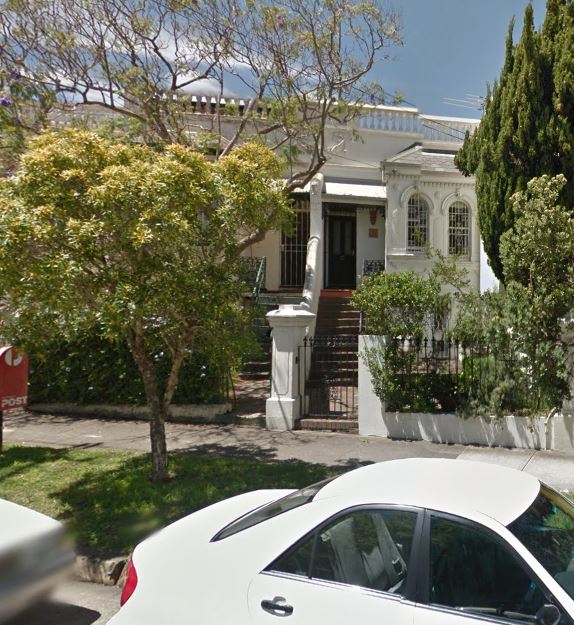
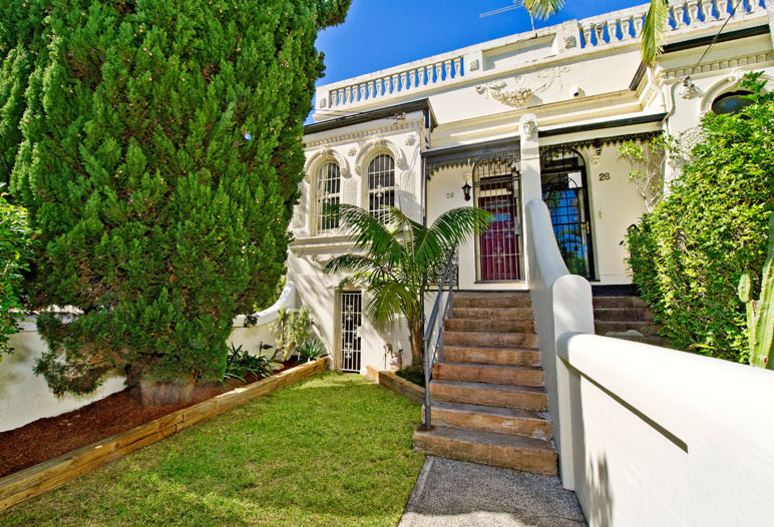
Home of John COADY - 26 Edgeworth Drive, Woollahra, NSW
Home of John COADY – 26 Edgecliff Rd, Woollahra, NSW


Home of John COADY - 26 Edgecliff Rd, Woollahra, NSW
Home of John COADY – 26 Edgecliff Rd, Woollahra, NSW

[divider_dotted]


DAVIS

DAVIS

New South Wales Police Force

Sub-Inspector

Died  ?

Funeral  20 July 1914


LATE SUB-INSPECTOR DAVIS.

The Sydney Morning Herald  Tuesday  21 July 1914  page 10 of 16

The funeral of the late Sub-Inspector Davis, of the Redfern division of the police, took place yesterday at Waverley Cemetery. There was a large attendance of members of the police force, among others being Superintendent Mitchell (representing the Inspector-General) and Superintendent Goulder, Inspectors McLean, Brooke, Spence, Childs, Kendall, Kelly, and Brack ;

Sub-Inspectors McCrimmon, Jones, Bannon, Stephens, Spence, Branston, Gumley, Fullerton, and Baxter; Senior-Sergeants O’Dea, Mankey, Sherwood, Evans, Doig, Allen, King, and Smith;

Sergeants Harrison, Hamilton, Sexton, Walker, and Bennett;

Senior-Constables Ross, Roche, Scott, Curtis, Morrow, Paine, Hickey, Leonard, and Archinall;

Constables Philpott, Anderson, Comans, James, Collins, Gillard, Davy,   Jackson, Gilbert, Cummings, Laycock, Hargrave, Healey. McCormick, Shanahan, Keogh, Moylan, Bowman, King, Walker, Williams, Spencer, Asquith, Jackson, Hollis, Wood,

Detective Moore, Ex-Superintendent Sherwood, ex-Sergeant Meehan, ex-S.C. Trinder, ex S.C. Burke.

Among the civilians present were Messrs. T. P. D. Holden, M.L.C., M. McCabe, A. E. Powell.

At the cemetery gates about 100 members of the police force assembled, and followed the hearse to the grave. After the usual burial service a Masonic service was conducted by Bro. Rees, W.M., of the Lodge Zetland Australia.

http://trove.nla.gov.au/ndp/del/article/15524163?searchTerm=sub%20inspector%20james%20smith&searchLimits=l-australian=y#pstart1278549


James SMITH

James SMITH

New South Wales Police Force

Sub Inspector

Joined the NSW Police Force in 15 January 1868 – Mounted Police

Previously stationed at:  Maitland ( 2 years ), Singleton,

Wollombi as Senior Constable,

Muswellbrook as Sergeant

April 1883 – promoted to Senior-Sergeant

1891 – promoted to Sub-Inspector

27 years Service

Illness – Suicide – Firearm

Born  1846 ??

Died  Thursday  31 December 1896 around 8am

50 old

Funeral  2 January 1897

leaves behind a wife & 7 children


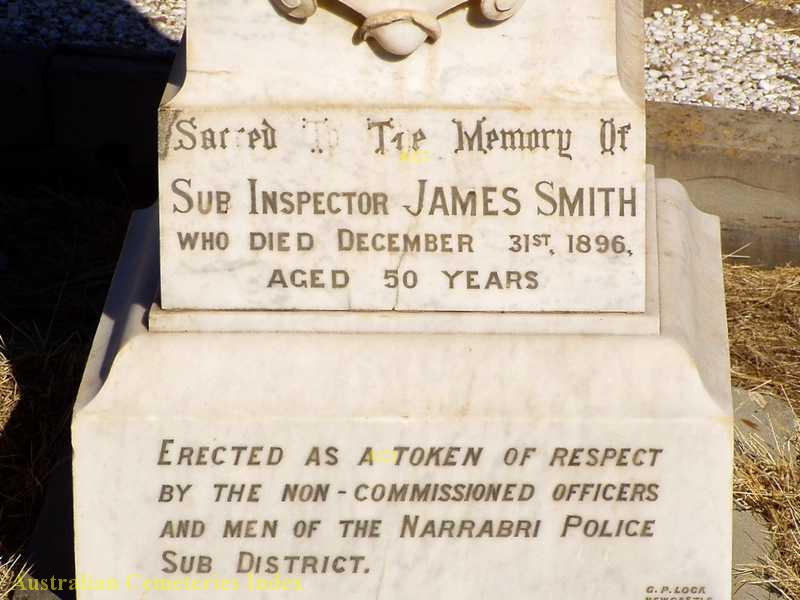
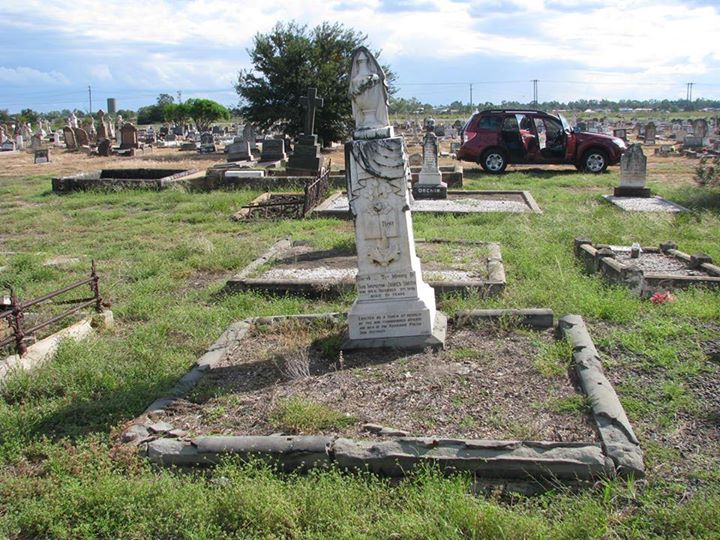
Grave of Sub-Inspector James SMITH

Grave of Sub-Inspector James SMITH

Narrabri Cemetery
[google-map-v3 shortcodeid=”6b1aaeab” width=”350″ height=”350″ zoom=”12″ maptype=”roadmap” mapalign=”center” directionhint=”false” language=”default” poweredby=”false” maptypecontrol=”true” pancontrol=”true” zoomcontrol=”true” scalecontrol=”true” streetviewcontrol=”true” scrollwheelcontrol=”false” draggable=”true” tiltfourtyfive=”false” enablegeolocationmarker=”true” enablemarkerclustering=”false” addmarkermashup=”false” addmarkermashupbubble=”false” addmarkerlist=”-30.316353,149.792236{}catholicgrave.png” bubbleautopan=”true” distanceunits=”km” showbike=”false” showtraffic=”false” showpanoramio=”false”]


James Smith was a brother of Mr. G. Smith of Oak Farm, Rosemonte, near Goulburn, NSW, and his father, who died a few years ago, was a well-known gardener of that place.

Father’s name:  George

Mother’s name:  Isabella


The Sydney Morning Herald ( NSW )  Friday  1 January 1897  page 5 of 8

SUICIDE BY A SUB-INSPECTOR OF POLICE.

NARRABRI, Thursday.

This morning Sub-inspector James Smith, the officer in charge of the Narrabri police district, was found dead. A report of a shot was heard and deceased’s son, who rushed into the room, found his father lying on the bed with a revolver on his breast. From appearances that weapon had exploded in the   mouth and the bullet had passed into the brain. During the past fortnight Mr. Smith had been indisposed, and it is stated that when unwell he always became very despondent and developed symptoms of melancholia. Only one chamber of the revolver was discharged, and death was apparently instantaneous. Deceased was 50 years of age. He joined the police force 27 years ago, and, beginning as a constable, worked his way up to his present rank. During the past six years he has had charge of the Narrabri police district. Deceased leaves a widow and seven children. An inquest was opened at the courthouse this morning and adjourned till Monday.

Later particulars of the death of Sub-inspector Smith show that the deceased left three letters, one addressed to his wife, the second to Mr Kenyon, P. M., ( Police Magistrate ) and the third to Mr A. R. Stafford, of Barry and Stafford. In one letter he stated that he felt his mind was becoming unhinged and preferred death to living the remainder of his life in an asylum. The deceased had arranged all his affairs, leaving everything provided for. The Masons will accord the deceased a Masonic funeral, which takes place tomorrow morning. The family are left provided for.

http://trove.nla.gov.au/ndp/del/article/14082580#pstart1362053


[divider_dotted]


Singleton Argus ( NSW )  Saturday  2 January 1897  page 2 of 6

The Late Sub-Inspector Smith.

Many old residents of Singleton will regret to hear of the death of Police Sub-Inspector James Smith at Narrabri, an account of whose tragic end is published in another column. Sub-Inspector Smith joined the police force about 1868, and after doing duty at Maitland for about two years he was transferred to Singleton, where he remained for some time under Inspector Thorpe, and afterwards he was stationed at Wollombi with the rank of senior-constable.

http://trove.nla.gov.au/ndp/del/article/83250054?searchTerm=sub%20inspector%20james%20smith&searchLimits=l-australian=y#pstart8378896


[divider_dotted]


Singleton Argus ( NSW )  Saturday  2 January 1897  page 6 of 6

SUICIDE OF A SUB-INSPECTOR.

Sub-Inspector James Smith who has had charge of the division at Narrabri aged 50 years, committed suicide on Thursday. He got up as usual, and went round the barracks, and at 8 o’clock went back to his bedroom. A few minutes later Senior-Sergeant Thomas Clarke, hearing a report of firearms rushed into the bedroom, and found the sub-inspector stretched on his bed with a bullet wound in his head. Death was instantaneous. The revolver was quite hot when the sergeant took it from the dead man’s hand. The only cause that ran be assigned for the terrible deed is that the sub-inspector had been ailing for the last three weeks, and his wife has also been ill for some time, and is at the present moment in a very bad condition.

Great surprise was expressed locally at the news, and also regret. Sub-Inspector Smith was well liked both in his official and private capacity. He was a member of the Masonic order, and also the M.U. ( Manchester Unity ) Order of Oddfellows. The deceased inspector joined the mounted police on January 15, 1868. On leaving the depot in Sydney he was sent to the north-western district, being first stationed at Maitland. From that place he was transferred to Muswellbrook as sergeant, and was promoted to senior-sergeant in April, 1883. In 1891 Mr Smith attained the rank he held at the time of his death, and was appointed to the Narrabri sub-district.

http://trove.nla.gov.au/ndp/del/article/83250061?searchTerm=sub%20inspector%20james%20smith&searchLimits=l-australian=y#pstart8378900


[divider_dotted]


The Maitland Weekly Mercury ( NSW )  Saturday  2 January 1897  page 3 of 16

Suicide of Sub-Inspector Smith at Narrabri.

Narrabri, Thursday

Great excitement prevailed in town this morning when a report became current that police Sub-Inspector James Smith had committed suicide at his residence between 8 and 9 o’clock by shooting himself through the head with a revolver, death being instantaneous. The report was immediately confirmed, and the particulars furnished go to show that the Sub-Inspector had been suffering from some slight illness for the past week, and had been subject to fits of melancholia for some time previous, but the commission of such a rash act was never dreamed of by his friends. The greatest sympathy is felt for his wife and family. An inquiry will be held during the day. Alater telegram states that Mr. Smith got up as usual, and went round the barracks. At 8 0’clock he went back to his bedroom, and a few minutes later Senior-Sergeant Clarke, hearing the report of firearms, rushed into the bedroom and found the Sub-Inspector stretched on his bed with a bullet wound in the head. Death had been instantaneous, and tbe revolver was quite hot when the Sergeant took it from the dead man’s hand. The only cause assigned for the terrible deed is that the Sub- Inspector has been ailing for the last three weeks, and his wife had also been ill for some, and at the present moment is in a very bad condition. Great surprise is expressed in town at the news, also   regret. Mr. Smith was well-liked both in his official and private capacity. He was a member of the Masonic Order, and also of the Manchester Unity Order of Oddfellows. The late Mr. James Smith, or ” Long Smith ” as he was generally called by other members of the force to distinguish him from another officer of the same name, was well-known in the Maitland district, where the news of his death will create some excitement. Mr. Smith joined the police force about the year 1868, so that he had served 28 years and would in the natural course of events have retired in a couple of years’ time. In the 70’s he was stationed at Singleton under Inspector Thorpe, who has since retired, and later with the rank of senior-constable he was in charge at Wollombi. He was also stationed at several other places, and for a number of years prior to 1896 be was a senior-sergeant at Muswellbrook, in which year he was superseded by Senior-sergeant Cowan, now of East Maitland. Mr. Smith then went to Narrabri, with the rank of sub-inspector in charge of the sub-district of Narrabri, which is a most important one, including as it does Moree. During the miners’ strike at Greta, Mr. Smith was one of the officers engaged there. He was 50 years of age, and, as stated in our telegram, leaves a wife and family. Mr. Smith was a fine soldierly man in appearance, and was a noted strict disciplinarian.

http://trove.nla.gov.au/ndp/del/article/126319284?searchTerm=sub%20inspector%20james%20smith&searchLimits=l-australian=y#pstart13710107


[divider_dotted]


Paul Taras STEFANIW

Paul Taras STEFANIW

Victoria Police Force

Leading Senior Constable

Suicide – firearm

Born  7 November 1964

Died  30 November 2012

49 old


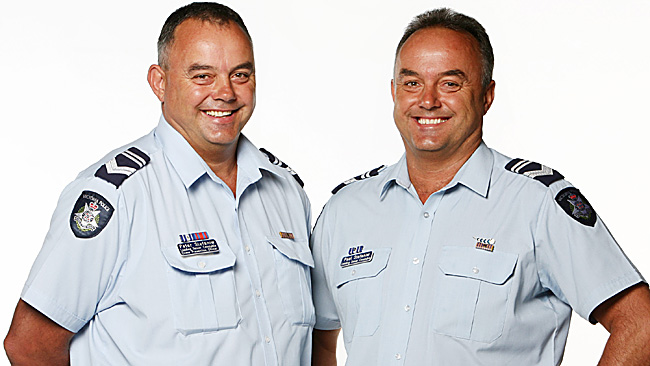
Paul STEFANIW
Paul STEFANIW

http://resources2.news.com.au/images/2012/03/09/1226295/494722-peter-and-paul-stefaniw.jpg

Peter and Paul (right) Stefaniw. Since our program, sadly one of the twins, Paul Stefaniw, the Victorian policeman has died. He was 49. His twin brother, Peter, also a policeman, says that between them, the twins have given nearly 60 years of police service. As well as paying tribute to his brother, Peter has asked us to mention Beyond Blue which helps people struggling with depression. For memories of Paul click through to this page. For other support services: Lifeline http://www.lifeline.org.au/ 131 114 Mensline http://www.mensline.org.au/ 1300 789 978 Kids Helpline http://www.kidshelp.com.au/ 1800 551 800 http://www.sbs.com.au/insight/episode/webextra/606/Two-of-a-Kind


Paul had been going through a marriage breakdown leading up to his death and was on sick leave.

He spent time, leading up to his death, visiting various friends and family ( which was his way of saying his goodbye’s ) but no one was aware of the mental anguish that Paul was going through.

He spent time putting his ‘affairs’ into order before, eventually, going to a beach where he left three notes, to various people, and then shot himself.

May you forever Rest In Peace mate.


Cal

[divider_dotted]

STEFANIW. – The Funeral Service for the late Leading Senior Constable Paul Taras Stefaniw will be held at the Victoria Police Academy, Viewmount Rd, Glen Waverley on MONDAY (Dec. 10, 2012) at 10.00 a. m. followed by a Burial at Fawkner Memorial Park, 1187 Sydney Rd, Fawkner at 1.30 p. m. Vigil Prayers will be recited at the Ukrainian Orthodox Cathedral, 91 Buckley St, Essendon on SUNDAY (Dec. 9) at 6.00 p. m.
Funerals
Published in Herald Sun on 05/12/2012

– See more at: http://tributes.heraldsun.com.au/archivenotice/3023621/view?random=1406736702268#sthash.JN8EWTYC.dpuf


STEFANIW. – The Funeral Service for the late Leading Senior Constable Paul Taras Stefaniw will be held at the Victoria Police Academy, Viewmount Rd, Glen Waverley on MONDAY (Dec. 10, 2012) at 10.00 a. m. followed by a Burial at Fawkner Memorial Park, 1187 Sydney Rd, Fawkner at 1.30 p. m. Vigil Prayers will be recited at the Ukrainian Orthodox Cathedral, 91 Buckley St, Essendon on SUNDAY (Dec. 9) at 6.00 p. m.
Funerals
Published in Herald Sun on 05/12/2012


[divider]


Wednesday, 16 April 2014

My deepest condolences to the Stefaniw family… I met Peter and Paul at interstate Police basketball championships back in the 80’s… Both very lovely blokes… Very sad to hear this news… Felicity Harley
Wednesday, 16 April 2014

Deepest sympathy for your sad loss. I went to kindergarten and primary school with Paul & Peter. His birthday was the first boys party Cheryl and I had been invited to. My thoughts are with Peter and his family. Carol

Tuesday, 15 April 2014

I am very sorry to here this on SBS Twins. Condolances to all who new Paul

Wednesday, 25 December 2013

I’m allways sad my dealest friend Paul isn’t here!Marietta

Wednesday, 30 October 2013

Miss you Paul, you were a wonderful person, I think of you often and will always remember your greeting to me in the office “Woof”, and our discussions about your dogs and cats.

Tuesday, 22 October 2013

Stef, still thinking of you mate and you are truly missed. I still cant believe you have left us!! A true friend and a top fella. Dont forget “its ok”.

Wednesday, 29 May 2013

Not a day goes past that I don’t think about you, missing you always x

Monday, 7 January 2013

Paul, Since hearing the news of your passing, it has been very difficult, both with a heavy heart and with many tears shed, to write what I feel.
You have given me many fond memories in my life, from our many wonderful times during our years in Plast, as well as the times you visited Adelaide to celebrate birthdays or just for a visit. I will cherish these memories forever.
Today, our Christmas Day, I wanted you to know that you are sadly missed and that my thoughts and prayers and heart are with you, Peter, Roxy and your family.
Vichnaya Pamyat

Monday, 24 December 2012

Thinking of the Stefaniw family during this difficult time especially on the eve of christmas. Its funny I never met Paul but felt like I knew him through hearing lovely positive stories about him from my mum and our friend who attended the same Church and through an ex partner who is also VicPol. I felt deeply saddened as a human being,a fellow ukrainian and an ex “plastunka” on hearing of his passing. Clearly a beautiful soul as evidenced by the tributes on this site and all that knew him. Gone too soon though Paul will live on in many hearts. Rest in Peace Paul. Love, Solace and Strength to your twin brother Peter, your beautiful children and all the Stefaniw family.

Friday, 21 December 2012

Le vent souffle
l’amour s’ecoule
le temps s’arréte
et avec toi, je reste

Wednesday, 16 April 2014

My deepest condolences to the Stefaniw family… I met Peter and Paul at interstate Police basketball championships back in the 80’s… Both very lovely blokes… Very sad to hear this news… Felicity Harley
Wednesday, 16 April 2014

Deepest sympathy for your sad loss.I went to kindergarten and primary school with Paul & Peter.His birthday was the first boys party Cheryl and I had been invited to.My thoughts are with Peter and his family. Carol

Tuesday, 15 April 2014

I am very sorry to here this on SBS Twins. Condolances to all who new Paul

Wednesday, 25 December 2013

I’m allways sad my dealest friend Paul isn’t here!Marietta

Wednesday, 30 October 2013

Miss you Paul, you were a wonderful person, I think of you often and will always remember your greeting to me in the office “Woof”, and our discussions about your dogs and cats.

Tuesday, 22 October 2013

Stef, still thinking of you mate and you are truly missed. I still cant believe you have left us!! A true friend and a top fella. Dont forget “its ok”.

Wednesday, 29 May 2013

Not a day goes past that I don’t think about you, missing you always x

Monday, 7 January 2013

Paul, Since hearing the news of your passing, it has been very difficult, both with a heavy heart and with many tears shed, to write what I feel.
You have given me many fond memories in my life, from our many wonderful times during our years in Plast, as well as the times you visited Adelaide to celebrate birthdays or just for a visit. I will cherish these memories forever.
Today, our Christmas Day, I wanted you to know that you are sadly missed and that my thoughts and prayers and heart are with you, Peter, Roxy and your family.
Vichnaya Pamyat

Monday, 24 December 2012

Thinking of the Stefaniw family during this difficult time especially on the eve of christmas. Its funny I never met Paul but felt like I knew him through hearing lovely positive stories about him from my mum and our friend who attended the same Church and through an ex partner who is also VicPol. I felt deeply saddened as a human being,a fellow ukrainian and an ex “plastunka” on hearing of his passing. Clearly a beautiful soul as evidenced by the tributes on this site and all that knew him. Gone too soon though Paul will live on in many hearts. Rest in Peace Paul. Love, Solace and Strength to your twin brother Peter, your beautiful children and all the Stefaniw family.

Friday, 21 December 2012

Le vent souffle
l’amour s’ecoule
le temps s’arréte
et avec toi, je reste

– See more at: http://www.legacy.com/guestbooks/heraldsun-au/paul-stefaniw-condolences/161446933#sthash.uw0TN08I.dpuf


John McNALLY

John McNALLY

( the First Victorian Policeman killed ‘ on duty ” )

Victoria Police Force

Sergeant

Murdered – shot

Born  1826

Died  16 October 1856

30 old


McNally, John (1826–1856)

Intelligence was received on Saturday morning last, at the Detective Office, that on the preceding Thursday, the 16th inst., two of the mounted police force, Sergeant [John] McNally and Constable Moore, proceeded at seven o’clock on the night in question to a tent believed to be occupied by the notorious William Turner, alias Gipsy Smith, who stands charged with various acts of highway robbery, and with dismounting a constable from his horse near Castlemaine several months ago, and with escaping from custody.

On approaching the tent, the officers recognised Turner, who attempted to make his escape. The officers immediately closed with him, and, during the struggle, shots were fired from the tent, one of which entered the breast of Sergeant McNally, who fell dead on the spot. Several other shots were fired, and wounded the constable (Moore) severely in the face and other parts of the body.

As soon as the intelligence reached the Camp at Mount Ararat, the police went in search of the bushrangers, who, however, succeeded in eluding their vigilance. A woman was arrested in the tent. An active search is in progress, and it is thought the criminals cannot long escape detection. The gang, supposed to be under the leadership of Turner, is, without doubt, the same as that which committed the late daring acts of bushranging near Moliagul.

http://oa.anu.edu.au/obituary/mcnally-john-15338

[divider_dotted]


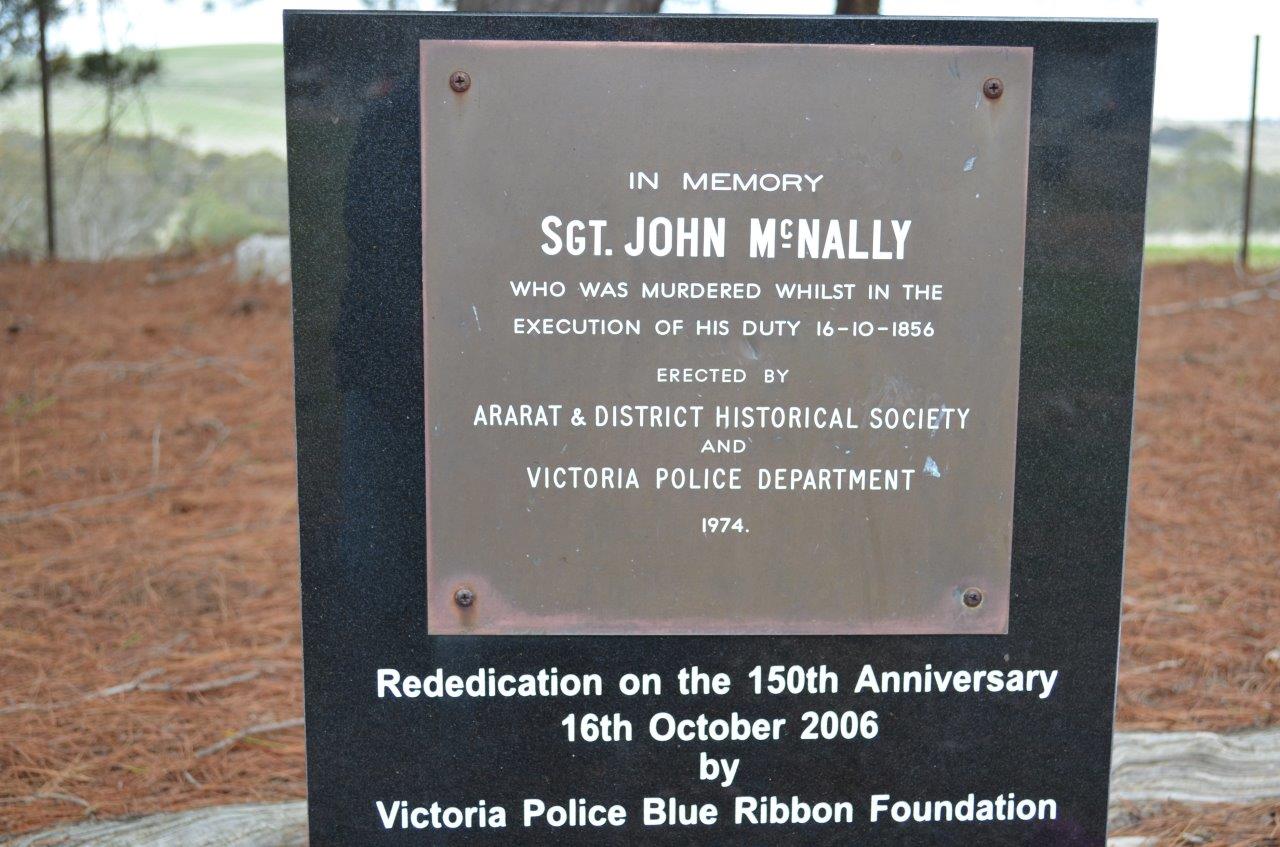
John McNally - VicPol - 1st VicPol to be murdered on duty - plaque 2Sgt John McNally

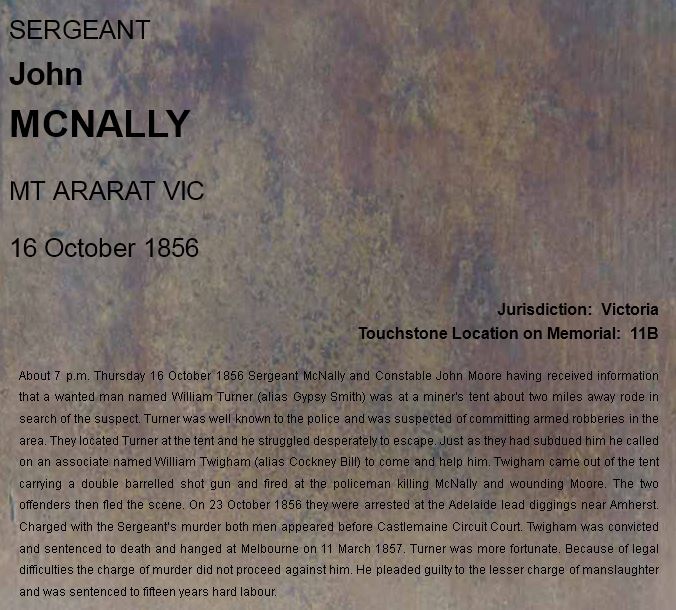
Sergeant John McNally became the first member of the Victoria Police to be feloniously slain in the line of duty when he was murdered at the Cathcart diggings on 16th October, 1856.

http://hotel-lima.com.au/wp-content/themes/clean-start-master/thumbnaillarge/VictoriaMap.png

Whilst trying to arrest a suspect (Gypsy Smith) over a string of armed robberies, an associate of the suspect intervened and fired his shotgun, killing Sergeant McNally and seriously injuring his partner, Constable John Moore. The two offenders then made their escape. Seven days later, the pair were arrested near Amherst and charged with the murder of McNally. One of the offenders was hanged in 1857 and the other received a sentence of fifteen years hard labour.

The offender, William Smith (Gypsy Smith) was transported to Botany Bay at the age of 15 for stealing a handkerchief. He went on to become a hardened bush ranger who, between the years of 1852 and 1856, became the notorious ‘Gypsy Smith’, a subject of fascination for the newspapers and police as he and his gang of desperate convicts created fear among the gold diggings of Victoria.

Sergeant McNally is buried in Cathcart Cemetery on a hill known as McNally’ Hill. The Cemetery is in a natural bushland setting and is very well maintained.

The emergency department at Ararat Hospital is known as the John McNally Emergency Department.

Cathcart is approx. 4.6 km from Ararat and is approx. 345 m above sea level. There is no town at Cathcart, it is only an area. It was a large attraction for Gold Miners in the early 1800′s.  People from England, Ireland, Scotland, America, Switzerland, Germany, France, Russia and China descended on Cathcart to look for gold. Also many other from Australia took their families there as well.

There were many stories about horse thieves and murderers in the old days and these were dealt with tough justice by a self-established vigilante committee.
After the first rush the lead was lost and most miners moved on to other diggings except one of the original party J. P. Rodd who was in partnership with an American Negro Richard Davis (alias Black Harry). They traced the gold deeper and hit another lead calling it Blackman Lead. This attracted 3,000 diggers to the area, other leads were discovered each causing a new rush of miners.
The general area became known as Cathcart and with time the name was given to the Township where stores, school, hall and hotels had sprung up. There were many tents and lean-to shanties.
Today there is little evidence of the hustle and bustle of the frenzied gold diggers and their lively community of dreamers. Except maybe the Cemetery, which is on the Ararat- Pomonal Rd.


[divider_dotted]

http://www.npm.org.au/honour-roll/mcnally

Sergeant John McNally:  The system of registered number for police hadn’t been introduced when Sergeant John McNally was murdered on the Mt Ararat goldfield in 1856.  He had joined the Victoria Police Force the previous year after service with the Royal Irish Constabulary.

On October 16, 1856 Sergeant McNally and Constable John Moore where told that William Turner, a wanted robber was staying in a tent in a camp about two miles away.  Turner tired to flee but the police wrestled him to the ground.  Turner called for help from his associate, William Twigham.  Also known as Cockney Bill, Twigham came out of the tent armed with a double-barrelled shotgun.  He fired, killing Sergeant McNally and wounding Constable Moore.

Turner and Twigham escaped and a reward of  £400 was offered for their arrest.  They were arrested a week later at the Adelaide diggings after being recognised by a shopkeeper.

After a trial held at Castlemaine, Twigham was convicted of murder and sentenced to death.  he was hanged at the Melbourne Gaol on March 11, 1857.

Turner pleaded guilty to the lesser charge of manslaughter and was sentenced to 15 years hard labour on the roads and other public works.


[divider_dotted]

Life of Sergeant John McNally’s murderer subject of new book

ARARAT – A book chronicling the life and times of the man responsible for the murder of police sergeant John McNally in 1856 is nearing completion.

The text, which is yet to be titled, tells the story of William Sydenham Smith and how his life of crime led to him crossing paths with Sergeant McNally.

Sergeant McNally was the first member of the Victorian Police force to be slain in the line of duty.

The research team of Marion McAdie, Greg Vivian, and Ian Batty along with author Laurie Moore have spent over 12 months on the book.

Mrs McAdie said she along with the genealogical society wanted to find the facts surrounding the murder of Sergeant McNally.

“Unfortunately, after much research we still know little about McNally or his partner Constable John Moore, who was wounded in the same incident,” she said.

The book uses Smith’s history to provide a broader context to the death of McNally.

“Like the public perception of most Australian bush rangers, Smith comes across in most accounts as a one-dimensional person,” Mrs McAdie said.

“His origins from England as a transported convict at the age of fifteen, his brutal treatment for minor misdemeanours at the hands of a ruthless system, his heroism in saving lives during his imprisonment, and his eventual participation as a free man in colonial New South Wales and Victoria, have never been mentioned before.

“As in many cases of murder by bush rangers, the victim hardly rates a mention and we hope that this book may help recognise the heroism and positive contributions made by the early police on the goldfields.”

Mrs McAdie said she believes it is an important story because it tells of how a young William Smith was transported to Botany Bay at the age of 15 for stealing a handkerchief.

“It traces his experiences as a convict around Sydney, Norfolk Island and Tasmania before he escaped in a whale boat from Tasmania,” she said.

The book goes on to show how the young boy became a hardened bush ranger who, between the years of 1852 and 1856, became the notorious ‘Gypsey Smith’, a subject of fascination for the newspapers and police as he and his gang of desperate convicts created fear among the gold diggings of Victoria.

The story culminates in the events at Cathcart diggings on October 16, 1856 when the bush rangers were confronted by Sergeant McNally and Constable Moore, leaving one dead and the other wounded.

“After the eventual capture of the bush rangers near Maryborough, Smith’s mate was hanged but a strange fate awaited Smith, and this is detailed in the forthcoming book,” Mrs McAdie said.

Although the story revolves around a bush ranger, it is set among the goldfields of 1850s’ Victoria.

It touches on the lives of many ordinary people, the legal system, the squatters, and the impacts of convicts who came in large numbers to look for gold and rob and terrorise the infant community.

“It is a good read and one that is set in Sydney, Norfolk Island, Tasmania, Melbourne, Yackandandah, Moliagul, Maryborough, Amherst, Beaufort, Ararat, Cathcart and Hay in New South Wales,” Mrs McAdie said.

The book’s author, Laurie Moore retired from Sydney to live in Western Victoria thirteen years ago.

Mr Moore’s first book involved nearly ten years of research by Mr Moore and his wife Dianne.

It told the story of the last declared outlaw in Australia, Jimmy Governor, who was the fictional character, Jimmie Blacksmith, in the book written by Thomas Keneally.

Since then he has written ‘Shot for Gold’, a bush ranging story that happened near Smythesdale, a draft for a book on the Clark Gang of Braidwood, and has now put together the history of the killing of the policeman, Sergeant John McNally, and the convict and bush ranging events that led to his death in October 1856 at Cathcart.

Mrs McAdie said despite all the hours of research the team still can’t place an exact location of the burial site of sergeant McNally.

“We would love to hear from people about the exact location,” she said.

“We think the site is located in the north west corner of the now Cathcart cemetery.”

The team hope to have the book finished by the 157th anniversary of the event on October 16 this year.

[divider_dotted]


Sergeant John McNallyPrint Page Print this page

Plaque at gravesite commemorates Police Sergeant John Mc Nally who was murdered whilst on duty in October 1854.

Sergeant John McNally became the first member of Victoria Police to be feloniously slain in the line of duty when he was murdered at the Mt Ararat goldfields on 16th October, 1856. Whilst trying to arrest a suspect over a string of armed robberies an associate of the suspect intervened and fired his shotgun, killing Sergeant McNally and seriously injuring his partner, Constable John Moore. The two offenders then made their escape. Seven days later, the pair were arrested near Amherst and charged with the murder of McNally. One of the offenders was hanged in 1857 and the other received a sentence of fifteen years hard labour.

Location

Address: Phillips Flat Road, Cathcart Cemetery, Cathcart, 3377
State: VIC
Area: AUS
GPS Coordinates: Lat: -37.319616
Long: 142.888729
Note: GPS Coordinates are approximate.

View Google Map

Details

Monument Type: Plaque
Monument Theme: People
Sub-Theme: Crime
Actual Event STart Date: 16-October-1854
Actual Event End Date: 16-October-1854

Dedication

Approx. Monument Dedication Date: 1974
Front Inscription
In memory Sgt. John McNally who was murdered whilst in the execution of his duty 16-10-1854. Erected by Victoria Police Department 1974.

Source: MA,RHSV

Monument details supplied by Monument Australia – www.monumentaustralia.org.au
[divider_dotted]

The John McNally Medical Imaging Unit at Ararat Hospital

With substantial donations from the Victoria Police Blue Ribbon Foundation the Ararat Hospital was able to purchase an image intensifier for its surgical department and new X-Ray equipment for the Medical Imaging Unit. This was a joint project between the Blue Ribbon Foundation and the local community through the Ararat Branch and was dedicated as a Police Memorial in memory of Sergeant John McNally who was murdered at the Mt Ararat Goldfields in 1856.

http://www.remember.org.au/Memorials/Hospitals/The-John-McNally-Medical-Imaging-Unit-at-Ararat-Ho

[divider_dotted]


The John McNally Emergency Department at Ararat Hospital


In 2003 works commenced on a complete redevelopment of the Ararat Hospital and the Victoria Police Blue Ribbon Foundation was able to contribute to the re-building of the emergency department. This was completed as a joint project in partnership with the local community through the Ararat Barnch of the Blue Ribbon Foundation. Today the Ararat Hospital Emergency Department can provide state of the art emergency & trauma care to the people of Ararat and surrounding districts. This project, commissioned as a Police Memorial in May 2004, was the first stage in a continuing relationship with the community of Ararat and their public hospital.

Sergeant John McNally became the first member of Victoria Police to be feloniously slain in the line of duty when he was murdered at the Mt Ararat goldfields on 16th October, 1856. Whilst trying to arrest a suspect over a string of armed robberies an associate of the suspect intervened and fired his shotgun, killing Sergeant McNally and seriously injuring his partner, Constable John Moore. Sergeant McNally’s sacrifice is acknowledged through this an other projects installed at the Ararat Hospital.

http://www.remember.org.au/Memorials/Hospitals/The-John-McNally-Emergency-Department-at-Ararat-Ho

[divider_dotted]


E. F. T. CRAMPTON

E. F. T. CRAMPTON

Queensland Police Force

Constable

Stationed at Yeulba ( Yuleba )

Suicide – firearm

Died  4 September 1907


Constable’s Death.

The Chief Inspector of Police at Brisbane has received a telegram intimating that on the 4th instant Constable E. F. T. Crampton who was stationed at Yeulba, entered his ofiice and shot himself with his revolver. The district inspector has gone to Yeulba to investigate. Constable Crampton who was a married man with a wife and family had been transferred to Yeulba a few days ago from the Charleville district where he had been doing relieving duty.

The Brisbane Courier ( Qld )  Saturday  7 September 1907  page 4 of 16

http://trove.nla.gov.au/ndp/del/article/19407130?searchTerm=constable%20crampton&searchLimits=l-category=Article|||l-australian=y#pstart1557900


[divider_dotted]

Magisterial Inquiry.

As inquiry was held before Mr. Wm. Harris, P.M., at Yeulba on Friday into the death of Constable Crampton, who committed suicide by shooting himself with a revolver on Thursday morning last.

The evidence of George Howe, a contractor at Yeulba, was to the effect that he had been occupied about a week repairing the police buildings, and that deceased arrived there on 27th August. Deceased appeared low spirited, and complained of having no sleep. In the middle of a conversation he would get up and walk away. On the 3rd, deceased picked up a cartridge, which he put in his mouth, exclaiming “Bang.” On the 4th, a man in Howe’s employ told Howe the constable was walking about with a revolver in his hand. Howe went to the constable and asked him what he wanted to be playing with the revolver for, and Crampton remarked, ” It is very tempting being under my nose.” Later he put the revolver in a pigeon hole. That was the last time he saw Crampton alive. The following morning Howe and Darr found him dead on the floor of his room.

Masy Crampton, widow of deceased, deposed that her husband had been very worried over business matters. He had left the police and gone into business at Oakey, but bad lost money and rejoined the force. Later he was transferred to Charleville and Yeulba. In his letters to her he complained of the idea of having to take his family to Charlevill, also of having no sleep. He was a temperate man.

Henry Darr, H. McLoughlin, J.P., Constable Joyce, Dr. Pratt (Government medical officer), and several others gave evidence.

Western Star & Roma Advertiser ( Toowoomba, Qld ) 

Wednesday  11 September 1907  page 3 of 4

http://trove.nla.gov.au/ndp/del/article/97417885?searchTerm=constable%20crampton&searchLimits=l-category=Article|||l-australian=y#pstart10174906


[divider_dotted]

Yeulba / Yuleba Police Station no longer exists but was possibly in Stephenson St, Yuleba, Qld, 4427.

It was located in the Maranoa & Warrego Division, consisted of 2 cells, with the walls made from wood, the roof of iron and was built in 1881.

http://boggoroad.blogspot.com.au/2014/06/know-your-colonial-gaol-history-15.html


[divider]


F. C. Derry

F. C. Derry

Victoria Police

Sergeant

Suicide – Firearm

Died  7 October 1893

38 old


The Argus ( Melbourne, Vic. )  Monday  9 October 1893  page 6 of 8

SUICIDE AT THE RUSSELL STREET BARRACKS.

SERGEANT DERRY SHOOTS HIMSELF.

On Saturday morning Sergeant F. C. Derry, who acted as clerk to Superintendent Sadlier, committed suicide by shooting himself at the Russell street barracks. No reason can be assigned for his act. He was happy in his domestic relations was well advanced in grade in the force, held a comfortable position as clerk to the inspecting superintendent, and was almost, if not quite, a total abstainer from intoxicants. In these circumstances and the additional favourable features of good health and a happy temperament, the members of the force have been compelled to the opinion that his act was the result of some sudden impulse which cannot be explained. Derry was 38 years of age, and a married man with a wife and two  children. He entered the Permanent Artillery in 1874, and a year later joined the police force. In May, 1887, he was promoted to the rank of senior constable, and in February, 1892, to a  second class sergeant. His clerical ability which in 1884 carried him with honours through the officers examination, marked him as specially suitable for a position on the office staff, and when Sergeant Crampton was promoted to the rank of sub- inspector and left the office of the inspecting superintendent, Derry was appointed to take his place as chief clerk. In his new position Derry worked untiringly and with much success, and having a talent for organisation he devoted himself to the task of making a success of the police brass band, of the committee of which he was chairman. His efforts and the efforts of those associated with him were an unqualified success as the record of two years, during which £5OO or so has been raised by the band for charities testifies. On Saturday morning Derry seemed in his usual health and spirits, but soon after he had entered his office Constable McGuinness heard a pistol shot, and upon running into Derry’s room he found him lying on the floor with a smoking pistol in his hand. Sergeant Byrne was called, and though he saw that the pistol bullet having entered the sergeants mouth, was still embedded in his brain, and had undoubtedly caused instant death, he ordered the body to be at once removed to the Melbourne Hospital. This was done, and Dr Desailly examined the patient but his examination confirmed the opinion of Sergent Byrne. The bullet had evidently been fired while the pistol was held in the mouth, and it had caused immediate death. Mr Sadleir examined the sergeants papers and found them correct in every particular, and he then communicated the fact of his death to the chief commissioner. An inquest will be held to day at noon.

http://trove.nla.gov.au/ndp/del/article/8699349?searchTerm=sergeant%20crampton&searchLimits=l-australian=y|||l-category=Article|||sortby#pstart313778