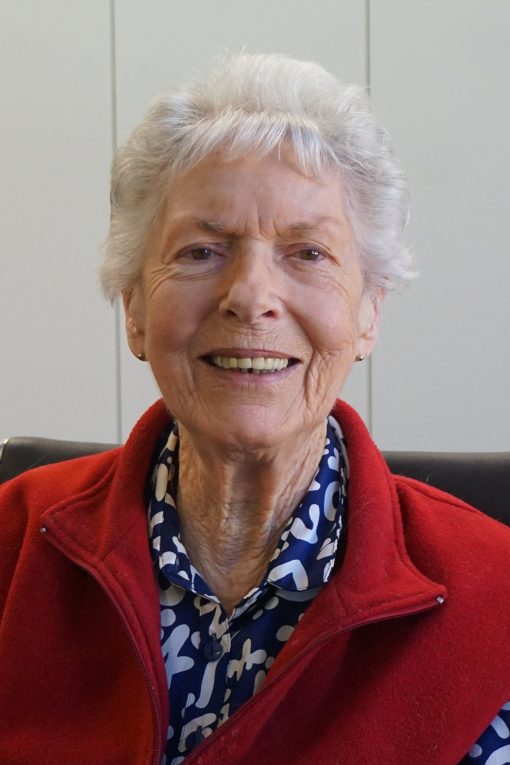
Gwen was 1 of 3 NSW Police Women who obtained their Diploma in Criminology from Sydney University.
Gwen was accepted into the Detectives Training Course – later to become the 1st NSW Police Woman.
Gwen is reputed to have been a competitive Fencer ( Sword ) in her youth.
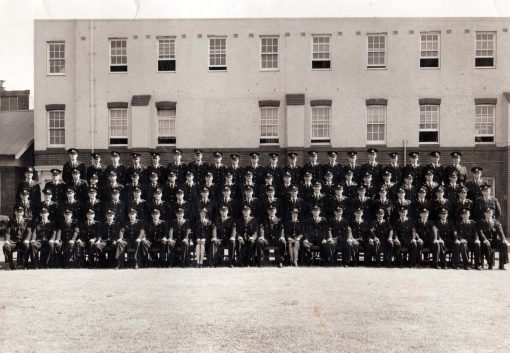
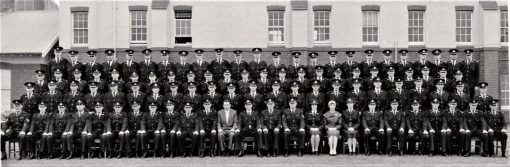
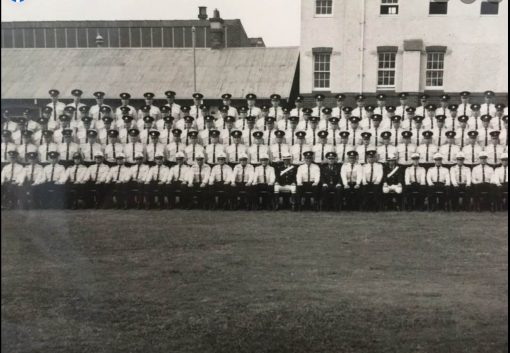
Class 082 where Sworn In on the 4 April 1960. They walked into Redfern Police Academy on Monday 29 February 1960 to start their Training. The infamous Sgt. Ben Hall can be seen in the front row. The first ever (N.S.W.P) female detective (Gwen Martin P/W 0041) was in this class. The other female in this Class was Carol TUBNOR nee Carol GARRAD – P/W 0040
Police Legacy – 16 October 2019
Yesterday we played host to a meeting of the Retired Police Association, and had the pleasure of being introduced to Inspector Gwen Martin (retd), a trailblazing policewoman who joined the NSW Police Force in 1960 – one of three women in a class of ninety.
She’s been retired for nearly thirty years now, but has many fond and colourful memories of her time in the Force (some of which we couldn’t possibly repeat in a public forum ????????)
Gwen worked in many different capacities – everything from traffic control to the drug squad – before undertaking the Detectives’ Training Course in 1971, finishing 4th in the class.
From there she moved to Parramatta, working her way up through the ranks before becoming the first female member of the Police Association to be elected to the Executive, and eventually attaining the rank of Inspector at the Police Internal Affairs Branch, remaining there until her retirement in 1990.
Gwen, we salute you, and the example you have given for so many young women joining the NSW Police Force!
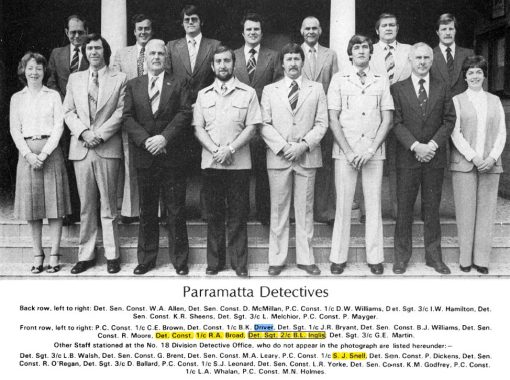
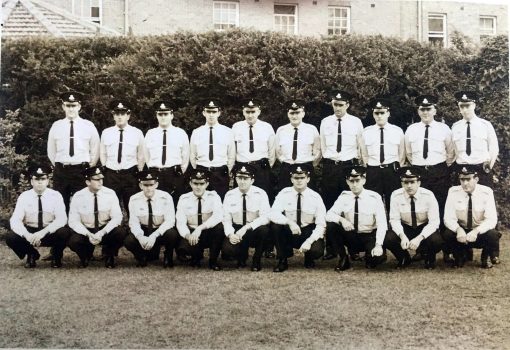
PARRAMATTA DETECTIVES
Back Row ( L – R )
W.A. ALLEN # 14367, D. McMILLAN, D.W. WILLIAMS # 14959, I.W. HAMILTON # 10159, K.R. SHEENS # 11044, L. MELCHIOR # 9268, P. MAYGER # 17359
SYDNEY, Friday. — Sergeant Dell Fricker and Senior Constable Gwen Martin graduated today with 26 males after a three month course to become Sydney’s first women Detectives.
Nothing further, than what is recorded above, is known about this person at the time of publication and further information and photos would be appreciated.
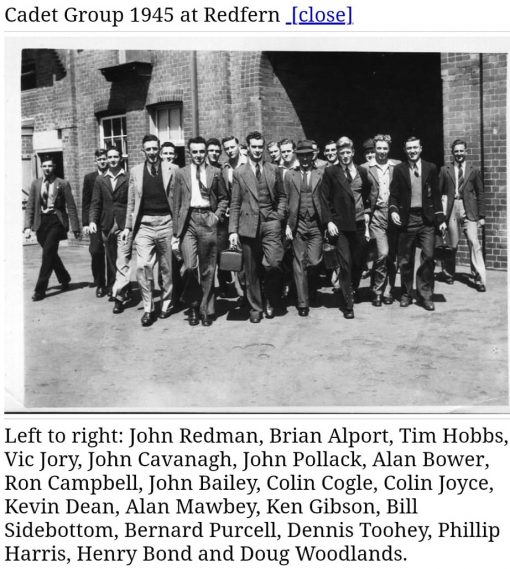
NSW Police Cadets arriving at the Redfern Police Academy via the Stable entrance in 1945
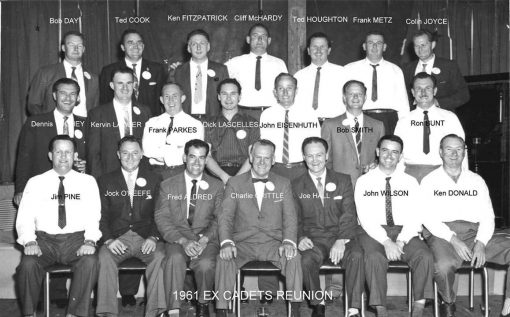
NSW Police Cadet reunion – 1961
* Story behind any Nickname:
On the 13 May, 1983, a meeting was held to propose the establishment of a police museum in police premises in Phillip Street, Sydney. The museum was to be a joint project between the Police Department and the Justice Department. While the emphasis
of the museum at this stage was on the police, Mr. Watkins of the Justice Department requested that the museum be referred to as the Police Justice Historical Museum. The committee resolved to write to the Treasury and the Premier’s Department requesting that a representative from Treasury be appointed to the committee and Mr. P. Bickerstaff was appointed as Treasury’s representative on the committee. The committee held another meeting on the 17 June, 1983. The committee members now consisted of, Inspector G.B. Stone, Police Public Relations Branch. L.F. Vineburg, Secretary of the Police Department. P. Bickerstaff, Treasury. R. Hammond, Police Public Relations Branch. L. Haroldson, Department of Attorney General and of Justice. J. Parker-Smith, Police Public Relations Branch. A. Race, Police Properties Branch. I. Sansom, Public Works Department and Mr. Watkins, Department of Attorney General and of Justice.
Mrs. M.E. Smidt, Executive Officer, Police Department, also attended the meeting. I. Sansom, of the Public Works Department had replaced Mr. L. Glendenning. F. Saillard, Chairman of the NSW Police Historical Society, was invited to represent the Society and was appointed to the committee in July, 1983. As the years went by, committee members would change and Deputy Commissioner Barney Ross also eventually served on the committee.
A letter was sent to the Public Service Board on the 28 June, 1983, advising that the police museum committee had been formed. The Attorney General also wrote to the Acting Premier outlining the proposal to establish the Police Justice Historical Museum in the Phillip Street police buildings. The proposal affected the existing police station, the Court complex and the building which accommodated the Health Department’s STD (sexually transmitted diseases) clinic. The premises were used as a Water Police Court in 1856, Water Police Station in 1858 and a Police Court in 1886. It was proposed that the Police Band and the Crime Prevention Unit would occupy the Health Department building when the STD clinic was relocated. The Police Pipe Band and the Police Choir were also considered as suitable occupiers of the complex. But there was a concern that musical rehearsals would disrupt court proceedings. The Police Pipe Band was formed in 1946, on approval by Commissioner of Police William MacKay and the Police Choir was formed in the 1930s.
Bicentennial funding was being sought from the Federal Government to finance the building works and a submission was presented to the Bicentennial Authority. On the 21 st June, 1984, the Premier’s Department wrote to the Attorney General’s Department confirming that the Police Justice Museum was included on the schedule of Bicentennial projects and was seeking confirmation that the project was going to proceed.
In January, 1984, it was estimated that the project would cost over $4 million, which included $917,000 for the court house, $1,300,000 for the police station and $2,666,000 for the STD clinic. The project was expected to take at least 2 years.
In 1984, Chief Superintendent Col Joyce, who was Vice Chairman of the New South Wales Region of the International Police Association (IPA), wrote to the museum committee asking if the IPA could be accommodated in the police museum complex. The IPA was after an office to undertake administrative work, a room for holding IPA meetings, an area to exhibit police memorabilia and access to an area where functions could be held. At the museum committee meeting held on the 5 July, 1984, it was resolved to write to the IPA and advise that the IPA’s request would be considered before finalisation of the plans for the police museum complex. The NSW Police Historical Society also wanted to be accommodated in the building, as did some other organizations that were not really police orientated. The committee also received a proposal from Phillip Ballantine-Jones who was seeking a franchise to run a police museum in the Phillip Street complex as a tourist activity. It was considered that the Ballantine-Jones proposal was not in line with what the Police Department proposed.
Source: Police Heritage story by Phil Patterson ( 2008 )
Government Gazette of the State of New South Wales (Sydney, NSW : 1901 – 2001),
Friday 17 June 1966 (No.60), page 2392
The 27th day of May, 1966
BY virtue of the authority vested in me by the District Courts Act, 1912 – 1955 (as amended) I hereby appoint Sergeant Colin Patrick Joyce as Bailiff of the District Court holden at Bourke for a period of three months during the absence of Mr McKenzie.
The following transfers of police in the North-eastern Division have been notified:- Constables C. P. Joyce,Wauchope to Clarence-street, Sydney; M. P. Byrnes, Clarence-street to Wauchope; A. C. Newport, Tarcutta to West Kempsey; J. A. McDonald, Regent-street to Muswellbrook: G. R. Campbell, Gosford to Tamworth; K. A. Rhodes, Tamworth to Gosford; W. T. Coombes, Newcastle to Phillip-street, Sydney.
At Wauchope Court House on July 3 Mr. James Wallace, District Coroner held an inquiry into the circumstances surrounding the death of Mr. Isaac McLeod, aged 79 years, and returned a finding that deceased met his death on 9th June when he was accidentally drowned at McLennan’s Falls, whilst endeavouring to cross the Hastings River.
Dr. William Begg, Government Medical Officer at Wauchope, said: On 13th June, 1950, I viewed the body of the deceased Isaac McLeod on the river bank at Gannon’s Creek, 11 miles west of Wauchope. The body was that of a man about 70 years of age, was well nourished, and there were no marks of external violence further than could be expected from drifting down the river for a mile and a half. I would say the body had the appearance of being in the water for three or four days and in my opinion I would say, from the external examination, that death was due to drowning.
Henry Reuben McLeod, carrier of Dungay Creek, via Kempsey; stated: I am son of the deceased Isaac McLEOD, and the last time I saw him alive was about three months ago in Sydney and he was then in good health. He was in the habit of travelling about the country in a horse-drawn caravan and when I last heard of him he was at Woolbrook, near Tamworth. I knew he was going to travel through to Kempsey. On 13th June, 1950, I identified my father’s body after it had been recovered from the Hastings River at Gannon’s Creek, about 11 miles west of Wauchope. I identified the caravan and the property with it as my father’s. My father left a will of which I am one of the executors. He did not, as far as I know have any life insurance.
John Francis Royan, farmer, of Gannon’s Creek deposed: On the 9th June, 1950, at about 9.50 a.m. an elderly man driving a horse-drawn caravan called at my home. He remained there for about half an hour. He asked was it safe to cross the river and I had a look at it from the bank above. It seemed quite safe to cross. I asked him if he had a reliable horse, and he told me that wherever his horse could put its feet it could go. He then started off towards the river. That was the last I saw of that man. The following morning I was informed that the horse and van was in the river. I went down noticed the horse and caravan in deep water about 70 yards below the crossing. I noticed the tracks of the caravan leading to the water where the recognised crossing was, and where I directed him to cross. At the time I was speaking to the deceased he appeared to be in good health and spirits. I am familiar with this crossing where the deceased attempted to cross. At the deepest it would be about three feet deep and it is about 50 yards wide. The bottom of the crossing consists of gravel and round, water-washed, slippery stones. I would say that the crossing would be quite safe for a horse that was used to water. I have found that some horses are frightened when they get into water and they would fight back. In my opinion the horse must have become unmanageable and the reins must have come out of his hands, or got caught, which caused the horse to head downstream into the deeper water. I would say that a man would naturally try and get out and go to the horse’s head in a case like that. I saw the body after it had been removed from the water. It was the body of the man who called at my house on 9th June. I was present when the body was moved from the water and knew that it was Isaac McLeod.
Constable Colin Patrick Joyce, of Wauchope Police, stated: On June 13, 1950, I was present at Gannon’s Creek when the body of Isaac McLeod was removed from the waters of the Hastings River. I remained with the body until his son, Henry Reuben McLeod, identified the body as that of Isaac McLeod his father. The doctor and Coroner then arrived and viewed the body. I took possession of the property found on the deceased and brought it to Wauchope Police Station. I could not see any marks of violence on the body.
George Caelli, timber worker, of Gannon’s Creek, said: On 13th June, 1950, I was pulling a boat up the Hastings River about a mile and a half below McLennan’s Falls which is about 11 miles west of Wauchope. I noticed the body of a man caught on the limb of a tree a few feet under the surface of the water. I then went and notified Constable Joyce. — ‘Hasting’s Gazette.’
IMPOSITION CHARGE ” Although I am dismissing this charge against you this time, I will show you no mercy if you come be fore me on a similar charge,” Mr. R. A. Hardicke, S.M., warned Francis Alexander Grant.
Grant was charged with unlawfully imposing on Constable Colin Patrick Joyce, of Newcastle police, by falsely representing that the proceeds of a book he was selling would be devoted to the Totally and Permanently Disabled Soldiers’ Fund.
On a second charge of offensive behavior ( sic ) he was fined £5.
” As you claim to be a partly incapacitated soldier yourself, your offence was mean and dispicable ( sic ),” Mr. Hardwicke continued. ” By using the unselfish record of those men, who have devoted the greater part of their lives to helping returned soldiers who are unable to help themselves, you sold books for your own gain,” the magistrate told Grant.
” I am a digger myself,” Grant replied. ” I receive a pension and I have T.B.”
” I saw no harm in what I was doing, but was trying to raise a little extra money before going back to Yaralla for treatment,” he added.
Constable J. W. Fairfull ( # 5422 ), ‘who arrested Grant, said that Newcastle R.S.L. Council was concerned at the unlawful sales of these books, as genuine collectors were received with distrust.
When arrested, Constable Fairfull said, Grant asked ” for a break ” as he was only trying to earn an ” honest bob.”
Nothing further, than what is recorded above, is known about this person at the time of publication and further information and photos would be appreciated.
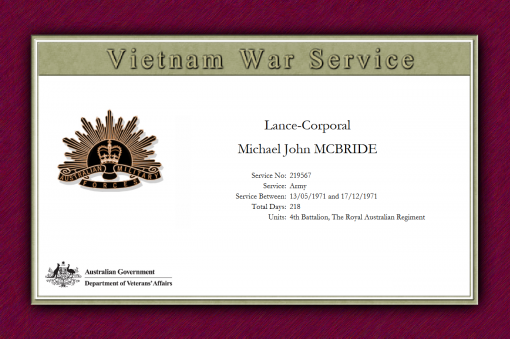
( unconfirmed ) Mick may have worked at Redfern ( 7 Division ) in 1975 and he may be identical to M. McBride who represented and competed in the NSW Police Cricket Team that toured New Zealand.
Source: Liverpool Police Time Line ( 1788 – 2022 ) via Joe Stanioch
Mick was the youngest of seven brothers.
Mick was unmarried, at the time of death, and had no children although he had ( years earlier ) been married to a Policewoman.
* Story behind any Nickname:
Nothing further, than what is recorded above, is known about this person at the time of publication and further information and photos would be appreciated.
Late of Rutherford and Asquith Born at Singleton NSW 17.05.1940
Passed away at Maitland on 11.01.2024
Aged 83 years
Dearly loved husband of Lesley,
brother and brother-in-law of John and Jan (dec’d), Graeme and Helen, and Jean.
Loving father to Rhys and Vivienne,
grandfather to Adeline, Lysander, Imogen, Elsa and Alex and
father-in-law to Sarah and Nicholas.
Uncle to the Martin and Taylor families.
Family and friends are warmly invited to attend his funeral service to be held in the Chapel of C.R. Smyth & Son, 311 New England Hwy, Rutherford on Tuesday 23.01.2024 commencing at 11:30am, followed by a private cremation.
Class 082 who where Sworn In on the 4 April 1960 walked into Redfern Police Academy on Monday 29 February 1960 to start their Training. The first ever (N.S.W.P) female detective (Gwen Martin) was in this class.
* Story behind any Nickname:
Nothing further, than what is recorded above, is known about this person at the time of publication and further information and photos would be appreciated.
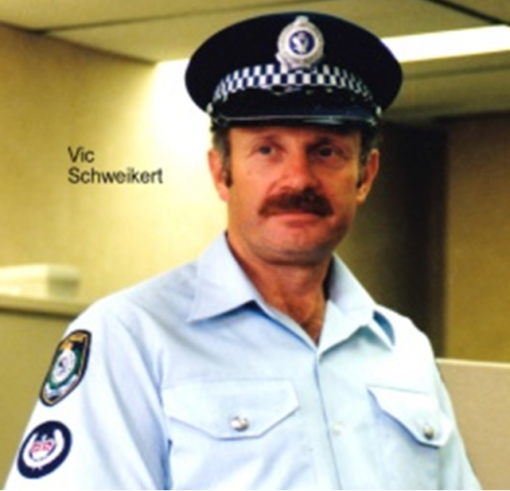
Victor was a Fitter and Turner prior to entering employment with the NSWP.
Prior to commencing employment with the NSWPF, Vic started rowing at Leichhardt Rowing Club in 1953 – 1954; this was the rowing club of his father and brother.
In 1957 Vic raced in the King’s Cup ( the Australian Championships ) held in Brisbane, Qld.
There he rowed in the eight’s oared race, earning 2nd place.
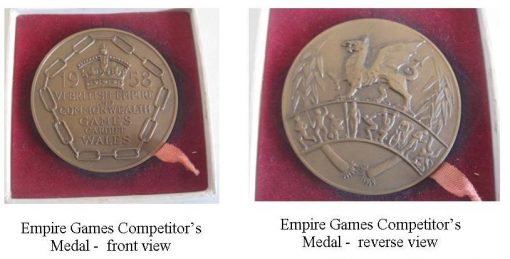
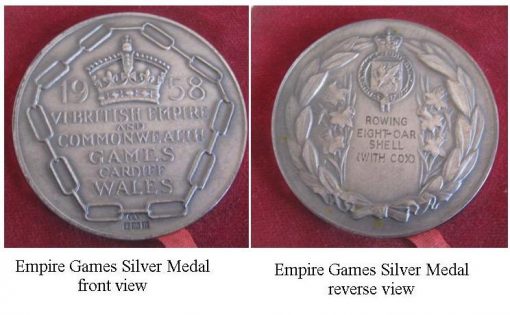
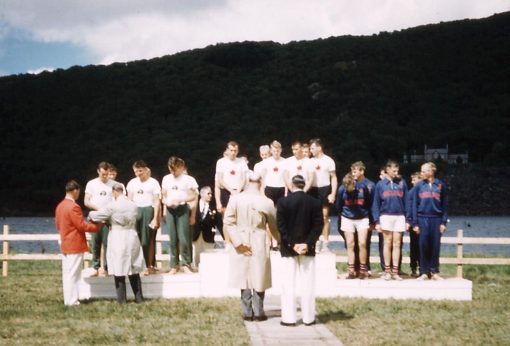
In 1959 he participated in the Empire Games ( currently known as the Commonwealth Games ) in the sport of rowing, where he was awarded a Silver Medal after coming second to the Russians.
They were presented with a ‘Silver Medal’ by the Duke of Edinburgh – Prince Phillip. The photo shows the Australian Team receiving their medal.
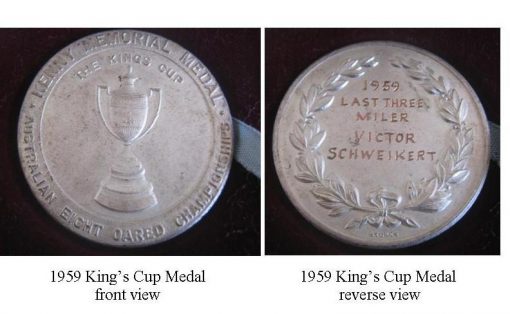
Vic, in 1959, was selected to row in the Kings Cup, at Perth WA, and after a three mile race on the Swan River, his team came first earning a ‘gold medal’.
Source: Joe Stanioch – Liverpool Police Time Line ( 1788 – 2022 )
Info – Victor Schweikert and later Mrs Schweikert.
Vale – Victor Schweikert | Leichhardt Rowing Club
Published Fri 05 Jan 2024
Lionel Robberds AM QC (Leichhardt Rowing Club Patron) advises that Victor Schweikert, former National, State and Club representative passed way in recent days (late December 2023).
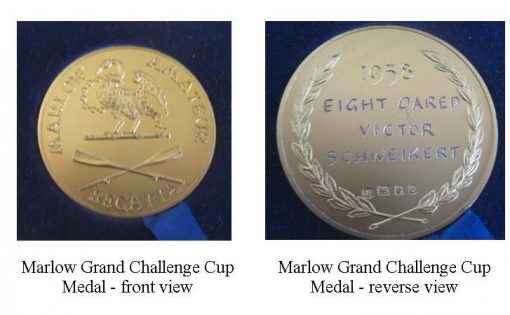
Vic’s success on the water followed the Leichhardt Eights win over the NSW State crew, when preparing for the 1958 Empire Games at Cardiff in Wales. Five Leichhardt oarsmen, with Lionel as Coxswain, represented Australia in the Eight, winning the Silver medal.
Vic was also in the 1959 NSW Kings Cup Eight mainly comprised of Leichhardt Oarsmen, winning the Kings Cup for the first time since 1951.
The Schweikert family of Bert, Carl and Eric had been successful Coaches at Leichhardt. It was Eric’s son Victor, who had crewed in the Kings Cup from 1957 to 1957 and again in 1960,
In his younger days Vic had been a member of the winning Shore Eight in the Head of the River going on to win the Australian Schoolboys Championship.
As a former retired Police officer, Vic was a regular attendee at relevant functions for retirees from Police and Rowing.
May he rest in peace.
Barry Moynahan – Leichhardt RC Life Member; Rowing NSW Life Member
In 1959, a crew made up of LRC and Mosman rowers won the King’s Cup in Perth, by quite a margin as the picture above shows! This was the last time the King’s Cup was raced over 3 miles.
Left to right: Max Annett, Peter Waddington, Ted Curtain, Ken Railton, Victor Schweikert, Graeme ‘Mick’ Allen, John Hudson, Ralfe Currall, next to the coxswain is the emergency, Bruce Evans and on the far right is the manager Frank McLeod.
The crew training in Perth. Bow – Ralfe Currall 2 – John Hudson 3 – Ken Railton, Mosman RC 4 – Victor Schweikert 5 – Graeme ‘Mick’ Allan, Mosman RC 6 – Max Annett 7 – Ted Curtain Stroke – Peter Waddington Coxswain – Lionel Robberds
Left to right: first is Max Annett, beside him is stroke Peter Waddington, then in the blazer is coach Phil Cayzer, then peeking from the rear is the seven man, Ted Curtain. To the left of Ted is the three man Ken Railton from Mosman, beside him and a bit to the front is Victor Schweikert, behind Victor is the five man Graeme ‘Mick,’Allan from Mosman. The coxswain Lionel Robberds, holding the King’s Cup and with a stop watch on his left leg, then on the left of Lionel is bow, Ralfe Currall, then the two man John Hudson, on his left is the reserve Bruce Evans from Mosman RC, on Bruce’s left is the Manager, Frank Mcleod.
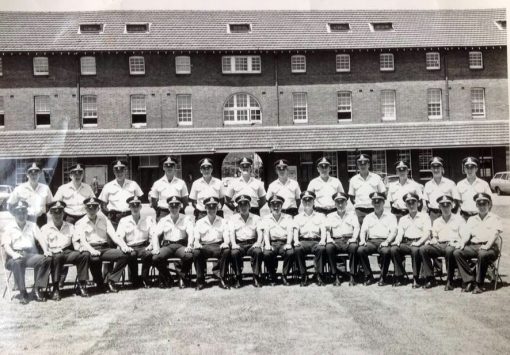
L. C. Bennett; D. W. Stolle # 9460; M. W. Kirk # 9512; R. C. Landers; B. Symons; A. Southall # 9527; J.C. Dunbar # 9482; P. J. Martin # 9528; B. K. Leaney # 9533; D. W. McLaughlin; J. R. Dorsett # 9498; P. W. Medway # 9444; J. McGregor # 9518; F. J. Ryder # 9506; R. N. Morris # 9517; P. R. Clemson # 9523; J. O. Parry; P. J. Woodward # 9478; D. C. Newton # 9480; R. L. Power # 9477; A. W. McDonald # 9510; B. A. Kearns; P. R. Leembruggen # 9530; R. G. Dunn.
3rd row ( l to r ):
E. H. Williamson # 9507; S. K. Isedale # 9490; T. G. Purcell # 9468; A. J. Murphy # 9509; A. P. Lynch # 9500; R. W. Stone # 9488; M. C. Adams; H. J. P.
Munro # 9484; J. E. Hawley # 9522; S. C. Heckenberg # 9487; H. T. Auliff # 9464; B. A. Melouney # 9492; M. R. Turk # 9526; A. C. Frost # 9516; C. A. Hermanson # 9525; E. F. Doherty # 9446; W. McCormick # 9529; K. J. Williams # 9461; M. C. Moy # 9449; K. G. McNeill # 9455; A. D. Morris # 9469; R. L. Scarf # 9457; J.R. Press # 9462; R. J. Mahoney # 9514.
2nd row ( l to r ):
J. J. McNamara # 9465; T. J. Webber # 9504; B. A. Bennett # 9453; J. F. Bostock # 9535; R. N. Thornett; W. A. Allan; K. J. Hall; M. R. Hay # 9452; Ken. Waters # 9494 or 9505; Keith. Waters # 9494 or 9505; G. N. Crouch # 9532; R. C. Rogerson # 9536; D. S. McAfee # 9459; G. A. Wilson # 9470; B. Garland # 9511; J. Peterlin # 9503; T. C. Coleman # 9496; R. J. Canning # 9473; V. A. Schweikert # 9458; R. Pearson; B. Kerrison # 9485; J. G. Kinnane; L. R. Kriss # 9483.
Front row – seated- ( l to r ):
Sergeant 3/c. Ben Hall; C. C. Greenham; G. R. Gibb # 9445; R. C. Jenner # 9486; J. C. McGingley; D. W. Cluff # 9463; R. J. Graham # 9467; D. E. Nelson # 9481; F. B. McGoldrick; E. G. Mercer # 9515; E. W. Kell
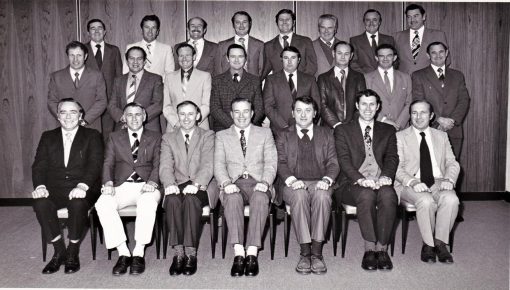
Sgts Course 6 of 1978 – 12 June – 28 July 1978Back row ( L to R ) –
Bernie Webb; John Walton; Alan Doyle; Peter Lowrey; Phil Loughlin; Laurie Campbell; Ted Coleman; Bill Ellis # 9559.
Middle Row ( L to R ) – Vic Schweikert # 9458; John Cummins # 9601; Barrie Sherlock # 9635; Ron Kitson # 9670; Carl Hermanson; Mike Blackburn # 9630; Ken Williams # 9461; Max Bailey # 9667.
Front row ( L to R ) –
Alan Walker; Nev Bent # 9586; Brian Milward (Instructor) # 9108; Bryan Binns Instructor) # 7953; Harold. E. John Symons (Instructor) # 8331; Denis Bowden # 9384; Pat Cioccarelli # 9580.
REWARDED: Pru Goward pinning the diligent and ethical service medal on Victor Schweikert. Photo by Ben McClellan
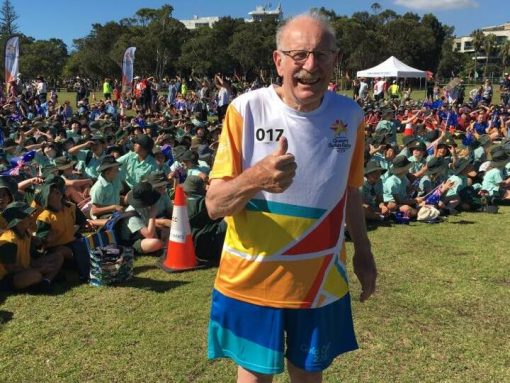
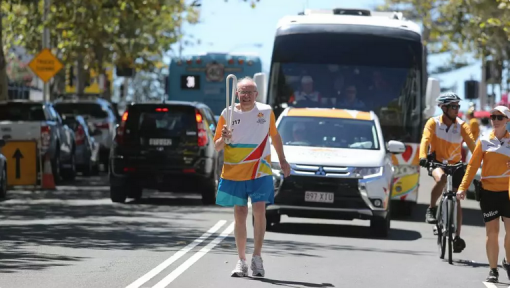
QUEEN’S BATON RELAY: Commonwealth Games Queens Baton Relay Wollongong baton bearer Victor Schweikert. Picture: Robert Peet. 2000
* Story behind any Nickname:
Nothing further, than what is recorded above, is known about this person at the time of publication and further information and photos would be appreciated.
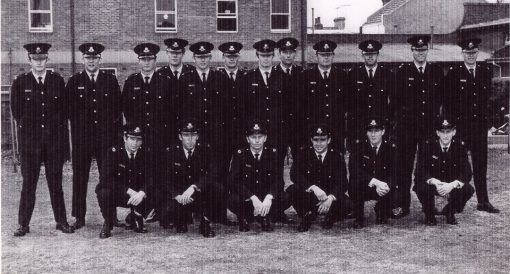
picture of Class111 26th June, 1967. All the cyclists have the first of the white helmets. They didn’t last long either’, once they realised that the broken necks were coming from the bad design, where the back of the helmet sat at the perfect point to break your neck, if your head was snapped backwards. Second white helmets issued hurriedly, ‘say no more’..!
Class 111 – those transferred to Penrith – 1967
Some of Class 111 who commenced training at Redfern Police Academy on Monday 15 May 1967 and were Sworn In on Monday 26 June 1967. Rear row, 4th from left is Probationary Constable Barry John PEARCE # 12631
* Story behind any Nickname: A play on his surname.
Nothing further, than what is recorded above, is known about this person at the time of publication and further information and photos would be appreciated.
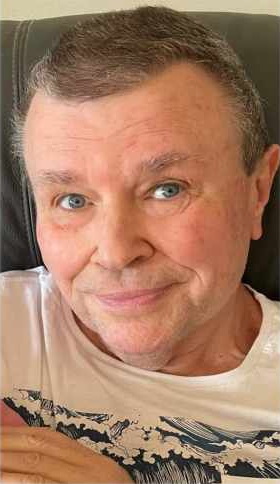
Formerly of Grafton, NSW. Late of Victoria St, Goulburn, NSW
Relations in ‘the job’:
“possible” relation in ‘the job‘: NOT related to Patrick JORDAN, Retired Insp ( RIP )
NSW Police Training Centre – Redfern – Class # 146
This Class did Not have a Passing Out Parade due to flooding of the Parade ground. The Swearing In ceremony was held in a Class Room. 147 Members were in this Class
New South Wales Police Force
Regd. # 16774
Rank: Commenced Training at Redfern Police Academy on Wednesday 29 January 1975 ( aged 22 years, 0 months, 19 days )
Probationary Constable- appointed Monday 10 March 1975 ( aged 22 years, 2 months, 0 days )
Constable – appointed 10 March 1976
Constable 1st Class – appointed ? ? ?
Detective – appointed ? ? ?
Senior Constable – appointed 10 March 1984
Appears in the 1988 ‘Stud Book’ but not the 1989 issue.
Final Rank: = Senior Constable?
Stations: ?, Goulburn Police Academy ( 1985 ) – Resignation
Time employed ( Paid ) with NSW Police: From: 29 January 1975 to 1 March 1989 ( Resigned ) = 14 years, 1 month, 0 days
Service ( From Training Date ) period: From 29 January 1975to 1 March 1989 ( Resigned ) = 14 years, 1 month, 0 days Service
Retirement / Leaving age: = 36 years, 1 month, 19 days
Time in Retirement from Police: 34 years, 9 months, 17 days
Awards: No Find on the Australian Honours system
Born: Saturday 10 January 1953
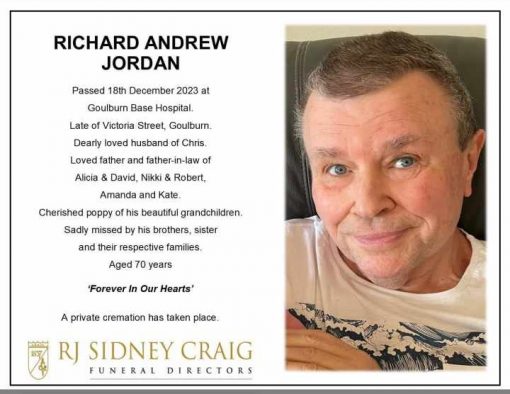
Died on: Monday 18 December 2023 at Goulburn Base Hospital, NSW
Age: 70 years, 11 months, 8 days
Organ Donor: Y / N / ?
Cause: ?
Event location: ?
Event / Diagnosis date: ?
Funeral date: Friday 22 December 2023
Funeral location: RJ Sydney Craig Crematorium, Goulburn, NSW
Condolences to Chris, Alicia, Nikki, family and friends.
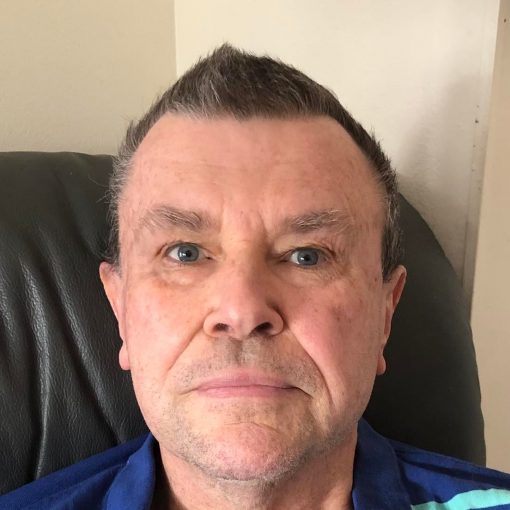
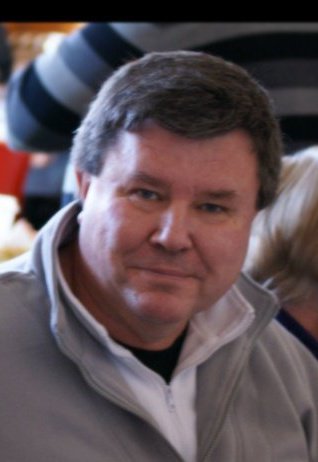
Richard Andrew JORDAN c21 January 2022
Richard Andrew JORDAN c4 October 2010
Class 146 – Redfern Police Academy. Sworn In on Monday 10 March 1975. They didn’t have a March Out because the Parade ground was flooded. They were Sworn In in one of the Class rooms. Martin BETCHER ( Back Row, 2nd from left ). Unaware of which is Richard JORDAN.
* Story behind any Nickname:
Nothing further, than what is recorded above, is known about this person at the time of publication and further information and photos would be appreciated.
Passed away surrounded by loving family on Saturday, 30th December 2023. Beloved husband of Tish. Dearly loved father of Karly and Glen. Cherished Opa of Ruby. Much loved brother of Raymond (dec), Lynne, and Wendie. Allan will be sadly missed by his loving family and many dear friends.
Aged 68 years
We will miss your smiling face, a special person no one can replace
Alan Baker
Aloha… my old friend
Michele Woods
I have fond memories of Al from Parra… then experienced his kindness at Xavier.
RIP
Lachlan O’Donohoe
Likewise I have memories of Al at Parra and experienced his compassion and willingness to be there for many people who were not at their best and needed a familiar face to chat! May he rest in peace.
Glen Bennett
Al was truly unique man in every way. A true gentleman, an incredible Police officer, a loving family man, a person who unselfishly gave so much to the broader community in the Hawkesbury. Although Alan’s passing leaves so many of us with a heavy heart, I personally feel blessed to have shared part of his life. RIP mate.
Madonna Collis
Al was such a beautiful man and a great Detective. He had a sense of grace and ‘coolness’ about him that I so admired, Sad times – sincere condolences to family ????????????
Ron Viles
Such a kind man a privilege to know sadly missed RIP my friend
Matt Brodin
Al was a great , kind , very compassionate man. I will miss our chats.
R.I.P Mate.. ????????
Jonathan Cornelius
It was my great privilege to know and work with Al. A great friend and mentor who taught me so much. Rest easy Al.
Tish
Thank you to all for the beautiful, heartfelt comments.
From the Duncan family ????
Olli O’Keeffe
Gone too soon Al. Such a dedicated and talented Detective and a mentor to so many young Police. I loved working with you at Granville and Parramatta. You were such great company and respected by all. Deepest condolences to your family and loved ones.
JEFFREY MOORE
Rest in peace Allan, I meet you at Bowen Mountain on many occasions with melissa gods own ???? country, bye mate
Greg Callander
https://police.freom.com/allan-duncan/
May Allan DUNCAN ( NSWPF # 18922 from Redfern Police Academy Class 165 ) who Served the people of NSW from 24 September 1979 – ?, Forever Rest In Peace.
Reputed to be one of the “driving forces of the Windsor Blue Light disco …”
Class 165B – 10 December 1979
* Story behind any Nickname: Dunko – play on surname.
Nothing further, than what is recorded above, is known about this person at the time of publication and further information and photos would be appreciated.
* Story behind any Nickname: Big Gordy – “hands the size of Legs of Ham”
Some of Class 129 – 13 December 1971. These members have Not been identified in this photo as yet ( 2024 )
Nothing further, than what is recorded above, is known about this person at the time of publication and further information and photos would be appreciated.
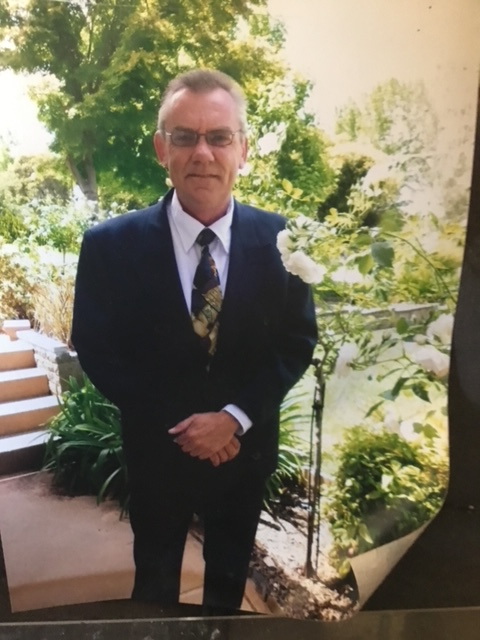
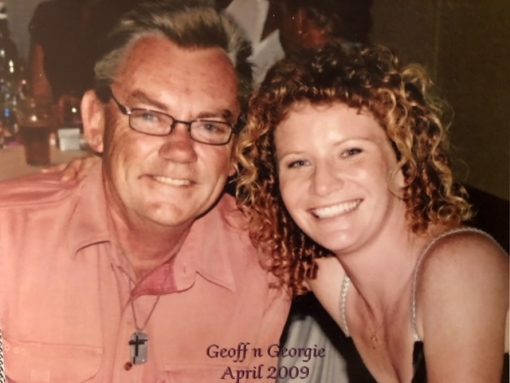
I have just heard of the passing of a former colleague from Class 158 Geoff Bernasconi. He was a wonderfully generous and giving man and a real entertainer. Your shift is complete Geoff – but your legacy, and the considerable memories you created will live on with many, especially during the times at Wagga Wagga. Special thoughts to Geoff’s family and the friends he leaves behind. Rest easy my friend.
* * *
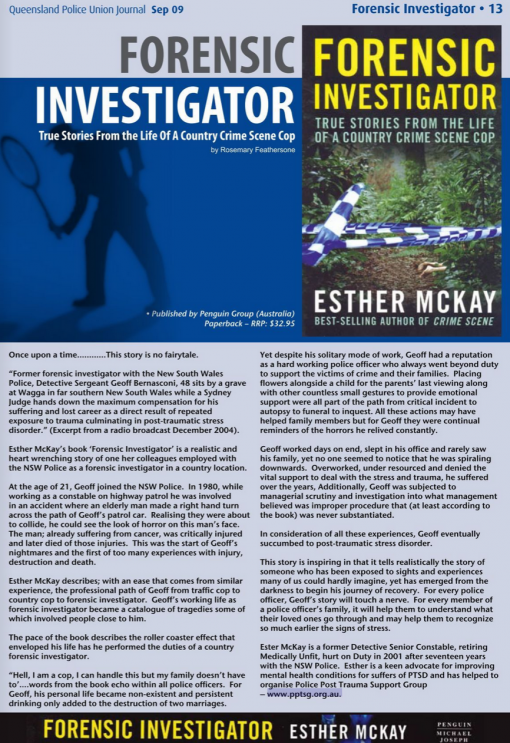
Geoff featured in the book: ‘Forensic Investigator – true stories from the life of a country crime scene cop’, written by Esther McKay.
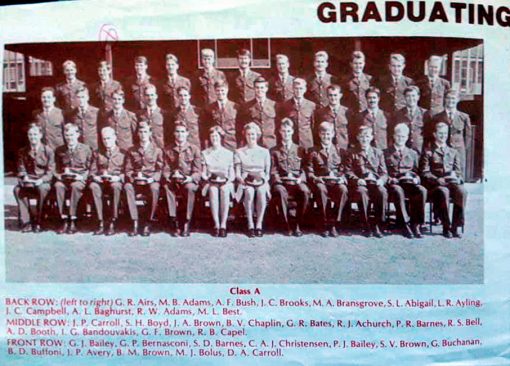
Class 158A – Redfern Police Academy – April 1978
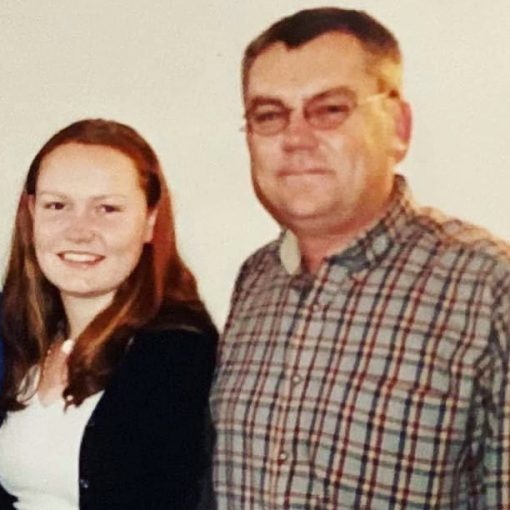
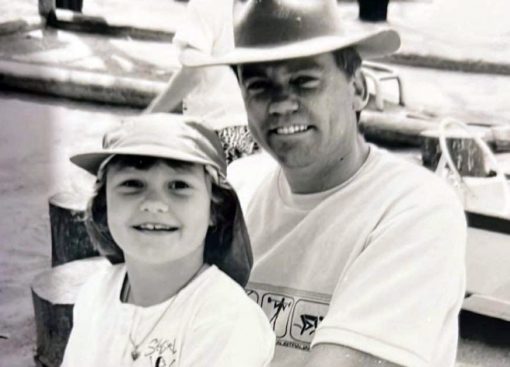
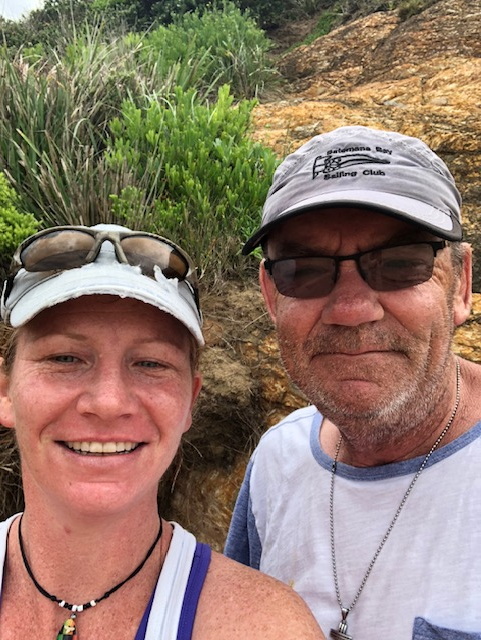
Katie BERNASCONI & Geoff BERNASCONI
Katie BERNASCONI & Geoff BERNASCONI
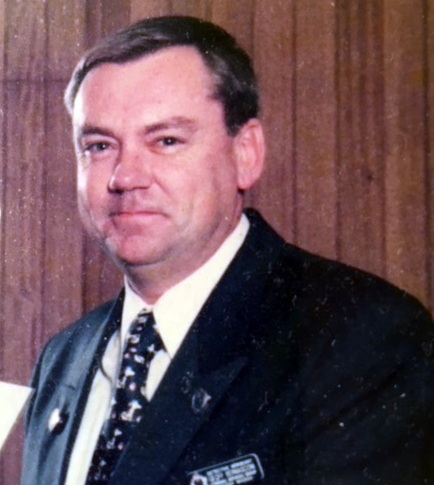
Geoffrey Paul BERNASCONI # 17970
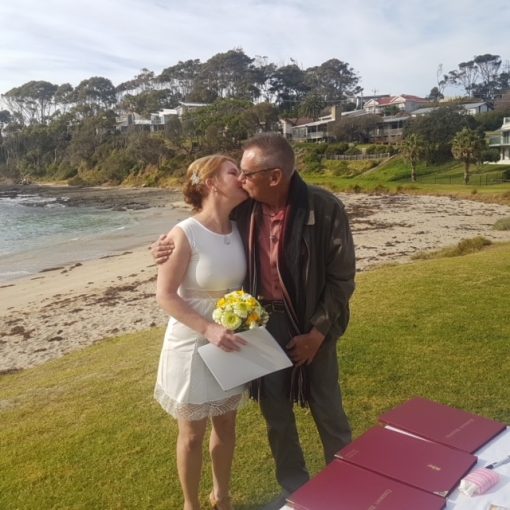
Georgina CLEMENTS & Geoffrey Paul BERNASCONI # 17970 at their wedding. 10 June 2020
Canberra Times (ACT : 1926 – 1995),
Tuesday 28 February 1995, page 4
Boys face murder charges
WAGGA WAGGA: Blood had soaked 5cm into the ground around the head of a man found dead by a council worker in Wagga Wagga, the city’s Children’s Court was told yesterday.
Four Wagga boys, aged 11, 12, 15 and 16, have been charged with the murder of Peter William Baker, 55, whose body was found in Victory Memorial Gardens at 8am on November 6 last year.
They were charged also with robbery in company after it was alleged that money had been taken from the dead man.
On the first day of committal proceedings yesterday, Detective Sergeant Geoff Bernasconi said Baker would not have staggered to the spot where his body was found.
He would have fallen to the ground after being struck on the back of the head and stayed there.
A significant feature was that blood had been found only on and under Baker’s head, there had been no blood on the back of his clothes and only minute traces surrounding him.
Peter James Kelly identified three of the four youths as those he had given a lift at about 11.30pm on November 5.
SYDNEY: A pilot spoke to his wife about his plane experiencing electrical difficulties only minutes before the plane plunged into a paddock near Wagga in south-eastern NSW, killing all four people on board.
Police said the 64-year-old Narrandera pilot told his wife in a mobile-phone conversation that he had lost the artificial horizon on the twin-engine Cessna 310’s navigation system.
He said he was flying in low cloud cover during a descent from 9000 feet on his approach to Wagga.
According to the Bureau of Air Safety Investigation, the pilot, from an air taxi service in Narrandera, then made his last known radio contact with Wagga airport at 7.43pm on Friday.
He failed to contact the airport six minutes later as scheduled.
A bureau spokesman said his last contact was routine and made no mention of difficulties.
Police identified the pilot as Don Knight, 64, of Knight Air Taxi, Narrandera. The Wagga men were Dallas Gooden, 42, Bruce Campbell, 54, and David Larwood, 33. They had been on a trip to Longreach in far-north Queensland buying stock.
Wreckage was strewn over more than a kilometre in the open paddock where the plane crashed.
Police said a woman from a property near the crash site, about 15km north-east of Coolamon, reported seeing a large flash in thesky and heard the plane crash about 8.10pm on Friday.
But the officer-in-charge at the crash site, Inspector Chris Morley, said it was too soon to talk about the plane exploding in mid-air.
He said the flash in the sky may have been the plane crash reflected on low cloud.
“It’s a big mess, I have never seen anything like it,” Inspector Morley said.
“It’s just devastating.”
The wreckage was found on the Thalia property by the property owner at midday yesterday after the alarm was raised.
This morning, NSW police video unit and photogrammetry officers recorded the crash site.
Two BASI investigators were travelling from Sydney to pick over the wreckage for clues about how the crash happened.
Inspector Morley said the men’s bodies would be collected and eventually taken to the city morgue in Glebe, Sydney, for disaster victim identification procedures, to be carried out by Riverina forensic services head Detective Sergeant Geoff Bernasconi.
Detective Sergeant Bernasconi was in charge of similar investigations after the Monarch air crash that killed seven people as it approached Young in central NSW on June 11, 1993.
NSW Fire Brigade, bushfire brigade and State Emergency Services workers were involved in the search on Friday night.
Forensic investigator Geoff Bernasconi had always been passionate about his job as a policeman in rural New South Wales, and went the extra mile, both for victims of crime and for their families. But one night in 1984, he was called to investigate the scene of a horrific car accident in which an entire family had been wiped out – and which it was impossible for him to forget.
Geoff‘s day-to-day working life became a catalogue of tragedies, some of which involved people close to him, and he found himself spiralling downwards in the grip of post-traumatic stress disorder.
When Esther McKay heard that Geoff had been awarded maximum compensation for his suffering, she knew immediately this was a story that needed to be told.
This is a harrowing account of what it is like to work on the frontlines of crime and tragedy as a forensic investigator. It is also the inspiring story of one who has been exposed to sights and experiences many of us can hardly even imagine, yet has emerged from the darkness to begin his journey to recovery.
Relationship issues from the autobiographies Allan Sparkes(Sparkes, 2013:136)describes his relationship with his wife Deborah as beingstrong and supportive, although he says “I kept my mental state from her.” Her support, Allanbelieves was central to his later recovery.
John Horner(Horner, 2011)experienced a marriagebreakdown in mid–career, as did Esther McKay.
She described her subsequent partner as“extremely sensitive and comforting” in terms of her battle with the trauma that was then achallenging part of her everyday experience.
Belinda Neil had a similar experience, as didGeoff Bernasconi(McKay, 2010:74)
where he describes his marriage as “weakening underthe strain”.
After being absent from home forfourdaysinvolved with the forensicinvestigation of a plane crash scene, (during which time he made no contact with his pregnantwife) on arriving back to his home town he went straight to the hotel, got drunk and called his wife, suggesting she join him for dinner. The relationship did not survive.
Sleep Problems and Exhaustion: The autobiographies. Alan Sparkes(Sparkes, 2013:140) describeshis confronting dreams and his inability to sleep.
As his Post traumatic stresssymptomsincreased he commenced having nightmaresin whichhe had stabbed to death his wife and daughter.These were the source of profound anxietyand fear for him, prompting thoughts of suicide to protect his loved ones from the possibilitythat his dreams might become reality.
EstherMcKay(McKay, 2005:265/227)gives a similaraccount of nightmares describinga particularly disturbing one where she was ‘lying naked onthe morgue table’.
Belinda Neil(Neil, 2014:2)describes “the long working hours with no time to recover from one traumatic incident to the next.”And continues,“I was falling apart,exhausted and forgetful”.
Geoff Bernasconi,(McKay, 2010:58/59)is “mentally and physically exhausted” and “fatigue was ever–present, especially on long road trips when Geoff would struggle to stay alert.”
These wereofficers nearing the limit of their resilience, unsupported by their organisation, isolated and nearing the end of their police careers.
Thesis Final PDF.pdf Trigger Warning re this link; This document looks into Police, the culture, Stress and Suicide / Suicidal thought by Police.
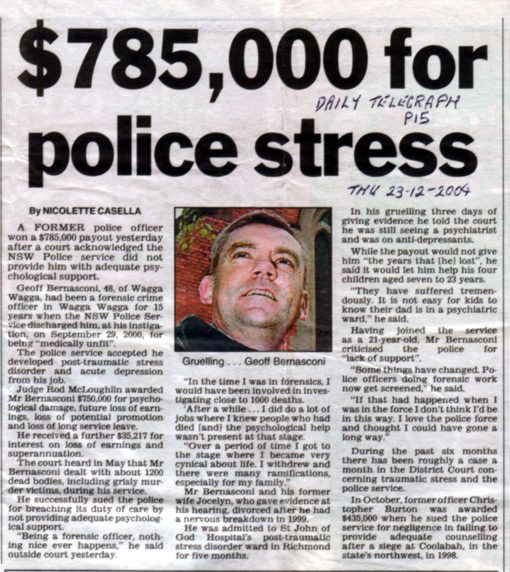
DAILY TELEGRAPH P15 THURSDAY 23 DECEMBER 2004 FORMER POLICEMAN GEOFF BERNASCONI FROM WAGGA WAGGA WHO SUED THE POLICE DEPT.
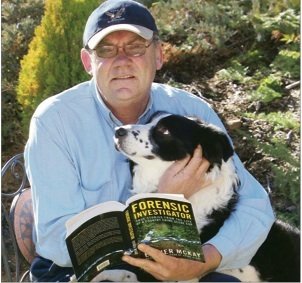
My dog Mac reading the book
Forensic officer awarded $750,000
While a judge in Sydney was telling the court that a former policeman should receive the maximum compensation – $750,000 – the man in question was visiting the grave of a victim of a crime he had investigated.
“I have been to a few cemeteries,” said Geoffrey Bernasconi, 48, speaking from his home in Wagga Wagga. “It’s just a solace, a place for me to think and reflect.
“I think about those that are left behind, and I feel for the person … I found it quite peaceful there today. I reflect could I have done more, and I reassure myself, no, I have done everything I can.”
On Wednesday in the District Court, Judge Raymond McLoughlin awarded the former forensic services police officer $785,000 (including interest) for his suffering, and lost career due to work-related post-traumatic stress disorder and depression.
During his 23-year career, in which more than half the cases involved homicides and dead bodies, Mr Bernasconi was only debriefed three times. Those occasions were “poorly organised and often occurred after the event”, the court heard.
A medical report said he had been “repeatedly exposed to some of the most tragic circumstances that may be witnessed in civilised societies”.
Based in Wagga Wagga since 1987, he investigated crime and accident scenes, retrieved body parts from cars, trains and light plane crashes. There were teenage suicides, infant drownings and homicides. Sometimes he was required to remove decomposed bodies because the government contractor “couldn’t stomach it”.
One of Mr Bernasconi‘s strengths was his empathy with the families of victims, who relied heavily on him. But this was also a stress.
The court also heard that for 15 months in the late 1980s he was the only crime scene investigator for the whole region, and was on call around the clock.
Judge McLoughlin criticised the service for failing to properly manage his 70-80 hour week, and failure to order appropriate leave and job rotation.
In 1999, he broke down while giving evidence at a coronial inquiry into a plane crash. The coroner recorded: “I have dealt with this man for 15 years and I have never seen him like this.”
Soon after, his police supervisor took his gun and handcuffs away. He was medically discharged in 2000-2001. He spent months in psychiatric care in hospital.
Judge McLoughlin said there were managerial and psychological interventions which should have been taken by the service. He found Mr Bernasconi was now unfit to work in the labour market.
THE NSW Police Force has wasted millions of dollars fighting “no-brainer” claims by stressed officers, prompting the State Government to order an external review of the force’s legal services unit.
The Herald is aware of at least six cases in which former police officers offered to settle for less than $150,000 but ended up with $750,000 payouts after going to court. Seventy claims are before the courts.
The Police Minister, Carl Scully, said he had “concerns about the performance of the unit, particularly in relation to its management of settlements and litigation”. He mentioned matters “not being handed expeditiously or fairly” and a “reluctance to settle that then causes payouts being larger than what they otherwise may have been”. Payouts include:
■ Child protection officer Rodney Keen: offered to settle for $148,000 plus legal fees of $30,000. Awarded $750,000 plus costs.
■ Forensic services officer Geoff Bernasconi: offer of $150,000 to avoid stress of court before $750,000 judgement.
■ Armed hold-up squad officers Edward Shepherd, Mark Wilson and Craig McDonald: offer of $790,000 for all three. Awarded $2.04 million plus costs.
■ Undercover officer Bob Ridley: offer of $100,000 before $750,000 judgement.
Mr Scully said a solicitor who has worked in the public and private sectors, Helen Vickers, would deliver her report in a few weeks.
He conceded that if the claims were proven, “then obviously I would have to consider ways of improving or potentially changing the way legal services is conducted”.
One police insider said the unit had an “army mentality”. “They want to fight everything and settle nothing and then rage against the courts when things go wrong. It’s scandalous the amount of taxpayer money they are wasting.”
Mr Scully said the current system, under which up to six people must be consulted before making an offer, could be a case of “too many cooks spoiling the broth”. The minister must approve all settlements over $100,000. “No doubt we could potentially streamline that and make it more efficient and effective.”
Mr Ridley‘s solicitor, Philip Sim, settled a case involving another undercover officer – dubbed Miss X – on the fourth day of a District Court hearing last week. “They slow the process down, so they can wear people out,” he said.
He said one attempt at mediation collapsed when police lawyers could not get instructions.
Tom Edmunds, a solicitor and former policeman who represented the hold-up squad officers, was blunt: “$1.4 million – that’s how much the Crown contributed to our legal costs.”
Kim Smith, who acted for Mr Keen and Mr Bernasconi, said the legal costs of running a matter against NSW Police were “so much greater” than her other personal injury matters.
The Crown, which will pay a large amount of Mr Keen‘s estimated $350,000 legal costs, has foreshadowed an appeal.
Ms Smith said the Crown Solicitor’s Office had pointed out many times that NSW Police was exempt from the model litigants’ policy. This demands government departments avoid litigation wherever possible, but only the Attorney-General’s department is bound by the policy.
The secretary of the NSW Police Association, Peter Remfrey, said the way NSW police managed stress had improved but the legal unit’s handling of claims was “dysfunctional”. The association’s research director, Greg Chilvers, said 70 former police – many undercover officers – had negligence claims before the courts.
A precedent was set in a 2000 Court of Appeal judgement which awarded a former child abuse officer, Beth Seedsman, $750,000 for NSW Police’s failure to provide a safe system of work or protection from mental injury. “Given what we know about the law, in these cases it should either be a no-brainer or one to be fought on a matter of principle,” Mr Chilvers said. “It seems on a matter of principle they fight them all.”
* Story behind any Nickname: The man liked a drink.
Nothing further, than what is recorded above, is known about this person at the time of publication and further information and photos would be appreciated.
 PARRAMATTA DETECTIVES


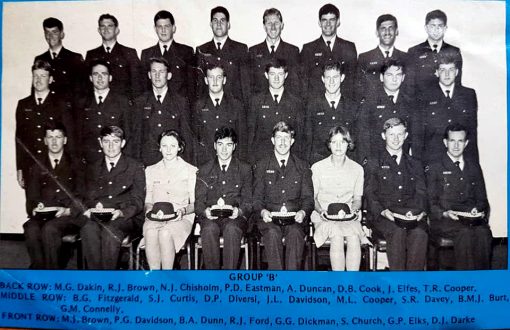
 CLASS 0654 row ( l to r )
 Sgts Course 6 of 1978 – 12 June – 28 July 1978Back row ( L to R ) –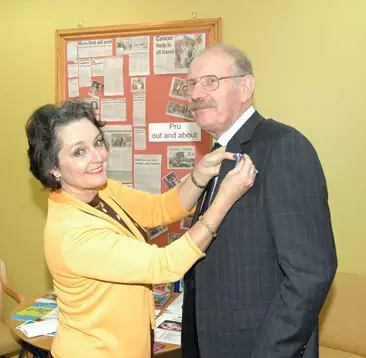

Alan Baker