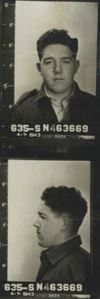
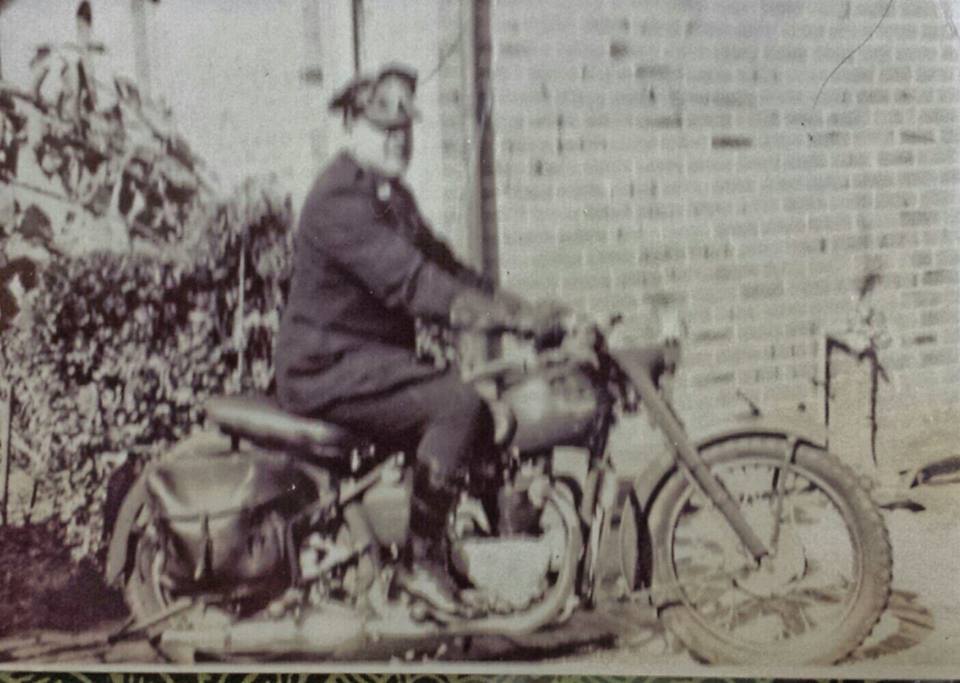
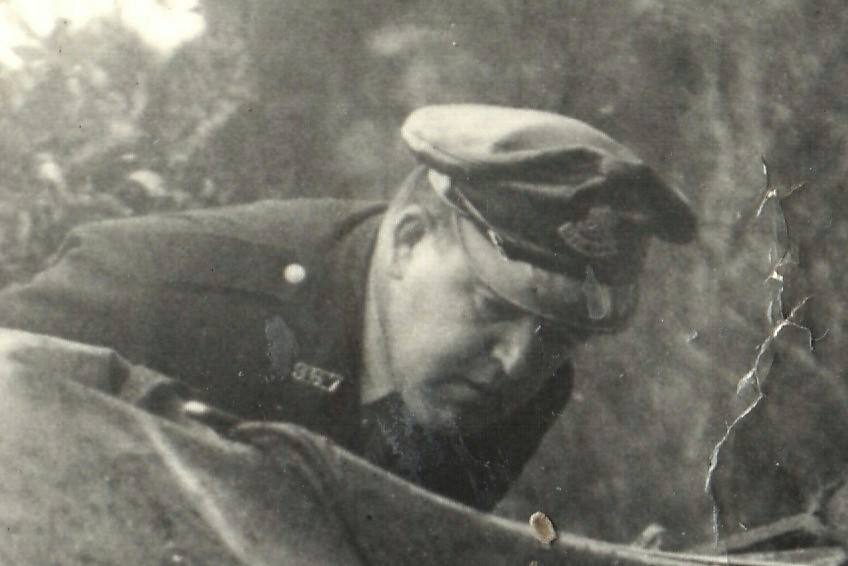
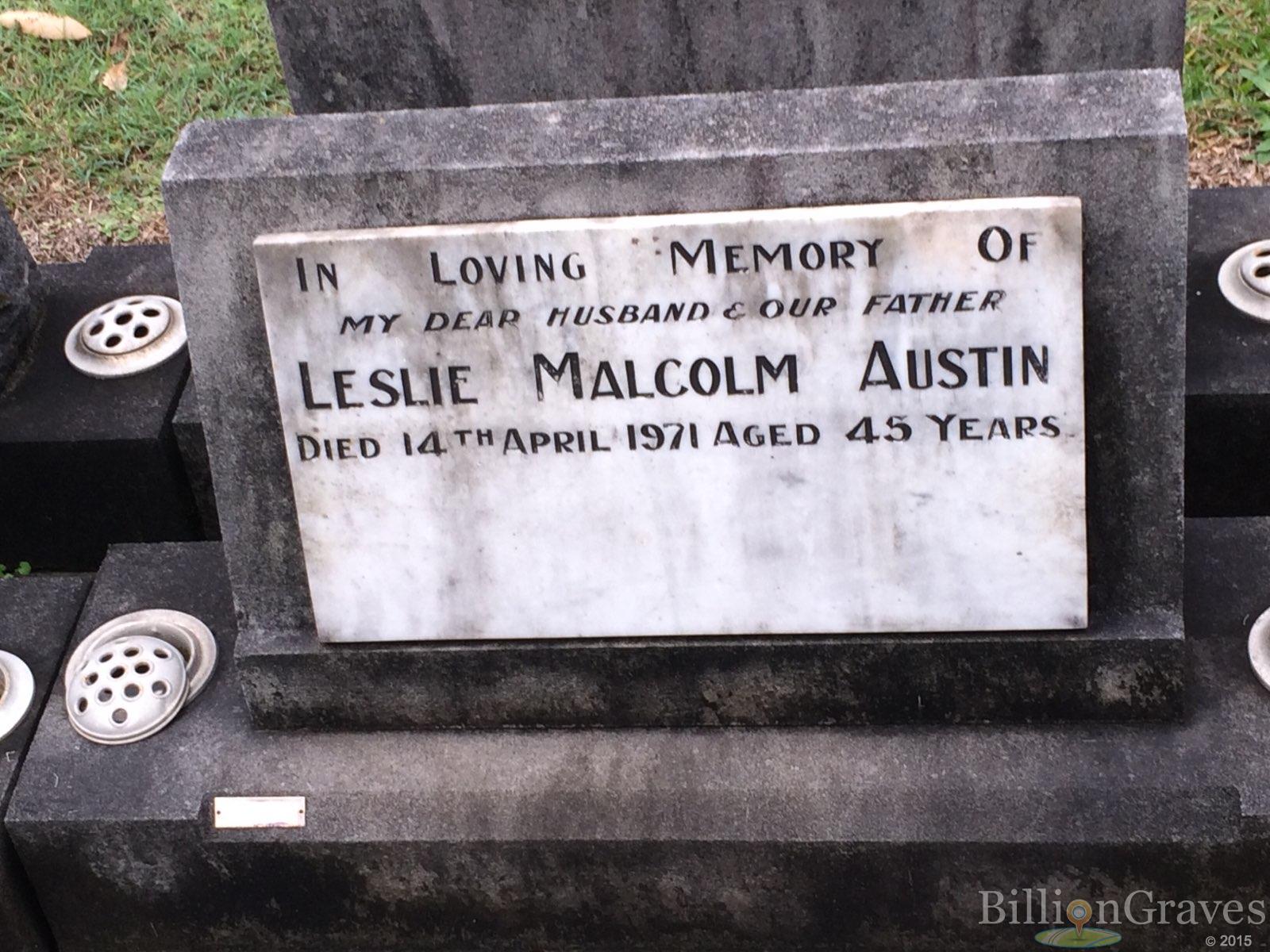
“Possibly” from Class 17 from Penrith Police College
Regd. # 5456
Uniform # 367
Rank: Probationary Constable – appointed Monday 13 January 1947 ( aged 21 years, 5 months, 23 days )
Constable – appointed ? ? ?
Constable 1st Class – appointed ? ? ?
Senior Constable – appointed ? ? ?
Sergeant 3rd Class – appointed ? ? ?
Sergeant 2nd Class – appointed 1 April 1968
Final Rank: Sergeant 2nd Class – death
Stations: Five Dock, Petersham, Parramatta STP ( 1949 – ), Hornsby STP ( 1950’s – ), North East District ( 1968 ), Gosford STP & General Duties – death
Service: From? ? pre January 1947to 14 April 1971 =23years Service
Late of ” Collingwood ” Kenwyn Street, Hurstville – formerly of Orange, NSW
Nephew of Dr. Frederick Thomas West Ford, police surgeon of Melbourne, Victoria
New South Wales Police Force
Regd. # ‘Q‘ 1010
For the purposes of this website ‘Q‘ represents those Police joining between 1 March 1862 ( commencement of NSWPF ) – 23 February 1915 ( Commencement of NSWPF current numbering system )
Rank: Probationary Constable – appointed 18 August 1862 ( aged 20+/- )
Inspector
Stations: ?, Rylstone pre 1868 ( Senior Constable – 1868 ), Police Camp – Tambaroora ( SenCon 1869 – 1870 ), German Town – Hill End ( Sgt – 1874 ), Wollongong ( Senior Sergeant 1877 ), Bourke ( Sub-Inspector ), Orange ( Inspector )
Service: From? ? 1862to? ? about 1901 – retired on Pension
Awards: ?
Born: ? ? 1842 in England
Died on: Sunday 26 November 1911 at ” Collingwood”, Kenwyn St, Hurstville, NSW
Cause: ?
Age: 70
Funeral date: Tuesday 28 November 1911
Funeral location: Church of England, Orange, NSW
Buried at: Church of England Cemetery, Orange, NSW
Grave Location: C of E, Area – Old; Sect: A, Number 350
Memorial at: ?
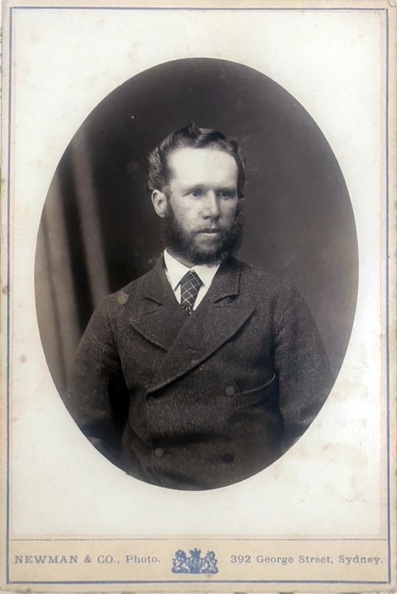
Mark Edward Dyett FORD – NSWPF – Died 26 Nov 1911
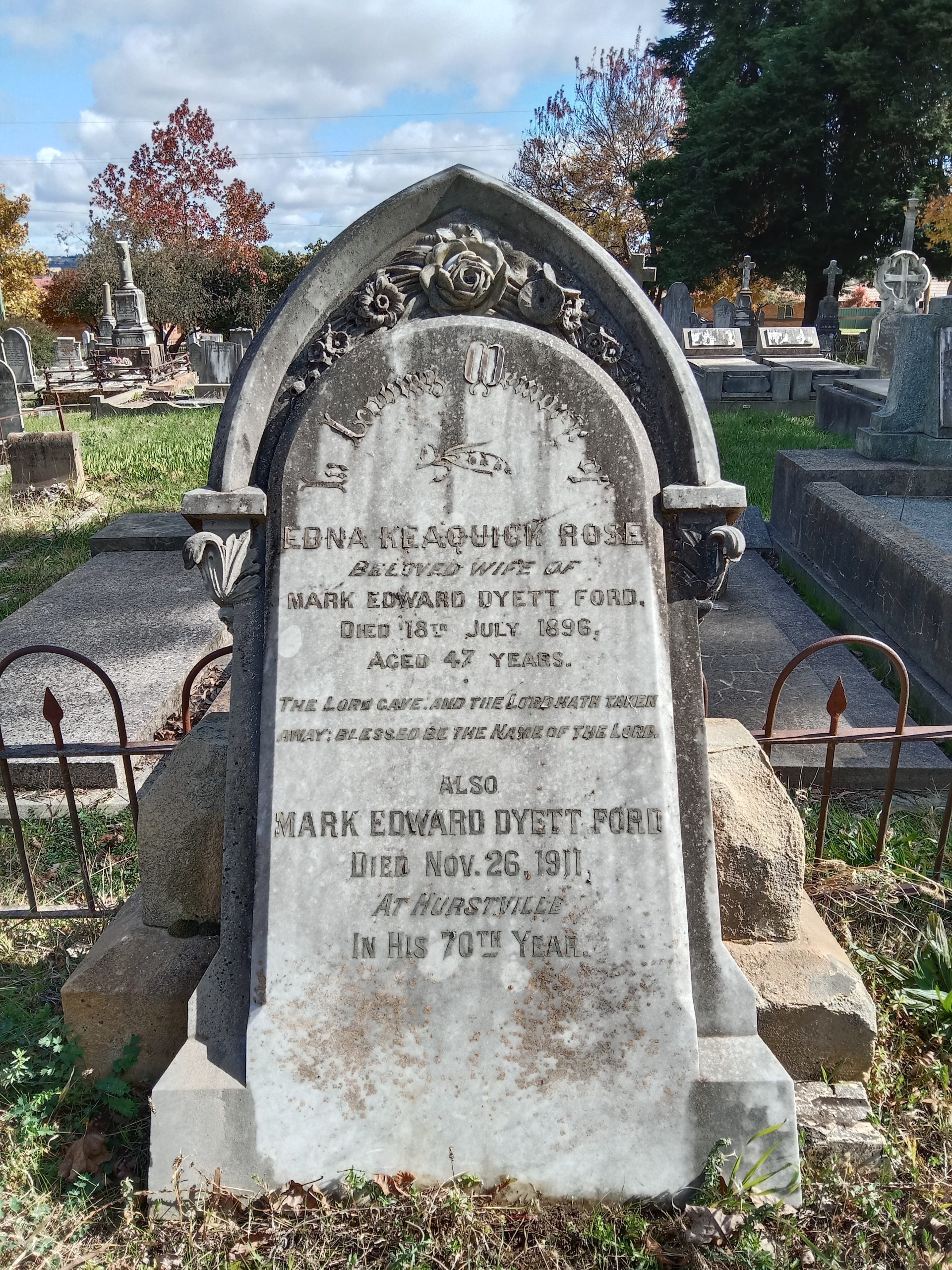
In Loving Memory of Edna Keaquick Rose FORD, beloved wife of Mark Edward Dyett FORD. Died 18 July 1896, aged 47 years. The Lord gave and the Lord hath taken away; blessed be the name of the Lord. Also Mark Edward Dyett FORD, Died 26 November 1911, at Hurstville, in his 70th year.
MARK is NOT mentioned on the Police Wall of Remembrance *NEED MORE INFO
Funeral location: ?
FURTHER INFORMATION IS NEEDED ABOUT THIS PERSON, THEIR LIFE, THEIR CAREER AND THEIR DEATH.
Retired Inspector of Police Mark Edward Ford, whose last post was at Orange, has died at Hurstville, aged 70 years. When in the service he was of the type that is always popular. He never allowed the officer to submerge the man, and consequently was greatly admired by the men under his control. In his day he was a splendid horse man, and went through many trying experiences in carrying out his police duties In the Interior.
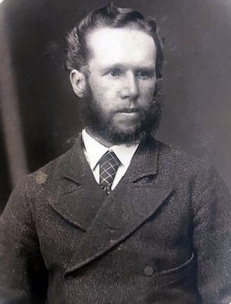
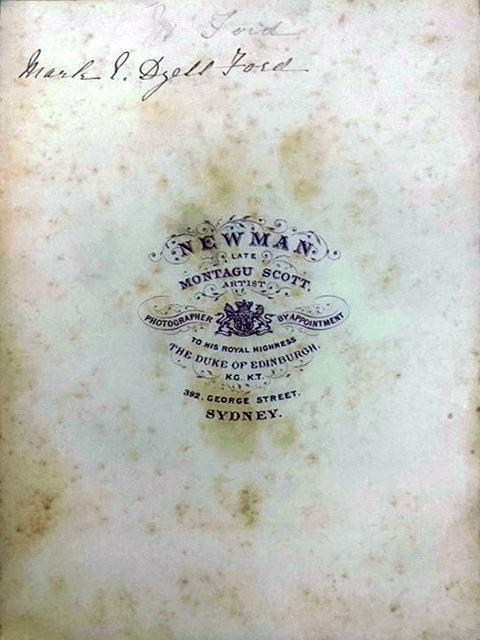
Rear of main photo of Mark Edward Dyett FORD – NSWPF – Died 26 Nov 1911
Truth ( Sydney )
Sunday 3 December 1911 p 10
Mr. Mark Edward Dyett Ford, formerly inspector of police at Orange, died at Hurstville, and was buried at Orange on Tuesday. He was 70 years of age, a nephew of Dr. Frederick Thomas West Ford, police surgeon of Melbourne. He joined the force in Sydney in 1862 as a full private, was sergeant at Hill End in the good old days of the Hill, and was subsequently promoted to a sub-inspectorship. He retired on pension about ten years ago.
The death occurred at Hurstville yesterday of Mr Mark Edward James Ford, who was inspector of the police force at Orange for a number of years, at the age of 70 years.
His wife died at Orange in July, 1896, the body will be brought to Orange by tomorrow morning’s mail train, and the remains will leave the Church of England School-room at 11am for the Church of England Cemetery. Mr F. Ford has charge of the mortuary arrangements.
( Note on headstone has his name as Mark Edward Dyett Ford. )
He lived at ” Collingwood ” Hurstville. Electoral Roll – 1930 – Ford, Mark Dyett – Kenwyn Street, Hurstville – Inspector of Police
The inhabitants of Rylstone, in praise worthy appreciation of the services of the above meritorious officer, have just presented him with a purse of upwards of £25, and an address engrossed on vellum, and signed by the donors. The address reads as follows :
” To MARK EDWARD DYETT FORD, Senior Constable.
” The undersigned, inhabitants of Rylstone and neighbourhood, have much pleasure in presenting you with the following testimonial of their appreciation of your very efficient services as a public officer, in putting down crime,in this district.”
The signatures, with the sums attached follow, and from the amount (£25 5s. 6d.), it need hardly be said that some modest sums have been given, showing that the esteem this officer is held in is not alone confined to the wealthier class of the community. We have repeatedly had occasion to allude to the activity, zeal, and intelligence of senior-constable Ford, and when a selection was made from the whole of the police force of men to hunt down Clarke’s gang, Senior-constable Ford was chosen among the first. For his sake, we wish the testimonial had had a wider range, as the appreciation of his services is not confined to the district of Rylstone.
Acting Sub-Inspector Mark Edward Dyett Ford ( late of Wollongong and now of Bourke), has been gazetted a Sub-lnspector, a promotion which many friends in this district will be happy to hear of.
THE Bench of Magistrates at Wollongong, have this day appointed Senior-sergeant Mark Edward Dyett Ford, Inspector of Weights and Measures for the District of Wollongong.
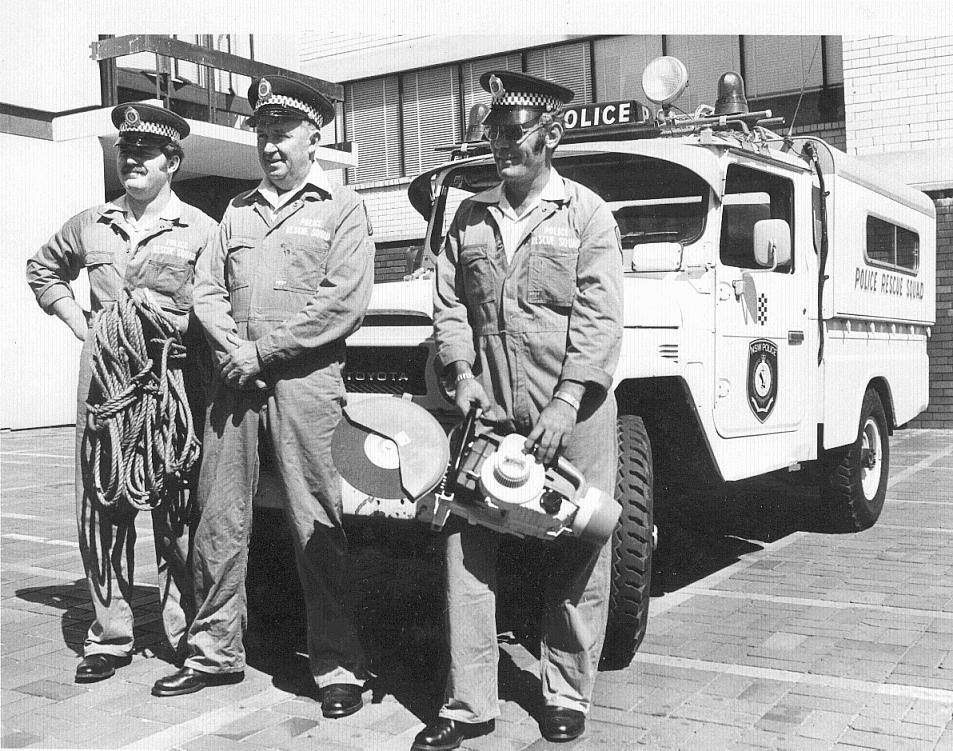
Rons’ cancer was deemed a HOD from a rescue response incident in Blacktown to a chemical spill.
Trevor Watkins was also a Rescue Operator who attended the same incident and died some time before Ron of the same cancer. Doctors linked the 2 Police to the same chemical spill event.
Trevor, however, is NOT mentioned on the National Police Wall of Remembrance. ( Last checked 25 Aug 2022 )
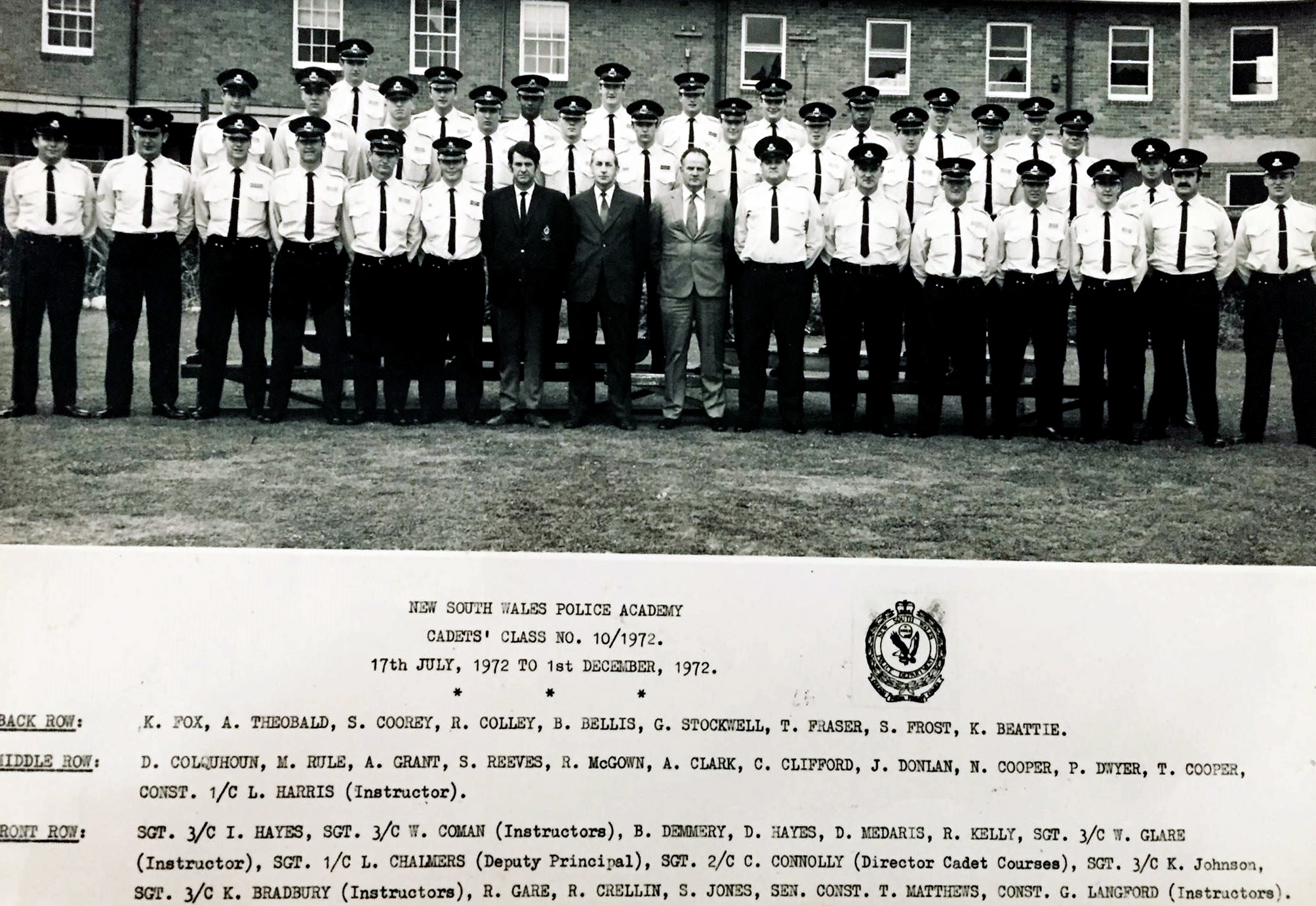
Cadets – Class 10 / 1972 ( Class 132 )
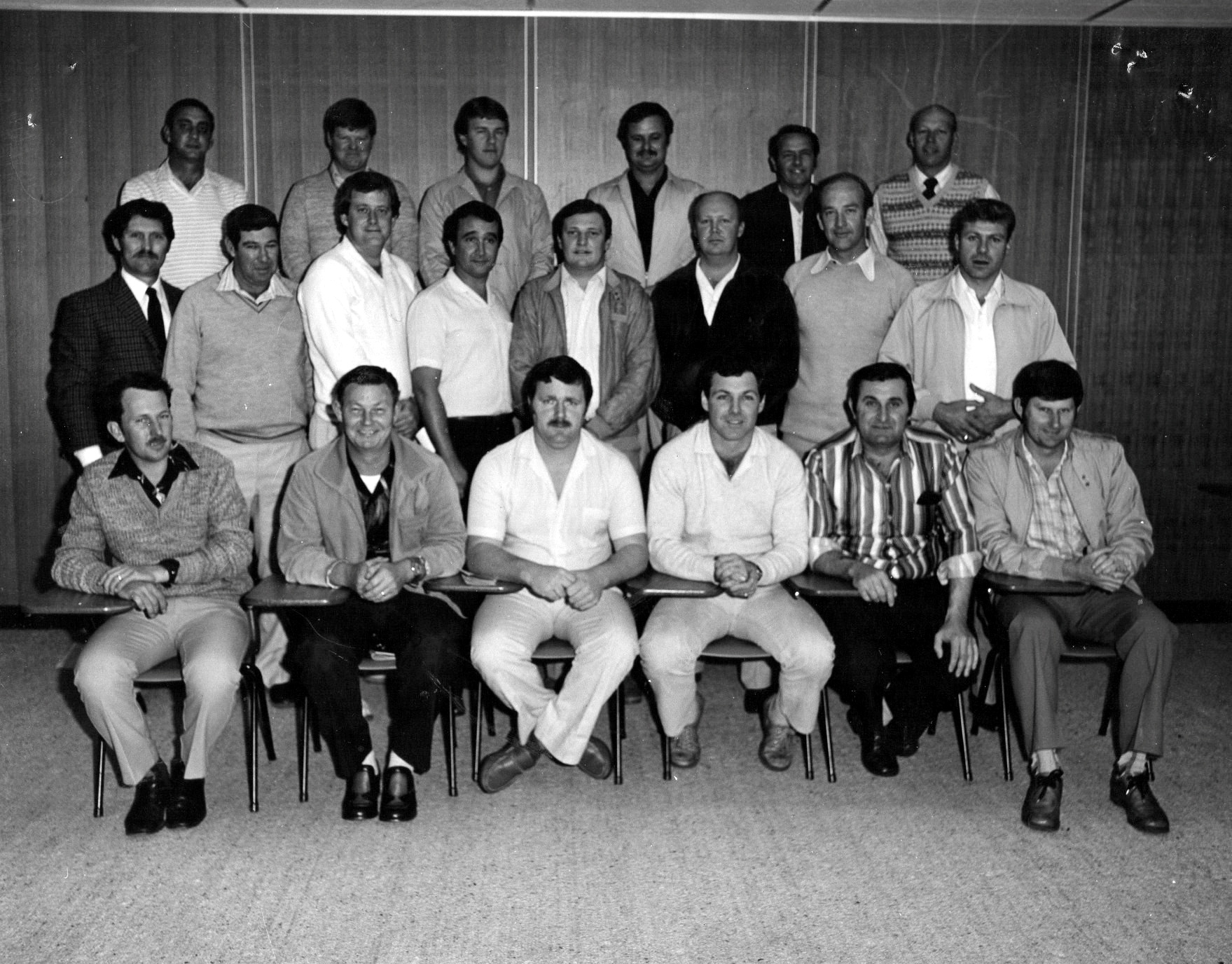
a Sergeants course or First Line Commanders course at Penrith Police Station around mid 1980s. Can’t remember all the names but I will give it a try. Back row: Laurie Eddy ( # 16868? ), Greg Peterson ( # 15106 ), Warren Newton ( # 14491 ), Bob Murrell ( # 15864 ), Hank Vanderwaarden ( # 15760 ), Ron Blake ( # 10029 ). Middle row: John HAMER – instructor ( # 11103 ), Ernie Jones ( # 15468 or # 14515 ) , Gary BUCKLEY ( # 16269 ), Ces Kearney ( # 16804 ), Ray Filewood ( # 15912 ), Dave Clouston ( # 16727 ), Alan Targett ( # 14196 ), Helmut Myers ( # 16359 ). Front row: Kieron Power ( # 17384 ), John Findlater ( # 13571 ), Ron McGOWAN ( # 15631 ), Gordon Middlemisss ( # 17058 ), Gary Winchester ( # 15414 ), Mal Roser ( # 16028 ).
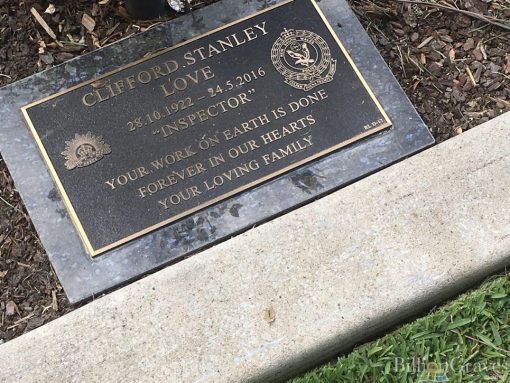
Clifford Stanley LOVE
| 07/10/2016
Clifford Stanley LOVE
( late of Warners Bay, NSW )
aka Cliff
NSW Police College, Penrith – Class # 003
New South Wales Police Force
Regd. # 4958
Rank: Probationary Constable – appointed 21 January 1946 ( aged 23 years, 2 months, 24 days )
Sergeant 2/Class – appointed 20 February 1967 ( North East District – Muswellbrook )
‘Inspector First Class,
Officer in Charge, Newcastle District’
(Retired 1982.)
Dearly loved husband of JOYCE.
Much loved father and father in-law-of MAX LOVE & RAE COUGHLAN, MAREE & MICHAEL, COLLEEN & DIAMOND.
Loving Grandfather of MARC & SARAH.
Great Grandfather to HARMONY.
Also a much loved uncle, great uncle, Police colleague and Friend to many.
Relatives and Friends are warmly invited to attend a Celebration of CLIFF’s Life to be held in The Chapel of Lake Macquarie Memorial Park, Palmers Road, Ryhope this MONDAY 30/5/2016 commencing at 10AM.
An interment will follow in the Lawn Cemetery.
Published in The Newcastle Herald from May 27 to May 28, 2016
Cliff LOVE was the Officer In Charge of the infamous Star Riot in Newcastle on the night of 19 September 1979 when police had to deal with an estimated 4000 rioters when the Star Hotel was closed down.
The Police vehicle Cliff had at the scene was rolled over by the hoodlums and ‘ torched ‘ ( burnt ) at the riots. Paddy Wagons ( Police trucks ) were also rolled and burnt. One officer lost his .38 Smith & Wesson which was later recovered some distance away.
Some of the 40 Police, but not limited to, who attended and were confronted by odds of 100:1 were:
Cliff LOVE
Cliff Judd
Paul Baker
Brian Atkins ( broken wrist )
The night the Star exploded
September 17, 2004
Twenty-five years after the infamous Newcastle riot, many are still wondering who was to blame, writes John Huxley.
The trouble started just after 10pm when, to scattered cries of “kill the pigs”, an angry, alcohol-fuelled crowd started pouring out of the pub and on to the street to confront a painfully thin blue line of police officers.
Within minutes, missiles were – in the words of one witness – “raining down like rice at a wedding”. Rocks, bottles and beer cans. Watched by several hundred spectators gathered in the middle of the road, the mob rushed police lines and overturned paddy wagons. It was only after two hours of violent mayhem that the crowd was dispersed by fire-brigade hoses. By then, the street had been transformed, says a witness, into a “a sea of rubbish”.
Fourteen officers and eight civilians were on the way to hospital with injuries. Eventually, 46 people were charged with 79 offences, ranging from assault occasioning actual bodily harm to resisting arrest and riotous assembly.
To this day, it is remembered as Newcastle’s “night of infamy”: a Wednesday night, almost exactly 25 years ago, which started much like any other but ended in violent confrontation as about 40 police battled more than 4000 rioters angered by the closure of the Star Hotel in the city’s West End.
As dramatic pictures of the riot flashed round the world, putting the ugly face of Newcastle on front pages of newspapers everywhere, the then NSW premier, Neville Wran, called the events of September 19, 1979, un-Australian. “It was a shocking, disgraceful episode,” he said.
Possibly. But that has not prevented the riot becoming part of Australian folklore. Newcastle City Council produced a lengthy report. The band Cold Chisel recorded a famous song about it (see above). A Hunter Valley theatre group staged a controversial musical about it.
“From this distance it’s easy to lose sight of what really happened, ” Phillip McIntyre, a music writer and lecturer in communications at Newcastle University, explains. “There’s been a lot of myth-making going on.”
Indeed, Cold Chisel frontman Jimmy Barnes recently said people still came up to him to say how f—ing great he was at that gig he played on the last night of the Star. The band never performed at the hotel. Doubts have even been raised about the authenticity of some of the pictures taken that night.
It’s not surprising, then, that a quarter of a century on, the riot remains the subject of controversy. What sparked it? Was it a drunken rabble, a provocative band or heavy-handed police. Or was it the media, who were in place for hours, waiting for something to happen? Was it premeditated or largely spontaneous? And, most importantly, just what was its significance? Nothing more than a shocking show of drunken hooliganism, as Wran put it? Or a political demonstration by an alienated youth triggered into action by the loss of one of the few focuses of community expression?
Like it or not, few would dispute that the Star Hotel was, if not salubrious, then special. Built in 1885 – its distinctive facade dated from 1925 – it was a huge, rambling place stretching a block between King and Hunter streets, and comprising three very different bars and clienteles.
As the National Times newspaper wrote at the time, the front bar “served sailors from around the world, RAAF men, petty criminals and pimps, parachutists and ‘short back and sides’ misfits who didn’t fit into sophisticated taverns”. The middle bar catered for local gays entertained by drag acts, such as that staged by the notorious “Stella the Fella”. And the back bar was where the young people went, where the bands played for free almost every night of the week.
Far from being at each others’ throats, the different groups rubbed along peacefully. “There was a real sense of community, of belonging to the place,” recalls Mark Tinson, of the Heroes, the band playing the last set at the Star on that memorable night.
“Aesthetically though, it was a big toilet. But for the fact I was being paid to perform there, I don’t think I’d have been seen dead in the place.”
Unusually, bands played on a raised stage behind the bar, upon which young girls danced. Often they were semi-naked. Money and $1 cans of beer, dispensed from large ice-filled troughs, were traded across the boozing, cheering crowd.
Most nights, drinkers at the Star could be counted in their hundreds. Estimates of the number of people present on September 19 to drink, to farewell the hotel – peacefully or forcefully – range from 3000 to 8000.
Though only one week’s notice was given to the licensee Don Graham, the writing had been on the Star’s white-brick walls for some time. For the same reasons that patrons loved it – for its rebelliousness, its rowdiness, its unruliness – licensing authorities loathed it. “The Star had a definite reputation,” says McIntyre, with heavy emphasis. A few years earlier, a sailor had been stabbed to death at the hotel. There were regular reports of drugs and of underage drinking. Even Stella the Fella had been given her-his marching orders a few months earlier.
As Tooths Brewery moved to close the Star, its regulars mobilised to defend it. “Save the Star” T-shirts were produced, a petition supported by several thousand names was started, and a group of tradespeople who used the pub even offered their services free to renovate the fallen Star.
“People strongly believed it was ‘their’ pub and they weren’t going to allow anybody take it off them,” McIntyre recalls. Even without the offer of one happy hour’s free beer, the scene was set for an emotional, potentially explosive closing night.
By the time the Heroes started their final number, shortly before the scheduled 10pm shutdown, the crowd had swelled to thousands. Many had been drinking heavily for several hours. “You could feel the electricity in the room,” Tinson says. “But, really, more like a mardi gras or a street party.”
How the party turned into a riot remains unclear. Tinson says the “pivotal moment” occurred shortly before 10pm when police entered the bar and insisted they finish immediately. “I mean we’d 30 seconds to go. And everyone was, well, you’ve got to be kidding.”
In the ensuing chaos, the Heroes stopped playing. There were cries, Tinson says, of “kill the cops, from a couple of idiots”. As the mood turned ugly, the Heroes decided to play their final encore, as they had planned. “I mean we didn’t want to cause a riot.”
Their choice of song, The Star and the Slaughter, led later to singer Peter de Jong being charged with the incitement to riot. One verse runs: “I want action, And I want fighting in the streets. Gonna take this town by storm, Gonna burn the buildings down … ”
Prophetically, the chorus proclaimed, “They will remember the night of the Star and the Slaughter.” Within minutes, the band were interrupted again, Tinson says. “One of the crew came in and said, ‘you should see what’s happening out there’.” The infamous Star Hotel riot had begun.
Tinson, a lifelong teetotaller and still a respected member of the music industry, does not defend the behaviour of the rioters. “They behaved abominably,” he says. And he was reluctant to do or say anything that might prompt people to celebrate – or recreate – the riot. But he insists that by their action, the police inflamed the situation. “I think if they’d given us a few more minutes, the situation could have been avoided,” he says.
He also defends the band’s choice of song which, he insists, did not originally refer to the hotel, had been a regular item on their playlist and had been written many months previously – not, as some critics alleged, earlier that evening. “If only we had that sort of ability.”
For their part, the police, supported by the politicians, insist they had no alternative but to act after the crowd started interfering with traffic and a difficult situation threatened to turn dangerous. Senior officer Cliff Love said at the time that there was no way a force of 40 would choose to confront a crowd of thousands, most of them out of control on alcohol, many of them at least prepared for trouble. “It’s no exaggeration to say that police were in fear for their lives.”
As Mike Scanlon, a Newcastle Herald journalist and historian, recalled, it was also subsequently revealed that authorities were concerned a lost police firearm had been stolen by a rioter. It was later found away from the scene.
Whoever was to blame, whatever the degree of premeditation involved, one thing does appear clear with hindsight: the riot was the product of booze and boredom. More, drunken rabble or not, the rioters – most of them young, many of them unemployed – were representatives of a bigger, nationwide group of boozed, bored people who felt increasingly at odds with the political system.
Over the next few years, similar riots, brawls, battles were to occur across Australia.
As the Newcastle City Council report concluded, across the land there was a “general sense of anger and frustration”.
Life has moved on. Tinson lectures at the local TAFE. He, de Jong and the other Heroes reunited last month to perform at a hospital fund-raiser.
And the Star Hotel, after many incarnations, is scheduled to be demolished to make way for a swish, 12-storey apartment block. Perhaps the old facade will be retained. Perhaps a plaque recording the events of September 19, 1979 will be erected. Perhaps not.
As Tinson says, “The idea of celebrating a riot is a bit off.”
Lithgow this season can easily lose a player to the octupus city clubs before he even appears locally.
He is Constable Cliff Love, who had been posted as a player in the newly formed Diggers‘ team.
Reported to be extra fast, Love, last Sunday was contacted by Sydney Eastern Suburbs officials and asked to appear with them in this week’s trials. Hard on the heels of Easts’ offer came another from Balmain, who will be meeting Easts in this week-end’s series. However, it was a case of first come, first served, and Love will try out with Easts.
If background is anything, Love should be a footballer whom Lithgow will not want to lose. In his younger days, he played school football and was also an athlete of no mean ability, while in later years he appeared with Group 16 on the South Coast prior to his enlistment in the Army, with which he served in New Guinea.
Lithgow Mercury ( NSW ) Wednesday 14 August 1946 p2
Alleged Hit-Run Driver Committed For Trial
Eight police witnesses testified against Henry Lam, of Newtown-street, Alexandria, in Lithgow police court yesterday, when he was committed for trial at Bathurst Quarter Sessions next Tuesday on a charge of having, by a negligent act – driving a motor vehicle negligently – caused grievous bodily harm to Const. Clifford Stanley Love on the night of July 20.
Mr. J. S. Hart, P.M, was on the Bench. The charge was a sequel to an alleged hit-run accident several weeks ago when Const. Love was struck by a car and thrown against an ambulance when investigating an accident in which Mr. Harry Earp, of McKellar’s Paddock, had been injured by another car.
After the accident, said Det. Sgt. E. E. Mabbutt in evidence, he went to Church-street and saw an “A” Model Ford in front of George Corney’s residence. He had a conversation with Corney, examined the car and with Corney took the vehicle to the police station, where it was subsequently photographed. The near side mudguard had a slight dent.
Witness continued that on July 25, accompanied by Det. Armstrong, of Redfern police, he saw the defendant at his home and had a conversation with him.
In respect to the accident and injuries sustained by Constable Love, Lam, he alleged, said he was very sorry to hear that the Constable had been Injured.
Det. Sgt. Mabbutt stated that the defendant admitted that he had been in Lithgow on the Saturday and had left for Sydney on the 6.30 p.m. train and that prior to his departure he had had an arrangement with George Corney to use a car, owned by a man named Purcell, for the purpose of driving to Littleton to pick up his port at his sister’s place.
ADMITTED SWERVING
Lam, he added, also admitted that he had seen an ambulance in Main-street east and had swerved to the right to avoid a collision. He denied having seen the light in the rear of the ambulance or having seen a Constable standing nearby.
When told that the crowd in Main-street had became hostile after he struck the Constable and called out, “stop, you have hit someone,” Lam said he had not felt a bump, nor did he hear any one call out. Lam, added the witness, said he had not been licenced to drive at the time of the accident.
Det. Sgt. Mabbutt then exhibited an overcoat, which, it was claimed, had been worn by Const. Love on the night of July 20. It was torn in several places and streaked with duco. An envelope containing strips of duco taken from the mudguard of the car was also tendered.
VISIBILITY BAD
In reply to Mr. Ian L. Higgins, witness said that at the time of the accident the night was damp and visibility was bad. He said he did not know Lam had been a transport driver in the R.A.A.F. or that he was on discharge leave when the accident occurred.
George Burgess, a miner, said he was the driver of a car which had collided with a pedestrian about 50 yards west of the Court House Hotel corner. He was standing near the ambulance when he heard Superintendent Purdie ( A. Purdie, NSW Ambulance ), or someone call out a warning. He moved towards the Superintendent, heard a terrific bump and saw Const. Love knocked by a car. Love struck the ambulance door and fell to the ground. He helped him to his feet and saw a car turning Bridge-street comer an increasing speed.
Just as he was stepping from the ambulance, after having placed an Injured pedestrian inside, Const. Love spoke to him about the accident and at the same moment was struck by the mudguard of a car, said Superintendent A. Purdie.
UNSUCCESSFUL CHASE
He told the Constable to get into the front of the ambulance and they would try to catch the car. They were unsuccessful and he took Love to the hospital, where five stitches were inserted in his head wounds.
Alexander John Jenkins, a bus driver, stated that he was standing near the bus stop on the northern side of Main-street and saw the car which it was alleged had struck Const. Love. He knew the vehicle well because he had sold it a few days before.
Evidence was given by Athol Joseph Rigg, a grocer, that he was standing near Leighton’s tailor shop when he noticed a car approaching from the west. Before it reached the ambulance it swerved to the right, hit the open door of the ambulance and caught Const. Love. The car kept going and passed between the vehicle involved in the first accident, which was in the centre of the road, and the footpath near the Court House Hotel. It cut the corner and went up Bridge-street.
George Corney, garage proprietor, said he allowed Lam, who was well known to him, to use the car to assist him to catch the 6.30 p.m. train. He did not know the car had been returned to his home until Sgt. Mabbutt questioned him. When he examined the vehicle he noticed a slight dent on the near side mudguard.
DID NOT REMEMBER MUCH
Victim of the accident, Const. Clifford Stanley Love, told the police prosecutor ( Sgt. H. Taylor ) that he did not remember much after being hit. He added he had suffered much pain as a result of head and hip injuries, which had resulted in him being off duty for several weeks.
A description of Love’s injuries was given by Dr. Geoffrey Athol Williams, R.M.O., Lithgow hospital.
Mr. Higgins, who asked the Bench to dismiss the charge, said there was no evidence of criminal negligence. It could not be shown in the evidence that the defendant had planned to cause an accident, nor that he had deliberately committed the act.
Mr. Hart said he was satisfied that there was sufficient evidence to support a charge of negligent driving and committed the defendant for trial. Bail of £50 was allowed. Lam declined to make a statement and reserved his defence.
On two charges of failing to stop after an accident and driving without a licence Lam was remanded until September 29 on £20 bail. He was discharged on a third count of causing bodily harm by wanton driving.
Henry Lamb, of Lithgow, recently discharged from the RAAF, was also discharged by Judge Shortland at Bathurst Quarter sessions yesterday.
Lamb was charged with driving a motor vehicle upon a public street, negligently, whereby he caused Constable Clifford Stanley Love bodily harm.
After hearing evidence, his Honor directed the jury to acquit Lamb. Judge Shortland pointed out that it would be necessary to prove criminal negligence on the part of Lamb and it did not appear that such evidence was forthcoming. Under another section of the Act, a case might have been made out, but under the section by which Lamb was charged a definition – not so far made – was necessary if the court was to be clear on the matter.
Evidence heard was to the effect, that Lamb had been driving a car along Main Street, Lithgow, on the night of July 20, and had hit Constable Love when Love was standing at the rear of an ambulance car. An accident had occurred a short time before Lamb drove along the street. The ambulance was parked in the street with all lights on, an injured person was receiving attention, visibility was bad, and there were buses parked near the scene of the accident, and a crowd had gathered in the street.
Lamb’s defence was that he did not see the ambulance car until almost upon it and swerved to avoid it. He was not aware, however, that he had hit the constable.
St. Paul’s Church of England was, on Saturday, November 8, the scene of a pretty wedding, the parties being Joyce Isobelle Triplett, youngest daughter of Mrs. C. Triplett and the late C. Triplett, of Read Avenue, and Clifford Stanley Love, youngest son of Mr. and Mrs. F. T. Love, of Bega. Rev. A. E. Begbie officiated.
The bride, who was given away by her brother, Mr. E. R. Triplett, was gowned in French Chantilly lace over taffeta, cut with sweetheart neckline and trained hem. Her veil of billowy tulle was surmounted by a coronet of white flowers. The bridal bouquet was of roses, sweet-peas and lily of the valley. The matron of honor was Mrs. A. N. Thomas, of Wallangarra, the bride’s sister. She wore heaven-blue crepe with matching straw hat veiled with stiffened net. She carried a bouquet of crimson roses.
Mr. B. Schonbeck was best man.
Many guests were received at Bolt’s Hall by the bride’s mother, who wore a pastel pink frock with navy accessories and a shoulder spray of roses. The bridegroom’s sister, Mrs. H. Lush of Sydney, who was acting in the absence of his parents, wore a suit of navy and white silk jersey, with white accessories and shoulder spray of red roses.
The chairman, Rev. A. .E.. Begbie, rendered a solo, “Passing By.” The wedding cake was made by the bride’s mother and decorated by Mr. W, Smith.
The happy couple left for Sydney, the bride travelling in a suit of turquoise blue crepe, with black accessories. The honeymoon is being spent at Surfer’s Paradise and Bega.
Mr. and Mrs. Love will make their home in Lithgow.
Redfern Police Training Centre – Class # 058 or 059
New South Wales Police Force
Regd. # 8931
Rank: Commenced Training at Redfern Academy on Monday ? ? ?
Probationary Constable – appointed 3 March 1958
Constable – appointed ? ? ?
Constable 1st Class – appointed 16 March 1964
Senior Constable – appointed 1 July 1968
Sergeant 3rd Class – appointed 26 March 1974
Sergeant 2nd Class – appointed ? ? ?
Sergeant 1st Class – appointed 1 December 1983
Inspector – appointed 17 December 1986
Chief Inspector – appointed ? ? ?
Superintendent – appointed ? ? ?
Retirement
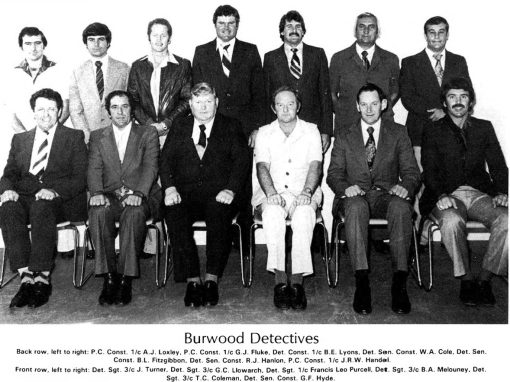
Stations: ?, Burwood Detectives, ?, North West Region – retirement
Service: From? ? pre March 1958 to 30 September 1993 = 35 years Service
Years in Retirement: 22 years, 7 months, 9 days
Age at Retirement: 56 years, 8 months, 5 days
Awards: National Medal – granted 22 August 1980 ( Det Sgt 3/c )
1st Clasp to National Medal – granted 3 September 1985 ( Det Sgt 3/c )
2nd Clasp to National Medal – granted 7 May 1994 ( Det Sgt 3/c )
Star of Courage ( SC ) – granted 27 October 1992 – NSW POLICE SERVICE. SC/FOR ACTS OF CONSPICUOUS COURAGE IN CIRCUMSTANCES OF GREAT PERIL. (MAR 93) ( Det Supt )
Born: Monday 25 January 1937
Died on: Monday 9 May 2016
Cause: ?
Age: 79 years, 3 months, 14 days
Funeral date: Monday 16 May 2016 @ 110am
Funeral location: Our Lady of the Rosary Catholic Church, Main Street, ALSTONVILLE, NSW
Grave Location: Lawn A, Plot 168
Buried at: followed by a Committal service at 11.15am at the Alstonville Cemetery, Bruxner Highway.
Memorial at: ?
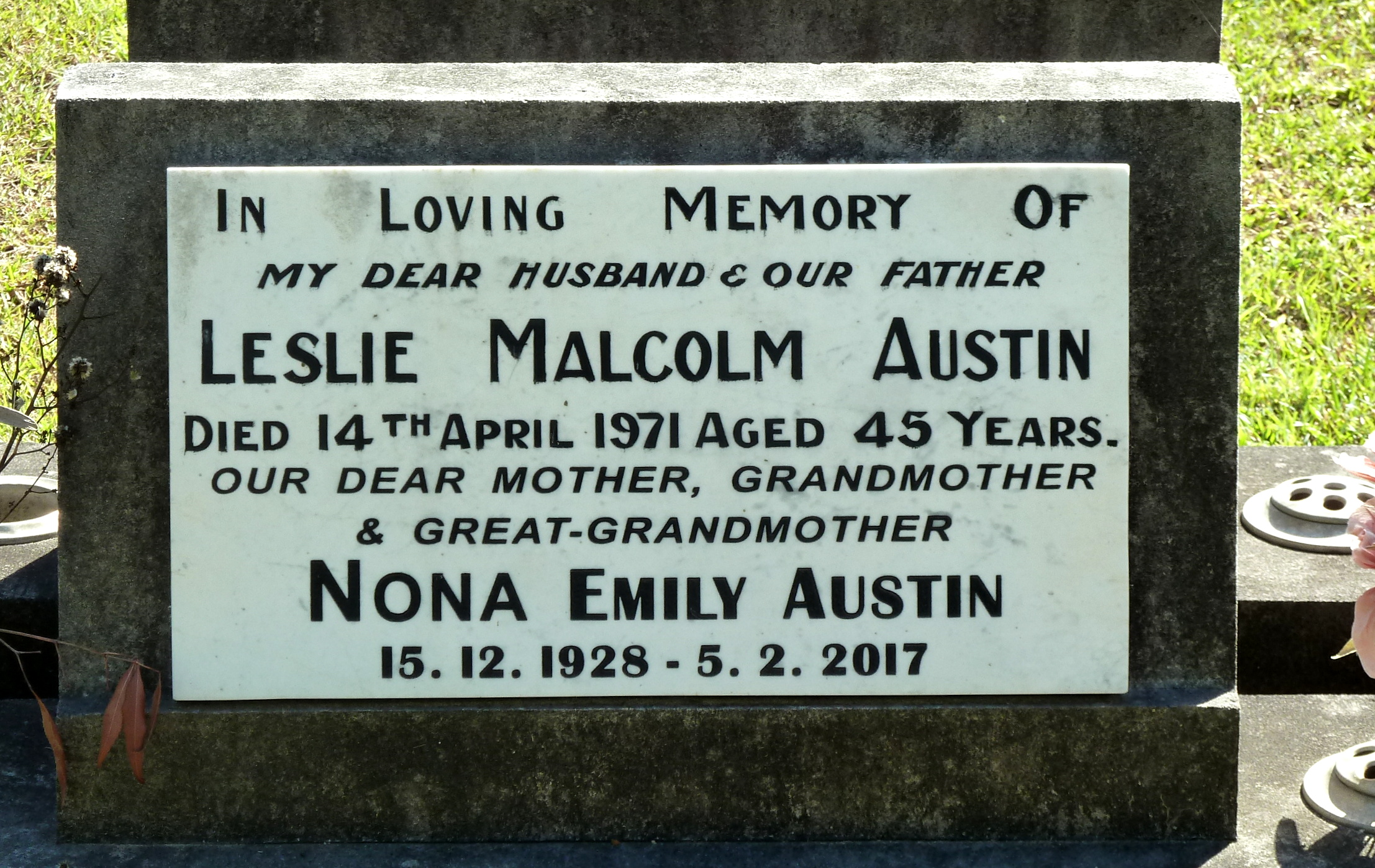
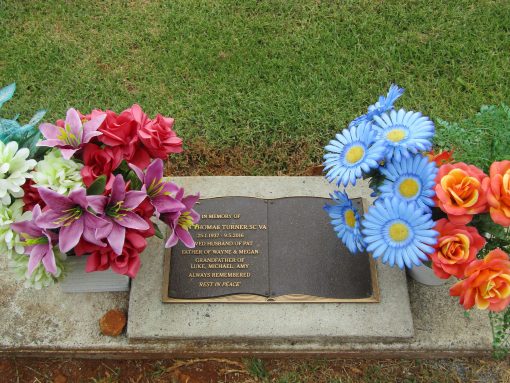
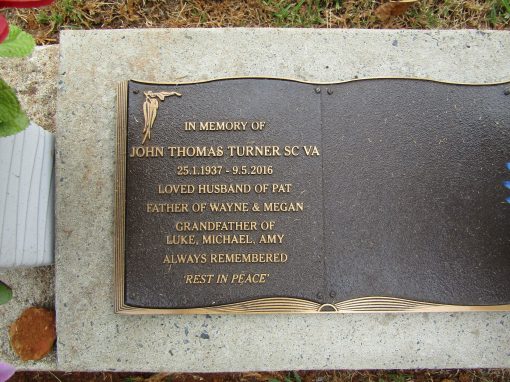
In Memory of John Thomas TURNER SC VA 25 January 1937 – 9 May 2016 Loved husband of Pat, Father of Wayne & Megan Grandfather of Luke, Michael, Amy Always Remembered. ‘Rest In Peace’
JOHN is NOT mentioned on the Police Wall of Remembrance *NEED MORE INFO
Funeral location:
FURTHER INFORMATION IS NEEDED ABOUT THIS PERSON, THEIR LIFE, THEIR CAREER AND THEIR DEATH.
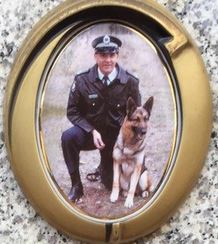
An interesting footnote is that Steve was the first handler to bring his own dog into the Squad and successfully passed out with this dog; Rebel was his name, and when Rebel passed on he was going to be interred with Steve. Don’t know if he was but that was the plan.
Henry TUBMAN
| 07/10/2016
Henry TUBMAN
Late of ‘Avoca’, 103 Arthur St, North Sydney, NSW
New South Wales Police Force
Regd. # ‘P‘ 251
For the purposes of this website ‘P‘ = represents those Police joining Pre 1 March 1862 when NSWPF “Officially” commenced.
Service: Irish Constabulary ( from 1 March 1841 – 24 December 1845, Resigned ) = 4+ years Service,
English Constabulary ( London Police from 11 May 1846 – ? ) = 7+ years Service
Emigrated to Australia, aboard the ship Bangalore, in 1854 aged 32, arriving 13 January 1855 at Port Jackson, NSW.
NSW Police Ranks – Service 1: 13 January 1855 – Constable
? February 1855 – Sergeant
? ? 1857 – acting Inspector
Resigned 11 May 1857 = 2+ years Service
Service 1: NSW Police Force ( Colonial Constabulary 13 January 1855 – 11 May 1857 ) Sydney, Penrith ( for 6 – 7 years ), City Police ( Sydney )
NSW Police Ranks = Service 2: ? – 1882 Sergeant
Service 2: ( Rejoinee – NSWPF ) – ( 4 October 1859 – May 1882 )?, Sgt – Summons Room of Water Police Court, Sydney – Retirement = 13 years Service
‘the below article, dated 2 May 1882, states he rejoined the NSW Police on 4 October 1869 but NSW State Archives has him joining on 4 October 1859 ( 10 years earlier & being born in 1822, not 1823 )
Total of 37+ years Service
Awards: ?
Born: ? ? 1822, Arnay, Co. Fermanagh, Ireland
Died on: Saturday 17 March 1900 at his residence ‘Avoca’, 103 Arthur St, Nth Sydney
Cause: Illness – ?
Age: 77
Funeral date: Monday 19 March 1900 @ 3pm
Funeral location: his residence ‘Avoca’, 103 Arthur St, Nth Sydney, NSW
Buried at: Gore Hill Cemetery, Pacific Hwy, St Leonards, NSW
Inscription Location of grave but no tombstone visible Additional Information from Gore Hill Cemetery Graves Index: Tubman, Henry – Age 77, buried 19/03/1900. Other notes: North Sydney. Tubman, Faith – Age 77, buried 11/11/1926. Other notes: [none] Welsman, Clifford Robert Henry – Age 18, buried 21/06/1941. Other notes: 67 Dalton Street Mosman. Welsman, Stephen – Age 55, buried 08/11/1943. Other notes: (Ashes). 67 Dalton Road Mosman. Welsman, Ethel Frances – Age 73, buried 24/11/1964. Other notes: (ashes). 251 Ben Boyd Road Neutral Bay.
Memorial at: ?
HENRY is NOT mentioned on the Police Wall of Remembrance *NEED MORE INFO
FURTHER INFORMATION IS NEEDED ABOUT THIS PERSON, THEIR LIFE, THEIR CAREER AND THEIR DEATH.
THE FRIENDS of Sergeant TUBMAN are respectfully invited to attend the Funeral of his late beloved WIFE, to move from his residence, 111 Prince-street, a quarter to 2 p.m., THIS DAY, the 8th instant, for the Necropolis.
THE FRIENDS of Mr. HENRY TUBMAN, Sergeant of the Sydney Police, are respectfully invited to attend the Funeral of his deceased WIFE, Maria Anne Tubman; to move from his residence, No. 111 Prince-street, THIS (Thursday) AFTERNOON, at a quarter before 2 o’clock, for the Necropolis.
J. and G. SHYING and CO., Undertakers, 719, George-street S.
We learn that Sergeant Henry Tubman, of the City Police Force, is about to retire upon an allowance granted under the provisions of the superannuation Act. It is probably that there are few persons who have had so much experience of the police force, and fewer still who as policemen have been witness of so many stirring events as has Sergeant Tubman. That officer has worn the uniform of a protector of life and property for more than 39 years.
During that period he has served in the Irish, the English, and the colonial constabulary, and been a witness of some of the scenes of strife engendered in Ireland by the agitation for the repeal of the Union, a spectator when O’Connell addressed an assemblage of 150,000 people, one who was armed with a sawback cutlass at the time of the Chartist riots, and a witness of the opening of the first International Exhibition in London in 1851.
SergeantTubman joined the Irish constabulary as a constable on the 1st March, 1841, and was first called upon to do duty at proceedings in connection with a general election held at Erldunda. The election lasted three days, and as the question of the repeal of the Union was agitating the people’s minds there was a considerable amount of excitement attended by riotous proceedings.
Constable Tubmanresigned on the 24th December, 1845, and joined the London police force on the 11th May of the following year. He was amongst those who had to do duty during the period that the Chartistsgave so much trouble. As it was thought that the Chartists contemplated a wholesale slaughterof the police force, the constables were armed with sawback cutlasses, and were employed on duty in pairs.
In the year 1854 some difficulty was experienced in Sydney in retaining constables, owing to the attractions which the newly discovered goldfields then presented. The local Government sent to England for a number of men, who had had previous experience as constables, and against whom there were to be no marks for drunkenness. It was also stipulated that any men to be sent to the colony must have borne an excellent character.
Forty-six men were selected, amongst whom was 32 year old Constable Tubman. They came to Sydney by the ship Bangalore, which arrived in Port Jackson on the 13th January, 1855. Three weeks after his arrival Mr. Tubman was promoted to the rank of sergeant, and two years later he was raised to the rank of acting inspector.
Mr. Tubman retired from the force by resignation on the 11th May, 1857, but he rejoined on the 4th October, 1869. For the last five or six years he has hold the position of sergeant in charge of the summons room of the Water Police Court, where his courteous demeanour has secured him many friends.
Sergeant Tubman, who ¡s now upwards of 60 years of age, retires on an allowance of 5s. 10d. per day, which is equal to two-thirds the amount of his daily pay.
We understand that provision has also been made for the immediate retirement of’ Senior-constable John Carton, the trooper who has been stationed at Manly Beach for the last 15 or 16 years.
At the ST. LEONARDS POLICE COURT, yesterday, before Mr. G. W. F. Addison, S.M., J. O. Phillips, summoned by the Inspector of Nuisances for the Borough of St. Leonards, for using on his premises nightsoil brought from elsewhere without permission, was fined 40s., and complainant’s costs £1 11s. 6d., levy and distress, or 14days.
John McClinchy, summoned by Henry Tubman, Inspector of Nuisances for the Borough of Victoria, for obstructing him when acting under the authority of the Nuisances Prevention Act, was fined £3, and costs 7s., levy and distress, or one month.
Anton Ham was ordered to pay 10s. per week for 12 months towards the support of his wife, the first payment to be made at St. Leonards police station on Monday next, with 5s. 10d. costs.
Mr. Henry Tubman, late Inspector of Nuisances to the Borough of East St. Leonards, has been re-appointed, out of 120 applicants to the position, at a salary of £150 per annum. He was inspector to that borough, and also to the borough of Victoria, at each place receiving a salary of £80 per annum. He will, of course, resign his position at Victoria.
TUBMAN.—The Friends of Sergeant JOHN THOMPSON are kindly invited to attend the Funeral of his late FATHER-IN-LAW, Henry Tubman, ex-Sergeant of Police ; to leave his late residence, 103 Arthur-street, North Sydney, at 3 p.m. THIS DAY, for Gore Hill Cemetery.
TUBMAN.— The Friends of the late Mr. HENRY TUBMAN, ex-Sergeant of Police, are kindly invited to attend his Funeral ; to move from Avoca, 103 Arthur- street, North Sydney, THIS MONDAY, at 3 o’clock, for the Gore Hill Cemetery.
Mrs. P. KIRBY and SON,
Undertakers,
7 Elizabeth-st., and 113 Miller-st., N. Syd. Tel., 875.
An ex-senior sergeant of police and a pensioner in the person of Mr. Henry Tubman died at his residence, Arthur-street, North Sydney, on Saturday last.
The deceased, who was well advanced in years, had seen considerable service in the force. There was a large attendance of police officers at the funeral on Monday, the Police Band being also present.
TUBMAN — At his residence, ‘ Avoca,’ Arthur street, North Sydney, Henry Tubman, ex Senior-sergeant of Police, aged 77 years. Dearly beloved father of Mrs A. H. McEachern, of David street, Albury.
The subject of the appended paragraph from Sydney paper was the ‘father-in-law of Mr. A H. McEachern, of Albury ; — Henry Tubman, an ex-police sergeant, died on Saturday at North Sydney at the age of 77 years. The deceased appears to have been ill for a considerable time, and had had consequently a protracted confinement to his house. A few years ago Mr. Tubman filled the office of inspector of nuisances to the East St. Leonards Council, and about the period of the amalgamation of the Council he was one of the unsuccessful candidates.
The funeral on Monday was attended by several members of the local police force.
Tubman joined the Royal Irish Constabulary when 18 years of age, thence he passed to the London Police. In 1854, the Government of New South Wales called for volunteers from the London Police, and Tubman was one of those accepted. He came here in the ship ‘ Bungalore,’ in company with the present Superintendent Reid.
Being a steady and zealous officer, he rose in the force, and became inspector about the year 1856. He was transferred to Penrith, and after six or seven years’ service, returned to Sydney until May, 1882, when he retired on a pension.
“He leaves behind a widow & 4 children”. This shows that me ‘may have’ remarried after the death of his wife, Maria Anne Tubman, in January 1880, whilst living at 111 Prince St. The ‘second wife’ may ‘possibly be’ Faith TUBMAN who either died on, or was buried on, the 11 November 1926 in a grave next to Henry. Methodist 1, A, 149 of Gore Hill Cemetery, NSW.
The St. Leonards circuit has recently lost by death two of its most venerable church members. The first to lay down the burden of life was Mr. Thomas Swinger, ……….
The next to be removed Henry Tubman, from the Church Militant to the Church Triumphant, was Mr. Henry Tubman, one of the oldest members of the St. Leonards Church, and a trustee for the Parraween property. He died at his residence in Arthur Street, North Sydney, on Wednesday, 17th. March, in his 78th. year, and his body was laid in the grave in the beautiful cemetery at Gore Hill, on Monday, 19th. ultimo.
For six long months he was afflicted, but his fortitude and submission to the Divine will were unfailing. He loved prayer, reading of the Scriptures, and the visits of Christian friends. In the last hours of his life he suffered greatly, death was hard work to him physically but his faith did not fail him. His lips were often seen to move in prayer, and the Lord in whom he trusted fulfilled his promise and did not leave nor forsake him in his mortal struggle.
Mr. Tubman was a retired sergeant of the Police Force of the Colony, having joined it upwards of 40 years ago, and was at one time a well known member of our church in the Bourke Street and York Street circuits. He had resided at St. Leonards for the past 18 years.
In THE SUPREME COURT OF NEW SOUTH WALES – Probate Jurisdiction. – In the Will of HENRY TUBMAN, late of North Sidney, in the colony of New South Wales, Gentleman, deceased.- Application will be made after fourteen days from the publication hereof that Probate of the late Will of the abovenamed deceased may be granted to FAITH TUBMAN and HUGH ABERCROMBIE, the Executor named in the said Will, and all notices may be served at the office of the undersigned.
TUBMAN.-In loving remembrance of our dear husband and father, Henry Tubman, who died 17th March, 1900, at his residence, 103 Arthur-street, North Sydney. Inserted by his affectionate wife and children.
TUBMAN- In affectionate remembrance of our dear husband and father Henry Tubman, died 17th March, 1900. Inserted by his affectionate wife and children.
TUBMAN.-In loving memory of our dear husband and father, Henry Tubman. who died March 17. 1900, at North Sydney. Inserted by his affectionate wife and children.
McEACHERN.— March 22, 1909, at Manly, of Bright’s disease, Rebecca Emily Estella, dearly loved third daughter of Archibald H. and Rebecca McEachern, of Albury, and granddaughter of the late Henry Tubman, Esq, of North Sydney, aged 23 years.
I knew John Allen Garth during the period between 1982 to 1993. When I met him he worked at CIG as the National Security Manager. He had already left the force for some time. He mentioned he was in charge of Wollarah. His close friend and one time partner was Allen Whittaker. Allen passed away 2 yrs later than John. John was a very interesting character with a sharp intellect and a hawk eye for detail. I’m richer by far for having known him.
Anne Sparks via email to AusPol on 11 Oct 2021.
John Benoni ROSS
| 07/10/2016
John Benoni ROSS
( late of Willoughby and Balmain )
New South Wales Police Force
[blockquote]
Sarah Ann ROSS – wife of John
Died on: 24 April 1885 ( 10 days after her husband )
Funeral date: Sunday 26 April 1885
[/blockquote]
Regd. # ‘Q‘ 2523
For the purposes of this website ‘Q‘ represents those Police joining between 1 March 1862 ( commencement of NSWPF ) – 23 February 1915 ( Commencement of NSWPF current numbering system )
Rank: Probationary Constable – appointed 25 March 1875
Constable – appointed ? ? ?
Senior Constable – appointed ? ? ?
Final Rank: Senior Constable
Stations: ?, Balmain 1879 to 1882, North Willoughby Station ( O.I.C. during 1884)
Service: From 25 March 1875 to 14 April 1885 = 9+ years Service
Awards:
Not a Police award but a civilian one
Another lengthy report was in the SMH Tuesday 3″ June 1879:
On the presentation of the gold watch and chain and an address as an acknowledgement of Constable Ross, intrepid conduct rescuing two persons at the risk of his own life. Three cheers were given by the 50 residents attended the Balmain Council Chambers for the presentation.
The inscription: Presented to Constable John Benoni Ross by the inhabitants of Balmain, in admiration of his heroic conduct in rescuing two lives at a well accident, 18 April 1879. Balmain 2 June 1879.
A letter from the Inspector General of Police was noted at the 27 June 1879, Balmain Council meeting, having reference to the gallant conduct of Constable Ross at the recent well accident.
The watch remains in the Ross family treasures.
Born: ? ? 1852, Caithness, Scotland
Died on: Tuesday 14 April 1885 at Police residence, Chatswood Police Stn, North Willoughby
Cause: Typhoid Fever as did his wife Sarah 10 days later aged 30 and their infant daughter Sarah aged 1
Age: 32
Funeral date: Wednesday 15 April 1885
Funeral location: ?
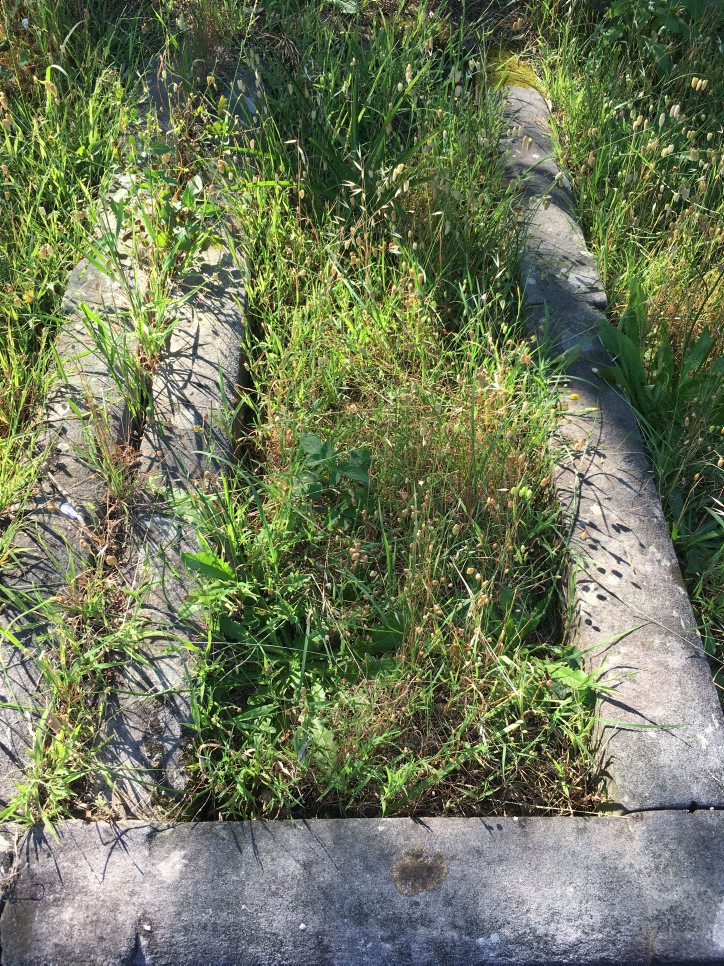
Buried at: Pioneer Memorial Cemetery, corner Mowbray Road West and Pacific Highway, Chatswood. (opposite the Great Northern Hotel)
Memorial at: ?
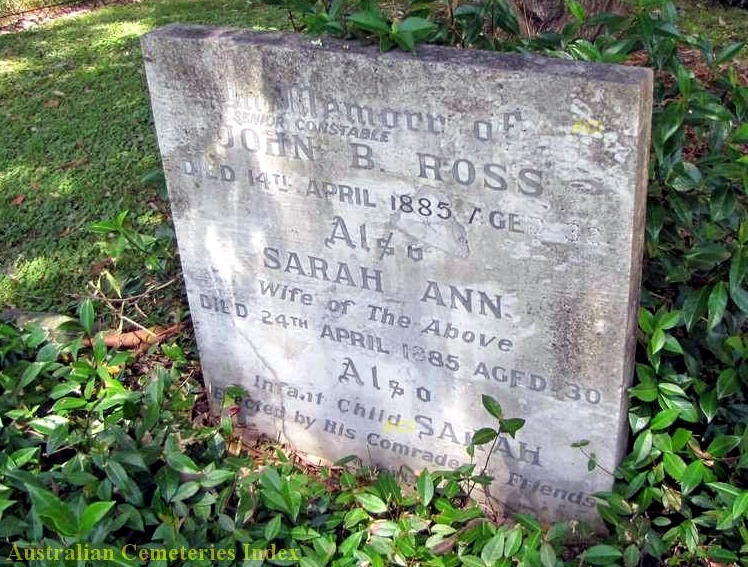
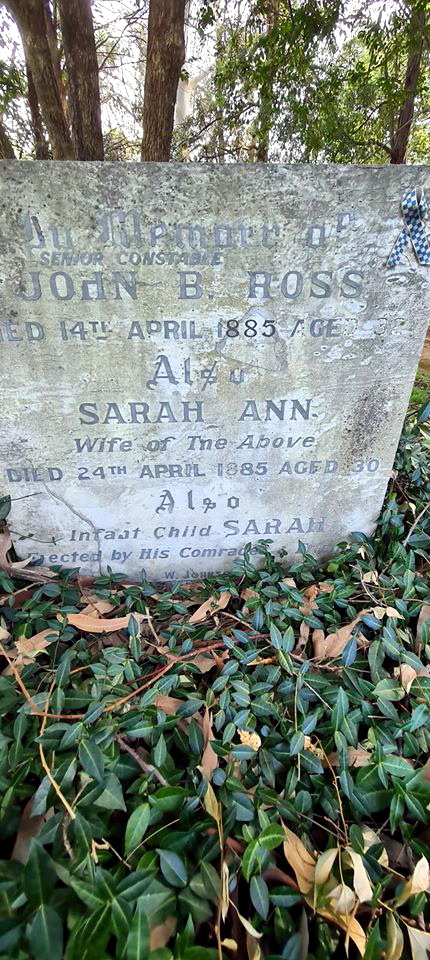
In Memory of Senior Constable John B. Ross Died 14th April 1885 aged 32. Also Sarah Ann, Wife of the above. Died 24th April 1885 aged 30. Also infant child Sarah. Erected by his comrades & friends.
JOHN is NOT mentioned on the Police Wall of Remembrance *NEED MORE INFO
FURTHER INFORMATION IS NEEDED ABOUT THIS PERSON, THEIR LIFE, THEIR CAREER AND THEIR DEATH.
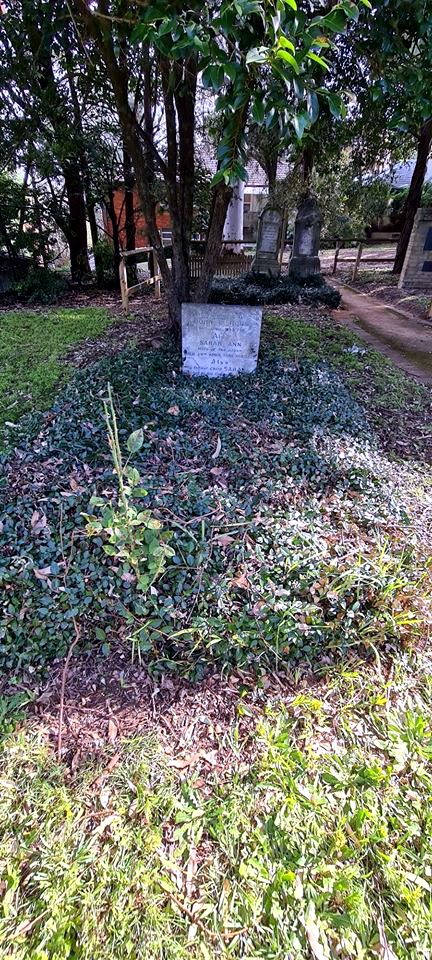
Kevin Banister May 4 2020 at 4:59 PM Went for a trip this afternoon (4/5/2020) to the Pioneers Memorial Reserve, Mowbray Road, Chatswood and took a couple of photos of the resting place of Senior Constable John Benone ROSS and family. This little cemetery is a heritage site and is being maintained by Lane Cove Council and what a wonderful job they are doing. The ribbon had fallen off and I re-attached it. In the bottom left corner of the plot is a rose bush as is on most other marked graves. Even these are pruned.
The Sydney Morning Herald Wednesday 15 April 1885 P 1 of 16
ROSS. – April 14, at his residence, Police Station, North Willoughby, John Binnone Ross, aged 33 years, native of Caithness, Scotland, leaving a wife and five children and large circle of friends to mourn their loss.
ROSS. – April 14, at the Police Station, North Willoughby, Senior-constable John Ross ( late of Balmain ), leaving a wife and five children to mourn their loss.
The Sydney Morning Herald Wednesday 15 April 1885 P 16 of 16
THE FRIENDS of the late Mr. JOHN B. ROSS are respectfully invited to his Funeral ; to leave his residence, Lane Cove-road, THIS DAY Wednesday, at 3 o’clock, for the Wesleyan Cemetery, Willoughby.
W. H. HOWARD, Undertaker, Walker-street, St. Leonards.
Balmain Observer & Western Suburbs Advertiser Saturday 18 April 1885 P 3 of 4
Senior Constable Ross, well known in Balmain about four years ago and lately in charge of North Willoughby, died on Monday night, from, consumption.
It will be remembered that he made a very plucky rescue of two men from a well in the neighbourhood of Beattie street, in which was foul air while he was stationed in Balmain, the effects of which he has since suffered from.
The Sydney Morning Herald Saturday 25 April 1885 P 20 of 20
THE FRIENDS of the late Mrs. ROSS, widow of the late Senior-constable Ross, of Chatswood, are respectfully invited to attend her Funeral ; to leave her residence at 3 o’clock TO-MORROW, Sunday, for Wesleyan Cemetery.
W. H. HOWARD, Undertaker, Walker-street, St. Leonards.
The Sydney Morning Herald Saturday 30 May 1885 P 5 of 24
IN THE SUPREME COURT OF NEW SOUTH WALES.
Ecclesiastical Jurisdiction.
In the Intestate Estate of JOHN B. ROSS, late of Willoughby, Senior Constable, deceased.
CREDITORS are to forward to me ( through the Post Office if they think fit ), at my office, in the Supreme Court, Sydney, their details for proof, verified by affidavit, on or before the fifteenth day of June next, or they will be excluded from all benefit from this estate.
‘Balmain Association’ newsletter dated April 2001.
P o l i c e H e r o i c R e s c u e
A letter from Mrs Meg Chamberlin formally of Ferdinand Street, Balmain and now of Macley Island, Queensland, stated that some information on her family history could be of interest to the Association. While cleaning out a draw on a visit to her mother at the family home, a letter was found with an interesting PS, relating to a presentation of a gold watch to Constable John Benone Ross in 1879.
Constable Ross was stationed at the Watch House from 1879 to 1882 and lived in Darling Street, Rozelle, near Red Lion Street. He then moved to Chatswood where he, his wife Sarah Ann and a child died within a few days of each other in a Typhoid epidemic in April 1885. John was 32 years and Sarah was 30 years and daughter Sarah 1 year. They were buried in the church yard of the Methodist Church, Chatswood. Comrades and friends erected the headstone. Grandmother Sarah Ann Robinson reared the other four children.
In a report in the Sydney Morning Herald, Tuesday 21″ April 1879:
On Friday morning a man named Albert Drave was nearly suffocated by descending into a newly dug well 25 feet deep behind the Bellevue, now Sackville Hotel, Darling Street. A blast had just taken place at the bottom of the well and the smoke not having thoroughly cleared way before Drave descended, he was almost suffocated when he reached the bottom. His distress having been noticed by the proprietor of the allotment Mr Barthrope, he at once descended to retrieve Drave, but he was likewise became overpowered by the fumes of the powder. Constable Ross being near the spot, volunteered to descend and succeeded in bringing up to the surface first Drave, then Barthrope. Drs. Brennan and Evans were quickly on the spot and industriously applied the usual restoratives. Both men are doing well at the latest accounts.
Another lengthy report was in the SMH Tuesday 3″ June 1879:
On the presentation of the gold watch and chain and an address as an acknowledgement of Constable Ross, intrepid conduct rescuing two persons at the risk of his own life. Three cheers were given by the 50 residents attended the Balmain Council Chambers for the presentation.
The inscription: Presented to Constable John Benoni Ross by the inhabitants of Balmain, in admiration of his heroic conduct in rescuing two lives at a well accident, 18 April 1879. Balmain 2 June 1879.
A letter from the Inspector General of Police was noted at the 27 June 1879, Balmain Council meeting, having reference to the gallant conduct of Constable Ross at the recent well accident.
The watch remains in the Ross family treasures.
Goulburn Evening Penny Post ( NSW ) Saturday 26 April 1884 p 4 of 10
Suspicious Death.
ON Wednesday evening Senior-constable Ross, who is in charge of the North Willoughby station, received intelligence from a man named Henby that a death under suspicious circumstances had taken place in the district. He accordingly proceeded to a house near Burn’s Bay, Lane Cove Road, occupied by William Cox, who is stated to be an old resident of the district. In one of the rooms was found the body of Ann Sophia Cox in bed, looking to all appearance dead.
Dr. Rorke, of North Shore, was at once communicated with. He soon arrived, and expressed an opinion that deceased had probably met with her death in consequence of external injuries. The only female clothes in the house beyond those found on the woman were a chemise and another garment, both of which were stained with blood.
Under the circumstances the constable apprehended William Cox, the husband of the deceased, at a late hour last night, and he his now lodged at the St. Leonards police station.
Upon being questioned as to the occurrence the prisoner declared that he knew nothing of the cause of his wife’s death beyond that she had sustained a fall, and expressed ignorance concerning the garment stained with blood. It appears that Cox informed Henby of the death of the woman in the first place.
The police state that prisoner has been often seen of late under the influence of drink, and his domestic matters did not seem to have been of a happy character. He is described as of no occupation.