Joined NSW Police Force via the NSW Police Cadet system on 13 May 1963
Cadet # 1847
Rank: NSW Police Cadet – commenced 13 May 1963
Probationary Constable – appointed 5 July 1966
Constable – appointed 5 July 1967
Detective Senior Constable – appointed 31 August 1975
Detective Senior Constable – death
Stations: ( Cadet ) – Redfern – 7 Division, (Uniform ) – Blacktown – 27 Division, Police Driver Training – St Ives, Surveillance Unit, Fairfield – Detective – ( 34 Division ) – Death
Service: From 13 May 1963to 7 April 1983 = 19+ years Service
Awards: ? National Medal – granted 18 November 1982
Born: Saturday 5 July 1947
Died on: Thursday 7 April 1983
Cause: Heart attack – whilst seated at his desk, Mick complained of pain in his jaw before having the heart attack
Event location: Inside the Detectives office, the old Fairfield Police Stn, Smart St, Fairfield
Age: 35
Funeral date: Monday 11 April 1983
Funeral location: Pinegrove Cemetery
Buried at: Cremated. Mike’s Ashes are laid under a Memorial plaque at Pinegrove
[alert_red]MICK is NOT mentioned on the Police Wall of Remembrance[/alert_red] * BUT SHOULD BE
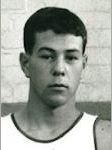
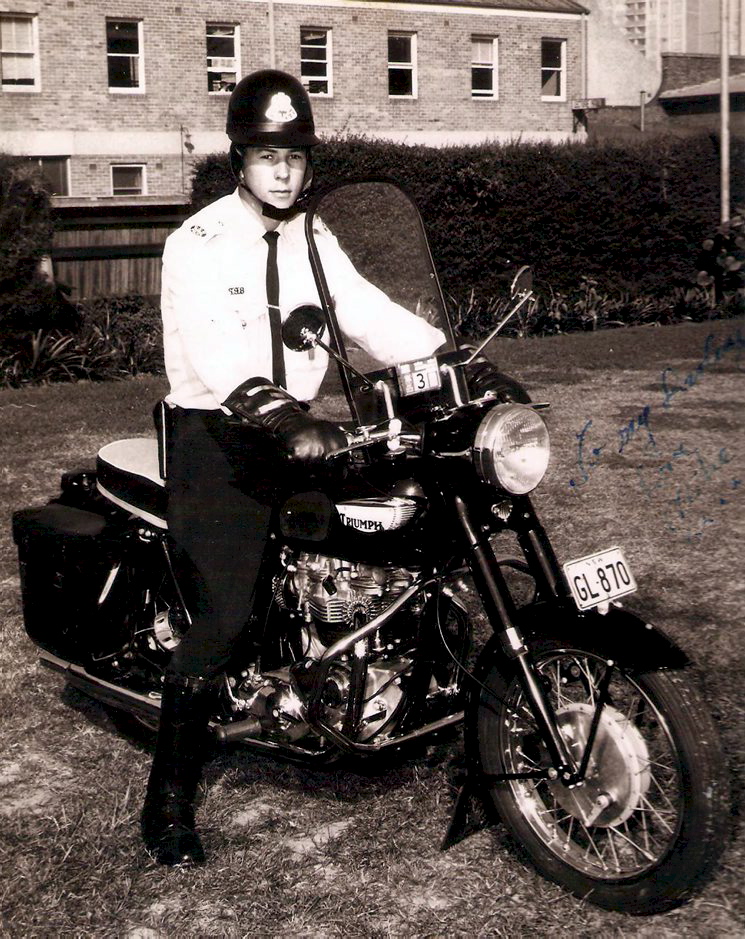
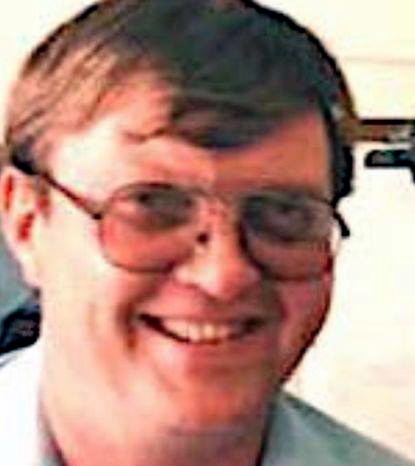
Cadet Mick Middleton
Michael John MIDDLETON. Written on front: To my Darling. Love Mike. xxxx
[divider_dotted]
The Detectives office being on the ground floor of the 3 storey building on the left – looking down the ( then ) driveway, from Smart St, which went between both buildings.
When Mick arrived at work in the morning, he complained of a tooth ache / pain in his jaw. He was sitting at his desk and said he did not feel good and collapsed to the floor. His workmates were later told that he was gone before he hit the ground. He was survived by a wife and two young daughters.
Mick was a nice bloke and always approachable.
[divider_dotted]
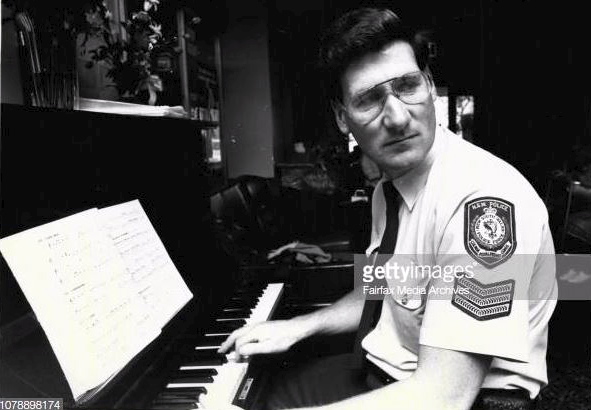
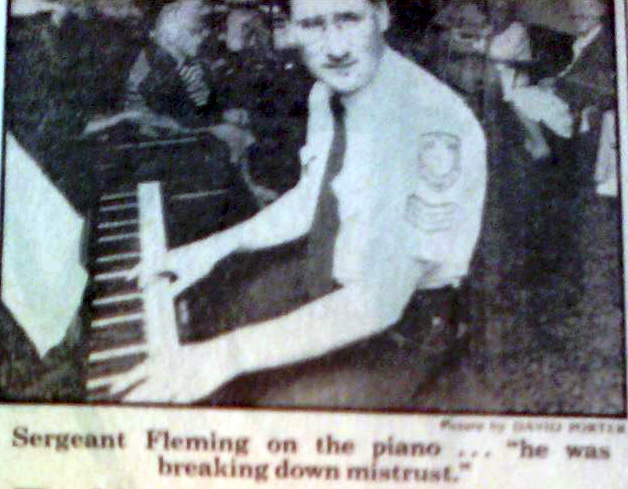
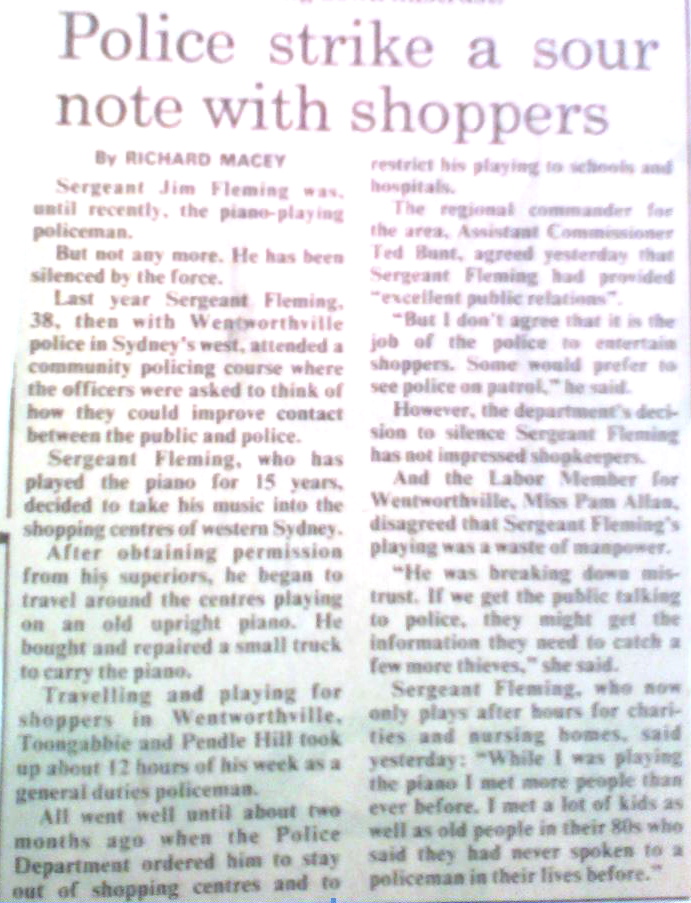
James Francis FLEMING
| 08/09/2015
James Francis FLEMING
( Late of Elderslie )
aka Jim
New South Wales Police Force
Son of retired member – Bill Fleming – Regd # 5551 ( also a Cadet # 501 )
Regd. # 13889
Joined NSW Police Force via NSW Police Cadet system on 15 May 1967
Cadet # 2281
Rank: NSW Police Cadet – commenced 15 May 1967
Probationary Constable – appointed 19 October 1969
Senior Constable – appointed 19 October 1978
Sergeant 3rd Class – appointed 19 November 1985
Sergeant – Retirement
Stations: ?, Wentworthville – 1984
Service: From 15 May 1967 to ? = 30+ years Service
Awards: National medal – granted 10 September 1986
1st Clasp to National medal – granted 6 June 1997
Born: Thursday 19 October 1950
Died on: Sunday 30 August 2015
Cause: ?
Age: 64 yrs 10 mths 11 days
Funeral date: Monday 7 September 2015 @ 10.30am
Funeral location: Chapel, Forest Lawn Memorial Park Cemetery, 11 Camden Valley Way, LEPPINGTON
Buried at: Forest Lawn Cemetery
Standard Lawn Site, Churchyard Lot 32, Site 7
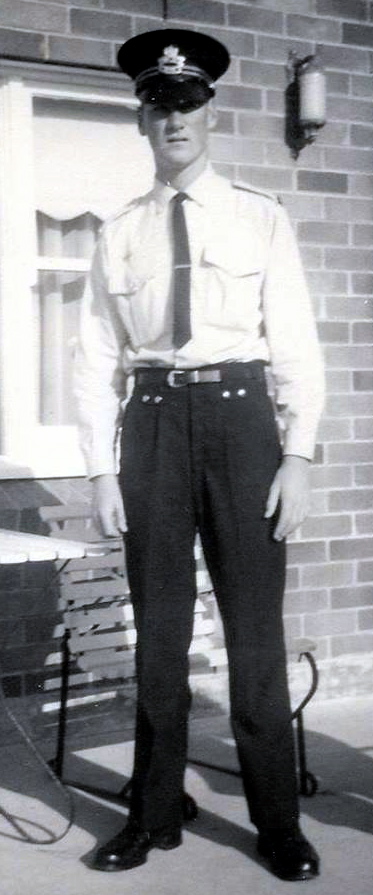
Cadet Jim Fleming
JAMES is NOT mentioned on the Police Wall of Remembrance *NEED MORE INFO
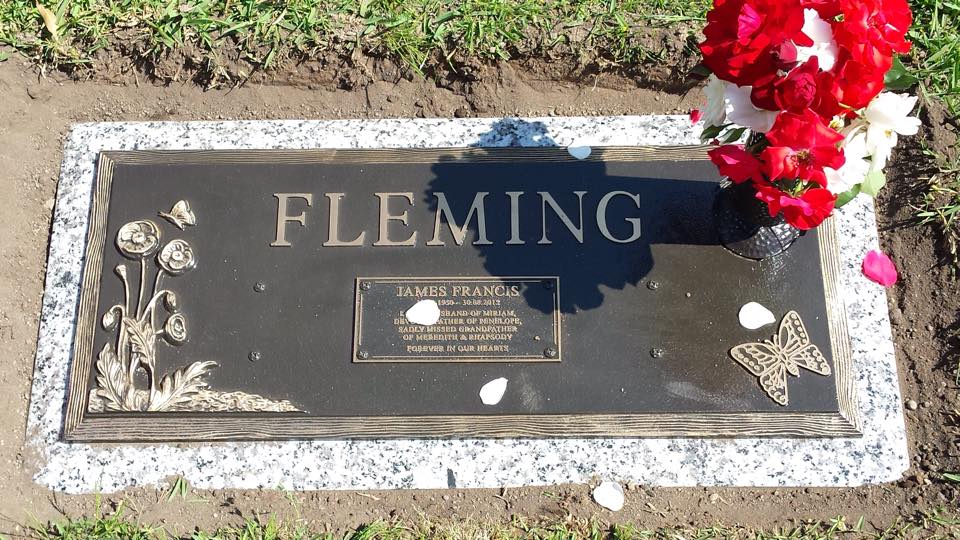
FLEMING, James Francis
19.10.1950 – 30.08.2015
Sergeant of Police (r’td).
Passed away peacefully on 30 August 2015.
Late of Elderslie.
Beloved husband of Miriam. Devoted father of Penny and grandfather of Meredith and Rhapsody. Much loved son of Nita & Bill and dear brother of Elizabeth (dec), Paul, Cathy, John, Margaret, Helen, Anthony and Gregory.
Rest In Peace
A Celebration of JAMES’ Life was held at the Forest Lawn Memorial Park Cemetery, Leppington on MONDAY (September 7, 2015).
August 29th, 1985, Police Officer Lyncon Robert Dix Williams from Holden Hill police was murdered at Blair Athol. First Class Constable Lyncon (Lync.) Williams Aged 30 years, of Holden Hill Patrol Base, died in his patrol car after he responded with his junior partner to reports of gunfire at Ross Avenue Blair Athol. A 17-year-old shot him as he arrived on the scene. He had not even had the chance to step out of his car ahead of the fatal shot.
Police arrested and charged the shooter with murder. He was convicted and sentenced to imprisonment at the Governor’s pleasure. A non-parole period was later fixed at 13-and-a-half years.
Police Association President Peter Alexander reflected on William’s death as he laid a wreath at a Police Remembrance Day memorial service. “I didn’t know Lync Williams personally but, I’ll always remember the circumstances of that murder”, he said.
’I remember the shock of it and the grief for his family and workmates. It was a tragedy that was reflected right across the job.’
[divider_dotted]
Frederick MEREDITH
| 08/09/2015
Frederick MEREDITH
late of Liverpool, NSW
New South Wales Police Force
Regd. # ?
Rank: Chief Constable
Stations: Sydney area (see below) andLiverpool
Service: 1800 – 1811.
Was 1 of 50 ‘free men’ who volunteered and were accepted to join the Loyal Sydney Association set up by Governor Hunter to quell a possible uprising by ‘the Irish’. They were under the control of a civilian by the name of William Balmain. Frederick was involved in the Battle of Vinegar Hill in 1804. The 50 were known as armed volunteer Police (Militia)
1811 – 1828.
Sworn in 1811 as Constable under the newly formed NSW Police set up by Governor Macquarie.
Served at Liverpool 1822-1828 becoming Chief Constable in 1826.
Believed to have resigned in *1828 to become the first Post Master at Liverpool Post Office.
A story, below, indicates that Meredith – as the Chief Constable of Liverpool, was shot in both legs during a bush-ranger’s robbery in 1830.
Awards: ?
Born: 5 October 1763 in Dinham, Ludlow, Shropshire, England
Died on: Thursday 23 June 1836
Event location: Bankstown, NSW
Cause: ?
Age: 73
Funeral date: ?
Funeral location: ?
Buried at: Pioneer Memorial Park, Liverpool
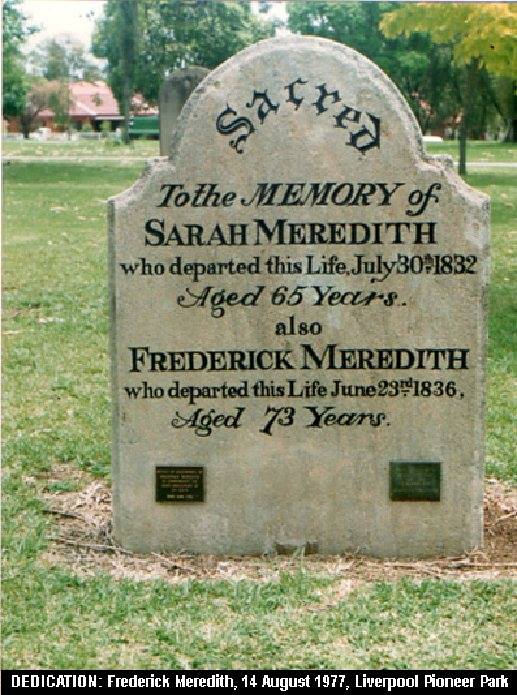
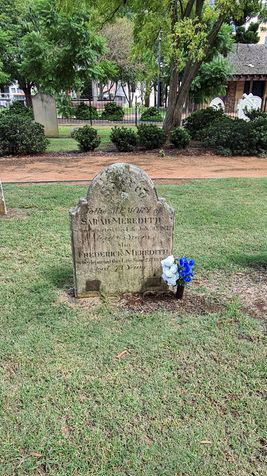
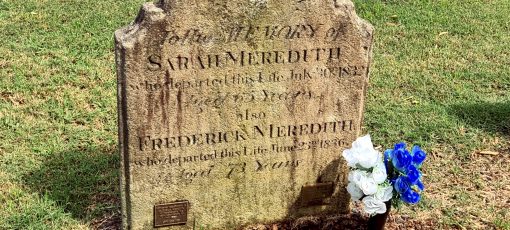
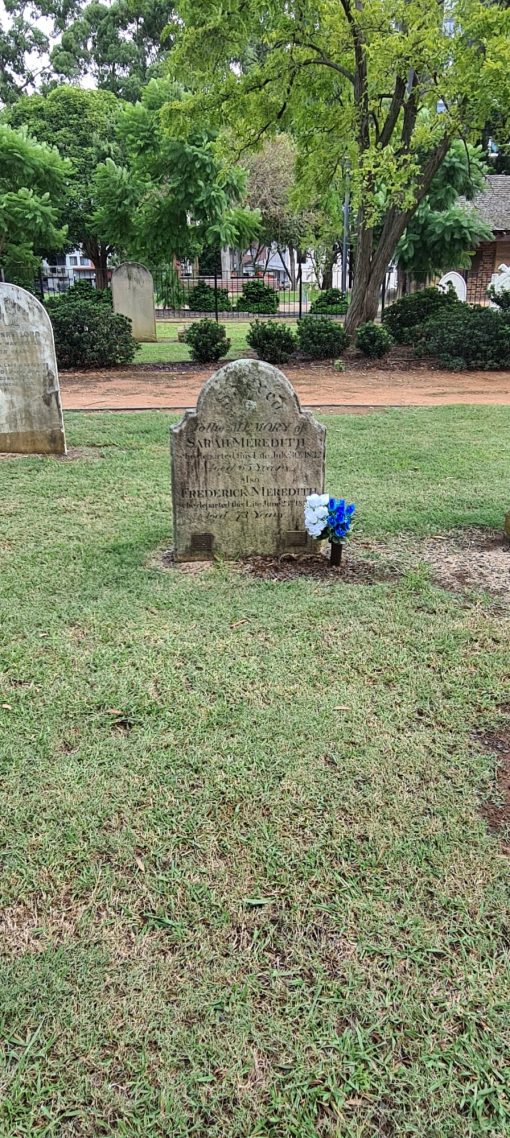
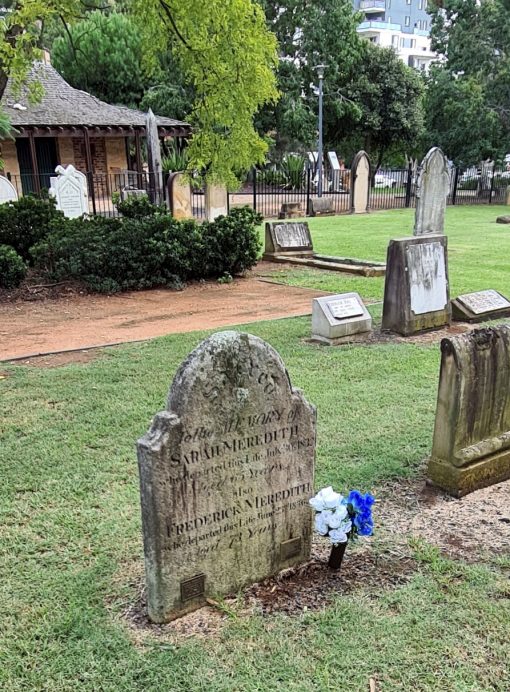
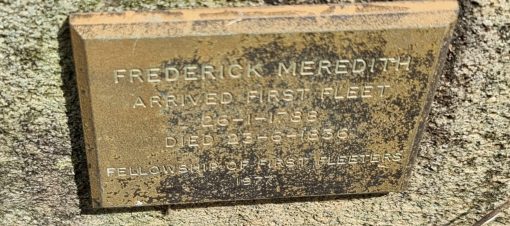
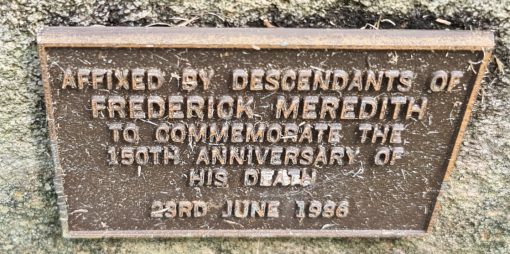
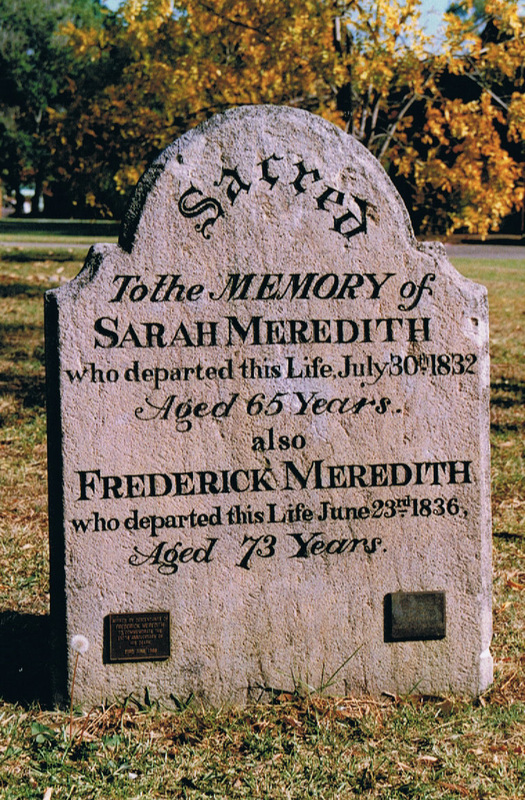
Frederick MEREDITH – Headstone in Liverpool Pioneer Park – 14 August 1977
FREDERICK is NOT mentioned on the Police Wall of Remembrance *NEED MORE INFO
Funeral location: ?
Frederick is believed to be the “third” Chief Constable of Liverpool until 1833.
He arrived on the First Fleet on the Scarborough.
His grave is at Liverpool Cemetery.
In 1811 Frederick joined Governor Macquarie’s police force. He was later appointed the first constable, then the “third” chief constable of Liverpool.
He remained in the police until 1833, holding positions of Constable, Chief Constable & District Constable.
Info via Jay Chappo – Beyond Courage FB page – 20 August 2015
They Sydney Gazette & New South Wales Advertiser Saturday 7 February 1835 page 2 of 4
SUPREME COURT.
FRIDAY, FEBRUARY 6.
(Before Mr. Justice Dowling and a Civil Jur..)
In a murder trial in the Supreme Court on Friday 6 February 1835, Frederick MEREDITH describes himself to the Court as “Chief Constable at Liverpool”
They Sydney Gazette & New South Wales Advertiser Thursday 7 July 1836 page 3 of 4
DIED.
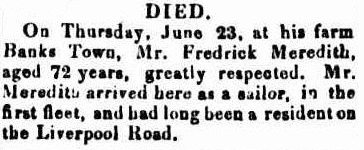
On Thursday, June 23, at his farm Banks Town, Mr. Fredrick Meredith, aged 72 years, greatly respected. Mr. Meredith arrived here as a sailor, in the first fleet, and had long been a resident on the Liverpool Road.
Ordinary constables appointed to operate under Macquarie’s 1811 regulations were, John Jones, John Godwin, Edward Tulby, Matthew Quinn, Patrick Field, Samuel Reid, George
Cochrane, John Ayres, Joseph Evans, John Smith, James Mannek, William Goodman, William Donnelly, Abraham Lee, William Welch, Joseph Welch, Michael Simpson, John
Pauley, John Webb, Thomas Colebrook, James Phelan, William Thorn, Charles Evans, Thomas Jones, Abraham Bateman, George Atkins, John Anslie, William Foster, John Randall, Robert McAlister, Aaron Packenham, Thomas Mansfield, John Burgess, Thomas Salmon, John Smith, George Phillips, Ambrose McGuiggan, Gilbert Baker, Frederick Meredith, Joseph Smith, John Lyster, Thomas Dunn, James Chamberlin (also shown as Chamberlain).
Matthew Gibbons was Clerk of the Market and William Hawkins was Assistant Clerk of the Market.
Daniel Cubitt was Gaoler. In 1811, Macquarie also introduced traffic regulations.
NSW Police Heritage Story p231
Liverpool Police complained in July, 1845, that the police establishment there was completely without serviceable firearms. Consistent with outlying districts of Sydney in
those days, Liverpool District was plagued at times by bushrangers. Liverpool Police, like police throughout the colony, faced dangerous situations in which they depended on
their government issue firearms.
For instance, in 1830, Liverpool’s Chief Constable Frederick Meredith, was seriously wounded in a clash with a bushranger gang. ( Later reading, below, indicates that this would have been Frederick Meredith ( Jnr ). )
In March, 1830, a gang of 6 bushrangers entered a public house on the Liverpool Road and stole 8 pounds in cash, plus 5 gallons of spirits and a brace of pistols.
The robbers later entered the residence of a man named Jackson on the Liverpool Road and gained entry to the premises by posing as constables.
When the robbers entered the premises, the men were confronted by Jackson and Chief Constable Meredith. The candle illuminating the inside of Jackson’s place was extinguished and an affray followed, resulting in Jackson and his wife being injured. Meredith was shot in both legs.
One of the gang was captured, but the other bushrangers escaped, leaving behind a number of firearms.
Two of the bushrangers were John McNamara and William Dalton.
Following the demise of Dalton and McNamara, in June, 1830, McNamara was shot dead by Samuel Horn, wardsman of Parramatta, and Dalton came to the end of his life on the
hangman’s rope, Frederick Meredith was given a land grant for his conduct in protecting Jackson’s premises.
The Governor also commended Jackson for his conduct against the bushrangers. Jackson’s assigned servant William Johnston, received a ticket of leave for courageously protecting his master’s property.
Frederick Meredith
Frederick Meredith arrived with the First Fleet as a steward to Captain John Marshall of the convict transport Scarborough. He came before a magistrate for exchanging a “squirrel” for rum, apparently on the orders of the captain, and was sentenced to 100 lashes. Governor Phillip reduced the sentence to 50 lashes on representations from the captain and others. Shortly before the Scarborough sailed to China, he signed on to the HMS Sirius with the duties of a baker. He was twenty three and gave his birthplace as Denham Wales.
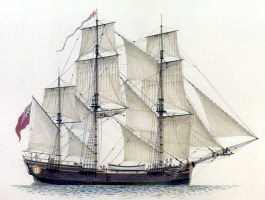
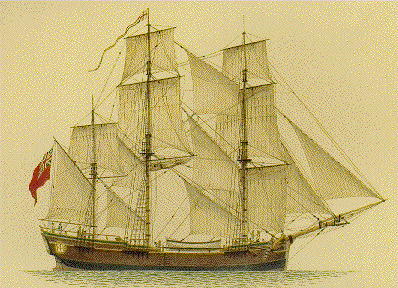
Convict transport Scarborough
His initials are still visible at Garden Island where the crew were assigned to preparing a garden. After the Sirius was wrecked off the coast of Norfolk Island on 19 March 1790, Frederick and some of the other crew members returned to Port Jackson on HMS Supply.
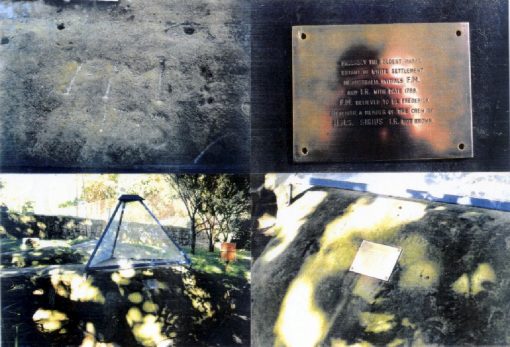
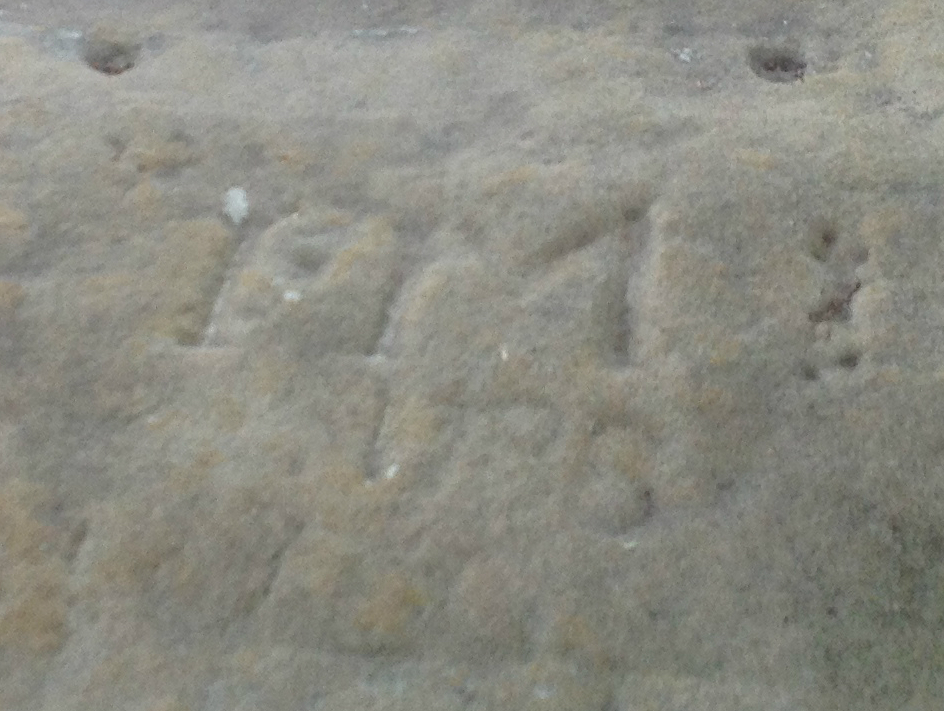
Frederick Merediths initials at Garden Island ” Possibly the oldest marks er?ant of white settlement in Australia. Initials F.M. and I.R. with date 1783. F.M. believed to be Frederick MEREDITH, a member of the crew of H.M.S. SIRIUS. I.R. not known. ” Frederick Meredith’s initials at Garden Island
Captain Hunter of the wrecked Sirius and the crew embarked for England in March 1791. Frederick was then paid off by the navy in 1792 and decided his future lay in Botany Bay.
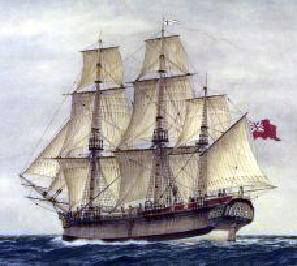
HMS Sirius
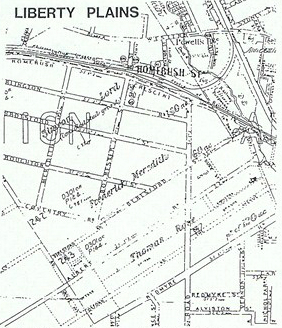
He returned on the Bellona in 1793 with a small group of the first free settlers. They were given land grants at Liberty Plains (now Strathfield). His second grant was 60 acres, where Rhodes railway station is today. Both land grants were unsuited to farming.
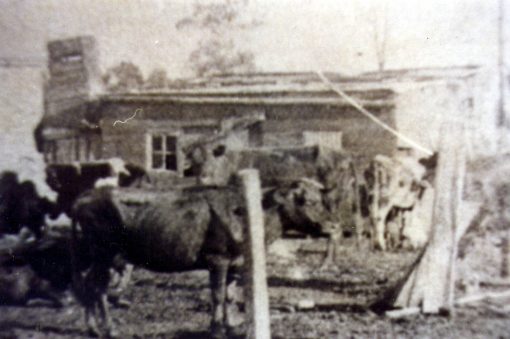
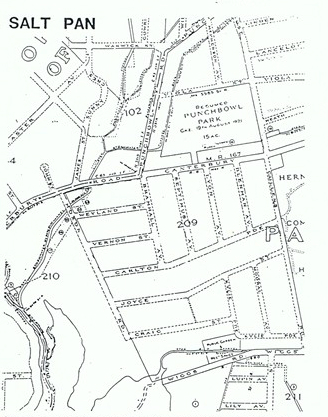
Frederick received a further grant of 120 acres near his farm at Salt Pan Creek (pictured at left and now part of Punchbowl) in 1809, for aiding a neighbour in an affray with the aborigines.
He also had a bakery in Chapel Row (now Castlereagh Street) which he sold in 1810.
Frederick had several children with convict women: Charlotte born to Mary Allen (Allein) in 1790; Amelia to Anne Case in 1793; and Charlotte to Mary Kirk in 1794.
Salt Pan Creek Grant
In 1800, Governor Hunter set up the Loyal Sydney Association, following reports of rebellion by Irish convicts. Frederick enrolled as a volunteer armed policeman and was involved in the Vinegar Hill uprising.
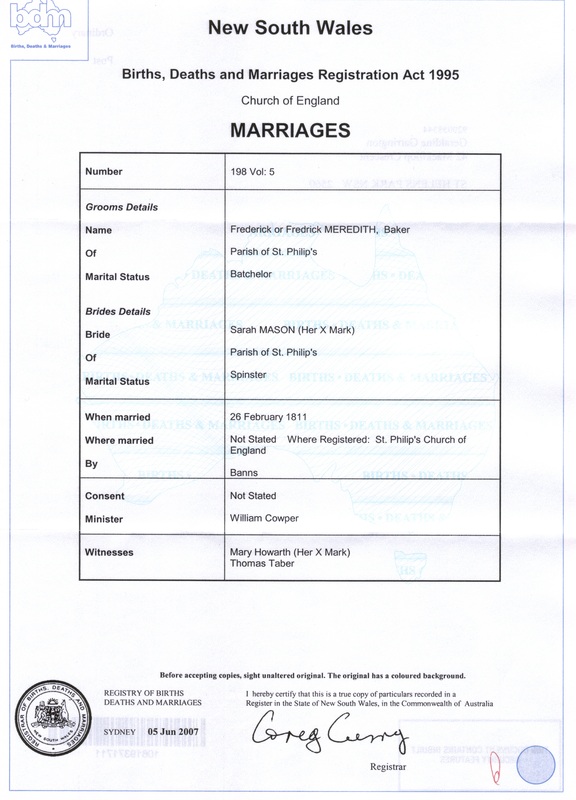
Frederick married Sarah Mason, a convict who also arrived on the Bellona. Their relationship had begun in 1800 and they were married in 1811 when Frederick joined Governor Macquarie’s police force. He was later appointed the first constable, then chief constable of Liverpool. Their children were Frederick junior, born in 1801, Sophia in 1803, Elizabeth in 1806, William in 1807, Anne in 1811 and Eleanor in 1813.
In 1823 he joined the Liverpool and surrounding districts police force. He remained in the police until 1828, holding positions of Constable, Chief Constable and District Constable. His final land grant was 60 acres at Liverpool Road, Banks Town in 1826. The farm was called Gunsborough.
The first post office was opened at Liverpool in 1828 and Frederick acted as the first postmaster until Donald MacLeod took up his appointed position.
Frederick and Sarah lived at Gunsborough until her death in 1832. He married Mary Ann Day in 1833. He died at the property in 1836 and was buried next to Sarah at Liverpool Cemetery.
Birth
Death Marriage
Spouse
Marriage
Spouse
Marriage
Spouse
Marriage
Spouse
Marriage
Spouse
Father
Mother
Sibling/s
Children
5 October 1763
23 June 1836 (didn’t marry)
Mary Allen
(didn’t marry)
Anne Case
(didn’t marry)
Mary Kirk
26 February 1811 Sarah Mason
19 February 1833
Mary Ann Day Charlotte Allen(mother; Mary Allen)
Amelia Case (mother; Anne Case)
Charlotte M Kirk/Meredith (mother; Mary Kirk) Frederick Meredith (mother; Sarah Mason)
Sophia Meredith (mother; Sarah Mason)
Elizabeth Meredith (mother; Sarah Mason)
William Meredith (mother; Sarah Mason)
Ann Meredith (mother; Sarah Mason)
Eleanor Caroline Meredith (mother; Sarah Mason)
Dinham, Ludlow, Shropshire, England
Bankstown, Sydney, New South Wales, Australia Sydney, New South Wales, Australia Liverpool, Sydney, New South Wales, Australia
Frederick Meredith was born on the 5th of October 1763. It is thought that he was born in Dinham, Ludlow, Shropshire, England. It is unclear where exactly Frederick was born, with people speculating that he may have been born in Denham, Buckinghamshire, London, England which is just South East of Harefield, home to many bakers, which Frederick later became (see Frederick Meredith by David Swinfield).
Many of his descendants are currently using DNA research to try and narrow down an area of the UK he and his ancestors are from. If you are one of Frederick’s descendants and would like to know more you can get in touch with Paul Gallagher at the Frederick Meredith Descendants Group (FMDG).
Not much is known of Frederick’s early life in England.
On the 13th of May 1787 Frederick left from Portsmouth, England on board the “Scarborough” as part of the First Fleet. There were 208 male convicts onboard. Frederick came free as steward to Captain John Marshall.
The Scarborough by marine artist Frank Allen
The “Scarborough” was a ship of 430 tons built at Scarborough in 1782. She was 111 feet (34m) long and 30 feet (9m) wide. The prison deck was very small and cramped. The height of the space was only 53 inches (135cm). The ship had a contract with the British Government to carry convicts. The owners were paid at a rate of 10 shillings per ton per month. They had to agree to keep the prisoners secure and in safe custody. After transporting the convicts to New South Wales, the “Scarborough” was under contract to work for the East India Company. The “Scarborough” sailed back to England and returned to Port Jackson in the Second fleet. Apart from the ‘Sirius’ and ‘Supply’, she was the only other ship from the first fleet to return.
The First Fleet consisted of 11 ships which sailed from Great Britain on the 13th of May 1787 with about 1,487 people, including 778 convicts (192 women & 586 men), to establish the first European colony in Australia. The fleet was led by Captain Arthur Phillip.
The ships arrived at Botany Bay between 18 & 22 January 1788. HMS Supply arrived on the 18th of January. The “Alexander”, “Scarborough” & “Friendship” on the 21st of January. The remaining ships, “Charlotte”, “Lady Penrhyn”, “Prince of Wales”, “Borrowdale”, “Fishburn”, “Golden Grove” & “Sirius” on the 22nd of January.
So on the 21st of January 1788, aged 24 years, Frederick arrived in Botany Bay, Sydney, with 201 male convicts, 30 crew and 50 marines surviving the 251 day voyage aboard the “Scarborough”. They sailed into Port Jackson (Sydney Harbour) on the 26th of January. The new site had everything the first settlers needed; deep water close to the shore, shelter and fresh water. Phillip named the site Sydney Cove, after Lord Sydney the British Home Secretary. Today this date is still celebrated as Australia Day, marking the beginnings of European settlement.
This was one of the world’s greatest sea voyages — eleven vessels carrying about 1,487 people and stores had travelled for 252 days for more than 15,000 miles (24,000 km) without losing a ship. Forty-eight people had died on the journey, a death rate of just over three per cent. Given the rigours of the voyage, the navigational problems, the poor condition and sea-faring inexperience of the convicts, the primitive medical knowledge, the lack of precautions against scurvy, the crammed and foul conditions of the ships, poor planning and inadequate equipment, this was a remarkable achievement.
On the 22nd of February 1788 Frederick was charged with exchanging goods with convict James Stow. Frederick had given the convict beef and bread as well as rum in exchange for a ‘curious beast’ a possum. Such exchanges were against government orders, and although Meredith had his master’s
permission, he was sentenced to receive 100 lashes, on his bare back, with a cat of nine tails, in the middle of the convict’s camp. Governor Phillip reduced the sentence to 50 lashes in response, said surgeon Arthur Bowes Smyth, to appeals from ‘several gentlemen’ who respected Meredith and who believed the punishment too harsh for the crime. He was the fourth person to appear before the magistrate and received 50 lashes as punishment.
In 1788 Frederick was assigned to look after the vegetable patch on Garden Island in Sydney Harbour. While there Frederick, along with 2 other European Settlers, carved his initials FM along with the year 1788 in a rock.
The other initials are believed to belong to marine private Joseph Redford of HMS Sirius and William Bradley, first lieutenant of HMS Sirius, who was a cartographer. Frederick was chosen because of his ability to both read and write and thus his ability to document the time spent there. All three men were crew members of HMS Sirius during the winter months of 1788 at a time when Sirius was anchored off Garden Island and the ship’s crew had planted a garden there to grow vegetables to help the reduction of scurvy.
Frederick’s initials carved in sandstone at Garden Island, Sydney Harbour in 1788. Possibly the oldest marks extant of European settlement in Australia.
Frederick was on the “HMS Sirius” when it sailed from Sydney in October 1788 for the Cape of Good Hope, South Africa in search of food for the starving colony. They returned to Sydney in May 1789.
On the 9th of May 1790 a daughter was born to Mary Allen. She was named Charlotte.
In Sydney he was given the care of 25 sheep and lambs, the property of commissary John Palmer. In August, Frederick and Mary gave evidence before the Court of Criminal Jurisdiction in the trial of Hugh Low, charged with stealing one of the lambs. Low was sentenced to death and executed the next day. Judge-Advocate David Collins noted that no leniency could be extended because ‘the preservation of our stock was an object of so much consequence to the colony’.
After being back in Sydney for 1 month he then departed aboard the Dutch merchant ship “Waakzaamheid” (alternate spelling “Waaksamheyd”) bound for England, with 125 men on board. He was hired to sail to Batavia to collect supplies and then on to England for Captain John Hunter to face court-martial, for the loss of HMS Sirius, in which he was eventually honourably acquitted.
On the 22nd of April 1792, Frederick arrived in Portsmouth, England aboard the “Waakzaamheid”. Owing to her bad sailing, contrary winds, and calms, the voyage to Batavia had lasted for 26 weeks (onboard they only had provisions for 16 weeks). While attempting to get provisions at Mindanao, the party had a serious affray with the Malays, fortunately without sustaining any loss.
Unknown to him, back in Sydney his daughter Charlotte had died in May 1792 and the child’s mother Mary Allen was living with another convict, Edward Pales.
Frederick departed Gravesend in Kent, England on the 8th of August 1792 aboard the “Bellona”. After a 163 day voyage the “Bellona” arrived in Sydney Harbour on the 16th of January 1793.
The ship was carrying 17 female convicts, including Ann Case whom he had impregnated during the voyage and Sarah Mason who was to become his future wife and mother to 6 of his children. His daughter, Amelia Meredith, born to Ann Case, was born on the 10th of May 1793. The affair with Ann was brief and by the time Amelia died, on the 27th of February 1794, Frederick had formed a liaison with Mary Kirk, who was transported on the “Royal Admiral” in 1792.
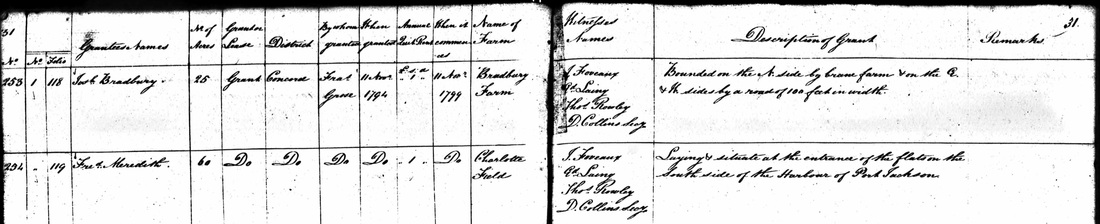
On the 28th of May 1793 Frederick was granted 60 acres of land at Liberty Plains (now Strathfield) which he named “Charlotte Farm”. He later sold this property to Thomas Rose, as it was unsuitable for farming.
The earliest use of the name Liberty Plains is found in the description of grants of land to Thomas Rose, Frederick Meredith, Thomas Webb and Edward Powell on 28 May 1793. They had arrived as passengers on the “Bellona” in January of the same year. With the help of families and servants, they cleared the land and grew wheat and corn. However, the fertility of the ground was exhausted within four to five years, so that their families were dependent on government rations.
Clearing the land was slow. Samuel Crane was killed in 1794 by a falling tree when felling timber on his 25 acres at Concord. His farm was advertised for sale as having ‘a comfortable hut, four acres planted to corn and half an acre to potatoes’.
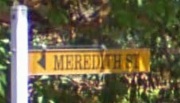
The grant can be seen to the south of the railway line, between Strathfield and Homebush stations. Meredith Street, Homebush, runs down to one corner of the grant.
Meredith St, Homebush
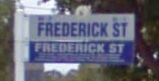
Frederick St, Bankstown
Meredith St, Bankstown
On the 26th of April 1794, Frederick fathered another child, this time to Mary Kirk. The daughter was named Charlotte. Charlotte and a man named William Stewart had 3 children; Jane Rebecca, Robert, and John, born in 1812, 1816, and 1818. Charlotte then married James Charles Farrell in 1825. Their children were James Lawrence (1825), Mary Elizabeth (1828), Charlotte Rosina (1831), Charles Frederick (1833), and William Thomas (1835). She died in 1852 in Port Macquarie, New South Wales, aged 58.
On the 11th of November 1794 Frederick received his 2nd land grant, 60 acres at Concord which he named “Charlotte Field”. He later sold this property in 1798 to John Colethread/Coulthread for 87 pounds, as it too was unsuitable for farming.
On the 17th of March 1801, Frederick’s partner Sarah Mason gave birth to a boy, Frederick Meredith Junior. Frederick and Sarah would have 6 children in total; Frederick, born 1801, Sophia, born 1803, Elizabeth, born 1805, William, born 1807, Ann, Born 1811, and Eleanor Caroline, born in 1813. Frederick and Sarah would later marry in 1811.
In September 1800 he was subscribed to the rules and orders of the Sydney Loyal Association (an armed body which was formed to guard against the possibility of an insurrection by seditious Irish convicts). Governor Hunter set up the Sydney Loyal Association in 1800, following reports of rebellion by Irish convicts. Frederick volunteered as an armed policeman & was involved in the Vinegar Hill uprising.
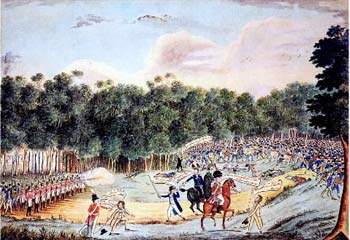
On 4 March 1804, 233 convicts led by Phillip Cunningham, escaped from a farm, intent on capturing ships to sail to Ireland. In response, martial law was quickly declared in New South Wales. The mostly Irish rebels, having gathered reinforcements, were hunted by the colonial forces until they were sequestered on 5 March 1804 on a hillock nicknamed Vinegar Hill. Under a flag of truce, Cunningham was arrested and troops charged and the rebellion was swiftly crushed by raid. Of the nearly 300 rebels directly engaged in the battle, 15 were killed, nine executed, seven whipped with 200 or 500 lashes then allotted to the Coal River chain gang, 26 sent to the Newcastle coal mines, others put on good behaviour orders against a trip to Norfolk Island, and most pardoned as having been coerced into the rising. Cunningham was court martialled under the Martial Law and hanged at the Commissariat Store at Windsor. It was the first and only convict uprising in Australian history.
In March 1809 Frederick had resumed his trade as a baker. He had a bakehouse in Chapel Row (now Castlereagh St, Sydney).
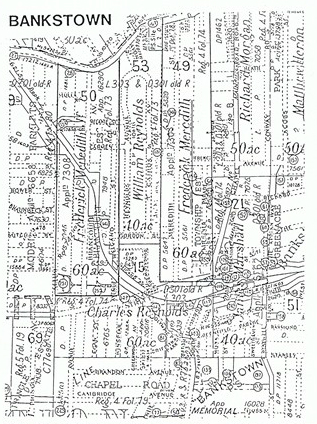
On the map it may be seen to be bounded by Moxon Rd, Canterbury Rd, Punchbowl Rd, Ross St, Cullens Rd, and Wiggs Rd.
Frederick was awarded a 3rd Land Grant of 120 acres by Governor Lachlan Macquarie in the Botany Bay district Salt Pan Creek (now Punchbowl) on the 1st of January 1810. It was called “Meredith’s Farm” and was bounded on the southern side by a line of ponds, which provided the property with water. This grant was awarded for aiding a neighbour in an affray with the aborigines.
New farms bordered the pathways to the Georges River, Kogarah Bay and Salt Pan Creek, and when William Bond and Frederick tried to occupy their land between Cox’s Creek and Salt Pan Creek, they had to battle a possession dispute with Aboriginal leader Tedbury and his group, the Gwea Gal tribe. During this clash, a spear went close enough to graze Frederick’s ear. Frederick and the other settlers retreated, only to return when the aborigines had moved on.
In 1811 Governor Lachlan Macquarie formed a regular police force and Frederick was among those appointed as constable. He eventually became the first Chief Constable at Liverpool NSW Australia.
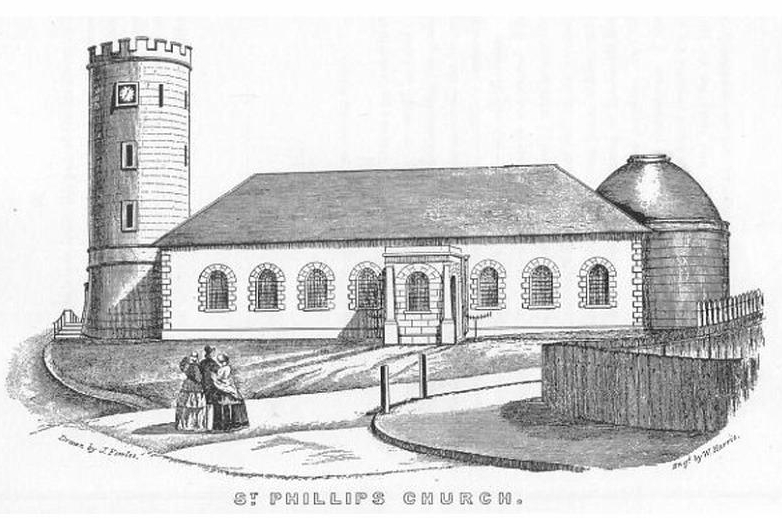
He married Sarah Mason on the 26th of February 1811 at the St Phillip’s Church of England in Sydney.
St Phillip’s Church 1798-1856, was on part of the site now covered by Lang Park, which is bounded by York, Grosvenor and Lang Streets, Sydney NSW Australia. The church had a 150-foot high, round clock tower. It was made from poor materials and gained a reputation as “the ugliest church in Christendom”. The church was named in honour of the colony’s first Governor, Arthur Phillip.
On the 23rd of May 1822, he was appointed constable at Liverpool. On the 11th of March 1823, Frederick was nominated to act as Chief Constable at Liverpool.
In 1828, when the first post office was opened at Liverpool, Frederick acted as the first postmaster until Donald MacLeod took up his appointed position.
Frederick remained Chief Constable at Liverpool up until at least 1833.
In 1831, aged 68, a 4th Land Grant was awarded to Frederick of 60 acres at Liverpool Rd, Bankstown (now the Hume Highway). Although promised earlier (by Governor Macquarie) the grant was not made legal until signed by Governor Darling. The farm was named “Gunsborough”.
The position of the grant is clearly marked by the line of present day Meredith St which runs from North to South through the full length of the farm. To the West lay Frederick Meredith Junior’s grant – called “Merefield”.
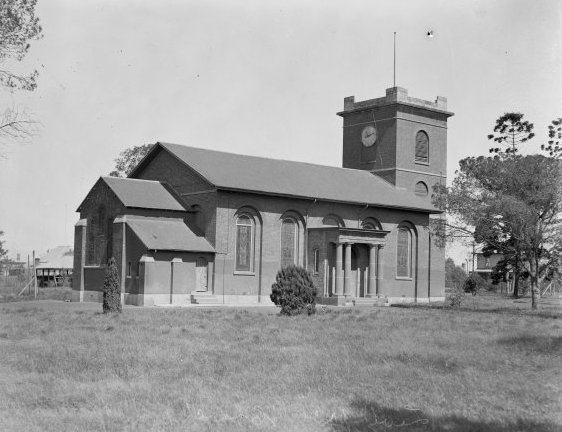
St Luke’s Anglican Church, Liverpool; built in 1815, it is the oldest Anglican Church in Australia.
On the 19th of February 1833, aged 69, Frederick married Mary Ann Day at St Luke’s, Liverpool.
Frederick died on the 23rd of June 1836 at his residence “Gunsborough” Liverpool Rd, Bankstown aged 72 years.
7 July 1836, The Sydney Gazette and New South Wales Advertiser, page 3
He is buried alongside Sarah Mason at Liverpool Pioneers Memorial Park.
In 2013 they met at Garden Island, where Frederick’s initials are carved, on the 200th anniversary of the birth of his youngest child Eleanor Caroline Meredith.
[alert_blue]BILL is NOT mentioned on the Police Wall of Remembrance[/alert_blue] * NOT JOB RELATED
[divider_dotted]
Bill did NOT have a Police funeral.
15 September 2015:
John Elfes: I did Bills eulogy, he did not have a Police funeral, Denise did not want any one in authority at the funeral due to the way he was treated at Armidaleby the boss there. The only officers that attended were old workmates, I know who they are. He was cremated and his ashes are sprinkled on the graves of his daughter and son at Botany Cemetery.
[divider_dotted]
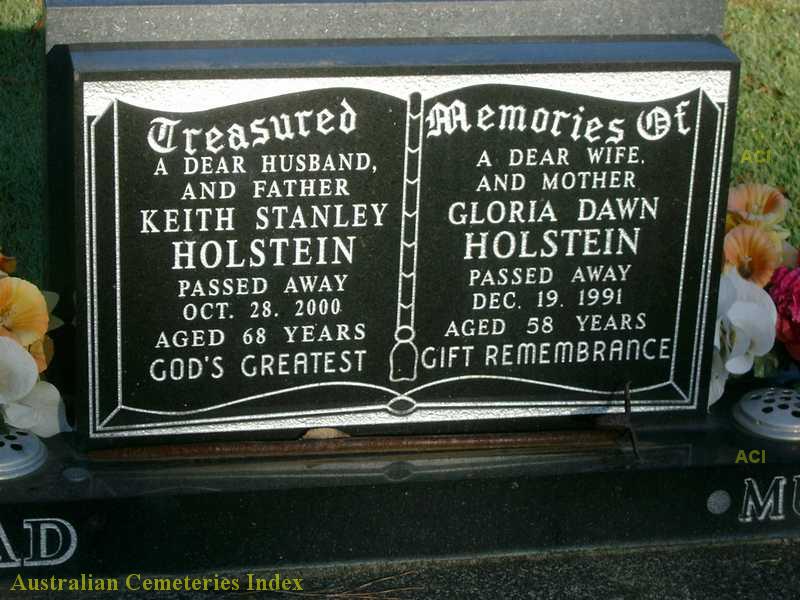
Keith Stanley HOLSTEIN
| 08/09/2015
Keith Stanley HOLSTEIN
Father of John HOLSTEIN – Regd # 16195
( late of Gloucester )
New South Wales Police Force
NSW Penrith Police Academy Class # 9
[alert_yellow]Regd. # 7130[/alert_yellow]
Rank: Probationary Constable – appointed 22 October 1951
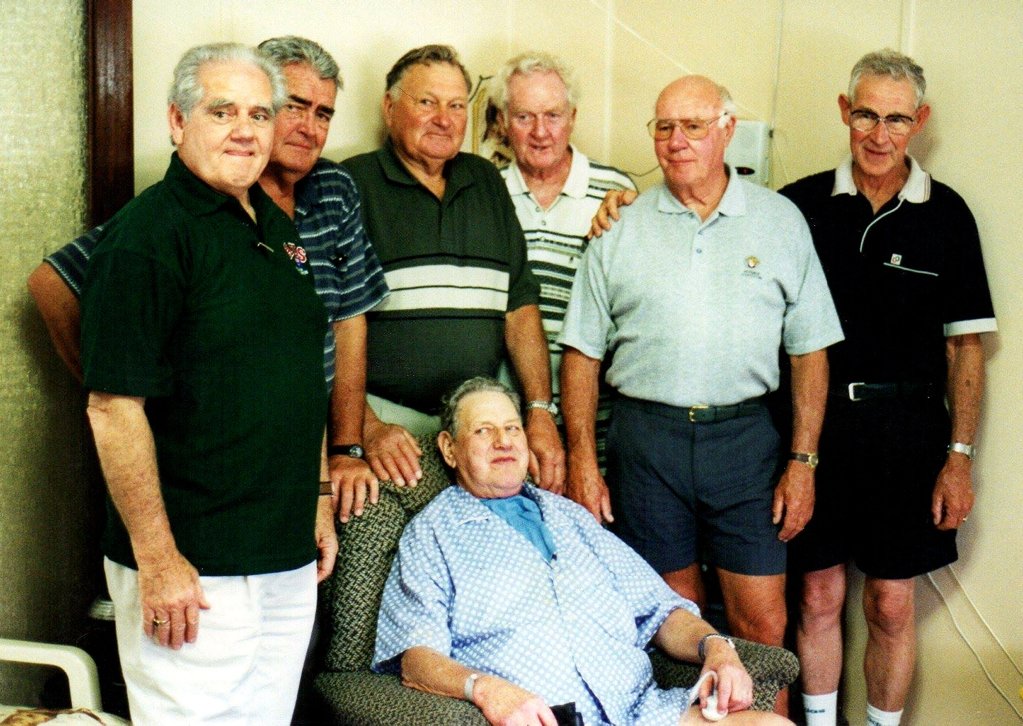
Eighteen years ago Class 9 /1951 from the Penrith Police College held the final get together with my father Keith Holstein as he was too sick to travel to a reunion. The group changed their plans and visited dad at home. He passed away 18 years ago today. Sadly missed.
Keith HOLSTEIN: Class 9 /1951 from the Penrith College held the final get together with my father Keith Holstein as he was too sick to travel to a reunion. The group changed their plans and visited dad at home.
( L-R at rear ) ?, ?, ?, ?, ?, Eric MAURER # 7134
[divider_dotted]
Government Gazette of the State of New South Wales (Sydney, NSW : 1901 – 2001), Friday 21 June 1968 (No.76), page 2537
Department of Mines, Sydney, 21st June, 1968.
APPOINTMENT
HIS Excellency the Governor, with the advice of the Executive Council, and in pursuance of the provisions of section 6, Mining Act, 1906, as amended, has approved of the appointment of Sgt 3rd Class Keith Stanley Holstein, Officer-in-Charge of Police, Nundle, as Warden’s Clerk, Mining Registrar and Officer authorized to issue Miner’s Rights and Business Licenses at that place, such appointment to take effect on and from 12th February, 1968, vice Senior Constable Victor John Feltis.
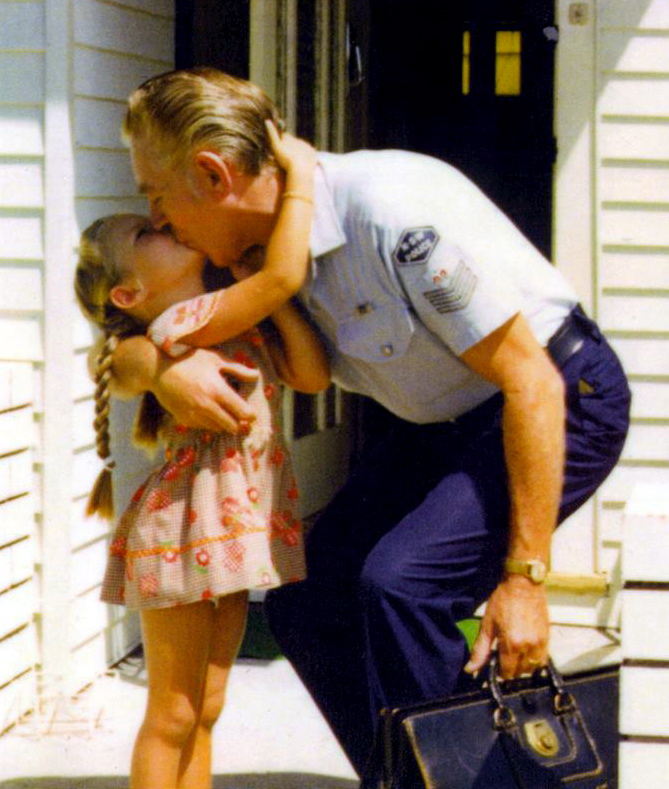
SERGEANT KEITH BEAN – KISSING HIS DAUGHTER – MELINDA.
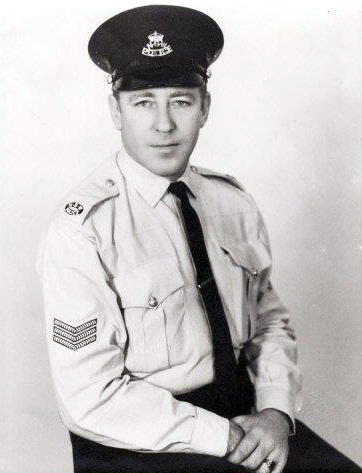
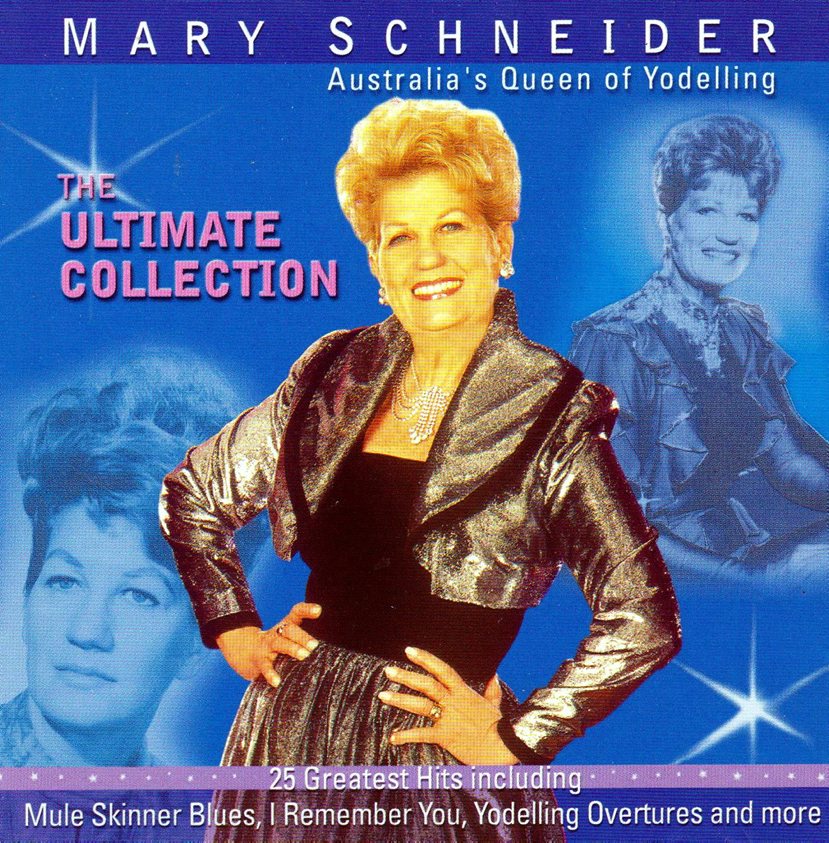
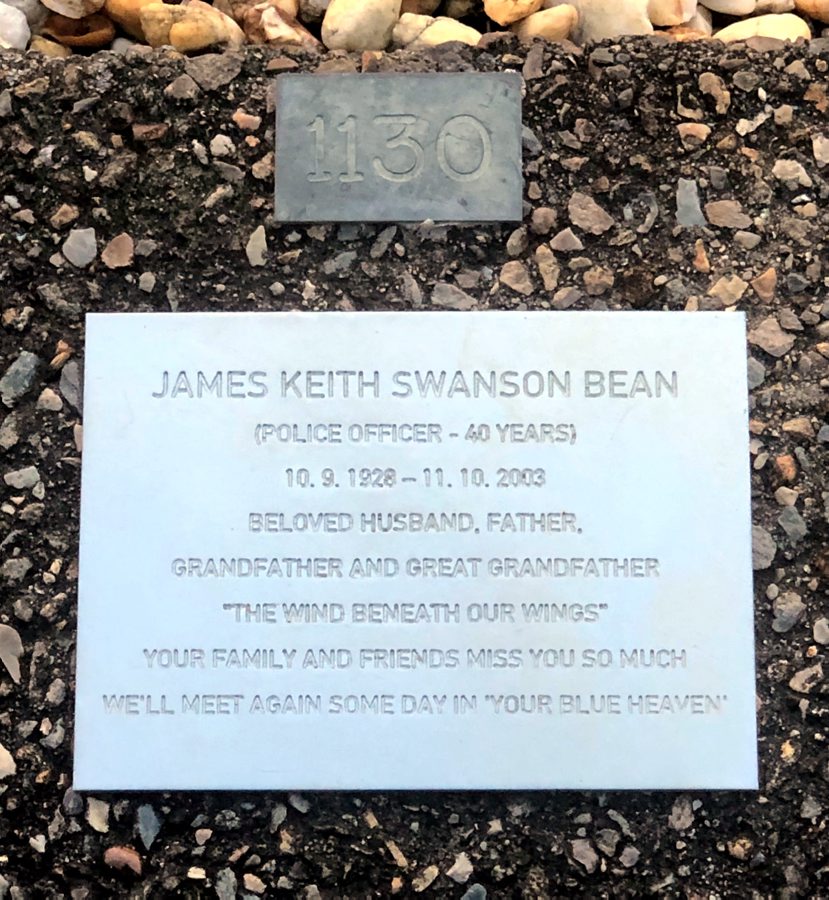
James Keith Swanton BEAN aka Keith, Duke Husband to Mary SCHNEIDER OAM ( for 35 years ) and Father to Melinda SCHNEIDER ( Country singer )
KEITH is NOT mentioned on the Police Wall of Remembrance * NOT JOB RELATED
Finding Melinda Schneider
…….
So just how is Melinda planning on touring with a 16 month-old and remaining sane? “I don’t know yet!” she exclaims. “We will probably just go out for weekends or for a few days at a time. Mark will come out with me and help out. It’s not going to be easy and I’m sure it will have its challenges. However Sully [Sullivan] loves new adventures, they [children] need such stimulation anyway. I’ll just take one day at a time.”
Listening to Melinda chatting about going on tour with her family reminded me that her own upbringing was not dissimilar. Melinda is the only child of yodelling great, Mary Schneider, and her policeman father, Keith Bean, was also from a musical family. Melinda spent many a night backstage whilst her mother performed, sometimes sleeping in her mother’s fur coat. I touch on this subject with Melinda and ask if having famous parents will impact the way she raises her son.
“It was interesting writing this show – when you have a child you look at your own upbringing – as much as your parents did the best they could you don’t want to make some of the same mistakes they made. It takes you a while to figure out who you are with famous parents. I recall Chaz Bono [offspring of Sonny and Cher Bono] saying that it’s difficult to know where you belong when your parents are famous. It’s not a normal family situation – the attention is on the parents the whole time rather than the children. I talk about that in the show.
“With Sully I want to keep a good balance of making sure he is number one focus and it’s not all about me – I want him to have a good sense of self. Growing up, my mum had taught me dancing, juggling, yodelling … and I didn’t really have a great interest in it myself. I want to see who he is – what’s in his heart. I’m fascinated to know who he is.”
Continuing on the subject, Melinda adds, “When I was three I recorded on Mum’s albums, I had a show by age of eight. People would come up to me after the show and say ‘You’re not as good as your mother’. That used to really upset me – no one wants to hear that. Growing up I was quite confused about what I wanted to do musically and what was my truth. I just didn’t know who I was.”
Most people don’t realise that Melinda didn’t become a recording artist in her own right until her late 20’s. In fact, Melinda left school young and went and studied fashion. She remembers, “I had my own fashion label working out of Mum and Dad’s garage – I made stage costumes and all sorts for loads of people. Mum’s grandma was an amazing seamstress – perhaps that is where I got the talent from. It was funny, during my early 20s I would be in the garage running the business and always singing at top of my lungs to Top 40 hits and Michael Bolton songs. Mum used to come in and ask ‘Are you sure you don’t want to be a singer?!’ I think I was denying myself. Then I realised, deep down, I really did want to be a singer.”
DAVE’S DIARY – 23/1/13 – PREVIEW OF EPISODE 7 – SERIES 19
Elizabeth collaborated with former Nu Country TV host and recording stage star Melinda Schneider, now 40, to write the title track of her fourth album Balls.
They both recorded their co-writes Some Times It Takes Balls To Be A Woman and Rest Your Weary Mind on recent albums.
Elizabeth and Melinda co-wrote more than a dozen songs including I Like Men in Trucks on Melinda’s fourth album Stronger.
Melinda also wrote songs about late father – Sgt Keith Bean – a policeman.
Keith and Tom didn’t meet at a still but Melinda’s mum – famed yodeller Mary Schneider – sang with Tom and Joyce backstage at the Grand Ole Opry during one of Cook’s many dates there.
“I used to sing The Black Hills Of Dakota with my mum (yodelling icon Mary) and my Aunt Rita when I was a little girl,” Melinda revealed as she romped through one of many songs from 1953 movie Calamity Jane and its successors.
“We’d do the three-part harmony at family get-togethers.”
She accentuated the family flavour with a shout out to her duet partner at ground zero who responded with a yodel – her unique GPS beacon.
“I could never lose mum in the dark,” she joked.
Melinda also tickled the family tree when she revealed how her late sire – Sgt Keith Bean – greeted her decision to revert to her mama’s name after cruel Kogarah schoolyard taunts ranging from “string been to les been.”
Melinda Schneider long ago mastered cross genre pollination with music and dance.
But she made a huge leap to the mainstream with her writing, narrating and performing in this energised Doris Day tribute show.
And the dynamic diva also disproved the adage about dangers of working with animals.
Schneider’s rapport with her teenage Labrador-Kelpie crosses Rosie and Daisy was also a stroke of magic.
They were all ears and eyes when she serenaded them on the stage front couch with Your Eyes Don’t Lie.
It was fitting that she returned to the scene of the rhyme – Mike Walsh’s Melbourne mecca Her Majesty’s – to premiere her show.
Seven years ago in the Yarra city the seeds for the show were sown when the singer was a guest artist on a Doris tribute concert.
So it was no surprise there was a capacity crowd for the premiere of a fast paced trip through the back pages of the octogenarian Hollywood legend.
When Schneider bumped Canadian balladeer Michael Buble from ARIA chart tops with her 12-song disc Melinda Does Doris she was thawing out that metaphorical iceberg.
This time, in collaboration with co-writer David Mitchell, Melinda tapped a deep well.
“I used to sing The Black Hills Of Dakota with my mum (yodelling icon Mary) and my Aunt Rita when I was a little girl,” Melinda revealed as she romped through one of many songs from 1953 movie Calamity Jane and its successors.
“We’d do the three-part harmony at family get-togethers.”
She accentuated the family flavour with a shout out to her duet partner at ground zero who responded with a yodel – her unique GPS beacon.
“I could never lose mum in the dark,” she joked.
Melinda also tickled the family tree when she revealed how her late sire – Sgt Keith Bean – greeted her decision to revert to her mama’s name after cruel Kogarah schoolyard taunts ranging from “string been to les been.”
“Dad said I was now a has-been,” she joked.
This was a winner with the ageing audience, daubed with dowagers and duchesses from the demographic that 3AW and Magic leg-ropes to the wireless.
Despite the acrid aroma of mothballs from stoles and furs liberated from suburban closets (not those that once housed much younger opening night au pair boys) the wearers knew most of 26 songs from a Golden era when lyrics reigned supreme.
Just like roots country – the genre banished from commercial radio here.
Not for these Day devotees grunge or techno trash that energises ecstasy bunnies down on King, Queen and William Streets.
This was a gramophone-generated posse waltzing down memory lane to the refined refrains of his or her majesty’s voice.
You know the songs – Everybody Loves A Lover, Perhaps, Perhaps, Perhaps, Sentimental Journey, I’ll See You In My Dreams, Secret Love and Teacher’s Pet before the latter two became a trigger for the Victorian court name suppression industry.
Schneider, enhanced by her 14-piece orchestra, also revived romance in Love Somebody, Put Em In A Box, The Deadwood Stage and It’s Magic.
Funeral location: Eastern Suburbs Memorial Gardens, South Chapel, 12 Military Road, Matraville
Buried at: TBA
the Thin Blue Line Rose
[alert_yellow]LES is NOT mentioned on the Police Wall of Remembrance[/alert_yellow] *NEED MORE INFO
[divider_dotted]
Funeral location:
[divider_dotted]
BURROUGHS, Leslie John, APM
August 22 2015, after a short illness. Late of Vaucluse. Beloved husband of Pam, dear brother of Lorraine and Peter and fond uncle to their families.
Former Sergeant, NSW Police Force, serving the community for 40 years.
Aged 64 Years
Loved & missed by all
who knew him
Les’ family and friends are invited to attend his Funeral Service in the South Chapel, Eastern Suburbs Crematorium on Friday, August 28, 2015 at 3:15pm.
In lieu of flowers, donation envelopes for Pancreatic Cancer Research will be available at Service.
VALUE FUNERALS
1300 669 722
A.F.D.A. Member
Published in The Sydney Morning Herald on Aug. 26, 2015
Retired Sergeant Leslie John Burroughs APM, Born 2/2/51 passed away today ( Saturday 22 August 2015 ). Les had the distinction of being the longest serving officer to work in 10 Division serving there from 1971 until his retirement in 2010. I had the honour of working with Les at Vaucluse in 1973.
Les had been suffering from pancreatic cancer for some time and passed away peacefully about 5.25pm today. He is survived by his wife Pam.
I know that some of you will remember Les who was a larger than life character variously describing himself as Bogabilla Burroughs or Les from Lightning Ridge who called everyone Digger. I remember in early 1973 at Vaucluse an elderly gentleman came into the station to report some stolen property and Les who was playing a round of cards with a colleague said, ‘ hang on digger I’ll be with you in a sec’. The old gentleman was okay with that and soon after when Les took his details for a CIR ( Criminal Information Report ), he gave his surname and when Les asked for his christian name he replied ‘ Sir Theo’ Quick as a flash Les said that’s a funny name and the gent replied ‘no I am Sir Theo’, a knight of the realm, who happened to be the CEO of Woolworths at the time. They both had a good laugh and the knight left happy with the service he had been given, that was Les, a cop for all people.
Rest in peace friend. I am sure funeral details will be posted soon.
[divider_dotted]
THURSDAY 19TH OCTOBER 2006 WAVERLEY PUBLIC SCHOOL
Police Report: Sergeant Les Burroughs, Waverley Police, reported that the in the summer months there is increased crime, more break and enters, beach stealing, breaking into cars. Younger people are responsible. Do not take valuables to the beach or leave valuables in your car. A beach safe exercise has begun in conjunction with eastern beaches patrols on all beaches. Leaving front doors open in summer also makes it easier for thieves. Regarding skateboarding late at night, under 15’s cannot be prosecuted or fined despite skateboards being under the vehicles act.
Awards: Distinguished Conduct Medal – granted 6 September 1915 – ‘For great gallantry on the 25th April, 1915, and throughout the landing operations near Gaba Tepe (Dardanelles). In attending to the wounded under a heavy fire, he showed the greatest zeal and disregard of danger, and at all times gave a fine exhibition of coolness and devotion to duty.’
Source: ‘London Gazette’ No. 8844
Date: 6 September 1915
Military Medal – granted on 7 October 1918 – ‘In the operations against the enemy positions at MONT DE MERRIS near STRAZEELE on night 2nd/3rd June, 1918 Corporal FARNHAM displayed great gallantry and initiative. When a gun close by which was firing on a very strong enemy machine gun position on the flank was put out of action, Corporal FARNHAM, regardless of his personal safety, carried the ammunition through the enemy’s barrage to his own gun position and expended both his own and the disabled gun crews’ quota. By great skill he was able to fire alternate shots at his own and the disabled gun crews’ targets, thereby saving casualties from flanking machine gun fire. He set a splendid example of gallantry and initiative.’
Source: ‘Commonwealth Gazette’ No.
1914 – 15 Star, British War Medal, Victory Medal
Born: 18 June 1888 at Cessnock, NSW
Died on: Friday 28 January 1921
Place of death: Wagga Wagga, NSW
Cause: Food poisoning
Age: 32
Funeral date: Friday 28 January 1921
Funeral location: Wagga Wagga
Buried at: Methodist portion of the Cessnock cemetery
Memorial at: ?
Gordon Charles FARNHAM
[alert_blue]GORDON is NOT mentioned on the Police Wall of Remembrance[/alert_blue] * NOT JOB RELATED
[divider_dotted]
The Cessnock Eagle & South Maitland Recorder Friday 28 January 1921 page 5 of 6
DEATH OF MR. GORDON FARNHAM A CESSNOCK DISTINGUISHED SOLDIER.
The relatives of Mr. Gordon Farnham D.C.M., M.M. were shocked to receive word this morning of his death at Wagga Wagga. The sad information came as a great shock as it was not even known by his relatives that he was ill. The deceased was a native of Cessnock, being born in the premises now occupied by Mr. Dennis Kenny, in Main Street. The deceased was 30 years of age and was an Anzac, being one of the first Australians to enlist. He enlisted from Broken Hill, where he was a member of the police force.
The late Mr Farnham secured the Distinguished Conduct medal at Gallipoli and the Military medal in France.
He returned on furlough in the early part of 1919 and during his stay at his home town the Armistice was signed.
His remains will be brought to Cessnock and will be interred in the Church of England cemetery on Sunday afternoon.
Daily Advertiser ( Wagga Wagga ) Saturday 29 January 1921 page 6 of 8
OBITUARY.
MR. GORDON C. FARNHAM.
The death of Mr. Gordon C. Farnham, licensee of the Club House Hotel, Wagga, caused great regret, as the deceased was well-known throughout the district. Mr. Farnham was present at the boxing contests in the Riverina Hall on Wednesday night, and after returning to his hotel ate a supper which included cucumber, and had an iced drink. Later not feeling too well he had a glass of brandy, but during the night he suffered considerably from internal pains. In the morning his condition was such that Dr. Martin was called in, and he diagnosed the case as one of gastritis and enteritis. The sufferer was removed to a private hospital, but although everything possible was done for him he passed away about 3 o’clock on Friday morning. Dr. Martin certified that death was due to food poisoning, and this was endorsed by the deputy coroner after a formal inquiry.
The deceased, who was an ‘Anzac,’ rose to the rank of sergeant-major in the 1st Divisional Engineers, and earned the coveted awards of the D.C.M. and the M.M. At the time of his death he was on the committee of the Returned Soldiers’ League.
Prior to enlisting he was a member of the police force, attached to the Wagga station, and he rejoined the force on April 15, 1919, on his return from the front, and resigned on March 10, 1920, to take over the Club House Hotel.
He leaves a wife, five brothers, and two sisters.
The funeral left Traill-street for the Wagga railway station at 4.30pm on Friday, from where the remains were conveyed by rail to Cessnock for interment in the Methodist portion of the Cessnock cemetery. The chief mourners were the wife of the deceased, Mrs. W. Ball, and Messrs. D. Harris and N. J. Richards. A large number of members of the Returned Soldiers’ League marched behind the hearse, including the president, Ald. Gissing, the pall bearers being Messrs. V. Charker, T. A. Plummer, J. S. Wild, L. H. Shaw, T. A. Smith, and A. Stephenson. Sister Proctor, and members of the Red Cross League were also present, while Senior-sergeant Gallaher, Sergeant O’Brien, Senior-constable Cooper, Constables Brownlee and Waugh, and Tracker McLean represented the Wagga police. There were many beautiful floral tributes.
The funeral arrangements were entrusted to Messrs. McIntosh Bros.
Lance-Corporal Farnham, who came to Adelaide from Broken Hill to enlist, has won the Distinguished Conduct Medal for “showing the greatest zeal and disregard for danger during the landing at Gabi Tepe.” Lance-Corporal Farnham is a native of Cessnock (N.S.W.), and is 27 years of age. Like all the country recruits from the Cessnock district, he had a varied experience in rural pursuits in his native State, and was also for a time in New Zealand, and for 18 months prior to enlisting had been in the New South Wales police force, being stationed at Broken Hill. At the historic landing on April 25 he was for 10 hours under fire, “during which time,” says the official report, “he attended the wounded continuously, and made a fine exhibition of coolness and devotion to duty.” Lance-Corporal Farnham was in the trenches from April to the end of August, and is now on police patrol duty guarding prisoners. His parents are very old residents of Cessnock.” – from the Adelaide Advertiser 06 Oct 1915 (trove.nla.gov.au)
“D.C.M. FOR CESSNOCK.
The distinguished conduct medal has been won by Lance-corporal GordonFarnham, a former resident of Cessnock, for “showing the greatest zeal and disregard for danger during the landing at Gaba Tepe.” The D.C.M. hero, who is a native of Cessnock, is 27 years of age, and previously was employed at the Aberdare Colliery and blacksmith. He is a fine example of Australian manhood, and has many friends in Cessnock who are naturally proud of him. His parents also live in Cessnock. After leaving his native town, Farnham journeyed to New Zealand, from whence he went to Broken Hill, where for eighteen months previous to his enlistment he was a member of the police force. The call of war was too strong, however, and he enlisted in Adelaide with the Third Field Ambulance Corps. He subsequently took part in the famous landing of the 25th April, and was for ten hours under fire, “during which time,” says the official report, “he attended the wounded continuously, and made a fine exhibition of coolness and devotion to duty.” – from the Newcastle Morning Herald and Miners’ Advocate 08 Oct 1915 (nla.gov.au)
“OBITUARY. MR. GORDON C. FARNHAM.
The death of Mr. Gordon C. Farnham, licensee of the Club House Hotel, Wagga, caused great regret, as the deceased was well-known through out the district. Mr. Farnham was present at the boxing contests in the Riverina Hall on Wednesday night, and after returning to his hotel ate a supper which included cucumber, and had an iced drink. Later not feeling too well he had a glass of brandy, but during the night he suffered considerably from intenial pains. In the morning his condition was such that Dr. Martin was called in, and he diagnosed the case as one of gastritis and enteritis. The sufferer was removed to a private hospital, but although everything possible was done for him he passed away about 3 o’clock on Friday morning. Dr. Martin certified that death was due to food poisoning, and this was endorsed by the deputy coroner after a formal inquiry.
The deceased, who was an ‘Anzac,’ rose to the rank of sergeant-major in the 1st Divisional Engineers, and earned the coveted awards of the D.C.M. and the M.M. At the time of his death he was on the committee of the Returned Soldiers’ League. Prior to enlisting he was a member of the police force, attached to the Wagga station, and he rejoined the force on April 15, 1919, on his return from the front, and resigned on March 10, 1920, to take over the Club House Hotel. He leaves a wife, five brothers, and two sisters. The funeral left Traill-street for the Wagga railway station at 4.30 p.m. on Friday, from where the remains were conveyed by rail to Cessnock for interment in the Methodist portion of the Cessnock cemetery. The chief mourners were the wife of the deceased, Mrs. W. Ball, and Messrs. D. Harris and N. J. Richards. A large number of members of the Returned Soldiers’ League marched behind the hearse, including the president, Ald. Gissing, the pall bearers being Messrs. V. Charker, T. A. Plummer, J. S. Wild, L. H. Shaw, T. A. Smith, and A. Stephenson. Sister Proctor, and members of the Red Cross League were also present, while Senior-sergeant Gallaher, Sergeant O’Brien, Senior-constable Cooper, Constables Brownlee and Waugh, and Tracker McLean represented the Wagga police. There were many beautiful floral tributes. The funeral arrangements were entrusted to Messrs. McIntosh Bros.” – from the Wagga Daily Advertiser 29 Jan 1921 (nla.gov.au)
Funeral location: Christ Church Cathedral, Newcastle
Buried at: ?
[alert_blue]FRANK is NOT mentioned on the Police Wall of Remembrance[/alert_blue] * NOT JOB RELATED
[divider_dotted]
Funeral location: ?
[divider_dotted]
OBITUARY: Frank Narvo,1933-2015
By ANITA BEAUMONT
Frank Narvo: ‘‘Tough as nails and soft as a prayer’’.
MANY will remember Frank Narvo for his prowess on the rugby league field.
Others will remember him as a firm but fair cop, or the highly regarded publican of the Northumberland Hotel in Lambton.
But his family will remember him as their superhero. A hero who could draw a crowd better than any modern day promotion.
One who would have everyone in stitches with his wickedly dry sense of humour.
A brave fighter. Scared of nothing.
‘‘My dad was a giant of a man, both in stature and character,’’ Frank’s son Tony said in his eulogy.
‘‘He was larger than life.
‘‘He was a good man – a hardworking man, an honest man, a man of integrity, a faithful man, a stubborn man, a staunch ally.
Above, Frank Narvo’s funeral. He was surrounded by the things he loved. Picture: Wanagi Zable Andrews
‘‘He was a strong man, a brave man, a formidable man.’’
But he had also been a loving, sensitive man.
Frank loved his family, his friends, and his footy, and he was partial to a beer or two.
‘‘Tough as nails and soft as a prayer,’’ Tony said.
Frank was born on April 24, 1933, at his family home at 1 Henry Street, Wickham, to Irene and Herb Narvo.
He died on Wednesday, July 22, surrounded by his family at his New Lambton home.
He was 82.
Sporting prowess was in his genes.
Herb had played four Tests for Australia, was named in the Newcastle Rugby League team of the century in 2008, and was also an Australian heavyweight boxing champion. Frank boxed too, although mostly just for fun and fitness.
But he shone on the rugby league field.
The tough-as-teak forward was a North Newcastle junior who went on to play nine seasons in the Sydney-based NSW Rugby League premiership for St George and Newtown in the 1950s.
He scored a try in Newtown’s 23-15 loss to South Sydney in the 1954 grand final at the SCG.
‘‘That was a time when there were many hard, tough men running around the paddock, and there were no $10million contracts,’’ son Gary said in his eulogy.
‘‘Back then you had to have a full-time job, and Dad was a policeman in the hard old days.’’
Frank eventually retired from the force to move into the pub game.
‘‘He was feared as a footballer, he was feared as a policeman, and if you played up in his pub you had good reason to fear Dad,’’ Gary said.
Frank first met his late wife Maureen in Camden when he was 15 and she was 17. They married several years later on July 26, 1952.
They had five children – Gail, Gary, Tony, Cathy and Amanda, and 20 grandchildren. Frank’s funeral service was held at Newcastle’s Christ Church Cathedral on Sunday, July 26.
His ‘‘last shout’’ was held at the Duke of Wellington afterwards.
The date was particularly significant for the family, as it would have been Frank and Maureen’s 63rd wedding anniversary.
Frank’s daughter Amanda said she had recently compiled a book of personalised advice from close family and friends as an 18th birthday gift for her daughter – Frank’s granddaughter.
‘‘Dad’s advice to Georgia was, ‘Your word is your bond’,’’ she said.
‘‘Dad was a very honourable man.
‘‘He also advised, ‘Treat others as you wish to be treated’.
‘‘Dad was a very soft, loving and generous man.
‘‘Whether that be ‘$20 ’til payday’ or $100 for a children’s charity or thousands to sponsor the local rugby league, soccer or cricket club.’’
Amanda said it has been an honour to take care of her father until the end.
About three weeks ago, she had asked him whether he had any last wishes. Frank said he would love to see one more family Christmas.
‘‘But I don’t think I will,’’ he’d said.
For the past 25 years, over a weekend in December, the whole extended Narvo clan would get together to celebrate Christmas.
The family threw Frank a surprise Christmas in July party on July 18.
‘‘It was wonderful,’’ Amanda said.
With only 48 hours’ notice, more than 40 Narvos arrived from all over Australia to celebrate Frank’s last family Christmas.
Despite his four-year battle with bladder and prostate cancer, Frank kept his sense of humour to the end.
He had a line for every occasion.
‘‘I remember as a young bloke, when I got drunk he would look at me, shake his head and say, ‘Even a pig knows when it’s had enough, son’,’’ Gary said.
‘‘Talking about legalising same-sex marriage, he would say he didn’t care if they legalised it, as long as they didn’t make it compulsory.’’
He’d always told Tony he was too light for heavy work, and too heavy for light work.
‘‘One day my sister Gail was telling her friend how she had been staying at Dad’s one night a week for quite a while,’’ Tony said.
‘‘‘Does he like that?’ her friend asked.
“‘Well of course he does, he loves it’.’’
But it made her think.
‘‘So the next time she stayed at Dad’s she said, ‘Do you like me staying here once a week?’
‘‘‘I love it Gail. But once a fortnight would be better’.”
In his eulogy, Tony recalled some of his last moments with his father.
Frank wasn’t afraid of death.
“I can’t wait,’’ he’d told Tony. He said, ‘‘I went to a funeral last week and wanted to jump in the bloody coffin.’’
He had been looking forward to joining Maureen, the love of his life.
‘‘I asked him if he had any regrets in life and he said ‘not a one’,’’ Tony said.
‘‘I told him how much I loved him, I told him how proud I was to be his son.
‘‘I told him he was my hero. At that point we just sat there crying. A lovely winter’s afternoon.
‘‘Then I told him I was sorry.
“‘Sorry for what?’
“I don’t know, sorry if I ever disappointed you I guess.”
“‘Well,’ he said, ‘You were a bit slow to start … but you got there in the end’.’’
BRETT KEEBLE: Narvo clan gather to support league great
By BRETT KEEBLE
Surprise Christmas party for Frank Narvo. Picture: Supplied
FAMILY and friends of Frank Narvo threw a surprise Christmas party, on Saturday for the Newcastle rugby league and boxing stalwart, who is gravely ill.
Narvo, 82, has battled bladder and prostate cancer for several years.
His health deteriorated last week and his five children have spent the past week by his side in hospital.
‘‘It was a lovely family Christmas. We had 40 or so Narvos there on 48 hours’ notice from the four corners of the country,’’ daughter Amanda said.
A tough-as-teak forward, Narvo began his career at North Newcastle and went on to play nine seasons with St George and Newtown during the 1950s. He scored a try in Newtown’s 23-15 loss to South Sydney in the 1954 grand final at the SCG.
Narvo’s father, Herb, was a former Australian heavyweight boxing champion, played four Tests for Australia in the 1930s, and in 2008 was named in the Newcastle Rugby League team of the century.
Newtown RLFC 1954 First Grade Grand Final team – Back row standing: Col Geelan (Coach), Bobby Whitton, Ray Preston, Kevin Considine, Don Stait, Henry Holloway, Gordon Clifford. Front row sitting: Frank Narvo, Brian Clay, Peter Ryan, Jim Evans (Capt), Dick Poole, Ray Kelly, Frank Johnson.
Newtown RLFC regrets to announce the recent passing of two former Newtown Bluebags first graders, Frank Narvo and Reg Hatton.
Frank Narvo joined Newtown in 1954 after playing for two seasons with St George. He stayed with Newtown until 1960 and was a tough and capable second-rower in Newtown’s two First Grade Grand Final appearances against South Sydney in 1954 and 1955. He made his own reputation in Rugby League, but he is also remembered as being the son of the great Herb Narvo, who was named in Newtown’s Team of the Century in 2008 and in Australia’s top 100 players between 1908 and 2007. Frank became a successful publican in Newcastle and was a popular figure at Newtown RLFC Reunion Days at Henson Park up until recently.
Reg Hatton was a Newtown junior who was originally graded as a halfback but soon found his niche on the wing. Reg played with Newtown from 1963 to 1968 and was regarded as one of the fastest men in Rugby League, in an era when there were other world-class fliers like Ken Irvine, Mike Cleary, Arch Brown, Dudley Towers and others. Reg had his fair share of success on the professional running circuit, and he transferred to Penrith for three seasons after playing with Newtown.
Newtown RLFC extends sincere condolences to the Narvo and Hatton families.
All statistics shown in this section are based only on data available in the RLP database, and are not necessarily a complete and/or 100% accurate representation of a player’s career. This information should be used as a guide only. If you see a question mark (?), it denotes that the figure is not available.
To view a list of corresponding matches, click on the icon.
FRANK NARVO the Vice President and long serving Life Member of the Newcastle Past And Present Boxers Association passed away on
Wednesday 22-7=2015,Frank played league with Northern Suburbs in Newcastle and then with St. George and Newtown where he played in two grand finals, Herb Narvo was Frank,s dad ,boxing was Franks second love, he was also a popular local publican until he decided to retire in 2000,Frank will be sadly missed, Funeral details are in Saturdays Newcastle Herald, the service is at Christ Church Cathedral Newcastle at 2pm on Sunday 26-7-2015. ALL THE BEST







 icon.
icon.