Victor Donald AHEARN
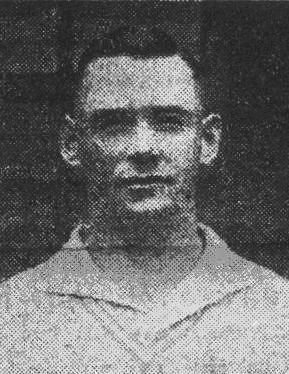
Victor Donald AHEARN
( late of Lavender St [ cnr of Walker St ], North Sydney )
New South Wales Police Force
Regd. # ?
Rank: Detective Constable 1st Class
Stations: ?, Clarence Street Station, North Sydney Station – Death
Service: From 8 January 1930 to 11 August 1946 = 16+ years Service ( 10 years as Detective )
Awards: No find on It’s An Honour
Born: ? ? 1906 at Penrith, NSW
Died on: Sunday 11 August 1946
Cause: Shot – Murdered
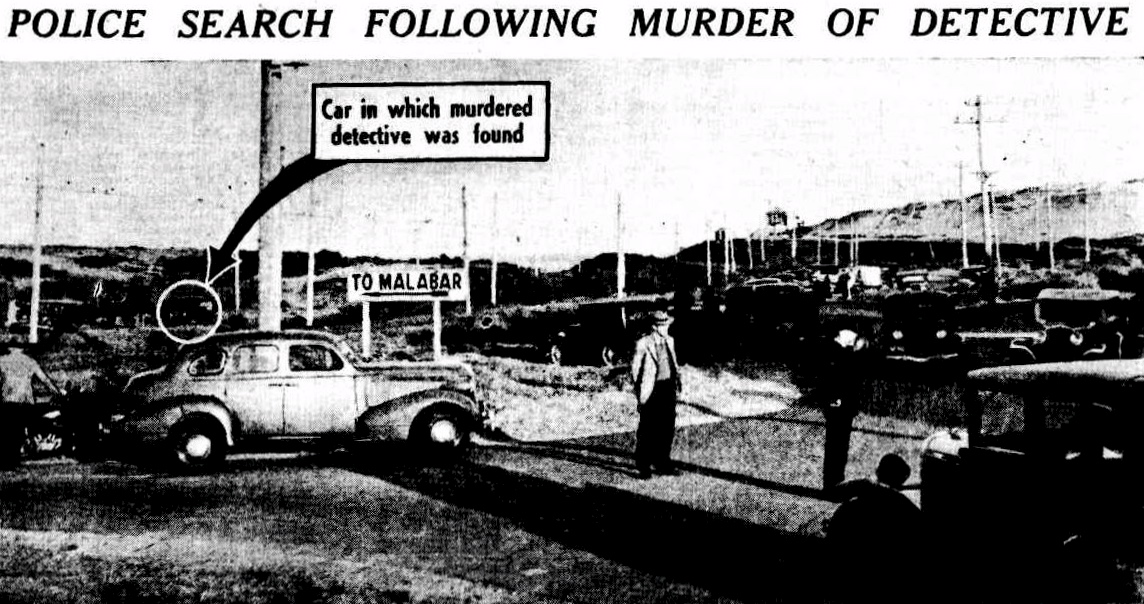
Event location: Anzac Pde, Matraville
Age: 40
Funeral date: Tuesday 13 August 1946
Funeral location: Christ Church, Lavender Bay
Buried at: Rookwood Cemetery
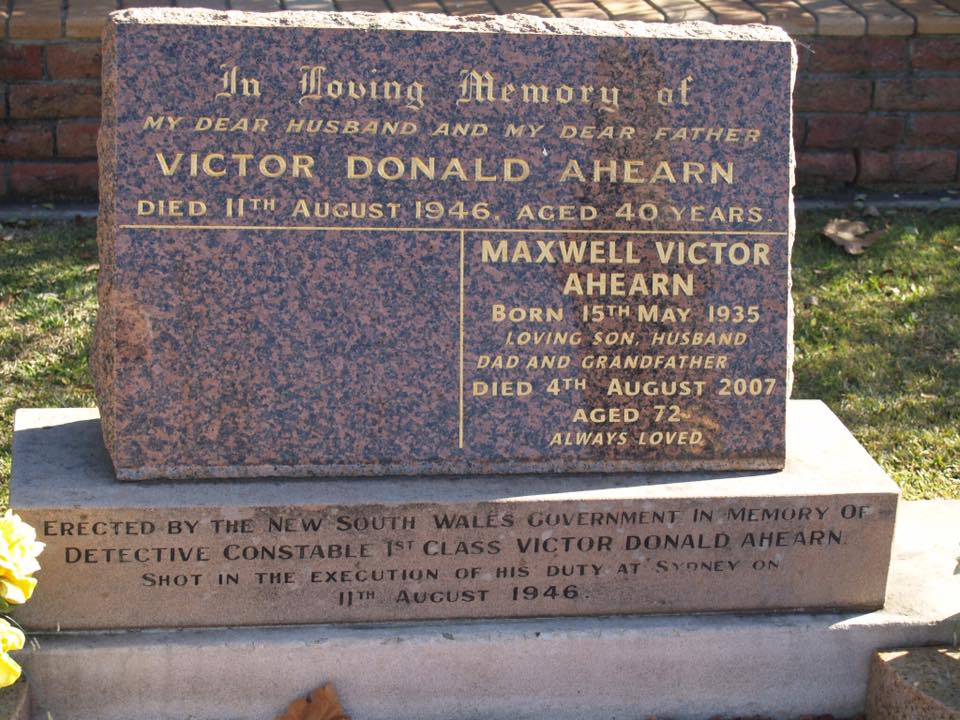
Zone C, Anglican Section 8, Row 19, Grave 2214, 2215
Headstone inscription: In loving memory of my Dear Husband & my dear father. Erected by the N.S.W. Government
in memory of Detective Constable 1st Class. Shot in the execution of his
duty at Sydney. ( Victors father is also buried with him. His father, Maxwell Victor Ahearn, died 4 August 2007 aged 72 )
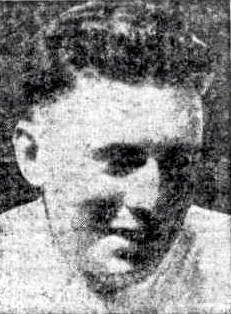
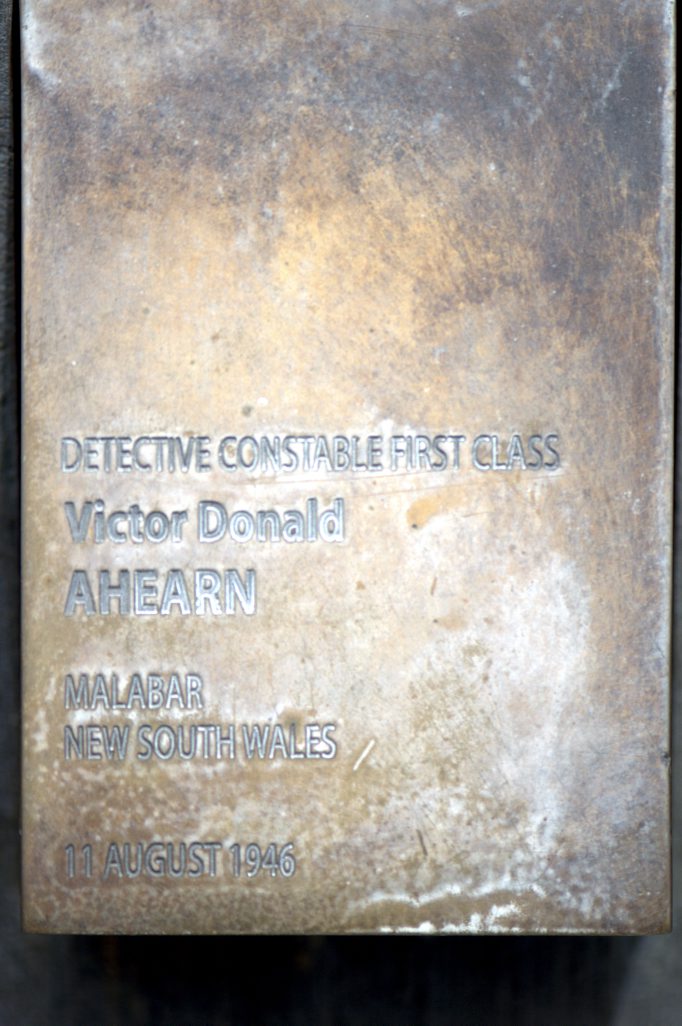
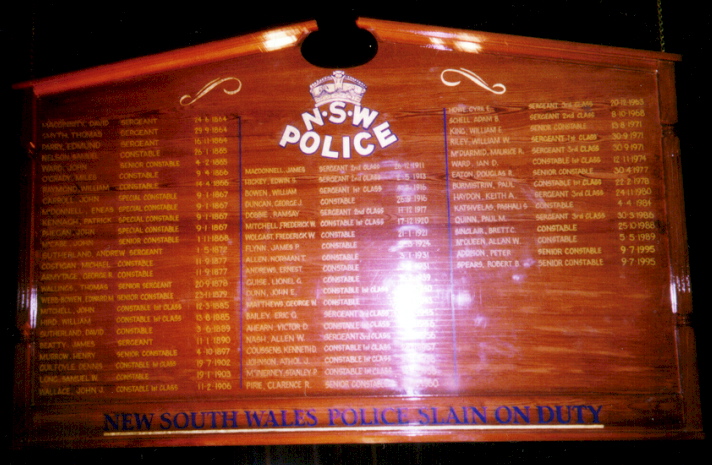
VICTOR IS mentioned on the Police Wall of Remembrance
On 11 August, 1946 Detective Constable Ahearn and Detective Constable Bowie waited at Long Bay Gaol to arrest two suspects ( Sydney Grant and Keith George Hope ) who were wanted for break and enter and motor vehicle theft offences. When the two men arrived to visit two female prisoners at the gaol, as expected, the detectives arrested them. They then set out to convey the prisoners to Daceyville Police Station, with Constable Bowie driving and Constable Ahearn seated in the rear of the vehicle between the prisoners. Shortly after leaving the gaol Grant produced a firearm and shot Constable Ahearn twice in the side. Constable Bowie quickly stopped the vehicle, and when trying to assist his colleague now struggling with the offenders, he was also attacked. The offenders then made good their escape. Unfortunately Detective Constable Ahearn died of his wounds before medical assistance arrived at the scene. Both offenders were later arrested.
The Sydney Morning Herald of 14 August, 1946 reported on the detective’s funeral.
LARGE NUMBER AT FUNERAL OF DETECTIVE.
The funeral yesterday of Detective V. D. Ahearn, who was shot by a gunman on Sunday, was one of the largest seen in North Sydney. Christ Church, Lavender Bay, was crowded for a memorial service. About 300 members of the police force remained in the street, and many other sympathisers were unable to get into the church. Detective Constable Alexander Bowie, who was injured in the police car in which Detective Ahearn was shot, was among the mourners. The funeral service was conducted by the Rev. Dr. Frank Cash. Archbishop Mowll, who gave the address at the service, said he hoped it would be some comfort to Mrs. Ahearn that so large and representative a gathering had come together to do honour to her husband, who in the course of his duty had suddenly been killed.
The Advocate newspaper of 12 December, 1946 announced the result of the trial of the two offenders.
GRANT SENTENCED TO DEATH: UNUSUAL SCENES.
SYDNEY, Wednesday – Extraordinary scenes were witnessed at the conclusion of the murder trial in the Central Criminal Court to-day of Sydney Grant (23), labourer, and Keith George Hope (23), farm laborer, for the murder of Detective Constable Victor Donald Ahearn on August 11 at Matraville. The jury found Grant guilty and Hope not guilty. Grant was sentenced to death. Mr. Justice Herron agreed that the jury’s verdict was inevitable.
The constable was born in 1906 [ and was the son of Percy Augustis Ahearn & Elizabeth Anne Pirie ] and joined the New South Wales Police Force on 8 January, 1930. At the time of his death he was stationed at North Sydney.
As an aside – Victor AHEARN was the cousin of Clarence PIRIE who was also shot and murdered in 1960 aged 40.
[divider_dotted]
NSW BDM’s
Birth
17164/1906 AHEARN, VICTOR D : PERCY, ELIZABETH A @ PENRITH
Marriage
14450/1934 AHEARN, VICTOR D, MALLARD IRENE on 15 September 1934 in St Johns Church, PARRAMATTA, NSW
Death
25813/1946 AHEARN, VICTOR DONALD : Parents: PERCY AUGUSTUS & ELIZABETH ANNE @ KINGSFORD
[divider_dotted]
Kalgoorlie Miner (WA : 1895 – 1950), Wednesday 14 August 1946, page 4
MANHUNT ENDS
Shooting of Detective BECKETT GIVES HIMSELF UP.
Sydney, Aug. 13. — The intensive search for Keith Beckett, alias Hope, whom the police allege was with Charles Grant (28), when detective Victor Donald Ahearn was shot dead in a police car on Sunday, ended dramatically when Beckett gave himself up to the police at Scone to-night. He said he had been working on a farm in the district. It was disclosed to-day that three bullets had been fired into Detective Ahearn‘s body as he sat between the two men in the police car during the drive from Long Bay Gaol. The police believed that two of the shots were fired as Ahearn attempted to grab the gun after one of the men in the car had pulled it from his pocket. The funeral to-day of Detective Ahearn was one of the largest seen in North Sydney. So large was the crowd at the church service that many hundreds were unable to get into the church and the streets through which the cortege proceeded to the Rookwood Cemetery were lined with citizens desiring to pay their last tribute to the late detective.
http://trove.nla.gov.au/newspaper/rendition/nla.news-article95543797.txt
| CALLOUS MURDER OF SYDNEY DETECTIVE Shot By Two Men While Being Escorted To Police Station |
|---|
| SYDNEY, Sunday. |
| Detective-Constable Vincent Donald Ahearn, 40, was murdered this afternoon in a police car in Anzac Parade, while two men were being taken to North Sydney police station for questioning in connection with car thefts. It was one of the most cold-blooded and callous crimes committed in Australia. The men had been detained after visiting two female prisoners at Long Bay Gaol, Joyce Read and Edna Grant. An attempt was made to shoot Detective-Constable Bowie, 27, who was seated in the police car, but the pistol jammed. The two men then bashed Bowie about the head and jumped from the car, escaping into the bush near the Bunnerong power house.The shooting took place within a few miles of the Long Bay Gaol. As the police car approached the old speedway at Maroubra one of the men pulled a revolver that had been concealed among his clothing, and shot Ahearn twice through the chest, one bullet puncturing his heart. Detective Bowie was seated in the front seat of the car while Detective Ahearn was in the back seat between the two men. On hearing the shots Detective Bowie turned round and saw his colleague in a slumped position on the edge of the seat.For the first time the new police plane was used in a search for the two escapees over the area of the crime. More than 400 police, assisted by police dogs and with soldiers armed with tommy-guns in support, are scouring dense scrub between Bunnerong Road and La Perouse Road. At the North Sydney Court last Tuesday, two attractive girls, Joyce Read, 19, and Edna Grant, 20, were committed for trial on three charges of illegally using motor cars, and one of breaking, entering and stealing from a Lindfield garage. Bail was fixed at £200 for Grant and £100 for Read, but they did not find the surety. During the hearing, in a statement allegedly made by Read, she told how she and Grant were arrested in a stolen car at Northbridge in the early hours on July 29, when they had been left by two men. Caught in the headlights of an oncoming car one of the men called, “It’s the ‘coppers’ go through.” The men then disappeared into the bushes. The alleged statement added that Read had been lured into crime by a man and his associates whom she had met one night at the California, a cafe in Darlinghurst Road, King’s Cross.Detective-Constable Bowie applied the brakes at the same time as he was grappling with the two men, one of whom hit him about the head and face with the butt of a revolver. Bowie continued to fight back and shortly afterwards collapsed into unconsciousness. The two men were seen to leap from the car and run in opposite directions. When the police arrived, Bowie was still clutching his half-drawn revolver and the body of Ahearn was found crouched on the back seat. Darkness set in soon after the search of the Bunnerong scrub land had started, and military searchlights were used to assist. The police warned residents in the Malabar district, who owned cars, to be on the watch as the wanted men were experienced drivers.The police are anxious to interview a man, known as Keith, who was in company with the two men this morning. Late to-night the police stated they were anxious to interview Sidney Greenep, alias Grant and also alias McMahon. |
| — The Canberra Times 12 August 1946 |
The Sydney Morning Herald Monday 12 August 1946 page 1 of 14
DETECTIVE SHOT IN POLICE CAR
Troops And Plane Join In Sydney Manhunt
One detective was shot dead and another brutally attacked at Matraville yesterday afternoon while they were escorting two men they had arrested at the gate of Long Bay Gaol.
Four hundred armed police, soldiers ( some carrying machine-guns ), the police aeroplane, and police dogs later took part in one of the most intensive manhunts ever organised by the New South Wales police.
The two men, who had been visiting two girl prisoners in the gaol, were not located at an early hour to-day.
DRAMATIC DRIVE FROM GAOL
The detectives were attacked as the men were being driven away in a police car. After a fierce struggle in the car the men made off across sand dunes and scrub covered hills.
Detective First-class Constable Victor Donald Ahearn, 40, married, with one child, who was stationed at North Sydney, was shot dead. Two bullets entered his body, one passing through his heart. Ahearn joined the police force 16½ years ago, and lived at Lavender Bay.
Detective Constable Alexander Bowie, 27, stationed at Mosman, was kicked about the head and body, and suffered severe abrasions and shock. He is the son of Superintendent L. Bowie, who was recently in charge of the Tamworth police district.
The two detectives had driven in a police car to Long Bay in the morning, believing that two men for whom they had been searching in connection with charges of car stealing and breaking and entering garages might visit two girls, aged 19 and 20.
The girls recently had pleaded not guilty to charges of illegally using motor cars and breaking into a Lindfield garage. According to the police, two men had been seen with the girls on the night of one alleged crime, but escaped.
The detectives yesterday parked their police car near the outer gates of the gaol. Soon afterwards the big gates opened and two men came out.
Ahearn and Bowie immediately intercepted them, and after a short conversation, ordered them to get into the car.
Bowie sat at the wheel and Ahearn sat between the two men in the back seat. The men, though sullen and disinclined to talk, gave no indication that they intended resisting arrest until the car had travelled about two miles along Anzac Parade.
About 300 yards from where the main road crosses the tram line near Pozieres Avenue, Matraville, and where dunes and tea-tree skirt the road, one of the prisoners is alleged to have pulled a .32 revolver from his pocket.
Bowie did not know it until he was attracted by a sudden scuffle from the back seat of the car. In less than two seconds there were two shots, and as Bowie turned round Ahearn muttered, “They’ve got me.”
Two bullets had plunged into the side of his body, piercing the heart and other vital organs.
LONG STRUGGLE IN MOTOR CAR
As Ahearn slumped dying on the floor of the car with portion of his clothes singed with the flame from the shots, Bowie swerved the car on to the grass track off the macadam road.
He pulled on the brake and after throwing the engine into neutral, he leaned over the seat to seize the two men.
The tracks of the car showed that during the subsequent struggle, the car travelled several yards before stopping.
As Bowie attempted to hurl himself on to the men, the one with the revolver pointed the gun at his head with the muzzle only a few inches from Bowie’s temple, the man said. “Get back or you’ll get it, too!”
Bowie saw the man pull the trigger and he heard a click. The revolver had jammed. The man holding the gun then crashed the butt of the revolver on to Bowie’s head, causing a deep cut.
Still Fought On
As Bowie was attempting to lever himself over the back of the front seat, the two men leaned back and raising both their feet, kicked him viciously about the face and head.
Each kick brought a new trickle of blood down Bowie’s face, but he continued to struggle with the men, and eventually wrested the gun from them.
Evidently, fearing that Bowie would continue the fight and get the better of them, the men threw open the doors on either side of the car and leapt to the road.
One ran through a wire fence up the sandhill towards Yarra Bay and was soon lost in the thick scrub.
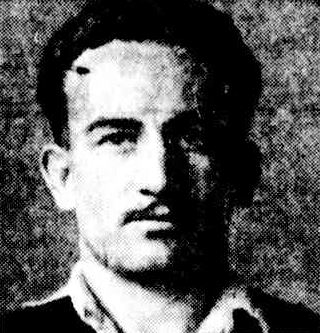
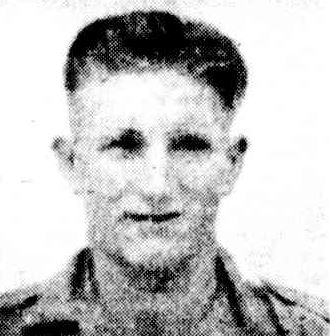
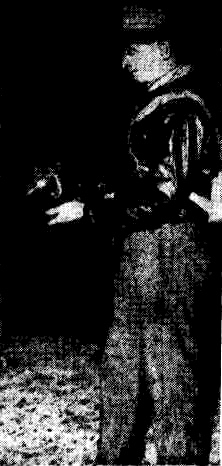
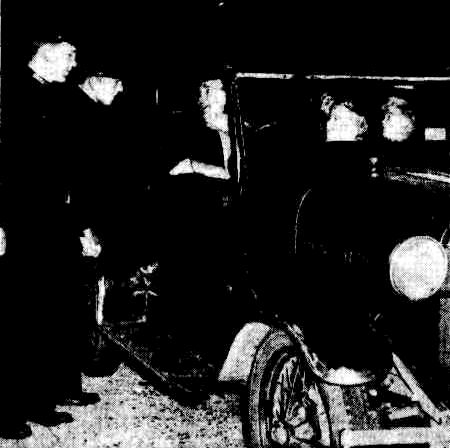
The police last night issued these pictures of two men they are seeking in connection with the shooting of a detective at Matraville yesterday.
TOP: Sidney Greenep, alias Grant, alias McMahon.
LOWER: Keith Beckett (or Hope).
The other bolted in the opposite direction and was last seen making across the tramline over the sand
dunes.
Bowie, who by this time was on the point of collapse, tried to lift Ahearn from the door of the car.
But Ahearn was dead. Powder marks and blood on his clothing showed where the bullets had entered his body.
Glen Rich, a young man living in Page Street, Botany, who was passing on his bicycle, saw Bowie leave the car and stagger towards the road. He helped to lift Ahearn from the car to the grass on the side of the road, and then went to look for a telephone to summon the police.
Many Cars Passed
Police believe that many cars passed after the shooting, but it was not until 15 minutes later that a man and a woman who had driven along Anzac Parade to Maroubra, accosted Sergeant Ryan and Constable Watts on the beach.
The man said, “We think there’s been a bit of shooting along the road. You had better go along and see what’s happened.”
Ryan, and Watts raced back along Anzac Parade until they came upon the police car still parked on the side of the road. Bowie was sitting, still dazed and bleeding profusely, on the grass alongside the body of Ahearn, holding the revolver which he had taken from one of the men.
Two empty cartridge shells from which Ahearn had been shot were in the car. One cartridge bore a faint hammer imprint, but had jammed. There were other live cartridges in the revolver.
SPECTACULAR HUNT DEVELOPS
With at least 20 minutes start the men had probably travelled a long distance before the police search for them was begun, but within a short time Superintendent F. Matthews had organised one of the biggest manhunts ever known in Sydney.
The police plane was called out for the first lime to assist in the search. Police dogs were rushed to the car in which the shooting had occurred
and then they were let loose in the direction taken when the men ran away. And 400 armed police were rushed from the city and all suburbs to form a cordon around the district. Army personnel some armed with sub-machine guns, were rushed in military wagons to join in the hunt and within an hour an area extending from Malabar, Botany Bay, Yarra Bay and Kingsford was being systematically combed.
Every car returning from the seaside of the district was stopped and searched. The contents of several utility vans being removed to ascertain if anyone was hiding there.
Plane Uses Radio
The police plane swept low in circles over the sandhills, the observer using powerful glasses to scan the thick scrub as he kept in touch by radio with the police cars racing backwards and forwards throughout the district.
One message radioed from the plane and picked up by the police cars near the scene of the shooting was that a man was seen making his way over the sand dunes towards Yarra Bay.
Superintendent Matthews revealed late last night that a taxi-driver had picked up a man walking along Bunnerong Road near the Matraville Hotel about 3.30 p.m.
The man asked him to take him to East Sydney.
The description of the man tallies with that of one of the escapees. There were bloodstains visible on his neck and clothing.
Police found a cream Hillman car with a Victorian registration plate, near Long Bay Gaol. It was later learned that the car had been stolen in Melbourne on Friday.
The police state that the two men had used the car to drive up to the gaol and brazenly left it near the gate while they visited the two girl inmates.
Police said last night that one of the men sought is known to them as Sidney Greenep, alias Grant, alias McMahon.
Suspects Described
The police issued the following description of him:
“Twenty-six years old, 5ft 7in, dark hair and complexion, freckled face, brown eyes, scar over right eye, appears to be new scar on forehead, and two old scars on forehead as well. Lobe of left ear is peculiar shape. Dressed in black and white or dark brown and white very small check pattern sports coat. Badge in lapel appeared to be returned soldier’s badge. Man wearing light blue or bluish-green sports trousers. Green silk open-neck sports shirt, no hat. Very tidy appearance.”
A second suspect, the police say is known as Keith Beckett (or Hope). He is 22 to 25 years old, 5ft 9in or 10in. fair complexion, medium brown-coloured straight ball hooked nose, rather large and red; wearing a light blue American type of coat of woollen material, large lapels, and dark blue piping on pockets and lapels blue shirt with collar to match, a tie and fairly new grey felt pork-pie-shaped hat.
North Sydney Report
On latest reports, it was believed both hunted men had reached and possibly passed through the city.
Becket was said to have been seen in North Sydney at 3.30 p.m., after the shooting. He was wearing a white open-neck shirt, light coloured sports suit, light grey felt hat.
The search early this morning was covering a great part of the metropolitan area.
http://trove.nla.gov.au/ndp/del/article/17982254#pstart995837
The Sydney Morning Herald Monday 12 August 1946 page 1 of 14
SURPRISE AT GAOL VISIT
The fact that a visitor with a loaded revolver could be admitted to Long Bay Gaol to “interview prisoners on remand caused comment in police circles after the shooting.
Remand prisoners are allowed greater liberty than sentenced prisoners, but police say it is at the least disquieting that visitors are not searched for firearms even it they are visiting only women in the remand section.
http://trove.nla.gov.au/ndp/del/article/17982253#pstart995837
| MAN ARRESTED FOR MURDER OF SYDNEY DETECTIVE Intense Search for Accomplice SYDNEY, Monday. |
|---|
| Early this morning Sidney Grant, 28, was arrested at gunpoint in a guest house at North Sydney, and charged with the murder on Sunday afternoon of Detective-Constable Victor Donald Ahearn. A police cordon had been thrown around Sydney to apprehend Keith George Hope, 23, alias Beckett, and all trains, planes and ships are being closely watched while the cooperation of the Victorian police has been sought in case Hope should break through the cordon in an at tempt to return to Victoria. The search for Hope is also being intensified in the Newcastle district. Grant was arrested by armed police while he was breakfasting at a guest house. He offered no resistance. A large squad of police was rushed to the guest house and, while all exits were guarded. Detective H. Hughes and Sergt. R. K. Knight, with revolvers drawn, rushed inside. They threw open the door of a room and found Grant having breakfast.Later, Grant appeared before the North Sydney Court with his head bandaged and was charged with the murder of Detective Ahearn on which charge he was remanded to the Central Court on August 20, bail being refused. Grant appeared in court handcuffed to a detective-sergeant and was later removed under a heavy escort.Sergeant M. Whelan, who conducted the prosecution, told the court that Grant and another man had been arrested at the entrance to the women’s reformatory at Long Bay Gaol. The two men were placed in a police car, which was driven by Detective-Constable Bowie, while Ahearn sat between the men. After the police car had proceeded about a mile and a half from the reformatory, Grant drew a revolver and twice shot Ahearn, who died in a few minutes, Bowie, stopped the car and struggled with Grant, who was disarmed, but Bowie was assaulted about the face. Grant and the other man then disappeared.Shortly before 3.30 p.m. Grant was again before the North Sydney Court and was remanded until August 20, on nine charges of breaking, entering and stealing, including the theft of four sub-machine guns, two revolver chambers, and a quantity of ammunition, to the value £50, from Rushcutters Bay naval depot, on July 30.Four counts dealt with alleged thefts of wireless Sets. He was also charged with stealing clothing, valued at £200, from a shop at Crow’s Nest on July 31, with breaking into a shop at King’s Cross Road on July 5 and stealing women’s clothing, worth £100, and with breaking into a garage at Killara on July 28, and stealing tyres and money to the value of £30. Grant was also remanded on two charges of having been in possession of firearms.The police produced four Thomson sub-machine guns and two ammunition cases which were found among some bush at Roseville. The Victorian police advised that ballistic tests proved that the revolver which bad been used in the murder, had been stolen from a resident of Hawthorn in 1942. It is believed that Grant left a considerable sum of money in Melbourne. His arrest followed probably the greatest man-hunt ever staged in this State. Almost 500 police and soldiers were engaged. Grant told the police that he arrived by car from Melbourne on Saturday and, with a companion, booked in at the guest house early on Sunday morning. |
| NO POWER TO SEARCH GAOL VISITORS |
| There was no power to search any person whether visiting a gaol, a police court or any other establishment unless such a person was first arrested and charged, said the Minister of Justice (Mr. Downing) who added that such searching would be an offence.The Minister explained there was no restriction about the number of visits by friends to gaol prisoners who were also permitted to receive foodstuffs, but there was no physical contact between such prisoners and visitors because of a heavy wire gauze separating them. A Sydney detective stated that when a policeman visited the gaol he was required to hand over his revolver and he could not understand why the same regulation did not apply to civilians. A late Melbourne message stated that two men had been detained at the C.I.B. office for questioning in connection with the murder. |
| — The Canberra Times 13 August 1946 |
| Victor Donald Ahearn |
|---|
| AHEARN. — August 11, 1946, Victor Donald. Dearly beloved husband of Irene Ahearn, and loving father of Max, aged 40 years. |
| — Sydney Morning Herald 13 August 1946 |
| Large Number At Funeral Of Detective |
|---|
| The funeral yesterday of Detective V. D. Ahearn, who was shot by a gunman on Sunday, was one of the largest seen in North Sydney. Christ Church, Lavender Bay, was crowded for a memorial service. About 300 members of the police force remained in the street, and many other sympathisers were unable to get into the church. Detective-Constable Alexander Bowie, who was injured in the police car in which Detective Ahearn was shot, was among the mourners. The funeral service was conducted by the Rev. Dr. Frank Cash. Archbishop Mowll, who gave the address at the service, said he hoped it would be some comfort to Mrs. Ahearn that so large and representative a gathering had come together to do honour to her husband, who in the course of his duty had suddenly been killed. |
| INCREASING DEBT |
| “Others are here,” said Archbishop Mowll, “to show regard for the police force, to whom the community owes an increasing debt of gratitude. “The episode of last Sunday afternoon brings home to everyone the risk continually being run by members of the force. We are grateful to them for what they are doing to protect us.” Boy Scouts of the 1st Lavender Bay Troop, of which Max Ahearn, son of the detective, is a member, occupied the choir seats at the service. The coffin was carried from the church after the service by Detectives Whiteman, Fagan, Griffin, Kelly, and Tupper, who had worked with Detective Ahearn. A detachment of about 300 uniformed and plainclothes men preceded the hearse. These were followed by a company of’ military police in the charge of Captain Wiseman, and by members of the New South Wales Fire Brigade under Inspector J. Neville, who also represented the Chief Officer and the Board of Fire Commissioners. |
| CITIZENS LINE ROUTE |
| The funeral proceeded through the city to Rookwood Cemetery. The cortege as it left the church was preceded by motor cyclists, a detachment of mounted police, and the police band. Along Lavender Street, Blues Point Road, and Blue Street to Bradfield Highway the route was lined by hundreds of spectators. Ordinary traffic along the route to the Bridge was held up for about half an hour. There were about 100 motor cars following the hearse. The chief mourners were Mrs. Ahearn, widow, Max Ahearn, son; Mr. P. Ahearn, father; Mrs. R. Moon, and Mrs. A. Clarke, sisters, Messrs. Moon and Clarke, brothers-in-law; and Mr. and Mrs. H. Mallard, father-in-law and mother-in-law. Officers and members of Masonic Lodge Tuscan also attended. Superintendent J. F. Scott represented the Chief Commissioner, Mr. Mackay. Other police officers present included Superintendent B. E. Sadler, who was in charge of the police arrangements; Superintendents F. Matthews, T. Wickham, and N. D. James, of the C.I.B.; Superintendent W. E. Sherringham, Inspectors M. Cahill, W. L. Alford, C. Kennedy, and J. Nealon; ex-Superintendent W. Sherringham and a number of retired officers and men. |
| — Sydney Morning Herald 14 August 1946 |
| WANTED MAN SURRENDERS TO SCONE POLICE NEWCASTLE, Tuesday. |
|---|
| Keith George Hope, who was wanted by the police for questioning in connection with the shooting of Detective Ahearn on Sunday, walked into the Scone police station at 11.45 p.m. and gave himself up. He told the police that he arrived at 3 a.m. on Monday and, after staying at the Royal Hotel, obtained work on a farm. The police were advised that a man answering to his description, had booked in at the hotel. Hope when he entered the police station, said, “I understand that you were making inquiries about me, so I thought I had better give myself up.” He added that the farmer, by whom, he had been employed, had driven him to the police station.Two detectives will leave Sydney to-morrow to take Hope back to Sydney. They have been instructed to take no chances with him. Police in Sydney to-night hinted that intensified co-operation between forces in other States, following the murder of Ahearn on Sunday, may lead to a clean-up of certain inter-state crimes. A senior officer of the C.I.B. said that detectives in Melbourne, Sydney and Brisbane had been working to break up certain interstate criminal activities.Large crowds gathered to-day to pay their last respects to Detective Constable Ahearn, when the funeral was held. Mounted police were in attendance with detachments of police, military provosts and motor cyclists. The funeral of Detective Ahearn was conducted to-day. A service was held at Christ Church where Archbishop Mowll paid a moving tribute to the service rendered to the community as a whole by the police force. |
| — The Canberra Times 14 August 1946 |
| Hope Charged With Murder |
|---|
| Keith George Hope, also known as Keith Beckett, 23, labourer, was charged at Central Police Court yesterday with having on August 11 murdered Detective Victor Donald Ahearn. Hope was also charged with having had in his possession a car stolen in Victoria, knowing it to have been stolen. The police prosecutor, Sergeant Whelan, said that last Sunday afternoon, Detectives Ahearn and Bowie were escorting in a car Hope and a man named Grant from the women’s reformatory at Long Bay gaol. Some distance from Long Bay gaol Ahearn had been shot three times and had died almost immediately. Sergeant Whelan asked for a remand until August 20. Grant had been remanded to that date, he added. Mr. Beavers, S.M., granted the remand and refused bail. Hope was escorted into the court by the two detectives who had brought him back from Scone yesterday morning. He was neatly dressed in a brown suit, blue shirt, and red tie. |
| — The Sydney Morning Herald 16 August 1946 |
| HOPE REMANDED ON MURDER CHARGE |
|---|
| SYDNEY, Thursday. |
| Keith George Hope, 23, was charged at the Central Court to-day with the murder of Detective-Constable Ahearn on Sunday last and was remanded until August 20. He was also charged with being in possession of a stolen motor car. Hope was escorted into court by Detectives Hargreaves and Strachan, who had brought him from Scone where he had given himself up. During the brief court proceedings Hope did not speak. |
| — The Canberra Times 16 August 1946 |
| KITCHEN IS STILL UNPAINTED Det. Ahearn’s Death |
|---|
| SYDNEY, August 16.—The big, dark-haired policeman kissed his wife [Irene] before sitting down to breakfast in his cheerful flat at Lavender Street, North Sydney. He had been up late the night before, but that had not affected his good-humour. Nothing, his wife reflected, ever seemed to affect that. He ate his cornflakes and chops, drank his cup of strong coffee. Then, with his 11-year-old son to help, he started to paint the kitchen woodwork. He had promised his wife to do it, and, once he had promised — even little things — she could always count on him to do them. It was Saturday. He stuck at the painting until he had to go on duty.Sunday, he was on duty again. As he went out this time, whistling softly, his wife saw him turn, heard him call back cheerily: “I’ll finish off the paint when I get home.” But this week, the woodwork was still waiting to be finished. Early on the Sunday afternoon policeman Victor Ahearn was shot twice through the heart while doing duty as an escort. Said his widow, pretty, sad-eyed Rene Ahearn, this week: “Vic. was a big, strong chap; but he never thought it sissy to help me in the flat. He was always doing something for me. “I get sciatica. When I was sick he used to do all the shopping for me. Sometimes he’d get so many vegetables we wouldn’t know what to do with them. “He used to cook for our son Max and me when I was ill. He was a good cook, too. “When you met him once you knew him. He never changed. I met him when I was 16 and he was 28. He lived in a boarding house next door. We married four years later. That was nearly 13 years ago. “He was in the Police Force sixteen and a half years. The last 10 he’d been a detective. “That meant broken shifts, working until the job was done, coming home at odd hours. But he was always so dependable, so jolly. I didn’t mind the anxiety, the strain of being a policeman’s wife. “Week-ends, when he was off duty, we used to go fishing with our son. Vic. loved fishing more than any other pastime. We had planned a trip from Mosman Bay this week-end. “He had only lately been transferred from Clarence Street Station to North Sydney. He liked the move because it brought him nearer home — he could come back to the flat for lunch when he was working early shifts. “Vic. took me to the C.I.B. ball two days before he was killed. I wore a new wine velvet evening dress — my first since the end of the war. Vic. said to me: ‘You don’t look a day older than when I married you. Let’s have our photo taken.’ “He asked me three times before I agreed. I was so surprised, because he hadn’t had a photo taken since our wedding. He hated posing for a picture.” Widowed Mrs. Ahearn will continue to live in her flat at the corner of Walker and Lavender Streets. Said she: “My friends are here. So are my happy memories. Why should I move? |
| — Townsville Daily Bulletin 17 August 1946 |
| REMAND ON MURDER CHARGE SYDNEY, Tuesday. |
|---|
| Sidney Grant and Keith George Hope, charged with the murder of Detective V. D. Ahearn at Matraville on August 11, were remanded until September 10 at the Central Court to-day. Grant said that a writ of habeas corpus had been served on the police to enable his wife to give evidence on a theft charge against him. Grant also faces nine charges of breaking, entering and stealing and two of possessing firearms while being a person previously convicted. Bail was refused both men. |
| — The Canberra Times 28 August 1946 |
The Sydney Morning Herald Wednesday 11 September 1946 page 4 of 36
DETECTIVE TELLS OF CAR SHOOTING
Sidney Grant who has been charged with the murder of Det.-Constable Victor Donald Ahearn, drove through the police cordon in a taxi a few minutes after Ahearn had been shot on August 11.
A witness said this at the inquest into the detective’s death at the City Coroner’s Court yesterday.
Present in court were Sidney Grant and Keith Hope, who have been charged with the murder of Ahearn. They were handcuffed together and escorted by police.
Mr. Peter Pelligrini, taxi proprietor, of Nagle Avenue, Maroubra, said that Grant had hailed his cab at Matraville about 3.30 p.m. on August 11 and had asked him to drive to King’s Cross.
Pelligrini said that while driving along Military Parade he had remarked on the presence of a large number of police.
Later he saw a patrol car and a police truck full of police coming along the road followed by an ambulance. He said that Grant then said, ‘There must have been an accident.”
“Blood On Grant”
Pelligrini said there was blood on Grant’s shirt and sleeve and the shoulder of his coat was slightly torn. He had a wound behind his ear.
He drove Grant to Cathedral Street, King’s Cross, where Grant got out and paid him. He said he thought Grant had been involved in an accident.
Mr. A. J. Forestal, proprietor of the Alloa Private Hotel, North Sydney, said Grant and Hope had booked accommodation about 2 a.m. on August 11. They said they had come from Melbourne and expected to stay a week. They paid seven days’ rent in advance. He said they had a small cream car.
About midday on August 11, Grant and Hope told Forestal they wanted to go to Mosman. He gave them a street directory.
Hope came back later for a short while and went away with a suitcase. About 4.30 p.m. Grant returned to the hotel with a little blood on his shirt collar, coat, and trousers, and with cuts on his fingers and head.
He told Forestal he had been in a car smash. He said that when driving his car down Military Road he had hit a pole. He said that police were there and he had reported the accident to the North Sydney police station. He discussed the accident with Forestal for about an hour.
Mrs. Esme Olive Lawson, wardress at the Women’s Reformatory, Long Bay, said that Grant and Hope came to visit Edna Grant about 2 p.m. on August 11.
When they left, she saw them being escorted to a police car by two detectives.
Constable Alexander Leslie Bowie, stationed at Mosman, said that he and Detective-Constable Ahearn arrested Grant and Hope outside Long Bay Gaol about 2.30 p.m. on August 11. There was a small cream car with Victorian registration plates outside the gates.
Hope, Grant and Ahearn got into the back seat of the police car with Ahearn in the centre. He and Ahearn had lightly gone over Hope’s and Grant’s clothing for small-arms. Just as he was driving away, Grant asked for his overcoat.
Bowie said he went over to the small cream car and found two overcoats, two scarves, a jemmy, torch, leather gloves, and a bunch of keys.
After searching the coats, he threw them on the back seat of the cream car.
He then drove away from the gaol. While going along Anzac Parade he heard some mention of “tailor-made” cigarettes, and this was followed immediately by the sound of a shot.
“I thought it was a blow-out until I heard Ahearn say: ‘He’s got me,’ ” Bowie said.
“Then I heard the sounds of another two shots. I applied the brakes and swung the car to the side of the road. I turned to the back seat and saw Hope getting out the door, and Grant with an automatic pistol in his hand pointing it at me.
“Detective Ahearn was trying to swing himself over in Grant’s direction. I struggled with Grant and tried to take the gun from him. I saw the gun was jammed, and when I took it from him I hit him on the forehead with the butt.
Kicked In Face
“Grant then said that he had had enough, and I told him to stay still until I handcuffed him. Grant leaned back and kicked me in the face, but I continued to struggle with him, hanging on to his trouser belt. Grant broke my grip, ran down Anzac Parade, and turned into the bush towards Matraville.”
Bowie said he then took Ahearn out of the car and laid him on the side of the road. He was unconscious.
Under cross-examination by Mr. Carruthers ( for Hope ), Bowie said that Hope had made no effort to attack him, and had been quite submissive outside the gaol when being arrested.
Dr. Stratford Sheldon, Government medical officer, said that when he examined Ahearn‘s body there were what he thought to be powder stains on his hands.
One bullet had entered the body near the right wrist and had run along to the elbow joint. A second wound was found on the left side of the chest, and a bullet track through the right ventricle of the heart and the abdomen, ending in the left loin. This was the bullet that had killed Ahearn.
There was a third bullet track through the spine. The bullet was recovered from just above the right hip.
Mr. A. Brindley appeared for Grant, Mr. J. E. Carruthers for Hope, and Sergeant Forde assisted the coroner.
http://trove.nla.gov.au/ndp/del/article/17994334#pstart996502
| CORONER TOLD OF SHOOTING OF DETECTIVE SYDNEY, Tuesday. |
|---|
| Evidence of the shooting of Detective Ahearn in a police car at Matraville on August 11, was given at the Coroner’s Court to-day by Constable Bowie, who was driving the car. Sydney Grant and Keith George Hope were present in custody, charged with murder. Constable Bowie told how he and Ahearn were driving in a police car, in which the accused were also sitting. Previously they had met the accused at the women’s reformatory and told them they were wanted for a “couple of jobs at North Sydney.” They ran their hands over the accused’s clothes, after which the men got in the car with Ahearn between them. After proceeding about a mile and a half, something was said about cigarettes and this was followed immediately by a shot. He heard Ahearn say he had been shot. Almost immediately there were two more shots. Witness stopped the car and saw Hope get out. Grant had a pistol pointed at witness but the pistol jammed. He took the gun from Grant who punched him about the head, but witness grabbed the gun and hit Grant with the butt. The latter replied he had had enough and, referring to Ahearn, said, “Will the poor ———— die?” Grant then leaned back in the seat and kicked witness about the face. The inquiry was adjourned until next Tuesday. |
| — The Canberra Times 11 September 1946 |
| “DETECTIVE GOT IN WAY, SO I LET HIM HAVE IT” Alleged Admission by Accused SYDNEY, Tuesday |
|---|
| At the resumed inquest to-day into the death of Detective Ahearn, the police produced two letters, alleged to have been written by Sidney Grant, one of the accused, to his wife who was an inmate of Long Bay Gaol. An extract from one letter read: “He got in my way, so I let him have it. As for the other fellow, well, he’s lucky he’s not there calling for the angels too. Only for my rod jamming he would have been.”The second letter said in part: “Ahearn got the works for standing in my way and yours.” and also stated: “I got the word through that everything is working as planned by the boys in Melbourne and as soon as they take that escort off, well, it’s on and I’ll be free again.” Telling the court that the letters had been forwarded to the C.I.B., but he could not say by whom, Detective-Constable H. J. Hughes said that Grant had admitted writing the letters but had claimed he did not mean what was in them.The police also tendered to the Court a statement allegedly made by Grant in which it was claimed that the shooting of Detective Ahearn was accidental. According to the statement Grant was getting cigarettes from his pocket when Ahearn saw that he had a gun and tried to grab it. “It accidentally went off the first time and realising what I had done I just went on with it by shooting him again,” the alleged statement added.Also tendered was a statement allegedly made by Keith George Hope, the statement read in part: “I did not want to give myself up until after Grant was caught, as I was frightened at what he might do to me, because after he shot the detective in cold blood he would shoot me without compunction.” |
| — The Canberra Times 18 September 1946 |
| DEFENCE CLAIMS SHOOTING WAS ACCIDENTAL |
|---|
| SYDNEY, Tuesday. |
| A demonstration to support his claim that the shooting was accidental was given in the Criminal Court to-day by Sidney Grant. Grant and Keith George Hope are jointly charged with the murder of Detective Victor Ahearn, at Matraville, on August 11, and both pleaded not guilty. Grant denied that he was a cold-blooded killer and claimed he had had an opportunity to seize Detective Bowie’s pistol and also shoot him, but had refrained from doing so. With the assistance of a constable, two chairs and a pistol, Grant demonstrated to the jury how the pistol had been removed from his hip pocket. Grant said that when he had withdrawn the pistol, Detective Ahearn saw it and grabbed at it. The safety catch was on when he put it in his pocket and the pressure of Ahearn’s hand must have set it off. “After the first shot was fired I wanted to let the gun go and escape but I feared that if I left the gun in Ahearn’s hand he might shoot me”. I tried to take the gun from his hand and, in doing so, I shot him again.” Grant claimed he handed the gun to Bowie who pointed it at his (Grant‘s) head and he heard three distinct clicks. He did not know the pistol was loaded until it went off. Hope declared on oath that he had taken no part in the shooting. He had not given himself up until Grant was caught as he thought that Grant might shoot him, seeing he was the only witness to the crime. The trial will be resumed to-morrow. |
| — The Canberra Times 4 December 1946 |
| Detective Shot Accidentally, Accused Claims Sydney Grant, 28, labourer, claimed in the Central Criminal Court yesterday that Detective Constable Victor Donald Ahearn was shot accidentally at Matraville on August 11. |
|---|
| Grant and Keith George Hope, 23, farm labourer, were charged with having murdered Ahearn in a police car travelling from Long Bay Gaol to North Sydney. Grant said in evidence yesterday that Ahearn had been shot accidentally while struggling in the car for a gun which he (Grant) was trying to dispose of. Grant said he came to Sydney from Melbourne in a stolen car on August 11. He was accompanied by Hope. He found an automatic pistol in the glove box of the car. In the afternoon, he and Hope went to Long Bay Gaol to see his wife. When he went into the gaol, he put the pistol in his hip pocket. As they left the gaol, they were approached by Constables Ahearn and Bowie, who asked them to accompany them to the North Sydney police station for questioning. |
| “JAMMED IN POCKET” |
| Ahearn sat in the middle of the back seat, and Constable Bowie sat at the wheel. He asked Ahearn if he could smoke and he agreed. While trying to pull the revolver out of his pocket it became jammed. Ahearn looked down and saw the weapon. Ahearn grabbed his hand, and tried to pull it forward, causing the pistol to explode. “I realised then what had happened, and thought of escaping,” said Grant. “I thought I would take the gun because Ahearn might shoot me. His body slumped over my shoulder, but he continued to struggle for the gun. I now know he had a death grip on the gun, and it again exploded. The recoil of the gun again caused it to fire.” |
| COURT DEMONSTRATION |
| Grant, with a police officer sitting on a chair, demonstrated on the floor of the Court to the jury the movements of the struggle in the car. “After the third shot, I handed the revolver to Constable Bowie,” Grant added. Constable Bowie said, ‘You have killed my mate in cold blood.’ I replied ‘It was an accident. I had no reason for shooting him.’ Hope tried to leave the car after the first shot. Bowie pointed the revolver at me and tried to shoot me, but the pistol had jammed. I punched and kicked Bowie in the face. I felt justified in doing this, because he had just tried to take my life. I eventually worked my way to the offside [ right ] door of the car. I was in a position to see Bowie’s service pistol in a holster. If I had been what the police and public believed me to be-a coldblooded killed-I could have taken his pistol and killed him in cold blood, but I did not, because I am not a killer.”Grant said he got out of the car and picked up a taxi. Hope, he added, did not know he had the pistol in his possession when they went into the gaol. He denied that he had told Hope previously that he would use it if he got into a jam. Keith George Hope, in evidence, said he first knew Grant had a pistol when he went with him to the gaol. He asked him whether it was loaded, and Grant replied that it was, and that he wanted to do a few hold-ups to get his wife out of gaol.Mr. Kinkead ( for Hope ): At any time was there an arrangement to prevent yourselves from being arrested? Hope: No. Hope added that he thought Grant might shoot him as the only witness to his crime. He made up his mind to surrender to the police as soon as Grant was arrested.Sergeant Brown, ballistics expert, recalled, said that if the first shot had been fired as indicated by Grant, with the hands in the position shown by him, the pistol would have jammed after the first shot, because the hands on the pistol would have interfered with the movement of the slide and the ejection of the fired shell.The trial will resume this morning. Mr. T. S. Crawford, K. C. ( by Mr. F. Cleland ) for the Crown; Mr. Kincaid (by Messrs. J. E. Carruthers and Co., for Hope; and Mr. A. G. Brindley for Grant. |
| — The Sydney Morning Herald 11 December 1946 |
| GRANT SENTENCED TO DEATH SYDNEY, Wednesday. |
|---|
| Sidney Grant, who was found guilty by a jury in the Criminal Court to day of murdering Detective Ahearn on August 11, was sentenced to death. Keith George Hope, who was presented on the same charge was found not guilty but he is being held on other charges. |
| — The Canberra Times 12 December 1946 |
| £1,295 FOR SON OF DETECTIVE |
|---|
| Civilians and police have contributed £1,294/16/8 to the fund for the education and future welfare of Max Ahearn, 11, son of Detective V. D. Ahearn, who was shot dead while arresting two men at Matraville recently. Detective Sergeant H. Miller, who is secretary of the fund said yesterday that the money would be invested in Commonwealth stock. The Masonic schools would take care of Max’s education until he was ready to continue his education at the University. The fund would be used for this higher education. |
| — The Sydney Morning Herald 25 March 1947 |
| LIFE IMPRISONMENT |
|---|
| SYDNEY, Tuesday—State Cabinet to-day commuted the death sentence imposed on Sidney Grant, 28, for the shooting of Detective Ahearn at Matraville on August 11, to life imprisonment. |
| — The Canberra Times 11 June 1947 |
| £1,428 GIVEN FOR SON OF DETECTIVE |
|---|
| Public subscriptions to the fund for the education of Max Ahearn, 11, son of Detective Don Ahearn, of North Sydney who was shot dead in a car at Matraville last September, total £1,428. Detective-Sergeant H. Miller, of Petersham, who acted as chairman of the appeal has announced that the fund is closed. “One thousand pounds has been placed in Commonwealth war loans and £250 in war savings certificates,” he said. Max Ahearn will enter a High school soon. |
| — The Sydney Morning Herald 10 July 1947 |
http://homepages.rootsweb.ancestry.com/~aherns/ahvda.htm