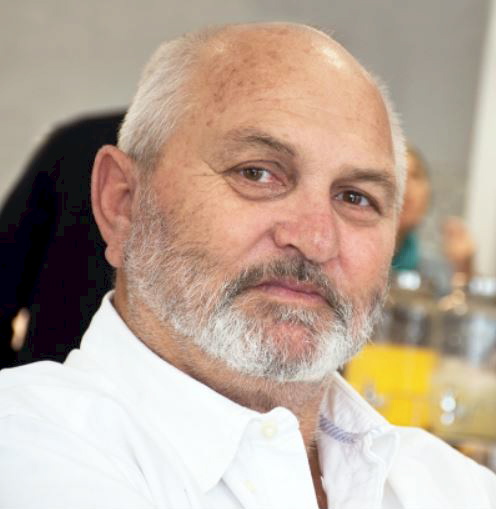
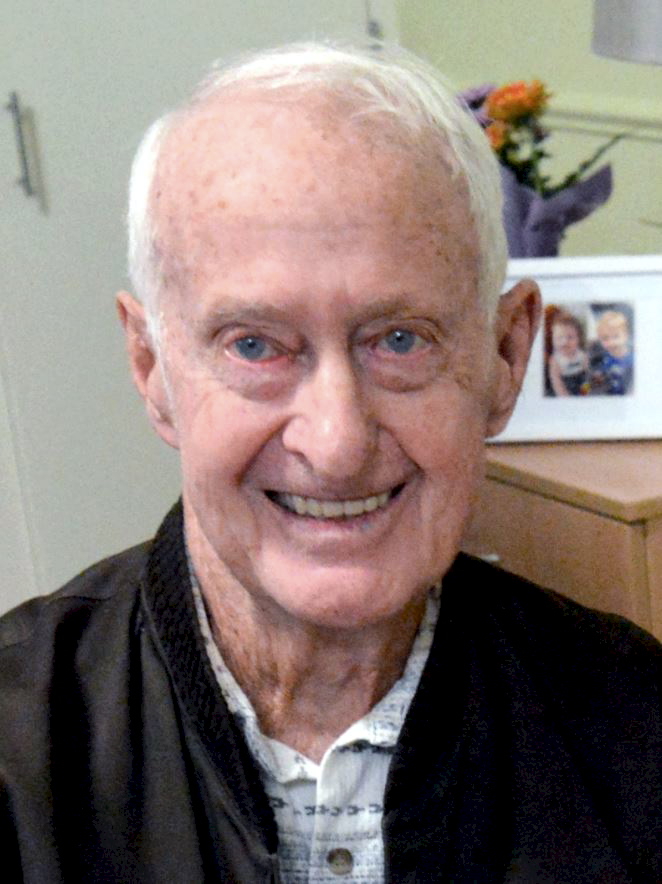
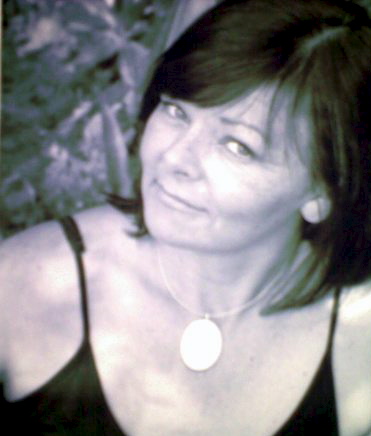
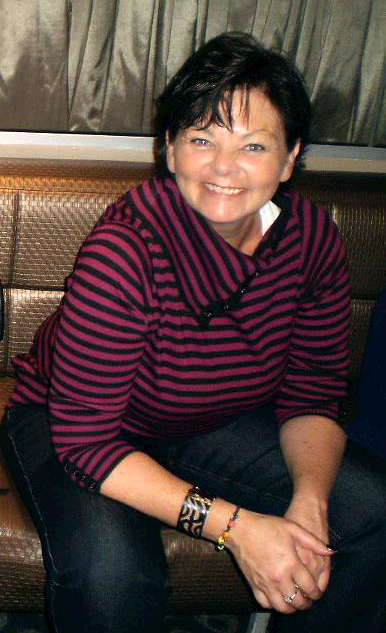
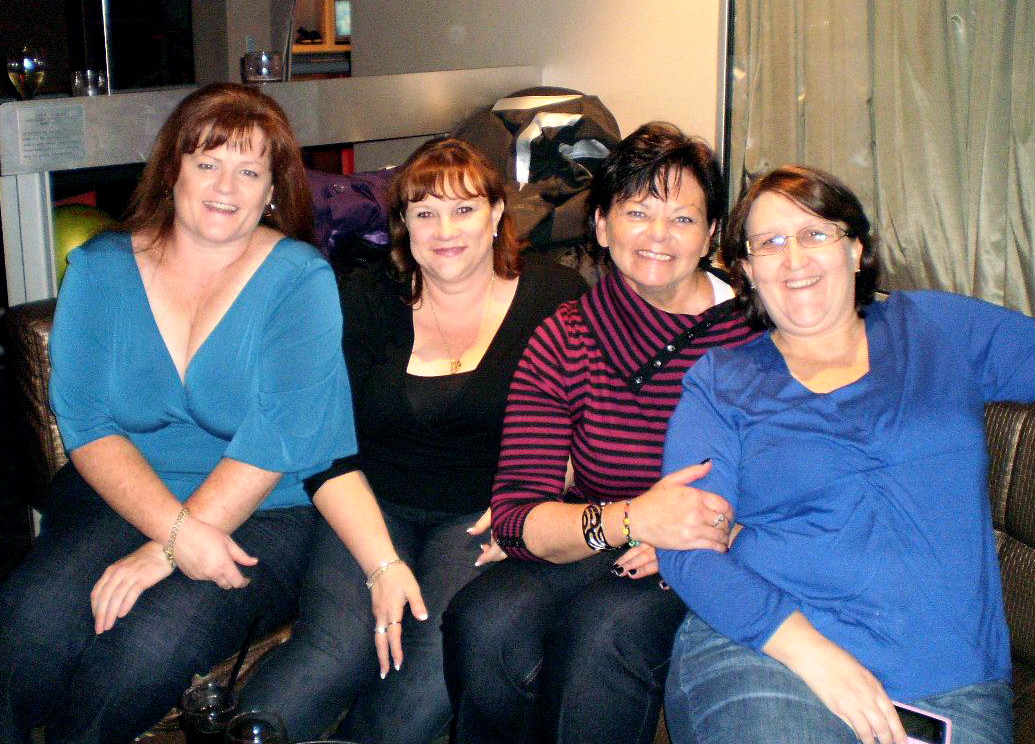
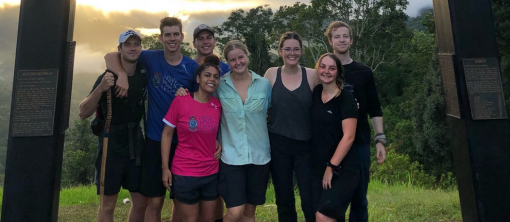
Connor & Harris LANDGRAF speak about their Step Mother ( Renae LANDGRAF ) and walking the Kokoda Track in her Memory.
NSW Police Legacy
Next up in our Police Legatee Stories series: NSWPF Probationary Constable Harris Landgraf, who’s been with NSW Police Legacy since the age of just nine years old.
“Three metres deep in the ground, covered in someone’s turds? Nah.”
Harris Landgraf is a country boy, embodying the very best of the open, friendly, and occasionally earthy outlook that entails. Approaching the end of his first year as a NSW Police Force Probationary Constable, his cheery demeanour has served him well in his chosen profession. But how did he get to this point? Let’s go back a little.
Like a lot of kids in his situation, the first that Harris knew about NSW Police Legacy was when they became a sudden presence in his life after tragedy. When Harris was just nine, his stepmother, Snr Cst Renea Landgraf, passed away. At her funeral, he had his first real experience of the love and community of the Police Family.
“There were hundreds of cops… Dad’s best mate Bushy took us there in his highway patrol car. The church was just filled with police officers. Hugs all round. It was pretty emotional.” To the young boy, it made a huge impression. “That’s when I knew the police were going to be a big part of my family.”
Harris’s father was also a police officer, but Harris didn’t initially enter the force, signing up at age sixteen to do a plumbing apprenticeship instead. At the encouragement of our Community Support Manager Leisa Doherty, he applied for, and received, the Kerslake Scholarship – an award given to fund technical education. He was thrilled at the support. “You know, being a young fella, you get five grand put into your account and all I wanted was that big drill set!”
His next big involvement with Police Legacy came through doing the Kokoda Trek in 2019. It was a transformative experience. He loved sitting around at the end of the day with all of these people who shared a similar story. “You’ve always got someone in your corner understanding where you’re coming from”
Another person on the trek that year was then-Commissioner Mick Fuller, who was hugely encouraging of Harris’s desire to become a police officer. On returning to Australia, Harris asked for, and was given “huge amounts” of support from Leisa and then-Chair Det Supt Gary Merryweather, who helped him get into the Police Academy. Leisa also put him in touch with Cain Anderson, another Police Legatee, who was going through in the class above him. The Police Family really swung into action.
Since attesting in December last year, he’s had a wide variety of experiences, and he can’t imagine now wanting to do anything else. “It’s more than just a job; it’s a passion,” he says. His Dad, now retired, has been incredibly supportive. “I’m living his dream,” says Harris. Dad calls every few days to hear the stories, and check in with how Harris is coping with it all. Things are very different to when his Dad was on the job, with police counsellors and all kinds of support services available. And Harris often finds himself checking in with his colleagues, helping them decompress from tough days.
As passionate as he is about his newfound career, he is equally passionate about Police Legacy. With the support of his Inspector, he recently organised a tri-state golf day in the region where he’s stationed, bringing together police officers from VIC, SA, and NSW, and raising more than $9,000 for NSW Police Legacy – a phenomenal feat. And apart from the money, he loves that he’s helped to share the story of why this organisation matters. “People say ‘I give money to Legacy each pay, and what do they do?’… but when I tell my story, and what I’ve been through… people say ‘look at what they’ve done!’”
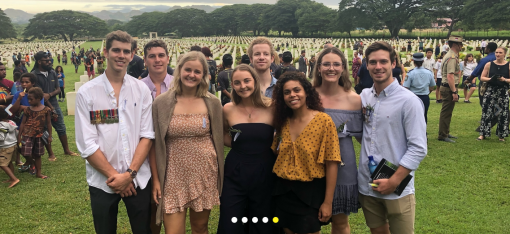
?, Harris LANDGRAF, ?, ?, ?, ?, ?, ?
Harris LANDGRAF with Commissioner Mick FULLER
Harris LANDGRAF, ?, ?, ?, ?, ?, ?, ?
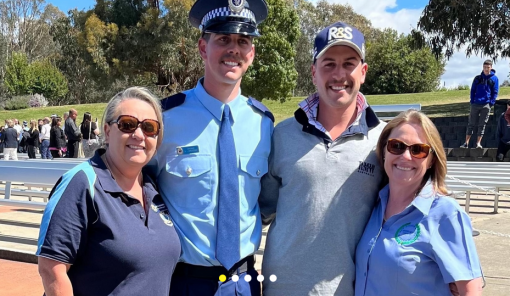
Leisa DOHERTY, Harris LANDGRAF, Steve LANDGRAF, ?
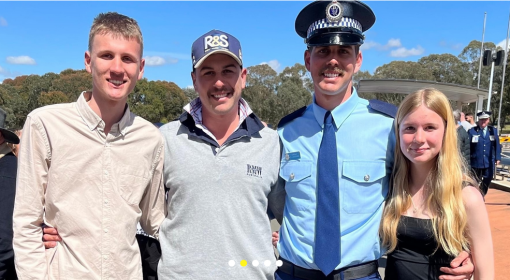
Connor LANDGRAF, Steve LANDGRAF, Harris LANDGRAF, ? LANDGRAF
The guard of honour that paid tribute to Senior Constable Renae Landgraf. Hundreds of friends and colleagues gathered to farewell the senior constable at St Brigid’s Catholic Church yesterday.
The drums sounded and police officers saluted as they farewelled one of their own yesterday.
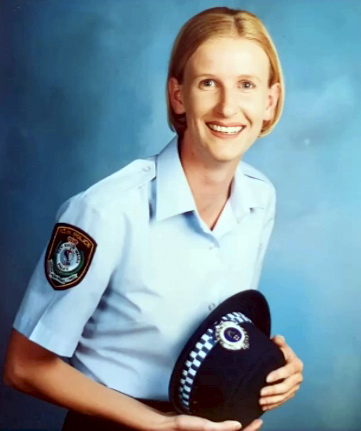
Senior Constable Renae Landgraf, nee Spackman, died as a result of health complications last Friday, at the age of 31.
Her sudden death has rocked Dubbo’s police family and the wider community.
Accompanied by his three sons and baby daughter, Steve Landgraf, an officer himself, was surrounded by hundreds of friends and colleagues as he farewelled his beloved wife yesterday at St Brigid’s Catholic Church.
Speaking on behalf of the family yesterday, Nicole Muir, Jodi George and Carly Stephens painted a beautiful picture of Renae’s life, moving from Western Australia at a young age with her family and residing in Narromine, where she completed her schooling and started work.
In 2001 Renae achieved her dream of being accepted into the Goulburn Police Academy, where she later graduated as probationary constable Renae Spackman.
Renae transferred to Dubbo Police Station in 2005, the same year she married her long-time friend Steve Landgraf, which her family remembers as being the happiest time of her life.
In marrying Steve, Renae welcomed with loving arms his two sons Connor and Harris and then in 2007, Renae was blessed with her first child, Ethan.
In February this year Steve and Renae had their second child, baby girl Mackenzie.
Family members said while Renae’s life was short-lived, she was able to achieve all she had dreamed to achieve and that was to become a police officer, a wife and a mother to a son and a daughter.
As a person, friends and family described Renae as being energetic, loving, fun and ambitious.
She was an extremely dedicated, mother, wife and police officer who worked hard and stuck her neck out for other people.
Superintendent Stan Single read a valedictory at the funeral outlining Renae’s police service and a description of her achievements and commendations.
Renae’s police service follows her father Neil’s army service and the policing career of her husband and role model uncle Peter.
Together with police colleagues a large contingent of nursing and medical staff attended the funeral in support of Renae’s mother, Sandra.
Renae will be remembered by her peers and family for her insistence in having all things right.
Her insistency on right and wrong and her compassion, dedication and work ethic are qualities she has imposed upon a number of junior police she has helped train.
Following the service, one section of Brisbane Street was closed off and Renae’s fellow officers, including drummers marched in front of the hearse as it made its way to the New Dubbo Cemetery for the burial.
Officers on bikes led the procession, and marked police cars transported the family.
NATIONAL POLICE REMEMBRANCE DAY TRIBUTE TO SENIOR CONSTABLE RENAE CAROLINE LANDGRAF
Page: 18486
Mrs DAWN FARDELL (Dubbo) [6.41 p.m.]: On Tuesday 29 September ( 2009 ) I attended the National Police Remembrance Day service held in the Holy Trinity Anglican Church, Brisbane Street, Dubbo, at the invitation of Ross Godfrey, Police Chaplain. Similar services were held around New South Wales on that day, which no doubt many other members of this Parliament attended. The Reverend Canon Roger Zohrab, Rector of Holy Trinity Dubbo, carried out the welcome and invocation. Scripture readings and the homily followed by Police Chaplain David Warner, CGS. The solo of Amazing Grace was beautifully sung by David Cooper, RNS Dubbo. Superintendent Stan Single, APM, the Commander of the Orana Local Area Command, addressed the congregation. Police Chaplain David Warner said prayers for the New South Wales police.
Constable Jason Blake, who had not been a member of the police force for very long, read the roll of honour. I will list the names of those members of the New South Wales Police Force deceased during the period 29 September 2008 to 28 September 2009: Sergeant Sean Stephen Lamerton, General Administrative Support Officer Jane Gardiner, Constable Morgan James Hill, Probationary Constable Mason Hammond, Senior Constable Lindsay “Guy” Winkley, Senior Constable Janice Anne Hennessy, Senior Constable Ian West, Constable Gilbert Joseph Roussel and Senior Constable Renae Caroline Landgraf. Renae was one of our own from Dubbo.
Senior Constable Renae Landgraf, nee Spackman, unfortunately lost her life in May this year at the age of 31 as a result of health complications. Her sudden death has rocked the Dubbo police family and wider community. Accompanied by his three sons and baby daughter, Steve Landgraf, an officer himself, was surrounded by hundreds of friends and colleagues as he farewelled his beloved wife at St Brigid’s Catholic Church. In 2001 Renae achieved her dream of being accepted into the Goulburn Police Academy, where she later graduated as Probationary Constable Renae Spackman. Renae transferred to Dubbo Police Station in 2005. In the same year she married her long-time friend Steve, which her family remembers as being the happiest time of her life.
In marrying Steve, Renae welcomed with loving arms his two sons Connor and Harris. In 2007 Renae was blessed with her first child, Ethan. In February this year Steve and Renae had their second child, baby girl Mackenzie. Family members said that, while Renae’s life was short, she was able to achieve all she had dreamed of achieving: becoming a police officer, a wife and a mother to a son and a daughter. Friends and family described Renae as being energetic, loving, fun and ambitious. She was an extremely dedicated mother, wife and police officer who worked hard and stuck her neck out for other people. Superintendent Stan Single read a valedictory at the funeral outlining Renae’s police service and a description of her achievements and commendations. Renae’s police service followed her father Neil’s army service and the policing careers of her husband and role model uncle Peter.
Together with police colleagues, a large contingent of nursing and medical staff attended the funeral in support of Renae’s mother, Sandra. It was a sad and tragic day when Renae passed away. Renae was a vibrant community member. I knew of Renae well and the work she did with the youth in our Dubbo community. Sandra used to attend the National Police Remembrance Day service each year with Renae. She was a true Briton to attend the service on her own this year. It was a tough day for Sandra but hopefully in time it will become easier for her. Renae and Steve’s children Steven, Connor, Harris, Ethan and Mackenzie are in the good hands of their surrounding family and the police force family, as it is known. Our sympathy goes to them all. The National Police Remembrance Day reminds us of the hard work the police perform in our community but it is very tough when it involves one of our own.
Natalie was as serving police officer in NSW for many years. She now runs carer support groups in Newcastle, New South Wales and is the mother of Alicia, who underwent a right hemispherectomy to treat intractable epilepsy caused by peri-natal stroke.
Club Champion – over 80’s Singles & Doubles with Lenny.
March 24 – 30, 2019: Issue 398
Warriewood SLSC Surf Boats Carnival: End of Season Pre-Aussies Training – Homage to Legendary Warren Molloy
Surf Boat crews made their way to Warriewood Beach yesterday, March 23rd, for an End of Season carnival hosted by the beach’s surf club.
Organiser Russell Lamb said the main object of Warriewood SLSC’s Boat Carnival was to give crews an opportunity to have a bit of training before they headed off to Aussies.
“Each division had 4 races each, “ Russell explained after the carnival
“We had a little bit of surf, but not too much, so it wasn’t too hard for the younger crews and newer rowers to gain some more experience. People at all levels had a good run. ”
“This is such a good sport for so many, brings people from all walks of life together to learn about rowing, surf life saving, the ocean, and have some great fun.”
Crews from south of the harbour and all along the northern beaches made their way to that beautiful little beach tucked beside Turrimetta. Mr. Lamb ensured there were some great prizes yesterday – Eco Downunder beach towels for all U19’s crews for starters.
The End of Season carnival participants also paid homage to legendary Sweep Warren Molloy who passed away on March 16th. He was aged 82.
Warren Molloy was the sweep of the 1977 Gold medal winning Warriewood Open Mens Crew. The champion ‘77 crew were in attendance at yesterday’s carnival.
Warren Molloy Tribute at Warriewood Beach – March, 23, 2019 – photo by Russell Lamb.
Mr. Molloy was captain of the Australian representative surf team to New Zealand in 1972 and won two Australian open boat championships. Overall, he won 25 Branch, Interbranch, Metropolitan, State, Interstate and National Championships and two international contests against South Africa and New Zealand. Warren was inducted into the ASRL Hall of Fame in 2006.
Warren Molloy was not only one of Australia’s best sweeps in surfboat racing but a man who was strong on discipline and behaviour.
Current North Narrabeen sweep Don McManus said ”He influenced my life tremendously in surfboats,” during his Profile interview of 2014.
”He taught me about team effort, training, discipline, how to row and behaviour out of the boat.”
Don first met Mr. Molloy when he started out with Port Macquarie in 1960. ”He was my sweep and coach,” Don said.
Photos courtesy Don McManus.
Warren first started out with the Garie SLSC in 1955 and became their boat captain at just 19.
As he had a long association with Queenscliff SLSC and was their club president in 1980-81 the family celebrated his life on Friday, March 22 at Queenscliff surf club. In lieu of flowers, the family asked for donations to Queenscliff SLSC.
Warren will be forever remembered by all especially his support of his wife, Helen. At the State Titles a few weeks ago he could be heard yelling out “run for the line”.
Professionally, as a Special Licensing Branch, Acting First Class Sergeant with the NSW Police Force, Warren Molloy was instrumental in bringing an end to reign of Abe Saffron at Kings Cross and ending the corruption that had crept into some parts of the force during the 1980’s. He was incorruptible – a country boy, and you know what is said about country people – you can take us out of the country, but you can’t take the country out of us.
On being a policeman Mr. Molloy said in an interview seven years ago, “I only ever wanted to be a police officer. All I wanted was to catch the baddies and look after the good people.”
Joining the mounted police force at 19, Warren started his career in the country. He was later transferred to Campsie, Lakemba and Port Macquarie, eventually landing himself in Kings Cross.
Mr. Molloy left the Force in 1990, having been promoted to Inspector shortly after the tribunal that sorted out some aspects of what was going on. A scholarship awarded to him by the dean of the Law faculty of The University of Sydney allowed him to study law, where he graduated aged 55. Success followed him to the field of law where he ran the largest licensing law firms in Sydney in the 1990s.
Sporting success remained a constant in his life. In 1972, Molloy was named the Police Sportsman of the Year, an honour of which he is obviously very proud. He was also a surfer, some residents remembering this week seeing him out at Queenscliff Bombie, acing it.
When asked if the sporting success helped his career. “In some small way, yes; it’s all self discipline and really to preserve, to do something, it’s just a matter of giving it your best shot really and keep[ing] at it,” he observed.
The northern beaches community extends deepest condolences to Helen, son David and daughter Vikki, grandchildren Charli, Jordan and Jayden, and great grandchild Willem.
Certainly a record to be proud of. The gentleman was a legend.
Photos by Ashley Cardiff from yesterday’s carnival run below.
Surf boat rowers ‘just old blokes doing what they love’
by Mitchell Jones
15th Sep 2015 5:00 AM
WHEN you think of old people bonding you tend to think of tea and biscuits, but a group of rowers in their 60s and 70s have their sights set on something more rigorous.
After departing from the Crown Hotel at 9am on Saturday, the 27 men rowed down to Yamba, a trip more than 60km.
Warren Molloy, a 79-year-old former police officer from Nymboida who rowed during his time in Sydney, is one of the organisers of the group.
“Surf boat rowers create a sort of fraternity, we’ve all rowed with each other or against each other and we’ve all become friends,” he said.
“We’re too old for racing anymore, but we still row for exercise, so we got together and we’ve decided to row all the rivers on the north coast.”
The inaugural ‘Clarence River Run’ with surf boats from Red Rock – Corindi, Bungan Heads, North Steyne and Woolgoolga are pictured on the Clarence River starting their journey at Grafton. Photo: Debrah Novak.
The group began their odyssey last year in the Mid North Coast, when they took to the water near Taree.
“Last year we rowed the Manning, and that was good fun, this year is the Clarence and next year will be the Hastings’ turn,” Mr Molloy said.
“We’ve always wanted to row the Clarence together; it’s a great river for rowing.”
Despite including veteran rowers from Woolgoolga, Hawks Nest and Sydney making the trip, it’s two Grafton-born rowers, David Baldwin and Robert Burgess, with the most impressive records.
“I went to school with David and Robert, and after they left Grafton they ended up winning championships in surf boating,” Mr Molloy said, “David has represented Australia in surf life saving contests in places like New Zealand, while Robert is in the Australian Surf Rower’s League Hall of Fame.
“They’ve done very well for themselves over the years.”
In April of this year Mr Baldwin and Mr Burgess were a part of the 100th anniversary of Gallipoli, where they took part in a 50 surfboat commemorative row made up of crews from Australia, New Zealand, Turkey, Great Britain and France.
The journey to Yamba is expected to take the group seven hours, with stops in Ulmarra and Maclean. Mr Malloy expects them to do 10kms an hour, but the group isn’t looking to make record time.
“These trips are for camaraderie, its nice for old friends to get together and row with each other again,” Mr Malloy said, “We get to keep the boys together and keep up our interest in the sport.”
DON McManus has been around surfboats for a big part of his life and he just can’t fathom seeing rowers and sweeps wearing helmets.
In fact, the Bilgola sweep has voiced his disapproval with Surf Life Saving Australia’s edict that helmets will become compulsory as from January next year.
“Boat rowing has been going for so many years and there’s hardly been an accident. If it’s compulsory for the boat boys then it should also apply for ski and board paddlers,” he said.
“We’ve had helmets at our club for about eight years. I’ve put one on now and again.
“The biggest drawback is that there is a hearing problem for a start. You don’t hear as well going from crew to sweep and sweep to crew. They don’t hear as well up in the bow and might miss commands.”
Crew member Brendan Murray agrees.
“Imagine if the wind is really blowing and also going under the water with a helmet on,” he said.
McManus and his State champion A crew of Jarrad King, Mitch Foran, Anthony O’Toole and Murray have never raced with helmets.
“Common sense prevails if you have young kids rowing for the first time. I always put them on the young girls depending on the surf,” McManus said.
Bilgola sweep Don McManus.
Sunday is another special day in the life of the man who has won eight national titles as a sweep – it’s his 70th birthday.
He was introduced to boat rowing because of his brothers Eric and Ray at Port Macquarie where legend Warren Molloy was the sweep.
Don followed Molloy to Manly and, after a very brief stint there, found his way to North Narrabeen where he began sweeping in 1976.
After four Aussie titles at North Narrabeen, he has since won a further four at Bilgola, shared around in Open Men, Open Women, Juniors and Colts.
Passion, camaraderie and, of course, good health have kept him going in the sport.
“Naturally the aches and pains happen more regularly but I keep up the exercises and watch my diet,” he said.
But such is his love of the sport that he’ll be sweeping five Bilgola crews, the A’s will also be back in action at Ocean Thunder.
Don held his birthday bash last weekend and good mate Matt Clymer told him to expect some fierce competition from some hot crews on the northern beaches this season.
“Looking forward to it. Surf boat racing is so intense and so close but there’s also the element of luck involved and where you are in the field.”
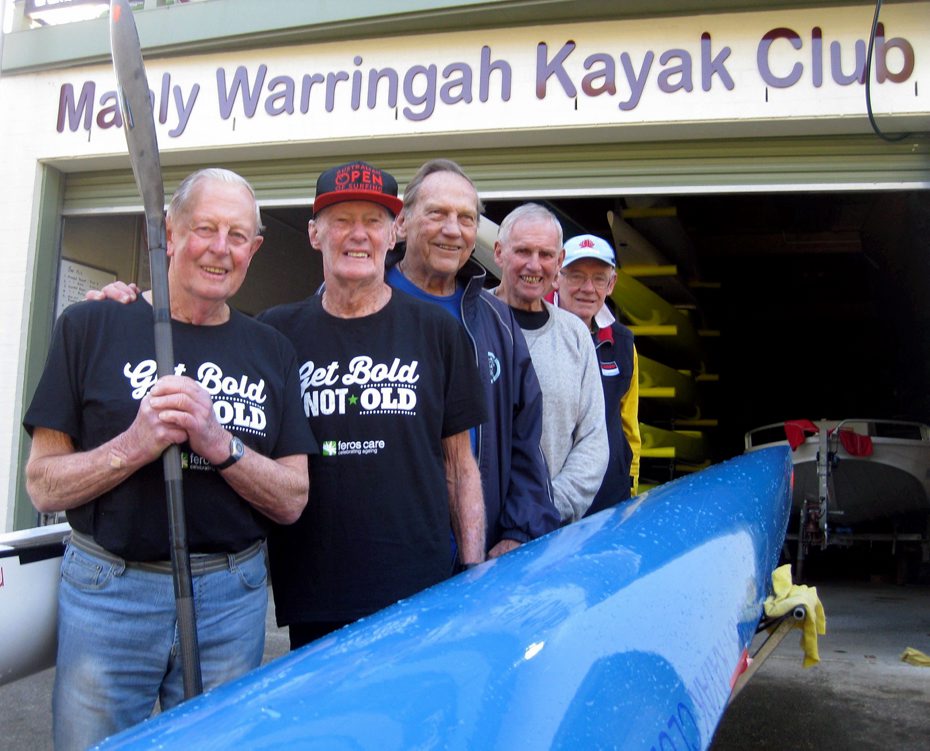
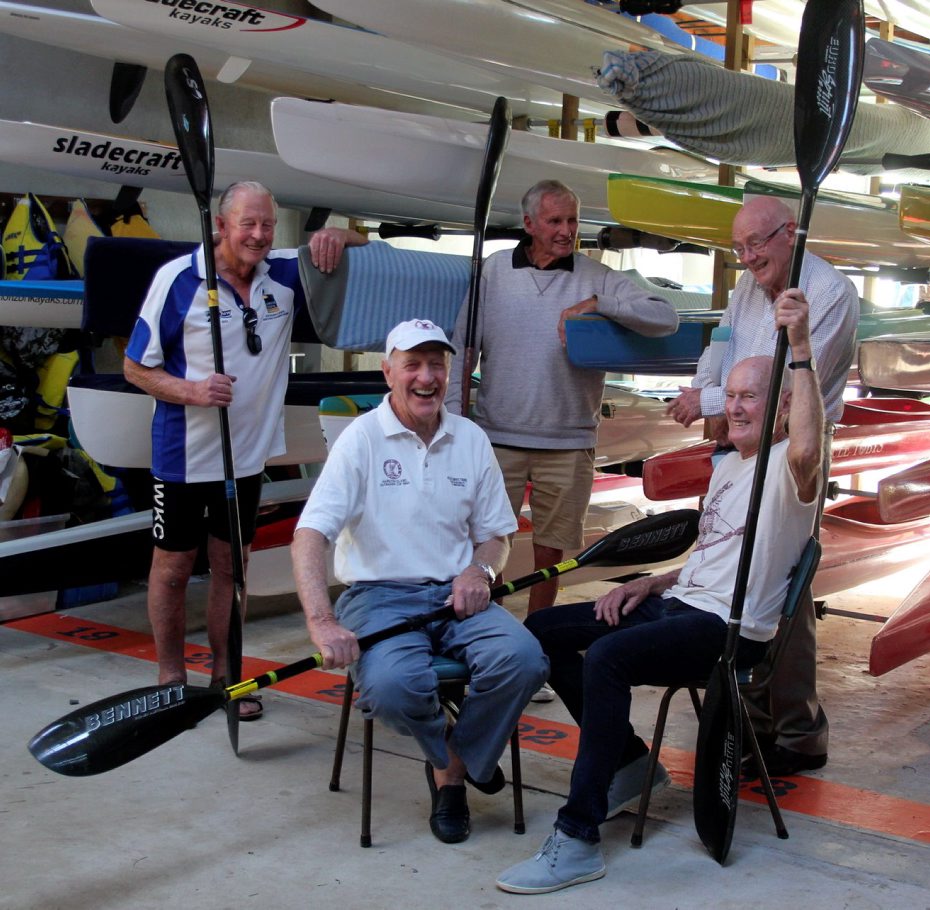
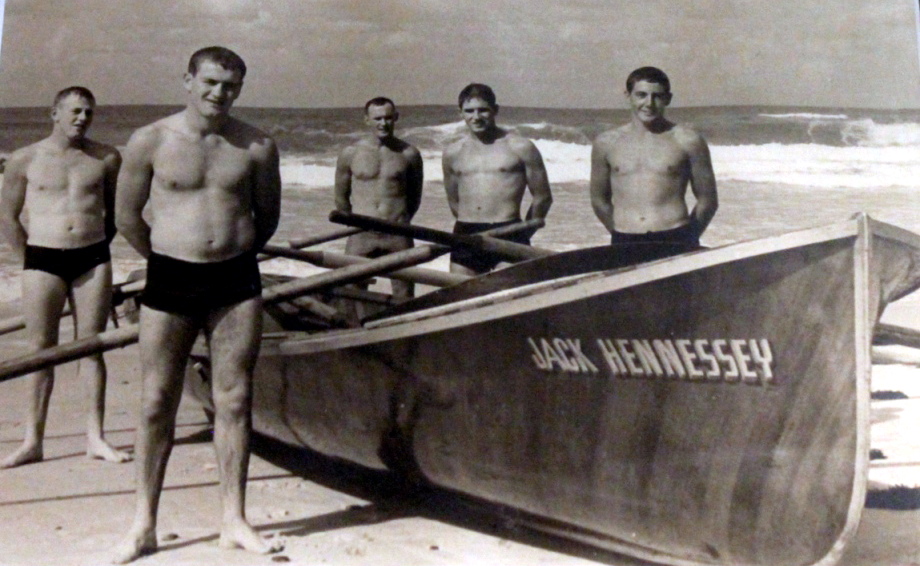
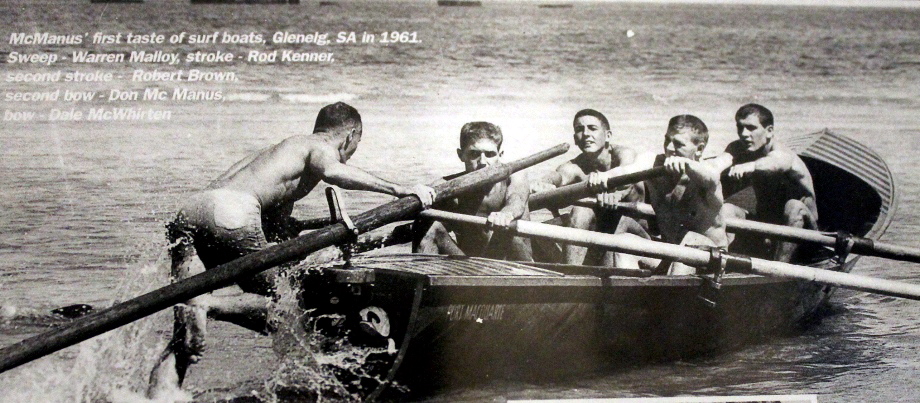
Warren joined Garie SLSC in 1955 and was appointed Boat Captain and sweep of open crew in 1956 at age 19. Swept in last surfboat race in January 2008 at age 71 by competing in the 182 kilometre George Bass marathon, winning the veteran category with the North Steyne club.
During this period Warren’s highlights included:
Winning 25 Branch, Inter Branch, Metropolitan, State, Interstate and National Championships and 2 international contests against South Africa and New Zealand. Included 2 Australian Open Boat Championships (1971 & 1977)
Captain of 1972 Australian Representative Surf Team to New Zealand
Author of the Association’s first training manual, which was on surfboat rowing.
Being awarded “NSW Police Sportsman of the Year” in 1972, as a result of achievements in surboat racing
Warren is currently a member of Queenscliff, North Steyne and Mooloolaba clubs and resides at Queenscliff, NSW.
‘Murphy was his main man’: the alleged links between the judge and the crime boss
Untangling the relationship between Lionel Murphy and Abe Saffron baffled authorities whose inquiries spanned NSW politics, sex trafficking and Sydney landmarks
Just how close was the former high court judge Lionel Murphy to the notorious crime boss of Kings Cross Abe Saffron?
That question preoccupied investigators on the 1986 commission of inquiry into whether Murphy’s conduct constituted misbehaviour in office.
The extent of their concern is revealed in documents released on Thursday, 31 years after the commission was terminated without making findings.
The commission had before it two allegations that Murphy had lobbied New South Wales Labor politicians on behalf of companies associated with Saffron in order to win them lucrative contracts. One was for the refurbishment of Central railway station. The other was for the lease on Luna Park.
The allegations were based on illegally taped conversations between Murphy and his friend, Sydney solicitor Morgan Ryan, which had formed part of the Age Tapes reports in 1984 and later led to the Stewart royal commission.
But was Murphy doing it because of his friendship with Ryan, who was known to be close to Saffron? Or was there a more direct relationship?
In July 1986, investigator Andrew Phelan met with Superintendent Drew at the 20th floor of NSW police headquarters to find out.
According to his file note, Drew reassured him that “apart from what [crime figure] James McCartney Anderson had told Sergeant Warren Molloy, no link between Saffron and his honour had come to light”.
What that particular link was is not disclosed. But Molloy, then special licensing seargent in the Kings Cross region, had extensive knowledge of Saffron’s operations. Molloy was overseas and did not return until a day after the inquiry was wound up, so Phelan never got to interview him.
However, Phelan also noted that “we were told that the vice squad had been conducting a lengthy investigation into allegations that Filipino girls were imported under some racket involving [solicitor] Morgan Ryan to work as prostitutes at the Venus Room”.
“It was suggested that Ernie ‘the good’ Shepherd, head of the vice squad may be able to tell us something about suggestions that Saffron procured females for his honour.”
The police also confided that that they were investigating several allegations that had come out of the Stewart royal commission, “including the alleged involvement of his honour, Ryan, Saffron, the Yuens and police in the Dixon Street casinos matter”.
The file on the commission of inquiry’s investigation into the Luna Park lease reveals that the main evidence they were relying on was from Mr Egge of the NSW police who had given evidence to the Stewart royal commission based on the phone taps he had listened to as part of illegal phone tapping that the NSW police had undertaken. They became known as the Age Tapes.
Ryan had been one of their targets and conversations with Murphy had been picked up.
In the early months of 1980, Murphy was alleged to have told his friend that he had intervened with the NSW premier Neville Wran on behalf of the Saffron-linked company to secure him the Luna Park lease.
The government announced in early 1980 that all six tenders were rejected and eventually called fresh tenders. The winner was Harbourside Amusements. In its early incarnation it was controlled by a solicitor, David Baffsky, who was known to act for Abe Saffron, according to the commission files. But later it had Sir Arthur George and Michael Edgley as its public face and Saffron’s nephew as its secretary.
The commission also sought help from the National Crime Commission and the Stewart royal commission into organised crime.
They were sent the transcript of an interview with James West, part owner of Raffles nightclub who claimed that he had met Murphy at Saffron’s place, and that “Murphy was his main man, you probably know that”.
At the time it was wound up, the commission records show it was planning to call Saffron, Ryan, Inspector Molloy and numerous denizens of Sydney’s crime world to give evidence.
Murphy died a few months later. The truth or otherwise of his involvement with Saffron remains unproved.
ONE story, probably apocryphal, about Abraham Gilbert Saffron, the Jewish boy who went to Fort Street High, earned a quid by reselling used textbooks, then went on to enjoy a life of sleaze, comes from the Gold Coast.
A woman nightclub owner, being stood over by local thugs, called Saffron to ask whether he could help. Before the next scheduled visit by the extortionists, two men arrived and told her to relax and ignore them, they would wait. That night the two extortionists were admitted to Southport Hospital, severely beaten, and the extortion stopped.
A slightly built, dapper man, Saffron had enormous influence and his business tentacles reached across Australia. But his reputation was dreadful. He was constantly attacked: in the South Australian Parliament by the then premier Don Dunstan, who described him as being “one of the principal characters in organised crime in Australia”; in Federal Parliament by the then senator Don Chipp, who described him as “one of the most notorious, despicable human beings – if one can use that term loosely – living in this country”. In the Victorian Parliament he was called “Gomorrah himself”, a reference to a person linked with drug activities, who went by that name in evidence to the Costigan royal commission into the Painters and Dockers Union. Saffron always reacted badly to inferences that he was involved in drugs. Twice he rang this writer at the Herald to specifically state that he was not involved. And if anyone thought he was undefamable, they were in for a rude shock. The Melbourne Age called him “Mr Sin” – he sued and won.
Abe Saffron was born on October 6, 1919, the youngest child of a draper. He grew up with two brothers and two sisters in a unit above his father’s shop in Parramatta Road, Annandale. He was bright, and his mother wanted him to become a doctor, but he chose to leave school at 15. He started working in his father’s shop. The following year his father moved to a new shop, in Pitt Street, which was bigger and had more staff. In 1938 Abe acquired a minor conviction – and a £5 fine – for a betting offence. In 1940, he was convicted of receiving stolen goods and sentenced to six months hard labour, suspended on entering a £10 good behaviour bond. Saffron enlisted in the army but in 1943 switched to the merchant navy and for many years proudly wore his RSL badge.
At war’s end, Saffron went into the hotel business, making a success of pubs in Kurri Kurri and Newcastle in the Hunter Valley, then moving to Sydney, where he acquired the West End Hotel in Balmain and the Gladstone Hotel in East Sydney. He had a go at professional bookmaking but was unsuccessful and decided to stick with hotels. In 1947 he married a hairdresser, Doreen, and bought the Roosevelt nightclub in Orwell Street, Kings Cross. His marriage both to Doreen and the Cross was to last, though these two elements in his life had a most uneasy relationship. He got into more trouble when he was convicted of possessing an unlicensed pistol and was released on a £10 bond to be of good behaviour for two years.
Saffron’s entry into the nightclub industry brought him into contact with the seamy side of Sydney, which he took up with relish. Doreen said later that the Roosevelt “seemed to have changed [Abe’s] personality”. Saffron, whose son, Alan, was born in 1949, started acquiring an unsavoury reputation. He said in People magazine in 1951 that he had nothing to do with baccarat games and that his name “seems to have been linked with everything notorious around this town”.
Probably to counter his deteriorating image, Saffron participated in charity work. He organised a Christmas party for crippled children. He also gave financial advice to the Woolloomooloo Police Boys’ Club that won him praise from the local police inspector. He helped raise money for the Miss Australia Quest and contributed to the Lord Mayor’s Relief Fund through membership of the Kings Cross Chamber of Commerce. But in 1952 he was obliged to defend a charge in the Central Criminal Court of giving false evidence.
In 1954 a royal commission into the liquor laws, conducted by Justice Victor Maxwell snr, found that Saffron had employed people to get liquor licences on his behalf and that he had concealed his interest from the Licensing Court. Some of those licences applied to hotels that sold black market beer to the Roosevelt, which Maxwell described as “possibly the most notorious and disreputable nightclub in Sydney”. Maxwell said: “A. G. Saffron ultimately admitted his beneficial interest in a number of hotels using people as dummies. These hotels included the West End Hotel, Westdale Hotel, Cumberland, Gladstone and Albert Hotels.”
There was concern interstate about Saffron. A question was asked in the West Australian Parliament about whether Saffron was about to take over a hotel in that state. He was searched vigorously by customs officers whenever he turned up at an airport.
Saffron was not above playing around. He was charged with scandalous conduct following a police raid at Palm Beach and comments by the police prosecutor about Saffron’s private morality were most unflattering. The prosecutor referred to him as sexually depraved. Despite that, Saffron beat the charges but scarcely changed his conduct, forming a de facto relationship that produced a daughter. In 1964 he fought charges of receiving stolen property but was coming under increasing scrutiny by law enforcement agencies. The Moffitt royal commission into allegations of infiltration of organised crime into licensed clubs in 1974 gave him the title of “Mr Sin”, and though a police witness said it did not apply to him, it stuck. Questions were raised in South Australia about whether he controlled the drug trade in Adelaide. Saffron gave a media conference to rebut them and to declare that his business interests were “totally legitimate”.
Those business interests were extensive. Living in Sydney’s exclusive Vaucluse, he was reported to have interests in hotels, nightclubs, restaurants, casinos, a sex shop, adult movie clubs and development and finance companies. He made extensive use of front men, but his real strength lay in his ability to get on with police, giving them what they wanted, and his corrupt links were said to have reached to the top levels. That is one interpretation of how Saffron was able to repeatedly beat charges in court.
In the 1980s Saffron was having trouble with arson attacks on his premises. He was also being pursued by the NSW Police Licensing Squad. The arson he might have been able to handle, the licensing police hurt him. He made a series of visits to the then deputy commissioner, Bill Allen, who later cornered the licensing squad head, Warren Molloy, and gave him money – a matter later explored by the NSW Police Tribunal, and which led to Allen’s demise. The money was understood to have been an inducement to Molloy not to perform his duty, and Molloy turned out to be an honest cop.
Saffron was able to rebut allegations that he had had anything to do with the disappearance of the Mark Foys heiress Juanita Nielsen in Kings Cross in 1975, over her activities as the editor of a radical Kings Cross newspaper. The activities affected a development project in which Saffron, according to planning documents, had an interest. Saffron came under further attack when it was alleged that Saffron-owned companies held a lease over a property held by the Public Transport Authority. Chipp told parliament that the building housed a gambling club, a brothel and a sex shop. He said the government had been obliged to buy out the lease, at a cost to the public of $2.6 million, but there was no record of any action having been taken against the gambling club or the brothel. “This all reads like an extract from a novel like The Godfather or a novel about mobster rule in Chicago or Kings Cross,” he said.
The man who proved his undoing was an associate, James McCartney Anderson, with whom he had had a falling out. Anderson put the boot in, accusing Saffron of bribing police and evaded tax. He said Saffron had provided “champagne, cognac and a few girls” in his Crown Street liquor store in East Sydney. The tax got him. Saffron went about his usual denials but there were documents to show there were two books, one to record the actual cash flow, another for tax. Saffron was charged with one count of conspiring with Anderson to defraud the Commonwealth of tax between January 1, 1969, and June 30, 1981. He was convicted on October 23, 1987, and sentenced to three years’ jail. He was stripped of all his NSW liquor licences. He served 17 months before being released on parole to face more tax charges.
By then, 69 years of age, he had much of the starch taken out of him. But not the fight. When the Gold Coast Bulletin published a crossword with the clue “Sydney underworld figure, named Mr Sin”, the answer was Abe Saffron. Saffron went for his lawyers and fought it in court and won. At least he did not send his thugs to put the publisher in hospital.
Last July [1983] a new Liquor Act came into force in NSW. Prior to that event the local Licensing Police had begun to play a heavy hand with various restaurants and nightclubs.
In August Flo’s Palace was forced to close because of breaches of the Liquor Act. Last month the Detour was forced to close.
The Star was aware of the sudden police raids and inspections at the time, and the continuing problems that many venues were having trying to conform to the act. In numerous discussions with many of the owners and licensees of the premises, The Star was asked not tho publish any of this information. The argument used was that the matter should be played down -“ -˜kept low key’ -“ in an attempt to contain and deal with the problem.
It now seems that such advice was ill-informed and indeed detrimental to the businesses concerned and to the general public. Many of the businesses now realise the seriousness of the situation and, in a general meeting of licensed premises called by Michael Glynn, Publisher of The Star, those businesses attending requested public disclosure of the situation.
At the same time the meeting formed a committee to begin to work for the reform of the Liquor Act and the Theatres and Public Halls Act. The meeting also recognised that this was not just a gay issue, but that non-gay venues throughout the state were also affected. Approaches to other venues have been made, and a further meeting is to be held on Thursday November 3 [1983].
Michael Glynn, Publisher/Editor, has compiled the following report.
Only a couple of years ago the Gay businesses in the Oxford Street area began to become an alive, possibly healthy and positive focus for our developing community. The value of these places in our community has proven itself time and time again. They are a valuable focus for our socialising, communication, fund-raising, political activity and enjoyment. There has always been a coming and going of venues, places for us to rage, meet people, feel safe.
That our major venues (bars, discos, pubs) are seriously threatened is becoming increasingly clear to a greater number of people.
The situation is not new and it did not spring up overnight. Nor is it a single issue problem. What we have is a major failure by the Wran government in the administration and application of law and justice in NSW.
The immediate threat to our business community comes from changes to the Liquour Act, the enforcing of the Crimes Act for homosexual offences, and the application of the law by police.
In both areas current legislation is unrealistic, illogical, unjust, discriminating and corrupting.
The Liquour Act does not define a disco. Patchs and the Midnight Shift are not discos as defined by the Liquor Act, they are restaurant/cabarets. Under the definition of their licenses they must serve drinks to customers who are seated AND who are eating. These provisions smack of the ballroom mentality of 50 years ago. They do not recognise today’s reality. In fact, changes to the Liquour Act in July of this year has cost our businesses tens of thousands of dollars in fines, court costs and legal fees.
Why? Because they are discos and operate as discos, not restaurant/cabarets. People go to discos to dance, not eat and watch shows-¦
The enforcement of the Crimes Act in the recent raids on Club 80 has caused considerable comment in the media and various representations to the government. It seems that little can be done to stop the trials of 27 gay men arrested in those raids.
Only last year members of the government, and members of our own community, were saying that these laws were not being enforced. The government that included provisions in the anti-discrimination act for homosexuals, refused to remove criminal penalties of up to 14 years jail for homosexual behaviour in private.
Gays cannot be discriminated against in most areas of housing and employment but can be arrested, tried and convicted for having sex.
That the police have assumed new tactics is evident from their past and recent behaviour. In the past licensing police and the vice squad have turned blind eyes, with hands out, as unlicensed clubs/bars and sex palaces (non-gay and gay) have flourished throughout the city. In the gay community it is alleged that upwards of $50,000 per week was once paid to police, politicians and bureaucrats to keep places open. The extent of that pay-off system may have decreased but it has not disappeared.
In 1976 the Wran government gained office with a campaign that stressed a promise of reform. Instead, law and justice in NSW has now acquired a sordid quality and its application is in total disarray.
The recent allegations concerning corruption of the prisoner’s early release scheme, Rex Jackson’s misleading of parliament over the issue (with his subsequent resignation) and the serious doubts about the thoroughness of the police investigation have given substance to calls for a judicial inquiry into allegations of corruption in the prison system and, at the least, police inefficiency.
Further allegations by the government’s former crime advisor, Mr. Bob Bottom, concerning a NSW magistrate taken to lunch by a crime figure (so far unnamed), and that charges against a defendant were dropped under an arrangement between criminals and the magistrate, are adding to the pressure on the government for a full public inquiry.
Adding more fuel to the fire are allegations of corruption and crime surfacing in the Juanita Nielson inquest. During the investigation into the King’s Cross publisher’s disappearance (and presumed death) Mr. James Anderson, former manager of Les Girls, alleged that he had seen Abe Saffron hand over parcels of money to senior detectives, including one who is now an assistant commissioner.
Newspaper reports (within the limits of the restrictive libel laws that exist in NSW), have referred to Abraham Gilbert Saffron as -˜a prominent businessman’. Other commentators have not been so complimentary: It is established that Mr Saffron has a reputation said to be unsavoury and of being involved in illicit activities’ -“ (Mr Justice Perignon, NSW Police Tribunal, April 1982). He is one of the principal characters in organised crime in Australia -“ (Peter Duncan, former South Australian Attorney General, SA Parliament, March 1978). It is a matter of notoriety in the community, that Mr Saffron is not a person of good repute (NSW Premier Neville Wran, NSW Parliament, November 1978)-¦
In 1982, during the Police Tribunal’s investigation of the Deputy Police Commissioner, Mr Bill Allen, Mr Saffron said that he was associated with more than sixty companies in NSW. Question by counsel assisting the Tribunal, Mr Roger Court, QC, Mr Saffron was asked if he had an interest in premises known as Ruby Reds, at 273 Crown St, East Sydney. Mr Saffron replied: Not the business, no. He disagreed with Mr Court that Ruby Reds was frequented mainly by lesbians and said that it was frequented by both males and females. It was fair, however to call it a gay bar-¦
Mr Saffron said that he, his wife Doreen, and his sister Beryl Buckingham, were all directors of a company called Arcadia Securities Pty Ltd and that Arcadia in turn had shares in a company by the name of Educe Pty Ltd. He did not know if a woman, Dawn O’Donell, was a director of Educe.
Educe operates Patches at 33 Oxford St? -“ That’s correct.
Mr Saffron said that as far as he knew, Dawn O’Donell looked after Patchs.
Mr Saffron’s alleged associations with the gay community are common knowledge. What is not common knowledge is the extent of that association-¦
In 1980, in the NSW Parliament, the Independent State MP, John Hatton, named as corrupt the former liberal Premier, Sir Robert Askin, Police Commissioner Mackay, Allen, Hanson and Wood, and the former CSM Mr Murray Farquhar, who was later appointed head of the NSW Drug and Alcohol Authority.
Mr Hatton told parliament that the turnover of organised crime was more than $2000 million a year -“ that Police Commissioner Wood had resigned -“ on full superannuation benefits -“ following distribution of a document which made shattering observations on the NSW Police Force-¦
Payoffs, bribery, corruption, even murder -“ if any of it is true then some light may be shed on the current situation within our own community.
In March 1982, Sergeant Warren Molloy, who was responsible for licensing in the Kings Cross/ Darlinghurst area, launched a crackdown on restaurants, nightclubs and blue movie houses.
This action signalled an end to the give and take situation that had existed between police and certain businesses in the area. Among the many premises raided were some with which Mr Saffron was associated-¦
Sergeant Molloy has since assumed duties at Chatswood, and in his place Detective Sergeant Burton is responsible for licensing in the area. Sergeant Burton, according to a number of sources, plays it strictly by the book. When the full letter of the law is being applied, you can’t run a disco as a disco, not when you’re really supposed to be a restaurant under the provisions of the Liquour Act. The argument has been well put -“ Sergeant Burton is just doing his job -“ enforcing the law.
A similar situation applies to the vice squad, with Detective Sergeant Ernie Shepard in charge. The only surprise here is that there haven’t been more raids, particularly on private homes, where sex between same sex partners is rampant. It seems that Sergeant Shepard is more discriminating in the application of the law than his licensing counterparts. The recent delivery of 27 statutory declarations by gay men admitting to criminal acts has not provoked action by the police, even though they are required to act upon knowledge of a crime.
And here is the kernel of the problem. No-one knows what to expect from the law and tis application by the police.
Nothing less than a Royal Commission (with full public disclosure) into the allegations of crime, corruption and the enforcement of the law, will satisfy the citizens of this state.
More importantly, the government must correct the archaic laws that give rise to that corruption, when those laws do not apply to the real situation.
Finally Mr Wran and the government must be aware that the major swing against the government in the recent by-elections showed that the NSW public may not be so apathetic over allegations of corruption.
The government must act now or face its most serious test at the polls next year.
DELLAR:
WA POLICE UNION Members are invited to attend the Funeral Service for our late retired member Colin Dellar 4466 at the Mandurah Offshore Fishing Club, THURSDAY (21.03.2019) at 11.00am.
GODFREY:
WA POLICE UNION Members are invited to attend the Funeral Service for our late retired member Ronald Best Godfrey 2654 at Seasons Chapel, Wanneroo Road, Balcatta on Monday (11.03.2019) at 2.00pm.
Here is Ronald Best Godfrey’s online obituary. Please accept Everhere’s sincere condolences.
It is always difficult saying goodbye to someone we love and cherish. Family and friends must say goodbye to their beloved Ronald Best Godfrey (Balcatta, Western Australia), who passed away at the age of 91, on February 14, 2019. You can send your sympathy in the guestbook provided and share it with the family.
You may also light a candle in honor of Ronald Best Godfrey or send a beautiful flower arrangement to the funeral service. A funeral service will be held on Monday, March 11th 2019 at 2:00 PM at the Seasons Balcatta Chapel (401 Wanneroo Rd, Balcatta WA).
page 3680 GOVERNMENT GAZETTE, W.A. 24 December, 1957
APPOINTMENT
( Under Section 6 of the Registration of Births, Deaths and Marriages Act, 1894 – 1956 )
Registrar General’s Office,
Perth, 20th December, 1957.
THE following appointments have been approved:-
R.G.No. 166/57 – Constable Ronald Best Godfrey, as Assistant District Registrar of Births and Deaths for the Geraldton Registry District, to maintain an office at Mingenew, during the absence on leave of Constable Robert Bruce Edwards; appointment to date from 14th December, 1957.
NORMAN B. BRICE
Registrar General
Christine Ann DRIVAS
| 30/03/2019
Christine Ann DRIVAS
AKA Chris / Chrissie
Late of ?
NSW Goulburn or Redfern Police Academy Class # ? ? ?
New South Wales Police Force
Regd. # 33048
Rank: Probationary Constable – appointed 19 March 1999
Final Rank = Senior Constable
Stations: ?, Liverpool ( March 1999 – May 2004 ) – ( 22 Division ), Campbelltown ( 35 Division ), PCYC – Minto, VKG 2 – Oak Flats,
Service: From? ? 2000?to28 February 2013 ( Resigned )= 13 years Service
Former Liverpool & Campbelltown Policewoman collapses in city on Saturday 9 March 2019.
Chrissie DRIVAS collapsed at dinner last night in the CBD of Sydney and some off duty paramedics assisted her until the arrival of Ambulance Paramedics.
Chris passed away in the ambulance.
She was in the city and due to depart on a cruise the next day – Sunday.
Please revisit this Memorial page for funeral details when they become known.
Quandialla, North East District, Eden ( Insp. ) – ( early 1980’s ), Bega ( 1981 ), Liverpool ( 22 Division ) – ( OIC – Chief Insp – 1982 – 1984 ), Wagga Wagga ( 1984 – 1986 ) ( Supt ) – Riverina District – Retirement
Service: From 4 January 1944 to15 November 1986 = 42+ years Service
Awards: National Medal – granted 29 June 1984 ( C/Insp )
Commended 1964:
Sgt 3/c Francis ( Frank ) A. Metz is commended for the part played in connection with the search & subsequent arrest of 3 offenders, who were involved in the shooting of Constable L. J. Browning ( # 8645 ) at Nowra on the 23rd of November 1964 –
Event location: Shalom Place, Mary Potter Nursing Home, Wagga Wagga
Event date: Friday 22 February 2019
Funeral date: Wednesday 27 February 2019 @ 10.30am
Funeral location: St Michael’s Cathedral, 10 Church St, Wagga Wagga
Wake location: ?
Funeral Parlour: Alan Harris McDonald funerals – 6921 4913
Buried at: ?
Memorial located at: ?
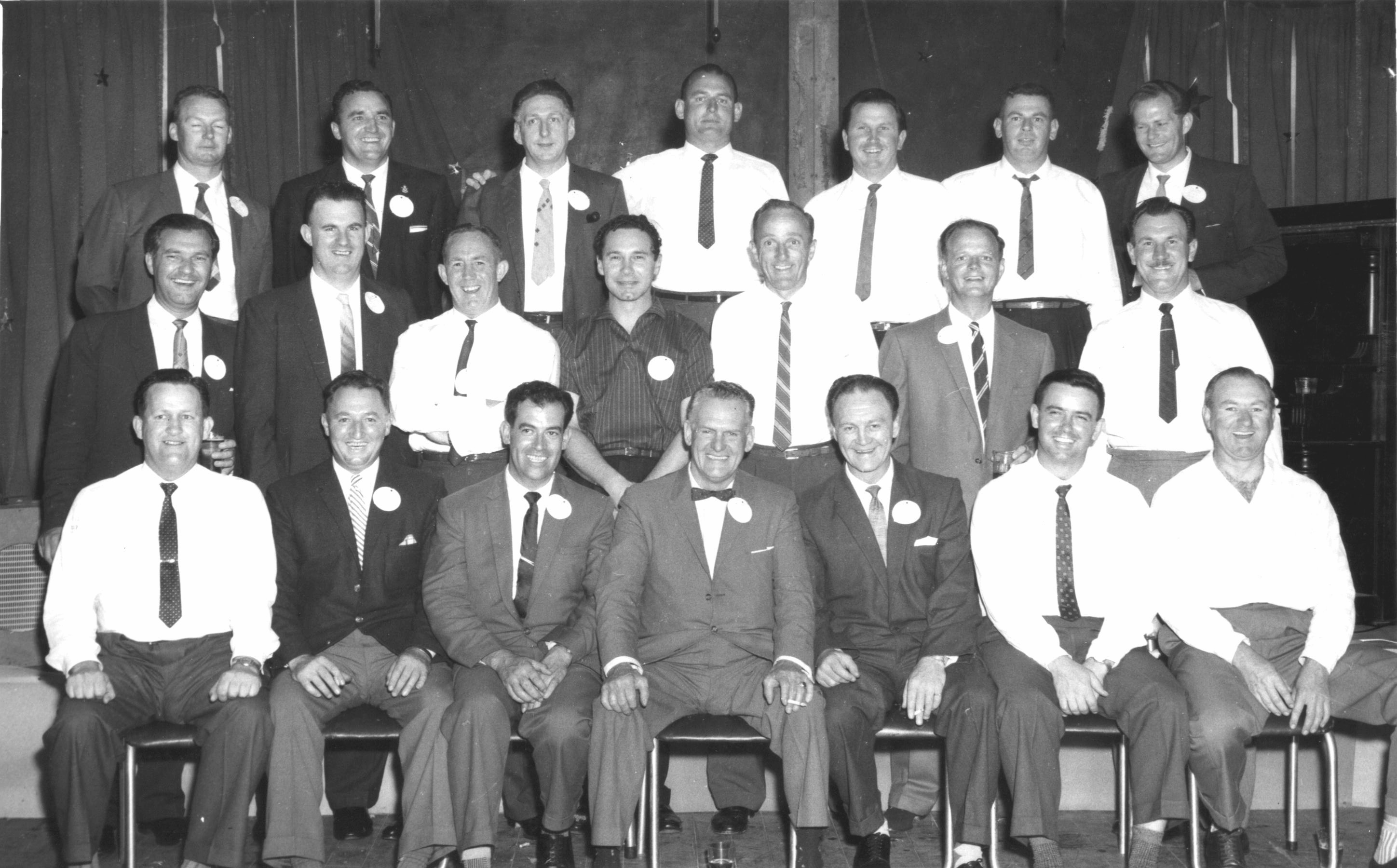
Bob Day, Ted Cook, Ken Fitzpatrick, Cliff McHardy, Ted Houghton, Frank Metz, Colin Joyce Middle row: Dennis Toohey, Kevin Lawler, Frank Parkes, Dick Lascelles, John Eisenhuth, Bob Smith, Ron Bunt Front row: Jim Pyne, Jock O’Keefe, Fred Aldred, Charlie Crittle, Joe Hall, John Wilson, Ken Donald” width=”510″ height=”317″> Back row, l to r: Bob Day, Ted Cook, Ken Fitzpatrick, Cliff McHardy, Ted Houghton, Frank Metz, Colin Joyce Middle row: Dennis Toohey, Kevin Lawler, Frank Parkes, Dick Lascelles, John Eisenhuth, Bob Smith, Ron Bunt Front row: Jim Pyne, Jock O’Keefe, Fred Aldred, Charlie Crittle, Joe Hall, John Wilson, Ken Donald
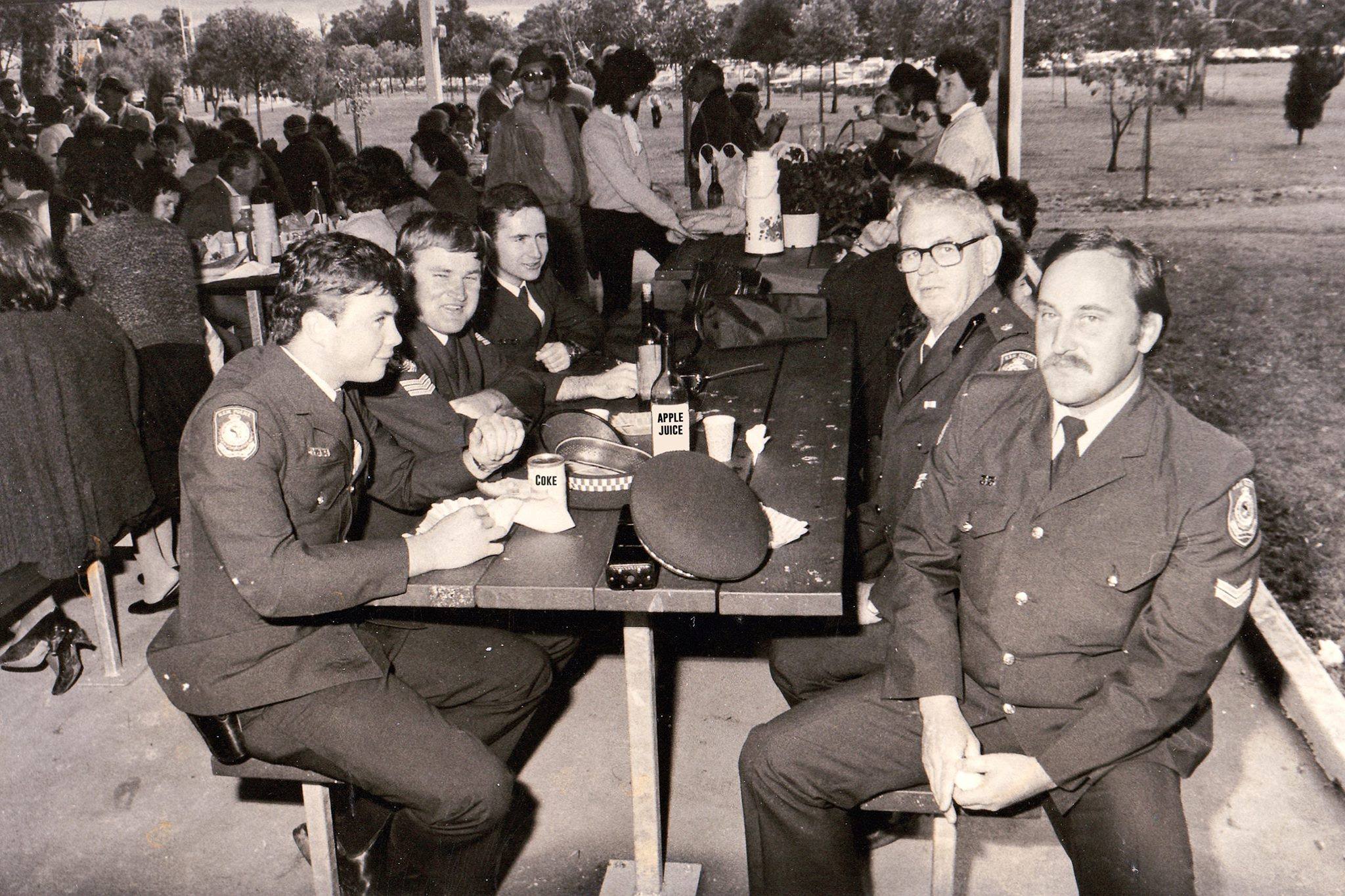
From left closest around the table, Con. Scott Martin, Sgt Barry Stoker, Con. Dave Lonergan, Ch/Insp. Frank Metz, S/C Mark Grigg.
FRANK is NOT mentioned on the Police Wall of Remembrance
May they forever Rest In Peace
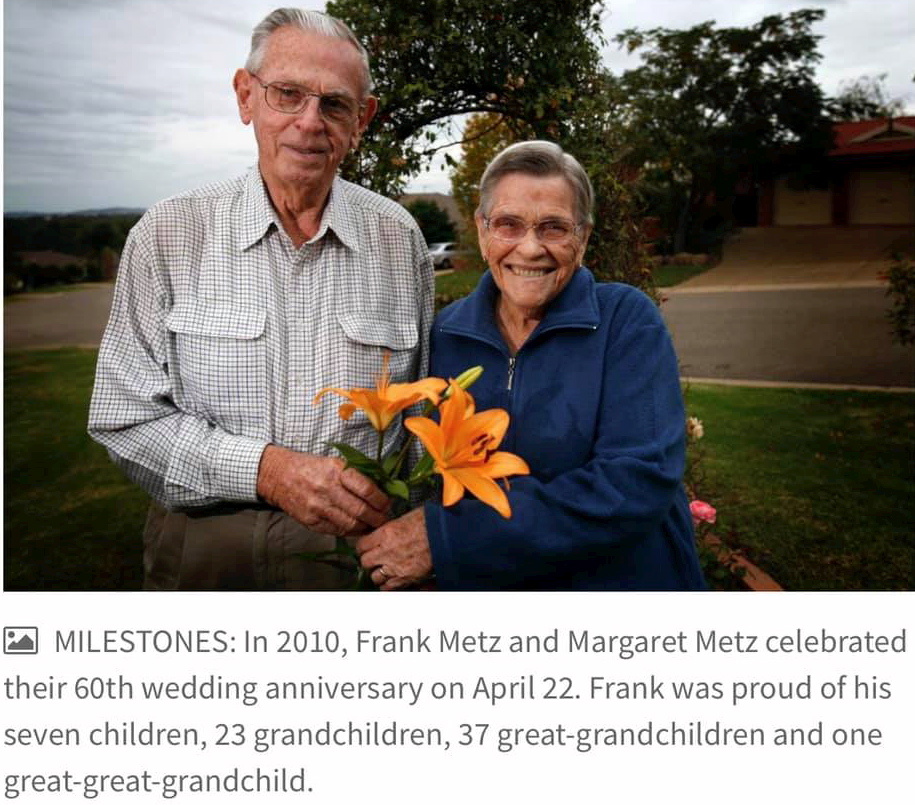
Frank Metz was a caring family man, a dedicated police officer and an ‘adventurer’
Wagga Daily Advertiser 13 March, 2019
Colleagues remember Frank Metz’s as a distinguished NSW police officer, but his family remember a wonderful husband and a caring father with a dry wit.
Francis Metz, fondly known as Frank, passed away on February 22 at 92 years of age. He joined the NSW Police Cadets on January 4, 1944, and that kicked off an illustrious career.
His wife, Margaret, said they met at Quandialla when Frank was there relieving the permanent officer.
“I was on a bus trip to the Ballinaclash Orchard when a busload of young people went cherry picking,” she said.
“It was raining and we had to go to the pictures, and | from there the rest is history. We were married in 1950.”
Margaret said he was a wonderful husband, father and policeman and she very proud of him in anything that he did.
Son, Robert Metz, said the movement around NSW was a real testament to the frequency of his dad’s promotions.
“Within his police career and with the moves, he eventually ended up a superintendent, the officer in charge of the Riverina District,” he said.
The Metz family moved to Wagga in 1984 for the job and Frank retired in 1986.
“They decided to enjoy their retired life together in Wagga,” Robert said.
“Lots of travel for leisure and for the family.
“While Mum and Dad’s family was expanding, he did everything he could to support his children through their journey as parents.
“Nothing was too much for Dad.”
His daughters Marianne Flowers and Louise McDermott said their father made everything into an adventure.
“He was always getting us to try new things like apples, sultanas and honey sandwiches,” Marianne said.
“When mum was working in the school holidays, dad used to take us off on day trip adventures,” Louise said.
Marianne said Frank taught all the children to stand up for what was right and to be fair and respectful and he had a dry sense of humour.
“He used to say ‘how can I soar like an eagle when I am surrounded by turkeys’,” she said.
Margaret said he dedicated his time and efforts to the Rotary, the Albion Park Bush Fire Brigade, the Retired Police Association of NSW and the Association of Independent Retirees.
“I would also like to thank the police for their contribution to the funeral,” she said. “When they stopped the traffic, I knew he would have loved that. Also, thank you to the staff at the Forrest Centre for caring for him.”
Reprinted from the Wagga Daily Advertiser.
Hi Cal,
A bit of info on Frank Metz, who I clerked for at the newly established Warilla Division. He came up from ( Inspector 3/C ) Bega Division in the very late 1970’s, and took over from Dave Cooper, Inspector 2/C, who opened the new Warilla Division ( Lake Entrance Rd ) as OIC. Dave made Inspector 1/C and moved up to the Blue Mountains somewhere.
In those days a Divisional OIC had to live within the area of his command to get the cheap rental of an “official” Police residence. There were no such “official” Police residences in the Warilla Division for the OIC, as the Division was only established when the new Warilla Police Station was built and opened in 1976, and “official” Police residences were mostly no longer being built for Divisional OIC’s. In fact the whole Government Policy on “official” residences was changing at that time and most “official” residences were reverting to “economic rental” residences, when occupants changed. There were extenuating circumstances in areas where suitable rental accommodation was not available, mostly remote country areas, but any such new residences were “economic rentals”. The one exception to all this were Lockup Keeper residences which remained with the position.
Because Frank wanted to live in Kiama, which was part of the Nowra Division at the time, but also wanted to benefit from the rental of an “official” residence, he managed to get Kiama shifted from the Nowra Division into the Warilla Division. It was a very logical move as Kiama was 10 minutes from Warilla but 30 minutes from Nowra (all with lights and siren) although Nowra and Kiama troops didn’t agree with the change at the time. Frank also wanted to live in Kiama as he was a keen bowler and belonged to the Kiama bowling club.
The new Police Stations at Warilla, Queanbeyan, and Nowra were all built and opened in the same year and I “clerked” at all of them from 1979 to 1982, ending up at Nowra Division in late 1982 (followed Ann Todkill at Nowra). I left Warilla for Queanbeyan early in 1981 where Ross Gorham was the OIC. Dennis Catt was the OIC at Nowra when I started there.
Cheers,
Ian Avery.
METZ Francis “Frank” Aloysius Frank
passed away peacefully surrounded by his loving family on Friday 22nd February 2019 at Shalom Place, Mary Potter Nursing Home.
Aged 92 years.
Dearly loved Husband to Margaret.
Loving Father and Father in law to; John (dec’d) and Helen, Robert and Margaret, David and Pam, Barry and Elizabeth, Judi, Marianne, and Louise. Proud Granddad, Great Granddad and Great Great Granddad.
‘Eternal Rest Grant Unto Him O Lord’
A Requiem Mass for the repose of the soul of Mr Francis Metz will be held on Wednesday 27th February 2019 at St Michael’s Cathedral, 10 Church Street Wagga Wagga, commencing at 10:30am.
Following the Mass the cortege will process to the Wagga Wagga Lawn Cemetery, Brunskill Road, for the committal.
Service medals to be worn.
In Lieu of flowers donations towards Dementia Australia will be greatly appreciated.
February 26, 2019
A good and decent man who served the state with distinction. RIP
Frank Goodyer,
Wagga Wagga, New South Wales
Published in The Daily Advertiser from Feb. 26 to Feb. 27, 2019
Edward Alfred JOHNSON
| 30/03/2019
Edward Alfred JOHNSON
AKA ?
Late of ?
NSW Redfern Police Academy Class # 95
New South Wales Police Force
Regd. # 10699
Rank: Probationary Constable – appointed 13 May 1963
Constable 1st Class – appointed 13 May 1968
Senior Constable – appointed 13 May 1972
Sergeant 3rd Class – appointed ???
Final Rank = Detective Sergeant 3rd Class – Retirement
Stations: ?, Motor Vehicle Branch – Retirement
Service: From? ? pre May 1963?to9 September 1983 = 20+ years Service
Awards: National Medal – granted 20 January 1981 ( Det Sgt )
Born: 21 September 1933
Died on: Sunday 3 March 2019
Age: 85
Cause: ?
Event location: ?
Event date: ?
Funeral date: Friday 8 March 2019 @ 11am
Funeral location: Salvation Army Church, 21 River St, Macksville, NSW
Wake location: ?
Funeral Parlour: ?
Buried at: ?
Memorial located at: ?
EDWARD is NOT mentioned on the Police Wall of Remembrance[/alert_yellow] *NEED MORE INFO
FURTHER INFORMATION IS NEEDED ABOUT THIS PERSON, THEIR LIFE, THEIR CAREER AND THEIR DEATH.





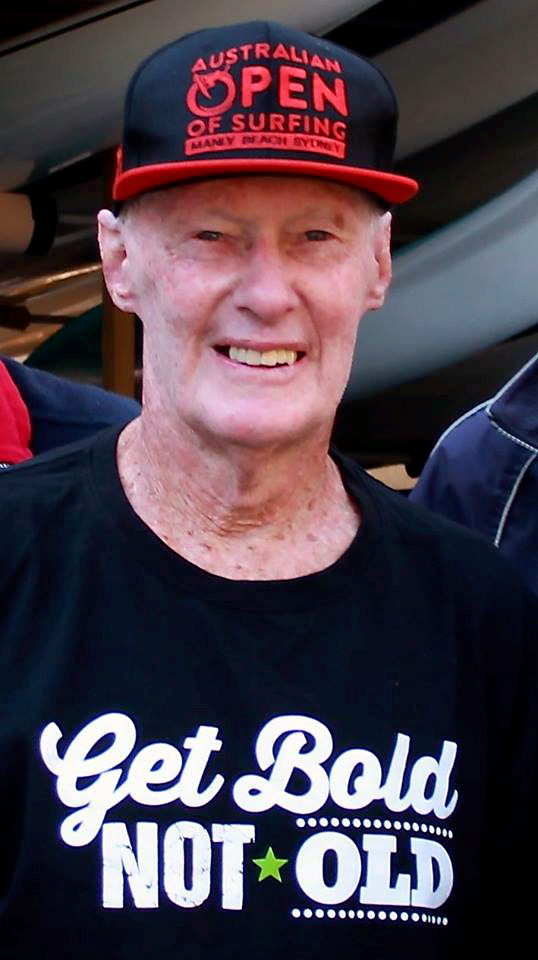
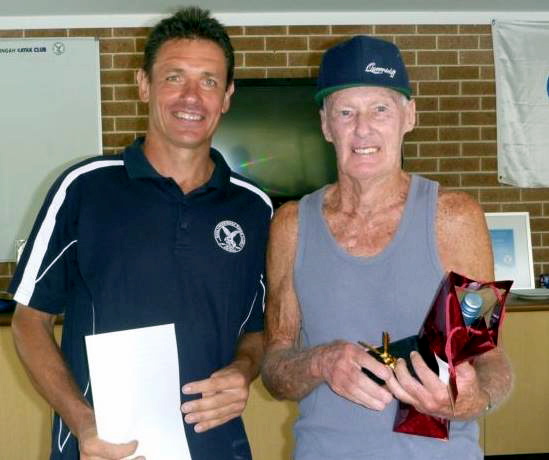



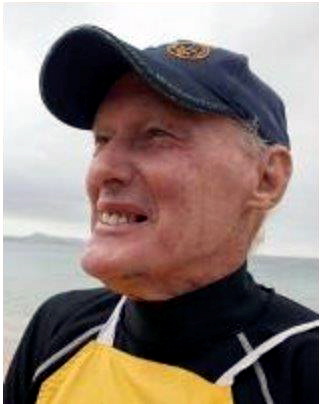

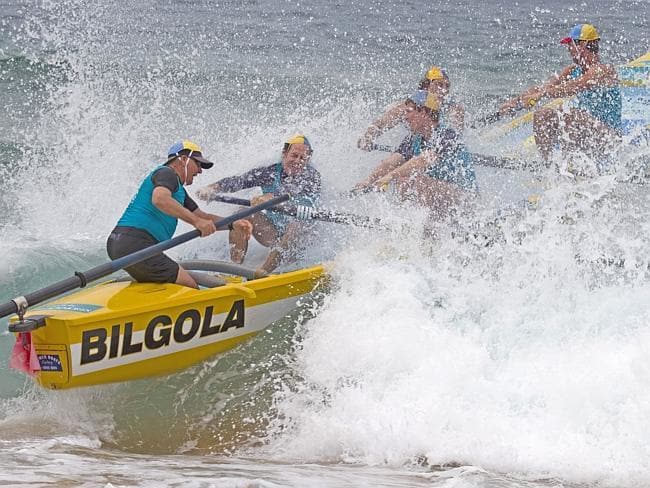
 Warren joined Garie SLSC in 1955 and was appointed Boat Captain and sweep of open crew in 1956 at age 19. Swept in last surfboat race in January 2008 at age 71 by competing in the 182 kilometre George Bass marathon, winning the veteran category with the North Steyne club.