Mervyn is recorded in the 1979 NSW Police ‘Stud Book‘ as M.L.T. YATES, Born 11 June 1921 and having been appointed as a Probationary Constable on the 4 March 1946 which would have made him 24 at that time.
John became a Paraplegic when injured on duty during his Probation in 1969 and was invited by Commissioner Norm Allen to remain in the Force after suffering his injury. He retired HOD in 1982.
[divider_dotted]
Perhaps some members on here will remember John KIDD a former HWP Cyclist, who was involved in a serious accident with a brewery truck in the inner city about 1975 and as a result ended up a Paraplegic in a wheel chair. John as also a Vietnam Vet. and instead of being boarded out ( of NSW Police Force ) he wanted to continued as he was very interested in surveillance and collating of evidence, so in a wheel chair he was transferred to Lismore and worked with Detectives in charge of running sheets on some very heavy incidents such as the Murwillumbah Bank Robber, the double beach murders at Kingscliff, a couple of other serious murders involving Mr Asia Syndicate.
John carried on a brilliant job and he stayed in the job until about 15 years ago when his health failed him, he had all sorts of problems including having both legs amputated.
John, under the circumstances, done a great job, he was very popular with his fellow workers.
Unfortunately John passed away last Friday he was about 69 – 70 old.
[divider_dotted]
May you forever Rest In Peace
[divider_dotted]
Jennifer Evelyn DAVIDSON
| 02/03/2016
Jennifer Evelyn DAVIDSON ( nee SHADE ) – wife of Barry
( late of Caboolture, Qld )
New South Wales Police Force
Rank: Police wife
Stations: ?
Service: From? to?
Awards: ?
Born: ?
Died on: Friday 26 February 2016
Cause: ?
Age: 71
Funeral date: ?
Funeral location: ? private family funeral to be held.
Buried at: Cremated
Memorial at: ?
There will be a public Memorial Service for Jenny at 11am on Tuesday 8th March at Traditional Funerals, 636 Morayfield Road, BURPENGARY, QLD.
A private cremation will have been conducted previously.
[divider_dotted]
FURTHER INFORMATION IS NEEDED ABOUT THIS PERSON, THEIR LIFE, THEIR CAREER AND THEIR DEATH.
Constable Joseph Nash, who was in charge of the local police station, was found dead in the barrack-room at noon today.
The police authorities in Sydney have received a telegram stating that Constable Nash had been found dead with a bullet wound in the head, the circumstances of the case pointing to suicide.
An officer at Armidale has been sent to North Guyra to make full inquiries.
Pax was loyal, strong, fiercely independent, and utterly obsessed with his handler. He never gave up and took pride in serving Territorians.
He has been responsible for the apprehension of multiple offenders here in the Territory, as well as in his previous jurisdiction of Queensland.
Police Dog, Pax succumbed to a degenerative nerve problem which had been medically managed for some time. His rapid decline unfortunately robbed him of his pending retirement in April.
Norma Welsh Sympathies to Pax’s handler and friends. Pax is fine in his new surroundings, but they will take a long time to get over this frown emoticon
Like · Reply · February 20 at 12:34pm
Lynette Zanchetta Beautiful dog, loyal to the end, people could take a leaf out of his book.
Like · Reply · February 20 at 12:41pm
Judy Billman Grech RIP
Like · Reply · February 20 at 12:44pm
Jo Pollard RIP Pax.
Like · Reply · February 20 at 12:45pm
Tania Morrison Rip pax. So sorry for your loss
Like · Reply · February 20 at 12:46pm
Christina Keep Rip pax
Like · Reply · February 20 at 12:46pm
Vincent Greene Beautiful. Loyalty is priceless and beyond measure.
Like · Reply · February 20 at 12:47pm
Joanna McIntyre Beautiful dog – thankyou for your service to our community and sympathies to his handler and family
Like · Reply · 1 · February 20 at 12:48pm
Sandra Francis Thank you
Like · Reply · February 20 at 12:54pm
Vivienne Williams Rest in Peace Pax.
Like · Reply · February 20 at 12:59pm
Houeida Iskandar-Garling frown emoticon
Like · Reply · February 20 at 1:15pm
Carmen Janic RIP beautiful boy
Like · Reply · February 20 at 1:15pm
Lesley Dobbin True hero right there. Rest In Peace forevermore x
Like · Reply · February 20 at 1:15pm
Angie Adams Pax is yet another silent hero! Deserve so much more recognition for the loyalty in service these absolute beautiful dogs give! What a lucky handler to have been able to spend time with this amazing animal xox RIP xox sorry for this heart breaking loss!
Like · Reply · 2 · February 20 at 1:21pm
Annie Webster My sincere condolences.
Like · Reply · February 20 at 1:23pm
Aliex Polock
Like · Reply · 1 · February 20 at 1:42pm
Jill Leonard Always saddened by these posts. Respect.
Like · Reply · 1 · February 20 at 1:44pm
Jeanette Barnard RIP Pax… so sad you did a great job now time to rest…be at peace
Like · Reply · February 20 at 1:52pm
Julie Wilson I salute you Pax…rest easy now
Like · Reply · February 20 at 1:56pm
Rachel Young Leis RIP Pax
Like · Reply · February 20 at 1:57pm
Karen Cowan There is a rainbow waiting Pax…..RIP
Like · Reply · February 20 at 1:58pm
Sharon Williams RIP Pax, thinking of your handler right now.
Like · Reply · February 20 at 1:58pm
Susanne Sluvinsky Rest now gorgeous boy
Like · Reply · February 20 at 2:01pm
Cheryl Jeffery My sincere sympathy to his family RIP Pax
Like · Reply · February 20 at 2:02pm
Alan Hart Running free in the big yard…RIP Pax…thankyou for your services…
Condolences to your loving family..
Like · Reply · February 20 at 2:10pm
Dorn Scrivano What a beautiful dog Sooo intelligent and very.loyal luv them
Like · Reply · February 20 at 2:11pm
Deb N Alex Matthews Over the rainbow bridge, stand down pat. Thoughts with your handler mate and family and friends
Like · Reply · February 20 at 2:16pm
1 Reply
Donna White R.I.P
Like · Reply · February 20 at 2:20pm
Ellen Dwyer Hope you are happy Pax wherever you may be. You served the Police well. RIP Pax.
Like · Reply · February 20 at 2:20pm
Ron An Kirst Cox So sad
Like · Reply · February 20 at 2:26pm
Beth Mccormick RIP Pax you did a awesome job
Like · Reply · February 20 at 2:29pm
Cecil Ross They give so much and ask so little ..rip Pax. To the handler , I once lost a dog in tragic circumstance and was inconsolable , until months later I dreamt and saw a similar dog walking (on a leash) with its owner …in the dream I remarked I had owned…See More
Like · Reply · 1 · February 20 at 2:32pm
Sharlene Turner Thank you RIP Pax xx
Like · Reply · February 20 at 2:37pm
Nikki Webb RIP Pax thank you
Like · Reply · February 20 at 2:41pm
Sandy May RIP Pax and condolences to your handler/s.
Like · Reply · February 20 at 2:48pm
Melanie Monaro Job well done Pax. Rest now beautiful
Like · Reply · February 20 at 2:49pm
Robbyn Hutton RIP BSBY
Like · Reply · February 20 at 2:52pm
Robbyn Hutton Baby
Like · Reply · February 20 at 2:52pm
Lorraine Mcdougall RIP
Like · Reply · February 20 at 2:59pm
Jennifer Smith Thank you for honouring his contribution. Sounds like Pax will be missed.
Like · Reply · February 20 at 3:06pm
Maureen McCarthy So very sad. Prayers for his handler.
Like · Reply · February 20 at 3:12pm
Janine Ingle A real hero. RIP Pax.
Like · Reply · February 20 at 3:18pm
Kieran O’Brien Naydene Mutch
Like · Reply · February 20 at 3:20pm
Trish Stimson R.I.P Pax
Like · Reply · February 20 at 3:25pm
Renoir Louise RIP Pax
Like · Reply · February 20 at 3:31pm
Marie Maidens Rip Pax
Like · Reply · February 20 at 3:38pm
Michelle Helgren You gave your all Pax! Stand down & run free till you meet again! Much love & many prayers! ?
Joined NSW Police Force via NSW Police Cadets on 16 May 1966
Cadet # 2158
Academy Class 115
Regd. # 13318
Rank: Police Cadet – started 16 May 1966 ( aged 16 years, 9 months, 27 days )
Probationary Constable – appointed 28 July 1968 ( aged 19 years )
Constable – appointed 28 July 1969
Constable 1st Class – appointed 28 July 1973
Senior Constable – appointed 28 July 1977
Sergeant 3/c – appointed 2 September 1984 ( Seniority date should have been 31 August 1984 )( Loss of 2 days Seniority )
Detective Chief Inspector
Stations: ? , Observation Squad, Darlinghurst ( 3 Division in the 1970’s ), CIB during the 1970’s, CIB Pillage Squad, 31 Division in 1985, SDCC around 1986, Crime Management Unit, N.C.A., NSWCC, Child Protection – Major Crime Squad – South – retirement
Service: From16 May 1966to 5 July 2003 = 37 years, 1 month, 19 days Service
Age at Retirement: 53 years, 11 months, 7 days
Years in Retirement: 12 years, 7 months, 8 days
Awards: National Medal – granted 29 June 1984
1st Clasp to National Medal – granted 2 February 1995
Born: Thursday 28 July 1949
Died on: Saturday 13 February 2016 at 10am
Cause: Cancer
Age: 66 years, 6 months, 16 days
Funeral date: Friday 19 February 2016 @ 9am
Funeral location: Woronora General Cemetery and Crematorium, 121 Linden Street, Sutherland
Buried at: ?
Memorial at: ?
BENNY is NOT mentioned on the Police Wall of Remembrance * NOT JOB RELATED
Funeral location:
FURTHER INFORMATION IS NEEDED ABOUT THIS PERSON, THEIR LIFE, THEIR CAREER AND THEIR DEATH.
The Perth Coroner’s Court has heard that exposure to a number of critical incidents, including fatalities, could have contributed to a police officer’s suicide.
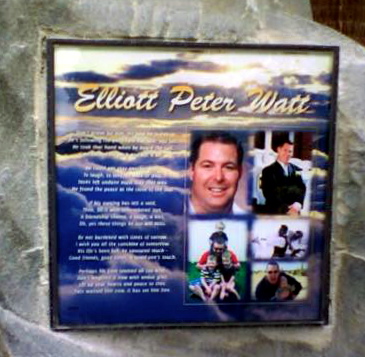
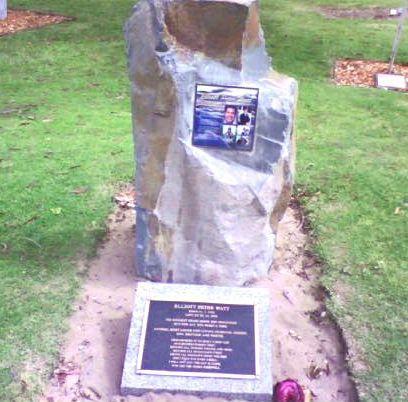
The Coroner has begun an inquiry into the death of Elliot Peter Watt, 36, at the Collie police station in 2008.
Sergeant Watt, who was the acting officer-in-charge of the station, had four sons.
His body was discovered in the station’s armoury alongside his police-issue firearm.
The Coroner is investigating what impact the daily access to firearms had on the sergeant and whether WA police had adequate mental health safety checks in place.
His wife, Emma Watt, told the court her husband was deeply affected by his work.
Mrs Watt told the inquiry her husband’s mental health started to deteriorate when he was stationed in Kondinin and he had to attend a number of critical incidents with limited or no back up.
She said these included a serious car accident involving children, a farmer’s suicide and an unsuccessful attempt to resuscitate a footballer.
Mrs Watt said he was never offered counselling by WA Police and bottled up his emotions.
Earlier today, the court was told Internal Affairs investigated Sergeant Watt’s death and found there was no single work related incident that triggered his death.
The family’s lawyer said the critical incidents were just as likely to contribute to the suicide as any family problems.
The inquiry also heard Sergeant Watt was depressed in the the years leading up to his death and was looking for another job.
The wife of a policeman who shot himself while on duty at a WA country police station has described how he broke down the night before crying and said he had enough of work but didn’t know what was wrong.
Elliott Peter Watt, 36, took his own life with a police pistol in the armoury of Collie police station on December 22, 2008 – his first day back after a three week break.
An inquest is now examining the tragedy and whether strategies can be used to avoid a repeat of the police suicide.
Today, Emma Watt described how her husband, a father of four, had displayed a dramatic change in his behaviour in the days leading up to his return to work, showing feelings of agitation, withdrawal, and finding a lack of pleasure in the things he used to enjoy.
She said his dislike of going to work had reached the point where she had to wake him up for work, prompt him to shower and lay out his uniform with the belt through the loops and items in his pockets so that he would attend.
The night before he killed himself, she had asked him what was wrong, she told the inquest today.
“He just looked at me and said ‘I just don’t know’,” she said.
“He said that just everything was getting to him… he said he had enough as far as work went…. (but) he didn’t want to leave us financially with no income.”
Mrs Watt said he had eventually withdrawn from her again, prompting her to call Lifeline in hysterics.
The inquest has heard earlier evidence that Acting Sen. Sgt Watt had dealt with “critical incidents” during one stint at a country police station including the failed resuscitation of a young man.
He had also attended a serious car crash in which a child was badly injured and the suicide of a farmer in his car after which he had to clean the blood-stained ute and return it to the farmer’s wife.
The inquest heard Acting Sen. Sgt Watt, who had 15 years experience in the police force, worked by himself for extended periods while stationed at country towns and had $35,000 worth of annual leave owing when he died – the equivalent of about five months’ leave.
Mrs Watt today said she had believed her husband was depressed. But she rejected suggestions his state could have been solely due to the domestic pressures of having young children and a relatively new and senior job.
She said she had not called a doctor because her husband, who she described as quiet and private, had been angry when she once suggested he could be depressed.
However, after her call to Lifeline on December 21, 2008 she had made plans to visit a GP with her concerns – a visit she had unfortunately scheduled for two days after her husband shot himself.
Mrs Watt said she had assumed the police force looked after its officers and that annual checks would be conducted on their mental health.
She told the inquest she would have contacted the police force’s health and welfare division earlier in the year with her concerns about his increasing mood swings but that she had been unaware of the division.
Mrs Watt said her husband was unlikely to ask for assistance from within the police force, but she believed information about the health and welfare division should also be provided to partners of police officers.
The inquest has heard an internal police investigation found there was “no one specific incident” that seemed to prompt Acting Sen. Sgt Watt’s suicide, though the investigator agreed his involvement in critical incidents could have affected him.
The report instead suggested non-work issues could be to blame.
The inquest heard training and education about stress management was required for police but they were also expected to ask for assistance.
Det-Sgt Judith Seivwright, who conducted the internal police report on the suicide, denied suggestions that officers feared asking for counselling or assistance would be viewed negatively by senior officers.
The inquest continues.
Readers seeking support and information about suicide prevention can contact Lifeline on 13 11 14
COUNTRY policeman Elliott Watt cleaned up after a farmer’s suicide, tried unsuccessfully to resuscitate a young footballer and was brought to tears by a child’s injuries from a car crash in the months before he told his wife he did not want to go to work anymore.
The senior sergeant shot himself at the Collie police station in Western Australia’s southwest after telling his wife everything was getting to him.
In an inquest that is throwing a spotlight on the difficult work of police in isolated rural stations, Watt’s widow, Emma, said her husband killed himself because he did not want his moods affecting their three children. He took his life three days before Christmas 2008.
The night before, Watt broke down and told his wife everything was getting to him and he had had enough of work.
Giving evidence yesterday, Mrs Watt said she had to get her husband out of bed each morning, make sure he had a shower and make him get dressed and go to the station.
She had earlier told the court about three critical incidents her husband had been involved in while he was the officer in charge at Kondinin, a town of 300 people 275km southeast of Perth.
She said she had found her husband crying after attending a car accident in which a child was injured. He had tried unsuccessfully to resuscitate a young football player, and he had to clean the ute of a farmer who had killed himself in it with a shotgun.
She said her husband had become withdrawn after the transfer to Collie.
She said he had expressed feelings of “nothingness”, played less with the children and could not sleep or concentrate.
The next morning, Watt showered and dressed himself. “That’s why the day he died was so unusual,” she said.
Later that day, he took a gun from the station’s armoury and shot himself.
If you are depressed or contemplating suicide, help is available at Lifeline on 131 114.
The Police Union says it is unfortunate the suicide of a police officer had to be the catalyst for reform in WA’s police service.
The coronial inquest into the death of Acting Senior Sergeant Elliott Watt concluded yesterday.
Sergeant Watt shot himself at the Collie Police Station in 2008.
Coroner Alistair Hope has recommended WA police conduct annual health and wellness reviews on every police officer in the State.
The President of the Police Union Russell Armstrong says more resources are needed.
“Not enough staff within health and welfare, four clinical psychologists for nearly 6000 people and we’re dealing with 24/7 critical incidents,” he said.
“And that is not enough staff, so it’ll have to be resourced and resourced very quickly.
“It’s long overdue and should have been put in place a long time ago,” he said.
Office of the State Coroner, Western Australia – Annual report – 2011 – 2012
Elliott Peter WATT
The State Coroner conducted an inquest into the death of Elliott Peter Watt (the deceased) with an Inquest held at Perth Coroner’s Court on 13‐16 February 2012. The State Coroner found that death occurred on 22 December 2008 at Collie Police Station, Collie, as a result of gunshot wound to the head in the following circumstances ‐
The deceased was an acting Senior Sergeant of police with Western Australian Police (WA Police) at the time of his death on 22 December 2008. The deceased was born on 31 July 1972 and so was 36 years of age at the time of his death.
The deceased died at the Collie Police Station as a result of a self inflicted gunshot wound. At the time he was the relieving Officer in Charge of the Collie Police Station, the day of his death
was his first day back at work after a period of three weeks long service leave.
On the day of his death the deceased worked from 8am and had been conducting his normal duties as the Officer in Charge of the Police Station throughout the day. It appears that he was last seen at about 3:45pm.
The deceased was discovered in the armoury at 4:25pm having died of a gunshot wound to the head.
The deceased used the Glock pistol which had been allocated for his own use to shoot himself while alone in the armoury of the Collie Police Station.
None of the police officers on duty at the Collie Police Station heard the shot being fired and none were alert to the possibility that the deceased might be about to take his own life prior to his doing so.
The State Coroner found that the death arose by way of Suicide.
The State Coroner observed that it was important that families of serving members are alert to the available services as it is often family members who are most aware of changes in a person suffering from mental health problems.
In that context the State Coroner made the following recommendation –
I recommend that WA Police take action to better promote information in relation to available services to families of serving members.
The State Coroner observed that the deceased’s colleagues were not alert to his deteriorating mental condition. This was in large part because the deceased concealed his condition from them, but it is also clear that they had received little training in the management or identification of persons suffering from depression.
Evidence at the inquest revealed that for officers taking on senior management roles, while training in respect of these issues is available, it is at present not a mandatory requirement.
The State Coroner made the following recommendation –
I recommend that training in respect of the identification and management of officers suffering from stress or depression should form part of the training for police officers entering management roles.
The State Coroner made the following recommendation in respect to improving the recording of conversation with the Health and Welfare Branch of WA Police in the context of evidence relating to contacts which had not been recorded or filed –
I recommend that WA Police ensure that there is in place appropriate computer software which will enable the recording of all contacts to the Health and Welfare Branch relating to individual officers where concerns have been expressed as to the welfare of those officers.
The State Coroner observed that the evidence in this case has highlighted the fact that policing can be a demanding and stressful occupation.
The deceased was described as a very good officer who was generally highly regarded and yet none of his work colleagues had any real appreciation of his deteriorating mental health.
In the State Coroner’s view there needs to be some form of regular health review or wellness review of every police officer in WA Police.
In this context the State Coroner made the following recommendation –
I recommend that WA Police put in place a system which would ensure that in respect of every member there is some form of wellness review conducted or at least offered each year which will identify significant changes in physical and mental health.
A letter dated 20 March 2012 addressed to the Minister for Police invited the Minister to respond to the State Coroner’s recommendations. At the time of publishing the annual report a response had not been received from the Minister’s office. http://www.coronerscourt.wa.gov.au/_files/Coroners_Court_Annual_report_12.pdf
I remember my husband spending 3 nearly whole days in 45*C + heat scrubbing a farmers ute to give back to his widow. It had sat in full sun for nearly a week and as the OIC in a country town you do it yourself – and he wouldn’t let me help, he always wanted to protect me from the nasty side of the job. 3 days stressing it was pristine, immaculate; nothing left to distress the farmers family further. He didn’t realise the toll it took on himself. He was Beginning to realise he was battling inside his own mind with these thoughts….I still remember him saying to me ” Everyday. Everyday I get kitted up and think how easy it would be. ”
It will be 8 years this year. And still no closer to acknowledging those already lost, and helping, saving, those suffering.
So sad….Everyday I think, how easy it would be. Easy it would be to stop talking and start doing. Helping. Acknowledging. Remembering. Sharing. Supporting. And stop this waste!
Retired WA policewoman seeks compensation
AAP
A POLICEWOMAN and mother-of-four who fell into financial ruin after the accumulated psychological trauma of her work forced her to medically retire has appealed to Queen Elizabeth II in her bid to seek redress.
Wendy Kennedy, 49, served in the West Australian force for 15 years, seeing horrendous crimes such as a woman who had been stabbed and thrown through a window by her partner.
She saved people from ending their own lives, but other times, nothing could be done.
The images are burnt into her mind and still haunt her.
She lists off the many times she was in mortal danger – a broken bottle attack while working pregnant as Katanning’s first female police officer, running from a man who came at her with a machete, seeing an axe about to fall on her before her partner jumped on the assailant.
It still rattles her to recount the time a car ploughed into her mounted police colleague as they patrolled a dark Perth highway at 2am.
“I watched him go over the car,” Ms Kennedy told AAP.
“We didn’t wear hard hats. There was no requirement – our uniform was an Akubra hat.”
His head hit the cement. He was convulsing, his head in blood, his horse was hurt.
“I thought ‘my partner’s dying’.”
She rushed to his aid and he thankfully pulled through, but no-one asked her if she was okay and she was sent straight back to work.
Ms Kennedy, who suffers post-traumatic stress disorder, says the mental health of officers is not properly monitored, and she’s backing the Medically Retired WA Police Officers Association in calling for regular wellness checks, particularly after traumatic jobs.
Such checks were a key finding from an inquest into the death of Collie policeman Elliott Watt, 36, who fatally shot himself in the station’s armoury in December 2008 on his first day back from long service leave.
For Ms Kennedy, her psychological health is turning a corner thanks to the support of the association and her psychologist Joseph Presti.
And after not being well enough to work for the past 12 years, she’s now managing four hours a week as a personal trainer.
Her clients, who have become friends, understand if she has to reschedule because some days are better than others when you suffer from PTSD.
But she’s so broke, she’s on the brink of being evicted.
Even her superannuation fund was closed after fees ate up all that was in there.Sick of asking for help from Centrelink, Ms Kennedy has gathered strength to fight for the recognition and financial redress she feels she deserves after all of her public service.
“I put on my life on the line and I’ve seen the most gruesome stuff,” she said.
“I shouldn’t have to live like this.”
She’s preparing her first application for an ex-gratia payment from the state government, with the WA Police Union officially declaring her case has merit.
The rare act-of-grace payments are currently the only way medically retired officers are financially acknowledged, although they are usually for physical injury, and while a worker’s compensation scheme is now finally on the cards for police, it won’t be retrospective.
Like all WA police, she’s not considered an employee of the state, so Ms Kennedy has written to the woman she promised to serve – the Queen.
Australian readers seeking support and information about depression can contact the Depression Helpline (from 8am to midnight) on 0800 111 757.
Readers seeking support and information about suicide prevention can contact Lifeline on 13 11 14.
An inquest into the death of Sergeant Elliott Peter Watt (who, at the time of his death in December 2008, was a serving WA police officer) was undertaken in February 2012. The Watt Inquest outlined that Sergeant Watt had deteriorating mental health, characterised by:
Irritable moods, generally quite snappy and grumpy;
Pushing his wife away, threatening separation;
Expressing unhappiness in areas of his work and life;
Isolation;
No motivation;
Being short-tempered and moody; and
Becoming completely absorbed in computer games
109
.
It was noted that Sergeant Watt had experienced three specific traumatic incidents in his career, being: the attendance at a car accident that had involved young children; the attendance at a suicide by a farmer in which Sergeant Watt had to clean the utility involved before returning it to the family; and the prolonged, attempted resuscitation of a young footballer, who later died
110
.
It appeared that as Sergeant Watt’s job responsibilities increased, his stress levels increased and his mental health declined. Despite an informal mental health assessment by his senior management
111
,
none of Sergeant Watt’s colleagues “had any real appreciation of his deteriorating mental health”
112
.
The coroner made several very important comments regarding police officer health and safety as it was noted that “serving police officers can be
vulnerable to serious mental health problems as a result of their work”
113
. The coroner noted that:
Being transferred to certain locations can place pressures on police officers;
Police officers “face regular exposure to stressful situations including violence inflicted on them and others, trauma and death scenes”
114
;
109
Coroner’s Court of Western Australia,
Inquest into the death of Elliott Peter Watt
, Government of Western
Australia, Perth, 2012.
110
Ibid, p. 10.
111
Ibid, p. 17.
112
Ibid, p. 36.
113
Ibid, p. 29.
114
Ibid.
33
“The health and welfare of serving police officers requires ongoing monitoring and support”
115
;
“It is the responsibility of the Health and Welfare Services of WA Police to educate and train personnel in the management of stress, and in particular, post-trauma stress”
116
;
“Officers involved in critical incidents may suffer problems months or even years after those incidents and so there is an ongoing need to monitor [police officer] health and wellbeing”
117
; and
It is vital that “families of serving members are alert to the available services as it is often family members who are most aware of changes in a person suffering from mental health problems”
118
.
The inquest outlined four recommendations:
1.
WA Police must take action to better promote information in relation to available [mental health] services to families of serving Members
119
;
2.
Training for police officers entering management roles should include identification and management of officers suffering from stress or depression
120
;
3.
WA Police is to ensure that appropriate computer software is in place to enable the recording of all contacts to the Health and Welfare Services relating to individual officers where concerns have been expressed about the welfare of those officers
121
; and
4.
WA Police must put in place a system which would ensure a wellness review be conducted (or at least offered) to every member, in order to identify significant changes in physical and mental health
122
.
The coroner was adamant that there needed to be some mechanism within WA Police to regularly review the mental and physical health and wellbeing of every WA Police officer
123
. Significant changes such as “an increase or decrease of over 10kg in weight over a 12 month period, significant deterioration in fitness, unexplained mood changes or an officer becoming more isolated from his or her colleagues” were flagged as being important to note within these welfare checks
124
. The coroner also acknowledged, to some extent, the stigma associated with admitting to suffering from stress or from mental health problems and the likelihood this declaration has on promotional opportunities.
The recommendations outlined in the Watt Inquest were also referred to within the Toll of Trauma Inquiry