Ashes with his youngest daughter, Anne, at Albury Cemetery, NSW
GREGORY is NOT mentioned on the Police Wall of Remembrance *NEED MORE INFO
With regret I advise the death of Gregory John PALMER, 58 old, former Regd. No. 17149, an Unattached Member of the RPA of Corrimal.
Gregory passed away on 20/03/2015 and his funeral is proposed to be held at 12midday tomorrow, Tuesday 24th Instant at H. Parsons Funeral Directors, Bulli Chapel, 278 Princes Highway, BULLI.
PALMER, Greg
of Bellambi
Passed away peacefully surrounded by loving family on March 20, 2015.
Beloved husband of Margarethe.
Dearly loved father and father in law of Matthew and Heather, Stephen, Kathryn and Jessie.
Much loved Granddad of Lily, Sebastian.
Loved brother of Judith.
Greg will be sadly missed by his loving family and many dear friends here and in Sydney.
Aged 58 Years
God has you in his keeping, we have you in our hearts
Relatives and friends are invited to attend GREG’S Funeral Service to be held in the chapel, Parsons Funeral Home, 278 Princes Highway Bulli on Tuesday at 12noon.
In lieu of flowers donations to NSW Police Legacy would be appreciated.
From the ‘Go Fund Me’ website, to which Greg made 3 Posts from 3 September 2014:
Update #3: 6 months ago.
In January this year I was diagnosed with Grade 4 Glioblastoma Multiforme. I have had Radiotherapy and Chemotherapy . In June this year a portion of a second brain tumour was removed. The standard Chemotherapy used for Brain Cancer has to this date been unsuccessful and the tumour continues to grow. My biggest hurdle at present is the swelling of the brain. An alternative Chemotherapy will help with this swelling and may give me an extra couple of months with my family. There is little or no government subsidy and we have sought help through foundations which have been unsuccessful. I am asking for a small donation from my family and friends to help with the cost of further treatment.
[divider_dotted]
Update #2: 6 months ago.
Thank you again to all the wonderful people who have donated. My health is poor but my heart is healed. The support and love shown by so many people is truly unbelievable.
[divider_dotted]
Update #3: 3 September 2014.
To all the wonderful people out there. Please watch our video.
Thank you
Service: From ? ? 1907 to 19 February 1934 = 27+ years Service
Awards: ?
Born: ? ? 1884 to Martin & Julia at West Maitland NSWBDM 24190/1884
Died on: 19 February 1934
Cause: Suicide by pistol stemming from a Nervous Illness
Event location: Erskinville Street Police Station
Age: 48
Funeral date: Monday 22 February 1934 @ 1.30pm
Funeral location: St. Brigid’s Church, Marrickville
Buried at: Woronora Cemetery,
Roman Catholic Monumental: Section 2, position 0680
DANIEL is NOT mentioned on the Police Wall of Remembrance *NEED MORE INFO
[divider_dotted]
Barrier Miner ( Broken Hill )
Saturday 20 January 1934 page 8 of 12
SYDNEY, : Saturday. – Sergeant Daniel Markham (48), of Marrickville, was found fatally wounded yesterday in a telephone box in Erskineville street Police Station. A revolver, one chamber of which had been discharged, was beside him. He had recently suffered a severe illness.
Hearing a report of firearms at Erskine-street lock-up to-night a constable rushed to the front of the building where he found Sergeant Daniel Markham fatally shot through the head. The officer, who was 48, had been in ill-health for a number of years.
MARKHAM. – The Relatives and Friends of the late DANIEL BERNARD MARKHAM ( Sergeant of Police ) are kindly invited to attend his Funeral leaving his late residence Myall, 22 Carey street, Marrickville, Next MONDAY AFTERNOON, at 1.30 o’clock, for Catholic Cemetery Woronora. W. N. Bull, Ltd., Funeral Directors.
SYDNEY. Saturday.- Sgt. Daniel Markham, aged 48, who was found fatally shot in the Erskine Street Police Station yesterday was loyal to his service to the last. Because of a nervous illness the Commissioner of Police (Mr Childs) and the Metropolitan Superintendent (Mr MacKay) frequently suggested that he refrain from duty, but he refused.
MARKHAM.-The Relatives and Friends of Mrs. EDITH MARKHAM and FAMILY are kindly Invited to attend the Funeral of her late beloved HUSBAND and their dear FATHER, Daniel Bernard; to leave his late residence, Myall. Carey-street, Marrickville, THIS (Monday) AFTERNOON, at 1.45 o’clock, for the Catholic Cemetery, Woronora. A train leaving Tempe Station at 2.24 p m. will arrive at Sutherland at 2.55 p m.
Catholic Freeman’s Journal ( Sydney ) Thursday 15 February 1934 page 4 of 40
SERGEANT DANIEL BERNARD MARKHAM.
The death took place at Sydney, on the 19th ult., of Sergeant Daniel Bernard Markham, who was attached to No. 4 Division of the New South Wales Police Force. Mr. Markham, who was only 48 years of age, was one of the most popular and efficient members of the Force. He had been in ill-health for some time, but bravely performed his duties despite his illness.
Being 6 feet 2 inches in height, of magnificent physique, and possessed of a bright and genial disposition he was a popular figure with his comrades and the general public.
Mr. Markham was a devout Catholic and a member of the A.H.C. Guild at St. Brigid’s, Marrickville. His numerous acts of kindness towards the poor and needy brought him numerous friends wherever he went.
Joining the N.S.W. Police Force in 1907, Mr. Markham was attached to North Sydney Division for some time. He later was transferred to the Traffic Department, and afterwards to No. 4 Division, where he continued to perform traffic duty for many years.
He was a popular figure along the water front, where he handled the heavy traffic with tact and courtesy. As a result Mr. Markham was promoted to the rank of first-class constable, and later to the rank of sergeant. It is safe to say that no promotion was more popular or so well deserved.
From the formation of the Police Association Mr. Markham was president of No. 4 Branch, from 1920 to 1925. The popularity of that branch was to a great extent, due to his personality. He was transferred to Clarence-street Division, where he performed varied duties, and finally was Assistant-traffic Sergeant of that very busy and important portion of Sydney. In January, 1933, Sergeant Markham was sent back to his old Division (No. 4) as Sergeant in charge of traffic there. It was during this latter period that he was stricken with a serious illness. It was hoped that he had recovered, but, to the extreme grief of his devoted wife and young family, death took place as already stated.
Mr. Markham was a native of New South Wales, and a member of a large family, all of whom are devoted members of the Catholic Church.
A Requiem Mass was celebrated at St. Brigid’s Church, Marrickville, on the 22nd ‘ult. The cortege leaving the church proceeded to the Sergeant’s late residence at Carey-street, Marrickville. A police funeral was accorded deceased.
Superintendent Lynch ( representing the Commissioner of Police ). Inspectors Winter, Collings, and Stanton, and a large squad of uniform and plain-clothes police under Sergeant Rodding, were in attendance.
Beautiful and solemn music was rendered by the Police Band as the sad procession wended its way to Woronora Cemetery. Thousands of people watched the sad procession. The burial took place in the Catholic portion of the cemetery, in the presence of a large number of his old comrades and many prominent citizens.
The last prayers were recited by the Rev. Father Lloyd (Cronulla), who afterwards paid a tribute to the Sergeant’s sterling qualities.
The chief mourners were Mrs. Markham (widow), Master George Markham (son), Misses Dorothy and Joan Markham (daughters), and James, Thomas, Frank, and Vaughan Markham (brothers), Misses Margaret and May Markham, and Mrs. A. Swanson and Mrs. F. Bullivant (sisters).
Chief Inspector of Distilleries Office. Sydney, 25th July, 1862.
THE APPOINTMENT of the Undermentioned Officers of Police to be Inspectors of Distilleries, duly notified in the Government Gazette, is now further advertised for public information, and for the guidance of Magistrates and Clerks of Petty Sessions in the country districts: —
Appointments under the New Police Regulation Act of 1862
| 24/03/2015
APPOINTMENTS UNDER THE NEW POLICE REGULATION ACT.
A Supplement to the Government Gazette, issued on Saturday last, contains the following appointments in the police under the Police Regulation Act of 1862. The police districts are not yet, we believe, defined, but the superintendents will be stationed in the places mentioned, being the centres of their respective districts.
In preparation for the coming into operation of the Police Regulation Act of 1862, a Code of Rules has been drawn up and issued by the Government for the management of the newly organised force ; a copy of these is to be given to every officer and man on joining the force. It is generally known that the system now initiated is based partly on those in operation in Ireland and in Victoria ; and that certain portions of the system already existing in this colony are retained —the most important feature of the new organisation being, that the entire force is now placed under one central authority. In drawing up these rules, the regulations which were considered the most important and desirable in the systems referred to have been either adopted or modified, and the result is a comprehensive and compendious manual of the duties of officers and members of the police force, forming a neat octavo volume of nearly a hundred pages. Interspersed with the directions how to act in specific cases, are some judicious and valuable counsels as to the spirit and bearing which the members of the force should display in the general discharge of their duties ; their adherence to these counsels will effectually obviate the complaints which, whether justly or unjustly, have not unfrequently been preferred against the police. As a supplement to these Rules, the Parliamentary Draftsman is engaged in the preparation of a digest of all the Acts or parts of Acts having reference to the duties of constables. We subjoin an abstract of the more important directions :—
The “Rules for the Police Force” are prefaced with a short introduction, which states that the rules have been established by the Government in order that the force “may be conducted upon one uniform system, and that its members may not be embarrassed in the execution of their several duties from the want of proper instructions,” the leading features embraced by the system of police being ” centralisation of authority and unity of action. ”
With reference generally to the manner in which the police will be required to perform their duties, it is stated to be “impossible to give precise directions for the execution of every duty which the police may be required to perform, or to anticipate every difficulty which the members of the force may have to encounter, as from the nature of the service its duties must vary, and consequently the mode of execution must vary with them. Every member of the force should, therefore, endeavour to become acquainted with the nature of the duty which he may be called on to execute, and, by individual zeal, energy, discretion, and intelligence, endeavour to supply the unavoidable efficiency of general instructions.”
Officers of police who are in the commission of the Peace are not expected to take Bench duty ; but where a magistrate is absent, or where another magistrate is required, they may sit, provided their doing so would be advantageous to the interests of the public. They are not, however, to act judicially in cases in which any member of the police force is concerned.
The officers and men are to be held accountable not only for the execution of all orders given them, but also for their acts in cases which cannot be provided by the instructions ; and they are reminded that their exertions will be more advantageously directed to the prevention of crime than to its punishment.
A subsequent rule impresses on the force the necessity of discharging their duties with forbearance and civility, and advises them under no provocation to conduct themselves rudely or harshly, the efficiency of the force being greatly aided by their possessing the respect end confidence of the community.
Both officers and men are directed to observe neutrality in political matters, to cultivate a proper regard for the respectability and general character of the force ; and are informed that zeal and attention in the performance of duty will be rewarded, and that neglect or disobedience of orders will render the members liable to removal.
The members of the police force are divided into the following grades :-inspector-general, superintendents, inspectors, sub-inspectors, sergeants, constables, and aboriginal trackers ; the detective police consisting of a sub-inspector and constables.
The colony is, for the purpose of police supervision, to be divided into districts and sub-districts ; each district to be placed under the charge of a superintendent ; and all members of the force below the rank of a sub-inspector to be distinguished by a letter and number, indicating the district and the sergeant or constable wearing it.
The depot, or head-quarters of the whole force is to be in Sydney, under the immediate supervision of the Inspector-General, to whom all applications for enrolment are to be made.
The conditions of enrolment specify that the applicant is to be under thirty years of age ; of a strong constitution ; able to read and write well, and provided with satisfactory testimonials of character. He is to understand that he engages not only for police duties, but for any work he may be ordered to perform. Before enrolment, he is to be for three days on trial without pay.
The oath to be taken on entering the force is the same as that hitherto administered, excepting that the allusion to secret societies is omitted.
In order to afford newly-appointed constables the means of acquiring a knowledge of drill, a number of supernumeraries will be maintained at the depot, so as to supply vacancies in the various divisions, these receiving while there three-fourths of the pay of an ordinary constable.
Constables are to be sworn in for one year, are to devote their whole time to the public service, and are forbidden to take gratuities without the express permission of the Inspector-General. They are to give three months’ notice before quitting the force, and are not to marry without the permission of their superintendent. The whole of the accruing pay of dismissed constables is to be forfeited. Disobedience of the orders of a superior officer will be severely punished.
The members of the force are reminded that they are accountable for their conduct to the Government and the officers of their department ; and “it is therefore not only inexpedient and unnecessary, but directly opposed to orders, that individuals in the employment of the Government should have recourse to the public journals in order to defend themselves against any reflections cast upon them.”
The rules relating to discipline point out the necescity(sic) of establishing a gradation of responsibility, so that every individual may know his duty and position. Orders are to be given in the language of moderation, and to be received with deference and respect.
The force is divided into mounted, foot, water police, and detectives. The mounted and foot police will be distributed amongst the various districts, and the officer in charge of a district is empowered to receive and forward to the Inspector-General applications for additional police protection.
The rules relating to Sydney premise that the city is divided successively into divisions, sections, and beats; and proceed to state the hours of duty, the various services required of the officers and constables, who are expected (whether on duty or not), to turn out on all such emergencies as fire, accidents, or disturbances. There are to be no grades in the detective body, but there are first and second class detectives, the former receiving 3s. per day, and the latter 2s. per day in excess of the pay of an ordinary constable.
The rules next following describe the general duties of the different ranks.
The Inspector-General has the entire management and control of the whole force under the direction of the Colonial Secretary, and all communications between the officers and the Government are to be forwarded through him.
The duties of the superintendent are those of constant and active supervision and inspection ; and he is responsible for the prevention of crime, the detection of criminals, and the general preservation of peace within his district. He is to attend every morning at his office at nine o’clock, to hear complaints made against any of the men of his district. The duties assigned to the superintendent are very numerous, and much stress is laid upon his displaying capacity, discretion, and good management.
The inspector is described as being in his division what the superintendent is in his district. He should be governed by the spirit and principle of the instructions to that officer ; and will be held equally responsible for the execution of his own duties as well as for the general conduct, discipline, and appearance of his men. He has to pay strict and prompt obedience to all the lawful orders and directions of the magistrates, and to report to them the results of all warrants and processes issued. Amongst the various duties of an inspector are the following : –To take opportunities of drilling the sergeants and men ; to establish a system of patrols ; to inspect minutely the men, horses, arms, and appointments ; to make himself and his men acquainted with the persons and haunts of all disreputable characters in his division ; to keep an order book and an occurrence book ; and to make up a weekly-duty and a monthly forage return.
The duties of a sub-inspector are similar, but subordinate to those of the inspector.
In each district, and in the city police, in each division one sergeant is selected to become responsible for the conduct and appearance of the constables, and for the state of the barracks and quarters, the arms, ammunition, and appointments at the principal station in the district ; and also to a great extent for the drill of the men of the district. He is to report any irregularity or neglect of duty on the part of constables to the inspector, and represent that officer in his absence.
The rules for the guidance of the constables enforce the necessity of perfect obedience to his superiors, and of being ever on the alert for the prevention of crime and the protection of person and property ; though frequently acting on specific orders applicable to the occasion, he is very generally, in the execution of his duty as a police officer, called upon to act on his own responsibility ; he therefore requires discretion, intelligence, decision, and perfect command of temper. “As it is of great importance that constables should be respected by all classes, and obtain their good opinion, they should be extremely cautious in their demeanour, and by sober, orderly, and regular habits, respectful attention to every gentleman, and ready zeal to execute the lawful orders and commands of the magistrates, endeavour to obtain their approbation.” The constable is expected to possess such a knowledge of the inhabitants of each house as to enable him to recognise their persons, and be enabled to render them assistance when called for ; and also to see every part of his beat in the time allotted. He is only to sound his whistle when he cannot in any other way obtain immediate assistance ; nor is he on any pretence to enter a public-house except in the immediate execution of his duty.
The rules relating to the officers’ uniform require all officers to be dressed alike, but to have a distinguishing mark of their rank ; they are to provide their own uniform. The men are supplied with a uniform on entering the force.
The prospect of promotion in the force is held out as an inducement for men of a good class to enter it, and to exert themselves while in it. Though seniority, length of service, and good conduct, will have their due weight as recommendations for promotion, efficiency and adaptation for the particular vacancy will be the principal considerations. The applications for promotion are to be made through the usual official channels, and no officer is to receive any gift, address, or other token of respect from the men who have served under him.
Special rewards are to be given out of the Police Reward Fund for bravery or other meritorious conduct ; and rewards are also offered by the Government and private individuals for various services. These are to be divided according to the value of the services rendered, but no officer is to receive any part of the reward unless under special authority.
Provision is made for the infliction of punishments upon the subordinates by the officers under certain restrictions. The Inspector-General is alone invested with the power of dismissing a man. Superintendents, and inspectors having charge of districts during the absence of superintendents, may inflict a fine not exceeding three pounds ; inspectors in charge of sub-districts may inflict a fine not exceeding forty shillings ; sub-inspectors in a like position may inflict a fine not exceeding twenty shillings ;—the punishments in these cases being subject to the approval of the superintendent and the confirmation of the Inspector General.
Rules are next given, providing for leave of absence, for complaints, and for the supply of arms, ammunition, and appointments.
It being necessary that the Police Force should be able to act in concert as an armed body, instructions in drill are to be given. For this purpose the constables will be instructed at the depot in marching and the platoon exercises ; and those selected for mounted duty will be taught riding and the sword exercise. They are, however, reminded that, “they belong not to a military, but to a civil force, and that unnecessary military parade and show is discountenanced,” and that their principal object in exercises in the use of arms should be to render the force effective.
The rules following convey directions with respect to barracks, stables, horses, forage, escorts, patrols, duties at the watchhouse, conveyance of letters and despatches, and instructions respecting correspondence, reports, &c.
The second part of the Manual consists of “General instructions for the guidance of the Police Force, issued by the Inspector-General.” By these constables are informed as to how they are to act upon information of the commission of felonies and misdemeanours, and in what cases they may arrest without a warrant. The instructions also relate to the serving of summonses, to the procedure of constables in cases of violent or sudden death, and to the circumstances in which they will be justified in the use of arms.
The volume concludes with rules for the distribution and appropriation of the superannuation and police reward funds, and regulations for police pensions.
They Sydney Morning Herald Monday 3 March 1862 page 2 of 8
Stations: ?, Hurstville ( late 70’s – early 80’s ), PCYC
Service: From ? to 3 March 1990 – 30 years
Awards: National Medal – granted 15 September 1980
1st Clasp to National Medal – granted 15 May 1986
Born: ?
Died on: 16 March 2015
Cause: ?
Age: 74
Funeral date: ?
Funeral location: ?
Buried at: Cremated
[alert_yellow]IAN is NOT mentioned on the Police Wall of Remembrance[/alert_yellow] *NEED MORE INFO
[divider_dotted]
With regret I advise the death of Ian James TARLINTON, 74 old, former Regd. No. 9300, a member of the Wide Bay Branch of the RPA.
Ian passed away on 16/03/2015 and a private cremation will be conducted.
[divider_dotted]
William MIDDLEMISS
| 24/03/2015
William MIDDLEMISS
aka Bill
aka The Flying Scotchman
New South Wales Police Force
Regd. # 8662
Rank: Senior Constable – Retired
Stations: ?, Blacktown – 1970’s ( 27 Division )
Service: From ? to 22 June 1987 – 30 years Service
Awards: National Medal – granted 14 July 1977
Born: 23 June 1927
Died on: 8 March 2015
Cause: ?
Age: 87
Funeral date: 13 March 2015 @ 10am ( already held )
Funeral location: Blue Mountains Funerals, Leura Memorial Gardens, 17 Kitchener Rd, Leura, NSW
Buried at: ?
[alert_yellow]WILLIAM is NOT mentioned on the Police Wall of Remembrance[/alert_yellow] *NEED MORE INFO
Location of Funeral:
[divider_dotted]
With regret I advise the death of William MIDDLEMISS, 87 old, former Regd. No. 8662, A Veteran Member of the Penrith Blue Mountains Branch of the RPA.
William passed away on 08/03/2015 and a private family funeral has been held.
[divider_dotted]
William (Bill) MIDDLEMISS
passed away on 8 March 2015.
Late of Glenbrook, aged 87 years.
Loving husband of Janet and their children Gordon, Jennifer, Julie, Jackie, Judith, Jody and Scott.
Grandfather of 13 and Great Grandfather of 3.
“Grumblebum”
was taken too soon and is now at peace.
A private service was held on 13 March 2015
Tom & Asha Dooley’s
BLUE MOUNTAINS FUNERALS
Springwood-Wentworth Falls-Emu Plains
4751 6166
ANNOUNCEMENTS : DEATH NOTICES
18/03/2015 Blue Mountains Gazette
[divider_dotted]
Bill Middlemiss, father to Julie Middlemiss ( Commander, NSW Police Academy ) & father to Gordon Middlemiss ( former NSW Police Officer )
[divider_dotted]
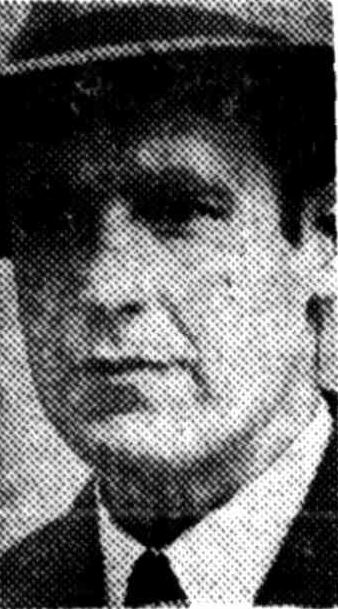
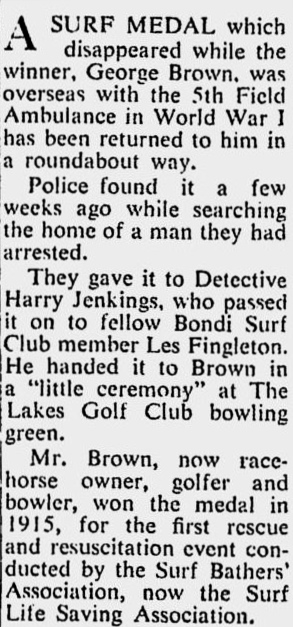
Harry JENKINGS
| 24/03/2015
Harry JENKINGS
New South Wales Police Force
NSW Police Academy Penrith or Redfern Class # ???
Regd. # ???
Rank: Probationary Constable – appointed 18 November 1938
Constable – appointed ? ? ?
Constable 1st Class – appointed ? ? ?
Senior Constable – appointed ? ? ?
Final Rank: Senior Constable
Stations: ?, Lismore ( 1945 ), ?, Paddington ( 1951 ), Vaucluse – Lock-Up-Keeper ( a SenCon Jenkings was there in Jan 1954 )
Service: From pre 18 November 1938 to ? ? ? = ? Years Service
Awards: No Find on Australian Honours
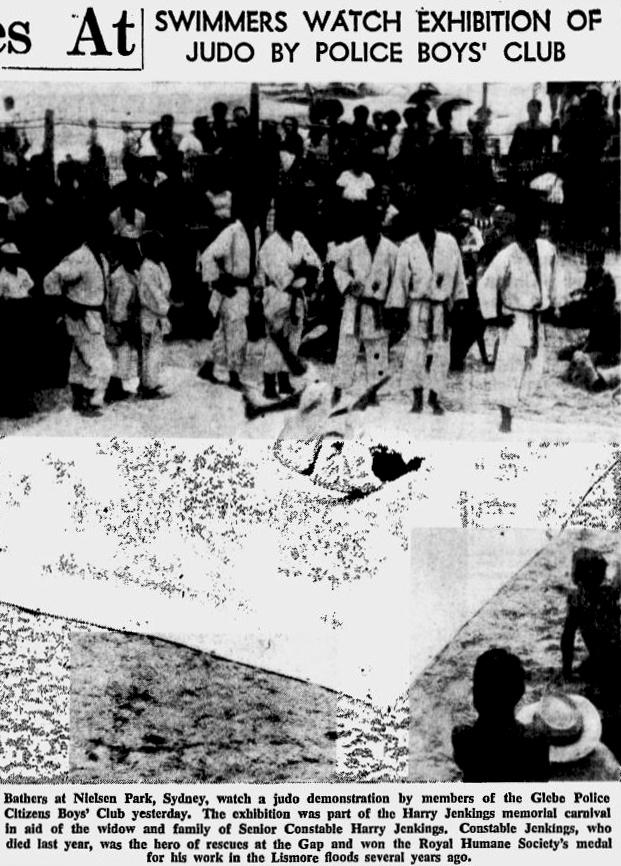
Royal Humane Society Medal – Lismore flood rescues
Born: ? ? 1917 – ’18
Died on: Thursday 20 August 1959
Cause: ?
Age: 42
Funeral date: Monday 24 August 1959
Funeral location: ?
Buried at: Eastern Suburbs Memorial Park, 12 Military Rd, Matraville, NSW
Plot: Roman Catholic FM 29C, Position 876
HARRY is NOT mentioned on the Police Wall of Remembrance *NEED MORE INFO
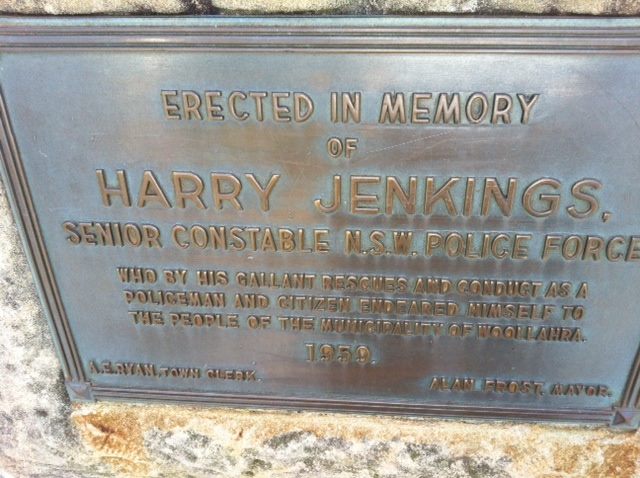
Erected in memory of Harry Jenkings, Senior Constable N.S.W. Police Force who by his gallant rescues and conduct as a policeman and citizen endeared himself to the people of the municipality of Woollahra. 1959. A.F. Ryan, Town Clerk. Alan Frost, Mayor.
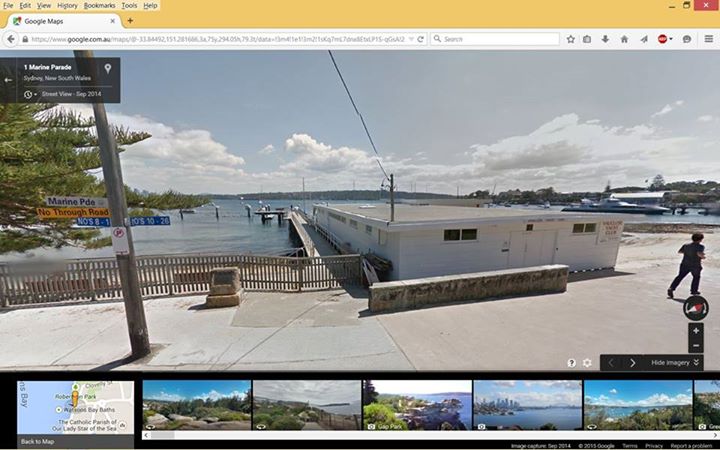
Located at the intersection of Marine Rd & Robertson Pce, Watsons Bay, NSW.
Monument is to the right of the pole and left of the long wall.
Lat: -33.84494732601713
Long: 151.28158624477464 Note: GPS Coordinates are exact.
exact location of monument:
The Catholic Press ( Sydney )
Thursday 24 November 1938 page 15 of 44
Celebrates Entry Into Police Force.
To celebrate his entry into the Police Force, Mr. Harry Jenkings, of Oakley-road, Bondi, who was one of the batch sworn-in on Friday, 18th inst., was tendered a party on the following day ( Saturday 19th ), by a member of his friends.Mrs. W. T. Jenkings, Harry ‘s mother, arranged an enjoyable evening’s programme, which included musical items, dancing and games, and songs were given by Mrs. Jenkings and Frank Jenkings.Amongst those present were: Mrs. E. Golby, Misses J. McCaskie, N. Gibson, B. Herrington, M. Paynter, M. Newman, N. Simpson, B. Simpson, M. Simpson, V. Cummins, P. Crowley, N. Golby, J. James, N. Josephs, M. Blocker, M. Nagel, J. Vidler, E. Griffin, P. Rice, J. Cusack, Y. Moore, P. Dunkley, L. Palmer, Messrs. T. O ‘Halloran, K. Peoples, W. Jenkings, N. Peoples, J. Jenkings, E. Chapman, F. McPhillips, A. Gillian, B. Gillian, C. Gillian, B. Walsh, J. Wesslink, V. Murphy, M. Crowley, D. Quinn, F. Horan, F. Delohery, J. Duggan, and Constable Dick McMahon.
The engagement was announced at her coming-of-age party on the evening of Wednesday, 1st inst., of Miss Noreen Simpson, second daughter of Mr. and Mrs. G. A. Simpson, of Bondi, to Mr. William Jenkings, eldest son of Mr. and Mrs. W. T. Jenkings, also of Bondi. The celebration was held at the home of Mr. Jenkings.Miss Simpson is a vice-president on the ladies’ social committees of the Bondi Amateur Swimming Club and the Bondi Surf Club, and Mr. Jenkings is social secretary of the latter organisation, so the engagement will be of special interest in surfing circles.During supper Mr. A. McCarthy, after congratulating Miss Simpson on her coming of-age, proposed the toast of the engaged couple, and Mr. Jenkings responded. Mr. Harry Jenkings was M.C.Amongst others present were Misses Beryl and Marge Simpson, Joan Egerton, Joan Cusack, Naney Lucas, M. Maxwell, Betty Wood, Jessie Couldwell, Phyllis Culbert, Norrie Harford, Doreen O’Meagher, Enid Moore; Messrs. Bill, Harry, Jack and Frank Jenkings, Eric Chapman, Carl Jeppesen, Harry Goldstein, Cedrie Culbert, Owen Doerner, Reg. Jones, Arthur McCarthy, Jack Morley, Lou Isaacs, W. Wildensehn, Mr. and Mrs. J. Culbert,. jun. Mr. and Mrs. Leo Walsh, Mr. and Mrs. Syd. Price, Mr. and Mrs. W. Newman, Mr. and Mrs. A. Smallwood, Mr. and Mrs. G. Simpson, Mesdames Lemmon, McCarthy, Culbert. Mesdames Jenkings and Simpson were the hostesses.
On Saturday, 30th ult., a pretty wedding was celebrated in St. Anne’s, Bondi, between Miss Noreen Simpson, second daughter of Mr. and Mrs. G. A. Simpson, Bondi, and Mr. William Jenkings, eldest son of Mr. and Mrs. W. T. Jenkings, Bondi. Rev. Father P. J. Frost officiated. The bride wore ivory satin, cut on princess lines. The bridesmaids were Misses Norrie Herford, Beryl Simpson and Joan Egerton, with Mr. H. Jenkings best man, and Messrs. Carl Jeppeson and O. Doerner, groomsmen, Mrs. W. T. Jenkings and Mr. John Jenkings sang ‘Ave Marias’ during the ceremony. The reception was held at ‘Kooba,’ Penkivil-street, where the bride’s mother, assisted by the mother of the groom, received the guests.
Bondi lifesaver, Harry Jenkings, member of the Police Force, has resigned from Eastern Suburbs Rugby Union Club, for which he played in first and second grades for three years, and joined Eastern Suburbs Rugby League third grade team as lock-forward.
LISMORE, Wednesday: Two men were arrested at Byron Bay and charged with having in their possession goods reasonably suspected of having been stolen or unlawfully obtained.
It is alleged that the goods were portion of a cargo of an American vessel which went aground at Byron Bay in heavy seas about a fortnight ago. Some of the articles have been recovered by the police. They include motors, barometers, compasses, ships’ clocks, wire ropes, butter, tea, army blankets, general fittings and accessories. Police estimated the value of the recovered goods at £400. The investigations were carried out and the arrests made by Detective Constable H. Jenkings, of Lismore, and Detective Constable A. Brookes, of Sydney, who, in conjunction with American provosts, interviewed about 100 people between Monday and yesterday. The men charged were allowed bail and are to appear at Byron Bay Court on July 19.
LISMORE, Friday: Charged with breaking and entering the Popular Cafe, owned by Constatine Karazeris, Burringbar Street, Mullumbimby, on June 14, three men and two 18-year-old youths were granted bail today to appear at Mullumbimby Court on July 18.
The defendants are alleged to have broken into the cafe in the early hours of the morning and taken goods to the value of £13, including money, chocolates, soft drinks, tobacco and cigarettes.
Three were arrested at a banana plantation about 10 miles from Mullumbimby, on Thursday, by Detective-Constable H. Jenkings, of Lismore, Detective-Constable A. R- Brooks, of Sydney, and Constable G. Taylor, of Mullumbimby. The other two were arrested at Port Macquarie yesterday by Detective Lyons, of Kempsey, after being traced for several days. Two men were granted bail at Port Macquarie and three at Mullumbimby police station.
Charged with breaking and entering the Popular Cafe, Burringbar Street, Mullumbimby, on June 24 and stealing money, chocolates, cigarettes and tobacco of a total value of £12/13/4, the property of Constantine Karazeris, three men were committed for Trial by Mr A. J. Bryant, PM, at Mullumbimby Court yesterday.
They will appear in the Lismore Quarter Sessions on July 31. Each was granted bail at £30.
The men charged were Francis Hill (23), John Allen (27) and Spencer McIntyre (19).
Detective-Constable H. Jenkings, of Lismore, stated that in company with Constable Taylor he arrested the three men on the banana plantation where they were employed about seven miles from Mullumbimby: When questioned the defendants, he alleged, admitted the offence, which they regretted, adding that they were under the influence of liquor at the time.
Mr P. Street, who appeared for Hill, said that Hill was an ex-member of the AIF with a number of years’ service to his credit. He had been mentioned in dispatches for gallantry. Allen and McIntyre were undefended.
Former Bondi swimmer, Constable Harry Jenkings, who has also played for Easts’ Union and League clubs, was recently married at Lismore, where is now stationed, to Miss Barbara Sullivan (AWAS), of Bondi.
The long-odds chance came off this week when a youth walked into a Paddington dealer’s shop and asked about pawning a gold sovereign case with chain attached. The dealer made an excuse, slipped out the back and rang the detectives. The case and chain belonged to a friend of his who had it stolen from an auction sale at Petersham. The dealer remembered it because he had repaired it a week before. Dets. Harry Jenkings and Eric Rankin were quickly on the spot, but the youth had ” smelt a rat ” and bolted. *
A policeman yesterday captured an exhausted man at Woollahra after a mile-and-a-half chase.
The man fell in a state of collapse. ” I’m done; you can take me, ” he said. Constable Harry Jenkings, of Paddington police, arrested him. Jenkings is a former Eastern Suburbs firsts grade Rugby Union forward and Bondi surf life-saver.
Constables Jenkings and Jim Watts were patrolling in Thorne Street, Edgecliff, at 5 p.m.
They saw a man enter a house, and recognised him as a man for whose arrest police held a warrant.
A woman invited Constable Jenkings into the house, where the man denied he was the one the police wanted. He agreed to accompany Jenkings to Paddington police station.
Door slammed
As they were leaving the house, the man pushed Jenkings backwards and slammed the door in his face. He had more than 30 yards start when Jenkings opened the door.
The man ran from Thorne Street on to a large, vacant allotment and crashed through dense bushes and scrub. Constable Jenkings and the man fell and rolled through the bushes and down steep, rough slopes during the chase.
Just as Jenkings over took him, in a thick clump of scrub, the man fell exhausted and surrendered. Constable Watts reached the spot shortly afterwards.
The two policemen had to assist the exhausted man — a 27-years-old meat lumper — a mile and a half back to the car.
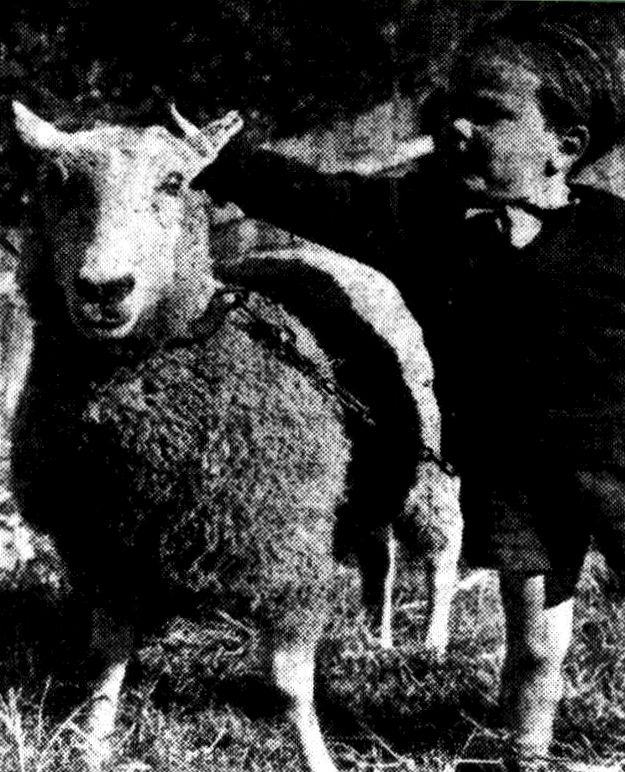
Samson, named by Constable Jenkings, strayed into the yard of the police station on Tuesday.
Samson was wearing a collar and chain which supports Constable Jenkings‘ view that he is the ” mobile lawnmower ” of someone in the Watsons Bay – Vaucluse area. He seems quite content to browse in the long grass at the station, but Vaucluse police are anxious to find his owner. Samson is carrying about £3 worth of wool.
MARK JENKINGS, 3, son of Vaucluse constable, Harry Jenkings, pats his new pal, Samson, the wandering sheep.
Service: From? ? ? to 15 September 1866 = ? years of Service
Awards: No find on It’s An Honour
Born: ? ? ?
Died on: Saturday 15 September 1866
Cause: affection of the throat stemming from exposure
Age: 27 years, 10 mths
Funeral date: Monday 17 September or Saturday 22 September 1866
Funeral location: Wagga Wagga
Buried at: Buried at Wagga Wagga Monumental Cemetery
Reg. # M-05744 Loc: Ang – R – 4 – 0001
[alert_yellow]JOHN is NOT mentioned on the Police Wall of Remembrance[/alert_yellow] *NEED MORE INFO
Grave location:
[divider_dotted]
The Sydney Morning Herald Wednesday 19 September 1866 page 1 of 8
Deaths:…..
On the 15th instant, at Wagga Wagga, JOHN MORROW, Esq., Sub-inspector in the New South Wales Police Force, and formerly a Lieutenant in the Royal Longford Rifles.
The Sydney Morning Herald Friday 21 September 1866 page 5 of 8
DEATH OF Sub INSPECTOR MORROW, – I have the painful duty of recording the death of Mr sub-inspector Morrow at Wagga Wagga, on Saturday last. I fear he may be regarded as another of the victims to the heavy and severe expenditure kept up when the bushranger Morgan was infesting the neighbourhood. A disease of the throat was, doubtless, accelerated and rendered more severe by the exposure thus occasioned, and after trying change of air, after consultation with eminent physicians in this colony and New Zealand, after all that attention and care could do, he sank under its fatal influence.
The Government has lost a conscientious officer, whose efficiency was impaired only by his inability, and the district will lose one to whom may be applied the highest eulogium – a Christian gentleman.
I am not aware of Mr Morrow’s exact age ; he could scarcely have reached what is generally called the prime of life, and was unmarried.
Wagga Wagga Express & Murrumbidgee District Advertiser ( NSW ) Saturday 22 September 1866 page 2 of 4
DIED ………..
At Waterview, Wagga Wagga, the residence of F.A. Tompson, on Saturday, the 15th instant, after a protracted and distressing illness, induced by exposure in the prosecution and discharge of his public duty, JOHN MORROW, Esq., Sub Inspector of Police for the district of Wagga Wagga, second son of Hugh Morrow, Esq., of Charlton Lodge, Auckland, New Zealand ( formerly of Coraboola House, County Longford, Ireland ) aged 27 years and 10 months.
He bore his long suffering with the most touching and enduring patience and gentleness and passed away in the fullness of faith and hope.
He died deeply loved and lamented by many, and esteemed by all who knew him.
Wagga Wagga Express & Murrumbidgee District Advertiser ( NSW ) Saturday 22 September 1866 page 2 of 4
Town Talk .- The sythe of the King of Terrors has been busy around us during the last few days, no less than three residents, if not of the town, at least of its immediate vicinity, having, in startling succession, been gathered from our midst. Sombre clothing has met the eye at every turn, blinds have been drawn, shutters have been closed, and long funerals have wound through the streets, creeping slowly on their way to the home of the dead. No wonder then that the town has been gloomy and sad. The death of Sub-Inspector Morrow could not be called sudden, and though the news came, as it ever does, at last with a shock, it was still only what people had long been prepared for, and could not occasion any feeling of surprise. But in the other two cases it was very different.
Even the families of those that are gone were quite unprepared for the calamities that have visited them, and to others the first tidings that have reached them have been, not of sickness, but of-death. And now in speaking on these topics, we cannot do better than call the attention of our townsmen to the disgraceful state of the cemetery. In the old country the village churchyard is a hallowed spot, invariably kept in the neatest and nicest order, but here we loosly pale in a plot of ground, with a rotten fence, and then leave it to be over run with weeds, or turned into a feeding ground for stray stock. We noticed one day last week a horse grazing there, and trampling at pleasure over the graves. But the presence of an occasional horse, though by no means a creditable circumstance to those whose duty it should be to preserve the ground from desecration, is but a trifling evil in comparison with the slovenly and illkept appearance of the ground in the whole, and the graves in particular. The fence is delapidated, and the whole place is choked with weeds and coarse grasses. No paths have been formed, and at every funeral the bearers and mourners are compelled to stumble and trample over the graves of those who have been buried before. In some eases these have been trodden down level with the surrounding soil, and in others their appearance is absolutely repulsive from the sinking of the earth as the coffins below have decayed. Several instances may be observed where the soil is cracking and falling in wards from this cause, and in many more it has so sunk down that the site of a grave is often marked by a regular hollow, in which, the water collects in pools after every storm. The cemetery in its present condition is a scandal and disgrace to the town, and immediate steps ought to be taken to place it in something approaching to a decent state. The expense of rooting out the weeds, grubbing up the bushes, placing the fence in good repair, and laying out a few paths, could not amount to very much, and funds would, we believe, be readily subscribed if the slightest effort was made to collect them.
Wagga Wagga Express & Murrumbidgee District Advertiser ( NSW ) Saturday 22 September 1866 page 2 of 4
DEATH OF SUB-INSPECTOR MORROW. IT is with deep regret we have to announce that, on Saturday last, this indefatigable officer of police breathed his last. Mr. Morrow‘s illness has been of long duration, and was, no doubt, in a great manner, induced by continued campings and exposure in the bush when in pursuit of the ruffian Morgan. Constant wettings and exposure at length brought on an affection of the throat, which so far deprived him of his voice that he was unable to carry on any conversation in higher tones than an ordinary whisper.
After leaving Wagga Wagga, he was for a time stationed at Deniliquin, but some seven or eight months ago he obtained leave of absence, and proceeded to New Zealand on a visit to his relatives, for the benefit of his health. He there received the best medical attendance the colony could afford, and his health so improved that he confidently looked forward to its complete restoration, and to the recovery of his voice, and he, therefore, in May last, returned to his official duties in Wagga Wagga.
The climate here, however, did not seem to suit his constitution, and his health again began to fail. He at first regularly attended to his police duties, but these were, after a time, occasionally interrupted by attacks of illness, which gradually increased in frequency and intensity, until at length he became altogether laid up.
For the last month he has been confined to the house, never seeing anyone but a few personal friends, and at length, on Saturday morning last, the spirit left him.
The deceased gentleman was twenty-seven years of age, and was the second son of Hugh Morrow, Esq., of Charlton Lodge, Auckland, New Zealand, and formerly of Coraboola House, County Longford, Ireland.
The funeral took place on Monday last. Every place of business was either wholly or partially closed, and the procession of those who were anxious to show their respect for the memory of the deceased gentleman, by following his remains to their silent home, was one of the largest ever witnessed in Wagga Wagga.
Empire ( Sydney ) Monday 24 September 1866 page 5 of 8
Our readers will be sorry to hear that Police Inspector Morrow died last-Saturday, at Wagga Wagga, from some affection of the throat. The deceased gentleman was formerly stationed at Albury, where his many good qualities won for him the esteem of a large circle of friends. Inspector Morrow was one of the pluckiest and most efficient officers of the force, and in his indefatigable exertions to capture bushrangers, he met with many hair-breadth escapes.
In fact his death may be attributed to his zeal in the performance of duty; for whilst scouring the country in search of Morgan, Inspector Morrow contracted the disorder which has ever since made him an invalid, and has ultimately caused his death. Camping out in the winter time without covering, for many successive nights, and undergoing all sorts of other privations in the bush, has ruined many an iron constitution; and a man must be something more than human to be able to stand it with impunity.
And so Inspector Morrow has passed away from us, and indirectly we can scarcely help regarding him as one of Morgan’s victims. – Border Post.
The Sydney Morning Herald Wednesday 26 September 1866 page 5 of 8
initial story is the same as those above but ends:……..
-To the foregoing, we append the sympathetic tribute of a warm personal friend of the deceased. The writer says :-” Mr. Morrow died deeply loved and lamented by many, and esteemed by all who knew him.
He was out with young Mr. McLerie. They both contracted disease from exposure in the wet season of 1861. Poor McLerie was at once carried off by acute inflammation of the lungs, but Mr. Morrow‘s affliction assumed the character of follicular laryngitis, by which he lost his voice and suffered otherwise from its effects on the bronchial tubes.
The poor fellow expended nearly all his means in surgical expenses, but the disease was never checked, and after two years of great suffering he rendered up his life, having been literally starved to death by inability to swallow food.
He bore his long suffering with the most touching and enduring patience, and gentleness, and passed away in the fulness of faith and hope.”
NSW Police Officers who lost their lives as a result of active Defence duty – Cemetery and Memorial sites. This is not a complete list.
**AUSTRALIA**
*KATOOMBA Cemetery HOUSTON, Kenneth Raymond – Private – 25/10/1968
Kenneth is also listed at ROOKWOOD NECROPOLIS at the Garden of Remembrance.
*LONE PINE MEMORIAL DOWNIE, John Jabez – Private – 03/05/1915 MARSHALL, William George – Private – 27/04/1915, 32yo McMASTER, Allan Hugh – Trooper – 26/05/1915, 24yo PORTER, William James – Private – 22/08/1915, 24yo
*LONE PINE CEMETERY HANCOCK, Herbert William – Sergeant – 20/05/1915, 27yo HODDER, Henry – Private – 09/08/1915 PEAT, Charles Riach – Private – 06/08/1915, 30yo
*QUINN’S POST CEMETERY, ANZAC ROBERTS, Norman – Corporal – 25/04/1915, 27yo
*BEACH CEMETERY MURRAY, Vernon William – Trooper – 22/05/1915
*POZIERES BRITISH CEMETRY, OVILLERS – La BOISSELLE ELLIOTT, Andrew – Lance Corporal – 17/18/1916, 25yo
*AVELUY COMMUNAL CEMETERY EXTENSION, ALBERT BAPAUME AREA CROUCH, Norman Russell – Gunner – 13/02/1917, 26yo
*BREWERY ORCHARD CEMETERY, BOIS-GRENIER, LILLE MITCHELL, John Lumsden – Sergent – 26/06/1916, 29yo
*PURCHEVILLERS BRITISH CEMETERY, SOMME PHEENEY, David – Lance Sergeant – 25/07/1916, 42yo
**BELGUIM**
*MENIN GATE MEMORIAL, YPRES HALL, Andrew William – Sergent – 29/09/1916 HUSH, thomas – Private – 18/11/1917, 32yo WATERS, Oliver Clive – Lance Corporal – 08/11/1917
**NEW GUINEA**
*LAE WAR CEMETERY, LAE RIVER AREA GILLIES, Neil Craig – Trooper – 24/05/1945, 27yo
**CANADA**
*OTTOWA MEMORIAL, ONTARIO WILLCOX, Arthur Jack – Pilot Officer – 22/12/1943, 30yo
LEST WE FORGET
List compiled b Linda Woods – Beyond Courage FB page. Posted 23 April 2014
Others that don’t appear on the above list ( H. Chadban does appear above ) but do appear on the Newcastle Police Honour Roll of WW I are:
Eight constables‘ names appear on the scroll: — H. Chadban ( of Newcastle, killed ), F. M. Doonan ( of Lambton, killed ), H. W. Hancock ( of Newcastle Water Police, killed ), T. Connell ( of Minmi, killed ), C. W. J. Grant ( of Newcastle Water Police, returned wounded ), D. J. Long ( of Newcastle, still on active service ), V. Digre ( of Newcastle, who served with the naval bridging train and is now in the artillery ) and S. Pender ( who has re-enlisted ). Constable Connell served with the Imperial Forces, being called up as an Irish Reservist.