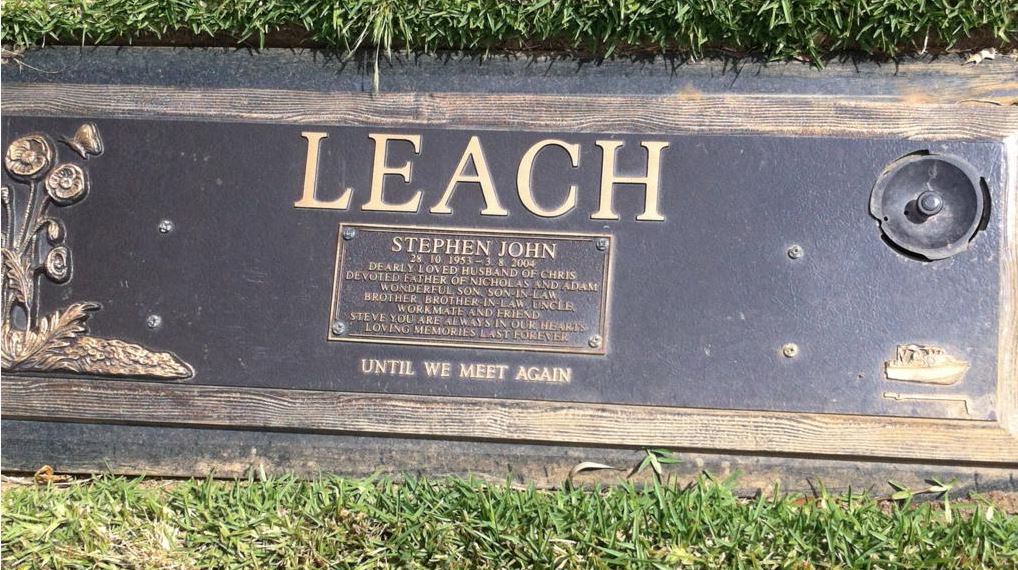
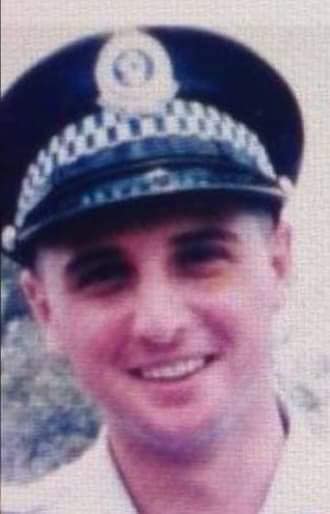
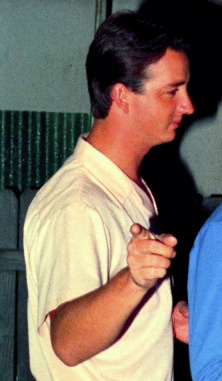
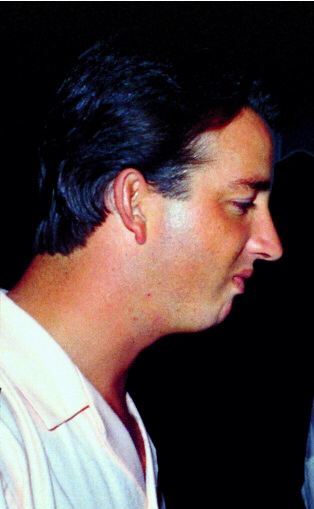
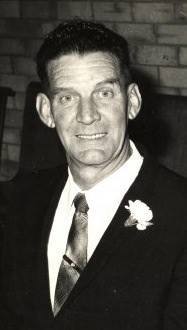
Stephen John LEACH – grave stone. Castlebrook Memorial Park Cemetery & Crematorium Castlebrook Memorial Park, Windsor Rd, Rouse Hill, NSW
Steve is NOT mentioned on the Police Wall of Remembrance in Canberra
( checked 040822 )
Policeman shot dead at station
August 3, 2004 – 7:33PM
One of NSW top police investigators was found shot dead in the state’s police headquarters today, shattering his family, friends and colleagues around the world.
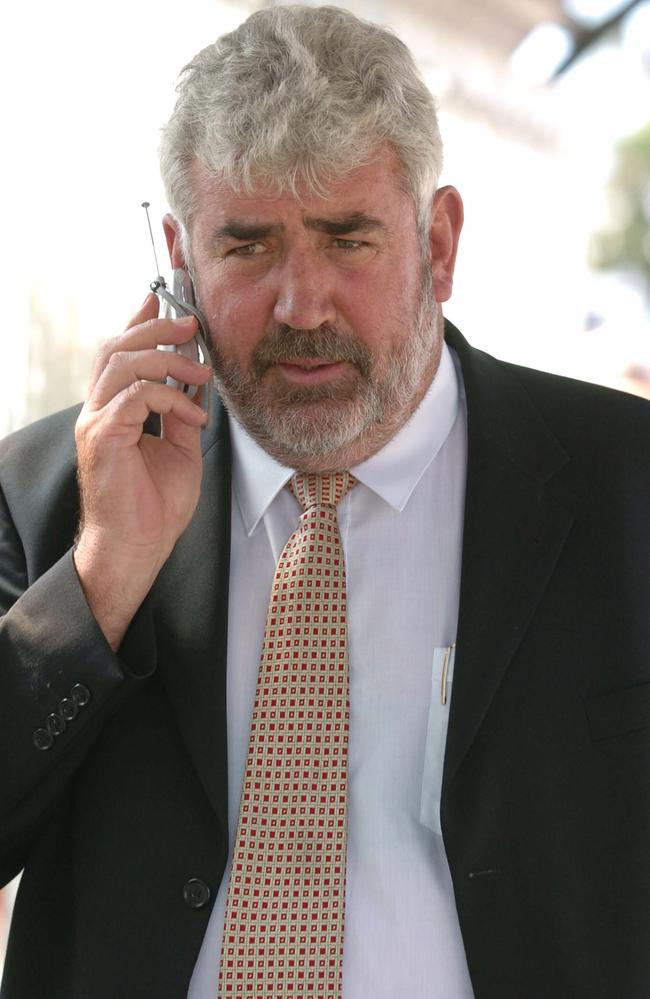
Detective Sergeant Steve Leach, 51, an internationally recognised officer who helped investigate former Yugoslav president Slobodan Milosevic on behalf of the United Nations, was found with a single gunshot wound to the head shortly before midday.
Among his local achievements, Det Sgt Leach was instrumental in the arrest of backpacker murderer Ivan Milat and the investigations into missing Sydney school girl Samantha Knight.
NSW Police Commissioner Ken Moroney rushed to Parramatta upon hearing the news and, while he declined to speculate on the cause of death, said it was not believed to be suspicious.
The detective sergeant was not working today, having returned to NSW from The Hague in the Netherlands only in recent months.
Det Sgt Leach had been on sick leave after sustaining an undisclosed physical injury while overseas, but he had been due to recommence his employment with the NSW Police soon.
The Commissioner said investigations into the death had begun using a specialist team from Bankstown police, who would prepare a report for the Coroner.
“These are very tragic circumstances not only for the officer concerned and his family but equally as important, for his colleagues,” Mr Moroney said.
“I’m sure he will be remembered not only in the coming days . . . but certainly in years to come as one of the most experienced detectives we have (had) here in NSW, and we are the poorer for his loss today.”
Mr Moroney said the married officer had two children who, along with his colleagues, were “understandably very distraught” at the news of his passing.
“He was a very popular colleague and highly respected, not only in terms of his detective skills but certainly the specialist skills that he brought to criminal investigations here in NSW,” he said.
The officer’s colleagues at the NSW State Crime Command in Parramatta were being counselled by police chaplain Barry Dwyer.
Another police officer also was mourned today – Senior Constable Ian Ross Dennis, based in Walgett, north-west NSW, who died in hospital after a short battle with an illness, aged 47.
Mr Moroney paid tribute to both officers, saying they had been outstanding servants of the police force.
“It’s important on these occasions that we honour and acknowledge that service and that commitment,” he said.
“It’s a very sad day for the organisation to lose officers of this calibre who have selflessly served the people of this state to the very best of their skill and ability.
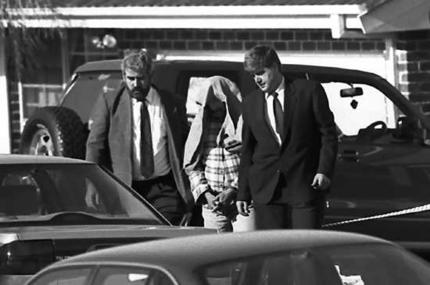
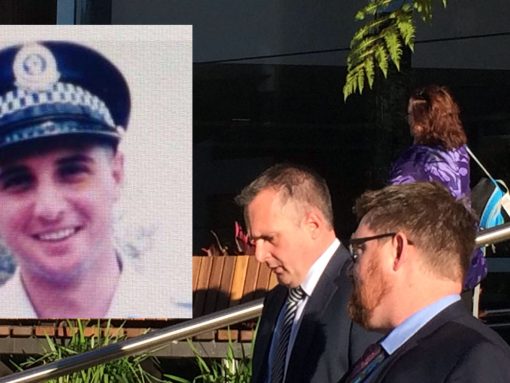
Homicide detective Steve Leach, left, and another detective escort the backpacker killer Ivan Milat from his home in 1994. Photo: Rick Stevens
There are few moments of joy in the life of a homicide investigator, and most of those are with their families.
Steve Leach had borne the grief of many, but yesterday it was the turn of his colleagues to face his own violent death.
Detective Senior Sergeant Leach, one of the state’s most experienced homicide detectives, took his life with his own handgun in the heart of the new NSW Police headquarters in Parramatta.
Nobody, it appears, saw such a tragedy coming.
Sergeant Leach had been on sick leave since early June, the result of a car accident in Europe that left him with leg injuries.
He had recently applied to be pensioned off as hurt on duty but those who encountered him recently had found him apparently cheery and looking forward to an early retirement.
He was still on sick report when he walked into the police building yesterday. He went into the soundproof weapons storage room; no one had been expecting him and no one heard the shot. Another officer found his body about noon.
When family, friends and colleagues looked at the life of Steve Leach, they saw an extraordinary career that began when he joined the force as a 16-year-old cadet in 1969.
He was a second-generation cop. Over 35 years, he played a role in some of the state’s most notorious cases and found his way as far afield as Bosnia, where he investigated war crimes.
Along the way he offered support to the families of victims and perpetrators alike. He even lent his shoulder to Shirley Soir, the sister of the backpacker killer Ivan Milat, who collapsed while sitting next to him in court on the day in May 1994 that her brother was charged with seven murders.
Ten days earlier, the burly detective had walked into police history as one of two detectives who arrested Milat at his Eagle Vale home.
In that case he led the search for the weapon, a Ruger 10/22, of which there were more than 100,000 imported into Australia.
He was often given tough tasks, such as the long investigation into the disappearance of the Bondi schoolgirl Samantha Knight.
In recent years, he was seconded to the European War Crimes Tribunal in The Hague. His team in the Netherlands charged the former Yugoslav president, Slobodan Milosevic, whose war crimes trial is still before the international court.
Sergeant Leach spent more than two years walkingthrough massacre sites and talking to survivors.
He came back to Sydney last year, returning to the homicide squad and recalling good times in Europe with his wife Christine, a schoolteacher.
He was chuffed that one of his two sons had also joined the police force, while the other had signed up for the army.
The Police Commissioner, Ken Moroney, remembered a detective of impeccable character.
“I’m sure he will be remembered, not only in the coming days … but certainly in years to come, as one of the most experienced detectives we have [had] here in NSW, and we are the poorer for his loss today.”
Homicide detective Steve Leach, left, takes Ivan Milat into custody in 1994.
Apart from time spent with their families, there are few moments of joy in the lives of homicide investigators.
They see the grief of others and are expected to bear their own feelings inwardly. Steve Leach had borne the grief of many – until yesterday. Now his colleagues are facing the tragedy of his own violent death.
Detective Senior Sergeant Leach, one of the Australia’s most experienced homicide detectives, took his life with his own handgun in the heart of the new NSW Police Headquarters in Parramatta.
It seems nobody saw it coming. When family, friends and colleagues looked at the life of 51-year-old Senior Sergeant Leach, what they saw was an extraordinary career that began when he joined the force as a 16-year-old cadet in 1969.
He was a second-generation police officer who, over 35 years, played key roles in some of Australia’s most high-profile and most horrific cases.
His talents were also sought internationally. He was seconded to the European War Crimes Tribunal in The Hague to investigate the killing fields of Bosnia, and was instrumental in the arrest of former Yugoslav president Slobodan Milosevic, who is facing genocide charges.
But the hard-nosed detective also had a gift for empathy and gave his support to the families of victims and perpetrators alike.
He even lent his shoulder to Shirley Soir, the sister of Ivan Milat, who collapsed while sitting next to him in court on the day in May 1994 when her brother was charged with the murders of seven backpackers.
Ten days earlier, he walked into police history as one of two detectives who arrested Milat.
He was often asked to investigate cases where the trails had seemingly run cold, such as the 1986 disappearance of Bondi schoolgirl Samantha Knight. But by the time his team had secured the conviction of Michael Guider, Senior Sergeant Leach was in Bosnia, walking through massacre sites, talking to survivors.
He returned to Sydney last year, speaking only of the good times in Europe with his wife Christine, a school teacher. He was chuffed that one of his two sons had joined the force, while the other had joined the army.
But he had been on sick leave since early June after injuring his legs in a car crash in Europe. He had recently applied to be pensioned off as hurt on duty, but had appeared upbeat planning for his early retirement.
Senior Sergeant Leach was on leave when he arrived at police headquarters yesterday, went into the sound-proof weapon storage room and took his gun. No one heard the shot. Another officer found his body at noon.
One shocked colleague and mate said: “There you go, buddy. The futility of it all. We are all feeling that empty feeling. Why?”
Those needing assistance can reach Suicide Helpline Victoria on 1300 651 251, Lifeline on 131 114 (both 24-hour lines), SANE on 1800 688 382 or Kids Help Line on 1800 551 800.
One of NSW’s top police investigators was found shot dead in the state’s police headquarters today, shattering his family, friends and colleagues around the world.
Detective Sergeant Steve Leach, 51, an internationally recognised officer who helped investigate former Yugoslav president Slobodan Milosevic on behalf of the United Nations, was found with a single gunshot wound to the head shortly before midday.
Among his local achievements, Det Sgt Leach was instrumental in the arrest of backpacker murderer Ivan Milat and the investigations into missing Sydney school girl Samantha Knight.
NSW Police Commissioner Ken Moroney rushed to Parramatta upon hearing the news and, while he declined to speculate on the cause of death, said it was not believed to be suspicious.
The detective sergeant was not working today, having returned to NSW from The Hague in the Netherlands only in recent months.
Detective Sergeant Steve Leach, from Sydney, Australia, was a well-known, veteran police officer with 35 years of experience.
Steve Leach was so highly respected by his fellow officers that they referred to him as “a policeman’s policeman.”
He was assigned some of Australia’s most horrific crimes. And he arrested serial killer Ivan Milat (see picture above), who murdered seven people between 1989 and 1992.
He also worked in Serbia and Montenegro from 2000 to 2003 as an investigator for the European War Crimes Tribunal, in which he had to view sites where massacres occurred, and then interview survivors.
Steve was an extremely strong man, both physically and mentally, and handled all of his assignments with the highest levels of integrity, courage, intelligence, and competence.
He was also highly ambitious and believed that he should have received a higher rank than detective sergeant.
And he was frustrated by what he believed was a ridiculous and unfairpromotion system in which he and other officers were forced to engage in “role play” during their promotion examinations.
In March, Steve applied for a newly created position as inspector at the coroner’s office, but the job was given to a muchyounger officer who had only a fraction of Steve’s experience.
Steve was furious and appealed the decision.
Unbelievably, Steve lost the appeal.
And soon afterwards, he became depressed.
On August 2, 2004, Steve, who was off-duty at the time, calmly walked into the police station, went to the armory room, obtained his service handgun, and shothimself in the head.
He was 51.
Steve’s fellow police officers were shocked, and immediately blamed the idiotic promotion system.
One outraged officer did not mince words when he described the promotion system as “bullshit.” He went on the say, “The promotions system is the only thing that was upsetting this very calm, [great police officer]. The current system is promoting people with just 12 years of experience over someone with 35 years of experience – this just destroys people like Steve Leach.”
Steve was one of the greatest police officers in Australia’s history.
Everyone loved and respected him.
And he made the streets safer because of his hard work.
He was a dedicated, superstar cop who loved his job and who loved to help people.
A rank way to treat the cops Transcript ADAM SHAND: Steve Leach was the model of what a detective should be – tough, uncompromising in his pursuit of crime, but fair and compassionate. He kept his own counsel as he served others right up to the day he took his own life. KEN MORONEY, NSW POLICE COMMISSIONER: A very sad day for the organisation to lose officers of this quality and this calibre who’ve selflessly served the people of this state to the very best of their skill and ability. ADAM SHAND: In 31 years of service, Steve Leach had worked some of NSW’s most difficult cases. He had seen the dark side of humanity, arresting backpacker murderer Ivan Milat, and solving the abduction of school girl Samantha Knight. In Leach’s death, his comrades saw their own images. At his funeral, the priest said that no-one should speculate on Leach’s own untold story. GARY HESKET, FORMER NSW DETECTIVE: I looked in the church. I could see a lot of young police there with promotion on their shoulders. I saw a lot of older police there, experienced heads. And not at the same level. “Don’t speculate”, I thought to myself. I thought, “That’s just saying we should never ever speak about this matter ever again.” ADAM SHAND: No-one will ever know why, at the age of 51, Steve Leach lost hope that day. But many senior detectives can trace their own disillusion back to the massive changes introduced after the Wood Royal Commission into police corruption in the mid-1990s. The Commissioner recommended a complete overhaul of the force’s management style. A new promotion system was introduced that no longer ensured progress through the ranks based on years of service. MARK FENLON, FORMER POLICE SERGEANT: It’s had a huge detrimental effect on morale. It’s had a huge detrimental effect upon police officers with experience who have been disenfranchised by the process. Who have been and are continue to seek exit from the police force at the earliest opportunity. And this has left a huge void in the organisation in terms of experience, in terms of training and development of younger police, in terms of expertise to deal with crime, which can’t be replaced. ADAM SHAND: Gary Hesket left the force a year ago after three decades in the job. He keeps up with his mates through his role in as a trainer in the police rugby league competition. GARY HESKET: This is good for the camaraderie, the esprit de corps. It’s the best things they could do after working in the police environment they’re in – get out here and have a game amongst each other. ADAM SHAND: You pick up the paper and see Steve Leach has committed suicide. What did that mean to you when you heard that? GARY HESKET: The first question I asked was, “Was he passed over for promotion?” And the word that came back to me was ‘yes’. ADAM SHAND: Like Steve Leach, Gary Hesket devoted his life to catching villains. He was a natural-born detective, voted policeman of the year in 2001 by his local community in western Sydney. GARY HESKET: Then you’re told, “Well, Gary, if you want to be promoted, the best thing you can do is forget about police work, find a desk somewhere and hide and do yourself a degree or diploma because that’s the only way you’re going to get promoted in the future of NSW Police.” ADAM SHAND: Hesket says many of his generation of detectives have simply been dumped on the scrap heap. GARY HESKET: But at the end of the time when you put in 35 years, where is your reward? Where is your reward? ADAM SHAND: On the day his family and comrades farewelled Steve Leach, NSW Police Commissioner Ken Moroney awarded him a ribbon recognising his achievement in solving 15-year-old mystery of Samantha Knight’s disappearance. GARY HESKET: And he did a magnificent job and he solved it, and now, posthumously, Mr Moroney is giving him a medal for that. Why wasn’t he given a medal when the case was solved, while he was alive? ADAM SHAND: When Leach was seconded as a war crimes investigator to the former Yugoslavia, he won praise for a difficult job. On his return to Australia, he expected a promotion to finish his career as a commissioned officer. MICK KENNEDY, FORMER NSW DETECTIVE: And the reason he couldn’t get promoted was he could do the job but he couldn’t pretend he could do the job. He couldn’t get through the assessment stuff, I suppose, or the role play nonsense. I was a detective for 20 years in the NSW Police… ADAM SHAND: These days Mick Kennedy is researching trends in modern policing for a PhD. He believes the root of the crisis facing Steve Leach’s generation is a lack of support for field officers. MICKKENNEDY: He didn’t kill himself because he was working in the evils and the horrors of criminal investigation, because that’s part and parcel of the work that you can deal with. You insulate yourself from it, you deal with that. But all of the time that you’re dealing with those murky, dirty hands areas of working it needs to be constantly reinforced that you’re dependent upon your organisation to support you in times of crisis or when things go bad. ADAM SHAND: When Kennedy faced his own crisis, he found there was no-one to turn to. MICK KENNEDY: I was in this house some years ago and I had my 38 on the bed and I was in despair over a range of issues. And I was thinking seriously, “Well, the best thing I could do is to kill myself”, so I ring the police medical officer and I got through to a woman who couldn’t speak English. I was on the phone with her for 20 minutes telling her that I was considering shooting myself and I’d like to speak to someone about it. In the end, I hung up in disgust because I couldn’t speak to anyone. Now I thought, “God, almighty! I can’t even try to attract attention. No-one’s interested! No-one really cares”, you know? ADAM SHAND: Faced with growing criticism, the NSW Government asked former Assistant Commissioner Geoff Schuberg to investigate the promotions system. He found many detectives had lost their sense of purpose in the job. GEOFF SCHUBERG, FORMER ASSISTANT COMMISSIONER: And one of the great problems in the system was that a number of police were applying for positions outside their area of expertise and winning them and they were put in a position where they were supervising and managing police when they had no experience or previous qualifications to do so. ADAM SHAND: Promotion, it seemed to Schoenberg, had become more important to the rank and file than the job itself. GEOFF SCHUBERG: Police really took their eye off the game of catching crooks and the promotions race seemed to be the main topic of the day, where people simply talked about positions that were being advertised, positions which they were applying for. There was a lot of resentment. There was a lot of drop in morale because of people who were applying for positions and couldn’t even get interviews. And I think that’s still very much the case. ADAM SHAND: Crime reporter Steve Barrett has been watching this generation of police officers for over 20 years. He’s seen the job consume too many of them. STEVE BARRETT, CRIME REPORTER: There was another detective inspector up at one of the stations in the Newcastle area who, with his service pistol, shot himself in the police station. Till this day, that family doesn’t know what happened to that person, why he took his own life. And you really have got to say to yourself, “What is this all about? Why is this happening?” ADAM SHAND: The Wood Royal Commission identified this generation of detectives as fertile ground for corruption, and set about purging its ranks. STEVE BARRETT: I mean, there was some very good work done by the Royal Commission but there was also some work where evidence was put before the Commission which was just, quite frankly, not true. And there was bad collateral damage and when you look at what’s happened, you think to yourself, “Well, a lot of police did down tools.” There’s no doubt about that. Then you see all these gangs growing up around Sydney – and I suppose it’s bit like if you don’t weed the garden, you’re going to get weeds. MARK FENLON: And this is reflected in the crime clear-up rates for NSW. They’re the lowest in the country. Around about 12 percent of robberies are being solved within the first 90 days of the offence occurring. 5 percent of break and enters within the same period. It’s scandalous. That’s how this policy is impacting and has impacted and will continue to impact on policing in this State. ADAM SHAND: Old-style cops say policing has become a numbers game these days. In crime statistics, a bust for a broken window counts for the same as a murder. The critics say it is the same wherever the police have moved from a paramilitary-based model free enterprise-style management – commanders are forced to strive for quantitative outcomes like managers in a boardroom. MICK KENNEDY: The problem is that productivity is measured, in policing terms, in terms of arrests, and they say, “That’s great.” But it’s about trivial arrests. What they do, you get a senior commander and have a meeting and he humiliates everybody by yelling at them and screaming at them, “Why aren’t your – why aren’t your arrest rates up? How come my stolen vehicles is down?” You say, “We don’t have any staff. I’m not interested in that!” And it’s humiliating, and it’s a humiliating process and it is a degrading. ADAM SHAND: Kennedy says the older detectives often find the pressure intolerable as they watch younger colleagues ride a desk to the top. He says the promotions system rewards those that work it. You gather merit points from education and role playing sessions where officers must show a grasp of the new language and politics of community policing. For an undercover detective, this is the theatre of the absurd. MICK KENNEDY: I had been doing undercover work for far too long. I had a twitch. I had a stutter. My hair was dropping out. I had psoriasis all over my hands and I have no doubt if I had have killed myself some idiot would say, “But, mate, he was just a bit tired, We didn’t know he had any real problems.” ADAM SHAND: Former sergeant Mark Fenlon served for 20 years. He left the force reluctantly after a distinguished career. MARK FENLON: I had to get out of policing. I blew the whistle on promotions corruption in 1999. Nothing was done in relation to the complaints I made. The promotions system, it’s allowed people who haven’t got the qualifications, the experience, to gain promotion to gain positions – senior positions within the organisation – to lead the organisation. ADAM SHAND: Although his complaints were investigated, the system remains relatively unchanged and Mark Fenlon says its major faults are beginning to show. MARK FENLON: No better example than recently would be Redfern, where there were two images that is stuck in my mind. One was of police being directed to line up across a street and be subjected to bottles being thrown at them, Molotov cocktails being thrown at them. The other image is that there were perhaps half-a-dozen senior officers in the background in the background with mobile phones to their ears looking for a direction, looking for some guidance in relation to what to do with the situation. RON STEPHENSON, FORMER POLICE SUPERINTENDENT: In my day – and I’m not blowing my trumpet – but if you were placed in that situation, if you were in arm’s length away from some of the offenders, they’d be in the back of the truck and charged with assault, indecent language, offensive behaviour, whatever the matter was. ADAM SHAND: Inspector Ron Stephenson was the officer in charge the day, in 1984, when two bikie gangs, the Bandidos and the Comancheros, squared off in the car park of the Viking Tavern, in Milperra. Seven people already lay dead and experience told Stephenson that, without quick thinking, the murderers would walk free. RON STEPHENSON: A decision would be made that they’d be rounded up, interviewed, and charged. They were only charged that day with offensive behaviour and cause of fray but, three weeks later, after we’d worked out the full picture, we raided simultaneously 43 homes, arrested 43 bikers and charged them with 301 charges of murder. ADAM SHAND: But just how you restore confidence in a force that has lost so much in terms of experience is another matter. More than half of NSW police have been in the job for less than five years. Training simulation exercises like this one are now a key measure of competence and suitability for promotion. STEVE BARRETT: I can tell you about another guy who was the boss of homicide for five years. In the north-west of Sydney. And he had to go to an assessment testing centre for a day, where they role play. And, I don’t know – because he wasn’t a good actor, he didn’t get promoted. Now, he just walked away. He’s gone. So all this experience over years and years and years of hard slog for the taxpayer of NSW has just gone like that. ADAM SHAND: But NSW Police Minister John Watkins denies the service is in crisis, that many more officers like Steve Leach are at risk. He insists morale in the force is at its highest since the Wood Royal Commission clean out. JOHN WATKINS, NSW POLICE MINISTER: The separation rate for NSW Police is the lowest it’s been for eight years and the actual resignation rate is the lowest it’s been for 10 years. It’s a very stable force in NSW and morale is the highest it’s been for a generation. ADAM SHAND: But the Minister does accept the need for a review of the promotions system. He chairs a working party of detectives which is discussing the problem. JOHN WATKINS: There was a working party, the Schuberg working party, that’s reported to me. I’ve given that to the Anderson working party to report to me by the end of this year for legislative changes to be put in place so a new promotions system can be up and running from 1 July, 2005. ADAM SHAND: Victoria Police Service has also established a merit-based promotion system, which favours education over experience. There are morale issues in Victoria as a result, but the greater problem is a war on corruption. CHRISTINE NIXON, CHIEF COMMISSIONER, VICTORIA POLICE: I did come to Victoria Police with an understanding there was corruption here. It’s the kind of attitude Victoria Police had that they didn’t have corruption really was a bit of a myth. ADAM SHAND: Unlike NSW, where the Royal Commission fast-tracked a clean out of bent coppers, Chief Commissioner Christine Nixon’s management team is driving reform. CHRISTINE NIXON: In policing, there will always be corruption. What you have to do is figure out where the high-risk areas are, where the likelihood of that corruption is to occur and to try change the systems and practices or, in fact, focus on people who might be working in those areas. ADAM SHAND: Nixon has identified so-called legends in the force which, she says, have set bad examples for young officers. Though he left the force nearly 20 years ago, Brian Murphy is still Victoria’s most feared and revered officer – a legend amongst crims and coppers. Back in 1971, Murphy was charged with the killing of a suspect in custody. Although he was acquitted, he found the incident gave him an unhealthy reputation amongst some junior officers. BRIAN MURPHY, FORMER VICTORIAN POLICE OFFICER: There would be a lot of young people think, “Well, Murphy did it and got away with it. I’ll try do what he did or what he was involved in, something similar.” And it’s not always a good thing. ADAM SHAND: Should you have been gone back in the force, do you think? BRIAN MURPHY: From time to time I think that it was most probably a bad move that I did go back in, but I couldn’t think of doing anything else than police work. ADAM SHAND: When Murphy returned to duty he was given a new role. Leading a small team known as “Murphy’s Marauders”, he took on the villains in their own pubs, sending a message of fear through the underworld. It was an old-school, often violent, method that, although successful, is certainly not endorsed in today’s force. BRIAN MURPHY: If somebody is arrested and he received a certain amount of corporal punishment, it would most probably be as a result of an assault on the policeman first. And policemen are permitted, the same as anybody else in the community, to prevent an assault, to use force, more than what is being used on them. ADAM SHAND: Some Victorian police feel the pendulum has swung too far. Officers now feel powerless in the face of criminals who have exploited the new, sensitive approach to police enforcement. CHRISTINE NIXON: I guess I don’t quite see that and I have a lot of contact with police. Australia has this kind of way of seeing villains as the heroes – Ned Kelly, I suppose, Roger Rogerson in NSW, and Brian Murphy is another. I don’t think they see them as the heroes, the real heroes in policing. I think they see them as people who just behaved and were of their time. What we have to do now is live within the legal boundaries. ADAM SHAND: But Brian Murphy believes some officers are being used as political pawns as management seeks to reassure the public of the integrity of the service. He could see the writing on the wall and took early retirement. He finds himself counselling many young officers unsure of their future career direction. BRIAN MURPHY: And a lot of them have left the job and rue the day they ever left because it’s a big, hard, cold world out there and the wages they were getting on numerous occasions they’ve found wanting and they get outside. They haven’t got the camaraderie, they haven’t got the protection of the government behind them. ADAM SHAND: Maybe the job isn’t what it used to be, and many would say that’s a step forward. But men like Gary Hesket feel they’ve been let down by an administration that’s changed the rules in the middle of the game. GARY HESKET: At the end of my days, for all the hard work you did, they take your badge, they take your ID. There’s nothing. You’re stripped. At the end of your days, who are you? You’ve given all these years of service. You just walk away and there’s this wealth of experience just sitting out there just wasting away and dying away.Click here for a printer-friendly version.http://sgp1.paddington.ninemsn.com.au/sunday/feature_stories/transcript_1687.asp
He brought Ivan Milat to justice. He worked on the disappearance of nine-year-old schoolgirl Samantha Knight and the death of Sydney mother Zoe Zou, who died last November. He recently spent two years walking through massacre sites and talking to victims of Slobodan Milosevic for the European War Crimes Tribunal in The Hague.
i know.. i heard bout that yesterday
noone knows why he done it.. and his got a family and kids too… so sad….
my condolence goes out to them all..R. I . P.
i just read about this. how tragic. he helped so many people by bringing people like ivan milat to justice, and it just got too much. it’s awful. my heart goes out to his family, friends and colleagues.
I saw him talk about the backpacker murders in Adelaide when I was in first year doing a forensic and analytical chemistry course and he inspired me to finish my degree. I am quite that he’s gone – he was an amazing speaker and a tenacious investigator.
What this the one who dies under sus circumstances?
It is so sad how all these people who do wonderful things for their community usually don’t have outlets for how they are feeling/coping with everything they have seen.
__________________ Her Most Noble Lady Nightshade the Precocious of Kesslington under Ox – Going to Paris for my birthday!!
It just about breaks my heart to read things like this…
As someone who dreams of becoming a police officer one day, I’m glad to know that there are such fine members of the police force within Australia and to know that their hard work and compassion in the job has assisted so many people and has set a respected precedent for future officers.
It’s important to commend and appreciate our nation’s police officers to help dispell the hostile attitude many members of public have against police officers – we often quickly forget that there are real people and families beneith the blue uniform.
My dad was friends with a member of the Victorian Police force who was killed while on duty, it’s upsetting to remember the sadness that his death had on our family as his friends, let alone what it must be like for immediate family..
My heart and prayers go out to both families – especially Snr Det. Leach’s son.
On 2004-08-04 12:12, Sambellina wrote:
Zoe Zou was my friend. I hope this doesn’t effect the trial of the accussed.
How heart-breaking for you… I do doubt that it will effect the outcome of the case – but most likely a collegue of Snr Det. Leach will be presenting any facts and evidence.
On 2004-08-04 12:02, sultry wrote:
It is so sad and the worst part is the not knowing.Perhaps we could also say RIP to Senior Constable Ian Ross Dennis?http://www.police.nsw.gov.au/media/d…ectionID=mediaAnother fine Police Officer taken from us too early. If only there were more out there like him.
Thank you very much for that link.
I can’t believe the police force lost two such fine men in the space of only a few hours.
On 2004-08-04 12:13, Emily-May wrote:
corrupt maybe?
Do you mean maybe he was corrupt or he saw too much corruption? Regardless, it’s tragic the amount of police officers who end up comitting suicide because of the stress involved with their job or the ‘inner workings’ of police culture. A truly fine police officer who potentially saved a lot of people’s lives
( Due to current Govt. restrictions on ‘Gatherings’ due to Corona19 Virus Pandemic, some families may wish to have a Memorial Service / Wake with friends and family at a later date )
Funeral Parlour: ?
Buried at: Northern Suburbs Memorial Gardens & Crematorium,
Grave: Portion: North East Terrace, Garden Plinth, Row: 5, Plot: 86 ?
GPS:-33.793889 – 151.154167
Photo Credit: Lynn Lucas – Sept. 2022
Memorial / Plaque / Monument located at: ?
Dedication date of Memorial / Plaque / Monument: Nil – at this time ( April 2022 )
PAT is NOT mentioned on the NSW Police Wall of Remembrance * BUT SHOULD BE
PAT is NOT mentioned on the National Police Wall of Remembrance, Canberra ( last checked 130922 / 170723 ) *NEED MORE INFO
PAT IS NOT mentioned on the Sydney Police Centre Memorial Wall, Surry Hills ( Sept. 2022 / 170723 )
FURTHER INFORMATION IS NEEDED ABOUT THIS PERSON, THEIR LIFE, THEIR CAREER AND THEIR DEATH.
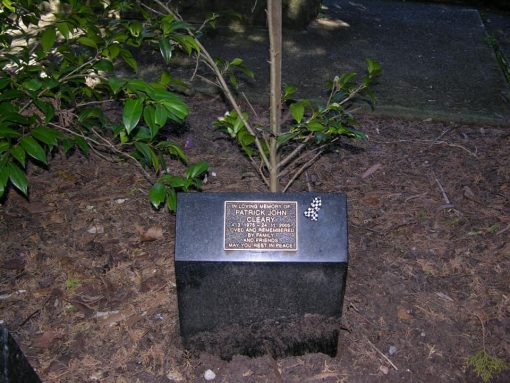
At Chatswood police station in November 2005, Detective Senior Constable Patrick Cleary shot himself dead before colleagues arrived for work.
Patrick is NOT mentioned on the Police Wall of Remembrance
Again a policeman clocks on, kills himself
By Les Kennedy November 25, 2005
What possesses some people to do the unspeakable to little children – even their own?
Patrick Cleary was a police officer who plunged into the dark secrets of families to catch sex offenders or those who preyed on and cruelly abused children.
Yesterday, barely six years after joining the NSW Police Service, and three years after becoming a detective, the 31-year-old was found shot dead in an apparent suicide.
The Police Operations Commander, Deputy Commissioner Andrew Scipione, said the death marked a sad day for the NSW Police. At least three other officers in the past four years have taken their own lives in stations with their own service weapons.
“Today is a very tragic day for the NSW Police Force. We have lost a very, very good officer,” Mr Scipione said. “At this stage I might indicate that there appear to be no suspicious circumstances and it has just been a terrible, terrible tragedy. I am told he was a first-class officer, and that is a real loss to us.”
Detective Cleary, who grew up on Sydney’s northern beaches, had since July been in charge of the Chatswood Joint Investigation Response Team, comprising four detectives and four investigators from the Department of Community Services.
The unit had responsibility for investigating all child abuse cases from North Sydney to Hornsby, on Sydney’s outskirts.
The tight-knit unit which dealt with the stuff of nightmares – little children recounting their ordeals at the hands of abusers – coped by reassuring themselves that whatever the outcome, even traumatic family separations, they were protecting the weak.
But police said yesterday that no one recognised the emotional turmoil within Detective Cleary.
His death, which has shocked officers in all nine metropolitan joint investigation response teams as well as the 60-officer Child Protection and Serious Sex Crimes Squad at Parramatta, is the subject of an intensive investigation by a critical incident team from the homicide squad.
But Mr Scipione, who addressed Detective Cleary’s distraught colleagues, said the death was not being treated as suspicious.
He said the officers and the DOCS investigators who worked with Detective Cleary were receiving counselling.
Those in the response teams received counselling every three months to determine how they were coping, but this would now be reviewed.
“No one ever knows why these tragedies happen. We may never know,” he said.
Detective Cleary’s widowed mother was comforted by the head of the Child Protection and Serious Sex Crimes Squad, Helen Begg, who broke the news to her at her home yesterday.
Police said it appeared Detective Cleary had arrived early for work, disconnecting the alarm to the office.
He had been dead for up to an hour before his body was found. There was a single gunshot wound to the head.
A co-worker found him in a room away from his office at 8.45am. Lying beside his body was his Glock semi-automatic service pistol. There was no note.
Police said Detective Cleary had graduated from the police academy in September 1999.
For the three years he worked at Dee Why and Manly police before joining the Chatswood JIRT team as a Senior Constable.
“He dealt with the problems of fragile young people, taking it in. It’s not a good thing,” one officer said yesterday.
Newcastle Anglican diocese business manager John Cleary’s work is his late detective brother’s legacy
By Joanne McCarthy
Updated December 6 2017 – 7:12pm, first published November 23 2016 – 11:00am
JOHN Cleary carried a photo of his late brother Pat with him as he gave evidence on Wednesday about the Anglican Church’s shocking history of child sexual abuse in the Hunter region.
The rest of this story is behind a pay wall with the Newcastle Herald.
Patrick CLEARY – NSWPF – Suicide – 24 November 2005 ( in uniform ). His brother – John CLEARY in striped tie.
Nothing further, than what is recorded above, is known about this person at the time of publication and further information and photos would be appreciated.
A police constable found shot dead in a station in Sydney’s south is believed to have killed himself.
The 29-year-old constable was found about 1pm (AEDT) today with a gunshot wound inside Menai police station, but the death is not being treated as suspicious.
Police said the officer was from the Sutherland Local Area Command and was alone in the building at the time.
“He’s an officer who had served with us for some 18 months, and will be sadly lost,” Deputy Police Commissioner Andrew Scipione told reporters.
“We can ill afford to lose anyone from this organisation, but particularly one as young as this man makes it a double tragedy.”
Mr Scipione said the officer died from a gunshot wound to the head and his service revolver was found next to his body.
A report was being prepared for the coroner and officers were being offered counselling.
His death is being investigated by a critical incident team.
Further details about the officer have not been released as family members are yet to be notified.
A POLICE constable with less than18 months‘ experience in the force shot himself dead inside a one-man station on Sydney’s southern outskirts yesterday.
What caused so much anguish in the mind of the 29-year-old officer for him to take his life is now the subject of an investigation by a critical incident team comprising detectives from the homicide squad, the coroner’s investigation unit, St George police and police internal affairs.
But the acting Police Commissioner, Andrew Scipione, who attended the scene of the shooting in the tiny Menai police station at the Menai Marketplace shopping mall, said the death was not being treated as suspicious.
The officer, attached to the Sutherland police area local command, was found dead in a toilet cubicle inside the station, which is manned 24 hours by a single officer on rotation.
The death brings to at least five the number of police officers who have killed themselves at a police station since 2001. All were found by colleagues.
Mr Scipione said police from Sutherland made the discovery at 1pm when sent to investigate why the officer, whose name has not been released, had not responded to several calls from colleagues.
Mr Scipione said the officer had sustained a single gunshot wound to the head. His 9mm-calibre Glock semi-automatic service pistol was beside his body.
Mr Scipione said: “It is a very sad day for the NSW Police Force today. Today we learned of the sad loss of an officer … he is an officer who has served with us for some 18 months … We can ill afford to lose anyone from this organisation. But particularly someone as young as this man makes it a double tragedy.
“We are advised that there is a single gunshot wound to the head but at this stage these matters are the subject of an investigation. I can indicate that his service firearm was found at the scene.”
Mr Scipione said colleagues had spoken to the constable on the phone several times during the morning as part of routine checks.
He said the officer had been stationed at Sutherland since graduating from the academy in 2005. “We don’t know what it is that [has] caused the events of today to unfold. I would not suggest to you, though, that there is anything suspicious.”
Police said the station had external and internal surveillance cameras, from which film had been taken to examine the officer’s movements. The station was fitted with an alarm system, and officers working alone there wear an emergency alarm on the wrist.
Last night police were trying to contact the constable’s next of kin to inform them of his death. It is believed they live on the South Coast.
Tragic rookie told police he had tried to take his life
Alex Mitchell January 21, 2007
THE young policeman who killed himself at a single-person station had a troubled mental health history.
When Greg Norman Lundberg entered the NSW Police Academy at Goulburntwo years agohe wrote on the application form that he had previously tried to take his own life.
He successfully completed his training, graduated as a constable and was armed with a Glock semi-automatic service pistol.
And last year he was given his first major assignment: to manage the one-officer station at the Menai Market Place shopping centre.
On Sunday, January 8, (Saturday, January 7) the 29-year-old constable was found in the police station’s toilet with a single gunshot wound to the head. His Glock pistol was lying next to him.
Senior police are furiousthat Lundberg was “thrown in at the deep end” by his superiors and maintain that the service failed in its duty of care towards him.
A detective said applications for gun licences under the Firearms Act 1996 were rejected regularly if the applicanthad a history of self-harm or mental illness.
His death is now being investigated by the critical incident team comprising senior detectives drawn from the homicide squad, the coroner’s investigation unit, St George police and the force’s internal affairs.
They have taken possession of the station’s closed-circuit TV tapes showing Lundberg pacing up and down in a highly agitated state.
They have also learnt that neighbouring police spent an hour and a half trying to contact him by phone and radio before driving to Menai to find out what was wrong.
A report will be sent to the State Coroner who will decide whether to hold a public inquest.
Police facilities at Menai have a chequered history. About 15 years ago a fully operational, fully staffed station was opened on the Old Illawarra Road but a few years ago it became the headquarters of the dog squad.
Menai was then given a single-officer shopfront station in the shopping market.
Following Lundberg’s death, community leaders said they would reopen the campaign for a fully staffed station to handle the increasing level of street crime and antisocial behaviour.
The Police Association of NSW declined to comment on the incident while the investigation was continuing.
Service: From 19 March 1962 to 10 January 1989 = 27+ years Service
Awards: National Medal – granted 14 July 1977
Australian Police Medal ( APM ) – granted 26 January 1987
1st Clasp to National Medal – granted 8 June 1988
Born: 18 October 1933
Died on: 10 January 1989
Cause: Shot – Murdered
Age: 55
Funeral date:
Funeral location:
Buried at: ?
Colin Stanley WINCHESTER ACT / AFP Assistant Police Commissioner
Colin Stanley WINCHESTER ACT / AFP Assistant Police Commissioner
Touch plate at the National Police Wall of Remembrance, Canberra.
[alert_green]COLIN IS mentioned on the Police Wall of Remembrance[/alert_green]
Australian Federal Assistant Commissioner shot dead.
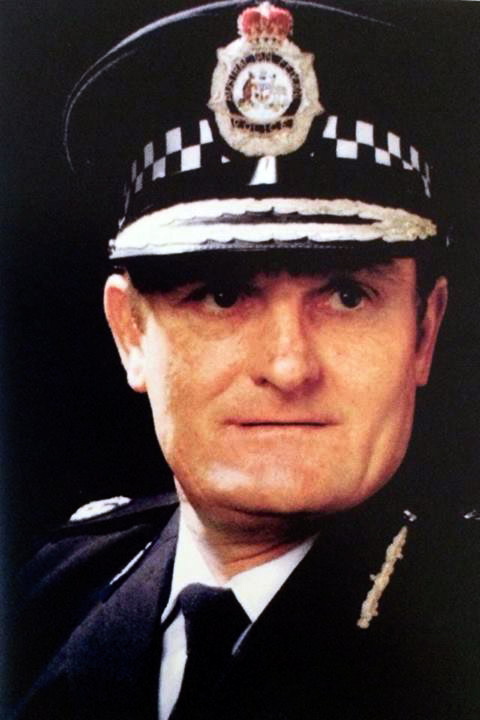
Colin Stanley Winchester APM, (18 October 1933 – 10 January 1989) was an Assistant Commissioner in the Australian Federal Police (AFP).
He was a baker’s son who’d worked in the mines at Captain’s Flat and a good-humoured larrikin.
Friends and work colleagues described him as being of great strength, courage, integrity and love, who was tough, hard-working, honest and compassionate.
Colin Winchester had been a police officer for 27 years, first in the Australian Capital Territory Police Force and then in the AFP.
On 10 January 1989, the Canberra suburb was particularly quiet, drowsing in the still, warm, evening air, ACT Policing Chief Police Officer Colin Winchester drove to his Deakin home.
At 9.15pm, as he stepped from his car Assistant Commissioner Winchester was dead, shot twice in the head at point blank range with a Ruger 10/22 .22-caliber semi-automatic rifle fitted with a silencer.
Colin Winchester’s death made headlines around the world and sparked one of the most complex criminal investigations in Australian history. It ran for more than five years.
There were many allegations of mafia involvement and that the Assistant Commissioner had been executed by the Mafia when it was revealed he’d been part of a controversial investigation targeting drug financiers and suppliers.
At a sting involved a marijuana plantation at Bungendore, a Mafia informant who told his bosses that Colin Winchester was corrupt. It was said that the police chief was shot because Mafia bosses Winchester was cleared when an independent auditor found that with no unexplained wealth to his name, it was unlikely that Colin Winchester had been on the take.
David Harold Eastman was convicted of Winchester’s murder on November 11, 1995, after a four year surveillance investigation.
Justice Ken Carruthers during his sentencing remarks said “the scientific aspect of the case resulted in
“one of the most skilled, sophisticated and determined forensic investigations in the history of Australia”.
Justice Carruthers sentenced Eastman to life imprisonment.
Winchester was Australia’s most senior police officer to have been killed.
COLIN Winchester, a former miner then 29, joined the ACT police force in 1962. Some of the ACT police were said to act like country cousins of Sydney police, and rather looked up to some of the more flashy, if dubious, detectives therein. It has been asserted that Winchester was corrupt, at least at any earlier period when he is said to have handled bribes relating to a Canberra illegal casino. However, an audit of his financial affairs after his murder revealed nothing untoward.
The ACT Police and Commonwealth Police were merged in 1979 to form the Australian Federal Police (AFP). Channel 10 reporter Christopher Masters says that factional infighting deriving from the original divisions remain, and have impeded the Winchester investigation.
Constable 1/C Greg Wright – New Years Eve – 31 December 1982
Former Senior Constable Greg WRIGHT was stationed in 34 Division ( Fairfield & Cabramatta Police ) during the 1980’s working mostly on General Duties.
Greg died in Newcastle, NSW, on New Years Eve of 2005 from cancer of the brain and his funeral was held in Taree on the 5 January 2006 at 2pm.
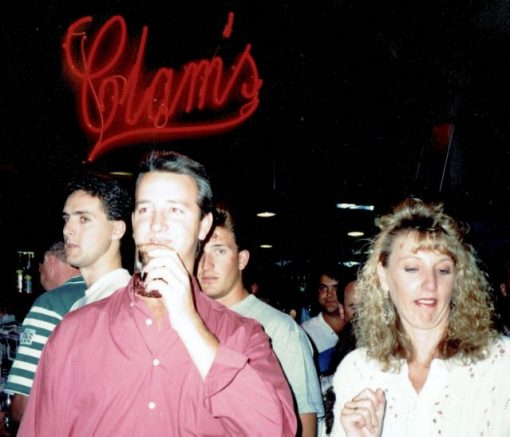
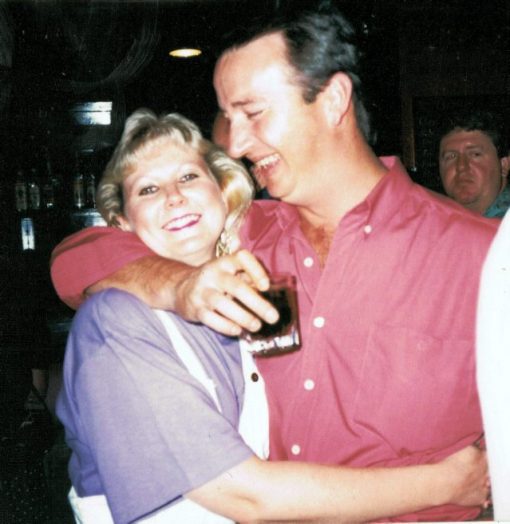
Kookaburra Hotel, Canley Vale Rd, Canley Vale, NSW, at the Send Off for Mark Bergamin # 21953 ( son of Roger Bergamin # 10682 ). 1981?
Kookaburra Hotel, Canley Vale Rd, Canley Vale, NSW, at the Send Off for Mark Bergamin # 21953 ( son of Roger Bergamin # 10682 ). 1981?
Robert Edward George McCARTHY
| 13/01/2014
Robert Edward George McCARTHY
Sergeant 2nd Class
Redg. # 4818
New South Wales Police Force – Retired 16 October 1978
Died: 29 January 2004 – Cancer
Robert Edward George McCarthy – NSWPF
Information from the daughter of Robert – Jan in January 2014
Robert Edward George McCarthy was a NSW Police Officer until he retired on 16 October 1978.
During his time of Service, he had been stationed in Sydney, Nyngan, Walgett, Yenda and Leeton.
Robert succumbed to cancer on the 29 January 2004.
Vera CAVANAGH – widow of Reg & mother of Geoff
| 13/01/2014
Vera CAVANAGH
Wife of Reginald ( deceased ) – New South Wales Police Force
Mother of Geoff – New South Wales Police Force – Retired
Aged 96
Died: 3 January 2014
Funeral: 8 January 2014
With regret I advise the death of Vera CAVANAGH, 96 old, the widow of Reginald and the mother of RPA Newcastle Branch member Geoff.
Vera passed away on 03/01/2014 and her funeral is proposed to be held at 10am on Wednesday 8th Instant at Ryhope Lawn Cemetery, Cessnock Road, RYHOPE, NSW.
With regret I advise the death of Colin Patrick ALLISON, 69 old, former Regd. No. 14346, a member of the Coffs Harbour Branch of the RPA.
Colin passed away on 31/12/2013 and his funeral is proposed to be held at 2.30pm on Wednesday 8th Instant at th3e Crematorium, Stadium Drive, COFFS HARBOUR.
ALLISON, COLIN PATRICK ‘COL’
31st December 2013, peacefully at Royal Prince Alfred Hospital, Sydney, late of Coffs Harbour. Loving father & father-in-law of David & Nicola Sattler, Matthew, Ben & Dannielle, loved grandfather of their children, special friend of Maree, dearest brother & brother-in-law of Eddie Cronberger, Colleen & John Dalhunty, fond uncle of their families, dear cousin to Bob, Brian, John & Chris Thompson.
Aged 69 Years
“Will be sadly missed”
Relatives and friends are invited to attend Col’s Funeral Service to be held in the Chapel of Hogbin Drive Crematorium & Memorial Gardens, Stadium Drive Coffs Harbour on Wednesday, 8th January 2014 at 2.30 pm.
Serving and retired Police Personnel are requested to attend.
Friends are invited to join the family in the Garden Lounge for light refreshments following the Service.
ALLISON, COLIN PATRICK ‘COL’
31st December 2013, peacefully at Royal Prince Alfred Hospital, Sydney, late of Coffs Harbour. Loving father & father-in-law of David & Nicola Sattler, Matthew, Ben & Dannielle, loved grandfather of their children, special friend of Maree, dearest brother & brother-in-law of Eddie Cronberger, Colleen & John Dalhunty, fond uncle of their families, dear cousin to Bob, Brian, John & Chris Thompson.
Aged 69 Years
“Will be sadly missed”
Relatives and friends are invited to attend Col’s Funeral Service to be held in the Chapel of Hogbin Drive Crematorium & Memorial Gardens, Stadium Drive Coffs Harbour on Wednesday, 8th January 2014 at 2.30 pm.
Serving and retired Police Personnel are requested to attend.
Friends are invited to join the family in the Garden Lounge for light refreshments following the Service.
– See more at: http://www.legacy.com/obituaries/coffscoastadvocate-au/obituary.aspx?n=colin-patrick-allison&pid=168876111#sthash.vzkrIyIj.dpuf
Alan HANDCOCK
| 13/01/2014
Alan HANDCOCK
New South Wales Police Force
Regd. # 6415
83 old
Died: 30 November 2013
Alan HANDCOCK, 83 old, former Regd. No. 6415, a Veteran member of the Brisbane and Northern Suburbs Branch.
Alan passed away on 30.11.2013 and his funeral has been held.