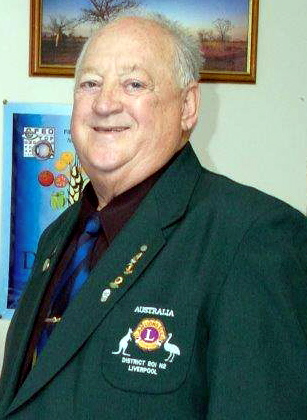
Dearly loved husband of PAM, much loved father and father-in-law of PAUL, MANDY & GEOFF AMIES, loving Grandad of EMMA, NICHOLAS and RACHEL. Loved brother and brother-in-law of DAVID & BARBARA, ROBYN DUNCAN and uncle of their families.
The Family and Friends of BRIAN are warmly invited to attend a Celebration of his Life to be held in the New Belmont Chapel, 444 Pacific Hwy, Belmont (parking via Henry St) THIS FRIDAY 15/07/16 Service commencing at 3pm.
GONE FOR A DRINK
Published in The Newcastle Herald on July 13, 2016
Donald Mackay knew he was marked down as an enemy of the drug-growing families of the irrigated farmlands around Griffith, and the secret syndicate that ran them. He had been exposed as the covert informant of drug squad detectives who had used his furniture store in 1975 to plan secretly what was then Australia’s biggest drug bust – $60 million worth of marijuana growing on a property at Coleambally, 65 kilometres from Griffith.
In July 1977, two days before he was assassinated, his body spirited into a 36-year mystery, Mackay sat in that same furniture store and told me his blood had ”run cold” when he discovered that his involvement in the bust had been subsequently exposed.
One of the drug squad members had been forced to hand over his notebook at the trial of four men alleged to have been involved in the crop. Mackay’s name and the drug squad’s use of his store as their Griffith headquarters were documented within its pages.
Mackay did not, of course, contemplate being murdered – he was a former political candidate and a pillar of Griffith’s community.
But he knew that Griffith in the mid-1970s was not a good place to make enemies.
He also knew strange things happened when citizens tried to tip off police about what was occurring. In 1974, an agriculture inspector named Joseph Patrick Keenan had stumbled across a group of men and women, including a fellow from a district winery, packing marijuana into green plastic bags in a farm shed.
In rural Australia in 1974, it was an astonishing sight. When Keenan reported what he had witnessed to Griffith police, Detective Sergeant John Kenneth Ellis didn’t seem interested and took no statement. Within a day, Keenan got a call from a relative of one of the marijuana packers informing him the family knew he had spoken to the police.
Several weeks later, the body of a man named Joseph Patrick Keenan was found floating in a canal near Griffith. This Joseph Patrick Keenan was no relation of the agricultural inspector.
Ellis, who was in charge of the investigation of the unfortunate man’s death, reported at his inquest that Keenan was an alcoholic and there were no suspicious circumstances. Just an amazing coincidence, apparently.
Mackay and others in Griffith detected things were crook. They proved to be right.
Ellis and the other two detectives from Griffith at the time, Senior Constable John Francis Robbins and Detective Sergeant Brian James Borthwick, were later to be given prison stretches for perverting the course of justice in relation to two drug crops.
Thus, when Mackay got wind of a big crop at Coleambally in 1975, he went undercover – and very likely sealed his fate.
To know that marijuana growing was flourishing and to condemn it was one thing. But to skirt around the local law and provide information and accommodation to the quiet men from the NSW drug squad, with spectacular damage to the growers and the syndicate, was quite another.
Yet Mackay, a conservative man given to smoking a pipe and wearing tweed jackets on his large frame, disliked being called an anti-drugs campaigner.
His mission was not simply to expose the small number of families who owned vineyards and citrus groves and lived in ”grass castles” – huge brick mansions on tiny farming blocks – whose mysterious profits were corrupting his town.
Don joined NSWPF twice. 1949 – 1951 & 1952 – 1959.
Prior to joining NSWPF, he was a Cadet journalist, Clerk, Salesman, P.M.G. Lines labourer, Truck Driver then joined NSWPF. He was Presbyterian.
Prior to joining NSWPF, he held the School Intermediate Certificate. He gained his Leaving Certificate – Matriculation Standard after attending evening classes in 1954 whilst in the Police Force.
Upon joining NSWPF pre March 1952, Don was described as being 5′ 9.5″ tall, 12st 4 lb in weight, blue eyes, brown hair with a medium complexion. He was a Native of Manly, NSW, and was Single. He later married on the 20 March 1952.
He held the Bronze Medallion in Life Saving and was Approved as a motor cyclist on the 6 May 1952.
On 21 August 1956 he passed his Constable 1st Class examination.
On 28 August 1959 ( a couple of weeks prior to finishing with NSWPF ) he was “Highly commended on success at being admitted as Barrister-at-Law of the Supreme Court of New South Wales.
That entry, made on his NSWPF Service Register, was endorsed C.J.D. C. of P. P59/48661/7194
C.J.D. would be Colin J. DELANEY ( Commissioner of Police ), C. of P. would be Commissioner of Police. P59 ( the year ), 48661 ( file number ? ), 7194 – Don’s Registered #.
[divider_dotted]
Former judge, corruption fighter Donald Stewart dies aged 87
THE AUSTRALIAN
12:05PM JULY 14, 2016
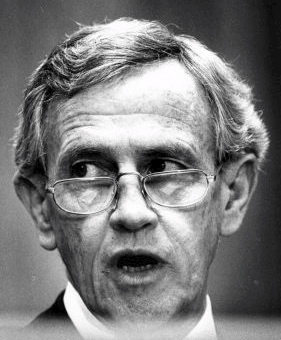
Donald Stewart, former royal commissioner (Inquiry into Drug Trafficking) and former head of the National Crime Authority.
Donald Stewart, a former judge and corruption fighter, has died at the age of 87.
Mr Stewart, who started his career as a police officer, went on to become a barrister, judge of the NSW District and Supreme Courts, a royal commissioner and the first chairman of the National Crime Authority, a forerunner of the Australian Crime Commission.
His 1981 royal commission into drug trafficking, which had originally been scheduled to run for four years, had its term extended for a year. It led to the arrest of several crime figures.
That royal commission also investigated illegally obtained material known at the time as the “NSW police tapes”, which led to the investigation of former High Court judge Lionel Murphy.
Mr Stewart’s autobiography, Recollections of an Unreasonable Man, was launched in 2007 by former prime minister Bob Hawke who recognised his courage and independence in fighting organised crime.
Mr Hawke had appointed Mr Stewart to chair the National Crime Authority and later appointed him to the position of resource assessment commissioner.
At the launch of Mr Stewart’s autobiography, Mr Hawke had described the former judge as the most impressive man he had encountered in public life.
Just before his retirement from the NCA in 1989, Mr Stewart expressed concern at the continuing level of corruption in society and within the police.
At the launch of his autobiography, the former judge described the abolition of the Resource Assessment Commission as “entirely wrong”.
“I am afraid that people are sticking their heads in the sand and that’s all that will be left — sand — if we keep going the way we are going,” he said.
Donald Stewart, judge and founding chairman of National Crime Authority
Jennifer Cooke
Donald Gerard Stewart, policeman, barrister, judge, royal commissioner, and founding chairman of the National Crime Authority (NCA) helped make history in several fields. It was a feat that even in his “wildest dreams” was not apparent to the young surf lifesaver and rugby fanatic who met the love of his life on Manly Beach.
He died, aged 87, following a cardiac arrest last week.
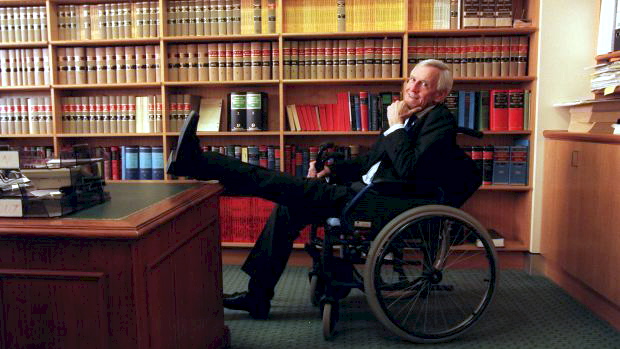
Acting Judge Donald Stewart at work after losing his feet to gangrene. Photo: Steve N Siewert
Self-described as a “footloose” judge, he returned to work at age 70 “back from the dead” despite the loss of both feet in a medical emergency caused by the intersection of septicaemia with blood clots thrown from an aortic porcine heart valve.
He said at the time he wanted to “show other people with disabilities that even though old, like me, if you really try, you can usually make it”.
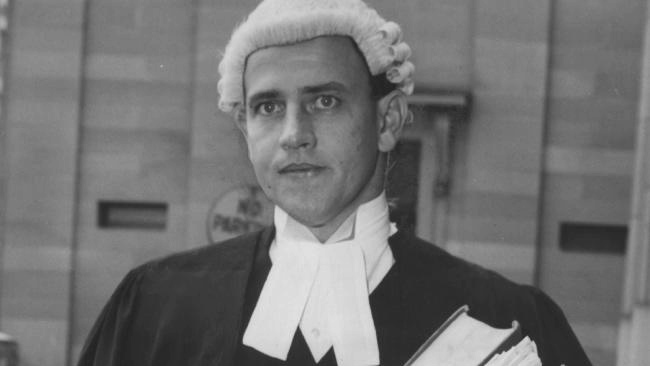
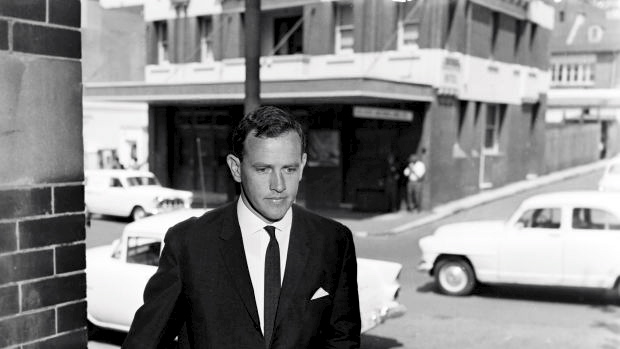
Barrister Donald Stewart arrives at the Coroners Court in 1961. Photo: Alan Funnell
The younger child of a menswear shop owner on The Corso and a bookkeeper, young Don grew up in the then insular peninsula of Manly, a product of the Presbyterian ethic of honesty. He became the man of the family at 14 when his father’s heart finally failed in 1942. He was also with his mother when she died aged 83.
Between 1941 and 1946 he attended Sydney Boys High and wrote later that he gave the headmaster, Mr Jas H. Killop, referred to by boys as “the boss”, many an occasion for both justice and mercy on the fatherless boy who maintained he did not start the “unseemly brawl in a rugby match with our rivals Fort Street”, which attracted his first unwanted glare of publicity. “The boss” also forgave his running away from school with a mate from Manly to go mining at Wallerawang, near Lithgow at one point.
Justice Stewart making a National Crime Authority announcement. Photo: SMH News
He left school without passing the Leaving Certificate and after a very short stint as a travelling salesman in country NSW, and no inclination at that point to follow his mother’s suggestion of a career in law, decided to give journalism “a go”.
But after a nepotistic introduction to someone at Consolidated Press, then headed by Sir Frank Packer, he earned a paltry two pounds a week working in the sport section of the Daily and Sunday Telegraph newspapers among iconic sports writing peers including Hugh Dash, Alan Hulls, Keith Robbins and his fellow high school colleague, Phil Tressider.
One day when he was 21, the lifesaver at the North Steyne Surf Live Saving Club happened upon an elfin young woman sitting on the sand tending a seagull with an injured wing. The daughter of a wealthy family from Louisana, 27-year-old Maybelle, had been working with the Red Cross in London and had recently brought out a group of displaced orphans to Sydney after World War II.
It was love at first sight for them both. Stewart married his “southern belle” in 1949 and an inspiring partnership began that would last six decades until her death from Alzheimer’s disease in 2009.
After his pit stop in journalism, Stewart decided to be a police officer but after many experiences in the 1940s and 1950s – and at the urging of Maybelle – he studied law and emerged in 1960 with a law degree. Seven years later he obtained his Master of Laws.
Ten years as a barrister led to his appointment as a District Court judge from 1977 to 1981. But in 1981, amid much controversy and acrimony from the then Chief Justice Sir Laurence Street, Stewart was elevated to Supreme Court judge status to head a royal commission into drug trafficking jointly established by the NSW and federal governments.
This three-year inquiry led to the detailed unmasking of the “Mr Asia” drug syndicate and a ruthless world of murder, corruption and organised crime on a scale never seen before in Australia. Another reference extended the commission’s scope into the dealings of the notorious Nugan Hand Bank and then “The Age Tapes” and its revelations of deep-seated corruption involving the NSW Police Force.
In 1984 he was appointed the inaugural chairman of the National Crime Authority, which resulted in the jailing of several organised crime bosses, chief of whom was the Kings Cross businessman, Abe Saffron, who was sentenced to three years in jail for tax evasion.
For some years Don and Maybelle were the subject of death threats and their home was littered with panic buttons linked to police central command under the then-helm of Andrew Scipione.
Five years heading the often-controversial NCA was enough and Stewart turned his attention to the environment and conservation after being appointed commissioner of Australia’s first ever Resource Assessment Commission, which made recommendations in 1994 aimed at protecting the country’s environment.
For a man who listened to many “tall tales” from defendants and royal commission witnesses before him, his tallest was often recounted by Maybelle about the jagged scar on one wrist. He boasted to her that it was a “war wound”. But she found out later from his mother that he got cut when he accidentally smashed her favourite custard bowl.
They both wanted children but sadly several miscarriages and the stillbirth of a daughter they named Elizabeth ended that dream.
While he could often be seen as difficult when fiercely-held beliefs were challenged or sub-standard arguments didn’t pass the test, he deliberately called his autobiography, published in 2007, Recollections of an Unreasonable Man: From the Beat to the Bench. This was more than a nod to the George Bernard Shaw quote than a self-definition: “The reasonable man adapts himself to the world: the unreasonable one persists in trying to adapt the world to himself. Therefore all progress depends on the unreasonable man.”
He gave and inspired great loyalty among many of those who had worked with him in his various guises – even friends from Manly Public School with whom he remained in touch over more than seven decades. One sitting NSW Supreme Court justice spent every Sunday night he was in town, visiting the retired judge for more than two decades.
Stewart has had more than a nodding acquaintance with the intensive care unit of St Vincent’s Hospital over numerous cardiovascular issues and where he spent a week before his death.
He sold his much-loved four-storey, panic button-studded house in Potts Point to former Prime Minister Paul Keating in 1999 after his most serious near-death experience when he was in in intensive care for three weeks after what he termed the “crook chook” chicken sandwich.
He collapsed at his home in September 1998 a few days after eating the sandwich and only eight weeks after receiving his new porcine heart valve. But septicaemia believed to have been caused by the bacterium salmonella typhimurium, apparently from the poorly-cooked chicken, caused most of his major organs to fail. It also lodged in the heart valve which threw off infective clots that lodged in his feet and blocked the blood supply, turning them gangrenous. He survived the ordeal with three weeks in “the dead zone” as he put it, his wife distraught and his obituary half-penned.
He became one of only a handful of people reported worldwide to survive a salmonella-infected artificial aortic valve with a replacement aortic valve and the only one in Australia at that time.
It was a standing joke that he survived only because the obituary was never completed.
He returned to the bench as an acting District Court judge for another four years until 2003 when he was declared “statutorily senile”, as all judges are, at age 75.
He is survived by many staunch friends. His older sister Peggy died last year. A funeral service is expected to be held at Eastern Suburbs Crematorium next week with a separate memorial service in Sydney also next week at a time to be advertised.
Corruption fighter, judge Donald Stewart exposed ‘Mr Asia’ syndicate
The Australian
Over many decades, Donald Stewart devoted his no-nonsense fine mind, understanding of human nature and personal courage to pursuing a “hatred of corruption”.
The man who started out as a young police officer on the streets of post-war Sydney and became a barrister, judge, royal commissioner and inaugural chairman of the National Crime Authority, died yesterday, aged 87.
Stewart was best known as a fighter against organised crime, in particular as head of the 1981 royal commission into drug trafficking that exposed the notorious “Mr Asia” syndicate.
That inquiry helped solve a string of murders, and led to a conviction for the murderer of Griffith anti-drugs campaigner Don Mackay.
The former judge of the NSW District and Supreme courts also headed a royal commission into the Nugan Hand Bank scam. In the mid-1980s, he was the royal commissioner appointed to investigate unauthorised police telephone tapping and the scandal of illegally obtained “NSW police tapes”.
While the phone-tap inquiry kickstarted a much-publicised investigation into former High Court judge Lionel Murphy, its broader impact was to help overturn a police culture of flagrant disregard for rights with the introduction of transparency and police eavesdropping based on proper cause.
In 1984, the Hawke government appointed Stewart the first head of the National Crime Authority, the forerunner of the Australian Crime Commission. Stewart also chaired Bob Hawke’s Resources Assessment Commission.
At the time of releasing his 2007 memoir Recollections of an Unreasonable Man, Stewart remarked on how the NCA under his leadership adopted what it called “The Al Capone Methodology” to prosecute Sydney crime identity Abe Saffron. With the failure of traditional methods to pursue Saffron’s ill-gotten income, in part because of Saffron’s links to NSW police, Stewart oversaw a team of accountants who successfully mounted a case to charge Saffron with tax evasion.
Saffron served two years in jail. He was so bitter towards Stewart that he reportedly solicited a fellow inmate to “kill” the NCA chief, although the man was convicted of another murder before getting the chance.
Stewart grew up in Manly. He was a NSW junior breaststroke champion and surf lifesaver before entering the NSW police force. Repelled by the bribery, theft and forced confessions he witnessed among senior officers, he realised his only way to remain independent and confront such corruption was to leave.
He studied law and became a barrister. In 1977, he was appointed a judge of the NSW District Court, and later the NSW Supreme Court.
Often a contrarian, Stewart believed the charging of police in recent years for their roles in organised crime was not proof of success but that corruption was deep-seated and flourishing. He believed a zero-tolerance policy that criminalised hard drugs was not working, and more consideration should be given to finding medical solutions.
Stewart was devoted to his wife, Maybelle, who predeceased him. The couple had no children, despite their early hopes.
Former Labor prime minister Bob Hawke told The Australian he was sad to hear of “the passing of the very fine man, Justice Donald Stewart”.
He said Stewart’s autobiography, which he had the honour of launching, was “not a terribly apt title for one of the most reasonable and competent men I have ever known”.
Stewart died in Sydney’s St Vincent’s Hospital after suffering a cardiac arrest last week.
The funeral service for the late Kenneth George Smith will commence at 11:00 am on Monday, 18 July 2016 In The Chapel at The Shoalhaven Memorial Gardens & Lawn Cemetery, Worrigee Road, Worrigee, NSW. Please contact Wray Owen and Mullers Funeral Home for further information.
Graeme Sidney John PARKER
| 19/07/2016
Graeme Sidney John PARKER
( late of Hadspen, Tasmania )
Victoria Police Force
Regd. # 13625
Rank: Sergeant
Stations: ?
Service: From? ? ? to? ? ? = ? years Service
Awards: ?
Born: 18 December 1940
Died on: Friday 15 July 2016
Cause: ?
Age: 75
Funeral date: Tuesday 19 July 2016 @ 11am
Funeral location: Christ Church Anglican, 2 William St, Longford, Tasmania
Buried at: ?
Memorial at: ?
[alert_yellow]GRAEME is NOT mentioned on the Police Wall of Remembrance[/alert_yellow] *NEED MORE INFO
[divider_dotted]
Funeral location:
[divider_dotted]
FURTHER INFORMATION IS NEEDED ABOUT THIS PERSON, THEIR LIFE, THEIR CAREER AND THEIR DEATH.
Brother to Gail, brother-In-law to Noel and uncle to Leonie, Adam and Stacey.
Father to Gregory (dec.), Kenneth, Suzanne and Glenn.
Father-in-law to Karen and Shelley.
Grandfather to Thomas, Sarah, Claire, Paul, Robbie, Penelope and Hudson.
Great grandfather to Florence and Henley.
A man’s man, a copper’s copper and a gentlemen’s gentleman. One of the world’s true gentlemen and a friend to all who knew him. You fought long and hard. Sleep peacefully.
A Funeral Service will be held at Christ Church Anglican Longford, Tasmania on TUESDAY (July 19, 2016) commencing at 11.00 a. m.
Rank: Probationary Constable – appointed 1 June 1959
Sergeant 3rd Class – appointed 1 May 1974
Inspector – appointed 31 December 1985
Chief Inspector – retired
Stations: ?, Central ( 1 Division ) ( A District ), Waverley, Paddington, 1961 commenced Criminal Investigation career commenced. 10 Division, 21 Division, 25 Division, 7 Division, Glenn Innes before returning to Metro area in 1974. Bondi Detectives ( late 1960’s ), Child Protection – Gosford Detectives, Vice Squad ( Det. Sgt ), Cronulla Detectives, South West Region Operations Support – retirement
Service: From? ? pre 1 June 1959 to5 May 1996 = 36+ years Service
What a great inspirational man to grow up under. You helped mum n us kids in lots of ways, other family members, n community groups you were with. You will be missed by all.
Leanne Jones-pfitzner lit a candle for Brian William Rope
A gentleman of great quality. Rest in peace Brian, sincerest condolences to your family and friends.
Joel and Sandi Donkin.
Joel Donkin lit a candle for Brian William Rope
Brian was a wonderful family man who served the community for his whole life in so many different roles. He was deservedly well respected by many. It was my privilege to know him, as a cousin and a member of the Rope-Pulley Family Heritage Assoc. Brian was proud of his First Fleeter Family history and he was a very enthusiastic Chairperson and newsletter writer during his time with us. I don’t think he knew what retirement was as he was always busy, because he knew there was so much that needed addressing. His charity work spread far and wide, and his loss will be felt in many parts of our community. Rest In Peace Brian.
Love from Rosemary and family.
Rosemary Rope lit a candle for Brian William Rope
It was an honour and a privilege to care for your family during this difficult time. Warmest wishes,
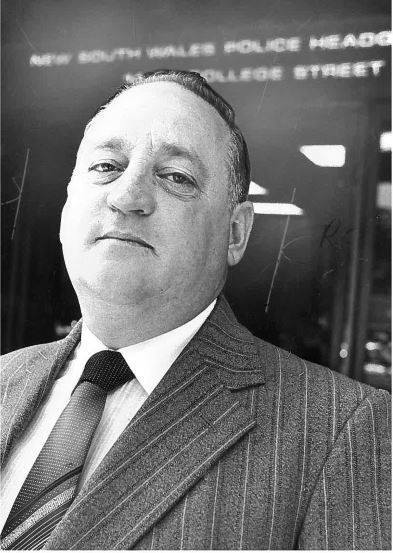
June: Former South/West Region Office, Liverpool, Brian. W. Rope is sworn in as a Probationary Constable of the New South Wales Police Force. Prior to joining the Police he was a Bank Clerk for 4 years. He was stationed at Waverley Police
Station, then Paddington Police Station attending to Traffic Duties.
In 1961 he commenced his Criminal Investigation career, working at
Nos. 10., 21., 25., and 7. Divisions, then transferring to Glenn Innes
Police Station before returning to the Metropolitan area in 1974.
Police Service Card State Archives Werrington.
1981
March: Former South/West Regional Office – Detective Sergeant 3/c. Brian. W. Rope, is appointed the Officer in Charge of the newly
formed Child Mistreatment Unit. Prior to this in January, 1980 he was
appointed a member of the Child Abuse Committee of the Prince of
Wales Children’s Hospital. In 1982 he was promoted to the rank of
Sergeant 2/c. and by December 1983, he was promoted to the rank
of Detective Sergeant 1/c. Police Service Card State Archives Werrington
1996
May: South West Regional Office, at Liverpool – Detective Chief
Inspector Brian. W. Rope takes optional retirement.
In January (1996) he was awarded the Australian Police
Medal. New South Wales Police News Magazine. August, 1996.
2010
August: Former South/West Region Officer, Liverpool, Detective
Chief Inspector Brian. W. Rope (retired) was awarded “The
Premier of New South Wales Community Service Award in
recognition and appreciation for his outstanding contribution
to the Community” signed Premier Kristina Keneally.
2011
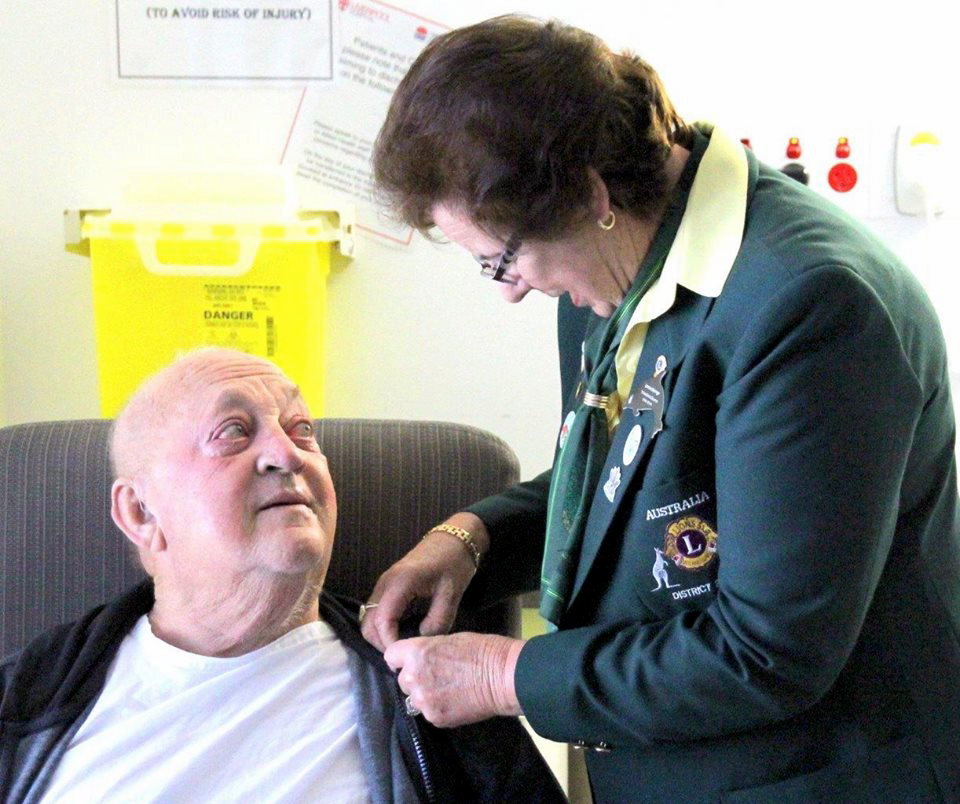
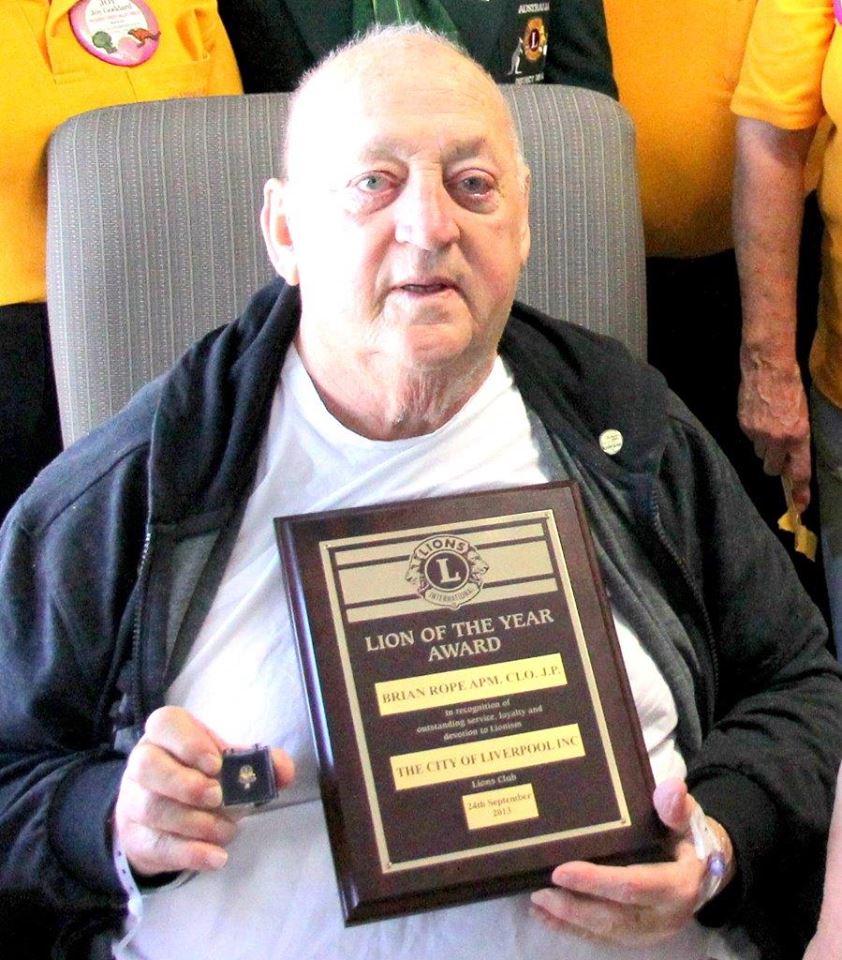
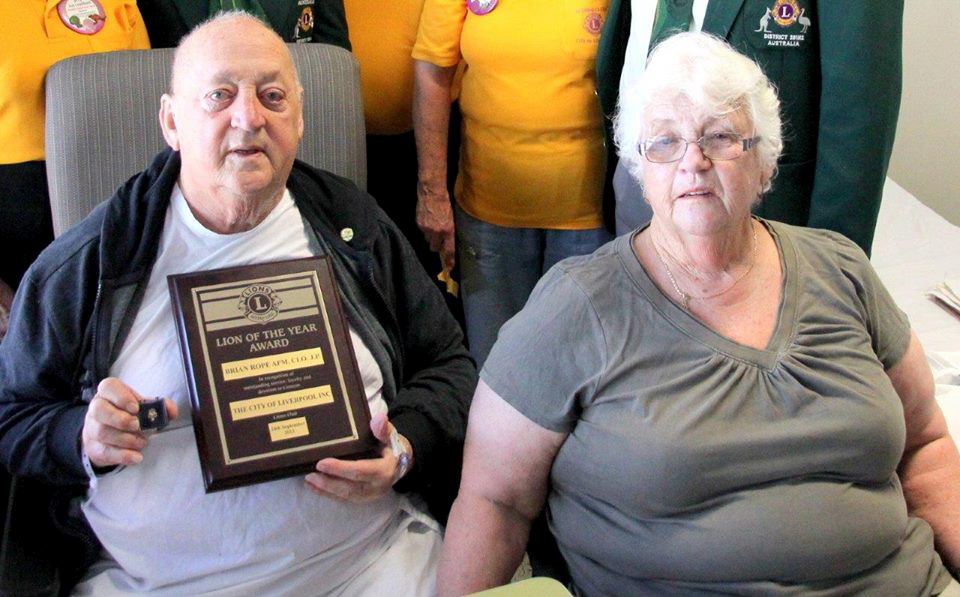
September: Former South/West Region Office, Liverpool, Detective Inspector Brian. W. Rope (retired) and a long term active member of the Liverpool community as a representative on various Liverpool Hospital community groups, a long time member and former President (numerous times) and Treasurer ( numerous times) of the Liverpool Lions Club, was awarded the “Companion of the Order of Liverpool “ (CLO), by the Liverpool City Council
The Child Mistreatment Unit was established under Brian’s leadership in 1981, with four investigators. He was involved in internal and external Committees and instrumental in Legislative changes. He remained involved in the field until his retirement. He could be looked upon as the ‘Father of Child Mistreatment / Protection Investigations’ which evolved within the NSW Police to what it is today.
Passed away peacefully at his residence surrounded by his family on July 4, 2016, aged 80 years.
Dearly loved husband of Christel. Loved father of Nigel and Julie, Ingrid and Martin. Loved grandfather of 5 and great grandfather of 2.
“Always In Our Hearts”
Family and friends of Vincent are invited to attend his funeral service to be held in the Heritage Chapel, Maryborough Crematorium, Bruce Highway on Monday, July 11 at 11am.
A sweet, decent and honourable man who achieved so much, had so much to be proud of and so much more to look forward to. Robert, you were a shining star, your life extinguished way too soon.
Our love and heartfelt sympathy to partner Sarah, mum Caroyn, dad Gary, sister Elisa, brother Perry, Granny Iris and Nana Dor.
Your death leaves a huge hole in our lives, you will be forever in our hearts – Linda, Niall and Damon.
Fiancee of bullied police officer who took his own life sues the state
PETER MICKEL BUROUGH, Herald Sun
EXCLUSIVE: THE fiancee of a bullied police officer who shot himself with his service firearm is suing the state.
Sarah Fleming, 32, says that prior to his suicide, her fiance, Robert John Smith, was in “emotional turmoil” and had made a complaint of workplace bullying, harassment and other stressors.
Ms Fleming says Mr Smith’s decision to take his life was due to the negligence of the force, which was responsible for the training and action of its employees.
Mr Smith died of a gunshot wound to the head while on duty at the Boronia Police station on June 29, 2013.
In a writ filed in the County Court Ms Fleming claims unspecified damages for the injuries she suffered as a result of Mr Smith’s death.
Since 2000, five Victoria Police officers have died in the line of duty, but 16 more have died by their own hand.
Last October, a policewoman and mother of three, who had previously been on mental health leave and had reported her struggles to Victoria Police, turned her police-issued gun on herself while she was on duty at the Seaford Multi-Disciplinary Centre.
That suicide prompted Police Association boss Ron Iddles — who had previously criticised the force’s efforts to tackle bullying — to call for more to be done to improve welfare of police.
Mr Iddles called for early identification programs in police training programs and at the workplace and for more police to talk about problems and show their colleagues help is available.
The association declined to comment yesterday on what progress was being made or whether there needed to be, or had been, a review of the provision of weapons to officers who have lodged mental health claims.
Ms Fleming’s legal action comes as police and ambulance unions campaign to change how mental health claims are treated, and in the case of post-traumatic stress disorder claims, reverse the onus on emergency workers to prove their condition was caused by work, which can sometimes delay much-needed treatment for years.
Between July 2010 and June last year, WorkCover accepted 482 mental injury claims from Victoria Police (and rejected 500), including 241 resulting from harassment and bullying, 252 for work pressure, 167 sparked by traumatic events and 54 due to occupational violence.
And police were hit harder by bullying than stress and trauma, according to members’ claims in 2014-15.
A National Coronial Information System report on Intentional self-harm among emergency service personnel last year revealed that of the 62 police suicides in Australia between July 1, 2000, and December 2012, 25 shot themselves — 23 with their service-issued firearm.
A Victorian Coroners Prevention Unit report into suicide rates among workers in key professions last year found the annual suicide rate among Victoria police was 10 per 100,000.
Police spokeswoman Sophie Jennings said in the past year the force had improved its complaints handling and completely reformed the way it responds to conflict, claims of bullying and harassment.
DO YOU NEED HELP? If this article causes you distress or if you require more information, police employees can call Welfare Services confidentially 24 hours 7 days a week on 9247 3344, and other members of the community can call Lifeline 13 11 14 or Beyondblue 1300 224 636
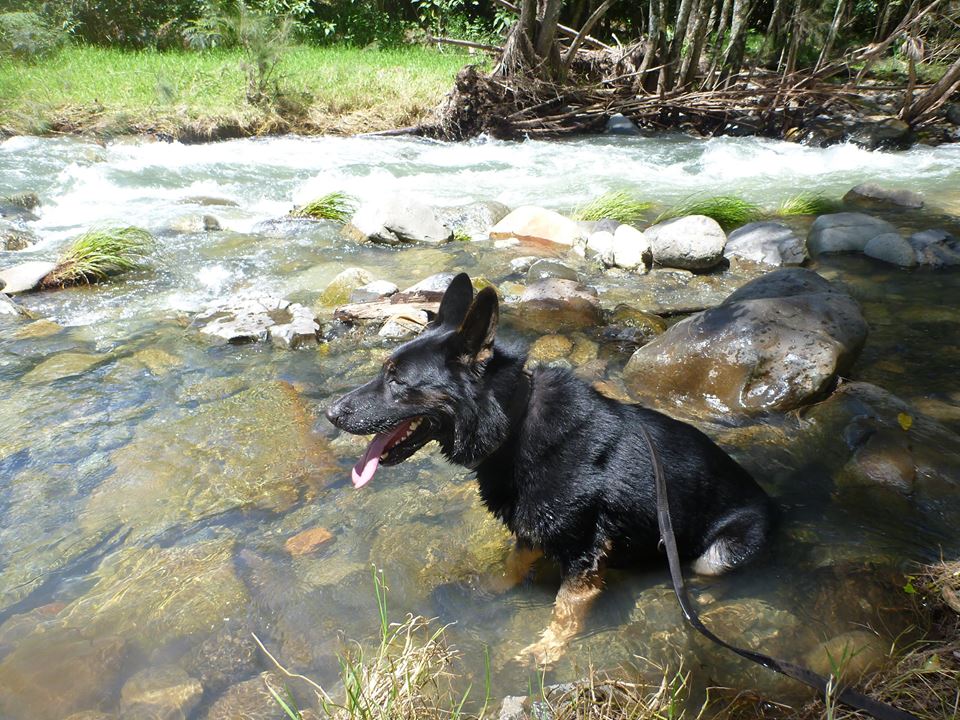
The NSW Police Dog Unit has today paid tribute to Police Dog, ‘Chuck’, who passed away this week.
PD Chuck was the loyal companion, partner, and best friend to Acting Sergeant Luke Warburton.
Born on Sunday 10 August 2008, PD Chuck was bred by the NSW Police Dog Unit. He commenced training on a general duties basis and was partnered with his handler, A/Sgt Luke Warburton.
PD Chuck, together with A/Sgt Warburton, has been involved in hundreds of jobs throughout his career, including the arrest of one of Australia’s most wanted in March 2012 and being at the front line of the Hyde Park Riots in September 2012.
PD Chuck’s status as a crime-fighting hero led to him to receive the honour of presenting the game ball at a 2012 State of Origin game in Sydney, where he became very attached to the ball and almost prevented the kick-off.
PD Chuck, along with A/Sgt Warburton’s family and colleagues, has also been a driving force in the officer’s recovery following a shooting early this year.
Between Sunday 3 July and Monday 4 July 2016, PD Chuck passed away from what is believed to be natural causes.
PD Chuck’s legacy continues, through the three litters he fathered for the NSW Police Dog Unit.
Superintendent Dean Smith, Commander of the NSW Dog Unit, said today was a sad day for the unit.
“Chuck’s death is a loss to the Dog Unit, not only from his contribution to helping fight crime, but the joy he brought to his handler, Acting Sergeant Warburton, and the officers involved in his training and development throughout the years,” Superintendent Smith said.
A/Sgt Warburton said, “My fondest memory will be of Chuckvisiting me in hospital after I was shot in January. Chuck was so excited to see me – and me him.
“Whenever I went to work and had Chuck out with me I knew he always had my back and we could take on any job.
“PD Chuck was a true police dog. He loved nothing more than seeing me walk to the backyard in my overalls as he knew he was going to work to do his favourite thing and chase bad guys.”
[divider_dotted]
Noel Cuthbert FOWLER
| 19/07/2016
Noel Cuthbert FOWLER
Victorian Police Force
&
New South Wales Police Force
Regd. # 3824
Rank: ?
Stations: ?, Granville ( Constable ), Parramatta
Service: From? ? ? to? ? ? = ? years Service
Awards: No find on It’s An Honour
Born: ?
Died on: Thursday 30 June 2016
Cause: ?
Age: 103
Funeral date: Held
Funeral location: ?
Buried at: ?
Memorial at: His son Ian is arranging a Celebration of his Life to be held in the Coffs Harbour area on Wednesday 13th Instant. Ian can be contacted on 0415 187 116
NOEL is NOT mentioned on the Police Wall of Remembrance *NEED MORE INFO
FURTHER INFORMATION IS NEEDED ABOUT THIS PERSON, THEIR LIFE, THEIR CAREER AND THEIR DEATH.
A POLICEMAN’S lot is not a happy one, they say, and Constable Noel Cuthbert Fowler, stationed at Granville, discovered a lot of truth in the old Gilbert and Sullivan line when he found, in 1939, that his 19 year old wife had other fish to fry.
Immaculately dressed and good looking, Constable Fowler, now 27, brought his marital woes to Mr. Justice Edwards’ Divorce Court last week. He charged his young wife with adultery, naming one Arthur James Clayton, of Bankstown. as co-respondent.
It was on January 18. 1938, that Fowler, a 24-year-old Victorian constable, led his 17-years-old bride. Sylvia Mary Bye to the altar of the Presbyterian Church at Swan Hill, in the Southern State.
Shortly afterwards he transferred to sunny New South Wales, and the young couple went to live in Livingstone-road. Lidcombe.
Along came young Barry Noel, now two and a bit, and all was well with the Fowlers.
Then his wife commenced to go out a lot, Fowler told the court.
At that time he was alternating day and night duty, and had no absolute check on her nocturnal comings and goings. He knew she was keeping hours a little later than a young wife and mother should keep, however, and spoke to her about it. She told him she was visiting her brother and grandmother a lot, but hubby was a policeman, and had heard a lot of yarns in the course of his duties. And thus it was that he bethought him of a private sleuth he’d heard of one Thomas Hugh Thornley, of Randwick.
To him he went, and on the night of November 1, 1939, Constable Fowler met Thornley, who brought his wife to bear him company, as well as another man named Buchanan. They all went by car to Railway Parade, Lidcombe, where they sat in the car and waited for what the very near future might bring. And sure enough, it brought Mrs. Fowler, who little thought that the eyes of the law, as represented by her husband, were upon her.
It wasn’t long, the court learned, before a panel van came into view. In stepped Mrs. Fowler and away went the panel van towards Strathfield with the husband and the private sleuth trailing along behind.
LIGHTS OFF
The panel van stopped at the Strathfield picture theatre, and Clayton and Mrs. Fowler went in to view the show. The constable and his merry men sat down to a long wait outside, and at 11.20 p.m. out came Clayton and Fowler’s wife. They drove to a large vacant allotment off Bombay-street, Lidcombe, and stopped near a canal. All the lights in the panel van were then switched off, and, after a few minutes Thornley and Buchanan went up to the car.
Constable Fowler told the court that he went up to the car a minute or two later, and, grabbing Clayton by the lapels of his coat, spoke words of wrath to him, finishing off with a demand to know what Clayton meant by stealing his wife away.
Said Clayton: ” Don’t hit me. I didn’t know she was married. ” But, Fowler told the court, his wife was wearing her wedding ring.
After Clayton‘s full name and address had been taken down to use in evidence against him, Mrs. Fowler stepped back into the panel van and off it went.
And home went the disillusioned constable, and packed his bag.
He strode down the garden path and met her coming in the gate. They met as strangers meet and passed without a word.
Thomas Hugh Thornley, private investigator — he corrected Mr. Simon Isaacs ( for the husband ) when called a ” private inquiry agent ” — said that when he approached the panel van on the dark allotment he heard the sound of kissing, which led him to believe that then was the time to swoop. He swooped, and when he opened the door of the van, Mrs. Fowler, whose head was resting on the door, fell into his arms. He saw quite enough to realise that the husband’s worst suspicions were indeed well founded. Thornley lowered the girl gently to the ground and verbally attacked Clayton.
Thornley said he told Clayton that a divorce suit would result, and heard that gentleman tell the outraged husband that he did not know Mrs. Fowler was a married woman.
Mr. Justice Edwards found the adultery proved, and granted the usual decree nisi.
He made no order as to costs, none being asked for.
( Before the Judge in Divorce, Mr. Justice Bonney. )
DECREES ABSOLUTE.
Decrees nisi were pronounced absolute and the respective marriages dissolved:—
FOWLER v FOWLER.
Noel Cuthbert Fowler v Sylvia Mary Fowler ( formerly Bye ) and Arthur James Clayton, co-respondent. Marriage, January 18, 1938, Swan Hill ( Vic. ), Methodist rites. Decree nisi. Mr. Simon Isaacs ( instructed by Mr. W. Lander ) for petitioner.
Marriage to Lola Joyce SEPPING 24429/1942 in Parramatta District
Northern Star ( Lismore )
Tuesday 21 December 1948 page 4
Ruling by High Court Affects Lismore Cases
A recent ruling by the High Court of Australia on the control of new cars had a bearing in cases before the Lismore Court of Petty Sessions yesterday.
Noel Cuthbert Fowler, for the Commonwealth Government, charged James Willow with selling a car without a permit and Albert Goodman with acquiring a car without a permit.
Both cases were adjourned to February 14 by which time, it was stated, the effects of the High Court’s ruling could be considered.
Mr. W. P. Walters, appearing for Willow, said the charges may be withdrawn as it had been ruled that the Commonwealth no longer had the power to control the sale and purchase of new cars.
Mr. W. P. Walters ( Trench, Walters and Pinchin ) appeared for Willow. Mr. T. E. Rummery ( Rummery and Liddy ) appeared for Goodman.