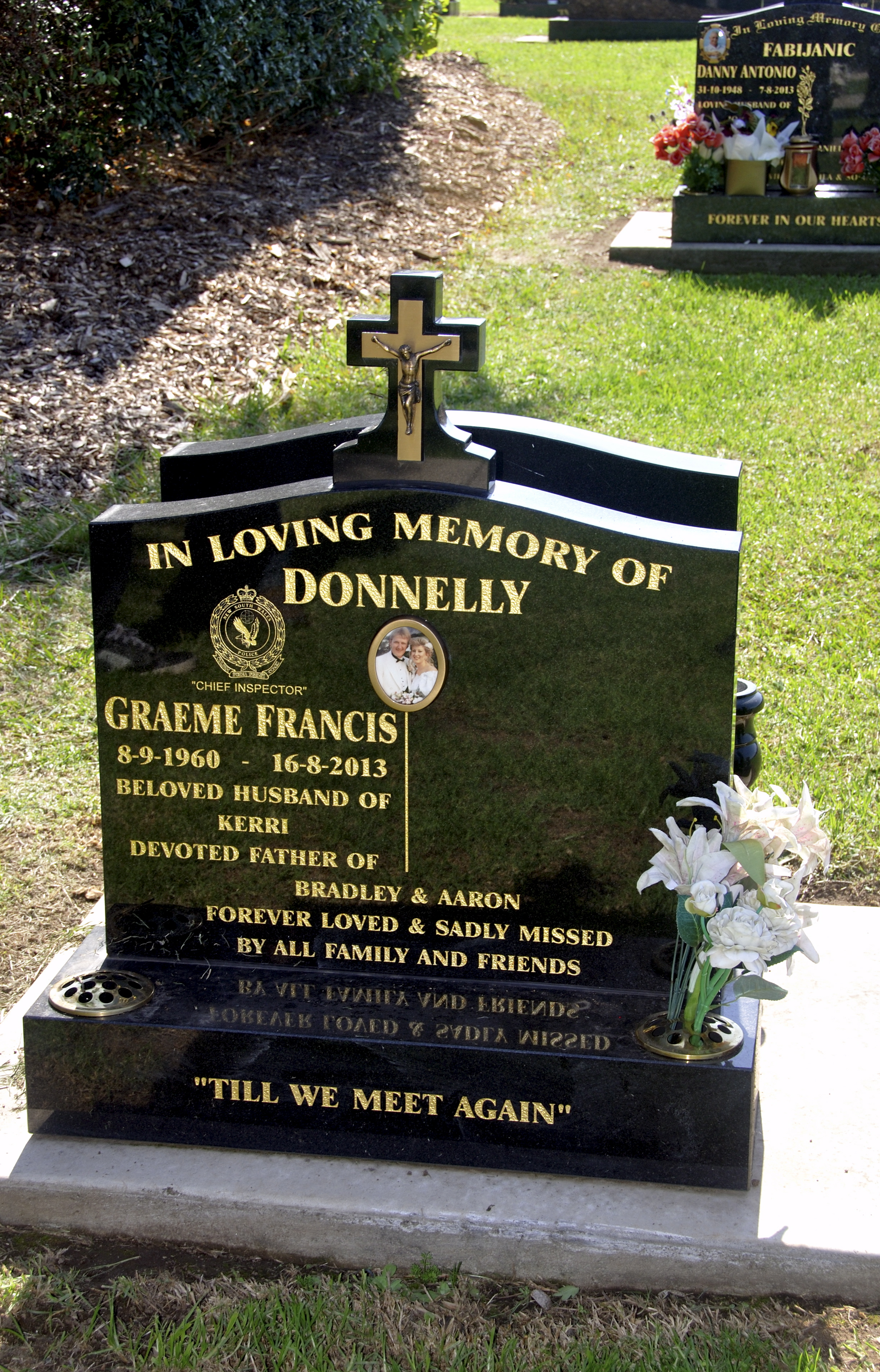
GPS of Grave: Lat: -34.4880559530445 Long: 150.81964650639043
Memorial: NSW Police Force Service Memorial Wall, Sydney Police Centre, Surry Hills, A29 ( left wall )
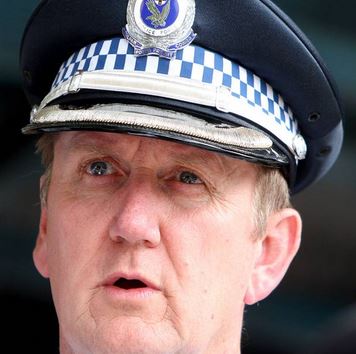
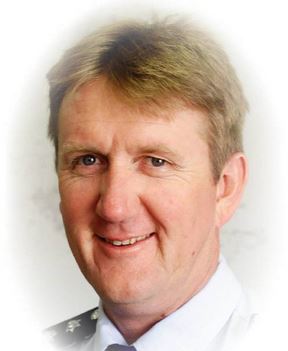
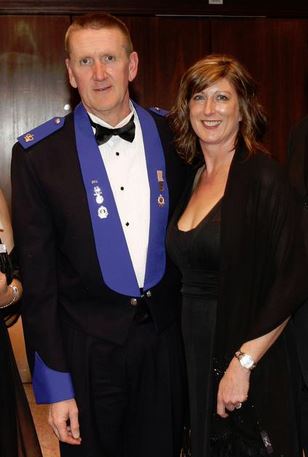
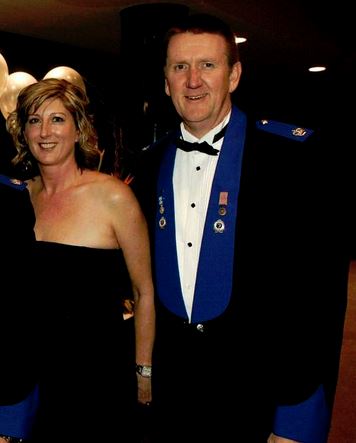
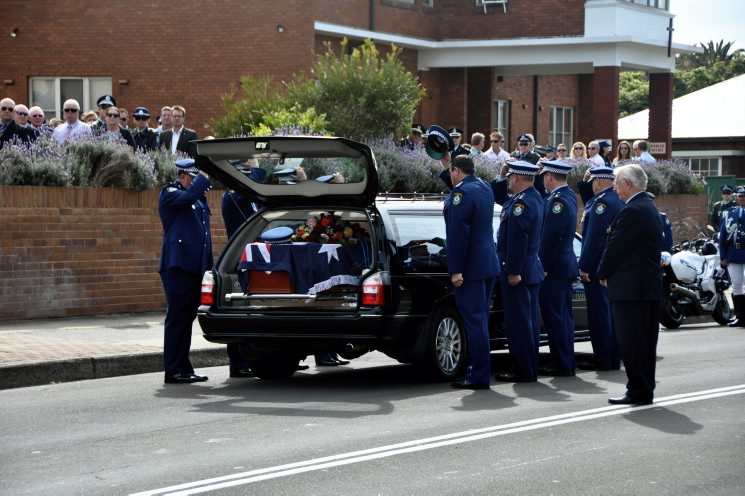
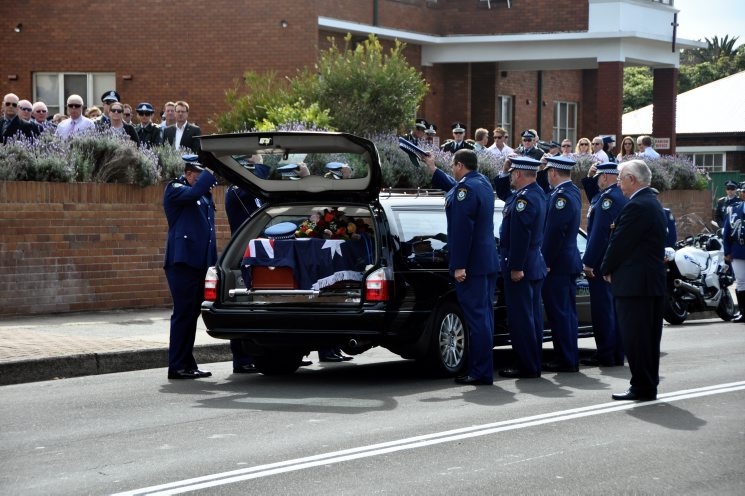
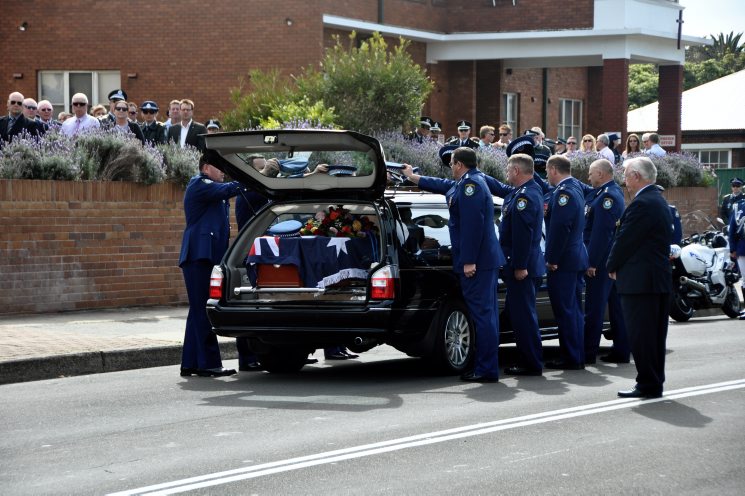
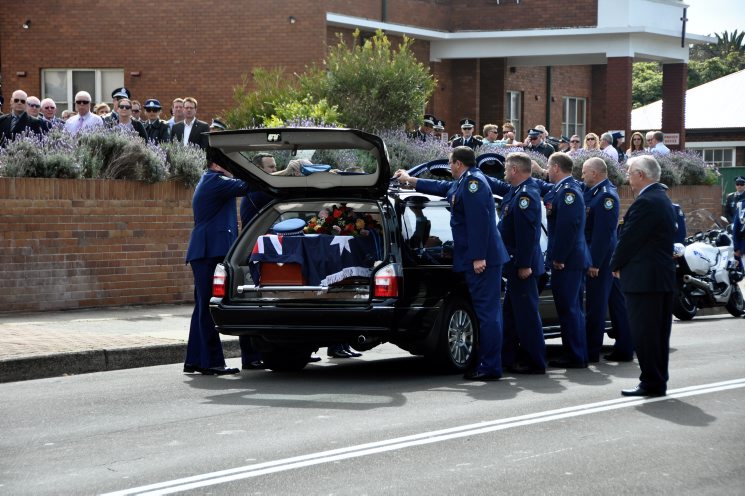
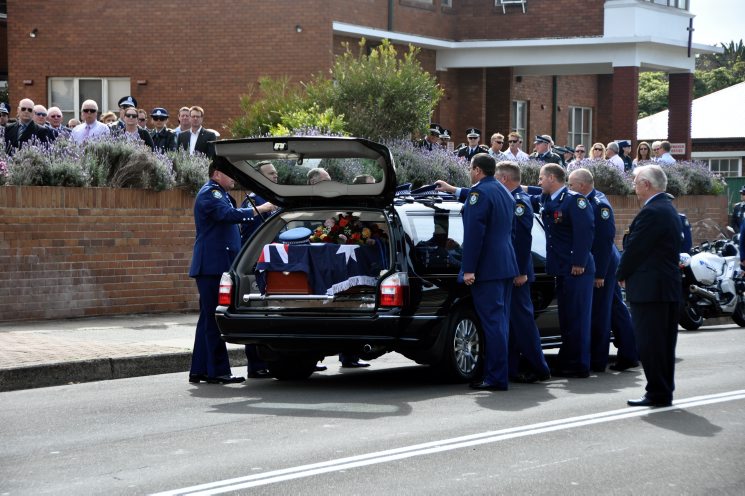
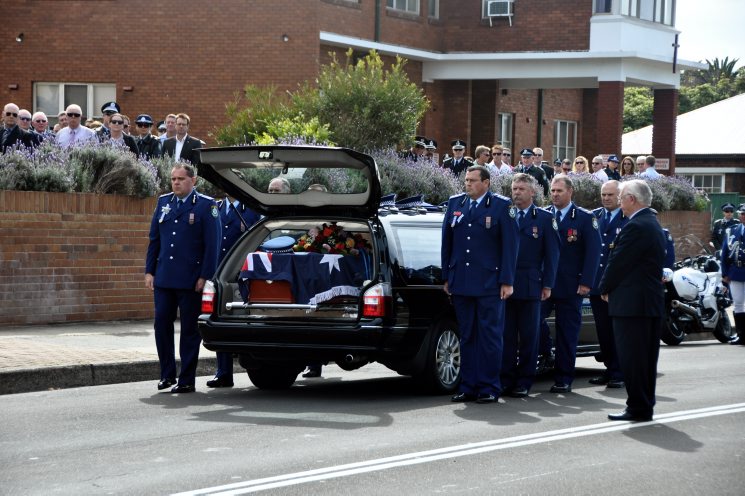
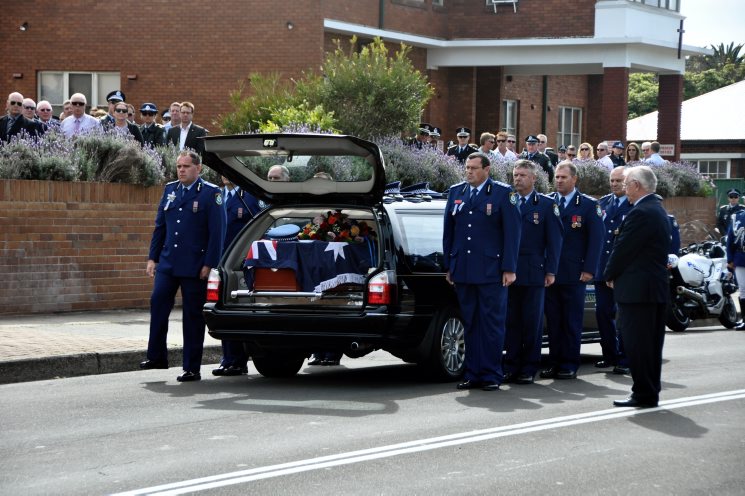
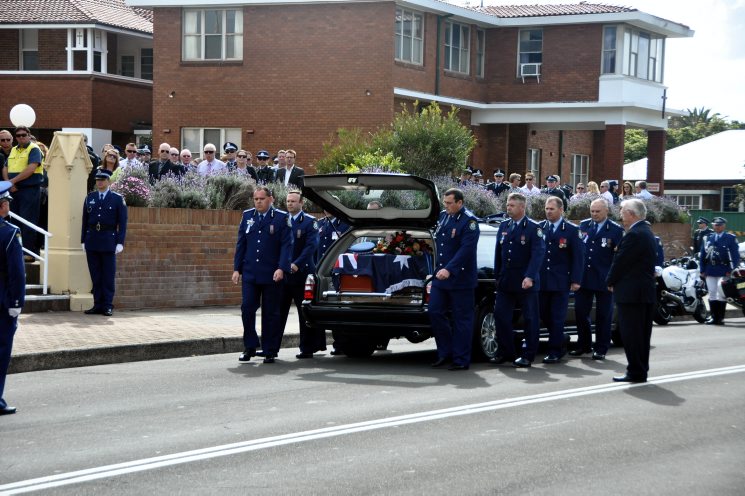
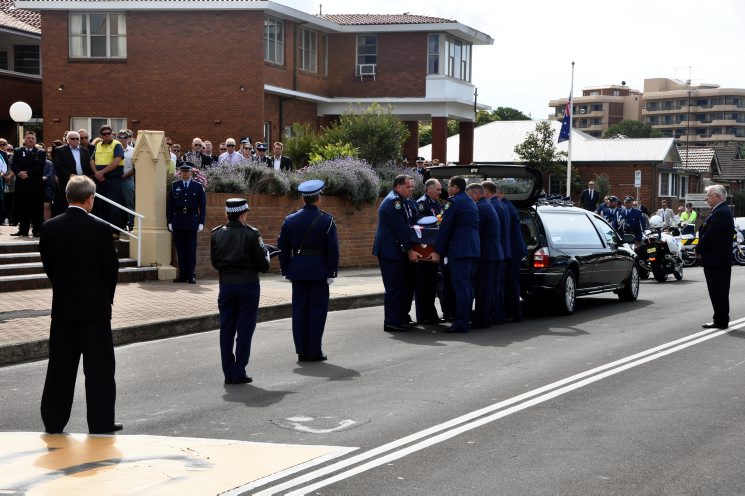
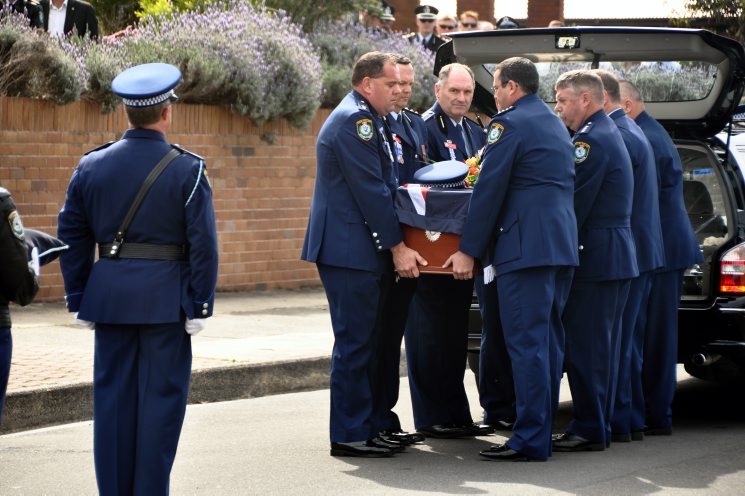
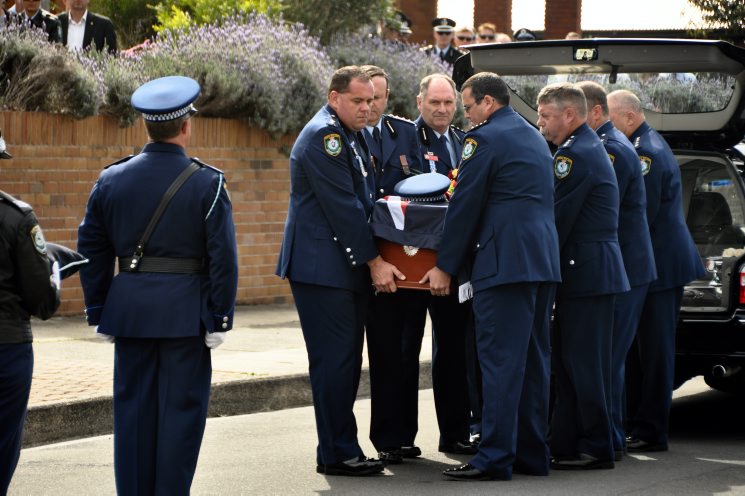
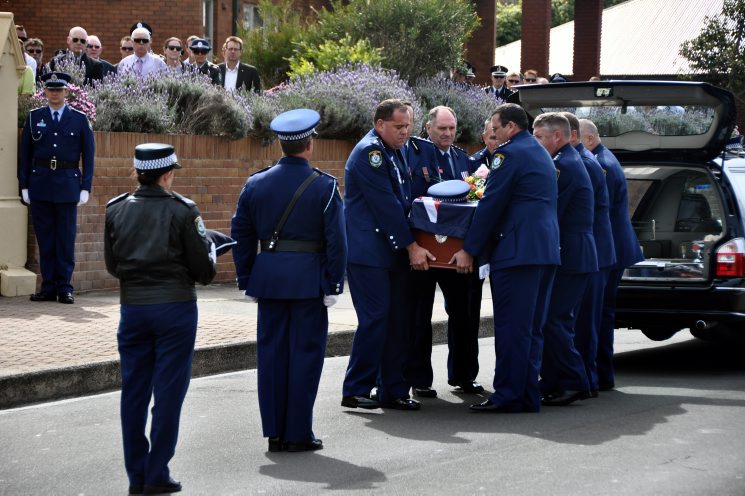
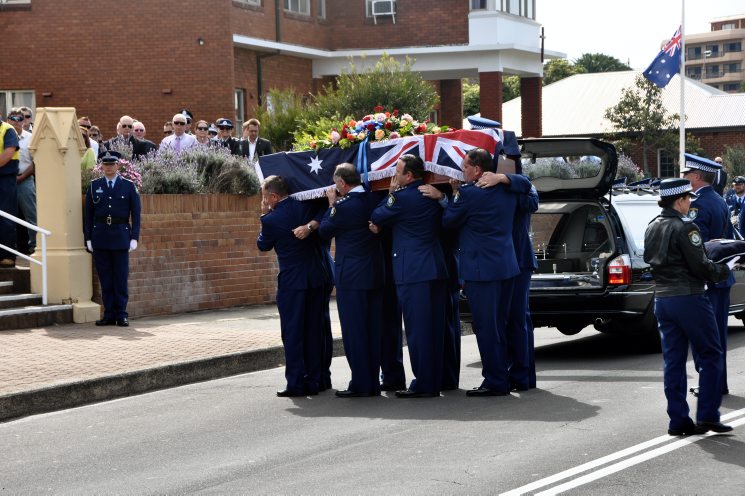
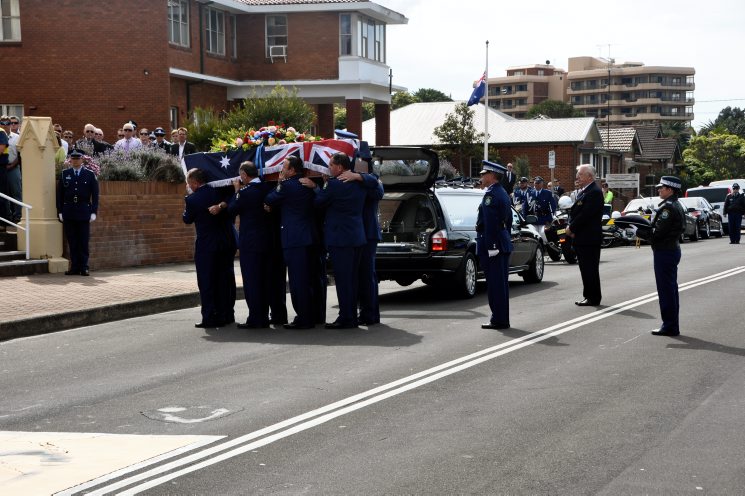
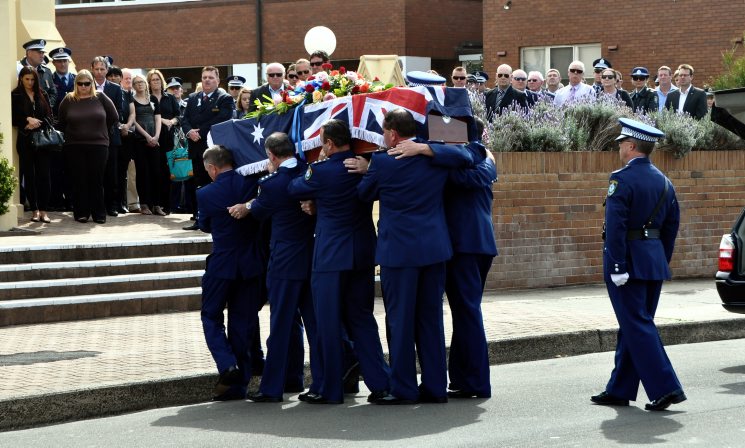
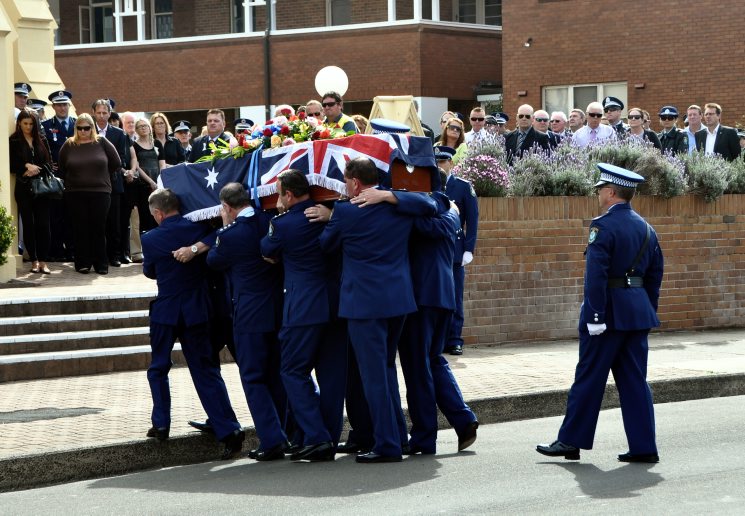
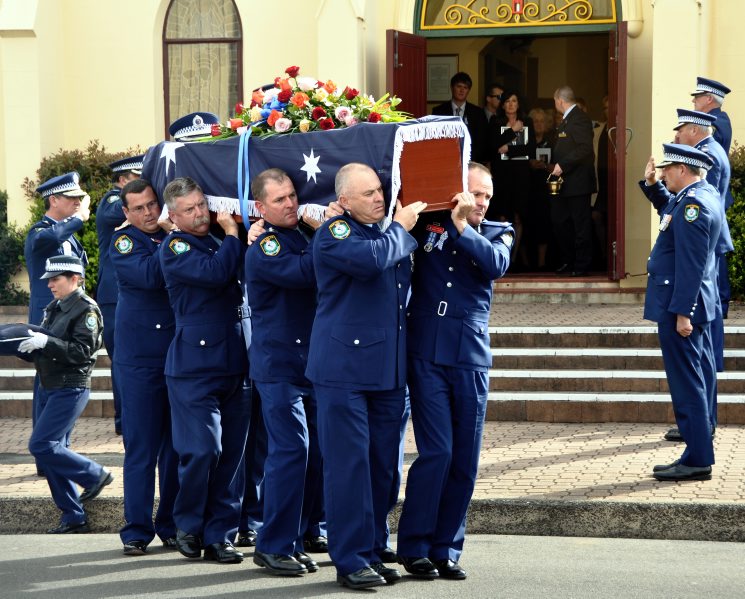
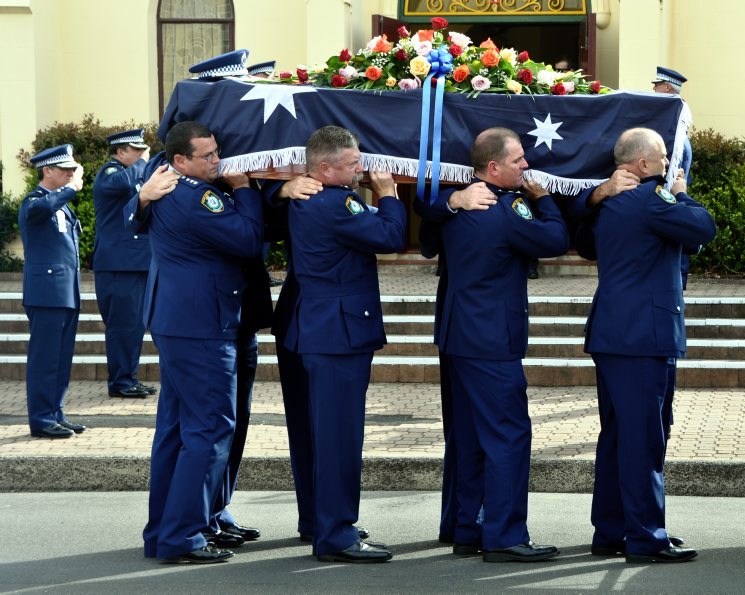
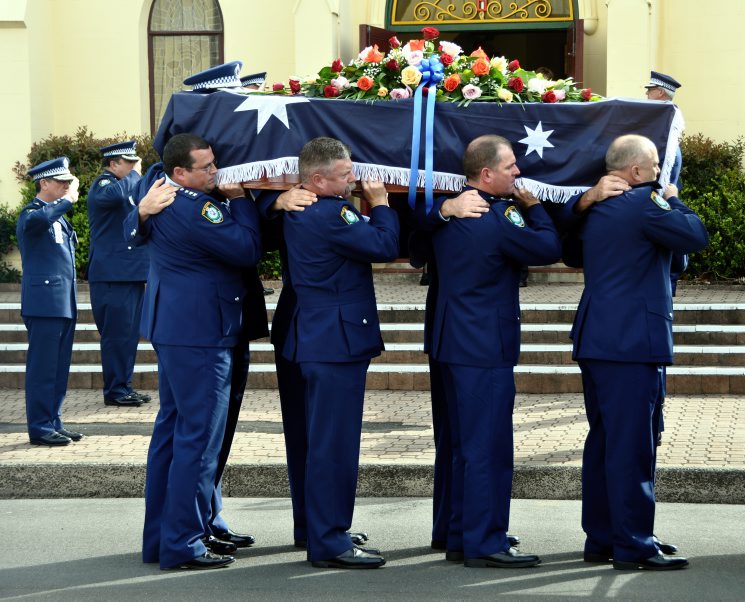
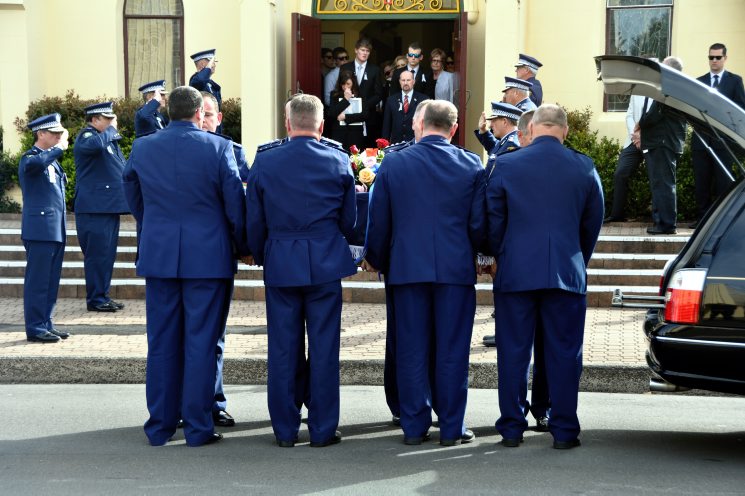
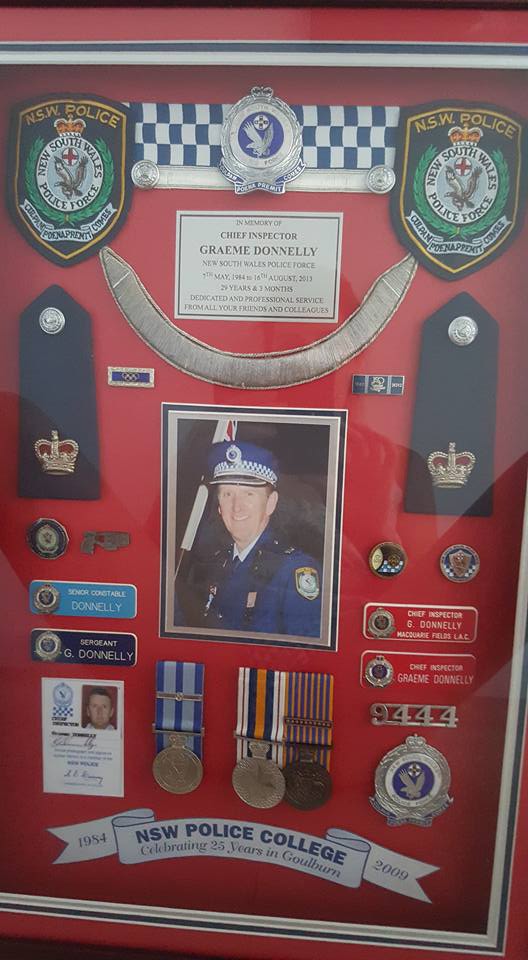
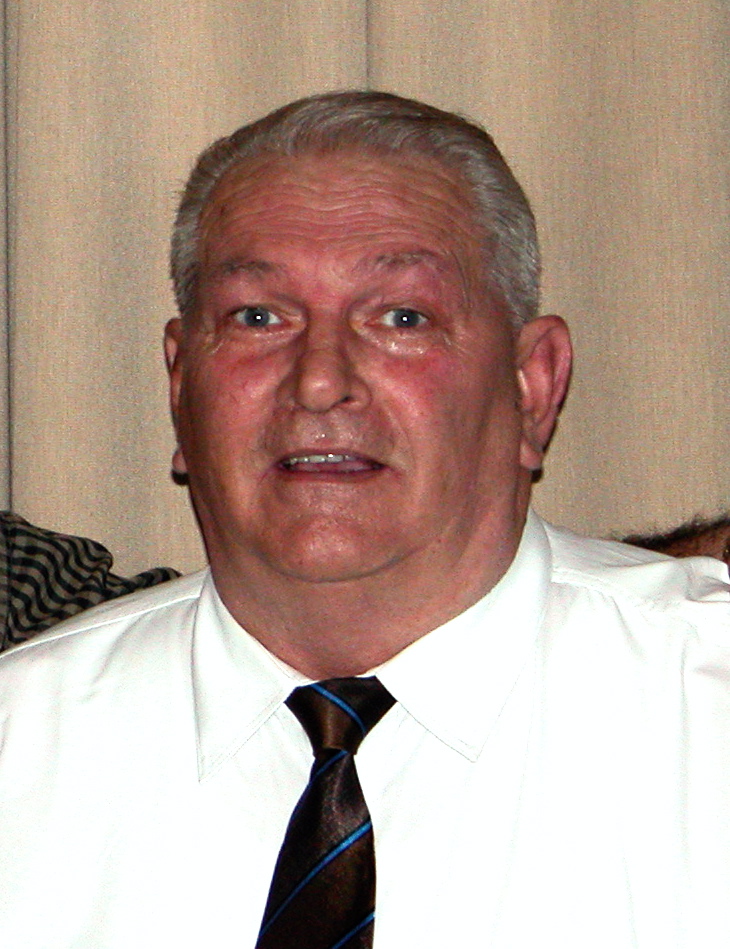
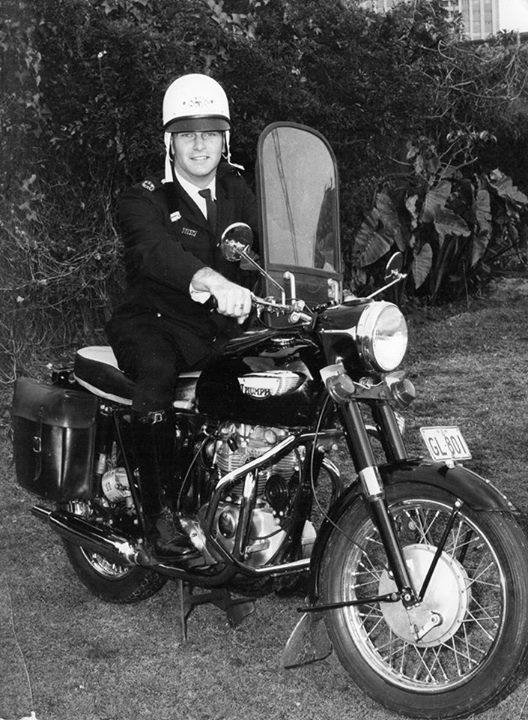
Chief Inspector Graeme Donnelly
GRAEME is NOT mentioned on the Police Wall of Remembrance* NOT WORK RELATED
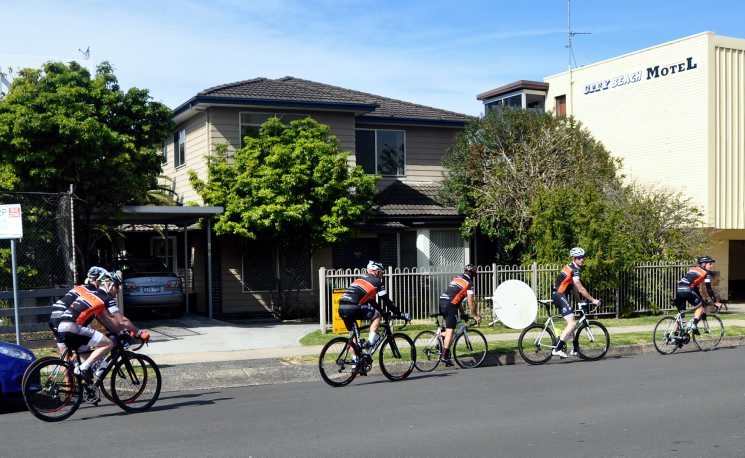
Death of Chief Inspector Graeme Donnelly, 52 old around 11.30am, today, Friday 16 August 2013, who was riding his push bike with a mate around Lake Illawarra ( the actual lake ) this morning and was riding up Mt. Terry when he stopped and said to his mate that he didn’t feel well.
Whilst standing next to his bike, he suffered a massive heart attack.
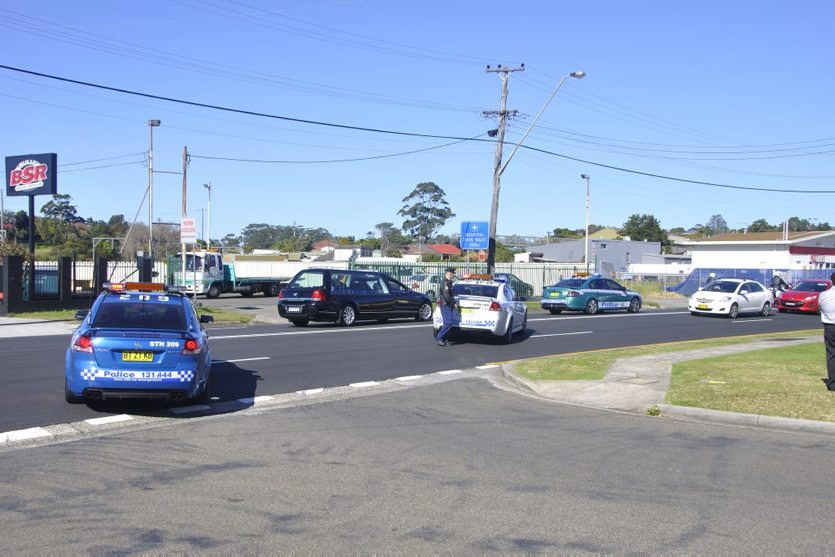
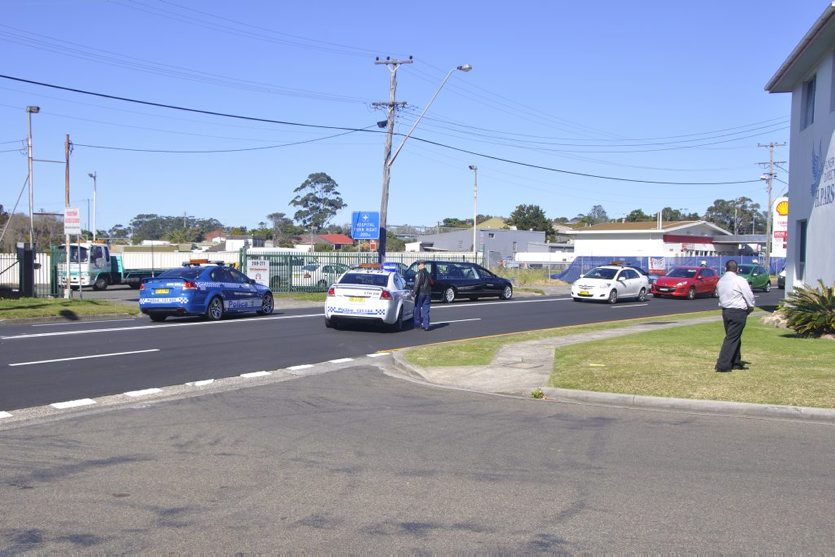
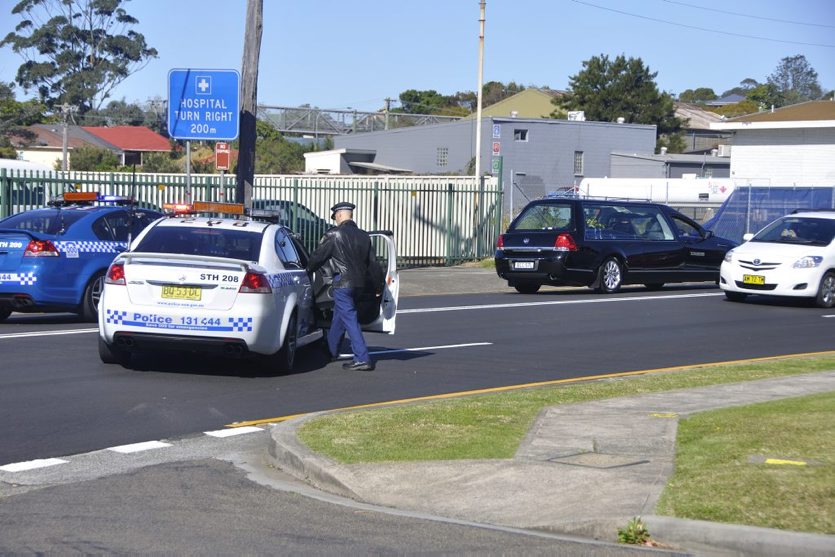
An Off Duty passing Paramedic commenced CPR and called for assistance. Helicopter assistance was also considered and I am informed that the Paramedics worked on Graeme for a lengthy and extended period and was conveyed to Hospital under Police escort but, unfortunately, he never regained consciousness from the time he fell.
He was aged 52 and was a Chief Inspector ( for those who don’t know him ) and a really nice bloke.
May he forever Rest in Peace and look over the rest of us.
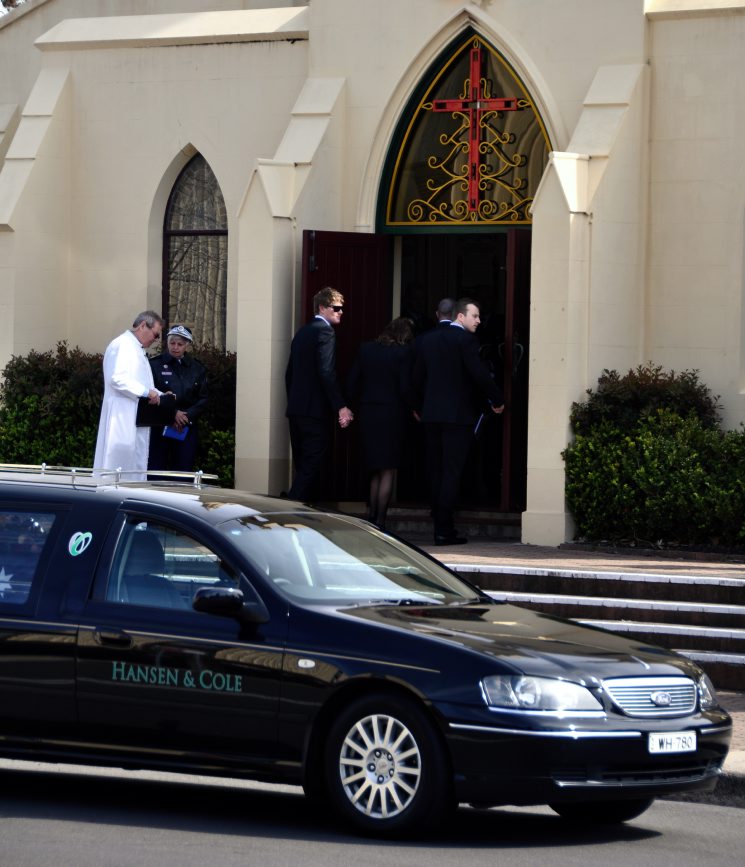
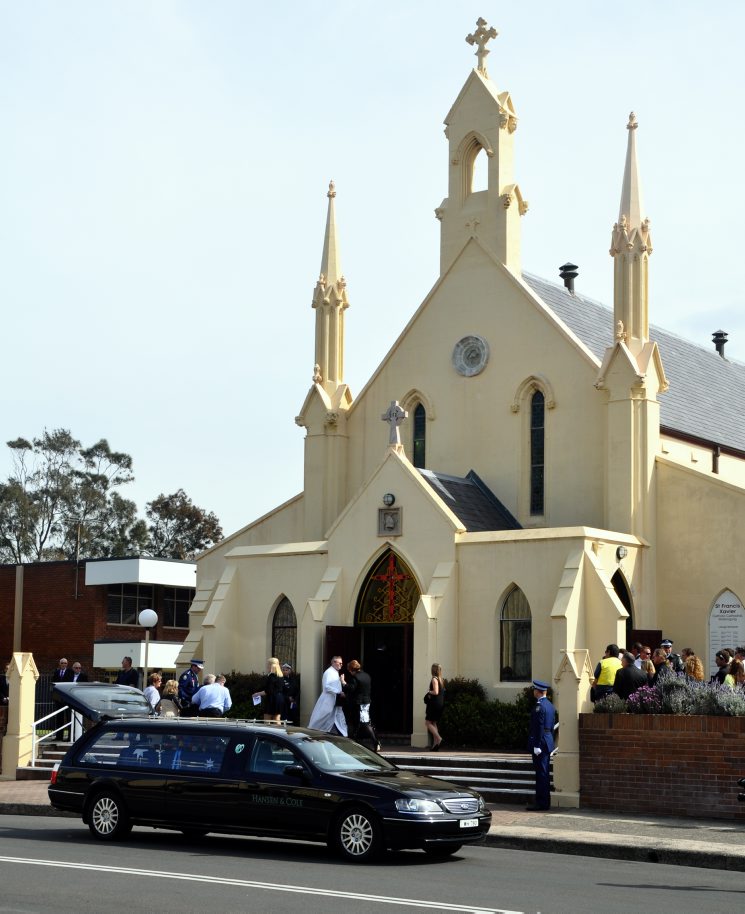
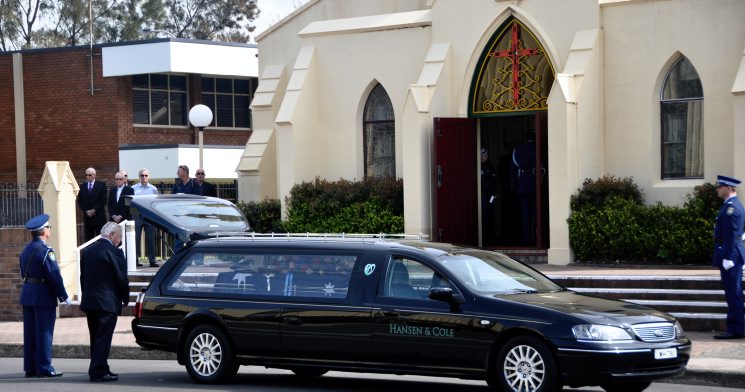
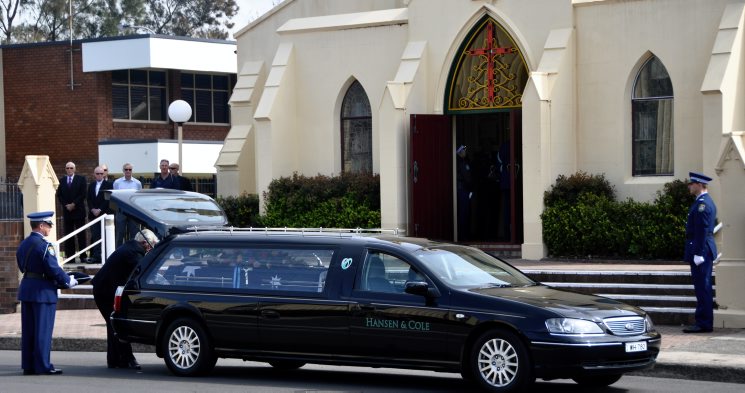
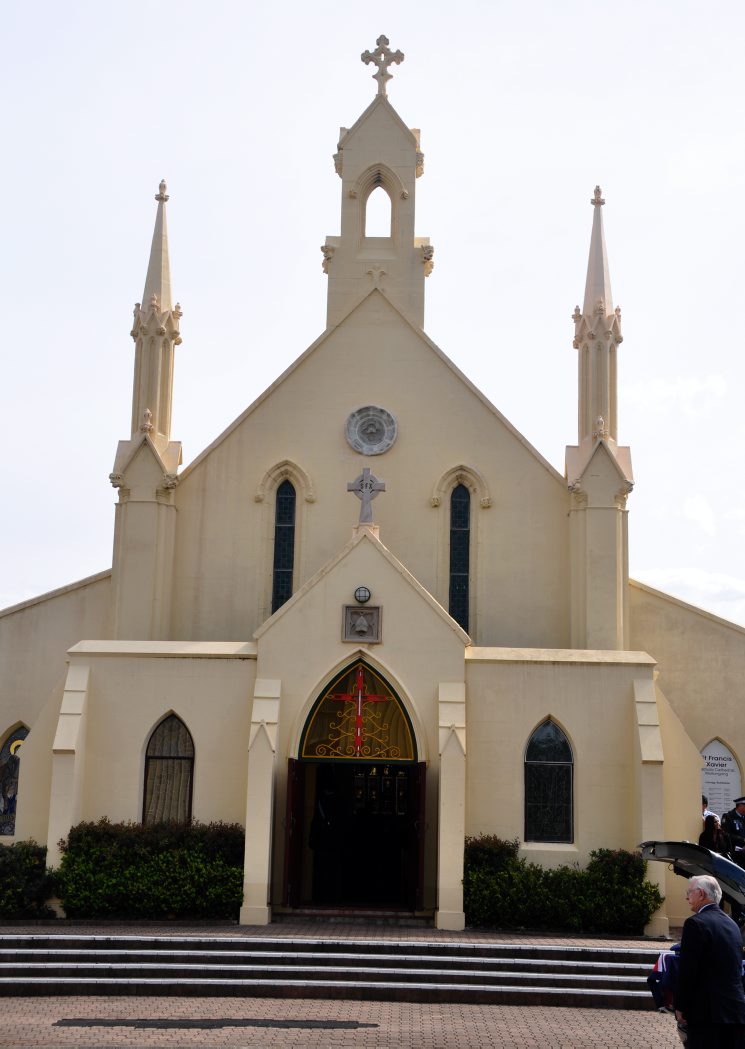
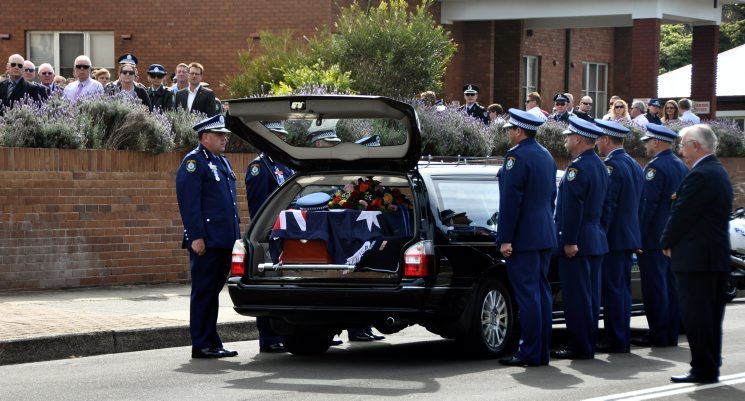
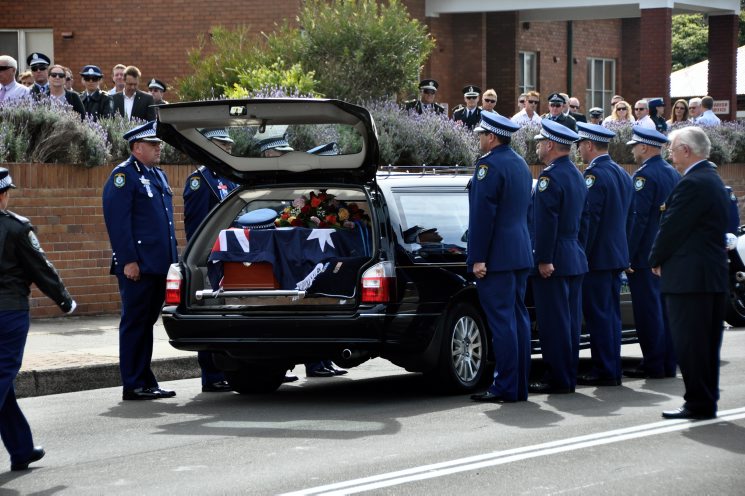
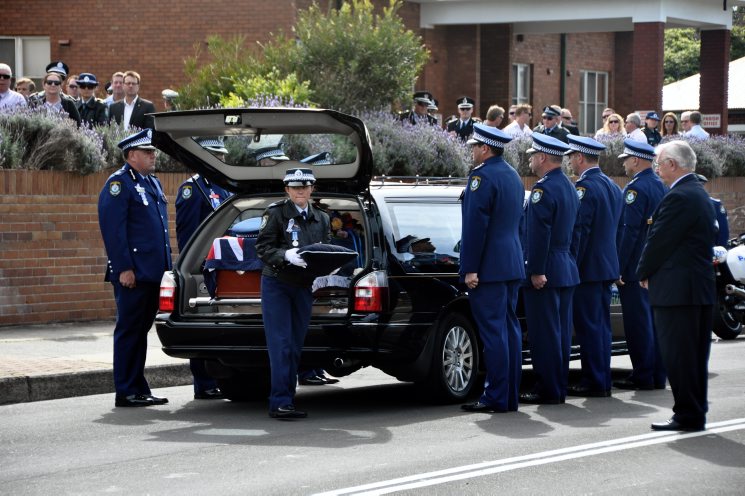
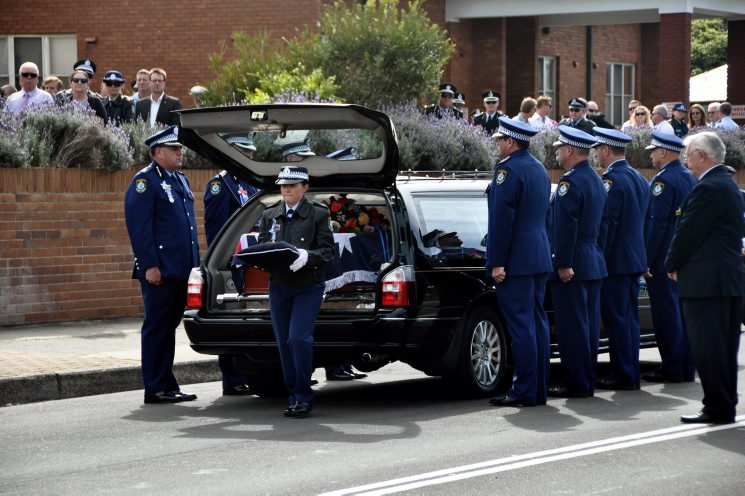
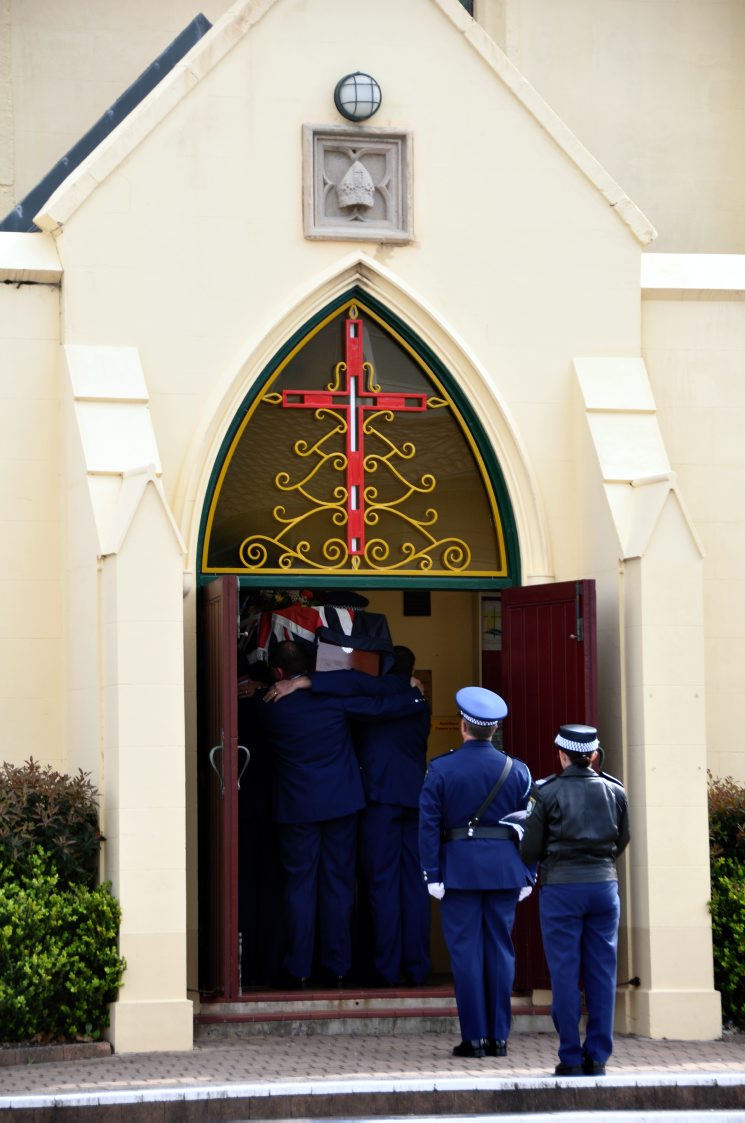
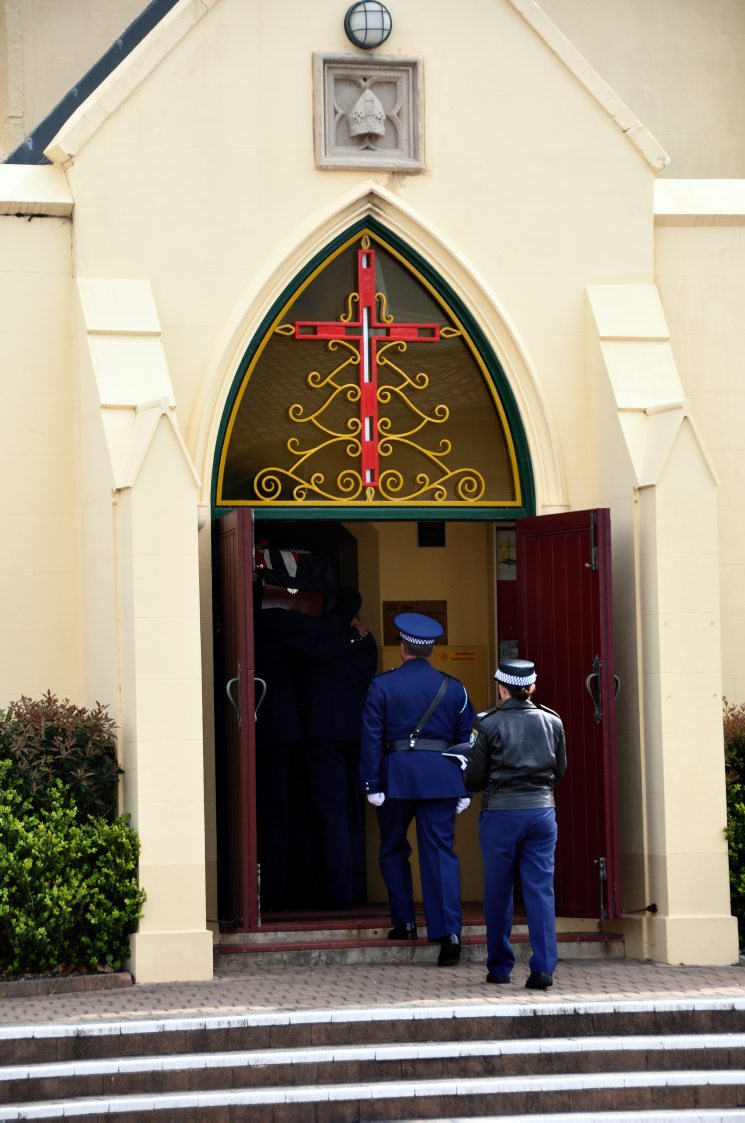
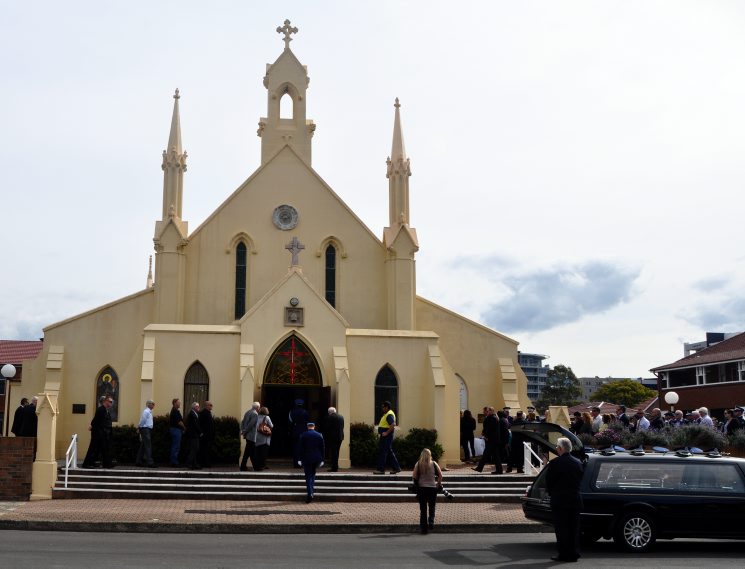
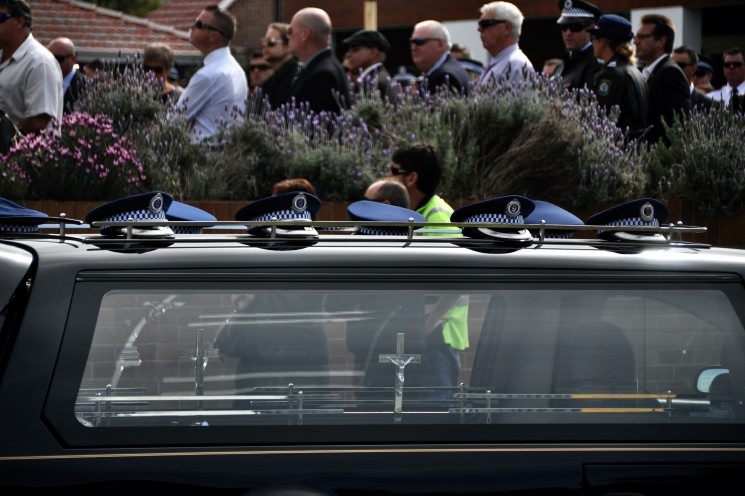
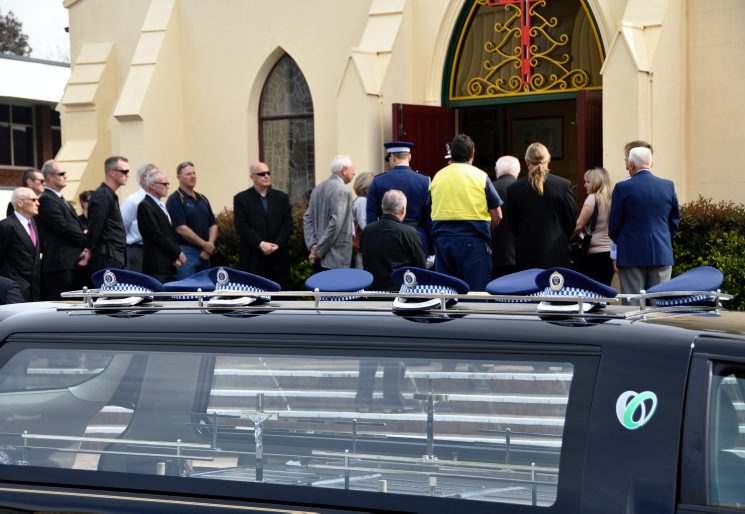
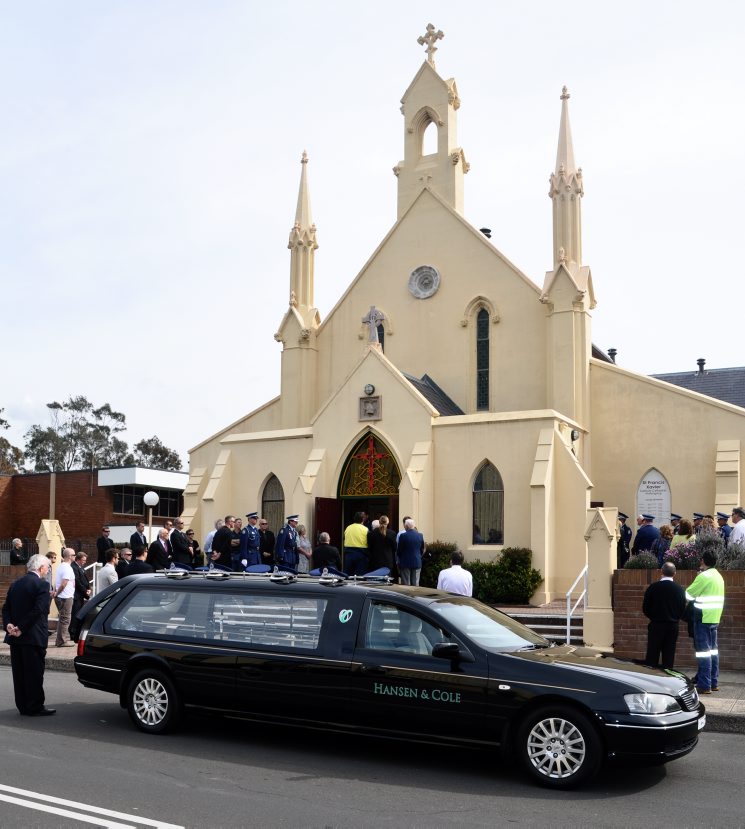
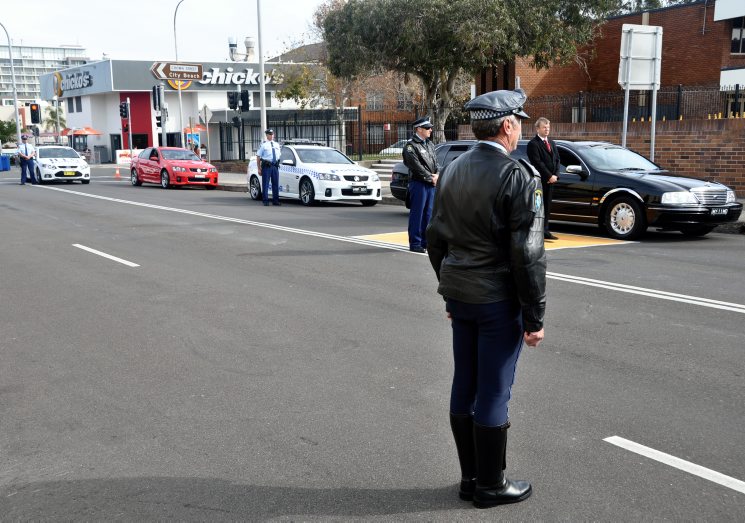
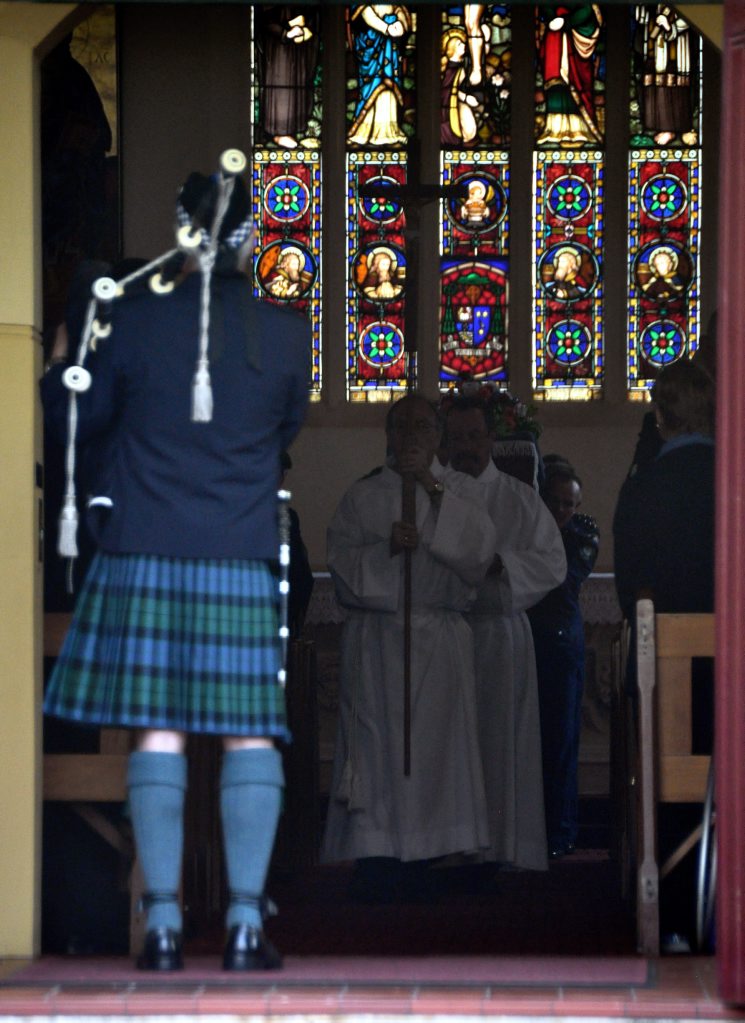
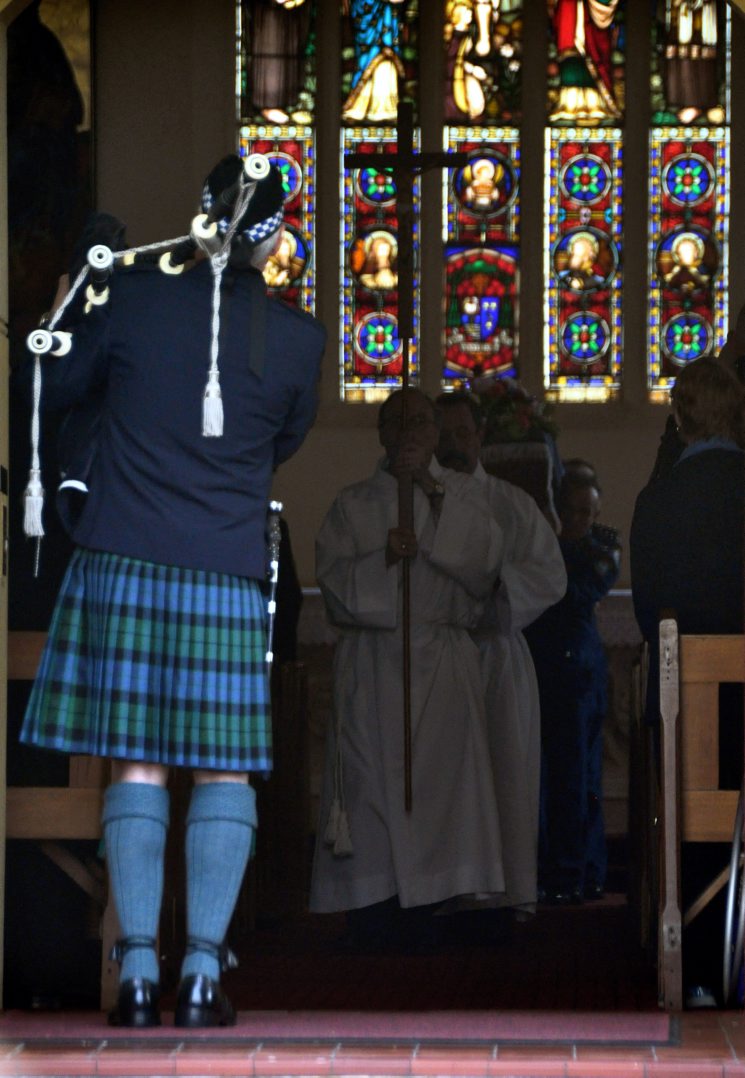
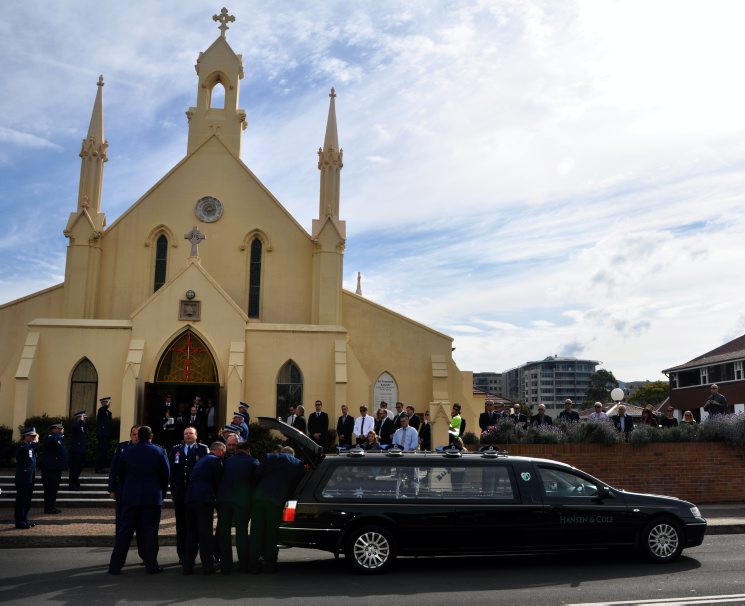
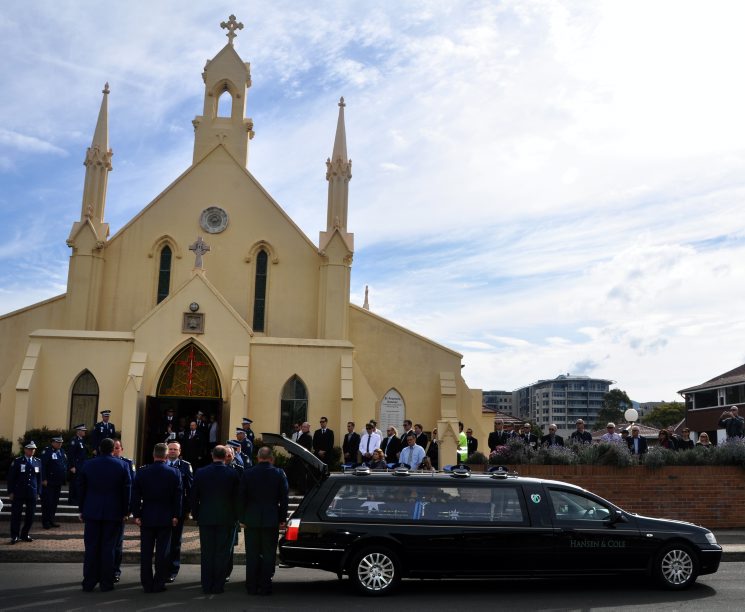
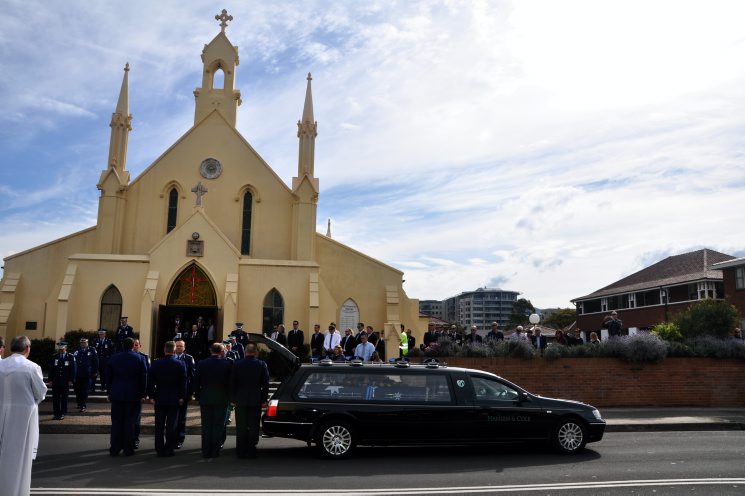
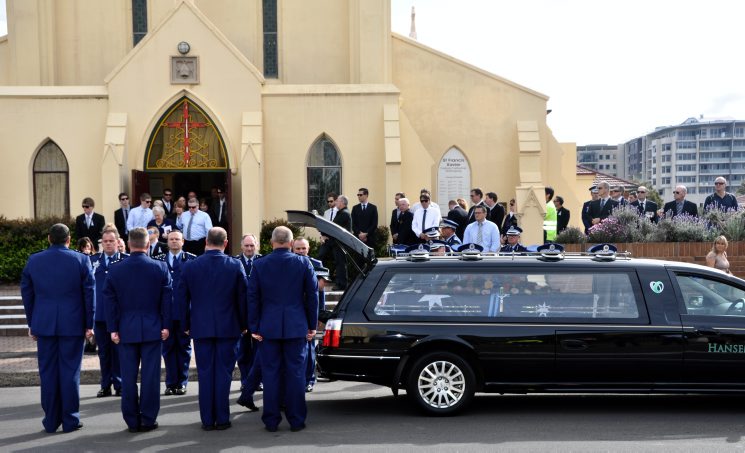
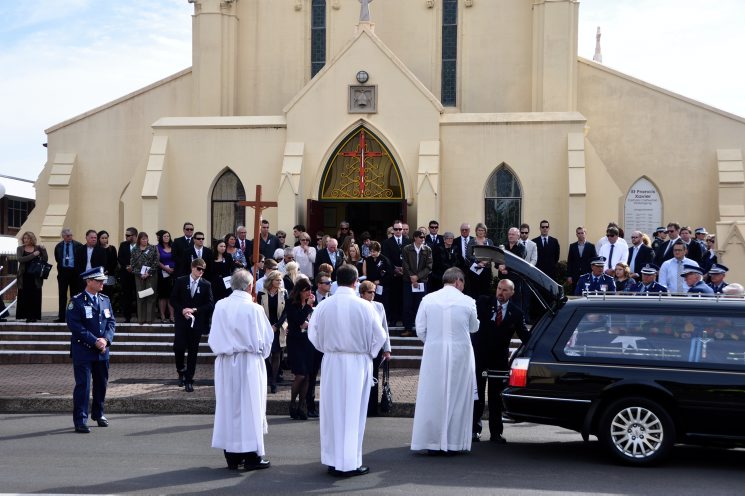
The funeral for Graeme will take place on Monday, 26 August, at 1.00pm at St. Francis Xavier’s Cathedral in Harbour Street Wollongong. Guest’s to be seated by 12.40pm.
I would expect this to be a big funeral with standing room only – out onto the street.
He was a highly respected policeman who sought relief from his demanding role as chief inspector in his passion for cycling.
Tributes have flowed for long-serving officer Graeme Donnelly, 52, who died of a heart attack while riding around Lake Illawarra last Friday.
Friend and cycling companion Wally Erven said Insp Donnelly loved cycling because it allowed him to de-stress.
“Being in the police force, it gave him a separation,” he said.
Insp Donnelly was the father of junior Australian cycling champion Aaron Donnelly – and Mr Erven said the apple hadn’t fallen far from the tree.
“Aaron’s not a professional cyclist for no reason – it’s in his genes and he got that from his father.”
Wollongong acting superintendent Tim Beattie said the policing community had been shocked to learn of Insp Donnelly’s death.
Insp Donnelly spent his career based in Wollongong until about 12 months ago when he transferred to Sydney and was attached to a specialist police unit.
“Graeme was a highly respected member of the police force who performed a significant amount of his service in the Illawarra area,” Supt Beattie said. “He is regarded by all those who knew him as being a good bloke.”
A tribute has also been posted on the Cycling NSW website.
“His loss is greatly felt by the Illawarra Cycle Club and the NSW cycling community,” the statement read.
Insp Donnelly’s funeral will be held at Wollongong Catholic Cathedral, 36 Harbour Street, at 1pm on Monday.
He was one of a kind and his death will leave a hole in the life of his family, friends and the police force.
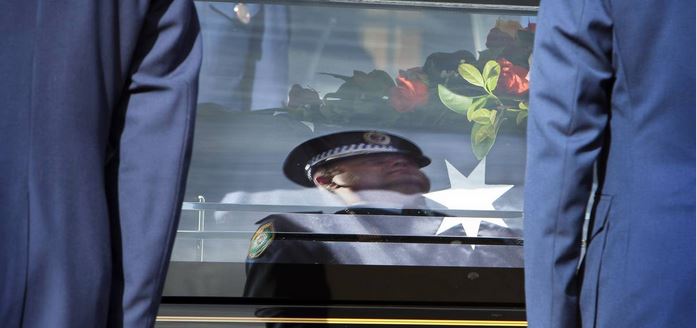
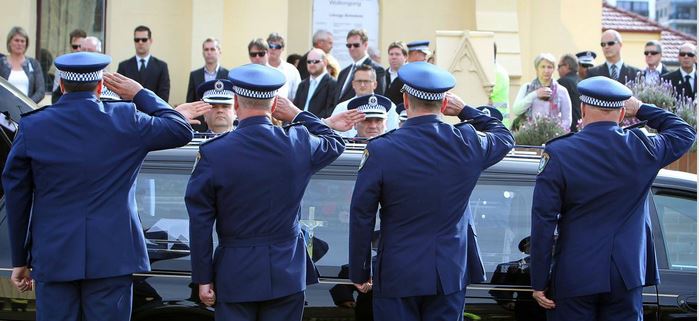
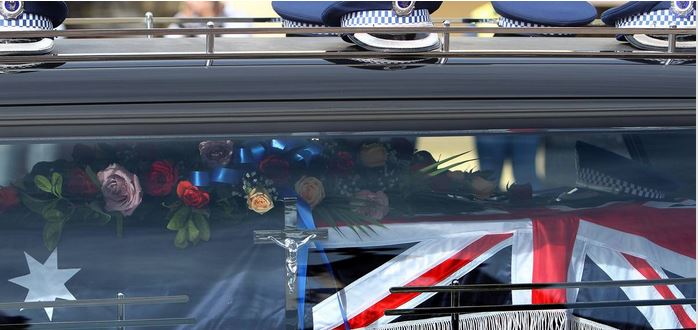
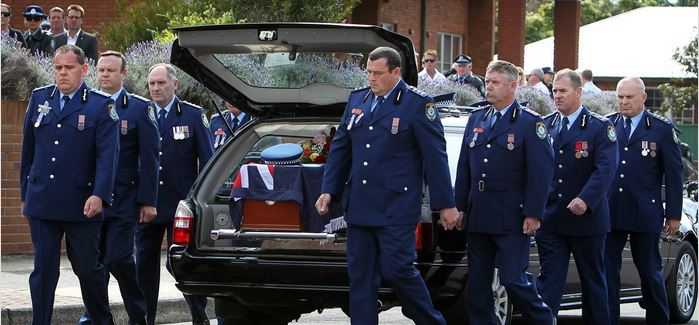
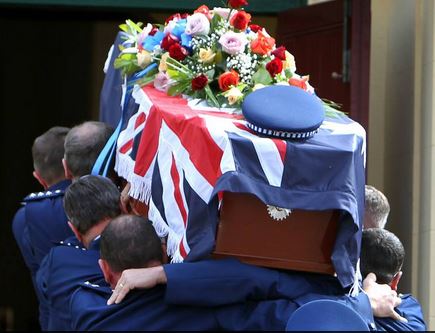
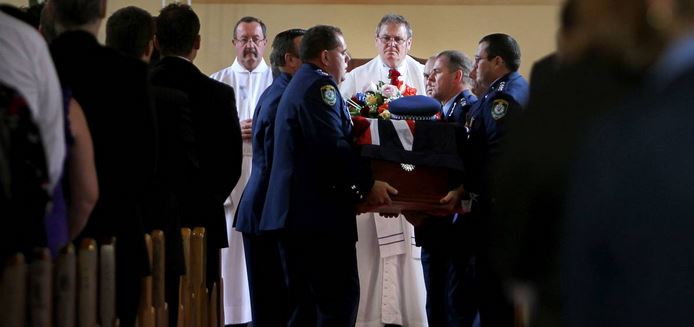
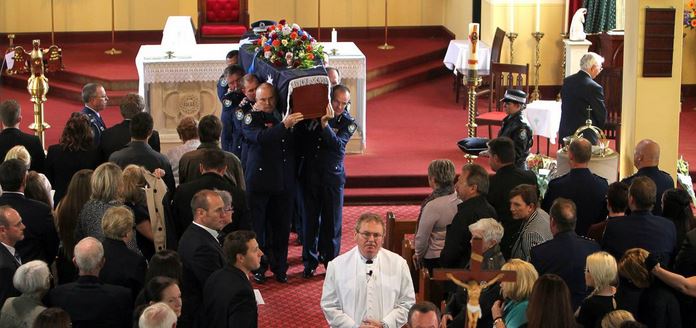
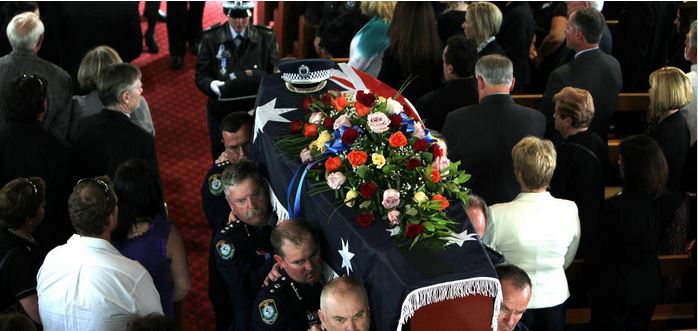
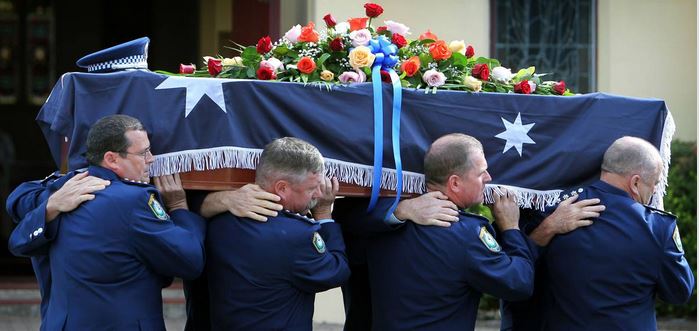
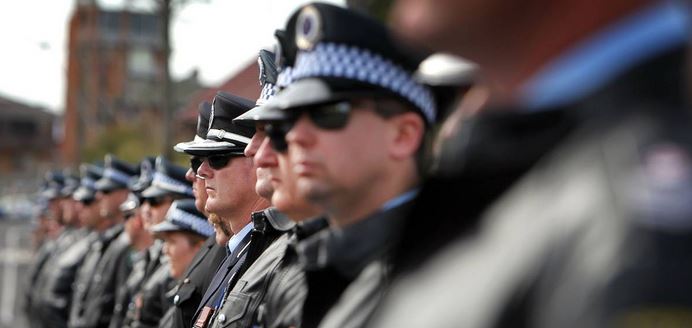
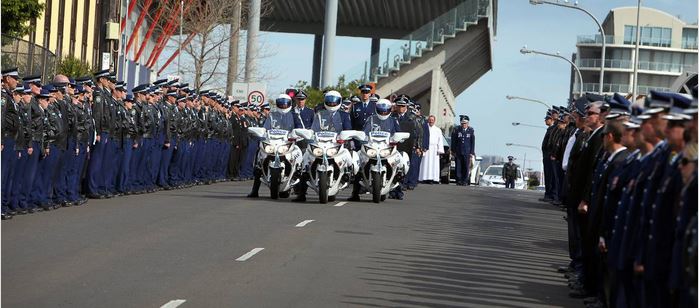
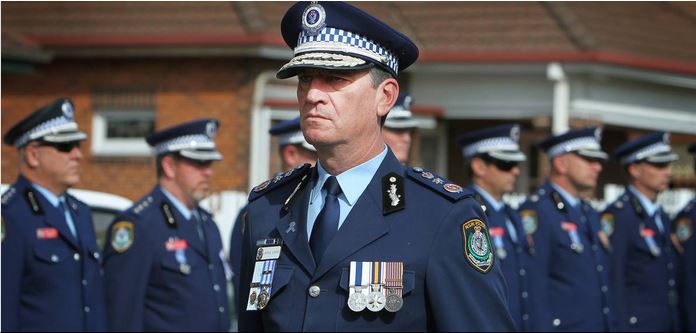
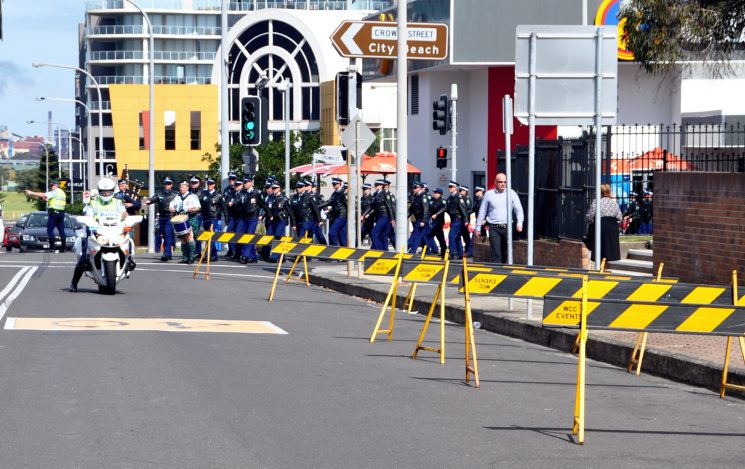
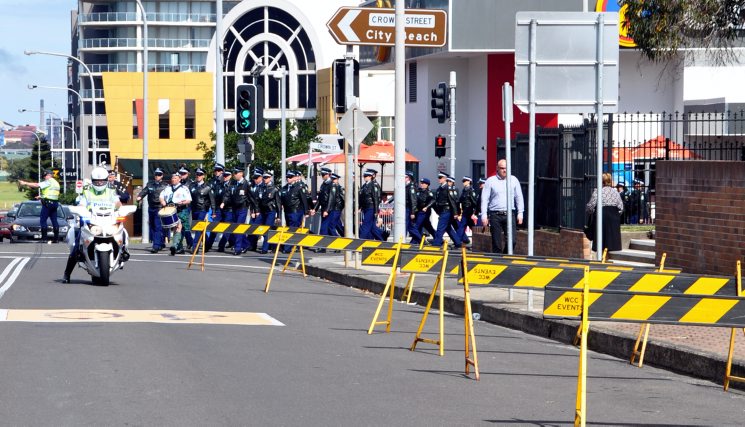
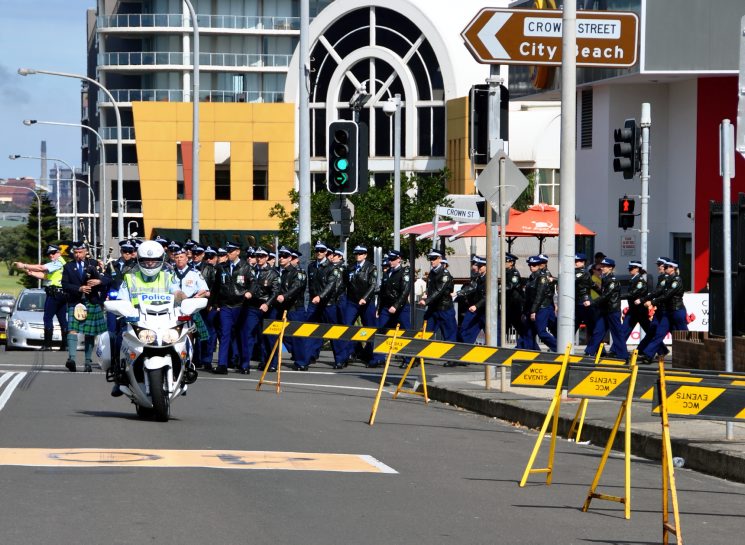
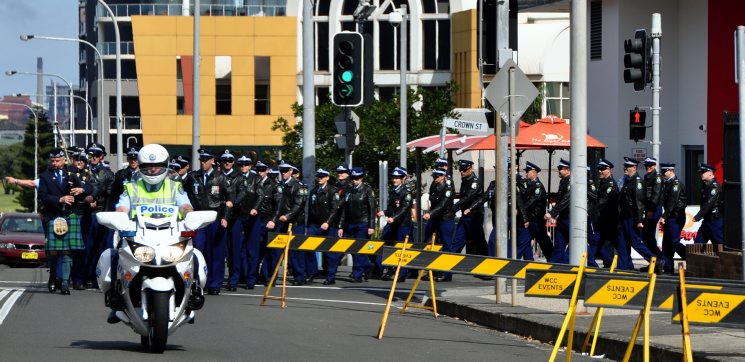
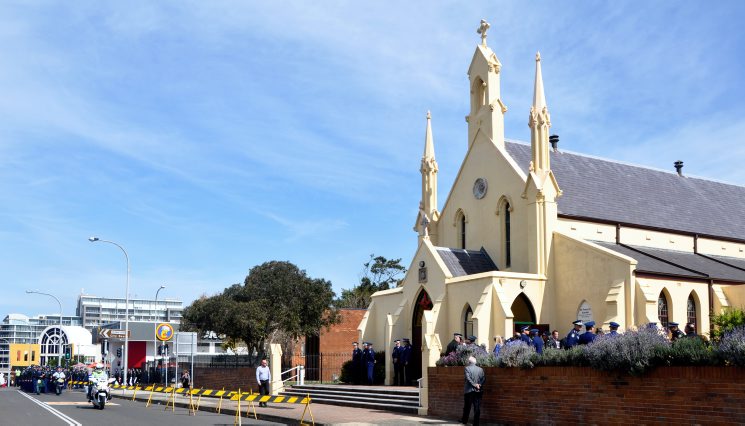
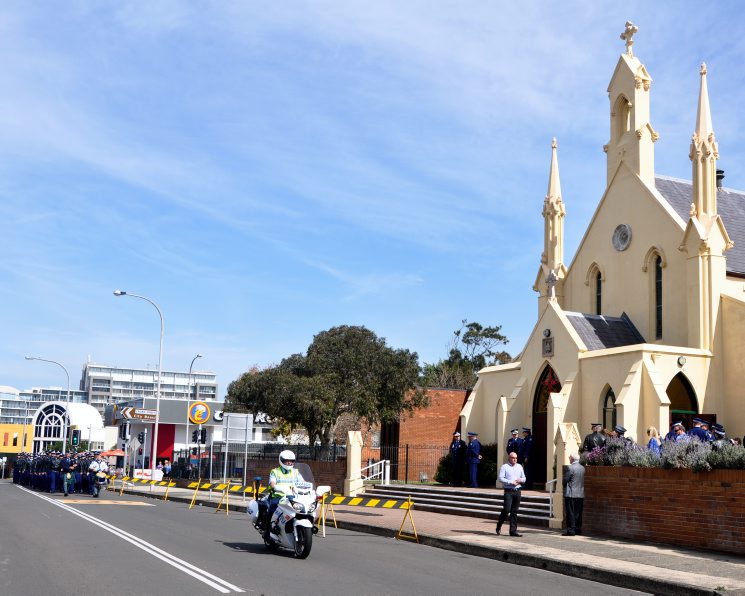
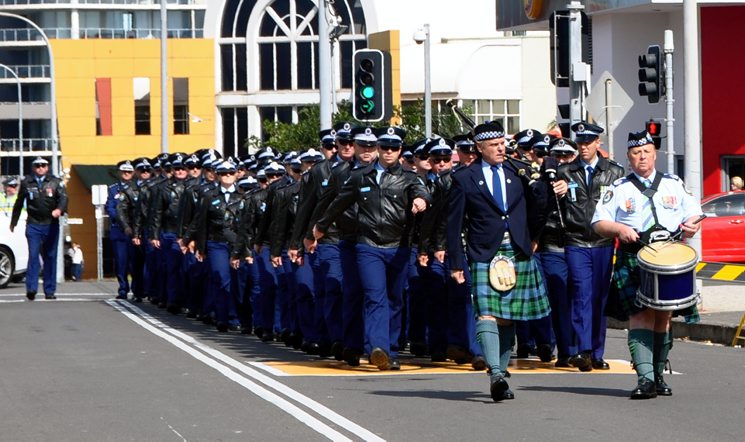
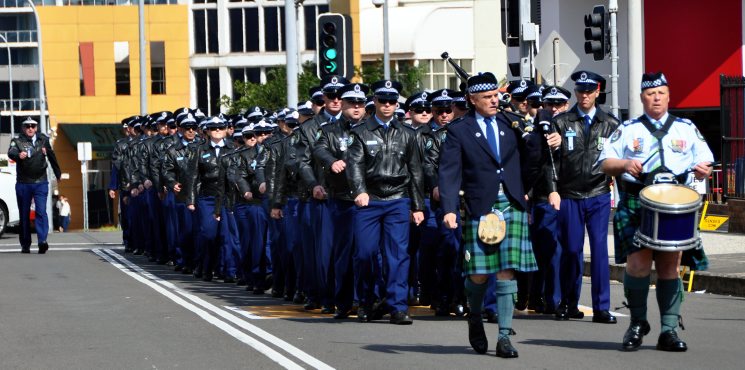
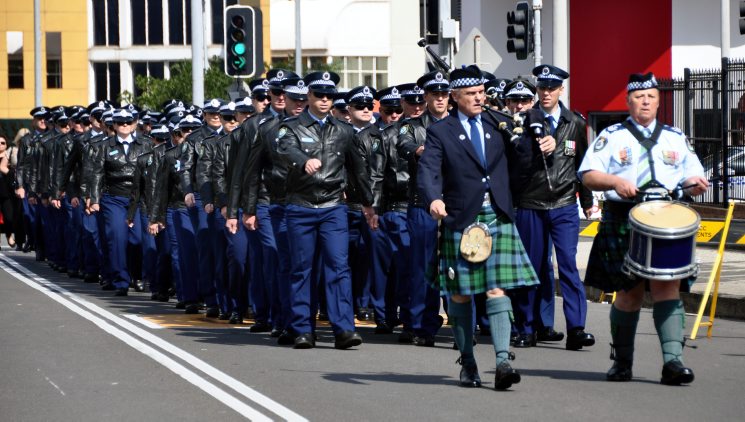
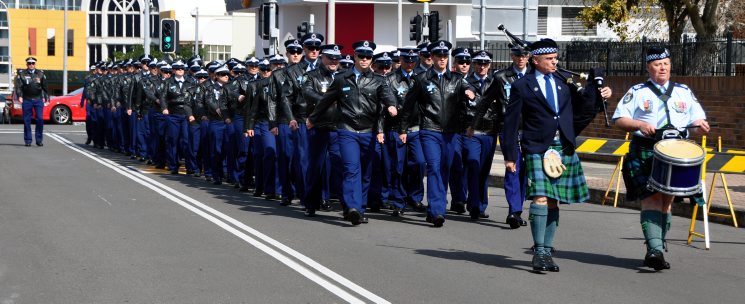
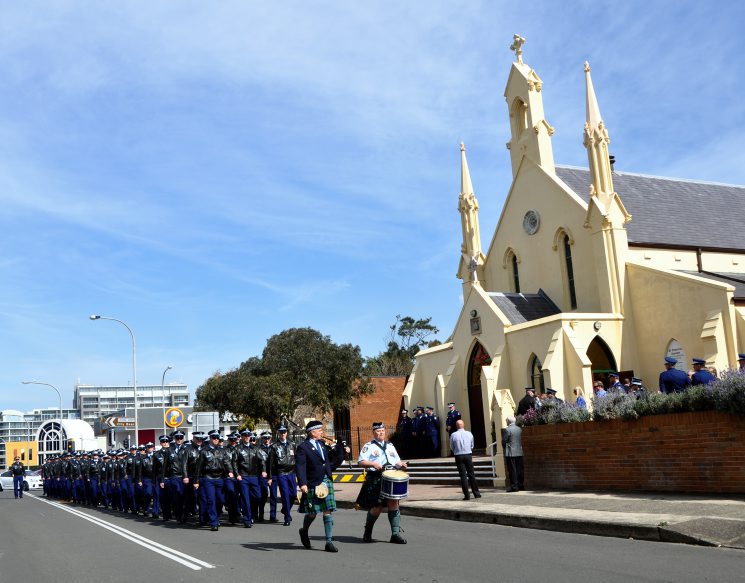
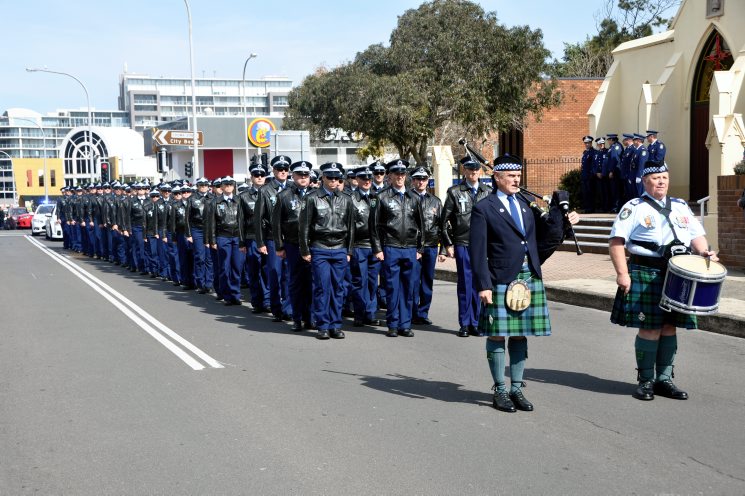
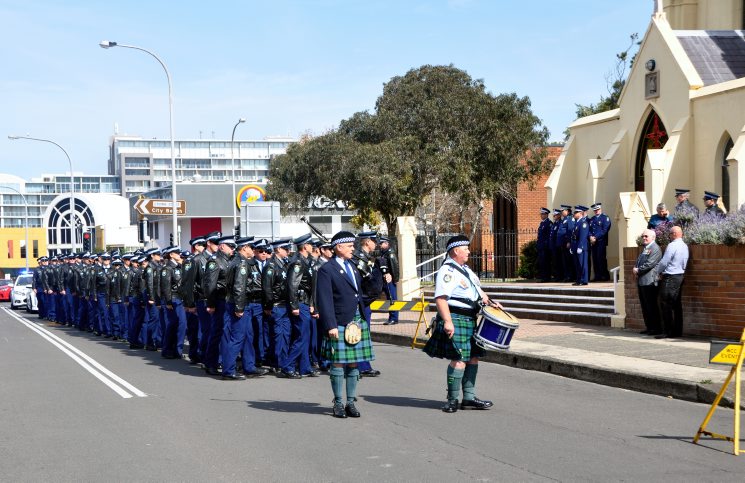
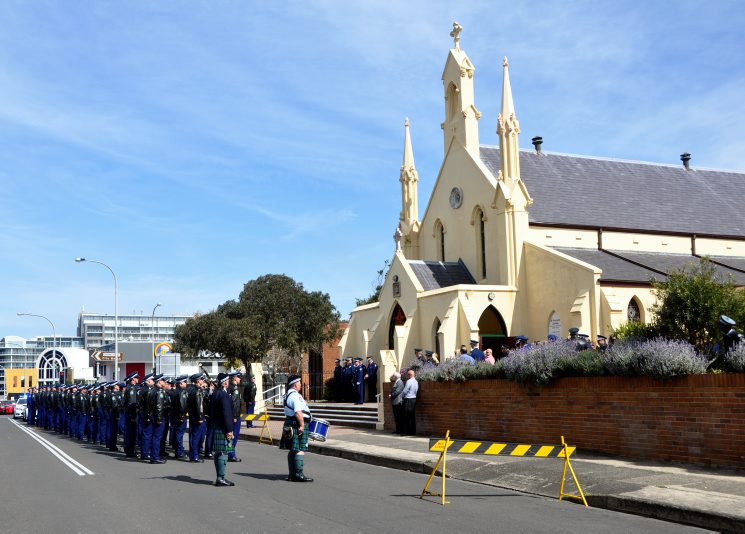
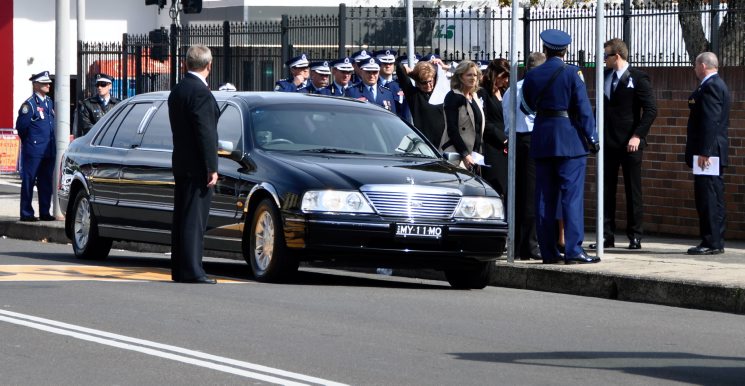
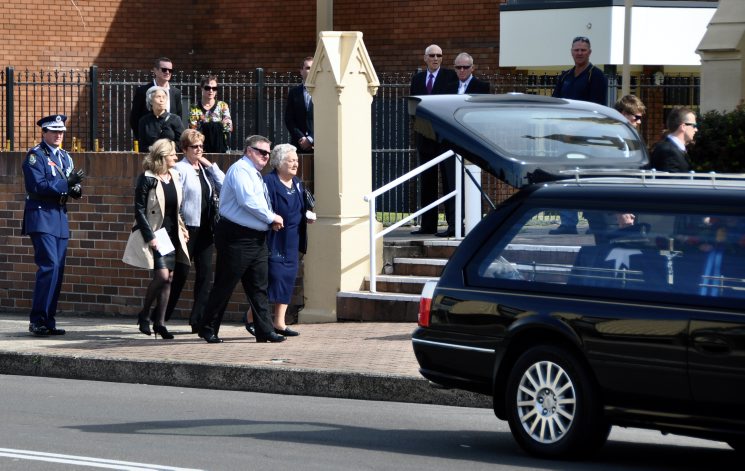
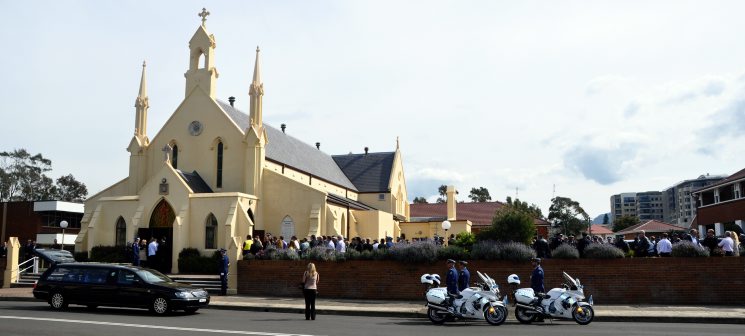
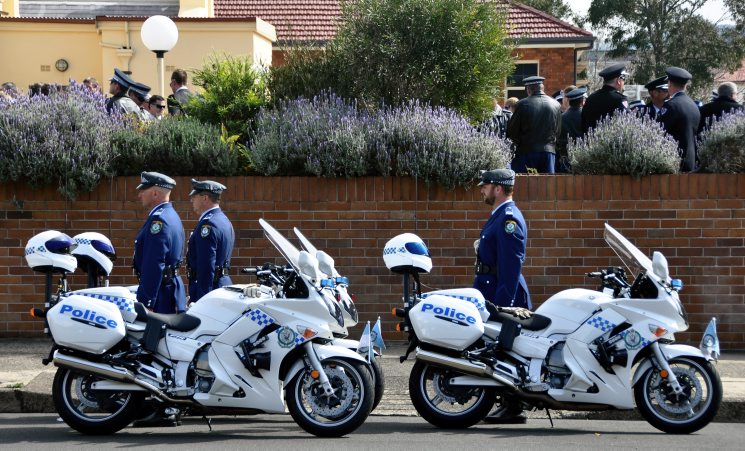
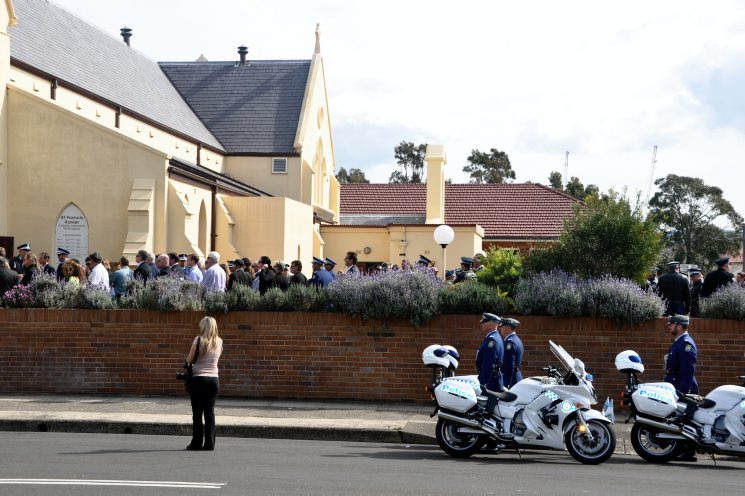
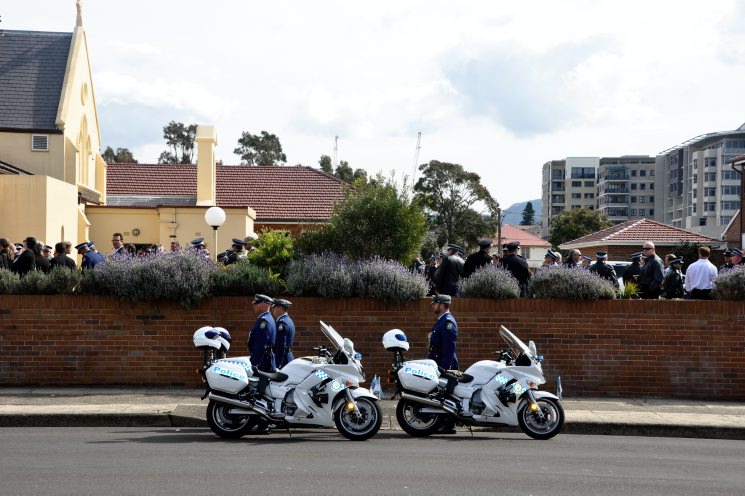
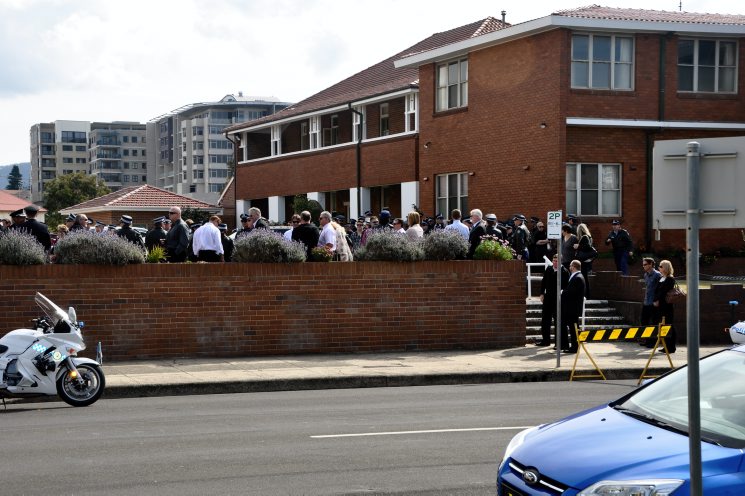
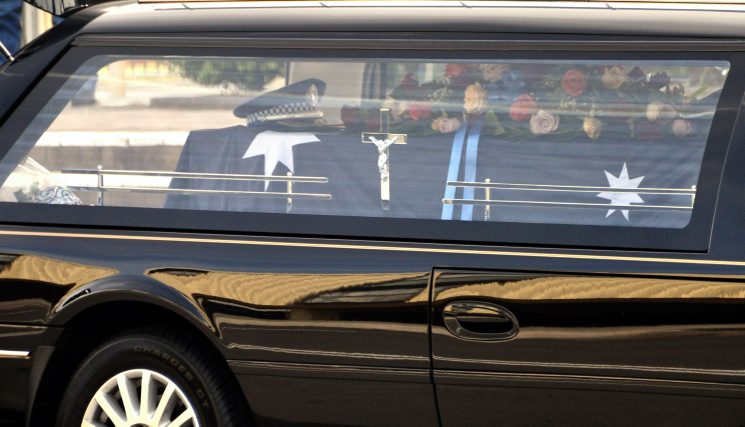
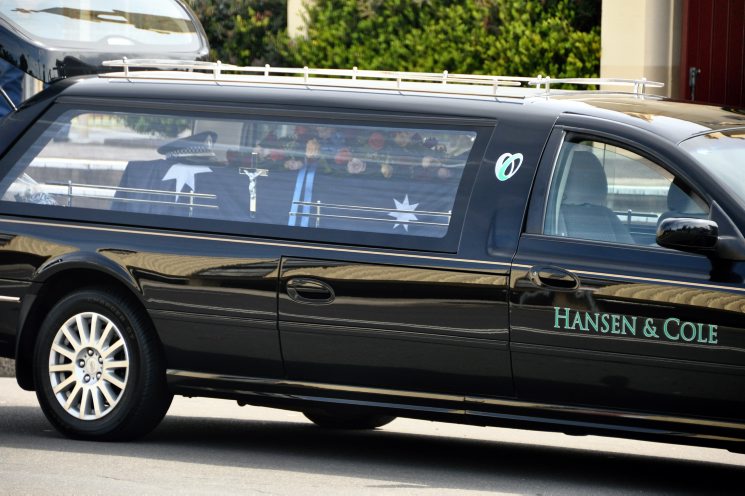
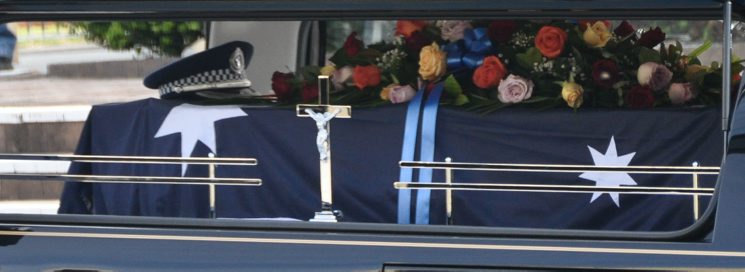
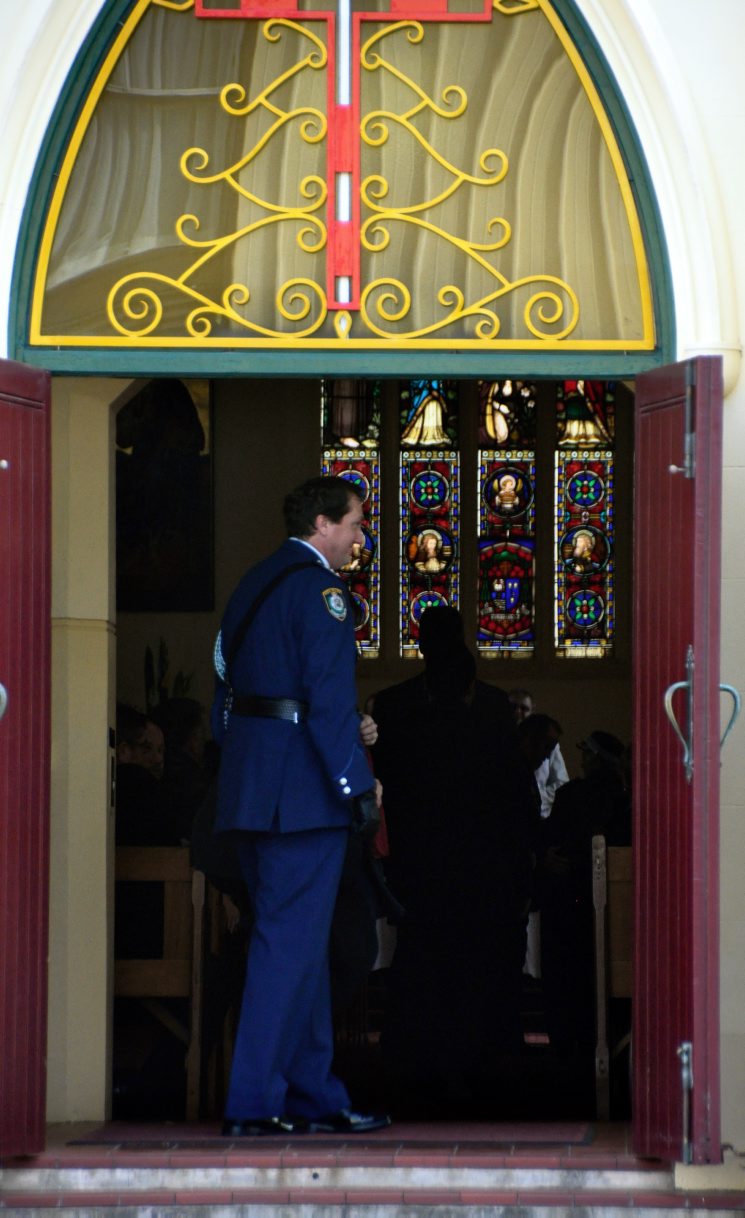
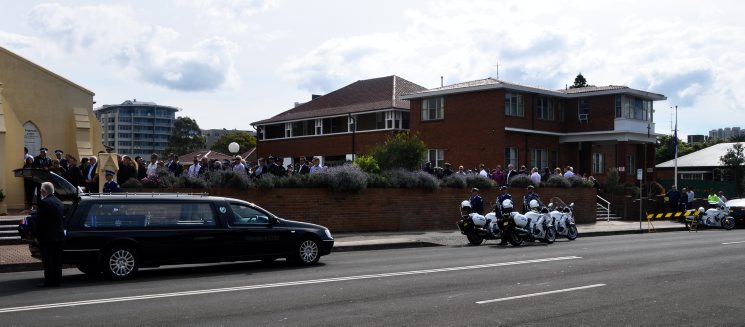
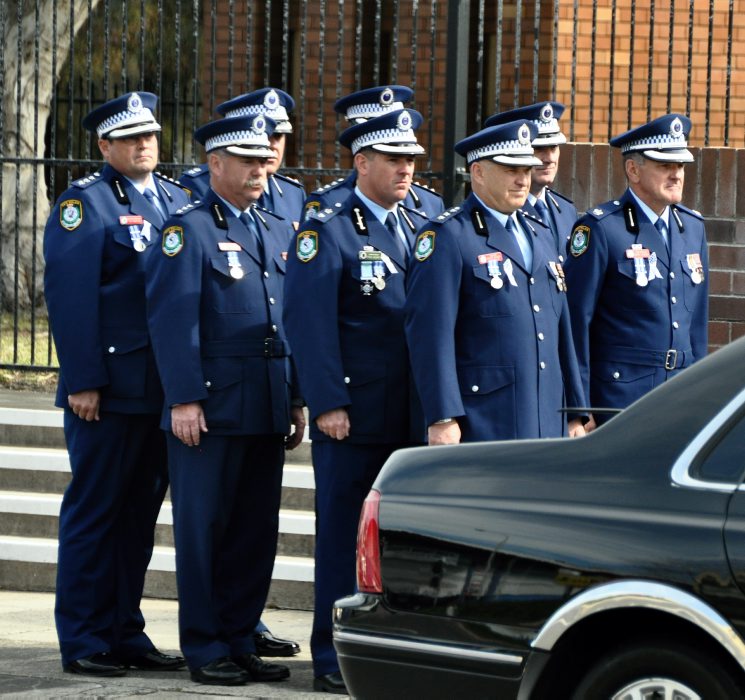
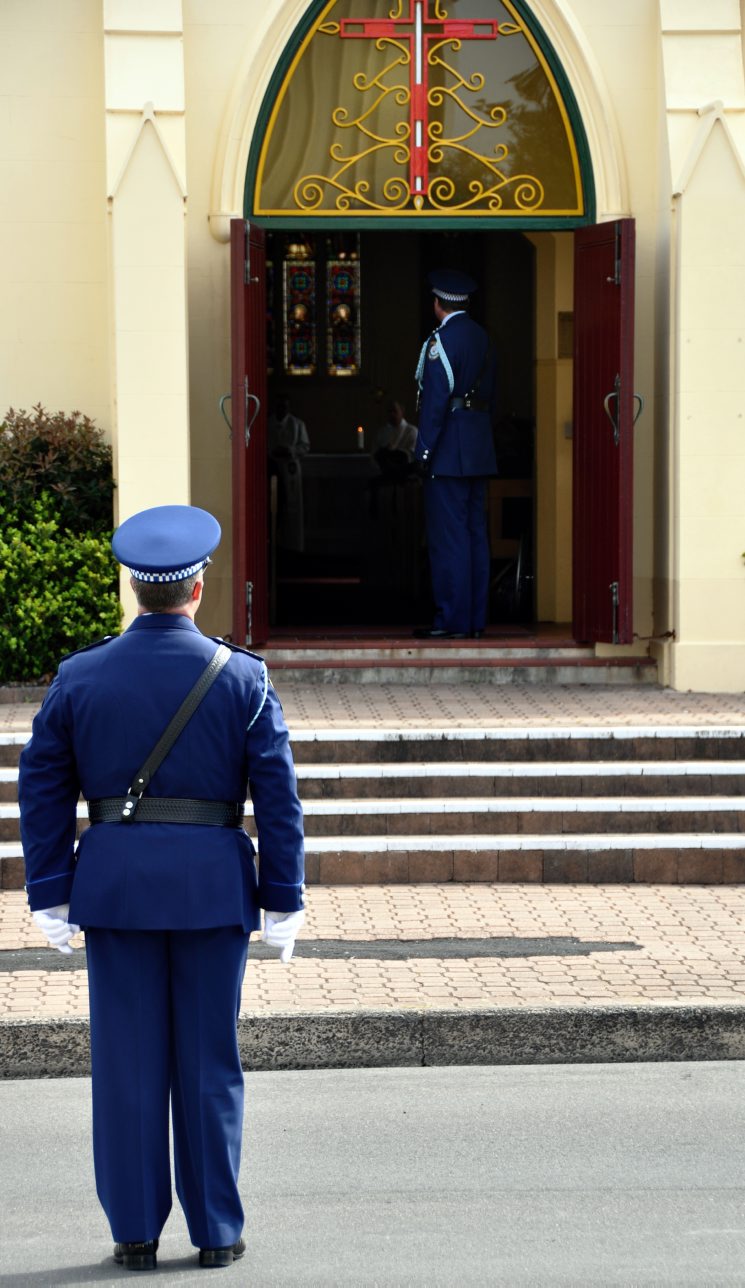
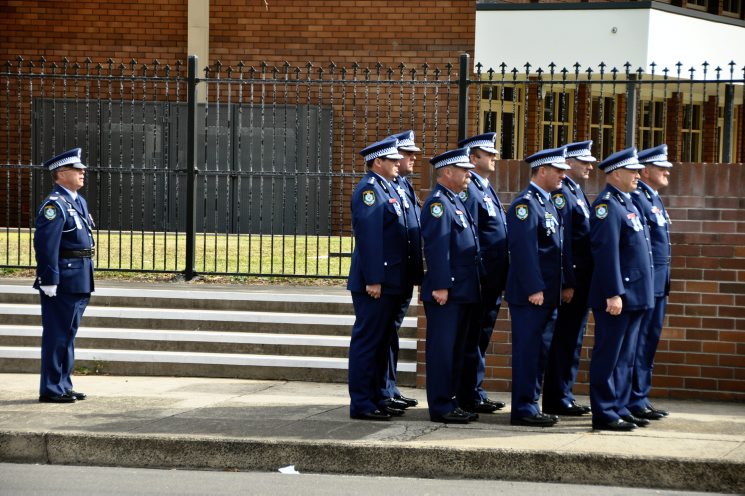
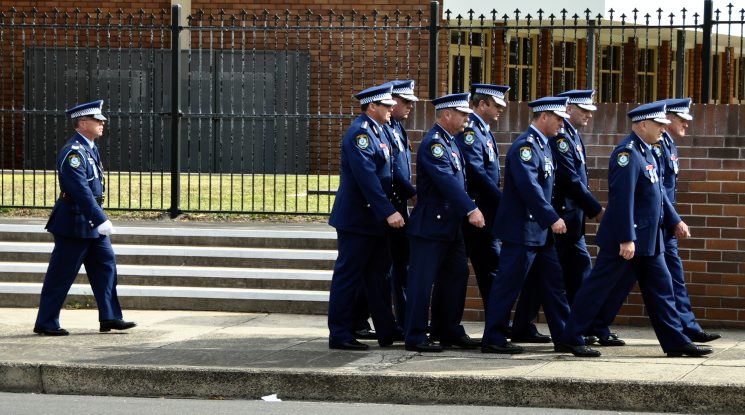
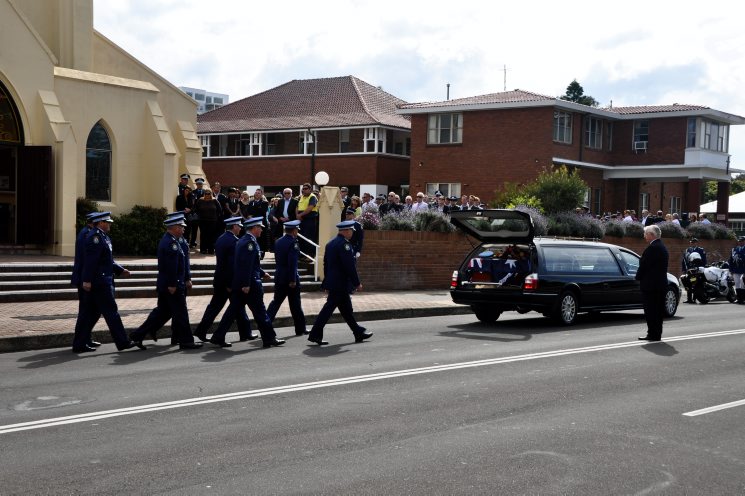
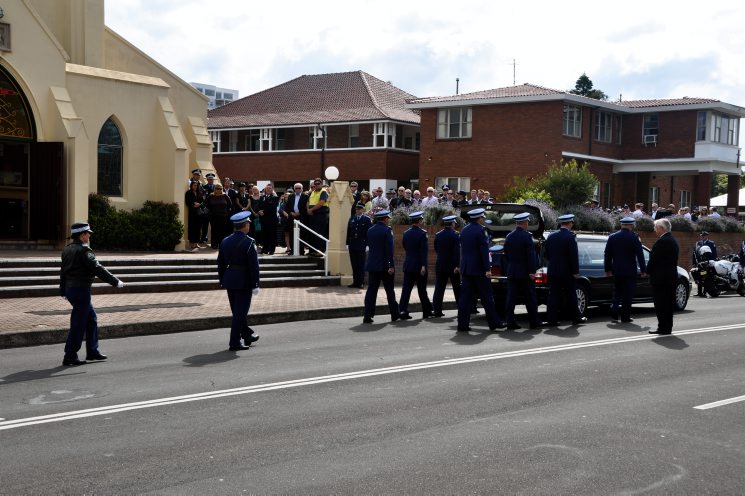
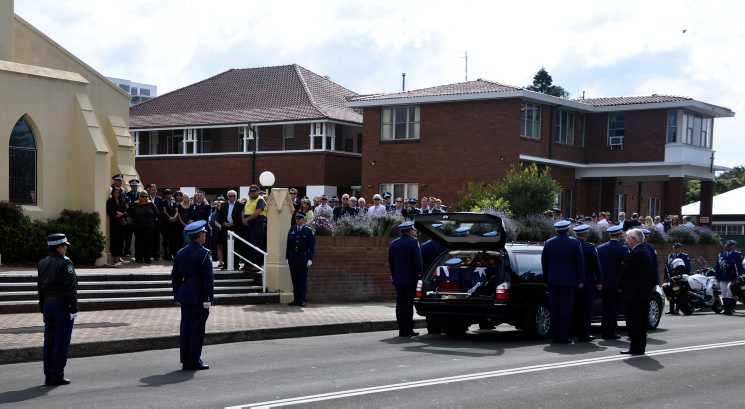
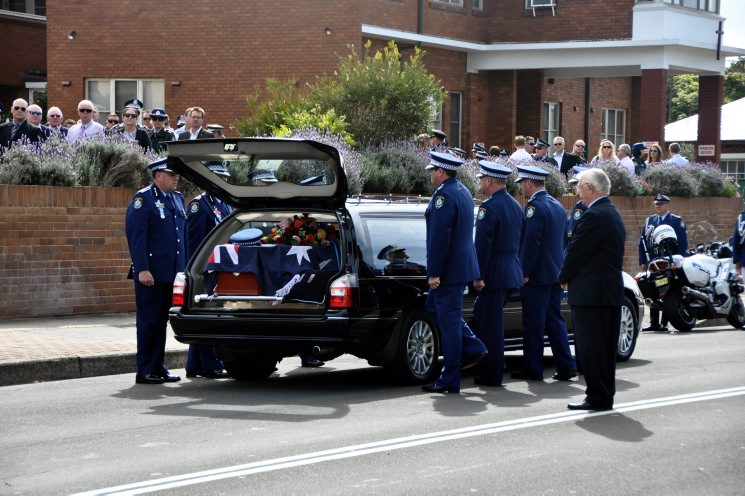
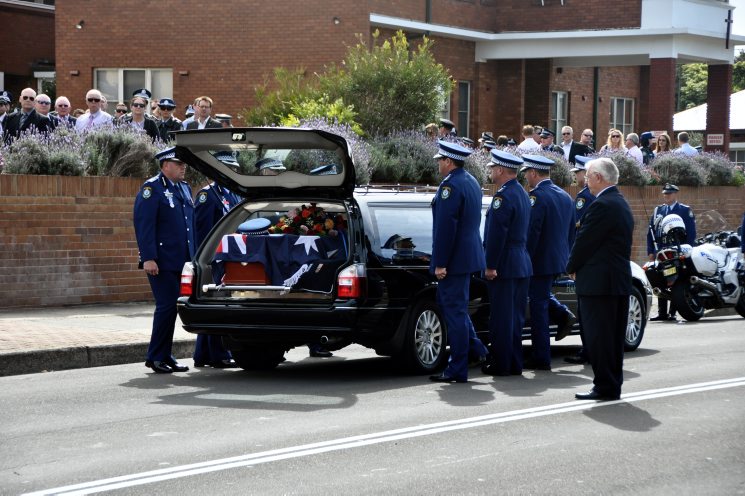
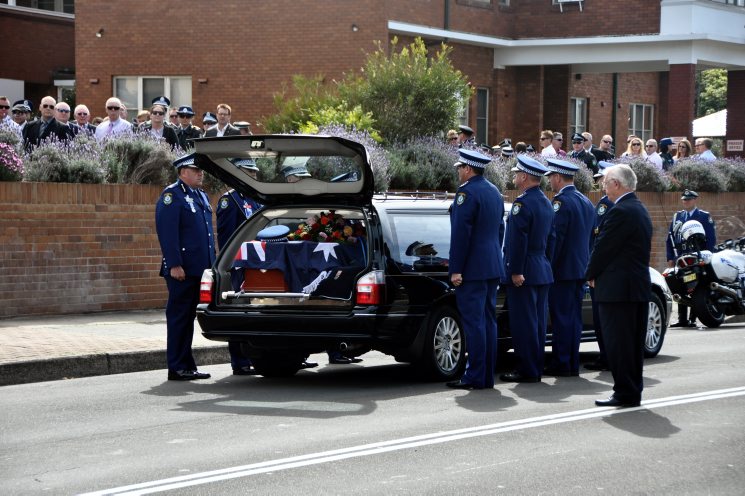
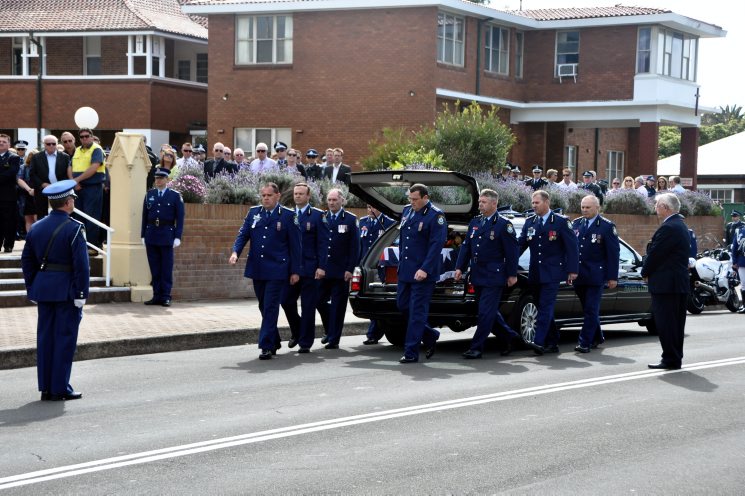
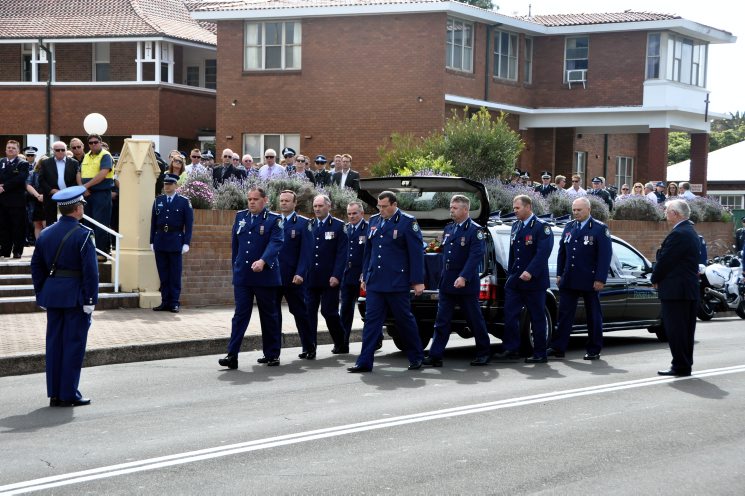
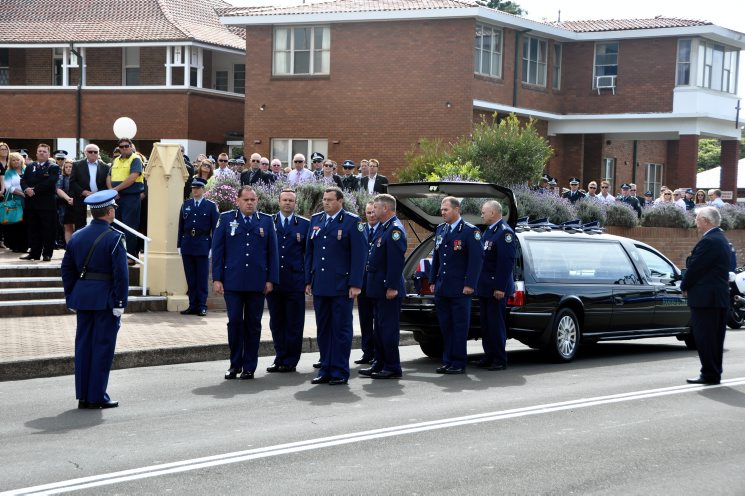
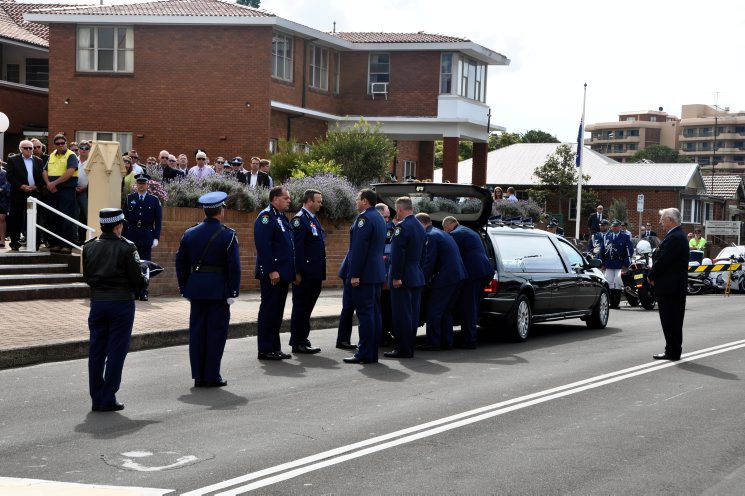
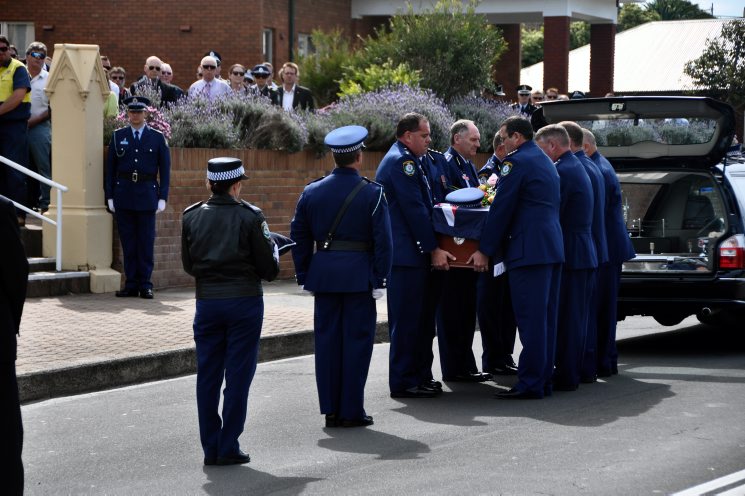
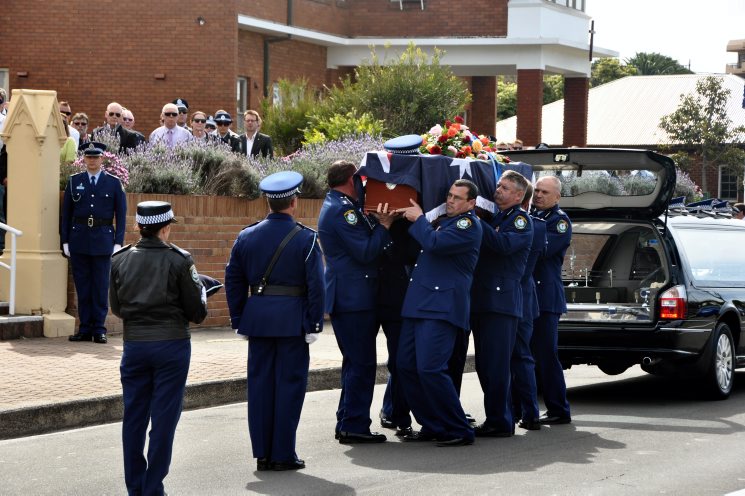
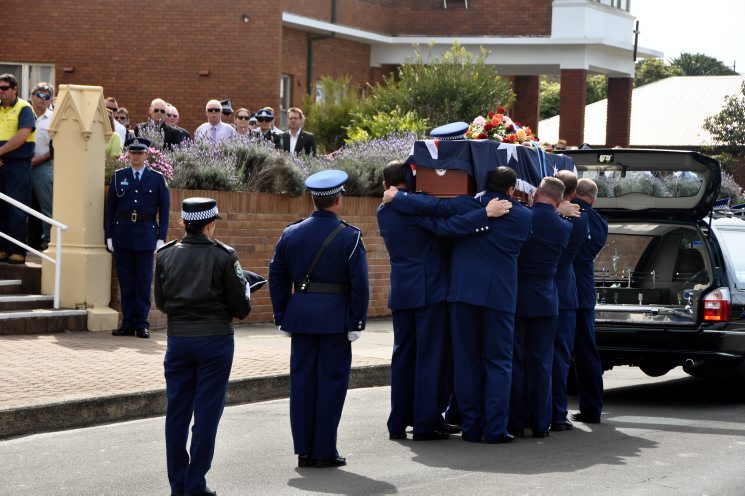
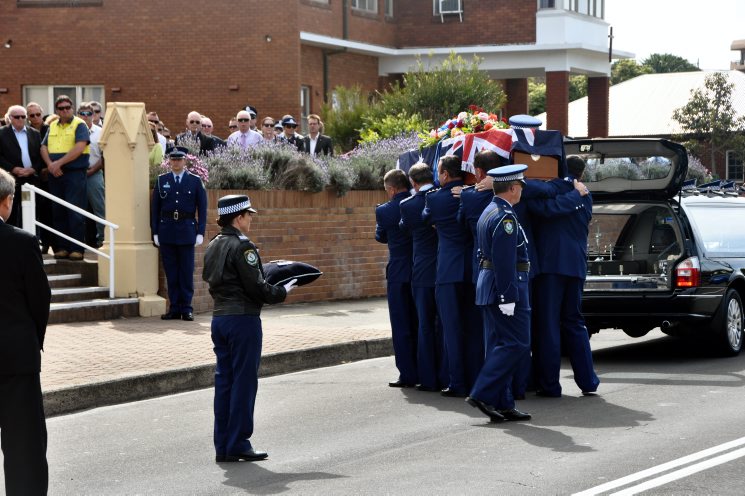
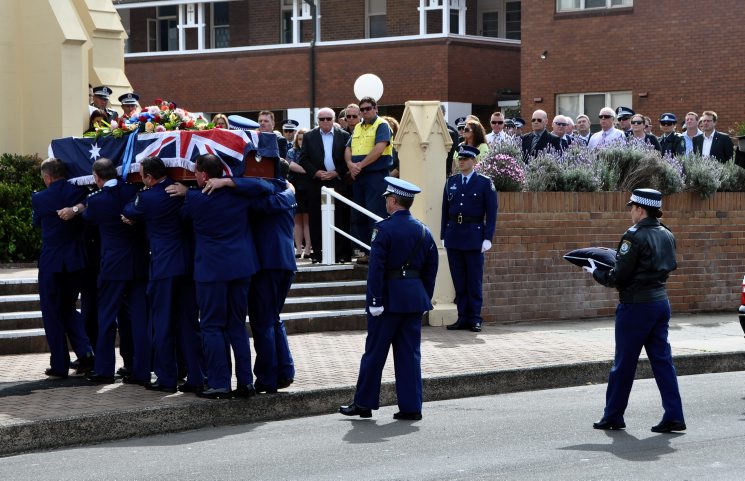
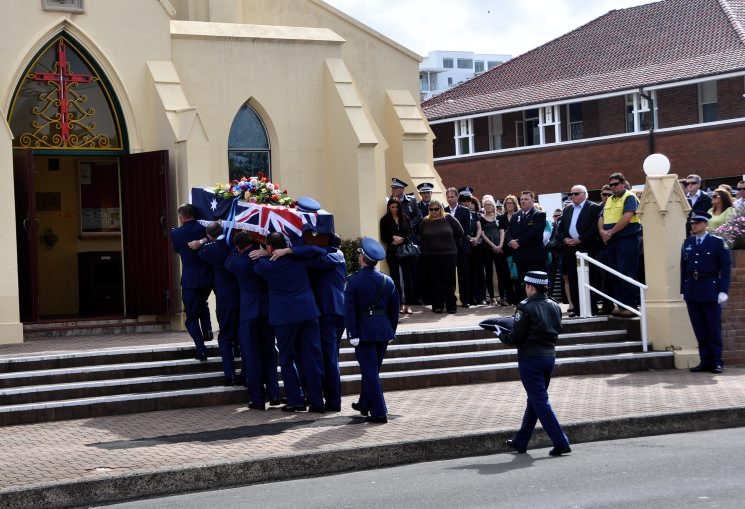
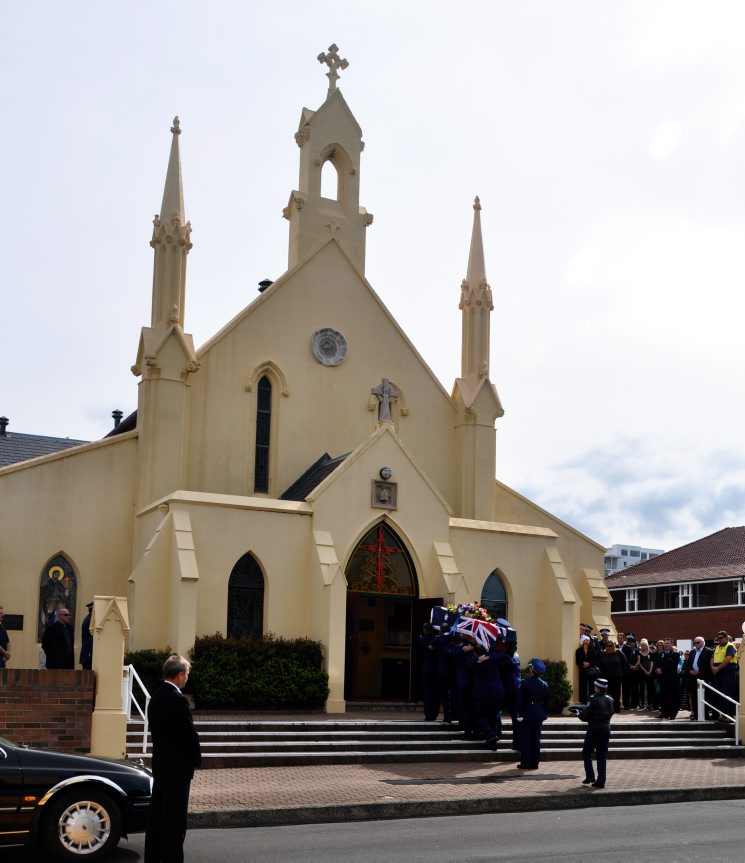
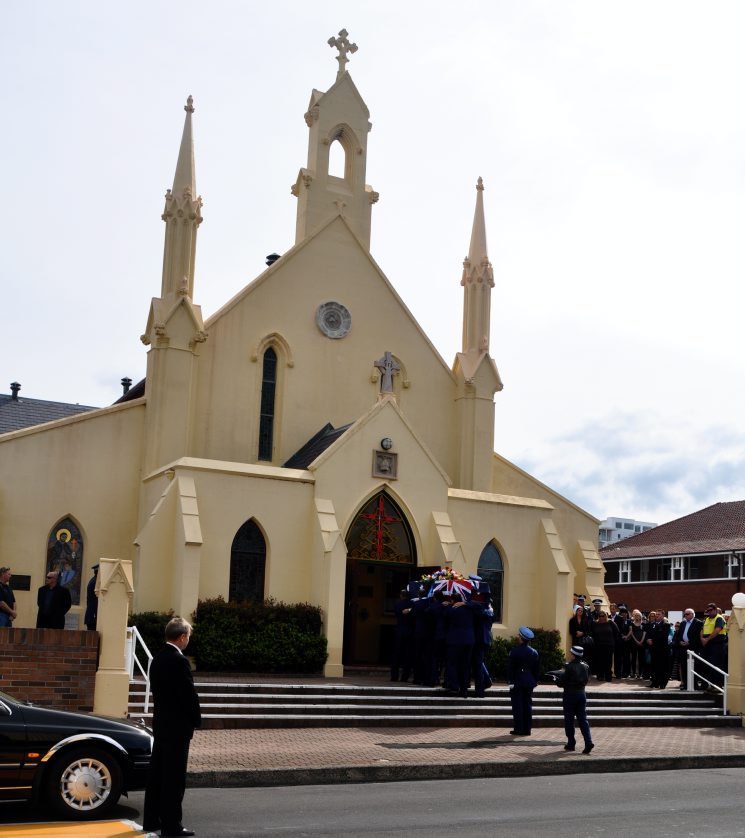
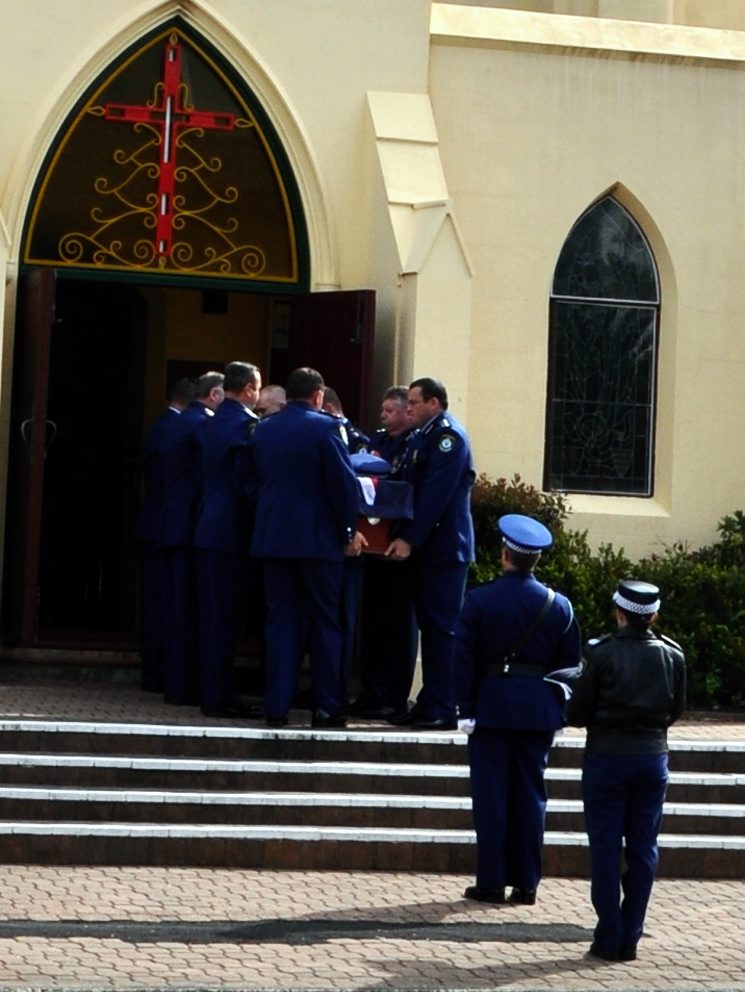
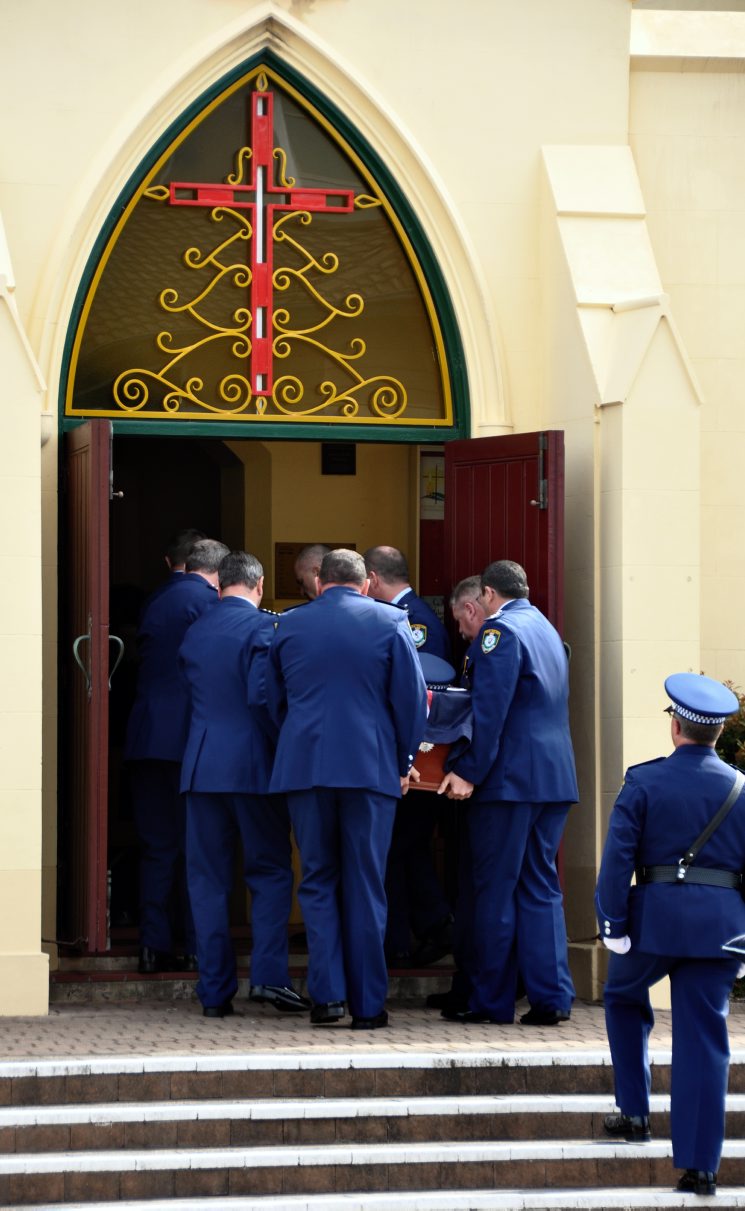
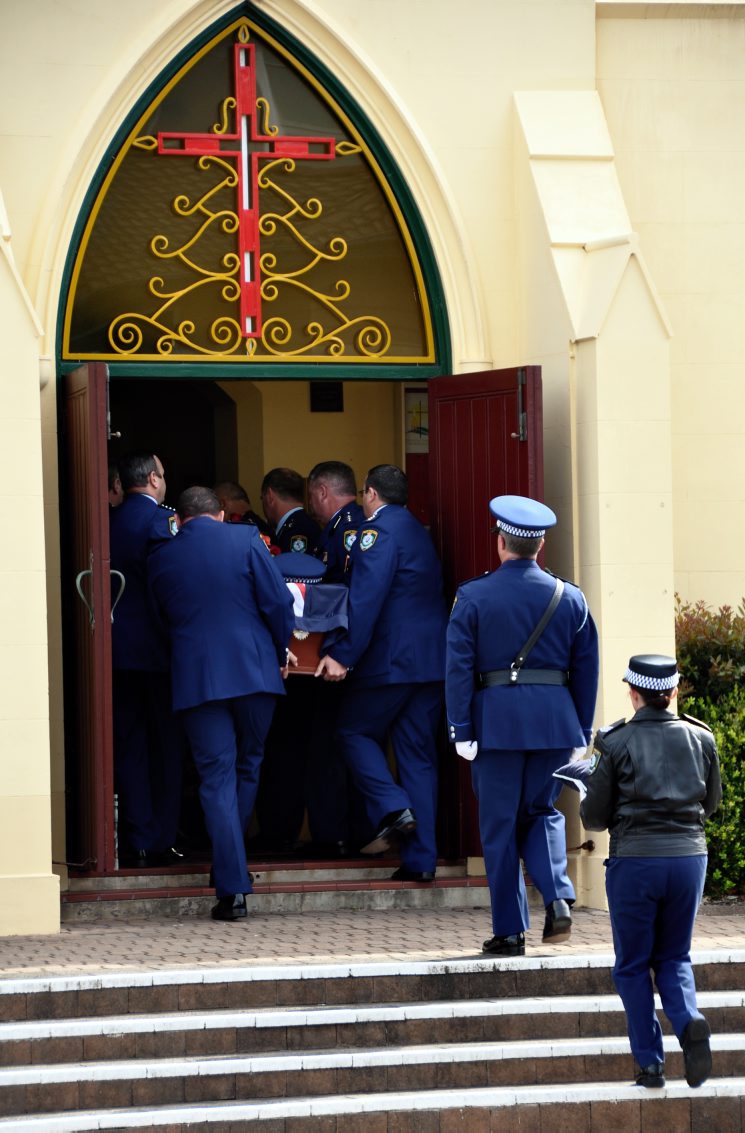
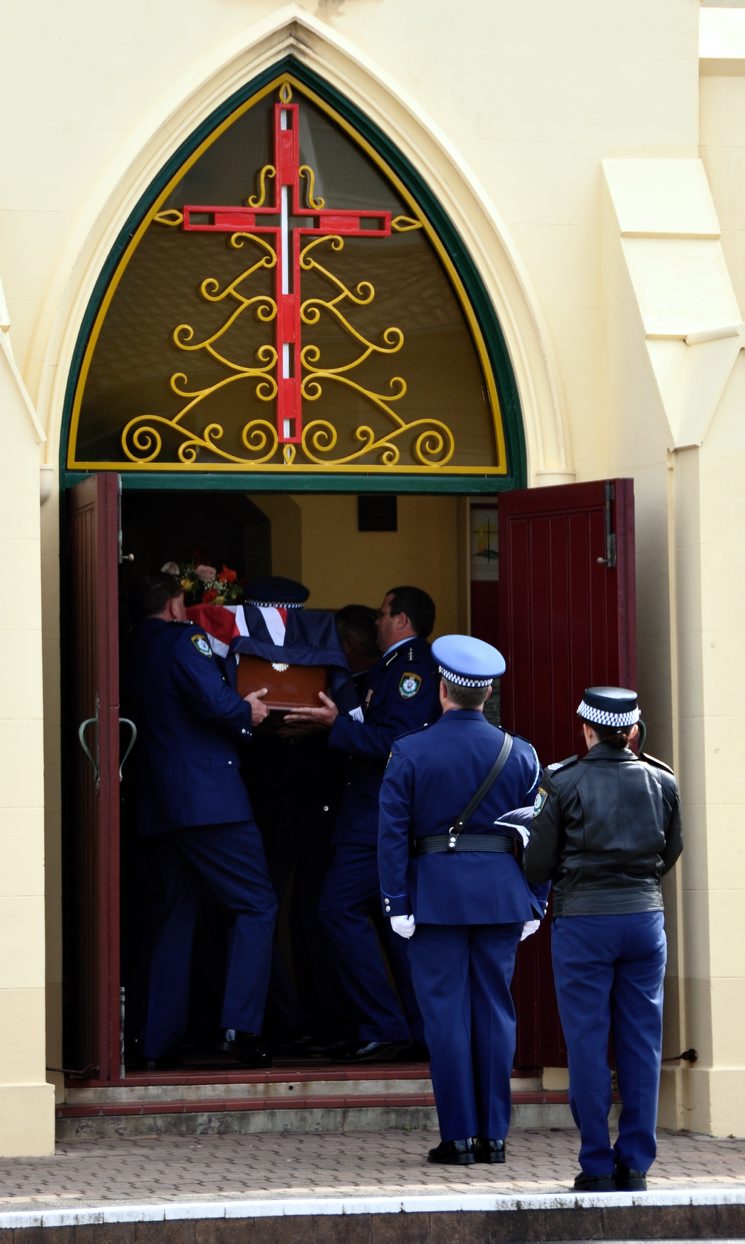
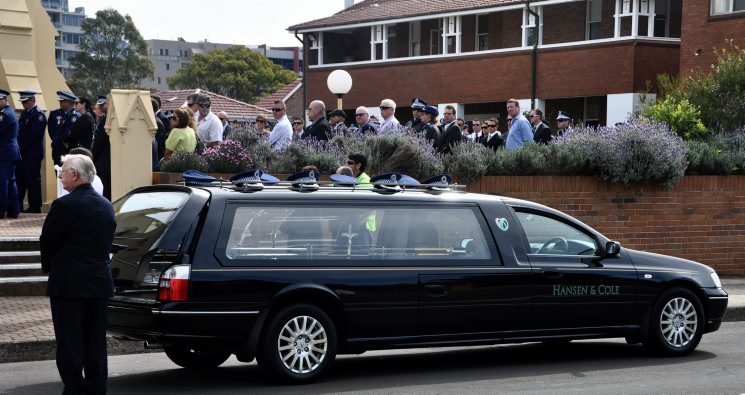
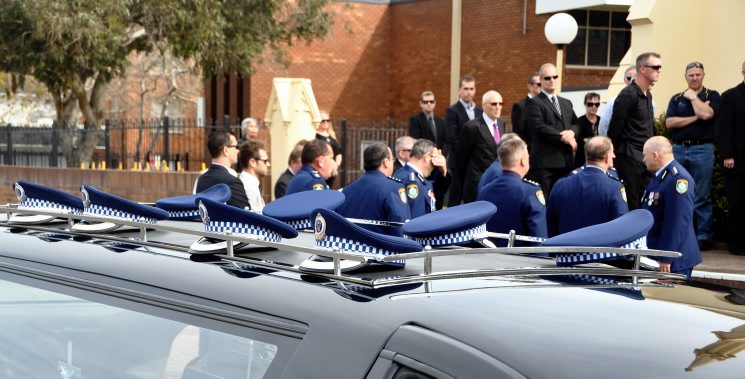
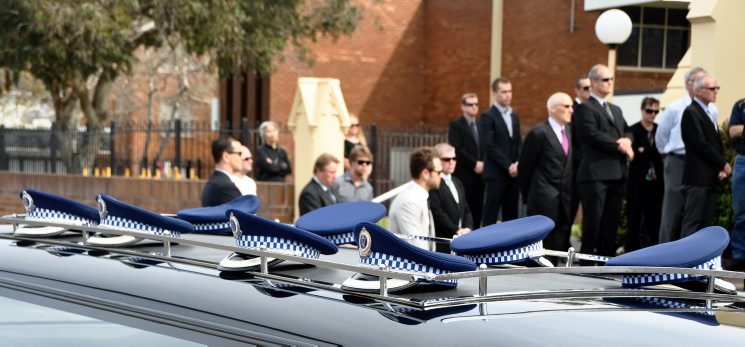
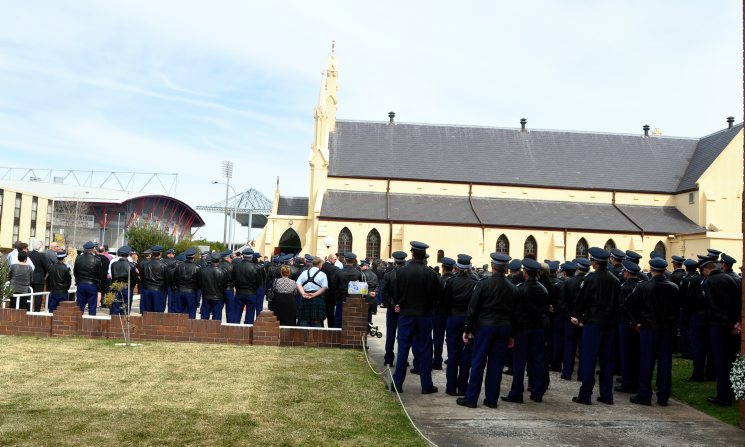
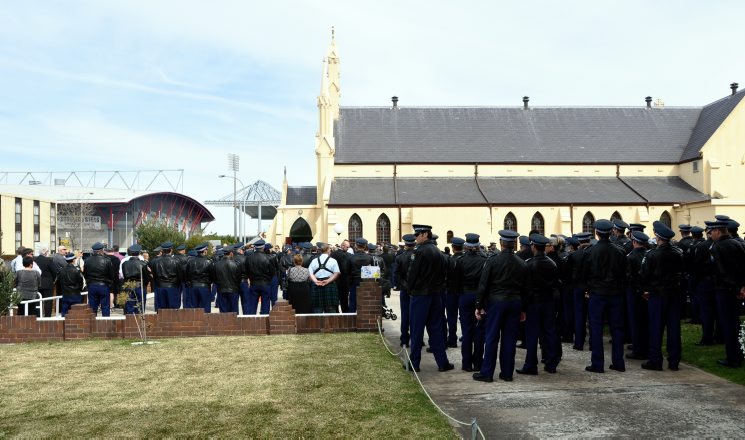
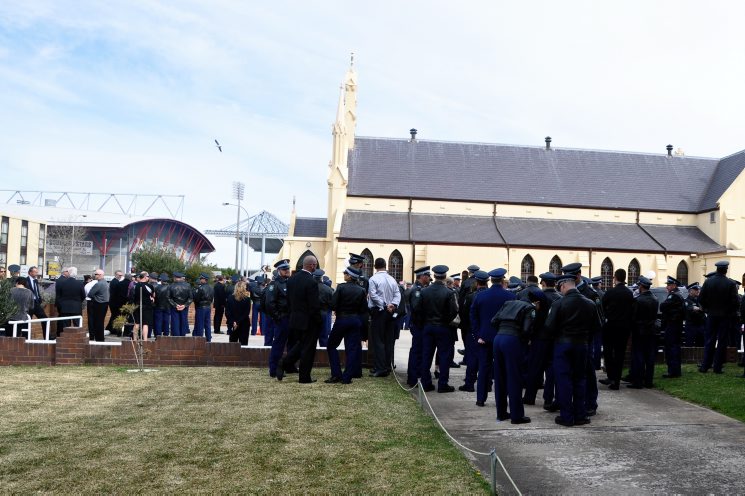
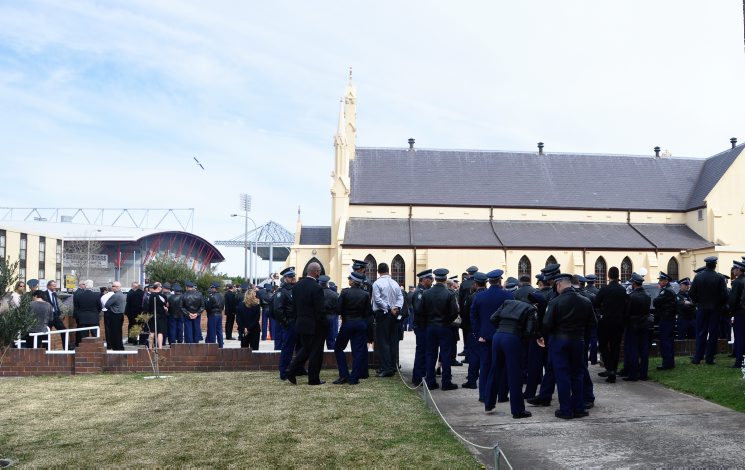
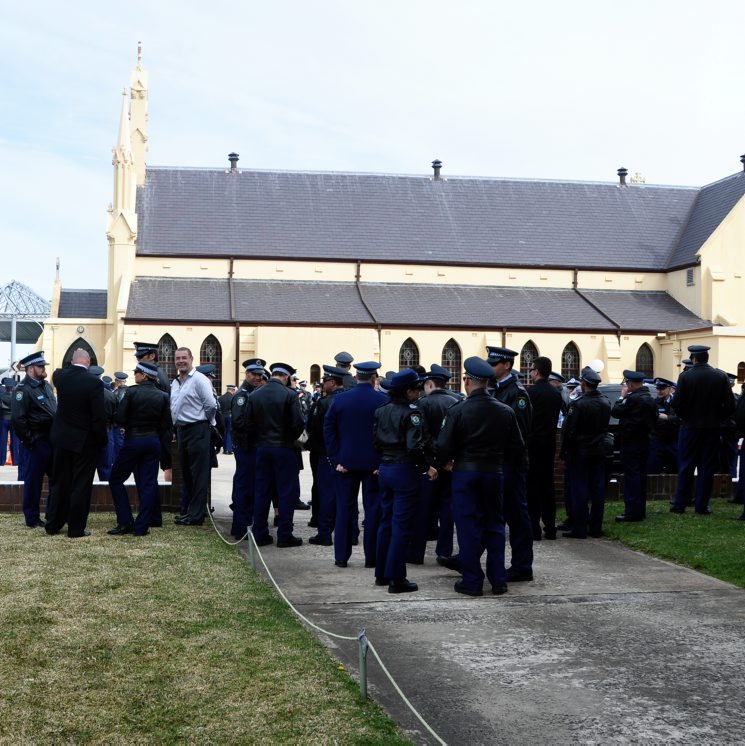
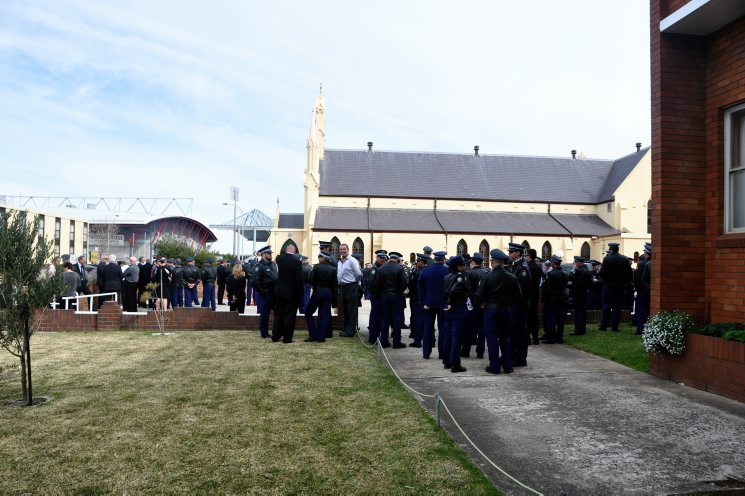
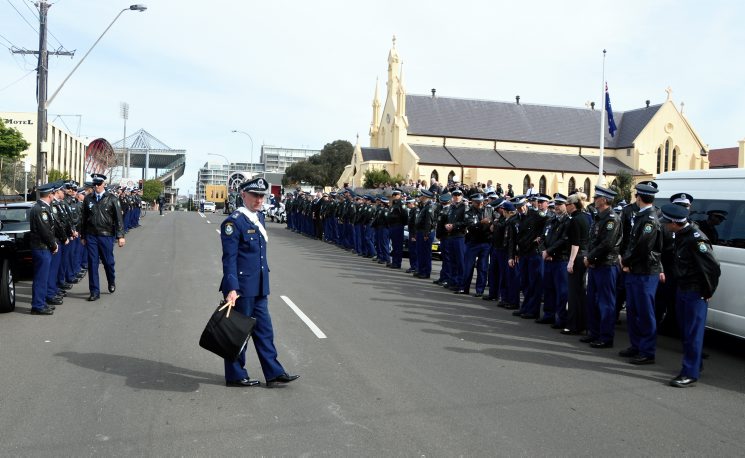
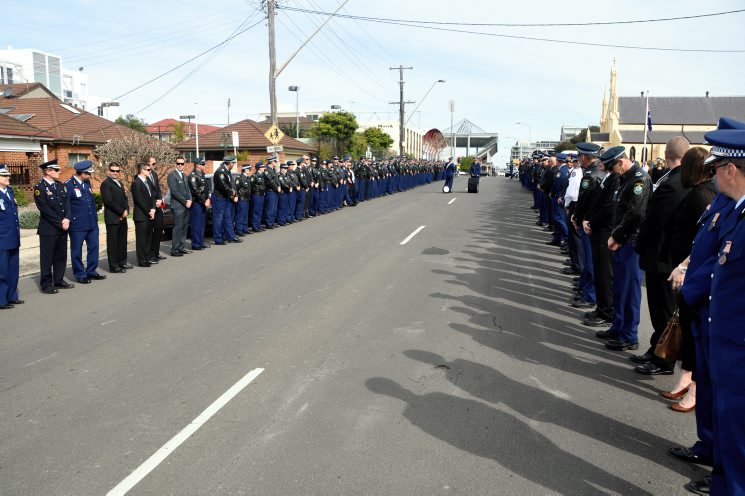
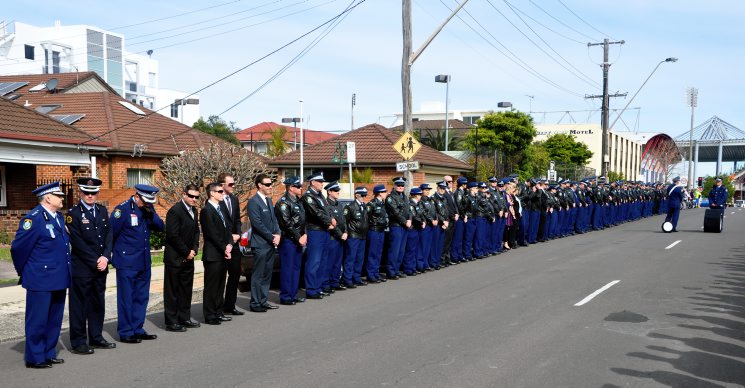
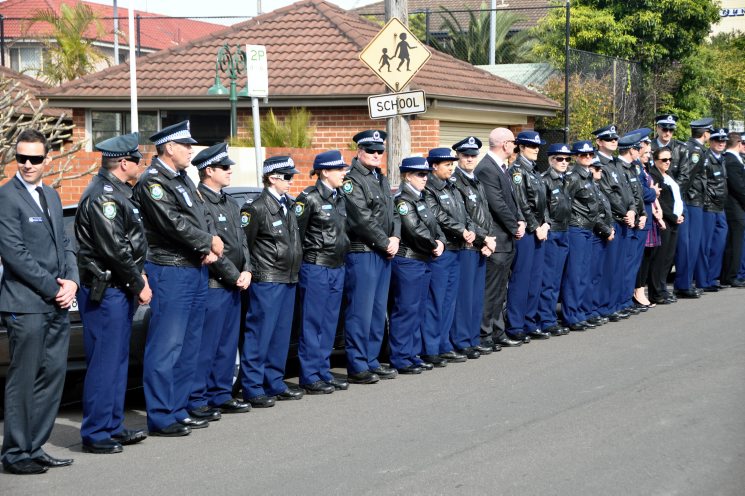
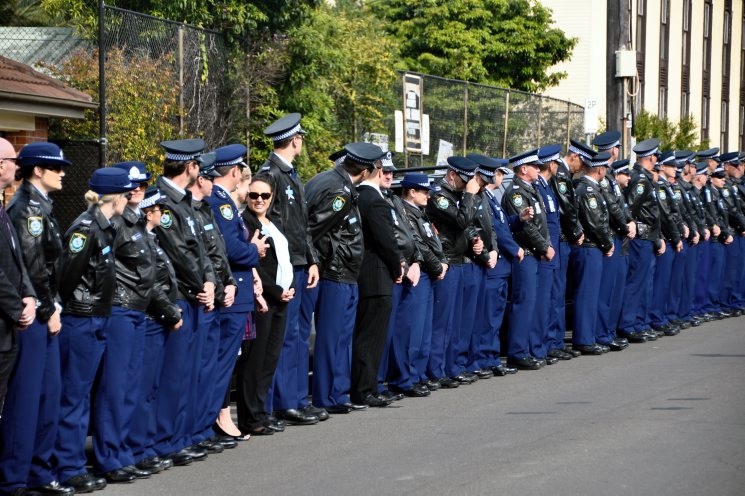
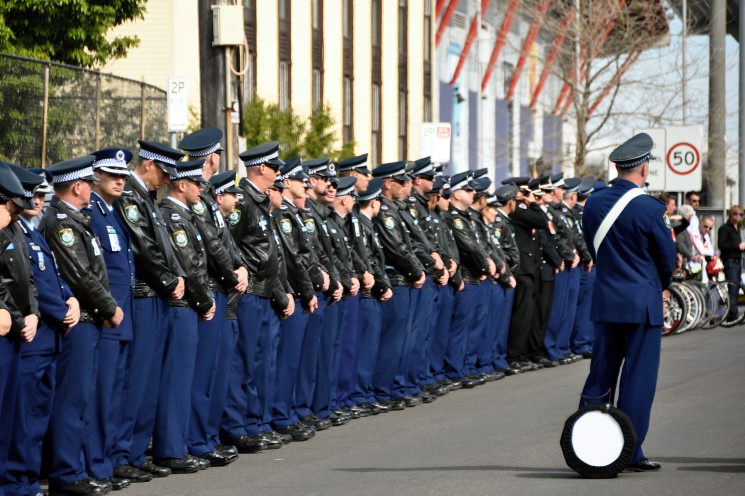
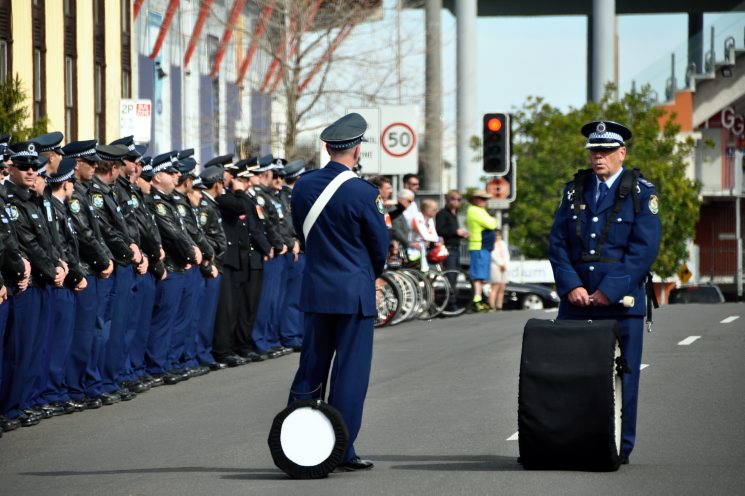
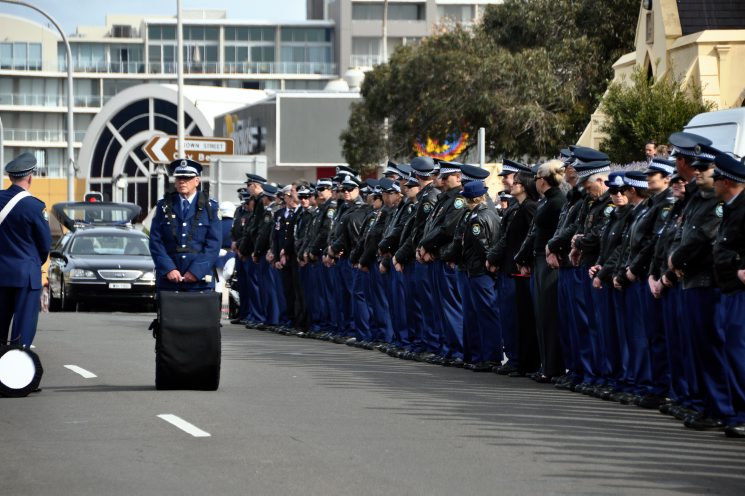
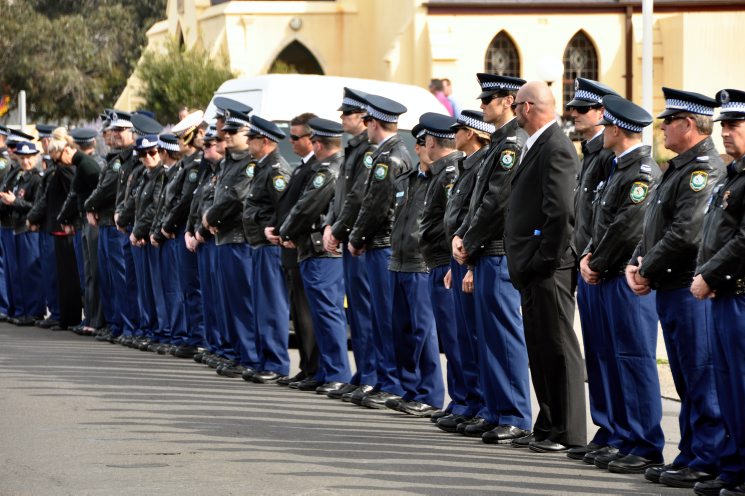
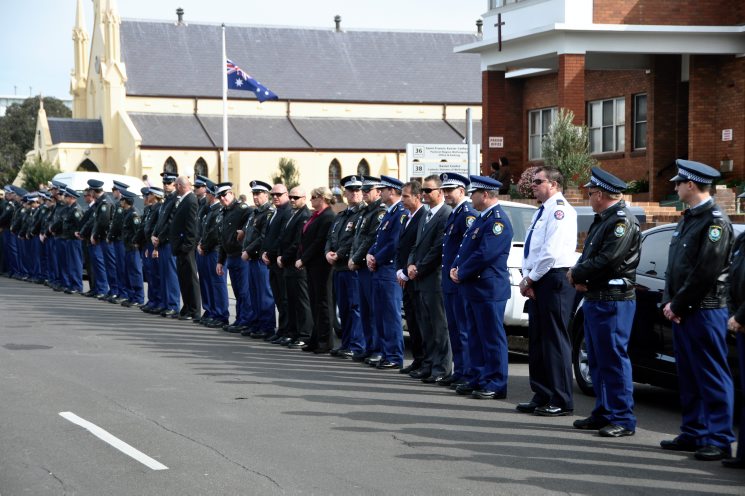
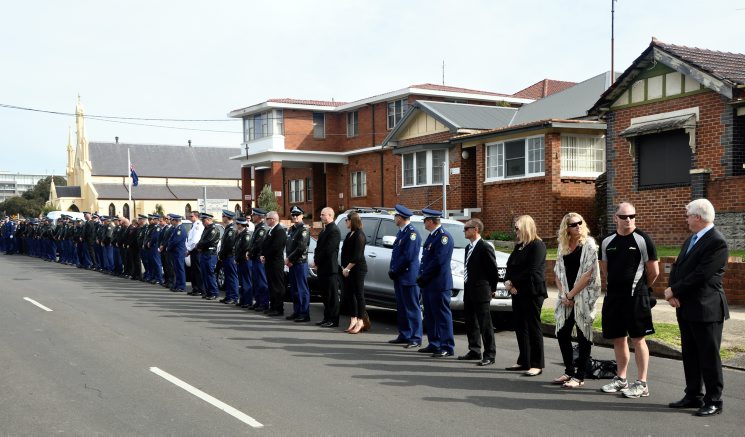
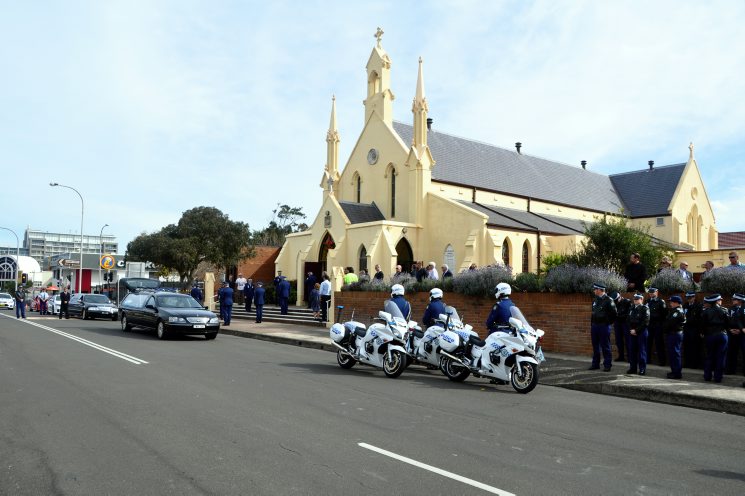
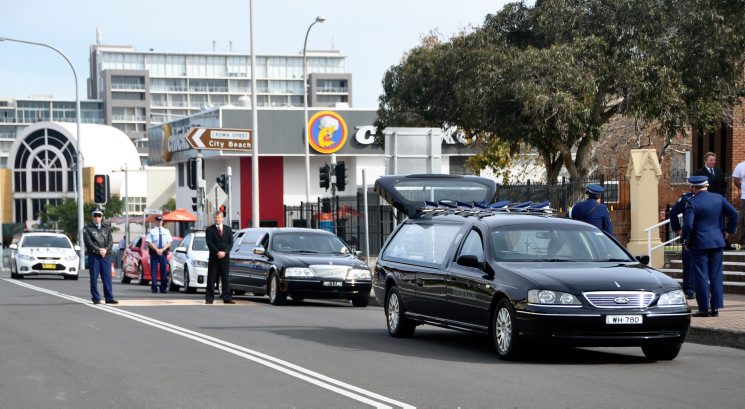
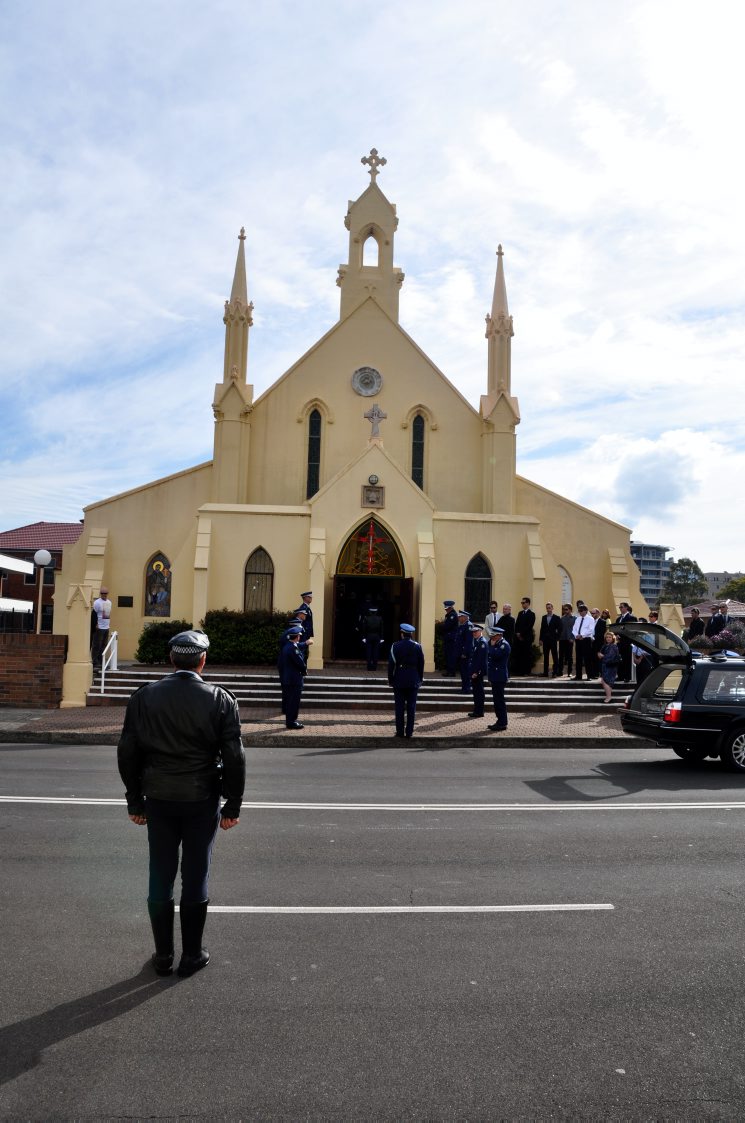
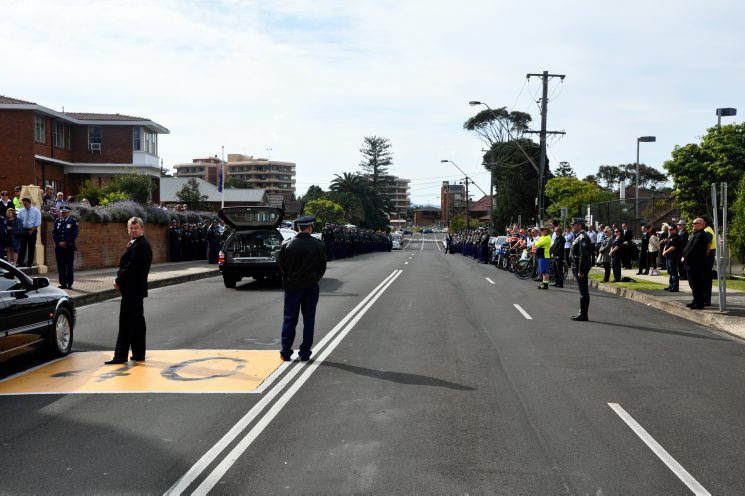
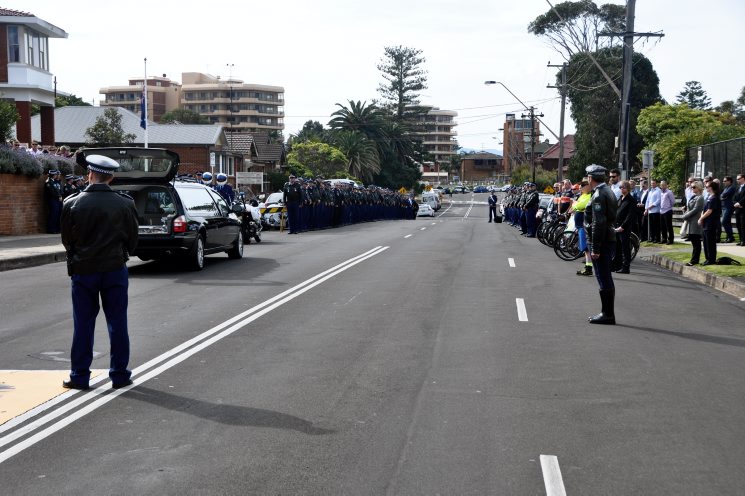
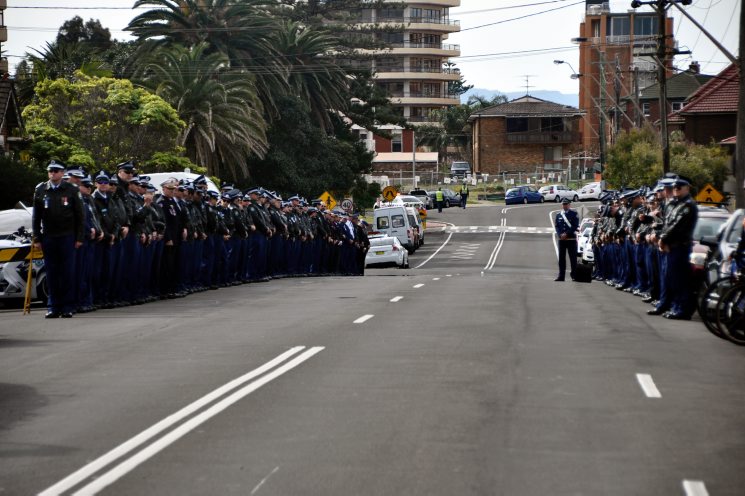
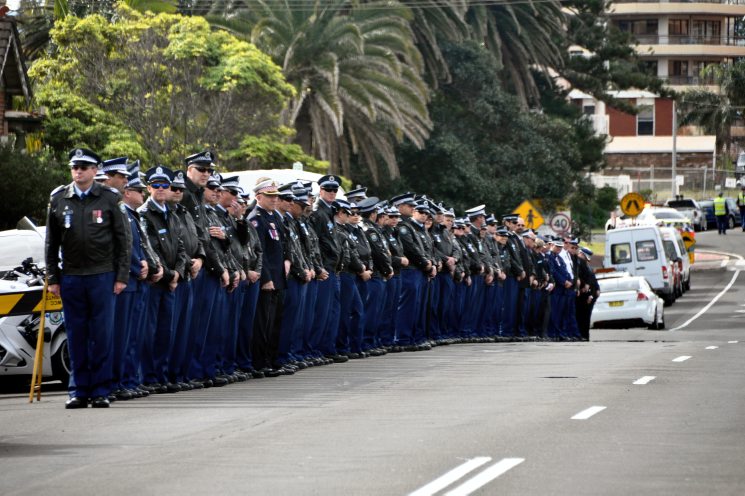
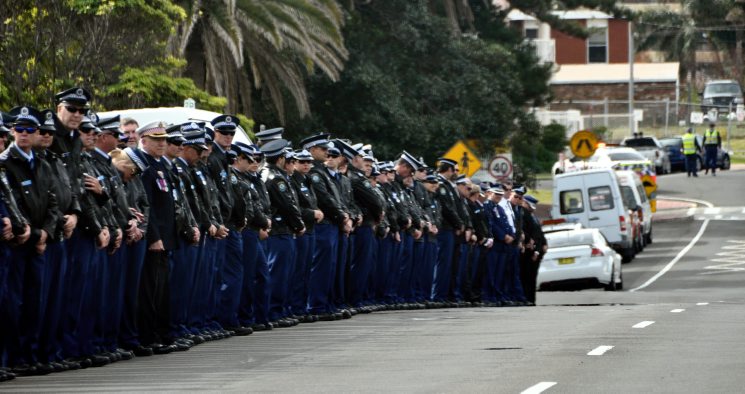
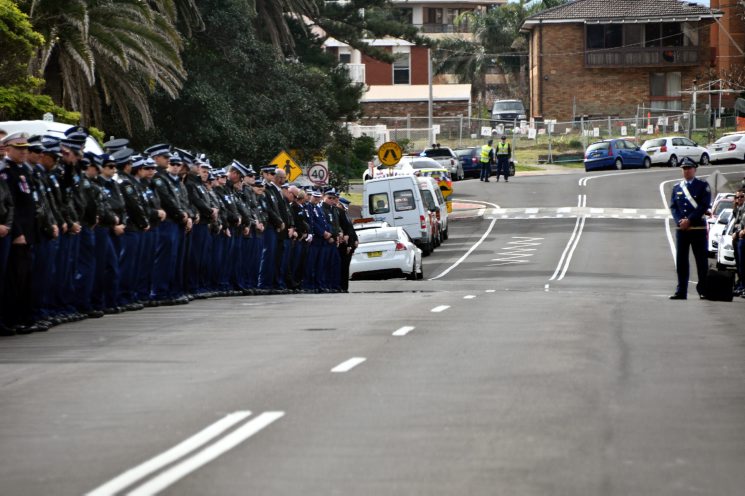
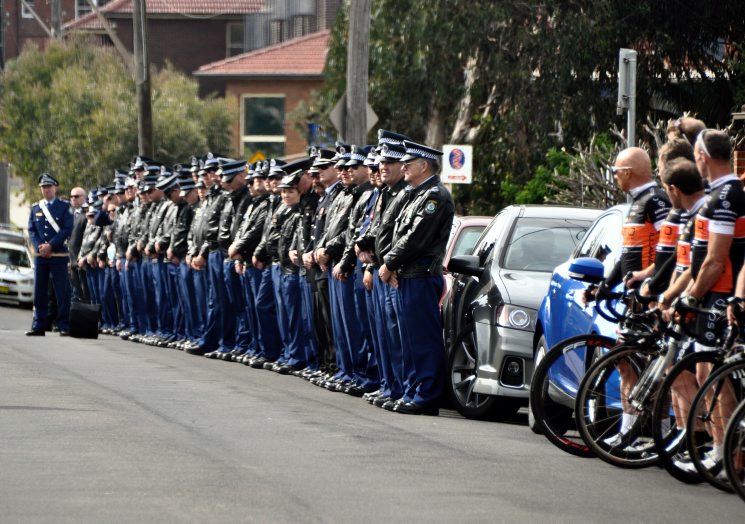
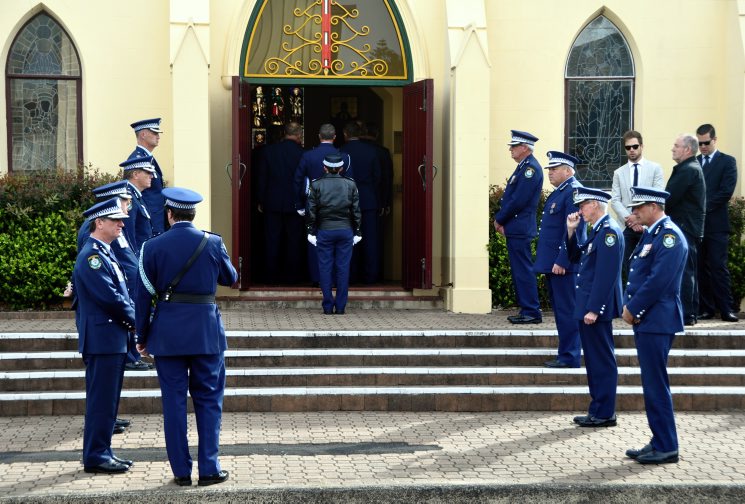
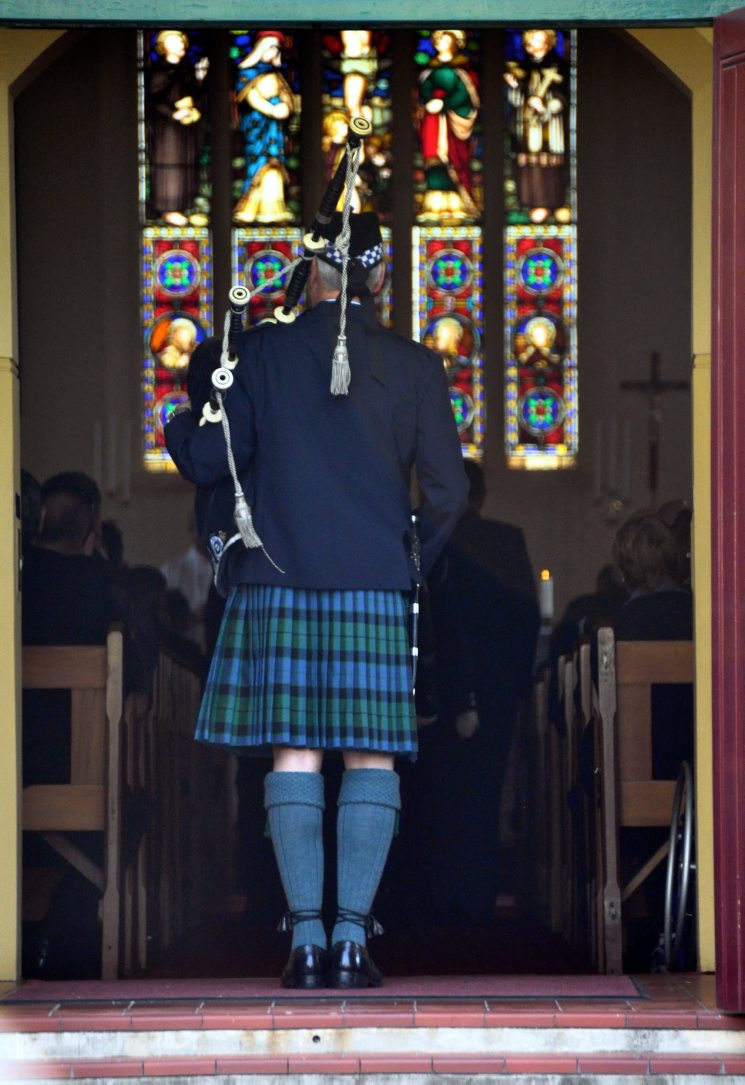
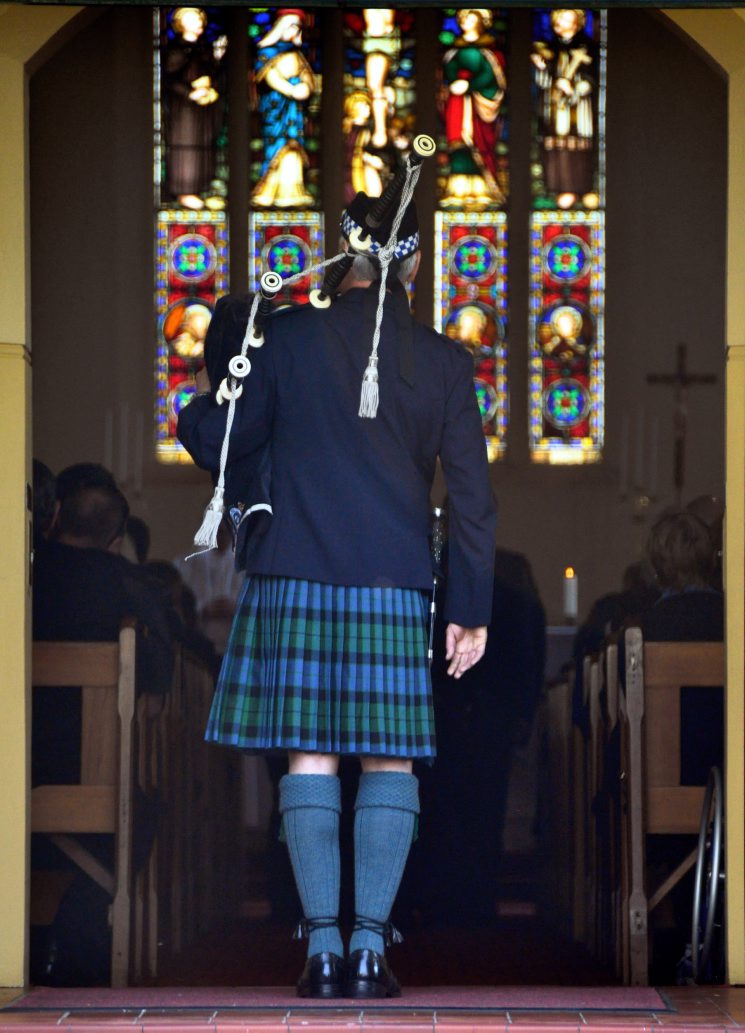
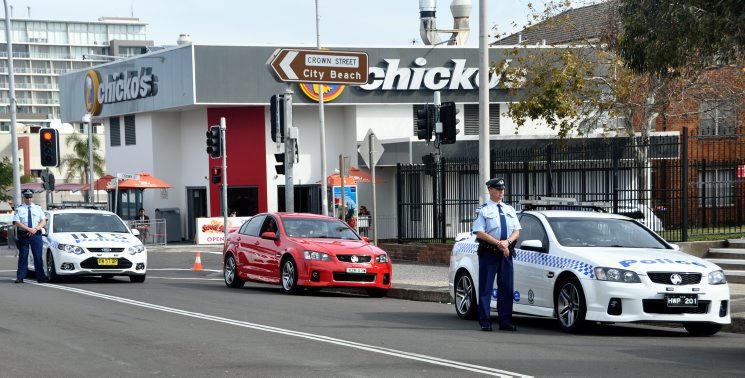
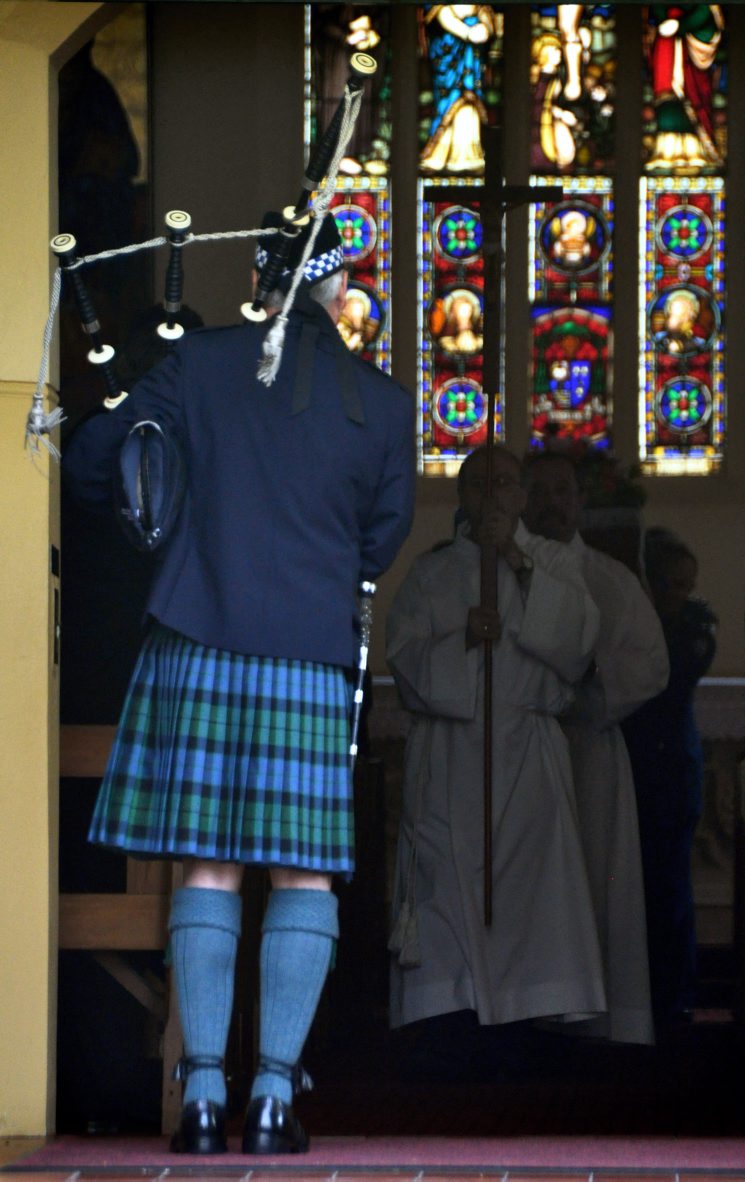
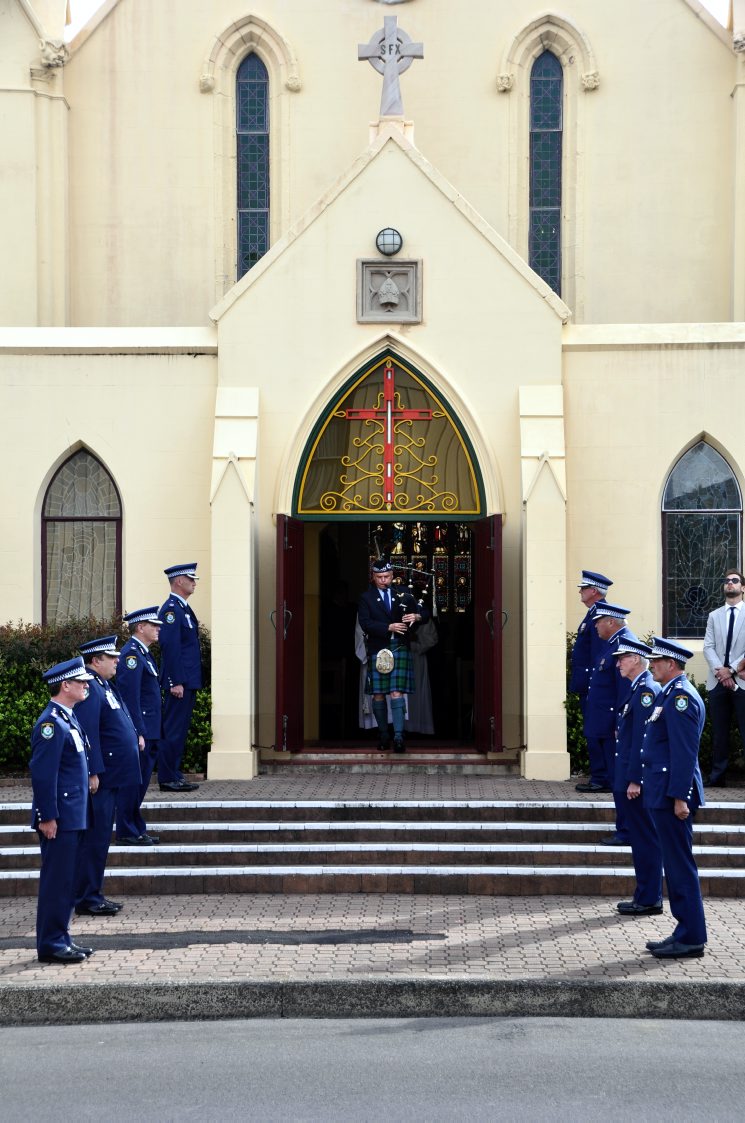
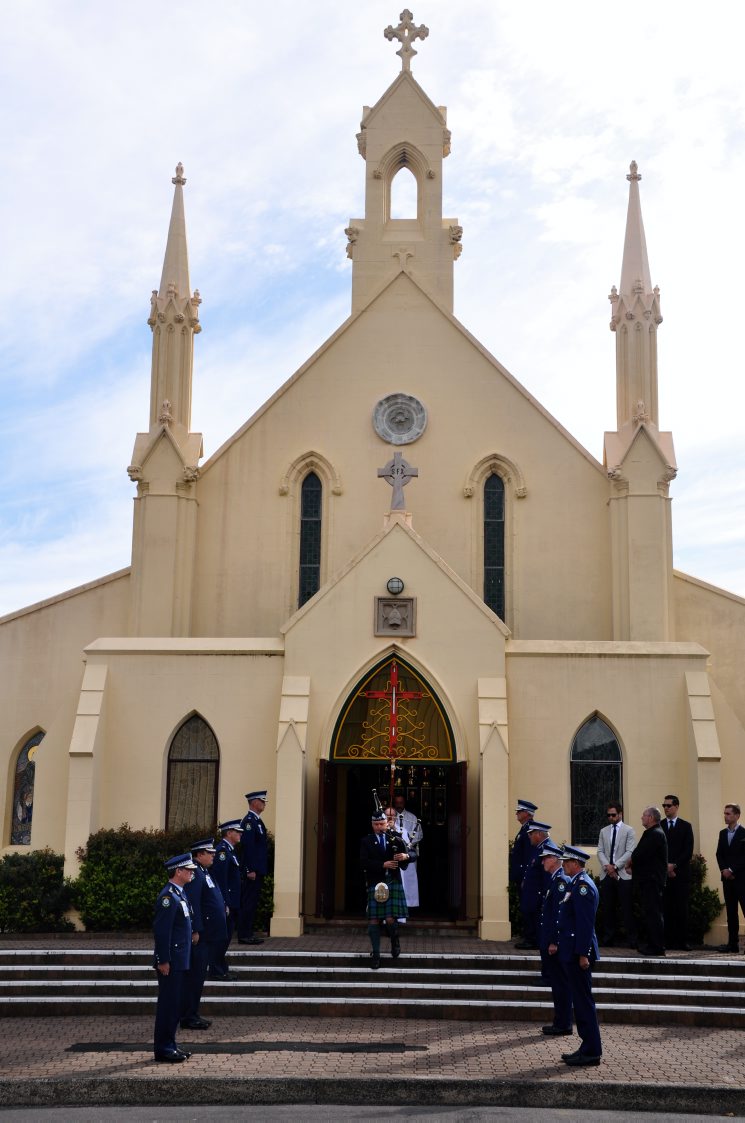
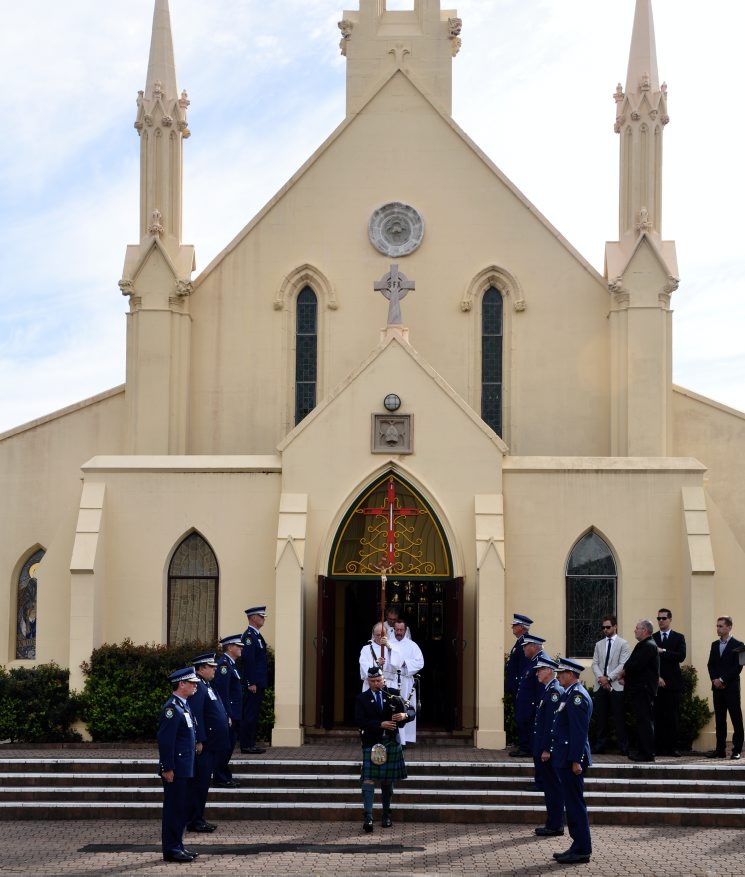
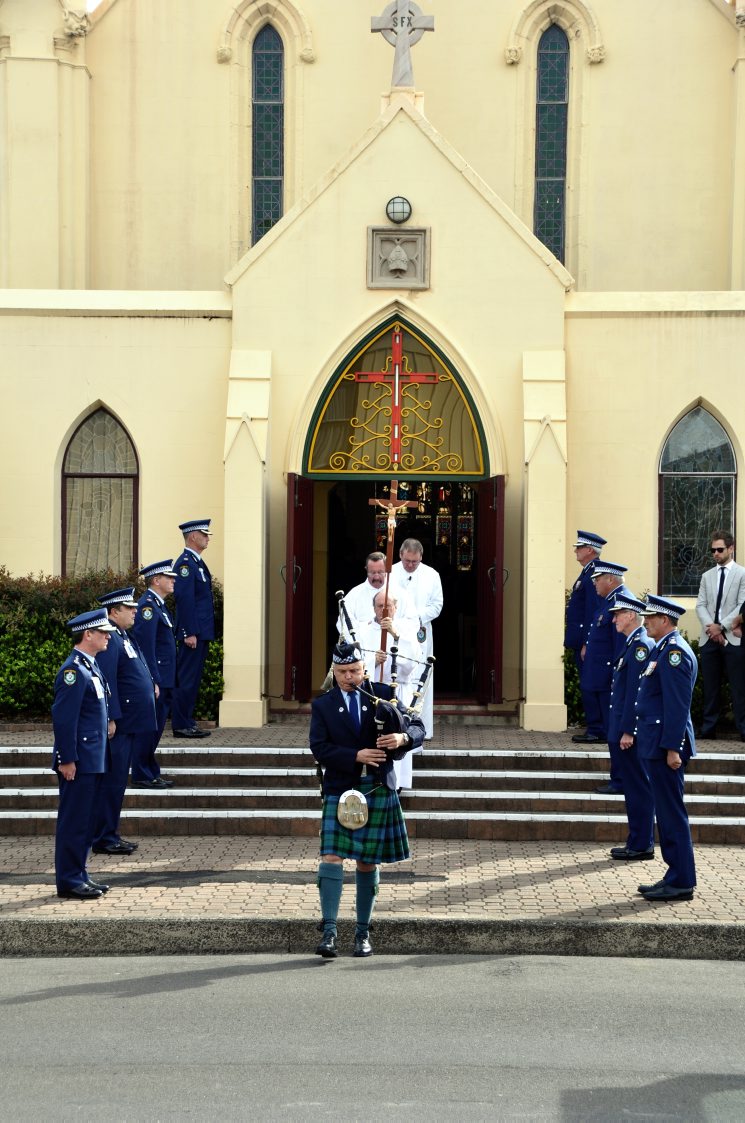
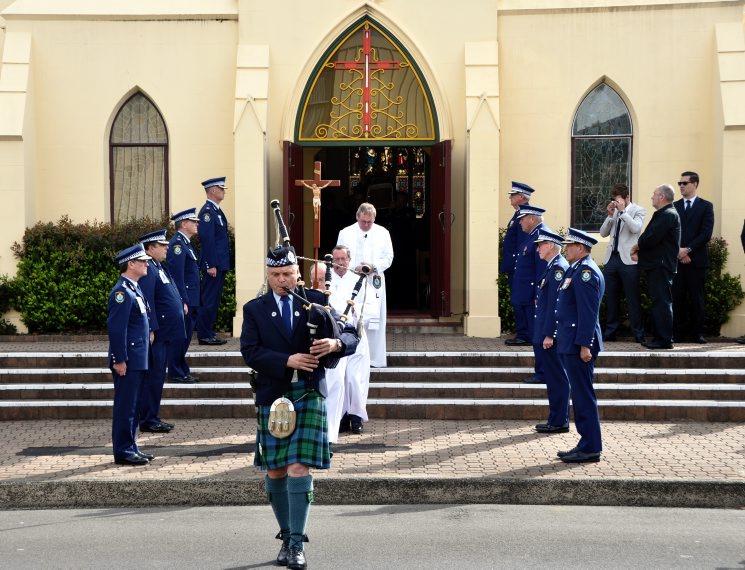
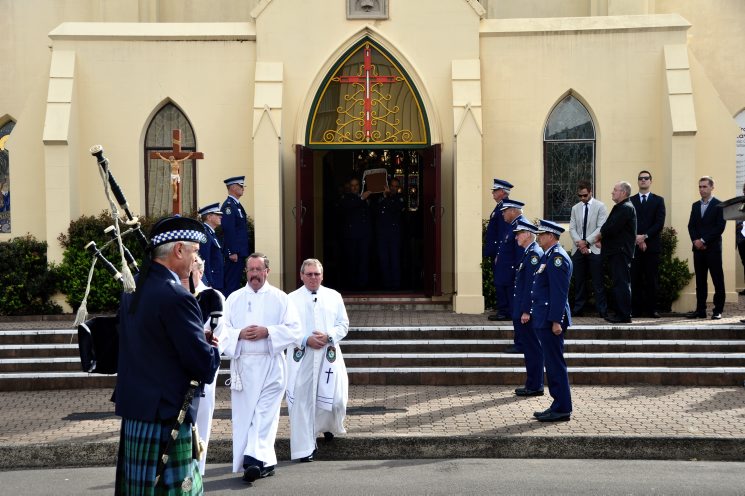
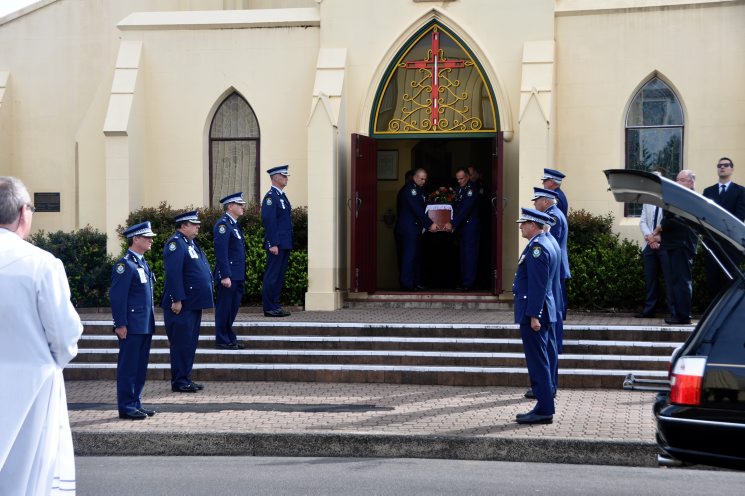
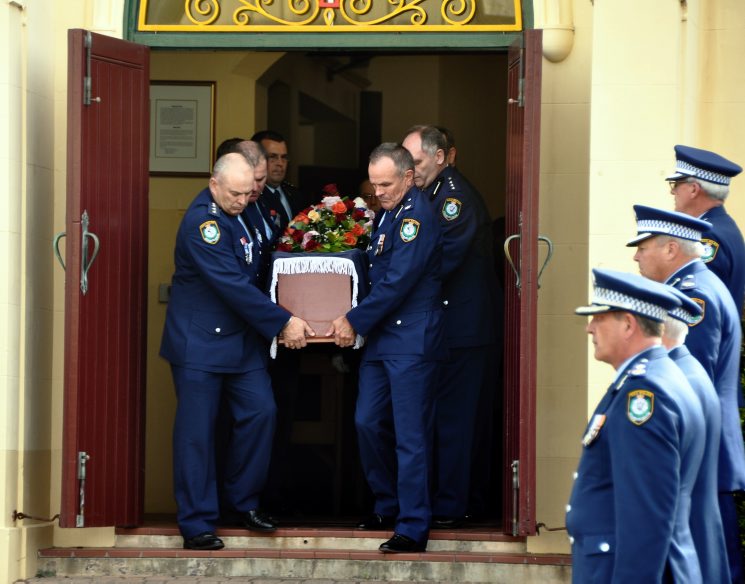
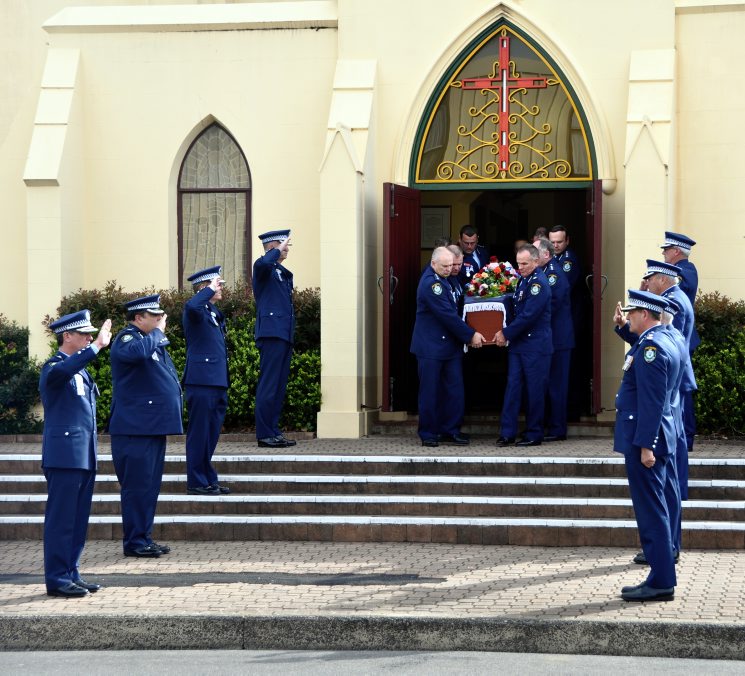
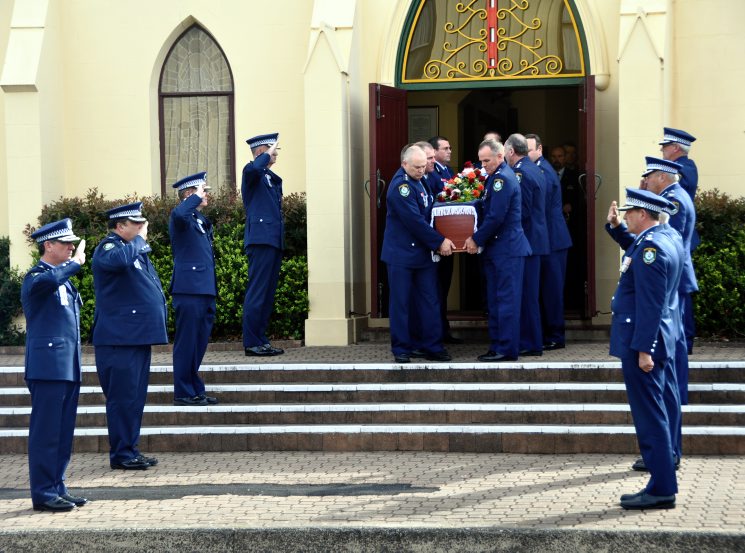
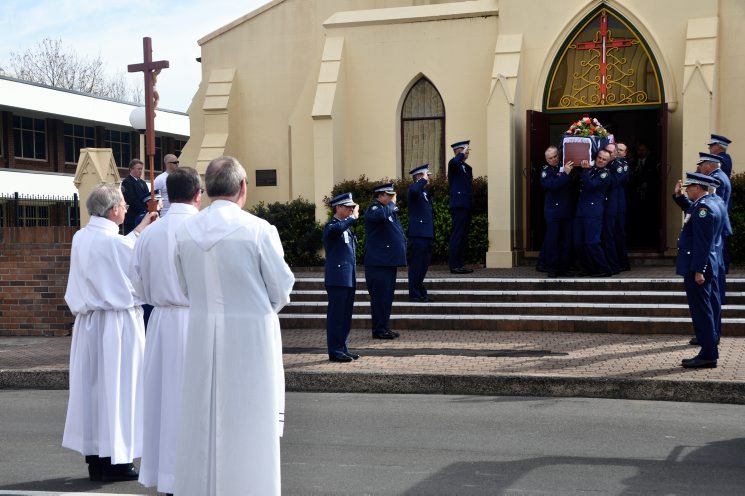
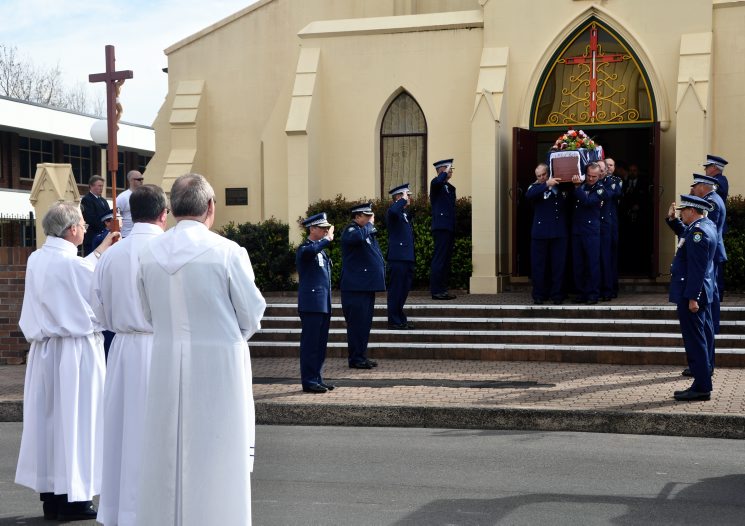
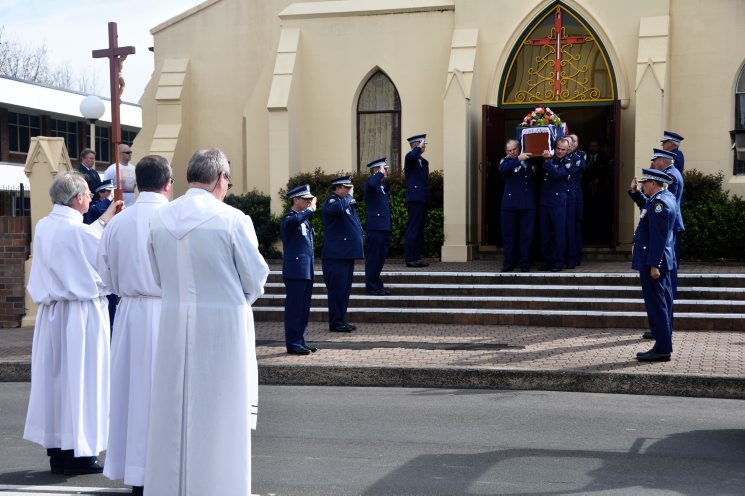
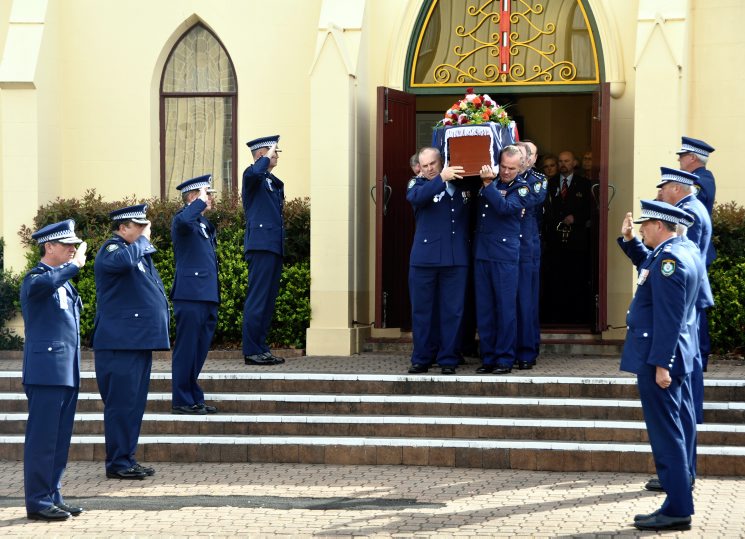
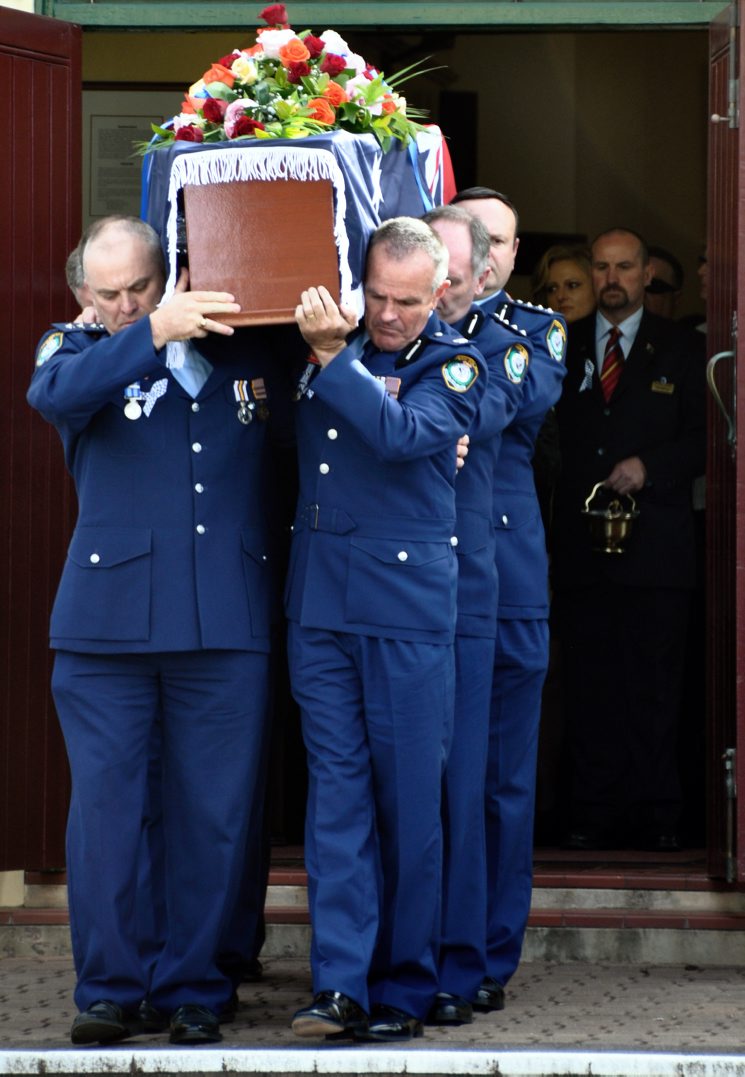
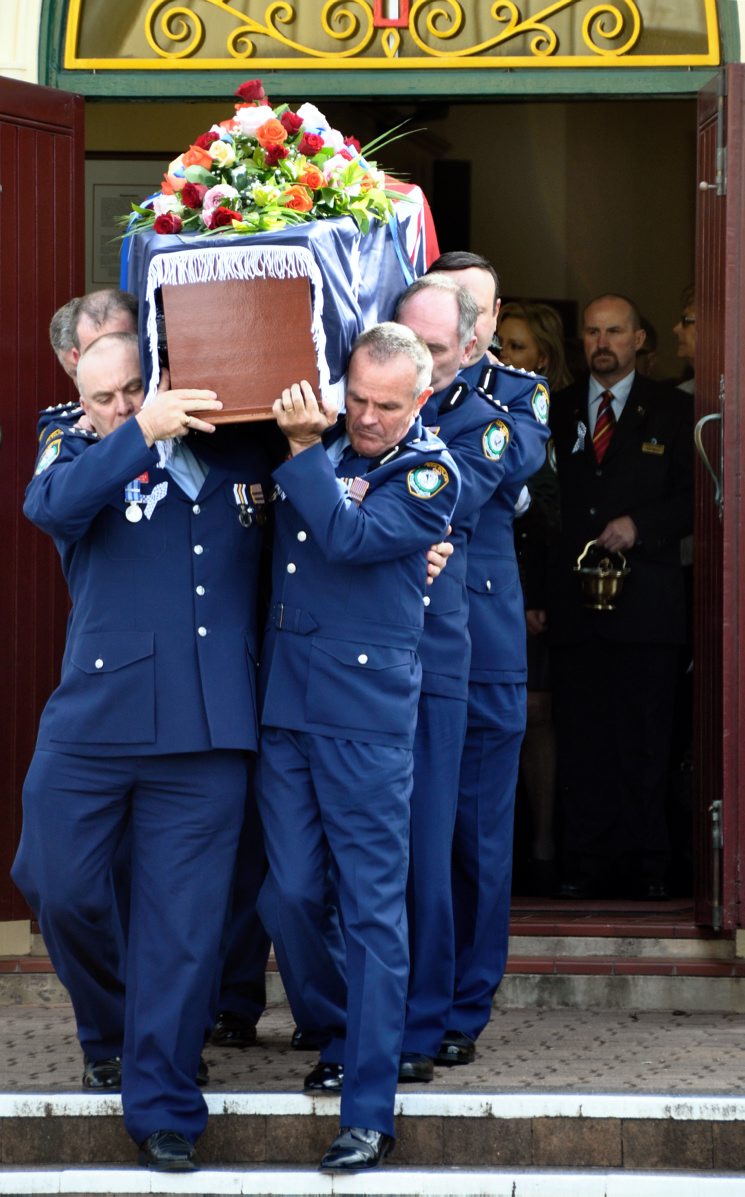
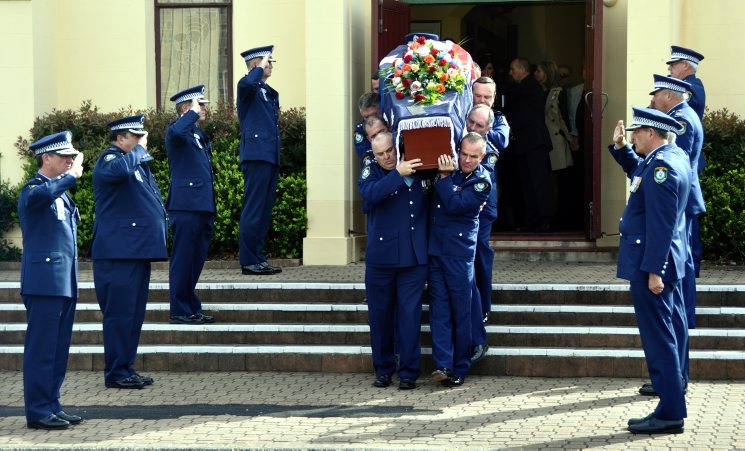
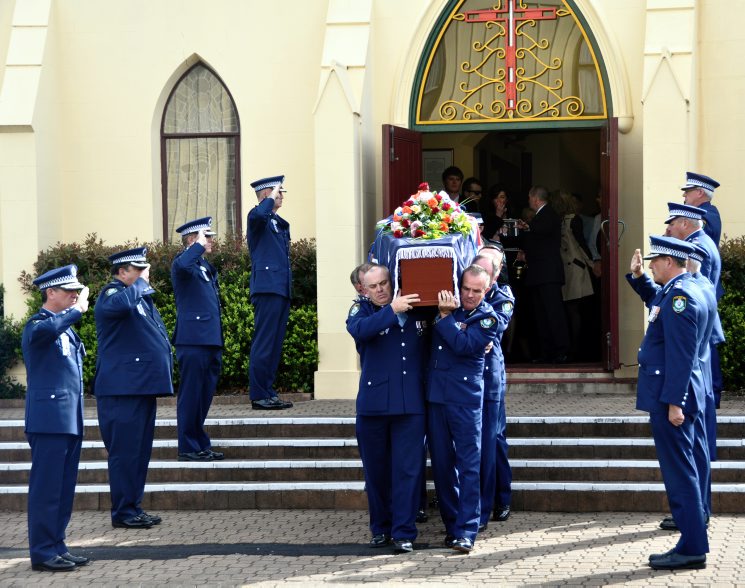
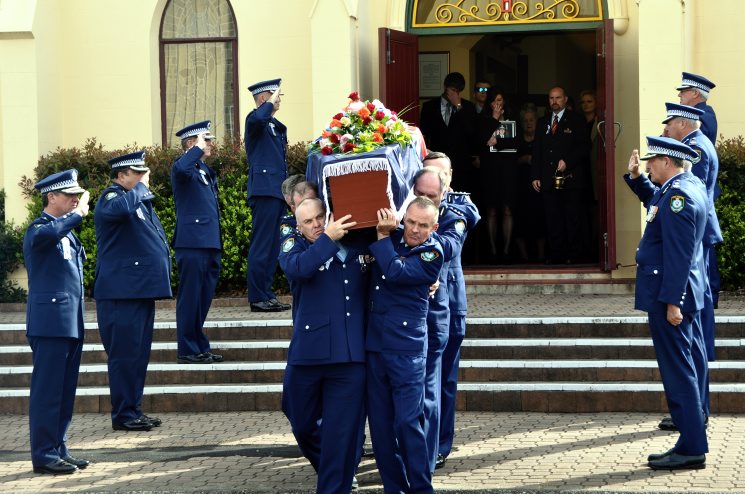
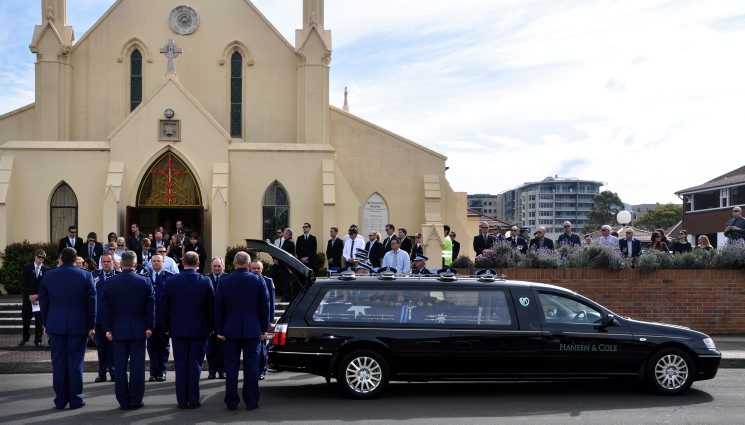
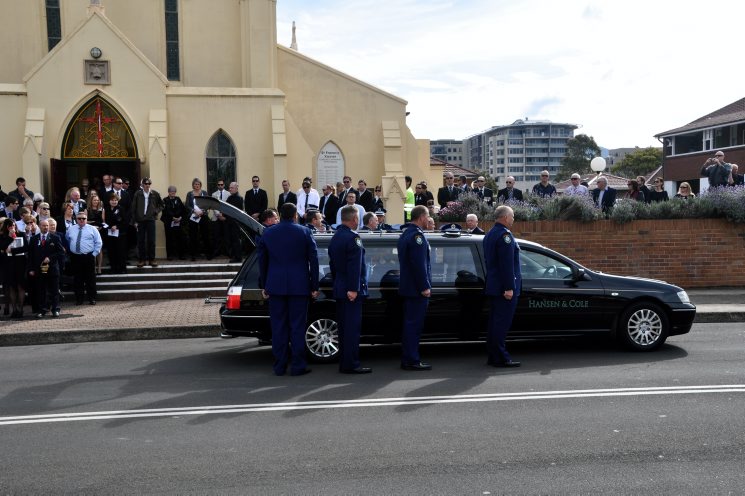
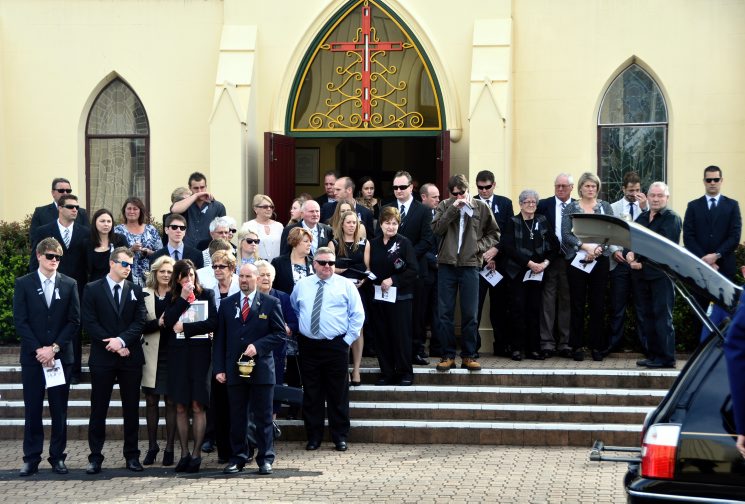
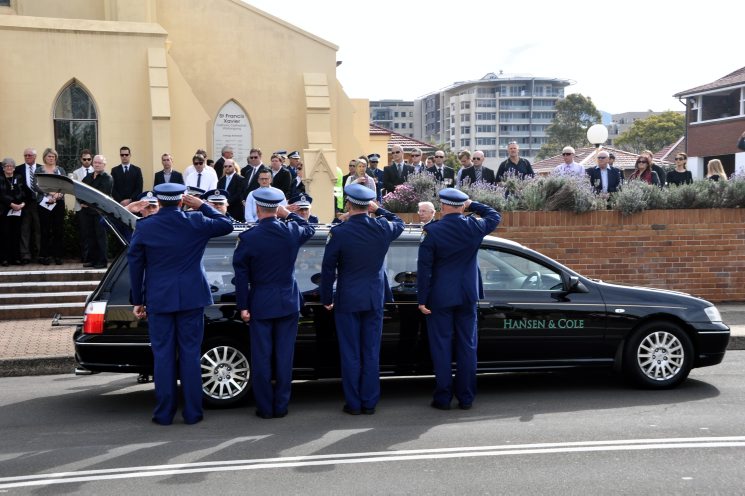
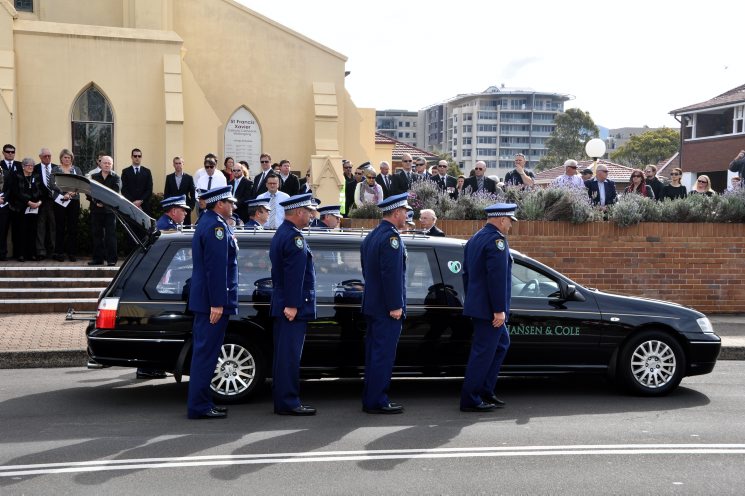
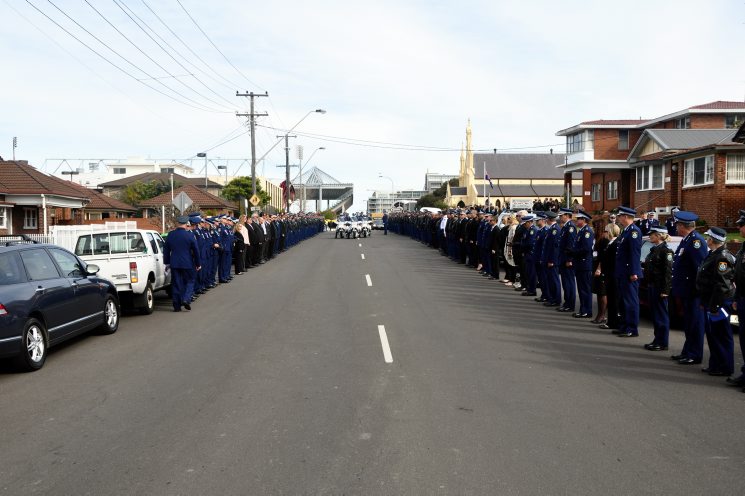
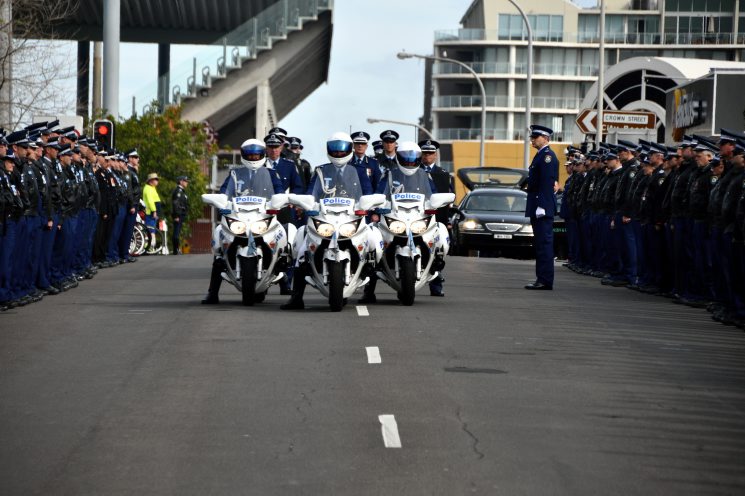
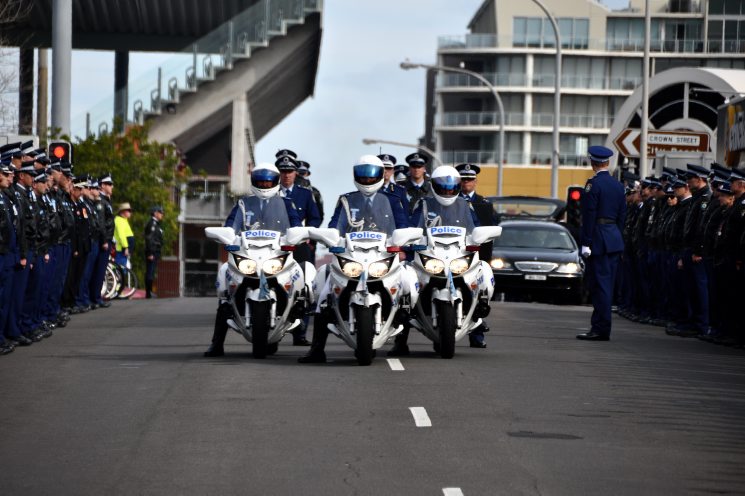
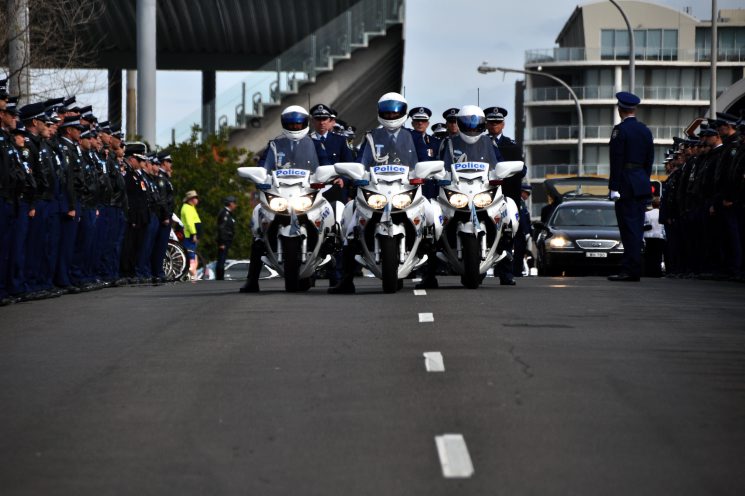
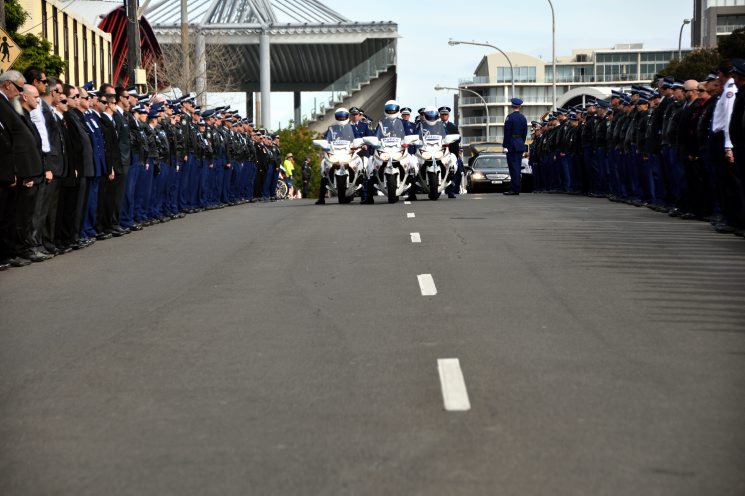
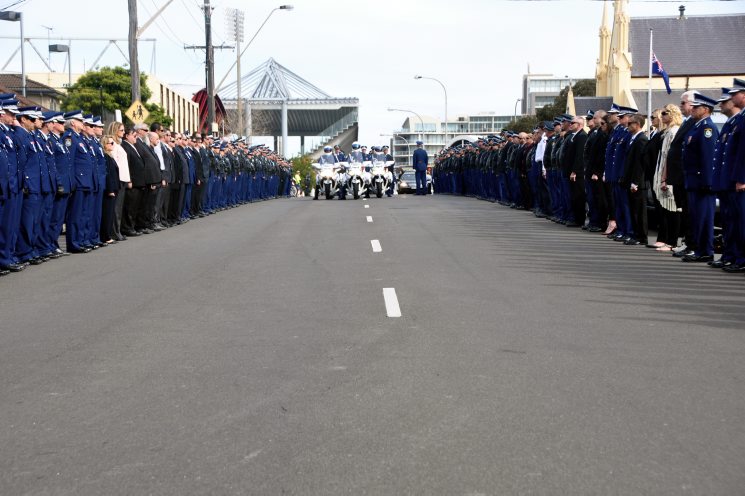
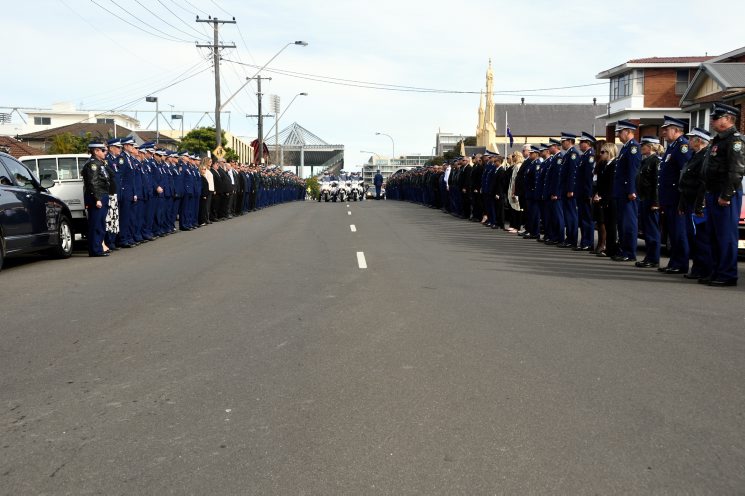
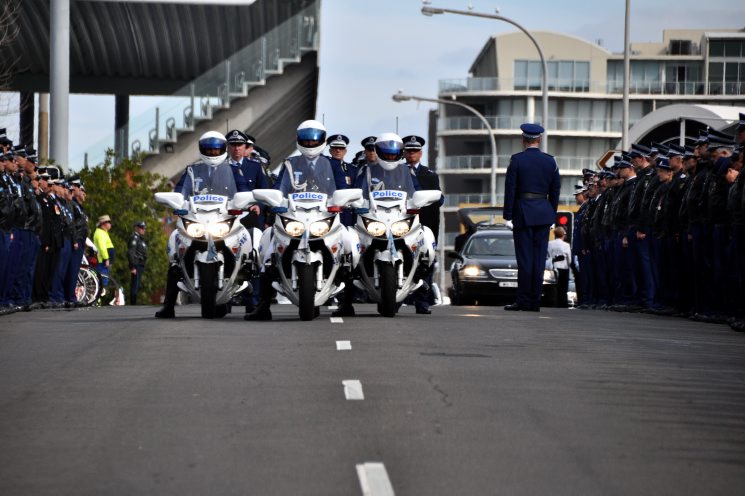
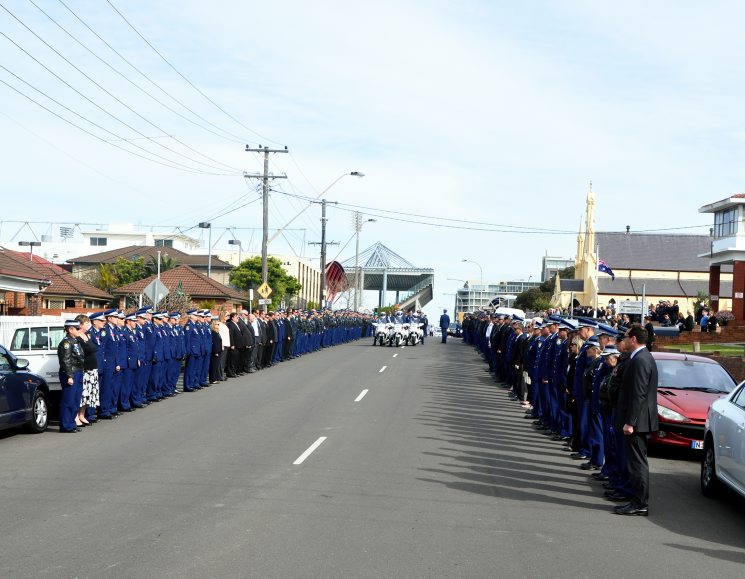
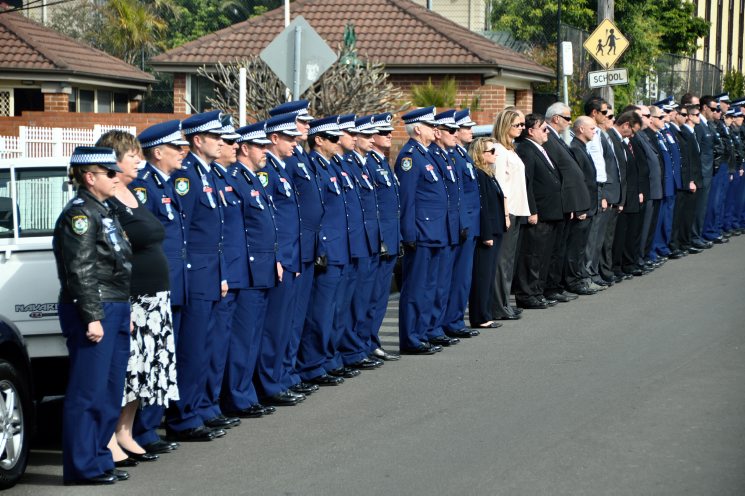
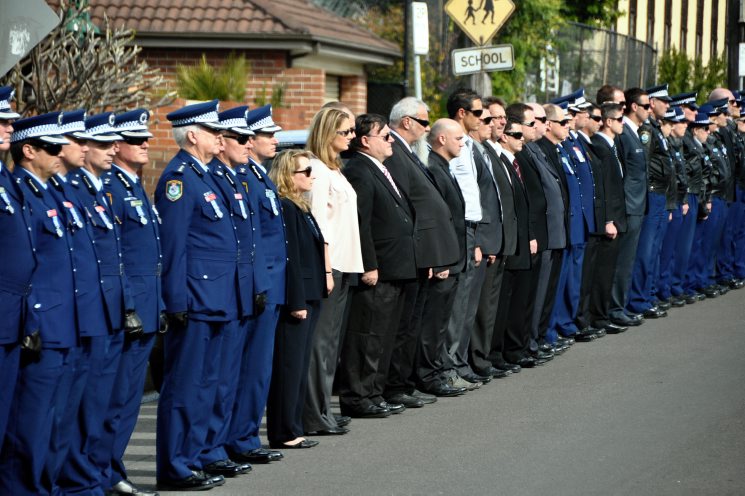
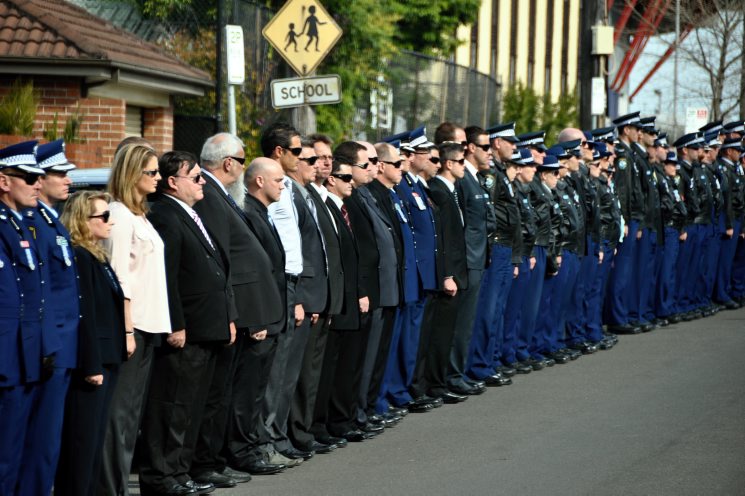
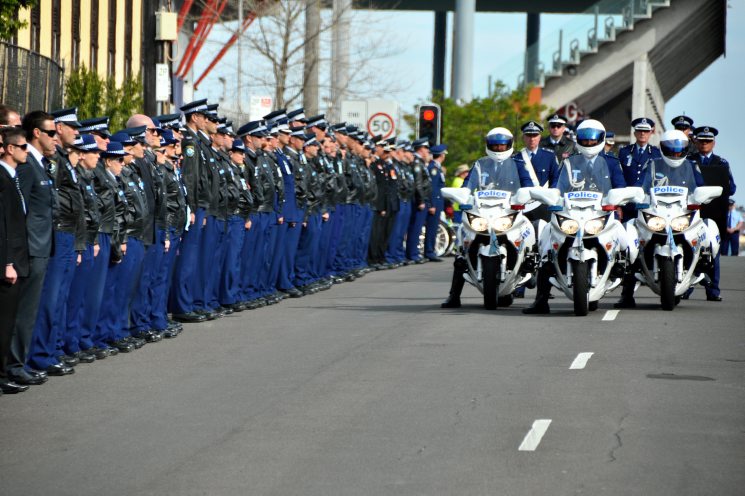
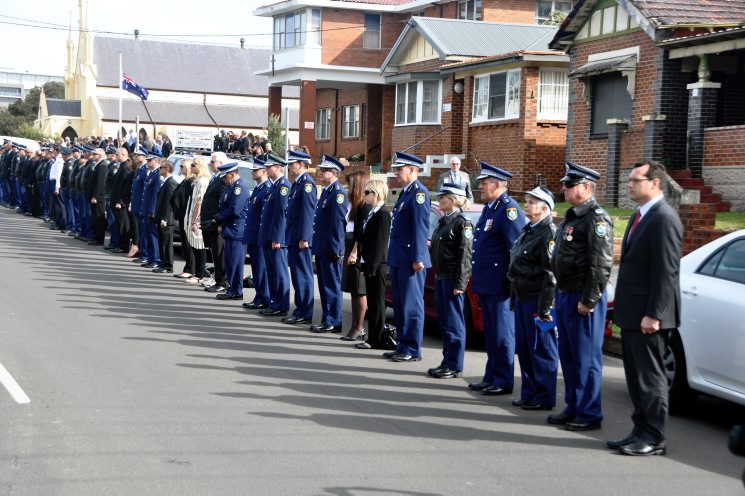
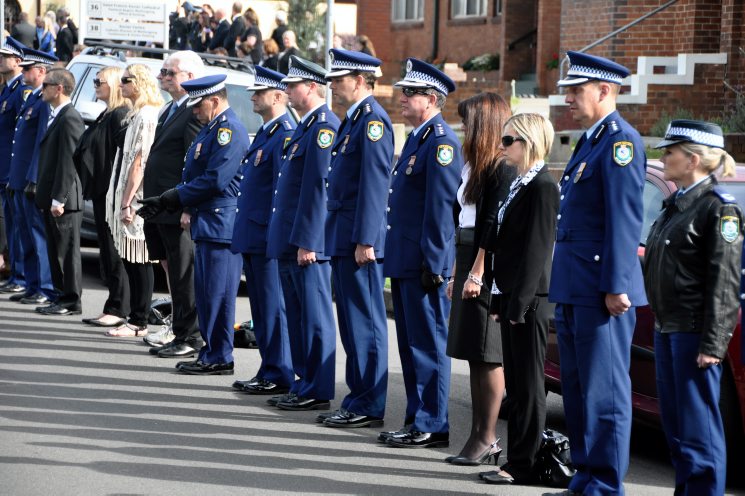
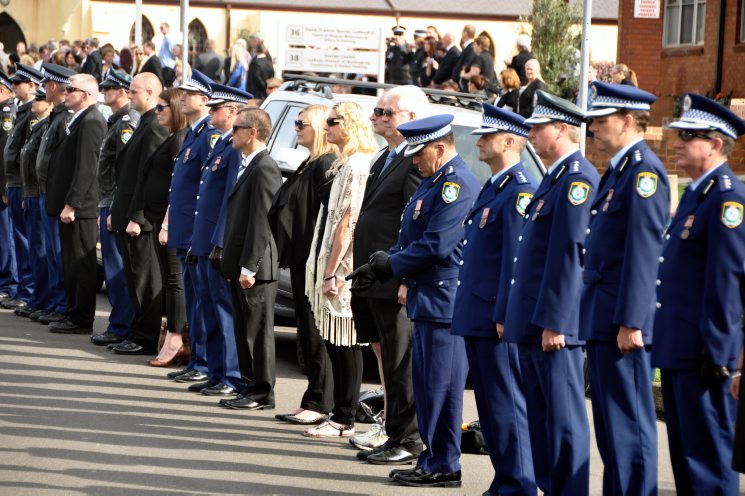
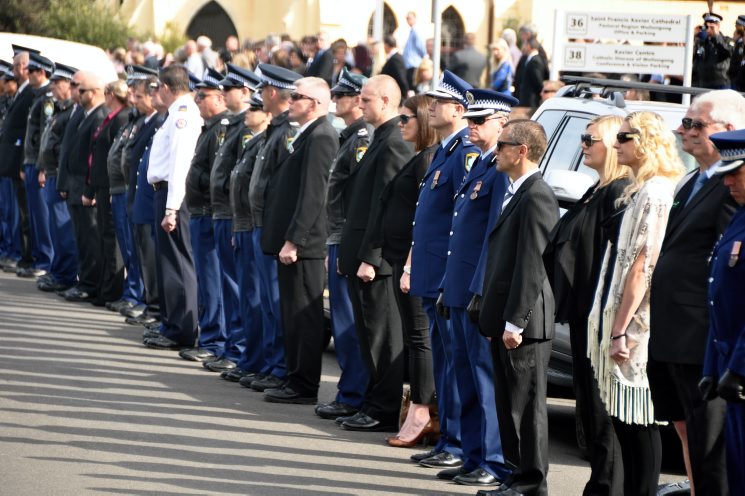
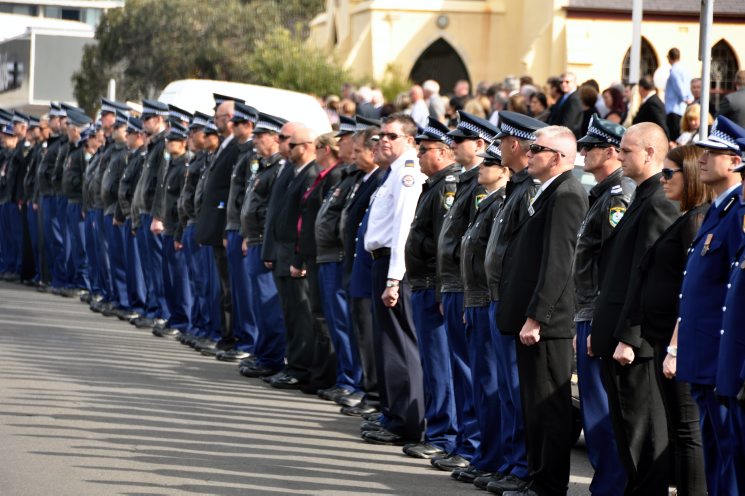
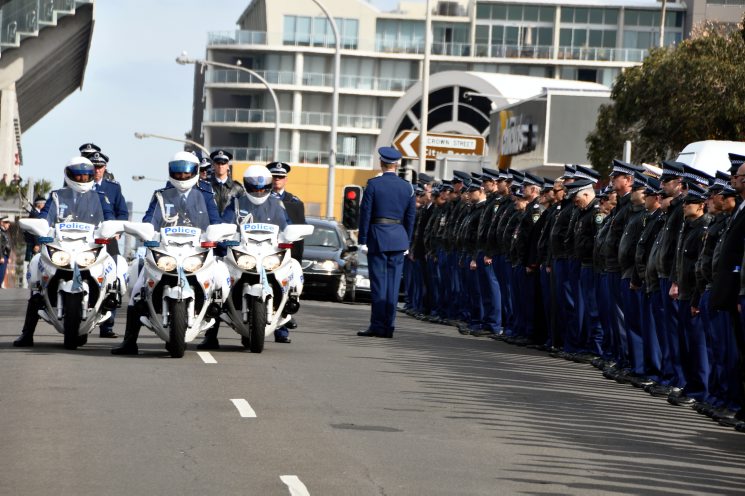
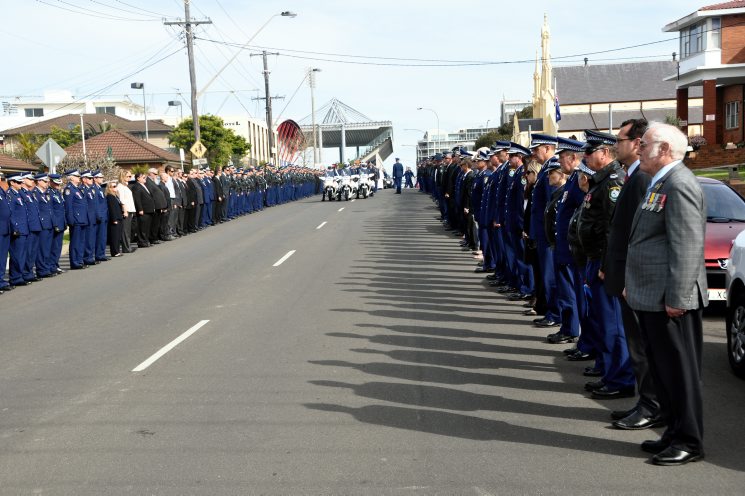
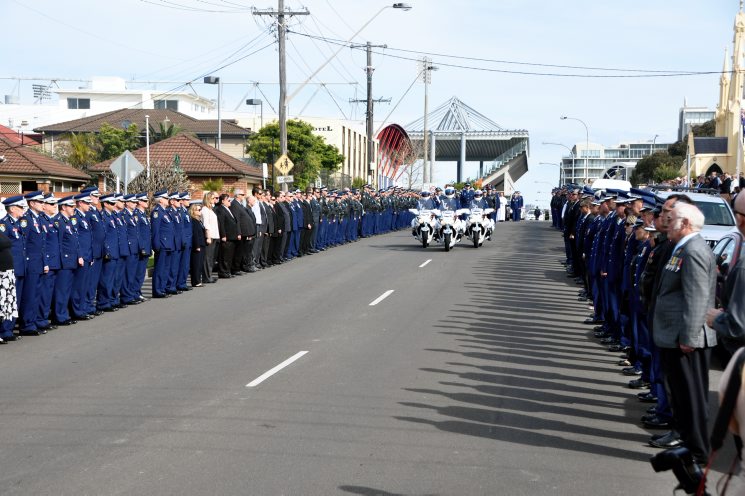
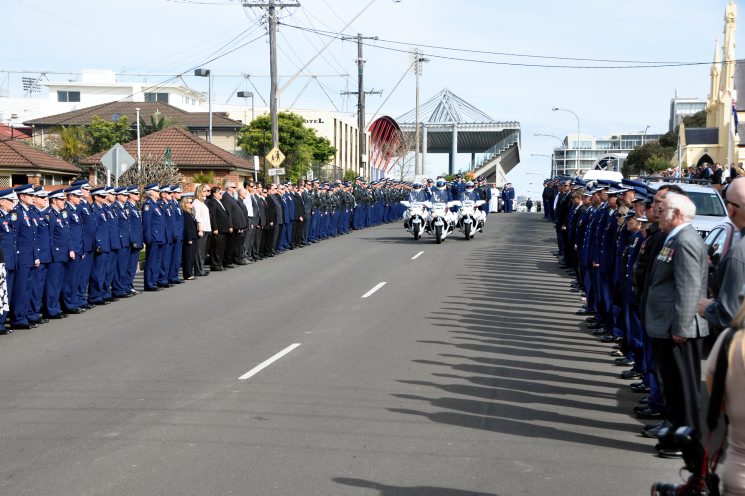
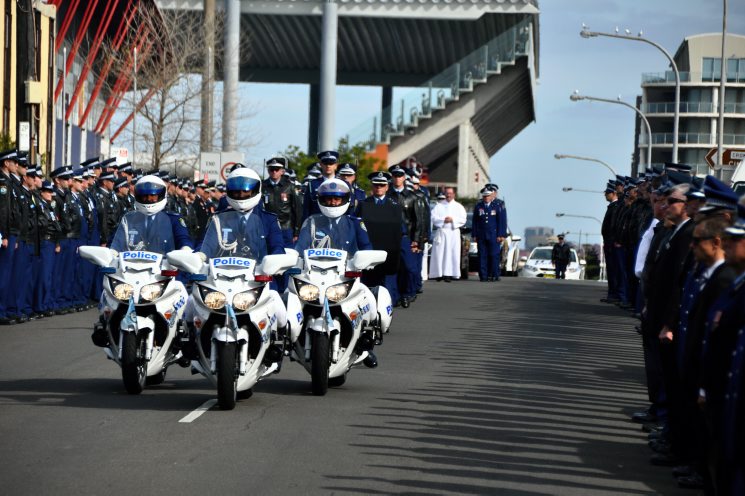
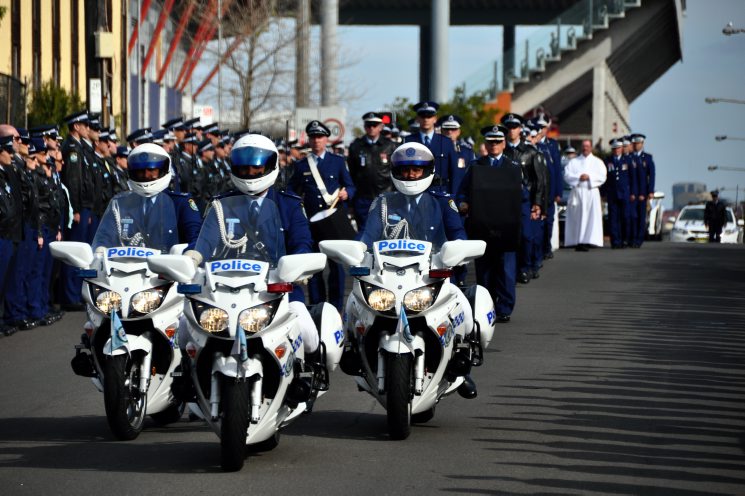
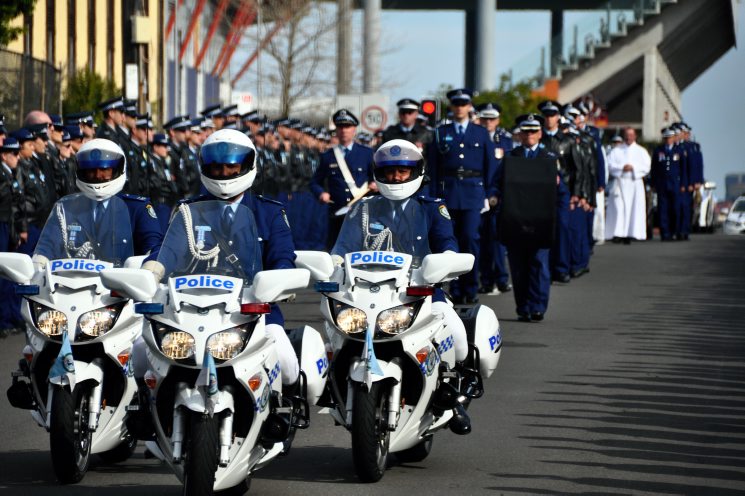
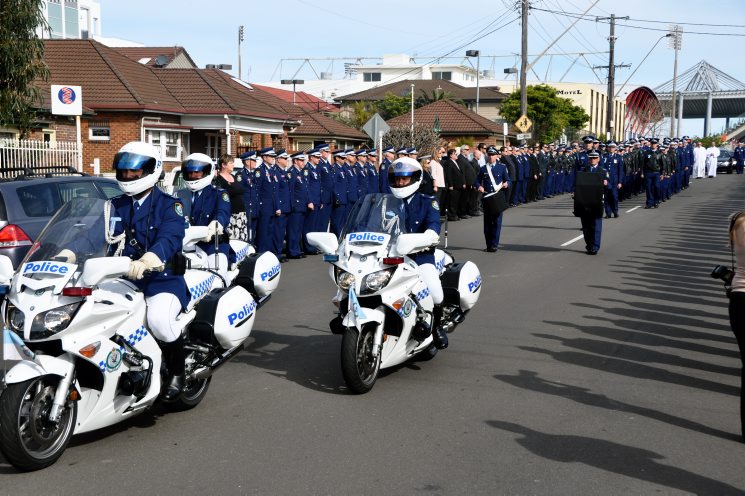
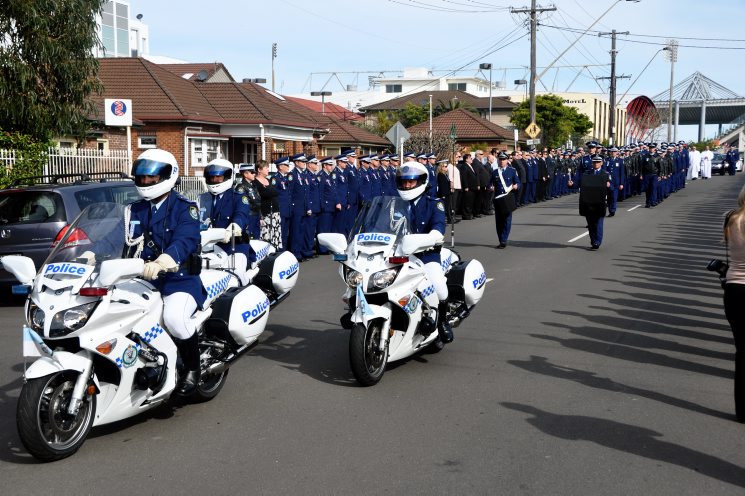
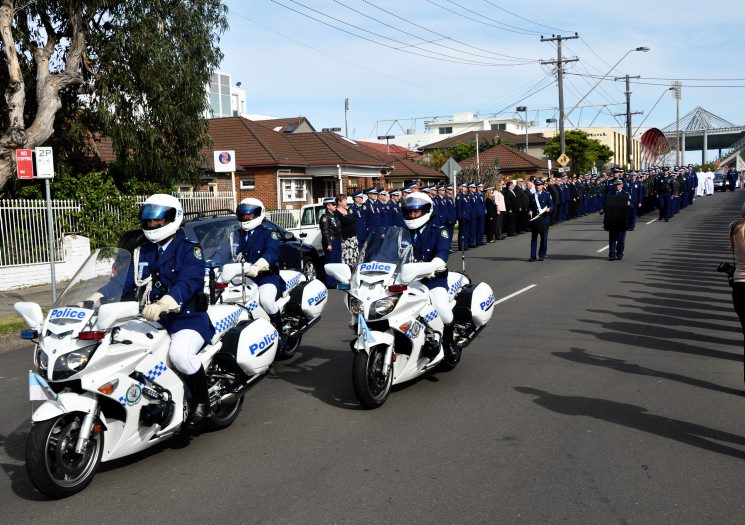
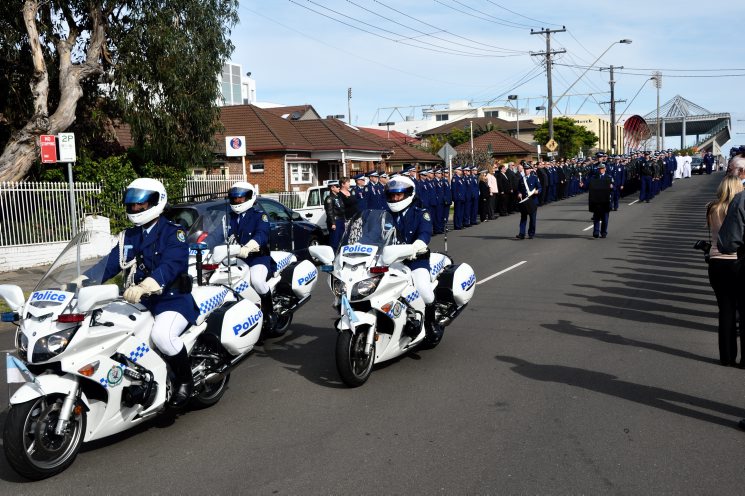
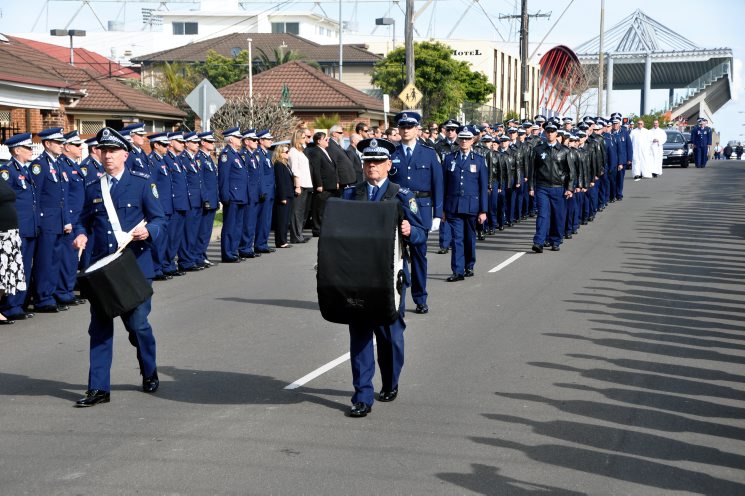
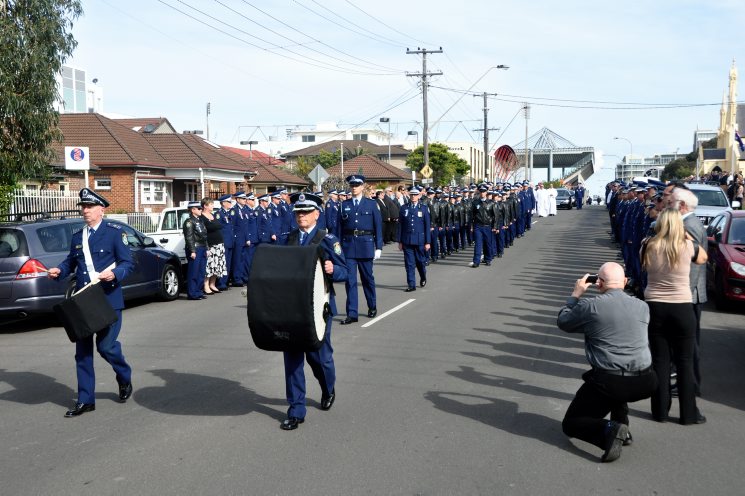
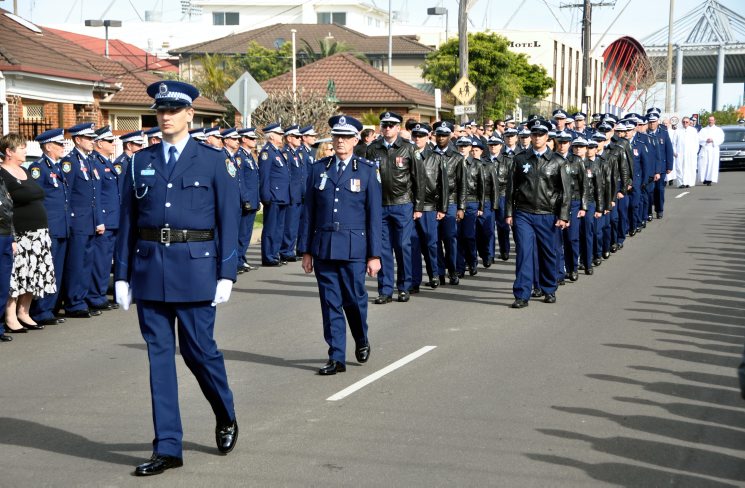
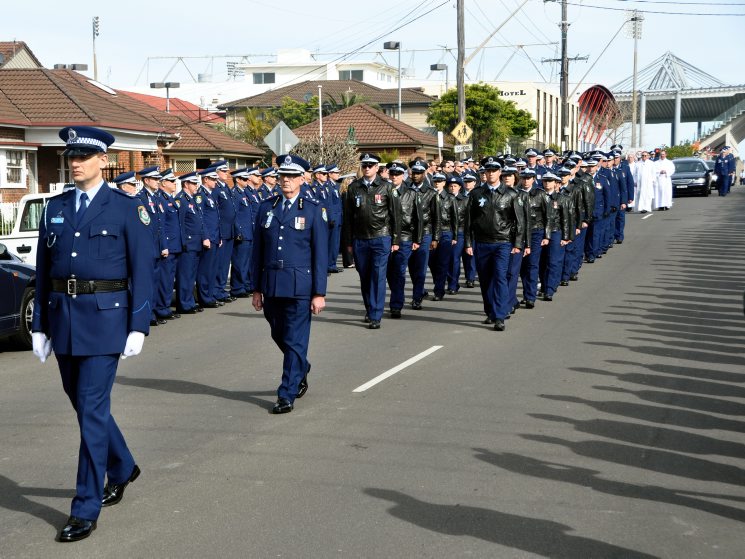
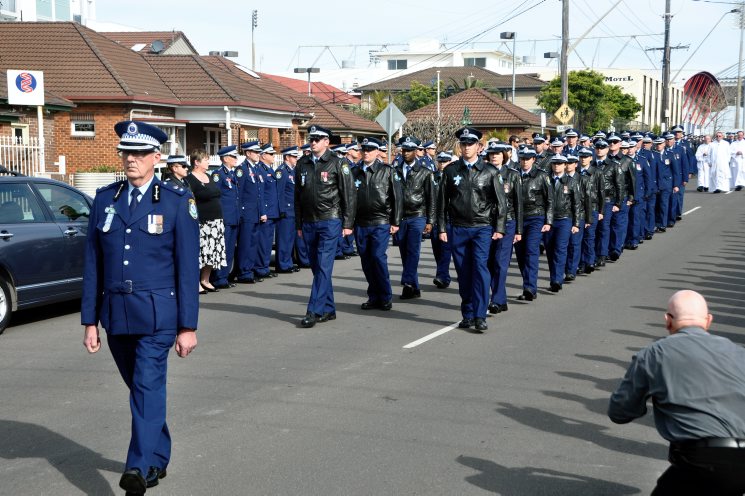
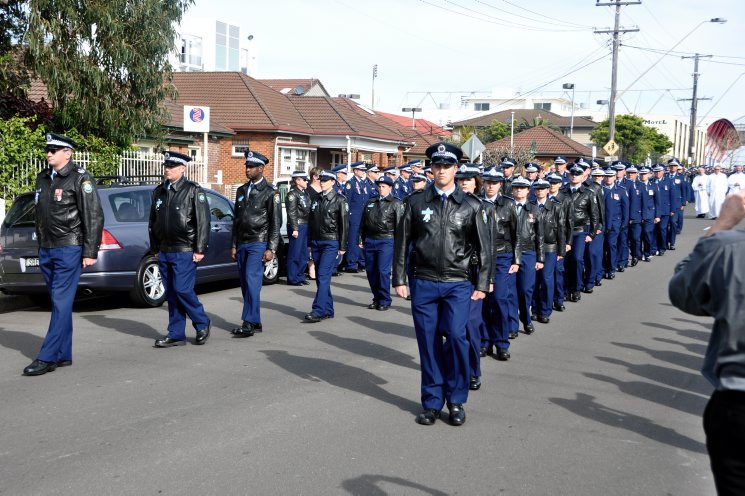
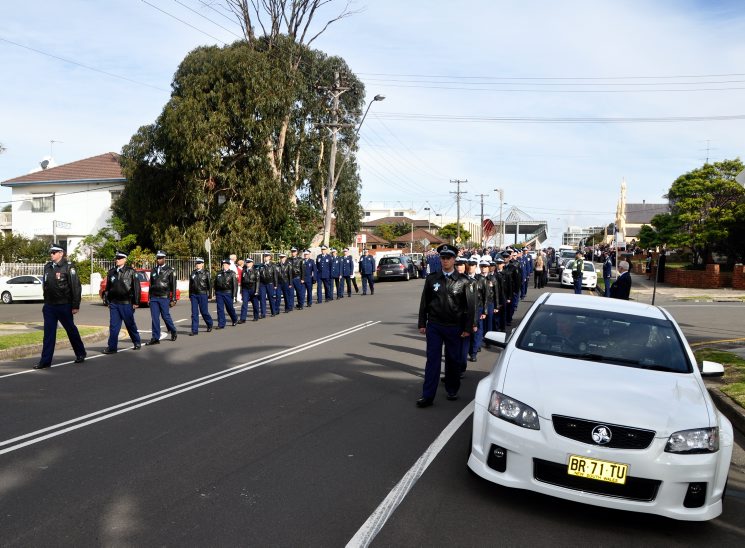
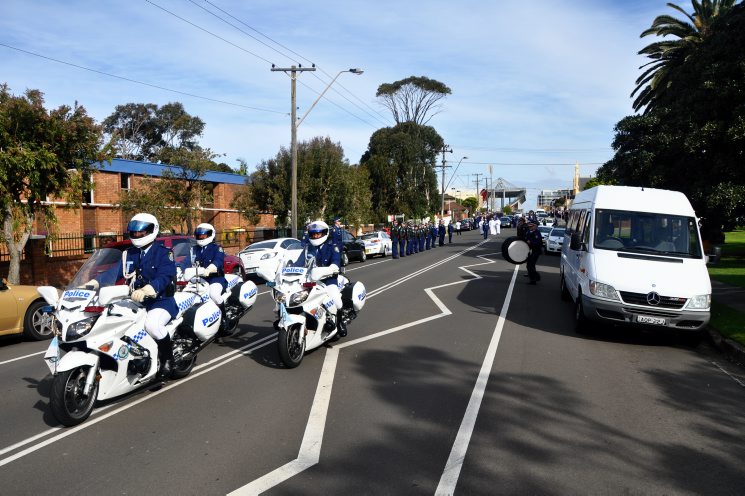
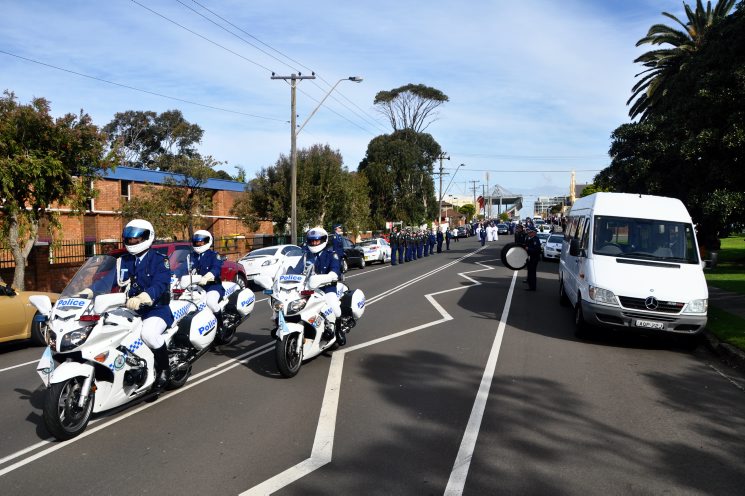
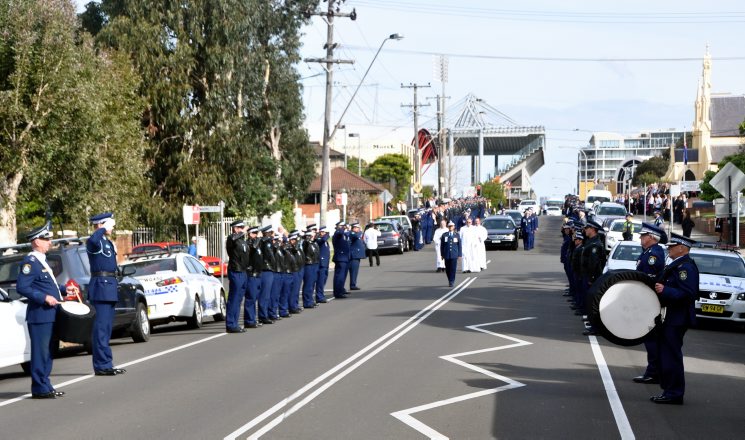
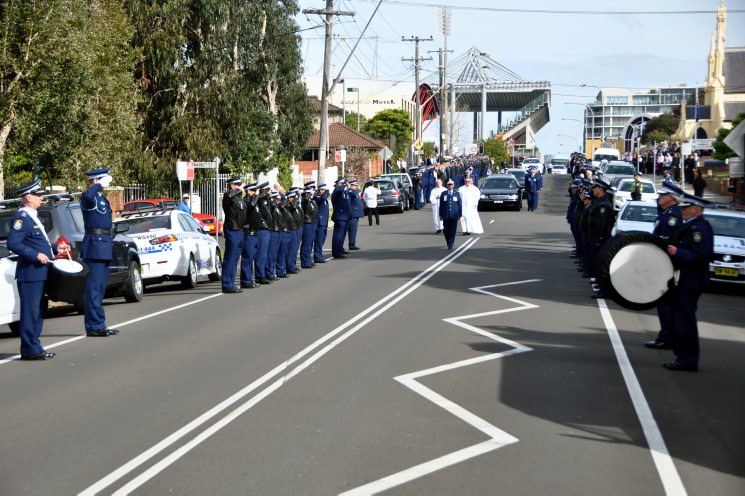
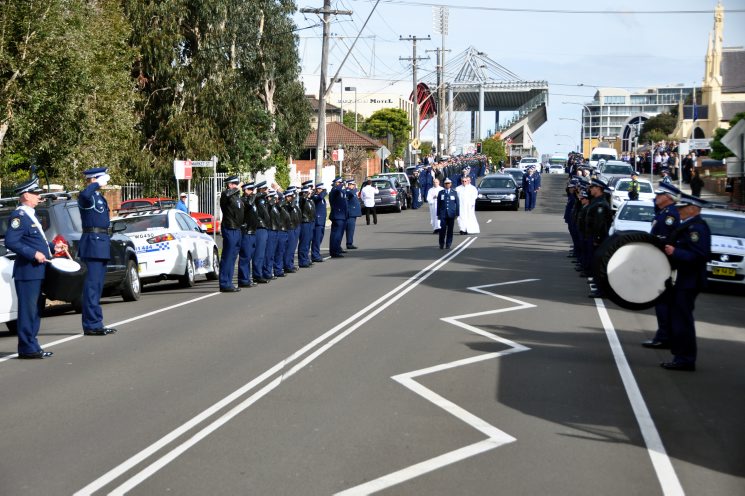
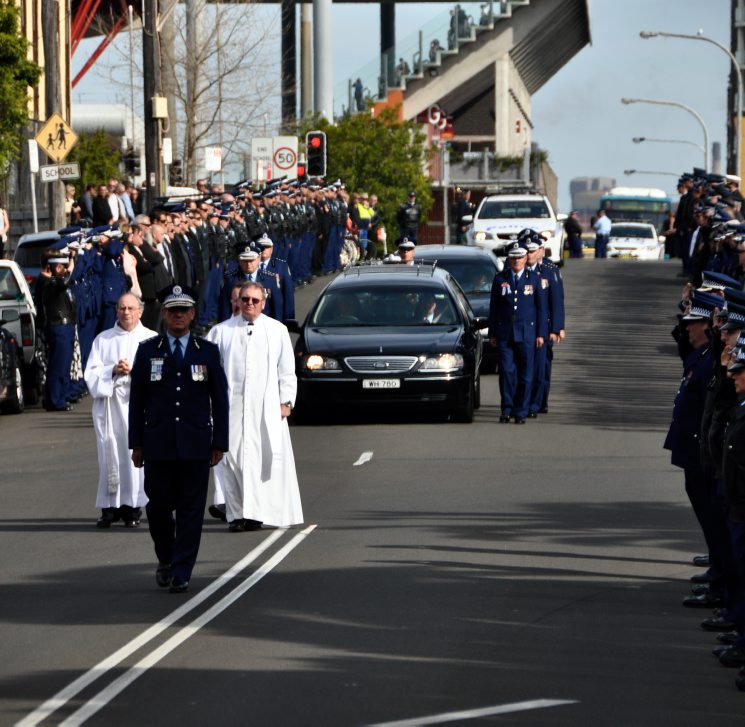
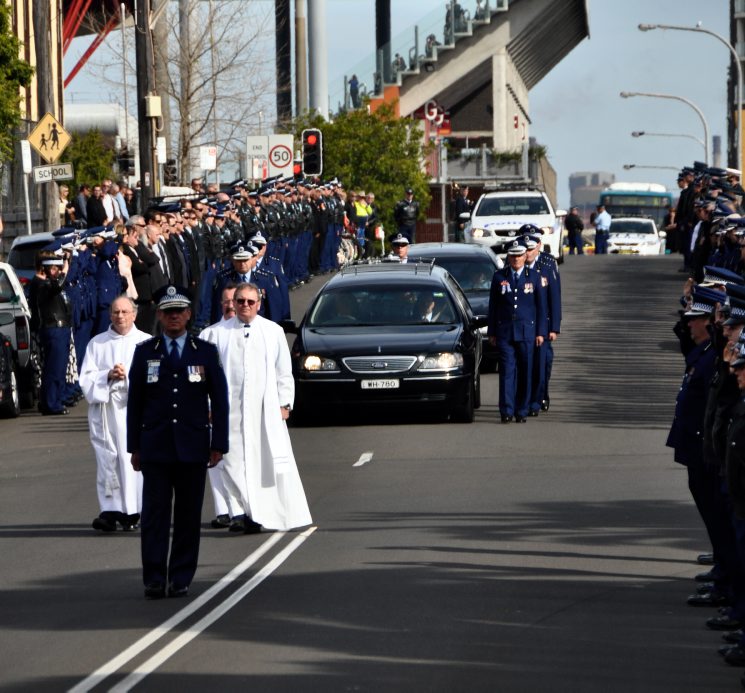
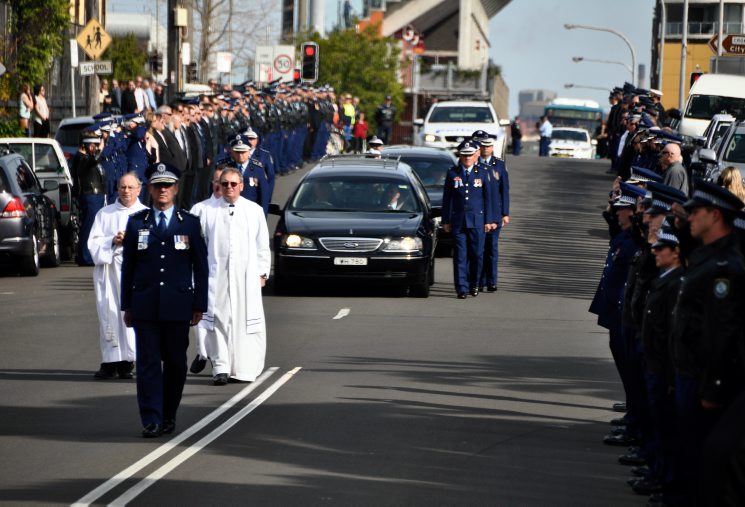
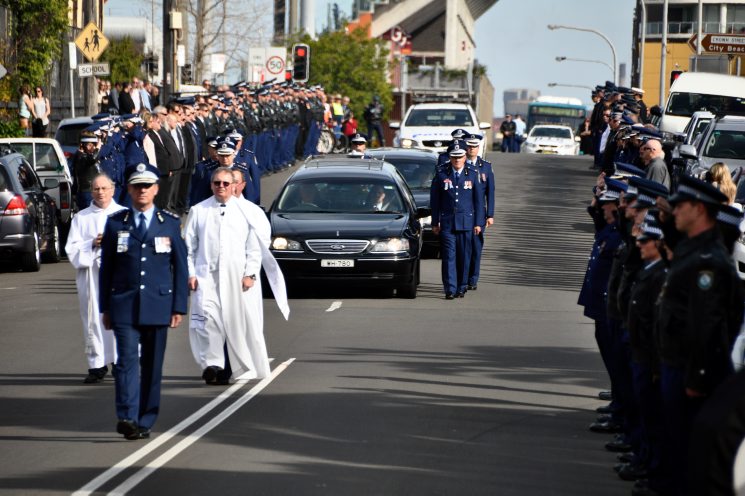
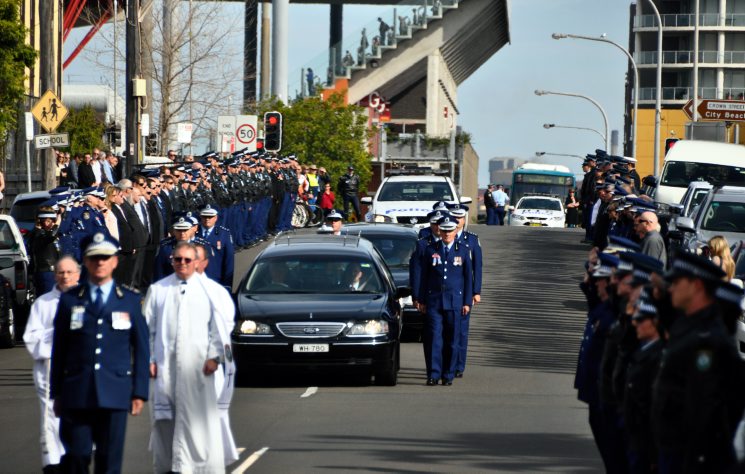
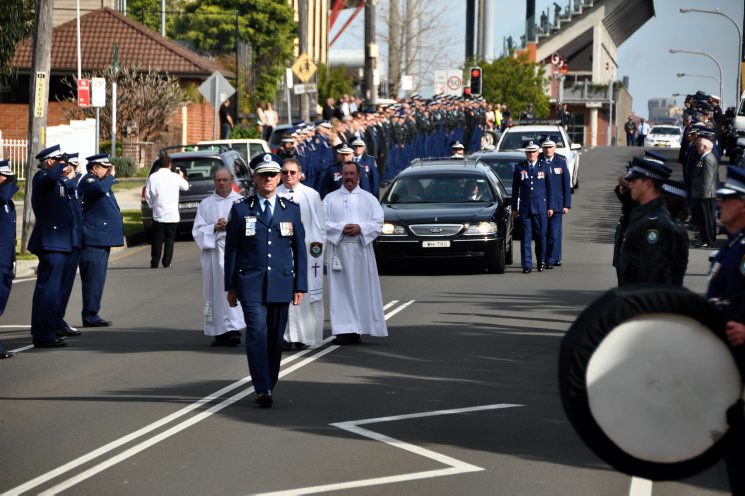
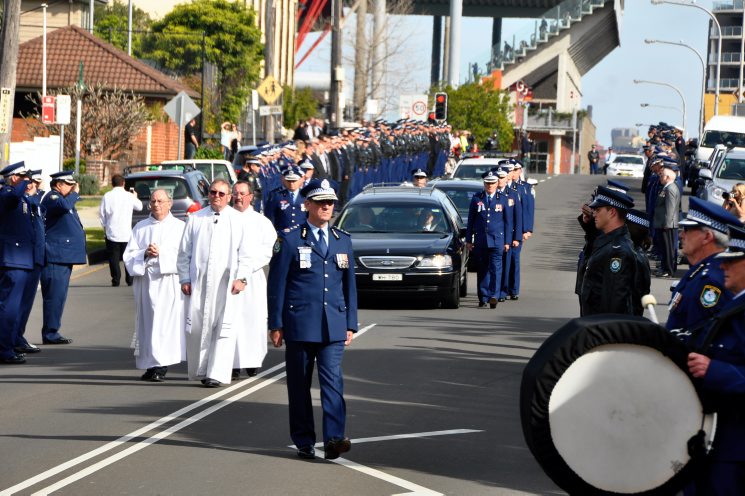
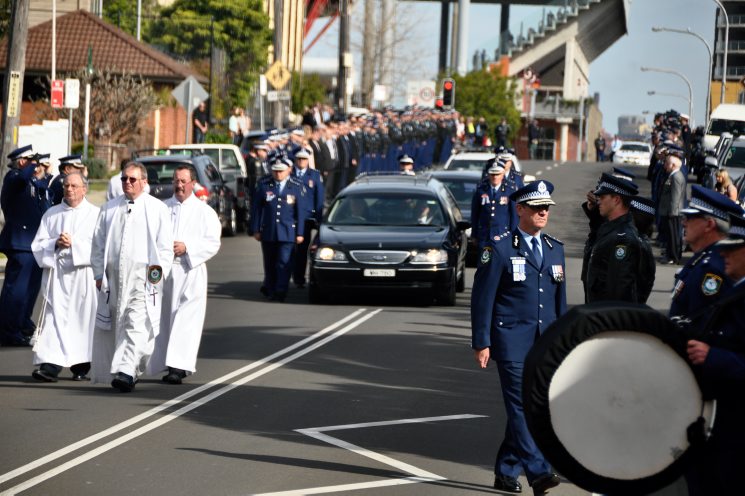
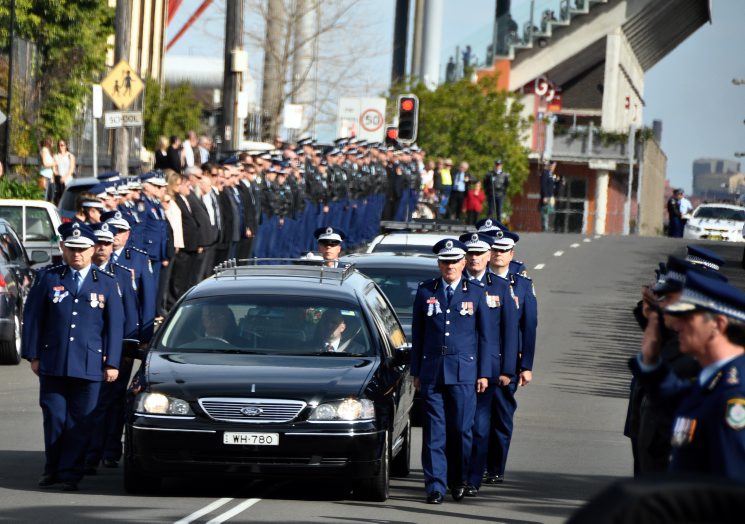
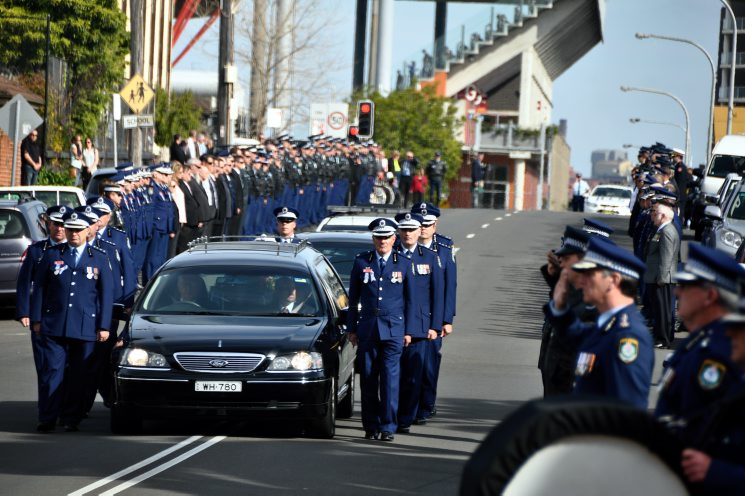
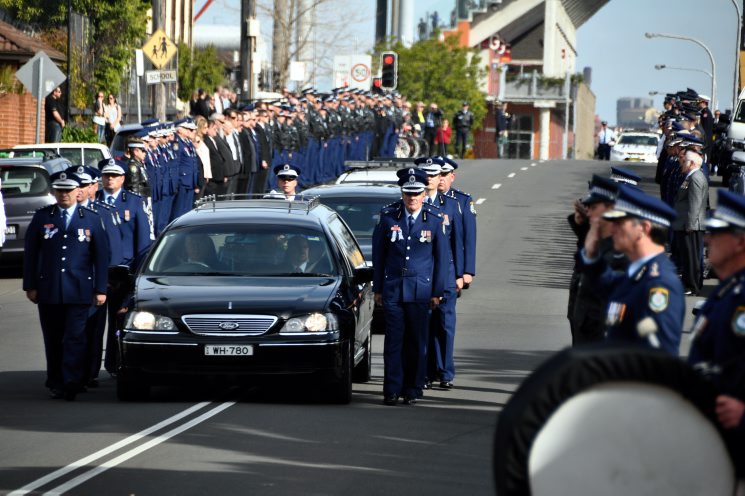
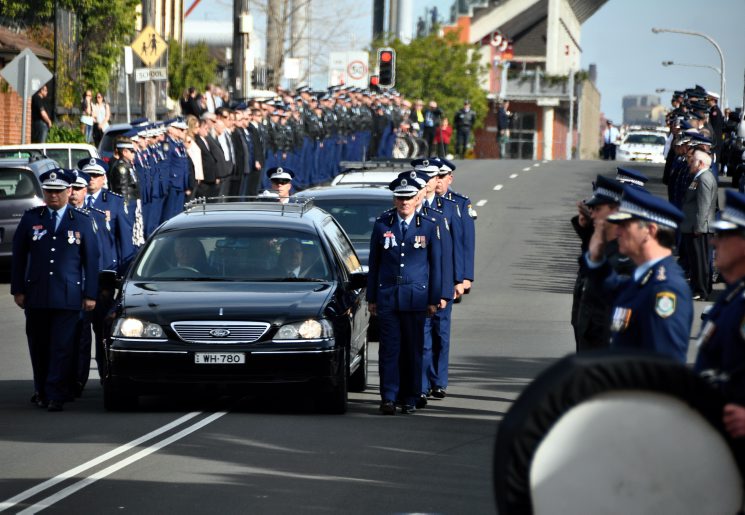
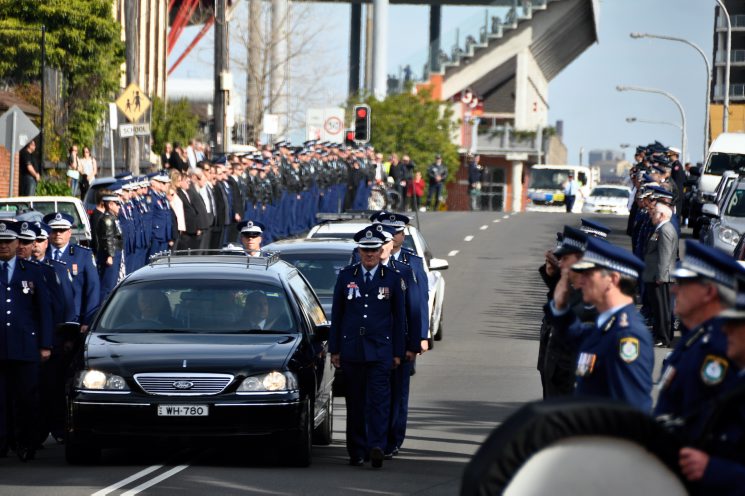
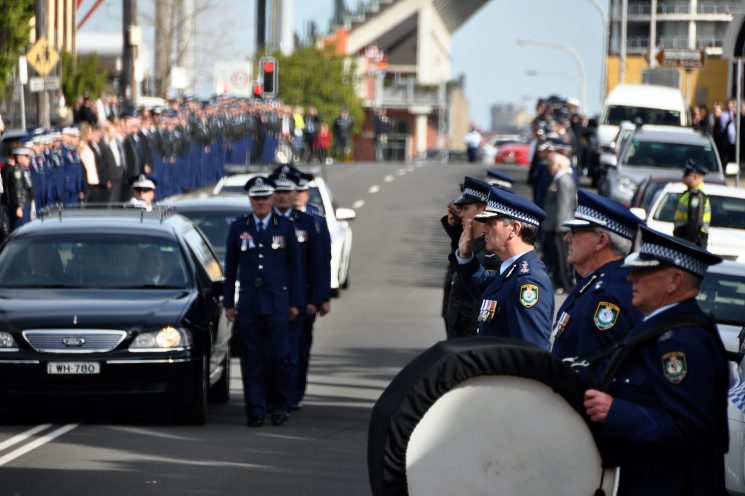
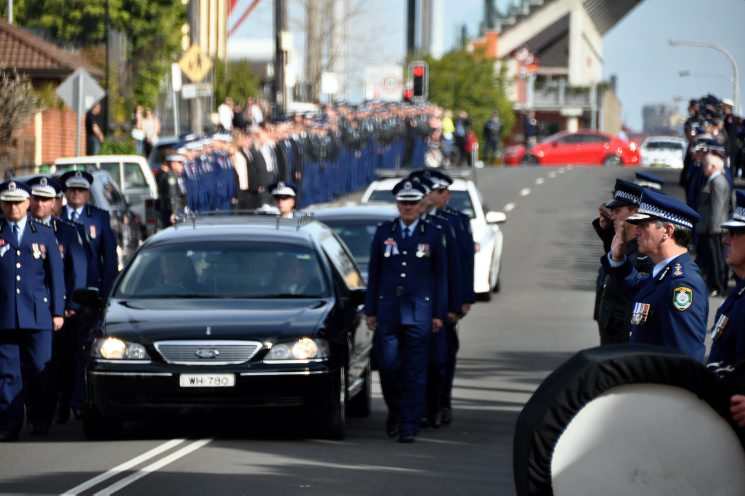
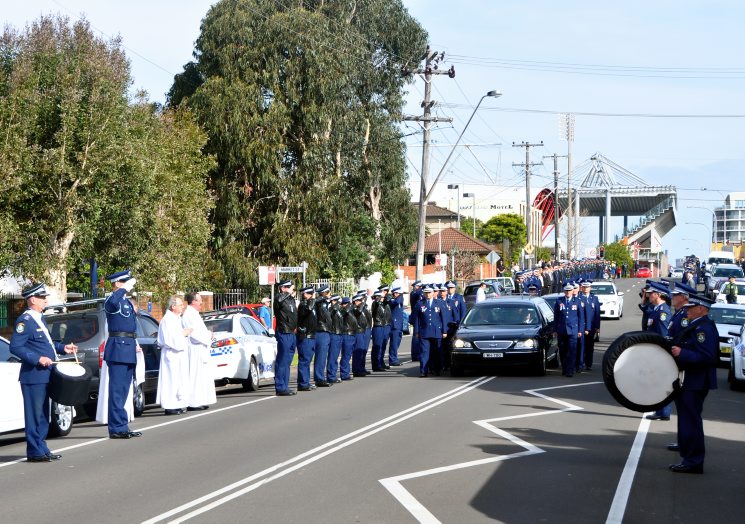
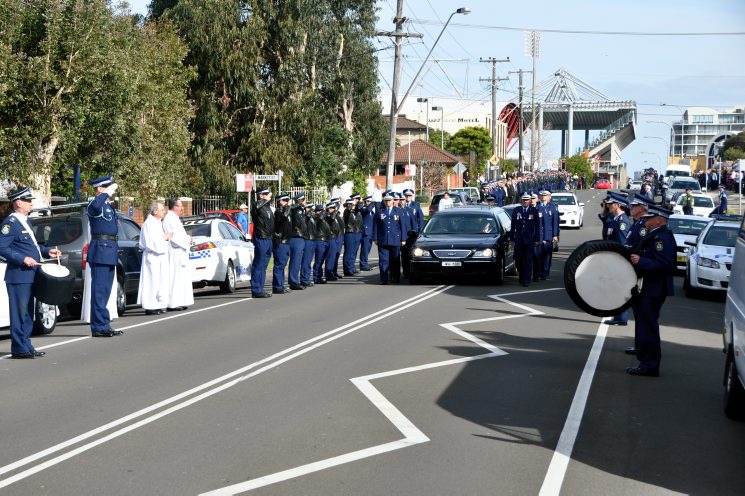
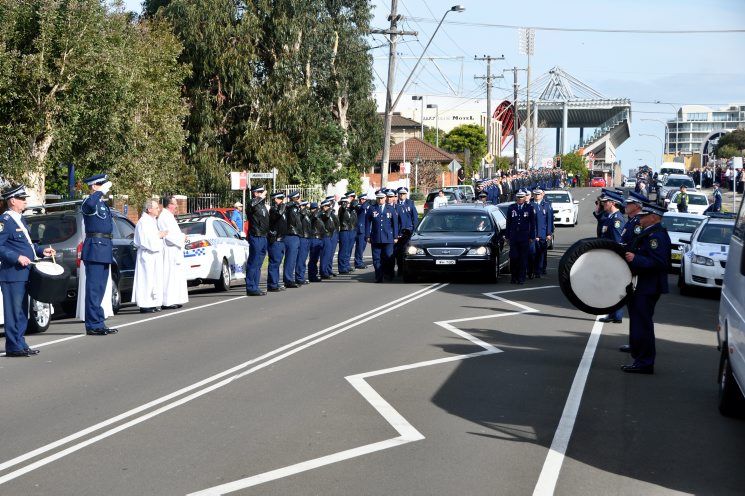
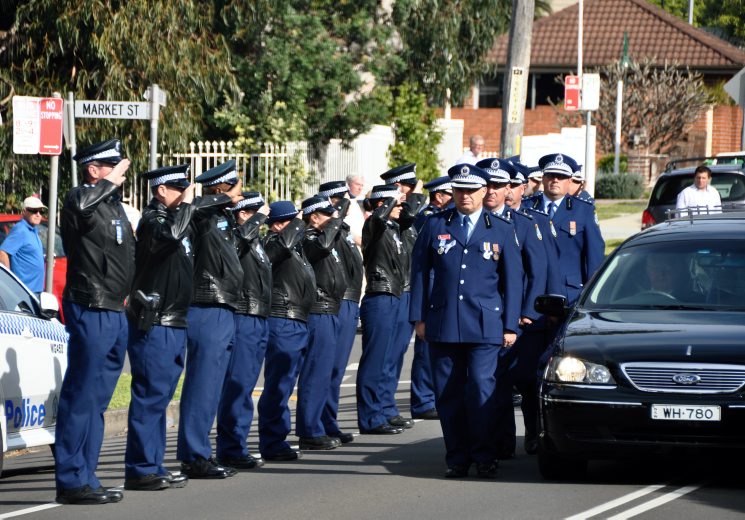
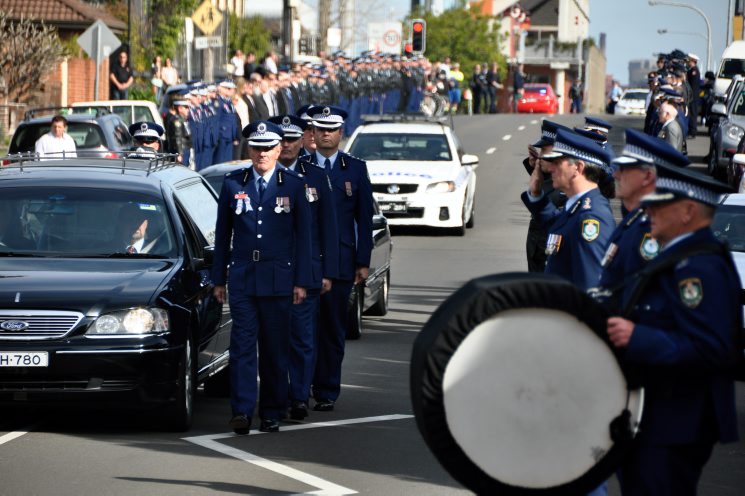
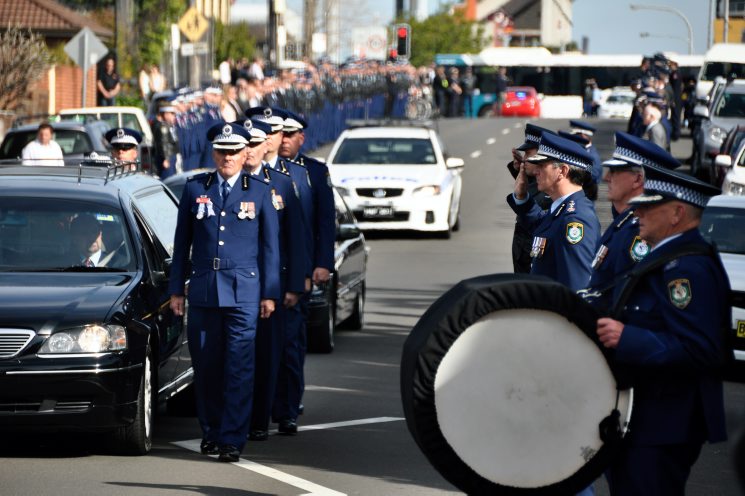
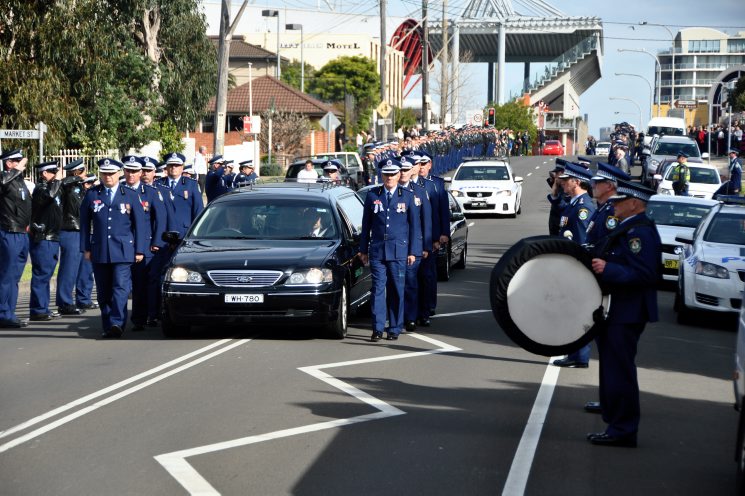
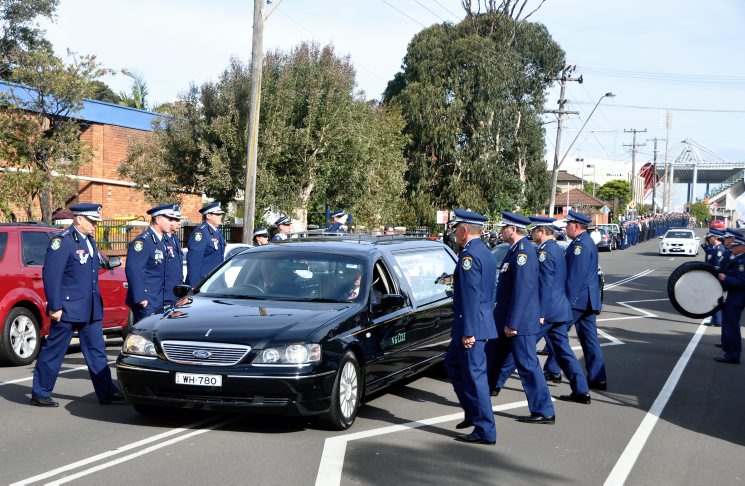
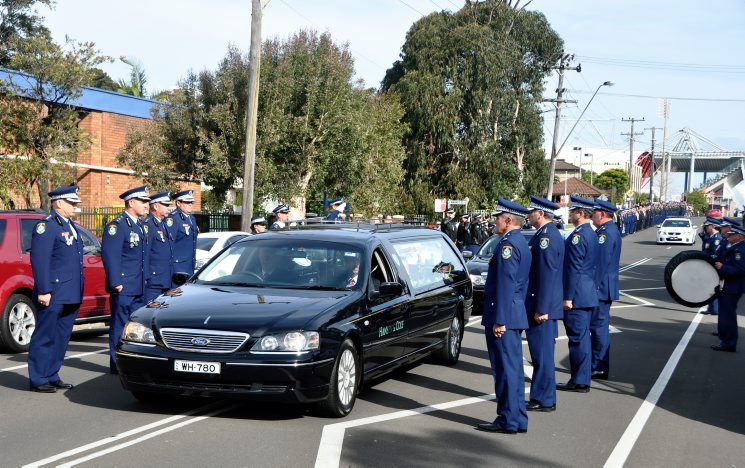
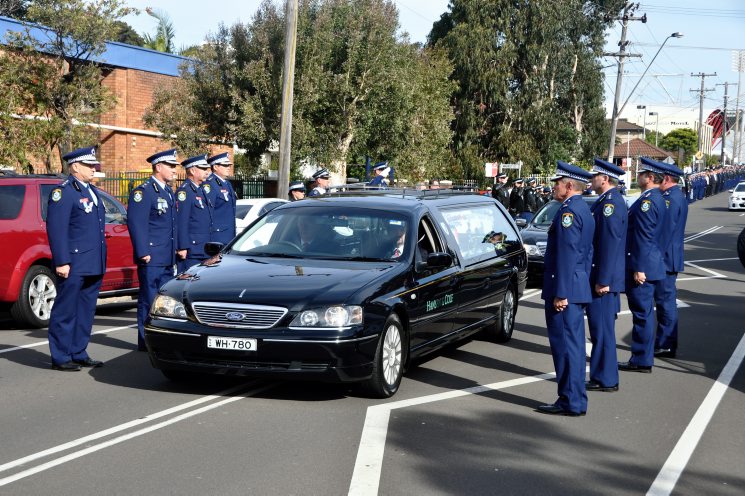
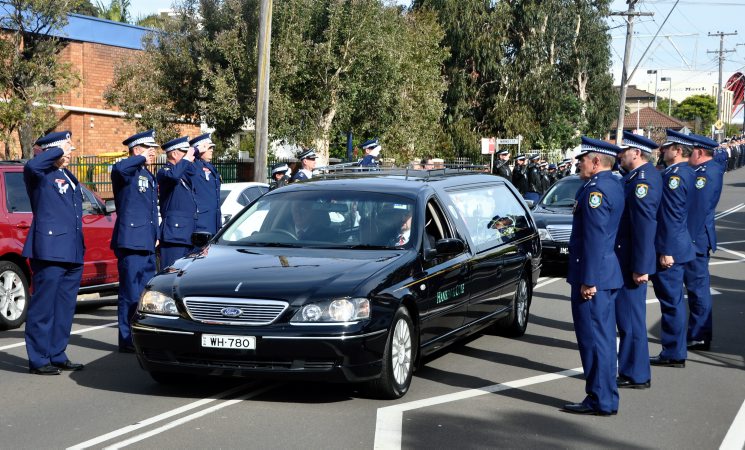
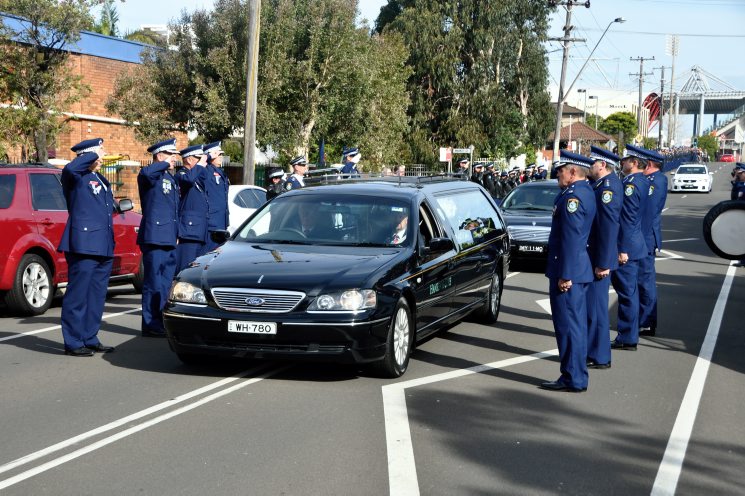
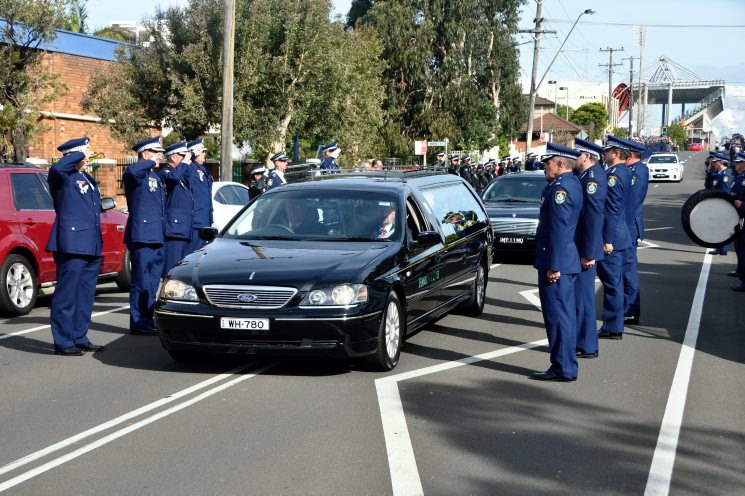
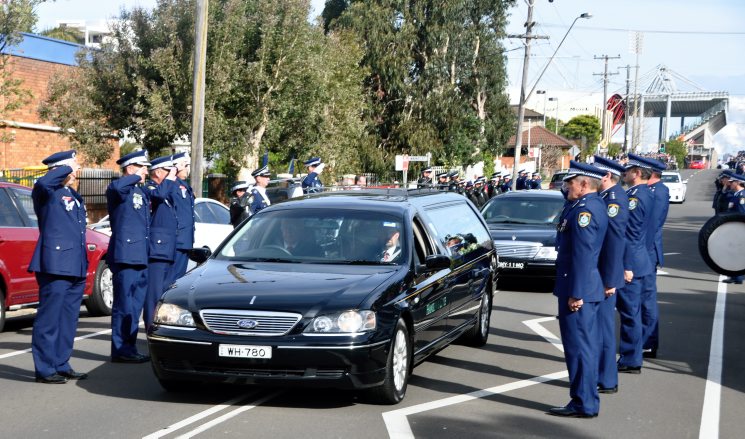
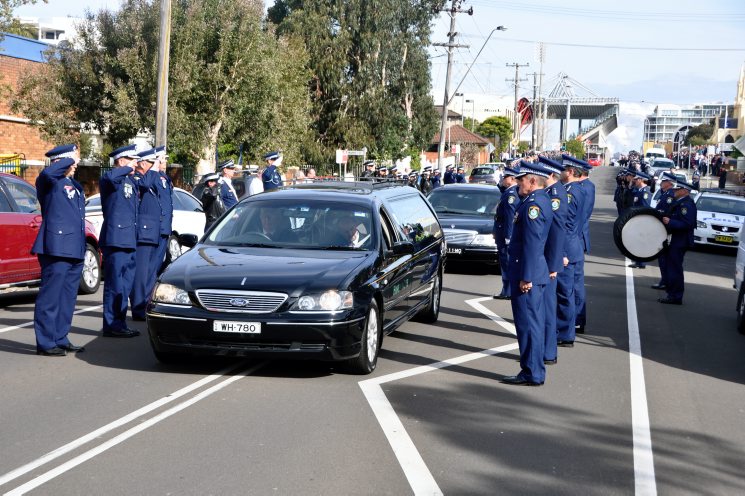
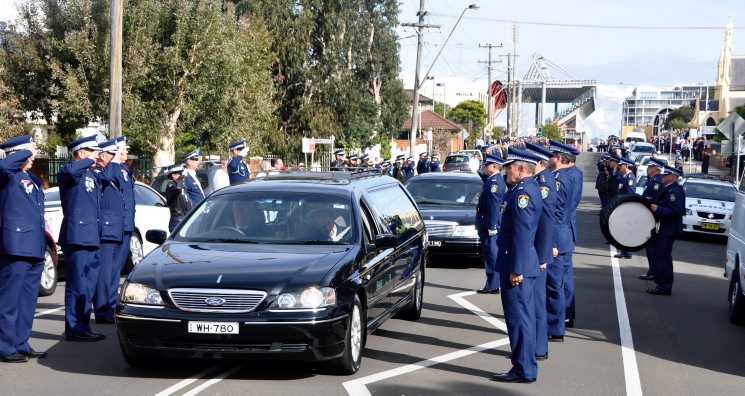
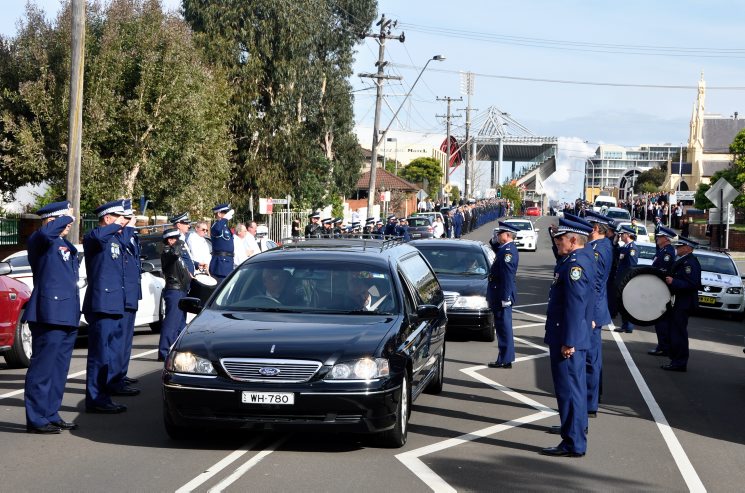
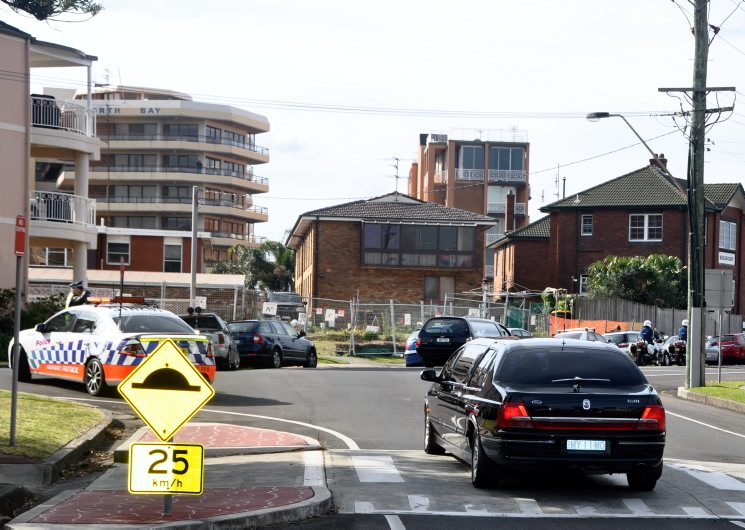
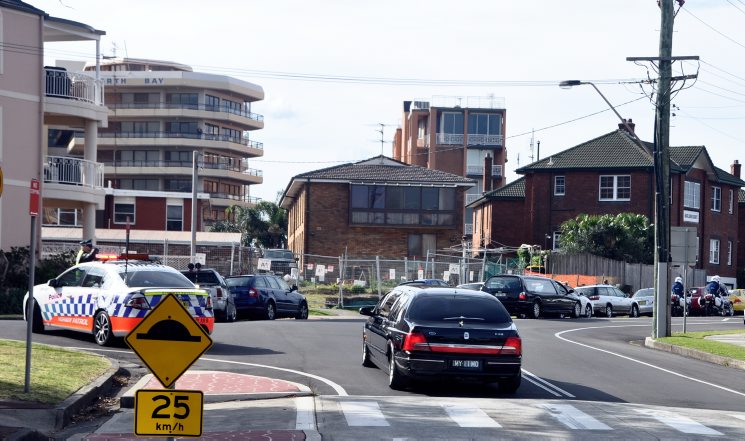
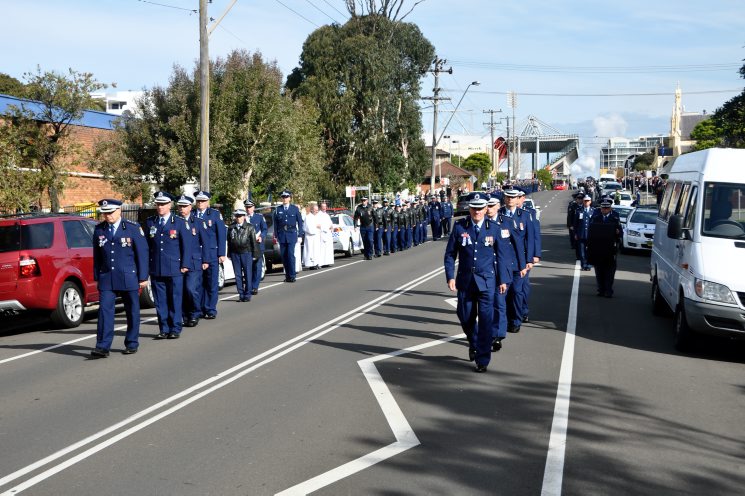
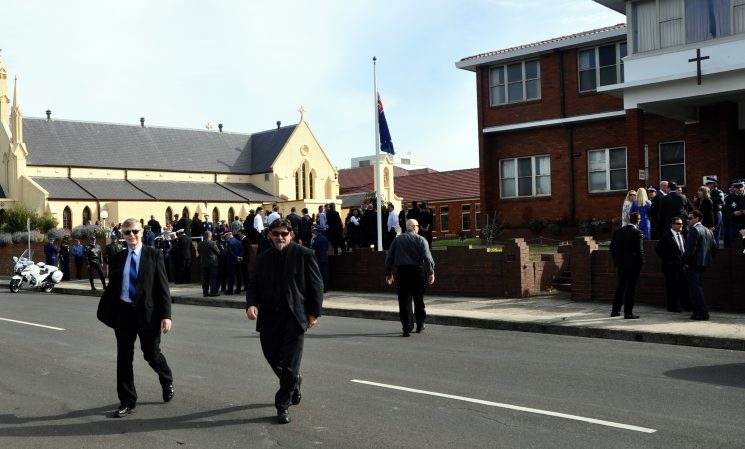
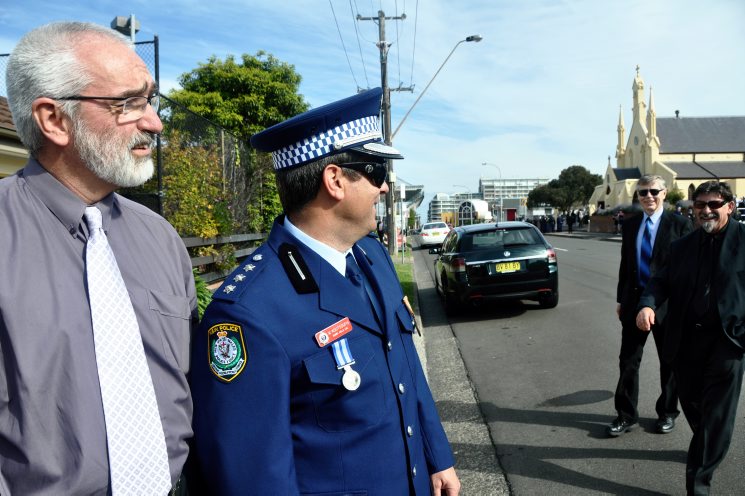
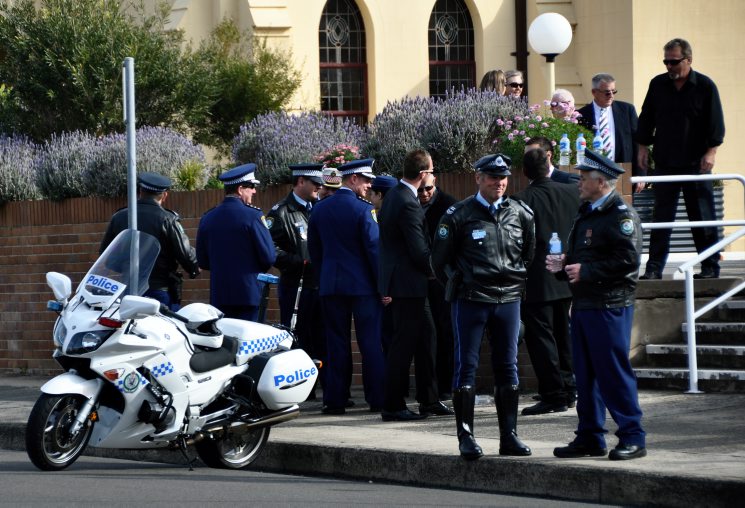
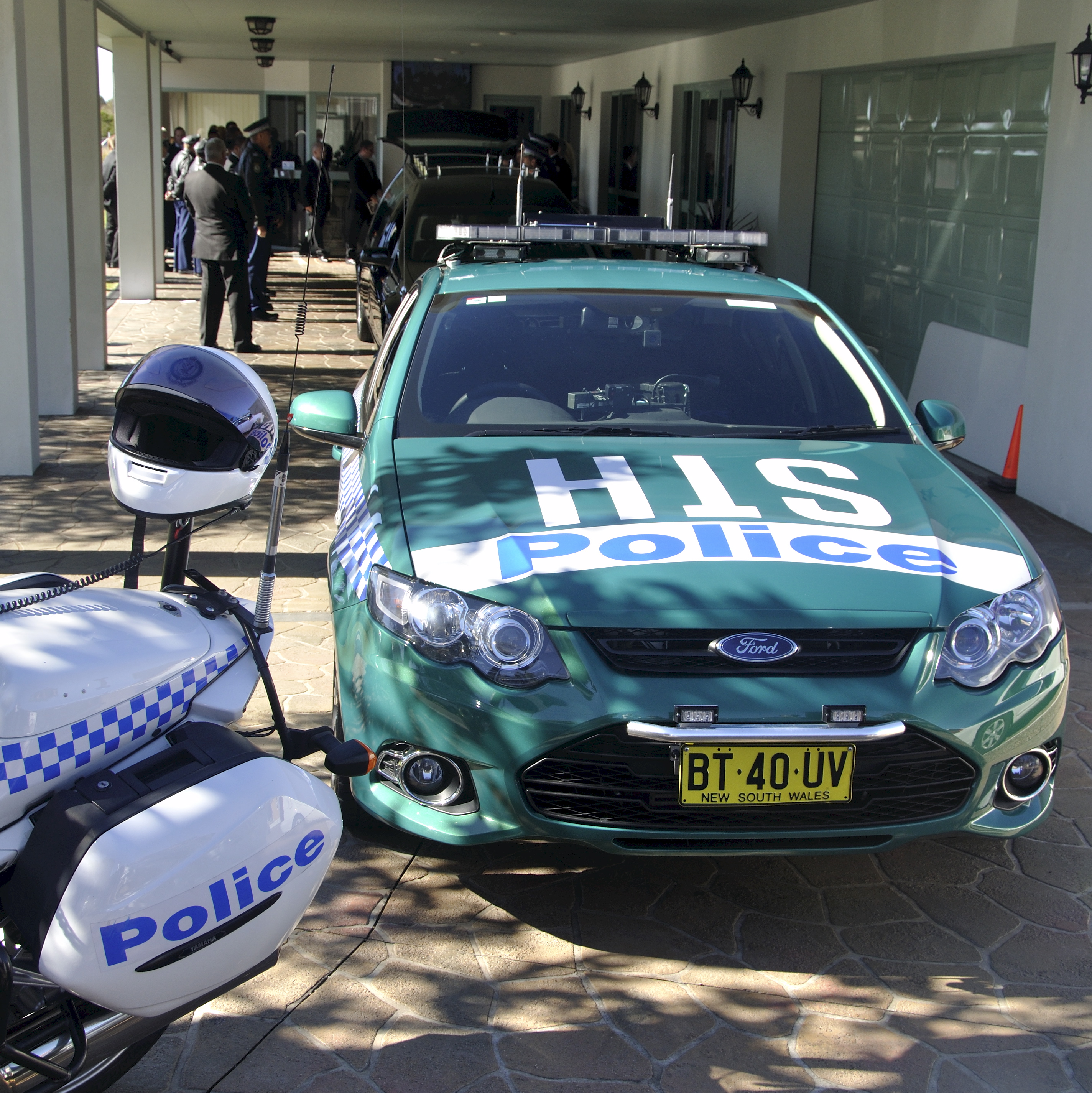
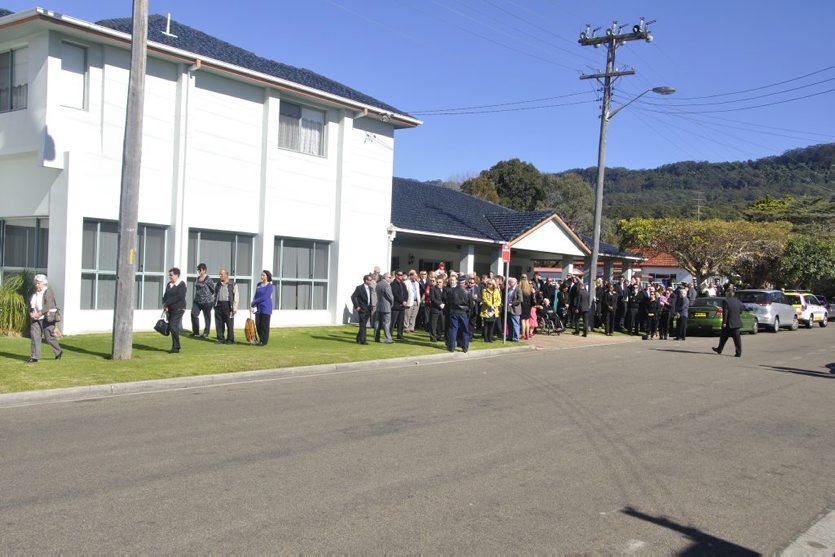
On Monday a sea of blue police uniforms surrounded an overflowing St Francis Xavier Catholic Cathedral in Wollongong as officers paid their last respects to Chief Inspector Graeme Donnelly.
Insp Donnelly, 52, died on August 16 after having a heart attack while riding around Lake Illawarra with friends.
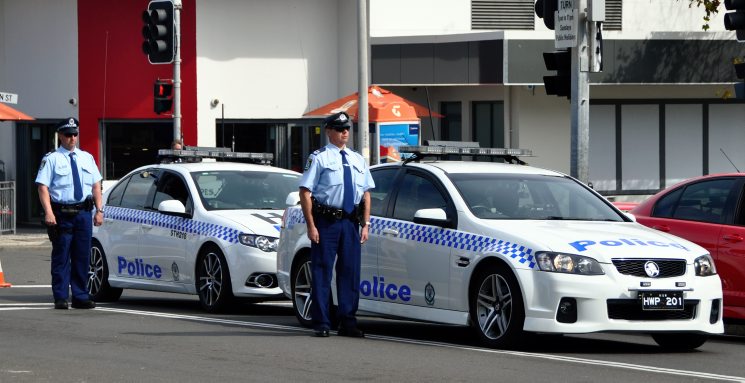
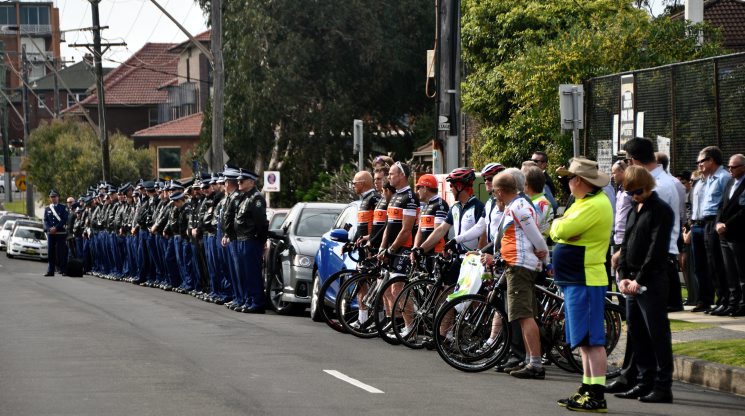
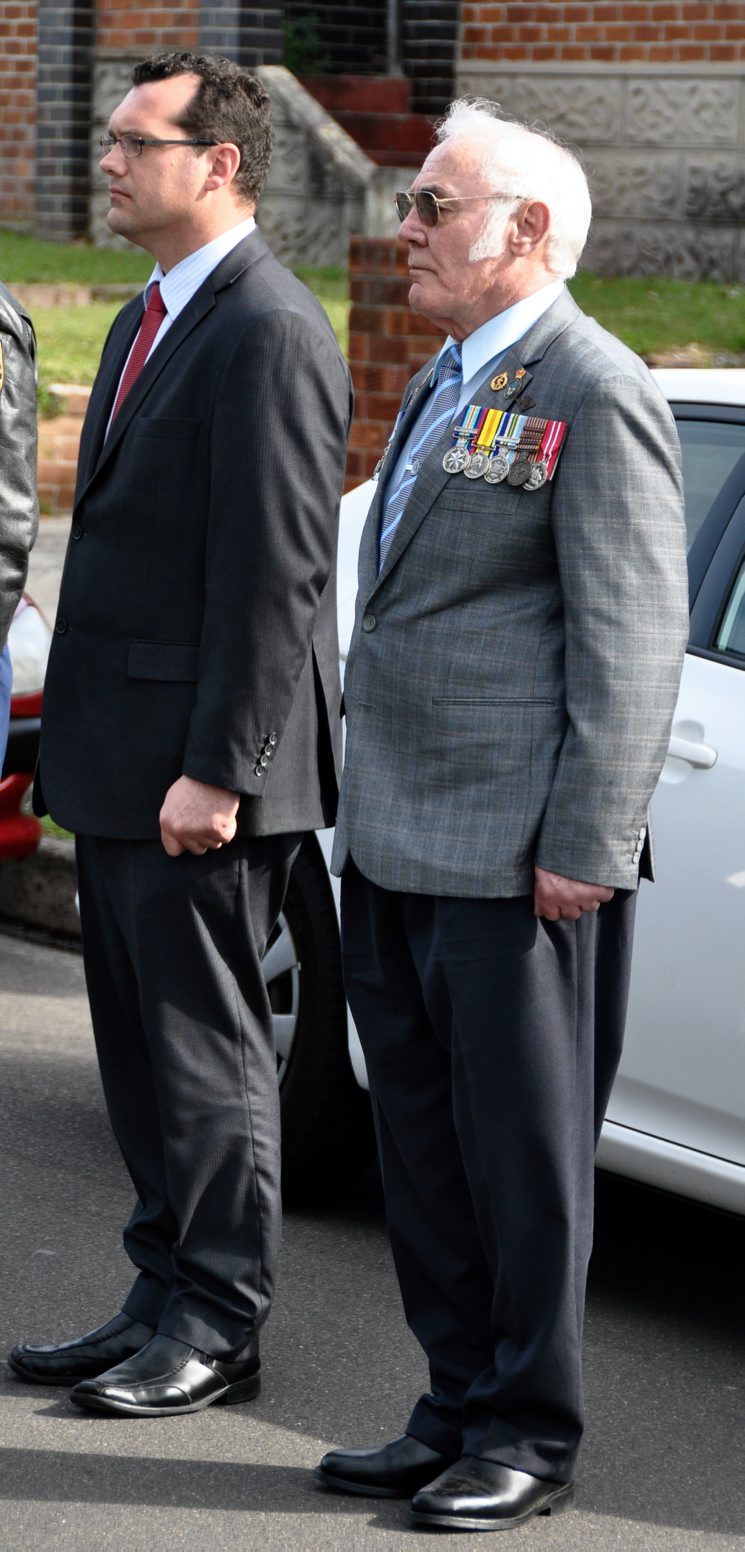
Yesterday his cycling companions joined police colleagues and formed a guard of honour stretching from the cathedral along Harbour St.
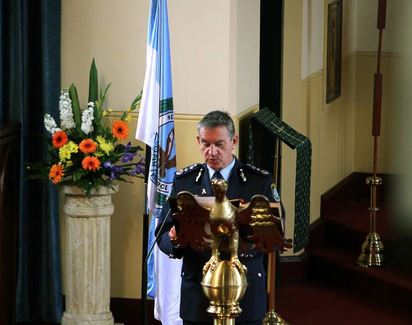
Insp Donnelly’s colleague Peter Lindwall and friend Neil Foster gave a joint eulogy.
They described the high-ranking officer’s passion for the police force and his love for his wife Kerri and sons Aaron and Brad.
Mr Lindwall said the sheer number of fellow officers in attendance, including NSW Police Commissioner Andrew Scipione, was testament to how highly Insp Donnelly had been regarded in the community.
“He was a person no-one ever had a bad word to say about,” Mr Lindwall said.
He also made reference to Insp Donnelly’s previous career as a butcher and his skills behind a barbecue.
In a statement read at yesterday’s service, Aaron Donnelly said his father’s entire life had been dedicated to helping others.
“I don’t think there’s a person here who hasn’t been impacted by his kindness,” he said.
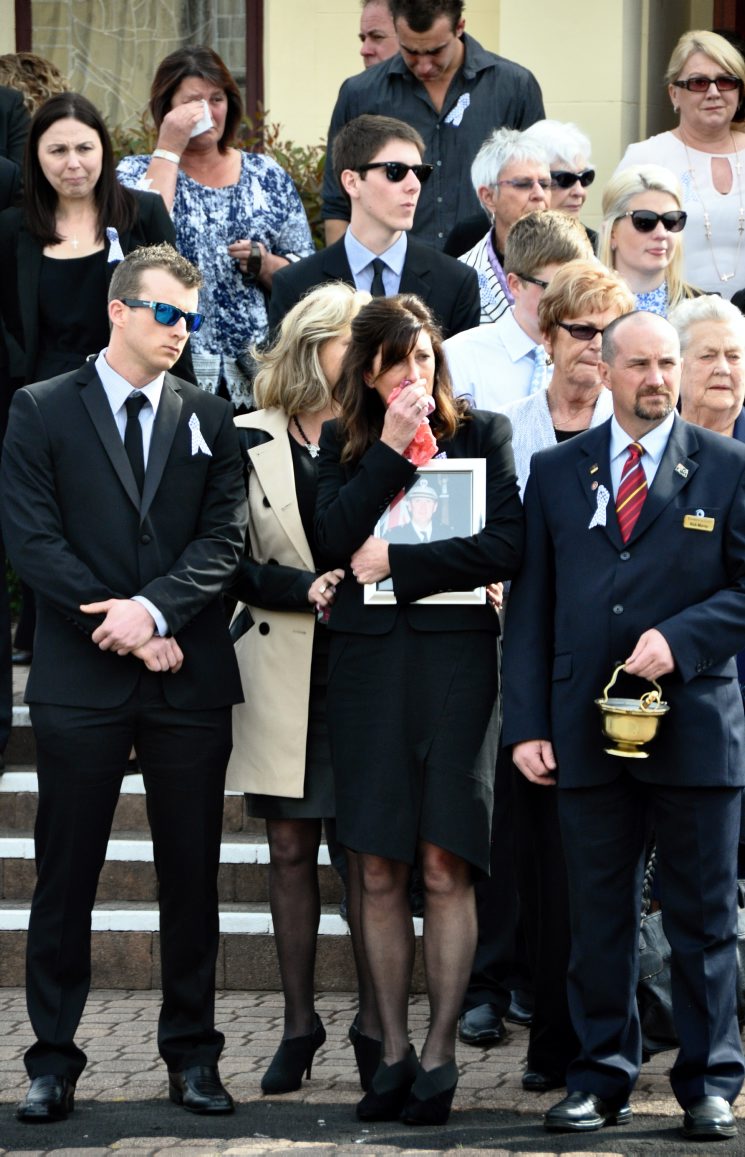
Mr Donnelly’s wife Kerri said her husband had been a “selfless” man who gave his time “to so many people”.
In a statement also read to the service, she recalled how proud he had been when his Brad announced he wanted to follow in his father’s footsteps and become a police officer.
Mr Scipione also spoke at the service and posthumously awarded Insp Donnelly the National Police Service Medal.
WEDNESDAY 6 APRIL 2016 GRAVE OF GRAEME FRANCIS DONNELLY GRAVE IS ON THE EAST SIDE OF ROAD, PAST THE NEW CRYPTS THAT ARE CURRENTLY BEING BUILT WHICH ARE ALSO ON THE EAST AND TO THE NORTH OF THE OFFICE. THE GRAVE IS ABOUT 3 – 4 ROWS BACK FROM THE ROADWAY AND FACES AWAY FROM THE ROADWAY.
Grave location: Wollongong Memorial Gardens, Berkeley Rd, Berkeley, NSW
Retired Sgt Geoff Richens – taken in 2009
Geoff was stationed in the Illawarra area ( Wollongong & Warilla ) for many years leading up to his Retirement.
He was attached to Warilla HWP, Warilla Traffic Sergeant, Wollongong General Duties. He spent most of his service in the Illawarra.
Geoff stared his Police training at the Redfern Police Academy, Bourke St, Redfern on the 7 August 1967. He died on the 7 August 2013.
[blockquote]
May you forever Rest in Peace Geoff.
It was a pleasure working with you.
Cal
[/blockquote]
Geoffrey Enoch RICHENS, 66 old, former Regd. No. 12803.
Geoff passed away on 07/08/2013 and his funeral is proposed to be held at 10am on Thursday 15th Instant at Parsons Funeral Home, Princes Highway, BULLI.
Constable Geoff Richens – about 20 old.
15 August 2013
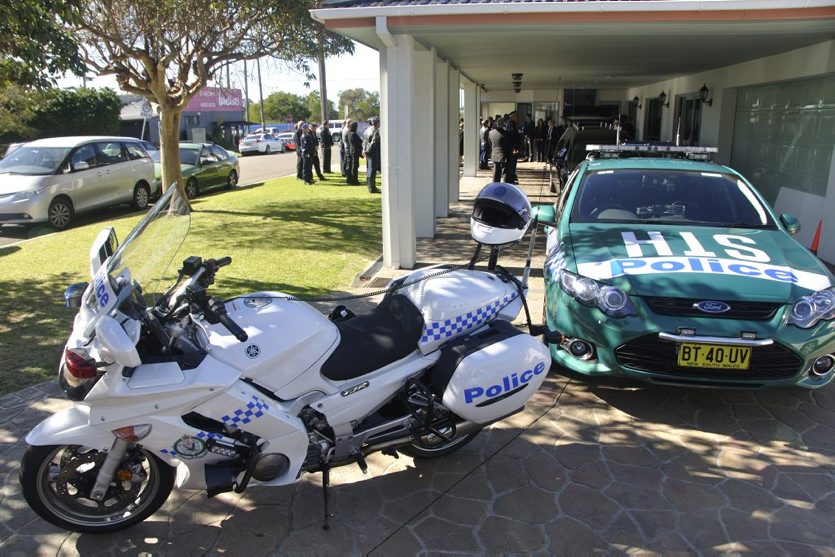
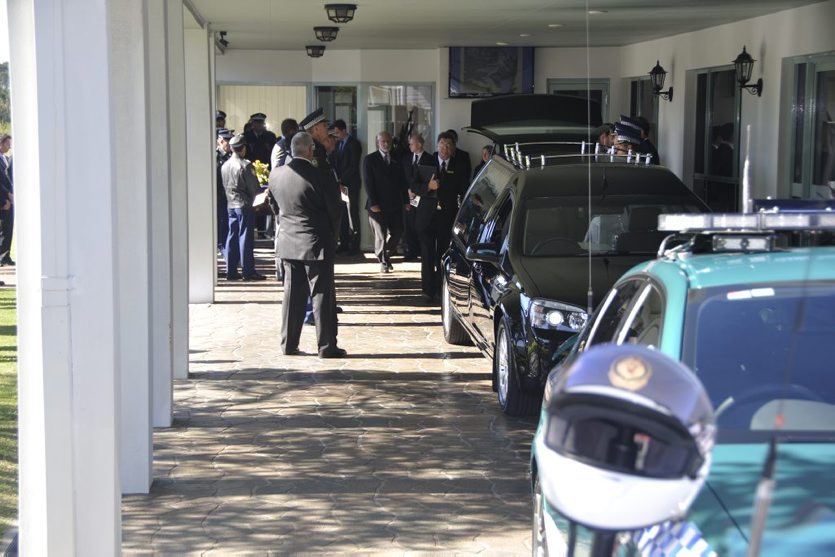
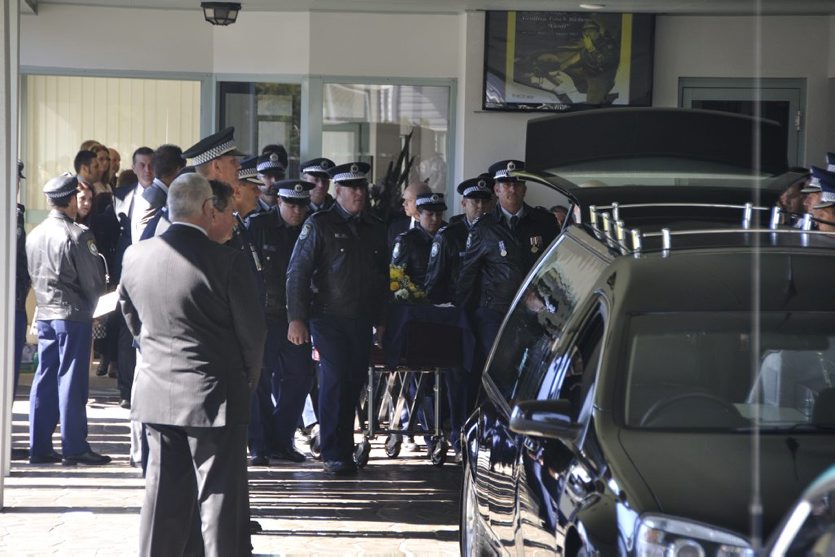
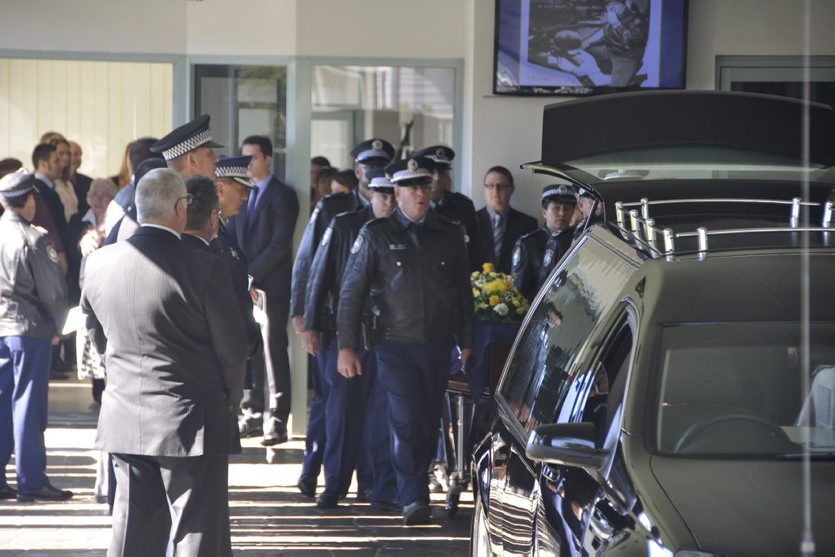
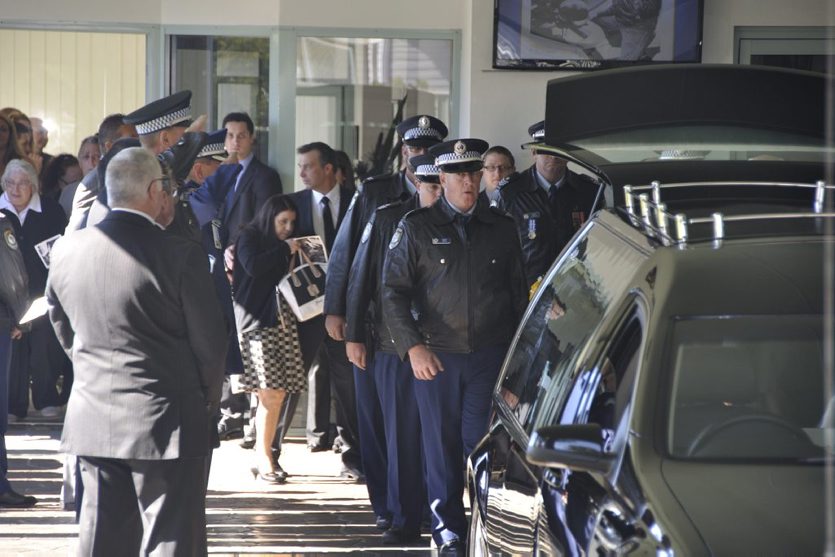
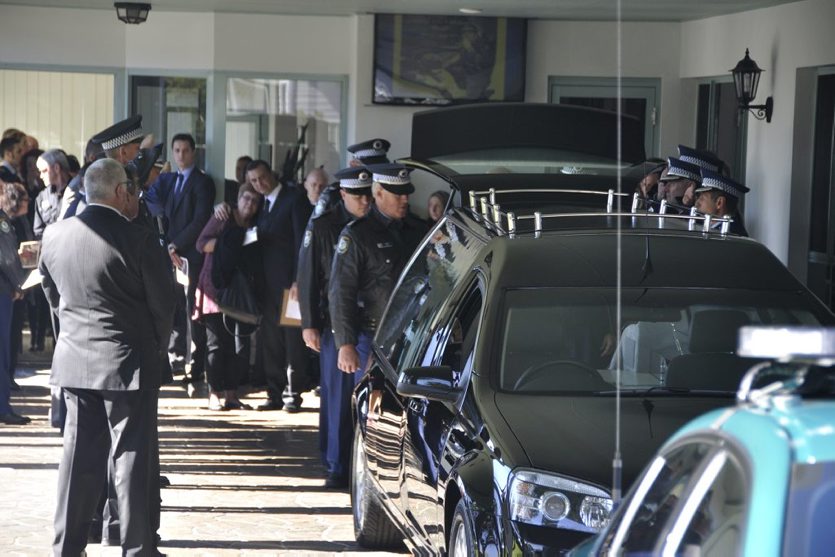
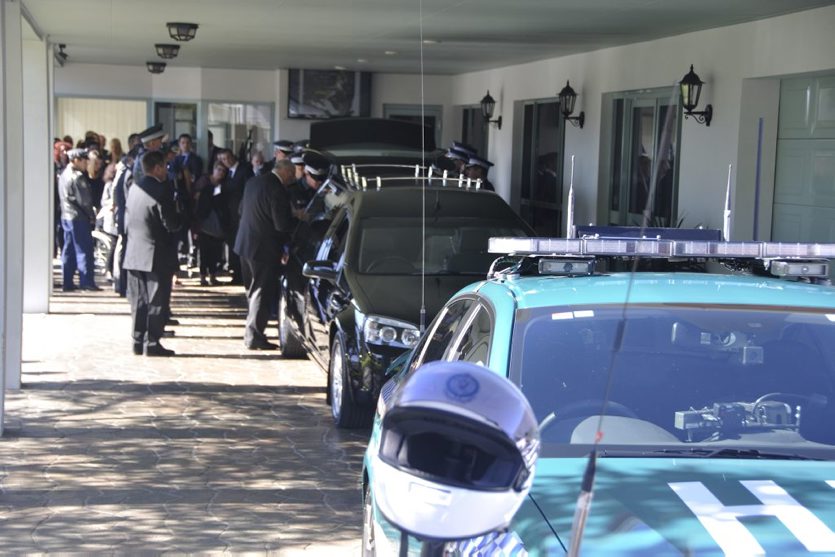
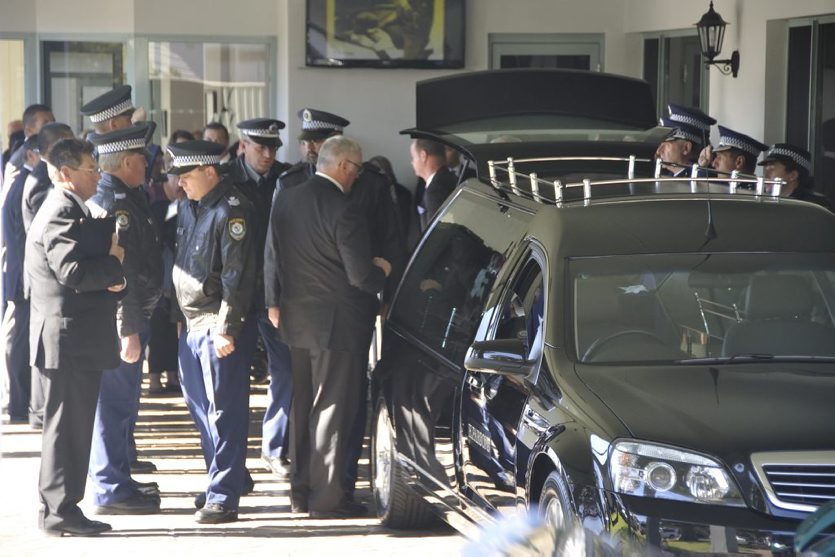
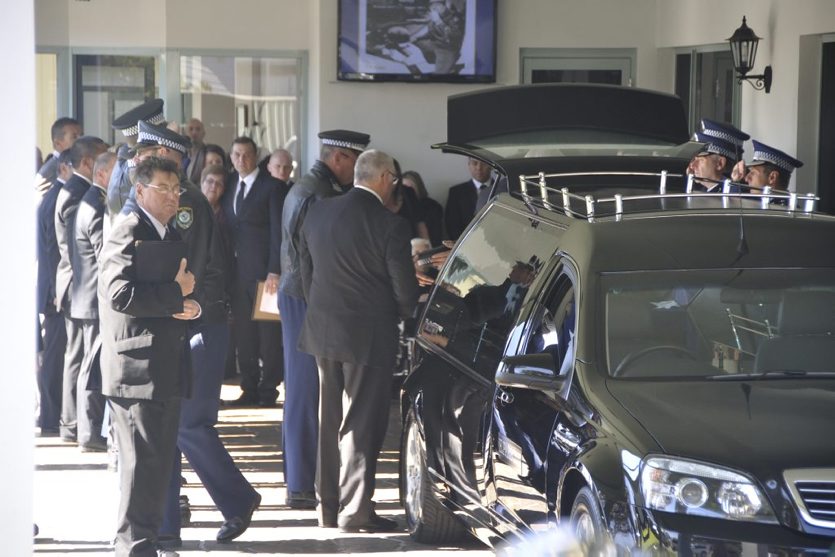
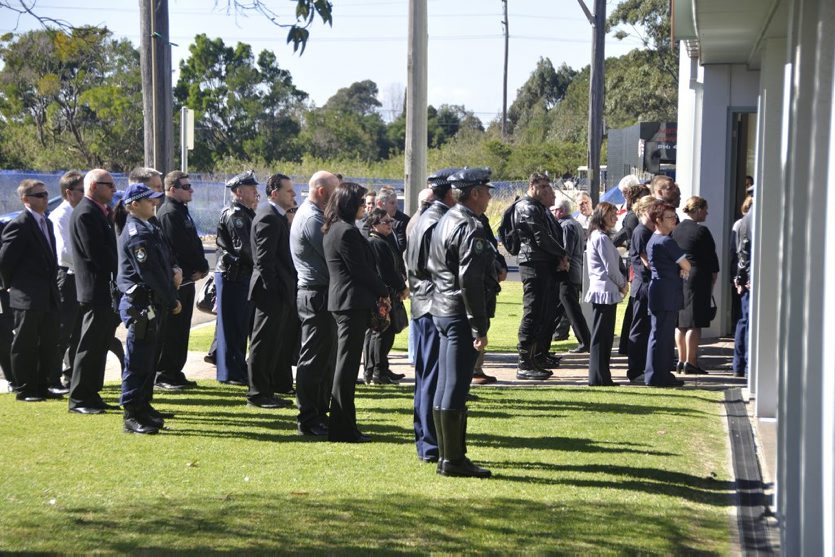
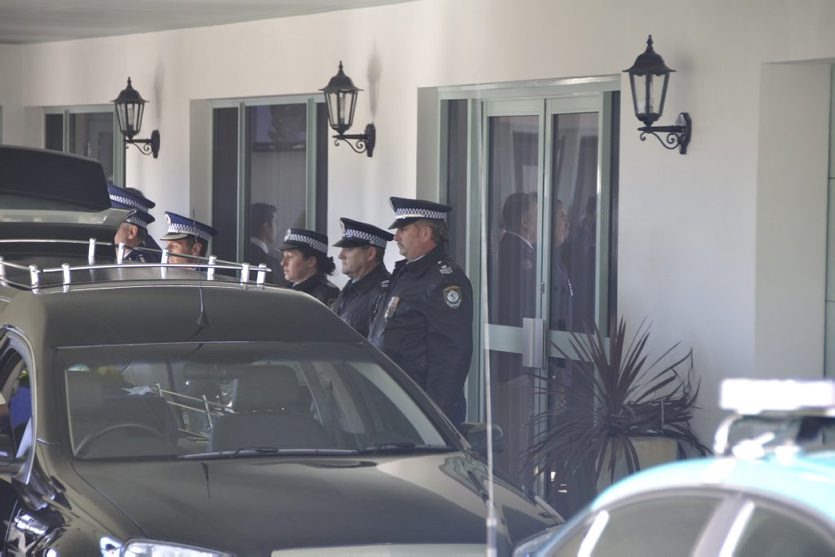
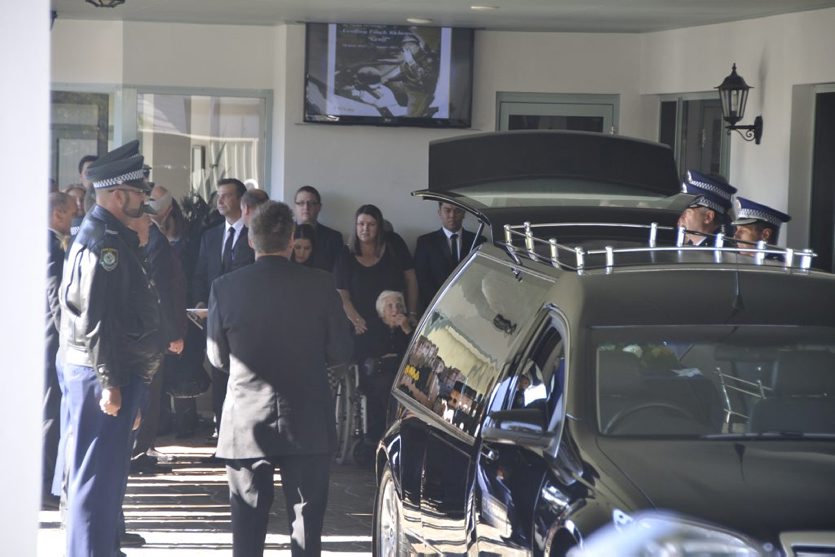
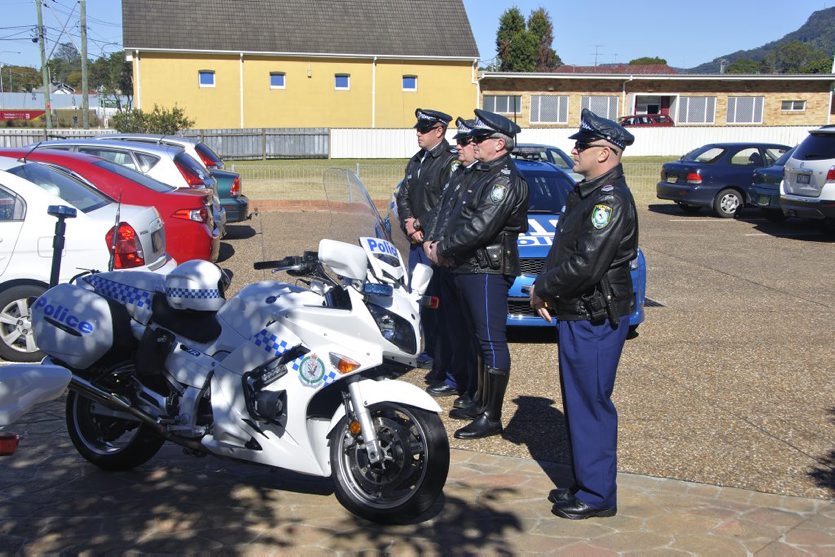
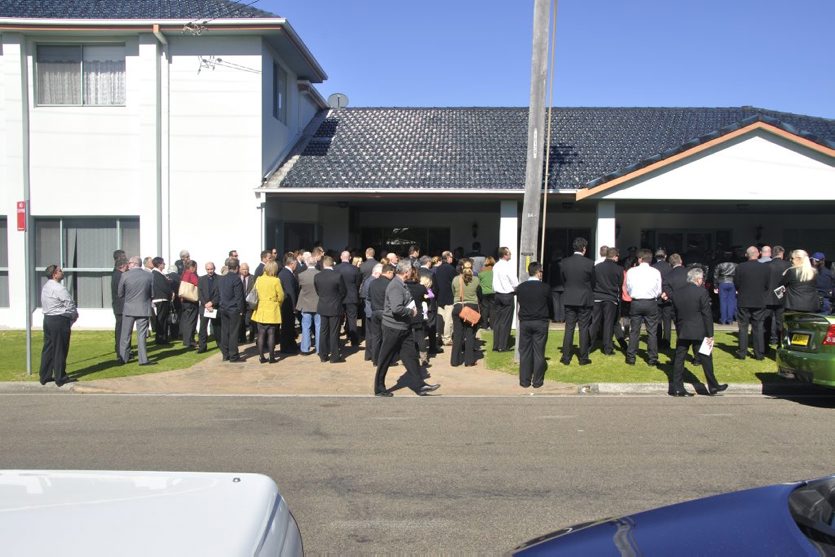
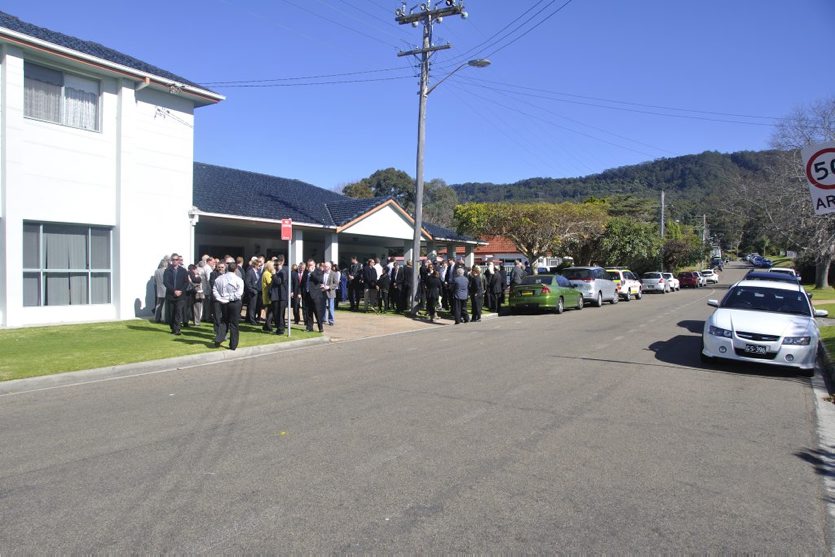
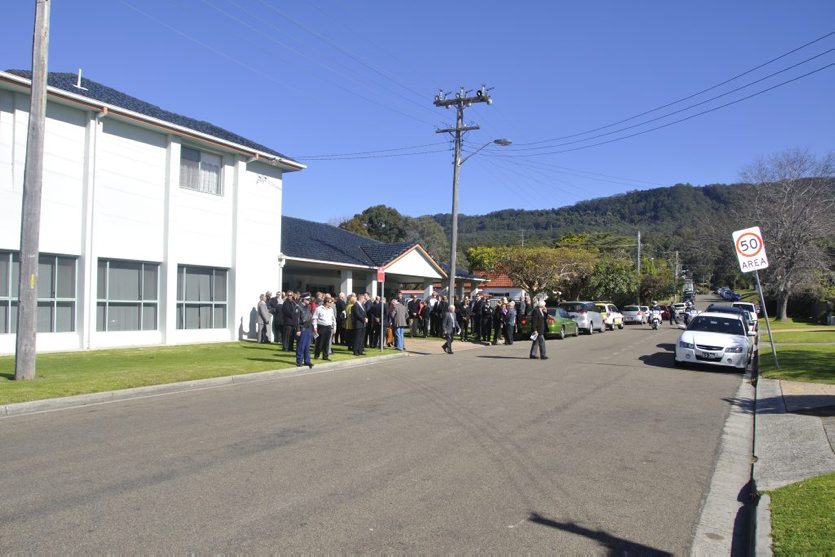
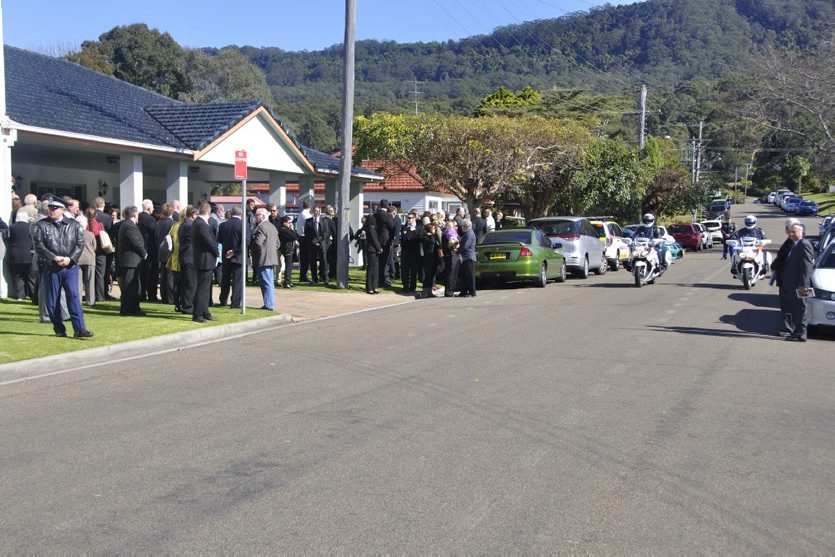
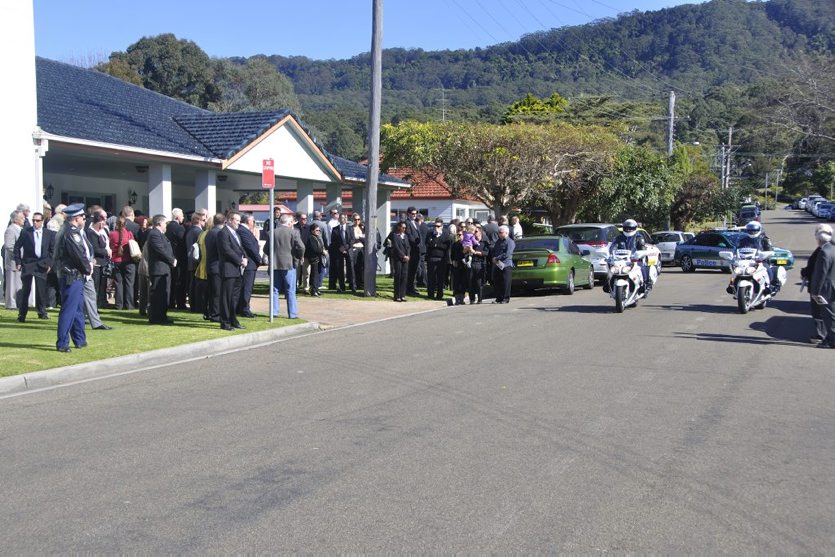
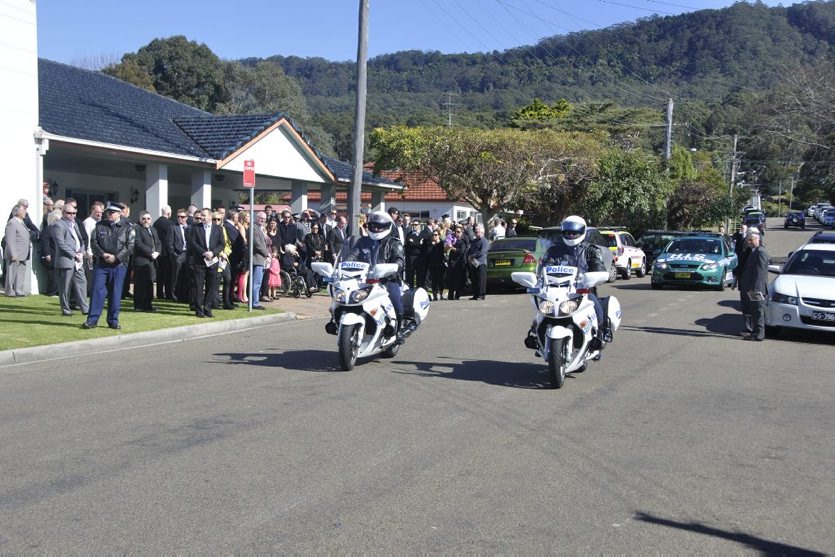
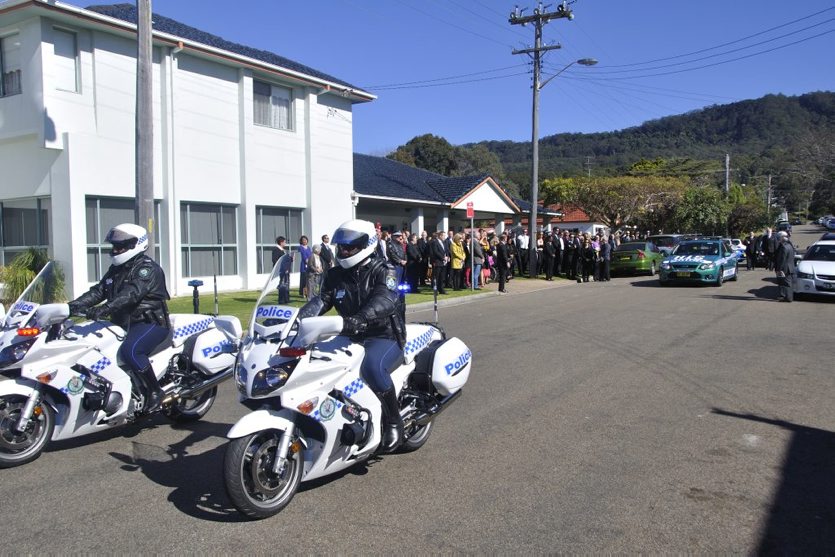
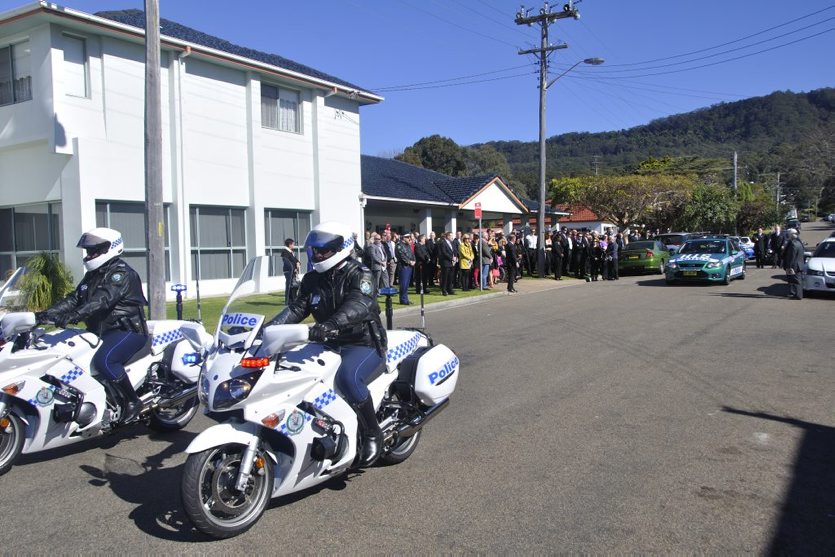
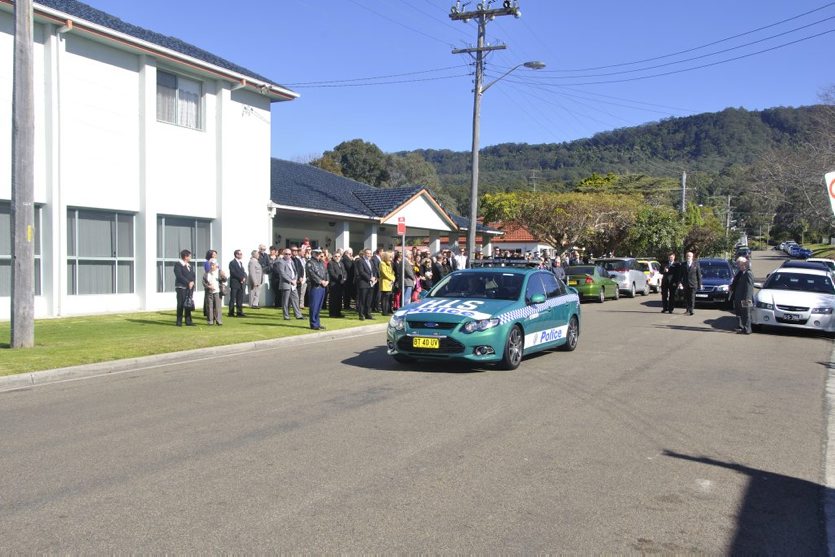
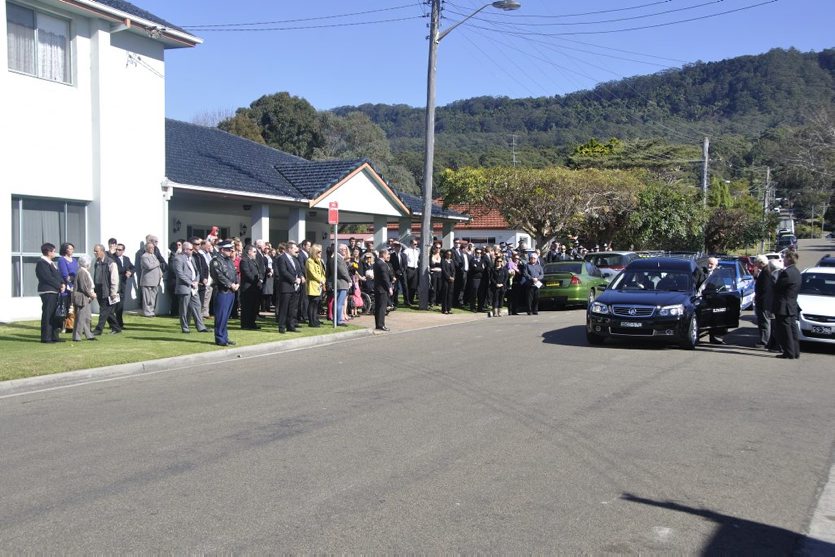
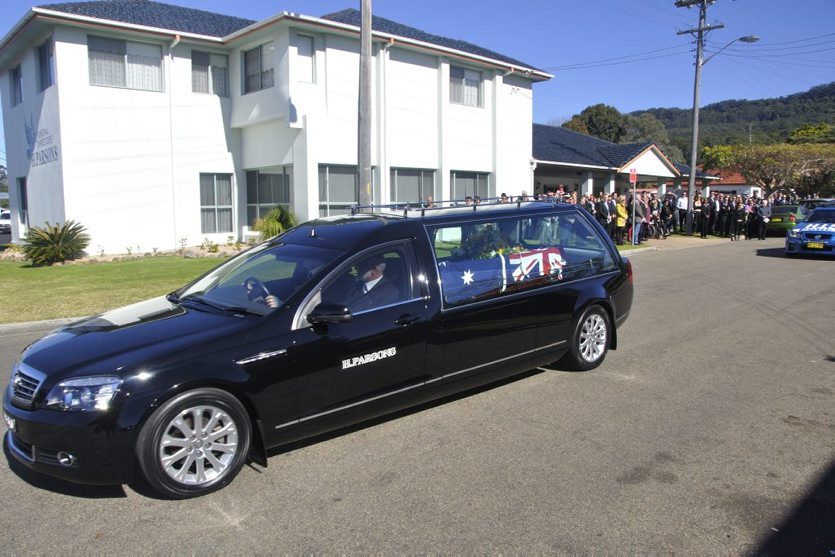
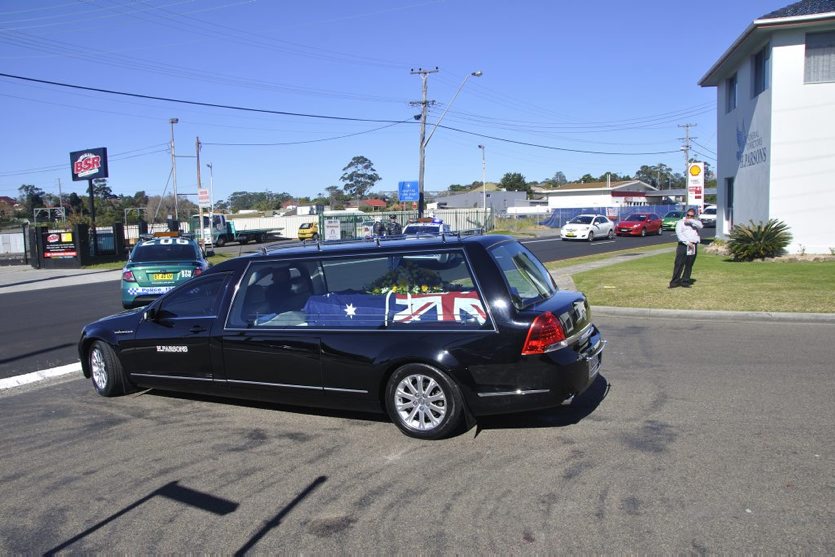
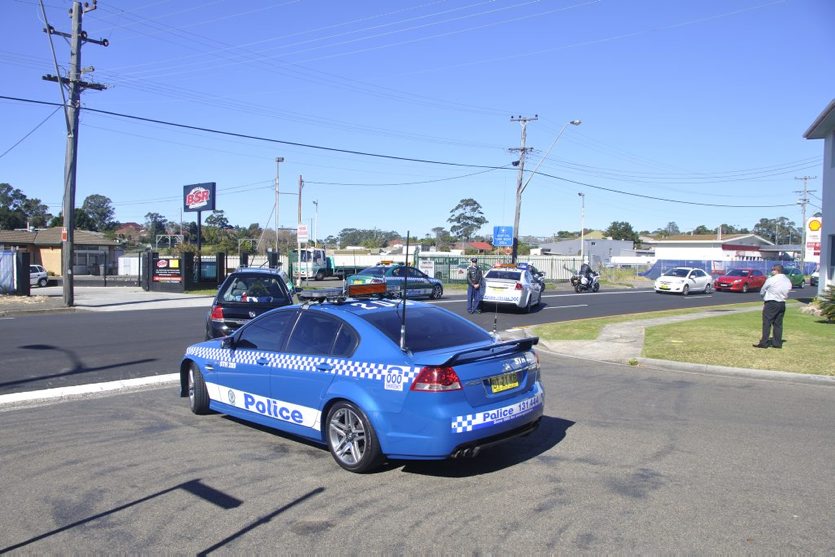
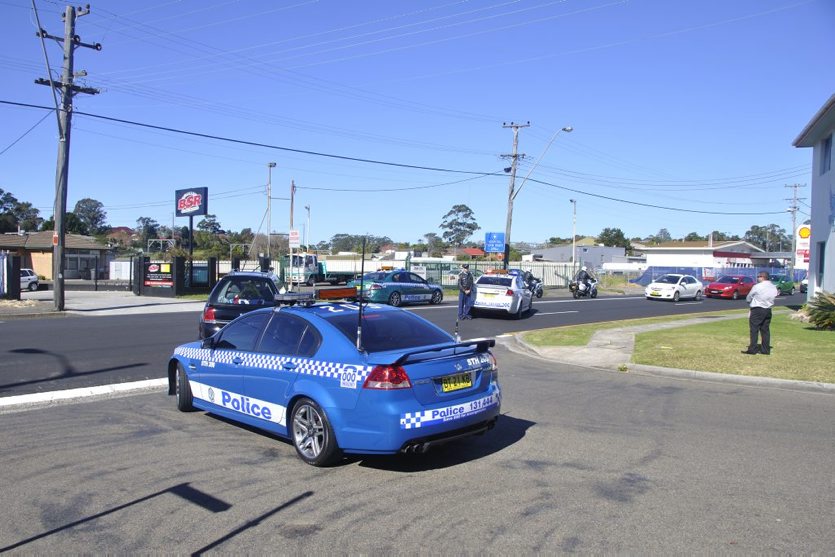
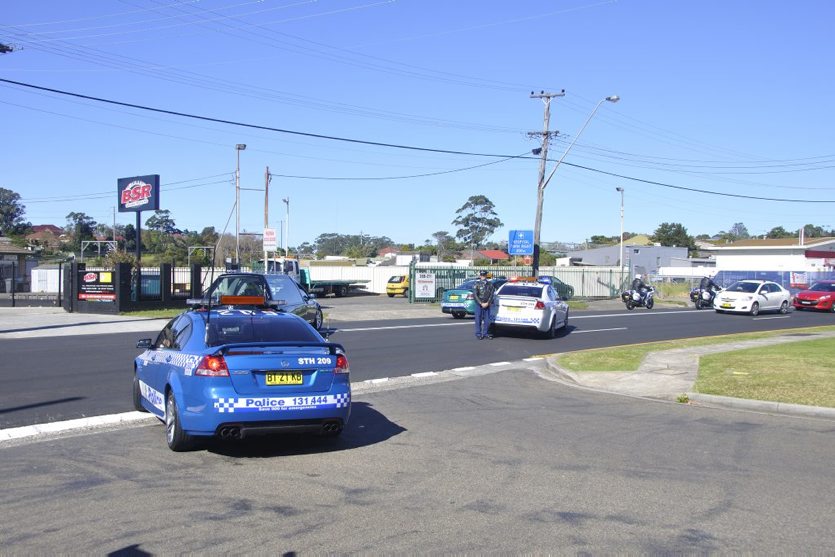
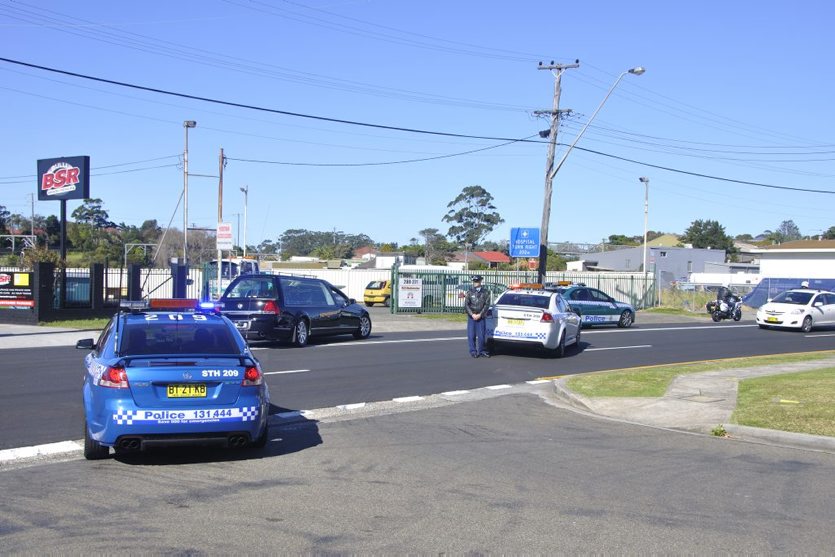
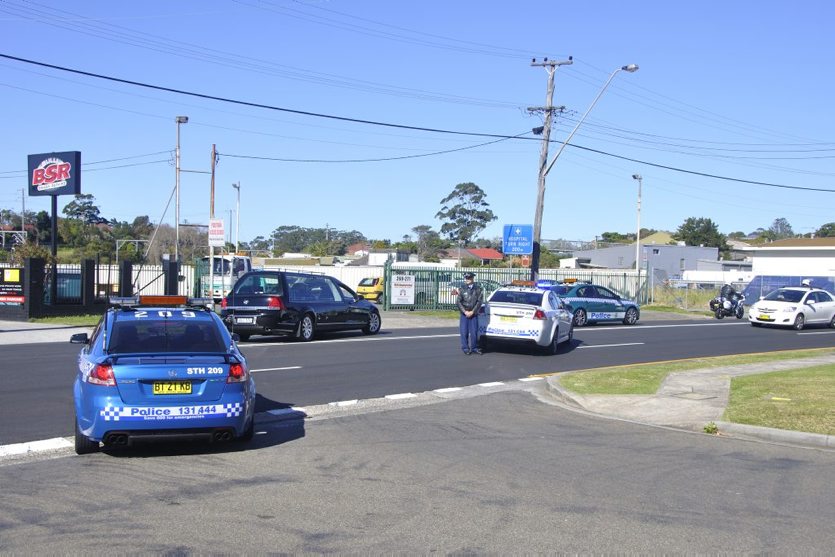
Funeral for Retired Sgt Geoffrey Enoch RICHENS at Bulli.
15 August 2013
Funeral for Retired Sgt Geoffrey Enoch RICHENS at Bulli.
15 August 2013
Funeral for Retired Sgt Geoffrey Enoch RICHENS at Bulli.
15 August 2013
Funeral for Retired Sgt Geoffrey Enoch RICHENS at Bulli.
15 August 2013
Funeral for Retired Sgt Geoffrey Enoch RICHENS at Bulli.
15 August 2013
Funeral for Retired Sgt Geoffrey Enoch RICHENS at Bulli.
15 August 2013
Funeral for Retired Sgt Geoffrey Enoch RICHENS at Bulli.
15 August 2013
Funeral for Retired Sgt Geoffrey Enoch RICHENS at Bulli.
15 August 2013
Funeral for Retired Sgt Geoffrey Enoch RICHENS at Bulli.
15 August 2013
Funeral for Retired Sgt Geoffrey Enoch RICHENS at Bulli.
15 August 2013
Funeral for Retired Sgt Geoffrey Enoch RICHENS at Bulli.
15 August 2013
Funeral for Retired Sgt Geoffrey Enoch RICHENS at Bulli.
15 August 2013
Funeral for Retired Sgt Geoffrey Enoch RICHENS at Bulli.
15 August 2013
Funeral for Retired Sgt Geoffrey Enoch RICHENS at Bulli.
15 August 2013
Funeral for Retired Sgt Geoffrey Enoch RICHENS at Bulli.
15 August 2013
Funeral for Retired Sgt Geoffrey Enoch RICHENS at Bulli.
15 August 2013
Funeral for Retired Sgt Geoffrey Enoch RICHENS at Bulli.
15 August 2013
Funeral for Retired Sgt Geoffrey Enoch RICHENS at Bulli.
15 August 2013
Funeral for Retired Sgt Geoffrey Enoch RICHENS at Bulli.
15 August 2013
Funeral for Retired Sgt Geoffrey Enoch RICHENS at Bulli.
15 August 2013
Funeral for Retired Sgt Geoffrey Enoch RICHENS at Bulli.
15 August 2013
Funeral for Retired Sgt Geoffrey Enoch RICHENS at Bulli.
15 August 2013
Funeral for Retired Sgt Geoffrey Enoch RICHENS at Bulli.
15 August 2013
Funeral for Retired Sgt Geoffrey Enoch RICHENS at Bulli.
15 August 2013
Funeral for Retired Sgt Geoffrey Enoch RICHENS at Bulli.
15 August 2013
Funeral for Retired Sgt Geoffrey Enoch RICHENS at Bulli.
15 August 2013
Funeral for Retired Sgt Geoffrey Enoch RICHENS at Bulli.
15 August 2013
Funeral for Retired Sgt Geoffrey Enoch RICHENS at Bulli.
15 August 2013
Funeral for Retired Sgt Geoffrey Enoch RICHENS at Bulli.
15 August 2013
Funeral for Retired Sgt Geoffrey Enoch RICHENS at Bulli.
15 August 2013
Funeral for Retired Sgt Geoffrey Enoch RICHENS at Bulli.
15 August 2013
Funeral for Retired Sgt Geoffrey Enoch RICHENS at Bulli.
15 August 2013
Funeral for Retired Sgt Geoffrey Enoch RICHENS at Bulli.
15 August 2013
Funeral for Retired Sgt Geoffrey Enoch RICHENS at Bulli.
15 August 2013
Funeral for Retired Sgt Geoffrey Enoch RICHENS at Bulli.
15 August 2013
Funeral for Retired Sgt Geoffrey Enoch RICHENS at Bulli.
15 August 2013
Funeral for Retired Sgt Geoffrey Enoch RICHENS at Bulli.
15 August 2013
Funeral for Retired Sgt Geoffrey Enoch RICHENS at Bulli.
15 August 2013
Funeral for Retired Sgt Geoffrey Enoch RICHENS at Bulli.
15 August 2013
Funeral for Retired Sgt Geoffrey Enoch RICHENS at Bulli.
Laurie Ian THATCHER
| 21/08/2013
Laurie Ian THATCHER
Cause: Surpirize heart attack
Rank: Retired Senior Sergeant
Death: 25 July 2013
Regd # 8009
Father of SenCon ( Retired ) Gary Ian THATCHER, Regd # 17604 ( R.I.P. )
SenSgt Laurie Thatcher – 1988
Laurie passed away at 4pm on Thursday 25th July 2013, at Wollongong Hospital, suffering a surpirize heart attack after a short stay in hospital. He had been doing well and was expected home today, the 26th but, unfortunately, this didn’t happen.
Laurie was a really nice bloke and was attached to Wollongong Police Station as a Licencing Sergeant before his retirement.
May he forever R.I.P.
Tracy Ann GRAY
| 21/08/2013
Tracy Ann GRAY
New South Wales Police Force
Regd. # ?
Rank: Leading Senior Constable
Stations: ?, Campbelltown L.A.C. ( 35 Division ) – death
Service: From? ? 2000to 2 June 2010 =10 years Service
Awards: No find on It’s An Honour
Born: ? ? ?
Died on: 2 June 2010
Cause: Suicide
Age: ?
Funeral date: ?
Funeral location ?
Buried at: ?
Memorial: NSW Police force Service Memorial Wall, Sydney Police Centre, Surry Hills, B6 ( right wall )
Leading SenCon Tracy Ann GRAY – 2 June 2010
[alert_red]Tracy is NOT mentioned on the Police Wall of Remembrance[/alert_red]
REST IN PEACE
LEADING SENIOR CONSTABLE Tracy Ann GRAY
2 June 2010
NSW Police Force
”She was a tremendous officer. Tracy was exceptionally professional and polite – she was popular with other police officers.”
“She was a well respected and an extremely good trainer for young police and she always had a special care for victims of crime.” ~ Chief Inspector Bryan Doyle
Tracey had apparently “won a job” as a Sergeant 3rd Class but had not taken up that position at the time of her death.
[divider_dotted]
Absolutely no other information can be found on this woman – even 6 years later. If someone see’s this memorial page and can offer further information – please contact Cal@AustralianPolice.com.au
Joseph James DOHERTY
| 21/08/2013
Joseph James DOHERTY
AKA Joe
Late of Helensburgh, formerly of Bankstown, Narromine, Tullamore and Evans Head
NSW Redfern Police Academy Class 111
New South Wales Police Force
[alert_yellow]Regd. # 12665[/alert_yellow]
Rank: Probationary Constable – appointed 26 June 1967
Constable – appointed 26 June 1968
Senior Constable – appointed 26 June 1976
Sergeant 3rd Class – appointed 25 January 1983
Stations: ?, ‘D’ District ( ProCst ), Evans Head, Rescue Squad, Helensburgh ( O.I.C. ), The Rocks – Death
Service: From? ? pre June 1967? to? ? ? = ? years Service
Awards: National Medal – granted 9 August 1983
No find on It’s An Honour
Born: 8 April 1948
Died on: 5 July 2002
Age: 54
Cause: Cancer
Funeral date: ? July 2002
Funeral location: ?
Buried at: Helensburgh Cemetery, Cemetery Rd.
Memorial at: ?
[alert_red]JOE is NOT mentioned on the Police Wall of Remembrance[/alert_red] * BUT SHOULD BE
[divider_dotted]
FURTHER INFORMATION IS NEEDED ABOUT THIS PERSON, THEIR LIFE, THEIR CAREER AND THEIR DEATH.
Joe Doherty who is no longer with us had this on his wall at home. I took the photo as it looks impressive & also has an area where his name was added. Gordon Kelly
Senior Sergeant Joe DOHERTY was stationed at Helensburgh Police Station, Illawarra Region, for many years, being the Officer in Charge, until his transfer to The Rocks Police Station, Sydney.
Joe died from cancer on the 5 July 2002 aged 54.
He was a proud supporter of not Canterbury but.. “The Berries”.
Joe knew he was not going to beat the cancer & organised the pall bearers for his funeral by asking them personally before he finished up at work. Gordon Kelly was one asked to do this & Gordon is still proud of that.
Joe was a great bloke & is missed by many in his blue family I am sure.
[divider_dotted]
Death notices appeared on the 6 July 2002 in the Sydney Morning Herald, Illawarra Mercury and Daily Telegraph ( Sydney )
Police ball raises funds for palliative care
By CYDONEE MARDON April 10, 2013, 4:02 a.m.
George Stewart was in a deep coma but that didn’t stop staff at Port Kembla’s palliative care centre talking to him all the time, comforting him in his darkest hours.
“My husband had a brain tumour, was operated on, and died 12 months later,” Lorraine Stewart said yesterday.
“When we brought him in they talked to him all the time, they explained things, whether he could hear or not we didn’t know, but that didn’t matter to them, they were absolutely marvellous.
“I slept there alongside him, they kept me comfortable too. They do seem to be short staffed – no-one said anything but they always seemed to be running, to make sure they do everything they can for everyone.”
Mrs Stewart, who lost her best friend six months ago, was thrilled to hear her husband’s former colleagues in the NSW Police Force were raising funds for the rehabilitation centre and palliative care unit at Port Kembla.
“They looked after my husband so well. He was several times in rehab, then for the last week or so in palliative care. And they could definitely do with more funding.”
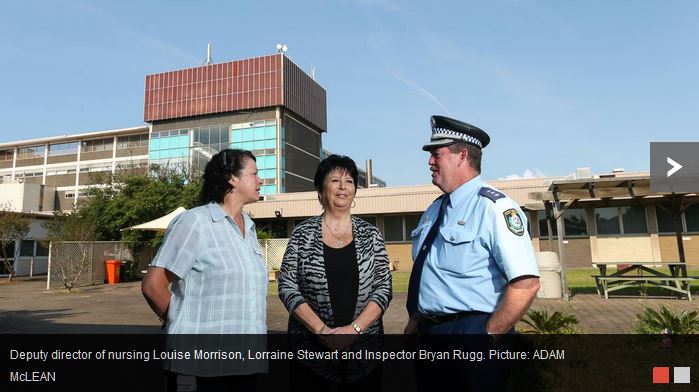
Inspector Bryan Rugg, Commander of Radio Operations, said the organisers of this year’s Illawarra Police Charity Ball were happy to give something back to the facility that helped their colleague through his toughest year.
Senior Constable Stewart joined in 1971 and worked in Sydney before transferring to Warilla in 1986. He joined the communications section in 1997 and stayed until retiring in 2006.
He was an avid bowler and received The Australian Sports medal for Service to Bowls (Australian Honours System).
“Whilst the palliative care unit has some fantastic facilities, there is always room for improvement and upgrade of identified equipment utilised by the staff for the benefit of the patients,” Insp Rugg said.
“The rehabilitation section has a limited recuperation area for the patients waiting to undergo or after having received treatment.”
Some of the funds will go towards improving the outside sitting area and garden of the rehab centre.
Tickets for the July 26 ball have been snapped up, but auctions and raffle items are needed. Donations can be left at the NSW Southern Region Command, 84 Crown Street, Wollongong, or call Annemarie on 4226 7734.
Retired SenCon GeorgeStewart, VKG2, in W’G Hosp – brain op. Posted 10 Oct 2011.
For those of you who know GeorgeStewart, Retired member from VKG2 Warilla, George is currently in Wollongong Hospital. On 071011 – George was operated on for a brain tumour.It came very quick and the symptoms very sudden.He is currently in Wollongong Hospital, Ward C4, Bed 31 where he is recovering.
Recovery is pretty good but sight and speech affected at this stage but should improve (that message was on the 7 October)
Today, 10 October, I spoke with George via phone at the Hospital and he sounds to be in good spirits.
Although he has various things hanging out of him, the one thing that isn’t hanging out anymore is the old gaspa. He has given up the cigarettes. He said that the Doctor was fairly savage with what he took out ( in relation to the tumour ).
Lorraine and family are by George‘s side and he will have to undergo Radio / Chemotherapy in the coming weeks and will remain in Hospital for a short time before he gets back out onto the Bowling paddocks.
I am sure that George would appreciate some visits from his old mates.
Re: Retired SenCon George Stewart, VKG2, in W’G Hosp – brain Posted on 6 August 2012
For all of you who know retired SenCon George Stewart, I went and visited him at home for a short time on Saturday. He is still living in the Illawarra.He still looks like his old self but let me tell you now – he ISN’T.He has now lost his peripheral vision and needs to wear sun glasses when he is outside in the brighter light.George, who is suffering from a TERMINAL brain tumour, knows what he wants to say but sometimes forgets what it is that he wants to say if he doesn’t get the message out straight away. A symptom of the tumour.
I would STRONGLY suggest and ENCOURAGE any of his old friends to take the time and take a drive and visit George and Lorraine at their home and DON’T wait until the END of SEPTEMBER to do it either. Do it NOW !
He would dearly love to say g’day to his old mates BEFORE the tumour takes its final toll.
He isn’t looking for sympathy. He is simply looking to say g’day to his old mates before his life is cut prematurely short.
Cal
Retired SenCon George Stewart Posted 8 October 2012
Letting all those who know Retired SenCon George Stewart who was last stationed at VKG2 ( Warilla ) NSW. As of Saturday 6 October 2012, George was admitted to Port Kembla Hospital in a “very ill” condition as a result of a brain tumour he suffered earlier this year. If you wish to visit George – that you do it sooner rather than LATER.( copied off an email sent by Cal. )
Re: Retired SenCon George Stewart Posted on 8 October 2012
George has now slipped into a coma and has his family by his side at Pt Kembla Hospital.
Re: Retired SenCon George Stewart Dear AllPosted on 14 October 2012 I have been advised George Stewart passed away at 4pm on the 13th October 2012.
Re: Retired SenCon George Stewart, VKG2, in W’G Hosp – brain George Bruce Stewart
Born on 9 June 1948
Passed away on 13 October 2012
Aged 64 years
“will always be thinking of you your big sister Lilian” – Lilian Stewart
“To Lorraine and family, our condolences and best wishes to you. Your loss is our loss, George was a great workmate and a great bloke. He will be missed by everyone who knew him, but he will never be…” – Ron Padgett
Will be sadly missed by family and many friends. Aged 64 Years
The relatives and friends of GEORGE are warmly invited to attend his Funeral Service to be held at the Northcliffe Chapel of Hansen and Cole Funerals, 634 Northcliffe Drive, Kembla Grange on Wednesday 17th October, 2012 commencing at 1pm. The family requests in lieu of flowers, donations be considered to Garvan Research Foundation. A bowl will be located at the chapel for this purpose.
Buried at: Kanahooka Lawn Cemetery, Eastern side before office, several rows from roadway
Memorials: Bev Lawson Trailblazer’s Award – National Women in Policing
BEV is NOT mentioned on the Police Wall of Remembrance * NOT JOB RELATED
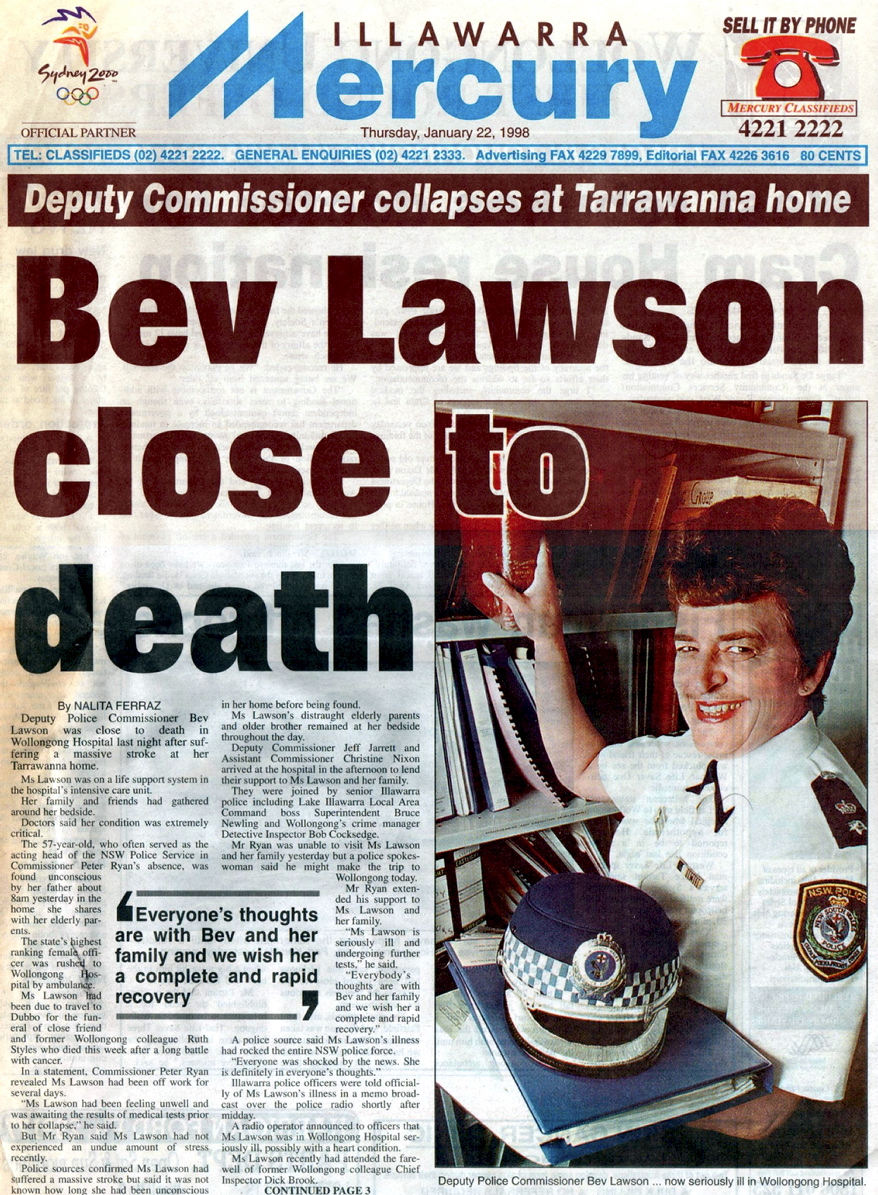
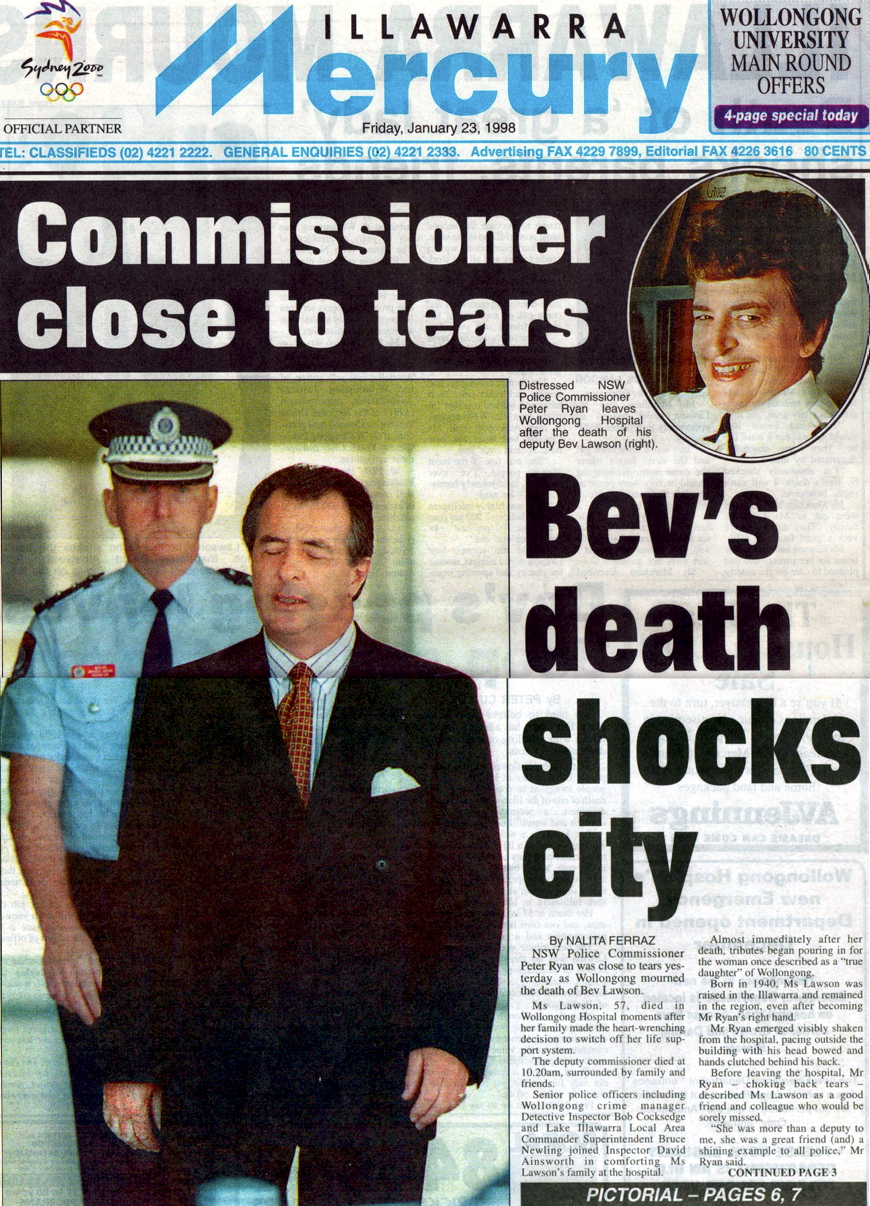
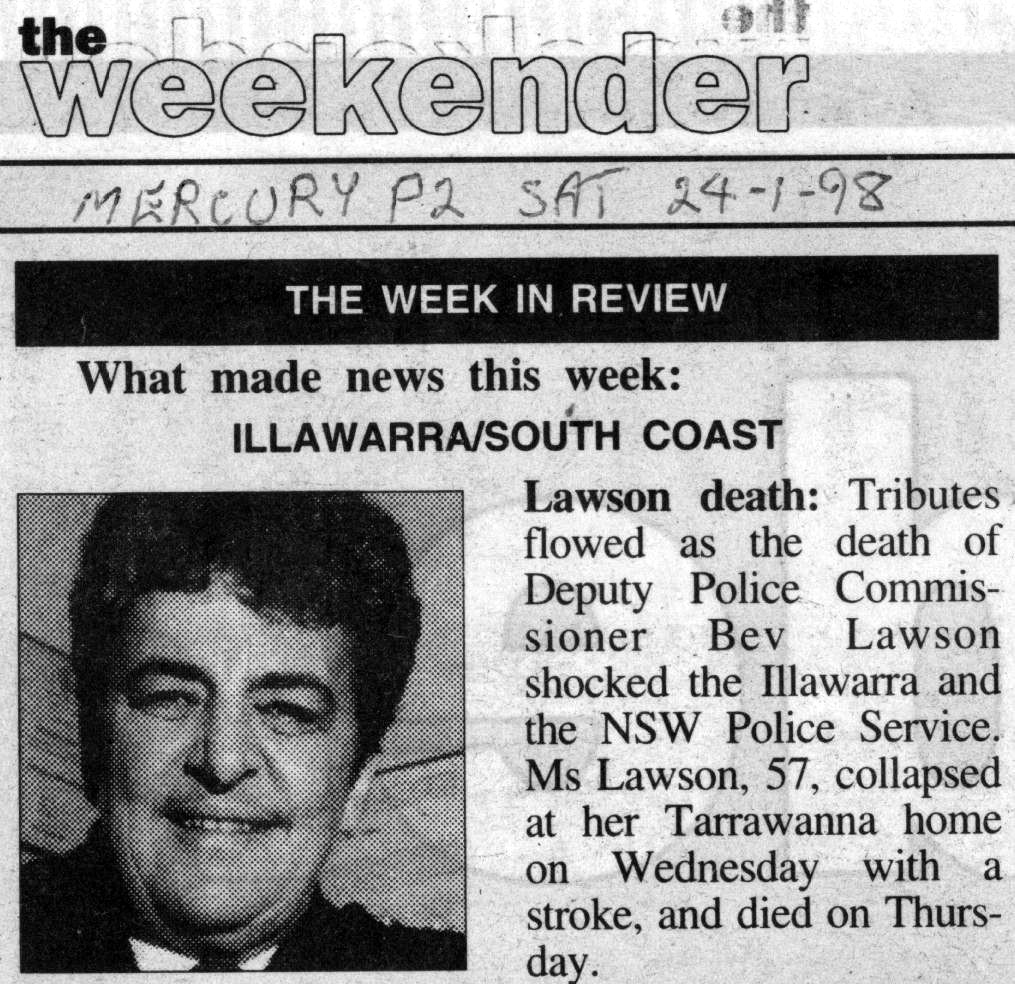
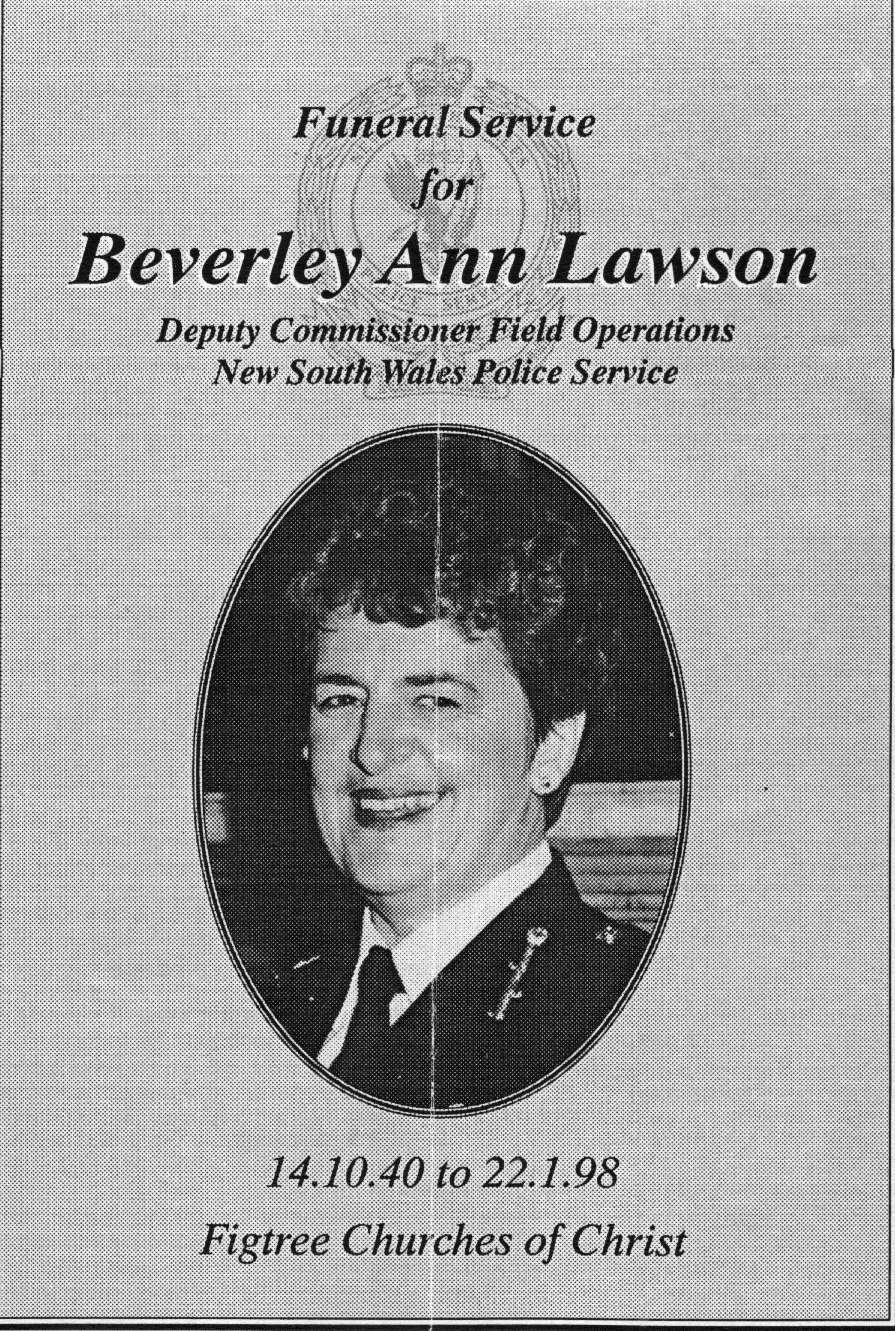
Bev Lawson suffered from a stroke in her Tarrawanna (Wollongong) home on 21 January 1998 as she prepared to attend the funeral of a retired Police woman, Ruth Styles, at a country centre.
Ruth Styles was an Inspector having previously been stationed at Warilla NSW.
Bev Lawson was transported to Wollongong Hospital and died at 10.20am on the 22 January, 1998 in Intensive Care.
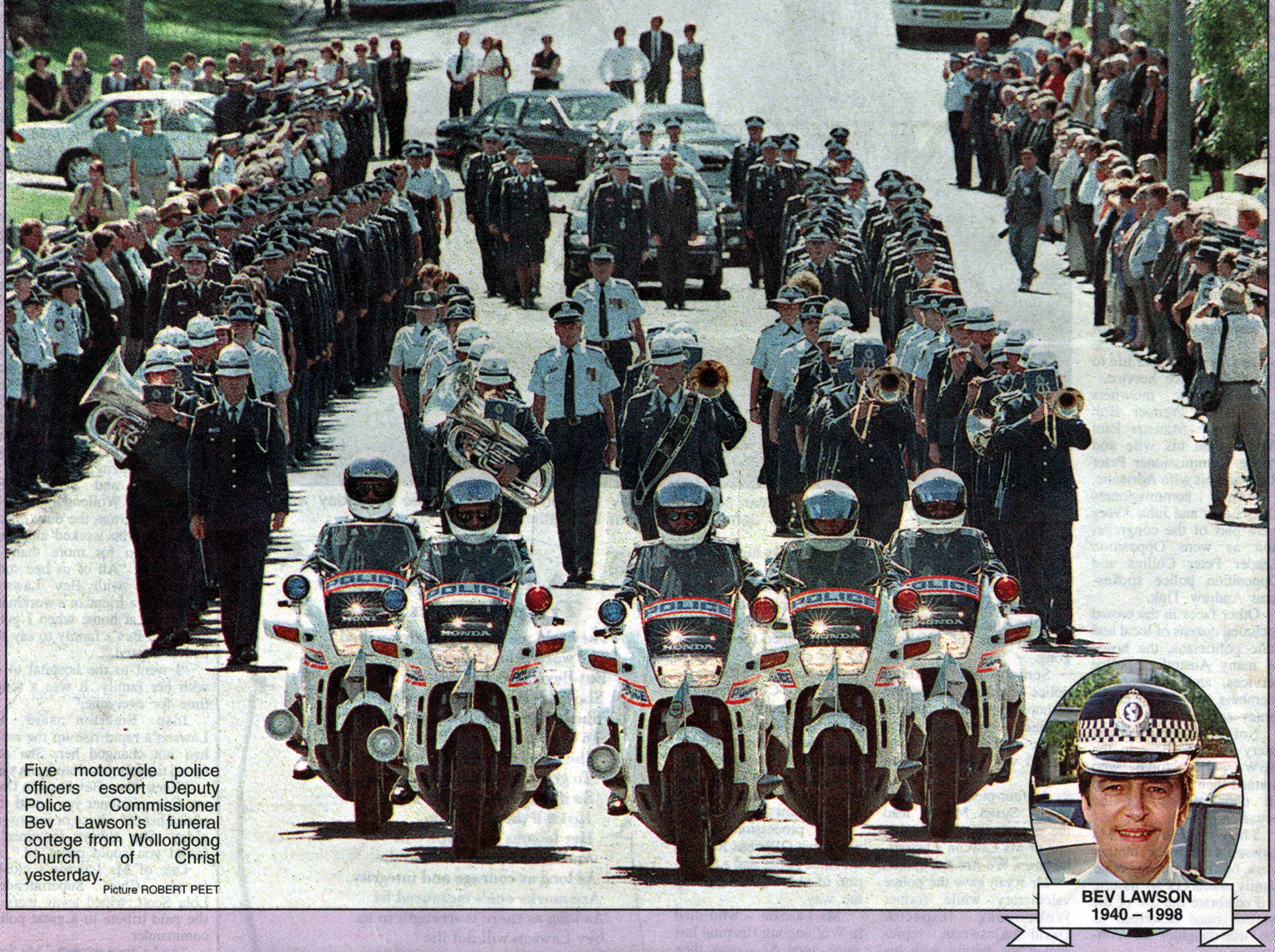
Her funeral was held at Figtree on the 28 January, 1998.
Bev was aged 58 at the time of her death.
Because Bev, and other females of her time, were only ” Sworn In ” as ” Special Constable ” – I am not sure where Bev exactly sat in relation to ” Seniority ” within her Academy Class. Her other classmates ( Males ) who were ” Sworn In ” as Probationary Constables, had the Registered numbers 10985 to 11085 ( roughly ).
Under the current Registered number system, Bev would have slotted into a number somewhere within that range.
A look back at 33 years of the Illawarra Police Charity Ball – in photos
It all started when a cop stopped to ponder the difficulties facing cancer patients forced to travel to Sydney for treatment, writes Cydonee Mardon.
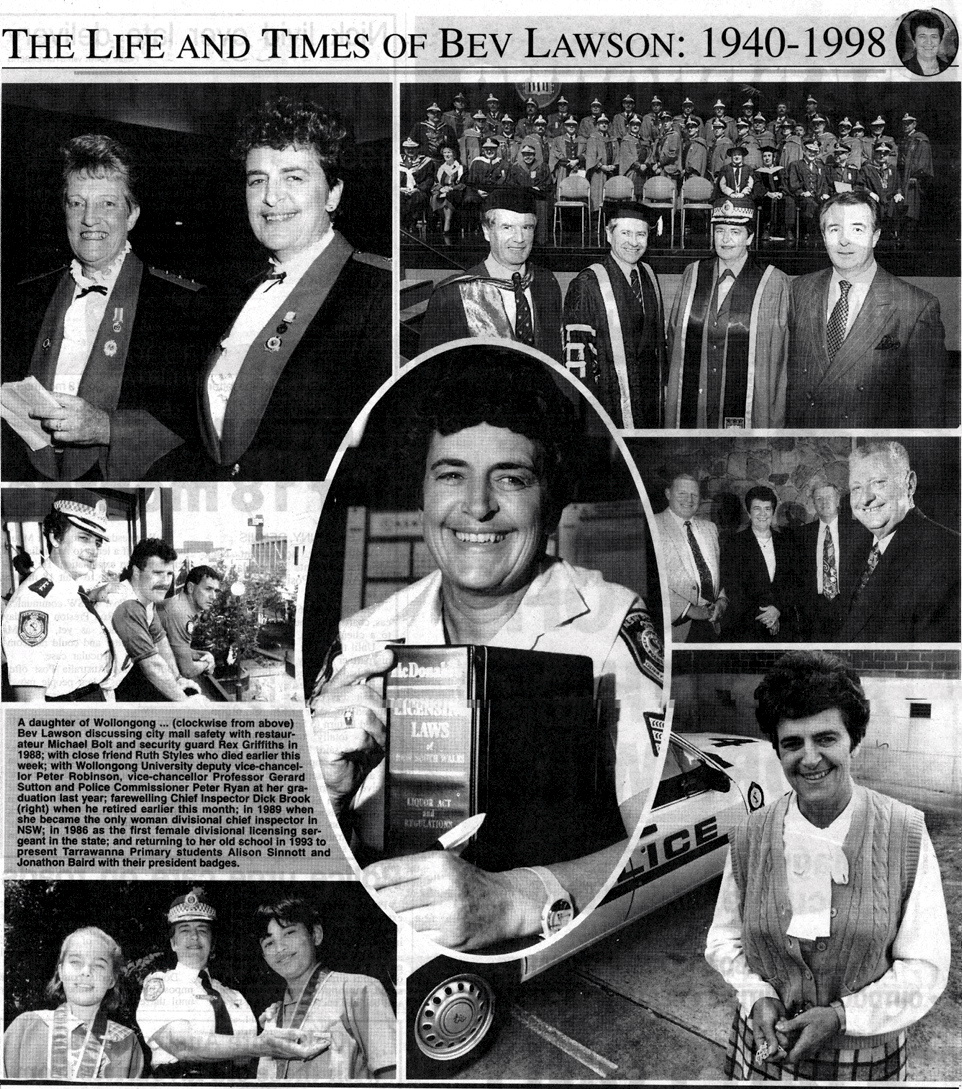
Wollongong was home to one of the most influential police women of our time.
Bob Burrage, Susie Elleman, Bev Lawson, Shelley Fort & Darren Kelly
Bev Lawson was the first female superintendent, the first female chief superintendent, first district commander and in 1996 she became the first female deputy commissioner of NSW.
Deputy Commissioner Bev Lawson in 1998.
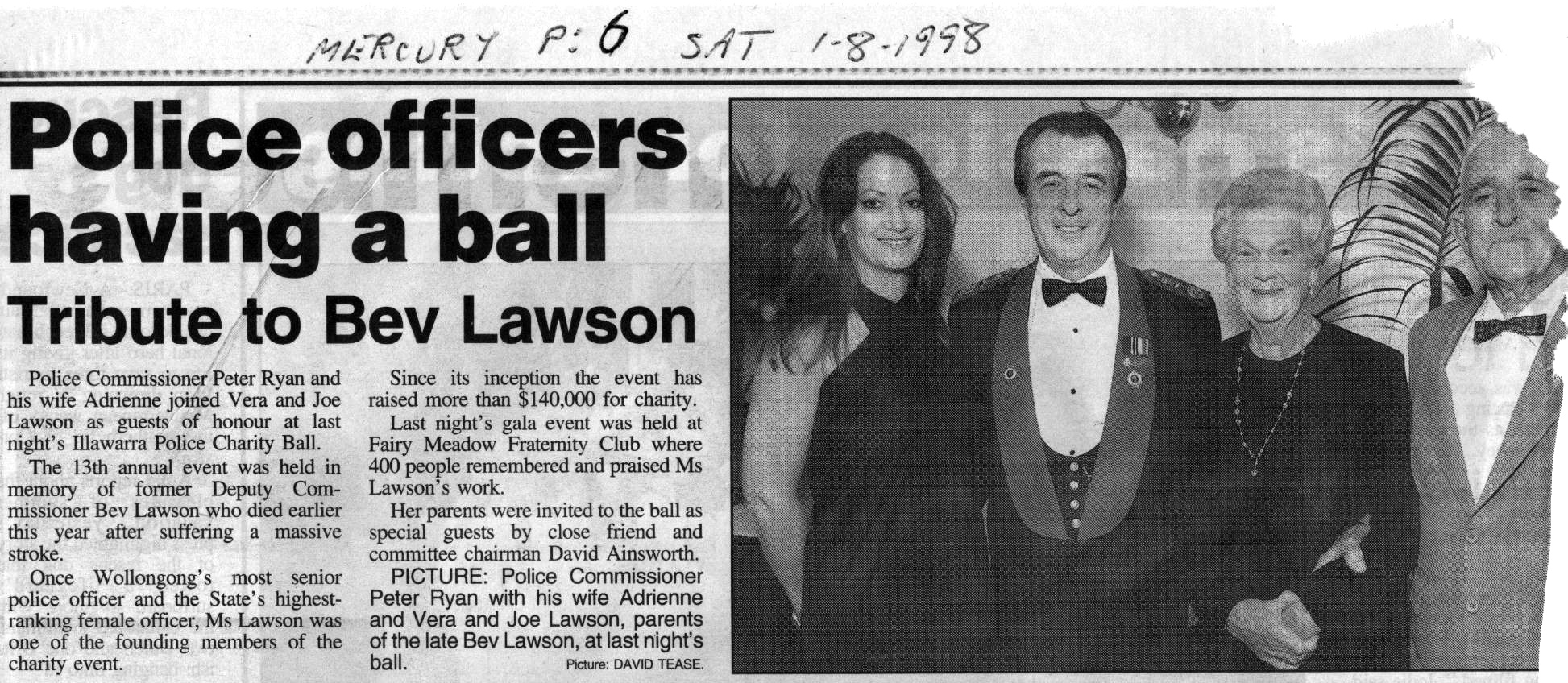
Not only did she pave the way for women in policing, but she gave birth to a tradition that has raised thousands of dollars and helped thousands of people across the Illawarra.
In 1985, Sergeant Lawson, of the Wollongong patrol, wanted to find a way to bring police and the community together in a social setting.
But her main purpose was to help people in need.
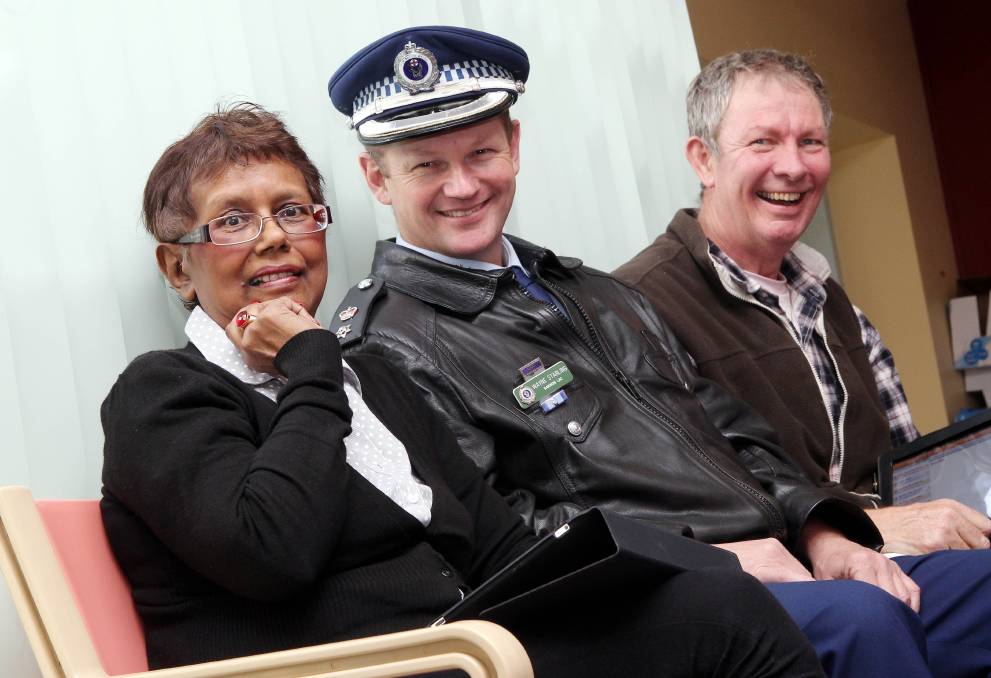
Money raised from the 2011 police charity ball went to Motor Neurone Disease Services at Port Kembla Hospital. Motor Neurone sufferers Cathy Buzak, and Paul Nixon with Superintendent Wayne Starling got to experiment with iPads to communicate.
A survivor of breast cancer, then Sgt Lawson was all too familiar with the struggles that people in the region had accessing treatment in Sydney.
The emotional and physical burden of distance was something that concerned her.
So she set about organising a charity ball to raise funds that could help patients get to Sydney.
The first charity ball became a reality on Friday, August 1, 1986 at The Fraternity Club in Fairy Meadow.
There were 200 guests.
Raffle prizes included a $1000 travel voucher from Ansett, a microwave oven and $200 worth of house paint.
We are really proud of the amount of money we have raised as a community and the help we’ve been given to so many important services in the Illawarra.
Money raised was donated to Bulli Hospital’s palliative care ward and the Wollongong Cancer Awareness Support Group.
Both causes were close to Bev’s heart. She had been in remission for nearly five years.
In 2012, Assistant Commissioner Michael Fuller, Deputy Commissioner Catherine Burn, Police Commissioner Andrew Scipione and Superintendent Wayne Starling.
”When we were considering these options, I thought about people having to travel to Sydney daily for their treatment,” she said at the time.
“I really don’t know how some of them get up there, or more specifically how they cope.”
The ball then became a vehicle to reach out to the community – a way of encouraging charities to speak up and a way for the police to show they were about more than locking up crooks.
A partnership was born that has so far netted $320,000.
At the time of her death from a stroke in January 1998, Ms Lawson was Australia’s highest-ranking female police officer and even as she rose through the ranks, she and her family remained strong supporters of the ball.
“Her vision of a community working together to benefit those in need still remains strong and has been adopted by the current committee,” said Inspector John Klepczarek.
“It’s always been the criteria that the ball has to has to help the local community.
“We tend to shy away from the big charities that get lots of donations and we pick those that struggle or are less heard of,” he said.
“One year we raised money for an entire kitchen to feed the homeless … another time it was ipads for pallative care patients at Port Kembla hospital.”
Bruce Rowles from Aspect South Coast School in Corrimal with Inspector Bryan Rugg and little Arvon Allott. Picture: Adam McLean
“We had a year where a couple went through bad trots with young babies so we put money towards Wollongong Hospital’s children’s ward.”
One of the committee’s proudest associations is with the University of Wollongong’s graduate school of medicine and clinical skills. Each year the top-placed student who dedicates their services to regional nursing receives the Illawarra Police Charity Ball medal.
Inspector Klepczarek, who was committee president for 15 years and current vice-president, said the most well-attended ball to date was the year police officers farewelled then Assistant Commissioner Christine Nixon.
Some 450 people attended the ball to pay tribute to the Wollongong commander who went on to become Victoria’s police commissioner.
She’s one of many of the top brass who graced the dance floor over the years.
Commissioners Peter Ryan, Tony Lauer, Ken Moroney and Andrew Scipioni are just a few. Plain clothes notables who’ve made an appearance include Governor-General Peter Cosgrove, former NSW Governor Maria Bashir and even reality TV personality for a time, Big Brother winner Peter Corbett.
NSW Police Commissioner Mick Fuller will attend this year’s ball on July 27 at the Wollongong University Hall. The venue is testimony to the growth and popularity of the event since those early days at the Frat.
Children with autism will benefit. Aspect South Coast School caters for more than 130 students across the Illawarra, Shellharbour, Kiama and Shoalhaven local council areas.
The ball committee meets in January every year to decide which charity will next benefit.
“It’s not a police event, it’s a community event. We get more people attending who aren’t police officers. We are extremely proud we’ve been able to carry on the work of Bev Lawson and keep her vision alive.”
To have your charity considered, write to the Illawarra Police Charity Ball Committee, PO Box 430, Wollongong 2500. Visit www.policecharityball.com.au
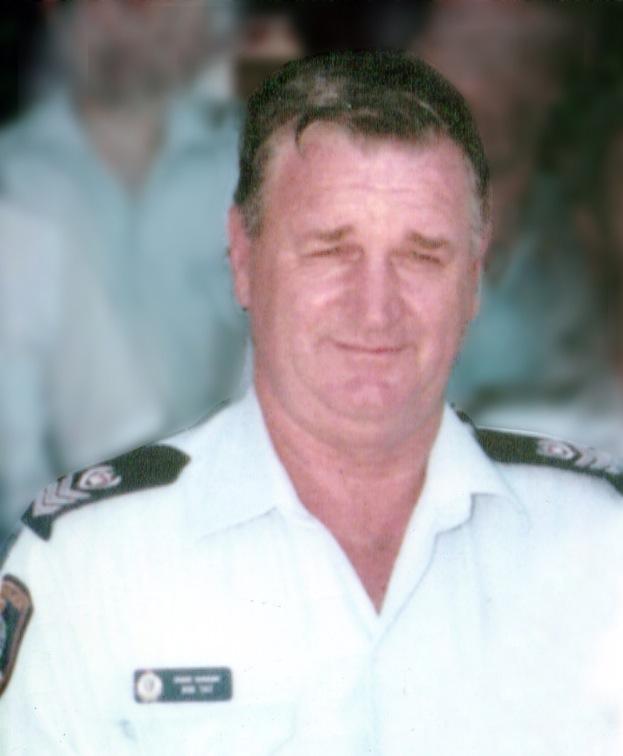
[alert_red]Robert is NOT mentioned on the Police Wall of Remembrance[/alert_red] * BUT SHOULD BE
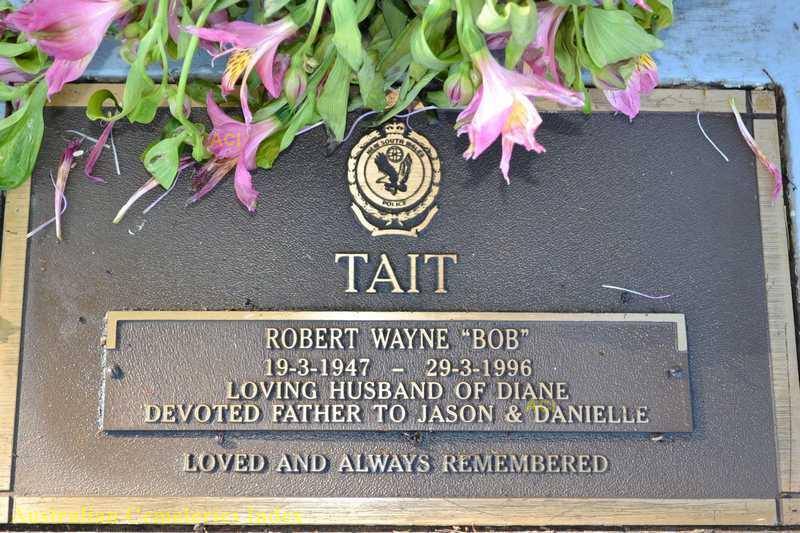
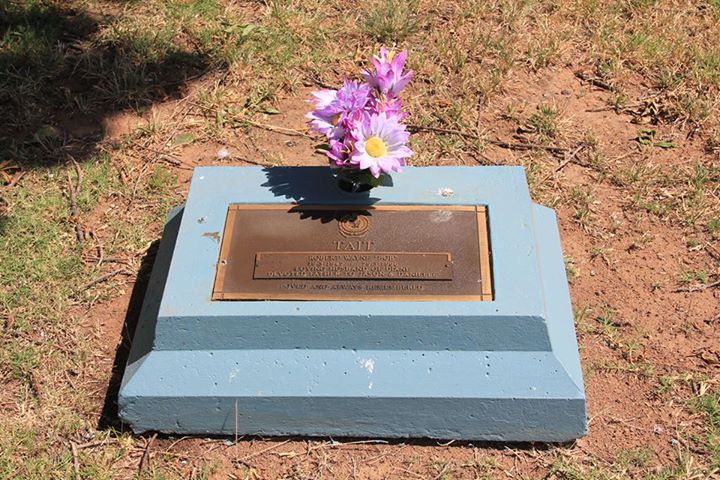
Robert Wayne TAIT headstone – Narrabri Lawn Cemetery. Portion A2, row Q
Robert Wayne TAIT – Grave
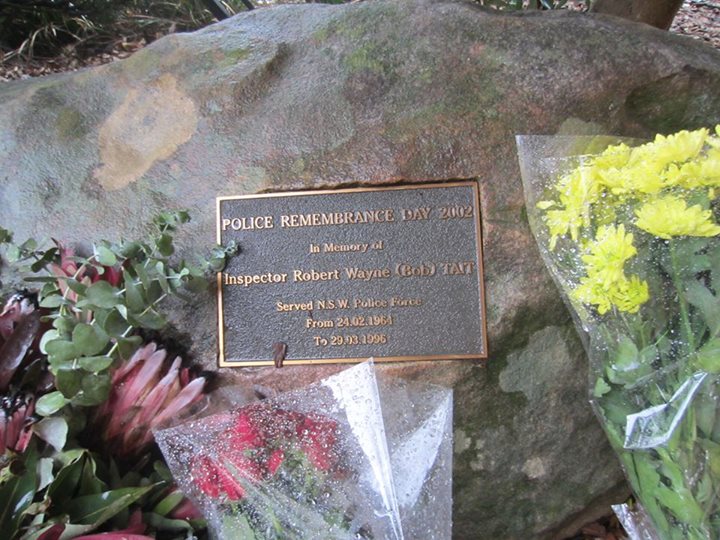
Robert Wayne TAIT – Memorial Stone outside of Narrabri Police Station. Rob’s mother also planted an Olive Tree there at the same time. 29 September 2002
In 1996 Inspector Bob Tait was the officer in charge of police at Narrabri. On the morning of Friday 29 March of that year he ended his own life at the Narrabri Police Station.
The Northern Daily Leader of 30 March, 1996 reported the death.
Stunned colleagues and the Narrabri community are this morning trying to come to terms with why such a respected policeman would kill himself. Inspector Robert Tait, 49, went to work yesterday morning, where he had been serving as the patrol commander, walked into an unoccupied office, took his service revolver and ended his life.
The inspector joined the New South Wales Police Force on 24 February, 1964 as a cadet, and was sworn in on 19 March, 1966. At the time of his death he was stationed at Narrabri, where he was the patrol commander.
It took up 451 hearing days, heard from 902 public witnesses and cost an estimated $64 million. Malcolm Brown reports on the Wood royal commission, 10 years on.
It began on June 15, 1995, when an unnamed Annandale detective jumped to his death from the seventh floor of a building, apparently through fear of the Wood royal commission. The detective’s suicide was followed by those of Ray Jenkins, a dog trainer (July 10), and Inspector Robert Tait, the acting patrol commander at Narrabri ( March 29, 1996 ). Nineteen days later a former Wollongong alderman, Brian Tobin, gassed himself.
On May 8 the same year, Peter Foretic gassed himself the day after giving evidence about pedophilia. On September 23, Detective Senior Constable Wayne Johnson shot himselfand his estranged wife after being adversely named in the royal commission. On November 4, David Yeldham, a retired judge about to face the royal commission on questions of sexual impropriety, killed himself. A month later Danny Caines, a plumber and police confidant, committed suicide at Forster, on the North Coast.
Altogether, 12 people enmeshed in the Wood royal commission took their own lives. Scores of others were so profoundly affected by proceedings that their supporters and families believe it shortened their lives. A former detective, Greg Jensen, suffered a recurrence of the stomach cancer that ultimately ended his life, while another former detective, Ray McDougall, who faced the threat that commission investigators might expose his extramarital affair if he did not co-operate, succumbed to motor neurone disease.
There is no doubt that the Royal Commission into the NSW Police Service, headed by the Supreme Court judge James Wood, purged the force of a rollcall of rotters. A total of 284 police officers were adversely named, 46 briefs of evidence were sent to the Director of Public Prosecutions and by 2001 nine officers had pleaded guilty to corruption offences and three not guilty. Seven police officers received jail sentences, including the former Gosford drug squad chief Wayne Eade and a former chief of detectives, Graham “Chook” Fowler.
Several high-profile police ended their careers in disgrace, including Ray Donaldson, an assistant commissioner, whose contract was not renewed, and Bob Lysaught, the commissioner’s chief of staff, whose contract was torn up. Charges against 14 officers were dismissed because of irregularities in search warrants and their execution.
That left the question of what to do with police who were on the nose but who could not be brought to account by normal means. The solution was the creation of section 181B of the Police Service Act, under which the police commissioner could dismiss an officer on the basis of what had come out of the royal commission. Section 181D allowed the police commissioner to serve an officer with a notice indicating that he “does not have confidence in the police officer’s suitability to continue as a police officer”. The officer could show cause as to why he should be retained, and if dismissed could appeal to the Industrial Relations Tribunal.
In the wake of the two legislative changes, 380 officers were targeted for dismissal or internal investigation. By March 1998, 19 police officers had been dismissed under section 181B and three under 181D. Another had been dismissed under a separate provision of the act, 14 had resigned, four had been medically discharged and 15 had been given performance warning notices. Others were under consideration, and as the Police Integrity Commission – a legacy of the royal commission which became a permanent watchdog – has demonstrated, even officers who had been corrupt many years before were not necessarily in the clear.The former independent MP John Hatton, who was instrumental in setting up the royal commission, said he thought the Police Integrity Commission was the royal commission’s “greatest achievement”. The Child Protection Enforcement Agency, which launched a purge of sex offenders, is another positive legacy of the royal commission.But 10 years on, was the exercise worth it?To some there were considerable benefits. Some appalling malpractice – known as “process” or “noble cause” corruption – prompted Wood to wonder at one point about the quality of a lot of police evidence he had accepted over the years.Despite this, many officers still believe the royal commission was too puritanical. They claim the investigators, not able to grapple with the really big issues, jumped on anything they could: “They had to have runs on the board,” says Michael McGann, who as a policeman in 1984 participated in the so-called Kareela Cat Burglar case, in which police used mace on an unco-operative thief and sex offender. To some critics this treatment did no serious harm and only required a word of caution. But under the spotlight of the royal commission 12 years later, it ended the careers of high-flying police such as John Garvey, Brian Harding and Steve York.A decade later, Harding works in corporate security but insists that the real sting was that the investigators had fabricated evidence. When that finally came out, he says, the group received a confidential settlement, but it did little to redress the feelings of outrage.
Another former policeman, Dr Michael Kennedy, says the commission was a political response to the police commissioner, Tony Lauer, bringing about the downfall of the then police minister, Ted Pickering.
The attorney-general, ministry and judiciary took little responsibility for the state of the force, Kennedy says, while the responsibility of the police rank-and-file grew to “the size of a Pacific driftnet”. “I don’t think the royal commission contributed anything to the reform process except to provide a template for double standards,” he says.
“Chook Fowler put $200 into his pocket from Louis Bayeh. Chook was a lazy, good-for-nothing drunk. But he was put into the same category as Ray Williams and HIH.”McGann says that against the string of petty corrupt activities uncovered, “you have to look at what the government did and did not do with gambling and vice, over the decades. There have been direct links to Parliament for 50 or 60 years. That is hypocrisy.”The critics’ view is that the royal commission has left a demoralised police force, tarnished and rudderless, with limited operational effectiveness and the problem of corruption unsolved. Seven police officers have taken their lives since 2001, including two this year.”It highlights the fact that the structure no longer takes in the needs of the NSW police force,” says Mike Gallacher, the Opposition police spokesman, and a former internal affairs police officer.Gallacher believes, as does the NSW Police Commissioner, Ken Moroney, that the tentacles of corruption no longer spread to embrace entire squads or larger units. But it does not prevent low-level incidents of corruption and there are continuing nests of corruption.In its most recent report, the Police Integrity Commission said it had undertaken 21 major investigations in 2005-06. These dealt with extortion, theft, unauthorised disclosure of confidential government information and perverting the course of justice, police brutality and the handling of $250,000 stolen from automatic teller machines. The then police integrity commissioner, Terry Griffin, said there had been 51 investigations in the 12 months, compared with 44 in 2004-05, and the 1141 written complaints represented a 15 per cent increase.Moroney says all these reports are disappointing, but one of the significant statistics was the number of police who were reporting on other police. “You go back a decade and the number of informants who were police was 5 to 10 per cent,” he says. “In the Ombudsman’s last report, that figure was 49 per cent.”The mechanism for dealing with internal complaints has been expedited: “I have not been afraid to use a section 181D notice,” Moroney says.He believes there is a different mentality in the force. A video of the royal commission had been shown at a recent reunion dinner of the old criminal investigation branch. “It is part of our history. But the interesting thing is that when Chookie came onto the screen, everyone booed. That was a signal to the Fowlers and the Eades that those found to have acted corruptly would not be accepted.”
However, Moroney accepts that corruption is not a thing of the past. “In the contemporary period, there are huge monies to be made from the illicit drug environment. You are talking in some cases of millions of dollars. It is the greatest menace in society today. And the greatest menace to officers is drug money. That is why rotation of officers out of specialist squads on a regular basis is important.”Taking over as commissioner five years ago, he had brought a low-key “Uncle Ken” influence, sorely needed, and had had to balance the principles of police accountability against the public demand for law and order, and the task has been awkward.A senior counsel told the Heraldthis week that the focus on integrity, scrutiny of professional standards and attacks by defence lawyers meant that talented police prepared to do the dirty work were deterred. “In the old days the best and the brightest went into plain-clothes,” he said. “But when the police perceive that when they have to go the extra yard [to get convictions], they are crucified – ‘Why should I go to plain-clothes when I can just get some uniform job with a 12-hour shift, and a second job?”‘Clive Small, a former assistant commissioner who set up crime agencies and established the child protection unit, says that after so many detectives were disgraced in the royal commission, the police force sought to take the spotlight off detectives and put more of the onus of responsibility for crime control onto local area commands. Crime agencies had a continual battle to keep up to strength. Regionalising responsibility for crime control reflected a lack of understanding. “A lot of crime spreads through the metropolitan area, across the state and across the nation,” he says.Kennedy, now a university lecturer, says the “business model” approach is incompatible with good police work. “We cannot expect police to behave like they are in the private sector, where competence is measured in terms of productivity,” he says.Kennedy attended the recent CIB reunion dinner and sat at a table with former drug squad detectives who remained friends of Wayne Eade. He takes issue with Moroney‘s claim that people at the dinner made catcalls when Fowler came on screen. “No one supported Chook,” he says. “But the animosity of the crowd was directed straight at Justice Wood and his commission.”Clive Small, who was also at the dinner, says: “I think it is really a matter of interpretation who they were booing. There were things the royal commission did not take care about. There was a lot of collateral damage. And the implementation [of its recommendations] has been pretty ordinary.”
CRUSADER WHO MADE THE CALL
JOHN HATTON well remembers the audience on May 11, 1994, when he made his speech calling for a royal commission into the NSW Police Service. MPs were listening, of course, but it was a gallery above him, packed with the “top brass of the police force – the commissioner himself, the deputy commissioner, superintendents – they were an intimidating force on the Parliament”.
“They thought they could stare down the Labor Party support for my motion,” Hatton, now retired, says. “It was probably the best indicator of the way in which the police force thought they could control the agenda.”
Hatton won the day, putting paid to a claim by then police commissioner, Tony Lauer, that “systemic corruption” was “a figment of the political imagination”. Hearings started on November 24, 1994, and Justice James Wood delivered his final report on August 26, 1997.
Ten years later, Hatton believes he was vindicated. He says Wood was “the right man” to head the commission and the recruitment of interstate police was crucial, along with the decision to use phone taps and surveillance.
The 11 volumes of material Hatton gave the royal commission had been accumulated over 14 years, he says, from the time he had first spoken up. He had received information on illegal gambling, drug trafficking and police involvement with the mafia.
There had been earlier moves to address police corruption, including inquiries by the Independent Commission Against Corruption, but these had only scratched the surface. “I can remember on one occasion I reported a death threat which had to do with the McKay murder in Griffith and 48 hours later the bloke who had given the information was threatened by a shotgun at his door in Queensland,” Hatton says.
The royal commission came into being because Hatton and other independent MPs held the balance of power in Parliament. The Labor Party may have had high public motives, but also saw a chance to attack the Fahey government. Labor stipulated that an inquiry into police protection of pedophiles, previously in the hands of the ICAC, become part of the royal commission.
The process of gathering information was helped greatly by Trevor Haken, a detective who became an informer and covert investigator as part of a deal to avoid being prosecuted himself.
Hatton says Haken‘s entry was “out of the blue”. Though useful, in the long term it had had a detrimental effect on the fight against corruption. Living in fear and watching his back, Haken had provided “the greatest disincentive for someone coming forward to finger corruption in the system”.
Malcolm Brown
[divider_dotted]
i. ROBERT TAIT
Inspector Tait was a member stationed at Narrabri in 1996. Tait received a letter from the Royal Commission, which set out:
“This is to notify you that evidence will be adduced shortly from a witness who is to be called to give evidence before the Royal Commission into the NSW Police Service to the effect that you did fail to report or investigate complaints of criminal conduct.”
There is ample evidence to support the change in TAIT ‘s demeanour and behaviour following receipt of this letter. He was seen by the Police Psychologist and his own Doctor but on the 26-3-96 he shot himself in his office with his service revolver. He left a note clearly indicating how tortured he had become as a result of being named.
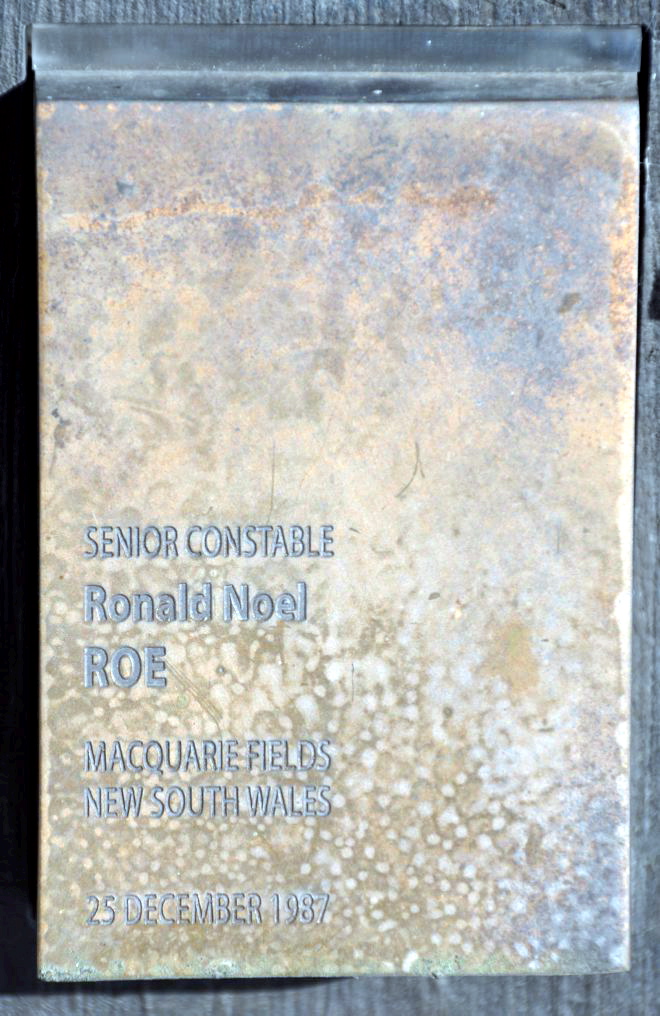
Senior Constable Roe died at the Campbelltown Hospital on Christmas Day, 1987 as a result of myocardial infarction. His death was attributed to his stressful occupation carried out in busy centres over a period of almost twenty years.
The constable was born in 1945 and joined the New South Wales Police Force as a trainee on 27 October, 1969. At the time of his death he was stationed at Macquarie Fields.
[divider_dotted]
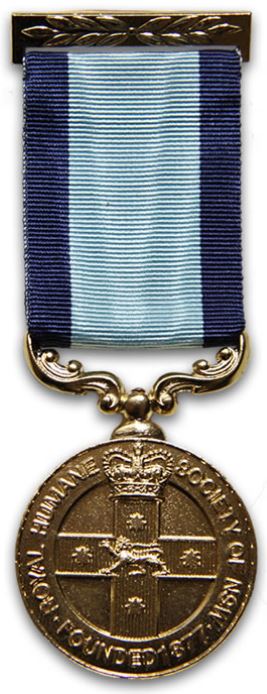
Humane Society of NSW – Bronze Medal
Senior Constable Ronald Noel Roe together with SenCon Barry Terence TRAYNOR # 14422 both received the Bronze Medal from the Royal Humane Society of NSW
Senior Constable Ronald Noel Roe was awarded a Bronze Medal for actions involving poisonous gases at Lightning Ridge on the 5th February 1978.
‘Johnnie’ ROE was a front row forward who played for Wentworthville Leagues Club.
[divider_dotted]
Paul Cole Wed 24 July 2019: A funny man John was. I remember hiding in the bush watching a Indian hemp plantation near Lightning Ridge with John, Detective Sergeant De Audney and Sergeant Dick Paul. The offenders came out and began watering the plants and John stood up and said, “ what are you doing here Brownie?” The offender said, “ We are looking for pigs. “ Quick as a flash John says, “ Well you just found f……g four of them. Your under arrest.”