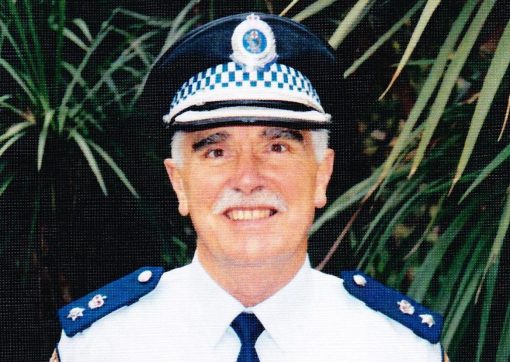
Rank: Commenced Training at Redfern Police Academy on Monday 29 May 1961 ( aged 19 years, 6 months, 29 days )
Probationary Constable – appointed Monday 3 July 1961 ( aged 19 years, 8 months, 3 days )
Constable – appointed ? ? ?
Constable 1st Class – appointed 1 April 1967
Senior Constable – appointed 1 April 1971
Sergeant 3rd Class – appointed 15 November 1977
Sergeant 2nd Class – appointed 30 July 1984
Sergeant 1st Class – appointed 2 May 1986
Inspector – appointed? ? ?
Chief Inspector – appointed ? ? ?
Final Rank: Chief Inspector – retired
Stations:
?, Clarence St Sydney ( 1 Division )( ProCst ), ?, South Coast District ( 1967 ), Remington Building – Senior Courses, Academy ( 1980’s ), HWP, North Region Traffic co-ordinator
Service: From 29 May 1961 to ? ? ? = ? years Service
Awards: National medal – granted 11 December 1980 ( Sgt )
1st Clasp to National medal – granted 8 June 1988 ( SenSgt )
2nd Clasp to National medal – granted 28 August 1997 ( SenSgt )
Born: Thursday 30 October 1941
Died on: Thursday 25 June 2015
Cause: ?
Age: 73 years, 7 months, 26 days
Funeral date: Wednesday 1 July 2015 @ 2pm
Funeral location: Narara Valley Baptist Church, 149 Narara Valley Drive, NARARA, NSW
Buried at: ?
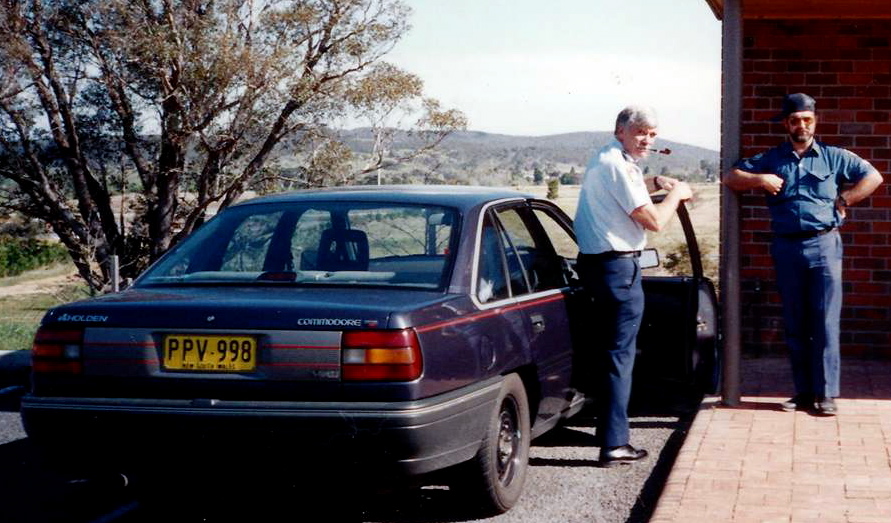
Terry Lester (left) and Dallas Tidyman (right) at the Goulburn PDTS ( Police Driver Training Section ) late 1991 or early 1992. Dallas killed whilst instructing on a HWP motorcycle course at Boorowa, NSW. RIP two good friends.
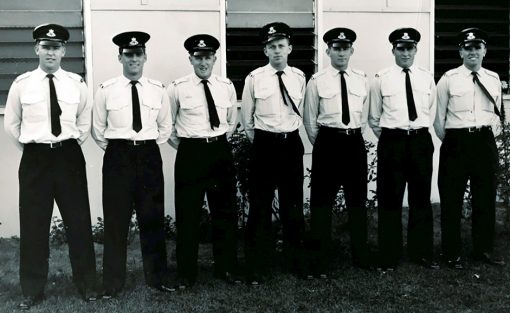
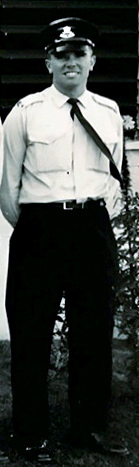
More guys from class 87A 29 May, 1961: Harvey Juergens 10018, Doug Philp 10041, Les Wyatt 10039, Peter (Bob) Drooger 10019, Mike Stephens 10026, Ian McPHEE 10009, Terry Lester 10049.
Dedication date of Memorial / Plaque / Monument: Nil – at this time ( February 2021 )
TERRY is NOT mentioned on the Police Wall of Remembrance * NOT JOB RELATED
Funeral location:
LESTER, Terry.
30.10.41 – 25.6.15.
Beloved husband of Marilyn,
loved father of Kristie and Lara,
proud father in law of Warwick and Graeme, and
cherished Grandfather of William, Joseph, Kate, Molly and Emma.
Celebration Service to held at Narara Valley Baptist Church, Narara at 2pm Wednesday (1 July 2015).
Published in The Sydney Morning Herald on June 27, 2015
The World Today Archive – Wednesday, 1 December , 1999 00:00:00
Reporter: Rafael Epstein
COMPERE: Already, the organisers in Sydney are studying today’s events at the World Trade Organisation protests in Seattle. The organisers concede it would be possible for demonstrators to disrupt access to Olympic venues next year. However Superintendent Terry Lester from Olympic security command says alternative routes have already been planned. And Superintendent Lester has been telling Raphael Epstein police are already consulting with political and activist groups liaising so there’s advance notice of demonstrations.
TERRY LESTER: Well, during Games time we obviously plan for these sort of incidents happening – not only demonstrations, but also car crashes and other incidents that may block the Olympic lanes or the CBD or other areas where a lot of people are trying to get to and from Olympic venues. Now, the way we do this is we’ve got the Olympic routes already planned out. As secondary to those, we’ve got another lot of Olympic routes where, if the first one becomes blocked, we use the alternate. We’re also trying to get people to speak to us before they demonstrate so that they can get their message across. It’s important for them to get their message across to the media, to the rest of the world, if you like, and it’s important that they do have their say.
RAPHAEL EPSTEIN: But Sydney’s already a, should we say, difficult city, traffic-wise and transport-wise. It would potentially be quite easy for them to block off the major roads leading to Olympic sites, wouldn’t it, with a couple of thousand demonstrators.
TERRY LESTER: Oh yes. And we recognise what’s happening in Seattle at the moment as to these limited number of demonstrators and effectively slowing up a major event. But working with ORTA and the RTA and the local councils, we’re trying to say to these people ‘you’ve got the right to demonstrate, we recognise that, but we’ve also got to keep the Games going at the same time’. So we’re trying to provide an alternative system, if you like, so that if one – one system does become blocked up, the alternative is there and it’s readily available to us.
RAPHAEL EPSTEIN: So if a group of demonstrators then is uncooperative, you’re going to have to rely on those back-up routes to get people into venues.
TERRY LESTER: Yes, that’s correct.
RAPHAEL EPSTEIN: How far advanced are preparations for those alternative routes?
TERRY LESTER: Oh, very much advanced. We’ve already, with ORTA, released to the public the Olympic routes where people are going – major routes which are travelling to and from the various venues around the city. There’s 11 of those. And we’ve already got secondary routes already planned out and identified – which ones – the ones that we are going to use.
RAPHAEL EPSTEIN: Would you need special powers at all to, I guess, disperse demonstrators if they are causing a real problem, if they do manage to block off all of the routes into a venue?
TERRY LESTER: No. We can use the current legislation that we already have for people causing an unreasonable obstruction – things like that, you know. And how we clear up demonstrations now is the way which we’ll do it during the Games.
RAPHAEL EPSTEIN: What do you think of the fact that tear-gas was used in Seattle this morning on the demonstrators?
TERRY LESTER: Oh, I’d rather not comment on that. I wasn’t even aware of that problem in the first place, you know. And how people police in Seattle may be totally different to the way we police here.
RAPHAEL EPSTEIN: Do you know if tear-gas has ever been used on demonstrators in Australia?
TERRY LESTER: No, I’m not aware of that. Obviously we’ve got the capsicum sprays which come out. But that’s in a reasonable life-threatening situation where enabled to use that.
You know, Australian society – the Olympic Games, you know, are melding well together. And what we’re trying to do here – it’s a friendly, open sort of a Games. But I don’t think we’re going to have serious-type demonstrations like they’re having in Seattle or with the MUA.
COMPERE: Superintendent Terry Lester is with the Olympic Security Command. He was speaking with Raphael Epstein.
Maurice graduated from the old Redfern Police Barracks ( year unknown ) and was the son of Detective ‘ Tiger ‘ Richards – an investigating officer in the Sydney Razor Gang case.
[divider_dotted]
Alexander Binning WALKER
| 27/06/2015
Alexander Binning WALKER
( late of Richmond-avenue, Cremorne )
New South Wales Police Force
Regd. # 1765 ( pre 24 February 1915 which commenced the current Regd. # system )
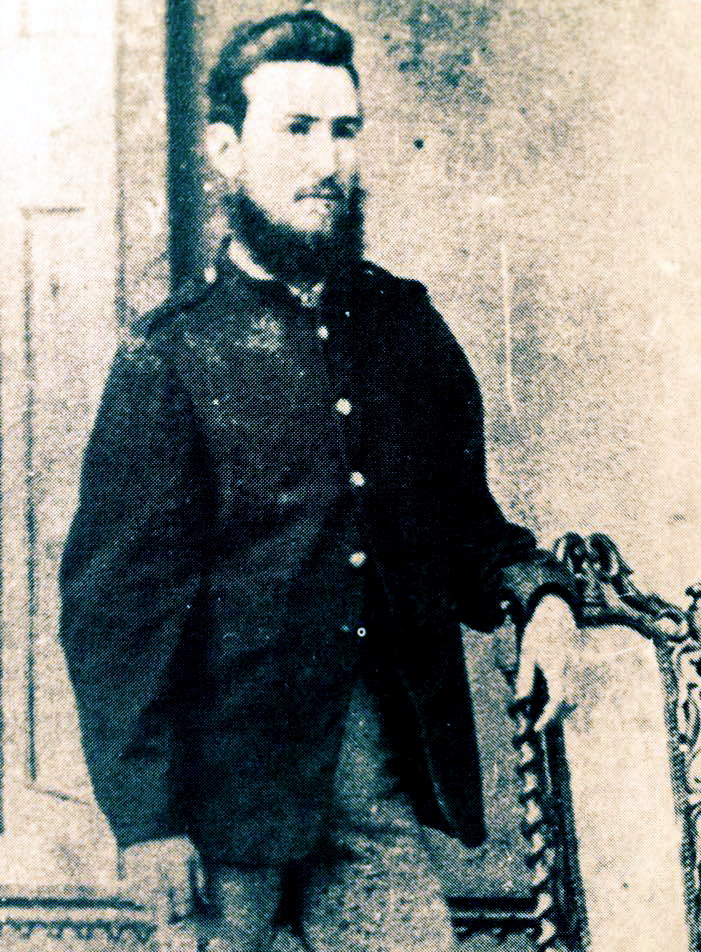
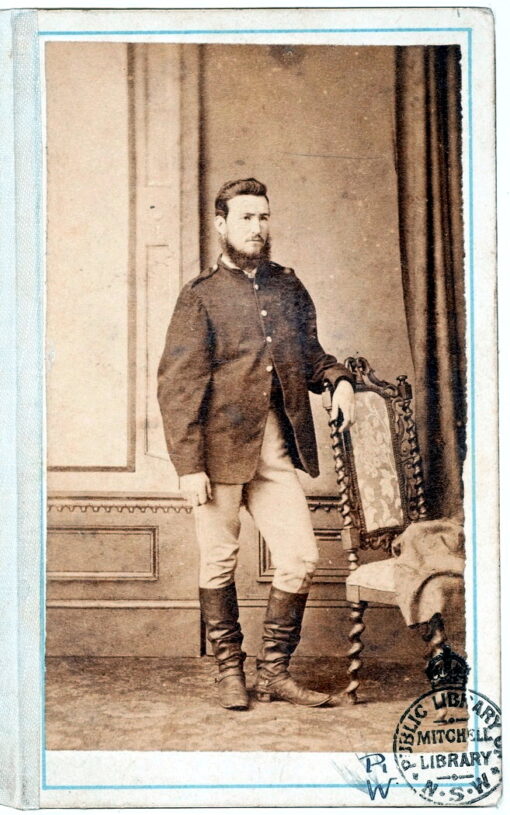
Stations: ?, Sydney,Grafton, Armidale, Uralla ( October 1867 – 1870 ), Glen Inness as O.I.C. ( 1 June 1870 – ? ), Wagga ( 1979 as acting sub-Inspector ), Urana ( for 8 months )-( Riverina Police District ), Walgett ( 1880 – 1882, sub-Inspector ), Gunnedah ( short time ), Young ( for 8 years. promoted to Inspector ), Wagga Wagga ( 1891 ), O.I.C., South Western District at Deniliquin ( Supt. 1896 – ? ), Albury ( 1 year as Supt. ), Goulburn ( from around 1903 – 1911 )
Service: From4 March 1867to 31 May 1912 = 45 years of Service
Ranks: Constable – 1867
Senior Constable – 1 June 1870 – O.I.C. Glen Inness
Sergeant – August 1870
Senior Sergeant – 1874
acting sub-Inspector – 1879
Inspector – 18??
Superintendent – 1896 – 1911
Awards: ?
Born: ? ? 1847 in Oldbury, near Berrima, NSW
Died: Saturday 30 March 1929
Cause: ?
Age: 81
Funeral date: Monday 1 April 1929
Funeral location: Northern Suburbs Cemetery
according to the cemetery records, there are two Alexander B Walker’s buried in the same grave.
One having died on 30 March 1929, the other having died on 21 December 1942.
Buried at: Macquarie Park Cemetery & Crematorium, Delhi Rd, Macquarie Park, NSW
Church of England, H11, Grave 0056
Alexander Binning WALKER NSWPF
ALEXANDER is NOT mentioned on the Police Wall of Remembrance * NOT JOB RELATED
My wife is a direct descendant of this ‘Old & Bold’ Constable.
Original publication
Sydney Morning Herald, Monday 1 April 1929, p 8
Walker, Alexander Binning (1847–1929)
Ex-police Superintendent Alexander B. Walker, who killed the notorious bushranger, Thunderbolt, died on Saturday at his residence, Richmond-avenue, Cremorne. Mr. Walker had a remarkable career in the police force, rising from the ranks to the rank of superintendent. For three months in 1907 Mr. Walker relieved the late Mr. Garvin as Inspector-General of Police. Mr. Walker was 81 years of age.
Mr. Walker was born at Oldbury, England, in 1847, and came to Australia when a young man. He enlisted in the mounted police, and when a constable shot Thunderbolt dead on May 27, 1870, at Kentucky Creek, near Uralla. Walker had a thrilling encounter with the bushranger, and after the latter had been shot he grappled with the young constable. During the encounter at Kentucky Creek, Walker’s horse fell and Thunderbolt rushed at him with his revolver in his hand. Walker then fired at the bushranger, who rose and attempted to grapple with the constable. The latter then struck Thunderbolt over the head with the revolver. It was Walker’s last shot that killed the bushranger.
Thunderbolt, whose name was Frederick Ward, was in 1856 at the Maitland Assizes, sentenced to ten years’ hard labour for felony. He obtained a ticket of leave, and was again convicted at Mudgee in 1861. While serving a sentence on Cockatoo Island, on 11 September 1863 he escaped, in company with another convict named Frederick Britton. Ward evaded capture for seven years until he was shot by Constable Walker.
Mr. Walker was subsequently presented with a public subscription, and received a Government reward of £200. He soon afterwards received promotion, and continued to rise in the service until, in 1895, he was made superintendent at Deniliquin. He later served in a similar capacity at Albury and Goulburn.
Mr. Walker is survived by three sons and three daughters. The sons are William Robert Walker (ex-Superintendent of Police, who only some time ago was in charge at Grafton), Alexander Walker (manager of the Commercial Bank, Narrandera) and Walter Walker (manager of the Union Bank, Oxford-street). The daughters are the Misses Pearl Walker, Olive Walker, and Mrs. Cedric Fitzhardinge (of Newcastle).
The funeral will leave the residence in Richmond-avenue, Cremorne, at quarter past 10 o’clock this morning for the Northern Suburbs Cemetery.
Goulburn Evening Penny Post ( NSW ) Tuesday 31 October 1911 p 2 of 4
AN HONOURABLE CAREER A SUPERINTENDENT’S REMINISCENCES. HOW THUNDERBOLT DIED.
On 1st December next Mr. Alexander Binning Walker, Superintendent of Police in the Southern District of New South Wales, will commence his six months’ leave of absence prior to retiring from the service owing to the age limit. Mr. Walker, although he is in his sixty-fifth year, is still an active and clear-thinking man, and good enough, to put it somewhat crudely, for another ten years’ service, but there it is – the inexorable limit.
Mr. Walker has nearly completed forty five years of service, and he leaves behind him an honourable record of which anyone would feel proud. It is the universal rule that there shall be law, and so long as there is law there will be law-breakers.
One of the worst of the notorious law-breakers in the history of New South Wales was Thunderbolt, and it stands to the great credit of Superintendent Walker that, single-handed, he faced and overcame the bush ranger who proved such a scourge to society.
Mr. Walker was born at Oldbury, near Berrima, in 1847. He joined the police force before he was twenty years of age, and as a trooper was sent from Sydney to Grafton, then Armidale. After a stay of a couple of weeks he went to Uralla. This was in October, 1867, ” the roaring days. ” So that at this time the young trooper was still in his nonage.
He only stayed at Uralla for three years, but during that time he had plenty of excitement. He was often engaged in guarding the mail from Armidale to Tamworth. One can scarcely realise it now. His regular work, for four days in the week, was to guard the mail from Uralla to Bendemeer. He was stationed at Uralla with Senior-constable Mulhall, and while there information was sent from Mr. Innes Taylor’s property at Terrible Vale – the very name jumps one back to the bushranging days – that a suspicious character had been seen at the station. Amongst other information, it was stated the man had a saddle bearing the brand of the Burburget Station, and this led the police to believe that the suspicious character was Rutherford, the bushranger, who had some time previously, in company with Dr. Pearson, shot Senior-constable McCabe on the Biree, at Goodooga.
After this outrage Pearson went down the river, and was captured by the Bourke police, while Rutherford came through the Liverpool Plains up into New England, and so to Terrible Vale.
The messenger who brought the information, instead of coming immediately, stayed the night on the station and made the trip to Uralla next day. Senior-constable Mulhall and Constable Walker arrived at the out station where Rutherford was expected to be. One of the troopers came at the hut in front, and the other from the rear, thinking that the bush ranger might make a break for it at any moment, but they found the place empty. Rutherford had left that morning.
They followed him for four days, but on the Friday night Constable Walker had to leave to take his place escorting the coach from Carlyle’s Gully to Uralla. On the Saturday they discovered that on the Thursdaynight they had camped within half a mile of Rutlherford! As Constable Walker left the public-house where the coach changed horses at Carlyle’s Gully, and went out of sight, Rutherford rode down the back. He had evidently been watching the coach and the constable. Rutherford cleared out again, but was shot three days later by the publican at Pine Ridge while endeavouring to stick up the house.
The story is only an illustration of some of the things that happened in ” the good old days. ” But shortly after there was another and far more dramatic incident – the end of Frederick Ward, better known as Thunderbolt.
On 24th May, 1870, races were held at Uralla, and there were many visitors and strangers in the township. The next morning was settling day. About 3 o’clock in the morning an excited Italian hawker, Cappasotti by name, came into town and reported at the police station that he had been stuck up and robbed near Blanch’s Hotel, about five miles from Uralla. Senior-constable Mulhall and Constable Walker started out immediately.
It might be Thunderbolt, it might be someone else. Before four o’clock they were well on the road, Senior-constable Mulhall, who was riding a better horse, leading the way. He arrived at Blanch’s about half a mile ahead of Constable Walker, and met two men riding grey horses towards Uralla. He had little time to ask questions, as one of them immediately drew a revolver and fired at the senior constable, who exchanged shots. It was still dark at the time. Both the strangers then turned and fled, the senior constable-galloping after them. He over took them round the fence surrounding Blanch’s place and fired, again missing his mark. Constable Walker came galloping up, and the senior constable said ” Go ahead and shoot that wretch. We have exchanged shots. ”
They both pursued the two men. One of them doubled back and the senior constable followed him, but lost him in the dark. The man, however, was apprehended shortly afterwards at Blanch’s as an accomplice. Such was not the case, as it happened.
Thunderbolt had taken the man into his custody, as he wanted the horses he had with him. In the meantime Constable Walker had followed Thunderbolt. In the excitement the constable’s revolver went off, and Thunderbolt turned in his saddle and shot at him. The constable returned the fire. It was at this stage that the two men, Thunderbolt and the stranger, separated. ” Come on, ” cried Thunderbolt, putting the spurs into his horse. ” All right, ” shouted back the young constable, nothing loth.
They galloped on, and Thunderbolt had another flying shot, which fortunately was resultless. The constable fired in reply, but the end was not to come yet. Still they raced on over rough country, both taking risks in the darkness, and never dreaming of the consequences of a fall. Over creeks they went. At the top of a rise out of one of these creeks Thunderbolt wheeled round, and it looked for a moment as if he had the constable at his mercy, as he came up towards him. The constable fired, and Thunderbolt turned, and again the wild race went on.
For a quarter of an hour it continued, the constable‘s horse gradually pulling the bush-ranger’s. Thunderbolt then led the way over a spur down into a creek they could not gallop through. Into the water he dashed, but a shot from the constable‘s revolver killed the horse. The bushranger was at bay ! Constable Walker turned his horse down the stream to cross, and when he came back he found Thunderbolt running up the creek. Before he could get to close quarters Thunderbolt crossed the stream again at a narrow channel. He stood on the opposite side until the constable came up. ” You had better surrender before you do any harm, ” said Constable Walker. ” Who are you ?” asked the bushranger. ” Never mind, ” retorted the constable. ” What’s your name ?” ” Walker, ” came the answer. ” Are you a trooper ?” queried Thunderbolt. Being answered in the affirmative, and after a pause, Thunderbolt asked ” Are you a married man ” ” Yes, ” came the answer. The two men were facing one another, with a narrow strip of water flowing between them, four or five yards of it, and each had his revolver in his hand. Any moment might mean death to one or both of them.
” Walker, keep back ! You are a married man !” came the warning cry from Thunderbolt as the constable edged forward. ” Will you surrender ?” ” No ; I’ll die first. ” ” All right, you and I for it. ” The constable put his horse to the water, head first. While the horse was under the water Thunderbolt rushed at the constable. A shot, the fatal one, rang out from the constable‘s revolver and Thunderbolt went under. He rose and grappled, and the constable struck him on the head with the butt of his weapon. Again the bushranger went down, and when he came up the blood rushed from his mouth. Thunderbolt‘s career was over. The shot had passed through the chest, and the effect was not instantaneous, this accounting for the struggle in the water. Thunderbolt‘s revolver was found in the creek bed with one shot still in it. The cap had failed to explode, although the mark of the hammer was on it. Had it taken effect there might have been a very different story to relate. Needless to say the courageous behaviour – one might almost call it the reckless disregard of danger – on the part of Constable Walker aroused the greatest enthusiasm.
At the inquest £32 was subscribed in the room, and the warmest feelings were entertained for him at Uralla. Of course, the Government reward of £300 was handed over, but more dear to the heart of the young constable was his promotion, on 1st June, to the rank of senior constable, and being placed in charge at Glen Innes. In August he was made sergeant.
In 1871 or 1872 the tin mines were discovered, and the number of men stationed at Glen Innes was increased from two to five. Ordinary police work followed.
While at Glen Innes Senior-sergeant Walker effected a clever capture of a notorious character in the person of Aboriginal Tommy, while the black had a loaded revolver in his possession. Tommy had stuck up some fencers, and after being arrested escaped. It became Senior-sergeant Walker‘s duty to re-capture him. In company with a constable he set about the task. They found Tommy working for a selector, ring-barking. He was in the selector‘s house at the time of his capture. The sergeant and constable stepped in smartly, and before Tommy was quite aware of what had happened Senior-sergeant Walker had him by the breast with a revolver at his head. ” I’ll shoot you if you move, ” he rapped out. But Tommy did move, and tried to get possession of a revolver in his pocket. The constable, however, snapped the handcuffs on. Even then the trouble was not over. They put the black on a horse, but he threw himself off his horse and fought for six miles. They had to tie him to a tree while the constable went to Shanahan Vale to get a cart. Tommy was eventually committed for trial. The charge was that he threatened to shoot the fencers, and he got out on a technical point, as the Crown Prosecutor had failed to prove the firearm was loaded ! The jury consequently brought in a verdict of not guilty. But Tommy had not learnt his lesson. He got a horse, and near Oban robbed a digger‘s hut, where he also got powder and bullets. He rode into the blacks’ camp and deliberately shot a blackfellow dead.
The police were after him immediately, and used to give him a chasing now and again, but they never got within sight of him. They had black trackers, but, ’tis said, Tommy used to often track them.
One day he stuck up a public house at Bald Knobson, the Glen Innes – Grafton road. Two mounted constables, Wainwright and Goodhew, the latter a brother to Senior sergeant Goodhew, of Taralga, were sent out. They followed him, and had an encounter. Tommy was armed with a revolver and a tomahawk. They came on him lying on the ground taking stock of them. ” Are you Tommy MacPherson ?” asked one of them. ” That’s the question, ” said the black. He let drive with the tomahawk, which grazed the back of one of the troopers as he bent down to dodge it. A bullet from the weapon of the other trooper, however, quietened Tommy, who died the same night.
In 1874Mr. Walker attained the rank of senior sergeant, and in 1879, when the Kelly Gang stuck up Jerilderie, he was promoted to the rank of acting sub-inspector, and sent to take charge of Wagga, during the absence of the sub-inspector there at Albury. On his return Mr. Walker was sent to Urana in charge of a party of police in the Riverina, remaining there for eight months. The police were on the look out for the Kelly Gang, but from then till the time they were captured the gang never re-visited New South Wales.
Mr. Walker went to Walgett in 1880 as sub-inspector, remaining there for two years. After a short stay at Gunnedah he went to Young for nearly eight years, during which time he became inspector. Wagga Wagga saw him again in 1891, and in 1895 he was placed in charge of the South-Western District, with headquarters at Deniliquin. Next year he was made superintendent, the district comprising Broken Hill, the South Australian and part of the Queensland borders. After a year in Albury Mr. Walker. came to Goulburn, where he has been for the last eight and a half years, during which time he has had charge of the whole of the South Australian border in New South Wales, the Victorian border, and portion of the Queensland border. During his time Mr. Walker has had men under him who have risen to the rank of superintendent, a fact speaking volumes.
Mr. Walker is the last of ” the old brigade ” who joined during ” the sixties, ” and his experience is wide and varied.
Speaking of the police work now, he says it is only child’s play to what it used to be in the olden days, and in a sense one can well agree with him. As for the men of the Southern District, Mr. Walker says he leaves behind him a staff of good men, all sober and reliable. ” They are second to none. I am very pleased to say that. I cannot specialise any of them. They are all good. ”
Mr. Walker will finally retire on 31st May, and by next March he will have completed forty five years of service.
Constable Alexander Binning Walker has become a foot note in history despite the heroism he displayed in the pursuit of notorious bushranger Frederick Ward alias Captain Thunderbolt. Ward is often portrayed as the bushranger who never used violence in his crimes (if you discount pointing a gun at his victims and demanding their property or shooting at and wounding Police).
Frederick Ward (1835 to 1870) was a horse thief and armed robber. He committed offences in the New England, Upper Hunter and Liverpool Plains areas of New South Wales during the height of the bushranger era. After shooting and wounding a Policeman in 1865 a £200 reward offer was made. Senior Constable Lang was the wounded policeman but his name seems to escape the history books.
Alexander Binning Walker was born on the 31 May 1847 at Oldbury near Berrima. His name is sometimes misspelt at Binney. He married Eliza Elizabeth King in 1868 at Armidale. They had two children. Eliza died of typhoid on the 29th June 1874. He married Emily Susan Hawke in 1879 at Willingrove. They had six children together.
Alexander Binning Walker was a Supernumerary before being confirmed as a Constable on the 1st April 1867, No. 1765. He joined the Police Force at 20 years of age. Mounted Trooper Walker was sent to Grafton then Armidale. In October 1867 he was sent to Uralla where he stayed for 3 years. His principal duty was to guard the mail from Uralla to Bendemeer.
On the 24th May 1870 a race meeting was held at Uralla which attracted many visitors. About 3am the next morning a hawker named Cappasotti reported to the Police that he had been held up near Blanch’s Hotel about five miles from Uralla. Senior Constable Mulhall and Constable Walker stared out immediately. Senior Constable Mulhall was on a better horse and arrived at the hotel about a half mile ahead of Walker. He encountered two men on horseback. One man started shooting at him. He pursued them, overtook them and shot at them. Constable Walker caught up and they continued the pursuit. The two men split up. Senior Constable Mulhall pursued one and Constable Walker pursued Frederick Ward (Captain Thunderbolt). Constable Walker accidentally fired his revolved and Ward shot at him. The pursuit continued with more shots exchanged. Ward rode into a creek and Constable Walker shot and killed Ward’s horse. Constable Walker called on Ward to surrender but he refused and said he would rather die. As Constable Walker rode into the creek Ward rushed him. Constable Walker shot him. A struggle ensued. Constable Walker hit him in the head with his revolver. Ward died from his wound. His revolver was found in the creek with one round in it that had misfired.
Constable Walker was given a £300 reward for capturing Captain Thunderbolt.
In June of 1870 Constable Walker was promoted to Senior Constable and placed in charge of Glen Innes. In August he was promoted to Sergeant. In 1874 he was promoted to Senior Sergeant. In 1879 he was Acting Sub-Inspector in charge of Wagga Wagga. On the 1st January 1880 he was promoted to Sub-Inspector and sent to Walgett. He was then sent to Gunnedah and then Young. In 1895 he was placed in charge of the South Western District. In 1896 he was promoted to Superintendent and placed in charge of the Southern District.
On the 1st December 1911 Superintendent Walker of the Southern District commenced six month leave before retirement. He had completed 45 years of service. He retired to Richmond Ave, Cremorne.
Alexander Walker died on the 30 March 1929 at North Sydney. He is buried in the Church of England Portion of the Macquarie Park Cemetery and Crematorium in H11 Grave 0056. His son was Superintendent William Walker who had been in charge of the Grafton District and had recently retired from the Police at the time of his father’s death.
[alert_blue]RAY is NOT mentioned on the Police Wall of Remembrance[/alert_blue] * NOT JOB RELATED
[divider_dotted]
Funeral location: TBA
[divider_dotted]
Ray used to be Stationed at Parramatta and when he retired from NSW Police Force & then worked for corrective services, in the weekend detainee area. He used to go it to police stations and check on the detainees who were doing car washing, mowing lawns etc to make sure they were actively engaged in doing some work and not sitting on their bums, but they had to be back at Parramatta gaol on Sunday’s for lunch.
[divider_dotted]
Edward James COHEN
| 27/06/2015
Edward James COHEN – OAM
aka Ted
late of Hawks Nest
New South Wales Police Force
Joined NSW Police Force via NSW Police Cadet system on 3 March 1952
Cadet # 987
Regd. # 7535
Rank: NSW Police Cadet – commenced 3 March 1952
Probationary Constable – appointed 26 March 1953
Senior Constable – appointed 26 March 1964
Sergeant 3rd Class – appointed 2 September 1968
Sergeant 2nd Class – appointed 26 October 1976
Inspector 3rd Class – appointed 31 March 1984
Final Rank: Inspector – retired
Stations: Cadet: Regent St ( 2 Division ), M.O. Unit.
Police: Regent St ( 2 Division ), Vice Squad, Burwood ( 9 Division ), Ashfield ( 11 Division ), School Lecturing Section ( 1954 – 17 years ), Granville GD’s – 18 Division ( Sgt ), Merrylands ( 26 Division ), Cabramatta – 34 Division ( Sgt 2/C ), Campbelltown – 35 Division ( ten months ), Bowral – OIC ( 2 years & Sgt 1/C ), Mudgee ( Sgt 1/C ) in the late 1970’s for 4 years. Petersham ( 11 Division ) 1984, Campsie, Balmain, Ashfield – Retirement
Service: From 3 March 1952to? pre 28 May 1990 = 38+ years Service
Awards: National Medal – granted 28 May 1990
Medal of the Order of Australia – granted 10 June 2002
Born: 26 March 1934
Died on: Saturday 24 April 2015
Cause: Cancer – Prostate
Age: 81
Funeral date: ?
Funeral location: ?
Buried at: ?
Ted COHEN
EDWARD is NOT mentioned on the Police Wall of Remembrance * NOT JOB RELATED
[divider_dotted]
Medal (OAM) in the division
June 10 2002
MEDAL (OAM) IN THE DIVISION
Edward James COHEN, Hawks Nest, NSW For service to the community, particularly through the job placement program of the Salvation Army.
Ted joined the Cadets on 3 March 1952 and served at Regent Street and the MO Section. He was called to National Service training at Ingleburn during that year and was sworn in as a Probationary Constable on 26 March 1953.
His early service saw him at Regent Street, the Vice Squad, Burwood and Ashfield. In 1954 the School Lecturing Section occupied his energies where he remained for the next 17 years. By this time he had reached the rank of Sergeant and was transferred back to general duties at Granville and Merrylands. Cabramatta was his next port of call where 12 police officers attempted to keep law and order for 48,000 people. Whilst at Cabramatta, he was promoted to Sergeant 2nd Class and transferred to Campbelltown where he remained for ten months.
He was successful in securing a posting to Bowral as Officer in Charge, and after 2 years was promoted to Sergeant 1st Class. Mudgee was next in line where he saw service for another four years and held office in 14 community organisations and was President of Rotary International.
In 1984 Ted returned to Sydney pending promotion to Inspector where he saw service at Petersham, Campsie, Balmain and Ashfield, retiring from Ashfield aged 55.
Retirement did not suit Ted, and for 2 years he occupied himself by assisting ailing business companies as a management consultant. After that time, he retired again. But it was not long before he was back at work. This time with the Salvation Army, not as a box-shaker as his brother thought, but as a human resources consultant, getting people over 40 back into work through the Mature Workers’ Program. This was the zenith of his working career as he was the most successful consultant in the country, securing over 3,500 placements. Such was his success that when he retired in 2000, all tiers of government recognised his achievements.
Federal and State Governments recorded his achievements in Hansard, and Local Government gave a civic reception to mark his retirement. Other recognitions were: the Pride of Workmanship Award by Rotary International; Certificate of Appreciation by the Salvation Army (only one other non-Salvationist has received the award); the Older Person of the Year Award, presented by the Commonwealth Government. In 2002, Ted was awarded an Order of Australia Medal for Services to the Community. This included being a Scoutmaster, President of the Parents and Citizens Associations at various schools, working for the Royal Childrens’ Far West Scheme as well as his career achievements.
Ted has always recognised the advantages of knowledge and spent 22 years studying part-time at various universities and has numerous tertiary qualifications. During his police service, he encouraged others to seek greater knowledge and aspire to achieve. He supervised Ken Moroney, Christine Nixon, Jacqueline Milledge and many others who have made their mark in the community.
Funeral location: J. Kirk & Sons Funerals, Urraween, Qld
Buried at: Cremated
Funeral location:
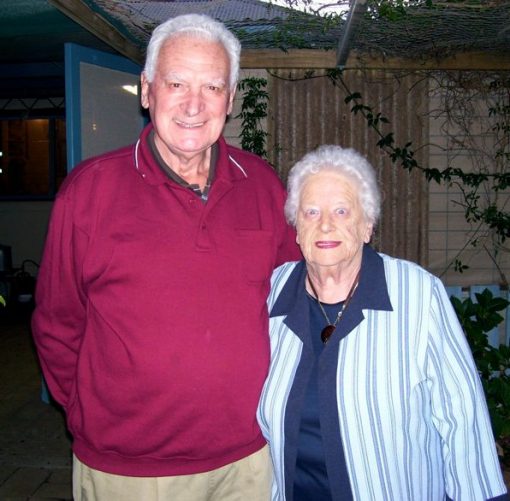
Ron WARK & Val WARK – 2011
WARK, Valerie Phyllis ” Val “
Of Hervey Bay. Passed away at Hervey Bay Hospital on 12 June 2015, aged 86 years.
Dearly loved wife of Ron ; mother of Grahame, Neil and Rhonda ; mother-in-law, grandmother and great-grandmother of their families.
” Peace at last “
A Service for Val will be held in the Orana Chapel of J Kirk & Sons’, Hervey Bay Crematorium, 224 Urraween Rd, Urraween, on Wednesday, 17 June at 10am.
Ron WALK – Police Weekly. Vol 21 # 26, 20 July 2009
Judy LESTER
| 27/06/2015
Judy LESTER
New South Wales Police Force
Public Servant – ?, Inspectors Clerk, S.A.O.
Regd. # ?
Rank: S.A.O.
Stations: Liverpool, ‘ I ‘ District / S.W. Region Office, Macquarie Fields
Service: From ? to ? = 39 years Service
Awards: ?
Born: 1 November 1952
Died on: ?
Cause: Cancer – suffered complications stemming from chemotherapy
Age: 62
Funeral date: Tuesday 23 June 2015 @ 2pm
Funeral location: West Chapel, Memorial Ave, Rookwood Cemetery, NSW
Buried at: ?
Judy LESTER
[alert_yellow]JUDY is NOT mentioned on the Police Wall of Remembrance[/alert_yellow] *NEED MORE INFO
[divider_dotted]
Funeral location:
[divider_dotted]
FURTHER INFORMATION IS NEEDED ON THIS LADY AS PER THE QUESTION MARKS ABOVE. THIS INFORMATION WAS OBTAINED ON TUESDAY 16 JUNE 2015.
Nellie TAYLOR
| 27/06/2015
Nellie TAYLOR – Widow of Vic
( Late of Wahroonga )
New South Wales Police Force
Rank: Wife
Stations: ?
Service: From ? to ?
Awards: ?
Born: 14 July 1915
Died on: Sunday 17 May 2015
Cause: ?
Age: 99 & 10 mths
Funeral date: Friday 22 May 2015 @ 1.15pm
Funeral location: North Chapel of Northern Suburbs Crematorium, Delhi Rd, Nth Ryde
Buried at: Cremated
[divider_dotted]
Funeral location:
[divider_dotted]
TAYLOR, Nellie.
14.07.1915 – 17.05.2015
Late of Wahroonga
Loved wife of Vic (dec). Loved mother of Rex and Judy and adored grandmother of Brett, Sharon and Phil and great-grandmother of Joshua and Owen.
To our loving mother, Nanna and great Nan…you love us without question and in abundance. You were beautiful in every way. We will always love you and never forget you.
Aged 99 years
and 10 months
The Funeral Service for NELLIE will be held in the North Chapel of Northern Suburbs Crematorium, Delhi Road, North Ryde on Friday (May 22, 2015) commencing at 1.15am.
Husband is possibly Victor Keith Taylor – died 23 Jan 1992 – 75 old, late of Wahroonga. Nellie’s madden name possibly Stringer. Possibly married in Hornsby District in 1940
Robert George KENNEDY
| 27/06/2015
Robert George KENNEDY
New South Wales Police Force
Regd. # 9607
Rank: ?
Stations: ?
Service: From ? to ?
Awards: ?
Born: ?
Died on: Saturday 6 June 2015
Cause: ?
Age: 81
Funeral date: Friday 12 June 2015 @ 1pm
Funeral location: The Chapel, Shoalhaven Memorial Gardens & Lawn Cemetery, Worrigee Rd, Worrigee, NSW
Buried at: ?
[alert_yellow]ROBERT is NOT mentioned on the Police Wall of Remembrance[/alert_yellow] *NEED MORE INFO
[divider_dotted]
Funeral location:
[divider_dotted]
FURTHER INFORMATION IS NEEDED ABOUT THIS MAN.
Thomas DUNN
| 27/06/2015
Thomas DUNN
( late of Castlereagh St, Sydney )
New South Wales Police Force
Regd. # ‘ P ‘ 47. Sworn in 29/12/1810
For the purposes of this website ‘P‘ = represents those Police joining Pre 1 March 1862 before the amalgamated of all other Policing Units in NSW. i.e. Mounted Police, Boarder Police, Native Police, Gold Escort Police, Water Police etc.
Ancestor of Retired NSWPF Member Kevin Banister # 16382
Rank: Chief Constable
Stations: George St, Sydney. Constable.
Sydney 5th District. District Constable.
George St, Sydney. Chief Constable
Service: From1810to 1827. Resigned due to ill health (on going infirmities)
Awards: ?
Born: ? ? 1776 in England or Ireland
Died on: 6 April 1832, possibly ???
due to ongoing complications as a result of a snake bite in 1827
Cause: Infirmities
Age: 55
Funeral date: 9 April 1832
Funeral location: ?
Originally Buried at: Devonshire Cemetery on 9 April 1832 ( now the site of Central Railway Stn, Sydney )
Re-Buried at: St. James Anglican, Macquarie St, Sydney but other records have him reburied at Botany Cemetery.
THOMAS is NOT mentioned on the Police Wall of Remembrance * NOT JOB RELATED
From Kevin Banister:
Dear people. Below is a bit of a story of one of my ancestors Thomas DUNN. NSW Fallen Police does not only mean those who made the ultimate sacrifice, but those that served and lived and, hopefully, had their story told. If you had an ancestor that served, please tell us the story.
Thomas Dunn is a direct ancestor of one of my mothers sister. Something I will add to my ‘Mums Memories’. He was a copper, as I was. Mum would not have known of this.
THOMAS DUNN was born in 1776 in England or Ireland. In 1796 he was described as: 5ft 8in, dark complexion, dark hair and dark eyes.
At the age of 19 he was a servant for a brewer in King St, Westminster backing onto the Thames. In Sept 1796, he was caught stealing money from his employer and was convicted and sentenced at Newgate Prison on 28/10/1796 to 7 years deportation. He was 20 years of age.
After sentencing, he spent a few months at Newgate before being sent to the Hulks in Portsmouth Harbour on 12/3/1797, where he spent the next 21 months. He sailed from Portland Roads on 23/12/1798 on the ship “Hillsborough” (764 tons) with 300 male convicts aboard, some of whom had typhus.
The Master of the ship was William Hingston who treated the convicts harshly. It arrived in Sydney, after 212 days, on 26/7/1799 with typhus raging on board.
Ninety five of the 300 convicts had died during the voyage and a further 6 died after they landed, Gov. Hunter describing the survivors as “the most wretched and miserable convicts I have ever beheld, in the most sickly and wretched state”. Almost every prisoner required hospital treatment, due to the sickness; the treatment on board where they were kept double ironed and chained together on deck; their bedding which was constantly wet due to the stormy weather; plus being inadequately fed.
After serving his term, Thomas married Rose Bean in 1804. She had arrived in the Colony aboard the ship “Buffalo” in 1799 at the age of 13. She arrived with her parents and siblings as free settlers, her father James Bean having signed up as a builder under a “Terms of Settlement” agreement. James Bean would be contracted to build the Rum Hospital in Macquarie Street in 1811. Rose and her siblings were all born in London.
In 1803, when Rose was 17, she was raped by two Irish convicts who had escaped and attacked the Bean homestead. Thomas Dunn, who may have been assigned to the Bean farm at the time, married her the following year at St John’s Church, Parramatta. Dunn and Bean were both involved in the quashing of the rebellion of Irish convicts at Castle Hill in 1804, known as the Battle of Vinegar Hill.
In the 1806 Muster, Thomas was self-employed and renting 30 acres. He had 20 acres under pasture, growing maize and barley.
In 1810 he was appointed a constable in Sydney, victualled by the Government. He was also a landholder in Baulkam Hills.
In 1814 he received a grant of land.
By 1817, he was a District Constable, paid a salary from the Police Fund.
On Oct 19, 1820, he was appointed a Chief Constable for Sydney and was receiving a wage of 150 pound.
In 1824/25 he was granted 600 acres which he sold in 1830 for 125 pounds sterling.
In the 1828 Census, he was a pensioner on 50 pound a year, living in Cumberland Street. On his retirement, many praised his “exemplary conduct during his time as Chief Constable.”
Thomas died on 6/4/1832 aged 55 and was living in Castlereigh St, Sydney at the time of his death. Rose had died the year before on 5/11/1831. They had 8 children. Their daughter, Margaret, married Walter Butler (son of convict Laurence Butler), and had two children. Margaret would die at the young age of 31 years.