At Paterson, on the 6th instant, Mr. John McCrohan, late Chief Constable there, in consequence of a fall from his horse, when proceeding on duty to Maitland, leaving a wife and seven small children, nearly destitute, to deplore his loss.
The deceased, by his vigilance and good conduct, had gained the confidence and respect of the magistracy and settlers of the district, as he previously had done that of the Officers of the 4th of King’s Own Regiment of Foot, from which corps he honorably retired as Quarter-master Serjeant (sic ), in the enjoyment of a pension which ceases with his demise.
The Sydney Herald (NSW : 1831 – 1842), Friday 10 May 1839, page 3http://nla.gov.au/nla.news-article12858096At Paterson, on the 6th instant, Mr. John McCrohan, late Chief Constable there, in consequence of a fall from his horse, when proceeding on duty to Maitland, leaving a wife and seven small children, nearly destitute, to deplore his loss. The deceased, by his vigilance and good conduct, had gained the confidence and respect of the magistracy and settlers of the district, as he previously had done that of the Officers of the 4th or King’s Own Regiment of Foot, from which corps he honorably retired as Quarter-master Serjeant, in the enjoyment of a pension which ceases with his demise.The Sydney Monitor and Commercial Advertiser (NSW : 1838 – 1841), Monday 13 May 1839, page 3http://nla.gov.au/nla.news-article32164046At Paterson, on the 6th instant, Mr. John McCrohan, late Chief Constable there, in consequence of a fall from his horse, when proceeding on duty to Maitland.
Notes
Irishman of the 4th Regiment of Foot in either England, Ireland or France.John was born 1795 Limerick, enlisted at Cueta as a 15 yr old, 25/5/1810. His service was 3 yrs in Portugal & Africa, 2 years in France, 6 yrs 391 days in West Indies (5/4/1819 – 1/4/1826), Married at Chatham in June 1826 and then served 1 year and 3 months in Portugal ( where son John born ) and then 3 years 6 months in NSW. After resigning from the Regiment, John joined the Police Force at Paterson in NSW where he was killed in a horse accident on 6/5/1839.
My name is Jennifer Chantrill. I was born in Adelaide in 1955 ……..
Page 14
My paternal grandmother Veronica Hunt also hailed from interesting stock. She was the great-great granddaughter of Sgt John McCrohon and his wife Amelie Ducroix; John had
served in France and Portugal during the Napoleonic wars, and their first child was born in Portugal. John discharged from the Kings Own 4th Regiment in Sydney and became the Chief Police Constable at Newcastle (NSW).
Their descendent Maxwell McCrohon went to America as a foreign correspondent for the Sydney Morning Herald; he stayed and eventually obtained the post of Chief Editor of the Washington Post in the time of President Ronald Reagan.
I have an unwanted Death Certificate of Emily McCrohon who was the daughter of Sydney Peter McCrohon NSW and Sarah Tindel of Ireland. Emily was born in 1868 Rockhampton Qld.
She unfortunately died aged 23 years in 1891 Petersham NSW.
I had been trying to obtain the death cert of her grandmother, also named Emily McCrohon alias Amelia McCrohon nee Du Croix.
Date and place of birth: May 1795, St John’s Parish, Limerick, Ireland
Names of parents: John McCrohon and Margaret Unknown
Date and place of baptism – Unknown
Details of each of his or her marriages – married Amelia (Emily) du Croix at St Thomas, Winchester Hampshire (Unconfirmed)
Date of marriage: 23/06/1826 (Unconfirmed)
Occupation(s) – Sergeant Major; 4th Regiment of Foot, Lancaster King’s Own Regiment: Served in Portugal and occupied France after Waterloo. Regiment posted to garrison duty in NSW 1832 – 1837 ( Some researchers claim he was a Quartermaster. Not easy to verify as the regimental records were largely destroyed. ) NSW Constabulary: 1837-39. Appointed Chief Constable at Paterson NSW, 23/7/1838
Addresses where they lived: East Maitland, NSW
Date, place and cause of death: May 6, 1839, thrown from his horse on the road between Maitland and Paterson, NSW while on duty.
Date and place of burial. Buried at Glebe Cemetery
Details of will / administration of their estate – Unknown
Memorial inscription – Unknown
tenterfieldjulie
26-11-10, 22:08
Ammanda, I have John’s Military Service Records – he enlisted at Cueta, Africa 25 May 1810 at 15 years of age. His service ended on 8 Feb 1837 in Australia. From 5 April 1819 until 1 April 1826 he served in the West Indies. He was a Sergeant for 8 years and 55 days and Quarter Master Sergeant for 5 years and 106 days.
I was looking for their marriage in Portgual/France, so that information, although unsubstantiated, is news to me. 😀 Thanks Julie
Ammanda Schutz
27-11-10, 13:29
Julie: The information was given to me by a Cantwell researcher. They did not give me any documentation so I cannot verify. According to the researcher John was posted back to England, a base in Hampshire, and he and Emily were married there.
I would be glad of a copy of his service record. Thanks, A
btw did you get my email with the copy of the church register for the Gray/Dillon marriage?
Merry
27-11-10, 16:03
That marriage date would appear to be for this entry, from the FS pilot site:
Groom’s Name: John Mccrohon
Groom’s Birth Date:
Groom’s Birthplace:
Groom’s Age:
Bride’s Name: Emily Banham
Bride’s Birth Date:
Bride’s Birthplace:
Bride’s Age:
Marriage Date: 23 Jun 1826
Marriage Place: Saint Thomas,Winchester,Hampshire,England
Groom’s Father’s Name:
Groom’s Mother’s Name:
Bride’s Father’s Name:
Bride’s Mother’s Name:
Groom’s Race:
Groom’s Marital Status:
Groom’s Previous Wife’s Name:
Bride’s Race:
Bride’s Marital Status:
Bride’s Previous Husband’s Name:
Indexing Project (Batch) Number: M13675-1
System Origin: England-ODM
Source Film Number: 1041222
Reference Number:
Collection: England Marriages, 1538–1973
but the bride has a different surname. Might she have been previously married?
Ammanda Schutz
28-11-10, 00:56
As far as I know Emily was not previously married. It seems to me that the other researcher has made an error. McCrohon is not a common name but one branch of the family moved to England, and still lives there, and this John is probably one of from that group.
Thanks for looking, Merry, and clearing up that question. Back to the drawing board.
tenterfieldjulie
28-11-10, 07:59
Merry, From the marriage reigster, would it be possible to see the original entry, or would you need to buy a certificate, in case there is a mistake with transciption of Emily’s surname?
As he was in the military from age 15, would he have needed Official Permission to marry? Would there be records?
Thanks Ammanda have received the Gray cert I will pm you. Julie
Merry
28-11-10, 11:18
It’s too early for a civil certificate (1837+) but you could get a copy of the Parish Register entry from the Hampshire RO, for a fee!
Otherwise, you should also check the Chaplains Returns marriages (overseas ones and I think they may include some UK army marriages as well) if you haven’t already (they are on FMP 1796-1880, but you’ll need a sub) and bear in mind both their surnames are open to being listed under different letters of the alphabet!!
I’m not sure about the permission bit. Certainly at various times one needed permission from a commanding officer to marry, but I think sometimes it made a difference what rank you were and at what time in history you were marrying. Plus of course, needing permission didn’t mean that permission was always sought!
Merry
28-11-10, 11:21
As he was in the military from age 15, would he have needed Official Permission to marry? Would there be records?
Ammanda, I have John’s Military Service Records
If there was a record of permission, his army papers would be the place to look, so if it’s not there……………..
Ammanda Schutz
28-11-10, 13:05
I found a record of the birth of one child to John McCrohon and Emily
Henry William Mccrohon
11 Apr 1832
St. Mary’s, Chatham, Kent, England
There may be more but it was late when I found this one.
It seems that there was a John and Emily in England and they were still there in 1832.
Thanks for the help. A
Merry
28-11-10, 15:43
I found a record of the birth of one child to John McCrohon and Emily
Henry William Mccrohon
11 Apr 1832
St. Mary’s, Chatham, Kent, England
There may be more but it was late when I found this one.
It seems that there was a John and Emily in England and they were still there in 1832.When did yours go to Australia? I had assumed Henry Wm was theirs, particularly being born in Chatham.Amelia (Emily) du CroixDo you have her birthplace or parentage?
Ammanda Schutz
28-11-10, 21:16
Merry, their first child, John McCrohon Jr, was born in Portugal in 1827.
After that there are two children born, according to one researcher, in England. William Denis McCrohon and Jeremiah Joseph McCrohon. Both of these children are said to have died in 1834. John Sr and his family went with his regiment to NSW in 1832/33.
Therefore the two boys would have died in NSW and I can find no evidence of this in the NSW records after trying all the variations of the spelling of the name McCrohon that I can think of nor can I find any record of their births in England. The next child was born in NSW in 1833, Sidney Peter.
It is possible, I suppose, that the birth of two boys were recorded in some military records.
Seems kind of speculative to me, but once we start looking back in time it is all a bit foggy. Like my brain.
Ammanda Schutz
28-11-10, 21:22
Oh, forgot to respond to the second part of your question. Amelia/Emily du Croix is a bit of a mystery; could be French, maybe from Belguim, no-one knows for certain. No date of birth just a C1798 for the year. Her parents are said to be Sidney Pierre du Croix and Sarah Unknown. That a lot of help, isn’t it?
tenterfieldjulie
28-11-10, 22:02
According to John’s Service Records from the National Archives, it was noted that he served in the West Indies from April 1819 to April 1826. (I think this is noted because in his pension? they were only allocated half pay). The next positive fact is when John Junior is born in Portugal as Ammanda says. John and Emily therefore could have been married in the West Indies, England, Portugal, France or Belgium – if you can find the marriage Merry, you are an absolute genius.
tenterfieldjulie
28-11-10, 22:06
The two boys I believe had headstones in Sydney in an early burial ground , but I think the cemetery has since disappeared. I think someone sent me some details, I’ll email them when I find them Ammanda.
tenterfieldjulie
29-11-10, 06:31
Amanda I will email you.
I found listed in Monumental Inscriptions at Bunnerong (the headstones etc were moved here after the Elizabeth & Devonshire Street Cemeteries were cleared.) Grave No. 1409: William Denis and Jeremiah Joseph McCROHON the sons of Quarter Master Serg’t John & Emily McCROHON of the 4th or Kings Own Reg’t, the former died 18th February 1834 aged 4 years and 10 months, and the latter died 15th June 1834 aged 4 years and 5 days. In 1969 the Headstone was Upright and the Condition Good.
So William was born April 1829 and Jeremiah born June 1830, what a tragedy.
Ammanda Schutz
30-11-10, 02:41
Julie: Thanks for the information. Wonder why there are no records for the deaths. I can’t find their births in England either. More mystery. A
kiterunner
30-11-10, 07:56
Not really a mystery, Ammanda – they were born before civil registration started in the UK and died before civil registration started in NSW, weren’t they?
tenterfieldjulie
30-11-10, 09:12
Yes 1856 in Australia. I compiled a pre-compulsory-registration BDM register for Tenterfield from church records, newspapers, family bibles and family traditions. The earliest being 1844, this area was only opened up in the the late 1830s. Seeing as how the priest/minister carried his notebook in his saddlebag and the areas were huge, it is simply amazing that any records survived. Tenterfield Catholic records were found in Grafton, Armidale and Ipswich.
Ammanda Schutz
01-12-10, 14:24
Now that I have John’s service record (thanks to Julie) and seeing where the Regiment was deployed I have doubts that he met Amelia du Croix in France. He was not at Waterloo and so she probably is not from Belgium. On the other hand there is a prodigious length of time from his deployment with the Army of Occupation in France, 1815 through part of 1818, until his first child is born in 1827.
It seems more likely to me that he met her in the Caribbean where he served for almost seven years; the entire time the Regiment was deployed there. The 4th then came back to England for a short time in 1826 and went straight on to Portugal from December 1826 to July 1827. John Patrick was born there July 27, 1827.
Perhaps we should be looking for Amelia and a marriage in the French West Indies. That covers a lot of islands but at least we can rule out Haiti.
I have given it a go but no joy yet.
tenterfieldjulie
12-03-11, 04:45
Ammanda I was looking through some photos that I took at the Gray reunion at Elsmore. There were printed sheets on the walls on the McCrohons. Some of these sheets were hard to photograph because they were covered in plastic.
Under UK Military Records it had: John McCrohon joined 3rd/East Kent Regt 1806. Lieutenant 1808. Retired injured as captain on half-pay. Father of John & William? Have you heard anything of this? This could explain how John born 1795 Limerick, ended up enlisting at Cueta aged 15, if his father was in the military based in England.
It also had that the second child of John & Emily, William Dennis was born in Scotland April 1829 and third child, Jeremiah Joseph, born England 10 June 1830.
tenterfieldjulie
20-03-11, 08:46
Well you just think you know something and they something else crops up.
Tonight talking to a relie she tells me that she has a record someone gave her from the IGI for John McCrohon’s baptism (from his military records he was born 1795 in Limerick) it is RC Crondon Park, Essex Name John McCrohon (not sure if the surname is spelt like that) parents John and Margaret, baptism 1 March 1807. All I can think is that either he hadn’t been baptised or they didn’t have a record of his baptism for his confirmation. Can anyone view the original record and see if it gives his age?
HarrysMum
20-03-11, 08:53
Is there some way you can connect the Limerick John with Essex John?
tenterfieldjulie
20-03-11, 08:59
Parents names are the same, John and Margaret. There also was a John McCrohon who was in the East Kent Regiment at that time. I haven’t followed through with checking, but I feel this could be why John Junior was enlisting at Cueta aged 15. I just hoped that the baptism register of this John might say his age which the IGI doesn’t.
HarrysMum
20-03-11, 09:00
Do you know what IGI search it was??? I can’t find anything.
tenterfieldjulie
20-03-11, 09:04
No I don’t unfortunately I tried too. M. isn’t computer literate and said it was from the IGI and what did that mean!! The problem with McCrohon is spelt in all sorts of funny ways – I’ve seen McCrone, McCrohan, even Crone and that is in Australia!!
HarrysMum
20-03-11, 09:14
There are 10 people with John McCrohon born 1795 Limerick in ther GR trees. Have you contacted any of them?
tenterfieldjulie
20-03-11, 09:16
No I should but I get a bit wary after what people have said about the unsubstantiated records that people put on there. I think Ammanda has as she has quoted from Allycat.
HarrysMum
20-03-11, 09:19
Some of the same people have Thomas Gray so probably rellies you already know. Any results you get from anyone are unsubstantiated until you’ve found them yourself so that’s not really a problem.
It’s only an issue when you take what others say as gospel without double checking.
That’s from experience….lol
tenterfieldjulie
20-03-11, 09:22
Yo. When I get to the library I will look see. If Jan H. is on there, I was in correspondence with her years ago and she was very good. As are Ian M and Marcel.
HarrysMum
20-03-11, 09:23
I’ll have a look……are you a paid member??? I don’t think you can send messages unless you are.
tenterfieldjulie
20-03-11, 09:26
No I’m not. If I look it at the Library and see what is on there and who is saying it, I can probably get in contact. Especially as there is a reunion at Easter.
HarrysMum
20-03-11, 09:27
One is a McCrohon and one is a Gray who have John McCrohon.
I can send them a message.
tenterfieldjulie
20-03-11, 09:38
Thanks Lib, I will talk to you tomorrow. A bit too tired now to think up what to say lol
kiterunner
20-03-11, 15:58
That baptism on the IGI is an “extracted record” and it gives his age at baptism as 1.
tenterfieldjulie
20-03-11, 20:21
When he enlisted on 24 August 1810 it gave his age as 15 and under age (he officially didn’t get a pension until he turned 18). It gave his date and place of birth 1795 Limerick and this is on the original handwritten records. On the extracted baptism record if he is “our” John McCrohon his age should read 11 not 1?
HarrysMum
20-03-11, 20:40
It does say 1 Julie. You could always order the original from LDS and have a look.
Did I ask before……………..do you know if John had any siblings?
tenterfieldjulie
20-03-11, 20:42
Yes it is worth a try. How did they spell McCrohon please?
How it could be disproved if a marriage could be found in Essex.
HarrysMum
20-03-11, 20:47
McCrohon. There aren’t any others in that batch, but that’s only baptisms and that one could be on the changeover year for that batch…
Have you looked for a marriage in England?
Ammanda Schutz
20-03-11, 21:36
I looked and found nothing.
According to our Brisbane researcher there was a brother William McCrohon, 1807 but no place of birth. It seems that this is a real connection as William also joined the 4th and went to NSW with his family.
There was a John McCrohan born at Colchester 1814, I think. Fairly close by but I don’t know the significance, if there is one. Perhaps the same family and the younger John died.
McCrohan and McCrohon are always being mixed up so the spelling doesn’t signify.
There is a family tree on Ancestry that has a Margaret Manning married to a John McCrohon at about the right time but I can’t link them to us.
Julie, MS gives the marriage for Emily and John at 1818, no documentation.
HarrysMum
20-03-11, 21:52
Oh Ammanda…don’t you just hate it when someone gives you some info and can’t give you the source????? lol
I’ve had so many on my tree particularly from one person who is determined to connect us to royalty I’m sure. She has this beautiful tree without any sources and that’s because they’re aren’t any…………..lol
I think you need to contact the brisbane person and ask for all the sources. Anybody who has done a tree would expect to be asked for that so I can’t see a problem. Then you need to check all their sources yourself.
I’ve been caught badly by not rechecking another person’s work……
Ammanda Schutz
20-03-11, 23:40
Tell me about it. Down the garden path and back again. I am such a believing soul, gullible is probably a better word, that I have had to be burned really badly to learn the lesson.
Julie knows him and he probably will be at the reunion in April so she can talk to him first hand. However, I take your point. If I can find an email address I will whisk one off.
I sound confident but some folk don’t like their research challenged so I have to tread carefully especially as this is the ‘definitive’ work on the McCrohons.
The good thing about the family is that the name is uncommon. The rotten part is that it is spelled in every conceivable way and then some.
HarrysMum
21-03-11, 01:10
Thanks Ammanda……………….not sourced at all really is it???
The index list is just that…I’d like to see some certs and PRs before I’d say anything.
So John and Amelia marry in 1818………..where was that supposed to be??? If John was in the army, why didn’t he need permissiom to marry??? And if he did marry without permission, wasn’t he supposed to re-marry??
Has anyone found his actual records??? That should have exactly where he was and when.
There’s a 9 year gap between the marriage and the first child. Not sure of the significance of that yet….
A lot of the historical parts are general history. I’ve got very similar in my book on the Moores from Ireland.
I’ll print it out and highlight the parts I’m not sure about I think the I might get a better idea.
Ammanda Schutz
21-03-11, 01:56
Well, you have hit upon some of the issues and in short order.
We have his complete military record and can trace him from his earliest date in Ceuta.
I think he chose the 1818 because it was at the end of the time that John was in France with the occupation army. However, the rest doesn’t make any sense to me. Why wouldn’t she go with him to the West Indies? If she was outcast from her family where else would she go?
If the other marriage, Emily Banham, is anything to go by they started having children right away, as any Catholic couple would. Well, not just Catholic at that time. I think Emily had 9 children with John so there was no time to waste.
I had thought that if Emily DuCroix was on one of the French Islands in the Caribbean, after all they French had lost the war and control of their islands, at least nominally, then he could have met and married her there. I found no records to that end.
When the record in Winchester came to light I thought it more than probable. All the elements fit; John was at Chatham after returning from the West Indies and in between being sent back to Portugal. Their first child was born in Portugal in just over a year.
Also, even if Emily Banham was a widow and DuCroix was her maiden name, as the daughter of ‘some high official’ wouldn’t she be educated. She could not sign her name on the register but marked it with an X.
I also wonder how John got to Ceuta? He was obviously educated, could read and write and was a Quarter Master Sergeant. Maybe his father was already in the Military and the reference Julie found to a John McCrohon in the East Kent 3rd Regiment may be right on. The 3rd fought in Spain and Portugal during the war with Napoleon and perhaps his son was with him. Perhaps at Gibraltar just across from Ceuta. Ceuta is still a Spanish enclave in Morocco and was always an occupied military port.
Well, I am raving now. Off to bed.
Thanks for taking a look.
The
tenterfieldjulie
21-03-11, 02:51
Most of “MS” “History of the McCrohon Family in Australia” is I believe based on documentation, but the sources are not quoted. (He refers to study at State Librariers, LDS, State Archives etc) The part about the runaway marriage is I think is a family story, how they supposedly met her in France and had a runaway marriage. We know now that John McCrohon, 4th Foot, married a Emily Banham at St. Thomas Winchester 23 June 1826 (have copy of the marriage registration). Their son John was supposedly born in Portugal 25 July 1827 according to MS, which would fit with the marriage. Whether the birth information was recorded in a Family Bible, we hope to find out. We have the TNA records of John’s Military Records – when, where he joined 4th Foot etc, his ranks and times and places of service, including seven years in West Indies. Some of this MS seems to refer to, but I can see some errors in assumption. I think it would be better to speak to MS privately. I think he is an older person who did this out of respect for an elderly uncle who was related to him by marriage. He has very generously made this information available with no copyright claimed and fair use for non-profit purposes is permitted. His History comprises over 40 pages and so there is a lot of time and effort put into the McCrohon story.
HarrysMum
21-03-11, 03:03
I think talking to him about his sources would be a good idea Julie. Getting info from LDS is a bit dodgy unless you see the actual film. I must admit to not know about submitted entries when i started this lark and that gave me all sorts of trouble.
I’ve also got bad info from the State Library by using others’ trees and stories. One has a bit of wrong info and the next embellishes it and it goes on.
I wonder if the Ducroix story was along the lines of a tryst rather than an actual marriage. Those things can grow legs if people start talking…..lol.
I don’t think Amelia DuCroix and Emily Banham are the same person. Of course I can’t prove that but there are many things pointing that way.
My ggg grandfather’s marriage of 1818 is documented in his records. He was a sergeant at the time. The records also tell when he took leave etc. Although he was in the WI and other places, he managed to get home to ‘pro-create’ every couple of years.
Maybe if you tell him, you’ve been trying to find certain records and ask if he’d help you, at least you’ll know where he got them from.
tenterfieldjulie
21-03-11, 03:35
Well I found my buried records.
Death Registration of John McCrohon 20 June 1900 at Tingha NSW Born Portugal in Aust 58 years, Parents John McCrohon Quartermaster Sergeant in the army, Mother Emily Ducroi (x, more like t, possibly c). When this John’s son (another John died) his obit said he was the son of Mr. & Mrs. Patrick McCrohon who had migrated to Australia from Ireland.
Then the youngest child of John and Emily – Louis Estall died 3 May 1924 parents John McCrohon Miner and Agnes Decrow? (informant his son)
No wonder things are confused…
I.M. another researcher says in 2000: John – Born St. John’s Parish, Limerick July 1795, Brother William born Jan 1807 Crondon Park, Essex. John christened son of John and Margaret Crondon Park Rc 1 March 1807. Military Service – Returned Winchester 1 April 1826. Emily Ducroix Born France ca 1800 Seamstressi n Parish at time of British occupation 1816. First marriage to – Banham? John and Emily married 23 June 1826 at St. Thomas Rc Winchester.
Ammanda Schutz
21-03-11, 12:23
My head is swimming! Lots of information and I wonder where it leads.
Thanks for digging it out of the coffins Julie. lol
Service: From? ? ?to23 January 1839 = ? years Service
Awards: No find on It’s An Honour
Born: ? ? 1812 – 1813?
Died on: Wednesday 23 January 1839
Age: 26
Cause: Murdered – Clubbed to death with a Nulla Nulla ( Waddy ) * see below
Event location: Phillip St, Sydney
Event date: Monday 21 January 1839
Funeral date: Friday 25 January 1839
Funeral location: ?
Wake location: ?
Funeral Parlour: ?
Buried at: Devonshire St Cemetery, Sydney – January 1839.
In 1901 his remains were exhumed to make space for Central Railway Station and re-interred, with thousands of others and 2285 tombstones of the first settlers in Australia, at the new cemetery at La Perouse, named Bunnerong Cemetery.
In 1976, the Botany Cemetery Trust destroyed most of these historic monuments by creating a new, low maintenance lawn area. The remaining 746 headstones were reinstalled in concrete strips, unrelated to the graves below them. The new lawn was named Pioneer Memorial Park.
The words recorded as being on his original tombstone are “Peter, the son of Edward and Mary Ann PROSSER, who was struck by John PENDER; in the execution of his duty 25th January 1839 which caused his death in 48 hours. He was an Inspector in the Sydney police and an Active officer. also sisters Adeliza and Jane, passengers in the ship ‘Fairlie’.
Adeliza buried at the Cape in October ???? Jane aged 16 years. Adeliza aged 29 years. Peter aged 26 years”.
Memorial located at: ?
[alert_green] PETERIS mentioned on the Police Wall of Remembrance[/alert_green]
[divider_dotted]
FURTHER INFORMATION IS NEEDED ABOUT THIS PERSON, THEIR LIFE, THEIR CAREER AND THEIR DEATH.
On the afternoon of 21 January, 1839 a man named John Pender ( known to Sydney police as “Jack the Waterman“ ) was behaving in an indecent manner in Raynor’s Public House, Sydney. As a result of his behaviour he was arrested by Inspector Prosser who began to march him to the Sydney Police Watch-house.
En route they passed Pender‘s home in Phillip Street where a mob attacked the inspector and dragged his prisoner into the house. Prosser clung to his prisoner desperately however, until he received a blow from a club to the back of his neck, which resulted in his death a few days later in hospital. Pender was quickly apprehended and charged with murder, while five others were also charged in relation to the riot.
The Sydney Gazette and New South Wales Advertiser of 24 January, 1839 reported the incident in some detail.
BRUTAL MURDER.
On Monday afternoon a man named John Pender, well known about the town as the driver of a water-cart, and a bad character, went into the public-house of Mr. Rayner at the corner of Hunter and Phillip-streets and in the absence of the landlord was guilty of much indecent behaviour.
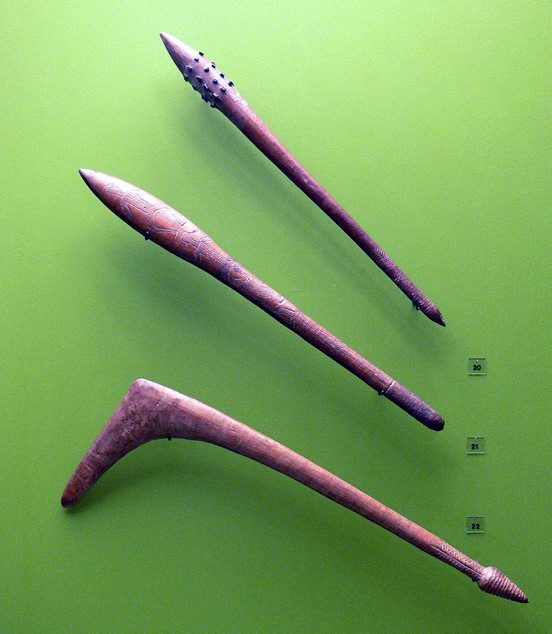
He was remonstrated with by the landlady, but this seemed to have the effect of urging him on to still farther excesses. He approached Mrs. R., who was behind the bar, when she took up a New Zealand waddy to defend herself; this the brute wrested from her, and after having struck her he left the house, flourishing the weapon over his head and making a great noise.
He was perceived at the time by Inspector Prosser, who was approaching alone. Prosser came up behind him unperceived and took the waddy from him, and desired him to accompany him to the watch-house.
Pender accompanied the Inspector a short distance, when, stopping suddenly, he turned round and struck Prosser a violent blow on the face with his fist, which knocked him down. While he was on the ground, the man stooped down and snatched the waddy from the hands of the Inspector, and as the latter was rising to his feet he struck him a tremendous blow with it on the back of his neck, and then ran into his own house which was close at hand.
“A mob of blackguards, as usual on such occasions, soon assembled on the spot, and although they witnessed this unprovoked outrage none among them were inclined to render the poor fellow any assistance, but rather endeavoured to screen the villain and hasten his escape. After a few moments Prosser was seen to get on his feet with difficulty and move on towards the watch-house, holding his hands to his head. He shortly afterwards met Sergeant Kilpatrick, and desired him to go and apprehend Pender who, he said, had murdered him.
Killpatrick hastened to the station-house for assistance, and procured that of the two keepers, the only persons present, and the three then returned to Phillip-street.
In the meantime, the wounded Inspector got to the watch-house, and was shortly afterwards found by Sergeant Partington lying across one of the benches, nearly dead; he called for assistance, and Mr. Driver, the publican, attended and with vinegar attempted to revive him.
Dr. Whittle, who was near the spot, was then sent for; he immediately attended and by copious bleeding restored animation, but Prosser continued in such a dangerous state that his immediate removal to the Hospital was recommended and performed.
The Police had in the interim secured Pender and five or six other persons who appeared to take a prominent part in the mob assembled in Phillip Street.”
The Sydney Morning Herald dated 25 January, 1839 printed the following brief account of the inquest into Inspector Prosser‘s death.
An inquest was held at the same place the same day, on the body of Peter Prosser, lately an Inspector of the Sydney Police. The evidence was very lengthy but the substance was very simple, viz, that Prosser had a man named Pender in custody, and that Pender in order to make his escape struck the deceased a blow on the head with a New Zealander’s waddy, which was so violent as to cause an extra vasation of blood on the brain, from the effects of which Prosser died. The Jury returned a verdict of willful murder against Pender, who was committed on the Coroner’s warrant.
At the time of his death the inspector was aged 26 and was attached to the Sydney Police.
Judging by newspaper accounts of the time, he was a courageous and energetic policeman who seemed to have worked tirelessly against violent offenders in the inner city of Sydney. He is not listed in the official New South Wales Police Honour Roll.
A ‘waddy’, it is believed, is similar to an Aboriginal nulla nulla. A waddy is a heavy club constructed of carved timber and could also be a walking stick. No doubt, the ‘green stone’ referred to, was attached to the end of the Nulla Nulla and held in place with tree resin.
It would appear that the Rank structure of this period ( 1835 ) was:
Patrolman –
Constable –
Conductor –
Inspector –
Sydney Gazette and New South Wales Advertiser (NSW : 1803 – 1842), Saturday 9 August 1834, page 4
Government Gazette
WEDNESDAY, AUGUST 6.
HIS Excellency the GOVERNOR has been pleased to approve of the following Alterations in the Police of the Colony, namely
SYDNEY.
APPOINTMENTS
John Price, free, to be Conductor, from the 18th June.
To be Patrolman – James Woodward, free, from the 25th June; John Murray, free, from the 5th July ; Peter Prosser, free, from the 8th ultimo; John Gorman, free, from the 14th ultimo ; Edward Tierney, free, and John McCarthy, free, from the 15th ultimo ; Bryant Naughton, free, from the 16th ultimo ; Michael Armstrong, free, from the l7th ultimo, and James Cook, free, from the 18th ultimo.
Thomas McConnell, free, to be Constable at the North Shore, from the 16th June, and James Woodward, free, to be Constable of the Water Police, from the 5th July.
RESIGNATION
John William Smith, Constable, North Shore, on the 15th June.
DISMISSALS
Patrolmen – John Sullivan, on 24th June ; Patrick Muleady, on the 7th ultimo; James Drew and Patrick Dougharty, on the 13th ultimo ; David Leighton, on the 14th ultimo , George Stewart, on the 15th ultimo; and Patrick Curran, and John Sheehy, on the 17th July.
Water Police Constable — Alexander Lee, on the 4th July,
STRATHALLAN.
William Berry, free, to be Constable in the room of William Carroll, resigned.
MAITLAND.
Edward Gaynor, holding a Ticket-of-Leave, to be Constable, from the 14th ultimo, in the room of Daniel McFarlane, resigned.
PORT STEPHENS.
Michael Cotton, holding a ticket-of-Leave, to be Constable, in the room of John Jaggers, resigned.
New South Wales Government Gazette (Sydney, NSW : 1832 – 1900), Wednesday 21 January 1835 (No.151), page 45
Colonial Secretary’s Office,
Sydney, 20th January, 1835.
HIS Excellency the GOVERNOR has been pleased to approve of the following alterations in the Police of the Colony ; namely,—
SYDNEY.
To be Conductors.— Edward Rollins and Peter Prosser, raised from Patrolmen, from the 1st instant.
To be Patrolmen.— William Elkins, and to be Market Constable, from the 1st instant ; Mark Gilmore, Michael O’Neal, William Howarth, Thomas Barrett, James Carwell, and William Barnett, from the 1st instant ; James Matthews, Robert Lodge, John Hundley, and James Kennedy, from the 9th instant ; and John McCarthy, from the 13th instant.
Conductors Dismissed.— William Barnett, reduced to Patrolman.
Patrolmen Dismissed.— George Brereton, Market Constable ; Herbert Green, James Matthews, John Cummings, James Carwell, John Smith, Peter Butler, Peter Christie, and Peter Colgan.
New South Wales Government Gazette (Sydney, NSW : 1832 – 1900), Wednesday 29 April 1835 (No.165), page 257
Colonial Secretary’s Office,
Sydney, 28th April, 1835.
HIS Excellency the GOVERNOR has been
pleased to approve of the following alterations
in the Police of the Colony, namely :—
SYDNEY.— To be Wardsman : George Mitchell, from the 6th instant.
To be Conductors : Philip Boyce, from the 1st, John Moore, from the 7th, William Hanson, from Joe 14th, and John Matthews, from the 20th of April.
To be Patrolmen : Peter Prosser, James Shaw, Archibald Kelley, and Dennis Connelly, from the 1st instant ; Thomas Kinchela, from the 14th instant, ; John Thorn, John Pendar, James Jackson and William Troop, from the 16th instant ; John Price, and William Vernon, from the 17th, and Patrick Galvin, from the 20th of April.
Wardsman resigned : John Skinner.
Conductors Dismissed : Peter Prosser, Patrick Ogan, and John Price.
Patrolmen resigned : William Howarth, John Gorman, James Tobin.
Patrolmen dismissed : Robert Grindle, James Cone, John Carey, John Connor, James Wells, Patrick Fitzpatrick, and L. Walsh.
LIVERPOOL.— George Harvey, holding a Ticket-of-leave, to be Constable, from the 20th Instant, in the room of Denis McCarthy, resigned.
PENRITH.— John Baxter, free, to be Constable, from the 26th Ultimo, in the room of John Brown, dismissed.
BONG BONG.— John Coffee and Lawrence Larken, free, to be Constables— the former in the room of, James Harper, resigned, and the latter from the 20th Instant, in the room of William Austin, dismissed.
YASS.— James Donald, free, to be Constable, from the 20th of February last.
MERTON.— Jeremiah Burns, holding a Ticket-of-leave, to be Constable, from the 6th Ultimo, in the room of Thomas Boline, resigned.
PORT STEPHENS.— John McCarthy, free, to be Constable, in the room of Edward Frost, resigned.
HIS EXCELLENCY the Governor has been pleased to approve of the following alterations in the Police of the Colony, viz. :—
SYDNEY.
To be Wardsman.— William Abbott, from the 1st instant.
To be Conductors.— Matthew Thomkins and John Price, from the 1st instant ; James Shaw, from the 4th instant ; Peter Prosser, from the 12th instant.
To be Patrolmen.— Patrick Conner, William Moore, William Cox, John Kelly and Stephen Bunen, from the 1st instant ; Thomas Lynskey, from the 4th instant ; Timothy Foley and Andrew White, from the 8th instant ; James Pearson, Samuel Deacon, and Samuel Freebury, from the 12th instant.
Wardsman resigned.— William Small.
Conductor resigned.— Constantine Molloy.
Conductor Patrick Reid, reduced to Patrolman on 30th ultimo.
Wardsman dismissed.— William Abbott.
Patrolmen dismissed.— William Brown, William McCready, James McGruggan, William Noop, Patrick Petty, Thomas Phillips, John Hauley, Michael Armstrong.
LIVERPOOL.
Daniel McCarthy, holding a Ticket-of-leave, to be Constable, from the 18th instant, in the room of James Silvester, resigned.
PENRITH.
William Rossborough, holding a Ticket-of-leave, and Thomas Shuttleworth, also holding a Ticket-of leave, to be Constables, in the room of Ralph Hodgson and Henry Workman, dismissed— the former from the 10th and the latter form the 30th ultimo.
PATRICK’S PLAINS.
Constable John Brest, dismissed on the 20th instant.
Sydney Monitor and Commercial Advertiser (NSW : 1838 – 1841), Wednesday 13 February 1839, page 2
Before Mr. Justice Willis and a Civil Jury.
John Pendar, alias “‘ Jack the Waterman” was tried yesterday for the murder of Inspector Prosser.
The case occupied Mr Justice Willis and a civil Jury up to half-past nine o’clock, when the Jury returned a verdict of manslaughter.
Mr Windeyer was counsel for the defence, and raised three objections – which were,
that there was no proof of drunkenness to warrant the deceased in taking the prisoner into custody,
that the prisoner would have been justified in using force to any degree to expel the constable, who was in fact transgressing on his premises, and
lastly the learned gentleman relied upon a statute ; which he believed was in force, as far back as Henry the Eighth ( which had never been repealed ; rendering fatal any indictment not drawn up in intelligible English, and
contended that ” Waddy” was not an English word, and therefore fatal to the indictment.
These objections were reserved and the prisoner remanded for sentence.
Commercial Journal and Advertiser (Sydney, NSW : 1835 – 1840), Wednesday 20 February 1839, page 2
James Pendar alias Jack the Waterman, for the manslaughter of Inspector Prosser, was brought up for sentence yesterday, and ordered to be transported for the term of his natural life to Norfolk Island.
Sydney Gazette and New South Wales Advertiser (NSW : 1803 – 1842), Thursday 21 February 1839, page 2
Supreme Court.
MONDAY, FEBRUARY 19, 1839.
(Before their Honors the Chief Justice and Mr. Justice Willis.)
On this day there being no cases ready for trial, the prisoners remanded during the Sessions were brought up for sentence.
John Pender was next placed at the bar. The prisoner had been tried for the wilful murder of Peter Prosser, a policeman, and had been found guilty of manslaughter.
Mr. Justice Willis, before whom the case was tried, said to the prisoner that the mercy of the Jury had saved his life in finding him guilty of manslaughter – the manslaughter was of a more aggravated nature than he had ever known or heard of.
The police must be protected in their duty, and should be protected.
His sentence was that he should be transported for life.
Sydney Gazette and New South Wales Advertiser (NSW : 1803 – 1842), Saturday 26 January 1839, page 2
DOMESTIC INTELLIGENCE.
Coroner’s INQUEST. –
On Thursday morning at nine o’clock an Inquest was held upon the body of Prosser, the late Inspector of Police, who died in the General Hospital on the preceding day. The Jury assembled at the sign of the Bunch of Grapes ( King St ), whence they proceeded to the Hospital to view the body, and then returned to the Jury room, where the following evidence was taken :
John Pender, the man charged with the murder, being in custody.
Jane Rayner, of Phillip-street, being sworn stated, I knew the deceased Peter Prosser, and the prisoner before the Court ( John Pender ); I keep a public-house.
On Monday afternoon the prisoner came into my house very tipsey; he made use of very bad language to me, and I refused to serve him, telling him if he could not use better language to me he should leave the place; he then turned round and exposed his naked person to me twice ; I took up a jug of water and threw it over him, and desired him to be off about his business for an impudent blackguard ; that appeared to enrage him the more ; he turned towards me as if he would strike me; I took up a New Zealand waddy to defend myself as he was making to me ; he snatched it from me, and struck me a blow across the shoulder, and afterwards made several blows at me with the waddy, which I avoided ; I thought he would kill me, and I sent my little girl to the watch-house for a constable ; the prisoner then went into the street making a noise, and flourishing the waddy ; in the mean time Prosser came up, and seeing how badly the prisoner behaved, who was storming violently, and flourishing the waddy, he approached him, and I cautioned him of the weapon the prisoner held in his hand ;
Prosser came up behind the prisoner, and took the waddy out of his hand ; and collared him ; the prisoner forced himself into my house in the custody of the deceased, and said he would not go to the watch-house; I told the deceased of his bad behaviour, and said I would appear the next day against the prisoner;
the deceased then told him he must go to the watch-house ; the prisoner tried to get away by the back door, but the deceased stopped him ; at this time a mob of persons had come into the house ; with some difficulty the deceased induced the prisoner to go quietly with him ; they left the house together; I cannot say which of them had the waddy as I was so confused ; I did not leave the place to look outside to see which way they went, but I saw that they turned towards the watch-house ; they had to pass the prisoner’s house on their way there; the deceased had much difficulty with the prisoner in the house ; I cannot say whether the prisoner was struck ; the deceased had to scuffle with him to make him submit and go with him ; I am dull of hearing, and cannot say whether the prisoner made use of any threatening language to the deceased, but they struggled a good deal with each other ; I saw nothing after they left the house.
By the Prisoner. – I cannot say that I saw any blows struck ; there was much struggling; several people were in the house; Mr. Roberts‘ servant was there.
George Clark, free, was then sworn. I recollect seeing the deceased and prisoner in Mrs. Rayner‘s house on Monday last; I saw Mrs. Rayner point out and give charge of the prisoner to deceased ; Prosser came behind him, snatched the waddy out of his hand, and dragged the prisoner towards the watch-house; the prisoner struggled, and seized hold of a fence, on which the deceased pushed at him with the staff or waddy ; they both got back to Rayner‘s ; I looked in and saw a struggle ; the prisoner attempted to get out by the back door and the deceased either struck or knocked him down ; he was down ; they had some high words in the house, and the prisoner took the staff from Prosser, on which the latter attempted to get it again ; the prisoner refused to let him have it, and said he should not have it, but he would go to the watch-house ; they then went quietly that way, the prisoner holding the staff;
I stood at the corner to watch them ; as they passed the prisoner’s house the prisoner forced himself in ; they had a scuffle ; I went down to them, and saw that Prosser had got the staff from him, and was shaking the prisoner to get him to the watch-house; the prisoner refused, on which the deceased struck him a blow on the head ; the prisoner refused to go to the watch-house, and wanted to get into his own house; I cannot say what occurred immediately in the house ; in about a minute I saw Prosser staggering out holding his hands to his head ; I could not tell whether he said any thing, as there was such a noise at the time; a young man had the waddy in his hand, and said, ” that shall not be used again.”
No one else came out of the house but the deceased ; Prosser went towards the watch-house; he continued reeling as he walked along the street as far as four or five houses; I was not exactly opposite the prisoner‘s house, and could not see into it ; the young man before mentioned was in the yard of the prisoner about a minute after the deceased came but ; the deceased was then going out of the yard, and the prisoner was in his own house; I saw some blood coming down the head of the deceased, but I saw no mark upon his face ; I did not notice the young man who had the waddy until after Prosser came out of the house ; if he had come out of the house I must have seen him ; I walked out of the yard after the deceased into Phillip-street, as I thought he would fall, and I did not return ; Prosser was coming out of the prisoner‘s house when I arrived ; he had no hat on ; I heard no noise of blows when I came to the door ; I should know the person of the young man who had the waddy if I were to see him again; the prisoner and the deceased struggled very much for about seven or eight minutes before they went into the house ; they remained in about three or five minutes; I did not see Prosser fall, nor did I observe any marks of a fall upon his clothes; in about three minutes after I lost sight of Prosser while I was conversing with Mr. West opposite Pender‘s house ; I saw the prisoner standing opposite his fence going down the street, and two constables running round him to get in front of him ; the prisoner got over his fence, and was defending himself with the waddy, and the constables striking with their staves.
By the Prisoner.- I saw the deceased hit you several times; there were several marks upon you.
William Badcock examined- I recollect on Monday last, seeing the prisoner and the deceased in Phillip-street ; I saw the prisoner before he was in custody and afterwards ; I saw the struggle, and saw Prosser lay hold of the prisoner’s hair, and endeavour to knock his head against the door of Mr. Rayner‘s house; I also saw him endeavour to kick him, which the prisoner prevented by holding up his leg ; the prisoner got up and said he wished to speak to Prosser; they went quietly along Phillip-street, till another came up to the assistance of the deceased ; when opposite the prisoner‘s house a scuffle ensued ; I can’t say whether it was occasioned by the violence of the other constable or a desire of the prisoner to get into his house ; the other constable was evidently drunk, and struck the prisoner with his staff on the head ; the prisoner got to his own door, and Prosser sent the other constable away for assistance; the deceased had the waddy in his hand when he entered the house; I did not see the deceased strike prisoner any blows in the struggle that took place as they entered the house ; there was blood on the prisoner‘s face and shirt, which was produced by the blow of the drunken constable ; they entered the house and I followed them ; they were struggling on the bed, the deceased being uppermost ; Prosser was holding the prisoner‘s shirt collar with one hand, and thrusting his knuckles into his throat ; in my opinion with the intention of strangling him, and with the other arm trying to hold the waddy from the prisoner; in the struggle the prisoner succeeded in getting the waddy out of Prosser‘s hand, and the deceased held his hand upon the arm of the prisoner that had the waddy in it ; it was then the prisoner struck the deceased with the flat part of the waddy upon the top of his head ; he did not fall from the blow, but he put his hand to his head and cried “oh,” and walked out of the house and down Phillip-street as far as I then could see him ; he went away without his hat; I did not see the deceased strike the prisoner with the waddy ; I do not believe he struck him at all ; the prisoner was very drunk ; after the drunken constable had been despatched for assistance, the prisoner continued his resistance and violence to Mr. Prosser; I did not consider he intended to injure Mr. Prosser ; he was very lenient to him, and it was only on the deceased taking him by the throat, as I thought to strangle him, that he struck him ; I did not hear the sound of the blow, but it evidently stunned him ; I was so interested in the proceeding that I noticed only the actions of the parties; there was no other person in the house ; after the deceased left the house the prisoner pulled off his shoes and stockings, brandished the waddy, and was more violent than ever ; he only struck one blow ; he appeared stupidly as well as furiously drunk ; when in liquor he appeared almost mad ; I did not hear Prosser say anything to the prisoner in the house, he attempted to conquer him by force.
( Constable Bradley being produced, was identified by him as having struck the prisoner on the head. )
Sergeant ( William ) Kilpatrick of the Police was next examined.- He stated, on Monday last I was in the station-house when Bradley came in, between one and two o’clock, and said that a number of persons had assembled in Phillip street, and that Mr. Prosser was beaten and wanted assistance; I went there immediately with Bradley ; I met the deceased about fifteen or twenty yards from the prisoner‘s house ;
he held both his hands to his head and had his handkerchief to the left side of his face, where a scar appeared ; he turned round and pointed to the prisoner, who was in view with blood upon his shirt, and said, ” there’s the man, Kilpatrick, that struck me, take him into custody ;” he then walked on towards the watch-house ; I went in pursuit of the prisoner, who had a waddy in his hand and put himself in a posture to attack me; I secured him in his own house ; Bradley was with me, he struck the prisoner in my presence; he was perfectly sober.
( The witness here observed that almost immediately afterwards Bradley came to him in the watch-house and said that he heard that a charge of drunkenness had been preferred against him, and he wished him to smell his breath to see if he could distinguish any smell of liquor, he did so but could discover none. )
Bradley struck the prisoner so did I ; I made several blows at his hand with my staff to make him drop the waddy ; Bradley was not violent but cool and deliberate ; the prisoner did not say anything respecting Prosser; he was intoxicated and very violent; he made one determined blow at me with the waddy which I caught on my staff, the dent occasioned by it still remains ; I afterwards saw Prosser in the station-house, he seemed feeble and almost dead. ( The prisoner put a few unimportant questions that did not affect the evidence. )
One of the Jurymen, Mr. Driver, here stepped forward and observed to the Coroner that he saw Constable Bradley about ten minutes after the transaction, and he was then perfectly sober.
Dr. Robertson certified that the deceased was received into the Hospital about ten o’clock on Monday evening in a state of insensibility. There was a small scar of recent formation on his left cheek. On a post mortem examination of the body, he found on opening the skull a large quantity of extravasated blood on the back part of the brain, and the whole of the back part of the brain appeared to have been in a violent state of inflammation, sufficient to produce death. The effects, he was of opinion, were such as would have been produced by the blow of a flat, heavy instrument applied violently, such as a waddy. The extravasation and inflammation consequent thereon produced death.
Dr. Whittel corroborated the evidence of the other Doctor, as to the appearances on the post mortem examination. He in addition, stated that he had been called to attend the deceased shortly after he received the blow ; he bled him and recommended his removal to the Hospital.
The Coroner had commenced summing up the evidence, when it was intimated that a young man was present who was there at the time the blow was given.
He was called in and examined. He stated that his name was Manuel Josephson, and that he arrived at Pender‘s house when the deceased held the prisoner against the wall of the house. On their entering the house he could not tell which carried the waddy, but when they were inside ( the witness having followed them ) he saw the waddy lying on a chest beside the bed. As soon as Prosser observed it there he took it up to secure it, on which the prisoner snatched at it ; they struggled and the deceased got Pender down on the bed, but the prisoner succeeded in getting possession of the instrument with which he struck the deceased on his naked head.
Prosser arose from the bed after receiving the blow, and, uttering a cry, he staggered out of the house ; and shortly afterwards Pender was apprehended. He added, that in his opinion the deceased used no unnecessary violence in securing the prisoner.
The Coroner having summed up the evidence and explained the distinctions between manslaughter and murder, pointed out the fact of the prisoner being in the commission of an unlawful act, was given into the custody of a peace-officer, whose attempts to take him to the watch-house he resisted with a deadly instrument.
The jury, after a short consultation, returned a verdict of wilful murder against John Pender, who was forthwith committed on the Coroner’s warrant.
The prisoner is a man of low stature but of great apparent strength of body and very muscular, whereas the deceased was a man of very delicate habits of body.
Sydney Gazette and New South Wales Advertiser (NSW : 1803 – 1842), Saturday 1 August 1835, page 4
By His Excellency’s Command,
ALEXANDER McLEAY.
Colonial Secretary’s Office, Sydney,
28th July 1835.
HIS Excellency the Governor has been pleased to approve of the following alterations in the Police of the Colony, vis –
SYDNEY.
To be Wardsman – William Abbott, from the 1st instant.
To be Conductors – Matthew Thompkins and John Price, from the 1st instant ; James Shaw, from the 4th instant ; Peter Prosser, from the 12th instant.
To be Patrolmen – Patrick Connor, William Moore, William Cox, John Kelly, and Stephen Bunen from the 1st instant ; Thomas Lynskey, from the 4th instant ; Timothy Foley and Andrew White,
from the 8th instant ; James Pearson, Samuel Deacon, and Samuel Freebury, from the 12th instant.
Wardsman resigned – William Small.
Conductor resigned – Constantine Molloy
ConductorPatrick Reid, reduced to Patrolman on the 30th ultimo.
Wardsman dismissed – William Abbott.
Conductor dismissed – Henry Ball.
Patrolmen dismissed – William Brown. William McCready, James McGruggIn, William Noop,Patrick Petty, Thomas Phillips, John Hanley, Michael Armstrong.
LIVERPOOL.
Daniel McCarthy, holding a Ticket-of-Leave, to be Constable, from the 18th instant, in the room of James Silvester, resigned.
PENRITH.
William Rossborough, holding a Ticket-of-Leave, and Thomas Shuttleworth, also holding a Ticket of Leave, to be Constables, in the room of Ralph Hodgson and Henry Workman, dismissed-the former from the 10th and the latter from the 30th ultimo.
PATRICK’S PLAINS.
Constable John Brest, dismissed on the 30th instant.
Sydney Monitor and Commercial Advertiser (NSW : 1838 – 1841), Friday 26 April 1839, page 2
Perjury
Joseph Cutts , a free man, in the service of Mr. Thompson of Phillip-street, was charged by Constable Callaghan with assaulting him in the execution of his duty.
Callaghan deposed, that as he was passing a dray standing in Phillip-street, about half past seven on Monday evening, a dog under the dray ( chained ) flew at him.
He struck it in return. The prisoner said, he might as well strike him as strike his dog, and he would serve him as Prosser had been served by Jack the Waterman, and immediately struck him, the witness.
The drayman had a child in his arms, which he gave to a woman to hold, while he struck witness. He then made into his master’s house, and witness followed him, and struck him with his staff. He also sprang his rattle.
The prisoner denied having struck the constable, and called witnesses. —
Mary Mahany, a soldier’s widow, residing opposite the master of the prisoner, in Phillip street, deposed, that a person left a loaded team standing opposite her door, with a dog on the chain to guard it, while he went over the way to get tea, and she promised to mind it.
The constable came up drunk, the dog barked, and the constable began to irritate it with his staff, and said, if he had it off the chain, he would knock its brains out.
Witness told him, he had better let the dog alone, and go about his business. He called her a dirty w—–.
The prisoner, who was by with his child in his arms, said, he ought to be ashamed to make use of such language to the mother of children. He immediately ran over and knocked prisoner down twice with his child in his arms, and began springing his rattle and making a disturbance.
John Thomas, a dealer, deposed, that the constable was drunk, and corroborated the evidence of the last witness, as far as it went.
The constable also spit in witness’s face, and would have taken witness to the watch house, had he, witness, not got out of the way. ( When the last witness went into the box, he asked the constable if he had any recollection of him? He denied ever having seen his face before. I thought so, said the witness, you were too drunk. )
Case dismissed.
The constable was ordered to be reported.
Such is the case, as handed to us by our reporter.
We are surprised that men of such tact as Messrs. Windeyer and Innes, did not either order the witness into the box for gross perjury, or the constable; for grosser and more malicious impudent lies, were never told in a court of justice, than what must have been told by one or more of these opposing witnesses.
If Magistrates and Judges will not take the trouble to prosecute for perjury so glaring and open, as that which has evidently been committed by one or other of the witnesses in this case, the land will never be purged of this abominable and daily committed crime.
JOHN PENDER was an ardent collector of curios. In his rough, ignorant fashion, he expressed his love of the beautiful by picking up, from all the seaports of the world, things that were odd and rare, and fetching them to his bachelor home on the Strawberry Hills in Sydney.
Of the hardy sea-faring men of the ‘thirties he was one of the most adventurous. Wanderlust had taken him back and forth over the seven seas, to strange ports and strange lands. His little cottage was a veritable museum of curiosities, a centre of attraction for half the population of Sydney when the owner was ashore after one of his exciting voyages.
Pender, as is not uncommon with men of his calibre and peculiar mental composition, was loquacious concerning his exploits, and insistently eager to confirm the impression that he was more than an ordinary being.
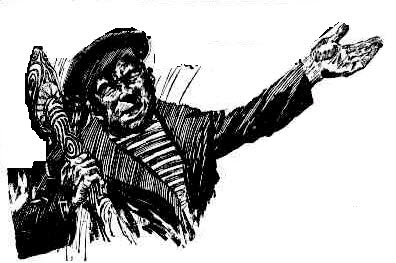
Towards the end of 1838, Pender landed in Sydney after an adventurous trip to New Zealand, bringing back with him a large collection of Maori weapons, including a huge club with a greenstone head, taken by him in single-handed fight with a tattoed chief of the savages.
This curiously carved weapon was regarded by the sailor as the gem of his collection. He never tired relating the story of the fight that made it his, and day by day, he grew more boastful about its alleged intrinsic value.
Throughout the Christmas festivities, he paraded the street with the club over his shoulder, chanting war songs in outlandish tongue, and generally making a nuisance of himself to the more peaceably inclined citizens.
Inspector Peter Prosser, of the Sydney Police Force, did not look with any favor on Pender and his boisterous ways. On several occasions he reprimanded the sailor sternly for his obstreperous behaviour, once or twice driving him off the streets when his boasting and warlike antics with the greenstone club terrified passers by.
Pender was more disturbed than he showed by this unceremonious treatment at the hands of a high officer of the law. Having come to believe that his prowess gave him the right to swagger and riot through the streets of any sea-port town, he bitterly resented that his inclinations should be frustrated In the place where he had made his home, and on Monday, January 21, he was very much in evidence, parading the streets with the club in his hand and a Maori rug tied about his shoulders, loudly proclaiming that he was afraid of no man.
His eccentric behaviour did not seriously impede Sydney’s general affairs during the forenoon, and Inspector Prosser not being about, he progressed from inn to inn accumulating large quantities of spirits. During early afternoon he wandered into the bar of Mrs. Jane Rayner’s Inn in King Street, and, thumping the counter with his club, called for drinks for those assembled. The loungers about the place were only too willing to partake of his hospitality, but as the audience was too insignificant for the sailor, he visited the various parlors and tap-rooms and extended his invitation to the occupants. In this way he gathered another eight men into the bar, but at one parlor his peremptory invitation to drink was as peremptorily refused.
Three squatters from the interior, discussing a matter of important business, so resented his intrusion on their privacy that they threatened stern measures if he did not take himself off.
Pender was not far enough gone in drink to be thoroughly quarrelsome, but nevertheless he expressed his opinion of the squatters with such disgusting profanity that they rose to their feet. One of them rushed the sailor, and, taking him by the shoulders, thrust him down a passage into the street. Then he returned and, calling on his friends, left the house; Before going, however, he informed the landlady that neither he nor any of his associates would patronise the tavern again.
Loss of Profits
Mrs. Rayner was considerably put out at losing such profitable customers, and upbraided Pender in vigorous terms when he re-entered the bar a minute later. The seafarer, now furious and irresponsible, threatened to smash up the bar if anything more were said. The landlady was just as brave and determined as the sailor.
Seizing the war-club, which was lying on the counter, she brought it down with a heavy thwack on Pender‘s shoulders and threatened to crack his skull if he did not leave the premises. From her fortress behind the bar, the landlady whirled the stoneheaded weapon, striking at Pender whenever he attempted to seize it.
The half-crazed man was shouting loudly, and using dreadful language as he rushed about the room, creating such an uproar that a crowd quickly gathered in the street. When the disturbance was at its height, Inspector Prosser entered the bar. Taking in the situation at a glance, he rushed at the sailor, grasped him about the middle, and hurled him through the door. While Pender was attempting to rise, the inspector rushed him again and tried to handcuff him. Both men were of like build, and both in perfect physical condition. The sailor, despite the quantity of drink he had absorbed during the morning, was not greatly affected by his libations, and began to fight for his liberty. For half an hour the pair struggled and fought in the Street, none of the crowd offering to interfere.
Prosser, a skilful boxer, plied his fists vigorously, battering his antagonist’s face until it was a mask of blood, Pender, employing tactics of the sea-front, used his feet and hands impartially, but with scant success.
At length Prosser, planting a blow on Pender‘s jaw, felled him insensible to the ground.
When the sailor recovered he was manacled and helpless.
Signifying his intention to proceed quietly to the watch-house, he was permitted to rise, and, held by Prosser, moved down the street. Over his shoulder the inspector carried the war-club. As they were walking along, the sailor informed his captor that he would like to visit his home before going to prison, there being two cats and several birds in the house he desired to liberate.
Prosser, yielding to persuasion, diverted his progress towards Strawberry Hills, and a quarter of an hour later entered the sailor’s cottage with his prisoner. At the door the inspector was seen to unlock the handcuffs on the sailor’s wrists, a proceeding that many of those among the crowd that followed considered a dangerous proceeding.
No warning of this was shouted to the police officer, but when a few moments later he came reeling out through the door to collapse on the ground, those present realised that something tragic had occurred. In the Inspector‘s head was a ghastly wound, clearly caused by a blow from the war-club.
Two men, George Clark and Richard Roberts -rushed into the house. On the floor of the front room they found the blood-stained club. Pender they beheld escaping through the gate at the rear.
Sergt. W. Kilpatrick and Constable Boadley were soon in pursuit of the murderer. Through the streets they chased him, Pender running at a tangent, and screaming insanely of men he had killed in other parts of the world. People dashed from his path and took shelter in the houses. Doors were slammed in his face, but none attempted to lay hold of him. The police took him at last near the Hyde Park Barracks. He had turned at bay, producing a long sailor’s knife, with which he menaced his pursuers. The constables, however, furious at the death of their superior, braved the maddened seafarer, and overwhelmed him with their truncheons.
They battered him into unconsciousness and then, securing a wheelbarrow, trundled him to the Watch-house where he regained his senses.
At his trial some months later, Pender was the most unconcerned man in the court. He sat in the dock eating pears from a bag and spitting out the skin at the constables.
He refused to plead, or give any explanation of the tragic happening in the cottage, a course which decided his fate.
The Judge had nothing else to do but to order his execution.
The green-stone war-club was given to Mrs. Jane Rayner by a formal order of the court, for what reason was not apparent, and her descendants may have it to this day. .
 1795 – 1839 (44 years)