1

Francis DRUM

Francis DRUM

AKA  ?

Late of Marengo, NSW

New South Wales Police Force

Regd. #  ‘P‘ 0086

For the purposes of this website ‘P‘ = represents those Police joining Pre 1862 when NSWPF “Officially” commenced

Rank: Constable – commenced 24 February 1862

Senior Constable

Final Rank = Senior Constable

Stations?, Morangarell ( 1875 ), Murringo, Marengo – Death 

ServiceFrom  24 February 1862  to 12 January 1882 =  20 years Service

Awards:   No find on It’s An Honour

Born:   31 March 1838, Auchandinard, Bally Connell, Fermanagh, Ireland

Died on:  Thursday  12 January 1882

Age:  45

Cause:   Fall from horse whilst On Duty – Fractured neck

Event location:  near Warrangong Station, Marengo

Event date:  Thursday  12 January 1882

Funeral date:   Tuesday  17 January 1882

Funeral location:   Murringo Cemetery, Murringo Rd, Murringo, NSW, 2586

Wake location:  ?

Funeral Parlour:  ?

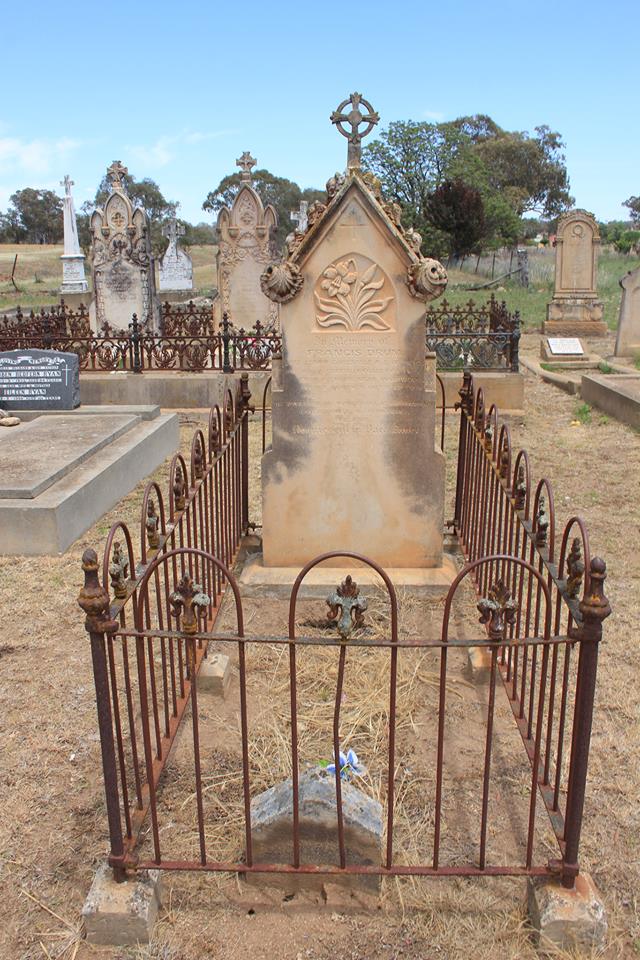
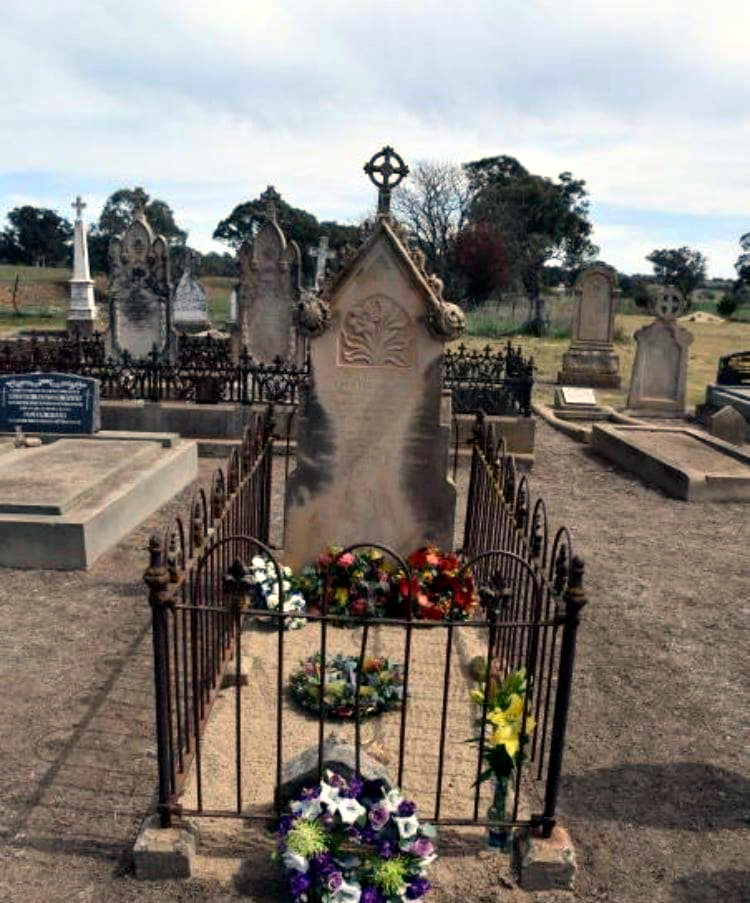
Buried at: Murringo Cemetery, Murringo Rd, Murringo, NSW, 2586


 Memorial located at:   ?

Widow:  Mary Agnes DRUM & 6 children of Marengo in the Colony of NSW


FRANCIS is NOT mentioned on the Police Wall of Remembrance  * BUT SHOULD BE

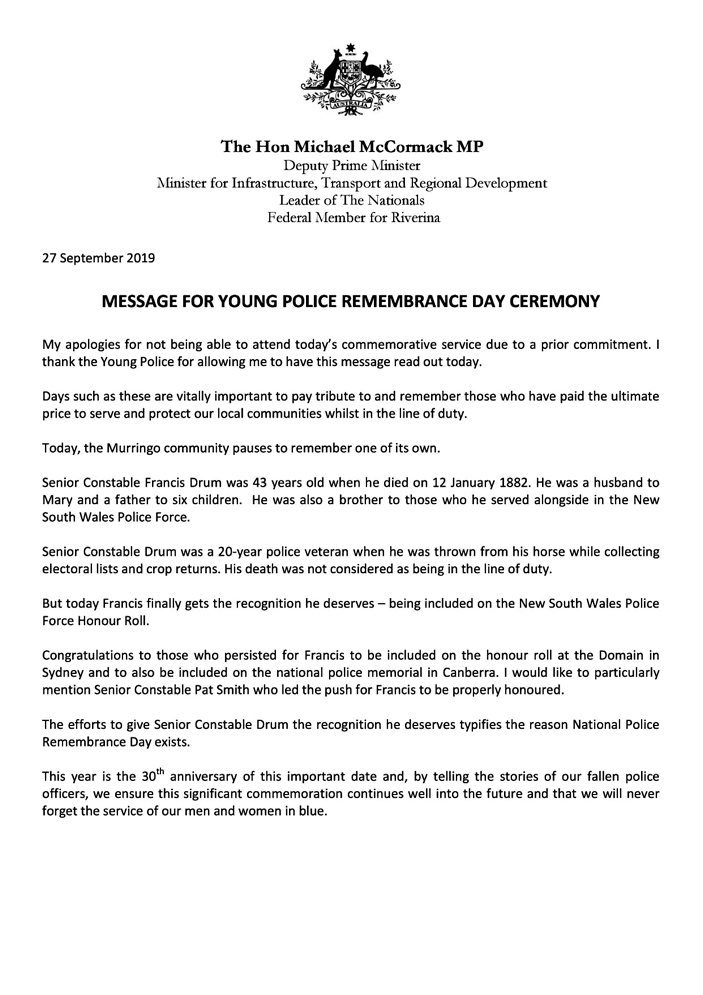
On Friday 27 September 2019 an omission was rectified with the name of Senior Constable Francis DRUM being added to the NSW Police Wall of Remembrance together with the National Police Wall of Remembrance, Canberra.
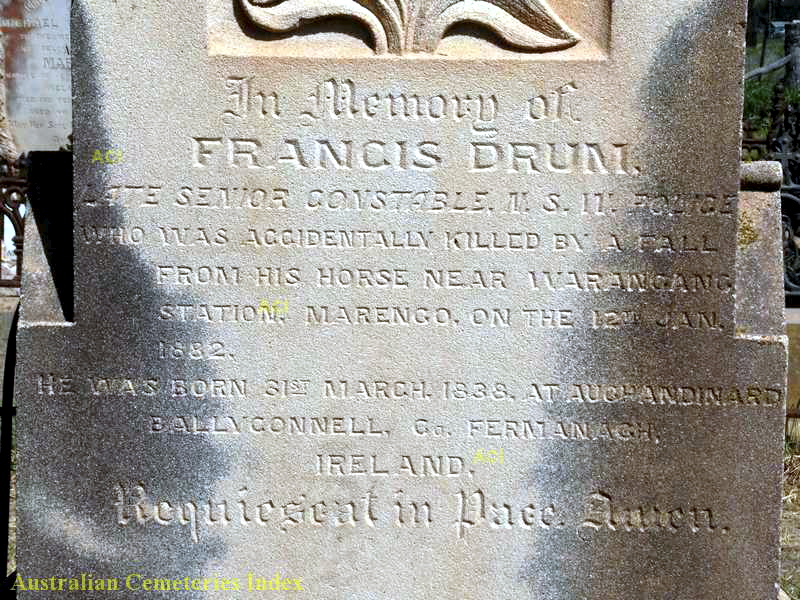
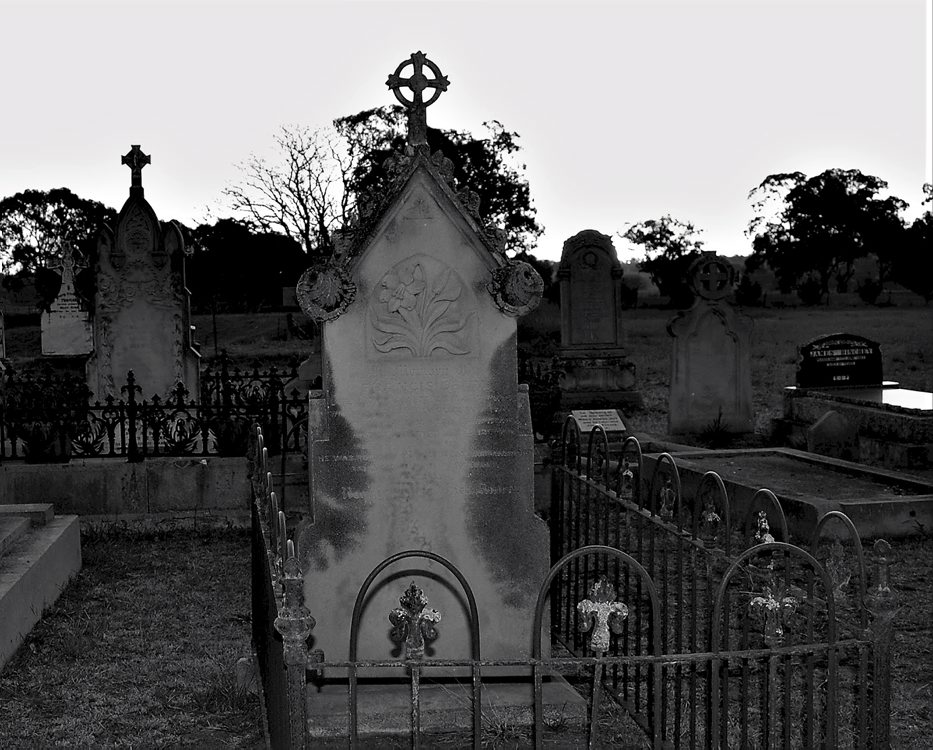


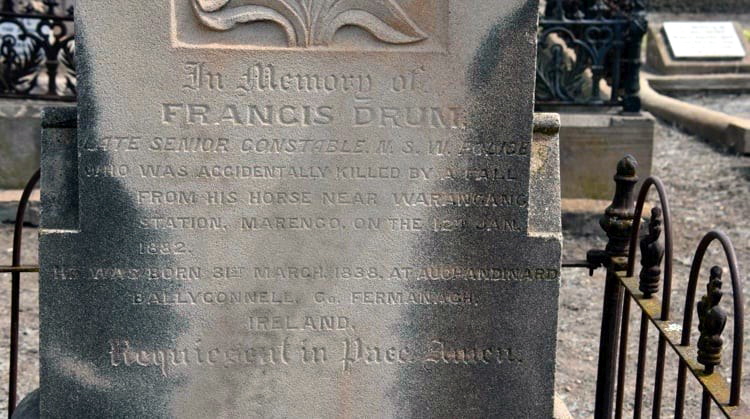
INSCRIPTION: In memory of FRANCIS DRUM Late Senior Constable N.S.W. Police who was accidentally killed by a fall from his horse near Warangang Station, Marengo, on the 12th Jan. 1882. He was born 31st march, 1838, at Auchandinard, Bally Connell, Co. Fermangagh, Ireland. Requieseat in Pace. Amen.

INSCRIPTION: In memory of FRANCIS DRUM Late Senior Constable N.S.W. Police who was accidentally killed by a fall from his horse near Warangang Station, Marengo, on the 12th Jan. 1882. He was born 31st march, 1838, at Auchandinard, Bally Connell, Co. Fermangagh, Ireland. Requieseat in Pace. Amen.

INSCRIPTION: In memory of FRANCIS DRUM Late Senior Constable N.S.W. Police who was accidentally killed by a fall from his horse near Warangang Station, Marengo, on the 12th Jan. 1882. He was born 31st march, 1838, at Auchandinard, Bally Connell, Co. Fermangagh, Ireland. Requieseat in Pace. Amen.

FURTHER INFORMATION IS NEEDED ABOUT THIS PERSON, THEIR LIFE, THEIR CAREER AND THEIR DEATH.

PLEASE SEND PHOTOS AND INFORMATION TO Cal


May they forever Rest In Peace


Regarding Senior Constable Francis DRUM. I received a message from Inspector Jacob REEVES, OIC of Young Police 3 days ago. My apologies for not posting earlier, it was in my ‘other’ messages.

“Hello Kevin, just FYI, Senior Constable Patrick Smith of Young Highway Patrol has been lobbying to have S/Cst Drum added to the NSW Police Force Honour Roll in the Domain and has been successful. S/Cst Drum will be added in time for Police Remembrance Day 2019 and will also be sent to Canberra for inclusion on the National Wall. We will be having a ceremony in Murringo to mark this event on Friday 27th September. The Hume Police District Facebook page will have details shortly.”

Outstanding.


In 1882 Senior Constable Francis Drum paid the ultimate price in the execution of his duty. Unfortunately his death has not been accepted as duty-related by the various Commissioners (and Inspectors General) of the Police.

Francis Drum, a twenty year veteran, was thrown from his horse near Murringo while collecting crop returns and electoral lists. Sadly, his fatal fall was not regarded as being in the line of duty.

It has since been shown that in a report by Edmund Fosbery Inspector General of Police to the Principal Under-Secretary of the NSW Police Department that most country police had this task as a normal part of their duties at that time. “These duties and others such as the collection of the Electoral Lists, Jury List, Stock and Crop Returns interfere more or less with legitimate police work and occupy much time, but there is some counter-balancing advantage by bringing the police into contact with people they would not otherwise meet, whereby they acquire information of service to them in a police point of view”. (see Police Duties in NSW 1862 – 1915).

We have been in contact with a serving Police Officer who wishes to facilitate the process of getting Francis Drum recognised as his due right and to have his name included on the Police Honour Roll.

https://www.change.org/p/nsw-police-commissioner-michael-fuller-apm-help-us-get-senior-constable-francis-drum-on-the-nsw-police-honour-roll?recruiter=632287451&utm_source=share_petition&utm_medium=facebook&utm_campaign=psf_combo_share_initial.pacific_email_copy_en_gb_4.v1.pacific_email_copy_en_us_3.control.pacific_email_copy_en_us_5.v1.pacific_post_sap_share_gmail_abi.gmail_abi.lightning_2primary_share_options_more.control&utm_term=psf_combo_share_initial.pacific_email_copy_en_us_3.control.pacific_email_copy_en_gb_4.v1.pacific_email_copy_en_us_5.v1.pacific_post_sap_share_gmail_abi.gmail_abi.lightning_2primary_share_options_more.variant&utm_content=fht-14070029-en-au%3Av2&fbclid=IwAR3hxWZYVGIIIUMVwZeH7Kff20FlTTdohBLINB_AiifiCyHeO502G3LT4gI


Burrowa News (NSW : 1874 – 1951),

Friday 20 January 1882, page 2

INQUEST ON SENIOR-CONSTABLE DRUM.

The coroner (Mr. S. Robinson) and a jury of five held an inquest at the dwelling house of the late Senior-constable Drum, Marengo, on Tuesday, touching the death of that officer.

John McSpadden deposed : I am boundary rider to Mr. W. B. Suttor ; I know the deceased Senior-constable Drum ; I saw him yesterday morning ; be called at the station and asked me the road to Beplate‘s ; he was collecting the electoral roll ; I went on horseback with him ; we had ridden about three quarters of a mile from Warrangong station ; there was a storm rising ; Drum said he would turn back ; his horse gave two or three turns round ; Drum stuck the spurs into the animal ; she made a bound and deceased’s hat fell off ; the mare then bolted ; deceased could not hold her ; after going about 300 yards I saw the mare fall right through a six-wire fence, on the top of the rider ; I galloped up, and found deceased bleeding copiously from the mouth and ear ; he was quite dead ;

I then went and reported the circumstances to the overseer of the station ; Mr. Johnson, I, and my wife, went to where the body was ; we then took the body to the station ;

Mr. Woodbridge, who is a neighbour, afterwards reported to the police, and the body was then brought to Marengo, by order of the coroner ; the mare from the start was restless ; she appeared to be a very fiery animal ; I thought she was not a safe animal to ride ; I brought the mare here from Warrangong this morning ; she is marked in several places by the wire fence.

Charles Henry Thompson deposed : I am a constable stationed at Marengo ; Senior-constable Drum was in charge of the Marengo station ; from information I received I went yesterday to Bang Bang, distant from here about 25 miles ; I there saw Constable Drum ; he said he had been sick, but that he was then all right ; Mrs. Drum spoke to me on Wednesday night ; she said she had heard her husband was sick at Bang Bang ; she further requested me to take a buggy and bring him home ; I and Mr. Connor, inn-keeper, started at 12 o’clock on Wednesday night, and got to Bang Bang at 5 on Thursday morning ; Drum was better, and started to finish the electoral roll at about a quarter past eight in the morning ; while I was with deceased he had one glass of brandy ; he said he had a touch of sunstroke on Monday last ; I arrived home about noon yesterday, and about two hours afterwards news came to me that Drum had been killed ; I telegraphed to the police, and also to the coroner, and upon the order of the coroner, I had the body brought home ;

he, deceased, left home on Monday morning : I have been ten weeks here ; I have known Drum for nearly four years ; I never saw him drunk ; when he started from Bang Bang on Thursday the mare was very fidgetty, and was prancing about ; I told Drum if the mare was too much for him that I would ride her and finish taking the roll ; I don’t think the mare is safe to ride ; she is flash and has a bad temper ; I would not care to ride or have charge of her ; Drum used to say that she required watching.

Michael O’Connor deposed : I am an innkeeper, residing in Marengo ; I knew the deceased, Senior-constable Drum ; I have known him on and off for about twelve years ; on Wednesday evening about 10 o’clock Mrs. Drum came to my house and said she had heard that her husband was sick at Bang Bang ; she asked me if I would go with my buggy and bring him home ; she said that Constable Thompson would accompany me ; I consented to go ;

I started with Constable Thompson about 12 o’clock, and arrived at Bang Bang at five in the morning ; when we arrived I saw Drum coming out of the stable ; Drum said, “Where are you going ?” I did not tell him my object in coming ; he appeared to have been sick, but not from drink ; I only saw him have one drink that morning ; the mare Drum rode was very fidgetty ; we afterwards left and came home ;

Drum was a very regular man, and not in the habit of drinking.

The verdict of the jury was that deceased met his death by falling from his horse over a six-wire fence on the 12th instant, which fall dislocated his neck.

The jury added a rider to the effect that they were of opinion that the mare was not a fit animal to be supplied to the police force.

The funeral of Senior-constable Drum took place on the evening of the inquest, and was followed by a large concourse of people, vehicles and horsemen.

The burial service was read by the Rev. Father Long, of Burrowa.

A public subscription is being raised for the purpose of erecting a memorial stone over the grave of the deceased.

There is no doubt that the primary cause of the accident was the temper of the mare, which appears to have been very bad. She has passed through several hands and was given up each time by the possessor as being unsafe to ride.

It is said that she killed a man sometime ago in another district, and was brought over here for the use of an officer of rank in the service, who declined to have her, since which she has been sent away from place to place with the object of exchanging her.

Under these circumstances it is not creditable to the authorities to allow animals of this class to be ridden by the police, who, of all men, require horses which can he kept thoroughly under control. It is to be hoped that the rider to the verdict will have some effect in the proper quarter.

Assuming however, that the horse had been a quite animal, then the Government would still be blameable for permitting the use of wire fences without a top rail, at any rate along public roads.

Only a few months back another trooper lost his life over a similar fence to the one in question. And so the affair as usual, rests, until death after death at last compels the selfish red taped authorities to move in the matter.

There is a fence of this class on a main road not many miles from Young, and as a matter of course, it is impossible for man or beast to see it by night, nor indeed often by day. What is of more common occurence than, for say a vehicle to run slightly off the track of a bush road on a night, not necessary dark, and if the fences are not discernible, what guide is there for a driver. A matter of this kind could be easily regulated by a brief Act, and would prevent many an accident to life and limb. — Argus (Young.) .

https://trove.nla.gov.au/newspaper/article/107930196


Burrangong Argus (NSW : 1864 – 1913),

Saturday 1 August 1868, page 2


DRUNK AND DISORDERLY.

Thomas Evans was brought from Murrumburrah by constable Francis Drum, charged with the above offence. Fined 10s., or three days’ imprisonment.

OBSCENE LANGUAGE.

Thomas Evans was charged with using obscene language. Constable Francis Drum deposed that, when attempting to arrest defendant, he made use of the language complained of, a repetition of which would be unfit for publication. Fined 1/., or fourteen days’ imprisonment.

ASSAULTING POLICE.

Thomas Evans was charged with assaulting the constable in the execution of his duty. Constable Francis Drum deposed that, when arrested, defendant refused to walk, after which he got up, kicked him in the stomach, and tried to turn his thumb back. Eventually he had to obtain the assistance of Mr. Dillon. Defendant resisted all the way to the lockup. He was the worst man he (constable) ever had his hand on. Fined 2/., or one month in gaol. Locked up in default.

https://trove.nla.gov.au/newspaper/article/247265628


The Hume Police District

Friday 27 September 2019 ( National Police Remembrance Day )

Young Sector – Police Remembrance Day

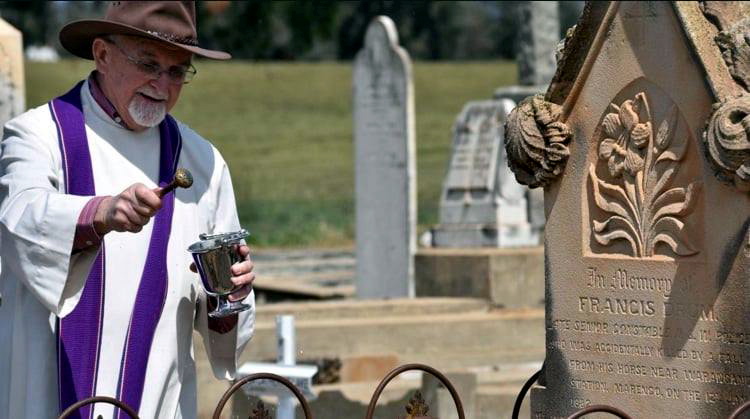
Today on duty and off duty police from Young Sector gathered at Murringo Cemetery to commemorate Police Remembrance Day and the addition of the Late Senior Constable Francis Drum, Officer in Charge of Marengo, (as it was then known) to the NSW Police Force Roll of Honour.

Senior Constable Drum was killed on duty in a horse riding accident in 1882.

Research and hard work from the Murringo First Families Group, Young and District Family History Group and Leading Senior Constable Pat Smith of Young Highway Patrol, supported by the Mayor and Local Member, saw Senior Constable Drum included on the Roll in time for this year’s Remembrance Day.

A message from the Deputy Prime Minister was read, our Local Member Steph Cooke MP made the opening remarks and a prayer service was officiated by Fr Allen of St Mary’s Young.

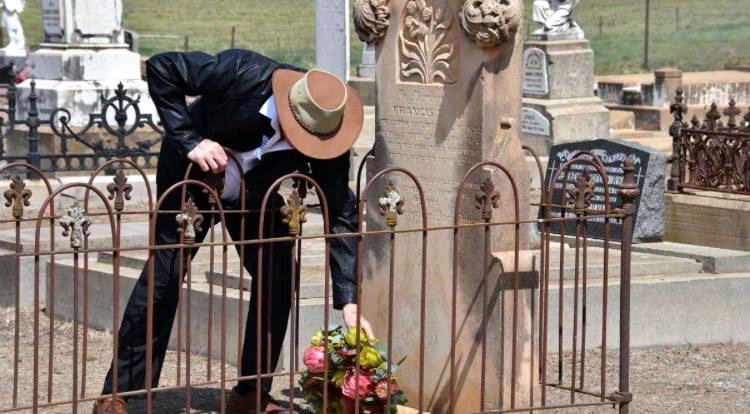
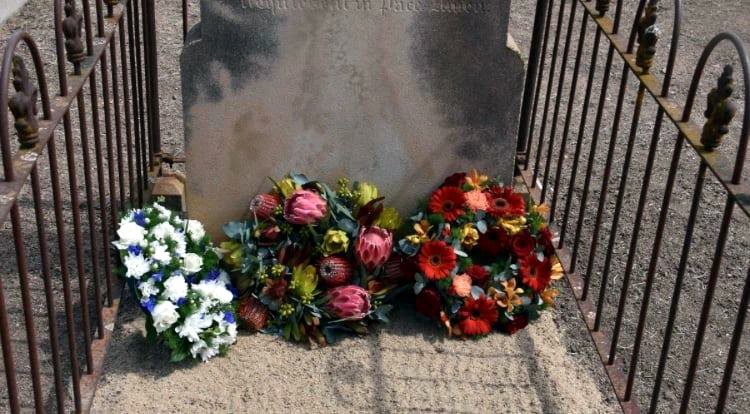
Wreaths were laid by our Local Member, our Mayor, the great-grandson of Senior Constable Drum and also by Leading Senior Constable Smith.

We paused for a moment at the grave of another police officer who died of illness in 1904 before we gathered for lunch at the Murringo Memorial Hall.

A day in remembrance of our fallen colleagues.
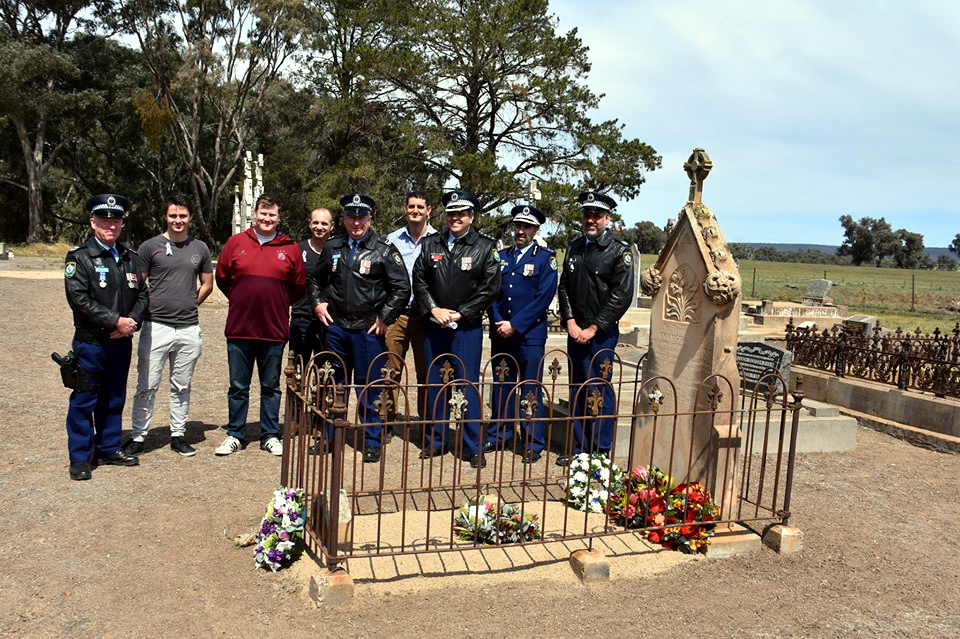
Francis DRUM

Francis DRUM

Francis DRUM

Francis DRUM

Francis DRUM

Francis DRUM

Francis DRUM(Thanks to the Young Witness for the photos)


John CARTON

John CARTON

Also recorded as Joseph CARTON at State Archives, NSW

New South Wales Police Force

Regd. #  ‘P’ 0008

For the purposes of this website ‘P’ = represents those Police joining Pre 1862 when NSWPF “Officially” commenced

RankTrooper / Senior Constable

Stations?, Manly Beach

ServiceFrom  1 May 1861 to  23 May 1882 = 21 years Service

Awards?

Born? ? 1836 in County of Wexford, Ireland

Died on:  Tuesday  23 May 1882 at Manly Beach

Cause:  Tuberculosis

Age:  47

Funeral date:  Thursday  25 May 1882 @ 3.30pm

Funeral location:  Roman Catholic Church, Manly

Buried at:  Catholic section of Manly Cemetery along with his wife

Grave info:  Plot:  PP.???  Vine Hall #:  1042  Not in burial register

http://www.manly.nsw.gov.au/planning-and-development/heritage/manly-cemetery-heritage/

 Memorial at?

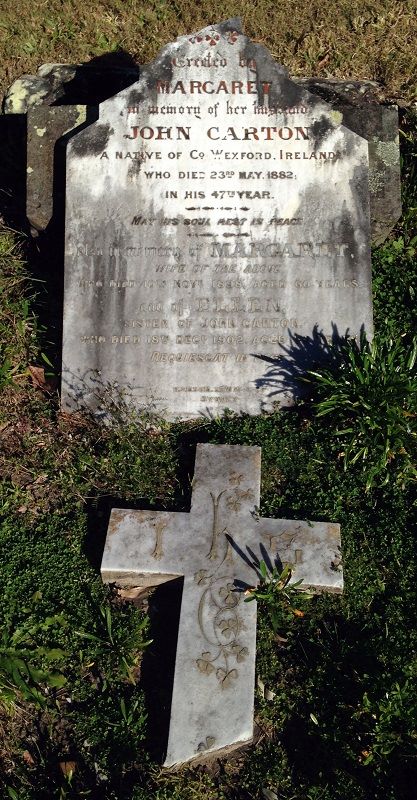
John CARTON - NSWPF - Died 23 May 1882
Photo: Pre 2018


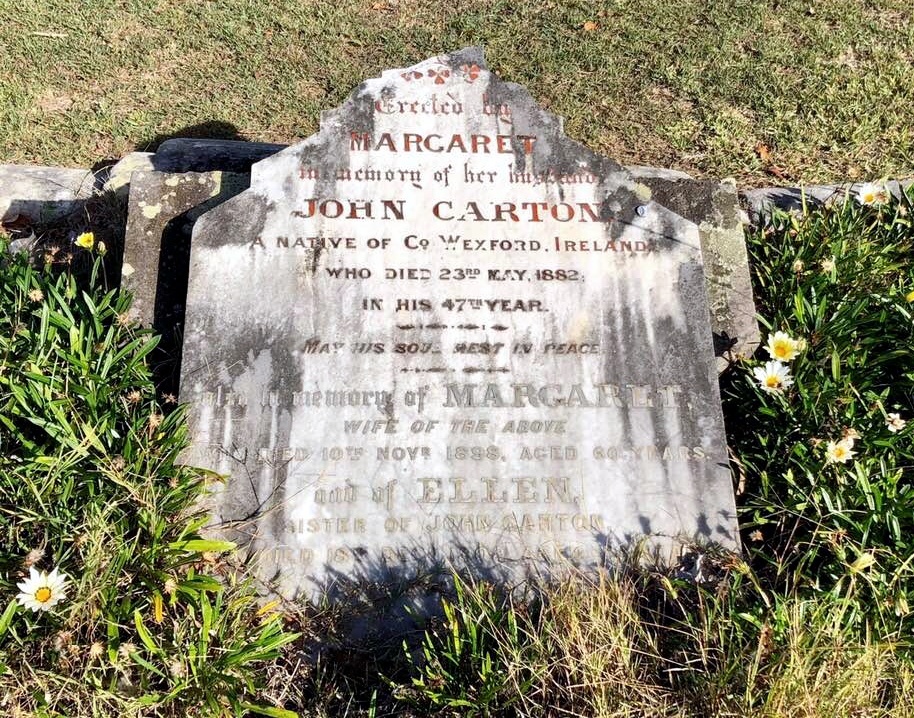
John CARTON & Margaret CARTON grave. Photo taken Sunday 27 May 2018
Photo: Sunday 27 May 2018


John CARTON & Margaret CARTON grave. Photo taken Sunday 27 May 2018
Photo: Sunday 27 May 2018

JOHN is NOT mentioned on the Police Wall of Remembrance * NOT JOB RELATED


 Funeral location ?


FURTHER INFORMATION IS NEEDED ABOUT THIS PERSON, THEIR LIFE, THEIR CAREER AND THEIR DEATH.

PLEASE SEND PHOTOS AND INFORMATION TO Cal


Trooper/Constable John Carton.

John Carton was born in the County of Wexford, Ireland in 1836.
Constable Carton, who took over the top job in 1867, was the first officer to live at Manly police station, which was completed shortly before he took up the post. Interestingly, Constable Carton lived at the station with his wife and five children. The station had stables and 2 cells, one for males and one for females. Their ‘patrol’ extended up to Palm Beach. Prior to the station being built, the area was covered by Police from Sydney.

The first person arrested after the building was completed was one of the stonemasons, for “celebrating too boisterously”. He was thrown into the station’s new lock-up shortly after the work was completed.

According to a Mr MacRitchie, (Historian) he was a brave man.
He risked his life trying in vain to save a man from drowning at South Steyne on New Year’s Day in 1878. He also led efforts to put out the fire that swept through West Esplanade in 1877, destroying several houses. This was before there was any fire service in Manly.

Senior Constable Carton died of tuberculosis in 1882, aged 46.

He is mentioned in a number of ‘trove’ articles regarding ‘fatals’ he attended on the northern beaches. They sometimes gave his rank as Constable and Sergeant. He died 23/05/1882 at Manly. On a death notice it is mentioned that at the time of his death he was a ‘Senior Constable’ Not ‘former’ Senior Constable.

He is buried in the Catholic section of Manly Cemetery along with his wife.


Freeman’s Journal ( Sydney )   Saturday  26 October 1878   p 13 of 24

MANLY

Mr. John CARTON has been appointed our agent for the above place.

( It is NOT known if the John Carton in this article is the John Carton from the Police Stn )

http://trove.nla.gov.au/ndp/del/article/111098683?searchTerm=%22john%20carton%22&searchLimits=


The Sydney Morning Herald  Tuesday  2 May 1882  p 7 of 10

…… We understand that provision has also been made for the immediate retirement of Senior-constable John Carton, the trooper who has been stationed at Manly Beach for the last 15 or 16 years.

http://trove.nla.gov.au/ndp/del/article/13510340?searchTerm=%22john%20carton%22&searchLimits=l-decade=188


Freeman’s Journal ( Sydney )   Saturday  3 June 1882   p 11 of 24

CARTON. –

May 23, at his residence, Manly Beach, John Carton, in the 47th year of his age, leaving a sorrowing wife and five children, also many friends, to mourn their loss.  On his soul sweet Jesus have mercy.

http://trove.nla.gov.au/ndp/del/article/111318396?searchTerm=%22john%20carton%22&searchLimits=l-decade=188


The Sydney Morning Herald  Friday  23 May 1884  p 1 of 12

CARTON.- In loving remembrance of John Carton, who died at Manly, May 23, 1882. May his soul rest in peace.

http://trove.nla.gov.au/ndp/del/article/13568006?searchTerm=%22john%20carton%22&searchLimits=l-decade=188#reloadOnBack


Gordon Charles FARNHAM

 Gordon Charles FARNHAM – DCM, MM

New South Wales Police Force

Regd. #  ?

Rank:  Constable

Stations:  Broken Hill, Wagga Wagga,

Service 1:  From  ? ? ?  to  ? ? pre 1914 – Broken Hill

Service 2:  From  15 April 1919  to  10 March 1920 – Wagga Wagga – Resigned

[blockquote]

Australian Imperial Force

Regiment 1:  3rd Field Ambulance, B Squadron

Regiment 2: 3rd Light Trench Mortar Battery

Enlisted:  24 August 1914, Morphetville, South Australia

Service #  151 & 176

Rank 1:  Corporal # 151

Rank 2:  Lance Corporal # 176

Embarkation 1:  3rd Field Ambulance, B Squadron – Unit embarked from Adelaide, South Australia, on board Transport A12 ” Saldanah ” on 21 October 1914

Embarkation 2:  3rd Light Trench Motar Battery – Unit embarked from

Age:  26

Next of kin:  Father:  Thomas Farnham, Cessnock, NSW

Religion:  C of E

Single / Married:  Single

War Service:  Egypt, Gallipoli, Western Front

21 October 1914:  Lance Corporal, 3rd Field Ambulance

21 October 1914:  Embarked HMAT Saldanha, Adelaide

1 March 1917:        Corporal, 3rd Light Trench Mortar Battery

Returned to Australia:  4 December 1918

[/blockquote]

AwardsDistinguished Conduct Medal – granted 6 September 1915 – ‘For great gallantry on the 25th April, 1915, and throughout the landing operations near Gaba Tepe (Dardanelles). In attending to the wounded under a heavy fire, he showed the greatest zeal and disregard of danger, and at all times gave a fine exhibition of coolness and devotion to duty.’
Source: ‘London Gazette’ No. 8844
Date: 6 September 1915

Military Medal – granted on 7 October 1918 – ‘In the operations against the enemy positions at MONT DE MERRIS near STRAZEELE on night 2nd/3rd June, 1918 Corporal FARNHAM displayed great gallantry and initiative. When a gun close by which was firing on a very strong enemy machine gun position on the flank was put out of action, Corporal FARNHAM, regardless of his personal safety, carried the ammunition through the enemy’s barrage to his own gun position and expended both his own and the disabled gun crews’ quota. By great skill he was able to fire alternate shots at his own and the disabled gun crews’ targets, thereby saving casualties from flanking machine gun fire. He set a splendid example of gallantry and initiative.’
Source: ‘Commonwealth Gazette’ No.

1914 – 15 Star, British War Medal, Victory Medal

Born18 June 1888 at Cessnock, NSW

Died on:  Friday  28 January 1921

Place of death:  Wagga Wagga, NSW

Cause:  Food poisoning

Age:  32

Funeral date:  Friday  28 January 1921

Funeral location:  Wagga Wagga

Buried at:  Methodist portion of the Cessnock cemetery

Memorial at?

Gordon Charles FARNHAM

[alert_blue]GORDON is NOT mentioned on the Police Wall of Remembrance[/alert_blue] * NOT JOB RELATED

[divider_dotted]


The Cessnock Eagle & South Maitland Recorder     Friday  28 January 1921     page 5 of 6

DEATH OF MR. GORDON FARNHAM A CESSNOCK DISTINGUISHED SOLDIER.

The relatives of Mr. Gordon Farnham D.C.M., M.M. were shocked to receive word this morning of his death at Wagga Wagga. The sad information came as a great shock as it was not even known by his relatives that he was ill. The deceased was a native of Cessnock, being born in the premises now occupied by Mr. Dennis Kenny, in Main Street. The deceased was 30 years of age and was an Anzac, being one of the first Australians to enlist. He enlisted from Broken Hill, where he was a member of the police force.

The late Mr Farnham secured the Distinguished Conduct medal at Gallipoli and the Military medal in France.

He returned on furlough in the early part of 1919 and during his stay at his home town the Armistice was signed.

His remains will be brought to Cessnock and will be interred in the Church of England cemetery on Sunday afternoon.

http://trove.nla.gov.au/ndp/del/article/99448638


[divider_dotted]

 Daily Advertiser ( Wagga Wagga )                   Saturday  29 January 1921              page 6 of 8

OBITUARY.

MR. GORDON C. FARNHAM.

The death of Mr. Gordon C. Farnham, licensee of the Club House Hotel, Wagga, caused great regret, as the deceased was well-known throughout the district. Mr. Farnham was present at the boxing contests in the Riverina Hall on Wednesday night, and after returning to his hotel ate a supper which included cucumber, and had an iced drink. Later not feeling too well he had a glass of brandy, but during the night he suffered considerably from internal pains. In the morning his condition was such that Dr. Martin was called in, and he diagnosed the case as one of gastritis and enteritis. The sufferer was removed to a private hospital, but although everything possible was done for him he passed away about 3 o’clock on Friday morning. Dr. Martin certified that death was due to food     poisoning, and this was endorsed by the deputy coroner after a formal inquiry.

The deceased, who was an   ‘Anzac,’ rose to the rank of sergeant-major in the 1st Divisional Engineers, and earned the coveted awards of the D.C.M. and the M.M. At the time of his death he was on the committee of the Returned Soldiers’ League.

Prior to enlisting he was a member of the police force, attached to the Wagga station, and he rejoined the force on April 15, 1919, on his return from the front, and resigned on March 10, 1920, to take over the Club House Hotel.

He leaves a wife, five brothers, and two sisters.

The funeral left Traill-street for the Wagga railway station at 4.30pm on Friday, from where the remains were conveyed by rail to Cessnock for interment in the Methodist portion of the Cessnock cemetery.   The chief mourners were the wife of the deceased, Mrs. W. Ball, and Messrs. D. Harris and N. J. Richards. A large number of members of the Returned Soldiers’ League marched behind the hearse, including the president, Ald. Gissing, the pall bearers being Messrs. V. Charker, T. A. Plummer, J. S. Wild, L. H. Shaw, T. A. Smith, and A. Stephenson. Sister Proctor, and members of the Red Cross League were also present, while Senior-sergeant Gallaher, Sergeant O’Brien, Senior-constable Cooper, Constables Brownlee and Waugh, and Tracker McLean represented the Wagga police. There were many beautiful floral tributes.

The funeral arrangements were entrusted to Messrs. McIntosh Bros.

http://trove.nla.gov.au/ndp/del/article/142355550

[divider_dotted]

Service Number listed as 176 and 151

AN ADELAIDE D.C.M.

Lance-Corporal Farnham, who came to Adelaide from Broken Hill to enlist, has won the Distinguished Conduct Medal for “showing the greatest zeal and disregard for danger during the landing at Gabi Tepe.” Lance-Corporal Farnham is a native of Cessnock (N.S.W.), and is 27 years of age. Like all the country recruits from the Cessnock district, he had a varied experience in rural pursuits in his native State, and was also for a time in New Zealand, and for 18 months prior to enlisting had been in the New South Wales police force, being stationed at Broken Hill. At the historic landing on April 25 he was for 10 hours under fire, “during which time,” says the official report, “he attended the wounded continuously, and made a fine exhibition of coolness and devotion to duty.” Lance-Corporal Farnham   was in the trenches from April to the end of August, and is now on police patrol duty guarding prisoners. His parents are very old residents of Cessnock.”from the Adelaide Advertiser 06 Oct 1915 (trove.nla.gov.au)


D.C.M. FOR CESSNOCK.

The distinguished conduct medal has been won by Lance-corporal Gordon Farnham, a former resident of Cessnock, for “showing the greatest zeal and disregard for danger during the landing at Gaba Tepe.” The D.C.M. hero, who is a native of Cessnock, is 27 years of age, and previously was employed at the Aberdare Colliery and blacksmith. He is a fine example of Australian manhood, and has many friends in Cessnock who are naturally proud of him. His parents also live in Cessnock. After leaving his native town, Farnham journeyed to New Zealand, from whence he went to Broken Hill, where for eighteen months previous to his enlistment he was a member of the police force. The call of war was too strong, however, and he enlisted in Adelaide with the Third Field Ambulance Corps. He subsequently took part in the famous landing of the 25th April, and was for ten hours under fire, “during which time,” says the official report, “he attended the wounded continuously, and made a fine exhibition of coolness and devotion to duty.”from the Newcastle Morning Herald and Miners’ Advocate 08 Oct 1915 (nla.gov.au)


OBITUARY. MR. GORDON C. FARNHAM.

The death of Mr. Gordon C. Farnham, licensee of the Club House Hotel, Wagga, caused great regret, as the deceased was well-known through out the district. Mr. Farnham was present at the boxing contests in the Riverina Hall on Wednesday night, and after returning to his hotel ate a supper which included cucumber, and had an iced drink. Later not feeling too well he had a glass of brandy, but during the night he suffered considerably from intenial pains. In the morning his condition was such that Dr. Martin was called in, and he diagnosed the case as one of gastritis and enteritis. The sufferer was removed to a private hospital, but although everything possible was done for him he passed away about 3 o’clock on Friday morning. Dr. Martin certified that death was due to food poisoning, and this was endorsed by the deputy coroner after a formal inquiry.

The deceased, who was an ‘Anzac,’ rose to the rank of sergeant-major in the 1st Divisional Engineers, and earned the coveted awards of the D.C.M. and the M.M. At the time of his death he was on the committee of the Returned Soldiers’ League. Prior to enlisting he was a member of the police force, attached to the Wagga station, and he rejoined the force on April 15, 1919, on his return from the front, and resigned on March 10, 1920, to take over the Club House Hotel. He leaves a wife, five brothers, and two sisters. The funeral left Traill-street for the Wagga railway station at 4.30 p.m. on Friday, from where the remains were conveyed by rail to Cessnock for interment in the Methodist portion of the Cessnock cemetery. The chief mourners were the wife of the deceased, Mrs. W. Ball, and Messrs. D. Harris and N. J. Richards. A large number of members of the Returned Soldiers’ League marched behind the hearse, including the president, Ald. Gissing, the pall bearers being Messrs. V. Charker, T. A. Plummer, J. S. Wild, L. H. Shaw, T. A. Smith, and A. Stephenson. Sister Proctor, and members of the Red Cross League were also present, while Senior-sergeant Gallaher, Sergeant O’Brien, Senior-constable Cooper, Constables Brownlee and Waugh, and Tracker McLean represented the Wagga police. There were many beautiful floral tributes. The funeral arrangements were entrusted to Messrs. McIntosh Bros.”from the Wagga Daily Advertiser 29 Jan 1921 (nla.gov.au)

https://rslvirtualwarmemorial.org.au/explore/people/137462

[divider_dotted]


NSW Births, Deaths & Marriages

Death:  4551/1921  Father:  Thomas  Mother:  Susan   Wagga Wagga District

[divider_dotted]


Thomas COOKE

Thomas COOKE

Victorian Police Force

Regd. # ?

Rank:  Senior Constable

Stations?

Service:  From  to  ?

Awards?

Born?

Died on:  28 August 1882

Cause:  Suicide – hanging

Age?

Funeral date?

Funeral location?

Buried at?

Senior Constable Thomas Cooke : 28-May-2011

Location of memorial:  Castlemaine Police Stn, 50 Lyttleton St, Castlemaine, 3450

Lat: -37.064714
Long: 144.218421

[alert_yellow]THOMAS is NOT mentioned on the Police Wall of Remembrance[/alert_yellow]  *NEED MORE INFO


 [divider_dotted]

 Funeral location:

[divider_dotted]

Front Inscription
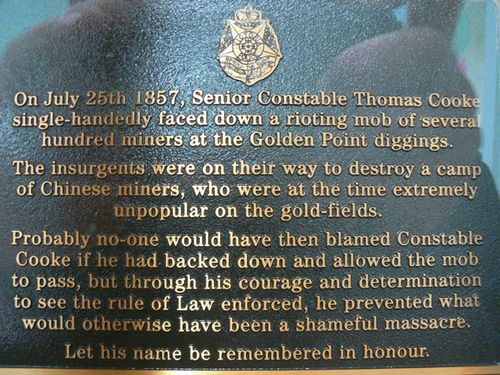
On July 25th 1857, Senior Constable Thomas Cooke single-handedly faced down a rioting mob of several hundred miners at the Golden Point diggings.

The insurgents were on their way to destroy a camp of Chinese miners, who were at the time extremely unpopular on the gold-fields.

Probably no-one would have then blamed Constable Cooke if he had backed down and allowed the mob to pass, but through his courage and determination to see the rule of Law enforced, he prevented what would otherwise have been a shameful massacre.

Let his name be remembered in honour.

[divider_dotted]

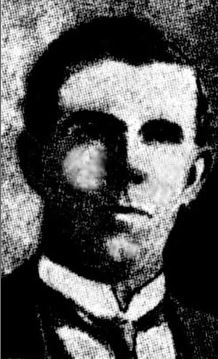
Senior Constable Thomas Cooke
Senior Constable Thomas Cooke : 28-May-2011
Photographs supplied by Kent Watson

Plaque commemorates Senior Constable Thomas Cooke.

In 1857, Thomas Cooke, undoubtedly saved the lives of a number of Chinese miners from a public riot that could have had grave consequences for the young colony of Victoria. The foray commenced near the bottom of Golden Point, and out about a mile from the chief camp. The ringleaders of the affray tore down and destroyed mining equipment owned by the Chinese and the situation escalated.

Senior Constable Cooke boldly placed himself in front of the mob and by his presence of mind, tact and discretion, lives were probably saved, and the Chinese camp not destroyed. A compromise was reached, giving the Chinese permission to remain for several more days. On leaving the police force Cooke took up the running of The Panama store at Chewton and suicided by hanging on the 28 August 1882.

[divider_dotted]