Scrutineer and Berrima District Press (NSW : 1892 – 1948), Saturday 25 December 1920, page 2
The circumstances surrounding the murder of Mrs. La Barte and Constable Frederick William Mitchell at “Oldcastle” on Friday last were inquired into at the courthouse, Moss Vale, by Mr. H. W. Taylor, district coroner.
The small available space in the courtroom was overtaxed by persons desirous of witnessing the proceedings. Mr. F. O Ebsworth (Sydney) appeared for La Barte, and Mr. B. H. Paine watched the proceedings on behalf of the police.
Major La Barte was brought into the courtroom between two policemen. He is a fine-looking dark young man with the build of an athlete, of medium height, and he was neatly dressed, also wearing a soft shirt and bow tie. He wears a small military moustache, and his distinguishing features are his large blue eyes, set wide apart, and his well-formed lips and mouth. He sat in the dock, with one neatly shod ankle hoisted on to his knee, and he displayed a keen interest in the proceedings. Otherwise he was unperturbed, and showed no signs of nervousness.
The first witness was William James Robb, solicitor, of St. Kilda, Victoria. He said that on Sunday last at Oldcastle he had identified the body as that of his daughter, Doleen Maud La Barte, aged 26. She was born in Melbourne, and was married to Thomas Butler La Barte in July, 1919, in Sydney.
Henry Wesley Mitchell, furniture manufacturer, Moss Vale, brother of the late Constable Mitchell, broke down and wept hysterically as he entered the box. Recovering, he said that at about midnight on Friday last, at Oldcastle, he identified a body as that of his brother, who was born at Newtown and a married man, 30 years of age. He had no children, and had been about nine years in the service; the last time witness saw his brother alive was at about 5.15pm on Friday last, being then in his usual good health.
The witness, during his evidence, suddenly looked across at the prisoner in the dock and cried “Let me at him and I will kill him.”
Senior Sergt. Alexander Mackie, of Moss Vale, deposed that at about 6 p.m. on Friday last he received a message from Mr. T. Mack, licensee of the Royal hotel. After conversation with Constable Mitchell he rang up Major La Barte, who replied “La Barte speaking!” Witness inquired if he wanted to see him and La Barte answered “You had better come out; I have just gone over the line (or over the mark).” Witness asked what was the matter, and La Barte said “Oh, just gone over the line; I might be dead when you come out!” The sergeant asked, “What have you done?” and he answered, “Oh, just gone over the line.” Witness then said he would go out and talk to him and settle matters alright.
Constable Mitchell went to Oldcastle behind a man named Howard on a motor cycle, and he (witness) followed on an ordinary bike. When he rode up to the house he saw Constables Mitchell and Finch coming from the rear of it. “Constable Mitchell and I,” continued witness, “looked through the window of Mrs. La Barte’s bedroom and saw a woman lying on the floor apparently dead. We then went to the rear of the house, placing Constable Finch at the front of the house where he could watch if anyone left, Constable Mitchell meanwhile walking around to the back. As witness followed and entered the back passage he could hear Constable Mitchell‘s footfalls in front; when about two yards from the main hall he heard a shot. Constable Mitchell cried, “Oh, my God!” and witness heard a fall. Witness went on to state that he was just stepping from the passage into the main hall when another shot was fired, which must have passed very close to him, as some plaster fell around where he was standing.
Constable Finch then came running up to him. A curtain hanging in the main hall obstructed their view and the person who fired the shot and Constable Mitchell were both on the opposite side of it. He got down on his knees and tried to see who fired the shots, but all I could make out was the muzzle of a gun rising slowly from the floor and just as he drew back another shot was fired. He then took his boots off and decided to get through a window, but as he was approaching it two shots were fired and he was forced back; a mattress on the verandah near the wall obstructed him. He then went out and found the man Howard, who went and procured assistance, and six civilians from Moss Vale arrived and surrounded the house to prevent anyone escaping; about 9 o’clock Sergt. Shailer and Constable Eadie arrived from Bowral; witness and Constable Eadie went to the window of the maid’s room, and fired three shots in with the intention of locating the person inside; there was no response; he left Constable Eadie, and he and Sergt. Shailer went round to the opposite side and fired two shots into the lighted room, and immediately La Barte called out, “Come in, I have no firearms” — he was in the dining room next to the lighted room. Sergt Shailer then went into the room and witness followed. Just then Constable Eadie called out, “I’ve got him.” They went in, and saw La Barte lying on his back on the floor and handcuffed.
Altogether, some 30 shots were fired, from the passage and windows. The dead body of Constable Mitchell was lying near the telephone.
He had a large wound in the groin, and part of the left side of the head was blown away. His regulation revolver, loaded in five chambers, had never been taken out of the pouch.
In Mrs. La Barte‘s room witness saw the dead body of Doleen Maud La Barte, who was lying partly on the left side, and dressed only in a nightdress. There was a large wound in her head. Near the body on the floor was lying the rifle produced. It had jammed, and was not fit for use. It contained four live cartridges and one empty shell The revolver produced was found in Mr. La Barte‘s room. It had also become jambed, and contained three live cartridges.
At the police station La Barte suggested sending a wire to his uncle. When asked what he wanted in the wire, he said: “Arrested for murder; no excuse; must have gone mad!”
While Constable Mitchell and witness were in the passage, he heard a voice at the telephone say: “I want the police station. Send out the police. I want to kill them all.”
In all about 3o shots were fired at Oldcastle from the passage and windows of the house, while Constable Finch and witness were there.
Every time they attempted to look down the passage a shot was fired.
When La Barte was arrested he was drunk — stupidly drunk. “Otherwise,” added witness, “we should all have been shot, I reckon.”
Dr. F. C Stevenson described the injuries received by the two dead persons; the constable died from the gunshot wound in the skull and Mrs. La Barte from a bullet wound through the skull; there were sixteen bullet wounds in various parts of Mrs. La Barte‘s body; in some instances the entry and exit of the same bullet accounted for two wounds.
When witness was at Oldcastle on Friday night La Barte, lying on the floor, opened his eyes, and said “Hullo, is that you, doc?” Witness said, “Yes.” Prisoner said, “How much strychnine would it take to knock a chap out?” Witness said, “Oh, you’re alright.” La Barte spoke quite rationally.
Sergt. Mackie: Could you say anything about his sobriety.
Dr. Stevenson: No, I could not.
Lily Drain, cook and housekeeper at Oldcastle, said that at 5 30 p m. on Friday she heard a bell ring; this was followed by screams from Mrs. La Barte, and her voice calling “Tammy’s shooting me.”
Witness went into Mrs. La Barte‘s room; Mrs. La Barte stood near the bed, facing her; La Barte had his back to witness. Mrs. La Barte cried out, “Lily, he’s shooting me.” Two shots were fired rapidly. The room was darkened. La Barte appeared to be holding his wife with his left hand and a revolver was in his right hand. (Witness at this stage broke down). Continuing, witness said that she ran out of the house into the yard, calling to the men to go quickly for the police, as Mrs. La Barte had been shot.
Mrs La Barte had not been well that day, and had remained in bed, with the exception of a few minutes at lunch time, when she heard La Barte say to his wife, “Are yo happy, Nooks?” She said, “Certainly not, Tammy — not for the next 24 hours.” Later, Mr. La Barte took his wife a hot water bottle and told witness not to disturb her and to watch the telephone; he subsequently left the house; he was addicted to whisky drinking.
James McKay, farmer, employed at Oldcastle said that when Lily Drain gave the alarm he went out looking for the saddle mare; he found her near the garage, ready saddled. As he went to mount a shot rang out and the mare fell. Witness saw La Barte on the verandah with a revolver in his hand. Witness ran, and three shots were fired — one struck the ground before him and another just behind him; he did not know where the other one went.
La Barte drank whisky a good deal, but it was difficult to tell when he was drunk; his eyes looked peculiar that afternoon before he went to Moss Vale.
Constable Edward Finch said that after Sergeant Mackie left him in the passage after Mitchell had been shot, whenever he tried to look into the passage where Mitchell lay a shot would be fired. Then La Barte went to the telephone and called the police station and said, “Send more policemen, I will shoot them all.” Shortly after he again called the station and said “La Barte here; I have shot one policeman ; I will shoot them all ; leave La Barte alone, he is all right.” Later he saw La Barte crawling along the passage with a gun in his hand. Immediately witness showed himself La Barte fired at him. Witness fired twice and La Barte fired again. Witness fired once more and La Barte crawled away into the room, where he was later caught by Constable Eadie.
The constable added that he had been in conversation with La Barte and his wife the previous day, when the latter invited him to take shelter at Oldcastle from the storm; La Barte then appeared quite rational.
Constable Charles Eadie, of Bowral, said that after he was left alone outside La Barte‘s room he heard three shots from the other side of the house. When the last were fired he heard someone say “Come in ; I’m not armed.” He then got into La Barte‘s room and locked the door of the left-hand room. He then went to the door leading to the hall, and flashed his electric torch up and down the hall and across into the dining room, as both the rooms were in darkness. As a result he saw La Barte lying under the table with a gun in his hand.
Witness rushed into the room and caught the gun in one hand and seized La Barte‘s throat with the other. He took a double barrelled breech-loading gun from him, which contained one live and one empty cartridge. In his pockets he found 20 loaded cartridges. He called out, “I’ve got him,” and, with the help of Finch and Shailer, handcuffed him.
Under the table where La Barte was lying was a decanter about half full of whisky.
With Sergeant Shailer witness took La Barte to Moss Vale police station, where he was placed in a cell.
La Barte said nothing further to witness. His conversation was rational. He was stiff in the legs and under the influence of drink.
To the Coroner: He could have shot La Barte; but thought discretion the better thing and arrested him.
Sergt Henry John Shailer generally corroborated Constable Eadie‘s evidence. He asked La Barte if he had realised what he had done and the prisoner replied “Don’t mention it, sergeant; I don’t want to talk about it.” He was groggy and unable to stand properly.
EVIDENCE OF DRUNKENNESS
Edward C. Bradbury, chemist, gave evidence concerning the purchase of two bottles of the best perfume at his shop by La Barte; he handed him the parcel, together with some medicine for his wife, which La Barte promised to take home; he dropped the parcel and one bottle broke on the floor; he was under the influence of drink, but witness noticed nothing peculiar about him, except that he was not as chatty as usual.
Edward Breen, laborer, of Berrima, corroborated the chemist’s evidence re the breaking of the bottle of perfume. La Barte, he added, was drunk, swaying from one side to the other in front of the counter.
A man named J. Egan, from Exeter, prevented prisoner from riding his horse afterwards into the shop. La Barte told him to leave the horse alone and said, “If you come on to the street I will fight any one of you!” Egan replied “I could not fight a paper bag,” and advised La Barte to go home like a good man, when prisoner left.
Leslie Edward Wallis, a drover, said he met La Barte at the sale yards on Friday last, who stated that he was pleased with the bull witness had sold him. After more conversation respecting cattle he muttered something and then asked witness to go with him to the hotel and “have a wad.” Subsequently, La Barte appeared to witness to be drunk.
The evidence concluded at 4 p m.
The Coroner returned a verdict that Mrs. La Barte and Constable Mitchell had been murdered by Major Thomas La Barte, whom he committed for trial at the Central Criminal Court, Sydney, on March 21, 1921.
The Coroner paid a tribute to the police for their bravery in effecting La Barte‘s arrest, and said: “I wish to especially bring under the notice of the authorities the conduct of Constable Eadie. This young officer, at considerable peril and risk, rushed into a darkened room and, although it would have been easier to have shot La Barte, he effected his capture without doing so. He is to be commended for this, and I hope it will not be overlooked by his superiors.”
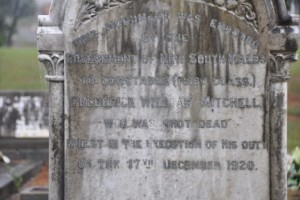
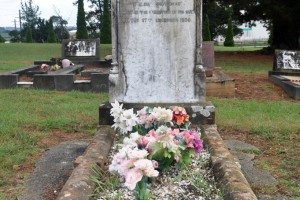
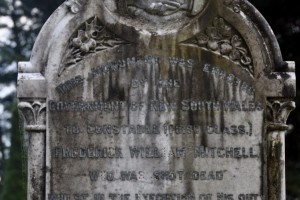
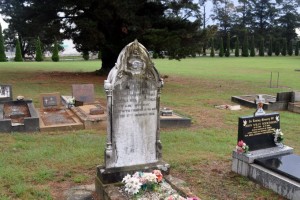
![This monument was erected by the Government of New South Wales to Constable [First Class] Frederick William Mitchell who was shot dead whilst in the execution of his duty on the 17th December 1920.](https://police.freom.com/wp-content/uploads/2012/10/2014-0969-300x200.jpg)
![This monument was erected by the Government of New South Wales to Constable [First Class] Frederick William Mitchell who was shot dead whilst in the execution of his duty on the 17th December 1920.](https://police.freom.com/wp-content/uploads/2012/10/2014-0971-300x200.jpg "Photos taken in 2014 by Cal")