Awards: M.I.D. ( Mentioned in Despatches) NCA ( No Citation Available ) Commonwealth of Australia Gazette 21 June 1945 Page 1353, position 54
[/blockquote]
Awards: King’s Commendation for Valuable Service in the Air – granted 1 January 1945
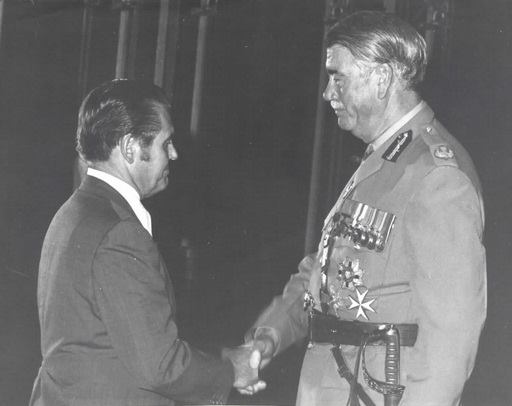
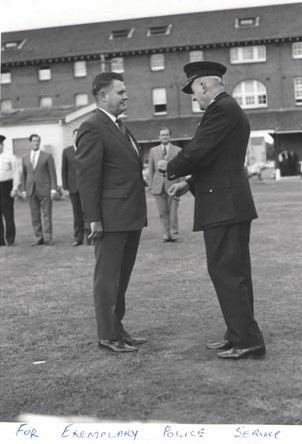
Queen’s Police Medal ( QPM ) – granted 11 June 1966
The Order of the British Empire – Commander ( Civil ) ( CBE(C)) – granted 1 January 1974
Born: Tuesday 26 May 1914 in Orange, NSW
Died on: Sunday 26 October 1980 in Terrigal, NSW ( his home )
Age: 66 years, 5 months, 0 days
Cause: Suicide – Carbon Monoxide poisoning
Funeral date: ?
Funeral location: ?
Buried at: Cremated
Memorial at: Police Rugby League competition ( 1970 ) Fred Hanson Shield.
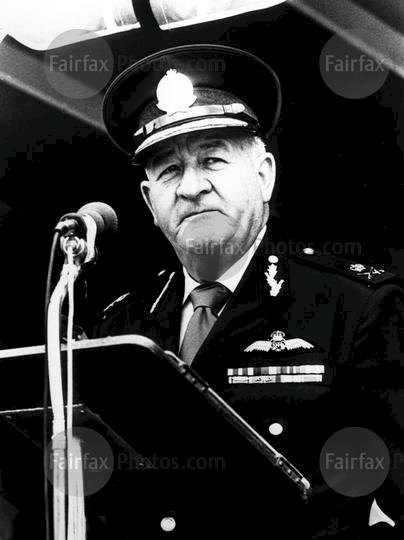
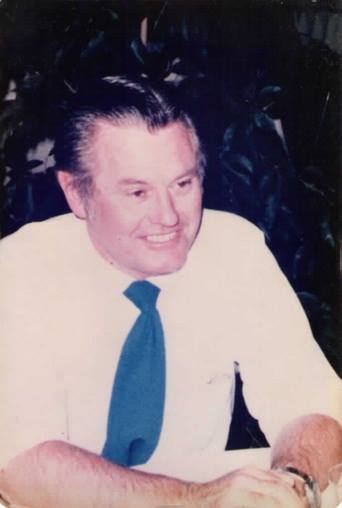
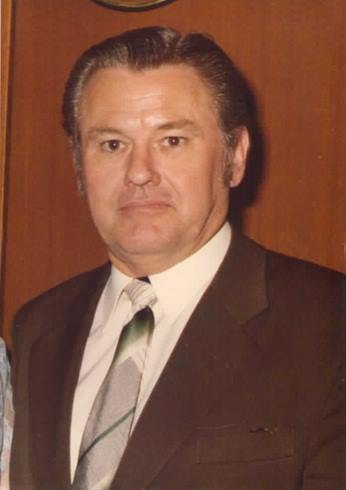
Former NSW Police Commissioner, Fred Hanson, gives an address in Sydney. Picture published 9 July 1986. SMH Picture by Staff
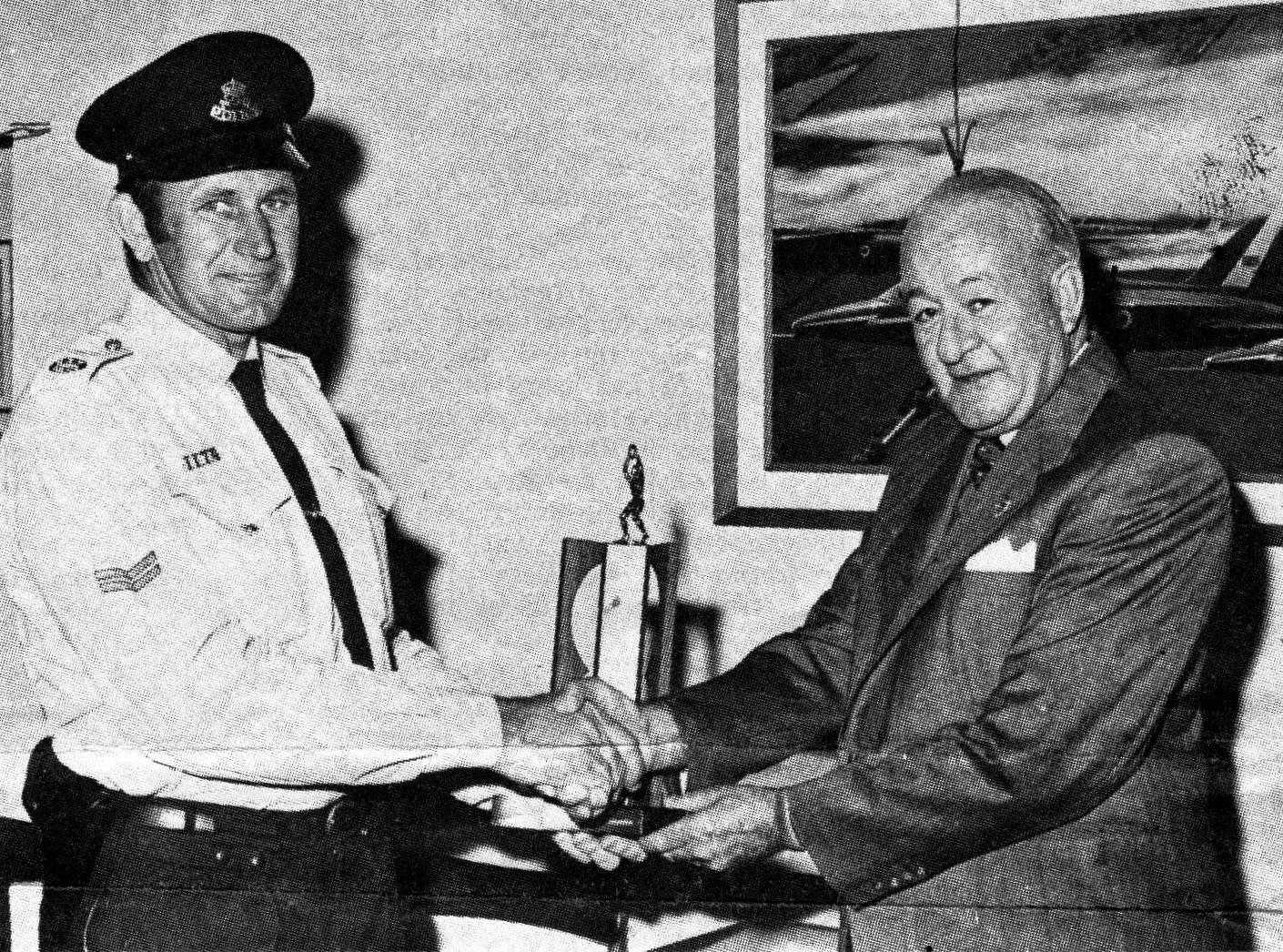
Our photograph shows Sgt Ellis Noack presenting the 1972 premiership Trophy to the then patron of the club, NSW Police Commissioner, Fred Hanson.
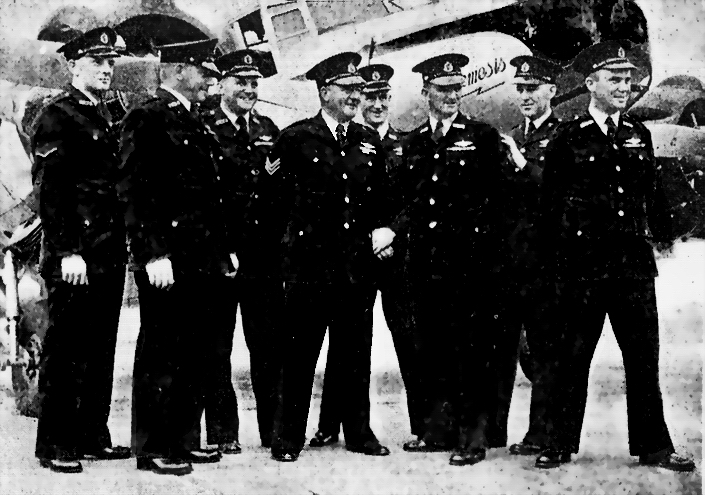
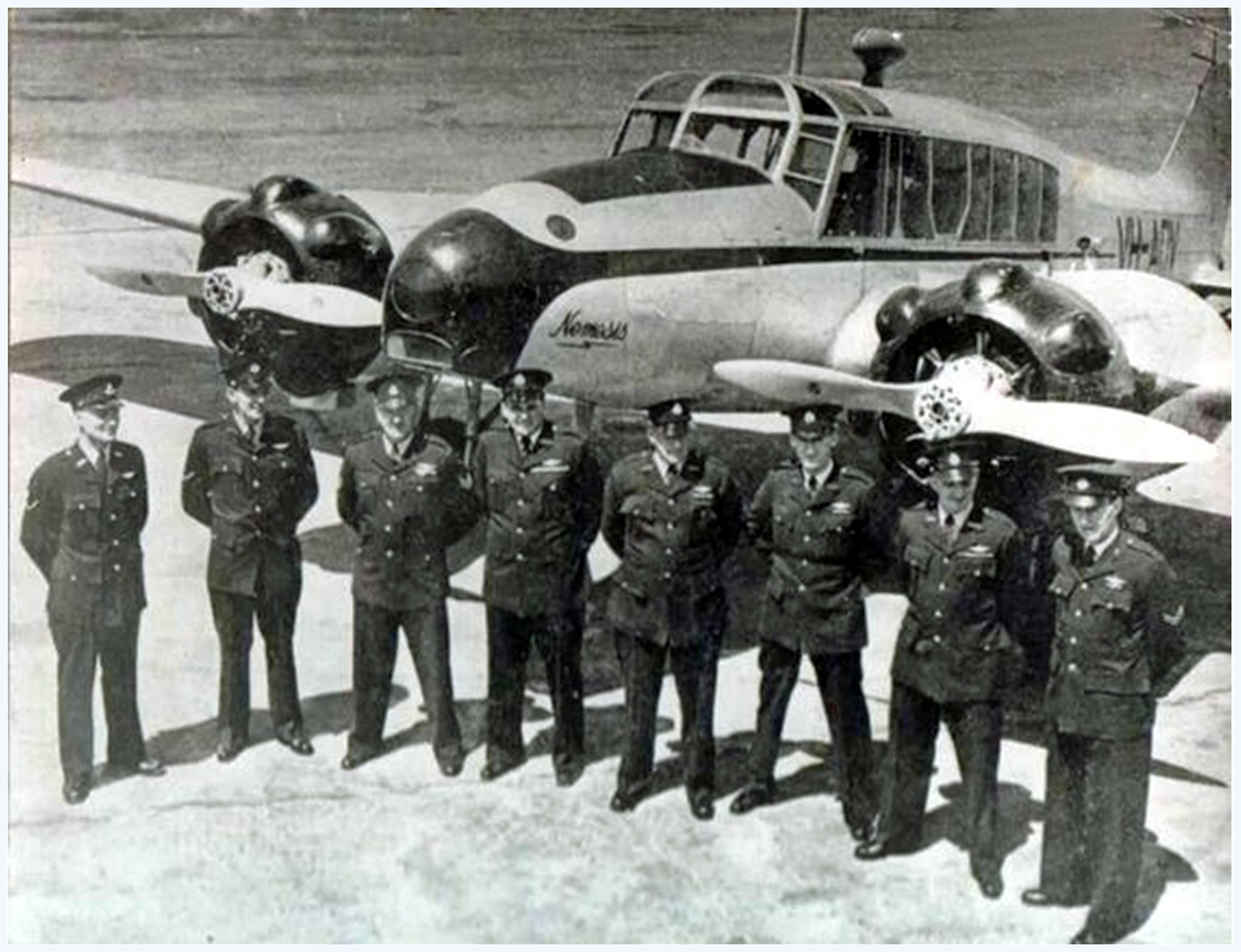
The Original 1946 NSW Police Flight or “Flying Squad” with the Avro “Nemesis”. Two future NSW Police Commissioners are here: (from left to right) Senior Constable M.T. Wood (Commissioner 1977-79), Constables H.D.Johnson and D.Paul. Flight Commander, Sgt. F.J. Hanson (Commissioner 1972-1976), Detective S/C V.Murphy and Constables E.D. Baldwin and F.E. Hyland.
FRED is NOT mentioned on the Police Wall of Remembrance *NEED MORE INFO
FURTHER INFORMATION IS NEEDED ABOUT THIS PERSON, THEIR LIFE, THEIR CAREER AND THEIR DEATH.
Frederick Hanson was born the eldest of four children to Ernest Frederick Hanson and Vera Marie Hanson. He did not remain in Orange for long before moving to Burwood where he was educated at the Christian Brother’s Saint Mary’s Boy’s School. He became a jeweller’s assistant before being hired as a porter with the New South Wales Government Railways. Hanson joined the New South Wales Police on 7 September 1936 at the age of 22 and the next year was posted to Broken Hill where, in the Sacred Heart Cathedral, he married Carole Louise Whitehall with Catholic rites on 9 November 1938. In 1940 Hanson was transferred to plain clothes duties.[1]
Military service
Hanson served in the Citizen Air Force from 1932 to 1936 and obtained a private pilot licence in 1939. On 31 January 1942 he was transferred to the Royal Australian Air Force. Commissioned on 14 January 1943, Hanson served as a pilot in Britain, the Middle East and Ceylon (Sri Lanka), and was mentioned in despatches. On 30 January 1946 he was demobilized as acting squadron leader and returned to the police.[1]
Policing career
Hanson was promoted to the rank of Constable (first class) while on active service and briefly posted to the vice squad before being transferred to the police air wing as Sergeant (third class).
Such rapid advancement in an organization which was committed to seniority based promotion resulted in a number of appeals. The first appeal was rejected and the remainder were withdrawn which allowed Hanson to overtake more than a thousand other police on the seniority list. After this he became known as ‘Slippery’.
The air wing was disbanded in 1950 and Hanson then moved to the new Number 21 Mobile Division.
He returned to Broken Hill in 1953 and was promoted to Sergeant (first class) in 1955.
Hanson served as an Inspector (third class) and also officer in charge at Bega (1959–62) and Wollongong (1962–64) before moving to the Metropolitan Police District as a Superintendent (third class).
After attendance at the Australian Police College in 1963, Hanson rose to Superintendent (first class) and Assistant Metropolitan Superintendent in 1967.[1]
Hanson was appointed Assistant Commissioner in 1968, Deputy Commissioner on 14 January 1972 and Commissioner on 15 November 1972.
That year he also attended the general assembly of the International Criminal Police Organization at Frankfurt, Germany.
In 1974 he visited the Australian police contingent at Cyprus.
While Commissioner Hanson introduced merit rating, abolished seniority in executive promotions and also established the crime intelligence unit.
By objecting to New South Wales Police Association attempts to gain greater access to the Industrial Commission of New South Wales he sparked contention.
Hanson gained widespread support in 1975 when he initiated aggressive street patrols to counter hoodlum activity, however he failed to control illegal gambling which was to become a major public issue.
In 1976 Hanson sued the then Australian Broadcasting Commission for defamation when it had been suggested that he had a financial interest in an illegal casino situated at Gosford; the case was later settled out of court.[1]
Retirement
Pressured to resign after adverse publicity, he delayed doing so until he was replaced in 1976 by his preferred successor and air wing colleagueMervyn Wood.
Further allegations of corruption were made against Hanson in the 1980s.
Hanson was a modest however humorous man, he kept his family life extremely private. He was a noted practical joker and esteemed by his subordinates for his genuine interest in their welfare, his readiness to delegate responsibility and his unwillingness to be hindered by red tape.
Survived by his wife, Hanson died from carbon monoxide poisoning by inhalation on the night of 25 to 26 October 1980 at his Terrigal home; the Coroner dispensed with an inquest and Hanson was cremated.[1]
Corruption allegations
There were persistent allegations about Hanson’s involvement in organised crime, and was repeatedly claimed that he corruptly received payments from criminals and that he was the part-owner of an illegal casino at Gosford, in which former detective Ray “Gunner” Kelly is also alleged to have had an interest.
Hanson featured prominently in The Prince and the Premier, the 1985 book by investigative journalist David Hickie, which canvassed allegations of corruption against senior NSW government officials, including Premier Robert Askin and senior police including Norman Allan, Hanson and Merv Wood.
Hickie specifically named both Allan and Hanson as corrupt, stating that they knowingly allowed illegal casinos and illegal SP (off-track) betting to flourish in NSW. Citing an “impeccable” and highly placed source within the illegal gaming empire established by Perc Galea, Hickie alleged that Askin and his police commissioners, Allan and Hanson, were paid bribes amounting to A$100,000 per year from 1967 until Askin’s retirement.[2]
Another of Hickie’s informants, a former croupier at Galea’s Double Bay Bridge Club, claimed that A$5000 per week from the club was paid in bribes to Hanson and Askin.[3] Hickie also notes that Hanson was among the mourners at Galea’s funeral in 1976.[4]
In 1979John Hatton, an independent politician claimed in the New South Wales Parliament that Askin and Hanson knew of and may have even encouraged the penetration of Australian crime by “overseas mobsters, gangsters and the Mafia“.[citation needed]
The following is from a recent publication from the Gilgandra Historical Society regarding the 1955 Gilgandra floods and Constable Stevens.
Tales of bravery and selflessness are just as common. Some, who tried to help others in difficulty unfortunately fell victim themselves. The Gilgandra Weekly tells in great detail of the efforts and plight of Mr. Leo and Mrs. Joyce Wrigley who were evacuating their home on horseback when they noticed their two nieces in difficulties as they tried to cross the flooded oval. Mrs. Wrigley suggested her husband put her off on to Blair Adams truck which had bogged earlier in the day while he continued on to help the girls. He couldn’t reach them on the pony, suddenly the girls who had been hanging on to a tree guard were swept downstream. Managing to catch the branches of a tree they held fast while Mr. Wrigley tried with two other horses to rescue them. The current too strong swept the horses along and Mr. Wrigley was thrown off and would have drowned but for the efforts of a Claude Donavan who pulled him clear of the rushing waters.
Along with his creamy horse ‘Silver’, Gilgandra’s Police Constable Stevens figured in many rescues, and it was he who engaged a motor boat in an attempt to save the girls. But, as was the case in other rescue attempts in town, the motor wasn’t strong enough and the boat washed round and round in the swirling waters and finally rammed itself into the bank 200 yards downstream. Meantime two men swam out to the girls and stayed with them all night in the tree. Mrs. Joyce Wrigley sat on the hood of the truck with water lapping around her knees, then throughout the night, as they did with others who were stranded, men carrying torches and searchlights flashed the beam towards Mrs. Wrigley and those in the tree.
The force of water was so strong that at daybreak Constable Stevens encouraged Silver into the cold waters near Wrigley street. From there he was swept along half riding, half swimming until he was able to reach Mrs. Wrigley. Giving her strict instructions to hold tight to the saddle they made their way against the current back towards Wrigley Street. When they had reached the vicinity of the Services Club Silver began to succumb to the force of water going under several times, their weight pulling him down. Constable slid off and grabbed the mane, Mrs. Wrigley still held tight to the saddle. The horse was swept over on its side, but Stevens had the presence of mind to unbuckle the saddle and bridle telling Mrs. Wrigley to grab on to a small Kurrajong tree, once freed the horse was swept against another tree which held him and allowed him to rest.
Constable Stevens and Mrs. Wrigley were finally pulled from the water by Bobby Walker and his brother who, stranded on a rooftop nearby, managed to secure a piece of wire to the house, the other end was thrown out and tied to a tree. This allowed the pair to pull their way out of the water, effectively saving both their lives.
Further info was supplied from the Gilgandra Historical Society “Following the flood Bill was instrumental in obtaining bravery awards for locals, John Walker, Bob Walker and Barry Priddis, who assisted townsfolk during the floods. It is also understood he was one of the key people who commenced the Gilgandra Youth Club. He also assisted in settling Aboriginals from Walgett and Brewarrina to Gilgandra and Balladoran. It is believed that he resided in Gilgandra for approximately 6 years. He was not a Mounted Police Officer, horses were just another mode of transport in the time he was in Gilgandra and most of the police owned one.
The historical society have his middle name as Eisner but an article has it spelt Elsner and It’s an Honour has it as Elsner and he may have left Gilgandra sometime in 1972.
[divider_dotted]
Canberra Times (ACT : 1926 – 1995), Tuesday 22 November 1955, page 5
AWARDS FOR GALLANTRY IN N.S.W. FLOODS
SYDNEY, Monday.
The Queen has conferred awards for services during the floods of last February and March.
The awards were announced by the Governor, Sir John Northcott, and the Prime Minister, Mr.Menzies, yesterday.
……….The Superintendent of Newcastle Police, Peter F. McLouglin or McLachlan, and Mr Ian Stuart Black, of Denman, receive the British Empire Medal.
The Queen’s Police Medal for gallantry was awarded posthumously to Constable Bernard Alfred Orrock, of the Sydney Water Police who was killed during rescue operations.
The Queen’s Commendation for Brave Conduct was awarded to four policemen and four civilians.
Inspector Peter McLachlan, of Newcastle, who was awarded the British Empire Medal, personally took part in more than 100 rescues in the Singleton district.
He was without sleep for four days and nights directing dozens of other rescue operations, including the organisation of an aerial flood lift into Singleton, and emergency accommodation for hundreds of homeless people.
Constable Bernard Alfred Orrock, 24, of Alpha Rd, Willoughby, who was awarded the Queen’s Police Medal for Gallantry ( posthumous award ) was attached to the Water Police when he was electrocuted on an Army duck at Maitland on February 26.
The duck on which Orrock was travelling hit a 66,000 volt high tension wire near the Maitland railway bridge while trying to reach 100 people who were stranded there.
Before he was killed he assisted in the rescue and evacuation of about 70 people.
Constable Marius Joseph William John Bourke, Rudolph Luvaine Munns and Svend Aage Ivarsson, awarded the Queen’s Commendation for brave conduct, are all of the Sydney Water Police.
Washed Over Dam In Boats
There were in two police flood boats, which were washed over a dam, near Singleton, while trying to get Inspector McLachlan into Singleton at night.
Constables Bourke and Ivarsson later in Singleton, took part in scored of rescues under Inspector McLachlan.
Constable Munns worked with Constable Orrock at Maitland and took part in more than 100 rescues.
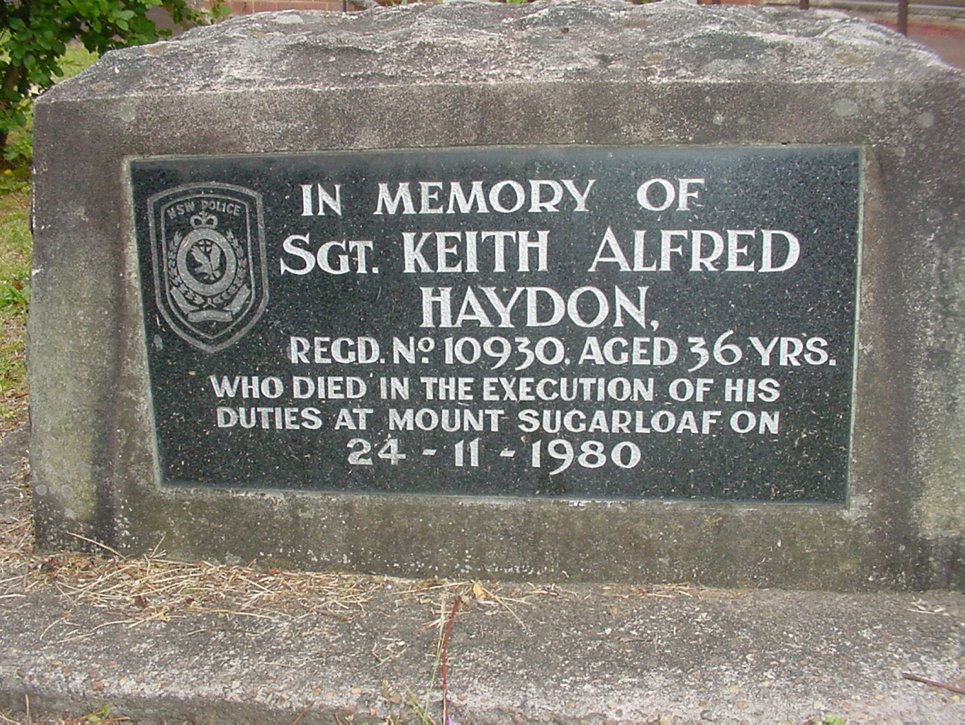
Memorial located at: The Memorial was apparently located at the site of the incident ( as per above GPS details ) but was constantly being vandalised.
It was then removed from the incident site and moved to the grounds of West Wallsend Police Station in the mid 1980’s.
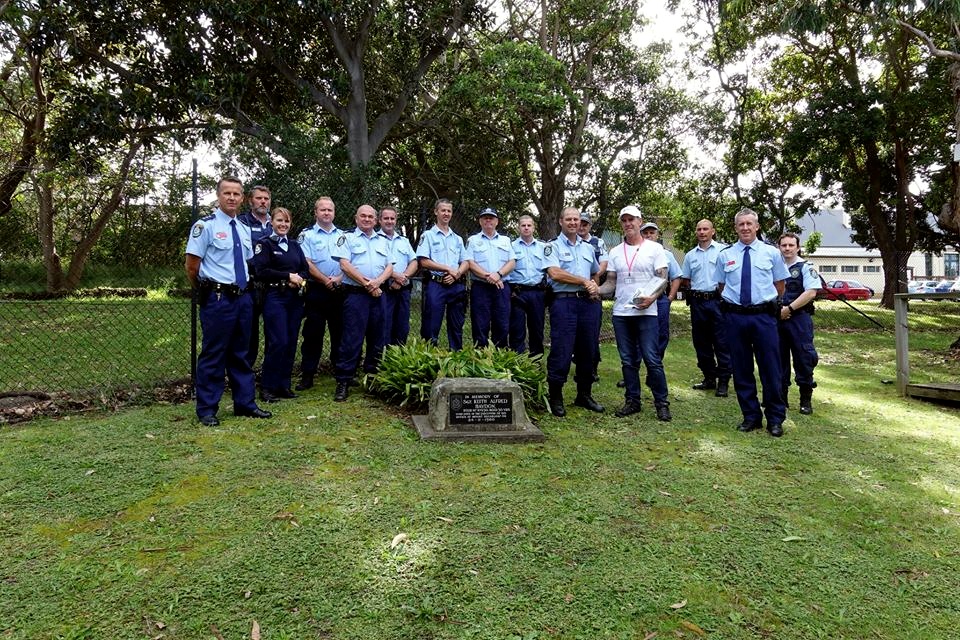
The West Wallsend Police Station was decommissioned in the 2006 ( now a private residence ) and the Memorial was relocated to Waratah Police Station – Newcastle City LAC.
KEITH IS mentioned on the Police Wall of Remembrance
Funeral location: TBA
FURTHER INFORMATION IS NEEDED ABOUT THIS PERSON, THEIR LIFE, THEIR CAREER AND THEIR DEATH.
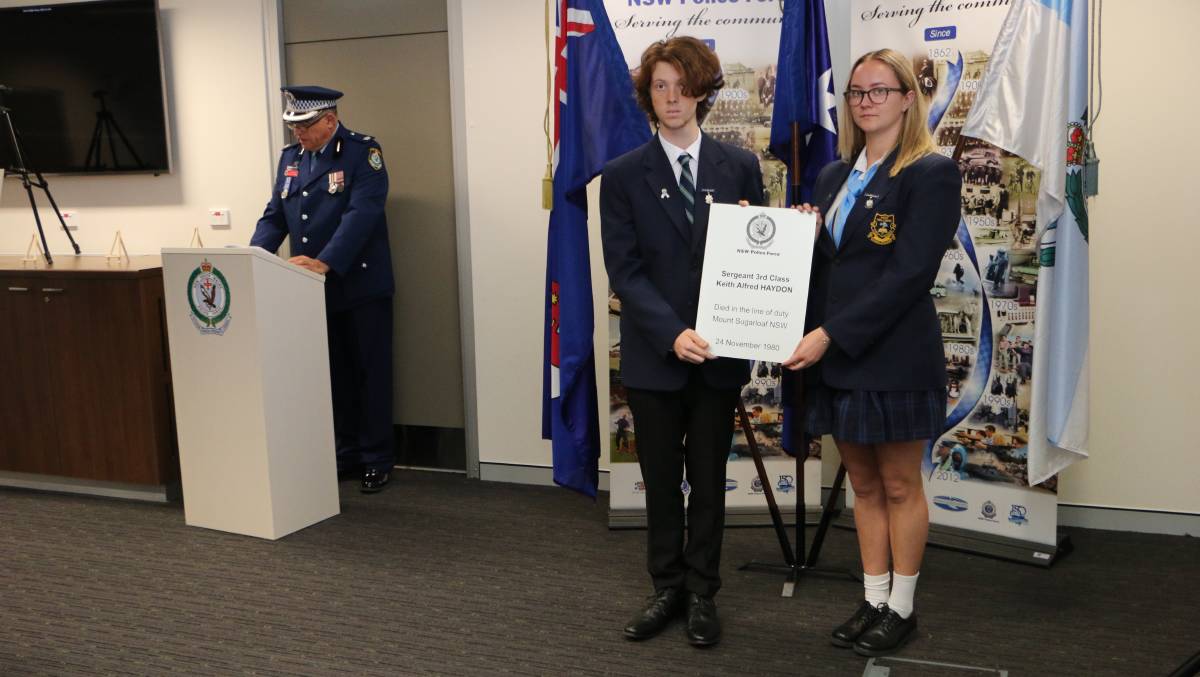
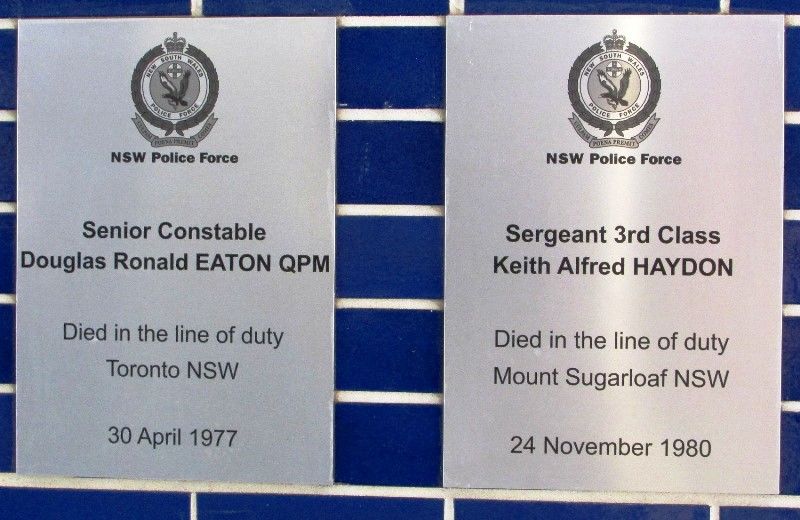
About 12.20pm on 24 November, 1980 Sergeant Haydon drove to Mount Sugarloaf, near West Wallsend, following a report of shots being fired on the mountain. The sergeant did not know at the time that the person firing the shots was wanted for a double murder whilst robbing a gun store at Bondi two years earlier.
When Sergeant Haydon located and confronted the offender he was shot to death.
Police were quickly informed of the situation by Forestry Department worker Cliff Hogbin, who had made a note of the offender’s vehicle registration number shortly before finding the sergeant’s body. Mr Hogbin displayed outstanding courage in remaining with Sergeant Haydon and the police vehicle at the crime scene and directing police to the location.
A description of a suspect vehicle seen in the area by Mr Hogbin was then broadcast by Police Radio VKG and a short time later that vehicle was spotted by Constable Alexander Pietruszka ( Regd # 17592 ) of Beresfield Police.
Due to confusing and continual radio transmissions ( relating to the sergeant’s murder), and despite many attempts to do so, Constable Pietruszka was unable to ascertain the reason for the alert on the suspect vehicle. Having little choice in the matter he stopped the vehicle and spoke to the driver. Constable Pietruszka was then also shot in the stomach and seriously wounded. He later recovered. ( On the 27 June 1986 he was promoted to Senior Constable ).
At this time more police arrived, and the offender was disarmed and arrested by Senior Constable Ken Goodfellow ( Regd # 14949 ).
The Canberra Times of 25 November, 1980 reported the following account.
“MAN KILLS POLICE SERGEANT”
SYDNEY: A gunman shot dead a police sergeant yesterday near the Mount Sugarloaf Lookout Road, near Newcastle, and shortly after shot and seriously injured a constable at a roadblock near Newcastle.
Sergeant Keith Haydon, 37, of West Wallsend, died when he was shot once in the head and twice in the back. He leaves a wife, two daughters and a son. Constable Alexander Pietruszka, 30, was shot in the stomach after he pulled over a car at an intersection near Beresfield a short time later. He was in a satisfactory condition in the Mater Misericordiae Hospital at Waratah last night.
Sydney homicide detectives went to Maitland, near Newcastle, last night to question a man, 31, about another murder in Sydney recently.
The shootings started when Sergeant Haydon, the officer in charge of West Wallsend Police Station, was called to the mountain to investigate a minor complaint about a man shooting at targets in the bush.
After the shootings the man was taken to Maitland police station for questioning.
Police found five pistols, four .38 calibre and one .22 calibre in the car driven by the man.
The deputy chief of the Sydney CIB, Superintendent Geoff Hammond ( possibly Regd # 4990 ), said, “A good policeman is dead and another injured when they shouldn’t be. It was only a small matter, an ordinary inquiry”. A fund to aid the sergeant’s widow and children has been established by the town’s RSL and workers’ clubs.”
The Canberra Times of 14 April, 1981 also reported on the conclusion of the trial of the offender, Berwyn Rees.
“FIREARMS OBSESSION – MAN SENTENCED FOR 1977, 1980 KILLINGS
SYDNEY: A man was sent to a jail for life in the Central Criminal Court in Sydney yesterday for murders in 1977 and last year.
Mr Berwyn Rees, 31, unemployed, of Ponderosa Caravan Park, Raymond Terrace, near Newcastle, pleaded guilty.
Two men were shot dead in a Bondi Junction gun shop on August 4, 1977, and a policeman was shot dead at Mount Sugarloaf, near Newcastle, on November 24, 1980. Mr Rees also pleaded guilty to having maliciously wounded a policeman at Beresfield on November 24, 1980, with intent to avoid apprehension.
“Police said Mr Rees had used a .38 special Smith and Wesson revolver he had stolen from the gun shop to murder Sergeant Keith Alfred Haydon. The men killed in 1977 were Mr Raymond James, 26, the gun shop proprietor, and Mr Christopher Greenfield, 26, a customer.
Mr Justice Begg said the evidence revealed “wanton and merciless killings“.
The law in NSW permitted only one sentence to be passed on murder charges and Mr Rees was sentenced to life imprisonment on each and 10 years‘ jail for the malicious wounding of Constable Alexander Pietruszka.
Mr Justice Begg told Mr Rees that it appeared that he had “an obsession with firearms since you were a small child”, and that “you have lived a somewhat lonely and solitary life”. The case pointed to the free use of firearms and the question of whether their availability should be restricted.
“Detective Sergeant J. F. Elsworthy ( Regd # 9114 ) told the court that on the morning of November 24 Mr Rees had gone to a remote place near Mount Sugarloaf with five handguns, a quantity of ammunition and the Smith and Wesson. Over three years he had visited the spot about once a month to try out guns shooting at cans.
Sergeant Haydon had blocked a car driven by Mr Rees and Mr Rees had admitted he had been shooting in the area. Mr Rees had shot Sergeant Haydonthree times in the body. He had gone to move the police vehicle but Sergeant Haydon had taken the keys from the ignition, and he had returned to Sergeant Haydon and seen that he was moving. He had then shot him in the back of the head.
The same day Mr Rees had been apprehended by Constable Pietruszka and other police at Beresfield. Constable Pietruszka had approached Mr Rees’s car and shortly afterward had been shot in the stomach.
“Detective Sergeant J. McGregor said that after the gun shop robbery and murders Mr Rees had taken away a quantity of guns and ammunition. He had taken the weapons and ammunition home and a week later taken them to his secluded spot, near where he was arrested on November 24, and for the next three years practised firing weapons.
“Giving evidence in a claim for compensation under the Criminal Injuries Compensation Act, Constable Pietruszka said his wounding had contributed to the break-up of his marriage. Some weeks after the incident his wife had told him she wanted him to leave the police force, and when he had disagreed she had left him.
Mrs C. A. Haydon, the widow of Sergeant Haydon, also applied for compensation for herself and three children. Mr Justice Begg adjourned both applications.”
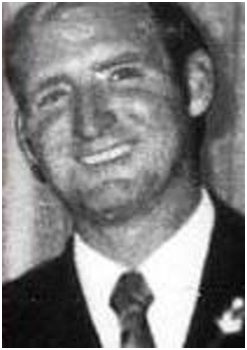
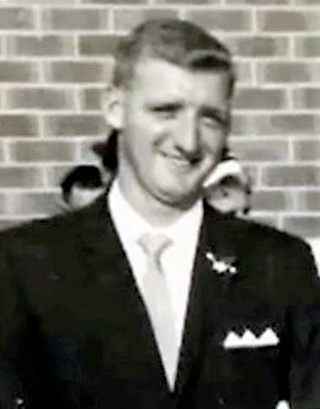
Sergeant Haydon was born in 1943 and joined the New South Wales Police Force on 24 February, 1964.
At the time of his death he was stationed at West Wallsend.
Kevin BanisterExtract from an environmental report dated 2012.
“The only location carrying a distinctive historical cultural significance was located just outside the study area close to Mount Sugarloaf at an area locally known as Summit Point.
Plaque commemorating death of Sgt Keith Alfred Haydon in grounds of old West Wallsend Police Station – 10-12 Withers Street, West Wallsend. Photo Ref: 25216 Creator: Clark, Mr Greg Sergeant. Keith Haydon was in charge of West Wallsend Police Station, when he was killed whilst on duty at Mt. Sugarloaf in 1980. This memorial plaque was originally placed at the spot where Sergeant Haydon was killed, but was relocated to the grounds of the West Wallsend Police Station after it was damaged by vandals. When the station closed in 2006, the plaque was moved to Waratah Police Station and rededicated in a service held 8th December 2006. Creative Commons License This work by Lake Macquarie City Library is licencsed under a CCA
Newcastle City Command welcomed Peter Haydon who intends to participate in the police remembrance ride, proudly supporting NSW Police Legacy. Peter is the son of Sergeant Keith Haydon who was stationed at West Wallsend Police Station and tragically murdered at Mount Sugar Loaf, whilst on duty on 24 November 1980. Peter was only 14 years at the time of his father’s passing.
On behalf of Superintendent John Gralton, Senior Sergeant Craig Thompson, who is also a legatee, proudly presented Peter with a cash donation made by Newcastle City staff. Senior Sergeant Thompson is the son of Senior Constable Allan Thompson who was Stationed at Cessnock Police Station when tragically killed in a motor vehicle accident, 40 years ago on the 3rd May 1977. Those donations include a full cash tin which Crime Prevention Officer, Senior Constable Mark Bird had been personally contributing to over the past years – which now finds its way to the intended cause.
Participates have so far raised $90,739 which will be donated directly to NSW Police Legacy which will be used to support the direct family of member of the NSW Police Force killed in the line of duty. Newcastle City Command wish Peter all the best, who will be challenged by blistery westerly winds and a gruelling 300km ride from the Wall of Remembrance in Sydney’s Domain to the National Police Wall of Remembrance in Canberra – all in the effort to raise money for NSW Police Legacy.
Please search facebook – Remembrance Bike Ride supporting NSW Police Legacy – if you would like to support those participating in the ride from 28 – 30 April 2017.
I hope this okay to pop this fundraising page on here? Just delete if not.
But today I would like to ask for your support in raising funds for the families of deceased NSW Police Officers.
My dad, Sgt Keith Alfred Haydon was killed in the line of duty 24th November 1980 at Mt Sugerloaf while responding to reports of a firearm being discharged in the vicinity. Little did he know that the offender had only 2 years earlier murdered 2 people while robbing a gun store in Sydney Eastern Suburbs.
Dad was only 36 years old. He had recently been promoted to the rank of Sergeant and taken a transfer to West Wallsend in the February of 1980. He moved with his wife of 16 years, 2 daughters and a son. He moved to Westy to be close to home. Dad was born in Wallsend in 1943. His mum and sister lived at Swansea at the time of our move. This was supposed to be a much easier and rewarding chapter in my dad’s life after travelling around rural NSW for 16 years at various stations.
I am riding 300km in 3 days with a great bunch of Policemen and woman and policing community in order to raise funds for NSW Police Legacy. I am currently very unfit but have a month to train for the journey, your support will be so encouraging.
If you can help please donate on the link attached. All donations are tax deductible and will towards helping a very worthy cause.
National Police Remembrance Day ceremony in Lake Macquarie
David Stewart
September 29 2017 – 4:27PM
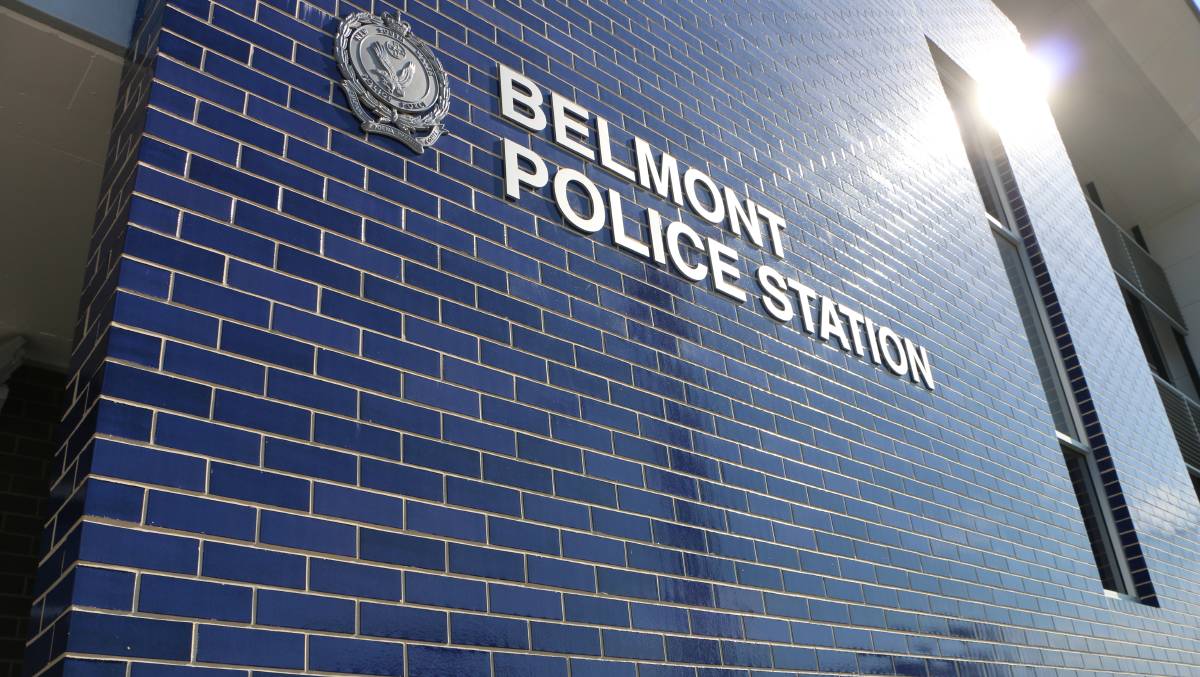
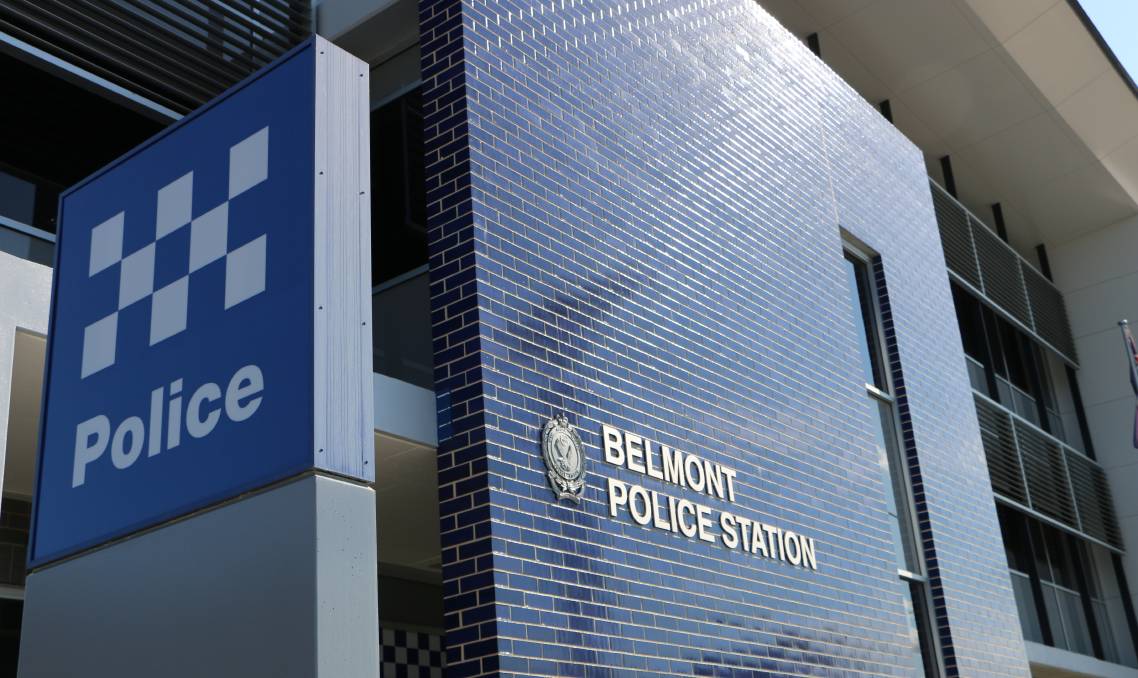
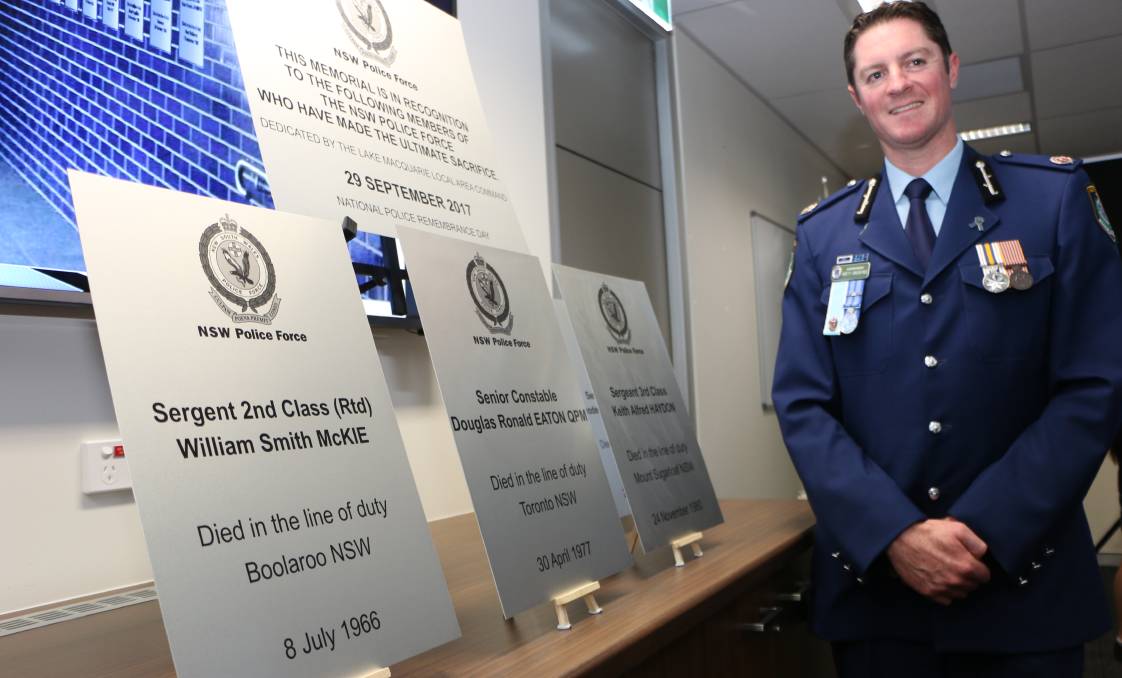
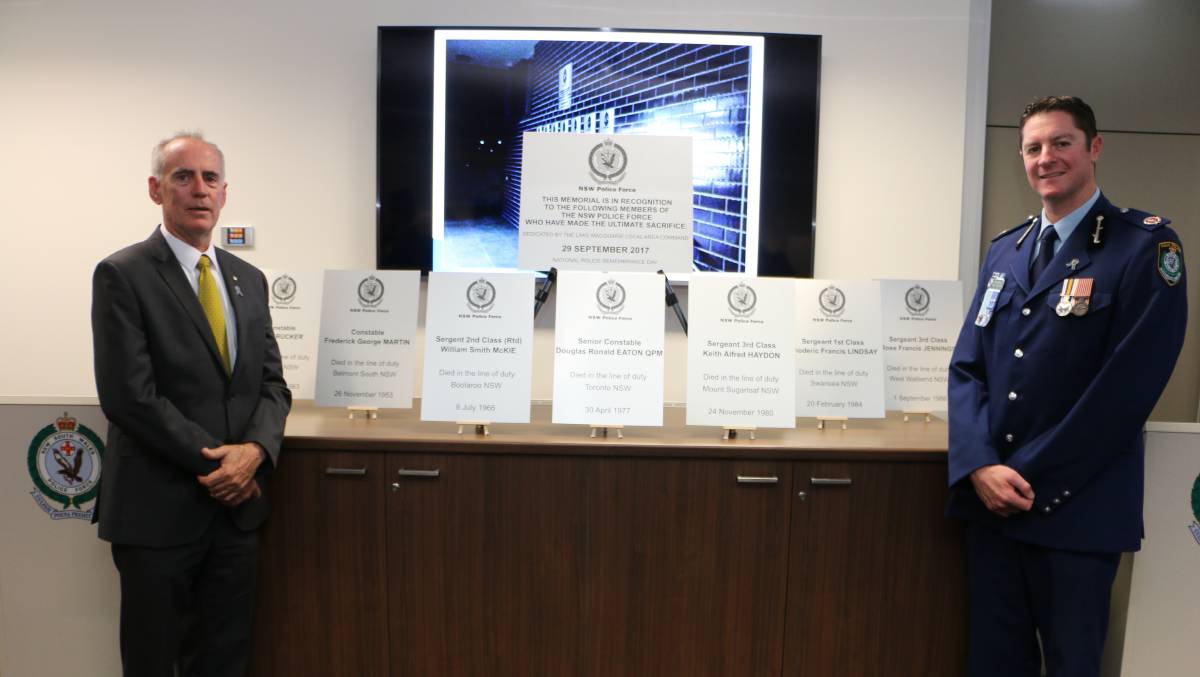
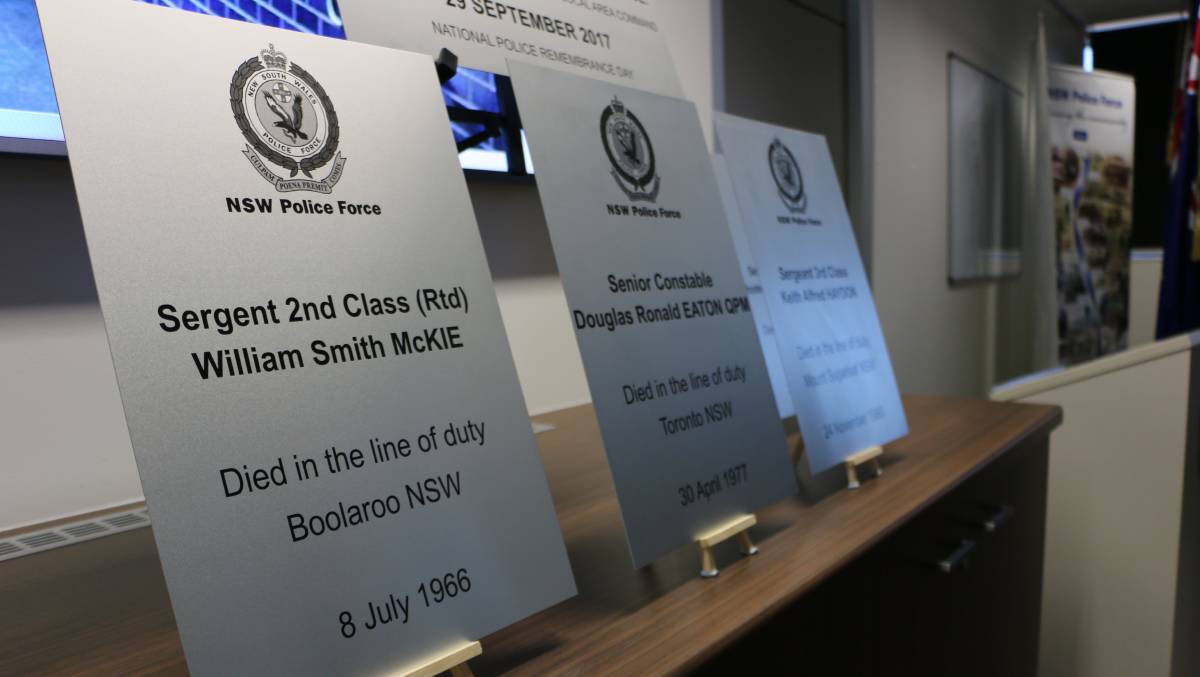
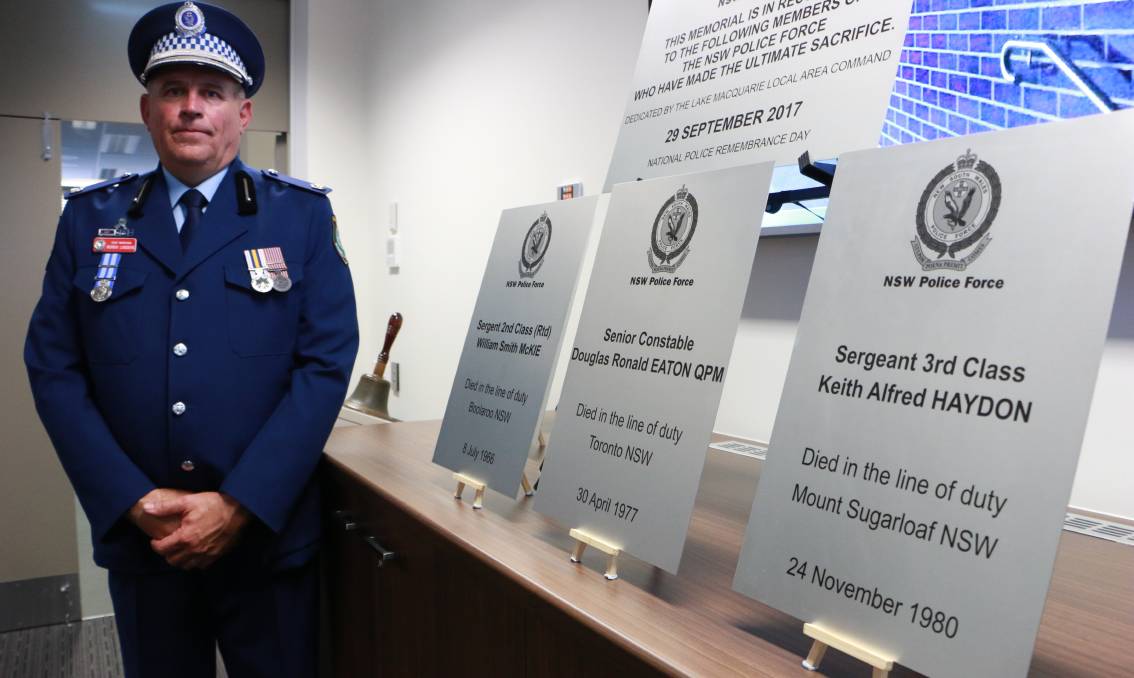
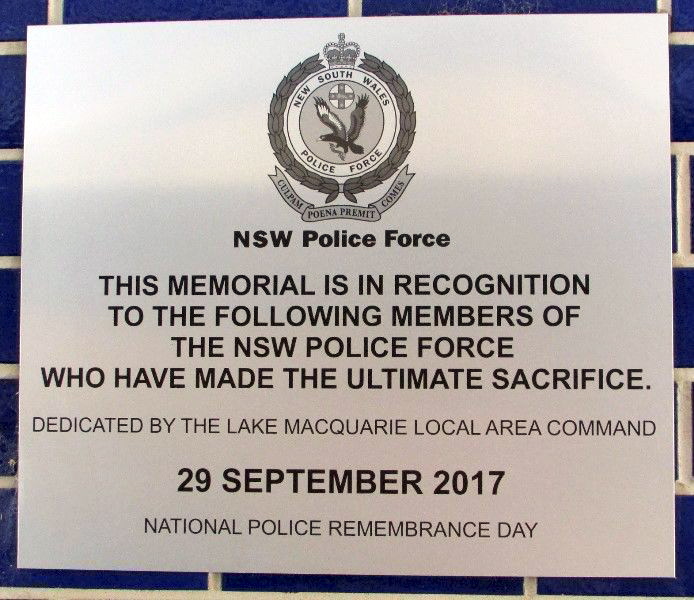
POLICE from Lake Macquarie Local Area Command have unveiled plans for a memorial wall at Belmont to honour the seven local officerskilled in the line of duty since 1863.
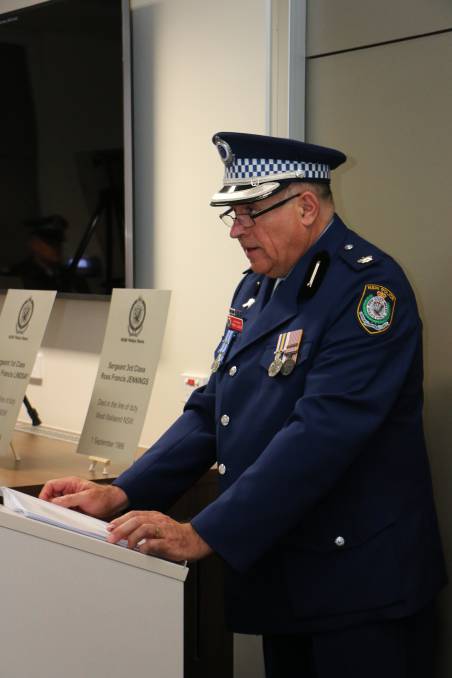
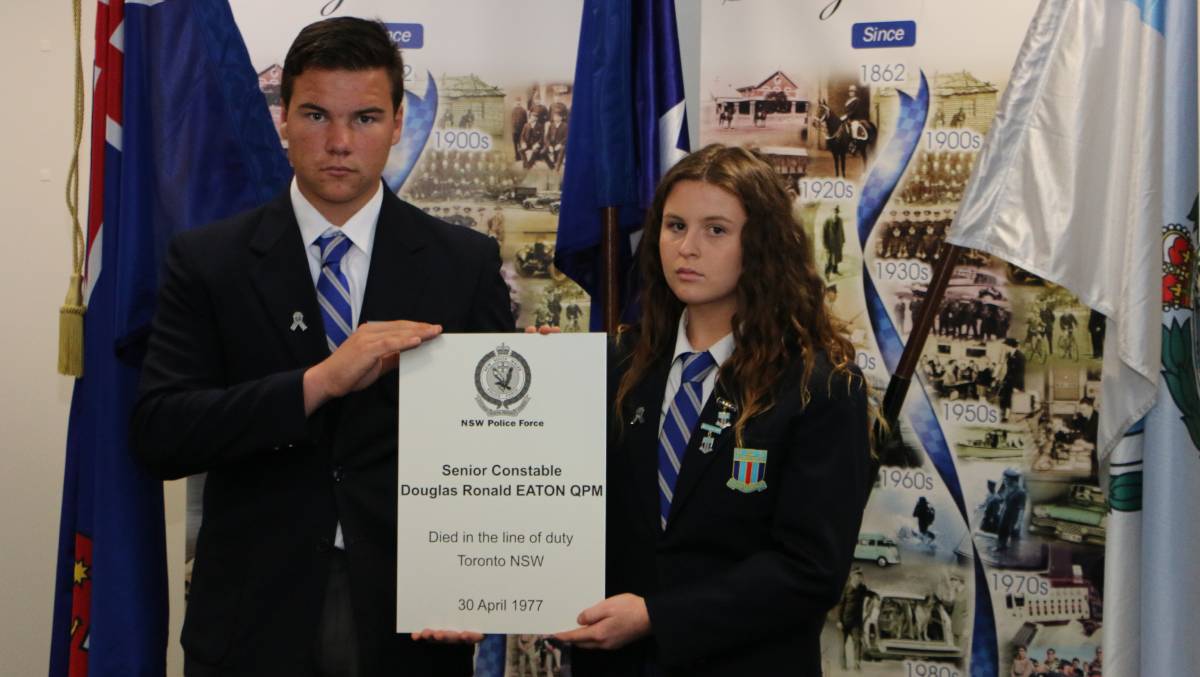
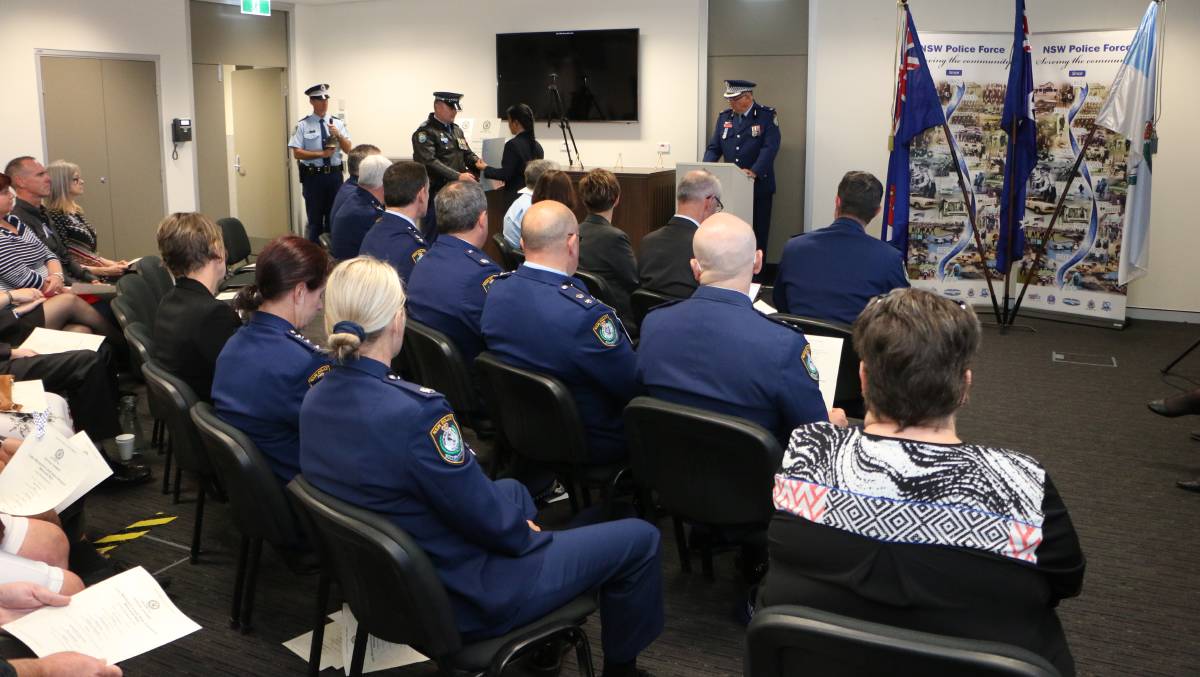
Plaques commemorating the seven officers were dedicated to the wall in a ceremony at Belmont police stationthis afternoon, National Police Remembrance Day.
Chief Inspector Murray Lundberg of Lake Macquarie LAC presided over a private ceremony attended by police, local high school students, and the families of the fallen officers.
“This is a time for reflection on the ultimate sacrifice that police officers can give in the execution of their duty,” Chief Inspector Lundberg said.
Acting Assistant Commissioner Brett Greentree, the Northern Region Commander, said the wall of remembrance, to be created on the distinctive blue wall at the entrance to the police station, would be striking.
“It will be a sight to treasure,” Acting Assistant Commissioner Greentree said.
“I want the officers, as they are walking out the front doors of this police station, to stop and reflect on the names, stop and reflect on the sacrifice.”
He said he hoped that the inaugural plaques to be installed on the wall were also the last.
“My dream is that we never, ever, add another name to this wall. I hope and pray that our wall is now complete.”
Acting Assistant Commissioner Greentree reached out to the families of the fallen officers.
“No commemoration or recognition can make good the loss that is unfairly carried by family members,” he said.
“I can only offer you my heartfelt condolences. Please know that your loved ones, who are no longer with us, will always be remembered.”
Across NSW, ceremonies were held to commemorate the service and sacrifice of the 269 officers who have lost their lives in the line of duty, and through injury or illness, since the formation of the NSW Police Force in 1862.
Man who ‘executed’ three victims could be paroled despite multiple life sentences
By A Current Affair Staff
A man who was sentenced to three terms of life in prison for three murders could be about to walk free on parole, sparking calls for him to be kept behind bars.
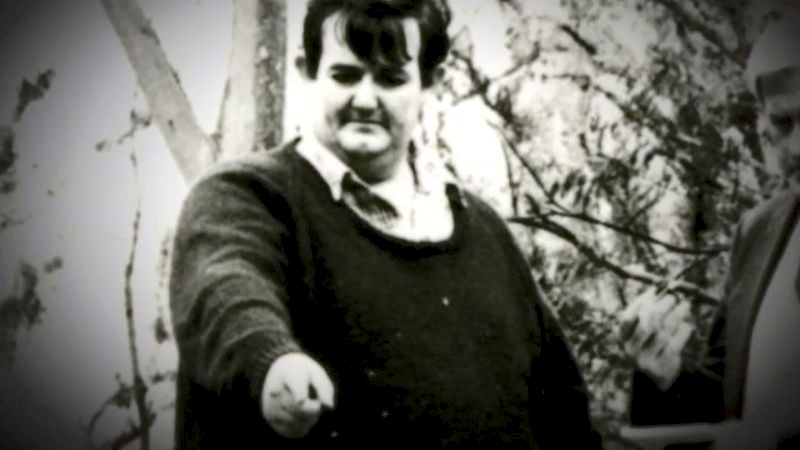
Berwyn Rees was jailed in 1981 for a murderous spree that saw him kill three men in cold blood, and attempt to shoot dead a fourth.
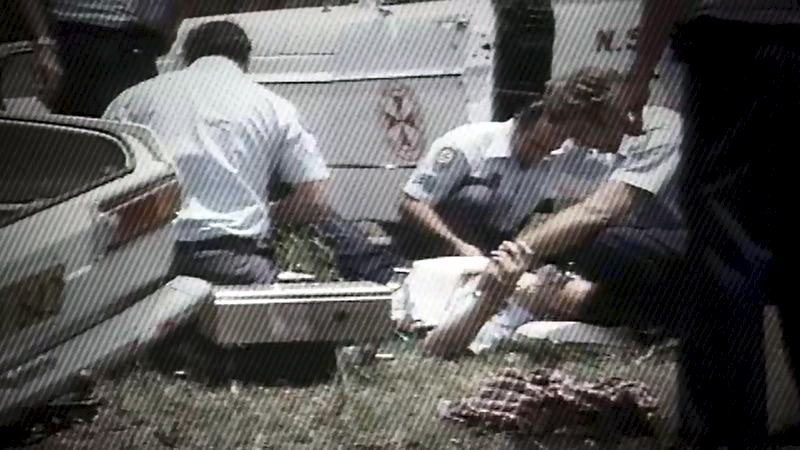
On November 24, 1980, Sergeant Keith Haydon, 37, was gunned down in a wooded area in Lake Macquarie.
Berwyn Rees was jailed with three life sentences over three murders and the shooting of a police officer. (A Current Affair)
His body was found shot in the back of the head, and twice more in the body at close range.
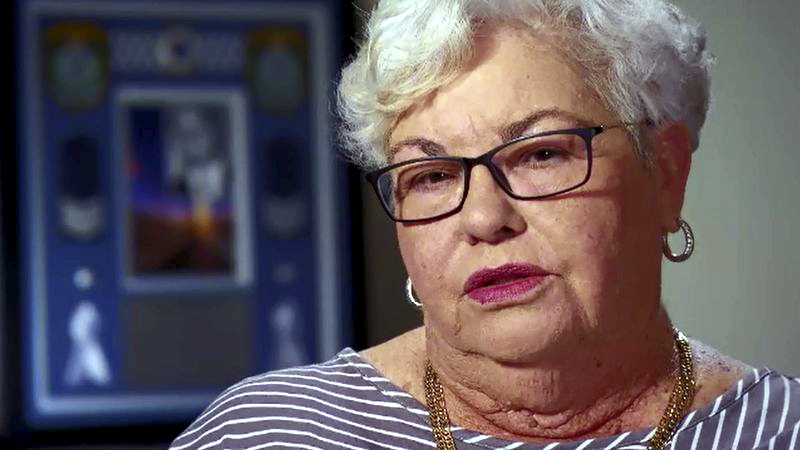
“I knew as soon as they walked in, and I just said, ‘How bad?'” Sgt Haydon’s wife Anne said of the moment two police officers arrived at her door to inform her.
“And he just said it was the worst.”
The killer, Rees, was later pulled over by Constable Alexander Pietruszka, who almost died for doing his job.
Sergeant Keith Haydon was gunned down in Lake Macquarie in 1980. (A Current Affair)
Mr Pietruszka, now retired, said Rees had raised his gun “without warning”.
“The first bullet went through my hair,” he said.
“The second bullet flicked my ear and because I was turning sideways the third bullet hit me there, luckily hit the rib and bounced out rather than in.”
Despite the pain of his wound, Pietruszka was able to let off two shots.
Sgt Haydon’s wife Anne still remembers the moment she learned her husband was dead. (A Current Affair)
“I was trying to psych myself up to roll over and face him,” he said.
“I wasn’t just going to lay there and let him shoot me. I was going to face him.”
He believes that fortitude saved his life.
But he said he still remembered what he felt as he looked into Rees’s eyes.
Constable Alexander Pietruszka was shot after pulling Rees over. (A Current Affair)
“This bloke was nothing,” he said.
“I can’t explain to somebody how cold he was, how expressionless, just – just evil.”
At the time of these shootings, Rees was on the run after having committed two other murders in Sydney three years previously.
The victims then were gunshop owner Ray James and customer Christopher Greenfield.
Mr Pietruszka said he saw “nothing” in Rees’s eyes. (A Current Affair)
Rees shot them both in the back of the head at point blank range, Ray James’s daughter Tracy said.
“It never leaves you,” Christopher Greenfield’s mum Betty said.
In 1981, Rees was convicted and jailed for three life sentences over the killings.
But now, the New South Wales State Parole Authority has revealed it has formed an intention to grant parole for Rees.
Years previously, Rees had shot gun store owner Ray James. (A Current Affair)
And Mr Pietruszka and the loved ones of Rees’s other victims are demanding he stay behind bars.
“If he gets out, if he gets in a corner, he’ll kill again,” Mrs Haydon said.
Ms Greenfield said she had been told Rees had shown no remorse during his time in jail.
Ray’s customer Christopher Greenfield was also killed in the shooting. (A Current Affair)
“Well, after this length of time, if someone hasn’t come to their senses and realised what exactly they’ve done, and to have no remorse, seems unbelievable to me,” she said.
Corrective Services Commissioner Peter Severin is also opposing Rees’s bid for freedom.
The final decision will rest with the five-member panel at the State Parole Authority, with a public hearing to take place on Friday.
Betty Greenfield, Anne Haydon and Tracy James all plan to be there.
Christopher’s mum Betty said the pain had never left her. (A Current Affair)
Mr Pietruszka recalled the words of the sentencing judge – that Rees should never be released.
He said Rees had “executed” his three victims.
“I believe that somewhere deep inside him, there is still evil lurking,” he said.
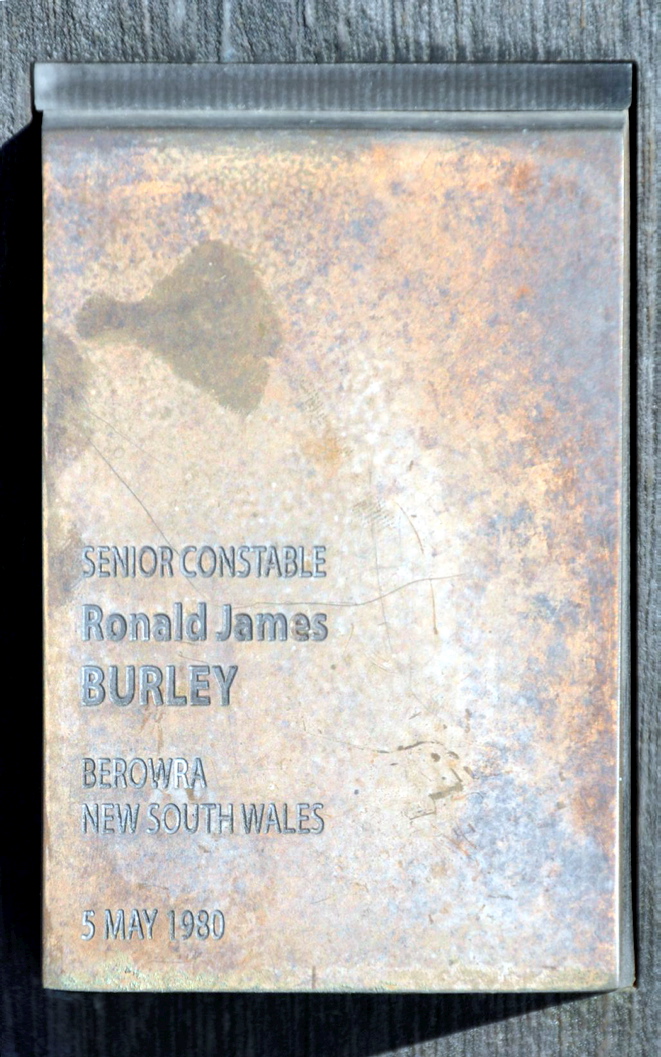
[alert_green]RON IS mentioned on the Police Wall of Remembrance[/alert_green]
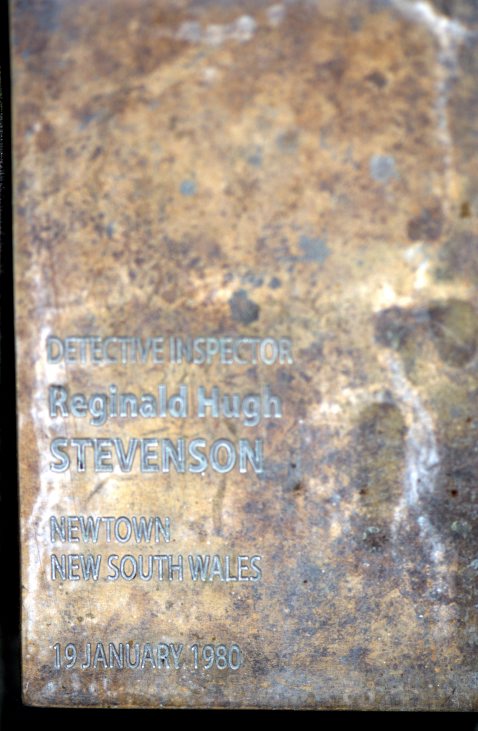
Touch plate at the National Police Memorial, Canberra
About 3.10pm on 5 May, 1980 Senior Constable Burley was riding a police highway patrol motor cycle home at the completion of his rostered shift. As he was riding along the Calga Expressway at Berowra the stand on the constable’s motor cycle apparently became loose and struck the road surface. Unable to control the cycle Constable Burley was thrown to the roadway, sustaining severe head injuries. He died before the arrival of an ambulance.
The constable was born in 1946 and joined the New South Wales Police Force on 1 April, 1968. At the time of his death he was attached to the North Sydney Highway Patrol.
I worked with Ron at Gosford way back in the early seventies. One story that sticks in my mind was my introduction to the old truckstop at Kangy Angy, near Ourimbah.
It was an absolute dump, but Ron convinced me to stop off for dinner one night. He knew the old woman that owned the place. He was that well known, that he didn’t bother going into the dining area, instead he took me out the back to the kitchen, to meet the old sheila, who also did the cooking.
He ordered us a couple of steaks with vegetables. I was extremely concerned about the state of the kitchen, as it was filthy, but what did it for me, was she used an old pair of stockings to use as a strainer for our veggies. ???????? RIP old mate.
I remember being told that he had been caring for a young child and was going through the adoption process when the accident happened. It would be nice to know how that child fared in life afterwards.
RIP mate, remembered well from old STPPTB days under the bridge ( Sydney Harbour Bridge ), stood in many a parade with Ron, and shared a laugh or two, at the antics that went on there during the old days.
[divider_dotted]
Kevin John COULSON
| 08/11/2016
Kevin John COULSON
Late of ?
New South Wales Police Force
Regd. # ?????
Rank: Constable 1st Class
Stations: ?, Newcastle S.T.P. – Retired H.O.D.
Service: From 10 August 1953 to 26 July 1964 = 10+ years Service
Awards: No find on It’s An Honour
Born: ? ? 1931
Died on: 2 February 1980 ( 20 years after MVA )
Age: 49 – 50
Cause: Motor Vehicle Accident – Police Bike – Rider
Event location: Newcastle
Event date: Saturday 30 January 1960
Funeral date: ? ? ?
Funeral location: ?
Funeral Parlour: ?
Buried at: Newcastle Memorial Park, Beresfield
Memorial located at: ?
[alert_green]KEVIN IS mentioned on the Police Wall of Remembrance[/alert_green]
[divider_dotted]
Funeral location: TBA
[divider_dotted]
FURTHER INFORMATION IS NEEDED ABOUT THIS PERSON, THEIR LIFE, THEIR CAREER AND THEIR DEATH.
On 30 January, 1960Constable Coulson was riding a police solo motor cycle to Newcastle Police Station to commence his rostered shift.
En route the cycle was involved in a collision with another vehicle and the constable sustained serious injuries.
As a result he was discharged from the police force medically unfit.
During the next twenty years former Constable Coulson‘s health continued to deteriorate until he passed away on 2 February, 1980.
His death was a direct result of the injuries received in the collision in 1960.
The constable was born in 1931 and joined the New South Wales Police Force on 10 August, 1953.
At the time of the accident he was a solo cyclist attached to the Special Traffic Patrol.
[divider_dotted]
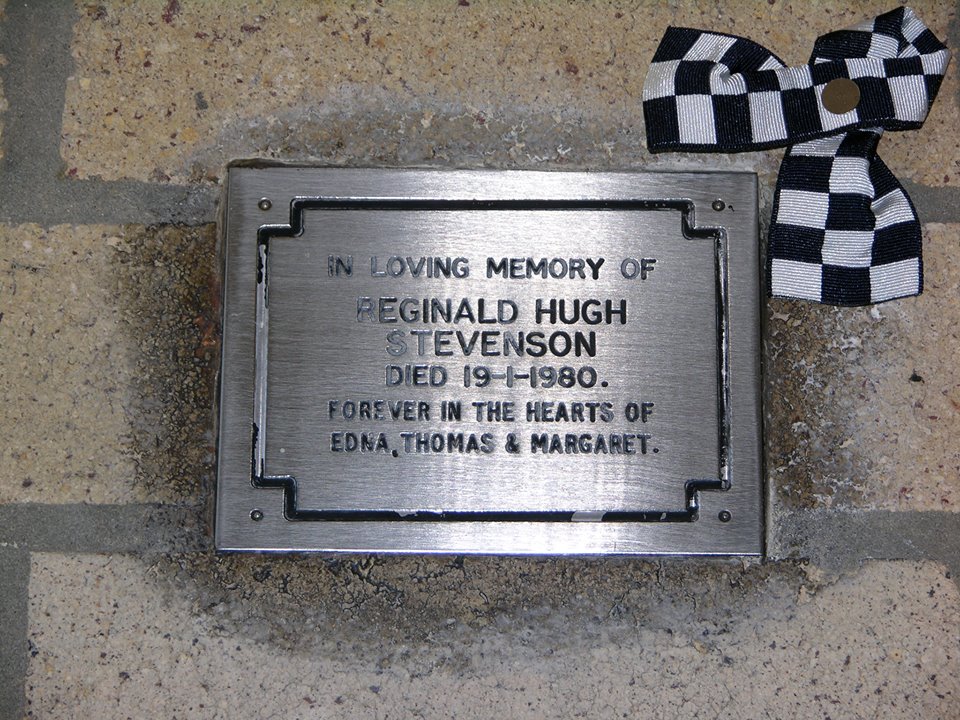
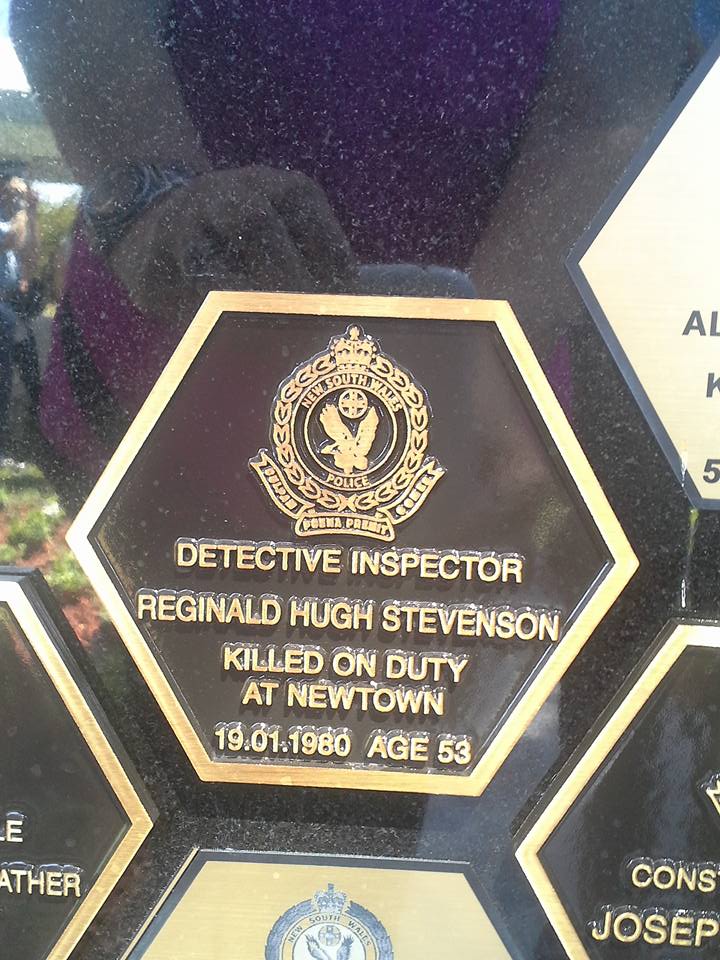
Reginald Hugh STEVENSON
| 08/11/2016
Reginald Hugh STEVENSON – QPM
aka Blowfly
New South Wales Police Force
[alert_yellow]Regd. # 5498[/alert_yellow]
Rank: Police Cadet – appointed 1 March 1943
Probationary Constable – appointed 21 February 1947
Sergeant 2nd Class – appointed 19 May 1968
Detective Sergeant 1st Class – SHOT
Detective Inspector – appointed 6 March 1976
Detective Inspector – Retirement
Joined: NSW Police Force via
NSW Police Cadet System on 1 March 1943
Cadet # 400
Stations: ?, General Detectives at the old CIB in the old Hat Factory, Darlinghurst ( # 3 Division – Det Sgt, early 1970’s ), Newtown
Service: From 1 March 1943 to ? ? ?
Awards: Queen’s Commendation for Brave Conduct – granted 17 February 1976
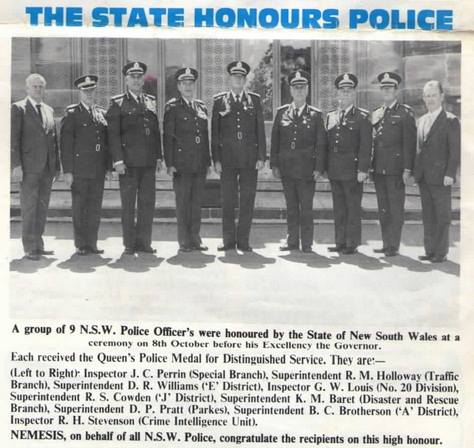
Queen’s Police Medal – QPM – granted 16 June 1979
Born: 20 February 1926
Event Date: 9 December 1974
Event type / Cause: Shot – 1974. Damage to liver & kidney / Heart Attack in 1980
Event location: Newtown
Died on: 19 January 1980
Age: 53
Funeral date: 11 February 1980
Funeral location: ?
Buried at: Cremated & Buried in Botany ( NOT Rookwood ) Cemetery
Banks Court Loggia, Wall A
Touch plate at the National Police Wall of Remembrance, Canberra
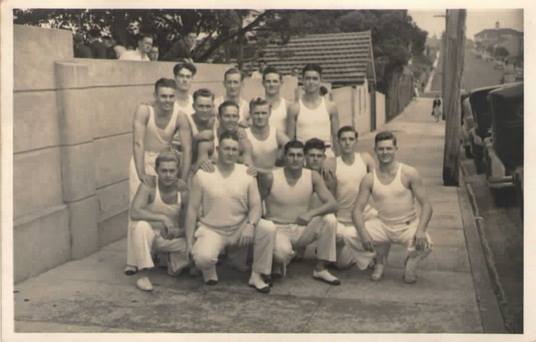
Academy athletics 1943
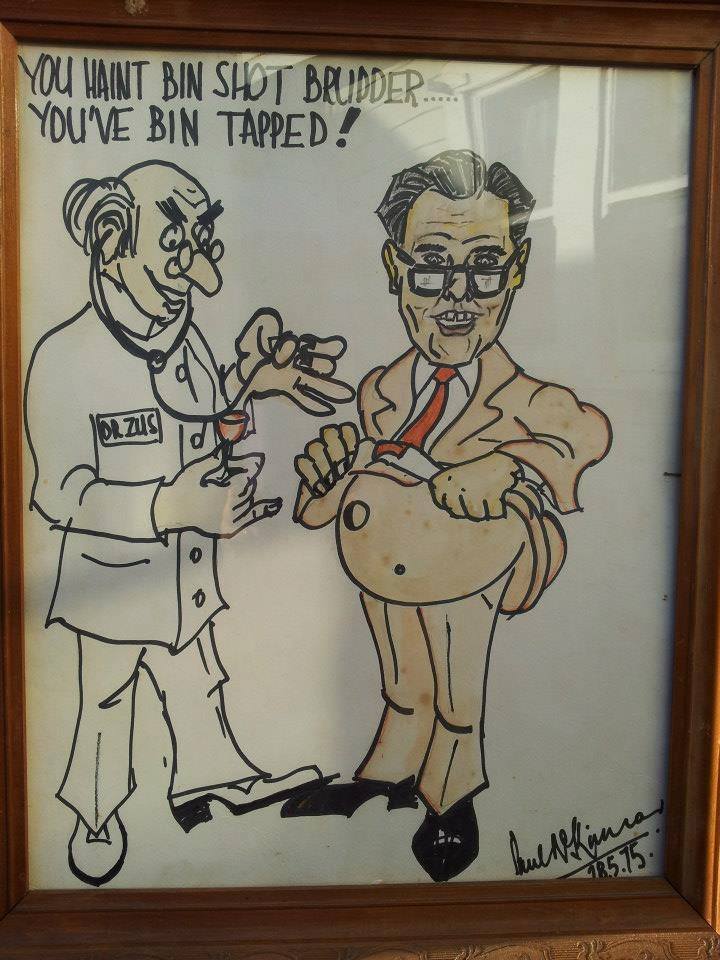
The cartoon was presented to Detective Inspector Stevenson when he returned to work after being shot. It was donated by the Detective Inspectors wife to Newtown Police Station last year ( 2013 ) as part of their memorabilia collection.
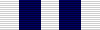
Queens Police Medal ribbon
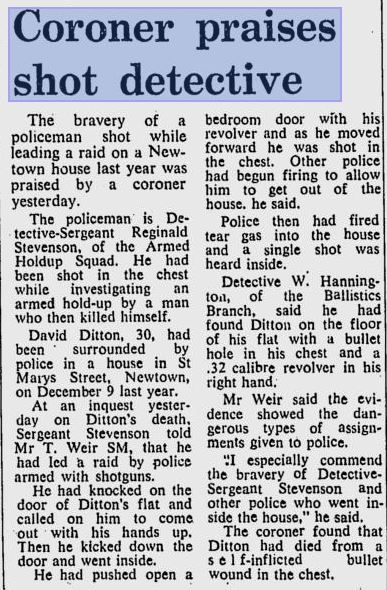
Offender, David DITTON who shot Reg.
The Sydney Morning Herald
2 May 1975
page 6 of 12
Botany Cemetery
Botany Cemetery
Botany Cemetery
On 9 December, 1974Detective Sergeant 1st Class Stevenson was shot in the chest after confronting an armed offender in Newtown. Although seriously wounded at the time he continued to direct other police at the scene until he was taken to safety. As a result of the incident Sergeant Stevenson was awarded the Queen’s Commendation for Brave Conduct and the Queen’s Police Medal for Distinguished Service. He was promoted to the rank of detective inspector in 1976.
On 19 January, 1980 Inspector Stevenson died of a heart attack and it was determined that his death was ultimately caused by the 1974 injuries.
The detective inspector was born in 1926 and joined the New South Wales Police Force as a Cadet in 1943. He was sworn in on 21 February, 1947.
[divider_dotted]
NEWTOWN LOCAL AREA COMMAND POLICE COMMEMORATION SERVICE
Ms CARMEL TEBBUTT (Marrickville) [7.07 p.m. 8 May 2013]: Recently at Rookwood Cemetery I attended a memorial service to commemorate police officers from the Newtown local area command killed in the line of duty. The moving service was attended by Deputy Police Commissioner Nick Kaldis, Superintendent Simon Hardman, the commander of the Newtown Area Local Command, many other police representatives, and relatives and descendants of the police officers. Those attendees included Ms Avona Wallace, Mr and Mrs Norman Stephenson, Mrs Lynette Everton and Ms Edna Stevenson. Representatives from the emergency services and community members were also in attendance. The member for Campbelltown, Bryan Doyle, attended representing the Premier.
The five officers being remembered at the ceremony gave their lives to protect the community. They were Constable First Class John Wallace, Constable First Class Ruston Stephenson, Constable Lionel Guise, Detective Inspector Reginald Stevenson and Constable Pashalis Katsivelas. The ceremony to mark the sacrifice of these officers reflected on the enormity of their contribution to the community, as well as the impact of their death on their families. It is often said, and it is true, that police officers leave their homes for each shift uncertain of what any day may bring and whether they will return at the end of the day. We owe these men and women our deepest gratitude for the risks they face and take every day in their job. At Rookwood Cemetery we visited each of the graves of those officers who lost their lives in the line of duty and behind each individual was an illuminating life story.
We began at the grave of Constable First Class Ruston Stephenson, who died 80 years almost to the day of the commemoration. Constable Stephenson joined the Police Force in 1912, and four years later enlisted in the army, later joining the fight in France during the First World War. He was awarded the Distinguished Conduct Medal for conspicuous gallantry in rescuing injured soldiers while under fire. Remarkably, when he returned he rejoined the Police Force and continued to serve until his death on 9 April 1933 after a tragic accident involving a motorcycle at the then Newtown Stadium while performing general duties policing.
We were also told the story of Detective Inspector Reginald Hugh Stevenson—I was honoured on the day to meet his widow, Ms Edna Stevenson, who still had strong memories of the incident that led to Inspector Stevenson’s death. Detective Inspector Stevenson joined the NSW Police Force as a cadet in 1943 at the age of 17. In an act of extraordinary selflessness, Detective Inspector Stevenson was on annual leave on 9 December 1974 when he decided to go to work to assist in the planned arrest of a dangerous offender in Newtown, at the time telling his wife, “I don’t want my boys doing this on their own.” During the operation he was shot in the chest after leading his team in pursuit of the offender.
Detective Inspector Stevenson partially recovered and was awarded the Queen’s Commendation for Brave Conduct and the Queen’s Police Medal for Distinguished Service. However, he died in 1980 of a heart attack, deemed to be the result of the injuries he sustained on duty in 1974. These officers are just a few of many across New South Wales whose lives have been cut short as they have gone about performing their duty. I pay tribute to them all. They will not be forgotten and local events such as this are a powerful reminder of their sacrifice.
I also take this opportunity to acknowledge two Marrickville police officers, Sergeant Stewart and Constable Steele, who on Monday of this week rescued an intellectually disabled person from a house fire in Marrickville. Thankfully, those two officers who took huge risks survived and are quite rightly being hailed as heroes by their colleagues and the community. It is yet another example of the risk our police men and women take every day in order to keep the community safe. I take this opportunity to pay tribute to them.