( Due to current Govt. restrictions on ‘Gatherings’ due to Corona19 Virus Pandemic, some families may wish to have a Memorial Service / Wake with friends and family at a later date )
Funeral Parlour: ?
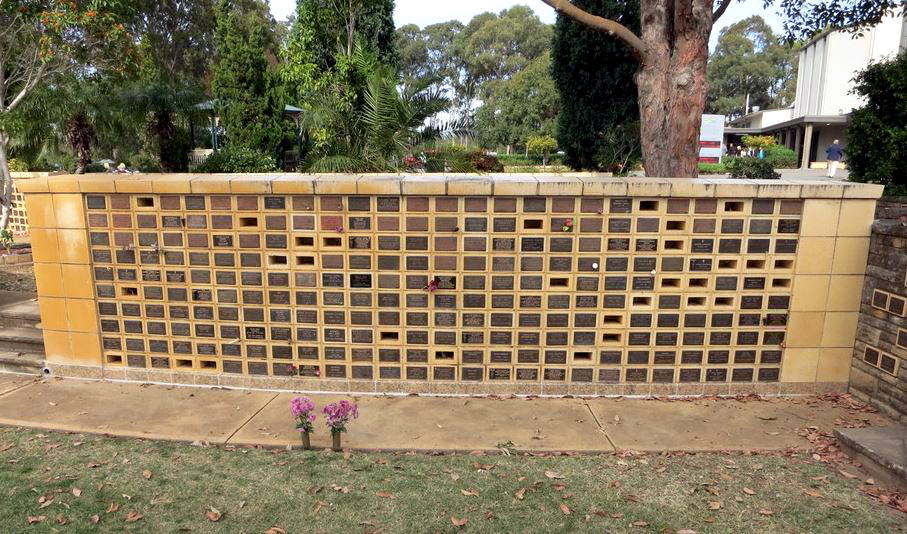
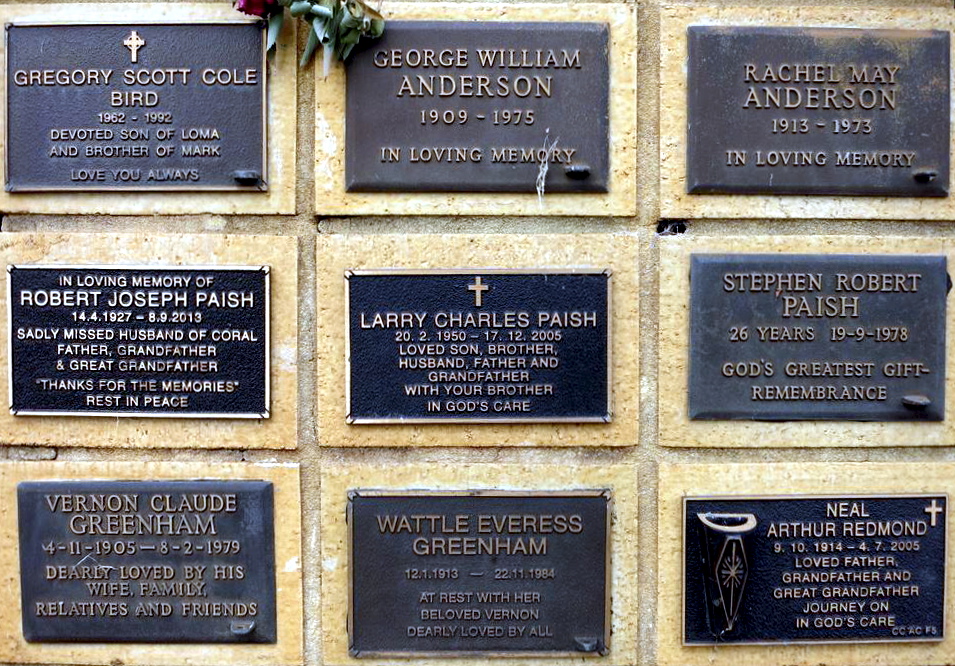
Buried at: Rookwood Cemetery, Lidcombe, NSW
Plot: St Martha Section, ( cemented number unknown ) ?
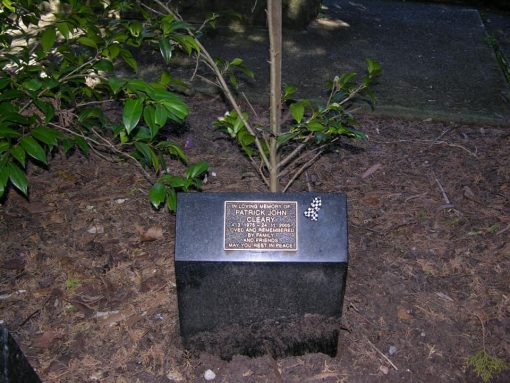
Memorial / Plaque / Monument located at: ?
Dedication date of Memorial / Plaque / Monument: Nil – at this time ( August 2022 )
RAY is NOT mentioned on the Police Wall of Remembrance * NOT JOB RELATED
FURTHER INFORMATION IS NEEDED ABOUT THIS PERSON, THEIR LIFE, THEIR CAREER AND THEIR DEATH.
Nothing further, than what is recorded above, is known about this person at the time of publication and further information and photos would be appreciated.
Probationary Constable- appointed 4 September 2001
Constable – appointed ? ? ?
Final Rank = Constable
Stations: Metropolitan North Region – Hendra Police Stn ( 19 Feb 2001 – 13 Oct 2002 ), Cairns Police Stn ( 14 Oct 2002 – 10 March 2003 ), Aurukun Police Station ( 11 March 2003 – 21 August 2003 ), Bamaga Police Stn ( 18 months ) – Death
Service: From19 February 2001 to7 May 2005 = 4 years Service
Awards: No Find on Australian Honours
Born: ? ? ?
Died on: 7 May 2005
Age: 28
Cause: Passenger – Downed Aerotropics flight from Bamaga to Cairns, Qld
Event location: rugged mountain terrain 11kms northwest of Lockhart River Aboriginal Commission, Qld
Event date: 7 May 2005
Funeral date: ? ? ?
Funeral location: ?
Funeral Parlour: ?
Buried at: ?
Memorial / Plaque / Monument located at: ?
Dedication date of Memorial / Plaque / Monument: ?
SALLYIS mentioned on the Police Wall of Remembrance
FURTHER INFORMATION IS NEEDED ABOUT THIS PERSON, THEIR LIFE, THEIR CAREER AND THEIR DEATH.
Location: Column 3 – Left leg, Rear portion, Row 4
Constable Sally Urquhart and Senior Constable Trad Thornton on the northernmost point of the Australian Mainland.
Constable Sally Urquhart registered number 4014432 was a Queensland Police Officer from the 19thFebruary 2001 until the 7th May 2005.
Constable Sally Urquhart was on-board an Aerotropics flight from Bamaga bound for Cairns when it crashed into dense rainforest and rugged mountain terrain 11kms northwest of Lockhart River Aboriginal Commission, killing all fifteen occupants on the 7thMay 2005. This tragic loss has affected the whole community in the Far North, in particular the Aboriginal and Torres Strait Islander Community of Bamaga and Injinoo.
Constable Sally Urquhart had been stationed at Bamaga Police station, with her fiancé Senior Constable Trad Thornton for the past 18months.
Sally was the eldest of three children born to Shane and Elizabeth Urquhart. She grew up as the daughter of School teachers and subsequently lived throughout Queensland. Sally was a young lady born for success, she was school captain at both primary and high school; a model student.
In the words of her father,“ She touched the hearts of everyone she met from childhood to present, in the many parts of Queensland where we have lived ”.
After finishing school she went on to complete a double degree at the University of Queensland in Law and Science, winning the University prize for Family Law.
Whilst at uni, Sally shared accommodation with a police officer, Plain Clothes Detective Peta Ross and it was during this time that Sally set her sights on joining the Queensland Police.
Sally and her dog ‘ Prince ‘
After graduating from university, Sally commenced recruit training at the Queensland Police Academy at Oxley on the 19thFebruary 2001 and graduated on the 4th September2001.
Her first posting was to the Metropolitan North Region where she was stationed at Hendra. Even at this early stage in her Career Sally was showing signs of great potential. Her service history indicates that she excelled in all aspects of general duties and worked well in a team environment.
It was here that she met her finance, Senior Constable Trad Thornton. Trad was working in the Public Safety Response Team, (PSRT), at the time.
Sally was posted to Cairns Station on the 14th October2002, where she performed general duties in Team 4. Her Supervisor / Team Leader identified early that Sally was an officer who was prepared to accept any responsibility or task and displayed a high work ethic. She was well suited to general duties policing and excelled at all aspects of her work.
Sally’s professionalism and understanding towards all members of the public went beyond that of her duty as a Police Officer. She was always willing to assist members of the community and was commended by the then Assistant Commissioner Allan Roberts for her efforts.
Trad was transferred to Cairns a short time later and after 4 months, the pair were identified as suitable officers to work in the Aboriginal community in the Cape York Peninsular and were transferred to Aurukun Station where they policed from the 11th March until the 21st August 2003.
Aurukun is a station that has recently increased from 4 to 7 staff, with a population of approximately 1200. Most of the work involves policing aboriginal community which in itself is a huge task, the sacrifices that officers make to go there are enormous, however the life experiences are priceless.
Sally excelled in her work and she was involved with all levels of the community. Sally’s personality and demeanour ensured that she was readily accepted by the community. Sally had a presence about her that brought calm to situations that verged on mayhem and conflict. Whilst stationed at Aurukun her rapport with the community members was one of respect, trust and honesty.
These qualities and her dedication to duty ensured that The Queensland Police were respected, in a sometimes difficult environment. Sally’s attitude to work and her diligent and tenacious nature ensured that she was going to achieve whatever she desired.
Sergeant Andrew Clarkson ( current Officer in charge of Aurukun ) remembers Sally dealing with confronting and daunting situations that required great courage and composure. He remarks that Sally excelled in these situations, and it was reassuring to know that she was with you.
Sgt CLARKSON remembers her personality, her smile and her innate ability to say the right words at any given time making the rigors of policing Aurukun enjoyable. “ I will always remember the day that I was promoted to Officer in Charge, Aurukun not for the promotion, but for the way that Sally rushed over to me when she heard the news, gave me a hug and a kiss and then made a fuss over it all ”.
Sally was a selfless person who ensured that others would always come first. She was a dedicated police officer who values ensured that justice was served. When I heard of the tragedy, I pondered as to why could one who’s light shines so strong and bright be taken from us.
Local kids at Aurukun swimming pool
Policing within any Cape Community within the Far Northern Region is a daunting experience for police officers to say the least. Officers within these communities develop the ability to foresee behavioural changes within the community. Officers are exposed to a myriad of situations and events that test their abilities. To be tenacious, resourceful and professional at all times is sometimes a feat within itself.
Since the implementation of Alcohol Management Plans (AMP’s) communities have undergone a dramatic metamorphosis. With the lifting of the ‘veil’ of alcohol, policing within the communities has changed tact from the much talked about reactive policing style to a more proactive community based approach. This change has been embraced by the community and supported by both elders and councils.
Policing for female officers is compounded further by local culture and tradition. Male’s in these communities are reluctant to deal with female officers. From my observations all the females that I have worked with at Aurukun have been able to establish a rapport and gain respect within the communities, that some male officers have failed to achieve. These officers have utilised their various skills and instincts to finesse and diffuse potentially volatile situations.
The ability to arbitrate, negotiate and resolve situations are attributes that police utilise everyday. Working within remote and isolate communities ensures that these skills are honed and developed to there absolute potential. The ability to endear oneself to a community and make a difference was never more evident, with the tragic loss of Sally. Elders and councillors from the community stopped me to talk to me about Sally and how ‘ good a person she was ’. Silas Wolmby an elder and traditional landholder of Aurukun stated to me that “ she made him smile, and he knew that she would always do the right thing. ”
From Aurukun she was transferred to Bamaga Police station. This area consists of 5 police. Sally was one of two female officers in Bamaga. The second being Senior Constable Joanne Bailey, the following comments are from Jo.
Sally was nothing more than a champion. She would undertake any task with such enthusiasm, whether it be major criminal investigations such as rape and indecent dealings to minor jobs that are required to efficiently run a small station. Sally was instrumental in organising court days and her organisational and leadership skills were way above her policing years.
Besides her policing skills, Sally had an amazing quality of ‘ brightening up the room ’. She was always genuinely happy to see you at any time and nothing was a bother. Her laughter could be heard across the houses, which would straight away make you smile.
Trad and Sally made many friends in Bamaga. Since they were engaged in June 2004, she shared her excitement with her closest friends. Her wedding plans were all sorted out, again she was organised down to the jelly beans on the table!
But it was not to be, and like many people from the Far North the 7th May 2005 will remain as the worst day they have ever experienced. But things are getting easier, and as a good friend of ours said recently, we are truly more blessed to have known Sally, even if it was only for a short time. She is sadly missed.
Sally’s graduation day – pictured with squad mates Constable Krissie Warriner and Constable Mardi Watts
THE owners and operators of a commercial plane involved in one of Australia’s worst air disasters have launched legal action that could stop the victims’ families ever getting answers.
Two pilots and 13 passengers were killed in the May 2005 Lockhart River tragedy when an Aerotropics commercial flight crashed into a ridge line and exploded in flames, killing all on board during a flight from Bamaga.
In the latest roadblock for victims’ families, owners of the doomed aircraft have launched an appeal in a bid to block a wrongful-death lawsuit in the US state of Missouri, just weeks after the victims’ families won a legal battle to allow the case to go to trial in July next year.
Brisbane man Shane Urquhart lost his policewoman daughter Sally in the crash and said the long-running legal hurdles were “frustrating” and “ludicrous”.
“We’re talking about human lives here, ordinary people and they were all good people going about their daily business,” he said.
“There’s no such thing as closure, there’s no closure when you lose someone but there may be justice but that certainly hasn’t happened here.”
The horror crash was the worst air disasters in Queensland in more than four decades and claimed the lives of a leading scientist, a popular policewoman, three key members of a football team, and a 25-year-old mother of six.
The families allege in the Missouri court action that the aircraft had several defects and that the crash was “the direct and proximate result” of one of more of those defects.
The alleged defects include claims the plane did not contain an effective ground proximity warning system, it was not equipped with autopilot and flight instruments were either hard to read, confusing, or not in proper view.
Lawyers for the plane’s owners and operators who are being sued by 61 family members of the crash victims, the majority of whom live in Queensland, launched an appeal on September 6 against last months’ Brisbane Supreme Court ruling allowing the Missouri case to go ahead.
The appeal argues the Supreme Court ought to rule that the Missouri action is “vexatious and oppressive” and that “nothing relevant” could be gained in the overseas action over and above what could be gained in Australia.
The families are pursuing legal action in Missouri where they claim the aircraft was delivered, inspected and placed into operation.
The 61 family members are expected to fly to Missouri to give evidence or testify via video link.
In Missouri, a jury will determine the amount of damages awarded instead of a judge and there are no orders for costs as there are in Australia.
However it’s not yet clear whether the US case will run according to Queensland or Missouri law.
Toowoomba lawyer Pat Nunan has been representing the victims’ families for more than a decade and said the delays were difficult.
“It’s terrible and it’s had a great impact on the families of the victims,” he said.
“Litigation is one of the great stressors of all time and it has been horrendous for them.”
He said the families were desperate for answers.
“We’re trying to get their day in court to determine what actually did go wrong and make sure it doesn’t happen again,” he said.
“It’s like a hot dagger into a wound every time something comes up in these cases.”
Brisbane man Shane Urquhart lost his policewoman daughter Sally in the crash and said the long-running legal hurdles were “frustrating” and “ludicrous”.
“We’re talking about human lives here, ordinary people and they were all good people going about their daily business,” he said.
“There’s no such thing as closure, there’s no closure when you lose someone but there may be justice but that certainly hasn’t happened here.”
The appeal returns to the Court of Appeal tomorrow.
‘I’ll never forget the words’: Father reveals the chilling phone call he received moments after plane crash which killed his daughter and 14 others on board in mysterious circumstances
Sahar Mourad
A father has revealed the chilling phone call he received moments after the horror plane crash which killed his daughter and 14 others on board.
The crash, considered one of Australia’s worst aviation disasters, led to the deaths of 15 people in 2005 after a plane struck a ridge in the Lockhart River, Queensland.
Grieving families of the passengers are still asking for answers after a Coroner’s Inquest and Senate inquiry failed to conclusively reveal what caused the crash.
Constable Shane Urquhart, whose daughter Sally was one of the passengers on the plane, has revealed the haunting words he heard immediately after the crash.
‘The phone rang and when I answered, it was Sally’s fiance Trad and I’ll never forget the words…He just very, very quietly said ”Shane, Sally’s plane is missing”,’ he told A Current Affair.
Since the devastating incident, loved ones have been looking for answers to what happened on the plane which caused it to crash.
Mr Urquhart said there’s ‘no such thing as closure’ and all the families’ victims deserve answers.
‘They don’t deserve or didn’t deserve what happened to them.’
The policewoman was due to marry Trad four months after the incident, but instead her fiancée and family were left with the heartbreaking task of burying her.
An inquiry into the crash found 19 different factors led to the fatal collision, with the main one being pilot error.
But Mr Urquhart does not accept this, saying the inquest took the easy decision to blame someone who is not around to defend themselves.
‘In aviation accidents where everybody has not survived, who are they going to blame? The pilots, because no-one is available to tell the story and it’s very, very easy to do that,’ he told the network.
The victims’ families lawyer Patrick Noona alleged there was something already wrong with the aircraft, revealing they would be taking legal action against the plane’s owners in the United States.
The insurers are fighting to stop the legal proceedings but nothing will occur until the case appears in the Brisbane Supreme Court next month.
If the families win then a wrongful death lawsuit will be heard in Missouri next year.
Mr Urquhart said his daughter would be cheering on the families saying, ‘don’t let the bastards win’.
The Queensland Coroner’s Inquest in 2007, found that, despite evidence that there were a number of issues leading up to the crash, pilot error was the prime cause. Families of those who lost their lives in the disaster have been highly critical of the Coroner’s findings and the deficiencies in the operations of the regulator, the Civil Aviation Safety Authority (CASA), and the poor company structure and practices of Transair Ltd.
The investigation was aided by flight information from the aircraft’s flight data recorder. As the cockpit voice recorder was unserviceable, and had been for some time, the conversations occurring between the flight crew will never be known.
Senate inquiry
As a result of intense lobbying by the father of one of the victims, Constable Sally Urquhart, and others, the Australian Senate’s Rural and Regional Affairs and Transport Committee resolved to conduct an inquiry into the Civil Aviation Safety Authority, its operations and other matters. The Inquiry was convened on 2–3 July 2008 at Parliament House, Canberra. As well as Mr Shane Urquhart’s submission, there were sixty others which were considered by the Inquiry. The vast majority of the submissions were highly critical of most aspects of CASA’s operations.[who?] Several people and organisations, including Mr Urquhart, supported their submissions in person at the Inquiry. In September 2008, the Committee Chair, Senator Glenn Sterle, released the report of the inquiry to the Transport Minister Mr Anthony Albanese and the public.
The recommendations from the report are:
1. That the Australian Government strengthens CASA’s governance framework and administrative capability by:
a. introducing a small board of up to five members to provide enhanced oversight and strategic direction for CASA; and
b. undertaking a review of CASA’s funding arrangements to ensure CASA is equipped to deal with new regulatory challenges.
2. In accordance with the findings of the Hawke Taskforce, that CASA’s Regulatory Reform Program be brought to a conclusion as quickly as possible to provide certainty to industry and to ensure CASA and industry are ready to address future safety challenges.
3. That the Australian National Audit Office audit CASA’s implementation and administration of its Safety Management Systems approach.
Further incidents
Following the Lockhart River crash, Transair in Australia went into liquidation in late 2006.[5] Aerotropics also no longer operates because the Civil Aviation Safety Authority cancelled its Air Operator Certificate due to ongoing safety breaches. Transair continued to operate its PNG business until 31 August 2010 when the company’s Cessna Citation ran off the runway on landing at Misima Island near Milne Bay, Papua New Guinea. The previous owner of Transair in Australia, Les Wright, died along with three others in the ensuing inferno. There was one survivor.
10 years on we remember those lost in the Lockhart River Plane Crash
May 7, 2005, saw 13 passengers and 2 crew board an Aerotropics flight in Bamaga bound for Cairns.
Constable Sally Urquhart was one of those passengers heading to Townsville Police Academy for work and farewelled her fiancé at the Bamaga Airport.
Whilst enroute, their Metroliner crashed on ‘South Pap’ on the Iron Range about 11km from Lockhart River airstrip at about 11.44am.
Police commenced Operation Delta Devlin with Inspector Russell Rhodes as the Forward Commander for the Crash Investigation and recovery.
nspector Rhodes is now in his 4th decade of policing and he cited this job as his most demanding job as a Forward Commander as it was an extremely demanding search and recovery effort over a seven day period.
Whilst he had a very good team working with him, they were challenged by the tough terrain and weather conditions.
He said, “I do stress that it was never about us and no matter how hard it was going to be we were always going to do whatever it took to help those families.”
No one can prepare you for a sudden loss of a loved one. When it comes in tragic circumstances, it’s like a bolt from the blue that makes no sense at all.
Many of us in the QPS had the pleasure of working with Constable Sally Urquhart and treasure the time we had with her. She was an absolutely delightful young woman.
Beautiful inside and out, charismatic in nature, she was a little pocket rocket, smart as a whip, a dedicated police officer with so much potential to succeed. She was your typical girl next door and engaged to be married to a fellow officer later in 2005. Both were so excited to spend their lives together.
Constable Sally Urquhart was a much loved friend and colleague to many of us in the Queensland Police Service. Sal made our lives that much richer for just knowing her and she will always be remembered as a beautiful young woman, full of life and forever young.
Today ceremonies were held in Bamaga at the Airport and the Oxley Police Academy to mark the 10th anniversary of the plane crash.
Constable Sally Urquhart’s family were present at the Police Academy to hear the Commissioner of Police Ian Stewart and Mr John O’Gorman (Retired Police Inspector) pay tribute to Sally, honouring her service, at the 10th anniversary of her death.
In recognition of the shared tragedy of the plane crash, Sally’s nieces and nephews released 15 balloons for each of those who lost their lives 10 years ago at the Oxley Academy ceremony.
Our deepest sympathies go out to all the families and friends of those lost in the Lockhart River Plane crash 10 years ago.
They remain alive in our hearts and treasured memories will not be forgotten.
RIP Sally
Honouring victims of shocking fatal flight
CHRISTIE ANDERSON, Townsville Bulletin
A DECADE ago today, two pilots and 13 passengers boarded an aeroplane in Bamaga bound for Cairns – but they would never complete the fateful journey.
Memorial services will be held around the state today to remember the 15 people killed in the Lockhart River air disaster 10 years ago.
On May 7, 2005, an Aerotropics flight with 15 people on board from Bamaga to Cairns crashed into South Pap Ridge, 11km northwest of the Lockhart River Aboriginal commission.
Trad Thornton will be one of dozens of family members remembering a loved one taken too soon.
Mr Thornton, now a police sergeant based in Brisbane, was a senior constable in 2005 when his fiancée Sally Urquhart was killed in one of the worst aeroplane crashes in Australia’s history.
Constable Urquhart, a 28-year-old police officer, based in Bamaga and celebrated for her strong sense of social justice, was on her way to Townsville for a constable development course when she died.
Sgt Thornton will attend a memorial service at Oxley Police Academy for Constable Urquhart, who was killed only weeks before she was due to marry the fellow officer.
“She was an absolutely amazing person and an exceptional police officer,” he said.
“It’s just one of those days that I suppose is going to be etched in my mind for the rest of my life like the day we were going to get married and the day we got engaged.
Sally Urquhart and fiancée Trad Thornton. Sally Urquhart died when the TransAir passenger plane smashed into a hill in May 2005 on approach to the Far Northern community of Lockhart River, killing all 15 people aboard.
“I’m very happy that she will be remembered but it is my opinion you don’t ever get over something like this but you learn to live with it.”
He said Constable Urquhart was such an exceptional police officer that after only three years in the service she had the Chief Superintendent and Assistant Commissioner travel more than 1000km to talk to her about her career progression.
“It was very impressive to see two high-ranking police fly 1000km to talk to someone about their police career,” he said. “She was very well educated with law and science degrees and she was very capable.
“She had the perfect personality to be a police officer.” Sgt Thornton now has a family and two young boys but he said he would never fully recover from losing his fiancée.
“In my mind I am able to separate the emotion from the plane crash and talk about the investigation but when it comes to Sally it’s a closed book,” he said.
“I see things and try and do things I think Sally would want me to do.
“Instead of wasting a day grieving and dwelling on the past I’m going to try and think about the good times.”
Father, Shane Urquhart said he would never fully recover from the tragedy.
“We live with it every day still, 10 years on – it’s always there,” he said. “There’s no such thing as closure.
“The memorial is about remembering Sally and thinking of the 14 other innocent people who were just going about their lives.”
This program tells the poignant story of a popular young police officer widely described as one of the ‘best and brightest’ in the Queensland Force.
Sally Urquhart was one of 15 people killed four years ago when a plane crashed at Lockhart River in a remote region of Far North Queensland.
It was categorised as the worst airline disaster in Australia for nearly forty years.
At the time of her death Sally Urquhart was engaged to a police colleague also serving in the Far North. In a call to her mother just before the flight, Sally talked about the upcoming wedding and described her fear of getting on the plane. “I just hate it… it rattles” she said.
Sally’s father Shane is a primary school principal, with no expertise of any kind in aviation.
But when official investigations into the crash left questions unanswered, he set out on a single minded mission that took him to the most powerful forums in the land – with consequences for everyone in regional Australia and beyond.
Transcript
minus
BOB ATKINSON, PRESENTER: Hello, my name is Bob Atkinson and I am the Commissioner for the Queensland Police Service. On Saturday the 7th of May 2005, an aircraft with 15 people on board, travelling from Bamaga crashed at Lockhart River. All 15 people were killed. One of those was Sally Urquhart, constable in the Queensland Police Service and the daughter of Shane and Elizabeth Urquhart. Sally was one of our brightest and best officers and sadly, her unlimited potential will now never be realised. This Australian Story is about her father Shane and his work to improve the safety of people travelling on regional airlines throughout Australia.
SHANE URQUHART, FATHER: Being a musician myself, one of the ways that I thought would be a long term way of remembering Sally, was to have a piece of music composed in her honour. It’s called ‘Celebration for Sally’. The navy band in Sydney have it as part of their repertoire.
NATALIE URQUHART, SISTER: I definitely have a sense of Sally when I play that piece. Certain bits, like the bit at the start just reminds me of her being a police officer. You know, there’s the police whistle and all that, and I just straight away think of Sal in her uniform, and then the reflective part of it, you know, I can think of maybe my last moments that I spent with Sal, and that’s, they’re the hard bits to get through. Mum and dad don’t actually get the chance very much to come and watch me perform in the navy band. I think they got a huge buzz out of it. So um, I think it was probably a bit emotionally hard on mum. I think she might have had a few tears there.
ELIZABETH URQUHART, MOTHER: There’s just certain parts in it that really, I really love and I’ve told Natalie which parts they are. And every time they’re played I just, yeah, it’s my Sal.
(Excerpts from ABC News)
FEMALE REPORTER: Fifteen people died when a Transair Metro liner slammed into a rugged mountain in May 2005.
MALE REPORTER: Searches took until late in the afternoon to spot the wreckage. One of the passengers was Constable Sally Urquhart, a Bamaga police officer.
INVESTIGATOR: We’d like to know exactly what caused the accident.
FEMALE REPORTER 2: The Australian Transport Safety Bureau has described yesterday’s tragedy as the country’s most significant loss since the 1960s.
(End of Excerpt)
SHANE URQUHART, FATHER: This was always an accident that was going to happen, not if and when, an accident that was always going to happen.
ELIZABETH URQUHART, MOTHER: And it was just amazing when he started how many people, like ex-pilots or pilots, got in contact with him to say, ‘Oh yeah, I know of this that happened, and I know of that that happened’.
SHANE URQUHART, FATHER: That caused me no end of grief, that caused me no end of angst in that I really needed to find out what the hell was going on here.
SHANE URQUHART, FATHER: Sally was our eldest child, first born. I’m a school principal and I was in my first one teacher school when Sally was due to be born.
BRENDAN URQUHART, BROTHER: Sal was one of those people where she was always my rock. Like I’d, as most young fella’s do, get themselves in a bit trouble and that and Sal would be the first person I rang, every time.
SHANE URQUHART, FATHER: She was fairly set on law, got an honours degree in law, went off and did some articles with a law firm and decided very promptly that that wasn’t what she wanted to do.
ELIZABETH URQUHART, MOTHER: And she called us up and said ‘I don’t want to be a lawyer anymore, I can’t do it, I hate it’. And like she topped family law in her year and all I could think of was, five years down the drain, you know.
SHANE URQUHART, FATHER: Touch was her big thing and she was being looked at to be part of the Australian mixed open team.
ELIZABETH URQUHART, MOTHER: At that particular stage with her touch, she had met a couple of girls that were in the police service and Shane said to Sal, ‘Have you ever thought of joining the police service?’
SHANE URQUHART, FATHER: When Sally first went to the city station, she was doing the orientation visit and I think one of the senior officers might have said something like, ‘this is Trad Thornton, keep away from Trad Thornton’ or something like that. And I think that might have been like waving a red rag to a bull.
BRENDAN URQUHART, BROTHER: They didn’t have much in common, but they just clicked. They never argued, they never worried about stuff, they just did what they had to do and to them life was beautiful.
SHANE URQUHART, FATHER: Most of the young police officers do need to do a bit of country service, Sally promptly transferred to Cairns.
JOHN ‘BLUEY’ O’GORMAN, FMR QLD POLICE INSPECTOR: I was inspector in Cairns. Sally was smart as a whip. She was a very down to earth, practical and keen young copper, and a very effective young copper.
SHANE URQUHART, FATHER: Trad put his hand up and said I’d like to go to Cairns too, so he ended up in Cairns as well, and they got engaged before they went up there. So they were going to be married in September 2005.
JOHN ‘BLUEY’ O’GORMAN, FMR QLD POLICE INSPECTOR: And he and Sal went up to the Cape stations. She was a caring, compassionate person who genuinely loved other people. And I was more than proud to call Sally my friend, more than proud to call Sally my friend, and I still am.
SHANE URQUHART, FATHER: One of the issues about living in isolated communities, is the fact that the major way of moving is by air transport.
JOHN ‘BLUEY’ O’GORMAN, FMR QLD POLICE INSPECTOR: I personally am terrified of aeroplanes, have been my whole life. If the young police had to come out of the communities for court, or for courses or any other reason, then it was by aircraft
ELIZABETH URQUHART, MOTHER: She often used to say to me, ‘I wish I didn’t have to fly out’ and the night before it happened, she rang here. And the last thing she said to me was, ‘The only thing mum, is I hate getting on that plane’. She said, ‘I hate it’. She said, ‘It just rattles’. And I said, ‘You’ll be right, love’. I said ‘Think of happy thoughts when you get on there’. I said, ‘Think of your wedding’. That’s the last time I spoke to her.
SHANE URQUHART, FATHER: Trad was still on duty up in the station at that particular time and he received the phone call from Lockhart River to say, ‘Where’s the plane? It hasn’t arrived’.
ELIZABETH URQUHART, MOTHER: Trad rang and I heard Shane say, ‘What’s the matter mate, what’s wrong?’ And Shane just got up and sort of thumped the bed. He said, ‘No’. And then he said to me, ‘They can’t find the plane’.
JOHN ‘BLUEY’ O’GORMAN, FMR QLD POLICE INSPECTOR: My mobile phone rang and it was a policeman. He said, ‘Have you heard about that plane?’, I said, ‘Yeah’. He said, ‘Sally was on it’. And I said, ‘How much hope is there?’ He said, ‘In reality’ and he was very strong in what he said, but it meant none. He said, ‘We haven’t found the wreck, but we’re quite sure we’re looking for a plane wreck’.
SHANE URQUHART, FATHER: Within a couple of hours, I think it was by 9:30 that night we actually arrived in Cairns.
(Excerpt from ABC News, May 8, 2005)
RESCUE WORKER: Parts of the wreckage and some of the undergrowth was still burning with smoke when we got there yesterday afternoon.
ABC REPORTER: It’s been confirmed that there were no survivors among the 15 people aboard the plane which crashed in remote North Queensland yesterday.
SHANE URQUHART, FATHER: Yesterday we lost our beautiful daughter Sally forever. She was 28-years-old.
ABC REPORTER 2: The flight was a regular passenger service returning to Cairns from the Cape York community of Bamaga.
ABC REPORTER 3: Crash investigators have confirmed that the plane slammed, at speed, into a steep hill and burst into flames on impact.
ABC REPORTER 4: Vital black box recorders were recovered yesterday. They were damaged from the impact and subsequent fire but it’s hoped they’ll still be able to help determine what caused the crash.
(End of Excerpt)
(Excerpt from ABC News, May 11, 2005)
ABC REPORTER 5: Cairns at St Monica cathedral overflowed with family members, friends, police officers.
Police Commissioner Bob Atkinson consoled Shane Urquhart, whose daughter Sally was due to marry fellow Bamaga police officer, Trad Thornton, later this year.
(End of Excerpt)
BRENDAN URQUHART, BROTHER: It’s all a bit of a blur when we did lose Sal but hearing my parents cry themselves to sleep was the most chilling thing that I’ve ever heard.
Mum, I can understand, but hearing my father cry himself to sleep was just, yeah. Not nice at all.
SHANE URQUHART, FATHER: The most difficult thing however was coming back to Brisbane and waiting for the process of victim identification and it was 23 days from the accident before we were able to have a funeral for our daughter.
(Excerpt of footage from Police video, May 30, 2005, Sally Urquhart’s funeral)
JOHN ‘BLUEY’ O’GORMAN, FMR QLD POLICE INSPECTOR: I think there was about 3,000 police at the funeral, the horses, 20 something motorcycles, the guard of honour, all escorted Sally along Anne Street to St John’s Cathedral.
BOB ATKINSON, COMMISSIONER, QUEENSLAND POLICE: Today, Sally, we pay tribute to you. We salute you.
ELIZABETH URQUHART, MOTHER: Bluey O’Gorman organised it. It’s pretty hard when you’ve got to sit there and pick your daughter’s casket. You sort of feel that, well, she’s my girl, I know her best.
JOHN ‘BLUEY’ O’GORMAN, FMR QLD POLICE INSPECTOR: It was tough, and yet it was, it was an extreme honour for me to be able to take part in making sure that Sally’s send-off was special for her.
TRAD THORNTON, FIANCÃE: Just before she was about to board the plane, I gave her a hug, I kissed her and I told her I loved her. I was also able to say goodbye. It was a token goodbye, but it was a goodbye.
BRENDAN URQUHART, BROTHER: Trad’s lost his be all and end all. They were getting married, they were tight, they were going to be together for the rest of their lives.
And seeing that man get up there and speak was absolutely mind blowing.
TRAD THORNTON, FIANCÃE: As I walked towards the police truck, I turned to see my Sally for the last time. She was waving and smiling at me and I can’t ask for a better last image of Sally.
(End of Excerpt)
ELIZABETH URQUHART, MOTHER: That was a huge day, and everything was just beautifully done. How Sal would have wanted it to be.
SHANE URQUHART, FATHER: For quite a few months I guess we were grieving and not taking particular notice of what was going on. The Australian Transport Safety Bureau was investigating this particular crash.
ELIZABETH URQUHART, MOTHER: The ATSB were very good to us. They let us know what they could. I think Shane had made up his mind he was getting involved anyway, he knew there was more to it than just the crash.
(Excerpt from ABC News, December 2005)
ABC REPORTER: Seven months on an interim report’s been released with few answers about what went wrong.
AUSTRALIAN TRANSPORT SAFETY BUREAU SPOKESMAN: We have ruled out a mechanical failure of the engines.
ABC REPORTER: Now victims’ families are questioning a safety check which gave the aircraft the all-clear two months before the crash.
SHANE URQUHART, FATHER: Was that audit carried out properly? The answer would be no, it wasn’t.
(End of Excerpt)
SHANE URQUHART, FATHER: At the particular time the company that was running the route from Cairns to Bamaga and back was a company called Aero Tropics. Aero Tropics was the name that was on the plane but they were actually responsible for the passenger lists and ticketing. The plane was actually owned and operated by a company called Lessbrook trading as Transair. Senator Jan McLucas from Cairns, she’d been doing a lot of investigating around Aero Tropics in particular and the operation up there.
(Excerpt of footage from Senate Estimates, October 2006)
KERRY O’BRIEN, QUEENSLAND SENATOR: I think Senator McLucas has got some questions that she wants to
JAN MCLUCAS, QUEENSLAND SENATOR: Yes. I want to ask some questions about CASA’s (Civil Aviation Safety Authority) oversight of Lessbrook trading as Transair Propriety Limited.
(End of Excerpt)
MARK DAVIS, FMR STAFFER TO SEN. JAN MCLUCAS: I was Senator Jan McLucas’s media adviser at the time of the accident. It very quickly became apparent that we should also be looking at the regulatory authority, CASA, the Civil Aviation Safety Authority and the way that it was monitoring the aviation industry in North Queensland. North Queensland has got a very, very bad aviation safety record.
(Excerpt continued)
JAN MCLUCAS, QUEENSLAND SENATOR: What I’d now like to know is what action was taken by CASA following the November 2001 audit, the August 2004 audit, the February 2005 audit and the February 2006 audit.
BRUCE BYRON, FMR CASA CEO: From my, looking at the records.
MARK DAVIS, FMR STAFFER TO SEN. JAN MCLUCAS: The information that was starting to come from us from people in the aviation industry was very disturbing.
BRUCE BYRON, FMR CASA CEO: Recorded activities, were not anywhere near the same scale.
JAN MCLUCAS, QUEENSLAND SENATOR: Mr Byron, you have said that to me. I am sorry, I need more than that.
BRUCE BYRON, FMR CASA CEO: Senator, you also asked me what we have done in relation to other audits that have been done recently.
JAN MCLUCAS, QUEENSLAND SENATOR: I want, I want the detail of what actions CASA took following each of the four audits and I think it is very reasonable thing to ask.
(End of Excerpt)
SHANE URQUHART, FATHER: I did some delving into other crashes in Australian history and found that exactly the same things had been occurring over a period of 10 years or so. There were incidents of aircraft landing on unauthorised airstrips, tyres blown on tarmacs, planes getting bogged on airstrips, hydraulic failures, landing-gear failures and questions about the validity of pilots’ endorsements. And the general commonality between all of these investigations seemed to be that CASA was involved somewhere, CASA was the oversight organisation, but these companies had deficiencies that weren’t rectified. And they continued to fly with these deficiencies. I really thought then that there would be a process that would uncover all of this and that there would be some justice, accountability throughout the system.
(Excerpt from ABC News, April 2007)
KAREN BERKMAN, ABC REPORTER: The Australian Transport Safety Bureau report paints a terrifying picture.
(End of Excerpt)
SHANE URQUHART, FATHER: It was one of the most comprehensive, detailed reports that the ATSB has ever produced.
(Excerpt continued)
KAREN BERKMAN, ABC REPORTER: In bad weather the Metro-liner came in for a complex instrument landing at Lockhart River with the pilot overloaded and an inexperienced 21-year-old co-pilot. Add to that confusing maps and a basic ground proximity warning system that would have alerted the crew too late.
BRUCE BYRON, FMR CASA CEO: I have never seen rates of descent that high, during an instrument approach, when so close to the ground.
ABC REPORTER: Transair was found to have contributed to the crash by inadequate training and supervision of pilots.
(End of Excerpt)
SHANE URQUHART, FATHER: CASA had done very, very many reports on Transair, had come up with some recommendations. Transair had not carried any of them out and were still continuing to operate with those things unattended.
(Excerpt from ABC News)
ABC REPORTER: The ATSB said the Civil Aviation Safety Authority had not properly monitored the airlines structure and operations.
(End of Excerpt)
MARK DAVIS, FMR STAFFER TO SEN. JAN MCLUCAS: And it appears that whatever actions CASA took was totally inadequate because here you suddenly have an airline with 15 people on board one of its aircrafts crashing into a mountain.
SHANE URQUHART, FATHER: Once we’d seen the ATSB report, I guess my first thought was wow, ’cause it’s all there, and there is going to be some justice and accountability about what happened in this particular case.
BRENDAN URQUHART, BROTHER: And it wasn’t until the coroner’s inquest, that’s when it rattled me the most. Sitting there and listening to people lying through their teeth.
SHANE URQUHART, FATHER: It seemed to be that the CASA legal team concentrated on discrediting the ATSB and the ATSB report.
(Excerpt from ABC News)
ABC REPORTER 3: Today the Coroner released his findings into the crash.
ABC REPORTER 4: Coroner Michael Barnes blamed Captain Brett Hotchin for the crash, a pilot criticised by colleagues for his dangerous flying practices.
(End of Excerpt)
SHANE URQUHART, FATHER: We hold no grudges against the pilots whatsoever. Yes, the pilot in command certainly had a reputation of doing some things that were probably outside the scope of what he needed to do. The issue is, he was allowed to do that. He was allowed to do that through poor company policy, poor company management and a lack of oversight by CASA.
(Excerpt from ABC News)
ABC REPORTER 4: The coroner was critical of Transair’s safety management systems and pilot training practices, and while he criticised monitoring by CASA, he found the authority couldn’t have prevented the accident.
SHANE URQUHART, FATHER: We’re not looking for blame. We’re looking for someone to stand up and take responsibility.
TRAD THORNTON, FIANCÃE: We’re looking for answers and we were hoping that Mr Barnes would have made the numerous recommendations to stop something like this from happening again.
SHANE URQUHART, FATHER: And the people of Australia especially if you’re on rural airlines, if CASA’s oversighting it, don’t fly. Today’s outcome, what a whole waste of time for all of us and we’re just back to square one as far as I’m concerned.
(End of Excerpt)
BRENDAN URQUHART, BROTHER: That’s when I was really worried about dad, I just thought that would be such a big blow to someone like dad that’s put so much effort into it and pretty much just to get dirt thrown in his face.
SHANE URQUHART, FATHER: I think the darkest times are when you are alone and the memories come flooding back. You hear some music or you see something or even smell something that reminds you of the past. And we realise just what we’ve lost.
MARK DAVIS, FMR STAFFER TO SEN. JAN MCLUCAS: I think a lot of people underestimated Shane’s determination. It must have been very painful for him. We could see the pain, that’s for sure. But he never let go. Not once. Shane was looking to take it a step further and he encouraged I think, Senator McLucas and Senator Kerry O’Brien to have a look at the possibilities of a Senate inquiry into Lockhart River and into CASA.
NATALIE URQUHART, SISTER: If dad’s really passionate about something, then he will push it to the end and, definitely getting up people’s goat, getting in their faces, he’s definitely, doesn’t surprise me with dad actually at all. So he’s not going to, wasn’t going to let this one just slip away.
SHANE URQUHART, FATHER: I just kept making a nuisance of myself, kept knocking on doors, meeting with people, meeting with the minister, writing emails, writing faxes, asking questions. Finally, the Senate committee decided that it would instigate an inquiry into CASA and other matters. There was 63 submissions from interested people around Australia about CASA.
(Excerpt of footage from Senate Inquiry, July last year)
CHAIR: Welcome Mr Urquhart.
SHANE URQUHART, FATHER: I was one of those people. I’m not a pilot, I’m not a lawyer. But in the past three years I certainly have built up my knowledge about a whole range of issues surrounding, the actions of the aviation industry and in particular that of the regulator.
(End of Excerpt)
ELIZABETH URQUHART, MOTHER: ‘Cause I think what got CASA with just this person who’s just a school teacher, he won’t know much. And I think they were surprised with what Shane knew.
NATALIE URQUHART, SISTER: Sometimes I get a little bit worried that perhaps he might be bringing things up that mum or we don’t necessarily want to get brought up again. Sometimes I think it’s a little bit of an obsession, that he may need to back off. But this is what dad needs to do, this is what dad wants to do, and it’s a good thing.
(Excerpt continued)
SHANE URQUHART, FATHER: I’d like to make clear too that nothing is going to bring back any of the people who were lost at Lockhart River. However, to uncover the years of gross mismanagement, incompetence, self-indulgence and totally inconsistent application of safety regulations is just appalling. These endemic problems go right back to 1998 where reform was promised and reform has not happened. I could use the term corruption, but endemic problem within the organisation.
(End of Excerpt)
BRENDAN URQUHART, BROTHER: Once he gets to a certain point and I think that point has nearly been passed, with pursuing it, that he really needs to step back a bit. Mainly for mum and himself. I think he’s pushed himself that little bit too far at the moment emotionally and I think he really needs to just stand back and actually grieve.
(Excerpt continued)
SHANE URQUHART, FATHER: Someone also said ‘people like myself shouldn’t be complaining’, what do we need to do? Wait for another accident before CASA needs to act?
Well CASA hasn’t acted before accidents before. They wait until there’s an accident or incident then they act.
(End of Excerpt)
SHANE URQUHART, FATHER: We were very happy with the outcome of that inquiry. It’s the first time in three years that someone’s paid attention and listened. I’m particularly interested in the last recommendation about the Australian Audit Bureau having a good hard look at CASA’s operations and how they do business and hopefully they’ll be fixed. I feel we’ve had great success since the Senate Inquiry of last year. Especially since the release of the green paper recommendations by Minister Albanese. I’m particularly interested in the fact that the ATSB is now going to be a much more independent organisation. This simply means that CASA now can be investigated by the ATSB.
MARK DAVIS, FMR STAFFER TO SEN. JAN MCLUCAS: I think that Shane’s efforts have led to a safer environment, a safer flying environment in Far North Queensland.
JOHN ‘BLUEY’ O’GORMAN, FMR QLD POLICE INSPECTOR: And I know that Shane and Liz aren’t just doing it for Sal, their efforts are also on behalf the other 15 people who died. It’s not just for Sally.
NATALIE URQUHART, SISTER: You know, the best outcome would be for this to never happen again. You know, to prevent it from happening to some other families. The outcome that dad has got, I think will definitely help in looking to the future and moving on. And not dwelling on, you know, how Sal died, but how she lived.
JOHN ‘BLUEY’ O’GORMAN, FMR QLD POLICE INSPECTOR: Someone as great as Sally doesn’t come about by accident, it comes about because she had great parents. I suppose that’s probably, in my own funny way, that’s probably the best compliment that I could pay to them, that they were the people who gave the world such a wonderful person as Sally.
END CAPTIONS: The Federal Government expects two new aviation bills to become law by July.
One will create a small expert board ‘to provide high level direction to CASA’s regulatory and safety oversight role’.
The second will ‘reinforce the independence of the ATSB’ by establishing it as a separate statutory agency.
FAMILIES of the victims of one of Australia’s worst aviation disasters have been blocked by insurance giant QBE from long-running legal action in the United States.
Fifteen people died in the 2005 Lockhart River crash on Cape York, but relatives yesterday told The Courier-Mail how they were “shocked and appalled” by a court order to end a nine-year lawsuit in the US against part-owners of the ill-fated Cairns-based Aero Tropics airline.
Lawyers for QBE obtained an order from the Supreme Court in Queensland restraining the Lockhart River families from taking any action other than to dismiss the damages claim before the US courts.
Twelve years on from the tragedy, the father of police officer Sally Urquhart, who died in the May 6, 2005 crash, said families had been victims of “bully boy tactics” and “intimidation” by Australia’s biggest insurance company.
Brisbane schoolteacher Shane Urquhart, who lived in Caboolture at the time of the accident, said none of the families or their lawyers had been notified of the latest legal action before the court order.
“We’ve been fighting for justice for our lost loved ones for so long, and now we feel the judge and the legal system has been duped,” he said.
“It’s not just us, but anyone who gets on a plane in Australia needs to know the sort of bastardry one of the biggest aviation insurers in the country will use against victims of air disasters and their families,” he said. “None of the plaintiffs were informed. None of our lawyers contacted.”
QBE, according to its website, provides insurance to airlines, aircraft, airports, pilots, refuellers, baggage handlers and maintenance operators.
Reverend Mary Eseli’s son, Fred Bowie, and sister-in-law, Mardie Bowie, were among six victims of the air crash from the tiny indigenous communities of Injinoo and Bamaga, at the tip of Cape York.
“It has been an open wound in our hearts that has never healed,” she said.
“QBE has paid compensation and costs, where appropriate, in respect of the claims by relatives of the deceased passengers against the operator of the aircraft.”
OF THE ORDINARY MEETING OF PENRITH CITY COUNCIL HELD IN THE
COUNCIL CHAMBERS
ON MONDAY 31 OCTOBER 2005 AT 7:07PM
Mayoral Minutes
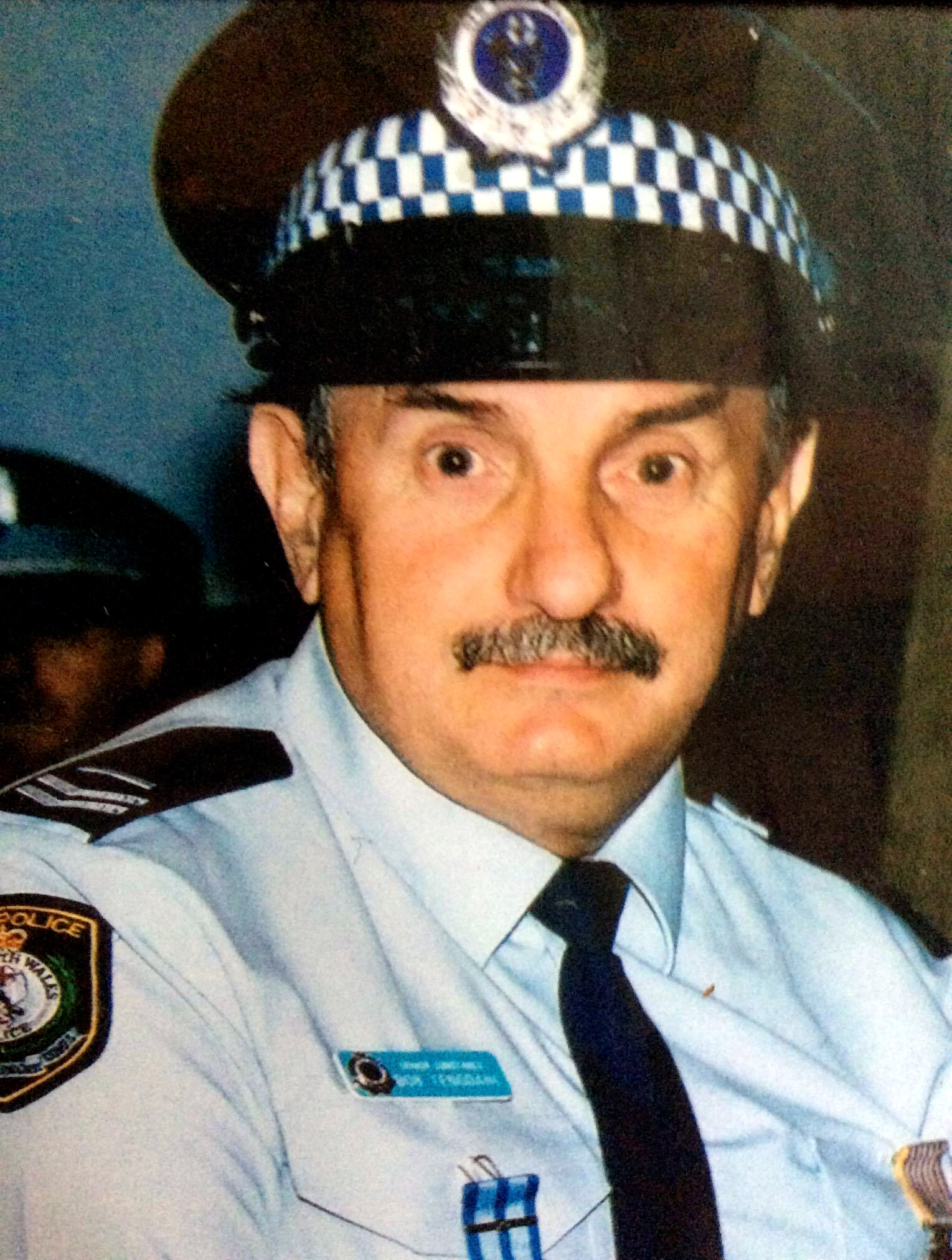
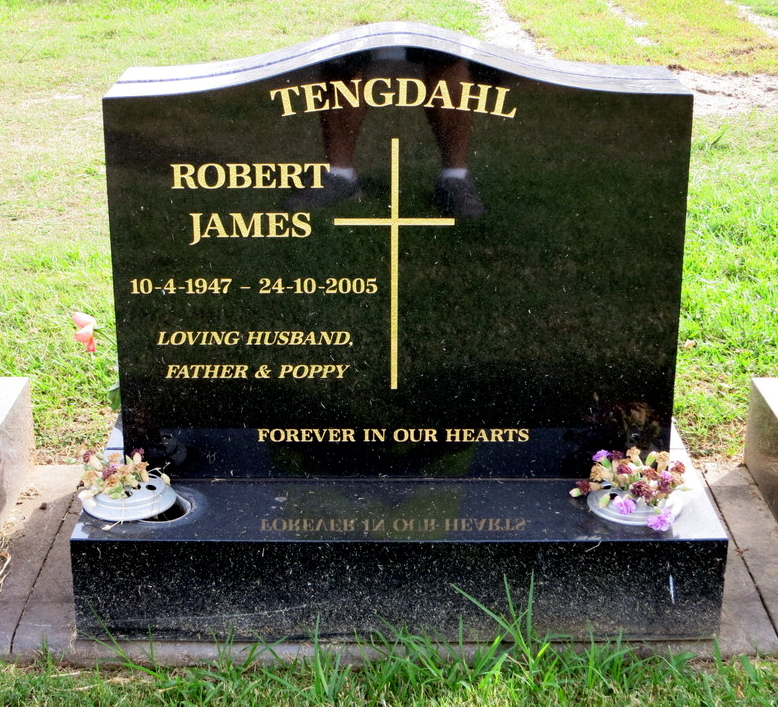
1 The Passing of Senior Constable Bob Tengdahl 123
525 RESOLVED on the MOTION of Councillor John Thain seconded Councillor Greg Davies that the information contained in the Mayoral Minute on the passing of Senior Constable Bob Tengdahl be received.
His Worship the Mayor, Councillor John Thain requested that a minutes silence be observed for the passing of Senior Constable Bob Tengdahl.
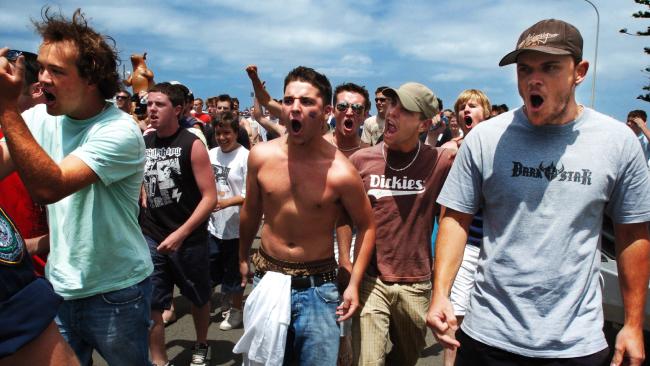
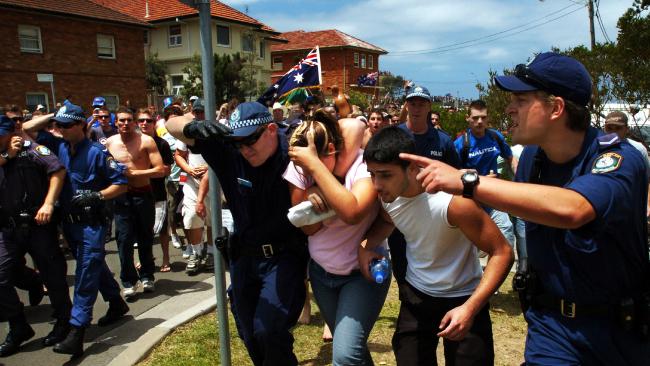
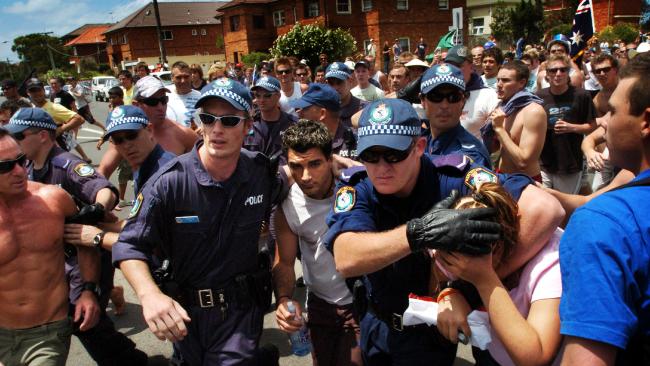
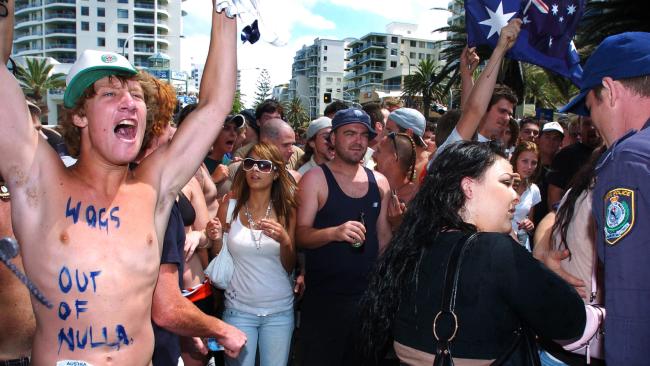
Cronulla riots: Lebanese Muslim gang behaviour incites riot
Martin Lehmann – 13 December 2005
The left-wing, politically correct mainstream media had a field day blackening Australia’s reputation following the Cronulla riots.
All Arabs unite as one, we will never back down, the Aussies will feel the full force of the Arabs. Destroy everything, gather at Cronulla December 18 at midday – spread the word. Together exterminate the enemy at Cronulla. Send this to every lion of Lebanon. – Text message circulating amongst Lebanese gang members
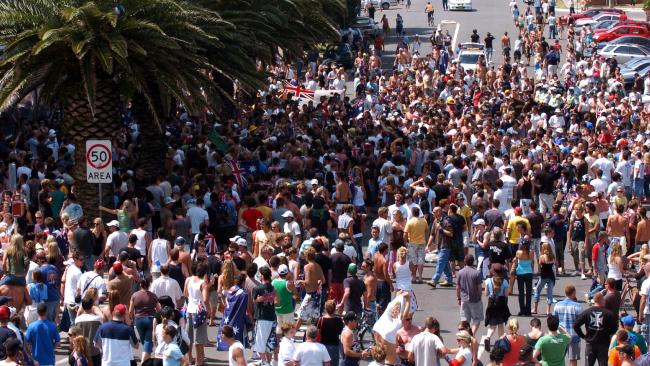
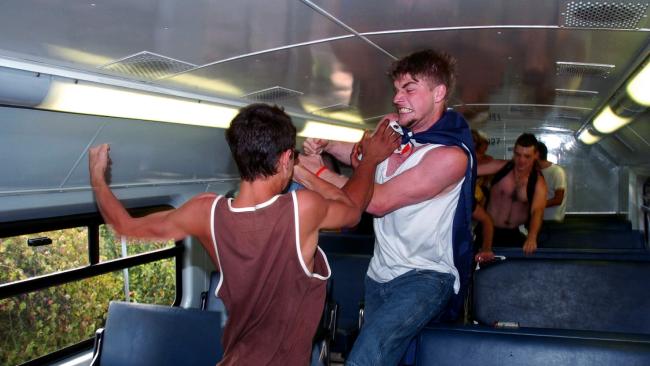
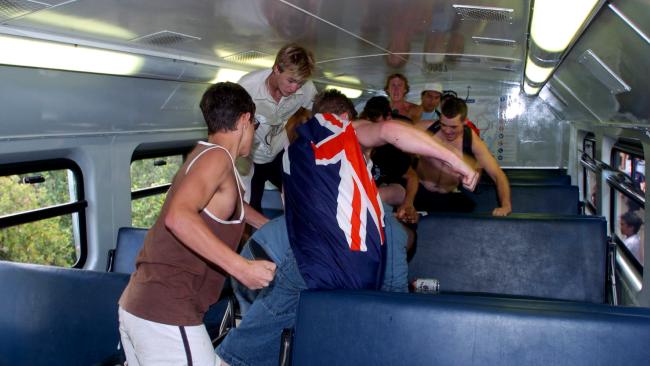
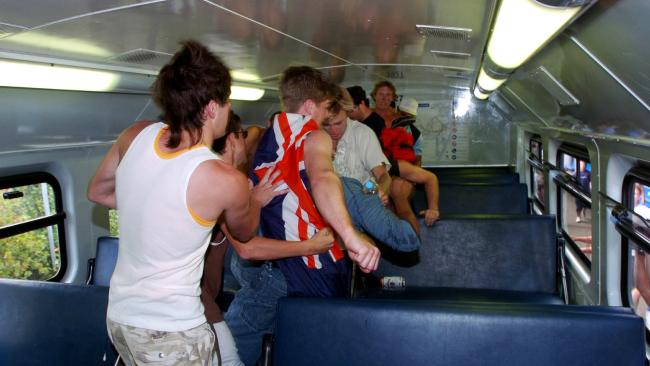
Tension had been building for months as gangs of Lebanese swarmed on to Sydney’s Cronulla beach, jostling elderly patrons, abusing Australian families and threatening to “rape Aussie sluts” for wearing bikinis. They did not come to enjoy the beach in the Australian tradition. They came to flout their disrespect for Australian culture and for Australian law and order.
Matters came to a head the previous weekend when two young Australian lifesavers were bashed by a Lebanese gang.
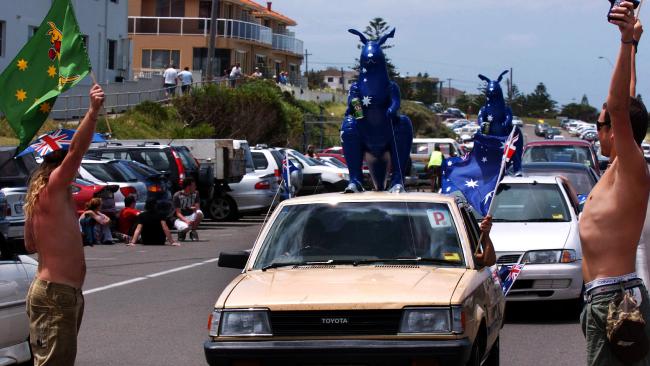
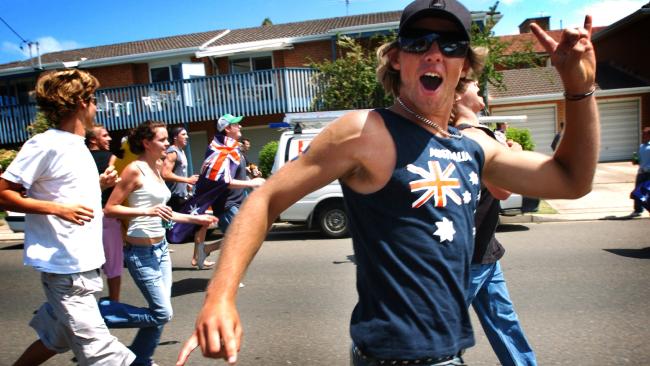
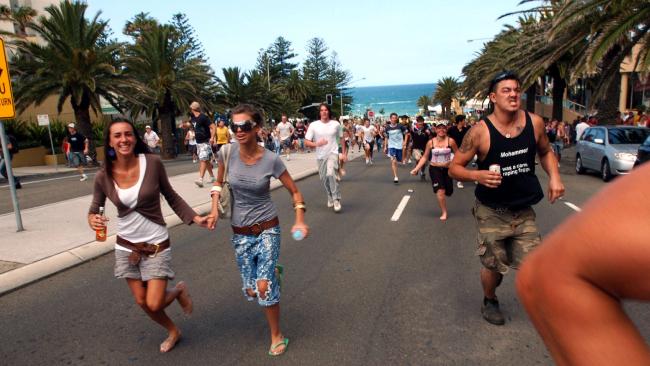
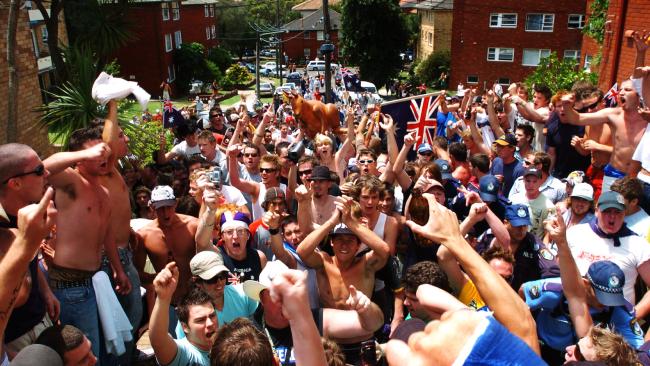
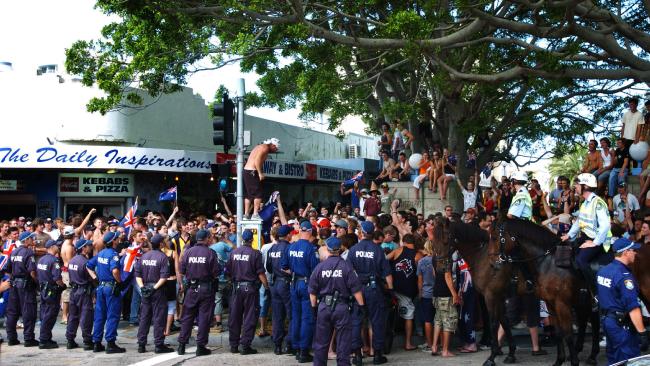
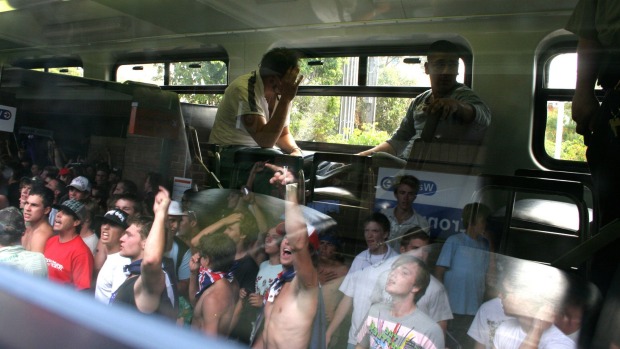
Following a series of text messages, 5,000 Australians turned up on Sunday December 11, 2005 at Cronulla determined to “reclaim the beach”.
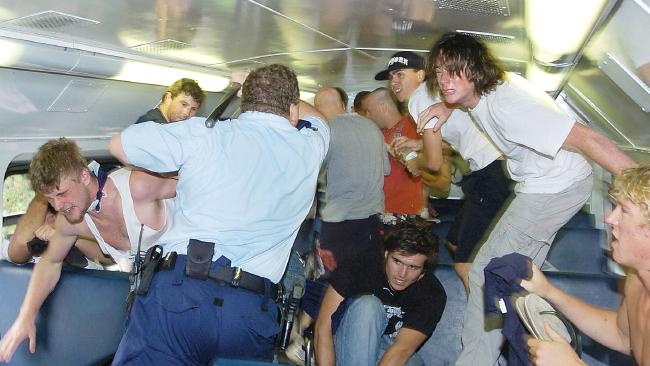
Unfortunately, the combination of alcohol, hot sun and a group of neo-nazi infiltrators turned the demonstration into a raging mob. There were disturbing scenes of mob violence and attacks on police and ambulance officers.
Meanwhile the Lebs were planning a speedy retaliation. After dark, more than 40 carloads of Lebanese thugs descended on nearby Maroubra and indulged in an orgy of smashing car windscreens, jumping on car roofs, smashing shop windows and beating up anyone of Anglo appearance.
One man was stabbed in the back in a cowardly attack.
That evening around 100 locals of Punchbowl, New South Wales (a suburb 20 km to Cronulla’s north–west) gathered together at the local Punchbowl Park. Additional groups, armed with baseball bats, also gathered at The Promenade and Arncliffe Park.
The groups formed a convoy of “more than 40 cars” and drove down to the beaches “to get revenge” with many of the cars ending up in Maroubra.
At 22:45 the cowardly police command ordered police “not to approach convoys of men of Middle Eastern appearance” however car details and registration details were to be recorded.
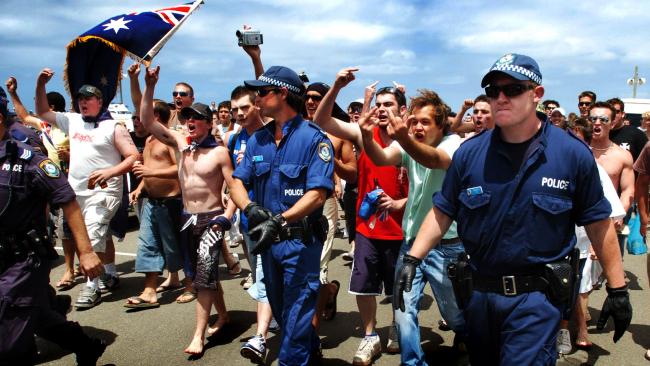
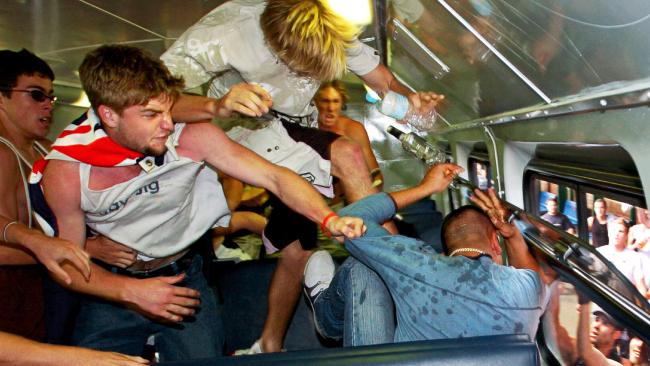
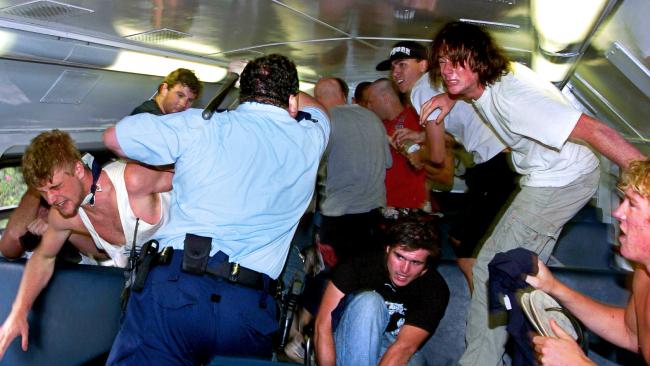
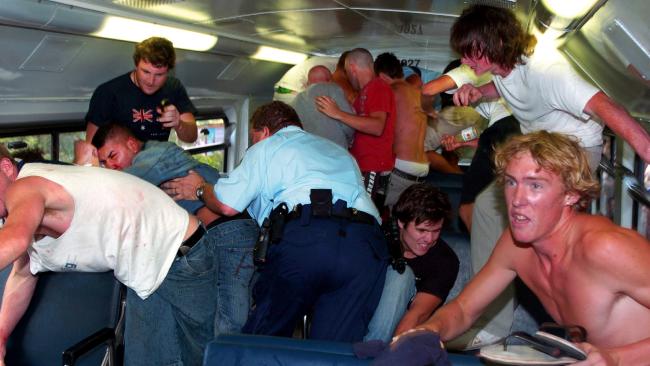
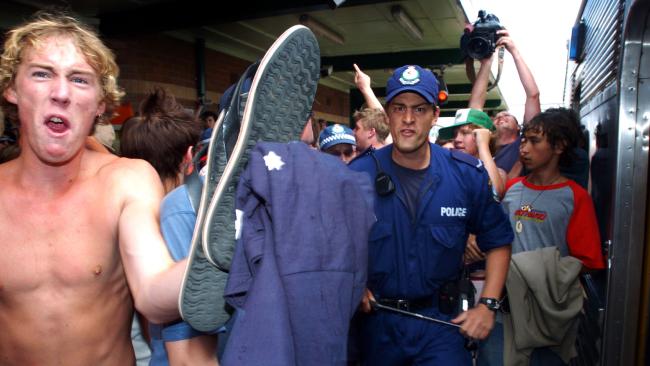
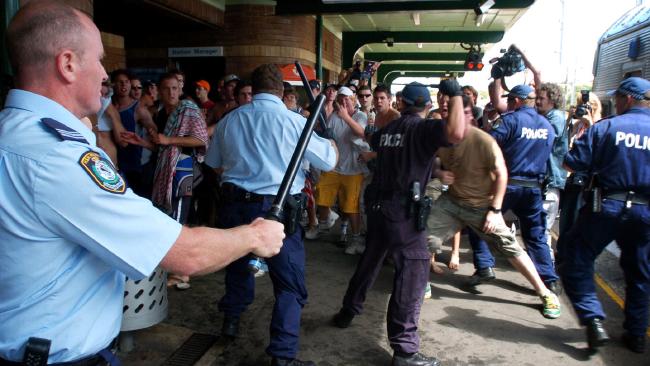
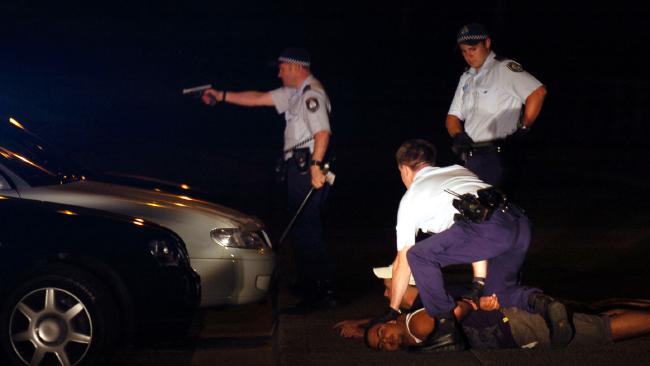
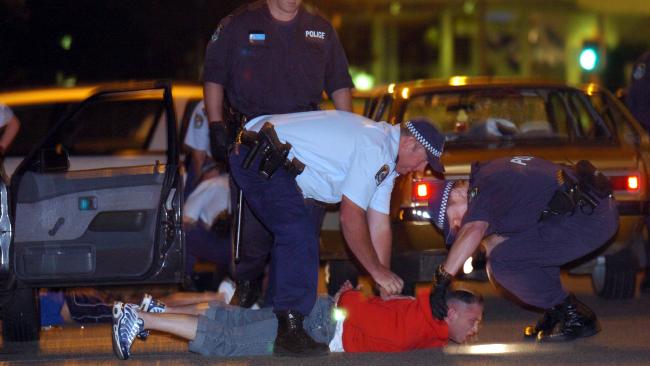
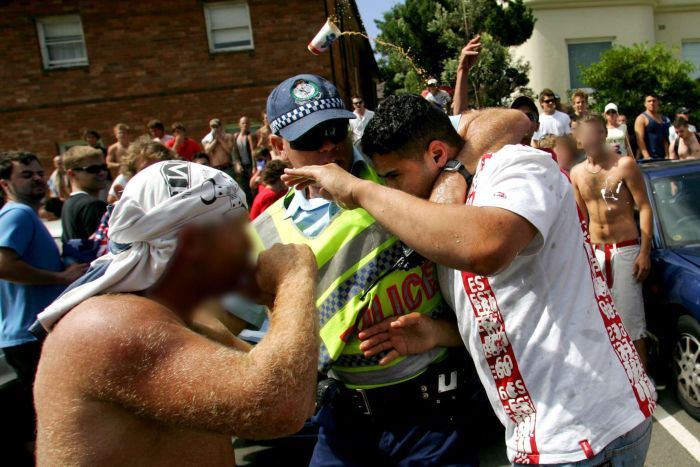
Police subdue some of the Lions of Lebanon
A local of Maroubra reported that each of the cars that arrived was “full, you know had four passengers.” The convoy was reportedly armed with bars and bats, knives, machetes and guns. The group assaulted several people, knocking one unconscious and threatening another with rape, and damaged between 60 and 100 cars, setting at least one on fire.
Police in riot gear moved to contain the violence and the crowds responded by throwing bricks and glass. Residents reported that in some streets “every car” had had their windows smashed, with glass covering the streets. Police also confiscated 40 iron bars and arrested 14 people.
A 26-year–old mechanic dubbed “Dan” was stabbed in the back three times and twice in the thigh with a 9.8 centimetre blade. The incident occurred outside Woolooware golf club when two cars carrying a group of males “described as being of Mediterranean or Middle Eastern appearance” approached the man and his friends. Dan and his friends attempted to flee from the group who were shouting “Get the Aussie dogs … get the Aussie sluts”, Dan was knocked to the ground and was repeatedly kicked in the head. The attack ended when the 9.8 centimetre knife snapped off in the victim’s back.He was taken to hospital in a serious condition as the blade had narrowly missed his spine and lungs.
Jake Schofield was attacked by a group of four men of “Middle Eastern appearance”, the men beat Schofield repeatedly, stabbing him twice and hitting him with a piece of concrete before stealing his wallet and keys. The attack left him with a fractured eye socket and fractured nose.
How did the print media portray it? All the emphasis was on the “racist” attacks by Australians. Very little
Lebanese gang leader, Jeffrey Ismail was sentenced to 12 months jail for helping to organise the revenge attacks.
mention of the Lebanese thuggery.
I trawled through the websites of the mainstream media next day, including The Australian, The Sydney Morning Herald, The Daily Telegraph and the Herald Sun. There were dozens of pictures of the Cronulla riots but not one picture of any of the dozens of car and shopfronts trashed by the Lebanese gangs. There were no pictures of the Leb gang members, not even a picture of the man who was rushed off to hospital with a Leb knife protruding from his back.
The mainstream media, particularly the print media, are an absolute disgrace.
The journalists portrayed the Cronulla riots as “racist” attacks but the lebs orgy of destructions is dubbed a “retaliation” attack, totally ignoring the clearly racist insults, text messages (above) and threats by the Muslims.
The Leb problem has been simmering for years, but the journos have applied a Maxwell Smart cone of silence. People like ex-NSW detective Tim Priest have been warning of the dangers of Lebanese criminal gangs for years.
The night after the riots the detestable Ellen Fanning interviewed Prime Minister John Howard on Nine’s A Current Affair. In an incredibly biased piece of journalism Fanning desperately tried to get Howard to say that the Cronulla riots were racist and indicative of racism in Australia. Howard, to his credit was having none of it.
Even the electronic media refer to Cronulla as “race riots” and the Lebs violence as “ethnic violence”.
If the media had done their job they would have exposed the looming problem with Lebanese lack of respect for law and order months or even years ago and perhaps avoided Sunday’s confrontation.
It is no wonder that journalists are so despised.
Some time later, journalist Miranda Devine, gave a more balanced account of the incident, although she couldn’t avoid the racist slur, when she wrote on December 22, 2005 While the NSW police lock down entire beachfront suburbs, instruct stores to stop selling baseball bats, and apply the full force of the law to pasty-faced nerds with a taste for Nazi literature, they continue to cower from the real hardmen, the Lebanese-Australian criminal gangs of Sydney’s south-west who have ruled the roost in this city for at least a decade and now number in their thousands.
So when parents and children attending Christmas carols on Monday night, December 12, at St Joseph the Worker Primary School in South Auburn were abused and spat on by “young men of Middle Eastern appearance”, there were no police to protect them. Not even when the sounds of gunshots echoed inside the church, and parked cars were pumped full of bullets. “Police were called by a number of parents and the principal, but they were unable to attend because they were needed elsewhere,” said Cardinal George Pell in a statement.
The police were busy that night – Sydney’s mini Kristallnacht “night of the broken glass” – as carloads of men drove east from Lakemba and Punchbowl to systematically attack whole streets of parked cars with bats and machetes. Identified by police as being of the proverbial Middle-Eastern appearance – code for Lebanese Muslim, despite the fact many are second-generation Australians – they also stabbed a man, smashed a woman’s head with a bat, attacked another woman in a pizza shop and a man who was putting out his rubbish.
They were extracting revenge for the riot the day before on Cronulla beach when a protest against continuing intimidation of beachgoers by thugs described as Lebanese turned ugly and drunken racists attacked passers-by suspected of being “Lebs”.
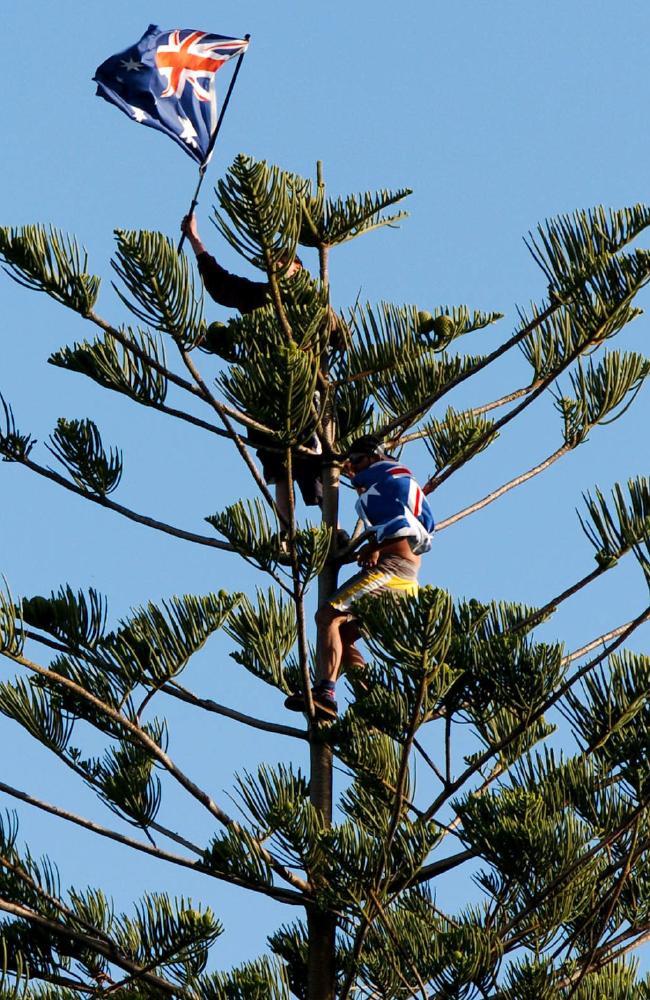
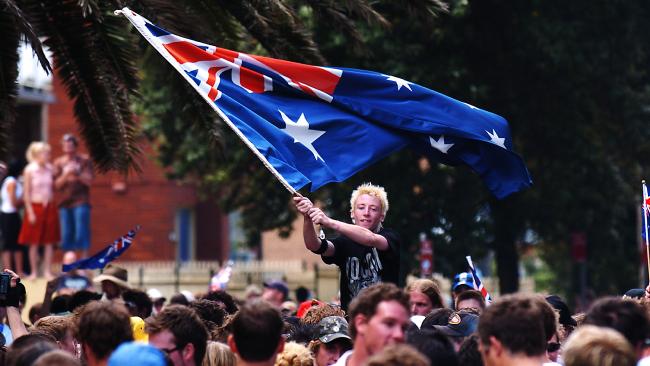
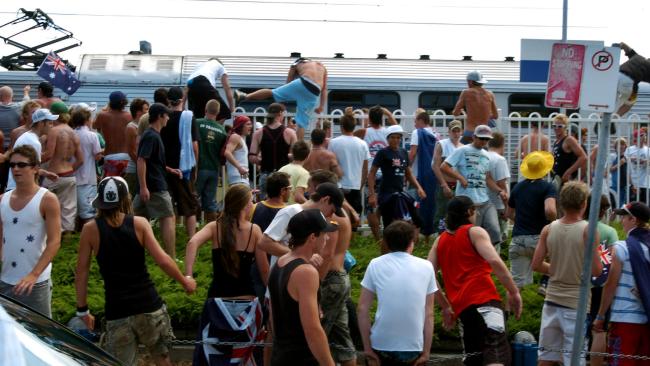
At the height of the Cronulla race riots a 16-year old Muslim boy climbed the local RSL club’s flagpole and threw the Australian flag down to his mates. They spat and urinated on it before setting it ablaze. The boy, Ali Ammar, was charged and penalised for his actions, and later apologised. His remorse was real and so touched RSL State President Don Rowe he invited him to carry a flag at the ANZAC Day march. All hell broke loose for a second time. RSL members were outraged. The shock-jocks had a field day. The offer was withdrawn, but another remarkable plan was hatched to allow the boy to say sorry publicly and to experience first-hand why the Australian flag is so important for so many: Ali Ammar would walk across the legendary Kokoda track. Compass had exclusive access to follow Ali’s redemptive journey. This timely story touches on themes of national identity, religion and history.
Story producer: ABC
Story
Thanks for joining me. Tonight we conclude our two-part examination of Australian patriotism with a remarkable story you won’t easily forget. We follow a young man who accepts a pretty tough challenge to atone for his actions during the Cronulla riots and we watch a gradual build towards his moment of truth. Along the way we find out why he did what he did and a lot more, questions that strike at the heart of what we Australians aspire to, at our core.
(ABC News Footage) Reporter
A week of simmering racial tensions boiled over into mob violence today in the beachside suburb of Cronulla. Man 1
“It’s our beach. Aussies’ beach. They can go.”
Narr
December 2005. Racial tensions flare up in Sydney’s southern suburbs. There were so many provocative acts, but one incident in particular would focus the anger of the media. A teenage boy tore down an Australian flag from the roof of the Brighton RSL, threw it to his mates, and burnt it.
Don Rowe- State President of the New South Wales RSL
Why would you go and pick on the symbol of your nation to do something that despicable to it? It’s a symbol of us as a people.
Ali Ammar
Thinking about it now it wasn’t a good idea. But, at the time, we just wanted to show how angry we were.
(ABC news Footage) News Reader
A Sydney teenager who burnt an Australian flag will now carry one in next year’s Anzac Day parade.
Narr
But this offer of reconciliation soon became a catastrophe.
(Talk back Radio) Caller 1
I don’t want that person anywhere near my flag. Caller 2
Instead of peeing on the flag they should pee on him.
Ali Ammar
I felt like, did I hurt this much people? What I’d done? Like something so small but so effective.
Narr
Ali spent several months in juvenile detention for his crimes but, far from destroying his life, it set him on a new path, a path that’s helping him reassess his life, his flag, and his country. And now it’s about to lead him to the greatest challenge of his life, walking the legendary Kokoda Track.
John Nalder – Trek Leader
Why are you here? Because I guarantee over the next ten days you’re going to hit the wall. Physically you’re going to get to a point where you’ll wonder if you can go on. If you know the reason you’re here, you’ll keep going.
Tim – age 17
I’m here because I want to know about Kokoda. I am really patriotic about Australia and this is where Australia fought off the Japanese invasion.
Aaron – age 19
The main reason I came over is to just challenge myself, learn about the people who fought for us. Just figure out what it was like for them.
Courtney – age 19
Don’t ask me why I decided to do it. I’m a bit crazy and thought it would be a fun idea.
Jennifer – age 20
I often represent Australia.
Narr
This group is about to set off on an incredible journey. They’ve all been sponsored by Australian RSL clubs who believe the experience could change their lives. Some are high achievers. Others have had a more chequered past.
Brady – age 19
The reason why I came on this challenge was I got voted in by the Wagga RSL Club. Yes, I was a hectic kid.
Tim – age 17
I want to see what happens when I hit the wall, If I can go through it. And if when everyone else hits the wall, if I can pull them through it.
Ali Ammar
Hi, my name’s Ali.
Narr
Ali is here as a bold gesture by the RSL, an attempt to mend some of the damage caused by the Cronulla riots.
Ali Ammar
I think I’m here to learn about Australian qualities and Australian history basically.
Narr
But none of his new friends know who he is or what he’s done.
Ali Ammar
And I heard that by the time this trek finishes it should make me a better man.
Narr
Over the next ten days the trekkers will experience a real test of physical endurance, Heat, humidity, primitive conditions and no days off. A team of local carriers will look after the camping and cooking, but the trekkers will be expected to carry their own packs. It’s well organised, but no holiday. The Track runs from Kokoda to Owers Corner, near Port Moresby. It’s only about a hundred kilometres, but they’ll be hiking through some of the most inaccessible and punishing terrain on earth. The trekkers are expecting it to be tough. But what may not realise is just how emotional this journey will be. Because they’ll be following in the footsteps of an earlier group of young Australians, who found themselves here 65 years ago.
Narr
It’s 1942, and a Japanese invasion force has landed in New Guinea. Their aim, to take Port Moresby and be in striking distance of Australia. All that stands between is a small band of largely irregular soldiers. The militia. Ill equipped, and poorly trained, they’ve slogged for days over the mountains to meet the enemy at Kokoda. Over three months they’ll resist the Japanese. Their stories of determination, of courage, and mateship will burn into the Australian psyche to rival Gallipoli.
John Nalder – Trek Leader
This quiet, beautiful place 65 years ago was just a slaughterhouse. And yeah some men that the country doubted stepped forward, the militia, the chocos, they stepped up. And somehow, I believe, that these young guys we’ve got on the track, when they’re asked to, they’ll step up. And that’s all they need is belief, opportunity and belief. And that’s I believe what we can give them, both of those on the track.
(John talking to the group)
This is the Kokoda plateau, this is where the Kokoda campaign started and finished. Now, we’re going to follow the battle from this end as the Australians retreated up through Isurava.
Narr
Team leader John Nalder has walked Kokoda many times. He’s become an expert on the people and places that give the Track meaning.
John Nalder – Trek Leader
The purpose of this is to bring the history to you, create and interest, and most importantly expose you to the opportunity to learn some lessons about your life.
It’s going to hit them from so many degrees. One, the physical challenge of it strips away the veneer of their day to day life. The people, the carriers, will touch them enormously, and that’ll touch them emotionally. And then the history. So it’s really three-fold. It becomes almost a spiritual experience when you combine those.
Narr
It’s a long way from what Ali’s used to – the suburbs of Sydney and a Lebanese Muslim upbringing.
Ali Ammar
When I was a kid growing up in Australia it was sort of weird, because I used to have different lunch to everyone else. And they’d have birthday parties and things like that, or just places they’d go different to us.
Hassain Ammar – Ali’s Uncle
He was a brilliant boy. He was a very polite, very active, brave little kid you know. He always jumped in front of you doing things. Top soccer player. When he moved to high school he started mixing with the wrong crowd, I think. Smoking, girls, and alcohol.
Ali Ammar
Always go out on the weekends. Go and have fun with my friends. Spend my money. Just to have a good time mainly. Because as a kid I was hardly allowed out and things like that. But, I dunno, sort of my dad’s upbringing was no friends, no going out, things like that. Like, when I was sort of caged in for that long I just burst.
Narr
It’s the second day, and the first big challenge, the hill that leads up to the new Australian Memorial at Isurava. Many of the trekkers are already feeling the heat. Teneil is the youngest in the group. She’s only sixteen and it’s her first big trip away from home. Brady, a tough, knock-about farm boy from Wagga. He’s seen a fair bit of life already.
Brady – age 19
It’s where my ex girlfriend stabbed me. With a butter knife. Oh just where me and a bloke had a puncher in there. He sliced me with a bottle. I got heaps, not good.
Narr
And then there’s Aaron, nineteen years old. And from a family of battlers. He’s never done anything like this before. And he’s really doing it tough.
John Nalder – Trek Leader
Little steps, mate, little steps. Big steps take a lot out of you. Get into a rhythm. Nice and slow, gentle rhythm. And your breathing, breath deep. Nice deep breaths into your diaphragm. Are you with me? Let’s do it, nice and slow.
Narr
Like Ali, Aaron’s also had a troubled past having had a few run-ins with the police in his early teens. Now he’s a youth worker himself, wanting to pass on lessons learned on the track.
Aaron – age 19
Oh it’s killing me now, it’s unreal, but it’s good. Pretty much want to get right through it and just encourage kids when I get back, just to go through life one step at a time. Pretty much, for sure. Mainly just for leadership with a lot of the kids that I work with and stuff. Just so you can sort of let them know that life isn’t as easy as they think it is.
Narr
But John’s starting to get nervous about Aaron.
John Nalder – Trek Leader
Yes, he’s battling physically. Mentally he’s still strong which is a good thing; he’s determined to get there. But as the physical deteriorates then the challenge is how his mental holds up, because at the moment, physically, he’s shot. Normally, I’d look at someone in that condition and say, no, not going to make it.
John Nalder – Trek Leader
My feeling, and obviously you’re a part of it, but we’ll make this decision together. I don’t think you’re going to make it up to the top, much as I’d love to see you at the Memorial. And the pain was just getting sharper and sharper over that last bit, wasn’t it? Tell me what you think.
Aaron – age 19
It’s not that I don’t want to go there but I just don’t want to injure myself.
John Nalder – Trek Leader
I know. It’s not a question that you want to be here. But it’s just physically we’re not going to, I’m not prepared to see you do long term permanent damage to yourself over what’s a goal that can be set again. Do you want to come with me and we’ll go over and let the group know?
Aaron – age 19
Yep.
John Nalder – Trek Leader
Aaron’s knees have gone on him. We’ve made a decision. He’s going back. It doesn’t mean one iota less for Aaron. I’ve made the decision in conjunction with him and to go on is just going to cause too much damage to him. We’ve also made the goal to each other. He’s going to go back, do the work, get ready, and he’s going to come back and do it again. Now, we’ve had some really good people who have failed first time and they’ve come back and done it again. And in life, as here, no matter how many times you get knocked down, it’s whether you get up again.
John Nalder – Trek Leader
You’re now at a site that I’ll say is second only to Gallipoli. So really take in the words on those pillars, courage, endurance, mateship, sacrifice.
Narr
At the end of the day’s climb is the Isurava memorial, dedicated to those men who fought a desperate and ferocious battle here early in the campaign with the loss of many mates.
John Nalder – Trek Leader
No matter how many times I’ve been here, I still choke up. Every time I come here this place chokes me up.
John Nalder – Trek Leader
I just want to share a poem with you. It’s called “What do you say to a dying man?”
“What do you say to a dying man
D’you call him Bob, or digger or mate?
As you look at the face you knew so well,
The look in his eyes says it’s late.
And you know if you happen to survive this onslaught,
They will surely ask you of his life’s end.
Just three minutes ago he was so full of life,
Firing his Bren from the hip.
The platoon attacking as it had so many times before.
When all of a sudden he’s hit.
And my best mate falls at my feet.
‘Tell them I tried’, he said.
My words of goodbye froze on my lips.”
Would you make him proud of that sacrifice?
Brady – age 19
I’d be fighting pretty hectic. I’d give it a go. Because I’d also be fighting for my mates as well as my country. Like, I have to say one thing. Hats off to them all. They’re soldiers. They’re good.
Jennifer, age 20
When I went up to the memorial and I was looking at the four stones I think “Sacrifice” is the one that jumped out at me. Not because it’s something we have to do but it’s our inheritance. It’s the boots that we have to fill. And I think that’s a big thing for us.
Ali Ammar
You’ve got to have courage, and not just that, if you’re going to see your mates dying around you because the courage isn’t there, it’s going to go back to mates. Like you’re caring that they’re falling out on the battlefields and things like that. And you want to show them that you can stand up to a force even if it’s that big.
(News footage of riots) Crowd
“Fuck off Lebs, fuck off Lebs …”
Narr
Back in 2005, in the thick of the Cronulla riots, Ali’s own mateship and allegiances were to be put to the test.
Ali Ammar
And my mate came back with stitches from his eyebrow down to his cheek. That’s what made us really shitty. We just felt like we had to do something about it. We just wanted to show how angry we were.
Narr
On the following night Ali and some of his mates met in the car park at Brighton le Sands. Trouble was in the air.
Ali Ammar
When you are around so many people and that many ideas and that many thoughts going through your head and you’re in a situation like mine you’re not really thinking.
Narr
They found themselves outside the RSL. Ali’s mates pointed to the flag fluttering defiantly above the crowd.
Ali Ammar
Well someone boosted me up on the telegraph pole and from there I climbed up. And before I knew it I brought down the flag. As I came on to the edge people were screaming out throw it to me, throw it to me, things like that and then I just threw it down. That flag looked like the people that … represented the people that were rioting in Cronulla and going against us and things like that. We felt unwanted, we felt hated,
(Back on the Kakoda Track) Trekker 1
“Age shall not weary them, nor the years condemn. They shall not grow old as we who are left grow old. At the going down of the sun, and in the morning, we will remember them. Lest we forget.”
John Nalder – Trek Leader
Some of these kids have never been out of the city. They’ve never experienced bush let alone jungle. They’ve never been in a tent. It’s just so far out of their comfort zone. So I guess I slowly expand that.
Narr
Day three, and out of Isurava is a series of steep and slippery hills, where going up is exhausting, and coming down even worse.
John Nalder – Trek Leader
This is the wartime village of Eora Creek. This is where the wounded were staged. There’s photos taken here during the war and it was just a scene of utter confusion. And one thing that was very common throughout the withdrawal was that, people refused help. There was always, a very common one was, no, I don’t need to be carried, look after them. They’re worse. So there were people with horrific wounds who walked, people with shot-up arms combining with someone with a shot-up leg and together they provided the propulsion to get up and down this terrain.
Narr
And it’s not long before the trekkers have to cope another casualty of their own.
Brady, age 19
I dislocated my knee, yes. I was walking across a bridge and my boots were wet. And these aren’t real good for rocks and stuff. And I just moved the wrong way and it popped out. And luckily I pulled my knee back in the right way when I got back up and it popped itself back in. Straight across there, swollen, very sore.
John Nalder – Trek Leader
The boys are going to bring the stretcher down in a moment.
Narr
Which makes Brady an ideal volunteer for John’s next demonstration.
John Nalder – Trek Leader
The most critical part of carrying a stretcher is the lift. You’ve got a wounded guy in there so you’re not going to put any packs on top of him. In this case we’ll have Brady with his pack and that’s it.
So the person is in there head first here and feet down there.
Narr
It’s an exercise in how wounded soldiers were evacuated down the track.
John Nalder – Trek Leader
Now lie in there and I know that’s going to be hard for you, you’ve got to shut up. Ok, Ali, there’s your casualty. Organise your people, let’s get ready to go.
Ali Ammar
I need two people on either end and.
Narr
For Ali, who’s been content to stay somewhat in the background so far, it’s a chance to pull his head up and make an impression.
Ali Ammar
So whoever’s the same height I want them next to each other please. Two at the back, two at the front. You two at the back and, hold on. Tim, you and Tim and Adam on the front. Let’s go.
John Nalder – Trek Leader
The track touches them and you see a lot of them, there’s really only “I” in their life. And that’s it. And as the track affects them they start to look sideways. They start to help other trekkers, people they’re with and a bit of the selfishness starts to disappear. Because I work on the philosophy they’ll forget what I said, they’ll forget what I did, but they’ll probably never forget how I made them feel.
Narr
Back in 1942 the diggers absolutely relied on native stretcher bearers, the “fuzzy-wuzzy angels”. In impossible conditions, and at great personal risk, they saved hundreds of injured soldiers. John hopes that the example of those wartime angels will rub off on the trekkers.
John Nalder – Trek Leader
In doing the stretcher carry brings them together and starts to promote the teamwork side of it. And what I’ve done now is turned them loose and said basically go for home. So now I‘m watching to see who’s helping. And some of the faster ones I see have stopped to go with Brady which is good. Some of the others they’re not really caring what’s behind them and they’re really just going for home.
Narr
But unfortunately for Brady, what was a simple demonstration just this morning is now only too real. The tough terrain has finally felled him. The descendants of those wartime angels must carry him out. Brady’s trek is over, and John has got a few hard lessons for everyone else.
John Nalder – Trek Leader
Interesting day. Since lunchtime I’ve seen some real true Kokoda spirit and I’ve seen some bloody selfish behaviour. Where people are locked on themselves and not even looking sideways. I’m not going to specify anyone, but as a group get your act together. Look sideways. It’s not just about you. Some of you were on one course on that last stretch. To get here as fast as you could. And there wasn’t a bloody consideration for a few others. I saw one person virtually knock someone off the track passing them, and not even a word, because they were in a hurry.
Ali Ammar
Every corner you take you think we’re getting there, but it just keeps going and going and going. And then I’ve hit stages where I just want to get there and I don’t worry about anyone else. And I know that was wrong.
John Nalder – Trek Leader
Some of you displayed real true Kokoda spirit. Let’s get it right through the group. Come on guys, you’ve got the potential. You’re there.
I’d like to introduce you to a very special man. This man was a carrier for the Australian Troops in the Second World War here in Papua New Guinea. This man was wounded during the war, shots fired, he lost fingers. He spotted a Japanese ambush and he saved the lives of Australians by diving off the track. So he’s a very special man.
“Many mother in Australia
When the busy day is done
Sends a prayer to the Almighty
For the keeping of her son.
Asking that an angel guide him
And safely bring him back
Now we see those prayers are answered
On the Owen Stanley Track
Slow and careful in bad places
on that awful mountain track
And the look upon those faces
makes us think that Christ was black.”
He does this to me all the time. This is a very special man and for each of you this is a very special moment.
John Nalder – Trek Leader
One more thing, if you look at these medals on his chest, there’s not one from the Australian Government. They’ve all been donated by trekkers. There’s police medals from policemen that I’ve brought over. One policeman from Western Australia actually gave his bravery medal for me to bring back for this man. There’s not one medal there from the Australian government.
Ali Ammar
The way the carriers I think feel is that the Australian Government, not the Australian people, there’s nothing wrong with the Australian people, but the Australian Government have been short on a lot of things. Mainly just recognising. Recognising does a lot. Like it can change a whole country, just if you recognise them.
Narr
Two days later and the trekkers are more than half way. They’re heading towards the highest point of the track more than 2000 metres above sea level. The air has become cool and thin.
John Nalder – Trek Leader
The high spirits of Aduri are starting to fade on the steep climb and it’s pretty quiet after a very noisy descent. They’ve gone silent. I think they’re more concerned about oxygen at the moment.
Narr
Ali has lately drifted towards the back of the pack.
Trekker 1
Someone just shoot me now … We’re the KT Boys, the Kokoda Track boys.
Trekker 2
Our paths crossed. Now we’re at the back of the pack, because we’re slow
Trekker 1
You know, when I get home I’m going to give my mum and my dad the biggest hug.
Ali Ammar
There’s nothing like family. Situations like this that’s when it actually hits you in the head. You know what you’ve really got and you’ve taken it for granted, taken advantage of it.
Narr
Ali’s family was shattered by his act of vandalism during the Cronulla Riots. They felt angry, shamed by his insult to their adopted country.
Hassain Ammar – Ali’s Uncle
Australia treated us very well. We were lucky to be here. We never are the type of people that you sort of eat from somebody’s plate and you spit on it as we say in a phrase.
(ABC news footage) News Reader
A teenager who burned an Australian flag in retaliation for the riots will spend the next fortnight in custody.
Narr
When Ali was arrested he was already on a good behaviour bond for previous offences. He ended up spending seven months in juvenile detention, and it scared the life out of him.
Hassain Ammar – Ali’s Uncle
Nothing was getting into him till this happened, when he got locked up. He says that he started thinking things over and he sort of like, what am I doing? Why did I do this?
Ali Ammar
Well my burning the flag, I hurt many people. Basically families and that grew up under this flag. And war veterans and things like that. It’s not their fault the Cronulla riots happened. And me doing that, burning the flag, just cut em even more, like put em in the position where I was showing them hate. And as much hate as was shown towards us, why should I show it to anyone else?
Don Rowe
I think I was pleased to hear that somebody had been apprehended for it.
Narr
Don Rowe, State President of the New South Wales RSL, first met Ali at a Reconciliation Conference after he came out of detention.
Don Rowe
It became pretty obvious to us that he was remorseful in what he had done and was very sorry what had happened. And his attitude and the sincerity in his voice convinced us that he was fair dinkum. And he was a young fellow in the wrong place at the wrong time, and had done something really stupid.
(ABC news footage) News Reader
A Sydney teenager who burnt a flag will now carry one in next year’s Anzac Day parade. The RSL says it’s an attempt to create something good out of last year’s violence around Cronulla.
Narr
So the RSL in a bold gesture of forgiveness, hatched a plan for Ali to march on ANZAC Day.
When the news broke that the flag burner would be become the flag bearer, talk back radio went wild.
(Talk back Radio) Caller 1
We don’t want him to be a hero, we just want him to go away.
Caller 2
He doesn’t deserve to go anywhere near that flag. And to be quite frank with you, he and his parents and everyone else can go back to where they came from.
Caller 3
That young fella should realise he’s living in the best country in the world. Instead of peeing on the flag they should pee on him.
Don Rowe
There’s lots of people said they were going to spit on him and abuse him and throw eggs at him and kick his arse every time they saw him. That’s just not on.
Ali Ammar
I felt like, did I hurt this much people? What I’d done. Like something so small but so effective.
Don Rowe
It doesn’t help the cause, it doesn’t help any young person who respects and relies on the values of what Australia is about.
Narr
And so Ali came to Kokoda instead. Except this time it was all kept very secret. No-one except John knows about Ali’s past. But the thought of telling his new friends is starting to weigh heavily on him.
Ali Ammar
I think if I do there’s going to be a big difference on my trip here. Like people are going to be looking at me a lot differently. And maybe if they do find out, maybe one time when I put my hand out to help them up a ledge or something, I don’t think they’re going to take my hand.
John Nalder – Trek Leader
He’s got these barriers up because he doesn’t want to get hurt. And yes he’s going to risk hurt, but he’s never going to be able to really advance and build relationships until he takes that step.
John Nalder – Trek Leader
I want to pose a question to all of you. It’s a question that’s also a challenge. Maybe ask yourself in life, when the going gets a bit tough, do you immediately stop? Or would you push through it? Because what I’m seeing at the moment, is a group of guys, you’ve done some hard yards, but this morning for some reason, you’re stopping all the time. And what you’re doing is that you’re training yourself to stop, every time it gets a little bit hard. Now, nothing’s easy in life and it’s not easy on the Track but you’re not gaining anything by continually stopping. You’re actually making it harder for yourself.
John Nalder – Trek Leader
The lessons are touching him. The Track works on you whether you like it or not. And, yes, he is being touched. What I can’t judge at this stage is the depth of how far it’s gone.
Narr
By day six, the lessons are coming thick and fast. They’re now on their way to Brigade Hill, and the scene of one of the most devastating battles in the campaign. Here, a small group of diggers, against impossible odds, held out to protect their mates, knowing full well that they would die.
John Nalder – Trek Leader
Sit there for a couple of moments with your own thoughts and think about what those young men, how they felt. How would you feel, and I ask myself this question, and I can’t answer it. How would you feel taking off your identity disc and handing my pay packet, knowing that I was going to my death?
Look over this area here. You’ll see a lot of indentations. That’s the remains of 62 Australian soldiers who died here at Brigade Hill. Are we living up to the ideals that would honour their sacrifice? In all of you I see such enormous potential. And the only thing standing between you and your potential is your thinking. We owe it to these men to achieve our full potential.
(Trek Group sings Advance Australia Fair)
John Nalder – Trek Leader
Thanks guys, I’d say you’re the first group who’ve had the courage to do it up here. Well done. I’m really proud of everyone of you. Well done.
Narr
Emotionally and physically battered the trekkers are sensing that the end is within sight. But the track hasn’t finished with them yet
Trekker 1
That rain’s definitely coming closer.
Trekker 2
What will your mum say about this, Ali?
Ali Ammar
Oh, Mate, she’ll sack whoever sent me. What can I do about it? I can’t tell it to stop raining.
Narr
At first the rain seems a novelty…but a few hours later, for sixteen year old Teneil, it’s no fun at all.
John Nalder – Trek Leader
It’s just an emotional, everything comes to the front, it’s just an emotional thing and the best thing for her now is not sympathy, but to push on.
Teneil
I want to carry something
John Nalder – Trek Leader
Now, guys, it’s wet, so what? We can’t control it. Enjoy it. Go with it. Let’s put it into perspective. This weather is what almost that entire campaign was fought in, day and night. No-one’s being shot at. So let’s keep it in perspective. Go with it. Find the positive in it.
That’s actually really good. They’re starting to encourage each other and work together.. And they’ve got to. The misery meter’s going to be right up with the rain. There’s a few of them suffering emotionally, they’ll need some support from those around them, but it’s good.
Ali Ammar
It’s up to the knees, soldier on. My leg’s stuck, give me a hand.
Narr
Day eight, and the trekkers are on the long climb up to Imita Ridge. Here, 65 years ago the Australians’ fortunes finally changed. They dug in, stopped the Japanese advance, and began to slowly push them back along the track. It was to be an Australian victory, and the diggers’ dogged determination and resilience would become part of our folklore.
John Nalder – Trek Leader
This is coming towards the top of Imita Ridge, towards the end of a very tough climb. You’re asking a lot of them both physically and emotionally here.
Come on John-o, push it through. You’re nearly at the top there. Good man, breath deep. Some of them probably don’t realise but they’re doing things now that, eight or nine days ago, they would have been bawling heaps on the ground. Here comes one classic case, Teneil. She’s just going so well. She’s pushing through barriers, which is fantastic. All she’s got to do is get back into life and keep doing it. Just your pace, your goal, you’re nearly there. Finish it off, great going.
Teneil
Thanks, John.
John Nalder – Trek Leader
I’m going to do something that’s been done by myself very rarely. This is coming off me. This is my father’s dog tag. He was over here. Only about four people have ever worn this.
(John gives it to Teneil).
John Nalder – Trek Leader
Today’s been a real breakthrough for quite a few of them. Ali at the front. And I said you stay here. He said, I’m proud. I said I’m proud of you for being here. He’s totally broken away from this comfort circle at the back and he’s come up the front and he came up there and actually pushed himself through a bit of pain which he’s generally been a bit reluctant to do. So it’s good.
And now I want them to, I guess we’re working towards the end of the trek. I want them to come out with a few things that they’re going to change. Because it’s only another couple of days and they leave me, they leave the track.
(John talking to group)
I’m going to ask you to think about something you’re going to leave on the track. Something you’re going to change. Something you’ve done in your life and think, no, that’s it. It’s finished. It’s on the Track, I left it. I’ll give you an example. I’ll expose myself here. While I’m looking at each of you. I’ve got no trouble doing it. The respect that’s grown for each one of you over the last eight days. Now, I’ve a great son, a great daughter, but sometimes I’m a real hard prick. And I have a bit of trouble telling them I love them. That stays on the Track. When I get back, I’m not going to be a trek leader, I’m going to be a father. I’m going to tell them I love them. No mistakes, no regrets. It’s on the Track.
Jennifer, age 20
I think when we first turned up at the airport and I saw everybody and it was, oh, no, I’m going to be stuck in the jungle with this load of people for ten days and I really don’t want to do it. And I think I was judging you guys without really knowing you. And that’s something I’m going to try and leave behind.
Martin
I’ve got the strength to say, I don’t need to look back, it’s over. I’m a changed person because I can do this track. Thanks.
Narr
For most of these kids the Track has weaved its magic. But for Ali, his fears are still holding him back
Ali Ammar
I’m just trying to feel the right time. Something I’ve done, but it will probably change their, I dunno if it will, but hopefully it won’t. Seems the way they’re going and that it won’t change their actions or anything towards me, but I dunno.
John Nalder – Trek Leader
Ali, can I tell you something from my heart? Would you judge yourself harder than other people are going to do? No-one’s going to change the perception of you. They’ve shared an experience with you. I’ve seen you grow. They’ve seen you grow. Pull down the walls. These people are accepting you really good, but you’ve got fences up.
John Nalder – Trek Leader
It’s something in his life that he has to deal with. It’s an issue that’s boiling there and under the surface of Ali’s, his personality, of who he is. It’s almost, I’d describe it as a boil there under the skin and he’s going to have to break it and deal with it.
Narr
Later that afternoon Ali finally bites the bullet.
Ali Ammar
I dunno, just a couple of things I want to let out and maybe some of you would want to know. There’s things I’ve done in the past. When the Cronulla riots were on, I was part of the burning of the Australian flag, and that’s why I’m here today. I’m not here because this is my consequence or anything like that. I’m here because I want to be here. I’m here because I hope that people that see me going through what I went through and the mistakes I’ve been through, and me admitting and owning up to my mistakes will change them.
A lot of things and a lot of people have done stupid things at that time, and, I dunno, I’m just owning up to it. And I’m trying, I’ve been trying hard, actually, ever since I got out of juvenile, I’ve been trying hard to make everyone understand and to make myself understand and to keep myself out of trouble. Don’t get me wrong I’m not perfect, but I’m trying. And the reason why I didn’t tell you earlier was because I didn’t want you to get a different picture about me. I wanted you to know who I really was first.
And coming here, coming here I was wishing I get a better understanding, a better understanding of how you guys feel about things like this and what is Australia and things like that. Different races, different things, everyone’s got a different opinion about each other. Don’t get me wrong, there’s bad people in each community and there’s good people in each community. But, I dunno, I think we should just socialise more and things like that. It’s just not going to work if we keep hating each other.
John Nalder – Trek Leader
Pretty big of Ali to come out and say that. And I’ll stand beside him, so mate to mate, good to share it with you.
Narr
Ten days, a hundred kilometres of pain, and they’ve finally made it, together.
John Nalder – Trek Leader
You are less accepting of yourself than what these people are. You need to go out now and be a leader in your community. Help bridge the gap between our two communities. You can be a leader.
What are your memories of that awful day? Comment below
WHEN photographer Craig Greenhill boarded a Cronulla train 10 years ago, he risked his life to capture the brutal bashing that shamed Australia. Here he tells Yoni Bashan about the story behind his iconic photographs.
“IT WAS a normal Sunday morning 10am shift. Nothing was happening.
The picture desk turned to me and said ‘why don’t you go down to Cronulla, have a bit of a stroll and see what’s happening’. I drove down and got there just after lunch.
Cars on the Cronulla beachfront. Picture: Craig Greenhill
Thousands of people flocked to the area. Picture: Craig Greenhill
To be honest, I was a little naive to what was going on. I didn’t know what I was walking into but as soon as I arrived it was apparent straight away this was a volatile situation.
It was literally thousands of people on the beach front, flying flags, driving their cars, pushing shopping trolleys with beer stocked in them. It seemed undermanned by the police. It was out of control.
When there was a flare-up, it turned into a bushfire and took over.
Men fly the flag up a tree at Cronulla before the riots kicked off. Picture: Craig Greenhill
“It was literally thousands of people on the beach front, flying flags.” Picture: Craig Greenhill
It seemed calm until some people with a bit of colour walked on the beach front and that was when the crowd turned and chased them down.
It was violent — bottles being thrown. The police had to rush in and protect the three innocent people on the beach and they were being chased. They eventually got past a wall of police to safety. That’s where the crowd turned. They got the smell of blood and the tension ramped up.
The crowd quickly turned ugly and began abusing a couple on the beach. Picture: Craig Greenhill
“They got the smell of blood and the tension ramped up.” Picture: Craig Greenhill
Police protect the innocent people from the angry mob. Picture: Craig Greenhill
The couple were rushed to safety behind police lines. Picture: Craig Greenhill
Tension brewed among the crowds in the morning. Picture: Craig Greenhill
One person I remember most from the Cronulla riots, from all the faces and people that I photographed that day, is Sergeant Craig Campbell.
I’m pretty sure Sergeant Campbell saved my life on the train that day.
It was the middle of the day and the crowd was raging, a mob mentality had taken over and there was an atmosphere of pandemonium: people were climbing trees and walking around with their chests puffed out, chanting racist slogans; some guy had written “Wogs out of Nulla” on his body in black texta; fights were breaking out between girls out the front of the Northies Hotel; and the police had no control over what was happening.
Police had little control over the crowd. Picture: Craig Greenhill
People rushed to the train station after a rumour spread about a “pack of Lebanese”. Picture: Craig Greenhill
“The crowd was raging, a mob mentality had taken over.” Picture: Craig Greenhill
A rumour had made its way through the crowd, something about a “pack of Lebanese” coming into the area; suddenly everyone started running to the train station, even the people who hadn’t heard the rumour. They were just following the crowd. As a photographer, I did the same.
The station was only about a kilometre away and when us photographers got there we saw everyone looking for this “pack” of men who’d supposedly come in to Cronulla for a fight. Instead, there were just two lone Middle Eastern guys sitting in the upper deck of a carriage trying to keep a low profile. I think they were actually trying to leave the area and waiting for the train to disembark. They weren’t doing anything wrong.
I remember seeing people jumping over fences and the turnstiles at the station to get close to the action. I saw a few people hop on the train, hesitate, and then come back onto the platform.
Hundreds of people jumped the fence to storm the train station. Picture: Craig Greenhill
The Daily Telegraph photographer Craig Greenhill won a number of awards for his Cronulla riot pictures. Picture: Supplied
A few moments later the situation escalated when these two guys ran onto the train and made their way to the upper level of the carriage. I followed them and started taking photos, trying to get as far into the corner as possible to capture the scene. There wasn’t any time to change lenses or anything. Within seconds carriage was full of people throwing punches and bottles at these two guys.
In my mind I wanted to record what was happening so I kept the camera trained on it all, but after a few seconds I put the camera down and yelled out, screaming almost.
“Get the f**k off ‘em! You’re going to kill ‘em,” I yelled.
Thugs rushed into the top carriage to attack two young men waiting on the train. Picture: Craig Greenhill
The innocent men were beaten senseless. Picture: Craig Greenhill
It became clear if I didn’t do something these guys would be in serious trouble. These guys were being pulled apart in front of me by a pack of dogs attacking their prey.
A few of the guys kind of stopped and looked at me. They sized me up and when they realised I was by myself and not a threat they just kept going, laying into those two guys.
That’s when Sergeant Campbell arrived, coming in old school.
The situation was just totally out of control and he responded in kind; his baton was out and he just charged forward, smashing everyone in front of him. I was lucky not to get hit.
“These guys were being pulled apart in front of me by a pack of dogs attacking their prey.” Picture: Craig Greenhill
This iconic image titled ‘Train Bashing’ won a Walkley and the 2006 News Awards Photograph of the Year. Picture: Craig Greenhill
Sergeant Campbell saved those guys and I felt like he saved me. I was the one left holding the evidence. Once the victims were incapacitated, I would have been their next target.
[blockquote]“Could I have done more on that day to step in and help these guys out? That’s a question I often ask myself”[/blockquote]
Much later I gave evidence in court against one of the main characters who hopped on the train that day. A few of the photographers there that day were asked by police to hand over their images to assist the ongoing investigation.
Suddenly Sergeant Craig Campbell rushed into the carriage and beat the attackers back with a baton. Picture: Craig Greenhill
Police quickly saved the Middle Eastern men from the attackers. Picture: Craig Greenhill
Tensions were high on the platform. Picture: Craig Greenhill
Police hold back the crowds. Picture: Craig Greenhill
My pictures from the carriage were used against one guy in particular, Brent Lohman, and he ended up getting a conviction. The same photo, which I called Train Bashing, ended up winning a Walkley Award for news photography.
It’s kind of ironic because, today, the Cronulla riots is used as an example of what photographers should not do in a riot situation.
Instinct took me onto the train, but, looking back, there was no escape route in that carriage and the circumstances were extremely dangerous.
If the same thing happened today I would probably be breaking a rule by doing the same thing.
Of course, if I did that, we wouldn’t have a visual record of what happened that day.
Police line block the crowd in Cronulla. Picture: Craig Greenhill
Police later arrested men of Middle Eastern appearance who were armed after their car was pulled over in Cronulla. Picture: Craig Greenhill
Police arrest men of who were driving into Cronulla armed in response to the train bashing. Picture: Craig Greenhill
In 2005 police sergeant Craig Campbell fought off a pack of Cronulla rioters while defending the lives of two young men who had been cornered on a train. It cost him everything.
Ten years after the Cronulla riots there are still ramifications. I am no longer the frightened 14-year-old worried an “Aussie” is looking to fight me, but those events did affect my outlook, feelings and sense of belonging for a long time, writes Mohamed Taha.
I was shocked, disgusted, angry and confused as I walked into my school the day after the Cronulla riots. I was 14 years old.
Granville Boys High School was a great place. The students were predominantly Lebanese Muslims, followed by Polynesian and Turkish students. I was a warm, bubbly student – a “cool” geek that was just awarded the Dux of Year 9 weeks earlier. The staff were strong-willed and many students were a little rough around the edges. There was a ghetto-like subculture among some students.
On that Monday, tensions were really high at the school. The riots were the talk of the playground. A lot of students were venting about the media reports they witnessed a day earlier: images of violence, drunkenness, vandalism, offensive slogans and racism. Particularly the images of Australian flags draped over the shoulders of Caucasian men who were targeting anyone who looked remotely Middle Eastern in appearance.
It all felt incredibly personal for a lot of the Lebanese students, including me. In class, I recall hearing some students saying how their parents were “packing their bags” or how they would “bash an Aussie” if they saw one. My friend referred to the racist catchcry, “We grew here, you flew here”. One student joked, “Don’t worry boys, just tell them, ‘You came in chains, we came in planes’.”
The funny thing is we were all born and raised in Australia. It didn’t matter though, as many of us were angry and some wanted revenge.
The “us and them” mentality had overpowered rational thought with fear and anger. At recess, I saw three Lebanese boys pushing another student against the wall. When I got closer, I realised they were about to punch one of the fair-skinned Italian students.
“Are you an Aussie dog or not?” one yelled as he grabbed the student’s shirt collar with his other fist clenched. The student pleaded he wasn’t “Aussie”. I intervened and told them to leave him alone. I said he’s Italian, not Aussie and that he was against the riots.
[blockquote]My mum was concerned about our welfare and told us to be careful in public. Weeks after the riots, we were only allowed to go to and from school.[/blockquote]
They stormed off. He was visibly shaken. I remember helping him stand and reminded him to tell people that day he was Italian, not “Aussie”. In retrospect that was wrong, but at the time it seemed like the only way to quell the anger.
By lunchtime, a text message had circulated among students that a bunch of white Aussie boys from the Shire were coming down to “punch on” with us after school. Apparently they were meeting us at Granville train station. I was shocked and a little frightened. I remember asking my older brother what we should do. He said we should do nothing but if anything happens, we will defend ourselves.
We lived in Lidcombe, which meant we had to travel east to get home, while the other boys travelled west to Granville, Guildford and Merrylands. This put my brother and me at risk of confronting the Caucasian group alone.
While I was worried about my own safety, others in the playground were turning to thoughts of battle.
“If they want war, we’ll give them war,” one yelled.
So almost 100 students, predominantly Lebanese, Arab and Turkish, gathered and went to the woodwork department. Many took pieces of wood as weapons. In the heat of the moment, I put a piece of wood in my bag. It was the first time I had ever given in to peer pressure, because I was genuinely scared I could be attacked. Upon reflection, I had given in to the “herd mentality”.
At the end of the day, like an army mobilising numbers on a battlefield, groups of students patrolled various parts of Granville train station and its platforms. It was very tense. Any person who looked remotely “Aussie” (fair-skinned and in school uniform) received a barrage of questions from hot-headed students. No such group came. The students went home. As my brother and I walked home from Lidcombe train station, I stopped at a local park and buried the piece of wood under mulch.
When we got home, we had a long conversation with my parents. My parents called for calm and restraint. My mum was concerned about our welfare and told us to be careful in public. Weeks after the riots, we were only allowed to go to and from school.
Ten years on, the riots still have ramifications. I am 24 now, but as I grew up the riots affected my outlook, feelings and sense of belonging. It’s difficult enough to navigate your way through life as a teenager with all the standard teen woes and problems. Add the complexities of racism, politics, media coverage and figuring out my identity and it can be very overwhelming.
I found my way by being comfortable in my own skin and I’m grateful for that. The moment I found peace of mind was the moment I embraced my mixed identity: I’m Australian by nationality, Muslim by faith and Lebanese by cultural heritage. I’m richer for it. It was incredibly difficult to figure out whilst learning what it is to be a “man” and how to be a “man”.
UK Islamic scholar Aftab Malik from the UN Alliance of Civilisations describes young Arabs and Muslims in the West as the “post 9/11 generation”. For us in Australia, I would add to that the Cronulla riots. One of the ugliest episodes in recent Australian history didn’t happen in a vacuum. It was a culmination of a bubbling undercurrent of racial tensions and clashes between young Caucasian and Middle Eastern men.
[blockquote]Until recently I thought we’d improved race relations in Australia. The Adam Goodes saga tells us otherwise. If our elite athletes get racially abused, what hope does the average Khaled, Ahmed or Maryam have of a fair go in society?[/blockquote]
The then prime minister, John Howard, seemed averse to suggesting that racism was involved when he said: “I do not accept that there is underlying racism in this country.”
Tell that to 14-year-old me who was petrified of going home. The lack of honesty and stench of hypocrisy suffocated me. It engulfed my lungs. I wanted our leaders to call out the terrible behaviour and criminality from BOTH sides. Then right-wing commentators and media personalities added fuel to the fire by shifting blame on the “Lebanese community”, labelling them “Middle Eastern grubs”. The divisive language and slogans from both camps created a dangerous mix of unrest, anger, hysteria, paranoia and anxiety.
Australia’s undercurrent of racism reared its ugly head that day. And despite it being 10 years ago, many are still affected today. The majority of my Year 12 cohort went on to attend university, college and TAFE. Some entered the workforce. Many went through an identity crisis. Some changed their name to make it more “Anglo-friendly” for work purposes. Some internalised racism. Others adopted a victim mentality and blamed the system for everything that went wrong in their life. While others developed an inferiority complex. Sadly, some still carry these demons with them today.
Until recently I thought we’d improved race relations in Australia. The Adam Goodes saga tells us otherwise. If our elite athletes get racially abused, what hope does the average Khaled, Ahmed or Maryam have of a fair go in society?
We need a shift in attitude from all parts of society. For starters, let’s be open and honest about our history as a nation. Those in positions of leadership need to be measured in times of crisis. We have a civic duty to proactively work towards holistic change and aspire to higher values of justice, equality and fairness.
When I walk past the park in Lidcombe, I sometimes think of the piece of wood. Like our demons, it is buried deep down inside and lies dormant. It serves as a reminder of what a 14-year-old Australian Muslim of Lebanese descent felt he had to resort to in this country at a time when our social fabric was at breaking point.
Mohamed Taha is a reporter and producer for ABC News, based in the western Sydney bureau in Parramatta. Follow him on Twitter @Mo_Taha1.
Hero cop Craig Campbell left behind by the Cronulla riots
Date
Craig Campbell, pictured with his baton, fends off violent youths during the Cronulla riots in 2005. Photo: Nick Moir
He was front and centre at the Cronulla riots, furiously swinging his police baton to stop a mob of youths from bashing a Middle Eastern couple to death on a train.
But Craig Campbell is now down and out, living in a caravan outside his parents’ home on the NSW South Coast after leaving the force due to a breakdown from post-traumatic stress disorder.
The 56-year-old is not left with much.
Ex-police officer Craig Campbell was diagnosed with post-traumatic stress disorder and left the force shortly after the 2005 Cronulla riots. Photo: Katherine Griffiths
He lives on $440-a-week workers’ compensation, his marriage disintegrated and he has been unable to hold down a job since.
Advertisement
Even the bravery award that he won for the train incident was later taken away when the police hierarchy deemed he used “excessive force”.
But, a few weeks ago, there was an unusual bout of good news.
Muslim community members Beylal Racheha (left) and Adam Bowden (right) tracked down Craig Campbell (centre) after hearing that he hadn’t been recognised for his bravery. Photo: Supplied
Two members of the Australian Muslim community had remembered seeing the burly sergeant on TV 10 years ago, instinctively protecting the men on the train regardless of their skin colour.
Adam Bowden and Beylal Racheha heard Campbell had not been recognised for his efforts after 10 years so they tracked him down and called on their community to pitch in.
They drove down to North Wollongong, took him out for a Lebanese lunch and gave him $1000 in new clothing and cash.
Two youths sit in the train after Sergeant Craig Campbell forced a mob of men back to the station. Photo: Brad Hunter
“We just wanted to say thank you to him for the work he’s done, it was sad no one had acknowledged it,” said Beylal Racheha, a car wash operator and charity organiser.
“When I watched it happen 10 years ago, I was proud of that policeman. It showed that the police weren’t racist. It made me feel like we weren’t being purposely targeted.”
Campbell, who is still locked in a bitter struggle for injury payments, said he was taken aback when he met the pair.
“I really teared up because, you know, I’ve helped so many people out in my personal life in and around here in Dapto and when I wanted a bit of a hand, trying to get my car on the road and things like that, no one could be seen for dust.”
“I just thought of these two blokes, out of the goodness of their heart doing this, it really got to me actually.”
Campbell said a video of him swinging his baton on the train and the platform at Cronulla has been used as a training video at the academy.
In the days after, people shook his hand in the street. One of the men being attacked on the train thanked him for saving his life. His boss, former commander Robert Redfern, gave him a letter from his two daughters who said they were proud their dad worked with such a hero.
“To say it was excessive force is just rubbish,” he said.
It is an incident he will never forget, forever bitter about the way it was derided and etched in his mind along with dozens of other horrific jobs that led to his eventual breakdown in 2007.
“These days I just potter around and grow veggies and that and try to stay calm,” he said. “I never thought about PTSD, I thought it was all rubbish. But I still see the faces when I close my eyes. You try to push it out of your head, but you can’t.”
Sergeant Campbell tries to clear youths from a train at Cronulla Railway Station in 2005.
SYDNEY’S Muslim community is rallying behind a former police officer who was the face of the Cronulla riots.
The Craig Campbell Cohesion Cup will be held next month in honour of former Sergeant Craig Campbell, who has fallen on hard times following the 2005 riots.
Event organiser Dr Jamal Rifi said 16 football teams would take part in the event, which also aims to promote peace and understanding between the Middle Eastern community and the rest of society.
Craig with Jamal and Lana Rifi who are helping organise the Craig Campbell Cohesion Cup. Picture: Simon Bullard
The teams will be captained by prominent Muslims including boxer Billy Dib, former NRL star Hazem El Masri and cleric Sheik Nabil Suckarie.
Teams of local high school students and media organisations will also take part.
“Craig Campbell is a hero who has saved lives, and this soccer tournament will help highlight his heroic actions during the riots,” Dr Rifi said. “This is also about connecting the Australia Muslim community and the mainstream media.”
Event patron, former premier Morris Iemma, said: “For a fellow who did really good work keeping the streets safe and the role he played in the Cronulla riots, a lot of people are quite sympathetic to his plight. A lot of people are quite upset that for a man who is seen as one of the good guys, that incident in Cronulla has cost him his family and career.”
All money raised will go towards helping the father of three get back on his feet, while a donation will also be made to the Luke Batty Foundation.
Mr Campbell, 56, said he was “humbled” by the fundraiser, and said he was simply doing his job on the day of the riots when he saved a young man being attacked by an angry mob on board a train.
“The best part for me was the fact that I managed to save two young blokes’ lives.”
under patronage of former NSW premier the Hon.Morris Iemma.
Date: Sunday 15/05/2016.
Time: from 9 AM to 4PM.
Venue: Australian National Sports Club. 571-577 Punchbowl Road. Lakemba, NSW.
Official Ceremony: Starting at 2:00pm.
Fields & Officials: Professional Referees will be supervising the tournament on two indoor Courts.
Participants: 16 teams will be participating.
Team: 6 players on the field including Goalie and two reserves optional (Interchange).
The proceeds from tournament and sponsorship will be donated to Craig Campbell himself and to Luke Batty Foundation
Confirmed Team so far:
1- Billy Dib
2-Hazem Elmagic
3- Sheikh Ahmad Abdo
4- Sheikh Nabil Suckarie
5- Muslim Women Association
6- iShare Media
7- Al Wasat Media
8- Sydney morning herald
9-the Guardian newspaper
10-ABC team
Barry John DENING
| 13/08/2022
Barry John DENING
New South Wales Police Force
[alert_yellow]Regd. # 9296[/alert_yellow]
Rank: Probationary Constable – appointed 1 June 1959
Sergeant 3rd Class – appointed 1 May 1974
Chief Inspector – appointed 31 August 1988
Stations: ?, Cyclist
Service: From? ? Pre June 1959? to? ? ? = ? years Service
Awards: ? – nil found on It’s An Honour, but WAS awarded the British Empire Medal in 1962
The George Lewis Trophy – awarded 1961 / 2
The Alfred Edward Award – 1962
Peter Mitchell Trust Award – Most Courageous Act – 1962
Born: 1 May 1937
Died on: 21 August 2005
Cause: Cancer
Age: 68
Funeral date: ?
Funeral location: ?
Buried at: ?
Memorial at: ?
[alert_red]BARRY is NOT mentioned on the Police Wall of Remembrance[/alert_red] * BUT SHOULD BE
[divider_dotted]
FURTHER INFORMATION IS NEEDED ABOUT THIS PERSON, THEIR LIFE, THEIR CAREER AND THEIR DEATH.
Barry was in the Sands Hospital in 2002 recovering from a cancer operation.
[divider_dotted]
Report of the Police Department for 1962 p 29
The George Lewis Trophy Presented each year by Mr. George Lewis, a Sydney businessman for the most courageous act by a member of the New South Wales Police Force.
For 1961 the award was jointly made to Constable B. J. Dening and Constable K. M. Johnson.
The Alfred Edward Award This award is made under the Will of the late Alfred Edward, a former Superintendent of Traffic, for the pluckiest or most commendable act during the year by a Traffic Constable or Constables.
For 1961 the award was made to Constable B. J. Dening
Peter Mitchell Trust Awards Under the Will of the late Peter Stuckey Mitchell, funds are provided for the making of certain awards to civilians, personnel of the Armed Services and of the Police Force. The following were the awards made to members of the Police Force for the year 1961:—
Most Courageous Act
Joint award to Constable B. J. Dening and Constable K. M. Johnson
Nothing further, than what is recorded above, is known about this person at the time of publication and further information and photos would be appreciated.
( Due to current Govt. restrictions on ‘Gatherings’ due to Corona19 Virus Pandemic, some families may wish to have a Memorial Service / Wake with friends and family at a later date )
Funeral Parlour: ?
Buried at: Northern Suburbs Memorial Gardens & Crematorium,
Grave: Portion: North East Terrace, Garden Plinth, Row: 5, Plot: 86 ?
GPS:-33.793889 – 151.154167
Photo Credit: Lynn Lucas – Sept. 2022
Memorial / Plaque / Monument located at: ?
Dedication date of Memorial / Plaque / Monument: Nil – at this time ( April 2022 )
PAT is NOT mentioned on the NSW Police Wall of Remembrance * BUT SHOULD BE
PAT is NOT mentioned on the National Police Wall of Remembrance, Canberra ( last checked 130922 / 170723 ) *NEED MORE INFO
PAT IS NOT mentioned on the Sydney Police Centre Memorial Wall, Surry Hills ( Sept. 2022 / 170723 )
FURTHER INFORMATION IS NEEDED ABOUT THIS PERSON, THEIR LIFE, THEIR CAREER AND THEIR DEATH.
At Chatswood police station in November 2005, Detective Senior Constable Patrick Cleary shot himself dead before colleagues arrived for work.
Patrick is NOT mentioned on the Police Wall of Remembrance
Again a policeman clocks on, kills himself
By Les Kennedy November 25, 2005
What possesses some people to do the unspeakable to little children – even their own?
Patrick Cleary was a police officer who plunged into the dark secrets of families to catch sex offenders or those who preyed on and cruelly abused children.
Yesterday, barely six years after joining the NSW Police Service, and three years after becoming a detective, the 31-year-old was found shot dead in an apparent suicide.
The Police Operations Commander, Deputy Commissioner Andrew Scipione, said the death marked a sad day for the NSW Police. At least three other officers in the past four years have taken their own lives in stations with their own service weapons.
“Today is a very tragic day for the NSW Police Force. We have lost a very, very good officer,” Mr Scipione said. “At this stage I might indicate that there appear to be no suspicious circumstances and it has just been a terrible, terrible tragedy. I am told he was a first-class officer, and that is a real loss to us.”
Detective Cleary, who grew up on Sydney’s northern beaches, had since July been in charge of the Chatswood Joint Investigation Response Team, comprising four detectives and four investigators from the Department of Community Services.
The unit had responsibility for investigating all child abuse cases from North Sydney to Hornsby, on Sydney’s outskirts.
The tight-knit unit which dealt with the stuff of nightmares – little children recounting their ordeals at the hands of abusers – coped by reassuring themselves that whatever the outcome, even traumatic family separations, they were protecting the weak.
But police said yesterday that no one recognised the emotional turmoil within Detective Cleary.
His death, which has shocked officers in all nine metropolitan joint investigation response teams as well as the 60-officer Child Protection and Serious Sex Crimes Squad at Parramatta, is the subject of an intensive investigation by a critical incident team from the homicide squad.
But Mr Scipione, who addressed Detective Cleary’s distraught colleagues, said the death was not being treated as suspicious.
He said the officers and the DOCS investigators who worked with Detective Cleary were receiving counselling.
Those in the response teams received counselling every three months to determine how they were coping, but this would now be reviewed.
“No one ever knows why these tragedies happen. We may never know,” he said.
Detective Cleary’s widowed mother was comforted by the head of the Child Protection and Serious Sex Crimes Squad, Helen Begg, who broke the news to her at her home yesterday.
Police said it appeared Detective Cleary had arrived early for work, disconnecting the alarm to the office.
He had been dead for up to an hour before his body was found. There was a single gunshot wound to the head.
A co-worker found him in a room away from his office at 8.45am. Lying beside his body was his Glock semi-automatic service pistol. There was no note.
Police said Detective Cleary had graduated from the police academy in September 1999.
For the three years he worked at Dee Why and Manly police before joining the Chatswood JIRT team as a Senior Constable.
“He dealt with the problems of fragile young people, taking it in. It’s not a good thing,” one officer said yesterday.
Newcastle Anglican diocese business manager John Cleary’s work is his late detective brother’s legacy
By Joanne McCarthy
Updated December 6 2017 – 7:12pm, first published November 23 2016 – 11:00am
JOHN Cleary carried a photo of his late brother Pat with him as he gave evidence on Wednesday about the Anglican Church’s shocking history of child sexual abuse in the Hunter region.
The rest of this story is behind a pay wall with the Newcastle Herald.
Patrick CLEARY – NSWPF – Suicide – 24 November 2005 ( in uniform ). His brother – John CLEARY in striped tie.
Nothing further, than what is recorded above, is known about this person at the time of publication and further information and photos would be appreciated.


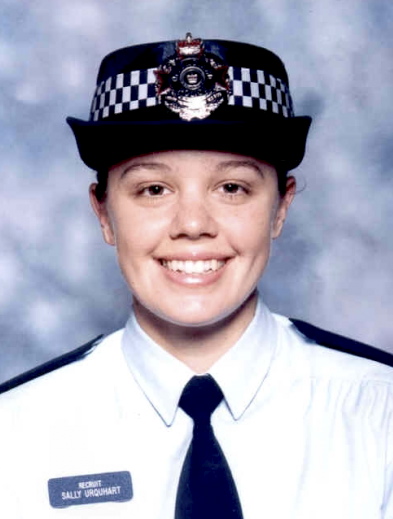
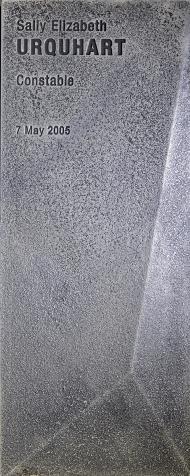
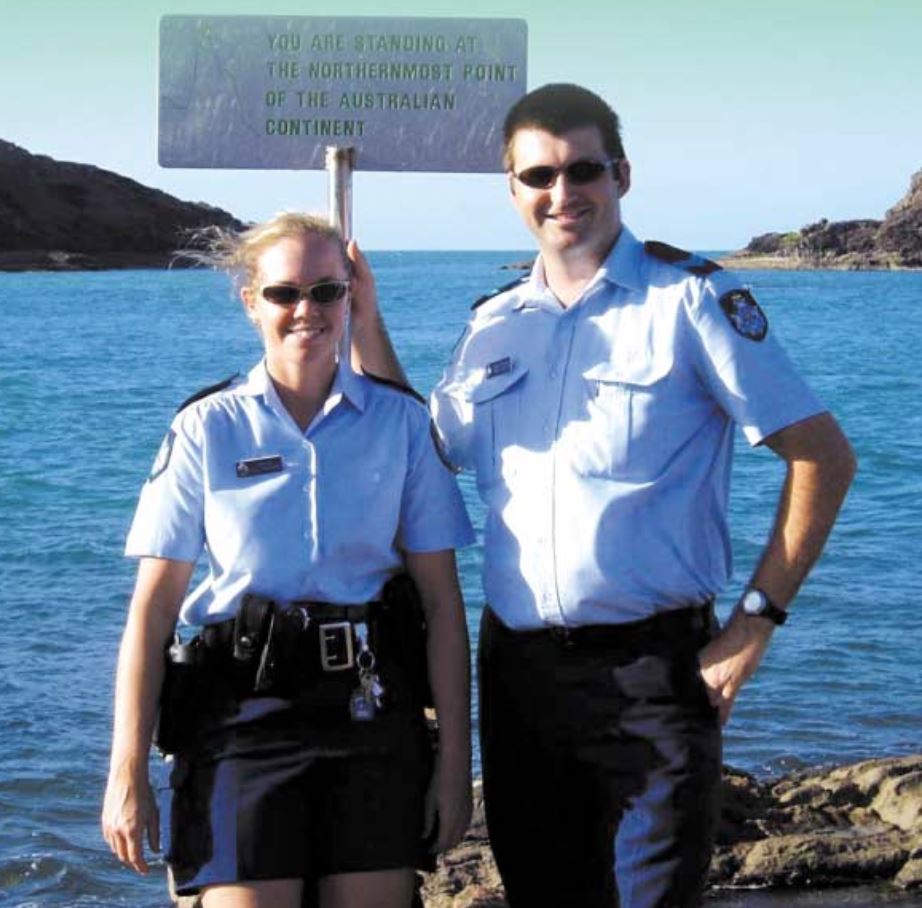
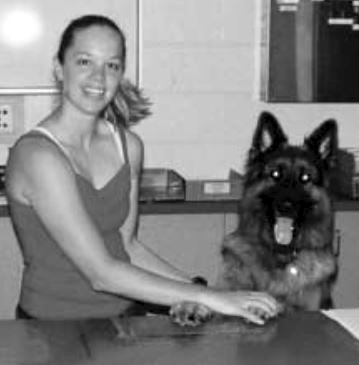
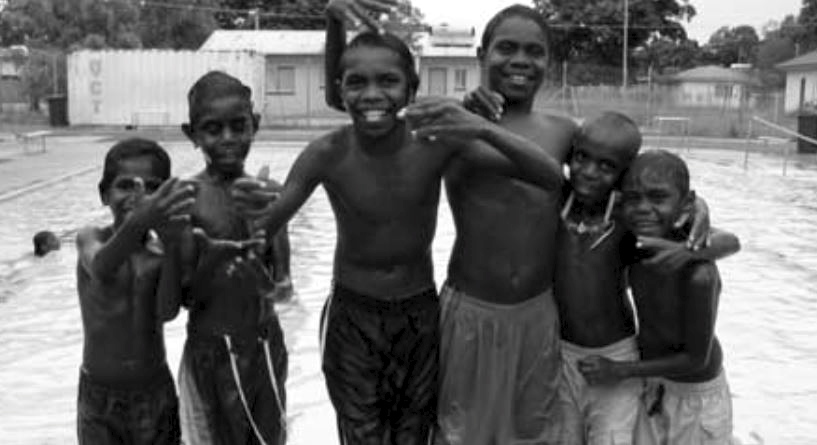
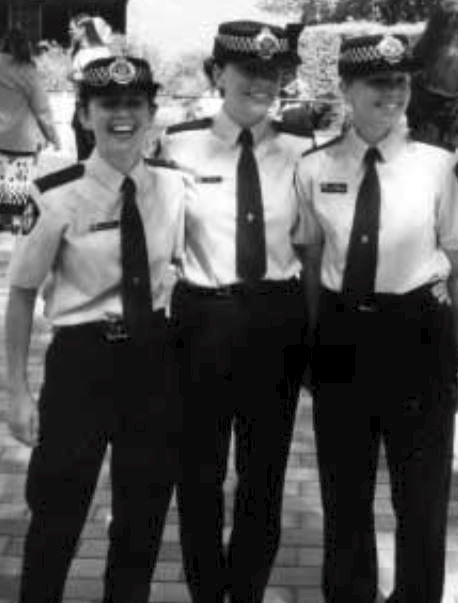
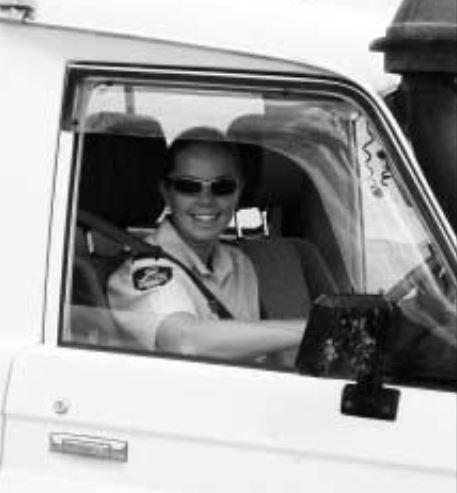



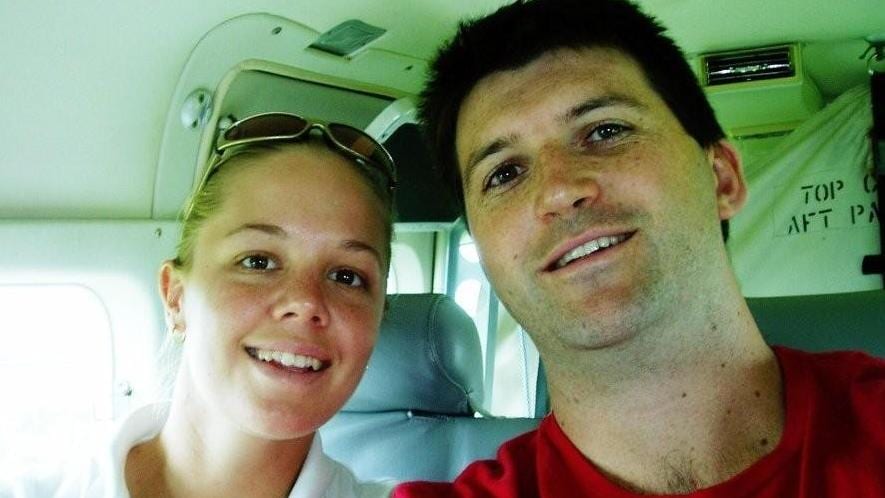
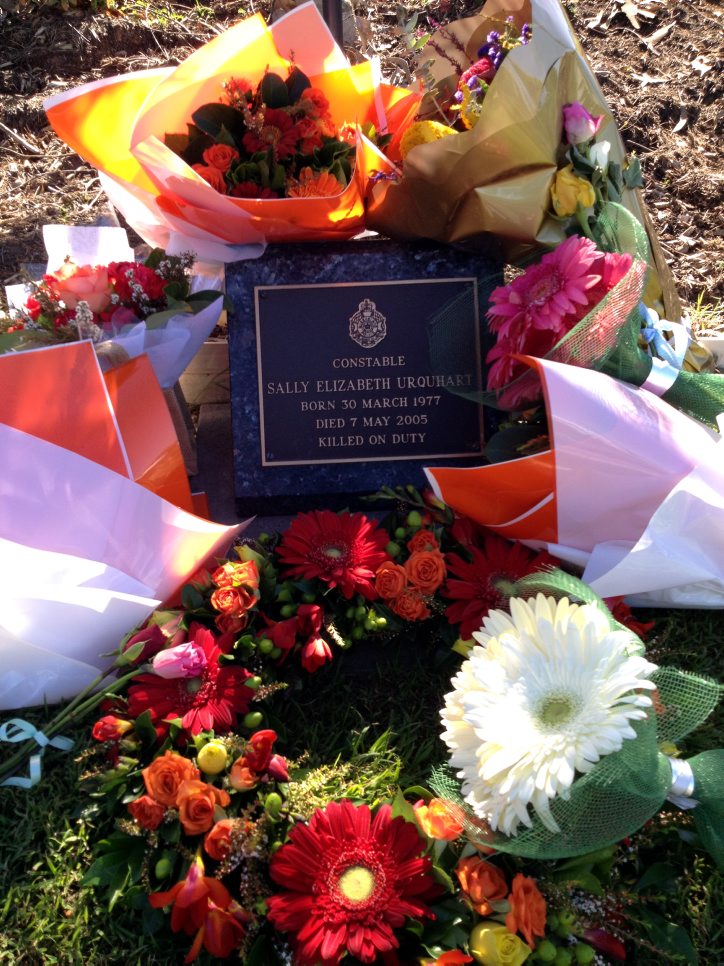
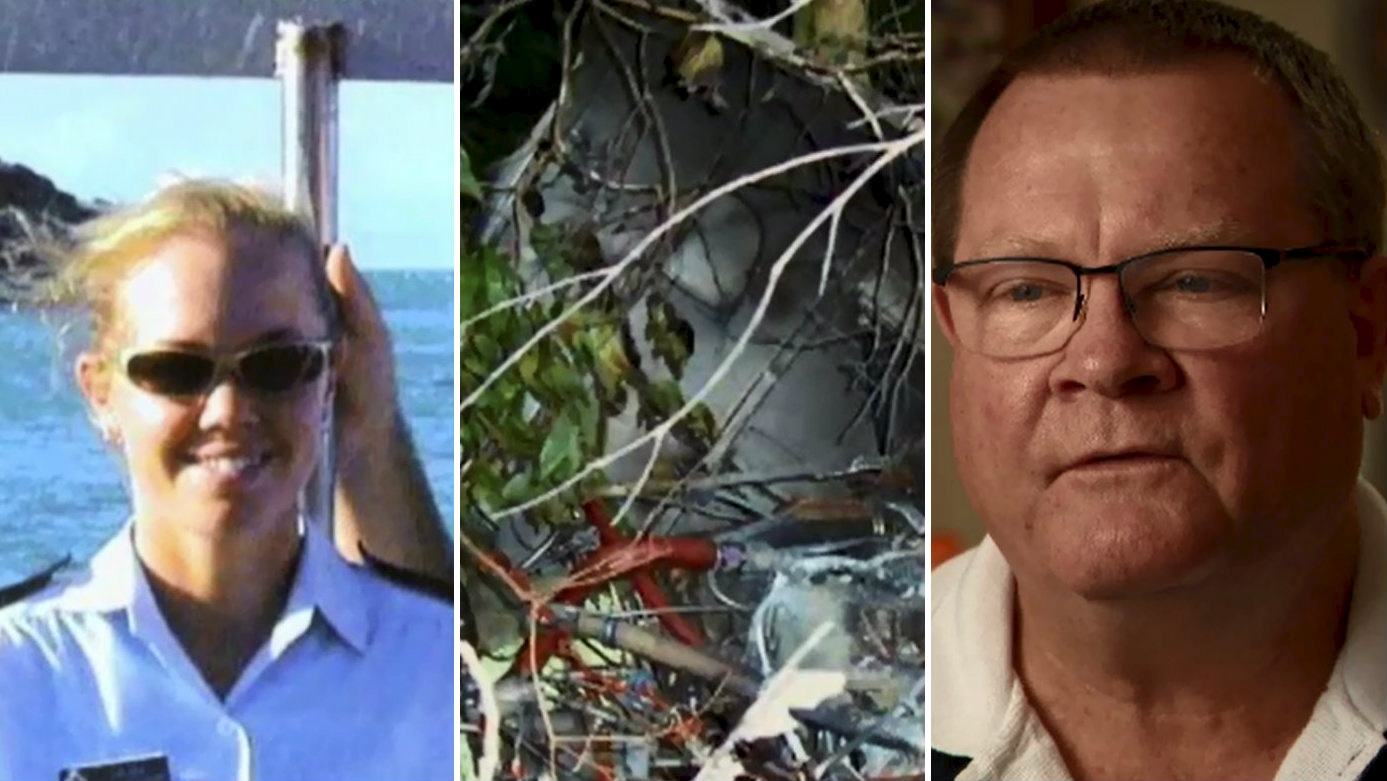
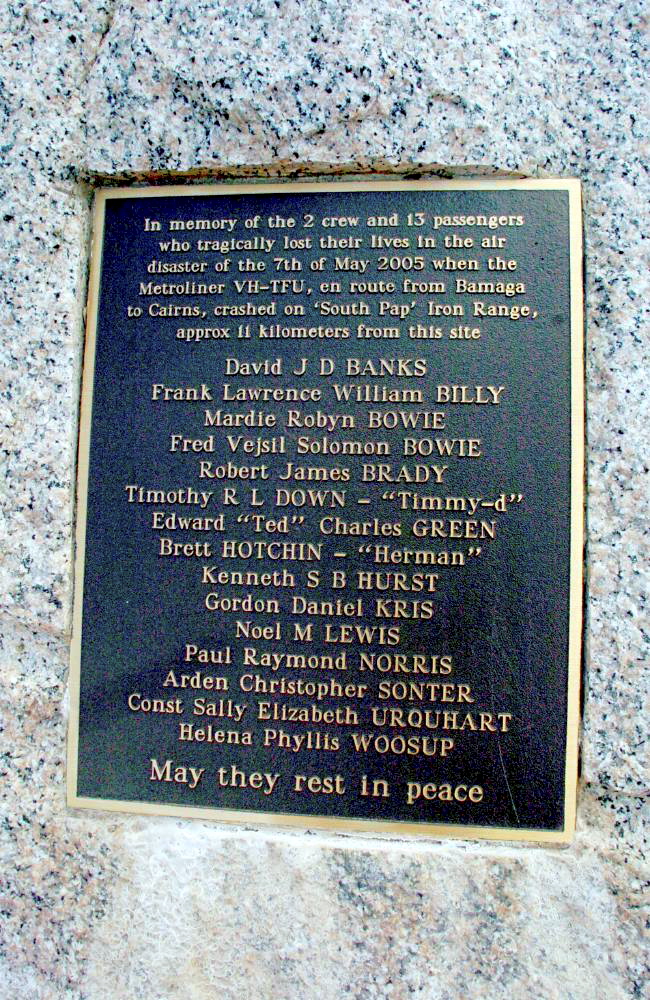
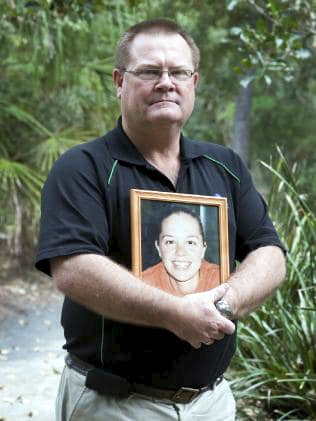
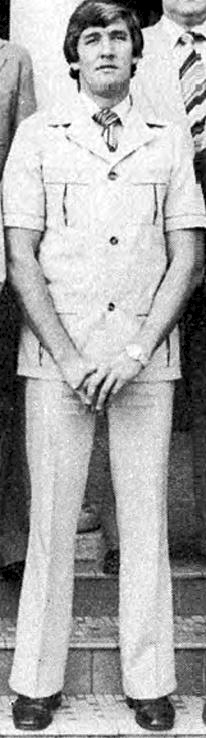
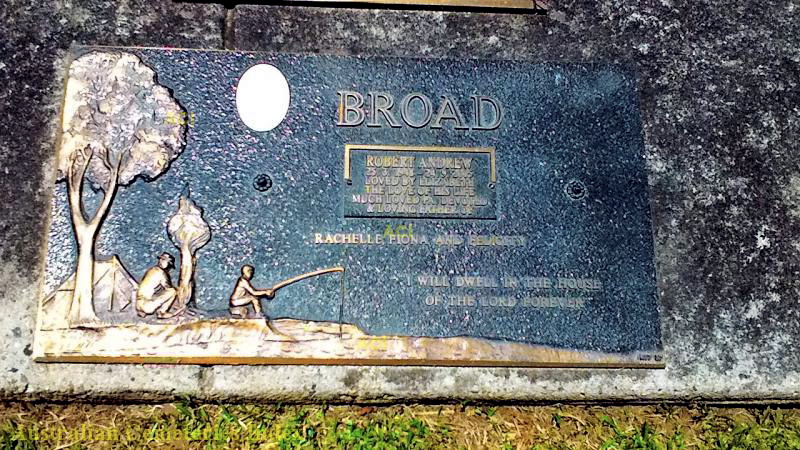
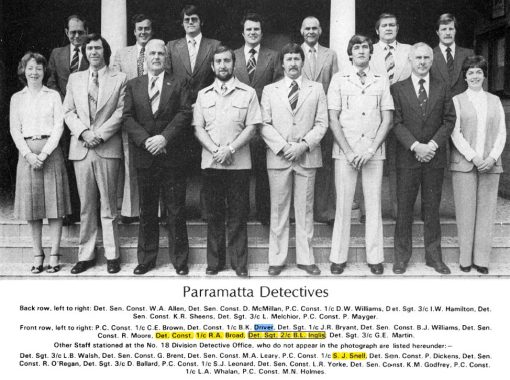 PARRAMATTA DETECTIVES