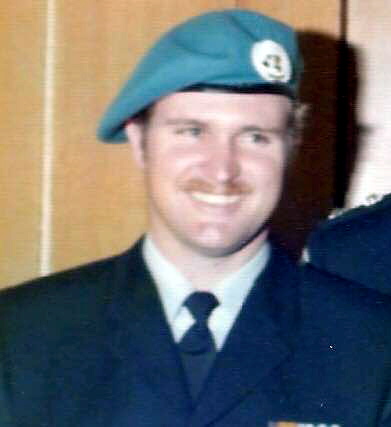
It is with regret that we advise of the death of Les Gorman, a NSW member of the 12th Contingent to Cyprus (1975-76). Les passed away on 26 May. An email from John Crowley advising of his death and funeral details is below.
On behalf of the UNOPAA National Executive, our National Committee, our NSW Branch and all members of UNOPAA, I would like to acknowledge Less service, particularly to overseas peacekeeping, and to express our sympathy to his wife Val, his family and his friends.
He will be missed.
Regards
P McD
Peter McDonald
National Secretary/Treasurer
United Nations & Overseas Policing Association of Australia (UNOPAA)
HIS Excellency the Governor, with the advice of the Executive Council, approved of the following appointments:
The undermentioned members of the Police Force to be Inspectors under the Liquor Act, 1912, for the Licensing Districts preceding their names, for the dates specified viz.:
Queanbeyan.— Sergeant 1st Class Leslie Lyall Gorman, stationed at Queanbeyan, during the absence on leave of Inspector 2nd Class Percy Roy Hale, from 7th August, 1977, to 20th August, 1977.
Canberra Times (ACT : 1926 – 1995), Sunday 30 July 1978, page 17
POLICE AND COURTHOUSE OPENING
GRAND DAY FOR QUEANBEYAN
It will be a gala occasion tomorrow when the Premier of NSW, Mr Wran, officially opens the new police station and courthouse in Queanbeyan.
The two buildings, costing $4 million, took 2½ years to complete.
The opening ceremony will be performed at 4pm in the foyer of the courthouse and about 400 people are expected to attend.
After the ceremony, the guests will move to the Queanbeyan Leagues Club for afternoon tea.
Among the dignitaries who will attend the function with their wives will be the NSW Attorney-General, Mr Walker, the NSW Police Commissioner, Mr Woods, and Deputy Commissioner, Mr Lees, a previous Queanbeyan police inspector, Mr Percy Hale, and the Superintendent in charge of country districts, Mr Alec Birnie.
In the evening, there will be a dinner at which the public will have an opportunity to meet members of the NSW Cabinet which will be in town for a meeting on Tuesday.
Forty policemen, including the policewoman, are now working in the comfort and luxury offered by the new station which is a far cry from the previous surroundings. The NSW Police Commissioner is considering an application to increase the number of general duties and traffic police.
The new station has elaborate safety measures. These include sensitive alarm systems, a closed circuit TV which keeps constant watch on the backyard and an internal public-address system.
The courthouse is another modern building and comprises a district court and a court of petty sessions.
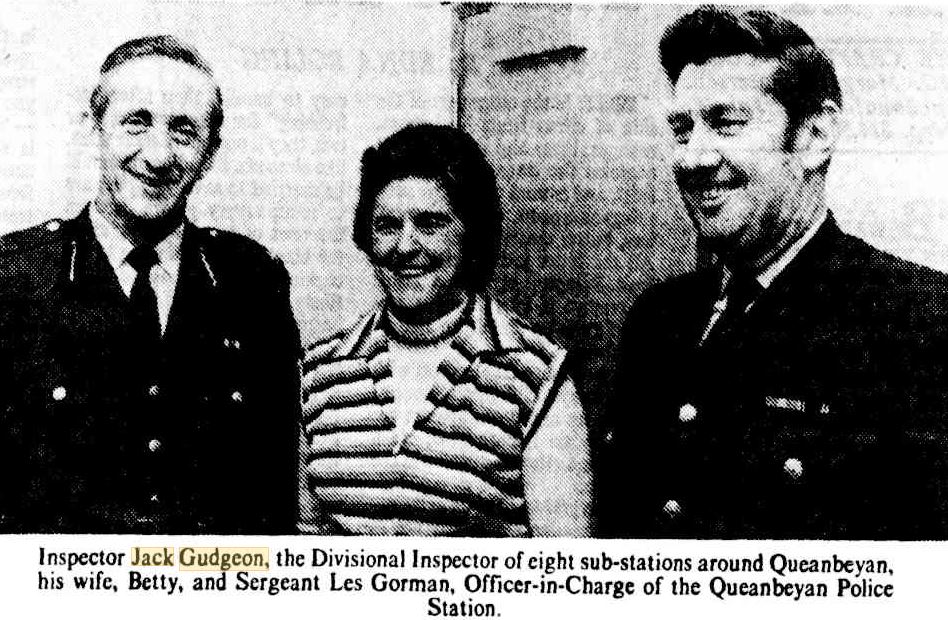
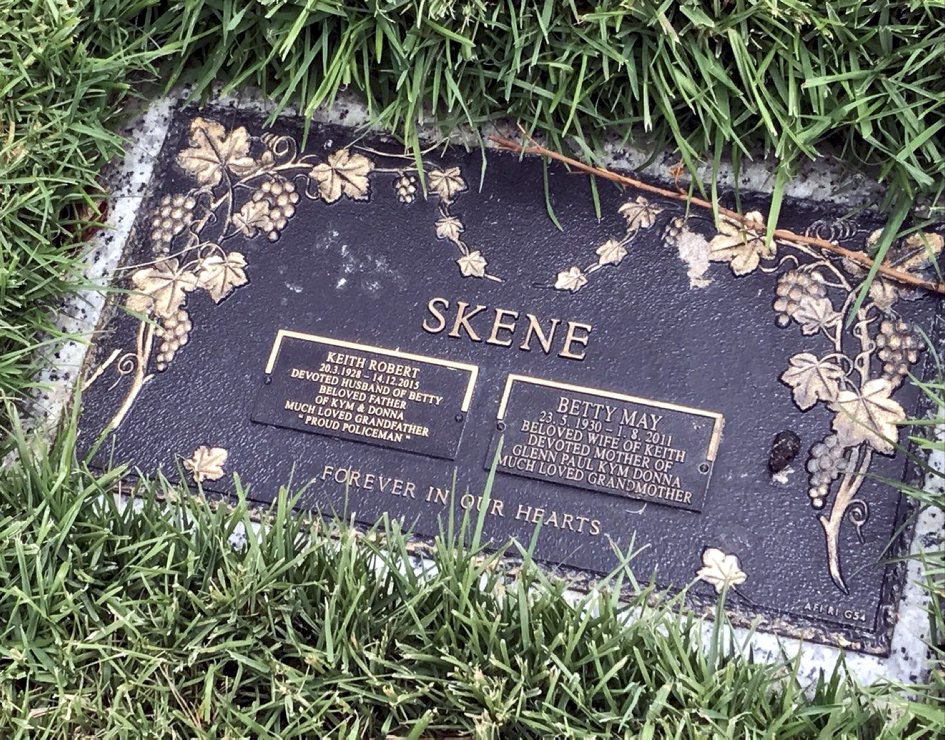
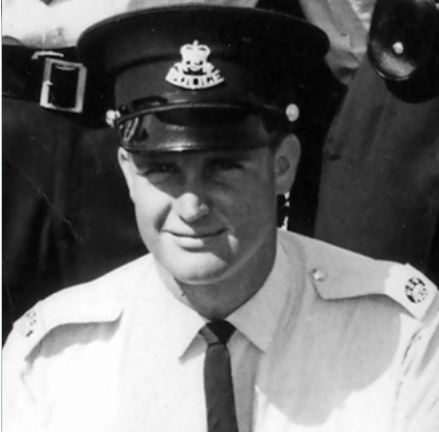
Inspector Jack Gudgeon, the Divisional Inspector of eight sub-stations around Queanbeyan, his wife, Betty, and Sergeant Les Gorman, Officer-in-Charge of the Queanbeyan Police Station.
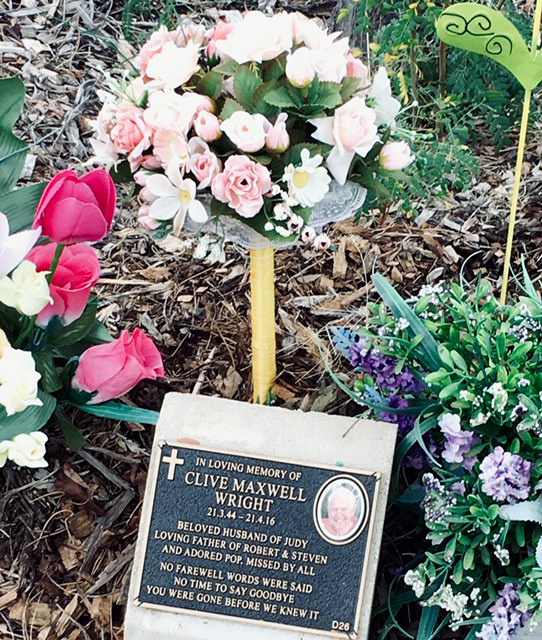
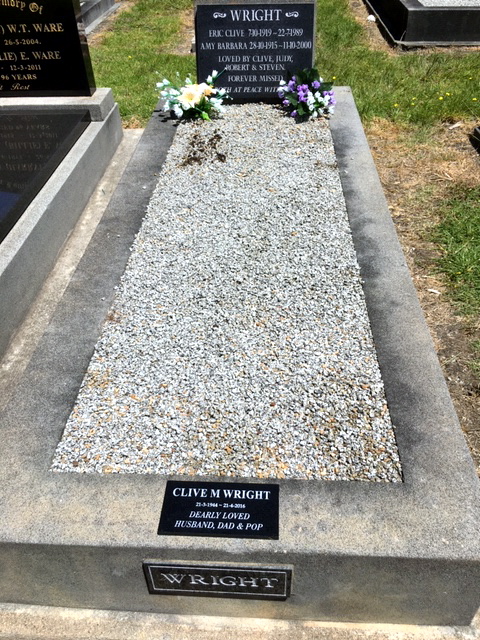
Father of Robert # 30890 ( Windsor HWP ) & Steven # 29509 ( Lake Macquarie District – Toronto GD’s )
Joined NSW Police Force via NSW Police Cadet system on 5 December 1960
Cadet # 1639
Police Training Centre – Redfern Academy Class 95B
Regd. # 10643
Rank: NSW Police Cadet – commenced Monday 5 December 1960 ( aged 16 years, 8 months, 14 days )
Probationary Constable – appointed 21 March 1963 ( aged 19 years, 0 months, 0 days )
Senior Constable – appointed 21 March 1972
Sergeant – appointed 2 April 1979
Final Rank: Sergeant 1st Class
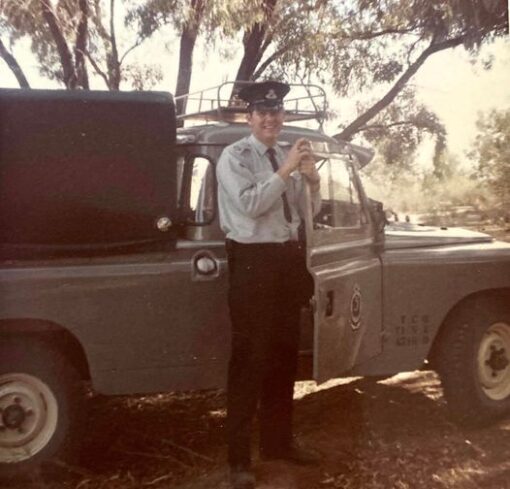
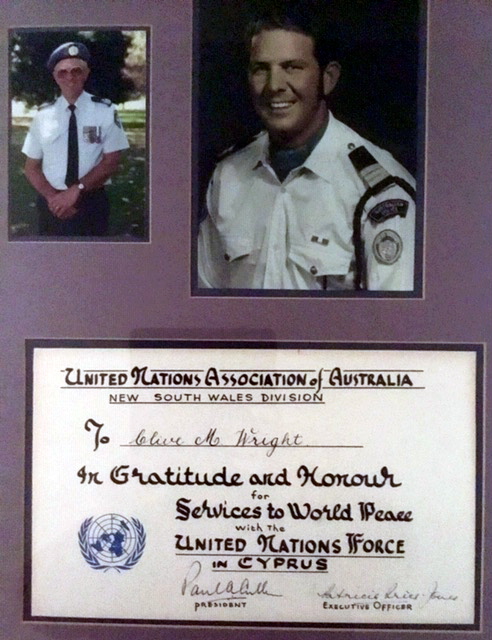
Stations: Sydney Metropolitan Area ( including STP ), Plain Cloths & GD’s at Broken Hill, Tumut, Talbingo ( around late 1960’s – early 1970’s ), 6th Contingent to Cyprus from 13 May 1969 to 16 June 1970 as a Civilian Police Peace Keeper, Blayney, Tea Gardens, Buronga ( 1980’s ), Cowra, Retirement due to poor health
Wentworth & Newcastle.
Service: From 5 December 1960to 5 September 1996 = 35 years Service
Passed away suddenly 21st April 2016, aged 72 years.
Late of Lachlan St, Cowra.
Loving husband of Judy & devoted father and father in law to Rob & Julie, Steve & Shayne.
Adored Pop to Liam, Jessica, Travis & Laura.
Clive’s family & friends are respectfully invited to attend his funeral, to be held at St Raphael’s Catholic Church, Cowra, commencing at 11.00am on Monday 2nd May 2016.
Awards: Meritorious Unit Citation for work in East Timor.
Commendation for efforts in disarming a male carrying a replica pistol in Honiara Court.
Born: ?
Died on: Wednesday 22 December 2004
Cause: Shot – Murdered
whilst deployed on official duties at Honiara, Solomon Islands
Age: 26
Funeral date: Thursday 30 December 2004
Funeral location: ANZAC Memorial Chapel,
Royal Military College, Duntroon, ACT
Buried at: Cremated
Memorial: The main street of a new AFP training village in Canberra was named Adam Dunning Drive in his memory.
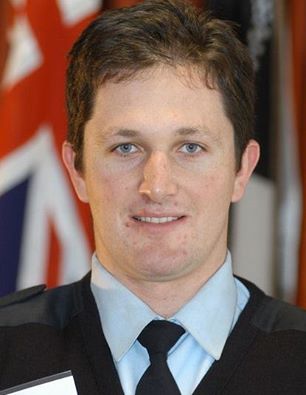
Adam DUNNING
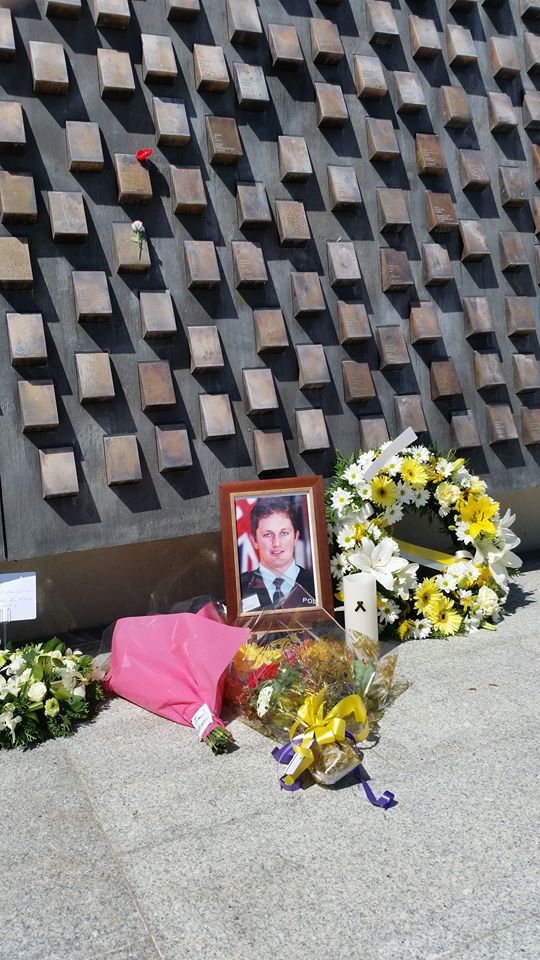
Adam IS mentioned on the Police Wall of Remembrance
Tears for the fallen as Adam comes home
By Craig Skehan and Aban Contractor December 24, 2004
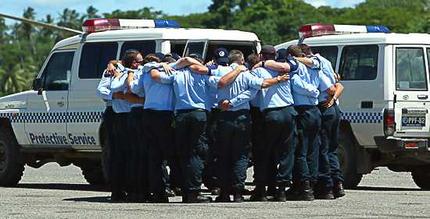
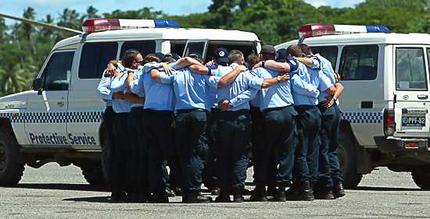
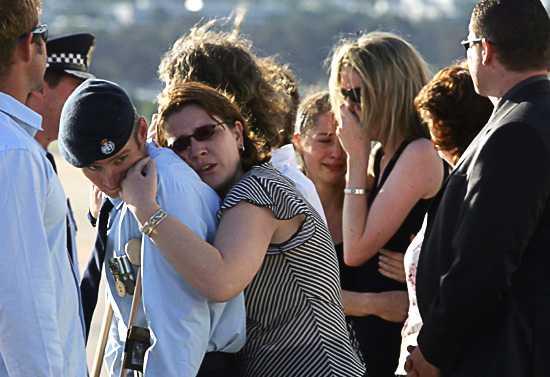
AFP officers farewell their mate Adam Dunning after loading his coffin into a RAAF jet at Honiara Domestic Airport. Photo: Andy Zakeli
They had slow-marched their comrade’s casket to the plane that would take him home.
Their backs were straight, but the emotions were too much: tears tumbled down the cheeks of the Australian Federal Police pallbearers as they did Adam Dunning this last honour.
Then, once his body was stowed in the hold of the RAAF jet on the tarmac in Honiara, his mates made a last gesture of solidarity with the colleague they were farewelling forever – forming a circle, heads bowed, arms locked around each other’s shoulders.
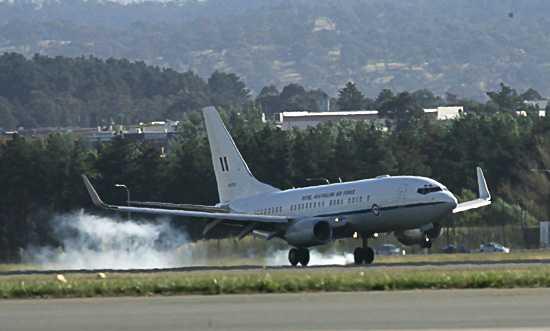
Adam Dunning, the 26-year-old AFP protective service officer who was killed by a sniper in the early hours of Wednesday morning, was accompanied home by the Minister for Justice, Chris Ellison, and the Opposition’s home affairs spokesman, Robert McClelland, but at Fairbairn air base in Canberra, where the RAAF 737 touched down just before 6pm, it was Mr Dunning’s family and friends – his parents, Michael and Christine, his sisters, Sarah and Emma, and his girlfriend, Elise Wiscombe – who formed the guard of honour.
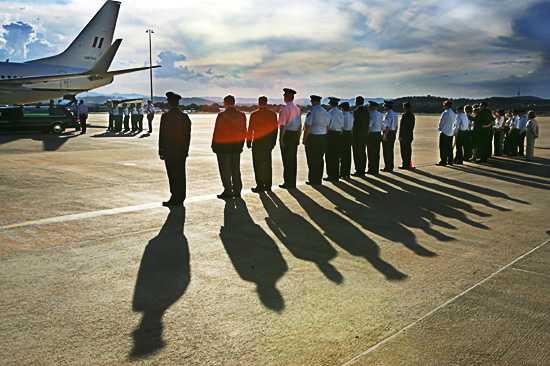
Standing in two straight lines, they faced the plane.
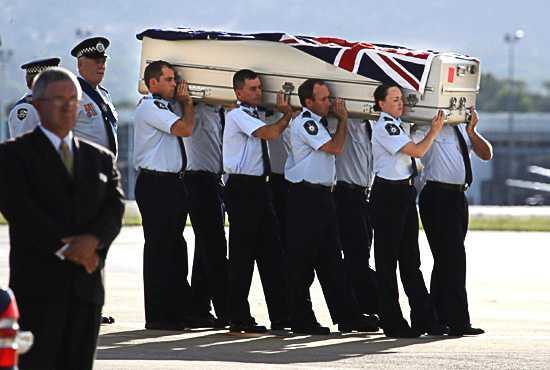
With the Australian Federal Police Commissioner, Mick Keelty, standing watch nearby, Mr Dunning’s parents held their heads high, and his sisters and Ms Wiscombe quietly sobbed as eight AFP pallbearers bore his flag-draped casket from the plane. His parents held hands and seemed to stand even straighter as their only son was placed in the hearse that would take him to the mortuary.
In the Solomons, police are questioning a taxi driver about several suspects in the murder. A Solomon Islands police source told the Herald that the taxi – seen near the murder scene with several passengers before the shooting – had been seized.
On a narrow, potholed road on the outskirts of the Solomons capital, Honiara, locals offered heartfelt apologies for the shooting.
“I am so very sorry,” said one young man. “He came here to help us.”
By the roadside at Zion Junction, investigating officers had cut the long grass to help search for clues to the identity of the person who, in darkness shortly after 3am on Wednesday, shot Mr Dunning while he was on patrol in a Toyota Land Cruiser.
Zion Junction does not have a particularly dangerous reputation. Rather, locals said, other settlements further along the same ridge were known for trouble, ranging from extortion to payback shootings.
Moffat Suiga, a community elder who was awakened by the shots that killed Mr Dunning, said he and others were at a loss to explain the murder.
A middle-aged businessman said the overwhelming majority of Solomon Islanders wanted to see those responsible put in jail. He said it would be a good thing if the Australian-led intervention force remained for the next 40 years.
At a commemoration service earlier in Honiara, Mr Keelty said Mr Dunning had “died for peace”.
The Solomon Islands Prime Minister, Sir Allan Kemakeza, said the young man had been helping the country overcome ethnic strife and crime. “We will not forget him,” he said.
A police funeral will be held for Mr Dunning on a day to be announced.
AFP officers farewell their mate Adam Dunning after loading his coffin into a RAAF jet at Honiara Domestic Airport.
Photo: Andy Zakeli
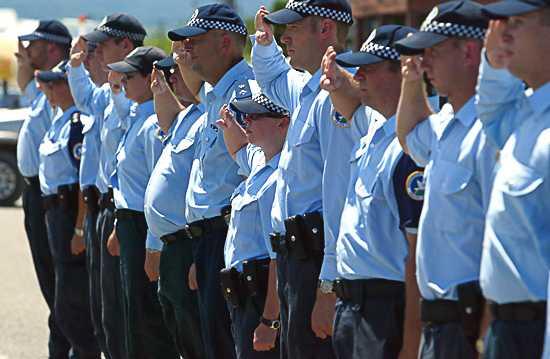
Australian Protective Services officers salute the coffin in a guard of honour at Honiara Domestic Airport before Adam Dunning’s coffin was flown back to Australia.
Photo: Andy Zakeli
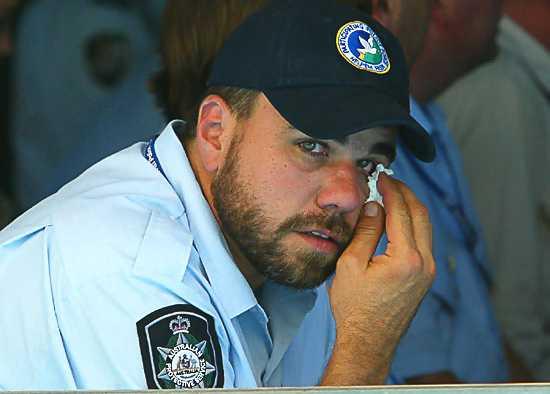
Australian Protective Services officer Robert Turnbull sheds a tear at the official wake in the compund before Adam Dunning’s coffin flew back to Australia.
Photo: Andy Zakeli
The RAAF jet carrying Adam Dunning’s body touches down.
Photo: Andrew Taylor
Adam Dunning’s coffin is loaded from the aircraft to a hearse at the RAAF Base at Fairbairn.
Photo: Andrew Tayl
Senior officers and other dignatories, along with family members, watch Adam Dunning’s coffin being loaded from the aircraft to a hearse at the RAAF Base at Fairbairn in Canberra.
Photo: Andrew Taylor
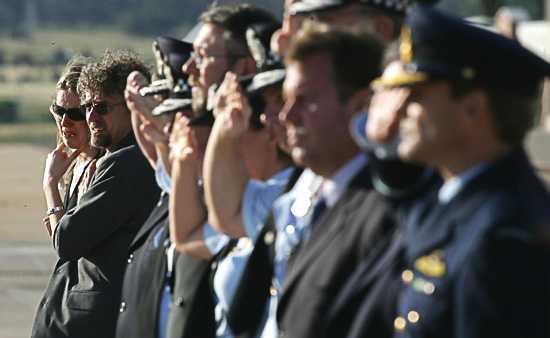
The girlfriend of Adam Dunning, Elise Wiscombe (far left), cries as police salute the farewell of the coffin.
Photo: Andrew Taylor
Friends of Adam Dunning after the hearse had left the tarmac.
Photo: Andrew Taylor
Memorial Tribute to Adam DUNNING, 10 years on. 22 December 2014, National Police Wall of Remembrance, Canberra.
Excellent turnout at NPM this morning for Adam and his family. RIP and we remember.
Peacekeeper killed ADG’s funeral brings Air Force and police together
By FLGOFF Fiona Peacock
The funeral of LAC Adam Dunning, a member of the PAF and Air Force Active Reserve.
LAC Adam Dunning.
LEADING Aircraftman Adam Dunning, an ADG with No. 28 (City of Canberra) Squadron and former member of No. 2 Air Field Defence Squadron, was killed in December last year while on operational duty with the Australian Federal Police as part of the Regional Assistance Mission to the Solomon Islands (RAMSI).
In the early hours of December 22, LAC Dunning and an Australian Protective Service colleague were on a routine vehicle patrol in Honiara, protecting the Prime Minister’s and Governor General’s residences.
A concealed gunman shot at the vehicle, fatally wounding LAC Dunning, who was 26.
He deployed to the Solomons in October and, after only six weeks there, was awarded a commendation for disarming a man in front of the Magistrates Court.
At LAC Dunning’s funeral, members of 28SQN played a part in recognising his Air Force service. The squadron’s honorary air commodore, Air Commodore Justice Terence Higgins, represented 28SQN among the official party of Service chiefs.
Members of the Air Field Defence Wing provided the firing party and the guard of honour for receiving VIPs. The RAAF Ensign was carried by Pilot Officer Shane McGaughey and was escorted by Flight Sergeant John Forth.
Two close friends of LAC Dunning, Leading Aircraftmen Tim Gresham and David Pauli, were members of the bearer party. The President of 28SQN Association, Steve Williams, represented former 28SQN members. 28SQN members joined AFP personnel to form a guard of honour.
AFP Commissioner Mick Keelty praised No. 34 Squadron for the way it handled bringing LAC Dunning’s body back to Australia.
By Misha Schubert
Political correspondent
Canberra December 31, 2004
They stood side by side. Two long lines of blue uniforms facing each other along the tree-lined road. Like a slow Mexican wave, each snapped to attention and saluted as the body of one of their own passed by.
Adam Dunning, murdered by a sniper while on patrol in the Solomons early last week, had begun the last leg of his journey home.
Earlier, these men and women of the Australian Federal Police and the Royal Australian Air Force had wept openly as Mr Dunning was farewelled with full police and military honours in the Duntroon chapel. “He was a great man,” said his federal police mate Pat Castle.
The nation’s military chiefs turned out to pay tribute, as did Prime Minister John Howard, Governor-General Michael Jeffery and senior cabinet ministers.
But this ritual belonged to those who knew and loved Adam Dunning.
His mother, Christine, read from a tribute that she and her husband, Mike, had written to their son in February. They had praised his courage, sensitivity and mettle.
His partner, Elise, who had brought red roses for the man she had loved, said he was her greatest friend. “He was my strength, my inspiration, my love.”
Peacekeeper Beau Tennant, who was with Mr Dunning the night before he died, broke down as he recalled his friend’s generosity.
“Before he left me, his last words were: ‘Are you right for money mate?’ That was the kind of bloke he was,” he said.
Federal Police Commissioner Mick Keelty said Mr Dunning would live on in the memories of grateful Solomon Islanders.
“Adam Dunning died for peace and law and order. His work and his death will always be remembered by his colleagues,” he told mourners.
The federal police hope to build a memorial to Mr Dunning at their new training centre for overseas police peacekeepers.
Mr Dunning also served with RAAF in Timor before joining the AFP.
Police believe his murder and another attack on police on October 21 were carried out by three former members of the Malaitan Eagle Force militia.
They have charged two men – John Ome and Philip Kwaimani – over the attacks and are hunting James Tatau, who Mr Keelty said was present at both events and had access to a cache of weapons.
Police believe the trio were working on their own, with no sign of any broader uprising against the peacekeeping effort.
It fell to Emma, who had adored her older brother, to claim his service medals and caps from the flag-shrouded coffin and hand them to her grieving parents.
As his police mates carried Mr Dunning’s coffin from the chapel into the sunlight, drummers and bagpipers ushered him on his way. A police motorcade led the cortege through Canberra’s streets to a private service and cremation.
A plane carrying the body of murdered Australian peacekeeper Adam Dunning has landed in his home town of Canberra.
The 26-year-old Australian Protective Services officer was shot twice in the back by a sniper while serving as part of a peacekeeping mission in the Solomon Islands yesterday morning.
Members of Mr Dunning’s family, and his colleagues were on hand to formally receive his body.
Australian Federal Police Commissioner Mick Keelty returned from the Solomon Islands about half an hour before the plane bearing Officer Dunning’s body landed.
He was among those waiting for Justice Minister Chris Ellison and Labor’s homeland security spokesman Robert McClelland, who accompanied the body on the flight back to Canberra.
Commissioner Keelty, Senator Ellison, Mr McClelland and AFP officers formed a guard of honour before the coffin was removed from the plane.
Family members, including Officer Dunning’s parents Mike and Christine, and girlfriend Elise Wiscombe, stood arm in arm watching proceedings.
A guard of honour, carrying Officer Dunning’s hat, led the flag-draped coffin to the hearse.
Eight pall bearers stood tall under the weight, as Officer Dunning’s police colleagues watched on.
A cavalcade of AFP motorcycles is waiting to lead the hearse to Canberra’s mortuary.
A full police funeral will be held for Officer Dunning on a day to be announced.
Officer Dunning’s parents took the time to thank those who attended the short ceremony before the hearse headed for Kingston mortuary under police escort.
Senator Ellison later said the Solomons people were behind RAMSI and Australia’s efforts to bring law and order to the country.
He said some adjustments might be made to the conduct of night patrols but any final decision would depend on recommendations from the AFP.
He denied the Government had too quickly reduced the AFP’s military support in the Solomons.
“We’ve made fantastic progress in the Solomons and we never underestimated the danger that our people faced,” he told ABC television
By Craig Skehan and Cynthia Banham December 23, 2004
Australia is rushing 100 extra troops to the Solomon Islands in defiant reaction to the sniper murder of Adam Dunning, the nation’s first peacekeeper to be killed by hostile fire.
The murder highlights the perils of the new interventionist role in the Pacific islands, but the Prime Minister, John Howard, vowed the mission to the Solomons would go on “undeterred, unrestrained, unaffected by what’s happened”.
“We won’t be cowed by this,” the Foreign Minister, Alexander Downer, added.
Mr Dunning, a 26-year-old Australian Protective Service officer from Canberra who had dodged bullets while serving in East Timor, was shot twice in the back while on a patrol in a four-wheel drives Toyota Land Cruiser in the capital, Honiara, at 3.10am on Wednesday. The bullets were among six shots fired rapidly from a high-powered military rifle.
“It looks as though the person who fired it had training in the use of such firearms,” a Solomon Islands official said.
Members of former ethnic militias – who had formed gangs and reduced the country to anarchy – are now being questioned. Australian investigators say the involvement of former Solomon Islands police officers, or an individual officer, cannot be ruled out.
At his Canberra home, Mr Dunning’s father, Michael, was distraught as he spoke of his son’s honourable death.
“It is sad as he cared for the [Solomons] people so much and was doing something really good on their behalf,” Mr Dunning told the Herald. “He always has been a decent person, tough and soft-hearted at the same time. He was totally honourable and very stubborn – nobody could make him do anything that he did not think was right. He was a credit to us.”
Adam Dunning had been planning a future with his 22-year-old girlfriend, Elise Wiscombe, on his return home next month. “I’m very, very proud of what he’s done over there,” she said. “He’s one of the greatest people I’ve ever met.”
Mr Dunning was part of the regional intervention force which has been seeking to stem ethnic and criminal violence in the Solomons since July last year.
A rapid-response, 100-member infantry company from the First Royal Australian Regiment was to leave Townsville on Thursday for the Solomons, just a day after the murder. The Defence Minister, Robert Hill, said: “This is to send a clear message to the thugs … that we will not tolerate the murder of our police officers.”
A meeting of departmental secretaries in Canberra recommended extra forces to support the 160 defence force personnel already there. Those troops are backing the 147 Australian Federal Police members who are serving in the Regional Assistance Mission to the Solomon Islands (RAMSI) – about 95 of them from the Australian Protective Service, which comes under the federal police. The Justice Minister, Chris Ellison, and the Federal Police Commissioner, Mick Keelty, flew to Honiara on Wednesday night. Australian forensic experts also flew in.
Mr Keelty said: “Over 4000 arrests have been made and over 3700 weapons have been seized [since the intervention began]. Clearly this indicates that there are some in the community in the Solomon Islands who are not happy about RAMSI’s presence.”
He said the hot tropical climate – and the large number of weapons already recovered – were among the reasons body armour had not been used for regular patrols. However, this is now under review.
Mr Keelty called Mr Dunning “a brave and courageous young Australian” and said his killing emphasised “the danger that our people face”.
The Solomons Prime Minister, Sir Allan Kemakeza, described the killing as barbaric and cowardly.
Mr Dunning’s partner on patrol, who had been driving, tried to resuscitate him.
The murder scene, on the outskirts of Honiara, was close to two settlements which are known to be frequented by former ethnic militiaman who formed criminal gangs.
The Australian police contingent has been at the forefront of efforts to clean up local police and officers have been charged with offences from corruption to assault and robbery. A number of local politicians are either under investigation or already facing various charges.
Mr Keelty said the ammunition used indicated the murder weapon was an SLR or possibly an AK-47. This was consistent with some of the weapons used before the arrival of the intervention force. The looting of many SLRs and other military-style weapons from Solomons police armouries had fuelled the five years of unrest that prompted the intervention of the Australian-led force.
There was a major riot at the Central Prison in Honiara this year, when inmates threw rocks at Australian personnel and painted anti-Australian slogans. Two months ago, an intervention force vehicle patrol was fired on.
Protective Service Officers were deployed along with other Australian law enforcement officers in the Solomon Islands as part of RAMSI. The peacekeeping force suffered their first casualty on 22 December 2004 when PSO1 Adam Dunning was shot and killed while deployed on official duties in the Solomon Islands. Two former members of a local militia were charged but acquitted of Dunning’s murder.[5] Officer Dunning was buried with full police honours.
The main street of a new AFP training village in Canberra was named Adam Dunning Drive in his memory.[6] The $2.8 million training facility at Mount Majura just outside Canberra, has been designed to replicate situations in regional countries to which personnel might be assigned.
The main street of a new training village for Australian Federal Police and other personnel being sent overseas has been named after murdered peacekeeper Adam Dunning.
The $2.8 million training facility at Majura, just outside Canberra, has been designed to replicate situations in regional countries to which personnel might be assigned.
Prime Minister John Howard officially opened the facility on Thursday in the presence of police chiefs from across the country as well as from several regional nations.
Australian Protective Service officer Mr Dunning, 26, was fatally shot twice in the back while on night patrol in the Solomon Islands capital of Honiara in December.
He was serving as part of the Regional Assistance Mission to the Solomons.
His parents attended the opening of the village, through the centre of which runs a road now named Adam Dunning Drive.
“The loss of Adam Dunning signified that this is very dangerous work,” Justice Minister Senator Chris Ellison said.
“That was the ultimate sacrifice paid in the course of his duties.”
Mr Howard said the new facility reflected the new security reality for Australia and its region.
“Events of the last five years have totally transformed both the demands and the expectations of the Australian community on the Australian Federal Police,” he told the gathering.
“In that five-year period we have seen the threatening arrival of international terrorism.
“We’ve (also) seen the emergence of an ongoing need on the part of this country, in cooperation with our friends in the Pacific region, to involve ourselves in the restoration of conditions of law and order and cooperation with police services and governments of those countries.”
The training village, to be used by a range of emergency services personnel as well as police, recreates the environment that police experience when on overseas missions.
Designed to reflect the streetscape of a small overseas township, it enables true-to-life scenario training which helps to prepare police for unknown and sometimes dangerous challenges.
It includes 18 buildings and structures including a corner store, a town hall, a police station, a school, a pub, a marketplace and even a cemetery, reflecting the fact that police are sometimes required to perform exhumations in the course of their work.
The spokesman said 124 personnel had already trained at the complex which was completed in March.
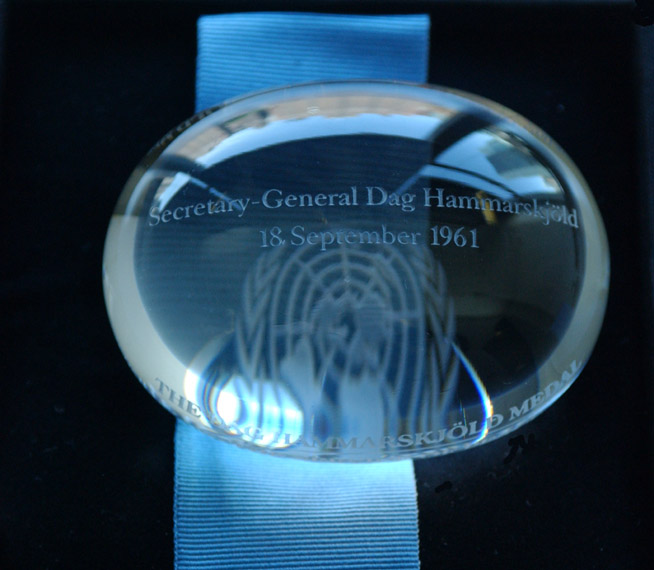
Awarded the Dag Hammarskjöld Medal. The U.N. Secretary-General established the Dag Hammarskjöld medal for posthumous award to members of peacekeeping operations who lost their lives during service with a peacekeeping operation under the operational control and authority of the United Nations.
Born: 12 April 1949 at Ryde, NSW
Died: Tuesday 12 November 1974
Cause of death: Murdered – Land Mine Explosion
Event location: near Lefka, Cyprus ( 5 days after arriving in the country )
Age: 25
Funeral date: 26 November 1974
Funeral location: ???
Grave location: Rookwood Cemetery, Rookwood
Ian Donald WARD
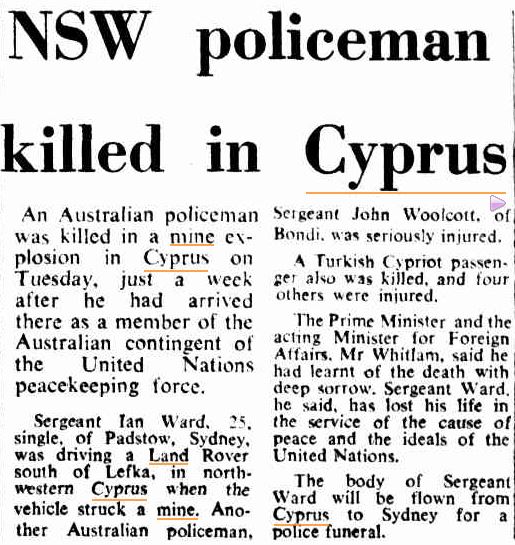
On 12 November, 1974 Constable Ward was serving with the Eleventh Australian Police Element in Cyprus. Whilst travelling in a Land Rover near Lefka the vehicle hit a landmine in the buffer zone. As a result Constable Ward was killed and Constable 1st Class John Woolcott was seriously injured.
Constable Ward is the 3rd and last Australian to die in Cyprus.
The constable was born in 1949 and joined the New South Wales Police Force on 12 April, 1968. At the time of his death he was stationed in Cyprus and an Acting Sergeant.
John Woolcott recovered from his injuries and ” Wooly ” later retired from NSW Police Force either as an Sergeant at Manly Police Station or an Inspector at North Sydney / Mosman. This, is yet, to be confirmed. ( 10 August 2017 ).
[divider_dotted]
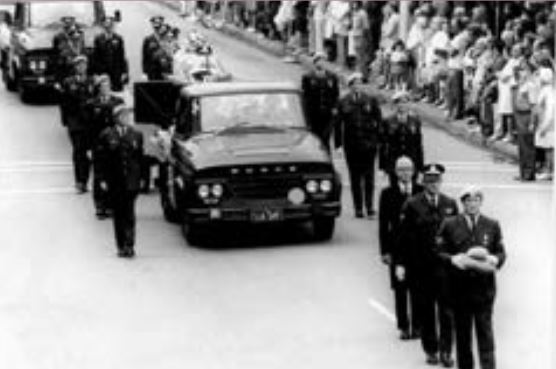
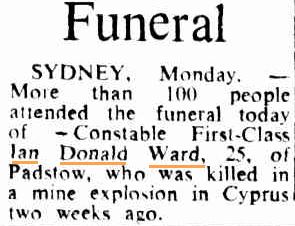
1974 – the funeral for Sergeant Ian Ward
[divider_dotted]
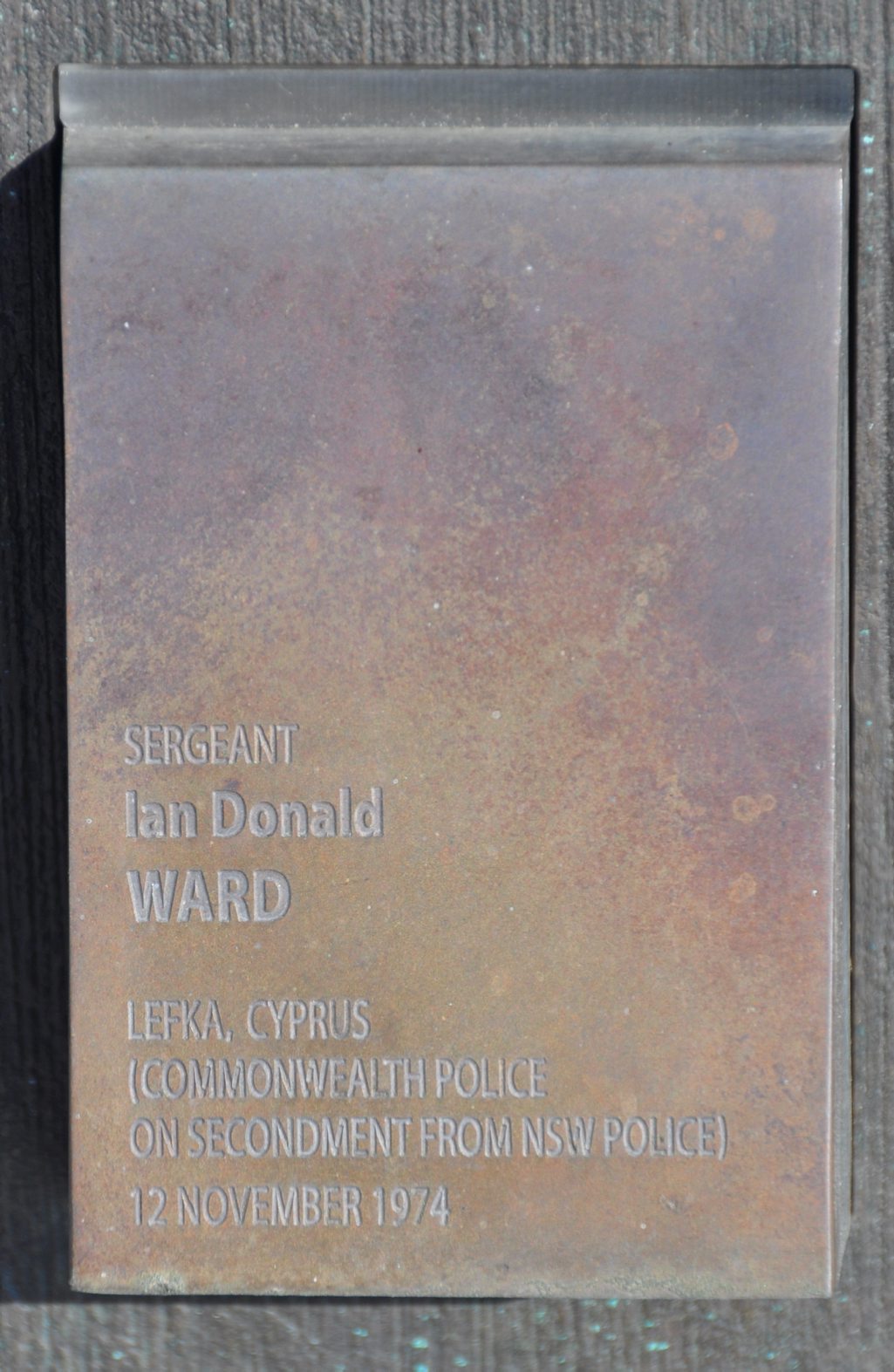
National Police Wall of Remembrance Touch Plate for Ian WARD
[divider_dotted]
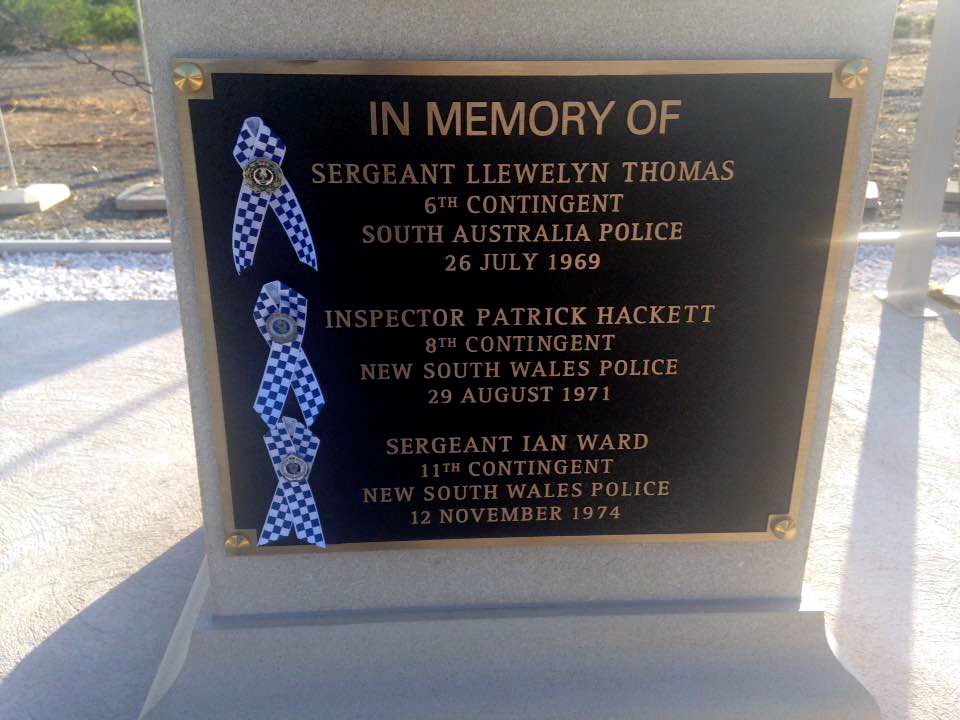
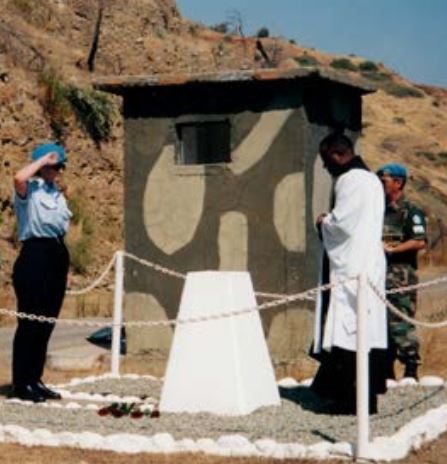
17 June 2017 – Malaysia Memorial in Cyprus taken today as Australian Police complete the long mission and are leaving Cyprus.
[divider_dotted]
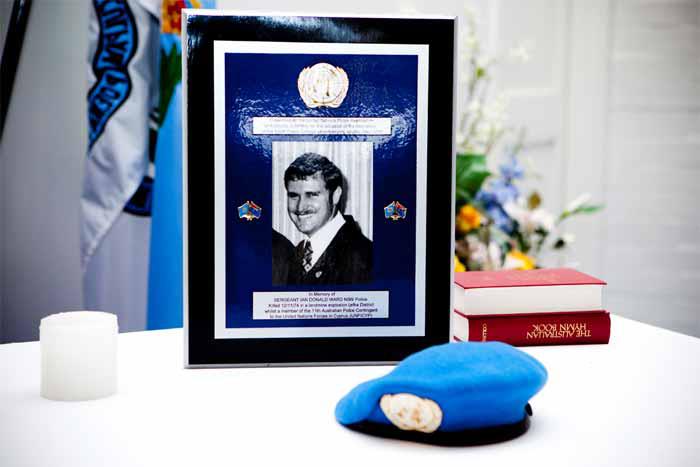
Ian’s memorial at the Goulburn Police Academy.
[divider_dotted]
Dag Hammarskjold Medal
[divider_dotted]
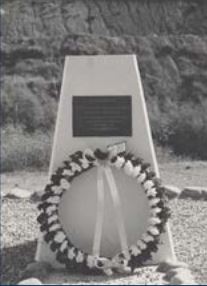
Memorial to Ian WARD – unveiled in 1985
2003 Police Remembrance Day is marked with a ceremony at the cairn erected in memory of Sergeant Ian Ward.
[divider_dotted]
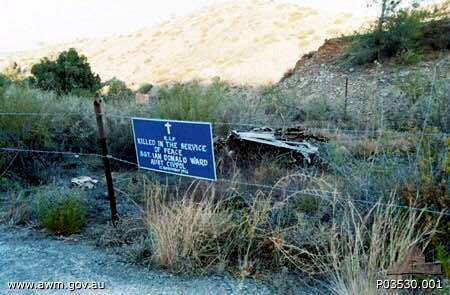
Inscription: Killed in the service of peane Sgt Ian Donald Ward Aust. CivPol
The closure of Nicosia Airport meant a circuitous route to Cyprus for the second half of the eleventh contingent led by Merv Beck.
Although it was not known at the time, conditions on the Island and consequent reduction in UNFlCYP strength would make this the
last November rotation.
The group left Sydney on 6 November and were welcomed some days later at Akrotiri after flying with Qantas to London then busing to
the Brize Norton RAF Base near Oxford and thence via Malta to Cyprus.
RAF flights were ‘dry’ and the seats faced the rear, so the Australians appreciated the traditional welcome at Limassol Headquarters.
The newcomers ‘pumped’ the old hands for news of the war while they themselves were pressed for information about events in Australia.
The new arrivals were soon split up. Ray Leister was assigned Control Room duties while others went to Ktima and Polis.
After only five days on the Island the unthinkable happened near a road-block approaching Lefka.
Ian Ward, a replacement from New South Wales, was killed and John Woolcott injured when their Land Rover detonated a land-mine in an unmarked field.
The Australians were conveying a Turkish Cypriot family from Ayios Nicolaos to the Turkish Cypriot controlled area at Lefka and one of the four passengers was killed and the other three seriously injured.
The fatality cast a pall over the contingent.
A number of moving ceremonies were held before his body was flown home to Australia.
Twelve months later a cairn was erected to commemorate the tragedy and each twelve months a short service is held near the memorial.
Geoff Baker was a member of the Board of Inquiry convened under British military regulations to investigate the incident.
Land-mines were the major component of fortifications along the confrontation zone. UNFICYP had lodged a number of protests about mine-laying procedures and the fact that many fields were neither marked nor adequately recorded. UNFICYP began a special programme to remedy the deficiencies, but two UNFICYP soldiers were killed in similar circumstances during the following twelve months.
Canberra Times (ACT : 1926 – 1995), Wednesday 20 November 1974, page 3
Service
LONDON, Tuesday (AAP). – Representatives of all United Nations peace keeping forces in Cyprus will take part in a memorial service today for Sergeant Ian Ward, 25, a Commonwealth policeman of Sydney, who was killed in landmine explosion last week. His body will later be flown to Sydney for burial.
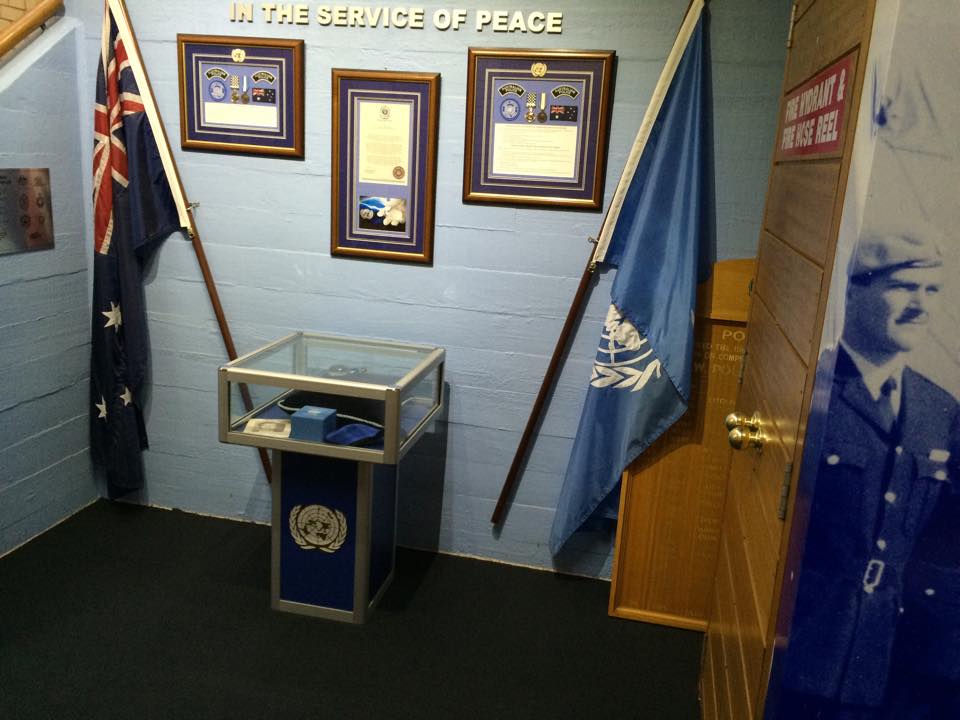
Located within the Honour Precinct is an original ornate marble tablet featuring early losses of New South Wales Police Officers. The tablet is flanked by the New South Wales state flag and the New South Wales Police Force flag.
The Peacekeeping Display honours all members of the NSW Police Force who have served in peacekeeping operations throughout the world and houses the Dag Hammerskjold medal belonging to the late SGT Ian Donald Ward who died in UNFICYP. This was donated to the NSW Police College on the 29th May, 2010 from Mr Ken Ward, OAM, father of SGT Ward.
On the 12th November, 1974, a member of this Force, Constable 1st Class I. D. Ward, who had arrived in Cyprus a few days before, and Constable 1st Class J. Woolcott, also of this Force, were carrying out humanitarian work transporting refugees. The United Nation’s land rover in which they were travelling struck a land mine on a road between Limassol and Lefka resulting in the death of Constable 1st Class Ward and severe injuries to Constable 1st Class Woolcott, Constable 1st Class Ward was posthumously awarded the United Nations Medal, Cyprus Division.
[alert_green]PATRICK IS mentioned on the Police Wall of Remembrance[/alert_green]
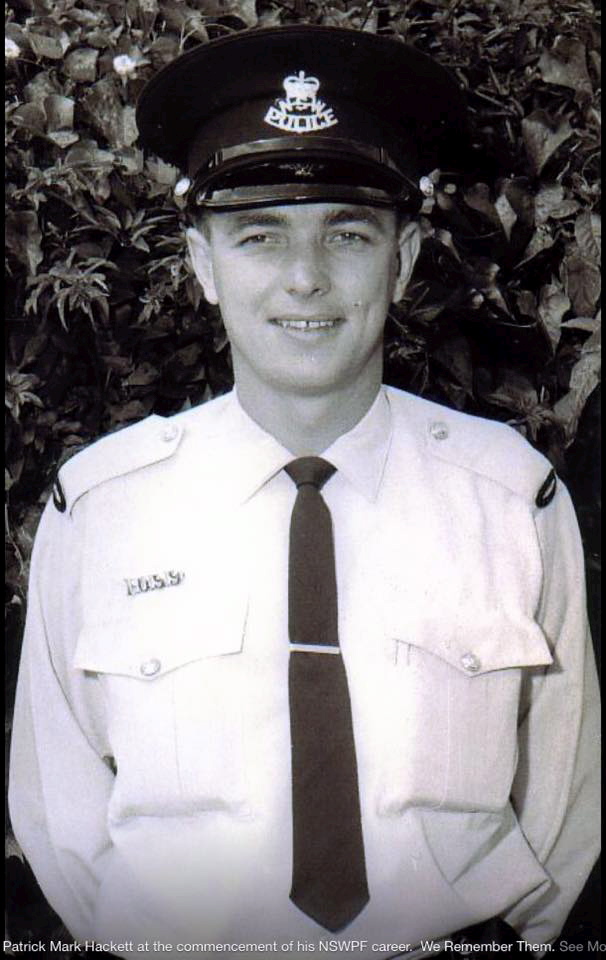
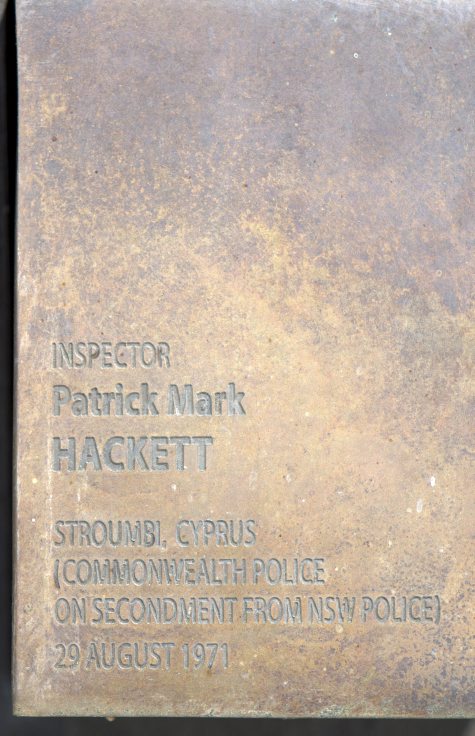
Touch Plate at the National Police Wall of Remembrance, Canberra, for Patrick Mark HACKETT
Constable Hackett was killed in Cyprus while on special duty in that country with the United Nations Civilian Police Force (UNCIVPOL). On the 29 August, 1971 he had driven to Episkopi and Paphos before setting out to return to Polis. Whilst negotiating a number of very sharp and dangerous hairpin bends, his vehicle left the roadway, crashed down an escarpment and overturned several times. Constable Hackett was killed instantly.
The constable was born in 1940 and joined the New South Wales Police Force on 25 February, 1963. At the time of his death he was attached to the Civilian Police Contingent in Cyprus.
[divider_dotted]
17 June 2017 – Malaysia Memorial in Cyprus taken today as Australian Police complete the long mission and are leaving Cyprus.
[divider_dotted]
27 May 1940 – 29 August 1971
Patrick Hackett was a member of the NSW Police Force. He commenced as a Trainee in 1963 and was confirmed as a first class constable in 1968.
Patrick was sworn in as a Special Commonwealth Police Officer at the rank of inspector when he was selected to be part of Australia’s Eighth Contingent to Cyprus. The contingent, part of the United Nations Peacekeeping Mission to Cyprus, was deployed to Cyprus in 1971.
Inspector Hackett was tragically killed in a car accident near Stroumbi when his vehicle left the road on a sharp corner.
He was posthumously awarded the Police Overseas Service Medal with Cyprus clasp, the United Nations Service Medal and the Dag Hammarskjöld Medal.
Canberra: An Australian policeman serving in Cyprus has been killed in a traffic accident. He was Constable Patrick Mark Hackett, of the NSW Police force.
In 1997 the Dags Hammarskjold Medal is established by the United Nations to honour those who lost their lives whilst on a UN peacekeeping mission.
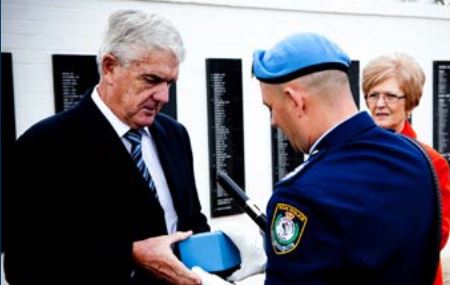
The family of Inspector Patrick Hackett receives the Dags Hammarskjold Medal in 2010 from Sergeant Mark Elms, NSW Police Academy.
Dag Hammarskjold Medal
[divider_dotted]
The Sydney Morning Herald Tuesday 25 October 1988 page 12 of 64
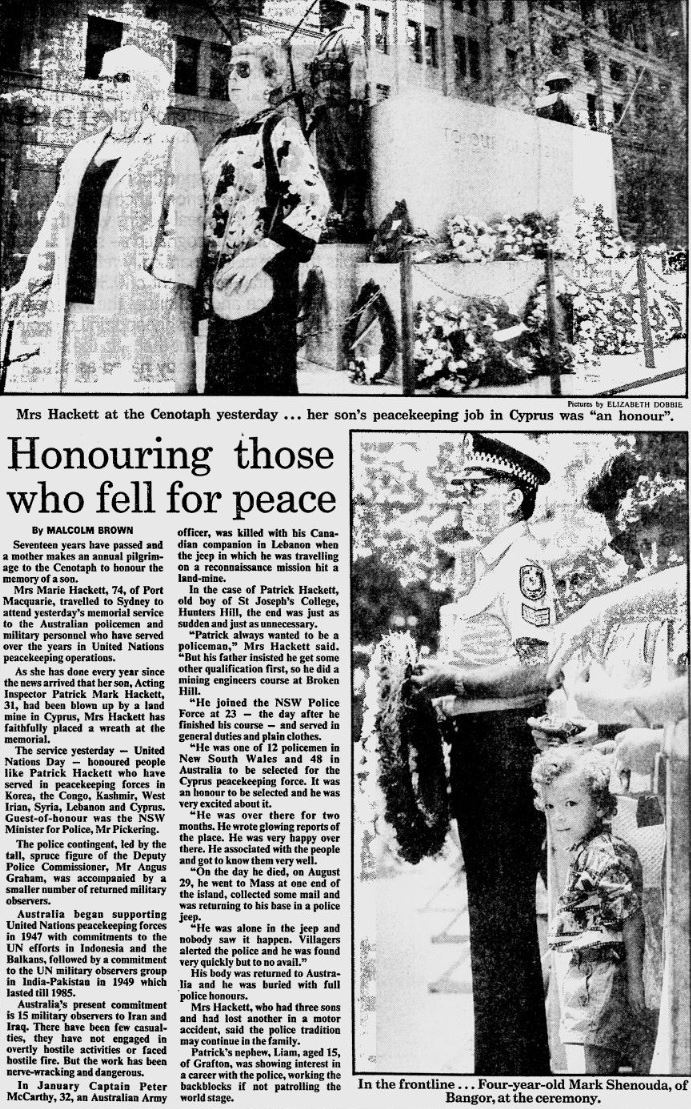
Patrick HACKETT – Mother at Cenotaph – 1988
[divider_dotted]
POLICE KILLED OR WHO DIED FROM INJURIES RECEIVED IN THE EXECUTION OF THEIR DUTIES
On 13th August, 1971, Senior Constable William Edward King, who was then the officer-in-charge of police, East Gresford, was shot dead at East Gresford Police Station by a man who fired upon him with a rifle.
On 29th August, 1971, Constable 1st Class Patrick Mark Hackett died from injuries received in a motor accident at Polis, Cyprus, whilst performing duty with the New South Wales Police component of the Australian Police Contingent of the United Nations Peace Keeping Force.
On 30th September, 1971, Sergeant Second Class William Watson Riley and Senior Constable Maurice Raymond McDiarmid, both then attached to Blacktown Police Station, were shot dead in a house at Toongabbie which they had entered to arrest a man who a short time before had murdered his brother and raped a woman in the same house.
A police funeral with full ceremonial honours was accorded these deceased officers at which appropriate tributes were paid.
In recognition of their outstanding courage Sergeant Riley and Senior Constable McDiarmid were posthumously promoted by me to Sergeant 1st Class and Sergeant 3rd Class respectively. In addition, I submitted recommendations to the Premier for favour of consideration of Royal Awards being granted in both cases.
To assist the widows of the deceased police the Premier approved the payment to each of them of the sum of $12,500 as a gratuity. This payment did not in any way affect their entitlements to payments under the provisions of the Police Regulation (Superannuation) Act.